

Unifying Composable Effects and Advanced Optics for Java






Higher-Kinded-J brings two capabilities that Java has long needed: composable error handling through the Effect Path API, and type-safe immutable data navigation through the Focus DSL. Each is powerful alone. Together they form one approach to building robust applications, where effects and structure compose in the same vocabulary. At the edge of a service, Mapping at the Boundary turns the DTO-to-domain mapper into compile-time codegen that never loses an error, and for services that need several execution modes, Effect Handlers let you define domain operations as data and interpret them differently for production, testing, or audit.
No more pyramids of nested checks. No more scattered validation logic. Just clean, flat pipelines that read like the business logic they represent.
What You Get
Two artefacts, before any theory. The first is the shape of the code you write: a railway where success travels one track and failure the other, and every step reads top-to-bottom.
// Traditional Java: pyramid of nested checks
if (user != null) {
if (validator.validate(request).isValid()) {
try {
return paymentService.charge(user, amount);
} catch (PaymentException e) { ... }
}
}
// Effect Path API: flat, composable railway
EitherPath<AppError, OrderResult> result =
Path.maybe(findUser(userId))
.<AppError>toEitherPath(new UserNotFound(userId))
.via(user -> Path.either(validator.validate(request, user)))
.via(valid -> Path.tryOf(() -> paymentService.charge(valid))
.toEitherPath(PaymentFailed::new))
.map(OrderResult::success);
The nesting is gone. Each step follows the same pattern. Failures propagate automatically.
The second is what a client sees when the data is bad. A request with five defects (one inside a nested record, one on the second element of a list), answered by one response, with nobody writing a line of error-handling code to produce it:
{
"valid": false,
"errors": [
{ "path": "id", "message": "not a UUID (expected e.g. 123e4567-e89b-12d3-a456-426614174000)" },
{ "path": "customer.email", "message": "not an email address" },
{ "path": "lines.1.price", "message": "not a number in plain notation (expected e.g. 123.45)" },
{ "path": "placedAt", "message": "not an ISO-8601 instant (expected e.g. 2026-07-28T12:34:56Z)" },
{ "path": "status", "message": "unknown OrderStatus (expected one of NEW, PAID, SHIPPED)" }
],
"errorCount": 5
}
It falls out of one spec interface and one annotation, and the mapping capstone builds it end to end, proven by a test the build runs. The client fixes all five and resubmits once.
Getting Started
One line configures the dependencies, the annotation processors, -parameters, the preview flags and compile-time Path checking:
// build.gradle.kts
plugins {
id("io.github.higher-kinded-j.hkj") version "LATEST_VERSION"
}
- Quickstart: Gradle and Maven setup, including the Maven plugin and the required Java 25 preview flags, and your first Effect Paths in five minutes
- Where to Start: one question, five answers, and the tool each one points at
- Cheat Sheet: a one-page operator reference
The Bridge: Effects Meet Optics
What makes Higher-Kinded-J unique is that Effect Paths and the Focus DSL speak the same language. Effect Paths are the effects, what the computation does: fetch, fail, wait, accumulate. Focus Paths are the optics, where the data lives: a field, an optional field, every element of a list. Both compose with via, and when you need to cross between them, the bridge connects the two worlds:
flowchart TB
subgraph effects["Effects: Effect Paths"]
direction TB
E1["MaybePath"] ~~~ E2["EitherPath"] ~~~ E3["TryPath"] ~~~ E4["ValidationPath"]
E5["EitherOrBothPath"] ~~~ E6["IOPath"] ~~~ E7["VTaskPath"] ~~~ E8["VStreamPath"]
end
subgraph optics["Optics: Focus Paths"]
direction TB
O1["FocusPath"] ~~~ O2["AffinePath"]
O3["TraversalPath"]
end
effects -->|".focus(path)<br/>navigate the data inside the effect"| B["The bridge"]
optics -->|".toEitherPath()<br/>.toMaybePath()<br/>lift the optic into an effect"| B
subgraph one["One composition"]
direction TB
S1["userService.findById(id)<br/>effect: fetch"] --> S2[".focus(UserFocus.address())<br/>optics: navigate"]
S2 --> S3[".via(validateAddress)<br/>effect: validate"]
S3 --> S4[".focus(AddressFocus.city())<br/>optics: extract"]
S4 --> S5[".map(String::toUpperCase)<br/>effect: transform"]
end
B --> S1
classDef effect fill:#8caaee,stroke:#1e66f5,color:#232634
classDef optic fill:#a6d189,stroke:#40a02b,color:#232634
classDef bridge fill:#e5c890,stroke:#df8e1d,color:#232634
class E1,E2,E3,E4,E5,E6,E7,E8,S1,S3,S5 effect
class O1,O2,O3,S2,S4 optic
class B bridge
// Fetch user (effect) → navigate to address (optics) →
// extract postcode (optics) → validate (effect)
EitherPath<AppError, String> result =
userService.findById(userId) // EitherPath<AppError, User>
.focus(UserFocus.address()) // EitherPath<AppError, Address>
.focus(AddressFocus.postcode()) // EitherPath<AppError, String>
.via(code -> validatePostcode(code));
This is the unification Java has been missing: effects and structure, composition and navigation, one vocabulary.
Why Higher-Kinded-J?
Modern Java handed you records, sealed interfaces, and pattern matching. What it didn't hand you is a way to make them compose: errors that chain instead of nest, validation that collects every failure instead of stopping at the first, deep immutable updates in one line instead of nested with… calls, and typed errors that survive a network hop. Higher-Kinded-J is the missing layer.
You don't need to learn an esoteric functional library to feel the benefit. Each capability replaces something you already reach for today:
| Instead of… | Today you reach for | Higher-Kinded-J gives you |
|---|---|---|
Nested Optional, thrown exceptions, and validation that stops at the first error | the standard library | one railway vocabulary (map / via / recover) across absence, typed errors, async, and accumulating validation |
Option / Either / Try from Vavr | the FP library most Java developers know | the same core types plus higher-kinded abstraction, a full optics suite, monad transformers, and an effect system, built natively on modern Java (records, sealed types, virtual threads), where Vavr keeps a Java 8 foundation |
| A mapper in one place and validation in another | MapStruct with Bean Validation, or converter classes per pair | @GenerateMapping: one declaration gives both directions, and each field's conversion is its check, so parse locates every bad field, a null included. Records, beans, protobuf messages and generic wires, a stock codec vocabulary and generated PATCH write-backs, all law-checked (Coming from MapStruct and Bean Validation) |
| Resilience4j annotations for retry / circuit-breaker / bulkhead | AOP-style resilience | the same policies as composable path combinators (withRetry / withCircuitBreaker / withBulkhead) that treat a business Left as a value, never as a failure to retry |
Hand-written wither / copy-constructor updates on records | manual boilerplate | generated lenses, prisms, and traversals: the most comprehensive optics available for Java |
And unlike any of those tools, effects and data navigation speak the same language: the Effect-Optics bridge above is something no other Java library offers.
Every row in that table is a guarantee, not a convenience. An Either in a return type is checked by the compiler where an exception is not; an accumulating parse answers a client once where a mapper that throws on the first bad value costs one round trip per defect; a generated lens is law-checked where a hand-written wither is trusted. The library holds itself to the same bar: every emission tier is pinned by golden files, the optic and mapping laws ship in hkj-test for your own types, and every HKJ module compiles under the HKJ checker at zero findings.
How the optics compare to other Java optics libraries
How the optics compare to other Java optics libraries
Higher-Kinded-J also offers the most advanced optics implementation in the Java ecosystem. Measured against the dedicated Java optics libraries:
| Feature | Higher-Kinded-J | Functional Java | Fugue Optics | Derive4J |
|---|---|---|---|---|
| Lens | ✓ | ✓ | ✓ | ✓^1^ |
| Prism | ✓ | ✓ | ✓ | ✓^1^ |
| Iso | ✓ | ✓ | ✓ | ✗ |
| Affine/Optional | ✓ | ✓ | ✓ | ✓^1^ |
| Traversal | ✓ | ✓ | ✓ | ✗ |
| Filtered Traversals | ✓ | ✗ | ✗ | ✗ |
| Indexed Optics | ✓ | ✗ | ✗ | ✗ |
| Code Generation | ✓ | ✗ | ✗ | ✓^1^ |
| External Type Spec Interfaces | ✓ | ✗ | ✗ | ✗ |
| Java Records Support | ✓ | ✗ | ✗ | ✗ |
| Sealed Interface Support | ✓ | ✗ | ✗ | ✗ |
| Effect Integration | ✓ | ✗ | ✗ | ✗ |
| Focus DSL | ✓ | ✗ | ✗ | ✗ |
| Profunctor Architecture | ✓ | ✓ | ✓ | ✗ |
| Fluent API | ✓ | ✗ | ✗ | ✗ |
| Modern Java (25) | ✓ | ✗ | ✗ | ✗ |
| Virtual Threads | ✓ | ✗ | ✗ | ✗ |
| Effect Handlers / Free Monads | ✓ | ✗ | ✗ | ✗ |
^1^ Derive4J generates getters/setters but requires Functional Java for actual optic classes
What's in the Library
Each capability has a chapter that opens with the problem it solves and closes with a capstone. The short version of each, with a quick example folded underneath:
Effect Path API
A railway model for computation: map, via and recover work identically whether you are handling optional values, typed errors, accumulated validations, exceptions or deferred side effects. ForPath comprehensions sequence steps by name, VTaskPath and VStreamPath put structured concurrency on virtual threads behind the same vocabulary, and the lazy carriers chain path-native resilience that treats a business Left as a value, never as a failure to retry.
Quick example
Quick example
VResultPath<OrderError, Reservation> guarded =
reserveInventory(order)
.withRetry(error -> error instanceof OrderError.SystemError,
RetryPolicy.exponentialBackoffWithJitter(3, Duration.ofMillis(200)))
.withTimeout(Duration.ofSeconds(5),
() -> OrderError.SystemError.timeout("inventory", Duration.ofSeconds(5)));
Only a SystemError is retried; a business Left such as an out-of-stock decision is a value on the failure track and passes straight through. The same withRetry / withTimeout / withCircuitBreaker / withBulkhead chain on IOPath, VTaskPath and VResultPath alike. See Resilience Patterns.
Optics
The most comprehensive optics implementation available for Java: lenses, prisms, isos, affines, traversals, folds and setters, all composable, generated from annotations on records, sealed interfaces, collections and types you don't own (Jackson, JOOQ, Immutables, Lombok, AutoValue, Protocol Buffers). Filtered and indexed traversals, and 31 container types across the JDK and five third-party collection libraries widening to the right path type automatically.
Quick example
Quick example
@GenerateLenses @GenerateFocus(generateNavigators = true)
public record Street(String name, int number) {}
@GenerateLenses @GenerateFocus(generateNavigators = true)
public record Address(Street street, String postcode) {}
@GenerateLenses @GenerateFocus(generateNavigators = true)
public record User(String name, Address address) {}
User updated = UserFocus.address().street().name().set("New Street", user);
Write the records, add the annotations, and the processor writes StreetLenses, AddressFocus, UserFocus and the rest: a typed path builder for every field, three layers down in one line, with no reflection and no copy-and-rebuild code. Start at the Quickstart or the Annotations at a Glance table.
Mapping at the Boundary
One spec interface and one annotation replace the hand-written mapper. @GenerateMapping derives both directions at compile time: a total build out, an accumulating parse back that locates every bad field, and both PATCH styles as write-backs. It maps records, beans and generic wires of any width, including the classes code generators write: protobuf-java messages, and the openapi-generator models and Lombok builders in the generated-client checklist. Specs nest across modules, and share a vocabulary of leaves there too. A stock codec vocabulary covers the standard conversions, so a typical boundary needs no hand-written leaves, and every tier is law-checked and pinned by golden files. To weigh the mapper against MapStruct and Bean Validation, Mapper at a Glance shows the code it generates and what a call costs.
Quick example
Quick example
@GenerateMapping
interface OrderMapping extends MappingSpec<Order, OrderDto> {
default ValidatedPrism<String, UUID> id() { return uuid(); }
default ValidatedPrism<String, LocalDate> placedOn() { return localDate(); }
default ValidatedPrism<String, OrderStatus> status() { return enumByName(OrderStatus.class); }
default ValidatedPrism<String, BigDecimal> total() { return bigDecimal(); }
}
OrderMappingImpl.INSTANCE.parse(new OrderDto("NOPE", "28/07/2026", "SHIPPED", "1E+3"));
// Invalid(NonEmptyList[
// id: not a UUID (expected e.g. 123e4567-e89b-12d3-a456-426614174000),
// placedOn: not an ISO-8601 date (expected e.g. 2026-07-28),
// status: unknown OrderStatus (expected one of NEW, PAID, CANCELLED),
// total: not a number in plain notation (expected e.g. 123.45)])
Four leaves from StandardCodecs, no other code, and every failure located and worded for the client. The 422 payload shown at the top of this page is what this Invalid becomes at a Spring controller. @GenerateMerge assembles one record from several and @GenerateErrorEnvelope gives a sealed error hierarchy a typed context; see Merge and Error Envelopes.
Explore Mapping at the Boundary →
Effect Handlers
Algebraic-effect-style programming via Free monads and interpreters. Define domain operations as a sealed interface with record variants, compose several algebras with @ComposeEffects, then write one interpreter per mode (production, test, dry-run, audit) and run the same program unchanged through each. Testing is mock-free through Id interpreters, and ProgramAnalyser inspects a program before any side effect executes.
Quick example
Quick example
@EffectAlgebra
public sealed interface PaymentGatewayOp<A>
permits PaymentGatewayOp.Authorise, PaymentGatewayOp.Charge, PaymentGatewayOp.Refund {
record Authorise<A>(Money amount, PaymentMethod method,
Function<AuthorisationToken, A> k) implements PaymentGatewayOp<A> { /* ... */ }
record Charge<A>(Money amount, PaymentMethod method,
Function<ChargeResult, A> k) implements PaymentGatewayOp<A> { /* ... */ }
record Refund<A>(TransactionId txId, Money amount,
Function<RefundResult, A> k) implements PaymentGatewayOp<A> { /* ... */ }
}
@EffectAlgebra generates the functor, the smart constructors and an interpreter skeleton, so a program is written once against PaymentGatewayOps and a production interpreter, a fake, a dry-run and an audit log are four small classes. The Payment Processing example runs one program through all four.
Spring Boot Integration
The hkj-spring-boot-starter lets controllers return Either, Validated, EitherPath, VTaskPath and the rest directly, and an Invalid of located field errors renders as one 422 listing every bad field by path, with no exception handler and no hand-rolled error DTO. @HkjHttpClient keeps the error channel intact when one service calls another.
Quick example
Quick example
@RestController
@RequestMapping("/api/users")
public class UserController {
@GetMapping("/{id}")
public Either<DomainError, User> getUser(@PathVariable String id) {
return userService.findById(id);
// Right(user) → HTTP 200 with JSON
// Left(UserNotFoundError) → HTTP 404 with error details
}
@PostMapping
public Validated<NonEmptyList<FieldError>, User> createUser(@RequestBody UserDto dto) {
return userCodec.parse(dto);
// Valid(user) → HTTP 200
// Invalid(errors) → one HTTP 422 listing EVERY bad field by path
}
}
@HttpExchange("/users")
@HkjHttpClient
public interface UserClientApi {
@GetExchange("/{id}")
EitherPath<DomainError, User> getUser(@PathVariable String id);
// HTTP 200 → Right(user); HTTP 404 → Left(UserNotFoundError), decoded from the response
}
Auto-configuration handles the conversions; Right is a 200 and a typed Left maps to its status. Actuator metrics for success rates and error distributions, Spring Security integration with Either-based authentication, and an EffectBoundary that selects interpreters by profile come with it. The client is generated by hkj-spring-boot-client-processor, which a dependency cannot bring: add it to the processor path, or enable spring on the HKJ build plugin. See Declarative HTTP Clients and Migrating to Functional Errors.
Get Started with Spring Boot Integration →
Testing With hkj-test
Fluent AssertJ assertions for every type in the library, the optic laws (LensLaws, PrismLaws, TraversalLaws, ValidatedPrismLaws) and the MappingLaws every generated mapping is checked against, and a SteppableClock for deterministic time. Tests read in the same vocabulary as the code under test.
Quick example
Quick example
import static org.higherkindedj.hkt.assertions.EitherAssert.assertThatEither;
import static org.higherkindedj.hkt.assertions.MaybeAssert.assertThatMaybe;
import static org.higherkindedj.hkt.assertions.TryAssert.assertThatTry;
assertThatEither(result).isRight().hasRight(42);
assertThatMaybe(value).isJust().hasValue("hello");
assertThatTry(computation).isFailure().hasExceptionOfType(IOException.class);
Coverage spans the discriminated unions, the effect types (IO, VTask, VStream), the Reader / Writer / State trio, every monad transformer, the Free / EitherF algebras and the VTaskPath / VStreamPath / VTaskContext Path-and-context assertions. On Java 25, import module org.higherkindedj.test; brings every helper into scope in one line.
Foundations
Underneath it all: a simulation of higher-kinded types by defunctionalisation, so Functor, Applicative, Monad, Traverse and friends can be written once and applied across Optional, List, CompletableFuture, VTask and your own types; the core types (Either, Maybe, Try, Validated, IO, Reader, Writer, State, Free); and the monad transformers and MTL capabilities for the cases the Path API does not fit: a different outer monad, or polymorphic library code. Most applications start with Effect Paths and never need to look down here; the triage page says when you do.
Path Types at a Glance
Twenty-one Path types share one vocabulary. Most applications start with EitherPath (typed errors), MaybePath (absence), ValidationPath (every error at once) and IOPath (deferred effects), and reach for the rest as a need appears. The lazy carriers (IOPath, VTaskPath, VResultPath) additionally chain path-native resilience (withRetry / withTimeout / withCircuitBreaker / withBulkhead) that treats a business Left as a value, never as a failure to retry.
All twenty-one Path types
All twenty-one Path types
| Path Type | When to Reach for It |
|---|---|
MaybePath<A> | Absence is normal, not an error |
EitherPath<E, A> | Errors carry typed, structured information |
EitherOrBothPath<L, A> | Success that also carries non-fatal warnings (inclusive-or) |
TryPath<A> | Wrapping code that throws exceptions |
ValidationPath<E, A> | Collecting all errors, not just the first |
IOPath<A> | Side effects you want to defer and sequence |
VResultPath<E, A> | Async work that fails with a typed domain error (VTask<Either<E, A>>) |
TrampolinePath<A> | Stack-safe recursion |
CompletableFuturePath<A> | Async operations |
ReaderPath<R, A> | Dependency injection, configuration access |
WriterPath<W, A> | Logging, audit trails, collecting metrics |
WithStatePath<S, A> | Stateful computations (parsers, counters) |
ListPath<A> | Batch processing with positional zipping |
StreamPath<A> | Lazy sequences, large data processing |
NonDetPath<A> | Non-deterministic search, combinations |
LazyPath<A> | Deferred evaluation, memoisation |
IdPath<A> | Pure computations (testing, generic code) |
OptionalPath<A> | Bridge for Java's standard Optional |
FreePath<F, A> / FreeApPath<F, A> | DSL building and interpretation |
VTaskPath<A> | Virtual thread-based concurrency with Par combinators |
VStreamPath<A> | Lazy pull-based streaming on virtual threads |
Each Path wraps its underlying effect and provides map, via, run, recover, and integration with the Focus DSL. See Core Paths for the railway model behind them.
Learn by Doing
The fastest way to master Higher-Kinded-J is through our interactive tutorial series: nineteen journeys of hands-on exercises with immediate test feedback. Start with Effect API for the railway, Optics: Lens & Prism for immutable updates, or Optics: Boundary Mapping for the 422 leg.
All nineteen journeys
All nineteen journeys
| Journey | Focus | Exercises |
|---|---|---|
| Core: Foundations | HKT simulation, Functor, Applicative, Monad | 37 |
| Core: Error Handling | MonadError, concrete types, real-world patterns | 26 |
| Core: Advanced | Natural Transformations, Coyoneda, Free Applicative | 26 |
| Effect API | Effect paths, ForPath, Effect Contexts | 17 |
| Monad Transformers | When Path isn't enough, async + absence, stacking, MTL | 29 |
| Expression: ForState | Named fields, guards, pattern matching, zoom | 13 |
| Expression: ForPath Parallel | Applicative parallel composition for Path types | 9 |
| Concurrency: VTask | Virtual threads, VTaskPath, Par combinators | 28 |
| Concurrency: Scope & Resource | Structured concurrency, resource management | 20 |
| Context | ScopedValue contexts for requests, security and tracing | 59 |
| Effect Handlers | Effect algebras, programs as values, several interpreters | 19 |
| Resilience Patterns | Circuit breaker, saga, retry, bulkhead | 24 |
| Optics: Lens & Prism | Lens basics, Prism, Affine | 30 |
| Optics: Traversals | Traversals, composition, practical applications | 28 |
| Optics: Fluent & Free | Fluent API, Free Monad DSL | 22 |
| Optics: Focus DSL | Type-safe path navigation, container widening | 90 |
| Optics: Batching & Coupled Updates | Request batching, plan guardrails, coupled lenses | 13 |
| Optics: Boundary Mapping | Multi-edit and sparse updates, @GenerateMapping, the 422 leg, edge cases | 19 |
| Capstone: One Line, Six Layers Grows Up | One pipeline across effects, optics, resilience and concurrency | 7 |
Perfect for developers who prefer learning by building. Get started →
Documentation Guide
If you want working code immediately, start with the Quickstart. For a deeper understanding, continue with the Effect Path API chapter. Every chapter below unfolds to its reading order; the sidebar carries the same structure.
Effect Path API (start here)
Effect Path API (start here)
- Quickstart: Three runnable examples showing MaybePath, EitherPath, and ForPath in about 150 lines
- Core Paths: The railway model, the six core path types, composition, and basic ForPath comprehensions
- Optics Integration: Bridging Effect Paths with the Focus DSL
- Advanced Paths: Free monads, effect handlers, contexts, ForPath parallelism, and resilience
- Reference: Capability type classes, type conversions, compiler errors, and production readiness
Optics
Optics
Ship, read in order:
- Introduction: A Lombok wither cascade beside the generated path that replaces it
- Quickstart: Three runnable examples covering generated lenses, prisms and traversals, plus
@ImportOpticsfor Jackson - Focus DSL: Generated, compile-checked paths through your own records
- Collections, Optionals and Sealed Types: Collections, optionals, sealed variants and
.via() - What a Path Is Made Of: The lenses, prisms and traversals a path wraps, and when you need one
- Updates That Can Fail: Validated updates, with every bad value reported
- Many Edits at Once: Several edits applied as one, including a REST PATCH
On demand, when a task calls for it:
- The Optic Types: Lens, Prism, Affine and Iso, a page each
- Collections: Traversal, Fold, Getter and Setter
- Precision and Filtering: Filtered, indexed and per-key access
- The Focus DSL in Depth: Effects, custom containers and
Kindfields - Optics for External Types: Jackson, JOOQ, Lombok and other types you do not own
- Validation, Batching and Auditing: Validated prisms,
modifyFpipelines, batching and audit trails - Programs as Data: The Free Monad DSL and its interpreters
Look it up, when you hold a question:
- Look It Up: Production readiness, annotations, decision trees, the cookbook and reference tables
Mapping at the Boundary
Mapping at the Boundary
Ship, read in order:
- Introduction: The mapper every service carries, and the one response that replaces it
- Quickstart: Five steps from a blank build to a located 422
- Basics: One spec interface, both directions, every bad field located
- Standard Codecs and Shared Vocabulary: The stock
ValidatedPrismleaves, custom codecs, and mix-in interfaces - Absent Fields and Record Invariants: A field whose
nullmeans absent, and a record's own checks - Nesting, Containers, and Sealed Hierarchies: Nested specs, lifted containers, and dotted error paths
- Capstone: One 422, Every Bad Field: One boundary built end to end, compiled and law-checked
- Check Your Understanding: Ten questions on the Quickstart through the Capstone, with answers the build proves
On demand, when a task calls for it:
- What Your Spec Generates: Which methods each spec shape gets, and why
- Bean-Shaped Wires: Getter/setter, builder, one-directional and protobuf-java wires
- Sparse PATCH: The
UpdateSpecwrite-back, where an omitted field keeps its value - Generic Specs: A
Page<T>at the boundary - Merge and Error Envelopes: One record from several sources, and a typed error context
- Injecting, Testing, and Diagnostics: Spring beans, test fakes, and how wide a record may be
- Capstone: An Estate in Three Modules: A shared vocabulary, a client jar, a Lombok bean and a PATCH across modules
Look it up, when you hold a question:
- Mapper at a Glance: The generated code, what it costs, and the decisions to know before adopting
- Coming from MapStruct and Bean Validation: Both vocabularies, translated
- Rules and Limits: Every enforced rule and limit, in one place
- Compiler Messages: The common refusals, what each means, and the fix
Monad Transformers
Monad Transformers
For the cases where the Path API does not fit (a different outer monad, polymorphic library code, or integrating with raw Kind shapes).
- Path or Transformer?: The triage page; read this first to know whether the rest of the chapter applies to you
- Quickstart: Three runnable transformer examples in about 150 lines
- Stack Archetypes: Seven named patterns covering the most common composition problems
- MTL Capabilities: Stack-independent capability abstractions for polymorphic library code
- Capstone: End-to-end multi-capability workflow combining typed errors, configuration, audit, and async
- Common Compiler Errors: Five common errors and the fix for each
Effect Handlers
Effect Handlers
- Effect Handlers Introduction: Motivation, terminology, and when to use
- Effect Handler Reference: Defining, composing, and interpreting effects
- Payment Processing Example: Complete worked example with four interpreters
Foundations (reference)
Foundations (reference)
These sections document the underlying machinery. Most users can start with Effect Paths directly.
- Higher-Kinded Types: The simulation and why it matters
- Type Classes: Functor, Monad, and other type classes
- Core Types: Either, Maybe, Try, and other effect types
- Order Example Walkthrough: A complete workflow with monad transformers
- One vocabulary:
map,viaandrecoverwork the same across absence, typed errors, exceptions, accumulating validation, deferred I/O and virtual-thread concurrency - Effects and structure compose:
.focus(path)takes an Effect Path through a Focus Path and back, which no other Java library offers - Optics are generated, not written:
@GenerateLenses,@GenerateFocus,@GeneratePrisms,@GenerateTraversalsand@ImportOpticscover records, sealed types, collections and types you don't own - The boundary never loses an error:
@GenerateMappingderives both directions, locates every bad field, and renders as one 422 at a Spring controller - Everything is law-checked: the optic and mapping laws ship in
hkj-test, and the library compiles under its own checker - Start with the Quickstart, and reach for the foundations only when the triage page says so
History
Higher-Kinded-J evolved from a simulation originally created for the blog post Higher Kinded Types with Java and Scala. Since then it has grown into a comprehensive functional programming toolkit, with the Effect Path API providing the unifying layer that connects HKTs, type classes, and optics into a coherent whole.
Quickstart
- How to add Higher-Kinded-J to a Gradle or Maven project
- Java 25 preview mode configuration (required)
- Your first Effect Paths in under 5 minutes
Prerequisites
Higher-Kinded-J is built on Java 25 today, and parts of it are compiled with preview features, so the build sets --enable-preview.
Preview ties the build to that one release, which makes this a version to match rather than a floor:
javacaccepts--enable-previewonly for the release it is running on, so a later JDK cannot target 25 with preview enabled (error: invalid source release 25 with --enable-preview).- The classes compiled that way carry a preview marker: the structured concurrency behind
VTask'sScopeandPar, and the virtual-thread stream's parallel operations. A JVM of any other version refuses to load them:UnsupportedClassVersionError: Preview features are not enabled for org/higherkindedj/hkt/vstream/VStreamPar (class file version 69.65535).
So build on Java 25 until the library itself moves to a later release.
Most of the library needs no flag at all: code using Either, Validated, the mapper, the plain VStream operations or sequential optics compiles and runs on Java 25 without --enable-preview. The flag is needed for code that reaches the structured-concurrency classes: VTask's Scope and Par, and the parallel stream operations in VStreamPar. Several everyday methods reach them, such as VTaskPath.zipWith, parallel ForPath steps and TraversalPath.traverseWith, as do the stream paths, throttles and bulkheads built on VStreamPar. Code needs the flag at compile time where it names one of these classes, and at run time wherever it reaches one.
The build plugins add it everywhere rather than asking you to work out which of your code touches those paths. If you configure the flags by hand and see the UnsupportedClassVersionError above at run time, that is the one you have missed.
Gradle Setup
With HKJ Gradle Plugin (Recommended)
// build.gradle.kts
plugins {
id("io.github.higher-kinded-j.hkj") version "LATEST_VERSION"
}
This single line configures dependencies, preview features, annotation processors, -parameters (constructor parameter names read by copy strategies), and compile-time Path type checking automatically. See the Gradle Plugin documentation for the full DSL reference.
For SNAPSHOT versions of the plugin, add the Sonatype snapshots repository to your settings.gradle.kts:
// settings.gradle.kts
pluginManagement {
repositories {
maven {
url = uri("https://central.sonatype.com/repository/maven-snapshots/")
}
gradlePluginPortal()
mavenCentral()
}
}
You also need the snapshots repository in your project's repositories block so the plugin can resolve HKJ library dependencies:
// build.gradle.kts
repositories {
mavenCentral()
maven {
url = uri("https://central.sonatype.com/repository/maven-snapshots/")
}
}
Prefer Not to Use the Plugin?
If your project cannot apply the HKJ plugin, see Manual Gradle and Maven Setup for the full build.gradle.kts configuration.
Maven Setup
With HKJ Maven Plugin (Recommended)
<build>
<plugins>
<plugin>
<groupId>io.github.higher-kinded-j</groupId>
<artifactId>hkj-maven-plugin</artifactId>
<version>LATEST_VERSION</version>
<extensions>true</extensions>
</plugin>
</plugins>
</build>
The plugin automatically adds hkj-core, annotation processors, compile-time checks, and --enable-preview flags. See the Build Plugins documentation for the full configuration reference.
Prefer Not to Use the Plugin?
If your project cannot apply the HKJ Maven plugin, see Manual Gradle and Maven Setup for the full pom.xml configuration.
Simplify Imports with Module Import
Java 23+ supports module import declarations (JEP 511), which let you import all exported types from a module in a single line. Instead of importing individual packages:
import org.higherkindedj.hkt.effect.Path;
import org.higherkindedj.hkt.effect.EitherPath;
import org.higherkindedj.hkt.effect.MaybePath;
import org.higherkindedj.hkt.effect.VTaskPath;
import org.higherkindedj.hkt.validated.Validated;
import org.higherkindedj.optics.focus.FocusPath;
// ... and more
You can write:
import module org.higherkindedj.core;
This gives you access to Path, MaybePath, EitherPath, ValidationPath, VTaskPath, FocusPath, AffinePath, TraversalPath, and all other exported types from the core module.
Module imports require --enable-preview on Java 23–24. On Java 25+, the feature is standard and no flag is needed for module imports themselves (though HKJ still requires --enable-preview for other features).
Handle Absence
When a value might not exist, use MaybePath:
import org.higherkindedj.hkt.effect.Path;
var user = Path.maybe(repository.findById(id)); // Just(user) or Nothing
var name = user.map(User::name); // transforms only if present
var result = name.run().orElse("Anonymous"); // extract to standard Java
Handle Errors
When an operation can fail with a typed error, use EitherPath:
import org.higherkindedj.hkt.effect.Path;
var user = Path.maybe(repository.findById(userId))
.toEitherPath(new AppError.NotFound(userId)); // Nothing becomes Left(error)
var order = user
.via(u -> Path.either(orderService.create(u))) // chain another operation
.map(Order::confirm); // transform the success value
var result = order.run(); // Either<AppError, Order>
Validate Input
When you need all errors, not just the first, use ValidationPath:
import org.higherkindedj.hkt.effect.Path;
import org.higherkindedj.hkt.Semigroup;
import org.higherkindedj.hkt.Semigroups;
Semigroup<List<String>> sg = Semigroups.list();
var name = validateName(input.name()); // ValidationPath<List<String>, String>
var email = validateEmail(input.email()); // ValidationPath<List<String>, String>
var age = validateAge(input.age()); // ValidationPath<List<String>, Integer>
var user = name.zipWith3Accum(email, age, User::new); // accumulates ALL errors
var result = user.run(); // Validated<List<String>, User>
Chain It Together
Combine absence, errors, and transformation in a single pipeline:
import org.higherkindedj.hkt.effect.Path;
public EitherPath<AppError, Receipt> processPayment(String userId, BigDecimal amount) {
return Path.maybe(userRepository.findById(userId))
.<AppError>toEitherPath(new AppError.UserNotFound(userId))
.via(user -> Path.either(validateAmount(user, amount)))
.via(validated -> Path.tryOf(() -> gateway.charge(validated))
.toEitherPath(AppError.PaymentFailed::new))
.map(charge -> new Receipt(charge.id(), amount));
}
toEitherPath infers its error type from the argument it is given. At the end of a chain the assignment target supplies it, but in the middle of one there is nothing downstream to infer from, so a new AppError.UserNotFound(...) would pin the whole railway to UserNotFound and the method's declared EitherPath<AppError, Receipt> would not match. Naming the type once at the point the error channel opens widens it for every step after.
The deferred overload needs the witness for the same reason and in the same place: .<AppError>toEitherPath(() -> new AppError.UserNotFound(userId)). Supplier<? extends E> looks as though its wildcard would widen the error on its own, but E is settled where the conversion is written, before anything downstream is read. See Effect compiler errors for the rest of this family.
Getting Back to Standard Java
Every Path type unwraps to a standard Java value. You are never locked in:
Maybe<User> maybe = maybePath.run(); // → Maybe
Either<AppError, User> either = eitherPath.run(); // → Either
Optional<User> opt = maybePath.run().toOptional(); // → java.util.Optional
User user = eitherPath.getOrElse(User.anonymous()); // → raw value
String msg = eitherPath.run().fold(
error -> "Failed: " + error, // handle error
value -> "Success: " + value // handle success
);
- Effect Path Overview - The railway model explained in depth
- Path Types - Choosing the right path for your problem
- Cheat Sheet - One-page operator reference
- Focus-Effect Integration - Combining effects with optics
Next: Cheat Sheet
Cheat Sheet
- Quick reference for all Path types, creation, and extraction
- Common operators at a glance
- How to get back to standard Java from any Path
- Type conversion routes between Path types
Path Types
| Path Type | For | Create | Extract |
|---|---|---|---|
MaybePath<A> | Absence | Path.maybe(v), Path.just(v), Path.nothing() | .run() → Maybe<A> |
EitherPath<E, A> | Typed errors | Path.right(v), Path.left(e), Path.either(eitherValue) | .run() → Either<E, A> |
TryPath<A> | Exceptions | Path.tryOf(() -> ...), Path.success(v), Path.failure(ex) | .run() → Try<A> |
ValidationPath<E, A> | Accumulating errors | Path.valid(v, sg), Path.invalid(e, sg) | .run() → Validated<E, A> |
EitherOrBothPath<L, A> | Success with warnings | Path.rightNel(v), Path.bothNel(w, v), Path.leftNel(e) | .run() → EitherOrBoth<L, A> |
IOPath<A> | Deferred side effects | Path.io(() -> ...), Path.ioPure(v) | .unsafeRun() → A |
VTaskPath<A> | Virtual threads | Path.vtask(() -> ...), Path.vtaskPure(v) | .unsafeRun() → A |
VResultPath<E, A> | Virtual threads + typed error | Path.vresultRight(v), Path.vresultLeft(e), Path.vresultDefer(() -> either) | .toEitherPath() → EitherPath<E, A> |
ReaderPath<R, A> | Dependency injection | Path.reader(r), Path.ask(), Path.asks(fn) | .run(env) → A |
WriterPath<W, A> | Logging, audit | Path.writer(w, m), Path.tell(log, m) | .run() → Writer<W, A> |
WithStatePath<S, A> | Stateful computation | Path.state(s), Path.getState() | .run(initial) → (S, A) |
TrampolinePath<A> | Stack-safe recursion | Path.trampolineDone(v), Path.trampolineDefer(s) | .run() → A |
LazyPath<A> | Deferred, memoised | Path.lazyDefer(() -> ...), Path.lazyNow(v) | .run() → A |
CompletableFuturePath<A> | Async | Path.future(cf), Path.futureAsync(() -> ...) | .run() → CompletableFuture<A> |
ListPath<A> | Batch processing with positional zipping | Path.listPath(list) | .run() → List<A> |
StreamPath<A> | Lazy sequences | Path.stream(stream) | .run() → Stream<A> |
NonDetPath<A> | Non-deterministic search, combinations | Path.list(list) | .run() → List<A> |
IdPath<A> | Pure values | Path.id(v) | .run() → Id<A> |
OptionalPath<A> | java.util.Optional bridge | Path.optional(opt), Path.present(v) | .run() → Optional<A> |
FreePath<F, A> | DSL building | Path.freePure(v, f), Path.freeLift(fa, f) | .foldMap(nat, m) |
GenericPath<F, A> | Custom monads | Path.generic(kind, monad) | .run() → Kind<F, A> |
Operators
Transformation
| Operator | What It Does | Available On |
|---|---|---|
.map(fn) | Transform the success value | All paths |
.peek(fn) | Observe the value without changing it | All paths |
.focus(lens) | Navigate into a nested field via optics | MaybePath, EitherPath, TryPath, IOPath, ValidationPath |
Chaining
| Operator | What It Does | Available On |
|---|---|---|
.via(fn) | Chain to another path (monadic bind) | All chainable paths |
.flatMap(fn) | Alias for via | All chainable paths |
.then(supplier) | Sequence, ignoring previous value | All chainable paths |
Combination
| Operator | What It Does | Available On |
|---|---|---|
.zipWith(other, fn) | Combine two paths (fail-fast) | All combinable paths |
.zipWith3(b, c, fn) | Combine three paths (fail-fast) | Most paths |
.zipWithAccum(other, fn) | Combine, accumulating errors | ValidationPath, EitherOrBothPath |
.zipWith3Accum(b, c, fn) | Combine three, accumulating errors | ValidationPath, EitherOrBothPath |
.andAlso(other) | Accumulate errors, keep left value | ValidationPath, EitherOrBothPath |
fields().field(label, v)...apply(Ctor::new) | Open-arity record assembly, located errors | Validated, Path (ValidationPath), EitherOrBoth |
fields().field(label, v)...construct(Ctor::new, "not a valid X") | The same, for a constructor that may refuse the fields: its exception becomes a FieldError | Validated, Path (ValidationPath), EitherOrBoth |
Error Handling
| Operator | What It Does | Available On |
|---|---|---|
.recover(fn) | Error → success value | MaybePath, EitherPath, TryPath, ValidationPath |
.recoverWith(fn) | Error → new path | MaybePath, EitherPath, TryPath, ValidationPath |
.orElse(supplier) | Try an alternative path | MaybePath, EitherPath, TryPath, ValidationPath |
.mapError(fn) | Transform the error type | EitherPath, TryPath, ValidationPath |
.bimap(errFn, okFn) | Transform error and success together | EitherPath |
.handleError(fn) | Throwable → recovery value | IOPath, VTaskPath (via Effectful) |
.handleErrorWith(fn) | Throwable → recovery effect | IOPath, VTaskPath (via Effectful) |
.guarantee(runnable) | Run cleanup whether success or failure | IOPath, VTaskPath (via Effectful) |
.peekLeft(fn) | Observe the error without changing it | EitherPath |
.peekFailure(fn) | Observe the exception without changing it | TryPath |
Extraction
| Operator | What It Does | Available On |
|---|---|---|
.run() | Extract the underlying value | All paths |
.unsafeRun() | Execute a deferred effect (may throw) | IOPath, VTaskPath |
.runSafe() | Execute safely, returning Try | IOPath, VTaskPath |
.fold(onErr, onOk) | Handle both tracks (error-first) | EitherPath, ValidationPath |
.foldFailureFirst(onErr, onOk) | Handle both tracks (error-first; replaces deprecated .fold(onOk, onErr) since 0.4.6) | TryPath |
.fold(identity, op) | Reduce a sequence to one value | ListPath, StreamPath, VStreamPath |
.foldLeft(seed, fn) / .foldRight(seed, fn) | Directional reduce (type-changing) | ListPath, StreamPath |
.foldMap(monoid, fn) | Map then combine via a Monoid | ListPath, StreamPath, VStreamPath |
.getOrElse(default) | Extract or use default | MaybePath, EitherPath, TryPath, ValidationPath |
.getOrElseGet(supplier) | Extract or compute default | MaybePath, EitherPath, TryPath, ValidationPath |
Boundary Mapping
Compile-time domain ↔ wire codecs, generated from a spec interface you own:
| Surface | What It Does | Where |
|---|---|---|
build(domain) | Total domain → wire render | @GenerateMapping on MappingSpec<Domain, Wire> |
parse(wire) | Accumulating parse: every bad field at once, each located by path | the generated XMappingImpl.INSTANCE |
updateFrom(wire) | Sparse PATCH fold: absent means "leave unchanged" | UpdateSpec |
updateFrom(message, mask) | A protobuf-java message's update: applies the fields its FieldMask names | UpdateSpec |
StandardCodecs.uuid(), localDate(), enumByName(...), ... | Stock ValidatedPrism leaves for identifiers, dates, enums, money | Standard codecs |
Edits.accumulate(...) | Hand-written validated multi-edit (irregular PATCH shapes) | Many Edits at Once |
MappingLaws.assertMappingLaws(...) | Law-check any generated mapping in one test call | hkj-test |
Escape Hatches
Getting back to standard Java from any Path:
| From | To | How |
|---|---|---|
MaybePath<A> | Maybe<A> | .run() |
MaybePath<A> | Optional<A> | .run().toOptional() |
MaybePath<A> | Stream<A> | .run().stream() |
MaybePath<A> | A (or default) | .getOrElse(defaultValue) |
EitherPath<E, A> | Either<E, A> | .run() |
EitherPath<E, A> | A (or default) | .getOrElse(defaultValue) |
EitherPath<E, A> | B | .run().fold(onErr, onOk) |
TryPath<A> | Try<A> | .run() |
TryPath<A> | A (or default) | .getOrElse(defaultValue) |
ValidationPath<E, A> | Validated<E, A> | .run() |
ValidationPath<E, A> | B | .fold(onInvalid, onValid) |
IOPath<A> | A | .unsafeRun() |
IOPath<A> | Try<A> | .runSafe() |
VTaskPath<A> | A | .unsafeRun() |
VTaskPath<A> | Try<A> | .runSafe() |
Type-Class Instances
One entry point, Instances.x(...), for every type-class instance. See Obtaining Instances.
import org.higherkindedj.hkt.instances.Instances;
import static org.higherkindedj.hkt.instances.Witnesses.*;
| Need | Call |
|---|---|
Functor / Applicative / Monad | Instances.monad(maybe()) (also functor, applicative) |
MonadError (Maybe, Optional, Try, Either, ...) | Instances.monadError(optional()) (E inferred from target) |
MonadZero / Alternative (Maybe, Optional, List, Stream) | Instances.monadZero(list()) / Instances.alternative(maybe()) |
| Phantom-typed (Either, Reader, Context, State) | Instances.monad(either()) (L/R/S inferred from target) |
Validated (needs a Semigroup) | Instances.validated(Semigroups.list()) |
Writer (needs a Monoid) | Instances.writer(Monoids.string()) |
Transformers (need the outer Monad) | Instances.eitherT(outer), maybeT, optionalT, readerT, stateT, writerT(outer, monoid) |
Tokens:
maybe() io() list() optional() try_() vtask() vstream() lazy() stream() completableFuture() trampoline() id() either() reader() context() state(). ThemonadError/monadZero/alternativelookups are partial, only valid where the type implements that capability.
Type Conversions
| From | To | Method |
|---|---|---|
MaybePath<A> | EitherPath<E, A> | .toEitherPath(error), .toEitherPath(errorSupplier) |
MaybePath<A> | TryPath<A> | .toTryPath(exceptionSupplier) |
MaybePath<A> | ValidationPath<E, A> | .toValidationPath(error, semigroup), .toValidationPathGet(errorSupplier, semigroup) |
MaybePath<A> | OptionalPath<A> | .toOptionalPath() |
OptionalPath<A> | EitherPath<E, A> | .toEitherPath(error), .toEitherPath(errorSupplier) |
OptionalPath<A> | ValidationPath<E, A> | .toValidationPath(error, semigroup), .toValidationPathGet(errorSupplier, semigroup) |
EitherPath<E, A> | MaybePath<A> | .toMaybePath() |
EitherPath<E, A> | TryPath<A> | .toTryPath(errorToException) |
EitherPath<E, A> | ValidationPath<E, A> | .toValidationPath(semigroup) |
EitherPath<E, A> | OptionalPath<A> | .toOptionalPath() |
TryPath<A> | EitherPath<E, A> | .toEitherPath(exceptionToError) |
TryPath<A> | MaybePath<A> | .toMaybePath() |
ValidationPath<E, A> | EitherPath<E, A> | .toEitherPath() |
ValidationPath<E, A> | MaybePath<A> | .toMaybePath() |
VResultPath<E, A> | EitherPath<E, A> | .toEitherPath() (runs it) |
VResultPath<E, A> | VTaskPath<A> | .toVTaskPath(errorToException) |
EitherOrBoth<L, R> | Either<L, R> | .toEitherDroppingWarnings(), .toEitherFailingOnWarnings() |
EitherOrBoth<L, R> | Validated<L, R> | .toValidated() |
EitherOrBoth<L, R> | Maybe<R> | .toMaybe() |
FocusPath<S, A> | MaybePath<A> | .toMaybePath() |
FocusPath<S, A> | EitherPath<E, A> | .toEitherPath(errorFn) |
AffinePath<S, A> | MaybePath<A> | .toMaybePath() |
AffinePath<S, A> | EitherPath<E, A> | .toEitherPath(source, error), .toEitherPath(source, errorSupplier) |
Previous: Quickstart Next: Effect Path API
Where to Start
"Would you tell me, please, which way I ought to go from here?"
"That depends a good deal on where you want to get to," said the Cat.
— Lewis Carroll, Alice's Adventures in Wonderland
Alice's reply was that she did not much care where, at which point the Cat told her any road would do. This page is built on the opposite assumption: that you do care, that you already have a problem in front of you, and that what you need is the shortest route to the chapter that solves it.
- Which tool fits the problem you have, before you know the library's vocabulary
- How the four tool families combine when one is not enough
- Where to go next once you have picked your direction
The one question
What are you actually trying to do?
Pick the branch that matches. If two match, read both and combine them; the Combining tools section below covers the common overlaps.
- I'm working with values that might fail or be absent
- I'm reading or updating data inside immutable records
- I'm doing concurrent, async, or deferred I/O
- I'm sequencing several effects together
- I'm writing library or polymorphic code that others will compose with
1. Values that might fail or be absent
You have a function that may return nothing, throw, or report a domain error. You want chaining, short-circuiting, and a clear extraction point.
| Your situation | Reach for |
|---|---|
| Value may be missing; the reason does not matter | MaybePath |
Bridging to Java's Optional | OptionalPath |
| Failure carries a typed domain error you control | EitherPath |
| Failure comes from code that throws exceptions | TryPath |
| You want all validation errors, not just the first | ValidationPath |
| You are assembling a record from validated fields and want every error, located | Accumulating Assembly |
| You are mapping a domain record to/from a wire DTO, every bad field located | Record Mapping |
A sealed error hierarchy repeats code/message/context on every variant | @GenerateErrorEnvelope |
If you are not sure between EitherPath and TryPath, ask: would I want to
unit-test the error branch? If yes, EitherPath. If the error is genuinely
exceptional (file system blew up), TryPath is honest about it.
Go to: Effect Path Quickstart · Core Paths · full Path decision tree
2. Reading or updating nested data
You have records (often deeply nested), sealed hierarchies, or collections, and you want to read or update one field without rebuilding the surrounding structure by hand.
| Your situation | Reach for |
|---|---|
| Required field on a record, get/set | Lens, via Focus DSL |
| Optional field, or a field that may be absent | Affine / AffinePath |
| One variant of a sealed type | Prism |
| Every element of a collection | Traversal |
| Two equivalent representations | Iso |
| The type isn't yours to annotate | @ImportOptics or an OpticsSpec |
| A domain record and a wire DTO to map both ways, with validation | @GenerateMapping |
| A REST PATCH where an absent field means "leave unchanged" | Many Edits at Once, generated by UpdateSpec |
In practice almost everyone starts with the Focus DSL
and annotations like @GenerateLenses, @GenerateFocus, @GeneratePrisms;
hand-written optic composition is rarely needed.
Go to: Optics Quickstart · full Optics decision trees
3. Concurrent, async, or deferred I/O
You are calling APIs, talking to a database, reading files, fanning out work across threads, and you want a sane composition story.
| Your situation | Reach for |
|---|---|
| Defer a side effect; do not run it until you ask | IOPath |
| Concurrent work, virtual threads, structured concurrency | VTaskPath |
| Lazy pull-based streaming, possibly infinite | VStreamPath |
Existing CompletableFuture<T> returns you must integrate with | CompletableFuturePath |
| Memoise a deferred computation | LazyPath |
| Deeply recursive algorithm that would blow the stack | TrampolinePath |
If you are starting a new service from scratch, default to
VTaskPath; it gives you virtual-thread
concurrency without forcing the rest of your code reactive.
Go to: VTask Monad · Structured Concurrency
4. Sequencing several effects
You have more than one of the above to do, in order. Two answers, depending on how regular the pipeline is.
| Your situation | Reach for |
|---|---|
| A linear pipeline: do A, then B with A's result, then C | The Path's own .flatMap / .map chain |
| A pipeline that pulls from several independent sources | ForPath comprehension |
| Independent steps you want to run in parallel | ForPath parallel |
| The same operation across a collection | ForPath traverse |
| A DSL you want to interpret in multiple ways (prod, audit, dry-run) | FreePath and Effect Handlers |
ForPath is the answer most of the time once a pipeline has more than two
steps and one of them needs a name. It reads top-to-bottom and removes the
nesting that flatMap chains accumulate.
Go to: For Comprehension · Composition Patterns
5. Library or polymorphic code
You are not writing application code; you are writing a function that other teams will compose into their effect stack. The Path API fixes the outer effect at the call site, which is wrong for this case.
| Your situation | Reach for |
|---|---|
| You need to read configuration without fixing the caller's effect | MonadReader |
| You need to read and modify state polymorphically | MonadState |
| You need to record an audit log polymorphically | MonadWriter |
| You need to combine several of the above | MTL Combining Capabilities |
Bridging to a third-party type like Mono<Either<E, A>> | EitherT directly |
If you are not in one of these cases, you do not need the transformer chapter. The full reasoning lives in Path or Transformer?.
Go to: MTL Capabilities · Transformers Quickstart
Combining tools
The four families overlap. Here are the five combinations that come up most often in real code, each with the right entry point.
Validation and nested update
You need to update a field inside a record, but the update can fail.
- Tools: Focus DSL (to navigate) +
EitherPathorValidationPath(to carry the error). - API: Call
.focus(lens)on the Path, orlens.toEitherPath()from Focus. - Read: Optics Integration · Capstone: Effects Meet Optics · Tutorial14_FocusEffectBridge
Async and typed errors
You need to call an async API that can return a domain error before the result is materialised.
- Tools:
VTaskPathfor the async,EitherPathfor the error, composed throughForPath. For polymorphic code or third-partyMono<Either<...>>shapes, drop toEitherT<VTaskKind.Witness, E, A>(EitherT). - Read: Composition Patterns · Path or Transformer?
Async and resilience (retry, circuit breaker, bulkhead, saga)
You have async or deferred work and you need to make it survive partial failure.
- Tools:
VTaskPathorIOPathunderneath the resilience combinators;VResultPathwhen the failures are typed domain errors (railway-aware retry, breaker, bulkhead, and typed timeouts chain directly on the path). - Read: Resilience Patterns · Retry · Saga
Pure logic and I/O at the edges
You want a functional core (pure, testable, no effects) and an imperative shell that runs the effects.
- Tools: Plain data types in the core,
IOPath/VTaskPathat the boundary,.unsafeRun()only at the entry point (main, controller, test). - Read: the hkj-arch skill, Effect Boundary Integration.
I call other services over HTTP
You have a Spring service that calls another, and you want the callee's typed error to survive the network hop instead of collapsing into a status code.
- Tools:
@HkjHttpClienton a Spring@HttpExchangeinterface, returningEitherPathorVTaskPath; base URL and timeouts viaspring.http.serviceclient.<group>.*. - Read: Declarative HTTP Clients.
A DSL and multiple interpreters
You want to describe a workflow once and run it differently in production, tests, audits, or dry-runs.
- Tools:
FreePathfor the description,@EffectAlgebrafor the vocabulary, interpreters for each run mode. - Read: Effect Handlers · Free Monad · the hkj-effects skill.
Escape hatches
If none of the above fits, you are in one of these situations:
- A custom monad with no Path. Use
GenericPath<F, A>or@PathSource. - You are extending the library itself with a new HKT. Read Extending for the witness arity contract.
- You are stuck on a compiler error and the type doesn't make sense. See Common Compiler Errors for effects, Optics Compiler Errors for optics, Mapping Compiler Messages for mappings, or Transformer Errors for transformers.
Quick reference
| If you're doing this... | Start here |
|---|---|
| Absent values | MaybePath |
| Typed domain errors | EitherPath |
| Wrapping throwing code | TryPath |
| Accumulating validation errors | ValidationPath |
| Assembling a record from validated fields | Accumulating Assembly |
| Mapping domain ↔ wire DTO with validation | Record Mapping |
| Sparse REST PATCH (absent means keep) | UpdateSpec |
| Deferred side effect | IOPath |
| Async on virtual threads | VTaskPath |
| Lazy streaming | VStreamPath |
| Reading or updating one nested field | Focus DSL |
| Sealed-type variant | Prism |
| Every element of a collection | Traversal |
| Linear pipeline | .flatMap on the Path |
| Pipeline pulling from several sources | ForPath |
| Validation + nested update | Optics Integration |
| Async + typed errors | Composition Patterns |
| Resilience around async work | Resilience Patterns |
| Polymorphic library function | MTL Capabilities |
| Third-party outer effect | EitherT |
| DSL with multiple interpreters | FreePath + Effect Handlers |
Start with the Quickstart. Most production workflows use one or two Paths and a Focus DSL, and that combination is enough to ship. Reach for transformers, MTL, or Free monads only when one of the signals on this page actually fires.
Previous: Cheat Sheet Next: Effect Path API
Effect Path API
Navigating Computational Territory
"A map is not the territory it represents, but, if correct, it has a similar structure to the territory, which accounts for its usefulness."
— Alfred Korzybski, Science and Sanity
Every Java application navigates territory that doesn't appear on any class diagram: the landscape of what might go wrong. A database connection that refuses to connect. A user ID that points to nobody. A file that was there yesterday. A validation rule that nobody told you about.
Traditional Java handles this territory with a patchwork of approaches: nulls here, exceptions there, Optional when someone remembered, raw booleans when they didn't. Each approach speaks a different dialect. None compose cleanly with the others.
The Effect Path API provides a unified map for this territory.
Rather than learning separate idioms for absence (Optional), failure (try-catch), typed errors (Either), and deferred effects (CompletableFuture), you work with Path types: thin, composable wrappers that share a common vocabulary. The same map, via, and recover operations work regardless of what kind of effect you're handling. The underlying complexity remains (it must), but the Path contains it.
If you've used the Focus DSL from the optics chapters, the patterns will feel familiar. Where FocusPath navigates through data structures, EffectPath navigates through computational effects. Both use via for composition. Both provide fluent, chainable operations. The territory differs; the cartography rhymes. And when you need to cross between territories, extracting structured data into effect pipelines or drilling into effect results with optics, the bridge API connects both worlds seamlessly.
Quickstart - Three runnable examples showing MaybePath, EitherPath, and ForPath in about 150 lines. The fastest path from zero to working code.
Core Paths - The everyday API for Effect Path adopters:
- Core Paths Overview - The problem that Path types solve, the railway model of effect composition, and your first taste of the API.
- Migration Cookbook - Pattern-by-pattern translations from imperative Java to Effect Path. Recipes for
try/catch, nullable lookups,CompletableFuture, validation, and nested record updates. - Path Types Overview - A decision tree across the six core path types, with a short primer on when to reach for each.
- MaybePath, EitherPath, TryPath, ValidationPath, IOPath, VTaskPath - One page per path type: operators, idioms, and worked examples.
- Composition Patterns - Sequential chains, independent combination, parallel execution, debugging with
peek. - ForPath Comprehension (with Examples) - The for-comprehension designed specifically for Path types. Parallel and Traverse variants live under Advanced Paths.
Optics Integration - Bridging Effect Paths with the Optics chapter:
- Focus-Effect Integration - Converting between FocusPath / AffinePath / TraversalPath and Effect Path types; using
focus()to navigate within effect contexts. - Capstone: Effects Meet Optics - A complete before/after example combining effects and optics in a single pipeline.
Advanced Paths - Free monads, algebraic effects, streaming, and resilience:
- Advanced Paths Overview - Stack-safe recursion, DSL building with Free structures, resource management, parallel execution.
- IdPath, OptionalPath, GenericPath, TrampolinePath, FreePath, FreeApPath, VStreamPath - Advanced and specialised path types.
- ForPath Parallel Composition and ForPath Traverse - Concurrency primitives and typeclass-level traversal for ForPath comprehensions.
- Advanced Effects - Reader, State, and Writer paths for environment access, stateful computation, and logging accumulation.
- Effect Contexts - Context-scoped effects including ErrorContext, ConfigContext, RequestContext, and SecurityContext.
- Effect Handlers - Algebraic-effect-style programming via Free monads and interpreters.
- Patterns and Recipes - Real-world patterns distilled from production code: validation pipelines, service orchestration, fallback chains, resilience with retry.
- Resilience Patterns - Retry, circuit breaker, bulkhead, saga, and the
ResilienceBuilder.
Reference - Lookup material:
- Capability Interfaces - The hierarchy of powers that Path types possess: Composable, Combinable, Chainable, Recoverable, Effectful, and Accumulating.
- Type Conversions - Moving between Path types as your needs change.
- Common Compiler Errors - The five most common compiler errors with full messages, minimal triggers, and fixes.
- Production Readiness - Stack traces, allocation overhead, and stack safety. Honest answers for senior engineers.
The HKJ Gradle plugin can detect Path type mismatches at compile time, catching errors that would otherwise surface as runtime exceptions. See Compile-Time Checks for setup.
Core Paths:
- BasicPathExample.java - Creating and transforming paths
- ChainedComputationsExample.java - Fluent chaining patterns
- ErrorHandlingExample.java - Recovery and error handling
- ServiceLayerExample.java - Real-world service patterns
- PathOpsExample.java - Operator reference across path types
- LazyPathExample.java - Deferred, memoised computations
- CollectionPathsExample.java - List and Stream effects
- AccumulatingValidationExample.java - ValidationPath error accumulation
- ValidationPipelineExample.java - End-to-end validation pipelines
- EitherPathBimapExample.java - Bifunctor operations on EitherPath
- VTaskPathExample.java - Virtual-thread concurrency basics
- CompletableFuturePathExample.java - Async operations with CompletableFuturePath
- ForPathExample.java - ForPath comprehensions across path types
Advanced Paths:
- AdvancedEffectsExample.java - Reader, State, and Writer paths
- TrampolinePathExample.java - Stack-safe recursion
- FreePathExample.java - DSL building and interpretation
- VStreamPathExample.java - Lazy, pull-based streaming on virtual threads
- VStreamParallelExample.java - Parallel VStream operations
- VTaskResourceExample.java - Bracket pattern for VTask-managed resources
- ResourceManagementExample.java - bracket, withResource, guarantee
- ScopeExample.java - Structured concurrency scopes
- ParallelExecutionExample.java - parZipWith, parSequence, race
- EffectContextExample.java - Context-scoped effects
- EffectfulPolymorphismExample.java - Capability-based polymorphism across path types
- ArchetypeExamples.java - Named transformer stack archetypes
- ResilienceExample.java - RetryPolicy and backoff patterns
Reference:
- CrossPathConversionsExample.java - Converting between Path types
For a guided, exercise-driven walkthrough of the Effect Path API, see the Effect API Tutorial. Each section pairs a chapter concept with a runnable Java exercise and a worked solution.
Chapter Contents
- Quickstart - Your first three runnable Effect Path examples
- Core Paths - The six everyday path types, composition, and basic ForPath comprehensions
- Optics Integration - Bridging the Effect Path API with the Optics chapter
- Advanced Paths - Free monads, effect handlers, contexts, parallel/traverse ForPath, and resilience
- Reference - Capability typeclasses, type conversions, compiler errors, and production readiness
Next: Quickstart
Effect Path API Quickstart
- Your first
MaybePathin about ten lines - Combining
EitherPathwith.via()for a two-step workflow - Composing three Path values with
ForPathas a single readable expression - Where to read next depending on what you want to do
This page assumes you have Higher-Kinded-J on your classpath. If not, start with the book-level Quickstart.
You do not need to understand higher-kinded types, typeclasses, or the Kind encoding to use any of the code on this page. Path types are ordinary Java values you chain with familiar methods.
1. Handle absence with MaybePath
Some values just might not exist: a lookup that returns nothing, a nullable field. MaybePath lets you transform the value if it's present and skip the work if it isn't, without ever writing a null check.
import org.higherkindedj.hkt.effect.Path;
var user = Path.maybe(userRepository.findById(id)); // Just(user) or Nothing
var greeting = user
.map(User::name) // runs only if Just
.map(name -> "Hello, " + name); // still runs only if Just
String shown = greeting.run().orElse("Hello, stranger");
run() returns a plain Maybe you can interrogate with standard methods. You are never locked into the Path type.
2. Handle typed errors with EitherPath
When an operation can fail with a specific error type, EitherPath carries the error on the left and the value on the right. Successful steps chain with .via() (the HKJ name for monadic bind); a failure short-circuits the rest of the chain.
import org.higherkindedj.hkt.effect.Path;
sealed interface AppError {
record UserNotFound(String id) implements AppError {}
record OrderFailed(String reason) implements AppError {}
}
EitherPath<AppError, Receipt> workflow =
Path.maybe(userRepository.findById(userId))
.<AppError>toEitherPath(new AppError.UserNotFound(userId)) // Nothing → Left
.via(user -> Path.either(orderService.create(user))) // chained step
.map(Receipt::of); // transform on success
Either<AppError, Receipt> result = workflow.run();
The whole pipeline has one shape, one failure mode, and one obvious place where each step's error handling lives.
3. Compose multiple paths with ForPath
ForPath is a for-comprehension designed specifically for Path types. Use it when your workflow reads better as a sequence of named bindings than as a chain of lambdas.
import org.higherkindedj.hkt.expression.ForPath;
MaybePath<Summary> summary = ForPath
.from(Path.maybe(userRepository.findById(userId)))
.from(user -> Path.maybe(profileService.loadProfile(user)))
.let(t -> t._2().displayName()) // bindings so far arrive as a tuple
.yield((user, profile, name) -> new Summary(user.id(), name, profile.email()));
Every binding becomes available to every later step. Any Nothing in the chain short-circuits to Nothing. The same shape works for EitherPath, TryPath, IOPath, and the other Path types. See ForPath Comprehension.
Where next?
- Coming from imperative Java? Read the Migration Cookbook: side-by-side translations of
try/catch, nullable lookups,CompletableFuture, and validation. - Choosing a Path type? The Path Types Overview is a decision tree over the six core Path types.
- Composing paths together? ForPath Comprehension is the idiomatic entry point for multi-step workflows.
- Hardening for production? Patterns and Recipes covers retries, fallback policies, parallelism, and integration testing.
The Effect API Tutorial is an exercise-driven companion to this chapter. Each lesson pairs a concept with a runnable Java exercise (in Tutorial01_EffectPathBasics.java and friends) and a worked solution. Recommended once you've finished this Quickstart.
Previous: Effect Path API Next: Core Paths
Core Paths
Effect Path Overview
"There is no real direction here, neither lines of power nor cooperation. Decisions are never really made; at best they manage to emerge, from a chaos of peeves, whims, hallucinations and all-round assholery."
— Thomas Pynchon, Gravity's Rainbow
Pynchon was describing wartime bureaucracy, but he might as well have been code reviewing a poorly implemented service layer.
- Why traditional Java error handling creates pyramids of nested chaos
- The railway model: effects as tracks, errors as switching points
- Creating Path types with factory methods
- Transforming values with
map, chaining withvia, extracting withrun - Debugging pipelines with
peek
Start with the Migration Cookbook: side-by-side translations of try/catch, nullable lookups, CompletableFuture, and validation patterns you already know.
The Pyramid of Doom
You've seen this shape before. You may have even written it, promising yourself to refactor it later:
public class OrderService {
private final UserLookup userRepository = new UserLookup();
private final RequestValidator validator = new RequestValidator();
private final StockCheck inventoryService = new StockCheck();
private final CardPayments paymentService = new CardPayments();
public OrderResult processOrder(String userId, OrderRequest request) {
User user = userRepository.findById(userId);
if (user == null) {
return OrderResult.error("User not found");
}
try {
ValidationResult validation = validator.validate(request);
if (!validation.isValid()) {
return OrderResult.error(validation.getErrors().get(0));
}
InventoryCheck inventory = inventoryService.check(request.getItems());
if (!inventory.isAvailable()) {
return OrderResult.error("Items unavailable");
}
try {
PaymentResult payment = paymentService.charge(user, inventory.getTotal());
if (payment.isFailed()) {
return OrderResult.error(payment.getFailureReason());
}
return OrderResult.success(createOrder(user, request, payment));
} catch (PaymentException e) {
return OrderResult.error("Payment failed: " + e.getMessage());
}
} catch (ValidationException e) {
return OrderResult.error("Validation error: " + e.getMessage());
}
}
private Order createOrder(User user, OrderRequest request, PaymentResult payment) {
return new Order(payment.reference());
}
}
Five levels of nesting. Three different error-handling idioms. The actual business logic, create an order, buried at the bottom like a punchline nobody can find. And this is a simple example. I've witnessed far worse in Production.
The problem isn't any single technique. Null checks are sometimes appropriate. Exceptions have their place. The problem is that they don't compose. Each approach speaks its own dialect, demands its own syntax, follows its own rules for propagating failure. String enough of them together, and you get Pynchon's chaos: decisions that don't so much get made as reluctantly emerge.
The Railway Model

Functional programmers solved this problem decades ago with a simple model: the railway.
THE EFFECT RAILWAY
Success ═══●═══●═══●═══●═══●═══════════════════▶ Result
│ │ │ │ │
map via map via run
│ │
╳ │ error occurs, switch tracks
│ │
Failure ──────●───────┼───────────────────────▶ Error
│ │
mapError recover
│
╳ recovery, switch back
Your data travels along the success track. Operations like map and via
transform it as it goes. If something fails, the data switches to the
failure track and subsequent operations are skipped, no explicit checks
required, no nested conditionals. Recovery operations (recover, recoverWith)
can switch the data back to the success track if you have a sensible fallback.
This is what Path types implement. The railway is the model; Paths are the rolling stock.
Operators as Railway Switches
Each Path operator has a specific role on the railway:
| Operator | Railway Role | What Happens |
|---|---|---|
map(fn) | Green track transform | Transforms data on the success track; failures pass through |
mapError(fn) | Red track transform | Transforms data on the error track; successes pass through |
via(fn) / flatMap(fn) | Green → Red switch | Chains an operation that may divert success to failure |
recover(fn) | Red → Green switch | Converts a failure back into a success value |
recoverWith(fn) | Red → Green switch | Converts a failure into a new Path (which itself may fail) |
orElse(supplier) | Fallback junction | Tries an alternative path if the first failed |
peek(fn) | Green track siding | Observes the success value without changing tracks |
focus(lens) | Green track wormhole | Navigates into nested data without leaving the track |
Visualising Each Operator
The table above gives you the vocabulary; these diagrams show you the geometry. Each one illustrates what happens to data on the success and failure tracks when the operator executes.
map(fn)
Transforms the value on the success track. Failures pass through untouched.
Success ═══●═══ map(fn) ═══●═══▶ transformed value
A f(A)
Failure ═══●═══════════════●═══▶ unchanged error
E E (skipped)
mapError(fn)
The mirror of map: transforms the value on the failure track. Successes pass through untouched.
Success ═══●════════════════════●═══▶ unchanged value
A A (skipped)
Failure ═══●═══ mapError(fn) ═══●═══▶ transformed error
E f(E)
via(fn) / flatMap(fn)
Chains an operation that may itself fail. The function receives the success value and returns a new Path; if that Path fails, the data switches to the failure track.
Success ═══●═══ via(fn) ═══●═══▶ continues on success
A fn(A) ╲
╲
╲═══▶ diverts to failure (fn returned Left/Nothing)
Failure ═══●═══════════════●═══▶ unchanged error (skipped)
recover(fn)
Switches from the failure track back to the success track by converting the error into a value.
Success ═══●═══════════════════●═══▶ unchanged value (skipped)
Failure ═══●═══ recover(fn) ═══●═══▶ recovered value
E fn(E)
recoverWith(fn)
Like recover, but the function returns a new Path rather than a raw value. The recovery
itself may fail, keeping the data on the failure track.
Success ═══●═══════════════════════●═══▶ unchanged value (skipped)
Failure ═══●═══ recoverWith(fn) ═══●═══▶ recovered value
E fn(E) ╲
╲
╲═══▶ still failed (fn returned Left/Nothing)
orElse(supplier)
A fallback junction: if the first path failed, try a completely different path.
Success ═══●══════════════════════════▶ original value
Failure ═══●═══ orElse(supplier)
E │
▼
supplier.get() ═══●═══▶ alternative value
╲
╲═══▶ alternative also failed
peek(fn)
A siding: the function observes the success value but does not change it or the track. Commonly used for logging and debugging.
Success ═══●═══ peek(fn) ═══●═══▶ same value, same track
A │ A
▼
side effect (e.g. log, metric, debug)
Failure ═══●════════════════●═══▶ unchanged error (skipped)
focus(lens)
A wormhole into nested structure: the lens extracts a field from the success value,
and the result stays on the same track. If the optic is an AffinePath and the
field is absent, the data switches to the failure track.
Success ═══●═══ focus(lens) ═══●═══▶ focused field
Order Address (lens extracted nested value)
Failure ═══●═══════════════════●═══▶ unchanged error (skipped)
With AffinePath (optional field):
Success ═══●═══ focus(affine)
Order ╲
╲ field absent
╲═══▶ Left(providedError) / Nothing
The Same Logic, Flattened
Here's that order processing code rewritten with Effect Paths:
public EitherPath<OrderError, Order> processOrder(String userId, OrderRequest request) {
User user = userRepository.findById(userId).orElse(User.anonymous());
return Path.maybe(userRepository.findById(userId))
.<OrderError>toEitherPath(new OrderError.UserNotFound(userId))
.via(found -> Path.either(validator.validate(request))
.mapError(OrderError.ValidationFailed::new))
.via(validated -> Path.either(inventoryService.check(request.getItems()))
.mapError(OrderError.InventoryError::new))
.via(inventory -> Path.tryOf(() -> paymentService.charge(user, inventory.getTotal()))
.toEitherPath(OrderError.PaymentFailed::new))
.via(payment -> Path.right(createOrder(user, request, payment)));
}
The nesting has gone. Each step follows the same pattern: transform or chain, handle errors consistently, let failures propagate automatically. The business logic reads top-to-bottom instead of outside-in.
For longer pipelines where later steps need results from earlier ones (not just
the immediately preceding step), ForPath
comprehensions provide an even flatter syntax with all intermediate values
accessible by position.
This isn't magic. The underlying complexity hasn't vanished; you still need to handle the same failure cases. But the accidental complexity (the pyramids, the repeated null checks, the catch blocks that just wrap and rethrow) are gone. What remains is the essential shape of your logic.
Path Types at a Glance
The seven core path types: the everyday API for almost every workflow:
| Path Type | Underlying Effect | When to Reach for It |
|---|---|---|
MaybePath<A> | Maybe<A> | Absence is normal, not an error |
EitherPath<E, A> | Either<E, A> | Errors carry typed information |
TryPath<A> | Try<A> | Wrapping code that throws exceptions |
ValidationPath<E, A> | Validated<E, A> | Collecting all errors, not just the first |
IOPath<A> | IO<A> | Side effects you want to defer |
VTaskPath<A> | VTask<A> | Virtual-thread concurrency for I/O-bound work |
VResultPath<E, A> | VTask<Either<E, A>> | Async work with a typed domain error |
Seven additional path types (IdPath, OptionalPath, GenericPath,
TrampolinePath, FreePath, FreeApPath, VStreamPath) live under
Advanced Paths for stack-safe recursion, free-monad
DSLs, and lazy streaming. See Path Types Overview for the
full decision tree.
Each Path type wraps its underlying effect and provides:
map(f)- Transform the success valuevia(f)- Chain to another Path (monadic bind)run()- Extract the underlying effect- Type-specific operations for recovery, error transformation, and more
Creating Paths
The Path class provides factory methods for all Path types. A small sampler:
// MaybePath: optional values
MaybePath<String> greeting = Path.just("Hello");
MaybePath<String> empty = Path.nothing();
MaybePath<User> user = Path.maybe(repository.findById(id));
// EitherPath: typed errors
EitherPath<String, Integer> success = Path.right(42);
EitherPath<String, Integer> failure = Path.left("Something went wrong");
// TryPath: exception handling
TryPath<Config> config = Path.tryOf(() -> loadConfig());
// IOPath: deferred side effects
IOPath<Instant> timestamp = Path.io(Instant::now);
Path.io takes a plain Supplier, so a thunk that throws a checked exception - Files.readString, Class.forName, JDBC - belongs on Try.attempt(CheckedSupplier) instead, which declares throws X on the lambda and captures whatever it throws.
Transforming with map
All Path types support map for transforming the success value:
MaybePath<String> greeting = Path.just("hello");
MaybePath<String> upper = greeting.map(String::toUpperCase);
// → Just("HELLO")
MaybePath<String> empty = Path.nothing();
MaybePath<String> stillEmpty = empty.map(String::toUpperCase);
// → Nothing (map doesn't run on empty paths)
The function inside map only executes if the Path is on the success track.
Failures pass through unchanged. No defensive checks required.
Chaining with via
The via method chains computations where each step depends on the previous
result:
EitherPath<AppError, Invoice> invoice =
Path.either(findUser(userId))
.via(user -> Path.either(getCart(user)))
.via(cart -> Path.either(calculateTotal(cart)))
.via(total -> Path.either(createInvoice(total)));
Each via receives the success value and returns a new Path. If any step
fails, subsequent steps are skipped; the failure propagates to the end.
The name via mirrors the Focus DSL from the optics chapters. Where FocusPath
uses via to navigate through lenses, EffectPath uses via to navigate through
effects. Different territory, same verb.
Extracting Results
Eventually you need to leave the railway and extract a result:
// MaybePath
Maybe<String> maybe = maybePathOfString.run();
String value = maybePathOfString.getOrElse("default");
String computed = maybePathOfString.getOrElseGet(() -> expensiveDefault());
// EitherPath
Either<AppError, User> either = eitherPath.run();
String result = either.fold(
error -> "Failed: " + error,
user -> "Found: " + user.name()
);
// IOPath: actually runs the effect
String content = ioPath.unsafeRun(); // may throw
Try<String> safe = ioPath.runSafe(); // captures exceptions
Debugging with peek
When a pipeline misbehaves, peek lets you observe values mid-flow without
disrupting the computation:
EitherPath<AppError, User> result =
Path.either(validateInput(input))
.peek(valid -> log.debug("Input validated: {}", valid))
.via(valid -> Path.either(createUser(valid)))
.peek(user -> log.info("User created: {}", user.getId()));
For failure paths, peek only executes on success. Failures pass through
silently, which is usually what you want when debugging the happy path.
Structural Navigation with focus
Effect paths integrate with the Focus DSL, enabling structural navigation within effect contexts.
Where map transforms values and via chains effects, focus drills into nested structures
using optics.
FOCUS WITHIN EFFECTS
EitherPath<Error, User>
│
│ focus(namePath) ← optic navigation
▼
EitherPath<Error, String>
│
│ map(String::toUpperCase) ← value transformation
▼
EitherPath<Error, String>
│
│ via(validateName) ← effect chaining
▼
EitherPath<Error, ValidName>
Basic Usage
// Given a FocusPath from the optics domain
FocusPath<User, String> namePath = UserFocus.name();
// Apply within an effect
EitherPath<AppError, User> userResult = fetchUser(userId);
EitherPath<AppError, String> nameResult = userResult.focus(namePath);
The focus preserves the effect's semantics: if userResult is Left, nameResult is also Left.
Only Right values are navigated.
Handling Optional Focus
When using AffinePath (for optional fields), provide an error for the absent case:
// AffinePath for Optional<String> email
AffinePath<User, String> emailPath = UserFocus.email();
EitherPath<AppError, User> userResult = fetchUser(userId);
// Must provide error if email is absent
EitherPath<AppError, String> emailResult =
userResult.focus(emailPath, new AppError("Email not configured"));
| FocusPath | AffinePath |
|---|---|
| Always succeeds (value guaranteed) | May fail (value optional) |
focus(path) | focus(path, errorIfAbsent) |
Effect-Specific Behaviour
Each effect type handles absent focuses differently:
| Effect | FocusPath Result | AffinePath Absent Result |
|---|---|---|
MaybePath | Just(focused) | Nothing |
EitherPath | Right(focused) | Left(providedError) |
TryPath | Success(focused) | Failure(providedException) |
IOPath | IO(focused) | IO(throw exception) |
ValidationPath | Valid(focused) | Invalid(providedError) |
Chaining Focus with Effects
Focus composes naturally with other path operations:
// Complex pipeline: fetch → navigate → validate → transform
EitherPath<AppError, String> result =
fetchUser(userId) // → EitherPath<AppError, User>
.focus(UserFocus.address()) // → EitherPath<AppError, Address>
.focus(AddressFocus.postcode()) // → EitherPath<AppError, String>
.via(code -> validatePostcode(code)) // → EitherPath<AppError, ValidPostcode>
.map(ValidPostcode::formatted); // → EitherPath<AppError, String>
When to Use focus vs via
| Operation | Use When |
|---|---|
focus(path) | Extracting nested fields with optics |
via(f) | Chaining to another effect computation |
map(f) | Transforming the value without changing effect type |
// focus: structural navigation (optics)
EitherPath<AppError, String> name = userPath.focus(UserFocus.name());
// via: effect sequencing (monadic bind)
EitherPath<AppError, User> validated = userPath.via(user -> Path.either(findUser(user.name())));
// map: value transformation (functor)
EitherPath<AppError, String> shouted = name.map(value -> value.toUpperCase());
- Focus DSL - Complete guide to Focus paths and navigation
- Focus-Effect Integration - Complete bridging guide
- Capability Interfaces - Type class foundations
Getting Back to Standard Java
You are never locked in. Every Path type unwraps to a standard Java value with .run(), and .fold() gives you full control over both tracks:
// Extract the underlying type
Maybe<User> maybe = maybePath.run();
Either<AppError, User> either = eitherPath.run();
Try<Config> tried = tryPath.run();
// Convert to java.util.Optional
Optional<User> opt = maybePath.run().toOptional();
// Extract with a default
User user = eitherPath.getOrElse(User.anonymous());
// Handle both tracks explicitly
String message = eitherPath.run().fold(
error -> "Failed: " + error.message(),
found -> "Found: " + found.name()
);
For deferred effects (IOPath, VTaskPath), .unsafeRun() executes immediately and .runSafe() captures exceptions as Try:
String content = ioPath.unsafeRun(); // execute, may throw
Try<String> safe = ioPath.runSafe(); // execute, exceptions captured
Summary
| Operation | What It Does | Railway Metaphor |
|---|---|---|
Path.just(x), Path.right(x), etc. | Create a Path on the success track | Board the train |
map(f) | Transform the value, stay on same track | Redecorate your carriage |
via(f) | Chain to a new Path | Transfer to connecting service |
recover(f) | Switch from failure to success track | Emergency rescue |
mapError(f) | Transform the error, stay on failure track | Relabel the delay announcement |
run() | Exit the railway, extract the result | Arrive at destination |
Continue to the Migration Cookbook for side-by-side
translations from imperative Java to Effect Path. The capability hierarchy
that powers via, recover, mapError and the rest is documented in
Capability Interfaces under the Reference section.
- Choosing Abstraction Levels - When to use Applicative vs Selective vs Monad
- Monad - The type class powering
viaandflatMap - Functor - The type class powering
map - IO Monad - The underlying type for
IOPath - Free Applicative - Building analysable programs
- Scott Wlaschin: Railway Oriented Programming: error handling in functional languages - video
- Scott Wlaschin: Railway Oriented Programming: error handling in functional languages - slides)
Previous: Quickstart Next: Migration Cookbook
Migration Cookbook
You have imperative Java code that works. You want to make it more composable, more testable, and more explicit about failure modes. This cookbook provides pattern-by-pattern translations from common imperative idioms to their Effect Path equivalents.
Each recipe shows the imperative code you have today, the Effect Path code you could write instead, and a one-sentence explanation of what you gain.
- How to translate
try/catchblocks intoTryPath - How to replace
Optionalchains withMaybePath - How to eliminate nested null checks with
MaybePath - How to flatten
CompletableFuturenesting withCompletableFuturePath - How to convert manual error accumulation into
ValidationPath - How to simplify deeply nested record updates with
FocusPathand lenses
Recipe 1: try/catch to TryPath
The problem: exception handling mixed into business logic, with catch blocks that obscure the recovery strategy.
Before
String result;
try {
String raw = readFile(path);
result = transform(raw);
} catch (IOException e) {
log.warn("File read failed, using default", e);
result = DEFAULT_VALUE;
}
After
String result = Path.tryPath(Try.attempt(() -> readFile(path)))
.map(this::transform)
.recover(e -> {
log.warn("File read failed, using default", e);
return DEFAULT_VALUE;
})
.getOrElse(DEFAULT_VALUE);
Path.tryOf takes a plain Supplier, so a call that throws a checked exception - which is most of what a try/catch exists for - cannot be passed to it directly. Try.attempt(CheckedSupplier) declares throws X on the lambda and captures whatever it throws, and Path.tryPath lifts the result into the path.
What you gain: the happy path reads top-to-bottom without interruption. Recovery logic is clearly separated from business logic. The TryPath chain is composable; you can insert additional map or via steps without restructuring the error handling.
Recipe 2: Optional Chains to MaybePath
The problem: Optional.flatMap chains that grow unwieldy, particularly when each step needs its own error handling or fallback logic.
Before
String city = findUser(id)
.flatMap(user -> findAddress(user))
.map(Address::city)
.orElse("Unknown");
After
String city = Path.maybe(Maybe.fromOptional(findUser(id)))
.via(user -> Path.maybe(Maybe.fromOptional(findAddress(user))))
.map(Address::city)
.run()
.orElse("Unknown");
What you gain: at first glance the two look similar, and for simple chains they are. The difference appears when the chain grows. MaybePath shares the same via, map, peek, and recover vocabulary as every other Path type. If you later need to switch from "absent" to "typed error", changing Path.maybe(...) to Path.right(...) and adding .toEitherPath(...) is a one-line change, not a rewrite.
When the chain needs a typed error
// Seamless transition from MaybePath to EitherPath
Either<AppError, String> city =
Path.maybe(Maybe.fromOptional(findUser(id)))
.<AppError>toEitherPath(new AppError.UserNotFound(id))
.via(user -> Path.maybe(Maybe.fromOptional(findAddress(user)))
.<AppError>toEitherPath(new AppError.NoAddress(user.id())))
.map(Address::city)
.run();
With Optional, this transition requires restructuring the entire chain.
Recipe 3: Nested Null Checks to MaybePath
The problem: defensive null checking that creates deeply nested if blocks, obscuring the actual data access path.
Before
String postcode = null;
Order order = findOrder(id);
if (order != null) {
Customer customer = order.customer();
if (customer != null) {
Address address = customer.shippingAddress();
if (address != null) {
postcode = address.postcode();
}
}
}
String city = postcode != null ? postcode : "N/A";
After
String postcode = Path.maybe(findOrder(id))
.map(Order::customer)
.map(Customer::shippingAddress)
.map(Address::postcode)
.run()
.orElse("N/A");
What you gain: the nested if pyramid collapses into a flat chain. If any step returns null, MaybePath short-circuits to Nothing and the remaining map calls are skipped.
MaybePath.map propagates null return values as Nothing. If order.customer() returns null, the chain stops. You do not need explicit null checks at each step.
If the initial value might be null, use Path.maybe(value) which wraps null as Nothing and non-null as Just.
Recipe 4: CompletableFuture Nesting to CompletableFuturePath
The problem: CompletableFuture chains with thenCompose and thenApply that become difficult to read, particularly when error handling is involved.
Before
CompletableFuture<OrderConfirmation> result =
userService.findUser(userId)
.thenCompose(user ->
inventoryService.checkStock(user.cartItems())
.thenCompose(stock ->
paymentService.charge(user, stock.total())
.thenApply(receipt ->
new OrderConfirmation(user, stock, receipt))));
Error handling requires a separate exceptionally or handle call, often chained awkwardly at the end.
After
CompletableFuturePath<OrderConfirmation> result =
CompletableFuturePath.fromFuture(userService.findUser(userId))
.via(user -> CompletableFuturePath.fromFuture(
inventoryService.checkStock(user.cartItems()))
.via(stock -> CompletableFuturePath.fromFuture(
paymentService.charge(user, stock.total()))
.map(receipt -> new OrderConfirmation(user, stock, receipt))))
.recover(ex -> OrderConfirmation.failed(ex.getMessage()));
What you gain: recover integrates directly into the chain instead of dangling at the end. peek lets you add logging at any step. And if you need to convert the result to a synchronous EitherPath, .toEitherPath() is one call away.
Alternative: parallel independent fetches
When fetches are independent, use parZipWith instead of nested via:
CompletableFuturePath<Dashboard> dashboard =
CompletableFuturePath.fromFuture(fetchMetrics())
.parZipWith(
CompletableFuturePath.fromFuture(fetchAlerts()),
Dashboard::new);
Both fetches run concurrently; the result is available when both complete.
Recipe 5: Accumulating Validation Errors to ValidationPath
The problem: you need to report all validation failures at once, not just the first. Manual error accumulation is error-prone and mixes validation logic with error collection.
Before
ResponseEntity<?> register(String name, String email, int age) {
List<String> errors = new ArrayList<>();
if (name == null || name.length() < 2) {
errors.add("Name must be at least 2 characters");
}
if (email == null || !email.contains("@")) {
errors.add("Invalid email format");
}
if (age < 0 || age > 150) {
errors.add("Age must be between 0 and 150");
}
if (!errors.isEmpty()) {
return ResponseEntity.badRequest().body(errors);
}
// proceed with validated data (but the types don't prove it's valid)
Registration reg = new Registration(name, email, age);
return ResponseEntity.ok(reg);
}
After
static final Semigroup<List<String>> errors = Semigroups.list();
ValidationPath<List<String>, String> checkName(String name) {
return name != null && name.length() >= 2
? Path.valid(name, errors)
: Path.invalid(List.of("Name must be at least 2 characters"), errors);
}
ValidationPath<List<String>, String> checkEmail(String email) {
return email != null && email.contains("@")
? Path.valid(email, errors)
: Path.invalid(List.of("Invalid email format"), errors);
}
ValidationPath<List<String>, Integer> checkAge(int age) {
return age >= 0 && age <= 150
? Path.valid(age, errors)
: Path.invalid(List.of("Age must be between 0 and 150"), errors);
}
// All three run; errors accumulate
ValidationPath<List<String>, Registration> result =
checkName(name)
.zipWith3Accum(
checkEmail(email),
checkAge(age),
Registration::new);
What you gain: each validator is independent, reusable, and testable. zipWith3Accum runs all three and accumulates every error, not just the first. The result is either a valid Registration or a complete list of all failures. The types prove that if you have a Registration, it passed all validations.
Switching to short-circuit after validation
Once validation passes, switch to EitherPath for sequential processing:
EitherPath<List<String>, Confirmation> pipeline =
result
.toEitherPath()
.via(reg -> processRegistration(reg));
Recipe 6: Deeply Nested Record Updates to FocusPath
The problem: updating a field buried three levels deep in immutable records requires manually reconstructing every intermediate record.
Before
// Update the postcode of the shipping address of an order
Order updatePostcode(Order order, String newPostcode) {
Address oldAddress = order.customer().shippingAddress();
Address newAddress = new Address(
oldAddress.street(),
oldAddress.city(),
newPostcode,
oldAddress.country()
);
Customer newCustomer = new Customer(
order.customer().id(),
order.customer().name(),
newAddress
);
return new Order(
order.id(),
newCustomer,
order.items(),
order.status()
);
}
Every intermediate record must be reconstructed. Adding a field to any record means updating every reconstruction site.
After
// With generated lenses (via @GenerateLenses annotation)
Order updatePostcode(Order order, String newPostcode) {
return OrderLenses.customer()
.andThen(CustomerLenses.shippingAddress())
.andThen(AddressLenses.postcode())
.set(newPostcode, order);
}
What you gain: the lens composition describes the path to the field; the library handles the reconstruction. When you add a field to Address, this code needs no change. The lens is type-safe; the compiler rejects mismatched types.
Combining with Effect Path
When the update is part of an effectful pipeline, focus() integrates lenses directly:
var postcodeLens = OrderLenses.customer()
.andThen(CustomerLenses.shippingAddress())
.andThen(AddressLenses.postcode());
EitherPath<AppError, Order> result =
Path.<AppError, Order>right(order)
.via(currentOrder -> {
String postcode = postcodeLens.get(currentOrder);
return validatePostcodeE(postcode)
.map(valid -> postcodeLens.set(valid, currentOrder));
});
The lens extracts and updates the postcode within the same via block, so the update always applies to the current order in the pipeline, not a stale outer reference.
Quick Reference: Which Recipe Do I Need?
| I have this... | I want this... | Recipe |
|---|---|---|
try/catch block | Composable error handling | Recipe 1: TryPath |
Optional.flatMap chain | Uniform composition vocabulary | Recipe 2: MaybePath |
Nested if (x != null) | Flat, null-safe chain | Recipe 3: MaybePath |
CompletableFuture.thenCompose nesting | Readable async composition | Recipe 4: CompletableFuturePath |
Manual List<String> errors | Automatic error accumulation | Recipe 5: ValidationPath |
| Manual record reconstruction | Lens-based deep updates | Recipe 6: FocusPath |
- Cheat Sheet - One-page operator reference for all Path types
- Path Types - Detailed reference for when to use each Path type
- Patterns and Recipes - More real-world patterns and composition strategies
- Stack Archetypes - Named patterns for common enterprise problems
Previous: Core Paths Next: Path Types Overview
Path Types
"It is not down on any map; true places never are."
— Herman Melville, Moby-Dick
Melville was speaking of Queequeg's island home, but the observation applies to software: the territory you're navigating (nullable returns, network failures, validation errors, deferred effects) isn't marked on any class diagram. You need to choose your vessel before setting sail.
This chapter covers each Path type in detail. But before cataloguing the fleet, a more pressing question: which one do you need?
- How to choose the right Path type for your situation
- Overview of all available Path types
- When each type is the right tool, and when it isn't
Choosing Your Path
Before diving into specifics, orient yourself by the problem you're solving:
START HERE
│
Can the operation fail?
/ \
No Yes
│ │
Is the value Do you need ALL
optional? errors at once?
/ \ / \
Yes No Yes No
│ │ │ │
MaybePath IdPath ValidationPath │
Is the error a
typed domain error
or an exception?
/ \
Typed Exception
│ │
Is the work TryPath
asynchronous?
/ \
Yes No
│ │
VResultPath EitherPath
The decision tree above covers the seven core path types in this section. For deferred side effects, IOPath and VTaskPath follow shortly. For stack-safe recursion via TrampolinePath, and for free-monad DSLs via FreePath / FreeApPath, see Advanced Paths.
"The value might not exist"
You're dealing with absence: a lookup that returns nothing, an optional configuration, a field that might be null.
Reach for MaybePath if absence is normal and expected, not an error
condition. Nobody needs to know why the value is missing.
Reach for OptionalPath if you're bridging to Java's Optional ecosystem
and want to stay close to the standard library.
"The operation might fail, and I need to know why"
Something can go wrong, and the error carries information: a validation message, a typed error code, a domain-specific failure.
Reach for EitherPath when you control the error type and want typed,
structured errors.
Reach for TryPath when you're wrapping code that throws exceptions and
want to stay in exception-land (with Throwable as the error type).
Reach for VResultPath when the fallible operation is also
asynchronous: the typed-error railway of EitherPath running on VTask virtual
threads (VTask<Either<E, A>>), without hand-carrying an Either through VTaskPath.
"I need ALL the errors, not just the first"
Multiple independent validations, and stopping at the first failure would be unkind to your users.
Reach for ValidationPath with zipWithAccum to accumulate every error.
"The operation has side effects I want to defer"
You're reading files, calling APIs, writing to databases, effects that shouldn't happen until you're ready.
Reach for IOPath to describe the effect without executing it. Nothing
runs until you call unsafeRun().
"I need concurrent operations at scale"
You're building services that handle many concurrent requests, calling multiple APIs in parallel, or processing streams of events.
Reach for VTaskPath for virtual thread-based concurrency. Write
simple blocking code that scales to millions of concurrent tasks without
the complexity of reactive streams. When those concurrent operations fail with a
typed domain error rather than an exception, reach for
VResultPath instead.
"I need lazy streaming with virtual threads"
You have data arriving from paginated APIs, sensors, or infinite sequences, and you want to process it lazily without materialising everything in memory.
Reach for VStreamPath for pull-based streaming on virtual
threads. Elements are produced one at a time, the consumer controls the pace,
and terminal operations bridge back to VTaskPath.
"I need stack-safe recursion"
Deep recursive algorithms that would blow the stack with direct recursion.
Reach for TrampolinePath for guaranteed stack safety regardless of depth.
"I want to build an interpretable DSL"
Separate description from execution, test with mock interpreters, or support multiple interpretation strategies.
Reach for FreePath for sequential DSLs or
FreeApPath for parallel/static-analysis-friendly DSLs.
"The operation always succeeds"
No failure case, no absence; you just want Path operations on a pure value.
Reach for IdPath when you need a trivial Path for generic code or testing.
"None of the above"
You have a custom monad, or you're writing highly generic code.
Reach for GenericPath as the escape hatch; it wraps any Kind<F, A>
with a Monad instance. When your library ships the effect, and its users write the type in their
own signatures, generate a Path class for it with @PathSource instead. Keep
GenericPath where they need ForPath, Path.from, or a witness with type arguments.
Quick Reference
| Path Type | Wraps | Error Type | Evaluation | Key Use Case |
|---|---|---|---|---|
MaybePath<A> | Maybe<A> | None (absence) | Immediate | Optional values |
EitherPath<E, A> | Either<E, A> | E (typed) | Immediate | Typed error handling |
TryPath<A> | Try<A> | Throwable | Immediate | Exception wrapping |
IOPath<A> | IO<A> | Throwable | Deferred | Side effects |
VTaskPath<A> | VTask<A> | Throwable | Deferred | Virtual thread concurrency |
VResultPath<E, A> | VTask<Either<E, A>> | E (typed) | Deferred | Async work with a typed domain error |
VStreamPath<A> | VStream<A> | Via VTask | Lazy pull | Lazy streaming on virtual threads |
ValidationPath<E, A> | Validated<E, A> | E (accumulated) | Immediate | Form validation |
EitherOrBothPath<L, A> | EitherOrBoth<L, A> | L (fatal, or non-fatal warnings alongside a value) | Immediate | Success that may carry warnings |
IdPath<A> | Id<A> | None (always succeeds) | Immediate | Pure values |
OptionalPath<A> | Optional<A> | None (absence) | Immediate | Java stdlib bridge |
GenericPath<F, A> | Kind<F, A> | Depends on monad | Depends | Custom monads |
TrampolinePath<A> | Trampoline<A> | None | Deferred | Stack-safe recursion |
FreePath<F, A> | Free<F, A> | None | Interpreted | DSL building |
FreeApPath<F, A> | FreeAp<F, A> | None | Interpreted | Applicative DSLs |
Path Types by Category
Value Containers (Immediate Evaluation)
These types wrap values and evaluate operations immediately:
- MaybePath - For values that might be absent
- OptionalPath - Bridge to Java's
Optional - IdPath - Always contains a value (identity)
Error Handling (Immediate Evaluation)
These types handle failures with different strategies:
- EitherPath - Typed errors, short-circuit on first failure
- TryPath - Exception-based errors
- ValidationPath - Accumulate all errors
- EitherOrBothPath - Success that can still carry non-fatal warnings
Deferred Computation
These types describe computations without executing them:
- IOPath - Side effects, runs when you call
unsafeRun() - VTaskPath - Virtual thread concurrency, runs when you call
run() - VResultPath - Async work with a typed domain error (
VTask<Either<E, A>>) - VStreamPath - Lazy pull-based streaming on virtual threads
- TrampolinePath - Stack-safe recursion
DSL Building
These types support building domain-specific languages:
- FreePath - Sequential, monadic DSLs
- FreeApPath - Parallel, applicative DSLs
Universal
- GenericPath - Works with any monad
- Custom Paths with
@PathSource- A named Path generated for your own effect
Summary: Choosing Your Vessel
| Scenario | Path Type | Why |
|---|---|---|
| Value might be absent | MaybePath | Simple presence/absence |
| Operation might fail with typed error | EitherPath | Structured error handling |
| Wrapping exception-throwing code | TryPath | Exception → functional bridge |
| Side effects to defer | IOPath | Lazy, referential transparency |
| Concurrent operations at scale | VTaskPath | Virtual threads, simple blocking code |
| Async operation with a typed error | VResultPath | Virtual threads plus a typed error channel |
| Lazy streaming with virtual threads | VStreamPath | Pull-based, infinite-safe, backpressure |
| Need ALL validation errors | ValidationPath | Error accumulation |
| Bridging Java's Optional | OptionalPath | Stdlib compatibility |
| Always succeeds, pure value | IdPath | Generic/testing contexts |
| Custom monad | GenericPath | Universal escape hatch |
| Your library's own effect, named in users' signatures | A @PathSource Path | One type parameter, typed recovery |
| Deep recursion without stack overflow | TrampolinePath | Stack-safe trampolining |
| DSL with sequential operations | FreePath | Interpretable programs |
| DSL with independent operations | FreeApPath | Static analysis, parallel |
The choice isn't always obvious, and that's fine. You can convert between
types as your needs evolve (MaybePath to EitherPath when you need error
messages, TryPath to EitherPath when you want typed errors). The
Type Conversions chapter covers these conversions in detail.
- Composition Patterns - Combining and sequencing Path operations
- Type Conversions - Converting between Path types
- Patterns and Recipes - Common usage patterns
Previous: Migration Cookbook Next: MaybePath
MaybePath
MaybePath<A> wraps Maybe<A> for computations that might produce nothing.
It's the simplest failure mode: either you have a value, or you don't.
- Creating MaybePath instances
- Core operations: map, via, zipWith
- Recovery and filtering
- Extraction patterns
- When to use (and when not to)
- BasicPathExample.java - Creating and transforming MaybePath values
- ChainedComputationsExample.java - Chaining MaybePath with
viaandmap - ErrorHandlingExample.java - Recovery patterns and
toEitherPath
Creation
// From a value
MaybePath<String> greeting = Path.just("hello");
// Absence
MaybePath<String> nothing = Path.nothing();
// From existing Maybe
MaybePath<User> user = Path.maybe(repository.findById(id));
// From nullable (null becomes Nothing)
MaybePath<String> fromNullable = Path.maybe(possiblyNull);
Core Operations
MaybePath<String> name = Path.just("Alice");
// Transform
MaybePath<Integer> length = name.map(String::length); // Just(5)
// Chain
MaybePath<String> upper = name.via(s -> Path.just(s.toUpperCase()));
// Combine independent values
MaybePath<Integer> age = Path.just(25);
MaybePath<String> summary = name.zipWith(age, (n, a) -> n + " is " + a);
// Just("Alice is 25")
Recovery
MaybePath<User> user = Path.maybe(findUser(id))
.orElse(() -> Path.just(User.guest()));
// Filter (returns Nothing if predicate fails)
MaybePath<Integer> positive = Path.just(42).filter(n -> n > 0); // Just(42)
MaybePath<Integer> rejected = Path.just(-1).filter(n -> n > 0); // Nothing
Extraction
MaybePath<String> path = Path.just("hello");
Maybe<String> maybe = path.run();
String value = path.getOrElse("default");
String computed = path.getOrElseGet(() -> expensiveDefault());
When to Use
MaybePath is right when:
- Absence is normal, not exceptional
- You don't need to explain why the value is missing
- You're modelling optional data (configuration, nullable fields, lookups)
MaybePath is wrong when:
- Callers need to know the reason for failure → use EitherPath
- You're wrapping code that throws → use TryPath
- Maybe Monad - Underlying type for MaybePath
- OptionalPath - Similar, but wraps Java's
Optional
Previous: Path Types Overview Next: EitherPath
EitherPath
EitherPath<E, A> wraps Either<E, A> for computations with typed errors.
The left side carries failure; the right side carries success. (Right is
right, as the mnemonic goes.)
- Creating EitherPath instances
- Core operations and error handling
- Bifunctor operations
- Extraction patterns
- Railway-aware resilience with the static step combinators (
withRetry,withTimeout,withCircuitBreaker,withBulkhead) - When to use (and when not to)
- BasicPathExample.java - Creating and transforming EitherPath values
- ErrorHandlingExample.java - Typed-error workflows with
recoverandmapError - EitherPathBimapExample.java - Bifunctor operations transforming both sides
- ServiceLayerExample.java - Real-world service composition with EitherPath
Creation
// Success
EitherPath<AppError, Integer> success = Path.right(42);
// Failure
EitherPath<AppError, Integer> failure = Path.left(new ValidationError("invalid"));
// From existing Either
EitherPath<AppError, User> user = Path.either(validateUser(input));
Core Operations
EitherPath<String, Integer> number = Path.right(42);
// Transform success
EitherPath<String, String> formatted = number.map(n -> "Value: " + n);
// Chain
EitherPath<String, Integer> doubled = number.via(n ->
n > 0 ? Path.right(n * 2) : Path.left("Must be positive"));
// Combine independent values
EitherPath<String, String> name = Path.right("Alice");
EitherPath<String, Integer> age = Path.right(25);
EitherPath<String, Person> person = name.zipWith(age, Person::new);
Error Handling
EitherPath<String, Config> loaded = Path.either(loadConfig());
// Provide fallback value
EitherPath<String, Config> withDefault = loaded.recover(error -> Config.defaults());
// Transform error type. Note this changes E for everything downstream,
// which is why these are shown one at a time rather than as one chain.
EitherPath<ConfigError, Config> typed = loaded.mapError(ConfigError::new);
// Recover with another computation
EitherPath<String, Config> withBackup =
loaded.recoverWith(error -> Path.either(loadBackupConfig()));
// Provide alternative path
EitherPath<String, Config> orDefault = loaded.orElse(() -> Path.right(Config.defaults()));
Bifunctor Operations
Transform both the error and the success values simultaneously with bimap:
EitherPath<String, Integer> original = Path.right(42);
EitherPath<Integer, String> transformed = original.bimap(
String::length, // Transform error
n -> "Value: " + n // Transform success
);
bimap(errorFn, successFn) is equivalent to .mapError(errorFn).map(successFn)
but expressed in one call. Only the mapper for the side that is present is
invoked: a Right leaves the error mapper untouched, and a Left leaves the
success mapper untouched.
Use the single-sided variants when only one side needs changing:
// Transform only the error
EitherPath<DomainError, User> mapped = apiPath.mapError(ApiError::toDomain);
// Transform only the success
EitherPath<AppError, String> named = path.map(User::name);
Extraction
EitherPath<String, Integer> path = Path.right(42);
Either<String, Integer> either = path.run();
// Pattern match
String result = either.fold(
error -> "AppError: " + error,
value -> "Value: " + value
);
// Direct access (throws if wrong side)
if (either.isRight()) {
Integer value = either.getRight();
}
Resilience (Step Combinators)
EitherPath is an eager carrier: by the time an instance exists, the computation has already run, so an instance-chained retry would have nothing left to protect. Resilience wraps a computation, so on EitherPath the with* vocabulary is static, taking the step as a Supplier (the same combinators the lazy paths chain, applied at the point where the computation still exists):
// Railway-aware retry: thrown exceptions retry per the policy; a Left retries
// only when the predicate selects it. A business Left ("card declined") is a
// value: returned immediately, never retried. Typed exhaustion returns the
// last Left, staying on the typed channel.
EitherPath<OrderError, Reservation> reserved = EitherPath.withRetry(
() -> reserveInventory(order),
error -> error instanceof OrderError.SystemError,
policy);
// Typed time budget: the timeout arrives as Left(onTimeout.get()), not a
// thrown TimeoutException. The losing computation is not interrupted.
EitherPath<OrderError, Receipt> charged = EitherPath.withTimeout(
() -> chargePayment(order),
Duration.ofSeconds(10),
() -> OrderError.SystemError.timeout("payment"));
// Circuit breaker and bulkhead, with rejections on the typed channel. A Left
// never trips the breaker; only thrown exceptions count as failures.
EitherPath<OrderError, Status> status = EitherPath.withCircuitBreaker(
() -> fetchStatus(orderId), breaker, open -> OrderError.unavailable());
EitherPath<OrderError, Result> queried = EitherPath.withBulkhead(
() -> runQuery(sql), bulkhead, full -> OrderError.busy());
In a pipeline these sit naturally inside via:
pipeline.via(order ->
EitherPath.withRetry(() -> reserveInventory(order), isTransient, policy));
withRetry(step, policy) (without the predicate) retries thrown exceptions only: the pure railway default. Do not wrap non-idempotent steps (a payment) in retry: the whole supplier is re-invoked. See Resilience Patterns for the full treatment, including the per-carrier availability table.
When to Use
EitherPath is right when:
- Errors carry meaningful, typed information
- Different errors need different handling
- You're building validation pipelines (with short-circuit semantics)
- You want to transform errors as they propagate
EitherPath is wrong when:
- You need to collect all errors → use ValidationPath
- Absence isn't really an error → use MaybePath
- Either Monad - Underlying type for EitherPath
- ValidationPath - For accumulating errors
- VResultPath - The composition of this path with the async half:
VTask<Either<E, A>>as one railway - Resilience Patterns - Retry, timeout, circuit breaker, and bulkhead across the Path family
Previous: MaybePath Next: TryPath
TryPath
TryPath<A> wraps Try<A> for computations that might throw exceptions.
It bridges the gap between Java's exception-based world and functional
composition.
- Creating TryPath instances
- Core operations
- Exception-based error handling
- Extraction patterns
- When to use (and when not to)
Creation
// Successful value
TryPath<Integer> success = Path.success(42);
// Failed value
TryPath<Integer> failure = Path.failure(new RuntimeException("oops"));
// From computation that may throw
TryPath<Integer> parsed = Path.tryOf(() -> Integer.parseInt(input));
// From existing Try
TryPath<Config> config = Path.tryPath(loadConfigTry());
Core Operations
// `Path.tryOf` takes a Supplier, which may not throw a checked exception.
// `Try.attempt` takes one that may, which is the route for a call like this.
TryPath<String> content = Path.tryPath(Try.attempt(() -> Files.readString(path)));
// Transform
TryPath<Integer> lineCount = content.map(s -> s.split("\n").length);
// Chain
TryPath<Data> data = content.via(c -> Path.tryOf(() -> parseJson(c)));
// Combine
TryPath<String> file1 = Path.tryPath(Try.attempt(() -> readFile("a.txt")));
TryPath<String> file2 = Path.tryPath(Try.attempt(() -> readFile("b.txt")));
TryPath<String> combined = file1.zipWith(file2, (a, b) -> a + "\n" + b);
Error Handling
TryPath<Integer> parsed = Path.tryOf(() -> Integer.parseInt(input))
// Recover with value
.recover(ex -> 0)
// Recover based on exception type
.recoverWith(ex -> {
if (ex instanceof NumberFormatException) {
return Path.success(-1);
}
return Path.failure(ex);
})
// Alternative
.orElse(() -> Path.success(defaultValue));
Extraction
TryPath<Integer> path = Path.success(42);
Try<Integer> tryValue = path.run();
Integer value = path.getOrElse(-1);
String message = tryValue.foldFailureFirst(
cause -> "AppError: " + cause.getMessage(),
ok -> "Value: " + ok);
When to Use
TryPath is right when:
- You're wrapping APIs that throw exceptions
- The specific exception type matters for recovery
- You want exception-safe composition without try-catch blocks
- Interoperating with legacy code
TryPath is wrong when:
- You want typed errors (not just
Throwable) → use EitherPath - The code doesn't throw → use MaybePath or EitherPath
- Try Monad - Underlying type for TryPath
- EitherPath - For typed errors
Previous: EitherPath Next: ValidationPath
ValidationPath
ValidationPath<E, A> wraps Validated<E, A> for computations that
accumulate errors instead of short-circuiting on the first failure.
- Creating ValidationPath instances
- Error accumulation with zipWithAccum
- Open-arity assembly with
Path.fields()/Path.accumulate() - Semigroup for combining errors
- Extraction patterns
- When to use (and when not to)
Creation
// Valid value
ValidationPath<List<String>, Integer> valid =
Path.valid(42, Semigroups.list());
// Invalid value with errors
ValidationPath<List<String>, Integer> invalid =
Path.invalid(List.of("AppError 1", "AppError 2"), Semigroups.list());
// From existing Validated
ValidationPath<String, User> user =
Path.validated(validatedUser, Semigroups.first());
The Semigroup<E> parameter defines how errors combine when multiple
validations fail. Common choices:
Semigroups.list()- concatenate error listsSemigroups.string("; ")- join strings with separator
An invalid result always has at least one error, so NonEmptyList is a better fit than List: it proves non-emptiness in the type (getError().head() is total) and drops the ceremony. The validNel / invalidNel factories bake in NonEmptyList.semigroup(), so there is no Semigroup argument and no List.of(...) wrapping:
ValidationPath<NonEmptyList<String>, Integer> valid = Path.validNel(42);
ValidationPath<NonEmptyList<String>, Integer> invalid = Path.invalidNel("must be positive");
String first = invalid.run().getError().head(); // total, never throws
The Semigroups.list() form below keeps working unchanged; NonEmptyList is the streamlined default.
Core Operations
ValidationPath<List<String>, String> name =
Path.valid("Alice", Semigroups.list());
// Transform (same as other paths)
ValidationPath<List<String>, Integer> length = name.map(String::length);
// Chain with via (short-circuits on first error)
ValidationPath<List<String>, String> upper =
name.via(s -> Path.valid(s.toUpperCase(), Semigroups.list()));
Error Accumulation: The Point of It All
The key operation is zipWithAccum, which collects all errors:
ValidationPath<List<String>, String> nameV = validateName(input.name());
ValidationPath<List<String>, String> emailV = validateEmail(input.email());
ValidationPath<List<String>, Integer> ageV = validateAge(input.age());
// Accumulate ALL errors (does not short-circuit)
ValidationPath<List<String>, User> userV = nameV.zipWith3Accum(
emailV,
ageV,
User::new
);
// If name and email both fail:
// Invalid(["Name too short", "Invalid email format"])
// NOT just Invalid(["Name too short"])
Compare with zipWith, which short-circuits:
// Short-circuits: only first error returned
ValidationPath<List<String>, User> shortCircuit =
validateName(input.name())
.zipWith3(validateEmail(input.email()), validateAge(input.age()), User::new);
Open-Arity Assembly: fields() and accumulate()
zipWithAccum is binary. For assembling a value from N independent validations, Path.fields() and Path.accumulate() open the staged assembly builder: open arity up to 16, located errors, declaration order, and still a ValidationPath at the end. Where the value's own constructor may refuse the fields, Path.fields() ends in construct rather than apply.
ValidationPath<NonEmptyList<FieldError>, User> user =
Path.fields()
.field("name", parseName(input.name()))
.field("email", parseEmail(input.email()))
.field("age", parseAge(input.age()))
.apply(User::new);
// Invalid(NonEmptyList[email: not an email address, age: must be positive])
See Accumulating Assembly for the full story, including nesting (address.zip) and the generic accumulate() flavour.
Combining Validations
// andAlso runs both, accumulating errors, keeping first value if both valid
ValidationPath<List<String>, String> thorough =
checkNotEmpty(name)
.andAlso(checkMaxLength(name, 100))
.andAlso(checkNoSpecialChars(name));
// All three checks run; all errors collected
Extraction
ValidationPath<List<String>, User> path = validateUser(input);
Validated<List<String>, User> validated = path.run();
String result = validated.fold(
errors -> "Errors: " + String.join(", ", errors),
user -> "Valid user: " + user.name()
);
When to Use
ValidationPath is right when:
- You want users to see all validation errors at once
- Multiple independent checks must all run
- Form validation, batch processing, comprehensive error reports
- Being kind to users matters (it does)
ValidationPath is wrong when:
- You only need the first error → use EitherPath
- Subsequent validations depend on earlier ones passing → use EitherPath with
via
- Validated - Underlying type for ValidationPath
- EitherPath - For short-circuit validation
- Semigroup and Monoid - How errors combine
- Validated Prisms -
parsePathlands a parse-don't-validate boundary directly on this railway
Previous: TryPath Next: EitherOrBothPath
EitherOrBothPath
The code on this page is EitherOrBothPathBook.java - the page includes it directly, so it is compiled and run by the build.
EitherOrBothPath<L, A> wraps EitherOrBoth<L, A> for
computations that succeed but may also carry non-fatal warnings. It is the railway companion to
ValidationPath: where ValidationPath is success or accumulated errors, EitherOrBothPath adds a
third outcome: a value and warnings.
- Creating EitherOrBothPath instances, including the
rightNel/leftNel/bothNelshortcuts - Short-circuit sequencing with
via(Left stops; Both carries warnings forward) - Parallel, collect-everything accumulation with
zipWithAccum/andAlso - Open-arity tolerant assembly with
EitherOrBoth.accumulate()/fields() - Recovering from a fatal
Leftat the boundary - Converting to other paths, deciding what happens to warnings
Creation
The rightNel / leftNel / bothNel factories bake in NonEmptyList.semigroup(), so the common
case needs no Semigroup argument and no manual single-warning wrapping:
EitherOrBothPath<NonEmptyList<String>, Config> ok = Path.rightNel(config);
EitherOrBothPath<NonEmptyList<String>, Config> warned = Path.bothNel("deprecated key", config);
EitherOrBothPath<NonEmptyList<String>, Config> failed = Path.leftNel("config missing");
When you need a custom warning channel, supply the Semigroup explicitly:
EitherOrBothPath<String, Integer> p = Path.both("warn", 42, Semigroups.string("; "));
The Railway View
via runs a dependent step on the success track. A Right flows straight through; a Both carries its
warnings forward and accumulates any the next step adds; a Left derails and short-circuits the rest of
the chain. recover can switch a Left back onto the success track. (The accumulating zipWithAccum
mode, which collects every warning even across a Left, is covered below.)
Right ═══●═══════════════●═══▶ value
Both ═══●═══════════════●═══▶ value + warnings (via threads and accumulates them)
via f via g
╲ ╲ via returns Left
╲ ╲
Left ────●───────────────●───▶ fatal, f never runs
│
recover switch back to the success track
│
●═══▶ recovered Right
Two Modes of Composition
Like ValidationPath, EitherOrBothPath offers both short-circuit and accumulating composition.
Short-circuit (via)
via sequences dependent steps. A Left stops the chain; a Both carries its warnings forward and
accumulates any the next step produces:
EitherOrBothPath<NonEmptyList<String>, Integer> result =
Path.<String, Integer>bothNel("uses deprecated key", 8)
.via(value -> value < 10 ? Path.bothNel("value is low", value) : Path.rightNel(value));
EitherOrBoth<NonEmptyList<String>, Integer> outcome = result.run();
// Both(NonEmptyList[uses deprecated key, value is low], 8)
Maybe<NonEmptyList<String>> warnings = result.warnings();
// Just(NonEmptyList[uses deprecated key, value is low])
int value = result.getOrElse(0);
// 8
Accumulating (zipWithAccum)
zipWithAccum combines independent results and collects every warning, even across a fatal
Left (the Validated-style accumulation that the monadic operations deliberately do not do):
EitherOrBothPath<NonEmptyList<String>, String> name = Path.bothNel("name was trimmed", "Ada");
EitherOrBothPath<NonEmptyList<String>, Integer> age = Path.bothNel("age defaulted", 30);
EitherOrBothPath<NonEmptyList<String>, String> reg =
name.zipWithAccum(age, (n, a) -> n + " (" + a + ")");
EitherOrBoth<NonEmptyList<String>, String> registration = reg.run();
// Both(NonEmptyList[name was trimmed, age defaulted], Ada (30))
andAlso / andThen are conveniences over zipWithAccum that keep one side's value while still
accumulating both sides' warnings.
The Chainable combinators (via, zipWith) follow the monad: a Left short-circuits and the other
side's warnings are dropped. The Accumulating combinators (zipWithAccum, andAlso) collect every
warning regardless. Choose by intent: sequential dependency → via; independent validations →
zipWithAccum.
Open-arity assembly (EitherOrBoth.accumulate())
For N independent fields, the staged assembly on the core type extends zipWithAccum to open arity: warnings accumulate while the value keeps flowing, and the result wraps back into a path with Path.eitherOrBoth when railway composition should continue.
EitherOrBoth<NonEmptyList<String>, Config> cfg =
EitherOrBoth.accumulate()
.and(parsePortLenient(raw.port()))
.and(parseTimeoutLenient(raw.timeout()))
.apply(Config::new);
Recovery
recover / recoverWith / orElse act on a fatal Left only; a Both is already a success and is
passed through unchanged:
EitherOrBoth<NonEmptyList<String>, Integer> recovered =
Path.<String, Integer>leftNel("config missing").recover(errors -> 0).run();
// Right(0)
EitherOrBoth<NonEmptyList<String>, Integer> kept =
Path.<String, Integer>bothNel("deprecated", 42).recover(errors -> 0).run();
// Both(NonEmptyList[deprecated], 42)
To transform the warning type, use mapErrorWith(mapper, newSemigroup) (a new Semigroup is needed
for the new type).
Conversions
| Method | Effect |
|---|---|
toEitherPathDroppingWarnings() | Both becomes Right (warnings dropped) |
toEitherPathFailingOnWarnings() | Both becomes Left (warnings fatal) |
toValidationPath() | Both becomes Valid (warnings dropped) |
toMaybePath() / toOptionalPath() | keep the success value, discard the left channel |
toTryPath(errorToException) | Left becomes a failure; Right/Both a success |
At the HTTP Boundary (hkj-spring)
When returned from a Spring controller, EitherOrBothPath maps to:
Right→200 OKwith the value as the body.Both→200 OKwith the value as the body, and the warnings surfaced (never silently dropped) in theX-Hkj-Warningsresponse header.Left→ a 4xx/5xx response whose status is resolved by the configuredErrorStatusCodeStrategy.
When To Use It
| Need | Use |
|---|---|
| Success that may carry non-fatal warnings | EitherOrBothPath |
| Pure error accumulation, no partial value | ValidationPath |
| Clean success-or-failure, short-circuit | EitherPath |
- EitherOrBoth - the underlying type and its
flatMapcontract - ValidationPath - pure accumulating validation
- EitherPath - short-circuit success-or-failure
- NonEmptyList - the warning channel
Previous: ValidationPath Next: IOPath
IOPath
IOPath<A> wraps IO<A> for deferred side-effectful computations.
Unlike other Path types, nothing happens until you explicitly run it.
"Buy the ticket, take the ride... and if it occasionally gets a little heavier than what you had in mind, well... maybe chalk it up to forced consciousness expansion."
— Hunter S. Thompson, Fear and Loathing in Las Vegas
Thompson's advice applies here. When you call unsafeRun(), you've bought
the ticket. The effects will happen. There's no going back. Until that moment,
an IOPath is just a description: a plan you haven't committed to yet.
- Creating IOPath instances
- Deferred execution model
- Error handling patterns
- Resource management (bracket, withResource)
- Parallel execution
- When to use (and when not to)
Creation
// Pure value (no effects)
IOPath<Integer> pure = Path.ioPure(42);
// Deferred effect. `Path.io` takes a `Supplier`, which cannot throw a checked
// exception, so a throwing call is wrapped where it is made.
IOPath<String> readFile = Path.io(() -> {
try {
return Files.readString(Paths.get("data.txt"));
} catch (IOException e) {
throw new UncheckedIOException(e);
}
});
// From existing IO
IOPath<Connection> conn = Path.ioPath(databaseIO);
Path.vtask takes a Callable, so a throwing computation goes in as it stands:
Path.vtask(() -> Files.readString(path)). See VTaskPath.
Core Operations (All Deferred)
IOPath<String> content = Path.io(() -> fetchFromApi(url));
// Transform (deferred)
IOPath<Data> data = content.map(this::parse);
// Chain (deferred)
IOPath<Result> result = content.via(c -> Path.io(() -> process(c)));
// Combine (deferred)
IOPath<String> header = Path.io(() -> readHeader());
IOPath<String> body = Path.io(() -> readBody());
IOPath<String> combined = header.zipWith(body, (h, b) -> h + "\n" + b);
// Sequence (discarding first result)
IOPath<Unit> setup = Path.ioRunnable(() -> log("Starting..."));
IOPath<Data> withSetup = setup.then(() -> Path.io(() -> loadData()));
Execution: Buying the Ticket
IOPath<String> io = Path.io(() -> fetchData());
// Execute (may throw)
String value = io.unsafeRun();
// Execute safely (captures exceptions)
Try<String> captured = io.runSafe();
// Convert to TryPath (executes immediately)
TryPath<String> tryPath = io.toTryPath();
The naming is deliberate. unsafeRun warns you: referential transparency
ends here. Side effects are about to happen. Call it at the boundaries of
your system (in your main method, your HTTP handler, your message consumer),
not scattered throughout your business logic.
Error Handling
IOPath<Config> config = Path.io(() -> loadConfig())
// Handle any exception
.handleError(ex -> Config.defaults())
// Handle with another effect
.handleErrorWith(ex -> Path.io(() -> loadBackupConfig()))
// Ensure cleanup runs regardless of outcome
.guarantee(() -> releaseResources());
Resource Management
bracket
The bracket pattern ensures resources are properly released:
IOPath<Report> report = IOPath.bracket(
() -> pool.borrow(), // acquire
conn -> conn.query(sql), // use
conn -> pool.release(conn) // release (always runs)
);
withResource
For AutoCloseable resources:
IOPath<String> content = IOPath.withResource(
() -> new Scanner(source),
scanner -> scanner.useDelimiter("\\A").next()
);
// scanner.close() is called automatically
All three arguments to bracket are plain Supplier, Function and Consumer, so a
resource whose acquisition, use or release throws a checked exception needs the same wrap
the creation section shows. bracketIO and withResourceIO take a use function that
returns an IOPath, for when the body is itself an effect.
Parallel Execution
IOPath<String> fetchA = Path.io(() -> callServiceA());
IOPath<String> fetchB = Path.io(() -> callServiceB());
// Run in parallel, combine results
IOPath<String> combined = fetchA.parZipWith(fetchB, (a, b) -> a + b);
// Race: first to complete wins
IOPath<String> fastest = fetchA.race(fetchB);
// Run many in parallel
List<IOPath<String>> ios = List.of(io1, io2, io3);
IOPath<List<String>> all = PathOps.parSequenceIO(ios);
Resilience
The full with* vocabulary chains directly on the path (retry, time budget, circuit breaker, and bulkhead), all lazy until unsafeRun():
IOPath<String> resilient = Path.io(() -> callFlakyService())
.retry(5, Duration.ofMillis(100)) // exponential backoff convenience
.withRetry(RetryPolicy.fixed(3, Duration.ofMillis(50))) // policy-driven retry
.withTimeout(Duration.ofSeconds(2)) // bound the elapsed time
.withCircuitBreaker(serviceBreaker) // shared breaker per dependency
.withBulkhead(serviceBulkhead); // cap concurrent callers
IOPath has no typed error channel, so failures surface on the failure channel: withTimeout fails with a CompletionException wrapping the TimeoutException (the same surfacing as CompletableFuturePath.withTimeout), an open circuit throws CircuitOpenException, and a full bulkhead throws BulkheadFullException. The timed-out computation is not interrupted; it keeps running unobserved. To land a timeout or rejection as a typed Left instead, use the static EitherPath combinators (EitherPath.withTimeout(step, duration, onTimeout) and friends).
See Resilience Patterns for the per-carrier availability table, and Patterns and Recipes for more recipes.
Lazy Evaluation in Action
IOPath<String> effect = Path.io(() -> {
System.out.println("Side effect!"); // Not printed yet
return "result";
});
// Still nothing
IOPath<Integer> transformed = effect.map(String::length);
// NOW it runs
Integer length = transformed.unsafeRun(); // Prints "Side effect!"
When to Use
IOPath is right when:
- You're performing side effects (file I/O, network, database)
- You want lazy evaluation: describe now, execute later
- You want referential transparency throughout your core logic
- You need to compose complex effect pipelines before committing
IOPath is wrong when:
- You want immediate execution → use TryPath
- There are no side effects → use EitherPath or MaybePath
IOPath has dedicated JMH benchmarks measuring wrapper overhead on top of raw IO. Key expectations:
- IOPath vs raw IO: 5-15% overhead (wrapper allocation plus delegation cost)
- Wrapper overhead > 30% is a warning sign suggesting unnecessary allocation
- Comparison benchmarks against VTaskPath are available for choosing between effect types
./gradlew :hkj-benchmarks:jmh --includes=".*IOPathBenchmark.*"
./gradlew :hkj-benchmarks:jmh --includes=".*VTaskPathVsIOPathBenchmark.*"
See Benchmarks & Performance for full details, comparison benchmarks, and how to interpret results.
- IO Monad - Underlying type for IOPath
- VTaskPath - Virtual thread-based alternative for concurrent workloads
- Composition Patterns - More composition techniques
- Patterns and Recipes - Resilience and resource patterns
- Advanced Topics - Deep dive on IOPath features
Previous: EitherOrBothPath Next: VTaskPath
VTaskPath
VTaskPath<A> wraps VTask<A> for virtual thread-based concurrency.
It brings the lightweight threading of Project Loom to the Effect Path API,
letting you write simple blocking code that scales to millions of concurrent
operations.
"The perfect is the enemy of the good."
— Voltaire, Dictionnaire philosophique
Java's reactive libraries pursued a kind of perfection: maximum throughput, minimal thread usage, non-blocking from end to end. The result was powerful but demanding; developers needed to master publishers, subscribers, backpressure, and schedulers before writing their first concurrent operation. The perfect abstraction for performance became the enemy of good code that anyone could read and maintain.
Virtual threads offer a different bargain. Rather than perfecting the abstraction, they changed the underlying economics. When threads cost almost nothing, simple blocking code performs well enough for most applications. VTaskPath embraces this pragmatism: it provides a fluent, composable API for concurrent operations without requiring you to abandon familiar patterns. Good code that works is better than perfect code that mystifies.
- Creating VTaskPath instances via the Path factory
- Composing concurrent operations with familiar
mapandviapatterns - Error handling and recovery strategies
- Timeout management for long-running operations
- Parallel execution with the
Parutilities - Advanced structured concurrency with
ScopeandResource - When to choose VTaskPath over IOPath
Creation
// From a computation (the primary pattern)
VTaskPath<String> fetchData = Path.vtask(() -> httpClient.get(url));
// Pure value (no computation)
VTaskPath<Integer> pure = Path.vtaskPure(42);
// Immediate failure
VTaskPath<String> failed = Path.vtaskFail(new IOException("Network error"));
// From a Runnable (returns Unit)
VTaskPath<Unit> logAction = Path.vtaskExec(() -> logger.info("Starting..."));
// From an existing VTask
VTaskPath<Config> config = Path.vtaskPath(existingVTask);
Unlike IOPath, which defers execution until you call unsafeRun(), a
VTaskPath also defers execution. Nothing happens until you explicitly
run the task. The difference is in how it runs: on a virtual thread,
not the caller's thread.
Execution Model
┌─────────────────────────────────────────────────────────────────┐
│ VTaskPath<A> │
│ │
│ ┌──────────┐ ┌──────────┐ ┌──────────┐ ┌─────────────┐ │
│ │ describe │ → │ compose │ → │ transform│ → │ execute │ │
│ │ effect │ │ effects │ │ results │ │ on virtual │ │
│ │ │ │ │ │ │ │ thread │ │
│ └──────────┘ └──────────┘ └──────────┘ └─────────────┘ │
│ │
│ Nothing runs until you call run(), runSafe(), or runAsync() │
└─────────────────────────────────────────────────────────────────┘
Virtual threads are managed by the JVM, not the operating system. Each consumes only kilobytes of memory (versus megabytes for platform threads), so you can spawn millions without exhausting resources.
Core Operations
VTaskPath<String> greeting = Path.vtaskPure("Hello");
// Transform with map
VTaskPath<Integer> length = greeting.map(String::length);
// Chain with via
VTaskPath<String> result = greeting
.map(String::toUpperCase)
.via(s -> Path.vtask(() -> enrichWithTimestamp(s)))
.map(s -> s + "!");
// Sequence, discarding first result
VTaskPath<Unit> setup = Path.vtaskExec(() -> initResources());
VTaskPath<Data> withSetup = setup.then(() -> Path.vtask(() -> loadData()));
// Debug with peek
VTaskPath<Integer> debugged = Path.vtaskPure(42)
.peek(v -> System.out.println("Before: " + v))
.map(v -> v * 2)
.peek(v -> System.out.println("After: " + v));
Running Tasks
VTaskPath provides three execution methods:
VTaskPath<Integer> task = Path.vtask(() -> compute());
// 1. unsafeRun() - Blocks, may throw
// Checked exceptions are wrapped in VTaskExecutionException;
// RuntimeException and AppError are thrown directly.
try {
Integer result = task.unsafeRun();
} catch (VTaskExecutionException e) {
// Checked exception wrapped: original available via e.getCause()
handleError(e.getCause());
} catch (RuntimeException e) {
handleError(e);
}
// 2. runSafe() - Returns Try<A> for functional error handling
Try<Integer> tryResult = task.runSafe();
tryResult.match(
value -> System.out.println("Success: " + value),
error -> System.err.println("Failure: " + error.getMessage())
);
// 3. runAsync() - Returns CompletableFuture<A> for async composition
CompletableFuture<Integer> future = task.runAsync();
future.thenAccept(value -> System.out.println("Async result: " + value));
Prefer runSafe() for most use cases. It captures failures in a Try,
maintaining functional error handling throughout your codebase. Use run()
at system boundaries where you need to interact with exception-based APIs.
Error Handling
VTaskPath<Config> loadConfig = Path.vtask(() -> configService.load());
// handleError: Transform failure to success value
VTaskPath<Config> withDefault = loadConfig
.handleError(error -> Config.defaults());
// handleErrorWith: Transform failure to another VTaskPath
VTaskPath<Config> withFallback = loadConfig
.handleErrorWith(error -> Path.vtask(() -> loadFallbackConfig()));
Fallback Chains
Build resilient services with cascading fallbacks:
VTaskPath<Config> resilientConfig =
Path.vtask(() -> loadFromPrimarySource())
.handleErrorWith(e -> Path.vtask(() -> loadFromSecondarySource()))
.handleErrorWith(e -> Path.vtask(() -> loadFromCache()))
.handleError(e -> Config.defaults());
Timeouts
Prevent runaway operations with timeouts:
VTaskPath<Data> slowOperation = Path.vtask(() -> {
Thread.sleep(5000);
return fetchData();
});
VTaskPath<Data> withTimeout = slowOperation.timeout(Duration.ofSeconds(2));
Try<Data> result = withTimeout.runSafe();
// result.isFailure() == true (TimeoutException)
withTimeout(duration) is the same operation under the family-wide with* name, so resilience chains read uniformly across IOPath, VTaskPath, and VResultPath:
VTaskPath<Data> guarded = Path.vtask(() -> fetchData())
.withRetry(RetryPolicy.exponentialBackoffWithJitter(3, Duration.ofMillis(200)))
.withTimeout(Duration.ofSeconds(2))
.withCircuitBreaker(serviceBreaker)
.withBulkhead(serviceBulkhead);
Two caveats inherited from VTask.timeout: the losing computation is not interrupted (it keeps running unobserved after the timeout is reported), and a TimeoutException thrown inside the computation is indistinguishable from the budget expiring. To land the timeout as a typed Left instead of a failure, use VResultPath.withTimeout(duration, onTimeout). See Resilience Patterns for the per-carrier availability table.
Parallel Execution with Par
The Par utility provides combinators for running VTasks concurrently:
┌───────────────────────────────────────────────────────────────┐
│ Par Combinators │
│ │
│ ┌──────────┐ ┌──────────┐ ┌──────────┐ ┌──────────┐ │
│ │ zip │ │ map2 │ │ all │ │ race │ │
│ │ (A, B) │ │ (A,B)→R │ │ [A]→[A] │ │ first A │ │
│ └──────────┘ └──────────┘ └──────────┘ └──────────┘ │
│ │
│ All use StructuredTaskScope for proper lifecycle management │
└───────────────────────────────────────────────────────────────┘
import org.higherkindedj.hkt.vtask.Par;
// zip: Combine two tasks into a tuple
VTask<String> userTask = VTask.of(() -> fetchUser(id));
VTask<String> profileTask = VTask.of(() -> fetchProfile(id));
VTask<Par.Tuple2<String, String>> both = Par.zip(userTask, profileTask);
// Both execute in parallel
// map2: Combine two tasks with a function
VTask<UserProfile> combined = Par.map2(
userTask,
profileTask,
(user, profile) -> new UserProfile(user, profile)
);
// all: Execute a list of tasks in parallel
List<VTask<Integer>> tasks = List.of(
VTask.of(() -> compute(1)),
VTask.of(() -> compute(2)),
VTask.of(() -> compute(3))
);
VTask<List<Integer>> allResults = Par.all(tasks);
// race: Return first successful result
VTask<String> fastest = Par.race(List.of(
VTask.of(() -> fetchFromServerA()),
VTask.of(() -> fetchFromServerB())
));
Par combinators use Java's StructuredTaskScope internally. If any task
fails, sibling tasks are cancelled automatically. This prevents resource
leaks and ensures clean shutdown semantics.
Scope and Resource
For advanced structured concurrency patterns, use Scope and Resource directly with VTask:
import org.higherkindedj.hkt.vtask.Scope;
import org.higherkindedj.hkt.vtask.Resource;
// Scope: fluent builder for structured concurrency
VTask<List<String>> results = Scope.<String>allSucceed()
.fork(VTask.of(() -> fetchUserData(id)))
.fork(VTask.of(() -> fetchUserProfile(id)))
.timeout(Duration.ofSeconds(5))
.join();
// AppError accumulation with Validated
VTask<Validated<List<AppError>, List<String>>> validation =
Scope.<AppError, String>accumulating(AppError::from)
.fork(validateField1())
.fork(validateField2())
.join();
// Resource: bracket pattern for safe resource management
Resource<Connection> conn = Resource.fromAutoCloseable(
() -> dataSource.getConnection()
);
VTask<List<User>> users = conn.use(c ->
VTask.of(() -> userDao.findAll(c))
);
For comprehensive documentation on Scope, ScopeJoiner, and Resource, see:
- Structured Concurrency - Scope and ScopeJoiner
- Resource Management - Bracket pattern
Converting Between Path Types
// VTaskPath to TryPath (executes immediately)
VTaskPath<Data> vtask = Path.vtask(() -> fetchData());
TryPath<Data> tryResult = vtask.toTryPath();
// VTaskPath to IOPath (preserves laziness)
IOPath<Data> io = vtask.toIOPath();
// From underlying VTask
VTask<Data> underlying = vtask.run();
VTaskPath<String> backToPath = Path.vtaskPath(VTask.succeed("restored"));
VTaskPath vs IOPath
| Aspect | VTaskPath | IOPath |
|---|---|---|
| Thread Model | Virtual threads | Caller's thread |
| Parallelism | Built-in via Par, Scope | Manual composition |
zipWith Behaviour | Parallel (uses Par.map2) | Sequential |
| Structured Concurrency | Yes, with Scope and Resource | No |
| Async Support | runAsync() returns CompletableFuture | No built-in async |
| Resource Usage | Kilobytes per task | N/A (single-threaded) |
Choose VTaskPath when:
- You need lightweight concurrency at scale
- You want structured concurrency with proper cancellation
- Simple blocking code is preferable to reactive complexity
Choose IOPath when:
- Single-threaded execution is sufficient
- You want explicit control over which thread runs the computation
- You're building a library that shouldn't impose thread choices
Real-World Example
// Parallel service aggregation with timeout and fallback
VTaskPath<Dashboard> loadDashboard(UserId userId) {
VTask<User> userTask = VTask.of(() -> userService.get(userId));
VTask<List<Order>> ordersTask = VTask.of(() -> orderService.recent(userId));
VTask<Analytics> analyticsTask = VTask.of(() -> analyticsService.get(userId));
return Path.vtaskPath(
Par.map3(
userTask,
ordersTask,
analyticsTask,
Dashboard::new
)
)
.timeout(Duration.ofSeconds(5))
.handleError(e -> Dashboard.empty());
}
// Usage
Try<Dashboard> dashboard = loadDashboard(userId).runSafe();
- Virtual Threads: VTaskPath executes on lightweight JVM-managed threads, enabling millions of concurrent tasks
- Laziness: Nothing runs until you call
run(),runSafe(), orrunAsync() - Composition: Use
mapfor transformations,viafor dependent chains, andParcombinators for parallel execution - Scope: Use
Scopefor flexible structured concurrency withallSucceed,anySucceed,firstComplete, oraccumulatingjoiners - Resource: Use
Resourcefor bracket-pattern resource management with guaranteed cleanup - Error Handling: Prefer
runSafe()to capture failures inTry; usehandleErrorandhandleErrorWithfor graceful fallbacks - Pragmatism: Write simple blocking code that composes naturally; let virtual threads handle the scalability
Practise VTaskPath composition in TutorialVTaskPath.java (9 exercises).
VTaskPath has dedicated JMH benchmarks measuring wrapper overhead on top of raw VTask. Key expectations:
- VTaskPath vs raw VTask: 5-15% overhead (wrapper allocation plus delegation cost)
let()vsfrom():let()is ~20% faster as it avoids VTaskPath wrapping- Wrapper overhead > 30% is a warning sign suggesting unnecessary allocation
- Comparison benchmarks against IOPath are also available
./gradlew :hkj-benchmarks:jmh --includes=".*VTaskPathBenchmark.*"
./gradlew :hkj-benchmarks:jmh --includes=".*VTaskPathVsIOPathBenchmark.*"
See Benchmarks & Performance for full details, comparison benchmarks, and how to interpret results.
- VTask Monad - Underlying type with full API details
- VResultPath - The composition of this path with the typed-error half:
VTask<Either<E, A>>as one railway - Structured Concurrency - Scope and ScopeJoiner for task coordination
- Resource Management - Bracket pattern for safe resource handling
- IOPath - Platform thread-based effect path for single-threaded scenarios
- Composition Patterns - More composition techniques applicable to all Path types
- Patterns and Recipes - Resilience and resource patterns
Previous: IOPath Next: Composition Patterns
VResultPath
"Behind the hieroglyphic streets there would either be a transcendent meaning, or only the earth."
— Thomas Pynchon, The Crying of Lot 49
Async work that can fail with a typed, domain error: the railway for the shape real services actually have.
Pynchon's binary is a dread; for a service call it is the goal. Every remote request settles onto exactly one of two channels: a value, or a typed, domain reason it produced none. VTask<Either<E, A>> (call something remote, get back either a value or a typed failure) is the single most common effect stack in real services. HKJ models both halves well separately (VTaskPath for async, EitherPath for typed errors); VResultPath<E, A> is their composition as a first-class path, so neither Kind ceremony nor a hand-rolled EitherT bridge ever surfaces:
VResultPath<OrderError, OrderResult> process(OrderRequest request) {
return validateShippingAddress(request.shippingAddress()) // VResultPath<OrderError, Address>
.via(addr -> lookupAndValidateCustomer(request.customerId()))
.via(customer -> buildValidatedOrder(request, customer))
.via(order -> reserveThenFulfil(order)) // short-circuits on first failure
.recoverWith(this::retryOnce) // typed-error-aware recovery
.mapError(this::enrich); // transform the error channel
}
It speaks the family vocabulary exactly (map/via/then on the success channel, mapError/recover/recoverWith/orElse/bimap on the error channel), so it reads as "an EitherPath that happens to be async". run() returns the carrier VTask<Either<E, A>> for the boundary; nothing executes until it runs, and defects (thrown exceptions) stay on the VTask failure channel, never masquerading as typed errors.
- Constructing VResultPath with the
Path.vresult*factories - Speaking the family vocabulary (
map/via/then,mapError/recover/recoverWith/bimap) overVTask<Either<E, A>> - Outcome-aware structured concurrency:
firstSuccess,allSucceed,allSucceedAccumulating,withTimeout,bracketOutcome - Railway-aware resilience:
withRetry/withCircuitBreaker/withBulkhead/withTimeout - Escaping the path back to
VTask<Either<E, A>>,EitherPath, orVTaskPath
Construction
VResultPath<E, A> p1 = Path.vresultRight(value); // pure success
VResultPath<E, A> p2 = Path.vresultLeft(error); // typed failure
VResultPath<E, A> p3 = Path.vresultEither(either); // lift a decided Either
VResultPath<E, A> p4 = Path.vresult(vtaskOfEither); // lift the carrier
VResultPath<E, A> p5 = Path.vresultDefer(() -> decide()); // defer the decision itself
Outcome-aware structured concurrency
The structured-concurrency surface keeps typed failures in the value channel: no thrown-and-recovered domain errors, no instanceof bridges, no side flags.
// First warehouse to succeed wins; typed failures do not abort, they're collected.
VResultPath<NonEmptyList<OrderError>, Reservation> fromAnyWarehouse =
VResultPath.firstSuccess(List.of(warehouse1, warehouse2, warehouse3))
.withTimeout(Duration.ofSeconds(10), () -> NonEmptyList.of(OrderError.timeout()));
// Compensation is decided from the result value, not an AtomicBoolean.
VResultPath<OrderError, OrderResult> fulfilled =
VResultPath.bracketOutcome(
reserveInventory(order), // acquire
reservation -> payThenShip(order, reservation), // use
(reservation, outcome) -> outcome.isRight()
? confirm(reservation)
: releaseAndRefund(reservation), // release sees the outcome
SystemError::fromDefect); // defects join the typed channel here
firstSuccess: firstRightwins and cancels the rest; if every candidate fails, the result isLeftof all their errors (NonEmptyList, in candidate order). A winningRightoutranks defects: a candidate that throws is a defect, and it fails the race only when no candidate ever succeeds.allSucceed: fail-fast; the first typed failure cancels the remaining tasks and becomes the result.allSucceedAccumulating: run everything to completion and collect every typed failure at once.withTimeout(duration, onTimeout): a timeout becomes the designated typed error, on the railway.bracketOutcome: once the resource is acquired, release always runs and receives theEitheroutcome (a typed failure fromacquireskips bothuseandrelease, since nothing was acquired), so confirm-vs-compensate is decided from the result. Defects insideuseare typed throughonDefectfirst, so release observes a typed outcome wheneveronDefectcan build one. IfonDefectthrows or returns null, release still runs and seesLeft(null), so decide onisRight()orfold, not on the error's value. The path then fails with whatonDefectthrew, or with aNullPointerExceptionwhose cause is the defect. This is the substrate the order example's deferred compensation Saga hangs on.
The issue sketched Scope.firstSuccess(...), but Scope lives in hkt.vtask, which hkt.effect depends on; statics there referencing VResultPath would create a package cycle. The combinators sit on VResultPath, implemented over the same Scope/ScopeJoiner substrate (which gained an Either-aware firstSuccessEither joiner).
Resilience
The full with* resilience vocabulary chains directly on the path, and every combinator is railway-aware: a typed Left is a value, not a fault.
VResultPath<OrderError, Reservation> guarded =
reserveInventory(order)
.withRetry(error -> error instanceof OrderError.SystemError, policy)
.withCircuitBreaker(breaker, open -> OrderError.unavailable("inventory"))
.withBulkhead(bulkhead, full -> OrderError.busy("inventory"))
.withTimeout(Duration.ofSeconds(5), () -> OrderError.timeout());
withRetry(policy): retries defects (thrown exceptions) only; aLeftis a business decision and completes the path as-is, never retried.withRetry(retryOn, policy): railway-aware; additionally retries aLeftthatretryOnselects (e.g. a transientSystemError); on exhaustion the lastLeftis returned, keeping the error on the typed channel.withCircuitBreaker(breaker[, onOpen]): aLeftnever trips the breaker (it is a successfully computed value); only defects count. WithonOpen, an open-circuit rejection lands as a typedLeftinstead of a defect.withBulkhead(bulkhead[, onFull]): bounds how many callers run the computation concurrently; withonFull, a rejection lands as a typedLeft.withTimeout(duration, onTimeout): as above, the timeout becomes the designated typed error, on the railway. The losing computation is not interrupted.
Because the path is lazy, protection wraps the computation: apply the combinators before the boundary run(). Do not wrap non-idempotent steps (a payment) in retry. See Resilience Patterns for the per-carrier availability table and per-step guidance.
Escaping the path
VTask<Either<E, A>> carrier = path.run(); // the boundary type
EitherPath<E, A> decided = path.toEitherPath(); // blocking: runs the task
VTaskPath<A> collapsed = path.toVTaskPath(e -> new DomainException(e)); // typed error -> failure channel
VTask<B> folded = path.fold(this::onError, this::onValue);
- VTaskPath - The async half
- EitherPath - The typed-error half and the shared vocabulary
- Effect Path Overview - Where every path sits in the lattice
Previous: VTaskPath Next: Composition Patterns
Composition Patterns
"The world, that understandable and lawful world, was slipping away."
— William Golding, Lord of the Flies
Golding's boys lost their grip on order gradually, one compromised rule at a time. Code works the same way. A null check here, an uncaught exception there, a boolean flag that means three different things depending on context, and suddenly your "understandable and lawful" service layer has become something you approach with trepidation.
Composition is how you hold the line. The previous pages introduced via,
map, recover, and zipWith one path type at a time. This page steps
back and looks at the shapes those operators form when you combine them
across real workflows: dependent chains, independent fan-outs, debugging
hooks, and fallback strategies. The vocabulary you've already met is the
vocabulary used throughout.
- Sequential composition with
viaandthenfor dependent computations - Independent combination with
zipWithfor parallel-style composition - Debugging techniques using
peekand logging patterns - Error handling strategies: recovery, transformation, and fallback chains
- When to mix composition styles, and how to do it cleanly
Sequential Composition: One Thing After Another
The via method chains computations where each step depends on the previous
result. It's the workhorse of effect composition.
EitherPath<AppError, Invoice> pipeline =
Path.either(findUser(userId))
.via(user -> Path.either(getCart(user)))
.via(cart -> Path.either(calculateTotal(cart)))
.via(total -> Path.either(createInvoice(total)));
Each via receives the success value and returns a new Path. The railway
model applies: travel along the success track until something fails, then
skip to the end.
Short-Circuiting
When a step fails, subsequent steps don't execute:
EitherPath<String, String> result =
Path.<String, String>right("start")
.via(s -> Path.<String, String>left("failed here")) // Fails
.via(s -> Path.<String, String>right(s + " never")) // Skipped
.via(s -> Path.<String, String>right(s + " reached")); // Skipped
// result.run() → Left("failed here")
This isn't just convenient; it's essential. Without short-circuiting, you'd need defensive checks at every step. The Path handles it structurally.
then: Sequencing Without the Value
Sometimes you need sequencing but don't care about the previous result:
IOPath<Result> workflow =
Path.ioRunnable(() -> log.info("Starting"))
.then(() -> Path.ioRunnable(() -> initialise()))
.then(() -> Path.io(() -> process()))
.peek(result -> log.info("Done"));
then discards the previous value and runs the next computation. Use it for
side effects that must happen in order but don't pass data forward.
Independent Combination: All Together Now
zipWith combines computations that don't depend on each other. Neither
needs the other's result to proceed.
EitherPath<AppError, String> name = validateName(orderInput.name());
EitherPath<AppError, String> email = validateEmail(orderInput.email());
EitherPath<AppError, Address> address = validateAddress(orderInput.address());
EitherPath<AppError, CustomerInfo> customer = name.zipWith3(email, address, CustomerInfo::new);
If all three succeed, User::new receives the values. If any fails, the
first failure propagates.
The Difference Matters
This distinction trips people up, so let's be explicit:
| Operation | What It Expresses |
|---|---|
via | "Do this, then use the result to decide what's next" |
zipWith | "Do these independently, then combine the results" |
// WRONG: using via when computations are independent
EitherPath<AppError, Address> chained =
validateName(orderInput.name())
.via(name -> validateEmail(orderInput.email())) // Doesn't use name!
.via(email -> validateAddress(orderInput.address())); // Doesn't use email!
// RIGHT: using zipWith for independent computations
EitherPath<AppError, CustomerInfo> combined =
validateName(orderInput.name())
.zipWith3(
validateEmail(orderInput.email()),
validateAddress(orderInput.address()),
CustomerInfo::new);
The first version works but misleads readers into thinking there's a dependency. The second says what it means.
Variants
// Two values
EitherPath<AppError, Result> two =
pathA.zipWith(pathB, (a, b) -> combine(a, b));
// Three values
EitherPath<AppError, Result> three =
pathA.zipWith3(pathB, pathC, (a, b, c) -> combine(a, b, c));
Three is where the concrete Path types stop. Beyond that, reach for
ForPath, which carries up to twelve bindings, or
Path.accumulate() when the values are
independent and every error matters.
Beyond four, consider whether your design is asking too much of a single expression.
Mixed Composition: The Real World
Production code rarely uses just one pattern. You validate independently, then sequence dependent operations, then combine more independent work. The key is clarity about which pattern you're using where.
EitherPath<AppError, Order> createOrder(OrderInput input) {
// Phase 1: Independent validation
EitherPath<AppError, String> name = validateName(input.name());
EitherPath<AppError, String> email = validateEmail(input.email());
EitherPath<AppError, Address> address = validateAddress(input.address());
EitherPath<AppError, CustomerInfo> customer =
name.zipWith3(email, address, CustomerInfo::new);
// Phase 2: Sequential operations that depend on customer
return customer.via(info ->
Path.either(checkInventory(input.items()))
.via(inventory -> Path.either(calculatePricing(inventory)))
.via(pricing -> Path.either(createOrder(info, pricing))));
}
The phases are distinct: independent validation first, then a sequential pipeline that threads through the validated data. Readers can see the structure at a glance.
Parallel Composition
"The machine didn't think about one thing at a time. It thought about many things, all at once, in parallel streams that only converged when they had to."
— Neal Stephenson, Cryptonomicon
Sequential composition with via is appropriate when each step depends on
the previous. But when computations are genuinely independent, running them
in parallel can dramatically reduce total execution time.
Expressing Parallelism with parZipWith
parZipWith is zipWith with explicit parallel execution:
IOPath<User> fetchUser = Path.io(() -> userService.get(id));
IOPath<Preferences> fetchPrefs = Path.io(() -> prefService.get(userId));
// Sequential: ~200ms (100ms + 100ms)
IOPath<Profile> sequential = fetchUser.zipWith(fetchPrefs, Profile::new);
// Parallel: ~100ms (max of both)
IOPath<Profile> parallel = fetchUser.parZipWith(fetchPrefs, Profile::new);
The operations are the same; the execution strategy differs. Use parZipWith
when you want to make the parallel intent explicit.
N-ary Parallel Composition
For three or four independent paths, use PathOps utilities:
IOPath<Dashboard> dashboard = PathOps.parZip3(
fetchMetrics(),
fetchAlerts(),
fetchUsers(),
Dashboard::new
);
IOPath<Report> report = PathOps.parZip4(
fetchSales(),
fetchInventory(),
fetchCustomers(),
fetchTrends(),
Report::new
);
List Parallelism with parSequenceIO
When you have a dynamic number of independent operations:
List<IOPath<Product>> fetches = productIds.stream()
.map(id -> Path.io(() -> productService.get(id)))
.toList();
// All fetches run concurrently
IOPath<List<Product>> products = PathOps.parSequenceIO(fetches);
Racing Computations
Sometimes you want whichever completes first:
IOPath<Config> primary = Path.io(() -> fetchFromPrimary());
IOPath<Config> backup = Path.io(() -> fetchFromBackup());
// Returns whichever config arrives first
IOPath<Config> fastest = primary.race(backup);
Sequential vs Parallel: The Decision
| Scenario | Use |
|---|---|
| B needs A's result | via (sequential) |
| A and B independent, need both | parZipWith |
| 3-4 independent operations | parZip3, parZip4 |
| List of independent operations | parSequenceIO |
| Want fastest of alternatives | race |
The wrong choice doesn't break correctness, just performance. When in doubt, prefer sequential; parallelise when profiling shows it matters.
See Advanced Effect Topics for comprehensive coverage of
parallel execution patterns including parSequenceFuture and raceIO.
Debugging with peek
Effect chains can frustrate debugging. When something fails mid-pipeline, you know that it failed but not where. Traditional print debugging would break the chain. Debugger breakpoints are awkward with lambdas.
peek solves this by letting you observe values without disrupting the flow:
EitherPath<AppError, String> result =
Path.either(validateInput(input))
.peek(valid -> log.debug("Validated: {}", valid))
.via(valid -> Path.either(createUser(valid)))
.peek(user -> log.info("Created user: {}", user.getId()))
.via(user -> Path.either(sendWelcomeEmail(user)))
.peek(email -> log.debug("Email sent"));
peek only executes on the success track. Failures pass through silently,
which is usually what you want when tracing the happy path.
A Debugging Helper
For detailed tracing, wrap the pattern:
<A> EitherPath<AppError, A> traced(EitherPath<AppError, A> path, String step) {
return path.peek(v -> log.debug("[{}] → {}", step, v));
}
EitherPath<AppError, Invoice> pipeline =
traced(Path.either(findUser(id)), "findUser")
.via(user -> traced(Path.either(getCart(user)), "getCart"))
.via(cart -> traced(Path.either(checkout(cart)), "checkout"));
When something goes wrong, the logs show exactly how far you got.
Error Handling Strategies
Not every error should halt processing. Sometimes you have a sensible fallback. Sometimes you need to transform the error for the next layer. Sometimes you want to try several approaches before giving up.
Strategy 1: Recover with a Default
The operation might fail, but you have a reasonable fallback:
MaybePath<Config> config = Path.maybe(loadConfig())
.orElse(() -> Path.just(Config.defaults()));
EitherPath<AppError, User> user = Path.either(findUser(id))
.recover(error -> User.guest());
Use this when the fallback is genuinely acceptable, not when you're papering over problems you should be handling properly.
Strategy 2: Transform the Error
Low-level errors leak implementation details. Transform them at layer boundaries:
EitherPath<ServiceError, Data> result =
Path.either(externalApi.fetch())
.mapError(apiError -> new ServiceError("API unavailable", apiError));
The original error is preserved as the cause; callers see a domain-appropriate type.
Strategy 3: Fallback Chain
Multiple sources for the same data, each with trade-offs:
EitherPath<AppError, Config> config =
Path.either(loadFromFile())
.recoverWith(e1 -> {
log.warn("File config failed: {}", e1);
return Path.either(loadFromEnvironment());
})
.recoverWith(e2 -> {
log.warn("Env config failed: {}", e2);
return Path.right(Config.defaults());
});
Each recoverWith only triggers if the previous step failed. The first
success short-circuits the chain.
Strategy 4: Accumulate All Errors
For validation where users should see everything wrong at once:
ValidationPath<List<String>, User> user =
checkName(signup.name())
.zipWith3Accum(
checkEmail(signup.email()),
checkAge(signup.age()),
Fixture::buildUser
);
// All three validations run; all errors collected
See ValidationPath for the full API.
Strategy 5: Error Enrichment
Add context as errors propagate:
EitherPath<DetailedError, Data> enriched =
path.mapError(error -> new DetailedError(
error,
"During user lookup",
Map.of("userId", userId, "timestamp", Instant.now())
));
When the error surfaces, you know not just what failed but where and with what context.
Conversion Between Paths
As requirements evolve, you may need to switch Path types:
MaybePath → EitherPath
Absence becomes a typed error:
MaybePath<User> maybe = Path.maybe(lookupUser(id));
EitherPath<String, User> either = maybe.toEitherPath("User not found");
TryPath → EitherPath
Exception becomes a typed error:
TryPath<Config> tried = Path.tryOf(() -> loadConfig());
EitherPath<String, Config> either = tried.toEitherPath(Throwable::toString);
IOPath → TryPath
Execute the deferred effect and capture the result:
IOPath<Data> io = Path.io(() -> fetchData());
TryPath<Data> tried = io.toTryPath(); // Executes immediately!
toTryPath() on an IOPath executes the effect. The result is no longer
deferred. Be intentional about when you cross this boundary.
The Full Conversion Map
See Type Conversions for comprehensive coverage of all conversion paths.
A Realistic Example
Bringing the patterns together with a ForPath comprehension, where every
intermediate value stays in scope through the accumulated tuple:
public class OrderService {
private static final Logger log = new Logger();
private final UserRepository users;
private final InventoryService inventory;
private final PaymentService payments;
public OrderService(UserRepository users, InventoryService inventory,
PaymentService payments) {
this.users = users;
this.inventory = inventory;
this.payments = payments;
}
public EitherPath<OrderError, Order> placeOrder(OrderRequest request) {
return ForPath.from(validateRequest(request)
.peek(v -> log.debug("Request validated")))
// Get user (convert Maybe → Either)
.from(valid -> Path.maybe(users.findById(valid.userId()))
.<OrderError>toEitherPath(new OrderError.UserNotFound(valid.userId()))
.peek(user -> log.debug("Found user: {}", user.getId())))
// Check inventory
.from(t -> Path.either(inventory.check(request.items()))
.mapError(OrderError.InventoryError::new))
// Process payment (user = t._2(), available = t._3())
.from(t -> Path.tryOf(() ->
payments.charge(t._2(), t._3().total()))
.<OrderError>toEitherPath(OrderError.PaymentFailed::new)
.peek(payment -> log.info("Payment processed: {}", payment.getId())))
// Create order
.yield((valid, user, available, payment) ->
createOrder(user, request.items(), payment));
}
private EitherPath<OrderError, ValidatedRequest> validateRequest(
OrderRequest request) {
if (request.items().isEmpty()) {
return Path.left(new OrderError.EmptyCart());
}
return Path.right(new ValidatedRequest(request.userId(), request.items()));
}
private Order createOrder(User user, List<Item> items, Payment payment) {
return new Order(payment.getId());
}
}
The structure is visible: validate, fetch, check, charge, create. All
intermediate values are available in the yield by name. Errors propagate
with appropriate types. Each conversion (toEitherPath, mapError)
happens at a deliberate boundary.
Common Mistakes
Mistake 1: Using via for Independent Operations
// Misleading: suggests email validation depends on name
EitherPath<AppError, String> misleading =
validateName(input)
.via(name -> validateEmail(input)); // Doesn't use name!
// Clearer: shows independence
EitherPath<AppError, Result> clearer =
validateName(input).zipWith(validateEmail(input), (n, e) -> combine(n, e));
Mistake 2: Side Effects in map
// Wrong: side effect hidden in map
userPath.map(user -> {
database.save(user); // Side effect!
return user;
});
// Right: use peek for side effects
userPath.peek(user -> database.save(user));
// Or be explicit with IOPath
userPath.via(user -> Path.io(() -> {
database.save(user);
return user;
}));
Mistake 3: Forgetting to Run
// Bug: nothing happens
void processUser(String id) {
Path.maybe(lookupUser(id))
.map(this::process); // Result discarded!
}
// Fixed: extract the result
Maybe<User> processUserAndKeepIt(String id) {
return Path.maybe(lookupUser(id))
.map(this::process)
.run();
}
Mistake 4: Converting Back and Forth
// Wasteful: converting repeatedly
Path.maybe(lookupUser(id))
.toEitherPath(error)
.toMaybePath()
.toEitherPath(error); // Why?
// Clean: convert once
Path.maybe(lookupUser(id))
.toEitherPath(error);
Summary
| Pattern | Method | When to Use |
|---|---|---|
| Sequential (flat) | ForPath | Multi-step pipelines needing previous values (up to 12 steps) |
| Sequential | via | One-off chaining, conditional branching |
| Sequential (ignore value) | then | Sequencing without data flow |
| Independent | zipWith | Combine unrelated computations |
| Parallel binary | parZipWith | Two independent computations |
| Parallel n-ary | parZip3, parZip4 | 3-4 independent computations |
| Parallel list | parSequenceIO | Dynamic number of computations |
| First-to-finish | race | Redundant sources, timeouts |
| Accumulate errors | zipWithAccum | Collect all validation failures |
| Debug | peek | Observe without disrupting |
| Default value | recover | Provide fallback on failure |
| Transform error | mapError | Change error type at boundaries |
| Fallback chain | recoverWith | Try alternatives in order |
| Type conversion | toEitherPath, etc. | Change Path type |
The world remains understandable and lawful when each operation has a clear purpose and failures propagate predictably. Composition is the discipline that makes this possible.
Continue to ForPath Comprehension for detailed coverage of moving between Path types.
- Monad - The type class behind
via - Applicative - The type class behind
zipWith - For Comprehension - Alternative syntax for monadic composition
Previous: VTaskPath Next: ForPath Comprehension
ForPath: For-Comprehensions with Effect Paths
"Though this be madness, yet there is method in't."
— William Shakespeare, Hamlet
And so it is with for-comprehensions: what appears to be arcane syntax hides a deeply methodical approach to composing sequential operations.
- How ForPath bridges the For comprehension system and the Effect Path API
- Creating comprehensions directly with Path types (no manual
Kindextraction) - Using generators (
.from()), bindings (.let()), guards (.when()), and projections (.yield()) - Choosing between ForPath and the standard For class
The Problem: Bridging Two Worlds
The standard For class provides powerful for-comprehension
syntax, but it operates on raw Kind<M, A> values and requires explicit Monad instances.
When working with the Effect Path API, this creates friction:
// Using standard For with Path types requires extraction and rewrapping
Kind<MaybeKind.Witness, Integer> kindResult = For.from(maybeMonad, MAYBE.widen(path1.run()))
.from(a -> MAYBE.widen(path2.run()))
.yield((a, b) -> a + b);
MaybePath<Integer> result = Path.maybe(MAYBE.narrow(kindResult));
The intent is clear, but the ceremony obscures it. ForPath eliminates this friction:
// ForPath works directly with Path types
MaybePath<Integer> result = ForPath.from(path1)
.from(a -> path2)
.yield((a, b) -> a + b);
The comprehension accepts Path types and returns Path types. No manual extraction, no rewrapping, no boilerplate.
Entry Points
ForPath provides entry points for each supported Path type:
| Path Type | Entry Point | Supports when() |
|---|---|---|
MaybePath<A> | ForPath.from(maybePath) | Yes |
OptionalPath<A> | ForPath.from(optionalPath) | Yes |
EitherPath<E, A> | ForPath.from(eitherPath) | No |
TryPath<A> | ForPath.from(tryPath) | No |
IOPath<A> | ForPath.from(ioPath) | No |
VTaskPath<A> | ForPath.from(vtaskPath) | No |
IdPath<A> | ForPath.from(idPath) | No |
NonDetPath<A> | ForPath.from(nonDetPath) | Yes |
GenericPath<F, A> | ForPath.from(genericPath) | Optional |
All nine path types support up to 12 chained bindings. The when() guard operation
is only available for Path types backed by MonadZero, which can represent emptiness
or failure.
Core Operations
Generators: .from()
The .from() operation extracts a value from the current step and chains to a new
Path-producing computation. This is the monadic bind (flatMap) in disguise.
MaybePath<String> result = ForPath.from(Path.just("Alice"))
.from(name -> Path.just(name.length())) // a = "Alice", b = 5
.from(t -> Path.just(t._1() + ":" + t._2())) // t is Tuple2<String, Integer>
.yield((name, len, combined) -> combined); // "Alice:5"
Each .from() adds a new value to the accumulating tuple, making all previous
values available to subsequent steps.
Value Bindings: .let()
The .let() operation computes a pure value from accumulated results without
introducing a new effect. It's equivalent to map that carries the value forward.
MaybePath<String> result = ForPath.from(Path.just(10))
.let(a -> a * 2) // b = 20 (pure calculation)
.let(t -> t._1() + t._2()) // c = 30 (can access tuple)
.yield((a, b, c) -> "Sum: " + c); // "Sum: 30"
Guards: .when()
For Path types with MonadZero (MaybePath, OptionalPath, NonDetPath), the .when()
operation filters results. When the predicate returns false, the computation
short-circuits to the monad's zero value (Nothing, empty, etc.).
MaybePath<Integer> evenOnly = ForPath.from(Path.just(4))
.when(n -> n % 2 == 0) // passes: 4 is even
.yield(n -> n * 10); // Just(40)
MaybePath<Integer> filtered = ForPath.from(Path.just(3))
.when(n -> n % 2 == 0) // fails: 3 is odd
.yield(n -> n * 10); // Nothing
Projection: .yield()
Every comprehension ends with .yield(), which maps the accumulated values to a
final result. You can access values individually or as a tuple:
// Individual parameters
MaybePath<Integer> byParameter = ForPath.from(Path.just(1))
.let(a -> a + 1)
.let(t -> t._1() + t._2())
.yield((a, b, c) -> a + b + c);
// Or as a tuple for many values
MaybePath<Integer> byTuple = ForPath.from(Path.just(1))
.let(a -> a + 1)
.let(t -> t._1() + t._2())
.yield(t -> t._1() + t._2() + t._3());
Optics Integration
ForPath integrates with the Focus DSL for structural navigation within comprehensions.
Extracting with .focus()
The .focus() operation uses a FocusPath to extract a nested value:
record User(String name, Address address) {}
record Address(String city, String postcode) {}
// Create lenses for each field
Lens<User, Address> addressLens = Lens.of(
User::address, (u, a) -> new User(u.name(), a));
Lens<Address, String> cityLens = Lens.of(
Address::city, (a, c) -> new Address(c, a.postcode()));
// Compose paths with via() for nested access
FocusPath<User, Address> addressPath = FocusPath.of(addressLens);
FocusPath<User, String> userCityPath = addressPath.via(FocusPath.of(cityLens));
MaybePath<String> result = ForPath.from(Path.just(user))
.focus(userCityPath) // extract city directly
.yield((user, city) -> city.toUpperCase());
Alternatively, chain focus operations where the second takes a function:
FocusPath<User, Address> addressPath = FocusPath.of(addressLens);
MaybePath<String> result = ForPath.from(Path.just(user))
.focus(addressPath) // extract address -> Steps2
.focus(t -> t._2().city()) // extract city from tuple
.yield((user, address, city) -> city.toUpperCase());
Pattern Matching with .match()
The .match() operation uses an AffinePath for optional extraction. When the
focus is absent, the comprehension short-circuits for MonadZero types:
sealed interface Result permits Success, Failure {}
record Success(String value) implements Result {}
record Failure(String error) implements Result {}
AffinePath<Result, Success> successPath = AffinePath.of(
Affine.of(
r -> r instanceof Success s ? Optional.of(s) : Optional.empty(),
(r, s) -> s
)
);
MaybePath<String> result = ForPath.from(Path.just((Result) new Success("data")))
.match(successPath) // extract Success
.yield((r, success) -> success.value().toUpperCase());
// Just("DATA")
MaybePath<String> empty = ForPath.from(Path.just((Result) new Failure("error")))
.match(successPath) // fails to match
.yield((r, success) -> success.value());
// Nothing
When to Use ForPath vs For
| Scenario | Use |
|---|---|
| Working with Effect Path API | ForPath |
| Need Path types as output | ForPath |
Working with raw Kind<M, A> | For |
| Using monad transformers (StateT, EitherT) | For |
| Custom monads without Path wrappers | For with GenericPath adapter |
For monad transformer stacks, the standard For class remains the appropriate choice
as it works directly with the transformer's Kind representation.
- ForPath eliminates boilerplate when composing Path types in for-comprehension style
- Entry points accept Path types directly and return Path types
- All For operations are supported:
from(),let(),when()(where applicable),yield() par()expresses independent computations with true concurrency for VTaskPath- Optics integration via
focus()andmatch()enables structural navigation - Type safety is preserved throughout the comprehension
- ForPath Examples - EitherPath, IOPath, VTaskPath, NonDetPath, and extended arity examples
- ForPath Parallel Composition - Express independent computations with
par() - ForPath Traverse - Traverse/Sequence/FlatTraverse within ForPath
- For Comprehension - The underlying For class for raw
Kindvalues - Effect Path Overview - Introduction to the Effect Path API
- VTaskPath - Virtual thread-based Effect Path for concurrent workloads
- Focus DSL - Optics integration for structural navigation
ForPath has dedicated JMH benchmarks measuring for-comprehension overhead compared to direct chaining. Key expectations:
- ForPath vs direct chaining: 10-25% overhead (primarily from tuple allocation)
let()vsfrom():let()is ~20% faster as it avoids Path wrapping- ForPath overhead > 50% is a warning sign indicating tuple handling inefficiency
./gradlew :hkj-benchmarks:jmh --includes=".*ForPathVTaskBenchmark.*"
See Benchmarks & Performance for full details and how to interpret results.
Practise parallel composition with ForPath in Tutorial 02: ForPath Parallel Composition (9 exercises).
Previous: Composition Patterns Next: ForPath Examples
ForPath Examples
This chapter provides worked examples of ForPath comprehensions for each major Path type, showing how different effect semantics shape the comprehension behaviour.
EitherPath: Railway-Oriented Error Handling
Real-world workflows often chain operations where any step can fail. Writing explicit error checks after every call obscures the happy path. EitherPath comprehensions give you railway-oriented programming: the happy path reads top-to-bottom, and any failure automatically short-circuits to a Left without additional boilerplate.
record Address(String city) {}
record User(String id, String name, Address address) {}
record Order(String orderId, User user) {}
Function<String, EitherPath<String, User>> findUser = id ->
id.equals("user-1")
? Path.right(new User("user-1", "Alice", new Address("London")))
: Path.left("User not found: " + id);
Function<User, EitherPath<String, Order>> createOrder = user ->
Path.right(new Order("order-123", user));
EitherPath<String, String> result = ForPath.from(findUser.apply("user-1"))
.from(user -> createOrder.apply(user))
.yield((user, order) -> "Created " + order.orderId() + " for " + user.name());
// Right("Created order-123 for Alice")
EitherPath<String, String> failed = ForPath.from(findUser.apply("unknown"))
.from(user -> createOrder.apply(user))
.yield((user, order) -> "Created " + order.orderId());
// Left("User not found: unknown")
The second comprehension never reaches createOrder; the Left from findUser propagates immediately.
IOPath: Deferred Side Effects
Not every computation should run immediately. IOPath wraps side-effectful operations (reading files, calling APIs, writing logs) as descriptions of work rather than executing them eagerly. The comprehension builds a pipeline that only runs when you explicitly ask for the result, giving you full control over when effects happen.
IOPath<String> readConfig = Path.io(() -> "production");
IOPath<Integer> readPort = Path.io(() -> 8080);
IOPath<String> serverInfo = ForPath.from(readConfig)
.from(env -> readPort)
.let(t -> t._1().toUpperCase())
.yield((env, port, upperEnv) -> upperEnv + " server on port " + port);
// Nothing executes until:
String result = serverInfo.unsafeRun(); // "PRODUCTION server on port 8080"
This separation of description from execution makes IO pipelines easy to test, compose, and reason about.
VTaskPath: Virtual Thread Concurrency
When your workflow involves I/O-bound service calls, you want those calls running on virtual threads so the JVM can handle thousands of them concurrently. VTaskPath wraps each step as a virtual-thread task, and the comprehension orchestrates them sequentially (each step can depend on the previous result) or in parallel with par().
VTaskPath<User> fetchUser = Path.vtask(() -> userService.fetch(userId));
VTaskPath<Profile> fetchProfile = Path.vtask(() -> profileService.fetch(profileId));
VTaskPath<String> greeting = ForPath.from(fetchUser)
.from(user -> fetchProfile)
.let(t -> t._1().name().toUpperCase())
.yield((user, profile, upperName) ->
"Hello " + upperName + " from " + profile.city());
// Nothing executes until:
String result = greeting.unsafeRun(); // "Hello ALICE from London"
VTaskPath comprehensions are particularly well-suited for orchestrating multi-step service workflows where each step depends on the previous:
VTaskPath<OrderSummary> orderWorkflow = ForPath.from(Path.vtask(() -> validateOrder(order)))
.from(validated -> Path.vtask(() -> reserveInventory(validated)))
.from(t -> Path.vtask(() -> processPayment(t._2())))
.from(t -> Path.vtask(() -> sendConfirmation(t._3())))
.yield((validated, reserved, payment, confirmation) ->
new OrderSummary(validated.id(), payment.transactionId(), confirmation.sentAt()));
// Execute the entire workflow
Try<OrderSummary> result = orderWorkflow.runSafe();
NonDetPath: Nondeterministic Choice
The name NonDet comes from nondeterministic computation, a model where a computation can produce multiple results simultaneously, as if it were exploring every possible choice in parallel. This concept originates from nondeterministic automata in theoretical computer science, where a machine can be "in multiple states at once."
In practice, NonDetPath is backed by List, and a for-comprehension over it generates the cartesian product of all choices. Combined with when() guards, this makes it a natural fit for search problems, constraint satisfaction, and combinatorial generation.
NonDetPath<String> combinations = ForPath.from(Path.list("red", "blue"))
.from(c -> Path.list("S", "M", "L"))
.when(t -> !t._1().equals("blue") || !t._2().equals("S")) // filter out blue-S
.yield((colour, size) -> colour + "-" + size);
List<String> result = combinations.run();
// ["red-S", "red-M", "red-L", "blue-M", "blue-L"]
Each .from() introduces a new "dimension" of choice, and when() prunes branches that don't satisfy constraints, much like a SELECT ... WHERE over multiple tables.
Extended Arity (6+ Bindings)
All ForPath types support up to 12 chained bindings. Step 1 is hand-written; steps 2-12 are generated by the hkj-processor annotation processor:
// A 6-step MaybePath comprehension. From the second binding onwards every
// operation but `yield` receives the accumulated tuple.
MaybePath<String> profile = ForPath.from(Path.just("user-42"))
.from(id -> Path.just(
new User(id, "Alice", new Address("London")))) // b = User
.focus(t -> t._2().address()) // c = Address
.focus(t -> t._3().city()) // d = city name
.let(t -> t._4().toUpperCase()) // e = uppercased city
.let(t -> t._2().name() + " from " + t._5()) // f = summary
.yield((id, user, addr, city, upper, summary) -> summary);
// Result: Just("Alice from LONDON")
At higher arities, the tuple-style yield can be more readable:
MaybePath<String> byPosition = ForPath.from(Path.just("user-42"))
.from(id -> Path.just(new User(id, "Alice", new Address("London"))))
.focus(t -> t._2().address())
.focus(t -> t._3().city())
.let(t -> t._4().toUpperCase())
.let(t -> t._2().name() + " from " + t._5())
.yield(t -> t._6()); // access the summary directly by position
For concurrent evaluation of independent paths, see ForPath Parallel Composition. For traversing a list of inputs through a path-producing function, see ForPath Traverse. Both live under Advanced Paths.
Previous: ForPath Comprehension | Next: Optics Integration
Optics Integration
Focus-Effect Integration · Bridging Structural Navigation and Effect Composition
"The knife had two edges: one was tempered for common use, but the other was keener than any blade that had ever existed before. It could cut through anything, even the fabric of the universe itself... With the right touch, you could open a window to another world."
— Philip Pullman, The Subtle Knife
The Focus DSL and Effect Paths inhabit different worlds. One navigates the structure of data, drilling into records, unwrapping optionals, traversing collections. The other navigates the shape of computation, handling absence, failure, side effects, accumulated errors. Both worlds have their own grammar, their own rules, their own power.
But like the subtle knife, the bridge API lets you cut cleanly between them.
When you hold structured data and need the railway semantics of effects, the toXxxPath methods open a window from optics into effects. When you're deep in an effect pipeline and need to navigate the contained structure, focus() opens a window back. The passage is seamless. The types guide you. Each world remains itself, but now they connect.
The Optics Integration sub-chapter shows how the Effect Path API and the Optics chapter compose:
- This page - the bridge API:
toMaybePath(),toEitherPath(),focus(), and the conversion mechanics between FocusPath / AffinePath / TraversalPath and the Effect Path types. - Capstone: Effects Meet Optics - a complete worked example replacing 30 lines of defensive Java with a single optics-and-effects pipeline.
Assumes you've read the Focus DSL and the basic Effect Path types from Core Paths.
- How Focus paths and Effect paths complement each other
- Converting between optics and effects with bridge methods
- Using
focus()to navigate within effect contexts - Building validation pipelines that combine both domains
- Common patterns and when to use each approach
The Two Domains
┌─────────────────────────────────────────────────────────────────┐
│ OPTICS DOMAIN │
│ │
│ FocusPath<S, A> ───── exactly one focus (Lens) │
│ AffinePath<S, A> ───── zero or one focus (Affine) │
│ TraversalPath<S, A> ──── zero or more focuses (Traversal) │
│ │
│ Navigation: get, set, modify, via(optic) │
└─────────────────────────────────────────────────────────────────┘
│
│ Bridge API
▼
┌─────────────────────────────────────────────────────────────────┐
│ EFFECTS DOMAIN │
│ │
│ MaybePath<A> ───── optional value │
│ EitherPath<E, A> ───── success or typed error │
│ TryPath<A> ───── success or exception │
│ IOPath<A> ───── deferred side effect │
│ ValidationPath<E, A> ───── accumulating errors │
│ │
│ Navigation: map, via(effect), run, recover │
└─────────────────────────────────────────────────────────────────┘
Direction 1: Optics → Effects
When you have a data structure and want to start an effect pipeline, use the toXxxPath methods
on Focus paths.
FocusPath Bridge Methods
FocusPath always has a value, so these methods always produce successful effects:
FocusPath<User, String> namePath = UserFocus.name();
User alice = new User("Alice", Optional.of("alice@example.com"));
// Lift into different effect types
MaybePath<String> maybeName = namePath.toMaybePath(alice); // → Just("Alice")
EitherPath<AppError, String> eitherName = namePath.toEitherPath(alice); // → Right("Alice")
TryPath<String> tryName = namePath.toTryPath(alice); // → Success("Alice")
IdPath<String> idName = namePath.toIdPath(alice); // → Id("Alice")
AffinePath Bridge Methods
AffinePath may not have a value, so these methods require error handling:
AffinePath<User, String> emailPath = UserFocus.email(); // Optional<String> → String
User withEmail = new User("Alice", Optional.of("alice@example.com"));
User withoutEmail = new User("Bob", Optional.empty());
// MaybePath: absence becomes Nothing
emailPath.toMaybePath(withEmail); // → Just("alice@example.com")
emailPath.toMaybePath(withoutEmail); // → Nothing
// EitherPath: provide error for absence
emailPath.toEitherPath(withEmail, "No email"); // → Right("alice@example.com")
emailPath.toEitherPath(withoutEmail, "No email"); // → Left("No email")
// TryPath: provide exception supplier for absence
emailPath.toTryPath(withEmail, () -> new MissingEmailException()); // → Success
emailPath.toTryPath(withoutEmail, () -> new MissingEmailException()); // → Failure
TraversalPath Bridge Methods
TraversalPath focuses on multiple values:
TraversalPath<Company, User> employeesPath = CompanyFocus.employees();
Company company = new Company("TechCorp", List.of(alice, bob, charlie));
// ListPath: all values as a list
ListPath<User> allEmployees = employeesPath.toListPath(company);
// StreamPath: lazy stream
StreamPath<User> employeeStream = employeesPath.toStreamPath(company);
// MaybePath: first value (or Nothing)
MaybePath<User> firstEmployee = employeesPath.toMaybePath(company);
Bridge Method Summary
| Path Type | Method | Result |
|---|---|---|
FocusPath<S, A> | toMaybePath(S) | Just(a), or Nothing for a null focus |
FocusPath<S, A> | toEitherPath(S) | Always Right(a) |
FocusPath<S, A> | toTryPath(S) | Always Success(a) |
FocusPath<S, A> | toIdPath(S) | Always Id(a) |
AffinePath<S, A> | toMaybePath(S) | Just(a) or Nothing |
AffinePath<S, A> | toEitherPath(S, E) | Right(a) or Left(e) |
AffinePath<S, A> | toTryPath(S, Supplier) | Success(a) or Failure |
AffinePath<S, A> | toOptionalPath(S) | Optional.of(a) or Optional.empty() |
TraversalPath<S, A> | toListPath(S) | All values as list |
TraversalPath<S, A> | toStreamPath(S) | Lazy stream of values |
TraversalPath<S, A> | toMaybePath(S) | First value or Nothing |
Direction 2: Effects → Optics
When you're already in an effect context and need to navigate into the contained value, use
the focus() method.
Basic focus() Usage
// Start with an effect containing structured data
EitherPath<AppError, User> userResult = fetchUser(userId);
// Navigate into the structure
FocusPath<User, String> namePath = UserFocus.name();
EitherPath<AppError, String> nameResult = userResult.focus(namePath);
// The effect semantics are preserved
// If userResult was Left(error), nameResult is also Left(error)
// If userResult was Right(user), nameResult is Right(user.name())
focus() with AffinePath
When the navigation might fail (AffinePath), you must provide an error for the absent case:
AffinePath<User, String> emailPath = UserFocus.email();
// EitherPath requires an error value
EitherPath<AppError, String> emailResult =
userResult.focus(emailPath, new AppError("Email not configured"));
// TryPath requires an exception supplier
TryPath<String> emailTry =
userTryPath.focus(emailPath, () -> new MissingEmailException());
// MaybePath just becomes Nothing (no error needed)
MaybePath<String> emailMaybe = userMaybePath.focus(emailPath);
Effect-Specific focus() Behaviour
| Effect Type | FocusPath Result | AffinePath (absent) Result |
|---|---|---|
MaybePath<A> | MaybePath<B> (Just) | MaybePath<B> (Nothing) |
EitherPath<E, A> | EitherPath<E, B> (Right) | EitherPath<E, B> (Left with provided error) |
TryPath<A> | TryPath<B> (Success) | TryPath<B> (Failure with provided exception) |
IOPath<A> | IOPath<B> | IOPath<B> (throws on run) |
ValidationPath<E, A> | ValidationPath<E, B> (Valid) | ValidationPath<E, B> (Invalid with error) |
IdPath<A> | IdPath<B> | MaybePath<B> (path type changes) |
Practical Patterns
Pattern 1: Extract and Validate
The problem: You have nested data and need to extract and validate specific fields.
The solution:
EitherPath<List<String>, User> validateUser(User user) {
FocusPath<User, String> namePath = UserFocus.name();
AffinePath<User, String> emailPath = UserFocus.email();
return Path.<List<String>, User>right(user)
.via(u -> {
// Validate name length
String name = namePath.get(u);
if (name.length() < 2) {
return Path.left(List.of("Name too short"));
}
return Path.right(u);
})
.via(u -> {
// Validate email if present
return emailPath.toEitherPath(u, List.of("Email required"))
.via(email -> email.contains("@")
? Path.right(u)
: Path.left(List.of("Invalid email format")));
});
}
Pattern 2: Nested Service Results
The problem: Service calls return effects, and you need to extract nested data.
The solution:
EitherPath<AppError, String> getOrderCustomerCity(OrderId orderId) {
return orderService.findById(orderId) // -> EitherPath<AppError, Order>
.focus(OrderFocus.customer()) // -> EitherPath<AppError, Customer>
.focus(CustomerFocus.address()) // -> EitherPath<AppError, Address>
.focus(AddressFocus.city()); // -> EitherPath<AppError, String>
}
Pattern 3: Safe Deep Access
The problem: Accessing deeply nested optional data without null checks.
The solution:
// Traditional approach (pyramid of doom)
String managerEmailByHand(Org org) {
List<Department> departments = org.departments();
if (departments.isEmpty()) return "unknown";
Department dept = departments.get(0);
Optional<Employee> manager = dept.manager();
if (manager.isEmpty()) return "unknown";
return manager.get().email().orElse("unknown");
}
// Focus-Effect approach. `departments()` traverses every one of them, so the
// first is reached with the affine index rather than a generated accessor.
String managerEmail(Org org) {
return FocusPath.of(OrgLenses.departments())
.via(AffinePath.of(FocusPaths.<Department>listAt(0)))
.toMaybePath(org) // -> MaybePath<Department>
.focus(DepartmentFocus.manager()) // -> MaybePath<Employee>
.focus(EmployeeFocus.email()) // -> MaybePath<String>
.getOrElse("unknown");
}
Pattern 4: Batch Processing with Traversals
The problem: Apply an effectful operation to all items in a collection.
The solution:
// Every employee that is missing an email, all of them, not just the first
ValidationPath<List<String>, List<User>> validateAllEmails(Company company) {
List<ValidationPath<List<String>, User>> checks =
CompanyFocus.employees().getAll(company).stream()
.map(e -> e.email().isPresent()
? Path.<List<String>, User>valid(e, Semigroups.list())
: Path.<List<String>, User>invalid(
List.of("Missing email for " + e.name()), Semigroups.list()))
.toList();
return PathOps.sequenceValidated(checks, Semigroups.list());
}
When to Use Which
| Scenario | Approach |
|---|---|
| Have data, need effect pipeline | path.toXxxPath(source) |
| In effect, need to navigate | effectPath.focus(opticPath) |
| Simple extraction | focusPath.get(source) |
| Chained effect operations | effectPath.via(f) |
| Transform without effect change | effectPath.map(f) |
Decision Flow
Start with...
│
├─► Concrete data?
│ │
│ └─► Use FocusPath.toXxxPath(data) to enter effect domain
│
└─► Effect containing data?
│
├─► Need to navigate structure?
│ │
│ └─► Use effectPath.focus(opticPath)
│
├─► Need to chain effects?
│ │
│ └─► Use effectPath.via(f)
│
└─► Need to transform value?
│
└─► Use effectPath.map(f)
Composing Both Directions
The most powerful patterns combine both directions fluently:
// Complete workflow: fetch → navigate → validate → transform → save
EitherPath<AppError, SaveResult> processUserUpdate(UserId userId, UpdateRequest request) {
return userService.findById(userId) // Effect: fetch account
.focus(AccountFocus.profile()) // Optics: navigate to profile
.via(profile -> { // Effect: validate
return ProfileFocus.email()
.toEitherPath(profile, AppError.missingEmail())
.via(email -> validateEmail(email));
})
.via(validEmail -> { // Effect: apply update
return applyUpdate(request, validEmail);
})
.via(updated -> { // Effect: save
return userService.save(updated);
});
}
Practise Focus-Effect bridging in Tutorial 14: Focus-Effect Bridge (13 exercises).
- Capstone: Effects Meet Optics - Complete before/after example combining both domains
- Focus DSL - Complete guide to Focus paths
- Effect Path Overview - Railway model and effect basics
- Capability Interfaces - Type class foundations
Previous: ForPath Examples Next: Capstone: Effects Meet Optics
Capstone: Effects Meet Optics
"The greatest value of a picture is when it forces us to notice what we never expected to see."
— John Tukey, Exploratory Data Analysis
- How Effect paths and Focus paths combine in a single, realistic pipeline
- A complete before/after comparison: imperative Java vs HKJ
- When to use
focus()inside an effect pipeline vstoEitherPath()to enter one - The pattern for navigating optional nested fields with
AffinePathunder effects
The Scenario
You maintain an internal company directory. The domain model is a set of nested immutable records:
@GenerateLenses @GenerateFocus
record Company(String name, List<Department> departments) {}
@GenerateLenses @GenerateFocus
record Department(String name, Optional<Employee> manager, List<Employee> staff) {}
@GenerateLenses @GenerateFocus
record Employee(String name, ContactInfo contact) {}
@GenerateLenses @GenerateFocus
record ContactInfo(String phone, Optional<String> email) {}
The generated Focus classes give you:
CompanyFocus.departments():TraversalPath<Company, Department>DepartmentFocus.manager():AffinePath<Department, Employee>(manager is optional)DepartmentFocus.name():FocusPath<Department, String>EmployeeFocus.contact():FocusPath<Employee, ContactInfo>ContactInfoFocus.email():AffinePath<ContactInfo, String>(email is optional)ContactInfoFocus.phone():FocusPath<ContactInfo, String>
The task: Given a department name, look up that department's manager and update their email address. The operation must:
- Find the department by name (it may not exist)
- Get the manager (the department may have no manager)
- Validate the new email format
- Return the updated company, or a typed error explaining what went wrong
The Imperative Approach
Here is the standard Java solution. It works, but notice how the business logic (validate and update an email) drowns in defensive checks:
sealed interface DirectoryError {
record DepartmentNotFound(String name) implements DirectoryError {}
record NoManager(String department) implements DirectoryError {}
record InvalidEmail(String email, String reason) implements DirectoryError {}
}
Either<DirectoryError, Company> updateManagerEmail(
Company company, String deptName, String newEmail) {
// 1. Find the department
Department dept = null;
for (Department d : company.departments()) {
if (d.name().equals(deptName)) {
dept = d;
break;
}
}
if (dept == null) {
return Either.left(new DirectoryError.DepartmentNotFound(deptName));
}
// 2. Get the manager
if (dept.manager().isEmpty()) {
return Either.left(new DirectoryError.NoManager(deptName));
}
Employee manager = dept.manager().get();
// 3. Validate the new email
if (!newEmail.contains("@") || newEmail.length() < 5) {
return Either.left(
new DirectoryError.InvalidEmail(newEmail, "Must contain @ and be at least 5 characters"));
}
// 4. Rebuild the entire structure (the painful part)
ContactInfo updatedContact = new ContactInfo(manager.contact().phone(), Optional.of(newEmail));
Employee updatedManager = new Employee(manager.name(), updatedContact);
Department updatedDept = new Department(dept.name(), Optional.of(updatedManager), dept.staff());
List<Department> updatedDepts = company.departments().stream()
.map(d -> d.name().equals(deptName) ? updatedDept : d)
.toList();
return Either.right(new Company(company.name(), updatedDepts));
}
30 lines. Five levels of concern tangled together: searching, null-checking, validating, reconstructing, and error-wrapping. The actual business logic ("validate the email, then set it") is two lines buried in the middle.
The HKJ Approach
The same operation, using Effect paths for error handling and Focus paths for structural navigation:
EitherPath<DirectoryError, Company> updateManagerEmail(
Company company, String deptName, String newEmail) {
// Optics path for the update: company → matching dept → manager → contact
TraversalPath<Company, ContactInfo> contactInDept =
CompanyFocus.departments()
.filter(d -> d.name().equals(deptName))
.via(DepartmentFocus.manager())
.via(EmployeeFocus.contact());
return findDepartment(company, deptName) // EitherPath: find dept
.focus(DepartmentFocus.manager(), // AffinePath: get manager
new DirectoryError.NoManager(deptName))
.focus(EmployeeFocus.contact()) // FocusPath: navigate to contact
.via(contact -> validateEmail(newEmail) // EitherPath: validate
.map(valid -> new ContactInfo(contact.phone(), Optional.of(valid))))
.map(updatedContact -> // Reconstruct via optics
contactInDept.setAll(updatedContact, company));
}
Six lines of pipeline. Each line has one job. The error handling is implicit in the railway; if any step fails, subsequent steps are skipped and the error propagates to the caller.
The helper methods are equally clean:
EitherPath<DirectoryError, Department> findDepartment(Company company, String name) {
return company.departments().stream()
.filter(d -> d.name().equals(name))
.findFirst()
.map(d -> Path.<DirectoryError, Department>right(d))
.orElse(Path.left(new DirectoryError.DepartmentNotFound(name)));
}
EitherPath<DirectoryError, String> validateEmail(String email) {
if (email.contains("@") && email.length() >= 5) {
return Path.right(email);
}
return Path.left(
new DirectoryError.InvalidEmail(email, "Must contain @ and be at least 5 characters"));
}
The findDepartment helper uses a plain Java stream to search by name. You could also express
this with a filtered traversal:
EitherPath<DirectoryError, Department> findDepartment(Company company, String name) {
return CompanyFocus.departments()
.filter(d -> d.name().equals(name))
.toMaybePath(company)
.toEitherPath(new DirectoryError.DepartmentNotFound(name));
}
Both approaches produce the same result. The choice comes down to what you are navigating:
| Approach | Favour when |
|---|---|
| Stream lookup | The search is value-based (matching on a name, ID, or other runtime data). The stream idiom makes the "find first" intent obvious and is familiar to all Java developers. |
| Filtered traversal | The access pattern is structural and reusable. If departments().filter(...) is a path you compose with other optics (e.g., further navigating into the matched department's staff list), a traversal keeps the entire chain in the optics domain. |
As a rule of thumb: use optics for where the data lives (structure), and streams or effects for which data you want (queries).
What Happened
The railway diagram for this pipeline:
Success ═══●══════════════●════════════════●══════════●══════════●═══▶ Company
findDept focus(manager) focus(contact) via map
(validate) (setAll)
╲
╲ absent: NoManager
╲
Failure ───●──────────────●───────────────────────────●──────────────▶ DirectoryError
DeptNotFound NoManager InvalidEmail
Let's trace what the pipeline does, step by step:
| Step | Operator | What Happens |
|---|---|---|
findDepartment(...) | Entry point | Returns Right(dept) or Left(DepartmentNotFound) |
.focus(DepartmentFocus.manager(), ...) | AffinePath focus | Extracts the manager from the department. If Optional.empty(), switches to failure track with NoManager |
.focus(EmployeeFocus.contact()) | FocusPath focus | Extracts the ContactInfo from the manager. Always succeeds (the field is required) |
.via(contact -> validateEmail(...).map(...)) | Effect chain | Validates the new email. If invalid, switches to failure. If valid, builds an updated ContactInfo |
.map(updatedContact -> contactInDept.setAll(...)) | Green track transform | Reconstructs the Company using the composed optics path |
Three different optic types (AffinePath, FocusPath, and plain map) combine seamlessly within the same effect pipeline. The types guide you: focus() with an AffinePath requires an error argument; focus() with a FocusPath does not.
The Two Directions
This capstone uses both bridging directions described in Focus-Effect Integration:
Effects → Optics (the focus() calls): You are already in an EitherPath pipeline and need to navigate into the contained value's structure. The focus() method applies an optic to the success track value.
// Already in an effect; drill into the contained Department
EitherPath<DirectoryError, Employee> manager =
findDepartment(company, deptName)
.focus(DepartmentFocus.manager(), new DirectoryError.NoManager(deptName));
Optics → Effects (the entry point): You start with concrete data and need to enter the effect domain. The findDepartment helper uses Path.right(...) and Path.left(...) to lift values into EitherPath.
// Start with a raw value; lift into the effect domain
EitherPath<DirectoryError, Department> lifted =
Path.<DirectoryError, Department>right(department);
Key Takeaways
- Effects and optics solve different problems. Effects handle "what might go wrong" (absence, failure, validation). Optics handle "where is the data" (nested fields, optional values). Together, they cover both dimensions in a single pipeline.
focus()withAffinePathrequires an error. When the optic might not find a value (optional fields, sum type variants), you must supply the error that goes on the failure track. This makes the absent case explicit rather than hidden.focus()withFocusPathalways succeeds. When the field is guaranteed to exist (a required record component), no error is needed. The type system enforces this distinction.- The before/after difference is structural, not cosmetic. The imperative version mixes searching, checking, validating, and rebuilding in one block. The HKJ version gives each concern its own pipeline step, connected by the railway's automatic error propagation.
- Focus-Effect Integration - Complete bridging guide between optics and effects
- Effect Path Overview - The railway model and operator diagrams
- Focus DSL - Full guide to Focus paths and navigation
- Stack Archetypes - Named patterns for common effect stacks
Previous: Focus-Effect Integration Next: Advanced Paths
Advanced Paths
Advanced Effect Topics
"The Cryptonomicon was like an idea that had been exploded into a thousand fragments and scattered across the world... You had to pick up all the pieces and fit them together just right for any of it to make sense."
— Neal Stephenson, Cryptonomicon
Stephenson's observation about scattered fragments applies equally to advanced effect patterns. Stack safety, resource management, parallel execution, resilience: these are the fragments that, assembled correctly, transform fragile code into production-ready systems. Each piece makes sense alone; together they unlock capabilities that would otherwise require external frameworks or unsafe compromises.
This chapter explores advanced capabilities that build on the core Path types: stack-safe recursion, DSL building, resource management, parallelism, and resilience. These aren't academic exercises. They're the patterns that emerge when simple composition meets real-world demands.
The Advanced Paths sub-chapter expands the Effect Path API beyond the core six path types. This page is the narrative tour; the dedicated pages give API-level reference.
- Advanced path types: IdPath, OptionalPath, GenericPath, Custom Paths with
@PathSource, TrampolinePath, FreePath, FreeApPath, VStreamPath - Advanced ForPath: Parallel Composition and Traverse for concurrent and typeclass-level patterns
- Advanced effects: Reader/State/Writer Paths, Effect Contexts, and Effect Handlers
- Production patterns: Patterns and Recipes and the Resilience Patterns sub-chapter
Assumes comfort with the six core path types and the basic ForPath comprehension API from Core Paths.
TrampolinePathfor stack-safe recursive computations that never overflowFreePathandFreeApPathfor building interpretable domain-specific languages- Resource management with
bracket,withResource, andguarantee - Parallel execution with
parZipWith,parSequence, andrace - Resilience patterns with
RetryPolicyand configurable backoff strategies
- TrampolinePathExample.java - Stack-safe recursion patterns
- FreePathExample.java - DSL building and interpretation
- ResourceManagementExample.java - Safe resource handling
- ParallelExecutionExample.java - Concurrent operations
- ResilienceExample.java - Retry and backoff patterns
Stack-Safe Recursion with TrampolinePath
"Randy had learned that the science of secrecy was really about recursion. Even after you'd encrypted something, you had to worry about whether the encrypted thing was encrypted safely."
— Neal Stephenson, Cryptonomicon
Looking for the API reference? See TrampolinePath. This section is the narrative: when stack safety matters and how trampolining converts unbounded recursion into a constant-space loop.
Recursion is elegant, until it overflows your stack. Java's call stack is
finite, typically 512KB to 1MB depending on configuration. A recursive
algorithm that works beautifully for small inputs becomes a StackOverflowError
waiting to happen once the depth exceeds a few thousand calls.
TrampolinePath eliminates this limitation through trampolining: converting
recursive calls into a loop that consumes constant stack space regardless of
depth. The recursive structure of your algorithm remains; the stack overflow
doesn't.
The Problem
Consider calculating factorial recursively:
// This will overflow around n = 10,000
long factorial(long n) {
if (n <= 1) return 1;
return n * factorial(n - 1); // Stack frame per call
}
Each recursive call adds a stack frame. For large n, you exhaust the stack
before reaching the base case.
The Solution
TrampolinePath separates describing the recursion from executing it:
TrampolinePath<BigInteger> factorial(BigInteger n, BigInteger acc) {
if (n.compareTo(BigInteger.ONE) <= 0) {
return TrampolinePath.done(acc); // Base case: return immediately
}
return TrampolinePath.defer(() -> // Recursive case: describe next step
factorial(n.subtract(BigInteger.ONE), n.multiply(acc)));
}
// Safe for any input size
BigInteger result = factorial(BigInteger.valueOf(100000), BigInteger.ONE).run();
TrampolinePath.done(value) signals completion. TrampolinePath.defer(supplier)
describes the next step without immediately executing it. When you call run(),
the trampoline bounces through the deferred steps in a loop, never growing the
call stack.
How It Works
The trampoline maintains a simple loop:
- Check if the current step is
done→ return the value - If it's
defer→ evaluate the supplier to get the next step - Repeat
This converts stack depth into iteration count. Memory usage stays constant regardless of recursion depth.
Mutual Recursion
Trampolining handles mutual recursion (functions that call each other) with the same elegance:
TrampolinePath<Boolean> isEven(int n) {
if (n == 0) return TrampolinePath.done(true);
return TrampolinePath.defer(() -> isOdd(n - 1));
}
TrampolinePath<Boolean> isOdd(int n) {
if (n == 0) return TrampolinePath.done(false);
return TrampolinePath.defer(() -> isEven(n - 1));
}
// Works for any depth
boolean result = isEven(1_000_000).run(); // true
Without trampolining, isEven(1_000_000) would overflow after about 10,000
calls. With trampolining, it completes in milliseconds.
Fibonacci with Accumulator
The classic fibonacci benefits from trampolining when using accumulator style:
TrampolinePath<BigInteger> fibonacci(int n) {
return fibHelper(n, BigInteger.ZERO, BigInteger.ONE);
}
TrampolinePath<BigInteger> fibHelper(int n, BigInteger a, BigInteger b) {
if (n <= 0) {
return TrampolinePath.done(a);
}
return TrampolinePath.defer(() -> fibHelper(n - 1, b, a.add(b)));
}
// fib(10000) completes without stack overflow
BigInteger result = fibonacci(10000).run();
When to Use TrampolinePath
| Use Case | TrampolinePath? |
|---|---|
| Deeply recursive algorithms (factorial, fibonacci) | Yes |
| Tree traversal of arbitrary depth | Yes |
| Mutual recursion patterns | Yes |
| Interpreter/evaluator implementations | Yes |
| Shallow recursion (guaranteed < 1000 depth) | Optional |
| Non-recursive code | No |
Conversion and Integration
TrampolinePath integrates with other Path types:
// Convert to IOPath for deferred execution
IOPath<Integer> io = computation.toIOPath();
// Convert to LazyPath for memoised evaluation
LazyPath<Integer> lazy = computation.toLazyPath();
Building DSLs with Free Structures
"The key to the whole thing was that Turing had taken the seemingly useless ability to write numbers down and combined it with a few simple rules. From this, everything else followed."
— Neal Stephenson, Cryptonomicon
Looking for the API reference? See FreePath, FreeApPath, and Effect Handlers for interpreter patterns. This section is the narrative: why programs-as-data, what Free buys you, and how to interpret one.
Sometimes you want to describe a computation without immediately executing it. You might want to:
- Test the same program against mock and real interpreters
- Optimise the program before running it
- Log or serialise what the program would do
- Run the same description in different contexts
Free structures (FreePath and FreeApPath) let you build domain-specific
languages (DSLs) where the program is data that can be inspected, transformed,
and interpreted later.
FreePath: The Free Monad
FreePath<F, A> represents a computation built from a functor F that can be
interpreted into any monad. It supports the full Chainable interface: you can
use via to sequence operations where later steps depend on earlier results.
Defining a DSL
First, define your DSL operations as a sealed interface:
// A simple Console DSL. Extending Kind gives the algebra the witness
// FreePath is parameterised by.
sealed interface ConsoleOp<A> extends Kind<ConsoleOp.Witness, A>
permits PrintLine, ReadLine {
interface Witness extends WitnessArity<TypeArity.Unary> {}
}
record PrintLine<A>(String message, A next) implements ConsoleOp<A> {}
record ReadLine<A>(Function<String, A> cont) implements ConsoleOp<A> {}
Building Programs
Lift operations into FreePath and compose them:
FreePath<ConsoleOp.Witness, Unit> print(String msg) {
return FreePath.liftF(new PrintLine<>(msg, Unit.INSTANCE), consoleFunctor);
}
FreePath<ConsoleOp.Witness, String> readLine() {
return FreePath.liftF(new ReadLine<>(s -> s), consoleFunctor);
}
// Build a program
FreePath<ConsoleOp.Witness, String> greet =
print("What's your name?")
.then(() -> readLine())
.via(name -> print("Hello, " + name).map(_ -> name));
The program greet doesn't do anything yet. It's a data structure describing
what should happen.
Interpretation
Interpret the program by providing a natural transformation to a target monad:
// Real interpreter: performs actual I/O
NaturalTransformation<ConsoleOp.Witness, IOKind.Witness> realInterpreter =
new NaturalTransformation<>() {
@Override
public <A> Kind<IOKind.Witness, A> apply(Kind<ConsoleOp.Witness, A> fa) {
return switch ((ConsoleOp<A>) fa) {
case PrintLine(var msg, var next) ->
IO.delay(() -> { System.out.println(msg); return next; });
case ReadLine(var cont) ->
IO.delay(() -> cont.apply(scanner.nextLine()));
};
}
};
// Execute with real I/O
GenericPath<IOKind.Witness, String> result = greet.foldMapWith(realInterpreter, ioMonad);
String name = IOKindHelper.IO_OP.narrow(result.runKind()).unsafeRunSync();
Testing with Mock Interpreters
The same program can be tested without real I/O:
// Test interpreter: the same algebra, answered from canned input
NaturalTransformation<ConsoleOp.Witness, IOKind.Witness> testInterpreter =
new NaturalTransformation<>() {
@Override
public <A> Kind<IOKind.Witness, A> apply(Kind<ConsoleOp.Witness, A> fa) {
return switch ((ConsoleOp<A>) fa) {
case PrintLine<A>(var msg, var next) -> IO.delay(() -> next);
case ReadLine<A>(var cont) -> IO.delay(() -> cont.apply("Alice"));
};
}
};
// Same program, different execution
GenericPath<IOKind.Witness, String> testResult =
greet.foldMapWith(testInterpreter, ioMonad);
FreeApPath: The Free Applicative
FreeApPath<F, A> is more restricted: it implements Combinable but not
Chainable. You can use zipWith to combine independent computations, but
you cannot use via to make one computation depend on another's result.
Why would you want less power? Because the restriction enables static analysis. Since no step depends on previous results, you can inspect the entire structure before running anything.
Validation Example
// Validation operations, as a Kind so FreeApPath can carry them
sealed interface ValidationOp<A> extends Kind<ValidationOp.Witness, A>
permits ValidateField {
interface Witness extends WitnessArity<TypeArity.Unary> {}
}
record ValidateField<A>(String field, Predicate<String> check, A onSuccess)
implements ValidationOp<A> {}
// Build validation program
FreeApPath<ValidationOp.Witness, User> validateUser =
FreeApPath.liftF(new ValidateField<>("name", s -> !s.isBlank(), "name"), valFunctor)
.zipWith3(
FreeApPath.liftF(new ValidateField<>("email", s -> s.contains("@"), "email"), valFunctor),
FreeApPath.liftF(new ValidateField<>("age", s -> Integer.parseInt(s) > 0, "age"), valFunctor),
(name, email, age) -> new User(name, email, Integer.parseInt(age))
);
All three validations are independent; they can run in parallel, and all errors can be collected rather than stopping at the first failure.
FreePath vs FreeApPath
| Feature | FreePath | FreeApPath |
|---|---|---|
Sequencing (via) | Yes | No |
Combining (zipWith) | Yes | Yes |
| Static analysis | No (depends on runtime values) | Yes (structure fixed) |
| Parallel-friendly | No | Yes |
| Use case | Sequential DSLs | Validation, queries, parallel DSLs |
When to Use Free Structures
| Scenario | Recommendation |
|---|---|
| Testing with mock interpreters | FreePath or FreeApPath |
| Multiple interpretation strategies | FreePath or FreeApPath |
| Sequential operations with dependencies | FreePath |
| Independent operations, all errors wanted | FreeApPath |
| Static analysis or optimisation | FreeApPath |
| Simple, one-off computation | Use concrete types directly |
Resource Management
"He had learned to think of the system as a living thing, with resources that had to be carefully husbanded."
— Lionel Davidson, Kolymsky Heights
Davidson's protagonist survived the Siberian wilderness by meticulous resource management. Software faces analogous challenges: database connections, file handles, network sockets. Acquire them, use them, release them, and make absolutely certain the release happens even when something goes wrong.
The bracket Pattern
bracket is the fundamental resource pattern: acquire, use, release. The release
always runs, regardless of whether the use succeeds or fails:
IOPath<String> readFile = IOPath.bracket(
() -> openStream("data.txt"), // acquire
stream -> readAll(stream), // use
stream -> closeQuietly(stream) // release (always runs)
);
If readAllBytes() throws, the stream still closes. The exception propagates
after cleanup completes.
bracketIO for Effectful Use
When the use phase itself returns an IOPath:
IOPath<List<String>> processFile = IOPath.bracketIO(
() -> openReader(path),
reader -> Path.io(() -> reader.lines().toList()),
reader -> closeQuietly(reader)
);
withResource for AutoCloseable
When your resource implements AutoCloseable, withResource provides a
cleaner syntax:
IOPath<List<String>> lines = IOPath.withResource(
() -> openReader(path),
reader -> reader.lines().toList()
);
The reader is automatically closed after use, with proper exception handling.
withResourceIO Variant
IOPath<Config> config = IOPath.withResourceIO(
() -> openStream("config.json"),
stream -> Path.io(() -> parseConfig(stream))
);
// `bracket` and friends take a plain Supplier, Function and Consumer, so a
// checked exception in any of the three is wrapped where it is raised. See
// [IOPath](path_io.md) for the shape of that wrap.
guarantee for Cleanup Actions
Sometimes you don't need acquire/release semantics; you just need to ensure something runs after a computation completes:
IOPath<Result> computation = fetchData()
.guarantee(() -> log.info("Fetch completed"));
The guarantee runs whether fetchData() succeeds or fails.
guaranteeIO for Effectful Cleanup
IOPath<Result> withCleanup = process()
.guaranteeIO(Path.ioRunnable(() -> cleanup()));
Nested Resources
Resources often nest. bracket composes cleanly:
IOPath<List<Row>> nested = IOPath.bracketIO(
() -> acquireConnection(),
connection -> IOPath.bracketIO(
() -> connection.prepareStatement(sql),
statement -> IOPath.bracket(
() -> statement.executeQuery(),
resultSet -> processResults(resultSet),
resultSet -> resultSet.close()
),
statement -> statement.close()
),
connection -> connection.close()
);
Resources are released in reverse order: result set, then statement, then connection. If any step fails, all acquired resources are still released.
Resource Pattern Summary
| Pattern | Use Case |
|---|---|
bracket | Acquire/use/release with custom cleanup |
bracketIO | Same, but use returns IOPath |
withResource | AutoCloseable resources |
withResourceIO | AutoCloseable with IOPath use |
guarantee | Ensure cleanup runs after computation |
guaranteeIO | Effectful cleanup |
Parallel Execution
"In cryptography, you sometimes have to try many keys simultaneously. The first one that works wins."
— Neal Stephenson, Cryptonomicon
Looking for parallel ForPath comprehensions specifically? See ForPath Parallel Composition. This section covers parallel primitives across path types: parZipWith, parSequence, and race.
Some computations are independent. Fetching user data and fetching preferences don't depend on each other; why wait for one to finish before starting the other?
parZipWith: Binary Parallelism
parZipWith runs two IOPath computations concurrently and combines their
results:
IOPath<String> fetchUser = Path.vtask(() -> {
Thread.sleep(100); // a Callable may throw; a Supplier may not
return "User123";
}).toIOPath();
IOPath<String> fetchPrefs = Path.vtask(() -> {
Thread.sleep(100);
return "DarkMode";
}).toIOPath();
// Sequential: ~200ms (100ms + 100ms)
IOPath<String> sequential = fetchUser.zipWith(fetchPrefs, (u, p) -> u + "/" + p);
// Parallel: ~100ms (max of both)
IOPath<String> parallel = fetchUser.parZipWith(fetchPrefs, (u, p) -> u + "/" + p);
The operations are the same; the execution strategy differs.
parZip3 and parZip4
For three or four independent computations, use PathOps utilities:
IOPath<Dashboard> dashboard = PathOps.parZip3(
fetchMetrics(),
fetchAlerts(),
fetchUsers(),
Dashboard::new
);
IOPath<Report> report = PathOps.parZip4(
fetchSales(),
fetchInventory(),
fetchCustomers(),
fetchTrends(),
Report::new
);
All operations start immediately and run concurrently. The result is available when all complete.
parSequenceIO: List Parallelism
When you have a dynamic number of independent operations:
List<IOPath<User>> fetches = userIds.stream()
.map(id -> Path.io(() -> userService.fetch(id)))
.toList();
// There is no sequential `sequenceIO`: an IOPath is a description, so running a
// list of them one after another is a fold over `via`. What PathOps offers is
// the parallel form.
// Parallel: ~1 * fetchTime (with enough threads)
IOPath<List<User>> parallel = PathOps.parSequenceIO(fetches);
parSequenceFuture for CompletableFuturePath
The same pattern works with CompletableFuturePath:
CompletableFuturePath<List<Data>> all = PathOps.parSequenceFuture(futures);
race: First to Finish
Sometimes you want whichever completes first:
IOPath<Config> primary = Path.io(() -> fetchFromPrimary());
IOPath<Config> backup = Path.io(() -> fetchFromBackup());
// Returns whichever config arrives first
IOPath<Config> fastest = primary.race(backup);
The losing computation is not cancelled (Java limitation). It continues
running in the background. Use race for idempotent operations where
completing the loser is acceptable.
raceIO for Multiple Competitors
List<IOPath<Response>> sources = List.of(
fetchFromRegionA(),
fetchFromRegionB(),
fetchFromRegionC()
);
IOPath<Response> fastest = PathOps.raceIO(sources);
When the competitors are statically known, the List overload's empty-list
guard is avoidable. Pass a NonEmptyList
instead and the call is total: there is no empty case to throw on, so no
IllegalArgumentException to catch.
NonEmptyList<IOPath<Response>> sources =
NonEmptyList.of(fetchFromRegionA(), List.of(fetchFromRegionB(), fetchFromRegionC()));
IOPath<Response> fastest = PathOps.raceIO(sources);
The same typed overload exists for firstSuccess, raceVTask,
firstVTaskSuccess, and firstCompletedSuccess. For a runtime-sized list,
bridge the empty case to a value with
NonEmptyList.fromList(list).map(PathOps::raceIO).
Sequential vs Parallel: The Decision
| Scenario | Use |
|---|---|
| B needs A's result | via (sequential) |
| A and B independent, need both | parZipWith |
| 3-4 independent operations | parZip3, parZip4 |
| List of independent operations | parSequenceIO |
| Want fastest of alternatives | race, raceIO |
The wrong choice doesn't break correctness, just performance. When in doubt, prefer sequential; parallelise when profiling shows it matters.
Resilience Patterns
"The protocol specified exponential backoff: wait one second, try again; wait two seconds, try again; wait four seconds..."
— Neal Stephenson, Cryptonomicon
This section is the conceptual primer. The dedicated Resilience Patterns sub-chapter goes much deeper into Retry, Circuit Breaker, Bulkhead, and Saga, including the ResilienceBuilder for composing multiple patterns.
Networks fail. Services timeout. Databases hiccup. Resilient code doesn't assume success; it plans for failure and recovers gracefully.
RetryPolicy
RetryPolicy encapsulates retry strategy: how many attempts, how long between
them, which failures to retry:
// Fixed delay: 100ms between each of 3 attempts
RetryPolicy fixed = RetryPolicy.fixed(3, Duration.ofMillis(100));
// Exponential backoff: 1s, 2s, 4s, 8s...
RetryPolicy exponential = RetryPolicy.exponentialBackoff(5, Duration.ofSeconds(1));
// With jitter to prevent thundering herd
RetryPolicy jittered = RetryPolicy.exponentialBackoffWithJitter(5, Duration.ofSeconds(1));
Understanding Backoff Strategies
| Strategy | Delays | Use Case |
|---|---|---|
| Fixed | 100ms, 100ms, 100ms | Known recovery time |
| Exponential | 1s, 2s, 4s, 8s | Unknown recovery time |
| Exponential + Jitter | ~1s, ~2s, ~4s (randomised) | Multiple clients retrying |
Jitter adds randomisation to prevent the "thundering herd" problem where many clients retry at exactly the same moment, overwhelming a recovering service.
Configuring Retry Behaviour
Policies are immutable but configurable through builder-style methods:
RetryPolicy policy = RetryPolicy.exponentialBackoff(5, Duration.ofMillis(100))
.withMaxDelay(Duration.ofSeconds(30)) // Cap maximum wait
.retryOn(IOException.class); // Only retry I/O errors
Custom Retry Predicates
RetryPolicy selective = RetryPolicy.fixed(3, Duration.ofMillis(100))
.retryIf(ex ->
ex instanceof IOException ||
ex instanceof TimeoutException ||
(ex instanceof HttpException http && http.statusCode() >= 500));
Using withRetry
IOPath and CompletableFuturePath integrate directly with retry policies:
IOPath<Response> resilient = Path.io(() -> httpClient.get(url))
.withRetry(RetryPolicy.exponentialBackoff(3, Duration.ofSeconds(1)));
Convenience Method
For simple cases with default exponential backoff:
IOPath<Response> simple = Path.io(() -> httpClient.get(url))
.retry(3, Duration.ofSeconds(1)); // 3 attempts, backing off from a second
Handling Exhausted Retries
When all attempts fail, RetryExhaustedException is thrown with the last
failure as its cause:
Data runOrFallBack(IOPath<Data> resilient) {
try {
return resilient.unsafeRun();
} catch (RetryExhaustedException e) {
log.error("All retries failed: {}", e.getMessage());
Throwable lastFailure = e.getCause();
return fallbackValue;
}
}
Combining Resilience Patterns
Retry composes with other Path operations:
IOPath<Data> robust = Path.io(() -> primarySource.fetch())
.withRetry(RetryPolicy.exponentialBackoff(3, Duration.ofSeconds(1)))
.handleErrorWith(e -> {
log.warn("Primary exhausted, trying backup", e);
return Path.io(() -> backupSource.fetch())
.withRetry(RetryPolicy.fixed(2, Duration.ofMillis(100)));
})
.handleError(e -> {
log.error("All sources failed", e);
return Data.empty();
});
Retry with Resource Management
IOPath<Result> resilientWithResource = IOPath.withResourceIO(
Fixture::acquireConnection,
conn -> Path.io(() -> conn.execute(query))
.withRetry(RetryPolicy.fixed(3, Duration.ofMillis(50)))
);
The connection is acquired once; the query is retried within that connection.
Retry Pattern Quick Reference
| Pattern | Code |
|---|---|
| Fixed delay | RetryPolicy.fixed(3, Duration.ofMillis(100)) |
| Exponential backoff | RetryPolicy.exponentialBackoff(5, Duration.ofSeconds(1)) |
| With jitter | RetryPolicy.exponentialBackoffWithJitter(5, Duration.ofSeconds(1)) |
| Cap max delay | .withMaxDelay(Duration.ofSeconds(30)) |
| Retry specific errors | .retryOn(IOException.class) |
| Custom predicate | .retryIf(ex -> ...) |
| Apply to IOPath | path.withRetry(policy) |
| Simple retry | path.retry(3) |
Summary
| Capability | Type/Method | Use Case |
|---|---|---|
| Stack-safe recursion | TrampolinePath | Deep recursion, mutual recursion |
| Monadic DSLs | FreePath | Interpretable sequential programs |
| Applicative DSLs | FreeApPath | Static analysis, parallel-friendly programs |
| Resource safety | bracket, withResource | Files, connections, cleanup |
| Cleanup guarantee | guarantee | Ensure finalisers run |
| Parallel binary | parZipWith | Two independent computations |
| Parallel n-ary | parZip3, parZip4 | 3-4 independent computations |
| Parallel list | parSequenceIO | Dynamic number of computations |
| First-to-finish | race, raceIO | Redundant sources, timeouts |
| Retry with backoff | RetryPolicy, withRetry | Transient failures |
These patterns are the fragments Stephenson described: individually useful, collectively transformative. Combined with the core Path types from earlier chapters, they provide a comprehensive toolkit for building robust, composable systems that handle the full spectrum of real-world complexity.
- Trampoline Monad - Underlying type for TrampolinePath
- Free Monad - Underlying type for FreePath
- Free Applicative - Underlying type for FreeApPath
- IO Monad - Resource and parallel operations
Previous: Capstone: Effects Meet Optics Next: IdPath
IdPath
IdPath<A> wraps Id<A>, the identity monad. It always contains a value
and never fails. This sounds useless until you need it.
- Creating IdPath instances
- Core operations
- Use cases for the identity path
- When to use (and when not to)
Creation
IdPath<String> id = Path.id("hello");
IdPath<User> fromId = Path.idPath(idUser);
Core Operations
IdPath<String> name = Path.id("Alice");
IdPath<Integer> length = name.map(String::length); // Id(5)
IdPath<String> upper = name.via(s -> Path.id(s.toUpperCase()));
IdPath<String> combined = name.zipWith(Path.id(25), (n, a) -> n + " is " + a);
Extraction
IdPath<String> path = Path.id("hello");
String value = path.run().value(); // "hello"
String direct = path.get(); // "hello"
When to Use
IdPath is right when:
- You're writing generic code that works over any Path type
- Testing monadic code with known, predictable values
- You need a "no-op" Path that always succeeds
- Satisfying a type parameter that demands a Path
IdPath is wrong when:
- Failure is possible → you need one of the other types
// Works with any Path type: every one of them is a Composable
Composable<String> shout(Composable<String> path) {
return path.map(String::toUpperCase);
}
// Test with IdPath (no failures to worry about)
IdPath<String> testPath = Path.id("test");
Composable<String> result = shout(testPath);
- Identity - Underlying type for IdPath
Previous: Advanced Paths Next: OptionalPath
OptionalPath
OptionalPath<A> wraps Java's java.util.Optional<A>, bridging the
standard library and the Path API.
- Creating OptionalPath instances
- Core operations
- Conversion to other types
- When to use (and when not to)
Creation
OptionalPath<String> present = Path.present("hello");
OptionalPath<String> absent = Path.absent();
OptionalPath<User> user = Path.optional(repository.findById(id));
Core Operations
OptionalPath<String> name = Path.present("Alice");
OptionalPath<Integer> length = name.map(String::length);
OptionalPath<String> upper = name.via(s -> Path.present(s.toUpperCase()));
Extraction and Conversion
OptionalPath<String> path = Path.present("hello");
Optional<String> optional = path.run();
String value = path.getOrElse("default");
boolean hasValue = path.isPresent();
// Convert to MaybePath for richer operations
MaybePath<String> maybe = path.toMaybePath();
When to Use
OptionalPath is right when:
- You're integrating with Java APIs that return
Optional - You prefer staying close to standard library semantics
- Bridging between Higher-Kinded-J and existing codebases
OptionalPath is wrong when:
- You're not constrained by
Optional→ MaybePath is slightly richer
- Optional Monad - Underlying type for OptionalPath
- MaybePath - Alternative for optional values
Previous: IdPath Next: GenericPath
GenericPath
GenericPath<F, A> is the escape hatch. It wraps any Kind<F, A> with
a Monad instance, letting you use Path operations on custom types.
- Creating GenericPath instances
- Working with custom monads
- Extraction patterns
- When to use (and when not to)
Creation
Monad<ListKind.Witness> listMonad = Instances.monadZero(list());
Kind<ListKind.Witness, Integer> listKind =
ListKindHelper.LIST.widen(List.of(1, 2, 3));
GenericPath<ListKind.Witness, Integer> listPath =
Path.generic(listKind, listMonad);
Core Operations
GenericPath<ListKind.Witness, Integer> numbers = Path.generic(listKind, listMonad);
GenericPath<ListKind.Witness, String> strings = numbers.map(n -> "n" + n);
GenericPath<ListKind.Witness, Integer> doubled = numbers.via(n ->
Path.generic(ListKindHelper.LIST.widen(List.of(n, n * 2)), listMonad));
Extraction
Kind<ListKind.Witness, Integer> kind = path.runKind();
List<Integer> list = ListKindHelper.LIST.narrow(kind);
When to Use
GenericPath is right when:
- You have a custom monad not covered by specific Path types
- Writing highly generic code across multiple monad types
- Experimenting with new effect types
When your library's users write the type in their own signatures, a Path class generated for your
effect reads better: for an effect Traced, TracedPath<A> rather than
GenericPath<TracedKind.Witness, A>.
Custom Paths with @PathSource compares the two.
GenericPath demonstrates the power of higher-kinded types in Java: write
your algorithm once, and it works with Maybe, Either, List, IO, or
any custom monad. This is the same abstraction power that makes libraries
like Cats and ZIO flexible in Scala, now available in Java.
- HKT Introduction: Higher-kinded type basics
- Extending: Creating custom types
- Custom Paths with
@PathSource: A named Path class generated for your own effect
Previous: OptionalPath
Next: Custom Paths with @PathSource
Custom Paths with @PathSource
Give your effect a named Path class, generated when you build.
- Decide whether
GenericPathis enough for your effect, or a generated Path is worth a build step - Generate a Path for your effect's witness, then compose with
map,viaandrun - Predict which methods each
capabilitylevel generates - Recover from your effect's own error type with
errorTypeandRECOVERABLE - Name and place the generated class with
suffix,targetPackageor a nested type
The code on this page is PathSourceBook.java, which the build compiles and runs. The two annotated effects sit beside it in the same package: Traced.java and Outcome.java, each with its witness, kind helper and Monad.
Say your library ships Traced<A>, a value together with the log of steps that produced it.
GenericPath can wrap it, given a Monad you write for it, but every signature
that holds one then spells out the effect's witness: GenericPath<TracedKind.Witness, Integer>.
@PathSource has the annotation processor write a Path class for the effect instead,
TracedPath<Integer>, with map, via and the rest declared on it.
Think of CompletableFuture, which gives an asynchronous task a named type with thenApply and
thenCompose. A generated Path gives your effect the same: a named type with map and via, so
callers compose it without handling its Kind. Unlike a
CompletableFuture, it runs nothing itself. It holds your effect's value and the Monad that
composes it.
When GenericPath is enough
Stay with GenericPath when your code needs ForPath or Path.from, or when your witness takes
type arguments. Generate a Path when your users write the type in their own signatures, or when
recovery should be typed by your effect's error.
| You need | GenericPath<F, A> | A generated Path |
|---|---|---|
| No build step | ✓ | ✗: the annotation processor writes it |
A witness with type arguments, as in Result<E, A> | ✓ | ✗: refused |
ForPath, Path.from, a PathProvider | ✓ | ✗ |
toMaybePath, toEitherPath, mapK, zipWith3 | ✓ | ✗ |
| One type parameter in your users' signatures | ✗: GenericPath<TracedKind.Witness, A> | ✓: TracedPath<A> |
A via that javac holds to the same Path | ✗: javac takes any Path, and only the HKJ checker reports another | ✓ |
A recover typed by your effect's error | ✗: each caller names the error type | ✓: at RECOVERABLE |
ForPath has an entry point for GenericPath, and a PathProvider returns a Chainable, which is
what Path.from hands back. A generated Path is neither: Chainable is sealed to the library's own
Paths. The choice is not all or nothing, though. Path.generic takes a generated Path's Kind
back into a GenericPath, with the same Monad, wherever one is needed:
GenericPath<TracedKind.Witness, Integer> generic =
Path.generic(priced.run(), TracedMonad.INSTANCE);
Generate your first Path
The running example is Traced. Here is what you write, and what the processor writes:
| You write | Why |
|---|---|
A witness, the marker class Traced's Kind is indexed by | The generated Path wraps a Kind of it |
A Monad over the witness, or a MonadError if the effect can fail | The Path composes through it |
A kind helper, whose narrow turns the Kind back into a Traced | run hands back the Kind |
@PathSource on the effect type | The processor writes TracedPath from it |
Extending the HKT simulation
covers the first three in depth. The witness is a marker class inside the effect's Kind interface:
public interface TracedKind<A> extends Kind<TracedKind.Witness, A> {
/** The witness: one type parameter, so a {@code Monad} can range over it. */
final class Witness implements WitnessArity<TypeArity.Unary> {
private Witness() {}
}
}
Traced implements that interface, so a Traced is its own Kind, and it carries the annotation,
naming the witness:
@PathSource(witness = TracedKind.Witness.class)
public record Traced<A>(A value, List<String> log) implements TracedKind<A> {
public Traced {
log = List.copyOf(log);
}
/** A value produced by one step. */
public static <A> Traced<A> of(A value, String step) {
return new Traced<>(value, List.of(step));
}
}
The Monad keeps the log: map leaves it alone, and flatMap appends the next step's log to this
one's. The kind helper, TracedKindHelper.TRACED, narrows a Kind back to a Traced, and throws
KindUnwrapException for anything else, as each of the library's own helpers does.
TracedMonad
TracedMonad
public enum TracedMonad implements Monad<TracedKind.Witness> {
INSTANCE;
@Override
public <A> Kind<TracedKind.Witness, A> of(@Nullable A value) {
return new Traced<>(value, List.of());
}
@Override
public <A, B> Kind<TracedKind.Witness, B> map(
Function<? super A, ? extends B> f, Kind<TracedKind.Witness, A> fa) {
Traced<A> traced = TRACED.narrow(fa);
return new Traced<>(f.apply(traced.value()), traced.log());
}
@Override
public <A, B> Kind<TracedKind.Witness, B> ap(
Kind<TracedKind.Witness, ? extends Function<A, B>> ff, Kind<TracedKind.Witness, A> fa) {
return flatMap(f -> map(f, fa), ff);
}
@Override
public <A, B> Kind<TracedKind.Witness, B> flatMap(
Function<? super A, ? extends Kind<TracedKind.Witness, B>> f,
Kind<TracedKind.Witness, A> ma) {
Traced<A> first = TRACED.narrow(ma);
Traced<B> next = TRACED.narrow(f.apply(first.value()));
return new Traced<>(
next.value(), Stream.concat(first.log().stream(), next.log().stream()).toList());
}
}
Then build. The HKJ Gradle and Maven plugins put the annotation processor on the processor path,
and add hkj-annotations, where @PathSource lives:
// build.gradle.kts
plugins {
id("io.github.higher-kinded-j.hkj") version "LATEST_VERSION"
}
The Quickstart shows the Maven plugin, and Manual Setup
a build without either. The processor writes TracedPath.java into the package of Traced. Gradle
keeps it under build/generated/sources/annotationProcessor/java/main, and Maven under
target/generated-sources/annotations.
TracedPath.of takes the Traced itself and the Monad that composes it. map changes the value
and keeps the log. via runs a step that returns another TracedPath, and its log joins this
one's. run hands back the Kind, which TRACED.narrow turns into a Traced:
TracedPath<Integer> priced =
TracedPath.of(Traced.of(1200, "priced the basket"), TracedMonad.INSTANCE);
TracedPath<Integer> total =
priced
.map(pence -> pence * 6 / 5) // adds 20% VAT
.via(
pence ->
TracedPath.of(
Traced.of(pence - 200, "applied a voucher"), TracedMonad.INSTANCE));
Traced<Integer> result = TRACED.narrow(total.run());
// Traced[value=1240, log=[priced the basket, applied a voucher]]
The Path keeps the Monad you pass to of, because a generated class has no way to look one up.
Your library can hide it from callers behind a factory of its own, such as a static method that
returns TracedPath.of(traced, TracedMonad.INSTANCE).
via takes a function returning a TracedPath. Path.just returns a MaybePath, so javac
reports bad return type in lambda expression:
TracedPath<Integer> discounted = priced.via(pence -> Path.just(pence - 200));
You can give your library's effect a Path of its own: annotate the type, build, and compose with
map, via and run. If your effect can fail, read Recovery with errorType
before you ship: RECOVERABLE changes what of and pure take, and a factory of your own keeps
your callers clear of that. The rest of the page is for when you need more.
What gets generated
The processor writes one class, public final class TracedPath<A>, marked @Generated. Its name
is the annotated type's name followed by Path, and it is written into the same package.
| Member | What it does |
|---|---|
of(kind, monad) | Wraps a Kind of the witness, with the Monad that composes it |
pure(value, monad) | Starts from a plain value, through the Monad's of |
run(), runKind() | Return the wrapped Kind; the two are the same |
map, peek, and the capability's methods | Each returns a new TracedPath: see Choosing a capability |
equals, hashCode | Compare the wrapped Kind, so two Paths over equal Kinds are equal |
toString | Names the class, then shows the Kind |
String shown = priced.toString();
// TracedPath(Traced[value=1200, log=[priced the basket]])
boolean same =
priced.equals(TracedPath.of(Traced.of(1200, "priced the basket"), TracedMonad.INSTANCE));
// true
The annotated type gives the Path its name, and its Javadoc link. The processor reads none of its methods, and does not check that the witness is the type's own.
Choosing a capability
capability decides which methods the class gets. Each level adds to the one before it, and the
default is CHAINABLE. Chainable and the capability interfaces that extend it
are sealed to the library's own Paths, so from COMBINABLE up the class implements Combinable,
and declares the rest of its methods itself.
capability | Implements | Adds | Choose it when |
|---|---|---|---|
COMPOSABLE | Composable<A> | map, peek | Callers should only transform values |
COMBINABLE | Combinable<A> | zipWith | Callers combine results that do not depend on each other |
CHAINABLE (default) | Combinable<A> | via, then, flatMap | Callers run one step after another |
RECOVERABLE | Combinable<A> | recover, recoverWith, mapError | Your effect has an error type: see Recovery |
Every level takes a Monad in of and pure. A lower level hides methods from your callers,
but still needs the full Monad. The generated zipWith combines through the Monad's
flatMap, so it runs this Path's step, then the other's:
TracedPath<Integer> delivery =
TracedPath.of(Traced.of(350, "quoted delivery"), TracedMonad.INSTANCE);
Traced<Integer> withDelivery = TRACED.narrow(priced.zipWith(delivery, Integer::sum).run());
// Traced[value=1550, log=[priced the basket, quoted delivery]]
zipWith takes any Combinable, as the interface declares it, so javac accepts another Path
there. The generated zipWith then throws IllegalArgumentException at the call, with a message
beginning Cannot zipWith non-TracedPath:
TracedPath<Integer> mixed = priced.zipWith(Path.just(350), Integer::sum);
peek maps its action over the value, so the action runs when the effect produces the value. For
an eager effect such as Traced that is at the call, and for a lazy one, each time the effect runs.
Recovery with errorType
Traced cannot fail. For an effect that can, set errorType to its error type and capability
to RECOVERABLE. The example's Outcome holds either a value or a Problem:
@PathSource(
witness = OutcomeKind.Witness.class,
errorType = Problem.class,
capability = PathSource.Capability.RECOVERABLE)
public sealed interface Outcome<A> extends OutcomeKind<A> {
record Ok<A>(A value) implements Outcome<A> {}
record Failed<A>(Problem problem) implements Outcome<A> {}
}
At RECOVERABLE, of and pure take a MonadError as well as the Monad. MonadError
extends Monad, so one instance serves both: OutcomeMonad implements
MonadError<OutcomeKind.Witness, Problem>, and the example passes it as each. recover,
recoverWith and mapError then take functions of a Problem, so javac checks what each does
with it:
OutcomePath<String> reservation =
OutcomePath.of(reserve("SKU-42"), OutcomeMonad.INSTANCE, OutcomeMonad.INSTANCE);
Outcome<String> backOrdered =
OUTCOME.narrow(reservation.recover(problem -> "back-ordered: " + problem.reason()).run());
// Ok[value=back-ordered: SKU-42 is out of stock]
Outcome<String> relabelled =
OUTCOME.narrow(
reservation.mapError(problem -> new Problem("checkout: " + problem.reason())).run());
// Failed[problem=Problem[reason=checkout: SKU-42 is out of stock]]
A function written for another error type does not compile. The error reads
Function<String,String> cannot be converted to Function<? super Problem,? extends String>:
OutcomePath<String> backOrdered =
reservation.recover((String reason) -> "back-ordered: " + reason);
GenericPath declares recover over an error type each caller names, and nothing checks that
name against the effect. Name it wrongly, and the code compiles, then throws ClassCastException
when the error reaches it:
GenericPath<OutcomeKind.Witness, String> reservation =
GenericPath.of(reserve("SKU-42"), OutcomeMonad.INSTANCE);
// compiles, and throws ClassCastException: the error is a Problem
GenericPath<OutcomeKind.Witness, String> backOrdered =
reservation.<String>recover(reason -> "back-ordered: " + reason.strip());
A generated Path types its recovery by errorType, so the same mistake fails the build instead.
Set errorType without RECOVERABLE, or the reverse, and the processor writes a note. The Path is generated
without recovery methods. A note stops nothing, even under -Werror, so read the
compiler output for it. Here errorType is set and capability left at its default:
@PathSource(witness = OutcomeKind.Witness.class, errorType = Problem.class)
public sealed interface Outcome<A> extends OutcomeKind<A> {
record Ok<A>(A value) implements Outcome<A> {}
record Failed<A>(Problem problem) implements Outcome<A> {}
}
Note: @PathSource: errorType 'Problem' has no effect on the generated 'OutcomePath'. The default
capability, CHAINABLE, generates no recovery methods; recover, recoverWith and mapError are
generated only for RECOVERABLE. For them, set capability = PathSource.Capability.RECOVERABLE: of
and pure then take a MonadError<OutcomeKind.Witness, Problem>, so existing calls must pass one.
Otherwise remove errorType.
The other half, RECOVERABLE with no errorType, draws a note that opens
capability RECOVERABLE generates no recovery methods on 'OutcomePath' without an errorType:
@PathSource(witness = OutcomeKind.Witness.class, capability = PathSource.Capability.RECOVERABLE)
public sealed interface Outcome<A> extends OutcomeKind<A> {
record Ok<A>(A value) implements Outcome<A> {}
record Failed<A>(Problem problem) implements Outcome<A> {}
}
Naming and placement
The Path takes the annotated type's simple name, followed by suffix, and is written into the
type's package unless targetPackage names another. For Traced in com.shop.trace:
| You write | The processor writes |
|---|---|
@PathSource(witness = TracedKind.Witness.class) | com.shop.trace.TracedPath |
suffix = "Steps" | com.shop.trace.TracedSteps |
targetPackage = "com.shop.paths" | com.shop.paths.TracedPath |
suffix = "" and targetPackage = "com.shop.paths" | com.shop.paths.Traced |
@PathSource on Traced nested in a class Effects | com.shop.trace.TracedPath, a top-level class |
A targetPackage needs the types the Path names to be public. The Path names the witness,
and the error type at RECOVERABLE; the processor refuses either when it cannot reach it, as
What the processor refuses quotes. The Path also imports the
annotated type's top-level class for its Javadoc link. A targetPackage on a type whose top-level
class is not public is not supported yet: the generated file does not compile.
The fine print
What the processor refuses
The processor reports each refusal as an error, in three sentences: what is wrong, why, and the fix. The fix sentence is the one to act on; in short:
| The message says | What it means | Fix |
|---|---|---|
'Traced' is an enum | @PathSource is on an enum or an annotation interface | Annotate the class, interface or record |
which is not a Java identifier | The suffix leaves a name no class can have | Use letters, digits, _ or $ |
which Java does not allow as the name of a class | The suffix makes a reserved word, such as record | Choose another suffix |
That is the type it is generated for | An empty suffix lands the Path on the annotated type itself | Give a suffix, or a targetPackage |
A type of that name is already declared in the compilation | Another type already has the Path's name | Change the suffix, or rename that type |
is not a package name | targetPackage is not a package name | Give a name such as com.shop.paths |
witness 'int' is not a class | The witness is a primitive, void or an array | Name the witness marker class |
is generic, and a class literal can name only its raw type | The witness, or the error type at RECOVERABLE, takes type arguments | Use GenericPath, or a non-generic error type |
witness 'String' is not a witness of one type parameter | The witness does not implement WitnessArity<TypeArity.Unary> | Name the witness marker class |
errorType 'int' is not a reference type | The error type at RECOVERABLE is a primitive or void | Use a record describing the error |
witness 'TraceWitness' cannot be reached from 'com.shop.paths' | The Path's package cannot see the witness or the error type | Make it public, or drop targetPackage |
A generic witness, such as EitherKind.Witness<L>, belongs with GenericPath, which takes its
Kind with the type arguments. The fix in each message says so.
Declarations that produce them
Declarations that produce them
An enum:
@PathSource(witness = TracedKind.Witness.class)
enum Traced { STARTED }
A suffix that is not part of a name:
@PathSource(witness = TracedKind.Witness.class, suffix = "-steps")
record Traced<A>(A value, List<String> log) implements TracedKind<A> {}
A suffix that makes a reserved word, here record:
@PathSource(witness = TracedKind.Witness.class, suffix = "ord")
record rec<A>(A value, List<String> log) implements TracedKind<A> {}
An empty suffix, with nothing to keep the Path apart from the type:
@PathSource(witness = TracedKind.Witness.class, suffix = "")
record Traced<A>(A value, List<String> log) implements TracedKind<A> {}
A Path name another type already has:
record TracedPath(String note) {}
@PathSource(witness = TracedKind.Witness.class)
record Traced<A>(A value, List<String> log) implements TracedKind<A> {}
A target that is not a package name:
@PathSource(witness = TracedKind.Witness.class, targetPackage = "com.shop.trace paths")
record Traced<A>(A value, List<String> log) implements TracedKind<A> {}
A witness that is not a class:
@PathSource(witness = int.class)
record Traced<A>(A value, List<String> log) implements TracedKind<A> {}
A generic witness:
@PathSource(witness = EitherKind.Witness.class)
record Traced<A>(A value, List<String> log) implements TracedKind<A> {}
A class that is not a witness:
@PathSource(witness = String.class)
record Traced<A>(A value, List<String> log) implements TracedKind<A> {}
A primitive error type:
@PathSource(
witness = OutcomeKind.Witness.class,
errorType = int.class,
capability = PathSource.Capability.RECOVERABLE)
interface Outcome<A> extends OutcomeKind<A> {}
A witness the Path's package cannot see:
final class TraceWitness implements WitnessArity<TypeArity.Unary> {}
@PathSource(witness = TraceWitness.class, targetPackage = "com.shop.paths")
record Traced<A>(A value, List<String> log) implements TracedKind<A> {}
A witness another processor writes
The witness may be a type another annotation processor generates in the same build. javac runs
the processors again over each batch of generated sources, a round at a time, so @PathSource
waits, and writes the Path in the round after the witness appears. A witness that never appears is
left for javac to report: cannot find symbol, or package TracedKind does not exist for a
Witness nested in a Kind interface that was never generated.
@EffectAlgebra writes such a witness, but an effect algebra comes with
a Functor and no Monad, so you have nothing to pass to of. The Path is generated all the
same, and the processor writes a note at the witness:
@EffectAlgebra
@PathSource(witness = ConsoleOpKind.Witness.class)
public sealed interface ConsoleOp<A> permits ConsoleOp.PrintLine {
record PrintLine<A>(String message) implements ConsoleOp<A> {}
}
Note: @PathSource: 'ConsoleOpPath' needs a Monad<ConsoleOpKind.Witness>, and the effect algebra
'ConsoleOp' has a Functor only. The Path's of and pure take that Monad, and @EffectAlgebra
generates none, since an algebra's operations are instructions: Free chains them, and an
interpreter runs them. Build programs from ConsoleOpOps and wrap each in a FreePath with
Path.free(program, ConsoleOpFunctor.instance()), then remove @PathSource.
FreePath shows how to build such programs and interpret them.
Deprecated capabilities
EFFECTFUL and ACCUMULATING are deprecated for removal in 0.5.0. Neither generates what its
name promises:
| Deprecated | Generates exactly what this does | So it lacks |
|---|---|---|
EFFECTFUL | CHAINABLE | unsafeRun, delay and async |
ACCUMULATING | RECOVERABLE | Error accumulation: zipWith stops at the first error |
@PathSource(witness = TracedKind.Witness.class, capability = PathSource.Capability.EFFECTFUL)
record Traced<A>(A value, List<String> log) implements TracedKind<A> {}
javac warns at each use that EFFECTFUL in Capability has been deprecated and marked for removal,
which fails a build under -Werror. The
ReplaceDeprecatedPathSourceCapabilitiesRecipe
replaces each with the level it generates.
- Only
GenericPathgoes intoForPath, or comes fromPath.fromand aPathProvider;Path.generictakes a generated Path'sKindback to one - A generated Path is a named type,
TracedPath<A>, whoseviajavac holds to itself ofandpuretake yourMonad, at every level, and theMonadErrortoo atRECOVERABLE- Recovery needs both
errorTypeandRECOVERABLE; either alone draws a note and no recovery - The annotated type names the Path: the witness is what it wraps, and the
Monadwhat composes it
- GenericPath: the escape hatch every custom monad has without a build step
- Capability Interfaces: what
Composable,CombinableandChainablepromise - PathProvider registration: registering a
PathProvider, soPath.fromfinds a Path for your witness - Extending the HKT simulation: writing a witness, a helper and a
Monad - Effect Handlers:
@EffectAlgebra, for effects described as instructions
Previous: GenericPath Next: TrampolinePath
TrampolinePath
TrampolinePath<A> wraps Trampoline<A> for stack-safe recursion. Deep
recursive algorithms that would blow the stack with direct recursion become
safe with trampolining.
- Creating TrampolinePath instances
- Stack-safe recursive patterns
- When to use (and when not to)
Creation
// Immediate value (already computed)
TrampolinePath<Integer> done = Path.trampolineDone(42);
// Suspended computation (thunked)
TrampolinePath<Integer> suspended = Path.trampolineDefer(() -> Path.trampolineDone(42));
// From existing Trampoline
TrampolinePath<Integer> path = Path.trampoline(trampoline);
Core Operations
TrampolinePath<Integer> start = Path.trampolineDone(10);
TrampolinePath<Integer> doubled = start.map(n -> n * 2); // 20
TrampolinePath<Integer> chained = start.via(n ->
Path.trampolineDone(n + 5)); // 15
Stack-Safe Recursion
The real power is in recursive algorithms. Here's factorial without stack overflow:
TrampolinePath<Long> factorial(long n) {
return factorialHelper(n, 1L);
}
TrampolinePath<Long> factorialHelper(long n, long acc) {
if (n <= 1) {
return Path.trampolineDone(acc);
}
// Suspend to avoid stack growth
return Path.trampolineDefer(() ->
factorialHelper(n - 1, n * acc));
}
// Compute factorial of 10000 - no stack overflow!
Long result = factorial(10000L).run();
Compare with naive recursion:
// This WILL overflow the stack for large n
long naiveFactorial(long n) {
if (n <= 1) return 1;
return n * naiveFactorial(n - 1); // Stack frame per call!
}
Mutual Recursion
Trampolining also handles mutual recursion:
TrampolinePath<Boolean> isEven(int n) {
if (n == 0) return Path.trampolineDone(true);
return Path.trampolineDefer(() -> isOdd(n - 1));
}
TrampolinePath<Boolean> isOdd(int n) {
if (n == 0) return Path.trampolineDone(false);
return Path.trampolineDefer(() -> isEven(n - 1));
}
// Works for any depth
Boolean result = isEven(1_000_000).run(); // true
Extraction
TrampolinePath<Integer> path = Path.trampolineDone(42);
// Run it to completion
Integer value = path.run();
// Or take the underlying Trampoline and run that
Trampoline<Integer> trampoline = path.toTrampoline();
Integer same = trampoline.run();
When to Use
TrampolinePath is right when:
- You have deep recursive algorithms that could overflow the stack
- Tree traversal, graph algorithms, or mathematical computations
- Mutual recursion patterns
- You need guaranteed stack safety regardless of input size
TrampolinePath is wrong when:
- Recursion depth is bounded and small (regular recursion is simpler)
- You're not doing recursion at all
- Performance is critical and you can use iteration instead
Trampolining converts recursive calls into a loop. Instead of each recursive call adding a stack frame, it returns a "continue" instruction. The trampoline runner loops until it gets a "done" instruction. Result: O(1) stack space regardless of recursion depth.
- Trampoline - Underlying type for TrampolinePath
Previous: Custom Paths with @PathSource
Next: FreePath
FreePath
FreePath<F, A> wraps Free<F, A> for building domain-specific languages
(DSLs). It separates the description of a program from its execution,
enabling multiple interpreters for the same program.
- Creating FreePath instances
- Building DSL operations
- Writing interpreters
- When to use (and when not to)
The Idea
Free monads let you:
- Describe operations as data structures
- Compose descriptions into programs
- Interpret programs with different strategies
This enables testing with mock interpreters, swapping implementations, and reasoning about programs as data.
Defining a DSL
First, define your operations as a sum type (algebra):
// Console operations. Extending Kind gives the algebra a witness, which is what
// FreePath is parameterised by.
sealed interface ConsoleOp<A> extends Kind<ConsoleOp.Witness, A> permits Ask, Tell {
interface Witness extends WitnessArity<TypeArity.Unary> {}
}
record Ask<A>(String prompt, Function<String, A> next) implements ConsoleOp<A> {}
record Tell<A>(String message, A next) implements ConsoleOp<A> {}
Every algebra also needs a Functor, so FreePath can map over whatever an
operation carries next:
Functor<ConsoleOp.Witness> consoleFunctor = new Functor<>() {
@Override
public <A, B> Kind<ConsoleOp.Witness, B> map(
Function<? super A, ? extends B> f, Kind<ConsoleOp.Witness, A> fa) {
return switch ((ConsoleOp<A>) fa) {
case Ask<A>(String prompt, Function<String, A> next) ->
new Ask<B>(prompt, s -> f.apply(next.apply(s)));
case Tell<A>(String message, A next) ->
new Tell<B>(message, f.apply(next));
};
}
};
The Coyoneda lemma derives a Functor for any
instruction set, at the cost of an extra wrapper.
Creating Programs
Lift operations into FreePath:
FreePath<ConsoleOp.Witness, String> ask(String prompt) {
return Path.freeLift(new Ask<>(prompt, Function.identity()), consoleFunctor);
}
FreePath<ConsoleOp.Witness, Void> tell(String message) {
return Path.freeLift(new Tell<>(message, null), consoleFunctor);
}
Compose into programs:
FreePath<ConsoleOp.Witness, String> greetUser =
ask("What is your name?").via(name ->
tell("Hello, " + name + "!").map(v -> name));
Core Operations
// Pure value (no operations)
FreePath<ConsoleOp.Witness, Integer> pure = Path.freePure(42, consoleFunctor);
// Transform results
FreePath<ConsoleOp.Witness, String> asString = pure.map(n -> "Value: " + n);
// Chain operations
FreePath<ConsoleOp.Witness, Integer> chained = pure.via(n ->
ask("Continue?").map(s -> n + s.length()));
Interpreters
An interpreter is a natural transformation from your algebra to a target monad:
// Real console interpreter
NaturalTransformation<ConsoleOp.Witness, IO.Witness> realInterpreter =
new NaturalTransformation<>() {
@Override
public <A> Kind<IO.Witness, A> apply(Kind<ConsoleOp.Witness, A> fa) {
return switch ((ConsoleOp<A>) fa) {
case Ask<A> a -> IO.delay(() -> {
System.out.print(a.prompt() + " ");
return a.next().apply(scanner.nextLine());
});
case Tell<A> t -> IO.delay(() -> {
System.out.println(t.message());
return t.next();
});
};
}
};
// Test interpreter: the same algebra, answered from canned input
NaturalTransformation<ConsoleOp.Witness, IO.Witness> testInterpreter =
new NaturalTransformation<>() {
@Override
public <A> Kind<IO.Witness, A> apply(Kind<ConsoleOp.Witness, A> fa) {
return switch ((ConsoleOp<A>) fa) {
case Ask<A> a -> IO.delay(() -> a.next().apply("Alice"));
case Tell<A> t -> IO.delay(t::next);
};
}
};
Running Programs
FreePath<ConsoleOp.Witness, String> program = greetUser;
// Interpret the whole path in one step
GenericPath<IO.Witness, String> interpreted =
program.foldMapWith(realInterpreter, ioMonad);
// Execute
String result = IOKindHelper.IO_OP.narrow(interpreted.runKind()).unsafeRunSync();
// Or take the Free structure out first, if you want to fold it yourself
Free<ConsoleOp.Witness, String> free = program.toFree();
When to Use
FreePath is right when:
- You want to separate description from execution
- Multiple interpreters for the same program (prod/test/mock)
- Building embedded DSLs for domain operations
- You need to inspect or transform programs before running them
FreePath is wrong when:
- Simple direct effects suffice → use IOPath
- You don't need multiple interpreters
- Performance is critical (free monads have overhead)
- Operations can be parallelised → consider FreeApPath
// One program, two interpreters. Nothing about `greetUser` changes.
GenericPath<IO.Witness, String> live = greetUser.foldMapWith(realInterpreter, ioMonad);
GenericPath<IO.Witness, String> underTest = greetUser.foldMapWith(testInterpreter, ioMonad);
String answered = IOKindHelper.IO_OP.narrow(underTest.runKind()).unsafeRunSync();
- Free Monad - Underlying type for FreePath
- FreeApPath - Applicative variant for parallel operations
Previous: TrampolinePath Next: FreeApPath
FreeApPath
FreeApPath<F, A> wraps FreeAp<F, A> for building applicative DSLs.
Unlike FreePath, operations in FreeApPath can be analysed and potentially
executed in parallel because they don't depend on each other's results.
- Creating FreeApPath instances
- Difference from FreePath
- Static analysis of programs
- Parallel execution
- When to use (and when not to)
The Key Difference
FreePath (monadic): Each operation can depend on previous results.
FreeApPath (applicative): Operations are independent; results combine at the end.
// FreePath: the second operation depends on the first
FreePath<ConfigOp.Witness, String> monadic =
readConfig("config.location").via(location ->
readConfig(location)); // Sequential: must wait for the location
// FreeApPath: the operations are independent
FreeApPath<ConfigOp.Witness, DbConfig> applicative =
getConfig("db.host").zipWith(
getConfig("db.port").map(Integer::parseInt),
DbConfig::new); // Parallel-safe!
Creation
// Pure value
FreeApPath<ConfigOp.Witness, String> pure =
Path.freeApPure("default", configFunctor);
// Lift an operation
FreeApPath<ConfigOp.Witness, String> dbUrl =
Path.freeApLift(new GetConfig<>("database.url", Function.identity()), configFunctor);
Core Operations
FreeApPath<ConfigOp.Witness, String> host = getConfig("host");
FreeApPath<ConfigOp.Witness, Integer> port = getConfig("db.port").map(Integer::parseInt);
// Combine independent operations
FreeApPath<ConfigOp.Witness, String> url =
host.zipWith(port, (h, p) -> "http://" + h + ":" + p);
// Map over results
FreeApPath<ConfigOp.Witness, String> upper = host.map(String::toUpperCase);
Static Analysis
Because operations are independent, you can analyse programs before running them:
// Every key the program will request, without running any of it
Set<String> getRequestedKeys(FreeAp<ConfigOp.Witness, ?> program) {
return FreeApAnalyzer.collectOperations(program).stream()
.map(op -> ((GetConfig<?>) op).key())
.collect(Collectors.toSet());
}
FreeApPath<ConfigOp.Witness, DbConfig> program =
getConfig("db.host")
.zipWith(getConfig("db.port").map(Integer::parseInt), DbConfig::new);
Set<String> keys = getRequestedKeys(program.toFreeAp());
// Set.of("db.host", "db.port")
This enables:
- Validation before execution
- Optimisation (batching, caching)
- Documentation generation
- Dependency analysis
Parallel Execution
Interpreters can exploit independence for parallelism:
// Sequential interpreter. `apply` is generic over the operation's result type,
// so an interpreter is an anonymous class rather than a lambda.
Natural<ConfigOp.Witness, IO.Witness> sequential =
new Natural<>() {
@Override
public <A> Kind<IO.Witness, A> apply(Kind<ConfigOp.Witness, A> fa) {
return switch ((ConfigOp<A>) fa) {
case GetConfig<A>(String key, Function<String, A> next) ->
IO.delay(() -> next.apply(loadConfig(key)));
};
}
};
// Parallel interpreter (batch all requests)
FreeApPath<ConfigOp.Witness, DbConfig> program =
getConfig("db.host").zipWith(getConfig("db.port").map(Integer::parseInt), DbConfig::new);
Kind<IO.Witness, DbConfig> parallel = program.toFreeAp().foldMap(
batchingInterpreter,
ioApplicative
);
Running Programs
FreeApPath<ConfigOp.Witness, DbConfig> program =
getConfig("host").zipWith(getConfig("db.port").map(Integer::parseInt), DbConfig::new);
// Get the FreeAp structure
FreeAp<ConfigOp.Witness, DbConfig> freeAp = program.toFreeAp();
// Interpret
Kind<IO.Witness, DbConfig> io = freeAp.foldMap(interpreter, ioApplicative);
// Execute
DbConfig config = IOKindHelper.IO_OP.narrow(io).unsafeRunSync();
When to Use
FreeApPath is right when:
- Operations are independent (don't depend on each other's results)
- You want to analyse programs before running (static analysis)
- Parallel/batched execution is beneficial
- Building configuration loaders, query builders, validation pipelines
FreeApPath is wrong when:
- Operations depend on previous results → use FreePath
- You don't need static analysis or parallelism
- Simpler direct effects suffice → use IOPath
// Define config operations
FreeApPath<ConfigOp.Witness, String> dbHost = getConfig("db.host");
FreeApPath<ConfigOp.Witness, Integer> dbPort = getConfig("db.port").map(Integer::parseInt);
FreeApPath<ConfigOp.Witness, String> dbName = getConfig("db.name");
// Combine into complete settings (all three fetched independently)
FreeApPath<ConfigOp.Witness, DbSettings> settings =
dbHost.zipWith3(dbPort, dbName, DbSettings::new);
// Analyse: what keys are needed? {db.host, db.port, db.name}
Set<String> keys =
FreeApAnalyzer.collectOperations(settings.toFreeAp()).stream()
.map(op -> ((GetConfig<?>) op).key())
.collect(Collectors.toSet());
// Execute: fetch all in parallel/batch
Kind<IO.Witness, DbSettings> loaded =
settings.toFreeAp().foldMap(batchingInterpreter, ioApplicative);
DbSettings config = IOKindHelper.IO_OP.narrow(loaded).unsafeRunSync();
Applicative is less powerful than Monad (you can't use previous results to decide the next operation), but this limitation is a feature: it enables static analysis and parallelism that monads cannot provide.
- Free Applicative - Underlying type for FreeApPath
- FreePath - Monadic variant for dependent operations
- Applicative - The Applicative typeclass
Previous: FreePath Next: VStreamPath
VStreamPath
VStreamPath<A> wraps VStream<A> for lazy, pull-based streaming on virtual
threads. It brings VStream's consumer-driven evaluation model into the Effect
Path API, letting you compose stream pipelines with the same fluent syntax used by
VTaskPath, IOPath, and every other path type.
"The stream of time sweeps away errors, and leaves the truth for the inheritance of posterity."
— Georg Brandes
VStreamPath occupies a unique position among path types: it is the only one that
models a sequence of zero or more values produced lazily over time. Where VTaskPath
wraps a single deferred value, VStreamPath wraps an entire pipeline of deferred
values. Terminal operations on a VStreamPath return a VTaskPath, bridging the
multi-value world back to single-value effects.
- Creating VStreamPath instances via the Path factory
- Composing stream pipelines with map, via, filter, and take
- Terminal operations that bridge to VTaskPath
- Optics focus bridge for navigating into stream elements
- Conversions to StreamPath, ListPath, and NonDetPath
- When to choose VStreamPath over StreamPath or VTaskPath
Where VStreamPath Fits
VStreamPath implements Chainable<A>, the monadic composition capability in the
Effect Path hierarchy. It does not implement Effectful (no side-effect execution
model) or Recoverable (error handling is on the underlying VStream).
┌────────────────────┐
│ Composable<A> │ map, peek
└─────────┬──────────┘
│
┌─────────────┼─────────────┐
│ │ │
┌──────────▼──────┐ ┌──▼───────┐ ┌───▼──────────┐
│ Combinable<A> │ │Chainable │ │ Effectful<A> │
│ zipWith │ │ via,then │ │ run, runSafe │
└─────────────────┘ └──┬───────┘ └──────────────┘
│
Implemented by: │
┌────────────────────┼────────────────────┐
│ │ │
VTaskPath<A> VStreamPath<A> IOPath<A>
(single value) (lazy stream) (single value)
Package: org.higherkindedj.hkt.effect
Module: hkj-core
Creation
// From an existing VStream
VStreamPath<String> fromStream = Path.vstream(myVStream);
// From values (varargs)
VStreamPath<Integer> numbers = Path.vstreamOf(1, 2, 3, 4, 5);
// From a list (lazy; does not copy)
VStreamPath<String> fromList = Path.vstreamFromList(List.of("a", "b", "c"));
// Single element
VStreamPath<String> single = Path.vstreamPure("hello");
// Empty stream
VStreamPath<Integer> empty = Path.vstreamEmpty();
// Integer range [start, end)
VStreamPath<Integer> range = Path.vstreamRange(1, 100);
// Infinite stream from seed and step
VStreamPath<Integer> powers = Path.vstreamIterate(1, n -> n * 2);
// Infinite stream from supplier
VStreamPath<Double> randoms = Path.vstreamGenerate(Math::random);
// Effectful unfolding (e.g. paginated API)
VStreamPath<Page> pages = Path.vstreamUnfold(1, pageNum ->
VTask.of(() -> {
if (pageNum > lastPage) return Optional.empty();
return Optional.of(new VStream.Seed<>(fetchPage(pageNum), pageNum + 1));
}));
Like VTaskPath, nothing runs until a terminal operation executes. Construction only describes the pipeline.
Core Operations
map
Transform each element lazily:
VStreamPath<String> tags = Path.vstreamOf(1, 2, 3)
.map(n -> "#" + n);
// Lazy: no elements produced yet
via (flatMap)
Replace each element with a sub-stream and flatten. This is the monadic bind,
and the mapper must return a VStreamPath:
VStreamPath<Integer> expanded = Path.vstreamOf(1, 2, 3)
.via(n -> Path.vstreamOf(n, n * 10));
// [1, 10, 2, 20, 3, 30] when materialised
then
Sequence two streams, discarding the first result:
VStreamPath<String> withSetup = Path.vstreamOf("setup")
.then(() -> Path.vstreamOf("a", "b", "c"));
// ["a", "b", "c"] when materialised
peek
Observe elements without modifying them:
VStreamPath<Integer> logged = Path.vstreamOf(1, 2, 3)
.peek(n -> System.out.println("Processing: " + n));
zipWith
Pair elements positionally from two streams. Stops at the shorter stream:
VStreamPath<String> zipped = Path.vstreamOf("a", "b", "c")
.zipWith(Path.vstreamOf(1, 2, 3), (s, n) -> s + n);
// ["a1", "b2", "c3"]
Stream-Specific Operations
These operations are unique to VStreamPath and have no equivalent on VTaskPath or MaybePath.
VStreamPath<Integer> pipeline = Path.vstreamRange(1, 100)
.filter(n -> n % 2 == 0) // keep evens
.take(10) // first 10
.map(n -> n * 3); // multiply by 3
// Equivalent to: [6, 12, 18, 24, 30, 36, 42, 48, 54, 60]
| Operation | Description |
|---|---|
filter(predicate) | Keep elements matching the predicate |
take(n) | Limit to the first n elements |
drop(n) | Skip the first n elements |
takeWhile(predicate) | Take while predicate holds |
dropWhile(predicate) | Skip while predicate holds |
distinct() | Remove duplicate elements |
concat(other) | Append another VStreamPath after this one |
distinct() tracks seen elements in memory. On infinite streams, this grows
without bound. Combine with take() or takeWhile() to limit memory usage.
Terminal Operations: Bridging to VTaskPath
Every terminal operation on VStreamPath returns a VTaskPath, bridging the
multi-value stream world back to a single deferred value. This means you can
continue composing with VTaskPath operations after collecting results.
VStreamPath ──── terminal operation ────▶ VTaskPath
(many values, (single value,
lazy) deferred)
VStreamPath<Integer> stream = Path.vstreamOf(1, 2, 3, 4, 5);
// Collect all elements
VTaskPath<List<Integer>> all = stream.toList();
List<Integer> result = all.unsafeRun();
// [1, 2, 3, 4, 5]
// Fold with seed
VTaskPath<Integer> sum = stream.fold(0, Integer::sum);
// 15
// First element
VTaskPath<Optional<Integer>> head = stream.headOption();
// Optional.of(1)
// Check if any match
VTaskPath<Boolean> hasEven = stream.exists(n -> n % 2 == 0);
// true (short-circuits after finding 2)
| Terminal Operation | Return Type | Description |
|---|---|---|
toList() | VTaskPath<List<A>> | Collect all elements |
fold(identity, op) | VTaskPath<A> | Left fold with seed |
foldLeft(identity, f) | VTaskPath<B> | Left fold with accumulator |
foldMap(monoid, f) | VTaskPath<M> | Map and combine via monoid |
headOption() | VTaskPath<Optional<A>> | First element or empty |
lastOption() | VTaskPath<Optional<A>> | Last element or empty |
count() | VTaskPath<Long> | Count elements |
exists(predicate) | VTaskPath<Boolean> | Any match (short-circuits) |
forAll(predicate) | VTaskPath<Boolean> | All match (short-circuits) |
find(predicate) | VTaskPath<Optional<A>> | First matching element |
forEach(consumer) | VTaskPath<Unit> | Side effect per element |
Chaining After Terminal Operations
Because terminal operations return VTaskPath, you can chain further:
String summary = Path.vstreamRange(1, 1001)
.filter(n -> n % 7 == 0)
.take(10)
.toList() // VTaskPath<List<Integer>>
.map(list -> "Found " + list.size() + " multiples of 7")
.unsafeRun();
// "Found 10 multiples of 7"
Optics Focus Bridge
VStreamPath provides focus methods that let you navigate into each element using
optics. This bridges the streaming and optics worlds.
focus with FocusPath (Lens)
Extract a field from every element using a lens:
VStreamPath<String> names = Path.vstreamOf(
new User("Alice", 30, "alice@example.test", true),
new User("Bob", 25, "bob@example.test", true)
).focus(userNameLens);
// ["Alice", "Bob"]
focus with AffinePath (Optional/Prism)
Extract a field that may not exist. Elements where the affine does not match are silently excluded from the stream:
AffinePath<Object, String> stringPrism =
AffinePath.of(Affine.of(
o -> o instanceof String s ? Optional.of(s) : Optional.empty(),
(o, s) -> s));
VStreamPath<String> strings = Path.<Object>vstreamOf("hello", 42, "world")
.focus(stringPrism);
// ["hello", "world"] (42 is excluded)
Composing Focus with Stream Operations
VStreamPath<String> activeUserNames = Path.vstream(userStream)
.filter(user -> user.isActive())
.focus(userNameLens)
.map(String::toUpperCase)
.take(10);
Conversions
VStreamPath can be converted to other path types. Conversions that produce a single value return a VTaskPath. Conversions that produce a collection materialise the stream.
VStreamPath<Integer> stream = Path.vstreamOf(1, 2, 3);
// First/last element as VTaskPath (fails if empty)
VTaskPath<Integer> first = stream.first();
VTaskPath<Integer> last = stream.last();
// Materialise to eager collection paths
StreamPath<Integer> streamPath = stream.toStreamPath();
ListPath<Integer> listPath = stream.toListPath();
NonDetPath<Integer> nonDetPath = stream.toNonDetPath();
toStreamPath(), toListPath(), and toNonDetPath() all materialise the entire
stream into memory. The resulting path types are eager (all elements are collected).
For infinite streams, bound the stream with take() or takeWhile() first.
From Each Traversal
VStreamPath can be created from an Each traversal, turning any traversable
structure into a lazy stream of its elements:
List<String> data = List.of("alpha", "beta", "gamma");
VStreamPath<String> elements = VStreamPath.fromEach(data, listEach);
// Lazy stream: ["alpha", "beta", "gamma"]
Choosing the Right Path Type
| Aspect | VStreamPath | StreamPath | VTaskPath |
|---|---|---|---|
| Values | Zero or more, lazy | Zero or more, eager | Exactly one, deferred |
| Evaluation | Pull-based (lazy) | Eager (materialised list) | Deferred |
| Execution | Virtual threads | Synchronous | Virtual threads |
| Infinite sources | Yes | No | N/A |
| Terminal result | VTaskPath | Direct access | Direct access |
| Backpressure | Natural (pull model) | N/A (eager) | N/A (single value) |
| Reusability | Reusable | Reusable | Reusable |
Choose VStreamPath when:
- You need lazy streaming with virtual thread execution
- Elements come from effectful sources (paginated APIs, databases, sensors)
- The data source may be infinite
- You want natural backpressure through pull-based consumption
Choose StreamPath when:
- You have an already-materialised list
- You want fluent Path API composition over a known collection
- No I/O or effectful element production is needed
Choose VTaskPath when:
- You have a single deferred value (not a sequence)
- The computation produces exactly one result
Real-World Example
// Paginated API with fluent composition, focus, and terminal bridging
VStreamPath<String> userEmails = Path.vstreamUnfold(1, page ->
VTask.of(() -> {
UserPage result = userService.listUsers(page);
if (result.isEmpty()) return Optional.empty();
return Optional.of(new VStream.Seed<>(result, page + 1));
}))
.via(page -> Path.vstreamFromList(page.items()))
.filter(User::isActive)
.focus(userEmailLens)
.take(100);
// Terminal: collect and continue in VTaskPath
VTaskPath<List<String>> task = userEmails.toList();
Try<List<String>> result = task.runSafe();
- VStreamPath wraps VStream for fluent, lazy stream composition in the Effect Path API
- Terminal operations return VTaskPath, bridging multi-value streams to single-value effects
- Stream-specific operations (filter, take, drop, distinct, concat) have no equivalent on other path types
- Focus bridge lets you navigate into stream elements with lenses and prisms
- Conversions materialise the stream to StreamPath, ListPath, or NonDetPath
- Everything is lazy: no elements are produced until a terminal operation executes
- Chainable but not Effectful: compose with via and map; execute via terminal then VTaskPath.run
- VStream - Core VStream type: Step protocol, factories, combinators
- VStream HKT - Type class instances for generic programming
- Parallel Operations - parEvalMap, merge, chunking, and concurrency control
- Performance - Benchmarks, overhead characteristics, and optimisation tips
- VTaskPath - Single-value virtual thread path (terminal operations return this)
- StreamPath - Eager list-based streaming path
- Effect Path Overview - How all path types fit together
- Focus-Effect Integration - Optics meet Effect Path
- Each Typeclass - Canonical element-wise traversal (includes VStream)
Previous: FreeApPath Next: ForPath Parallel Composition
ForPath Parallel Composition
Sequential comprehensions with .from() force each step to wait for the previous one, even when two computations don't depend on each other. If you're fetching a user profile and loading application config, there's no reason the config call should wait for the profile to finish. The par() combinator lets you declare this independence explicitly, and for VTaskPath, that declaration translates into genuine concurrent execution on virtual threads.
Combining Independent Values
ForPath.par() accepts two or three independent Path values and combines them using applicative semantics. The key difference from .from() is that par() does not thread values sequentially; it evaluates all branches and merges the results:
// Two independent MaybePaths
MaybePath<String> result =
ForPath.par(Path.just("Alice"), Path.just(42))
.yield((name, age) -> name + " is " + age);
// Just("Alice is 42")
// Three independent EitherPaths
EitherPath<String, String> profile =
ForPath.par(
Path.<String, String>right("Alice"),
Path.<String, Integer>right(42),
Path.<String, String>right("admin"))
.yield((name, age, role) -> name + " (" + age + ") [" + role + "]");
// Right("Alice (42) [admin]")
Short-circuiting works as expected for types with failure semantics; if any branch fails, the whole computation fails:
MaybePath<String> result =
ForPath.par(Path.just("Bob"), Path.<Integer>nothing())
.yield((name, age) -> name + " is " + age);
// Nothing: the second computation failed
VTaskPath: True Parallel Execution
This is where par() really shines. For VTaskPath, it uses Par.map2/Par.map3 under the hood, which spawns virtual threads via StructuredTaskScope. Independent computations genuinely execute concurrently, so the total time is the maximum of the individual times rather than the sum:
VTaskPath<String> result =
ForPath.par(
Path.vtask(() -> fetchUserData(userId)), // virtual thread 1
Path.vtask(() -> fetchConfigData())) // virtual thread 2
.yield((user, config) -> buildResponse(user, config));
// Both fetches run concurrently; total time ≈ max(fetch1, fetch2)
String response = result.run().run();
For two 50ms API calls, this means ~50ms total instead of ~100ms sequential.
IOPath and IdPath
IO computations can also be combined with par(). Execution is currently sequential, but the code documents the independence for future parallel IO support:
IOPath<String> result =
ForPath.par(Path.io(() -> "hello"), Path.io(() -> "world"))
.yield((a, b) -> a + " " + b);
String value = result.unsafeRun(); // "hello world"
IdPath uses Id.of() to wrap pure values; there is no effect to parallelise, but par() still expresses structural independence:
IdPath<Integer> sum =
ForPath.par(Path.idPath(Id.of(10)), Path.idPath(Id.of(20)), Path.idPath(Id.of(30)))
.yield((a, b, c) -> a + b + c);
// Id(60)
Chaining After par()
The result of par() is a regular step, so you can continue the comprehension with .from(), .let(), .when(), or another .par():
MaybePath<String> result =
ForPath.par(Path.just("Alice"), Path.just(5))
.let(t -> t._1() + " has " + t._2() + " letters")
.yield((name, len, sentence) -> sentence.toUpperCase());
// Just("ALICE HAS 5 LETTERS")
When Is par() Actually Parallel?
| Path Type | Behaviour |
|---|---|
VTaskPath | True concurrency via Par.map2/Par.map3 on virtual threads |
IOPath | Sequential (applicative, not parallel) |
MaybePath, OptionalPath | Sequential; short-circuits on Nothing/empty |
EitherPath, TryPath | Sequential; short-circuits on Left/Failure |
NonDetPath | Cartesian product (applicative semantics) |
IdPath | Immediate; no effect to parallelise |
Even when execution is sequential, par() documents the intent that the computations are independent, making the dependency structure of your workflow explicit.
For par() with raw Kind values (no Path wrappers), see For Parallel Composition.
Previous: VStreamPath | Next: ForPath Traverse
ForPath Traverse
A common pattern in effectful programming is having a collection of items where each item needs to be processed through an effect: validating every field in a form, fetching details for every ID in a list, or parsing every line in a file. Without traverse, you'd break out of the comprehension, process the collection separately, and thread the result back in. The traverse(), sequence(), and flatTraverse() methods let you do this inline, keeping the entire pipeline in one fluent chain.
Traverse: Apply an Effect to Every Element
traverse() takes a collection from the accumulated value, applies an effectful function to each element, and collects the results. The function hands back a Kind rather than a Path, which is why these snippets reach for MAYBE.just and EITHER.widen where the rest of the chapter reaches for Path. If any element's effect fails, the entire computation short-circuits according to the Path type's semantics.
MaybePath with Traverse
Here every positive number is scaled by 10. If any element were non-positive, the whole result would be Nothing:
var listTraverse = ListTraverse.INSTANCE;
MaybePath<Kind<ListKind.Witness, Integer>> result =
ForPath.from(Path.just(LIST.widen(List.of(1, 2, 3))))
.traverse(listTraverse,
numbers -> numbers, // the accumulated value is not a tuple yet
n -> n > 0 ? MAYBE.just(n * 10) : MAYBE.<Integer>nothing())
.yield((original, transformed) -> transformed);
// Result: Just([10, 20, 30])
// If any element fails the check, the entire result is Nothing.
EitherPath with Traverse
The same all-or-nothing pattern works with EitherPath, where failure carries a descriptive error message:
EitherPath<String, Kind<ListKind.Witness, String>> result =
ForPath.from(Path.<String, Kind<ListKind.Witness, String>>right(
LIST.widen(List.of("alice", "bob"))))
.traverse(listTraverse,
names -> names,
name -> name.length() > 2
? EITHER.<String, String>widen(Either.right(name.toUpperCase()))
: EITHER.<String, String>widen(Either.left("Name too short: " + name)))
.yield((original, uppercased) -> uppercased);
// Result: Right(["ALICE", "BOB"])
Sequence: Flip the Nesting
Sometimes you already have a collection of effectful values (e.g., a List<MaybePath<Integer>>) and need to "turn it inside-out" into a single effect containing the collection (MaybePath<List<Integer>>). sequence() does exactly this; it's equivalent to traverse with the identity function.
FlatTraverse: Traverse and Flatten
When the mapping function itself returns a nested collection (e.g., each element produces a list), flatTraverse() traverses and flattens in one step, avoiding an intermediate nested structure.
// sequence: flip Structure<Effect<A>> to Effect<Structure<A>>
MaybePath<Kind<ListKind.Witness, Integer>> sequenced =
ForPath.from(Path.just(LIST.widen(
List.of(MAYBE.just(1), MAYBE.just(2), MAYBE.just(3)))))
.sequence(listTraverse, maybes -> maybes)
.yield((original, collected) -> collected);
// flatTraverse: traverse then flatten
MaybePath<Kind<ListKind.Witness, Integer>> flat =
ForPath.from(Path.just(LIST.widen(List.of(1, 2, 3))))
.flatTraverse(listTraverse, Instances.monadZero(list()),
numbers -> numbers,
n -> MAYBE.just(LIST.widen(List.of(n, n * 10))))
.yield((original, flattened) -> flattened);
// Result: Just([1, 10, 2, 20, 3, 30])
- For the underlying type-class-based traverse within
Forcomprehensions, see Traverse Within Comprehensions. - For a detailed introduction to
Traverse,Foldable, andsequenceA, see Foldable & Traverse.
Previous: ForPath Parallel Composition | Next: Advanced Effects
Advanced Effects
"We are surrounded by huge institutions we can never penetrate... They've made themselves user-friendly, but they define the tastes to which we conform. They're rather subtle, subservient tyrannies, but no less sinister for that."
— J.G. Ballard
Ballard was describing the modern landscape of invisible systems: banks, networks, bureaucracies that shape our choices while remaining opaque. Software faces the same challenge. Configuration systems, database connections, logging infrastructure. These are the "institutions" your code must navigate. They're everywhere, they're necessary, and handling them explicitly at every call site creates clutter that obscures your actual logic.
This chapter introduces three effect types that model these pervasive concerns: Reader for environment access, State for threaded computation state, and Writer for accumulated output. Each represents a different kind of computational context that you'd otherwise pass explicitly through every function signature.
ReaderPathfor dependency injection and environment accessWithStatePathfor computations with mutable stateWriterPathfor logging and accumulated output- How to compose these effects with other Path types
- Patterns for real-world use: configuration, audit trails, and state machines
- AdvancedEffectsExample.java - ReaderPath, WithStatePath, and WriterPath demonstrations
The Reader, State, and Writer Path types are an advanced part of the Effect Path API. They build on the core Path types covered earlier and require familiarity with those foundations.
ReaderPath: The Environment You Inherit
ReaderPath<R, A> wraps Reader<R, A>, representing a computation that
needs access to an environment of type R to produce a value of type A.
Think of it as implicit parameter passing. Instead of threading a
Config or DatabaseConnection through every method signature, you
describe computations that assume the environment exists, then provide
it once at the edge of your system.
Why Reader?
Consider a typical service method:
// Without Reader: environment threaded explicitly
public User getUser(String id, DbConnection db, Config config, Logger log) {
log.debug("Fetching user: " + id);
int timeout = config.getTimeout();
return db.query("SELECT * FROM users WHERE id = ?", id);
}
Every function in the call chain needs these parameters. The signatures become cluttered; the actual logic is buried.
With Reader:
// With Reader: environment is implicit
public ReaderPath<AppEnv, User> getUser(String id) {
return ReaderPath.<AppEnv>ask()
.via(env -> {
env.logger().debug("Fetching user: " + id);
return ReaderPath.pure(
env.db().query("SELECT * FROM users WHERE id = ?", id)
);
});
}
The environment is accessed when needed but not passed explicitly. The method signature shows what it computes, not what it requires.
Creation
// Pure value (ignores environment)
ReaderPath<Config, String> pure = ReaderPath.pure("hello");
// Access the environment
ReaderPath<Config, Config> askAll = ReaderPath.ask();
// Project part of the environment
ReaderPath<Config, String> dbUrl = ReaderPath.asks(Config::databaseUrl);
// From a Reader function
ReaderPath<Config, Integer> timeout = ReaderPath.asks(config -> config.timeout());
Core Operations
ReaderPath<Config, String> dbUrl = ReaderPath.asks(Config::databaseUrl);
// Transform
ReaderPath<Config, Integer> urlLength = dbUrl.map(String::length);
// Chain dependent computations
ReaderPath<Config, Connection> connection =
dbUrl.via(url -> ReaderPath.<Config, Connection>asks(config -> {
try {
return DriverManager.getConnection(url, config.username(), config.password());
} catch (SQLException e) {
throw new IllegalStateException("Could not connect", e);
}
}));
Running a Reader
Eventually you must provide the environment:
AppEnv env = loadEnv();
ReaderPath<AppEnv, User> userPath = getUser("123");
User user = userPath.run(env); // Provide environment here
The Reader executes with the given environment. All ask and asks calls
within the computation receive this environment.
Local Environment Modification
Sometimes a sub-computation needs a modified environment:
ReaderPath<Config, Result> withTestMode =
computation.local(config -> config.withTestMode(true));
The inner computation sees the modified environment; the outer computation is unaffected.
When to Use ReaderPath
ReaderPath is right when:
- Multiple functions need the same "context" (config, connection, logger)
- You want dependency injection without frameworks
- Computations should be testable with different environments
- You're building a DSL where environment is implicit
ReaderPath is wrong when:
- The environment changes during computation: use
WithStatePath - You need to accumulate results: use
WriterPath - The environment is only needed in one place: just pass it directly
ReaderPath vs Spring Dependency Injection
If you use Spring Boot, you already have a dependency injection mechanism.
ReaderPath solves a similar problem in a different way. Understanding
where each approach shines helps you choose the right tool.
| Aspect | Spring DI (@Autowired / constructor) | ReaderPath<R, A> |
|---|---|---|
| Provide a dependency | Container wires it at startup | .run(environment) at the call-site edge |
| Access a dependency | Field or constructor parameter | ReaderPath.ask() / ReaderPath.asks(R::field) |
| Scope | Container-managed (singleton, request, etc.) | Explicit; the caller decides what to pass |
| Swapping for tests | @MockBean, @TestConfiguration, or a test profile | Pass a different environment value |
| Composition | Inject service A into service B | readerA.via(a -> readerB) chains readers |
| Runtime variation | Profiles, @ConditionalOnProperty | reader.local(env -> env.withFeatureFlag(true)) |
When Spring DI is the better fit:
- Application-scoped singletons (database pools, HTTP clients, caches)
- Framework-managed lifecycle (startup, shutdown hooks)
- Wiring that is fixed for the lifetime of the application
When ReaderPath adds value:
- Per-request or per-tenant context that varies at runtime (tenant ID, correlation ID, feature flags, auth principal)
- Pure computation pipelines where you want to defer the environment until the last moment
- Testing without a Spring context; just pass a record
Example: per-request context
With Spring DI alone, per-request context typically requires a
@RequestScope bean or ThreadLocal. With ReaderPath, the context
flows through the computation explicitly:
// Define the request-scoped environment
record RequestEnv(String tenantId, String correlationId, DataSource ds) {}
// Service method: no framework annotations needed
public ReaderPath<RequestEnv, List<Order>> ordersForTenant() {
return ReaderPath.asks(RequestEnv::tenantId)
.zipWith(ReaderPath.asks(RequestEnv::ds), (tenantId, ds) -> queryOrders(ds, tenantId));
}
// At the controller edge, provide the environment once
@GetMapping("/orders")
public List<Order> getOrders(HttpServletRequest request) {
RequestEnv env = new RequestEnv(
request.getHeader("X-Tenant-Id"),
request.getHeader("X-Correlation-Id"),
dataSource
);
return ordersForTenant().run(env);
}
The computation is pure and testable; the environment is assembled once at the boundary.
- Spring Boot Integration - Using Effect Path types as controller return values
- ReaderT Transformer - The raw transformer behind ReaderPath
WithStatePath: Computation with Memory
WithStatePath<S, A> wraps State<S, A>, representing a computation that
threads state through a sequence of operations. Each step can read the
current state, produce a value, and update the state for subsequent steps.
Unlike mutable state, WithStatePath keeps everything pure: the "mutation"
is actually a transformation that produces new state values.
Why State?
Consider tracking statistics through a pipeline:
// Without State: manual state threading
Stats stats1 = new Stats();
ResultA a = processA(batch, stats1);
Stats stats2 = stats1.incrementProcessed();
ResultB b = processB(a, stats2);
Stats stats3 = stats2.incrementProcessed();
// ... and so on
With State:
// With State: automatic threading
WithStatePath<Stats, ResultC> pipeline =
WithStatePath.<Stats, ResultA>pure(processA(batch))
.via(a -> WithStatePath.<Stats>modify(Stats::incrementProcessed)
.then(() -> WithStatePath.<Stats, ResultB>pure(processB(a))))
.via(b -> WithStatePath.<Stats>modify(Stats::incrementProcessed)
.then(() -> WithStatePath.<Stats, ResultC>pure(processC(b))));
StateTuple<Stats, ResultC> result = pipeline.run(Stats.initial());
The state threads through automatically. Each step can read it, modify it, or ignore it.
Creation
// Pure value (state unchanged)
WithStatePath<Counter, String> pure = WithStatePath.pure("hello");
// Get current state
WithStatePath<Counter, Counter> current = WithStatePath.get();
// Set new state (discards old)
WithStatePath<Counter, Unit> reset = WithStatePath.set(Counter.zero());
// Modify state
WithStatePath<Counter, Unit> increment = WithStatePath.modify(Counter::increment);
// Read a projection of the state, leaving it alone
WithStatePath<Counter, Integer> value = WithStatePath.inspect(Counter::value);
Core Operations
WithStatePath<Counter, Integer> current =
WithStatePath.<Counter>get().map(Counter::value);
// Chain with state threading
WithStatePath<Counter, String> counted =
WithStatePath.<Counter>modify(Counter::increment)
.then(WithStatePath::<Counter>get)
.map(c -> "Count: " + c.value());
// Combine independent state operations
WithStatePath<Counter, String> combined =
operationA.zipWith(operationB, (a, b) -> a + b);
Running State
Counter initial = Counter.zero();
WithStatePath<Counter, String> computation =
WithStatePath.<Counter>modify(Counter::increment)
.then(WithStatePath::<Counter>get)
.map(c -> "Count: " + c.value());
// Get both final state and result
StateTuple<Counter, String> both = computation.run(initial);
// Get just the result
String result = computation.evalState(initial);
// Get just the final state
Counter finalState = computation.execState(initial);
When to Use WithStatePath
WithStatePath is right when:
- You need to accumulate or track information through a computation
- Multiple operations must coordinate through shared state
- You're implementing state machines or interpreters
- You want mutable-like semantics with immutable guarantees
WithStatePath is wrong when:
- State never changes: use
ReaderPath - You're accumulating a log rather than replacing state: use
WriterPath - The state is external (database, file): use
IOPath
WriterPath: Accumulating Output
WriterPath<W, A> wraps Writer<W, A>, representing a computation that
produces both a value and accumulated output. The output (type W) is
combined using a Monoid, allowing automatic aggregation of logs, metrics,
or any combinable data.
Why Writer?
Consider building an audit trail:
// Without Writer: manual log passing
public Tuple2<List<String>, User> createUser(UserInput input, List<String> log) {
List<String> log2 = append(log, "Validating input");
ValidatedInput validated = validate(input);
List<String> log3 = append(log2, "Creating user record");
User user = repository.save(validated);
List<String> log4 = append(log3, "User created: " + user.id());
return Tuple.of(log4, user);
}
With Writer:
// With Writer: automatic log accumulation
public WriterPath<List<String>, User> createUser(UserInput input) {
Monoid<List<String>> log = Monoids.list();
return WriterPath.tell(List.of("Validating input"), log)
.then(() -> WriterPath.pure(validate(input), log))
.via(validated -> WriterPath.tell(List.of("Creating user record"), log)
.then(() -> WriterPath.pure(repository.save(validated), log)))
.via(created -> WriterPath.tell(List.of("User created: " + created.id()), log)
.map(unit -> created));
}
The log accumulates automatically. No explicit threading required.
Creation
// Pure value (empty log)
WriterPath<List<String>, Integer> pure = WriterPath.pure(42, Monoids.list());
// Write to log (no value)
WriterPath<List<String>, Unit> logged =
WriterPath.tell(List.of("Something happened"), Monoids.list());
// Create with both value and log
WriterPath<List<String>, User> withLog =
WriterPath.writer(user, List.of("Created user"), Monoids.list());
The Monoid<W> parameter defines how log entries combine:
Monoids.list(): concatenate listsMonoids.string(): concatenate strings- Custom monoids for metrics, events, etc.
Core Operations
WriterPath<List<String>, Integer> computation =
WriterPath.pure(42, Monoids.list());
// Transform value (log unchanged)
WriterPath<List<String>, String> formatted = computation.map(n -> "Value: " + n);
// Add to log
WriterPath<List<String>, Integer> withExtra =
computation.listen(List.of("Extra info"));
// Chain with log accumulation
WriterPath<List<String>, Result> pipeline =
stepOne()
.via(a -> stepTwo(a))
.via(b -> stepThree(b));
// Logs from all three steps combine automatically
Running Writer
WriterPath<List<String>, User> computation = createUser(input);
// Get both log and result
Writer<List<String>, User> both = computation.run();
// Get just the result
User user = computation.value();
// Get just the log
List<String> log = computation.written();
When to Use WriterPath
WriterPath is right when:
- You're building audit trails or structured logs
- Accumulating metrics or statistics
- Collecting warnings or diagnostics alongside computation
- Any scenario where output should aggregate, not replace
WriterPath is wrong when:
- Output should replace previous output: use
WithStatePath - You need to read accumulated output mid-computation: use
WithStatePath - Output goes to external systems: use
IOPath - The computation can also fail and the warnings share that failure channel: use
EitherOrBothPath(aWriterPathalways succeeds; anEitherOrBothcan beLeft,Right, orBoth)
Combining Advanced Effects
These effect types compose with each other and with the core Path types.
Reader + Either: Environment with Errors
// A computation that needs config and might fail
ReaderPath<Config, EitherPath<AppError, User>> getUserOrError(String id) {
return ReaderPath.asks(Config::database)
.map(db -> Path.maybe(db.findUser(id))
.toEitherPath(new AppError.NotFound(id)));
}
State + Writer: State with Logging
// Track state and log what happens
public WithStatePath<GameState, WriterPath<List<Event>, Move>> makeMove(Position pos) {
return WithStatePath.<GameState>get()
.via(state -> {
Move move = calculateMove(state, pos);
GameState newState = state.apply(move);
return WithStatePath.<GameState>set(newState)
.map(unit -> WriterPath.writer(
move,
List.<Event>of(new Event.MoveMade(pos, move)),
Monoids.<Event>list()
));
});
}
Patterns: Configuration Service
public class ConfigurableService {
public ReaderPath<ServiceConfig, EitherPath<AppError, Result>> process(Request req) {
return ReaderPath.<ServiceConfig>ask()
.via(config -> {
if (!config.isEnabled()) {
return ReaderPath.<ServiceConfig, EitherPath<AppError, Result>>pure(
Path.left(new AppError.ServiceDisabled()));
}
return ReaderPath.<ServiceConfig, EitherPath<AppError, Result>>pure(
Path.tryOf(() -> doProcess(req, config))
.toEitherPath(AppError.ProcessingFailed::new)
);
});
}
private Result doProcess(Request req, ServiceConfig config) {
return new Result(req.id());
}
}
Patterns: Audit Trail
public class AuditedRepository {
private final UserRepository repository = new UserRepository();
public WriterPath<List<AuditEvent>, EitherPath<AppError, User>> saveUser(User user) {
Monoid<List<AuditEvent>> log = Monoids.list();
return WriterPath.tell(List.<AuditEvent>of(new AuditEvent.AttemptSave(user.id())), log)
.then(() -> {
Either<AppError, User> result = repository.save(user);
if (result.isRight()) {
return WriterPath.writer(
Path.<AppError, User>right(result.getRight()),
List.<AuditEvent>of(new AuditEvent.SaveSucceeded(user.id())),
log
);
} else {
return WriterPath.writer(
Path.<AppError, User>left(result.getLeft()),
List.<AuditEvent>of(
new AuditEvent.SaveFailed(user.id(), result.getLeft())),
log
);
}
});
}
}
Summary
| Effect Type | Models | Key Operations | Use Case |
|---|---|---|---|
ReaderPath<R, A> | Environment access | ask, asks, local | Config, DI |
WithStatePath<S, A> | Threaded state | get, set, modify | Counters, state machines |
WriterPath<W, A> | Accumulated output | tell, written | Logging, audit trails |
These effects handle the "invisible institutions" of software: the configuration that's everywhere, the state that threads through, the logs that accumulate. By making them explicit in the type system, you gain the same composability and predictability that the core Path types provide for error handling.
The systems remain subtle and pervasive, but no longer tyrannical.
- Reader Monad - The underlying type for ReaderPath
- State Monad - The underlying type for WithStatePath
- Writer Monad - The underlying type for WriterPath
- Monad Transformers - Combining multiple effects
Previous: ForPath Traverse Next: Effect Contexts
Effect Contexts: Taming Transformer Power
"Evrything has a shape and so does the nite only you cant see the shape of nite nor you cant think it."
— Russell Hoban, Riddley Walker
Hoban's narrator speaks of invisible shapes: structures that exist whether or not we perceive them. Monad transformers are like this. EitherT<IOKind.Witness, ApiError, User> has a definite shape: it's a computation that defers execution, might fail with a typed error, and produces a user when successful. The shape is there. But the syntax makes it hard to see, hard to think.
Effect Contexts give that shape a face you can recognise.
They're a middle layer between the simple Path types you've already learned and the raw transformers lurking beneath. When EitherPath isn't quite enough, when you need error handling and deferred execution, or optional values and IO effects, Effect Contexts provide a user-friendly API that hides the transformer machinery while preserving its power.
- Why monad transformers are powerful but syntactically demanding
- The three-layer architecture: Paths, Effect Contexts, Raw Transformers
- How Effect Contexts wrap transformers with intuitive APIs
- The six Effect Context types and when to use each
- Escape hatches for when you need the raw transformer
- EffectContextExample.java - Demonstrates all five Effect Contexts
The Problem: Transformer Syntax
Consider a typical API call. It might fail. It uses IO. You want typed errors. The raw transformer approach looks like this:
// Raw transformer: correct but noisy
MonadError<EitherTKind.Witness<IOKind.Witness, ApiError>, ApiError> monad =
new EitherTMonad<>(Instances.monad(io()));
Kind<EitherTKind.Witness<IOKind.Witness, ApiError>, User> userKind =
EitherT.fromKind(IO_OP.widen(IO.delay(() -> {
try {
return Either.right(userService.fetch(userId));
} catch (Exception e) {
return Either.left(new ApiError(e.getMessage()));
}
})));
Kind<EitherTKind.Witness<IOKind.Witness, ApiError>, Profile> profileKind =
monad.flatMap(user ->
EitherT.fromKind(IO_OP.widen(IO.delay(() -> {
try {
return Either.right(profileService.fetch(user.profileId()));
} catch (Exception e) {
return Either.left(new ApiError(e.getMessage()));
}
}))),
userKind);
The business logic (fetch a user, then fetch their profile) is drowning in ceremony. You're manually constructing witnesses, wrapping IO, handling Kind types, threading monads. The what disappears into the how.
The Solution: Effect Contexts
The same logic with ErrorContext:
// Effect Context: same power, readable syntax
ErrorContext<IOKind.Witness, ApiError, Profile> profile = ErrorContext
.<ApiError, User>io(
() -> userService.fetch(userId),
ApiError::fromException)
.via(user -> ErrorContext.io(
() -> profileService.fetch(user.profileId()),
ApiError::fromException));
Either<ApiError, Profile> result = profile.runIO().unsafeRun();
The transformer is still there (ErrorContext wraps EitherT) but the API speaks in terms you recognise: io() for effectful computation, via() for chaining, runIO() to execute. The shape of the computation emerges from the noise.
The Three-Layer Architecture
Higher-Kinded-J provides three ways to work with combined effects, each serving different needs:
┌─────────────────────────────────────────────────────────────────┐
│ LAYER 1: Effect Path API │
│ ───────────────────────── │
│ │
│ EitherPath, MaybePath, TryPath, IOPath, ValidationPath... │
│ │
│ ✓ Simple, fluent API │
│ ✓ Single effect per path │
│ ✓ Best for: Most application code │
│ │
│ Limitation: Can't combine effects (e.g., IO + typed errors) │
├─────────────────────────────────────────────────────────────────┤
│ LAYER 2: Effect Contexts ← NEW │
│ ──────────────────────── │
│ │
│ ErrorContext, OptionalContext, JavaOptionalContext, │
│ ConfigContext, MutableContext, VTaskContext │
│ │
│ ✓ User-friendly transformer wrappers │
│ ✓ Hides HKT complexity (no Kind<F, A> in your code) │
│ ✓ Best for: Combined effects without ceremony │
│ │
│ Limitation: Fixed to common patterns │
├─────────────────────────────────────────────────────────────────┤
│ LAYER 3: Raw Transformers │
│ ───────────────────────── │
│ │
│ EitherT, MaybeT, OptionalT, ReaderT, StateT │
│ │
│ ✓ Full transformer power │
│ ✓ Arbitrary effect stacking │
│ ✓ Best for: Library authors, unusual combinations │
│ │
│ Limitation: Requires HKT fluency │
└─────────────────────────────────────────────────────────────────┘
Most code lives in Layer 1. When you need combined effects, Layer 2 handles the common cases cleanly. Layer 3 waits for the rare occasions when nothing else suffices.
Available Effect Contexts
Each Effect Context wraps a specific transformer, exposing its capabilities through a streamlined API:
| Context | Wraps | Primary Use Case |
|---|---|---|
ErrorContext<F, E, A> | EitherT<F, E, A> | IO with typed error handling |
OptionalContext<F, A> | MaybeT<F, A> | IO with optional results (using Maybe) |
JavaOptionalContext<F, A> | OptionalT<F, A> | IO with optional results (using java.util.Optional) |
ConfigContext<F, R, A> | ReaderT<F, R, A> | Dependency injection in effectful computation |
MutableContext<F, S, A> | StateT<S, F, A> | Stateful computation with IO |
VTaskContext<A> | VTaskPath<A> | Virtual thread concurrency with simple API |
Choosing the Right Context
What's your primary concern?
│
┌──────────────────┼──────────────────┐
│ │ │
Typed Errors Optional Values Environment/State
│ │ │
▼ │ ┌──────┴──────┐
ErrorContext │ │ │
│ ConfigContext MutableContext
┌─────────┴─────────┐
│ │
Using Maybe? Using Optional?
│ │
▼ ▼
OptionalContext JavaOptionalContext
ErrorContext when you need:
- Typed errors across IO operations
- Exception-catching with custom error types
- Error recovery and transformation
OptionalContext / JavaOptionalContext when you need:
- Optional values from IO operations
- Fallback chains for missing data
- The choice between them is simply which optional type you prefer
ConfigContext when you need:
- Dependency injection without frameworks
- Environment/configuration threading
- Local configuration overrides
MutableContext when you need:
- State threading through IO operations
- Accumulators, counters, or state machines
- Both the final value and final state
VTaskContext when you need:
- Virtual thread-based concurrency
- Simple blocking code that scales to many concurrent tasks
- Timeout and error recovery without transformer complexity
Common Patterns
The Error-Handling Pipeline
ErrorContext<IOKind.Witness, ApiError, Order> orderPipeline =
ErrorContext.<ApiError, User>io(
() -> userService.fetch(userId),
ApiError::fromException)
.via(user -> ErrorContext.io(
() -> cartService.getCart(user.id()),
ApiError::fromException))
.via(cart -> ErrorContext.io(
() -> orderService.createOrder(cart),
ApiError::fromException))
.recover(error -> Order.failed(error.message()));
The Optional Lookup Chain
OptionalContext<IOKind.Witness, Config> config =
OptionalContext.<Config>io(() -> cache.get("config"))
.orElse(() -> OptionalContext.io(() -> database.loadConfig()))
.orElse(() -> OptionalContext.some(Config.defaults()));
Dependency Injection
ConfigContext<IOKind.Witness, ServiceConfig, Report> report =
ConfigContext.io(config ->
reportService.generate(config.reportFormat()));
Report result = report.runWithSync(new ServiceConfig("PDF", 30));
Stateful Computation
MutableContext<IOKind.Witness, Counter, String> workflow =
MutableContext.<Counter>get()
.map(c -> "Started at: " + c.value())
.flatMap(msg -> MutableContext.<Counter>modify(Counter::increment)
.map(u -> msg));
StateTuple<Counter, String> result = workflow.runWith(new Counter(0)).unsafeRun();
// result.state().value() == 1
// result.value() == "Started at: 0"
Virtual Thread Concurrency
Try<Profile> result = VTaskContext
.<User>of(() -> userService.fetch(userId))
.via(user -> VTaskContext.of(() -> profileService.fetch(user.profileId())))
.timeout(Duration.ofSeconds(5))
.recover(err -> Profile.defaultProfile())
.run();
// Or with fallback chains
Try<Config> config = VTaskContext
.<Config>of(() -> loadFromPrimary())
.recoverWith(err -> VTaskContext.of(() -> loadFromSecondary()))
.recover(err -> Config.defaults())
.run();
Escape Hatches
Every Effect Context provides access to its underlying transformer via an escape hatch method. When you need capabilities beyond what the Context API exposes, you can drop to Layer 3:
ErrorContext<IOKind.Witness, ApiError, User> ctx = ErrorContext.success(user);
// Escape to raw transformer
EitherT<IOKind.Witness, ApiError, User> transformer = ctx.toEitherT();
// Now you have full transformer capabilities
// ... perform advanced operations ...
| Context | Escape Hatch Method | Returns |
|---|---|---|
ErrorContext | toEitherT() | EitherT<F, E, A> |
OptionalContext | toMaybeT() | MaybeT<F, A> |
JavaOptionalContext | toOptionalT() | OptionalT<F, A> |
ConfigContext | toReaderT() | ReaderT<F, R, A> |
MutableContext | toStateT() | StateT<S, F, A> |
VTaskContext | toPath() / toVTask() | VTaskPath<A> / VTask<A> |
Use escape hatches sparingly. They're for genuine edge cases, not everyday operations.
Summary
| Layer | Types | Best For |
|---|---|---|
| Layer 1 | Path types (EitherPath, IOPath, etc.) | Single-effect scenarios |
| Layer 2 | Effect Contexts | Combined effects with clean syntax |
| Layer 3 | Raw transformers (EitherT, StateT, etc.) | Maximum flexibility |
Effect Contexts occupy the middle ground: more power than simple Paths, more clarity than raw transformers. They make the invisible shapes visible, the unthinkable thinkable.
Previous: Advanced Effects Next: ErrorContext
ErrorContext: Typed Errors in Effectful Code
"You wont never get the whole thing its too big in the nite of your head ther aint room."
— Russell Hoban, Riddley Walker
API calls fail. Database queries timeout. Files go missing. The "whole thing" of what can go wrong in effectful code is indeed too big to hold in your head at once. But you can give those failures names: typed errors that the compiler understands and your code can reason about. ErrorContext captures both the deferred nature of IO and the typed-error semantics of Either in a single, composable abstraction.
- Creating ErrorContexts that catch exceptions and map them to typed errors
- Chaining dependent computations with
via()andflatMap() - Recovering from errors with
recover(),recoverWith(), andorElse() - Transforming error types with
mapError() - Executing contexts with
runIO(),runIOOrThrow(), andrunIOOrElse()
This ErrorContext is an effect type: a deferred IO computation with typed-error semantics. It is distinct from the typed context an error value carries under @GenerateErrorEnvelope, which is diagnostic metadata (records-as-schema), not a way of running effects.
The Problem
Traditional Java error handling fragments across styles:
// Style 1: Checked exceptions
public User loadUser(String id) throws UserNotFoundException {
return userService.fetch(id);
}
// Style 2: Unchecked exceptions
public Order placeOrder(Cart cart) {
return new Order(cart.id()); // might throw RuntimeException
}
// Style 3: Optional returns
public Optional<Profile> getProfile(User user) {
return Optional.of(new Profile(user.profileId()));
}
// Style 4: Custom result types
public Result<ValidationError, Order> validateOrder(OrderRequest req) {
return Result.ok(new Order("o-1"));
}
Composing across these styles requires constant translation. Each boundary demands explicit handling, cluttering your code with conversion logic.
The Solution
ErrorContext unifies error handling for IO-based operations. Exceptions become typed errors. Optionality can be converted to errors. All computations compose through the same operations:
ErrorContext<IOKind.Witness, OrderError, Order> orderPipeline =
ErrorContext.<OrderError, User>io(
() -> userService.fetch(userId), // May throw
OrderError::fromException)
.via(user -> ErrorContext.io(
() -> orderService.validate(user, request),
OrderError::fromException))
.via(validated -> ErrorContext.io(
() -> orderService.create(validated),
OrderError::fromException))
.recover(error -> Order.placeholder(error.message()));
One unified API. One error type. The compiler tracks what can fail.
Creating ErrorContexts
From Throwing Computations
The most common factory method catches exceptions and maps them to your error type:
ErrorContext<IOKind.Witness, ApiError, User> user = ErrorContext.io(
() -> parseUser(httpClient.get("/users/" + id).body()), // May throw
ApiError::fromException // Throwable → ApiError
);
The computation is deferred; nothing executes until you call runIO(). Exceptions thrown during execution are caught and converted to the error type.
From Either-Returning Computations
When your code already returns Either:
ErrorContext<IOKind.Witness, ValidationError, Order> validated = ErrorContext.ioEither(
() -> validator.validate(request) // Returns Either<ValidationError, Order>
);
Pure Values
For successful or failed values you already have:
// Known success
ErrorContext<IOKind.Witness, String, Integer> success = ErrorContext.success(42);
// Known failure
ErrorContext<IOKind.Witness, String, Integer> failure = ErrorContext.failure("Not found");
// From an existing Either
Either<ApiError, User> either = lookupUser(id);
ErrorContext<IOKind.Witness, ApiError, User> ctx = ErrorContext.fromEither(either);
Transforming Values
map: Transform the Success Value
map transforms the value inside a successful context:
ErrorContext<IOKind.Witness, String, String> greeting = ErrorContext.success("world");
ErrorContext<IOKind.Witness, String, String> result = greeting.map(s -> "Hello, " + s);
// Success("Hello, world")
ErrorContext<IOKind.Witness, String, String> failed = ErrorContext.failure("oops");
ErrorContext<IOKind.Witness, String, String> stillFailed = failed.map(s -> "Hello, " + s);
// Failure("oops") -- map doesn't run on failures
The function only executes if the context is successful. Failures pass through unchanged.
Chaining Computations
via: Chain Dependent Operations
via is the workhorse for sequencing operations where each step depends on the previous:
ErrorContext<IOKind.Witness, DbError, Invoice> invoice =
ErrorContext.<DbError, Customer>io(
() -> customerRepo.find(customerId),
DbError::fromException)
.via(customer -> ErrorContext.io(
() -> orderRepo.findByCustomer(customer.id()),
DbError::fromException))
.via(orders -> ErrorContext.io(
() -> invoiceService.generate(orders),
DbError::fromException));
Each step receives the previous result. If any step fails, subsequent steps are skipped; the failure propagates to the end.
flatMap: Type-Preserving Chain
flatMap is equivalent to via but with a more explicit type signature:
// Using flatMap instead of via
ErrorContext<IOKind.Witness, ApiError, Profile> profile =
fetchUser(userId)
.flatMap(user -> fetchProfile(user.profileId()))
.flatMap(prof -> enrichProfile(prof));
Choose based on readability. Both short-circuit on failure.
then: Sequence Without Using the Value
When you need to sequence but don't care about the previous value:
ErrorContext<IOKind.Witness, String, Unit> workflow =
ErrorContext.<String, Unit>success(Unit.INSTANCE)
.then(() -> logAction("Starting"))
.then(() -> performAction())
.then(() -> logAction("Completed"));
Recovering from Errors
recover: Provide a Fallback Value
recover catches errors and produces a fallback value:
ErrorContext<IOKind.Witness, String, Config> config =
ErrorContext.<String, Config>io(
() -> loadConfigFromServer(),
Throwable::toString)
.recover(error -> {
log.warn("Using defaults: {}", error);
return Config.defaults();
});
If the original computation fails, the recovery function runs. If it succeeds, recovery is never invoked.
recoverWith: Provide a Fallback Computation
When recovery itself might fail:
ErrorContext<IOKind.Witness, ApiError, Data> data =
ErrorContext.<ApiError, Data>io(
() -> primaryService.fetch(),
ApiError::fromException)
.recoverWith(error -> ErrorContext.io(
() -> backupService.fetch(),
ApiError::fromException));
The fallback is another ErrorContext. This enables fallback chains that can themselves fail.
orElse: Alternative Without Inspecting Error
When you don't need the error details:
ErrorContext<IOKind.Witness, String, User> user =
fetchFromCache(userId)
.orElse(() -> fetchFromDatabase(userId))
.orElse(() -> ErrorContext.success(User.anonymous()));
Transforming Errors
mapError: Change the Error Type
mapError transforms the error without affecting success values:
ErrorContext<IOKind.Witness, String, User> lowLevel = ErrorContext.failure("connection refused");
ErrorContext<IOKind.Witness, ApiError, User> highLevel =
lowLevel.mapError(msg -> new ApiError(500, msg));
This is essential when composing code from different modules that use different error types.
Execution
runIO: Get an IOPath
runIO() extracts an IOPath<Either<E, A>> for deferred execution:
ErrorContext<IOKind.Witness, ApiError, User> ctx = userContext;
// Get the IOPath (nothing runs yet)
IOPath<Either<ApiError, User>> ioPath = ctx.runIO();
// Execute when ready
Either<ApiError, User> result = ioPath.unsafeRun();
runIOOrThrow: Success or Exception
For cases where failure should throw:
try {
User user = userContext.runIOOrThrow();
// Use the user
} catch (RuntimeException e) {
// AppError was wrapped: e.getMessage() contains error.toString()
}
runIOOrElse: Success or Default
For cases where failure should use a default:
User user = userContext.runIOOrElse(User.guest());
runIOOrElseGet: Success or Computed Default
When the default depends on the error:
User user = userContext.runIOOrElseGet(error -> {
log.error("Failed with: {}", error);
return User.guest();
});
Real-World Patterns
API Client with Error Handling
public class UserClient {
private final HttpClient httpClient = new HttpClient();
public ErrorContext<IOKind.Witness, ApiError, User> fetchUser(String id) {
return ErrorContext.<ApiError, User>io(
() -> {
HttpResponse response = httpClient.get("/users/" + id);
if (response.status() == 404) {
throw new NotFoundException("User not found: " + id);
}
return parseUser(response.body());
},
ApiError::fromException);
}
private User parseUser(String body) {
return new User("u-1", "p-1");
}
private Profile parseProfile(String body) {
return new Profile("p-1");
}
public ErrorContext<IOKind.Witness, ApiError, Profile> fetchProfile(User user) {
return ErrorContext.<ApiError, Profile>io(
() -> {
HttpResponse response = httpClient.get("/profiles/" + user.profileId());
return parseProfile(response.body());
},
ApiError::fromException);
}
}
// Usage
ErrorContext<IOKind.Witness, ApiError, Profile> profile =
client.fetchUser(userId)
.via(client::fetchProfile)
.recover(error -> Profile.empty());
Multi-Step Transaction
public ErrorContext<IOKind.Witness, OrderError, Order> processOrder(OrderRequest request) {
return validateRequest(request)
.via(this::checkInventory)
.via(this::reserveItems)
.via(this::chargePayment)
.via(this::createOrder)
.recoverWith(error -> {
// Compensating action
return rollbackReservations()
.then(() -> ErrorContext.failure(error));
});
}
Layered Error Types
// Low-level: database errors
ErrorContext<IOKind.Witness, DbError, User> dbUser =
ErrorContext.io(() -> db.query("SELECT ..."), DbError::fromSql);
// Mid-level: repository errors
ErrorContext<IOKind.Witness, RepoError, User> repoUser =
dbUser.mapError(RepoError::fromDbError);
// High-level: API errors
ErrorContext<IOKind.Witness, ApiError, User> apiUser =
repoUser.mapError(ApiError::fromRepoError);
Escape Hatch
When you need the raw transformer:
ErrorContext<IOKind.Witness, String, Integer> ctx = ErrorContext.success(42);
EitherT<IOKind.Witness, String, Integer> transformer = ctx.toEitherT();
// Now you have full EitherT capabilities
Summary
| Operation | Purpose | Short-circuits on error? |
|---|---|---|
io(supplier, errorMapper) | Create from throwing computation | N/A |
success(value) | Create successful context | N/A |
failure(error) | Create failed context | N/A |
map(f) | Transform success value | Yes |
via(f) | Chain dependent computation | Yes |
recover(f) | Provide fallback value | No |
recoverWith(f) | Provide fallback computation | No |
mapError(f) | Transform error type | No |
runIO() | Extract IOPath for execution | N/A |
ErrorContext brings order to effectful error handling. Exceptions become data. Failures propagate predictably. Recovery is explicit. The shapes in the night become visible.
- EitherT Transformer - The underlying transformer
- Either Monad - The Either type
- MonadError - The type class powering recovery
Previous: Effect Contexts Next: Optional Contexts
Optional Contexts: Graceful Absence in Effects
"Sum tyms theres mor in the emty than the ful."
— Russell Hoban, Riddley Walker
Hoban's riddler knew that absence can be as meaningful as presence. A database query that returns nothing isn't always an error; sometimes the record genuinely doesn't exist, and that's valuable information. OptionalContext and JavaOptionalContext model this graceful absence within effectful computations, giving you the compositional power of transformers without forcing non-existence into an error mould.
- The difference between
OptionalContext(Maybe) andJavaOptionalContext(java.util.Optional) - Creating optional contexts from nullable suppliers and existing values
- Chaining computations that may return nothing
- Providing fallbacks with
orElse()andorElseValue() - Converting to
ErrorContextwhen absence becomes an error
Two Flavours of Optionality
Higher-Kinded-J provides two optional context types:
| Context | Wraps | Uses |
|---|---|---|
OptionalContext<F, A> | MaybeT<F, A> | Library's Maybe<A> type |
JavaOptionalContext<F, A> | OptionalT<F, A> | Java's java.util.Optional<A> |
They're functionally equivalent. Choose based on what your codebase already uses:
- If you're working with code that uses
Optional, useJavaOptionalContext - If you're using Higher-Kinded-J's
Maybethroughout, useOptionalContext - If starting fresh, either works;
Maybeis slightly more idiomatic for FP patterns
The Problem
Consider a lookup chain:
// Each might return null or Optional.empty()
User user = cache.get(userId);
if (user == null) {
user = database.find(userId);
}
if (user == null) {
user = legacySystem.lookup(userId);
}
if (user == null) {
throw new UserNotFoundException(userId);
}
Four null checks. Three nested lookups. The actual logic (try cache, then database, then legacy) is obscured by defensive programming.
The Solution
With OptionalContext:
OptionalContext<IOKind.Witness, User> user =
OptionalContext.<User>io(() -> cache.get(userId))
.orElse(() -> OptionalContext.io(() -> database.find(userId)))
.orElse(() -> OptionalContext.io(() -> legacySystem.lookup(userId)));
// Convert to ErrorContext when absence is actually an error
ErrorContext<IOKind.Witness, UserError, User> required =
user.toErrorContext(new UserError("User not found: " + userId));
The lookup chain reads top-to-bottom. Fallbacks are explicit. The point where absence becomes an error is clear.
Creating OptionalContexts
From Nullable Suppliers
The io() factory handles null gracefully: null becomes empty:
// If findById returns null, the context is empty
OptionalContext<IOKind.Witness, User> user =
OptionalContext.io(() -> repository.findById(userId));
// Same pattern with JavaOptionalContext
JavaOptionalContext<IOKind.Witness, User> javaUser =
JavaOptionalContext.io(() -> repository.findById(userId));
From Maybe/Optional-Returning Computations
When your code already returns the optional type:
// Maybe-returning supplier
OptionalContext<IOKind.Witness, Config> config =
OptionalContext.ioMaybe(() -> configLoader.loadMaybe("app.properties"));
// Optional-returning supplier
JavaOptionalContext<IOKind.Witness, Config> javaConfig =
JavaOptionalContext.ioOptional(() -> configLoader.loadOptional("app.properties"));
Pure Values
For known values:
// Present value
OptionalContext<IOKind.Witness, Integer> some = OptionalContext.some(42);
JavaOptionalContext<IOKind.Witness, Integer> present = JavaOptionalContext.some(42);
// Empty
OptionalContext<IOKind.Witness, Integer> none = OptionalContext.none();
JavaOptionalContext<IOKind.Witness, Integer> absent = JavaOptionalContext.none();
// From existing Maybe/Optional
Maybe<User> maybe = Maybe.just(user);
OptionalContext<IOKind.Witness, User> fromMaybe = OptionalContext.fromMaybe(maybe);
Optional<User> optional = Optional.of(user);
JavaOptionalContext<IOKind.Witness, User> fromOpt = JavaOptionalContext.fromOptional(optional);
Transforming Values
map: Transform Present Values
OptionalContext<IOKind.Witness, String> name = OptionalContext.some("Alice");
OptionalContext<IOKind.Witness, String> upper = name.map(String::toUpperCase);
// → some("ALICE")
OptionalContext<IOKind.Witness, String> empty = OptionalContext.none();
OptionalContext<IOKind.Witness, String> stillEmpty = empty.map(String::toUpperCase);
// → none (map doesn't run on empty)
Chaining Computations
via: Chain Dependent Lookups
OptionalContext<IOKind.Witness, Address> address =
OptionalContext.<User>io(() -> userRepo.findById(userId))
.via(user -> OptionalContext.io(() -> addressRepo.findByUserId(user.id())));
If the user isn't found, the address lookup never runs. If the user exists but has no address, the result is empty. Both cases produce the same none() outcome.
flatMap: Type-Preserving Chain
OptionalContext<IOKind.Witness, Profile> profile =
lookupUser(userId)
.flatMap(user -> lookupProfile(user.profileId()))
.flatMap(found -> enrichProfile(found));
then: Sequence Ignoring Values
OptionalContext<IOKind.Witness, String> result =
validateExists()
.then(() -> fetchData())
.then(() -> processResult());
Providing Fallbacks
orElse: Fallback to Another Context
The primary pattern for lookup chains:
OptionalContext<IOKind.Witness, Config> config =
OptionalContext.<Config>io(() -> loadFromEnvironment())
.orElse(() -> OptionalContext.io(() -> loadFromFile()))
.orElse(() -> OptionalContext.io(() -> loadFromDefaults()))
.orElse(() -> OptionalContext.some(Config.hardcodedDefaults()));
Each fallback runs only if all previous attempts returned empty.
orElseValue: Fallback to a Direct Value
When the fallback is known:
OptionalContext<IOKind.Witness, Integer> count =
OptionalContext.<Integer>io(() -> cache.getCount())
.orElseValue(0); // Default to zero if not cached
recover: Transform Absence
When you need to compute the fallback:
OptionalContext<IOKind.Witness, Config> config =
loadConfig()
.recover(unit -> {
log.info("No config found, using defaults");
return Config.defaults();
});
The unit parameter is always Unit.INSTANCE; it's the "error" type for optionality, representing the absence of information about why the value is missing.
recoverWith: Fallback to Another Computation
OptionalContext<IOKind.Witness, Data> data =
fetchFromPrimary()
.recoverWith(unit -> fetchFromBackup());
Converting to ErrorContext
Often, absence at some point becomes an error. The boundary is explicit:
OptionalContext<IOKind.Witness, User> optionalUser =
OptionalContext.<User>io(() -> userRepo.findById(userId));
// Absence → Typed AppError
ErrorContext<IOKind.Witness, UserNotFound, User> requiredUser =
optionalUser.toErrorContext(new UserNotFound(userId));
// Now we can use ErrorContext operations
Either<UserNotFound, User> result = requiredUser.runIO().unsafeRun();
This runs the underlying computation and converts the result. For deferred conversion, use the escape hatch to the raw transformer.
Converting Between Optional Types
JavaOptionalContext can convert to OptionalContext:
JavaOptionalContext<IOKind.Witness, User> javaOptional =
JavaOptionalContext.io(() -> repo.find(id));
OptionalContext<IOKind.Witness, User> maybeContext =
javaOptional.toOptionalContext();
Execution
runIO: Get an IOPath
// For OptionalContext
OptionalContext<IOKind.Witness, User> optionalCtx = OptionalContext.some(user);
IOPath<Maybe<User>> maybeIO = optionalCtx.runIO();
// For JavaOptionalContext
JavaOptionalContext<IOKind.Witness, User> javaCtx = JavaOptionalContext.some(user);
IOPath<Optional<User>> optionalIO = javaCtx.runIO();
// Execute
Maybe<User> maybeResult = maybeIO.unsafeRun();
Optional<User> optionalResult = optionalIO.unsafeRun();
runIOOrElse: Value or Default
User user = userContext.runIOOrElse(User.guest());
runIOOrThrow: Value or Exception
User user = userContext.runIOOrThrow(); // Throws NoSuchElementException if empty
Real-World Patterns
Cache-Through Pattern
public OptionalContext<IOKind.Witness, Product> getProduct(String id) {
return OptionalContext.<Product>io(() -> productCache.get(id))
.orElse(() -> {
Product product = productDatabase.find(id);
if (product != null) {
productCache.put(id, product); // Populate cache
}
return product == null
? OptionalContext.none()
: OptionalContext.some(product);
});
}
Configuration Layering
public OptionalContext<IOKind.Witness, String> getSetting(String key) {
return OptionalContext.<String>io(() -> System.getenv(key)) // Environment first
.orElse(() -> OptionalContext.io(() -> System.getProperty(key))) // System property
.orElse(() -> OptionalContext.io(() -> configFile.get(key))) // Config file
.orElse(() -> OptionalContext.io(() -> defaults.get(key))); // Defaults last
}
Validation with Optional Fields
record UserInput(String name, String email, String phone) {}
public OptionalContext<IOKind.Witness, String> getContactMethod(UserInput input) {
return OptionalContext.<String>io(() -> nullIfBlank(input.email()))
.orElse(() -> OptionalContext.io(() -> nullIfBlank(input.phone())));
// Returns the first available contact method
}
private String nullIfBlank(String s) {
return s == null || s.isBlank() ? null : s;
}
Graceful Degradation
public OptionalContext<IOKind.Witness, DashboardData> loadDashboard(String userId) {
return OptionalContext.<DashboardData>io(() -> fullDashboardService.load(userId))
.orElse(() -> OptionalContext.io(() -> simplifiedDashboard(userId)))
.orElse(() -> OptionalContext.some(DashboardData.empty()));
}
Escape Hatch
When you need the raw transformer:
OptionalContext<IOKind.Witness, User> ctx = OptionalContext.some(user);
MaybeT<IOKind.Witness, User> maybeTransformer = ctx.toMaybeT();
JavaOptionalContext<IOKind.Witness, User> jCtx = JavaOptionalContext.some(user);
OptionalT<IOKind.Witness, User> optionalTransformer = jCtx.toOptionalT();
Summary
| Operation | Purpose |
|---|---|
io(supplier) | Create from nullable supplier |
ioMaybe(supplier) / ioOptional(supplier) | Create from Maybe/Optional supplier |
some(value) | Create present context |
none() | Create empty context |
map(f) | Transform present value |
via(f) / flatMap(f) | Chain dependent computation |
orElse(supplier) | Provide fallback context |
orElseValue(value) | Provide fallback value |
toErrorContext(error) | Convert absence to typed error |
runIO() | Extract IOPath for execution |
Optional contexts embrace the wisdom that emptiness can be meaningful. Not every missing value is a bug. Sometimes there's more in the empty than the full.
- MaybeT Transformer - The transformer behind OptionalContext
- OptionalT Transformer - The transformer behind JavaOptionalContext
- Maybe Monad - The Maybe type
- Optional Monad - Working with java.util.Optional
Previous: ErrorContext Next: ConfigContext
ConfigContext: Dependency Injection Without the Framework
"The onlyes power is no power."
— Russell Hoban, Riddley Walker
Hoban's aphorism hints at a paradox: sometimes the most powerful abstractions are those that feel like nothing at all. ConfigContext provides dependency injection that doesn't feel like a framework: no annotations, no containers, no reflection. Dependencies flow through your code as naturally as function arguments, but without cluttering every signature.
- Threading configuration through effectful computations
- Accessing the environment with
ask()and projecting parts withmap() - Chaining dependent operations that all read the same config
- Locally modifying configuration with
local() - Adapting contexts to different config types with
contramap()
The Problem
Consider a service that needs configuration:
Report generate(ReportConfig config, UserId userId) {
User user = userService.fetch(config.userServiceUrl(), config.timeout(), userId);
List<Order> orders = orderService.fetch(config.orderServiceUrl(), config.timeout(), user);
return buildReport(config.format(), user, orders);
}
The config parameter appears everywhere. Every method in the call chain needs it, even if it only uses one field. Signatures become cluttered. Testing requires constructing complete config objects even when you only care about one aspect.
Dependency injection frameworks solve this with containers and annotations, but those come with their own complexity: lifecycle management, circular dependency detection, runtime magic.
The Solution
ConfigContext threads configuration implicitly:
public ConfigContext<IOKind.Witness, ReportConfig, Report> generate(UserId userId) {
return ConfigContext.<ReportConfig>ask()
.via(config -> fetchUser(userId)) // Config available inside
.via(user -> fetchOrders(user)) // Config still available
.via(orders -> buildReport(orders)); // And here
}
// Execute by providing config once at the edge
Report report = generate(userId).runWithSync(config);
Configuration is declared once. Every computation in the chain can access it. No parameters threaded through signatures.
Creating ConfigContexts
ask: Access the Entire Configuration
ask() yields the configuration itself:
ConfigContext<IOKind.Witness, AppConfig, AppConfig> config = ConfigContext.ask();
// Then project what you need
ConfigContext<IOKind.Witness, AppConfig, String> apiUrl =
ConfigContext.<AppConfig>ask()
.map(AppConfig::apiUrl);
io: Compute Using Configuration
When your computation depends on config:
ConfigContext<IOKind.Witness, DbConfig, Connection> connection =
ConfigContext.io(config -> {
try {
return DriverManager.getConnection(
config.url(),
config.username(),
config.password());
} catch (SQLException e) {
throw new IllegalStateException("Could not connect", e);
}
});
It takes a plain Function<R, A>, so a checked exception has to be dealt with inside the lambda, as above. That is a real asymmetry with ErrorContext.io, which takes a ThrowableSupplier and maps whatever it throws onto the error channel. When the computation can fail and needs configuration, reach for ErrorContext and project the configuration into it rather than wrapping the failure by hand here.
The function receives the configuration and returns a value. Execution is immediate when the context runs.
ioDeferred: Defer Computation
When you want the IO aspect to be truly deferred:
ConfigContext<IOKind.Witness, ApiConfig, Response> response =
ConfigContext.ioDeferred(config -> () -> {
// This supplier is invoked later when runWith() is called
return httpClient.get(config.endpoint());
});
pure: Ignore Configuration
For values that don't need the config:
ConfigContext<IOKind.Witness, AnyConfig, Integer> fortyTwo =
ConfigContext.pure(42);
Transforming Values
map: Transform the Result
ConfigContext<IOKind.Witness, ServiceConfig, String> endpoint =
ConfigContext.<ServiceConfig>ask()
.map(ServiceConfig::baseUrl);
ConfigContext<IOKind.Witness, ServiceConfig, URI> uri =
endpoint.map(URI::create);
Chaining Computations
via: Chain Dependent Operations
record AppConfig(String userServiceUrl, String orderServiceUrl, Duration timeout) {}
ConfigContext<IOKind.Witness, AppConfig, Invoice> invoice =
ConfigContext.<AppConfig>ask()
.via(config -> fetchUser(config.userServiceUrl()))
.via(user -> fetchOrders(user.id()))
.via(orders -> createInvoice(orders));
private ConfigContext<IOKind.Witness, AppConfig, User> fetchUser(String url) {
return ConfigContext.io(config -> userClient.fetch(url, config.timeout()));
}
private ConfigContext<IOKind.Witness, AppConfig, List<Order>> fetchOrders(UserId id) {
return ConfigContext.io(config -> orderClient.fetch(config.orderServiceUrl(), id));
}
Each step has access to the same configuration. The config flows through without explicit passing.
flatMap: Type-Preserving Chain
ConfigContext<IOKind.Witness, AppConfig, Report> report =
getUser()
.flatMap(user -> getOrders(user))
.flatMap(orders -> generateReport(orders));
then: Sequence Ignoring Values
ConfigContext<IOKind.Witness, Config, String> workflow =
logStart()
.then(() -> doWork())
.then(() -> logComplete())
.then(() -> ConfigContext.pure("done"));
Modifying Configuration Locally
local: Temporary Config Override
Sometimes a sub-computation needs modified settings:
ConfigContext<IOKind.Witness, ApiConfig, Data> withLongerTimeout =
fetchData()
.local(config -> config.withTimeout(Duration.ofMinutes(5)));
The modified config applies only to this computation. Other computations in the same chain see the original.
Pattern: Feature Flags
record AppConfig(boolean debugMode, int maxRetries) {}
ConfigContext<IOKind.Witness, AppConfig, Result> withDebugMode =
processData()
.local(config -> new AppConfig(true, config.maxRetries()));
Pattern: Environment-Specific Settings
ConfigContext<IOKind.Witness, ServiceConfig, Response> callService =
ConfigContext.io(config -> httpClient.call(config.endpoint()));
// In tests, use a test environment
ConfigContext<IOKind.Witness, ServiceConfig, Response> testCall =
callService.local(config -> config.withEndpoint("http://localhost:8080"));
Adapting to Different Config Types
contramap: Transform the Required Config
When composing code with different config types:
record GlobalConfig(DatabaseConfig db, ApiConfig api) {}
// This needs DatabaseConfig
ConfigContext<IOKind.Witness, DatabaseConfig, Connection> dbConnection =
ConfigContext.io(config -> openConnection(config.url()));
// Adapt to work with GlobalConfig
ConfigContext<IOKind.Witness, GlobalConfig, Connection> adapted =
dbConnection.contramap(GlobalConfig::db);
contramap transforms the input (the config), allowing you to compose contexts that expect different configuration types.
Pattern: Modular Configuration
// User module expects UserConfig
ConfigContext<IOKind.Witness, UserConfig, User> fetchUser =
ConfigContext.io(config -> new User(userId, config.endpoint()));
// Order module expects OrderConfig
ConfigContext<IOKind.Witness, OrderConfig, Order> fetchOrder =
ConfigContext.io(config -> new Order(config.endpoint()));
// Application config combines both
record AppConfig(UserConfig userConfig, OrderConfig orderConfig) {}
// Adapt both to AppConfig
ConfigContext<IOKind.Witness, AppConfig, User> appUser =
fetchUser.contramap(AppConfig::userConfig);
ConfigContext<IOKind.Witness, AppConfig, Order> appOrder =
fetchOrder.contramap(AppConfig::orderConfig);
// Now they can be chained
ConfigContext<IOKind.Witness, AppConfig, Invoice> invoice =
appUser.via(user -> appOrder.map(order -> createInvoice(user, order)));
Execution
runWith: Get an IOPath
ConfigContext<IOKind.Witness, AppConfig, Report> reportCtx = generateReport();
// Provide config, get IOPath
AppConfig appConfig = loadConfig();
IOPath<Report> ioPath = reportCtx.runWith(appConfig);
// Execute when ready
Report report = ioPath.unsafeRun();
runWithSync: Immediate Execution
For synchronous code:
Report report = generateReport().runWithSync(appConfig);
This is equivalent to runWith(config).unsafeRun().
Real-World Patterns
Service Layer with Configuration
ConfigContext<IOKind.Witness, ServiceConfig, Order> createOrder(OrderRequest request) {
return validateRequest(request)
.via(valid -> checkInventory(valid))
.via(checked -> processPayment(checked))
.via(paid -> saveOrder(paid));
}
ConfigContext<IOKind.Witness, ServiceConfig, ValidatedRequest> validateRequest(
OrderRequest request) {
return ConfigContext.io(config ->
validator.validate(request, config.validationRules()));
}
ConfigContext<IOKind.Witness, ServiceConfig, CheckedRequest> checkInventory(
ValidatedRequest request) {
return ConfigContext.io(config ->
inventoryClient.check(config.inventoryServiceUrl(), request.items()));
}
// ... similar for processPayment and saveOrder
// At the application edge
Order order = createOrder(request).runWithSync(serviceConfig);
Database Access
record DbConfig(String url, String username, String password, int poolSize) {}
public class UserRepository {
public ConfigContext<IOKind.Witness, DbConfig, User> findById(UserId id) {
// `io` takes a plain Function, which cannot throw a checked exception, so
// JDBC's SQLException is wrapped here rather than declared.
return ConfigContext.io(config -> {
try (Connection conn = getConnection(config)) {
return Fixture.queryUser(conn, id);
} catch (SQLException e) {
throw new IllegalStateException("Lookup failed for " + id, e);
}
});
}
private Connection getConnection(DbConfig config) throws SQLException {
return DriverManager.getConnection(
config.url(), config.username(), config.password());
}
}
Testability
// Production config
DbConfig prodConfig = new DbConfig(
"jdbc:postgresql://prod-db:5432/app",
"app_user",
prodPassword,
20
);
// Test config
DbConfig testConfig = new DbConfig(
"jdbc:h2:mem:test",
"sa",
"",
1
);
// Same code, different config
User prodUser = repository.findById(id).runWithSync(prodConfig);
User testUser = repository.findById(id).runWithSync(testConfig);
Combining with ErrorContext
public ConfigContext<IOKind.Witness, ApiConfig,
ErrorContext<IOKind.Witness, ApiError, User>> fetchUserWithErrors(UserId id) {
return ConfigContext.io(config -> {
return ErrorContext.<ApiError, User>io(
() -> httpClient.getUser(config.userEndpoint() + "/" + id),
ApiError::fromException);
});
}
Escape Hatch
When you need the raw transformer:
ConfigContext<IOKind.Witness, AppConfig, String> ctx =
ConfigContext.<AppConfig>ask().map(AppConfig::name);
ReaderT<IOKind.Witness, AppConfig, String> transformer = ctx.toReaderT();
Summary
| Operation | Purpose |
|---|---|
ask() | Access the entire configuration |
io(config -> value) | Compute using configuration |
ioDeferred(config -> supplier) | Deferred computation using config |
pure(value) | Value ignoring configuration |
map(f) | Transform the result |
via(f) / flatMap(f) | Chain dependent computation |
local(f) | Temporarily modify configuration |
contramap(f) | Adapt to different config type |
runWith(config) | Execute with provided configuration |
runWithSync(config) | Execute synchronously |
ConfigContext embodies the paradox of invisible power. Dependencies flow through your code without ceremony, without frameworks, without the infrastructure that usually accompanies "enterprise" patterns. The only power is no power: the power that feels like nothing at all.
- ReaderT Transformer - The underlying transformer
- Reader Monad - The Reader type
- Advanced Effects - ReaderPath for simpler Reader usage
Previous: Optional Contexts Next: MutableContext
MutableContext: Stateful Computation Made Pure
"Its the same thing every time. The stoan you find aint the stoan you thot youd be looking for."
— Russell Hoban, Riddley Walker
State transforms as you work with it. The counter you started with isn't the counter you end with. The accumulator grows. The traversal position shifts. MutableContext lets you write code that feels like mutation (get the current value, update it, continue) while remaining purely functional underneath. The state you find at the end isn't the state you started with, but the transformation is explicit and controlled.
- Threading state through effectful computations
- Reading state with
get(), writing withput(), updating withmodify() - Chaining stateful operations that accumulate changes
- Running computations to get the value, the state, or both
The Problem
Consider tracking statistics through a processing pipeline:
// Mutable approach: threading state manually
class Stats {
int processed = 0;
int errors = 0;
long totalBytes = 0;
}
void processFiles(List<Path> files, Stats stats) {
for (Path file : files) {
try {
byte[] content = Files.readAllBytes(file);
stats.totalBytes += content.length;
process(content);
stats.processed++;
} catch (Exception e) {
stats.errors++;
}
}
}
The mutation is scattered. Testing requires mutable fixtures. Parallelisation becomes dangerous. And the state threading is implicit; you have to trace through the code to understand how stats changes.
The Solution
MutableContext makes state threading explicit and composable:
record Stats(int processed, int errors, long totalBytes) {
Stats incrementProcessed() { return new Stats(processed + 1, errors, totalBytes); }
Stats incrementErrors() { return new Stats(processed, errors + 1, totalBytes); }
Stats addBytes(long bytes) { return new Stats(processed, errors, totalBytes + bytes); }
}
MutableContext<IOKind.Witness, Stats, Unit> processFile(Path file) {
return MutableContext.io(stats -> {
try {
byte[] content = Files.readAllBytes(file);
return StateTuple.of(
stats.addBytes(content.length).incrementProcessed(),
Unit.INSTANCE);
} catch (Exception e) {
return StateTuple.of(stats.incrementErrors(), Unit.INSTANCE);
}
});
}
// Process all files
MutableContext<IOKind.Witness, Stats, Unit> processAll =
files.stream()
.map(this::processFile)
.reduce(MutableContext.pure(Unit.INSTANCE),
(a, b) -> a.then(() -> b));
Stats finalStats = processAll.execWith(new Stats(0, 0, 0)).unsafeRun();
State changes are explicit. Each operation declares how it modifies state. The flow is clear.
Creating MutableContexts
io: State Transformation with Value
The core factory creates a context from a function S -> StateTuple<S, A>:
record Counter(int value) {
Counter increment() { return new Counter(value + 1); }
}
MutableContext<IOKind.Witness, Counter, String> getAndIncrement =
MutableContext.io(counter -> StateTuple.of(
counter.increment(), // New state
"Was: " + counter.value() // Produced value
));
get: Read Current State
get() yields the current state as the value without modifying it:
MutableContext<IOKind.Witness, Counter, Counter> current = MutableContext.get();
// Often followed by map to extract what you need
MutableContext<IOKind.Witness, Counter, Integer> currentValue =
MutableContext.<Counter>get()
.map(Counter::value);
put: Replace State Entirely
put() sets a new state, returning Unit:
MutableContext<IOKind.Witness, Counter, Unit> reset =
MutableContext.put(new Counter(0));
modify: Update State
modify() applies a transformation to the current state:
MutableContext<IOKind.Witness, Counter, Unit> increment =
MutableContext.modify(Counter::increment);
MutableContext<IOKind.Witness, Counter, Unit> addFive =
MutableContext.modify(c -> new Counter(c.value() + 5));
pure: Value Without State Change
For values that don't affect state:
MutableContext<IOKind.Witness, AnyState, String> constant =
MutableContext.pure("Hello");
Transforming Values
map: Transform the Result
MutableContext<IOKind.Witness, Counter, Integer> count =
MutableContext.<Counter>get()
.map(Counter::value);
MutableContext<IOKind.Witness, Counter, String> countStr =
count.map(n -> "Count: " + n);
map transforms the value; the state flows through unchanged by the transformation itself.
Chaining Stateful Operations
via / flatMap: Sequence State Changes
Each operation sees the state left by previous operations:
MutableContext<IOKind.Witness, Counter, String> workflow =
MutableContext.<Counter>get() // Read initial state
.map(c -> "Started at " + c.value())
.flatMap(msg -> MutableContext.<Counter>modify(Counter::increment)
.map(u -> msg)) // State now incremented
.flatMap(msg -> MutableContext.<Counter>get()
.map(c -> msg + ", now at " + c.value())); // See updated state
then: Sequence Ignoring Values
When you only care about the state effects:
MutableContext<IOKind.Witness, Counter, Unit> incrementThrice =
MutableContext.<Counter>modify(Counter::increment)
.then(() -> MutableContext.modify(Counter::increment))
.then(() -> MutableContext.modify(Counter::increment));
Pattern: Accumulator
record Accumulator(List<String> items) {
Accumulator add(String item) {
var newItems = new ArrayList<>(items);
newItems.add(item);
return new Accumulator(List.copyOf(newItems));
}
}
MutableContext<IOKind.Witness, Accumulator, Unit> collect(String item) {
return MutableContext.modify(acc -> acc.add(item));
}
MutableContext<IOKind.Witness, Accumulator, List<String>> collectAll =
collect("first")
.then(() -> collect("second"))
.then(() -> collect("third"))
.then(() -> MutableContext.<Accumulator>get().map(Accumulator::items));
List<String> items = collectAll.evalWith(new Accumulator(List.of())).unsafeRun();
// ["first", "second", "third"]
Execution
MutableContext offers three ways to run, depending on what you need:
runWith: Get Both State and Value
Returns IOPath<StateTuple<S, A>>:
IOPath<StateTuple<Counter, String>> ioPath = workflow.runWith(new Counter(0));
StateTuple<Counter, String> result = ioPath.unsafeRun();
Counter finalState = result.state(); // The final state
String value = result.value(); // The produced value
evalWith: Get Only the Value
When you don't need the final state:
IOPath<String> valueIO = workflow.evalWith(new Counter(0));
String value = valueIO.unsafeRun();
execWith: Get Only the Final State
When you only care about the accumulated state:
IOPath<Counter> stateIO = workflow.execWith(new Counter(0));
Counter finalState = stateIO.unsafeRun();
Real-World Patterns
Request ID Generation
record IdState(long nextId) {
IdState advance() { return new IdState(nextId + 1); }
}
MutableContext<IOKind.Witness, IdState, Long> generateId() {
return MutableContext.io(state -> StateTuple.of(
state.advance(),
state.nextId()
));
}
MutableContext<IOKind.Witness, IdState, Request> tagRequest(Request req) {
return generateId().map(id -> req.withId(id));
}
// Process multiple requests, each getting unique ID
MutableContext<IOKind.Witness, IdState, List<Request>> tagAll(List<Request> requests) {
return requests.stream()
.map(this::tagRequest)
.reduce(
MutableContext.<IdState, List<Request>>pure(List.of()),
(accCtx, reqCtx) -> accCtx.flatMap(list ->
reqCtx.map(req -> {
var newList = new java.util.ArrayList<>(list);
newList.add(req);
return List.copyOf(newList);
})),
(leftCtx, rightCtx) -> leftCtx.flatMap(left ->
rightCtx.map(right -> {
var merged = new java.util.ArrayList<>(left);
merged.addAll(right);
return List.copyOf(merged);
}))
);
}
List<Request> tagged = tagAll(requests).evalWith(new IdState(1000)).unsafeRun();
Processing Statistics
record ProcessingStats(int success, int failure, Duration totalTime) {
ProcessingStats recordSuccess(Duration d) {
return new ProcessingStats(success + 1, failure, totalTime.plus(d));
}
ProcessingStats recordFailure() {
return new ProcessingStats(success, failure + 1, totalTime);
}
}
MutableContext<IOKind.Witness, ProcessingStats, Result> processWithStats(Item item) {
return MutableContext.io(stats -> {
Instant start = Instant.now();
try {
Result result = processor.process(item);
Duration elapsed = Duration.between(start, Instant.now());
return StateTuple.of(stats.recordSuccess(elapsed), result);
} catch (Exception e) {
return StateTuple.of(stats.recordFailure(), Result.failed(e));
}
});
}
State Machine
sealed interface GameState {
record WaitingForPlayers(int count) implements GameState {}
record InProgress(int round) implements GameState {}
record Finished(String winner) implements GameState {}
}
MutableContext<IOKind.Witness, GameState, Unit> addPlayer() {
return MutableContext.modify(state -> switch (state) {
case GameState.WaitingForPlayers(var count) ->
new GameState.WaitingForPlayers(count + 1);
case GameState.InProgress _, GameState.Finished _ -> state; // No-op
});
}
MutableContext<IOKind.Witness, GameState, Unit> startGame() {
return MutableContext.modify(state -> switch (state) {
case GameState.WaitingForPlayers(var count) when count >= 2 ->
new GameState.InProgress(1);
case GameState.WaitingForPlayers _, GameState.InProgress _,
GameState.Finished _ -> state;
});
}
MutableContext<IOKind.Witness, GameState, Unit> advanceRound() {
return MutableContext.modify(state -> switch (state) {
case GameState.InProgress(var round) when round < 10 ->
new GameState.InProgress(round + 1);
case GameState.InProgress(var round) ->
new GameState.Finished("Player 1"); // End after 10 rounds
case GameState.WaitingForPlayers _, GameState.Finished _ -> state;
});
}
Combining with Other Contexts
// Stateful computation that might fail
MutableContext<IOKind.Witness, Counter, ErrorContext<IOKind.Witness, String, Data>>
fetchWithCounter() {
return MutableContext.<Counter>modify(Counter::increment)
.map(u -> ErrorContext.<String, Data>io(
() -> dataService.fetch(),
Throwable::toString));
}
Escape Hatch
When you need the raw transformer:
MutableContext<IOKind.Witness, Counter, Integer> ctx =
MutableContext.<Counter>get().map(Counter::value);
StateT<Counter, IOKind.Witness, Integer> transformer = ctx.toStateT();
Summary
| Operation | Purpose | Returns |
|---|---|---|
io(s -> StateTuple.of(newS, value)) | State transformation with value | MutableContext<F, S, A> |
get() | Read current state as value | MutableContext<F, S, S> |
put(newState) | Replace state entirely | MutableContext<F, S, Unit> |
modify(s -> newS) | Transform current state | MutableContext<F, S, Unit> |
pure(value) | Value without state change | MutableContext<F, S, A> |
map(f) | Transform the value | MutableContext<F, S, B> |
via(f) / flatMap(f) | Chain with state threading | MutableContext<F, S, B> |
runWith(initialState) | Get both state and value | IOPath<StateTuple<S, A>> |
evalWith(initialState) | Get only the value | IOPath<A> |
execWith(initialState) | Get only the final state | IOPath<S> |
MutableContext reconciles the intuition of stateful programming with the safety of pure functions. You write code that reads state, updates state, and produces values, but the state never mutates in place. Each step produces a new state, and the transformation is explicit. The stone you find isn't the stone you started with, but you can trace every change that got you there.
- StateT Transformer - The underlying transformer
- State Monad - The State type
- Advanced Effects - WithStatePath for simpler State usage
Previous: ConfigContext Next: RequestContext
RequestContext: Request-Scoped Patterns
"Never get out of the boat. Absolutely goddamn right. Unless you were goin' all the way."
— Captain Willard, Apocalypse Now
A request enters your system and begins its journey through layers of services, queues, and databases. At each step, you need to know where it came from, where it's going, and how to find it again when something goes wrong. The trace ID is your boat; stay in it, and you can navigate any complexity. Lose it, and you're swimming blind in hostile waters.
"Keep a little fire burning; however small, however hidden."
— Cormac McCarthy, The Road
That small fire is the context you propagate: trace IDs, correlation identifiers, locale preferences, timing information. It may seem like overhead, but when a production incident strikes at 3 AM, that carefully preserved context is the difference between a five-minute diagnosis and a five-hour nightmare.
RequestContext provides pre-built patterns for the most common request-scoped values, designed to integrate seamlessly with virtual threads and structured concurrency.
- Defining and using standard request context values
- Propagating trace IDs through concurrent operations
- Integrating with MDC for structured logging
- Building request pipelines with automatic context flow
- Timing and audit patterns with REQUEST_TIME
- Multi-tenant context with TENANT_ID
- RequestContextExample.java - Complete request tracing examples
The RequestContext Utility Class
RequestContext is a utility class providing pre-defined ScopedValue instances for common request metadata:
public final class RequestContext {
private RequestContext() {} // Utility class -- no instantiation
/**
* Unique identifier for distributed tracing.
* Typically generated at the edge (API gateway, load balancer)
* and propagated through all downstream services.
*/
public static final ScopedValue<String> TRACE_ID = ScopedValue.newInstance();
/**
* Correlation ID linking related requests.
* Used to group requests that are part of the same user action
* or business transaction, even across separate trace trees.
*/
public static final ScopedValue<String> CORRELATION_ID = ScopedValue.newInstance();
/**
* User's preferred locale for response formatting.
* Influences date formats, number formats, and message translations.
*/
public static final ScopedValue<Locale> LOCALE = ScopedValue.newInstance();
/**
* Tenant identifier for multi-tenant applications.
* Determines which tenant's data and configuration to use.
*/
public static final ScopedValue<String> TENANT_ID = ScopedValue.newInstance();
/**
* Timestamp when the request was received.
* Useful for timeout calculations, audit logging, and latency measurement.
*/
public static final ScopedValue<Instant> REQUEST_TIME = ScopedValue.newInstance();
/**
* Request deadline for timeout propagation.
* Operations should check this and fail fast if deadline has passed.
*/
public static final ScopedValue<Instant> DEADLINE = ScopedValue.newInstance();
}
RequestContext uses static ScopedValue fields rather than bundling values in a record. This design provides:
- Flexibility: Bind only the values you need; others remain unbound
- Granularity: Different parts of your system can read different values
- Composition: Easily add custom scoped values alongside standard ones
- Compatibility: Works naturally with
ScopedValue.where().where()chaining
Trace ID: The Foundation of Observability
The trace ID is the most critical piece of request context. It's a unique identifier that follows a request through every service, database query, and message queue interaction.
Generating Trace IDs
public final class TraceIdGenerator {
private TraceIdGenerator() {}
/**
* Generate a trace ID using UUID.
* Simple and guaranteed unique, but verbose (36 characters).
*/
public static String uuid() {
return UUID.randomUUID().toString();
}
/**
* Generate a compact trace ID.
* 16 characters, URL-safe, suitable for headers.
*/
public static String compact() {
byte[] bytes = new byte[12];
ThreadLocalRandom.current().nextBytes(bytes);
return Base64.getUrlEncoder().withoutPadding().encodeToString(bytes);
}
/**
* Generate a trace ID with timestamp prefix.
* Format: {timestamp-hex}-{random-hex}
* Enables rough time-based sorting of traces.
*/
public static String timestamped() {
long timestamp = System.currentTimeMillis();
long random = ThreadLocalRandom.current().nextLong();
return String.format("%012x-%08x", timestamp, random & 0xFFFFFFFFL);
}
}
Establishing Trace Context at the Edge
At your application's entry point (HTTP handler, message consumer, scheduled job), establish the trace context:
public class RequestHandler {
private final Router router = new Router();
public Response handle(HttpRequest request) {
// Extract or generate trace ID
String traceId = request.header("X-Trace-ID")
.orElseGet(TraceIdGenerator::compact);
String correlationId = request.header("X-Correlation-ID")
.orElse(traceId); // Default correlation to trace if not provided
Locale locale = request.header("Accept-Language")
.map(Locale::forLanguageTag)
.orElse(Locale.UK);
// Bind context and process
return ScopedValue
.where(RequestContext.TRACE_ID, traceId)
.where(RequestContext.CORRELATION_ID, correlationId)
.where(RequestContext.LOCALE, locale)
.where(RequestContext.REQUEST_TIME, Instant.now())
.call(() -> processRequest(request));
}
private Response processRequest(HttpRequest request) {
// All code in this scope has access to request context
// including any virtual threads forked from here
return router.route(request);
}
}
Reading Trace ID Deep in the Stack
Anywhere in your call stack, read the trace ID without parameter passing:
public class OrderCreator {
private static final ContextLogger log = new ContextLogger(OrderCreator.class);
private final OrderRepository orderRepository = new OrderRepository();
public Order createOrder(OrderRequest request) {
// Trace ID is available implicitly
String traceId = RequestContext.TRACE_ID.get();
log.info("Creating order for customer: {}", request.customerId());
Order order = Fixture.buildOrder(request);
orderRepository.save(order);
log.info("Order created: {}", order.id());
return order;
}
}
Propagating to Downstream Services
When calling external services, include the trace ID in headers:
public class ExternalServiceClient {
private final java.net.http.HttpClient httpClient = java.net.http.HttpClient.newHttpClient();
public <T> T call(String url, Class<T> responseType) throws Exception {
// The JDK's HttpRequest, not the inbound one this page reads context out of.
java.net.http.HttpRequest.Builder builder = java.net.http.HttpRequest.newBuilder()
.uri(URI.create(url))
.GET();
// Propagate trace context to downstream service
if (RequestContext.TRACE_ID.isBound()) {
builder.header("X-Trace-ID", RequestContext.TRACE_ID.get());
}
if (RequestContext.CORRELATION_ID.isBound()) {
builder.header("X-Correlation-ID", RequestContext.CORRELATION_ID.get());
}
java.net.http.HttpResponse<String> response = httpClient.send(
builder.build(),
java.net.http.HttpResponse.BodyHandlers.ofString());
return Fixture.parseResponse(response, responseType);
}
}
┌──────────────────────────────────────────────────────────────────────┐
│ Trace Propagation Flow │
│ │
│ API Gateway │
│ ┌─────────────────────────────────────────────────────────────┐ │
│ │ X-Trace-ID: abc123 │ │
│ │ Generates or extracts trace ID from incoming request │ │
│ └─────────────────────┬───────────────────────────────────────┘ │
│ │ │
│ ▼ │
│ Order Service │ │
│ ┌─────────────────────┴───────────────────────────────────────┐ │
│ │ ScopedValue.where(TRACE_ID, "abc123") │ │
│ │ │ │
│ │ ┌──────────────┐ ┌──────────────┐ │ │
│ │ │ Validate │ │ Calculate │ (forked tasks │ │
│ │ │ TRACE_ID=abc │ │ TRACE_ID=abc │ inherit context) │ │
│ │ └──────────────┘ └──────────────┘ │ │
│ │ │ │
│ └─────────────────────┬───────────────────────────────────────┘ │
│ │ HTTP call with X-Trace-ID: abc123 │
│ ▼ │
│ Payment Service │
│ ┌─────────────────────────────────────────────────────────────┐ │
│ │ Extracts X-Trace-ID header │ │
│ │ ScopedValue.where(TRACE_ID, "abc123") │ │
│ │ → Same trace ID continues through downstream service │ │
│ └─────────────────────────────────────────────────────────────┘ │
│ │
└──────────────────────────────────────────────────────────────────────┘
Correlation ID: Linking Related Requests
While trace ID identifies a single request, correlation ID groups related requests that form a logical unit of work.
Use Cases for Correlation ID
// Scenario: User clicks "Submit Order" which triggers multiple API calls
// All share the same correlation ID but have different trace IDs
// Frontend generates correlation ID for the user action
String correlationId = "user-action-" + UUID.randomUUID();
// Request 1: Validate cart
// Trace: t1, Correlation: user-action-xyz
validateCart(cartId);
// Request 2: Process payment
// Trace: t2, Correlation: user-action-xyz
processPayment(paymentDetails);
// Request 3: Create order
// Trace: t3, Correlation: user-action-xyz
createOrder(orderDetails);
// All three requests can be found by searching for correlation ID
Correlation in Async Workflows
public class OrderWorkflow {
private final EventPublisher eventPublisher = new EventPublisher();
public void submitOrder(OrderRequest request, String correlationId) {
ScopedValue
.where(RequestContext.CORRELATION_ID, correlationId)
.where(RequestContext.TRACE_ID, TraceIdGenerator.compact())
.run(() -> {
// Publish event with correlation ID
OrderSubmittedEvent event = new OrderSubmittedEvent(
request,
RequestContext.TRACE_ID.get(),
RequestContext.CORRELATION_ID.get()
);
eventPublisher.publish(event);
});
}
// Later, when processing the event (possibly in a different service)
public void handleOrderSubmitted(OrderSubmittedEvent event) {
ScopedValue
.where(RequestContext.CORRELATION_ID, event.correlationId())
.where(RequestContext.TRACE_ID, TraceIdGenerator.compact()) // New trace
.run(() -> {
// New trace ID, but same correlation links it to original action
Fixture.processOrder(event.orderRequest());
});
}
}
Locale: Internationalisation Context
The locale determines how dates, numbers, and messages are formatted in responses.
Reading Locale for Formatting
public class ResponseFormatter {
public String formatCurrency(BigDecimal amount) {
Locale locale = RequestContext.LOCALE.orElse(Locale.UK);
NumberFormat formatter = NumberFormat.getCurrencyInstance(locale);
return formatter.format(amount);
}
public String formatDate(LocalDate date) {
Locale locale = RequestContext.LOCALE.orElse(Locale.UK);
DateTimeFormatter formatter = DateTimeFormatter
.ofLocalizedDate(FormatStyle.MEDIUM)
.withLocale(locale);
return date.format(formatter);
}
public String getMessage(String key, Object... args) {
Locale locale = RequestContext.LOCALE.orElse(Locale.UK);
ResourceBundle bundle = ResourceBundle.getBundle("messages", locale);
String pattern = bundle.getString(key);
return MessageFormat.format(pattern, args);
}
}
Locale-Aware Response Building
public class OrderResponseBuilder {
private final ResponseFormatter formatter = new ResponseFormatter();
public OrderResponse build(Order order) {
return new OrderResponse(
order.id(),
formatter.formatCurrency(order.total()),
formatter.formatDate(order.createdDate()),
formatter.getMessage("order.status." + order.status().name())
);
}
}
Request Timing and Deadlines
REQUEST_TIME: When Did This Start?
Track when the request was received for latency measurement and audit:
public class LatencyTracker {
private static final ContextLogger log = new ContextLogger(LatencyTracker.class);
public void logOperationLatency(String operation) {
if (RequestContext.REQUEST_TIME.isBound()) {
Instant start = RequestContext.REQUEST_TIME.get();
Duration elapsed = Duration.between(start, Instant.now());
log.info("Operation '{}' at {}ms into request",
operation, elapsed.toMillis());
}
}
public Duration requestAge() {
if (RequestContext.REQUEST_TIME.isBound()) {
return Duration.between(RequestContext.REQUEST_TIME.get(), Instant.now());
}
return Duration.ZERO;
}
}
DEADLINE: Timeout Propagation
Propagate deadlines to ensure operations fail fast when time runs out:
public class DeadlineAwareService {
public <T> T executeWithDeadline(Callable<T> operation) throws Exception {
// Check if we've already exceeded the deadline
if (RequestContext.DEADLINE.isBound()) {
Instant deadline = RequestContext.DEADLINE.get();
if (Instant.now().isAfter(deadline)) {
throw new DeadlineExceededException(
"Request deadline exceeded before operation started");
}
}
return operation.call();
}
public Duration remainingTime() {
if (RequestContext.DEADLINE.isBound()) {
Duration remaining = Duration.between(
Instant.now(),
RequestContext.DEADLINE.get());
return remaining.isNegative() ? Duration.ZERO : remaining;
}
return Duration.ofDays(1); // No deadline = effectively infinite
}
}
// Usage at edge
Response handleWithDeadline(HttpRequest request) {
Instant deadline = Instant.now().plus(Duration.ofSeconds(30));
return ScopedValue
.where(RequestContext.REQUEST_TIME, Instant.now())
.where(RequestContext.DEADLINE, deadline)
.call(() -> processWithTimeout(request));
}
Tenant ID: Multi-Tenant Applications
For SaaS applications serving multiple tenants from a single deployment:
Tenant Resolution
public class TenantResolver {
/**
* Resolve tenant from various sources in priority order.
*/
public String resolve(HttpRequest request) {
// 1. Explicit header
Optional<String> headerTenant = request.header("X-Tenant-ID");
if (headerTenant.isPresent()) {
return headerTenant.get();
}
// 2. Subdomain (tenant.example.com)
String host = request.host();
if (host.contains(".")) {
String subdomain = host.substring(0, host.indexOf('.'));
if (!subdomain.equals("www") && !subdomain.equals("api")) {
return subdomain;
}
}
// 3. Path prefix (/tenant/{tenantId}/...)
String path = request.path();
if (path.startsWith("/tenant/")) {
String[] parts = path.split("/");
if (parts.length >= 3) {
return parts[2];
}
}
// 4. Default tenant
return "default";
}
}
Tenant-Aware Data Access
public class TenantAwareRepository<T> {
private final JdbcTemplate jdbcTemplate = new JdbcTemplate();
public T findById(String id) {
String tenantId = RequestContext.TENANT_ID.get();
String sql = "SELECT * FROM " + tableName() +
" WHERE id = ? AND tenant_id = ?";
return jdbcTemplate.queryForObject(sql, rowMapper(), id, tenantId);
}
public void save(T entity) {
String tenantId = RequestContext.TENANT_ID.get();
// Automatically tag entity with current tenant
setTenantId(entity, tenantId);
jdbcTemplate.save(entity);
}
private String tableName() {
return "orders";
}
private RowMapper rowMapper() {
return row -> row;
}
private void setTenantId(T entity, String tenantId) {}
}
Tenant-Specific Configuration
public class TenantConfigService {
private final Map<String, TenantConfig> configCache = new HashMap<>();
public TenantConfig currentConfig() {
String tenantId = RequestContext.TENANT_ID.get();
return configCache.computeIfAbsent(tenantId, this::loadConfig);
}
public String getConnectionString() {
TenantConfig config = currentConfig();
return config.databaseUrl();
}
public Set<String> getEnabledFeatures() {
TenantConfig config = currentConfig();
return config.featureFlags();
}
private TenantConfig loadConfig(String tenantId) {
return new TenantConfig("jdbc:h2:mem:" + tenantId, Set.of());
}
}
MDC Integration for Structured Logging
The ContextLogger Pattern
Build a logger that automatically includes request context:
public class ContextLogger {
private final Logger delegate;
public ContextLogger(Class<?> clazz) {
this.delegate = LoggerFactory.getLogger(clazz);
}
public void info(String message, Object... args) {
delegate.info(formatWithContext(message), args);
}
public void warn(String message, Object... args) {
delegate.warn(formatWithContext(message), args);
}
public void error(String message, Throwable t) {
delegate.error(formatWithContext(message), t);
}
public void error(String message, Object... args) {
delegate.error(formatWithContext(message), args);
}
private String formatWithContext(String message) {
StringBuilder prefix = new StringBuilder();
if (RequestContext.TRACE_ID.isBound()) {
prefix.append("[trace=").append(RequestContext.TRACE_ID.get()).append("] ");
}
if (RequestContext.TENANT_ID.isBound()) {
prefix.append("[tenant=").append(RequestContext.TENANT_ID.get()).append("] ");
}
return prefix.toString() + message;
}
}
JSON Structured Logging
For log aggregation systems (ELK, Splunk, CloudWatch):
public class StructuredLogger {
private final Logger delegate = LoggerFactory.getLogger(StructuredLogger.class);
private final ObjectMapper mapper = new ObjectMapper();
public void info(String message, Object... args) {
LogEntry entry = buildEntry("INFO", message, args);
delegate.info(toJson(entry));
}
private LogEntry buildEntry(String level, String message, Object[] args) {
return new LogEntry(
level,
String.format(message.replace("{}", "%s"), args),
Instant.now(),
contextMap()
);
}
private Map<String, String> contextMap() {
Map<String, String> context = new HashMap<>();
if (RequestContext.TRACE_ID.isBound()) {
context.put("traceId", RequestContext.TRACE_ID.get());
}
if (RequestContext.CORRELATION_ID.isBound()) {
context.put("correlationId", RequestContext.CORRELATION_ID.get());
}
if (RequestContext.TENANT_ID.isBound()) {
context.put("tenantId", RequestContext.TENANT_ID.get());
}
if (RequestContext.REQUEST_TIME.isBound()) {
context.put("requestAge",
Duration.between(RequestContext.REQUEST_TIME.get(), Instant.now())
.toMillis() + "ms");
}
return context;
}
private String toJson(LogEntry entry) {
try {
return mapper.writeValueAsString(entry);
} catch (Exception e) {
return entry.message();
}
}
record LogEntry(
String level,
String message,
Instant timestamp,
Map<String, String> context
) {}
}
Sample output:
{
"level": "INFO",
"message": "Order created: ORD-123",
"timestamp": "2025-01-15T10:30:45.123Z",
"context": {
"traceId": "abc-123-def",
"correlationId": "user-action-xyz",
"tenantId": "acme-corp",
"requestAge": "45ms"
}
}
Bridging to SLF4J MDC
If you have existing code using SLF4J MDC, bridge at scope boundaries:
public class MdcBridge {
/**
* Execute a task with ScopedValue context copied to MDC.
* Use this when calling legacy code that reads from MDC.
*/
public static <T> T withMdc(Callable<T> task) throws Exception {
try {
// Copy ScopedValues to MDC
if (RequestContext.TRACE_ID.isBound()) {
MDC.put("traceId", RequestContext.TRACE_ID.get());
}
if (RequestContext.CORRELATION_ID.isBound()) {
MDC.put("correlationId", RequestContext.CORRELATION_ID.get());
}
if (RequestContext.TENANT_ID.isBound()) {
MDC.put("tenantId", RequestContext.TENANT_ID.get());
}
return task.call();
} finally {
MDC.clear();
}
}
}
// Usage with legacy logging code
void callLegacyService() throws Exception {
MdcBridge.withMdc(() -> {
// Legacy code that uses MDC.get("traceId") will work here
Fixture.legacyService.process();
return null;
});
}
The MDC bridge only works within the thread where it's called. Virtual threads forked after the bridge call won't have MDC values; they'll need their own bridge call. For new code, prefer ContextLogger which reads directly from ScopedValue.
Complete Request Pipeline Example
Putting it all together:
public class OrderController {
private static final ContextLogger log = new ContextLogger(OrderController.class);
private final OrderService orderService = new OrderService();
private final TenantResolver tenantResolver = new TenantResolver();
public Response createOrder(HttpRequest request) {
// Resolve all context values
String traceId = request.header("X-Trace-ID")
.orElseGet(TraceIdGenerator::compact);
String correlationId = request.header("X-Correlation-ID")
.orElse(traceId);
Locale locale = request.header("Accept-Language")
.map(Locale::forLanguageTag)
.orElse(Locale.UK);
String tenantId = tenantResolver.resolve(request);
Instant now = Instant.now();
Instant deadline = now.plus(Duration.ofSeconds(30));
// Bind context and process
return ScopedValue
.where(RequestContext.TRACE_ID, traceId)
.where(RequestContext.CORRELATION_ID, correlationId)
.where(RequestContext.LOCALE, locale)
.where(RequestContext.TENANT_ID, tenantId)
.where(RequestContext.REQUEST_TIME, now)
.where(RequestContext.DEADLINE, deadline)
.call(() -> {
log.info("Processing order request");
try {
OrderRequest orderRequest = Fixture.parseBody(request, OrderRequest.class);
Order order = orderService.create(orderRequest);
log.info("Order created successfully: {}", order.id());
return Response.ok(order);
} catch (ValidationException e) {
log.warn("Validation failed: {}", e.getMessage());
return Response.badRequest(e.getMessage());
} catch (DeadlineExceededException e) {
log.error("Request deadline exceeded", e);
return Response.timeout();
} catch (Exception e) {
log.error("Order creation failed", e);
return Response.serverError();
}
});
}
}
Integration with VTask and Scope
Request context propagates automatically to forked virtual threads:
public class ForkingOrderService {
private static final ContextLogger log = new ContextLogger(ForkingOrderService.class);
public Order create(OrderRequest request) {
log.info("Starting order creation");
// Context propagates to all forked tasks
return Scope.<OrderComponent>allSucceed()
.fork(() -> {
log.info("Validating inventory"); // Has trace ID
return Fixture.validateInventory(request);
})
.fork(() -> {
log.info("Calculating pricing"); // Has trace ID
return Fixture.calculatePricing(request);
})
.fork(() -> {
log.info("Checking fraud score"); // Has trace ID
return Fixture.checkFraudScore(request);
})
.join()
.map(parts -> {
log.info("Assembling order"); // Has trace ID
return Fixture.assembleOrder(request, parts);
})
.run();
}
}
Summary
| ScopedValue | Purpose | Typical Source |
|---|---|---|
TRACE_ID | Distributed tracing | Generated or from X-Trace-ID header |
CORRELATION_ID | Link related requests | From X-Correlation-ID or same as trace |
LOCALE | Response formatting | From Accept-Language header |
TENANT_ID | Multi-tenant isolation | From header, subdomain, or path |
REQUEST_TIME | Latency tracking | Instant.now() at request start |
DEADLINE | Timeout propagation | Calculated from timeout policy |
Practise request tracing patterns in Tutorial 03: RequestContext Patterns (12 exercises).
- Context Effect - Core Context documentation
- SecurityContext Patterns - Authentication and authorisation
- VTaskPath - Virtual thread effect paths
- Scope - Structured concurrency
Previous: MutableContext Next: SecurityContext Patterns
SecurityContext: Authentication and Authorisation Patterns
"The thing about a shark, it's got lifeless eyes, black eyes, like a doll's eyes. When it comes at you it doesn't seem to be livin'... until he bites you."
— Quint, Jaws
The unauthorised request looks just like any other. Same headers, same format, same endpoint. It doesn't seem malicious, until it's accessing data it shouldn't, performing actions reserved for administrators, or exfiltrating information that will cost you millions. By the time you notice, the damage is done.
"You think when you wake up in the mornin yesterday don't count. But yesterday is all that does count."
— Cormac McCarthy, No Country for Old Men
Yesterday's unvalidated request is today's security incident. Yesterday's missing role check is today's data breach. Security isn't a feature you add later; it's context that must flow through every layer of your application, verified at every boundary, never assumed.
SecurityContext provides patterns for propagating authentication state and performing authorisation checks within the scoped context system, ensuring security decisions flow correctly through virtual thread boundaries.
- Propagating authentication state through concurrent operations
- Implementing role-based access control with
hasRoleandrequireRole - Guarding operations with authorisation checks
- Handling unauthenticated and anonymous contexts safely
- Propagating authentication tokens to downstream services
- Combining security context with request context
- SecurityContextExample.java - Complete security pattern examples
The SecurityContext Utility Class
SecurityContext provides pre-defined ScopedValue instances for authentication and authorisation:
public final class SecurityContext {
private SecurityContext() {} // Utility class -- no instantiation
/**
* The authenticated principal (user identity).
* Null if the request is anonymous/unauthenticated.
* Unbound ScopedValue indicates a configuration error.
*/
public static final ScopedValue<Principal> PRINCIPAL = ScopedValue.newInstance();
/**
* Set of roles granted to the current user.
* Empty set for anonymous users, never null.
*/
public static final ScopedValue<Set<String>> ROLES = ScopedValue.newInstance();
/**
* Set of fine-grained permissions granted to the current user.
* For systems that need more granularity than roles.
*/
public static final ScopedValue<Set<String>> PERMISSIONS = ScopedValue.newInstance();
/**
* Authentication token for propagation to downstream services.
* Typically a JWT or OAuth token.
*/
public static final ScopedValue<String> AUTH_TOKEN = ScopedValue.newInstance();
/**
* Session identifier for audit and tracking.
*/
public static final ScopedValue<String> SESSION_ID = ScopedValue.newInstance();
}
Never rely solely on context propagation for security. Always:
- Validate authentication at system boundaries (API gateway, filters)
- Check authorisation before sensitive operations
- Log security-relevant events with full context
- Assume any layer could be bypassed and verify at each level
Principal: User Identity
The PRINCIPAL represents the authenticated user. It can be:
- Non-null: An authenticated user
- Null: An anonymous/unauthenticated user
- Unbound: A configuration error (security context not established)
Defining a Principal
/**
* Simple principal implementation.
* Extend with additional claims as needed.
*/
public record UserPrincipal(
String id,
String username,
String email,
Instant authenticatedAt
) implements Principal {
@Override
public String getName() {
return username;
}
}
Establishing Security Context
At your authentication boundary (filter, interceptor):
public class SecurityFilter implements Filter {
private final AuthenticationService authService = new AuthenticationService();
@Override
public void doFilter(ServletRequest req, ServletResponse res, FilterChain chain)
throws IOException, ServletException {
HttpServletRequest request = (HttpServletRequest) req;
// Attempt authentication
AuthResult authResult = authService.authenticate(request);
// Establish security context
ScopedValue.where(SecurityContext.PRINCIPAL, authResult.principal())
.where(SecurityContext.ROLES, authResult.roles())
.where(SecurityContext.PERMISSIONS, authResult.permissions())
.where(SecurityContext.AUTH_TOKEN, authResult.token())
.where(SecurityContext.SESSION_ID, authResult.sessionId())
.run(() -> {
try {
chain.doFilter(req, res);
} catch (IOException | ServletException e) {
throw new RuntimeException(e);
}
});
}
}
record AuthResult(
Principal principal, // null if anonymous
Set<String> roles, // empty if anonymous
Set<String> permissions, // empty if anonymous
String token, // null if anonymous
String sessionId // always present for tracking
) {
static AuthResult anonymous(String sessionId) {
return new AuthResult(null, Set.of(), Set.of(), null, sessionId);
}
}
Authentication Checks
isAuthenticated: Query Authentication State
public final class SecurityContext {
public static final ScopedValue<Principal> PRINCIPAL = ScopedValue.newInstance();
// ... the other ScopedValue declarations ...
/**
* Check if the current context has an authenticated principal.
* Returns false for anonymous users (null principal).
*
* @return Context that evaluates to true if authenticated
*/
public static Context<Principal, Boolean> isAuthenticated() {
return Context.asks(PRINCIPAL, principal -> principal != null);
}
}
// Usage
public VTask<Response> handleRequest(Request request) {
boolean authenticated = SecurityContext.isAuthenticated()
.toVTask()
.runSafe()
.foldFailureFirst(e -> false, value -> value);
if (authenticated) {
return handleAuthenticatedRequest(request);
} else {
return handleAnonymousRequest(request);
}
}
requireAuthenticated: Enforce Authentication
public final class SecurityContext {
public static final ScopedValue<Principal> PRINCIPAL = ScopedValue.newInstance();
/**
* Require authentication, failing if the user is anonymous.
*
* @return Context containing the Principal, or failing with UnauthenticatedException
*/
public static Context<Principal, Principal> requireAuthenticated() {
return Context.ask(PRINCIPAL).flatMap(principal ->
principal != null
? Context.succeed(principal)
: Context.fail(new UnauthenticatedException("Authentication required")));
}
}
// Usage -- protect an endpoint
public VTask<UserProfile> getMyProfile() {
return SecurityContext.requireAuthenticated()
.map(principal -> profileService.getProfile(principal.getName()))
.toVTask();
}
principalIfPresent: Optional Access
public final class SecurityContext {
public static final ScopedValue<Principal> PRINCIPAL = ScopedValue.newInstance();
/**
* Get the principal if authenticated, or empty Maybe if anonymous.
* Useful for features that work differently for authenticated vs anonymous users.
*
* @return Context containing Maybe of the Principal
*/
public static Context<Principal, Maybe<Principal>> principalIfPresent() {
return Context.asks(PRINCIPAL, principal ->
principal != null ? Maybe.just(principal) : Maybe.nothing());
}
}
// Usage -- personalised vs generic greeting
public VTask<String> getGreeting() {
return SecurityContext.principalIfPresent()
.map(maybePrincipal -> maybePrincipal
.map(p -> "Welcome back, " + p.getName() + "!")
.orElse("Welcome, guest!"))
.toVTask();
}
Role-Based Access Control
hasRole: Query Role Membership
public final class SecurityContext {
public static final ScopedValue<Set<String>> ROLES = ScopedValue.newInstance();
/**
* Check if the current user has a specific role.
* Returns false if user is anonymous or doesn't have the role.
*
* @param role The role to check
* @return Context that evaluates to true if user has the role
*/
public static Context<Set<String>, Boolean> hasRole(String role) {
Objects.requireNonNull(role, "role cannot be null");
return Context.asks(ROLES, roles -> roles.contains(role));
}
/**
* Check if the current user has any of the specified roles.
*
* @param roles The roles to check (at least one must match)
* @return Context that evaluates to true if user has any of the roles
*/
public static Context<Set<String>, Boolean> hasAnyRole(String... roles) {
Objects.requireNonNull(roles, "roles cannot be null");
Set<String> required = Set.of(roles);
return Context.asks(ROLES, userRoles ->
userRoles.stream().anyMatch(required::contains));
}
/**
* Check if the current user has all of the specified roles.
*
* @param roles The roles to check (all must match)
* @return Context that evaluates to true if user has all the roles
*/
public static Context<Set<String>, Boolean> hasAllRoles(String... roles) {
Objects.requireNonNull(roles, "roles cannot be null");
Set<String> required = Set.of(roles);
return Context.asks(ROLES, userRoles -> userRoles.containsAll(required));
}
}
Using Role Checks for Conditional Logic
VTask<DashboardData> getDashboard() {
return SecurityContext.hasRole("ADMIN")
.flatMap(isAdmin -> isAdmin
? Context.<Set<String>, DashboardData>succeed(getAdminDashboard())
: Context.<Set<String>, DashboardData>succeed(getUserDashboard()))
.toVTask();
}
VTask<List<MenuItem>> getMenuItems() {
return SecurityContext.hasAnyRole("ADMIN", "MANAGER")
.map(canManage -> {
List<MenuItem> items = new ArrayList<>();
items.add(MenuItem.HOME);
items.add(MenuItem.PROFILE);
if (canManage) {
items.add(MenuItem.REPORTS);
items.add(MenuItem.SETTINGS);
}
return items;
})
.toVTask();
}
requireRole: Enforce Role Membership
public final class SecurityContext {
public static final ScopedValue<Set<String>> ROLES = ScopedValue.newInstance();
private static Context<Set<String>, Boolean> hasRole(String role) {
return Context.asks(ROLES, roles -> roles.contains(role));
}
private static Context<Set<String>, Boolean> hasAnyRole(String... roles) {
Set<String> required = Set.of(roles);
return Context.asks(ROLES, userRoles ->
userRoles.stream().anyMatch(required::contains));
}
private static Context<Set<String>, Boolean> hasAllRoles(String... roles) {
Set<String> required = Set.of(roles);
return Context.asks(ROLES, userRoles -> userRoles.containsAll(required));
}
/**
* Require a specific role, failing if the user doesn't have it.
*
* @param role The required role
* @return Context containing Unit on success, or failing with UnauthorisedException
*/
public static Context<Set<String>, Unit> requireRole(String role) {
Objects.requireNonNull(role, "role cannot be null");
return hasRole(role).flatMap(has -> has
? Context.succeed(Unit.INSTANCE)
: Context.fail(new UnauthorisedException("Role required: " + role)));
}
/**
* Require any of the specified roles.
*
* @param roles The roles (at least one required)
* @return Context containing Unit on success, or failing with UnauthorisedException
*/
public static Context<Set<String>, Unit> requireAnyRole(String... roles) {
Objects.requireNonNull(roles, "roles cannot be null");
return hasAnyRole(roles).flatMap(has -> has
? Context.succeed(Unit.INSTANCE)
: Context.fail(new UnauthorisedException(
"One of these roles required: " + String.join(", ", roles))));
}
/**
* Require all of the specified roles.
*
* @param roles The roles (all required)
* @return Context containing Unit on success, or failing with UnauthorisedException
*/
public static Context<Set<String>, Unit> requireAllRoles(String... roles) {
Objects.requireNonNull(roles, "roles cannot be null");
return hasAllRoles(roles).flatMap(has -> has
? Context.succeed(Unit.INSTANCE)
: Context.fail(new UnauthorisedException(
"All of these roles required: " + String.join(", ", roles))));
}
}
Using requireRole as a Guard
// Pattern: Guard clause at the start of a method
VTask<Report> generateFinancialReport(ReportRequest request) {
return SecurityContext.requireRole("FINANCE")
.flatMap(_ -> Context.<Set<String>, Report>succeed(reportService.generate(request)))
.toVTask();
}
// Pattern: Guard with detailed error
VTask<Void> deleteUser(String userId) {
return SecurityContext.requireRole("ADMIN")
.mapError(e -> new ForbiddenException(
"Cannot delete user: " + e.getMessage()))
.flatMap(_ -> Context.<Set<String>, Void>succeed(userService.delete(userId)))
.toVTask();
}
// Pattern: Multiple guards combined
VTask<AuditLog> viewAuditLog(String resourceId) {
return SecurityContext.requireAnyRole("ADMIN", "AUDITOR")
.flatMap(_ -> Context.<Set<String>, AuditLog>succeed(auditService.getLog(resourceId)))
.toVTask();
}
Permission-Based Access Control
For systems needing finer granularity than roles:
public final class SecurityContext {
public static final ScopedValue<Set<String>> PERMISSIONS = ScopedValue.newInstance();
/**
* Check if the current user has a specific permission.
*/
public static Context<Set<String>, Boolean> hasPermission(String permission) {
Objects.requireNonNull(permission, "permission cannot be null");
return Context.asks(PERMISSIONS, perms -> perms.contains(permission));
}
/**
* Require a specific permission.
*/
public static Context<Set<String>, Unit> requirePermission(String permission) {
Objects.requireNonNull(permission, "permission cannot be null");
return hasPermission(permission).flatMap(has -> has
? Context.succeed(Unit.INSTANCE)
: Context.fail(new UnauthorisedException(
"Permission required: " + permission)));
}
}
// Usage with fine-grained permissions
VTask<Document> readDocument(String documentId) {
return SecurityContext.requirePermission("document:read")
.flatMap(_ -> Context.<Set<String>, Document>succeed(documentService.get(documentId)))
.toVTask();
}
VTask<Void> updateDocument(String documentId, DocumentUpdate update) {
return SecurityContext.requirePermission("document:write")
.flatMap(_ ->
Context.<Set<String>, Void>succeed(documentService.update(documentId, update)))
.toVTask();
}
public VTask<Void> deleteDocument(String documentId) {
return SecurityContext.requirePermission("document:delete")
.flatMap(_ -> Context.succeed(documentService.delete(documentId)))
.toVTask();
}
Resource-Level Authorisation
Beyond role/permission checks, you often need to verify access to specific resources:
public class DocumentAuthorisation {
/**
* Check if the current user can access a specific document.
*/
public Context<Principal, Boolean> canAccess(Document document) {
return SecurityContext.principalIfPresent()
.map(maybePrincipal -> maybePrincipal
.map(principal -> isOwnerOrShared(principal, document))
.orElse(document.isPublic()));
}
/**
* Require access to a specific document.
*/
public Context<Principal, Document> requireAccess(Document document) {
return canAccess(document).flatMap(allowed -> allowed
? Context.succeed(document)
: Context.fail(new ForbiddenException(
"Access denied to document: " + document.id())));
}
private boolean isOwnerOrShared(Principal principal, Document document) {
return document.ownerId().equals(principal.getName())
|| document.sharedWith().contains(principal.getName());
}
}
// Usage
public VTask<Document> getDocument(String documentId) {
return VTask.delay(() -> documentRepository.findById(documentId))
.flatMap(document -> documentAuth.requireAccess(document).toVTask());
}
Token Propagation to Downstream Services
When calling external services, propagate authentication tokens:
public class AuthenticatedHttpClient {
// The JDK's client, not the inbound request this page reads context out of.
private final java.net.http.HttpClient httpClient =
java.net.http.HttpClient.newHttpClient();
/**
* Make an authenticated HTTP request.
* Automatically includes the auth token from security context.
*/
public <T> VTask<T> get(String url, Class<T> responseType) {
return VTask.of(() -> {
java.net.http.HttpRequest.Builder builder = java.net.http.HttpRequest.newBuilder()
.uri(URI.create(url))
.GET();
// Propagate auth token if present
if (SecurityContext.AUTH_TOKEN.isBound()) {
String token = SecurityContext.AUTH_TOKEN.get();
if (token != null) {
builder.header("Authorization", "Bearer " + token);
}
}
// Also propagate trace context
if (RequestContext.TRACE_ID.isBound()) {
builder.header("X-Trace-ID", RequestContext.TRACE_ID.get());
}
java.net.http.HttpResponse<String> response = httpClient.send(
builder.build(),
java.net.http.HttpResponse.BodyHandlers.ofString());
return Fixture.parseResponse(response, responseType);
});
}
/**
* Make a request with explicit token override.
* Useful for service-to-service calls with different credentials.
*/
public <T> VTask<T> getWithToken(String url, String token, Class<T> responseType) {
T value = ScopedValue
.where(SecurityContext.AUTH_TOKEN, token)
.call(() -> get(url, responseType).run());
return VTask.succeed(value);
}
}
Security Context in Concurrent Operations
Security context propagates to forked virtual threads:
VTask<OrderValidation> validateOrder(Order order) {
// All forked tasks inherit security context
return Scope.<ValidationResult>allSucceed()
// Has access to PRINCIPAL, ROLES, etc.
.fork(validateInventory(order))
// Also has security context
.fork(validatePaymentMethod(order))
// Security context available here too
.fork(validateShippingAddress(order))
.join()
.map(OrderValidation::combine);
}
VTask<ValidationResult> validatePaymentMethod(Order order) {
return VTask.delay(() -> {
// Can check permissions for payment validation
Principal principal = SecurityContext.PRINCIPAL.get();
if (principal == null) {
return ValidationResult.failure("Authentication required for payment");
}
// Verify the payment method belongs to the user
if (!paymentService.belongsTo(order.paymentMethodId(), principal.getName())) {
return ValidationResult.failure("Payment method does not belong to user");
}
return ValidationResult.success();
});
}
┌──────────────────────────────────────────────────────────────────────┐
│ Security Context Propagation in Scope │
│ │
│ Authentication Filter │
│ ┌──────────────────────────────────────────────────────────────┐ │
│ │ ScopedValue.where(PRINCIPAL, user) │ │
│ │ .where(ROLES, Set.of("USER", "CUSTOMER")) │ │
│ │ .where(AUTH_TOKEN, "jwt-token-xyz") │ │
│ └──────────────────────┬───────────────────────────────────────┘ │
│ │ │
│ ▼ │
│ Order Service │
│ ┌──────────────────────────────────────────────────────────────┐ │
│ │ Scope.allSucceed() │ │
│ │ │ │ │
│ │ ├── fork(validateInventory) │ │
│ │ │ PRINCIPAL = user ✓ │ │
│ │ │ ROLES = ["USER","CUSTOMER"] ✓ │ │
│ │ │ │ │
│ │ ├── fork(validatePayment) │ │
│ │ │ PRINCIPAL = user ✓ │ │
│ │ │ AUTH_TOKEN = "jwt-token-xyz" ✓ │ │
│ │ │ │ │
│ │ └── fork(validateShipping) │ │
│ │ PRINCIPAL = user ✓ │ │
│ │ Can call hasRole("CUSTOMER") ✓ │ │
│ │ │ │
│ └──────────────────────────────────────────────────────────────┘ │
│ │
└──────────────────────────────────────────────────────────────────────┘
Audit Logging with Security Context
Log security-relevant events with full context:
public class SecurityAuditLogger {
private static final ContextLogger log = new ContextLogger(SecurityAuditLogger.class);
public void logAccess(String resource, String action) {
String principalName = SecurityContext.PRINCIPAL.isBound()
&& SecurityContext.PRINCIPAL.get() != null
? SecurityContext.PRINCIPAL.get().getName()
: "anonymous";
String sessionId = SecurityContext.SESSION_ID.isBound()
? SecurityContext.SESSION_ID.get()
: "no-session";
log.info("AUDIT: user={} session={} action={} resource={}",
principalName, sessionId, action, resource);
}
public void logAccessDenied(String resource, String action, String reason) {
String principalName = SecurityContext.PRINCIPAL.isBound()
&& SecurityContext.PRINCIPAL.get() != null
? SecurityContext.PRINCIPAL.get().getName()
: "anonymous";
log.warn("AUDIT_DENIED: user={} action={} resource={} reason={}",
principalName, action, resource, reason);
}
public void logAuthenticationSuccess(Principal principal) {
log.info("AUTH_SUCCESS: user={} at={}",
principal.getName(),
Instant.now());
}
public void logAuthenticationFailure(String attemptedUsername, String reason) {
log.warn("AUTH_FAILURE: attempted_user={} reason={} at={}",
attemptedUsername, reason, Instant.now());
}
}
Exception Types
Define clear exception types for security failures:
/**
* Base exception for all security-related failures.
*/
public abstract sealed class SecurityException extends RuntimeException
permits UnauthenticatedException, UnauthorisedException, ForbiddenException {
public SecurityException(String message) {
super(message);
}
public SecurityException(String message, Throwable cause) {
super(message, cause);
}
}
/**
* Thrown when authentication is required but not present.
* Maps to HTTP 401 Unauthorized.
*/
public final class UnauthenticatedException extends SecurityException {
public UnauthenticatedException(String message) {
super(message);
}
}
/**
* Thrown when the user lacks required roles or permissions.
* Maps to HTTP 403 Forbidden.
*/
public final class UnauthorisedException extends SecurityException {
public UnauthorisedException(String message) {
super(message);
}
}
/**
* Thrown when access to a specific resource is denied.
* Maps to HTTP 403 Forbidden.
*/
public final class ForbiddenException extends SecurityException {
public ForbiddenException(String message) {
super(message);
}
}
Combining Security and Request Context
Security context works alongside request context:
public class SecureRequestHandler {
private static final ContextLogger log = new ContextLogger(SecureRequestHandler.class);
private final SecurityAuditLogger audit = new SecurityAuditLogger();
public Response handle(HttpRequest request) {
// Establish both contexts together
AuthResult auth = Fixture.authenticate(request);
return ScopedValue
// Request context
.where(RequestContext.TRACE_ID, request.traceId())
.where(RequestContext.LOCALE, request.locale())
.where(RequestContext.REQUEST_TIME, Instant.now())
// Security context
.where(SecurityContext.PRINCIPAL, auth.principal())
.where(SecurityContext.ROLES, auth.roles())
.where(SecurityContext.AUTH_TOKEN, auth.token())
.where(SecurityContext.SESSION_ID, auth.sessionId())
.call(() -> {
log.info("Handling request"); // Has trace ID
audit.logAccess(request.path(), request.method()); // Has principal
try {
return processRequest(request);
} catch (SecurityException e) {
audit.logAccessDenied(request.path(), request.method(), e.getMessage());
return mapSecurityException(e);
}
});
}
private Response processRequest(HttpRequest request) {
return Response.ok(request.path());
}
private Response mapSecurityException(SecurityException e) {
return switch (e) {
case UnauthenticatedException _ -> Response.unauthorized("Authentication required");
case UnauthorisedException _ -> Response.forbidden(e.getMessage());
case ForbiddenException _ -> Response.forbidden(e.getMessage());
};
}
}
Testing Security Patterns
Testing Role Checks
@Test
void shouldAllowAdminAccess() {
Principal admin = new UserPrincipal("1", "admin", "admin@example.com", Instant.now());
Boolean result = ScopedValue
.where(SecurityContext.PRINCIPAL, admin)
.where(SecurityContext.ROLES, Set.of("ADMIN", "USER"))
.call(() -> SecurityContext.hasRole("ADMIN").run());
assertThat(result).isTrue();
}
@Test
void shouldDenyAccessWithoutRole() {
Principal user = new UserPrincipal("2", "user", "user@example.com", Instant.now());
Boolean result = ScopedValue
.where(SecurityContext.PRINCIPAL, user)
.where(SecurityContext.ROLES, Set.of("USER"))
.call(() -> SecurityContext.hasRole("ADMIN").run());
assertThat(result).isFalse();
}
@Test
void shouldThrowWhenRoleRequired() {
Principal user = new UserPrincipal("2", "user", "user@example.com", Instant.now());
assertThatThrownBy(() -> ScopedValue
.where(SecurityContext.PRINCIPAL, user)
.where(SecurityContext.ROLES, Set.of("USER"))
.call(() -> SecurityContext.requireRole("ADMIN").run()))
.isInstanceOf(UnauthorisedException.class)
.hasMessageContaining("ADMIN");
}
Testing Anonymous Access
@Test
void shouldHandleAnonymousUser() {
Boolean authenticated = ScopedValue
.where(SecurityContext.PRINCIPAL, (Principal) null)
.where(SecurityContext.ROLES, Set.of())
.call(() -> SecurityContext.isAuthenticated().run());
assertThat(authenticated).isFalse();
}
@Test
void shouldReturnEmptyMaybeForAnonymous() {
Maybe<Principal> result = ScopedValue
.where(SecurityContext.PRINCIPAL, (Principal) null)
.call(() -> SecurityContext.principalIfPresent().run());
assertThat(result.isNothing()).isTrue();
}
Summary
| Method | Returns | Purpose |
|---|---|---|
isAuthenticated() | Context<Principal, Boolean> | Check if user is authenticated |
requireAuthenticated() | Context<Principal, Principal> | Require authentication or fail |
principalIfPresent() | Context<Principal, Maybe<Principal>> | Get principal optionally |
hasRole(role) | Context<Set<String>, Boolean> | Check role membership |
hasAnyRole(roles...) | Context<Set<String>, Boolean> | Check any role matches |
hasAllRoles(roles...) | Context<Set<String>, Boolean> | Check all roles match |
requireRole(role) | Context<Set<String>, Unit> | Require role or fail |
requireAnyRole(roles...) | Context<Set<String>, Unit> | Require any role or fail |
requireAllRoles(roles...) | Context<Set<String>, Unit> | Require all roles or fail |
hasPermission(perm) | Context<Set<String>, Boolean> | Check permission |
requirePermission(perm) | Context<Set<String>, Unit> | Require permission or fail |
Practise security patterns in Tutorial 04: SecurityContext Patterns (10 exercises).
- Context Effect - Core Context documentation
- RequestContext Patterns - Request tracing and metadata
- Context vs ConfigContext - When to use each
- VTask - Virtual thread effect type
Previous: RequestContext Patterns Next: Context vs ConfigContext
Context vs ConfigContext: Choosing the Right Tool
"If the rule you followed brought you to this, of what use was the rule?"
— Anton Chigurh, No Country for Old Men
Both Context<R, A> and ConfigContext<F, R, A> solve the problem of accessing environment values without threading parameters through every function. Both enable clean, composable code. Both support testing through dependency injection. Yet they solve subtly different problems, and using the wrong one leads to subtle bugs or unnecessary complexity.
"A story has no beginning or end: arbitrarily one chooses that moment of experience from which to look back or from which to look ahead."
— Graham Greene, The End of the Affair
The choice between them isn't about which is "better"; it's about where your story begins. Does your environment value exist at application startup, passed through a call chain? Or does it flow implicitly through thread scopes, inherited by forked virtual threads? The answer determines your tool.
- The fundamental difference between Context and ConfigContext
- When thread propagation semantics matter
- How to choose the right tool for common scenarios
- Using both together in the same application
- Migration patterns between the two approaches
The Core Difference
ConfigContext: Explicit Parameter Passing
ConfigContext<F, R, A> wraps ReaderT<F, R, A>: a monad transformer that threads an environment R through a computation. The environment is provided explicitly when you run the computation.
// Define a computation that needs configuration
ConfigContext<IOKind.Witness, DatabaseConfig, User> fetchUser =
ConfigContext.io(config ->
userRepository.findById(userId, config.connectionString()));
// Provide configuration at runtime -- must pass explicitly
User user = fetchUser.runWithSync(productionConfig);
Key characteristic: The configuration flows through the call chain because you pass it at runWithSync(). Any code that needs the config must be part of the ConfigContext computation.
Context: Implicit Thread-Scoped Propagation
Context<R, A> reads from a ScopedValue<R>: Java's thread-scoped value container. The value is bound to a scope and automatically available to all code in that scope, including forked virtual threads.
// Define a scoped value
static final ScopedValue<DatabaseConfig> DB_CONFIG = ScopedValue.newInstance();
// Define a computation that reads from it
Context<DatabaseConfig, User> fetchUser =
Context.asks(DB_CONFIG, config ->
userRepository.findById(userId, config.connectionString()));
// Bind value to a scope -- implicitly available everywhere in scope
User user = ScopedValue
.where(DB_CONFIG, productionConfig)
.call(() -> fetchUser.run());
Key characteristic: The configuration is available implicitly within the scope. Code doesn't need to be part of a computation chain; any code executing in the scope can access the value.
When Thread Propagation Matters
The critical difference emerges with virtual threads and structured concurrency.
ConfigContext: Must Pass Explicitly to Forked Tasks
ConfigContext<IOKind.Witness, RequestInfo, Result> process =
ConfigContext.io(requestInfo -> {
// requestInfo is available here...
return Scope.<PartialResult>allSucceed()
.fork(VTask.delay(() -> {
// ❌ requestInfo is NOT available here!
// Forked virtual threads don't inherit ConfigContext
return fetchData();
}))
.fork(VTask.delay(() -> {
// ❌ Also not available here
return fetchMoreData();
}))
.join()
.map(parts -> Result.combine(parts.get(0), parts.get(1)))
.run();
});
To propagate ConfigContext values to forked tasks, you must pass them explicitly:
ConfigContext<IOKind.Witness, RequestInfo, Result> process =
ConfigContext.io(requestInfo -> {
// Must capture and pass explicitly
return Scope.<PartialResult>allSucceed()
.fork(VTask.delay(() -> fetchData(requestInfo))) // Pass explicitly
.fork(VTask.delay(() -> fetchMoreData(requestInfo))) // Pass explicitly
.join()
.map(parts -> Result.combine(parts.get(0), parts.get(1)))
.run();
});
Context: Automatic Inheritance in Forked Tasks
ScopedValue<RequestInfo> REQUEST = ScopedValue.newInstance();
VTask<Result> process = VTask.delay(() -> {
return Scope.<PartialResult>allSucceed()
.fork(VTask.delay(() -> {
// ✓ REQUEST is automatically available!
RequestInfo info = REQUEST.get();
return fetchData(info);
}))
.fork(() -> {
// ✓ Also available here
RequestInfo info = REQUEST.get();
return fetchMoreData(info);
})
.join()
.map(Result::combine)
.run();
});
// Bind once, propagates to all forked tasks
Result result = ScopedValue
.where(REQUEST, requestInfo)
.call(() -> process.run());
┌─────────────────────────────────────────────────────────────────────┐
│ Thread Propagation Comparison │
│ │
│ ConfigContext (ReaderT) Context (ScopedValue) │
│ ───────────────────── ───────────────────── │
│ │
│ runWithSync(config) ScopedValue.where(KEY, val) │
│ │ │ │
│ ▼ ▼ │
│ ┌───────────┐ ┌───────────┐ │
│ │ Parent │ │ Parent │ │
│ │config = ✓ │ │ KEY = ✓ │ │
│ └─────┬─────┘ └─────┬─────┘ │
│ │ │ │
│ fork │ fork fork │ fork │
│ │ │ │
│ ┌─────┴─────┐ ┌─────┴─────┐ │
│ │ │ │ │ │
│ ▼ ▼ ▼ ▼ │
│ ┌─────┐ ┌─────┐ ┌─────┐ ┌─────┐ │
│ │Child│ │Child│ │Child│ │Child│ │
│ │ ❌ │ │ ❌ │ │ ✓ │ │ ✓ │ │
│ │ │ │ │ │KEY │ │KEY │ │
│ │Must │ │Must │ │auto │ │auto │ │
│ │pass │ │pass │ │ │ │ │ │
│ └─────┘ └─────┘ └─────┘ └─────┘ │
│ │
│ Children don't inherit Children inherit automatically │
│ Must pass explicitly via ScopedValue binding │
│ │
└─────────────────────────────────────────────────────────────────────┘
Decision Guide
The Key Question
"Does this value need to automatically propagate to child virtual threads?"
If yes → Use Context with ScopedValue
If no → Use ConfigContext (or plain parameter passing)
Scenario-Based Recommendations
| Scenario | Recommended | Reasoning |
|---|---|---|
| Request trace ID | Context | Must follow forked tasks for distributed tracing |
| User authentication | Context | Security context must propagate to all operations |
| Request locale | Context | Formatting should be consistent across parallel ops |
| Database config | ConfigContext | Set once at startup, no thread propagation needed |
| Feature flags | ConfigContext | App-level config, doesn't need per-thread inheritance |
| API base URLs | ConfigContext | Static configuration, passed explicitly |
| Tenant ID (multi-tenant) | Context | Must propagate to all data access operations |
| Transaction context | Context | All operations must participate in same transaction |
| Logging configuration | ConfigContext | Static, doesn't vary per request |
| Request deadline/timeout | Context | Must be visible to all forked operations |
Decision Flowchart
What kind of value is it?
│
┌───────────────┴───────────────┐
│ │
Per-Request Application-Level
(varies per call) (same for all calls)
│ │
│ ▼
│ ConfigContext
│ (or plain parameters)
│
▼
Will you fork virtual threads?
│
┌──────┴──────┐
│ │
Yes No
│ │
▼ ▼
Context Either works
(Context for consistency,
ConfigContext if already using)
Detailed Comparison
| Aspect | ConfigContext | Context |
|---|---|---|
| Underlying mechanism | ReaderT monad transformer | ScopedValue API |
| Java version required | Any | Java 25 (preview) |
| Thread inheritance | No (must pass explicitly) | Yes (automatic) |
| Scope definition | runWithSync(value) call | ScopedValue.where().run() block |
| Multiple values | Single R type (use record for multiple) | Multiple ScopedValues, each independent |
| Type safety | Compile-time via generics | Runtime via ScopedValue.get() |
| Effect integration | Built-in (IOKind.Witness) | Convert with toVTask() |
| Composability | Via flatMap, map | Via flatMap, map |
| Testing | Pass mock at runWithSync() | Bind mock in ScopedValue.where() |
| Layer | Layer 2 (Effect Context) | Core effect type |
Common Patterns
Pattern 1: Application Config with ConfigContext
// Define configuration record
record AppConfig(
String databaseUrl,
String apiBaseUrl,
int maxConnections,
Duration timeout
) {}
// Use ConfigContext for app-level config
ConfigContext<IOKind.Witness, AppConfig, User> getUser(String id) {
return ConfigContext.io(config -> {
var connection = connect(config.databaseUrl());
return connection.query("SELECT * FROM users WHERE id = ?", id);
});
}
// At application startup
AppConfig appConfig = loadConfig();
User user = getUser("123").runWithSync(appConfig);
Pattern 2: Request Context with Context
// Define scoped values for request data
public final class RequestContext {
public static final ScopedValue<String> TRACE_ID = ScopedValue.newInstance();
public static final ScopedValue<String> USER_ID = ScopedValue.newInstance();
}
// Use Context for request-scoped data
public class OrderProcessor {
private static final Logger log = new Logger();
private final OrderRepository orderRepository = new OrderRepository();
public VTask<Order> createOrder(OrderRequest request) {
return VTask.delay(() -> {
String traceId = RequestContext.TRACE_ID.get();
String userId = RequestContext.USER_ID.get();
log.info("[{}] Creating order for user {}", traceId, userId);
return orderRepository.create(request, userId);
});
}
}
// At request handling
public Try<Order> handleRequest(HttpRequest request) {
return ScopedValue
.where(RequestContext.TRACE_ID, request.traceId())
.where(RequestContext.USER_ID, request.userId())
.call(() -> orderService.createOrder(new OrderRequest("sku-1")).runSafe());
}
Pattern 3: Using Both Together
Most applications need both: application-level configuration and request-scoped context.
public class OrderController {
private String extractUserId(HttpRequest request) {
return request.userId();
}
private String authenticate(HttpRequest request) {
return request.userId();
}
private OrderRequest parseBody(HttpRequest request) {
return new OrderRequest("sku-1");
}
// App config via ConfigContext
private final ConfigContext<IOKind.Witness, AppConfig, OrderService> serviceFactory =
ConfigContext.io(config -> new OrderService(config.databaseUrl()));
// Request handler combines both
public Response createOrder(HttpRequest request, AppConfig appConfig) {
// 1. Create service with app config
OrderService service = serviceFactory.runWithSync(appConfig);
// 2. Bind request context and process
return ScopedValue
.where(RequestContext.TRACE_ID, request.traceId())
.where(RequestContext.USER_ID, extractUserId(request))
.where(SecurityContext.PRINCIPAL, authenticate(request))
.call(() -> {
// Service methods can read from RequestContext
Order order = service.createOrder(parseBody(request)).run();
return Response.ok(order);
});
}
}
┌─────────────────────────────────────────────────────────────────────┐
│ Combined Usage Pattern │
│ │
│ Application Startup │
│ ┌─────────────────────────────────────────────────────────────┐ │
│ │ AppConfig loaded from environment/files │ │
│ │ Services created with ConfigContext.runWithSync(config) │ │
│ └─────────────────────────────────────────────────────────────┘ │
│ │ │
│ ▼ │
│ Per Request │
│ ┌─────────────────────────────────────────────────────────────┐ │
│ │ ScopedValue.where(TRACE_ID, ...) │ │
│ │ .where(USER_ID, ...) │ │
│ │ .where(PRINCIPAL, ...) │ │
│ │ .call(() -> { │ │
│ │ // Services use app config (injected) │ │
│ │ // Operations read request context │ │
│ │ // Forked tasks inherit request context │ │
│ │ }); │ │
│ └─────────────────────────────────────────────────────────────┘ │
│ │
│ ConfigContext: Application-level, passed at startup │
│ Context: Request-level, bound per request, inherits in forks │
│ │
└─────────────────────────────────────────────────────────────────────┘
Migration Patterns
From ConfigContext to Context
If you find yourself manually passing context to every forked task, consider migrating to Context:
// Before: Manual propagation
ConfigContext<IOKind.Witness, RequestInfo, Result> process =
ConfigContext.io(info -> {
return Scope.<Data>allSucceed()
.fork(() -> fetch1(info)) // Must pass
.fork(() -> fetch2(info)) // Must pass
.fork(() -> fetch3(info)) // Must pass
.join()
.map(Result::fromData)
.run();
});
// After: Automatic propagation
static final ScopedValue<RequestInfo> REQUEST_INFO = ScopedValue.newInstance();
VTask<Result> inherited = Scope.<Data>allSucceed()
.fork(() -> {
RequestInfo info = REQUEST_INFO.get(); // Available automatically
return fetch1(info);
})
.fork(() -> {
RequestInfo info = REQUEST_INFO.get(); // Available automatically
return fetch2(info);
})
.fork(() -> {
RequestInfo info = REQUEST_INFO.get(); // Available automatically
return fetch3(info);
})
.join()
.map(Result::fromData);
// Usage
Result result = ScopedValue
.where(REQUEST_INFO, requestInfo)
.call(() -> inherited.run());
From Context to ConfigContext
If you're using Context for static configuration that doesn't need thread propagation, ConfigContext may be simpler:
// Before: ScopedValue for static config (overkill)
static final ScopedValue<DatabaseConfig> DB_CONFIG = ScopedValue.newInstance();
VTask<User> getUser = VTask.delay(() -> {
DatabaseConfig config = DB_CONFIG.get();
return userRepo.find(config);
});
// Must bind everywhere
ScopedValue.where(DB_CONFIG, config).call(() -> getUser.run());
// After: ConfigContext for static config (appropriate). No binding at the call site;
// the configuration arrives when the computation is run.
ConfigContext<IOKind.Witness, DatabaseConfig, User> getUserFromConfig =
ConfigContext.io(config -> userRepo.find(config));
// Pass once
User user = getUserFromConfig.runWithSync(config);
Anti-Patterns to Avoid
Anti-Pattern 1: Using ConfigContext for Request Data
// ❌ Bad: Request data via ConfigContext
ConfigContext<IOKind.Witness, RequestInfo, Response> handler =
ConfigContext.io(info -> new Response(200));
// Problem: Every forked task needs explicit passing
// Problem: Easy to forget, causing bugs
Anti-Pattern 2: Using Context for Static Config
// ❌ Bad: Static config via ScopedValue
static final ScopedValue<DatabaseUrl> DB_URL = ScopedValue.newInstance();
// Problem: Must bind at every entry point
// Problem: No benefit from thread inheritance for static data
// Problem: More boilerplate than necessary
Anti-Pattern 3: Mixing Indiscriminately
// ❌ Bad: Some request data in ConfigContext, some in Context
// Inconsistent, confusing, easy to make mistakes
// ✓ Good: Clear separation
// - All request-scoped data: Context (ScopedValue)
// - All app-level config: ConfigContext (or constructor injection)
Summary
| Use Case | Tool | Why |
|---|---|---|
| Request trace/correlation IDs | Context | Must propagate to forked tasks |
| User authentication/security | Context | Must propagate to forked tasks |
| Request locale/timezone | Context | Must propagate to forked tasks |
| Tenant ID (multi-tenant) | Context | Must propagate to forked tasks |
| Database connection config | ConfigContext | Static, no propagation needed |
| API endpoints/URLs | ConfigContext | Static, no propagation needed |
| Feature flags | ConfigContext | Static, no propagation needed |
| Logging configuration | ConfigContext | Static, no propagation needed |
The rule of thumb:
- Changes per-request and needs thread inheritance →
Context - Set at startup and passed through call chain →
ConfigContext
- Context Effect - Core Context documentation
- RequestContext Patterns - Request tracing and metadata
- SecurityContext Patterns - Authentication and authorisation
- ConfigContext - Configuration dependency injection
- Effect Contexts Overview - Layer 2 effect wrappers
Previous: SecurityContext Patterns Next: Effect Handlers
Effect Handlers: Programs as Data
"All moments, past, present, and future, always have existed, always will exist."
— Kurt Vonnegut, Slaughterhouse-Five
Billy Pilgrim experiences every moment of his life simultaneously; nothing is executed in sequence, everything simply is. A Free monad program has the same quality: every instruction, from charging a card to sending a receipt, exists simultaneously as data in a tree. No side effect has fired. No network call has been made. The entire workflow is present, inspectable, transformable. Only when an interpreter walks the tree does a single timeline, production, test, audit, or dry-run, materialise from the structure. Traditional dependency injection chooses the timeline at compile time; effect handlers let the program contain all of them at once.
- Why dependency injection falls short for multi-interpretation workflows
- How effect handlers relate to Higher-Kinded-J's existing capabilities
- The core idea: programs as data structures built from records and sealed interfaces
- How this connects to Data Oriented Programming in modern Java
- A terminology bridge mapping FP concepts to familiar Java equivalents
- When to use effect handlers and when to stick with simpler approaches
The Problem: When Dependency Injection Is Not Enough
Consider a familiar Spring service. A PaymentService depends on four external systems: a payment gateway, a fraud detector, an accounting ledger, and a notification sender.
@Service
public class PaymentService {
private static final int THRESHOLD = 80;
@Autowired private PaymentGateway gateway;
@Autowired private FraudDetector fraud;
@Autowired private AccountingLedger ledger;
@Autowired private NotificationSender notifications;
public PaymentResult processPayment(Customer customer, Money amount) {
RiskScore risk = fraud.checkTransaction(amount, customer);
if (risk.exceeds(THRESHOLD)) {
notifications.alertFraudTeam(customer, risk);
return PaymentResult.declined("High risk");
}
Money balance = ledger.getBalance(customer.accountId());
if (balance.lessThan(amount)) {
return PaymentResult.declined("Insufficient funds");
}
ChargeResult charge = gateway.charge(amount, customer.paymentMethod());
ledger.recordTransaction(customer.accountId(), amount);
notifications.sendReceipt(customer, charge);
return PaymentResult.success(charge.transactionId());
}
}
Spring's @Autowired lets you swap implementations for testing. But the business needs more than implementation swapping:
| Requirement | Spring DI | Effect Handlers |
|---|---|---|
| Swap to test doubles | Yes | Yes |
| Inspect the workflow before execution (count calls, estimate cost) | No | Yes |
| Guarantee every operation is handled at compile time | No | Yes |
| Run the same logic as a fee estimate without charging | Manual second service | Same program, different interpreter |
| Add audit logging without modifying business logic | AOP proxy (runtime) | Interpreter wrapping (compile-time) |
The root cause is that the Spring service executes immediately. Each method call fires a side effect the moment it runs. You cannot step back and ask "what would this program do?" because it has already done it.
Effect handlers solve this by separating description from execution. The business logic becomes a data structure, a tree of instructions. Interpreters walk the tree and decide what each instruction means. Different interpreters produce different behaviours from the same program.
Where This Fits: Effects, Optics, and Handlers
Higher-Kinded-J provides two core capabilities for modern Java:
-
Effect Path API: Composable error handling with railway-oriented pipelines. Success travels one track, failure travels another. Operations like
map,via, andrecoverwork identically across all effect types. -
Focus DSL / Optics: Type-safe immutable data navigation. Lenses, prisms, and traversals treat data access as first-class values, eliminating the verbose copy-and-update boilerplate that Java records require.
Effect Handlers open a third dimension. Where Effect Paths handle how computations succeed or fail and Optics handle how data is accessed and transformed, Effect Handlers address a different question: how domain operations are defined, composed, and interpreted.
Effect Path API Focus DSL / Optics
─────────────── ──────────────────
"How computations "How data is accessed
succeed or fail" and transformed"
│ │
│ ┌─────────────────┐ │
└────▶│ Shared │◀─────┘
│ Foundations │
│ │
│ Records │
│ Sealed types │
│ Composition │
└────────┬────────┘
│
┌────────▼────────┐
│ Effect Handlers │
│ │
│ "How domain │
│ operations are │
│ interpreted" │
└─────────────────┘
Effect Paths and Optics remain the primary entry points for most Higher-Kinded-J users. Effect Handlers are for teams that need multi-interpretation workflows: services where the same business logic must run in production, test, dry-run, and audit modes without code duplication. If your service has a single execution mode and straightforward testing needs, you may not need effect handlers at all.
All three capabilities share the same building blocks: records, sealed interfaces, and composition. They also work together: an effect handler program can use optics to navigate nested data structures and effect paths to propagate errors at the boundary.
The Idea: Programs as Data Structures
If you have used sealed interfaces and records in Java 21+, you already know the foundation.
An effect algebra is a sealed interface where each permitted record represents an operation. This is standard Data Oriented Programming:
@EffectAlgebra
public sealed interface PaymentGatewayOp<A>
permits PaymentGatewayOp.Authorise,
PaymentGatewayOp.Charge,
PaymentGatewayOp.Refund {
record Authorise<A>(Money amount, PaymentMethod method,
Function<AuthorisationToken, A> k) implements PaymentGatewayOp<A> { /* ... */ }
record Charge<A>(Money amount, PaymentMethod method,
Function<ChargeResult, A> k) implements PaymentGatewayOp<A> { /* ... */ }
record Refund<A>(TransactionId txId, Money amount,
Function<RefundResult, A> k) implements PaymentGatewayOp<A> { /* ... */ }
}
Each record carries its parameters (the data the operation needs) and a continuation function k that transforms the result. When you chain these operations together using flatMap, you build a tree:
FlatMapped
╱ ╲
Suspend λ(risk) → FlatMapped
[FraudCheck] ╱ ╲
Suspend λ(balance) → ...
[GetBalance]
╲
Suspend → Pure(result)
[Charge]
This tree is the program. It is an ordinary Java data structure. No side effect has occurred. The tree records what the program intends to do, not how to do it.
Because the program is data, you can:
- Inspect it before execution: count the number of external calls, identify error recovery points, estimate cost
- Transform it by composing interpreters: wrap every operation with audit logging, add retry logic
- Interpret it in different modes: production (real services), testing (pure values), quoting (fee estimation), auditing (record every step)
Just as optics represent data access as composable values, effect handlers represent domain operations as composable data.
The DOP Connection: Where Modern Java Is Heading
Java's evolution toward Data Oriented Programming provides exactly the building blocks that effect handlers need:
| Java Feature | DOP Usage | Effect Handler Usage |
|---|---|---|
| Records | Immutable data carriers | Operation definitions with parameters |
| Sealed interfaces | Exhaustive type hierarchies | Closed sets of operations (effect algebras) |
| Pattern matching | Deconstructing data | Interpreting operations in handlers |
This is not exotic functional programming imported from Haskell. It is standard Java 25+ patterns applied to domain workflows. A switch expression over a sealed interface is how you write an interpreter:
// This is just pattern matching, standard Java DOP
public <A> Kind<IOKind.Witness, A> apply(PaymentGatewayOp<A> op) {
return switch (op) {
case PaymentGatewayOp.Authorise<A> auth -> handleAuthorise(auth);
case PaymentGatewayOp.Charge<A> charge -> handleCharge(charge);
case PaymentGatewayOp.Refund<A> refund -> handleRefund(refund);
};
}
If you add a new operation to the sealed interface, every interpreter must handle it or the code will not compile. This is the same exhaustiveness guarantee that switch expressions provide for any sealed type.
Higher-Kinded-J's @EffectAlgebra annotation processor generates the boilerplate (the Kind marker, Functor instance, smart constructors, and interpreter skeleton) so you can focus on defining operations and writing interpreters.
Terminology Bridge: FP Concepts in Java Terms
Effect handler documentation uses terms from functional programming that may be unfamiliar. Each maps directly to a Java concept you already know.
| FP Term | Java Equivalent | One-Liner |
|---|---|---|
| Effect algebra | Sealed interface + records | A closed set of operations |
| Continuation (CPS) | Function parameter on each record | Like thenApply on CompletableFuture |
mapK | Method on each record | Like Stream.map but for an instruction |
| Natural transformation | An interpreter | Converts DSL instructions to real actions |
EitherF | Union type for composing algebras | Like Either but for type constructors |
| Free monad | The program tree | A data structure of sequenced instructions |
foldMap | Tree-walking interpreter runner | Like Stream.reduce for programs |
Effect Algebra
A sealed interface annotated with @EffectAlgebra where each permitted record represents a domain operation. The sealed modifier guarantees that the set of operations is closed: the compiler knows every possible instruction. This is the same pattern that Effect Path uses for error types.
Continuation-Passing Style (CPS)
Each operation record includes a Function parameter (conventionally named k) that transforms the operation's natural result type to the generic type parameter A. If Charge naturally produces a ChargeResult, the continuation Function<ChargeResult, A> lets callers transform that result inline. This is the same idea as CompletableFuture.thenApply: chain a transformation onto a value that does not exist yet.
mapK
A method on each record that composes the continuation function with a new transformation. The generated Functor delegates to mapK rather than using unsafe casts. Think of it as Stream.map applied to a single instruction rather than a collection.
Natural Transformation (Interpreter)
A function that converts each instruction in your DSL into an action in a target monad. A production interpreter converts Charge into an IO action that calls Stripe. A test interpreter converts Charge into an Id value with a canned result. The abstract skeleton is generated by @EffectAlgebra; you fill in the handler methods.
EitherF
A union type lifted to the type constructor level. When your program uses multiple effect algebras (payments, fraud, ledger, notifications), EitherF composes them into a single type via right-nesting. The @ComposeEffects annotation generates this composition automatically.
Free Monad
The data structure (Free<F, A>) that represents a program as a tree of instructions. Three node types: Pure (return a value), Suspend (an instruction to execute), and FlatMapped (sequence two programs). Because the program is data, it can be inspected, transformed, and interpreted in different ways.
foldMap
The method that interprets a Free monad program. It traverses the instruction tree, applies a natural transformation (interpreter) to each Suspend node, and combines results using the target monad's flatMap. Stack-safe via internal trampolining. This is how you "run" the program: program.foldMap(interpreter, monad).
For quick-reference definitions, see the Effect Handlers glossary entries.
Where Effect Handlers Shine (and Where They Don't)
When to Use Effect Handlers
| Scenario | Why Handlers Help |
|---|---|
| Services with multiple external dependencies | Each dependency becomes an effect algebra; interpreters handle them uniformly |
| Multiple execution modes (production, test, audit, dry-run) | Same program, different interpreters |
| Audit and replay requirements | Program tree can be logged, serialised, and replayed |
| Mock-free testing | Id monad interpreters return pure values; no mocking framework needed |
| Compile-time exhaustiveness | Sealed interfaces guarantee every operation is handled |
When Not to Use Effect Handlers
| Scenario | Why Simpler Approaches Suffice |
|---|---|
| Simple CRUD services | Spring DI works well; the overhead of effect algebras is not justified |
| Performance-critical hot paths | Free monad allocates intermediate objects; measure before committing |
| Single-interpretation services | If you only run in production mode, the abstraction adds complexity without benefit |
| Teams new to the pattern | Introduce gradually; start with Effect Paths and Optics first |
How It Fits Spring
The functional core / imperative shell pattern applies directly:
┌───────────────────────────────────────────────────┐
│ Spring Controller │
│ (imperative shell) │
│ │
│ Chooses interpreter based on context: │
│ - Production: IO interpreters │
│ - Quote mode: Id interpreters with fee calc │
│ - Testing: Id interpreters with fixed values │
│ │
│ ┌───────────────────────────────────────────┐ │
│ │ Free Monad Program │ │
│ │ (functional core) │ │
│ │ │ │
│ │ Pure business logic │ │
│ │ No side effects │ │
│ │ Uses Optics for data navigation │ │
│ │ Uses Effect Paths for error handling │ │
│ └───────────────────────────────────────────┘ │
└───────────────────────────────────────────────────┘
The Free program is the functional core: pure, testable, inspectable. The Spring controller is the imperative shell that selects the interpreter and executes the result. Optics handle data navigation within the program; Effect Paths handle error propagation at the edges.
| Feature | Spring DI | Effect Handlers |
|---|---|---|
| Program inspection | No | Yes (ProgramAnalyser) |
| Exhaustive checking | No | Yes (sealed interfaces) |
| Multiple interpretations | Manual wiring | Built-in (foldMap) |
| Compositional decoration | Limited (AOP) | Yes (interpreter wrapping) |
| Mock-free testing | No (needs Mockito) | Yes (Id monad) |
What's Next
- Effect Handler Reference: Technical reference for
@EffectAlgebra,@ComposeEffects, Free monad programs, and interpreter patterns - Payment Processing Example: Complete worked example with four interpretation modes (production, testing, quote, high-risk decline)
- FreePath: Fluent Effect Path API wrapper for Free monad programs
Previous: Context vs ConfigContext | Next: Effect Handler Reference
Effect Handler Reference
Algebraic-effect-style programming via Free monads and interpreters.
New to effect handlers? Read the introduction first for motivation, terminology, and how this fits alongside the Effect Path API and Optics.
The Payment Processing example demonstrates a complete workflow with four interpretation modes: production, testing, quote, and high-risk decline.
- How to define effect algebras with
@EffectAlgebra - How to compose effects with
@ComposeEffects - How to write and interpret Free monad programs
- How error recovery works with
HandleError - How
ProgramAnalyserinspects programs before execution
Overview
Effect handlers in higher-kinded-j follow the "programs as data" principle: a program describes what to do; interpreters decide how. This is built on three existing foundations:
Free monad : Represents programs as data structures
Natural transformations : Interpreters that transform effect instructions
EitherF : Composes multiple effect types into one
Defining Effects
An effect algebra is a sealed interface where each permitted record represents an operation.
Operations use continuation-passing style (CPS): a Function parameter maps the natural result
type to A, enabling proper type inference at call sites.
Each record carries a Function that transforms the operation's result, just like
CompletableFuture.thenApply chains a transformation onto a value that does not exist yet.
See the terminology bridge for more.
@EffectAlgebra
public sealed interface ConsoleOp<A>
permits ConsoleOp.ReadLine, ConsoleOp.PrintLine {
<B> ConsoleOp<B> mapK(Function<? super A, ? extends B> f);
record ReadLine<A>(Function<String, A> k) implements ConsoleOp<A> {
@Override
public <B> ConsoleOp<B> mapK(Function<? super A, ? extends B> f) {
return new ReadLine<>(k.andThen(f));
}
}
record PrintLine<A>(String message, Function<Unit, A> k) implements ConsoleOp<A> {
@Override
public <B> ConsoleOp<B> mapK(Function<? super A, ? extends B> f) {
return new PrintLine<>(message, k.andThen(f));
}
}
}
The mapK method composes the continuation function with a new transformation. The generated
Functor delegates to mapK rather than using unsafe casts. Think of it as Stream.map applied
to a single instruction rather than a collection.
The @EffectAlgebra processor generates:
| Generated Class | Purpose |
|---|---|
ConsoleOpKind | HKT marker + Witness |
ConsoleOpKindHelper | widen/narrow conversions |
ConsoleOpFunctor | Functor instance (delegates to mapK) |
ConsoleOpOps | Smart constructors + Bound class |
ConsoleOpInterpreter | Abstract interpreter skeleton |
Composing Effects
For programs using multiple effects, @ComposeEffects generates composition infrastructure —
inject instances, a composed functor, and a BoundSet:
@ComposeEffects
public record AppEffects(
Class<ConsoleOp<?>> console,
Class<DbOp<?>> db) {}
Each field must be a Class<XOp<?>> naming an @EffectAlgebra. That is what lets the generated
AppEffectsSupport spell the composed witness, so its factories carry it:
Inject<ConsoleOpKind.Witness,
EitherFKind.Witness<ConsoleOpKind.Witness, DbOpKind.Witness>>
injectConsole = AppEffectsSupport.injectConsole();
The composition fixes the witness, so BoundSet takes no type parameter and each of its
components is that algebra's Bound at the composed type.
Writing Programs
Programs use Bound instances from the BoundSet. The Function.identity() continuation
returns the natural result type directly:
var bounds = PaymentEffectsWiring.boundSet();
var console = bounds.console();
var db = bounds.db();
Free<ComposedType, String> program =
console.readLine(Function.identity())
.flatMap(name -> db.save(name, Function.identity()));
Interpreting Programs
Each interpreter is a natural transformation: a function that converts DSL instructions into
actions in a target monad. Interpreters extend the generated abstract skeleton and apply the
operation's continuation op.k() to the computed result:
public class IOConsoleInterpreter extends ConsoleOpInterpreter<IOKind.Witness> {
private final Scanner scanner = new Scanner(System.in);
@Override
protected <A> Kind<IOKind.Witness, A> handleReadLine(ConsoleOp.ReadLine<A> op) {
return IOKindHelper.IO_OP.widen(
IO.delay(() -> op.k().apply(scanner.nextLine())));
}
@Override
protected <A> Kind<IOKind.Witness, A> handlePrintLine(ConsoleOp.PrintLine<A> op) {
return IOKindHelper.IO_OP.widen(
IO.delay(() -> {
System.out.println(op.message());
return op.k().apply(Unit.INSTANCE);
}));
}
}
Interpreters are combined and used with foldMap:
var interpreter = Interpreters.combine(consoleInterp, dbInterp);
IO<String> result = IOKindHelper.IO_OP.narrow(
program.foldMap(consoleInterp, Instances.monad(io())));
foldMap uses an eager optimisation that discards the monadic context for strict target
monads. Interpreters targeting Id-based transformers (e.g. WriterT<Id, W, A>) will
silently lose accumulated state like log entries. Use a lazy outer monad (WriterT<IO, ...>)
or mutable recording interpreters instead. See the Free Monad
chapter for details and workarounds.
Error Recovery
Free.HandleError wraps sub-programs with recovery strategies:
Free<ConsoleOpKind.Witness, String> safe = riskyOperation
.handleError(Throwable.class, e -> Free.pure(defaultValue));
During interpretation:
- If the target monad is a
MonadError, the handler is used on failure - If the target monad is not a
MonadError, the handler is silently ignored
When testing with an Id interpreter (which is not a MonadError), error recovery paths are never exercised. Verify recovery logic with error-capable interpreters like IO or Try.
Program Analysis
ProgramAnalyser traverses the program tree without executing it:
ProgramAnalysis analysis = ProgramAnalyser.analyse(program);
analysis.suspendCount(); // Number of instructions
analysis.recoveryPoints(); // Number of HandleError nodes
analysis.parallelScopes(); // Number of Ap nodes
analysis.hasOpaqueRegions(); // FlatMapped continuations present
All counts are lower bounds: FlatMapped continuations are opaque functions that cannot be inspected without a value.
- Effect Handlers Introduction: motivation, terminology, and comparison with dependency injection
- EitherF: how effects are composed
- FreePath: fluent API for Free monad programs
- Payment Processing: complete worked example
Previous: Effect Handlers Introduction Next: Patterns and Recipes
Patterns and Recipes
"When the going gets weird, the weird turn professional."
— Hunter S. Thompson, Fear and Loathing on the Campaign Trail '72
Every codebase eventually gets weird. Edge cases multiply. Requirements contradict. Legacy systems refuse to behave. The patterns in this chapter are for those moments: tested approaches from production code where the weird was met professionally.
These aren't academic exercises. They're recipes that survived contact with reality.
- Validation pipeline patterns for single fields and combined validations
- Service layer patterns for repositories and chained service calls
- IO effect patterns for resource management and composing effects
- Error handling strategies: enrichment, recovery with logging, circuit breakers
- Testing patterns for Path-returning methods
- Integration patterns with existing code
Validation Pipelines
User input arrives untrustworthy. Every field might be missing, malformed, or actively hostile. Traditional validation scatters null checks and conditionals throughout your code. Path types let you build validation as composable pipelines where each rule is small, testable, and reusable.
Single Field Validation
Each field gets its own validation function returning a Path:
EitherPath<String, String> validateEmail(String email) {
if (email == null || email.isBlank()) {
return Path.left("Email is required");
}
if (!email.contains("@")) {
return Path.left("Email must contain @");
}
if (!email.contains(".")) {
return Path.left("Email must contain a domain");
}
return Path.right(email.toLowerCase().trim());
}
Or with modern pattern matching:
EitherPath<String, String> validateEmail(String email) {
return switch (email) {
case null -> Path.left("Email is required");
case String e when e.isBlank() -> Path.left("Email is required");
case String e when !e.contains("@") -> Path.left("Email must contain @");
case String e when !e.contains(".") -> Path.left("Email must have a domain");
case String e -> Path.right(e.toLowerCase().trim());
};
}
The validated value may be transformed (lowercase, trimmed); the Path carries the clean version forward.
Combining Validations (Fail-Fast)
When all fields must be valid to proceed:
record User(String name, String email, int age) {}
EitherPath<String, User> validateUser(UserInput input) {
return validateName(input.name())
.zipWith3(
validateEmail(input.email()),
validateAge(input.age()),
User::new
);
}
First failure stops processing. For user-facing forms, this is often too abrupt; see the next pattern.
Combining Validations (Accumulating)
When users deserve to see all problems at once:
ValidationPath<List<String>, User> validateUserAccumulating(UserInput input) {
return validateNameV(input.name())
.zipWith3Accum(
validateEmailV(input.email()),
validateAgeV(input.age()),
User::new
);
}
// Usage
validateUserAccumulating(input).run().fold(
errors -> showAllErrors(errors), // ["Name too short", "Invalid email"]
user -> proceed(user)
);
The difference is respect for the user's time.
Nested Validation
Complex objects with nested structures:
record Registration(User user, Address address, List<Preference> prefs) {}
EitherPath<String, Registration> validateRegistration(RegistrationInput input) {
EitherPath<String, User> user = validateUser(input.user());
EitherPath<String, Address> address = validateStreet(input.street())
.zipWith3(
validateCity(input.city()),
validatePostcode(input.postcode()),
Address::new
);
EitherPath<String, List<Preference>> prefs =
validatePreferences(input.preferences());
return user.zipWith3(address, prefs, Registration::new);
}
Each sub-validation is independent; they combine at the end.
Service Layer Patterns
Services orchestrate multiple operations: fetching data, applying business rules, calling external systems. Each step might fail differently. Path types make the orchestration explicit.
Repository Pattern
Repositories return Maybe (absence is expected). Services convert to
Either (absence becomes an error in context):
public class UserRepository {
private final JdbcTemplate jdbcTemplate = new JdbcTemplate();
public Maybe<User> findById(String id) {
return Maybe.fromOptional(
jdbcTemplate.queryForOptional("SELECT...", id)
);
}
public Maybe<User> findByEmail(String email) {
return Maybe.fromOptional(
jdbcTemplate.queryForOptional("SELECT...", email)
);
}
}
public class UserService {
private final UserRepository repository;
public UserService(UserRepository repository) {
this.repository = repository;
}
public EitherPath<UserError, User> getById(String id) {
return Path.maybe(repository.findById(id))
.toEitherPath(new UserError.NotFound(id));
}
public EitherPath<UserError, User> getByEmail(String email) {
return Path.maybe(repository.findByEmail(email))
.toEitherPath(new UserError.NotFound(email));
}
}
The conversion happens at the layer boundary. Repository callers get Maybe;
service callers get Either with meaningful errors.
Chained Service Calls
When each step depends on previous results, use ForPath to keep all
intermediate values in scope via the accumulated tuple:
public class OrderService {
private final UserService users;
private final InventoryService inventory;
private final PaymentService payments;
public OrderService(UserService users, InventoryService inventory,
PaymentService payments) {
this.users = users;
this.inventory = inventory;
this.payments = payments;
}
public EitherPath<OrderError, Order> placeOrder(
String userId, List<Item> items) {
return ForPath.from(users.getById(userId)
.mapError(OrderError::fromUserError))
.from(user -> inventory.reserve(items)
.mapError(OrderError::fromInventoryError))
.from(t -> payments.charge(t._1(), t._2().total()) // user, reservation
.mapError(OrderError::fromPaymentError))
.yield((user, reservation, payment) ->
createOrder(user, items, payment));
}
private Order createOrder(User user, List<Item> items, Payment payment) {
return new Order(payment.reference());
}
}
Each mapError translates the sub-service error into the order domain.
The yield destructures all three values by name, and the Order is
created only if all steps succeed.
Service with Fallbacks
When multiple sources can satisfy a request:
public class ConfigService {
private static final Logger log = new Logger();
public EitherPath<ConfigError, Config> loadConfig() {
return Path.either(loadFromFile())
.recoverWith(e -> {
log.warn("File config unavailable: {}", e.getMessage());
return Path.either(loadFromEnvironment());
})
.recoverWith(e -> {
log.warn("Env config unavailable: {}", e.getMessage());
return Path.right(Config.defaults());
});
}
private Either<ConfigError, Config> loadFromFile() {
return Either.right(new Config("file"));
}
private Either<ConfigError, Config> loadFromEnvironment() {
return Either.right(new Config("env"));
}
}
The logs record what was tried; the caller gets a working config or a clear failure.
IO Effect Patterns
Resource Management
Acquire, use, release, regardless of success or failure:
// The parameter is a File, not a java.nio.file.Path: that name is taken here by the
// effect Path this very snippet calls.
IOPath<ProcessResult> process(File file) {
return Path.io(() -> openReader(file))
.via(reader -> Path.io(() -> processContent(reader)))
.guarantee(() -> {
// Cleanup runs regardless of outcome
log.debug("Processing complete: {}", file);
});
}
For true resource safety with acquisition and release:
public IOPath<Result> withConnection(Function<Connection, Result> action) {
return Path.io(() -> dataSource.getConnection())
.via(conn -> Path.io(() -> action.apply(conn))
.guarantee(() -> {
try { conn.close(); }
catch (SQLException e) { log.warn("Close failed", e); }
}));
}
Composing Effect Pipelines
Build complex pipelines that execute later:
IOPath<Report> generateReport(ReportRequest request) {
return Path.ioRunnable(() -> log.info("Starting report: {}", request.id()))
.then(() -> Path.io(() -> fetchData(request)))
.via(data -> Path.io(() -> transform(data)))
.via(transformed -> Path.io(() -> aggregate(transformed)))
.via(aggregated -> Path.io(() -> format(aggregated)))
.peek(report -> log.info("Report ready: {} rows", report.rowCount()));
}
// Nothing happens until:
Report report = pipeline.generateReport(reportRequest).unsafeRun();
Expressing Parallel Intent
While IOPath doesn't parallelise automatically, zipWith expresses
independence:
IOPath<CombinedData> fetchAll() {
IOPath<UserData> users = Path.io(() -> fetchUsers());
IOPath<ProductData> products = Path.io(() -> fetchProducts());
IOPath<OrderData> orders = Path.io(() -> fetchOrders());
return users.zipWith3(products, orders, CombinedData::new);
}
A more sophisticated runtime could parallelise these. For now, they execute in sequence, but the structure is clear.
Error Handling Strategies
Error Enrichment
Add context as errors propagate through layers:
public <A> EitherPath<DetailedError, A> withContext(
EitherPath<AppError, A> path,
String operation,
Map<String, Object> context) {
return path.mapError(error -> new DetailedError(
error,
operation,
context,
Instant.now()
));
}
// Usage
EitherPath<DetailedError, User> detailed = withContext(
userService.getUser(id),
"getUser",
Map.of("userId", id, "requestId", requestId)
);
When the error surfaces, you know what was happening and with what parameters.
Recovery with Logging
Log the failure, provide a fallback:
public <A> EitherPath<AppError, A> withRecoveryLogging(
EitherPath<AppError, A> path,
A fallback,
String operation) {
return path.recover(error -> {
log.warn("Operation '{}' failed: {}. Using fallback.",
operation, error);
return fallback;
});
}
Circuit Breaker
Stop calling a failing service:
public class CircuitBreaker<E, A> {
private static final Logger log = new Logger();
private final AtomicInteger failures = new AtomicInteger(0);
private final int threshold;
private final Supplier<EitherPath<E, A>> fallback;
public CircuitBreaker(int threshold, Supplier<EitherPath<E, A>> fallback) {
this.threshold = threshold;
this.fallback = fallback;
}
public EitherPath<E, A> execute(Supplier<EitherPath<E, A>> operation) {
if (failures.get() >= threshold) {
log.debug("Circuit open, using fallback");
return fallback.get();
}
return operation.get()
.peek(success -> failures.set(0))
.recoverWith(error -> {
int count = failures.incrementAndGet();
log.warn("Failure {} of {}", count, threshold);
return Path.left(error);
});
}
}
A proper implementation would include timeouts and half-open states. This shows the pattern.
Resilience: Retry with Backoff
"The protocol specified exponential backoff: wait one second, try again; wait two seconds, try again; wait four seconds..."
— Neal Stephenson, Cryptonomicon
Transient failures (network blips, brief overloads) often succeed on retry.
But retrying immediately can worsen the problem. The RetryPolicy API
provides configurable backoff strategies.
Creating Retry Policies
// Fixed delay: 100ms between each of 3 attempts
RetryPolicy fixed = RetryPolicy.fixed(3, Duration.ofMillis(100));
// Exponential backoff: 1s, 2s, 4s, 8s...
RetryPolicy exponential = RetryPolicy.exponentialBackoff(5, Duration.ofSeconds(1));
// With jitter to prevent thundering herd
RetryPolicy jittered = RetryPolicy.exponentialBackoffWithJitter(5, Duration.ofSeconds(1));
Applying Retry to Paths
IOPath<Response> resilient = Path.io(() -> httpClient.get(url))
.withRetry(RetryPolicy.exponentialBackoff(3, Duration.ofSeconds(1)));
// Convenience method for simple cases
IOPath<Response> simple = Path.io(() -> httpClient.get(url))
.retry(3, Duration.ofSeconds(1)); // Exponential backoff from that delay
Configuring Retry Behaviour
Policies are immutable but configurable:
RetryPolicy policy = RetryPolicy.exponentialBackoff(5, Duration.ofMillis(100))
.withMaxDelay(Duration.ofSeconds(30)) // Cap maximum wait
.retryOn(IOException.class); // Only retry I/O errors
Selective Retry
Not all errors should trigger retry:
RetryPolicy selective = RetryPolicy.fixed(3, Duration.ofMillis(100))
.retryIf(ex ->
ex instanceof IOException ||
ex instanceof TimeoutException ||
(ex instanceof HttpException http && http.statusCode() >= 500));
Combining Retry with Fallback
IOPath<Data> robust = fetchFromPrimary()
.withRetry(RetryPolicy.exponentialBackoff(3, Duration.ofSeconds(1)))
.handleErrorWith(e -> {
log.warn("Primary exhausted, trying backup");
return fetchFromBackup()
.withRetry(RetryPolicy.fixed(2, Duration.ofMillis(100)));
})
.handleError(e -> {
log.error("All sources failed", e);
return Data.empty();
});
Handling Exhausted Retries
When all attempts fail, RetryExhaustedException is thrown:
Data runOrFallBack() {
try {
resilient.unsafeRun();
return new Data("ok");
} catch (RetryExhaustedException e) {
log.error("All retries failed: {}", e.getMessage());
Throwable lastFailure = e.getCause();
return fallbackValue;
}
}
Retry Pattern Quick Reference
| Strategy | Use Case |
|---|---|
fixed(n, delay) | Known recovery time |
exponentialBackoff(n, initial) | Unknown recovery time |
exponentialBackoffWithJitter(n, initial) | Multiple clients retrying |
.retryOn(ExceptionType.class) | Selective retry |
.withMaxDelay(duration) | Cap exponential growth |
See Advanced Effect Topics for comprehensive coverage of
resilience patterns including resource management with bracket and guarantee.
Testing Patterns
Path-returning methods are straightforward to test. The explicit success/failure encoding means you can verify both paths without exception handling gymnastics.
Testing Success and Failure
@Test
void shouldReturnUserWhenFound() {
when(repository.findById("123")).thenReturn(Maybe.just(testUser));
EitherPath<UserError, User> result = service.getUser("123");
assertThat(result.run().isRight()).isTrue();
assertThat(result.run().getRight()).isEqualTo(testUser);
}
@Test
void shouldReturnErrorWhenNotFound() {
when(repository.findById("123")).thenReturn(Maybe.nothing());
EitherPath<UserError, User> result = service.getUser("123");
assertThat(result.run().isLeft()).isTrue();
assertThat(result.run().getLeft()).isInstanceOf(UserError.NotFound.class);
}
Testing Error Propagation
Verify that errors from nested operations surface correctly:
@Test
void shouldPropagatePaymentError() {
when(userService.getUser(any())).thenReturn(Path.right(testUser));
when(inventory.check(any())).thenReturn(Path.right(availability));
when(payments.charge(any(), any()))
.thenReturn(Path.left(new PaymentError("Declined")));
EitherPath<OrderError, Order> result = orderService.placeOrder(request);
assertThat(result.run().isLeft()).isTrue();
assertThat(result.run().getLeft())
.isInstanceOf(OrderError.PaymentFailed.class);
// Order creation should never be called
verify(orderRepository, never()).save(any());
}
Property-Based Testing
Use jqwik or similar to verify laws across many inputs:
@Property
void functorIdentityLaw(@ForAll @StringLength(min = 1, max = 100) String value) {
MaybePath<String> path = Path.just(value);
MaybePath<String> mapped = path.map(Function.identity());
assertThat(mapped.run()).isEqualTo(path.run());
}
@Property
void recoverAlwaysSucceeds(
@ForAll String errorMessage,
@ForAll String fallback) {
EitherPath<String, String> failed = Path.left(errorMessage);
EitherPath<String, String> recovered = failed.recover(e -> fallback);
assertThat(recovered.run().isRight()).isTrue();
assertThat(recovered.run().getRight()).isEqualTo(fallback);
}
Testing Deferred Effects
Verify that IOPath defers execution:
@Test
void shouldDeferExecution() {
AtomicInteger callCount = new AtomicInteger(0);
IOPath<Integer> io = Path.io(() -> callCount.incrementAndGet());
assertThat(callCount.get()).isEqualTo(0); // Not yet
int result = io.unsafeRun();
assertThat(callCount.get()).isEqualTo(1); // Now
assertThat(result).isEqualTo(1);
}
@Test
void shouldCaptureExceptionInRunSafe() {
IOPath<String> failing = Path.io(() -> {
throw new RuntimeException("test error");
});
Try<String> result = failing.runSafe();
assertThat(result.isFailure()).isTrue();
assertThat(result.foldFailureFirst(Throwable::getMessage, value -> value))
.isEqualTo("test error");
}
Integration with Existing Code
Real projects have legacy code that throws exceptions, returns Optional,
or uses patterns that predate functional error handling.
Wrapping Exception-Throwing APIs
public class LegacyWrapper {
private final LegacyService legacy;
public LegacyWrapper(LegacyService legacy) {
this.legacy = legacy;
}
public TryPath<Data> fetchData(String id) {
return Path.tryOf(() -> legacy.fetchData(id));
}
public EitherPath<ServiceError, Data> fetchDataSafe(String id) {
return Path.tryOf(() -> legacy.fetchData(id))
.toEitherPath(ex -> new ServiceError("Fetch failed", ex));
}
}
Wrapping Optional-Returning APIs
public class ModernWrapper {
private final ModernService modern;
public ModernWrapper(ModernService modern) {
this.modern = modern;
}
public MaybePath<User> findUser(String id) {
return Path.maybe(Maybe.fromOptional(modern.findUser(id)));
}
}
Exposing to Non-Path Consumers
When callers expect traditional patterns:
public class ServiceAdapter {
private final PathBasedService service;
public ServiceAdapter(PathBasedService service) {
this.service = service;
}
// For consumers expecting Optional
public Optional<User> findUser(String id) {
return service.findUser(id).run().toOptional();
}
// For consumers expecting exceptions
public User getUser(String id) throws UserNotFoundException {
Either<UserError, User> result = service.getUser(id).run();
if (result.isLeft()) {
throw new UserNotFoundException(result.getLeft().message());
}
return result.getRight();
}
}
Common Pitfalls
Pitfall 1: Excessive Conversion
// Wasteful
Path.maybe(findUser(id))
.toEitherPath(error)
.toMaybePath()
.toEitherPath(error);
// Clean
Path.maybe(findUser(id))
.toEitherPath(error);
Pitfall 2: Side Effects in Pure Operations
// Wrong
path.map(user -> {
auditLog.record(user); // Side effect in map!
return user;
});
// Right
path.peek(user -> auditLog.record(user));
Pitfall 3: Ignoring the Result
// Bug: result discarded, nothing happens
void processOrder(OrderRequest request) {
validateAndProcess(request); // Returns EitherPath, ignored
}
// Fixed
Either<OrderError, Order> processOrderAndKeepIt(OrderRequest request) {
return validateAndProcess(request).run(); // Actually execute
}
Pitfall 4: Treating All Errors the Same
// Loses information
EitherPath<String, User> flattened =
path.mapError(e -> "An error occurred");
// Preserves structure
EitherPath<DomainError, User> preserved =
path.mapError(e -> new DomainError(e.code(), e.message(), e));
Quick Reference
| Pattern | When to Use | Key Methods |
|---|---|---|
| Single validation | Validate one field | Path.right/left |
| Combined validation | Multiple independent fields | zipWith, zipWithAccum |
| Record assembly | N validated fields, every error located | fields() / accumulate() |
| Repository wrapping | Maybe → Either at boundary | toEitherPath |
| Service chaining | Sequential dependent calls | via, mapError |
| Fallback chain | Multiple sources | recoverWith |
| Resource management | Acquire/use/release | bracket, withResource |
| Cleanup guarantee | Ensure finaliser runs | guarantee |
| Effect pipeline | Deferred composition | via, then, unsafeRun |
| Error enrichment | Add context | mapError |
| Circuit breaker | Protect failing service | recover, recoverWith |
| Retry with backoff | Transient failures | withRetry, RetryPolicy |
| Selective retry | Specific exception types | .retryOn(), .retryIf() |
Summary
The patterns in this chapter share a common theme: making the implicit explicit.
Error handling becomes visible in the types. Composition becomes visible in
the pipeline. Dependencies become visible in the choice of via vs zipWith.
When the going gets weird (and it will), these patterns are your professional toolkit. They won't make the weirdness go away, but they'll help you handle it with composure.
Continue to Advanced Effects for Reader, State, and Writer patterns.
- Validated Monad - Accumulating validation errors
- MonadError - The type class behind error recovery
- IO Monad - Deferred effect execution
Previous: Effect Handler Reference Next: Resilience Patterns
Resilience Patterns
"Success consists of going from failure to failure without loss of enthusiasm."
— attributed to Winston Churchill
A retry loop, distilled to its essence. Churchill was describing political life, but the sentiment maps precisely onto what a well-designed distributed system does dozens of times per second. The database times out; the system retries with a longer delay. The upstream service returns a 503; the circuit breaker trips, waits, then cautiously probes again. Each failure is met not with panic but with a policy: how long to wait, how many times to try, when to stop trying, and what to do instead.
This chapter introduces four resilience patterns that encode this discipline into your code. A Retry policy re-attempts transient failures with configurable backoff strategies. A Circuit Breaker remembers recent failures and prevents your system from wasting effort on a dependency that is clearly down. A Bulkhead limits how many concurrent callers can access a shared resource, so that one slow service cannot consume all available capacity. A Saga coordinates multi-step operations with compensation logic, so that when step four of five fails, the earlier steps are automatically undone. A fifth tool, the plain timeout, bounds them all; it has no page of its own and lives with the layering rules in Combined Patterns.
Here is the destination, before any theory: one step of an order pipeline, guarded on the typed railway. The whole policy is visible in the chain, and the time budget lands as a typed Left on the same channel as every other domain error:
VResultPath<OrderError, Reservation> guarded =
reserveInventory(order)
.withRetry(error -> error instanceof OrderError.SystemError,
RetryPolicy.exponentialBackoffWithJitter(3, Duration.ofMillis(200)))
.withTimeout(Duration.ofSeconds(5),
() -> OrderError.SystemError.timeout("inventory", Duration.ofSeconds(5)));
// a blown time budget arrives as Left(SystemError: inventory timed out),
// on the same channel as "out of stock"
Fluent order is nesting order: each combinator wraps everything before it, so here the timeout bounds the whole retry loop, including its backoff waits, which is exactly the position a timeout belongs in. Combined Patterns has the full layering rules.
Resilience here is not an annotation or a wrapper class: it is the same fluent vocabulary you already use for map and via (withRetry, withTimeout, withCircuitBreaker, withBulkhead), lazy and composable across the Path family. (One wrinkle, the eager EitherPath taking each step as a Supplier, is explained on the Retry page.)
On the typed-error carriers the combinators are railway-aware: a business Left ("card declined", "out of stock") is an answer, not a fault, so it is never retried and never counts as a circuit-breaker failure. Retry and Circuit Breaker each show what that buys.
Which pattern do you need?
flowchart TD
Q{"What is failing,<br/>and how?"}
Q -->|"occasional transient blips:<br/>network, failover, contention"| R(["Retry, with backoff<br/>and jitter"])
Q -->|"a dependency stays down<br/>for minutes at a time"| CB(["Circuit Breaker<br/>(layered with Retry:<br/>see Combined Patterns)"])
Q -->|"one slow dependency starves<br/>everything else of capacity"| B(["Bulkhead"])
Q -->|"callers wait forever<br/>on unbounded latency"| T(["Timeout<br/>(in Combined Patterns)"])
Q -->|"a multi-step operation<br/>fails halfway through"| S(["Saga: compensate the<br/>completed steps"])
classDef decision fill:#e5c890,stroke:#df8e1d,color:#232634
classDef tier fill:#a6d189,stroke:#40a02b,color:#232634
class Q decision
class R,CB,B,T,S tier
A critical dependency usually needs several at once; Combined Patterns layers them in the correct order with one builder.
How to read this chapter
Retry is the 80% case: most transient failure is solved there, and the page introduces the policy vocabulary the other patterns reuse. Read Combined Patterns before shipping anything critical, because the ordering of layered patterns changes their meaning. In between, the decision flow above routes you to Circuit Breaker, Bulkhead, or Saga as a failure mode calls for them.
-
Retry –
RetryPolicyconfiguration with fixed, exponential, and jittered backoff strategies. Selective retry based on exception type. Path-nativewithRetryon every carrier, including railway-aware typed retry onEitherPathandVResultPath. -
Circuit Breaker – A state machine that tracks dependency health across three states (closed, open, half-open). Protects recovering services from being overwhelmed by callers that have not yet noticed the failure.
-
Bulkhead – Semaphore-based concurrency limiting that prevents a single slow dependency from exhausting shared capacity. Configurable permits, fairness, and timeout behaviour.
-
Saga – Compensating transactions for multi-step distributed operations. Each forward step registers a corresponding undo action; on failure, compensations execute in reverse order to restore consistency.
-
Combined Patterns – Composing multiple resilience patterns into layered defences. The
ResilienceBuilderapplies patterns in the correct order: timeout outermost, then bulkhead, then retry, then circuit breaker innermost. Plus the per-carrier availability table for the path-nativewith*combinators and a worked per-step example.
- ResilienceExample.java: Retry policies, backoff strategies, and combined patterns
- ConfigurableOrderWorkflow.java: Production-style per-step resilience; retry confined to an idempotent pre-flight, the commit given a single attempt under a typed timeout
Practise the whole chapter in the Resilience Patterns Tutorials (4 tutorials): circuit breaker, saga, retry with bulkhead, and Path API resilience.
Chapter Contents
- Retry - Backoff strategies, selective retry, and exhaustion handling
- Circuit Breaker - State machine, configuration, and service protection
- Bulkhead - Concurrency limiting and resource isolation
- Saga - Compensating transactions and distributed consistency
- Combined Patterns - Layered resilience and the ResilienceBuilder
Previous: Patterns and Recipes Next: Retry
Retry: Patience as Policy
- How to configure retry policies with different backoff strategies
- When to use fixed, exponential, linear, or jittered delays
- How to filter retries by exception type
- How to monitor retry attempts with
RetryEvent - How retry integrates with
VTaskand every Path carrier (IOPath,VTaskPath,VResultPath, and the eagerEitherPath) - Why a business
Leftis never retried, and how to opt selected transient errors into retry
Networks are unreliable. Services restart. Databases hiccup during failover. Most of these failures are transient: the same request that failed at 14:32:07.003 would have succeeded at 14:32:07.250. A retry policy encodes the belief that patience will be rewarded, whilst also setting a limit on how much patience to exercise.
RetryPolicy
RetryPolicy is an immutable configuration object that describes how to retry: how many times, how long to wait, and which failures are worth retrying.
Factory Methods
// Fixed delay: same wait between every attempt
RetryPolicy fixed = RetryPolicy.fixed(3, Duration.ofMillis(100));
// Waits between the 3 attempts: 100ms, 100ms (no wait after the final attempt)
// Exponential backoff: doubling delays
RetryPolicy exponential = RetryPolicy.exponentialBackoff(5, Duration.ofSeconds(1));
// Waits between the 5 attempts: 1s, 2s, 4s, 8s
// (the factory caps delays at 5 minutes; adjust with withMaxDelay, below)
// Exponential with jitter: randomised to prevent thundering herd
RetryPolicy jittered = RetryPolicy.exponentialBackoffWithJitter(5, Duration.ofSeconds(1));
// Waits: 1s, then random in [0, 2s], [0, 4s], [0, 8s]
// (the first delay is fixed; full jitter applies from the second)
// Linear backoff: delays increase by a fixed increment
RetryPolicy linear = RetryPolicy.linear(5, Duration.ofMillis(200));
// Waits between the 5 attempts: 200ms, 400ms, 600ms, 800ms
// No retry: fail immediately
RetryPolicy none = RetryPolicy.noRetry();
Choosing a Backoff Strategy
Fixed Exponential Exponential Linear
(predictable) (aggressive) + Jitter (gentle)
(distributed)
──X──X──X── ──X─X──X────X── ──X─X───X──X──── ──X──X───X────X──
│ │ │ │ │ │ │ │ │ │ │ │ │ │ │
100 100 100 100 200 400 800 ~100 ~200 ~400 ~800 200 400 600 800
ms ms ms ms ms ms ms ms ms ms ms ms ms ms ms
| Strategy | Best for | Risk |
|---|---|---|
| Fixed | Known recovery time (e.g., lock contention) | Can overwhelm a recovering service |
| Exponential | Unknown recovery time | Slow convergence for quick recoveries |
| Exponential + Jitter | Multiple clients retrying the same service | Slightly less predictable |
| Linear | Gentle ramp-up, moderate recovery times | Slower backoff than exponential |
Configuration
Policies are immutable. Configuration methods return new instances:
RetryPolicy policy = RetryPolicy.exponentialBackoff(5, Duration.ofMillis(100))
.withMaxDelay(Duration.ofSeconds(30)) // Cap the maximum wait
.retryOn(IOException.class); // Only retry I/O errors
Custom Retry Predicates
RetryPolicy selective = RetryPolicy.fixed(3, Duration.ofMillis(100))
.retryIf(ex ->
ex instanceof IOException
|| ex instanceof TimeoutException
|| (ex instanceof HttpException http && http.statusCode() >= 500));
The Builder
For complex policies, the builder offers full control:
RetryPolicy policy = RetryPolicy.builder()
.maxAttempts(5)
.initialDelay(Duration.ofMillis(100))
.backoffMultiplier(2.0)
.maxDelay(Duration.ofSeconds(30))
.useJitter(true)
.retryOn(IOException.class)
.onRetry(event -> log.warn("Retry #{}: {}",
event.attemptNumber(), event.lastException().getMessage()))
.build();
Using Retry
Direct Execution
The Retry utility class executes an operation immediately with retry:
String response = Retry.execute(policy, () -> httpClient.get(url));
// Convenience methods
String fast = Retry.withExponentialBackoff(3, Duration.ofMillis(100),
() -> httpClient.get(url));
String fixed = Retry.withFixedDelay(3, Duration.ofMillis(100),
() -> httpClient.get(url));
VTask-Native Retry
For lazy, composable retry, use Retry.retryTask():
// Wrap any VTask with retry
VTask<String> resilient = Retry.retryTask(
VTask.of(() -> httpClient.get(url)),
RetryPolicy.exponentialBackoffWithJitter(3, Duration.ofMillis(200))
.retryOn(IOException.class));
// Simple form with default exponential backoff
VTask<String> resilient2 = Retry.retryTask(
VTask.of(() -> httpClient.get(url)),
RetryPolicy.exponentialBackoff(3, Duration.ofSeconds(1)));
Both forms return a lazy VTask. Nothing executes until you call run(), runSafe(), or runAsync().
Retry with Fallback
VTask<String> withFallback = Retry.retryTaskWithFallback(
VTask.of(() -> httpClient.get(url)),
RetryPolicy.exponentialBackoff(3, Duration.ofSeconds(1)),
lastError -> "default response");
Retry with Recovery Task
VTask<String> withRecovery = Retry.retryTaskWithRecovery(
VTask.of(() -> primaryService.get(url)),
RetryPolicy.exponentialBackoff(3, Duration.ofSeconds(1)),
lastError -> VTask.of(() -> backupService.get(url)));
Path-Native Retry
Retry wraps a computation. On the lazy Path carriers (where the computation has not yet run), withRetry chains as an instance method:
// IOPath
IOPath<String> resilientIo = Path.io(() -> httpClient.get(url))
.withRetry(RetryPolicy.exponentialBackoff(3, Duration.ofSeconds(1)));
// VTaskPath
VTaskPath<String> resilientTask = Path.vtask(() -> httpClient.get(url))
.withRetry(RetryPolicy.exponentialBackoff(3, Duration.ofSeconds(1)));
// VResultPath: async with a typed error channel
VResultPath<OrderError, Reservation> resilientReservation =
Path.vresultDefer(() -> inventoryService.reserve(order))
.withRetry(RetryPolicy.exponentialBackoffWithJitter(3, Duration.ofMillis(200)));
EitherPath is an eager carrier: by the time an instance exists, the computation has already run, so an instance-chained retry would have nothing left to protect. On EitherPath the same with* vocabulary is therefore static, taking the step as a Supplier, applied at the point where the computation still exists:
EitherPath<OrderError, Reservation> reserved =
EitherPath.withRetry(() -> reserveInventory(order), policy);
// Typically inline, inside a chain:
pipeline().via(order -> EitherPath.withRetry(() -> reserveInventory(order), policy));
Railway-Aware Retry on Typed Carriers
On the typed-error carriers (EitherPath and VResultPath) retry understands the railway. The default overload retries thrown exceptions only: a Left is a business decision, not a fault ("card declined" is an answer, and asking again will not change it), so it is returned as-is and never retried.
Some typed errors are transient, though (a SystemError wrapping a connection reset, say). The typed overload lets a predicate opt those in:
// Instance form on VResultPath
VResultPath<OrderError, Reservation> resilient =
reserveInventoryAsync(order)
.withRetry(error -> error instanceof OrderError.SystemError, policy);
// Static form on the eager EitherPath
EitherPath<OrderError, Reservation> reserved = EitherPath.withRetry(
() -> reserveInventory(order),
error -> error instanceof OrderError.SystemError,
policy);
The whole loop, drawn once:
flowchart TD
A["run the attempt"] --> O{"outcome?"}
O -->|"Right"| RV(["returned:<br/>no retry needed"])
O -->|"Left: not selected<br/>by the predicate"| LV(["returned as-is:<br/>a business answer"])
O -->|"exception: not matched<br/>by the policy"| RX(["rethrown<br/>immediately"])
O -->|"Left: selected, or a<br/>retryable exception"| N{"attempts<br/>left?"}
N -->|yes| W["wait per the<br/>backoff strategy"] --> A
N -->|no| X(["exhausted: the last Left,<br/>or RetryExhaustedException"])
classDef process fill:#8caaee,stroke:#1e66f5,color:#232634
classDef decision fill:#e5c890,stroke:#df8e1d,color:#232634
classDef tier fill:#a6d189,stroke:#40a02b,color:#232634
classDef error fill:#e78284,stroke:#d20f39,color:#232634
class A,W process
class O,N decision
class RV,LV tier
class X,RX error
| Outcome of an attempt | Behaviour |
|---|---|
Right | Returned; no retry |
Left, not selected by the predicate | Returned immediately; business errors are values |
Left, selected by the predicate | Retried per the policy; on exhaustion the last Left is returned, keeping the error on the typed channel |
| Thrown exception matching the policy's predicate | Retried; on exhaustion RetryExhaustedException is thrown |
An exception-only retry layer cannot see the difference between "the network dropped the request" and "the card was declined": both arrive as failures, and it is on you to encode business outcomes as exceptions and then remember to exclude every one of them from every policy. On the typed carriers that distinction already exists in the type, so the default is right by construction: answers pass through untouched, faults retry, and opting a genuinely transient typed error into retry is one visible predicate at the call site rather than a hidden convention.
Internally both typed carriers are backed by one shared railway-aware retry implementation, so EitherPath and VResultPath behave identically; the only difference is eager-static versus lazy-instance.
Retry re-invokes the whole step. Wrapping a step with side effects that must happen at most once (a payment, an email, an inventory commit) risks performing them twice: an attempt can succeed remotely and still throw on the way back. Confine retry to idempotent steps (reads, validations, reservations that can safely be re-issued) and give everything else a single attempt. See Combined Patterns for a worked per-step example.
Handling Exhausted Retries
When all attempts fail, RetryExhaustedException is thrown with the last failure as its cause:
try {
resilient.run();
} catch (RetryExhaustedException e) {
log.error("All {} retries failed: {}", e.getAttempts(), e.getMessage());
Throwable lastFailure = e.getCause();
// Handle the last failure specifically
}
Monitoring with RetryEvent
The onRetry listener receives a RetryEvent before each retry attempt:
RetryPolicy monitored = RetryPolicy.exponentialBackoff(5, Duration.ofSeconds(1))
.onRetry(event -> {
log.warn("Attempt {} failed; retrying in {}: {}",
event.attemptNumber(),
event.nextDelay(),
event.lastException().getMessage());
metrics.incrementRetryCount(event.attemptNumber());
});
RetryEvent contains:
| Field | Type | Description |
|---|---|---|
attemptNumber() | int | The 1-based attempt that just failed |
lastException() | Throwable | The exception that triggered this retry |
nextDelay() | Duration | How long the system will wait before the next attempt |
timestamp() | Instant | When this event occurred |
Composing Retry with Other Patterns
Retry composes naturally with other resilience patterns and effect combinators:
VTask<Data> robust = Retry.retryTask(
VTask.of(() -> primarySource.fetch()),
RetryPolicy.exponentialBackoff(3, Duration.ofSeconds(1)))
.recover(e -> {
log.warn("Primary exhausted, trying backup", e);
return Retry.retryTask(
VTask.of(() -> backupSource.fetch()),
RetryPolicy.fixed(2, Duration.ofMillis(100))
).run();
})
.recover(e -> {
log.error("All sources failed", e);
return Data.empty();
});
Quick Reference
| Pattern | Code |
|---|---|
| Fixed delay | RetryPolicy.fixed(3, Duration.ofMillis(100)) |
| Exponential backoff | RetryPolicy.exponentialBackoff(5, Duration.ofSeconds(1)) |
| With jitter | RetryPolicy.exponentialBackoffWithJitter(5, Duration.ofSeconds(1)) |
| Linear backoff | RetryPolicy.linear(5, Duration.ofMillis(200)) |
| Cap max delay | .withMaxDelay(Duration.ofSeconds(30)) |
| Retry specific errors | .retryOn(IOException.class) |
| Custom predicate | .retryIf(ex -> ...) |
| Monitor retries | .onRetry(event -> ...) |
| Apply to VTask | Retry.retryTask(task, policy) |
| Apply to IOPath / VTaskPath / VResultPath | path.withRetry(policy) |
| Wrap an eager EitherPath step | EitherPath.withRetry(() -> step(), policy) |
| Railway-aware typed retry | path.withRetry(retryOn, policy) / EitherPath.withRetry(() -> step(), retryOn, policy) |
| Simple retry | Retry.retryTask(task, 3) |
| Retry with fallback | Retry.retryTaskWithFallback(task, policy, fallbackFn) |
| Retry with recovery | Retry.retryTaskWithRecovery(task, policy, recoveryFn) |
- A policy is a value: immutable
RetryPolicyobjects describe attempts, backoff, and which failures are worth retrying; jitter prevents synchronised thundering herds - Retry wraps a computation: instance-chained
withRetryon the lazy carriers, static on the eagerEitherPath - The railway is respected: a business
Leftis an answer and is never retried by default; the typed overload opts transient errors in, and exhaustion returns the lastLefton the typed channel - Only idempotent steps earn retry: an attempt can succeed remotely and still throw on the way back, so keep payments and other one-shot effects out of retry
- Circuit Breaker - protecting against persistent failures
- Combined Patterns - composing retry with circuit breaker and bulkhead
- Effect Path API: Patterns and Recipes - retry in the context of IOPath
Previous: Resilience Patterns Next: Circuit Breaker
Circuit Breaker: Learning When to Stop
- How the circuit breaker state machine works (CLOSED, OPEN, HALF_OPEN)
- How to configure failure thresholds, recovery timeouts, and call timeouts
- How to protect VTask operations with a shared circuit breaker
- How to chain
withCircuitBreakeron Path carriers, and why aLeftnever trips the circuit - How to use fallbacks when the circuit is open
- How to monitor circuit breaker health via metrics
A retry policy assumes that trying again will eventually work. Sometimes it will not. If the database is down, retrying every 200 milliseconds for the next 30 seconds just generates 150 doomed requests. The service needs time to recover, and hammering it with traffic makes recovery harder.
A circuit breaker solves this by tracking recent failures and, when enough accumulate, stopping calls entirely for a cooling-off period. After the period expires, it cautiously allows a single probe request through. If the probe succeeds, normal traffic resumes. If it fails, the circuit re-opens.
The State Machine
stateDiagram-v2
direction LR
[*] --> CLOSED
CLOSED --> OPEN : consecutive failures reach failureThreshold
OPEN --> HALF_OPEN : openDuration expires
HALF_OPEN --> CLOSED : successThreshold probes succeed
HALF_OPEN --> OPEN : any probe fails
CLOSED --> CLOSED : a success resets the failure count
note right of OPEN
calls rejected immediately
with CircuitOpenException
end note
classDef closed fill:#a6d189,stroke:#40a02b,color:#232634
classDef open fill:#e78284,stroke:#d20f39,color:#232634
classDef probing fill:#e5c890,stroke:#df8e1d,color:#232634
class CLOSED closed
class OPEN open
class HALF_OPEN probing
| State | Behaviour | Transitions to |
|---|---|---|
| CLOSED | All calls allowed. Consecutive failures counted. | OPEN (when failures reach threshold) |
| OPEN | All calls rejected immediately with CircuitOpenException. | HALF_OPEN (after open duration expires) |
| HALF_OPEN | One probe call allowed. | CLOSED (probe succeeds) or OPEN (probe fails) |
Configuration
CircuitBreakerConfig config = CircuitBreakerConfig.builder()
.failureThreshold(5) // 5 failures before opening
.successThreshold(3) // 3 probes must succeed to close
.openDuration(Duration.ofSeconds(30)) // Stay open for 30 seconds
.callTimeout(Duration.ofSeconds(5)) // Each call times out after 5s
.recordFailure(ex -> // Only count certain exceptions
!(ex instanceof BusinessValidationException))
.build();
| Setting | Default | Description |
|---|---|---|
failureThreshold | 5 | Consecutive failures before the circuit opens |
successThreshold | 1 | Successful probes in HALF_OPEN before closing |
openDuration | 60s | How long the circuit stays open |
callTimeout | 10s | Timeout applied to each protected call |
recordFailure | all exceptions | Predicate determining which exceptions count |
The recordFailure predicate is important: not every exception means the service is unhealthy. A 400 Bad Request or a business validation error reflects a problem with the request, not the service. Only count failures that indicate the service itself is struggling.
Creating a Circuit Breaker
// With custom configuration
CircuitBreaker configured = CircuitBreaker.create(config);
// With sensible defaults
CircuitBreaker defaults = CircuitBreaker.withDefaults();
Protecting VTask Operations
The protect() method is generic. A single circuit breaker instance can protect calls that return different types:
CircuitBreaker paymentBreaker = CircuitBreaker.create(
CircuitBreakerConfig.builder()
.failureThreshold(3)
.openDuration(Duration.ofSeconds(30))
.build());
// Protects a call returning String
VTask<String> getStatus = paymentBreaker.protect(
VTask.of(() -> paymentService.getStatus(orderId)));
// Same breaker protects a call returning BigDecimal
VTask<BigDecimal> getBalance = paymentBreaker.protect(
VTask.of(() -> paymentService.getBalance(accountId)));
// Both share state: failures from either call count towards the threshold
This is the correct design. A circuit breaker protects a service endpoint, not a specific return type.
Fallbacks
When the circuit is open, protect() throws CircuitOpenException. Use protectWithFallback() to provide a default value instead:
VTask<String> withFallback = paymentBreaker.protectWithFallback(
VTask.of(() -> paymentService.getStatus(orderId)),
ex -> "status-unavailable");
Or compose with recover() for more control:
VTask<String> resilient = paymentBreaker.protect(
VTask.of(() -> paymentService.getStatus(orderId)))
.recover(ex -> {
if (ex instanceof CircuitOpenException coe) {
log.warn("Payment service down, retry after {}", coe.retryAfter());
return cachedStatus(orderId);
}
return "unknown";
});
Path-Native Circuit Breakers
The lazy Path carriers chain breaker protection directly, with the same shareable breaker:
IOPath<String> guarded = Path.io(() -> paymentService.getStatus(orderId))
.withCircuitBreaker(paymentBreaker);
VTaskPath<String> guardedAsync = Path.vtask(() -> paymentService.getStatus(orderId))
.withCircuitBreaker(paymentBreaker);
On the typed-error carriers the breaker is railway-aware: a Left is a successfully computed value (the service answered, just not with a Right), so it does not count as a breaker failure. Only thrown exceptions (defects) trip the circuit. A stream of "customer not found" responses will never open the circuit; a stream of connection resets will.
A circuit breaker measures service health, not business outcomes. A breaker that counts every non-success trips on a healthy service the moment clients send a burst of bad requests, taking the service away from everyone else exactly when it was answering correctly. On the typed carriers the largest class of non-successes, business Lefts, is excluded by construction; recordFailure then only has to classify what still arrives as a thrown exception.
The typed overloads keep an open-circuit rejection on the typed channel instead of surfacing CircuitOpenException:
// VResultPath: instance combinator, rejection lands as a Left
VResultPath<OrderError, Reservation> guarded =
reserveInventoryAsync(order)
.withCircuitBreaker(
inventoryBreaker,
open -> OrderError.SystemError.circuitBreakerOpen("inventory"));
// EitherPath is eager, so the combinator is static and takes the step as a Supplier
EitherPath<OrderError, Reservation> reserved = EitherPath.withCircuitBreaker(
() -> reserveInventory(order),
inventoryBreaker,
open -> OrderError.SystemError.circuitBreakerOpen("inventory"));
Without the onOpen argument, the rejection propagates as-is: a thrown CircuitOpenException on EitherPath, a defect on the VTask failure channel for VResultPath.
Metrics
CircuitBreakerMetrics m = breaker.metrics();
log.info("Circuit breaker: total={}, success={}, failed={}, rejected={}, transitions={}",
m.totalCalls(), m.successfulCalls(), m.failedCalls(),
m.rejectedCalls(), m.stateTransitions());
| Metric | Description |
|---|---|
totalCalls | Total calls attempted (including rejected) |
successfulCalls | Calls that completed successfully |
failedCalls | Calls that failed (counted by the failure predicate) |
rejectedCalls | Calls rejected because the circuit was open |
stateTransitions | Number of state transitions |
lastStateChange | When the last transition occurred |
Manual Control
// Reset to CLOSED with zeroed counters
breaker.reset();
// Manually trip to OPEN (e.g., during maintenance)
breaker.tripOpen();
// Inspect current state
CircuitBreaker.Status status = breaker.currentStatus();
Combining with Retry
A common pattern is to combine circuit breaker with retry. The order matters:
// Circuit breaker inside retry: each retry attempt checks the circuit
VTask<String> resilient = Retry.retryTask(
paymentBreaker.protect(VTask.of(() -> paymentService.get(url))),
RetryPolicy.exponentialBackoff(3, Duration.ofMillis(200))
.retryIf(ex -> !(ex instanceof CircuitOpenException)));
Note the retry predicate: CircuitOpenException should not be retried, because the circuit breaker has already determined the service is unhealthy. Combined Patterns introduces ResilienceBuilder, which applies this ordering for you without manual wiring.
- Three states: CLOSED counts consecutive failures and opens at
failureThreshold; OPEN rejects instantly foropenDuration - Recovery is probed: HALF_OPEN needs
successThresholdprobe successes to close, and any probe failure re-opens - One breaker per protected endpoint:
protect()is generic, so a single instance guards every call to that endpoint and they share failure state; unrelated endpoints get their own breakers - Only faults trip it: on the typed carriers a business
Leftnever counts; theonOpenoverload lands rejections as typedLefts - Tune
recordFailure: a 400 or a validation error reflects the request, not the service; count only what signals an unhealthy dependency
- Retry - backoff strategies and retry configuration
- Bulkhead - concurrency limiting
- Combined Patterns - composing all patterns with ResilienceBuilder
Previous: Retry Next: Bulkhead
Bulkhead: Containing the Blast Radius
- How a bulkhead isolates resource usage to prevent cascading failures
- How to configure concurrency limits, wait queues, and fairness
- The distinction between Bulkhead and VStreamPar
- How to protect VTask operations with concurrency limiting
- How to chain
withBulkheadon Path carriers, with typed rejections on the railway
A ship's bulkhead divides the hull into compartments. If one compartment floods, the others stay dry. Without bulkheads, a single breach sinks the entire vessel.
Software systems face the same risk. If your application calls three external services and one becomes very slow, every thread that calls that service blocks indefinitely. Eventually those threads are exhausted and the other two services, both perfectly healthy, become unreachable because there are no threads left to call them. One slow service has sunk the ship.
A Bulkhead prevents this by limiting how many concurrent callers can access a shared resource. If the limit is reached, additional callers either wait briefly or are turned away immediately.
How It Works
Incoming requests
─────┬──────┬──────┬──────┬──────┬──────┬──────
│ │ │ │ │ │
▼ ▼ ▼ ▼ ▼ ▼
┌─────────────────────────────────────────────┐
│ Bulkhead (max=3) │
│ │
│ ┌─────┐ ┌─────┐ ┌─────┐ │
│ │ R1 │ │ R2 │ │ R3 │ ← executing │
│ └─────┘ └─────┘ └─────┘ │
│ │
│ ┌─────┐ ┌─────┐ │
│ │ R4 │ │ R5 │ ← waiting for permit │
│ └─────┘ └─────┘ │
│ │
│ R6 → BulkheadFullException │
│ (wait queue full or timeout) │
└─────────────────────────────────────────────┘
Creating a Bulkhead
// Simple: just a concurrency limit
Bulkhead dbBulkhead = Bulkhead.withMaxConcurrent(10);
// Full configuration
Bulkhead apiBulkhead = Bulkhead.create(BulkheadConfig.builder()
.maxConcurrent(5) // 5 concurrent callers
.maxWait(10) // Up to 10 callers can wait
.waitTimeout(Duration.ofSeconds(2)) // Wait up to 2 seconds for a permit
.fairness(true) // FIFO ordering for waiting callers
.build());
| Setting | Default | Description |
|---|---|---|
maxConcurrent | 10 | Maximum simultaneous executions |
maxWait | 0 | Maximum callers in the wait queue (0 = no limit) |
waitTimeout | 5s | How long to wait for a permit before giving up |
fairness | false | Whether to serve waiting callers in FIFO order |
Protecting VTask Operations
Bulkhead dbBulkhead = Bulkhead.withMaxConcurrent(10);
VTask<Result> protectedQuery = dbBulkhead.protect(
VTask.of(() -> database.query(sql)));
// When the permit is acquired, the task runs normally.
// When the bulkhead is full, BulkheadFullException is thrown.
Result result = protectedQuery.run();
Like CircuitBreaker.protect(), the method is generic: one bulkhead can protect calls returning different types.
Handling Rejection
When the bulkhead cannot accept a caller, it throws BulkheadFullException:
VTask<Result> resilient = dbBulkhead.protect(
VTask.of(() -> database.query(sql)))
.recover(ex -> {
if (ex instanceof BulkheadFullException) {
log.warn("Database connection pool exhausted");
return Result.fromCache(sql);
}
throw (ex instanceof RuntimeException re) ? re : new RuntimeException(ex);
});
Path-Native Bulkheads
The lazy Path carriers chain bulkhead protection directly:
IOPath<Result> guarded = Path.io(() -> database.query(sql))
.withBulkhead(dbBulkhead);
VTaskPath<Result> guardedAsync = Path.vtask(() -> database.query(sql))
.withBulkhead(dbBulkhead);
On the typed-error carriers, the typed overload keeps a rejected execution on the typed channel: BulkheadFullException becomes a Left instead of a thrown exception or defect.
// VResultPath: instance combinator, rejection lands as a Left
VResultPath<OrderError, Reservation> guarded =
reserveInventoryAsync(order)
.withBulkhead(
inventoryBulkhead,
full -> OrderError.SystemError.fromException("Inventory service busy", full));
// EitherPath is eager, so the combinator is static and takes the step as a Supplier
EitherPath<OrderError, Reservation> reserved = EitherPath.withBulkhead(
() -> reserveInventory(order),
inventoryBulkhead,
full -> OrderError.SystemError.fromException("Inventory service busy", full));
Without the onFull argument, BulkheadFullException propagates as-is.
Bulkhead vs VStreamPar
Both limit concurrency, but at different scopes (VStreamPar is the stream parEvalMap family):
| Bulkhead | VStreamPar | |
|---|---|---|
| Scope | Per-service (shared across callers) | Per-stream (within a pipeline) |
| Use case | "This database allows 10 connections" | "Process this stream with 4 in-flight" |
| Shared | One instance across the application | Per-stream instance |
| Semantics | Acquire/release permit | Bounded parallel map |
They compose naturally. A stream can use VStreamPar for pipeline parallelism and have each element's processing protected by a shared bulkhead:
Bulkhead serviceBulkhead = Bulkhead.withMaxConcurrent(10);
Path.vstreamFromList(userIds)
.parEvalMap(4, id ->
serviceBulkhead.protect(
VTask.of(() -> userService.fetch(id))))
.toList()
.unsafeRun();
Here, parEvalMap(4, ...) limits the stream to 4 in-flight elements, whilst serviceBulkhead ensures that across all streams in the application, no more than 10 concurrent calls reach the user service.
Inspecting State
int available = dbBulkhead.availablePermits(); // How many more callers can enter
int active = dbBulkhead.activeCount(); // How many callers are currently executing
- A bulkhead protects everyone else: capping concurrent access to one slow dependency keeps the shared capacity available to healthy ones; waiting for a permit is itself bounded by
waitTimeout, andmaxWaitbounds the queue - One instance per resource: like a breaker, a bulkhead is shared application-wide;
protect()is generic across return types - Rejection is explicit: a full bulkhead throws
BulkheadFullException, or lands as a typedLeftvia theonFulloverload on the railway carriers - Different scope from
parEvalMap: VStreamPar bounds one pipeline's parallelism; a bulkhead bounds a shared resource across the whole application, and the two compose
- Circuit Breaker - detecting and responding to service failures
- Combined Patterns - using bulkhead with retry and circuit breaker
Previous: Circuit Breaker Next: Saga
Saga: Undoing What Cannot Be Undone
- How sagas coordinate multi-step operations with compensating transactions
- How to build sagas with
Saga.of()andSagaBuilder - How compensation executes in reverse order on failure
- The distinction between Saga and Resource
- How to handle compensation failures
Some operations span multiple services. An e-commerce order might charge a payment, reserve inventory, and schedule shipping. Each step succeeds independently, but the business transaction only succeeds if all three complete. If shipping fails after payment and inventory have succeeded, you need to release the inventory and refund the payment, in that order.
This is the saga pattern: each forward step registers a corresponding compensation action. On failure, compensations execute in reverse order to restore the system to a consistent state.
Saga vs Resource
Both manage cleanup, but for different purposes:
| Saga | Resource | |
|---|---|---|
| Cleanup | Business logic (refund, release, cancel) | Infrastructure (close file, release connection) |
| Order | Reverse order of completion | LIFO stack |
| Depends on | What the forward step produced | Fixed cleanup action |
| Scope | Distributed transactions | Single resource lifecycle |
Use Resource for files, connections, and locks. Use Saga for multi-step business workflows where each step's undo depends on what that step accomplished.
The Flow
flowchart LR
C["Charge Payment<br/>result: pay-123"] --> R["Reserve Stock<br/>result: res-456"] --> S["Schedule Shipping"]
S -->|"fails: compensate completed<br/>steps, newest first"| U1["1. Release res-456"]
U1 --> U2["2. Refund pay-123"]
classDef tier fill:#a6d189,stroke:#40a02b,color:#232634
classDef error fill:#e78284,stroke:#d20f39,color:#232634
classDef comp fill:#8caaee,stroke:#1e66f5,color:#232634
class C,R tier
class S error
class U1,U2 comp
Key points:
- Shipping failed, so its compensation does not run (nothing to undo)
- Stock was reserved successfully, so its compensation releases the reservation
- Payment was charged successfully, so its compensation issues a refund
- Compensations run in reverse order: stock first, then payment
Creating a Saga
Direct Construction
Saga<String> orderSaga = Saga.of(
VTask.of(() -> paymentService.charge(order)),
paymentService::refund)
.andThen(paymentId -> Saga.of(
VTask.of(() -> inventoryService.reserve(order)),
inventoryService::release))
.andThen(reservationId -> Saga.of(
VTask.of(() -> shippingService.schedule(order)),
shippingService::cancel));
Using SagaBuilder
For larger sagas, the builder provides a more readable structure:
Saga<String> orderSaga = SagaBuilder.<Unit>start()
.step("charge-payment",
VTask.of(() -> paymentService.charge(order)),
paymentService::refund)
.step("reserve-inventory",
paymentId -> VTask.of(() -> inventoryService.reserve(order, paymentId)),
inventoryService::release)
.step("schedule-shipping",
reservationId -> VTask.of(() -> shippingService.schedule(order, reservationId)),
shippingService::cancel)
.build();
Step names appear in error reporting, making it clear which step failed and which compensations ran.
Async Compensation
When compensation itself requires an asynchronous operation, use stepAsync:
SagaBuilder.<Unit>start()
.stepAsync("charge-payment",
_ -> VTask.of(() -> paymentService.charge(order)),
paymentId -> VTask.of(() -> {
paymentService.refund(paymentId);
return Unit.INSTANCE;
}))
.build();
Steps Without Compensation
Some steps are idempotent or represent final actions that do not need undoing:
SagaBuilder.<Unit>start()
.step("charge-payment",
VTask.of(() -> paymentService.charge(order)),
paymentService::refund)
.stepNoCompensation("send-confirmation",
paymentId -> VTask.of(() -> emailService.sendConfirmation(order, paymentId)))
.build();
Running a Saga
run(): Throws on Failure
VTask<String> execution = orderSaga.run();
try {
String trackingId = execution.run();
log.info("Order complete: {}", trackingId);
} catch (SagaExecutionException e) {
// a compensation also failed; e carries the full SagaError
log.error("Order failed and compensation was incomplete: {}", e.getMessage());
} catch (RuntimeException original) {
// all compensations succeeded; the step's failure surfaces directly
// (a checked exception arrives wrapped in VTaskExecutionException)
log.error("Order failed, fully compensated: {}", original.getMessage());
}
If all compensations succeed, the original exception is thrown directly. If any compensation also fails, a SagaExecutionException is thrown containing the full SagaError.
The saga's own runSafe() (distinct from VTask.runSafe(), which returns a Try) keeps the failure structured instead of thrown:
runSafe(): Either with Full Details
VTask<Either<SagaError, String>> safeExecution = orderSaga.runSafe();
Either<SagaError, String> result = safeExecution.run();
result.fold(
sagaError -> {
log.error("Saga failed at step '{}': {}",
sagaError.failedStep(),
sagaError.originalError().getMessage());
if (!sagaError.allCompensationsSucceeded()) {
log.error("Compensation failures: {}",
sagaError.compensationFailures());
}
return null;
},
trackingId -> {
log.info("Order complete: {}", trackingId);
return null;
}
);
Handling Compensation Failures
Sometimes compensation itself fails (e.g., the refund service is down). The saga records all compensation results:
// `error` is the SagaError a failed run produced
// Did all compensations succeed?
if (error.allCompensationsSucceeded()) {
// System is consistent; handle the original error
} else {
// System may be inconsistent; log for manual intervention
for (SagaError.CompensationResult cr : error.compensationResults()) {
cr.result().fold(
failure -> {
log.error("Compensation '{}' failed: {}", cr.stepName(), failure);
alertOps(cr.stepName(), failure);
return null;
},
success -> {
log.info("Compensation '{}' succeeded", cr.stepName());
return null;
}
);
}
}
All compensations are attempted even if some fail. The saga does not stop compensating on the first compensation failure. This maximises the chance of restoring consistency, but means that partial compensation is possible. Design your compensations to be idempotent where possible.
Saga Factory Methods
| Method | Description |
|---|---|
Saga.of(action, consumer) | Single step with synchronous compensation |
Saga.of(action, function) | Single step with async compensation (VTask) |
Saga.noCompensation(action) | Single step with no compensation |
saga.andThen(fn) | Chain another saga step |
saga.map(fn) | Transform the final result |
saga.flatMap(fn) | Chain with another saga |
- Each compensatable completed step registers an undo: compensations run in reverse order over the steps that finished; the failed step itself, a
stepNoCompensationstep, and anything a partially applied action did before failing have nothing registered to undo - Saga is for business cleanup, Resource for infrastructure: refunds and releases belong here; files, connections, and locks belong to
Resource runSafe()tells the whole story:SagaErrornames the failed step and carries every compensation result, so partial compensation is detectable, not silent- Compensation is best-effort: all compensations are attempted even when some fail; design them idempotent so a repeated undo is harmless
- Combined Patterns - using saga alongside retry and circuit breaker
- Resource Management - bracket pattern for infrastructure cleanup
Previous: Bulkhead Next: Combined Patterns
Combined Patterns: Layered Defences
- How to compose retry, circuit breaker, and bulkhead into a single protected operation
- Why the ordering of resilience patterns matters
- How to use
ResilienceBuilderfor correct, readable composition - How resilience patterns integrate with VTask, VStream, and the Path API
- Which
with*combinators are available on each Path carrier - How to apply resilience per step, protecting the idempotent and leaving the non-idempotent alone
Each resilience pattern addresses a different failure mode. Retry handles transient failures. Circuit breaker handles persistent failures. Bulkhead handles resource exhaustion. In production, services face all three simultaneously. The question is how to layer them.
The Ordering Problem
The order in which patterns wrap the underlying call determines their behaviour. Consider retry and circuit breaker:
CORRECT: Circuit breaker inside retry
─────────────────────────────────────
Retry sees each attempt individually.
Circuit breaker records each attempt's outcome.
If the circuit opens, retry stops (CircuitOpenException is not retryable).
┌─────────────────────────────────────────────┐
│ Retry │
│ attempt 1 ──▶ ┌──────────────────┐ ──▶ ✗ │
│ attempt 2 ──▶ │ Circuit Breaker │ ──▶ ✗ │
│ attempt 3 ──▶ │ │ ──▶ ✓ │
│ └──────────────────┘ │
└─────────────────────────────────────────────┘
WRONG: Retry inside circuit breaker
────────────────────────────────────
Circuit breaker sees one "call" that internally retries.
A single logical failure counts as one failure, not three.
The circuit breaker has an inaccurate picture of service health.
┌──────────────────┐
│ Circuit Breaker │
│ ┌──────────────────────────────────┐
│ │ Retry │
│ │ attempt 1 ──▶ task ──▶ ✗ │
│ │ attempt 2 ──▶ task ──▶ ✗ │ ── counts as
│ │ attempt 3 ──▶ task ──▶ ✗ │ ONE failure
│ └──────────────────────────────────┘
└──────────────────┘
The Correct Order
ResilienceBuilder applies patterns in a fixed order, from outermost to innermost:
┌───────────────────────────────────────────────────────────────┐
│ 1. Timeout (outermost) │
│ Bounds total elapsed time across all retry attempts │
│ │
│ ┌───────────────────────────────────────────────────────┐ │
│ │ 2. Bulkhead │ │
│ │ Limits concurrent access to the protected resource │ │
│ │ │ │
│ │ ┌─────────────────────────────────────────────┐ │ │
│ │ │ 3. Retry │ │ │
│ │ │ Re-attempts on transient failure │ │ │
│ │ │ │ │ │
│ │ │ ┌───────────────────────────────────────┐ │ │ │
│ │ │ │ 4. Circuit Breaker (innermost) │ │ │ │
│ │ │ │ Each attempt checks circuit state │ │ │ │
│ │ │ │ │ │ │ │
│ │ │ │ ┌──────────┐ │ │ │ │
│ │ │ │ │ Task │ │ │ │ │
│ │ │ │ └──────────┘ │ │ │ │
│ │ │ └───────────────────────────────────────┘ │ │ │
│ │ └─────────────────────────────────────────────┘ │ │
│ └───────────────────────────────────────────────────────┘ │
└───────────────────────────────────────────────────────────────┘
This ordering ensures:
- The timeout bounds the entire operation, including all retries and wait times
- The bulkhead prevents too many concurrent operations from even starting
- Retry re-attempts the inner operation, each attempt independently
- The circuit breaker evaluates each attempt, and
CircuitOpenExceptionnaturally stops retry (since it is not a retryable exception by default)
Using ResilienceBuilder
CircuitBreaker serviceBreaker = CircuitBreaker.create(
CircuitBreakerConfig.builder()
.failureThreshold(5)
.openDuration(Duration.ofSeconds(30))
.build());
Bulkhead serviceBulkhead = Bulkhead.withMaxConcurrent(10);
RetryPolicy retryPolicy = RetryPolicy.exponentialBackoffWithJitter(3, Duration.ofMillis(200))
.retryOn(IOException.class)
.onRetry(e -> log.warn("Retry #{}: {}", e.attemptNumber(),
e.lastException().getMessage()));
VTask<Response> resilientCall = Resilience.<Response>builder(
VTask.of(() -> httpClient.get(url)))
.withTimeout(Duration.ofSeconds(30))
.withBulkhead(serviceBulkhead)
.withRetry(retryPolicy)
.withCircuitBreaker(serviceBreaker)
.withFallback(ex -> Response.fallback())
.build();
Response response = resilientCall.run();
The builder methods can be called in any order; patterns are always applied in the correct sequence.
The ordering bug is silent: hand-wired resilience with retry accidentally inside the breaker compiles, runs, and even works in tests, then misreports service health in production, where one logical failure counts once instead of once per attempt. ResilienceBuilder makes that mistake unrepresentable: whatever order you call the methods in, the layers land as timeout, bulkhead, retry, breaker. The principle is the same as the mapper's truthful tiers: make the wrong composition unrepresentable rather than documented.
Convenience Methods
For simpler combinations, the Resilience utility class provides direct methods:
// Circuit breaker + retry
VTask<String> protected1 = Resilience.withCircuitBreakerAndRetry(
VTask.of(() -> service.call()),
serviceBreaker,
retryPolicy);
// All three core patterns
VTask<String> protected2 = Resilience.protect(
VTask.of(() -> service.call()),
serviceBreaker,
retryPolicy,
serviceBulkhead);
Path-Native Resilience: Per-Step Protection
The with* vocabulary is available across the Path family, so resilience composes in the same fluent chains as map and via. The principle throughout: resilience wraps a computation. On the lazy carriers (IOPath, VTaskPath, VResultPath) the computation has not yet run, so the combinators chain as instance methods. EitherPath is eager (by the time an instance exists, the computation already ran), so there the same combinators are static, taking the step as a Supplier.
Per-Carrier Availability
| Combinator | IOPath | VTaskPath | VResultPath | EitherPath (static) |
|---|---|---|---|---|
withRetry(policy) | ✓ | ✓ | ✓ | ✓ |
withRetry(retryOn, policy): typed errors opt in | · | · | ✓ | ✓ |
retry(maxAttempts, initialDelay) convenience | ✓ | ✓ | · | · |
withTimeout(duration) | ✓ | ✓ | · | · |
withTimeout(duration, onTimeout): timeout as a typed Left | · | · | ✓ | ✓ |
withCircuitBreaker(breaker) | ✓ | ✓ | ✓ | ✓ |
withCircuitBreaker(breaker, onOpen): rejection as a typed Left | · | · | ✓ | ✓ |
withBulkhead(bulkhead) | ✓ | ✓ | ✓ | ✓ |
withBulkhead(bulkhead, onFull): rejection as a typed Left | · | · | ✓ | ✓ |
(✓ = available; · = not applicable on that carrier.)
The typed carriers (EitherPath, VResultPath) are railway-aware throughout, backed by one shared retry implementation:
- A business
Leftis a value, not a fault: it is never retried by default, and it never trips a circuit breaker (only thrown exceptions count as failures). - The typed
withRetry(retryOn, policy)overload opts selected transient errors in; on exhaustion the lastLeftis returned, staying on the typed channel. - The
onTimeout/onOpen/onFulloverloads land timeouts, open-circuit rejections, and bulkhead rejections as typedLefts instead of thrown exceptions. - Timeouts do not interrupt the losing computation; it keeps running unobserved after the typed timeout is returned, so bound its side effects accordingly.
On IOPath and VTaskPath there is no typed channel, so withTimeout(duration) surfaces the timeout on the failure channel (IOPath fails with a CompletionException wrapping the TimeoutException; VTaskPath fails with the TimeoutException itself), and breaker/bulkhead rejections propagate as exceptions.
Choosing Per Step, Not Per Workflow
Resilience granularity matters more than resilience coverage. The worked example: an order pipeline where reserving inventory is idempotent (a reservation can safely be re-issued) but charging the card is not.
// Shared infrastructure: one breaker per dependency, not per call
CircuitBreaker inventoryBreaker = CircuitBreaker.withDefaults();
RetryPolicy transientPolicy =
RetryPolicy.exponentialBackoffWithJitter(3, Duration.ofMillis(200));
// Typed errors worth retrying: transient infrastructure failures, but never a
// rejection the breaker has already made. An open circuit means "stop asking".
Predicate<OrderError> transientError =
error -> error instanceof OrderError.SystemError s
&& !"CIRCUIT_BREAKER_OPEN".equals(s.code());
EitherPath<OrderError, Shipment> workflow =
validateOrder(request)
// IDEMPOTENT step: reserving stock is safe to re-run, so it earns the
// full treatment: breaker innermost (typed, so an open circuit lands
// as a Left), railway-aware retry around it. A business Left such as
// "out of stock" passes straight through: it is an answer, not a fault.
.via(order ->
EitherPath.withRetry(
() ->
EitherPath.withCircuitBreaker(
() -> reserveInventory(order),
inventoryBreaker,
open -> OrderError.SystemError.circuitBreakerOpen("inventory")),
transientError,
transientPolicy))
// NOT idempotent: a payment retried after the charge actually succeeded
// double-bills the customer. No retry, no breaker; only a typed time
// budget, arriving as a Left rather than a thrown TimeoutException.
.via(reservation ->
EitherPath.withTimeout(
() -> chargePayment(reservation),
Duration.ofSeconds(10),
() -> OrderError.SystemError.timeout("payment", Duration.ofSeconds(10))))
.via(payment -> createShipment(payment));
The layering inside the inventory step follows the correct order: the breaker is inside the retry, so each attempt is individually recorded, and the transientError predicate refuses to retry an open-circuit rejection (the typed analogue of excluding CircuitOpenException from a retry predicate).
Since a timed-out computation is not interrupted, Left(timeout) on the payment step means the charge's outcome is unknown, not that it did not happen. Never respond to a payment timeout by simply retrying; reconcile with the payment provider, or use a Saga to compensate.
The same shape works on the async railway: VResultPath carries these combinators as instance methods, and fluent order is nesting order: each combinator wraps everything chained before it, so the earlier combinator sits inside. .withCircuitBreaker(breaker, onOpen).withRetry(retryOn, policy) therefore keeps the breaker innermost, each attempt individually recorded, with the retry predicate refusing the open-circuit Left exactly as above. Chaining the breaker after the retry instead is a deliberate simplification the combinators' own documentation offers: an open circuit is then never retried against without any predicate, at the cost of the breaker seeing the whole retry loop as a single call. The order example's ConfigurableOrderWorkflow applies this per-step discipline in full: retry confined to an idempotent pre-flight, the committing phase given a single attempt under a typed timeout; see Order Workflow: Production Patterns.
Stream Integration
Resilience patterns compose with VStream through per-element VTask composition:
// Per-element retry and circuit breaker protection
List<UserProfile> profiles = Path.vstreamFromList(userIds)
.parEvalMap(4, id ->
serviceBreaker.protect(
Retry.retryTask(
VTask.of(() -> profileService.fetch(id)),
retryPolicy)))
.recover(ex -> UserProfile.unknown())
.toList()
.unsafeRun();
The Resilience utility provides convenience functions for this pattern:
// Equivalent, using helper functions
Function<String, VTask<UserProfile>> resilientFetch =
Resilience.withCircuitBreakerPerElement(
Resilience.withRetryPerElement(
id -> VTask.of(() -> profileService.fetch(id)),
retryPolicy),
serviceBreaker);
List<UserProfile> profiles = Path.vstreamFromList(userIds)
.parEvalMap(4, resilientFetch)
.recover(ex -> UserProfile.unknown())
.toList()
.unsafeRun();
Pattern Selection Guide
Not every service needs every pattern. The chapter introduction's decision flow chooses by failure mode; this is the same choice as a reference table:
| Failure mode | Pattern | Why |
|---|---|---|
| Transient errors (network blips) | Retry | Trying again usually works |
| Service outage (deployment, crash) | Circuit Breaker | Stop wasting effort on a dead service |
| Resource exhaustion (connection pool) | Bulkhead | Prevent one slow service from consuming all threads |
| Unbounded latency | Timeout | Ensure callers do not wait forever |
| Multi-step distributed operations | Saga | Automatic compensation for partial failures |
Complete Example
// Shared infrastructure
CircuitBreaker paymentBreaker = CircuitBreaker.create(
CircuitBreakerConfig.builder()
.failureThreshold(3)
.openDuration(Duration.ofSeconds(60))
.recordFailure(ex -> ex instanceof IOException
|| ex instanceof TimeoutException)
.build());
Bulkhead paymentBulkhead = Bulkhead.withMaxConcurrent(5);
RetryPolicy paymentRetry = RetryPolicy.exponentialBackoffWithJitter(
3, Duration.ofMillis(500))
.retryOn(IOException.class)
.withMaxDelay(Duration.ofSeconds(5))
.onRetry(e -> metrics.recordPaymentRetry(e));
// Build resilient payment call
VTask<PaymentResult> chargePayment = Resilience.<PaymentResult>builder(
VTask.of(() -> paymentGateway.charge(order)))
.withTimeout(Duration.ofSeconds(15))
.withBulkhead(paymentBulkhead)
.withRetry(paymentRetry)
.withCircuitBreaker(paymentBreaker)
.withFallback(ex -> {
if (ex instanceof CircuitOpenException) {
return PaymentResult.deferred("Payment service temporarily unavailable");
}
return PaymentResult.failed(ex.getMessage());
})
.build();
// Execute
PaymentResult result = chargePayment.run();
- Order is meaning: the timeout, outermost of the protection layers, bounds everything including waits (a
withFallbackrecovery runs after it, outside the budget); the breaker innermost sees every attempt individually; retry inside a breaker misreports health - The builder makes the right order the only order: call
with*in any sequence andResilienceBuilderlayers them correctly - Grant resilience per step, not per workflow: idempotent steps earn retry and a breaker; non-idempotent steps get only a typed time budget and no automatic retry
- A typed timeout is not a rollback: the losing computation keeps running unobserved, so a payment timeout means unknown, and the answer is reconciliation or a Saga, never a blind retry
- Retry - backoff strategies and retry configuration
- Circuit Breaker - state machine and service protection
- Bulkhead - concurrency limiting
- Saga - compensating transactions
Previous: Saga Next: Reference
Reference
Capability Interfaces
"Caress the detail, the divine detail."
— Vladimir Nabokov
Nabokov was speaking of prose, but the principle applies to API design. The
Effect Path API doesn't give every Path type every operation. Instead, it
builds a hierarchy of capabilities, interfaces that add specific powers
to types that genuinely possess them. A MaybePath can recover from absence;
an IdPath cannot fail in the first place, so recovery would be meaningless.
The type system prevents you from reaching for tools that don't apply.
This isn't bureaucratic fastidiousness. It's how the library stays honest about what each type can do.
The Reference sub-chapter is lookup material rather than narrative: the typeclass foundations, the conversion rules, and the gotchas you'll hit at the keyboard.
- This page - the capability interface hierarchy that determines which operations each Path type supports.
- Type Conversions - the rules for converting between Path types as your needs change.
- Common Compiler Errors - the five most common errors with full messages and minimal fixes.
- Production Readiness - stack traces, allocation overhead, and stack safety. Honest answers for senior engineers.
- The capability interface hierarchy: Composable, Combinable, Chainable, Recoverable, Effectful, and Accumulating
- How each capability maps to functional programming concepts (Functor, Applicative, Monad, MonadError)
- Which operations each capability provides
- Which Path types implement which capabilities
- Why the layering matters for code that composes correctly
The Hierarchy
┌──────────────────────────────────────────────────────────────────────────────┐
│ CAPABILITY HIERARCHY │
├──────────────────────────────────────────────────────────────────────────────┤
│ │
│ ┌────────────────┐ │
│ │ Composable │ map(), peek() │
│ │ (Functor) │ "I can transform what's inside" │
│ └───────┬────────┘ │
│ │ │
│ ┌───────┴────────┐ │
│ │ Combinable │ zipWith(), map2() │
│ │ (Applicative) │ "I can merge independent work" │
│ └───────┬────────┘ │
│ │ │
│ ┌───────┴────────┐ │
│ │ Chainable │ via(), flatMap(), then() │
│ │ (Monad) │ "I can sequence dependent work" │
│ └───────┬────────┘ │
│ │ │
│ ┌───────────────────────────┼───────────────────────────┐ │
│ │ │ │ │
│ ┌────┴───────┐ ┌───────┴────────┐ ┌───────┴────────┐ │
│ │ Recoverable│ │ Effectful │ │ Accumulating │ │
│ │(MonadError)│ │ (IO) │ │ (Validated) │ │
│ │ │ │ │ │ │ │
│ │ "I can │ │ "I defer until │ │ "I collect all │ │
│ │ handle │ │ you're ready" │ │ the problems" │ │
│ │ failure" │ │ │ │ │ │
│ └────────────┘ └────────────────┘ └────────────────┘ │
│ │
└──────────────────────────────────────────────────────────────────────────────┘
Each level builds on the previous. A Chainable type can do everything a
Combinable can do, plus sequential chaining. The three leaf capabilities,
Recoverable, Effectful, and Accumulating, represent specialised powers that
only some types possess.
This isn't arbitrary taxonomy. It's how you avoid calling recover() on a
type that never fails, or unsafeRun() on a type that doesn't defer execution.
The compiler catches category errors before they become runtime surprises.
Composable (Functor)
What it means: You can transform the value inside without changing the surrounding structure.
The analogy: A translator. The message changes; the envelope stays sealed.
public interface Composable<A> {
<B> Composable<B> map(Function<? super A, ? extends B> f);
Composable<A> peek(Consumer<? super A> action);
}
Every Path type is Composable. It's the minimum viable capability.
MaybePath<String> name = Path.just("alice");
MaybePath<Integer> length = name.map(String::length); // Just(5)
MaybePath<String> empty = Path.nothing();
MaybePath<Integer> stillEmpty = empty.map(String::length); // Nothing
The function passed to map only runs if there's a value to transform.
Failures, absences, and pending effects pass through unchanged. This is why
you don't need defensive null checks inside map; the structure handles it.
The Functor Laws
All Path types satisfy these laws, which is what makes composition predictable:
- Identity:
path.map(x -> x)equalspath - Composition:
path.map(f).map(g)equalspath.map(f.andThen(g))
The first law says mapping with the identity function changes nothing. The second says you can fuse consecutive maps into one. These aren't aspirational guidelines; they're guarantees the implementation must honour.
Combinable (Applicative)
What it means: You can merge the results of independent computations.
The analogy: A meeting coordinator. Everyone works separately, then results are combined at the end. If someone fails to deliver, there's nothing to combine.
public interface Combinable<A> extends Composable<A> {
<B, C> Combinable<C> zipWith(
Combinable<B> other,
BiFunction<? super A, ? super B, ? extends C> f
);
}
The capability declares the two-way combine only. zipWith3 is declared on each concrete path type, over Function3, because its return type is that path type rather than Combinable. That is why the example below calls zipWith3 on an EitherPath and not through the interface. Three is where the arity stops; past it, use ForPath or Path.accumulate().
The key property is independence. Neither computation depends on the other's result:
// These validations don't affect each other
EitherPath<String, String> name = validateName(input.name());
EitherPath<String, String> email = validateEmail(input.email());
EitherPath<String, Integer> age = validateAge(input.age());
// Combine all three
EitherPath<String, User> user = name.zipWith3(email, age, User::new);
If all three succeed, User::new receives the three values. If any fails,
the first failure propagates. (For collecting all failures, you need
Accumulating; patience.)
zipWith vs via
A common source of confusion, worth addressing directly:
| Operation | Relationship Between Computations |
|---|---|
zipWith | Independent: neither needs the other's result |
via | Dependent: the second needs the first's result |
If you're validating a form, the fields are independent: use zipWith. If
you're fetching a user then loading their preferences, the second needs the
first: use via.
Chainable (Monad)
What it means: You can sequence computations where each step depends on the previous result.
The analogy: A relay race. Each runner receives the baton from the previous and decides what to do next. If someone drops the baton, the race ends there.
public interface Chainable<A> extends Combinable<A> {
<B> Chainable<B> via(Function<? super A, ? extends Chainable<B>> f);
<B> Chainable<B> flatMap(Function<? super A, ? extends Chainable<B>> f);
<B> Chainable<B> then(Supplier<? extends Chainable<B>> next);
}
The via method is the workhorse:
EitherPath<AppError, Invoice> invoice =
Path.either(findUser(userId))
.via(user -> Path.either(getCart(user))) // needs user
.via(cart -> Path.either(calculateTotal(cart))) // needs cart
.via(total -> Path.either(createInvoice(total))); // needs total
Each step receives the previous result and returns a new Path. The railway metaphor applies: success continues forward, failure short-circuits to the end.
flatMap is an alias for via, the same operation with the traditional name. Use
whichever reads better in context.
then is for sequencing when you don't need the previous value:
IOPath<Unit> workflow =
Path.io(() -> log.info("Starting"))
.then(() -> Path.io(() -> initialise()))
.then(() -> Path.io(() -> process()));
The Monad Laws
- Left Identity:
Path.just(a).via(f)equalsf.apply(a) - Right Identity:
path.via(Path::just)equalspath - Associativity:
path.via(f).via(g)equalspath.via(x -> f.apply(x).via(g))
These ensure that chaining behaves predictably regardless of how you group operations. Refactoring a chain into helper methods won't change its behaviour.
Recoverable (MonadError)
What it means: You can handle failures and potentially continue on the success track.
The analogy: A safety net. If you fall, something catches you. You might climb back up, or you might stay down, but the fall doesn't have to be fatal.
public interface Recoverable<E, A> extends Chainable<A> {
Recoverable<E, A> recover(Function<? super E, ? extends A> handler);
Recoverable<E, A> recoverWith(
Function<? super E, ? extends Recoverable<E, A>> handler
);
Recoverable<E, A> orElse(Supplier<? extends Recoverable<E, A>> alternative);
<F> Recoverable<F, A> mapError(Function<? super E, ? extends F> f);
}
Different Path types have different notions of "error":
// MaybePath: "error" is absence
MaybePath<User> user = Path.maybe(lookupUser(id))
.orElse(() -> Path.just(User.guest()));
// EitherPath: "error" is a typed value
EitherPath<ConfigError, Config> config = Path.either(loadConfig())
.recover(error -> Config.defaults())
.mapError(e -> new ConfigError("Load failed", e));
// TryPath: "error" is an exception
TryPath<Integer> parsed = Path.tryOf(() -> Integer.parseInt(rawAge))
.recover(ex -> 0);
Recoverable is perhaps the most frequently used capability after Chainable,
which tells you something about the general state of affairs in software.
Effectful (IO)
What it means: The computation is deferred until you explicitly run it.
The analogy: A written contract. It describes what will happen, but nothing happens until someone signs and executes it.
public interface Effectful<A> extends Chainable<A> { // sealed, permits IOPath, VTaskPath
A unsafeRun();
default Try<A> runSafe() {
return Try.of(this::unsafeRun);
}
Effectful<A> handleError(Function<? super Throwable, ? extends A> recovery);
Effectful<A> handleErrorWith(
Function<? super Throwable, ? extends Effectful<A>> recovery);
Effectful<A> guarantee(Runnable finalizer);
}
IOPath and VTaskPath implement Effectful. All other Path types evaluate
immediately when you call map or via. With IOPath, nothing happens until
you call unsafeRun() or runSafe():
IOPath<String> readFile = Path.io(() -> {
System.out.println("Reading file..."); // Not printed yet
return contentsOf(path);
});
// Still nothing happens
IOPath<Integer> lineCount = readFile.map(s -> s.split("\n").length);
// NOW it executes
Integer count = lineCount.unsafeRun(); // "Reading file..." printed
All five methods are defined at the capability level, so code written against
Effectful<A> can recover from errors and run cleanup regardless of which
concrete implementation it holds:
// Works whether `effect` is an IOPath or a VTaskPath
public static <A> Effectful<A> safeOrDefault(Effectful<A> effect, A fallback) {
return effect.handleError(t -> fallback);
}
IOPath<Data> withCleanup = Path.io(() -> acquireResource())
.via(resource -> Path.io(() -> useResource(resource)))
.guarantee(() -> releaseResource());
handleErrorWith accepts any Effectful<A> from its recovery function, so an
IOPath can recover into a VTaskPath fallback (or vice versa); the returned
value keeps the concrete type of the receiver. The concrete IOPath /
VTaskPath classes still narrow the return type to their own type, so direct
callers never lose type information.
The name unsafeRun is deliberate. It's a warning: side effects are about to
happen, referential transparency ends here. Call it at the edge of your system,
not scattered throughout.
Accumulating (Validated)
What it means: You can combine independent computations while collecting all errors, not just the first.
The analogy: A code review. The reviewer notes every problem, then hands back the full list. They don't stop at the first issue and declare the review complete.
public interface Accumulating<E, A> extends Composable<A> {
<B, C> Accumulating<E, C> zipWithAccum(
Accumulating<E, B> other,
BiFunction<? super A, ? super B, ? extends C> combiner
);
<B, C, D> Accumulating<E, D> zipWith3Accum(
Accumulating<E, B> second,
Accumulating<E, C> third,
Function3<? super A, ? super B, ? super C, ? extends D> combiner
);
Accumulating<E, A> andAlso(Accumulating<E, ?> other);
<B> Accumulating<E, B> andThen(Accumulating<E, B> other);
}
Only ValidationPath implements Accumulating. The key difference from
Combinable.zipWith:
| Operation | On Multiple Failures |
|---|---|
zipWith | Returns first error (short-circuits) |
zipWithAccum | Combines all errors using Semigroup |
ValidationPath<List<String>, String> name = validateName(input);
ValidationPath<List<String>, String> email = validateEmail(input);
ValidationPath<List<String>, Integer> age = validateAge(input);
// Accumulate ALL errors
ValidationPath<List<String>, User> user = name.zipWith3Accum(
email,
age,
User::new
);
// If name and email both fail: Invalid(["Name too short", "Invalid email"])
// Not just: Invalid(["Name too short"])
Error accumulation requires a Semigroup to define how errors combine. For
List<String>, errors concatenate. For String, they might join with ;.
The Semigroup is provided when creating the ValidationPath.
Use Accumulating for user-facing validation where showing all problems at
once is kinder than making users fix them one by one.
Which Capabilities Each Path Type Has
| Path Type | Composable | Combinable | Chainable | Recoverable | Effectful | Accumulating |
|---|---|---|---|---|---|---|
| MaybePath | ✓ | ✓ | ✓ | ✓ | · | · |
| EitherPath | ✓ | ✓ | ✓ | ✓ | · | · |
| TryPath | ✓ | ✓ | ✓ | ✓ | · | · |
| IOPath | ✓ | ✓ | ✓ | · | ✓ | · |
| ValidationPath | ✓ | ✓ | ✓ | ✓ | · | ✓ |
| IdPath | ✓ | ✓ | ✓ | · | · | · |
| OptionalPath | ✓ | ✓ | ✓ | ✓ | · | · |
| GenericPath | ✓ | ✓ | ✓ | * | · | · |
* GenericPath recovery depends on the underlying monad.
Note that IdPath lacks Recoverable; it cannot fail, so recovery is
meaningless. IOPath lacks Recoverable but has Effectful, which includes
its own error handling via handleError. These aren't omissions; they're
the type system being honest about what makes sense.
Summary
| Capability | What It Adds | Key Operations |
|---|---|---|
| Composable | Transform values | map, peek |
| Combinable | Merge independent work | zipWith, zipWith3 |
| Chainable | Sequence dependent work | via, flatMap, then |
| Recoverable | Handle failure | recover, recoverWith, mapError, orElse |
| Effectful | Defer execution | unsafeRun, runSafe, handleError, ensuring |
| Accumulating | Collect all errors | zipWithAccum, andAlso |
The hierarchy is designed so you can write code at the appropriate level of
abstraction. If map suffices, use map. Reach for via only when you need
sequencing. The capabilities tell you what's available; the types ensure you
don't ask for more than a Path can deliver.
Continue to Path Types for detailed coverage of each type.
- Functor - The type class behind Composable
- Applicative - The type class behind Combinable
- Monad - The type class behind Chainable
- MonadError - The type class behind Recoverable
- Validated - The type behind Accumulating
- Mateusz Kubuszok: The F-words: Functors and Friends - An accessible introduction to Functor, Applicative, and Monad with practical examples
Previous: Combined Patterns Next: Type Conversions
Type Conversions
"The system was invisible, as they had intended, until you looked."
— Don DeLillo, Underworld
DeLillo's observation captures the nature of type conversions in effect-oriented
code. The conversions exist invisibly, implicit in how the types relate to each
other. But once you see the system (the natural transformations between Maybe
and Either, the bridges from Try to Validation), the invisible becomes
navigable.
This chapter makes that system visible.
- Converting between Path types:
MaybePath↔EitherPath↔TryPath↔ValidationPath - Converting to and from
IdPath,OptionalPath, andGenericPath - Lifting values into Path types with factory methods
- Terminal operations for extracting results
- Best practices for conversion at service boundaries
Conversion Overview
The Path API supports rich conversions between all path types. Some conversions preserve all information; others require additional context (like an error value when converting from MaybePath to EitherPath).
┌──────────────────────────────────────────────────────────────────────────────────┐
│ PATH TYPE CONVERSIONS │
├──────────────────────────────────────────────────────────────────────────────────┤
│ │
│ ERROR-HANDLING PATHS │
│ ──────────────────── │
│ MaybePath ←──────────────────────────────────────────────→ EitherPath │
│ │ toEitherPath(error) / toMaybePath() │ │
│ │ │ │
│ TryPath ←────────────────────────────────────────────────→ EitherPath │
│ │ toEitherPath(mapper) / toTryPath() │ │
│ │ │ │
│ TryPath ←────── toMaybePath() ────────────────────────────→ MaybePath │
│ │ │
│ IOPath ──────── toTryPath() ──────────────────────────────→ TryPath │
│ │
│ VALIDATION PATHS │
│ ──────────────── │
│ EitherPath ←─────────────────────────────────────────────→ ValidationPath │
│ toValidationPath(semigroup) / toEitherPath() │
│ │
│ TryPath ─────── toValidationPath(mapper, semigroup) ─────→ ValidationPath │
│ │
│ MaybePath ───── toValidationPath(error, semigroup) ──────→ ValidationPath │
│ toValidationPathGet(errorSupplier, semigroup) │
│ │
│ ASYNC TYPED-ERROR PATHS │
│ ─────────────────────── │
│ VResultPath ─── toEitherPath() ──────────────────────────→ EitherPath │
│ │ (runs the task) │
│ VResultPath ─── toVTaskPath(errorToException) ───────────→ VTaskPath │
│ │
│ INCLUSIVE-OR │
│ ──────────── │
│ EitherOrBoth ── toEitherDroppingWarnings() ──────────────→ Either │
│ │ toEitherFailingOnWarnings() │
│ EitherOrBoth ── toValidated() / toMaybe() ───────────────→ Validated / Maybe │
│ │
│ UTILITY PATHS │
│ ───────────── │
│ IdPath ←──────── toIdPath() / toMaybePath() ─────────────→ MaybePath │
│ │
│ OptionalPath ←── toOptionalPath() / toMaybePath() ───────→ MaybePath │
│ │
│ GenericPath ←─── Wraps any Kind<F, A> with Monad instance │
│ │
└──────────────────────────────────────────────────────────────────────────────────┘
MaybePath Conversions
MaybePath → EitherPath
Convert absence to a typed error:
MaybePath<User> maybeUser = Path.maybe(findUser(id));
// Provide error for Nothing case
EitherPath<String, User> withError =
maybeUser.toEitherPath("User not found");
// With lazy error: the supplier runs only on the Nothing branch
EitherPath<UserError, User> withLazyError =
maybeUser.toEitherPath(() -> new UserError("User " + id + " not found"));
// Mid-chain nothing downstream settles E: name it when the supplier builds a subtype
EitherPath<ServiceError, String> named =
maybeUser.<ServiceError>toEitherPath(() -> new ServiceError.UserNotFound()).map(User::name);
A lambda, a method reference, or a variable whose type is a Supplier picks the deferred overload; every other argument picks the eager one. Reach for the deferred form when building the error is not free - it formats a message, reads a MessageSource, or captures a stack trace - because on the Just branch the supplier is never called. For a plain record the eager form reads better and costs nothing.
An error whose own type is a functional interface is unaffected, since it is not a Supplier. The one shape that needs a hand is such an error written as a lambda, which reads as a supplier and fails to infer; name the error type to reach the eager overload: maybeUser.<MyError>toEitherPath(() -> "boom").
Neither overload takes a null error. A null value or a null supplier is rejected with a NullPointerException where the conversion is written, and so is a supplier that returns null when the path is empty. A bare null picks the deferred overload, so its message reads errorSupplier must not be null. Where no detail is needed, pass a real error such as Unit.INSTANCE.
This is useful when:
- An optional value becomes a required value
- You need to propagate error information downstream
// Service that returns Maybe internally but Either externally
public EitherPath<AppError, User> getUserOrError(String id) {
return Path.maybe(userRepository.findById(id))
.toEitherPath(() -> AppError.notFound(id));
}
EitherPath → MaybePath
Discard error information:
EitherPath<String, User> eitherUser = Path.either(validateUser(input));
// Errors become Nothing
MaybePath<User> maybeUser = eitherUser.toMaybePath();
This is useful when:
- You only care about success/failure, not the error details
- Integrating with APIs that expect Maybe
TryPath Conversions
TryPath → EitherPath
Convert exceptions to typed errors:
TryPath<Config> tryConfig = Path.tryOf(() -> loadConfig());
// Keep the exception as the error type
EitherPath<Throwable, Config> withException =
tryConfig.toEitherPath(ex -> ex);
// Transform exception to your error type
EitherPath<ConfigError, Config> withTypedError =
tryConfig.toEitherPath(ex -> new ConfigError("Failed to load: " + ex.getMessage()));
// Describe the exception: unlike getMessage(), toString() is never null
EitherPath<String, Config> withMessage =
tryConfig.toEitherPath(Throwable::toString);
The function must not return null, and a null is refused with a NullPointerException rather than becoming a Left(null). Throwable::getMessage returns null for an exception built without a message, so describe the exception another way.
TryPath → MaybePath
Failures become Nothing:
TryPath<Integer> parsed = Path.tryOf(() -> Integer.parseInt(input));
// Failure → Nothing, Success → Just
MaybePath<Integer> maybeParsed = parsed.toMaybePath();
// Use case: optional parsing
MaybePath<Integer> port = Path.tryOf(() -> Integer.parseInt(config.get("port")))
.toMaybePath()
.orElse(() -> Path.just(8080)); // Default port
EitherPath → TryPath
Wrap error as exception:
EitherPath<String, User> eitherUser = Path.either(validateUser(input));
// The error becomes whatever exception you name for it
TryPath<User> tryUser = eitherUser.toTryPath(RuntimeException::new);
IOPath Conversions
IOPath → TryPath
Execute the IO and capture the result:
IOPath<Data> ioData = Path.io(() -> fetchFromNetwork());
// Execute and capture in Try
TryPath<Data> tryData = ioData.toTryPath();
// The IO has been executed at this point!
IOPath Safe Execution
For explicit control over execution:
IOPath<Data> io = Path.io(() -> fetchData());
// Execute safely (captures exceptions)
Try<Data> result = io.runSafe();
// Then convert to path if needed
TryPath<Data> tryPath = Path.tryPath(result);
ValidationPath Conversions
EitherPath → ValidationPath
Convert to accumulating validation mode:
EitherPath<String, Integer> eitherValue = Path.right(42);
// Convert to ValidationPath. The Semigroup says how errors combine.
ValidationPath<String, Integer> validationValue =
eitherValue.toValidationPath(Semigroups.string("; "));
// Now can use accumulating operations
ValidationPath<String, Integer> other = Path.valid(10, Semigroups.string("; "));
ValidationPath<String, Integer> combined =
validationValue.zipWithAccum(other, Integer::sum);
ValidationPath → EitherPath
Convert back to short-circuiting mode:
ValidationPath<List<String>, User> validated = validateUserPath(input);
// Convert to EitherPath for chaining
EitherPath<List<String>, User> either = validated.toEitherPath();
// Now can use via() for dependent operations
EitherPath<List<String>, Order> order = either
.via(user -> Path.<List<String>, Order>right(createOrder(user)));
MaybePath → ValidationPath
toValidationPath takes the error and the Semigroup that combines errors, and toValidationPathGet takes a supplier of the error instead. OptionalPath has both.
MaybePath<User> maybeUser = Path.maybe(findUser(id));
Semigroup<ServiceError> firstError = Semigroups.first();
// The error is built whichever way the Maybe went
ValidationPath<ServiceError, User> checked =
maybeUser.toValidationPath(new ServiceError.UserNotFound(), firstError);
// Deferred: the supplier runs only on the Nothing branch
ValidationPath<ServiceError, User> deferred =
maybeUser.toValidationPathGet(() -> new ServiceError.UserNotFound(), firstError);
A Semigroup typed to the parent, such as firstError, settles the error type, so a supplier that builds one subtype of a sealed error needs no type witness. The deferred form has its own name because, beside a Semigroup, a lambda could not tell the compiler which form was meant.
TryPath → ValidationPath
Convert exceptions to validation errors:
TryPath<Config> tryConfig = Path.tryOf(() -> loadConfig());
// Transform exception to error type
ValidationPath<String, Config> validConfig =
tryConfig.toValidationPath(
ex -> "Config error: " + ex.getMessage(), Semigroups.string("; "));
When to Convert
Convert EitherPath to ValidationPath when:
- You need to combine multiple independent validations
- You want to accumulate all errors, not just the first
Convert ValidationPath to EitherPath when:
- You need to chain dependent operations with
via - You want fail-fast behaviour for the next step
IdPath Conversions
IdPath wraps pure values with no failure case. Conversions are straightforward:
IdPath → MaybePath
IdPath<String> idValue = Path.id("hello");
// Always becomes Just (IdPath cannot fail)
MaybePath<String> maybe = idValue.toMaybePath();
// → Just("hello")
MaybePath → IdPath
MaybePath<String> maybe = Path.just("hello");
// An IdPath always holds a value, so absence has to go somewhere: it throws
IdPath<String> id = maybe.toIdPath(() -> new NoSuchElementException("no user"));
// → Id("hello")
toIdPath takes a Supplier<? extends RuntimeException>, not a fallback value. IdPath is the identity path and cannot represent absence, so a Nothing cannot be carried across and the supplier's exception is thrown instead. To default rather than throw, extract first: Path.id(maybe.getOrElse("default")).
IdPath Use Cases
IdPath is useful when:
- Working with generic code that expects a path type
- You have a pure value but need path operations (
map,via) - Testing monadic code with known values
OptionalPath Conversions
OptionalPath bridges Java's java.util.Optional with the Path API.
OptionalPath ↔ MaybePath
// From Optional
Optional<String> javaOpt = Optional.of("hello");
OptionalPath<String> optPath = Path.optional(javaOpt);
// To MaybePath
MaybePath<String> maybe = optPath.toMaybePath();
// From MaybePath
MaybePath<String> maybe2 = Path.just("world");
OptionalPath<String> optPath2 = maybe2.toOptionalPath();
// To Optional
Optional<String> javaOpt2 = optPath2.run();
OptionalPath → EitherPath
OptionalPath<User> optUser = Path.optional(findUserOptional(id));
// Provide error for empty case
EitherPath<String, User> either = optUser.toEitherPath("User not found");
// Or defer building it to the empty branch
EitherPath<AppError, User> lazy = optUser.toEitherPath(() -> AppError.notFound(id));
When to Use OptionalPath
Use OptionalPath when:
- Integrating with Java APIs that return
Optional - You want path operations on Optional values
- Bridging between Java stdlib and higher-kinded-j
GenericPath Conversions
GenericPath wraps any Kind<F, A> with a Monad instance, providing an escape hatch for custom types.
Creating GenericPath
// Wrap any Kind with its Monad instance
Kind<MaybeKind.Witness, String> maybeKind = MAYBE.widen(Maybe.just("hello"));
GenericPath<MaybeKind.Witness, String> generic = Path.generic(
maybeKind,
Instances.monadError(maybe())
);
Using GenericPath
// All standard path operations work
GenericPath<MaybeKind.Witness, Integer> mapped = generic.map(String::length);
GenericPath<MaybeKind.Witness, String> chained = generic.via(s ->
Path.generic(MAYBE.widen(Maybe.just(s.toUpperCase())), Instances.monadError(maybe()))
);
// Extract the underlying Kind
Kind<MaybeKind.Witness, String> underlying = generic.runKind();
When to Use GenericPath
Use GenericPath when:
- Working with custom monad types not covered by specific Path types
- Writing generic code that works with any monad
- You need path operations for a third-party
Kindtype
GenericPath provides Chainable operations but recovery operations depend on the underlying monad supporting error handling.
Lifting Values
Lifting to MaybePath
// From a value
MaybePath<String> just = Path.just("hello");
// From Nothing
MaybePath<String> nothing = Path.nothing();
// From nullable
String nullable = possiblyNullValue();
MaybePath<String> maybe = Path.maybe(nullable);
// Conditional lifting
MaybePath<Integer> validated = value > 0
? Path.just(value)
: Path.nothing();
Lifting to EitherPath
// Success
EitherPath<AppError, Integer> success = Path.right(42);
// Failure
EitherPath<AppError, Integer> failure = Path.left(new AppError("failed"));
// Conditional lifting
EitherPath<String, Integer> validated = value > 0
? Path.right(value)
: Path.left("Value must be positive");
Lifting to TryPath
// Success
TryPath<Integer> success = Path.success(42);
// Failure
TryPath<Integer> failure = Path.failure(new RuntimeException("error"));
// From computation
TryPath<Config> config = Path.tryOf(() -> loadConfig());
Lifting to IOPath
// Pure value (no side effects)
IOPath<Integer> pure = Path.ioPure(42);
// Deferred computation
IOPath<String> deferred = Path.io(() -> readFile());
Lifting to ValidationPath
// Valid value
ValidationPath<String, Integer> valid = Path.valid(42, Semigroups.first());
// Invalid value
ValidationPath<String, Integer> invalid =
Path.invalid("Must be positive", Semigroups.first());
// From existing Validated
Validated<String, User> validated = validatedUser(input);
ValidationPath<String, User> path = Path.validated(validated, Semigroups.first());
Lifting to IdPath
// Wrap a pure value
IdPath<String> id = Path.id("hello");
// From existing Id
Id<Integer> idValue = Id.of(42);
IdPath<Integer> idPath = Path.idPath(idValue);
Lifting to OptionalPath
// From Optional
OptionalPath<String> present = Path.optional(Optional.of("hello"));
OptionalPath<String> empty = Path.optional(Optional.empty());
// From nullable value
OptionalPath<String> fromNullable = Path.optional(Optional.ofNullable(possiblyNull));
Lifting to GenericPath
// Wrap any Kind with its Monad
Kind<ListKind.Witness, Integer> listKind = LIST.widen(List.of(1, 2, 3));
GenericPath<ListKind.Witness, Integer> genericList = Path.generic(listKind, Instances.monadZero(list()));
Terminal Operations
MaybePath Extraction
MaybePath<String> path = Path.just("hello");
// Get underlying Maybe
Maybe<String> maybe = path.run();
// Get or default
String value = path.getOrElse("default");
// Get or compute default
String computed = path.getOrElseGet(() -> computeDefault());
// Check presence
boolean hasValue = path.run().isJust();
EitherPath Extraction
EitherPath<String, Integer> path = Path.right(42);
// Get underlying Either
Either<String, Integer> either = path.run();
// Pattern match with fold
String result = either.fold(
error -> "AppError: " + error,
value -> "Value: " + value
);
// Get success (throws if Left)
Integer value = either.getRight();
// Get error (throws if Right)
String error = either.getLeft();
// Check state
boolean isSuccess = either.isRight();
TryPath Extraction
TryPath<Integer> path = Path.success(42);
// Get underlying Try
Try<Integer> tryValue = path.run();
// Get or default
Integer value = path.getOrElse(-1);
// Get or compute
Integer computed = path.getOrElseGet(() -> computeIntDefault());
// Check state
boolean succeeded = tryValue.isSuccess();
// Handle both sides, failure first
String message = tryValue.foldFailureFirst(
cause -> "AppError: " + cause.getMessage(),
ok -> "Value: " + ok);
IOPath Extraction
IOPath<String> path = Path.io(() -> readFile());
// Execute (may throw)
String result = path.unsafeRun();
// Execute safely
Try<String> captured = path.runSafe();
// Convert to Try for further composition
TryPath<String> tryPath = path.toTryPath();
ValidationPath Extraction
ValidationPath<List<String>, User> path = validateUserPath(input);
// Get underlying Validated
Validated<List<String>, User> validated = path.run();
// Pattern match with fold
String result = validated.fold(
errors -> "Errors: " + errors,
user -> "Valid: " + user.name()
);
// Check state
boolean isValid = validated.isValid();
boolean isInvalid = validated.isInvalid();
IdPath Extraction
IdPath<String> path = Path.id("hello");
// Get underlying Id
Id<String> id = path.run();
// Get the value (always succeeds)
String value = id.value();
// or
String direct = path.get();
OptionalPath Extraction
OptionalPath<String> path = Path.optional(Optional.of("hello"));
// Get underlying Optional
Optional<String> opt = path.run();
// Get or default
String value = opt.orElse("default");
// Get or throw
String required = opt.orElseThrow(() -> new NoSuchElementException());
GenericPath Extraction
GenericPath<MaybeKind.Witness, String> path = Path.generic(
MAYBE.widen(maybeValue), Instances.monadError(maybe()));
// Get underlying Kind
Kind<MaybeKind.Witness, String> kind = path.runKind();
// Narrow to concrete type
Maybe<String> narrowed = MAYBE.narrow(kind);
Conversion Chains
Real code often chains multiple conversions:
// Start with Maybe, end with Either with error handling
EitherPath<ServiceError, Order> processOrder(String userId, OrderInput input) {
return Path.maybe(userRepository.findById(userId)) // MaybePath<User>
.<ServiceError>toEitherPath(new ServiceError.UserNotFound())
.via(user -> Path.tryOf(() -> validateOrder(input)) // Chain TryPath
.<ServiceError>toEitherPath(ServiceError.ValidationFailed::new)
.via(validated -> Path.either(createOrder(user, validated))));
}
Best Practices
Convert at Boundaries
Convert at service boundaries, not throughout:
// Good: Convert once at the boundary
public EitherPath<AppError, User> getUser(String id) {
return Path.maybe(repository.findById(id)) // Internal Maybe
.toEitherPath(AppError.notFound(id)); // Convert at boundary
}
// Avoid: Converting back and forth
public EitherPath<AppError, User> getUserTheLongWayRound(String id) {
return Path.maybe(repository.findById(id))
.toEitherPath(AppError.notFound(id))
.toMaybePath() // Why convert back?
.toEitherPath(AppError.notFound(id)); // And forth again?
}
Match Error Granularity
Choose the right error type for the layer:
// Repository: Maybe (absence is normal)
public Maybe<User> findById(String id) {
return repository.findById(id);
}
// Service: Either with domain errors
public EitherPath<UserError, User> getUserById(String id) {
return Path.maybe(repository.findById(id))
.toEitherPath(UserError.NOT_FOUND);
}
// Controller: Either with HTTP-friendly errors
public EitherPath<HttpError, UserDto> getUser(String id) {
return userService.getUserById(id)
.mapError(this::toHttpError)
.map(UserDto::from);
}
Summary
Error-Handling Path Conversions
| From | To | Method | Notes |
|---|---|---|---|
| MaybePath | EitherPath | toEitherPath(error), toEitherPath(errorSupplier) | Nothing → Left |
| EitherPath | MaybePath | toMaybePath() | Left → Nothing |
| TryPath | EitherPath | toEitherPath(mapper) | Exception → Left |
| TryPath | MaybePath | toMaybePath() | Failure → Nothing |
| EitherPath | TryPath | toTryPath() | Left → RuntimeException |
| IOPath | TryPath | toTryPath() | Executes the IO |
Validation Path Conversions
| From | To | Method | Notes |
|---|---|---|---|
| MaybePath | ValidationPath | toValidationPath(error, semigroup), toValidationPathGet(errorSupplier, semigroup) | Nothing → Invalid |
| OptionalPath | ValidationPath | toValidationPath(error, semigroup), toValidationPathGet(errorSupplier, semigroup) | Empty → Invalid |
| EitherPath | ValidationPath | toValidationPath(semigroup) | Preserves success/failure |
| ValidationPath | EitherPath | toEitherPath() | Preserves valid/invalid |
| TryPath | ValidationPath | toValidationPath(mapper, semigroup) | Exception → Invalid |
Utility Path Conversions
| From | To | Method | Notes |
|---|---|---|---|
| IdPath | MaybePath | toMaybePath() | Always Just |
| MaybePath | IdPath | toIdPath(default) | Nothing → default value |
| OptionalPath | MaybePath | toMaybePath() | Empty → Nothing |
| MaybePath | OptionalPath | toOptionalPath() | Nothing → Empty |
| OptionalPath | EitherPath | toEitherPath(error), toEitherPath(errorSupplier) | Empty → Left |
| Any Kind | GenericPath | Path.generic(kind, monad) | Universal wrapper |
Continue to Patterns and Recipes for real-world usage patterns.
- Natural Transformation - The concept behind converting between type constructors
Previous: Capability Interfaces Next: Common Compiler Errors
Common Compiler Errors
Java's type inference works well for most Effect Path usage, but generic-heavy code occasionally produces confusing messages. This page covers the five things that most often go wrong. Find your symptom in the table below and follow it to its section.
- Which Path mistakes javac catches, which the HKJ checker catches, and which nothing catches
- How to pin the error type
Eso it never silently becomesObject - How to convert at the boundary when a step returns the wrong kind of Path
- When to reach for
maprather thanvia, and how to unblock a lambda javac cannot infer
The compiler is not your safety net on this page.
- §3 and §4 are javac errors. The build stops, and the message is quoted in the section.
- §2 and §5 compile. The HKJ compile-time checker reports them if you use the build plugin:
path-type-mismatchas an error,error-type-mismatchas a warning. Without the plugin the first sign is anIllegalArgumentExceptionor aClassCastExceptionin production. See Compile-Time Checks for setup and the full catalogue. - §1 compiles, and nothing reports it.
EbecomesObjectand stays there.
Each silent case carries a snippet the book's build compiles, asserting that it still compiles. A change that makes one of them loud again fails that build rather than passing in silence.
Find your message
| The symptom | What it is | Caught by |
|---|---|---|
Path.right/left silently gets E = Object | E is unconstrained, so javac defaults it | Nothing. Add the witness yourself |
IllegalArgumentException from via, with no compile error | A step returns a different Path kind | The path-type-mismatch check |
method via is not applicable | The function returns a plain value, not a Path | javac |
lambda body is neither value nor void compatible | A lambda's branches return different types | javac |
| Wrong error type at runtime, with no compile error | E is erased across a chain step | The error-type-mismatch check, as a warning |
Which line of defence answers depends on the mistake:
flowchart TD
C["Your Path chain"]
J{"Does javac<br/>reject it?"}
JE["Build stops<br/>§3, §4"]
K{"Does the HKJ<br/>checker report it?"}
KE["Reported at compile time<br/>§2 as an error, §5 as a warning"]
N["Nothing says a word<br/>§1, and §2 or §5 without the plugin"]
C --> J
J -->|yes| JE
J -->|no| K
K -->|yes| KE
K -->|no| N
classDef step fill:#8caaee,stroke:#1e66f5,color:#232634
classDef decision fill:#e5c890,stroke:#df8e1d,color:#232634
classDef caught fill:#a6d189,stroke:#40a02b,color:#232634
classDef missed fill:#e78284,stroke:#d20f39,color:#232634
class C step
class J,K decision
class JE,KE caught
class N missed
1. The phantom error type E on Path.right(...)
This compiles, and nothing reports it. Path.right(value) carries E only in its return type. When the context constrains E, javac binds it; when nothing does, javac resolves E to java.lang.Object and says nothing.
The trigger:
EitherPath<AppError, User> findUser(String id) {
User user = repository.findById(id);
return Path.right(user); // E bound to AppError by the return type: fine
}
var p = Path.right(user); // nothing constrains E, so E = Object, and it compiles
The fix: pin E explicitly, so the intent is recorded and Object never leaks in:
EitherPath<AppError, User> pinned = Path.<AppError, User>right(user);
When the witness matters
When the witness matters
With a clear target type the witness is optional:
EitherPath<AppError, User> path = Path.right(user); // E = AppError, from the variable
EitherPath<AppError, User> chained =
Path.<AppError, String>right(userId)
.via(id -> Path.right(loadUser(id))); // E from the previous step
Without one, E becomes Object silently:
var path = Path.right(user); // E = Object: add the witness
The witness costs nothing at runtime and keeps the error type honest.
Why it is silent, and what older write-ups said
Why it is silent, and what older write-ups said
Older write-ups described a cannot infer type-variable(s) E error here:
error: cannot infer type arguments for right(A)
reason: cannot infer type-variable(s) E
On the supported compiler, the modern javac the HKJ build plugin targets, this does not happen. The code compiles. That is the more dangerous outcome, because the mistake is now silent rather than loud.
When E defaults to Object, later code expecting a specific error type either fails to type-check at the consumer, as an ordinary incompatible-types error somewhere else, or has its real error type erased inside a chain. See §5.
The HKJ compile-time checker does not flag the bare E = Object default, because it is not reliably distinguishable from code that means EitherPath<Object, …>. It does flag the related hazard in §5, through the error-type-mismatch check.
2. A step that returns the wrong kind of Path
This compiles, and throws at runtime. via takes a Function<? super A, ? extends Chainable<B>>, and every Path type is a Chainable, so which Path a step returns is not part of the signature. via checks the kind at runtime and throws IllegalArgumentException.
The trigger:
MaybePath<User> findUser(String id) {
return Path.maybe(loadUser(id));
}
EitherPath<AppError, String> result =
Path.<AppError, String>right(userId)
.via(id -> findUser(id)) // returns MaybePath, not EitherPath
.map(User::name);
The fix: convert at the boundary with toEitherPath, which turns Nothing into a Left. A lambda selects the deferred overload, so the error is built only on the branch that uses it, and the <AppError> witness names the error type, since nothing downstream settles it here.
EitherPath<AppError, String> result =
Path.<AppError, String>right(userId)
.via(id -> Path.maybe(loadUser(id))
.<AppError>toEitherPath(() -> new AppError.UserNotFound(id))) // MaybePath -> EitherPath
.map(User::name);
Common conversions
| From | To | Method |
|---|---|---|
MaybePath<A> | EitherPath<E, A> | .toEitherPath(errorValue), .toEitherPath(errorSupplier) |
TryPath<A> | EitherPath<E, A> | .toEitherPath(exceptionMapper) |
EitherPath<E, A> | MaybePath<A> | .toMaybePath() |
ValidationPath<E, A> | EitherPath<E, A> | .toEitherPath() |
With the build plugin, the path-type-mismatch check reports it at compile time, with an actionable message at the call site. See Compile-Time Checks.
What older write-ups said
What older write-ups said
Older write-ups described javac rejecting this:
error: incompatible types: MaybePath<User> cannot be converted to EitherPath<AppError,User>
.via(id -> Path.maybe(findUser(id)))
^
It does not. An EitherPath chain does expect via to return an EitherPath, but nothing in the signature says so, which is why the mistake reaches runtime.
3. "Method via is not applicable for the arguments"
A javac error. via is the Effect Path equivalent of flatMap, so it requires a function returning a Chainable, which every Path type implements. A function returning a plain value needs map.
The error:
error: method via in class EitherPath<E,A> cannot be applied to given types;
.via(this::processOrder)
^
required: Function<? super Order, ? extends Chainable<B>>
found: method reference this::processOrder
The trigger:
// processOrder returns the wrong type
String processOrder(Order order) { // returns String, not a Path
return order.id();
}
EitherPath<AppError, String> chained =
Path.<AppError, Order>right(order)
.via(this::processOrder); // via needs a Path-returning function
The fix: use map for plain transformations and via for Path-returning functions.
// For plain transformations: use map
EitherPath<AppError, String> mapped =
Path.<AppError, Order>right(order)
.map(this::processOrder); // map: A -> B
// For Path-returning functions: use via
EitherPath<AppError, Order> chained =
Path.<AppError, Order>right(order)
.via(this::validateAndProcessOrder); // via: A -> Path<B>
Rule of thumb:
map: your function takesAand returnsBvia: your function takesAand returns aPath<B>, of any Path type that matches the chain
The via-non-path check is the companion to javac's own error, and carries the actionable "use map for a plain transformation" message. See Compile-Time Checks.
4. "Lambda body is neither value nor void compatible"
A javac error. A lambda whose branches do not all return a value of the same type gives javac nothing to infer B from.
The error:
error: lambda body is neither value nor void compatible
.map(o -> {
^
error: method map in class EitherPath<E,A> cannot be applied to given types;
required: Function<? super Order,? extends B>
reason: cannot infer type-variable(s) B
(argument mismatch; bad return type in lambda expression
missing return value)
The trigger:
EitherPath<AppError, Double> total =
Path.<AppError, Order>right(order)
.map(o -> {
if (o.isValid()) {
return o.total(); // returns Double
}
// missing return: compiler cannot determine B
});
The fix: make every branch return the same type, or give the parameter an explicit type.
// Fix 1: ensure all branches return the same type
EitherPath<AppError, Double> total =
Path.<AppError, Order>right(order)
.map(o -> {
if (o.isValid()) {
return o.total();
}
return 0.0; // all branches return Double
});
// Fix 2: add explicit types when inference fails
EitherPath<AppError, Double> explicit =
Path.<AppError, Order>right(order)
.map((Order o) -> o.total());
Two things bring this on: a lambda with branches of different return types, or one branch missing altogether, and a lambda parameter whose type cannot be inferred in a complex chain. In long chains where inference struggles, lifting the lambda into a named method usually settles it:
private Double extractTotal(Order order) {
return order.isValid() ? order.total() : 0.0;
}
// Method reference: no inference needed
EitherPath<AppError, Double> total =
Path.<AppError, Order>right(order)
.map(this::extractTotal);
5. The error type is silently erased across a chain
This compiles, and that is the bug. via, flatMap and then accept a Function or Supplier of ? extends Chainable<B>, and zipWith a Combinable<B>. None of those carries the error type. A step whose E differs from the chain's compiles cleanly, and the wrong error type is carried at runtime, surfacing as a ClassCastException when the error is consumed.
The trigger:
// lookupUser returns EitherPath<String, User>, which is the wrong error type
EitherPath<String, User> lookupUser(String id) {
return id.isEmpty()
? Path.<String, User>left("User not found") // error type is String
: Path.<String, User>right(new User(id));
}
EitherPath<AppError, String> validated = validateInput(input);
// String erased; the result is typed AppError, and is not
EitherPath<AppError, User> wrong = validated.via(id -> lookupUser(id));
The fix: unify the error type, or convert it with mapError.
// Option 1: change lookupUser to use AppError
EitherPath<AppError, User> lookupUser(String id) {
return id.isEmpty()
? Path.<AppError, User>left(new AppError.NotFound("User not found"))
: Path.<AppError, User>right(new User(id));
}
// Option 2: convert the error type at the boundary
EitherPath<String, User> lookupByName(String id) {
return Path.<String, User>right(new User(id));
}
EitherPath<AppError, String> validated = validateInput(input);
EitherPath<AppError, User> converted =
validated.via(id -> lookupByName(id)
.mapError(msg -> new AppError.NotFound(msg))); // String -> AppError
Option 1 is preferred for new code. Option 2 is useful when integrating with existing methods you cannot change.
The error-type-mismatch check reports the silent mismatch, as a warning by default, since the compiler itself accepts the code. It fires when the receiver and the step are the same error-typed Path category and the step's E is not assignable to the chain's. See Compile-Time Checks.
What older write-ups said
What older write-ups said
This case was previously documented as a compile error:
error: incompatible types: EitherPath<String,User> cannot be converted to
EitherPath<AppError,User>
On the supported compiler it is not an error. Every step in an EitherPath chain is meant to share one error type E, but the chain signatures erase it through Chainable<B>, so the compiler will not enforce it for you.
- Only two of the five are javac errors. For the rest, the build plugin's compile-time checks are what stands between you and a production exception.
- Pin
Eat the source.Path.<E, A>right(...)costs nothing at runtime and stopsObjectleaking into an error type nothing will notice. viadoes not check which Path you hand back. Every Path is aChainable, so convert at the boundary withtoEitherPathortoMaybePathrather than trusting the signature.maptransforms,viachains. A function returning a plain value belongs inmap; one returning a Path belongs invia.- A chain's error type is a convention, not a constraint. Unify
Eacross steps, or convert withmapErrorwhere you cannot.
- Compile-Time Checks: the checks that report the silent cases, with setup and configuration
- Optics Compiler Errors: what
@GeneratePathBridgeand@PathViareport, and why - Type Conversions: full reference for converting between Path types
- Troubleshooting: tutorial-specific issues (Kind types, annotation processors, IDE setup)
- Cheat Sheet: quick reference for Path types and operators
Previous: Type Conversions Next: Production Readiness
Production Readiness
Senior engineers evaluating a library for production use inevitably ask three questions: "What do the stack traces look like?", "How much does the abstraction cost?", and "Will it blow the stack?" This page answers all three honestly, with data.
- How to read stack traces from Path chains and add debug logging
- The allocation cost of wrapper objects and why it is negligible in practice
- When recursive chains can overflow the JVM stack and how to prevent it
Reading Path Chain Stack Traces
Path chains produce deeper stack traces than their imperative equivalents. Each map, via, or recover call adds a frame. This is the trade-off for composability; the good news is that the traces are predictable once you know what to look for.
An Annotated Example
Consider a simple service pipeline:
EitherPath<AppError, Invoice> result =
Path.<AppError, String>right(orderId)
.via(id -> lookupOrder(id)) // step 1
.via(order -> validateOrder(order)) // step 2
.map(order -> generateInvoice(order)) // step 3
.recover(error -> Invoice.empty()); // step 4
If validateOrder throws an unexpected NullPointerException, the stack trace might look like this:
java.lang.NullPointerException: Cannot invoke "Address.postcode()" on null reference
at com.example.OrderService.validateOrder(OrderService.java:47) // <-- YOUR CODE: the actual failure
at com.example.OrderService.lambda$process$1(OrderService.java:23) // <-- YOUR CODE: the .via() lambda
at org.higherkindedj.hkt.either.Either.flatMap(Either.java:142) // library internals (skip)
at org.higherkindedj.hkt.effect.EitherPath.via(EitherPath.java:98) // library internals (skip)
at com.example.OrderService.process(OrderService.java:23) // <-- YOUR CODE: the chain call site
at com.example.OrderController.handleOrder(OrderController.java:31)
...
How to Read Path Stack Traces
The pattern is consistent:
- Top of the trace: your code that threw the exception (the business logic inside the lambda)
- Middle frames: library internals (
Either.flatMap,EitherPath.via); skip these - Lower frames: the call site where you built the chain, then your normal application frames
Rule of thumb: look for your package name in the trace. The topmost frame with your package is the failing business logic; the next one down is the chain step that invoked it.
Using peek for Debug Logging
When you need to inspect intermediate values without breaking the chain, peek provides observation points:
EitherPath<AppError, Invoice> result =
Path.<AppError, String>right(orderId)
.via(id -> lookupOrder(id))
.peek(order -> log.debug("Looked up order: {}", order.id()))
.via(order -> validateOrder(order))
.peek(order -> log.debug("Validated order: {}", order.id()))
.map(order -> generateInvoice(order));
peek runs a side effect on the success track without changing the value. If the chain has already diverted to the error track, peek is skipped. This makes it safe to leave debug logging in place; it only executes on the happy path and has negligible cost.
For clearer stack traces, extract lambdas into named methods:
// Anonymous lambda: shows as lambda$process$1 in traces
EitherPath<AppError, Order> viaLambda =
Path.<AppError, String>right(orderId)
.via(id -> lookupOrder(id));
// Method reference: shows as OrderService.lookupOrder in traces
EitherPath<AppError, Order> viaReference =
Path.<AppError, String>right(orderId)
.via(this::lookupOrder);
Method references produce more readable stack frames than anonymous lambdas.
Allocation Overhead
Every step in a Path chain creates a small wrapper object. A map call on EitherPath creates one new Either and one new EitherPath. This is real allocation, and it is worth understanding.
The Cost in Context
| Operation | Typical Cost | Order of Magnitude |
|---|---|---|
Wrapper allocation (EitherPath, MaybePath) | 5-20 ns | Nanoseconds |
map or via step (wrapper + lambda object) | 10-50 ns | Nanoseconds |
| HashMap lookup | 10-100 ns | Nanoseconds |
| JSON serialisation (small object) | 1-10 us | Microseconds |
| Database query (local) | 0.5-5 ms | Milliseconds |
| HTTP request (same data centre) | 1-50 ms | Milliseconds |
| HTTP request (cross-region) | 50-200 ms | Milliseconds |
A typical Path chain of five steps adds roughly 50-250 nanoseconds of overhead. A single database call takes 500,000-5,000,000 nanoseconds. The wrapper overhead is three to four orders of magnitude smaller than any I/O operation your application performs.
When Overhead Matters
Allocation overhead is not zero, and in two scenarios it deserves attention:
-
Tight computational loops processing millions of items per second with no I/O. If you are writing a number-crunching inner loop, use primitive types directly. Path types are designed for orchestrating effectful operations, not replacing arithmetic.
-
Very long chains (hundreds of steps). Each step allocates, and the objects are short-lived, which means GC pressure. In practice, chains rarely exceed 10-20 steps. If yours does, consider breaking it into named submethods that each return a Path.
For the vast majority of applications, particularly those performing any I/O, the overhead is negligible.
Measuring It Yourself
The project includes JMH benchmarks that measure construction, execution, and composition overhead for all Path types. To run the most relevant ones:
./gradlew jmh --includes=".*IOPathBenchmark.*"
./gradlew jmh --includes=".*AbstractionOverheadBenchmark.*"
./gradlew jmh --includes=".*MemoryFootprintBenchmark.*"
- IOPathBenchmark.java - Construction, execution, and composition overhead
- AbstractionOverheadBenchmark.java - Raw Java vs IO vs VTask comparison
- MemoryFootprintBenchmark.java - Allocation rates under GC profiling
- TrampolineBenchmark.java - Stack-safe recursion performance
The hkj-benchmarks module contains 18 benchmark classes covering every major type in the library, not just Effect Path types. For the full picture including VTask, VStream, Either, Maybe, concurrency scaling, and Java baseline comparisons, see Benchmarks & Performance.
Stack Safety and Trampolining
The JVM does not perform Tail Call Optimisation (TCO). Every method call, including every recursive call, adds a frame to the call stack. The default stack size is typically 512KB to 1MB, which allows roughly 5,000-15,000 frames depending on frame size.
When Path Chains Are Stack-Safe
Most Path usage is inherently stack-safe. A chain like this:
EitherPath<AppError, String> chain =
Path.<AppError, String>right(value)
.via(this::step1)
.via(this::step2)
.map(this::step3)
.recover(this::handleError);
Each step executes and returns immediately. The chain does not recurse. Even a chain with 50 steps uses only a handful of stack frames at any point; the depth is constant, not proportional to chain length.
When Recursion Causes Problems
The risk arises when a Path chain calls itself recursively:
// DANGER: recursive Path chain, will overflow for large n
EitherPath<AppError, Integer> countdown(int n) {
if (n <= 0) return Path.right(0);
return Path.<AppError, Integer>right(n)
.via(x -> countdown(x - 1)); // recursive call adds a stack frame
}
countdown(100_000); // StackOverflowError
Each call to countdown adds a frame. For large inputs, this exhausts the stack.
The Solution: TrampolinePath
TrampolinePath converts recursive calls into a loop that uses constant stack space:
// SAFE: trampolined recursion, works for any depth
TrampolinePath<Integer> countdown(int n) {
if (n <= 0) return TrampolinePath.done(0);
return TrampolinePath.defer(() -> countdown(n - 1));
}
Integer result = countdown(1_000_000).run(); // completes without overflow
TrampolinePath.done(value) signals completion. TrampolinePath.defer(supplier) describes the next step without executing it. The trampoline runner bounces through deferred steps in a loop, never growing the call stack.
Quick Decision Guide
| Scenario | Stack-safe? | Action needed |
|---|---|---|
Linear chain (via, map, recover) | Yes | None |
| Bounded recursion (depth < 1,000) | Usually | None, but consider TrampolinePath as insurance |
| Unbounded recursion (paginated APIs, tree traversal) | No | Use TrampolinePath |
| Mutual recursion (A calls B calls A) | No | Use TrampolinePath |
- TrampolinePath - Creation, usage, and conversion
- Advanced Topics: Stack-Safe Recursion - Deep dive with fibonacci, mutual recursion, and integration patterns
- Safe Recursion Stack archetype - When to reach for
TrampolinePathin enterprise applications
- Stack traces from Path chains are deeper but predictable. Look for your package name; the top frame is your failing logic, the next is the chain step that invoked it.
- Allocation overhead is real but negligible for any application that performs I/O. Wrapper allocation costs nanoseconds; database calls cost milliseconds.
- Linear Path chains are stack-safe. Only unbounded recursion needs
TrampolinePath, which converts recursion into constant-space iteration. - Honesty builds trust. These are the real trade-offs. For the vast majority of production workloads, they are non-issues.
Previous: Common Compiler Errors Next: Optics
Optics

"What we see depends mainly on what we look for."
– John Lubbock, The Beauties of Nature and the Wonders of the World We Live In
Immutable records in Java are safer, easier to reason about, and, when you need to change something three layers down, a bit of an ordeal. Here is that ordeal as many Spring teams write it, with a wither on each record, the method Lombok's @With generates:
// The withers Lombok's @With generates: each rebuilds only its own record, so each layer is
// threaded by hand
Employee moved =
employee.withCompany(
employee.company().withAddress(employee.company().address().withStreet("456 Main St")));
A wither knows only its own record, so every enclosing layer is threaded through by hand, and each level of nesting adds another. Here is the same change through a generated path:
// The Focus DSL: one generated path, and every layer it passes through is rebuilt for you
Employee moved = EmployeeFocus.company().address().street().set("456 Main St", employee);
The annotation processor writes EmployeeFocus from one annotation on each record, which can sit beside Lombok's @With when Lombok comes first on the processor path:
@GenerateFocus(generateNavigators = true)
record Address(String street, String city) {}
@GenerateFocus(generateNavigators = true)
record Company(String name, Address address) {}
@GenerateFocus(generateNavigators = true)
record Employee(String name, Company company) {}
Every hop is an ordinary generated method, so the compiler checks the whole path and the IDE completes it for you. The path is also a value: store it in a field, pass it to a method, and reuse it to read, update, change every element of a list, or validate.
That path is an optic: a first-class, composable route from a whole structure to one or more of its parts. Lenses, prisms and traversals are the optics underneath, and the generated Focus paths are how you use them day to day. Sealed types (@GeneratePrisms), collections, and types you cannot modify (@ImportOptics, for Jackson, JOOQ and JDK types) get the same treatment. There is no reflection at runtime, and no hand-written composition unless you want it.
Your project builds and runs on Java 25. Higher-Kinded-J is built on it today, and parts of the library use preview features, which tie the build to that one release. Most optics need no preview flag of their own, and Prerequisites lists the code that does. The HKJ Gradle or Maven plugin sets the flags and wires in the annotation processor. With Lombok in the build as well, its processor goes ahead of hkj-processor, as Build-time impact explains. The processor writes EmployeeFocus and its siblings when the project compiles, so until the first build an IDE shows them as missing.
How to read this chapter
Start from what you came for.
| You want | Start at |
|---|---|
| A nested record updated, with the least reading | Quickstart, then the Focus DSL |
| The everyday API, learned properly | The pages under Ship in the Chapter Contents, read in order |
| An update that can fail, with every bad value reported | Updates That Can Fail |
| A PATCH endpoint, or several edits applied as one | Many Edits at Once |
| A lens, prism, affine or iso explained in depth | The Optic Types |
| A traversal, fold, getter or setter explained in depth | Collections |
| To judge whether optics fit your codebase | Production Readiness |
| An answer to a specific question | Look It Up |
| A domain record mapped to and from a wire DTO | Mapping at the Boundary, which needs none of this chapter first |
How the optic types relate
Eight optic types, one shared supertype, and one real specialisation between them:
flowchart BT
accTitle: How the eight optic types relate
accDescr: Fold, Traversal, Setter, Lens, Affine, Prism and Iso each extend Optic directly. Getter extends Fold, the only inheritance between two optic types.
F(["Fold<br/>read, zero or more"]) --> O(["Optic"])
T(["Traversal<br/>read+write, zero or more"]) --> O
St(["Setter<br/>write, zero or more"]) --> O
L(["Lens<br/>read+write, exactly one"]) --> O
A(["Affine<br/>read+write, zero or one"]) --> O
P(["Prism<br/>read+write, one variant"]) --> O
I(["Iso<br/>read+write, reversible"]) --> O
G(["Getter<br/>read, exactly one"]) --> F
classDef root fill:#8caaee,stroke:#1e66f5,color:#232634
classDef tier fill:#a6d189,stroke:#40a02b,color:#232634
class O root
class F,T,St,L,A,P,I,G tier
Each arrow reads extends: Fold extends Optic, and Getter extends Fold. That last is the only inheritance between two optic types. Everything else extends Optic directly, so they are siblings: a Lens is not a Fold, and lens.asFold() is an explicit conversion, one of those Conversions lists. What separates the types is capability: how many values an optic focuses, and whether you may write through it. Decision Trees turns those two questions into a choice.
The Optics Tutorial Track (202 exercises) practises the chapter as exercises, from Lens & Prism through the Focus DSL to batching and the generated DTO boundary.
Chapter Contents
Ship, read in order:
- Quickstart: Three runnable examples in 100 lines
- Focus DSL: Generated paths through your own records
- Collections, Optionals and Sealed Types: Step into lists, maps, optionals and variants
- What a Path Is Made Of: The optics a path wraps, and when you need one
- Updates That Can Fail: Validated updates, every error reported
- Many Edits at Once: Several edits as one, and REST PATCH
On demand, when a task calls for it:
- The Optic Types: Lens, Prism, Affine and Iso, a page each
- Collections: Traversal, Fold, Getter and Setter
- Precision and Filtering: Filtered, indexed and per-key access
- The Focus DSL in Depth: Effects, custom containers and
Kindfields - Optics for External Types: Jackson, JOOQ, Lombok and other types you do not own
- Validation, Batching and Auditing: Validated prisms,
modifyFpipelines, batching and audit trails - Programs as Data: The Free Monad DSL and its interpreters
Look it up, when you hold a question:
- Look It Up: Production readiness, decision trees, the cookbook and reference tables
Next: Quickstart
Optics Quickstart
Change a field three records deep in one line, then a list, a sealed type and a Jackson tree.
- Change a field three records deep with one generated path
- Apply one change to every element of a list inside a record
- Match one variant of a sealed type, and move to another without a
modify - Generate optics for a type you cannot annotate, such as Jackson's
JsonNode
The code on this page is QuickstartBook.java and its QuickstartBookTest.java: the page includes them directly, so the build compiles and runs them.
Your project needs Java 25 and the annotation processor hkj-processor, which the HKJ build plugin wires in; the chapter introduction sets both out.
You do not need to understand higher-kinded types, profunctors, or Applicative to use any of the code on this page. The annotations generate plain Java classes you call with familiar method chains.
1. Annotate, then update
Annotate each record:
@GenerateLenses
@GenerateFocus(generateNavigators = true)
record Street(String name, int number) {}
@GenerateLenses
@GenerateFocus(generateNavigators = true)
record Address(Street street, String city) {}
@GenerateLenses
@GenerateFocus(generateNavigators = true)
record User(String name, Address address) {}
Then a field three records deep is one line:
User updated = UserFocus.address().street().name().set("New Street", user);
The annotation processor runs at compile time and produces StreetLenses, StreetFocus, AddressLenses, AddressFocus, UserLenses, and UserFocus for you. There is no reflection at runtime; the path you wrote is just a chain of typed method calls.
Each of those methods returns a lens: a record's accessor paired with a copy that replaces that one component through the canonical constructor. A path joins lenses end to end, so a write three records down rebuilds each record on the way, and reuses everything off the path.
What the processor wrote
What the processor wrote
A generated lens class is plain Java. For a four-field Customer record it holds one static method per component and a withX helper per component. The processor's tests compare this file line for line against what it generates. It was generated through @ImportOptics, which is why it has a package of its own; @GenerateLenses writes the same class into the record's package.
// Generated by hkj-optics-processor. Do not edit.
package com.test.optics;
import com.test.Customer;
import java.lang.Integer;
import java.lang.String;
import org.higherkindedj.optics.Lens;
import org.higherkindedj.optics.annotations.Generated;
/**
* Generated optics for {@link Customer}. Do not edit.
*/
@Generated
public final class CustomerLenses {
private CustomerLenses() {
}
/**
* Creates a {@link Lens} for the {@code id} field of a {@link Customer}.
*
* @return A non-null {@code Lens<Customer, String>}.
*/
public static Lens<Customer, String> id() {
return Lens.of(Customer::id, (source, newValue) -> new Customer(newValue, source.name(), source.email(), source.loyaltyPoints()));
}
/**
* Creates a {@link Lens} for the {@code name} field of a {@link Customer}.
*
* @return A non-null {@code Lens<Customer, String>}.
*/
public static Lens<Customer, String> name() {
return Lens.of(Customer::name, (source, newValue) -> new Customer(source.id(), newValue, source.email(), source.loyaltyPoints()));
}
/**
* Creates a {@link Lens} for the {@code email} field of a {@link Customer}.
*
* @return A non-null {@code Lens<Customer, String>}.
*/
public static Lens<Customer, String> email() {
return Lens.of(Customer::email, (source, newValue) -> new Customer(source.id(), source.name(), newValue, source.loyaltyPoints()));
}
/**
* Creates a {@link Lens} for the {@code loyaltyPoints} field of a {@link Customer}.
*
* @return A non-null {@code Lens<Customer, Integer>}.
*/
public static Lens<Customer, Integer> loyaltyPoints() {
return Lens.of(Customer::loyaltyPoints, (source, newValue) -> new Customer(source.id(), source.name(), source.email(), newValue));
}
/**
* Creates a new {@link Customer} instance with an updated {@code id} field.
* <p>This is a convenience method that uses the {@link #id()} lens.
*
* @param source The original {@code Customer} instance.
* @param newId The new value for the {@code id} field.
* @return A new, updated {@code Customer} instance.
*/
public static Customer withId(Customer source, String newId) {
return id().set(newId, source);
}
/**
* Creates a new {@link Customer} instance with an updated {@code name} field.
* <p>This is a convenience method that uses the {@link #name()} lens.
*
* @param source The original {@code Customer} instance.
* @param newName The new value for the {@code name} field.
* @return A new, updated {@code Customer} instance.
*/
public static Customer withName(Customer source, String newName) {
return name().set(newName, source);
}
/**
* Creates a new {@link Customer} instance with an updated {@code email} field.
* <p>This is a convenience method that uses the {@link #email()} lens.
*
* @param source The original {@code Customer} instance.
* @param newEmail The new value for the {@code email} field.
* @return A new, updated {@code Customer} instance.
*/
public static Customer withEmail(Customer source, String newEmail) {
return email().set(newEmail, source);
}
/**
* Creates a new {@link Customer} instance with an updated {@code loyaltyPoints} field.
* <p>This is a convenience method that uses the {@link #loyaltyPoints()} lens.
*
* @param source The original {@code Customer} instance.
* @param newLoyaltyPoints The new value for the {@code loyaltyPoints} field.
* @return A new, updated {@code Customer} instance.
*/
public static Customer withLoyaltyPoints(Customer source, int newLoyaltyPoints) {
return loyaltyPoints().set(newLoyaltyPoints, source);
}
}
@GenerateLenses produces classic lenses (UserLenses.address()) plus withFoo helpers for shallow updates. @GenerateFocus adds the path-based DSL (UserFocus.address()) for deep navigation, and generateNavigators = true is what lets the next hop chain off it as .street() rather than .via(AddressFocus.street()). Most records benefit from both annotations.
2. Sum types and collections, the same way
Sealed interfaces and collection fields use the same annotation-driven pattern:
@GeneratePrisms
sealed interface Status permits Status.Pending, Status.Shipped, Status.Cancelled {
record Pending() implements Status {}
record Shipped(Instant at) implements Status {}
record Cancelled(String reason) implements Status {}
}
@GenerateLenses
@GenerateFocus
record LineItem(String sku, BigDecimal price) {}
@GenerateLenses
@GenerateFocus
@GenerateTraversals
record Order(String id, Status status, List<LineItem> items) {}
Apply a 10% discount to every line item:
Order discounted =
OrderFocus.items()
.via(LineItemFocus.price())
.modifyAll(price -> price.multiply(new BigDecimal("0.9")), order);
OrderFocus.items() already walks every element of the List<LineItem>: the generated accessor ends in .each() for you, so it hands back a path focused on a LineItem, not on the list. .via(LineItemFocus.price()) zooms each element down to the price field, and modifyAll applies the function in one pass to return a new Order.
A hop from a List field is always .via(...), navigators or not: generateNavigators = true shortens a hop into a single record field, as .street() does in section 1.
OrderFocus.items().each() compiles and then fails at run time. The extra each() tries to read a LineItem as a List; its type parameter is inferred from whatever you assign it to, which is why the compiler lets it through. TraversalPath.each() is for a focus that is itself a list, and its javadoc documents the ClassCastException.
Match a variant, and move to another:
boolean isPending = StatusPrisms.pending().matches(order.status());
// modify rebuilds the variant it narrowed to, so the function is Cancelled -> Cancelled.
Status tidied =
StatusPrisms.cancelled()
.modify(cancelled -> new Status.Cancelled(cancelled.reason().strip()), order.status());
// Moving to a different variant is not a modify. Read through the prism, then build.
Status fulfilled =
StatusPrisms.pending()
.getOptional(order.status())
.<Status>map(_ -> new Status.Shipped(shippedAt))
.orElse(order.status());
A Prism is the sum-type counterpart of a lens: it succeeds when the variant matches and is a no-op otherwise. Note what modify will and will not do. Its function is A -> A, so it rebuilds the same variant; changing Pending into Shipped is a read followed by a build, not a modification.
We added three annotations to Order. They don't conflict; each generates its own companion class (OrderLenses, OrderFocus, OrderTraversals) and you pick the entry point that matches your task.
3. Annotating types you don't own
External types like JDK classes, Jackson nodes, JOOQ records, and Protobuf messages can't be annotated directly. Higher-Kinded-J solves this with OpticsSpec: you declare the optics you want as an interface, and the processor generates them. Here is one for Jackson 3's JsonNode:
@ImportOptics
public interface JsonNodeOpticsSpec extends OpticsSpec<JsonNode> {
@InstanceOf(ObjectNode.class)
Prism<JsonNode, ObjectNode> object();
@InstanceOf(ArrayNode.class)
Prism<JsonNode, ArrayNode> array();
@InstanceOf(StringNode.class)
Prism<JsonNode, StringNode> text();
@InstanceOf(NumericNode.class)
Prism<JsonNode, NumericNode> numeric();
@InstanceOf(BooleanNode.class)
Prism<JsonNode, BooleanNode> bool();
}
The processor reads the spec and generates a JsonNodeOptics class (the Spec suffix is dropped) with one prism per method, each backed by an instanceof pattern match:
JsonNode response = new ObjectMapper().readTree(json);
Optional<ArrayNode> items = JsonNodeOptics.array().getOptional(response.get("items"));
Optional<StringNode> firstName =
items
.flatMap(array -> JsonNodeOptics.object().getOptional(array.get(0)))
.flatMap(object -> JsonNodeOptics.text().getOptional(object.get("name")));
For one read like this, Jackson's own response.at("/items/0/name") is shorter. The prisms earn their place when they compose with the rest of your optics, so that a JSON tree joins the same paths as your records. Taming JSON with Jackson shows that, and how @MatchWhen handles Jackson's predicate-based type checks.
- The annotations generate plain Java at compile time.
XLenses,XFocus,XPrismsandXTraversalsare ordinary classes you call with ordinary method chains. Nothing here uses runtime reflection. @GenerateLensesand@GenerateFocusare the pair to reach for. Lenses give youwithFooand the classic optics; Focus gives you the path DSL, andgenerateNavigators = truelets a hop into another record chain as a method call.- A collection accessor is already element-level.
OrderFocus.items()focuses aLineItem, because the generated method ends in.each()for you. Adding another.each()compiles and then fails at run time. - A prism rebuilds the variant it narrowed to.
modifyisA -> A, so it cannot turn aPendinginto aShipped; that is a read through the prism followed by building the new variant. - Types you do not own join the same vocabulary. An
OpticsSpecinterface plus@ImportOpticsgenerates optics forJsonNode, JOOQ records or JDK types, and they compose with everything else.
- Annotations at a Glance: every
@Generate*and spec hint, with its target and what it produces - Focus DSL: the path-based API this page previews, in full
- Decision Trees: choosing between the Focus DSL, the Fluent API and the Free Monad DSL
- What a Path Is Made Of: the optics a path wraps, and when you need one
- Record Mapping: the domain to wire boundary, which needs none of this chapter first
The Optics Tutorial Track (202 exercises) is exercise-driven. Six journeys run from Lens & Prism through the Focus DSL to batching, coupled updates, and the generated DTO boundary. Recommended once you've finished this Quickstart.
Previous: Optics Next: Focus DSL
Focus DSL: Path-Based Optic Syntax
Navigate and update nested records through generated, compile-checked paths that mirror the shape of your data.
- Read, set and modify a field anywhere in your records through a generated path
- Predict the path type a field gives you, and spell the next hop
- Compose paths with
.via()where a navigator does not reach - Hand a path's optic to an API that takes a raw optic
The code on this page is FocusDslBook.java and its FocusDslBookTest.java: the page includes them, so the build compiles and runs them.
For longer programs in the same style, see NavigatorExample and ContainerNavigationExample.
A Focus path does for your records what the JPA metamodel or QueryDSL's Q-types do for a query, and it writes as well as reads. UserFocus.address().city() names a field the way QUser.user.address.city does, and the compiler checks every step. Instead of composing lenses, prisms and traversals by hand, you navigate your data with method chains that mirror its shape.
The whole feature on one screen
Step 1. Annotate two records:
@GenerateLenses
@GenerateFocus(generateNavigators = true)
record Address(String street, String city) {}
@GenerateLenses
@GenerateFocus(generateNavigators = true)
record User(String name, Address address) {}
Step 2. Use the generated UserFocus companion class:
String city = UserFocus.address().city().get(alice);
User moved = UserFocus.address().city().set("Paris", alice);
User shouty = UserFocus.address().city().modify(String::toUpperCase, alice);
Step 3. That is it. The path you typed (UserFocus.address().city()) is a typed value: store it, pass it around, reuse it. The processor generated UserFocus and AddressFocus at compile time; nothing reflective happens at runtime.
.city() chains straight off .address() because of generateNavigators = true. A navigator is the small class the processor generates for a field whose type is another annotated record, with one method per field of that record. Without it, UserFocus.address() is still a perfectly good FocusPath<User, Address>, and you spell the next hop .via(AddressFocus.city()). Navigators are sugar over composition, so nothing is lost by leaving them off and nothing is locked in by turning them on.
Collections, optionals and sealed types extend the same pattern, and Find your field gives the spelling for each. You almost never have to compose lenses by hand to get useful work done.
The field's declared type decides the path type at compile time, so the path says how many values it can reach. An Optional, a Maybe or a field with a recognised @Nullable gives an AffinePath, never a FocusPath whose get quietly returns null. A List, Set or Collection gives a TraversalPath, which has no singular get. Mistakes of that shape are compilation errors, not production ones. The guarantee covers the shapes the processor recognises. A field that holds null without saying so gets a plain FocusPath, and so does a Map or an array unless the annotation sets widenCollections = true; Find your field marks each.
Find your field
You arrive holding a field, not an optic type. Find its declaration in the table: the row gives what the generated method returns and what you write next. Every row but the last is a component of the same Order, and the collapsed proof compiles each one. Each field links to the section that explains it.
| Your field | The generated method returns | What you write next |
|---|---|---|
Customer customer, a record with @GenerateFocus | a navigator, since Order has generateNavigators = true | .email() |
String reference | FocusPath<Order, String> | .get(order), .set(value, order), .modify(f, order) |
List<LineItem> lines, or a Set or Collection | TraversalPath<Order, LineItem>, already on the elements | .via(LineItemFocus.quantity()) |
Optional<String> giftMessage | AffinePath<Order, String> | .getOptional(order) |
@Nullable String couponCode, with a recognised @Nullable | AffinePath<Order, String> | .getOptional(order) |
String legacyNote, which may hold null but is not annotated | FocusPath<Order, String> | .nullable() |
Map<String, String> attributes | FocusPath<Order, Map<String, String>>, by default | .atKey("channel") |
String[] tags | FocusPath<Order, String[]>, by default | .each(EachInstances.arrayEach()) |
Either<String, String> approvedBy, or a Maybe, Try or Validated | AffinePath<Order, String>, on the success side | .getOptional(order) |
Payment payment, a sealed interface | FocusPath<Order, Payment> | .via(PaymentPrisms.card()), or .via(AffinePath.instanceOf(Payment.Card.class)) |
JsonNode payload, a type you cannot annotate | FocusPath<Order, JsonNode> | .via(JsonNodeOptics.object()), from @ImportOptics |
Kind<F, A> items | a path chosen by the witness | depends on the witness |
The two rows marked "by default" step into the elements instead when the annotation sets widenCollections = true, which the fine print covers.
Proof: every row, compiled
Proof: every row, compiled
@GenerateFocus(generateNavigators = true)
record Customer(String name, String email) {}
@GenerateFocus
record LineItem(String sku, int quantity) {}
@GeneratePrisms
sealed interface Payment permits Payment.Card, Payment.Invoice {
record Card(String last4) implements Payment {}
record Invoice(String terms) implements Payment {}
}
@GenerateFocus(generateNavigators = true)
record Order(
Customer customer,
String reference,
List<LineItem> lines,
Optional<String> giftMessage,
@Nullable String couponCode,
String legacyNote,
Map<String, String> attributes,
String[] tags,
Either<String, String> approvedBy,
Payment payment,
JsonNode payload) {}
// A record with @GenerateFocus: with navigators on, the next field chains straight on
FocusPath<Order, String> customerEmail = OrderFocus.customer().email();
// A plain value: read and write it
FocusPath<Order, String> reference = OrderFocus.reference();
// A List, Set or Collection: already on the elements, so the next hop is .via(...)
TraversalPath<Order, Integer> quantities = OrderFocus.lines().via(LineItemFocus.quantity());
// An Optional, or a component with a recognised @Nullable: zero or one
AffinePath<Order, String> giftMessage = OrderFocus.giftMessage();
AffinePath<Order, String> couponCode = OrderFocus.couponCode();
// A reference that may hold null, with no annotation: say so with .nullable()
AffinePath<Order, String> legacyNote = OrderFocus.legacyNote().nullable();
// A Map: the path focuses the whole map, and .atKey(k) picks one value
AffinePath<Order, String> channel = OrderFocus.attributes().atKey("channel");
// An array: the path focuses the whole array, and .each(...) steps into it
TraversalPath<Order, String> tags = OrderFocus.tags().each(EachInstances.arrayEach());
// An Either, Maybe, Try or Validated: zero or one, on the success side
AffinePath<Order, String> approvedBy = OrderFocus.approvedBy();
// A sealed type: a generated prism picks one variant, or instanceOf by runtime type
AffinePath<Order, Payment.Card> card = OrderFocus.payment().via(PaymentPrisms.card());
AffinePath<Order, Payment.Card> sameCard =
OrderFocus.payment().via(AffinePath.instanceOf(Payment.Card.class));
// A type you cannot annotate: compose the optics @ImportOptics generated for it
AffinePath<Order, ObjectNode> payloadObject = OrderFocus.payload().via(JsonNodeOptics.object());
Collections, Optionals and Sealed Types explains each row in depth: which fields get a navigator, and how a path widens as it goes.
What the processor gives you
Annotate the records
Add @GenerateFocus to generate path builders. The Focus class builds its own lenses, so @GenerateFocus alone compiles. Add @GenerateLenses as well in practice: several idioms in this chapter start from FocusPath.of(TheseLenses.field()), which needs the generated lens class. Indexing a list is one, and decomposing it into its head and tail with ListPrisms another.
@GenerateLenses
@GenerateFocus
record Company(String name, List<Department> departments) {}
@GenerateLenses
@GenerateFocus
record Department(String name, List<Employee> employees) {}
@GenerateLenses
@GenerateFocus
record Employee(String name, int age, Optional<String> email) {}
One method per component, and the field type picks the path
The generated companion has one method per record component, and the field's type decides the path type you get back:
// A plain field: exactly one focus
FocusPath<Company, String> namePath = CompanyFocus.name();
String companyName = namePath.get(company);
// A List field: the processor has already stepped into the elements
TraversalPath<Company, Department> deptPath = CompanyFocus.departments();
List<Department> allDepts = deptPath.getAll(company);
// An Optional field: zero or one focus
AffinePath<Employee, String> emailPath = EmployeeFocus.email();
Optional<String> email = emailPath.getOptional(employee);
CompanyFocus.departments() focuses each Department, not the List<Department>. That is what you want for bulk reads and updates, but it means an operation on the list as a whole, such as indexing into it or taking its head, does not compose onto it. When you need the list itself, start from the lens instead: FocusPath.of(CompanyLenses.departments()). See Collections, Optionals and Sealed Types for the indexing forms.
Chain with .via()
Paths compose with .via(). Composing a path with a wider one widens the result, so one focus joined to many focuses is many focuses, and anything joined to a traversal is a traversal:
TraversalPath<Company, String> allEmployeeNames =
CompanyFocus.departments().via(DepartmentFocus.employees()).via(EmployeeFocus.name());
// Read every one of them
List<String> names = allEmployeeNames.getAll(company);
// Or update every one of them
Company updated = allEmployeeNames.modifyAll(String::toUpperCase, company);
The Three Path Types
Focus DSL provides three path types, one for each answer to "how many values does this path reach?". Each navigation hop keeps the count or widens it, and headOption() is the one step back, from many to at most one:
| Path type | Reaches | After an optional step | After a collection step |
|---|---|---|---|
FocusPath<S, A> | exactly one value | AffinePath | TraversalPath |
AffinePath<S, A> | zero or one value | AffinePath | TraversalPath |
TraversalPath<S, A> | zero or more values | TraversalPath | TraversalPath |
FocusPath: Exactly One Element
FocusPath<S, A> wraps a Lens<S, A> and guarantees exactly one focused element:
FocusPath<Employee, String> namePath = EmployeeFocus.name();
String name = namePath.get(employee); // always a value
Employee updated = namePath.set("Bob", employee); // always succeeds
Employee modified = namePath.modify(String::toUpperCase, employee);
Key Operations:
| Method | Return Type | Description |
|---|---|---|
get(S) | A | Extract the focused value |
set(A, S) | S | Replace the focused value |
modify(Function<A,A>, S) | S | Transform the focused value |
toLens() | Lens<S, A> | Extract the underlying optic |
AffinePath: Zero or One Element
AffinePath<S, A> wraps an Affine<S, A> for optional access:
AffinePath<Employee, String> emailPath = EmployeeFocus.email();
Optional<String> email = emailPath.getOptional(employee); // may be empty
Employee updated = emailPath.set("new@example.com", employee); // writes even when absent
Employee modified = emailPath.modify(String::toLowerCase, employee);
boolean hasEmail = emailPath.matches(employee);
Key Operations:
| Method | Return Type | Description |
|---|---|---|
getOptional(S) | Optional<A> | Extract if present |
set(A, S) | S | Write the value, creating the focus when the last step can build it and every earlier step is present |
modify(Function<A,A>, S) | S | Transform if present |
matches(S) | boolean | Check whether a value is in focus |
getOrElse(A, S) | A | Extract, or the given default |
toAffine() | Affine<S, A> | Extract the underlying optic |
set through an AffinePath is not conditional. EmployeeFocus.email().set(x, employee) on an employee with no email returns an employee with that email, because the last step's setter rebuilds the present case unconditionally. As Affine.set's javadoc puts it, an affine makes an absent focus present when its last step can build the value and every step before that is present. modify is the operation that no-ops on an absent focus.
The rule is positional. A miss at the last step writes through and creates the focus when that step can build the value (a prism, .some(), .nullable()). A miss at an earlier step of a multi-step path skips the whole set, because Affine.andThen(Affine) does guard. When absence must be preserved, reach for modify, or test with matches first.
TraversalPath: Zero or More Elements
TraversalPath<S, A> wraps a Traversal<S, A> for collection access:
TraversalPath<Department, Employee> employeesPath = DepartmentFocus.employees();
List<Employee> all = employeesPath.getAll(department);
Department updated = employeesPath.setAll(replacement, department);
Department modified =
employeesPath.modifyAll(
employee -> EmployeeLenses.age().modify(age -> age + 1, employee), department);
int headcount = employeesPath.count(department);
Key Operations:
| Method | Return Type | Description |
|---|---|---|
getAll(S) | List<A> | Extract all focused values |
setAll(A, S) | S | Replace all focused values |
modifyAll(Function<A,A>, S) | S | Transform all focused values |
filter(Predicate<A>) | TraversalPath<S, A> | Narrow to the matching elements (on a raw Traversal the same narrowing is spelled filtered) |
preview(S) | Optional<A> | The first focused value, if there is one and it is not null |
count(S), isEmpty(S) | int, boolean | Query the number in focus |
exists(Predicate<A>, S), all(Predicate<A>, S) | boolean | Does any, or every, focused value match |
find(Predicate<A>, S) | Optional<A> | The first focused value that matches and is not null |
fold(Monoid<A>, S) | A | Combine every focused value through a monoid |
headOption() | AffinePath<S, A> | Narrow to the first focused element (reads the first, writes to all) |
toTraversal() | Traversal<S, A> | Extract the underlying optic |
- The field type picks the path type. A plain field gives
FocusPath, anOptionalfield givesAffinePath, aListorSetfield givesTraversalPathalready stepped into the elements. .via()is the universal join. Navigators are generated sugar for a subset of fields; everything else composes with.via(), and the two mix freely. Collections, Optionals and Sealed Types sets out which fields qualify.- Composing widens. Composing a path with a wider one widens the result: one focus plus zero-or-one is zero-or-one, and anything joined to a traversal is a traversal.
headOption()is the one step back. - A path is a value, not a call. Build it once, store it in a static field, pass it around.
toLens(),toAffine()andtoTraversal()hand the underlying optic to any API that wants a raw optic.
- Tutorial12_FocusDSL.java (10 exercises)
- Tutorial13_AdvancedFocusDSL.java (8 exercises)
- Tutorial19_NavigatorGeneration.java (8 exercises)
- Collections, Optionals and Sealed Types: collection navigation,
.via()composition, and generated navigators - Type Class and Effect Integration:
modifyF(),foldMap(),traverseOver(), and Effect path bridging - Custom Containers and Code Generation: generated class structure, SPI container types, and registration
- Focus DSL Reference: decision guide, common patterns, performance, pitfalls, and FAQ
Previous: Quickstart Next: Collections, Optionals and Sealed Types
Collections, Optionals and Sealed Types
Step into lists, maps, optionals and sealed variants from a generated path, and join a path to any optic.
- Step into a collection's elements, or pick one element by index or key
- Read an optional or nullable value as present or absent
- Focus one variant of a sealed type
- Tell which fields get a generated navigator, and spell the hop where none does
The code on this page is NavigationBook.java and its NavigationBookTest.java: the page includes them, so the build compiles and runs them.
NavigatorExample and ContainerNavigationExample run this page's navigators and container hops as longer programs.
The previous page gave you one method per record component. This page is about the hops you spell yourself. They step into a collection's elements or one of them, through an optional or nullable value, onto one variant of a sealed type, and onto an optic from somewhere else. How a field's container decides its path type, which the processor calls widening, is in The fine print at the end.
Collections
.each(): traverse all elements
.each() steps from a collection into its elements. For a List, Set or Collection field the generated method has already applied the right one, which is why ContainerFocus.items() focuses each Item:
// Generated: FocusPath.of(lens).each()
TraversalPath<Container, Item> allItems = ContainerFocus.items();
List<Item> items = allItems.getAll(container);
// Applying .each() yourself, starting from the lens to the whole list
TraversalPath<Container, Item> sameThing = FocusPath.of(ContainerLenses.items()).each();
.each(Each): traverse with a custom Each instance
The no-argument .each() carries a List traversal and nothing else. Every other container (a Set, a Collection, a Map, an array, a third-party collection) takes an explicit Each instead: a small strategy object, as a Comparator is for sorting, that says how to visit a container's elements. The generated method already does this for you: EachInstances.setEach() for a Set field, EachInstances.collectionEach() for a Collection. Hand-built paths have to say it themselves, and this works on FocusPath, AffinePath and TraversalPath alike:
// A Map field: traverse the values
TraversalPath<Config, Setting> allSettings =
ConfigFocus.settings().each(EachInstances.mapValuesEach());
// An HKJ container held behind a hand-written lens
Lens<Wrapper, Maybe<Setting>> settingLens =
Lens.of(Wrapper::setting, (_, setting) -> new Wrapper(setting));
TraversalPath<Wrapper, Setting> maybeSetting =
FocusPath.of(settingLens).each(EachExtensions.maybeEach());
For available Each instances and how to create your own, see Each.
Access by index
.at(index) focuses a single element of a list, and .atKey(key) a single value of a map. On a FocusPath or an AffinePath both return an AffinePath, because the position may not be occupied; on a TraversalPath the result stays a TraversalPath.
The generated Focus class has exactly one method per record component, so there is no generated container.item(0) accessor. Index from the path that still focuses the container. When the result feeds straight into another composition, spell the element type out (FocusPath.of(ContainerLenses.items()).<Item>at(0)): nothing in the argument list mentions Item, so inference has nothing to work from.
// A List field: start from the lens, because the generated path is element-level
AffinePath<Container, Item> firstItem = FocusPath.of(ContainerLenses.items()).at(0);
Optional<Item> first = firstItem.getOptional(container); // empty if out of bounds
// Or narrow the generated traversal to its first element. Mind the asymmetry:
// headOption reads the first element but writes to all of them
AffinePath<Container, Item> alsoFirst = ContainerFocus.items().headOption();
// A Map field: the generated path still focuses the whole map, so .atKey() applies
AffinePath<Config, Setting> database = ConfigFocus.settings().atKey("database");
Optional<Setting> setting = database.getOptional(config);
ContainerFocus.items() focuses each Item; FocusPath.of(ContainerLenses.items()) focuses the List<Item>. Anything that operates on the container as a whole (indexing, ListPrisms, a custom list-level optic) has to start from the second. Reach for the generated path when you want to act on every element, and for the lens when you want to act on the collection.
Optional and nullable values
.some(): unwrap an Optional
An Optional<T> field is unwrapped for you: the generated method applies .some() and returns an AffinePath. Call .some() yourself when the Optional sits behind a hand-written lens.
.nullable(): read a null as absent
For a field that may be null, .nullable() turns null into absence:
FocusPath<LegacyUser, String> rawPath = LegacyUserFocus.nickname();
AffinePath<LegacyUser, String> safePath = rawPath.nullable();
Optional<String> missing = safePath.getOptional(new LegacyUser("Alice", null));
Optional<String> present = safePath.getOptional(new LegacyUser("Bob", "Bobby"));
missing is empty, because Alice's nickname is null, and present holds "Bobby".
Annotate the component and the generated method hands you the AffinePath already. The processor recognises six annotations named @Nullable, from org.jspecify.annotations, javax.annotation (JSR-305), jakarta.annotation, org.jetbrains.annotations, androidx.annotation and edu.umd.cs.findbugs.annotations (SpotBugs). It does not read Spring's org.springframework.lang.Nullable, so a field carrying that one gives a FocusPath, and you chain .nullable() as for a field nobody annotated, such as LegacyUser's nickname. Where a @Nullable counts has the placement rules.
One variant of a sealed type
A sealed field's path focuses the whole value, and .via(...) with a prism narrows it to one variant. For a sealed interface you own, @GeneratePrisms names each variant; for a hierarchy you do not own, AffinePath.instanceOf(Class) matches by runtime type:
@GeneratePrisms
sealed interface Shape permits Circle, Square {}
@GenerateFocus
record Circle(double radius) implements Shape {}
record Square(double side) implements Shape {}
@GenerateFocus
record Drawing(List<Shape> shapes) {}
// A sealed type you own: @GeneratePrisms names each variant
TraversalPath<Drawing, Double> circleRadii =
DrawingFocus.shapes().via(ShapePrisms.circle()).via(CircleFocus.radius());
List<Double> radii = circleRadii.getAll(drawing); // the squares are skipped
Drawing doubled = circleRadii.modifyAll(radius -> radius * 2, drawing);
// A sealed type you do not own: AffinePath.instanceOf matches by runtime type
TraversalPath<Drawing, Double> sameRadii =
DrawingFocus.shapes().via(AffinePath.instanceOf(Circle.class)).via(CircleFocus.radius());
For a drawing of a circle of radius 2 and a square, radii is [2.0], and doubled holds a circle of radius 4 beside the square as it was. Either route reads and modifies only when the variant fits. On a single sealed field, set still writes the variant whatever was there, as AffinePath warns.
Composition with existing optics
.via() composes a path with any optic, and the result has the wider of the two path types:
// Path + Lens = Path
FocusPath<Company, String> hqStreet =
FocusPath.of(CompanyLenses.headquarters()).via(AddressLenses.street());
// Path + Prism or Affine = AffinePath
AffinePath<Container, Item> firstItem =
FocusPath.of(ContainerLenses.items()).via(ListPrisms.head());
// Path + Traversal = TraversalPath
TraversalPath<Company, Employee> allEmployees =
CompanyFocus.departments().via(DepartmentFocus.employees());
.via() also accepts another Focus path, which is how you cross a type boundary the navigator did not cover. .via(DepartmentFocus.employees()) is .via(DepartmentFocus.employees().toTraversal()) with the ceremony removed, and it keeps the field names the path carries, which locate a failure in an edit that validates. The raw-optic overload drops them.
Fluent navigation with generated navigators
Set generateNavigators = true and the processor emits a small wrapper class per navigable field, so the next hop is a method call rather than a .via():
@GenerateLenses
@GenerateFocus(generateNavigators = true)
record Address(String street, String city) {}
@GenerateLenses
@GenerateFocus(generateNavigators = true)
record Company(String name, Address headquarters, List<Department> departments) {}
// With navigators
String city = CompanyFocus.headquarters().city().get(company);
// Without them, the same path, spelled out
String same = FocusPath.of(CompanyLenses.headquarters()).via(AddressFocus.city()).get(company);
Which fields get a navigator
Not every field does, and knowing which is the difference between a chain that compiles and one that does not. Some container types, such as Map, Either and third-party collections, reach the processor through a service-provider interface (SPI) for container generators; the chart calls them SPI containers.
flowchart TD
accTitle: Which fields get a navigator
accDescr: A non-generic record annotated with GenerateFocus, whose Focus class was generated, gets a navigator, and so does an SPI container whose element is such a record. Optional, List, Set and Collection fields are widened to a path chained with via. A generic record, or anything else, keeps a plain path chained with via.
F{"The field's type is..."}
F -->|"a non-generic record<br/>annotated @GenerateFocus,<br/>its Focus class generated"| N(["Navigator<br/>chain with a method call"])
F -->|"Optional, List, Set,<br/>Collection"| W(["Widened path<br/>chain with .via()"])
F -->|"an SPI container whose<br/>element is such a record"| N
F -->|"a generic record annotated<br/>@GenerateFocus"| P
F -->|"anything else"| P(["Plain path<br/>chain with .via()"])
classDef decision fill:#e5c890,stroke:#df8e1d,color:#232634
classDef tier fill:#a6d189,stroke:#40a02b,color:#232634
class F decision
class N,W,P tier
The middle branch is the one that surprises people. Optional, List, Set and Collection are widened by the processor before navigators are considered, so a List<Department> departments field gives you a TraversalPath<Company, Department> and never a DepartmentsNavigator. SPI containers (a Map, an Eclipse Collections ImmutableList, an Either) are eligible, and get a navigator when their element type is itself annotated. A record with type parameters of its own never gets one, as A target with type parameters explains.
// headquarters is a plain navigable field: navigator, so .city() chains
String city = CompanyFocus.headquarters().city().get(company);
// departments is a List: a TraversalPath, so the next hop is .via()
List<String> employeeNames =
CompanyFocus.departments()
.via(DepartmentFocus.employees())
.via(EmployeeFocus.name())
.getAll(company);
What a navigator provides
A navigator is a thin wrapper around one path, so it exposes that path's core operations plus one method per field of the target type:
| Wrapped path | Operations on the navigator |
|---|---|
FocusPath | get, set, modify, toLens, toPath |
AffinePath | getOptional, set, modify, matches, toPath |
TraversalPath | getAll, setAll, modifyAll, count, isEmpty, toPath |
Everything else (filter, modifyF, traced, via, foldMap) lives on the path, so call toPath() first:
List<String> seen = new ArrayList<>();
Company relocated =
CompanyFocus.headquarters()
.toPath()
.traced((_, address) -> seen.add(address.city()))
.modify(address -> AddressLenses.city().set("Manchester", address), company);
When to use navigators
Enable them when you navigate across record types often, deep navigation is common, or you want the IDE to autocomplete the whole path.
Leave them off when the fields reference types you cannot annotate, generated-code size matters, or the structures are shallow enough that .via() costs nothing.
You can now step into a collection, read an optional or nullable value, pick one variant of a sealed type, and chain into another record with a navigator or .via(). The rest of this page is for a field that surprises you.
The fine print
The rest of this page is detail for an unusual field or build: an SPI container, a list you take apart, a record in another module, the annotation's navigator options, a target with type parameters, where a @Nullable counts, and the rules by which a path widens.
.some(Affine): navigate SPI container types
Container types registered through the TraversableGenerator service-provider interface (SPI) that hold zero or one element take an Affine describing which side to focus:
// Either<String, String> field: the generated method already applies
// .some(Affines.eitherRight()), focusing the Right value
AffinePath<Warehouse, String> verified = WarehouseFocus.verifiedName();
Optional<String> name = verified.getOptional(warehouse); // empty for a Left
Warehouse renamed =
verified.set("Northern", warehouse); // replaces a Left with Right("Northern")
Warehouse untouched = verified.modify(String::toUpperCase, warehouse); // a no-op on a Left
The following Affine instances cover the built-in SPI types:
| Container type | Affine instance | Focuses on |
|---|---|---|
Either<L, R> | Affines.eitherRight() | The Right value |
Try<A> | Affines.trySuccess() | The Success value |
Validated<E, A> | Affines.validatedValid() | The Valid value |
Maybe<A> | Affines.just() | The Just value |
For a runnable example covering all container types, see ContainerNavigationExample.java.
List decomposition with ListPrisms
ListPrisms optics work on the list itself, so compose them onto a path that focuses the whole list:
FocusPath<Container, List<Item>> items = FocusPath.of(ContainerLenses.items());
AffinePath<Container, Item> firstItem = items.via(ListPrisms.head());
Optional<Item> first = firstItem.getOptional(container);
AffinePath<Container, Item> lastItem = items.via(ListPrisms.last());
// Pattern match with cons (head, tail)
AffinePath<Container, Pair<Item, List<Item>>> consPath = items.via(ListPrisms.cons());
Optional<List<Item>> tail = consPath.getOptional(container).map(Pair::second);
| ListPrisms Method | Type | Description |
|---|---|---|
ListPrisms.head() | Affine<List<A>, A> | Focus on first element |
ListPrisms.last() | Affine<List<A>, A> | Focus on last element |
ListPrisms.tail() | Affine<List<A>, List<A>> | Focus on all but first |
ListPrisms.init() | Affine<List<A>, List<A>> | Focus on all but last |
ListPrisms.cons() | Prism<List<A>, Pair<A, List<A>>> | Decompose as (head, tail) |
ListPrisms.snoc() | Prism<List<A>, Pair<List<A>, A>> | Decompose as (init, last) |
The same decompositions are available directly on a path focusing a list, as .head(), .last(), .tail(), .init(), .cons() and .snoc().
For the full treatment, including stack-safe operations on large lists, see List Decomposition.
Navigators into a dependency
A target in a dependency is navigable too. The processor asks the field's type whether it carries @GenerateFocus, which is kept in the class file, so a record read from a jar is recognised as a sibling source file is. Navigating into it composes the Focus class that record's own module generated, reading each field's path type from the method that module published rather than working it out again, so a navigator never composes a method or path type the dependency did not publish, whichever processor version or generator plugins built it. An API module can therefore own the records, and each consuming module's Focus classes chain straight into them.
Three things can keep such a navigator from being generated in full, and the processor says which in a note against the field:
- The dependency did not run the processor. Its records carry the annotation but it generated no
Focusclasses, so there is nothing to compose, and the field keeps its plain path. - A field names a type this module cannot see. A dependency's record may use a type from one of its dependencies that is not on this module's compile classpath. That field is left out of the navigator, and the rest are generated as usual.
- The dependency's
Focusclass does not match its record. A companion generated from an older version of the record, or a class of the same name the processor did not write, has no method a navigator can compose for some field. That field is left out, and rebuilding the dependency with the processor restores it.
Multi-module builds has the build-side detail.
Controlling navigator generation
Depth limiting: maxNavigatorDepth = 1 makes a navigator's own navigation methods return plain paths, so only the first hop chains fluently. A larger value, the default 3 included, does not stop a chain: each hop into another navigable record returns that record's own navigator.
@GenerateFocus(generateNavigators = true, maxNavigatorDepth = 1)
record Root(Level1 child) {}
// child() returns a navigator
// child().nested() returns a plain path; compose further hops with .via()
Field filtering picks which fields are worth a navigator:
// Only these fields get one
@GenerateFocus(generateNavigators = true, includeFields = {"primary"})
record MultiAddress(Address primary, Address secondary, Address backup) {}
// All but these do
@GenerateFocus(generateNavigators = true, excludeFields = {"internal"})
record Settings(Config user, Config internal) {}
A target with type parameters
A navigator is an inner class parameterised by the source type alone, so it has no way to name a target's own type parameters. Inner<String> inner keeps the plain path, chained with .via(). Map<String, Inner<String>> inners keeps the plain path too, but focused on the map: an SPI container of this shape is only stepped into when widenCollections = true says so, and the .via() chain reaches the element only after that. The processor says so as a note against the field, naming the chain to write in each case.
Where a @Nullable counts
The processor reads each recognised annotation wherever its own @Target puts it: JSpecify's TYPE_USE on the component's type, JetBrains', AndroidX's and SpotBugs' on the accessor, JSR-305's and Jakarta's on the component itself. A container decides its own widening, so @Nullable List<T> is still .each(). Position counts as Java defines it, so String @Nullable [] is a nullable array, while @Nullable String[] and List<@Nullable String> annotate the elements.
Under a JSpecify checker such as NullAway, every optic and Focus path type takes a nullable focus. So a path typed FocusPath<LegacyUser, @Nullable String> checks, and its .nullable() is the non-null AffinePath<LegacyUser, String>. A read that hands the focus back in an Optional or a Maybe, such as getOptional, preview or toMaybePath, reads a null focus as absent, since neither can hold one.
Path widening
Widening is what turns a lens to a field into the path type the field's shape deserves: a container that may hold nothing widens to an AffinePath, one that may hold many widens to a TraversalPath. It happens for every path, navigators or not, and it is settled at compile time from the declared type. The gap is the bare nullable reference nobody annotated: its declared type says String, so you get a FocusPath and chain .nullable() yourself.
SPI containers
Each SPI generator declares a Cardinality, the number of values its container can hold, and that decides the path type:
| Cardinality | Path | Types |
|---|---|---|
ZERO_OR_ONE | AffinePath | Either<L,R>, Try<A>, Validated<E,A>, Optional<A>, Maybe<A> |
ZERO_OR_MORE | TraversalPath, under widenCollections or when the element is itself navigable | Map<K,V>, arrays, Eclipse Collections, Guava, Vavr, Apache Commons |
// Either is ZERO_OR_ONE via the SPI: AffinePath
AffinePath<Warehouse, String> verified = WarehouseFocus.verifiedName();
// Map is ZERO_OR_MORE via the SPI, but a static Focus method widens it only
// under widenCollections; otherwise the path still focuses the whole map
FocusPath<Warehouse, Map<String, Integer>> inventory = WarehouseFocus.inventory();
TraversalPath<Warehouse, Integer> quantities = inventory.each(EachInstances.mapValuesEach());
ZERO_OR_MORE SPI types are the one asymmetry: a Focus method leaves them un-widened by default, for backwards compatibility. Add widenCollections = true to the annotation and WarehouseFocus.inventory() returns the TraversalPath directly. A navigator method reports the same path type as the static method for the same component. Without the flag, the path still steps into a container whose element is a navigable record, because the navigator has to reach it; with the flag, it steps into every such container. Custom Containers and Code Generation states the rule in full, alongside the table of every supported container.
Compound widening
Composing paths keeps the wider path type:
| Current | + Field | = Result |
|---|---|---|
| FOCUS | AFFINE | AFFINE |
| FOCUS | TRAVERSAL | TRAVERSAL |
| AFFINE | AFFINE | AFFINE |
| AFFINE | TRAVERSAL | TRAVERSAL |
| TRAVERSAL | anything | TRAVERSAL |
If you write a TraversableGenerator for your own container type, override getCardinality() to return ZERO_OR_ONE for optional-like types. The default is ZERO_OR_MORE, which is correct for collection-like types. See Traversal Generator Plugins.
Nested container widening
A field whose type nests containers gets a composed chain, up to three levels deep:
| Field Type | Generated Chain | Return Type |
|---|---|---|
Optional<List<String>> | .some().each() | TraversalPath |
List<Optional<String>> | .each().some() | TraversalPath |
Optional<Optional<String>> | .some().some() | AffinePath |
List<List<String>> | .each().each() | TraversalPath |
Optional<Either<E, String>> | .some().some(Affines.eitherRight()) | AffinePath |
Either<E, List<Integer>> | .some(Affines.eitherRight()).each() | TraversalPath |
Either<E, Map<K, V>> | .some(Affines.eitherRight()) | AffinePath to the Map |
Either<E, Map<K, V>> with widenCollections = true | .some(Affines.eitherRight()).each(EachInstances.mapValuesEach()) | TraversalPath |
The last two rows are the rule in miniature. Optional, List, Set and Collection nest unconditionally, but an inner container that arrives through the SPI is stepped into only when it is ZERO_OR_ONE, or ZERO_OR_MORE with widenCollections on. Otherwise the path stops at the container.
TraversalPath<NestedConfig, String> allTags = NestedConfigFocus.tags();
List<String> tagValues = allTags.getAll(nestedConfig);
AffinePath<NestedConfig, String> nestedOpt = NestedConfigFocus.nested();
Optional<String> innerValue = nestedOpt.getOptional(nestedConfig);
// Either<String, List<Integer>>: a nested List is stepped into unconditionally
TraversalPath<NestedConfig, Integer> data = NestedConfigFocus.data();
// Either<String, Map<String, Integer>>: an SPI ZERO_OR_MORE stops at the Map...
AffinePath<NestedConfig, Map<String, Integer>> meta = NestedConfigFocus.meta();
// ...unless widenCollections is on
TraversalPath<WidenedConfig, Integer> hits = WidenedConfigFocus.meta();
Beyond three levels, compose the rest with .via().
- A generated collection method is element-level; a generated
Mapmethod is not..at(i)andListPrismsstart fromFocusPath.of(theLens()), because there is no generatedcontainer.item(0)..atKey(k)applies straight to the generated path, because that path still focuses the whole map. - An
Optional, or a recognised@Nullable, is already anAffinePath. Chain.nullable()yourself for a field nobody annotated, or one carrying Spring's@Nullable. - One variant of a sealed type is a prism away.
@GeneratePrismsnames each variant of a type you own;AffinePath.instanceOfmatches by runtime type in one you do not. - Navigators cover a field whose type is another annotated record. A
MaporEitherof one gets a navigator too, butOptional,List,SetandCollectionare widened first and never produce one, so those hops use.via(). toPath()is the escape hatch. A navigator carries only the core operations;filter,modifyF,tracedandviaare onetoPath()away.
- Custom Containers and Code Generation: what the processor emits per field type, and the SPI
- Each: the
Eachinstances.each(Each)takes - List Decomposition:
ListPrismsin full
Previous: Focus DSL Next: What a Path Is Made Of
What a Path Is Made Of
Every path wraps an optic: take it out, compose it with andThen, and know when you need it.

- Name the optic each path type wraps, and take it out
- Write a lens by hand, and see that it is an accessor and a copy
- Compose optics with
andThen, and predict the type it returns - Choose an optic by how many values it reaches and whether it writes
- Know when to hand over the optic rather than the path
The code on this page is PathPartsBook.java and its PathPartsBookTest.java: the page includes them, so the build compiles and runs them.
Nearly every update so far has been a path, such as UserFocus.address().street().name(). A path is a thin wrapper around an optic: an object that reads one or more parts of a structure, and rebuilds the structure with them replaced. Most code never opens the wrapper. This page opens it for the few jobs that need it. When you need the optic lists them: an API that takes an optic, a type the processor cannot reach, an optic with no path type, and a compiler message that names an optic type.
Each path type wraps an optic
Each of the three path types wraps the optic of the same reach: a FocusPath a Lens, an AffinePath an Affine, and a TraversalPath a Traversal. Each hands its optic over with one call. The records are the Quickstart's, and an order with a sealed payment:
@GenerateLenses
@GenerateFocus(generateNavigators = true)
record Street(String name, int number) {}
@GenerateLenses
@GenerateFocus(generateNavigators = true)
record Address(Street street, String city) {}
@GenerateLenses
@GenerateFocus(generateNavigators = true)
record User(String name, Address address) {}
@GeneratePrisms
sealed interface Payment permits Payment.Card, Payment.Invoice {
record Card(String last4) implements Payment {}
record Invoice(String terms) implements Payment {}
}
@GenerateLenses
@GenerateFocus
record LineItem(String sku, int quantity) {}
@GenerateLenses
@GenerateFocus
@GenerateTraversals
record Order(String id, Payment payment, List<LineItem> lines) {}
Each path gives up its optic:
FocusPath<User, String> streetPath = UserFocus.address().street().name();
Lens<User, String> streetName = streetPath.toLens();
AffinePath<Order, Payment.Card> cardPath = OrderFocus.payment().via(PaymentPrisms.card());
Affine<Order, Payment.Card> card = cardPath.toAffine();
TraversalPath<Order, Integer> quantityPath = OrderFocus.lines().via(LineItemFocus.quantity());
Traversal<Order, Integer> quantities = quantityPath.toTraversal();
The optic reads and writes exactly what its path does: setting the street name through streetName gives the same User as setting it through streetPath. FocusPath.of(lens) goes the other way, and wraps an optic you already hold in a path.
What a lens is
A Lens<S, A> is the pair you would write by hand for one record component: the accessor, and a copy that replaces that component. Lens.of takes exactly those two functions:
Lens<User, Address> address =
Lens.of(User::address, (user, newAddress) -> new User(user.name(), newAddress));
UserLenses.address() is this lens, generated, and a generated lens class holds one per component, as the Quickstart's What the processor wrote shows. A lens is a wither you can pass around, and it does what a wither cannot: compose. Why a lens, when you have @With? makes that case in full.
Composing optics with andThen
andThen joins two optics end to end, as .via(...) joins a path to its next hop. The result reaches as many values as the two steps allow together. A lens then a lens is a Lens. A lens then a zero-or-one step is an Affine, even when that step is a Prism. Any of the five read-write optics followed by a Traversal is a Traversal. An Iso takes the type of whatever follows it:
// exactly one, then exactly one: still exactly one
Lens<User, String> streetName =
UserLenses.address().andThen(AddressLenses.street()).andThen(StreetLenses.name());
// exactly one, then one variant: zero or one
Affine<Order, Payment.Card> card = OrderLenses.payment().andThen(PaymentPrisms.card());
// zero or more, then exactly one: zero or more
Traversal<Order, Integer> quantities =
OrderTraversals.lines().andThen(LineItemLenses.quantity());
.via(...) on a path is andThen on the optic inside, so OrderFocus.payment().via(PaymentPrisms.card()) and OrderLenses.payment().andThen(PaymentPrisms.card()) find the same card. The composed streetName is the copy-and-rebuild cascade written once: a set through it rebuilds the Street, the Address and the User, and reuses every value off the path. Composition Rules gives the result type for every pair.
Choosing an optic
Two questions pick the optic: how many values it reaches, and whether you may write through it.
| exactly one | zero or one | zero or more | |
|---|---|---|---|
| read and write | Lens, or an Iso when it converts both ways | Affine, or a Prism when it picks a variant of a sealed type | Traversal |
| read only | Getter | a Fold that finds at most one | Fold |
| write only | Setter |
Each plays the part of a Java idiom you already write:
| Optic | Plays the part of | What it adds |
|---|---|---|
| Lens | an accessor and a withX copy, as one value | composes through nested records |
| Affine | an accessor that returns Optional, with a copy that writes the value | composes, and modify leaves an absent value alone |
| Prism | an instanceof pattern, and the variant's constructor | composes, and builds the variant back |
| Iso | a wrapper record's constructor and accessor, such as new Sku(text) and sku.text(), which lose nothing | composes, and turns around with reverse() |
| Traversal | replaceAll over a list inside a record, returning a new record | reaches every element in one pass, through nested lists |
| Fold | a Stream over the same values, which only reads | composes, and says in its type that it never writes |
| Getter | a derived accessor, such as a fullName() computed from two fields | composes with other getters, and with any optic through asFold() |
| Setter | replaceAll with nothing to read back | composes, for a value you change without reading |
The chapter introduction draws how the eight types relate, and Decision Trees asks the same two questions as a tree.
Using an optic directly
A raw optic carries the operations its type allows. A Traversal is the exception that surprises people: its reads and writes live in the Traversals utility rather than on the traversal itself, and it reads as a Fold through asFold():
Order doubled = Traversals.modify(quantities, quantity -> quantity * 2, order);
int totalQuantity =
quantities.asFold().foldMap(Monoids.integerAddition(), quantity -> quantity, order);
Optional<Payment.Card> paidByCard = card.getOptional(order);
For an order of quantities 1 and 2 paid by card, doubled holds 2 and 4, totalQuantity is 3, and paidByCard holds the card. A TraversalPath has modifyAll and getAll of its own, which is one reason to stay on the path. Mind the argument order, which differs by home: a path's methods take the source last, path.modify(f, source); Traversals.modify(traversal, f, source) puts the optic first; and OpticOps, on the next page, puts the source first.
When you need the optic, not the path
Stay on the path by default. It has every read and write, its field names locate a validation error, and it can hand its value on to an Effect Path. Take the optic out when one of these is true:
| When | What to do |
|---|---|
An API takes an optic: OpticOps, which Updates That Can Fail uses, or hkj-test's LensLaws, which checks that a hand-written lens behaves | Hand it path.toLens(), toAffine() or toTraversal() |
| The processor cannot reach the type, because you cannot annotate the class | Write the lens with Lens.of, as in What a lens is, and check it with LensLaws; or generate the optics with @ImportOptics, which Optics for External Types covers, and when to write a lens by hand compares |
The optic has no path type: an Iso, a Getter, a Fold or a Setter | Use it directly. An iso still joins a path through .via(iso), and every path gives you its fold with asFold() |
A compiler message names an optic type, such as Affine<Order, Card> | Read it as the optic inside the matching path type; the grid says what that optic can do, and Compiler Errors lists the common messages |
- A path is an optic with a friendlier API.
FocusPathwraps aLens,AffinePathanAffineandTraversalPathaTraversal;toLens(),toAffine()andtoTraversal()take it out. - A lens is an accessor and a copy.
Lens.of(getter, setter)is the whole definition, and the processor writes one per record component. andThenis.via()for optics. The result reaches as many values as both steps allow together, anIsotakes the type of what follows it, and Composition Rules tabulates every pair.- Two questions pick the optic. How many values it reaches, and whether it may write.
- Stay on the path until an API, a type or a message needs the optic.
- Tutorial01_LensBasics.java (7 exercises): lenses by hand and generated
- Tutorial06_OpticsComposition.java (7 exercises): composing different optic types
- The Optic Types: each optic type in depth
- Composition Rules: the type
andThenreturns for every pair - Optic Capabilities: which operations each optic type declares
- Profunctor Optics: changing the types an optic works between
Previous: Collections, Optionals and Sealed Types Next: Updates That Can Fail
Updates That Can Fail
Check a value as you update it, and choose whether the caller hears the first error or every one.

- Update a field through a check that may reject the new value
- Check every element of a list, and report every failure at once
- Choose between the first error, every error, or no detail at all
- Reach for
modifyFwhen the effect is something else, such as an asynchronous call
The code on this page is FluentBook.java and its FluentBookTest.java: the page includes them, so the build compiles and runs them.
A path's modify takes a function that always succeeds. A real update often has to check the new value first: an email must contain @, and a price must not be negative. OpticOps, the library's fluent API, runs the check through an optic and hands back the outcome as a value. That value is an Either, which holds the first error or the updated record; a Validated, which holds every error or the updated record; or a Maybe, the library's Optional. OpticOps takes the optic, which a path hands over with toLens() or toTraversal(), as What a Path Is Made Of showed.
Every element, every error
The records are an order of priced line items and a user:
@GenerateFocus
record LineItem(String sku, BigDecimal price) {}
@GenerateFocus
record Order(String id, List<LineItem> items) {}
@GenerateFocus
record User(String username, String email) {}
Checking every price on an order by hand is a loop that collects the errors:
List<String> errors = new ArrayList<>();
for (LineItem item : order.items()) {
if (item.price().signum() < 0) {
errors.add("Price cannot be negative: " + item.price());
} else if (item.price().compareTo(MAXIMUM) > 0) {
errors.add("Price exceeds maximum: " + item.price());
}
}
That loop works. It knows the order's shape, though, and it ends in a list you still have to turn into an answer, by throwing or by returning the order. Written once as a method that returns its verdict, the check goes through the optic instead:
static final BigDecimal MAXIMUM = new BigDecimal("10000");
static Validated<String, BigDecimal> checkPrice(BigDecimal price) {
if (price.signum() < 0) {
return Validated.invalid("Price cannot be negative: " + price);
}
return price.compareTo(MAXIMUM) > 0
? Validated.invalid("Price exceeds maximum: " + price)
: Validated.valid(price);
}
Traversal<Order, BigDecimal> prices =
OrderFocus.items().via(LineItemFocus.price()).toTraversal();
Validated<List<String>, Order> checked =
OpticOps.modifyAllValidated(order, prices, FluentBook::checkPrice);
String report =
checked.fold(
errors -> errors.size() + " invalid prices: " + String.join("; ", errors),
_ -> "all prices accepted");
For an order priced at -10.00, 25.00 and 15000.00, checked is Invalid(["Price cannot be negative: -10.00", "Price exceeds maximum: 15000.00"]), and report reads "2 invalid prices: Price cannot be negative: -10.00; Price exceeds maximum: 15000.00". An order whose prices all pass comes back as Valid, holding the order. One call names both bad prices, and the answer is a value, which goes on to combine with other checks rather than end in a throw.
The check returns Validated<String, BigDecimal>, one error at most, and the result collects them as Validated<List<String>, Order>. The lifting into a list is done for you. OpticOps takes the source first, as a static utility method does.
Four ways to fail
Four methods differ only in what they tell the caller when a check fails:
| Method | Result | Behaviour | Best for |
|---|---|---|---|
modifyEither | Either<E, S> | First error wins | Sequential validation, fail fast |
modifyMaybe | Maybe<S> | Success or nothing, no detail | Optional enrichment |
modifyAllValidated | Validated<List<E>, S> | Accumulates every error | Forms, imports, user feedback |
modifyAllEither | Either<E, S> | First error wins (every element is still evaluated) | A batch job that reports one error |
flowchart TD
accTitle: Which validation method to use
accDescr: If the caller needs to know why an update failed as soon as it failed, use modifyEither. If only whether it worked, modifyMaybe. If everything that is wrong in one pass, modifyAllValidated. If a batch job needs one error to report, modifyAllEither.
Q{"What does the caller<br/>need to know?"}
Q -->|"why it failed,<br/>as soon as it failed"| E(["modifyEither<br/>Either, first error"])
Q -->|"only whether<br/>it worked"| M(["modifyMaybe<br/>Maybe, no detail"])
Q -->|"everything that is wrong,<br/>in one pass"| V(["modifyAllValidated<br/>Validated, all errors"])
Q -->|"one error for<br/>a batch job to report"| A(["modifyAllEither<br/>Either, first error only"])
classDef decision fill:#e5c890,stroke:#df8e1d,color:#232634
classDef tier fill:#a6d189,stroke:#40a02b,color:#232634
class Q decision
class E,M,V,A tier
The rest of this section uses three more checks, each as short as checkPrice:
The other checks
The other checks
static Either<String, BigDecimal> checkPriceEither(BigDecimal price) {
return checkPrice(price).toEither();
}
static Either<String, String> checkEmail(String email) {
return email.contains("@") ? Either.right(email) : Either.left("Invalid email: " + email);
}
static Maybe<String> normaliseUsername(String username) {
String trimmed = username.strip();
return trimmed.length() >= 3 && trimmed.length() <= 20 ? Maybe.just(trimmed) : Maybe.nothing();
}
One field, fail fast
Lens<User, String> email = UserFocus.email().toLens();
Either<String, User> result = OpticOps.modifyEither(user, email, FluentBook::checkEmail);
String message = result.fold(error -> "rejected: " + error, u -> "accepted: " + u.email());
For alice@example.com, message is "accepted: alice@example.com"; for bob.example.com, result is Left("Invalid email: bob.example.com").
One field, no detail
Maybe<User> normalised =
OpticOps.modifyMaybe(user, UserFocus.username().toLens(), FluentBook::normaliseUsername);
User safe = normalised.orElse(user);
A username of " alice " comes back trimmed in a Just; one of two letters gives Nothing, and safe falls back to the user as they were. modifyMaybe has the shape of modifyEither, minus the explanation, so use it when the caller's next move is a fallback rather than a message.
Every element, first error only
Either<String, Order> firstFailure =
OpticOps.modifyAllEither(order, prices, FluentBook::checkPriceEither);
For the order with two bad prices, firstFailure is Left("Price cannot be negative: -10.00").
The difference between modifyAllValidated and modifyAllEither is a product decision, not a technical one. A user filling in a form wants every problem at once; a batch job wants one error and no report. Both are one method call, and the type you get back tells the next reader which decision was made. Either keeps only the first error in its result, but the traversal still applies your check to every element before the results are combined, so it does not save the work.
Sequential validation
Either chains, so a fail-fast registration is a flatMap per field:
Either<String, User> registered =
OpticOps.modifyEither(user, UserFocus.email().toLens(), FluentBook::checkEmail)
.flatMap(
checked ->
OpticOps.modifyEither(
checked,
UserFocus.username().toLens(),
name ->
name.length() >= 3
? Either.right(name)
: Either.left("Username must be at least 3 characters")));
A bad email stops the chain with Left("Invalid email: ...") before the username is looked at; a good email and a two-letter username give Left("Username must be at least 3 characters").
You can now check a field or every element of a list as you update it, and choose whether the caller hears the first error or every one. The rest of this page is for an effect other than these three, and for code that holds an optic rather than a path.
Any other effect: modifyF
The four methods cover Either, Maybe and Validated. For any other effect, such as fetching a bonus asynchronously, every optic that writes and every path has modifyF. It takes an Applicative, the object that knows how to combine results inside that effect, and it speaks Kind, the library's encoding of a generic container such as CompletableFuture<A>. That makes it the mechanism behind modifyAllValidated and modifyAllEither, at the price of some ceremony at the call site:
Bonuses fetched asynchronously, with modifyF
Bonuses fetched asynchronously, with modifyF
@GenerateLenses
record Person(String name, int age, String status) {}
@GenerateLenses
@GenerateFocus
record Player(String name, int score, String status) {}
@GenerateFocus
@GenerateTraversals
record Team(String name, List<Player> players) {}
static CompletableFuture<Integer> fetchBonus(int score) {
return CompletableFuture.completedFuture(score + 10);
}
Applicative<CompletableFutureKind.Witness> futures = Instances.applicative(completableFuture());
TraversalPath<Team, Integer> scores = TeamFocus.players().via(PlayerFocus.score());
Kind<CompletableFutureKind.Witness, Team> pending =
scores.modifyF(score -> FUTURE.widen(fetchBonus(score)), team, futures);
CompletableFuture<Team> withBonuses = FUTURE.narrow(pending);
For scores of 100 and 85, the future completes with scores of 110 and 95. FUTURE.widen and FUTURE.narrow convert between CompletableFuture and its Kind. modifyAllValidated is the same call with a Validated applicative over a list of errors, each check's error wrapped in a list, and it does that conversion out of sight.
Reach for modifyF for an effect beyond the three, such as IO, CompletableFuture, VTask or your own. Reach for it too for a check that is itself an effect, such as a lookup over the network, and anywhere you already hold an Applicative. OpticOps.modifyF and OpticOps.modifyAllF take the same arguments, source first, for a raw optic. Type Class and Effect Integration has more.
Field notes
The rest of this page is for code that holds an optic rather than a path, and for the idioms that recur around OpticOps.
Reads, writes and queries
OpticOps restates every read and write, source first, and is overloaded on the optic type, so the same names work whatever you hand them. If you know optics from Haskell or Scala, get is view, modify is over, and preview keeps its name. These examples use generated Lenses and Traversals classes:
@GenerateLenses
record Person(String name, int age, String status) {}
@GenerateLenses
@GenerateFocus
record Player(String name, int score, String status) {}
@GenerateFocus
@GenerateTraversals
record Team(String name, List<Player> players) {}
Traversal<Team, Integer> playerScores = TeamTraversals.players().andThen(PlayerLenses.score());
// Read
String name = OpticOps.get(alice, PersonLenses.name());
List<Integer> scores = OpticOps.getAll(team, playerScores);
Optional<Integer> firstScore = OpticOps.preview(team, playerScores);
// Write
Person updated = OpticOps.set(alice, PersonLenses.age(), 30);
Team doubled = OpticOps.modifyAll(team, playerScores, score -> score * 2);
// Query, without modifying anything
boolean hasHighScorer = OpticOps.exists(team, playerScores, score -> score > 90);
boolean allPassed = OpticOps.all(team, playerScores, score -> score >= 50);
int playerCount = OpticOps.count(team, TeamTraversals.players());
boolean noPlayers = OpticOps.isEmpty(team, TeamTraversals.players());
Optional<Player> top =
OpticOps.find(team, TeamTraversals.players(), player -> player.score() > 90);
Static methods or builders
Nearly every operation exists as a concise static method and as a fluent builder. They compile to the same thing; pick per call site:
// Static style
int age = OpticOps.get(alice, PersonLenses.age());
Person older = OpticOps.modify(alice, PersonLenses.age(), a -> a + 1);
// Builder style
int sameAge = OpticOps.getting(alice).through(PersonLenses.age());
Person alsoOlder = OpticOps.modifying(alice).through(PersonLenses.age(), a -> a + 1);
The static form is shorter, for a one-off operation where naming it twice would be noise. The builder reads better when the optic expression is long, and the IDE's completion list after OpticOps.modifying(order). is a decent map of what is possible. Four builders cover reading, setting, modifying and querying:
List<Integer> allScores = OpticOps.getting(team).allThrough(playerScores);
Team reset = OpticOps.setting(team).allThrough(playerScores, 0);
Team bumped = OpticOps.modifying(team).allThrough(playerScores, score -> score + 5);
boolean any = OpticOps.querying(team).anyMatch(playerScores, score -> score > 90);
The validation methods have a builder too:
Either<String, User> checkedEmail =
OpticOps.modifyingWithValidation(user).throughEither(email, FluentBook::checkEmail);
Validated<List<String>, Order> checkedPrices =
OpticOps.modifyingWithValidation(order).allThroughValidated(prices, FluentBook::checkPrice);
| Builder | Verbs |
|---|---|
getting(source) | through, maybeThrough, allThrough |
setting(source) | through, allThrough |
modifying(source) | through, allThrough, throughF, allThroughF |
querying(source) | anyMatch, allMatch, findFirst, count, isEmpty |
modifyingWithValidation(source) | throughEither, throughMaybe, allThroughValidated, allThroughEither |
getting(...) reads values out, so it is the builder that returns a List you can stream. querying(...) answers questions, and never hands you the whole collection: findFirst is the only verb that returns a focused element, and at most one.
Idioms
A conditional update. When the decision depends on one field and the write targets another, read once, decide, then write. modify is not the tool here:
Person classified =
OpticOps.get(alice, PersonLenses.age()) >= 18
? OpticOps.set(alice, PersonLenses.status(), "ADULT")
: alice;
An update narrowed by a predicate. filtered narrows the traversal itself, so the update reaches only the elements that qualify, and no membership test leaks into the function:
Traversal<Team, Player> topPerformers =
TeamTraversals.players().filtered(player -> player.score() >= 90);
Team starred = OpticOps.setAll(team, topPerformers.andThen(PlayerLenses.status()), "STAR");
List<Player> stars = OpticOps.getAll(starred, topPerformers);
For Alice on 100 and Bob on 85, only Alice is starred, and reading topPerformers back from starred finds her alone.
An aggregate. A Fold collapses every focused value through a Monoid, and a Traversal reads as a Fold through asFold(). For a one-off, getAll(...).stream() reads as well; a fold earns its place when the aggregate is itself a value you pass around:
int total =
TeamTraversals.players()
.andThen(PlayerLenses.score())
.asFold()
.foldMap(Monoids.integerAddition(), score -> score, team);
A stream. Optics get the values out, and the Stream API does the rest:
List<String> highScorerNames =
OpticOps.getting(team).allThrough(TeamTraversals.players()).stream()
.filter(player -> player.score() > 90)
.map(Player::name)
.toList();
A multi-step transformation is a sequence of named locals, each stage taking the previous result, rather than one long expression.
Performance
A builder adds one short-lived object to what the operation allocates anyway, which is almost never the reason code is slow. Each andThen allocates a small wrapper optic, so compose once, before the loop, and the optic is built once:
// Compose once, before the loop
Traversal<Team, Integer> scores = TeamTraversals.players().andThen(PlayerLenses.score());
List<List<Integer>> allScores = new ArrayList<>();
for (Team team : teams) {
allScores.add(OpticOps.getAll(team, scores));
}
Pitfalls
- Reading, then setting, when you mean
modify.OpticOps.modify(person, PersonLenses.age(), a -> a + 1)names the path once, and keeps the read and the write in one expression. - Recomposing an optic in a loop. Hoist the composition, as Performance shows.
- Asking
queryingfor the elements. It answers questions;getting(...).allThrough(...)returns the values. - Expecting
modifyon a bareTraversal. Its reads and writes go through theTraversalsutility orOpticOps, as Using an optic directly shows. ATraversalPathcarriesgetAllandmodifyAllitself.
- A check returns its verdict, and
OpticOpsthreads it through the optic. The answer is a value, so it goes on to combine with other checks instead of ending in a throw. - Four methods, chosen by what the caller needs to hear. Every error for a person filling in a form, the first for a batch job, no detail when the next move is a fallback; none of them skips evaluating an element.
- The validation methods need no extra plumbing. Your check returns
Either,MaybeorValidated, and that is all the call site sees. modifyFis the general case. It handles any other effect, such as aCompletableFuture, at the price of converting the effect at the edges.OpticOpstakes the source first, and works on raw optics. Static methods for short call sites, builders when the optic expression is long.
Practise the fluent API in Tutorial 09: Fluent Optics API (7 exercises).
- Many Edits at Once: several edits, validated together, as one REST
PATCH - Validated: the accumulating type behind
modifyAllValidated - Composing Optics for Deep Validation: validating a nested structure in one pass
- Free Monad DSL: when the plan itself is the artefact
- Martin Fowler: Fluent Interface: the original description of the pattern
Previous: What a Path Is Made Of Next: Many Edits at Once
Many Edits at Once
Apply several edits as one update, or check a REST PATCH and report every bad field at once.
- Combine edits at different paths into one reusable update with
Edits.combine - Write a sparse update, where a
nullfield means "leave it alone", with noifper field - Check every field of a REST
PATCHwithEdits.accumulate, and report all the bad ones together - Edit fields a record's constructor checks together, so it sees only the final values
The code on this page is MultiEditBook.java: the page includes it directly, so the build compiles and runs it.
The problem
A path makes one edit at a time. The everyday case is several edits at once, and the classic one is a REST PATCH that tidies the email, trims the SKU, and bumps the quantity. By hand that means threading the value through every step, guarding each optional field with an if, and, if you validate at all, throwing on the first bad field:
Order updated = order;
if (req.email() != null) {
updated = updated.withEmail(req.email().toLowerCase()); // thread the result...
}
if (req.sku() != null) {
updated = updated.withSku(req.sku().trim()); // ...through every step
}
if (req.qtyDelta() != null) {
updated = updated.withQuantity(updated.quantity() + req.qtyDelta());
}
// And if the email was malformed? You throw on the first bad field and never see the rest.
Three pains recur: one if per optional field, the value re-threaded by hand at every step, and validation that stops at the first error instead of collecting them all. If you use MapStruct for this, its answer is @MappingTarget with NullValuePropertyMappingStrategy.IGNORE, and Coming from MapStruct sets the two side by side.
The solution: two entry points
The org.higherkindedj.optics.edit package folds all of that into two operations. Which one you reach for depends only on whether any edit can fail:
| Entry point | Reach for it when | Returns |
|---|---|---|
Edits.combine(...) | every edit is always safe (no validation) | one reusable Update<S> |
Edits.accumulate(...) | some edits validate their input (a REST PATCH) | a patch you apply to get Validated<NonEmptyList<FieldError>, S> |
Those are the whole API, with one more form of accumulate for fields a constructor checks together. The rest of this page is how each one behaves, and how the compiler keeps a validating edit from slipping into combine by accident.
Edits that cannot fail: Edits.combine
Each Edit factory pairs an optic (a FocusPath or a Setter) with a value or function. combine joins them, in order, into one Update<Order>: a function from order to order that you can name and reuse.
import static org.higherkindedj.optics.edit.Edit.*;
Update<Order> normalise =
Edits.combine(modify(EMAIL, String::toLowerCase), modify(SKU, String::trim));
Order orderA = new Order("ORD-1", "A@B.COM", " sku ", 1);
Order orderB = new Order("ORD-2", "C@D.COM", " sku2 ", 2);
Order a = normalise.apply(orderA);
Order b = normalise.andThen(APPLY_DISCOUNT).apply(orderB); // Update composes further
Only pure Edits fit combine's signature; a fallible edit is rejected at compile time, so validation failures can never be silently dropped.
Sparse updates: absent means "leave it alone"
The …IfPresent factories treat null as absent: the edit changes nothing, so a sparse request DTO lands one-to-one with no if ceremony:
Edit<Order> number = setIfPresent(ORDER_NUMBER, req.orderNumber()); // null -> no-op
Edit<Order> quantity = modifyIfPresent(QUANTITY, req.qtyDelta(), (delta, qty) -> qty + delta);
Each request field maps to exactly one slot; an absent field simply contributes nothing to the fold:
flowchart TD
accTitle: A sparse request, field by field
accDescr: A request with an email, no SKU and a quantity delta of 3. The email is written, the absent SKU changes nothing, and the quantity grows by 3, so the order comes back with its email and quantity changed and its SKU untouched.
Req(["PatchRequest<br/>email: a@b.example, sku: null, qtyDelta: 3"])
Req --> E(["email present<br/>write it"])
Req --> S(["sku absent<br/>no change"])
Req --> Q(["qtyDelta present<br/>qty += 3"])
E --> Out(["order': email and quantity changed,<br/>sku untouched"])
S --> Out
Q --> Out
classDef tier fill:#a6d189,stroke:#40a02b,color:#232634
classDef out fill:#e5c890,stroke:#df8e1d,color:#232634
class Req,E,S,Q tier
class Out out
A sparse edit cannot clear a field: setIfPresent(path, null) means "no change requested", not "set to null". This suits non-null domain models; if a field must be clearable, model the cleared state explicitly (e.g. Maybe) and set it. The functions given to modifyIfPresent/parseIfPresent are never invoked with null.
Validated PATCH: Edits.accumulate
parseIfPresent parses the incoming value first, and a generated path locates any failure automatically from its own label. The parser you hand it has exactly the shape of a ValidatedPrism's parse, so a boundary defined once as a prism passes its parse here. This request's order number and email are both bad:
The two parsers
The two parsers
/** The boundary parsers the page hands to {@code parseIfPresent}. */
final class OrderNumber {
static Validated<NonEmptyList<FieldError>, String> parse(String raw) {
return raw.matches("ORD-\\d+")
? Validated.validNel(raw)
: Validated.invalidNel(FieldError.of("not an order number"));
}
private OrderNumber() {}
}
final class Email {
static Validated<NonEmptyList<FieldError>, String> parse(String raw) {
return raw.contains("@")
? Validated.validNel(raw)
: Validated.invalidNel(FieldError.of("not an address"));
}
private Email() {}
}
Validated<NonEmptyList<FieldError>, Order> patched =
Edits.accumulate(
parseIfPresent(ORDER_NUMBER, req.orderNumber(), OrderNumber::parse),
parseIfPresent(EMAIL, req.email(), Email::parse),
modifyIfPresent(QUANTITY, req.qtyDelta(), (delta, qty) -> qty + delta))
.apply(order);
// Invalid(NonEmptyList[orderNumber: not an order number, email: not an address])
// <- or Valid(order) with only the present fields changed
accumulate checks every edit independently and reports all the bad fields at once, each named by its path. The errors arrive in edit order on the NonEmptyList, as in the accumulating assembly, and one patch can hold any number of edits.
A path from a @GenerateFocus companion carries its record-component name as a segment: OrderFocus.email() is labelled "email". Composing paths joins the segments, so customer.via(address).via(zip) is "customer.address.zip", which segments() and pathString() return. parseIfPresent locates failures with them automatically, so a generated path needs no .at(...). An explicit .at(label) still prepends outward, for a hand-written optic or extra context, as FieldError.at does.
To carry on in an Effect Path, applyPath(order) is the ValidationPath twin of apply(order), and toValidated() exposes the folded Update itself for reuse.
When the request DTO's fields line up one-to-one with a domain record, the common REST PATCH case, you need not hand-write the fold at all. @GenerateMapping on an UpdateSpec<Domain, Wire> generates this Edits.accumulate over the present fields, in its construct-once form. It returns updateFrom(wire) : Edits.Accumulated<Domain>, with the same apply, applyPath and toValidated. Reach for the hand-written Edits here when the edits are irregular (a qtyDelta that modifies, coupled fields, a computed target); reach for UpdateSpec when each present field maps to one slot.
How the split stays compile-time safe
combine accepts only pure edits; accumulate accepts both. That is not a rule you have to remember: it is carried by the type of each edit. set, modify, and the …IfPresent forms produce an Edit (cannot fail); parseIfPresent produces a FallibleEdit (may fail). Passing a FallibleEdit to combine does not compile, so a validation failure can never be silently dropped.
flowchart TD
accTitle: How combine and accumulate tell the edits apart
accDescr: parseIfPresent makes a FallibleEdit, which may fail. set, modify and the IfPresent forms make an Edit, which cannot fail, and every Edit is also a FallibleEdit. Edits.combine takes only Edits, so a FallibleEdit there is a compile error; Edits.accumulate takes both.
FE(["FallibleEdit<S><br/>may fail: carries Validated<NEL<FieldError>, Update<S>>"])
ED(["Edit<S><br/>cannot fail: carries the Update<S> directly"])
P(["FallibleEdit.Parsed<br/>from parseIfPresent"]) --> FE
I(["Edit.Infallible<br/>from set, modify, …IfPresent"]) --> ED
ED --> FE
C["Edits.combine(Edit…)<br/>only pure edits fit:<br/>a FallibleEdit is a compile error"]
A["Edits.accumulate(FallibleEdit…)<br/>both fit: a pure edit<br/>is one that always validates"]
ED --> C
FE --> A
classDef tier fill:#a6d189,stroke:#40a02b,color:#232634
classDef out fill:#e5c890,stroke:#df8e1d,color:#232634
class FE,ED,P,I tier
class C,A out
Semantics: validate everything, then write once
An accumulated patch works in two phases:
- Validate: each edit's incoming value is checked independently. Validation never sees a source, so every check runs, and one patch applies to many sources.
- Apply: only if every edit validated, the writes run as a single left-to-right fold.
flowchart TD
accTitle: Validate everything, then write once
accDescr: In phase 1 each edit is checked on its own, with no source: an absent SKU is a valid no-op, the email is parsed, and a present quantity delta is a valid write. If every edit is valid, phase 2 runs the writes as one left-to-right fold; otherwise the result is Invalid with every bad field located.
subgraph one["Phase 1: validate each edit independently, no source involved"]
direction TB
S1(["setIfPresent(SKU, null)<br/>absent, so no change"]) --> V1(["Valid, a no-op"])
S2(["parseIfPresent(EMAIL, raw)<br/>the parser runs"]) --> V2(["Valid(write)<br/>or Invalid(errors)"])
S3(["modifyIfPresent(QTY, 3)<br/>present → write"]) --> V3(["Valid(write)"])
end
V1 --> Q{"every edit Valid?"}
V2 --> Q
V3 --> Q
Q -->|"yes"| Ok(["Phase 2: one left-to-right fold<br/>Valid(order'), only the present fields written"])
Q -->|"no"| Bad(["Invalid(NEL[email: …])<br/>every bad field, located"])
classDef tier fill:#a6d189,stroke:#40a02b,color:#232634
classDef decision fill:#e5c890,stroke:#df8e1d,color:#232634
classDef bad fill:#e78284,stroke:#d20f39,color:#232634
class S1,S2,S3,V1,V2,V3,Ok tier
class Q decision
class Bad bad
Application order is observable only when paths overlap: disjoint paths commute; an edit at an overlapping path sees the previous edit's result (a modify reads the current value at application time). Genuinely coupled fields belong in one atomic edit (see Coupled Fields and Lens.paired), or, when a record's constructor checks them against each other, onto a focus.
Fields a constructor checks together
Each write through a record's path builds a new record, so the constructor sees every value the fold passes through. Take a range whose constructor refuses lo > hi. It cannot move from Range(1, 3) to Range(5, 10) one end at a time: writing lo first builds Range(5, 3), and the constructor throws before hi is written, although the final range is valid.
Edits.accumulate(focus, edits...) takes a Lens to a value carrying the fields the edits set, with no check of its own. The edits write onto that value, and the lens sets it back once, so the constructor sees only the final values:
record Range(int lo, int hi) {
Range {
if (lo > hi) {
throw new IllegalArgumentException("lo > hi");
}
}
}
@GenerateFocus
record Ends(int lo, int hi) {} // the fields the edits set, with no check of their own
Lens<Range, Ends> ends =
Lens.of(r -> new Ends(r.lo(), r.hi()), (r, e) -> new Range(e.lo(), e.hi()));
Validated<NonEmptyList<FieldError>, Range> moved =
Edits.accumulate(
ends,
setIfPresent(EndsFocus.lo(), move.lo()),
setIfPresent(EndsFocus.hi(), move.hi()))
.apply(new Range(1, 3));
// Valid(Range[lo=5, hi=10])
// <- both ends move together. Moving lo alone would make Range(5, 3), which the
// record's own constructor refuses, and the refusal arrives as a located error.
flowchart LR
accTitle: One record per edit, or one record in all
accDescr: With plain accumulate, setting lo to 5 on Range(1, 3) builds Range(5, 3), which the constructor refuses. With accumulate onto the Ends focus, lo and hi are written onto Ends(1, 3) in turn, giving Ends(5, 10), and the lens sets it back once as Range(5, 10).
subgraph each["accumulate(edits…): one record per edit"]
direction LR
A1(["Range(1, 3)"]) -->|"lo = 5"| A2(["Range(5, 3)<br/>the constructor throws"])
end
subgraph once["accumulate(ends, edits…): one Range in all"]
direction LR
B1(["Ends(1, 3)"]) -->|"lo = 5"| B2(["Ends(5, 3)"]) -->|"hi = 10"| B3(["Ends(5, 10)"]) -->|"set once"| B4(["Range(5, 10)"])
end
classDef tier fill:#a6d189,stroke:#40a02b,color:#232634
classDef bad fill:#e78284,stroke:#d20f39,color:#232634
class A1,B1,B2,B3,B4 tier
class A2 bad
@GenerateMapping on an UpdateSpec generates exactly this: its updateFrom writes onto the components a PATCH can set and constructs the domain record once.
You can now update nested records, check what you write, and apply a PATCH that reports every bad field. The On demand groups that follow are for when a task needs them, and When the constructor refuses is the fine print of this page.
The fine print
When the constructor refuses
The edits validate exactly as they do in accumulate, and their errors are reported alone: the record is constructed only once every edit validated. After that, apply treats each kind of exception its own way:
| What happens | What apply returns |
|---|---|
Setting the focus back throws a RuntimeException: the constructor refusing the final values | An unlabelled FieldError carrying the exception's message, or not a valid Range when the message is missing or blank |
| An edit's own function, or reading the focus, throws | Nothing: the exception propagates, since only setting the focus back is guarded |
| Every edit is absent | The source as it is, without setting the focus |
toValidated() hands back an Update that writes onto the focus and sets it back once. An Update has no error channel, so a refusal throws from it.
The edits' errors are located relative to the focus. Where the focus is a nested component rather than the source's own fields, add the component's name to each edit with .at("range"), so their errors and the source agree on where they are.
Edits.combinejoins edits that cannot fail into one reusableUpdate<S>. A fallible edit does not compile there.- An absent value changes nothing. The
…IfPresentforms take a sparse request field by field, with noif. Edits.accumulatechecks every edit and reports every bad field. The errors arrive located and in edit order, and a patch holds any number of edits.- A patch validates first, then writes once. Validation never sees the source, and the writes run left to right only when every edit passed.
- Overlapping paths see earlier writes. Fields that must change together belong in one atomic edit, such as
Lens.paired. Edits.accumulate(focus, …)builds the record once. A constructor that checks fields against each other sees only the final values, and its refusal is anInvalid.
Practise the whole model in Tutorial 24: Multi-Edit and Sparse Updates (5 exercises): pure folds, sparse patches, and the all-errors-at-once validated PATCH.
- Updates That Can Fail: one field or one list at a time, through
OpticOps - Semigroup and Monoid: the
Updatemonoid that powerscombine - Accumulating Assembly: the same all-errors-at-once model for constructing values
- Coupled Fields: atomic updates of interdependent fields
- Sparse PATCH (
UpdateSpec): generate thisEdits.accumulatefold when the DTO maps one-to-one
Previous: Updates That Can Fail Next: The Optic Types
The Optic Types
"The best way to predict the future is to invent it... The second best way is to fund it. The third best way is to map it."
– Neal Stephenson, Cryptonomicon
That ends the everyday pages. This group and the ones after it are On demand: read a page when a task needs it, and skip it until then.
Every Focus path is built from optics, and this group gives each single-value optic a page of its own. Read one when a path does something you want to understand, or when you need an optic the Focus DSL does not generate for you. Here is the destination, before any theory: a reusable path from a User down to the name of the street they live on, composed by hand from generated lenses, and two one-line updates through it. Every line compiles against the real library on every build:
var streetName = UserLenses.address()
.andThen(AddressLenses.street())
.andThen(StreetLenses.name());
User moved = streetName.set("Baker Street", user);
User shouted = streetName.modify(String::toUpperCase, user);
// moved.address().street().name() -> "Baker Street"
// shouted.address().street().name() -> "FLEET STREET"
// the whole graph is rebuilt for you; user itself is untouched
A Lens focuses a field that is always there. A Prism focuses one variant of a sealed type, which might not match. An Affine focuses a value that may be absent, such as an Optional field. An Iso converts between two shapes of the same information. Decision Trees picks one for your data, and Composition Rules says what type two of them compose to.
Three things separate these optics from a bag of getter helpers. They are generated: annotate a record and the boilerplate is the processor's problem, forever in sync with the fields. They are effect-ready: the same path that does a pure set today runs a validating, accumulating, or asynchronous update tomorrow through modifyF, because every settable optic is generic over an Applicative. And they are lawful: the round-trip laws each optic must satisfy are published in hkj-test and checked, not assumed.
Pages in this group
- Lenses: A field that is always there
- Coupled Fields: Two fields that share an invariant, updated as one
- Prisms: One variant of a sealed type
- Prism Toolkit: Ready-made prisms and matching combinators
- Advanced Prism Patterns: Routing,
nearlyanddoesNotMatch- Advanced Prism Patterns: Recipes: Caching and testing recipes
- Affines: A value that may be absent
- Isomorphisms: Two shapes of the same information
- Profunctor Optics: Adapting an optic to different types
- Profunctor Optics: Recipes: Wrapper and migration adapters
- Profunctor Optics: Adapting an optic to different types
Practise this group in the Lens & Prism Journey (30 exercises).
Previous: Many Edits at Once Next: Lenses
Nested Updates with Lenses: A Practical Guide
Working with Product Types
- How to safely access and update fields in immutable data structures
- Using
@GenerateLensesto automatically create type-safe field accessors - Composing lenses to navigate deeply nested records
- The difference between
get,set, andmodifyoperations - Building reusable, composable data access patterns
- Decide between direct field access, a wither such as Lombok's
@With, and a composed lens
A Lens focuses on a single, required field within a record: the address in a User, the street in an Address. It exposes get, set, and modify, and composes with other lenses to reach any depth without hand-written copy cascades. Where a record's withX method copies one record, a lens reaches through nested ones (Why a lens, when you have @With?).
The Scenario: Updating an Employee's Address
Let's use a common business scenario involving a deeply nested data structure. Our goal is to update the street of an Employee's Company's Address.
The Data Model:
public record Address(String street, String city) {}
public record Company(String name, Address address) {}
public record Employee(String name, Company company) {}
Without optics, changing the street requires manually rebuilding the entire Employee object graph. With optics, we can define a direct path to the street and perform the update in a single, declarative line.
A Step-by-Step Walkthrough
Step 1: Generating the Lenses
Manually writing Lens implementations is tedious boilerplate. Higher-Kinded-J's annotation processor (hkj-processor) automates this. To begin, we simply annotate our records with @GenerateLenses.
This process creates a companion class for each record (e.g., EmployeeLenses, CompanyLenses) that contains two key features:
- Lens Factories: Static methods that create a
Lensfor each field (e.g.,EmployeeLenses.company()). with*Helpers: Static convenience methods for easy, shallow updates (e.g.,EmployeeLenses.withCompany(...)).
import org.higherkindedj.optics.annotations.GenerateLenses;
@GenerateLenses
public record Address(String street, String city) {}
@GenerateLenses
public record Company(String name, Address address) {}
@GenerateLenses
public record Employee(String name, Company company) {}
Every Write Runs the Canonical Constructor
A generated lens's set, and the with* helper built on it, copies the record through its canonical constructor: every other component as it was, and the focused one replaced. A compact constructor that normalises or checks a component, a defensive copy or a range check, therefore runs on every write.
Another constructor the record declares is never the one called, even one taking as many parameters:
public record Money(long cents, String currency) {
public Money(Number major, String currency) {
this(Math.round(major.doubleValue() * 100), currency);
}
}
// 1234 cents, through Money(long, String); never the Number constructor
Money updated = MoneyLenses.cents().set(1234L, money);
The setters and Focus paths that @GenerateSetters and @GenerateFocus generate write the same way, as do the lenses @ImportOptics generates for a record.
Customising the Generated Package
By default, generated classes are placed in the same package as the annotated record. You can specify a different package using the targetPackage attribute to avoid name collisions or to organise generated code separately:
// Generated class will be placed in org.example.generated.optics
@GenerateLenses(targetPackage = "org.example.generated.optics")
public record Address(String street, String city) {}
This is particularly useful when:
- Multiple records in different packages share the same name
- You want to keep generated code separate from source code
- You need to control the visibility of generated classes
Step 2: Composing a Deep Lens
With the lenses generated, we can now compose them using the andThen method. We'll chain the individual lenses together to create a single, new Lens that represents the complete path from the top-level object (Employee) to the deeply nested field (street).
The result is a new, powerful, and reusable Lens<Employee, String>.
// Get the generated lenses
Lens<Employee, Company> employeeToCompany = EmployeeLenses.company();
Lens<Company, Address> companyToAddress = CompanyLenses.address();
Lens<Address, String> addressToStreet = AddressLenses.street();
// Compose them to create a single, deep lens
Lens<Employee, String> employeeToStreet =
employeeToCompany
.andThen(companyToAddress)
.andThen(addressToStreet);
Step 3: Performing Updates with the Composed Lens
With our optics generated, we have two primary ways to perform updates.
A) Simple, Shallow Updates with with* Helpers
For simple updates to a top-level field, the generated with* methods are the most convenient and readable option.
// Create an employee instance
var employee = new Employee("Alice", new Company("Initech Inc.", initialAddress));
// Use the generated helper to create an updated copy
var updatedEmployee = EmployeeLenses.withName(employee, "Bob");
This is a cleaner, more discoverable alternative to using the lens directly (EmployeeLenses.name().set("Bob", employee)).
B) Deep Updates with a Composed Lens
For deep updates into nested structures, the composed lens is the perfect tool. The Lens interface provides two primary methods for this:
set(newValue, object): Replaces the focused value with a new one.modify(function, object): Applies a function to the focused value to compute the new value.
Both methods handle the "copy-and-update" cascade for you, returning a completely new top-level object.
// Use the composed lens from Step 2
Employee updatedEmployee = employeeToStreet.set("456 Main St", initialEmployee);
When to Use with* Helpers vs Manual Lenses
Understanding when to use each approach will help you write cleaner, more maintainable code:
Use with* Helpers When:
- Simple, top-level field updates - Direct field replacement on the immediate object
- One-off updates - You don't need to reuse the update logic
- API clarity - You want the most discoverable, IDE-friendly approach
// Perfect for simple updates
var promotedEmployee = EmployeeLenses.withName(employee, "Senior " + employee.name());
Use Composed Lenses When:
- Deep updates - Navigating multiple levels of nesting
- Reusable paths - The same update pattern will be used multiple times
- Complex transformations - Using
modify()with functions - Conditional updates - Part of larger optic compositions
// Ideal for reusable deep updates
Lens<Employee, String> streetLens = employeeToCompany
.andThen(companyToAddress)
.andThen(addressToStreet);
// Can be reused across your application
Employee moved = streetLens.set("New Office Street", employee);
Employee uppercased = streetLens.modify(String::toUpperCase, employee);
Lenses can also compose with other optic types. When you compose a Lens with a Prism, you get an Affine (the prism may not match, so the focus becomes zero-or-one):
// Lens >>> Prism = Affine
@GenerateLenses
record User(Optional<Settings> settings) {}
Lens<User, Optional<Settings>> settingsLens = UserLenses.settings();
Prism<Optional<Settings>, Settings> somePrism = Prisms.some();
Affine<User, Settings> userSettings = settingsLens.andThen(somePrism);
See Composition Rules for the complete reference on how different optics compose.
Use Manual Lens Creation When:
- A type you cannot annotate: a JDK or library class. For a whole library of them, Optics for External Types generates the lenses instead
// java.time.Duration cannot carry @GenerateLenses, so write its lens by hand
Lens<Duration, Long> seconds = Lens.of(
Duration::getSeconds,
(duration, s) -> Duration.ofSeconds(s, duration.getNano())
);
A lens must give back what you set: get(set(a, s)) is a. A lens over a computed value rarely can. A "full address" lens that joins street + ", " + city and splits on ", " to write reads back something else for a street that itself contains a comma. Nothing checks this for you, so test a hand-written lens with LensLaws.assertLensLaws from hkj-test.
Why a lens, when you have @With?
Lombok's @With, a hand-written withX method and the generated with* helpers are all withers: each copies one record with one component replaced. For a change one level deep and made once, a wither is enough, as When to Use with* Helpers vs Manual Lenses says. For a change that goes deeper, is reused, or carries an effect, a lens earns its place.
A wither knows only its own record. A change three records deep takes one wither per level, each nested inside the next. Here it is with the instance withers Lombok's @With generates:
Employee moved =
employee.withCompany(
employee.company().withAddress(employee.company().address().withStreet("456 Main St")));
employee.company() appears twice, because each level reads the path again. The composed lens from Step 2 makes the same change in one call, employeeToStreet.set("456 Main St", employee), and it is a value you can store and reuse. Two more jobs need a lens:
- A lens updates by function, and by effect.
modifyreads and writes the path in one call, andmodifyFruns a check or a lookup on the way. A wither takes only the new value. - Coupled fields need one construction. Take
Range(int lo, int hi), whose constructor refuseslo > hi. OnRange(1, 3),withLo(5).withHi(10)fails onRange(5, 3), and which order works depends on the direction of the move. Two lens writes fail alike;Lens.pairedconstructs once.
Neither creates a value, so a lens can replace @With, never @Builder. A class built with Lombok gets lenses through @Wither or @ViaBuilder, with Lombok listed before hkj-processor (Lombok setup).
Java 25, which the library is built on today, has no wither in the language. JEP 468 proposes one: a with block that changes any components of one record through one constructor call. A block constructs once, as Lens.paired does, but it changes one record, so the street change nests three blocks where the composed lens is one call.
Common Pitfalls
Don't Do This:
// Repetitive: Reading through the path, then writing through it again
var currentStreet = employeeToStreet.get(employee);
var newEmployee = employeeToStreet.set(currentStreet.toUpperCase(), employee);
// Verbose: Rebuilding lenses repeatedly
var street1 = EmployeeLenses.company().andThen(CompanyLenses.address()).andThen(AddressLenses.street()).get(emp1);
var street2 = EmployeeLenses.company().andThen(CompanyLenses.address()).andThen(AddressLenses.street()).get(emp2);
// Mixing approaches unnecessarily
var tempCompany = EmployeeLenses.company().get(employee);
var updatedCompany = CompanyLenses.withName(tempCompany, "New Company");
var finalEmployee = EmployeeLenses.withCompany(employee, updatedCompany);
Do This Instead:
// Clear: Use modify() for transformations
var newEmployee = employeeToStreet.modify(String::toUpperCase, employee);
// Reusable: Create the lens once, use many times
var streetLens = EmployeeLenses.company().andThen(CompanyLenses.address()).andThen(AddressLenses.street());
var street1 = streetLens.get(emp1);
var street2 = streetLens.get(emp2);
// Consistent: Use one approach for the entire update
var finalEmployee = EmployeeLenses.company()
.andThen(CompanyLenses.name())
.set("New Company", employee);
Performance Notes
Lenses are optimised for immutable updates:
- Memory efficient: Only creates new objects along the path that changes
- Reusable: Composed lenses can be stored and reused across your application
- Type-safe: All operations are checked at compile time
Best Practice: For frequently used paths, create the composed lens once and store it as a static field:
public class EmployeeOptics {
public static final Lens<Employee, String> STREET =
EmployeeLenses.company()
.andThen(CompanyLenses.address())
.andThen(AddressLenses.street());
public static final Lens<Employee, String> COMPANY_NAME =
EmployeeLenses.company()
.andThen(CompanyLenses.name());
}
Complete, Runnable Example
The following standalone example puts all these steps together. You can run it to see the output and the immutability in action.
import org.higherkindedj.optics.Lens;
import org.higherkindedj.optics.annotations.GenerateLenses;
/**
* A runnable example demonstrating how to compose Lenses and use generated helper methods to
* perform deep, immutable updates on nested data structures.
*/
public class LensUsageExample {
// 1. Define a nested, immutable data model.
// The @GenerateLenses annotation will automatically create Lens implementations
// and `with*` helper methods for each record component.
@GenerateLenses
public record Address(String street, String city) {}
@GenerateLenses
public record Company(String name, Address address) {}
@GenerateLenses
public record Employee(String name, Company company) {}
public static void main(String[] args) {
// 2. Create an initial, nested immutable object.
var initialAddress = new Address("123 Fake St", "Anytown");
var initialCompany = new Company("Initech Inc.", initialAddress);
var initialEmployee = new Employee("Alice", initialCompany);
System.out.println("Original Employee: " + initialEmployee);
System.out.println("------------------------------------------");
// =======================================================================
// SCENARIO 1: Using the generated `with*` helper methods for shallow updates
// =======================================================================
// The generated `EmployeeLenses` class contains static `with*` methods.
// This is highly discoverable in an IDE by typing `EmployeeLenses.with...`
Employee employeeWithNewName = EmployeeLenses.withName(initialEmployee, "Bob");
System.out.println("After `withName`: " + employeeWithNewName);
// You can easily chain these calls for multiple updates.
Employee updatedEmployee =
EmployeeLenses.withCompany(
initialEmployee, CompanyLenses.withName(initialEmployee.company(), "Megacorp"));
System.out.println("After chaining `with*`: " + updatedEmployee);
System.out.println("------------------------------------------");
// =======================================================================
// SCENARIO 2: Using composed Lenses for deep, precise updates
// =======================================================================
// 3. Compose lenses to create a "deep" focus into a nested field.
Lens<Employee, Company> employeeToCompany = EmployeeLenses.company();
Lens<Company, Address> companyToAddress = CompanyLenses.address();
Lens<Address, String> addressToStreet = AddressLenses.street();
// The `andThen` method chains lenses together.
Lens<Employee, String> employeeToStreet =
employeeToCompany.andThen(companyToAddress).andThen(addressToStreet);
// 4. Use the composed lens to perform immutable updates.
// --- Using `set` to replace a value ---
// This creates a new Employee object with only the street changed.
Employee updatedEmployeeSet = employeeToStreet.set("456 Main St", initialEmployee);
System.out.println("After deep `set`: " + updatedEmployeeSet);
System.out.println("Original is unchanged: " + initialEmployee);
System.out.println("------------------------------------------");
// --- Using `modify` to apply a function to the value ---
// This is useful for updates based on the existing value.
Employee updatedEmployeeModify = employeeToStreet.modify(String::toUpperCase, initialEmployee);
System.out.println("After deep `modify`: " + updatedEmployeeModify);
System.out.println("Original is unchanged: " + initialEmployee);
}
}
Expected Output:
Original Employee: Employee[name=Alice, company=Company[name=Initech Inc., address=Address[street=123 Fake St, city=Anytown]]]
------------------------------------------
After `withName`: Employee[name=Bob, company=Company[name=Initech Inc., address=Address[street=123 Fake St, city=Anytown]]]
After chaining `with*`: Employee[name=Alice, company=Company[name=Megacorp, address=Address[street=123 Fake St, city=Anytown]]]
------------------------------------------
After deep `set`: Employee[name=Alice, company=Company[name=Initech Inc., address=Address[street=456 Main St, city=Anytown]]]
Original is unchanged: Employee[name=Alice, company=Company[name=Initech Inc., address=Address[street=123 Fake St, city=Anytown]]]
------------------------------------------
After deep `modify`: Employee[name=Alice, company=Company[name=Initech Inc., address=Address[street=123 FAKE ST, city=Anytown]]]
Original is unchanged: Employee[name=Alice, company=Company[name=Initech Inc., address=Address[street=123 Fake St, city=Anytown]]]
As you can see, the generated optics provide a clean, declarative, and type-safe API for working with immutable data, whether your updates are simple and shallow or complex and deep.
Beyond the Basics: Effectful Updates with modifyF
While set and modify are for simple, pure updates, the Lens interface also supports effectful operations through modifyF. This method allows you to perform updates within a context like an Optional, Validated, or CompletableFuture.
This means you can use the same employeeToStreet lens to perform a street name update that involves failable validation or an asynchronous API call.
This is the point where these lenses part company with hand-rolled withX helpers and reflective mappers: the path and the effect are independent. You define employeeToStreet once; whether an update through it is pure, validated with every error accumulated, or awaited from an async call is decided at the call site by the Applicative you hand to modifyF. No second path to maintain, and no way for the effectful variant to drift from the pure one.
// Example: Street validation that might fail
Function<String, Kind<ValidatedKind.Witness<String>, String>> validateStreet =
street -> street.length() > 0 && street.length() < 100
? VALIDATED.widen(Validated.valid(street))
: VALIDATED.widen(Validated.invalid("Street name must be between 1 and 100 characters"));
// Use the same lens with effectful validation
Kind<ValidatedKind.Witness<String>, Employee> result =
employeeToStreet.modifyF(validateStreet, employee, validatedApplicative);
Lenses integrate with For comprehensions in two ways:
- Use
focus()within a For comprehension to extract values via lens-like accessors. See For Comprehensions: Extracting Values with focus(). - Use
ForStatefor stateful lens operations that thread updates through a workflow. See For Comprehensions: Stateful Updates with ForState.
- A lens is a first-class path to a required field:
get,set, andmodify, with the copy-and-update cascade handled for you - Compose with
andThento any depth: build the path once, store it as a constant, reuse it everywhere - Withers for shallow, composed lenses for deep: the generated
with*helpers, Lombok's@Withand hand-written withers each change one record; composition covers the rest, andLens.pairedchanges coupled components at once - Prefer
modifyover get-then-set, andmodifyFwhen the update carries an effect (validation, async) through the same path
Practise lens basics in Tutorial 01: Lens Basics (7 exercises) and generated optics in Tutorial 07: Generated Optics (7 exercises).
Previous: The Optic Types Next: Coupled Fields
When Lenses Assume Too Much
Atomic Updates for Fields with Shared Invariants
 > *"A bug is never just a mistake. It represents something bigger. An error of thinking that makes you who you are."*
>
> – Elliot Alderson, *Mr. Robot*
> *"A bug is never just a mistake. It represents something bigger. An error of thinking that makes you who you are."*
>
> – Elliot Alderson, *Mr. Robot*
When a lens update throws an exception, it is not the lens that is broken; it is our assumption about field independence. What looks like a bug often reveals a deeper truth about the relationship between fields in our data structures.
Consider a familiar scenario: you have a record with validation in its constructor. You have written (or generated) lenses for each field. Everything works perfectly, until you need to update two fields together. Suddenly, valid transformations become impossible.
The hidden culprit? Standard lens composition assumes fields are independent, that you can update lo without caring about hi. But some fields are coupled by invariants. They do not just coexist; they constrain each other. Lenses, in their elegant simplicity, do not know this.
- Why standard lens updates can fail with invariant-protected records
- The hidden assumption of field independence in lens composition
- How to use
Lens.pairedfor atomic multi-field updates - How
CoupledLenses.coupled3...coupled9extend the same shape to N fields - When to define paired lenses vs individual field lenses
- Limitations and alternative approaches
The Independence Assumption
When we compose lenses with andThen, we are drilling vertically through nested structures:
flowchart TD
subgraph vert["Vertical: andThen, drilling deeper"]
direction TB
V1(["Lens<S, A>"]) -->|"andThen"| V2(["Lens<A, B>"]) --> V3(["Lens<S, B><br/>one nested field"])
end
subgraph horiz["Horizontal: paired, two fields at once"]
direction TB
H1(["Lens<S, A>"]) --> H3(["Lens<S, Pair<A, B>><br/>two sibling fields"])
H2(["Lens<S, B>"]) --> H3
end
classDef tier fill:#a6d189,stroke:#40a02b,color:#232634
classDef out fill:#e5c890,stroke:#df8e1d,color:#232634
class V1,V2,H1,H2 tier
class V3,H3 out
Vertical composition (andThen) assumes that once you have focused on a field, you can update it independently. This works beautifully for nested structures like Employee → Company → Address → Street.
But what about sibling fields at the same level that share an invariant?
The Problem: Invariant Violation
Consider a simple bounded range:
record Range(int lo, int hi) {
Range {
if (lo > hi) {
throw new IllegalArgumentException(
"lo (" + lo + ") must be <= hi (" + hi + ")");
}
}
}
We can create lenses for each field:
Lens<Range, Integer> loLens =
Lens.of(Range::lo, (r, lo) -> new Range(lo, r.hi()));
Lens<Range, Integer> hiLens =
Lens.of(Range::hi, (r, hi) -> new Range(r.lo(), hi));
Now let us try to shift the range up by 10:
Range range = new Range(1, 2);
// Goal: Range(1, 2) → Range(11, 12)
// Attempt 1: Update lo first
Range step1 = loLens.set(11, range); // Range(11, 2)
// THROWS: "lo (11) must be <= hi (2)"
The update failed because the intermediate state Range(11, 2) violates the invariant.
What if we update hi first?
Range step1 = hiLens.set(12, range); // Range(1, 12) - OK!
Range step2 = loLens.set(11, step1); // Range(11, 12) - OK!
That works! But now try shifting down by 10 from Range(10, 11):
Range narrow = new Range(10, 11);
// If we update hi first: Range(10, 1) - THROWS!
// If we update lo first: Range(0, 11) → Range(0, 1) - OK
The "correct" order depends on the direction of change!
Why This Happens
flowchart TD
subgraph seq["Sequential: one field at a time"]
direction TB
S1(["Range(1, 2)"]) -->|"loLens.set(11)"| S2(["Range(11, 2)"]) --> S3(["invariant broken:<br/>11 > 2"])
end
subgraph pair["Paired: both bounds together"]
direction TB
P1(["Range(1, 2)"]) -->|"boundsLens.get"| P2(["Pair(1, 2)"])
P2 -->|"transform"| P3(["Pair(11, 12)"])
P3 -->|"Range::new"| P4(["Range(11, 12)<br/>invariant held"])
end
classDef tier fill:#a6d189,stroke:#40a02b,color:#232634
classDef out fill:#e5c890,stroke:#df8e1d,color:#232634
classDef bad fill:#e78284,stroke:#d20f39,color:#232634
class S1,S2,P1,P2,P3 tier
class P4 out
class S3 bad
The goal is to shift both bounds by ten, from Range(1, 2) to Range(11, 12), under the invariant lo <= hi.
Sequential lens updates create intermediate states. When fields are coupled by an invariant, these intermediate states can be invalid, even when both the starting and ending states are perfectly valid.
The Solution: Paired Lenses
"They're all tied in together."
– Sergeant Pinback, Dark Star
This boils down to: if fields are coupled, update them together. Lens.paired combines two lenses into one that focuses on both values as a Pair:
Lens<Range, Pair<Integer, Integer>> boundsLens =
Lens.paired(loLens, hiLens, Range::new);
Now we can shift safely:
Range range = new Range(1, 2);
// Shift up by 10 - both values updated atomically
Range shifted = boundsLens.modify(
p -> Pair.of(p.first() + 10, p.second() + 10),
range
);
// Result: Range(11, 12)
The transformation happens in a single step:
- Extract both values:
Pair(1, 2) - Transform:
Pair(11, 12) - Reconstruct via
Range::new:Range(11, 12)
No intermediate state. No invariant violation. Order independence.
API Reference
Lens.paired with BiFunction
When your record has only the coupled fields:
static <S, A, B> Lens<S, Pair<A, B>> paired(
Lens<S, A> first,
Lens<S, B> second,
BiFunction<A, B, S> constructor
)
Example:
Lens<Range, Pair<Integer, Integer>> boundsLens =
Lens.paired(loLens, hiLens, Range::new);
Lens.paired with Function3
When your record has additional fields that must be preserved:
static <S, A, B> Lens<S, Pair<A, B>> paired(
Lens<S, A> first,
Lens<S, B> second,
Function3<S, A, B, S> reconstructor
)
Example:
record Transaction(String id, int min, int max, String note) {
Transaction {
if (min > max) throw new IllegalArgumentException("min > max");
}
}
Lens<Transaction, Pair<Integer, Integer>> limitsLens = Lens.paired(
minLens,
maxLens,
(txn, newMin, newMax) -> new Transaction(txn.id(), newMin, newMax, txn.note())
);
Choosing the Right Approach
| Scenario | Recommended Approach |
|---|---|
| Independent fields | Use individual lenses, or fold several into one operation with Edits |
| Fields with shared invariant | Use Lens.paired |
| Sparse or validated edits to fields a constructor checks together | Use Edits.accumulate(focus, …), with a Lens.paired as the focus if you have one |
| Computed/derived fields | Don't expose a lens for the computed field |
| Cross-structure invariants | Use domain methods, not lenses |
When NOT to Use Paired Lenses
Computed fields: If field B is always computed from field A, do not create a lens for B at all:
// Data is the source of truth; checksum is derived
Lens<Packet, byte[]> dataLens = Lens.of(
Packet::data,
(p, newData) -> new Packet(newData, computeChecksum(newData))
);
// No checksumLens - it's always recomputed
Cross-structure invariants: When invariants span parent and child objects, use domain methods:
// Don't use lenses - use domain operations
Order updated = order.withLine(lineId, line -> line.withPrice(newPrice));
// The withLine method recalculates totalPrice internally
Practical Examples
Bounded Ranges
record Range(int lo, int hi) {
Range { if (lo > hi) throw new IllegalArgumentException(); }
}
Lens<Range, Pair<Integer, Integer>> boundsLens =
Lens.paired(loLens, hiLens, Range::new);
// Shift
Range shifted = boundsLens.modify(
p -> Pair.of(p.first() + 10, p.second() + 10),
range
);
// Scale
Range scaled = boundsLens.modify(
p -> Pair.of(p.first() * 2, p.second() * 2),
range
);
// Widen symmetrically
Range widened = boundsLens.modify(
p -> Pair.of(p.first() - 5, p.second() + 5),
range
);
Rectangles with Constraints
record Rectangle(Point topLeft, Point bottomRight) {
Rectangle {
if (topLeft.x() >= bottomRight.x() || topLeft.y() >= bottomRight.y()) {
throw new IllegalArgumentException("Invalid rectangle bounds");
}
}
}
Lens<Rectangle, Pair<Point, Point>> cornersLens =
Lens.paired(topLeftLens, bottomRightLens, Rectangle::new);
// Move the entire rectangle
Rectangle moved = cornersLens.modify(
p -> Pair.of(
p.first().translate(dx, dy),
p.second().translate(dx, dy)
),
rect
);
Configuration with Port Ranges
record ServerConfig(String host, int minPort, int maxPort) {
ServerConfig {
if (minPort > maxPort || minPort < 1024 || maxPort > 65535) {
throw new IllegalArgumentException("Invalid port range");
}
}
}
Lens<ServerConfig, Pair<Integer, Integer>> portsLens = Lens.paired(
minPortLens,
maxPortLens,
(cfg, min, max) -> new ServerConfig(cfg.host(), min, max)
);
// Shift port range up by 1000
ServerConfig updated = portsLens.modify(
p -> Pair.of(p.first() + 1000, p.second() + 1000),
serverConfig
);
Composition with Paired Lenses
A paired lens is just a normal Lens<S, Pair<A, B>>, so it composes naturally:
// Config contains ServerConfig which has coupled port range
Lens<Config, Pair<Integer, Integer>> configPorts =
configServerLens.andThen(serverPortsLens);
// Shift both ports atomically through the nested structure
Config updated = configPorts.modify(
p -> Pair.of(p.first() + 1000, p.second() + 1000),
config
);
Avoid composing a paired lens with a lens that extracts a single element:
// DON'T DO THIS - defeats the purpose of pairing
Lens<Pair<Integer, Integer>, Integer> firstLens =
Lens.of(Pair::first, (p, a) -> Pair.of(a, p.second()));
Lens<Range, Integer> justLo = boundsLens.andThen(firstLens);
// You're back to the original problem!
If you need single-field access, use the original individual lens directly.
Three or More Coupled Fields
Lens.paired is the binary case. For three to nine coupled fields, reach for the arity ladder in CoupledLenses (in org.higherkindedj.optics.util), generated by hkj-processor:
import org.higherkindedj.optics.util.CoupledLenses;
record Triple(int lo, int mid, int hi) {
Triple {
if (!(lo <= mid && mid <= hi)) {
throw new IllegalArgumentException("lo <= mid <= hi");
}
}
}
Lens<Triple, Integer> loLens = Lens.of(Triple::lo, (t, lo) -> new Triple(lo, t.mid(), t.hi()));
Lens<Triple, Integer> midLens = Lens.of(Triple::mid, (t, mid) -> new Triple(t.lo(), mid, t.hi()));
Lens<Triple, Integer> hiLens = Lens.of(Triple::hi, (t, hi) -> new Triple(t.lo(), t.mid(), hi));
// Same shape as Lens.paired, just one more lens and a Function3 constructor reference.
Lens<Triple, Tuple3<Integer, Integer, Integer>> bounds =
CoupledLenses.coupled3(loLens, midLens, hiLens, Triple::new);
Triple shifted = bounds.modify(
t -> new Tuple3<>(t._1() + 10, t._2() + 10, t._3() + 10),
new Triple(1, 5, 10));
// Triple(11, 15, 20) - constructor only ever sees the new, valid value.
The ladder runs coupled3 through coupled9 and each method has two overloads, mirroring Lens.paired exactly:
| Form | Reconstructor signature | Use when |
|---|---|---|
| Preserving | (S, A, B, C, ...) -> S | the source has other fields the rebuild needs to keep |
| Simple | (A, B, C, ...) -> S (constructor reference) | the focused fields fully determine the source |
// Preserving form: receives the original source so other fields can be carried over.
Lens<Trade, Tuple3<String, BigDecimal, Integer>> money =
CoupledLenses.coupled3(
currencyLens, amountLens, precisionLens,
(trade, ccy, amt, prec) -> trade.withMoney(ccy, amt, prec));
// Simple form: constructor reference when nothing else needs preserving.
Lens<Triple, Tuple3<Integer, Integer, Integer>> bounds =
CoupledLenses.coupled3(loLens, midLens, hiLens, Triple::new);
Lens.paired lives on the Lens interface in hkj-api. Generated code cannot add static methods to an existing API interface, so the arity ladder lives in hkj-core's org.higherkindedj.optics.util package as a separate utility class. One discoverability cost: you import CoupledLenses to use the ladder. Everything else is identical to Lens.paired, including the two-overload pattern, the atomic-reconstruction semantics, and the lens laws.
The ladder caps at coupled9 because cross-field invariants past five fields are already rare and past nine vanishing. If you genuinely need a higher arity (rather than splitting the record), open a GitHub feature request and the generator cap can be raised.
Lens Laws
Paired lenses satisfy the standard lens laws when the two lenses focus on different components and the constructor accepts the values you set:
- GetPut:
set(get(s), s) == s - PutGet:
get(set(a, s)) == a - PutPut:
set(a2, set(a1, s)) == set(a2, s)
These are verified by property-based tests in LensPairedLawsPropertyTest.java.
- Standard lenses assume field independence: updating one field should not affect another
- Coupled fields violate that assumption: an invariant makes two fields constrain each other
- Sequential updates pass through invalid intermediate states, even when the start and the end are both valid
Lens.pairedupdates the group atomically: no intermediate state exists for the constructor to rejectCoupledLenses.coupled3tocoupled9is the same shape for more fields, generated intoorg.higherkindedj.optics.util- Order independence follows: a paired lens does not care which direction you are transforming
Practise both the binary form and the arity ladder in Tutorial 23: N-ary Coupled Lenses (3 exercises).
- Lenses: core lens concepts and operations
- Composition Rules: how different optics compose
- Isomorphisms: transforming between constrained and unconstrained representations
Chris Penner: Virtual Record Fields Using Lenses: introduces "virtual fields" as computed properties accessed through lenses. Penner demonstrates how hiding data constructors and exporting only lenses creates a stable public interface that absorbs internal refactoring. His treatment of data invariants is relevant here: where we use Lens.paired to enforce invariants during updates, Penner uses lenses to hide representation details and maintain invariants transparently. He also candidly notes that breaking lens laws is "usually perfectly fine" for pragmatism, echoing our observation that real-world records often have constraints that do not fit the idealised lens model.
Gunnar Morling: Enforcing Java Record Invariants With Bean Validation: tackles record invariants from a different angle, using Bean Validation annotations to enforce constraints automatically at construction time. The article explicitly discusses multi-field invariants like "end must be greater than begin", precisely the kind of coupled constraint that breaks sequential lens updates. Morling's approach guarantees the invariant holds but does not help you transform a valid object when both fields must change together. This is where Lens.paired complements Bean Validation: validation solves the construction problem; paired lenses solve the transformation problem. In a robust system, you would use both.
Prisms: A Practical Guide
Working with Sum Types

- How to safely work with sum types and sealed interfaces
- Using
@GeneratePrismsto create type-safe variant accessors - The difference between
getOptionalandbuildoperations - Composing prisms with other optics for deep conditional access
- Handling optional data extraction without
instanceofchains - When to use prisms vs pattern matching vs traditional type checking
The previous guide demonstrated how a Lens gives us a powerful, composable way to work with "has-a" relationships: a field that is guaranteed to exist within a record.
But what happens when the data doesn't have a guaranteed structure? What if a value can be one of several different types? This is the domain of "is-a" relationships, or sum types, commonly modelled in Java using sealed interface or enum.
For this, we need a different kind of optic: the Prism.
The Scenario: Working with JSON-like Data
A Lens is like a sniper rifle, targeting a single, known field. A Prism is like a safe-cracker's tool; it attempts to open a specific "lock" (a particular type) and only succeeds if it has the right key.
Consider a common scenario: modelling a JSON structure. A value can be a string, a number, a boolean, or a nested object.
The Data Model: We can represent this with a sealed interface.
import org.higherkindedj.optics.annotations.GeneratePrisms;
import org.higherkindedj.optics.annotations.GenerateLenses;
import java.util.Map;
@GeneratePrisms // Generates Prisms for each case of the sealed interface
public sealed interface JsonValue {}
public record JsonString(String value) implements JsonValue {}
public record JsonNumber(double value) implements JsonValue {}
public record JsonBoolean(boolean value) implements JsonValue {}
@GenerateLenses // We can still use Lenses on the product types within the sum type
public record JsonObject(Map<String, JsonValue> fields) implements JsonValue {}
Our Goal: We need to safely access and update the value of a JsonString that is deeply nested within another JsonObject. An instanceof and casting approach would be unsafe and verbose. A Lens won't work because a JsonValue might be a JsonNumber, not the JsonObject we expect.
Think of Prisms Like...
- A type-safe filter: Only "lets through" values that match a specific shape
- A safe cast: Like
instanceof+ cast, but functional and composable - A conditional lens: Works like a lens, but might return empty if the type doesn't match
- A pattern matcher: Focuses on one specific case of a sum type
A Step-by-Step Walkthrough
Step 1: Generating the Prisms
Just as with lenses, we annotate our sealed interface with @GeneratePrisms. This automatically creates a companion class (e.g., JsonValuePrisms) with a Prism for each permitted subtype.
// Generated automatically:
// JsonValuePrisms.jsonString() -> Prism<JsonValue, JsonString>
// JsonValuePrisms.jsonNumber() -> Prism<JsonValue, JsonNumber>
// JsonValuePrisms.jsonBoolean() -> Prism<JsonValue, JsonBoolean>
// JsonValuePrisms.jsonObject() -> Prism<JsonValue, JsonObject>
Customising the Generated Package
By default, generated classes are placed in the same package as the annotated type. You can specify a different package using the targetPackage attribute:
// Generated class will be placed in org.example.generated.optics
@GeneratePrisms(targetPackage = "org.example.generated.optics")
public sealed interface JsonValue {}
This is useful when you need to avoid name collisions or organise generated code separately.
Step 2: The Core Prism Operations
A Prism is defined by two unique, failable operations:
getOptional(source): Attempts to focus on the target. It returns anOptionalwhich is non-empty only if thesourcematches the Prism's specific case. This is the safe alternative to aninstanceofcheck and cast.build(value): Constructs the top-level type from a part. This is the reverse operation, used to put a value of the specific case back into the sum type (e.g., taking aJsonStringand returning it as aJsonValue).
Prism<JsonValue, JsonString> jsonStringPrism = JsonValuePrisms.jsonString();
// --- Using getOptional (the safe "cast") ---
Optional<JsonString> result1 = jsonStringPrism.getOptional(new JsonString("hello"));
// -> Optional[JsonString[value=hello]]
Optional<JsonString> result2 = jsonStringPrism.getOptional(new JsonNumber(123));
// -> Optional.empty
// --- Using build (construct the sum type from a part) ---
JsonValue result3 = jsonStringPrism.build(new JsonString("world"));
// -> JsonString[value=world], typed as a JsonValue
Step 3: Composing Prisms for Deep Access
The true power is composing Prisms with other optics. When a Prism meets a Lens or an Affine, the focus can be missing and nothing can build the whole from it, so the result is an Affine. Two prisms stay a Prism, and anything composed with a Traversal, on either side, is a Traversal.
higher-kinded-j provides direct composition methods that automatically return the correct type:
Lens.andThen(Prism)returnsAffinePrism.andThen(Lens)returnsAffinePrism.andThen(Prism)returnsPrismAffine.andThen(Affine)returnsAffine
See Composition Rules for the complete reference.
// Create all the optics we need
Prism<JsonValue, JsonObject> jsonObjectPrism = JsonValuePrisms.jsonObject();
Prism<JsonValue, JsonString> jsonStringPrism = JsonValuePrisms.jsonString();
Lens<JsonObject, Map<String, JsonValue>> fieldsLens = JsonObjectLenses.fields();
Lens<JsonString, String> valueLens = JsonStringLenses.value();
// Direct composition: Prism >>> Lens = Affine
Affine<JsonValue, String> jsonStringValue =
jsonStringPrism.andThen(valueLens);
// The composed optic: safely navigate from JsonObject -> userLogin field -> name field -> string value
Traversal<JsonObject, String> userNameTraversal =
fieldsLens // JsonObject -> Map<String, JsonValue>
.andThen(Traversals.forMap("userLogin")) // -> JsonValue (if "userLogin" key exists)
.andThen(jsonObjectPrism) // -> JsonObject (if it's an object)
.andThen(fieldsLens) // -> Map<String, JsonValue>
.andThen(Traversals.forMap("name")) // -> JsonValue (if "name" key exists)
.andThen(jsonStringValue); // -> String (if it's a string)
This composed Traversal now represents a safe, deep path that will only succeed if every step in the chain matches.
When to Use Prisms vs Other Approaches
Use Prisms When:
- Type-safe variant handling - Working with
sealed interfaceorenumcases - Optional data extraction - You need to safely "try" to get a specific type
- Composable type checking - Building reusable type-safe paths
- Functional pattern matching - Avoiding
instanceofchains
// Perfect for safe type extraction
Optional<String> errorMessage = DomainErrorPrisms.validationError()
.andThen(ValidationErrorLenses.message())
.getOptional(someError);
Use Traditional instanceof When:
- One-off type checks - Not building reusable logic
- Imperative control flow - You need if/else branching
- Performance critical paths - Minimal abstraction overhead needed
// Sometimes instanceof is clearer for simple cases
String shout(JsonValue jsonValue) {
if (jsonValue instanceof JsonString jsonStr) {
return jsonStr.value().toUpperCase();
}
return "";
}
Use Pattern Matching When:
- Exhaustive case handling - You need to handle all variants
- Complex extraction logic - Multiple levels of pattern matching
- Modern codebases - Using recent Java features
// Pattern matching for comprehensive handling
String describe(JsonValue jsonValue) {
return switch (jsonValue) {
case JsonString(var str) -> str.toUpperCase();
case JsonNumber(var num) -> String.valueOf(num);
case JsonBoolean(var bool) -> String.valueOf(bool);
case JsonObject(var fields) -> "Object with " + fields.size() + " fields";
};
}
Common Pitfalls
Don't Do This:
// Unsafe: Assuming the cast will succeed
JsonString jsonStr = (JsonString) jsonValue; // Can throw ClassCastException!
// Verbose: Repeated instanceof checks
String nested(JsonValue jsonValue) {
if (jsonValue instanceof JsonObject obj1) {
var userValue = obj1.fields().get("userLogin");
if (userValue instanceof JsonObject obj2) {
var nameValue = obj2.fields().get("name");
if (nameValue instanceof JsonString str) {
return str.value().toUpperCase();
}
}
}
return "";
}
// Inefficient: Creating prisms repeatedly
var name1 = JsonValuePrisms.jsonString().getOptional(value1);
var name2 = JsonValuePrisms.jsonString().getOptional(value2);
var name3 = JsonValuePrisms.jsonString().getOptional(value3);
Do This Instead:
// Safe: Use prism's getOptional
Optional<JsonString> maybeJsonStr = JsonValuePrisms.jsonString().getOptional(jsonValue);
// Composable: Build reusable safe paths, one step at a time
var userNamePath = JsonValuePrisms.jsonObject()
.andThen(JsonObjectLenses.fields())
.andThen(Traversals.forMap("userLogin"))
.andThen(JsonValuePrisms.jsonObject());
// ... and on through "name" to the string value
// Efficient: Reuse prisms and composed paths
var stringPrism = JsonValuePrisms.jsonString();
var name1 = stringPrism.getOptional(value1);
var name2 = stringPrism.getOptional(value2);
var name3 = stringPrism.getOptional(value3);
Performance Notes
Prisms are optimised for type safety and composability:
- Fast type checking: Prisms use
instanceofunder the hood, which is optimised by the JVM - Memory efficient: No boxing or wrapper allocation for failed matches
- Composable: Complex type-safe paths can be built once and reused
Best Practice: For frequently used prism combinations, create them once and store as constants:
public class JsonOptics {
private static final Lens<JsonObject, Map<String, JsonValue>> fieldsLens =
JsonObjectLenses.fields();
public static final Prism<JsonValue, JsonString> STRING =
JsonValuePrisms.jsonString();
public static final Affine<JsonValue, String> STRING_VALUE =
STRING.andThen(JsonStringLenses.value());
public static final Traversal<JsonObject, String> USER_NAME =
fieldsLens
.andThen(Traversals.forMap("userLogin"))
.andThen(JsonValuePrisms.jsonObject())
.andThen(fieldsLens)
.andThen(Traversals.forMap("name"))
.andThen(STRING)
.andThen(JsonStringLenses.value());
}
Real-World Example: API Response Handling
Here's a practical example of using prisms to handle different API response types safely:
@GeneratePrisms
public sealed interface ApiResponse {}
public record SuccessResponse(String data, int statusCode) implements ApiResponse {}
public record ErrorResponse(String message, String errorCode) implements ApiResponse {}
public record TimeoutResponse(long timeoutMs) implements ApiResponse {}
public class ApiHandler {
// Reusable prisms for different response types
private static final Prism<ApiResponse, SuccessResponse> SUCCESS =
ApiResponsePrisms.successResponse();
private static final Prism<ApiResponse, ErrorResponse> ERROR =
ApiResponsePrisms.errorResponse();
private static final Prism<ApiResponse, TimeoutResponse> TIMEOUT =
ApiResponsePrisms.timeoutResponse();
public String handleResponse(ApiResponse response) {
// Type-safe extraction and handling
return SUCCESS.getOptional(response)
.map(success -> "Success: " + success.data())
.or(() -> ERROR.getOptional(response)
.map(error -> "Error " + error.errorCode() + ": " + error.message()))
.or(() -> TIMEOUT.getOptional(response)
.map(timeout -> "Request timed out after " + timeout.timeoutMs() + "ms"))
.orElse("Unknown response type");
}
// Use prisms for conditional processing
public boolean isRetryable(ApiResponse response) {
return ERROR.getOptional(response)
.map(error -> "RATE_LIMIT".equals(error.errorCode()) || "TEMPORARY".equals(error.errorCode()))
.or(() -> TIMEOUT.getOptional(response).map(t -> true))
.orElse(false);
}
}
Complete, Runnable Example
This example puts it all together, showing how to use the composed Traversal to perform a safe update.
import static org.higherkindedj.hkt.instances.Witnesses.*;
import static org.higherkindedj.hkt.validated.ValidatedKindHelper.VALIDATED;
import java.util.Map;
import java.util.TreeMap;
import java.util.function.Function;
import org.higherkindedj.hkt.Applicative;
import org.higherkindedj.hkt.Kind;
import org.higherkindedj.hkt.Semigroups;
import org.higherkindedj.hkt.id.Id;
import org.higherkindedj.hkt.id.IdKindHelper;
import org.higherkindedj.hkt.instances.Instances;
import org.higherkindedj.hkt.validated.Validated;
import org.higherkindedj.hkt.validated.ValidatedKind;
import org.higherkindedj.optics.Lens;
import org.higherkindedj.optics.Prism;
import org.higherkindedj.optics.Traversal;
import org.higherkindedj.optics.annotations.GenerateLenses;
import org.higherkindedj.optics.annotations.GeneratePrisms;
import org.higherkindedj.optics.annotations.GenerateTraversals;
import org.higherkindedj.optics.util.Traversals;
/**
* A runnable example demonstrating how to use and compose Prisms to safely access and update data
* within nested sum types (sealed interfaces).
*/
public class PrismUsageExample {
// 1. Define a nested data model with sum types.
@GeneratePrisms
public sealed interface JsonValue {}
@GenerateLenses
public record JsonString(String value) implements JsonValue {}
public record JsonNumber(double value) implements JsonValue {}
@GenerateLenses
@GenerateTraversals // Generates JsonObjectTraversals.fields()
public record JsonObject(Map<String, JsonValue> fields) implements JsonValue {}
public static void main(String[] args) {
// 2. Create an initial, nested JSON-like structure. TreeMap keeps the printed key order stable.
var data =
new JsonObject(
new TreeMap<>(
Map.of(
"user",
new JsonObject(
new TreeMap<>(
Map.of("name", new JsonString("Alice"), "id", new JsonNumber(123)))),
"status",
new JsonString("active"),
"empty_field",
new JsonString(""))));
System.out.println("Original Data: " + data);
System.out.println("------------------------------------------");
// =======================================================================
// SCENARIO 1: Using composed Prisms and Lenses for deep, specific updates
// =======================================================================
System.out.println("--- Scenario 1: Using Composed Traversal for Deep Updates ---");
Prism<JsonValue, JsonObject> jsonObjectPrism = JsonValuePrisms.jsonObject();
Prism<JsonValue, JsonString> jsonStringPrism = JsonValuePrisms.jsonString();
Lens<JsonObject, Map<String, JsonValue>> fieldsLens = JsonObjectLenses.fields();
Lens<JsonString, String> jsonStringValueLens = JsonStringLenses.value();
// Compose the optics to create the full path from the root to the user's name.
Traversal<JsonObject, String> userToJsonName =
fieldsLens
.andThen(Traversals.forMap("user"))
.andThen(jsonObjectPrism)
.andThen(fieldsLens)
.andThen(Traversals.forMap("name"))
.andThen(jsonStringPrism)
.andThen(jsonStringValueLens);
var updatedData =
IdKindHelper.ID
.narrow(
userToJsonName.modifyF(
name -> Id.of(name.toUpperCase()), data, Instances.monad(id())))
.value();
System.out.println("After deep `modify`: " + updatedData);
System.out.println("------------------------------------------");
// =======================================================================
// SCENARIO 2: Using the generated Traversal to operate on all elements
// =======================================================================
System.out.println("--- Scenario 2: Using Generated Traversal to Validate All Fields ---");
Traversal<JsonObject, String> allTopLevelStringValues =
JsonObjectTraversals.fields() // Traverses all values in the `fields` map
.andThen(jsonStringPrism) // Filters for strings
.andThen(jsonStringValueLens); // Gets the string content
Function<String, Kind<ValidatedKind.Witness<String>, String>> checkNonEmpty =
s ->
s.isEmpty()
? VALIDATED.widen(Validated.invalid("A string field was empty"))
: VALIDATED.widen(Validated.valid(s));
Applicative<ValidatedKind.Witness<String>> applicative =
Instances.validated(Semigroups.string("; "));
Kind<ValidatedKind.Witness<String>, JsonObject> validationResult =
allTopLevelStringValues.modifyF(checkNonEmpty, data, applicative);
System.out.println("Validation Result: " + VALIDATED.narrow(validationResult));
}
}
Expected Output:
Original Data: JsonObject[fields={empty_field=JsonString[value=], status=JsonString[value=active], user=JsonObject[fields={id=JsonNumber[value=123.0], name=JsonString[value=Alice]}]}]
------------------------------------------
--- Scenario 1: Using Composed Traversal for Deep Updates ---
After deep `modify`: JsonObject[fields={empty_field=JsonString[value=], status=JsonString[value=active], user=JsonObject[fields={id=JsonNumber[value=123.0], name=JsonString[value=ALICE]}]}]
------------------------------------------
--- Scenario 2: Using Generated Traversal to Validate All Fields ---
Validation Result: Invalid(A string field was empty)
- A prism is a failable focus on one variant:
getOptionalis the safe cast,buildthe constructor back into the sum type Lenshandles the "what",Prismthe "what if": a prism is the type-safeinstanceofplus cast, composable and reusable- Composition tells the truth: a prism in the chain makes the result an
AffineorTraversal, so the possibility of no match is visible in the type - Reuse beats repetition: build prisms and composed paths once and store them as constants; changes to the data model surface as compile errors at the optic, never as runtime surprises
- Prism Toolkit: the full convenience-method catalogue and the
Prismsutility factory methods forOptional,Either,Maybe,Try, and list decomposition - Validated Prisms: when the no needs to carry located, accumulated reasons (a validated boundary)
Once you're comfortable with these prism fundamentals, explore Advanced Prism Patterns for production-ready patterns including:
- Configuration management with layered prism composition
- API response handling with type-safe error recovery
- Data validation pipelines and event processing systems
- State machine implementations and plugin architectures
- Performance optimisation and testing strategies
Prisms integrate with For comprehensions via the match() operation, which provides prism-based pattern matching with short-circuit semantics. When the prism match fails, the computation short-circuits using the monad's zero value (empty list, Nothing, etc.). See For Comprehensions: Pattern Matching with match().
Practise prism basics in Tutorial 03: Prism Basics (9 exercises).
- Monocle: Scala Optics Library - Production-ready Scala optics with extensive examples
- Haskell Lens: Canonical Reference - The original comprehensive optics library
- Lens Tutorial: A Little Lens Starter Tutorial - Beginner-friendly introduction
Previous: Coupled Fields Next: Prism Toolkit
Prism Toolkit
Convenience methods and common patterns with the Prisms utility
- The full set of prism convenience methods on
Prism<S, A>: direct composition, conditional updates, predicate-based queries, and bulk extraction. - The factory methods on the
Prismsutility class for the standard JDK and Higher-Kinded-J types:Optional,Either,Maybe,Try, list head/tail decomposition, and more.
This page is the lookup catalogue for the prism API. The conceptual introduction, mental models, and worked examples live in Prisms; use this page when you already know what a prism is and need to find the right method.
Prism Convenience Methods
Streamlined Operations for Common Patterns
Whilst getOptional() and build() are the core operations, the Prism interface provides several convenience methods that make everyday tasks more ergonomic and expressive.
Quick Reference:
| Method | Purpose | Returns |
|---|---|---|
matches(S source) | Check if prism matches without extraction | boolean |
getOrElse(A default, S source) | Extract value or return default | A |
mapOptional(Function<A, B> f, S source) | Transform matched value | Optional<B> |
modify(Function<A, A> f, S source) | Modify if matches, else return original | S |
modifyWhen(Predicate<A> p, Function<A, A> f, S source) | Modify only when predicate satisfied | S |
setWhen(Predicate<A> p, A value, S source) | Set only when predicate satisfied | S |
orElse(Prism<S, A> other) | Try this prism, then fallback | Prism<S, A> |
Type Checking with matches()
The matches() method provides a clean alternative to getOptional(source).isPresent():
Prism<JsonValue, JsonString> stringPrism = JsonValuePrisms.jsonString();
// Clear, declarative type checking
if (stringPrism.matches(value)) {
// Process as string
}
// Useful in streams and filters
List<JsonValue> onlyStrings = values.stream()
.filter(stringPrism::matches)
.collect(Collectors.toList());
Real-World Example: Filtering polymorphic domain events:
@GeneratePrisms
sealed interface DomainEvent permits UserEvent, OrderEvent, PaymentEvent, OrderCompleted {}
// Business logic: process only payment events
public void processPayments(List<DomainEvent> events) {
Prism<DomainEvent, PaymentEvent> paymentPrism =
DomainEventPrisms.paymentEvent();
long paymentCount = events.stream()
.filter(paymentPrism::matches)
.count();
logger.info("Processing {} payment events", paymentCount);
events.stream()
.filter(paymentPrism::matches)
.map(paymentPrism::getOptional)
.flatMap(Optional::stream)
.forEach(this::processPayment);
}
Default Values with getOrElse()
When you need fallback values, getOrElse() is more concise than getOptional().orElse():
Prism<ApiResponse, SuccessResponse> successPrism =
ApiResponsePrisms.successResponse();
// Extract success data or use default
String data = successPrism.getOrElse(
new SuccessResponse("fallback", 200),
response
).data();
// Particularly useful for configuration
Config config = Prisms.<Config>some()
.getOrElse(Config.DEFAULT, optionalConfig);
Real-World Example: Parsing user input with graceful degradation:
@GeneratePrisms
sealed interface ParsedValue permits IntValue, StringValue, InvalidValue {}
public int parseUserQuantity(String input, int defaultQty) {
ParsedValue parsed = parseInput(input);
Prism<ParsedValue, IntValue> intPrism = ParsedValuePrisms.intValue();
// Extract integer or use sensible default
return intPrism.getOrElse(
new IntValue(defaultQty),
parsed
).value();
}
// Application settings with fallback
public DatabaseConfig getDatabaseConfig(ApplicationConfig config) {
Prism<ConfigSource, DatabaseConfig> dbConfigPrism =
ConfigSourcePrisms.databaseConfig();
return dbConfigPrism.getOrElse(
DatabaseConfig.DEFAULT_POSTGRES,
config.source()
);
}
Transforming Matches with mapOptional()
The mapOptional() method transforms matched values without building them back into the source type:
Prism<JsonValue, JsonNumber> numberPrism = JsonValuePrisms.jsonNumber();
// Extract and transform in one operation
Optional<String> formatted = numberPrism.mapOptional(
num -> String.format("%.2f", num.value()),
jsonValue
);
// Compose transformations
Optional<Boolean> isLarge = numberPrism.mapOptional(
num -> num.value() > 1000,
jsonValue
);
Real-World Example: ETL data transformation pipeline:
@GeneratePrisms
sealed interface SourceData permits CsvRow, JsonObject, XmlNode {}
public List<CustomerRecord> extractCustomers(List<SourceData> sources) {
Prism<SourceData, CsvRow> csvPrism = SourceDataPrisms.csvRow();
return sources.stream()
.map(source -> csvPrism.mapOptional(
csv -> new CustomerRecord(
csv.column("customer_id"),
csv.column("name"),
csv.column("email")
),
source
))
.flatMap(Optional::stream)
.collect(Collectors.toList());
}
// Extract business metrics from polymorphic events
public Optional<BigDecimal> extractRevenue(DomainEvent event) {
Prism<DomainEvent, OrderCompleted> orderPrism =
DomainEventPrisms.orderCompleted();
return orderPrism.mapOptional(
order -> order.lineItems().stream()
.map(LineItem::totalPrice)
.reduce(BigDecimal.ZERO, BigDecimal::add),
event
);
}
Simple Modifications with modify()
Instead of manually calling getOptional().map(f).map(build), use modify():
Prism<JsonValue, JsonString> stringPrism = JsonValuePrisms.jsonString();
// Clean modification
JsonValue uppercased = stringPrism.modify(
str -> new JsonString(str.value().toUpperCase()),
jsonValue
);
// Verbose alternative
JsonValue verboseResult = stringPrism.getOptional(jsonValue)
.map(str -> new JsonString(str.value().toUpperCase()))
.map(stringPrism::build)
.orElse(jsonValue);
If the prism doesn't match, modify() safely returns the original structure unchanged.
Conditional Operations with modifyWhen() and setWhen()
These methods combine matching with predicate-based filtering:
Prism<ConfigValue, StringConfig> stringConfig =
ConfigValuePrisms.stringConfig();
// Only modify non-empty strings
ConfigValue sanitised = stringConfig.modifyWhen(
str -> !str.value().isEmpty(),
str -> new StringConfig(str.value().trim()),
configValue
);
// Only update if validation passes
ConfigValue validated = stringConfig.setWhen(
str -> str.value().length() <= 255,
new StringConfig("validated"),
configValue
);
Real-World Example: Business rule enforcement in order processing:
@GeneratePrisms
sealed interface OrderStatus permits Draft, Submitted, Approved, Rejected {}
public class OrderProcessor {
private static final BigDecimal VIP_THRESHOLD = new BigDecimal("1000");
private static final double VIP_DISCOUNT_RATE = 0.1;
private static final Prism<OrderStatus, Submitted> SUBMITTED =
OrderStatusPrisms.submitted();
// Only approve orders above minimum value. `setWhen` replaces the focus with
// another value of the SAME variant, so a move to a different one asks the
// prism whether it matches and builds the new status itself.
public OrderStatus approveIfEligible(
OrderStatus status,
BigDecimal orderValue,
BigDecimal minValue
) {
return SUBMITTED.matches(status) && orderValue.compareTo(minValue) >= 0
? new Approved(Instant.now(), "AUTO_APPROVED")
: status;
}
// Apply discount only to high-value draft orders
public OrderStatus applyVipDiscount(OrderStatus status, Order order) {
Prism<OrderStatus, Draft> draftPrism = OrderStatusPrisms.draft();
return draftPrism.modifyWhen(
draft -> order.totalValue().compareTo(VIP_THRESHOLD) > 0,
draft -> draft.withDiscount(VIP_DISCOUNT_RATE),
status
);
}
}
Use Cases:
- Conditional validation: Update only if current value meets criteria
- Guarded transformations: Apply changes only to valid states
- Business rules: Enforce constraints during updates
- Workflow automation: Apply state transitions based on business logic
Fallback Matching with orElse()
The orElse() method chains prisms to try multiple matches:
Both prisms must share the same target type:
// Accept two spellings of the same flag
Prism<String, Unit> affirmative = Prisms.only("yes").orElse(Prisms.only("y"));
boolean saidYes = affirmative.matches(input);
// Building always uses the first prism's constructor
String built = affirmative.build(Unit.INSTANCE); // "yes"
Real-World Example: Handling multiple error types in API responses:
When the variants hold different target types, orElse cannot chain them (and a Prism-then-Lens composition is an Affine, which has no orElse); extract per prism and fall through on the Optionals instead:
Optional<String> message =
ApiResponsePrisms.validationError()
.mapOptional(ValidationError::message, response)
.or(() -> ApiResponsePrisms.serverError()
.mapOptional(ServerError::message, response));
- matches(): Type guards, stream filters, conditional logic
- getOrElse(): Configuration, default values, fallback data
- mapOptional(): Projections, transformations without reconstruction
- modify(): Simple transformations of matching cases
- modifyWhen(): Conditional updates based on current state
- setWhen(): Guarded updates with validation
- orElse(): Handling multiple variants, fallback strategies
Common Prism Patterns with the Prisms Utility
Ready-Made Prisms for Standard Types
The Prisms utility class (in org.higherkindedj.optics.util) provides factory methods for common prism patterns, saving you from writing boilerplate for standard Java types.
Quick Reference:
| Factory Method | Type Signature | Use Case |
|---|---|---|
some() | Prism<Optional<A>, A> | Extract present Optional values |
left() | Prism<Either<L, R>, L> | Focus on Left case |
right() | Prism<Either<L, R>, R> | Focus on Right case |
only(A value) | Prism<A, Unit> | Match specific value |
notNull() | Prism<@Nullable A, A> | Filter null values |
instanceOf(Class<A>) | Prism<S, A> | Safe type-based casting |
listHead() | Prism<List<A>, A> | First element (if exists) |
listLast() | Prism<List<A>, A> | Last element (if exists) |
listAt(int) | Prism<List<A>, A> | Element at index (read-only) |
Working with Optional: Prisms.some()
import org.higherkindedj.optics.util.Prisms;
Prism<Optional<String>, String> somePrism = Prisms.some();
Optional<String> present = Optional.of("hello");
Optional<String> value = somePrism.getOptional(present); // Optional.of("hello")
Optional<String> empty = Optional.empty();
Optional<String> noMatch = somePrism.getOptional(empty); // Optional.empty()
// Useful for nested Optionals - the witness names the layer being unwrapped
Optional<Optional<Config>> nestedConfig = loadConfig();
Optional<Config> flattened = Prisms.<Optional<Config>>some().getOptional(nestedConfig)
.flatMap(Function.identity());
Either Case Handling: Prisms.left() and Prisms.right()
Prism<Either<String, Integer>, String> leftPrism = Prisms.left();
Prism<Either<String, Integer>, Integer> rightPrism = Prisms.right();
Either<String, Integer> error = Either.left("Failed");
Optional<String> errorMsg = leftPrism.getOptional(error); // Optional.of("Failed")
Optional<Integer> noValue = rightPrism.getOptional(error); // Optional.empty()
// Compose with lenses for deep access (Prism >>> Lens = Affine)
Lens<ValidationError, String> messageLens = ValidationErrorLenses.message();
Affine<Either<ValidationError, Data>, String> errorMessage =
Prisms.<ValidationError, Data>left()
.andThen(messageLens);
Either<ValidationError, Data> result = validate(data);
Optional<String> msg = errorMessage.getOptional(result);
Sentinel Values: Prisms.only()
Perfect for matching specific constant values:
Prism<String, Unit> httpOkPrism = Prisms.only("200 OK");
// Check for specific status
if (httpOkPrism.matches(statusCode)) {
// Handle success case
}
// Filter for specific values
List<String> onlyErrors = statusCodes.stream()
.filter(Prisms.only("500 ERROR")::matches)
.collect(Collectors.toList());
// Null sentinel handling
Prism<@Nullable String, Unit> nullPrism = Prisms.only(null);
boolean isNull = nullPrism.matches(statusCode);
Null Safety: Prisms.notNull()
Prism<@Nullable String, String> notNullPrism = Prisms.notNull();
// Safe extraction
@Nullable String nullable = getDatabaseValue();
Optional<String> safe = notNullPrism.getOptional(nullable);
// Compose to filter null values in pipelines
Traversal<List<@Nullable String>, String> nonNullStrings =
Traversals.<@Nullable String>forList()
.andThen(Prisms.<String>notNull());
List<@Nullable String> mixedList = Arrays.asList("hello", null, "world", null);
List<String> filtered = Traversals.getAll(nonNullStrings, mixedList);
// Result: ["hello", "world"]
Type-Safe Casting: Prisms.instanceOf()
Elegant alternative to instanceof checks in type hierarchies:
sealed interface Animal permits Dog, Cat, Bird {}
@GenerateLenses record Dog(String name, String breed) implements Animal {}
record Cat(String name, int lives) implements Animal {}
record Bird(String name, boolean canFly) implements Animal {}
Prism<Animal, Dog> dogPrism = Prisms.instanceOf(Dog.class);
Animal animal = new Dog("Buddy", "Labrador");
Optional<Dog> maybeDog = dogPrism.getOptional(animal); // Optional.of(Dog(...))
// Compose with lenses for deep access
Lens<Dog, String> breedLens = DogLenses.breed();
Affine<Animal, String> dogBreed =
dogPrism.andThen(breedLens);
List<Animal> animals = List.of(
new Dog("Rex", "German Shepherd"),
new Cat("Whiskers", 9),
new Dog("Max", "Beagle")
);
List<String> breeds = Traversals.getAll(
Traversals.<Animal>forList().andThen(dogBreed),
animals
);
// Result: ["German Shepherd", "Beagle"]
Collection Element Access
// First element (if list is non-empty)
Prism<List<String>, String> headPrism = Prisms.listHead();
List<String> names = List.of("Alice", "Bob", "Charlie");
Optional<String> first = headPrism.getOptional(names); // Optional.of("Alice")
// Last element
Prism<List<String>, String> lastPrism = Prisms.listLast();
Optional<String> last = lastPrism.getOptional(names); // Optional.of("Charlie")
// Element at specific index (read-only for queries)
Prism<List<String>, String> secondPrism = Prisms.listAt(1);
Optional<String> second = secondPrism.getOptional(names); // Optional.of("Bob")
// Safe access patterns
String firstOrDefault = headPrism.getOrElse("Unknown", names);
boolean hasList = headPrism.matches(names);
The listHead() and listLast() prisms have limited build() operations: they create singleton lists. The listAt(int) prism throws UnsupportedOperationException on build() since there's no meaningful way to construct a complete list from a single indexed element.
Use these prisms for:
- Safe element extraction
- Conditional checks (with
matches()) - Query operations (with
getOptional())
For list modification, use Traversal or Lens instead:
// ✅ For modifications, use proper traversals
Lens<List<String>, String> firstLens = listFirstElementLens();
List<String> updated = firstLens.modify(String::toUpperCase, names);
For more comprehensive list manipulation, including cons/snoc patterns, head/tail and init/last decomposition, and stack-safe operations for large lists, see List Decomposition and the ListPrisms utility class.
import org.higherkindedj.optics.util.ListPrisms;
// Cons pattern: decompose as (head, tail)
Prism<List<String>, Pair<String, List<String>>> cons = ListPrisms.cons();
Optional<Pair<String, List<String>>> decomposed = cons.getOptional(names);
// decomposed = Optional.of(Pair.of("Alice", ["Bob", "Charlie"]))
// Snoc pattern: decompose as (init, last)
Prism<List<String>, Pair<List<String>, String>> snoc = ListPrisms.snoc();
Composing Utility Prisms
The real power emerges when composing these utility prisms with your domain optics:
@GenerateLenses record Config(Optional<Either<String, DatabaseSettings>> database) {}
@GenerateLenses record DatabaseSettings(String host, int port) {}
// Build a path through Optional -> Either -> Settings -> host: zero or one host
Affine<Config, String> databaseHost =
ConfigLenses.database() // Lens<Config, Optional<Either<...>>>
// explicit witnesses: chained receivers lose the target types
.andThen(Prisms.<Either<String, DatabaseSettings>>some())
.andThen(Prisms.<String, DatabaseSettings>right())
.andThen(DatabaseSettingsLenses.host()); // -> String
Config config = new Config(Optional.of(Either.right(new DatabaseSettings("localhost", 5432))));
Optional<String> host = databaseHost.getOptional(config);
Utility prisms are lightweight and stateless; they're safe to create on-demand or cache as constants:
public class AppPrisms {
public static final Prism<Optional<User>, User> SOME_USER = Prisms.some();
public static final Prism<ApiResponse, SuccessResponse> SUCCESS =
Prisms.instanceOf(SuccessResponse.class);
}
- The convenience methods close the gaps:
matches,getOrElse,mapOptional,modify,modifyWhen,setWhen, andorElsecover the everyday patterns without manualOptionalplumbing Prismsships the standard library:some(),left()/right(),only(),notNull(),instanceOf(), and the list accessors mean the common cases are one call, not boilerplate- The list prisms are for reading:
listHead()/listLast()build singleton lists andlistAtcannot build at all; modify lists through aTraversalorLens - Utility prisms are stateless: cache them as constants or create them on demand, whichever reads better
- Prisms: the concepts these conveniences are built on
- Validated Prisms: when a failed match needs to say why
- List Decomposition: cons/snoc patterns and stack-safe list optics
Previous: Prisms Next: Advanced Prism Patterns
Advanced Prism Patterns
Real-World Applications of Prisms in Production Systems
- Configuration management with layered prism composition
- API response handling with type-safe error recovery
- Data validation pipelines using prisms for conditional processing
- Event processing systems with prism-based routing
- State machine implementations using prisms for transitions
- Plugin architectures with type-safe variant handling
This guide explores sophisticated prism patterns encountered in production Java applications. We'll move beyond basic type matching to examine how prisms enable elegant solutions to complex architectural problems.
This guide assumes familiarity with prism fundamentals including getOptional(), build(), convenience methods (matches(), modify(), modifyWhen(), etc.), and the Prisms utility class. If you're new to prisms, start with Prisms: A Practical Guide which covers:
- Core prism operations and type-safe variant handling
- The 7 convenience methods for streamlined operations
- The
Prismsutility class for common patterns - Composition with lenses and traversals
Pattern 1: Configuration Management
Type-Safe, Layered Configuration Resolution
Configuration systems often deal with multiple sources (environment variables, files, defaults) and various data types. Prisms provide a type-safe way to navigate this complexity.
The Challenge
// Traditional approach: brittle and verbose
Object rawValue = config.get("database.connection.pool.size");
if (rawValue instanceof Integer i) {
return i > 0 ? i : DEFAULT_POOL_SIZE;
} else if (rawValue instanceof String s) {
try {
int parsed = Integer.parseInt(s);
return parsed > 0 ? parsed : DEFAULT_POOL_SIZE;
} catch (NumberFormatException e) {
return DEFAULT_POOL_SIZE;
}
}
return DEFAULT_POOL_SIZE;
The Prism Solution
@GeneratePrisms
sealed interface ConfigValue permits StringValue, IntValue, BoolValue, NestedConfig {}
record StringValue(String value) implements ConfigValue {}
record IntValue(int value) implements ConfigValue {}
record BoolValue(boolean value) implements ConfigValue {}
@GenerateLenses
record NestedConfig(Map<String, ConfigValue> values) implements ConfigValue {}
public class ConfigResolver {
private static final int DEFAULT_POOL_SIZE = 10;
private static final Prism<ConfigValue, IntValue> INT =
ConfigValuePrisms.intValue();
private static final Prism<ConfigValue, StringValue> STRING =
ConfigValuePrisms.stringValue();
public static int getPoolSize(ConfigValue value) {
// Try integer first, fall back to parsing string
return INT.mapOptional(IntValue::value, value)
.filter(i -> i > 0)
.or(() -> STRING.mapOptional(StringValue::value, value)
.flatMap(ConfigResolver::safeParseInt)
.filter(i -> i > 0))
.orElse(DEFAULT_POOL_SIZE);
}
private static Optional<Integer> safeParseInt(String s) {
try {
return Optional.of(Integer.parseInt(s));
} catch (NumberFormatException e) {
return Optional.empty();
}
}
}
Nested Configuration Access
// Build a type-safe path through nested configuration
Prism<ConfigValue, NestedConfig> nested = ConfigValuePrisms.nestedConfig();
Lens<NestedConfig, Map<String, ConfigValue>> values = NestedConfigLenses.values();
Traversal<ConfigValue, ConfigValue> databaseConfig =
nested
.andThen(values)
.andThen(Traversals.forMap("database"))
.andThen(nested)
.andThen(values)
.andThen(Traversals.forMap("connection"));
// Extract with fallback
ConfigValue rootConfig = loadConfiguration(); // Top-level configuration object
Optional<ConfigValue> connConfig = Traversals.getAll(databaseConfig, rootConfig)
.stream().findFirst();
- Cache composed prisms: Configuration paths don't change at runtime
- Use
orElse()chains: Handle type coercion gracefully - Validate at load time: Use
modifyWhen()to enforce constraints - Provide clear defaults: Always have fallback values
Pattern 2: API Response Handling
Type-Safe HTTP Response Processing
Modern APIs return varying response types based on status codes. Prisms provide elegant error handling and recovery strategies.
The Challenge
// Traditional approach: error-prone branching
if (response.status() == 200) {
return processSuccess((SuccessResponse) response);
} else if (response.status() == 400) {
ValidationError err = (ValidationError) response;
return handleValidation(err);
} else if (response.status() == 500) {
return handleServerError((ServerError) response);
} else if (response.status() == 429) {
return retryWithBackoff((RateLimitError) response);
}
// What about 401, 403, 404, ...?
The Prism Solution
@GeneratePrisms
sealed interface ApiResponse permits Success, ValidationError, ServerError,
RateLimitError, AuthError, NotFoundError {}
record Success(JsonValue data, int statusCode) implements ApiResponse {}
record ValidationError(List<String> errors, String field) implements ApiResponse {}
record ServerError(String message, String traceId) implements ApiResponse {}
record RateLimitError(long retryAfterMs) implements ApiResponse {}
record AuthError(String realm) implements ApiResponse {}
record NotFoundError(String resource) implements ApiResponse {}
public class ApiHandler {
// Reusable prisms for each response type
private static final Prism<ApiResponse, Success> SUCCESS =
ApiResponsePrisms.success();
private static final Prism<ApiResponse, ValidationError> VALIDATION =
ApiResponsePrisms.validationError();
private static final Prism<ApiResponse, RateLimitError> RATE_LIMIT =
ApiResponsePrisms.rateLimitError();
private static final Prism<ApiResponse, ServerError> SERVER_ERROR =
ApiResponsePrisms.serverError();
public Either<String, JsonValue> handleResponse(ApiResponse response) {
// Try success first
return SUCCESS.mapOptional(Success::data, response)
.map(Either::<String, JsonValue>right)
// Then validation errors
.or(() -> VALIDATION.mapOptional(
err -> Either.<String, JsonValue>left(
"Validation failed: " + String.join(", ", err.errors())
),
response
))
// Then server errors
.or(() -> SERVER_ERROR.mapOptional(
err -> Either.<String, JsonValue>left(
"Server error: " + err.message() + " [" + err.traceId() + "]"
),
response
))
.orElse(Either.left("Unknown error type"));
}
public boolean isRetryable(ApiResponse response) {
return RATE_LIMIT.matches(response) || SERVER_ERROR.matches(response);
}
public Optional<Long> getRetryDelay(ApiResponse response) {
return RATE_LIMIT.mapOptional(RateLimitError::retryAfterMs, response);
}
}
Advanced: Response Pipeline with Fallbacks
public class ResilientApiClient {
public CompletableFuture<JsonValue> fetchWithFallbacks(String endpoint) {
return primaryApi.call(endpoint)
.thenCompose(response ->
SUCCESS.mapOptional(Success::data, response)
.map(CompletableFuture::completedFuture)
.or(() -> RATE_LIMIT.mapOptional(
err -> CompletableFuture.supplyAsync(
() -> callSecondaryApi(endpoint),
delayedExecutor(err.retryAfterMs(), TimeUnit.MILLISECONDS)
),
response
))
.orElseGet(() -> CompletableFuture.failedFuture(
new ApiException("Unrecoverable error")
))
);
}
}
When using prisms for API handling:
- Log unmatched cases: Track responses that don't match any prism
- Metrics: Count matches per prism type for monitoring
- Circuit breakers: Integrate retry logic with circuit breaker patterns
- Structured logging: Use
mapOptional()to extract error details
Pattern 3: Data Validation Pipelines
Composable, Type-Safe Validation Logic
Validation often requires checking different data types and applying conditional rules. Prisms make validation logic declarative and reusable.
The Challenge
ETL pipelines process heterogeneous data where validation rules depend on data types:
// Traditional approach: imperative branching
List<ValidationError> errors = new ArrayList<>();
for (Object value : row.values()) {
if (value instanceof String s) {
if (s.length() > MAX_STRING_LENGTH) {
errors.add(new ValidationError("String too long: " + s));
}
} else if (value instanceof Integer i) {
if (i < 0) {
errors.add(new ValidationError("Negative integer: " + i));
}
}
// ... more type checks
}
The Prism Solution
@GeneratePrisms
sealed interface DataValue permits StringData, IntData, DoubleData, NullData {}
record StringData(String value) implements DataValue {}
record IntData(int value) implements DataValue {}
record DoubleData(double value) implements DataValue {}
record NullData() implements DataValue {}
public class ValidationPipeline {
private static final int MAX_STRING_LENGTH = 255;
// Validation rules as prism transformations
private static final Prism<DataValue, StringData> STRING =
DataValuePrisms.stringData();
private static final Prism<DataValue, IntData> INT =
DataValuePrisms.intData();
public static List<String> validate(List<DataValue> row) {
return row.stream()
.flatMap(value -> Stream.concat(
// Validate strings
STRING.getOptional(value)
.filter(s -> s.value().length() > MAX_STRING_LENGTH)
.map(s -> "String too long: " + s.value())
.stream(),
// Validate integers
INT.getOptional(value)
.filter(i -> i.value() < 0)
.map(i -> "Negative integer: " + i.value())
.stream()
))
.collect(Collectors.toList());
}
// Sanitise data by modifying only invalid values
public static List<DataValue> sanitise(List<DataValue> row) {
return row.stream()
.map(value ->
// Truncate long strings
STRING.modifyWhen(
s -> s.value().length() > MAX_STRING_LENGTH,
s -> new StringData(s.value().substring(0, MAX_STRING_LENGTH)),
value
)
)
.map(value ->
// Clamp negative integers to zero
INT.modifyWhen(
i -> i.value() < 0,
i -> new IntData(0),
value
)
)
.collect(Collectors.toList());
}
}
Advanced: Validation with Accumulation
Using Either and prisms for validation that accumulates errors:
public class AccumulatingValidator {
public static Either<List<String>, List<DataValue>> validateAll(List<DataValue> row) {
List<String> errors = new ArrayList<>();
List<DataValue> sanitised = new ArrayList<>();
for (DataValue value : row) {
// Validate and potentially sanitise each value
DataValue processed = value;
// Check strings
processed = STRING.modifyWhen(
s -> s.value().length() > MAX_STRING_LENGTH,
s -> {
errors.add("Truncated: " + s.value());
return new StringData(s.value().substring(0, MAX_STRING_LENGTH));
},
processed
);
// Check integers
processed = INT.modifyWhen(
i -> i.value() < 0,
i -> {
errors.add("Clamped negative: " + i.value());
return new IntData(0);
},
processed
);
sanitised.add(processed);
}
return errors.isEmpty()
? Either.right(sanitised)
: Either.left(errors);
}
}
- Compose validators: Build complex validation from simple prism rules
- Use
modifyWhen()for sanitisation: Fix values whilst tracking changes - Accumulate errors: Don't fail-fast; collect all validation issues
- Type-specific rules: Let prisms dispatch to appropriate validators
Pattern 4: Event Processing
Type-Safe Event Routing and Handling
Event-driven systems receive heterogeneous event types that require different processing logic. Prisms provide type-safe routing without instanceof cascades.
The Challenge
// Traditional approach: brittle event dispatching
public void handleEvent(DomainEvent event) {
if (event instanceof UserCreated uc) {
sendWelcomeEmail(uc.userId(), uc.email());
provisionResources(uc.userId());
} else if (event instanceof UserDeleted ud) {
cleanupResources(ud.userId());
archiveData(ud.userId());
} else if (event instanceof OrderPlaced op) {
processPayment(op.orderId());
updateInventory(op.items());
}
// Grows with each new event type
}
The Prism Solution
@GeneratePrisms
sealed interface DomainEvent permits UserCreated, UserDeleted, UserUpdated,
OrderPlaced, OrderCancelled, PaymentProcessed {}
record UserCreated(String userId, String email, Instant timestamp) implements DomainEvent {}
record UserDeleted(String userId, Instant timestamp) implements DomainEvent {}
record UserUpdated(String userId, Map<String, String> changes, Instant timestamp) implements DomainEvent {}
record OrderPlaced(String orderId, List<LineItem> items, Instant timestamp) implements DomainEvent {}
record OrderCancelled(String orderId, String reason, Instant timestamp) implements DomainEvent {}
record PaymentProcessed(String orderId, double amount, Instant timestamp) implements DomainEvent {}
public class EventRouter {
private static final Prism<DomainEvent, UserCreated> USER_CREATED =
DomainEventPrisms.userCreated();
private static final Prism<DomainEvent, UserDeleted> USER_DELETED =
DomainEventPrisms.userDeleted();
private static final Prism<DomainEvent, OrderPlaced> ORDER_PLACED =
DomainEventPrisms.orderPlaced();
// Declarative event handler registry
private final Map<Prism<DomainEvent, ?>, Consumer<DomainEvent>> handlers = Map.of(
USER_CREATED, event -> USER_CREATED.mapOptional(
uc -> {
sendWelcomeEmail(uc.userId(), uc.email());
provisionResources(uc.userId());
return uc;
},
event
),
USER_DELETED, event -> USER_DELETED.mapOptional(
ud -> {
cleanupResources(ud.userId());
archiveData(ud.userId());
return ud;
},
event
),
ORDER_PLACED, event -> ORDER_PLACED.mapOptional(
op -> {
processPayment(op.orderId());
updateInventory(op.items());
return op;
},
event
)
);
public void route(DomainEvent event) {
handlers.entrySet().stream()
.filter(entry -> entry.getKey().matches(event))
.findFirst()
.ifPresentOrElse(
entry -> entry.getValue().accept(event),
() -> log.warn("Unhandled event type: {}", event.getClass())
);
}
}
Advanced: Event Filtering and Transformation
public class EventProcessor {
// Process only recent user events
public List<DomainEvent> getRecentUserEvents(
List<DomainEvent> events,
Instant since
) {
Prism<DomainEvent, UserCreated> userCreated = USER_CREATED;
Prism<DomainEvent, UserDeleted> userDeleted = USER_DELETED;
return events.stream()
.filter(e ->
// Match user events with timestamp filter
userCreated.mapOptional(
uc -> uc.timestamp().isAfter(since) ? uc : null,
e
).isPresent()
||
userDeleted.mapOptional(
ud -> ud.timestamp().isAfter(since) ? ud : null,
e
).isPresent()
)
.collect(Collectors.toList());
}
// Transform events for audit log
public List<AuditEntry> toAuditLog(List<DomainEvent> events) {
return events.stream()
.flatMap(event ->
// Extract audit entries from different event types
USER_CREATED.mapOptional(
uc -> new AuditEntry("USER_CREATED", uc.userId(), uc.timestamp()),
event
).or(() ->
ORDER_PLACED.mapOptional(
op -> new AuditEntry("ORDER_PLACED", op.orderId(), op.timestamp()),
event
)
).stream()
)
.collect(Collectors.toList());
}
}
- Registry pattern: Map prisms to handlers for extensibility
- Metrics: Track event types processed using
matches() - Dead letter queue: Log events that match no prism
- Event sourcing: Use prisms to replay specific event types
Pattern 5: State Machines
Type-Safe State Transitions
State machines with complex transition rules benefit from prisms' ability to safely match states and transform between them.
The Challenge
// Traditional approach: verbose state management
public Order transition(Order order, OrderEvent event) {
if (order.state() instanceof Pending && event instanceof PaymentReceived) {
return order.withState(
new Processing(((PaymentReceived) event).transactionId(), Instant.now()));
} else if (order.state() instanceof Processing && event instanceof ShippingCompleted) {
return order.withState(
new Shipped(((ShippingCompleted) event).trackingNumber(), Instant.now()));
}
// Many more transitions...
throw new IllegalStateException("Invalid transition");
}
The Prism Solution
@GeneratePrisms
sealed interface OrderState permits Pending, Processing, Shipped, Delivered, Cancelled {}
record Pending(Instant createdAt) implements OrderState {}
record Processing(String transactionId, Instant startedAt) implements OrderState {}
record Shipped(String trackingNumber, Instant shippedAt) implements OrderState {}
record Delivered(Instant deliveredAt) implements OrderState {}
record Cancelled(String reason, Instant cancelledAt) implements OrderState {}
@GeneratePrisms
sealed interface OrderEvent permits PaymentReceived, ShippingCompleted,
DeliveryConfirmed, CancellationRequested {}
record PaymentReceived(String transactionId) implements OrderEvent {}
record ShippingCompleted(String trackingNumber) implements OrderEvent {}
record DeliveryConfirmed() implements OrderEvent {}
record CancellationRequested(String reason) implements OrderEvent {}
public class OrderStateMachine {
private static final Prism<OrderState, Pending> PENDING =
OrderStatePrisms.pending();
private static final Prism<OrderState, Processing> PROCESSING =
OrderStatePrisms.processing();
private static final Prism<OrderState, Shipped> SHIPPED =
OrderStatePrisms.shipped();
private static final Prism<OrderEvent, PaymentReceived> PAYMENT =
OrderEventPrisms.paymentReceived();
private static final Prism<OrderEvent, ShippingCompleted> SHIPPING =
OrderEventPrisms.shippingCompleted();
private static final Prism<OrderEvent, DeliveryConfirmed> DELIVERY =
OrderEventPrisms.deliveryConfirmed();
// Define valid transitions as prism combinations
public Optional<OrderState> transition(OrderState currentState, OrderEvent event) {
// Pending -> Processing (on payment)
if (PENDING.matches(currentState) && PAYMENT.matches(event)) {
return PAYMENT.mapOptional(
payment -> new Processing(payment.transactionId(), Instant.now()),
event
);
}
// Processing -> Shipped (on shipping)
if (PROCESSING.matches(currentState) && SHIPPING.matches(event)) {
return SHIPPING.mapOptional(
shipping -> new Shipped(shipping.trackingNumber(), Instant.now()),
event
);
}
// Shipped -> Delivered (on confirmation)
if (SHIPPED.matches(currentState) && DELIVERY.matches(event)) {
return Optional.of(new Delivered(Instant.now()));
}
return Optional.empty(); // Invalid transition
}
// Guard conditions using prisms
public boolean canCancel(OrderState state) {
// Can cancel if Pending or Processing
return PENDING.matches(state) || PROCESSING.matches(state);
}
// Extract state-specific data
public Optional<String> getTrackingNumber(OrderState state) {
return SHIPPED.mapOptional(Shipped::trackingNumber, state);
}
}
Advanced: Transition Table
import org.higherkindedj.optics.indexed.Pair; // Pair record from hkj-api
public class AdvancedStateMachine {
// Define transitions as a declarative table
private static final Map<
Pair<Prism<OrderState, ?>, Prism<OrderEvent, ?>>,
BiFunction<OrderState, OrderEvent, OrderState>
> TRANSITIONS = Map.of(
Pair.of(PENDING, PAYMENT),
(state, event) -> PAYMENT.<OrderState>mapOptional(
p -> new Processing(p.transactionId(), Instant.now()),
event
).orElse(state),
Pair.of(PROCESSING, SHIPPING),
(state, event) -> SHIPPING.<OrderState>mapOptional(
s -> new Shipped(s.trackingNumber(), Instant.now()),
event
).orElse(state)
);
public OrderState process(OrderState state, OrderEvent event) {
return TRANSITIONS.entrySet().stream()
.filter(entry ->
entry.getKey().first().matches(state) &&
entry.getKey().second().matches(event)
)
.findFirst()
.map(entry -> entry.getValue().apply(state, event))
.orElseThrow(() -> new IllegalStateException(
"Invalid transition: " + state + " -> " + event
));
}
}
- Exhaustive matching: Ensure all valid transitions are covered
- Guard conditions: Use
matches()for pre-condition checks - Immutability: States are immutable; transitions create new instances
- Audit trail: Log state transitions using prism metadata
Pattern 6: Plugin Systems
Type-Safe Plugin Discovery and Execution
Plugin architectures require dynamic dispatch to various plugin types whilst maintaining type safety.
The Challenge
// Traditional approach: reflection and casting
public void executePlugin(Plugin plugin, Object context) {
if (plugin.getClass().getName().equals("DatabasePlugin")) {
((DatabasePlugin) plugin).execute((DatabaseContext) context);
} else if (plugin.getClass().getName().equals("FileSystemPlugin")) {
((FileSystemPlugin) plugin).execute((FileSystemContext) context);
}
// Fragile and unsafe
}
The Prism Solution
@GeneratePrisms
sealed interface Plugin permits DatabasePlugin, FileSystemPlugin,
NetworkPlugin, ComputePlugin {}
record DatabasePlugin(String query, DatabaseConfig config) implements Plugin {
public Result execute(DatabaseContext ctx) {
return ctx.executeQuery(query, config);
}
}
record FileSystemPlugin(Path path, FileOperation operation) implements Plugin {
public Result execute(FileSystemContext ctx) {
return ctx.performOperation(path, operation);
}
}
record NetworkPlugin(URL endpoint, HttpMethod method) implements Plugin {
public Result execute(NetworkContext ctx) {
return ctx.makeRequest(endpoint, method);
}
}
record ComputePlugin(String script, Runtime runtime) implements Plugin {
public Result execute(ComputeContext ctx) {
return ctx.runScript(script, runtime);
}
}
public class PluginExecutor {
private static final Prism<Plugin, DatabasePlugin> DB =
PluginPrisms.databasePlugin();
private static final Prism<Plugin, FileSystemPlugin> FS =
PluginPrisms.fileSystemPlugin();
private static final Prism<Plugin, NetworkPlugin> NET =
PluginPrisms.networkPlugin();
private static final Prism<Plugin, ComputePlugin> COMPUTE =
PluginPrisms.computePlugin();
public Either<String, Result> execute(
Plugin plugin,
ExecutionContext context
) {
// Type-safe dispatch to appropriate handler
return DB.mapOptional(
dbPlugin -> context.getDatabaseContext()
.map(dbPlugin::execute)
.map(Either::<String, Result>right)
.orElse(Either.left("Database context not available")),
plugin
).or(() ->
FS.mapOptional(
fsPlugin -> context.getFileSystemContext()
.map(fsPlugin::execute)
.map(Either::<String, Result>right)
.orElse(Either.left("FileSystem context not available")),
plugin
)
).or(() ->
NET.mapOptional(
netPlugin -> context.getNetworkContext()
.map(netPlugin::execute)
.map(Either::<String, Result>right)
.orElse(Either.left("Network context not available")),
plugin
)
).or(() ->
COMPUTE.mapOptional(
computePlugin -> context.getComputeContext()
.map(computePlugin::execute)
.map(Either::<String, Result>right)
.orElse(Either.left("Compute context not available")),
plugin
)
).orElse(Either.left("Unknown plugin type"));
}
// Validate plugin before execution
public List<String> validate(Plugin plugin) {
List<String> errors = new ArrayList<>();
DB.mapOptional(p -> {
if (p.query().isEmpty()) {
errors.add("Database query cannot be empty");
}
return p;
}, plugin);
FS.mapOptional(p -> {
if (!Files.exists(p.path())) {
errors.add("File path does not exist: " + p.path());
}
return p;
}, plugin);
return errors;
}
}
Advanced: Plugin Composition
public class CompositePlugin {
// Combine multiple plugins into a pipeline
public static Plugin pipeline(List<Plugin> plugins) {
return new CompositePluginImpl(plugins);
}
// Filter plugins by type for batch operations
public static List<DatabasePlugin> getAllDatabasePlugins(List<Plugin> plugins) {
Prism<Plugin, DatabasePlugin> dbPrism = DB;
return plugins.stream()
.flatMap(p -> dbPrism.getOptional(p).stream())
.collect(Collectors.toList());
}
// Transform plugins based on environment
public static List<Plugin> adaptForEnvironment(
List<Plugin> plugins,
Environment env
) {
return plugins.stream()
.map(plugin ->
// Modify database plugins for different environments
DB.modifyWhen(
db -> env == Environment.PRODUCTION,
db -> new DatabasePlugin(
db.query(),
db.config().withReadReplica()
),
plugin
)
)
.collect(Collectors.toList());
}
}
- Capability detection: Use
matches()to check plugin capabilities - Fail-safe execution: Always handle unmatched plugin types
- Plugin validation: Use prisms to validate configuration before execution
- Metrics: Track plugin execution by type using prism-based routing
Predicate Matching with Prisms.nearly
Every prism so far has matched on type: is this JsonString, is this ShippingError. Two utilities extend that to matching on a condition, and to expressing the negative case.
Prisms.nearly: match a category of values
Prisms.only(expected) matches one exact value. Prisms.nearly(defaultValue, predicate) is its predicate-based complement: it matches any value satisfying the predicate, and because a matched value carries no extra information, the focus is Unit. The default value is what build produces when you run the prism backwards.
// Match any non-empty string
Prism<String, Unit> nonEmpty = Prisms.nearly("default", s -> !s.isEmpty());
Optional<Unit> hit = nonEmpty.getOptional("hello"); // Optional.of(Unit.INSTANCE)
Optional<Unit> miss = nonEmpty.getOptional(""); // Optional.empty()
String built = nonEmpty.build(Unit.INSTANCE); // "default"
The point is not the Unit itself but composition: a nearly prism drops into any chain where you would otherwise break out into an if. Routing a value only when it looks like an email address, for instance:
Prism<String, Unit> emailish =
Prisms.nearly("user@example.com", s -> s.contains("@") && s.contains("."));
boolean looksLikeEmail = emailish.matches(candidate);
Despite the name, nearly has nothing to do with numeric closeness. It reads as "nearly only": where only demands an exact value, nearly accepts anything the predicate admits.
doesNotMatch: the negative case, named
doesNotMatch(source) is exactly !matches(source), but naming it keeps filter pipelines readable and stops the reader parsing a negation inside a lambda:
// Collect everything the prism does NOT match
List<JsonValue> nonStrings = values.stream()
.filter(JsonValuePrisms.jsonString()::doesNotMatch)
.toList();
Use it for exclusion filtering and for guard clauses; use matches everywhere else, so the positive case stays the default reading.
- A prism is a routing primitive: configuration layers, API responses, events, states, and plugins are all "which variant is this?" questions
- Compose the prism once, reuse it everywhere: layered fallbacks and deep extractions are values, not call-site logic
matches/modifyWhenkeep intent visible: conditional processing reads as the rule, not as aninstanceofcascade- Sealed hierarchies make the variants explicit: the compiler knows the whole set, so an exhaustive pattern
switchfails to compile when one is added. Prism-based routing does not get that check for free, so pair it with aswitchwhere coverage has to be guaranteed - Production patterns are compositions of the basics:
getOptional,matches,mapOptional, andmodifyWhencarry every pattern here
- Advanced Prism Patterns: Recipes: copy-paste recipes for caching composed prisms, bulk-processing utilities, and test strategies
- Prisms: the fundamentals these patterns build on
- Prism Toolkit: the ready-made utility prisms
Practise advanced prism patterns in Tutorial 10: Advanced Prism Patterns (8 exercises).
Previous: Prism Toolkit Next: Advanced Prism Patterns: Recipes
Advanced Prism Patterns: Recipes
Optimisation and testing recipes
- Caching strategies for expensive prism compositions in long-running applications.
- Bulk-processing helpers for extracting and partitioning items by prism match.
- Test patterns for prism matching, composed prisms, and conditional operations.
This page collects copy-paste-ready recipes for the production concerns that come up once you have prisms running in real systems. The narrative explanations live in Advanced Prism Patterns; these are the lookup snippets you return to when you need them.
Performance Optimisation Patterns
Caching Composed Prisms
public class OptimisedPrismCache {
// Cache expensive optic compositions
private static final Map<String, Object> OPTIC_CACHE =
new ConcurrentHashMap<>();
@SuppressWarnings("unchecked")
public static <T> T getCached(
String key,
Supplier<T> factory
) {
return (T) OPTIC_CACHE.computeIfAbsent(key, k -> factory.get());
}
// Example usage: a composition keyed by a value only known at runtime,
// so it cannot simply be a `static final` constant.
// Note the explicit witnesses: a bare Prisms.some() would infer Object here.
public static Traversal<Settings, String> settingAt(String key) {
Objects.requireNonNull(key, "key"); // else settingAt(null) and settingAt("null") share a cache entry
return getCached("settings." + key, () ->
SettingsLenses.entries()
.andThen(Traversals.forMap(key))
.andThen(Prisms.<String>some()));
}
}
Bulk Operations with Prisms
public class BulkProcessor {
// Process multiple items efficiently
public static <S, A> List<A> extractAll(
Prism<S, A> prism,
List<S> items
) {
return items.stream()
.flatMap(item -> prism.getOptional(item).stream())
.collect(Collectors.toList());
}
// Partition items by prism match
public static <S, A> Map<Boolean, List<S>> partitionByMatch(
Prism<S, A> prism,
List<S> items
) {
return items.stream()
.collect(Collectors.partitioningBy(prism::matches));
}
}
Testing Strategies
Testing Prism-Based Logic
public class PrismTestPatterns {
private static final JsonValue jsonData = new JsonValue("{}");
private static Prism<Config, String> buildHostPrism() {
return Prism.of(
config -> config.host().isBlank() ? Optional.empty() : Optional.of(config.host()),
host -> new Config(host, 8080));
}
private static Config createValidConfig() {
return new Config("localhost", 8080);
}
private static Config createInvalidConfig() {
return new Config("", 8080);
}
@Test
void testPrismMatching() {
Prism<ApiResponse, Success> success = ApiResponsePrisms.success();
ApiResponse successResponse = new Success(jsonData, 200);
ApiResponse errorResponse = new ServerError("AppError", "trace123");
// Verify matching behaviour
assertTrue(success.matches(successResponse));
assertFalse(success.matches(errorResponse));
// Verify extraction
assertThat(success.getOptional(successResponse))
.isPresent()
.get()
.extracting(Success::statusCode)
.isEqualTo(200);
}
@Test
void testComposedPrisms() {
// Test deep prism compositions
Prism<Config, String> hostPrism = buildHostPrism();
Config validConfig = createValidConfig();
Config invalidConfig = createInvalidConfig();
assertThat(hostPrism.getOptional(validConfig)).isPresent();
assertThat(hostPrism.getOptional(invalidConfig)).isEmpty();
}
@Test
void testConditionalOperations() {
Prism<ConfigValue, IntValue> intPrism = ConfigValuePrisms.intValue();
ConfigValue value = new IntValue(42);
// Test modifyWhen
ConfigValue result = intPrism.modifyWhen(
i -> i.value() > 0,
i -> new IntValue(i.value() * 2),
value
);
assertThat(intPrism.getOptional(result))
.isPresent()
.get()
.extracting(IntValue::value)
.isEqualTo(84);
}
}
- Compose once, cache deliberately: prism composition is cheap but not free; long-running systems should hold composed prisms as constants or in a keyed cache
- Partition with prisms, not instanceof: bulk helpers that split a mixed list by variant keep the type knowledge in one place
- Test both directions: cover the match and the non-match, and test composed prisms end to end rather than only their parts
- Monocle: Scala Optics Library: production-ready Scala optics with extensive patterns
- Haskell Lens: Canonical Reference: the original comprehensive optics library
- Lens Tutorial: A Little Lens Starter Tutorial: beginner-friendly introduction
Practise advanced prism patterns in Tutorial 10: Advanced Prism Patterns (8 exercises).
Previous: Advanced Prism Patterns Next: Affines
Affines: A Practical Guide
Working with Optional Fields
- How to safely work with optional fields and nullable properties
- The difference between Affine, Lens, and Prism
- Why
Lens.andThen(Prism)produces an Affine, not a Traversal - Composing affines with other optics for deep optional access
- Handling zero-or-one element focus without boilerplate
- When to use Affines vs Prisms vs Lenses
We've seen how a Lens focuses on exactly one value that is guaranteed to exist, and how a Prism focuses on a value that may or may not exist depending on the variant.
But what about fields that are sometimes there? Optional fields in records, nullable properties in legacy APIs, or the result of composing a Lens with a Prism? This is the domain of the Affine.
The Scenario: Optional Fields in Records
Modern Java applications frequently use Optional<T> to represent values that may be absent. Consider a user profile with optional contact information:
record UserProfile(String username, Optional<ContactInfo> contact) {}
record ContactInfo(String email, Optional<String> phone) {}
Our Goal: We need to safely access and update the phone number, which is doubly optional: the contact info might not exist, and even if it does, the phone number might be absent.
Think of Affines Like...
- A Lens with uncertainty: Gets exactly one value if it exists
- A Prism without construction: Can update but not build from scratch
- An optional field accessor: Perfect for
Optional<T>fields - A Lens + Prism composition: The natural result of combining them
Where an Affine Comes From
In Java the optic types are siblings, not subtypes (How the optic types relate), so a method that takes an Affine will not accept a Lens. You compose your way to an Affine.
Key insight: When you compose a Lens (exactly one element) with a Prism (zero or one element), the result focuses on zero or one element, which is an Affine.
| Optic | Focus | Get | Set |
|---|---|---|---|
| Lens | Exactly one | Always succeeds | Always succeeds |
| Prism | Zero or one | May fail | No set: build makes a whole from a part, modify changes a match |
| Affine | Zero or one | May fail | Writes into a structure you already have |
| Traversal | Zero or more | Multiple values | Multiple values |
A Step-by-Step Walkthrough
Step 1: Creating an Affine Manually
An Affine is defined by two operations:
getOptional(source): ReturnsOptional<A>containing the focus if presentset(value, source): Returns a new source with the focus updated
import org.higherkindedj.optics.Affine;
import java.util.Optional;
// Affine for accessing the value inside an Optional field
Affine<Optional<String>, String> someAffine = Affine.of(
Function.identity(), // getOptional: Optional<String> -> Optional<String>
(opt, value) -> Optional.of(value) // set: always wrap in Optional.of
);
// Usage
Optional<String> present = Optional.of("hello");
Optional<String> result = someAffine.getOptional(present); // Optional.of("hello")
Optional<String> empty = Optional.empty();
Optional<String> noMatch = someAffine.getOptional(empty); // Optional.empty()
// Setting always wraps the value
Optional<String> updated = someAffine.set("world", empty); // Optional.of("world")
Step 2: Using the Affines Utility Class
The Affines utility class provides ready-made affines for common patterns:
import org.higherkindedj.optics.util.Affines;
// For Optional<T> fields
Affine<Optional<String>, String> someAffine = Affines.some();
// For Maybe<T> (higher-kinded-j's Maybe type)
Affine<Maybe<String>, String> justAffine = Affines.just();
// For nullable fields (legacy code)
Affine<@Nullable String, String> nullableAffine = Affines.nullable();
// For list element access
Affine<List<String>, String> headAffine = Affines.listHead();
Affine<List<String>, String> lastAffine = Affines.listLast();
Affine<List<String>, String> thirdAffine = Affines.listAt(2);
Step 3: Affine from Lens + Prism Composition
The most common way to obtain an Affine is through composition:
import org.higherkindedj.optics.Lens;
import org.higherkindedj.optics.Prism;
import org.higherkindedj.optics.util.Prisms;
// Domain model
record Config(Optional<DatabaseSettings> database) {}
record DatabaseSettings(String host, int port) {}
// Lens to the Optional field
Lens<Config, Optional<DatabaseSettings>> databaseLens =
Lens.of(Config::database, (c, db) -> new Config(db));
// Prism to extract from Optional
Prism<Optional<DatabaseSettings>, DatabaseSettings> somePrism = Prisms.some();
// Composition: Lens >>> Prism = Affine
Affine<Config, DatabaseSettings> databaseAffine =
databaseLens.andThen(somePrism);
// Usage
Config config1 = new Config(Optional.of(new DatabaseSettings("localhost", 5432)));
Optional<DatabaseSettings> result1 = databaseAffine.getOptional(config1);
// result1 = Optional[DatabaseSettings[host=localhost, port=5432]]
Config config2 = new Config(Optional.empty());
Optional<DatabaseSettings> result2 = databaseAffine.getOptional(config2);
// result2 = Optional.empty()
// Setting through the affine
Config updated = databaseAffine.set(new DatabaseSettings("newhost", 3306), config2);
// updated = Config[database=Optional[DatabaseSettings[host=newhost, port=3306]]]
You might wonder why Lens.andThen(Prism) returns an Affine rather than a Traversal. The answer is precision:
- Traversal focuses on zero or more elements
- Affine focuses on exactly zero or one element
Since a Lens always provides one element and a Prism may match zero or one, the composition can never produce more than one element. Affine captures this constraint precisely, giving you stronger type guarantees.
Affine vs Prism: The Key Difference
Both Affine and Prism focus on zero-or-one elements, but they differ in what they can write:
| Operation | Prism | Affine |
|---|---|---|
| getOptional | ✅ Yes | ✅ Yes |
| set | ❌ No (modify changes a match) | ✅ Yes |
| build | ✅ Yes (construct from part) | ❌ No |
A Prism can construct a complete structure from just the focused part (via build). An Affine cannot; it writes into a structure you already have.
// Prism: can build from scratch
Prism<Shape, Circle> circlePrism = ...;
Shape newCircle = circlePrism.build(new Circle(5.0, "red")); // Works!
// Affine: cannot build, only update
Affine<Config, DatabaseSettings> dbAffine = ...;
// No build() method available; must have an existing Config to work with
Config updated = dbAffine.set(newSettings, existingConfig);
When to use which:
- Use Prism for sum types where you can construct variants
- Use Affine for optional fields in product types
Convenience Methods
The Affine interface provides several convenience methods for common operations:
Quick Reference:
| Method | Purpose | Returns |
|---|---|---|
matches(S source) | Check if affine focuses on a value | boolean |
doesNotMatch(S source) | Check if affine has no focus | boolean |
getOrElse(A default, S source) | Extract value or return default | A |
mapOptional(Function<A, B> f, S source) | Transform focused value | Optional<B> |
modify(Function<A, A> f, S source) | Modify if present, else return original | S |
modifyWhen(Predicate<A> p, Function<A, A> f, S source) | Modify only when predicate satisfied | S |
setWhen(Predicate<A> p, A value, S source) | Set only when predicate satisfied | S |
remove(S source) | Remove the focused element (if supported) | S |
Checking for Presence
Affine<Optional<String>, String> someAffine = Affines.some();
Optional<String> present = Optional.of("hello");
Optional<String> empty = Optional.empty();
// Using matches()
if (someAffine.matches(present)) {
System.out.println("Value present");
}
// Using doesNotMatch()
if (someAffine.doesNotMatch(empty)) {
System.out.println("No value");
}
// Useful in streams
List<Optional<String>> values = List.of(
Optional.of("a"),
Optional.empty(),
Optional.of("b")
);
long presentCount = values.stream()
.filter(someAffine::matches)
.count(); // 2
Default Values
Affine<Optional<Config>, Config> configAffine = Affines.some();
Optional<Config> maybeConfig = loadConfig();
// Get value or use default
Config config = configAffine.getOrElse(Config.DEFAULT, maybeConfig);
Conditional Modification
Affine<Optional<String>, String> someAffine = Affines.some();
Optional<String> value = Optional.of("hello world");
// Only modify if predicate is satisfied
Optional<String> result = someAffine.modifyWhen(
s -> s.length() > 5,
String::toUpperCase,
value
);
// result = Optional.of("HELLO WORLD")
// Set only when condition is met
Optional<String> guarded = someAffine.setWhen(
s -> s.startsWith("hello"),
"goodbye",
value
);
// guarded = Optional.of("goodbye")
Removal Support
Some affines support the remove operation to clear the focused element:
// Create an affine that supports removal
Affine<Optional<String>, String> removableAffine = Affines.someWithRemove();
Optional<String> present = Optional.of("hello");
Optional<String> cleared = removableAffine.remove(present);
// cleared = Optional.empty()
Not all affines support the remove operation. Calling remove on an affine that doesn't support it throws an UnsupportedOperationException. Use Affines.someWithRemove() instead of Affines.some() when you need removal support.
Composing Affines
Affines compose with other optics following precise rules:
// Affine >>> Affine = Affine
Affine<A, C> result = affineAB.andThen(affineBC);
// Affine >>> Lens = Affine
Affine<A, C> result = affineAB.andThen(lensBC);
// Affine >>> Prism = Affine
Affine<A, C> result = affineAB.andThen(prismBC);
// Affine >>> Iso = Affine
Affine<A, C> result = affineAB.andThen(isoBC);
// Affine >>> Traversal = Traversal
Traversal<A, C> result = affineAB.andThen(traversalBC);
Deep Optional Access Example
record User(String name, Optional<Address> address) {}
record Address(String street, Optional<String> postcode) {}
// Build affines for each optional field
Lens<User, Optional<Address>> addressLens =
Lens.of(User::address, (u, a) -> new User(u.name(), a));
Lens<Address, Optional<String>> postcodeLens =
Lens.of(Address::postcode, (a, p) -> new Address(a.street(), p));
Prism<Optional<Address>, Address> addressPrism = Prisms.some();
Prism<Optional<String>, String> postcodePrism = Prisms.some();
// Compose to access nested optional
Affine<User, String> userPostcode =
addressLens
.andThen(addressPrism) // Lens >>> Prism = Affine
.andThen(postcodeLens) // Affine >>> Lens = Affine
.andThen(postcodePrism); // Affine >>> Prism = Affine
// Usage
User user1 = new User("Alice", Optional.of(
new Address("123 Main St", Optional.of("SW1A 1AA"))
));
User user2 = new User("Bob", Optional.empty());
Optional<String> postcode1 = userPostcode.getOptional(user1);
// Optional.of("SW1A 1AA")
Optional<String> postcode2 = userPostcode.getOptional(user2);
// Optional.empty()
// Update deeply nested optional
User updated = userPostcode.set("EC1A 1BB", user1);
// User[name=Alice, address=Optional[Address[street=123 Main St, postcode=Optional[EC1A 1BB]]]]
Factory Methods
The Affine interface provides factory methods for common construction patterns:
From Getter and Setter
// Basic construction
Affine<S, A> affine = Affine.of(
s -> getOptional(s), // S -> Optional<A>
(s, a) -> setInSource(s, a) // (S, A) -> S
);
// With removal support
Affine<S, A> removable = Affine.of(
s -> getOptional(s), // S -> Optional<A>
(s, a) -> setInSource(s, a), // (S, A) -> S
s -> removeFromSource(s) // S -> S
);
From Lens and Prism
// Compose a Lens and Prism into an Affine
Affine<S, B> affine = Affine.fromLensAndPrism(
lensAB, // Lens<S, A>
prismBC // Prism<A, B>
);
// Compose a Prism and Lens into an Affine
Affine<S, B> affine = Affine.fromPrismAndLens(
prismAB, // Prism<S, A>
lensBC // Lens<A, B>
);
When to Use Affines vs Other Optics
Use Affine When:
- Optional fields in records or classes (
Optional<T>) - Nullable properties in legacy or interop code
- Conditional field access that may or may not exist
- Lens + Prism compositions where you need the precise type
// Perfect for optional record fields
@GenerateLenses
record ApiConfig(Optional<String> apiKey) {}
Affine<ApiConfig, String> apiKeyAffine =
ApiConfigLenses.apiKey().andThen(Prisms.some());
Optional<String> key = apiKeyAffine.getOptional(new ApiConfig(Optional.of("secret")));
Use Lens When:
- The field is always present (guaranteed to exist)
- You're working with product types (records, classes)
// Field always exists
record Point(int x, int y) {}
Lens<Point, Integer> xLens = Lens.of(Point::x, (p, x) -> new Point(x, p.y()));
Use Prism When:
- Working with sum types (sealed interfaces, enums)
- You need to construct the whole from a part
- Type-safe variant matching
// Sum type handling
sealed interface Shape permits Circle, Rectangle {}
Prism<Shape, Circle> circlePrism = ...;
Shape circle = circlePrism.build(new Circle(5.0)); // Can construct!
Use Traversal When:
- Focusing on multiple elements (lists, sets)
- You need to work with collections
// Multiple elements
Traversal<List<String>, String> listTraversal = Traversals.forList();
List<String> upper = Traversals.modify(listTraversal, String::toUpperCase, names);
Common Pitfalls
Don't Do This:
// Overly complex: manual Optional handling
Optional<String> getNestedValue(Config config) {
return config.database()
.flatMap(db -> db.connection())
.flatMap(conn -> conn.timeout())
.map(Object::toString);
}
// Unsafe: assuming presence without checking
String value = config.database().get().host(); // NoSuchElementException!
// Verbose: repeated null checks
if (user.address() != null && user.address().postcode() != null) {
return user.address().postcode();
}
Do This Instead:
// Clean: compose affines for deep access
Affine<Config, Integer> timeoutAffine =
databaseAffine
.andThen(connectionAffine)
.andThen(timeoutLens)
.andThen(Affines.some());
Optional<String> timeout = timeoutAffine.mapOptional(Object::toString, config);
// Safe: affine handles absence gracefully
String value = databaseAffine.getOrElse(defaultSettings, config).host();
// Composable: build reusable optics
Affine<User, String> postcodeAffine = UserOptics.POSTCODE;
Optional<String> postcode = postcodeAffine.getOptional(user);
The Affine Laws
Every affine the library builds satisfies these three laws, with one exception: TraversalPath.headOption() reads the first element and writes every element, so Get-Set fails when the elements differ.
Get-Set Law
If a value is present, getting and then setting returns the original:
affine.getOptional(s).map(a -> affine.set(a, s)).orElse(s) == s
Set-Set Law
Setting twice is equivalent to setting once with the final value:
affine.set(b, affine.set(a, s)) == affine.set(b, s)
Set-Get Law
When the focus is present, setting a value and then getting returns that value:
// Whenever affine.getOptional(s) is present:
affine.getOptional(affine.set(a, s)) == Optional.of(a)
When the focus is absent
Neither Get-Set nor Set-Get covers set on an absent focus, and affines differ there. One whose last step can build the value writes it, provided every step before that is present: Affines.some().set("x", Optional.empty()) returns Optional.of("x"). A Lens.andThen(Prism) affine likewise replaces whatever variant is present with the one the prism builds. One that cannot build, such as an index past the end of a list, returns the structure unchanged, and so does a path whose earlier step is absent. The Focus DSL page gives the rule by position along a path. When you mean "only if it is there", use modify: it never writes to an absent focus.
Two weaker laws do hold on an absent focus for every affine: modify changes nothing, and set either changes nothing or writes a value that reads back. Set-Set holds there too. hkj-test's AffineLaws.assertAffineLaws checks all of these as well as the three laws on a present focus. For an affine that must also leave an absent focus alone on set, add AffineLaws.assertSetNoOpWhenAbsent.
Real-World Example: Configuration Management
import org.higherkindedj.optics.Affine;
import org.higherkindedj.optics.Lens;
import org.higherkindedj.optics.util.Affines;
import org.higherkindedj.optics.util.Prisms;
import java.util.Optional;
// Domain model with nested optionals
record AppConfig(
String appName,
Optional<DatabaseConfig> database,
Optional<CacheConfig> cache
) {}
record DatabaseConfig(
String host,
int port,
Optional<PoolConfig> pool
) {}
record PoolConfig(int minSize, int maxSize) {}
record CacheConfig(String provider, int ttlSeconds) {}
public class ConfigOptics {
// Lenses for required fields
public static final Lens<AppConfig, String> appName =
Lens.of(AppConfig::appName, (c, n) -> new AppConfig(n, c.database(), c.cache()));
public static final Lens<AppConfig, Optional<DatabaseConfig>> database =
Lens.of(AppConfig::database, (c, db) -> new AppConfig(c.appName(), db, c.cache()));
public static final Lens<DatabaseConfig, String> host =
Lens.of(DatabaseConfig::host, (db, h) -> new DatabaseConfig(h, db.port(), db.pool()));
public static final Lens<DatabaseConfig, Optional<PoolConfig>> pool =
Lens.of(DatabaseConfig::pool, (db, p) -> new DatabaseConfig(db.host(), db.port(), p));
public static final Lens<PoolConfig, Integer> maxSize =
Lens.of(PoolConfig::maxSize, (p, m) -> new PoolConfig(p.minSize(), m));
// Affines for optional access
public static final Affine<AppConfig, DatabaseConfig> databaseAffine =
database.andThen(Prisms.some());
public static final Affine<AppConfig, String> databaseHost =
databaseAffine.andThen(host);
public static final Affine<AppConfig, PoolConfig> poolConfig =
databaseAffine
.andThen(pool)
.andThen(Prisms.some());
public static final Affine<AppConfig, Integer> poolMaxSize =
poolConfig.andThen(maxSize);
public static void main(String[] args) {
// Create a config with nested optionals
AppConfig config = new AppConfig(
"MyApp",
Optional.of(new DatabaseConfig(
"localhost",
5432,
Optional.of(new PoolConfig(5, 20))
)),
Optional.empty()
);
// Read nested values safely
System.out.println("Host: " + databaseHost.getOptional(config));
// Host: Optional[localhost]
System.out.println("Pool max: " + poolMaxSize.getOptional(config));
// Pool max: Optional[20]
// Update deeply nested value
AppConfig updated = poolMaxSize.set(50, config);
System.out.println("Updated pool max: " + poolMaxSize.getOptional(updated));
// Updated pool max: Optional[50]
// Conditional modification
AppConfig doubled = poolMaxSize.modify(n -> n * 2, config);
System.out.println("Doubled pool max: " + poolMaxSize.getOptional(doubled));
// Doubled pool max: Optional[40]
// Safe operation on missing config
AppConfig emptyConfig = new AppConfig("EmptyApp", Optional.empty(), Optional.empty());
System.out.println("Missing host: " + databaseHost.getOptional(emptyConfig));
// Missing host: Optional.empty
// Modification on missing does nothing
AppConfig unchanged = poolMaxSize.modify(n -> n * 2, emptyConfig);
System.out.println("Empty config unchanged: " + (unchanged == emptyConfig));
// Empty config unchanged: true
}
}
Performance Notes
Affines are designed for both safety and efficiency:
- Zero allocation for absent values:
getOptionalreturnsOptional.empty()without allocating - Short-circuit reads:
getOptionalon a composed affine stops at the first absent value - Immutable by design: All operations return new values, enabling safe concurrent use
Best Practice: Create composed affines once and reuse them:
public class UserOptics {
private static final Lens<User, Optional<Address>> addressLens =
Lens.of(User::address, (u, a) -> new User(u.name(), a));
private static final Prism<Optional<Address>, Address> addressPrism = Prisms.some();
private static final Lens<Address, String> streetLens =
Lens.of(Address::street, (a, s) -> new Address(s, a.postcode()));
private static final Lens<Address, Optional<String>> postcodeLens =
Lens.of(Address::postcode, (a, p) -> new Address(a.street(), p));
private static final Prism<Optional<String>, String> postcodePrism = Prisms.some();
// Create once, use everywhere
public static final Affine<User, String> STREET =
addressLens.andThen(addressPrism).andThen(streetLens);
public static final Affine<User, String> POSTCODE =
addressLens.andThen(addressPrism).andThen(postcodeLens).andThen(postcodePrism);
}
- An Affine focuses on exactly zero or one value:
getOptionalmay come back empty, and updates go through an existing structure (there is nobuildfrom nothing) - It is the honest type for Lens-then-Prism: the composition can never produce more than one focus, and Affine says so more precisely than Traversal would
- Optional fields without the flatMap chains: compose affines through nested
Optionals and the absence handling is done once, in the optic - Prism constructs, Affine only updates: reach for a Prism on sum types you can build; reach for an Affine on optional fields inside product types
- Prisms: the constructing sibling for sum types
- Composition Rules: why
Lens >>> Prism = Affine, and everything else - Coupled Fields: when sibling fields must change together
- Monocle Optional: Scala's Affine - Monocle uses "Optional" for the same concept
- Baeldung: Handling Optionality in Java - Guide to Java Optional, the underlying type Affine often works with
In some functional programming libraries (notably Scala's Monocle), the Affine optic is called an Optional. This can cause confusion with Java's java.util.Optional. In higher-kinded-j, we use the term "Affine" to avoid this ambiguity whilst maintaining mathematical precision.
Practise affine basics in Tutorial 04: Affine Basics (7 exercises).
Previous: Advanced Prism Patterns: Recipes Next: Isomorphisms
Isomorphisms: A Practical Guide
Data Equivalence with Isos
- How to define lossless, reversible conversions between equivalent types
- Creating isomorphisms with
Iso.of(get, reverseGet) - Using
reverse()to flip conversion directions - Composing Isos with lenses, prisms, and comprehensions
- Step-by-step transformation workflows for data format conversion
- Testing round-trip properties to ensure conversion correctness
- When to use isos vs direct conversion methods vs manual adapters
In the previous guides, we explored two essential optics: the Lens, for targeting data that must exist (a "has-a" relationship), and the Prism, for safely targeting data that might exist in a specific shape (an "is-a" relationship).
This leaves one final, fundamental question: what if you have two data types that are different in structure but hold the exact same information? How do you switch between them losslessly? For this, we need our final core optic: the Iso.
The Scenario: Translating Between Equivalent Types
An Iso (Isomorphism) is a "two-way street." It is an optic that represents a perfectly reversible, lossless conversion between two equivalent types. Think of it as a universal translator or a type-safe adapter that you can compose with other optics.
An Iso is the right tool when you need to:
- Convert a wrapper type to its raw value (e.g.,
UserId(long id)<->long). - Change units or representation without losing anything (e.g., whole cents <-> the same amount written to two decimal places).
- Bridge two data structures that are informationally identical (e.g., a custom record and a generic tuple).
Let us explore that last case. Imagine we have a Point record and want to convert it to a generic Tuple2 to use with a library that operates on tuples.
The Data Model:
public record Point(int x, int y) {}
public record Tuple2<A, B>(A _1, B _2) {}
These two records can hold the same information. An Iso is the perfect way to formalise this relationship.
Think of Isos Like...
- A universal translator: Perfect two-way conversion between equivalent representations
- A reversible adapter: Converts between formats without losing information
- A bridge: Connects two different structures that represent the same data
- A unit conversion: The same quantity in two units, convertible both ways with nothing lost
A Step-by-Step Walkthrough
Step 1: Defining an Iso
Unlike Lenses and Prisms, which are often generated from annotations, Isos are almost always defined manually. This is because the logic for converting between two types is unique to your specific domain.
You create an Iso using the static Iso.of(get, reverseGet) constructor.
import org.higherkindedj.optics.Iso;
import org.higherkindedj.hkt.tuple.Tuple;
import org.higherkindedj.hkt.tuple.Tuple2;
public class Converters {
public static Iso<Point, Tuple2<Integer, Integer>> pointToTuple() {
return Iso.of(
// Function to get the Tuple from the Point
point -> Tuple.of(point.x(), point.y()),
// Function to get the Point from the Tuple
tuple -> new Point(tuple._1(), tuple._2())
);
}
}
Using @GenerateIsos for Method-Based Isos
Whilst most Isos are defined manually, the @GenerateIsos annotation can be applied to methods that return Iso instances to generate a companion class with static fields. You can also customise the generated package:
public class Converters {
// Generated class will be placed in org.example.generated.optics
@GenerateIsos(targetPackage = "org.example.generated.optics")
public static Iso<Point, Tuple2<Integer, Integer>> pointToTuple() {
return Iso.of(
point -> Tuple.of(point.x(), point.y()),
tuple -> new Point(tuple._1(), tuple._2())
);
}
}
This is useful when you need to avoid name collisions or organise generated code separately.
The annotated method has to be static, take no arguments, be reachable from the generated package, and return an Iso whose two type arguments name no type variable. Each of those is a question about the field: @GenerateIsos publishes the iso as a public static final field, and a field has nowhere to declare a <T> and no receiver to call an instance method on. It is alone in this among the optics annotations: the rest generate static methods, which can declare type parameters and do.
So <T> Iso<Box<T>, T> boxIso() is refused where it is written rather than generating a field naming a T that nothing declares. Note the rule is about what the iso names, not what the method declares: <T> Iso<Box, String> boxIso() generates fine, because T is inferred at the call and never reaches the field's type. Give the iso concrete type arguments (Iso<Box<String>, String>), or call the method directly and skip the generated field.
Step 2: The Core Iso Operations
An Iso provides two fundamental, lossless operations:
get(source): The "forward" conversion (e.g., fromPointtoTuple2).reverseGet(target): The "backward" conversion (e.g., fromTuple2back toPoint).
Furthermore, every Iso is trivially reversible using the .reverse() method, which returns a new Iso with the "get" and "reverseGet" functions swapped.
var pointToTupleIso = Converters.pointToTuple();
var myPoint = new Point(10, 20);
// Forward conversion
Tuple2<Integer, Integer> myTuple = pointToTupleIso.get(myPoint); // -> Tuple2[10, 20]
// Backward conversion using the reversed Iso
Point convertedBack = pointToTupleIso.reverse().get(myTuple); // -> Point[10, 20]
// Demonstrate perfect round-trip
assert myPoint.equals(convertedBack); // Always true for lawful Isos
Step 3: Composing Isos as a Bridge
The most powerful feature of an Iso is its ability to act as an adapter or "glue" between other optics. Because the conversion is lossless, an Iso preserves the "shape" of the optic it is composed with.
Iso + Iso = IsoIso + Lens = LensIso + Prism = PrismIso + Affine = AffineIso + Traversal = Traversal
This second rule is incredibly useful. We can compose our Iso<Point, Tuple2> with a Lens that operates on a Tuple2 to create a brand new Lens that operates directly on our Point:
// A standard Lens that gets the first element of any Tuple2
Lens<Tuple2<Integer, Integer>, Integer> tupleFirstElementLens =
Lens.of(Tuple2::_1, (t, v) -> Tuple.of(v, t._2()));
// The composition: Iso<Point, Tuple2> + Lens<Tuple2, Integer> = Lens<Point, Integer>
Lens<Point, Integer> pointToX = pointToTupleIso.andThen(tupleFirstElementLens);
// We can now use this new Lens to modify the 'x' coordinate of our Point
Point movedPoint = pointToX.modify(x -> x + 5, myPoint); // -> Point[15, 20]
The Iso acted as a bridge, allowing a generic Lens for tuples to work on our specific Point record.
Step 4: Isos in Comprehension Workflows
Composition with individual lenses is useful, but Isos truly come into their own when they are woven into comprehension workflows. Instead of scattering iso.get() and iso.reverseGet() calls throughout your code, you can let the comprehension handle the conversion for you, keeping both representations in scope at once.
The For comprehension's through() method does exactly this. It converts the currently bound value via an Iso and accumulates both the original and the converted value, so you can reason in whichever representation suits each step:
// Whole cents, and the same amount in dollars to two decimal places
Iso<Integer, BigDecimal> centsToDollars =
Iso.of(cents -> BigDecimal.valueOf(cents, 2),
dollars -> dollars.movePointRight(2).intValueExact());
Kind<IdKind.Witness, String> result =
For.from(idMonad, Id.of(50000))
.through(centsToDollars)
.yield((cents, dollars) ->
"Budget: " + cents + " cents = $" + dollars);
// Result: "Budget: 50000 cents = $500.00"
This Iso is lossless only for amounts in whole cents: intValueExact refuses a value with more than two decimal places. That is why the ForState example in this section rounds back to whole cents before it stores the result.
Both values are available in yield() without any manual conversion. When used with a MonadZero such as Maybe or List, through() preserves the ability to apply when() guards on the converted values:
Kind<ListKind.Witness, String> result =
For.from(listMonad, LIST.widen(temperatures))
.through(celsiusToFahrenheitIso)
.when(t -> t._2().value() > 50.0) // filter on the Fahrenheit value
.yield((celsius, fahrenheit) -> celsius.value() + "C");
Within a ForState workflow, two additional operations let you modify or set a field through an Iso without ever touching the internal representation directly:
// Increase budget by 10%, reasoning in dollars, rounding back to whole cents
ForState.withState(idMonad, Id.of(department))
.modifyVia(budgetLens, centsToDollars,
dollars -> dollars.multiply(new BigDecimal("1.1")).setScale(2, RoundingMode.HALF_EVEN))
.yield();
// Set budget to exactly $750.00 (stored internally as 75000 cents)
ForState.withState(idMonad, Id.of(department))
.updateVia(budgetLens, centsToDollars, new BigDecimal("750.00"))
.yield();
The modifyVia flow is: lens.get → iso.get → modifier → iso.reverseGet → lens.set. The updateVia flow is simpler: iso.reverseGet(value) → lens.set. Both honour the Iso's round-trip property.
For the full range of optics operations within comprehensions (including traversals, pattern matching, and bulk transforms), see Optics Integration.
When to Use Isos vs Other Approaches
Use Isos When:
- Data format conversion - Converting between equivalent representations
- Legacy system integration - Bridging old and new data formats
- Library interoperability - Adapting your types to work with external libraries
- Composable adapters - Building reusable conversion components
// A wrapper and the value it wraps: the same information, convertible both ways for every value
Iso<UserId, Long> userIdIso = Iso.of(UserId::value, UserId::new);
// Use with any lens that focuses a UserId
@GenerateLenses record Account(UserId id, String owner) {}
Lens<Account, Long> rawAccountId = AccountLenses.id().andThen(userIdIso);
Use Direct Conversion Methods When:
- One-way conversion - You do not need the reverse operation
- Non-lossless conversion - Information is lost in the conversion
- Performance critical paths - Minimal abstraction overhead needed
// Simple one-way conversion
String pointDescription = point.x() + "," + point.y();
Use Manual Adapters When:
- Complex conversion logic - Multi-step or conditional conversions
- Validation required - Conversion might fail
- Side effects needed - Logging, caching, etc.
// Complex conversion that might fail
public Optional<Point> parsePoint(String input) {
try {
String[] parts = input.split(",");
return Optional.of(new Point(
Integer.parseInt(parts[0].trim()),
Integer.parseInt(parts[1].trim())
));
} catch (Exception e) {
return Optional.empty();
}
}
Common Pitfalls
Do Not Do This:
// Lossy conversion - not a true isomorphism
Iso<Double, Integer> lossyIso = Iso.of(
d -> d.intValue(), // Loses decimal precision!
i -> i.doubleValue() // Cannot recover original value
);
// One-way thinking - forgetting about reverseGet
Iso<Point, String> badPointIso = Iso.of(
point -> point.x() + "," + point.y(),
str -> new Point(0, 0) // Ignores the input!
);
// Creating Isos repeatedly instead of reusing
var iso1 = Iso.of(Point::x, x -> new Point(x, 0));
var iso2 = Iso.of(Point::x, x -> new Point(x, 0));
var iso3 = Iso.of(Point::x, x -> new Point(x, 0));
Do This Instead:
// True isomorphism: every Point has exactly one Tuple2, and back
Iso<Point, Tuple2<Integer, Integer>> goodPointIso = Iso.of(
point -> Tuple.of(point.x(), point.y()),
tuple -> new Point(tuple._1(), tuple._2())
);
// Test your isomorphisms
public static <A, B> void testIsomorphism(Iso<A, B> iso, A original) {
B converted = iso.get(original);
A roundTrip = iso.reverse().get(converted);
assert original.equals(roundTrip) : "Iso failed round-trip test";
}
// Reuse Isos as constants
public static final Iso<Point, Tuple2<Integer, Integer>> POINT_TO_TUPLE =
Iso.of(
point -> Tuple.of(point.x(), point.y()),
tuple -> new Point(tuple._1(), tuple._2())
);
Performance Notes
Isos are designed for efficient, lossless conversion:
- Type safety: All conversions are checked at compile time
- Reusable: Isos can be stored and reused across your application
Best Practice: For frequently used conversions, create Isos as constants and test them:
public class DataIsos {
public static final Iso<UserId, Long> USER_ID_LONG =
Iso.of(UserId::value, UserId::new);
public static final Iso<Money, BigDecimal> MONEY_DECIMAL =
Iso.of(Money::amount, Money::new);
// Test your isos
static {
testIsomorphism(USER_ID_LONG, new UserId(12345L));
testIsomorphism(MONEY_DECIMAL, new Money(new BigDecimal("99.99")));
}
private static <A, B> void testIsomorphism(Iso<A, B> iso, A original) {
B converted = iso.get(original);
A roundTrip = iso.reverse().get(converted);
if (!original.equals(roundTrip)) {
throw new AssertionError("Iso failed round-trip test: " + original + " -> " + converted + " -> " + roundTrip);
}
}
}
Real-World Example: Wrapper Type Integration
// Strongly-typed wrappers
public record ProductId(UUID value) {}
public record CategoryId(UUID value) {}
public class WrapperIsos {
public static final Iso<ProductId, UUID> PRODUCT_ID_UUID =
Iso.of(ProductId::value, ProductId::new);
public static final Iso<CategoryId, UUID> CATEGORY_ID_UUID =
Iso.of(CategoryId::value, CategoryId::new);
// Use with any UUID-based operations
public static String formatProductId(ProductId id) {
return PRODUCT_ID_UUID
.andThen(Iso.of(UUID::toString, UUID::fromString))
.get(id);
}
}
A tempting use of an Iso is a bridge between a domain record and its wire DTO (Customer <-> CustomerDto with a date rendered as a string). It is not one: parsing the string back can fail, and a conversion that can fail in either direction has no lawful reverseGet. That boundary belongs to the fallible optic built for it, the Validated Prism, and to @GenerateMapping, which derives the whole record conversion. Where a pair really is lossless, the generated mapping exposes it as an Iso, so the two worlds meet exactly where the laws allow.
Complete, Runnable Example
This example puts all the steps together to show both direct conversion and composition.
public class IsoUsageExample {
@GenerateLenses
public record Point(int x, int y) {}
@GenerateLenses
public record Circle(Point centre, int radius) {}
public static class Converters {
@GenerateIsos
public static Iso<Point, Tuple2<Integer, Integer>> pointToTuple() {
return Iso.of(
point -> Tuple.of(point.x(), point.y()),
tuple -> new Point(tuple._1(), tuple._2()));
}
// Additional useful Isos
public static final Iso<Point, String> POINT_STRING = Iso.of(
point -> point.x() + "," + point.y(),
str -> {
String[] parts = str.split(",");
return new Point(Integer.parseInt(parts[0]), Integer.parseInt(parts[1]));
}
);
}
// Test helper
private static <A, B> void testRoundTrip(Iso<A, B> iso, A original, String description) {
B converted = iso.get(original);
A roundTrip = iso.reverse().get(converted);
System.out.println(description + ":");
System.out.println(" Original: " + original);
System.out.println(" Converted: " + converted);
System.out.println(" Round-trip: " + roundTrip);
System.out.println(" Success: " + original.equals(roundTrip));
System.out.println();
}
public static void main(String[] args) {
// 1. Define a point and circle.
var myPoint = new Point(10, 20);
var myCircle = new Circle(myPoint, 5);
System.out.println("=== ISO USAGE EXAMPLE ===");
System.out.println("Original Point: " + myPoint);
System.out.println("Original Circle: " + myCircle);
System.out.println("------------------------------------------");
// 2. Get the generated Iso.
var pointToTupleIso = ConvertersIsos.pointToTuple;
// --- SCENARIO 1: Direct conversions and round-trip testing ---
System.out.println("--- Scenario 1: Direct Conversions ---");
testRoundTrip(pointToTupleIso, myPoint, "Point to Tuple conversion");
testRoundTrip(Converters.POINT_STRING, myPoint, "Point to String conversion");
// --- SCENARIO 2: Using reverse() ---
System.out.println("--- Scenario 2: Reverse Operations ---");
var tupleToPointIso = pointToTupleIso.reverse();
var myTuple = Tuple.of(30, 40);
Point pointFromTuple = tupleToPointIso.get(myTuple);
System.out.println("Tuple: " + myTuple + " -> Point: " + pointFromTuple);
System.out.println();
// --- SCENARIO 3: Composition with lenses ---
System.out.println("--- Scenario 3: Composition with Lenses ---");
// Create a lens manually that works with Point directly
Lens<Point, Integer> pointToXLens = Lens.of(
Point::x,
(point, newX) -> new Point(newX, point.y())
);
// Use the lens
Point movedPoint = pointToXLens.modify(x -> x + 5, myPoint);
System.out.println("Original point: " + myPoint);
System.out.println("After moving X by 5: " + movedPoint);
System.out.println();
// --- SCENARIO 4: Demonstrating Iso composition ---
System.out.println("--- Scenario 4: Iso Composition ---");
// Show how the Iso can be used to convert and work with tuples
Tuple2<Integer, Integer> tupleRepresentation = pointToTupleIso.get(myPoint);
System.out.println("Point as tuple: " + tupleRepresentation);
// Modify the tuple using tuple operations
Lens<Tuple2<Integer, Integer>, Integer> tupleFirstLens = Tuple2Lenses._1();
Tuple2<Integer, Integer> modifiedTuple = tupleFirstLens.modify(x -> x * 2, tupleRepresentation);
// Convert back to Point
Point modifiedPoint = pointToTupleIso.reverse().get(modifiedTuple);
System.out.println("Modified tuple: " + modifiedTuple);
System.out.println("Back to point: " + modifiedPoint);
System.out.println();
// --- SCENARIO 5: String format conversions ---
System.out.println("--- Scenario 5: String Format Conversions ---");
String pointAsString = Converters.POINT_STRING.get(myPoint);
System.out.println("Point as string: " + pointAsString);
Point recoveredFromString = Converters.POINT_STRING.reverse().get(pointAsString);
System.out.println("Recovered from string: " + recoveredFromString);
System.out.println("Perfect round-trip: " + myPoint.equals(recoveredFromString));
// --- SCENARIO 6: Working with Circle centre through Iso ---
System.out.println("--- Scenario 6: Circle Centre Manipulation ---");
// Get the centre as a tuple, modify it, and put it back
Point originalCentre = myCircle.centre();
Tuple2<Integer, Integer> centreAsTuple = pointToTupleIso.get(originalCentre);
Tuple2<Integer, Integer> shiftedCentre = Tuple.of(centreAsTuple._1() + 10, centreAsTuple._2() + 10);
Point newCentre = pointToTupleIso.reverse().get(shiftedCentre);
Circle newCircle = CircleLenses.centre().set(newCentre, myCircle);
System.out.println("Original circle: " + myCircle);
System.out.println("Centre as tuple: " + centreAsTuple);
System.out.println("Shifted centre tuple: " + shiftedCentre);
System.out.println("New circle: " + newCircle);
}
}
Expected Output:
=== ISO USAGE EXAMPLE ===
Original Point: Point[x=10, y=20]
Original Circle: Circle[centre=Point[x=10, y=20], radius=5]
------------------------------------------
--- Scenario 1: Direct Conversions ---
Point to Tuple conversion:
Original: Point[x=10, y=20]
Converted: Tuple2[_1=10, _2=20]
Round-trip: Point[x=10, y=20]
Success: true
Point to String conversion:
Original: Point[x=10, y=20]
Converted: 10,20
Round-trip: Point[x=10, y=20]
Success: true
--- Scenario 2: Reverse Operations ---
Tuple: Tuple2[_1=30, _2=40] -> Point: Point[x=30, y=40]
--- Scenario 3: Composition with Lenses ---
Original point: Point[x=10, y=20]
After moving X by 5: Point[x=15, y=20]
--- Scenario 4: Iso Composition ---
Point as tuple: Tuple2[_1=10, _2=20]
Modified tuple: Tuple2[_1=20, _2=20]
Back to point: Point[x=20, y=20]
--- Scenario 5: String Format Conversions ---
Point as string: 10,20
Recovered from string: Point[x=10, y=20]
Perfect round-trip: true
--- Scenario 6: Circle Centre Manipulation ---
Original circle: Circle[centre=Point[x=10, y=20], radius=5]
Centre as tuple: Tuple2[_1=10, _2=20]
Shifted centre tuple: Tuple2[_1=20, _2=30]
New circle: Circle[centre=Point[x=20, y=30], radius=5]
- An Iso is a lossless two-way street:
getandreverseGetconvert between equivalent representations, andreverse()flips the direction for free - Isos are the composition bridge: composed with a Lens, Prism, Affine or Traversal they preserve that optic's shape, so a generic optic works on your domain type
- Losslessness is the law: a conversion that drops information or can fail in either direction is not an Iso; test the round trip, and reach for Validated Prisms when parsing can fail
- Reuse as constants: define each Iso once, test it, and compose it everywhere the representation boundary appears
- Composition Rules: why
Iso >>> X = Xfor every opticX - Validated Prisms: the fallible sibling for conversions that can reject
- What Your Spec Generates: where a lossless generated record mapping earns its
asIso()
Previous: Affines Next: Profunctor Optics
Profunctor Optics: Advanced Data Transformation
Adapting Optics to Different Data Types
- Why every optic is a profunctor, and what
contramap,map, anddimapreally adapt - The write-side asymmetry: why
contramapalone changes where reads come from but not what updates produce - Getting a fully-typed optic back: composition for nested sources,
Isofor equivalent shapes,Lens.offor hand-rolled adapters - When the raw
Optic-level operations are the right tool (one-way conversions, effectful pipelines) - When to adapt an existing optic versus creating a new one from scratch
In the previous optics guides, we explored how to work with data structures directly using Lens, Prism, Iso, and Traversal. But what happens when you need to use an optic designed for one data type with a completely different data structure? What if you want to adapt an existing optic to work with new input or output formats?
This is where the profunctor nature of optics becomes invaluable. Every optic in Higher-Kinded-J is fundamentally an Optic<S, T, A, B>, and that shared interface carries the profunctor operations. Just as importantly, the everyday answers to "adapt this optic" are often the composition tools you already know; this page shows you which tool fits which job.
The Challenge: Type Mismatch in Real Systems
In real-world applications, you frequently encounter situations where:
- Legacy Integration: You have optics designed for old data structures but need to work with new ones
- API Adaptation: External APIs use different field names or data formats than your internal models
- Type Safety: You want to work with strongly-typed wrapper classes but reuse optics designed for raw values
- Data Migration: You're transitioning between data formats and need optics that work with both
Consider this scenario: you have a well-tested Lens that operates on a Person record, but you need to use it with an Employee record that contains a Person as a nested field. Rather than rewriting the lens, you can adapt it.
Think of Profunctor Adaptations Like...
- Universal adapters: Like electrical plug adapters that make devices work in different countries
- Translation layers: Converting between different "languages" of data representation
- Lens filters: Modifying what the optic sees (input) and what it produces (output)
- Pipeline adapters: Connecting optics that weren't originally designed to work together
The Three Profunctor Operations
Every optic extends Optic<S, T, A, B>, which provides three adaptation methods:
| Operation | Signature (simplified) | Adapts |
|---|---|---|
contramap(f) | (C -> S) -> Optic<C, T, A, B> | Where reads come from |
map(g) | (T -> U) -> Optic<S, U, A, B> | What updates produce |
dimap(f, g) | (C -> S, T -> U) -> Optic<C, U, A, B> | Both at once |
Two things about this API matter in practice:
- The result is an
Optic, not aLensorTraversal. AnOpticsupportsandThenand the effectfulmodifyF, but not the convenience surface (get,set,modify). The profunctor operations shine in effectful pipelines; for everyday field access you usually want one of the typed routes below. contramapalone is asymmetric.EmployeeLenses.department().contramap(dtoToEmployee)reads from anEmployeeDto, but a modification still produces anEmployee(the original structure typeT). To get a full bridge you must alsomapthe output back, which is exactly whatdimapdoes:
Optic<EmployeeDto, EmployeeDto, String, String> departmentBridge =
EmployeeLenses.department().dimap(Adapters::dtoToEmployee, Adapters::employeeToDto);
// An Optic is driven through modifyF. Id is the no-op effect: it runs the
// update purely, with no failure, async, or accumulation behaviour attached.
EmployeeDto promoted =
ID.narrow(departmentBridge.modifyF(
dept -> Id.of("Senior " + dept), dto, IdMonad.instance()))
.value();
The profunctor operations are what make modifyF pipelines adaptable without rebuilding them: a validating update written against your domain model can be pointed at a wire DTO by supplying the two conversion functions, and nothing else changes. When you find yourself also wanting get and set on the adapted optic, that is the signal you have an isomorphism, and the next section gives you the full API back.
Getting a Typed Optic Back
The raw operations return Optic. In most day-to-day code you want a real Lens or Traversal back, and there are three idiomatic routes.
Route 1: Composition, when the new source contains the old
The most common "contramap" wish is really a nested-field access, and andThen already does it, keeping every convenience method:
// Employee contains a Person; compose instead of adapting
Lens<Employee, String> employeeFirstName =
EmployeeLenses.personalInfo().andThen(PersonLenses.firstName());
String name = employeeFirstName.get(employee);
Employee shouted = employeeFirstName.modify(String::toUpperCase, employee);
Route 2: An Iso, when the two shapes hold the same information
If your conversion functions form a lossless pair, they are an Iso, and composing with one keeps the whole API in either direction (Lens >>> Iso = Lens, and Iso >>> Lens = Lens). This is dimap with the power retained:
// UserId is a wrapper around String: a textbook Iso
Iso<UserId, String> userIdValue = Iso.of(UserId::value, UserId::new);
// Reuse any String-side optic against the wrapper
Lens<Account, UserId> accountUser = AccountLenses.userId();
Lens<Account, String> accountUserRaw = accountUser.andThen(userIdValue);
Account renamed = accountUserRaw.modify(String::toUpperCase, account);
Route 3: Lens.of, when the adaptation is genuinely one-off
When neither composition nor an Iso fits (the conversion is lopsided, or you only need one field bridged), build the adapted lens directly. This is the "profunctor-style" adaptation the runnable example demonstrates:
Lens<Employee, String> employeeFirstNameLens =
Lens.of(
employee -> PersonLenses.firstName().get(employee.personalInfo()),
(employee, newName) ->
new Employee(
employee.id(),
PersonLenses.firstName().set(newName, employee.personalInfo()),
employee.department()));
Decision Guide: Which Adaptation Do You Need?
flowchart TD
Q{"How do the two<br/>types relate?"}
Q -->|"new source contains<br/>the old as a field"| C(["Compose with andThen"])
Q -->|"same information,<br/>two lossless shapes"| I(["Iso, then compose"])
Q -->|"one-way conversion,<br/>effectful modifyF pipeline"| D(["Optic contramap / map / dimap"])
Q -->|"anything lopsided<br/>or one-off"| L(["Hand-build with Lens.of"])
classDef decision fill:#e5c890,stroke:#df8e1d,color:#232634
classDef tier fill:#a6d189,stroke:#40a02b,color:#232634
class Q decision
class C,I,D,L tier
Common Pitfalls
Don't Do This:
// Rebuilding the same adapter inline repeatedly
var lens1 = EmployeeLenses.personalInfo().andThen(PersonLenses.firstName());
var lens2 = EmployeeLenses.personalInfo().andThen(PersonLenses.firstName());
// Expecting contramap alone to give a full bridge
// (reads take a DTO, but updates still produce an Employee)
var readOnlyBridge = EmployeeLenses.department().contramap(Adapters::dtoToEmployee);
// Pretending a lossy conversion is an Iso
Iso<PersonDto, Person> lossy = Iso.of(
dto -> new Person(dto.fullName().split(" ")[0], "", null, List.of()),
person -> new PersonDto(person.firstName(), "", List.of())); // Round trip loses data!
Do This Instead:
// Create adapters once, reuse everywhere
public static final Lens<Employee, String> EMPLOYEE_FIRST_NAME =
EmployeeLenses.personalInfo().andThen(PersonLenses.firstName());
// Use dimap when you need the bridge, and drive it through modifyF
public static final Optic<EmployeeDto, EmployeeDto, String, String> DEPARTMENT_BRIDGE =
EmployeeLenses.department().dimap(Adapters::dtoToEmployee, Adapters::employeeToDto);
// Reserve Iso for genuinely lossless pairs (wrappers, equivalent records)
public static final Iso<UserId, String> USER_ID_VALUE = Iso.of(UserId::value, UserId::new);
Iso.of(get, reverseGet) promises a lossless round trip, and the IsoLaws law harness will hold you to it. A DTO conversion that drops or invents fields is not an Iso; route it through @GenerateMapping or a Validated Prism instead.
Performance Notes
- Adapters are thin: each operation wraps the underlying optic with the conversion functions; there is no reflection and no copying beyond what the conversions themselves do
- Reuse beats rebuilding: store composed or adapted optics as constants, the same discipline as every other page
- Conversion cost is your cost: a
dimapbridge runs your two functions on every pass, so keep them cheap and total
Real-World Example: API Integration
The runnable OpticProfunctorExample walks a complete integration: an internal Employee/Person model, an external EmployeeDto/PersonDto wire format, and adapters hand-built with Lens.of (Route 3), including a formatted-date bridge that reads through a formatter and writes back through a parser, plus a conversion pair driven through modifyF. It compiles and runs on every build, so it is the reference when you wire your own.
The shape to copy:
public class ApiIntegration {
// One pair of conversion utilities, written once and tested
static Employee dtoToEmployee(EmployeeDto dto) { /* ... */ }
static EmployeeDto employeeToDto(Employee employee) { /* ... */ }
// Typed optics for everyday access, via composition
public static final Lens<Employee, String> FIRST_NAME =
EmployeeLenses.personalInfo().andThen(PersonLenses.firstName());
// A dimap bridge where the pipeline is effectful anyway
public static final Optic<EmployeeDto, EmployeeDto, String, String> DEPARTMENT =
EmployeeLenses.department().dimap(
ApiIntegration::dtoToEmployee,
ApiIntegration::employeeToDto);
}
- Every optic is an
Optic<S, T, A, B>:contramap,map, anddimaplive there, adapting themodifyFpipeline and returning anOptic contramapalone is read-side only: updates still produce the original structure type; a full bridge needsdimap- Composition is the everyday "contramap": when the new source contains the old,
andThenkeeps the full typed API - A lossless pair is an
Iso: compose it and keepget/set/modify; that isdimapwith the power retained Lens.ofis the honest fallback: hand-build the adapter when the relationship is lopsided or one-off
- Profunctor Optics: Recipes: wrapper-type recipes, V1/V2 migration adapters, and a complete runnable example
- Isomorphisms: the lossless conversions that keep the full optic API
- Composition Rules: what
andThenyields for every optic pairing
Previous: Isomorphisms Next: Profunctor Optics: Recipes
Profunctor Optics: Recipes
Wrapper adapters, migration recipes, and a complete worked example
- How to build reusable wrapper-type lenses for strongly-typed value classes (
UserId,Email, etc.) - Migration patterns: exposing an old schema's view of new data, and when an
Isobridge is honest - Where the runnable example demonstrates the adaptation styles end to end
- How adapted optics interact with effectful updates and deep composition
This page is a recipe shelf for the production-shaped problems that optic adaptation solves. The conceptual material, including the crucial distinction between the raw Optic-level operations and the typed routes (composition, Iso, Lens.of), lives in Profunctor Optics; use this page when you need a copy-paste recipe.
Working with Type-Safe Wrappers
The Challenge: You want to use string manipulation functions on wrapper types:
// Strongly-typed wrappers
public record UserId(String value) {}
public record UserName(String value) {}
public record Email(String value) {}
@GenerateLenses
public record User(UserId id, UserName name, Email email, LocalDate createdAt) {}
The Solution: A single-field wrapper and its raw value are the textbook lossless pair, so give each wrapper an Iso and compose. Lens >>> Iso = Lens, so the full API survives:
public class WrapperAdapters {
// One Iso per wrapper: get unwraps, reverseGet rewraps
public static final Iso<UserId, String> USER_ID_VALUE = Iso.of(UserId::value, UserId::new);
public static final Iso<UserName, String> USER_NAME_VALUE = Iso.of(UserName::value, UserName::new);
public static final Iso<Email, String> EMAIL_VALUE = Iso.of(Email::value, Email::new);
// Composed lenses for User operations
public static final Lens<User, String> USER_NAME_STRING =
UserLenses.name().andThen(USER_NAME_VALUE);
public static final Lens<User, String> USER_EMAIL_STRING =
UserLenses.email().andThen(EMAIL_VALUE);
// Usage examples
public User normaliseUser(User user) {
return USER_NAME_STRING.modify(name -> {
String trimmed = name.trim();
if (trimmed.isEmpty()) {
return name; // split("\\s+") on "" yields one empty token, and charAt(0) would throw
}
return Arrays.stream(trimmed.toLowerCase().split("\\s+"))
.map(word -> Character.toUpperCase(word.charAt(0)) + word.substring(1))
.collect(joining(" "));
}, user);
}
public User updateEmailDomain(User user, String newDomain) {
return USER_EMAIL_STRING.modify(email -> {
String localPart = email.substring(0, email.indexOf('@'));
return localPart + "@" + newDomain;
}, user);
}
}
The wrapper Isos are lawful (wrap-then-unwrap is the identity in both directions), so the law harness in hkj-test can hold them to it.
Migration Patterns
Schema migrations are where adaptation earns its keep, but honesty about information loss decides the tool.
Exposing the Old Schema's View of New Data
Version bridges are usually lossy (V1's age cannot reproduce V2's birthDate), so they are not Isos. The honest recipe is to build the V1-shaped view directly on V2 with Lens.of:
public record PersonV1(String name, int age) {}
@GenerateLenses
public record PersonV2(String firstName, String lastName, LocalDate birthDate) {}
public class MigrationAdapters {
// A V1-shaped "name" view over V2 data: reads join, writes split
public static final Lens<PersonV2, String> V2_FULL_NAME =
Lens.of(
v2 -> v2.lastName().isEmpty()
? v2.firstName() // no trailing separator, so set-then-get round-trips
: v2.firstName() + " " + v2.lastName(),
(v2, name) -> {
String[] parts = name.split(" ", 2);
return new PersonV2(
parts[0],
parts.length > 1 ? parts[1] : "",
v2.birthDate());
});
}
Code written against "a person's name" keeps working during the migration, and nothing pretends the round trip through V1 preserves the birth date.
Database Schema Evolution
The same recipe scales to entity migrations. The V1-shaped views live in one adapter class, so when the migration completes you delete one file:
// Old database entity
public record CustomerEntityV1(Long id, String name, String email) {}
// New database entity
@GenerateLenses
public record CustomerEntityV2(
Long id, String firstName, String lastName, String emailAddress, boolean active) {}
public class SchemaAdapters {
public static final Lens<CustomerEntityV2, String> FULL_NAME =
Lens.of(
v2 -> v2.firstName() + " " + v2.lastName(),
(v2, name) -> {
String[] parts = name.split(" ", 2);
return new CustomerEntityV2(
v2.id(),
parts[0],
parts.length > 1 ? parts[1] : "",
v2.emailAddress(),
v2.active());
});
public static final Lens<CustomerEntityV2, String> EMAIL =
Lens.of(
CustomerEntityV2::emailAddress,
(v2, email) -> new CustomerEntityV2(
v2.id(), v2.firstName(), v2.lastName(), email, v2.active()));
}
If the two versions hold exactly the same information in different shapes, write the conversion pair as an Iso and compose old optics through it: Iso >>> Lens = Lens. Reach for the raw Optic.dimap bridge only when the pipeline is effectful and lives in modifyF anyway; see Profunctor Optics.
Complete, Runnable Example
OpticProfunctorExample works each adaptation style end to end (hand-building with Lens.of, rather than the raw Optic operations), and it compiles and runs on every build:
- The nested-source ("contramap") wish: a
Personfirst-name lens reaching throughEmployee, hand-built withLens.of - Map-style: a
LocalDatelens exposed as a formatted-string lens (read formats, write parses) - Dimap-style: a hobbies traversal driven across the
PersonDtowire shape throughmodifyF, with the conversion pair supplied at the boundary - Wrapper integration: a hand-built value lens reaching through a
UserNamewrapper - API adapter: the full internal-model-to-DTO round trip
Run it from the repository to see each scenario's printed before/after output.
Integration with Existing Optics
Adapted optics integrate exactly like the optics they wrap:
- Typed adapters (composition,
Iso,Lens.of) are ordinary lenses and traversals: they compose withandThen, convert withasTraversal()/asFold(), and accept effects throughmodifyF, including accumulating validation withInstances.validated(...). - Raw
Opticbridges (contramap/map/dimap) compose with other optics viaOptic.andThenand run throughmodifyF. They do not offerget/setdirectly, which is precisely why the typed routes are preferred outside effectful pipelines.
This adaptability is what lets you keep well-tested optics through data-format changes without rewriting core business logic.
- Wrappers want Isos:
Iso.of(Wrapper::value, Wrapper::new)composed after a lens keeps the whole API, lawfully - Lossy version bridges want
Lens.of: expose the old schema's view of the new data, and never call a lossy pair an Iso - Keep adapters in one place: a migration adapter class is deleted in one commit when the migration lands
- Effectful pipelines can use raw
dimap: anOpticbridge plusmodifyFreuses domain logic across wire shapes
- Profunctor Optics: the concepts and the typed-versus-
Opticdistinction these recipes apply - Isomorphisms: the lawful lossless conversions behind the wrapper recipe
- Validated Prisms: the right home for conversions that can fail
Previous: Profunctor Optics Next: Collections
Collections
"The world is full of abandoned meanings."
– Don DeLillo, White Noise
Read this group when you want to know what the Focus DSL's .each() does underneath, or need a traversal the generated paths do not give you. Until then, you can skip it.
Single values are straightforward enough. The challenge arrives when you need to handle many of them: a discount on every price in an order means a stream, a map, a collector, and the suspicion that there must be a better way. There is. Here is the destination, before any theory: one reusable path from a league to every player's score, and a bulk update through it. Every line compiles against the real library on every build:
var everyScore = LeagueTraversals.teams()
.andThen(TeamTraversals.players())
.andThen(PlayerLenses.score());
League bonus = Traversals.modify(everyScore, score -> score + 5, league);
// Traversals.getAll(everyScore, league) -> [100, 90, 110, 120]
// Traversals.getAll(everyScore, bonus) -> [105, 95, 115, 125]
// every team and player is rebuilt for you; league itself is untouched
A stream pipeline that rebuilds nested records is code you write again for every operation. A composed traversal is a value: define the path once and reuse it for pure updates, for queries, and (through modifyF) for validating or asynchronous passes over every element. And when a path should never write, asFold() or a Getter says so in the type, so read-only intent is checked by the compiler rather than promised in a comment.
A Traversal focuses zero or more values, and reads and writes them all. A Fold is its read-only cousin, for queries, searches and aggregates, so code that must not modify data says so in its type. A Getter reads exactly one value and never writes, and a Setter writes without reading. Optic Capabilities lists which operations each type declares, and where a Traversal's reads and writes live instead.
Pages in this group
- Traversals: Bulk operations on collection elements
- Folds: Read-only queries and monoid-based aggregation
- Getters: Read-only focus on a single value
- Setters: Write-only modification without reading
- Common Data Structures: Ready-made traversals for
List,Map,Setand more - Limiting Traversals: The first N elements, a slice, or chosen indices
- List Decomposition: Cons and snoc patterns for lists
Practise this group in the Traversals & Practice Journey (28 exercises).
Previous: Profunctor Optics: Recipes Next: Traversals
Traversals: Practical Guide
Handling Bulk Updates
- How to perform bulk operations on collections within immutable structures
- Using
@GenerateTraversalsfor automatic collection optics - Composing traversals with lenses and prisms for deep bulk updates
- The
Traversals.modify()andTraversals.getAll()utility methods - Treating all focused elements as one list with
partsOf(sorting, reversing, deduplicating) - Converting a Traversal to a read-only Fold with
asFold()for queries and aggregation - Understanding zero-or-more target semantics
- When to use traversals vs streams vs manual loops for collection processing
So far, our journey through optics has shown us how to handle singular focus:
- A
Lenstargets a part that must exist. - A
Prismtargets a part that might exist in one specific shape. - An
Affinetargets a part that may be absent: zero or one. - An
Isoprovides a two-way bridge between equivalent types.
But what about operating on many items at once? How do we apply a single change to every element in a nested list? For this, we need the most general and powerful optic in our toolkit: the Traversal.
The Scenario: Updating an Entire League
A Traversal is a functional "search-and-replace." It gives you a single tool to focus on zero or more items within a larger structure, allowing you to get, set, or modify all of them in one go.
This makes it the perfect optic for working with collections. Consider this data model of a sports league:
The Data Model:
public record Player(String name, int score) {}
public record Team(String name, List<Player> players) {}
public record League(String name, List<Team> teams) {}
Our Goal: We need to give every single player in the entire league 5 bonus points. The traditional approach involves nested loops or streams, forcing us to manually reconstruct each immutable object along the way.
// Manual, verbose bulk update
List<Team> newTeams = league.teams().stream()
.map(team -> {
List<Player> newPlayers = team.players().stream()
.map(player -> new Player(player.name(), player.score() + 5))
.collect(Collectors.toList());
return new Team(team.name(), newPlayers);
})
.collect(Collectors.toList());
League updatedLeague = new League(league.name(), newTeams);
This code is deeply nested and mixes the what (add 5 to a score) with the how (looping, collecting, and reconstructing). A Traversal lets us abstract away the "how" completely.
Think of Traversals Like...
- A spotlight: Illuminates many targets at once within a structure
- A search-and-replace tool: Finds all matching items and transforms them
- A bulk editor: Applies the same operation to multiple items efficiently
- A magnifying glass array: Like a lens, but for zero-to-many targets instead of exactly one
A Step-by-Step Walkthrough
Step 1: Generating Traversals
The library provides a rich set of tools for creating Traversal instances, found in the Traversals utility class and through annotations.
@GenerateTraversals: Annotating a record generates aTraversalfor every component whose container a generator recognises:List,Set,Collection,Map(its values),Optionaland arrays from the JDK;Maybe,Either,TryandValidatedfrom HKJ; and the third-party collections the generator plugins cover. A component that holds elements but reaches no traversal (aDeque, aSortedMap, a rawList) is reported as a compile-time note where it is declared, because the generated class compiles perfectly well without the method and the gap would otherwise be found at the call site. A component that is not a container at all is passed over silently.
Standard Container Traversals:
| Method | Container Type | Description |
|---|---|---|
Traversals.forList() | List<A> | Traverses all elements of a list |
Traversals.forSet() | Set<A> | Traverses all elements of a set |
Traversals.forCollection() | Collection<A> | Traverses all elements; rebuilds a set source as a set and any other source as a list |
Traversals.forOptional() | Optional<A> | Traverses the value if present (0 or 1 element) |
Traversals.forArray() | A[] | Traverses all elements of an array |
Traversals.forMapValues() | Map<K, V> | Traverses all values in a map |
Traversals.forMap(key) | Map<K, V> | Traverses a specific key's value |
These traversals accept any implementation as input: forList() reads an ArrayList or a LinkedList as readily as a List.of(...). What each hands back is a value of the interface type (forList() rebuilds an unmodifiable List), which is why @ThroughField auto-detection matches the interface only and refuses a field declared as ArrayList; see @ThroughField auto-detection. (@GenerateTraversals reports the same component with a note rather than an error: it has no per-component opt-out, where @ThroughField is an explicit request on one method.)
import org.higherkindedj.optics.annotations.GenerateTraversals;
import java.util.List;
// We also add @GenerateLenses to get access to player fields
@GenerateLenses
public record Player(String name, int score) {}
@GenerateLenses
@GenerateTraversals // Traversal for List<Player>
public record Team(String name, List<Player> players) {}
@GenerateLenses
@GenerateTraversals // Traversal for List<Team>
public record League(String name, List<Team> teams) {}
Customising the Generated Package
By default, generated classes are placed in the same package as the annotated record. You can specify a different package using the targetPackage attribute:
// Generated class will be placed in org.example.generated.optics
@GenerateTraversals(targetPackage = "org.example.generated.optics")
public record Team(String name, List<Player> players) {}
This is useful when you need to avoid name collisions or organise generated code separately.
Wildcard Element Types
A container's element type may be written as a wildcard. The generated traversal focuses the type the wildcard stands for: ? extends Player is focused as Player, and ? or ? super Player as Object.
@GenerateTraversals
record Roster(String coach, List<? extends Player> players) {}
// `? extends Player` is focused as `Player`
Traversal<Roster, Player> everyPlayer = RosterTraversals.players();
The generated source cannot hold a wildcard: Traversal<Roster, ? extends Player> cannot declare an implementation. So the method hands back the bound. It is the element type @GenerateFocus reads wherever it looks inside a container, so a Focus path over the same component reaches Player too. That annotation has the stricter job of composing an optic instance to widen an SPI container, and rejects a wildcard there rather than guessing one.
Modifying through the traversal builds a fresh container and hands it to the record's constructor, so a narrower list the field was constructed from is never written into.
Generic Records
A record that declares type parameters of its own gets them on the generated method, so a traversal over Holder<T> focuses T rather than losing it:
@GenerateTraversals
record Squad<T>(String coach, List<T> members) {}
// Generated: public static <T> Traversal<Squad<T>, T> members()
Traversal<Squad<Player>, Player> everyMember = SquadTraversals.members();
Arrays work the same way, whatever their element type: an int[] is focused as Integer and boxed on the way through, and an element type the traversal cannot name in a new expression (List<Player>[], Player[][], T[]) is rebuilt by copying the source array to length, which keeps its runtime component type.
Collection Components
A component declared as the Collection interface itself gets a traversal too:
@GenerateTraversals
record Crew(String name, Collection<Player> members) {}
Traversal<Crew, Player> everyMember = CrewTraversals.members();
A Collection names no more than "holds elements", so the generated traversal does not settle on a shape of its own. It calls Traversals.traverseCollection, which rebuilds a Set source as an unmodifiable set in the source's iteration order and every other source as a list: the one rebuild policy behind Traversals.forCollection() and EachInstances.collectionEach(), so a Collection reached through @GenerateTraversals, @GenerateFocus, @ImportOptics or @ThroughField comes back the same way. Rebuilding a set as a list would let a modification that maps two elements onto the same value leave duplicates in a collection that had none.
Two limits follow from Collection being all the declaration says, and Traversals.forCollection() documents both: a SortedSet source keeps its elements but not its comparator, and a source that is neither a List nor a Set (an ArrayDeque, a PriorityQueue) comes back a List. Declare the component as the List or Set it really is if that matters.
A component declared as some other Collection subtype (Deque<Task>, SortedSet<Tag>, ArrayList<String>) has no generator, and is not silently skipped: the processor reports a note on the component, naming the type nothing supports and what to do about it. A note rather than a warning, because the annotation has no per-component opt-out and a processor warning would fail a -Werror build with no way to answer it. See Compiler Errors.
Step 2: Composing a Deep Traversal
Just like other optics, Traversals can be composed with andThen. We can chain them together to create a single, deep traversal from the League all the way down to each player's score.
// Get generated optics
Traversal<League, Team> leagueToTeams = LeagueTraversals.teams();
Traversal<Team, Player> teamToPlayers = TeamTraversals.players();
Lens<Player, Integer> playerToScore = PlayerLenses.score();
// Compose them to create a single, deep traversal.
Traversal<League, Integer> leagueToAllPlayerScores =
leagueToTeams
.andThen(teamToPlayers)
.andThen(playerToScore); // a Lens after a Traversal: still a Traversal
The result is a single Traversal<League, Integer> that declaratively represents the path to all player scores.
Step 3: Using the Traversal with Helper Methods
The Traversals utility class provides convenient helper methods to perform the most common operations.
Traversals.modify(traversal, function, source): Applies a pure function to all targets of a traversal.
// Use the composed traversal to add 5 bonus points to every score.
League updatedLeague = Traversals.modify(leagueToAllPlayerScores, score -> score + 5, league);
Traversals.getAll(traversal, source): Extracts all targets of a traversal into aList.
// Get a flat list of all player scores in the league.
List<Integer> allScores = Traversals.getAll(leagueToAllPlayerScores, league);
// Result: [100, 90, 110, 120]
When to Use Traversals vs Other Approaches
flowchart TD
Q{"Bulk work on values<br/>inside a structure?"}
Q -->|"same shape back,<br/>values updated in place"| T(["Traversal"])
Q -->|"drop elements or<br/>reshape the collection"| S(["Stream API"])
Q -->|"early exit or<br/>imperative control flow"| L(["Manual loop"])
classDef decision fill:#e5c890,stroke:#df8e1d,color:#232634
classDef tier fill:#a6d189,stroke:#40a02b,color:#232634
class Q decision
class T,S,L tier
Use Traversals When:
- Bulk operations on nested collections - Applying the same operation to many items
- Type-safe collection manipulation - Working with collections inside immutable structures
- Reusable bulk logic - Creating operations that can be applied across different instances
- Effectful operations - Using
modifyFfor operations that might fail or have side effects
// Perfect for bulk updates with type safety
Traversal<Company, String> allEmails = CompanyTraversals.employees()
.andThen(EmployeeTraversals.contactInfo())
.andThen(ContactInfoLenses.email());
Company withNormalisedEmails = Traversals.modify(allEmails, String::toLowerCase, company);
Use Streams When:
- Complex transformations - Multiple operations that don't map cleanly to traversals
- Filtering and collecting - You need to change the collection structure
- Performance critical paths - Minimal abstraction overhead needed
// Better with streams for complex logic
List<String> activePlayerNames = league.teams().stream()
.flatMap(team -> team.players().stream())
.filter(player -> player.score() > 50)
.map(Player::name)
.sorted()
.collect(toList());
Use Manual Loops When:
- Early termination needed - You might want to stop processing early
- Complex control flow - Multiple conditions and branches
- Imperative mindset - The operation is inherently procedural
// Sometimes a loop is clearest
for (Team team : league.teams()) {
for (Player player : team.players()) {
if (player.score() < 0) {
throw new IllegalStateException("Negative score found: " + player);
}
}
}
Common Pitfalls
Don't Do This:
// Inefficient: Creating traversals repeatedly
teams.forEach(team -> {
var traversal = TeamTraversals.players().andThen(PlayerLenses.score());
Traversals.modify(traversal, score -> score + 1, team);
});
// Over-engineering: Using traversals for simple cases
Traversal<Player, String> playerName = PlayerLenses.name().asTraversal();
String name = Traversals.getAll(playerName, player).get(0); // Just use player.name()!
// Type confusion: Forgetting that traversals work on zero-or-more targets
League emptyLeague = new League("Empty", List.of());
List<Integer> scores = Traversals.getAll(leagueToAllPlayerScores, emptyLeague); // Returns empty list
Do This Instead:
// Efficient: Create traversals once, use many times
var scoreTraversal = LeagueTraversals.teams()
.andThen(TeamTraversals.players())
.andThen(PlayerLenses.score());
League bonusLeague = Traversals.modify(scoreTraversal, score -> score + 5, league);
League doubledLeague = Traversals.modify(scoreTraversal, score -> score * 2, league);
// Right tool for the job: Use direct access for single items
String playerName = player.name(); // Simple and clear
// Defensive: Handle empty collections gracefully
List<Integer> allScores = Traversals.getAll(scoreTraversal, league);
OptionalDouble average = allScores.stream().mapToInt(Integer::intValue).average();
Performance Notes
Traversals are optimised for immutable updates:
- Structural sharing: only the spine along the focused path is rebuilt; branches the path does not touch are reused as-is
- Batch operations:
modifyFprocesses all targets in a single pass - No hidden laziness: every focused element is visited and the path spine is rebuilt on each
modify, so cost is proportional to the number of targets
Best Practice: For frequently used traversal combinations, create them once and store as constants:
public class LeagueOptics {
public static final Traversal<League, Integer> ALL_PLAYER_SCORES =
LeagueTraversals.teams()
.andThen(TeamTraversals.players())
.andThen(PlayerLenses.score());
public static final Traversal<League, String> ALL_PLAYER_NAMES =
LeagueTraversals.teams()
.andThen(TeamTraversals.players())
.andThen(PlayerLenses.name());
}
Common Patterns
Validation with Error Accumulation
// Validate every email address in the company
Traversal<Company, String> allEmails = CompanyTraversals.employees()
.andThen(EmployeeTraversals.contactInfo())
.andThen(ContactInfoLenses.email());
Function<String, Kind<ValidatedKind.Witness<List<String>>, String>> validateEmail =
email -> email.contains("@")
? VALIDATED.widen(Validated.valid(email))
: VALIDATED.widen(Validated.invalid(List.of("Invalid email: " + email)));
Validated<List<String>, Company> result = VALIDATED.narrow(
allEmails.modifyF(validateEmail, company, Instances.validated(Semigroups.list()))
);
This is the pattern streams cannot express cleanly: one composed path, one pass, and every invalid element reported, not just the first. The same traversal that added bonus points earlier is here running a Validated effect through modifyF; swap in CompletableFuture and it becomes an asynchronous fan-out. The path is fixed once; the effect is a parameter.
Conditional Updates
// Give bonus points only to high-performing players
Function<Integer, Integer> conditionalBonus = score ->
score >= 80 ? score + 10 : score;
League bonusLeague = Traversals.modify(
LeagueOptics.ALL_PLAYER_SCORES,
conditionalBonus,
league
);
Data Transformation
// Normalise all player names to title case
Function<String, String> titleCase = name ->
Arrays.stream(name.toLowerCase().split(" "))
.map(word -> word.substring(0, 1).toUpperCase() + word.substring(1))
.collect(joining(" "));
League normalisedLeague = Traversals.modify(
LeagueOptics.ALL_PLAYER_NAMES,
titleCase,
league
);
Asynchronous Operations
// Recalculate every score asynchronously (FUTURE is CompletableFutureKindHelper.FUTURE)
Function<Integer, CompletableFuture<Integer>> recalculateScore =
score -> statsService.recalculate(score);
CompletableFuture<League> enrichedLeague = FUTURE.narrow(
LeagueOptics.ALL_PLAYER_SCORES.modifyF(
score -> FUTURE.widen(recalculateScore.apply(score)),
league,
Instances.monadError(completableFuture())
)
);
Real-World Example: Configuration Validation
The same modifyF pattern scales from one composed path to a whole configuration model:
// Configuration model
@GenerateLenses
@GenerateTraversals
public record ServerConfig(String name, List<DatabaseConfig> databases) {}
@GenerateLenses
public record DatabaseConfig(String host, int port, String name) {}
// Validation traversal
public class ConfigValidation {
private static final Traversal<ServerConfig, Integer> ALL_DB_PORTS =
ServerConfigTraversals.databases()
.andThen(DatabaseConfigLenses.port());
public static Validated<List<String>, ServerConfig> validateConfig(ServerConfig config) {
Function<Integer, Kind<ValidatedKind.Witness<List<String>>, Integer>> validatePort =
port -> {
if (port >= 1024 && port <= 65535) {
return VALIDATED.widen(Validated.valid(port));
} else {
return VALIDATED.widen(Validated.invalid(
List.of("Port " + port + " is out of valid range (1024-65535)")
));
}
};
return VALIDATED.narrow(
ALL_DB_PORTS.modifyF(
validatePort,
config,
Instances.validated(Semigroups.list())
)
);
}
}
List Manipulation with partsOf
Treating Traversal Focuses as Collections
So far, we've seen how traversals excel at applying the same operation to every focused element individually. But what if you need to perform operations that consider all focuses as a group? Sorting, reversing, or removing duplicates are inherently list-level operations: they require knowledge of the entire collection, not just individual elements.
This is where partsOf becomes invaluable. It bridges the gap between element-wise traversal operations and collection-level algorithms.
Think of partsOf Like...
- A "collect and redistribute" operation: Gather all targets, transform them as a group, then put them back
- A camera taking a snapshot: Capture all focused elements, edit the photo, then overlay the changes
- A postal sorting centre: Collect all parcels, sort them efficiently, then redistribute to addresses
- The bridge between trees and lists: Temporarily flatten a structure for list operations, then restore the shape
The Problem: Element-Wise Limitations
Consider this scenario: you have a catalogue of products across multiple categories, and you want to sort all prices from lowest to highest. With standard traversal operations, you're stuck:
// This doesn't work - modify operates on each element independently
Traversal<Catalogue, Double> allPrices = CatalogueTraversals.categories()
.andThen(CategoryTraversals.products())
.andThen(ProductLenses.price());
// This sorts nothing - each price is transformed in isolation
Catalogue result = Traversals.modify(allPrices, price -> price, catalogue);
// Prices remain in original order!
The traversal has no way to "see" all prices simultaneously. Each element is processed independently, making sorting impossible.
The Solution: partsOf
The partsOf combinator transforms a Traversal<S, A> into a Lens<S, List<A>>, allowing you to:
- Get: Extract all focused elements as a single list
- Manipulate: Apply any list operation (sort, reverse, filter, etc.)
- Set: Distribute the modified elements back to their original positions
// Convert traversal to a lens on the list of all prices
Lens<Catalogue, List<Double>> pricesLens = Traversals.partsOf(allPrices);
// Get all prices as a list
List<Double> allPricesList = pricesLens.get(catalogue);
// Result: [999.99, 499.99, 799.99, 29.99, 49.99, 19.99]
// Sort the list
List<Double> sortedPrices = new ArrayList<>(allPricesList);
Collections.sort(sortedPrices);
// Result: [19.99, 29.99, 49.99, 499.99, 799.99, 999.99]
// Set the sorted prices back
Catalogue sortedCatalogue = pricesLens.set(sortedPrices, catalogue);
The Magic: The sorted prices are distributed back to the original positions in the structure. The first product gets the lowest price, the second product gets the second-lowest, and so on, regardless of which category they belong to.
Convenience Methods
The Traversals utility class provides convenience methods that combine partsOf with common list operations:
sorted - Natural Ordering
Traversal<List<Product>, Double> priceTraversal =
Traversals.<Product>forList().andThen(ProductLenses.price());
// Sort prices in ascending order
List<Product> sortedProducts = Traversals.sorted(priceTraversal, products);
sorted - Custom Comparator
Traversal<List<Product>, String> nameTraversal =
Traversals.<Product>forList().andThen(ProductLenses.name());
// Sort names case-insensitively
List<Product> sortedByName = Traversals.sorted(
nameTraversal,
String.CASE_INSENSITIVE_ORDER,
products
);
// Sort by name length
List<Product> sortedByLength = Traversals.sorted(
nameTraversal,
Comparator.comparingInt(String::length),
products
);
reversed - Invert Order
Traversal<Project, Integer> priorityTraversal =
ProjectTraversals.tasks().andThen(TaskLenses.priority());
// Reverse all priorities
Project reversedProject = Traversals.reversed(priorityTraversal, project);
// Useful for: inverting priority schemes, LIFO ordering, undo stacks
distinct - Remove Duplicates
Traversal<List<Product>, String> tagTraversal =
Traversals.<Product>forList().andThen(ProductLenses.tag());
// Remove duplicate tags (preserves first occurrence)
List<Product> deduplicatedProducts = Traversals.distinct(tagTraversal, products);
Understanding Size Mismatch Behaviour
A crucial aspect of partsOf is how it handles size mismatches between the new list and the number of target positions:
Fewer elements than positions: Original values are preserved in remaining positions.
Lens<List<Product>, List<Double>> productPrices = Traversals.partsOf(priceTraversal);
// Original: 5 products with prices [100, 200, 300, 400, 500]
List<Double> partialPrices = List.of(10.0, 20.0, 30.0); // Only 3 values
List<Product> result = productPrices.set(partialPrices, products);
// Result prices: [10.0, 20.0, 30.0, 400, 500]
// First 3 updated, last 2 unchanged
More elements than positions: Extra elements are ignored.
// A three-product source, prices [100, 200, 300]
List<Product> threeProducts = products.subList(0, 3);
List<Double> extraPrices = List.of(10.0, 20.0, 30.0, 40.0, 50.0); // 5 values
List<Product> trimmed = productPrices.set(extraPrices, threeProducts);
// Result prices: [10.0, 20.0, 30.0]
// Only the first 3 values are consumed; 40.0 and 50.0 are never read
This graceful degradation makes partsOf safe to use even when you're not certain about the exact number of targets.
Lens Laws Compliance
The partsOf combinator produces a lawful Lens when the list sizes match:
- Get-Set Law:
set(get(s), s) = s - Set-Get Law:
get(set(a, s)) = a(whena.size() = targets) - Set-Set Law:
set(b, set(a, s)) = set(b, s)
When the sizes differ, partsOf is not lawful: it fills the positions it can and leaves the rest, so reading back what you set need not give the list you set.
Advanced Use Cases
Combining with Filtered Traversals
Filtered optics are covered properly in Filtered Optics; here it is enough that filtered narrows a traversal to the elements a predicate accepts:
// Sort only in-stock product prices
Traversal<List<Product>, Double> inStockPrices =
Traversals.<Product>forList()
.filtered(p -> p.stockLevel() > 0)
.andThen(ProductLenses.price());
List<Product> result = Traversals.sorted(inStockPrices, products);
// Out-of-stock products unchanged, in-stock prices sorted
Custom List Algorithms
Lens<Catalogue, List<Double>> pricesLens = Traversals.partsOf(allPrices);
List<Double> prices = new ArrayList<>(pricesLens.get(catalogue));
// Apply any list algorithm:
Collections.shuffle(prices); // Randomise
Collections.rotate(prices, 3); // Circular rotation
prices.sort(Comparator.reverseOrder()); // Descending sort
prices.removeIf(p -> p < 10.0); // Filter (with caveats)
Performance Considerations
partsOf operations traverse the structure twice:
- Once for
get: Collect all focused elements - Once for
set: Distribute modified elements back
For very large structures with thousands of focuses, consider:
- Caching the lens if used repeatedly
- Using direct stream operations if structure preservation isn't required
- Profiling to ensure the abstraction overhead is acceptable
Best Practice: Create the partsOf lens once and reuse it:
public class CatalogueOptics {
private static final Traversal<Catalogue, Double> ALL_PRICES =
CatalogueTraversals.categories()
.andThen(CategoryTraversals.products())
.andThen(ProductLenses.price());
public static final Lens<Catalogue, List<Double>> PRICES_AS_LIST =
Traversals.partsOf(ALL_PRICES);
}
Common Pitfalls with partsOf
Don't Do This:
// Expecting distinct to reduce structure size
List<Product> products = List.of(
new Product("Widget", 25.99, "tools", 5),
new Product("Gadget", 49.99, "tools", 3),
new Product("Widget", 30.00, "toys", 1) // Duplicate name
);
// This doesn't remove the third product!
List<Product> result = Traversals.distinct(nameTraversal, products);
// The new list of distinct names is shorter, so the third product keeps its original name.
// Wrong: Using partsOf when you need element-wise operations
Lens<List<Product>, List<Double>> lens = Traversals.partsOf(priceTraversal);
List<Double> prices = lens.get(products);
prices.forEach(p -> System.out.println(p)); // Just use Traversals.getAll()!
Do This Instead:
// Understand that structure is preserved, only values redistribute
List<Product> result = Traversals.distinct(nameTraversal, products);
// The distinct names fill the first positions; the third product keeps its original name
// Use partsOf when you need list-level operations
Lens<List<Product>, List<Double>> lens = Traversals.partsOf(priceTraversal);
List<Double> prices = new ArrayList<>(lens.get(products));
Collections.sort(prices); // True list operation
lens.set(prices, products);
// For simple iteration, use getAll
Traversals.getAll(priceTraversal, products).forEach(System.out::println);
When to Use partsOf
Use partsOf when:
- Sorting focused elements by their values
- Reversing the order of focused elements
- Removing duplicates whilst preserving structure
- Applying list algorithms that require seeing all elements at once
- Redistributing values across positions (e.g., load balancing)
Avoid partsOf when:
- Simple iteration suffices (use
getAll) - Element-wise transformation is needed (use
modify) - You need to change the structure itself (use streams/filtering)
- Performance is critical and structure is very large
Complete, Runnable Example
This example demonstrates how to use the with* helpers for a targeted update and how to use a composed Traversal with the Traversals utility methods for bulk operations.
import static org.higherkindedj.hkt.id.IdKindHelper.ID;
import java.util.ArrayList;
import java.util.List;
import java.util.Optional;
import java.util.function.Predicate;
import org.higherkindedj.hkt.Kind;
import org.higherkindedj.hkt.Monoids;
import org.higherkindedj.hkt.id.Id;
import org.higherkindedj.hkt.id.IdKind;
import org.higherkindedj.hkt.id.IdSelective;
import org.higherkindedj.optics.Fold;
import org.higherkindedj.optics.Traversal;
import org.higherkindedj.optics.annotations.GenerateLenses;
import org.higherkindedj.optics.annotations.GenerateTraversals;
import org.higherkindedj.optics.util.Traversals;
/**
* A runnable example demonstrating how to use and compose Traversals to perform bulk updates on
* items within nested collections.
*/
public class TraversalUsageExample {
@GenerateLenses
public record Player(String name, int score) {}
@GenerateLenses
@GenerateTraversals
public record Team(String name, List<Player> players) {}
@GenerateLenses
@GenerateTraversals
public record League(String name, List<Team> teams) {}
public static void main(String[] args) {
var team1 = new Team("Team Alpha", List.of(new Player("Alice", 100), new Player("Bob", 90)));
var team2 =
new Team("Team Bravo", List.of(new Player("Charlie", 110), new Player("Diana", 120)));
var league = new League("Pro League", List.of(team1, team2));
System.out.println("=== TRAVERSAL USAGE EXAMPLE ===");
System.out.println("Original League: " + league);
System.out.println("------------------------------------------");
// --- SCENARIO 1: Using `with*` helpers for a targeted, shallow update ---
System.out.println("--- Scenario 1: Shallow Update with `with*` Helpers ---");
var teamToUpdate = league.teams().get(0);
var updatedTeam = TeamLenses.withName(teamToUpdate, "Team Omega");
var newTeamsList = new ArrayList<>(league.teams());
newTeamsList.set(0, updatedTeam);
var leagueWithUpdatedTeam = LeagueLenses.withTeams(league, newTeamsList);
System.out.println("After updating one team's name:");
System.out.println(leagueWithUpdatedTeam);
System.out.println("------------------------------------------");
// --- SCENARIO 2: Using composed Traversals for deep, bulk updates ---
System.out.println("--- Scenario 2: Bulk Updates with Composed Traversals ---");
// Create the composed traversal
Traversal<League, Integer> leagueToAllPlayerScores =
LeagueTraversals.teams().andThen(TeamTraversals.players()).andThen(PlayerLenses.score());
// Use the `modify` helper to add 5 bonus points to every score.
League updatedLeague = Traversals.modify(leagueToAllPlayerScores, score -> score + 5, league);
System.out.println("After adding 5 bonus points to all players:");
System.out.println(updatedLeague);
System.out.println();
// --- SCENARIO 3: Extracting data with `getAll` ---
System.out.println("--- Scenario 3: Data Extraction ---");
List<Integer> allScores = Traversals.getAll(leagueToAllPlayerScores, league);
System.out.println("All player scores: " + allScores);
System.out.println("Total players: " + allScores.size());
System.out.println(
"Average score: " + allScores.stream().mapToInt(Integer::intValue).average().orElse(0.0));
System.out.println();
// --- SCENARIO 4: Conditional updates ---
System.out.println("--- Scenario 4: Conditional Updates ---");
// Give bonus points only to players with scores >= 100
League bonusLeague =
Traversals.modify(
leagueToAllPlayerScores, score -> score >= 100 ? score + 20 : score, league);
System.out.println("After conditional bonus (20 points for scores >= 100):");
System.out.println(bonusLeague);
System.out.println();
// --- SCENARIO 5: Multiple traversals ---
System.out.println("--- Scenario 5: Multiple Traversals ---");
// Create a traversal for player names
Traversal<League, String> leagueToAllPlayerNames =
LeagueTraversals.teams().andThen(TeamTraversals.players()).andThen(PlayerLenses.name());
// Normalise all names to uppercase
League upperCaseLeague = Traversals.modify(leagueToAllPlayerNames, String::toUpperCase, league);
System.out.println("After converting all names to uppercase:");
System.out.println(upperCaseLeague);
System.out.println();
// --- SCENARIO 6: Working with empty collections ---
System.out.println("--- Scenario 6: Empty Collections ---");
League emptyLeague = new League("Empty League", List.of());
List<Integer> emptyScores = Traversals.getAll(leagueToAllPlayerScores, emptyLeague);
League emptyAfterUpdate =
Traversals.modify(leagueToAllPlayerScores, score -> score + 100, emptyLeague);
System.out.println("Empty league: " + emptyLeague);
System.out.println("Scores from empty league: " + emptyScores);
System.out.println("Empty league after update: " + emptyAfterUpdate);
System.out.println("------------------------------------------");
System.out.println("Original league unchanged: " + league);
asFoldAggregation();
selectiveConditionalUpdate();
selectiveBranchingUpdate();
}
// --- SCENARIO: Converting Traversal to Fold for Read-Only Queries ---
private static void asFoldAggregation() {
System.out.println("--- Scenario 7: Traversal.asFold() for Aggregation ---");
var team1 = new Team("Team Alpha", List.of(new Player("Alice", 100), new Player("Bob", 90)));
var team2 =
new Team("Team Bravo", List.of(new Player("Charlie", 110), new Player("Diana", 120)));
var league = new League("Pro League", List.of(team1, team2));
// Build a traversal for all player scores
Traversal<League, Integer> scoreTraversal =
LeagueTraversals.teams().andThen(TeamTraversals.players()).andThen(PlayerLenses.score());
// Convert to Fold when you only need read-only queries
Fold<League, Integer> scoreFold = scoreTraversal.asFold();
// Now use the full Fold API for aggregation and queries
int totalScore = scoreFold.foldMap(Monoids.integerAddition(), s -> s, league);
System.out.println("Total score across all players: " + totalScore);
int playerCount = scoreFold.length(league);
System.out.println("Number of players: " + playerCount);
Optional<Integer> topScore = scoreFold.preview(league);
System.out.println("First score: " + topScore.orElse(0));
boolean allAbove50 = scoreFold.all(s -> s > 50, league);
System.out.println("All scores above 50: " + allAbove50);
boolean anyAbove115 = scoreFold.exists(s -> s > 115, league);
System.out.println("Any score above 115: " + anyAbove115);
// Compose further: asFold() on a filtered traversal
Fold<League, Integer> highScoreFold = scoreTraversal.filtered(s -> s >= 110).asFold();
List<Integer> highScores = highScoreFold.getAll(league);
System.out.println("High scores (>= 110): " + highScores);
System.out.println();
}
// --- SCENARIO: Selective Conditional Updates ---
private static void selectiveConditionalUpdate() {
System.out.println("--- Scenario 8: Selective Conditional Updates ---");
var team1 =
new Team(
"Team Alpha",
List.of(new Player("Alice", 150), new Player("Bob", 90), new Player("Charlie", 110)));
var team2 = new Team("Team Bravo", List.of(new Player("Diana", 200), new Player("Eve", 80)));
var league = new League("Pro League", List.of(team1, team2));
Traversal<League, Integer> leagueToAllPlayerScores =
LeagueTraversals.teams().andThen(TeamTraversals.players()).andThen(PlayerLenses.score());
// Only give bonus to high scorers (>= 100)
Predicate<Integer> isHighScorer = score -> score >= 100;
Kind<IdKind.Witness, League> updated =
leagueToAllPlayerScores.modifyWhen(
isHighScorer,
score -> Id.of(score + 50), // 50 point bonus
league,
IdSelective.instance());
System.out.println("Original league:");
printLeagueScores(league);
System.out.println("\nAfter selective bonus (only >= 100):");
printLeagueScores(ID.narrow(updated).value());
System.out.println();
}
// --- SCENARIO: Selective Branching ---
private static void selectiveBranchingUpdate() {
System.out.println("--- Scenario 9: Selective Branching Updates ---");
var team =
new Team(
"Mixed Team",
List.of(
new Player("Veteran", 180),
new Player("Rookie", 50),
new Player("MidLevel", 100),
new Player("Expert", 250)));
var league = new League("Diverse League", List.of(team));
Traversal<League, Integer> scoreTraversal =
LeagueTraversals.teams().andThen(TeamTraversals.players()).andThen(PlayerLenses.score());
// Different bonuses for different score ranges
Predicate<Integer> isExpert = score -> score >= 200;
Kind<IdKind.Witness, League> updated =
scoreTraversal.branch(
isExpert,
score -> Id.of(score + 100), // Expert bonus: +100
score -> Id.of(score + 20), // Regular bonus: +20
league,
IdSelective.instance());
System.out.println("Original scores:");
printLeagueScores(league);
System.out.println("\nAfter branching bonuses (experts +100, others +20):");
printLeagueScores(ID.narrow(updated).value());
System.out.println();
}
private static void printLeagueScores(League league) {
league
.teams()
.forEach(
team -> {
System.out.println(" " + team.name() + ":");
team.players()
.forEach(
player -> System.out.println(" " + player.name() + ": " + player.score()));
});
}
}
Expected Output:
=== TRAVERSAL USAGE EXAMPLE ===
Original League: League[name=Pro League, teams=[Team[name=Team Alpha, players=[Player[name=Alice, score=100], Player[name=Bob, score=90]]], Team[name=Team Bravo, players=[Player[name=Charlie, score=110], Player[name=Diana, score=120]]]]]
------------------------------------------
--- Scenario 1: Shallow Update with `with*` Helpers ---
After updating one team's name:
League[name=Pro League, teams=[Team[name=Team Omega, players=[Player[name=Alice, score=100], Player[name=Bob, score=90]]], Team[name=Team Bravo, players=[Player[name=Charlie, score=110], Player[name=Diana, score=120]]]]]
------------------------------------------
--- Scenario 2: Bulk Updates with Composed Traversals ---
After adding 5 bonus points to all players:
League[name=Pro League, teams=[Team[name=Team Alpha, players=[Player[name=Alice, score=105], Player[name=Bob, score=95]]], Team[name=Team Bravo, players=[Player[name=Charlie, score=115], Player[name=Diana, score=125]]]]]
--- Scenario 3: Data Extraction ---
All player scores: [100, 90, 110, 120]
Total players: 4
Average score: 105.0
--- Scenario 4: Conditional Updates ---
After conditional bonus (20 points for scores >= 100):
League[name=Pro League, teams=[Team[name=Team Alpha, players=[Player[name=Alice, score=120], Player[name=Bob, score=90]]], Team[name=Team Bravo, players=[Player[name=Charlie, score=130], Player[name=Diana, score=140]]]]]
--- Scenario 5: Multiple Traversals ---
After converting all names to uppercase:
League[name=Pro League, teams=[Team[name=Team Alpha, players=[Player[name=ALICE, score=100], Player[name=BOB, score=90]]], Team[name=Team Bravo, players=[Player[name=CHARLIE, score=110], Player[name=DIANA, score=120]]]]]
--- Scenario 6: Empty Collections ---
Empty league: League[name=Empty League, teams=[]]
Scores from empty league: []
Empty league after update: League[name=Empty League, teams=[]]
------------------------------------------
Original league unchanged: League[name=Pro League, teams=[Team[name=Team Alpha, players=[Player[name=Alice, score=100], Player[name=Bob, score=90]]], Team[name=Team Bravo, players=[Player[name=Charlie, score=110], Player[name=Diana, score=120]]]]]
--- Scenario 7: Traversal.asFold() for Aggregation ---
Total score across all players: 420
Number of players: 4
First score: 100
All scores above 50: true
Any score above 115: true
High scores (>= 110): [110, 120]
--- Scenario 8: Selective Conditional Updates ---
Original league:
Team Alpha:
Alice: 150
Bob: 90
Charlie: 110
Team Bravo:
Diana: 200
Eve: 80
After selective bonus (only >= 100):
Team Alpha:
Alice: 200
Bob: 90
Charlie: 160
Team Bravo:
Diana: 250
Eve: 80
--- Scenario 9: Selective Branching Updates ---
Original scores:
Mixed Team:
Veteran: 180
Rookie: 50
MidLevel: 100
Expert: 250
After branching bonuses (experts +100, others +20):
Mixed Team:
Veteran: 200
Rookie: 70
MidLevel: 120
Expert: 350
Scenarios 7 to 9 convert the traversal to a Fold for aggregation (see Converting to Read-Only Folds), make selective updates with modifyWhen, and branch.
Converting to Read-Only Folds with asFold()
Switching from Modification to Aggregation
Sometimes you build a Traversal for modification but later need the same path for read-only queries, aggregation, or combining with other folds. The asFold() method converts any Traversal<S, A> into a Fold<S, A>, giving you access to the full Fold API: foldMap, exists, all, length, preview, and more.
Why Convert?
A Traversal already provides getAll (via Traversals.getAll()), but converting to a Fold unlocks:
| Capability | Traversal | Fold (via asFold()) |
|---|---|---|
| Get all values | Traversals.getAll() | getAll() |
| Monoidal aggregation | Not available | foldMap(monoid, f, source) |
| Check existence | Not available | exists(predicate, source) |
| Check all match | Not available | all(predicate, source) |
| Count elements | Not available | length(source) |
| Get first element | Not available | preview(source) |
| Combine with other folds | Not available | plus(otherFold) |
Intent clarity is also important: using a Fold signals to other developers that the code path is strictly read-only.
Basic Usage
// Build a traversal to all player scores
Traversal<League, Integer> allScores =
LeagueTraversals.teams()
.andThen(TeamTraversals.players())
.andThen(PlayerLenses.score());
// Convert to a Fold for read-only queries
Fold<League, Integer> scoresFold = allScores.asFold();
// Now use the full Fold API
int totalScore = scoresFold.foldMap(Monoids.integerAddition(), s -> s, league);
boolean hasHighScorer = scoresFold.exists(s -> s > 100, league);
boolean allPositive = scoresFold.all(s -> s > 0, league);
int playerCount = scoresFold.length(league);
Optional<Integer> firstScore = scoresFold.preview(league);
That is deliberately just a taste: foldMap, monoids, and combining several folds into one multi-path query with plus() are the whole subject of the next page, Folds.
How It Works Internally
The asFold() method leverages the existing modifyF infrastructure with a special Const applicative. Instead of modifying the structure, it accumulates monoidal values:
- Each focused element
Ais mapped to a monoidal valueMvia the provided function - The
Constapplicative combines these values using the monoid, discarding structural modifications - The final accumulated result is extracted
This means asFold() traverses the structure exactly once, making it efficient even for deeply nested paths.
Unifying the Concepts
A Traversal is the most general of the write-capable core optics. In fact, the others can all be seen as specialised Traversals:
- A
Lensis just aTraversalthat always focuses on exactly one item. - A
Prismor anAffineis just aTraversalthat focuses on zero or one item. - An
Isois just aTraversalthat focuses on exactly one item and is reversible.
This is the reason they can all be composed together so seamlessly.
- A traversal is a bulk path: zero-or-more targets, one declarative route to get, set, or modify them all
- Compose down, then act once: chain generated traversals and lenses with
andThen, store the result as a constant, reuse it everywhere modifyFmakes bulk updates effectful: validation with accumulated errors or asynchronous enrichment through the same pathpartsOfbridges to list algorithms: sort, reverse, or deduplicate focused values while the structure keeps its shapeasFold()declares read-only intent: the full query API (foldMap,exists,length,plus) with no ability to write
- Folds: the read-only side of this page, with monoid-based aggregation
- Common Data Structures: ready-made traversals for Optional, Map, and tuple types
- Limiting Traversals: focusing on slices of a list instead of every element
- Composition Rules: what type
andThenreturns for each pair of optics - Bulk Operations with ForTraversal: comprehension-style filtering, modifying, and collecting through a traversal
Practise traversal basics in Tutorial 05: Traversal Basics (8 exercises).
Previous: Collections Next: Folds
Folds: A Practical Guide
Querying Immutable Data
- How to query and extract data from complex structures without modification
- Using
@GenerateFoldsto create type-safe query optics automatically - Understanding the relationship between Fold and the Foldable type class
- Aggregating data with monoids for sums, products, and custom combiners
- Composing folds with other optics for deep, conditional queries
- The difference between
getAll,preview,find,exists,all, andlength - Maybe-based extensions for functional optional handling (
previewMaybe,findMaybe,getAllMaybe) - Combining multiple folds with
plus,empty, andsumfor multi-path extraction - When to use Fold vs Traversal vs direct field access vs Stream API
- Building read-only data processing pipelines with clear intent
In previous guides, we explored optics that allow both reading and writing: Lens for required fields, Prism for conditional variants, Affine for zero-or-one focus, Iso for lossless conversions, and Traversal for bulk operations on collections.
But what if you need to perform read-only operations? What if you want to query, search, filter, or aggregate data without any possibility of modification? This is where Fold shines.
The Scenario: Analysing E-Commerce Orders
A Fold is a read-only optic designed specifically for querying and data extraction. Think of it as a database query tool or a telescope that lets you peer into your data structures, extract information, and aggregate results: all without the ability to modify anything.
Consider an e-commerce system where you need to analyse orders:
The Data Model:
@GenerateLenses
public record Product(String name, double price, String category, boolean inStock) {}
@GenerateLenses
@GenerateFolds // Generate Folds for querying
@GenerateTraversals // And Traversals, for the read-write comparisons below
public record Order(String orderId, List<Product> items, String customerName) {}
@GenerateLenses
@GenerateFolds
public record OrderHistory(List<Order> orders) {}
Common Query Needs:
- "Find all products in this order"
- "Get the first product or empty if none"
- "Check if any product is out of stock"
- "Count how many items are in the order"
- "Calculate the total price of all items"
- "Check if all items are under £100"
A Fold makes these queries type-safe, composable, and expressive.
Think of Folds Like...
- A database query: Extracting specific data from complex structures
- A read-only telescope: Magnifying and examining data without touching it
- A search engine: Finding and collecting information efficiently
- An aggregation pipeline: Combining values according to rules (via monoids)
- A reporter: Summarising data into useful metrics
Fold vs Traversal: Understanding the Difference
Before we dive deeper, it's crucial to understand how Fold relates to Traversal:
| Aspect | Traversal | Fold |
|---|---|---|
| Purpose | Read and modify collections | Read-only queries |
| Can modify? | Yes (via Traversals.modify) | No |
| Query operations | Yes (via getAll, but not primary purpose) | Yes (designed for this) |
| Intent clarity | "I might modify this" | "I'm only reading this" |
| Conversion | Can be converted to Fold via asFold() | Cannot be converted to Traversal |
| Use cases | Bulk updates, validation with modifications | Queries, searches, aggregations |
Key Insight: Every Traversal can be viewed as a Fold (read-only subset), but not every Fold can be a Traversal. By choosing Fold when you only need reading, you make your code's intent clear and prevent accidental modifications.
A Step-by-Step Walkthrough
Step 1: Generating Folds
Just like with other optics, we use annotations to trigger automatic code generation. Annotating a record with @GenerateFolds creates a companion class (e.g., OrderFolds) containing a Fold for each field.
import org.higherkindedj.optics.annotations.GenerateFolds;
import org.higherkindedj.optics.annotations.GenerateLenses;
import java.util.List;
@GenerateLenses
public record Product(String name, double price, String category, boolean inStock) {}
@GenerateLenses
@GenerateFolds
@GenerateTraversals
public record Order(String orderId, List<Product> items, String customerName) {}
This generates:
OrderFolds.items()→Fold<Order, Product>(focuses on all products)OrderFolds.orderId()→Fold<Order, String>(focuses on the order ID)OrderFolds.customerName()→Fold<Order, String>(focuses on customer name)
As with every generator in this chapter, a targetPackage attribute relocates the generated class; see Customising the Generated Package.
Step 2: The Core Fold Operations
A Fold<S, A> provides these essential query operations:
getAll(source): Extract All Focused Values
Returns a List<A> containing all the values the Fold focuses on.
Fold<Order, Product> itemsFold = OrderFolds.items();
Order order = new Order("ORD-123", List.of(
new Product("Laptop", 999.99, "Electronics", true),
new Product("Mouse", 25.00, "Electronics", true),
new Product("Desk", 350.00, "Furniture", false)
), "Alice");
List<Product> allProducts = itemsFold.getAll(order);
// Result: [Product[Laptop, 999.99, ...], Product[Mouse, 25.00, ...], Product[Desk, 350.00, ...]]
preview(source): Get the First Value
Returns an Optional<A> containing the first focused value, or Optional.empty() if none exist.
Optional<Product> firstProduct = itemsFold.preview(order);
// Result: Optional[Product[Laptop, 999.99, ...]]
Order emptyOrder = new Order("ORD-456", List.of(), "Bob");
Optional<Product> noProduct = itemsFold.preview(emptyOrder);
// Result: Optional.empty
find(predicate, source): Find First Matching Value
Returns an Optional<A> containing the first value that matches the predicate.
Optional<Product> expensiveProduct = itemsFold.find(
product -> product.price() > 500.00,
order
);
// Result: Optional[Product[Laptop, 999.99, ...]]
exists(predicate, source): Check If Any Match
Returns true if at least one focused value matches the predicate.
boolean hasOutOfStock = itemsFold.exists(
product -> !product.inStock(),
order
);
// Result: true (Desk is out of stock)
all(predicate, source): Check If All Match
Returns true if all focused values match the predicate (returns true for empty collections).
boolean allInStock = itemsFold.all(
product -> product.inStock(),
order
);
// Result: false (Desk is out of stock)
isEmpty(source): Check for Empty
Returns true if there are zero focused values.
boolean hasItems = !itemsFold.isEmpty(order);
// Result: true
length(source): Count Values
Returns the number of focused values as an int.
int itemCount = itemsFold.length(order);
// Result: 3
Of the operations above, only preview and find speak Optional; the rest hand back a List, a boolean, or an int. If your codebase prefers the library's Maybe type, the Maybe-based extensions later on this page mirror preview, find, and getAll.
Step 3: Composing Folds for Deep Queries
Folds can be composed with other optics to create deep query paths. When composing with Lens, Prism, or other Fold instances, use andThen().
// Get all product names from all orders in history
Fold<OrderHistory, Order> historyToOrders = OrderHistoryFolds.orders();
Fold<Order, Product> orderToProducts = OrderFolds.items();
Lens<Product, String> productToName = ProductLenses.name();
Fold<OrderHistory, String> historyToAllProductNames =
historyToOrders
.andThen(orderToProducts)
.andThen(productToName.asFold());
OrderHistory history = new OrderHistory(List.of(order1, order2, order3));
List<String> allProductNames = historyToAllProductNames.getAll(history);
// Result: ["Laptop", "Mouse", "Desk", "Keyboard", "Monitor", ...]
Step 4: Aggregation with foldMap and Monoids
The most powerful feature of Fold is its ability to aggregate data using monoids. This is where Fold truly shines for combining values in flexible, reusable ways.
foldMap is one method that replaces a family of hand-written loops: sum, count, any-match, all-match, and string joining are all the same fold with a different Monoid. Because monoids compose, so do the queries; and because a Fold cannot write, the compiler guarantees your reporting layer never mutates the domain it reports on.
Understanding Monoids: The Simple Explanation
Think of a monoid as a recipe for combining things. It needs two ingredients:
- A starting value (called
empty) - like starting with 0 when adding numbers, or "" when joining strings - A combining rule (called
combine) - like "add these two numbers" or "concatenate these two strings"
Simple Examples:
- Adding numbers: Start with 0, combine by adding →
0 + 5 + 10 + 3 = 18 - Joining strings: Start with "", combine by concatenating →
"" + "Hello" + " " + "World" = "Hello World" - Finding maximum: Start with negative infinity, combine by taking larger value
- Checking all conditions: Start with
true, combine with AND (&&) → all must be true
The Power of foldMap
The foldMap method lets you:
- Transform each focused value into a "combinable" type
- Automatically merge all those values using a monoid
Example: Calculate Total Price
import org.higherkindedj.hkt.Monoid;
Fold<Order, Product> products = OrderFolds.items();
// Define how to combine prices (addition)
Monoid<Double> sumMonoid = new Monoid<>() {
@Override
public Double empty() { return 0.0; } // Start with zero
@Override
public Double combine(Double a, Double b) { return a + b; } // Add them
};
// Extract each product's price and sum them all
double totalPrice = products.foldMap(
sumMonoid,
product -> product.price(), // Extract price from each product
order
);
// Result: 1374.99 (999.99 + 25.00 + 350.00)
What's happening here?
- For each
Productin the order, extract itsprice→[999.99, 25.00, 350.00] - Start with
0.0(the empty value) - Combine them:
0.0 + 999.99 + 25.00 + 350.00 = 1374.99
Common Monoid Patterns
Here are the most useful monoid patterns for everyday use. Best Practice: Use the standard implementations from the Monoids utility class whenever possible:
import org.higherkindedj.hkt.Monoids;
// Standard monoids available out of the box:
Monoid<Double> sumDouble = Monoids.doubleAddition();
Monoid<Double> productDouble = Monoids.doubleMultiplication();
Monoid<Integer> sumInt = Monoids.integerAddition();
Monoid<Integer> productInt = Monoids.integerMultiplication();
Monoid<Long> sumLong = Monoids.longAddition();
Monoid<Boolean> andMonoid = Monoids.booleanAnd();
Monoid<Boolean> orMonoid = Monoids.booleanOr();
Monoid<String> stringConcat = Monoids.string();
Monoid<List<A>> listConcat = Monoids.list();
Monoid<Set<A>> setUnion = Monoids.set();
Monoid<Optional<A>> firstWins = Monoids.firstOptional();
Monoid<Optional<A>> lastWins = Monoids.lastOptional();
Monoid<Optional<A>> maxValue = Monoids.maximum();
Monoid<Optional<A>> minValue = Monoids.minimum();
Sum (Adding Numbers)
// Use standard monoid from Monoids class
Monoid<Double> sumMonoid = Monoids.doubleAddition();
// Calculate total revenue
double revenue = itemsFold.foldMap(sumMonoid, Product::price, order);
Product (Multiplying Numbers)
Monoid<Double> productMonoid = Monoids.doubleMultiplication();
// Calculate compound discount (e.g., 0.9 * 0.95 * 0.85)
double finalMultiplier = discountsFold.foldMap(productMonoid, d -> d, discounts);
String Concatenation
Monoid<String> stringMonoid = Monoids.string();
// Join all product names
String allNames = itemsFold.foldMap(stringMonoid, Product::name, order);
List Accumulation
Monoid<List<String>> listMonoid = Monoids.list();
// Collect all categories (with duplicates)
List<String> categories = itemsFold.foldMap(listMonoid,
p -> List.of(p.category()), order);
Boolean AND (All Must Be True)
Monoid<Boolean> andMonoid = Monoids.booleanAnd();
// Check if all products are in stock
boolean allInStock = itemsFold.foldMap(andMonoid, Product::inStock, order);
Boolean OR (Any Can Be True)
Monoid<Boolean> orMonoid = Monoids.booleanOr();
// Check if any product is expensive
boolean hasExpensive = itemsFold.foldMap(orMonoid,
p -> p.price() > 1000.0, order);
Maximum Value
// Use Optional-based maximum from Monoids
Monoid<Optional<Double>> maxMonoid = Monoids.maximum();
// Find highest price (returns Optional to handle empty collections)
Optional<Double> maxPrice = itemsFold.foldMap(maxMonoid,
p -> Optional.of(p.price()), order);
// Or create a custom one for raw doubles:
Monoid<Double> rawMaxMonoid = new Monoid<>() {
@Override public Double empty() { return Double.NEGATIVE_INFINITY; }
@Override public Double combine(Double a, Double b) { return Math.max(a, b); }
};
double maxPriceRaw = itemsFold.foldMap(rawMaxMonoid, Product::price, order);
Why Monoids Matter
Monoids give you:
- Composability: Combine complex aggregations from simple building blocks
- Reusability: Define a monoid once, use it everywhere
- Correctness: The monoid laws guarantee consistent behaviour
- Flexibility: Create custom aggregations for your domain
Pro Tip: You can create custom monoids for any domain-specific aggregation logic, like calculating weighted averages, combining validation results, or merging configuration objects.
Maybe-Based Fold Extensions
Higher-Kinded-J provides extension methods that integrate Fold with Maybe, its functional optional type, offering a more functional approach to handling absent values compared to Java's Optional. These extensions are available via static imports from FoldExtensions.
The Challenge: Working with Nullable Values
Standard Fold operations use Optional<A> for operations that might not find a value (like preview and find). While Optional works well, functional programming often prefers Maybe because it:
- Integrates seamlessly with Higher-Kinded Types (HKT)
- Works consistently with other monadic operations (
flatMap,map,fold) - Provides better composition with validation and error handling types
- Offers a more principled functional API
Think of Maybe as Optional's more functional cousin; they both represent "a value or nothing", but Maybe plays more nicely with the rest of the functional toolkit.
Think of Maybe-Based Extensions Like...
- A search that returns "found" or "not found" -
Maybeexplicitly models presence or absence - A safe lookup in a dictionary - Either you get the value wrapped in
Just, or you getNothing - A nullable pointer that can't cause NPE - You must explicitly check before unwrapping
- Optional's functional sibling - Same concept, better integration with functional patterns
The Three Extension Methods
All three methods are static imports from org.higherkindedj.optics.extensions.FoldExtensions:
import static org.higherkindedj.optics.extensions.FoldExtensions.*;
1. previewMaybe(fold, source) - Get First Value as Maybe
The previewMaybe method is the Maybe-based equivalent of preview(). It returns the first focused value wrapped in Maybe, or Maybe.nothing() if none exist.
import org.higherkindedj.hkt.maybe.Maybe;
import static org.higherkindedj.optics.extensions.FoldExtensions.previewMaybe;
Fold<Order, Product> itemsFold = OrderFolds.items();
Order order = new Order("ORD-123", List.of(
new Product("Laptop", 999.99, "Electronics", true),
new Product("Mouse", 25.00, "Electronics", true)
), "Alice");
Maybe<Product> firstProduct = previewMaybe(itemsFold, order);
// Result: Just(Product[Laptop, 999.99, ...])
Order emptyOrder = new Order("ORD-456", List.of(), "Bob");
Maybe<Product> noProduct = previewMaybe(itemsFold, emptyOrder);
// Result: Nothing
When to use previewMaybe vs preview:
- Use
previewMaybewhen working in a functional pipeline with otherMaybevalues - Use
previewwhen interoperating with standard Java code expectingOptional - Use
previewMaybewhen you need HKT compatibility for generic functional abstractions
2. findMaybe(fold, predicate, source) - Find First Match as Maybe
The findMaybe method is the Maybe-based equivalent of find(). It returns the first focused value matching the predicate, or Maybe.nothing() if no match is found.
import static org.higherkindedj.optics.extensions.FoldExtensions.findMaybe;
Fold<Order, Product> itemsFold = OrderFolds.items();
Maybe<Product> expensiveProduct = findMaybe(
itemsFold,
product -> product.price() > 500.00,
order
);
// Result: Just(Product[Laptop, 999.99, ...])
Maybe<Product> luxuryProduct = findMaybe(
itemsFold,
product -> product.price() > 5000.00,
order
);
// Result: Nothing
Common Use Cases:
- Product search: Find first available item matching criteria
- Validation: Locate the first invalid field in a form
- Configuration: Find the first matching configuration option
- Inventory: Locate first in-stock item in a category
3. getAllMaybe(fold, source) - Get All Values as Maybe-Wrapped List
The getAllMaybe method returns all focused values as Maybe<List<A>>. If the Fold finds at least one value, you get Just(List<A>). If it finds nothing, you get Nothing.
This is particularly useful when you want to distinguish between "found an empty collection" and "found no results".
import static org.higherkindedj.optics.extensions.FoldExtensions.getAllMaybe;
Fold<Order, Product> itemsFold = OrderFolds.items();
Maybe<List<Product>> allProducts = getAllMaybe(itemsFold, order);
// Result: Just([Product[Laptop, ...], Product[Mouse, ...]])
Order emptyOrder = new Order("ORD-456", List.of(), "Bob");
Maybe<List<Product>> noProducts = getAllMaybe(itemsFold, emptyOrder);
// Result: Nothing
When to use getAllMaybe vs getAll:
| Scenario | Use getAll() | Use getAllMaybe() |
|---|---|---|
| You need the list regardless of emptiness | Returns List<A> (possibly empty) | Overkill |
| You want to treat empty results as a failure case | Must check isEmpty() manually | Returns Nothing for empty results |
| You're chaining functional operations with Maybe | Requires conversion | Directly composable |
| Performance-critical batch processing | Direct list access | Extra Maybe wrapping |
Real-World Scenario: Product Search with Maybe
Here's a practical example showing how Maybe-based extensions simplify null-safe querying:
import org.higherkindedj.optics.Fold;
import org.higherkindedj.optics.annotations.GenerateFolds;
import org.higherkindedj.hkt.maybe.Maybe;
import static org.higherkindedj.optics.extensions.FoldExtensions.*;
@GenerateFolds
public record ProductCatalog(List<Product> products) {}
public class ProductSearchService {
private static final Fold<ProductCatalog, Product> ALL_PRODUCTS =
ProductCatalogFolds.products();
// Find the cheapest in-stock product in a category
public Maybe<Product> findCheapestInCategory(
ProductCatalog catalog,
String category
) {
return getAllMaybe(ALL_PRODUCTS, catalog)
.map(products -> products.stream()
.filter(p -> category.equals(p.category()))
.filter(Product::inStock)
.min(Comparator.comparing(Product::price))
.orElse(null)
)
.flatMap(Maybe::fromNullable); // Convert null to Nothing
}
// Get first premium product (>£1000)
public Maybe<Product> findPremiumProduct(ProductCatalog catalog) {
return findMaybe(
ALL_PRODUCTS,
product -> product.price() > 1000.00,
catalog
);
}
// Check if any products are available
public boolean hasAvailableProducts(ProductCatalog catalog) {
return getAllMaybe(ALL_PRODUCTS, catalog)
.map(products -> products.stream().anyMatch(Product::inStock))
.orElse(false);
}
// Extract all product names (or empty message)
public String getProductSummary(ProductCatalog catalog) {
return getAllMaybe(ALL_PRODUCTS, catalog)
.map(products -> products.stream()
.map(Product::name)
.collect(Collectors.joining(", "))
)
.orElse("No products available");
}
}
Optional vs Maybe: A Comparison
Understanding when to use each type helps you make informed decisions:
| Aspect | Optional<A> | Maybe<A> |
|---|---|---|
| Purpose | Standard Java optional values | Functional optional values with HKT support |
| Package | java.util.Optional | org.higherkindedj.hkt.maybe.Maybe |
| HKT Support | No | Yes (integrates with Kind<F, A>) |
| Monadic Operations | map, flatMap, filter | map, flatMap, orElse, orElseGet, toEither, plus the full type class instances |
| Java Interop | Native support | Requires conversion |
| Functional Composition | Basic | Excellent (works with Applicative, Monad, etc.) |
| Pattern Matching | ifPresent(), orElse() | isJust(), isNothing() |
| Use Cases | Standard Java APIs, interop | Functional pipelines, HKT abstractions |
| Conversion | Maybe.fromOptional(opt) | maybe.map(Optional::of).orElse(Optional.empty()) (no direct method) |
Best Practice: Use Optional at API boundaries (public methods, external libraries) and Maybe internally in functional pipelines.
When to Use Each Extension Method
Here's a decision matrix to help you choose the right method:
Use previewMaybe when:
- You need the first value from a Fold
- You're working in a functional pipeline with other
Maybevalues - You want to chain operations (
map,flatMap,fold) on the result - You need HKT compatibility
// Example: Get first expensive product and calculate discount
Maybe<Double> discountedPrice = previewMaybe(itemsFold, order)
.flatMap(p -> p.price() > 100 ? Maybe.just(p.price() * 0.9) : Maybe.nothing());
Use findMaybe when:
- You need to locate a specific value matching a predicate
- You want to avoid the verbosity of
getAll().stream().filter().findFirst() - You're building search functionality
- You want the first match delivered as a
Mayberather than anOptional
// Example: Find first out-of-stock item
Maybe<Product> outOfStock = findMaybe(
itemsFold,
p -> !p.inStock(),
order
);
Use getAllMaybe when:
- You want to treat empty results as a "nothing" case
- You want to chain functional operations on the entire result set
- You're building batch processing pipelines
- You need to propagate "nothing found" through your computation
// Example: Process all products or provide default behaviour
String report = getAllMaybe(itemsFold, order)
.map(products -> generateReport(products))
.orElse("No products to report");
Integration with Existing Fold Operations
Maybe-based extensions work seamlessly alongside standard Fold operations. You can mix and match based on your needs:
Fold<Order, Product> itemsFold = OrderFolds.items();
// Standard Fold operations
List<Product> allItems = itemsFold.getAll(order); // Always returns list
Optional<Product> firstOpt = itemsFold.preview(order); // Optional-based
int count = itemsFold.length(order); // Primitive int
// Maybe-based extensions
Maybe<Product> firstMaybe = previewMaybe(itemsFold, order); // Maybe-based
Maybe<Product> matchMaybe = findMaybe(itemsFold, p -> p.price() > 500, order); // Maybe-based
Maybe<List<Product>> allMaybe = getAllMaybe(itemsFold, order); // Maybe-wrapped list
Conversion Between Optional and Maybe:
// Convert Optional to Maybe
Optional<Product> firstOptional = itemsFold.preview(order);
Maybe<Product> liftedToMaybe = Maybe.fromOptional(firstOptional);
// Convert Maybe to Optional (there is no direct method; go through map/orElse)
Maybe<Product> firstMaybe = previewMaybe(itemsFold, order);
Optional<Product> loweredToOptional = firstMaybe.map(Optional::of).orElse(Optional.empty());
Performance Considerations
Maybe-based extensions have minimal overhead:
previewMaybe: Same performance aspreview(), just wraps inMaybeinstead ofOptionalfindMaybe: Identical tofind(), just wrapping the result inMayberather thanOptionalgetAllMaybe: Adds one extraMaybewrapping overgetAll()- negligible cost
Optimisation Tip: For performance-critical code, prefer getAll() if you don't need the Maybe semantics. The extra wrapping and pattern matching adds a small but measurable cost in tight loops.
Practical Example: Safe Navigation with Maybe
Combining getAllMaybe with composed folds creates powerful null-safe query pipelines:
import org.higherkindedj.optics.Fold;
import org.higherkindedj.hkt.maybe.Maybe;
import static org.higherkindedj.optics.extensions.FoldExtensions.*;
@GenerateFolds
public record OrderHistory(List<Order> orders) {}
public class OrderAnalytics {
private static final Fold<OrderHistory, Order> ORDERS =
OrderHistoryFolds.orders();
private static final Fold<Order, Product> PRODUCTS =
OrderFolds.items();
// Calculate total revenue, handling empty history gracefully
public double calculateRevenue(OrderHistory history) {
return getAllMaybe(ORDERS, history)
.flatMap(orders -> {
List<Double> prices = orders.stream()
.flatMap(order -> getAllMaybe(PRODUCTS, order)
.map(products -> products.stream().map(Product::price))
.orElse(Stream.empty()))
.toList();
return prices.isEmpty() ? Maybe.nothing() : Maybe.just(prices);
})
.map(prices -> prices.stream().mapToDouble(Double::doubleValue).sum())
.orElse(0.0);
}
// Find most expensive product across all orders
public Maybe<Product> findMostExpensive(OrderHistory history) {
return getAllMaybe(ORDERS, history)
.flatMap(orders -> {
List<Product> allProducts = orders.stream()
.flatMap(order -> getAllMaybe(PRODUCTS, order)
.map(List::stream)
.orElse(Stream.empty()))
.toList();
return allProducts.isEmpty()
? Maybe.nothing()
: Maybe.fromNullable(allProducts.stream()
.max(Comparator.comparing(Product::price))
.orElse(null));
});
}
}
See FoldExtensionsExample.java for a runnable demonstration of all Maybe-based Fold extensions.
Combining Folds
The Problem: Extracting Values from Multiple Paths
Consider a data structure with values scattered across different fields or branches. Without fold combination, you would need to call getAll on each fold separately and concatenate the results manually:
record Team(String name, Employee lead, List<Employee> members) {}
record Employee(String name, String email) {}
// Fold.of builds a fold from a function that lists the targets;
// asFold() turns a lens into a single-target fold
Lens<Team, Employee> teamLeadLens =
Lens.of(Team::lead, (t, l) -> new Team(t.name(), l, t.members()));
Lens<Employee, String> employeeEmailLens =
Lens.of(Employee::email, (e, m) -> new Employee(e.name(), m));
// Separate folds for different paths
Fold<Team, String> leadEmail = teamLeadLens.asFold()
.andThen(employeeEmailLens.asFold());
Fold<Team, String> memberEmails = Fold.<Team, Employee>of(Team::members)
.andThen(employeeEmailLens.asFold());
// Manual combination - verbose and error-prone
List<String> allEmails = new ArrayList<>();
allEmails.addAll(leadEmail.getAll(team));
allEmails.addAll(memberEmails.getAll(team));
The Solution: Fold.plus()
Fold.plus() combines two folds into one that returns results from both:
// Clean, composable combination
Fold<Team, String> allEmails = leadEmail.plus(memberEmails);
// Use like any other fold
List<String> emails = allEmails.getAll(team);
boolean hasGmail = allEmails.exists(e -> e.endsWith("@gmail.com"), team);
int emailCount = allEmails.length(team);
The Monoid Structure
Folds under plus form a monoid, meaning they satisfy three laws:
| Law | Meaning |
|---|---|
| Left identity | Fold.empty().plus(f) behaves like f |
| Right identity | f.plus(Fold.empty()) behaves like f |
| Associativity | (a.plus(b)).plus(c) behaves like a.plus(b.plus(c)) |
Fold.empty() is the identity element, a fold that focuses on nothing:
Fold<Team, String> nothing = Fold.empty();
nothing.getAll(team); // Returns: []
nothing.length(team); // Returns: 0
nothing.isEmpty(team); // Returns: true
For combining three or more folds, use Fold.sum():
Fold<Team, String> allText = Fold.sum(
teamNameFold,
leadNameFold,
memberNamesFold
);
// Equivalent to: teamNameFold.plus(leadNameFold).plus(memberNamesFold)
Combining Different Optic Types
Any optic can participate in fold combination via its asFold() method:
// Lens-derived fold (exactly one element)
Fold<Config, String> hostFold = hostLens.asFold();
// Prism-derived fold (zero or one element)
Fold<Config, String> optionalPortFold = portPrism.asFold();
// Affine-derived fold (zero or one element)
Fold<Config, String> optionalDbFold = dbAffine.asFold();
// Combine them all
Fold<Config, String> allConfigStrings = Fold.sum(
hostFold, optionalPortFold, optionalDbFold
);
Ordering Guarantees
Elements from the first fold always appear before elements from the second:
Fold<Employee, String> nameFirst = nameLens.asFold().plus(emailLens.asFold());
nameFirst.getAll(employee);
// Returns: ["Alice", "alice@example.com"]
Fold<Employee, String> emailFirst = emailLens.asFold().plus(nameLens.asFold());
emailFirst.getAll(employee);
// Returns: ["alice@example.com", "Alice"]
Each constituent fold in a plus combination performs its own pass over the source. For most use cases this is negligible, but if you are combining many folds over very large collections, consider whether a single custom foldMap implementation would be more appropriate.
When to Use Folds vs Other Approaches
Use Fold When:
- Read-only queries - You only need to extract or check data
- Intent matters - You want to express "this is a query, not a modification"
- Composable searches - Building reusable query paths
- Aggregations - Using monoids for custom combining logic
- CQRS patterns - Separating queries from commands
// Perfect for read-only analysis
Fold<OrderHistory, Product> allProducts =
OrderHistoryFolds.orders()
.andThen(OrderFolds.items());
boolean hasElectronics = allProducts.exists(
p -> "Electronics".equals(p.category()),
history
);
Use Traversal When:
- Modifications needed - You need to update the data
- Effectful updates - Using
modifyFfor validation or async operations - Bulk transformations - Changing multiple values at once
// Use Traversal for modifications
Traversal<Order, Product> productTraversal = OrderTraversals.items();
Order discountedOrder = Traversals.modify(
productTraversal.andThen(ProductLenses.price()),
price -> price * 0.9,
order
);
Use Stream API When:
- Complex filtering - Multiple filter/map/reduce operations
- Parallel processing - Taking advantage of parallel streams
- Standard Java collections - Working with flat collections
- Stateful operations - Operations that require maintaining state
// Better with streams for complex pipelines
List<String> topExpensiveItems = order.items().stream()
.filter(p -> p.price() > 100)
.sorted(Comparator.comparing(Product::price).reversed())
.limit(5)
.map(Product::name)
.toList();
Use Direct Field Access When:
- Simple cases - Single, straightforward field read
- Performance critical - Minimal abstraction overhead
- One-off operations - Not building reusable logic
// Just use direct access for simple cases
String customerName = order.customerName();
Common Pitfalls
Don't Do This:
// Inefficient: Creating folds repeatedly in loops
for (Order order : orders) {
Fold<Order, Product> fold = OrderFolds.items();
List<Product> products = fold.getAll(order);
// ... process products
}
// Over-engineering: Using Fold for trivial single-field access
Fold<Order, String> customerFold = OrderFolds.customerName();
String name = customerFold.getAll(order).get(0); // Just use order.customerName()!
// Wrong tool: Trying to modify data with a Fold
// Folds are read-only - this won't compile
// Fold<Order, Product> items = OrderFolds.items();
// Order updated = items.set(newProduct, order); // ❌ No 'set' method!
// Verbose: Unnecessary conversion when you only need getAll
Traversal<Order, Product> traversal = OrderTraversals.items();
Fold<Order, Product> fold = traversal.asFold();
List<Product> products = fold.getAll(order); // Just use Traversals.getAll() directly!
Do This Instead:
// Efficient: Create fold once, reuse many times
Fold<Order, Product> itemsFold = OrderFolds.items();
for (Order order : orders) {
List<Product> products = itemsFold.getAll(order);
// ... process products
}
// Right tool: Direct access for simple cases
String name = order.customerName();
// Clear intent: Use Traversal when you need modifications
Traversal<Order, Product> itemsTraversal = OrderTraversals.items();
Order updated = Traversals.modify(
itemsTraversal,
p -> new Product(p.name(), p.price() * 0.9, p.category(), p.inStock()),
order);
// Clear purpose: Use Fold when expressing query intent
Fold<Order, Product> queryItems = OrderFolds.items();
boolean hasExpensive = queryItems.exists(p -> p.price() > 1000, order);
// Right time for asFold(): when you need foldMap, exists, all, plus, or length
Fold<Order, Double> pricesFold = OrderTraversals.items()
.andThen(ProductLenses.price())
.asFold();
double orderTotal = pricesFold.foldMap(Monoids.doubleAddition(), p -> p, order);
Performance Notes
Folds are optimised for query operations:
- Memory efficient: Uses iterators internally, no intermediate collections for most operations
- Reusable: Composed folds can be stored and reused across your application
- Type-safe: All operations checked at compile time
- Zero allocation:
foldMapwith monoids avoids creating intermediate collections
Best Practice: For frequently used query paths, create them once and store as constants:
public class OrderQueries {
public static final Fold<OrderHistory, Product> ALL_PRODUCTS =
OrderHistoryFolds.orders()
.andThen(OrderFolds.items());
public static final Fold<OrderHistory, Double> ALL_PRICES =
ALL_PRODUCTS.andThen(ProductLenses.price().asFold());
public static final Fold<Order, String> ALL_CATEGORIES =
OrderFolds.items().andThen(ProductLenses.category().asFold());
}
Real-World Example: Order Analytics
Here's a practical example showing comprehensive use of Fold for business analytics:
import org.higherkindedj.optics.Fold;
import org.higherkindedj.optics.Lens;
import org.higherkindedj.optics.annotations.GenerateFolds;
import org.higherkindedj.optics.annotations.GenerateLenses;
import org.higherkindedj.hkt.Monoid;
import java.util.*;
@GenerateLenses
@GenerateFolds
public record Product(String name, double price, String category, boolean inStock) {}
@GenerateLenses
@GenerateFolds
public record Order(String orderId, List<Product> items, String customerName) {}
@GenerateLenses
@GenerateFolds
public record OrderHistory(List<Order> orders) {}
public class OrderAnalytics {
private static final Fold<Order, Product> ORDER_ITEMS = OrderFolds.items();
private static final Fold<OrderHistory, Order> HISTORY_ORDERS = OrderHistoryFolds.orders();
private static final Fold<OrderHistory, Product> ALL_PRODUCTS =
HISTORY_ORDERS.andThen(ORDER_ITEMS);
private static final Monoid<Double> SUM_MONOID = new Monoid<>() {
@Override public Double empty() { return 0.0; }
@Override public Double combine(Double a, Double b) { return a + b; }
};
// Calculate total revenue across all orders
public static double calculateRevenue(OrderHistory history) {
return ALL_PRODUCTS.foldMap(SUM_MONOID, Product::price, history);
}
// Find most expensive product across all orders
public static Optional<Product> findMostExpensiveProduct(OrderHistory history) {
return ALL_PRODUCTS.getAll(history).stream()
.max(Comparator.comparing(Product::price));
}
// Check if any order has out-of-stock items
public static boolean hasOutOfStockIssues(OrderHistory history) {
return ALL_PRODUCTS.exists(p -> !p.inStock(), history);
}
// Get all unique categories
public static Set<String> getAllCategories(OrderHistory history) {
Fold<OrderHistory, String> categories =
ALL_PRODUCTS.andThen(ProductLenses.category().asFold());
return new HashSet<>(categories.getAll(history));
}
// Count products in a specific category
public static int countByCategory(OrderHistory history, String category) {
return (int) ALL_PRODUCTS.getAll(history).stream()
.filter(p -> category.equals(p.category()))
.count();
}
// Calculate average order value
public static double calculateAverageOrderValue(OrderHistory history) {
List<Order> allOrders = HISTORY_ORDERS.getAll(history);
if (allOrders.isEmpty()) return 0.0;
double totalRevenue = calculateRevenue(history);
return totalRevenue / allOrders.size();
}
// Find orders with specific product
public static List<Order> findOrdersContaining(OrderHistory history, String productName) {
return HISTORY_ORDERS.getAll(history).stream()
.filter(order -> ORDER_ITEMS.exists(
p -> productName.equals(p.name()),
order
))
.toList();
}
}
The Relationship to Foldable
Quick Summary
If you're just getting started, here's what you need to know: A Fold<S, A> is closely related to the Foldable type class from functional programming. While Foldable<F> works with any container type F (like List, Optional, Tree), a Fold<S, A> lets you treat any structure S as if it were a foldable container of A values: even when S isn't actually a collection.
Key Connection: Both use foldMap to aggregate values using monoids. The Fold optic brings this powerful abstraction to arbitrary data structures, not just collections.
In-Depth Explanation
For those familiar with functional programming or interested in the deeper theory:
The Foldable Type Class
The Foldable<F> type class in Higher-Kinded-J represents any data structure F that can be "folded up" or reduced to a summary value. It's defined with this signature:
public interface Foldable<F> {
<A, M> M foldMap(
Monoid<M> monoid,
Function<? super A, ? extends M> f,
Kind<F, A> fa
);
}
Common instances include:
List<A>- fold over all elementsOptional<A>- fold over zero or one elementEither<E, A>- fold over the right value if presentTree<A>- fold over all nodes in a tree
How Fold Relates to Foldable
A Fold<S, A> can be thought of as a first-class, composable lens into a Foldable structure. More precisely:
- Virtualisation:
Fold<S, A>lets you "view" any structureSas a virtualFoldablecontainer ofAvalues, even ifSis not inherently a collection - Composition: Unlike
Foldable<F>, which is fixed to a specific container typeF,Fold<S, A>can be composed with other optics to create deep query paths - Reification: A
Foldreifies (makes concrete) the act of folding, turning it into a first-class value you can pass around, store, and combine
Example Comparison:
// Using Foldable directly on a List
Foldable<ListKind.Witness> listFoldable = ListTraverse.INSTANCE;
List<Integer> numbers = List.of(1, 2, 3, 4, 5);
int sum = listFoldable.foldMap(
Monoids.integerAddition(), Function.identity(), LIST.widen(numbers));
// Using a Fold optic to query nested structure
Fold<Order, Double> prices = OrderFolds.items()
.andThen(ProductLenses.price().asFold());
double orderTotal = prices.foldMap(Monoids.doubleAddition(), Function.identity(), order);
The Fold optic gives you the power of Foldable, but for arbitrary access paths through your domain model, not just direct containers.
Fold Laws and Foldable Laws
Both Fold and Foldable obey the same monoid laws:
- Left identity:
combine(empty, x) = x - Right identity:
combine(x, empty) = x - Associativity:
combine(combine(x, y), z) = combine(x, combine(y, z))
This means foldMap produces consistent, predictable results regardless of how the fold is internally structured.
Practical Implications
Understanding this relationship helps you:
- Transfer knowledge: If you learn
Foldable, you understand the core ofFold - Recognise patterns: Monoid aggregation is universal across both abstractions
- Build intuition: A
Foldis like having a customFoldableinstance for each access path in your domain - Compose freely: You can convert between optics and type classes when needed (e.g.,
Lens.asFold())
The type class itself is covered in depth in Foldable and Traverse.
Complete, Runnable Example
This example demonstrates all major Fold operations in a single, cohesive application:
import java.util.Comparator;
import java.util.HashSet;
import java.util.List;
import java.util.Optional;
import java.util.Set;
import org.higherkindedj.hkt.Monoid;
import org.higherkindedj.hkt.Monoids;
import org.higherkindedj.optics.Fold;
import org.higherkindedj.optics.Lens;
import org.higherkindedj.optics.Traversal;
import org.higherkindedj.optics.annotations.GenerateFolds;
import org.higherkindedj.optics.annotations.GenerateLenses;
import org.higherkindedj.optics.util.Traversals;
/**
* Comprehensive example demonstrating Fold optics for read-only querying and data extraction.
*
* <p>This example showcases:
*
* <ul>
* <li>Basic query operations: getAll, preview, find, exists, all, isEmpty, length
* <li>Composing folds for deep queries across nested structures
* <li>Monoid-based aggregation for calculating sums, checking conditions, etc.
* <li>Real-world analytics on e-commerce order data
* </ul>
*
* <p>Fold is a read-only optic designed specifically for querying without modification, making code
* intent clear and preventing accidental mutations.
*/
public class FoldUsageExample {
@GenerateLenses
@GenerateFolds
public record ProductItem(String name, double price, String category, boolean inStock) {}
@GenerateLenses
@GenerateFolds
public record Order(String orderId, List<ProductItem> items, String customerName) {}
@GenerateLenses
@GenerateFolds
public record OrderHistory(List<Order> orders) {}
public static void main(String[] args) {
// Create sample data
var order1 =
new Order(
"ORD-001",
List.of(
new ProductItem("Laptop", 999.99, "Electronics", true),
new ProductItem("Mouse", 25.00, "Electronics", true),
new ProductItem("Desk", 350.00, "Furniture", false)),
"Alice");
var order2 =
new Order(
"ORD-002",
List.of(
new ProductItem("Keyboard", 75.00, "Electronics", true),
new ProductItem("Monitor", 450.00, "Electronics", true),
new ProductItem("Chair", 200.00, "Furniture", true)),
"Bob");
var history = new OrderHistory(List.of(order1, order2));
System.out.println("=== FOLD USAGE EXAMPLE ===\n");
// --- SCENARIO 1: Basic Query Operations ---
System.out.println("--- Scenario 1: Basic Query Operations ---");
Fold<Order, ProductItem> itemsFold = OrderFolds.items();
List<ProductItem> allItems = itemsFold.getAll(order1);
System.out.println("All items: " + allItems.size() + " products");
Optional<ProductItem> firstItem = itemsFold.preview(order1);
System.out.println("First item: " + firstItem.map(ProductItem::name).orElse("none"));
int count = itemsFold.length(order1);
System.out.println("Item count: " + count);
boolean isEmpty = itemsFold.isEmpty(order1);
System.out.println("Is empty: " + isEmpty + "\n");
// --- SCENARIO 2: Conditional Queries ---
System.out.println("--- Scenario 2: Conditional Queries ---");
boolean hasOutOfStock = itemsFold.exists(p -> !p.inStock(), order1);
System.out.println("Has out of stock items: " + hasOutOfStock);
boolean allInStock = itemsFold.all(ProductItem::inStock, order1);
System.out.println("All items in stock: " + allInStock);
Optional<ProductItem> expensiveItem = itemsFold.find(p -> p.price() > 500, order1);
System.out.println(
"First expensive item: " + expensiveItem.map(ProductItem::name).orElse("none") + "\n");
// --- SCENARIO 3: Composition ---
System.out.println("--- Scenario 3: Composed Folds ---");
Fold<OrderHistory, ProductItem> allProducts =
OrderHistoryFolds.orders().andThen(OrderFolds.items());
List<ProductItem> allProductsFromHistory = allProducts.getAll(history);
System.out.println("Total products across all orders: " + allProductsFromHistory.size());
Fold<OrderHistory, String> allCategories =
allProducts.andThen(ProductItemLenses.category().asFold());
Set<String> uniqueCategories = new HashSet<>(allCategories.getAll(history));
System.out.println("Unique categories: " + uniqueCategories + "\n");
// --- SCENARIO 4: Monoid Aggregation ---
System.out.println("--- Scenario 4: Monoid-Based Aggregation ---");
// Use standard monoids from Monoids utility class
Monoid<Double> sumMonoid = Monoids.doubleAddition();
double orderTotal = itemsFold.foldMap(sumMonoid, ProductItem::price, order1);
System.out.println("Order 1 total: £" + String.format("%.2f", orderTotal));
double historyTotal = allProducts.foldMap(sumMonoid, ProductItem::price, history);
System.out.println("All orders total: £" + String.format("%.2f", historyTotal));
// Boolean AND monoid for checking conditions
Monoid<Boolean> andMonoid = Monoids.booleanAnd();
boolean allAffordable = itemsFold.foldMap(andMonoid, p -> p.price() < 1000, order1);
System.out.println("All items under £1000: " + allAffordable);
// Boolean OR monoid for checking any condition
Monoid<Boolean> orMonoid = Monoids.booleanOr();
boolean hasElectronics =
allProducts.foldMap(orMonoid, p -> "Electronics".equals(p.category()), history);
System.out.println("Has electronics: " + hasElectronics + "\n");
// --- SCENARIO 5: Analytics ---
System.out.println("--- Scenario 5: Real-World Analytics ---");
// Most expensive product
Optional<ProductItem> mostExpensive =
allProducts.getAll(history).stream().max(Comparator.comparing(ProductItem::price));
System.out.println(
"Most expensive product: "
+ mostExpensive.map(p -> p.name() + " (£" + p.price() + ")").orElse("none"));
// Average price
List<ProductItem> allProds = allProducts.getAll(history);
double avgPrice = allProds.isEmpty() ? 0.0 : historyTotal / allProds.size();
System.out.println("Average product price: £" + String.format("%.2f", avgPrice));
// Count by category
long electronicsCount =
allProducts.getAll(history).stream()
.filter(p -> "Electronics".equals(p.category()))
.count();
System.out.println("Electronics count: " + electronicsCount);
// --- SCENARIO 6: Traversal-Derived Folds ---
System.out.println("--- Scenario 6: Traversal-Derived Folds via asFold() ---");
// Build a Traversal for all items across all orders, then convert to Fold
Lens<OrderHistory, List<Order>> ordersLens =
Lens.of(OrderHistory::orders, (h, os) -> new OrderHistory(os));
Lens<Order, List<ProductItem>> itemsLens =
Lens.of(Order::items, (o, is) -> new Order(o.orderId(), is, o.customerName()));
Traversal<OrderHistory, ProductItem> allItemsTraversal =
ordersLens
.andThen(Traversals.<Order>forList())
.andThen(itemsLens)
.andThen(Traversals.forList());
// Convert to Fold — now we have the same query power as generated folds
Fold<OrderHistory, ProductItem> traversalDerivedFold = allItemsTraversal.asFold();
// These produce the same results as using the generated folds
List<ProductItem> allItems2 = traversalDerivedFold.getAll(history);
System.out.println("Products via traversal-derived fold: " + allItems2.size());
double total =
traversalDerivedFold.foldMap(Monoids.doubleAddition(), ProductItem::price, history);
System.out.println("Total via traversal-derived fold: £" + String.format("%.2f", total));
// Filter the traversal, then convert to Fold for targeted queries
Fold<OrderHistory, ProductItem> electronicsFold =
allItemsTraversal.filtered(p -> "Electronics".equals(p.category())).asFold();
int electronicsCount2 = electronicsFold.length(history);
double electronicsTotal =
electronicsFold.foldMap(Monoids.doubleAddition(), ProductItem::price, history);
System.out.println("Electronics count: " + electronicsCount2);
System.out.println("Electronics total: £" + String.format("%.2f", electronicsTotal));
System.out.println("\n=== END OF EXAMPLE ===");
}
}
Expected Output:
=== FOLD USAGE EXAMPLE ===
--- Scenario 1: Basic Query Operations ---
All items: 3 products
First item: Laptop
Item count: 3
Is empty: false
--- Scenario 2: Conditional Queries ---
Has out of stock items: true
All items in stock: false
First expensive item: Laptop
--- Scenario 3: Composed Folds ---
Total products across all orders: 6
Unique categories: [Electronics, Furniture]
--- Scenario 4: Monoid-Based Aggregation ---
Order 1 total: £1374.99
All orders total: £2099.99
All items under £1000: true
Has electronics: true
--- Scenario 5: Real-World Analytics ---
Most expensive product: Laptop (£999.99)
Average product price: £350.00
Electronics count: 4
--- Scenario 6: Traversal-Derived Folds via asFold() ---
Products via traversal-derived fold: 6
Total via traversal-derived fold: £2099.99
Electronics count: 4
Electronics total: £1549.99
=== END OF EXAMPLE ===
- A fold is a query the compiler checks: read-only by construction, so reporting code cannot accidentally modify the domain it reports on
- One method per question:
getAll,preview,find,exists,all, andlengthcover the everyday query surface foldMapwith aMonoidreplaces the loop: sums, counts, joins, and custom aggregations all come from the same machineryplus()merges paths: combine folds over different routes into one multi-path query with predictable ordering- Traversal downgrades, Fold never upgrades:
asFold()is free; there is no way back to writing
- Traversals: the read-write counterpart, and
asFold()for downgrading a path you already have - Getters: read-only focus on exactly one value
- Semigroup and Monoid: the combining structures behind
foldMap - Foldable and Traverse: the type class this optic mirrors
- Haskell lens library: Control.Lens.Fold: the original inspiration
- Chris Penner: Optics By Example: comprehensive treatment of folds (Haskell)
Practise fold combination in Tutorial 18: Fold Combination (8 exercises).
Previous: Traversals Next: Getters
Getters: A Practical Guide
Composable Read-Only Access
- How to extract values from structures using composable, read-only optics
- Using
@GenerateGettersto create type-safe value extractors automatically - Understanding the relationship between Getter and Fold
- Creating computed and derived values without storing them
- Composing Getters with other optics for deep data extraction
- Factory methods:
of,to,constant,identity,first,second - Null-safe navigation with
getMaybefor functional optional handling - When to use Getter vs Lens vs direct field access
- Building data transformation pipelines with clear read-only intent
In previous guides, we explored Fold for querying zero or more elements from a structure. But what if you need to extract exactly one value? What if you want a composable accessor for a single, guaranteed-to-exist value? This is where Getter excels.
A Getter is the simplest read-only optic: it extracts precisely one value from a source. Think of it as a function wrapped in optic form, enabling composition with other optics whilst maintaining read-only semantics.
The Scenario: Employee Reporting System
Consider a corporate reporting system where you need to extract various pieces of information from employee records:
The Data Model:
@GenerateGetters
public record Person(String firstName, String lastName, int age, Address address) {}
@GenerateGetters
public record Address(String street, String city, String zipCode, String country) {}
@GenerateGetters
public record Company(String name, Person ceo, List<Person> employees, Address headquarters) {}
Common Extraction Needs:
- "Get the CEO's full name"
- "Extract the CEO's city"
- "Check whether the CEO passes an age threshold"
- "Generate an employee's email address"
- "Compute the length of a person's full name"
A Getter makes these extractions type-safe, composable, and expressive.
Think of Getters Like...
- A functional accessor: Extracting a specific value from a container
- A read-only lens: Focusing on one element without modification capability
- A computed property: Deriving values on-the-fly without storage
- A data pipeline stage: Composable extraction steps
- A pure function in optic form: Wrapping functions for composition
Getter vs Lens vs Fold: Understanding the Differences
| Aspect | Getter | Lens | Fold |
|---|---|---|---|
| Focus | Exactly one element | Exactly one element | Zero or more elements |
| Can modify? | No | Yes | No |
| Core operation | get(source) | get(source), set(value, source) | foldMap(monoid, fn, source) |
| Use case | Computed/derived values | Field access with updates | Queries over collections |
| Intent | "Extract this single value" | "Get or set this field" | "Query all these values" |
Key Insight: Every Lens can be viewed as a Getter (its read-only half), but not every Getter can be a Lens. A Getter extends Fold, meaning it inherits all query operations (exists, all, find, preview) whilst guaranteeing exactly one focused element.
A Step-by-Step Walkthrough
Step 1: Creating Getters
Using @GenerateGetters Annotation
Annotating a record with @GenerateGetters creates a companion class (e.g., PersonGetters) containing a Getter for each field:
import org.higherkindedj.optics.annotations.GenerateGetters;
@GenerateGetters
public record Person(String firstName, String lastName, int age, Address address) {}
This generates:
PersonGetters.firstName()→Getter<Person, String>PersonGetters.lastName()→Getter<Person, String>PersonGetters.age()→Getter<Person, Integer>PersonGetters.address()→Getter<Person, Address>
Plus convenience methods:
PersonGetters.getFirstName(person)→StringPersonGetters.getLastName(person)→String- etc.
As with every generator in this chapter, a targetPackage attribute relocates the generated class; see Customising the Generated Package.
Using Factory Methods
Create Getters programmatically for computed or derived values:
// Simple field extraction
Getter<Person, String> firstName = Getter.of(Person::firstName);
// Computed value
Getter<Person, String> fullName = Getter.of(p -> p.firstName() + " " + p.lastName());
// Derived value
Getter<Person, String> initials = Getter.of(p ->
p.firstName().charAt(0) + "." + p.lastName().charAt(0) + ".");
// Alternative factory (alias for of)
Getter<String, Integer> stringLength = Getter.to(String::length);
Step 2: Core Getter Operations
get(source): Extract the Focused Value
The fundamental operation: returns exactly one value:
Person person = new Person("Jane", "Smith", 45, address);
Getter<Person, String> fullName = Getter.of(p -> p.firstName() + " " + p.lastName());
String name = fullName.get(person);
// Result: "Jane Smith"
Getter<Person, Integer> age = Getter.of(Person::age);
int years = age.get(person);
// Result: 45
Step 3: Composing Getters
Chain Getters together to extract deeply nested values:
Getter<Person, Address> addressGetter = Getter.of(Person::address);
Getter<Address, String> cityGetter = Getter.of(Address::city);
// Compose: Person → Address → String
Getter<Person, String> personCity = addressGetter.andThen(cityGetter);
Person person = new Person("Jane", "Smith", 45,
new Address("123 Main St", "London", "EC1A", "UK"));
String city = personCity.get(person);
// Result: "London"
Deep Composition Chain
Getter<Company, Person> ceoGetter = Getter.of(Company::ceo);
Getter<Person, String> fullNameGetter = Getter.of(p -> p.firstName() + " " + p.lastName());
Getter<String, Integer> lengthGetter = Getter.of(String::length);
// Compose: Company → Person → String → Integer
Getter<Company, Integer> ceoNameLength = ceoGetter
.andThen(fullNameGetter)
.andThen(lengthGetter);
Company company = new Company("TechCorp", ceo, employees, headquarters);
int length = ceoNameLength.get(company);
// Result: 10 (length of "Jane Smith")
Step 4: Getter as a Fold
Since Getter extends Fold, you inherit all query operations, but they operate on exactly one element:
Getter<Person, Integer> ageGetter = Getter.of(Person::age);
Person person = new Person("Jane", "Smith", 45, address);
// preview() returns Optional with the single value
Optional<Integer> age = ageGetter.preview(person);
// Result: Optional[45]
// getAll() returns a single-element list
List<Integer> ages = ageGetter.getAll(person);
// Result: [45]
// exists() checks if the single value matches
boolean isExperienced = ageGetter.exists(a -> a > 40, person);
// Result: true
// all() checks the single value (always same as exists for Getter)
boolean isSenior = ageGetter.all(a -> a >= 65, person);
// Result: false
// find() returns the value if it matches
Optional<Integer> foundAge = ageGetter.find(a -> a > 30, person);
// Result: Optional[45]
// length() always returns 1 for Getter
int count = ageGetter.length(person);
// Result: 1
// isEmpty() always returns false for Getter
boolean empty = ageGetter.isEmpty(person);
// Result: false
Step 5: Combining Getters with Folds
Compose Getters with Folds for powerful queries. Two small tools make it work: Fold.of builds a fold from any function that lists the targets (here, the list itself), and asFold() moves a Getter into Fold position so the fold-composing andThen overload applies (a Getter already is a single-target Fold, so the conversion costs nothing):
Getter<Company, List<Person>> employeesGetter = Getter.of(Company::employees);
Fold<List<Person>, Person> listFold = Fold.of(list -> list);
Getter<Person, String> fullNameGetter = Getter.of(p -> p.firstName() + " " + p.lastName());
// Company → List<Person> → Person (multiple) → String
Fold<Company, String> allEmployeeNames = employeesGetter
.asFold() // Convert Getter to Fold
.andThen(listFold)
.andThen(fullNameGetter.asFold());
List<String> names = allEmployeeNames.getAll(company);
// Result: ["John Doe", "Alice Johnson", "Bob Williams"]
boolean hasExperienced = listFold.andThen(Getter.of(Person::age).asFold())
.exists(age -> age > 40, employees);
// Result: depends on employee ages
Step 6: Maybe-Based Getter Extension
Higher-Kinded-J provides the getMaybe extension method that integrates Getter with the Maybe type, enabling null-safe navigation through potentially nullable fields. It is available via static import from GetterExtensions. Maybe itself, and the Maybe-versus-Optional trade-offs, were covered in Folds: Maybe-Based Fold Extensions; this section shows only the Getter side.
The Challenge: Null-Safe Navigation
When working with nested data structures, intermediate values may be null, leading to NullPointerException if not handled carefully. Traditional approaches require verbose null checks at each level:
// Verbose traditional approach with null checks
Person ceo = company.ceo();
if (ceo != null) {
Address ceoAddress = ceo.address();
if (ceoAddress != null) {
String city = ceoAddress.city();
if (city != null) {
System.out.println("City: " + city);
}
}
}
The getMaybe extension method provides a more functional approach by wrapping extracted values in Maybe, which explicitly models presence or absence without the risk of NPE.
Think of getMaybe Like...
- A safe elevator - Transports you to the desired floor, or tells you it's unavailable
- A null-safe wrapper - Extracts values whilst protecting against null
- Optional's functional cousin - Same safety guarantees, better functional composition
- A maybe-monad extractor - Lifts extraction into the Maybe context
How getMaybe Works
The getMaybe static method is imported from GetterExtensions:
import static org.higherkindedj.optics.extensions.GetterExtensions.getMaybe;
Signature:
public static <S extends @Nullable Object, A extends @Nullable Object>
Maybe<@NonNull A> getMaybe(Getter<S, A> getter, S source)
It extracts a value using the provided Getter and wraps it in Maybe:
- If the extracted value is non-null, returns
Just(value) - If the extracted value is null, returns
Nothing
Basic Usage Example
import org.higherkindedj.optics.Getter;
import org.higherkindedj.hkt.maybe.Maybe;
import static org.higherkindedj.optics.extensions.GetterExtensions.getMaybe;
Getter<Person, String> firstNameGetter = Getter.of(Person::firstName);
Getter<Person, Address> addressGetter = Getter.of(Person::address);
Person person = new Person("Jane", "Smith", 45,
new Address("123 Main St", "London", "NW1 4AB", "UK"));
// Extract non-null value
Maybe<String> name = getMaybe(firstNameGetter, person);
// Result: Just("Jane")
// Extract nullable value
Person personWithNullAddress = new Person("Bob", "Jones", 34, null);
Maybe<Address> missingAddress = getMaybe(addressGetter, personWithNullAddress);
// Result: Nothing
Safe Navigation with Composed Getters
The real power of getMaybe emerges when navigating nested structures with potentially null intermediate values. By using flatMap, you can safely chain extractions:
Getter<Person, Address> addressGetter = Getter.of(Person::address);
Getter<Address, String> cityGetter = Getter.of(Address::city);
// Safe navigation: Person → Maybe<Address> → Maybe<String>
Person personWithAddress = new Person("Jane", "Smith", 45,
new Address("123 Main St", "London", "NW1 4AB", "UK"));
Maybe<String> city = getMaybe(addressGetter, personWithAddress)
.flatMap(addr -> getMaybe(cityGetter, addr));
// Result: Just("London")
// Safe with null intermediate
Person personWithNullAddress = new Person("Bob", "Jones", 34, null);
Maybe<String> noCity = getMaybe(addressGetter, personWithNullAddress)
.flatMap(addr -> getMaybe(cityGetter, addr));
// Result: Nothing (safely handles null address)
Key Pattern: Use flatMap to chain getMaybe calls, creating a null-safe pipeline.
Comparison: Direct Access vs getMaybe
Understanding when to use each approach:
| Approach | Null Safety | Composability | Verbosity | Use Case |
|---|---|---|---|---|
| Direct field access | NPE risk | No | Minimal | Known non-null values |
| Manual null checks | Safe | No | Very verbose | Simple cases |
| Optional chaining | Safe | Limited | Moderate | Java interop |
| getMaybe | Safe | Excellent | Concise | Functional pipelines |
Example Comparison:
// Direct access (risky)
String city1 = person.address().city(); // NPE if address is null!
// Manual null checks (verbose)
String city2 = null;
if (person.address() != null && person.address().city() != null) {
city2 = person.address().city();
}
// Optional chaining (better)
Optional<String> city3 = Optional.ofNullable(person.address())
.map(Address::city);
// getMaybe (best for functional code)
Maybe<String> city4 = getMaybe(addressGetter, person)
.flatMap(addr -> getMaybe(cityGetter, addr));
Integration with Maybe Operations
Once you've extracted a value into Maybe, you can leverage the full power of monadic operations:
Getter<Person, Address> addressGetter = Getter.of(Person::address);
Getter<Address, String> cityGetter = Getter.of(Address::city);
Person person = new Person("Jane", "Smith", 45,
new Address("123 Main St", "London", "NW1 4AB", "UK"));
// Extract and transform
Maybe<String> uppercaseCity = getMaybe(addressGetter, person)
.flatMap(addr -> getMaybe(cityGetter, addr))
.map(String::toUpperCase);
// Result: Just("LONDON")
// Extract with default
String cityOrDefault = getMaybe(addressGetter, person)
.flatMap(addr -> getMaybe(cityGetter, addr))
.orElse("Unknown");
// Result: "London"
// Extract and keep only values passing a test (Maybe has no filter; use flatMap)
Maybe<String> longCityName = getMaybe(addressGetter, person)
.flatMap(addr -> getMaybe(cityGetter, addr))
.flatMap(name -> name.length() > 5 ? Maybe.just(name) : Maybe.nothing());
// Result: Just("London") (length is 6)
// Chain multiple operations
String report = getMaybe(addressGetter, person)
.flatMap(addr -> getMaybe(cityGetter, addr))
.map(city -> "Person lives in " + city)
.orElse("Address unknown");
// Result: "Person lives in London"
When to Use getMaybe
Use getMaybe when:
- Navigating through potentially null intermediate values
- Building functional pipelines with Maybe-based operations
- You want explicit presence/absence semantics
- Composing with other Maybe-returning functions
- Working within HKT-based abstractions
// Perfect for null-safe navigation
Maybe<String> safeCity = getMaybe(addressGetter, person)
.flatMap(addr -> getMaybe(cityGetter, addr));
Use standard get() when:
- You know the values are non-null
- You're working in performance-critical code
- You want immediate NPE on unexpected nulls (fail-fast)
// Fine when values are guaranteed non-null
String knownCity = cityGetter.get(knownAddress);
Use Getter.preview() when:
- You prefer Java's
Optionalfor interoperability - Working at API boundaries with standard Java code
// Good for Java interop
Optional<String> optionalCity = cityGetter.preview(address);
Real-World Scenario: Employee Profile Lookup
Here's a practical example showing how getMaybe simplifies complex null-safe extractions:
import org.higherkindedj.optics.Getter;
import org.higherkindedj.hkt.maybe.Maybe;
import static org.higherkindedj.optics.extensions.GetterExtensions.getMaybe;
public record Employee(String id, PersonalInfo personalInfo) {}
public record PersonalInfo(ContactInfo contactInfo, EmergencyContact emergencyContact) {}
public record ContactInfo(String email, String phone, Address address) {}
public record EmergencyContact(String name, String phone) {}
public class EmployeeService {
private static final Getter<Employee, PersonalInfo> PERSONAL_INFO =
Getter.of(Employee::personalInfo);
private static final Getter<PersonalInfo, ContactInfo> CONTACT_INFO =
Getter.of(PersonalInfo::contactInfo);
private static final Getter<ContactInfo, Address> ADDRESS =
Getter.of(ContactInfo::address);
private static final Getter<Address, String> CITY =
Getter.of(Address::city);
// Extract employee city with full null safety
public Maybe<String> getEmployeeCity(Employee employee) {
return getMaybe(PERSONAL_INFO, employee)
.flatMap(info -> getMaybe(CONTACT_INFO, info))
.flatMap(contact -> getMaybe(ADDRESS, contact))
.flatMap(addr -> getMaybe(CITY, addr));
}
// Generate location-based welcome message
public String generateWelcomeMessage(Employee employee) {
return getEmployeeCity(employee)
.map(city -> "Welcome to our " + city + " office!")
.orElse("Welcome to our company!");
}
// Check if employee is in specific city
public boolean isEmployeeInCity(Employee employee, String targetCity) {
return getEmployeeCity(employee)
.map(city -> city.equalsIgnoreCase(targetCity))
.orElse(false);
}
// Collect all cities from employee list (skipping unknowns)
public List<String> getAllCities(List<Employee> employees) {
return employees.stream()
.map(this::getEmployeeCity)
.filter(Maybe::isJust)
.map(Maybe::get)
.distinct()
.toList();
}
// Get city or fallback to emergency contact location
public String getAnyCityInfo(Employee employee) {
Getter<PersonalInfo, EmergencyContact> emergencyGetter =
Getter.of(PersonalInfo::emergencyContact);
// Try primary address first
Maybe<String> primaryCity = getMaybe(PERSONAL_INFO, employee)
.flatMap(info -> getMaybe(CONTACT_INFO, info))
.flatMap(contact -> getMaybe(ADDRESS, contact))
.flatMap(addr -> getMaybe(CITY, addr));
// If not found, could try emergency contact (simplified example)
return primaryCity.orElse("Location unknown");
}
}
Performance Considerations
getMaybe adds minimal overhead:
- One null check: Checks if the extracted value is null
- One Maybe wrapping: Creates
JustorNothinginstance - Same extraction cost: Uses
Getter.get()internally
Optimisation Tip: For performance-critical hot paths where values are guaranteed non-null, use Getter.get() directly. For most business logic, the safety and composability of getMaybe far outweigh the negligible cost.
// Hot path with guaranteed non-null (use direct get)
String fastAccess = nameGetter.get(person);
// Business logic with potential nulls (use getMaybe)
Maybe<String> safeAccess = getMaybe(addressGetter, person)
.flatMap(addr -> getMaybe(cityGetter, addr));
Practical Pattern: Building Maybe-Safe Composed Getters
Create reusable null-safe extraction functions:
public class SafeGetters {
// Create a null-safe composed getter using Maybe
public static <A, B, C> Function<A, Maybe<C>> safePath(
Getter<A, B> first,
Getter<B, C> second
) {
return source -> getMaybe(first, source)
.flatMap(intermediate -> getMaybe(second, intermediate));
}
// Usage example
private static final Function<Person, Maybe<String>> SAFE_CITY_LOOKUP =
safePath(
Getter.of(Person::address),
Getter.of(Address::city)
);
public static void main(String[] args) {
Person person = new Person("Jane", "Smith", 45, null);
Maybe<String> city = SAFE_CITY_LOOKUP.apply(person);
// Result: Nothing (safely handled null address)
}
}
See GetterExtensionsExample.java for a runnable demonstration of getMaybe with practical scenarios.
Built-in Helper Getters
Higher-Kinded-J provides several utility Getters:
identity(): Returns the Source Itself
Getter<String, String> id = Getter.identity();
String result = id.get("Hello");
// Result: "Hello"
Useful as a base case in composition or for type adaptation.
constant(value): Always Returns the Same Value
Getter<String, Integer> always42 = Getter.constant(42);
int result = always42.get("anything");
// Result: 42
Useful for providing default values in pipelines.
first() and second(): Pair Element Extractors
Map.Entry<Person, Address> pair = new AbstractMap.SimpleEntry<>(ceo, hqAddress);
Getter<Map.Entry<Person, Address>, Person> firstGetter = Getter.first();
Getter<Map.Entry<Person, Address>, Address> secondGetter = Getter.second();
Person person = firstGetter.get(pair);
// Result: the CEO Person
Address address = secondGetter.get(pair);
// Result: the headquarters Address
When to Use Getter vs Other Approaches
Use Getter When:
- You need computed or derived values without storing them
- You want composable extraction pipelines
- You're building reporting or analytics features
- You need type-safe accessors that compose with other optics
- You want clear read-only intent in your code
// Good: Computed value without storage overhead
Getter<Person, String> email = Getter.of(p ->
p.firstName().toLowerCase() + "." + p.lastName().toLowerCase() + "@company.com");
// Good: Composable pipeline
Getter<Company, String> ceoCityUppercase = ceoGetter
.andThen(addressGetter)
.andThen(cityGetter)
.andThen(Getter.of(String::toUpperCase));
Use Lens When:
- You need both reading and writing
- You're working with mutable state (functionally)
// Use Lens when you need to modify
Lens<Person, String> firstName = Lens.of(
Person::firstName,
(p, name) -> new Person(name, p.lastName(), p.age(), p.address()));
Person updated = firstName.set("Janet", person);
Use Fold When:
- You're querying zero or more elements
- You need to aggregate or search collections
// Use Fold for collections
Fold<Order, Product> itemsFold = Fold.of(Order::items);
List<Product> all = itemsFold.getAll(order);
Use Direct Field Access When:
- You need maximum performance with no abstraction overhead
- You're not composing with other optics
// Direct access when composition isn't needed
String name = person.firstName();
Real-World Use Cases
Data Transformation Pipelines
Getter<Person, String> email = Getter.of(p ->
p.firstName().toLowerCase() + "." + p.lastName().toLowerCase() + "@techcorp.com");
Getter<Person, String> badgeId = Getter.of(p ->
p.lastName().substring(0, Math.min(3, p.lastName().length())).toUpperCase() +
String.format("%04d", p.age() * 100));
// Generate employee reports
for (Person emp : company.employees()) {
System.out.println("Employee: " + fullName.get(emp));
System.out.println(" Email: " + email.get(emp));
System.out.println(" Badge: " + badgeId.get(emp));
}
Analytics and Reporting
Fold<Company, Person> allEmployees = Fold.of(Company::employees);
Getter<Person, Integer> age = Getter.of(Person::age);
// Calculate total age
int totalAge = allEmployees.andThen(age.asFold())
.foldMap(sumMonoid(), Function.identity(), company);
// Calculate average age
double averageAge = (double) totalAge / company.employees().size();
// Check conditions
boolean allFromUK = allEmployees.andThen(addressGetter.asFold())
.andThen(countryGetter.asFold())
.all(c -> c.equals("UK"), company);
API Response Mapping
// Extract specific fields from nested API responses
Getter<ApiResponse, User> userGetter = Getter.of(ApiResponse::user);
Getter<User, Profile> profileGetter = Getter.of(User::profile);
Getter<Profile, String> displayName = Getter.of(Profile::displayName);
Getter<ApiResponse, String> userName = userGetter
.andThen(profileGetter)
.andThen(displayName);
String name = userName.get(response);
Common Pitfalls
Don't Use Getter When You Need to Modify
// Wrong: Getter can't modify
Getter<Person, String> nameGetter = Getter.of(Person::firstName);
// nameGetter.set("Jane", person); // Compilation error - no set method!
Use Lens When Modification Is Required
// Correct: Use Lens for read-write access
Lens<Person, String> nameLens = Lens.of(Person::firstName, (p, n) ->
new Person(n, p.lastName(), p.age(), p.address()));
Person updated = nameLens.set("Jane", person);
Don't Overlook Null Safety
// Risky: Getter doesn't handle null values specially
Getter<NullableRecord, String> getter = Getter.of(NullableRecord::value);
String result = getter.get(new NullableRecord(null)); // Returns null
Handle Nulls Explicitly
// Safe: Handle nulls in the getter function
Getter<NullableRecord, String> safeGetter = Getter.of(r ->
r.value() != null ? r.value() : "default");
Performance Considerations
Getters are extremely lightweight:
- No reflection: Direct method references
- Inline-friendly: JIT can optimise away the abstraction
Best Practice: Use Getters freely; they add minimal runtime cost whilst providing excellent composability and type safety.
// Efficient: Computed on demand
Getter<Person, String> fullName = Getter.of(p -> p.firstName() + " " + p.lastName());
// No storage overhead, computed each time get() is called
String name1 = fullName.get(person1);
String name2 = fullName.get(person2);
Complete, Runnable Example
import org.higherkindedj.optics.Getter;
import org.higherkindedj.optics.Fold;
import org.higherkindedj.hkt.Monoid;
import java.util.*;
import java.util.function.Function;
public class GetterExample {
public record Person(String firstName, String lastName, int age, Address address) {}
public record Address(String street, String city, String zipCode, String country) {}
public record Company(String name, Person ceo, List<Person> employees, Address headquarters) {}
public static void main(String[] args) {
// Create sample data
Address ceoAddress = new Address("123 Executive Blvd", "London", "EC1A", "UK");
Person ceo = new Person("Jane", "Smith", 45, ceoAddress);
List<Person> employees = List.of(
new Person("John", "Doe", 30, new Address("456 Oak St", "Manchester", "M1", "UK")),
new Person("Alice", "Johnson", 28, new Address("789 Elm Ave", "Birmingham", "B1", "UK")),
new Person("Bob", "Williams", 35, new Address("321 Pine Rd", "Leeds", "LS1", "UK"))
);
Address hqAddress = new Address("1000 Corporate Way", "London", "EC2A", "UK");
Company company = new Company("TechCorp", ceo, employees, hqAddress);
// === Basic Getters ===
Getter<Person, String> fullName = Getter.of(p -> p.firstName() + " " + p.lastName());
Getter<Person, Integer> age = Getter.of(Person::age);
System.out.println("CEO: " + fullName.get(ceo));
System.out.println("CEO Age: " + age.get(ceo));
// === Computed Values ===
Getter<Person, String> initials = Getter.of(p ->
p.firstName().charAt(0) + "." + p.lastName().charAt(0) + ".");
Getter<Person, String> email = Getter.of(p ->
p.firstName().toLowerCase() + "." + p.lastName().toLowerCase() + "@techcorp.com");
System.out.println("CEO Initials: " + initials.get(ceo));
System.out.println("CEO Email: " + email.get(ceo));
// === Composition ===
Getter<Person, Address> addressGetter = Getter.of(Person::address);
Getter<Address, String> cityGetter = Getter.of(Address::city);
Getter<Company, Person> ceoGetter = Getter.of(Company::ceo);
Getter<Person, String> personCity = addressGetter.andThen(cityGetter);
Getter<Company, String> companyCeoCity = ceoGetter.andThen(personCity);
System.out.println("CEO City: " + personCity.get(ceo));
System.out.println("Company CEO City: " + companyCeoCity.get(company));
// === Getter as Fold ===
Optional<Integer> ceoAge = age.preview(ceo);
boolean isExperienced = age.exists(a -> a > 40, ceo);
int ageCount = age.length(ceo); // Always 1 for Getter
System.out.println("CEO Age (Optional): " + ceoAge);
System.out.println("CEO is Experienced: " + isExperienced);
System.out.println("Age Count: " + ageCount);
// === Employee Analysis ===
Fold<List<Person>, Person> listFold = Fold.of(list -> list);
List<String> employeeNames = listFold.andThen(fullName.asFold()).getAll(employees);
System.out.println("Employee Names: " + employeeNames);
List<String> employeeEmails = listFold.andThen(email.asFold()).getAll(employees);
System.out.println("Employee Emails: " + employeeEmails);
// Calculate average age
int totalAge = listFold.andThen(age.asFold())
.foldMap(sumMonoid(), Function.identity(), employees);
double avgAge = (double) totalAge / employees.size();
System.out.println("Average Employee Age: " + String.format("%.1f", avgAge));
// Check if all from UK
Getter<Address, String> countryGetter = Getter.of(Address::country);
boolean allUK = listFold.andThen(addressGetter.asFold())
.andThen(countryGetter.asFold())
.all(c -> c.equals("UK"), employees);
System.out.println("All Employees from UK: " + allUK);
}
private static Monoid<Integer> sumMonoid() {
return new Monoid<>() {
@Override public Integer empty() { return 0; }
@Override public Integer combine(Integer a, Integer b) { return a + b; }
};
}
}
Expected Output:
CEO: Jane Smith
CEO Age: 45
CEO Initials: J.S.
CEO Email: jane.smith@techcorp.com
CEO City: London
Company CEO City: London
CEO Age (Optional): Optional[45]
CEO is Experienced: true
Age Count: 1
Employee Names: [John Doe, Alice Johnson, Bob Williams]
Employee Emails: [john.doe@techcorp.com, alice.johnson@techcorp.com, bob.williams@techcorp.com]
Average Employee Age: 31.0
All Employees from UK: true
- A getter is a pure function in optic form: exactly one value out, never a write, composable with everything else
- Computed values need no storage: derive full names, flags, and metrics through
Getter.ofwithout adding fields - A Getter is already a Fold of one element:
exists,all, andfindwork directly;asFold()just restates the type where aFoldis wanted getMaybemakes nulls explicit: navigation through nullable fields returnsMaybeinstead of risking an NPE- Reach for
Lensonly when you also write: using a Getter documents read-only intent in the type
Setters: A Practical Guide
Composable Write-Only Modifications
- How to modify data structures using composable, write-only optics
- Using
@GenerateSettersto create type-safe modifiers automatically - Understanding the relationship between Setter and Traversal
- Creating modification pipelines without read access
- Effectful modifications using Applicative contexts
- Factory methods:
of,fromGetSet,forList,forMapValues,identity - When to use Setter vs Lens vs Traversal
- Building batch update and normalisation pipelines
In the previous guide, we explored Getter for composable read-only access. Now we turn to its dual: Setter, a write-only optic that modifies data without necessarily reading it first.
A Setter is an optic that focuses on transforming elements within a structure. Unlike a Lens, which provides both getting and setting, a Setter concentrates solely on modification, making it ideal for batch updates, data normalisation, and transformation pipelines where read access isn't required.
The Scenario: User Management System
Consider a user management system where you need to perform various modifications:
The Data Model:
@GenerateSetters
public record User(String username, String email, int loginCount, UserSettings settings) {}
@GenerateSetters
public record UserSettings(
String theme, boolean notifications, int fontSize, Map<String, String> preferences) {}
@GenerateSetters
public record Product(String name, double price, int stock, List<String> tags) {}
@GenerateSetters
public record Inventory(List<Product> products, String warehouseId) {}
Common Modification Needs:
- "Normalise all usernames to lowercase"
- "Increment login count after authentication"
- "Apply 10% discount to all products"
- "Restock all items by 10 units"
- "Convert all product names to title case"
- "Set all user themes to dark mode"
A Setter makes these modifications type-safe, composable, and expressive.
Think of Setters Like...
- A functional modifier: Transforming values without reading
- A write-only lens: Focusing on modification only
- A batch transformer: Applying changes to multiple elements
- A data normalisation tool: Standardising formats across structures
- A pipeline stage: Composable modification steps
Setter vs Lens vs Traversal: Understanding the Differences
| Aspect | Setter | Lens | Traversal |
|---|---|---|---|
| Focus | One or more elements | Exactly one element | Zero or more elements |
| Can read? | No (typically) | Yes | Yes |
| Can modify? | Yes | Yes | Yes |
| Core operations | modify, set | get, set, modify | modifyF, getAll |
| Use case | Write-only pipelines | Read-write field access | Collection traversals |
| Intent | "Transform these values" | "Get or set this field" | "Update all these elements" |
Key Insight: A Setter can be viewed as the write-only half of a Lens. It extends Optic, enabling composition with other optics and supporting effectful modifications via modifyF. Choose Setter when you want to emphasise write-only intent or when read access isn't needed.
A Step-by-Step Walkthrough
Step 1: Creating Setters
Using @GenerateSetters Annotation
Annotating a record with @GenerateSetters creates a companion class (e.g., UserSetters) containing a Setter for each field:
import org.higherkindedj.optics.annotations.GenerateSetters;
@GenerateSetters
public record User(String username, String email, int loginCount, UserSettings settings) {}
This generates:
UserSetters.username()→Setter<User, String>UserSetters.email()→Setter<User, String>UserSetters.loginCount()→Setter<User, Integer>UserSetters.settings()→Setter<User, UserSettings>
Plus convenience methods:
UserSetters.withUsername(user, newUsername)→UserUserSetters.withEmail(user, newEmail)→User- etc.
As with every generator in this chapter, a targetPackage attribute relocates the generated class; see Customising the Generated Package.
Using Factory Methods
Create Setters programmatically:
// Using fromGetSet for single-element focus
Setter<User, String> usernameSetter = Setter.fromGetSet(
User::username,
(user, newUsername) -> new User(newUsername, user.email(), user.loginCount(), user.settings()));
// Using of for transformation-based definition
Setter<Person, String> nameSetter = Setter.of(
f -> person -> new Person(f.apply(person.name()), person.age()));
// Built-in collection setters
Setter<List<Integer>, Integer> listSetter = Setter.forList();
Setter<Map<String, Double>, Double> mapValuesSetter = Setter.forMapValues();
Step 2: Core Setter Operations
modify(function, source): Transform the Focused Value
Applies a function to modify the focused element:
Setter<User, String> usernameSetter = Setter.fromGetSet(
User::username,
(u, name) -> new User(name, u.email(), u.loginCount(), u.settings()));
User user = new User("JOHN_DOE", "john@example.com", 10, settings);
// Transform username to lowercase
User normalised = usernameSetter.modify(String::toLowerCase, user);
// Result: User("john_doe", "john@example.com", 10, settings)
// Append suffix
User suffixed = usernameSetter.modify(name -> name + "_admin", user);
// Result: User("JOHN_DOE_admin", "john@example.com", 10, settings)
set(value, source): Replace the Focused Value
Sets all focused elements to a specific value:
Setter<User, Integer> loginCountSetter = Setter.fromGetSet(
User::loginCount,
(u, count) -> new User(u.username(), u.email(), count, u.settings()));
User user = new User("john", "john@example.com", 10, settings);
User reset = loginCountSetter.set(0, user);
// Result: User("john", "john@example.com", 0, settings)
Step 3: Composing Setters
Chain Setters together for deep modifications:
Setter<User, UserSettings> settingsSetter = Setter.fromGetSet(
User::settings,
(u, s) -> new User(u.username(), u.email(), u.loginCount(), s));
Setter<UserSettings, String> themeSetter = Setter.fromGetSet(
UserSettings::theme,
(s, theme) -> new UserSettings(theme, s.notifications(), s.fontSize(), s.preferences()));
// Compose: User → UserSettings → String
Setter<User, String> userThemeSetter = settingsSetter.andThen(themeSetter);
User user = new User("john", "john@example.com", 10,
new UserSettings("light", true, 14, Map.of()));
User darkModeUser = userThemeSetter.set("dark", user);
// Result: User with settings.theme = "dark"
Deep Composition Chain
// settingsSetter and fontSizeSetter, built with fromGetSet as above
Setter<User, Integer> userFontSizeSetter = settingsSetter.andThen(fontSizeSetter);
User largerFont = userFontSizeSetter.modify(size -> size + 2, user);
// Result: User with settings.fontSize increased by 2
Step 4: Collection Setters
Higher-Kinded-J provides built-in Setters for collections:
forList(): Modify All List Elements
Setter<List<Integer>, Integer> listSetter = Setter.forList();
List<Integer> numbers = List.of(1, 2, 3, 4, 5);
// Double all values
List<Integer> doubled = listSetter.modify(x -> x * 2, numbers);
// Result: [2, 4, 6, 8, 10]
// Set all to same value
List<Integer> allZeros = listSetter.set(0, numbers);
// Result: [0, 0, 0, 0, 0]
forMapValues(): Modify All Map Values
Setter<Map<String, Integer>, Integer> mapSetter = Setter.forMapValues();
Map<String, Integer> scores = Map.of("Alice", 85, "Bob", 90, "Charlie", 78);
// Add 5 points to all scores
Map<String, Integer> curved = mapSetter.modify(score -> Math.min(100, score + 5), scores);
// Result: {Alice=90, Bob=95, Charlie=83}
// Reset all scores
Map<String, Integer> reset = mapSetter.set(0, scores);
// Result: {Alice=0, Bob=0, Charlie=0}
Step 5: Nested Collection Setters
Compose Setters for complex nested modifications:
Setter<Inventory, List<Product>> productsSetter = Setter.fromGetSet(
Inventory::products,
(inv, prods) -> new Inventory(prods, inv.warehouseId()));
Setter<List<Product>, Product> productListSetter = Setter.forList();
Setter<Product, Double> priceSetter = Setter.fromGetSet(
Product::price,
(p, price) -> new Product(p.name(), price, p.stock(), p.tags()));
// Compose: Inventory → List<Product> → Product
Setter<Inventory, Product> allProductsSetter = productsSetter.andThen(productListSetter);
Inventory inventory = new Inventory(
List.of(
new Product("Laptop", 999.99, 50, List.of("electronics")),
new Product("Keyboard", 79.99, 100, List.of("accessories")),
new Product("Monitor", 299.99, 30, List.of("displays"))),
"WH-001");
// Apply 10% discount to all products
Inventory discounted = allProductsSetter.modify(
product -> priceSetter.modify(price -> price * 0.9, product),
inventory);
// Result: All product prices reduced by 10%
// Restock all products
Setter<Product, Integer> stockSetter = Setter.fromGetSet(
Product::stock,
(p, stock) -> new Product(p.name(), p.price(), stock, p.tags()));
Inventory restocked = allProductsSetter.modify(
product -> stockSetter.modify(stock -> stock + 10, product),
inventory);
// Result: All product stock increased by 10
Step 6: Effectful Modifications
Setters support effectful modifications via modifyF, allowing you to compose modifications that might fail or have side effects:
Setter<User, String> usernameSetter = Setter.fromGetSet(
User::username,
(u, name) -> new User(name, u.email(), u.loginCount(), u.settings()));
// Validation: username must be at least 3 characters and lowercase
Function<String, Kind<OptionalKind.Witness, String>> validateUsername = username -> {
if (username.length() >= 3 && username.matches("[a-z_]+")) {
return OptionalKindHelper.OPTIONAL.widen(Optional.of(username));
} else {
return OptionalKindHelper.OPTIONAL.widen(Optional.empty());
}
};
User validUser = new User("john_doe", "john@example.com", 10, settings);
Kind<OptionalKind.Witness, User> result =
usernameSetter.modifyF(validateUsername, validUser, Instances.monadError(optional()));
Optional<User> validated = OptionalKindHelper.OPTIONAL.narrow(result);
// Result: Optional[User with validated username]
User invalidUser = new User("ab", "a@test.com", 0, settings); // Too short
Kind<OptionalKind.Witness, User> invalidResult =
usernameSetter.modifyF(validateUsername, invalidUser, Instances.monadError(optional()));
Optional<User> invalidValidated = OptionalKindHelper.OPTIONAL.narrow(invalidResult);
// Result: Optional.empty (validation failed)
Sequencing Effects in Collections
Setter<List<Integer>, Integer> listSetter = Setter.forList();
List<Integer> numbers = List.of(1, 2, 3);
Function<Integer, Kind<OptionalKind.Witness, Integer>> doubleIfPositive = n -> {
if (n > 0) {
return OptionalKindHelper.OPTIONAL.widen(Optional.of(n * 2));
} else {
return OptionalKindHelper.OPTIONAL.widen(Optional.empty());
}
};
Kind<OptionalKind.Witness, List<Integer>> result =
listSetter.modifyF(doubleIfPositive, numbers, Instances.monadError(optional()));
Optional<List<Integer>> doubled = OptionalKindHelper.OPTIONAL.narrow(result);
// Result: Optional[[2, 4, 6]]
// With negative number (will fail)
List<Integer> withNegative = List.of(1, -2, 3);
Kind<OptionalKind.Witness, List<Integer>> failedResult =
listSetter.modifyF(doubleIfPositive, withNegative, Instances.monadError(optional()));
Optional<List<Integer>> failed = OptionalKindHelper.OPTIONAL.narrow(failedResult);
// Result: Optional.empty (validation failed on -2)
Each time the effect from modifyF runs, it builds a fresh list. So an IO gives an equal list on every run, and the List applicative gives one list per combination of choices. forMapValues() does the same with a map.
Step 7: Converting to Traversal
Setters can be viewed as Traversals, enabling integration with other optics:
Setter<User, String> nameSetter = Setter.fromGetSet(
User::username,
(u, name) -> new User(name, u.email(), u.loginCount(), u.settings()));
Traversal<User, String> nameTraversal = nameSetter.asTraversal();
// Now you can use Traversal operations
Function<String, Kind<OptionalKind.Witness, String>> toUpper =
s -> OptionalKindHelper.OPTIONAL.widen(Optional.of(s.toUpperCase()));
Kind<OptionalKind.Witness, User> result =
nameTraversal.modifyF(toUpper, user, Instances.monadError(optional()));
Built-in Helper Setters
identity(): Modifies the Source Itself
Setter<String, String> identitySetter = Setter.identity();
String result = identitySetter.modify(String::toUpperCase, "hello");
// Result: "HELLO"
String replaced = identitySetter.set("world", "hello");
// Result: "world"
Useful as a base case in composition or for direct value transformation.
When to Use Setter vs Other Approaches
Use Setter When:
- You need write-only access without reading
- You're building batch transformation pipelines
- You want clear modification intent in your code
- You need effectful modifications with validation
- You're performing data normalisation across structures
// Good: Batch normalisation
Setter<List<String>, String> listSetter = Setter.forList();
List<String> normalised = listSetter.modify(String::trim, rawStrings);
// Good: Composable deep modification
Setter<Company, String> employeeNamesSetter = companySetter
.andThen(employeesSetter)
.andThen(personNameSetter);
Use Lens When:
- You need both reading and writing
- You want to get and set the same field
// Use Lens when you need to read
Lens<User, String> usernameLens = Lens.of(
User::username,
(u, name) -> new User(name, u.email(), u.loginCount(), u.settings()));
String current = usernameLens.get(user); // Read
User updated = usernameLens.set("new_name", user); // Write
Use Traversal When:
- You need read operations (
getAll) on collections - You're working with optional or multiple focuses
// Use Traversal when you need to extract values too
List<Product> all = Traversals.getAll(productTraversal, order); // Read
Use Direct Mutation When:
- You're working with mutable objects (not recommended in FP)
- Performance is absolutely critical
// Direct mutation (only for mutable objects)
user.setUsername("new_name"); // Avoid in functional programming
Real-World Use Cases
Data Normalisation Pipeline
Setter<List<Product>, Product> productSetter = Setter.forList();
Setter<Product, String> nameSetter = Setter.fromGetSet(
Product::name,
(p, name) -> new Product(name, p.price(), p.stock(), p.tags()));
Function<String, String> normalise = name -> {
String trimmed = name.trim();
return trimmed.substring(0, 1).toUpperCase() +
trimmed.substring(1).toLowerCase();
};
List<Product> rawProducts = List.of(
new Product(" LAPTOP ", 999.99, 50, List.of()),
new Product("keyboard", 79.99, 100, List.of()),
new Product("MONITOR", 299.99, 30, List.of()));
List<Product> normalised = productSetter.modify(
product -> nameSetter.modify(normalise, product),
rawProducts);
// Result: [Product("Laptop", ...), Product("Keyboard", ...), Product("Monitor", ...)]
Currency Conversion
// priceSetter, built with fromGetSet as above
double exchangeRate = 0.92; // USD to EUR
List<Product> euroProducts = productSetter.modify(
product -> priceSetter.modify(price -> price * exchangeRate, product),
usdProducts);
Batch User Updates
Setter<List<User>, User> usersSetter = Setter.forList();
// loginCountSetter, built with fromGetSet as above
// Reset all login counts
List<User> resetUsers = usersSetter.modify(
user -> loginCountSetter.set(0, user),
users);
// Increment all login counts
List<User> incremented = usersSetter.modify(
user -> loginCountSetter.modify(count -> count + 1, user),
users);
Theme Migration
Setter<User, String> userThemeSetter = settingsSetter.andThen(themeSetter);
// Migrate all users to dark mode
List<User> darkModeUsers = usersSetter.modify(
user -> userThemeSetter.set("dark", user),
users);
Common Pitfalls
Don't Use Setter.of() for Effectful Operations
// Warning: Setter.of() doesn't support modifyF properly
Setter<Person, String> nameSetter = Setter.of(
f -> person -> new Person(f.apply(person.name()), person.age()));
// This will throw UnsupportedOperationException!
nameSetter.modifyF(validateFn, person, applicative);
Use fromGetSet() for Effectful Support
// Correct: fromGetSet supports modifyF
Setter<Person, String> nameSetter = Setter.fromGetSet(
Person::name,
(p, name) -> new Person(name, p.age()));
// Works correctly
nameSetter.modifyF(validateFn, person, applicative);
Don't Forget Immutability
// Wrong: Modifying in place (if mutable)
setter.modify(obj -> { obj.setValue(newValue); return obj; }, source);
Always Return New Instances
// Correct: Return new immutable instance
Setter<Product, Double> priceSetter = Setter.fromGetSet(
Product::price,
(p, price) -> new Product(p.name(), price, p.stock(), p.tags()));
Performance Considerations
Setters are lightweight and efficient:
- Minimal overhead: Just function composition
- No reflection: Direct method calls
- JIT-friendly: Can be inlined by the JVM
- O(n) collection construction:
forList()andforMapValues()build their result without copying it at each step
Optimised Collection Operations
The modifyF implementations in forList() and forMapValues() use efficient algorithms:
- Right-to-left folding: Prepends each result onto an immutable list in constant time, instead of copying an array at each step
- Single pass construction: Collects effects first, sequences them, then builds the final collection once
- Linear-time construction: Building the result takes O(n) for n elements
So rebuilding a large collection takes linear time:
// Efficient even for large lists
Setter<List<Integer>, Integer> listSetter = Setter.forList();
// largeList holds thousands of elements
// O(n) time complexity, not O(n²)
Kind<OptionalKind.Witness, List<Integer>> result =
listSetter.modifyF(validateAndTransform, largeList, Instances.monadError(optional()));
Best Practice: Compose Setters at initialisation time, then reuse:
// Define once
final Setter<Company, Double> allProductPrices =
companyProductsSetter.andThen(productsSetter).andThen(priceSetter);
// Reuse many times
Company discounted = allProductPrices.modify(p -> p * 0.9, company);
Company inflated = allProductPrices.modify(p -> p * 1.05, company);
Complete, Runnable Example
import static org.higherkindedj.hkt.instances.Witnesses.optional;
import org.higherkindedj.optics.Setter;
import org.higherkindedj.hkt.Kind;
import org.higherkindedj.hkt.instances.Instances;
import org.higherkindedj.hkt.optional.OptionalKind;
import org.higherkindedj.hkt.optional.OptionalKindHelper;
import java.util.*;
import java.util.function.Function;
public class SetterExample {
public record User(String username, String email, int loginCount, UserSettings settings) {}
// A trimmed UserSettings, so the runnable example stays small
public record UserSettings(String theme, boolean notifications, int fontSize) {}
public record Product(String name, double price, int stock) {}
public static void main(String[] args) {
// === Basic Setters ===
Setter<User, String> usernameSetter = Setter.fromGetSet(
User::username,
(u, name) -> new User(name, u.email(), u.loginCount(), u.settings()));
Setter<User, Integer> loginCountSetter = Setter.fromGetSet(
User::loginCount,
(u, count) -> new User(u.username(), u.email(), count, u.settings()));
UserSettings settings = new UserSettings("light", true, 14);
User user = new User("JOHN_DOE", "john@example.com", 10, settings);
// Normalise username
User normalised = usernameSetter.modify(String::toLowerCase, user);
System.out.println("Normalised: " + normalised.username());
// Increment login count
User incremented = loginCountSetter.modify(count -> count + 1, user);
System.out.println("Login count: " + incremented.loginCount());
// === Composition ===
Setter<User, UserSettings> settingsSetter = Setter.fromGetSet(
User::settings,
(u, s) -> new User(u.username(), u.email(), u.loginCount(), s));
Setter<UserSettings, String> themeSetter = Setter.fromGetSet(
UserSettings::theme,
(s, theme) -> new UserSettings(theme, s.notifications(), s.fontSize()));
Setter<User, String> userThemeSetter = settingsSetter.andThen(themeSetter);
User darkMode = userThemeSetter.set("dark", user);
System.out.println("Theme: " + darkMode.settings().theme());
// === Collection Setters ===
Setter<List<Integer>, Integer> listSetter = Setter.forList();
List<Integer> numbers = List.of(1, 2, 3, 4, 5);
List<Integer> doubled = listSetter.modify(x -> x * 2, numbers);
System.out.println("Doubled: " + doubled);
// === Product Batch Update ===
Setter<Product, Double> priceSetter = Setter.fromGetSet(
Product::price,
(p, price) -> new Product(p.name(), price, p.stock()));
Setter<List<Product>, Product> productsSetter = Setter.forList();
List<Product> products = List.of(
new Product("Laptop", 999.99, 50),
new Product("Keyboard", 79.99, 100),
new Product("Monitor", 299.99, 30));
// Apply 10% discount
List<Product> discounted = productsSetter.modify(
product -> priceSetter.modify(price -> price * 0.9, product),
products);
System.out.println("Discounted prices:");
for (Product p : discounted) {
System.out.printf(" %s: £%.2f%n", p.name(), p.price());
}
// === Effectful Modification ===
Function<String, Kind<OptionalKind.Witness, String>> validateUsername =
username -> {
if (username.length() >= 3 && username.matches("[a-z_]+")) {
return OptionalKindHelper.OPTIONAL.widen(Optional.of(username));
} else {
return OptionalKindHelper.OPTIONAL.widen(Optional.empty());
}
};
User validUser = new User("john_doe", "john@example.com", 10, settings);
Kind<OptionalKind.Witness, User> validResult =
usernameSetter.modifyF(validateUsername, validUser, Instances.monadError(optional()));
Optional<User> validated = OptionalKindHelper.OPTIONAL.narrow(validResult);
System.out.println("Valid username: " + validated.map(User::username).orElse("INVALID"));
User invalidUser = new User("ab", "a@test.com", 0, settings);
Kind<OptionalKind.Witness, User> invalidResult =
usernameSetter.modifyF(validateUsername, invalidUser, Instances.monadError(optional()));
Optional<User> invalidValidated = OptionalKindHelper.OPTIONAL.narrow(invalidResult);
System.out.println("Invalid username: " + invalidValidated.map(User::username).orElse("INVALID"));
// === Data Normalisation ===
Setter<Product, String> nameSetter = Setter.fromGetSet(
Product::name,
(p, name) -> new Product(name, p.price(), p.stock()));
Function<String, String> titleCase = name -> {
String trimmed = name.trim();
return trimmed.substring(0, 1).toUpperCase() + trimmed.substring(1).toLowerCase();
};
List<Product> rawProducts = List.of(
new Product(" LAPTOP ", 999.99, 50),
new Product("keyboard", 79.99, 100),
new Product("MONITOR", 299.99, 30));
List<Product> normalisedProducts = productsSetter.modify(
product -> nameSetter.modify(titleCase, product),
rawProducts);
System.out.println("Normalised product names:");
for (Product p : normalisedProducts) {
System.out.println(" - " + p.name());
}
}
}
Expected Output:
Normalised: john_doe
Login count: 11
Theme: dark
Doubled: [2, 4, 6, 8, 10]
Discounted prices:
Laptop: £899.99
Keyboard: £71.99
Monitor: £269.99
Valid username: john_doe
Invalid username: INVALID
Normalised product names:
- Laptop
- Keyboard
- Monitor
- A setter is write-only by construction: the modification function sees each focused value, but the caller never reads one out
- Compose for depth,
forList/forMapValuesfor breadth: deep nested updates and bulk collection rewrites use the sameandThenchains - Build with
fromGetSetwhen effects matter:Setter.ofcannot supportmodifyF; the get-set form can - Normalisation pipelines are the sweet spot: trimming, lower-casing, and currency conversion across a whole structure in one pass
- Reach for
LensorTraversalwhen you also read: a Setter documents pure write intent in the type
- Getters: the read-only mirror of this page
- Traversals: when bulk modification also needs
getAlland queries - Lenses: when the same field needs reading and writing
Previous: Getters Next: Common Data Structures
Common Data Structure Traversals
Extending Traversal Power to Optional, Map, and Tuple Types
- Traversing Optional values with affine traversals (0-1 cardinality)
- Bulk transformations on Map values whilst preserving keys
- Parallel operations on Tuple2 pairs when elements share a type
- Composing structure traversals with lenses and filtered optics
- Real-world patterns: configuration management, feature flags, coordinate transforms
- When to use structure traversals vs direct access vs Stream API
So far, we've explored traversals for collections: lists, sets, and arrays. But Java applications work with many other data structures that benefit from traversal operations: Optional values that might be empty, Map collections where we need to transform values whilst preserving keys, and Tuple pairs that represent related data.
These structures share a common need: apply a transformation uniformly across their contents whilst maintaining structural integrity. Higher-Kinded-J's traversal combinators make this declarative, composable, and type-safe.
Think of Structure Traversals Like...
- Java Stream's
Optional.map(): Likeoptional.map(transform)but composable with other optics - Scala's for-comprehensions: Similar to
for { x <- option } yield transform(x), but integrated into optic pipelines - Database UPDATE statements: Like
UPDATE config SET value = transform(value), preserving structure - Functional map operations: Like
fmapin Haskell, lifting pure functions into wrapped contexts
The key insight: these aren't special cases; they're traversals with specific cardinality:
Optional<A>: 0 or 1 element (affine traversal)Map<K, V>: 0 to N values, preserving keysTuple2<A, A>: Exactly 2 elements (when same type)
The Structure Traversal Toolkit
Higher-Kinded-J provides factory methods in Traversals and dedicated utility classes:
| Structure | Method | Cardinality | Use Case |
|---|---|---|---|
| Optional | Traversals.forOptional() | 0 or 1 | Nullable fields, configuration values |
| Map Values | Traversals.forMapValues() | 0 to N | Bulk value transforms, preserving keys |
| Persistent/3rd-party Map Values | Traversals.forMapValuesCollecting(...) | 0 to N | Same, for PMap, Guava/Eclipse/Vavr maps |
| Tuple2 Pairs | TupleTraversals.both() | Exactly 2 | Coordinate systems, min/max pairs |
Optional Traversals: Handling Absent Values Declaratively
The Problem with Nested Optionals
Traditional Optional handling becomes verbose when working with nested structures:
@GenerateLenses
public record ServerConfig(
String hostname,
Optional<Integer> port,
Optional<String> sslCertPath
) {}
@GenerateLenses
public record ApplicationConfig(
String appName,
Optional<ServerConfig> server
) {}
// Traditional: Nested map() calls and manual reconstruction
ApplicationConfig updated = config.server()
.map(server -> server.port()
.map(p -> new ServerConfig(server.hostname(), Optional.of(p + 1000), server.sslCertPath())) // Offset ports
.orElse(server)
)
.map(newServer -> new ApplicationConfig(config.appName(), Optional.of(newServer)))
.orElse(config);
This pattern doesn't compose with other optics and mixes traversal logic with transformation logic.
The Solution: forOptional() Traversal
The forOptional() method creates an affine traversal, focusing on 0 or 1 element.
import org.higherkindedj.optics.util.Traversals;
// Create an Optional traversal
Traversal<Optional<Integer>, Integer> optTraversal = Traversals.forOptional();
// Modify the value if present
Optional<Integer> maybePort = Optional.of(8080);
Optional<Integer> offsetPort = Traversals.modify(optTraversal, p -> p + 1000, maybePort);
// Result: Optional.of(9080)
// Empty Optional remains empty
Optional<Integer> empty = Optional.empty();
Optional<Integer> stillEmpty = Traversals.modify(optTraversal, p -> p + 1000, empty);
// Result: Optional.empty()
// Extract value as a list
List<Integer> values = Traversals.getAll(optTraversal, maybePort);
// Result: [8080] (or [] for empty)
Composing with Lenses for Nested Optionals
// Compose Optional traversal with lens traversal
Traversal<ApplicationConfig, Integer> serverPorts =
ApplicationConfigLenses.server()
.andThen(Traversals.forOptional())
.andThen(ServerConfigLenses.port())
.andThen(Traversals.forOptional());
// Offset all server ports in one operation
ApplicationConfig updated = Traversals.modify(serverPorts, p -> p + 1000, config);
// Works whether server and port are present or absent
Real-World Example: Feature Flag Management
@GenerateLenses
public record FeatureFlags(Map<String, Optional<Boolean>> flags) {}
public class FeatureFlagService {
// Enable all flags that are currently set (respect absent flags)
public static FeatureFlags enableAllSet(FeatureFlags config) {
Traversal<Map<String, Optional<Boolean>>, Optional<Boolean>> allFlagValues =
Traversals.forMapValues();
Traversal<Map<String, Optional<Boolean>>, Boolean> presentFlags =
allFlagValues.andThen(Traversals.forOptional());
Map<String, Optional<Boolean>> updated = Traversals.modify(
presentFlags,
flag -> true, // Enable all present flags
config.flags()
);
return new FeatureFlags(updated);
}
}
Map Value Traversals: Bulk Transformations Preserving Keys
The Problem with Map Streams
Transforming Map values whilst preserving keys requires ceremony:
Map<String, Double> prices = Map.of(
"widget", 10.0,
"gadget", 25.0,
"gizmo", 15.0
);
// Traditional: Stream + collect
Map<String, Double> inflated = prices.entrySet().stream()
.collect(Collectors.toMap(
Map.Entry::getKey,
e -> e.getValue() * 1.1 // 10% price increase
));
This pattern doesn't compose and requires reconstructing the entire map.
The Solution: forMapValues() Traversal
The forMapValues() method creates a traversal focusing on all values whilst preserving key structure. The map it hands back keeps the source's iteration order; a Map.of has no fixed order of its own, so start from a LinkedHashMap or TreeMap when order matters.
// Create a Map values traversal
Traversal<Map<String, Double>, Double> priceTraversal = Traversals.forMapValues();
// Add a flat 1.50 handling charge to every value
Map<String, Double> inflated = Traversals.modify(priceTraversal, price -> price + 1.5, prices);
// Result: {widget=11.5, gadget=26.5, gizmo=16.5}
// Extract all values
List<Double> allPrices = Traversals.getAll(priceTraversal, prices);
// Result: [10.0, 25.0, 15.0]
// Compose with filtered for conditional updates
// (filtered optics are covered properly in the next chapter)
Traversal<Map<String, Double>, Double> expensiveItems =
priceTraversal.filtered(price -> price > 20.0);
Map<String, Double> discounted = Traversals.modify(
expensiveItems,
price -> price * 0.9, // 10% discount on expensive items only
prices
);
// Result: {widget=10.0, gadget=22.5, gizmo=15.0}
Real-World Example: Configuration Value Normalisation
@GenerateLenses
public record DatabaseConfig(
Map<String, String> connectionProperties
) {}
public class ConfigNormaliser {
// Trim all connection property values
public static DatabaseConfig normaliseProperties(DatabaseConfig config) {
Traversal<Map<String, String>, String> allPropertyValues =
Traversals.forMapValues();
Map<String, String> trimmed = Traversals.modify(
allPropertyValues,
String::trim,
config.connectionProperties()
);
return new DatabaseConfig(trimmed);
}
// Redact sensitive values (password, token)
public static DatabaseConfig redactSensitive(DatabaseConfig config) {
// An indexed traversal sees both key and value (covered in Indexed Optics, next chapter)
IndexedTraversal<String, Map<String, String>, String> allProperties =
IndexedTraversals.forMap();
Map<String, String> redacted = IndexedTraversals.imodify(
allProperties,
(key, value) -> {
if (key.toLowerCase().contains("password") || key.toLowerCase().contains("token")) {
return "***REDACTED***";
}
return value;
},
config.connectionProperties()
);
return new DatabaseConfig(redacted);
}
}
Composing Map Traversals with Nested Structures
@GenerateLenses
public record ServiceRegistry(
Map<String, ServerConfig> services
) {}
// Transform all server ports across all services
Traversal<ServiceRegistry, Integer> allServicePorts =
ServiceRegistryLenses.services()
.andThen(Traversals.forMapValues())
.andThen(ServerConfigLenses.port())
.andThen(Traversals.forOptional());
ServiceRegistry updated = Traversals.modify(
allServicePorts,
port -> port + 1000, // Offset all ports
registry
);
Persistent and Third-Party Maps: forMapValuesCollecting()
forMapValues() hands back a plain java.util.Map whatever map it was given: the source's iteration order survives, its type does not. To traverse the values of a persistent or specialised map (PCollections PMap / PSortedMap, Guava ImmutableMap, Eclipse Collections ImmutableMap, Vavr io.vavr.collection.Map), use forMapValuesCollecting(). It is the map-shaped companion to forIterableCollecting(), which does the same job for non-Iterable collections.
For any map type that implements java.util.Map (PCollections maps, Guava ImmutableMap, Apache Commons map decorators, …), pass a single rebuild function:
import org.pcollections.PMap;
import org.pcollections.HashTreePMap;
Traversal<PMap<String, Integer>, Integer> pmapValues =
Traversals.forMapValuesCollecting(HashTreePMap::from);
PMap<String, Integer> scores =
HashTreePMap.<String, Integer>empty().plus("math", 90).plus("science", 95);
PMap<String, Integer> updated =
Traversals.modify(pmapValues, score -> score + 10, scores); // keys preserved
For map types that are not java.util.Map (Eclipse Collections ImmutableMap, Vavr Map), pass a view function as well, one that exposes the container as a JDK Map, plus one that rebuilds it:
// Vavr HashMap
Traversal<io.vavr.collection.HashMap<String, Integer>, Integer> vavrValues =
Traversals.forMapValuesCollecting(
io.vavr.collection.HashMap::toJavaMap, io.vavr.collection.HashMap::ofAll);
The same two overloads exist on EachInstances for use in the Focus DSL (EachInstances.mapValuesEachCollecting(HashTreePMap::from)), which is how @GenerateFocus widens PMap / PSortedMap fields into TraversalPaths. See PCollections Optics.
Like
forMapValues(), the value transformation never touches keys. Sorted-map collectors (TreePMap::from, VavrTreeMap::ofAll) re-apply natural ordering; custom comparators are not preserved.
Tuple Traversals: Parallel Transformations on Pairs
The Problem with Manual Tuple Updates
Applying the same operation to both elements of a tuple requires duplication:
Tuple2<Integer, Integer> range = new Tuple2<>(10, 20);
// Traditional: Manual, repetitive
Tuple2<Integer, Integer> doubled = new Tuple2<>(
range._1() * 2,
range._2() * 2
);
When tuples represent related data (coordinates, ranges, min/max pairs), we want to express "apply this transformation to both elements" declaratively.
The Solution: TupleTraversals.both()
The both() method creates a traversal that focuses on both elements when they share a type.
import org.higherkindedj.optics.util.TupleTraversals;
import org.higherkindedj.hkt.tuple.Tuple2;
// Create a tuple traversal (when both elements are same type)
Traversal<Tuple2<Integer, Integer>, Integer> bothInts = TupleTraversals.both();
// Double both elements
Tuple2<Integer, Integer> range = new Tuple2<>(10, 20);
Tuple2<Integer, Integer> doubled = Traversals.modify(bothInts, x -> x * 2, range);
// Result: Tuple2(20, 40)
// Extract both elements
List<Integer> values = Traversals.getAll(bothInts, range);
// Result: [10, 20]
// Works with any shared type
Traversal<Tuple2<String, String>, String> bothStrings = TupleTraversals.both();
Tuple2<String, String> names = new Tuple2<>("alice", "bob");
Tuple2<String, String> capitalised = Traversals.modify(
bothStrings,
s -> s.substring(0, 1).toUpperCase() + s.substring(1),
names
);
// Result: Tuple2("Alice", "Bob")
Real-World Example: Geographic Coordinate Transformations
@GenerateLenses
public record Location(
String name,
Tuple2<Double, Double> coordinates // (latitude, longitude)
) {}
public class CoordinateTransforms {
// Apply precision rounding to both lat/lon
public static Location roundCoordinates(Location location, int decimals) {
Traversal<Tuple2<Double, Double>, Double> bothCoords = TupleTraversals.both();
double factor = Math.pow(10, decimals);
Tuple2<Double, Double> rounded = Traversals.modify(
bothCoords,
coord -> Math.round(coord * factor) / factor,
location.coordinates()
);
return new Location(location.name(), rounded);
}
// Offset coordinates by a fixed delta
public static Location offsetCoordinates(Location location, double delta) {
Traversal<Tuple2<Double, Double>, Double> bothCoords = TupleTraversals.both();
Tuple2<Double, Double> offset = Traversals.modify(
bothCoords,
coord -> coord + delta,
location.coordinates()
);
return new Location(location.name(), offset);
}
}
Composing with Nested Structures
@GenerateLenses
public record BoundingBox(
Tuple2<Integer, Integer> topLeft,
Tuple2<Integer, Integer> bottomRight
) {}
// Scale coordinates in the top-left corner
Traversal<BoundingBox, Integer> topLeftCoords =
BoundingBoxLenses.topLeft()
.andThen(TupleTraversals.both());
BoundingBox scaled = Traversals.modify(topLeftCoords, coord -> coord * 2, box);
// To scale all coordinates, you would compose traversals for each field separately
// or create a custom traversal that focuses on all four coordinates
When to Use Structure Traversals vs Other Approaches
Use Structure Traversals When:
- Reusable transformations - Define once, compose with other optics
- Nested optionals - Avoiding
.map().map().map()chains - Bulk map updates - Transforming all values whilst preserving keys
- Parallel tuple operations - Same transformation to both elements
- Immutable updates - Structure preserved, only focused elements transformed
// Perfect: Declarative, composable, reusable
Traversal<ServiceConfig, Integer> allTimeouts =
ServiceConfigLenses.endpoints()
.andThen(Traversals.forMapValues())
.andThen(EndpointLenses.timeout())
.andThen(Traversals.forOptional());
ServiceConfig increased = Traversals.modify(allTimeouts, t -> t + 1000, serviceConfig);
Use Direct Access When:
- Single Optional - Simple
map()ororElse()is clearer - Specific Map key -
map.get(key)is more direct - Type-specific logic - Different transformations per tuple element
// Better with direct access: Single Optional
Optional<Integer> port = serverConfig.port().map(p -> p + 1000);
// Better with get: Specific key
Double price = prices.getOrDefault("widget", 0.0) * 1.1;
// Better with manual: Different operations per element
Tuple2<Integer, String> result = new Tuple2<>(
tuple._1() * 2, // Double the integer
tuple._2().toUpperCase() // Uppercase the string
);
Use Stream API When:
- Complex filtering - Multiple conditions
- Aggregations - Collecting to new structures
- No structural preservation - Extracting or transforming to different shape
// Better with streams: Complex filtering
List<Integer> values = map.values().stream()
.filter(v -> v > 10)
.filter(v -> v < 100)
.collect(toList());
Common Pitfalls
Don't Do This:
// Inefficient: Creating traversals in loops
for (Map.Entry<String, Double> entry : prices.entrySet()) {
Traversal<Map<String, Double>, Double> values = Traversals.forMapValues();
// Process each value... inefficient!
}
// Over-engineering: Using traversals for simple cases
Traversal<Optional<String>, String> opt = Traversals.forOptional();
String result = optional.map(s -> s.toUpperCase()).orElse("default");
// Just use: optional.map(String::toUpperCase).orElse("default")
// Type confusion: Trying to use both() with different types
Tuple2<Integer, String> mixed = new Tuple2<>(42, "hello");
// TupleTraversals.both() won't work here; types must match!
Do This Instead:
// Efficient: Create traversal once, apply to entire structure
Traversal<Map<String, Double>, Double> priceTraversal = Traversals.forMapValues();
Map<String, Double> updated = Traversals.modify(priceTraversal, p -> p * 1.1, prices);
// Right tool: Use direct methods for simple cases
String result = optional.map(String::toUpperCase).orElse("default");
// Correct types: Use separate lenses for mixed tuples
Lens<Tuple2<Integer, String>, Integer> first = Tuple2Lenses._1();
Lens<Tuple2<Integer, String>, String> second = Tuple2Lenses._2();
Tuple2<Integer, String> updatedPair = new Tuple2<>(
first.get(mixed) * 2,
second.get(mixed).toUpperCase()
);
Performance Notes
Structure traversals are optimised for immutability, not for raw throughput:
- Structural sharing: values the function leaves alone are reused by reference; only the container is rebuilt
- Zero targets cost nothing: an empty
Optionalor an empty map never calls the function, somodifyreduces to a singleof - No hidden laziness: every present value is visited, and
forMapValues()reassembles the map inside the applicative, so a large map allocates more than a hand-writtenstream().collect()would - They earn their keep by nesting: the win is composing the map or optional into a deeper path, not out-running a stream over a flat structure
Best Practice: Store commonly-used structure traversals as constants:
public class ConfigOptics {
// Reusable structure traversals
public static final Traversal<Optional<String>, String> OPTIONAL_STRING =
Traversals.forOptional();
public static final Traversal<Map<String, Integer>, Integer> MAP_INT_VALUES =
Traversals.forMapValues();
public static final Traversal<Tuple2<Double, Double>, Double> COORDINATE_PAIR =
TupleTraversals.both();
// Domain-specific compositions
public static final Traversal<ServiceConfig, Integer> ALL_PORTS =
ServiceConfigLenses.ports()
.andThen(MAP_INT_VALUES);
}
Summary
forOptional()treats absence as zero targets: modifications on an emptyOptionalare safe no-ops, so nested optional fields compose without.map()chainsforMapValues()rewrites values, never keys: the key set survives a bulk transformation intact, and the result keeps the source's iteration order, so aTreeMapkeeps its order but not its typeforMapValuesCollecting()reaches beyond JDK maps: persistent and third-party maps traverse through a collector you supply, and that collector, not the traversal, decides the rebuilt map's type and orderingTupleTraversals.both()updates a pair in one pass: homogeneous pairs stop needing two separate reconstructions- They are ordinary traversals: everything from
modifyFeffects toasFold()queries applies unchanged
- Traversals: the core bulk-update optic these combinators extend
- Affines: the zero-or-one optic behind
Optionalfield access - Limiting Traversals: slicing lists instead of traversing every element
- Pickering, Gibbons & Wu: Profunctor Optics: Modular Data Accessors: the theoretical foundation
- Chris Penner: Optics By Example: comprehensive optics guide (Haskell)
Previous: Setters Next: Limiting Traversals
Limiting Traversals: Focusing on List Portions
Declarative Slicing for Targeted Operations
- How to focus on specific portions of lists (first n, last n, slices)
- Using
ListTraversalsfactory methods for index-based operations - Predicate-based slicing with
takingWhile/droppingWhile, and single elements withelement - The difference between limiting traversals and Stream's
limit()/skip() - Composing limiting traversals with lenses, prisms, and filtered optics
- Understanding edge case handling (negative indices, bounds exceeding list size)
- Real-world patterns for pagination, batch processing, and time-series windowing
- When to use limiting traversals vs Stream API vs manual loops
In our journey through optics, we've seen how Traversal handles bulk operations on all elements of a collection (and the next chapter's Filtered Optics will focus on elements matching a predicate). But what about focusing on elements by position: the first few items, the last few, or a specific slice?
Traditionally, working with list portions requires breaking out of your optic composition to use streams or manual index manipulation. Limiting traversals solve this elegantly by making positional focus a first-class part of your optic composition.
The Scenario: Product Catalogue Management
Imagine you're building an e-commerce platform where you need to:
- Display only the first 10 products on a landing page
- Apply discounts to all except the last 3 featured items
- Process customer orders in chunks of 50 for batch shipping
- Analyse the most recent 7 days of time-series sales data
- Update metadata for products between positions 5 and 15 in a ranked list
The Data Model:
@GenerateLenses
public record Product(String sku, String name, double price, int stock) {
Product applyDiscount(double percentage) {
return new Product(sku, name, price * (1 - percentage), stock);
}
}
@GenerateLenses
public record Catalogue(String name, List<Product> products) {}
@GenerateLenses
public record Order(String id, List<LineItem> items, LocalDateTime created) {}
@GenerateLenses
public record LineItem(Product product, int quantity) {}
@GenerateLenses
public record SalesMetric(LocalDate date, double revenue, int transactions) {}
The Traditional Approach:
// Verbose: Manual slicing breaks optic composition
List<Product> firstTen = catalogue.products().subList(0, Math.min(10, catalogue.products().size()));
List<Product> discounted = firstTen.stream()
.map(p -> p.applyDiscount(0.1))
.collect(Collectors.toList());
// Now reconstruct the full list... tedious!
List<Product> fullList = new ArrayList<>(discounted);
fullList.addAll(catalogue.products().subList(Math.min(10, catalogue.products().size()), catalogue.products().size()));
Catalogue updated = new Catalogue(catalogue.name(), fullList);
// Even worse with nested structures
List<Order> chunk = orders.subList(startIndex, Math.min(startIndex + chunkSize, orders.size()));
// Process chunk... then what? How do we put it back?
This approach forces you to abandon the declarative power of optics, manually managing indices, bounds checking, and list reconstruction. Limiting traversals let you express this intent directly within your optic composition.
Think of Limiting Traversals Like...
- Java Stream's
limit()andskip(): Likestream.limit(n)andstream.skip(n), but composable with immutable data transformations and integrated into optic pipelines - SQL's LIMIT and OFFSET clauses: Like database pagination (
LIMIT 10 OFFSET 20), but for in-memory immutable structures, enabling declarative pagination logic - Spring Batch chunk processing: Similar to Spring Batch's chunk-oriented processing: divide a list into manageable segments for targeted transformation whilst preserving the complete dataset
- ArrayList.subList() but better: Like
List.subList(from, to), but instead of a mutable view, you get an immutable optic that composes with lenses, prisms, and filtered traversals
The key insight: positional focus becomes part of your optic's identity, not an external slicing operation applied afterwards.
Five Ways to Limit Focus by Index
Higher-Kinded-J's ListTraversals utility class provides five complementary index-based factory methods (two predicate-based companions and a single-element accessor follow later on this page):
| Method | Description | SQL Equivalent |
|---|---|---|
taking(n) | Focus on first n elements | LIMIT n |
dropping(n) | Skip first n, focus on rest | OFFSET n (then all) |
takingLast(n) | Focus on last n elements | ORDER BY id DESC LIMIT n |
droppingLast(n) | Focus on all except last n | LIMIT (size - n) |
slicing(from, to) | Focus on range [from, to) | LIMIT (to-from) OFFSET from |
Each serves different needs, and they can be combined with other optics for powerful compositions.
A Step-by-Step Walkthrough
Step 1: Basic Usage with taking(int n)
The most intuitive method: focus on at most the first n elements.
import org.higherkindedj.optics.util.ListTraversals;
import org.higherkindedj.optics.util.Traversals;
// Create a traversal for first 3 products
Traversal<List<Product>, Product> first3 = ListTraversals.taking(3);
List<Product> products = List.of(
new Product("SKU001", "Widget", 10.0, 100),
new Product("SKU002", "Gadget", 25.0, 50),
new Product("SKU003", "Gizmo", 15.0, 75),
new Product("SKU004", "Doohickey", 30.0, 25),
new Product("SKU005", "Thingamajig", 20.0, 60)
);
// Apply 10% discount to ONLY first 3 products
List<Product> result = Traversals.modify(first3, p -> p.applyDiscount(0.1), products);
// First 3 discounted; last 2 preserved unchanged
// Extract ONLY first 3 products
List<Product> firstThree = Traversals.getAll(first3, products);
// Returns: [Widget, Gadget, Gizmo]
Critical Semantic: During modification, non-focused elements are preserved unchanged in the structure. During queries (like getAll), they are excluded from the results. This preserves the overall structure whilst focusing operations on the subset you care about.
Step 2: Skipping Elements with dropping(int n)
Focus on all elements after skipping the first n:
// Skip first 2, focus on the rest
Traversal<List<Product>, Product> afterFirst2 = ListTraversals.dropping(2);
List<Product> result = Traversals.modify(afterFirst2, p -> p.applyDiscount(0.15), products);
// First 2 unchanged; last 3 get 15% discount
List<Product> skipped = Traversals.getAll(afterFirst2, products);
// Returns: [Gizmo, Doohickey, Thingamajig]
Step 3: Focusing on the End with takingLast(int n)
Focus on the last n elements, perfect for "most recent" scenarios:
// Focus on last 2 products
Traversal<List<Product>, Product> last2 = ListTraversals.takingLast(2);
List<Product> result = Traversals.modify(last2, p -> p.applyDiscount(0.2), products);
// First 3 unchanged; last 2 get 20% discount
List<Product> lastTwo = Traversals.getAll(last2, products);
// Returns: [Doohickey, Thingamajig]
Step 4: Excluding from the End with droppingLast(int n)
Focus on all elements except the last n:
// Focus on all except last 2
Traversal<List<Product>, Product> exceptLast2 = ListTraversals.droppingLast(2);
List<Product> result = Traversals.modify(exceptLast2, p -> p.applyDiscount(0.05), products);
// First 3 get 5% discount; last 2 unchanged
List<Product> allButLastTwo = Traversals.getAll(exceptLast2, products);
// Returns: [Widget, Gadget, Gizmo]
Step 5: Precise Slicing with slicing(int from, int to)
Focus on elements within a half-open range [from, to), exactly like List.subList():
// Focus on indices 1, 2, 3 (0-indexed, exclusive end)
Traversal<List<Product>, Product> slice = ListTraversals.slicing(1, 4);
List<Product> result = Traversals.modify(slice, p -> p.applyDiscount(0.12), products);
// Index 0 unchanged; indices 1-3 discounted; index 4 unchanged
List<Product> sliced = Traversals.getAll(slice, products);
// Returns: [Gadget, Gizmo, Doohickey]
Predicate-Based Focusing: Beyond Fixed Indices
Whilst index-based limiting is powerful, many real-world scenarios require conditional focusing: stopping when a condition is met rather than at a fixed position. ListTraversals provides two predicate-based methods, plus a single-element accessor, that complement the fixed-index approaches:
| Method | Description | Use Case |
|---|---|---|
takingWhile(Predicate) | Focus on longest prefix where predicate holds | Processing ordered data until threshold |
droppingWhile(Predicate) | Skip prefix whilst predicate holds | Ignoring header/preamble sections |
element(int) | Focus on single element at index (0-1 cardinality) | Safe indexed access without exceptions |
These methods enable runtime-determined focusing: the number of elements in focus depends on the data itself, not a predetermined count.
Step 6: Conditional Prefix with takingWhile(Predicate)
The takingWhile() method focuses on the longest prefix of elements satisfying a predicate. Once an element fails the test, traversal stops, even if later elements would pass.
// Focus on products whilst price < 20
Traversal<List<Product>, Product> affordablePrefix =
ListTraversals.takingWhile(p -> p.price() < 20.0);
List<Product> products = List.of(
new Product("SKU001", "Widget", 10.0, 100),
new Product("SKU002", "Gadget", 15.0, 50),
new Product("SKU003", "Gizmo", 25.0, 75), // Stops here
new Product("SKU004", "Thing", 12.0, 25) // Not included despite < 20
);
// Apply discount only to initial affordable items
List<Product> result = Traversals.modify(
affordablePrefix,
p -> p.applyDiscount(0.1),
products
);
// Widget and Gadget discounted; Gizmo and Thing unchanged
// Extract the affordable prefix
List<Product> affordable = Traversals.getAll(affordablePrefix, products);
// Returns: [Widget, Gadget] (stops at first expensive item)
Key Semantic: Unlike filtered(), which tests all elements, takingWhile() is sequential and prefix-oriented. It's the optics equivalent of Stream's takeWhile().
Real-World Use Cases:
- Time-series data: Process events before a timestamp threshold
- Sorted lists: Extract items below a value boundary
- Log processing: Capture startup messages before first error
- Priority queues: Handle high-priority items before switching logic
// Time-series: Process transactions before cutoff
LocalDateTime cutoff = LocalDateTime.of(2025, 1, 1, 0, 0);
Traversal<List<Transaction>, Transaction> beforeCutoff =
ListTraversals.takingWhile(t -> t.timestamp().isBefore(cutoff));
List<Transaction> processed = Traversals.modify(
beforeCutoff,
t -> t.withStatus("PROCESSED"),
transactions
);
Step 7: Skipping Prefix with droppingWhile(Predicate)
The droppingWhile() method is the complement to takingWhile(): it skips the prefix whilst the predicate holds, then focuses on all remaining elements.
// Skip low-stock products, focus on well-stocked ones
Traversal<List<Product>, Product> wellStocked =
ListTraversals.droppingWhile(p -> p.stock() < 50);
List<Product> products = List.of(
new Product("SKU001", "Widget", 10.0, 20),
new Product("SKU002", "Gadget", 25.0, 30),
new Product("SKU003", "Gizmo", 15.0, 75), // First to pass
new Product("SKU004", "Thing", 12.0, 25) // Included despite < 50
);
// Restock only well-stocked items (and everything after)
List<Product> restocked = Traversals.modify(
wellStocked,
p -> new Product(p.sku(), p.name(), p.price(), p.stock() + 50),
products
);
// Widget and Gadget unchanged; Gizmo and Thing restocked
List<Product> focused = Traversals.getAll(wellStocked, products);
// Returns: [Gizmo, Thing]
Real-World Use Cases:
- Skipping headers: Process CSV data after metadata rows
- Log analysis: Ignore initialisation messages, focus on runtime
- Pagination: Skip already-processed records in batch jobs
- Protocol parsing: Discard handshake, process payload
// Skip the leading configuration block in a log
Traversal<List<String>, String> runtimeLogs =
ListTraversals.droppingWhile(line -> line.startsWith("[CONFIG]"));
// Apply to log data
List<String> logs = List.of(
"[CONFIG] Database URL", "[CONFIG] Port",
"INFO: System started", "ERROR: Connection failed");
List<String> result = Traversals.modify(runtimeLogs, String::toUpperCase, logs);
// Result: ["[CONFIG] Database URL", "[CONFIG] Port",
// "INFO: SYSTEM STARTED", "ERROR: CONNECTION FAILED"]
// Note: a [CONFIG] line appearing AFTER runtime lines would be modified too;
// droppingWhile only skips the leading prefix
Step 8: Single Element Access with element(int)
The element() method creates an affine traversal (0-1 cardinality) focusing on a single element at the given index. Unlike direct array access, it never throws IndexOutOfBoundsException.
// Focus on element at index 2
Traversal<List<Product>, Product> thirdProduct = ListTraversals.element(2);
List<Product> products = List.of(
new Product("SKU001", "Widget", 10.0, 100),
new Product("SKU002", "Gadget", 25.0, 50),
new Product("SKU003", "Gizmo", 15.0, 75)
);
// Modify only the third product
List<Product> updated = Traversals.modify(
thirdProduct,
p -> p.applyDiscount(0.2),
products
);
// Only Gizmo discounted
// Extract the element (if present)
List<Product> element = Traversals.getAll(thirdProduct, products);
// Returns: [Gizmo]
// Out of bounds: gracefully returns empty
List<Product> outOfBounds = Traversals.getAll(
ListTraversals.element(10),
products
);
// Returns: [] (no exception)
When to Use element() vs Ixed:
element(): For composition with other traversals, when index is known at construction timeIxed: For dynamic indexed access, more general type class approach
// Compose element() with nested structures (the explicit witness pins the element type)
Traversal<List<List<Product>>, Product> secondListThirdProduct =
ListTraversals.<List<Product>>element(1) // Second list
.andThen(ListTraversals.element(2)); // Third product in that list
// Ixed for dynamic access (see Indexed Access, next chapter)
Optional<Product> chosen =
IxedInstances.get(IxedInstances.listIx(), userProvidedIndex, products);
Combining Predicate-Based and Index-Based Traversals
One thing andThen cannot do: chain two list-level slices. ListTraversals.taking(10).andThen(ListTraversals.takingWhile(...)) does not compile, because andThen continues from the element type, and a second slice needs the list. Apply slices in sequence instead:
// Take the first 10 products, then the leading in-stock run of those
List<Product> firstTen =
Traversals.getAll(ListTraversals.taking(10), products);
List<Product> steadyPrefix =
Traversals.getAll(ListTraversals.takingWhile(p -> p.stock() > 0), firstTen);
// A slice does compose with element-level optics: filter within the first ten
Traversal<List<Product>, Product> affordableOfFirstTen =
ListTraversals.<Product>taking(10).filtered(p -> p.price() < 30.0);
Edge Case Handling
All limiting traversal methods handle edge cases gracefully and consistently:
| Edge Case | Behaviour | Rationale |
|---|---|---|
n < 0 | Treated as 0: taking/takingLast focus nothing; dropping/droppingLast focus everything | Graceful degradation, no exceptions |
n > list.size() | Clamped to list bounds | Focus on all available elements |
| Empty list | Returns empty list unchanged | No elements to focus on |
from >= to in slicing | Empty traversal (no focus) | Empty range semantics |
Negative from in slicing | Clamped to 0 | Start from beginning |
// Examples of edge case handling
List<Integer> numbers = List.of(1, 2, 3);
// n > size: focuses on all elements
List<Integer> result1 = Traversals.getAll(ListTraversals.taking(100), numbers);
// Returns: [1, 2, 3]
// Negative n with taking: treated as 0, so no focus
List<Integer> result2 = Traversals.getAll(ListTraversals.taking(-5), numbers);
// Returns: []
// (dropping(-5) is also treated as dropping(0), which focuses on EVERY element)
// Inverted range: no focus
List<Integer> result3 = Traversals.getAll(ListTraversals.slicing(3, 1), numbers);
// Returns: []
// Empty list: safe operation
List<Integer> result4 = Traversals.modify(ListTraversals.taking(3), x -> x * 2, List.of());
// Returns: []
This philosophy ensures no runtime exceptions from index bounds, making limiting traversals safe for dynamic data.
Composing Limiting Traversals
The real power emerges when you compose limiting traversals with other optics:
With Lenses – Deep Updates
Traversal<List<Product>, Product> first5 = ListTraversals.taking(5);
Lens<Product, Double> priceLens = ProductLenses.price();
// Compose: first 5 products → their prices
Traversal<List<Product>, Double> first5Prices =
first5.andThen(priceLens);
// Increase prices of first 5 products by 10%
List<Product> result = Traversals.modify(first5Prices, price -> price * 1.1, products);
With Filtered Traversals – Conditional Slicing
// First 10 products that are also low stock
Traversal<List<Product>, Product> first10LowStock =
ListTraversals.<Product>taking(10).filtered(p -> p.stock() < 50);
// Restock only first 10 low-stock products
List<Product> restocked = Traversals.modify(
first10LowStock,
p -> new Product(p.sku(), p.name(), p.price(), p.stock() + 100),
products
);
With Nested Structures – Batch Processing
// Focus on first 50 orders
Traversal<List<Order>, Order> first50Orders = ListTraversals.taking(50);
// Focus on all line items in those orders
Traversal<List<Order>, LineItem> first50OrderItems =
first50Orders.andThen(OrderTraversals.items());
// Apply bulk discount to items in first 50 orders
List<Order> processed = Traversals.modify(
first50OrderItems,
item -> new LineItem(item.product().applyDiscount(0.05), item.quantity()),
orders
);
When to Use Limiting Traversals vs Other Approaches
Use Limiting Traversals When:
- Positional focus - You need to operate on elements by index position
- Structural preservation - Non-focused elements must remain in the list
- Composable pipelines - Building complex optic chains with lenses and prisms
- Immutable updates - Transforming portions whilst keeping data immutable
- Reusable logic - Define once, compose everywhere
// Perfect: Declarative, composable, reusable
Traversal<Catalogue, Double> first10Prices =
CatalogueLenses.products()
.andThen(ListTraversals.taking(10))
.andThen(ProductLenses.price());
Catalogue updated = Traversals.modify(first10Prices, p -> p * 0.9, catalogue);
Use Stream API When:
- Terminal operations - Counting, finding, collecting to new structures
- Complex transformations - Multiple chained operations with sorting/grouping
- No structural preservation needed - You're extracting data, not updating in place
- Performance-critical paths - Minimal abstraction overhead
// Better with streams: Complex aggregation
int totalStock = products.stream()
.limit(100)
.mapToInt(Product::stock)
.sum();
Use Manual Loops When:
- Early termination with side effects - Need to break out of loop
- Index-dependent logic - Processing depends on knowing the exact index
- Imperative control flow - Complex branching based on position
// Sometimes explicit indexing is clearest
for (int i = 0; i < Math.min(10, products.size()); i++) {
if (products.get(i).stock() == 0) {
notifyOutOfStock(products.get(i), i);
break;
}
}
Common Pitfalls
Don't Do This:
// Inefficient: Recreating traversals in loops
for (int page = 0; page < totalPages; page++) {
var slice = ListTraversals.<Product>slicing(page * 10, (page + 1) * 10);
processPage(Traversals.getAll(slice, products));
}
// Confusing: Mixing with Stream operations unnecessarily
List<Product> result = Traversals.getAll(ListTraversals.<Product>taking(5), products)
.stream()
.limit(3) // Why limit again? Already took 5!
.collect(toList());
// Wrong expectation: Thinking it removes elements
Traversal<List<Product>, Product> first3 = ListTraversals.taking(3);
List<Product> modified = Traversals.modify(first3, p -> p.applyDiscount(0.1), products);
// modified.size() == products.size()! Structure preserved, not truncated
// Over-engineering: Using slicing for single element
Traversal<List<Product>, Product> atIndex5 = ListTraversals.slicing(5, 6);
// Consider using Ixed type class for single-element access instead
Do This Instead:
// Efficient: Create traversal once, vary parameters
Traversal<List<Product>, Product> takeN(int n) {
return ListTraversals.taking(n);
}
// Or store commonly used ones as constants
static final Traversal<List<Product>, Product> FIRST_PAGE = ListTraversals.taking(10);
// Clear: Keep operations at appropriate abstraction level
List<Product> firstFive = Traversals.getAll(ListTraversals.taking(5), products);
// If you need further processing, do it separately
// Correct expectation: Use getAll for extraction, modify for transformation
List<Product> onlyFirst5 = Traversals.getAll(first5, products); // Extracts subset
List<Product> allWithFirst5Updated = Traversals.modify(first5, p -> p.applyDiscount(0.1), products); // Updates in place
// Right tool: Use Ixed for single indexed access
Optional<Product> fifth = IxedInstances.get(IxedInstances.listIx(), 4, products);
Performance Notes
What a limiting traversal costs:
- Element references are shared: the elements outside the slice are reused as they are, while the list holding them is rebuilt on every modify
- Reusable: store a limiting traversal as a constant and compose it like any other optic
Best Practice: Store frequently-used limiting traversals as constants:
public class CatalogueOptics {
// Pagination constants
public static final int PAGE_SIZE = 20;
public static Traversal<List<Product>, Product> page(int pageNum) {
return ListTraversals.slicing(pageNum * PAGE_SIZE, (pageNum + 1) * PAGE_SIZE);
}
// Featured products (first 5)
public static final Traversal<Catalogue, Product> FEATURED =
CatalogueLenses.products()
.andThen(ListTraversals.taking(5));
// Latest additions (last 10)
public static final Traversal<Catalogue, Product> LATEST =
CatalogueLenses.products()
.andThen(ListTraversals.takingLast(10));
// Exclude promotional items at end
public static final Traversal<Catalogue, Product> NON_PROMOTIONAL =
CatalogueLenses.products()
.andThen(ListTraversals.droppingLast(3));
}
Real-World Example: E-Commerce Pagination
Here's a comprehensive example demonstrating limiting traversals in a business context:
package org.higherkindedj.example.optics;
import org.higherkindedj.optics.*;
import org.higherkindedj.optics.util.*;
import java.util.*;
public class PaginationExample {
public record Product(String sku, String name, double price, boolean featured) {
Product applyDiscount(double pct) {
return new Product(sku, name, price * (1 - pct), featured);
}
}
public static void main(String[] args) {
List<Product> catalogue = createCatalogue();
System.out.println("=== E-COMMERCE PAGINATION WITH LIMITING TRAVERSALS ===\n");
// --- Scenario 1: Basic Pagination ---
System.out.println("--- Scenario 1: Paginated Product Display ---");
int pageSize = 3;
int totalPages = (int) Math.ceil(catalogue.size() / (double) pageSize);
for (int page = 0; page < totalPages; page++) {
Traversal<List<Product>, Product> pageTraversal =
ListTraversals.slicing(page * pageSize, (page + 1) * pageSize);
List<Product> pageProducts = Traversals.getAll(pageTraversal, catalogue);
System.out.printf("Page %d: %s%n", page + 1,
pageProducts.stream().map(Product::name).toList());
}
// --- Scenario 2: Featured Products ---
System.out.println("\n--- Scenario 2: Featured Products (First 3) ---");
Traversal<List<Product>, Product> featured = ListTraversals.taking(3);
List<Product> featuredProducts = Traversals.getAll(featured, catalogue);
featuredProducts.forEach(p ->
System.out.printf(" %s - £%.2f%n", p.name(), p.price()));
// --- Scenario 3: Apply Discount to Featured ---
System.out.println("\n--- Scenario 3: 10% Discount on Featured ---");
List<Product> withDiscount = Traversals.modify(featured, p -> p.applyDiscount(0.1), catalogue);
System.out.println("After discount on first 3:");
withDiscount.forEach(p -> System.out.printf(" %s: £%.2f%n", p.name(), p.price()));
// --- Scenario 4: Exclude Last Items ---
System.out.println("\n--- Scenario 4: All Except Last 2 (Clearance) ---");
Traversal<List<Product>, Product> nonClearance = ListTraversals.droppingLast(2);
List<Product> regularStock = Traversals.getAll(nonClearance, catalogue);
System.out.println("Regular stock: " + regularStock.stream().map(Product::name).toList());
System.out.println("\n=== PAGINATION COMPLETE ===");
}
private static List<Product> createCatalogue() {
return List.of(
new Product("SKU001", "Laptop", 999.99, true),
new Product("SKU002", "Mouse", 29.99, false),
new Product("SKU003", "Keyboard", 79.99, true),
new Product("SKU004", "Monitor", 349.99, true),
new Product("SKU005", "Webcam", 89.99, false),
new Product("SKU006", "Headset", 149.99, false),
new Product("SKU007", "USB Hub", 39.99, false),
new Product("SKU008", "Desk Lamp", 44.99, false)
);
}
}
Expected Output:
=== E-COMMERCE PAGINATION WITH LIMITING TRAVERSALS ===
--- Scenario 1: Paginated Product Display ---
Page 1: [Laptop, Mouse, Keyboard]
Page 2: [Monitor, Webcam, Headset]
Page 3: [USB Hub, Desk Lamp]
--- Scenario 2: Featured Products (First 3) ---
Laptop - £999.99
Mouse - £29.99
Keyboard - £79.99
--- Scenario 3: 10% Discount on Featured ---
After discount on first 3:
Laptop: £899.99
Mouse: £26.99
Keyboard: £71.99
Monitor: £349.99
Webcam: £89.99
Headset: £149.99
USB Hub: £39.99
Desk Lamp: £44.99
--- Scenario 4: All Except Last 2 (Clearance) ---
Regular stock: [Laptop, Mouse, Keyboard, Monitor, Webcam, Headset]
=== PAGINATION COMPLETE ===
The Relationship to Functional Programming Libraries
For those familiar with functional programming, Higher-Kinded-J's limiting traversals are inspired by similar patterns in:
Haskell's Lens Library
The Control.Lens.Traversal module provides:
taking :: Int -> Traversal' [a] a
dropping :: Int -> Traversal' [a] a
These create traversals that focus on the first/remaining elements, exactly what our ListTraversals.taking() and dropping() do.
Scala's Monocle Library
Monocle provides similar index-based optics:
import monocle.function.Index._
// Focus on element at index
val atIndex: Optional[List[A], A] = index(3)
// Take first n (via custom combinator)
val firstN: Traversal[List[A], A] = ...
Key Differences in Higher-Kinded-J
- Explicit Applicative instances rather than implicit type class resolution
- Java's type system requires more explicit composition steps
- Additional methods like
takingLastanddroppingLastnot standard in Haskell lens - Edge case handling follows Java conventions (no exceptions, graceful clamping)
Summary: The Power of Limiting Traversals
Limiting traversals bring positional focus into the heart of your optic compositions:
| Method | Focus |
|---|---|
taking(n) | First n elements |
dropping(n) | Everything after the first n |
takingLast(n) | Last n elements |
droppingLast(n) | Everything except the last n |
slicing(from, to) | The index range [from, to) |
takingWhile(p) / droppingWhile(p) | The prefix a predicate accepts, or everything after it |
element(i) | The single element at index i |
- Positional focus stays inside the composition: "the first ten products" is an optic, chainable with lenses and filters, not a stream detour
- Out-of-range never throws: every limiting traversal degrades to fewer (or zero) targets instead of an
IndexOutOfBoundsException - Predicates complement indices:
takingWhile/droppingWhileslice by condition wheretaking/droppingslice by count - Structure is preserved: only the focused elements change; the list keeps its length and order
- This is Stream's
limit/skip, made composable: the same intent, expressed as a reusable, type-safe path
- List Decomposition: head/tail and init/last access as prisms and affines
- Filtered Optics: focusing by predicate across the whole list
- Traversals: the unrestricted bulk-update optic these methods refine
- Haskell: Lens Tutorial: original inspiration for optics
- Chris Penner: Optics By Example: comprehensive book on optics (Haskell)
- Scala: Monocle Documentation: optics library with similar patterns
- Java: Stream API: comparison with
limit()andskip()
Previous: Common Data Structures Next: List Decomposition
List Decomposition: Cons and Snoc Patterns
"Begin at the beginning," the King said gravely, "and go on till you come to the end: then stop."
– Lewis Carroll, Alice's Adventures in Wonderland
- How to decompose lists using the classic functional programming patterns cons and snoc
- When to use head/tail decomposition versus init/last decomposition
- Convenience affines for accessing first and last elements directly
- Stack-safe operations for processing arbitrarily large lists
- Integration with the Focus DSL for fluent list manipulation
Lists are fundamental to programming. Yet Java's standard library offers only indexed access and streams for working with them. Functional programming languages like Haskell and Scala provide more expressive patterns: decomposing a list into its first element and the rest (cons), or its beginning and final element (snoc).
Higher-Kinded-J brings these patterns to Java through the ListPrisms utility class, enabling pattern matching on list structure using optics.
The Two Decomposition Patterns
Lists can be viewed from either end. This simple observation leads to two complementary decomposition strategies:
| Pattern | Splits [A, B, C, D, E] into | Result |
|---|---|---|
| CONS (head/tail) | head = A, tail = [B, C, D, E] | Pair.of(A, [B, C, D, E]) |
| SNOC (init/last) | init = [A, B, C, D], last = E | Pair.of([A, B, C, D], E) |
CONS begins at the beginning; SNOC goes on till it comes to the end.
Both patterns return Optional.empty() for empty lists, making them safe to use without null checks.
The ListPrisms Utility Class
The ListPrisms class provides prisms and affines for list decomposition. It offers both traditional functional programming names and Java-friendly aliases:
| FP Name | Java Alias | Type | Description |
|---|---|---|---|
cons() | headTail() | Prism<List<A>, Pair<A, List<A>>> | Decomposes as (first, rest) |
snoc() | initLast() | Prism<List<A>, Pair<List<A>, A>> | Decomposes as (all-but-last, last) |
head() | – | Affine<List<A>, A> | Focus on first element |
last() | – | Affine<List<A>, A> | Focus on last element |
tail() | – | Affine<List<A>, List<A>> | Focus on all but first |
init() | – | Affine<List<A>, List<A>> | Focus on all but last |
empty() | – | Prism<List<A>, Unit> | Matches empty lists |
Pattern Matching with Cons
The cons() prism views a non-empty list as a pair: its first element and the remaining elements.
import org.higherkindedj.optics.Prism;
import org.higherkindedj.optics.util.ListPrisms;
import org.higherkindedj.optics.indexed.Pair;
// Create the prism
Prism<List<String>, Pair<String, List<String>>> cons = ListPrisms.cons();
// Decompose a list
List<String> names = List.of("Alice", "Bob", "Charlie");
Optional<Pair<String, List<String>>> result = cons.getOptional(names);
// result = Optional.of(Pair.of("Alice", ["Bob", "Charlie"]))
// Empty lists return Optional.empty()
Optional<Pair<String, List<String>>> empty = cons.getOptional(List.of());
// empty = Optional.empty()
Building Lists with Cons
The prism works in both directions. Use build to construct a list from a head and tail:
// Prepend an element
List<String> built = cons.build(Pair.of("New", List.of("List", "Here")));
// built = ["New", "List", "Here"]
// This is equivalent to:
// new ArrayList<>(List.of("New")) + tail
Modifying the Head
Since cons is a prism, you can use modify to transform the first element:
List<String> modified = cons.modify(
pair -> Pair.of(pair.first().toUpperCase(), pair.second()),
names
);
// modified = ["ALICE", "Bob", "Charlie"]
Pattern Matching with Snoc
The snoc() prism (cons spelled backwards) views a non-empty list from the other end: all elements except the last, paired with the last element.
Prism<List<Integer>, Pair<List<Integer>, Integer>> snoc = ListPrisms.snoc();
List<Integer> numbers = List.of(1, 2, 3, 4, 5);
Optional<Pair<List<Integer>, Integer>> result = snoc.getOptional(numbers);
// result = Optional.of(Pair.of([1, 2, 3, 4], 5))
Building Lists with Snoc
Use build to append an element to a list:
List<Integer> appended = snoc.build(Pair.of(List.of(1, 2, 3), 4));
// appended = [1, 2, 3, 4]
Modifying the Last Element
List<Integer> modified = snoc.modify(
pair -> Pair.of(pair.first(), pair.second() * 10),
numbers
);
// modified = [1, 2, 3, 4, 50]
Convenience Affines: Head, Last, Tail, Init
When you need direct access to just one part of the decomposition, the convenience affines and prisms provide a cleaner API:
Accessing the First Element
Affine<List<String>, String> head = ListPrisms.head();
Optional<String> first = head.getOptional(List.of("Alice", "Bob"));
// first = Optional.of("Alice")
// Modify just the first element
List<String> modified = head.modify(String::toUpperCase, List.of("alice", "bob"));
// modified = ["ALICE", "bob"]
// Setting on an empty list creates a single-element list
List<String> created = head.set("New", List.of());
// created = ["New"]
head() can build the element it focuses, so set on an empty list writes through and creates a singleton, which makes it handy for upsert-style code. Affines explains which affines write through on an absent focus and which leave the structure alone. When you mean "only if there is a first element", use modify.
Accessing the Last Element
Affine<List<Integer>, Integer> last = ListPrisms.last();
Optional<Integer> lastElem = last.getOptional(List.of(1, 2, 3, 4, 5));
// lastElem = Optional.of(5)
List<Integer> modified = last.modify(x -> x * 10, List.of(1, 2, 3));
// modified = [1, 2, 30]
Accessing the Tail and Init
Affine<List<String>, List<String>> tail = ListPrisms.tail();
Optional<List<String>> t = tail.getOptional(List.of("a", "b", "c"));
// t = Optional.of(["b", "c"])
Affine<List<Integer>, List<Integer>> init = ListPrisms.init();
Optional<List<Integer>> i = init.getOptional(List.of(1, 2, 3, 4, 5));
// i = Optional.of([1, 2, 3, 4])
Matching Empty Lists
The empty() prism complements cons and snoc by matching only empty lists:
Prism<List<String>, Unit> empty = ListPrisms.empty();
boolean isEmpty = empty.matches(List.of()); // true
boolean isNotEmpty = empty.matches(List.of("a")); // false
This enables complete pattern matching on list structure:
public <A> String describeList(List<A> list) {
if (ListPrisms.<A>empty().matches(list)) {
return "Empty list";
}
Pair<A, List<A>> headTail = ListPrisms.<A>cons()
.getOptional(list)
.orElseThrow();
if (headTail.second().isEmpty()) {
return "Single element: " + headTail.first();
}
return "List starting with " + headTail.first() +
" followed by " + headTail.second().size() + " more";
}
Stack-Safe Operations
For processing very large lists, ListPrisms provides trampoline-based operations that avoid stack overflow:
| Method | Description |
|---|---|
foldRight(list, initial, f) | Right-associative fold |
mapTrampoline(list, f) | Transform each element |
filterTrampoline(list, predicate) | Keep matching elements |
reverseTrampoline(list) | Reverse the list |
flatMapTrampoline(list, f) | Map and flatten |
zipWithTrampoline(list1, list2, f) | Combine two lists element-wise |
takeTrampoline(list, n) | Take first n elements |
dropTrampoline(list, n) | Drop first n elements |
Example: Processing a Million Elements
// These operations are safe for arbitrarily large lists
List<Integer> largeList = IntStream.range(0, 1_000_000).boxed().toList();
// Sum using stack-safe fold
Integer sum = ListPrisms.foldRight(largeList, 0, Integer::sum);
// Transform without stack overflow
List<String> strings = ListPrisms.mapTrampoline(largeList, Object::toString);
// Filter safely
List<Integer> evens = ListPrisms.filterTrampoline(largeList, n -> n % 2 == 0);
Focus DSL Integration
The list decomposition prisms compose with the Focus DSL using .via():
// Given a record with a list field
@GenerateLenses
@GenerateFocus
record Container(String name, List<Item> items) {}
// ContainerFocus.items() is already ELEMENT-level: a TraversalPath<Container, Item>.
// The first element is therefore one call away:
AffinePath<Container, Item> firstItem = ContainerFocus.items().headOption();
Optional<Item> first = firstItem.getOptional(container);
// The optics in ListPrisms are LIST-level, so compose them from a path
// to the list itself, not from the element-level traversal:
AffinePath<Container, Item> lastItem =
FocusPath.of(ContainerLenses.items()).via(ListPrisms.last());
Available ListPrisms for Composition
These are list-level optics: reach them from a path to the list (FocusPath.of(ContainerLenses.items())), never from the element-level ContainerFocus.items().
| ListPrisms Method | Type | Focus |
|---|---|---|
ListPrisms.head() | Affine<List<A>, A> | Focus on first element |
ListPrisms.last() | Affine<List<A>, A> | Focus on last element |
ListPrisms.tail() | Affine<List<A>, List<A>> | Focus on all but first |
ListPrisms.init() | Affine<List<A>, List<A>> | Focus on all but last |
ListPrisms.cons() | Prism<List<A>, Pair<A, List<A>>> | Decompose as (head, tail) |
ListPrisms.snoc() | Prism<List<A>, Pair<List<A>, A>> | Decompose as (init, last) |
ListPrisms.empty() | Prism<List<A>, Unit> | Match empty lists only |
When to Use Each Pattern
Use Cons (head/tail) When:
- Processing lists from front to back
- Implementing recursive algorithms that peel off the first element
- Building lists by prepending elements
- Pattern matching on "first and rest" structure
Use Snoc (init/last) When:
- Processing lists from back to front
- Algorithms that need the final element
- Building lists by appending elements
- Pattern matching on "everything before and last" structure
Use Head/Last Affines When:
- You only need direct access to the first or last element
- Modifying endpoints without caring about the rest
- Cleaner code when you don't need the full decomposition
Composition with Other Optics
List prisms compose naturally with other optics for deep list manipulation:
// Focus on the name of the first player in a team
// (Lens >>> Affine and Affine >>> Lens both compose to Affine)
Affine<Team, String> firstPlayerName =
TeamLenses.players()
.andThen(ListPrisms.head())
.andThen(PlayerLenses.name());
// Modify the score of the last player
Team updated = TeamLenses.players()
.andThen(ListPrisms.last())
.andThen(PlayerLenses.score())
.modify(score -> score + 10, team);
- Cons and snoc are complementary patterns for decomposing lists from either end
- ListPrisms provides both FP-style names (
cons,snoc) and Java-friendly aliases (headTail,initLast) - Convenience affines (
head,last) offer direct access when you only need one element - Empty list handling is safe by design: prisms return
Optional.empty()for empty lists - Stack-safe operations using trampolines enable processing of arbitrarily large lists
- Focus DSL integration provides fluent navigation into list structure
- Prisms: the underlying optic type for pattern matching
- Affines: optics for "zero or one" targets
- Focus DSL: fluent API for building optic paths
- Traversals: working with all list elements
- Trampoline: stack-safe recursion
Practise list decomposition patterns in Tutorial 15: List Prisms (19 exercises).
Previous: Limiting Traversals Next: Precision and Filtering
Precision and Filtering
"I believe the angle and direction of the lines are full of secret meaning."
– J.G. Ballard, Crash
Sometimes you don't want all the elements. You want the expensive ones, or the ones at certain indices, or the value at one key of a map. Filtering and indexing narrow a traversal's focus to exactly that subset. Here is the destination, before any theory: a bulk update narrowed to only the items that cost more than £100. Every line compiles against the real library on every build:
var pricey = OrderTraversals.items()
.andThen(ItemLenses.price())
.filtered(price -> price > 100.0);
Order discounted = Traversals.modify(pricey, price -> price - 50.0, order);
// Traversals.getAll(pricey, order) -> [500.0, 200.0]
// Traversals.getAll(pricey, discounted) -> [450.0, 150.0]
// the £25 mouse is untouched, and so is order itself
The predicate travels with the path, not with the loop body. Write if checks inside iteration and every caller must remember them; build the filter into the optic and the rule is declared once, composes with any lens or traversal, and cannot be forgotten at a call site. The same holds for position: an indexed traversal carries the index in the type instead of in a manually-threaded counter.
Most readers only need filtered traversals, covered first. The rest solve specific problems: reach for indexed optics when position drives the logic, At and Ixed for per-key access to a map or a list, Each for one canonical traversal per container, and string traversals for text. Read those pages when you hit them, not before. Decision Trees routes a constraint to its page.
Pages in this group
- Filtered Optics: A predicate that travels with the path
- Indexed Optics: Position-aware operations on collections
- Indexed Optics: Advanced Patterns: Paired indices and audit trails
- Each Typeclass: One canonical traversal per container
- String Traversals: Characters, words and lines
- Indexed Access:
AtandIxedfor keys and indices
The Traversals & Practice Journey (28 exercises) covers filtering and indexed patterns alongside the basics.
Previous: List Decomposition Next: Filtered Optics
Filtered Optics: Predicate-Based Composition
Declarative Filtering for Targeted Operations
- How to filter elements within traversals and folds using predicates
- Using
filtered()for declarative, composable filtering as part of optic composition - The difference between filtering during modification vs filtering during queries
- Advanced filtering with
filterBy()for query-based predicates - The static
Traversals.filtered()combinator for affine traversals - The preserved-versus-excluded semantics: modification keeps the structure, queries drop non-matches
- When to use filtered optics vs Stream API vs conditional logic
- Real-world patterns for customer segmentation and analytics
In our journey through optics, we've seen how Traversal handles bulk operations on collections and how Fold provides read-only queries. But what happens when you need to operate on only some elements, those that satisfy a specific condition?
Traditionally, filtering requires breaking out of your optic composition to use streams or loops, mixing the what (your transformation logic) with the how (iteration and filtering). Filtered optics solve this elegantly by making filtering a first-class part of your optic composition.
The Scenario: Customer Segmentation in a SaaS Platform
Imagine you're building a Software-as-a-Service platform where you need to:
- Grant bonuses only to active users
- Send notifications to users with overdue invoices
- Analyse spending patterns for customers with high-value orders
- Update pricing only for products in specific categories
The Data Model:
@GenerateLenses
public record User(String name, boolean active, int score, SubscriptionTier tier) {
User grantBonus() {
return new User(name, active, score + 100, tier);
}
}
@GenerateLenses
@GenerateFolds
public record Invoice(String id, double amount, boolean overdue) {}
@GenerateLenses
@GenerateFolds
public record Customer(String name, List<Invoice> invoices, SubscriptionTier tier) {}
@GenerateLenses
@GenerateFolds
@GenerateTraversals
public record Platform(List<User> users, List<Customer> customers) {}
public enum SubscriptionTier { FREE, BASIC, PREMIUM, ENTERPRISE }
The Traditional Approach:
// Verbose: Manual filtering breaks optic composition
List<User> updatedUsers = platform.users().stream()
.map(user -> user.active() ? user.grantBonus() : user)
.collect(Collectors.toList());
Platform updatedPlatform = new Platform(updatedUsers, platform.customers());
// Even worse with nested structures
List<Customer> customersWithOverdue = platform.customers().stream()
.filter(customer -> customer.invoices().stream()
.anyMatch(Invoice::overdue))
.collect(Collectors.toList());
This approach forces you to abandon the declarative power of optics, manually managing iteration and reconstruction. Filtered optics let you express this intent directly within your optic composition.
Think of Filtered Optics Like...
- A SQL
UPDATE ... WHERE:UPDATE users SET tier = 'gold' WHERE active = truechanges only the matching rows and keeps the rest, just as a filtered write does - A spotlight with a mask: Illuminates only the items that match your criteria
- A sieve: Allows matching elements to pass through whilst blocking others
- A conditional lens: Focuses only on elements satisfying a predicate
- A smart selector: Like CSS selectors that target specific elements based on attributes
The key insight: filtering becomes part of your optic's identity, not an external operation applied afterwards.
Three Ways to Filter
Higher-Kinded-J provides three complementary approaches to filtered optics:
| Approach | Signature | Use Case |
|---|---|---|
| Instance method | traversal.filtered(predicate) | Filter within an existing traversal |
| Static combinator | Traversals.filtered(predicate) | Create a reusable affine traversal |
| Query-based filter | traversal.filterBy(fold, predicate) | Filter based on nested properties |
Each serves different needs, and they can be combined for powerful compositions.
A Step-by-Step Walkthrough
Step 1: The Instance Method filtered(Predicate)
The most intuitive approach: call filtered() on any Traversal or Fold to create a new optic that only focuses on matching elements.
On Traversals (Read + Write)
// Create a traversal for all users
Traversal<List<User>, User> allUsers = Traversals.forList();
// Filter to active users only
Traversal<List<User>, User> activeUsers = allUsers.filtered(User::active);
// Grant bonus ONLY to active users
List<User> result = Traversals.modify(activeUsers, User::grantBonus, users);
// Active users get bonus; inactive users preserved unchanged
// Extract ONLY active users
List<User> actives = Traversals.getAll(activeUsers, users);
// Returns only those matching the predicate
Critical Semantic: During modification, non-matching elements are preserved unchanged in the structure. During queries (like getAll), they are excluded from the results. This preserves the overall structure whilst focusing operations on the subset you care about.
filtered behaves predictably only while the modification cannot change the predicate's own verdict. Filter on score <= 120 and then apply a bonus that lifts a user past 120, and the second run of the very same update targets fewer elements than the first: the operation is not idempotent. (A verdict can flip the other way too, pulling new elements in.) Keep the predicate on fields the modification does not touch, or accept the non-idempotence deliberately.
On Folds (Read-Only)
// Fold from Customer to invoices (generated by @GenerateFolds)
Fold<Customer, Invoice> invoicesFold = CustomerFolds.invoices();
// Filter to overdue invoices only
Fold<Customer, Invoice> overdueInvoices = invoicesFold.filtered(Invoice::overdue);
// Query operations work on the filtered subset
int count = overdueInvoices.length(customer); // Count overdue invoices
List<Invoice> overdue = overdueInvoices.getAll(customer); // Get overdue invoices
double owed = overdueInvoices.foldMap(
Monoids.doubleAddition(), Invoice::amount, customer); // Sum overdue amounts
boolean allLarge = overdueInvoices.all(inv -> inv.amount() > 100, customer);
Step 2: Composing Filtered Traversals
The real power emerges when you compose filtered optics with other optics:
// Compose: list → filtered users → user name
Traversal<List<User>, String> activeUserNames =
Traversals.<User>forList()
.filtered(User::active)
.andThen(UserLenses.name());
List<User> users = List.of(
new User("alice", true, 100, SubscriptionTier.PREMIUM),
new User("bob", false, 200, SubscriptionTier.FREE),
new User("charlie", true, 150, SubscriptionTier.BASIC)
);
// Get only active user names
List<String> names = Traversals.getAll(activeUserNames, users);
// Result: ["alice", "charlie"]
// Uppercase only active user names
List<User> result = Traversals.modify(activeUserNames, String::toUpperCase, users);
// Result: [User("ALICE", true, 100), User("bob", false, 200), User("CHARLIE", true, 150)]
// Notice: bob remains unchanged because he's inactive
Step 3: Chaining Multiple Filters
Filters can be chained to create complex predicates:
// Active users with high scores (AND logic)
Traversal<List<User>, User> activeHighScorers =
Traversals.<User>forList()
.filtered(User::active)
.filtered(user -> user.score() > 120);
// Premium or Enterprise tier users
Traversal<List<User>, User> premiumUsers =
Traversals.<User>forList()
.filtered(user -> user.tier() == SubscriptionTier.PREMIUM
|| user.tier() == SubscriptionTier.ENTERPRISE);
Step 4: The Static Combinator Traversals.filtered()
The static method creates an affine traversal: it focuses zero or one element, depending on the predicate. It is typed Traversal rather than Affine so that it slots directly into traversal chains; "affine" here describes how many elements it focuses, not the Java type:
// Create a reusable filter
Traversal<User, User> activeFilter = Traversals.filtered(User::active);
// Use standalone
User user = new User("Alice", true, 100, SubscriptionTier.BASIC);
User result = Traversals.modify(activeFilter, User::grantBonus, user);
// If active, grants bonus; otherwise returns unchanged
// Compose into a pipeline
Traversal<List<User>, String> activeUserNames =
Traversals.<User>forList()
.andThen(Traversals.filtered(User::active)) // Static combinator
.andThen(UserLenses.name());
When to use the static combinator vs instance method:
- Static combinator: When you want a reusable filter that can be inserted into different compositions
- Instance method: When filtering is a natural part of a specific traversal's behaviour
Both approaches are semantically equivalent; choose based on readability and reusability:
// These are equivalent:
Traversal<List<User>, User> approach1 = Traversals.<User>forList().filtered(User::active);
Traversal<List<User>, User> approach2 = Traversals.<User>forList().andThen(Traversals.filtered(User::active));
Step 5: Advanced Filtering with filterBy(Fold, Predicate)
Sometimes you need to filter based on nested properties or aggregated queries. The filterBy method accepts a Fold that queries each element, including only those where at least one queried value matches the predicate.
Example: Customers with Overdue Invoices
Traversal<List<Customer>, Customer> allCustomers = Traversals.forList();
Fold<Customer, Invoice> customerInvoices = Fold.of(Customer::invoices);
// Filter customers who have ANY overdue invoice
Traversal<List<Customer>, Customer> customersWithOverdue =
allCustomers.filterBy(customerInvoices, Invoice::overdue);
// Update tier for customers with overdue invoices
Lens<Customer, SubscriptionTier> tierLens = CustomerLenses.tier();
List<Customer> updated = Traversals.modify(
customersWithOverdue.andThen(tierLens),
tier -> SubscriptionTier.BASIC, // Downgrade tier
customers
);
Example: Querying Through a Composed Path
Traversal<List<Customer>, Customer> allCustomers = Traversals.forList();
// Fold from Customer to every invoice amount
Fold<Customer, Double> invoiceAmounts =
CustomerFolds.invoices().andThen(InvoiceLenses.amount().asFold());
// Customers with any invoice over £1,000
Traversal<List<Customer>, Customer> keyAccounts =
allCustomers.filterBy(invoiceAmounts, amount -> amount > 1_000);
// Tag them in the name
Traversal<List<Customer>, String> keyAccountNames =
keyAccounts.andThen(CustomerLenses.name());
List<Customer> result = Traversals.modify(
keyAccountNames,
name -> name + " [KEY ACCOUNT]",
customers
);
Understanding the Semantics: Preserved vs Excluded
A crucial aspect of filtered optics is understanding what happens to non-matching elements:
| Operation | Non-Matching Elements |
|---|---|
modify / modifyF | Preserved unchanged in the structure |
getAll | Excluded from results |
foldMap / exists / all | Excluded from aggregation |
length | Not counted |
Visual Example:
List<User> users = List.of(
new User("Alice", true, 100, SubscriptionTier.PREMIUM), // active
new User("Bob", false, 200, SubscriptionTier.FREE), // inactive
new User("Charlie", true, 150, SubscriptionTier.BASIC) // active
);
Traversal<List<User>, User> activeUsers =
Traversals.<User>forList().filtered(User::active);
// MODIFY: Structure preserved, only matching modified
List<User> modified = Traversals.modify(activeUsers, User::grantBonus, users);
// [User(Alice, true, 200, PREMIUM), User(Bob, false, 200, FREE), User(Charlie, true, 250, BASIC)]
// ^ modified ^ UNCHANGED ^ modified
// QUERY: Only matching elements returned
List<User> gotten = Traversals.getAll(activeUsers, users);
// [User(Alice, true, 100, PREMIUM), User(Charlie, true, 150, BASIC)]
// Bob is EXCLUDED entirely
This behaviour is intentional: it allows you to transform selectively whilst maintaining referential integrity, and query selectively without polluting results.
When to Use Filtered Optics vs Other Approaches
Use Filtered Optics When:
- Declarative composition - You want filtering to be part of the optic's definition
- Selective modifications - Modify only elements matching criteria
- Reusable filters - Define once, compose everywhere
- Type-safe pipelines - Filter as part of a larger optic chain
- Intent clarity - Express "active users" as a single concept
// Perfect: Declarative, composable, reusable
Traversal<Platform, User> activeEnterpriseUsers =
PlatformTraversals.users()
.filtered(User::active)
.filtered(user -> user.tier() == SubscriptionTier.ENTERPRISE);
Platform updated = Traversals.modify(activeEnterpriseUsers, User::grantBonus, platform);
Use Stream API When:
- Complex transformations - Multiple map/filter/reduce operations
- Collecting to different structures - Need to change the collection type
- Statistical operations - Sorting, limiting, grouping
- One-off queries - Not building reusable logic
// Better with streams: Complex pipeline with sorting and limiting
List<String> topActiveUserNames = users.stream()
.filter(User::active)
.sorted(Comparator.comparing(User::score).reversed())
.limit(10)
.map(User::name)
.collect(toList());
Use Conditional Logic When:
- Control flow - Early returns, exceptions, complex branching
- Side effects - Logging, metrics, external calls based on conditions
- Performance critical - Minimal abstraction overhead needed
// Sometimes explicit logic is clearest
for (User user : users) {
if (user.active() && user.score() < 0) {
throw new IllegalStateException("Active user with negative score: " + user);
}
}
Common Pitfalls
Don't Do This:
// Inefficient: Recreating filtered traversals in loops
for (Platform platform : platforms) {
var activeUsers = Traversals.<User>forList().filtered(User::active);
Traversals.modify(activeUsers, User::grantBonus, platform.users());
}
// Confusing: Mixing filtering approaches
List<User> activeUsers = Traversals.getAll(userTraversal, users).stream()
.filter(User::active) // Filtering AFTER optic extraction defeats the purpose
.collect(toList());
// Wrong mental model: Expecting structure change
Traversal<List<User>, User> active = Traversals.<User>forList().filtered(User::active);
List<User> result = Traversals.modify(active, User::grantBonus, users);
// result still has same LENGTH as users! Non-matching preserved, not removed
// Over-engineering: Filtering for trivial cases
Fold<User, Boolean> isActiveFold = UserLenses.active().asFold();
boolean isActive = isActiveFold.getAll(user).get(0); // Just use user.active()!
Do This Instead:
// Efficient: Create filtered optic once, reuse many times
Traversal<List<User>, User> activeUsers = Traversals.<User>forList().filtered(User::active);
for (Platform platform : platforms) {
Traversals.modify(activeUsers, User::grantBonus, platform.users());
}
// Clear: Filter is part of the optic definition
Traversal<List<User>, User> activeOnly = Traversals.<User>forList().filtered(User::active);
List<User> result = Traversals.getAll(activeOnly, users);
// Returns only active users
// Correct expectation: Use getAll for extraction, modify for transformation
List<User> onlyActives = Traversals.getAll(activeUsers, users); // Filters results
List<User> allWithActivesBonused = Traversals.modify(activeUsers, User::grantBonus, users); // Preserves structure
// Simple: Use direct access for trivial cases
boolean isActive = user.active();
Performance Notes
Filtered optics are optimised for efficiency:
- No pre-filtering pass: the predicate is applied during the traversal, not in a separate pass beforehand
- Element reuse: elements the predicate rejects are carried over by reference; the list container itself is rebuilt by
ListTraverse.traverse - Single pass: both filtering and transformation occur in one traversal (every element is visited; the predicate decides whether the function applies)
Best Practice: Store frequently-used filtered traversals as constants:
public class PlatformOptics {
public static final Traversal<Platform, User> ACTIVE_USERS =
PlatformTraversals.users().filtered(User::active);
public static final Traversal<Platform, User> PREMIUM_ACTIVE_USERS =
ACTIVE_USERS.filtered(user -> user.tier() == SubscriptionTier.PREMIUM);
public static final Traversal<Platform, Customer> CUSTOMERS_WITH_OVERDUE =
PlatformTraversals.customers()
.filterBy(CustomerFolds.invoices(), Invoice::overdue);
public static final Fold<Platform, Invoice> ALL_OVERDUE_INVOICES =
PlatformFolds.customers()
.andThen(CustomerFolds.invoices())
.filtered(Invoice::overdue);
}
Real-World Example: Customer Analytics Dashboard
Here's a comprehensive example demonstrating filtered optics in a business context:
package org.higherkindedj.example.optics;
import org.higherkindedj.optics.*;
import org.higherkindedj.optics.util.Traversals;
import org.higherkindedj.hkt.Monoids;
import java.util.*;
public class CustomerAnalytics {
public record Item(String name, int price, String category, boolean premium) {}
public record Order(String id, List<Item> items, double total) {}
public record Customer(String name, List<Order> orders, boolean vip) {}
// Reusable optics
private static final Fold<Customer, Order> CUSTOMER_ORDERS = Fold.of(Customer::orders);
private static final Fold<Order, Item> ORDER_ITEMS = Fold.of(Order::items);
private static final Fold<Customer, Item> ALL_CUSTOMER_ITEMS =
CUSTOMER_ORDERS.andThen(ORDER_ITEMS);
public static void main(String[] args) {
List<Customer> customers = createSampleData();
System.out.println("=== CUSTOMER ANALYTICS WITH FILTERED OPTICS ===\n");
// --- Analysis 1: High-Value Customer Identification ---
System.out.println("--- Analysis 1: High-Value Customers ---");
Traversal<List<Customer>, Customer> allCustomers = Traversals.forList();
Fold<Customer, Double> orderTotals = CUSTOMER_ORDERS.andThen(
Getter.of(Order::total).asFold()
);
// Customers with any order over £500
Traversal<List<Customer>, Customer> bigSpenders =
allCustomers.filterBy(orderTotals, total -> total > 500);
List<Customer> highValue = Traversals.getAll(bigSpenders, customers);
System.out.println("Customers with orders over £500: " +
highValue.stream().map(Customer::name).toList());
// --- Analysis 2: Premium Product Buyers ---
System.out.println("\n--- Analysis 2: Premium Product Buyers ---");
Fold<Customer, Item> premiumItems = ALL_CUSTOMER_ITEMS.filtered(Item::premium);
for (Customer customer : customers) {
int premiumCount = premiumItems.length(customer);
if (premiumCount > 0) {
double premiumSpend = premiumItems.foldMap(Monoids.doubleAddition(),
item -> (double) item.price(), customer);
System.out.printf("%s: %d premium items, £%.2f total%n",
customer.name(), premiumCount, premiumSpend);
}
}
// --- Analysis 3: Category-Specific Queries ---
System.out.println("\n--- Analysis 3: Electronics Spending ---");
Fold<Customer, Item> electronicsItems =
ALL_CUSTOMER_ITEMS.filtered(item -> "Electronics".equals(item.category()));
for (Customer customer : customers) {
double electronicsSpend = electronicsItems.foldMap(Monoids.doubleAddition(),
item -> (double) item.price(), customer);
if (electronicsSpend > 0) {
System.out.printf("%s spent £%.2f on Electronics%n",
customer.name(), electronicsSpend);
}
}
// --- Analysis 4: Mark VIP Customers ---
System.out.println("\n--- Analysis 4: Auto-Mark VIP Customers ---");
// Customers who bought premium items AND have any order over £300
Traversal<List<Customer>, Customer> potentialVIPs =
allCustomers
.filterBy(ALL_CUSTOMER_ITEMS, Item::premium) // Has premium items
.filterBy(orderTotals, total -> total > 300); // Has high-value orders
Lens<Customer, Boolean> vipLens =
Lens.of(Customer::vip, (c, v) -> new Customer(c.name(), c.orders(), v));
List<Customer> updatedCustomers = Traversals.modify(
potentialVIPs.andThen(vipLens),
_ -> true,
customers
);
for (Customer c : updatedCustomers) {
if (c.vip()) {
System.out.println(c.name() + " is now VIP");
}
}
// --- Analysis 5: Aggregated Statistics ---
System.out.println("\n--- Analysis 5: Platform Statistics ---");
Fold<List<Customer>, Customer> customerFold = Fold.of(list -> list);
Fold<List<Customer>, Item> allItems = customerFold.andThen(ALL_CUSTOMER_ITEMS);
Fold<List<Customer>, Item> expensiveItems = allItems.filtered(i -> i.price() > 100);
Fold<List<Customer>, Item> cheapItems = allItems.filtered(i -> i.price() <= 100);
int totalExpensive = expensiveItems.length(customers);
int totalCheap = cheapItems.length(customers);
double expensiveRevenue = expensiveItems.foldMap(Monoids.doubleAddition(),
i -> (double) i.price(), customers);
System.out.printf("Expensive items (>£100): %d items, £%.2f revenue%n",
totalExpensive, expensiveRevenue);
System.out.printf("Budget items (≤£100): %d items%n", totalCheap);
System.out.println("\n=== END OF ANALYTICS ===");
}
private static List<Customer> createSampleData() {
return List.of(
new Customer("Alice", List.of(
new Order("A1", List.of(
new Item("Laptop", 999, "Electronics", true),
new Item("Mouse", 25, "Electronics", false)
), 1024.0),
new Order("A2", List.of(
new Item("Desk", 350, "Furniture", false)
), 350.0)
), false),
new Customer("Bob", List.of(
new Order("B1", List.of(
new Item("Book", 20, "Books", false),
new Item("Pen", 5, "Stationery", false)
), 25.0)
), false),
new Customer("Charlie", List.of(
new Order("C1", List.of(
new Item("Phone", 800, "Electronics", true),
new Item("Case", 50, "Accessories", false)
), 850.0),
new Order("C2", List.of(
new Item("Headphones", 250, "Electronics", true)
), 250.0)
), false)
);
}
}
Expected Output:
=== CUSTOMER ANALYTICS WITH FILTERED OPTICS ===
--- Analysis 1: High-Value Customers ---
Customers with orders over £500: [Alice, Charlie]
--- Analysis 2: Premium Product Buyers ---
Alice: 1 premium items, £999.00 total
Charlie: 2 premium items, £1050.00 total
--- Analysis 3: Electronics Spending ---
Alice spent £1024.00 on Electronics
Charlie spent £1050.00 on Electronics
--- Analysis 4: Auto-Mark VIP Customers ---
Alice is now VIP
Charlie is now VIP
--- Analysis 5: Platform Statistics ---
Expensive items (>£100): 4 items, £2399.00 revenue
Budget items (≤£100): 4 items
=== END OF ANALYTICS ===
The Relationship to Haskell's Lens Library
For those familiar with functional programming, Higher-Kinded-J's filtered optics are inspired by Haskell's lens library, specifically the filtered combinator.
In Haskell:
filtered :: (a -> Bool) -> Traversal' a a
This creates a traversal that focuses on the value only if it satisfies the predicate, exactly what our Traversals.filtered(Predicate) does.
Key differences:
- Higher-Kinded-J uses explicit
Applicativeinstances rather than implicit type class resolution - Java's type system requires more explicit composition steps
- The
filterBymethod is an extension not present in standard lens
Summary: The Power of Filtered Optics
Filtered optics bring declarative filtering into the heart of your optic compositions:
| Method | Focus |
|---|---|
filtered(Predicate) | Elements matching a condition |
filterBy(Fold, Predicate) | Elements where a nested query matches |
Traversals.filtered(Predicate) | A reusable zero-or-one filter to insert anywhere in a chain |
- The filter is part of the optic's identity: "active users" becomes a named, reusable path instead of an
ifinside every loop - Modification preserves, queries exclude:
modifykeeps non-matching elements in place;getAll,foldMap, andlengthskip them filterByreaches into nested data: filter customers by a query over their invoices without leaving the composition- Chained filters are AND logic: stack
filteredcalls, or write one combined predicate for OR - Mind the filtered caveat: keep the predicate on fields the modification does not change, or the operation is not idempotent
- Traversals: the unrestricted bulk-update optic that
filteredrefines - Folds: the query API and monoid aggregation used with filtered folds
- Limiting Traversals: slicing by position rather than by predicate
- Indexed Optics: when the position should inform the update
- Haskell: Lens Tutorial: Traversal: original inspiration
- Chris Penner: Optics By Example: comprehensive book on optics (Haskell)
- Scala: Monocle: similar library with
filteredsupport
Previous: Precision and Filtering Next: Indexed Optics
Indexed Optics: Position-Aware Operations
Tracking Indices During Transformations
"Give me a place to stand, and I shall move the earth."
– Archimedes

- How to access both index and value during optic operations
- Using IndexedTraversal for position-aware bulk updates
- Using IndexedFold for queries that need position information
- Using IndexedLens for field name tracking and debugging
- Creating indexed traversals for Lists and Maps with IndexedTraversals utility
- Converting between indexed and non-indexed optics
- When to use indexed optics vs standard optics
In our journey through optics, we've mastered how to focus on parts of immutable data structures, whether it's a single field with Lens, one variant with Prism, an optional value with Affine, or multiple elements with Traversal. But sometimes, knowing where you are is just as important as knowing what you're looking at.
Consider these scenarios:
- Numbering items in a packing list: "Item 1: Laptop, Item 2: Mouse..."
- Tracking field names for audit logs: "User modified field 'email' from..."
- Processing map entries where both key and value matter: "For metadata key 'priority', set value to..."
- Debugging nested updates by seeing the complete path: "Changed scores[2] from 100 to 150"
Standard optics give you the value. Indexed optics give you both the index and the value.
flowchart LR
subgraph std["Standard traversal: the value only"]
direction LR
S1(["List<Item>"]) --> S2(["Traversal"]) --> S3["Laptop<br/>Mouse<br/>Keyboard"]
end
subgraph idx["Indexed traversal: the value and where it sat"]
direction LR
I1(["List<Item>"]) --> I2(["IndexedTraversal"]) --> I3["(0, Laptop)<br/>(1, Mouse)<br/>(2, Keyboard)"]
end
classDef tier fill:#a6d189,stroke:#40a02b,color:#232634
classDef out fill:#e5c890,stroke:#df8e1d,color:#232634
class S1,S2,I1,I2 tier
class S3,I3 out
A standard traversal hands back each Item and forgets where it was; an indexed one hands back a Pair<Index, A>, so the position travels with the value:
| Index | Value |
|---|---|
0 | Laptop |
1 | Mouse |
2 | Keyboard |
Archimedes understood that position is power. With the right fulcrum point, a lever can move the world. Similarly, with the right index, an optic can transform data in ways that value-only access cannot. Position-based discounts, numbered lists, audit trails showing which field changed: all require knowing where you are, not just what you have.
The Scenario: E-Commerce Order Processing
Imagine building an order fulfilment system where position information drives business logic.
The Data Model:
@GenerateLenses
public record LineItem(String productName, int quantity, double price) {}
@GenerateLenses
@GenerateTraversals
public record Order(String orderId, List<LineItem> items, Map<String, String> metadata) {}
@GenerateLenses
public record Customer(String name, String email) {}
Business Requirements:
- Generate packing slips with numbered items: "Item 1: Laptop (£999.99)"
- Process metadata with key awareness: "Set shipping method based on 'priority' key"
- Audit trail showing which fields were modified: "Updated Customer.email at 2025-01-15 10:30"
- Position-based pricing for bulk orders: "Items at even positions get 10% discount"
The Traditional Approach:
// Verbose: Manual index tracking
List<String> packingSlip = new ArrayList<>();
for (int i = 0; i < order.items().size(); i++) {
LineItem item = order.items().get(i);
packingSlip.add("Item " + (i + 1) + ": " + item.productName());
}
// Or with streams, losing type-safety
AtomicInteger counter = new AtomicInteger(1);
order.items().stream()
.map(item -> "Item " + counter.getAndIncrement() + ": " + item.productName())
.collect(toList());
// Map processing requires breaking into entries
order.metadata().entrySet().stream()
.map(entry -> processWithKey(entry.getKey(), entry.getValue()))
.collect(toMap(Entry::getKey, Entry::getValue));
This approach forces manual index management, mixing the what (transformation logic) with the how (index tracking). Indexed optics provide a declarative, type-safe solution.
Think of Indexed Optics Like...
- GPS coordinates: Not just the destination, but the latitude and longitude
- Line numbers in an editor: Every line knows its position in the file
- Map.Entry: Provides both key and value instead of just the value
- Breadcrumbs in a file system: Showing the complete path to each file
- A numbered list: Each element has both content and a position
- Spreadsheet cells: Both the cell reference (A1, B2) and the value
The key insight: indexed optics make position a first-class citizen, accessible during every operation.
The Three Indexed Optics
Higher-Kinded-J provides three indexed optics that mirror their standard counterparts:
| Standard Optic | Indexed Variant | Index Type | Use Case |
|---|---|---|---|
| Traversal<S, A> | IndexedTraversal<I, S, A> | I (any type) | Position-aware bulk updates (List indices, Map keys) |
| Fold<S, A> | IndexedFold<I, S, A> | I (any type) | Position-aware read-only queries |
| Lens<S, A> | IndexedLens<I, S, A> | I (any type) | Field name tracking for single-field access |
The additional type parameter I represents the index type:
- For
List<A>:IisInteger(position 0, 1, 2...) - For
Map<K, V>:IisK(the key type) - For record fields:
IisString(field name) - Custom: Any type that makes sense for your domain
A Step-by-Step Walkthrough
Step 1: Creating Indexed Traversals
The IndexedTraversals utility class provides factory methods for common cases.
For Lists: Integer Indices
import org.higherkindedj.optics.indexed.IndexedTraversal;
import org.higherkindedj.optics.util.IndexedTraversals;
// Create an indexed traversal for List elements
IndexedTraversal<Integer, List<LineItem>, LineItem> itemsWithIndex =
IndexedTraversals.forList();
The forList() factory creates a reusable traversal where each element is paired with its zero-based index. You supply the actual data when you use the traversal (see Step 2 below).
For Maps: Key-Based Indices
// Create an indexed traversal for Map values
IndexedTraversal<String, Map<String, String>, String> metadataWithKeys =
IndexedTraversals.forMap();
The forMap() factory creates a traversal where each value is paired with its key.
You can also obtain indexed traversals through the Each typeclass. If a container's Each instance supports indexed access it is an EachIndexed, whose indexedTraversal() returns the IndexedTraversal directly; the index type is fixed at compile time, with no Optional to unwrap:
EachIndexed<Integer, List<String>, String> listEach = EachInstances.listEach();
IndexedTraversal<Integer, List<String>, String> indexed = listEach.indexedTraversal();
// Use the indexed traversal
This is useful when working with custom containers that implement EachIndexed or when integrating with the Focus DSL.
(Each.eachWithIndex() is the deprecated predecessor; Each covers the migration.)
Step 2: Accessing Index-Value Pairs
Indexed optics provide specialised methods that give you access to both the index and the value.
Extracting All Index-Value Pairs
import org.higherkindedj.optics.indexed.Pair;
List<LineItem> items = List.of(
new LineItem("Laptop", 1, 999.99),
new LineItem("Mouse", 2, 24.99),
new LineItem("Keyboard", 1, 79.99)
);
// Get list of (index, item) pairs - optic meets data
List<Pair<Integer, LineItem>> indexedItems =
IndexedTraversals.toIndexedList(itemsWithIndex, items);
for (Pair<Integer, LineItem> pair : indexedItems) {
int position = pair.first();
LineItem item = pair.second();
System.out.println("Position " + position + ": " + item.productName());
}
// Output:
// Position 0: Laptop
// Position 1: Mouse
// Position 2: Keyboard
Using IndexedFold for Queries
import org.higherkindedj.optics.indexed.IndexedFold;
// Convert to read-only indexed fold
IndexedFold<Integer, List<LineItem>, LineItem> itemsFold =
itemsWithIndex.asIndexedFold();
// Find item at a specific position
Pair<Integer, LineItem> found = itemsFold.findWithIndex(
(index, item) -> index == 1,
items
).orElse(null);
System.out.println("Item at index 1: " + found.second().productName());
// Output: Item at index 1: Mouse
// Check if any even-positioned item is expensive
boolean hasExpensiveEven = itemsFold.existsWithIndex(
(index, item) -> index % 2 == 0 && item.price() > 500,
items
);
Step 3: Position-Aware Modifications
The real power emerges when you modify elements based on their position.
Numbering Items in a Packing Slip
// Modify product names to include position numbers
List<LineItem> numbered = IndexedTraversals.imodify(
itemsWithIndex,
(index, item) -> new LineItem(
"Item " + (index + 1) + ": " + item.productName(),
item.quantity(),
item.price()
),
items
);
for (LineItem item : numbered) {
System.out.println(item.productName());
}
// Output:
// Item 1: Laptop
// Item 2: Mouse
// Item 3: Keyboard
Position-Based Discount Logic
// Apply 10% discount to items at even positions (0, 2, 4...)
List<LineItem> discounted = IndexedTraversals.imodify(
itemsWithIndex,
(index, item) -> {
if (index % 2 == 0) {
double discountedPrice = item.price() * 0.9;
return new LineItem(item.productName(), item.quantity(), discountedPrice);
}
return item;
},
items
);
// Positions 0 (Laptop) and 2 (Keyboard) are discounted by 10%
// Position 1 (Mouse) is unchanged
Map Processing with Key Awareness
IndexedTraversal<String, Map<String, String>, String> metadataTraversal =
IndexedTraversals.forMap();
Map<String, String> metadata = Map.of(
"priority", "express",
"gift-wrap", "true",
"delivery-note", "Leave at door"
);
Map<String, String> processed = IndexedTraversals.imodify(
metadataTraversal,
(key, value) -> {
// Add key prefix to all values for debugging
return "[" + key + "] " + value;
},
metadata
);
// Results:
// "priority" → "[priority] express"
// "gift-wrap" → "[gift-wrap] true"
// "delivery-note" → "[delivery-note] Leave at door"
Step 4: Filtering with Index Awareness
Indexed traversals support filtering, allowing you to focus on specific positions or keys.
Filter by Index
// Focus only on even-positioned items
IndexedTraversal<Integer, List<LineItem>, LineItem> evenPositions =
itemsWithIndex.filterIndex(index -> index % 2 == 0);
List<Pair<Integer, LineItem>> evenItems =
IndexedTraversals.toIndexedList(evenPositions, items);
// Returns: [(0, Laptop), (2, Keyboard)]
// Modify only even-positioned items
List<LineItem> result = IndexedTraversals.imodify(
evenPositions,
(index, item) -> new LineItem(
item.productName() + " [SALE]",
item.quantity(),
item.price()
),
items
);
// Laptop and Keyboard get "[SALE]" suffix, Mouse unchanged
Filter by Value with Index Available
// Focus on expensive items, but still track their original positions
IndexedTraversal<Integer, List<LineItem>, LineItem> expensiveItems =
itemsWithIndex.filteredWithIndex((index, item) -> item.price() > 50);
List<Pair<Integer, LineItem>> expensive =
IndexedTraversals.toIndexedList(expensiveItems, items);
// Returns: [(0, Laptop), (2, Keyboard)]
// Notice: indices are preserved (0 and 2), not renumbered
Filter Map by Key Pattern
// Focus on metadata keys starting with "delivery"
IndexedTraversal<String, Map<String, String>, String> deliveryMetadata =
metadataTraversal.filterIndex(key -> key.startsWith("delivery"));
List<Pair<String, String>> deliveryEntries =
IndexedTraversals.toIndexedList(deliveryMetadata, metadata);
// Returns: [("delivery-note", "Leave at door")]
Step 5: IndexedLens for Field Tracking
An IndexedLens focuses on exactly one field whilst providing its name or identifier.
import org.higherkindedj.optics.indexed.IndexedLens;
// Create an indexed lens for the customer email field
IndexedLens<String, Customer, String> emailLens = IndexedLens.of(
"email", // The index: field name
Customer::email, // Getter
(customer, newEmail) -> new Customer(customer.name(), newEmail) // Setter
);
Customer customer = new Customer("Alice", "alice@example.com");
// Get both field name and value
Pair<String, String> fieldInfo = emailLens.iget(customer);
System.out.println("Field: " + fieldInfo.first()); // email
System.out.println("Value: " + fieldInfo.second()); // alice@example.com
// Modify with field name awareness
Customer updated = emailLens.imodify(
(fieldName, oldValue) -> {
System.out.println("Updating field '" + fieldName + "' from " + oldValue);
return "alice.smith@example.com";
},
customer
);
// Output: Updating field 'email' from alice@example.com
Use case: Audit logging that records which field changed, not just the new value.
Step 6: Converting Between Indexed and Non-Indexed
Every indexed optic can be converted to its standard (non-indexed) counterpart.
import org.higherkindedj.optics.Traversal;
// Start with indexed traversal
IndexedTraversal<Integer, List<LineItem>, LineItem> indexed =
IndexedTraversals.forList();
// Drop the index to get a standard traversal
Traversal<List<LineItem>, LineItem> standard = indexed.asTraversal();
// Now you can use standard traversal methods
List<LineItem> uppercased = Traversals.modify(
standard.andThen(Lens.of(
LineItem::productName,
(item, name) -> new LineItem(name, item.quantity(), item.price())
).asTraversal()),
String::toUpperCase,
items
);
When to convert: When you need the index for some operations but not others, start indexed and convert as needed.
When to Use Indexed Optics vs Standard Optics
Understanding when indexed optics add value is crucial for writing clear, maintainable code.
Use Indexed Optics When:
- Position-based logic - Different behaviour for even/odd indices, first/last elements
- Numbering or labelling - Adding sequence numbers, prefixes, or position markers
- Map operations - Both key and value are needed during transformation
- Audit trails - Recording which field or position was modified
- Debugging complex updates - Tracking the path to each change
- Index-based filtering - Operating on specific positions or key patterns
// Perfect: Position drives the logic
IndexedTraversal<Integer, List<Product>, Product> productsIndexed =
IndexedTraversals.forList();
List<Product> prioritised = IndexedTraversals.imodify(
productsIndexed,
(index, product) -> {
// First 3 products get express shipping
String shipping = index < 3 ? "express" : "standard";
return product.withShipping(shipping);
},
products
);
Use Standard Optics When:
- Position irrelevant - Pure value transformations
- Simpler code - Index tracking adds unnecessary complexity
- Performance critical - Minimal overhead needed (though indexed optics are optimised)
- No positional logic - All elements treated identically
// Better with standard optics: Index not needed
Traversal<List<Product>, Double> prices =
Traversals.<Product>forList()
.andThen(ProductLenses.price().asTraversal());
List<Product> inflated = Traversals.modify(prices, price -> price * 1.1, products);
// All prices increased by 10%, position doesn't matter
Common Patterns: Position-Based Operations
Pattern 1: Adding Sequence Numbers
// Generate a numbered list for display
IndexedTraversal<Integer, List<String>, String> indexed = IndexedTraversals.forList();
List<String> tasks = List.of("Review PR", "Update docs", "Run tests");
List<String> numbered = IndexedTraversals.imodify(
indexed,
(i, task) -> (i + 1) + ". " + task,
tasks
);
// ["1. Review PR", "2. Update docs", "3. Run tests"]
Pattern 2: First/Last Element Special Handling
IndexedTraversal<Integer, List<LineItem>, LineItem> itemsIndexed =
IndexedTraversals.forList();
List<LineItem> items = List.of(/* ... */);
int lastIndex = items.size() - 1;
List<LineItem> marked = IndexedTraversals.imodify(
itemsIndexed,
(index, item) -> {
String marker = "";
if (index == 0) marker = "[FIRST] ";
if (index == lastIndex) marker = "[LAST] ";
return new LineItem(
marker + item.productName(),
item.quantity(),
item.price()
);
},
items
);
Pattern 3: Map Key-Value Transformations
IndexedTraversal<String, Map<String, Integer>, Integer> mapIndexed =
IndexedTraversals.forMap();
Map<String, Integer> scores = Map.of(
"alice", 100,
"bob", 85,
"charlie", 92
);
// Create display strings incorporating both key and value
List<String> results = IndexedTraversals.toIndexedList(mapIndexed, scores).stream()
.map(pair -> pair.first() + " scored " + pair.second())
.toList();
// ["alice scored 100", "bob scored 85", "charlie scored 92"]
Pattern 4: Position-Based Filtering
IndexedTraversal<Integer, List<String>, String> indexed = IndexedTraversals.forList();
List<String> values = List.of("a", "b", "c", "d", "e", "f");
// Take only odd positions (1, 3, 5)
IndexedTraversal<Integer, List<String>, String> oddPositions =
indexed.filterIndex(i -> i % 2 == 1);
List<String> odd = IndexedTraversals.getAll(oddPositions, values);
// ["b", "d", "f"]
Common Pitfalls
Don't Do This:
// Inefficient: Recreating indexed traversals in loops
for (Order order : orders) {
var indexed = IndexedTraversals.<LineItem>forList();
IndexedTraversals.imodify(indexed, (i, item) -> numberItem(i, item), order.items());
}
// Over-engineering: Using indexed optics when index isn't needed
IndexedTraversal<Integer, List<String>, String> indexed = IndexedTraversals.forList();
List<String> upper = IndexedTraversals.imodify(indexed, (i, s) -> s.toUpperCase(), list);
// Index parameter 'i' is never used! Use standard Traversals.modify()
// Confusing: Manual index tracking alongside indexed optics
AtomicInteger counter = new AtomicInteger(0);
IndexedTraversals.imodify(itemsWithIndex, (i, item) -> {
int myIndex = counter.getAndIncrement(); // Redundant!
return process(myIndex, item);
}, items);
// Wrong: Expecting indices to be renumbered after filtering
IndexedTraversal<Integer, List<String>, String> evenOnly =
indexed.filterIndex(i -> i % 2 == 0);
List<Pair<Integer, String>> pairs = IndexedTraversals.toIndexedList(evenOnly, list);
// Indices are [0, 2, 4], NOT [0, 1, 2] - original positions preserved!
Do This Instead:
// Efficient: Create indexed traversal once, reuse many times
IndexedTraversal<Integer, List<LineItem>, LineItem> itemsIndexed =
IndexedTraversals.forList();
for (Order order : orders) {
IndexedTraversals.imodify(itemsIndexed, (i, item) -> numberItem(i, item), order.items());
}
// Simple: Use standard traversals when index isn't needed
Traversal<List<String>, String> standard = Traversals.forList();
List<String> upper = Traversals.modify(standard, String::toUpperCase, list);
// Clear: Trust the indexed optic to provide correct indices
IndexedTraversals.imodify(itemsWithIndex, (providedIndex, item) -> {
// Use providedIndex directly, it's correct
return process(providedIndex, item);
}, items);
// Understand: Filtered indexed traversals preserve original indices
IndexedTraversal<Integer, List<String>, String> evenOnly =
indexed.filterIndex(i -> i % 2 == 0);
List<Pair<Integer, String>> pairs = IndexedTraversals.toIndexedList(evenOnly, list);
// If you need renumbered indices, transform after extraction:
List<Pair<Integer, String>> renumbered = IntStream.range(0, pairs.size())
.mapToObj(newIndex -> new Pair<>(newIndex, pairs.get(newIndex).second()))
.toList();
Performance Notes
Indexed optics are designed to be efficient:
- No additional traversals: the index is computed during the normal iteration
- Minimal overhead:
forList()andforMap()hand the index and value straight to your function, so nothing is allocated per focus. APairappears only where one is the result:toIndexedList, indexed folds, andiandThencomposition - Reusable compositions: indexed optics can be composed once and cached
Best Practice: Create indexed optics once and store as constants:
public class OrderOptics {
public static final IndexedTraversal<Integer, List<LineItem>, LineItem>
ITEMS_WITH_INDEX = IndexedTraversals.forList();
public static final IndexedTraversal<String, Map<String, String>, String>
METADATA_WITH_KEYS = IndexedTraversals.forMap();
// Compose with filtering
public static final IndexedTraversal<Integer, List<LineItem>, LineItem>
EVEN_POSITIONED_ITEMS = ITEMS_WITH_INDEX.filterIndex(i -> i % 2 == 0);
}
- Indexed optics pair every value with where it lives: list positions, map keys, or field names become part of the focus
imodifyis the workhorse: one call replaces manual counter threading,AtomicIntegerhacks, and entry-set rebuildingfilterIndexandfilteredWithIndexnarrow by position, value, or both: original indices are preserved, never renumberedIndexedLensnames the field it touches: audit trails can record which field changed without reflection- Drop the index when it stops earning its keep:
asTraversal()converts back, and a lambda that ignores its index parameter is a sign to do so
- Indexed Optics: Advanced Patterns: composition with paired indices, the Haskell heritage, and the trade-off summary
- Indexed Access: the At and Ixed type classes for single-key operations
- Each Typeclass:
EachIndexed.indexedTraversal()as an alternative source of indexed traversals
Previous: Filtered Optics Next: Indexed Optics: Advanced Patterns
Indexed Optics: Advanced Patterns
Advanced composition patterns and the Haskell heritage
- How indexed optics compose: paired indices through nested structures, index-aware filtering, and bulk transformations.
- The relationship between Higher-Kinded-J's indexed optics and the canonical Haskell lens encoding, for readers coming from a functional background.
- A concise summary of the trade-offs that make indexed optics worth reaching for.
This page collects the advanced composition patterns and reference material that follow on from Indexed Optics. The narrative introduction, mental model, and step-by-step walkthrough live there; this page is for the deeper compositions and the cross-language background.
Advanced Composition Patterns
Composing Indexed Optics with Paired Indices
When you compose two indexed optics, the indices form a pair representing the path through nested structures.
flowchart TD
A(["IndexedTraversal<Integer, List<Order>, Order>"])
B(["IndexedTraversal<Integer, List<Item>, Item>"])
R["Pair<Pair<Integer, Integer>, Item><br/>the outer index and the inner one, kept together"]
A -->|"iandThen"| B --> R
classDef tier fill:#a6d189,stroke:#40a02b,color:#232634
classDef out fill:#e5c890,stroke:#df8e1d,color:#232634
class A,B tier
class R out
Each item arrives carrying the whole path that reached it, outer index first:
| Path | Item |
|---|---|
(0, 0) | Laptop |
(0, 1) | Mouse |
(1, 0) | Keyboard |
(1, 1) | Monitor |
(1, 2) | Cable |
import org.higherkindedj.optics.indexed.Pair;
// Nested structure: List of Orders, each with List of Items
record Order(String id, List<LineItem> items) {}
// First level: indexed traversal for orders
IndexedTraversal<Integer, List<Order>, Order> ordersIndexed =
IndexedTraversals.forList();
// Second level: lens to items field
Lens<Order, List<LineItem>> itemsLens =
Lens.of(Order::items, (order, items) -> new Order(order.id(), items));
// Third level: indexed traversal for items
IndexedTraversal<Integer, List<LineItem>, LineItem> itemsIndexed =
IndexedTraversals.forList();
// Compose: orders → items field → each item with PAIRED indices
IndexedTraversal<Pair<Integer, Integer>, List<Order>, LineItem> composed =
ordersIndexed
.andThen(itemsLens.asTraversal())
.iandThen(itemsIndexed);
List<Order> orders = List.of(
new Order("ORD-1", List.of(
new LineItem("Laptop", 1, 999.99),
new LineItem("Mouse", 1, 24.99)
)),
new Order("ORD-2", List.of(
new LineItem("Keyboard", 1, 79.99),
new LineItem("Monitor", 1, 299.99)
))
);
// Access with paired indices: (order index, item index)
List<Pair<Pair<Integer, Integer>, LineItem>> all =
IndexedTraversals.toIndexedList(composed, orders);
for (Pair<Pair<Integer, Integer>, LineItem> entry : all) {
Pair<Integer, Integer> indices = entry.first();
LineItem item = entry.second();
System.out.printf("Order %d, Item %d: %s%n",
indices.first(), indices.second(), item.productName());
}
// Output:
// Order 0, Item 0: Laptop
// Order 0, Item 1: Mouse
// Order 1, Item 0: Keyboard
// Order 1, Item 1: Monitor
Use case: Generating globally unique identifiers like "Order 3, Item 5" or "Row 2, Column 7".
Index Transformation
There is no separate re-indexing combinator; transform the index inside the imodify function. Converting zero-based positions to one-based display numbers looks like this:
IndexedTraversal<Integer, List<LineItem>, LineItem> zeroIndexed =
IndexedTraversals.forList();
List<LineItem> numbered = IndexedTraversals.imodify(zeroIndexed, (zeroBasedIndex, item) -> {
int oneBasedIndex = zeroBasedIndex + 1;
return new LineItem("Item " + oneBasedIndex + ": " + item.productName(),
item.quantity(), item.price());
}, items);
// productNames: ["Item 1: Laptop", "Item 2: Mouse", "Item 3: Keyboard"]
Combining Index Filtering with Value Filtering
You can layer multiple filters for precise control.
IndexedTraversal<Integer, List<LineItem>, LineItem> itemsIndexed =
IndexedTraversals.forList();
// Filter: even positions AND expensive items
IndexedTraversal<Integer, List<LineItem>, LineItem> targeted =
itemsIndexed
.filterIndex(i -> i % 2 == 0) // Even positions only
.filtered(item -> item.price() > 50); // Expensive items only
List<LineItem> items = List.of(
new LineItem("Laptop", 1, 999.99), // Index 0, expensive ✓
new LineItem("Pen", 1, 2.99), // Index 1, cheap ✗
new LineItem("Keyboard", 1, 79.99), // Index 2, expensive ✓
new LineItem("Mouse", 1, 24.99), // Index 3, cheap ✗
new LineItem("Monitor", 1, 299.99) // Index 4, expensive ✓
);
List<Pair<Integer, LineItem>> results =
IndexedTraversals.toIndexedList(targeted, items);
// Returns: [(0, Laptop), (2, Keyboard), (4, Monitor)]
// All at even positions AND expensive
Audit Trail Pattern: Field Change Tracking
A powerful real-world pattern is tracking which fields change in your domain objects.
// Generic field audit logger
public class AuditLog {
public record FieldChange<A>(
String fieldName,
A oldValue,
A newValue,
Instant timestamp
) {}
public static <A> BiFunction<String, A, A> loggedModification(
Function<A, A> transformation,
List<FieldChange<?>> auditLog
) {
return (fieldName, oldValue) -> {
A newValue = transformation.apply(oldValue);
if (!oldValue.equals(newValue)) {
auditLog.add(new FieldChange<>(
fieldName,
oldValue,
newValue,
Instant.now()
));
}
return newValue;
};
}
}
// Usage with indexed lens
IndexedLens<String, Customer, String> emailLens = IndexedLens.of(
"email",
Customer::email,
(c, email) -> new Customer(c.name(), email)
);
List<AuditLog.FieldChange<?>> audit = new ArrayList<>();
Customer customer = new Customer("Alice", "alice@old.com");
Customer updated = emailLens.imodify(
AuditLog.loggedModification(
email -> "alice@new.com",
audit
),
customer
);
// Check audit log
for (AuditLog.FieldChange<?> change : audit) {
System.out.printf("Field '%s' changed from %s to %s at %s%n",
change.fieldName(),
change.oldValue(),
change.newValue(),
change.timestamp()
);
}
// Output: Field 'email' changed from alice@old.com to alice@new.com at 2025-01-15T10:30:00Z
Debugging Pattern: Path Tracking in Nested Updates
When debugging complex nested updates, indexed optics reveal the complete path to each modification.
// Nested structure with multiple levels
record Item(String name, double price) {}
record Order(List<Item> items) {}
record Buyer(String name, List<Order> orders) {}
// Build an indexed path through the structure
IndexedTraversal<Integer, List<Buyer>, Buyer> buyersIdx =
IndexedTraversals.forList();
Lens<Buyer, List<Order>> ordersLens =
Lens.of(Buyer::orders, (b, o) -> new Buyer(b.name(), o));
IndexedTraversal<Integer, List<Order>, Order> ordersIdx =
IndexedTraversals.forList();
Lens<Order, List<Item>> itemsLens =
Lens.of(Order::items, (order, items) -> new Order(items));
IndexedTraversal<Integer, List<Item>, Item> itemsIdx =
IndexedTraversals.forList();
Lens<Item, Double> priceLens =
Lens.of(Item::price, (item, price) -> new Item(item.name(), price));
// Compose the full indexed path
IndexedTraversal<Pair<Pair<Integer, Integer>, Integer>, List<Buyer>, Double> fullPath =
buyersIdx
.andThen(ordersLens.asTraversal())
.iandThen(ordersIdx)
.andThen(itemsLens.asTraversal())
.iandThen(itemsIdx)
.andThen(priceLens.asTraversal());
List<Buyer> buyers = List.of(/* ... */);
// Modify with full path visibility
List<Buyer> updated = IndexedTraversals.imodify(fullPath,
(indices, price) -> {
int buyerIdx = indices.first().first();
int orderIdx = indices.first().second();
int itemIdx = indices.second();
System.out.printf(
"Updating price at [buyer=%d, order=%d, item=%d]: %.2f -> %.2f%n",
buyerIdx, orderIdx, itemIdx, price, price * 1.1
);
return price * 1.1; // 10% increase
},
buyers
);
// Output shows complete path to every modified price:
// Updating price at [buyer=0, order=0, item=0]: 999.99 -> 1099.99
// Updating price at [buyer=0, order=0, item=1]: 24.99 -> 27.49
// Updating price at [buyer=0, order=1, item=0]: 79.99 -> 87.99
// ...
Working with Pair Utilities
The Pair<A, B> type provides utility methods for manipulation.
import org.higherkindedj.optics.indexed.Pair;
Pair<Integer, String> pair = new Pair<>(1, "Hello");
// Access components
int first = pair.first(); // 1
String second = pair.second(); // "Hello"
// Transform components
Pair<Integer, String> modified = pair.withSecond("World");
// Result: Pair(1, "World")
Pair<String, String> transformed = pair.withFirst("One");
// Result: Pair("One", "Hello")
// Swap
Pair<String, Integer> swapped = pair.swap();
// Result: Pair("Hello", 1)
// Factory method
Pair<String, Integer> created = Pair.of("Key", 42);
For converting to/from Tuple2 (when working with hkj-core utilities):
import org.higherkindedj.hkt.tuple.Tuple2;
import org.higherkindedj.optics.util.IndexedTraversals;
Pair<String, Integer> pair = Pair.of("key", 100);
// Convert to Tuple2
Tuple2<String, Integer> tuple = IndexedTraversals.pairToTuple2(pair);
// Convert back to Pair
Pair<String, Integer> converted = IndexedTraversals.tuple2ToPair(tuple);
Real-World Example: Order Fulfilment Dashboard
Here's a comprehensive example demonstrating indexed optics in a business context.
package org.higherkindedj.example.optics;
import java.time.Instant;
import java.util.*;
import org.higherkindedj.optics.indexed.*;
import org.higherkindedj.optics.util.IndexedTraversals;
public class OrderFulfilmentDashboard {
public record LineItem(String productName, int quantity, double price) {}
public record Order(
String orderId,
List<LineItem> items,
Map<String, String> metadata
) {}
private static Map<String, String> metadataInOrder() {
Map<String, String> metadata = new LinkedHashMap<>();
metadata.put("priority", "express");
metadata.put("gift-wrap", "true");
metadata.put("delivery-note", "Leave at door");
return metadata;
}
public static void main(String[] args) {
Order order = new Order(
"ORD-12345",
List.of(
new LineItem("Laptop", 1, 999.99),
new LineItem("Mouse", 2, 24.99),
new LineItem("Keyboard", 1, 79.99),
new LineItem("Monitor", 1, 299.99)
),
// Insertion order matters for the output below, so put() in order:
// wrapping Map.of would inherit its randomised iteration order.
metadataInOrder()
);
System.out.println("=== ORDER FULFILMENT DASHBOARD ===\n");
// --- Task 1: Generate Packing Slip ---
System.out.println("--- Packing Slip ---");
generatePackingSlip(order);
// --- Task 2: Apply Position-Based Discounts ---
System.out.println("\n--- Position-Based Discounts ---");
Order discounted = applyPositionDiscounts(order);
System.out.printf("Original total: £%.2f%n", calculateTotal(order));
System.out.printf("Discounted total: £%.2f%n", calculateTotal(discounted));
// --- Task 3: Process Metadata with Key Awareness ---
System.out.println("\n--- Metadata Processing ---");
processMetadata(order);
// --- Task 4: Identify High-Value Positions ---
System.out.println("\n--- High-Value Items ---");
identifyHighValuePositions(order);
System.out.println("\n=== END OF DASHBOARD ===");
}
private static void generatePackingSlip(Order order) {
IndexedTraversal<Integer, List<LineItem>, LineItem> itemsIndexed =
IndexedTraversals.forList();
List<Pair<Integer, LineItem>> indexedItems =
IndexedTraversals.toIndexedList(itemsIndexed, order.items());
System.out.println("Order: " + order.orderId());
for (Pair<Integer, LineItem> pair : indexedItems) {
int position = pair.first() + 1; // 1-based for display
LineItem item = pair.second();
System.out.printf(" Item %d: %s (Qty: %d) - £%.2f%n",
position,
item.productName(),
item.quantity(),
item.price() * item.quantity()
);
}
}
private static Order applyPositionDiscounts(Order order) {
IndexedTraversal<Integer, List<LineItem>, LineItem> itemsIndexed =
IndexedTraversals.forList();
// Every 3rd item gets 15% off (positions 2, 5, 8...)
List<LineItem> discounted = IndexedTraversals.imodify(
itemsIndexed,
(index, item) -> {
if ((index + 1) % 3 == 0) {
double newPrice = item.price() * 0.85;
System.out.printf(" Position %d (%s): £%.2f → £%.2f (15%% off)%n",
index + 1, item.productName(), item.price(), newPrice);
return new LineItem(item.productName(), item.quantity(), newPrice);
}
return item;
},
order.items()
);
return new Order(order.orderId(), discounted, order.metadata());
}
private static void processMetadata(Order order) {
IndexedTraversal<String, Map<String, String>, String> metadataIndexed =
IndexedTraversals.forMap();
IndexedFold<String, Map<String, String>, String> fold =
metadataIndexed.asIndexedFold();
List<Pair<String, String>> entries = fold.toIndexedList(order.metadata());
for (Pair<String, String> entry : entries) {
String key = entry.first();
String value = entry.second();
// Process based on key
switch (key) {
case "priority" ->
System.out.println(" Shipping priority: " + value.toUpperCase());
case "gift-wrap" ->
System.out.println(" Gift wrapping: " +
(value.equals("true") ? "Required" : "Not required"));
case "delivery-note" ->
System.out.println(" Special instructions: " + value);
default ->
System.out.println(" " + key + ": " + value);
}
}
}
private static void identifyHighValuePositions(Order order) {
IndexedTraversal<Integer, List<LineItem>, LineItem> itemsIndexed =
IndexedTraversals.forList();
// Filter to items over £100
IndexedTraversal<Integer, List<LineItem>, LineItem> highValue =
itemsIndexed.filteredWithIndex((index, item) -> item.price() > 100);
List<Pair<Integer, LineItem>> expensive =
IndexedTraversals.toIndexedList(highValue, order.items());
System.out.println(" Items over £100 (require special handling):");
for (Pair<Integer, LineItem> pair : expensive) {
System.out.printf(" Position %d: %s (£%.2f)%n",
pair.first() + 1,
pair.second().productName(),
pair.second().price()
);
}
}
private static double calculateTotal(Order order) {
return order.items().stream()
.mapToDouble(item -> item.price() * item.quantity())
.sum();
}
}
Expected Output:
=== ORDER FULFILMENT DASHBOARD ===
--- Packing Slip ---
Order: ORD-12345
Item 1: Laptop (Qty: 1) - £999.99
Item 2: Mouse (Qty: 2) - £49.98
Item 3: Keyboard (Qty: 1) - £79.99
Item 4: Monitor (Qty: 1) - £299.99
--- Position-Based Discounts ---
Position 3 (Keyboard): £79.99 → £67.99 (15% off)
Original total: £1429.95
Discounted total: £1417.95
--- Metadata Processing ---
Shipping priority: EXPRESS
Gift wrapping: Required
Special instructions: Leave at door
--- High-Value Items ---
Items over £100 (require special handling):
Position 1: Laptop (£999.99)
Position 4: Monitor (£299.99)
=== END OF DASHBOARD ===
The Relationship to Haskell's Lens Library
For those familiar with functional programming, Higher-Kinded-J's indexed optics are inspired by Haskell's lens library, specifically indexed traversals and indexed folds.
In Haskell:
itraversed :: IndexedTraversal Int ([] a) a
This creates an indexed traversal over lists where the index is an integer: exactly what our IndexedTraversals.forList() provides.
Key differences:
- Higher-Kinded-J uses explicit
Applicativeinstances rather than implicit type class resolution - Java's type system requires explicit
Pair<I, A>for index-value pairs - The
imodifyandigetmethods provide a more Java-friendly API - Map-based traversals (
forMap) are a practical extension for Java's collection library
Summary: The Power of Indexed Optics
Indexed optics bring position awareness into your functional data transformations:
- IndexedTraversal<I, S, A>: Bulk operations with index tracking
- IndexedFold<I, S, A>: Read-only queries with position information
- IndexedLens<I, S, A>: Single-field access with field name tracking
These tools transform how you work with collections and records:
| Before (Manual Index Tracking) | After (Declarative Indexed Optics) |
|---|---|
| Manual loop counters | Built-in index access |
| AtomicInteger for streams | Type-safe imodify |
| Breaking into Map.entrySet() | Direct key-value processing |
| Complex audit logging logic | Field tracking with IndexedLens |
| Scattered position logic | Composable indexed transformations |
iandThenpairs the indices: composing indexed traversals yieldsPair<I, J>paths, so "customer 0, order 1, item 2" is a value, not a log line- Transform indices inside
imodify: there is no separate re-indexing combinator, and none is needed - Layered filters compose:
filterIndexfor position,filteredfor value,filteredWithIndexfor both at once IndexedLenspowers audit trails: the field name arrives with the old value, so change logging needs no reflectionPairis a first-class utility:withFirst/withSecond/swap, pluspairToTuple2/tuple2ToPairto bridge into hkj-core
- Indexed Optics: the basics this page builds on
- Position-Aware Traversals with ForIndexed: comprehension-style position-aware filtering, modifying, and collecting
- Indexed Access: At and Ixed for single-key operations
- Haskell: Lens Tutorial: Indexed Optics: original inspiration
- Chris Penner: Optics By Example: chapter on indexed optics
- Scala: Monocle: similar indexed optics for Scala
Previous: Indexed Optics Next: Each Typeclass
Each: Canonical Element-Wise Traversal
One Canonical Traversal per Container
"Simplicity is the ultimate sophistication."
– Leonardo da Vinci
- How the
Eachtype class provides canonical traversals for container types - Using
EachInstancesfor Java collections (List, Set, Collection, Map, Optional, arrays, Stream, VStream, String) - Using
EachExtensionsfor HKT types (Maybe, Either, Try, Validated) - Indexed traversal support via
EachIndexed.indexedTraversal()for position-aware operations - Integration with Focus DSL using
.each(Each)method - Creating custom
Eachinstances for your own types - When to use
Eachvs directTraversalcreation
Every container type has a natural way to traverse its elements. A List iterates from first to last. A Map visits each value. An Optional yields zero or one element. The Each type class captures this canonical traversal pattern, providing a uniform interface across diverse container types.
Rather than writing traversal logic repeatedly for each container, Each gives you a single method: each(). Call it, receive a Traversal, and you're ready to read or modify all elements.
The Problem: Repeated Traversal Patterns
When working with different container types, you often need similar traversal operations:
// List: traverse all elements
Traversal<List<String>, String> listTraversal = Traversals.forList();
// Map: traverse all values
Traversal<Map<String, Integer>, Integer> mapTraversal = Traversals.forMapValues();
// Optional: traverse the value if present
Traversal<Optional<String>, String> optTraversal = Traversals.forOptional();
// Each time you need a traversal, you must know which factory method to use
With Each, the pattern becomes uniform:
// Get the canonical traversal for any container
Traversal<List<String>, String> listTrav = EachInstances.<String>listEach().each();
Traversal<Map<String, Integer>, Integer> mapTrav = EachInstances.<String, Integer>mapValuesEach().each();
Traversal<Optional<String>, String> optTrav = EachInstances.<String>optionalEach().each();
More importantly, Each integrates with the Focus DSL, enabling fluent navigation through any container type.
Think of Each Like...
- A universal remote: One interface controls many devices
- An iterator factory: Each container knows how to produce its own iterator
- A catalogue index: Every library has a standard way to browse its contents
- The "for-each" loop: Java's enhanced for loop works on any
Iterable;Eachworks on any container
The key insight: Each abstracts the how of traversal, letting you focus on the what.
The Each Type Class
@FunctionalInterface
public interface Each<S, A> {
// The canonical traversal for all elements
Traversal<S, A> each();
// Check if indexed access is supported (i.e. this is an EachIndexed).
// The real body also falls back to the deprecated eachWithIndex() for
// back-compatibility; that member is omitted here for clarity.
default boolean supportsIndexed() {
return this instanceof EachIndexed<?, ?, ?>;
}
}
// Containers with a meaningful index implement EachIndexed, which fixes the
// index type I at the type level: no Optional, no cast.
public interface EachIndexed<I, S, A> extends Each<S, A> {
IndexedTraversal<I, S, A> indexedTraversal();
}
The interface is simple by design. Implement each() to provide a traversal; if your container has meaningful indices, implement EachIndexed and provide indexedTraversal() instead.
Earlier releases exposed Each.eachWithIndex(), which returned an Optional<IndexedTraversal<I, S, A>> and let the caller choose the index type <I> freely even though the real index type was fixed; a mismatched request compiled but failed at runtime with a ClassCastException. It is deprecated (for removal in 0.5.0) in favour of EachIndexed.indexedTraversal(), which fixes the index type at the type level and needs no Optional unwrap. Migrate by typing the variable as EachIndexed and calling indexedTraversal() directly.
Available Each Instances
Standard Java Types (EachInstances)
| Type | each() | Indexed? | Index type | Factory |
|---|---|---|---|---|
List<A> | ✓ | ✓ | Integer | listEach() |
Set<A> | ✓ | setEach() | ||
Collection<A> | ✓ | collectionEach() | ||
Map<K, V> | ✓ | ✓ | K | mapValuesEach() |
Optional<A> | ✓ | optionalEach() | ||
A[] | ✓ | ✓ | Integer | arrayEach() |
Stream<A> | ✓ | streamEach() | ||
VStream<A> | ✓ | vstreamEach() | ||
String | ✓ | ✓ | Integer | stringCharsEach(), focusing Character |
import org.higherkindedj.optics.each.EachInstances;
// List traversal with index support
Each<List<String>, String> listEach = EachInstances.listEach();
// Set traversal (no meaningful index)
Each<Set<Integer>, Integer> setEach = EachInstances.setEach();
// Collection traversal: a set comes back a set, anything else comes back a list
Each<Collection<String>, String> collectionEach = EachInstances.collectionEach();
// Map values traversal with key as index
Each<Map<String, Double>, Double> mapEach = EachInstances.mapValuesEach();
// Optional traversal (0 or 1 element)
Each<Optional<String>, String> optEach = EachInstances.optionalEach();
// Array traversal with index support
Each<Integer[], Integer> arrayEach = EachInstances.arrayEach();
// Stream traversal (consumed during traversal)
Each<Stream<String>, String> streamEach = EachInstances.streamEach();
// VStream traversal (materialises during traversal; finite streams only)
Each<VStream<String>, String> vstreamEach = EachInstances.vstreamEach();
// String character traversal with index support
Each<String, Character> stringEach = EachInstances.stringCharsEach();
HKT Types (EachExtensions)
For Higher-Kinded-J core types, use EachExtensions:
| Type | each() | Indexed? | Factory | Focuses |
|---|---|---|---|---|
Maybe<A> | ✓ | maybeEach() | the value when present | |
Either<L, R> | ✓ | eitherRightEach() | the right side only | |
Try<A> | ✓ | trySuccessEach() | the success only | |
Validated<E, A> | ✓ | validatedEach() | the valid side only |
import org.higherkindedj.optics.extensions.EachExtensions;
// Maybe traversal (0 or 1 element)
Each<Maybe<String>, String> maybeEach = EachExtensions.maybeEach();
// Either right value traversal
Each<Either<AppError, Value>, Value> eitherEach = EachExtensions.eitherRightEach();
// Try success value traversal
Each<Try<String>, String> tryEach = EachExtensions.trySuccessEach();
// Validated valid value traversal
Each<Validated<List<AppError>, Value>, Value> validatedEach = EachExtensions.validatedEach();
Basic Usage
Traversing All Elements
Each<List<String>, String> listEach = EachInstances.listEach();
Traversal<List<String>, String> traversal = listEach.each();
List<String> names = List.of("alice", "bob", "charlie");
// Get all elements
List<String> all = Traversals.getAll(traversal, names);
// Result: ["alice", "bob", "charlie"]
// Modify all elements
List<String> upper = Traversals.modify(traversal, String::toUpperCase, names);
// Result: ["ALICE", "BOB", "CHARLIE"]
// Set all elements to the same value (set is modify with a constant)
List<String> same = Traversals.modify(traversal, _ -> "anonymous", names);
// Result: ["anonymous", "anonymous", "anonymous"]
Using Indexed Traversal
When position matters, type the instance as EachIndexed and call indexedTraversal(). The index type (Integer for lists) is fixed at compile time:
EachIndexed<Integer, List<String>, String> listEach = EachInstances.listEach();
IndexedTraversal<Integer, List<String>, String> indexed = listEach.indexedTraversal();
List<String> items = List.of("apple", "banana", "cherry");
// Number each element
List<String> numbered = IndexedTraversals.imodify(
indexed,
(index, value) -> (index + 1) + ". " + value,
items
);
// Result: ["1. apple", "2. banana", "3. cherry"]
Map Key as Index
For maps, the index is the key, so the EachIndexed index type is K:
EachIndexed<String, Map<String, Integer>, Integer> mapEach = EachInstances.mapValuesEach();
IndexedTraversal<String, Map<String, Integer>, Integer> indexed = mapEach.indexedTraversal();
Map<String, Integer> scores = Map.of("alice", 100, "bob", 85, "charlie", 92);
// Award a bonus point to one particular entrant, by key
Map<String, Integer> adjusted = IndexedTraversals.imodify(
indexed,
(key, value) -> key.equals("bob") ? value + 5 : value,
scores
);
// Result: {"alice": 100, "bob": 90, "charlie": 92}
// A traversal cannot change the value type: imodify takes A -> A and returns the
// same map type. To build a differently-typed map, extract the pairs and collect:
Map<String, String> labelled =
IndexedTraversals.toIndexedList(indexed, scores).stream()
.collect(toMap(Pair::first, pair -> pair.first() + ": " + pair.second()));
Integration with Focus DSL
The Focus DSL is covered properly in Focus DSL; this section shows only where Each plugs into it, so skim it now and return when you reach that chapter.
The Focus DSL provides an .each(Each) method on FocusPath, AffinePath, and TraversalPath. This enables fluent navigation through custom container types:
record User(String name, List<Order> orders) {}
record Order(String id, Map<String, Integer> items) {}
// Create lenses
Lens<User, List<Order>> ordersLens = Lens.of(User::orders, (u, o) -> new User(u.name(), o));
Lens<Order, Map<String, Integer>> itemsLens = Lens.of(Order::items, (o, i) -> new Order(o.id(), i));
// Navigate using Each instances
FocusPath<User, List<Order>> userOrders = FocusPath.of(ordersLens);
// Use listEach to traverse orders
TraversalPath<User, Order> allOrders = userOrders.each(EachInstances.listEach());
// Continue navigation
TraversalPath<User, Map<String, Integer>> allItems = allOrders.via(itemsLens);
// Use mapValuesEach to traverse item quantities
TraversalPath<User, Integer> allQuantities = allItems.each(EachInstances.mapValuesEach());
// Now modify all quantities across all orders
User updated = allQuantities.modifyAll(qty -> qty * 2, user);
This is particularly useful when the container type isn't a standard List that .each() recognises automatically.
Creating Custom Each Instances
A custom instance implements each() by writing the traversal's modifyF directly; its F extends WitnessArity<TypeArity.Unary> bound is the same one Traversal.modifyF carries, naming the applicative effect the traversal runs in.
For custom container types, implement the Each interface:
// A simple tree structure
public sealed interface Tree<A> {
record Leaf<A>(A value) implements Tree<A> {}
record Branch<A>(Tree<A> left, Tree<A> right) implements Tree<A> {}
}
// Each instance for Tree
public static <A> Each<Tree<A>, A> treeEach() {
return new Each<>() {
@Override
public Traversal<Tree<A>, A> each() {
return new Traversal<>() {
@Override
public <F extends WitnessArity<TypeArity.Unary>> Kind<F, Tree<A>> modifyF(
Function<A, Kind<F, A>> f,
Tree<A> source,
Applicative<F> app) {
return switch (source) {
case Tree.Leaf<A> leaf ->
app.map(Tree.Leaf::new, f.apply(leaf.value()));
case Tree.Branch<A> branch ->
app.map2(
modifyF(f, branch.left(), app),
modifyF(f, branch.right(), app),
Tree.Branch::new
);
};
}
};
}
};
}
From Existing Traversal
If you already have a Traversal, wrap it:
Traversal<MyContainer<A>, A> existingTraversal = ...;
Each<MyContainer<A>, A> each = Each.fromTraversal(existingTraversal);
From IndexedTraversal
If you have an IndexedTraversal, Each.fromIndexedTraversal returns an EachIndexed, so you get both the element and indexed traversals with the index type preserved:
IndexedTraversal<Integer, MyList<A>, A> indexed = ...;
EachIndexed<Integer, MyList<A>, A> each = Each.fromIndexedTraversal(indexed);
// Both work
Traversal<MyList<A>, A> trav = each.each();
IndexedTraversal<Integer, MyList<A>, A> iTrav = each.indexedTraversal();
Each vs Traverse
You might wonder how Each relates to the Traverse type class from HKT. Here's the distinction:
| Aspect | Each<S, A> | Traverse |
|---|---|---|
| Works on | Concrete types (List<A>, Map<K, V>) | Higher-kinded types (Kind<F, A>) |
| Returns | Traversal<S, A> | Sequence/traverse methods |
| Use case | Optics composition | Applicative traversal |
| Java-friendly | Very (no Kind wrappers) | Requires HKT encoding |
Use Each when working with optics and standard Java collections. Use Traverse when working with HKT-encoded types and applicative effects.
Common Patterns
Bulk Validation
Each<List<Order>, Order> orderEach = EachInstances.listEach();
Traversal<List<Order>, Order> allOrders = orderEach.each();
// Validate all orders, accumulating errors
Validated<List<String>, List<Order>> result = VALIDATED.narrow(allOrders.modifyF(
order -> validateOrder(order),
orders,
Instances.validated(Semigroups.list())
));
Conditional Modification with Index
EachIndexed<Integer, List<Product>, Product> productEach = EachInstances.listEach();
IndexedTraversal<Integer, List<Product>, Product> indexed = productEach.indexedTraversal();
// Apply discount to even-indexed products
List<Product> discounted = IndexedTraversals.imodify(
indexed,
(index, product) -> index % 2 == 0
? product.withPrice(product.price() * 0.9)
: product,
products
);
Nested Container Navigation
// User -> List<Project> -> Map<String, Task>
Each<List<Project>, Project> projectEach = EachInstances.listEach();
Each<Map<String, Task>, Task> taskEach = EachInstances.mapValuesEach();
TraversalPath<User, Task> allTasks =
FocusPath.of(userProjectsLens)
.each(projectEach)
.via(projectTasksLens)
.each(taskEach);
// Update all tasks across all projects
User updated = allTasks.modifyAll(Task::markReviewed, user);
When to Use Each
Use Each when:
- You need a canonical traversal for a container type
- Integrating with Focus DSL's
.each(Each)method - Building reusable optics for custom containers
- You want indexed access when available
Use direct Traversal when:
- You need a non-canonical traversal (e.g., every second element)
- The traversal is one-off and doesn't need reuse
- Performance is critical and you want to avoid the extra indirection
- Each<S, A> provides a canonical
Traversal<S, A>for any container type - EachInstances covers Java collections: List, Set, Collection, Map, Optional, arrays, Stream, VStream, String
- EachExtensions covers HKT types: Maybe, Either, Try, Validated
- EachIndexed.indexedTraversal() returns an
IndexedTraversalwhen the container supports meaningful indices (eachWithIndex()is deprecated for removal in 0.5.0) - Focus DSL integration via
.each(Each)enables fluent navigation through custom containers - Each.fromTraversal() and Each.fromIndexedTraversal() wrap existing optics
- Traversals: understanding the Traversal optic
- Indexed Optics: position-aware operations with IndexedTraversal
- Focus DSL: fluent path-based navigation
- Foldable and Traverse: the HKT Traverse type class
Previous: Indexed Optics: Advanced Patterns Next: String Traversals
String Traversals: Declarative Text Processing
Type-Safe Text Manipulation Without Regex Complexity
- Breaking strings into traversable units (characters, words, lines)
- Declarative text normalisation and validation
- Composing string traversals with filtered optics for pattern matching
- Real-world text processing: logs, CSV, configuration files
- When to use string traversals vs Stream API vs regex
- Performance characteristics and best practices
Working with text in Java often feels like choosing between extremes: verbose manual string manipulation with substring() and indexOf(), or cryptic regular expressions that become unmaintainable. String traversals offer a middle path: declarative, composable, and type-safe.
Consider these common scenarios from enterprise Java applications:
- Configuration Management: Normalising property values across
.propertiesfiles - Log Analysis: Filtering and transforming log entries line-by-line
- Data Import: Processing CSV files with per-field transformations
- API Integration: Standardising email addresses from external systems
- Validation: Checking character-level constraints (length, allowed characters)
The traditional approach mixes parsing logic with transformation logic, making code difficult to test and reuse:
// Traditional: Mixed concerns, hard to compose
String normaliseEmail(String email) {
String[] parts = email.toLowerCase().split("@");
if (parts.length != 2) throw new IllegalArgumentException();
String domain = parts[1].trim();
return parts[0] + "@" + domain;
}
// What if we need to normalise just the domain? Or multiple emails in a document?
// We'd need separate methods or complex parameters.
String traversals let you separate the "what" (the structure) from the "how" (the transformation), making your text processing logic reusable and composable.
Think of String Traversals Like...
- Java Stream's split() + map(): Like
text.lines().map(...)but integrated into optic composition - IntelliJ's "Replace in Selection": Focus on text units, transform them, reassemble automatically
- Unix text tools: Similar to
awkandsedpipelines, but type-safe and composable - SQL's string functions: Like
UPPER(),TRIM(),SPLIT_PART(), but for immutable Java strings
The key insight: text structure (characters, words, lines) becomes part of your optic's identity, not preprocessing before the real work.
Three Ways to Decompose Text
The StringTraversals utility class provides three fundamental decompositions:
| Method | Unit | Example Input | Focused Elements |
|---|---|---|---|
chars() | Characters | "hello" | ['h', 'e', 'l', 'l', 'o'] |
worded() | Words (by \s+) | "hello world" | ["hello", "world"] |
lined() | Lines (by \n, \r\n, \r) | "line1\nline2" | ["line1", "line2"] |
Each returns a Traversal<String, ?> that can be composed with other optics and applied via Traversals.modify() or Traversals.getAll().
A Step-by-Step Walkthrough
Step 1: Character-Level Processing with chars()
The chars() traversal breaks a string into individual characters, allowing transformations at the finest granularity.
import org.higherkindedj.optics.util.StringTraversals;
import org.higherkindedj.optics.util.Traversals;
// Create a character traversal
Traversal<String, Character> charTraversal = StringTraversals.chars();
// Transform all characters to uppercase
String uppercased = Traversals.modify(charTraversal, Character::toUpperCase, "hello world");
// Result: "HELLO WORLD"
// Extract all characters as a list
List<Character> chars = Traversals.getAll(charTraversal, "abc");
// Result: ['a', 'b', 'c']
// Compose with filtered for selective transformation
Traversal<String, Character> vowels = charTraversal.filtered(c ->
"aeiouAEIOU".indexOf(c) >= 0
);
String result = Traversals.modify(vowels, Character::toUpperCase, "hello world");
// Result: "hEllO wOrld" (only vowels uppercased)
Use Cases:
- Character-level validation (alphanumeric checks)
- ROT13 or Caesar cipher transformations
- Character frequency analysis
- Removing or replacing specific characters
Step 2: Word-Level Processing with worded()
The worded() traversal splits by whitespace (\s+), focusing on each word independently.
Key Semantics:
- Multiple consecutive spaces are normalised to single spaces
- Leading and trailing whitespace is removed
- Empty strings or whitespace-only strings produce no words
Traversal<String, String> wordTraversal = StringTraversals.worded();
// Capitalise each word
String capitalised = Traversals.modify(
wordTraversal,
word -> word.substring(0, 1).toUpperCase() + word.substring(1).toLowerCase(),
"hello WORLD from JAVA"
);
// Result: "Hello World From Java"
// Extract all words (whitespace normalisation automatic)
List<String> words = Traversals.getAll(wordTraversal, "foo bar\t\tbaz");
// Result: ["foo", "bar", "baz"]
// Compose with filtered for conditional transformation
Traversal<String, String> longWords = wordTraversal.filtered(w -> w.length() > 5);
String emphasised = Traversals.modify(longWords, w -> w.toUpperCase(), "make software better");
// Result: "make SOFTWARE BETTER"
Use Cases:
- Title case formatting
- Stop word filtering
- Word-based text normalisation
- Search query processing
- Email domain extraction
Step 3: Line-Level Processing with lined()
The lined() traversal splits by line separators (\n, \r\n, or \r), treating each line as a focus target.
Key Semantics:
- All line endings are normalised to
\nin output - Empty strings produce no lines
- Trailing newlines are dropped:
splitdiscards trailing empty segments, and the lines are rejoined with\n
Traversal<String, String> lineTraversal = StringTraversals.lined();
// Prefix each line with a marker
String prefixed = Traversals.modify(
lineTraversal,
line -> "> " + line,
"line1\nline2\nline3"
);
// Result: "> line1\n> line2\n> line3"
// Extract all non-empty lines
List<String> lines = Traversals.getAll(lineTraversal, "first\n\nthird");
// Result: ["first", "", "third"] (empty line preserved)
// Filter lines by content
Traversal<String, String> errorLines = lineTraversal.filtered(line ->
line.contains("ERROR")
);
String errors = Traversals.getAll(errorLines, logContent).stream()
.collect(Collectors.joining("\n"));
Use Cases:
- Log file filtering and transformation
- CSV row processing
- Configuration file parsing
- Code formatting (indentation, comments)
- Multi-line text validation
Real-World Example: Email Normalisation Service
A common requirement in enterprise systems: normalise email addresses from various sources before storage.
import org.higherkindedj.optics.util.StringTraversals;
import org.higherkindedj.optics.util.Traversals;
public class EmailNormaliser {
// Normalise the local part (before @) to lowercase
// Normalise the domain (after @) to lowercase and trim
public static String normalise(String email) {
Traversal<String, String> words = StringTraversals.worded();
// In production, you'd want more robust parsing
String lowercased = Traversals.modify(words, String::toLowerCase, email);
return lowercased.trim();
}
// More sophisticated: normalise domain parts separately
public static String normaliseDomain(String email) {
int atIndex = email.indexOf('@');
if (atIndex == -1) return email;
String local = email.substring(0, atIndex);
String domain = email.substring(atIndex + 1);
// Normalise domain components
Traversal<String, String> domainParts = StringTraversals.worded();
String normalisedDomain = Traversals.modify(
domainParts,
String::toLowerCase,
domain.replace(".", " ") // Split domain by dots
).replace(" ", "."); // Rejoin
return local + "@" + normalisedDomain;
}
}
Composing String Traversals
The power emerges when combining string traversals with other optics:
With Filtered Traversals: Pattern Matching
// Find and transform lines starting with a prefix
Traversal<String, String> commentLines =
StringTraversals.lined().filtered(line -> line.trim().startsWith("#"));
String commentsBlanked = Traversals.modify(
commentLines,
line -> "", // Remove comment lines by replacing with empty
sourceCode
);
With Nested Structures: Bulk Text Processing
@GenerateLenses
public record Document(String title, List<String> paragraphs) {}
// Capitalise first letter of each word in all paragraphs
Traversal<Document, String> allWords =
DocumentLenses.paragraphs()
.andThen(Traversals.forList())
.andThen(StringTraversals.worded());
Document formatted = Traversals.modify(
allWords,
word -> word.substring(0, 1).toUpperCase() + word.substring(1),
document
);
With Effectful Operations: Validation
import org.higherkindedj.hkt.optional.OptionalMonad;
// Validate that all words are alphanumeric
Traversal<String, String> words = StringTraversals.worded();
Function<String, Kind<OptionalKind.Witness, String>> validateWord = word -> {
boolean alphanumeric = word.chars().allMatch(Character::isLetterOrDigit);
return alphanumeric
? OptionalKindHelper.OPTIONAL.widen(Optional.of(word))
: OptionalKindHelper.OPTIONAL.widen(Optional.empty());
};
Optional<String> validated = OptionalKindHelper.OPTIONAL.narrow(
words.modifyF(validateWord, input, Instances.monadError(optional()))
);
// Returns Optional.empty() if any word contains non-alphanumeric characters
Common Patterns
Log File Processing
// Extract ERROR lines from application logs
Traversal<String, String> errorLines =
StringTraversals.lined().filtered(line -> line.contains("ERROR"));
List<String> errors = Traversals.getAll(errorLines, logContent);
// Add timestamps to each line
Traversal<String, String> allLines = StringTraversals.lined();
String timestamped = Traversals.modify(
allLines,
line -> LocalDateTime.now() + " " + line,
originalLog
);
CSV Processing
// Process CSV by splitting into lines, then cells
Traversal<String, String> rows = StringTraversals.lined();
Traversal<String, String> cells = StringTraversals.worded(); // Simplified; use split(",") in production
// Transform specific column (e.g., third column to uppercase)
String processedCsv = Traversals.modify(
rows,
row -> {
List<String> parts = List.of(row.split(","));
if (parts.size() > 2) {
List<String> modified = new ArrayList<>(parts);
modified.set(2, parts.get(2).toUpperCase());
return String.join(",", modified);
}
return row;
},
csvContent
);
Configuration File Normalisation
// Trim all property values in .properties format
Traversal<String, String> propertyLines = StringTraversals.lined();
String normalised = Traversals.modify(
propertyLines,
line -> {
if (line.contains("=")) {
String[] parts = line.split("=", 2);
return parts[0].trim() + "=" + parts[1].trim();
}
return line;
},
propertiesContent
);
When to Use String Traversals vs Other Approaches
Use String Traversals When:
- Reusable text transformations - Define once, apply across multiple strings
- Composable pipelines - Building complex optic chains with lenses and prisms
- Type-safe operations - Character/word/line transformations with compile-time safety
- Immutable updates - Transforming text whilst keeping data immutable
- Declarative intent - Express "what" without "how" (no manual indexing)
// Perfect: Reusable, composable, declarative
Traversal<Config, String> allPropertyValues =
ConfigLenses.properties()
.andThen(StringTraversals.lined())
.andThen(StringTraversals.worded());
Config trimmed = Traversals.modify(allPropertyValues, String::trim, config);
Use Stream API When:
- Complex filtering - Multiple conditions with short-circuiting
- Aggregations - Counting, collecting to new structures
- No structural preservation needed - Extracting data, not updating in place
- One-time operations - Not reused across different contexts
// Better with streams: Complex aggregation
long wordCount = text.lines()
.flatMap(line -> Arrays.stream(line.split("\\s+")))
.filter(word -> word.length() > 5)
.count();
Use Regular Expressions When:
- Complex pattern matching - Extracting structured data (emails, URLs, dates)
- Search and replace - Simple find-and-replace operations
- Validation - Checking format compliance (phone numbers, postal codes)
// Sometimes regex is clearest
Pattern emailPattern = Pattern.compile("[a-zA-Z0-9._%+-]+@[a-zA-Z0-9.-]+\\.[a-zA-Z]{2,}");
Matcher matcher = emailPattern.matcher(text);
while (matcher.find()) {
processEmail(matcher.group());
}
Common Pitfalls
Don't Do This:
// Inefficient: Creating traversals in loops
for (String paragraph : document.paragraphs()) {
Traversal<String, String> words = StringTraversals.worded();
Traversals.modify(words, String::toUpperCase, paragraph);
}
// Over-engineering: Using traversals for simple operations
Traversal<String, Character> chars = StringTraversals.chars();
String upper = Traversals.modify(chars, Character::toUpperCase, "hello");
// Just use: "hello".toUpperCase()
// Wrong expectation: Thinking it changes string length
Traversal<String, Character> allChars = StringTraversals.chars();
String result = Traversals.modify(allChars.filtered(c -> c != 'a'), c -> c, "banana");
// Result: "banana" (still 6 chars, 'a' positions unchanged)
// Filtered traversals preserve structure!
Do This Instead:
// Efficient: Create traversal once, reuse
Traversal<String, String> words = StringTraversals.worded();
List<String> processed = document.paragraphs().stream()
.map(p -> Traversals.modify(words, String::toUpperCase, p))
.collect(toList());
// Right tool: Use built-in methods for simple cases
String upper = text.toUpperCase(); // Simple and clear
// Correct expectation: Use getAll for extraction
Traversal<String, Character> vowels = StringTraversals.chars()
.filtered(c -> "aeiou".indexOf(c) >= 0);
List<Character> extracted = Traversals.getAll(vowels, "banana");
// Result: ['a', 'a', 'a'] - extracts vowels without changing structure
Performance Notes
String traversals are optimised for immutability:
- Single pass: text is decomposed and reconstructed in one traversal
- List-based internals: transformation happens on the decomposed units, with the string rebuilt once at the end
Best Practice: For frequently used string transformations, create traversals as constants:
public class TextProcessing {
// Reusable string traversals
public static final Traversal<String, String> WORDS =
StringTraversals.worded();
public static final Traversal<String, String> LINES =
StringTraversals.lined();
public static final Traversal<String, Character> VOWELS =
StringTraversals.chars().filtered(c -> "aeiouAEIOU".indexOf(c) >= 0);
// Domain-specific compositions
public static final Traversal<String, String> ERROR_LOG_LINES =
LINES.filtered(line -> line.contains("ERROR"));
}
Effectful Text Processing with Validated
Like every traversal, string traversals accept effects through modifyF. Validating each word and accumulating every failure:
import static org.higherkindedj.hkt.validated.ValidatedKindHelper.VALIDATED;
Traversal<String, String> words = StringTraversals.worded();
Function<String, Kind<ValidatedKind.Witness<List<String>>, String>> validateLength =
word -> word.length() <= 10
? VALIDATED.widen(Validated.valid(word))
: VALIDATED.widen(Validated.invalid(List.of("Word too long: " + word)));
Validated<List<String>, String> result = VALIDATED.narrow(
words.modifyF(validateLength, input, Instances.validated(Semigroups.list()))
);
- Three decompositions cover most text work:
chars(),worded(), andlined()turn a string into traversable units and rebuild it afterwards - Composition replaces regex ceremony:
lined().filtered(...)reads as the rule it implements, and the pieces are reusable - Shape is preserved, whitespace is not: modification rebuilds the same units, but
worded()collapses runs of whitespace andlined()normalises line endings, so an identity modify is not always the identity - Effects work here too:
modifyFwithValidatedaccumulates every bad word or line in one pass - Reach for regex or Streams when reshaping: a string traversal splits the text and rebuilds it, but you only get to transform the units it found. Changing how many there are, or how they group, is outside what it can express
- Filtered Optics: the predicate composition used throughout this page
- Traversals: the underlying bulk-update optic
- List Decomposition: head/tail patterns for the lists these traversals produce
- Chris Penner: Optics By Example: comprehensive optics guide (Haskell)
- Haskell:
Data.Text: similar text processing with optics - Scala: Monocle: string traversals via
Traversal[String, Char]
Previous: Each Typeclass Next: Indexed Access
Indexed Access: At and Ixed Type Classes
CRUD and Safe Partial Access for Collections
- How to insert, update, and delete entries in indexed structures using
At - How to safely access and update existing elements using
Ixed - The key difference: At provides full CRUD, Ixed provides read/update only
- Factory methods:
mapAt(),listAt(),mapIx(),listIx() - Composing with Lenses for deep access into nested collections
- Using
Prisms.some()to unwrap Optional for chained modifications - When to use At vs Ixed vs direct collection operations
In previous guides, we explored Lens for accessing product fields and Traversal for operating over collections. But what happens when you need to insert a new entry into a map, delete an existing key, or safely update a specific list index without risking exceptions?
This is where At and Ixed fill crucial gaps:
- At provides full CRUD (Create, Read, Update, Delete) operations via
Lens<S, Optional<A>> - Ixed provides safe read/update-only access via
Traversal<S, A>that never changes structure
At vs Ixed: Choosing the Right Tool
| Aspect | At | Ixed |
|---|---|---|
| Focus | Optional presence at index | Zero or one existing element |
| Can insert? | Yes | No |
| Can delete? | Yes | No |
| Core operation | Lens<S, Optional<A>> | Traversal<S, A> |
| Missing index | Returns Optional.empty() | Focus is empty (no-op) |
| Use case | Map/List CRUD | Safe partial access |
| Structure change | Can change size | Never changes shape |
Use At when you need to add new entries or remove existing ones.
Use Ixed when you want safe read/update that never accidentally modifies structure: operations become no-ops for missing indices.
Part 1: At (Full CRUD Operations)
Creating At Instances
import org.higherkindedj.optics.At;
import org.higherkindedj.optics.at.AtInstances;
// At instance for Map<String, Integer>
At<Map<String, Integer>, String, Integer> mapAt = AtInstances.mapAt();
// At instance for List<String>
At<List<String>, Integer, String> listAt = AtInstances.listAt();
// At instance for List with auto-padding
At<List<String>, Integer, String> paddedListAt = AtInstances.listAtWithPadding(null);
CRUD Operations
Create / Insert
Map<String, Integer> scores = new HashMap<>();
scores.put("alice", 100);
At<Map<String, Integer>, String, Integer> mapAt = AtInstances.mapAt();
// Insert a new entry
Map<String, Integer> withBob = mapAt.insertOrUpdate("bob", 85, scores);
// Result: {alice=100, bob=85}
// Original unchanged (immutability)
System.out.println(scores); // {alice=100}
Read / Query
Optional<Integer> aliceScore = mapAt.get("alice", withBob);
// Result: Optional[100]
Optional<Integer> charlieScore = mapAt.get("charlie", withBob);
// Result: Optional.empty()
boolean hasAlice = mapAt.contains("alice", withBob);
// Result: true
Update / Modify
// Update existing value
Map<String, Integer> updatedScores = mapAt.insertOrUpdate("alice", 110, withBob);
// Result: {alice=110, bob=85}
// Modify with function
Map<String, Integer> bonusScores = mapAt.modify("bob", x -> x + 10, updatedScores);
// Result: {alice=110, bob=95}
// Modify non-existent key is a no-op
Map<String, Integer> unchanged = mapAt.modify("charlie", x -> x + 10, bonusScores);
// Result: {alice=110, bob=95} (no charlie key)
Delete / Remove
Map<String, Integer> afterRemove = mapAt.remove("alice", bonusScores);
// Result: {bob=95}
// Remove non-existent key is a no-op
Map<String, Integer> stillSame = mapAt.remove("charlie", afterRemove);
// Result: {bob=95}
The Lens to Optional Pattern
The core of At is its at(index) method, which returns a Lens<S, Optional<A>>:
Lens<Map<String, Integer>, Optional<Integer>> aliceLens = mapAt.at("alice");
Map<String, Integer> scores = new HashMap<>(Map.of("alice", 100));
// Get: Returns Optional
Optional<Integer> score = aliceLens.get(scores);
// Result: Optional[100]
// Set with Optional.of(): Insert or update
Map<String, Integer> updated = aliceLens.set(Optional.of(150), scores);
// Result: {alice=150}
// Set with Optional.empty(): Delete
Map<String, Integer> deleted = aliceLens.set(Optional.empty(), scores);
// Result: {}
Deep Composition with At
record Config(Map<String, String> settings) {}
Lens<Config, Map<String, String>> settingsLens =
Lens.of(Config::settings, (c, s) -> new Config(s));
At<Map<String, String>, String, String> settingsAt = AtInstances.mapAt();
// Compose: Config → Map<String, String> → Optional<String>
Lens<Config, Optional<String>> debugSettingLens =
settingsLens.andThen(settingsAt.at("debug"));
Config config = new Config(new HashMap<>());
// Insert new setting through composed lens
Config withDebug = debugSettingLens.set(Optional.of("true"), config);
// Result: Config[settings={debug=true}]
// Delete setting through composed lens
Config withoutDebug = debugSettingLens.set(Optional.empty(), withDebug);
// Result: Config[settings={}]
Part 2: Ixed (Safe Partial Access)
Creating Ixed Instances
import org.higherkindedj.optics.At;
import org.higherkindedj.optics.Ixed;
import org.higherkindedj.optics.at.AtInstances;
import org.higherkindedj.optics.ixed.IxedInstances;
// Ixed instance for Map<String, Integer>
Ixed<Map<String, Integer>, String, Integer> mapIx = IxedInstances.mapIx();
// Ixed instance for List<String>
Ixed<List<String>, Integer, String> listIx = IxedInstances.listIx();
// Create Ixed from any At instance
At<Map<String, String>, String, String> customAt = AtInstances.mapAt();
Ixed<Map<String, String>, String, String> customIx = IxedInstances.fromAt(customAt);
Safe Read Operations
Map<String, Integer> ports = new HashMap<>();
ports.put("http", 8080);
ports.put("https", 8443);
Ixed<Map<String, Integer>, String, Integer> mapIx = IxedInstances.mapIx();
// Read existing key
Optional<Integer> httpPort = IxedInstances.get(mapIx, "http", ports);
// Result: Optional[8080]
// Read missing key - no exception, just empty
Optional<Integer> ftpPort = IxedInstances.get(mapIx, "ftp", ports);
// Result: Optional.empty()
Update Operations (No Insertion!)
The crucial difference from At: update only modifies existing entries:
// Update existing key - works as expected
Map<String, Integer> updatedPorts = IxedInstances.update(mapIx, "http", 9000, ports);
// Result: {http=9000, https=8443}
// Attempt to "update" non-existent key - NO-OP!
Map<String, Integer> samePorts = IxedInstances.update(mapIx, "ftp", 21, ports);
// Result: {http=8080, https=8443} - NO ftp key added!
At will insert new entries with insertOrUpdate.
Ixed will silently do nothing for missing keys; it never changes the structure's shape.
Safe List Access
Ixed<List<String>, Integer, String> listIx = IxedInstances.listIx();
List<String> items = new ArrayList<>(List.of("apple", "banana", "cherry"));
// Access valid index
Optional<String> second = IxedInstances.get(listIx, 1, items);
// Result: Optional["banana"]
// Access out-of-bounds - no exception!
Optional<String> tenth = IxedInstances.get(listIx, 10, items);
// Result: Optional.empty()
// Update out-of-bounds - no-op, no exception
List<String> unchanged = IxedInstances.update(listIx, 10, "grape", items);
// Result: ["apple", "banana", "cherry"] - no element added!
Composition with Ixed
record Config(Map<String, Integer> settings) {}
Lens<Config, Map<String, Integer>> settingsLens =
Lens.of(Config::settings, (c, s) -> new Config(s));
Ixed<Map<String, Integer>, String, Integer> mapIx = IxedInstances.mapIx();
// Compose: Config → Map<String, Integer> → Integer (0-or-1)
Traversal<Config, Integer> maxConnectionsTraversal =
settingsLens.andThen(mapIx.ix("maxConnections"));
Config config = new Config(new HashMap<>(Map.of("maxConnections", 100)));
// Safe modification through composed traversal
Config updated = Traversals.modify(maxConnectionsTraversal, x -> x * 2, config);
// Result: Config[settings={maxConnections=200}]
// Missing key = empty focus, modification is no-op
Traversal<Config, Integer> missingTraversal =
settingsLens.andThen(mapIx.ix("nonexistent"));
Config unchanged = Traversals.modify(missingTraversal, x -> x + 1, config);
// Result: Config unchanged, no "nonexistent" key added
List-Specific Considerations
Deletion Shifts Indices (At only)
When using At.remove() on a list, subsequent indices shift:
At<List<String>, Integer, String> at = AtInstances.listAt();
List<String> items = new ArrayList<>(List.of("a", "b", "c", "d"));
List<String> step1 = at.remove(1, items); // ["a", "c", "d"]
// "d" is now at index 2, not index 3!
Optional<String> result = at.get(3, step1);
// Result: Optional.empty() - index 3 is now out of bounds
When removing multiple elements, iterate backwards to preserve indices.
Bounds Checking
At<List<String>, Integer, String> listAt = AtInstances.listAt();
// Update at invalid index throws exception
var _ = assertThrowsExactly(IndexOutOfBoundsException.class, () ->
listAt.insertOrUpdate(10, "oops", items));
// Use listAtWithPadding for auto-expansion
At<List<String>, Integer, String> paddedAt = AtInstances.listAtWithPadding(null);
List<String> sparse = new ArrayList<>(List.of("a"));
List<String> expanded = paddedAt.insertOrUpdate(4, "e", sparse);
// Result: ["a", null, null, null, "e"]
Common Pitfalls
Map<String, Integer> map = new HashMap<>();
map.put("nullKey", null);
At<Map<String, Integer>, String, Integer> at = AtInstances.mapAt();
Optional<Integer> result = at.get("nullKey", map);
// Result: Optional.empty() - NOT Optional.of(null)!
// Java's Optional cannot hold null values
Ixed<Map<String, Integer>, String, Integer> mapIx = IxedInstances.mapIx();
Map<String, Integer> empty = new HashMap<>();
Map<String, Integer> result = IxedInstances.update(mapIx, "key", 100, empty);
// Result: {} - STILL EMPTY! No insertion occurred.
// If you need insertion, use At instead
Lens<Config, Optional<String>> settingLens =
settingsLens.andThen(settingsAt.at("theme"));
Prism<Optional<String>, String> some = Prisms.some();
Affine<Config, String> value =
settingLens.andThen(some);
// Now you can work with the actual String, not Optional<String>
Config result = value.modify(String::trim, config);
Performance Considerations
Both At and Ixed create new collection instances on every modification:
// Each operation copies the entire map - O(n)
Map<String, Integer> step1 = at.insertOrUpdate("a", 1, map); // Copy
Map<String, Integer> step2 = at.insertOrUpdate("b", 2, step1); // Copy
Map<String, Integer> step3 = at.remove("c", step2); // Copy
For multiple updates, consider direct bulk construction then switch to optics for subsequent immutable operations:
Map<String, Integer> result = new HashMap<>(original);
result.put("a", 1);
result.put("b", 2);
result.remove("c");
// Now use At/Ixed for subsequent immutable operations
Summary
| Use Case | Tool | Why |
|---|---|---|
| Add new map entry | at.insertOrUpdate(key, value, map) | Only At can insert |
| Delete map entry | at.remove(key, map) | Only At can delete |
| Update if exists, else no-op | IxedInstances.update(ixed, i, value, source) | Safe, structure-preserving |
| Safe list access without exceptions | IxedInstances.get(ixed, i, source) | Returns Optional.empty() for invalid indices |
| Deep nested CRUD | At + Lens composition | Full control over nested maps |
| Deep nested read/update | Ixed + Lens composition | Safe partial access |
- At is the CRUD optic: a
Lens<S, Optional<A>>per key, so insert, update, and delete are allsetin disguise - Ixed never changes shape: a missing index makes the operation a no-op instead of an exception or an insert
- The
Optionalis the honesty: At shows absence in the type;Prisms.some()unwraps it when composing deeper - Every modification copies the collection: batch first with plain mutation, then hold the result immutably
- Indexed optics answer a different question: At/Ixed target one key; Indexed Optics traverse all elements with their positions
- Indexed Optics: traversing every element with its position
- Prisms:
Prisms.some()for unwrapping theOptionalthat At exposes - Common Data Structures: whole-map value traversals
Previous: String Traversals Next: The Focus DSL in Depth
The Focus DSL in Depth
"There was no particular reason to respect the language of the Establishment."
– Norman Mailer, The Armies of the Night
The Focus DSL and Collections, Optionals and Sealed Types cover the paths most code needs. This group covers what those pages leave out: running a path under an effect, containers the processor does not know, and record fields typed Kind<F, A>. It also has the prisms and extension methods that join optics to the library's core types. Read a page when one of those comes up, and skip the group until then. As a reminder of where the everyday pages left off, here are a deep read and a bulk update over a company graph whose records carry @GenerateFocus(generateNavigators = true). Every line compiles against the real library and the real annotation processor on every build:
// Company -> headquarters -> city: a single field access, generated
String hq = CompanyFocus.headquarters().city().get(acme);
// "London"
// Company -> departments[] -> staff[] -> salary: every salary, in one expression
Company afterRise =
CompanyFocus.departments()
.via(DepartmentFocus.staff())
.via(EmployeeFocus.salary())
.modifyAll(s -> s.multiply(new BigDecimal("1.10")), acme);
// every salary is 10% higher; acme itself is untouched
That chain is not a string, a reflective path expression, or a runtime lookup. headquarters(), city(), staff() and salary() are ordinary methods generated at compile time, so a renamed field is a compilation error rather than a NullPointerException in production, and the IDE autocompletes each step. It is also a value: store the path in a static field, pass it to a method, reuse it. The chain reads like a field access and behaves like an optic.
headquarters chains .city() straight off a generated navigator, while departments is a List, which the processor unwraps to a TraversalPath over its elements, so its next hop is spelled .via(...). Collections, Optionals and Sealed Types sets out which fields get which. A path hands its underlying optic to OpticOps through toLens(), toAffine() or toTraversal(), so starting with the Focus DSL never locks the other APIs out.
Pages in this group
- Type Class and Effect Integration: Effectful updates, monoid aggregation and Effect Paths
- Custom Containers and Code Generation: Container types the processor does not know
- Kind Field Support: Automatic traversal for
Kind<F, A>fields - Core Type Integration: Optics with
Maybe,Either,ValidatedandTry - Optics Extensions: Extension methods for lenses and traversals
Practise the Focus DSL in the Focus DSL Journey (9 tutorials, 90 exercises).
Previous: Indexed Access Next: Type Class and Effect Integration
Focus DSL: Type Class and Effect Integration
- Effectful modification with
modifyF()using anApplicativeorMonadinstance - Monoid-based aggregation with
foldMap()on traversal paths - Generic collection traversal with
traverseOver()forKind<F, A>fields - Conditional modification with
modifyWhen() - Path debugging with
traced() - Bridging between Focus paths and Effect paths in both directions
The examples here use a flatter model than the previous pages: an Agency holding its Employees directly. One section needs a shape an Agency does not have and names its own: a RoleBox holding a Kind<ListKind.Witness, Role>. One variant of a sealed type is on Collections, Optionals and Sealed Types.
An ordinary modify takes A -> A. Once the transformation can fail, accumulate errors, or reach out to the network, it returns A wrapped in an effect, and the update has to thread that effect back out through the structure. That is what this page is about: the same paths, with effects along for the ride.
Effectful Modification with modifyF()
The path does not change. The same AgencyFocus.employees().via(EmployeeFocus.salary()) you use for a pure modifyAll serves an accumulating validation, an Either that reports the first problem, and an asynchronous fetch, with only the Applicative you hand it differing. Navigation and effect are separate concerns here, so adding validation to an update is not a rewrite of how you reach the data.
Every path type has modifyF(). The function returns the new value inside a Kind, and the whole modified structure comes back inside the same effect. The effect is chosen by the instance you pass, not by the path:
// A side-effecting read, deferred in IO
Kind<IOKind.Witness, Agency> deferred =
AgencyFocus.name()
.modifyF(
name -> IO_OP.widen(IO.delay(() -> name.trim())), agency, Instances.monad(io()));
The function must return Kind<F, A> and the result is Kind<F, S>, so an IO goes in through IO_OP.widen(...) and a Validated comes out through VALIDATED.narrow(...). The four validation methods on Updates That Can Fail do that widening for you for Either, Maybe and Validated; reach for modifyF when the effect is something else, or when you already hold the Applicative.
Accumulating validation is the same call with a Validated applicative, and shows the one piece of ceremony worth knowing about: the witness has to be written out, because nothing in the argument list mentions List<String>.
// Validate every employee email, accumulating all failures
Applicative<ValidatedKind.Witness<List<String>>> applicative =
Instances.validated(Semigroups.<String>list());
Kind<ValidatedKind.Witness<List<String>>, Agency> result =
AgencyFocus.employees()
.via(EmployeeFocus.email())
.modifyF(email -> VALIDATED.widen(Fixture.validateEmail(email)), agency, applicative);
Validated<List<String>, Agency> validated = VALIDATED.narrow(result);
// Valid(agency) when every address holds; Invalid([...]) listing every one that does not
Fixture is the compiled example's own setup: sample records, hand-written optics and validators. Nothing in it is library API.
Monoid-Based Aggregation with foldMap()
TraversalPath folds every focused element into a single value through a Monoid:
TraversalPath<Agency, Employee> employees = AgencyFocus.employees();
int payroll = employees.foldMap(Monoids.integerAddition(), Employee::salary, agency);
// 115000
String roster = employees.foldMap(Monoids.string(), Employee::name, agency);
// "AliceBob"
fold(monoid, source) is the same operation when the focused type is already the monoid's type.
Generic Collection Traversal with traverseOver()
When a field holds Kind<F, A> rather than a plain collection, traverseOver() steps into it with a Traverse instance:
FocusPath<RoleBox, Kind<ListKind.Witness, Role>> rolesPath = FocusPath.of(Fixture.rolesLens);
TraversalPath<RoleBox, Role> allRoles =
rolesPath.<ListKind.Witness, Role>traverseOver(ListTraverse.INSTANCE);
List<Role> roles = allRoles.getAll(roleBox);
RoleBox promoted = allRoles.modifyAll(Fixture::promote, roleBox);
The explicit type witnesses are load-bearing: Java cannot infer F and E from the Traverse argument alone. (A witness is the marker type that stands in for the higher-kinded F; see Higher-Kinded Types if the term is new.)
| Field shape | Use |
|---|---|
List<T> | each(), already applied by the generated method |
Set<T>, Collection<T> | each(EachInstances.setEach()) / each(EachInstances.collectionEach()), already applied by the generated method; the no-argument each() is List-only |
Kind<F, T> on an annotated record | nothing: the processor applies traverseOver for you |
Kind<F, T> behind a hand-written lens | traverseOver(SomeTraverse.INSTANCE) |
When the Kind<F, A> field is on a @GenerateFocus record, the processor recognises the witness and generates the traversal itself. See Kind Field Support.
Conditional Modification with modifyWhen()
modifyWhen applies the transformation only to elements that satisfy a predicate, leaving the rest untouched:
Agency afterRise =
AgencyFocus.employees()
.modifyWhen(
e -> e.salary() < 58000,
e -> new Employee(e.name(), e.email(), e.nickname(), e.salary() + 2000),
agency);
It is filter(...).modifyAll(...) with one fewer intermediate, and it reads as the business rule it encodes.
Path Debugging with traced()
traced() returns the same path with an observer attached, so you can see what a chain actually focused without dismantling it:
TraversalPath<Agency, Employee> traced =
AgencyFocus.employees()
.traced((source, found) -> System.out.println("focused " + found.size() + " employees"));
List<Employee> employees = traced.getAll(agency);
The observer receives the focused values in the shape the path guarantees: an A for FocusPath, an Optional<A> for AffinePath, and a List<A> for TraversalPath.
Bridging to Effect Paths
Focus paths and Effect paths share the via composition operator but navigate different domains: one moves through structure, the other through failure. The bridge runs both ways.
What the crossing costs is set by the effect, not by the direction of travel. A FocusPath always has a value, so it enters an effect as a success either way. An AffinePath may not, and then the effect decides: Maybe and Optional already model absence, so they take it as it comes. The failure-carrying effects have no such slot, so they want the absent case named going in (toEitherPath an error, toTryPath a Supplier) and equally coming back, which is why EitherPath.focus(path, error) below asks for one too:
flowchart TD
P{"Which path is<br/>crossing over?"}
P -->|"FocusPath:<br/>always a value"| S(["toMaybePath, toEitherPath,<br/>toTryPath, toIdPath"])
P -->|"TraversalPath:<br/>zero or more"| L(["toListPath, toStreamPath,<br/>toMaybePath"])
P -->|"AffinePath:<br/>may be absent"| N(["Maybe/Optional take absence as is;<br/>Either/Try need it named"])
S --> E["in the effects domain:<br/>via, recoverWith, ..."]
L --> E
N --> E
classDef decision fill:#e5c890,stroke:#df8e1d,color:#232634
classDef tier fill:#a6d189,stroke:#40a02b,color:#232634
classDef wire fill:#8caaee,stroke:#1e66f5,color:#232634
class P decision
class S,L,N tier
class E wire
Direction 1: Focus Path to Effect Path
Extract a value with optics and continue in an effect pipeline. A FocusPath always succeeds, so its bridges never produce the failure case; an AffinePath may be empty, so its bridges take the value to use when it is:
// FocusPath: always present
MaybePath<String> name = AgencyFocus.name().toMaybePath(agency);
EitherPath<String, String> alwaysRight = AgencyFocus.name().toEitherPath(agency);
// AffinePath: absence is a real outcome, so name it
EitherPath<String, String> nickname =
EmployeeFocus.nickname().toEitherPath(alice, "No nickname on file");
// Left("No nickname on file"), because Alice has none
Bridge methods on FocusPath:
| Method | Return Type | Description |
|---|---|---|
toMaybePath(S) | MaybePath<A> | Just(value), or Nothing for a null focus |
toEitherPath(S) | EitherPath<E, A> | Always Right(value) |
toTryPath(S) | TryPath<A> | Always Success(value) |
toIdPath(S) | IdPath<A> | Trivial effect wrapper |
Bridge methods on AffinePath:
| Method | Return Type | Description |
|---|---|---|
toMaybePath(S) | MaybePath<A> | Just if present, Nothing otherwise |
toEitherPath(S, E) | EitherPath<E, A> | Right if present, Left(error) otherwise |
toTryPath(S, Supplier<Throwable>) | TryPath<A> | Success or Failure |
toOptionalPath(S) | OptionalPath<A> | Wraps in the Java Optional effect |
Bridge methods on TraversalPath:
| Method | Return Type | Description |
|---|---|---|
toListPath(S) | ListPath<A> | All focused values as a list |
toStreamPath(S) | StreamPath<A> | Lazy stream of the values |
toVStreamPath(S) | VStreamPath<A> | Virtual-thread stream of the values |
toMaybePath(S) | MaybePath<A> | The first value, if any |
Direction 2: EffectPath.focus()
When a service call has already put the structure inside an effect, focus() navigates without unwrapping:
EitherPath<String, Agency> loaded = Path.right(agency);
EitherPath<String, String> agencyName = loaded.focus(AgencyFocus.name());
// An AffinePath needs the error for the absent case
EitherPath<String, String> firstNickname =
loaded
.focus(AgencyFocus.employees().headOption(), "No employees")
.focus(EmployeeFocus.nickname(), "No nickname on file");
focus() signatures:
| Effect Type | With a FocusPath | With an AffinePath |
|---|---|---|
MaybePath<A> | MaybePath<B> | MaybePath<B> |
EitherPath<E, A> | EitherPath<E, B> | EitherPath<E, B>, given an E |
TryPath<A> | TryPath<B> | TryPath<B>, given a Supplier<Throwable> |
IOPath<A> | IOPath<B> | IOPath<B>, given a Supplier<RuntimeException> |
ValidationPath<E, A> | ValidationPath<E, B> | ValidationPath<E, B>, given an E |
OptionalPath<A> | OptionalPath<B> | OptionalPath<B> |
IdPath<A> | IdPath<B> | MaybePath<B> |
IdPath is the one row that changes effect: Id has nowhere to record an absent focus, so focusing an AffinePath through one hands back a MaybePath.
Which Direction?
Start in the optics domain when you hold the data and want an effect pipeline: extract a value, then validate or fetch.
Start in the effects domain when a call has already returned an effect and you want to drill into its payload.
// Optics first: extract, then validate
EitherPath<String, String> checked =
EmployeeFocus.nickname()
.toEitherPath(bob, "No nickname on file")
.via(nick -> nick.length() >= 3 ? Path.right(nick) : Path.left("Nickname too short"));
// Effect first: navigate what the call returned
EitherPath<String, Integer> salary =
Path.<String, Employee>right(bob).focus(EmployeeFocus.salary());
modifyFis the effectfulmodify. The instance you pass picks the effect; the path is unchanged. Widen going in, narrow coming out.foldMapturns a traversal into a query. AnyMonoidwill do, so sums, joins and set unions are the same call.traverseOveriseachforKind<F, A>. Explicit type witnesses are required, because inference cannot recoverFfrom theTraverseargument.- The bridge runs both ways, and the effect sets the toll.
toMaybePath/toEitherPath/toTryPathmove optics results into an effect;focus()moves optic navigation inside one. In either direction anAffinePathmeeting a failure-carrying effect must name the absent case, whileMaybeandOptionaltake absence as it comes.
- Effect Path Overview: railway model and effect composition
- Focus-Effect Integration: the complete bridging guide
- Capability Interfaces: the powers behind effect operations
- Updates That Can Fail: validation-aware modification without hand-wiring an
Applicative
Previous: The Focus DSL in Depth Next: Custom Containers and Code Generation
Focus DSL: Custom Containers and Code Generation
- What the annotation processor emits for each field shape
- How container cardinality (
ZERO_OR_ONEversusZERO_OR_MORE) determines the generated path type - What
widenCollections = truechanges, and when you want it - The container types supported out of the box, across HKJ, the JDK, Eclipse Collections, Guava, Vavr, Apache Commons, and PCollections
- How to register your own container type through the
TraversableGeneratorSPI
The Focus DSL never asks you which path type you want. It reads the field's type and picks: exactly one, zero or one, or zero or more. This page is the rule book for that choice.
Generated Class Structure
Given a record with one field of each interesting shape:
@GenerateLenses
@GenerateFocus
record Employee(
String name,
int age,
Optional<String> email,
List<Skill> skills,
Either<String, Integer> timeout,
Map<String, Integer> scores) {}
the processor generates one method per component, each already carrying the widening its type calls for:
FocusPath<Employee, String> name = EmployeeFocus.name(); // plain field
FocusPath<Employee, Integer> age = EmployeeFocus.age(); // boxed primitive
AffinePath<Employee, String> email = EmployeeFocus.email(); // .some()
TraversalPath<Employee, Skill> skills = EmployeeFocus.skills(); // .each()
// SPI ZERO_OR_ONE: .some(Affines.eitherRight())
AffinePath<Employee, Integer> timeout = EmployeeFocus.timeout();
// SPI ZERO_OR_MORE: not widened by default, so the path still focuses the Map
FocusPath<Employee, Map<String, Integer>> scores = EmployeeFocus.scores();
TraversalPath<Employee, Integer> allScores = scores.each(EachInstances.mapValuesEach());
Two things are worth noticing. There is exactly one method per component, so indexed accessors such as skill(0) are not generated; index with .at(0) from FocusPath.of(EmployeeLenses.skills()) instead. And the Map field is the odd one out, which the next section explains.
Cardinality: the Rule Behind the Choice
Every container holds its values in one of two ways. It either wraps at most one value (Either holds a success or a failure) or zero or more (a Map holds many entries). The Focus DSL calls this the container's cardinality, and it decides the generated path type:
flowchart TD
C{"How many values<br/>can the container hold?"}
C -->|"exactly one<br/>(a plain field)"| F(["FocusPath"])
C -->|"zero or one<br/>Optional, Maybe, Either, Try, Validated"| A(["AffinePath"])
C -->|"zero or more<br/>List, Set, Collection, Map, arrays, third-party collections"| T(["TraversalPath"])
classDef decision fill:#e5c890,stroke:#df8e1d,color:#232634
classDef tier fill:#a6d189,stroke:#40a02b,color:#232634
class C decision
class F,A,T tier
The diagram gives the tier a container's cardinality implies. Which of them a static Focus method actually widens to is the next section's subject: List, Set and Collection always do, and the rest wait for widenCollections.
Nested containers compose the same rule up to three levels: Optional<List<String>> becomes .some().each() and lands on a TraversalPath. See Nested Container Widening.
The ZERO_OR_MORE Asymmetry, and widenCollections
List, Set and Collection are recognised directly by the processor and widened at the static method. Every other ZERO_OR_MORE container arrives through the service-provider interface (SPI) (Map, arrays, and the third-party collections below) and is left un-widened by default, for backwards compatibility. One flag turns the widening on:
// Default: the static method stops at the container
FocusPath<Employee, Map<String, Integer>> scores = EmployeeFocus.scores();
// @GenerateFocus(widenCollections = true): the static method steps into it
TraversalPath<WidenedEmployee, Integer> widened = WidenedEmployeeFocus.scores();
widenCollections = true is usually what you want on a new record: it makes Map fields behave exactly like List fields, and the same flag applies one level down inside a nested container. It is opt-in only because turning it on changes a method's return type, and that is a source-breaking change for anyone already calling it. New code has nothing to break.
There is one exception, and it is the one navigators need: a container whose element is itself a @GenerateFocus record is always stepped into, because the navigator that record's field hands back has to reach it. So Map<String, Address> on a navigator-enabled record gives you an AddressNavigator over the values without the flag, while Map<String, String> waits for it.
Whichever way you reach a field, by the static method or by a navigator on a record that holds this one, you get the same path type. The setting that decides it belongs to the record that declares the component, not to the one navigating to it.
Supported Container Types
ZERO_OR_ONE containers, which produce an AffinePath:
| Container | Source | Optic used |
|---|---|---|
Optional<A> | JDK | .some() (recognised directly) |
Maybe<A> | HKJ | Affines.just() |
Either<L, R> | HKJ | Affines.eitherRight() |
Try<A> | HKJ | Affines.trySuccess() |
Validated<E, A> | HKJ | Affines.validatedValid() |
ZERO_OR_MORE containers, which produce a TraversalPath (at the static method for the first three rows, which are recognised by name, and for the rest only under widenCollections = true):
| Container | Source | Optic used |
|---|---|---|
List<A> | JDK | .each() (recognised directly) |
Set<A> | JDK | EachInstances.setEach() (recognised directly) |
Collection<A> | JDK | EachInstances.collectionEach() (recognised directly) |
Map<K, V> | JDK | EachInstances.mapValuesEach() |
A[] | JDK | EachInstances.arrayEach() |
ImmutableList, MutableList, ImmutableSet, MutableSet, ImmutableBag, MutableBag, ImmutableSortedSet, MutableSortedSet | Eclipse Collections | EachInstances.fromIterableCollecting(...) |
ImmutableList, ImmutableSet | Guava | EachInstances.fromIterableCollecting(...) |
List, Set | Vavr | EachInstances.fromIterableCollecting(...) |
HashBag, UnmodifiableList | Apache Commons | EachInstances.fromIterableCollecting(...) |
PVector, PStack, PSet, PSortedSet, PBag | PCollections | EachInstances.fromIterableCollecting(...) |
PMap, PSortedMap | PCollections | EachInstances.mapValuesEachCollecting(...) |
The three JDK collections are recognised by name rather than by the SPI, but they do not share one traversal: the no-argument .each() carries a List one, so a Set field is widened with EachInstances.setEach() and a Collection field with EachInstances.collectionEach(). Each rebuilds a value the component can take back, which is what lets the modified result go home:
// Each of these widened at the static method, through its own Each instance
TraversalPath<Team, Skill> teamSkills = TeamFocus.skills();
TraversalPath<Team, String> teamTags = TeamFocus.tags();
// The path is a TraversalPath, so the Set widened at the static method
Team promoted = teamSkills.via(SkillFocus.level()).modifyAll(level -> level + 1, team);
A Collection names no ordering and no uniqueness, so collectionEach() rebuilds whichever it was given. A set-valued Collection comes back a set, specifically a LinkedHashSet, so a TreeSet or other SortedSet source keeps its elements but not its ordering contract. Anything else comes back a List. A Collection that is neither, such as an ArrayDeque, also comes back a List; those types inherit identity equals, so no rebuild could return a collection equal to the one it was handed.
Every third-party collection generator goes through EachInstances.fromIterableCollecting(collector), a generic factory that iterates the container, traverses the elements with the applicative, and rebuilds the container through the collector it is given; the map-shaped ones go through mapValuesEachCollecting instead. No extra HKJ module is needed: the library itself you supply, and a project that names one of these types in a record already has it on the classpath.
// Eclipse Collections, no manual wiring: the SPI generator supplies the Each instance
FocusPath<AssetClass, ImmutableList<Position>> positions = AssetClassFocus.positions();
TraversalPath<AssetClass, Position> eachPosition =
positions.each(EachInstances.fromIterableCollecting(list -> Lists.immutable.ofAll(list)));
AssetClass rebalanced =
eachPosition
.via(PositionFocus.weight())
.modifyAll(w -> w * 1.05, assetClass);
Most containers widen by naming an optic instance: .some(Affines.eitherRight()), .each(EachInstances.mapValuesEach()). Javac works out that instance's own type arguments from the field's type. A raw container gives it nothing to work from, and a wildcard stands for no one type, so there is nothing to name. Rather than write a call that cannot compile, @GenerateFocus rejects the component:
// Rejected: no Affine can be named for a wildcard type argument
@GenerateFocus
public record Holder(Either<String, ? extends Leaf> boundedEither) {}
// Accepted
@GenerateFocus
public record Holder(Either<String, Leaf> either) {}
Which fields the rule reaches follows from how each one widens:
| Field | Widens by | Raw or wildcard argument |
|---|---|---|
Optional, Maybe, List | .some() and .each(), which take no argument | ✅ Accepted. List<? extends Leaf> widens to TraversalPath<Holder, Leaf> |
Set, Collection | naming an Each instance | ❌ Rejected, the same as an SPI container |
Either, Try, Validated, Map, arrays, third-party collections | naming the optic its SPI generator supplies | ❌ Rejected, but only when the field is actually widened |
Kind<W, A> | the Traverse registered for the witness W | ✅ Accepted. A wildcard element resolves to its bound, so Kind<ListKind.Witness, ? extends Leaf> widens to TraversalPath<Holder, Leaf>; a wildcard witness names no Traverse at all, so Kind<?, Leaf> stays a plain FocusPath (see Kind Field Support) |
Three things narrow the rule further.
Only the container's own type arguments count, focused or not. Either<?, Leaf> is rejected even though the wildcard sits on the side the path never looks at. One level down is fine, because the container itself is still fully named: Either<String, List<? extends Leaf>> widens to .some(Affines.eitherRight()).each().
A ZERO_OR_MORE SPI container is only rejected when something widens it, which means widenCollections = true or a navigator stepping into it. At the default settings the path stops at the container, no optic is named, and the wildcard costs nothing. That covers wildcards below it too: Map<String, Either<String, ? extends Leaf>> compiles at the default settings, because the Map is never widened and so the Either inside it is never asked for an optic.
A generator that names no optic expression is exempt. It widens through .nullable() or .each(), whose element type is free to be whatever the field says, so a raw or wildcard argument costs it nothing. Every generator shipped with HKJ names an optic, so this only applies to one of your own.
The rule follows the optic instance, so it is @GenerateFocus's alone. @GenerateTraversals reads the same component and writes a Traversal over the type the wildcard stands for. Nothing is inferred there, so nothing can fail. See Wildcard Element Types.
Cross-Ecosystem Navigation
Real projects mix collection libraries: JDK collections for ordinary code, Eclipse Collections for high-performance immutable data, HKJ types for typed error handling. Focus navigates all of them from one annotation, composing chains that cross ecosystem boundaries without ceremony. For a full walkthrough on a financial portfolio model, see Portfolio Risk Analysis.
The fine print: registering your own container type
A library can teach the processor about its own container by implementing TraversableGenerator. The interface is small: say which types you handle, what cardinality they have, which type argument is the focus, what optic expression to emit, and (the one method with no default) how to emit modifyF.
@ServiceProvider(TraversableGenerator.class)
public final class ResultGenerator extends BaseTraversableGenerator {
@Override
public boolean supports(TypeMirror type) {
return type instanceof DeclaredType d && d.asElement().toString().equals("com.example.Result");
}
@Override
public Cardinality getCardinality() {
return Cardinality.ZERO_OR_ONE; // Result holds zero or one success value
}
@Override
public int getFocusTypeArgumentIndex() {
return 1; // Result<E, A> focuses on A
}
@Override
public String generateOpticExpression() {
return "ResultAffines.success()"; // a Java expression returning an Affine
}
@Override
public Set<String> getRequiredImports() {
return Set.of("com.example.optics.ResultAffines");
}
@Override
public CodeBlock generateModifyF(
RecordComponentElement component,
ClassName recordClassName,
List<? extends RecordComponentElement> allComponents) {
// The body of the generated Traversal.modifyF for this container.
// EitherGenerator in hkj-processor-plugins is a worked implementation.
}
}
generateModifyF is the only member without a default, so a generator that omits it will not compile: BaseTraversableGenerator supplies the generic-type and constructor-argument helpers, not this.
@ServiceProvider (from Avaje) writes the META-INF/services entry and checks the module-info.java provides clause for you. Once the generator is on the annotation processor path, any @GenerateFocus record with a Result<E, A> field generates an AffinePath that calls .some(ResultAffines.success()).
Traversal Generator Plugins is the full implementation guide: generator discovery, priority, the modifyF code generation hook, and the testing approach.
- The field type picks the path type, through cardinality. Zero or one gives an
AffinePath,List/Set/CollectionaTraversalPath, anything else aFocusPath. Every other zero-or-more container stops at the container untilwidenCollectionssays otherwise. List,Set,CollectionandOptionalare built in. Everything else, includingMapand arrays, arrives through theTraversableGeneratorSPI.widenCollections = trueremoves the asymmetry. Without it, an SPIZERO_OR_MOREcontainer stops at the container, in static Focus methods and navigator methods alike; a container holding a navigable element is stepped into either way, because that is how its navigator reaches the element.- Third-party collections need no extra HKJ module. One generic
fromIterableCollectingfactory covers Eclipse Collections, Guava, Vavr, Apache Commons and PCollections, on top of the ecosystem dependency you already declare to name the type. - The SPI is open. Implement
supports,getCardinality,getFocusTypeArgumentIndex,generateOpticExpressionand the one method with no default,generateModifyF; register with@ServiceProvider, and your container becomes a first-class Focus field.
Practise container navigation in Tutorial 20: Custom Container Navigation (4 exercises).
- Collections, Optionals and Sealed Types: widening rules, navigators, and nested containers
- Traversal Generator Plugins: the full SPI implementation guide
- Portfolio Risk Analysis: cross-ecosystem navigation end to end
Previous: Type Class and Effect Integration Next: Kind Field Support
Kind Field Support in Focus DSL
Automatic Traversal for Higher-Kinded Type Fields
- How the Focus DSL handles
Kind<F, A>record fields without any extra annotation - Convention-based detection for the library witnesses (
ListKind,MaybeKind, and the rest) - Using
@TraverseFieldfor your ownKindtypes - What the semantic classifications (
EXACTLY_ONE,ZERO_OR_ONE,ZERO_OR_MORE) decide - How
traverseOver()andheadOption()work together, and the one surprise inheadOption's set
Domain records in a Higher-Kinded-J codebase often hold their contents in a Kind<F, A>: a team's members as Kind<ListKind.Witness, Member>, an optional lead as Kind<MaybeKind.Witness, Member>. The processor recognises those witnesses and generates the traversal for you, so the field reads exactly like a plain List field would:
// Kind<ListKind.Witness, Member> members, and yet:
List<Member> everyone = TeamFocus.members().getAll(team);
Team levelled =
TeamFocus.members()
.via(MemberFocus.skills())
.modifyAll(Fixture::improve, team);
Fixture is the compiled example's own setup: sample records, hand-written optics and validators. Nothing in it is library API.
The Problem It Removes
Without automatic detection, every Kind field would need its Traverse instance threaded in by hand at each use site:
// What you would otherwise write, once per field, per call site
TraversalPath<Team, Member> memberPath =
FocusPath.of(TeamLenses.members()).<ListKind.Witness, Member>traverseOver(ListTraverse.INSTANCE);
The processor knows which Traverse belongs to ListKind.Witness, so the generated method has already applied it.
Convention-Based Detection
The Traverse for a witness is resolved once, by the processor, rather than threaded through every call site. Without this a Kind<F, A> field means passing an explicit Traverse instance to each operation that walks it, which is the ceremony that makes higher-kinded code look expensive in Java. Here the witness in the field's type is enough for the processor to pick the instance and the path type together.
A witness is the marker type that stands in for the higher-kinded F (see Higher-Kinded Types). The library's witnesses are recognised by name:
| Witness Type | Traverse Instance | Semantics | Generated Path |
|---|---|---|---|
ListKind.Witness | ListTraverse.INSTANCE | ZERO_OR_MORE | TraversalPath |
StreamKind.Witness | StreamTraverse.INSTANCE | ZERO_OR_MORE | TraversalPath |
MaybeKind.Witness | MaybeTraverse.INSTANCE | ZERO_OR_ONE | AffinePath |
OptionalKind.Witness | OptionalTraverse.INSTANCE | ZERO_OR_ONE | AffinePath |
TryKind.Witness | TryTraverse.INSTANCE | ZERO_OR_ONE | AffinePath |
EitherKind.Witness<E> | EitherTraverse.instance() | ZERO_OR_ONE | AffinePath |
ValidatedKind.Witness<E> | ValidatedTraverse.instance() | ZERO_OR_ONE | AffinePath |
IdKind.Witness | IdTraverse.INSTANCE | EXACTLY_ONE | AffinePath |
Parameterised witnesses are handled too: an EitherKind.Witness<String> field generates a call to EitherTraverse.<String>instance() with the type argument carried through.
A wildcard resolves to the type it stands for, as it does for List<? extends Member> through .each(): Kind<ListKind.Witness, ? extends Member> widens to TraversalPath<Team, Member>, and an unbounded or super-bounded wildcard focuses Object. A wildcard inside a parameterised witness resolves the same way, so Kind<EitherKind.Witness<? extends CharSequence>, Member> reads EitherTraverse.<CharSequence>instance(). The traversal rebuilds the container rather than writing into it, so a component declared with the wildcard comes back holding a Kind<ListKind.Witness, Member>, which its declaration admits. A wildcard in the witness position itself, Kind<?, Member>, names no Traverse instance, and the field keeps its plain FocusPath, with or without @TraverseField, and with the annotation a note says so.
// One record, three witnesses, three path types
AffinePath<ApiResponse, Member> lead = ApiResponseFocus.lead(); // MaybeKind
TraversalPath<ApiResponse, String> warnings = ApiResponseFocus.warnings(); // ListKind
AffinePath<ApiResponse, String> result = ApiResponseFocus.result(); // EitherKind<String>
Optional<Member> theLead = lead.getOptional(response);
List<String> allWarnings = warnings.getAll(response);
What the Semantics Decide
KindSemantics is cardinality for witnesses: it classifies a witness by how many values its type can hold, exactly as a container's Cardinality does for a plain field, and that classification picks the path type:
ZERO_OR_MORE(ListKind,StreamKind): aTraversalPath, straight fromtraverseOver.ZERO_OR_ONE(MaybeKind,OptionalKind,TryKind,EitherKind,ValidatedKind): aTraversalPathnarrowed withheadOption()to anAffinePath.EXACTLY_ONE(IdKind): also narrowed to anAffinePath.
An IdKind always holds exactly one value, so a FocusPath would be the honest type. The generation route does not allow it: traverseOver returns a TraversalPath, and the only narrowing available is headOption(), which lands on AffinePath. The result is correct at runtime, and one step weaker than the type could be.
Custom Kind Types with @TraverseField
For a witness outside the library, name the Traverse instance and the cardinality:
@GenerateFocus
record Forest(
String name,
@TraverseField(
traverse = "com.example.TreeTraverse.INSTANCE",
semantics = KindSemantics.ZERO_OR_MORE)
Kind<TreeKind.Witness, Tree> trees) {}
// Generates: TraversalPath<Forest, Tree> trees()
| Attribute | Type | Description |
|---|---|---|
traverse | String | A Java expression yielding the Traverse instance |
semantics | KindSemantics | The cardinality (default ZERO_OR_MORE) |
The expression is emitted verbatim, so any of these forms works:
@TraverseField(traverse = "com.example.TreeTraverse.INSTANCE") // enum singleton
@TraverseField(traverse = "com.example.TreeTraverse.instance()") // factory method
@TraverseField(traverse = "com.example.TreeTraverse.TRAVERSE") // static field
A Kind<F, A> field with an unrecognised witness and no @TraverseField is not an error: the processor falls back to a plain FocusPath focusing the raw Kind, and you apply traverseOver yourself. For one of the library's own witnesses it says so with a note, since a Higher-Kinded-J witness with no registered Traverse is a gap rather than a choice.
The same fallback applies to a witness that names no Traverse instance, whether or not @TraverseField is present: a bare or ? super wildcard, one of the record's own type variables, or a wildcard bounded by one (Kind<? extends F, Member> resolves to F), since a Traverse is written for one witness and a type variable stands for any. With @TraverseField on a Kind whose witness is any of those, on a raw Kind, or on a component that is not declared as a Kind at all, the processor says so with a note naming the component and what would make the annotation apply, so an annotation that asked for a traversal is never dropped in silence. See the two notes' entries in Compiler Errors.
headOption(): Narrowing a Traversal
headOption() turns a TraversalPath into an AffinePath. Its read is the first focused element; its write goes to every focused element, because that is what the underlying traversal does:
TraversalPath<Member, Skill> skills = MemberFocus.skills();
AffinePath<Member, Skill> firstSkill = skills.headOption();
Optional<Skill> first = firstSkill.getOptional(alice); // Optional[Skill[name=Java, proficiency=95]]
Member flattened = firstSkill.set(new Skill("Go", 50), alice);
// BOTH skills are now Skill[name=Go, proficiency=50]: the set is setAll underneath
For a ZERO_OR_ONE witness this is exactly right: there is at most one element, so setting "all" of them sets the one. On a genuinely multi-element traversal it is a trap. When you mean the first element only, index it (.at(0) from the path focusing the container) rather than narrowing with headOption().
Composing with the Rest of the DSL
Kind field paths are ordinary paths, so filtering, conditional modification and chaining all apply:
// Members who have a weak skill
TraversalPath<Team, Member> needsTraining =
TeamFocus.members().filter(m -> MemberFocus.skills().exists(s -> s.proficiency() < 50, m));
List<Member> juniors = needsTraining.getAll(team);
// Improve only their skills
Team afterTraining =
TeamFocus.members()
.modifyWhen(
m -> MemberFocus.skills().exists(s -> s.proficiency() < 50, m),
m -> MemberFocus.skills().modifyAll(Fixture::improve, m),
team);
- Convention over configuration. The library witnesses are detected by name and the right
Traverseis applied for you. KindSemanticsis cardinality for witnesses, and picks the path type nearly as a container type does: zero-or-more gives aTraversalPath, zero-or-one anAffinePath.EXACTLY_ONEis the exception, landing onAffinePathwhere the type would justify aFocusPath.@TraverseFieldopens the door to your ownKindtypes, with theTraversegiven as a verbatim expression.headOption()reads the first and writes to all. Sound for zero-or-one witnesses, a trap on a real traversal.- An unknown witness degrades gracefully to a
FocusPathover the rawKind, which you can stilltraverseOverby hand.
- Focus DSL: core concepts and path types
- Type Class and Effect Integration:
traverseOver()in the general case - Foldable and Traverse: the
Traversetype class itself - Core Type Integration:
Maybe,EitherandValidatedalongside optics
Previous: Custom Containers and Code Generation Next: Core Type Integration
Working with Core Types and Optics
Prisms and Traversals for Maybe, Either, Validated and Try
As you've learnt from the previous chapters, optics provide a powerful way to focus on and modify immutable data structures. But what happens when the data you're working with is wrapped in Higher-Kinded-J's core types (Maybe, Either, Validated, or Try)?
Traditional optics work brilliantly with straightforward, deterministic data. However, real-world applications rarely deal with such certainty. Fields might be null, operations might fail, validation might produce errors, and database calls might throw exceptions. Handling these scenarios whilst maintaining clean, composable optics code requires a bridge between these two powerful abstractions.
This is where Core Type Integration comes in.
- How to use Core Type Prisms to extract values from
Maybe,Either,Validated, andTrywithout verbose pattern matching - How Optics Extensions add null safety, validation, and exception handling to lenses and traversals
- Composing core type optics with lenses for deep navigation into nested structures
- Processing collections of core type values using prisms for filtering and extraction
- When to use Core Type Prisms versus Optics Extensions based on your use case
The Challenge
Consider a typical scenario: updating a user profile where some fields are optional, validation might fail, and the database operation might throw an exception.
public User updateUserProfile(User user, String newEmail) {
// Null checking
if (user == null || user.getProfile() == null) {
return null; // Or throw exception?
}
// Validation
if (newEmail == null || !newEmail.contains("@")) {
throw new ValidationException("Invalid email");
}
// Try to update
try {
String validated = validateEmailFormat(newEmail);
Profile updated = user.getProfile().withEmail(validated);
return user.withProfile(updated);
} catch (Exception e) {
// Now what? Log and return null? Re-throw?
log.error("Failed to update email", e);
return null;
}
}
This code is a mess of concerns: null handling, validation logic, exception management, and the actual update logic are all tangled together.
public Either<String, User> updateUserProfile(User user, String newEmail) {
Lens<User, Profile> profileLens = UserLenses.profile();
Lens<Profile, String> emailLens = ProfileLenses.email();
Lens<User, String> userToEmail = profileLens.andThen(emailLens);
return modifyEither(
userToEmail,
email -> validateEmail(email),
user
);
}
private Either<String, String> validateEmail(String email) {
if (email == null || !email.contains("@")) {
return Either.left("Invalid email format");
}
return Either.right(email.toLowerCase());
}
Clean separation of concerns:
- Optics define the path to the data
- Core types handle the errors
- Business logic stays pure and testable
Without these, a Maybe or an Either in the middle of a path forces you out of the optic and into unwrap-check-rewrap by hand, which is exactly the ceremony optics exist to remove. With them, a core type is just another sum type: Right is a variant like any other, so a path can run straight through it and the absent case stays a no-op rather than becoming a branch.
Two Complementary Approaches
Higher-Kinded-J provides two integrated solutions for working with core types and optics:
1. Core Type Prisms: Pattern Matching on Functional Types
Extract values from Maybe, Either, Validated, and Try using prisms, just as you would with sealed interfaces.
Prism<Maybe<User>, User> justPrism = Prisms.just();
Prism<Try<Order>, Order> successPrism = Prisms.success();
// Extract user if present
Optional<User> user = justPrism.getOptional(maybeUser);
// Extract order if successful
Optional<Order> order = successPrism.getOptional(tryOrder);
Best for: Safe extraction and pattern matching on core types, composing with other optics.
2. Optics Extensions: Safety Rails for Lens and Traversal
Augment lenses and traversals with built-in null safety, validation, and exception handling.
Lens<User, String> emailLens = UserLenses.email();
// Null-safe access
Maybe<String> email = getMaybe(emailLens, user);
// Validated modification
Either<String, User> updated = modifyEither(
emailLens,
address -> address.contains("@")
? Either.right(address.toLowerCase())
: Either.left("Invalid email format"),
user
);
// Bulk validation with error accumulation
Validated<List<String>, List<Order>> result = modifyAllValidated(
allPrices,
price -> validatePrice(price),
orders
);
Best for: Individual field operations with validation, bulk operations, exception handling.
Optics Extensions are covered on their own page.
Core Type Prisms in Detail
Prisms focus on one case of a sum type. They're perfect for safely extracting values from Maybe, Either, Validated, and Try without verbose pattern matching or null checks.
Maybe Prisms
// Extract value from Just, returns empty Optional for Nothing
Prism<Maybe<String>, String> justPrism = Prisms.just();
Maybe<String> present = Maybe.just("Hello");
Maybe<String> absent = Maybe.nothing();
Optional<String> value = justPrism.getOptional(present); // Optional["Hello"]
Optional<String> empty = justPrism.getOptional(absent); // Optional.empty()
// Construct Maybe.just() from a value
Maybe<String> built = justPrism.build("World"); // Maybe.just("World")
// Check if it's a Just
boolean isJust = justPrism.matches(present); // true
Either Prisms
// Extract from Left and Right cases
Prism<Either<String, Integer>, String> leftPrism = Prisms.left();
Prism<Either<String, Integer>, Integer> rightPrism = Prisms.right();
Either<String, Integer> success = Either.right(42);
Either<String, Integer> failure = Either.left("AppError");
// Extract success value
Optional<Integer> value = rightPrism.getOptional(success); // Optional[42]
Optional<Integer> noValue = rightPrism.getOptional(failure); // Optional.empty()
// Extract error value
Optional<String> error = leftPrism.getOptional(failure); // Optional["AppError"]
// Construct Either values
Either<String, Integer> newSuccess = rightPrism.build(100); // Either.right(100)
Validated Prisms
// Extract from Valid and Invalid cases
Prism<Validated<String, Integer>, Integer> validPrism = Prisms.valid();
Prism<Validated<String, Integer>, String> invalidPrism = Prisms.invalid();
Validated<String, Integer> valid = Validated.valid(30);
Validated<String, Integer> invalid = Validated.invalid("Age must be positive");
// Extract valid value
Optional<Integer> age = validPrism.getOptional(valid); // Optional[30]
// Extract validation error
Optional<String> error = invalidPrism.getOptional(invalid); // Optional["Age must be positive"]
Try Prisms
// Extract from Success and Failure cases
Prism<Try<Integer>, Integer> successPrism = Prisms.success();
Prism<Try<Integer>, Throwable> failurePrism = Prisms.failure();
Try<Integer> success = Try.success(42);
Try<Integer> failure = Try.failure(new RuntimeException("Database error"));
// Extract success value
Optional<Integer> value = successPrism.getOptional(success); // Optional[42]
// Extract exception
Optional<Throwable> ex = failurePrism.getOptional(failure); // Optional[RuntimeException]
Core Type Traversals
Whilst prisms extract values, traversals modify values inside core types:
Maybe Traversals
import org.higherkindedj.optics.util.MaybeTraversals;
Traversal<Maybe<String>, String> justTraversal = MaybeTraversals.just();
// Modify value inside Just
Maybe<String> original = Maybe.just("hello");
Maybe<String> modified = Traversals.modify(justTraversal, String::toUpperCase, original);
// Result: Maybe.just("HELLO")
// No effect on Nothing
Maybe<String> nothing = Maybe.nothing();
Maybe<String> unchanged = Traversals.modify(justTraversal, String::toUpperCase, nothing);
// Result: Maybe.nothing()
Either Traversals
import org.higherkindedj.optics.util.EitherTraversals;
Traversal<Either<String, Integer>, Integer> rightTraversal = EitherTraversals.right();
Traversal<Either<String, Integer>, String> leftTraversal = EitherTraversals.left();
// Modify Right value
Either<String, Integer> success = Either.right(100);
Either<String, Integer> doubled = Traversals.modify(rightTraversal, n -> n * 2, success);
// Result: Either.right(200)
// AppError enrichment with Left traversal
Either<String, Integer> error = Either.left("Connection failed");
Either<String, Integer> enriched = Traversals.modify(
leftTraversal,
msg -> "[ERROR] " + msg,
error
);
// Result: Either.left("[ERROR] Connection failed")
The EitherTraversals.left() traversal is excellent for adding context to error messages without unwrapping the Either.
Composition: The Real Power
Prisms compose seamlessly with lenses and other optics to navigate deeply nested structures:
@GenerateLenses
record ApiResponse(int statusCode, Maybe<Order> data, List<String> warnings) {}
@GenerateLenses
record Order(String orderId, Customer customer, List<OrderItem> items) {}
@GenerateLenses
record Customer(String customerId, String name, String email) {}
// Full composition: ApiResponse -> Maybe<Order> -> Order -> Customer -> email
Lens<ApiResponse, Maybe<Order>> dataLens = ApiResponseLenses.data();
Traversal<Maybe<Order>, Order> orderTraversal = MaybeTraversals.just();
Lens<Order, Customer> customerLens = OrderLenses.customer();
Lens<Customer, String> emailLens = CustomerLenses.email();
Traversal<ApiResponse, String> emailPath = dataLens
.andThen(orderTraversal)
.andThen(customerLens)
.andThen(emailLens);
List<String> emails = Traversals.getAll(emailPath, response);
// Result: ["customer@example.com"] or [] if no order data
Processing Collections of Core Types
Prisms excel at filtering and extracting from collections:
List<Try<User>> dbResults = loadUsersFromDatabase(userIds);
Prism<Try<User>, User> successPrism = Prisms.success();
Prism<Try<User>, Throwable> failurePrism = Prisms.failure();
// Get all successfully loaded users
List<User> users = dbResults.stream()
.flatMap(result -> successPrism.getOptional(result).stream())
.toList();
// Count successes
long successCount = dbResults.stream()
.filter(successPrism::matches)
.count();
// Log all errors
dbResults.stream()
.flatMap(result -> failurePrism.getOptional(result).stream())
.forEach(error -> logger.error("Database error: {}", error.getMessage()));
When to Use Each Approach
Use Core Type Prisms when:
- Extracting values from
Maybe,Either,Validated, orTry - Pattern matching on functional types without
instanceof - Composing core types with other optics for deep navigation
- Processing collections of core type values
Use Optics Extensions when:
- Accessing potentially null fields
- Validating single field or bulk updates
- Performing operations that might throw exceptions
- Choosing between first-error and error-accumulation strategies
- CoreTypePrismsExample: API response processing
- LensExtensionsExample: user profile validation
- TraversalExtensionsExample: bulk order processing
- IntegrationPatternsExample: complete e-commerce workflow
Common Pitfalls
Whilst all core type families work with optics, mixing them inappropriately can lead to confusing code:
// Confusing: Mixing Maybe and Either unnecessarily
Maybe<Either<String, User>> confusing = ...;
// Better: Choose one based on your needs
Either<String, User> clear = ...; // If you have an error message
Maybe<User> simple = ...; // If it's just presence/absence
When in doubt, start with Either. It's the most versatile:
- Carries error information (unlike
Maybe) - Fails fast (unlike
Validated) - Doesn't catch exceptions automatically (unlike
Try)
You can always switch to Validated for error accumulation or Try for exception handling when needed.
Remember that prism.getOptional() returns Java's Optional, not Maybe:
Prism<Maybe<String>, String> justPrism = Prisms.just();
Maybe<String> maybeValue = Maybe.just("Hello");
// Returns Optional, not Maybe
Optional<String> value = justPrism.getOptional(maybeValue);
// Convert back to Maybe if needed
Maybe<String> backToMaybe = value
.map(Maybe::just)
.orElse(Maybe.nothing());
Summary
- A core type is just another sum type.
Maybe,Either,ValidatedandTryeach get prisms for their cases, so matching one is the same operation as matching any sealed hierarchy. - Prisms answer, traversals act.
matches()andgetOptional()interrogate a case; the matching traversal modifies the value inside it and leaves the other case untouched. - They compose with the optics you already have. A prism into a
Rightis a legal middle step in a longer path, which is what turns "unwrap, check, rewrap" into one expression. getOptional()speaksOptional, notMaybe. The optics surface is uniform on the JDK type, so converting back is an explicitmap/orElsestep.- Absence stays absent. Modifying through the wrong case is a no-op rather than an error, so a
Leftsurvives aRight-targeted update unchanged.
- Prisms: the optic these instances are built from
- Optics Extensions: the validated
LensandTraversaloperations that pair with them - Composing Optics: the capstone that puts a prism in the middle of a longer path
Previous: Kind Field Support Next: Optics Extensions
Optics Extensions: Validated Operations
Error Handling for Lens and Traversal
- Safe field access with
getMaybe,getEither, andgetValidated - Validated modifications with
modifyEither,modifyMaybe, andmodifyValidated - Exception-safe operations with
modifyTry - Bulk operations keeping only the first error (
modifyAllEither) or accumulating every one (modifyAllValidated) - Selective updates with
modifyWherePossible - Analysis methods:
countValidandcollectErrors
Traditional optics work brilliantly with clean, valid data. Real-world applications, however, deal with nullable fields, validation requirements, and operations that might throw exceptions. Optics Extensions bridge this gap by integrating lenses and traversals with Higher-Kinded-J's core types.
Think of optics extensions as safety rails: they catch null values, validate modifications, and handle exceptions whilst maintaining the elegance of functional composition.
Part 1: Lens Extensions
Importing Lens Extensions
import static org.higherkindedj.optics.extensions.LensExtensions.*;
These extension methods are also available through the Fluent API, which provides method chaining and a more discoverable interface.
Safe Access Methods
getMaybe: Null-Safe Field Access
Returns Maybe.just(value) if the field is non-null, Maybe.nothing() otherwise.
Lens<UserProfile, String> bioLens = UserProfileLenses.bio();
UserProfile withBio = new UserProfile("u1", "Alice", "alice@example.com", 30, "Software Engineer");
Maybe<String> bio = getMaybe(bioLens, withBio); // Maybe.just("Software Engineer")
UserProfile withoutBio = new UserProfile("u2", "Bob", "bob@example.com", 25, null);
Maybe<String> noBio = getMaybe(bioLens, withoutBio); // Maybe.nothing()
// Use with default
String displayBio = bio.orElse("No bio provided");
getEither: Access with Default Error
Returns Either.right(value) if non-null, Either.left(error) if null.
Lens<UserProfile, Integer> ageLens = UserProfileLenses.age();
Either<String, Integer> age = getEither(ageLens, "Age not provided", profile);
// Either.right(30) or Either.left("Age not provided")
String message = age.fold(
error -> "AppError: " + error,
a -> "Age: " + a
);
getValidated: Access with Validation Error
Like getEither, but returns Validated for consistency with validation workflows.
Lens<UserProfile, String> emailLens = UserProfileLenses.email();
Validated<String, String> email = getValidated(emailLens, "Email is required", profile);
// Validated.valid("alice@example.com") or Validated.invalid("Email is required")
Modification Methods
modifyMaybe: Optional Modifications
Apply a modification that might not succeed. Returns Maybe.just(updated) if successful, Maybe.nothing() if it fails.
Lens<UserProfile, String> nameLens = UserProfileLenses.name();
Maybe<UserProfile> updated = modifyMaybe(
nameLens,
name -> name.length() >= 2 ? Maybe.just(name.toUpperCase()) : Maybe.nothing(),
profile
);
// Maybe.just(UserProfile with name "ALICE") or Maybe.nothing()
modifyEither: Fail-Fast Validation
Apply a modification with validation. Returns Either.right(updated) if valid, Either.left(error) if invalid.
Lens<UserProfile, Integer> ageLens = UserProfileLenses.age();
Either<String, UserProfile> updated = modifyEither(
ageLens,
age -> {
if (age < 0) return Either.left("Age cannot be negative");
if (age > 150) return Either.left("Age must be realistic");
return Either.right(age + 1); // Birthday!
},
profile
);
modifyTry: Exception-Safe Modifications
Apply a modification that might throw exceptions. Returns Try.success(updated) or Try.failure(exception).
Lens<UserProfile, String> emailLens = UserProfileLenses.email();
Try<UserProfile> updated = modifyTry(
emailLens,
email -> Try.of(() -> updateEmailInDatabase(email)),
profile
);
updated.match(
user -> logger.info("Email updated: {}", user.email()),
error -> logger.error("Update failed", error)
);
setIfValid: Conditional Updates
Set a new value only if it passes validation. Unlike modifyEither, you provide the new value directly.
Lens<UserProfile, String> nameLens = UserProfileLenses.name();
Either<String, UserProfile> updated = setIfValid(
nameLens,
name -> {
if (name.length() < 2) return Either.left("Name must be at least 2 characters");
if (!name.matches("[A-Z][a-z]+")) return Either.left("Name must start with capital letter");
return Either.right(name);
},
"Robert",
profile
);
Chaining Multiple Lens Updates
Lens<UserProfile, String> nameLens = UserProfileLenses.name();
Lens<UserProfile, String> emailLens = UserProfileLenses.email();
Either<String, UserProfile> capitalised = modifyEither(
nameLens,
name -> Either.right(capitalize(name)),
original
);
Either<String, UserProfile> result = capitalised.flatMap(user ->
modifyEither(
emailLens,
email -> Either.right(email.toLowerCase()),
user
)
);
Part 2: Traversal Extensions
Importing Traversal Extensions
import static org.higherkindedj.optics.extensions.TraversalExtensions.*;
Extraction Methods
getAllMaybe: Extract All Values
Returns Maybe.just(values) if any elements exist, Maybe.nothing() for empty collections.
Lens<OrderItem, BigDecimal> priceLens = OrderItemLenses.price();
Traversal<List<OrderItem>, BigDecimal> allPrices =
Traversals.<OrderItem>forList().andThen(priceLens);
Maybe<List<BigDecimal>> prices = getAllMaybe(allPrices, items);
// Maybe.just([999.99, 29.99]) or Maybe.nothing()
Bulk Modification Methods
modifyAllMaybe: All-or-Nothing Modifications
Returns Maybe.just(updated) if all modifications succeed, Maybe.nothing() if any fail. Atomic operation.
Maybe<List<OrderItem>> updated = modifyAllMaybe(
allPrices,
price -> price.compareTo(new BigDecimal("10")) >= 0
? Maybe.just(price.multiply(new BigDecimal("1.1"))) // 10% increase
: Maybe.nothing(),
items
);
// Maybe.just([updated items]) or Maybe.nothing() if any price < 10
Use for atomic updates where all modifications must succeed or none should apply, for example, applying currency conversion where partial conversion would leave data inconsistent.
modifyAllEither: First Error Only
Returns Either.right(updated) if all validations pass, Either.left(firstError) if any fail. The result keeps only the first error; the traversal still visits every element.
Either<String, List<OrderItem>> result = modifyAllEither(
allPrices,
price -> {
if (price.compareTo(BigDecimal.ZERO) < 0) {
return Either.left("Price cannot be negative");
}
return Either.right(price);
},
items
);
// Left("Price cannot be negative"): the first failure wins, though every price is checked
Use when one error is all the caller will act on, for example an API request you reject as soon as it is known to be invalid. Note this shapes the answer, not the work: every element is still validated before the Either collapses.
modifyAllValidated: Error Accumulation
Returns Validated.valid(updated) if all validations pass, Validated.invalid(allErrors) if any fail. Collects all errors.
Validated<List<String>, List<OrderItem>> result = modifyAllValidated(
allPrices,
price -> {
if (price.compareTo(BigDecimal.ZERO) < 0) {
return Validated.invalid("Price cannot be negative: " + price);
}
return Validated.valid(price);
},
items
);
// Checks ALL items and collects ALL errors
// Validated exposes fold, not match
if (result.isInvalid()) {
List<String> errors = result.getError();
System.out.println("Validation failed with " + errors.size() + " errors:");
errors.forEach(err -> System.out.println(" - " + err));
} else {
System.out.println("All items valid");
}
Use for error accumulation where you want to collect all errors, for example, form validation where users need to see all problems at once rather than one at a time.
modifyWherePossible: Selective Modification
Modifies elements where the function returns Maybe.just(value), leaves others unchanged. Best-effort operation that always succeeds.
Lens<OrderItem, String> statusLens = OrderItemLenses.status();
Traversal<List<OrderItem>, String> allStatuses =
Traversals.<OrderItem>forList().andThen(statusLens);
// Update only "pending" items
List<OrderItem> updated = modifyWherePossible(
allStatuses,
status -> status.equals("pending")
? Maybe.just("processing")
: Maybe.nothing(), // Leave non-pending unchanged
items
);
Use for selective updates where only some elements should be modified, for example, status transitions that only affect items in a certain state.
Analysis Methods
countValid: Count Passing Validation
Count how many elements pass validation without modifying anything.
int validCount = countValid(
allPrices,
price -> price.compareTo(BigDecimal.ZERO) >= 0
? Either.right(price)
: Either.left("Negative price"),
items
);
System.out.println("Valid items: " + validCount + " out of " + items.size());
collectErrors: Gather Validation Failures
Collect all validation errors without modifying anything. Returns empty list if all valid.
List<String> errors = collectErrors(
allPrices,
price -> price.compareTo(BigDecimal.ZERO) >= 0
? Either.right(price)
: Either.left("Negative price: " + price),
items
);
if (errors.isEmpty()) {
System.out.println("All prices valid");
} else {
System.out.println("Found " + errors.size() + " invalid prices:");
errors.forEach(err -> System.out.println(" - " + err));
}
Complete Example: Order Validation Pipeline
public sealed interface ValidationResult permits OrderApproved, OrderRejected {}
record OrderApproved(Order order) implements ValidationResult {}
record OrderRejected(List<String> errors) implements ValidationResult {}
public ValidationResult validateOrder(Order order) {
Lens<OrderItem, BigDecimal> priceLens = OrderItemLenses.price();
Lens<OrderItem, Integer> quantityLens = OrderItemLenses.quantity();
Traversal<List<OrderItem>, BigDecimal> allPrices =
Traversals.<OrderItem>forList().andThen(priceLens);
Traversal<List<OrderItem>, Integer> allQuantities =
Traversals.<OrderItem>forList().andThen(quantityLens);
// Step 1: Validate all prices (accumulate errors)
List<String> priceErrors = collectErrors(
allPrices,
price -> validatePrice(price),
order.items()
);
// Step 2: Validate all quantities (accumulate errors)
List<String> quantityErrors = collectErrors(
allQuantities,
qty -> validateQuantity(qty),
order.items()
);
// Step 3: Combine all errors
List<String> allErrors = Stream.of(priceErrors, quantityErrors)
.flatMap(List::stream)
.toList();
if (!allErrors.isEmpty()) {
return new OrderRejected(allErrors);
}
// Step 4: Apply discounts to valid items
List<OrderItem> discounted = modifyWherePossible(
allPrices,
price -> price.compareTo(new BigDecimal("100")) > 0
? Maybe.just(price.multiply(new BigDecimal("0.9")))
: Maybe.nothing(),
order.items()
);
return new OrderApproved(new Order(order.orderId(), discounted, order.customerEmail()));
}
private Either<String, BigDecimal> validatePrice(BigDecimal price) {
if (price.compareTo(BigDecimal.ZERO) < 0) {
return Either.left("Price cannot be negative");
}
if (price.compareTo(new BigDecimal("10000")) > 0) {
return Either.left("Price exceeds maximum");
}
return Either.right(price);
}
private Either<String, Integer> validateQuantity(Integer qty) {
if (qty <= 0) {
return Either.left("Quantity must be positive");
}
if (qty > 100) {
return Either.left("Quantity exceeds maximum");
}
return Either.right(qty);
}
Best Practices
First error only (modifyAllEither):
- API requests rejected with one reason
- Internal callers that act on the first problem
- Every element is still validated, so this does not save the work
Error accumulation (modifyAllValidated):
- Form validation (show all errors)
- Batch processing (complete error report)
- Better user experience
// Good: Pure validator
private Either<String, String> validateEmail(String email) {
if (!email.contains("@")) {
return Either.left("Invalid email");
}
return Either.right(email.toLowerCase());
}
// Avoid: Impure validator with side effects
private Either<String, String> validateEmail(String email) {
logger.info("Validating email: {}", email); // Side effect
// ...
}
Pure functions are easier to test, reason about, and compose.
Lens extensions handle null field values, but not null source objects:
UserProfile profile = null;
Maybe<String> bio = getMaybe(bioLens, profile); // NullPointerException!
// Wrap the source in Maybe first
Maybe<UserProfile> maybeProfile = Maybe.fromNullable(profile);
Maybe<String> safeBio = maybeProfile.flatMap(p -> getMaybe(bioLens, p));
Summary
| Method | Returns | Use Case |
|---|---|---|
getMaybe | Maybe<A> | Null-safe field access |
getEither | Either<E, A> | Access with error message |
modifyMaybe | Maybe<S> | Optional modification |
modifyEither | Either<E, S> | Fail-fast single field validation |
modifyTry | Try<S> | Exception-safe modifications |
modifyAllMaybe | Maybe<S> | All-or-nothing bulk modification |
modifyAllEither | Either<E, S> | Bulk validation, first error only |
modifyAllValidated | Validated<List<E>, S> | Error accumulation |
modifyWherePossible | S | Selective modification |
countValid | int | Count valid elements |
collectErrors | List<E> | Gather all errors |
getValidated | Validated<E, A> | Access, accumulating the failure |
modifyValidated | Validated<E, S> | Single-field modification, accumulating |
setIfValid | Either<String, S> | Write only when the new value passes |
getAllMaybe | Maybe<List<A>> | Extract all, or nothing when empty |
- The extensions are the error-handling half of an optic. A
Lensgets you to a field;getEither,modifyEitherandmodifyTrydecide what happens when getting there, or changing it, can fail. - The suffix names the failure shape, not the operation.
Maybefor "no detail",Eitherfor "first error",Tryfor "it threw",Validatedfor "every error at once". Pick the suffix from what the caller needs to hear. modifyAll*is the bulk family. All-or-nothing, first-error and accumulating are three different answers to one traversal, and the return type states which you chose. All three visit every element: the suffix shapes the answer, not the work.modifyWherePossibleis deliberately total. It never fails; elements that cannot be modified are left as they are, which makes it the right tool for best-effort passes and the wrong one for validation.countValidandcollectErrorsinspect without writing. They answer "would this succeed, and why not" before you commit to a modification.
- Core Type Integration: the prisms and traversals for the
Maybe/Either/Validated/Trythese methods return - Updates That Can Fail: the same validation strategies as
OpticOpsstatics and builders - Composing Optics: the capstone these operations shorten
Previous: Core Type Integration Next: Optics for External Types
Optics for External Types
Extending Your Reach Beyond Your Own Code
"The real voyage of discovery consists not in seeking new landscapes, but in having new eyes."
– Marcel Proust
The landscape (JDK classes, database libraries, JSON parsers) already exists. What changes is how we see it. With @ImportOptics we gain new eyes: LocalDate, JsonNode or any external type becomes a participant in compositional, type-safe transformations. We are not adding code to those libraries; we are generating a view onto them.
- How to generate optics for types you cannot modify (JDK classes, third-party libraries)
- What auto-detection recognises, and the exact rule it uses for wither classes
- A practical workflow for composing external optics with your own
- When auto-detection is not enough, and what to reach for instead
The Frustration
Optics work beautifully across your own records. Then you hit a type you do not own:
@GenerateLenses
record Order(String id, LocalDate orderDate, List<String> lines) {}
// How do we bump just the year inside orderDate?
// LocalDate lives in java.time. We cannot annotate it.
This is what @ImportOptics solves.
The Quick Win
Put the annotation on a package-info.java in your optics package:
@ImportOptics(java.time.LocalDate.class)
package com.myapp.optics;
import org.higherkindedj.optics.annotations.ImportOptics;
The processor analyses LocalDate, finds the wither methods it can pair with a getter (getX() reads, withX(value) returns a modified copy), and generates LocalDateLenses. Now external and local optics compose as equals:
// orderDate() is ours (@GenerateLenses); year() is the JDK's (@ImportOptics)
Order nextYear =
OrderLenses.orderDate().andThen(LocalDateLenses.year()).modify(y -> y + 1, order);
// 2026-03-14 becomes 2027-03-14
int year = OrderLenses.orderDate().andThen(LocalDateLenses.year()).get(order);
One annotation, and a JDK type joins the pipeline.
Nothing here is reflective and nothing is a string. LocalDateLenses.year() is a generated Lens<LocalDate, Integer> built from getYear() and withYear(int), so it composes with your own optics, obeys the lens laws, and fails at compile time if the library changes under you. The alternative, hand-writing Lens.of(LocalDate::getYear, LocalDate::withYear) for every field of every external type, is the same code you would have written, minus the typing.
How Auto-Detection Works
The processor looks at each imported type and picks a strategy from its shape:
flowchart TD
T{"The imported type is..."}
T -->|"a record"| R(["Lenses, via the<br/>canonical constructor"])
T -->|"a sealed interface"| S(["Prisms, one per<br/>permitted subtype"])
T -->|"an enum"| E(["Prisms, one per<br/>constant"])
T -->|"a class with withX methods"| W(["Lenses, via<br/>getter and wither"])
T -->|"anything else"| X(["Not supported:<br/>write a spec interface"])
classDef decision fill:#e5c890,stroke:#df8e1d,color:#232634
classDef tier fill:#a6d189,stroke:#40a02b,color:#232634
classDef error fill:#e78284,stroke:#d20f39,color:#232634
class T decision
class R,S,E,W tier
class X error
Records to Lenses
// The external library has:
public record Coordinate(double lat, double lon) {}
// You get:
CoordinateLenses.lat() // Lens<Coordinate, Double>
CoordinateLenses.lon() // Lens<Coordinate, Double>
Records are the easy case: the canonical constructor is the copy mechanism.
Sealed Types to Prisms
public sealed interface PaymentMethod permits CreditCard, BankTransfer, Crypto {}
PaymentMethodPrisms.creditCard() // Prism<PaymentMethod, CreditCard>
PaymentMethodPrisms.bankTransfer() // Prism<PaymentMethod, BankTransfer>
PaymentMethodPrisms.crypto() // Prism<PaymentMethod, Crypto>
Enums to Prisms
public enum OrderStatus { PENDING, SHIPPED, DELIVERED, CANCELLED }
OrderStatusPrisms.pending() // Prism<OrderStatus, OrderStatus>
OrderStatusPrisms.shipped() // and so on, one per constant
Wither Classes to Lenses
Immutable JDK types and many library types follow the wither pattern: getX() reads, withX(value) returns a modified copy.
A lens is generated for withXxx(T) only when the type also has a public no-arg method named xxx(), getXxx() or isXxx() returning exactly T, and withXxx itself returns the type under its own type arguments, or a subtype of it. That is stricter than it looks. LocalDate gets year(), dayOfMonth() and dayOfYear(), but not a month lens: withMonth takes an int, while getMonth() returns Month, so the pair does not typecheck and the field is skipped. A wither on a Tagged<T> that returns a raw Tagged, or a Tagged<String>, is skipped the same way, since the lens hands its result back as a Tagged<T>; a retag, <U> Tagged<U> withId(String), pairs, because the call infers U back to T. The generated lens calls the wither that paired, even where an overload of its name would take the boxed value the lens holds: a withN(int) beside a withN(Integer) or a withN(Object) is called as source.withN((int) newValue), so the boxed overload does not take the call. Where a class spells one field's accessor two ways and has a wither for each, both pair with the same field name, and only the pair whose spelling the rule prefers is generated; the other is reported in a note. When a wither you expected is missing from the generated class, this rule is almost always why. Where the getter is the mismatch, reach for a spec interface and name the getter yourself. Where the return is, a spec over the type the wither does return, OpticsSpec<Tagged<String>>, can use it; a raw return cannot be used by either route.
An inner class of a generic class is imported under its enclosing class's type parameters, since that is how the type has to be written once the enclosing class takes arguments: @ImportOptics({Outer.Line.class}) on a class Outer<X> gives <X> Lens<Outer<X>.Line, String>.
Container Fields Get Traversals
When an imported record has a collection field, you get both a lens to the collection and a traversal into its elements, named <field>Traversal:
// External:
public record Department(String name, List<Employee> staff) {}
// Generated:
DepartmentLenses.name() // Lens<Department, String>
DepartmentLenses.staff() // Lens<Department, List<Employee>>
DepartmentLenses.staffTraversal() // Traversal<Department, Employee>
An element type written as a wildcard is focused as the type it stands for, as @GenerateTraversals does: List<? extends Employee> gives a Traversal<Department, Employee>, and List<?> a Traversal<Department, Object>. See Wildcard Element Types.
A Real Workflow: Fiscal Year Normalisation
Composing across the boundary reads the same as composing within it:
// The year of the order date, as one optic
Lens<Order, Integer> orderYear = OrderLenses.orderDate().andThen(LocalDateLenses.year());
Order normalised = orderYear.set(2027, order);
boolean inFiscalYear = orderYear.get(order) == 2026;
// The generated wither helpers are there too, when a lens is more than you need
LocalDate quarterStart = LocalDateLenses.withDayOfMonth(order.orderDate(), 1);
orderDate().andThen(year()) reads as English: the year of the order date. Local and external optics are the same kind of value.
When Auto-Detection Is Not Enough
Some types resist it:
Builder patterns. No withers, no all-args constructor. JOOQ POJOs, Lombok @Builder, Immutables, AutoValue, Protobuf messages all copy through a builder, and there is no naming convention the processor can assume.
Non-standard naming. config.derivedWith(newValue) rather than withX, a getter whose return type does not match the wither parameter (the LocalDate.getMonth() case above), or a wither that returns the type under other arguments.
Predicate-based type discrimination. Jackson's JsonNode uses isObject() and isArray() rather than a sealed hierarchy, so there is nothing to enumerate.
For these, declare what you want explicitly with a spec interface: an interface extending OpticsSpec<S> whose methods carry annotations telling the processor how to build each optic.
// Simple import: auto-detection handles the rest
@ImportOptics({
java.time.LocalDate.class,
java.time.LocalTime.class,
com.library.SimpleRecord.class
})
package com.myapp.optics;
// The options, when you need them
@ImportOptics(
value = {MutableConfig.class},
allowMutable = true, // acknowledge the lens-law limitation
targetPackage = "com.myapp.generated")
@ImportOptics goes on a package-info.java or on a type declaration; both generate into the annotated element's package unless targetPackage says otherwise.
Choosing an Approach for a New Library
- Can you annotate the type? It is your code: use
@GenerateLensesand friends directly. - Is it a record, sealed type, enum, or a wither class whose getters line up?
@ImportOptics, and you are done. - Does it use builders, predicates, or non-standard naming? Write a spec interface and declare the optics you want.
- Does it already implement
List,MaporOptional? You may need nothing at all: the standard traversals work on it directly.
A type another annotation processor writes in the same build works like any other. List it, or name it as a spec's source type, and @ImportOptics waits until that processor has written it. If it never appears, javac reports the missing type, and code calling the generated class reports that class missing too.
@ImportOpticsbrings types you do not own into the same optic algebra as your own. The generated optics compose withandThenexactly like the ones generated from your own records.- Four shapes are auto-detected: records and wither classes give lenses, sealed types and enums give prisms.
- The wither rule is strict about types.
withX(T)needs a getter returning exactlyT, which is whyLocalDatehas no month lens, and has to return the class under its own type arguments, a subtype of it, or a retag the call infers back to it. - Collection fields get a traversal too, named
<field>Traversal. - Builders and predicate-based types need a spec interface, which is the subject of the next two pages.
- Taming JSON with Jackson: spec interfaces,
@InstanceOfand@MatchWhen, worked onJsonNode - Database Records with JOOQ:
@ViaBuilderand the other copy strategies - Focus DSL with External Libraries: bridging Focus navigation into generated external optics
- Oracle: java.time API:
LocalDate,LocalTime,Instantand friends, the canonical wither-pattern types - Immutables: immutables.github.io: value objects with generated builders and withers
- AutoValue: github.com/google/auto: google's immutable value types
Previous: Optics Extensions Next: Taming JSON with Jackson
Taming JSON with Jackson
Spec Interfaces for Jackson and Beyond
"The art of programming is the art of organising complexity, of mastering multitude and avoiding its bastard chaos."
– Edsger W. Dijkstra
Dijkstra's words ring especially true when facing JSON: a nested, dynamically-typed structure with optional fields, variable array contents, and no compile-time guarantees. The imperative approach fights that with defensive code, null checks upon null checks, type assertions, deeply nested conditionals.
Spec interfaces take the other path. You declare the shapes the data might take, the processor generates type-safe prisms for them, and navigation becomes composition. Here is the destination first, on a real API response:
List<String> emails = Traversals.getAll(USER_EMAILS, response);
// [alice@example.com, bob@example.com, carol@example.com]
List<Double> overForty = Traversals.getAll(USER_AGES.filtered(age -> age > 40), response);
// [45.0]
double page = PAGE.getOrElse(0.0, response);
// 1.0
No null checks, no casts, no nested conditionals. And the write direction is the same paths, run backwards:
JsonNode anonymised = Traversals.modify(USER_EMAILS, JsonApiBook::mask, response);
// every data.users[].email is masked; response itself is unchanged
JsonNode aged = Traversals.modify(USER_AGES, age -> age + 1, response);
List<Double> ages = Traversals.getAll(USER_AGES, aged);
// [33.0, 29.0, 46.0]
- How a spec interface gives you precise control over an external type
- Building a complete optics toolkit for Jackson's
JsonNode @InstanceOfand@MatchWhen, and when each applies- Where composed helpers belong, and why not in the spec interface
JsonNodeOpticsSpec.java | JsonPaths.java | JsonApiBook.java
The page includes these directly, so the build compiles every line above. The output comments were produced by running the class.
Why JsonNode Resists Auto-Detection
Point @ImportOptics at JsonNode and it has nothing to work with:
- No sealed hierarchy.
ObjectNode,ArrayNodeandStringNodeexist, butJsonNodeis not sealed, so the processor cannot enumerate the variants. - No copy strategy to detect.
ObjectNodeandArrayNodeare mutable, anddeepCopy()will isolate an edit, which is whatJsonPaths.fieldbelow does before callingset. What is missing is anything declarative: no builder, no withers, no all-args constructor for the processor to rebuild a changed node through. - Predicate-based type checks. Jackson offers
isObject()andisArray(), which auto-detection has no rule for.
Types like this need you to say what you want. That is a spec interface.
The Spec Interface
An interface extending OpticsSpec<S>, with one annotated abstract method per optic:
@ImportOptics
public interface JsonNodeOpticsSpec extends OpticsSpec<JsonNode> {
@InstanceOf(ObjectNode.class)
Prism<JsonNode, ObjectNode> object();
@InstanceOf(ArrayNode.class)
Prism<JsonNode, ArrayNode> array();
@InstanceOf(StringNode.class)
Prism<JsonNode, StringNode> text();
@InstanceOf(NumericNode.class)
Prism<JsonNode, NumericNode> numeric();
@InstanceOf(BooleanNode.class)
Prism<JsonNode, BooleanNode> bool();
}
@InstanceOf tells the processor to generate a prism that matches when the node is an instance of the given class, rebuilding through identity. From this declaration you get a class of static prisms:
Prism<JsonNode, ObjectNode> object = JsonNodeOptics.object();
Prism<JsonNode, ArrayNode> array = JsonNodeOptics.array();
Prism<JsonNode, StringNode> text = JsonNodeOptics.text();
Prism<JsonNode, NumericNode> numeric = JsonNodeOptics.numeric();
Prism<JsonNode, BooleanNode> bool = JsonNodeOptics.bool();
An interface whose name ends in Spec loses that suffix: JsonNodeOpticsSpec generates JsonNodeOptics. Any other name gains Impl instead, so JsonOptics would generate JsonOpticsImpl. Naming the interface ...Spec is the convention worth following: it keeps the name you actually call short.
A spec declares OpticsSpec<S> and each of its optic methods itself. Inheriting OpticsSpec<S> or an optic method from another interface is not supported yet.
Building Richer Tools
The generated prisms are primitives. Real JSON work wants field access, array traversal and value extraction, which are compositions of those primitives. Put them in an ordinary utility class:
/**
* A named field of an object node: empty when the node is not an object, or has no such field.
*/
public static Affine<JsonNode, JsonNode> field(String name) {
return JsonNodeOptics.object()
.andThen(
Affine.of(
obj -> Optional.ofNullable(obj.get(name)),
(obj, value) -> {
ObjectNode copy = obj.deepCopy();
copy.set(name, value);
return copy;
}));
}
/** Every element of an array node, rebuilt as an array node after modification. */
public static Traversal<JsonNode, JsonNode> elements() {
return JsonNodeOptics.array()
.andThen(
Traversals.<ArrayNode, JsonNode>forIterableCollecting(
list -> {
ArrayNode rebuilt = JsonNodeFactory.instance.arrayNode();
list.forEach(rebuilt::add);
return rebuilt;
}));
}
/** The String behind a string node. */
public static Affine<JsonNode, String> textValue() {
return JsonNodeOptics.text()
.andThen(
Affine.of(
node -> Optional.of(node.stringValue()),
(node, value) -> (StringNode) JsonNodeFactory.instance.stringNode(value)));
}
/** The double behind a numeric node. */
public static Affine<JsonNode, Double> numericValue() {
return JsonNodeOptics.numeric()
.andThen(
Affine.of(
node -> Optional.of(node.doubleValue()),
(node, value) -> DoubleNode.valueOf(value)));
}
Each is a prism composed with a hand-written Affine or Traversal, and the result types tell the story: field may miss (an Affine), elements may hit many (a Traversal).
A default method on a spec interface looks like the natural home for these, but it is not: the processor cannot read a method body during annotation processing, so there is nothing for the generated class to carry. The processor rejects one at the declaration, naming the two homes composition does have. Keep the spec interface to annotated abstract methods, and build everything else either in a static method on the interface or, as here, in a normal class; both call the generated statics.
A Real Pipeline: API Response Processing
The response this page works on:
{
"status": "success",
"data": {
"users": [
{ "id": 1, "name": "Alice", "email": "alice@example.com", "age": 32 },
{ "id": 2, "name": "Bob", "email": "bob@example.com", "age": 28 },
{ "id": 3, "name": "Carol", "email": "carol@example.com", "age": 45 }
],
"page": 1
}
}
Name the paths once, at the top of the class, and the business logic reads as intent:
/** Each user object inside data.users. */
static final Traversal<JsonNode, JsonNode> EACH_USER =
JsonPaths.field("data").andThen(JsonPaths.field("users")).andThen(JsonPaths.elements());
/** Every user's email address, as a String: a Traversal followed by an Affine. */
static final Traversal<JsonNode, String> USER_EMAILS =
EACH_USER.andThen(JsonPaths.field("email").andThen(JsonPaths.textValue()));
/** Every user's age, as a double. */
static final Traversal<JsonNode, Double> USER_AGES =
EACH_USER.andThen(JsonPaths.field("age").andThen(JsonPaths.numericValue()));
/** The page number: a single value, so an Affine rather than a Traversal. */
static final Affine<JsonNode, Double> PAGE =
JsonPaths.field("data").andThen(JsonPaths.field("page")).andThen(JsonPaths.numericValue());
Those four constants are the whole abstraction. Traversals.getAll reads through them, Traversals.modify writes through them, and filtered narrows them, exactly as shown at the top of this page.
The JSON structure is now stated in one place. When the API moves users under a payload wrapper, you change one composition and every reader and writer follows. Compare the defensive version, where the shape is restated at every access site as a chain of has() and isArray() checks, and a structural change means finding all of them.
traversal.andThen(affine) composes directly and gives a Traversal: an element where the affine finds nothing is left unchanged. Composition Rules has the result for every pair.
@InstanceOf versus @MatchWhen
@InstanceOf is for hierarchies whose variants are real Java subtypes:
@InstanceOf(ObjectNode.class)
Prism<JsonNode, ObjectNode> object();
// generates: node instanceof ObjectNode o ? Optional.of(o) : Optional.empty()
@MatchWhen is for libraries that expose a check-then-extract pair instead of subtypes:
@MatchWhen(predicate = "isObject", getter = "asObject")
Prism<Value, ObjectValue> object();
// generates: value.isObject() ? Optional.of(value.asObject()) : Optional.empty()
Both produce a Prism, so both compose the same way afterwards. Pick by what the library gives you: a type to test, or a method to ask.
A prism runs both ways. The generated one builds back with identity (it returns the value it narrowed), so the focus must be a type the source accepts:
@ImportOptics
interface ValueOpticsSpec extends OpticsSpec<Value> {
@MatchWhen(predicate = "isString", getter = "asString")
Prism<Value, String> string(); // rejected: a String is not a Value
}
There is nothing the processor could rebuild a Value from a bare String with. Focus the variant that carries it, such as StringValue or TextNode, and read the payload with a lens or a further optic. Where the value type really is the point, write that prism by hand with Prism.of and a build side that constructs the source, such as TextNode::valueOf.
Parameterised Targets
@InstanceOf takes a class constant, which is always raw, and the generated test runs after erasure. A parameterised target may therefore only be narrowed to the type arguments the source type pins down: the ones a value of that source type must already have had to reach the test at all.
flowchart TD
T["@InstanceOf(Circle.class)<br/>Prism<S, Circle<T>>"] --> Q{"Does S carry the<br/>argument Circle is<br/>reached under?"}
Q -->|"Shape<T>, and<br/>Circle<X> implements Shape<X>"| P(["source instanceof Circle<T><br/>javac checks it"])
Q -->|"Shape, which<br/>declares nothing"| E(["Rejected: declare<br/>Circle<?>, or use @MatchWhen"])
classDef decision fill:#e5c890,stroke:#df8e1d,color:#232634
classDef tier fill:#a6d189,stroke:#40a02b,color:#232634
classDef error fill:#e78284,stroke:#d20f39,color:#232634
class T tier
class Q decision
class P tier
class E error
A generic hierarchy pins its own argument, so the prism can promise it. T is the spec's own type parameter, and Circle<X> implements Shape<X> is what lets the test check it:
sealed interface Shape<X> permits Circle {}
record Circle<X>(X tag) implements Shape<X> {}
@ImportOptics
interface ShapeOpticsSpec<T> extends OpticsSpec<Shape<T>> {
@InstanceOf(Circle.class)
Prism<Shape<T>, Circle<T>> circle();
// generates: source instanceof Circle<T> t ? Optional.of(t) : Optional.empty()
}
A base that says nothing about the argument pins nothing. Every instantiation passes the same test, so the same declaration is rejected:
class Shape {}
class Circle<X> extends Shape {}
@ImportOptics
interface ShapeOpticsSpec<T> extends OpticsSpec<Shape> {
@InstanceOf(Circle.class)
Prism<Shape, Circle<T>> circle(); // rejected: nothing checks T
}
Widened to the wildcard, which is what the test earns, it is accepted, and the spec needs no type parameter of its own once the prism stops promising one:
@ImportOptics
interface ShapeOpticsSpec extends OpticsSpec<Shape> {
@InstanceOf(Circle.class)
Prism<Shape, Circle<?>> circle();
// generates: source instanceof Circle<?> t ? Optional.of(t) : Optional.empty()
}
Widening to Circle<?> keeps the prism, at the cost of the argument. Where you need the argument, @MatchWhen is the sound alternative: it narrows through a predicate and getter of the source type, so the argument is the source's to honour rather than the test's to invent.
Layering Domain Optics
The paths above are still shaped like the JSON. One more layer names them in the language of the domain, so the rest of the code never mentions field("data") at all:
public final class UserJson {
private UserJson() {}
public static Traversal<JsonNode, String> emails() {
return JsonApiBook.USER_EMAILS;
}
public static Traversal<JsonNode, Double> ages() {
return JsonApiBook.USER_AGES;
}
public static Affine<JsonNode, Double> page() {
return JsonApiBook.PAGE;
}
}
Now a service reads UserJson.emails(), and the wire format is an implementation detail of one class. (USER_EMAILS, USER_AGES and PAGE are package-private, so this facade sits in the same package as them; in your own code make them public or put the facade alongside.)
Generic Spec Interfaces
A spec interface can carry type parameters of its own, and the source type can name them:
@ImportOptics
public interface BoxOpticsSpec<U> extends OpticsSpec<Box<U>> {
@Wither("withLabel")
Lens<Box<U>, String> label();
}
generates public static <U> Lens<Box<U>, String> label(). The parameters are the spec's, not the source type's, so you name them: Box<T>'s own T never appears.
Each method declares the parameters its own source and focus types reach, which is what makes the two edges work:
| the spec declares | the method | why |
|---|---|---|
<U>, source Box<U> | static <U> Lens<Box<U>, String> | reached by the source type |
nothing, source Box<String> | static Lens<Box<String>, String> | a concrete instantiation reaches nothing |
<T>, source Shape | static <T> Prism<Shape, Circle<T>> | reached by the focus alone |
<T, UNUSED>, source Box<T> | static <T> Lens<Box<T>, String> | UNUSED is reached by neither |
The third row is worth noting: the source type need not be generic at all. A prism or traversal whose focus is parameterised brings the parameter in on its own.
One parameter is carried without being reached directly: one that a kept parameter's bound names, since the bound has to resolve. interface SubjectOpticsSpec<T, V extends List<T>> extends OpticsSpec<Box<V>> focused through V generates static <T, V extends List<T>> Lens<Box<V>, String> label(): T appears nowhere in the signature's source or focus, and is declared anyway so that V's bound means something.
An optic method cannot declare parameters of its own. The source type is fixed by OpticsSpec<S>, so nothing could ever bind them, and the declaration is rejected rather than generating a method no call could resolve:
@ImportOptics
interface BoxOpticsSpec extends OpticsSpec<Box<String>> {
@Wither("withContent")
<X> Lens<Box<String>, X> content();
}
The fine print: error reporting
A raw optic answers "is it there?" and nothing more: a missing field and a field of the wrong type both come back as an empty Optional. When you need to know which it was, the answer is not a special optic but the surrounding machinery:
- ValidatedPrism parses instead of matching, returning
Validated<NonEmptyList<FieldError>, A>with a located error per failure. OpticOpsvalidation methods run a validating function through a traversal, accumulating every failure.- Mapping at the Boundary is the whole-boundary answer: a generated
parsethat reports every bad field at once, each located by path.
Reach for optics to navigate, and for one of those to diagnose.
Beyond Jackson
The same pattern fits any external type that resists auto-detection: Protocol Buffers (@MatchWhen on the generated hasX/getX oneof accessors, where the field is a message type rather than a scalar), XML DOM (prisms for element types), compiler or parser ASTs, and awkward legacy library types. The next page covers the other half of the story, the copy strategies (@ViaBuilder, @Wither, @ViaConstructor, @ViaCopyAndSet) that give you lenses rather than prisms.
- A spec interface declares primitives, nothing more. One annotated abstract method per optic, and the processor generates a class of statics.
@InstanceOffor real subtypes,@MatchWhenfor check-and-extract APIs. Both yield prisms.- Composed helpers belong in a plain class, or in a
staticmethod on the spec interface. Adefaultmethod is rejected at the declaration, because its body cannot be carried into the generated class. - A
Specsuffix is stripped from the generated name, soJsonNodeOpticsSpecgives youJsonNodeOptics; any other name gainsImpl. - Name the paths once. Structure lives in the composition, so an API change is a one-line edit rather than a search.
The generated prisms are ordinary optics, so the law harness applies:
PrismLaws.assertPrismLaws(JsonNodeOptics.object(), anObjectNode, aStringNode);
See Test Assertions for the full family.
- Optics for External Types:
@ImportOpticsand what auto-detection covers - Database Records with JOOQ:
@ViaBuilderand the other copy strategies - Validated Prisms: parsing rather than matching, with located errors
- Jackson: jackson-databind: core databinding. Jackson 3.x moved the packages from
com.fasterxml.jacksontotools.jackson, and renamedTextNodetoStringNode - Gson: github.com/google/gson: the same spec-interface pattern fits its
JsonElementhierarchy - Jakarta JSON Processing: jakarta.ee: the standard API, another
@InstanceOfcandidate
Previous: Optics for External Types Next: Database Records with JOOQ
Database Records with JOOQ
Copy Strategies for Builder-Based Types
"First, solve the problem. Then, write the code."
– attributed to John Johnson
The problem is not "how do I update a field in a JOOQ record". It is "how do I express a domain transformation clearly while respecting immutability". Builders solve the immutability half; optics solve the composition half. A copy strategy is how you tell the processor which builder-shaped door this particular type opens.
- How
@ViaBuilderturns a builder-pattern type into lenses - The other three strategies (
@Wither,@ViaConstructor,@ViaCopyAndSet) and when each applies @ThroughField, which gives you a traversal into a collection field- Which types need no strategy at all
The JOOQ Pattern
JOOQ generates immutable POJOs that copy through a builder, and it is far from alone: Lombok's @Builder, Immutables, AutoValue, Protocol Buffers and most hand-written immutable classes do the same.
public final class Customer {
public String name() { ... }
public BigDecimal creditLimit() { ... }
public Builder toBuilder() { ... }
public static final class Builder {
public Builder name(String name) { ... }
public Builder creditLimit(BigDecimal limit) { ... }
public Customer build() { ... }
}
}
There is no wither and no all-args constructor, so @ImportOptics auto-detection has nothing to latch onto. Declare the shape instead:
@ImportOptics
interface CustomerOpticsSpec extends OpticsSpec<Customer> {
@ViaBuilder
Lens<Customer, String> name();
@ViaBuilder
Lens<Customer, BigDecimal> creditLimit();
}
@ViaBuilder with no arguments assumes the common conventions: the getter and the builder setter are both named after the optic method, the builder comes from toBuilder(), and it finishes with build(). That is enough to generate real lenses:
Customer promoted =
CustomerOptics.creditLimit().modify(limit -> limit.multiply(new BigDecimal("1.1")), alice);
// creditLimit 1000 becomes 1100.0; alice itself is unchanged
String name = CustomerOptics.name().get(alice); // "Alice"
Four annotated lines replaced a copy method per field, and what you get back is not a bespoke helper: it is a Lens, so it composes with every other optic in the library. OrderOptics.customer().andThen(CustomerOptics.creditLimit()) is a lens from an order to a credit limit. It obeys the lens laws as long as the builder round-trips faithfully: toBuilder(), the setter and build() have to give back the value they were handed and leave every other component alone. A builder that normalises, defaults or drops a field breaks that, and no annotation can detect it for you.
Non-Standard Naming
Conventions vary, so every part of the interaction is nameable:
// Lombok: @Builder(toBuilder = true, setterPrefix = "with"), JavaBean getters
@ViaBuilder(getter = "getOrderId", setter = "withOrderId")
Lens<Order, String> orderId();
// A legacy type that spells all four differently
@ViaBuilder(
getter = "getName", // how to read the current value
toBuilder = "newBuilder", // how to obtain a builder
setter = "setName", // how to set on the builder
build = "create") // how to finish
Lens<LegacyType, String> name();
Reaching Into Collections with @ThroughField
A lens to a List field is rarely what you want; you want a traversal into its elements. @ThroughField composes the two, detecting the right element traversal from the field's type:
@ImportOptics
interface OrderOpticsSpec extends OpticsSpec<Order> {
@ViaBuilder
Lens<Order, List<Customer>> customers();
@ThroughField(field = "customers")
Traversal<Order, Customer> eachCustomer();
}
// Read every customer's credit limit
List<BigDecimal> limits =
Traversals.getAll(
OrderOptics.eachCustomer().andThen(CustomerOptics.creditLimit()), order);
// [1000, 500]
// Raise all of them by 5%
Order raised =
Traversals.modify(
OrderOptics.eachCustomer().andThen(CustomerOptics.creditLimit()),
limit -> limit.multiply(new BigDecimal("1.05")),
order);
// Only the ones already above a threshold
Order topUp =
Traversals.modify(
OrderOptics.eachCustomer()
.andThen(CustomerOptics.creditLimit())
.filtered(limit -> limit.compareTo(new BigDecimal("750")) > 0),
limit -> limit.add(new BigDecimal("100")),
order);
@ThroughField Auto-Detection
| Lens focus for the field | Auto-detected traversal |
|---|---|
List<A> | Traversals.forList() |
Set<A> | Traversals.forSet() |
Collection<A> | Traversals.forCollection() |
Optional<A> | Traversals.forOptional() |
A[], A a reference type | Traversals.forArray() |
Map<K, V> | Traversals.forMapValues() |
Detection reads the focus of the spec's own lens for the field, which is the lens the generated traversal composes with, so a spec that declares no lens for the field is refused. The match is on the interface itself. A lens focusing something narrower is refused at the declaration: a concrete container (ArrayList<LineItem>, HashSet<Tag>, TreeMap<K, V>, HashMap<K, V>) or another interface (Deque, SortedSet). Each standard traversal promises no more than the interface type, forList() hands back an unmodifiable List, and the field could not take that value back, so the generated traversal would throw ClassCastException on first use. An array of a primitive (int[]) is refused for the same reason, since the array traversal walks an Object[].
Two routes get you past a refusal. Where the type is yours, declare the field as the interface. Otherwise name a traversal that rebuilds the declared type, built with Traversals.forIterableCollecting(ArrayList::new) for a list-shaped container or Traversals.forMapValuesCollecting(TreeMap::new) for a map, exposed as a static method:
@ThroughField(field = "entries", traversal = "com.example.CustomTraversals.forMyContainer()")
Traversal<MyType, Entry> eachEntry();
The method's declared focus is held to what the traversal hands back the same way: the element type, Map's value type, or Object where the element sits behind a super- or unbounded wildcard. A focus that does not contain that type could only compile through a cast, which would throw ClassCastException on first use where it narrows and let ill-typed writes through where it widens, so it is refused at the declaration. A wildcard focus over the element is accepted, as in ? extends CharSequence over String elements.
Where the lens focus names its own type arguments outright, with no wildcard among them (a nested List<List<?>> still qualifies), the auto-detected composition is generated with no cast and no suppression, so javac checks it end to end. An explicit traversal keeps the cast, as the author's undertaking that theirs rebuilds the declared type.
Reads and writes through a bare Traversal go through the Traversals utility: Traversals.getAll(traversal, source) and Traversals.modify(traversal, f, source). The instance methods are andThen, filtered, filterBy, asFold, modifyF, modifyWhen and branch; asFold() is how you reach the read side, as in traversal.asFold().foldMap(...). (A TraversalPath from the Focus DSL does carry getAll and modifyAll directly, which is often the more comfortable surface.)
The Other Three Strategies
Every strategy writes the focus through something that can be overloaded: the constructor parameterOrder describes, the @Wither method, the builder's setter, the setter @ViaCopyAndSet calls. A lens focuses a primitive boxed, and Java offers an overloaded call the candidates needing no unboxing first, so a Long reaches a withAmount(Number) before a withAmount(long).
The focus is therefore unboxed to its getter's type wherever one of the candidates takes exactly that type. The call then binds where new Money(source.amount(), source.currency()) would, every argument the type its own getter hands back. Where no candidate takes that type, as when the constructor takes the wrapper, unboxing could move the call somewhere the boxed focus never reached, so it is passed as it is.
That leaves one shape to watch: a getter returning Long where the constructor or method takes long, beside one taking Number, reaches the Number one and sets whatever it computes. Have the getters return the types the constructor and methods take, and run LensLaws over the lens.
@Wither: types with withX() methods
@ImportOptics
interface MoneyOpticsSpec extends OpticsSpec<Money> {
@Wither(value = "withAmount", getter = "getAmount")
Lens<Money, Long> amount();
}
Naming both halves explicitly is what makes this strategy work where auto-detection cannot: @ImportOptics requires the getter's return type to match the wither's parameter exactly, and here you simply say which pair to use. The wither still has to hand back the source type, read under the arguments the spec gives it: on a Draft<T>, a Draft<String> withId(String) serves an OpticsSpec<Draft<String>>, and a wither that returns the type raw, or as a supertype, is refused at the spec method. Where the wither is overloaded, the one checked is the one the call binds: the lens passes the new value typed by its focus, Long here, and javac chooses among the overloads by that type. A name the type does not have, or that the generated class cannot call, one none of whose overloads takes the focus, a choice javac could not make, and a static method are each refused at the spec method too. See the wither entries in Compiler Errors.
Every other method name a strategy carries is checked the same way, at the spec method rather than in the generated file: the getter each one reads through, which for @ViaCopyAndSet and @ViaConstructor is the lens method's own name; @ViaBuilder's toBuilder, setter and build, each read on what the step before it hands back; and each accessor a @ViaConstructor parameterOrder names. An accessor that reads a type the lens cannot hand back as its focus is refused too, which is the LocalDate.getMonth() pairing a spec interface exists to sort out.
@ViaConstructor: constructor-only value types
@ImportOptics
interface PointOpticsSpec extends OpticsSpec<Point> {
@ViaConstructor(parameterOrder = {"x", "y"})
Lens<Point, Integer> x();
@ViaConstructor(parameterOrder = {"x", "y"})
Lens<Point, Integer> y();
}
parameterOrder names the getters to call, in the order the constructor takes them. It has an empty default in the annotation, but the generated code needs it: without it the optic throws UnsupportedOperationException when invoked, so treat it as required.
@ViaCopyAndSet: legacy types with a copy constructor and setters
@ImportOptics
interface ConfigOpticsSpec extends OpticsSpec<Config> {
@ViaCopyAndSet(setter = "setHost")
Lens<Config, String> host();
}
@ViaCopyAndSet copies, then mutates the copy. That is lawful only if the copy constructor really copies everything: a shallow copy that shares a mutable field means a "set" can be seen through the original, which breaks the lens laws in the most confusing way possible. Verify with LensLaws on a type where this matters.
copyConstructor adds a second way to lose state, and it is quieter. Naming a supertype selects the constructor that takes it, and that constructor can only copy what it can see: if balance is declared on Ledger and you name LedgerBase, every set returns a copy with balance back at its default. That is a perfectly deep copy of everything in scope; the field is simply not in scope. The processor cannot check this for you, so the narrower the type you name, the more LensLaws is worth running.
copyConstructor is for the one case the default cannot express: an overloaded constructor. new Config(source) picks the most specific applicable overload, which is what you want almost always, since a lone Config(BaseConfig other) already takes the source by widening. Name a supertype, fully qualified, and the source is passed under that type instead:
public class Endpoint extends BaseEndpoint implements Audited {
public Endpoint(BaseEndpoint other) { ... }
public Endpoint(Audited other) { ... } // new Endpoint(source) is ambiguous
public void setHost(String host) { ... }
}
@ImportOptics
interface EndpointOpticsSpec extends OpticsSpec<Endpoint> {
@ViaCopyAndSet(copyConstructor = "org.higherkindedj.example.book.optics.BaseEndpoint",
setter = "setHost")
Lens<Endpoint, String> host(); // new Endpoint((BaseEndpoint) source)
}
The name is a plain string, so it is not resolved against the interface's imports: give it fully qualified, the class alone with no type arguments, and a nested class as com.example.Outer.Base. Four names are rejected at the declaration rather than generating a cast javac cannot compile: one that does not resolve, one naming a type Endpoint does not extend or implement, one the generated class cannot see, and one no Endpoint constructor accepts. What the processor cannot check is whether the constructor it picks copies everything; see the warning above.
When You Need No Strategy at All
JOOQ's Result<R> implements List<R>, and standard collections are already covered by the standard traversals:
Result<CustomerRecord> customers = ctx.selectFrom(CUSTOMER).where(CUSTOMER.ACTIVE.isTrue()).fetch();
// Read straight through the list traversal
List<BigDecimal> limits =
Traversals.getAll(
Traversals.<CustomerRecord>forList().andThen(CustomerOptics.creditLimit()), customers);
Reading is free. Writing is where the shortcut ends: Traversals.forList() is a Traversal<List<A>, A>, so a modification rebuilds a plain List, not a Result. When you need the container type preserved, use Traversals.forIterableCollecting(collector) and supply the rebuild.
Choosing a Strategy
flowchart TD
Q{"How does the type<br/>make a modified copy?"}
Q -->|"toBuilder().field(x).build()"| B(["@ViaBuilder<br/>JOOQ, Lombok, Immutables, AutoValue"])
Q -->|"withField(x)"| W(["@Wither<br/>java.time, Guava, Immutables"])
Q -->|"an all-args constructor"| C(["@ViaConstructor<br/>simple value objects"])
Q -->|"a copy constructor<br/>plus setters"| S(["@ViaCopyAndSet<br/>legacy mutable types"])
Q -->|"it is already a List, Set,<br/>Map, Optional or array"| N(["nothing:<br/>use the standard traversals"])
classDef decision fill:#e5c890,stroke:#df8e1d,color:#232634
classDef tier fill:#a6d189,stroke:#40a02b,color:#232634
class Q decision
class B,W,C,S,N tier
Start with @ViaBuilder: it is the pattern most generated code uses. Fall back to the others when the type does not fit.
The fine print: strategy parameters
@ViaBuilder(
getter = "", // default: the optic method's name
toBuilder = "toBuilder",
setter = "", // default: the optic method's name
build = "build")
@Wither(
value = "withName", // required: the wither method
getter = "") // default: the optic method's name
@ViaConstructor(
parameterOrder = {"x", "y"}) // effectively required, see above
@ViaCopyAndSet(
copyConstructor = "", // default: pass the source unchanged; else a fully qualified supertype of S
setter = "setHost") // required
@ThroughField(
field = "items", // required: the container field
traversal = "") // default: auto-detected from the field type
@ViaBuilderis the default choice, and covers JOOQ, Lombok, AutoValue and Protobuf between them. Immutables generates both a builder and withers, so either strategy works there.- Every name is overridable. Getter, builder accessor, setter and build method can each be spelled out when a library's conventions differ, and
@ViaCopyAndSet(copyConstructor = ...)picks between overloaded copy constructors. @ThroughFieldreaches into collection fields, auto-detecting the traversal for a field declared asList,Set,Collection,Map,Optionalor an array; a concrete container type is refused with the remedy named, and an explicittraversalcovers it.Traversalreads and writes throughTraversals, not through a plain instancemodify;andThen,filtered,filterBy,asFold,modifyF,modifyWhenandbranchdo live on the optic.- Not everything needs a strategy. A type that already implements
List,MaporOptionalworks with the standard traversals for reads, though rebuilding the exact container type needsforIterableCollecting.
- Optics for External Types:
@ImportOpticsand what auto-detection covers - Taming JSON with Jackson: spec interfaces for predicate-based type discrimination
- Focus DSL with External Libraries: bridging Focus navigation into these generated optics
- jOOQ: jooq.org: type-safe SQL in Java, and its immutable POJO generation
- Lombok: projectlombok.org:
@Builder,@Value, and thesetterPrefixoption this page's naming examples assume - Protocol Buffers: protobuf.dev: generated builders, a natural
@ViaBuildertarget
Previous: Taming JSON with Jackson Next: Focus DSL with External Libraries
Focus DSL with External Libraries
Bridging Fluent Navigation into Immutables, Lombok, and Beyond
"The best interface is no interface at all. The second best is the one that feels invisible."
– Don Norman
The best solution would be Focus DSL working seamlessly with every external type, no extra code. That is not possible; external libraries do not know about our optics. The second best is what this page builds: a bridge that feels invisible in use, so a developer navigates from CompanyFocus.headquarters() into AddressOptics.city() without thinking about the boundary.
Here is the whole pattern, compiled by the build. A Focus path over your own records, joined by .via() to an optic generated for a type you do not own:
public static TraversalPath<Company, String> allCompanyEmails() {
// departments() returns TraversalPath<Company, Department>
// via(TraversalPath) composes to TraversalPath<Company, Employee>
return CompanyFocus.departments()
.via(DepartmentFocus.staff())
.via(EmployeeFocus.contact())
.via(ContactInfoOptics.email());
}
CompanyFocus.departments() and DepartmentFocus.staff() are generated from your records; ContactInfoOptics.email() is generated from a spec interface for an Immutables value. .via() does not care which is which.
- How to extend Focus navigation into external library types
- Building spec interfaces for Immutables-generated classes
- Where
toLens()is needed and where.via()already suffices - Organising a bridge layer so the boundary stays discoverable
CompanyBridge.java | AddressOpticsSpec.java
The page includes these directly, so the build compiles every bridge shown here.
The Bridge Pattern
Focus covers the types you own. Spec interfaces cover the types you do not. The bridge layer is a handful of composed constants where the two meet, and the only real decision is which copy strategy the external library's generated code calls for. Database Records with JOOQ sets those four out in full; this page is about what happens once the external optics exist.
A Complete Example: Immutables Value Objects
The External Types
Address and ContactInfo come from an Immutables-generated module: accessor methods with no get prefix, and wither methods for modification.
@Value.Immutable
public interface Address {
String street();
String city();
String postcode();
String country();
// Immutables generates withStreet(...), withCity(...), and a builder
}
The Spec Interface
@Wither names each getter and wither pair, and the processor generates AddressOptics:
@ImportOptics
public interface AddressOpticsSpec extends OpticsSpec<Address> {
@Wither(value = "withStreet", getter = "street")
Lens<Address, String> street();
@Wither(value = "withCity", getter = "city")
Lens<Address, String> city();
@Wither(value = "withPostcode", getter = "postcode")
Lens<Address, String> postcode();
@Wither(value = "withCountry", getter = "country")
Lens<Address, String> country();
}
Your Local Domain
Ordinary records, annotated as usual, with fields whose types come from the external library:
@GenerateFocus
@GenerateLenses
public record Company(String name, Address headquarters, List<Department> departments) {}
@GenerateFocus
@GenerateLenses
public record Department(String name, Employee manager, List<Employee> staff, Address location) {}
@GenerateFocus
@GenerateLenses
public record Employee(String id, String name, ContactInfo contact, BigDecimal salary) {}
The Bridge
.via() covers the composition itself. toLens() earns its place when you want the result to be a reusable Lens constant rather than a path, which is what lets code that has never heard of the Focus DSL consume it:
public static final Lens<Company, String> HEADQUARTERS_CITY =
CompanyFocus.headquarters().toLens().andThen(AddressOptics.city());
Using them looks like nothing in particular, which is the point. These values come from running FocusBridgingExample against a sample Acme Corp whose headquarters is in New York and whose two departments sit in Boston and Chicago:
String city = CompanyBridge.HEADQUARTERS_CITY.get(acme);
// "New York": read straight through the Immutables Address
Company moved = CompanyBridge.HEADQUARTERS_CITY.set("Seattle", acme);
// headquarters.city is "Seattle"; every other Address field, and acme itself, is untouched
List<String> emails = CompanyBridge.allCompanyEmails().getAll(acme);
// [alice@acme.com, bob@acme.com, carol@acme.com]: three records deep, across the boundary
List<String> phones = CompanyBridge.allCompanyPhones().getAll(acme);
// [617-555-0101, 617-555-0102, 312-555-0201]
Nothing in that chain knows it crosses a library boundary. DepartmentFocus.staff() is generated from your record, ContactInfoOptics.email() from an Immutables interface, and .via() treats them identically because both are optics. The boundary that usually shows up as a helper method per field, or a stream pipeline with a manual rebuild, disappears into one composition.
.via() has overloads for Lens, Prism, Affine, Traversal, Iso and for other Focus paths, so a generated external optic composes onto a Focus path as it stands. Reach for toLens(), toAffine() or toTraversal() only when the value you want to keep is a raw optic.
Using the Bridges
The service layer sees one vocabulary:
public final class CompanyService {
/** Relocate the headquarters. */
public Company relocate(Company company, String newCity) {
return CompanyBridge.HEADQUARTERS_CITY.set(newCity, company);
}
/** Every employee email, company-wide. */
public List<String> allEmails(Company company) {
return CompanyBridge.allCompanyEmails().getAll(company);
}
/** Standardise phone numbers across the whole company. */
public Company standardisePhones(Company company, UnaryOperator<String> formatter) {
return CompanyBridge.allCompanyPhones().modifyAll(formatter, company);
}
/** Raise salaries in one city only. */
public Company raiseIn(Company company, String city, BigDecimal multiplier) {
return CompanyFocus.departments()
.filter(d -> CompanyBridge.departmentCity().get(d).equals(city))
.via(DepartmentFocus.staff())
.via(EmployeeFocus.salary())
.modifyAll(salary -> salary.multiply(multiplier), company);
}
}
The last method is worth a second look: filter narrows the traversal by a predicate that itself reads through a bridge, and the rest of the chain carries on unchanged.
Other Libraries, Same Shape
Each library differs only in which copy strategy its generated code exposes.
Lombok @Builder(toBuilder = true):
@ImportOptics
interface LombokPersonOpticsSpec extends OpticsSpec<LombokPerson> {
@ViaBuilder(getter = "getName", setter = "name")
Lens<LombokPerson, String> name();
}
AutoValue:
@ImportOptics
interface AutoPersonOpticsSpec extends OpticsSpec<AutoPerson> {
@ViaBuilder(getter = "name", toBuilder = "toBuilder", setter = "setName")
Lens<AutoPerson, String> name();
}
Protocol Buffers:
@ImportOptics
interface PersonProtoOpticsSpec extends OpticsSpec<PersonProto> {
@ViaBuilder(getter = "getName", setter = "setName")
Lens<PersonProto, String> name();
}
See Database Records with JOOQ for the strategies in full.
Organising the Bridge Layer
com.myapp.optics/
├── external/
│ ├── AddressOpticsSpec.java # spec, generates AddressOptics
│ └── ContactInfoOpticsSpec.java # spec, generates ContactInfoOptics
├── bridges/
│ ├── CompanyBridge.java # composed constants for the Company domain
│ └── OrderBridge.java
└── package-info.java # @ImportOptics for the simple types
Three habits keep the layer honest:
Name the bridges for the domain, not the path. employeeEmail() says what it reaches; contact().andThen(email()) says how, which is the part that should be free to change.
Document the boundary in one place. A short class comment naming the external library and its copy mechanism saves the next reader a trip through the generated sources.
Test the round trip. The external type is the part you do not control, so a lens-law check at the boundary is worth more than it is anywhere else:
@Test
void headquartersCityBridgeIsLawful() {
LensLaws.assertLensLaws(CompanyBridge.HEADQUARTERS_CITY, acme, "Boston", "Seattle");
}
- The bridge is one composition, not a framework. A Focus path plus a generated external optic, joined by
.via()ortoLens().andThen(...). .via()already accepts raw optics. Convert withtoLens()when you want a reusableLensconstant rather than a path.- A
Listfield's generated path is already element-level, so it composes with the external optic directly. - The library only changes the copy strategy. Immutables takes
@Wither, Lombok, AutoValue and Protobuf take@ViaBuilder, and everything downstream is identical. - Law-check at the boundary. The external type is the half you do not own;
LensLawsis cheap insurance against a surprisingwithX.
- Optics for External Types:
@ImportOpticsand auto-detection - Taming JSON with Jackson: spec interfaces for predicate-based discrimination
- Database Records with JOOQ: the copy strategies in full
- Test Assertions:
LensLawsand the rest of the law family
- Immutables: immutables.github.io: generated builders and withers, the
@Withercase - AutoValue: github.com/google/auto: google's value types, a
@ViaBuildercase - Protocol Buffers: protobuf.dev: generated message builders, another
@ViaBuildercase
Previous: Database Records with JOOQ Next: Validation, Batching and Auditing
Validation, Batching and Auditing
"Anything worth doing is worth doing right."
– Hunter S. Thompson, Fear and Loathing in Las Vegas
This group covers the edges of a service, and you can skip it until one of them comes up. A value is parsed at a boundary, an update is checked by a validating effect, a batch of reads goes out as one call, and a record keeps what changed. The everyday versions are among the chapter's first pages: Updates That Can Fail for one checked update, and Many Edits at Once for a PATCH. Here is the mechanism under the first of those, before any theory. One path runs from a form, through a sealed principal, across a list of permissions, down to each permission's name; one call validates every one of them and collects the failures. Every line compiles against the real library on every build:
Traversal<Form, String> everyPermissionName =
FormLenses.principal()
.andThen(PrincipalPrisms.user())
.andThen(UserTraversals.permissions())
.andThen(PermissionLenses.name());
Validated<String, Form> checked =
VALIDATED.narrow(
everyPermissionName.modifyF(
Fixture::validatePermission, Fixture.form, Instances.validated(Semigroups.string("; "))));
// Invalid("Invalid permission: PERM_FLY")
// A Guest principal would simply have no permissions in focus, and validate clean.
The sample Form holds a User with two permissions, PERM_READ and PERM_FLY, and only the first is on the allowed list. Fixture is the compiled example's own setup, not library API.
Four optics of three different kinds compose into one value, and that value is reusable in both directions: run it with a plain function to update every permission, or with an Applicative to validate them and accumulate the failures. The prism in the middle is what makes it safe. A Form holding a Guest has nothing in focus, so the same expression returns a clean result rather than a ClassCastException, and no branch had to be written for that case.
Pages in this group
- Validated Prisms: Parse at a boundary, build back without failing
- Composing Optics: A validation pipeline through
modifyF - Optic-Driven Batching: N foci, one backend call
- Plan Introspection and Guardrails: See and bound a batch before it runs
- Auditing Complex Data: An audit trail of every change
Capstone: Effects Meet Optics combines optics with Effect Paths in a single pipeline.
Previous: Focus DSL with External Libraries Next: Validated Prisms
Validated Prisms
The smart-constructor optic: a Prism whose match says why not, and all the reasons at once
The code on this page is ValidatedPrismBook.java - the page includes it directly, so it is compiled and run by the build.
- Why a validated boundary needs a fallible, accumulating
parseand a totalbuild: the "parse, don't validate" asymmetry captured as an optic - Constructing a
ValidatedPrismwithValidatedPrism.of, wrapping a throwing parser with the section law guarded viaValidatedPrism.canonical, and landing on the railway withparsePath - How composition splits:
andThenshort-circuits into structure while sibling fields accumulate every reason - Which compositions preserve the total build (
ValidatedPrism,Iso, andPrism-with-a-reason) and whyLenscannot - Bridging the optic lattice with
fromIso,fromPrism,toPrism, andtoAffine - The two halves,
ValidatedParseandValidatedBuild, for a boundary crossed one way only - The two round-trip laws, and why the second forbids a lossy, normalising
build
A Prism<S, A> answers one question about a value: does it match this shape, yes or no? Its match returns Optional<A>, present or empty. At a validated boundary, where a raw wire value (a String off the network) must become an always-valid domain value (an EmailAddress), yes/no is too blunt. A rejected value needs to say why, and ideally give every reason at once ("not an email", "too long"), each located to the field it came from. The reverse direction is never in doubt: a domain value you already hold always renders back to a string.
ValidatedPrism<S, A> captures that asymmetry as two directions with different shapes. parse is fallible and accumulating; build is total:
flowchart LR
W(["wire value<br/>String, unvalidated"])
D(["domain value<br/>EmailAddress, always valid"])
W -->|"parse: fallible, accumulating"| D
D -->|"build: total, never fails"| W
classDef tier fill:#a6d189,stroke:#40a02b,color:#232634
class W,D tier
| Call | Result |
|---|---|
parse(" NOPE ") | Invalid[ "not an email" ], every reason at once |
parse("ada@corp.example") | Valid(EmailAddress) |
build(addr) | "ada@corp.example", never fails |
In code:
import org.higherkindedj.optics.validated.ValidatedPrism;
static final ValidatedPrism<String, EmailAddress> EMAIL =
ValidatedPrism.of(
EmailAddress::parse, // String -> Validated<NonEmptyList<FieldError>, EmailAddress>
EmailAddress::value); // EmailAddress -> String (total)
Validated<NonEmptyList<FieldError>, EmailAddress> parsed = EMAIL.parse(" NOPE ");
// The only way to obtain an EmailAddress is to parse one: that is the point.
String rendered =
EMAIL
.parse("ada@corp.example")
.map(EMAIL::build) // build always succeeds
.orElse("");
ValidationPath<NonEmptyList<FieldError>, EmailAddress> railway =
EMAIL.parsePath("ada@corp.example");
Composition: nesting short-circuits, siblings accumulate
Prisms combine in two ways, and the two behave differently when a parse fails.
Nesting with andThen goes deeper into a single value, so it short-circuits. If the outer parse fails there is no inner value to look at, so the first reason wins and parsing stops. This is the same choice ValidationPath makes with via.
Sibling fields accumulate. To report every bad field of a record at once, parse each field with its own prism and combine the results with fields() / accumulate() or the Edits builder. Because the fields are independent, every reason is collected, not just the first.
flowchart TD
subgraph nest["Nesting with andThen: deeper into one value, so it short-circuits"]
direction TB
O{"outer.parse"}
O -->|"fails"| Stop(["stop, the first reason wins"])
O -->|"succeeds"| Inner(["inner.parse<br/>keep going"])
end
subgraph sib["Siblings with fields() or accumulate(): independent, so they accumulate"]
direction TB
N(["name ✓"]) --> All(["Invalid[ all reasons at once ]"])
E(["email ✗ not an email"]) --> All
A(["age ✗ must be positive"]) --> All
end
classDef tier fill:#a6d189,stroke:#40a02b,color:#232634
classDef decision fill:#e5c890,stroke:#df8e1d,color:#232634
classDef bad fill:#e78284,stroke:#d20f39,color:#232634
class Inner,N tier
class O decision
class Stop,All,E,A bad
Only compositions that preserve the total build yield a ValidatedPrism:
| Compose with | Result | Notes |
|---|---|---|
ValidatedPrism<A, B> | ValidatedPrism<S, B> | parse short-circuits; build composes |
Iso<A, B> | ValidatedPrism<S, B> | parse maps through; build round-trips |
Prism<A, B> + a FieldError reason | ValidatedPrism<S, B> | the reason speaks for the prism's empty case |
Lens<A, B> | Deliberately absent | a lens needs a base to write into, so no total B -> S build exists |
Bridging the lattice
ValidatedPrism.fromIso(iso): a parse that never fails.ValidatedPrism.fromPrism(prism, reason): lift a plain prism by supplying the reason itsOptional.emptycannot express.toPrism()/toAffine(): forget the reasons (the affine'ssetleaves a non-parsing source unchanged, so it also passesAffineLaws.assertSetNoOpWhenAbsent).
One direction at a time
Each direction is also a type of its own. A ValidatedPrism<S, A> is both a ValidatedParse<S, A>, carrying parse, parsePath and the parse bulk forms, and a ValidatedBuild<S, A>, carrying build and the build bulk forms. Code that needs only one direction asks for that half, so every prism still fits, and so does a boundary that can only be crossed one way:
| Type | Carries | Made with |
|---|---|---|
ValidatedPrism<S, A> | both directions, composition, the lattice bridges | ValidatedPrism.of(parse, build), canonical, fromIso, fromPrism |
ValidatedParse<S, A> | parse, parsePath, parseAll, parseValues, parseKeys, parseEntries | ValidatedParse.of(parse) |
ValidatedBuild<S, A> | build, buildAll, buildValues, buildKeys, buildEntries | ValidatedBuild.of(build) |
A half has no round trip, so neither law below applies to it, and andThen, toPrism and toAffine, which need both directions, stay on the prism. All three types are sealed, so a test double is a value built with of, never a mock. parseEntries takes a ValidatedParse for the values and buildEntries a ValidatedBuild, so either side of a map may be one-directional. A one-directional bean mapping exposes its surface as the half it has.
Laws
A lawful validated boundary satisfies both round trips, verified with ValidatedPrismLaws from hkj-test:
ValidatedPrismLaws.assertValidatedPrismLaws(
ValidatedPrismBook.EMAIL, "ada@corp.example", "not-an-email");
// parse-build: parse(build(a)) == Valid(a)
// build-parse: parse(s) == Valid(a) => build(a) == s (no lossy parse-normalise)
The second law is the subtle one, and it constrains the pair, not either direction alone: every accepted wire value must rebuild to exactly itself: build(parse(s).get()) == s whenever s parses. build is free to define the canonical spelling (zero-padded dates, lowercase hex); what the law demands is that parse accept exactly the spelling build renders. A normalising parse (trimming whitespace, folding case) accepts an s that build cannot reproduce, which is exactly the lossy round trip the law forbids. Pick the wire's canonical form (the one build renders), accept it alone, and reject every other spelling with a located error.
That discipline need not be hand-written. The natural way to write a codec (wrap a throwing JDK parser, render on the way out) silently violates the section law whenever the parser is more lenient than the renderer (UUID.fromString accepts uppercase; toString renders lowercase). ValidatedPrism.canonical(message, parse, render) builds the guard into the leaf: every accepted source is checked to render back to exactly itself, so the lenient parse is fine. The render defines the canon, and any spelling it cannot reproduce is a located rejection, never a silent normalisation. Any RuntimeException from the parse or the render inside the guard is the same located rejection, never an exception on wire input. A parse that answers null is rejected too, before the render and without an exception, so a shape check in front of a throwing parser spares its stack trace. The canonical form is whatever render says it is, so a wire whose canon differs from the JDK's is served lawfully:
// An uppercase-UUID wire (SQL Server): the canonical form is THEIRS, lawfully
static final ValidatedPrism<String, UUID> UPPER_UUID =
ValidatedPrism.canonical(
"not an uppercase UUID",
UUID::fromString, // throwing parse, lenient is fine
uuid -> uuid.toString().toUpperCase(Locale.ROOT)); // render defines the canon
An overload takes a pre-built FieldError in place of the message, the same reason type fromPrism takes.
Two obligations stay yours. The parse must accept what the render produces: a mismatched pair (render dd/MM/uuuu, parse MM/dd/uuuu) breaks the parse-build law loudly, as rejections. The subtler trap is a non-injective render, which the per-value guard cannot catch: with a two-digit-year date format, build renders 1926-07-28 as 26/07/28 (a perfectly parseable spelling, of 2026-07-28). The guard, which only ever sees one value at a time, cannot object, and the parse-build law breaks silently. Check a custom canon with the laws:
ValidatedPrismLaws.assertValidatedPrismLaws(
ValidatedPrismBook.UPPER_UUID,
"123E4567-E89B-12D3-A456-426614174000", // the canonical spelling parses
"123e4567-e89b-12d3-a456-426614174000"); // the one render cannot reproduce is rejected
The stock vocabulary in StandardCodecs is built on this same factory: lawful codecs for the standard families (identifiers, dates, enums, money), each accepting exactly the canonical form it renders.
The bulk forms
One prism lifts over whole containers, accumulating every failure and locating each by whatever identifies an element in that container:
| Form | Parses | Each failure locates by |
|---|---|---|
parseAll(List<? extends S>) | every element | its index - emails.1: not an email address, or customers.1.email through a nested spec |
parseAll(Set<? extends S>) | every element | the element's own rendering - emails.nope; a set has no index |
parseAll(S[], IntFunction<A[]>) | every element | its index, as a list. The array constructor supplies the result, since a generic array cannot be created otherwise |
parseValues(Map<K, ? extends S>) | the values; keys pass through | its key - attributes.en: ... |
parseKeys(Map<? extends S, V>) | the keys; values pass through | the source key, naming what the caller sent |
parseEntries(Map, ValidatedParse) | both sides; the receiver parses the keys | the source key, so an entry wrong on both sides reports both reasons there |
The null doctrine reaches inside all of them: a null element or map value is a located, accumulating must not be null, never an exception, while a null container or map key stays the caller's error. A null set element is the unlocated must not contain a null element, a set holding at most one. Every build direction (buildAll, buildValues, buildKeys, buildEntries) is total like build and rejects nulls outright.
Mapping is not injective, so a container can collapse: a prism mapping both "1" and "01" to one domain value leaves a smaller set, and the source spellings cannot be recovered. A set drops the duplicate silently - the domain values that remain are equal to the ones dropped, so the set still holds every distinct value it was given. Two map keys parsing to one domain key are a located duplicates an earlier key instead: there the dropped entry takes its own value with it, and that value need not be equal to anything. Either way the prism doing it already breaks the section law, which is what stops a lawful mapping collapsing at all.
(Bracketed index rendering, emails[1], is not supported yet: paths are flat dotted segments, and the positional segment matches the map-key grammar.)
parseis fallible and accumulating (Validated<NonEmptyList<FieldError>, A>);buildis total: the parse-don't-validate asymmetry as an optic- Nesting short-circuits; siblings accumulate via the assembly builders or
Edits - Only build-preserving compositions exist:
ValidatedPrism,Iso, andPrism-with-a-reason;Lensdeliberately not - Both round-trip laws are published in
hkj-test; the section law forbids lossy build-normalisation canonical(message, parse, render)guards the section law per value: the render defines the canonical form and every spelling it cannot reproduce is rejected; that the parse accepts the renderings, injectively, stays your obligation (check withValidatedPrismLaws)- One prism lifts over containers: The bulk forms accumulate every element failure, located by index or key
parsePathlands on the railway (ValidationPath) directly- Each direction is a type of its own:
ValidatedParseandValidatedBuildserve a boundary crossed one way, and every prism is both
Practise the boundary in Tutorial 25: ValidatedPrism (3 exercises), and see the runnable ValidatedPrismExample.
- Prisms: the yes/no match this type upgrades
- Accumulating Assembly: sibling-field accumulation for multi-field parses
- Many Edits at Once: the update-side counterpart
- Record Mapping:
@GenerateMappingderives whole-recordparse/buildfrom these leaves
Previous: Validation, Batching and Auditing Next: Composing Optics
Capstone: Composing Optics for Deep Validation
- How to compose multiple optic types into powerful processing pipelines
- Building type-safe validation workflows with error accumulation
- Composing a lens, a prism and a traversal directly with
andThen, and reading the type it returns - Creating reusable validation paths with effectful operations
- Simplified validation with
modifyAllValidated,modifyAllEither, andmodifyMaybe - Understanding when composition is superior to manual validation logic
- Advanced patterns for multi-level and conditional validation scenarios
In the previous guides, we explored each core optic (Lens, Prism, Iso and Traversal) as individual tools. We've seen how they provide focused, reusable, and composable access to immutable data.
Now, it's time to put it all together.
This guide showcases the true power of the optics approach by composing multiple different optics to solve a single, complex, real-world problem: performing deep, effectful validation on a nested data structure.
The alternative to this composition is a nested loop that pattern-matches the principal, iterates the permissions, collects errors into a mutable list, and rebuilds the form field by field. That version cannot be reused for anything else, and every new rule reopens it. The composed optic is a value: the same Traversal<Form, String> validates, updates, counts and reports, and adding a rule means handing modifyF a different function rather than editing a traversal.
The Scenario: Validating User Permissions
Imagine a data model for a form that can be filled out by either a registered User or a Guest. Our goal is to validate that every Permission held by a User has a valid name.
This single task requires us to:
- Focus on the form's
principalfield (a job for a Lens). - Safely "select" the
Usercase, ignoring anyGuests (a job for a Prism). - Operate on every
Permissionin the user's list (a job for a Traversal).
Think of This Composition Like...
- A telescope with multiple lenses: Each optic focuses deeper into the data structure
- A manufacturing pipeline: Each stage processes and refines the data further
- A filter chain: Data flows through multiple filters, each handling a specific concern
- A surgical procedure: Precise, layered operations that work together for a complex outcome
1. The Data Model
Here is the nested data structure, annotated to generate all the optics we will need.
import org.higherkindedj.optics.annotations.GenerateLenses;
import org.higherkindedj.optics.annotations.GeneratePrisms;
import org.higherkindedj.optics.annotations.GenerateTraversals;
import java.util.List;
@GenerateLenses
public record Permission(String name) {}
@GeneratePrisms
public sealed interface Principal {}
@GenerateLenses
@GenerateTraversals
public record User(String username, List<Permission> permissions) implements Principal {}
public record Guest() implements Principal {}
@GenerateLenses
public record Form(int formId, Principal principal) {}
2. The Validation Logic
Our validation function will take a permission name (String) and return a Validated<String, String>. The Validated applicative functor will automatically handle accumulating any errors found.
import org.higherkindedj.hkt.Kind;
import org.higherkindedj.hkt.validated.Validated;
import org.higherkindedj.hkt.validated.ValidatedKind;
import static org.higherkindedj.hkt.validated.ValidatedKindHelper.VALIDATED;
import java.util.Set;
private static final Set<String> VALID_PERMISSIONS = Set.of("PERM_READ", "PERM_WRITE", "PERM_DELETE");
public static Kind<ValidatedKind.Witness<String>, String> validatePermissionName(String name) {
if (VALID_PERMISSIONS.contains(name)) {
return VALIDATED.widen(Validated.valid(name));
} else {
return VALIDATED.widen(Validated.invalid("Invalid permission: " + name));
}
}
3. Understanding the Composition Strategy
Before diving into the code, let's understand why we need each type of optic and how they work together:
Why a Lens for principal?
- The
principalfield always exists in aForm - We need guaranteed access to focus on this field
- A
Lensprovides exactly this: reliable access to required data
Why a Prism for User?
- The
principalcould be either aUseror aGuest - We only want to validate
Userpermissions, ignoringGuests - A
Prismprovides safe, optional access to specific sum type cases
Why a Traversal for permissions?
- We need to validate every permission in the list
- We want to accumulate all validation errors, not stop at the first one
- A
Traversalprovides bulk operations over collections
Why is the result a Traversal?
- The path reaches zero or more names: none for a
Guest, one per permission for aUser andThenworks the type out at each step: aLensthen aPrismis anAffine, and anAffinethen aTraversalis aTraversal- So the chain needs no conversions; Composition Rules has the full table
4. Composing the Master Optic
Now for the main event. We will compose our generated optics to create a single Traversal that declaratively represents the path from a Form all the way down to each permission name. While the with* helpers are great for simple, shallow updates, a deep and conditional update like this requires composition.
Each andThen returns the most precise optic the two steps allow, so the generated optics chain directly.
import org.higherkindedj.optics.Lens;
import org.higherkindedj.optics.Prism;
import org.higherkindedj.optics.Traversal;
// Get the individual generated optics
Lens<Form, Principal> formPrincipalLens = FormLenses.principal();
Prism<Principal, User> principalUserPrism = PrincipalPrisms.user();
Traversal<User, Permission> userPermissionsTraversal = UserTraversals.permissions();
Lens<Permission, String> permissionNameLens = PermissionLenses.name();
// Compose them into a single, deep Traversal
Traversal<Form, String> formToPermissionNameTraversal =
formPrincipalLens // Lens<Form, Principal>
.andThen(principalUserPrism) // Affine<Form, User>
.andThen(userPermissionsTraversal) // Traversal<Form, Permission>
.andThen(permissionNameLens); // Traversal<Form, String>
This single formToPermissionNameTraversal object now encapsulates the entire complex path.
When to Use Optic Composition vs Other Approaches
Use Optic Composition When:
- Complex nested validation - Multiple levels of data structure with conditional logic
- Reusable validation paths - The same validation logic applies to multiple scenarios
- Type-safe bulk operations - You need to ensure compile-time safety for collection operations
- Error accumulation - You want to collect all errors, not stop at the first failure
// Perfect for reusable, complex validation: the path below is built once and
// reused for every rule that needs to reach a permission name.
Traversal<Form, String> allPermissionNames = FORM_TO_PERMISSION_NAMES;
Validated<String, Form> checked = validatePermissions(form);
Validated<String, Form> rechecked = validatePermissions(updatedForm);
Use Direct Validation When:
- Simple, flat structures - No deep nesting or conditional access needed
- One-off validation - Logic won't be reused elsewhere
- Performance critical - Minimal abstraction overhead required
// Simple validation doesn't need optics
public Validated<String, User> validateUser(User user) {
if (user.username().length() < 3) {
return Validated.invalid("Username too short");
}
return Validated.valid(user);
}
Use Stream Processing When:
- Complex transformations - Multiple operations that don't map to optic patterns
- Aggregation logic - Computing statistics or summaries
- Filtering and collecting - Changing the structure of collections
// Better with streams for aggregation
Map<String, Long> permissionCounts = forms.stream()
.map(Form::principal)
.filter(User.class::isInstance)
.map(User.class::cast)
.flatMap(user -> user.permissions().stream())
.collect(groupingBy(Permission::name, counting()));
Common Pitfalls
Don't Do This:
// Over-composing simple cases
Traversal<Form, Integer> formIdTraversal = FormLenses.formId().asTraversal();
// Just use: form.formId()
// Forgetting error accumulation setup
// This won't accumulate errors properly without the right Applicative
var badResult = traversal.modifyF(validatePermissionName, form, /* wrong applicative */);
// Creating complex compositions inline
var inlineResult = FormLenses.principal()
.andThen(PrincipalPrisms.user())
.andThen(UserTraversals.permissions())
.andThen(PermissionLenses.name())
.modifyF(validatePermissionName, form, applicative); // Hard to read and reuse
// Ignoring the path semantics
// This tries to validate ALL strings, not just permission names
Traversal<Form, String> badTraversal = /* any string traversal */;
Do This Instead:
// Use direct access for simple cases
int formId = form.formId(); // Clear and direct
// Set up error accumulation properly
Applicative<ValidatedKind.Witness<String>> validatedApplicative =
Instances.validated(Semigroups.string("; "));
// Create reusable, well-named compositions
public static final Traversal<Form, String> FORM_TO_PERMISSION_NAMES =
FormLenses.principal()
.andThen(PrincipalPrisms.user())
.andThen(UserTraversals.permissions())
.andThen(PermissionLenses.name());
// Use the well-named traversal
var result = FORM_TO_PERMISSION_NAMES.modifyF(
ValidationOptics::validatePermissionName, form, validatedApplicative);
// Be specific about what you're validating
// This traversal has clear semantics: Form -> User permissions -> permission names
Performance Notes
Optic composition trades a little throughput for composability, and it is worth being precise about which:
- Element references are shared: values a modification leaves alone are reused, not copied; the containers along the path are rebuilt
- No hidden laziness: every focus the path reaches is visited, so cost is proportional to the number of foci
- Single pass: one
modifyFwalks the structure once, whatever the effect - A prism that does not match costs nothing further: the rest of the chain is never entered for that element
Best Practice: Create composed optics as constants for reuse:
public class ValidationOptics {
private static final Set<String> VALID_PERMISSIONS =
Set.of("PERM_READ", "PERM_WRITE", "PERM_DELETE");
private static Applicative<ValidatedKind.Witness<String>> getValidatedApplicative() {
return Instances.validated(Semigroups.string("; "));
}
public static Kind<ValidatedKind.Witness<String>, String> validatePermissionName(String name) {
return VALID_PERMISSIONS.contains(name)
? VALIDATED.widen(Validated.valid(name))
: VALIDATED.widen(Validated.invalid("Invalid permission: " + name));
}
// Reusable validation paths
public static final Traversal<Form, String> USER_PERMISSION_NAMES =
FormLenses.principal()
.andThen(PrincipalPrisms.user())
.andThen(UserTraversals.permissions())
.andThen(PermissionLenses.name());
public static final Affine<Form, String> USERNAMES =
FormLenses.principal()
.andThen(PrincipalPrisms.user())
.andThen(UserLenses.username());
// Helper methods for common validations
public static Validated<String, Form> validatePermissions(Form form) {
return VALIDATED.narrow(USER_PERMISSION_NAMES.modifyF(
ValidationOptics::validatePermissionName,
form,
getValidatedApplicative()
));
}
}
Advanced Composition Patterns
1. Multi-Level Validation
// Validate the user's details and their permissions, collecting the errors from both
public static Validated<String, Form> validateFormCompletely(Form form) {
// First validate the user's basic info
var userValidation = FormLenses.principal()
.andThen(PrincipalPrisms.user())
.andThen(UserLenses.username())
.modifyF(ValidationOptics::validateUsername, form, getValidatedApplicative());
// Then validate permissions
var permissionValidation = FORM_TO_PERMISSION_NAMES
.modifyF(ValidationOptics::validatePermissionName, form, getValidatedApplicative());
// Combine both validations
return VALIDATED.narrow(getValidatedApplicative().map2(
userValidation,
permissionValidation,
(validForm1, validForm2) -> validForm2 // Return the final form
));
}
2. Conditional Validation Paths
// A prism can only branch where the model is actually sealed. `Principal` is,
// so this pair is legal: one path for each variant.
public static final Traversal<Form, String> USER_PERMISSIONS =
FormLenses.principal()
.andThen(PrincipalPrisms.user())
.andThen(UserTraversals.permissions())
.andThen(PermissionLenses.name());
// `User` is a record, so there is no `UserPrisms`: @GeneratePrisms applies to
// sealed interfaces and enums only. To narrow further, filter on a field.
public static final Traversal<Form, String> DESTRUCTIVE_PERMISSIONS =
USER_PERMISSIONS.filtered(name -> name.startsWith("PERM_DELETE"));
If you genuinely need per-role paths, the split has to exist in the model: make User a sealed interface over AdminUser and RegularUser, and @GeneratePrisms will give you UserPrisms.adminUser(). A record cannot be narrowed by a prism, only filtered.
3. Cross-Field Validation
// Validate that a user's permissions are appropriate for who they are
public static Validated<String, Form> validatePermissionsForUser(Form form) {
return VALIDATED.narrow(FormLenses.principal()
.andThen(PrincipalPrisms.user())
.modifyF(user -> {
// Cross-field: the username decides which permissions are allowed
Set<String> allowedPerms = allowedPermissionsFor(user.username());
List<String> errors = user.permissions().stream()
.map(Permission::name)
.filter(perm -> !allowedPerms.contains(perm))
.map(perm -> "Permission '" + perm + "' not allowed for " + user.username())
.toList();
return errors.isEmpty()
? VALIDATED.widen(Validated.valid(user))
: VALIDATED.widen(Validated.invalid(String.join("; ", errors)));
}, form, getValidatedApplicative()));
}
Complete, Runnable Example
With our composed Traversal, we can now use modifyF to run our validation logic. The Traversal handles the navigation and filtering, while the Validated applicative (created with a Semigroup for joining error strings) handles the effects and error accumulation.
The program names its record VTUser, to keep it apart from the other examples in its package, so its generated prism is PrincipalPrisms.vTUser() where this page writes user().
import static org.higherkindedj.hkt.validated.ValidatedKindHelper.VALIDATED;
import java.util.List;
import java.util.Set;
import java.util.function.Function;
import java.util.function.Predicate;
import org.higherkindedj.hkt.Applicative;
import org.higherkindedj.hkt.Kind;
import org.higherkindedj.hkt.Selective;
import org.higherkindedj.hkt.Semigroups;
import org.higherkindedj.hkt.instances.Instances;
import org.higherkindedj.hkt.validated.Validated;
import org.higherkindedj.hkt.validated.ValidatedKind;
import org.higherkindedj.hkt.validated.ValidatedSelective;
import org.higherkindedj.optics.Traversal;
import org.higherkindedj.optics.annotations.GenerateLenses;
import org.higherkindedj.optics.annotations.GeneratePrisms;
import org.higherkindedj.optics.annotations.GenerateTraversals;
/**
* A runnable example demonstrating composition of optics (Lens, Prism, and Traversal) to perform a
* deep validation on a nested data structure.
*/
public class ValidatedTraversalExample {
// --- Data Model ---
@GenerateLenses
public record Permission(String name) {}
@GeneratePrisms
public sealed interface Principal {}
@GenerateLenses
@GenerateTraversals
public record VTUser(String username, List<Permission> permissions) implements Principal {}
public record Guest() implements Principal {}
@GenerateLenses
public record Form(int formId, Principal principal) {}
// --- Validation Logic ---
private static final Set<String> VALID_PERMISSIONS =
Set.of("PERM_READ", "PERM_WRITE", "PERM_DELETE");
public static Kind<ValidatedKind.Witness<String>, String> validatePermissionName(String name) {
if (VALID_PERMISSIONS.contains(name)) {
return VALIDATED.widen(Validated.valid(name));
} else {
return VALIDATED.widen(Validated.invalid("Invalid permission: " + name));
}
}
// --- Reusable Optic Compositions ---
public static final Traversal<Form, String> FORM_TO_PERMISSION_NAMES =
FormLenses.principal()
.andThen(PrincipalPrisms.vTUser())
.andThen(VTUserTraversals.permissions())
.andThen(PermissionLenses.name());
// --- Helper Methods ---
private static Applicative<ValidatedKind.Witness<String>> getValidatedApplicative() {
return Instances.validated(Semigroups.string("; "));
}
public static Validated<String, Form> validateFormPermissions(Form form) {
Kind<ValidatedKind.Witness<String>, Form> result =
FORM_TO_PERMISSION_NAMES.modifyF(
ValidatedTraversalExample::validatePermissionName, form, getValidatedApplicative());
return VALIDATED.narrow(result);
}
public static void main(String[] args) {
System.out.println("=== OPTIC COMPOSITION VALIDATION EXAMPLE ===");
System.out.println();
// --- SCENARIO 1: Form with valid permissions ---
System.out.println("--- Scenario 1: Valid Permissions ---");
var validUser =
new VTUser("alice", List.of(new Permission("PERM_READ"), new Permission("PERM_WRITE")));
var validForm = new Form(1, validUser);
System.out.println("Input: " + validForm);
Validated<String, Form> validResult = validateFormPermissions(validForm);
System.out.println("Result: " + validResult);
System.out.println();
// --- SCENARIO 2: Form with multiple invalid permissions ---
System.out.println("--- Scenario 2: Multiple Invalid Permissions ---");
var invalidUser =
new VTUser(
"charlie",
List.of(
new Permission("PERM_EXECUTE"), // Invalid
new Permission("PERM_WRITE"), // Valid
new Permission("PERM_SUDO"), // Invalid
new Permission("PERM_READ") // Valid
));
var multipleInvalidForm = new Form(3, invalidUser);
System.out.println("Input: " + multipleInvalidForm);
Validated<String, Form> invalidResult = validateFormPermissions(multipleInvalidForm);
System.out.println("Result (errors accumulated): " + invalidResult);
System.out.println();
// --- SCENARIO 3: Form with Guest principal (no targets for traversal) ---
System.out.println("--- Scenario 3: Guest Principal (No Validation Targets) ---");
var guestForm = new Form(4, new Guest());
System.out.println("Input: " + guestForm);
Validated<String, Form> guestResult = validateFormPermissions(guestForm);
System.out.println("Result (path does not match): " + guestResult);
System.out.println();
// --- SCENARIO 4: Form with empty permissions list ---
System.out.println("--- Scenario 4: Empty Permissions List ---");
var emptyPermissionsUser = new VTUser("diana", List.of());
var emptyPermissionsForm = new Form(5, emptyPermissionsUser);
System.out.println("Input: " + emptyPermissionsForm);
Validated<String, Form> emptyResult = validateFormPermissions(emptyPermissionsForm);
System.out.println("Result (empty list): " + emptyResult);
System.out.println();
// --- SCENARIO 5: Demonstrating optic reusability ---
System.out.println("--- Scenario 5: Optic Reusability ---");
List<Form> formsToValidate = List.of(validForm, multipleInvalidForm, guestForm);
System.out.println("Batch validation results:");
formsToValidate.forEach(
form -> {
Validated<String, Form> result = validateFormPermissions(form);
String status = result.isValid() ? "✓ VALID" : "✗ INVALID";
System.out.println(" Form " + form.formId() + ": " + status);
if (result.isInvalid()) {
System.out.println(" Errors: " + result.getError());
}
});
System.out.println();
// --- SCENARIO 6: Alternative validation with different error accumulation ---
System.out.println("--- Scenario 6: Different Error Accumulation Strategy ---");
// Use list-based error accumulation instead of string concatenation
Applicative<ValidatedKind.Witness<List<String>>> listApplicative =
Instances.validated(Semigroups.list());
Function<String, Kind<ValidatedKind.Witness<List<String>>, String>> listValidation =
name ->
VALID_PERMISSIONS.contains(name)
? VALIDATED.widen(Validated.valid(name))
: VALIDATED.widen(Validated.invalid(List.of("Invalid permission: " + name)));
Kind<ValidatedKind.Witness<List<String>>, Form> listResult =
FORM_TO_PERMISSION_NAMES.modifyF(listValidation, multipleInvalidForm, listApplicative);
System.out.println("Input: " + multipleInvalidForm);
System.out.println("Result with list accumulation: " + VALIDATED.narrow(listResult));
selectiveValidationExample();
}
/**
* Demonstrates using Selective for smarter validation: {@code modifyWhen} runs the cheap check
* first and calls the expensive validation only for the elements that pass it.
*/
private static void selectiveValidationExample() {
System.out.println("--- Scenario 7: Selective Validation (Skipping the Expensive Check) ---");
var userWithInvalidPerms =
new VTUser(
"eve",
List.of(
new Permission(""), // Empty - cheap check fails
new Permission("PERM_READ"), // Valid
new Permission("INVALID_PERM") // Invalid - would need expensive check
));
var form = new Form(7, userWithInvalidPerms);
System.out.println("Input: " + form);
// Two-stage validation: cheap check first, expensive check only if needed
Predicate<String> notEmpty = name -> !name.isEmpty();
Function<String, Kind<ValidatedKind.Witness<String>, String>> expensiveValidation =
name -> {
System.out.println(" Running EXPENSIVE validation for: " + name);
return validatePermissionName(name);
};
Selective<ValidatedKind.Witness<String>> selective =
ValidatedSelective.instance(Semigroups.string("; "));
Kind<ValidatedKind.Witness<String>, Form> selectiveResult =
FORM_TO_PERMISSION_NAMES.modifyWhen(
notEmpty, // Cheap check
expensiveValidation, // Expensive check (only if the cheap one passes)
form,
selective);
System.out.println("Result: " + VALIDATED.narrow(selectiveResult));
System.out.println("Note: the expensive validation ran only for non-empty permissions\n");
}
}
Expected Output:
=== OPTIC COMPOSITION VALIDATION EXAMPLE ===
--- Scenario 1: Valid Permissions ---
Input: Form[formId=1, principal=VTUser[username=alice, permissions=[Permission[name=PERM_READ], Permission[name=PERM_WRITE]]]]
Result: Valid(Form[formId=1, principal=VTUser[username=alice, permissions=[Permission[name=PERM_READ], Permission[name=PERM_WRITE]]]])
--- Scenario 2: Multiple Invalid Permissions ---
Input: Form[formId=3, principal=VTUser[username=charlie, permissions=[Permission[name=PERM_EXECUTE], Permission[name=PERM_WRITE], Permission[name=PERM_SUDO], Permission[name=PERM_READ]]]]
Result (errors accumulated): Invalid(Invalid permission: PERM_EXECUTE; Invalid permission: PERM_SUDO)
--- Scenario 3: Guest Principal (No Validation Targets) ---
Input: Form[formId=4, principal=Guest[]]
Result (path does not match): Valid(Form[formId=4, principal=Guest[]])
--- Scenario 4: Empty Permissions List ---
Input: Form[formId=5, principal=VTUser[username=diana, permissions=[]]]
Result (empty list): Valid(Form[formId=5, principal=VTUser[username=diana, permissions=[]]])
--- Scenario 5: Optic Reusability ---
Batch validation results:
Form 1: ✓ VALID
Form 3: ✗ INVALID
Errors: Invalid permission: PERM_EXECUTE; Invalid permission: PERM_SUDO
Form 4: ✓ VALID
--- Scenario 6: Different Error Accumulation Strategy ---
Input: Form[formId=3, principal=VTUser[username=charlie, permissions=[Permission[name=PERM_EXECUTE], Permission[name=PERM_WRITE], Permission[name=PERM_SUDO], Permission[name=PERM_READ]]]]
Result with list accumulation: Invalid([Invalid permission: PERM_EXECUTE, Invalid permission: PERM_SUDO])
--- Scenario 7: Selective Validation (Skipping the Expensive Check) ---
Input: Form[formId=7, principal=VTUser[username=eve, permissions=[Permission[name=], Permission[name=PERM_READ], Permission[name=INVALID_PERM]]]]
Running EXPENSIVE validation for: PERM_READ
Running EXPENSIVE validation for: INVALID_PERM
Result: Invalid(Invalid permission: INVALID_PERM)
Note: the expensive validation ran only for non-empty permissions
This shows how our single, composed optic correctly handled all cases: it accumulated multiple failures into a single Invalid result, and it correctly did nothing (resulting in a Valid state) when the path did not match. This is the power of composing simple, reusable optics to solve complex problems in a safe, declarative, and boilerplate-free way.
Scenario 7 runs the same path through modifyWhen with a Selective. The cheap check runs first, and the expensive validation is called only for the names that pass it. The output shows no call for the empty name, so the expensive function may assume the check held. A name the check rejects is kept as it is and adds no error, which is why only INVALID_PERM is reported.
Why This Approach is Powerful
This capstone example demonstrates several key advantages of the optics approach:
Declarative Composition
The formToPermissionNameTraversal reads like a clear path specification: "From a Form, go to the principal, if it's a User, then to each permission, then to each name." This is self-documenting code.
Type Safety
Every step in the composition is checked at compile time. It's impossible to accidentally apply permission validation to Guest data or to skip the User filtering step.
Automatic Error Accumulation
The Validated applicative automatically collects all validation errors without us having to write any error-handling boilerplate. We get comprehensive validation reports for free.
Reusability
The same composed optic can be used for validation, data extraction, transformation, or any other operation. We write the path once and reuse it everywhere.
Composability
Each individual optic (Lens, Prism, Traversal) can be tested and reasoned about independently, then composed to create more complex behaviour.
Graceful Handling of Edge Cases
The composition automatically handles empty collections, missing data, and type mismatches without special case code.
By mastering optic composition, you gain a powerful tool for building robust, maintainable data processing pipelines that are both expressive and efficient.
Without the Applicative: Validation-Aware Methods
Higher-kinded-j provides specialised validation methods that simplify the patterns shown above. These methods eliminate the need for explicit Applicative setup whilst maintaining full type safety and error accumulation capabilities.
The Traditional Approach (Revisited)
In the examples above, we used the general modifyF method with explicit Applicative configuration:
// Traditional approach: requires explicit Applicative setup
Applicative<ValidatedKind.Witness<String>> applicative =
Instances.validated(Semigroups.string("; "));
Kind<ValidatedKind.Witness<String>, Form> result =
FORM_TO_PERMISSION_NAMES.modifyF(
ValidatedTraversalExample::validatePermissionName,
form,
applicative
);
Validated<String, Form> validated = VALIDATED.narrow(result);
Whilst powerful and flexible, this approach requires:
- Understanding of
Applicativefunctors - Manual creation of the
Applicativeinstance - Explicit narrowing of
Kindresults - Knowledge of
Witnesstypes and HKT encoding
The Simplified Approach: Validation-Aware Methods
These methods provide a more direct API for the common validation patterns:
OpticOps takes the source first: modifyAllValidated(form, path, validator). The LensExtensions and TraversalExtensions statics on Optics Extensions take the optic first: modifyAllValidated(path, validator, form). They do the same work; only the convention differs, and mixing them up is a compile error rather than a silent bug.
1. Error Accumulation with modifyAllValidated
Simplifies the most common case: validating multiple fields and accumulating all errors.
import static org.higherkindedj.optics.fluent.OpticOps.modifyAllValidated;
// Simplified: direct Validated result, automatic error accumulation
Validated<List<String>, Form> result = modifyAllValidated(
form,
FORM_TO_PERMISSION_NAMES,
name -> VALID_PERMISSIONS.contains(name)
? Validated.valid(name)
: Validated.invalid("Invalid permission: " + name));
Benefits:
- No
Applicativesetup required - Direct
Validatedresult (noKindwrapping) - Automatic error accumulation with
List<E> - Clear intent: "validate all and collect errors"
2. First Error Only, with modifyAllEither
When the caller only needs to know that something failed, and which failure the traversal met first:
import static org.higherkindedj.optics.fluent.OpticOps.modifyAllEither;
// Every element is validated; the result keeps only the first error
Either<String, Form> result = modifyAllEither(
form,
FORM_TO_PERMISSION_NAMES,
name -> VALID_PERMISSIONS.contains(name)
? Either.right(name)
: Either.left("Invalid permission: " + name));
Benefits:
- A direct
Eitherresult: noKind, no narrowing - One error rather than a report, which is what a batch job or an internal caller usually wants
- The traversal still evaluates every element; only the result keeps the first failure. Choose this for the shape of the answer, not to save work
Comparison: Traditional vs Validation-Aware Methods
| Aspect | Traditional modifyF | Validation-Aware Methods |
|---|---|---|
| Applicative Setup | Required (explicit) | Not required (automatic) |
| Type Complexity | High (Kind, Witness) | Low (direct types) |
| Error Accumulation | Yes (via Applicative) | Yes (modifyAllValidated) |
| First-error result | Manual (via Either Applicative) | Built-in (modifyAllEither) |
| Learning Curve | Steep (HKT knowledge) | Gentle (familiar types) |
| Flexibility | Maximum (any Applicative) | Focused (common patterns) |
| Boilerplate | More (setup code) | Less (direct API) |
| Use Case | Generic effectful operations | Validation-specific scenarios |
When to Use Each Approach
Use modifyAllValidated when:
- You need to collect all validation errors
- Building form validation or data quality checks
- Users need comprehensive error reports
// Perfect for form validation
Validated<List<String>, OrderForm> validated = modifyAllValidated(
orderForm, ORDER_TO_PRICES, OrderRules::validatePrice);
Use modifyAllEither when:
- One error is sufficient feedback
- The caller is a batch job or internal service, not a person filling in a form
- You want the
Eithershape the rest of your pipeline already speaks
// Perfect when one message is all the caller will act on
Either<String, OrderForm> validated = modifyAllEither(
orderForm, ORDER_TO_PRICES, OrderRules::checkPrice);
Use modifyMaybe when:
- A single optional modification either lands or yields nothing
- Building data enrichment pipelines where a miss means "leave the whole thing alone"
- Failure needs no detail, only presence or absence
// modifyMaybe focuses ONE field through a Lens: nothing() discards the whole update
Maybe<OrderForm> enriched = modifyMaybe(orderForm, ORDER_DISCOUNT, OrderRules::tryApplyDiscount);
It is all-or-nothing on that one focus, not a per-element filter. For "modify what you can and keep the rest", reach for TraversalExtensions.modifyWherePossible.
Use traditional modifyF when:
- Working with custom Applicative functors
- Need maximum flexibility
- Building generic abstractions
- Using effects beyond validation (IO, Future, etc.)
// Still valuable for generic effectful operations
Kind<F, Form> result = FORM_TO_PERMISSION_NAMES.modifyF(
effectfulValidation,
form,
customApplicative
);
Real-World Example: Simplified Validation
Here's how the original example can be simplified using the new methods:
import static org.higherkindedj.optics.fluent.OpticOps.modifyAllValidated;
import org.higherkindedj.hkt.validated.Validated;
import java.util.List;
public class SimplifiedValidation {
private static final Set<String> VALID_PERMISSIONS =
Set.of("PERM_READ", "PERM_WRITE", "PERM_DELETE");
// Same traversal as before
public static final Traversal<Form, String> FORM_TO_PERMISSION_NAMES =
FormLenses.principal()
.andThen(PrincipalPrisms.user())
.andThen(UserTraversals.permissions())
.andThen(PermissionLenses.name());
// Simplified validation - no Applicative setup needed
public static Validated<List<String>, Form> validateFormPermissions(Form form) {
return modifyAllValidated(
form,
FORM_TO_PERMISSION_NAMES,
name -> VALID_PERMISSIONS.contains(name)
? Validated.valid(name)
: Validated.invalid("Invalid permission: " + name));
}
// Alternative: keep only the first error
public static Either<String, Form> validateFormPermissionsFirstError(Form form) {
return modifyAllEither(
form,
FORM_TO_PERMISSION_NAMES,
name -> VALID_PERMISSIONS.contains(name)
? Either.right(name)
: Either.left("Invalid permission: " + name));
}
}
Benefits of the Simplified Approach:
- ~60% less code: No
Applicativesetup, noKindwrapping, no narrowing - Clearer intent: Method name explicitly states the validation strategy
- Easier to learn: Uses familiar types (
Validated,Either,Maybe) - Equally powerful: Same type safety, same error accumulation, same composition
See FluentValidationExample.java for comprehensive demonstrations of all validation-aware methods, including complex real-world scenarios like order validation and bulk data import.
- Four optics, three kinds, one value.
Lens >>> Prism >>> Traversal >>> Lenscollapses into a singleTraversal<Form, String>that you name once and reuse for reads, writes and validations. andThenworks out the result type. Composing mixed optic kinds gives the most precise kind that covers every step, which is why the composed path is aTraversalrather than aLens, with no conversion needed.- The prism is the safety. A
Formholding aGuestputs nothing in focus, so the whole pipeline returns cleanly with no branch written for the absent case. Validatedaccumulates,Eitherkeeps the first. The optic never changes; only theApplicativehanded tomodifyFdoes, and that single choice is the whole difference between a full report and one message. Neither skips elements.- The fluent methods remove the ceremony, not the power.
OpticOpsgives the same accumulation withoutwiden,narrowor an explicitApplicativeat the call site.
- Updates That Can Fail: the four validation strategies, the builders, and when to drop to
modifyF - Composition Rules: why a chain of mixed optics widens to a
Traversal - Core Type Integration: the prisms that let a core type sit mid-path
Practise optic composition in Tutorial 06: Optics Composition (7 exercises).
Previous: Validated Prisms Next: Optic-Driven Batching
Optic-Driven Request Batching
Eliminating N+1 at the Optic Seam
- Why the N+1 query is the most reliable bug in service code, and how a single line change to a traversal collapses it to one call
- How a batching
Applicativeplugged intoOptic.modifyFkeeps the optic graph untouched while changing how the work runs FetchOptics.fetchEachfor theId -> Entitycase the codegen can't produceSourceRouterandBatchLoaders.chunkedfor real backends (multiple sources, per-request size caps)SafeFetchfor failures that belong on the value channel rather than in a stack trace- Where batching stops working: the applicative-monad boundary
The Bug You've Written More Than Once
You have a list of ids. For each one, you load the entity. The code is one line in a stream and looks blameless. In staging, with three rows, it flies. In production, with two hundred rows, it stalls, and the trace shows two hundred near-identical queries lined up in single file.
This is the N+1, and optics by themselves do not save you from it. A Traversal is the shape of the problem ("every element"); it does not have an opinion about how the per-element work runs. Hand a sequential strategy to a traversal of N foci, you get N round-trips.
The org.higherkindedj.optics.fetch package changes the strategy and leaves the optic alone:
sequenceDiagram
autonumber
participant C as Caller
participant T as Traversal over N ids
participant B as Backend
Note over C,B: Without batching: N+1
C->>T: modifyF(loadOne, ids)
loop N times, one per focus
T->>B: loadOne(id)
B-->>T: entity
end
T-->>C: List of entities
Note over C,B: With FetchApplicative: one round
C->>T: modifyF(Fetch.fetch, ids, FetchApplicative)
Note right of T: ap() merges pending request sets,<br/>so foci share a single round
T->>B: batchResolver({id_1 ... id_N})
B-->>T: Map of id to entity
T-->>C: List of entities
Top half: the loop you didn't mean to write. Bottom half: the same traversal, the same source, the same backend, plus one new piece, FetchApplicative. One round, one batched call, every focus resolved.
The usual fix for an N+1 is a hand-written pre-fetch: collect the ids, load them in one query, build a map, then thread that map through the code that needed it. It works, and it decays, because nothing stops the next edit reintroducing a per-element load. Here the batching lives in the strategy attached to the traversal, and RunResult.backendCalls() makes the guarantee assertable in a unit test, so a regression fails the build instead of the pager.
The Pattern, Drawn
The pipeline has three pieces. The optic owns the shape. The applicative is the strategy. The runner is the boundary that actually talks to the backend:
flowchart LR
OP(["Traversal<br/>(or any Optic)"]) -->|"modifyF(f, s, applicative)"| FA(["FetchApplicative"])
FA -->|"produces"| F(["Fetch<K, V, A><br/>a value, not an action"])
F -->|"sync"| RC(["Fetch.runCached"])
F -->|"async"| RA(["Fetch.runAsync"])
F -->|"railway (Either)"| SC(["SafeFetch.runCached"])
RC -->|"one keyset per round"| FN(["Function<Set<K>, Map<K, V>>"])
RA -->|"one keyset per round"| BL(["BatchLoader"])
RA -->|"fan out per source"| SR(["SourceRouter.routed"])
RA -->|"cap dispatch size"| BC(["BatchLoaders.chunked"])
classDef shape fill:#e5c890,stroke:#df8e1d,color:#232634
classDef wire fill:#8caaee,stroke:#1e66f5,color:#232634
classDef tier fill:#a6d189,stroke:#40a02b,color:#232634
class OP,FA shape
class F,RC,RA,SC wire
class FN,BL,SR,BC tier
Everything else on this page is a variation on those three pieces.
// 1. The optic describes the shape (a list-traversal here).
Traversal<List<Integer>, Integer> ids = FocusPaths.listElements();
// 2. The applicative is the strategy: FetchApplicative batches.
var program = ids.modifyF(
id -> FETCH.widen(Fetch.<Integer, Integer>fetch(id)),
List.of(1, 2, 3, 4, 5),
FetchApplicative.<Integer, Integer>instance());
// 3. The runner hands a whole round's keyset to the resolver in one call.
Fetch.RunResult<Integer, List<Integer>> result =
Fetch.runCached(FETCH.narrow(program), backend::loadAll);
assertThat(result.rounds()).isEqualTo(1); // one round
assertThat(result.backendCalls()).isEqualTo(1); // one batched call
The trick is in step 2. FetchApplicative.ap merges the pending request sets of its two independent arguments. The optic walks the foci, applicative composition stacks them up, and the runner sees a single keyset by the time the dust settles.
You did not write a loadAll. You did not write a for-loop, a buffer, or a thenCombine chain. You handed the optic a different value (FetchApplicative.instance()) and the same traversal you would have written for a one-element case suddenly batches. The optic is the shape; the applicative is the plan; the runner is the boundary. Swap the plan, change the world.
When the Optic Can't Spell It: Id -> Entity
The codegen produces type-preserving optics: a Traversal<Team, UserId> is UserId in and UserId out. So how do you express "load each UserId into a User" when the focus type changes?
FetchOptics.fetchEach builds the type-changing list-traversal the codegen does not produce:
record Team(String name, List<UserId> memberIds) {}
record EnrichedTeam(String name, List<User> members) {}
Optic<Team, EnrichedTeam, UserId, User> memberFetch =
FetchOptics.fetchEach(
Team::memberIds,
(team, users) -> new EnrichedTeam(team.name(), users));
var program = memberFetch.modifyF(
id -> FETCH.widen(Fetch.<UserId, User>fetch(id)),
team,
FetchApplicative.<UserId, User>instance());
Fetch.RunResult<UserId, EnrichedTeam> result =
Fetch.runCached(FETCH.narrow(program), userResolver);
The reader is the list-shaped field. The rebuilder reassembles the parent around the resolved values. One round, one batched call, regardless of how many members are in the team. The aggregate goes in Team, comes out EnrichedTeam.
When Keys Come From Several Backends
Real rounds are not tidy. You ask for a list of identifiers, and half of them are user ids and half are product skus, served by two different services. The naive shape is a switch statement inside the loader; the result is per-key calls again.
SourceRouter.routed composes per-source BatchLoaders with a classifier into one loader the runner can call. Each backend sees its own keys; the round is still one round; the per-source dispatches run concurrently:
BatchLoader<String, String> users = /* user-directory loader */;
BatchLoader<String, String> products = /* product-catalog loader */;
BatchLoader<String, String> routed =
SourceRouter.routed(
key -> key.startsWith("u:") ? "users" : "products",
Map.of("users", users, "products", products));
Fetch.RunResult<String, List<String>> result =
Fetch.runAsync(FETCH.narrow(program), routed, new ConcurrentHashMap<>()).get();
BatchLoaders.chunked(loader, maxSize) caps a single dispatch's size if a downstream backend enforces a per-request limit (an $in clause cap, an HTTP query-string ceiling, a GraphQL batch limit). The substrate still sees one round; the loader splits the keyset into chunks behind the curtain.
When Failures Belong on the Value Channel
Exceptions are great when nobody else needs to know about them. The moment a failure has to flow through composition (partition successes and failures, retry only the failures, present the failures to the caller as data) they become a problem. SafeFetch wraps a run so that resolver exceptions, missing-key reports, loader failures, and deadlines become Either.left values instead of thrown exceptions. The run never throws, and the safe-async future never completes exceptionally:
Either<Throwable, Fetch.RunResult<UserId, User>> outcome =
SafeFetch.runCached(program, failingResolver);
When a backend can report per-key failure without poisoning the whole round, the value type is Either<E, V> and SafeFetch.partition splits the result into successes and failures:
Function<Set<UserId>, Map<UserId, Either<String, User>>> partial = /* per-key Either */;
Fetch.RunResult<UserId, List<Either<String, User>>> result =
Fetch.runCached(FETCH.narrow(program), partial);
SafeFetch.Partitioned<String, User> split = SafeFetch.partition(result.value());
split.successes(); // List<User>
split.failures(); // List<String>
A backend that returns no entry for a requested key is surfaced as MissingKeyException. This is on purpose: a silent null in the result list would be a worse signal than a typed failure.
The Wall: Where Batching Stops Working
Applicative composition collapses because the arguments are independent. flatMap cannot collapse, because the continuation's requests depend on the value the previous round produced. The library does not paper over this; it lays the boundary out where you can see it:
sequenceDiagram
participant P as Program
participant R as Runner
participant B as Backend
Note over P,B: Pure applicative: N foci, 1 round
P->>R: ap(ap(ap(f, fetch a), fetch b), fetch c)
R->>B: { a, b, c }
B-->>R: { a:..., b:..., c:... }
R-->>P: value
Note over P,B: flatMap dependency chain: 3 rounds
P->>R: fetch(a).flatMap(x -> fetch(x.next))
R->>B: { a }
B-->>R: { a:... }
Note right of R: only now do we know<br/>what to ask for next
R->>B: { a.next }
B-->>R: { a.next:... }
R->>B: { a.next.next }
B-->>R: { ... }
R-->>P: value
The practical rule is one line: anything you can express with map2, ap, or an optic traversal collapses to one round; every flatMap in a chain is another round. Express data dependencies as flatMap when you have one; do not reach for it when you don't.
If you can write the program with FetchApplicative.map2 (or an optic over a collection), batching applies. If you cannot, because step two's request literally needs step one's value, you have a real dependency and the round cost is the price you pay. Don't force one into the shape of the other.
What the RunResult Tells You
Fetch.RunResult is a record, so you can inspect, log, and assert against the run:
| Field | Meaning |
|---|---|
value() | The final value the program produced. |
rounds() | Number of Blocked nodes resolved (one per applicative layer that needed dispatch). |
backendCalls() | Rounds that actually hit the resolver (a round whose keys are all cached costs zero). |
fetchedBatches() | The keyset sent to the resolver on each backend call. |
cacheHits() | Individual keys served from the per-run cache. |
In tests, this is exactly what you want: assertThat(result.backendCalls()).isEqualTo(1) is how you prove that you actually killed the N+1 and didn't just hide it. The cache is per-invocation and in-JVM. A key requested again in a later round (say, across a flatMap dependency) is served from the cache and never re-fetched.
Limits, Stated Up Front
- Applicative-only batching. A
flatMapdata dependency costs an extra round. This is the Haxl law (see further reading), not a defect. - Per-run cache. No distributed cache; concurrent
runAsynccalls must each be given their own cache map. - No predicate pushdown. The backend receives a keyset, never the optic's filter expression. A filter placed before the fetch still shrinks that keyset, because
filteredhands non-matching foci toapplicative.ofand never runs the fetch for them; what it cannot do is let the backend evaluate the predicate.
- The optic names the keys; the runtime batches them. One traversal over a collection becomes one keyset and one backend call, instead of one call per element.
- Applicative collapses,
flatMapdoes not. Anything expressible withmap2,apor a traversal folds into a single round; every genuine data dependency costs another. That is the Haxl law, not a gap in the library. RunResultmakes the win assertable.backendCalls()is how you prove in a test that the N+1 is gone rather than merely hidden, andcacheHits()shows what the per-run cache absorbed.- The cache is per invocation and in-JVM. Two concurrent runs need two cache maps; nothing here is a distributed cache.
- Optics do not push predicates to the backend. The backend sees a keyset, never a predicate expression. Narrowing the optic before the fetch still narrows the keyset; it just never becomes a
WHEREclause.
Practise the four pieces (batching, heterogeneous fetch, multi-source routing, railway errors) in Tutorial 21: Optic-Driven Request Batching (5 exercises).
- Traversals: the optic shape this strategy attaches to
- Optics Extensions: validated, per-element error handling on the value side
- Core Type Integration:
Either,TryandValidatedas railway types
- Apollo Tutorials: Data loaders under the hood: a diagrammed, language-agnostic walk through the same batching idea Haxl popularised (Java framing in the worked example, accessible without prior functional-programming background).
Previous: Composing Optics Next: Plan Introspection and Guardrails
Plan Introspection and Guardrails
Knowing What an Optic Run Would Do, Before It Does It
- How to fold a
Fetchprogram into a structuralPlanwith zero I/O, for audit logs and dry-run output - Why round 1's keyset is always reliable and what makes later rounds value-dependent
- How a
Guardinterposes at the round boundary to refuse runaway batches before they leave the JVM - The standard guards:
maxKeysPerRound,maxRounds,maxBackendCalls,audit, and how to compose them - How
SafeFetch.runCachedWithGuardturns a refusal into a value on theEitherchannel
The Friday-Afternoon Call
It's quarter to five. The on-call channel pings: "What did that endpoint actually do? It just hammered the user service with twelve thousand ids in one call and the SREs are unhappy." You look at the code. It's an optic traversal. It batched, just as designed. The optic did exactly what you asked it to do. The problem is that nobody asked beforehand whether that was a sensible thing to ask.
That is what this page is about. Three things you want, once an optic run has any chance of producing a sizeable batch.
| Question | When you ask it | Answer |
|---|---|---|
| "What would this dispatch, if I let it?" | Before the call leaves the JVM | Plans.preflight(program) |
| "Stop me if I'm about to do something stupid." | At the round boundary, every round | Guards.maxKeysPerRound(n) and friends |
| "Tell me, as data, that you stopped me." | At the failure site | SafeFetch.runCachedWithGuard(...) |
Two small primitives, one familiar railway pattern, no surprises.
"What Would Round 1 Be?"
A Fetch program is a value. It hasn't run yet. program throughout this page is the one built on Optic-Driven Batching: an optic over a team's member ids with FetchApplicative as the strategy, not yet handed to a runner. You can pull its first round's pending-key set out without touching a backend, which is what Plans.preflight does:
sequenceDiagram
participant C as Caller
participant P as Fetch program
participant R as Runner
participant B as Backend
Note over C,B: Online: Fetch.runCached, real I/O
C->>R: runCached(program, resolver)
R->>P: pending()
P-->>R: { id_1 ... id_N }
R->>B: resolver({ id_1 ... id_N })
B-->>R: { id_1: v_1 ... id_N: v_N }
R-->>C: RunResult(value, rounds=1, fetchedBatches=[...])
Note over C,B: Offline: Plans.preflight, no I/O
C->>R: preflight(program)
R->>P: pending()
P-->>R: { id_1 ... id_N }
Note right of R: resume with stub nulls:<br/>no backend, no values, no side effects
R->>P: resume(stub map)
P-->>R: Done, or another Blocked
R-->>C: Plan(fetchedBatches=[...], truncated=?)
Top half: the real run, the one that bills your cloud account. Bottom half: the inspection, the one you can put inside an assertThat. Same keysets. Different boundary.
Plan<UserId> plan = Plans.preflight(program);
plan.rounds(); // how many rounds it observed
plan.fetchedBatches(); // each round's keyset, in order
plan.totalKeyCount(); // sum across observed rounds
plan.truncated(); // could the walk see all rounds?
The walk uses stub null values where the real run would have real ones. Two outcomes:
- The combine logic survives the null (
"foo" + nullis"foonull",ArrayList::add(null)is fine). The walk reachesDone;truncatedisfalse; the plan is complete. - Something rejects the null (a
List.of(value)in your own combine, anObjects.equalson a primitive, aflatMapthat actually reads the value). The walk halts where it stood;truncatedistrue. Round 1 is still accurate, and that's the dispatch you care about for an audit log or a budget guard.
A traversal that collapses N foci to a single batched call is one round. Its keyset is the dispatch. That's the headline case for optic batching, and it's exactly the case preflight observes reliably. Past round 1, programs that mix flatMap dependencies with null-rejecting combines lose visibility, and that's honest: a monadic dependency really does need a value to decide what to fetch next.
"Stop Me If I'm About To Do Something Stupid."
The other half of the chapter doesn't ask offline; it asks at the round boundary, during the real run, just before each dispatch. That's a Guard:
sequenceDiagram
participant C as Caller
participant R as Runner
participant G as Guard
participant B as Resolver
C->>R: runCached(program, resolver, guard)
loop per round
R->>R: compute uncached keyset
R->>G: check(keys, roundIndex, backendCallsSoFar)
alt keys within budget
G-->>R: pass
R->>B: resolver(keys)
B-->>R: values
else budget exceeded
G-->>R: throw GuardViolationException
Note over R,B: resolver is never called
R-->>C: exception, or Either.left via SafeFetch
end
end
R-->>C: RunResult
// Refuse a round that would dispatch more than 500 keys.
Guard<UserId> ceiling = Guards.maxKeysPerRound(500);
// Cap rounds (kill runaway flatMap chains).
Guard<UserId> bounded = Guards.maxRounds(8);
// Cap backend calls across the whole run.
Guard<UserId> calls = Guards.maxBackendCalls(4);
// Log every dispatched round.
Guard<UserId> audit = Guards.audit((keys, round) ->
log.info("optic dispatch round={} keys={}", round, keys.size()));
// Compose: audit everything, but refuse the oversized.
Guard<UserId> composed = audit.and(ceiling);
Fetch.RunResult<UserId, Team> result =
Guards.runCached(program, backend::loadAll, composed);
A guard inspects, then either passes (the runner dispatches) or throws GuardViolationException. A refusal aborts the run before the resolver runs: the dispatch never leaves the JVM, the SREs stay happy, and the exception carries the offending round index and keyset so the rejection is loggable.
Guards.runCached and Guards.runAsync are drop-in replacements for the substrate runners with the guard threaded in.
Refusal as a Value
For callers that compose with Either, the railway wrappers move guard refusal onto the value channel:
public Response handleTeamRequest() {
Either<Throwable, Fetch.RunResult<UserId, Team>> outcome =
SafeFetch.runCachedWithGuard(program, backend::loadAll, composed);
return outcome.fold(
failure -> badRequest(failure.getMessage()),
success -> ok(success.value()));
}
Either.left carries the GuardViolationException (or any other failure the run produced). Either.right carries the RunResult. The run never throws; the safe-async future never completes exceptionally. Same shape every controller already knows.
Quick Reference
| You want to ... | Use |
|---|---|
| Log the keyset before any I/O | Plans.preflight(program) |
| Assert "this optic would dispatch these keys" in a test | Plans.preflight(program) |
| Refuse a run if it would dispatch more than N keys | Guards.maxKeysPerRound(n) + Guards.runCached |
Cap a runaway flatMap chain at N rounds | Guards.maxRounds(n) |
| Cap total backend calls (multi-round programs) | Guards.maxBackendCalls(n) |
| Log every dispatched round | Guards.audit(sink) |
Turn a refusal into Either.left | SafeFetch.runCachedWithGuard |
Limits, Stated Up Front
- Round 1 only is universally observable offline. Past round 1,
Plans.preflightwalks programs whose combines acceptnull; the rest truncate.Plan.truncated()is the honest signal. - Guards do not retry. A refused round aborts the run; it does not "wait and try a smaller batch".
BatchLoaders.chunkeddoes not soften that: the guard checks the round's uncached keyset before the loader is called, somaxKeysPerRound(500)refuses a 501-key round thatchunkedwould otherwise have split. Chunking caps what one dispatch sends, not what one round may ask for. maxBackendCallscounts non-empty rounds only. A round whose keys are all already cached costs no backend call and does not consume a budget slot.
- A plan is inspectable before it runs.
Plans.preflightgives you round 1's keyset with no I/O, which is both a logging hook and a test assertion. - Round 1 is the honest boundary. Beyond it, preflight only walks programs whose combines tolerate
null; the rest reportPlan.truncated()rather than guessing. - Guards refuse, they do not retry. A violated bound aborts the run, and it is checked before the loader runs, so
BatchLoaders.chunkedcannot rescue an over-budget round. Chunking limits a single dispatch; the guard limits the round. - Refusal can be a value.
SafeFetch.runCachedWithGuardputs theGuardViolationExceptiononEither.left, so the run never throws and controllers keep the shape they already have. - An all-cached round is free.
maxBackendCallscounts only rounds that reach the resolver, so caching does not silently consume the budget.
Practise the five exercises (preflight, truncation, refusal, audit, railway) in Tutorial 22: Plan Introspection and Guardrails (5 exercises).
- Optic-Driven Batching: the substrate this page builds on
- Optics Extensions: validated, per-element error handling on the value side
- Core Type Integration:
Eitheras the railway type for guard refusal
- OWASP: GraphQL Cheat Sheet (Query limiting) walks through the same idea in the GraphQL setting that Java developers will know from
graphql-java'sMaxQueryComplexityInstrumentationandMaxQueryDepthInstrumentation: refuse at the boundary, by cost, before the work runs.
Previous: Optic-Driven Batching Next: Auditing Complex Data
Auditing Complex Data with Optics
A Real-World Deep Dive into Conditional Config Auditing
- Solving complex, real-world data processing challenges with optics
- Building conditional filtering and transformation pipelines
- Combining all four core optic types in a single, powerful composition
- Creating declarative, type-safe alternatives to nested loops and type casting
- Advanced patterns like safe decoding, profunctor adaptations, and audit trails
- When optic composition provides superior solutions to imperative approaches
In modern software, we often work with complex, nested data structures. Performing a seemingly simple task, like "find and decode all production database passwords", can lead to messy, error-prone code with nested loops, if statements, and manual type casting.
This page builds a single, declarative, type-safe optic that performs a deep, conditional data transformation.
- Config Audit example: the worked audit this page builds
- Optics examples: the wider optics example set
The Challenge: A Conditional Config Audit
Imagine you're responsible for auditing application configurations. Your task is:
Find every encrypted database password, but only for applications deployed to the Google Cloud Platform (
gcp) that are running in theliveenvironment. For each password found, decode it from Base64 into a rawbyte[]for an audit service.
This single sentence implies several operations:
- Deep Traversal: Navigate from a top-level config object down into a list of settings.
- Filtering: Select only settings of a specific type (
EncryptedValue). - Conditional Logic: Apply this logic only if the top-level config meets specific criteria (
gcpandlive). - Data Transformation: Decode the Base64 string into another type (
byte[]).
Doing this imperatively is a recipe for complexity. Let's build it with optics instead.
Think of This Problem Like...
- A treasure hunt with conditional maps: Only certain maps (GCP/Live configs) contain the treasures (encrypted passwords)
- A selective mining operation: Drill down only into the right geological formations (config types) to extract specific minerals (encrypted data)
- A security scanner with filters: Only scan certain types of systems (matching deployment criteria) for specific vulnerabilities (encrypted values)
- A data archaeology expedition: Excavate only specific sites (qualified configs) to uncover particular artefacts (encoded passwords)
The Four Tools for the Job
Our solution will compose the four primary optic types, each solving a specific part of the problem.
1. Lens: The Magnifying Glass
A Lens provides focused access to a field within a product type (like a Java record). We'll use lenses to look inside our configuration objects.
AppConfigLenses.settings(): Zooms from anAppConfigto itsList<Setting>.SettingLenses.value(): Zooms from aSettingto itsSettingValue.
2. Iso: The Universal Translator
An Iso (Isomorphism) defines a lossless, two-way conversion between two types. It's perfect for handling different representations of the same data.
DeploymentTarget <-> String: the example renders a structured target as a raw string like"gcp|live", and only reads that way. Parsing a string from outside could fail, which is a Validated Prism's job.String -> byte[]looks like a second Iso, but decoding fails on malformed Base64, so the solution decodes through a prism: a bad value is skipped rather than thrown. Safe Decoding with aValidatedPrismalso keeps the reason.
3. Prism: The Safe Filter
A Prism provides focused access to a specific case within a sum type (like a sealed interface). It lets us safely attempt to "zoom in" on one variant, failing gracefully if the data is of a different kind.
SettingValuePrisms.encryptedValue(): This is our key filter. It will look at aSettingValueand only succeed if it's theEncryptedValuevariant.
4. Traversal: The Bulk Operator
A Traversal lets us operate on zero or more targets within a larger structure. It's the ideal optic for working with collections.
AppConfigTraversals.settings(): This generated optic gives us a single tool to go from anAppConfigto everySettinginside its list.
When to Use This Approach vs Alternatives
Use Optic Composition When:
- Complex conditional filtering - Multiple levels of filtering based on different criteria
- Reusable audit logic - The same audit pattern applies to different config types
- Type-safe data extraction - Ensuring compile-time safety for complex transformations
- Declarative data processing - Building self-documenting processing pipelines
// Perfect for reusable, conditional audit logic
Traversal<ServerConfig, byte[]> sensitiveDataAuditor =
ServerConfigTraversals.environments()
.andThen(EnvironmentPrisms.production())
.andThen(ProductionTraversals.credentials())
.andThen(CredentialPrisms.encryptedCredential())
.andThen(EncryptedCredentialLenses.base64Secret())
.andThen(base64Decoded); // decoding can fail, so a prism
Use Stream Processing When:
- Simple filtering - Basic collection operations without complex nesting
- Performance critical paths - Minimal abstraction overhead needed
- Aggregation logic - Computing statistics or summaries
// Better with streams for simple collection processing
List<String> allConfigNames = configs.stream()
.map(AppConfig::name)
.filter(name -> name.startsWith("prod-"))
.collect(toList());
Use Manual Iteration When:
- Early termination - You might want to stop processing on first match
- Complex business logic - Multiple conditions and branches that don't map cleanly
- Legacy integration - Working with existing imperative codebases
// Sometimes manual loops are clearest for complex logic
for (AppConfig config : configs) {
if (shouldAudit(config) && hasEncryptedData(config)) {
auditResults.add(performDetailedAudit(config));
if (auditResults.size() >= MAX_AUDITS) break;
}
}
Common Pitfalls
Don't Do This:
// Over-engineering simple cases
Traversal<String, String> stringIdentity = Iso.<String, String>of(s -> s, s -> s).asTraversal();
// Just use the string directly
// Creating complex compositions inline
var passwords = AppConfigTraversals.settings()
.andThen(SettingLenses.value())
.andThen(SettingValuePrisms.encryptedValue())
// ... ten more lines of composition
;
var inlineResult = Traversals.getAll(passwords, config);
// Hard to understand, impossible to reuse
// Ignoring error handling in transformations
Iso<String, byte[]> unsafeBase64 = Iso.of(
Base64.getDecoder()::decode, // can throw IllegalArgumentException
Base64.getEncoder()::encodeToString);
// Forgetting to test round-trip properties:
// nothing verifies that encode(decode(x)) == x
Do This Instead:
// Use appropriate tools for simple cases
String configName = config.name(); // direct access is fine
// Handle errors gracefully: decoding can fail, so decode through a prism
public static final Prism<String, byte[]> BASE64_DECODED = Prism.of(
str -> {
try {
return Optional.of(Base64.getDecoder().decode(str));
} catch (IllegalArgumentException e) {
return Optional.empty();
}
},
bytes -> Base64.getEncoder().encodeToString(bytes));
// Create well-named, reusable compositions
public static final Traversal<AppConfig, byte[]> GCP_LIVE_ENCRYPTED_PASSWORDS =
gcpLiveOnlyPrism
.andThen(AppConfigTraversals.settings())
.andThen(SettingLenses.value())
.andThen(SettingValuePrisms.encryptedValue())
.andThen(EncryptedValueLenses.base64Value())
.andThen(BASE64_DECODED);
// Test your compositions
@Test
public void testBase64RoundTrip() {
String original = "test data";
String encoded = Base64.getEncoder().encodeToString(original.getBytes());
byte[] decoded = BASE64_DECODED.getOptional(encoded).orElseThrow();
assertEquals(original, new String(decoded));
}
Performance Notes
Optic compositions trade a little throughput for composability, and it is worth being precise about which:
- Element references are shared: values a transformation leaves alone are reused, not copied; the containers along the path are rebuilt
- A prism that does not match costs nothing further: a non-matching branch puts nothing in focus, so the rest of the chain is never entered for that element
- No hidden laziness: every element the path reaches is visited when you call
getAllormodify, so cost is proportional to the number of foci - The composition is not free: a deep chain is a chain of objects, and a hot loop over a flat structure will still favour a stream
Best Practice: Profile your specific use case and compare with stream-based alternatives:
public class AuditPerformance {
// For frequent auditing, create the optic once and reuse it
private static final Traversal<AppConfig, byte[]> AUDIT_TRAVERSAL = createAuditTraversal();
@Benchmark
public List<byte[]> opticBasedAudit(List<AppConfig> configs) {
return configs.stream()
.flatMap(config -> Traversals.getAll(AUDIT_TRAVERSAL, config).stream())
.collect(toList());
}
@Benchmark
public List<byte[]> streamBasedAudit(List<AppConfig> configs) {
return configs.stream()
.filter(this::isGcpLive)
.flatMap(config -> config.settings().stream())
.map(Setting::value)
.filter(EncryptedValue.class::isInstance)
.map(EncryptedValue.class::cast)
.map(encrypted -> Base64.getDecoder().decode(encrypted.base64Value()))
.collect(toList());
}
}
Composing the Solution
Here's how we chain these optics together. Each andThen returns the most precise optic its two steps allow, and the chain starts from a traversal over the settings, so the result is a Traversal, with no conversions along the way. The last step decodes the Base64 through a prism, so a malformed value drops out of the audit rather than throwing.
The final composed optic has the type Traversal<AppConfig, byte[]> and reads like a declarative path: AppConfig -> (Filter for GCP/Live) -> each Setting -> its Value -> (Filter for Encrypted) -> the inner String -> the raw bytes
// Inside ConfigAuditExample.java
// A. First, create a Prism to act as our top-level filter.
Prism<AppConfig, AppConfig> gcpLiveOnlyPrism = Prism.of(
config -> {
String rawTarget = DeploymentTarget.toRawString().get(config.target());
return "gcp|live".equals(rawTarget) ? Optional.of(config) : Optional.empty();
},
config -> config // The 'build' function is just identity
);
// B. Decoding Base64 can fail, so it is a prism rather than an Iso.
Prism<String, byte[]> base64Decoded = Prism.of(
str -> {
try {
return Optional.of(Base64.getDecoder().decode(str));
} catch (IllegalArgumentException e) {
return Optional.empty();
}
},
bytes -> Base64.getEncoder().encodeToString(bytes));
// C. Define the main traversal path to get to the data we want to audit.
Traversal<AppConfig, byte[]> auditTraversal =
AppConfigTraversals.settings() // Traversal<AppConfig, Setting>
.andThen(SettingLenses.value()) // Traversal<AppConfig, SettingValue>
.andThen(SettingValuePrisms.encryptedValue()) // Traversal<AppConfig, EncryptedValue>
.andThen(EncryptedValueLenses.base64Value()) // Traversal<AppConfig, String>
.andThen(base64Decoded); // Traversal<AppConfig, byte[]>
// D. Combine the filter and the main traversal into the final optic.
Traversal<AppConfig, byte[]> finalAuditor = gcpLiveOnlyPrism.andThen(auditTraversal);
// E. Using the final optic is now trivial.
// We call a static helper method from our Traversals utility class.
List<byte[]> passwords = Traversals.getAll(finalAuditor, someConfig);
When we call Traversals.getAll(finalAuditor, config), it performs the entire, complex operation and returns a simple List<byte[]> containing only the data we care about.
Why This is a Powerful Approach
- Declarative & Readable: The optic chain describes what data to get, not how to loop and check for it. The logic reads like a path, making it self-documenting.
- Composable & Reusable: Every optic, and every composition, is a reusable component. We could reuse
gcpLiveOnlyPrismfor other tasks, or swap out the final decoding prism to perform a different transformation. - Type-Safe: The entire operation is checked by the Java compiler. It's impossible to, for example, try to decode a
StringValueas if it were encrypted. A mismatch in the optic chain results in a compile-time error, not a runtimeClassCastException. - Architectural Purity: By having all optics share a common abstract parent (
Optic), the library provides universal, lawful composition while allowing for specialised, efficient implementations. - Testable: Each component can be tested independently, and the composition can be tested as a whole.
Taking It Further
This example is just the beginning. Here are some ideas for extending this solution into a real-world application:
1. Safe Decoding with a ValidatedPrism
Base64.getDecoder().decode() can throw an IllegalArgumentException. A plain Prism can make the decode safe, but its match is an Optional: it throws the reason away, forcing the call site to reconstruct it. This is exactly the boundary ValidatedPrism names: the parse carries its reasons, and the build (Base64 encode) is genuinely total and faithful, so both round-trip laws hold:
public static final ValidatedPrism<String, byte[]> SAFE_BASE64 = ValidatedPrism.of(
encoded -> {
try {
return Validated.validNel(Base64.getDecoder().decode(encoded));
} catch (IllegalArgumentException e) {
return Validated.invalidNel(FieldError.of("invalid base64: " + encoded));
}
},
bytes -> Base64.getEncoder().encodeToString(bytes)
);
// The reason now lives where the failure happens - no reconstruction at the call site:
Validated<NonEmptyList<FieldError>, byte[]> decoded = SAFE_BASE64.parse(encodedValue);
ValidationPath<NonEmptyList<FieldError>, byte[]> railway = SAFE_BASE64.parsePath(encodedValue);
// Need the reason-less form for composing into the audit traversal? Forget on demand:
Traversal<AppConfig, byte[]> lossy = base64Strings.andThen(SAFE_BASE64.toPrism());
To audit a whole config and report every bad entry at once, parse each string through SAFE_BASE64.parse and accumulate the results with the assembly builders. Sibling accumulation is their job; ValidatedPrism supplies the located leaf.
2. Data Migration with modify
What if you need to re-encrypt all passwords with a new algorithm? The same finalAuditor optic can be used with a modify function from the Traversals utility class. You'd write a function byte[] -> byte[] and apply it:
// A function that re-encrypts the raw password bytes
Function<byte[], byte[]> reEncryptFunction = oldBytes -> newCipher.encrypt(oldBytes);
// Use the *exact same optic* to update the config in-place
AppConfig updatedConfig = Traversals.modify(finalAuditor, reEncryptFunction, originalConfig);
3. Profunctor Adaptations for Legacy Systems
Suppose your audit service expects a different data format: perhaps it works with ConfigDto objects instead of AppConfig. Rather than rewriting your carefully crafted optic, you can adapt it.
If the DTO and the domain config hold the same information, the conversion pair is an Iso, and composing through it keeps the full Traversal API:
// A lossless pair: ConfigDto <-> AppConfig
Iso<ConfigDto, AppConfig> dtoIso = Iso.of(Auditing::toAppConfig, Auditing::toConfigDto);
// An Iso followed by a Traversal is a Traversal
Traversal<ConfigDto, byte[]> legacyAuditor = dtoIso.andThen(finalAuditor);
List<byte[]> passwords = Traversals.getAll(legacyAuditor, someDto);
When the conversion is one-way or lossy, use the Optic-level dimap bridge instead, and drive it through modifyF:
// dimap adapts the SOURCE (ConfigDto -> AppConfig) and the STRUCTURE the update
// produces (AppConfig -> ConfigDto); the focus stays byte[] throughout.
Optic<ConfigDto, ConfigDto, byte[], byte[]> dtoAuditor =
finalAuditor.dimap(Auditing::toAppConfig, Auditing::toConfigDto);
Either way your core business logic (the auditing path) remains unchanged whilst adapting to different system interfaces. Profunctor Optics explains when each route applies.
4. More Complex Filters
Create an optic that filters for deployments on eithergcp or aws but only in the live environment. The composable nature of optics makes building up these complex predicate queries straightforward.
// Multi-cloud live environment filter
public static final Prism<AppConfig, AppConfig> cloudLiveOnlyPrism = Prism.of(
config -> {
String rawTarget = DeploymentTarget.toRawString().get(config.target());
boolean isLiveCloud = rawTarget.equals("gcp|live") ||
rawTarget.equals("aws|live") ||
rawTarget.equals("azure|live");
return isLiveCloud ? Optional.of(config) : Optional.empty();
},
config -> config
);
// Environment-specific processing
public static final Map<String, Traversal<AppConfig, byte[]>> ENVIRONMENT_AUDITORS = Map.of(
"development", devEnvironmentPrism.andThen(auditTraversal),
"staging", stagingEnvironmentPrism.andThen(auditTraversal),
"production", cloudLiveOnlyPrism.andThen(auditTraversal)
);
public static List<byte[]> auditForEnvironment(String environment, AppConfig config) {
// Traversal has no static empty() and no instance getAll: reads go through
// the Traversals utility, and the absent case is handled here.
Traversal<AppConfig, byte[]> auditor = ENVIRONMENT_AUDITORS.get(environment);
return auditor == null ? List.of() : Traversals.getAll(auditor, config);
}
5. Configuration Validation
Use the same optics to validate your configuration. You could compose a traversal that finds all IntValue settings with the key "server.port" and use .getAll() to check if their values are within a valid range (e.g., > 1024).
// Narrowing by key is a filter, not a generated optic; and IntValue needs
// @GenerateLenses on the record before IntValueLenses exists.
public static final Traversal<AppConfig, Integer> SERVER_PORTS =
AppConfigTraversals.settings()
.andThen(Traversals.filtered(setting -> setting.key().equals("server.port")))
.andThen(SettingLenses.value())
.andThen(SettingValuePrisms.intValue())
.andThen(IntValueLenses.value());
public static List<String> validatePorts(AppConfig config) {
return Traversals.getAll(SERVER_PORTS, config).stream()
.filter(port -> port <= 1024 || port > 65535)
.map(port -> "Invalid port: " + port + " (must be 1024-65535)")
.collect(toList());
}
6. Audit Trail Generation
Extend the auditor to generate comprehensive audit trails:
public record AuditEntry(String configName, String settingKey, String encryptedValue,
Instant auditTime, String auditorId) {}
public static final Traversal<AppConfig, AuditEntry> AUDIT_TRAIL_GENERATOR =
gcpLiveOnlyPrism
.andThen(AppConfigTraversals.settings())
.andThen(settingFilter)
.andThen(auditEntryMapper);
// Generate complete audit report
public static AuditReport generateAuditReport(List<AppConfig> configs, String auditorId) {
List<AuditEntry> entries = configs.stream()
.flatMap(config -> Traversals.getAll(AUDIT_TRAIL_GENERATOR, config).stream())
.collect(toList());
return new AuditReport(entries, Instant.now(), auditorId);
}
- An audit is a read-only traversal with a shape. The same composition that would update settings instead projects each one into an
AuditEntry, and nothing in the source is touched. - The prism carries the condition. "Only live GCP configs" lives in the path rather than in an
ifat the call site, so the filter cannot be forgotten by the next caller. - Filtering and mapping both belong in the optic. By the time you call
getAll, the selection rule and the projection are already part of the value you named. - The composition is the specification. Reading the optic tells you which records qualify and what is recorded, which is the property that makes it reviewable by someone who does not read Java well.
- It survives shape changes. When the config format moves, the optic is what changes; the reporting code above it does not.
- Composing Optics: the same four-optic composition, used for validation instead of reporting
- Filtered Optics: the predicate narrowing this example depends on
- Folds: the read-only optic to reach for when nothing will be written
Previous: Plan Introspection and Guardrails Next: Programs as Data
Programs as Data
"Any sufficiently advanced technology is indistinguishable from magic."
– Arthur C. Clarke
Most optic work is "update this nested field". Sometimes the problem is different: describe a sequence of optic operations as data, then decide later how to run it. The Free Monad DSL turns optic operations into a value you can pass around, inspect, and run under different strategies: production, audit, a checked run, or a test interpreter of your own. Interpreters are the strategies that turn the description into a result.
Here is the whole idea before any of the theory. One program, described once, run three different ways. Every line compiles against the real library on every build:
// A description, not an action: nothing has touched the account yet
Free<OpticOpKind.Witness, Account> withdrawal = Fixture.withdraw(Fixture.account, 30);
// Run it for real
DirectOpticInterpreter direct = OpticInterpreters.direct();
Account settled = direct.run(withdrawal);
// Account[id=ACC-1, balance=70]
// Run the same value again, recording every optic operation on the way
LoggingOpticInterpreter logging = OpticInterpreters.logging();
Account audited = logging.run(withdrawal);
List<String> trail = logging.getLog();
// one entry per optic operation the program performed
// Or run it and get a report of what went wrong instead of the result
ValidationOpticInterpreter validator = OpticInterpreters.validating();
ValidationOpticInterpreter.ValidationResult check = validator.validate(withdrawal);
boolean safeToRun = check.isValid();
// true: no nulls written, no modifier threw
The account starts on 100 and the withdrawal is 30. Fixture is the compiled example's own setup, not library API.
Despite the name, validate executes the program. Its own javadoc is explicit: operations are run so that flatMap chaining produces the right values, and the validation is collected alongside. A modify modifier is applied twice, once to check it and once to perform it. So it is safe for pure modifiers over immutable data, and unsafe for anything with a side effect.
For genuine inspection with nothing executed, use ProgramAnalyser.analyse(program), whose traversal is structural and never runs a step. Its counts are a lower bound: a step reached through flatMap, inside an error handler, or under an Ap node stays out of sight until the program runs. hasOpaqueRegions() reports only the flatMap continuations, so false does not mean every step was inspected.
The three blocks differ by one line. withdrawal is an ordinary value: it can be stored in a field, passed to a method, returned from one, and run later or never. That is the property the rest of this group trades on. An audit trail stops being logging statements scattered through the code and becomes a second interpreter over the same description; a structural analysis of what a program contains stops being guesswork and becomes a walk over the value.
If you have not yet hit a problem that needs this, you do not need this group. Come back when an audit requirement, a testability concern, or a multi-mode execution scenario forces the issue.
Pages in this group
Decision Trees picks the interpreter for what you want back from a program.
- Free Monad DSL: Optic programs as composable data
- Interpreters: Several execution strategies for one program
Practise the Fluent API and the Free Monad DSL in the Fluent & Free DSL Journey (22 exercises).
Effect Handlers is the Effect Path equivalent: free-monad-style algebraic effects for computations rather than optics.
Previous: Auditing Complex Data Next: Free Monad DSL
Free Monad DSL: Composable Optic Programs
Optic Operations as Data You Can Inspect, Replay and Refuse
- What Free monads are and why they're powerful for optics
- How to build composable optic programs step by step
- Separating program description from execution
- Using conditional logic and branching in programs
- Real-world scenarios: audit trails, validation, and testing
- Creating reusable program fragments
Introduction: Beyond Immediate Execution
When you use optics directly, they execute immediately. You read a value, transform a field, update a structure; all happens right away. This direct execution is perfect for simple cases, but what if you need more?
Consider these real-world requirements:
- Audit trails: Record every data change for compliance
- Validation: Check all constraints before making any changes
- Testing: Verify your logic without touching real data
- Structural analysis: count what a program contains, with
ProgramAnalyser.analyse, without running a step
This is where the Free Monad DSL comes in. It lets you describe a sequence of optic operations as data, then interpret that description in different ways.
A Free monad program is like a recipe. Writing the recipe doesn't cook the meal; it just describes what to do. You can review the recipe, validate it, translate it, or follow it to cook. The Free monad DSL gives you that same power with optic operations.
Part 1: Understanding Free Monads (Gently)
What Is a Free Monad?
A Free monad is a way to build a program as data. Instead of executing operations immediately, you construct a data structure that describes what operations to perform. Later, you choose how to execute (interpret) that structure.
Think of it like this:
// Direct execution (happens immediately)
Person updated = PersonLenses.age().set(30, person);
// Free monad (just builds a description)
Free<OpticOpKind.Witness, Person> program =
OpticPrograms.set(person, PersonLenses.age(), 30);
// Nothing happened yet! We just described what to do.
// Now we choose how to interpret it
Person result = OpticInterpreters.direct().run(program);
// NOW it executed
Why Is This Useful?
By separating description from execution, you can:
- Review the program before running it
- Check every operation and collect the problems, instead of the result
- Log every operation for audit trails
- Test the logic with mock data
- Transform the program (optimise, translate, etc.)
For optics specifically, this means you can build complex data transformation workflows and then choose how to execute them based on your needs.
Free<OpticOpKind.Witness, Person> is a program whose steps are optic operations and whose answer is a Person. The first parameter names the vocabulary of steps (OpticOpKind.Witness is the marker for "optic operations"); the second is what you get back when someone runs it. The builders live in OpticPrograms, and OpticOps is the same set of operations executed immediately, with no program in between. All of it is in org.higherkindedj.optics.free.
Part 2: Building Your First Optic Program
Simple Programs: Get, Set, Modify
Let's start with the basics:
@GenerateLenses
public record Person(String name, int age, String status) {}
Person person = new Person("Alice", 25, "ACTIVE");
// Build a program that gets the age
Free<OpticOpKind.Witness, Integer> getProgram =
OpticPrograms.get(person, PersonLenses.age());
// Build a program that sets the age
Free<OpticOpKind.Witness, Person> setProgram =
OpticPrograms.set(person, PersonLenses.age(), 30);
// Build a program that modifies the age
Free<OpticOpKind.Witness, Person> modifyProgram =
OpticPrograms.modify(person, PersonLenses.age(), age -> age + 1);
At this point, nothing has executed. We've just built descriptions of operations. To actually run them:
// Execute with direct interpreter
DirectOpticInterpreter interpreter = OpticInterpreters.direct();
Integer age = interpreter.run(getProgram); // 25
Person updated = interpreter.run(setProgram); // age is now 30
Person modified = interpreter.run(modifyProgram); // age is now 26
Composing Programs: The Power of flatMap
The real power emerges when you compose multiple operations. The flatMap method lets you sequence operations where each step can depend on previous results:
// Program: Get the age, then if they're an adult, increment it
Free<OpticOpKind.Witness, Person> adultBirthdayProgram =
OpticPrograms.get(person, PersonLenses.age())
.flatMap(age -> {
if (age >= 18) {
return OpticPrograms.modify(
person,
PersonLenses.age(),
a -> a + 1
);
} else {
// Return unchanged person
return OpticPrograms.pure(person);
}
});
// Execute it
Person result = OpticInterpreters.direct().run(adultBirthdayProgram);
Let's break down what's happening:
getcreates a program that will retrieve the ageflatMapsays "once you have the age, use it to decide what to do next"- Inside
flatMap, we make a decision based on the age value - We return a new program (either
modifyorpure) - The interpreter executes the composed program step by step
Multi-Step programs: Complex Workflows
You can chain multiple flatMap calls to build sophisticated workflows:
@GenerateLenses
public record Employee(String name, int salary, EmployeeStatus status) {}
enum EmployeeStatus { JUNIOR, SENIOR, PROBATION, RETIRED }
// Program: Annual review and potential promotion
Free<OpticOpKind.Witness, Employee> annualReviewProgram(Employee employee) {
return OpticPrograms.get(employee, EmployeeLenses.salary())
.flatMap(currentSalary -> {
// Step 1: Give a 10% raise
int newSalary = currentSalary + (currentSalary / 10);
return OpticPrograms.set(employee, EmployeeLenses.salary(), newSalary);
})
.flatMap(raisedEmployee ->
// Step 2: Check if salary justifies promotion
OpticPrograms.get(raisedEmployee, EmployeeLenses.salary())
.flatMap(salary -> {
if (salary > 100_000) {
return OpticPrograms.set(
raisedEmployee,
EmployeeLenses.status(),
EmployeeStatus.SENIOR
);
} else {
return OpticPrograms.pure(raisedEmployee);
}
})
);
}
// Execute for an employee
Employee alice = new Employee("Alice", 95_000, EmployeeStatus.JUNIOR);
Free<OpticOpKind.Witness, Employee> program = annualReviewProgram(alice);
Employee promoted = OpticInterpreters.direct().run(program);
// Result: Employee("Alice", 104_500, SENIOR)
Part 3: Working with Collections (Traversals and Folds)
The DSL supports batch operations through traversals:
@GenerateLenses
@GenerateTraversals
public record Team(String name, List<Player> players) {}
@GenerateLenses
public record Player(String name, int score) {}
Team team = new Team("Wildcats",
List.of(
new Player("Alice", 80),
new Player("Bob", 90)
));
// Program: Double all scores and check if everyone passes
Free<OpticOpKind.Witness, Boolean> scoreUpdateProgram =
OpticPrograms.modifyAll(
team,
TeamTraversals.players().andThen(PlayerLenses.score()),
score -> score * 2
)
.flatMap(updatedTeam ->
// Now check if all players have passing scores
OpticPrograms.all(
updatedTeam,
TeamTraversals.players().andThen(PlayerLenses.score()),
score -> score >= 100
)
);
// Execute
Boolean allPass = OpticInterpreters.direct().run(scoreUpdateProgram);
// Result: true (Alice: 160, Bob: 180)
Querying with programs
// Program: Find all high scorers
Free<OpticOpKind.Witness, List<Player>> findHighScorers =
OpticPrograms.getAll(team, TeamTraversals.players())
.flatMap(players -> {
List<Player> highScorers = players.stream()
.filter(p -> p.score() > 85)
.toList();
return OpticPrograms.pure(highScorers);
});
// Execute
List<Player> topPlayers = OpticInterpreters.direct().run(findHighScorers);
Part 4: Real-World Scenarios
Scenario 1: Data Migration with Validation
@GenerateLenses
public record UserV1(String username, String email) {}
@GenerateLenses
public record UserV2(String username, String email, boolean verified) {}
// Note: Either is from higher-kinded-j (org.higherkindedj.hkt.either.Either)
// It represents a value that can be either a Left (error) or Right (success)
// Program: Migrate user with email validation
Free<OpticOpKind.Witness, Either<String, UserV2>> migrateUser(UserV1 oldUser) {
return OpticPrograms.get(oldUser, UserV1Lenses.email())
.flatMap(email -> {
if (email.contains("@") && email.contains(".")) {
// Valid email - proceed with migration
UserV2 newUser = new UserV2(
oldUser.username(),
email,
false // Will be verified later
);
return OpticPrograms.pure(Either.right(newUser));
} else {
// Invalid email - fail migration
return OpticPrograms.pure(Either.left(
"Invalid email: " + email
));
}
});
}
// Execute migration
Free<OpticOpKind.Witness, Either<String, UserV2>> program =
migrateUser(new UserV1("alice", "alice@example.com"));
Either<String, UserV2> result = OpticInterpreters.direct().run(program);
By building the migration as a program, you can:
- Validate the entire migration plan before executing
- Log every transformation for audit purposes
- Test the migration logic without touching real data
- Recover from a failing step with
handleError, when the target monad is aMonadError(againstIdthe handler is ignored)
Scenario 2: Audit Trail for Financial Transactions
@GenerateLenses
public record Account(String accountId, BigDecimal balance) {}
@GenerateLenses
public record Transaction(Account from, Account to, BigDecimal amount) {}
// Program: Transfer money between accounts
Free<OpticOpKind.Witness, Transaction> transferProgram(
Transaction transaction
) {
return OpticPrograms.get(transaction, TransactionLenses.amount())
.flatMap(amount ->
// Deduct from source account
OpticPrograms.modify(
transaction,
TransactionLenses.from().andThen(AccountLenses.balance()),
balance -> balance.subtract(amount)
)
)
.flatMap(txn ->
// Add to destination account
OpticPrograms.modify(
txn,
TransactionLenses.to().andThen(AccountLenses.balance()),
balance -> balance.add(txn.amount())
)
);
}
// Execute with logging for audit trail
Account acc1 = new Account("ACC001", new BigDecimal("1000.00"));
Account acc2 = new Account("ACC002", new BigDecimal("500.00"));
Transaction txn = new Transaction(acc1, acc2, new BigDecimal("100.00"));
Free<OpticOpKind.Witness, Transaction> program = transferProgram(txn);
// Use logging interpreter to record every operation
LoggingOpticInterpreter logger = OpticInterpreters.logging();
Transaction result = logger.run(program);
// Review audit trail
logger.getLog().forEach(System.out::println);
/* Output:
GET: OpticPrograms$$Lambda/0x... -> 100.00
MODIFY: Lens$3 from 1000.00 to 900.00
MODIFY: TransactionLenses.to().andThen(AccountLenses.balance()) from 500.00 to 600.00
*/
Scenario 3: Checked Run Before Committing the Result
@GenerateLenses
@GenerateTraversals
public record ProductCatalogue(List<Product> products) {}
@GenerateLenses
public record Product(String id, BigDecimal price, int stock) {}
// Program: Bulk price update
Free<OpticOpKind.Witness, ProductCatalogue> bulkPriceUpdate(
ProductCatalogue catalogue,
BigDecimal markup
) {
return OpticPrograms.modifyAll(
catalogue,
ProductCatalogueTraversals.products()
.andThen(ProductLenses.price()),
price -> price.multiply(BigDecimal.ONE.add(markup))
);
}
// First, run it under the validating interpreter and read the report
ProductCatalogue catalogue = new ProductCatalogue(
List.of(
new Product("P001", new BigDecimal("99.99"), 10),
new Product("P002", new BigDecimal("49.99"), 5)
)
);
Free<OpticOpKind.Witness, ProductCatalogue> program =
bulkPriceUpdate(catalogue, new BigDecimal("0.10")); // 10% markup
// Validate first
ValidationOpticInterpreter validator = OpticInterpreters.validating();
ValidationOpticInterpreter.ValidationResult validation =
validator.validate(program);
if (validation.isValid()) {
// All good - now execute for real
ProductCatalogue updated = OpticInterpreters.direct().run(program);
System.out.println("Price update successful!");
} else {
// Something wrong - review errors
validation.errors().forEach(System.err::println);
validation.warnings().forEach(System.out::println);
}
Part 5: Advanced Patterns
Pattern 1: Reusable Program Fragments
You can build libraries of reusable program fragments:
// Library of common operations
public class PersonPrograms {
public static Free<OpticOpKind.Witness, Person> celebrateBirthday(
Person person
) {
return OpticPrograms.modify(
person,
PersonLenses.age(),
age -> age + 1
);
}
public static Free<OpticOpKind.Witness, Person> promoteIfEligible(
Person person
) {
return OpticPrograms.get(person, PersonLenses.age())
.flatMap(age -> {
if (age >= 30) {
return OpticPrograms.set(
person,
PersonLenses.status(),
"SENIOR"
);
} else {
return OpticPrograms.pure(person);
}
});
}
// Combine operations
public static Free<OpticOpKind.Witness, Person> annualUpdate(
Person person
) {
return celebrateBirthday(person)
.flatMap(PersonPrograms::promoteIfEligible);
}
}
// Use them
Person alice = new Person("Alice", 29, "JUNIOR");
Free<OpticOpKind.Witness, Person> program = PersonPrograms.annualUpdate(alice);
Person updated = OpticInterpreters.direct().run(program);
Pattern 2: Conditional Branching
enum PerformanceRating { EXCELLENT, GOOD, SATISFACTORY, POOR }
// Program with complex branching logic
Free<OpticOpKind.Witness, Employee> processPerformanceReview(
Employee employee,
PerformanceRating rating
) {
return switch (rating) {
case EXCELLENT -> OpticPrograms.modify(
employee,
EmployeeLenses.salary(),
salary -> salary + (salary / 5) // 20% raise
).flatMap(emp ->
OpticPrograms.set(emp, EmployeeLenses.status(), EmployeeStatus.SENIOR)
);
case GOOD -> OpticPrograms.modify(
employee,
EmployeeLenses.salary(),
salary -> salary + (salary / 10) // 10% raise
);
case SATISFACTORY -> OpticPrograms.pure(employee); // No change
case POOR -> OpticPrograms.set(
employee,
EmployeeLenses.status(),
EmployeeStatus.PROBATION
);
};
}
Pattern 3: Accumulating Results
// Note: Tuple and Tuple2 are from higher-kinded-j (org.higherkindedj.hkt.tuple.Tuple, Tuple2)
// Tuple.of() creates a Tuple2 instance to pair two values together
// Program that accumulates statistics while processing
record ProcessingStats(int processed, int modified, int skipped) {}
Free<OpticOpKind.Witness, Tuple2<Team, ProcessingStats>> processTeamWithStats(
Team team
) {
// The stats are derived after the fact here; threading them through the
// flatMaps would make the program carry them itself
return OpticPrograms.getAll(team, TeamTraversals.players())
.flatMap(players -> {
int processed = players.size();
int modified = (int) players.stream()
.filter(p -> p.score() < 50)
.count();
int skipped = processed - modified;
return OpticPrograms.modifyAll(
team,
TeamTraversals.players(),
player -> player.score() < 50
? OpticOps.set(player, PlayerLenses.score(), 50)
: player
).map(updatedTeam ->
Tuple.of(
updatedTeam,
new ProcessingStats(processed, modified, skipped)
)
);
});
}
Part 6: Comparison with Direct Execution
When to Use Free Monad DSL
Use Free Monad DSL when you need:
- Audit trails and logging
- Validation before execution
- Testing complex logic
- Multiple execution strategies
- Structural analysis before anything runs
When to Use Direct Execution
Use Direct Execution (Fluent API) when:
- Simple, straightforward operations
- No need for introspection
- Performance is critical
- The workflow is stable and well-understood
Side-by-Side Comparison
// Direct execution (immediate)
Person result = OpticOps.modify(
person,
PersonLenses.age(),
age -> age + 1
);
// Free monad (deferred)
Free<OpticOpKind.Witness, Person> program =
OpticPrograms.modify(
person,
PersonLenses.age(),
age -> age + 1
);
Person interpreted = OpticInterpreters.direct().run(program);
The Free monad version requires more code, but gives you the power to:
// Log it
LoggingOpticInterpreter logger = OpticInterpreters.logging();
Person result = logger.run(program);
logger.getLog().forEach(System.out::println);
// Validate it
ValidationOpticInterpreter validator = OpticInterpreters.validating();
ValidationOpticInterpreter.ValidationResult validation = validator.validate(program);
// Test it with mocks. A stub per operation, because `modify` yields the source type
// while a `get` would yield the focus type; see Interpreters for the class itself.
Person mockPerson = new Person("Mock", 99, "ACTIVE");
MockOpticInterpreter mock = new MockOpticInterpreter(op -> switch (op) {
case OpticOp.Modify<?, ?> ignored -> mockPerson; // this program is a single modify
default -> throw new UnsupportedOperationException(op.getClass().getSimpleName());
});
Person mockResult = mock.run(program);
Common Pitfalls
Don't: Forget that programs are immutable
// Wrong - trying to "modify" a program
Free<OpticOpKind.Witness, Person> program = OpticPrograms.get(person, PersonLenses.age());
program.flatMap(age -> ...); // This returns a NEW program!
// The original program is unchanged
Do: Assign the result of flatMap
// Correct - capture the new program
Free<OpticOpKind.Witness, Person> program =
OpticPrograms.get(person, PersonLenses.age())
.flatMap(age -> OpticPrograms.modify(person, PersonLenses.age(), a -> a + 1));
Don't: Mix side effects in program construction
// Wrong - side effect during construction
Free<OpticOpKind.Witness, Person> program =
OpticPrograms.get(person, PersonLenses.age())
.flatMap(age -> {
System.out.println("Age: " + age); // Side effect!
return OpticPrograms.pure(person);
});
Do: Keep program construction pure
// Correct - side effects only in interpreters
Free<OpticOpKind.Witness, Person> program =
OpticPrograms.get(person, PersonLenses.age())
.flatMap(age -> OpticPrograms.pure(person));
// Side effects happen during interpretation
LoggingOpticInterpreter logger = OpticInterpreters.logging();
Person result = logger.run(program);
logger.getLog().forEach(System.out::println); // Side effect here is fine
Practise the Free Monad DSL in Tutorial 11: Advanced Optics DSL (7 exercises).
- A program is a value, not an action.
OpticPrograms.get/set/modifybuild aFree<OpticOpKind.Witness, A>and run nothing; execution is a separate, later decision. flatMapis where the sequencing lives. Each step sees the previous step's result, so a multi-stage workflow reads top to bottom while still being pure data.- The same description supports several answers. Run it, log it, run it for a report instead of a result, or hand it to an interpreter of your own; the program does not change.
- The cost is a layer of indirection. The same edit takes a program value, an interpreter and a
runcall where direct execution took one line, so reach for this when you need inspection or several execution modes, not for a single update. purelifts a plain value in. It is how a branch that has nothing to do still returns something the rest of the chain canflatMapover.
- Interpreters: the execution strategies these programs are handed to
- Updates That Can Fail: the direct-execution counterpart through
OpticOps, when a description buys you nothing - Composing Optics: the optics these programs navigate with
- Gabriel Gonzalez: Why Free Monads Matter: the foundational explanation
- Scott Wlaschin: Railway Oriented Programming: error-handling patterns
Previous: Programs as Data Next: Interpreters
Optic Interpreters: Multiple Execution Strategies
One Program, Several Answers

- How the Interpreter pattern separates description from execution
- The three built-in interpreters: Direct, Logging, and Validation
- When to use each interpreter effectively
- How to create custom interpreters for specific needs
- Combining interpreters for powerful workflows
- Real-world applications: audit trails, testing, and optimisation
Introduction: The Power of Interpretation
In the Free Monad DSL guide, we learnt how to build optic operations as programs: data structures that describe what to do, rather than doing it immediately. But a description alone is useless without execution. That's where interpreters come in.
An interpreter takes a program and executes it in a specific way. By providing different interpreters, you can run the same program with completely different behaviours:
- DirectOpticInterpreter: Executes operations immediately (production use)
- LoggingOpticInterpreter: Records every operation for audit trails
- ValidationOpticInterpreter: runs the program and reports problems instead of the result
- Custom interpreters: Performance profiling, testing, mocking, and more
This separation of concerns, what to do vs how to do it, is the essence of the Interpreter pattern and the key to the Free monad's flexibility.
Write your business logic once as a program. Execute it in multiple ways: validate it in tests, log it in production, mock it during development, and optimise it for performance, all without changing the business logic itself.
Part 1: The Interpreter Pattern Explained
From Design Patterns to Functional Programming
The Interpreter pattern, described in the Gang of Four's Design Patterns, suggests representing operations as objects in an abstract syntax tree (AST), then traversing that tree to execute them. The Free monad is essentially a functional programming implementation of this pattern.
// Our "AST" - a program built from operations
Free<OpticOpKind.Witness, Person> program =
OpticPrograms.get(person, PersonLenses.age())
.flatMap(age ->
OpticPrograms.modify(person, PersonLenses.age(), a -> a + 1)
);
// Our "interpreter" - executes the AST
DirectOpticInterpreter interpreter = OpticInterpreters.direct();
Person result = interpreter.run(program);
Why Multiple Interpreters?
Different situations require different execution strategies:
| Situation | Interpreter | Why |
|---|---|---|
| Production execution | Direct | Fast, straightforward |
| Compliance & auditing | Logging | Records every change |
| Pre-flight checks | Validation | Runs it and reports what failed |
| Unit testing | Mock/Custom | No real data needed |
| Performance tuning | Profiling/Custom | Measures execution time |
| Structural analysis | ProgramAnalyser | Counts the steps, executes none |
Part 2: The Direct Interpreter
The DirectOpticInterpreter is the simplest interpreter: it executes optic operations immediately, exactly as you'd expect.
Basic Usage
@GenerateLenses
public record Person(String name, int age) {}
Person person = new Person("Alice", 25);
// Build a program
Free<OpticOpKind.Witness, Person> program =
OpticPrograms.modify(person, PersonLenses.age(), age -> age + 1);
// Execute with direct interpreter
DirectOpticInterpreter interpreter = OpticInterpreters.direct();
Person result = interpreter.run(program);
System.out.println(result); // Person[name=Alice, age=26]
When to Use
Production execution: When you just want to run the operations Simple workflows: When audit trails or validation aren't needed Performance-critical paths: Minimal overhead
Characteristics
- Fastest of the three: no log, no validation pass. Still slower than calling the optic directly, because a program is allocated and folded
- Simple: Executes exactly as described
- No side effects of its own: the interpreter adds none, though your modifiers may have their own
@GenerateLenses
record Employee(String name, int salary, String status) {}
enum PerformanceRating { EXCELLENT, GOOD, SATISFACTORY, POOR }
// Employee management system
public Employee processAnnualReview(
Employee employee,
PerformanceRating rating
) {
Free<OpticOpKind.Witness, Employee> program =
buildReviewProgram(employee, rating);
// Direct execution in production
return OpticInterpreters.direct().run(program);
}
Part 3: The Logging Interpreter
The LoggingOpticInterpreter executes operations whilst recording detailed logs of every operation performed. This is invaluable for:
- Audit trails: Compliance requirements (GDPR, SOX, etc.)
- Debugging: Understanding what happened when
- Monitoring: Tracking data changes in production
Basic Usage
@GenerateLenses
public record Account(String accountId, BigDecimal balance) {}
Account account = new Account("ACC001", new BigDecimal("1000.00"));
// Build a program
Free<OpticOpKind.Witness, Account> program =
OpticPrograms.modify(
account,
AccountLenses.balance(),
balance -> balance.subtract(new BigDecimal("100.00"))
);
// Execute with logging
LoggingOpticInterpreter logger = OpticInterpreters.logging();
Account result = logger.run(program);
// Review the log
List<String> log = logger.getLog();
log.forEach(System.out::println);
/* Output:
MODIFY: Lens$7 from 1000.00 to 900.00
*/
Comprehensive Example: Financial Transaction Audit
@GenerateLenses
public record Transaction(
String txnId,
Account from,
Account to,
BigDecimal amount,
LocalDateTime timestamp
) {}
// Build a transfer program
Free<OpticOpKind.Witness, Transaction> transferProgram(Transaction txn) {
return OpticPrograms.get(txn, TransactionLenses.amount())
.flatMap(amount ->
// Debit source account
OpticPrograms.modify(
txn,
TransactionLenses.from().andThen(AccountLenses.balance()),
balance -> balance.subtract(amount)
)
)
.flatMap(debited ->
// Credit destination account
OpticPrograms.modify(
debited,
TransactionLenses.to().andThen(AccountLenses.balance()),
balance -> balance.add(debited.amount())
)
);
}
// Execute with audit logging
Transaction txn = new Transaction(
"TXN-12345",
new Account("ACC001", new BigDecimal("1000.00")),
new Account("ACC002", new BigDecimal("500.00")),
new BigDecimal("250.00"),
LocalDateTime.now()
);
LoggingOpticInterpreter logger = OpticInterpreters.logging();
Transaction result = logger.run(transferProgram(txn));
// Persist audit trail to database
logger.getLog().forEach(entry -> auditService.record(txn.txnId(), entry));
Log Format
The logging interpreter provides detailed, human-readable logs:
GET: OpticPrograms$$Lambda/0x... -> 250.00
MODIFY: Lens$3 from 1000.00 to 750.00
MODIFY: Lens$3 from 500.00 to 750.00
LoggingOpticInterpreter identifies an optic with getClass().getSimpleName(). Generated and composed optics are anonymous classes, so what you actually see is Lens$N, and a get is wrapped in a Getter first, so it shows as an OpticPrograms lambda. The log tells you which operation ran and what changed, not which named accessor was used. For meaningful names, label the path (segments()/pathString()) or write an interpreter that carries the label.
Managing Logs
LoggingOpticInterpreter logger = OpticInterpreters.logging();
// getLog() is a LIVE unmodifiable view over the interpreter's list, not a
// snapshot: copy it if it must survive clearLog().
logger.run(program1);
List<String> firstLog = List.copyOf(logger.getLog());
logger.clearLog();
logger.run(program2);
List<String> secondLog = List.copyOf(logger.getLog());
The logging interpreter does add overhead (string formatting, list management). For high-frequency operations, consider:
- Using sampling (log every Nth transaction)
- Async logging (log to queue, process later)
- Conditional logging (only for high-value transactions)
Part 4: The Validation Interpreter
The ValidationOpticInterpreter runs your program and hands back the problems it met instead of the value it produced.
The name suggests inspection, but validate executes every operation, by design: the library's own javadoc says operations are run so flatMap chaining produces the right values. A modify modifier is applied twice, once when checking it and once when performing it. Use it for pure modifiers over immutable data; do not use it to preview anything with a side effect.
For inspection that genuinely runs nothing, ProgramAnalyser.analyse(program) walks the Free tree structurally.
It suits:
- Pre-flight checks: validate before committing
- Testing: check that a program's operations all succeed on given data
- Error reports: collect every problem before you accept the result
Basic Usage
@GenerateLenses
public record Person(String name, int age) {}
Person person = new Person("Alice", 25);
// Build a program
Free<OpticOpKind.Witness, Person> program =
OpticPrograms.set(person, PersonLenses.name(), null); // Oops!
// Run it, and take the report rather than the value
ValidationOpticInterpreter validator = OpticInterpreters.validating();
ValidationOpticInterpreter.ValidationResult result = validator.validate(program);
if (!result.isValid()) {
// Has errors
result.errors().forEach(System.err::println);
}
if (result.hasWarnings()) {
// Has warnings
result.warnings().forEach(System.out::println);
// Output: "SET operation with null value: org.higherkindedj.optics.Lens$7@31befd9f"
// The optic is identified by toString(), so the message names the operation, not the field.
}
Validation Rules
The validation interpreter checks for:
- Null values: warns when a
setwould writenull - Modifier failures: records an error when a modifier function throws
A modify whose modifier returns null produces a warning; a modifier that throws produces an error, and for a modify that error is recorded twice, once from the check and once from the execution.
The interpreter wraps the function you pass to set, modify and their All variants. A throw from inside a flatMap continuation runs outside that guard and propagates out of validate, so a loop that expects to collect failures will die on the first one instead. Put the check in a modifier if you want it reported rather than thrown.
Anything beyond those two belongs in an interpreter of your own. ValidationOpticInterpreter
is final, so there is nothing to subclass; see Creating Custom Interpreters.
Real-World Example: Data Migration Validation
@GenerateLenses
public record UserV1(String username, String email, Integer age) {}
@GenerateLenses
public record UserV2(
String username,
String email,
int age, // Now non-null!
boolean verified
) {}
// Migration program
Free<OpticOpKind.Witness, UserV2> migrateUser(UserV1 oldUser) {
// The check goes in the modifier, where the interpreter can catch it. Thrown from
// the flatMap continuation below it would escape validate() and kill the loop.
return OpticPrograms.modify(oldUser, UserV1Lenses.age(), age -> {
if (age == null) {
throw new IllegalArgumentException("Age cannot be null in V2");
}
return age;
})
// A caught modifier error leaves the source unchanged, so the program carries on
// with the null age. Unboxing it here would throw from the continuation, outside
// the guard, which is exactly what the check above was moved out of.
.flatMap(checked -> OpticPrograms.pure(new UserV2(
checked.username(),
checked.email(),
checked.age() == null ? 0 : checked.age(),
false
)));
}
// Validate migration for each user
List<UserV1> oldUsers = loadOldUsers();
List<ValidationOpticInterpreter.ValidationResult> validations = new ArrayList<>();
for (UserV1 user : oldUsers) {
Free<OpticOpKind.Witness, UserV2> program = migrateUser(user);
ValidationOpticInterpreter validator = OpticInterpreters.validating();
ValidationOpticInterpreter.ValidationResult validation = validator.validate(program);
validations.add(validation);
if (!validation.isValid()) {
System.err.println("User " + user.username() + " failed validation:");
validation.errors().forEach(System.err::println);
}
}
// Only proceed if all valid
if (validations.stream()
.allMatch(ValidationOpticInterpreter.ValidationResult::isValid)) {
// Execute migrations with direct interpreter
oldUsers.forEach(user -> {
Free<OpticOpKind.Witness, UserV2> program = migrateUser(user);
UserV2 migrated = OpticInterpreters.direct().run(program);
saveNewUser(migrated);
});
}
Validation Result API
// Simple exception for validation failures
class ValidationException extends RuntimeException {
public ValidationException(String message) {
super(message);
}
public ValidationException(List<String> errors) {
super("Validation failed: " + String.join(", ", errors));
}
}
// Simple exception for business logic failures
class BusinessException extends RuntimeException {
public BusinessException(String message, Throwable cause) {
super(message, cause);
}
}
// The shape `ValidationOpticInterpreter.validate` hands back:
//
// record ValidationResult(List<String> errors, List<String> warnings) {
// boolean isValid() { return errors.isEmpty(); }
// boolean hasWarnings() { return !warnings.isEmpty(); }
// }
Use the validation interpreter in unit tests to assert that a program's operations all succeed against given data:
@Test
void testProgramLogic() {
Free<OpticOpKind.Witness, Person> program =
buildComplexProgram(testData);
ValidationOpticInterpreter validator = OpticInterpreters.validating();
ValidationOpticInterpreter.ValidationResult result = validator.validate(program);
// Verify no errors in logic
assertTrue(result.isValid());
}
Part 5: Creating Custom Interpreters
You can create custom interpreters for specific needs: performance profiling, mocking, optimisation, or any other execution strategy.
What an interpreter actually is
There is no OpticInterpreter interface to implement. DirectOpticInterpreter,
LoggingOpticInterpreter and ValidationOpticInterpreter are three independent
final classes, and they deliberately do not share a supertype: the first two expose
run, while validating() exposes validate, which runs the program and hands back a
report instead of the result.
What they have in common is the shape inside them. Each supplies a natural
transformation, a function taking one OpticOp to a value in some effect type, and
folds it over the whole program:
// One OpticOp in, one effect out. foldMap walks the program applying it.
Function<Kind<OpticOpKind.Witness, ?>, Kind<IdKind.Witness, ?>> transform = op -> ...;
Your own interpreter is a class that does the same. It does not extend or implement anything from the library.
Example 1: Performance Profiling Interpreter
public final class ProfilingOpticInterpreter {
private final Map<String, Long> executionTimes = new HashMap<>();
private final Map<String, Integer> executionCounts = new HashMap<>();
@SuppressWarnings("unchecked")
public <A> A run(Free<OpticOpKind.Witness, A> program) {
Function<Kind<OpticOpKind.Witness, ?>, Kind<IdKind.Witness, ?>> transform =
kind -> {
OpticOp<?, ?> op = OpticOpKindHelper.OP.narrow(
(Kind<OpticOpKind.Witness, Object>) kind
);
String opName = getOperationName(op);
long startTime = System.nanoTime();
// Execute the operation
Object result = executeOperation(op);
long endTime = System.nanoTime();
long duration = endTime - startTime;
// Record metrics
executionTimes.merge(opName, duration, Long::sum);
executionCounts.merge(opName, 1, Integer::sum);
return Id.of(Free.pure(result)); // the fold expects the next Free node, not the bare value
};
Kind<IdKind.Witness, A> resultKind =
program.foldMap(transform, Instances.monad(id()));
return IdKindHelper.ID.narrow(resultKind).value();
}
public Map<String, Long> getAverageExecutionTimes() {
Map<String, Long> averages = new HashMap<>();
executionTimes.forEach((op, totalTime) -> {
int count = executionCounts.get(op);
averages.put(op, totalTime / count);
});
return averages;
}
private String getOperationName(OpticOp<?, ?> op) {
return switch (op) {
case OpticOp.Get<?, ?> get -> "GET: " + get.optic().getClass().getSimpleName();
case OpticOp.Set<?, ?> set -> "SET: " + set.optic().getClass().getSimpleName();
case OpticOp.Modify<?, ?> mod -> "MODIFY: " + mod.optic().getClass().getSimpleName();
// ... other cases
default -> "UNKNOWN";
};
}
// Each mention of a wildcard pattern variable is a FRESH capture, so
// op.optic() and op.source() would not agree in a single expression.
// Dispatch to a generic helper, which is what every library interpreter does.
private Object executeOperation(OpticOp<?, ?> op) {
return switch (op) {
case OpticOp.Get<?, ?> get -> executeGet(get);
case OpticOp.Set<?, ?> set -> executeSet(set);
case OpticOp.Modify<?, ?> mod -> executeModify(mod);
default -> throw new UnsupportedOperationException(op.getClass().getSimpleName());
};
}
private <S, A> A executeGet(OpticOp.Get<S, A> op) {
return op.optic().get(op.source());
}
private <S, A> S executeSet(OpticOp.Set<S, A> op) {
return op.optic().set(op.newValue(), op.source());
}
private <S, A> S executeModify(OpticOp.Modify<S, A> op) {
return op.optic().modify(op.modifier(), op.source());
}
}
Usage:
Free<OpticOpKind.Witness, Team> program = buildComplexTeamUpdate(team);
ProfilingOpticInterpreter profiler = new ProfilingOpticInterpreter();
Team result = profiler.run(program);
// Analyse performance
Map<String, Long> avgTimes = profiler.getAverageExecutionTimes();
avgTimes.forEach((op, time) ->
System.out.println(op + ": " + time + "ns average")
);
Example 2: Mock Interpreter for Testing
// The stubs are the caller's, because no single canned value can be type-correct for a
// whole program: `get` through a Lens<Person, String> must yield a String, while `set`
// must yield a Person. Returning one object for both is a ClassCastException waiting in
// the next continuation.
public final class MockOpticInterpreter {
private final Function<OpticOp<?, ?>, Object> stubs;
public MockOpticInterpreter(Function<OpticOp<?, ?>, Object> stubs) {
this.stubs = stubs;
}
@SuppressWarnings("unchecked")
public <A> A run(Free<OpticOpKind.Witness, A> program) {
Function<Kind<OpticOpKind.Witness, ?>, Kind<IdKind.Witness, ?>> transform =
kind -> {
OpticOp<?, ?> op = OpticOpKindHelper.OP.narrow(
(Kind<OpticOpKind.Witness, Object>) kind
);
// Each operation gets the stub the caller supplied for it.
Object result = stubs.apply(op);
return Id.of(Free.pure(result)); // the fold expects the next Free node, not the bare value
};
Kind<IdKind.Witness, A> resultKind =
program.foldMap(transform, Instances.monad(id()));
return IdKindHelper.ID.narrow(resultKind).value();
}
}
Usage in tests:
@Test
void testBusinessLogic() {
// Create mock data
Person mockPerson = new Person("MockUser", 99);
// Build program (business logic)
Free<OpticOpKind.Witness, Person> program =
buildComplexBusinessLogic(mockPerson);
// Execute with mock interpreter (no real data needed!)
MockOpticInterpreter mock = new MockOpticInterpreter(op -> mockPerson);
Person result = mock.run(program);
// Verify result
assertEquals("MockUser", result.name());
}
Part 6: Combining Interpreters
You can run the same program through multiple interpreters for powerful workflows:
Pattern 1: Validate-Then-Execute
Free<OpticOpKind.Witness, Order> orderProcessing = buildOrderProgram(order);
// Step 1: Validate
ValidationOpticInterpreter validator = OpticInterpreters.validating();
ValidationOpticInterpreter.ValidationResult validation = validator.validate(orderProcessing);
if (!validation.isValid()) {
validation.errors().forEach(System.err::println);
throw new ValidationException("Order processing failed validation");
}
// Step 2: Execute with logging
LoggingOpticInterpreter logger = OpticInterpreters.logging();
Order result = logger.run(orderProcessing);
// Step 3: Persist audit trail
logger.getLog().forEach(entry -> auditRepository.save(order.id(), entry));
Pattern 2: Profile-Optimise-Execute
Free<OpticOpKind.Witness, Dataset> dataProcessing = buildDataPipeline(dataset);
// Step 1: Profile to find bottlenecks
ProfilingOpticInterpreter profiler = new ProfilingOpticInterpreter();
profiler.run(dataProcessing);
Map<String, Long> times = profiler.getAverageExecutionTimes();
String slowest = times.entrySet().stream()
.max(Map.Entry.comparingByValue())
.map(Map.Entry::getKey)
.orElse("none");
System.out.println("Slowest operation: " + slowest);
// Step 2: Optimise program based on profiling
Free<OpticOpKind.Witness, Dataset> optimised = optimiseProgram(
dataProcessing,
slowest
);
// Step 3: Execute optimised program
Dataset result = OpticInterpreters.direct().run(optimised);
Pattern 3: Test-Validate-Execute Pipeline
// Development: Mock interpreter
MockOpticInterpreter mockInterp = new MockOpticInterpreter(op -> mockOrder);
Order mockResult = mockInterp.run(orderProcessing);
assert mockResult.status() == OrderStatus.COMPLETED;
// Staging: Validation interpreter
ValidationOpticInterpreter.ValidationResult validation =
OpticInterpreters.validating().validate(orderProcessing);
assert validation.isValid();
// Production: Logging interpreter
LoggingOpticInterpreter logger = OpticInterpreters.logging();
Order prodResult = logger.run(orderProcessing);
logger.getLog().forEach(auditService::record);
Part 7: Best Practices
Choose the Right Interpreter
| Use Case | Interpreter | Reason |
|---|---|---|
| Production CRUD | Direct | Fast, simple |
| Financial transactions | Logging | Audit trail |
| Data migration | Validation | Safety checks |
| Unit tests | Mock/Custom | No dependencies |
| Performance tuning | Profiling | Measure impact |
| Compliance | Logging | Regulatory requirements |
Interpreter Lifecycle
// Good: Reuse interpreter for multiple programs
LoggingOpticInterpreter logger = OpticInterpreters.logging();
for (Transaction txn : transactions) {
Free<OpticOpKind.Witness, Transaction> program = buildTransfer(txn);
Transaction result = logger.run(program);
// Log accumulates across programs
}
List<String> fullAuditTrail = logger.getLog();
// Bad: Creating new interpreter each time loses history
for (Transaction txn : transactions) {
LoggingOpticInterpreter freshLogger = OpticInterpreters.logging(); // New each time!
Transaction result = freshLogger.run(buildTransfer(txn));
// Can only see this program's log
}
Error Handling
public Order processOrder(Order order) {
Free<OpticOpKind.Witness, Order> program = buildOrderProcessing(order);
// Wrap interpreter execution in try-catch
try {
// Validate first
ValidationOpticInterpreter.ValidationResult validation =
OpticInterpreters.validating().validate(program);
if (!validation.isValid()) {
throw new ValidationException(validation.errors());
}
// Execute with logging
LoggingOpticInterpreter logger = OpticInterpreters.logging();
Order result = logger.run(program);
// Success - persist log
auditRepository.saveAll(logger.getLog());
return result;
} catch (ValidationException e) {
// Handle validation errors
log.error("Validation failed", e);
throw new BusinessException("Order processing failed validation", e);
} catch (Exception e) {
// Handle execution errors
log.error("Execution failed", e);
throw new BusinessException("Order processing failed", e);
}
}
- An interpreter is a natural transformation, not an implemented interface. It maps each
OpticOpinto some target effect, which is why swapping one changes everything about how a program runs and nothing about what it says. There is no supertype to implement, and the three built-ins arefinal. - Three come with the library, and all three execute.
direct()returns the value,logging()returns it and records the steps,validating()discards it and returns a report. validatenames the return type, not the behaviour. It still runs the program, and applies amodifymodifier twice.ProgramAnalyser.analyseis the facility that inspects without executing.- The log belongs to the interpreter, not the program.
LoggingOpticInterpreter.getLog()accumulates across runs, soclearLog()between them is on you. - Your own interpreter is the extension point. Anything that can fold an
OpticOpinto an effect qualifies: mocking, metrics, permission checks, replay.
- Free Monad DSL: building the programs these interpreters consume
- Updates That Can Fail: direct execution through
OpticOps, when no description is needed - Effect Handlers: the same idea applied to computations rather than optics
- Bartosz Milewski: Category Theory for Programmers: natural transformations and functors
- Gabriel Gonzalez: Why Free Monads Matter: free monad interpreters
Previous: Free Monad DSL Next: Look It Up
Look It Up
Find the question you hold, then go to the page that answers it.
The pages a returning reader comes back to, holding a question rather than reading in order.
| You hold | Go to |
|---|---|
| A question a senior engineer asks before adopting optics: cost, allocation, caching, build time, team conventions | Production Readiness |
| An annotation, and you want what it generates | Annotations at a Glance |
| A type you do not own, such as a Jackson node or a JOOQ record | Optics for External Types |
A build question: Lombok beside the processor, incremental compilation, -Werror | Production Readiness: build-time impact |
| A data shape, a task or a constraint, and you want the optic or API for it | Decision Trees |
| A common nested-update problem, and you want a recipe for it | Cookbook |
An optic, and you want to know whether it declares get, set, getAll, matches... | Optic Capabilities |
| One optic type, and you need another | Conversions |
Two optics, and you want the type andThen returns | Composition Rules |
| A Focus DSL question: a pattern, a pitfall, the FAQ | Focus DSL Reference |
| A compiler message from a generated optic | Common Compiler Errors |
Most lookups resolve to one distinction: an optic either declares an operation or it does not, and when it does not, a conversion usually reaches it anyway:
Lens<Order, String> customer = OrderLenses.customer();
String name = customer.get(Fixture.order);
// "Alice": get is declared on Lens
// customer.getAll(Fixture.order);
// will not compile: getAll is on Fold, not Lens
Fold<Order, String> asFold = customer.asFold();
List<String> all = asFold.getAll(Fixture.order);
// ["Alice"]: the same access, one conversion later
Fixture is the compiled example's own setup: sample records, hand-written optics and validators. Nothing in it is library API.
Optic Capabilities is the table of what each optic declares, and Conversions the table of how to get from one to another.
Previous: Interpreters Next: Production Readiness
Production Readiness
What optics cost at run time and build time, and the conventions that keep a team consistent.
This page does not offer a marketing case for using optics in production; it offers honest answers to the questions a senior engineer asks before adopting a new abstraction in a codebase others must maintain.
Runtime cost
What set and modify allocate
Every set or modify call on a Lens over a record allocates one new record per layer of nesting touched. A composed lens through three layers allocates three new records, plus any intermediate captures. There is no in-place mutation; that is the cost of immutability and not specific to optics.
Compared to a hand-written with* cascade for the same nested update, generated optics typically incur the same allocation count. The difference is the two or three anonymous Lens and FocusPath objects the composition allocates.
For a single update on a small record, the cost is unlikely to matter. For tight inner loops, see the caching note below.
These are engineering estimates from the shape of the generated code, not benchmark output: the JMH suite covers Fold.plus but not lens or traversal allocation.
modifyF and effect handlers
modifyF(f, source, applicative) runs f once per focused element and threads the results through the supplied Applicative. The cost is one call to f plus whatever the applicative's ap and pure do. Validated accumulates every error and Either keeps only the first, but neither skips work: the traversal applies f to every focused element before the applicative combines the results, so the choice shapes the answer rather than the cost.
Traversal allocation
Traversals.modify(traversal, f, source) over a List<A> allocates one new list, plus a small constant number of short-lived objects per element: the traversal threads each result through the Id applicative and an immutable cons-list before flattening. Budget O(n) allocations, not O(1). (Reads and writes on a bare Traversal go through the Traversals utility; the interface itself declares no plain read or write.) If the function returns the same value for every element (a no-op modify), the list is still rebuilt; optics do not compare references to skip rebuilding.
Caching optics
A lens or focus path is a value, not a function. Building the path has a one-off allocation cost, which caching removes; applying it still allocates the rebuilt structure, which nothing removes. For paths used repeatedly, store them as static final:
private static final Lens<Company, String> COMPANY_NAME =
CompanyLenses.name();
private static final TraversalPath<Order, BigDecimal> ALL_PRICES =
OrderFocus.items().via(ItemFocus.price());
This matters most for paths constructed by andThen chains, where the whole composition is rebuilt on every call. The saving is smaller but real for a single accessor too, because a generated accessor is a factory rather than a constant: CompanyLenses.name() calls Lens.of(...) and allocates a fresh Lens every time, and CompanyFocus.name() allocates a Lens and a FocusPath.
Both cases assume the path is used more than once. A path used once has no allocation to amortise, which is why When to extract optics still says to inline it at the call site.
Build-time impact
The annotation processor adds one code-generation pass to compilation. On a codebase with around a hundred annotated records the additional time is in the low single digits of seconds; large codebases scale roughly linearly with the number of annotated types.
Generated sources land under build/generated/sources/annotationProcessor/java/main (Gradle) or target/generated-sources/annotations (Maven). Most IDEs index these automatically after the first build. If autocomplete cannot see XLenses or XFocus types, a rebuild and project refresh resolves it.
Incremental compilation is supported, conservatively: every processor that generates code is registered with Gradle as aggregating, so a change to any annotated type re-runs generation across the source set rather than regenerating one companion class. That is deliberate, an isolating claim that turned out wrong would produce silently stale output, and consuming source sets stay incremental regardless. The one processor that generates nothing is registered as isolating: it marks hkj's annotations as handled, so that javac's -Xlint:processing does not report them (see below).
Every class file the processors write carries @Generated: the companion class, the navigator and stage classes nested inside it, and the classes that implement each traversal and fold. The marker has class retention, which is what JaCoCo's generated-code filter reads, so a coverage floor needs no exclude patterns for XLenses, XFocus, XTraversals or anything nested in them, and a build that carried such patterns can drop them. The same marker is what the compile-time checks gate on.
Generated code is written to compile under -Xlint:all -Werror. javac reports every annotation that no processor claims, that is, declares it handles, so hkj's processors claim @Generated and every annotation they read alongside a generating one, such as @MapField or @Wither. Two warnings are outside hkj's reach: an annotation from another library that no processor claims, such as jspecify's @NullMarked, which @EffectAlgebra and @ComposeEffects write onto the classes they generate, or Spring's, which an @HkjHttpClient client carries; and, in a named module, the exports lint on a public signature that names a type from a module required without transitive. A build that keeps -Werror beside such annotations turns that one lint off with -Xlint:all,-processing; for the exports warning, declare the requirement transitive.
A type-use annotation you write on a component, a bound or a type argument is copied onto the types generated code writes out, so a @Nullable still reads as nullable in a lens's focus or a mapping Impl's leaf. An annotation the generated file cannot write cleanly is left off instead of breaking the build: one missing from the compile classpath, one declared private or inside a private class, one package-private to a package other than the one the file is written into, and one that is itself deprecated, which would draw a warning in a file you cannot put a @SuppressWarnings on. Inside a @NullMarked scope an unannotated type means non-null, so an annotation left off that way changes what the generated signature says: keep the nullness annotations generated code has to repeat public and current.
javac offers each round's annotations to the processors in processor-path order, and stops once every annotation in the round is claimed. A processor that supports every annotation, such as Lombok's, belongs ahead of hkj-processor on the processor path, or a round whose annotations are all hkj's never reaches it. A build that names its processors, with -processor or Maven's <annotationProcessors>, adds org.higherkindedj.optics.processing.CompanionAnnotationProcessor to the list; the HKJ Maven plugin adds it at its own release.
When to extract optics
| Situation | Recommendation |
|---|---|
| Path used once in a method body | Inline at call site (UserFocus.address().city().get(user)) |
| Path used multiple times in the same class | Extract to a private static final field |
| Path used across packages | Extract to a public static final field on a domain-optics utility class |
| Path constructed dynamically from runtime input | Build inside the method; do not cache |
| Path inside a tight loop | Extract to a local variable above the loop |
The optic value's type carries useful documentation. A Lens<Company, String> field named companyName reads more cleanly than a method that recomputes the path.
Versioning and stability
The annotation surface (@GenerateLenses, @GenerateFocus, @GeneratePrisms, @GenerateTraversals, @GenerateFolds, @GenerateGetters, @GenerateSetters, @GenerateIsos, @ImportOptics, OpticsSpec) is the stable contract you depend on. Changes to method names on these annotations follow semantic-versioning expectations.
The shapes of generated classes (XLenses, XFocus, etc.) are also stable; existing fields and methods do not disappear without a deprecation cycle. New fields and methods may be added to support new annotation parameters; this is additive and source-compatible.
The Focus DSL surface (FocusPath, AffinePath, TraversalPath, methods like .each(), .via(), .modifyAll()) is stable. The Free Monad DSL APIs (OpticPrograms, OpticInterpreters) are also stable but used by fewer projects; if you adopt them, weigh the smaller adoption surface accordingly.
Profunctor adaptations (contramap, map, dimap) are stable.
When upgrading across minor versions, regenerate by rebuilding. Generated code is compatible with the runtime library version that produced it; mixing differently-versioned generated code and runtime jar can produce subtle runtime errors and is not supported.
Team conventions that work
These are the conventions the library's own examples and tests follow. Treat them as defaults, not mandates.
- Annotate the records you own as you write them. Adding
@GenerateLenseslater is mechanical, but discovering mid-task that the optic does not exist is not. Weigh it against the build-time note above: generation scales with the number of annotated types, so "every record in the monorepo" is a different proposition from "every record in this module". - Place optic constants near the domain type. A static
Opticsutility class next to the record carries the well-known paths. - Name paths after the field they end at.
companyName, notcompanyToNameorgetCompanyName. The receiver-style naming reads naturally at call sites:Optics.companyName.set("...", company). - Use
Foldwhen you only read. Even when aLenswould work, expressing read-only intent makes reviews easier and prevents accidental mutations. - Reach for the Focus DSL first. Manual
andThencomposition is fine and sometimes clearer, but the DSL gives you better IDE support and shorter call sites for nested updates. - Reserve the Free Monad DSL for problems that demand it. If you do not have an audit, structural-analysis, or multi-mode requirement, the everyday APIs are simpler.
- Optic Capabilities: what each optic can do before you tune how it does it
- Optic-Driven Batching: the one place where an optic's cost is I/O rather than allocation
- Decision Trees: choosing the API whose cost profile suits the task
Previous: Look It Up Next: Annotations at a Glance
Annotations at a Glance
Every annotation that generates an optic: what it goes on, and what it writes.
Every optic in this chapter is generated by an annotation. You write a record or sealed type, add the annotation, and the processor produces a typed companion class at compile time. There are no runtime reflection costs and no boilerplate to maintain.
This page is the lookup table. Each row links to the page that explores the annotation in depth.
1. Generate optics for your records
Apply these to your own records and sealed types. The generated class is placed in the same package by default; pass targetPackage = "..." to override. Every type it names has to be visible from that package, so keep a nested type it uses package-private rather than private (Compiler Messages).
| Annotation | Apply to | Generates | When to reach for it |
|---|---|---|---|
@GenerateLenses | record | XLenses (one lens per field, plus withFoo helpers) | Default starting point for any record you want to update functionally |
@GenerateFocus | record | XFocus (path-based DSL builder) | Pair with @GenerateLenses when you want fluent, IDE-friendly navigation |
@GenerateFolds | record | XFolds (read-only optics) | Querying without modification (CQRS-friendly) |
@GenerateGetters | record | XGetters (asymmetric read-only) | When you specifically want a Getter rather than a full Lens |
@GenerateSetters | record | XSetters (asymmetric write-only) | When you specifically want a Setter rather than a full Lens |
@GenerateTraversals | record containing List<T> etc. | XTraversals (one traversal per traversable field) | Bulk operations on a collection embedded in a record |
@GeneratePrisms | sealed interface or enum | XPrisms (one prism per variant) | Sum types, including both sealed hierarchies and enum constants |
@GenerateIsos | static, no-argument method returning Iso<A, B>, naming no type variable | companion class with the iso as a static field | Lossless conversions between equivalent representations |
You almost always want at least @GenerateLenses and @GenerateFocus together. Add @GenerateTraversals if the record contains a collection field and @GenerateFolds if you also need read-only queries.
@GenerateLenses
@GenerateFocus
@GenerateTraversals
public record Order(Customer customer, List<LineItem> items) {}
2. Generate optics for types you don't own
External types like LocalDate, Jackson's JsonNode, JOOQ records, and Protobuf messages can't be annotated directly. Two gateways bring them into the optics world.
| Annotation | Apply to | Use when |
|---|---|---|
@ImportOptics | package-info.java or a type | The external type is a record (lenses), sealed interface (prisms), or enum (prisms) and the processor can analyse it directly |
OpticsSpec<S> | extend in your own interface | The external type defies auto-detection (no sealed hierarchy, no copy mechanism, predicate-based type checks). You declare what you want; hint annotations say how to build it. |
OpticsSpec interfaces use the spec-method hints below to tell the processor how to generate each optic.
3. Generate record mappings (domain ↔ DTO)
| Annotation | Apply to | Generates | When to reach for it |
|---|---|---|---|
@GenerateMapping | interface extending MappingSpec<Domain, Wire> | XMappingImpl with a total build and an accumulating, located parse | Bidirectional boundary mapping with validation: every bad field reported at once |
@GenerateMapping | interface extending UpdateSpec<Domain, Wire> (bean wire, or a protobuf-java message) | XMappingImpl with only updateFrom(Wire) : Edits.Accumulated<Domain>, or updateFrom(Wire, FieldMask) over a message | Sparse PATCH write-back: fold the present (non-null) request fields into an update, leave the absent ones; over a message, apply every field its FieldMask names, set or not, and leave the rest |
@MapField(to = "...") | abstract marker method on the spec, named after the domain component, or that component's default leaf | a rename in both directions | Domain and wire components with different names |
@OptionalBridge | abstract marker method on the spec, or that component's default leaf | a domain Optional<T> mapped to a nullable wire component T | A record wire that encodes absence as null, the way a JSON binder writes it |
@MapKey("component") | default leaf on the spec, freely named, returning ValidatedPrism<WireKey, DomainKey> | the named Map component's keys converted, alone or beside its value leaf | Two sides that key a map differently (Map<String, ...> on the wire, Map<Locale, ...> in the domain) |
@Flatten | abstract marker method on the spec, named after a nested domain record component | that record's components spread across the wire's flat components by name, both directions | A wire fixed flat (street, city, postcode) where the domain nests an Address |
@GenerateAssembly | record | XAssembly, a staged builder over Validated<NonEmptyList<FieldError>, R> with one method per component | Building a record from independently validated parts, collecting every error, with no arity ceiling |
@GenerateMerge | interface whose abstract method names target and sources | a forward-only assembly of one target record from several sources | Merging several records into one; no inverse is generated, because the multi-source case has none |
@GenerateErrorEnvelope | sealed interface whose variants each carry one ErrorEnvelope<C> | per-variant factories, a fluent context builder, and a context wither | Giving a sealed error hierarchy a typed context without repeating it on every variant |
Leaves, nesting, List/Set/array/Optional/Map lifting, sealed dispatch, the asIso()/asLens() tiers, and the sparse UpdateSpec tier are covered in Record Mapping.
4. Spec-method hints (inside OpticsSpec interfaces)
Apply these to abstract methods inside an interface that extends OpticsSpec<S>.
Prism hints, for sum-type-like external types
| Annotation | Generates a prism via |
|---|---|
@InstanceOf(SubType.class) | Java instanceof pattern matching (e.g. Jackson's ObjectNode, ArrayNode) |
@MatchWhen | Predicate method (isFoo()) plus a getter (asFoo()), for type-checking APIs that don't use sealed types |
A parameterised @InstanceOf target may only promise the type arguments the source type pins down: the class constant is raw, and the test runs after erasure. See Parameterised Targets.
Lens hints, copy strategies for legacy Java
External record-like types rarely have a single copy mechanism. The processor uses these hints to know how to rebuild the object after a set or modify.
| Annotation | Generates a lens that copies via |
|---|---|
@Wither | A withFoo(value) method on the source |
@ViaBuilder | The builder pattern (source.toBuilder().foo(value).build()) |
@ViaConstructor | The all-args constructor |
@ViaCopyAndSet | A copy constructor followed by a setter call (legacy bean style) |
Traversal hints
| Annotation | Generates |
|---|---|
@ThroughField | A traversal composing a lens-to-field with the auto-detected container traversal |
@TraverseWith | A traversal using an explicitly named Traverse instance |
5. Kind-field configuration (on a record component)
This one is not a spec-method hint: it targets a record component, so it goes on the field of your own record, not on a method of an OpticsSpec interface.
| Annotation | Apply to | Effect |
|---|---|---|
@TraverseField | record component of type Kind<F, A> | Names the Traverse<F> instance the Focus DSL generator should walk the field with, and the cardinality that decides the path type it generates |
KindSemantics is an enum, not a second annotation: it is the value of @TraverseField's own semantics element. traverse is required and takes a fully qualified expression yielding a Traverse<F>, such as a singleton field or a factory call:
@TraverseField(
traverse = "com.example.TreeTraverse.INSTANCE",
semantics = KindSemantics.ZERO_OR_ONE)
semantics defaults to ZERO_OR_MORE, which generates a TraversalPath; EXACTLY_ONE and ZERO_OR_ONE both generate an AffinePath.
6. Build setup
The HKJ Gradle and Maven plugins wire the annotation processor in for you. Apply the plugin and every annotation on this page is available immediately. See Build Plugins: One-Line HKJ Setup for the plugin DSL, or Manual Setup if you need to configure dependencies by hand.
For compile-time path-type checking, see Compile-Time Checks.
7. Quick decision guide
| You have... | You want to... | Reach for |
|---|---|---|
| A record | Get/set fields functionally | @GenerateLenses |
| A record | Navigate deeply with a fluent DSL | @GenerateLenses + @GenerateFocus |
A record with a List field | Update every element | @GenerateTraversals |
| A record | Query without modifying | @GenerateFolds |
A sealed interface or enum | Operate on one variant | @GeneratePrisms |
| Two equivalent types | Convert losslessly | @GenerateIsos on a method |
| An external record (in a library) | Lenses for its components | @ImportOptics |
| An external sealed/enum (in a library) | Prisms for its variants | @ImportOptics |
JsonNode, JOOQ records, anything tricky | Custom optics with copy strategy | @ImportOptics on an OpticsSpec interface + spec-method hints |
| A domain record and a wire DTO | Map both ways, with validation | @GenerateMapping on a MappingSpec interface |
| A domain record and a PATCH request bean | Fold the present fields into an update, leave the absent ones | @GenerateMapping on an UpdateSpec interface |
- Quickstart: the same annotations doing real work, in three examples
- Optics for External Types: the
@ImportOpticsroute in full - Taming JSON with Jackson: the spec-interface route, and when to prefer it
- Record Mapping: the mapping and assembly generators in section 3
- Lens & Prism Journey: 30 exercises, hands-on
Previous: Production Readiness Next: Decision Trees
Decision Trees
Pick the optic, the API, the advanced feature or the interpreter by answering one question at a time.
Each group introduction links here rather than drawing its own tree. Use this page when you need to route quickly to the right tool.
Tree 1: Which optic do I need?
flowchart TD
accTitle: Which optic do I need?
accDescr: Reading only, exactly one target, is a Getter; reading only, zero or more, a Fold. Reading and writing exactly one target is a Lens; zero or one where the field may be absent, an Affine; zero or one where the value may be another variant, a Prism; zero or more, a Traversal. Converting between equivalent types is an Iso.
Q{"What are you doing<br/>to the focus?"}
Q -->|"reading only"| R{"How many<br/>targets?"}
Q -->|"reading and writing"| M{"How many<br/>targets?"}
Q -->|"converting between<br/>equivalent types"| I(["Iso"])
R -->|"exactly one"| G(["Getter"])
R -->|"zero or more"| F(["Fold"])
M -->|"exactly one"| L(["Lens"])
M -->|"zero or one:<br/>the field may be absent"| A(["Affine"])
M -->|"zero or one:<br/>the value may be another variant"| P(["Prism"])
M -->|"zero or more"| T(["Traversal"])
classDef decision fill:#e5c890,stroke:#df8e1d,color:#232634
classDef tier fill:#a6d189,stroke:#40a02b,color:#232634
class Q,R,M decision
class I,G,F,L,A,P,T tier
Write-only access is the one case the tree does not reach: that is a Setter, and you arrive at it by knowing you never read.
| You have... | You want to... | Reach for |
|---|---|---|
| A required field on a record | Get and set | Lens |
| A variant of a sealed type | Match and modify the variant | Prism |
An optional field (nullable, Optional-wrapped) | Get and set if present | Affine |
| Two equivalent representations | Convert losslessly | Iso |
| A collection field | Apply an operation to every element | Traversal |
| A collection field, read-only | Query, search, aggregate | Fold |
| Read-only access to a single field | Get only | Getter |
| Write-only access, one or many targets | Set or modify, never read | Setter |
The two zero-or-one optics are not interchangeable. An Affine reaches a value that may be absent, a Prism one that may be another variant, and of the two, only the prism can build the whole structure back up from its value.
Tree 2: Which API style?
flowchart TD
accTitle: Which API style?
accDescr: Start on the Focus DSL and stay there for a plain nested update. An update that can fail or accumulate errors moves to the Fluent API's OpticOps. One that must be inspected, audited or run several ways moves to the Free Monad DSL.
S(["Start: Focus DSL<br/>CompanyFocus.headquarters().city()"]) --> Q{"Does the update<br/>need more?"}
Q -->|"no: plain nested update"| S2(["stay on the Focus DSL"])
Q -->|"it can fail, or accumulate errors"| FA(["Fluent API: OpticOps<br/>modifyEither, modifyAllValidated"])
Q -->|"it must be inspected,<br/>audited or run several ways"| FM(["Free Monad DSL<br/>see Programs as Data"])
classDef decision fill:#e5c890,stroke:#df8e1d,color:#232634
classDef tier fill:#a6d189,stroke:#40a02b,color:#232634
classDef wire fill:#8caaee,stroke:#1e66f5,color:#232634
class Q decision
class S2,FA,FM tier
class S wire
| Your task | Use |
|---|---|
| Update a nested record field | Focus DSL |
| Compose optics across types you own | Focus DSL |
Validate as you modify (Either, Validated, Maybe) | Updates That Can Fail |
| Fan out an effect across a collection | modifyF |
| Build optic operations as data, run later | Free Monad DSL |
| Audit trail of every optic operation | Free Monad DSL with logging interpreter |
| Reuse an optic for a type you cannot annotate | @ImportOptics or an OpticsSpec interface |
| Adapt an optic to a different data shape | Compose when the source nests, an Iso when the shapes are equivalent, Lens.of when it is lopsided, dimap when it is one-way |
Tree 3: Which advanced feature?
flowchart TD
accTitle: Which advanced feature?
accDescr: When only some elements should be touched, use filtered optics. When the position matters as well as the value, use indexed optics. When the source or target is the wrong shape, use profunctor optics.
Q{"What is the<br/>constraint?"}
Q -->|"only some elements<br/>should be touched"| F(["Filtered optics"])
Q -->|"the position matters<br/>as well as the value"| I(["Indexed optics"])
Q -->|"the source or target<br/>is the wrong shape"| P(["Profunctor optics"])
classDef decision fill:#e5c890,stroke:#df8e1d,color:#232634
classDef tier fill:#a6d189,stroke:#40a02b,color:#232634
class Q decision
class F,I,P tier
| Your problem | Reach for |
|---|---|
| "Apply only to elements matching a predicate" | Filtered Optics |
| "I need the index alongside each element" | Indexed Optics |
"Access by key in a Map" | Indexed Access: the At (full CRUD) and Ixed (read/update) type classes |
| "Apply over every element of a custom container" | Each Typeclass |
"Operate on individual characters of a String" | String Traversals |
| "Adapt a lens for a different source record type" | Compose: outerLens.andThen(innerLens) (Profunctor Optics) |
| "The two shapes hold the same information" | An Iso, then compose: Iso >>> Lens = Lens |
| "One-way conversion inside an effectful pipeline" | optic.dimap(...) (Profunctor Optics) |
| "Match a value by a predicate, not by type" | Prisms.nearly |
Tree 4: Which interpreter?
flowchart TD
accTitle: Which interpreter to run a program with
accDescr: For the result, run it with direct. For the result and a record of the steps, run it with logging. For a report of problems instead of the result, run it with validating. For anything else, such as mocks, metrics or permissions, write your own natural transformation.
Q{"What do you want<br/>from the program?"}
Q -->|"the result"| D(["direct()<br/>run it"])
Q -->|"the result, and<br/>a record of the steps"| L(["logging()<br/>run it and keep a trail"])
Q -->|"the result discarded,<br/>and a report instead"| V(["validating()<br/>run it and report problems"])
Q -->|"something else:<br/>mocks, metrics, permissions"| O(["your own<br/>natural transformation"])
classDef decision fill:#e5c890,stroke:#df8e1d,color:#232634
classDef tier fill:#a6d189,stroke:#40a02b,color:#232634
class Q decision
class D,L,V,O tier
| You want from the program | Interpreter |
|---|---|
| The result | direct(), in Interpreters |
| The result, and a record of every step | logging(), in Interpreters |
| A report of problems instead of the result | validating(), which still runs the program: Interpreters |
| Something else: mocks, metrics, permissions | Your own, in Interpreters |
- Optic Capabilities: what each optic can do once you have chosen one
- Composition Rules: what type results from composing two optics
- Annotations at a Glance: which annotation generates each optic
Previous: Annotations at a Glance Next: Cookbook
Optics Cookbook
Recipes for the nested-update problems you meet in production, each a problem and its solution.
Recipe 1: Updating Nested Optional Fields
Problem
You have a deeply nested structure with optional fields and need to update a value that may or may not exist.
Solution
@GenerateLenses record User(String name, Optional<Profile> profile) {}
@GenerateLenses record Profile(String bio, Optional<Settings> settings) {}
@GenerateLenses record Settings(boolean darkMode, int fontSize) {}
// Build the path: zero or one font size, so the type is an Affine
Affine<User, Integer> userFontSize =
UserLenses.profile() // Lens<User, Optional<Profile>>
.andThen(Prisms.some()) // Prism<Optional<Profile>, Profile>
.andThen(ProfileLenses.settings()) // Lens<Profile, Optional<Settings>>
.andThen(Prisms.<Settings>some()) // Prism<Optional<Settings>, Settings>
.andThen(SettingsLenses.fontSize()); // Lens<Settings, Integer>
// Usage
User user = new User("Alice", Optional.of(
new Profile("Developer", Optional.of(new Settings(true, 14)))
));
// Increase font size if it exists, otherwise leave unchanged
User updated = userFontSize.modify(size -> size + 2, user);
Why It Works
Each Prisms.some() safely handles the Optional: if any Optional is empty, modify leaves the structure unchanged, and so does set here, because the path ends in a lens. A path that ends in an optional step writes even when it is empty: see When the focus is absent.
Recipe 2: Modifying a Specific Variant of a Sum Type
Problem
You have a sealed interface and want to modify only one specific variant whilst leaving others unchanged.
Solution
record Data(String value) {}
sealed interface ApiResponse permits Success, Failure, Loading {}
@GenerateLenses record Success(Data data, String timestamp) implements ApiResponse {}
record Failure(String message, int code) implements ApiResponse {}
record Loading(int progress) implements ApiResponse {}
// Create prism for the Success case
Prism<ApiResponse, Success> successPrism = Prism.of(
resp -> resp instanceof Success s ? Optional.of(s) : Optional.empty(),
s -> s
);
// Compose with lens to access data. Prism >>> Lens settles at Affine:
// the focus may be absent, but there is at most one of it.
Affine<ApiResponse, Data> successData =
successPrism.andThen(SuccessLenses.data());
// Usage: transform data only for Success responses
ApiResponse response = new Success(new Data("original"), "2024-01-01");
ApiResponse modified = successData.modify(
data -> new Data(data.value().toUpperCase()),
response
);
// Result: Success[data=Data[value=ORIGINAL], timestamp=2024-01-01]
// Failure responses pass through unchanged
ApiResponse failure = new Failure("Not found", 404);
ApiResponse unchanged = successData.modify(
data -> new Data(data.value().toUpperCase()),
failure);
// Result: Failure[message=Not found, code=404] (unchanged)
Recipe 3: Bulk Updates Across Collections
Problem
You need to update all items in a collection that match certain criteria.
Solution
@GenerateLenses record Order(String id, List<LineItem> items) {}
record LineItem(String productId, int quantity, Money price) {}
// Traversal to all line items
Traversal<Order, LineItem> allItems =
OrderLenses.items()
.andThen(Traversals.forList());
// Traversal to high-quantity items only
Traversal<Order, LineItem> bulkItems =
allItems.andThen(Traversals.filtered(item -> item.quantity() > 10));
// Apply 10% discount to bulk items
Order order = new Order("ORD-001", List.of(
new LineItem("PROD-1", 5, new Money(100)),
new LineItem("PROD-2", 15, new Money(200)),
new LineItem("PROD-3", 20, new Money(150))
));
Order discounted = Traversals.modify(
bulkItems,
item -> new LineItem(
item.productId(),
item.quantity(),
item.price().multiply(0.9)
),
order
);
// Only items with quantity > 10 get the discount
Recipe 4: Extracting Values from Polymorphic Structures
Problem
You have a list of mixed types and need to extract values from specific types only.
Solution
sealed interface Event permits UserEvent, SystemEvent {}
@GenerateLenses record UserEvent(String userId, String action) implements Event {}
record SystemEvent(String level, String message) implements Event {}
// Prism to focus on UserEvents
Prism<Event, UserEvent> userEventPrism = Prism.of(
e -> e instanceof UserEvent u ? Optional.of(u) : Optional.empty(),
u -> u
);
// Traversal from list of events to user actions
Traversal<List<Event>, String> userActions =
Traversals.<Event>forList()
.andThen(userEventPrism)
.andThen(UserEventLenses.action());
// Usage
List<Event> events = List.of(
new UserEvent("user-1", "LOGIN"),
new SystemEvent("INFO", "Server started"),
new UserEvent("user-2", "LOGOUT"),
new SystemEvent("WARN", "High memory usage")
);
List<String> actions = Traversals.getAll(userActions, events);
// Result: ["LOGIN", "LOGOUT"]
Recipe 5: Safe Map Access with Fallback
Problem
You need to access a value in a Map that may not exist, with a sensible default.
Solution
@GenerateLenses record Config(Map<String, String> settings) {}
// Traversal to a specific key
Traversal<Config, String> databaseUrl =
ConfigLenses.settings()
.andThen(Traversals.forMap("database.url"));
// Get with default
Config config = new Config(Map.of("app.name", "MyApp"));
List<String> urls = Traversals.getAll(databaseUrl, config);
String url = urls.isEmpty() ? "jdbc:postgresql://localhost/default" : urls.get(0);
// Or use Optional pattern
Optional<String> maybeUrl = urls.stream().findFirst();
Recipe 6: Composing Multiple Validations
Problem
You need to validate multiple fields and accumulate all errors.
Solution
Use the Edits builder: each field becomes a fallible edit, every incoming value is validated independently, and all failures are reported at once, located by field:
import static org.higherkindedj.optics.edit.Edit.parseIfPresent;
@GenerateLenses record Registration(String email, String password, int age) {}
static final FocusPath<Registration, String> emailPath =
FocusPath.of(RegistrationLenses.email());
static final FocusPath<Registration, String> passwordPath =
FocusPath.of(RegistrationLenses.password());
static final FocusPath<Registration, Integer> agePath = FocusPath.of(RegistrationLenses.age());
// Leaf validators stay plain - no path parameter, no error-list plumbing
static final Function<String, Validated<NonEmptyList<FieldError>, String>> validateEmail = email ->
email.contains("@")
? Validated.validNel(email)
: Validated.invalidNel(FieldError.of("invalid email format"));
static final Function<String, Validated<NonEmptyList<FieldError>, String>> validatePassword =
password ->
password.length() >= 8
? Validated.validNel(password)
: Validated.invalidNel(FieldError.of("must be at least 8 characters"));
static final Function<Integer, Validated<NonEmptyList<FieldError>, Integer>> validateAge = age ->
age >= 18
? Validated.validNel(age)
: Validated.invalidNel(FieldError.of("must be 18 or older"));
public Validated<NonEmptyList<FieldError>, Registration> validateRegistration(Registration reg) {
return Edits.accumulate(
parseIfPresent(emailPath, reg.email(), validateEmail).at("email"),
parseIfPresent(passwordPath, reg.password(), validatePassword).at("password"),
parseIfPresent(agePath, reg.age(), validateAge).at("age"))
.apply(reg);
}
// Invalid(NonEmptyList[email: invalid email format, password: must be at least 8 characters])
// - every bad field reported at once, located, in edit order
Chaining per-field Validated results with flatMap short-circuits: the first failure hides all the others, and earlier writes are discarded. Edits.accumulate validates every field independently and applies every write in one pass: see Many Edits at Once.
Recipe 7: Transforming Nested Collections
Problem
You have nested collections and need to transform items at the innermost level.
Solution
@GenerateLenses record Company(List<Department> departments) {}
@GenerateLenses record Department(String name, List<Employee> employees) {}
@GenerateLenses record Employee(String name, int salary) {}
// Traversal to all employee salaries across all departments
Traversal<Company, Integer> allSalaries =
CompanyLenses.departments()
.andThen(Traversals.forList())
.andThen(DepartmentLenses.employees())
.andThen(Traversals.forList())
.andThen(EmployeeLenses.salary());
// Give everyone a 5% raise
Company company = new Company(List.of(
new Department("Engineering", List.of(new Employee("Alice", 50_000)))));
Company afterRaise = Traversals.modify(
allSalaries,
salary -> (int) (salary * 1.05),
company
);
// Get total payroll
List<Integer> salaries = Traversals.getAll(allSalaries, company);
int totalPayroll = salaries.stream().mapToInt(Integer::intValue).sum();
Recipe 8: Conditional Updates Based on Related Data
Problem
You need to update a field based on the value of another field in the same structure.
Solution
@GenerateLenses record Product(String name, Money price, boolean onSale) {}
// Create a lens for the price
static final Lens<Product, Money> priceLens = ProductLenses.price();
// Conditional discount based on onSale flag
public Product applyDiscount(Product product, double discountRate) {
if (product.onSale()) {
return priceLens.modify(
price -> price.multiply(1 - discountRate),
product
);
}
return product;
}
// Or using Traversal with filter
Traversal<List<Product>, Money> salePrices =
Traversals.<Product>forList()
.andThen(Traversals.filtered(Product::onSale))
.andThen(priceLens);
List<Product> products = List.of(new Product("Widget", new Money(100), true));
List<Product> discounted = Traversals.modify(
salePrices,
price -> price.multiply(0.8),
products
);
Recipe 9: Working with Either for Error Handling
Problem
You have an Either<Error, Success> and need to transform the success case whilst preserving errors.
Solution
record ValidationError(String field, String message) {}
record UserData(String name, String email) {}
// Prism to focus on the Right (success) case
Prism<Either<ValidationError, UserData>, UserData> rightPrism = Prisms.right();
// Transform user data only on success
Either<ValidationError, UserData> result =
Either.right(new UserData("alice", "alice@example.com"));
Either<ValidationError, UserData> transformed = rightPrism.modify(
user -> new UserData(user.name().toUpperCase(), user.email()),
result
);
// Result: Right(UserData[name=ALICE, email=alice@example.com])
// Errors pass through unchanged
Either<ValidationError, UserData> errorResult =
Either.left(new ValidationError("email", "Invalid format"));
Either<ValidationError, UserData> stillError = rightPrism.modify(
user -> new UserData(user.name().toUpperCase(), user.email()),
errorResult
);
// Result: Left(ValidationError[field=email, message=Invalid format])
Recipe 10: Sorting or Reversing Traversed Elements
Problem
You need to sort or reorder the elements focused by a Traversal.
Solution
@GenerateLenses record Scoreboard(List<Player> players) {}
@GenerateLenses record Player(String name, int score) {}
// Traversal to all scores
Traversal<Scoreboard, Integer> scores =
ScoreboardLenses.players()
.andThen(Traversals.forList())
.andThen(PlayerLenses.score());
// Sort scores (highest first)
Scoreboard board = new Scoreboard(List.of(
new Player("Alice", 100),
new Player("Bob", 150),
new Player("Charlie", 75)
));
Scoreboard sorted = Traversals.sorted(
scores,
Comparator.reverseOrder(),
board
);
// Result: Players now have scores [150, 100, 75] respectively
// Reverse the order
Scoreboard reversed = Traversals.reversed(scores, board);
// Result: Players now have scores [75, 150, 100]
Best Practices
The recipes below reach the customer on an order, so they read this model rather than the reduced one the earlier recipes declare:
@GenerateLenses record Money(BigDecimal amount) {}
@GenerateLenses record LineItem(String productId, int quantity, Money price) {}
@GenerateLenses record Promotion(String code, boolean isActive) {}
@GeneratePrisms sealed interface Customer permits Verified, LoyaltyMember {}
@GenerateLenses record Verified(String email) implements Customer {}
@GenerateLenses record LoyaltyMember(String id, List<Promotion> promotions) implements Customer {}
@GenerateLenses record Order(String id, List<LineItem> items, Customer customer) {}
1. Create Reusable Optic Constants
public final class OrderOptics {
public static final Traversal<Order, Money> ALL_PRICES =
OrderLenses.items()
.andThen(Traversals.forList())
.andThen(LineItemLenses.price());
// The prism narrows Customer to Verified, so the next hop is a lens on
// Verified, not on Customer.
public static final Affine<Order, String> CUSTOMER_EMAIL =
OrderLenses.customer()
.andThen(CustomerPrisms.verified())
.andThen(VerifiedLenses.email());
}
2. Use Direct Composition Methods
// Direct composition: mixed kinds settle at the weakest, so Lens >>> Prism is an Affine
Affine<Config, Settings> direct = configLens.andThen(settingsPrism);
// Widen only where the call site actually needs a Traversal
Traversal<Config, Settings> asTraversal = direct.asTraversal();
// Fallback: when you need maximum flexibility
Traversal<Config, Settings> manual =
configLens.asTraversal().andThen(settingsPrism.asTraversal());
3. Document Complex Compositions
/**
* Traverses from an Order to all active promotion codes.
*
* Path: Order -> Customer -> Loyalty (if exists) -> Promotions list -> Active only
*/
public static final Traversal<Order, String> ACTIVE_PROMO_CODES =
OrderLenses.customer()
.andThen(CustomerPrisms.loyaltyMember())
.andThen(LoyaltyMemberLenses.promotions())
.andThen(Traversals.forList())
.andThen(Traversals.filtered(Promotion::isActive))
.andThen(PromotionLenses.code());
4. Prefer Specific Types When Available
// If you know it's always present, use Lens directly
Lens<User, String> name = UserLenses.name();
String userName = name.get(user);
// A value that may be absent, such as a bio on an optional profile, is an Affine
Affine<User, String> optionalBio =
UserLenses.profile()
.andThen(Prisms.<Profile>some())
.andThen(ProfileLenses.bio());
Optional<String> bio = optionalBio.getOptional(user);
// Reach for a Traversal only when there can be many values
Recipe 10b: Extracting Values from Multiple Paths
Problem
You have values scattered across different fields or branches of a data structure and need to extract them all into a single collection.
Solution
record Team(String name, Employee lead, List<Employee> members) {}
record Employee(String name, String email) {}
// Folds for different paths
Fold<Team, String> leadEmail = teamLeadLens.asFold()
.andThen(employeeEmailLens.asFold());
Fold<Team, String> memberEmails = Fold.<Team, Employee>of(Team::members)
.andThen(employeeEmailLens.asFold());
// Combine with plus
Fold<Team, String> allEmails = leadEmail.plus(memberEmails);
// Or use sum for three or more paths
Fold<Team, String> allNames = Fold.sum(
Fold.of(t -> List.of(t.name())),
teamLeadLens.asFold().andThen(employeeNameLens.asFold()),
Fold.<Team, Employee>of(Team::members).andThen(employeeNameLens.asFold())
);
// Usage
Team team = new Team("Backend",
new Employee("Alice", "alice@co"),
List.of(new Employee("Bob", "bob@co")));
List<String> emails = allEmails.getAll(team);
// Result: ["alice@co", "bob@co"]
List<String> names = allNames.getAll(team);
// Result: ["Backend", "Alice", "Bob"]
Why It Works
Fold.plus() delegates foldMap to both constituent folds and combines results via the monoid. This means all fold operations (getAll, exists, foldMap, length, etc.) work correctly across the combined paths. The ordering is deterministic: results from the first fold appear before results from the second.
Recipe 10c: Traversal-Derived Folds for Read-Only Queries
Problem
You have a Traversal built for modifications, but now need to perform read-only aggregation, counting, or existence checks on the same path.
Solution
@GenerateLenses record Order(String id, List<LineItem> items) {}
// Prices in pence, so sums are exact
@GenerateLenses record LineItem(String product, int quantity, int pricePence) {}
// Existing traversal for modifications
Traversal<Order, Integer> allPrices =
OrderLenses.items()
.andThen(Traversals.forList())
.andThen(LineItemLenses.pricePence());
// Convert to fold for read-only queries
Fold<Order, Integer> pricesFold = allPrices.asFold();
Order order = new Order("ORD-1", List.of(
new LineItem("Widget", 2, 2999),
new LineItem("Gadget", 1, 14999),
new LineItem("Gizmo", 3, 999)
));
// Aggregation with foldMap
int total = pricesFold.foldMap(Monoids.integerAddition(), p -> p, order);
// Result: 18997
// Query operations
boolean hasExpensive = pricesFold.exists(p -> p > 10000, order);
// Result: true
boolean allAffordable = pricesFold.all(p -> p < 20000, order);
// Result: true
int itemCount = pricesFold.length(order);
// Result: 3
Why It Works
Traversal.asFold() reuses the traversal's modifyF with a Const applicative that accumulates monoidal values instead of modifying the structure. This gives you the full Fold API (foldMap, exists, all, length, preview, plus) whilst traversing the structure only once. Use this pattern when you need richer query operations than Traversals.getAll() provides, or when combining traversal paths with Fold.plus() for multi-path extraction.
Focus DSL Recipes
The following recipes demonstrate the Focus DSL for more ergonomic optic usage.
Recipe 11: Nested Record Updates with Focus DSL
Problem
You have deeply nested records and want to update values without verbose composition.
Solution
@GenerateLenses @GenerateFocus record Company(String name, List<Department> departments) {}
@GenerateLenses @GenerateFocus record Department(String name, List<Employee> employees) {}
@GenerateLenses @GenerateFocus record Employee(String name, int salary) {}
// Starting from a lens, each hop is spelled out. Only the FINAL each() can infer
// its element type from the target, so the intermediate one needs a witness.
TraversalPath<Company, Integer> allSalaries =
FocusPath.of(CompanyLenses.departments())
.<Department>each()
.via(DepartmentLenses.employees())
.<Employee>each()
.via(EmployeeLenses.salary());
// Give everyone a 5% raise
Company updated = allSalaries.modifyAll(s -> (int) (s * 1.05), company);
// Or use generated Focus classes (with @GenerateFocus). A List field is already
// element-level, so each hop across a record boundary is a .via(...)
Company raised = CompanyFocus.departments()
.via(DepartmentFocus.employees())
.via(EmployeeFocus.salary())
.modifyAll(s -> (int) (s * 1.05), company);
Why It Works
The Focus DSL tracks path type transitions automatically, from FocusPath through collections to TraversalPath, whilst maintaining full type safety.
Recipe 12: Sum Type Handling with instanceOf()
Problem
You have a sealed interface and want to work with specific variants using the Focus DSL.
Solution
sealed interface Notification permits Email, SMS, Push {}
record Email(String address, String subject, String body) implements Notification {}
record SMS(String phone, String message) implements Notification {}
record Push(String token, String title) implements Notification {}
record User(String name, List<Notification> notifications) {}
// Focus on Email notifications only
TraversalPath<User, Notification> allNotifications =
FocusPath.of(userNotificationsLens).each();
TraversalPath<User, Email> emailsOnly =
allNotifications.via(AffinePath.instanceOf(Email.class));
// Get all email addresses
List<String> emailAddresses = emailsOnly
.via(emailAddressLens)
.getAll(user);
// Update all email subjects
User updated = emailsOnly
.via(emailSubjectLens)
.modifyAll(subject -> "[URGENT] " + subject, user);
Recipe 13: Generic Collection Traversal with traverseOver()
Problem
Your data contains Kind-wrapped collections (e.g., Kind<ListKind.Witness, T>) rather than raw List<T>.
Solution
record Team(String name, Kind<ListKind.Witness, Member> members) {}
record Member(String name, Kind<ListKind.Witness, Role> roles) {}
record Role(String name, int level) {}
// Path to all roles across all members
FocusPath<Team, Kind<ListKind.Witness, Member>> membersPath =
FocusPath.of(teamMembersLens);
TraversalPath<Team, Member> allMembers =
membersPath.<ListKind.Witness, Member>traverseOver(ListTraverse.INSTANCE);
TraversalPath<Team, Kind<ListKind.Witness, Role>> memberRoles =
allMembers.via(memberRolesLens);
TraversalPath<Team, Role> allRoles =
memberRoles.<ListKind.Witness, Role>traverseOver(ListTraverse.INSTANCE);
// Promote all high-level roles
Team updated = allRoles.modifyWhen(
r -> r.level() >= 5,
r -> new Role(r.name(), r.level() + 1),
team
);
Recipe 14: Validation Pipelines with modifyF()
Problem
You need to validate and transform data, accumulating errors or short-circuiting on failure.
Solution
record Config(String apiKey, String dbUrl, int timeout) {}
FocusPath<Config, String> apiKeyPath = FocusPath.of(configApiKeyLens);
FocusPath<Config, String> dbUrlPath = FocusPath.of(configDbUrlLens);
// Validation function returning Maybe (short-circuits on Nothing)
Function<String, Kind<MaybeKind.Witness, String>> validateApiKey = key -> {
if (key != null && key.length() >= 10) {
return MaybeKindHelper.MAYBE.widen(Maybe.just(key.toUpperCase()));
}
return MaybeKindHelper.MAYBE.widen(Maybe.nothing());
};
// Apply validation (MaybeMonad extends Applicative)
Kind<MaybeKind.Witness, Config> result =
apiKeyPath.modifyF(validateApiKey, config, Instances.monadError(maybe()));
Maybe<Config> validated = MaybeKindHelper.MAYBE.narrow(result);
if (validated.isJust()) {
Config validConfig = validated.get();
// Proceed with valid config
} else {
// Handle validation failure
}
Recipe 15: Aggregation with foldMap()
Problem
You need to aggregate values across a traversal (sum, max, concatenate, etc.).
Solution
record Order(List<LineItem> items) {}
record LineItem(String name, int quantity, BigDecimal price) {}
TraversalPath<Order, LineItem> allItems = FocusPath.of(orderItemsLens).each();
// Sum quantities using integer addition monoid
Monoid<Integer> intSum = new Monoid<>() {
@Override public Integer empty() { return 0; }
@Override public Integer combine(Integer a, Integer b) { return a + b; }
};
int totalQuantity = allItems
.via(lineItemQuantityLens)
.foldMap(intSum, q -> q, order);
// Sum prices using BigDecimal monoid
Monoid<BigDecimal> decimalSum = new Monoid<>() {
@Override public BigDecimal empty() { return BigDecimal.ZERO; }
@Override public BigDecimal combine(BigDecimal a, BigDecimal b) { return a.add(b); }
};
BigDecimal totalPrice = allItems
.via(lineItemPriceLens)
.foldMap(decimalSum, p -> p, order);
// Collect all item names
Monoid<List<String>> listConcat = new Monoid<>() {
@Override public List<String> empty() { return List.of(); }
@Override public List<String> combine(List<String> a, List<String> b) {
var result = new ArrayList<>(a);
result.addAll(b);
return result;
}
};
List<String> allNames = allItems.foldMap(
listConcat,
item -> List.of(item.name()),
order
);
Recipe 16: Debugging Complex Paths with traced()
Problem
You have a complex path composition and need to understand what values are being accessed.
Solution
@GenerateLenses record Estate(List<Server> servers) {}
@GenerateLenses record Server(String hostname, List<Service> services) {}
record Service(String name, Status status) {}
// The intermediate each() needs a witness; the final one infers from the target.
TraversalPath<Estate, Service> allServices =
FocusPath.of(EstateLenses.servers())
.<Server>each()
.via(ServerLenses.services())
.<Service>each();
// Add tracing to observe navigation
TraversalPath<Estate, Service> tracedServices = allServices.traced(
(estate, services) -> {
System.out.println("Accessing " + services.size() + " services");
for (Service s : services) {
System.out.println(" - " + s.name() + ": " + s.status());
}
}
);
// Every getAll() now logs
List<Service> services = tracedServices.getAll(estate);
// Output:
// Accessing 5 services
// - api: RUNNING
// - db: RUNNING
// - cache: STOPPED
// - ...
// Note: traced() only observes getAll(), not modifyAll(). Composing further with
// .via(...) returns the underlying path, so the tracing is dropped: trace last.
Recipe 17: Conditional Updates with modifyWhen()
Problem
You need to update only elements that match a predicate, leaving others unchanged.
Solution
record Inventory(List<Product> products) {}
record Product(String name, int stock, BigDecimal price, Category category) {}
enum Category { ELECTRONICS, CLOTHING, FOOD }
TraversalPath<Inventory, Product> allProducts =
FocusPath.of(inventoryProductsLens).each();
// Apply 20% discount to electronics with low stock
Inventory updated = allProducts.modifyWhen(
p -> p.category() == Category.ELECTRONICS && p.stock() < 10,
p -> new Product(p.name(), p.stock(), p.price().multiply(new BigDecimal("0.80")), p.category()),
inventory
);
// Clear stock only for food items
Inventory cleared = allProducts.modifyWhen(
p -> p.category() == Category.FOOD,
p -> new Product(p.name(), 0, p.price(), p.category()),
inventory
);
- Composing Optics: the capstone these recipes are miniatures of
- Optics Extensions: the validated variants of the operations used here
- Focus DSL: the fluent path syntax several recipes use
Practise real-world optics patterns in Tutorial 08: Real World Optics (6 exercises).
Previous: Decision Trees Next: Optic Capabilities
Optic Capabilities
Which operations each optic type declares, and which a conversion reaches instead.
This is the lookup table for "can a Prism do getAll? does a Getter have set?" The narrative pages explain why each optic has the capabilities it does; this page just lists them.
Cardinality at a glance
| Optic | Focus cardinality | Reads? | Writes? |
|---|---|---|---|
Lens<S, A> | exactly one | yes | yes |
Iso<S, A> | exactly one (reversible) | yes | yes |
Prism<S, A> | zero or one | yes | yes (and can construct) |
Affine<S, A> | zero or one | yes | yes |
Traversal<S, A> | zero or more | yes | yes |
Fold<S, A> | zero or more | yes | no |
Getter<S, A> | exactly one | yes | no |
Setter<S, A> | zero or more | no | yes |
Method support
A ✓ means the interface declares the method, so you can call it directly on that optic. A blank cell means you cannot: either the operation makes no sense for that optic, or it is reachable only after a conversion. A note in the cell points at the utility class or conversion that gets you there.
That distinction matters, because most optics reach most operations eventually. A Lens has no getAll, but lens.asFold().getAll(source) works; a Traversal has no modify, but Traversals.modify(traversal, f, source) does. The table below is about what is on the type; Conversions is about how to get from one type to another.
One deliberate exception: Fold declares its own read-only modifyF, which runs the effects and returns the input unchanged. Getter extends Fold and inherits exactly that, so both are marked ✗ rather than ✓. Setter inherits modifyF as an abstract obligation from Optic, so every concrete Setter implements it for real.
| Method | Lens | Iso | Prism | Affine | Traversal | Fold | Getter | Setter |
|---|---|---|---|---|---|---|---|---|
get(S) → A | ✓ | ✓ | ✓ | |||||
getOptional(S) → Optional<A> | ✓ | ✓ | via preview | via preview | ||||
getAll(S) → List<A> | via asFold() | via asFold() | via asFold() | via asFold() | via asFold() or Traversals | ✓ | ✓ | |
preview(S) → Optional<A> | via asFold() | via asFold() | via asFold() | via asFold() | via asFold() | ✓ | ✓ | |
matches(S) → boolean | ✓ | ✓ | ||||||
set(A, S) → S | ✓ | ✓ | via Traversals.modify(t, a -> v, s) | ✓ | ||||
modify(f, S) → S | ✓ | ✓ | ✓ | via Traversals | ✓ | |||
modifyF(f, S, App) → Kind<F, S> | ✓ | ✓ | ✓ | ✓ | ✓ | ✗ (see note) | ✗ (see note) | ✓ |
build(A) → S | ✓ (reverseGet) | ✓ | ||||||
foldMap(monoid, f, S) → M | via asFold() | via asFold() | via asFold() | via asFold() | via asFold() | ✓ | ✓ | |
exists, all, find, isEmpty, length | via asFold() | via asFold() | via asFold() | via asFold() | via asFold() | ✓ | ✓ |
Three rows are worth reading twice. Traversal declares no plain read or write: beside modifyF it has filtered, filterBy, branch and modifyWhen, and every get, set and modify goes through Traversals or asFold(). Iso carries only get, reverseGet and modifyF: it has no set and no modify of its own, because reverseGet already rebuilds the whole structure from the focus; asLens() gives you both. And Getter extends Fold, so it inherits the entire query family, getAll and preview included; every other read-only capability in the Fold column applies to Getter too.
Collection helpers (Traversals utility)
Bulk operations on Traversal values typically live on the Traversals utility class rather than the Traversal interface itself. The same applies to a handful of factory methods.
| Method | Purpose |
|---|---|
Traversals.modify(t, f, S) | Apply f to every focused element |
Traversals.getAll(t, S) | Collect every focused element into a List |
Traversals.filtered(predicate) | A traversal that focuses only on matching elements |
Traversals.forList() | Standard traversal over List<A> elements |
Traversals.forSet() | Standard traversal over Set<A> elements |
Traversals.forCollection() | Traversal over Collection<A> elements; a set source is rebuilt as a set, anything else as a List |
Traversals.forMap(key) | Traversal focused on the value at key in a Map |
Traversals.forMapValues() | Traversal over every value in a Map |
Traversals.forOptional() | Traversal that focuses zero or one elements of an Optional |
Traversals.forArray() | Traversal over the elements of an array |
Stay in the static-method utility for one-off bulk operations; reach for the Fluent API when you want method-chaining on a builder.
Conversions and composition
All optic types expose andThen(other) for composition; the result type follows the rules in Composition Rules. The conversion methods between optic types are catalogued in Conversions.
- Conversions: how to reach the capabilities a given optic lacks
- Composition Rules: what type results from combining two optics
- Decision Trees: choosing which optic you want in the first place
Previous: Cookbook Next: Conversions
Conversions
The methods that turn one optic type into another, and what each conversion gives up.
There are two ways an optic changes type in Higher-Kinded-J:
- You explicitly convert it by calling a method like
asTraversal()orreverse(). - You compose it with another optic via
andThen, and the result type is dictated by the Composition Rules.
This page covers (1). For (2), see the rules table.
Explicit conversion methods
| Method | On | Returns | Use when |
|---|---|---|---|
lens.asTraversal() | Lens<S, A> | Traversal<S, A> | You need to call a traversal-only API (Traversals.modify, traversal andThen) on a lens. |
lens.asFold() | Lens<S, A> | Fold<S, A> | You want to express read-only intent or use fold-only operations like exists, find, all. |
prism.asTraversal() | Prism<S, A> | Traversal<S, A> | Same as for lenses: to call a Traversal-only utility such as Traversals.modify. |
prism.asFold() | Prism<S, A> | Fold<S, A> | Read-only query of a sum-type variant. |
affine.asTraversal() | Affine<S, A> | Traversal<S, A> | To call a Traversal-only utility such as Traversals.modify. |
affine.asFold() | Affine<S, A> | Fold<S, A> | Read-only access to the optional field. |
iso.asLens() | Iso<S, A> | Lens<S, A> | When you only need the forward direction; the reverseGet capability is dropped. |
iso.asTraversal() | Iso<S, A> | Traversal<S, A> | Same lifting as for a lens. |
iso.asFold() | Iso<S, A> | Fold<S, A> | Read-only access; reverseGet is dropped. |
iso.reverse() | Iso<S, A> | Iso<A, S> | Swaps the direction of the iso. The new optic's get is the old reverseGet and vice versa. |
getter.asFold() | Getter<S, A> | Fold<S, A> | Lifting a getter into a context that expects a fold. |
setter.asTraversal() | Setter<S, A> | Traversal<S, A> | Lifting a setter for use in traversal-shaped pipelines. |
traversal.asFold() | Traversal<S, A> | Fold<S, A> | Discarding write capability to express read-only intent or to call fold-only operations. |
You cannot widen the other direction: a Traversal does not become a Lens, because it has no guarantee of focusing on exactly one element. The nearest thing is Traversals.partsOf, which gives you a Lens<S, List<A>> onto the focused elements as a list: a lens onto all of them, not onto one of them, which is precisely the guarantee a Traversal cannot make.
Implicit lifting during composition
andThen infers the result type automatically. Any two of Iso, Lens, Prism, Affine and Traversal compose directly, with no asTraversal() first; the composition rules table gives the result for each pair.
Lens<User, List<Order>> ordersLens = UserLenses.orders();
Traversal<List<Order>, Order> listTraversal = Traversals.forList();
// No conversion required; the result is a Traversal because the rules say so.
Traversal<User, Order> userOrders = ordersLens.andThen(listTraversal);
You only need an explicit asTraversal() when the API you are calling requires a Traversal parameter and you have a Lens value not in a composition context, for example when storing the optic in a Traversal-typed field.
When to convert versus when to compose
| Situation | Use |
|---|---|
| Storing an optic in a typed field | Explicit conversion (static final Traversal<...> X = lens.asTraversal();) |
Calling a static utility (Traversals.modify, Fold query helpers) | Explicit conversion |
| Chaining optics together | Composition with andThen, no explicit conversion needed |
| Switching between read-only and read-write intent | Explicit asFold() |
Reversing the direction of an Iso | reverse() |
- Composition Rules: the rules table for what type results from
andThen - Optic Capabilities: which methods are available on each optic
- Decision Trees: choosing the optic before you convert it
Previous: Optic Capabilities Next: Composition Rules
Optic Composition Rules
The optic type andThen returns for every pair of optics, and why.
Ranking by Capability
Optics order themselves by capability, from most specific (most operations available) to most general (fewest). An arrow points from an optic to one that can do less:
flowchart TD
I(["Iso"]) --> L(["Lens"])
I --> P(["Prism"])
L --> G(["Getter"])
L --> F(["Fold"])
L --> A(["Affine"])
P --> A
A --> F
A --> T(["Traversal"])
P --> T
T --> F
T --> St(["Setter"])
classDef tier fill:#a6d189,stroke:#40a02b,color:#232634
class I,L,P,G,F,A,T,St tier
These arrows rank what each optic can do; they are not extends edges. Getter extends Fold is the only inheritance between two optic types. Some steps are explicit conversions such as asFold() or asTraversal(); others, such as Lens to Affine, are reached only by composing. Conversions lists the ones that exist, and Optic Capabilities has the per-method table.
What is Affine? An Affine optic focuses on zero or one element within a structure. It combines the partial access of a Prism with the update capability of a Lens. Common use cases include:
- Accessing
Optional<T>fields in records - Working with nullable properties
- Navigating through optional intermediate structures
Key insight: composing two optics gives the most capable optic that both steps can support; the composition rules table states the rule exactly.
Composition Rules Table
Read each cell as what first.andThen(second) returns, with the row as first. A test in the examples module reads this table from the andThen overloads themselves, so it cannot promise a composition the library does not have:
first.andThen(second) | Iso | Lens | Prism | Affine | Traversal |
|---|---|---|---|---|---|
| Iso | Iso | Lens | Prism | Affine | Traversal |
| Lens | Lens | Lens | Affine | Affine | Traversal |
| Prism | Prism | Affine | Prism | Affine | Traversal |
| Affine | Affine | Affine | Affine | Affine | Traversal |
| Traversal | Traversal | Traversal | Traversal | Traversal | Traversal |
Each optic is fixed by two answers: how many values it reaches, and whether it can build the whole from its part.
| Reaches | Can build the whole | Cannot |
|---|---|---|
| exactly one | Iso | Lens |
| zero or one | Prism | Affine |
| zero or more | Traversal |
A composition reaches the wider of its two steps' reaches, and can build only if both steps can. So a Lens and a Prism reach zero or one value, and the lens cannot build: an Affine. Two prisms reach zero or one and both build: a Prism.
Fold, Getter and Setter compose with their own kind (fold.andThen(otherFold)), and with the others after a conversion such as asFold(); Conversions lists them.
Why Lens >>> Prism = Affine
This is perhaps the most important composition rule to understand.
The Intuition
A Lens guarantees exactly one focus. A Prism provides zero-or-one focuses (it may not match).
When you compose them:
- The Lens always gets you to
A - The Prism may or may not get you from
AtoB
Result: zero-or-one focuses, which is an Affine optic.
Example
// Domain model
record Config(Optional<DatabaseSettings> database) {}
record DatabaseSettings(String host, int port) {}
// The Lens always gets the Optional<DatabaseSettings>
Lens<Config, Optional<DatabaseSettings>> databaseLens =
Lens.of(Config::database, (c, db) -> new Config(db));
// The Prism may or may not extract the DatabaseSettings
Prism<Optional<DatabaseSettings>, DatabaseSettings> somePrism = Prisms.some();
// Composition: Lens >>> Prism = Affine
Affine<Config, DatabaseSettings> databaseAffine =
databaseLens.andThen(somePrism);
// Usage
Config config1 = new Config(Optional.of(new DatabaseSettings("localhost", 5432)));
Optional<DatabaseSettings> result1 = databaseAffine.getOptional(config1);
// result1 = Optional[DatabaseSettings[host=localhost, port=5432]]
Config config2 = new Config(Optional.empty());
Optional<DatabaseSettings> result2 = databaseAffine.getOptional(config2);
// result2 = Optional.empty() (the prism didn't match)
// Setting always succeeds
Config updated = databaseAffine.set(new DatabaseSettings("newhost", 3306), config2);
// updated = Config[database=Optional[DatabaseSettings[host=newhost, port=3306]]]
Why Prism >>> Lens = Affine
Similarly, composing a Prism first and then a Lens also yields an Affine.
The Intuition
A Prism may or may not match. If it matches, the Lens always gets you to the field.
Result: zero-or-one focuses, depending on whether the Prism matched.
Example
// Domain model with sealed interface
sealed interface Shape permits Circle, Rectangle {}
record Circle(double radius, String colour) implements Shape {}
record Rectangle(double width, double height, String colour) implements Shape {}
// The Prism may or may not match Circle
Prism<Shape, Circle> circlePrism = Prism.of(
shape -> shape instanceof Circle c ? Optional.of(c) : Optional.empty(),
c -> c
);
// The Lens always gets the radius from a Circle
Lens<Circle, Double> radiusLens =
Lens.of(Circle::radius, (c, r) -> new Circle(r, c.colour()));
// Composition: Prism >>> Lens = Affine
Affine<Shape, Double> circleRadiusAffine = circlePrism.andThen(radiusLens);
// Usage
Shape circle = new Circle(5.0, "red");
Optional<Double> radius = circleRadiusAffine.getOptional(circle);
// radius = Optional[5.0]
Shape rectangle = new Rectangle(10.0, 20.0, "blue");
Optional<Double> empty = circleRadiusAffine.getOptional(rectangle);
// empty = Optional.empty() (prism didn't match)
// Modification only affects circles
Shape modified = circleRadiusAffine.modify(r -> r * 2, circle);
// modified = Circle[radius=10.0, colour=red]
Shape unchanged = circleRadiusAffine.modify(r -> r * 2, rectangle);
// unchanged = Rectangle[width=10.0, height=20.0, colour=blue] (unchanged)
Available Composition Methods
Direct Composition (Recommended)
higher-kinded-j provides direct andThen methods that automatically return the correct type:
// Lens >>> Lens = Lens
Lens<A, C> result = lensAB.andThen(lensBC);
// Lens >>> Prism = Affine
Affine<A, C> result = lensAB.andThen(prismBC);
// Prism >>> Prism = Prism
Prism<A, C> result = prismAB.andThen(prismBC);
// Prism >>> Lens = Affine
Affine<A, C> result = prismAB.andThen(lensBC);
// Affine >>> Affine = Affine
Affine<A, C> result = affineAB.andThen(affineBC);
// Affine >>> Lens = Affine
Affine<A, C> result = affineAB.andThen(lensBC);
// Traversal >>> Traversal = Traversal
Traversal<A, C> result = traversalAB.andThen(traversalBC);
Via asTraversal (Universal Fallback)
Every pair of the five optics composes directly, so you rarely need this. Convert to Traversal when you want to hold optics of different kinds as one type, such as in a list of paths:
// Any optic composition via Traversal
Traversal<A, D> result =
optic1.asTraversal()
.andThen(optic2.asTraversal())
.andThen(optic3.asTraversal());
It loses type information: you get a Traversal even where a more specific optic was possible. Fold and Getter do not convert to a Traversal at all.
Practical Guidelines
1. Use Direct Composition When Possible
// Preferred: direct andThen keeps the precise type, here zero or one host
Affine<Config, String> host =
databaseLens.andThen(somePrism).andThen(hostLens);
2. Chain Multiple Compositions
// Multiple compositions
Affine<Order, String> customerEmail =
orderCustomerLens // Lens<Order, Customer>
.andThen(customerContactPrism) // Prism<Customer, ContactInfo>
.andThen(contactEmailLens); // Lens<ContactInfo, String>
3. Store Complex Compositions as Constants
public final class OrderOptics {
// Reusable compositions
public static final Affine<Order, String> CUSTOMER_EMAIL =
OrderLenses.customer()
.andThen(CustomerPrisms.activeCustomer())
.andThen(ActiveCustomerLenses.email());
public static final Traversal<Order, Money> LINE_ITEM_PRICES =
OrderTraversals.lineItems()
.andThen(LineItemLenses.price());
}
Parallel Composition with Fold.plus()
The composition rules describe sequential composition (andThen): navigating deeper into a structure. Higher-Kinded-J also supports parallel composition via Fold.plus(), which combines results from multiple paths at the same level.
| Operation | Type | Purpose |
|---|---|---|
andThen | Sequential | Navigate deeper: A -> B -> C |
plus | Parallel | Combine results: A -> B and A -> C into A -> (B + C) |
// Sequential: navigate deeper into the structure
Fold<Customer, Item> items = ordersFold.andThen(itemsFold);
// Parallel: combine results from different paths
Fold<Person, String> allNames = firstNameFold.plus(lastNameFold);
// Both together: compose then combine
Fold<Team, String> allEmails = Fold.sum(
leadLens.asFold().andThen(emailLens.asFold()),
membersFold.andThen(emailLens.asFold())
);
plus produces a Fold regardless of the input optic types, since the combined result is always read-only. Convert other optics via asFold() before combining.
Common Patterns
Pattern 1: Optional Field Access
Navigate to an optional field that may not exist:
@GenerateLenses record User(String name, Optional<Address> address) {}
@GenerateLenses record Address(String street, String city) {}
// Lens to Optional, Prism to extract, Lens to field
Affine<User, String> userCity =
UserLenses.address() // Lens<User, Optional<Address>>
.andThen(Prisms.some()) // Prism<Optional<Address>, Address>
.andThen(AddressLenses.city()); // Lens<Address, String>
Pattern 2: Sum Type Field Access
Navigate into a specific case of a sealed interface:
@GeneratePrisms sealed interface Payment permits CreditCard, BankTransfer {}
@GenerateLenses record CreditCard(String number, String expiry) implements Payment {}
record BankTransfer(String iban, String bic) implements Payment {}
// Prism to case, Lens to field
Affine<Payment, String> creditCardNumber =
PaymentPrisms.creditCard() // Prism<Payment, CreditCard>
.andThen(CreditCardLenses.number()); // Lens<CreditCard, String>
Pattern 3: Conditional Collection Access
Navigate into items that match a condition:
// Traversal over list, filter by predicate
Traversal<List<Order>, Order> activeOrders =
Traversals.<Order>forList()
.andThen(Traversals.filtered(Order::isActive));
Summary
| Composition | Result | Use Case |
|---|---|---|
| Lens >>> Lens | Lens | Nested product types (records) |
| Lens >>> Prism | Affine | Product containing sum type |
| Prism >>> Lens | Affine | Sum type containing product |
| Prism >>> Prism | Prism | Nested sum types |
| Affine >>> Affine | Affine | Chained optional access |
| Affine >>> Lens | Affine | Optional then field access |
| Affine >>> Prism | Affine | Optional then variant match |
| Any >>> Traversal | Traversal | Collection access |
| Iso >>> Any | Same as second | Type conversion first |
The result type of a composition is not a convenience, it is a promise. When Lens >>> Prism hands you an Affine, the type is telling you the focus can be absent, and the compiler will not let you forget it; when a chain stays a Lens, totality survived every step and no absence handling is needed. That is the same discipline the mapping chapter later formalises as truthful tiers: the API only ever offers what the composition can lawfully support, so a whole class of "worked in the demo, failed in production" bugs becomes unrepresentable.
- Affines: the zero-or-one optic most compositions land on
- Cheat Sheet: the whole optics API on one page
Practise lens composition in Tutorial 02: Lens Composition (7 exercises).
Previous: Conversions Next: Focus DSL Reference
Focus DSL Reference
Patterns, pitfalls, generated-code settings and the questions about the Focus DSL that keep recurring.
This page is the lookup shelf. The teaching lives in Focus DSL, Collections, Optionals and Sealed Types and Type Class and Effect Integration; come here when you already know the shape of what you want.
Focus DSL or Manual Composition?
Reach for the Focus DSL when you are navigating nested structures and want the IDE to lead:
List<String> names =
CompanyFocus.departments()
.via(DepartmentFocus.employees())
.via(EmployeeFocus.name())
.getAll(company);
Compose optics by hand for custom optics (computed properties, validated updates), for reusable optic libraries, and where the optic itself carries conditional logic.
In practice, do both. Navigate with Focus, then extract the composed optic once and reuse it:
// Build the path once, keep the optic
Traversal<Company, String> allEmails =
CompanyFocus.departments()
.via(DepartmentFocus.employees())
.via(EmployeeFocus.email())
.toTraversal();
List<String> emails = Traversals.getAll(allEmails, company);
A path is an optic underneath: toLens(), toAffine() and toTraversal() hand it to OpticOps, OpticPrograms or anything else that takes an optic.
Common Patterns
Pattern 1: Batch Updates, Narrowed by a Predicate
filter lives on TraversalPath, so narrow first and compose afterwards:
Company updated =
CompanyFocus.departments()
.filter(d -> d.name().equals("Engineering"))
.via(DepartmentFocus.employees())
.via(EmployeeFocus.age())
.modifyAll(age -> age + 1, company);
Pattern 2: Safe Deep Access
Index into a collection from the path that still focuses it, then keep navigating:
Optional<String> firstEmail =
FocusPath.of(CompanyLenses.departments())
.<Department>at(0)
.via(DepartmentFocus.employees())
.via(EmployeeFocus.email())
.preview(company);
String email = firstEmail.orElse("nobody@example.com");
Two details earn their place. .at(0) needs its element type spelled out, because nothing in the argument list mentions Department. And .at(0) yields an AffinePath, which composing with a traversal widens back out, so the read is preview (the first focus, if any) rather than getOptional.
Pattern 3: Validation Across a Traversal
Validated<List<String>, Company> checked =
OpticOps.modifyAllValidated(
company,
CompanyFocus.departments()
.via(DepartmentFocus.employees())
.via(EmployeeFocus.age())
.toTraversal(),
Fixture::validateAge);
// Invalid(["Invalid age: 17"]) for the fixture above
Fixture is the compiled example's own setup: sample records, hand-written optics and validators. Nothing in it is library API.
Performance Considerations
A Focus path is a thin wrapper over the underlying optic:
- Path creation: a few small objects, one per segment
- Traversal: identical to the optic it wraps
- Memory: one extra object per path segment
The rule that matters is build the path once. Rebuilding it inside a loop re-runs the composition on every iteration:
// Compose once, outside the loop
Traversal<Company, String> deptNames =
CompanyFocus.departments().via(DepartmentFocus.name()).toTraversal();
for (Company c : companies) {
List<String> names = Traversals.getAll(deptNames, c);
}
Customising Generated Code
// Where the generated class lands
@GenerateFocus(targetPackage = "com.myapp.optics.focus")
record User(String name) {}
// Fluent cross-type navigation
@GenerateFocus(generateNavigators = true)
record Company(String name, Address headquarters) {}
// Navigators for the first hop only: deeper hops return plain paths
@GenerateFocus(generateNavigators = true, maxNavigatorDepth = 1)
record Organisation(Division division) {}
// Which fields get a navigator
@GenerateFocus(generateNavigators = true, includeFields = {"homeAddress"})
record Person(String name, Address homeAddress, Address workAddress) {}
@GenerateFocus(generateNavigators = true, excludeFields = {"backup"})
record Config(Settings main, Settings backup) {}
// Widen Map, array and third-party collection fields at the static method
@GenerateFocus(widenCollections = true)
record Warehouse(Map<String, Integer> inventory) {}
Integration with the Free Monad DSL
OpticPrograms accepts Focus paths directly, so a path can become a step in a program that is interpreted later:
Free<OpticOpKind.Witness, Company> program =
OpticPrograms.get(company, CompanyFocus.name())
.flatMap(
name ->
name.startsWith("Acme")
? OpticPrograms.modifyAll(
company,
CompanyFocus.departments()
.via(DepartmentFocus.employees())
.via(EmployeeFocus.age())
.toTraversal(),
age -> age + 1)
: OpticPrograms.pure(company));
Company result = OpticInterpreters.direct().run(program);
Swap direct() for logging() or validating() to run the same program another way. See Free Monad DSL and Interpreters.
Common Pitfalls
Do not rebuild paths in a loop. Hoist the path (or the extracted optic) above the loop, as in the performance section above.
Do not reach for get on a path that may miss. Use the operation the path type guarantees:
String name = EmployeeFocus.name().get(alice); // FocusPath: always there
Optional<String> email = EmployeeFocus.email().getOptional(alice); // AffinePath: may be empty
List<Employee> all = DepartmentFocus.employees().getAll(department); // TraversalPath: many
Do not expect a collection field to be container-level. CompanyFocus.departments() focuses each department; the List itself lives behind FocusPath.of(CompanyLenses.departments()).
Troubleshooting
"Cannot infer type arguments for traverseOver"
Java cannot recover the witness from the Traverse argument. Supply it:
TraversalPath<User, Role> allRoles =
rolesPath.<ListKind.Witness, Role>traverseOver(ListTraverse.INSTANCE);
The same applies to receiver-position generics generally: Instances.validated(Semigroups.<String>list()) needs its witness for the same reason.
"Incompatible types" on a long chain
Break the chain into intermediate variables with declared types. The first line that will not compile is the step that widened differently from your expectation, and naming the types makes it obvious which one.
"Sealed or non-sealed local classes are not allowed"
Sealed interfaces cannot be declared inside a method. Move them to class level, alongside their permitted records.
"Method reference ::new does not work as a BiFunction"
A single-component record's canonical constructor is a Function, not a BiFunction, so Lens.of(Outer::inner, Outer::new) will not compile. Write the lambda: Lens.of(Outer::inner, (o, i) -> new Outer(i)).
getAll() returns an empty list
Check, in order: whether an AffinePath in the chain actually matches (matches(source)), whether an instanceOf step matches the runtime type, and whether the source collection is empty. traced() shows you which step lost the focus, and count(source) tells you how many survived.
FAQ
When should I use each() versus traverseOver()?
| Field is | Use |
|---|---|
List<T> | each(), already applied by the generated method |
Set<T>, Collection<T> | each(EachInstances.setEach()) / each(EachInstances.collectionEach()), already applied by the generated method; the no-argument each() is List-only |
Kind<F, T> on a @GenerateFocus record | nothing: the processor generates the traversal |
Kind<F, T> behind a hand-written lens | traverseOver(SomeTraverse.INSTANCE) |
Why pass Instances.monadError(maybe()) to modifyF() rather than an Applicative?
modifyF asks for a Functor (on FocusPath) or an Applicative (on the wider paths), and every Monad is both. Higher-Kinded-J does not ship a separate MaybeApplicative because the monad instance already provides those operations:
Kind<MaybeKind.Witness, Employee> result =
EmployeeFocus.email().modifyF(Fixture::checkEmail, alice, Instances.monadError(maybe()));
Can I use the Focus DSL with third-party types?
Yes. Navigate as far as the generated paths go, then .via() a hand-written or generated optic for the external type. Optics for External Types generates those optics for you, and Focus DSL with External Libraries works through the bridge end to end.
How do I handle nullable fields?
In order of preference:
- Model the absence as
Optional<T>. The generated method applies.some()and hands you anAffinePath, with no extra step at all. - Annotate the component
@Nullable. Any of the six recognised annotations will do, wherever that annotation's own@Targetputs it, and the generated method applies.nullable()for you. - Chain
.nullable()on the generatedFocusPath. It turns null into an empty focus. - Build the path with
AffinePath.ofNullable(getter, setter)when there is no generated companion to start from.
Two rules govern the annotated form. A container decides its own widening, so @Nullable List<T> is .each() and @Nullable Optional<T> is .some(). And position counts as Java defines it: String @Nullable [] is a nullable array, while @Nullable String[] and List<@Nullable String> annotate the elements and leave the field itself non-null.
Can I build Focus paths at runtime?
Focus paths are designed for compile-time type safety. When the path is only known at runtime, build the optic dynamically and wrap it: TraversalPath.of(someTraversal) and FocusPath.of(someLens) accept any optic.
- Tutorial 12: Focus DSL (10 exercises)
- Tutorial 13: Advanced Focus DSL (8 exercises)
- Tutorial 19: Navigator Generation (8 exercises)
- Tutorial 20: Custom Container Navigation (4 exercises)
- Focus DSL: core concepts and path types
- Lenses: the optic underneath a
FocusPath - Updates That Can Fail: validation-aware modification through
OpticOps - Free Monad DSL: optic programs and interpreters
- Monocle: Focus DSL: scala's equivalent, and the inspiration for this design
Previous: Composition Rules Next: Common Compiler Errors
Common Compiler Errors
Find the message your compiler printed, then read what it means and how to fix it.
This page is for the moment a build fails and you want to know what the message means. Find the fragment your compiler printed in Find your message and follow it to its entry. Every entry says what the message means, gives the fix, and keeps the reasoning in a Why you can open if you want it.
- An error stops the build. Almost everything here is an error.
- A warning stops the build only under
-Werror. A processor warning cannot be suppressed, so the remedy is the fix rather than an annotation. - A note stops nothing. It shows in the compiler output as
Note: ..., and tells you that something you asked for was quietly not applied.
Rows below and headings on the page say which, wherever it is not an error.
Find your message
From @GenerateLenses, @GenerateFocus, @GenerateTraversals and friends (entries):
| The message says | What it means |
|---|---|
cannot find symbol: class XLenses | The processor has not run, or the IDE has not indexed the generated sources |
can only be applied to records | @GenerateLenses or a sibling is on a class |
can only be applied to sealed interfaces or enums | @GeneratePrisms is on something else |
names a type variable | The @GenerateIsos method's Iso type is not fully concrete |
'x' is not static | The @GenerateIsos method is an instance method |
'x' takes parameters | The @GenerateIsos method takes arguments |
does not return an Iso with both type arguments | The @GenerateIsos method returns something else |
cannot be reached from 'p' | The @GenerateIsos method is not visible from the generated package |
The generated companion is a top-level class | A type the generated companion names is private, or hidden in another package |
has a wildcard type argument, has a raw Set | A widened container is raw, or has a wildcard type argument |
no traversal was generated for component | Note. @GenerateTraversals found no generator for a container |
Multiple TraversableGenerator SPI providers with equal priority | Warning. Two generators claim one type and neither outranks the other |
the annotation on record component 'X.y' is not applied | Note. @TraverseField is on something that is not a Kind with a declared witness |
names a witness the processor does not recognise | Note. A Kind field's witness has no registered Traverse, so nothing widens it |
From @ImportOptics and spec interfaces (entries):
| The message says | What it means |
|---|---|
lists no classes to import | Warning. The annotation names no class, so nothing is generated |
which has no optics to import | The class list holds a primitive, an array or void |
and also lists classes to import | A spec interface carries a class list it does not read |
extends OpticsSpec only through | A spec reaches OpticsSpec<S> through another interface |
implements OpticsSpec but is not an interface | A class is written as a spec |
inherits the optic method | A spec's optic method is declared on another interface |
carries no copy strategy annotation | A spec Lens method names none of the four copy strategies |
is a default method | A spec interface method has a body |
which is a type variable | OpticsSpec<S> names a type parameter rather than a type |
which names the raw type 'Box' | The source type is missing its type arguments |
which hides the 'T' of its enclosing class | An imported inner class reuses a type-parameter name of its enclosing class |
rather than as the List interface | @ThroughField's lens focuses a concrete container, or another interface |
which the spec does not declare | @ThroughField has no lens for the field to compose with |
which the spec declares static or private | @ThroughField names a lens the generated class does not carry |
hands back as 'String' | @ThroughField's declared focus is not what the traversal returns |
is not a subtype of source type | @InstanceOf names a class outside the hierarchy |
which the test cannot narrow to | The focus promises a type argument instanceof cannot check |
carries type parameters of its own | @InstanceOf names an Outer<X>.Inner<Y>, which instanceof cannot write |
narrows to '...', which is not a '...' | The @InstanceOf class is not assignable to the declared focus |
does not resolve to a type | copyConstructor is not a fully qualified class name |
which 'S' does not extend or implement | copyConstructor names a type that is not a supertype |
is not public and so cannot be named from | copyConstructor names a type the generated class cannot see |
and no constructor accepts | No copy constructor takes the supertype you named |
is written with a wildcard type argument | A constructor rebuild cannot be written for a wildcard source type |
not the source type | The method a @Wither call binds returns something other than the source type |
for the generated lens to call | @Wither names a method the source type does not have, or one the generated class cannot reach |
takes the lens's focus type | No method of the name @Wither gives takes the lens's focus |
cannot choose between | More than one overload takes the focus, none more closely than the rest |
is static, so the generated lens cannot rebuild | The overload the focus binds is a static method |
for the generated lens to read the value it focuses | A strategy's getter, or the lens method that stands in for it, names no accessor |
reads '...', not the lens's focus | The accessor reads a value the lens cannot hand back as its focus |
for the generated lens to set through | A setter names no method of the type it is called on |
hands back '...', which is not a builder | A @ViaBuilder step leads somewhere the next call cannot be made |
is static, so the generated lens cannot set through | The setter the focus binds is a static method |
pairs more than one wither with the field | Note. Two withers reach one field name, and one lens is generated |
focuses '...', which is not a '...' | A generated prism's focus is a value rather than a variant of the source |
cannot find symbol, inside XPrisms.java | A @MatchWhen predicate or getter name is misspelt |
requires a prism hint annotation | A spec Prism method has neither @InstanceOf nor @MatchWhen |
From @GeneratePathBridge and @PathVia (entries):
| The message says | What it means |
|---|---|
which no Path wraps | The method returns a type outside the bridged set |
names the raw type 'Y' | The signature is missing type arguments somewhere |
is the wildcard '?' | A bridged Validated names its error type as a wildcard |
has the same name as 'Y's | A method type parameter hides one of the interface's |
the bridge cannot call 'x' | The method is static or private |
is already taken | Two @PathVia methods produce the same bridge signature |
is not a method name | @PathVia(name = ...) is not a Java identifier |
cannot be reached from 'p' | Under targetPackage, part of the signature is not visible there |
no @PathVia method was found | Warning. The interface has nothing to bridge |
From javac, on code you wrote (Focus DSL chains, Free Monad):
| The message says | What it means |
|---|---|
ambiguity, or Object turning up in a long chain | traverseOver's witness type is not pinned |
Incompatible types, after .each().via() | Usually one .each() too many |
Cannot infer type argument(s) | Only the final each() in a chain can infer its element type |
::new rejected as a BiFunction | A single-component record has no two-argument constructor |
Sealed or non-sealed local classes are not allowed | A sealed interface is declared inside a method body |
Cannot resolve method 'flatMap(...)' | Two Free witness types are being mixed |
Free<F, A> cannot be converted to A | The program was never handed to an interpreter |
Where the message came from
Three different things can reject your code, and knowing which one spoke narrows the search:
flowchart TD
D["Your declaration<br/>@Generate*, or a spec interface"]
P{"Does the processor<br/>accept it?"}
R["Refused at your declaration.<br/>Most of this page"]
G["Generated file written"]
J{"Does javac accept<br/>the generated file?"}
JG["cannot find symbol,<br/>inside a class you did not write"]
C{"Does javac accept<br/>your call site?"}
CC["Focus DSL chain and<br/>Free Monad errors"]
OK(["Builds"])
D --> P
P -->|no| R
P -->|yes| G
G --> J
J -->|no| JG
J -->|yes| C
C -->|yes| OK
C -->|no| CC
classDef step fill:#8caaee,stroke:#1e66f5,color:#232634
classDef decision fill:#e5c890,stroke:#df8e1d,color:#232634
classDef error fill:#e78284,stroke:#d20f39,color:#232634
classDef ok fill:#a6d189,stroke:#40a02b,color:#232634
class D,G step
class P,J,C decision
class R,JG,CC error
class OK ok
Most of this page is the first branch. The processor reads your declaration, finds a shape it cannot write code for, and says so where you wrote it. Those messages name the element they rejected, so reading the processor's own output first is quicker than working backwards from a cannot find symbol further down the build.
A cannot find symbol: class XLenses sits outside the diagram altogether: it means the processor never ran.
@GenerateLenses / @GenerateFocus / @GenerateTraversals
"cannot find symbol: class XLenses"
The annotation processor has not run yet, or the IDE has not picked up the generated sources directory. With @ImportOptics, the class is also missing when a type it imports never appeared: the import waits for a type another processor writes, and javac reports that type as missing too. An error reported earlier, or a warning under -Werror, stops annotation processing before a waiting import is read, so fix those first.
Fix. Run a build (./gradlew build or mvn compile). After the build completes, refresh the project in your IDE so it indexes build/generated/sources/annotationProcessor/java/main (Gradle) or target/generated-sources/annotations (Maven).
"@GenerateLenses: can only be applied to records, but 'Foo' is a class"
@GenerateLenses, @GenerateFocus, @GenerateFolds, @GenerateGetters, @GenerateSetters and @GenerateTraversals only apply to records.
Fix. Convert the class to a record. If the type is third-party and you cannot change it, use @ImportOptics on a package-info.java or a spec interface instead.
Why
Why
The annotations target TYPE, so javac itself is happy; the message comes from the processor. The wording varies: @GenerateLenses and @GenerateFocus name the offending type, while the others emit the shorter "The @GenerateTraversals annotation can only be applied to records."
"The @GeneratePrisms annotation can only be applied to sealed interfaces or enums."
@GeneratePrisms requires a sealed interface or an enum. A sealed abstract class is rejected too, despite being sealed, because the processor tests the element kind rather than the modifier.
Fix. Make the type a sealed interface and declare its permits clause, or convert it to an enum.
A non-sealed interface passes the processor's guard and produces an empty XPrisms class with no diagnostic at all. If your prisms class exists but has no methods, an unsealed interface is why.
"@GenerateIsos: the iso returned by 'x' names a type variable"
One of the returned Iso's two type arguments is, or contains, a type variable. Both <T> Iso<Box<T>, T> boxIso() and an instance method of a Holder<X> returning Iso<Box<X>, X> do this.
Fix. Give the iso concrete type arguments where the method is declared (Iso<Box<String>, String>), or drop @GenerateIsos and call the method directly.
Why
Why
What gets generated is a public static final field, and a field has nowhere to declare one, so it would name a variable nothing brings into scope.
Note this is about what the iso names, not what the method declares: <T> Iso<Box, String> boxIso() is fine, because T is inferred at the call and never reaches the field's type.
A declaration that produces it
A declaration that produces it
record Box<T>(T content) {}
final class BoxIsos {
@GenerateIsos
static <T> Iso<Box<T>, T> box() {
return Iso.of(Box::content, Box::new);
}
}
"@GenerateIsos: 'x' is not static"
The annotated method is an instance method. The generated field initialises itself with a static call, and there is no instance to make it on.
Fix. Make the method static.
A declaration that produces it
A declaration that produces it
record Point(int x) {}
final class PointIsos {
@GenerateIsos
Iso<Point, Integer> point() {
return Iso.of(Point::x, Point::new);
}
}
"@GenerateIsos: 'x' takes parameters"
The annotated method takes arguments. The generated field initialises itself by calling the method with none, and there is nothing for it to pass.
Fix. Take the arguments away, or drop @GenerateIsos and call the method directly.
A declaration that produces it
A declaration that produces it
record Point(int x) {}
final class PointIsos {
@GenerateIsos
static Iso<Point, Integer> point(int scale) {
return Iso.of(Point::x, Point::new);
}
}
"@GenerateIsos: 'x' does not return an Iso with both type arguments"
The method returns a void, a primitive, an array, a raw Iso, or something that is not an Iso at all. The generated field is typed from the two arguments of the returned Iso, and none of those carries them.
Fix. Return Iso<S, A> naming both, as Iso<Point, Tuple2<Integer, Integer>>.
A declaration that produces it
A declaration that produces it
final class PointIsos {
@GenerateIsos
static String point() {
return "not an Iso";
}
}
"@GenerateIsos: 'x' cannot be reached from 'p'"
The generated class lives in package p and calls the method from there, but the method, or a type enclosing it, is private, protected or package-private somewhere else. Most often seen with targetPackage.
Fix. Make the method and its enclosing types public, or generate into the package they are already visible from.
A declaration that produces it
A declaration that produces it
final class LengthIsos {
@GenerateIsos(targetPackage = "com.example.optics")
static Iso<String, Integer> length() {
return Iso.of(String::length, "x"::repeat);
}
}
"@GenerateLenses: record component 'x' of 'X' names 'Y', which cannot be reached from 'p'"
A type the generated companion names is hidden from the package the companion is written into: it, or a class enclosing it, is private, or it comes from another package and is not public. @GenerateLenses and the other optics generators, @ImportOptics, @GenerateAssembly, @GenerateErrorEnvelope, @EffectAlgebra and @PathSource refuse such a type at the annotation. The message names where the companion meets the type: the annotated type itself (record 'Shop.Item' cannot be reached from 'p'), or a component, subtype, bound, field, optic, variant, operation, witness or error type.
Fix. Remove private from the class the message names. From another package, make it public; under targetPackage, removing targetPackage also works for a type beside the annotated one, and the message offers it where it does.
@GenerateLenses: record component 'sku' of 'Item' names 'Sku', which cannot be reached from
'com.example'. The generated companion is a top-level class in that package, where it names
every type it reads or writes, so each has to be visible from there. Remove 'private' from 'Sku'.
Why
Why
The companion, ItemLenses here, is a top-level class beside Shop, not nested inside it, so it cannot see a type Shop keeps private. It names every type it reads or writes, some of them only in a lambda it leaves javac to infer, and javac checks those too. A traversal names only the components it traverses, so a private type on any other component compiles.
A declaration that produces it
A declaration that produces it
class Shop {
private record Sku(String value) {}
@GenerateLenses
record Item(Sku sku, String name) {}
}
"@GenerateFocus: record component 'X.y' has a wildcard type argument in Set<? extends T>"
A container that the processor widens through an optic instance is declared raw, or with a wildcard type argument. The same error covers Set, Collection, Map, Either, Try and every other such container, and is also reported as "has a raw Set".
Fix. Name the type argument, Set<Leaf> rather than Set<? extends Leaf>, or drop @GenerateFocus from the record and keep @GenerateLenses and @GenerateTraversals, which compose no optic instance and take the component as written. See Custom Containers.
Why
Why
That instance, EachInstances.setEach() or Affines.eitherRight(), has its own type arguments worked out from the component's type. A raw container gives javac nothing to work from, and a wildcard stands for no one type. Optional, Maybe and List are exempt: they widen through the no-argument .some() and .each(), whose element type is free to be whatever the field says.
"@GenerateTraversals: no traversal was generated for component 'X.y' of type Deque<T>" (a note)
@GenerateTraversals asks the TraversableGenerator SPI for each record component, and no generator on the annotation processor path claimed this one.
Fix. Declare the component as a container a generator supports: List, Set, Collection, Map, Optional, an array, or a type one of the generator plugins covers. For a raw container, give it its element type. For a third-party type, put a TraversableGenerator for it on the annotation processor path. A mixed record, one supported container beside one unsupported, keeps the traversals it can have and carries the note for the one it cannot; the note is the reminder, not a gate. A record that wants no traversal for any of its components should not carry @GenerateTraversals at all; @GenerateLenses on its own still gives every component a lens.
Why
Why
The component unmistakably holds elements, being a java.util.Collection or a java.util.Map by erasure. Not generating for it is a gap rather than the expected outcome, and the generated class would otherwise compile with the method silently missing. The second sentence names the unsupported type (No TraversableGenerator on the annotation processor path supports Deque). The same note is raised, with a different second sentence, for a container a generator did claim but cannot read: a raw List or Set "is written without a type argument, so there is no element type to focus", and a generator whose focused type argument the type does not have says which argument it wanted.
A component that is not a container at all is passed over without comment: a String, an int, or a java.nio.file.Path, which implements Iterable and is why a bare Iterable is not the bar.
It is a note rather than a warning on purpose. @GenerateTraversals has no per-component opt-out, and a processor warning cannot be suppressed, so a warning would have failed every -Werror build with no remedy short of changing the record. A note shows in the compiler output as Note: ... and fails nothing.
"Multiple TraversableGenerator SPI providers with equal priority (N) support type X" (a warning)
Two generators on the annotation processor path both claim the type, and neither outranks the other: supports() answers true from both at the same priority().
Fix. Rank one of the providers: return PRIORITY_OVERRIDE from the one that should win, or PRIORITY_FALLBACK from the one that should yield, or drop one from the annotation processor path. The message names both provider classes. A consuming build running javac with -Werror turns the warning into an error, so the ranking is the remedy, not optional tidiness. See How Plugin Discovery Works.
Why
Why
Selection is still deterministic, the first registered wins, but which one that is depends on registration order alone, which is what the warning points out. The same warning is raised whichever annotation asks: @GenerateTraversals, @GenerateFocus widening or @ImportOptics.
"@TraverseField: the annotation on record component 'X.y' is not applied" (a note)
@TraverseField names a Traverse for a Kind<F, A> component with a declared witness, and this component is not one.
Fix. Declare the component as the Kind<F, A> the Traverse is written for, Kind<TreeKind.Witness, Tree> for a Traverse<TreeKind.Witness>, with both type arguments given and a witness that is a type rather than a bare or ? super wildcard, a type variable of the record, or a wildcard bounded by one; or drop the annotation and take the path the component gets on its own, applying traverseOver yourself where the witness is known. See Custom Kind Types with @TraverseField.
Why
Why
The second sentence says which way: the component is not declared as a Kind at all (List<String> is not declared as a Kind<F, A> component), the Kind is written raw and so names neither a witness nor an element, its witness is a bare or ? super wildcard (Kind<?, String>) that stands for no type and so names no Traverse instance, or its witness is one of the record's own type variables (Kind<F, String> in a Holder<F>, or Kind<? extends F, String>, whose wildcard resolves to F), which stands for any witness, while a Traverse is written for one. The component keeps the path it would have had without the annotation, a plain FocusPath, or .each() for a List, which compiles and is correct as far as it goes; what is missing is the traversal the annotation asked for.
It is a note rather than an error because nothing is broken: the generated class is sound, and the same declaration without the annotation passes without comment. A warning cannot be suppressed and would fail a -Werror build with no remedy short of editing the record.
A declaration that draws it
A declaration that draws it
@GenerateFocus
record Inbox(
@TraverseField(traverse = "org.higherkindedj.hkt.list.ListTraverse.INSTANCE")
List<String> messages) {}
"@GenerateFocus: record component 'X.y' names a witness the processor does not recognise" (a note)
The component is a Kind<F, A> whose witness is one of Higher-Kinded-J's own, but not one the Focus processor has a Traverse registered for. Nothing widens it, so the generated method is a plain FocusPath focusing the Kind.
Fix. Add @TraverseField naming the Traverse instance for the witness, or keep the plain path and apply traverseOver yourself. See Kind Field Support.
Why
Why
A witness of your own draws no note, since not traversing it is an ordinary choice; a library witness with no registered Traverse is a gap you would want to hear about. The note is written once for the component, however many navigators reach the record.
A declaration that draws it
A declaration that draws it
@GenerateFocus
record Batch(Kind<NonEmptyListKind.Witness, String> items) {}
@ImportOptics and OpticsSpec interfaces
"@ImportOptics: '...' lists no classes to import, so nothing is generated" (a warning)
An @ImportOptics on a package-info.java, or on a class or interface that does not reach OpticsSpec, names no class to import, so it generates nothing.
Fix. List the classes to import, as @ImportOptics({Order.class}), or remove the annotation. On an interface you meant as a spec, extend OpticsSpec<S> for the type its optics are for.
Why
Why
A warning, because a build that compiles can still be missing the classes it expected, and the first sign would otherwise be a cannot find symbol somewhere else. A processor warning cannot be suppressed, so under -Werror the remedy is the fix. A class or interface whose supertype another processor writes is read once the supertype exists, so the warning is not given before then.
"@ImportOptics: '....class' names a primitive type, which has no optics to import"
The class list holds a literal for a primitive type, an array type or void, such as int.class or String[].class. Optics are generated from the declaration of a class, interface, record or enum, and these have none. An array reads names an array type, and void.class reads names void.
Fix. Remove the literal from the list.
"@ImportOptics: '...' extends OpticsSpec<...> and also lists classes to import"
A spec interface also carries a class list. A spec generates the optics its own methods declare, for the type its OpticsSpec<S> names, and does not read a class list.
Fix. Move the class list to a package-info.java or to another class or interface, or remove it.
A declaration that produces it
A declaration that produces it
final class Session {
public String user() {
return "";
}
public Session withUser(String user) {
return this;
}
}
@ImportOptics({java.time.LocalDate.class})
interface SessionOpticsSpec extends OpticsSpec<Session> {
@Wither(value = "withUser", getter = "user")
Lens<Session, String> user();
}
"@ImportOptics: '...' extends OpticsSpec only through '...'"
An interface that lists no classes reaches OpticsSpec<S> through another interface rather than declaring it itself. Reading a spec that way is not supported yet.
Fix. Declare OpticsSpec<S> on the spec itself. Where the interface in between names the source type, the message gives the clause to add beside it, extends OpticsSpec<Session>, SessionBase. Where it does not, because it is raw or passes on a type parameter, name the source type in its place: extends OpticsSpec<Session>.
An interface that lists classes, and does not declare OpticsSpec<S> itself, imports them instead, whatever it extends.
A declaration that produces it
A declaration that produces it
final class Session {}
interface SessionBase extends OpticsSpec<Session> {}
@ImportOptics
interface SessionOpticsSpec extends SessionBase {}
"@ImportOptics: '...' implements OpticsSpec but is not an interface"
A class that lists no classes reaches OpticsSpec<S>, directly, through an interface or through a superclass. A spec is an interface: its abstract methods are the optics to generate, and the generated class stands in for it rather than extending it.
Fix. Declare the spec as an interface extending OpticsSpec<S> in place of the class. The message names the clause where it can: Declare it as an interface extending OpticsSpec<Session>.
A declaration that produces it
A declaration that produces it
final class Session {}
@ImportOptics
abstract class SessionOpticsSpec implements OpticsSpec<Session> {}
"@ImportOptics: '...' inherits the optic method '...' from '...'"
A spec interface inherits a method that returns an optic, abstract or default, from another interface. A spec generates optics from the methods it declares itself, and reading them from another interface is not supported yet, so the generated class would be missing that optic.
Fix. Declare the method on the spec itself, annotated as it is on the interface it comes from. The message writes the signature for the spec's own source type, Lens<Order, Long> id() for a mix-in's Lens<S, Long> id(); reached through a raw clause, it asks for the type arguments instead. For a default method, redeclare it on the spec as an abstract method with its copy strategy or hint annotation, which replaces the inherited one. Or move the default out of the mix-in into a static method that calls the generated statics. A method the spec redeclares is its own, and the one it inherits is no longer read.
Why
Why
Leaving the method out would be quieter and worse: code calling it would fail with cannot find symbol, and a @ThroughField traversal composing through an inherited lens would fail inside the generated file. A spec extending another @ImportOptics spec draws it too, since its own generated class would lack the other's optics. An inherited method that returns something other than an optic, such as int count(), is not a declaration of an optic and leaves the spec as it is. So does one taking arguments or declaring type parameters of its own, which a spec could not declare as an optic either.
A declaration that produces it
A declaration that produces it
final class Session {
public String user() {
return "";
}
public Session withUser(String user) {
return this;
}
}
interface UserOptics {
@Wither(value = "withUser", getter = "user")
Lens<Session, String> user();
}
@ImportOptics
interface SessionOpticsSpec extends OpticsSpec<Session>, UserOptics {}
"@ImportOptics: Lens method 'x' carries no copy strategy annotation"
A method on an OpticsSpec interface returns Lens<S, A> but carries none of @Wither, @ViaConstructor, @ViaCopyAndSet or @ViaBuilder, so the processor has no way to know how the external type rebuilds itself.
Fix. Add the appropriate hint based on how the source type is copied. See Optics for External Types and Database Records with JOOQ for the full strategy table.
A declaration that produces it
A declaration that produces it
final class Session {
public String user() {
return "";
}
}
@ImportOptics
interface SessionOpticsSpec extends OpticsSpec<Session> {
Lens<Session, String> user();
}
"'XOpticsSpec.foo' is a default method"
A spec interface declares a default method. A method body cannot be read during annotation processing, so there is nothing for the generated class to carry.
Fix. Keep the spec interface to annotated abstract methods. Composed optics belong in a static method on the interface, or in an ordinary utility class; either one calls the generated statics by name, for example JsonNodeOptics.object().andThen(...).
A declaration that produces it
A declaration that produces it
final class Session {
public String user() {
return "";
}
}
@ImportOptics
interface SessionOpticsSpec extends OpticsSpec<Session> {
default Lens<Session, String> user() {
return Lens.of(Session::user, (session, user) -> session);
}
}
"'XOpticsSpec' declares OpticsSpec<S>, which is a type variable"
The spec interface is generic, and its own type parameter is the source type: interface BoxOpticsSpec<S extends Box> extends OpticsSpec<S>.
Fix. Name the type the optics are for as the type argument, with its own type arguments where it has any: OpticsSpec<Box>. Where the bound names a single type that is not raw, the message suggests it for you.
A source type that is itself generic is supported, and the spec names its own type parameters: interface BoxOpticsSpec<U> extends OpticsSpec<Box<U>> generates static <U> Lens<Box<U>, String> label(). See Spec Interfaces for which parameters a generated method declares. It is only a bare type variable, standing for the whole source type, that has no source to read.
Why
Why
Optics are generated against one named type, read for its members and rebuilt through its constructor, wither or setter, so a type parameter standing for whatever a caller picks has nothing to generate from. An array source type produces the same diagnostic with a different opening, declares OpticsSpec<String[]>, which is an array type, and the same remedy.
A declaration that produces it
A declaration that produces it
class Session {}
@ImportOptics
interface SessionOpticsSpec<S extends Session> extends OpticsSpec<S> {
@Wither("withUser")
Lens<S, String> user();
}
"'XOpticsSpec' declares OpticsSpec<Box>, which names the raw type 'Box'"
The source type names a generic type without its arguments.
Fix. Name the raw type's arguments in the OpticsSpec clause: OpticsSpec<Box<String>>, OpticsSpec<Outer<String>.Holder>, OpticsSpec<Box<List<String>>>. A spec whose optics should stay generic declares its own type parameters and passes them on, interface BoxOpticsSpec<U> extends OpticsSpec<Box<U>>, as above. See Spec Interfaces.
Why
Why
Every generated optic repeats the source type verbatim, so the generated file, which you cannot edit, would carry a [rawtypes] warning that the @SuppressWarnings on your own spec does not cover, and a @ViaConstructor rebuild read under a raw type erases its parameters into an [unchecked] call besides. Three shapes draw the error: the source type itself written bare (OpticsSpec<Box> for a Box<X>), a member type behind a generic outer written bare (OpticsSpec<Outer.Holder>, raw by JLS 4.8 even though Holder declares nothing of its own), and a raw type argument (OpticsSpec<Box<List>>). Raw is not the same as bare: a non-generic source type, or a static nested type of a generic outer, has no arguments to supply and is accepted as written. A record component is different, and the optics generated for one carry that suppression for you: a component is the declared shape of your data, while an OpticsSpec clause is a signature written for the generator, where the type arguments are yours to supply. The focus type a spec method declares is the same kind of thing as a component, and its optic method carries the suppression too.
A declaration that produces it
A declaration that produces it
record Box<T>(T content) {
Box<T> withContent(T content) {
return new Box<>(content);
}
}
@ImportOptics
interface BoxOpticsSpec extends OpticsSpec<Box> {
@Wither("withContent")
Lens<Box, String> content();
}
"@ImportOptics: type '...' names the type parameter 'T' of '...', which hides the 'T' of its enclosing class '...'"
An inner class imported by class literal declares a type parameter under a name its enclosing class already uses.
Fix. Import it through a spec interface, which names the type under type parameters of its own, interface InOpticsSpec<A, B> extends OpticsSpec<Outer<A>.In<B>>, and give each field a @Wither lens. See Generic Spec Interfaces.
Why
Why
An inner class of a generic class is imported under its enclosing class's type parameters, because without them the type would be raw: @ImportOptics({Outer.In.class}) names Outer<X>.In<Y> and declares both parameters on each generated method. Inside In, a parameter named like Outer's hides it, which is harmless there, but one method cannot declare two type parameters with the same name. A static nested class has no enclosing instance type and takes only its own parameters, so it never draws this.
A class read from a jar draws it too, but its compiled signatures cannot tell the two parameters apart and read both as the inner one. For such a class the spec names them as one: OpticsSpec<Outer<A>.In<A>>.
A declaration that produces it
A declaration that produces it
class Outer<T> {
final class In<T> {
private final T item;
In(T item) {
this.item = item;
}
public T item() {
return item;
}
public In<T> withItem(T item) {
return new In<>(item);
}
}
}
@ImportOptics({Outer.In.class})
class OuterImports {}
"@ThroughField: '...' reaches field 'items', which is declared as ArrayList<String> rather than as the List interface"
The spec's own lens for the field focuses something narrower than a container interface: a concrete container such as ArrayList, or another interface such as Deque. Auto-detection matches List, Set, Collection, Map, Optional and reference-type arrays, on the interface itself.
Fix. Name a traversal that rebuilds the declared type, Traversals.forIterableCollecting(ArrayList::new) for a list-shaped container or Traversals.forMapValuesCollecting(TreeMap::new) for a map, exposed as a static method and named fully qualified: @ThroughField(field = "items", traversal = "com.example.MyTraversals.forArrayList()"). Where the type is yours, declaring the field as the interface (List<String>) is the simpler route. See @ThroughField auto-detection.
Why
Why
The type the message names is that lens focus. Each standard traversal promises no more than the interface type (Traversals.forList() hands back an unmodifiable List), and the composed optic writes that value back into the field through the lens; a field declared as something narrower, a concrete container (ArrayList, HashSet, TreeMap) or another interface (Deque, SortedSet), cannot take it, so the generated traversal would throw ClassCastException on first use, on a read as well as a write. The message names the interface the field's type implements. An array of a primitive (int[]) draws the sibling message: the array traversal walks an Object[], which an int[] is not.
A declaration that produces it
A declaration that produces it
final class Shelf {
public ArrayList<String> items() {
return new ArrayList<>();
}
public Shelf withItems(ArrayList<String> items) {
return this;
}
}
@ImportOptics
interface ShelfOpticsSpec extends OpticsSpec<Shelf> {
@Wither("withItems")
Lens<Shelf, ArrayList<String>> items();
@ThroughField(field = "items")
Traversal<Shelf, String> eachItem();
}
"@ThroughField: '...' composes through a lens named 'items', which the spec does not declare"
A @ThroughField traversal is generated as the spec's own lens for the field composed with the container traversal, Spec.items().andThen(...). The spec has to declare that Lens<S, F> items() alongside it, with its copy strategy, and this one does not. Without the lens the generated file could only fail with cannot find symbol, so the processor refuses the declaration instead.
Fix. Declare the lens method for the field on the spec, or use @TraverseWith to name a traversal over the source type that stands on its own.
A lens declared raw, Lens items(), reads as which the spec declares raw. It is refused for the same reason: the traversal composes onto what the lens focuses, and a raw lens says nothing about that. Declare it with both type arguments, as Lens<Sack, List<String>>.
A lens declared static or private reads as which the spec declares static or private. A method with a body stays on the spec, and the traversal composes through the generated class's lens, so declare items as an abstract Lens method with its copy strategy.
A declaration that produces it
A declaration that produces it
final class Shelf {
public List<String> items() {
return List.of();
}
}
@ImportOptics
interface ShelfOpticsSpec extends OpticsSpec<Shelf> {
@ThroughField(field = "items")
Traversal<Shelf, String> eachItem();
}
"@ThroughField: '...' declares focus 'Integer' over field 'items' of type List<String>, whose elements the standard traversal hands back as 'String'"
The method's declared focus does not contain what the auto-detected traversal hands back. That is the container's elements, a Map's values, an Optional's element, or Object where the element sits behind a super- or unbounded wildcard.
Fix. Declare the focus as the type the message names, or name a traversal of your own with @ThroughField(field = "items", traversal = "..."), which is the author's undertaking that it rebuilds the declared shape.
Why
Why
A focus that does not contain that type could only compile through a cast, throwing ClassCastException on the caller's first getAll or modify where it narrows, and letting ill-typed writes into the container where it widens. Containment, not sameness: a wildcard focus over the element (? extends CharSequence over CharSequence elements, or its element's supertype bound) stays accepted, and an extends-wildcard element is held to its bound (List<? extends CharSequence> hands back CharSequence).
A declaration that produces it
A declaration that produces it
final class Shelf {
public List<String> items() {
return List.of();
}
public Shelf withItems(List<String> items) {
return this;
}
}
@ImportOptics
interface ShelfOpticsSpec extends OpticsSpec<Shelf> {
@Wither("withItems")
Lens<Shelf, List<String>> items();
@ThroughField(field = "items")
Traversal<Shelf, Integer> eachItem();
}
"@InstanceOf target 'com.example.Foo' is not a subtype of source type 'com.example.Base'"
The class passed to @InstanceOf(SubType.class) is not a subclass of the optic's source type.
Fix. Verify that SubType extends or implements the spec's <S> parameter. If you are working with sum types that don't use a sealed hierarchy (such as Jackson's pre-3.x JsonNode), use @MatchWhen with predicate and getter method names instead.
A declaration that produces it
A declaration that produces it
sealed interface Payment permits Card, Cash {}
record Card(String number) implements Payment {}
record Cash(int pence) implements Payment {}
@ImportOptics
interface PaymentOpticsSpec extends OpticsSpec<Payment> {
@InstanceOf(String.class)
Prism<Payment, String> text();
}
"@InstanceOf: '...' declares its focus as Circle<T>, which the test cannot narrow to"
The prism promises a type argument the test cannot check.
Fix. Declare the focus as Circle<?>, which is what the test earns, or narrow through a predicate and getter of the source type with @MatchWhen, which reads the argument off the source rather than inventing it. Where the source type does carry the argument, as in a Circle<X> implements Shape<X> reached from Shape<T>, the prism may promise it and the generated test names it. See Spec Interfaces.
Why
Why
@InstanceOf takes a class constant, which is raw, and the generated instanceof runs after erasure, so the only arguments the narrowed value is known to have are the ones the source type pins down. class Circle<X> extends Shape reached from a Shape that declares no parameters pins none: every instantiation passes the same test, and a Prism<Shape, Circle<T>> would hand any of them back as the T the caller asked for, to fail on the first read.
A declaration that produces it
A declaration that produces it
class Shape {}
class Circle<X> extends Shape {}
@ImportOptics
interface ShapeOpticsSpec<T> extends OpticsSpec<Shape> {
@InstanceOf(Circle.class)
Prism<Shape, Circle<T>> circle();
}
"@InstanceOf: '...' names '...', which carries type parameters of its own and is a member of a generic type"
The test has to name the type it checks, and an instanceof cannot write Outer<X>.Inner<Y>. Naming Inner's type arguments would mean naming the enclosing type's as well, which instanceof does not allow.
Fix. Declare the member static, so it can be named on its own, or narrow through a predicate and getter with @MatchWhen.
Why
Why
The remaining Outer.Inner is raw: it checks nothing about Y, and it is a rawtypes warning in the consuming build besides. A member of a non-generic type is unaffected, since Outer.Inner<Y> names itself perfectly well.
A declaration that produces it
A declaration that produces it
class Node<U> {}
class Outer<X> {
class Inner<Y> extends Node<Y> {}
}
@ImportOptics
interface NodeOpticsSpec<U> extends OpticsSpec<Node<U>> {
@InstanceOf(Outer.Inner.class)
Prism<Node<U>, Outer<?>.Inner<U>> inner();
}
"@InstanceOf: '...' narrows to '...', which is not a '...'"
The class the annotation names is not one the prism's focus type accepts.
Fix. Name the class the focus declares, or declare the focus as a supertype of the narrowed type. A prism whose focus is deliberately wider than the test is fine, as in @InstanceOf(ArrayList.class) Prism<Collection<T>, List<T>>; it is only a focus the narrowed value cannot be assigned to that is rejected.
Why
Why
Either the two are unrelated, or the source type pins the target's argument to something the focus does not agree with: OpticsSpec<Node<String>> narrowed to Leaf can only be a Leaf<String>, whatever a Prism<Node<String>, Leaf<U>> says.
A declaration that produces it
A declaration that produces it
sealed interface Payment permits Card, Cash {}
record Card(String number) implements Payment {}
record Cash(int pence) implements Payment {}
@ImportOptics
interface PaymentOpticsSpec extends OpticsSpec<Payment> {
@InstanceOf(Card.class)
Prism<Payment, Cash> card();
}
"@ViaCopyAndSet: copyConstructor names '...', which does not resolve to a type"
copyConstructor is a plain string, resolved as a fully qualified class name only: it is not read against the spec interface's imports, and it takes no type arguments.
Fix. Give the class's fully qualified name (com.example.BaseConfig; a nested class is com.example.Outer.Base), the class alone without type arguments, since the processor supplies those from the source type's own extends clause. Drop the attribute to pass the source unchanged.
A declaration that produces it
A declaration that produces it
// Endpoint is the legacy type from the copy-strategies page: two copy constructors,
// taking BaseEndpoint and Audited, and a setHost setter.
@ImportOptics
interface EndpointOpticsSpec extends OpticsSpec<Endpoint> {
@ViaCopyAndSet(copyConstructor = "com.example.MissingBase", setter = "setHost")
Lens<Endpoint, String> host();
}
"@ViaCopyAndSet: copyConstructor names '...', which 'S' does not extend or implement"
The generated setter passes the source to the copy constructor as (ParameterType) source, so only a supertype of S can be named there.
Fix. Name a class or interface S extends or implements, or drop the attribute.
A declaration that produces it
A declaration that produces it
@ImportOptics
interface EndpointOpticsSpec extends OpticsSpec<Endpoint> {
@ViaCopyAndSet(copyConstructor = "java.lang.Thread", setter = "setHost")
Lens<Endpoint, String> host();
}
"@ViaCopyAndSet: copyConstructor names '...', which is not public and so cannot be named from '...'"
The generated optics class has to write the cast, so it has to be able to name the type. A package-private supertype is invisible from the package the optics class is generated into, even though new S(source), which never names it, would have compiled.
Fix. Name a public supertype, generate into that package with @ImportOptics(targetPackage = ...), or drop the attribute.
"@ViaCopyAndSet: copyConstructor names '...', which '...' reaches as '...', and no constructor accepts"
The name is a genuine supertype, but no single-argument constructor of S takes the type S actually reaches it as. java.lang.Object and marker interfaces such as Serializable reach this often.
Fix. Name a supertype of S that one of the listed constructors takes, as the class alone without type arguments, or drop the attribute. The list carries type arguments and the attribute does not, so read it to recognise your supertype in it rather than to copy from it, and a listed type that is not a supertype of S cannot be named at all. The attribute is only needed when the copy constructor is overloaded; see Copy Strategies.
Why
Why
The message names both the type you gave and the one S reaches, which differ when S's own extends clause pins the arguments: class PNode<X> extends PBase<String> reaches PBase as PBase<String>, whatever X is.
A declaration that produces it
A declaration that produces it
@ImportOptics
interface EndpointOpticsSpec extends OpticsSpec<Endpoint> {
@ViaCopyAndSet(copyConstructor = "java.lang.Object", setter = "setHost")
Lens<Endpoint, String> host();
}
"@ViaCopyAndSet: '...' is written with a wildcard type argument"
The source type carries a wildcard, OpticsSpec<Node<?>>, and the strategy rebuilds it through a constructor.
Fix. Name the type the wildcard stands for, or switch to @Wither, which rebuilds through a method and names no constructor, so a wildcard source type is no obstacle there.
Why
Why
new Node<?>(...) is not something that can be written, whatever the arguments. @ViaConstructor reports the same thing for the same reason. An inner class draws the sibling message, because its constructor call needs an enclosing instance the generated class has no way to reach.
A declaration that produces it
A declaration that produces it
final class Slot<T> {
private String label = "";
Slot() {}
Slot(Slot<T> other) {
this.label = other.label;
}
public String label() {
return label;
}
public void setLabel(String label) {
this.label = label;
}
}
@ImportOptics
interface SlotOpticsSpec extends OpticsSpec<Slot<?>> {
@ViaCopyAndSet(setter = "setLabel")
Lens<Slot<?>, String> label();
}
"@Wither: '...' returns '...', not the source type '...'"
The method a spec's @Wither call binds hands back something other than the source type the spec declares: that type raw, the type under other arguments, or a supertype.
Fix. Name a wither that returns the source type. Where the wither returns the type under fixed arguments, Draft<String> withId(String) on a Draft<T>, declare the spec over that instantiation, OpticsSpec<Draft<String>>, and it serves as it is. Otherwise rebuild the source type with @ViaBuilder, @ViaConstructor or @ViaCopyAndSet. See Copy Strategies.
Why
Why
The generated lens sets through the wither and hands its result back as the source type. A raw return gets there only by an unchecked conversion, in a generated file your own @SuppressWarnings does not reach, and any other type does not get there at all: Base<String>, inherited by a Sub extends Base<String>, is not a Sub. The wither is read on the source type as the spec names it, which is why the fixed-argument case above works, and a retag, <U> Draft<U> withId(String), is accepted because the call infers U back to the spec's argument. A variable that only a wildcard argument stands for, as in a spec over Draft<? extends Number>, is not inferred, and such a wither is refused.
Where the name is overloaded, the method checked is the one the call binds. The lens passes the new value typed by its focus, and javac chooses among the overloads by that type, so beside a withN(int) that returns the source type, an Object withN(Integer) is the one an Integer focus calls, and the one refused. Where that choice rests on inference, a method whose parameter is one of its own type variables or one taking varargs, the name is accepted when one of the methods the call might bind is an instance method returning the source type, and javac checks the call itself. A focus written as a wildcard is read the same way, since such a lens infers its focus from the getter as much as from the wildcard. Imported by class literal instead, @ImportOptics({Draft.class}), such a wither is not paired at all, under the pairing rule.
A declaration that produces it
A declaration that produces it
final class Draft<T> {
private final String id;
Draft(String id) {
this.id = id;
}
public String id() {
return id;
}
@SuppressWarnings("rawtypes")
public Draft withId(String id) {
return new Draft<>(id);
}
}
@ImportOptics
interface DraftOpticsSpec<T> extends OpticsSpec<Draft<T>> {
@Wither(value = "withId", getter = "id")
Lens<Draft<T>, String> id();
}
"@Wither: '...' has no method '...' for the generated lens to call"
The method a spec's @Wither names is not one the generated class can call on the source type: the name is misspelt, or the method is private, or package-private in another package. Where the name is declared but out of reach, the message says so rather than claiming the type has no such method.
Fix. Correct the name. The message lists the source type's withers with the value each one takes, its one-parameter instance methods that hand it back, and offers the nearest when the name is a near miss. Where the type has none, rebuild it with @ViaBuilder, @ViaConstructor or @ViaCopyAndSet. See Copy Strategies.
Why
Why
The generated lens sets through source.withX(newValue), so the method has to exist, declared or inherited, where the class generated beside your spec can reach it. The name is checked at the spec method rather than left to javac, whose cannot find symbol would point into the generated file.
A declaration that produces it
A declaration that produces it
final class Ticket {
private final String id;
Ticket(String id) {
this.id = id;
}
public String id() {
return id;
}
public Ticket withId(String id) {
return new Ticket(id);
}
}
@ImportOptics
interface TicketOpticsSpec extends OpticsSpec<Ticket> {
@Wither(value = "withIdentifier", getter = "id")
Lens<Ticket, String> id();
}
"@Wither: No method '...' of '...' takes the lens's focus type '...'"
The source type has methods of the name @Wither gives, and none of them takes the value the lens sets, whose type is the lens's focus.
Fix. Name a wither that takes the value the getter reads, or point getter at an accessor one of the listed methods takes and declare the focus as its type. The focus alone rarely settles it: the getter pins it from below, so a focus wide enough to read the getter is usually too wide for a parameter the getter's own type already failed. Otherwise rebuild the source type with @ViaBuilder, @ViaConstructor or @ViaCopyAndSet. Where the parameter is a type the source type's wildcard stands for, the T of withValue(T) on a spec over Cell<?>, declare the spec over the type the wildcard stands for, a type parameter of the spec if need be: interface CellOpticsSpec<T> extends OpticsSpec<Cell<T>>.
Why
Why
The generated setter passes the new value to the wither as the focus type, so a method taking another type cannot be called with it. A parameter that a wildcard argument of the source type stands in takes no value at all, since the type it stands for is unknown, which is why that case is fixed on the source type rather than the focus. A lens whose focus is a wildcard is not checked here: javac infers such a focus from the getter as much as from the wildcard, so which method the call binds is left to javac.
A declaration that produces it
A declaration that produces it
final class Tally {
private final String count;
Tally(String count) {
this.count = count;
}
public String count() {
return count;
}
public Tally withCount(Integer count) {
return new Tally(String.valueOf(count));
}
}
@ImportOptics
interface TallyOpticsSpec extends OpticsSpec<Tally> {
@Wither(value = "withCount", getter = "count")
Lens<Tally, String> count();
}
"@Wither: The generated call to '...' cannot choose between '...' and '...'"
More than one overload of the wither takes the lens's focus, and none takes it more closely than the rest, so javac would report the generated call as ambiguous.
Fix. Declare the lens's focus as the parameter type of the overload you mean. Below, a Lens<Ident, CharSequence> reaches only withId(CharSequence), and the getter's String is still a CharSequence.
Why
Why
javac calls the overload whose parameter is the most specific of those the argument fits. A String fits both Serializable and CharSequence, and neither of those is a subtype of the other, so there is no most specific one. Naming the focus as one of the parameter types leaves that overload the only one the argument fits.
A declaration that produces it
A declaration that produces it
final class Ident {
private final String id;
Ident(String id) {
this.id = id;
}
public String id() {
return id;
}
public Ident withId(java.io.Serializable id) {
return new Ident(id.toString());
}
public Ident withId(CharSequence id) {
return new Ident(id.toString());
}
}
@ImportOptics
interface IdentOpticsSpec extends OpticsSpec<Ident> {
@Wither(value = "withId", getter = "id")
Lens<Ident, String> id();
}
"@Wither: '...' is static, so the generated lens cannot rebuild a '...' through it"
The overload of the wither that the lens's focus binds is a static method.
Fix. Declare the lens's focus as the parameter type of an instance overload, which is what binds it instead; or name an instance wither; or rebuild the source type with @ViaBuilder, @ViaConstructor or @ViaCopyAndSet.
Why
Why
The generated lens calls the wither on the value it sets, and a static method never reads that value, so whatever it builds keeps none of the fields it was not passed. The call is checked among every method of the name, static ones included, because javac weighs them all: here a String binds the static withId(CharSequence) ahead of the instance withId(Object).
A declaration that produces it
A declaration that produces it
final class Stamp {
private final String id;
Stamp(String id) {
this.id = id;
}
public String id() {
return id;
}
public static Stamp withId(CharSequence id) {
return new Stamp(id.toString());
}
public Stamp withId(Object id) {
return new Stamp(String.valueOf(id));
}
}
@ImportOptics
interface StampOpticsSpec extends OpticsSpec<Stamp> {
@Wither(value = "withId", getter = "id")
Lens<Stamp, String> id();
}
"'...' has no method '...()' for the generated lens to read the value it focuses"
Every copy strategy reads with the same lambda, source -> source.getX(). @Wither and @ViaBuilder name that accessor in their getter; @ViaCopyAndSet and @ViaConstructor read through the lens method's own name. The name here is not a zero-parameter instance method the generated class can call: it is misspelt, static, takes an argument, or is out of reach.
The same shape of message covers every name a strategy calls with no argument, each ending on what the generated lens wanted it for:
| Ends on | The name that is missing |
|---|---|
for the generated lens to read the value it focuses | the getter, or the lens method that stands in for it |
for the generated lens to rebuild through | @ViaBuilder's toBuilder |
for the generated lens to finish the value it rebuilds | @ViaBuilder's build, read on what the setter hands back |
for the generated lens to read the argument '...' | an accessor named in @ViaConstructor's parameterOrder |
Fix. Point the strategy's attribute at a method the type declares, which the message offers where the name is a near miss. Where the strategy has no such attribute, name the lens method after the accessor it reads.
Why
Why
The generated optic calls the name as written. Checked here, the spec method is where the mistake is reported, rather than cannot find symbol inside a file you did not write. A static method is not one, since the lens calls it on the value it focuses; nor is one that takes an argument, since the lens passes none.
A declaration that produces it
A declaration that produces it
final class Receipt {
private final String id;
Receipt(String id) {
this.id = id;
}
public String getId() {
return id;
}
public Receipt withId(String id) {
return new Receipt(id);
}
}
@ImportOptics
interface ReceiptOpticsSpec extends OpticsSpec<Receipt> {
@Wither(value = "withId", getter = "getIdentifier")
Lens<Receipt, String> id();
}
"'...()' reads '...', not the lens's focus '...'"
The accessor exists, and reads a value of another type. LocalDate is the standard example: withMonth takes an int, while getMonth() reads a Month, so the two do not make a lens between them.
Fix. Point the strategy's getter at an accessor that reads the focus, getMonthValue() for that pair, or declare the lens over what this one reads and rebuild through a method that takes it. Where the strategy reads through the lens method's own name, rename the lens method.
Why
Why
A lens reads and writes one type. The getter pins it from below, so a focus the getter can fill and the wither can take has to be a type they share; where they share none, no focus makes the pair work, and the mismatch is better reported here than as an inference failure in generated code. A primitive accessor reads into its wrapper, int into Integer, so that pair is not a mismatch.
A declaration that produces it
A declaration that produces it
enum Month { JANUARY, FEBRUARY }
final class Stamp {
private final int month;
Stamp(int month) {
this.month = month;
}
public Month getMonth() {
return Month.values()[month - 1];
}
public int getMonthValue() {
return month;
}
public Stamp withMonth(int month) {
return new Stamp(month);
}
}
@ImportOptics
interface StampOpticsSpec extends OpticsSpec<Stamp> {
@Wither(value = "withMonth", getter = "getMonth")
Lens<Stamp, Integer> month();
}
"'...' has no method '...' for the generated lens to set through"
The setter a @ViaBuilder or @ViaCopyAndSet names is not a method of the type it is called on: the builder for the first, the source type for the second.
Where the name exists, the call is held to what a wither's is, under the strategy's own tag: takes the lens's focus type where no overload takes the focus, cannot choose between where more than one does, and is static, so the generated lens cannot set through it where the one it binds is static, since a static method never reads the value it is called on.
Fix. Set the strategy's setter to a method that type declares, and one that takes the value the getter reads.
Why
Why
@ViaBuilder sets through source.toBuilder().setter(newValue).build() and @ViaCopyAndSet through a copy, so the setter is looked for where the call is made rather than on the source type in both cases. A builder's setter that returns void ends the chain, which the chain entry covers.
A declaration that produces it
A declaration that produces it
final class Server {
private String host;
Server() {}
Server(Server other) {
this.host = other.host;
}
public String host() {
return host;
}
public void setHost(String host) {
this.host = host;
}
}
@ImportOptics
interface ServerOpticsSpec extends OpticsSpec<Server> {
@ViaCopyAndSet(setter = "setHostname")
Lens<Server, String> host();
}
@ViaBuilder: the chain the lens rebuilds through
@ViaBuilder rebuilds with source.toBuilder().setter(newValue).build(), and each step is called on what the step before it hands back. Two messages report a chain that does not lead back to the source type: 'toBuilder()' hands back 'int', which is not a builder to set through, and 'build()' returns 'String', not the source type 'Order'. A setter that returns void reads hands back 'void', which is not a builder to build from.
Fix. Name the methods the type's own builder declares. Where the type has no such chain, rebuild it with @Wither, @ViaConstructor or @ViaCopyAndSet.
Why
Why
A builder chain is three calls, and only the first is made on the source type. Reading each step off the one before it is what catches a build() that hands back the builder, or a setter that returns nothing, before the generated file does.
A declaration that produces it
A declaration that produces it
final class Parcel {
private final String id;
Parcel(String id) {
this.id = id;
}
public String id() {
return id;
}
public Builder toBuilder() {
return new Builder();
}
static final class Builder {
private String id;
public Builder id(String id) {
this.id = id;
return this;
}
public String build() {
return id;
}
}
}
@ImportOptics
interface ParcelOpticsSpec extends OpticsSpec<Parcel> {
@ViaBuilder
Lens<Parcel, String> id();
}
"@ImportOptics: '...' pairs more than one wither with the field '...'" (a note)
A class imported by class literal spells one field's accessor more than one way, and has a wither for each: int n() with withN(int), and String getN() with withN(String). Both pair with the field n, and a class can carry only one lens of that name.
Fix. Nothing, where the lens you wanted is the one generated: the note says which. Where you wanted the other, import the type through a spec interface and name the pair yourself with @Wither(value = "withN", getter = "getN"), importing it there rather than by class literal, or the note stays on every build.
Why
Why
The pairing rule tries the accessor spellings in order, n(), then getN(), then isN(), and the first that matches is the one generated. Reading them in that order rather than in the order the class happens to declare its members means the same class always yields the same lens. A note rather than a warning, because the class is someone else's to spell, and a note does not fail a -Werror build.
A declaration that produces it
A declaration that produces it
public final class Counter {
private final int n;
public Counter(int n) {
this.n = n;
}
public int n() {
return n;
}
public String getN() {
return String.valueOf(n);
}
public Counter withN(int n) {
return new Counter(n);
}
public Counter withN(String n) {
return new Counter(Integer.parseInt(n));
}
}
@ImportOptics({Counter.class})
class CounterImports {}
"@ImportOptics: '...' focuses '...', which is not a '...'"
A prism runs both ways, and the generated one builds back with identity: it returns the value it narrowed.
Fix. Focus the variant that carries the value, TextNode rather than String, and read the payload with a further optic. Where the value type is the point, write that prism by hand with Prism.of and a build side that constructs the source, such as TextNode::valueOf.
Why
Why
That is only a source when the focus is one, so a focus that is a value rather than a variant has no build side the processor could write: Prism<JsonNode, String> would need to rebuild a JsonNode from a bare String, and nothing in the declaration says how. The requirement belongs to the prism rather than to either hint, so @InstanceOf and @MatchWhen are both held to it. That includes an @InstanceOf whose narrowing is sound but reaches the focus through a supertype the source does not share, Prism<Base, Marker> for a Sub implements Base, Marker.
A declaration that produces it
A declaration that produces it
sealed interface Payment permits Card, Cash {
default boolean isCard() {
return this instanceof Card;
}
default String number() {
return "";
}
}
record Card(String number) implements Payment {}
record Cash(int pence) implements Payment {}
@ImportOptics
interface PaymentOpticsSpec extends OpticsSpec<Payment> {
@MatchWhen(predicate = "isCard", getter = "number")
Prism<Payment, String> number();
}
"cannot find symbol", inside the generated XPrisms.java, after using @MatchWhen
The processor does not validate the strings in @MatchWhen(predicate = "isFoo", getter = "asFoo"). It splices them into the generated source verbatim, so a typo surfaces as an ordinary javac error inside generated code rather than as a processor message.
Fix. Check the names against the source type's API. Both methods must take no arguments; the predicate returns boolean and the getter returns the prism's target type.
A declaration that produces it
A declaration that produces it
sealed interface Payment permits Card, Cash {}
record Card(String number) implements Payment {}
record Cash(int pence) implements Payment {}
@ImportOptics
interface PaymentOpticsSpec extends OpticsSpec<Payment> {
@MatchWhen(predicate = "isCrad", getter = "asCard")
Prism<Payment, Card> card();
}
"Prism method 'x' requires a prism hint annotation: @InstanceOf or @MatchWhen"
A spec-interface method returning Prism<S, A> with neither hint.
Fix. Add @InstanceOf for a real subtype, or @MatchWhen for a check-and-extract API. The same rule applies to traversals: "Traversal method 'x' requires a traversal hint annotation: @TraverseWith or @ThroughField".
A declaration that produces it
A declaration that produces it
sealed interface Payment permits Card, Cash {}
record Card(String number) implements Payment {}
record Cash(int pence) implements Payment {}
@ImportOptics
interface PaymentOpticsSpec extends OpticsSpec<Payment> {
Prism<Payment, Card> card();
}
@GeneratePathBridge and @PathVia
Every message on this page is quoted as the processor emits it, with 'x' standing in for the name it prints.
The bridge is a file you never wrote and cannot edit, so the errors below refuse a shape at your own declaration rather than emitting source that would fail, or warn, in the build that consumes it. The last entry is a warning rather than an error: the bridge it describes is written, it just has nothing in it.
"@PathVia: the return type of 'x' is 'Y', which no Path wraps"
The method returns a type the bridge has no Path for. The bridged set is Optional, Maybe, Either, Try, Validated and IO; CompletableFuture is the type most often met outside it.
Fix. Return one of the six, or drop @PathVia and wrap the call by hand.
A declaration that produces it
A declaration that produces it
@GeneratePathBridge
interface Orders {
@PathVia
CompletableFuture<String> find(String id);
}
"@PathVia: the signature of 'x' names the raw type 'Y'"
A generic type is written without its arguments somewhere the bridge copies verbatim: Optional as the return type, Optional<List> as its argument, List as a parameter. Each becomes a [rawtypes] warning in the generated file, and the @SuppressWarnings on your own declaration does not cover a file it does not appear in.
Fix. Name the type arguments: Optional<Item> rather than Optional. A raw bound on the interface's own type parameter is not refused: the bridge repeats it in its class declaration and carries @SuppressWarnings("rawtypes") there.
A declaration that produces it
A declaration that produces it
@GeneratePathBridge
interface Orders {
@PathVia
Optional find(String id);
}
"@PathVia: the error type of the 'Validated' returned by 'x' is the wildcard '?'"
A Validated bridge names its error type twice: in the ValidationPath it returns, and in the Semigroup it asks the caller for.
Fix. Name the error type.
Why
Why
A wildcard is a different captured type at each mention, so no argument satisfies both.
Only the error position is affected. Validated<String, ? extends Number> is fine, Validated<List<? extends CharSequence>, String> is fine because the wildcard is nested and denotes one type at both mentions, and so are wildcards in Optional, Maybe, Either and Try returns.
A declaration that produces it
A declaration that produces it
@GeneratePathBridge
interface Orders {
@PathVia
Validated<?, String> find(String id);
}
"@PathVia: the type parameter 'T' on 'x' has the same name as 'Y's"
The bridge declares the interface's type parameters and the method's side by side, which the delegate never does; where the names collide, the method's hides the interface's.
Fix. Rename the method's type parameter.
Why
Why
An inherited <T extends U> on a Derived<T> would be written <T extends T>, and a parameter typed by the interface's T would silently become the method's.
Only a collision the signature actually depends on is refused. <T> Optional<T> get(T t) on a Derived<T> names nothing it hides, and is generated unchanged.
A declaration that produces it
A declaration that produces it
interface Narrower<U> {
@PathVia
<T extends U> Optional<T> narrow(T candidate);
}
@GeneratePathBridge
interface TextNarrower<T> extends Narrower<T> {}
"@PathVia: the bridge cannot call 'x'"
The method is static or private. The bridge reaches its delegate through an interface reference, which gets at abstract and default members and nothing else.
Fix. Make it an abstract or default instance method, or drop @PathVia from it.
A declaration that produces it
A declaration that produces it
@GeneratePathBridge
interface Orders {
@PathVia
static Optional<String> find(String id) {
return Optional.empty();
}
}
"@PathVia: the bridge signature for 'x' is already taken"
Two @PathVia methods land on the same generated name and parameter types, usually through @PathVia(name = ...). One class cannot declare both.
Fix. Give one of them a distinct name, or drop @PathVia from it.
A declaration that produces it
A declaration that produces it
@GeneratePathBridge
interface Orders {
@PathVia
Optional<String> find(String id);
@PathVia(name = "find")
Optional<String> lookup(String id);
}
"@PathVia: @PathVia(name = "...") is not a method name"
The name attribute is not a Java identifier, or it is a keyword. The bridge declares a method called exactly that.
Fix. Give a plain identifier, or drop the attribute to keep the delegate's own name.
A declaration that produces it
A declaration that produces it
@GeneratePathBridge
interface Orders {
@PathVia(name = "find-order")
Optional<String> find(String id);
}
"@GeneratePathBridge: on 'X', the signature names 'Y', which cannot be reached from 'p'"
targetPackage puts the bridge in package p, and something the bridge writes down, a parameter type, a return type, a bound or the delegate itself, is not visible there. The same message names the bound on 'T' when the culprit is a type parameter's bound.
Fix. Make public the class the message names, which may be one enclosing the type. Where the type sits beside the interface, removing targetPackage also works, since the bridge is then written there, and the message offers it where it does.
A declaration that produces it
A declaration that produces it
class Secret {}
@GeneratePathBridge(targetPackage = "com.example.paths")
interface Vault {
@PathVia
Optional<Secret> find(String id);
}
"@GeneratePathBridge: no @PathVia method was found among 'X's members" (a warning)
No @PathVia method survives among the interface's members, so the bridge is written with a constructor and nothing else.
Fix. Put @PathVia on the methods to bridge, or drop @GeneratePathBridge.
Why
Why
Usually that means none was ever written; it can also mean one was hidden, which the note below covers.
Inherited methods do count: a bridge for StringStore extends Store<String> picks up Store's, read under String. But @PathVia is not inherited by an override, so a method that overrides an annotated one hides it unless it is annotated too, and that is the usual cause of this message on an interface whose parent is annotated.
A processor warning cannot be suppressed, so a build running -Werror treats this as an error.
A declaration that draws it
A declaration that draws it
@GeneratePathBridge
interface Orders {
Optional<String> find(String id);
}
Focus DSL chains
traverseOver and the higher-kinded witness type
traverseOver is generic in the higher-kinded witness type.
Fix. State the type parameters explicitly when the witness is not obvious from context:
TraversalPath<User, Role> allRoles =
rolesPath.<ListKind.Witness, Role>traverseOver(ListTraverse.INSTANCE);
Why
Why
This is the same phantom-type-parameter family as Effect §1: on the supported compiler javac usually resolves the witness from context rather than emitting a hard cannot infer type arguments error. The reliable failure mode is not a guaranteed compile error but ambiguity in long Focus chains, where the witness should be stated explicitly for clarity and to avoid Object leaking in.
"Incompatible types when chaining .each().via()"
Usually one .each() too many.
Fix. Drop the extra .each(), and break long chains into intermediate variables so each carries a concrete type:
TraversalPath<Company, Department> depts = CompanyFocus.departments();
TraversalPath<Company, Employee> employees = depts.via(DepartmentFocus.employees());
TraversalPath<Company, Integer> salaries = employees.via(EmployeeFocus.salary());
Why
Why
A generated accessor for a collection component is already element-level, so CompanyFocus.departments() is a TraversalPath<Company, Department> and adding .each() steps into a Department as though it were a list. Long chains can also overflow Java's inference budget.
each() is <E> TraversalPath<S, E> and infers E from the assignment target, so a surplus hop type-checks and then fails at runtime when the list traversal is applied to something that is not a list. It is not caught by the compiler, which is why it belongs on this page rather than in a debugging note.
"Cannot infer type argument(s)" on an intermediate .each()
Only the final each() in a chain can infer its element type from the target type. An intermediate one has nothing to infer from.
Fix. Spell the element type at the intermediate hop:
TraversalPath<Company, Integer> allSalaries =
FocusPath.of(CompanyLenses.departments())
.<Department>each()
.via(DepartmentLenses.employees())
.<Employee>each()
.via(EmployeeLenses.salary());
"Method reference ::new doesn't work with single-field records as BiFunction"
A single-component record has no two-argument constructor, and Lens.of's setter is a BiFunction<S, A, S> taking (source, newValue). It is an arity mismatch, not an inference wobble.
Fix. Use an explicit lambda:
Lens<Outer, Inner> lens = Lens.of(Outer::inner, (o, i) -> new Outer(i));
"Sealed or non-sealed local classes are not allowed"
Defining a sealed interface inside a method body. Java does not permit this regardless of HKJ.
Fix. Hoist the sealed interface to class or top level.
Free Monad DSL programs
"Cannot resolve method 'flatMap(Function<...>)'"
The Free<F, A> value's witness type does not match what the surrounding interpreter expects, or you are mixing Free<OpticOpKind.Witness, ...> with another Free instance.
Fix. Confirm that every step in the program uses the same OpticPrograms factory methods, and that interpreter calls are paired with the matching witness.
"Type mismatch: Free<F, A> cannot be converted to A"
Forgetting to call an interpreter. A Free program is data; you must run it to get a result.
Fix. Pass the program to an interpreter:
Person result = OpticInterpreters.direct().run(program);
When the message does not match anything here
- Is the project rebuilt from clean? Many "cannot find symbol" errors clear after
./gradlew clean build. - Is the annotation processor on the classpath? See Build Plugins for the canonical setup.
- Is the IDE indexing the generated sources directory? Refresh the project after a build.
- If it is none of these, please file an issue at the Higher-Kinded-J GitHub repository with the minimal reproducer and the full error.
- Annotations at a Glance: which annotation to reach for, and what it generates
- Optics for External Types: the
@ImportOpticsand spec-interface rules these errors enforce - Build Plugins: the canonical processor setup
Previous: Focus DSL Reference
Mapping at the Boundary
"I, too, am a translated man. I have been borne across. It is generally believed that something is always lost in translation; I cling to the notion ... that something can also be gained." — Salman Rushdie, Shame
Every value that crosses a service boundary is translated in Rushdie's sense. It is born in the wire's language of strings and nulls, then borne across into the domain's language of typed identifiers, real dates, and emails that have already been checked. Rushdie insists something can be gained in translation, and this chapter takes him at his word: what lands on the far side is a value the domain can finally trust. The chapter is also about what an honest translator owes you when the original turns out to be gibberish: not the first complaint, but all of them, each with an address.
Every service has the same three files. A DTO the framework binds. A domain record the business logic trusts. And, between them, a mapper: hand-written, reflection-driven, or generated, but always there, because the shape the wire speaks is never quite the shape the domain thinks in.
Here is the version most codebases carry, in one form or another:
static Order toDomainByHand(OrderDto dto) {
Objects.requireNonNull(dto.customer(), "customer required"); // first null wins
if (!dto.customer().email().contains("@")) {
throw new IllegalArgumentException("bad email"); // no field name, no path
}
return new Order(
UUID.fromString(dto.id()), // throws its own exception
new Customer(dto.customer().fullName(),
new EmailAddress(dto.customer().email())),
Instant.parse(dto.placedAt())); // and so does this one
}
It works, until it doesn't, and it fails three ways at once:
- It drifts. Add a component to
Orderand nothing tells you the mapper no longer covers it. The compiler is not watching this file. - It stops at the first error. The client fixes the email, resubmits, and only then learns the date was bad too. One round trip per defect.
- Its errors have no address.
IllegalArgumentException: bad emailsays nothing a client can map onto a form field, so a handler somewhere turns it into a vague 400.
What you get instead
This chapter replaces that mapper with one interface you own and one annotation. The processor derives both directions at compile time wherever the wire supports them, and the fallible one reports every bad field at once, each located by a dotted path. Here is the destination, before any theory: a request with five defects, answered by one response.
{
"valid": false,
"errors": [
{ "path": "id", "message": "not a UUID (expected e.g. 123e4567-e89b-12d3-a456-426614174000)" },
{ "path": "customer.email", "message": "not an email address" },
{ "path": "lines.1.price", "message": "not a number in plain notation (expected e.g. 123.45)" },
{ "path": "placedAt", "message": "not an ISO-8601 instant (expected e.g. 2026-07-28T12:34:56Z)" },
{ "path": "status", "message": "unknown OrderStatus (expected one of NEW, PAID, SHIPPED)" }
],
"errorCount": 5
}
The bad email is inside a nested record; the bad price is on the second element of a list. The client fixes all five and resubmits once. Nobody wrote a line of error-handling code to produce this: it falls out of the declarations. The Capstone builds it end to end, and a test the build runs proves its five errors. This copy leaves out the segments array the full response carries beside each path.
From Record Mapping Basics on, the examples come from the order service behind that request, wherever its shapes fit. A Customer carries a checked EmailAddress, there is an Address to deliver to, an Order has its LineItems and its OrderStatus, and a sealed Payment pays for it. A page whose feature needs another shape adds a piece from the same service, such as a courier or a delivery window. Your attention stays on the feature rather than on a new pair of records. The Capstone puts the pieces together at full size.
The shape of the machinery is a railway with two directions:
flowchart LR
accTitle: The mapping railway, in both directions
accDescr: The parse method takes an OrderDto of strings and nulls and checks every field. If every field checks out, it yields a typed, trusted Order. If not, it yields a NonEmptyList of FieldError naming every bad field, which hkj-spring renders as one 422 response listing every error. The build method takes the Order back to an OrderDto and cannot fail.
DTO["OrderDto<br/>(strings and nulls)"] -->|"parse"| CHECK{"every field<br/>checks out?"}
CHECK -->|yes| DOM["Order<br/>(typed and trusted)"]
CHECK -->|no| ERR["NonEmptyList<FieldError><br/>every bad field, located"]
DOM -->|"build (total: cannot fail)"| OUT["OrderDto"]
ERR -->|"hkj-spring"| RESP["one 422 response<br/>listing every error"]
classDef wire fill:#8caaee,stroke:#1e66f5,color:#232634
classDef domain fill:#a6d189,stroke:#40a02b,color:#232634
classDef error fill:#e78284,stroke:#d20f39,color:#232634
classDef decision fill:#e5c890,stroke:#df8e1d,color:#232634
class DTO,OUT wire
class DOM domain
class ERR,RESP error
class CHECK decision
And the "one interface you own"? Here it is, whole, for a pair whose components already match:
record Address(String street, String city, String postcode) {}
record AddressDto(String street, String city, String postcode) {}
@GenerateMapping
interface AddressMapping extends MappingSpec<Address, AddressDto> {}
Where a field needs converting or checking, the spec (that interface) declares a leaf: the conversion at that one field, written as a ValidatedPrism:
record Customer(String name, EmailAddress email) {}
record CustomerDto(String name, String email) {}
@GenerateMapping
interface CustomerMapping extends MappingSpec<Customer, CustomerDto> {
default ValidatedPrism<String, EmailAddress> email() { // wire first, domain second
return EmailCodecs.EMAIL;
}
}
Validated<NonEmptyList<FieldError>, Customer> parsed =
CustomerMappingImpl.INSTANCE.parse(new CustomerDto("Bob", "not-an-email"));
// Invalid(NonEmptyList[email: not an email address])
Outbound, build is a total function: it cannot fail. Inbound, parse returns a Validated, typed Validated<NonEmptyList<FieldError>, Domain>. It is either Valid, holding your typed domain value, or Invalid, holding every defect at once in a NonEmptyList of FieldError values. Nothing drifts, because the processor re-derives the mapping from the records on every compile and rejects what it cannot honour.
Higher-Kinded-J is built on Java 25 today, with preview features enabled, and preview ties that build to one JDK release. The Quickstart has the one build line that sets that up, and ends at a working endpoint. Evaluating rather than building? Mapper at a Glance has the generated code, the costs and the decisions to know.
If you arrived here because you want that 422, the wiring is two steps: this chapter's parse, and the hkj-spring-boot-starter. The starter renders an Invalid parse result as one 422 Unprocessable Content response, with no code in between. Return the result from the controller as-is. The 422 leg is the full story, and Sparse PATCH at the Spring boundary covers PATCH endpoints. (A leg is the route a returned value travels to become an HTTP response, in the railway sense.)
Part of the library, not a bolt-on
The mapper is not a separate tool that happens to ship in the same jar; it is Higher-Kinded-J's own parts, composed and generated. That is why it fits the rest of the book:
- Parse, don't validate. In Alexis King's words, "a parser is just a function that consumes less-structured input and produces more-structured output."
parseis that function, returning a trusted value or a typed refusal, and the type system knows which. - Typed errors over exceptions. The refusal is a value (
Validated,NonEmptyList,FieldError), so it accumulates, composes, and travels the same railway as every other error in the library. - Truthful types. The generated surface only ever offers operations whose laws the record pair can honour; what cannot be lawful is simply not generated.
- Laws, verified. Each generated surface obeys stated laws, checked in the library's own build and repeatable in yours with one test call.
- Built from parts you already know. A leaf is a
ValidatedPrism, accumulation isValidated.fields(), a sparse PATCH folds intoEdits.Accumulated. Learn the mapper and you have learned more of the library; learn the library and the mapper works the way you would expect.
What the mapper will (and will not) generate
The generated surface follows the shape of the pair:
flowchart TD
accTitle: What the mapper generates for each pairing
accDescr: When every component matches by name and type, the mapping round-trips both ways, lawfully. When some fields differ in type and a leaf, codec or nested spec converts them, parse reports every bad field, located. When the wire has fewer components than the domain, the write-back keeps the fields the wire dropped, and if any field converts or validates, that write-back can fail, located. A PATCH request bean, where null means leave unchanged, gets a sparse update in which absent means keep.
Q{"How do the two records<br/>correspond?"}
Q --> A["Every component matches<br/>by name and type"]
Q --> B["Some fields differ in type:<br/>leaves, codecs, nested specs"]
Q --> C["Wire has fewer components<br/>than the domain"]
A --> AT(["round-trips both ways,<br/>lawfully"])
B --> BT(["a parse that reports<br/>every bad field, located"])
C --> CQ{"Any converting or<br/>validating field?"}
CQ -->|no| CT(["a write-back that keeps<br/>the fields the wire dropped"])
CQ -->|yes| DT(["a write-back that<br/>can fail, located"])
Q --> P["A PATCH request bean, where<br/>null means leave unchanged"]
P --> PT(["a sparse update:<br/>absent means keep"])
classDef wire fill:#8caaee,stroke:#1e66f5,color:#232634
classDef tier fill:#a6d189,stroke:#40a02b,color:#232634
classDef decision fill:#e5c890,stroke:#df8e1d,color:#232634
class A,B,C,P wire
class AT,BT,CT,DT,PT tier
class Q,CQ decision
What Your Spec Generates names each of these surfaces and the laws it obeys. Some of them are optics the book teaches elsewhere. When every component is a plain copy, the spec also gets an Iso, a lossless two-way conversion. When the wire has fewer components and each is a plain copy, it gets a Lens, which writes the wire onto a domain value you already hold. Which methods your spec gets says what counts as a plain copy.
This is not a MapStruct competitor on breadth, and does not try to be. MapStruct keeps its ground for mutable JPA entities, for deep path flattening (address.geo.lat onto a wholly flat wire, where this generator spreads one level), and for Bean-Validation-centric shops. What this generator does differently is boundary correctness for record domains. The inbound direction is a validating parser with located, accumulated errors, where MapStruct throws on the first bad conversion or silently maps an invalid value. The outbound direction is provably total, and the processor generates no operation whose laws the pair cannot satisfy. Adopt it where the boundary is the product; keep MapStruct where its breadth pays. One MapStruct habit does not carry over: declaring the mapper's instance on its own interface. Here that constant can read null, so bind the generated Impl in the caller instead.
The usual pipeline is: bind with Jackson, annotate the DTO with @Valid constraints, translate with a mapper, and catch what leaks in a @ControllerAdvice. To be fair to that stack, @Valid does accumulate errors, and they do carry field names. What it cannot do is produce Order. The annotations guard the DTO, while the domain constructor still runs on data that was checked somewhere else. The format rule lives in a third place neither record enforces, and the mapper in the middle can still throw. Here, parsing and validating are one step, and the type system knows it happened.
How to read this chapter
Start from what you came for.
| You want | Start at |
|---|---|
| A working endpoint that answers with a located 422 | Quickstart, five steps |
| To understand the model before writing any of it | Record Mapping Basics, then each page through to the Capstone and Check Your Understanding |
| To judge whether it fits your services | Mapper at a Glance |
| To bring a MapStruct or Bean Validation habit across | Coming from MapStruct and Bean Validation |
| To see it working on one boundary | the Capstone |
| To see it across modules, with a client jar, a Lombok bean and a PATCH | the estate capstone |
Those pages teach the model and put it behind an endpoint. For a particular task, go straight to its page:
- A field the client may leave out, read as an empty
Optional, or a record whose constructor refuses bad values: Absent Fields and Record Invariants - DTOs that nest, hold lists, or dispatch over sealed types: Nesting, Containers, and Sealed Hierarchies
- What exactly got generated for your spec, and why: What Your Spec Generates
- A getter/setter, builder or protobuf DTO: Bean-Shaped Wires
- A PATCH endpoint, where an omitted field keeps its current value: Sparse PATCH
- A
Page<T>at the boundary: Generic Specs - Combining several sources, or typing your error context: Merge and Error Envelopes
- A rule, a limit, or a runtime surprise to look up: Rules and Limits
- A compiler message to decode: Compiler Messages
- Spring beans, test fakes, and how wide a record may be: Injecting, Testing, and Diagnostics
Practise the whole lane in the Boundary Mapping Journey (4 tutorials, 19 exercises): hand-written multi-edits, the ValidatedPrism leaf, the generated boundary of Tutorial 26, and the edge cases of Tutorial 27.
Chapter Contents
Ship, read in order:
- Quickstart: Your First 422: Five steps from a blank build to a located 422
- Record Mapping Basics: Your first mapping, leaves, renames, derived fields
- Standard Codecs and Shared Vocabulary: Stock lawful codecs and mix-in sharing
- Absent Fields and Record Invariants: Optional fields and a record's own checks
- Nesting, Containers, and Sealed Hierarchies: Composition and dotted error paths
- Capstone: One 422, Every Bad Field: One boundary built end to end, proven
- Check Your Understanding: Ten questions, answers proved by the build
On demand, when a task calls for it:
- What Your Spec Generates: Truthful types, projections, the validated patch, laws
- Bean-Shaped Wires: Setter, builder, and one-directional bean wires
- Sparse PATCH:
UpdateSpec: an omitted field keeps its value - Generic Specs: Concrete, threaded, and element-mapped generics
- Merge and Error Envelopes: Multi-source assembly and typed error context
- Injecting, Testing, and Diagnostics: Spring beans, test fakes, and record width
- Capstone: An Estate in Three Modules: A vocabulary, a client jar, Lombok, and PATCH across modules
Look it up, when you hold a question:
- Mapper at a Glance: Generated code, costs, and adoption decisions
- Coming from MapStruct and Bean Validation: Your vocabulary, translated
- Rules and Limits: Every enforced rule and limit, in one place
- Compiler Messages: The common refusals, what each means, and the fix
Next: Quickstart: Your First 422
Quickstart: Your First 422
From a blank project to an endpoint that answers with every bad field at once.
This is the shortest true path: five steps, each one taken from the example application in this repository, so what you read is what the build compiles and runs. Nothing here is a sketch.
- Add the processor to a build, and meet the one prerequisite that will stop you
- Declare a mapping as an interface with no body, and add a leaf where a field needs checking
- Return the parse result straight from a controller, with no error-handling code in between
- Read the 422 your client receives, field by field
- Prove the mapping in one test call
The spec, the endpoint and the test are included from the hkj-spring example application: UserMapping.java, UserController.java, UserParseWebMvcSliceTest.java
Before you start
Higher-Kinded-J is built on Java 25 today, and parts of it use preview language features.
Preview ties that to one release: javac accepts --enable-preview only for the JDK it is running
on, and some of the library's own class files load on no other version. A later JDK therefore waits
on the library moving to it.
Decide this first. On a team still on Java 21, or one whose platform is already moving past 25, that is a conversation rather than a dependency bump. The Quickstart has the details, and the Gradle plugin below sets the flags for you.
1. Add the plugin
plugins {
id("io.github.higher-kinded-j.hkj") version "LATEST_VERSION"
}
That single line wires the dependencies, the annotation processor, -parameters and the preview
flags. For a hand-rolled build, or for Maven, see Manual setup. To
answer with an HTTP response at the end of step 3, add the Spring starter,
hkj-spring-boot-starter.
2. Declare the mapping
A mapping is an interface you own. Name the two records it maps between, and the processor writes the rest. Where a field needs converting or checking, add a leaf: one method, named after the domain component, returning the conversion.
@GenerateMapping
public interface UserMapping extends MappingSpec<User, UserDto> {
/**
* Validates a present email, keeping it a {@code String} (an explicit leaf wins over identity).
*
* <p>The bean-shaped {@code parse} null-guards the read, so this leaf never sees {@code null}
* (and {@code ValidatedPrism.parse} rejects a null source outright by contract); the lambda's own
* null test is defence in depth. A malformed present value becomes a located error.
*/
default ValidatedPrism<String, String> email() {
return ValidatedPrism.of(
raw ->
raw != null && raw.contains("@")
? Validated.validNel(raw)
: Validated.invalidNel(FieldError.of("not a valid email address")),
email -> email);
}
/** Validates a present first name as non-blank; the null test is defence in depth as above. */
default ValidatedPrism<String, String> firstName() {
return ValidatedPrism.of(
raw ->
raw != null && !raw.isBlank()
? Validated.validNel(raw)
: Validated.invalidNel(FieldError.of("must not be blank")),
firstName -> firstName);
}
The spec is the @Mapper interface and UserMappingImpl is the UserMapperImpl it generates: the
same shape, with three differences. One declaration gives both directions. A conversion is declared
per component and never inferred from the types. And the inbound direction returns every bad field
rather than throwing on the first.
The wire here is a getter/setter bean, because that is what a generated API client hands you; Bean-Shaped Wires covers that shape in full. A record wire works exactly the same way, and is what Record Mapping Basics teaches. The stock conversions, for UUIDs, dates, enums and money, are in Standard Codecs, so most boundaries need no hand-written leaf at all.
3. Return the parse result from a controller
parse gives you either the domain value or every located failure. With the starter on the
classpath, a controller returns that result as-is:
@PostMapping("/parse")
public Validated<NonEmptyList<FieldError>, User> parseUser(@RequestBody UserDto dto) {
return userCodec.parse(dto);
}
FieldError is Higher-Kinded-J's, not Spring's org.springframework.validation.FieldError: an IDE
will offer the wrong import. And the spec interface is not the thing you call. Inject the part
this endpoint calls (ValidatedParse<UserDto, User>, satisfied by the bean registered in
Injecting and testing) or call
UserMappingImpl.INSTANCE in the caller. Never declare that constant on the spec itself:
it can read null.
4. Read the 422
Post a body with two bad fields, an email that is not one and a blank first name:
{"id": "7", "email": "not-an-email", "firstName": "", "lastName": "Hopper"}
One response comes back, carrying both, each located by the field it belongs to:
{
"valid": false,
"errorCount": 2,
"errors": [
{ "path": "email",
"segments": ["email"],
"message": "not a valid email address" },
{ "path": "firstName",
"segments": ["firstName"],
"message": "must not be blank" }
]
}
The status is 422 Unprocessable Content, and it is configurable: an API contract that promises
400 sets hkj.web.validation-field-error-status. The 422
leg is the full story.
A field the client leaves out is a located error too, must not be null, in the same response
rather than an exception. One rule covers both: Null has an address, not a stack
trace.
Jackson binds the request before parse ever runs. A wire field typed LocalDate, an enum or an
int is Jackson's to reject, and it answers with its own 400 and no field path, so the located
response above never happens for that field. Keep a wire field a String wherever a codec or a
leaf converts it, and let the mapping do the checking.
5. Prove it
The example application asserts exactly that response, in a slice test:
@Test
@DisplayName("two bad fields come back as ONE 422 listing both by path")
void twoBadFieldsAccumulateInOne422() throws Exception {
mockMvc
.perform(
post("/api/users/parse")
.contentType(MediaType.APPLICATION_JSON)
.content(
"""
{"id":"7","email":"not-an-email","firstName":"","lastName":"Hopper"}
"""))
.andExpect(status().isUnprocessableContent())
.andExpect(jsonPath("$.valid").value(false))
.andExpect(jsonPath("$.errorCount").value(2))
.andExpect(jsonPath("$.errors[*].path").value(containsInAnyOrder("email", "firstName")))
.andExpect(
jsonPath("$.errors[?(@.path=='email')].message").value("not a valid email address"))
.andExpect(jsonPath("$.errors[?(@.path=='email')].segments[0]").value("email"))
.andExpect(jsonPath("$.errors[?(@.path=='firstName')].message").value("must not be blank"));
}
For the mapping itself, one call checks its laws, without a web layer:
MappingLaws.assertMappingLaws(
CustomerMappingImpl.INSTANCE.asValidatedPrism(),
new CustomerDto("Ada", "ada@example.org"), // parses
new CustomerDto("Bob", "not-an-email")); // must not parse
- Shipping a record wire, and the declarations you will reach for: Record Mapping Basics
- UUIDs, dates, enums and money without writing a leaf: Standard Codecs
- A PATCH endpoint, where an absent field means leave unchanged: Sparse PATCH
- Judging the fit before adopting it: Mapper at a Glance
Practise the generated boundary in Tutorial 26: build, parse, read the located errors, and law-check the result.
Previous: Mapping at the Boundary Next: Record Mapping Basics
Record Mapping Basics
Declare one interface; get a build that cannot fail and a parse that reports every bad field at once.
Most mappings are boring, and the mapper treats them that way: same-named, same-typed components match automatically, and one empty interface is the whole declaration. This page walks the happy path first: declare, build, parse, read the errors, convert a field, and meet a null. Renames and computed fields follow, for when you need them. The mapper needs Java 25 and the hkj Gradle plugin, and the Quickstart sets both up. The precise rules live on a page of their own, Rules and Limits.
- Declare a mapping as a
MappingSpec<Domain, Wire>interface, and keep its generated Impl in the calling code, never on the spec - Use a
parseresult: the value, or every bad field at once, each located by its path - Convert a field whose type differs with a
ValidatedPrismleaf - Predict what
parsedoes with anull
The code on this page is BasicsBook.java and its BasicsBookTest.java - the page includes them directly, so they are compiled and run by the build.
For a larger worked example, see GenerateMappingExample.java.
Your first mapping
The whole declaration is an empty interface naming the pair, domain first and wire second. The wire is the DTO: the shape that crosses the network. Most examples here map the records of an order service, starting with its Address.
record Address(String street, String city, String postcode) {}
record AddressDto(String street, String city, String postcode) {}
@GenerateMapping
interface AddressMapping extends MappingSpec<Address, AddressDto> {}
Address address = new Address("1 High Street", "Leeds", "LS1 4AP");
AddressMappingImpl addressMapping = AddressMappingImpl.INSTANCE; // bind once, reuse
// Same-named, same-typed components match automatically:
AddressDto dto = addressMapping.build(address); // total
Validated<NonEmptyList<FieldError>, Address> back =
addressMapping.parse(dto); // accumulating, located
That is all of it: no mapper class, no configuration. The processor derives both directions from the two records at compile time, without reflection. It re-derives them on every compile, so the mapping cannot drift away from the records it maps. Add a wire component that nothing fills, and the build stops: has more components than.
The two directions have different shapes, and that asymmetry runs through the whole chapter:
build : Domain ──▶ DTO total, always succeeds
parse : DTO ──▶ Domain fallible, reports every bad field at once
Validated<NonEmptyList<FieldError>, Domain>
A Validated holds either the parsed value (Valid) or every error (Invalid), and a NonEmptyList is a list with at least one element.
The processor generates AddressMappingImpl in the spec's package, and you reach it through its INSTANCE constant. A spec nested in an outer class joins the enclosing simple names: Shop.CustomerMapping generates ShopCustomerMappingImpl. A generic spec is reached through instance() or of(...) instead.
Bind in the caller, not on the spec
Code that calls a mapping more than once keeps the Impl in a variable, as addressMapping does, and reuses it. Reading INSTANCE costs nothing, so the variable is only for readability. Type it as the Impl, since build and parse live there, not on the spec. A local suits a few calls in one method, and a private static final field suits a class that maps in several methods. In Spring, register the mapping as a ValidatedPrism bean and inject that, as the example app does:
@Configuration
public class MappingConfiguration {
/**
* The user wire codec: parse a {@link UserDto} into the domain, or render a {@link User} back.
*
* @return the generated mapping's {@link ValidatedPrism} surface
*/
@Bean
public ValidatedPrism<UserDto, User> userCodec() {
return UserMappingImpl.INSTANCE.asValidatedPrism();
}
}
Injecting and testing generated mappings lists the surface to register for each kind of mapping.
Never keep the Impl in a constant on the spec, MapStruct's habit. Once the spec declares a leaf, the constant can read null, depending on which class a program uses first. The processor warns at one (A spec never holds its Impl in a constant).
A constant on the spec holding something built from the Impl, such as its ValidatedPrism, draws no warning, because the processor reads a constant's type, not its initialiser. The contact() leaf arms it, as before:
// A surface of the Impl held on the spec: no warning, and never do this either.
record Locker(String code, EmailAddress contact) {}
record LockerDto(String code, String contact) {}
@GenerateMapping
interface LockerMapping extends MappingSpec<Locker, LockerDto> {
ValidatedPrism<LockerDto, Locker> PRISM = LockerMappingImpl.INSTANCE.asValidatedPrism();
default ValidatedPrism<String, EmailAddress> contact() {
return EmailCodecs.EMAIL;
}
}
This one fails harder than a null. A program that uses LockerMappingImpl.INSTANCE first evaluates PRISM while INSTANCE is still null, so the Impl fails to initialise with an ExceptionInInitializerError, and every later use throws NoClassDefFoundError. Keep the Impl and its surfaces in the calling code.
Validated leaves
Real boundaries convert: the wire sends a String, and the domain wants an email that has already been checked. A leaf is the conversion at a single field, where the mapping stops copying and one wire value becomes one domain value. Think of it as a Jackson serialiser and deserialiser for one field, except that a bad value comes back as an error naming the field, not an exception. The leaf itself is a ValidatedPrism, two functions: a parse that may reject, and a render back to the wire that cannot fail:
record EmailAddress(String value) {}
final class EmailCodecs {
static final ValidatedPrism<String, EmailAddress> EMAIL =
ValidatedPrism.of(
raw ->
raw.contains("@")
? Validated.validNel(new EmailAddress(raw))
: Validated.invalidNel(FieldError.of("not an email address")),
EmailAddress::value);
private EmailCodecs() {}
}
validNel and invalidNel build the two outcomes. The leaf's error carries only a message, and parse adds the field's path.
Attach it to the spec as a zero-parameter default method named after the domain component:
record Customer(String name, EmailAddress email) {}
record CustomerDto(String name, String email) {}
@GenerateMapping
interface CustomerMapping extends MappingSpec<Customer, CustomerDto> {
default ValidatedPrism<String, EmailAddress> email() { // wire first, domain second
return EmailCodecs.EMAIL;
}
}
Validated<NonEmptyList<FieldError>, Customer> parsed =
CustomerMappingImpl.INSTANCE.parse(new CustomerDto("Bob", "not-an-email"));
// Invalid(NonEmptyList[email: not an email address])
The Impl reads the leaf once, on first use, and keeps what it answers, as Your own canon explains.
The two type-argument orders are opposite. ValidatedPrism<Wire, Domain> reads the way parse runs, from wire to domain. MappingSpec<Domain, Wire> puts your domain type first.
The failure is a value, not an exception. It names the field by the domain component's name, whatever key the JSON used, as Renames explains. With several bad fields, parse reports them all at once, so the client fixes everything in one round trip. Outside a controller, fold the result, with one function for the errors and one for the value. Valid and Invalid are records, so a switch works too:
// One function for every error, one for the value:
List<String> report =
parsed.fold(
errors -> errors.map(e -> e.pathString() + " -> " + e.message()).toJavaList(),
customer -> List.of());
// [email -> not an email address]
Returned as-is from a controller, the result becomes the single 422 response the Quickstart showed: the 422 leg.
Jackson binds the request before parse runs. Type a wire field that a leaf converts as a String. Typed as a LocalDate or an enum, a bad value fails inside Jackson, and the client gets Jackson's 400 instead of a located error. The Quickstart's Read the 422 step shows the difference.
Most leaves come ready-made: Standard Codecs, the next page, covers identifiers, dates, enums and money. Coming from Bean Validation? From Bean Validation translates the common annotations.
An explicit leaf wins even when both types are identical, so a ValidatedPrism<String, String> can validate a field that would otherwise be copied. Check, but do not clean up: a parse that trims " ada@example.com" accepts a spelling build never writes back. That breaks the section law: an accepted wire value must rebuild to exactly itself. Reject the spaces instead.
Null has an address, not a stack trace
Jackson leaves a missing property null, so a boundary meets nulls constantly. The rule: parse checks every value it reads from the wire, and a null becomes a must not be null error at that field's path, reported beside every other bad field, never thrown.
Validated<NonEmptyList<FieldError>, Customer> missing =
CustomerMappingImpl.INSTANCE.parse(new CustomerDto(null, "not-an-email"));
// Invalid(NonEmptyList[name: must not be null, email: not an email address])
The path reaches into nested records (customer.name) and lists (lines.1, the second line item). A null never reaches a leaf, so a leaf needs no null check of its own.
A primitive wire component, such as an int quantity, never holds a null, so the rule does not reach it: what a missing or malformed one becomes is Jackson's decision.
Compare the alternatives you have debugged before: an NPE with a stack trace pointing into generated code, or Jackson's MismatchedInputException naming a Java class. A located error names the field by its path, sits beside every other defect in the same response, and costs the client one round trip instead of one per null.
The exact contract, including what happens inside containers, is in The null contract, precisely. A null DTO passed to parse still throws, since that one is the caller's bug. A field whose null means something can opt out of this rule, one field at a time, as Absent Fields and Record Invariants shows.
You can now map a record DTO to a domain record and back, check each field as it arrives, and answer with every bad field at once. Every field is required: to let one be left out, see Absent Fields. The rest of this page, renames and computed wire fields, is for when a pair needs them.
Both of these specs carry the MapStruct-style constant, with the processor's warning on it suppressed. In each program, some code uses the Impl's INSTANCE before anything reads the spec's MAPPER. Afterwards, which MAPPER can read null?
// The MapStruct idiom, on two specs: never do this.
record Warehouse(String code, int bays) {}
record WarehouseDto(String code, int bays) {}
@GenerateMapping
interface WarehouseMapping extends MappingSpec<Warehouse, WarehouseDto> {
@SuppressWarnings("impl-constant") // kept to show the trap
WarehouseMappingImpl MAPPER = WarehouseMappingImpl.INSTANCE;
}
record Courier(String name, EmailAddress email) {}
record CourierDto(String name, String email) {}
@GenerateMapping
interface CourierMapping extends MappingSpec<Courier, CourierDto> {
@SuppressWarnings("impl-constant") // kept to show the trap
CourierMappingImpl MAPPER = CourierMappingImpl.INSTANCE;
default ValidatedPrism<String, EmailAddress> email() {
return EmailCodecs.EMAIL;
}
}
- Neither: an interface constant is set before any code can use it
WarehouseMapping.MAPPERonlyCourierMapping.MAPPERonly- Both
Answer and why
Answer and why
3. CourierMapping declares a leaf, so using CourierMappingImpl.INSTANCE first leaves its MAPPER null for good. WarehouseMapping has no leaf, so its constant is safe, for now:
// Two programs, each loading this package afresh and using the Impl before MAPPER:
assertThat(mapperAfterFirstUsing("WarehouseMappingImpl", "WarehouseMapping")) // no leaf
.isNotNull();
assertThat(mapperAfterFirstUsing("CourierMappingImpl", "CourierMapping")) // a leaf
.isNull();
The day someone adds a leaf to WarehouseMapping, its constant breaks too, which is why the processor warns on both. Delete both constants, and keep each Impl in the calling code.
Where this lives: Bind in the caller, not on the spec.
CustomerMapping converts email through the email leaf, which calls raw.contains("@"). What does CustomerMappingImpl.INSTANCE.parse(new CustomerDto(null, null)) return?
- It throws a
NullPointerExceptionfrom the leaf'sraw.contains("@") - Invalid, with
name: must not be nullonly - Invalid, with
name: must not be nullandemail: must not be null - Invalid, with
name: must not be nullandemail: not an email address
Answer and why
Answer and why
3. Each null becomes a located error, and neither stops the other. The null check runs before the leaf, so the leaf never sees the null email:
assertThatValidated(CustomerMappingImpl.INSTANCE.parse(new CustomerDto(null, null)))
.hasFieldErrors("name: must not be null", "email: must not be null");
Where this lives: Null has an address, not a stack trace.
Renames: @MapField
When the wire calls it fullName and the domain calls it name, as a partner's customer feed might, declare an abstract method named after the domain component, with to naming the wire component:
record PartnerCustomerDto(String fullName, String email) {} // a partner's customer feed
@GenerateMapping
interface PartnerCustomerMapping extends MappingSpec<Customer, PartnerCustomerDto> {
@MapField(to = "fullName")
String name(); // Customer.name <-> PartnerCustomerDto.fullName
default ValidatedPrism<String, EmailAddress> email() {
return EmailCodecs.EMAIL;
}
}
Each wire component takes exactly one domain source, so the processor refuses two renames onto one name. Give the method the domain component's type, as String name() does. The Impl only names the method, and never calls it.
The email leaf comes along because this spec maps the whole Customer, and each spec declares the leaves its own pair needs. A mix-in declares them once for several specs. The Capstone's CustomerDto makes the same rename.
A client that sent fullName gets its errors at name. The same holds for a Jackson rename: under @JsonProperty("first_name") on a firstName component, or a snake_case naming strategy, the path stays firstName. Every path in the system is domain-named, so paths stay consistent, and stable when the wire is refactored. A client that maps errors back onto its own payload keys applies the renames in reverse.
Renamed and converted
A mailing list's export calls the email emailAddress, and its string still has to be checked into an EmailAddress. The leaf is already the component's one method named email(), and a rename marker beside it would be a second email(), which Java refuses. So @MapField goes on the leaf, and means both:
record MailingListCustomerDto(String name, String emailAddress) {} // a mailing list's export
@GenerateMapping
interface MailingListCustomerMapping extends MappingSpec<Customer, MailingListCustomerDto> {
@MapField(to = "emailAddress") // Customer.email <-> MailingListCustomerDto.emailAddress
default ValidatedPrism<String, EmailAddress> email() { // renamed, and converted
return EmailCodecs.EMAIL;
}
}
The error still names the domain component:
Validated<NonEmptyList<FieldError>, Customer> subscribed =
MailingListCustomerMappingImpl.INSTANCE.parse(
new MailingListCustomerDto("Ada", "not-an-email"));
// Invalid(NonEmptyList[email: not an email address])
Derived wire fields
A wire component with no domain counterpart can be computed from the whole domain value: a displayName the domain does not store, because it is derivable. Declare a zero-parameter default method named after the wire component, returning Getter<Domain, WireComponentType>. Read the Getter as a Function<Domain, WireComponentType>: Getter.of takes a plain lambda. A primitive component takes its wrapper, Getter<Domain, Integer> for an int, which build unboxes.
record Recipient(String first, String last) {}
record RecipientDto(String first, String last, String displayName) {}
@GenerateMapping
interface RecipientMapping extends MappingSpec<Recipient, RecipientDto> {
default Getter<Recipient, String> displayName() {
return Getter.of(r -> r.first() + " " + r.last());
}
}
RecipientDto built = RecipientMappingImpl.INSTANCE.build(new Recipient("Ada", "Lovelace"));
// RecipientDto[first=Ada, last=Lovelace, displayName=Ada Lovelace]
The two directions are asymmetric: build computes the derived component, and parse throws it away, since the data is derivable and nothing is lost. A client that sends displayName has it ignored, not checked.
build : fills the derived component from the whole domain value
────────────────────────────────────────────────────────────────
Recipient(first, last) ──▶ RecipientDto(first, last, displayName)
▲
displayName() : Getter<Recipient,String>│ first + " " + last
└── computed, not copied
parse : ignores the derived component (it is derivable)
────────────────────────────────────────────────────────────────
RecipientDto(first, last, displayName) ──▶ Valid(Recipient(first, last))
└── displayName dropped, never read
Spec members says how the processor tells a leaf from a derived field, and What Your Spec Generates what a derived field changes in the generated methods.
- A mapping is an interface you own:
@GenerateMappingon aMappingSpec<Domain, Wire>generates<Spec>Implwithbuildandparse, which the calling code keeps, never a constant on the spec - Two directions, two shapes:
buildis total, andparsereturns the value or every bad field at once, each located by a domain-named path - Leaves convert, renames rename, getters derive:
ValidatedPrismleaves for fields whose types differ,@MapFieldfor names,Getterdefaults for wire-only fields - Null is located, never thrown: a
nullbecomesmust not be nullat its path, inside containers too, and never reaches a leaf
- Validated Prisms: The type behind every leaf, and how to write your own
- Standard Codecs and Shared Vocabulary: The stock leaf vocabulary and how to share it
- Absent Fields and Record Invariants: A field whose
nullmeans absent, and a constructor's refusal reported as an error - The 422 leg: The parse result as one HTTP response
Previous: Quickstart: Your First 422 Next: Standard Codecs and Shared Vocabulary
Standard Codecs and Shared Vocabulary
The stock conversions for the standard families, and the mix-in pattern that shares them across an API.
A typical DTO boundary converts the same handful of families every time: identifiers, dates, enums, money. Writing a ValidatedPrism by hand for each would be busywork, and writing it lawfully, accepting exactly the spelling it renders, is subtle. StandardCodecs ships that vocabulary ready-made. This page first walks the stock codecs and the one rule they all keep. Your own canon and a vocabulary shared across specs follow, for when you need them.
- Map identifiers, dates, enums, numbers and money with one factory call each, and predict which spellings each accepts
- Predict which of a browser's or Python's timestamps a stock codec rejects, and declare the producer's canon instead
The code on this page is StandardCodecsBook.java and its StandardCodecsBookTest.java - the page includes them directly, so they are compiled and run by the build.
Standard codecs
The common conversion families need no conversion code of your own. StandardCodecs, in org.higherkindedj.optics.validated, ships one factory per family. The processor never applies one on its own, so each converting component declares a one-line leaf that returns it:
import static org.higherkindedj.optics.validated.StandardCodecs.bigDecimal;
import static org.higherkindedj.optics.validated.StandardCodecs.enumByName;
import static org.higherkindedj.optics.validated.StandardCodecs.instant;
import static org.higherkindedj.optics.validated.StandardCodecs.localDate;
import static org.higherkindedj.optics.validated.StandardCodecs.offsetDateTime;
import static org.higherkindedj.optics.validated.StandardCodecs.uuid;
enum OrderStatus {
NEW,
PAID,
SHIPPED
}
record Order(UUID id, LocalDate placedOn, OrderStatus status, BigDecimal total) {}
record OrderDto(String id, String placedOn, String status, String total) {}
@GenerateMapping
interface OrderMapping extends MappingSpec<Order, OrderDto> {
default ValidatedPrism<String, UUID> id() {
return uuid();
}
default ValidatedPrism<String, LocalDate> placedOn() {
return localDate();
}
default ValidatedPrism<String, OrderStatus> status() {
return enumByName(OrderStatus.class);
}
default ValidatedPrism<String, BigDecimal> total() {
return bigDecimal();
}
}
| Factory | Wire ↔ domain |
|---|---|
uuid() | String ↔ UUID |
uri() | String ↔ URI |
localDate() / localDate(DateTimeFormatter) | String ↔ LocalDate |
instant() | String ↔ Instant (UTC, Z) |
offsetDateTime() / offsetDateTime(DateTimeFormatter) | String ↔ OffsetDateTime |
enumByName(Class) | String ↔ any enum, by exact constant name |
bigDecimal() | String ↔ BigDecimal, plain notation, scale preserved |
intFromString() / longFromString() / doubleFromString() | String ↔ boxed number, canonical spellings only ("2" is not a canonical double; "2.0" is) |
booleanStrict() | String ↔ Boolean, exactly true/false |
currency() | String ↔ Currency (ISO 4217) |
locale() | String ↔ Locale (BCP 47 tag) |
A codec's own failure is a FieldError with a message and no path. Under a spec, the generated parse locates it at the component, so the codecs feed the 422 leg unchanged. Each message ends with a sample of the spelling the codec wants, and the enum message names the permitted constants:
Validated<NonEmptyList<FieldError>, Order> parsed =
OrderMappingImpl.INSTANCE.parse(new OrderDto("NOPE", "28/07/2026", "DISPATCHED", "1E+3"));
assertThatValidated(parsed)
.isInvalid()
.hasFieldErrors(
"id: not a UUID (expected e.g. 123e4567-e89b-12d3-a456-426614174000)",
"placedOn: not an ISO-8601 date (expected e.g. 2026-07-28)",
"status: unknown OrderStatus (expected one of NEW, PAID, SHIPPED)",
"total: not a number in plain notation (expected e.g. 123.45)");
The number and boolean codecs are for values that arrive as strings: a query parameter, a CSV cell, a quoted JSON value. They produce boxed types, so the domain component is Integer or Boolean, not int: a ValidatedPrism cannot name a primitive, and the processor refuses the mismatch. A quantity that JSON sends as a number can take either of two shapes. Declared Integer on both sides, it needs no codec, and a missing one is still a located must not be null. But Jackson answers a malformed one before parse runs, with its own 400 for "two", and it quietly truncates 2.5 to 2. Declared String on the wire with intFromString(), as in the Capstone, every bad quantity is located, and a JSON number 2 still binds, as the string "2".
A leaf for a component called currency, locale, uri or uuid shares its factory's name. Inside default ValidatedPrism<String, Currency> currency(), an unqualified currency() calls the leaf itself, not the statically imported factory, so the first parse or build throws a StackOverflowError. It compiles without a warning. Write return StandardCodecs.currency();.
Canonical forms only
A codec's canon is the spelling its build writes. parse accepts that spelling and rejects every other spelling of the same value with an error, honouring the section law: an accepted wire value must rebuild to exactly itself. So parse rejects an uppercase UUID, 042, 1E+3 or the language tag en-gb, and never quietly normalises it. The rejection reads like a malformed value, so its expected e.g. sample is what shows the client the spelling the codec wants.
Silent normalisation is data mutation nobody asked for. A mapper that quietly lowercases a UUID or reformats a timestamp makes an echo endpoint return different bytes than it received. It breaks cache keys and payload signatures, and bakes a client's spelling bug into the contract without anyone deciding to. Strictness is what guarantees a round trip: every stock codec is tested to accept exactly what it writes. When a producer speaks a different canon, you do not weaken the rule; you declare that canon, and keep the same guarantee on their spelling.
The two date-time codecs render differently, so they accept different spellings of the same moment. Both write UTC as Z, and leave out a fraction that is zero. instant() writes as Instant.toString() does: always UTC, and any other fraction in groups of three digits. offsetDateTime() keeps the offset it was given, and drops the fraction's trailing zeros:
| Spelling on the wire | Accepted by instant() | Accepted by offsetDateTime() |
|---|---|---|
2026-07-28T12:34:56Z | ✅ | ✅ |
2026-07-28T12:34:56.500Z | ✅ | ❌ |
2026-07-28T12:34:56.5Z | ❌ | ✅ |
2026-07-28T12:34:56.123Z | ✅ | ✅ |
2026-07-28T12:34:56.000Z | ❌ | ❌ |
2026-07-28T12:34:56+00:00 | ❌ | ❌ |
2026-07-28T12:34:56+01:00 | ❌ | ✅ |
A browser's toISOString() always writes three fraction digits and Z. instant() accepts that except when the milliseconds are zero, since Instant.toString() never writes .000Z. For a timestamp read from the clock, that is about one request in a thousand. For a time the user picked in a date or time input, it is every request, because those are whole seconds. An aware Python datetime's isoformat() writes +00:00 for UTC, which both codecs reject every time. Nothing fails at compile time, and a test whose fixture has non-zero milliseconds passes every time. Declare the producer's canon instead, and check what your producer really sends: some Python frameworks rewrite +00:00 as Z.
For a LocalDate or OffsetDateTime component, the formatter overload is enough: pass the producer's pattern, and the codec accepts exactly what that pattern writes. instant() has no formatter overload, and no single pattern describes Python's output. For those, ValidatedPrism.canonical wraps a parser and a render, and rejects every spelling the render would not write back identically:
final class WireFormats {
// A browser's toISOString(): always three fraction digits, and Z. withZone lets it write an
// Instant.
private static final DateTimeFormatter BROWSER =
DateTimeFormatter.ofPattern("uuuu-MM-dd'T'HH:mm:ss.SSSX").withZone(ZoneOffset.UTC);
// For an Instant component. instant() rejects .000Z, which Instant.toString() never writes.
static final ValidatedPrism<String, Instant> BROWSER_INSTANT =
ValidatedPrism.canonical(
"not a browser timestamp (expected e.g. 2026-07-28T12:34:56.000Z)",
raw -> Instant.from(BROWSER.parse(raw)),
BROWSER::format);
// For an OffsetDateTime component, the formatter overload takes the browser's spelling, at any
// offset.
static final ValidatedPrism<String, OffsetDateTime> BROWSER_OFFSET =
offsetDateTime(DateTimeFormatter.ofPattern("uuuu-MM-dd'T'HH:mm:ss.SSSXXX"));
// Python's isoformat(): +00:00 for UTC, and six fraction digits, or none when they are zero.
private static final DateTimeFormatter WHOLE_SECONDS =
DateTimeFormatter.ofPattern("uuuu-MM-dd'T'HH:mm:ssxxx");
private static final DateTimeFormatter MICROSECONDS =
DateTimeFormatter.ofPattern("uuuu-MM-dd'T'HH:mm:ss.SSSSSSxxx");
static final ValidatedPrism<String, OffsetDateTime> PYTHON_OFFSET =
ValidatedPrism.canonical(
"not a Python isoformat() timestamp (expected e.g. 2026-07-28T12:34:56.123456+00:00)",
OffsetDateTime::parse,
time -> time.format(time.getNano() / 1_000 == 0 ? WHOLE_SECONDS : MICROSECONDS));
// For an Instant component: the same two shapes, with the offset fixed at +00:00.
static final ValidatedPrism<String, Instant> PYTHON_INSTANT =
ValidatedPrism.canonical(
"not a Python isoformat() UTC timestamp (expected e.g. 2026-07-28T12:34:56.123456+00:00)",
raw -> OffsetDateTime.parse(raw).toInstant(),
instant -> PYTHON_OFFSET.build(instant.atOffset(ZoneOffset.UTC)));
private WireFormats() {}
}
Pick the leaf by producer and component type, and name it after the component, as usual:
| Producer | Instant component | OffsetDateTime component |
|---|---|---|
a browser's toISOString() | BROWSER_INSTANT | BROWSER_OFFSET |
Python's isoformat(), on an aware datetime | PYTHON_INSTANT | PYTHON_OFFSET |
default ValidatedPrism<String, Instant> placedAt() { return WireFormats.BROWSER_INSTANT; } accepts every spelling a browser sends, and renders a parsed value back the same way. One leaf has one canon, since build writes one spelling. When a browser and a Python job send the same record, declare a spec per producer over the same pair, each with its own timestamp leaf, and share the rest through a vocabulary.
BROWSER_INSTANT writes milliseconds, and PYTHON_INSTANT microseconds. An Instant.now() carries finer digits on current JDKs, so build cuts them off, and a client that echoes the value back sends a different Instant. Truncate at creation where a value must round-trip: Instant.now().truncatedTo(ChronoUnit.MILLIS). A law check from a wire sample never sees the finer value, but ValidatedPrismLaws.assertParseBuild(WireFormats.BROWSER_INSTANT, Instant.now()) does, and fails.
You can now map the standard families with one factory call each, predict which spellings a codec accepts, and take a browser's or Python's timestamps without loosening anything. The rest of this page, your own canon and a vocabulary shared across specs, is for when you need them.
A quantity component is mapped with StandardCodecs.intFromString(). Clients send "42", "042", "+42", " 42" and "42.0". Which of them parse?
- All five: each names the number 42
"42","042"and"+42", the onesInteger.parseIntaccepts"42"only"42"and"42.0"
Answer and why
Answer and why
3. A codec accepts exactly the spelling it renders, and Integer.toString writes 42 and nothing else. Integer.parseInt would take "042" and "+42", but build could never reproduce either, so parse rejects both with a located error:
ValidatedPrism<String, Integer> quantity = StandardCodecs.intFromString();
assertThatValidated(quantity.parse("42")).isValid();
for (String spelling : List.of("042", "+42", " 42", "42.0")) {
assertThatValidated(quantity.parse(spelling)).isInvalid(); // Integer.parseInt takes two
}
Where this lives: Canonical forms only.
A browser stamps each request with new Date().toISOString(), and an OffsetDateTime component maps it with the plain StandardCodecs.offsetDateTime(). Roughly how often does parse reject a request?
- Never: both write UTC as
Z - About one request in a thousand, as for
instant() - About one request in ten
- Every time:
offsetDateTime()expects an offset such as+01:00
Answer and why
Answer and why
3. offsetDateTime() drops the fraction's trailing zeros when it renders, so it writes .12Z where a browser sends .120Z. It rejects every millisecond value that ends in a zero, a hundred of the thousand, while BROWSER_OFFSET takes them all:
List<String> sent = // every millisecond value, as toISOString() writes it
IntStream.range(0, 1000).mapToObj("2026-07-28T12:34:56.%03dZ"::formatted).toList();
List<String> rejected =
sent.stream().filter(spelling -> offsetDateTime().parse(spelling).isInvalid()).toList();
assertThat(rejected).hasSize(100).allMatch(spelling -> spelling.endsWith("0Z"));
assertThat(sent).allMatch(spelling -> WireFormats.BROWSER_OFFSET.parse(spelling).isValid());
Where this lives: Canonical forms only.
Your own canon
Declaring the producer's canon, as the browser and Python leaves do, covers any wire with a canon of its own. An uppercase-UUID producer (SQL Server) is not forbidden by the law; only accepting both cases through one leaf is. The lenient, throwing UUID.fromString is fine inside ValidatedPrism.canonical, because the render defines the canon:
// A pallet from the warehouse's feed, which writes UUIDs in upper case, as SQL Server does.
record Pallet(UUID id, String label) {}
record PalletDto(String id, String label) {}
@GenerateMapping
interface PalletMapping extends MappingSpec<Pallet, PalletDto> {
// The lenient, throwing parse is fine: the render defines the canon, and the per-value guard
// rejects every spelling it cannot reproduce.
default ValidatedPrism<String, UUID> id() {
return ValidatedPrism.canonical(
"not an uppercase UUID",
UUID::fromString,
uuid -> uuid.toString().toUpperCase(Locale.ROOT));
}
}
A pattern's canon is everything the pattern writes, not just what one producer sends. So BROWSER_OFFSET also accepts a +01:00 offset a browser never sends, lawfully, and rejects extra fraction digits, which the pattern has no room for.
Conversions the vocabulary does not cover stay hand-written leaves: ValidatedPrism.canonical(...) where a throwing parser and a render exist, ValidatedPrism.of(...) for full control.
A parse given to canonical may also answer null, which is a rejection that costs no exception. So a leaf that meets malformed input often can check the source's shape first, and answer null for a bad one, before a JDK parser builds a stack trace. The stock codecs do this.
The generated Impl reads each leaf once, on first use, and keeps what it answers for every caller, on every thread. So a leaf that picks its codec on each call, from a flag, a system property or a field a test changes, keeps its first pick. Make a choice that must vary inside the codec's parse. A codec built over SimpleDateFormat or DecimalFormat would be shared by threads that each assume it is theirs, so build over DateTimeFormatter instead.
// enumByName builds a new codec on every call...
assertThat(StandardCodecs.enumByName(OrderStatus.class))
.isNotSameAs(StandardCodecs.enumByName(OrderStatus.class));
// ...but the Impl answers the one its status() leaf built first, every time
assertThat(OrderMappingImpl.INSTANCE.status()).isSameAs(OrderMappingImpl.INSTANCE.status());
Shared vocabulary: mix-in interfaces
The same rename or leaf tends to recur across an API's specs: every wire calls it fullName, and every email parses the same way. Record Mapping Basics' PartnerCustomerMapping declared that rename and the email leaf by hand, and every other spec whose wire spells them the same way would repeat both. Move the shared members onto a plain interface, and extend it alongside MappingSpec. Like a Jackson mix-in, it holds mapping declarations apart from the types they describe. Unlike one, a spec extends it, so Java's inheritance decides which declaration wins:
// Plain vocabulary - not a spec itself. Any spec whose records share these
// shapes extends it alongside MappingSpec.
interface ContactVocabulary {
@MapField(to = "fullName")
String name();
default ValidatedPrism<String, EmailAddress> email() {
return EmailCodecs.EMAIL;
}
// Customer has no phone, so this leaf stays inert there; only Supplier binds it.
default ValidatedPrism<String, String> phone() {
return ValidatedPrism.of(
raw ->
raw.matches("\\+?[0-9 ]+")
? Validated.validNel(raw)
: Validated.invalidNel(FieldError.of("not a phone number")),
phone -> phone);
}
}
// A CRM's contact export: the Customer from Record Mapping Basics, calling its name fullName.
record CustomerContactDto(String fullName, String email) {}
@GenerateMapping
interface CustomerContactMapping
extends ContactVocabulary, MappingSpec<Customer, CustomerContactDto> {}
record Supplier(String name, EmailAddress email, String phone) {}
record SupplierDto(String fullName, String email, String phone) {}
@GenerateMapping
interface SupplierMapping extends ContactVocabulary, MappingSpec<Supplier, SupplierDto> {}
// One vocabulary, two mappings: the rename and email leaf apply to both, phone to Supplier.
Validated<NonEmptyList<FieldError>, Customer> customer =
CustomerContactMappingImpl.INSTANCE.parse(
new CustomerContactDto("Ada Lovelace", "not-an-email"));
// Invalid(NonEmptyList[email: not an email address])
Validated<NonEmptyList<FieldError>, Supplier> supplier =
SupplierMappingImpl.INSTANCE.parse(
new SupplierDto("Acme Ltd", "sales@acme.example", "call us"));
// Invalid(NonEmptyList[phone: not a phone number])
An inherited member binds exactly as if it were declared on the spec. One that binds to nothing, like phone() on CustomerContactMapping, stays inert, so one vocabulary serves specs whose records differ. The processor refuses the same member declared on the spec itself, which is what catches a typo there. The flip side: a misspelt leaf in the mix-in stays inert everywhere, so test each spec's rejections once. What an inherited member binds against says what "nothing" means for each kind of member. How a spec collects its vocabulary covers precedence, generic specs and PATCH specs, and Mix-in shapes the processor refuses names the two it will not take.
A vocabulary also crosses a module boundary. The API module that publishes it needs the HKJ libraries its members use, not the annotation processor, and a service module's spec extends it from the jar as if it were local. One API module can therefore own the house vocabulary every service's specs extend, as long as it is on each consumer's compile classpath (Multi-module builds).
- The standard families are one factory call each:
StandardCodecscovers identifiers, dates, enums, numbers and money with lawful codecs, whose failures a spec locates at the component - Canonical forms only: each codec accepts exactly the spelling it renders, so a producer with its own canon gets a leaf that declares it
- Browser and Python timestamps need their own leaves: the stock date-time codecs reject some or all of what they send, and a pattern cuts what it builds to its precision
- Mix-ins share the vocabulary: one plain interface serves every spec, and a member a spec cannot use stays inert
- Validated Prisms: The section law the codecs are built to honour
- Record Mapping Basics: How leaves attach to a spec
- Sparse PATCH: The PATCH sibling that lifts the same element leaves
Previous: Record Mapping Basics Next: Absent Fields and Record Invariants
Absent Fields and Record Invariants
Let a field's null mean absent, and get a record constructor's refusal back as an error, not an exception.
parse turns every null it reads from the wire into an error that names the field (Null has an address, not a stack trace). This page covers two things that rule leaves open. Declare a component whose null means absent with @OptionalBridge, and the domain receives an empty Optional. And when a record's own constructor refuses a value, parse returns the constructor's message at the record's path instead of throwing. For a PATCH endpoint, where an omitted field keeps its current value, see Sparse PATCH.
- Declare a field whose
nullmeans absent with@OptionalBridge, and predict whatparsedoes with it - Predict where a constructor's refusal is reported, and what the client reads
The code on this page is AbsenceBook.java and its AbsenceBookTest.java - the page includes them directly, so they are compiled and run by the build.
Optional fields: @OptionalBridge
Sometimes a wire null is not a defect: it is how the client says this field is absent. A domain Optional<String> nickname against a wire String nickname is the shape. The DTO keeps a plain String, since DTO fields rarely use Optional, so absence arrives as null. An omitted property and an explicit "nickname": null both arrive as null, so both read as absent.
Say so per component with @OptionalBridge, and the pair maps in both directions:
// the profile a customer fills in, apart from the Customer record: every detail is optional
record CustomerProfile(String name, Optional<String> nickname, Optional<EmailAddress> altEmail) {}
// The wire carries optional data the way a JSON binder does: a nullable component.
record CustomerProfileDto(String name, @Nullable String nickname, @Nullable String altEmail) {}
@GenerateMapping
interface CustomerProfileMapping extends MappingSpec<CustomerProfile, CustomerProfileDto> {
// No conversion: the marker restates the component and the value is copied.
@OptionalBridge
Optional<String> nickname();
// A conversion: the same annotation on the component's leaf, over the types inside the Optional.
@OptionalBridge
default ValidatedPrism<String, EmailAddress> altEmail() {
return EmailCodecs.EMAIL;
}
}
build : empty ──▶ null parse : null ──▶ Optional.empty()
present ──▶ the value value ──▶ Optional.of(value)
(through its leaf or spec, if any)
CustomerProfileMappingImpl profileMapping = CustomerProfileMappingImpl.INSTANCE;
// Absence travels as null in both directions; a present value still validates.
CustomerProfileDto wire =
profileMapping.build(new CustomerProfile("Ada", Optional.empty(), Optional.empty()));
// CustomerProfileDto[name=Ada, nickname=null, altEmail=null]
Validated<NonEmptyList<FieldError>, CustomerProfile> absent =
profileMapping.parse(new CustomerProfileDto("Ada", null, null));
// Valid(CustomerProfile[name=Ada, nickname=Optional.empty, altEmail=Optional.empty])
Validated<NonEmptyList<FieldError>, CustomerProfile> badAltEmail =
profileMapping.parse(new CustomerProfileDto("Ada", "countess", "not-an-email"));
// Invalid(NonEmptyList[altEmail: not an email address])
Where the annotation goes depends on one question: does the value inside the Optional need a leaf?
The value inside the Optional | Where the annotation goes | What it declares |
|---|---|---|
| Copies as-is, or is a record with a spec of its own | An abstract marker method named after the domain component | @OptionalBridge Optional<String> nickname(); (the return type restates the component) |
| Converts through a leaf | That component's own default leaf | @OptionalBridge default ValidatedPrism<String, EmailAddress> altEmail(), over the types inside the Optional |
Use one placement or the other: Java cannot declare both, since they share a name. A record with a spec of its own needs no leaf, since a present value nests through that spec: Optional nested objects.
build writes null into the bridged wire component for an absent value, so declare it to take one: @Nullable String nickname. A bridged component must take null lists the declarations the processor refuses.
The same CustomerProfile, with the nickname marker left off, so its wire component is a plain String:
import java.util.Optional;
import org.higherkindedj.optics.annotations.GenerateMapping;
import org.higherkindedj.optics.annotations.MappingSpec;
import org.higherkindedj.optics.annotations.OptionalBridge;
import org.higherkindedj.optics.validated.ValidatedPrism;
import org.jspecify.annotations.Nullable;
record CustomerProfile(String name, Optional<String> nickname, Optional<EmailAddress> altEmail) {}
record CustomerProfileDto(String name, String nickname, @Nullable String altEmail) {}
@GenerateMapping
interface CustomerProfileMapping extends MappingSpec<CustomerProfile, CustomerProfileDto> {
@OptionalBridge
default ValidatedPrism<String, EmailAddress> altEmail() {
return EmailCodecs.EMAIL;
}
}
The processor says:
@GenerateMapping: target field 'CustomerProfileDto.nickname' has no usable source. The types
differ (java.lang.String vs java.util.Optional<java.lang.String>) and no matching leaf method
was found. Found on CustomerProfile: [name, nickname, altEmail]. Add '@OptionalBridge
java.util.Optional<java.lang.String> nickname();' to the spec, so an absent value reads as a
null wire component and back. Or add 'default ValidatedPrism<java.lang.String,
java.util.Optional<java.lang.String>> nickname()' to the spec.
The refusal names the bridge first, and offers a whole-Optional leaf second. The processor refuses the annotation on such a leaf rather than ignoring it (is declared over the whole Optional). On a leaf, the annotation takes the types inside the Optional, as altEmail shows.
On a record wire the processor never infers absence, since on most record wires a null really is a defect. Of the two fixes the refusal offers, only @OptionalBridge gives the field an absent state. The whole-Optional leaf compiles too, but a null still becomes must not be null, so the client can never leave the field out. That leaf suits a wire that spells absence another way, such as an empty string.
A bean wire bridges automatically, so it needs no annotation: @OptionalBridge on a bean wire is redundant. A bridged component also changes which methods the spec generates, since absence is a real correspondence, not a copy: Where a bean or a bridged component lands.
A record's own invariants
A domain record often guards itself, with a compact constructor that throws when its components disagree. parse keeps that guard, but reports a refusal as an error instead of throwing it. Once every component of the record has parsed, the generated code calls its canonical constructor. A RuntimeException the constructor throws becomes a FieldError at the record's own path, carrying the exception's message:
// The domain guards itself: a window cannot end before it starts. The wire carries no such rule.
record DeliveryWindow(LocalDate earliest, LocalDate latest) {
DeliveryWindow {
if (latest.isBefore(earliest)) {
throw new IllegalArgumentException("latest must not be before earliest");
}
}
}
record DeliveryWindowDto(String earliest, String latest) {}
record Delivery(String orderId, List<DeliveryWindow> windows) {} // first choice first
record DeliveryDto(String orderId, List<DeliveryWindowDto> windows) {}
@GenerateMapping
interface DeliveryWindowMapping extends MappingSpec<DeliveryWindow, DeliveryWindowDto> {
default ValidatedPrism<String, LocalDate> earliest() {
return StandardCodecs.localDate();
}
default ValidatedPrism<String, LocalDate> latest() {
return StandardCodecs.localDate();
}
}
@GenerateMapping
interface DeliveryMapping extends MappingSpec<Delivery, DeliveryDto> {}
Validated<NonEmptyList<FieldError>, Delivery> delivery =
DeliveryMappingImpl.INSTANCE.parse(
new DeliveryDto(
null,
List.of(
new DeliveryWindowDto("2026-03-01", "2026-03-04"),
new DeliveryWindowDto("2026-03-09", "2026-03-07"))));
// Invalid(NonEmptyList[orderId: must not be null, windows.1: latest must not be before
// earliest])
DeliveryMapping uses DeliveryWindowMapping for each window without being told: Nesting explains how. The second window fails at windows.1, and the missing order id is still reported beside it. The rules:
- The record is the address. A cross-field invariant belongs to no single component, so it locates where the record does: under the component holding it (
windows.1), or at the top level, where the 422 renders an empty"path": "". - The constructor runs last. It runs only once every component has parsed. So a record reports its components' errors or its invariant, never both, and a client may meet the invariant on a second attempt.
- Write the message for the client. The 422 sends it verbatim, unlike the exception messages Spring Boot hides by default, so keep internal detail out. An exception without a message, or with a blank one, reads
not a valid DeliveryWindow. - Put a one-field rule in a leaf. It then locates at the field, and accumulates with the record's other errors.
Any RuntimeException the constructor throws is reported this way, bugs included. The null check keeps a null out of the constructor, but a constructor that divides by zero fails the same way: the client reads the exception's message, and its stack trace is dropped. Keep the constructor to checks on its arguments.
Other generated methods that return errors report a refusal the same way, and the few that cannot return one let the exception through: Which surfaces a constructor's refusal reaches.
You can now accept requests that leave some fields out, and keep a record's own checks without turning a bad request into an exception.
A gift card may have no expiry date. When it has one, the wire sends an ISO date that StandardCodecs.localDate() parses:
record GiftCard(String code, Optional<LocalDate> expiry) {}
record GiftCardDto(String code, @Nullable String expiry) {}
Which declaration on GiftCardMapping does that?
@OptionalBridge Optional<LocalDate> expiry();@OptionalBridge default ValidatedPrism<String, LocalDate> expiry(), returningStandardCodecs.localDate()@OptionalBridge default ValidatedPrism<String, Optional<LocalDate>> expiry(), a leaf over the wholeOptional- The same whole-
Optionalleaf, without the annotation
Answer and why
Answer and why
2. The date inside the Optional needs a leaf, so the annotation goes on that leaf, over the types inside the Optional. The marker (1) is only for a value that copies or has a spec of its own, and nothing copies a String into a LocalDate. The processor refuses the annotation on a whole-Optional leaf (3). Without it (4), that leaf compiles but reads a null as must not be null, so the expiry could never be left out:
@GenerateMapping
interface GiftCardMapping extends MappingSpec<GiftCard, GiftCardDto> {
@OptionalBridge
default ValidatedPrism<String, LocalDate> expiry() {
return StandardCodecs.localDate();
}
}
GiftCardMappingImpl giftCardMapping = GiftCardMappingImpl.INSTANCE;
assertThatValidated(giftCardMapping.parse(new GiftCardDto("SPRING10", null)))
.hasValue(new GiftCard("SPRING10", Optional.empty())); // left out: absent
assertThatValidated(giftCardMapping.parse(new GiftCardDto("SPRING10", "07/03/2026")))
.hasFieldErrors("expiry: not an ISO-8601 date (expected e.g. 2026-07-28)");
Where this lives: Optional fields: @OptionalBridge.
BulkDiscount spreads a quote's discount over its items, and its constructor divides by items:
// A quote's discount, spread over its items: at most 500p off each.
record BulkDiscount(int totalPence, int items) {
BulkDiscount {
if (Math.ceilDiv(totalPence, items) > 500) { // rounds up, so 1001p over 2 items is 501p
throw new IllegalArgumentException("at most 500p off per item");
}
}
}
record BulkDiscountDto(int totalPence, int items) {}
record Quote(String id, BulkDiscount discount) {}
record QuoteDto(String id, BulkDiscountDto discount) {}
@GenerateMapping
interface BulkDiscountMapping extends MappingSpec<BulkDiscount, BulkDiscountDto> {}
@GenerateMapping
interface QuoteMapping extends MappingSpec<Quote, QuoteDto> {}
A client sends a discount with items set to 0. What does QuoteMappingImpl.INSTANCE.parse(new QuoteDto("Q-7", new BulkDiscountDto(1000, 0))) report?
- Nothing: the
ArithmeticExceptionpropagates out ofparse discount: not a valid BulkDiscountdiscount: / by zerodiscount.items: / by zero
Answer and why
Answer and why
3. Any RuntimeException counts, bugs included, so the constructor's ArithmeticException becomes an error carrying its own message, / by zero. The fallback not a valid BulkDiscount is only for an exception with no message. The record is the address, so the error sits at discount, the component holding the record, not at items:
assertThatValidated(
QuoteMappingImpl.INSTANCE.parse(new QuoteDto("Q-7", new BulkDiscountDto(1000, 0))))
.hasFieldErrors("discount: / by zero");
A client cannot act on / by zero. Check items first, and throw with a message written for the client.
Where this lives: A record's own invariants.
- Absence is declared, never guessed:
@OptionalBridgeopts oneOptionalcomponent into readingnullas absent, and on a record wire nothing else does - A record's own invariant is located too: an exception from its constructor becomes a
FieldErrorat the record's path, beside the errors from the rest of the value, once its own components have parsed
Practise both rules in Tutorial 27: Boundary Edge Cases (6 exercises): a room request that leaves its note out, and a stay whose constructor refuses its dates.
- Sparse PATCH: When an omitted field should keep its current value, not become empty
- Optional nested objects: A bridged component whose element has a spec of its own
- The 422 leg: How these errors reach the client as one HTTP response
- The null contract, precisely: What the null guard reaches, and which nulls stay the caller's bug
Previous: Standard Codecs and Shared Vocabulary Next: Nesting, Containers, and Sealed Hierarchies
Nesting, Containers, and Sealed Hierarchies
A record that holds records, lists of them, or a sealed type maps through the specs you already write, and every failure names its full path.
Real DTOs are not flat: an order carries a customer and a list of lines, and a payment is a card or a bank transfer. This page walks those three first, a nested spec, a list of them and a sealed dispatch, all through machinery you already have. Optional objects, other containers, map keys, flattening and specs from other modules follow, for when a pair needs them.
- Nest a spec in another, in a
List, or behind a sealed dispatch, and predict the path each failure reports - Predict what happens to a mapped
Listafterparseorbuildhands it over
The code on this page is StructureBook.java and its StructureBookTest.java - the page includes them directly, so they are compiled and run by the build.
Nesting a spec, and a list of them
When a component's two types are a pair another spec maps, the outer spec uses that spec. CustomerMapping, from Validated leaves, maps Customer and CustomerDto, so InvoiceMapping stays empty, and a failure inside comes back under the component's name. Forget the inner spec, and the processor refuses the outer one with has no usable source, offering a spec.
record Invoice(String id, Customer customer) {}
record InvoiceDto(String id, CustomerDto customer) {}
@GenerateMapping
interface InvoiceMapping extends MappingSpec<Invoice, InvoiceDto> {}
Validated<NonEmptyList<FieldError>, Invoice> invoice =
InvoiceMappingImpl.INSTANCE.parse(new InvoiceDto("INV-2", new CustomerDto("Bob", "nope")));
// Invalid(NonEmptyList[customer.email: not an email address])
A List of such pairs lifts the element's spec, which means it parses every element through it. Think dtos.stream().map(mapper::toDomain).toList(), except that a bad element does not stop the others, and each failure keeps its index. Here the second line's price fails its leaf:
record LineItem(String sku, BigDecimal price) {}
record LineItemDto(String sku, String price) {}
record Cart(String id, List<LineItem> lines) {}
record CartDto(String id, List<LineItemDto> lines) {}
@GenerateMapping
interface LineItemMapping extends MappingSpec<LineItem, LineItemDto> {
default ValidatedPrism<String, BigDecimal> price() {
return StandardCodecs.bigDecimal();
}
}
@GenerateMapping
interface CartMapping extends MappingSpec<Cart, CartDto> {} // lines: LineItemMapping, per element
Validated<NonEmptyList<FieldError>, Cart> cart =
CartMappingImpl.INSTANCE.parse(
new CartDto(
"C-1",
List.of(new LineItemDto("SKU-1", "9.99"), new LineItemDto("SKU-2", "12,50"))));
// Invalid(NonEmptyList[lines.1.price: not a number in plain notation (expected e.g. 123.45)])
That is the lines.1.price error from the chapter's opening response:
%%{init: {"sequence": {"actorMargin": 20, "diagramMarginX": 10}}}%%
sequenceDiagram
accTitle: How an error path grows outward
accDescr: The price leaf reports a bare message. LineItemMapping puts price in front of it, the list puts the index 1 in front of that, and CartMapping puts lines in front, so the client reads lines.1.price.
participant C as CartMapping
participant L as lines list
participant I as LineItemMapping
participant P as price leaf
C->>L: parse lines
L->>I: parse index 1
I->>P: parse "12,50"
P-->>I: not a number...
I-->>L: price: not a number...
L-->>C: 1.price: not a number...
Note over C: lines.1.price
In words: the leaf reports only its message, and on the way out each level puts its own name in front, first price, then the index 1, then lines.
Indexes count from zero, so lines.1 is the second line. An array lifts exactly as a List does, and a null element is reported at its index, under the null rule. Lifting needs the same container on both sides: What lifts, and what does not has the exact rule.
A component declared as a List, Set or Map comes out of parse and build unmodifiable, whether its elements went through a spec, like lines, or needed no conversion, like a List<String> tags. Adding to one throws UnsupportedOperationException, so copy it first. One that needs no conversion is copied both ways, so neither side holds the other's list. A component declared as ArrayList, or any other subtype, is shared as it is. Same-typed containers cross as copies has the precise rule.
Sealed hierarchies
A MappingSpec over two sealed interfaces dispatches over the permitted subtypes, one spec per subtype pair, in both directions:
sealed interface Payment permits Card, Bank {}
record Card(String pan) implements Payment {}
record Bank(String iban) implements Payment {}
// Jackson binds the wire before parse runs, so the wire says how to tell its subtypes apart.
@JsonTypeInfo(use = JsonTypeInfo.Id.DEDUCTION) // by their fields: pan or iban
@JsonSubTypes({@JsonSubTypes.Type(CardDto.class), @JsonSubTypes.Type(BankDto.class)})
sealed interface PaymentDto permits CardDto, BankDto {}
record CardDto(String pan) implements PaymentDto {}
record BankDto(String iban) implements PaymentDto {}
@GenerateMapping
interface CardMapping extends MappingSpec<Card, CardDto> {}
@GenerateMapping
interface BankMapping extends MappingSpec<Bank, BankDto> {}
@GenerateMapping
interface PaymentMapping extends MappingSpec<Payment, PaymentDto> {}
// generated PaymentMappingImpl.build:
// return switch (domain) {
// case Card v -> CardMappingImpl.INSTANCE.build(v);
// case Bank v -> BankMappingImpl.INSTANCE.build(v);
// };
The dispatch hands each value to its subtype's spec and adds nothing to the path, since the JSON has no key for the subtype:
PaymentMappingImpl paymentMapping = PaymentMappingImpl.INSTANCE;
PaymentDto bankWire = paymentMapping.build(new Bank("GB33BUKB20201555555555"));
// BankDto[iban=GB33BUKB20201555555555]
Validated<NonEmptyList<FieldError>, Payment> card =
paymentMapping.parse(new CardDto("4111111111111111"));
// Valid(Card[pan=4111111111111111])
A leaf for pan goes on CardMapping, because a sealed spec has no components to bind one to (has no meaning on a sealed mapping). The dispatch cannot be partial. The processor names a missing subtype, with has no mapping spec on the domain side and is never produced on the wire. A subtype must be a record or a sealed interface, or on the wire a bean as well. A generic subtype, an enum or any other class is not supported yet.
Jackson binds the request before parse runs, and cannot construct an interface. Without type information, Jackson fails with a type-definition error, which Spring maps to no status by default. The exception escapes unhandled, and the server answers 500 with no field path. Annotate the wire interface as PaymentDto is: @JsonTypeInfo(use = JsonTypeInfo.Id.DEDUCTION) with @JsonSubTypes naming each record, when each subtype's fields differ. Where they overlap, use Id.NAME with a type property. An empty subtype changes what {} means:
sealed interface Fulfilment permits Shipped, Collected {}
record Shipped(String tracking) implements Fulfilment {}
record Collected() implements Fulfilment {} // collected in store: nothing to carry
@JsonTypeInfo(use = JsonTypeInfo.Id.DEDUCTION) // by their fields, and {} is CollectedDto
@JsonSubTypes({@JsonSubTypes.Type(ShippedDto.class), @JsonSubTypes.Type(CollectedDto.class)})
sealed interface FulfilmentDto permits ShippedDto, CollectedDto {}
record ShippedDto(String tracking) implements FulfilmentDto {}
record CollectedDto() implements FulfilmentDto {}
@GenerateMapping
interface ShippedMapping extends MappingSpec<Shipped, ShippedDto> {}
@GenerateMapping
interface CollectedMapping extends MappingSpec<Collected, CollectedDto> {}
@GenerateMapping
interface FulfilmentMapping extends MappingSpec<Fulfilment, FulfilmentDto> {}
DEDUCTION binds {} as CollectedDto, so a shipment missing its tracking parses as Collected, silently. Id.NAME avoids that.
You can now map records that hold other records, lists of them, and sealed hierarchies, with every failure located by its full path. A nested object the client may leave out takes @OptionalBridge. The rest of this page, other containers, map keys, flattening and specs from other modules, is for when a pair needs them.
CheckoutMapping maps a List of the sealed payments:
record Checkout(String id, List<Payment> payments) {}
record CheckoutDto(String id, List<PaymentDto> payments) {}
@GenerateMapping
interface CheckoutMapping extends MappingSpec<Checkout, CheckoutDto> {}
A client sends three payments: a card with no card number (pan), a valid bank transfer, and a bank transfer with no IBAN. What does CheckoutMappingImpl.INSTANCE.parse report?
payments.0.pan: must not be nullonly, since the list stops at its first bad elementpayments.1.panandpayments.3.iban, eachmust not be nullpayments.0.Card.panandpayments.2.Bank.iban, eachmust not be nullpayments.0.panandpayments.2.iban, eachmust not be null
Answer and why
Answer and why
4. A bad element does not stop the others, and indexes count from zero, so the first and third payments are 0 and 2. The dispatch adds no segment, so each path goes straight from the index to the field:
assertThatValidated(
CheckoutMappingImpl.INSTANCE.parse(
new CheckoutDto(
"C-1",
List.of(
new CardDto(null),
new BankDto("GB33BUKB20201555555555"),
new BankDto(null)))))
.hasFieldErrors("payments.0.pan: must not be null", "payments.2.iban: must not be null");
Where this lives: Nesting a spec, and a list of them, Sealed hierarchies and Null has an address.
OrderNote and OrderNoteDto both hold a List<String> tags, and OrderNoteMapping is empty:
record OrderNote(String text, List<String> tags) {}
record OrderNoteDto(String text, List<String> tags) {}
@GenerateMapping
interface OrderNoteMapping extends MappingSpec<OrderNote, OrderNoteDto> {}
A controller parses an OrderNoteDto whose tags is the ArrayList Jackson bound, holding "vip". A later filter clears that ArrayList. What does the parsed note's tags() hold then, and what does note.tags().add("urgent") do?
- Nothing, and the add succeeds
"vip", and the add succeeds"vip", and the add throwsUnsupportedOperationException- Nothing, and the add throws
UnsupportedOperationException
Answer and why
Answer and why
3. tags is declared List and needs no conversion, so parse copies it, and the copy is unmodifiable. Clearing the request's list cannot reach the note, and adding to the note's list throws:
List<String> requestTags = new ArrayList<>(List.of("vip")); // what Jackson bound
OrderNote note =
OrderNoteMappingImpl.INSTANCE.parse(new OrderNoteDto("Call back", requestTags)).get();
requestTags.clear(); // a later filter clears the request's list
assertThat(note.tags()).containsExactly("vip"); // a copy: still there
assertThatThrownBy(() -> note.tags().add("urgent"))
.isInstanceOf(UnsupportedOperationException.class); // and unmodifiable
Build a new OrderNote with the tags you want, or copy them first with new ArrayList<>(note.tags()).
Where this lives: Nesting a spec, and a list of them.
Optional nested objects
When a client leaves an object out, or sends null for it, the wire holds a nullable CustomerDto where the domain holds an Optional<Customer>. That is the @OptionalBridge shape, and when a spec maps the pair, the marker is all the component needs:
record Referral(String code, Optional<Customer> referrer) {}
// A client with no referrer leaves the object out, which the JSON binder reads as null.
record ReferralDto(String code, @Nullable CustomerDto referrer) {}
@GenerateMapping
interface ReferralMapping extends MappingSpec<Referral, ReferralDto> {
// CustomerMapping maps the element pair, so the marker is all this component needs.
@OptionalBridge
Optional<Customer> referrer();
}
ReferralMappingImpl referralMapping = ReferralMappingImpl.INSTANCE;
Validated<NonEmptyList<FieldError>, Referral> noReferrer =
referralMapping.parse(new ReferralDto("R-7", null));
// Valid(Referral[code=R-7, referrer=Optional.empty])
Validated<NonEmptyList<FieldError>, Referral> badReferrer =
referralMapping.parse(new ReferralDto("R-7", new CustomerDto("Bob", "nope")));
// Invalid(NonEmptyList[referrer.email: not an email address])
parse reads null as empty, and hands a present value to the nested spec, so its failures locate under the component. build writes the nested build of a present value, and null for an empty one.
A bridged list lifts the same way. Where an absent list and an empty one mean different things, the domain holds an Optional<List<Customer>>, and the marker is again all it needs:
// A promotion open to everyone comes with no invitee list, which is not an empty one: an empty
// list invites no one. So the domain keeps the difference.
record Promotion(String name, Optional<List<Customer>> invitees) {}
// A client that sends no list leaves the array out, which the JSON binder reads as null.
record PromotionDto(String name, @Nullable List<CustomerDto> invitees) {}
@GenerateMapping
interface PromotionMapping extends MappingSpec<Promotion, PromotionDto> {
// CustomerMapping maps the elements, so the marker is all the list needs.
@OptionalBridge
Optional<List<Customer>> invitees();
}
PromotionMappingImpl promotionMapping = PromotionMappingImpl.INSTANCE;
Validated<NonEmptyList<FieldError>, Promotion> noInvitees =
promotionMapping.parse(new PromotionDto("Spring launch", null));
// Valid(Promotion[name=Spring launch, invitees=Optional.empty])
Validated<NonEmptyList<FieldError>, Promotion> badInvitee =
promotionMapping.parse(
new PromotionDto(
"Spring launch",
List.of(
new CustomerDto("Ada", "ada@example.org"), new CustomerDto("Bob", "nope"))));
// Invalid(NonEmptyList[invitees.1.email: not an email address])
An empty list parses to a present, empty Optional, and What converts a bridged value covers every bridged container. Where an empty list already says there are none, a plain List<Customer> is simpler.
Other containers, and recursion
A Set, an array, an Optional and a Map lift like a List. Each locates a failure by whatever identifies an element in that container:
| Component | Lifts through the element's leaf or spec | A failure locates by |
|---|---|---|
List<E> | ✅ | its index: lines.1.price through a nested spec |
E[] | ✅ | its index, exactly as a list: standby.1 |
Set<E> | ✅ | the element's own rendering (agents.nope), since a set has no index |
Optional<E> on both sides | ✅ | the component itself, since there is only one element |
Map<K, V> | ✅ values, and keys with @MapKey | the source key: notes.bad-key |
// The support desk: its agents, those on standby in turn, and a note per agent.
record SupportDesk(
Set<EmailAddress> agents, // a Set lifts like a List
EmailAddress[] standby, // so does an array
Map<EmailAddress, String> notes) {} // and a Map's KEYS, with @MapKey
record SupportDeskDto(Set<String> agents, String[] standby, Map<String, String> notes) {}
@GenerateMapping
interface SupportDeskMapping extends MappingSpec<SupportDesk, SupportDeskDto> {
default ValidatedPrism<String, EmailAddress> agents() {
return EmailCodecs.EMAIL;
}
default ValidatedPrism<String, EmailAddress> standby() {
return EmailCodecs.EMAIL;
}
// A value leaf is named after its component; a key leaf is named BY its annotation,
// because the two cannot share the one name Java allows.
@MapKey("notes")
default ValidatedPrism<String, EmailAddress> noteKey() {
return EmailCodecs.EMAIL;
}
}
Validated<NonEmptyList<FieldError>, SupportDesk> desk =
SupportDeskMappingImpl.INSTANCE.parse(
new SupportDeskDto(
Set.of("nope"),
new String[] {"ada@example.org", "also-nope"},
Map.of("bad-key", "a note")));
// Invalid(NonEmptyList[
// agents.nope: not an email address, <- a Set locates by the element itself
// standby.1: not an email address, <- an array locates by index
// notes.bad-key: not an email address]) <- a key locates by the key it was sent as
A domain Optional against a plain nullable wire component is the bridge instead. A set has no index or reliable order, so the path names the element by its value. Keys and set elements render by toString(), so a dot inside one reads like deeper nesting, and two that render alike share a location, though every error is still reported. FieldError.path(), the segments array in a 422, keeps each as one segment.
An array that needs no conversion crosses as a clone. A record compares an array by reference, so a record with an array and no equals of its own is not equal to its own round trip.
The generated Impl calls a nested spec as it would a leaf, through its asValidatedPrism(), so recursion needs nothing special: a catalogue's Category(String name, List<Category> children) maps with an empty spec. A one-directional bean mapping nests for the direction it has.
Converting Map keys
A Map component's value leaf takes the component's name, so a key leaf carries @MapKey naming its component instead, as noteKey() does in SupportDeskMapping. Keys and values convert independently. Without a key leaf the key types must match exactly, and the processor refuses a mismatch, offering the annotation.
A key leaf may carry the component's @MapField rename only when it is named after the component it keys, since a rename renames the component its method is named after.
A failing key locates by the source key, the one the client sent, and an entry whose key and value both fail reports both there. A leaf over the whole Map wins over both: a key leaf beside a whole-map leaf says when that is refused.
A leaf that parses two wire values to one domain value ("1" and "01", say) breaks the section law: an accepted wire value must rebuild to exactly itself. ValidatedPrismLaws catches such a leaf, and ValidatedPrism.canonical rules it out. Where one slips through, a Set drops the duplicate silently. Two collapsed Map keys would lose a whole entry, so they are a located failure at the second key as it was sent, such as notes.01: duplicates an earlier key.
Flattening a nested component onto a flat wire
Nesting assumes the wire nests too. When a courier's API, fixed by someone else, lists a pickup point's Address as plain street, city and postcode fields, no single wire component holds it, so no leaf can map it. @Flatten on a marker named after the component spreads it instead:
// A courier's pickup point, whose API lists its address as plain fields.
record PickupPoint(String name, Address address) {} // Address as on Record Mapping Basics
record PickupPointDto(String name, String street, String city, String postcode) {} // flat
@GenerateMapping
interface PickupPointMapping extends MappingSpec<PickupPoint, PickupPointDto> {
@Flatten
Address address(); // spread by name: street, city and postcode
}
PickupPointMappingImpl pickupMapping = PickupPointMappingImpl.INSTANCE;
PickupPointDto flat =
pickupMapping.build(
new PickupPoint("Kirkstall", new Address("1 High Street", "Leeds", "LS1 4AP")));
// PickupPointDto[name=Kirkstall, street=1 High Street, city=Leeds, postcode=LS1 4AP]
Validated<NonEmptyList<FieldError>, PickupPoint> missing =
pickupMapping.parse(new PickupPointDto("Kirkstall", null, "Leeds", null));
// Invalid(NonEmptyList[address.street: must not be null, address.postcode: must not be null])
flowchart LR
accTitle: A flattened address
accDescr: Each member of the domain's Address record, address.street, address.city and address.postcode, pairs by name with the flat PickupPointDto field of the same name.
subgraph D["PickupPoint.address"]
AS["address.street"]
AC["address.city"]
AP["address.postcode"]
end
subgraph W["PickupPointDto"]
S["street"]
C["city"]
P["postcode"]
end
AS <-->|same name| S
AC <-->|same name| C
AP <-->|same name| P
classDef domain fill:#a6d189,stroke:#40a02b,color:#232634
classDef wire fill:#8caaee,stroke:#1e66f5,color:#232634
class AS,AC,AP domain
class S,C,P wire
In words: each member of the address pairs with the flat field of the same name, so a bad street comes back as address.street.
The record's components, spread this way, are the group. parse builds the Address from those fields, with their failures accumulating beside the pickup point's, at the domain path address.street. The flat wire never sent that name, but like a rename, a path always uses domain names.
The vocabulary applies inside the group by name:
- a
@MapFieldrename points a member at a differently named wire field - a leaf converts a member, exactly as at the top level
- an
@OptionalBridgebridges anOptionalmember - a member that is itself a record nests through its own spec, and containers lift
A group whose members all copy as they are keeps asIso(), and a mapping carrying a group nests like any other. Flattening onto a bean wire, a generic spec, a projection or a sparse UpdateSpec is not supported yet: Where a flattened component can appear and Names in a flattened group have the rules.
Across modules
The spec a component nests through may live in another module. Keep the customer pair and CustomerMapping in :orders-api and the invoice pair in :billing, and InvoiceMapping still stays empty: its Impl delegates to the dependency's as it would to a sibling.
// :billing, which depends on :orders-api (Customer, CustomerDto and CustomerMapping live there)
@GenerateMapping
interface InvoiceMapping extends MappingSpec<Invoice, InvoiceDto> {}
// generated InvoiceMappingImpl.parse, the customer leg:
// .field("customer", hkj$ifPresent(wire.customer(), CustomerMappingImpl.INSTANCE.asValidatedPrism()::parse))
There is nothing to configure, as long as :orders-api is compiled with hkj-processor on its processor path. A spec newly added to a dependency may need a clean downstream build before it is seen (Multi-module builds).
When several specs could map a pair, the processor picks one this way:
flowchart TD
accTitle: Which spec maps a pair
accDescr: One spec for the pair in this module wins. With none, a single dependency's spec is used. With none anywhere, the pair needs a leaf or the build stops. Two or more in this module are ambiguous until a leaf picks one; two or more in dependencies until a leaf or your own spec picks one.
Q{"specs for the pair<br/>in this module?"} -->|one| O["yours wins"]
Q -->|two or more| A1["ambiguous:<br/>a leaf picks one"]
Q -->|none| D{"specs in<br/>dependencies?"}
D -->|one| U["the dependency's"]
D -->|two or more| A2["ambiguous: a leaf,<br/>or your own spec, picks one"]
D -->|none| N["no usable source,<br/>unless a leaf converts it"]
classDef decision fill:#e5c890,stroke:#df8e1d,color:#232634
classDef tier fill:#a6d189,stroke:#40a02b,color:#232634
classDef error fill:#e78284,stroke:#d20f39,color:#232634
class Q,D decision
class O,U tier
class A1,A2,N error
In words: your own spec for the pair wins, and with none, a single dependency's is used. Two or more at either level fail with matches more than one mapping spec until you choose, so a new dependency never quietly takes over a pair. How a dependency's specs are found has the rest. A module with a module-info.java cannot resolve a dependency's specs yet.
The delegation is an ordinary static reference in generated code, resolved at compile time from the dependency's class files: no runtime registry, no reflection, no service file to keep in step. Rename or remove a spec upstream and the downstream build fails at the use site, with the pair named, rather than a request failing later.
- Nesting is delegation: a spec for an inner pair is used wherever that pair appears, in this module or a dependency, and a
Listlifts it element by element - Error paths grow outward: each level puts its name in front, so the client reads
customer.emailorlines.1.price, and a sealed dispatch adds no segment - Sealed dispatch is exhaustive both ways: the processor refuses a missing subtype pair, so it never surprises you at runtime
- A mapped
List,SetorMapis unmodifiable: one that needs no conversion is also a copy, never the other side's own list
- The null rule: Nulls inside containers are located too
- The 422 leg: How these paths reach the client as one HTTP response
- What Your Spec Generates: The methods a composed mapping offers
- Generic Specs: Nesting for generic records
- Multi-module builds: What the build needs when specs span modules
Previous: Absent Fields and Record Invariants Next: Capstone: One 422, Every Bad Field
Capstone: One 422, Every Bad Field
"Make illegal states unrepresentable." — Yaron Minsky
- One order-intake boundary built end to end: codecs, a custom leaf, a rename, nesting, a list, and a derived field
- The payoff: a five-defect request answered by a single response naming every bad field by path
- A preview of three later pages on the same boundary: a sparse PATCH, a multi-source merge, and a typed error envelope
- The laws test that proves all of it, copied from a green build
The code on this page is BoundaryCapstoneBook.java and its BoundaryCapstoneBookLawsTest.java - the page includes both directly, so every Java block on this page is compiled, run, and asserted by the build.
The Scenario
An order-intake API. The domain is what the business logic trusts: typed identifiers, a real Instant, a real Currency, an email that has already been checked.
enum OrderStatus {
NEW,
PAID,
SHIPPED
}
record EmailAddress(String value) {}
record Customer(String name, EmailAddress email) {}
// Integer, not int: a leaf converts the quantity, and a leaf cannot name a primitive.
record LineItem(String sku, Integer quantity, BigDecimal price) {}
record Order(
UUID id,
Customer customer,
List<LineItem> lines,
Instant placedAt,
Currency currency,
OrderStatus status) {}
The wire is what clients actually send: strings, a rename (fullName), and one field the domain does not store because it can be computed:
record CustomerDto(String fullName, String email) {}
record LineItemDto(String sku, String quantity, String price) {}
record OrderDto(
String id,
CustomerDto customer,
List<LineItemDto> lines,
String placedAt,
String currency,
String status,
String displayTotal) {} // no domain counterpart: derived on build, ignored on parse
Every value a leaf converts arrives as a String, the quantity included, so parse can locate a bad one. A client can still send the quantity as a JSON number, which Jackson binds as its digits. Standard codecs weighs this against an Integer wire field, where a malformed quantity fails inside Jackson and 2.5 quietly becomes 2.
The task: accept an OrderDto, return a trusted Order, and when the request is bad, tell the client everything that is wrong with it, in one round trip, with every problem located.
The Imperative Approach
The chapter opened with a sketch of this mapper; here it is at full scale:
/** The hand-written version this chapter replaces: throws on the first problem, unlocated. */
static Order toDomainByHand(OrderDto dto) {
Objects.requireNonNull(dto.customer(), "customer required"); // first null wins
if (!dto.customer().email().contains("@")) {
throw new IllegalArgumentException("bad email"); // no field name, no path
}
List<LineItem> lines = new ArrayList<>();
for (LineItemDto line : dto.lines()) {
lines.add(
new LineItem(
line.sku(), Integer.parseInt(line.quantity()), new BigDecimal(line.price())));
}
return new Order(
UUID.fromString(dto.id()), // throws its own exception
new Customer(dto.customer().fullName(), new EmailAddress(dto.customer().email())),
List.copyOf(lines),
Instant.parse(dto.placedAt()), // and so does this one
Currency.getInstance(dto.currency()), // and this one
OrderStatus.valueOf(dto.status())); // and this one
}
Count the ways the five-defect request defeats it. The mapper reports one problem, whichever throws first, and its message carries no field path. Eight call sites throw four different exception types (NullPointerException, IllegalArgumentException, DateTimeParseException, NumberFormatException). Since a NumberFormatException is an IllegalArgumentException, three unrelated catch clauses cover them. And when Order grows a component next quarter, nothing warns that this method no longer covers it.
The HKJ Approach
One hand-written leaf for the email (everything else is stock), shared through a vocabulary interface:
/** The one hand-written leaf; everything else comes from StandardCodecs. */
final class Codecs {
static final ValidatedPrism<String, EmailAddress> EMAIL =
ValidatedPrism.of(
raw ->
raw.contains("@")
? Validated.validNel(new EmailAddress(raw))
: Validated.invalidNel(FieldError.of("not an email address")),
EmailAddress::value);
private Codecs() {}
}
/** Shared vocabulary: the same email leaf serves the full mapping and its PATCH sibling. */
interface OrderVocabulary {
default ValidatedPrism<String, EmailAddress> email() {
return Codecs.EMAIL;
}
}
Three specs declare the whole boundary. Every conversion is named after its component; the processor derives both directions and rejects anything it cannot honour:
@GenerateMapping
interface CustomerMapping extends OrderVocabulary, MappingSpec<Customer, CustomerDto> {
@MapField(to = "fullName")
String name(); // the wire spells it differently
}
@GenerateMapping
interface LineItemMapping extends MappingSpec<LineItem, LineItemDto> {
default ValidatedPrism<String, Integer> quantity() {
return intFromString();
}
default ValidatedPrism<String, BigDecimal> price() {
return bigDecimal();
}
}
@GenerateMapping
interface OrderMapping extends MappingSpec<Order, OrderDto> {
default ValidatedPrism<String, UUID> id() {
return uuid();
}
default ValidatedPrism<String, Instant> placedAt() {
return instant();
}
default ValidatedPrism<String, Currency> currency() {
return StandardCodecs.currency(); // qualified: the leaf shares the factory's name
}
default ValidatedPrism<String, OrderStatus> status() {
return enumByName(OrderStatus.class);
}
// A wire-only component, computed from the whole domain value on build:
default Getter<Order, String> displayTotal() {
return Getter.of(
order ->
order.currency().getCurrencyCode()
+ " "
+ order.lines().stream()
.map(line -> line.price().multiply(BigDecimal.valueOf(line.quantity())))
.reduce(BigDecimal.ZERO, BigDecimal::add));
}
}
That is the entire declaration: no mapper class, no Bean Validation annotations, no exception handler. It is not shorter than the hand-written mapper: three small interfaces, a vocabulary, and one custom leaf, against a nineteen-line method. What changed is what each line does, since these lines also carry the validation, the locations, the reverse direction, and the laws. build is total, and the derived displayTotal is computed, not copied:
Order order =
new Order(
UUID.fromString("123e4567-e89b-12d3-a456-426614174000"),
new Customer("Ada Lovelace", new EmailAddress("ada@corp.example")),
List.of(new LineItem("SKU-1", 2, new BigDecimal("9.99"))),
Instant.parse("2026-07-28T12:34:56Z"),
Currency.getInstance("GBP"),
OrderStatus.PAID);
OrderDto outbound = OrderMappingImpl.INSTANCE.build(order); // total: cannot fail
// OrderDto[id=123e4567-..., customer=CustomerDto[fullName=Ada Lovelace, ...],
// placedAt=2026-07-28T12:34:56Z, currency=GBP, status=PAID,
// displayTotal=GBP 19.98] <- computed by the derived getter
The Payoff
Now the five-defect request, with a prediction first.
The hostile request has a bad id, a bad email inside the nested customer, and a bad price on the second line item. Its timestamp is in a format the codec does not speak, its status is unknown, and its displayTotal is null.
Before you read the result: how many located errors does parse report, and is the null one of them?
Answer and why
Answer and why
Five, and the null is not among them. displayTotal is a derived field: build computes it from the whole domain value and parse never reads it, so the null guard, which covers every value parse does read, has nothing to guard here. The Proof asserts the five, in order.
Where this lives: Derived wire fields.
OrderDto hostile =
new OrderDto(
"NOPE", // not a UUID
new CustomerDto("Ada Lovelace", "not-an-email"), // fails the email leaf
List.of(new LineItemDto("SKU-1", "2", "9.99"), new LineItemDto("SKU-2", "1", "1E+3")),
"28/07/2026", // not an ISO-8601 instant
"GBP",
"DISPATCHED", // not a permitted OrderStatus
null); // derived: parse ignores it
Validated<NonEmptyList<FieldError>, Order> parsed = OrderMappingImpl.INSTANCE.parse(hostile);
// Invalid(NonEmptyList[
// id: not a UUID (expected e.g. 123e4567-e89b-12d3-a456-426614174000),
// customer.email: not an email address,
// lines.1.price: not a number in plain notation (expected e.g. 123.45),
// placedAt: not an ISO-8601 instant (expected e.g. 2026-07-28T12:34:56Z),
// status: unknown OrderStatus (expected one of NEW, PAID, SHIPPED)])
Five defects, one value, every error located, in declaration order. In a Spring controller this result needs no wrapping: return it as-is and the 422 leg renders it as one response, the very response the chapter's introduction promised:
{
"valid": false,
"errors": [
{ "path": "id", "segments": ["id"], "message": "not a UUID (expected e.g. 123e4567-e89b-12d3-a456-426614174000)" },
{ "path": "customer.email", "segments": ["customer", "email"], "message": "not an email address" },
{ "path": "lines.1.price", "segments": ["lines", "1", "price"], "message": "not a number in plain notation (expected e.g. 123.45)" },
{ "path": "placedAt", "segments": ["placedAt"], "message": "not an ISO-8601 instant (expected e.g. 2026-07-28T12:34:56Z)" },
{ "path": "status", "segments": ["status"], "message": "unknown OrderStatus (expected one of NEW, PAID, SHIPPED)" }
],
"errorCount": 5
}
The client fixes all five and resubmits once, where the hand-written mapper would have surfaced them one 400 at a time. A Bean Validation stack accumulates better than that, but its errors describe the DTO. The five here describe the domain's components, by their domain names even where the wire renames one (Renames). They come from the same declarations that produce the Order, and that parse is the only way from the wire into the domain.
What happened, error by error
| Located error | Machinery that produced it |
|---|---|
id: not a UUID (...) | the stock uuid() codec |
customer.email: not an email address | the hand-written leaf, located through the nested spec |
lines.1.price: not a number in plain notation (...) | bigDecimal(), which accepts canonical forms only, in the spec the list lifts, located by element index |
placedAt: not an ISO-8601 instant (...) | instant(), rejecting a format it does not speak |
status: unknown OrderStatus (...) | enumByName(...), naming the permitted constants |
Each error came from a page before this one, and no error-handling code was written to produce any of them.
The Encores
The same boundary, two more mappings in a handful of lines, and a third generator described in a paragraph. Each previews a later page and links to it.
A sparse PATCH. The email leaf is already in the vocabulary, so the PATCH sibling is one bean and one empty spec (Sparse PATCH covers it in full). Absent means keep; a present bad value still fails, located:
/** The PATCH request bean: a null property means "not provided, leave unchanged". */
class CustomerPatchBean {
private String name;
private String email;
public String getName() {
return name;
}
public void setName(String name) {
this.name = name;
}
public String getEmail() {
return email;
}
public void setEmail(String email) {
this.email = email;
}
}
@GenerateMapping
interface CustomerPatchMapping extends OrderVocabulary, UpdateSpec<Customer, CustomerPatchBean> {}
Customer current = new Customer("Ada Lovelace", new EmailAddress("ada@corp.example"));
CustomerPatchBean patchBody = new CustomerPatchBean();
patchBody.setEmail("countess@lovelace.example"); // name omitted: null, keep the current one
Validated<NonEmptyList<FieldError>, Customer> patched =
CustomerPatchMappingImpl.INSTANCE.updateFrom(patchBody).apply(current);
// Valid(Customer[name=Ada Lovelace, email=EmailAddress[value=countess@lovelace.example]])
A receipt, merged. One target from two sources, filled by component name, no class literals, by @GenerateMerge:
record Receipt(UUID id, String name, EmailAddress email, Instant placedAt) {}
@GenerateMerge
interface ReceiptAssembly {
Receipt assemble(Order order, Customer customer);
}
Receipt receipt = ReceiptAssemblyImpl.INSTANCE.assemble(order, order.customer());
// Receipt[id=123e4567-..., name=Ada Lovelace, email=..., placedAt=2026-07-28T12:34:56Z]
A typed error envelope. When the service behind a boundary like this fails, its sealed error hierarchy tends to re-declare code/message/timestamp/context on every variant, with context an untyped Map<String, Object>. @GenerateErrorEnvelope generates that envelope and types the context; its running example is an order-domain OrderError, worked in full on the Merge and Error Envelopes page.
The Proof
"Lawful" is a passing test, not an adjective. First, a test asserts the payoff message for message, in order. The five-defect wire must produce exactly those five located errors:
OrderDto hostile =
new OrderDto(
"NOPE",
new CustomerDto("Ada Lovelace", "not-an-email"),
List.of(new LineItemDto("SKU-1", "2", "9.99"), new LineItemDto("SKU-2", "1", "1E+3")),
"28/07/2026",
"GBP",
"DISPATCHED",
null);
Validated<NonEmptyList<FieldError>, Order> parsed = OrderMappingImpl.INSTANCE.parse(hostile);
assertThatValidated(parsed)
.isInvalid()
.hasFieldErrors(
"id: not a UUID (expected e.g. 123e4567-e89b-12d3-a456-426614174000)",
"customer.email: not an email address",
"lines.1.price: not a number in plain notation (expected e.g. 123.45)",
"placedAt: not an ISO-8601 instant (expected e.g. 2026-07-28T12:34:56Z)",
"status: unknown OrderStatus (expected one of NEW, PAID, SHIPPED)");
Second, the full mapping obeys the fallible tier's laws (round trip on a parsing wire, guaranteed rejection on a non-parsing one, coherence with build), through the same MappingLaws harness the library's own build runs:
// Fallible tier: a wire that parses (its derived displayTotal matching what build
// would produce, keeping the no-parse check honest), and a wire that must not.
MappingLaws.assertMappingLaws(
OrderMappingImpl.INSTANCE.asValidatedPrism(),
new OrderDto(
"123e4567-e89b-12d3-a456-426614174000",
new CustomerDto("Ada Lovelace", "ada@corp.example"),
List.of(new LineItemDto("SKU-1", "2", "9.99")),
"2026-07-28T12:34:56Z",
"GBP",
"PAID",
"GBP 19.98"),
new OrderDto(
"NOPE",
new CustomerDto("Ada Lovelace", "ada@corp.example"),
List.of(),
"2026-07-28T12:34:56Z",
"GBP",
"PAID",
null));
Third, the PATCH sibling obeys the sparse laws: an all-absent form is the identity update, a valid present field changes the domain, an invalid one fails located:
MappingLaws.assertMappingLaws(
CustomerPatchMappingImpl.INSTANCE::updateFrom,
new Customer("Ada Lovelace", new EmailAddress("ada@corp.example")), // the current value
new CustomerPatchBean(), // all-absent, as bound from {} -> identity
patch(null, "countess@lovelace.example"), // present valid -> changes the domain
patch(null, "not-an-email")); // present invalid -> located failure
- The whole boundary is three small interfaces: one custom leaf, stock codecs for the rest, a rename, a derived field; the processor derives both directions and keeps them covering the records
- One response, every bad field: nesting, list indices, and codec messages compose into located errors a client can map straight onto its form
- The encores are almost free: the PATCH sibling reuses the vocabulary, the merge is a method signature, the envelope is one component
- All of it is proven: the page's payoff and laws are includes from a green test
- The 422 leg: This result as an HTTP response, unmodified
- Sparse PATCH at the Spring boundary: The PATCH encore behind a controller
- What Your Spec Generates: Which methods each spec shape gets, and the laws The Proof checks
- Capstone: Effects Meet Optics: The effect-side sibling capstone
Previous: Nesting, Containers, and Sealed Hierarchies Next: Check Your Understanding
Check Your Understanding
Ten questions on the Quickstart through the Capstone, each answer proved by the build.
These questions cover the pages from the Quickstart to the Capstone. They start with recall and end with writing specs of your own, and they do not follow page order, on purpose. Answer each question before you open its answer, in your head or on paper. Each answer ends with a link to the section that teaches it, and Where to go next turns your score into a plan.
AddressMappingImpl has two methods, build and parse. Which of them can fail, and what does it hand back when it does?
Answer and why
Answer and why
parse. It returns a Validated<NonEmptyList<FieldError>, Address>: the domain value, or every bad field at once, each located by its path. build is total, so it returns the wire directly. The types say so:
Address address = new Address("1 High Street", "Leeds", "LS1 4AP");
AddressMappingImpl addressMapping = AddressMappingImpl.INSTANCE; // bind once, reuse
// Same-named, same-typed components match automatically:
AddressDto dto = addressMapping.build(address); // total
Validated<NonEmptyList<FieldError>, Address> back =
addressMapping.parse(dto); // accumulating, located
Where this lives: Your first mapping.
Every spec whose records carry an email repeats the same default ValidatedPrism<String, EmailAddress> email() method. Where do you declare that method once, so that every spec inherits it? And what does it do in a spec whose records have no email?
Answer and why
Answer and why
In a mix-in: a plain interface holding the leaf, which each spec extends alongside MappingSpec. An inherited leaf counts as if the spec declared it wherever a component matches it, and stays inert where none does, so WarehouseMapping is accepted too:
interface EmailVocabulary {
default ValidatedPrism<String, EmailAddress> email() {
return EmailCodecs.EMAIL;
}
}
record Courier(String name, EmailAddress email) {} // as on Record Mapping Basics
record CourierDto(String name, String email) {}
record Warehouse(String code, int bays) {} // as on Record Mapping Basics
record WarehouseDto(String code, int bays) {}
@GenerateMapping
interface CourierMapping extends EmailVocabulary, MappingSpec<Courier, CourierDto> {}
@GenerateMapping
interface WarehouseMapping extends EmailVocabulary, MappingSpec<Warehouse, WarehouseDto> {}
Where this lives: Shared vocabulary: mix-in interfaces.
Does @GenerateMapping accept this pair as written? Say what happens to a null phone, or what the processor asks you to add, and why.
record Driver(String name, Optional<String> phone) {} // drives for a courier firm
record DriverDto(String name, String phone) {}
@GenerateMapping
interface DriverMapping extends MappingSpec<Driver, DriverDto> {}
Answer and why
Answer and why
Refused. Of the two fixes the message offers, the bridge comes first:
Add '@OptionalBridge java.util.Optional<java.lang.String> phone();' to the spec
The processor will not guess that a null means absent: on most record wires a null really is a defect, reported as a located must not be null. So the bridge is declared one component at a time, in writing. The other fix, a leaf over the whole Optional, maps the pair but leaves null a located error, so only the bridge gives the field an absent state.
Where this lives: Optional fields: @OptionalBridge.
The processor refuses this spec. Write what it needs, using StandardCodecs.
enum Priority { LOW, HIGH }
record Ticket(UUID id, Priority priority) {} // a support desk ticket
record TicketDto(String id, String priority) {}
@GenerateMapping
interface TicketMapping extends MappingSpec<Ticket, TicketDto> {}
Answer and why
Answer and why
Two leaves, one for each component whose type differs on the wire. The processor never applies a codec on its own, so each conversion is declared. Each leaf is named after the domain component it parses, and its type arguments put the wire type first:
enum Priority { LOW, HIGH }
record Ticket(UUID id, Priority priority) {}
record TicketDto(String id, String priority) {}
@GenerateMapping
interface TicketMapping extends MappingSpec<Ticket, TicketDto> {
default ValidatedPrism<String, UUID> id() {
return StandardCodecs.uuid();
}
default ValidatedPrism<String, Priority> priority() {
return StandardCodecs.enumByName(Priority.class);
}
}
The refusal names the component and the leaf to add:
target field 'TicketDto.id' has no usable source. The types differ (java.lang.String vs
java.util.UUID) and no matching leaf method was found. Found on Ticket: [id, priority]. Add
'default ValidatedPrism<java.lang.String, java.util.UUID> id()' to the spec.
Where this lives: Standard codecs and Validated leaves.
InvoiceMapping nests CustomerMapping, whose email converts through a leaf. What does InvoiceMappingImpl.INSTANCE.parse(new InvoiceDto("INV-2", new CustomerDto(null, "not-an-email"))) return?
- It throws a
NullPointerException - Invalid, with
customer.name: must not be nullonly - Invalid, with
name: must not be nullandemail: not an email address - Invalid, with
customer.name: must not be nullandcustomer.email: not an email address
Answer and why
Answer and why
4. Every value parse reads is null-guarded, and a null becomes a located error beside every other bad field, never an exception. A nested spec's errors locate under the component that holds it:
assertThatValidated(
InvoiceMappingImpl.INSTANCE.parse(
new InvoiceDto("INV-2", new CustomerDto(null, "not-an-email"))))
.isInvalid()
.hasFieldErrors("customer.name: must not be null", "customer.email: not an email address");
Where this lives: Null has an address, not a stack trace and Nesting a spec, and a list of them.
The processor refuses this spec for Customer(String name, EmailAddress email) and CustomerDto(String name, String email). What is wrong, and how do you fix it?
@GenerateMapping
interface CustomerMapping extends MappingSpec<Customer, CustomerDto> {
default ValidatedPrism<String, EmailAddress> emailAddress() {
return EmailCodecs.EMAIL;
}
}
Answer and why
Answer and why
The leaf is named after the type it produces, not the component it parses. A leaf is found by its name, so emailAddress() matches nothing, and the message says what it expects:
leaf 'emailAddress' names no component of Customer. A leaf is a zero-parameter 'default' named
after the DOMAIN component it parses (or an inner component of a flattened one); an unmatched
leaf would silently validate nothing.
Rename it email(). A leaf declared on the spec must bind, because one that matches nothing would validate nothing, silently. A leaf inherited from a mix-in, as in Checkpoint 2, may stay inert instead.
Where this lives: Validated leaves and Shared vocabulary: mix-in interfaces.
DeliveryWindow's constructor refuses a window whose latest date is before its earliest, and DeliveryWindowMapping parses both dates with StandardCodecs.localDate(). A DeliveryDto arrives with no order id. Its second window's earliest is 2026-03-09 and its latest is 07/03/2026, meaning 7 March. Which errors does DeliveryMappingImpl.INSTANCE.parse report?
orderId: must not be nullonlyorderId, andwindows.1: latest must not be before earliestorderId, andwindows.1.latest: not an ISO-8601 date (expected e.g. 2026-07-28)- All three
Answer and why
Answer and why
3. The constructor needs every component, so it runs only once they have all parsed. latest never parsed, so the invariant is never checked, while the missing order id still accumulates beside it:
DeliveryDto request =
new DeliveryDto(
null, // no order id
List.of(
new DeliveryWindowDto("2026-03-01", "2026-03-04"),
new DeliveryWindowDto("2026-03-09", "07/03/2026"))); // 7 March, before earliest
assertThatValidated(DeliveryMappingImpl.INSTANCE.parse(request))
.isInvalid()
.hasFieldErrors(
"orderId: must not be null",
"windows.1.latest: not an ISO-8601 date (expected e.g. 2026-07-28)");
A record reports its components' errors or its invariant, never both.
Where this lives: A record's own invariants.
Each domain subtype has a spec. Does PaymentMapping compile? If it does, what does its parse do with each wire subtype? If it does not, what does the processor ask for?
sealed interface Payment permits Card, Bank {}
record Card(String pan) implements Payment {}
record Bank(String iban) implements Payment {}
sealed interface PaymentDto permits CardDto, BankDto, CashDto {}
record CardDto(String pan) implements PaymentDto {}
record BankDto(String iban) implements PaymentDto {}
record CashDto(String currency) implements PaymentDto {}
@GenerateMapping
interface CardMapping extends MappingSpec<Card, CardDto> {}
@GenerateMapping
interface BankMapping extends MappingSpec<Bank, BankDto> {}
@GenerateMapping
interface PaymentMapping extends MappingSpec<Payment, PaymentDto> {}
Answer and why
Answer and why
It does not compile. Sealed dispatch is exhaustive in both directions, so parse needs a domain subtype for every wire subtype. Nothing produces CashDto, so a parse that compiled would have nowhere to send one:
permitted subtype 'com.example.CashDto' of 'PaymentDto' is never produced. parse must dispatch
every wire subtype back to a domain subtype; this one has no mapping spec from any. Add a domain
subtype and spec for it, or remove it from the sealed wire interface.
Where this lives: Sealed hierarchies.
A teammate used to MapStruct binds the mapper on the spec itself, so every caller can write CustomerSummaryMapping.MAPPER:
// The chapter's Customer, on the wire an order summary shows it on.
record CustomerSummaryDto(String name, String email) {}
@GenerateMapping
interface CustomerSummaryMapping extends MappingSpec<Customer, CustomerSummaryDto> {
@SuppressWarnings("impl-constant") // kept to show the trap
CustomerSummaryMappingImpl MAPPER = CustomerSummaryMappingImpl.INSTANCE;
default ValidatedPrism<String, EmailAddress> email() {
return EmailCodecs.EMAIL;
}
}
The processor warned at the constant, so the teammate suppressed the warning. It compiles, and the teammate's test, which calls CustomerSummaryMapping.MAPPER.parse(...), passes. Would you approve it? If not, say what fails, and when.
Answer and why
Answer and why
No. The warning was right. The Impl implements the spec, and the spec declares an instance method with a body (its email leaf). So initialising the Impl initialises the spec first. A program that reads CustomerSummaryMapping.MAPPER first is fine, which is why the test passes. A program that uses CustomerSummaryMappingImpl.INSTANCE first evaluates the constant while the Impl's INSTANCE is still null, and the constant keeps that null for good:
// Two programs, each loading this package afresh, so neither sees what the other ran:
assertThat(mapperAfterFirstUsing("CustomerSummaryMapping")).isNotNull(); // the spec first
assertThat(mapperAfterFirstUsing("CustomerSummaryMappingImpl")).isNull(); // the Impl first
Which class a program reaches first depends on its code paths, so the failure comes and goes. Bind the Impl in the calling code instead: a local, a field of the calling class, or an injected ValidatedPrism.
Where this lives: A spec never holds its Impl in a constant.
Write what maps this pair both ways. A bad parcel must be reported by its position in the list, and a null note must read as an absent one. Then say what path the client reads when the second parcel has no sku.
record Parcel(String sku, int grams) {}
record ParcelDto(String sku, int grams) {}
record Shipment(UUID id, List<Parcel> parcels, Optional<String> note) {}
record ShipmentDto(String id, List<ParcelDto> items, @Nullable String note) {}
Answer and why
Answer and why
Two specs: one for the parcel pair, which lifts the list element by element, and one for the shipment. The shipment spec needs a StandardCodecs leaf for id, a rename from parcels to the wire's items, and a bridge for note. sku and grams match by name and type, so they need nothing:
@GenerateMapping
interface ParcelMapping extends MappingSpec<Parcel, ParcelDto> {}
@GenerateMapping
interface ShipmentMapping extends MappingSpec<Shipment, ShipmentDto> {
default ValidatedPrism<String, UUID> id() {
return StandardCodecs.uuid();
}
@MapField(to = "items")
List<Parcel> parcels();
@OptionalBridge
Optional<String> note();
}
The client reads parcels.1.sku: error paths use the domain's names, even where the wire says items. The test checks all three requirements:
ShipmentMappingImpl shipments = ShipmentMappingImpl.INSTANCE;
assertThatValidated(
shipments.parse(
new ShipmentDto(
"not-a-uuid",
List.of(new ParcelDto("A-1", 250), new ParcelDto(null, 90)),
null)))
.isInvalid()
.hasFieldErrors(
"id: not a UUID (expected e.g. 123e4567-e89b-12d3-a456-426614174000)",
"parcels.1.sku: must not be null"); // the domain's name, not the wire's `items`
UUID id = UUID.fromString("123e4567-e89b-12d3-a456-426614174000");
assertThatValidated(
shipments.parse(
new ShipmentDto(id.toString(), List.of(new ParcelDto("A-1", 250)), null)))
.hasValue(new Shipment(id, List.of(new Parcel("A-1", 250)), Optional.empty()));
Where this lives: Nesting a spec, and a list of them, Renames: @MapField, Standard codecs and Optional fields: @OptionalBridge.
The code on this page is SelfCheckBook.java and SelfCheckBookTest.java: the page includes both directly, and the test asserts every result an answer predicts. The build also compiles every spec a question or answer shows, and checks each quoted refusal against the processor's own words. Open them after the ten, since they hold the answers.
Where to go next
A question counts when every part of your answer was right before you opened it, and a spec you wrote counts when it declares the same members as the answer's. Whatever your score, open the Where this lives link of any answer you missed.
| Your score | Next step |
|---|---|
| 8 to 10, with Checkpoints 4 and 10 among them | You can ship a boundary. Read the rest of the chapter as a task calls for it: What Your Spec Generates for what a spec gets, and Compiler Messages when the processor refuses one |
| Any other score from 5 to 9 | Reread the sections you missed, try those questions again, then carry on as for 8 to 10 |
| 4 or fewer | Go back to Record Mapping Basics and read each page through to the Capstone, working the Boundary Mapping Journey alongside, then take the questions again |
Previous: Capstone: One 422, Every Bad Field Next: What Your Spec Generates
What Your Spec Generates
Your spec gets only the methods its pair can honour, and each one is law-checked.
So far every mapping in this chapter has offered build and parse. Not every pair can keep both promises. The processor reads how each component crosses, and generates only the methods the pair can honour. That set of methods is the spec's tier.
- Predict which methods a spec's Impl carries, from the shape of its pair
- Send a bound request to
parseorpatch, never to an unguardedreverseGetorset
The code on this page is TiersBook.java and its TiersBookTest.java - the page includes them directly, so they are compiled and run by the build.
You:
EmployeeCardDtocarries two ofEmployee's three components. Where is myparse?The processor: Parse into what? The card has no
age. I could invent one, and thenparsewould hand you an employee who never existed.You: So the card is write-only?
The processor: Better than that.
asLens()gives you a lens whosesettakes the card and the employee you already hold, and writes the card's fields onto it. Theagecomes from your employee, so nothing is invented.You: Suppose one of the card's fields went through a leaf, as an email address would.
The processor: Then the write could refuse a value, and a lens's
sethas no way to report that. So you getpatch(employee, card)instead: the same write-back, returningValidated, with every bad field located.You: Why not generate everything, and throw when it cannot work?
The processor: Because then the types would lie, and you would find out in production. Every method I generate is one whose laws hold for your pair, and one
MappingLawscall checks it in your build.
EmployeeCardDto has no age, so its Impl has no parse. Its asLens().set writes the card onto an employee you already hold, and keeps that employee's age. A Lens works like a hand-written withCard(card) copy method, except that it is a value: it composes, and MappingLaws checks it.
record Employee(String name, String department, int age) {}
record EmployeeCardDto(String name, String department) {}
@GenerateMapping
interface EmployeeCardMapping extends MappingSpec<Employee, EmployeeCardDto> {}
Employee employee = new Employee("Ada", "Research", 36);
Lens<Employee, EmployeeCardDto> badge = EmployeeCardMappingImpl.INSTANCE.asLens();
Employee moved = badge.set(new EmployeeCardDto("Ada", "Platform"), employee);
// Employee[name=Ada, department=Platform, age=36]
Which methods your spec gets
The first question is what kind of spec it is:
flowchart TD
accTitle: Which kind of spec
accDescr: A spec extending UpdateSpec gets updateFrom only. Otherwise, a bean wire with getters only gets parse only, and one with writers only gets build only. Every other spec maps both ways, and the grid decides its methods.
S["your spec"] --> U{"extends<br/>UpdateSpec?"}
U -->|yes| UT(["updateFrom only:<br/>a sparse PATCH"])
U -->|no| B{"a bean with getters only,<br/>or writers only?"}
B -->|"getters only"| PO(["parse, no build"])
B -->|"writers only"| BO(["build, no parse"])
B -->|no| G(["a two-way mapping:<br/>see the grid"])
classDef wire fill:#8caaee,stroke:#1e66f5,color:#232634
classDef tier fill:#a6d189,stroke:#40a02b,color:#232634
classDef decision fill:#e5c890,stroke:#df8e1d,color:#232634
class S wire
class U,B decision
class UT,PO,BO,G tier
In words: a spec extending UpdateSpec gets updateFrom alone. A bean wire, a getter and setter class that the next page covers, gets only parse when it has getters alone, and only build when it has writers alone. Every other spec maps both ways.
A two-way mapping's methods turn on two independent questions: does the wire carry every domain component, and is each one a plain copy?
| Every component is a plain copy | Anything else | |
|---|---|---|
| The wire carries every component | lossless: build, parse, asIso(), asValidatedPrism() | build, parse, asValidatedPrism() |
| The wire carries fewer (a projection) | build, asLens() | build, patch(domain, wire): the validated patch |
- A plain copy carries a value across unchanged. A rename alone, or a flattened group, still copies. A leaf does not, and nor does a nested spec, lifted over a container or not. Neither does an
@OptionalBridgecomponent, or a reference property on a bean wire, which can be left unset. - A derived field is not a plain copy either. On the bottom row the processor refuses it, since the write-back could never honour a component that
buildrecomputes. A flattened group on the bottom row is not supported yet. - A read-only bean property crosses one way.
parsereads it andbuildleaves it out, soparsecannot read back whatbuildwrote. The Impl hasasValidatedParse()andasValidatedBuild()in place ofasValidatedPrism(), and noasIso(). So does a mapping that nests such a spec where it builds and parses. - A sealed pair dispatches to each subtype's own spec. It gets
build,parseandasValidatedPrism(), or two halves in its place when a subtype's spec has them, and neverasIso(): Sealed hierarchies.
asValidatedPrism() is the whole mapping as a leaf, so it nests in another spec and lifts over containers. Where a bean or a bridged component lands has the precise rules. The same methods, as a table to search:
| Method | You get it when |
|---|---|
build | the spec maps both ways, or its bean wire has writers only |
parse | the spec maps both ways and the wire carries every component, or its bean wire has getters only |
asIso() | the wire carries every component, and each is a plain copy; never on a sealed pair |
asValidatedPrism() | the Impl has both build and parse, and no property is read-only, here or in a spec it nests or dispatches to |
asLens() | the wire carries fewer components, and each is a plain copy |
patch(domain, wire) | the wire carries fewer components, and some are not plain copies: the validated patch |
asValidatedParse() | the bean wire has getters only, One-directional beans, or a property is read-only, here or in a spec it nests or dispatches to |
asValidatedBuild() | the bean wire has writers only, One-directional beans, or a property is read-only, here or in a spec it nests or dispatches to |
updateFrom(wire) | the spec extends UpdateSpec, over a bean wire: Sparse PATCH |
updateFrom(message, mask) | the spec extends UpdateSpec, over a protobuf-java message: A PATCH through its FieldMask |
A bound request goes to parse or patch
A lossless parse is guarded. A null becomes a located error, and a value the domain's constructor refuses becomes an error carrying its message. asIso().reverseGet runs the same direction with neither guard: it builds the record directly, so whatever the constructor accepts goes in, and whatever it throws propagates. Here a request body left out street:
AddressDto bound = new AddressDto(null, "Leeds", "LS1 4AP"); // the body left out "street"
assertThat(AddressMappingImpl.INSTANCE.asIso().reverseGet(bound))
.isEqualTo(new Address(null, "Leeds", "LS1 4AP")); // no error, and no exception
assertThatValidated(AddressMappingImpl.INSTANCE.parse(bound))
.hasFieldErrors("street: must not be null"); // parse locates it
reverseGet is for round trips of values build produced, so give a freshly bound request to parse. A projection has no parse, and its validated patch carries both guards. A projection whose components are all plain copies gets asLens() instead, and its set builds through the same constructor with neither guard. Check such a request yourself before set, or give a component that needs checking a leaf: the projection then takes patch.
Law-checked, in the repo and in your tests
Every tier is compiled and law-checked in the Higher-Kinded-J build itself, against the published hkj-test law harness. Your own specs get the same check with one call from a test, since hkj-test is a test-scope dependency. It works like an EqualsVerifier test, where one call checks a contract the class promises. Unlike EqualsVerifier, it makes no values of its own, so the laws are checked at the samples you pass:
import org.higherkindedj.optics.laws.MappingLaws;
MappingLaws.assertMappingLaws(
CustomerMappingImpl.INSTANCE.asValidatedPrism(),
new CustomerDto("Ada", "ada@example.org"), // parses
new CustomerDto("Bob", "not-an-email")); // must not parse
Give it the values your boundary actually meets. A sample that should parse must parse cleanly, with no null and nothing the constructor refuses. Through a normalising leaf, it must already be in the form build writes back. A @ParameterizedTest drives several spellings through the same call:
@ParameterizedTest
@CsvSource({
"ada@example.org, not-an-email",
"grace@corp.example, grace.corp.example",
"ada+orders@example.org, ''"
})
void customerMappingObeysTheLawsAtEachSpelling(String parses, String fails) {
MappingLaws.assertMappingLaws(
CustomerMappingImpl.INSTANCE.asValidatedPrism(),
new CustomerDto("Ada", parses),
new CustomerDto("Ada", fails));
}
Each tier has its own overload:
| Your Impl has | Pass to assertMappingLaws |
|---|---|
asIso() | asIso(), asValidatedPrism(), a domain value and a wire value |
asValidatedPrism(), and no asIso() | asValidatedPrism(), a wire that parses and one that does not |
asValidatedPrism(), and a derived field as its only extra | asValidatedPrism() and a domain value |
asLens() | asLens(), a domain value and two wire values |
patch | patch and build as method references, a domain value, a wire that parses and one that does not |
asValidatedParse() | asValidatedParse(), a wire that parses and one that does not |
asValidatedBuild() | asValidatedBuild() and a domain value |
| both halves, from a read-only property, or from a spec it nests or dispatches to | each half to its own overload, as above |
updateFrom | updateFrom as a method reference, a domain value, and an all-absent, a valid and an invalid wire |
Testing With hkj-test says what each overload checks, and how to choose its samples.
Most mapping tools generate the same surface for every pair, and let the unlawful corners fail at runtime. Here each cell of the grid names methods whose laws hold as passing tests: in this repository on every build, and in yours with one call. When a record refactor changes what a pair can support, the generated methods change with it, and the law test tells you at build time, not in production.
You can now predict which methods a spec generates, send requests through parse, and law-check the spec in your build. The rest of this page, the validated patch, is for a projection whose components are not all plain copies.
CouponMapping maps a pair whose components match one for one. Its one leaf tidies the code's spelling, and never fails:
record Coupon(String code, int percent) {}
record CouponDto(String code, int percent) {}
@GenerateMapping
interface CouponMapping extends MappingSpec<Coupon, CouponDto> {
default ValidatedPrism<String, String> code() { // never fails: it only tidies the spelling
return ValidatedPrism.of(
raw -> Validated.validNel(raw.strip().toUpperCase(Locale.ROOT)), code -> code);
}
}
Which methods does CouponMappingImpl carry?
build,parse,asIso()andasValidatedPrism()build,parseandasValidatedPrism()build,parseandasIso(), but noasValidatedPrism(), since nothing can fail
Answer and why
Answer and why
2. The grid's column asks whether a component is a plain copy, not whether it can fail. A leaf is not a plain copy, so the pair sits in the top-right cell. This leaf is no isomorphism anyway: a wire " save10 " parses to SAVE10 and builds back as SAVE10, so the round trip changes the wire.
assertThat(CouponMappingImpl.class.getMethods())
.extracting(Method::getName)
.contains("build", "parse", "asValidatedPrism")
.doesNotContain("asIso", "asLens");
var coupons = CouponMappingImpl.INSTANCE;
assertThatValidated(coupons.parse(new CouponDto(" save10 ", 10)).map(coupons::build))
.hasValue(new CouponDto("SAVE10", 10)); // the round trip changed the wire
Where this lives: Which methods your spec gets.
A client sends the employee card with no name, so the controller holds new EmployeeCardDto(null, "Platform"). It writes the card onto new Employee("Ada", "Research", 36) with EmployeeCardMappingImpl.INSTANCE.asLens().set. What comes back?
Invalid(NonEmptyList[name: must not be null])- A
NullPointerException Employee[name=null, department=Platform, age=36]Employee[name=Ada, department=Platform, age=36], sincesetskips anull
Answer and why
Answer and why
3. set builds through Employee's constructor with no guard, as reverseGet does, and that constructor accepts a null. So the null reaches the domain with no error and no exception:
Employee ada = new Employee("Ada", "Research", 36);
EmployeeCardDto card = new EmployeeCardDto(null, "Platform"); // the client sent no name
assertThat(EmployeeCardMappingImpl.INSTANCE.asLens().set(card, ada))
.isEqualTo(new Employee(null, "Platform", 36)); // no error, and no exception
Where this lives: A bound request goes to parse or patch.
Leaf-carrying projections: the validated patch
A projection whose components are not all plain copies has no lawful lens. A leaf may refuse a value, which a lens's set has no way to report, or rewrite it, which breaks the lens laws. So the processor emits the validated patch tier: build stays, and the write-back returns Validated. A bean projection with a reference property lands here even without a leaf, because that property can be left unset (Bean projections):
record Subscriber(String id, EmailAddress email, int age) {}
record SubscriberDetailsDto(String email, int age) {}
@GenerateMapping
interface SubscriberDetailsMapping extends MappingSpec<Subscriber, SubscriberDetailsDto> {
default ValidatedPrism<String, EmailAddress> email() {
return ValidatedPrism.of(
raw ->
raw.contains("@")
? Validated.validNel(new EmailAddress(raw))
: Validated.invalidNel(FieldError.of("not an email address")),
EmailAddress::value);
}
}
patch(domain, wire) validates every projected component and writes it onto the domain. Every bad field is reported at once, under its component name. The components the wire does not carry are read from the domain argument, so they survive by construction:
Subscriber subscriber = new Subscriber("7", new EmailAddress("ada@corp.example"), 36);
var subscriberDetailsMapping = SubscriberDetailsMappingImpl.INSTANCE;
// The projected components validate and write back; the unprojected id survives untouched.
Validated<NonEmptyList<FieldError>, Subscriber> renewed =
subscriberDetailsMapping.patch(
subscriber, new SubscriberDetailsDto("grace@corp.example", 37));
// Valid(Subscriber[id=7, email=EmailAddress[value=grace@corp.example], age=37])
// Dense semantics: every projected field applies - a null is a located error, never absence.
Validated<NonEmptyList<FieldError>, Subscriber> nullEmail =
subscriberDetailsMapping.patch(subscriber, new SubscriberDetailsDto(null, 37));
// Invalid(NonEmptyList[email: must not be null])
patch applies every projected component, and never leaves one unchanged. A null reference read becomes a located FieldError (must not be null). A bridged Optional component, automatic on a bean wire, reads null as empty and writes that. The REST PATCH contract, where a null means keep the current value, is the sparse UpdateSpec tier. This tier is its dense complement, for writing a validated sub-view onto a bigger record.
A projected component resolves everything a two-way mapping resolves. An explicit leaf beats a plain copy, so a ValidatedPrism<X, X> can normalise. A nested spec's failures compose into dotted paths, and containers lift. A nested wire value parses through its own spec, so a null inside it locates too: a zip left null in a nested address reports address.zip: must not be null, instead of throwing.
A patch result is already the 422 leg's shape: return it as it is.
Like every tier, this one is law-checked:
var subscriberDetailsMapping = SubscriberDetailsMappingImpl.INSTANCE;
MappingLaws.assertMappingLaws(
subscriberDetailsMapping::patch,
subscriberDetailsMapping::build,
new Subscriber("7", new EmailAddress("ada@example.org"), 36), // the current value
new SubscriberDetailsDto("grace@example.org", 41), // parses and changes the domain
new SubscriberDetailsDto("not-an-email", 36)); // located failure
The patch laws are projection identity (patch(d, build(d)) == Valid(d)), idempotence, and located validation. build after patch is deliberately not a law, since a normalising leaf rewrites the wire form. The two-way overload does check build after parse, at a parsing sample already in the form build writes back.
- Two questions pick a two-way mapping's methods: does the wire carry every component, and is each one a plain copy
- A bound request goes to
parseorpatch:reverseGetand a lens'ssethave no guard, so they are for values you already trust - Every tier is law-checked: one
MappingLawscall per tier, the same harness the library's own build runs
- Testing With hkj-test: The law harness
MappingLawsbelongs to - Sparse PATCH: The sparse
updateFromtier - Injecting, Testing, and Diagnostics: Registering a tier's surface as a bean
Previous: Check Your Understanding Next: Bean-Shaped Wires
Bean-Shaped Wires
Map getter/setter and builder classes as you map records, including ones only read or written.
Generated client models, JAXB payloads and many legacy DTOs are beans: classes with getters and setters, or a builder, rather than records. If your wire is a bean, almost nothing changes: leaves, renames, container lifting, nesting and located errors work exactly as on a record. Three things differ, and all three come from one fact: a bean can exist with some properties never set. This page walks those three first. Mapping a generated client? Read the checklist for generated clients as well, and for a gRPC boundary, protobuf-java messages. A bean used as a PATCH request, where null means not sent, has a page of its own, Sparse PATCH.
- Map a getter/setter or builder bean like a record, and predict what an unset property does
- Predict which methods a bean's Impl carries, from the bean's shape
- Map a protobuf-java message, and predict what an unset field reads
- Map a protobuf oneof to a sealed type, and apply an update through its
FieldMask
The code on this page is BeansBook.java and its BeansBookTest.java - the page includes them directly, so they are compiled and run by the build.
Bean-shaped wire targets
The spec is the same interface as for a record. Only how the wire is read and written changes. build fills the bean through its setters or a builder, never a constructor that takes arguments, and parse reads it through its getters:
// A generated, mutable getter/setter DTO - generated, so not yours to annotate. The spec still sits
// on your interface, never on the bean, so a third-party bean maps without being touched.
class ContactBean {
private String name;
private String email;
public String getName() {
return name;
}
public void setName(String name) {
this.name = name;
}
public String getEmail() {
return email;
}
public void setEmail(String email) {
this.email = email;
}
}
@GenerateMapping
interface ContactMapping extends MappingSpec<Customer, ContactBean> {
// build() writes through setters; parse() reads through getters, null-guarded and located.
default ValidatedPrism<String, EmailAddress> email() {
return EmailCodecs.EMAIL;
}
}
Customer ada = new Customer("Ada", new EmailAddress("ada@corp.example"));
ContactMappingImpl contactMapping = ContactMappingImpl.INSTANCE;
ContactBean bean = contactMapping.build(ada); // new ContactBean(); setName; setEmail
Validated<NonEmptyList<FieldError>, Customer> fromBean = contactMapping.parse(bean);
// Valid(Customer[name=Ada, email=EmailAddress[value=ada@corp.example]])
ContactBean noEmail = new ContactBean(); // a bean can exist with a property never set
noEmail.setName("Bob");
Validated<NonEmptyList<FieldError>, Customer> fromUnset = contactMapping.parse(noEmail);
// Invalid(NonEmptyList[email: must not be null])
An unset property is an ordinary state of a bean, and parse reports it as any other null: a located must not be null, under the null rule. The processor recognises these shapes:
| The bean offers | build writes it with | It maps |
|---|---|---|
a no-args constructor the Impl can call, and setX setters (Lombok @Data included) | new, then each setter | both ways |
a static builder() or newBuilder() whose build() returns it (a hand-written builder, or Lombok's @Builder or @SuperBuilder) | the builder's setters, then build() | both ways, reading the built type's getters |
a getter-only List beside its setters, the JAXB way | getItems().addAll(...) for that list (when the getter is declared nullable, only if it answers a list) | both ways |
| getters, and nothing that writes it, such as a view built through a constructor with arguments | nothing | parse only |
| setters or a builder, and no getters | the setters or the builder | build only |
As on a record, every property the bean both reads and writes needs a domain component or a derived field. The processor refuses the properties your domain lacks, naming each one, with has more components than. How a bean is read and written says how the processor pairs getters with writers.
Because a property can be unset, three things differ from a record wire:
- A reference property costs the pair
asIso(). A record pair whose components all copy unchanged also getsasIso(), a two-way conversion that cannot fail. A bean's read of a reference property can meet an unset value, so a bean pair with one keepsbuild,parseandasValidatedPrism(), and not that. A bean whose properties are all primitive keepsasIso(). - An
Optionalbridges with no annotation. A domainOptional<T>maps to a nullable propertyT, where a record wire needs@OptionalBridge.buildwritesnullfor empty, andparsereads anullas empty: The automaticOptionalbridge on a bean. - A bean with fewer properties than your domain has no
parse. With a reference property, the Impl offers a validatedpatchinstead, which copies the bean onto a domain value you already hold: Bean projections.
build writes null for an empty Optional, replacing any field initialiser. No compiler sees what the bean then does with it:
- A default applied to it reads back as present, whether a setter, a builder's
build()or a getter applies it. A setter that swaps in"Untitled"turns every empty value intoOptional[Untitled]. - A writer that rejects it throws from
build, as a setter that copies withList.copyOf(v)does, or a builder that callsrequireNonNull. Guard the copy withv == null ? null : List.copyOf(v), or declare the component without theOptional. - A model that tells a sent
nullfrom an unset one sends it. An openapi-generatorjavaclient model keepssetX(null)in itsJsonNullablecompanion as a sentnull, and reads both back asnull:
// build writes the empty subtitle through setSubtitle(null), which the model sends as null,
ListingModel built = ListingModelMappingImpl.INSTANCE.build(lamp);
assertThat(json.writeValueAsString(built)).isEqualTo("{\"title\":\"Lamp\",\"subtitle\":null}");
// where a fresh model leaves the property out.
ListingModel fresh = new ListingModel();
fresh.setTitle("Lamp");
assertThat(json.writeValueAsString(fresh)).isEqualTo("{\"title\":\"Lamp\"}");
// getSubtitle() answers null for an omitted property and for an explicit null alike.
ListingModel omitted = json.readValue("{\"title\":\"Lamp\"}", ListingModel.class);
ListingModel sentNull =
json.readValue("{\"title\":\"Lamp\",\"subtitle\":null}", ListingModel.class);
assertThatValidated(ListingModelMappingImpl.INSTANCE.parse(omitted)).hasValue(lamp);
assertThatValidated(ListingModelMappingImpl.INSTANCE.parse(sentNull)).hasValue(lamp);
A law check from a domain sample with an empty Optional fails on the first two, whatever the bean's equals: MappingLaws.assertMappingLaws(mapping.asValidatedPrism(), sample). The check from two wire samples compares beans with equals, so a hand-written bean without one fails it on identity alone. A companion model fails it on a sample that leaves a nullable property unset, which comes back sent.
You can now map a getter/setter or builder bean like a record, and know what an unset property does to parse, to an Optional and to the methods the Impl offers. The rest of this page, beans crossed one way, projections, accessors kept out on purpose, protobuf-java messages and the checklist for generated clients, is for when you need it.
Two generated beans for Listing both start the subtitle as "", in different places:
// A product listing whose subtitle is optional, and two generated beans for it.
record Listing(String title, Optional<String> subtitle) {}
class DraftListingBean {
private String title;
private @Nullable String subtitle = ""; // starts as "" in the field
public String getTitle() {
return title;
}
public void setTitle(String title) {
this.title = title;
}
public @Nullable String getSubtitle() {
return subtitle;
}
public void setSubtitle(@Nullable String subtitle) {
this.subtitle = subtitle;
}
}
class ListingBean {
private String title;
private @Nullable String subtitle;
public String getTitle() {
return title;
}
public void setTitle(String title) {
this.title = title;
}
public String getSubtitle() {
return subtitle == null ? "" : subtitle; // answers "" in the getter
}
public void setSubtitle(@Nullable String subtitle) { // the bridge writes null for empty
this.subtitle = subtitle;
}
}
@GenerateMapping
interface DraftListingMapping extends MappingSpec<Listing, DraftListingBean> {}
@GenerateMapping
interface ListingMapping extends MappingSpec<Listing, ListingBean> {} // subtitle bridges itself
Your code builds each bean from new Listing("Lamp", Optional.empty()), then parses it. What subtitle comes back from each?
Optional.emptyfrom both, sincebuildwrotenullinto bothOptional[], that isOptional.of(""), from both, since both start with""Optional.emptyfromDraftListingBean, andOptional[]fromListingBeanOptional[]fromDraftListingBean, andOptional.emptyfromListingBean
Answer and why
Answer and why
3. build writes setSubtitle(null) into both beans. That replaces DraftListingBean's field initialiser, so its subtitle reads back empty. parse reads through the getter, and ListingBean's getter answers "" for that null, so its subtitle comes back as Optional[]. A law check from a domain sample with an empty Optional fails on the second:
Listing lamp = new Listing("Lamp", Optional.empty());
// build writes setSubtitle(null) into both beans, replacing the field's "".
DraftListingBean draft = DraftListingMappingImpl.INSTANCE.build(lamp);
assertThatValidated(DraftListingMappingImpl.INSTANCE.parse(draft)).hasValue(lamp);
// parse reads through the getter, which answers "" for that null.
ListingBean listing = ListingMappingImpl.INSTANCE.build(lamp);
assertThatValidated(ListingMappingImpl.INSTANCE.parse(listing))
.hasValue(new Listing("Lamp", Optional.of("")));
// A law check from a domain sample with an empty Optional fails on it:
assertThatThrownBy(
() ->
MappingLaws.assertMappingLaws(ListingMappingImpl.INSTANCE.asValidatedPrism(), lamp))
.isInstanceOf(AssertionError.class);
Where this lives: Bean-shaped wire targets.
A payments SDK builds this CreditNoteView through its public constructor:
import org.higherkindedj.optics.annotations.GenerateMapping;
import org.higherkindedj.optics.annotations.MappingSpec;
record CreditNote(String number, String currency) {}
final class CreditNoteView {
private final String number;
private final String currency;
public CreditNoteView(String number, String currency) {
this.number = number;
this.currency = currency;
}
public String getNumber() { return number; }
public String getCurrency() { return currency; }
}
@GenerateMapping
interface CreditNoteViewMapping extends MappingSpec<CreditNote, CreditNoteView> {}
What does CreditNoteViewMappingImpl carry?
buildandparse:buildcan call the public constructorparseonlybuildonly- Nothing: the processor refuses the spec
Answer and why
Answer and why
2. build writes a bean through setters or a builder, never a constructor that takes arguments, and CreditNoteView has neither. It has getters, so it maps parse-only, and the processor says so in a compiler note:
@GenerateMapping: 'CreditNoteView' maps parse-only: the generated Impl carries parse and
asValidatedParse(), and no build. 'CreditNoteView' has getters but no setX setters and no builder
that fills it, so nothing can write it. If 'CreditNoteView' should be built too, give it a no-args
constructor with setX setters matching its getters, or a builder.
Where this lives: Bean-shaped wire targets.
One-directional beans
Some beans offer only one direction. An immutable view built through its constructor, or a third-party result, has getters and nothing that writes it. An outbound request has setters or a builder, and no getters. What decides is the bean's shape, not how you use it: a generated client's model usually has getters and setters, so it maps both ways even when you only ever read it. The Impl carries the direction the bean allows, and nothing for the other: the missing direction is absent, never a method that throws.
flowchart TD
accTitle: Which way a bean maps
accDescr: A bean maps both ways when any getter shares its name with a writer. Otherwise a bean with only getters maps parse-only, one with only writers maps build-only, and one with both but no shared name, or with neither, is refused.
P{"does any getter share its name<br/>with a setter or builder setter?"} -->|yes| B["both ways:<br/>build, parse, asValidatedPrism()"]
P -->|no| G{"what does it offer?"}
G -->|getters only| PO["parse only:<br/>parse, asValidatedParse()"]
G -->|writers only| BO["build only:<br/>build, asValidatedBuild()"]
G -->|"both, or neither"| X["refused"]
classDef decision fill:#e5c890,stroke:#df8e1d,color:#232634
classDef tier fill:#a6d189,stroke:#40a02b,color:#232634
classDef error fill:#e78284,stroke:#d20f39,color:#232634
class P,G decision
class B,PO,BO tier
class X error
In words: one name that is both read and written makes a bean two-way. A bean maps one way only when it offers nothing at all in the other direction. A getter-only List counts as written, the JAXB way, on a bean that also has a setter, or whose every getter is such a list.
// A vendor's read model: built once by its own client, then only ever read. It has getters and
// nothing that writes it, so the mapping is parse-only.
class CustomerView {
private final String name;
private final String email;
CustomerView(String name, String email) {
this.name = name;
this.email = email;
}
public String getName() {
return name;
}
public String getEmail() {
return email;
}
}
@GenerateMapping
interface CustomerViewMapping extends MappingSpec<Customer, CustomerView> {
default ValidatedPrism<String, EmailAddress> email() {
return EmailCodecs.EMAIL;
}
}
// An outbound request: filled and sent, never read back. It has setters and no getters, so the
// mapping is build-only.
class CustomerRequest {
private String name;
private String email;
public void setName(String name) {
this.name = name;
}
public void setEmail(String email) {
this.email = email;
}
String describe() {
return name + " <" + email + ">";
}
}
@GenerateMapping
interface CustomerRequestMapping extends MappingSpec<Customer, CustomerRequest> {
default ValidatedPrism<String, EmailAddress> email() {
return EmailCodecs.EMAIL;
}
}
// Parse-only: the Impl has parse and asValidatedParse(), and no build.
Validated<NonEmptyList<FieldError>, Customer> read =
CustomerViewMappingImpl.INSTANCE.parse(new CustomerView("Ada", "ada@corp.example"));
// Valid(Customer[name=Ada, email=EmailAddress[value=ada@corp.example]])
// Build-only: the Impl has build and asValidatedBuild(), and no parse.
CustomerRequest request =
CustomerRequestMappingImpl.INSTANCE.build(
new Customer("Ada", new EmailAddress("ada@corp.example")));
// new CustomerRequest(); setName("Ada"); setEmail("ada@corp.example")
A compiler note says which way a one-directional bean was read, and why. Renames, leaves, container lifting and the automatic Optional bridge work in whichever direction exists. How a bean's direction is read covers coverage, nesting and the mixed cases. Law-check the surface the Impl has, asValidatedParse() with a parsing and a non-parsing wire, or asValidatedBuild() with a domain value:
MappingLaws.assertMappingLaws(
CustomerViewMappingImpl.INSTANCE.asValidatedParse(),
new CustomerView("Ada", "ada@example.org"), // parses
new CustomerView("Bob", "not-an-email")); // located failure
MappingLaws.assertMappingLaws(
CustomerRequestMappingImpl.INSTANCE.asValidatedBuild(),
new Customer("Ada", new EmailAddress("ada@example.org"))); // renders without failing
Bean projections
A bean with fewer properties than the domain has no parse, since it cannot produce a whole domain value. With a reference property, the Impl offers a validated patch(current, bean) instead, which copies the bean's properties onto a domain value you already hold, checking each one. A record projection that copies by identity gets a lens instead, since a record is constructed whole. A bean is constructed empty and filled by setters, so a property can be unset, and a lens has no way to refuse one. Here Employee is record Employee(String name, String department, int age), from What Your Spec Generates:
// A bean carrying one of Employee's three components: a projection. A record wire of that shape
// copies by identity and keeps asLens(); a bean's reference property can be unset, which a lens's
// set could not refuse, so the Impl emits the validated patch instead.
class TransferBean {
private String department;
public String getDepartment() {
return department;
}
public void setDepartment(String department) {
this.department = department;
}
}
@GenerateMapping
interface TransferMapping extends MappingSpec<Employee, TransferBean> {}
Employee researcher = new Employee("Ada", "Research", 36);
TransferBean transfer = new TransferBean();
transfer.setDepartment("Platform");
TransferMappingImpl transferMapping = TransferMappingImpl.INSTANCE;
// The bean's property can be unset, so the projection validates: patch, never a lens.
Validated<NonEmptyList<FieldError>, Employee> transferred =
transferMapping.patch(researcher, transfer);
// Valid(Employee[name=Ada, department=Platform, age=36])
// Dense, as on a record wire: an unset property is a located error, never "keep the current
// value".
Validated<NonEmptyList<FieldError>, Employee> unset =
transferMapping.patch(researcher, new TransferBean());
// Invalid(NonEmptyList[department: must not be null])
Every projected property is validated, and the unprojected components are read from the domain argument, so they survive. Leaves, nested specs, container lifting and the automatic bridge all apply: an unset bridged property reads as empty, so patch writes Optional.empty() rather than keeping the current value. The MappingLaws patch overload law-checks it, comparing domain values only, so the bean needs no equals. An all-primitive bean projection keeps its lens.
This is not the REST PATCH contract, even when the bean is a PATCH request: an unset property never means keep the current value. For that, extend UpdateSpec (Sparse PATCH). And patch only reads the bean, but the Impl also carries build, so a projection bean needs a way to be written. A getter-only bean is no projection: it maps parse-only, which needs a getter for every domain component, so a getter-only bean narrower than the domain is refused.
Accessors meant to stay out
Some beans leave an accessor unpaired on purpose: a getter with no setter, or a setter with no getter. You need to say so only when the processor refuses the accessor, which it does when the accessor is named after a domain component, as the likely misspelling. A response DTO reused as a PATCH body, from Sparse PATCH, carries a server-assigned getId() the client must not change. Declare the omission deliberate with an abstract @Unmapped marker named after the accessor's property. It is MapStruct's ignore = true, except that it names the wire's accessor, and only withholds the refusal:
// A marketplace merchant whose id the server assigns, and a PATCH body shared with the GET
// response: it reads the id and has no setter for it, so the client cannot change it.
record Merchant(String id, String name) {}
class MerchantPatchBean {
private String name;
public String getId() {
return "m-9"; // whatever the body carries, the update never applies it
}
public String getName() {
return name;
}
public void setName(String name) {
this.name = name;
}
}
@GenerateMapping
interface MerchantPatchMapping extends UpdateSpec<Merchant, MerchantPatchBean> {
// getId() has no setter, so it is no property of the mapping, and 'id' names a component of
// Merchant: without the marker the mapping is refused, in case the accessor is a misspelt pair.
// The marker says the omission is deliberate. It withholds the refusal and nothing else: the
// update folds 'name' and never reads getId().
@Unmapped
String id();
}
MerchantPatchBean merchantPatch = new MerchantPatchBean();
merchantPatch.setName("Brightside Homeware");
Validated<NonEmptyList<FieldError>, Merchant> merchantPatched =
MerchantPatchMappingImpl.INSTANCE
.updateFrom(merchantPatch)
.apply(new Merchant("m-1", "Brightside"));
// Valid(Merchant[id=m-1, name=Brightside Homeware]) - the m-9 the bean reads is never applied
The marker withholds the refusal, and nothing else: the component stays out of the mapping. On a MappingSpec that leaves the bean narrower than the domain, so the Impl becomes a projection, with build and patch and no parse. To keep parse, mark a getter read-only instead. What @Unmapped withholds has the precise rule.
Properties you only read
An OpenAPI readOnly property is sent in responses and never in requests. openapi-generator gives it a getter and no setter, and sets it through the constructor Jackson calls. You want parse to read it, and build must not send it. Declare an abstract @ReadOnly marker named after the property, as you would @Unmapped:
// The client model openapi-generator writes for the same merchant, whose schema marks the id
// readOnly: a response carries it, and a request never sends it, so it has a getter and no setter.
class MerchantModel {
private final String id;
private String name;
public MerchantModel() {
this(null);
}
MerchantModel(String id) { // stands in for the generated @JsonCreator constructor
this.id = id;
}
public String getId() {
return id;
}
public String getName() {
return name;
}
public void setName(String name) {
this.name = name;
}
}
@GenerateMapping
interface MerchantModelMapping extends MappingSpec<Merchant, MerchantModel> {
// parse reads getId() into Merchant.id, and build leaves it unwritten. The Impl then carries
// parse and build as two halves, asValidatedParse() and asValidatedBuild(), and no
// asValidatedPrism(): parse cannot read back an id build never wrote.
@ReadOnly
String id();
}
MerchantModel fetched = new MerchantModel("m-1"); // as Jackson reads a GET response
fetched.setName("Brightside");
MerchantModelMappingImpl merchantMapping = MerchantModelMappingImpl.INSTANCE;
Validated<NonEmptyList<FieldError>, Merchant> merchant = merchantMapping.parse(fetched);
// Valid(Merchant[id=m-1, name=Brightside])
MerchantModel sent = merchantMapping.build(new Merchant("m-1", "Brightside Homeware"));
boolean idSent = sent.getId() != null; // build never writes a read-only property
// false
parse cannot read back a bean that build wrote, because the id is missing, so the mapping is no ValidatedPrism. The Impl carries parse and build as two halves, asValidatedParse() and asValidatedBuild(), and no asValidatedPrism() or asIso(). Each half nests where a mapping uses that direction alone, as a one-directional bean does. Law-check each half on its own:
MappingLaws.assertMappingLaws(
MerchantModelMappingImpl.INSTANCE.asValidatedParse(),
merchantModel("m-1", "Brightside"), // parses
merchantModel(null, "Brightside")); // located failure: no id to read
MappingLaws.assertMappingLaws(
MerchantModelMappingImpl.INSTANCE.asValidatedBuild(),
new Merchant("m-1", "Brightside")); // renders without failing
A generated model that holds the merchant needs no declaration for it. Its mapping builds and parses, so it nests each half in its own direction and takes two halves itself, and a note says so:
// openapi-generator's model for a storefront: an ordinary two-way bean, holding the merchant model.
class StorefrontModel {
private String url;
private MerchantModel merchant;
public String getUrl() {
return url;
}
public void setUrl(String url) {
this.url = url;
}
public MerchantModel getMerchant() {
return merchant;
}
public void setMerchant(MerchantModel merchant) {
this.merchant = merchant;
}
}
// It nests MerchantModelMapping where it builds and parses, so it takes two halves too: parse
// nests through asValidatedParse(), build through asValidatedBuild(), and a note says so.
@GenerateMapping
interface StorefrontModelMapping extends MappingSpec<Storefront, StorefrontModel> {}
MappingLaws.assertMappingLaws(
StorefrontModelMappingImpl.INSTANCE.asValidatedParse(),
storefrontModel(merchantModel("m-1", "Brightside")), // parses
storefrontModel(merchantModel(null, "Brightside"))); // located failure: merchant.id
MappingLaws.assertMappingLaws(
StorefrontModelMappingImpl.INSTANCE.asValidatedBuild(),
new Storefront("https://brightside.example", new Merchant("m-1", "Brightside")));
A projection cannot nest either, since its write-back needs a whole prism: Nesting a mapping with two halves.
A component that converts takes the marker on its leaf. What @ReadOnly reads has the precise rule.
protobuf-java messages
A protobuf-java message is a builder bean, so a gRPC boundary maps as any bean does, with nothing to configure. protoc generates more accessors than a message has fields, such as getNameBytes() beside a string field, so the processor reads a message by its fields. It takes no protobuf dependency of its own, and maps the classes protoc generates wherever they come from: this build, as here, or a jar. Here is the order service's dispatch request, which protoc compiles in the same build:
// A dispatch request as the order service's gRPC API sends one.
syntax = "proto3";
package book.mapping.v1;
import "google/protobuf/field_mask.proto";
option java_package = "org.higherkindedj.example.book.mapping.proto";
option java_multiple_files = true;
option java_outer_classname = "DispatchProto";
message CustomerMessage {
string name = 1;
string email = 2;
}
enum Priority {
PRIORITY_UNSPECIFIED = 0;
PRIORITY_STANDARD = 1;
PRIORITY_EXPRESS = 2;
}
message DispatchRequest {
CustomerMessage customer = 1;
repeated string skus = 2;
optional string note = 3;
Priority priority = 4;
oneof destination {
string locker = 5;
string pickup_point = 6;
}
}
// An update names the fields it changes in its mask.
message UpdateDispatchRequest {
DispatchRequest dispatch = 1;
google.protobuf.FieldMask update_mask = 2;
}
The spec needs nothing new. The customer nests through its own spec, a leaf converts the generated enum, and the oneof maps to a sealed type. The leaf sits in a mix-in, DispatchVocabulary, which the update shares:
// A dispatch as the order service keeps it. DispatchRequest and CustomerMessage are the messages
// protoc generates from dispatch.proto.
enum DispatchPriority {
STANDARD,
EXPRESS
}
// The oneof 'destination': a record named after each member.
sealed interface Destination {
record Locker(String id) implements Destination {}
record PickupPoint(String code) implements Destination {}
}
record Dispatch(
Customer customer,
List<String> skus,
Optional<String> note,
DispatchPriority priority,
Optional<Destination> destination) {}
@GenerateMapping
interface CustomerMessageMapping extends MappingSpec<Customer, CustomerMessage> {
default ValidatedPrism<String, EmailAddress> email() {
return EmailCodecs.EMAIL;
}
}
// The customer nests through CustomerMessageMapping, the skus copy as a List, the note reads as
// empty when unset, and so does the oneof, whose set member becomes its record.
@GenerateMapping
interface DispatchMapping extends MappingSpec<Dispatch, DispatchRequest>, DispatchVocabulary {}
// The leaves DispatchMapping shares with DispatchPatch, an update over the same pair.
interface DispatchVocabulary {
// The priority converts through this leaf, which refuses the unset PRIORITY_UNSPECIFIED and
// the UNRECOGNIZED an unknown number reads as.
default ValidatedPrism<Priority, DispatchPriority> priority() {
return ValidatedPrism.of(
wire ->
switch (wire) {
case PRIORITY_STANDARD -> Validated.validNel(DispatchPriority.STANDARD);
case PRIORITY_EXPRESS -> Validated.validNel(DispatchPriority.EXPRESS);
case PRIORITY_UNSPECIFIED, UNRECOGNIZED ->
Validated.invalidNel(FieldError.of("not a priority: " + wire));
},
domain ->
switch (domain) {
case STANDARD -> Priority.PRIORITY_STANDARD;
case EXPRESS -> Priority.PRIORITY_EXPRESS;
});
}
}
DispatchRequest dispatchRequest =
DispatchRequest.newBuilder()
.setCustomer(CustomerMessage.newBuilder().setName("Ada").setEmail("ada@corp.example"))
.addSkus("SKU-1")
.setPriority(Priority.PRIORITY_EXPRESS)
.setLocker("LK-4")
.build(); // no note: hasNote() is false
DispatchMappingImpl dispatchMapping = DispatchMappingImpl.INSTANCE;
Validated<NonEmptyList<FieldError>, Dispatch> dispatch = dispatchMapping.parse(dispatchRequest);
// Valid(Dispatch[customer=Customer[name=Ada, email=EmailAddress[value=ada@corp.example]],
// skus=[SKU-1], note=Optional.empty, priority=EXPRESS,
// destination=Optional[Locker[id=LK-4]]])
// The customer is a message field, which tracks whether it is set: unset, it reads as null.
Validated<NonEmptyList<FieldError>, Dispatch> noCustomer =
dispatchMapping.parse(dispatchRequest.toBuilder().clearCustomer().build());
// Invalid(NonEmptyList[customer: must not be null])
// An empty Optional leaves the field unset, so the message built has no note either.
Customer grace = new Customer("Grace", new EmailAddress("grace@corp.example"));
DispatchRequest built =
dispatchMapping.build(
new Dispatch(
grace,
List.of("SKU-2"),
Optional.empty(),
DispatchPriority.STANDARD,
Optional.of(new Destination.PickupPoint("PP-9"))));
boolean noteSent = built.hasNote();
// false
A repeated field maps to a List and a map field to a Map, and build writes each whole. What an unset field reads depends on whether protobuf tracks it, which it shows by generating hasX():
| The field | Unset, parse reads it as | A domain Optional over it |
|---|---|---|
a message field, a field declared optional, a oneof member, or a singular proto2 field | null, so a plain component reports must not be null | empty, and build leaves the field unset |
a proto3 scalar declared without optional | its default: "", 0, false or the first enum constant | refused, since its default would read back as present |
| a repeated or map field | an empty List or Map | refused, as for a scalar |
A oneof holds one member at a time, which a sealed type says too. A domain component named after the oneof maps it whole, and each variant is a record named after one member: Destination.Locker pairs with locker, and Destination.PickupPoint with pickup_point. A member holding a message becomes its variant through a spec for the pair, and a scalar member fills the variant's one component. As an Optional, the component reads a oneof with no member set as empty. You can instead map each member to an Optional of its own, as DispatchRecord does in the warning that follows. How a protobuf-java message is read and how a oneof maps have the precise rules.
The processor cannot see these three, and each shows only at run time:
- An enum number the build does not know. A newer client can send a number your generated enum lacks, which its getter reads as
UNRECOGNIZED. A component keeping the generated enum parses it, andbuildthen throws. Convert the enum through a leaf that refusesUNRECOGNIZED, aspriority()does. - Two members of one oneof. A domain value holding both a
lockerand apickupPoint, as twoOptionalcomponents, builds a message holding only the last one written. Map the oneof to a sealed type, asDispatchdoes, so the domain holds one. - An unset proto2
requiredfield. An emptyOptionalleaves it unset, and the builder'sbuild()then throwsUninitializedMessageException. Map a required field to a component without theOptional.
// The same request, its priority kept as the generated enum itself: no leaf converts it.
record DispatchRecord(
Customer customer,
List<String> skus,
Optional<String> note,
Priority priority,
Optional<String> locker,
Optional<String> pickupPoint) {}
@GenerateMapping
interface DispatchRecordMapping extends MappingSpec<DispatchRecord, DispatchRequest> {}
DispatchRequest fromNewerClient =
DispatchRequest.newBuilder()
.setCustomer(CustomerMessage.newBuilder().setName("Ada").setEmail("ada@corp.example"))
.setPriorityValue(3) // a priority added to the .proto after this build
.build();
// Kept as the generated enum, it parses as UNRECOGNIZED, which no builder can write back.
DispatchRecord kept = DispatchRecordMappingImpl.INSTANCE.parse(fromNewerClient).get();
assertThat(kept.priority()).isEqualTo(Priority.UNRECOGNIZED);
assertThatThrownBy(() -> DispatchRecordMappingImpl.INSTANCE.build(kept))
.isInstanceOf(IllegalArgumentException.class)
.hasMessage("Can't get the number of an unknown enum value.");
// Converted through a leaf, it is refused where it is read.
assertThatValidated(DispatchMappingImpl.INSTANCE.parse(fromNewerClient))
.isInvalid()
.hasFieldErrors("priority: not a priority: UNRECOGNIZED");
DispatchRecord both =
new DispatchRecord(
ada,
List.of("SKU-1"),
Optional.empty(),
Priority.PRIORITY_STANDARD,
Optional.of("LK-4"), // a locker
Optional.of("PP-9")); // and a pickup point: this record allows both
DispatchRequest built = DispatchRecordMappingImpl.INSTANCE.build(both);
assertThat(built.getDestinationCase()).isEqualTo(DispatchRequest.DestinationCase.PICKUP_POINT);
assertThat(DispatchRecordMappingImpl.INSTANCE.parse(built).get().locker()).isEmpty();
A PATCH through its FieldMask
A message reads a value for most fields it has not set, so an unset field cannot mean leave unchanged. A gRPC update request names the fields it changes in a FieldMask instead. Extend UpdateSpec over the message, and the Impl's updateFrom(message, mask) returns the edits the mask asks for. DispatchPatch shares its leaves with DispatchMapping through the DispatchVocabulary mix-in:
@GenerateMapping
interface DispatchPatch extends UpdateSpec<Dispatch, DispatchRequest>, DispatchVocabulary {}
Dispatch stored =
new Dispatch(
new Customer("Lin", new EmailAddress("lin@corp.example")),
List.of("SKU-3"),
Optional.empty(),
DispatchPriority.STANDARD,
Optional.of(new Destination.Locker("LK-7")));
UpdateDispatchRequest update =
UpdateDispatchRequest.newBuilder()
.setDispatch(
DispatchRequest.newBuilder().setNote("leave at the door").setPickupPoint("PP-2"))
.setUpdateMask(FieldMask.newBuilder().addPaths("note").addPaths("pickup_point"))
.build();
Validated<NonEmptyList<FieldError>, Dispatch> updated =
DispatchPatchImpl.INSTANCE.updateFrom(update.getDispatch(), maskOf(update)).apply(stored);
// Valid(Dispatch[customer=Customer[name=Lin, email=EmailAddress[value=lin@corp.example]],
// skus=[SKU-3], note=Optional[leave at the door], priority=STANDARD,
// destination=Optional[PickupPoint[code=PP-2]]])
Each field the mask names parses as parse would read it, and replaces the stored value whole, so the stored locker gave way to the pickup point. A field the mask names and the message leaves unset reads as parse reads it: the note would clear, and the customer would fail. A path is the field's name in the .proto file, or * for every field. A path into a nested message, such as customer.name, is not supported yet, and fails located at the path.
An empty mask names no field, so the update changes nothing. A request that omits its mask asks for every field its message sets, as AIP-134 has it, and maskOf builds that mask on the full runtime:
// A request that omits its mask asks for every field its message sets. An empty mask names none.
static FieldMask maskOf(UpdateDispatchRequest update) {
return update.hasUpdateMask()
? update.getUpdateMask()
: FieldMask.newBuilder()
.addAllPaths(
update.getDispatch().getAllFields().keySet().stream()
.map(Descriptors.FieldDescriptor::getName)
.toList())
.build();
}
A protobuf-java message updates through its FieldMask has the precise rules.
Generated clients: a checklist
Beans are often generated from a schema, and generators have habits. Check these where a generated bean meets the mapper:
| The generated shape | What happens | Instead |
|---|---|---|
| an openapi-generator model, with getters, setters and a no-args constructor | it maps both ways, even as a response you only read, so the processor refuses a property your domain lacks | declare a derived field for it, which build fills and parse ignores |
a readOnly property, with a getter and no setter | it is refused as a likely misspelling, since build could never write it | declare it @ReadOnly: parse reads it and build leaves it out, so the Impl has two halves and no asValidatedPrism(), as does a model that holds it |
strictly typed properties: enums, OffsetDateTime, UUID | Jackson has already converted them before parse runs | map each to your own type with a leaf over the generated type |
an openapi-generator java client model with its default openApiNullable=true | the processor leaves out the getX_JsonNullable() and setX_JsonNullable(...) pair beside each nullable property, and maps it through getX() and setX(...) | nothing: An openapi-generator JsonNullable companion says what an unset property reads. Clearing one through a PATCH is not supported yet |
an openapi-generator spring model with its default openApiNullable=true | each nullable property is a JsonNullable<T> itself | map it through a leaf; a PATCH bean reads its three states, as A JsonNullable property keeps, clears or sets says |
a PATCH request bean with default: values or container defaults | the generator renders them as initialisers, which read as sent | give the PATCH request its own schema: A PATCH getter must answer null until set |
| a Lombok class | the processor sees its accessors only once Lombok has run | list Lombok's annotationProcessor before hkj-processor; the HKJ Gradle plugin adds its own after your dependencies block (Lombok) |
Lombok's @Singular on a collection | it maps: build writes the collection whole and leaves the singular adder alone. The collection is never null, so it cannot carry an absent Optional or a PATCH's absence | for an Optional component, declare it a List or drop @Singular; on a PATCH request, drop @Singular: A Lombok @Singular collection |
| a protobuf-java message | it maps both ways by its fields, and protoc's other accessors, such as getXBytes(), stay out. An unset field with hasX() reads as null, and an update follows its FieldMask | nothing, unless an Optional faces a proto3 scalar: declare that field optional in the .proto (protobuf-java messages) |
| a bean another annotation processor generates | the mapping waits for the type to exist, with nothing to configure | nothing: Mapping over types other processors generate |
- A bean maps like a record: leaves, renames, nesting and located errors are unchanged, and every property it reads and writes needs a source
- Three things follow from an unset property: a reference property costs
asIso(), anOptionalbridges with no annotation, and a smaller bean has noparse - What the bean does with a
nullis not checked for you: a default reads back as present, and a writer that rejects it throws, so law-check from a domain sample with an emptyOptional - A bean's shape decides its direction: a read model gets
parsealone, a write modelbuildalone, and a generated model with getters and setters maps both ways - A protobuf-java message maps by its fields: a field with
hasX()reads asnullwhen unset, a oneof maps to a sealed type, and an update follows itsFieldMask
- Sparse PATCH: A bean as a PATCH request, where
nullmeans leave unchanged - Bean wires: The precise rules, from how a bean is written to a getter-only
List - What Your Spec Generates: Which methods each spec shape gets, and why a reference property withholds
asIso()
Previous: What Your Spec Generates Next: Sparse PATCH
Sparse PATCH
Map a PATCH request so an omitted field keeps its current value and a bad one still fails.
A PATCH request carries only the fields the client wants to change, so a null in it means not sent, not broken. This page maps such a request onto your domain record, a Java record, with UpdateSpec: sent fields are validated and applied, and omitted ones keep their current value. The request must be a class with getters and setters, which Bean-Shaped Wires covers. A protobuf-java message names the fields it changes in a FieldMask instead, as A PATCH through its FieldMask shows. The mapper needs Java 25 and the hkj Gradle plugin, and the Quickstart sets both up.
- Tell what a
nullin a PATCH body means, and why no mapper can infer it - Map a PATCH request with
UpdateSpec, and read whatupdateFromhands back - Predict what
{},nulland a value each do to a property, by its type - Keep defaults off a PATCH bean, and prove it in your build with the sparse laws
The code on this page is SparsePatchBook.java and its SparsePatchBookTest.java - the page includes them directly, so they are compiled and run by the build.
What PATCH actually means
PUT replaces a resource; PATCH edits one. A sparse PATCH body such as {"email": "new@example.com"} means change the email, touch nothing else. That makes null ambiguous. When the bound request reports getName() == null, the client either left name out or sent "name": null, and the bound bean comes out the same either way.
So the same null means opposite things on a full request and on a PATCH:
flowchart TD
accTitle: One null, two readings
accDescr: A full request parsed with parse turns a null name into a located FieldError. A PATCH read with updateFrom skips it and keeps the current name.
N["the bound request has<br/>name = null"] --> DQ{"which contract<br/>does the DTO serve?"}
DQ -->|"a full request, as parse reads it:<br/>every field expected"| DE["located FieldError:<br/>name: must not be null"]
DQ -->|"a PATCH, as updateFrom reads it:<br/>null means not sent"| SP["skipped: the domain's<br/>current name survives"]
classDef wire fill:#8caaee,stroke:#1e66f5,color:#232634
classDef error fill:#e78284,stroke:#d20f39,color:#232634
classDef tier fill:#a6d189,stroke:#40a02b,color:#232634
classDef decision fill:#e5c890,stroke:#df8e1d,color:#232634
class N wire
class DE error
class SP tier
class DQ decision
Which reading applies is a fact about the endpoint's contract, not about the data, so no mapper can infer it from the types. That is why sparse semantics are an explicit opt-in. They are close to JSON Merge Patch (RFC 7396), with two differences. A null leaves a field alone unless the property is an Optional or a JsonNullable, and a nested object or list is replaced whole, never merged.
Sparse PATCH write-back: UpdateSpec
To opt in, declare an interface extending UpdateSpec<Domain, Wire>, where the wire is your request class, and annotate it @GenerateMapping. The annotation processor writes its implementation at compile time:
// A PATCH request bean. Here null means "not provided, leave unchanged" - the opposite of a full
// bean parse (Bean-Shaped Wires), where null is broken data. That contract is opted into by
// extending UpdateSpec.
class ContactPatchBean {
private String name;
private String email;
public String getName() {
return name;
}
public void setName(String name) {
this.name = name;
}
public String getEmail() {
return email;
}
public void setEmail(String email) {
this.email = email;
}
}
@GenerateMapping
interface ContactPatchMapping extends UpdateSpec<Customer, ContactPatchBean> {
// Generates only updateFrom(ContactPatchBean) : Edits.Accumulated<Customer> - no build/parse/as*.
// A present field is set (email parsed through its leaf, located on failure); an absent (null)
// one is skipped, so the domain's current value survives.
default ValidatedPrism<String, EmailAddress> email() {
return EmailCodecs.EMAIL;
}
}
The processor writes ContactPatchMappingImpl, with one method, updateFrom(wire): it turns the sent properties into one update and ignores the rest. The email() method is a leaf: named after a component, it parses the sent String into an EmailAddress, or fails. There is no build or parse, since a PATCH that sends nothing is valid where a full parse would reject it.
Customer current = new Customer("Ada", new EmailAddress("ada@corp.example"));
ContactPatchBean patch = new ContactPatchBean();
patch.setName("Ada Lovelace"); // email left null: not provided, keep the current one
Edits.Accumulated<Customer> update = ContactPatchMappingImpl.INSTANCE.updateFrom(patch);
Validated<NonEmptyList<FieldError>, Customer> patched = update.apply(current);
// Valid(Customer[name=Ada Lovelace, email=EmailAddress[value=ada@corp.example]])
// <- only the name changed
ContactPatchBean badEmail = new ContactPatchBean();
badEmail.setEmail("not-an-email"); // sent, so it is parsed, and it fails located
Validated<NonEmptyList<FieldError>, Customer> failed =
ContactPatchMappingImpl.INSTANCE.updateFrom(badEmail).apply(current);
// Invalid(NonEmptyList[email: not an email address])
Each property lands one of three ways:
- Sent and valid: the value is written, parsed through its leaf if it has one.
- Sent and invalid: a located
FieldError, accumulated with the rest. Sparseness never weakens validation of what was sent. The one error with no path is a refusal from the record's own constructor. - Omitted: skipped, so the domain's current value survives.
updateFrom returns an Edits.Accumulated<Domain>. Its apply(current) returns a Validated: the patched record, or every FieldError, with nothing half written. applyPath(current) returns the same result as a ValidationPath.
The hkj-spring example app serves PATCH /api/users/{id} through this tier. Sparse PATCH at the Spring boundary walks the controller, whose one error channel answers an unknown id with 404 and a bad field with 400, and its slice test. A boundary with the current value in hand can return applyPath(current) and take the 422 leg instead.
What each JSON state does
A binder turns each JSON state into what the getter answers, and updateFrom reads only the getter. So a property's type decides which states a client can tell apart:
| The property | Field omitted, {} | "field": null | "field": value |
|---|---|---|---|
A plain property, String nickname | keeps the current value | keeps it: the bound bean is the same as for {} | sets it, through its leaf if it has one |
An Optional, Optional<String> nickname | keeps the current value | clears it: Jackson binds Optional.empty() | sets it |
A JsonNullable, JsonNullable<String> nickname | keeps the current value | clears an Optional component, and fails any other | sets it, through its leaf if it has one |
A container, List<String> phones | keeps the current value | keeps it | replaces it whole, each element through its leaf if it has one; [] empties it |
A nested record, Address address | keeps the current value | keeps it | replaces it whole: fields left out are not merged in |
A primitive property can only ever read as sent, so the processor refuses it and offers the wrapper type.
openapi-generator's spring models declare each nullable property as a JsonNullable, and a spec maps one with a leaf over the type it holds, as it would a plain property of that type. A JsonNullable property keeps, clears or sets has the rules:
@GenerateMapping
interface CustomerProfilePatchModelMapping
extends UpdateSpec<CustomerProfile, CustomerProfilePatchModel> {
// A leaf over the String the JsonNullable holds, which a sent altEmail parses through
default ValidatedPrism<String, EmailAddress> altEmail() {
return EmailCodecs.EMAIL;
}
}
An Optional-typed property and a JsonNullable one are the shapes where an explicit null differs from leaving the field out, so they are how a client says clear this. Make the component Optional in the domain. In a bean you write, declare the property Optional too, and leave its field null until set. A client that sends "nickname": null to mean leave it clears it instead: omit the field to keep the value.
Jackson binds the three states into a JsonNullable only with JsonNullableJackson3Module registered, or JsonNullableModule on Jackson 2. A mapper built with findAndAddModules() finds it on the classpath. Without it, Jackson hands the setter null for a sent null, which reads as an omitted field, so the client's clear is lost and nothing fails:
JsonMapper plain = JsonMapper.builder().build();
JsonMapper found = JsonMapper.builder().findAndAddModules().build();
// Without the module, Jackson hands setNickname a null holder, which reads as omitted:
assertThatValidated(applyModel(plain, ada, "{\"nickname\": null}")).hasValue(ada);
// with it, found on the classpath, the sent null clears the nickname.
assertThatValidated(applyModel(found, ada, "{\"nickname\": null}"))
.hasValue(new CustomerProfile("Ada", Optional.empty(), Optional.empty()));
A PATCH getter must answer null until set
Sooner or later a ticket like this arrives: marketing opt-ins keep disappearing, and nobody can say why. Nobody has touched the preference code in a year. The trail ends at the mobile app's new "change phone number" screen, which sends the smallest PATCH it can: {"phone": "+44 7700 900123"}. The body is right. The bean it is bound into is not. The bean is generated from the OpenAPI schema, and the generator has turned the schema's default: false into a field initialiser, private Boolean marketingOptIn = false;. So every request that leaves the field out arrives carrying false, and the update writes that false over whatever the customer chose. The tests stay green, because their sample customer never opted in, and writing false over false changes nothing.
Two promises make PATCH work. Absent must mean leave it alone, and the mapping must be able to see absence. UpdateSpec keeps the first promise for you. That bean broke the second, and no compiler can check it. The fix is in the schema: drop default: false, and the generator renders the field unset:
class PreferencesPatchBean {
private Boolean marketingOptIn; // no initialiser: an omitted field must read as null
public Boolean getMarketingOptIn() {
return marketingOptIn;
}
public void setMarketingOptIn(Boolean marketingOptIn) {
this.marketingOptIn = marketingOptIn;
}
}
updateFrom counts a property as sent whenever its getter answers anything but null, or, for a JsonNullable, anything but null or undefined(). A binder given {} calls no setter, so every mapped getter on that bean must answer null. Any default the bean gives itself breaks that: a field initialiser (= new ArrayList<>(), = "ACTIVE", = Optional.empty()), Lombok's @Builder.Default, a value its constructor or builder assigns, or a getter that creates one on first call. Every request that omits the field then writes the default over the domain value, and nothing fails. No signature shows a default, so the processor cannot refuse one.
- Leave each field uninitialised. Let each getter return what was set.
- A
JsonNullablefield may startundefined(). openapi-generator'sspringmodels do, and it reads as omitted. A field startingJsonNullable.of(...)is a default like any other. - Give a generated PATCH request its own schema. Leave out
default:values, which a generator renders as initialisers, and have it leave containersnull(openapi-generator'scontainerDefaultToNull, for one). - Let the sparse identity law catch a default. Check a PATCH bean in your build shows how.
Check a PATCH bean in your build
MappingLaws comes from hkj-test, a test-scope dependency. A law is a property your mapping must satisfy, checked at the samples you pass. One call checks a PATCH mapping, given the current value and three beans: one empty, one valid and one invalid (patch(name, email) is a small helper that fills a bean):
MappingLaws.assertMappingLaws(
ContactPatchMappingImpl.INSTANCE::updateFrom,
new Customer("Ada", new EmailAddress("ada@example.org")), // the current value
new ContactPatchBean(), // all-absent, as bound from {} -> identity
patch("Grace", "grace@example.org"), // present valid -> changes the domain
patch(null, "not-an-email")); // present invalid -> located failure
- Identity: an all-absent wire is the identity update, so a client sending an empty PATCH cannot corrupt anything.
- Idempotence: applying a patch twice equals applying it once, so a retried request lands as if sent once. It holds because the generated edits set and parse, never modify.
- Validation: a sent invalid field fails, located, so what the client did send is checked as strictly as a full submission.
Pass a freshly constructed bean as the all-absent wire, as the test does. That is what a binder makes of {}, so it keeps any default the bean sets. Calling each setter with null would wipe the default and hide it. The law sees a default only where it differs from the current value, so give the current value non-empty containers, and values no default matches. The marketing ticket's tests hid in exactly that gap.
Hand-written PATCH handlers get these three properties by luck. One MappingLaws call checks them in your build.
You can now map a PATCH body so omitted fields keep their value and every bad sent field comes back located, checked by the sparse laws in your build. The rest of this page is for when you need it.
The processor accepts this spec without a warning:
// A help-centre article, which a PATCH may retitle.
record HelpArticle(String title, List<String> tags) {}
class HelpArticlePatchBean {
private String title;
private List<String> tags = new ArrayList<>();
public String getTitle() {
return title;
}
public void setTitle(String title) {
this.title = title;
}
public List<String> getTags() {
return tags;
}
public void setTags(List<String> tags) {
this.tags = tags;
}
}
@GenerateMapping
interface HelpArticlePatchMapping extends UpdateSpec<HelpArticle, HelpArticlePatchBean> {}
A help-centre article is tagged refunds and returns. A client sends {"title": "Refunds and returns"}. What are its tags afterwards? And would an identity-law test whose sample article has no tags catch it?
Answer and why
Answer and why
An empty list, and no. The field initialiser makes getTags() answer an empty list on every request that omits tags. An empty list is not null, so updateFrom reads it as sent and writes it over the article's tags. A tagless sample hides it, since [] written over [] changes nothing, just as the marketing tests did. With the tagged article, the identity law fails:
HelpArticle tagged = new HelpArticle("Refund policy", List.of("refunds", "returns"));
HelpArticlePatchBean rename = new HelpArticlePatchBean();
rename.setTitle("Refunds and returns");
assertThatValidated(HelpArticlePatchMappingImpl.INSTANCE.updateFrom(rename).apply(tagged))
.hasValue(new HelpArticle("Refunds and returns", List.of())); // the tags are gone
// On an article with no tags the identity law passes: [] written over [] changes nothing...
MappingLaws.assertSparseIdentity(
HelpArticlePatchMappingImpl.INSTANCE::updateFrom,
new HelpArticle("Refund policy", List.of()),
new HelpArticlePatchBean());
// ...and on one with tags it fails, with the message your build would report:
assertThatThrownBy(
() ->
MappingLaws.assertSparseIdentity(
HelpArticlePatchMappingImpl.INSTANCE::updateFrom,
tagged,
new HelpArticlePatchBean()))
.hasMessageContaining(
"Sparse identity law: updateFrom(allAbsentWire).apply(HelpArticle[title=Refund policy,"
+ " tags=[refunds, returns]]) == Valid(it); got Valid(HelpArticle[title=Refund"
+ " policy, tags=[]])");
Your build reports it as:
Sparse identity law: updateFrom(allAbsentWire).apply(HelpArticle[title=Refund policy, tags=[refunds, returns]]) == Valid(it); got Valid(HelpArticle[title=Refund policy, tags=[]])
Where this lives: A PATCH getter must answer null until set and Check a PATCH bean in your build.
A customer profile's nickname is Countess, and the PATCH bean declares Optional<String> nickname. What does each body leave it as: {}, {"nickname": null}, and {"nickname": "Lady Lovelace"}? And what would {"name": null} do to the profile's plain String name?
Answer and why
Answer and why
Countess, empty, Lady Lovelace, and nothing. An omitted field reads null, so it keeps. Jackson binds an explicit null on an Optional property to Optional.empty(), which clears. A value sets. A plain property has no third state, so its null keeps the name, and a client cannot clear it. Bound by Jackson, as a Spring controller would:
CustomerProfile ada = new CustomerProfile("Ada", Optional.of("Countess"), Optional.empty());
assertThatValidated(applyJson(ada, "{}")).hasValue(ada); // omitted: kept
assertThatValidated(applyJson(ada, "{\"nickname\": null}"))
.hasValue(new CustomerProfile("Ada", Optional.empty(), Optional.empty())); // cleared
assertThatValidated(applyJson(ada, "{\"nickname\": \"Lady Lovelace\"}"))
.hasValue(
new CustomerProfile("Ada", Optional.of("Lady Lovelace"), Optional.empty())); // set
assertThatValidated(applyJson(ada, "{\"name\": null}")).hasValue(ada); // a plain null: kept
Where this lives: What each JSON state does.
Fields a constructor checks together
updateFrom calls the record's constructor once, with the sent values and the current value of every other component. A constructor that checks its fields against each other therefore never sees a PATCH half applied:
// A price band whose constructor checks its two fields against each other.
record PriceBand(int floor, int ceiling) {
PriceBand {
if (floor > ceiling) {
throw new IllegalArgumentException("floor above ceiling");
}
}
}
class PriceBandPatch {
private Integer floor;
private Integer ceiling;
public Integer getFloor() {
return floor;
}
public void setFloor(Integer floor) {
this.floor = floor;
}
public Integer getCeiling() {
return ceiling;
}
public void setCeiling(Integer ceiling) {
this.ceiling = ceiling;
}
}
@GenerateMapping
interface PriceBandPatchMapping extends UpdateSpec<PriceBand, PriceBandPatch> {}
PriceBand band = new PriceBand(10, 20);
PriceBandPatch raise = new PriceBandPatch();
raise.setFloor(30); // on its own, a floor of 30 is above the ceiling of 20...
raise.setCeiling(40); // ...but the PATCH ends on 30 to 40
Validated<NonEmptyList<FieldError>, PriceBand> raised =
PriceBandPatchMappingImpl.INSTANCE.updateFrom(raise).apply(band);
// Valid(PriceBand[floor=30, ceiling=40]): the constructor sees only the final values
PriceBandPatch floorOnly = new PriceBandPatch();
floorOnly.setFloor(30);
Validated<NonEmptyList<FieldError>, PriceBand> refused =
PriceBandPatchMappingImpl.INSTANCE.updateFrom(floorOnly).apply(band);
// Invalid(NonEmptyList[floor above ceiling]): the constructor's own message, at the root
The refusal comes back as a FieldError with no field path, carrying the constructor's message, which the client reads, as on the other tiers (A record's own invariants). With no path it cannot satisfy the validation law, which expects a located error. So the test for a record with no leaf that can fail, like PriceBand, checks the other two laws and asserts the refusal itself:
var priceBandMapping = PriceBandPatchMappingImpl.INSTANCE;
MappingLaws.assertSparseIdentity(priceBandMapping::updateFrom, band, new PriceBandPatch());
MappingLaws.assertSparseIdempotent(priceBandMapping::updateFrom, band, raise);
assertThatValidated(priceBandMapping.updateFrom(floorOnly).apply(band))
.hasFieldErrors("floor above ceiling"); // the constructor's refusal, unlabelled
A sparse update constructs the record once has the precise rules.
Lists, sets and maps: replaced whole, parsed per element
A sent list replaces the stored one whole. If the property has a leaf, each element is parsed through it, and a bad element is reported by its index, key or value. Put the leaf on a shared interface, and your full mapping and your PATCH mapping both use it:
record PhoneNumber(String value) {}
// A high-street store's phone lines: a PATCH that sends the list replaces it whole.
record Store(String name, List<PhoneNumber> phones) {}
record StoreDto(String name, List<String> phones) {} // the full tier's wire
// A PATCH bean whose phones property is a whole-list replacement, absent when null.
class StorePatchBean {
private String name;
private List<String> phones;
public String getName() {
return name;
}
public void setName(String name) {
this.name = name;
}
public List<String> getPhones() {
return phones;
}
public void setPhones(List<String> phones) {
this.phones = phones;
}
}
// ONE element vocabulary: the leaf names the component and parses ELEMENTS.
interface PhoneVocabulary {
default ValidatedPrism<String, PhoneNumber> phones() {
return ValidatedPrism.of(
raw ->
raw.startsWith("+")
? Validated.validNel(new PhoneNumber(raw))
: Validated.invalidNel(FieldError.of("not a phone number")),
PhoneNumber::value);
}
}
@GenerateMapping
interface StoreMapping extends PhoneVocabulary, MappingSpec<Store, StoreDto> {}
// The full tier lifts the leaf elementwise: a bad element parses as phones.1.
@GenerateMapping
interface StorePatchMapping extends PhoneVocabulary, UpdateSpec<Store, StorePatchBean> {}
// The sparse tier lifts the SAME leaf: a present list replaces wholesale, each element parsed,
// failures located phones.1 - one vocabulary, both tiers.
Store store = new Store("Leeds", List.of(new PhoneNumber("+44")));
StorePatchBean storePatch = new StorePatchBean();
storePatch.setPhones(List.of("+1", "nope")); // a present list replaces wholesale...
Validated<NonEmptyList<FieldError>, Store> storePatched =
StorePatchMappingImpl.INSTANCE.updateFrom(storePatch).apply(store);
// ...but each element parses through the phones() leaf, located:
// Invalid(NonEmptyList[phones.1: not a phone number])
The same laws hold over container elements:
MappingLaws.assertMappingLaws(
StorePatchMappingImpl.INSTANCE::updateFrom,
new Store("Leeds", List.of(new PhoneNumber("+44"))), // the current value
new StorePatchBean(), // all-absent, as bound from {} -> identity
storePatch(null, List.of("+1", "+353")), // present valid -> wholesale replacement
storePatch(null, List.of("+1", "nope"))); // bad element -> located phones.1
Containers patch through the element leaf covers a whole-container leaf and a nested spec.
The rules in brief
The processor refuses a PATCH spec it cannot honour, and names the fix. The last four rows are behaviours rather than refusals. Each row links to its rule:
| On a PATCH spec or bean | What happens | Instead |
|---|---|---|
It extends both MappingSpec and UpdateSpec | refused | a spec per tier, sharing a mix-in |
A primitive property, int age | refused | the wrapper type, Integer age |
A plain property bridged to a domain Optional, with no leaf of its own, or @OptionalBridge on the spec | refused | an Optional-typed or JsonNullable property |
A getter-only List | refused | a setter, and a getter that answers null until set |
A Lombok @Singular collection its builder writes | refused | drop @Singular, or a hand-written PATCH bean |
| A record wire | refused | a bean |
| A bean with only getters, or only setters | refused | a bean both read and written |
| A setter with no getter | refused | a getter, or @Unmapped on the spec |
| A wire property that names no domain component | refused | a @MapField rename, on the component's leaf where it has one, or drop the property |
| A sealed hierarchy, on either side | refused | one UpdateSpec per concrete record pair |
An inherited derived field or @OptionalBridge marker | inert | nothing: one mix-in serves both tiers |
A JsonNullable property | kept when omitted; a sent null clears an Optional component and fails any other | nothing |
A nested record, Optional, List or Map of the same type on both sides | replaced whole | a leaf where its parts need checking; deep merge is out of scope |
| A domain component with no wire property | never changed | nothing: a PATCH DTO covers a subset on purpose |
- Sparse semantics are an explicit opt-in:
UpdateSpecgives a PATCH bean null-as-absent, and nothing is inferred from the shape alone - Sparseness never weakens validation: present fields still parse through their leaves, and every bad one is a located, accumulated
FieldError, while a constructor's refusal comes back with no path - A PATCH bean carries no defaults: each getter answers
null, orundefined()for aJsonNullable, until set, and the sparse identity law, given a freshly constructed bean, catches one that does not - An
OptionalorJsonNullableproperty can clear: an explicitnullclears anOptionalcomponent, and on a plain property anullkeeps the value
Practise the sparse identity law in Tutorial 27: Boundary Edge Cases (6 exercises). Its last exercise runs the law on a bean whose schema said default: false, and only a well-chosen sample makes it fail.
- Bean-Shaped Wires: What counts as a bean, and how its getters and setters are read and written
- Many Edits at Once: The hand-written
Edits.accumulatethis tier generates - Sparse PATCH at the Spring boundary: The controller story
- What Your Spec Generates: Where
updateFromsits among the surfaces
Previous: Bean-Shaped Wires Next: Generic Specs
Generic Specs
Concrete, threaded, and element-mapped: three ways to map a generic record, one rule for how you reach the Impl.
A generic record such as Page<T> raises a question a non-generic pair never does. Is the mapping for one instantiation, for every instantiation, or for element types only the caller can convert? All three are supported, and the answer decides how you reach the generated Impl. No generic records at your boundary? Skip ahead to Merge and Error Envelopes, and return when a Page<T> appears.
- Tell a spec's form from its declaration, and reach its Impl
- Predict what a swapped
of(...)does, and pass the prisms in declaration order
The code on this page is GenericsBook.java and its GenericsBookTest.java - the page includes them directly, so they are compiled and run by the build.
One rule, three access shapes
Two questions about the spec decide its form, and so how you reach its Impl. Does it declare type parameters of its own, and does it declare an abstract leaf, a leaf method with no default body?
| Form | The spec | Use when | Access | Why |
|---|---|---|---|---|
| Concrete | names its type arguments: MappingSpec<Page<Customer>, PageDto<CustomerDto>> | one element type | XImpl.INSTANCE only | no type parameters: a plain constant |
| Threaded | declares its own: PageMapping<T>, over MappingSpec<Page<T>, PageDto<T>> | both sides hold the same element type, copied as is | XImpl.instance() | a static field cannot mention T, so one shared instance sits behind a generic method, as with Collections.emptyList() |
| Element-mapped | declares an abstract leaf, ValidatedPrism<TDto, T> items() | the element types differ, and the caller picks the conversion | XImpl.of(prisms) | it carries the caller's prisms: each of(...) call is a fresh, immutable instance |
Concrete instantiations
A concrete spec names the type arguments, and every component maps as if the record were written with Customer in place of T. Everything else on a record works unchanged, the null rule and located indexes included:
record Page<T>(List<T> items, int total) {}
record PageDto<T>(List<T> items, int total) {}
@GenerateMapping
interface CustomerPageMapping extends MappingSpec<Page<Customer>, PageDto<CustomerDto>> {}
Validated<NonEmptyList<FieldError>, Page<Customer>> page =
CustomerPageMappingImpl.INSTANCE.parse(
new PageDto<>(
List.of(new CustomerDto("Ada", "ada@corp.example"), new CustomerDto("Bob", "nope")),
2));
// Invalid(NonEmptyList[items.1.email: not an email address])
A concrete mapping nests like any other, so Report(Page<Customer> results) nests it automatically when it is the only spec for the pair.
Threaded specs
A threaded spec declares its own type parameters, and one mapping serves every instantiation. Elements typed by the same variable on both sides copy as they are, and parse still checks each one, so a null element is reported as items.1: must not be null. The whole surface is generic, including asIso(), a two-way conversion that cannot fail, on a pair that loses nothing:
@GenerateMapping
interface PageMapping<T> extends MappingSpec<Page<T>, PageDto<T>> {}
// one Impl for every T: PageMappingImpl.<String>instance(), .<Integer>instance(), ...
// One generic Impl serves every instantiation, and the elements copy as they are.
Page<String> tags = new Page<>(List.of("kitchen", "sale"), 2);
PageDto<String> tagsDto = PageMappingImpl.<String>instance().build(tags);
// PageDto[items=[kitchen, sale], total=2]
Validated<NonEmptyList<FieldError>, Page<Integer>> counts =
PageMappingImpl.<Integer>instance().parse(new PageDto<>(List.of(1, 2, 3), 3));
// Valid(Page[items=[1, 2, 3], total=3])
A chained call such as PageMappingImpl.<String>instance().build(tags) gives Java nothing to infer T from, so it spells the type argument. Bound to a variable typed as the Impl, plain instance() is enough:
PageMappingImpl<String> tagPages = PageMappingImpl.instance(); // T inferred from the variable
PageDto<String> again = tagPages.build(tags);
Multi-parameter and bounded specs thread too (ResultMapping<E, A>, RankedMapping<T extends Number>), and a same-typed default leaf (ValidatedPrism<T, T>) is applied to each element. A threaded spec nests as well. The processor matches Page<String> against Page<T>, so TagSearch(Page<String> results) uses PageMappingImpl.<String>instance(), and a generic outer spec passes its own variable straight through, as PageMappingImpl.<T>instance().
Element-mapped specs
An element-mapped spec declares its element mapping as an abstract leaf, usually because the two sides use different variables, Page<T> against PageDto<TDto>. Nothing on the spec can parse a TDto into a T, so the Impl leaves it to the caller. Each abstract leaf becomes a parameter of a public of(...) factory:
// The element mapping is deliberately open: an abstract leaf, supplied at of(...) time.
@GenerateMapping
interface CodecPageMapping<T, TDto> extends MappingSpec<Page<T>, PageDto<TDto>> {
ValidatedPrism<TDto, T> items();
}
// One spec, any element codec: each abstract leaf arrives as a prism through of(...).
Validated<NonEmptyList<FieldError>, Page<EmailAddress>> mail =
CodecPageMappingImpl.of(EmailCodecs.EMAIL)
.parse(new PageDto<>(List.of("ada@example.org", "nope"), 2));
// Invalid(NonEmptyList[items.1: not an email address])
A prism can be another mapping's asValidatedPrism(), so CodecPageMappingImpl.of(CustomerMappingImpl.INSTANCE.asValidatedPrism()) maps a page of customers. Each of(...) call allocates a new Impl, so build one where it is used and keep it.
of(...) takes one prism per abstract leaf, in the order the spec declares the leaves. Two leaves of the same type swap without a compile error, and each value then parses through the other's leaf, perhaps to a wrong value with no error at all. The generated of(opens, closes) names each parameter after its leaf, so your IDE's parameter hints show the order.
Where a record nests an element-mapped spec, the processor composes it, so a MailingList(Page<EmailAddress> entries) reports entries.items.1: not an email address. How an element-mapped spec nests says what supplies each prism.
A generic spec covers every instantiation it matches, so it competes with a concrete spec for the same pair: CodecPageMapping<T, TDto> covers Page<Customer> against PageDto<CustomerDto> too. Declared side by side, as on this page, a record nesting Page<Customer> stops with matches more than one mapping spec until a leaf picks one. Declare one form for each pair a record nests.
Generic mappings are record-to-record only. A generic type on a bean wire, a PATCH or a sealed hierarchy is not supported yet, even at a concrete instantiation. Model an envelope such as Result<E, A> as a record. The boundaries of a generic spec lists what else the processor diagnoses.
You can now map a generic record for one instantiation, for every instantiation, or with element prisms the caller supplies, and reach each Impl. The rest of this page, generic mix-ins, is for when you need it.
TagPageMapping maps generic records:
@GenerateMapping
interface TagPageMapping extends MappingSpec<Page<String>, PageDto<String>> {}
How does code reach its generated Impl?
TagPageMappingImpl.INSTANCETagPageMappingImpl.<String>instance()TagPageMappingImpl.of()- Either of the first two
Answer and why
Answer and why
1. The spec declares no type parameters of its own and no abstract leaf. It names String, so it is concrete, whatever the records declare, and a concrete Impl is reached through INSTANCE only:
PageDto<String> wire = TagPageMappingImpl.INSTANCE.build(new Page<>(List.of("kitchen"), 1));
assertThat(wire).isEqualTo(new PageDto<>(List.of("kitchen"), 1));
assertThatThrownBy(() -> TagPageMappingImpl.class.getMethod("instance"))
.isInstanceOf(NoSuchMethodException.class); // no generic accessor
Where this lives: One rule, three access shapes.
A partner marketplace sends a sale period assembled by two of its systems, opens as a UK date (dd/MM/uuuu) and closes as a US one (MM/dd/uuuu):
record SalePeriod<T>(T opens, T closes) {}
record SalePeriodDto<TDto>(TDto opens, TDto closes) {}
@GenerateMapping
interface SalePeriodMapping<T, TDto> extends MappingSpec<SalePeriod<T>, SalePeriodDto<TDto>> {
ValidatedPrism<TDto, T> opens();
ValidatedPrism<TDto, T> closes();
}
The caller writes SalePeriodMappingImpl.of(us, uk), and parses new SalePeriodDto<>("03/04/2026", "05/04/2026"). What happens?
- A compile error: the prisms are in the wrong order
- It compiles, and
parsereports both dates, located - It parses, to the wrong dates, with no error
- It parses correctly:
of(...)matches each prism to its leaf
Answer and why
Answer and why
3. of(...) takes the prisms in declaration order, opens then closes, and both have the same type, so the swap compiles. Each date then parses through the other's codec, and both formats accept both strings, so opens reads as 4 March and closes as 5 April, with no error:
ValidatedPrism<String, LocalDate> uk = // 03/04/2026 is 3 April
StandardCodecs.localDate(DateTimeFormatter.ofPattern("dd/MM/uuuu"));
ValidatedPrism<String, LocalDate> us = // 05/04/2026 is 4 May
StandardCodecs.localDate(DateTimeFormatter.ofPattern("MM/dd/uuuu"));
SalePeriodDto<String> request = new SalePeriodDto<>("03/04/2026", "05/04/2026");
assertThatValidated(SalePeriodMappingImpl.of(uk, us).parse(request)) // opens, then closes
.hasValue(new SalePeriod<>(LocalDate.of(2026, 4, 3), LocalDate.of(2026, 5, 4)));
assertThatValidated(SalePeriodMappingImpl.of(us, uk).parse(request)) // swapped: it compiles
.hasValue(new SalePeriod<>(LocalDate.of(2026, 3, 4), LocalDate.of(2026, 4, 5))); // no error
When the caller does not need to choose the codec, a concrete spec with a default leaf on each field names the codec where it applies, and cannot be swapped.
Where this lives: Element-mapped specs.
Generic mix-ins
A mix-in may declare type parameters of its own. Its members are read under the spec's instantiation, so a shared vocabulary parameterised by the type it speaks about contributes at the type the spec gives it:
// Vocabulary parameterised by the type it speaks about: one interface, reused wherever the
// domain component happens to land.
interface Renames<T> {
@MapField(to = "fullName")
T name();
}
// The interface below it says what T is. The spec never repeats it, and never sees a T.
interface TextRenames extends Renames<String> {}
// Record Mapping Basics' Courier(String name, EmailAddress email), on a carrier's roster of its
// couriers, which calls the name fullName.
record CourierRosterDto(String fullName, String email) {}
@GenerateMapping
interface CourierRosterMapping extends TextRenames, MappingSpec<Courier, CourierRosterDto> {
default ValidatedPrism<String, EmailAddress> email() {
return EmailCodecs.EMAIL;
}
}
name() says T where it is declared, and String where the spec has it, and that is what the generated Impl carries. It holds however many interfaces separate the two, and a spec's own type parameters survive as themselves. A leaf of an element-mapped spec can come from a generic mix-in too, and leaf order in of(...) says where its parameter falls.
The one shape this cannot answer for is a raw supertype anywhere on the route. The processor refuses one that contributes a member, and a generic mix-in reached raw says which clause to edit.
- Three generic forms: a concrete instantiation, a threaded spec and an element-mapped spec, told apart by the spec's type parameters and abstract leaves
- Access follows the form:
INSTANCEfor a concrete spec,instance()for a threaded one, andof(...)for one that takes the caller's prisms - The compiler does not check
of(...)'s order: two prisms of the same type swap silently, perhaps to wrong values with no error
- Nesting, Containers, and Sealed Hierarchies: How one spec nests in another, which generic mappings follow
- The null contract, precisely: The null-element check that identity-copied elements go through
- Injecting, Testing, and Diagnostics: Registering an element-mapped Impl as a bean
Previous: Sparse PATCH Next: Merge and Error Envelopes
Merge and Error Envelopes
The forward-only sibling that assembles one target from several sources, and the generator that types your error context.
Two more generators complete the family. @GenerateMerge covers the assembly a boundary often needs just after parsing: one domain value built from several inputs. @GenerateErrorEnvelope covers the other end of the boundary: the typed domain error a fallible mapping produces, without the copy-pasted envelope fields and the untyped Map<String, Object> context.
- Predict what a merge fills, and what a merge with a plain return does with a
null - Keep an error envelope's context a record whose every component accepts
null
The code on this page is MergeBook.java, OrderErrorBook.java, EnvelopeContextBook.java and MergeBookTest.java - the page includes them directly, so they are compiled and run by the build.
Merging several sources: @GenerateMerge
A merge is declared entirely by a method's signature: two or more record sources in, one record target out. It is a MapStruct method with several source parameters, except that each target component fills from the one source that names it, and there is no rename. The processor generates no inverse, since a merge cannot be undone:
// Customer is the chapter's own, from Record Mapping Basics.
record Account(String iban, int balance) {}
record Settings(boolean darkMode) {}
record Dashboard(String name, String iban, boolean darkMode) {}
@GenerateMerge
interface DashboardAssembly {
Dashboard assemble(Customer customer, Account account, Settings settings);
}
Dashboard dashboard =
DashboardAssemblyImpl.INSTANCE.assemble(
new Customer("Ada", new EmailAddress("ada@corp.example")),
new Account("GB29-XXXX", 4200),
new Settings(true));
// Dashboard[name=Ada, iban=GB29-XXXX, darkMode=true]
flowchart LR
accTitle: How a merge fills
accDescr: Dashboard's name fills from Customer's name, its iban from Account's iban, and its darkMode from Settings' darkMode. Customer's email and Account's balance are not read.
subgraph S["the sources"]
CN["Customer.name"]
CE["Customer.email (not read)"]
AI["Account.iban"]
AB["Account.balance (not read)"]
SD["Settings.darkMode"]
end
subgraph T["Dashboard"]
TN["name"]
TI["iban"]
TD["darkMode"]
end
CN --> TN
AI --> TI
SD --> TD
classDef wire fill:#8caaee,stroke:#1e66f5,color:#232634
classDef domain fill:#a6d189,stroke:#40a02b,color:#232634
class CN,CE,AI,AB,SD wire
class TN,TI,TD domain
In words: each of Dashboard's components comes from the one source that names it, and a source component the target lacks is not read.
A fill copies when the types match, and a same-typed container crosses as a copy. Otherwise it converts through a leaf, a default method on the merge interface named after the target component. Or it parses through a @GenerateMapping spec whose wire is the source component and whose domain is the target component. Here a support desk ticket takes its agent's department and parses its customer through CustomerMappingImpl, and a failure locates as a dotted path:
// A support desk ticket: the department of the agent who opens it (an Employee, as on What Your
// Spec Generates), and the customer a form describes.
record TicketForm(CustomerDto customer) {} // the wire side
record TicketCard(String department, Customer customer) {} // the domain side
@GenerateMerge
interface TicketCardAssembly {
// TicketCard.department fills from the agent's; TicketCard.customer from TicketForm.customer,
// through CustomerMapping, which can fail.
Validated<NonEmptyList<FieldError>, TicketCard> assemble(Employee agent, TicketForm form);
}
Validated<NonEmptyList<FieldError>, TicketCard> card =
TicketCardAssemblyImpl.INSTANCE.assemble(
new Employee("Grace", "Support", 41), new TicketForm(new CustomerDto("Bob", "nope")));
// Invalid(NonEmptyList[customer.email: not an email address])
The return type must tell the truth. A fill that can fail demands the Validated return, and a merge whose every fill is a copy must declare the plain target. How a merge fills has the rest, including why an outbound view cannot fill through a spec's build yet.
A merge that returns Validated checks what it reads, as parse does under the null rule. A merge with a plain return checks nothing: a null flows into the target as it is, and whatever the target's constructor throws propagates. To have a merge check, give a component a leaf that can fail, which makes the merge fallible and its return Validated (Nulls and guards in a merge).
Generating error envelopes: @GenerateErrorEnvelope
A sealed error hierarchy tends to re-declare the same envelope on every variant, with an untyped context:
import java.time.Instant;
import java.util.List;
import java.util.Map;
sealed interface OrderError {
record OutOfStock(
List<String> products,
String code,
String message,
Instant timestamp,
Map<String, Object> context)
implements OrderError {}
record PaymentDeclined(
String card, String code, String message, Instant timestamp, Map<String, Object> context)
implements OrderError {}
}
@GenerateErrorEnvelope supplies the envelope and types the context, so each variant declares only its own components, plus one ErrorEnvelope<C>. It plays the part Spring's ProblemDetail plays for an HTTP response, but on the domain error, and its extra properties are a typed record rather than an untyped map:
// The context is records-as-schema: nullable components, an all-absent default.
record OrderErrorContext(@Nullable OrderId orderId, @Nullable TraceId traceId) {}
@GenerateErrorEnvelope
sealed interface OrderError {
ErrorEnvelope<OrderErrorContext> envelope(); // declared once
// A one-line default so the generated editContext reads as an instance method.
default OrderError editContext(UnaryOperator<OrderErrors.ContextBuilder> edit) {
return OrderErrors.editContext(this, edit);
}
record OutOfStock(List<ProductId> products, ErrorEnvelope<OrderErrorContext> envelope)
implements OrderError {}
record PaymentDeclined(CardRef card, ErrorEnvelope<OrderErrorContext> envelope)
implements OrderError {}
}
This typed context is data attached to an error value, unrelated to the ErrorContext effect type.
For OrderError the processor generates a companion named OrderErrors with three pieces:
- A factory per variant. Its
codeis the UPPER_SNAKE variant name and itsmessagethe humanised name, the same for every error of that variant. A new error starts with the all-absent context, every componentnull. Each factory has an overload taking aTimeSource, which the example uses for a fixed clock. - A fluent
context()builder over the context record's components, for building a context in a factory of your own. - An
editContext(error, edit)method that returns a copy of the error with its context changed, starting from its current values.
Add a one-line default, as OrderError does, and construction plus enrichment reads as you would write it by hand:
TimeSource clock = TimeSource.fixed(Instant.parse("2026-07-28T12:00:00Z"));
OrderError error =
OrderErrors.outOfStock(clock, products) // typed factory
.editContext(ctx -> ctx.orderId(orderId).traceId(traceId)); // typed, not map.put
// ErrorEnvelope[code=OUT_OF_STOCK, message=Out of stock, timestamp=2026-07-28T12:00:00Z,
// context=OrderErrorContext[orderId=OrderId[value=ORD-1], traceId=TraceId[value=trace-1]]]
For a message that varies per error, write a factory of your own that calls ErrorEnvelope.of(time, code, message, context), or change one error's with envelope().withMessage(...). withContext(D) is on the envelope too: it replaces the context, perhaps with another type, so the variant must be rebuilt around the new envelope. editContext is on the error, and enriches the context it has.
The processor finds the context type from the ErrorEnvelope component's type argument, and refuses variants that disagree on it. Error envelope rules lists the shapes it refuses.
The companion builds an all-absent context on its first use, with every component null. A context whose compact constructor rejects null compiles, then fails that first use with an ExceptionInInitializerError, and every use after with NoClassDefFoundError, until the JVM restarts:
record RefundErrorContext(TraceId traceId) {
RefundErrorContext {
Objects.requireNonNull(traceId, "traceId");
}
}
@GenerateErrorEnvelope
sealed interface RefundError {
ErrorEnvelope<RefundErrorContext> envelope();
record RefundWindowClosed(String orderId, ErrorEnvelope<RefundErrorContext> envelope)
implements RefundError {}
}
Let every component accept null, and check a value in a factory of your own that takes it.
You can now assemble a domain value from several sources with a return type that tells the truth, and give a sealed error hierarchy one typed envelope. The rest of this page, fine-grained or coarse variants, is for when you need it.
DashboardAssembly, from the start of the page, returns the plain Dashboard. What does it return for the same Account and Settings and a Customer loaded from a legacy row whose name is null, new Customer(null, new EmailAddress("ada@corp.example"))?
- It throws a
NullPointerException Invalid(NonEmptyList[name: must not be null])Dashboard[name=null, iban=GB29-XXXX, darkMode=true]- Nothing: the processor refuses a merge that can read a
null
Answer and why
Answer and why
3. A merge with a plain return checks nothing, so the null flows into the Dashboard as it is, with no error:
Dashboard dashboard =
DashboardAssemblyImpl.INSTANCE.assemble(
new Customer(null, new EmailAddress("ada@corp.example")),
new Account("GB29-XXXX", 4200),
new Settings(true));
assertThat(dashboard).isEqualTo(new Dashboard(null, "GB29-XXXX", true)); // no check, no error
A leaf that can fail on name would make the merge fallible, its return Validated, and the null a located must not be null.
Where this lives: Merging several sources.
A chargeback error's context checks its trace id too:
record ChargebackErrorContext(@Nullable TraceId traceId) {
ChargebackErrorContext {
if (traceId != null && traceId.value().isBlank()) {
throw new IllegalArgumentException("traceId is blank");
}
}
}
@GenerateErrorEnvelope
sealed interface ChargebackError {
ErrorEnvelope<ChargebackErrorContext> envelope();
record ChargebackOpened(String orderId, ErrorEnvelope<ChargebackErrorContext> envelope)
implements ChargebackError {}
}
What happens on the first call to ChargebackErrors.chargebackOpened("ORD-1")?
ExceptionInInitializerError, as forRefundErrors- It returns an error whose context holds a
nulltrace id - The processor refuses the compact constructor at compile time
- It returns an error, and a later
editContextcall throws
Answer and why
Answer and why
2. This constructor rejects only a present, blank trace id, so it accepts the all-absent context the companion builds on first use. RefundErrorContext rejects null itself, which is what breaks its companion:
assertThat(ChargebackErrors.chargebackOpened("ORD-1").envelope().context())
.isEqualTo(new ChargebackErrorContext(null)); // accepts the all-absent context
assertThatThrownBy(() -> RefundErrors.refundWindowClosed("ORD-1")) // the first use
.isInstanceOf(ExceptionInInitializerError.class)
.cause()
.hasMessage("traceId");
assertThatThrownBy(() -> RefundErrors.refundWindowClosed("ORD-2")) // and every use after
.isInstanceOf(NoClassDefFoundError.class);
Where this lives: Generating error envelopes.
Fine-grained or coarse variants?
The design choice is about the hierarchy, not the annotation:
| Shape | Example | How its errors are built |
|---|---|---|
| Fine-grained: one variant per failure mode, each with its own typed fields | the market example's MarketError, used in Building the market pipeline | the generated factory, wherever the code and message are the variant's name; EnrichmentFailed, whose message is the lookup detail, keeps a factory of its own |
| Coarse: one variant for a category of codes | the Order Workflow example's OrderError (not the one on this page), whose CustomerError covers CUSTOMER_NOT_FOUND and CUSTOMER_SUSPENDED | a factory of your own per code, calling ErrorEnvelope.of(...) with the generated context() builder; the generated customerError(...) stays public, with the code CUSTOMER_ERROR |
Either way, the repeated envelope and the untyped Map<String, Object> are gone. Reach for fine-grained variants when each failure mode is distinct, and group them when a boundary treats a whole category the same way, as a downstream switch presenting failures by category does. Give a factory of your own a TimeSource parameter, so tests can fix the clock.
- A merge is a method signature: each target component fills from the one source that names it, and the return type follows the fills
- A merge with a plain return checks nothing: a
nullflows through, so a merge that must check needs a leaf that can fail @GenerateErrorEnveloperetires the copy-pasted envelope: oneErrorEnvelope<C>component, generated factories, and a typed context record whose every component acceptsnull
- Accumulating Assembly: The
fields()ladders behind a fallible merge - Testing With hkj-test:
assertThatErrorEnvelopefor envelope assertions - Record Mapping Basics: The
parsewhose errors these envelopes type
Previous: Generic Specs Next: Injecting, Testing, and Diagnostics
Injecting, Testing, and Diagnostics
Register the surface you consume, fake it with values, and read the processor's what/why/fix rejections.
A generated Impl is a pure function, so most code just calls it: CustomerMappingImpl.INSTANCE.parse(dto). This page covers the seams around that call. It says what to register when you do want a Spring bean or a test double, and how wide a mapped record may be.
- Register a mapping's surface, and inject exactly the part a consumer calls
- Replace a mapping in a test with a value, not a mock
The width proof on this page is WideMappingLawsTest.java, and the checkpoint proofs are TestingBookTest.java. The injection and fake snippets are included straight from the hkj-spring example app's MappingConfiguration and UserParseFakeCodecSliceTest - everything on this page is compiled and run by the build.
Injecting and testing generated mappings
Registering a mapping is like registering a Spring Converter<S, T> bean: the bean is a typed function, not a mapper class. Unlike a Converter, Spring never calls it for you. The controller calls parse, and bad input comes back as located errors rather than an exception.
Unlike a MapStruct mapper, the spec interface is never the bean. Nothing registers the spec or its Impl, and the spec declares no parse or build, so even a registered one would give you nothing to call. Register the surface instead: the typed value an Impl hands out. An Impl is reached through INSTANCE, or through instance() or of(...) for a generic spec.
| The consumer calls | Inject | From |
|---|---|---|
parse and build | ValidatedPrism<UserDto, User> | UserMappingImpl.INSTANCE.asValidatedPrism() |
parse alone | ValidatedParse<UserDto, User> | the same ValidatedPrism bean, or asValidatedParse() on a parse-only bean mapping |
build alone | Function<User, UserDto> | UserMappingImpl.INSTANCE::build, from any tier that has one |
a build-only bean mapping's build | ValidatedBuild<CustomerRequest, Customer> | CustomerRequestMappingImpl.INSTANCE.asValidatedBuild() |
| either half of a mapping with a read-only property, or nesting one | ValidatedParse<MerchantModel, Merchant> or ValidatedBuild<MerchantModel, Merchant> | MerchantModelMappingImpl.INSTANCE.asValidatedParse(), or .asValidatedBuild() |
a projection's set, over plain copies | Lens<Employee, EmployeeCardDto> | EmployeeCardMappingImpl.INSTANCE.asLens() |
a validated patch | BiFunction<Subscriber, SubscriberDetailsDto, Validated<NonEmptyList<FieldError>, Subscriber>> | SubscriberDetailsMappingImpl.INSTANCE::patch |
a sparse updateFrom | Function<UserPatchRequest, Edits.Accumulated<User>> | UserPatchMappingImpl.INSTANCE::updateFrom |
A ValidatedPrism is both a ValidatedParse and a ValidatedBuild, so one registered prism serves a consumer that asks for either. For a boundary, register asValidatedPrism() rather than asIso(), which a spec with a leaf does not have anyway. reverseGet has no guard, and neither does a lens's set. This is the hkj-spring example app's real configuration, included from source:
@Configuration
public class MappingConfiguration {
/**
* The user wire codec: parse a {@link UserDto} into the domain, or render a {@link User} back.
*
* @return the generated mapping's {@link ValidatedPrism} surface
*/
@Bean
public ValidatedPrism<UserDto, User> userCodec() {
return UserMappingImpl.INSTANCE.asValidatedPrism();
}
}
Spring resolves the full generic type, so surfaces for different pairs coexist without ceremony. Only two surfaces for the same pair need a @Qualifier. An element-mapped Impl carries its prisms as state, so construct it once, in the @Bean method.
Fakes are values, not mocks. Mockito refuses a sealed interface, and the three validated surfaces are sealed, so @MockitoBean refuses them too. The Impl is final, and it implements only the spec, never a surface, so a subclass cannot stand in either. None is needed: each sealed surface has an of factory that takes the functions it declares. The example app's controller only parses, so it asks for a ValidatedParse, and its @WebMvcTest fake is one function:
/** A stub codec: every parse fails with one located error. */
@TestConfiguration
static class RejectEverythingCodec {
@Bean
ValidatedParse<UserDto, User> userCodec() {
return ValidatedParse.of(
dto -> Validated.invalidNel(FieldError.of("rejected by the fake codec").at("email")));
}
}
A Lens fake is Lens.of(get, set), and a Function or BiFunction fake is a lambda. The controller depends on the surface's type alone, so production and a test fill it with different values:
flowchart TD
accTitle: The seam a surface makes
accDescr: In production the generated Impl's asValidatedPrism() bean fills the controller's ValidatedParse injection point. In a slice test a ValidatedParse.of value fills the same point.
I["UserMappingImpl.INSTANCE<br/>.asValidatedPrism()"] --> C["UserController asks for<br/>ValidatedParse<UserDto, User>"]
F["ValidatedParse.of(...)<br/>in a slice test"] -.-> C
classDef wire fill:#8caaee,stroke:#1e66f5,color:#232634
class I,F,C wire
In words: the controller asks for a ValidatedParse, which the production prism satisfies and a test's one-function fake replaces.
The hkj-spring example app runs the seam end to end. MappingConfiguration registers the prism, and UserController's parse endpoint injects it. UserParseFakeCodecSliceTest swaps in the fake, and asserts the located 422 it produces. The same controller's PATCH endpoint calls UserPatchMappingImpl.INSTANCE directly, and a team that calls the Impl this way (INSTANCE, instance(), or one shared of(...) instance) loses nothing. Injection buys a seam for tests, and nothing else.
A @WebMvcTest slice loads none of Higher-Kinded-J's auto-configuration, so import the three it needs, as UserParseFakeCodecSliceTest does: Slice Testing with @WebMvcTest.
To check the mapping itself rather than fake it, one MappingLaws call does it: Law-checked, in the repo and in your tests.
You can now register a mapping's surface, inject the part a consumer calls, and replace it in a test with a value. The rest of this page, how wide a record can be, is for when a wire is wide.
An app registers two beans: CustomerMappingImpl.INSTANCE.asValidatedPrism(), a ValidatedPrism<CustomerDto, Customer>, and CustomerViewMappingImpl.INSTANCE.asValidatedParse(), a ValidatedParse<CustomerView, Customer>. A signup handler's constructor asks for a ValidatedParse<CustomerDto, Customer>. What does Spring do?
- Fails at startup: two
ValidatedParsebeans forCustomerneed a@Qualifier - Fails at startup: no bean is declared as a
ValidatedParse<CustomerDto, Customer> - Injects the
CustomerMappingprism - Injects whichever of the two beans was declared first
Answer and why
Answer and why
3. Spring matches the full generic type. The prism is a ValidatedParse<CustomerDto, Customer>, and the other bean parses a different wire, so exactly one bean fits:
@Configuration
static class CustomerSurfaces {
@Bean
ValidatedPrism<CustomerDto, Customer> customerCodec() {
return CustomerMappingImpl.INSTANCE.asValidatedPrism();
}
@Bean
ValidatedParse<CustomerView, Customer> customerViewParser() {
return CustomerViewMappingImpl.INSTANCE.asValidatedParse();
}
}
record SignupHandler(ValidatedParse<CustomerDto, Customer> parser) {}
try (var context =
new AnnotationConfigApplicationContext(CustomerSurfaces.class, SignupHandler.class)) {
SignupHandler handler = context.getBean(SignupHandler.class);
assertThat(handler.parser()).isSameAs(context.getBean("customerCodec"));
assertThatValidated(handler.parser().parse(new CustomerDto("Ada", "ada@example.org")))
.hasValue(new Customer("Ada", new EmailAddress("ada@example.org")));
}
Where this lives: Injecting and testing generated mappings.
A service fills outbound requests through the ValidatedBuild<CustomerRequest, Customer> a build-only bean mapping provides. A unit test wants it to return a fixed CustomerRequest, without running the real mapping. What do you write?
@MockitoBean ValidatedBuild<CustomerRequest, Customer> requests;, withbuildstubbedValidatedBuild.of(customer -> fixed)- A subclass of
CustomerRequestMappingImplthat overridesbuild ValidatedParse.of(...), as the example app's fake does
Answer and why
Answer and why
2. Each sealed surface has an of taking the functions it declares, and a ValidatedBuild declares build. Mockito refuses the sealed interface, a ValidatedParse is not a ValidatedBuild, and the Impl is final and implements no surface:
CustomerRequest fixed = new CustomerRequest();
ValidatedBuild<CustomerRequest, Customer> requests = ValidatedBuild.of(customer -> fixed);
assertThat(requests.build(new Customer("Ada", new EmailAddress("ada@example.org"))))
.isSameAs(fixed);
assertThatThrownBy(() -> Mockito.mock(ValidatedBuild.class)) // what @MockitoBean calls
.hasMessageContaining("Sealed interfaces");
assertThat(ValidatedBuild.class.isAssignableFrom(ValidatedParse.class)).isFalse();
assertThat(ValidatedBuild.class.isAssignableFrom(CustomerRequestMappingImpl.class)).isFalse();
assertThat(Modifier.isFinal(CustomerRequestMappingImpl.class.getModifiers())).isTrue();
Where this lives: Injecting and testing generated mappings.
Diagnostics and limits
A mapping has no component ceiling. parse, the validated patch and a fallible @GenerateMerge are assembled with Validated.fields() ladders, chunked and combined past 16 fields. So a flat wire of 20 or 30 fields maps without grouping its components into nested records. It behaves exactly like a narrow one, with the same located labels and the same declaration-order accumulation across chunk boundaries:
// f1 fails in the first ladder, f17 and email in the second: one accumulated result,
// declaration order preserved across the boundary.
WideAccountDto wire =
new WideAccountDto(
null,
"v2",
"v3",
"v4",
"v5",
"v6",
"v7",
"v8",
"v9",
"v10",
"v11",
"v12",
"v13",
"v14",
"v15",
"v16",
null,
"v18",
"v19",
"not-an-email");
Validated<NonEmptyList<FieldError>, WideAccount> parsed =
WideAccountMappingImpl.INSTANCE.parse(wire);
assertThatValidated(parsed)
.isInvalid()
.hasFieldErrors(
"f1: must not be null", "f17: must not be null", "email: not an email address");
A @Flatten group is the one exception: it is a single ladder, so a group wider than 16 is not supported yet. The one width bound on a record is the JVM's limit on its constructor parameter slots, which javac enforces at the record declaration. That is 254 components in practice, fewer with long or double. A hand-written fields() ladder stops at 16 fields, so a wider hand-written assembly nests sub-records, or uses @GenerateAssembly.
Every rejection follows the processor's what/why/fix standard: the message states what is wrong, why the mapper needs it, and the code to write. Compiler Messages collects the common ones. The limits themselves are indexed in Find your limit, each linked to its rule.
- Register the surface, not the spec: inject the part a consumer calls, and let one
ValidatedPrismbean serve aValidatedParseor aValidatedBuildconsumer - Fakes are values: each sealed surface has an
offactory, so a test double is a function or two, never a mock - A mapping has no component ceiling: chunked
fields()ladders carry flat wires of 20 or 30 fields, up to the JVM's 254-slot record limit - Rejections are what/why/fix: every limit states what is wrong, why the mapper needs it, and the code to write
- Testing With hkj-test:
MappingLawsandassertThatFieldError - Spring Boot Integration: The example app the injection seam comes from
- Accumulating Assembly: The
fields()builder behind the generatedparse
Previous: Merge and Error Envelopes Next: Capstone: An Estate in Three Modules
Capstone: An Estate in Three Modules
One boundary split across three modules: a shared vocabulary, a partner's client jar, and a service with a PATCH.
- Split one boundary across three modules: a vocabulary with no processor, the client beans, and a service that holds the specs
- Map a Lombok
@Databean and a generator-shaped bean from another module's compiled classes - Clear a field over PATCH with an
Optionalproperty, and see a nested object replaced whole - Prove each customer mapping with its laws, in one call
The code on this page is three Gradle modules, estate-api, estate-clients and estate-service, and their EstateBoundaryTest.java - the page includes them directly, so the build compiles and tests all of it.
The estate
The first capstone built one boundary in one module. An estate of services spreads the same boundary across several. One team publishes an API module that the others depend on. Partner teams ship client jars, whose beans an OpenAPI generator or Lombok wrote. Each service maps between those beans and its own domain, and serves PATCH endpoints as well as reads.
This page builds that shape at the smallest size that shows it: three modules and one customer. Each spec is an interface annotated @GenerateMapping, which the processor implements, much as MapStruct implements a @Mapper.
flowchart LR
accTitle: The estate's three modules
accDescr: The service module depends on the API module and on the clients module, and reads both as compiled classes. The API module holds the vocabulary and runs no annotation processor. The clients module holds the wire beans and runs Lombok. The service module holds the domain and the specs, and runs the mapping processor.
S["estate-service<br/>the domain and three specs<br/>runs the mapping processor"]
A["estate-api<br/>the shared vocabulary<br/>no processor"]
C["estate-clients<br/>the wire beans<br/>runs Lombok"]
S -->|"compiled classes"| A
S -->|"compiled classes"| C
classDef wire fill:#8caaee,stroke:#1e66f5,color:#232634
classDef domain fill:#a6d189,stroke:#40a02b,color:#232634
class C wire
class A,S domain
In words: the service module depends on the other two, and it is the only one that runs the mapping processor.
The API module: a vocabulary, and no processor
The API module, which many estates call common, owns what every service shares: the EmailAddress value type, and the vocabulary that maps it. A vocabulary is a plain interface, not a spec, so nothing in this module is generated. Its build needs the library and no annotation processor:
plugins {
`java-library` // for api(...)
}
dependencies {
api(project(":hkj-core")) // the library, and no annotation processor
}
These builds use this repository's project paths, and In your own build gives yours.
public interface ContactVocabulary {
@MapField(to = "fullName")
String name();
default ValidatedPrism<String, EmailAddress> email() {
return EmailCodecs.EMAIL;
}
}
public final class EmailCodecs {
public static final ValidatedPrism<String, EmailAddress> EMAIL =
ValidatedPrism.of(
raw ->
raw.contains("@")
? Validated.validNel(new EmailAddress(raw))
: Validated.invalidNel(FieldError.of("not an email address")),
EmailAddress::value);
private EmailCodecs() {}
}
Every client in the estate calls a customer's name fullName, and every email parses through one leaf, so both live here once. The @MapField rename is kept in the compiled class, which is what lets a spec in another module read it.
The clients module: beans as a partner ships them
The clients module stands in for a partner's client jar, so its beans are written the way the tools write them. The customer resource has the shape a generator writes, with an id that arrives as a String:
public class CustomerResource {
private @Nullable String id;
private @Nullable String fullName;
private @Nullable String email;
private @Nullable String nickname;
private @Nullable AddressBean address;
// ...a getter and a setter for each, value equality, as a generator writes them
The address is a Lombok @Data bean:
@Data
public class AddressBean {
private String street;
private String city;
private String postcode;
}
The PATCH request is a generator-shaped bean too, with every property null until a request sets it. Its nickname is the one hand-shaped property: an Optional, so that a client can clear it. openapi-generator's java client model maps too, but reads a sent null as an omitted property, so clearing through it is not supported yet.
public class CustomerPatch {
private @Nullable String fullName;
private @Nullable String email;
private @Nullable Optional<String> nickname; // null: omitted; empty: "nickname": null
private @Nullable AddressBean address;
// ...a getter and a setter for each, as a generator writes them
Lombok runs in this module, and the mapping processor does not:
plugins {
`java-library` // for api(...)
}
dependencies {
compileOnly(libs.lombok) // org.projectlombok:lombok
annotationProcessor(libs.lombok) // Lombok, and no mapping processor
api(libs.jspecify) // org.jspecify:jspecify, for @Nullable
}
By the time the service module compiles, the address bean's getters and setters are ordinary compiled methods, as they would be in a partner's jar. The mapping processor reads them there as it reads any bean's, so the service module needs no Lombok. A Lombok bean in the same module as its spec maps too, as long as Lombok runs first: the generated-client checklist says how to order the two.
The service module: the specs
The service module holds the domain and the specs. It is the one module that runs the mapping processor:
dependencies {
implementation(project(":hkj-examples:estate-api"))
implementation(project(":hkj-examples:estate-clients"))
implementation(project(":hkj-core"))
annotationProcessor(project(":hkj-processor")) // the mapping processor runs here, and only here
}
The domain is the order service's customer at the size a service keeps: an id, a nickname and an address beside the name and the checked email. Like the first capstone's larger Order, it lives in modules of its own.
public record Customer(
UUID id, String name, EmailAddress email, Optional<String> nickname, Address address) {}
public record Address(String street, String city, String postcode) {}
Three specs map it. AddressMapping maps the address to the Lombok bean component by component, with nothing to declare. The customer resource and its PATCH each extend the API module's vocabulary, and the resource adds a leaf for its UUID:
@GenerateMapping
public interface AddressMapping extends MappingSpec<Address, AddressBean> {}
@GenerateMapping
public interface CustomerResourceMapping
extends ContactVocabulary, MappingSpec<Customer, CustomerResource> {
default ValidatedPrism<String, UUID> id() {
return StandardCodecs.uuid();
}
}
@GenerateMapping
public interface CustomerPatchMapping
extends ContactVocabulary, UpdateSpec<Customer, CustomerPatch> {}
No spec names a module. Both customer specs nest the address through AddressMapping, the only spec for that pair, as Nesting a spec describes. The domain's Optional nickname maps to the resource's nullable String with nothing declared: build writes null for an empty nickname, and parse reads a null as empty.
What the build proves
The processor writes an Impl for each spec. The test binds them once, keeps one stored customer, Ada, and binds a PATCH body with Jackson as a controller would:
// The generated Impls, bound once for the class.
private static final CustomerResourceMappingImpl RESOURCE = CustomerResourceMappingImpl.INSTANCE;
private static final CustomerPatchMappingImpl PATCH = CustomerPatchMappingImpl.INSTANCE;
private static final JsonMapper JSON = JsonMapper.builder().build();
private static final Customer ADA =
new Customer(
UUID.fromString("123e4567-e89b-12d3-a456-426614174000"),
"Ada Lovelace",
new EmailAddress("ada@example.org"),
Optional.of("Countess"),
new Address("1 High Street", "Leeds", "LS1 4AP"));
/** Binds a PATCH body as a controller would, then applies it to Ada as she is stored. */
private static Validated<NonEmptyList<FieldError>, Customer> patch(String body) {
return PATCH.updateFrom(JSON.readValue(body, CustomerPatch.class)).apply(ADA);
}
The resource round-trips through all three modules:
CustomerResource wire = RESOURCE.build(ADA);
assertThat(wire.getFullName()).isEqualTo("Ada Lovelace"); // the api module's rename
assertThat(wire.getNickname()).isEqualTo("Countess"); // an empty Optional would be null
assertThat(wire.getAddress().getCity()).isEqualTo("Leeds"); // Lombok's compiled accessors
assertThatValidated(RESOURCE.parse(wire)).hasValue(ADA);
A resource with three bad fields reports all three, and the one inside the Lombok bean is located by its path:
CustomerResource wire = RESOURCE.build(ADA);
wire.setId("NOPE");
wire.setEmail("not-an-email");
wire.getAddress().setCity(null);
assertThatValidated(RESOURCE.parse(wire))
.isInvalid()
.hasFieldErrors(
"id: not a UUID (expected e.g. 123e4567-e89b-12d3-a456-426614174000)",
"email: not an email address", // the api module's leaf
"address.city: must not be null"); // inside the Lombok bean
In a Spring service, these errors become the field list of the 422 response.
Bound from real JSON, the PATCH keeps what a request leaves out, clears the nickname on an explicit null, and replaces the address whole:
assertThatValidated(patch("{}")).hasValue(ADA); // omitted: kept
assertThatValidated(patch("{\"nickname\": null}")) // a JSON null: cleared
.hasValue(new Customer(ADA.id(), ADA.name(), ADA.email(), Optional.empty(), ADA.address()));
assertThatValidated(
patch(
"{\"address\": {\"street\": \"2 Park Row\", \"city\": \"York\","
+ " \"postcode\": \"YO1 7HH\"}}")) // an address: replaced whole
.hasValue(
new Customer(
ADA.id(),
ADA.name(),
ADA.email(),
ADA.nickname(),
new Address("2 Park Row", "York", "YO1 7HH")));
A client wants to change only the street, and sends {"address": {"street": "2 Park Row"}}. What does the PATCH return?
- Ada, with the new street, and her city and postcode kept
- Ada, with an address of
2 Park Rowand no city or postcode - Invalid, with
address.city: must not be nullandaddress.postcode: must not be null - Ada, unchanged: the incomplete address is ignored
Answer and why
Answer and why
3. A PATCH replaces a nested object whole rather than merging it, so the address parses through AddressMapping like any full address. Inside a sent object, a null no longer means leave unchanged: the city and postcode the client left out are null, and each is a located error.
assertThatValidated(patch("{\"address\": {\"street\": \"2 Park Row\"}}"))
.isInvalid()
.hasFieldErrors("address.city: must not be null", "address.postcode: must not be null");
A client that means to change the street sends the whole address.
Where this lives: What each JSON state does.
Each customer mapping obeys its laws, in one call. A built resource parses back to the same customer, and a bad one is refused. An empty PATCH changes nothing, and applying one twice is the same as applying it once. The address mapping runs inside the resource's round trip:
CustomerResource good = RESOURCE.build(ADA);
CustomerResource bad = RESOURCE.build(ADA);
bad.setEmail("nope");
MappingLaws.assertMappingLaws(RESOURCE.asValidatedPrism(), good, bad);
CustomerPatch rename = new CustomerPatch();
rename.setFullName("Augusta Ada King");
CustomerPatch badEmail = new CustomerPatch();
badEmail.setEmail("nope");
MappingLaws.assertMappingLaws(PATCH::updateFrom, ADA, new CustomerPatch(), rename, badEmail);
In your own build
This page wires the processor directly, as the repository's own build does. In your estate, apply the hkj Gradle plugin to each service module that declares specs, as the plugin page says. The API module and the client jars take the library as an ordinary dependency, or nothing at all. Multi-module builds covers the rest.
- A vocabulary module needs no processor: a vocabulary is a plain interface, and its rename and leaves reach a spec in another module through its compiled classes
- A client jar's beans map like any bean: the processor reads a Lombok or generated bean's accessors from the compiled class
- An
Optionalproperty clears over PATCH: an explicit JSONnullbinds an emptyOptional, and omitting the field keeps the value - A PATCH replaces a nested object whole: a sent address must be complete
- The laws cover the estate too: one call for each customer mapping
- Capstone: One 422, Every Bad Field: The same machinery in one module
- Shared vocabulary: mix-in interfaces: Vocabularies, and how they cross a module boundary
- Bean-Shaped Wires: Setter, builder and Lombok beans
- Sparse PATCH: What an omitted field, an explicit
nulland a value each do - Sparse PATCH at the Spring boundary: The PATCH endpoint in a Spring service
- Multi-module builds: Which module needs the processor
- Mapper at a Glance: Twelve questions about your own estate
Previous: Injecting, Testing, and Diagnostics Next: Mapper at a Glance
Mapper at a Glance
What it generates, what it costs, and the decisions to know before adopting it.
@GenerateMapping turns one interface you own into a mapper the compiler writes. Outbound, a
build that cannot fail. Inbound, a parse that reports every bad field at once, each located by
a dotted path. For the partial cases, a write-back. It runs at compile time and produces plain
Java, so there is no reflection, no registry, and nothing to configure at startup.
This page is for judging the fit. If you would rather see it working first, the Quickstart is five steps to a real 422.
Install
plugins {
id("io.github.higher-kinded-j.hkj") version "LATEST_VERSION"
}
The plugin wires hkj-core, the annotation processor, -parameters and the preview flags. The
build runs on Java 25 today, with preview features enabled: javac accepts --enable-preview
only for the release it is running on, so a later JDK waits on the library moving to it rather than
on a version bump. Hand-rolled Gradle and Maven builds are in
Manual setup, which also covers Lombok (list it before
hkj-processor) and types another processor generates. For HTTP
responses, add hkj-spring-boot-starter.
What it writes
A lossless pair, declared as an empty interface:
@GenerateMapping
interface PersonMapping extends MappingSpec<Person, PersonDto> {}
The processor writes what follows. It is a golden file in the processor's own tests, pinned byte for byte, so it is exactly what your build produces:
PersonMappingImpl.java, as generated
PersonMappingImpl.java, as generated
// Generated by hkj-processor. Do not edit.
package com.example.lossless;
import java.lang.String;
import java.util.Objects;
import java.util.function.Function;
import java.util.function.Supplier;
import org.higherkindedj.hkt.nonemptylist.NonEmptyList;
import org.higherkindedj.hkt.validated.FieldError;
import org.higherkindedj.hkt.validated.Validated;
import org.higherkindedj.optics.Iso;
import org.higherkindedj.optics.annotations.Generated;
import org.higherkindedj.optics.validated.ValidatedPrism;
/**
* Generated bidirectional mapping for {@link PersonMapping}: total {@code build} and accumulating, located {@code parse}.
*/
@Generated
public final class PersonMappingImpl implements PersonMapping {
public static final PersonMappingImpl INSTANCE = new PersonMappingImpl();
private final ValidatedPrism<PersonDto, Person> hkj$adapter = ValidatedPrism.of(this::parse, this::build);
private PersonMappingImpl() {
}
public PersonDto build(Person domain) {
Objects.requireNonNull(domain, "domain must not be null");
return new PersonDto(domain.name(), domain.age());
}
public Validated<NonEmptyList<FieldError>, Person> parse(PersonDto wire) {
Objects.requireNonNull(wire, "wire must not be null");
return hkj$construct(
Validated.fields()
.field("name", hkj$ifPresent(wire.name(), Validated::validNel))
.field("age", Validated.validNel(wire.age()))
.apply((name, age) -> () -> new Person(name, age)),
"not a valid Person");
}
/**
* This mapping as a {@link ValidatedPrism} leaf, so other mappings can nest it directly or lift it through containers.
*/
public ValidatedPrism<PersonDto, Person> asValidatedPrism() {
return hkj$adapter;
}
/**
* Guards a nullable read: a null becomes a located {@code FieldError}, otherwise the value is parsed.
*/
private static <S, A> Validated<NonEmptyList<FieldError>, A> hkj$ifPresent(S value,
Function<? super S, Validated<NonEmptyList<FieldError>, A>> parse) {
return value == null ? Validated.invalidNel(FieldError.of("must not be null")) : parse.apply(value);
}
/**
* Runs the canonical constructor over the validated components: an exception it throws is the record's
* invariant refusing them, reported at the record's path with its message, or with {@code
* fallbackMessage} when it has none.
*/
private static <T> Validated<NonEmptyList<FieldError>, T> hkj$construct(
Validated<NonEmptyList<FieldError>, Supplier<T>> assembled, String fallbackMessage) {
return assembled.flatMap(
constructor -> {
try {
return Validated.validNel(constructor.get());
} catch (RuntimeException refused) {
String message = refused.getMessage();
return Validated.invalidNel(FieldError.of(message == null || message.isBlank() ? fallbackMessage : message));
}
});
}
/**
* The lossless mapping as an {@link Iso}; emitted only when no fallible leaf and no derived field exists, so the round trip is total (truthful types).
*/
public Iso<Person, PersonDto> asIso() {
return Iso.of(this::build, wire -> new Person(wire.name(), wire.age()));
}
}
Plain static code: no reflection, no proxies, nothing to warm up, and a stack trace that lands in a
file you can open. build copies; parse assembles the record through a fields() ladder that
names each component, which is where the located errors come from; asValidatedPrism() is how one
mapping nests inside another.
Decisions to know before adopting
| The decision | Why it is that way | What you do about it |
|---|---|---|
| A conversion is declared per component, never inferred from the types | An implicit String to UUID conversion is a guess about a boundary the library cannot see | Declare a leaf, and share the common ones through one mix-in vocabulary |
| Error paths use domain component names | Paths stay stable when the wire is renamed | Where a client needs wire names, map them back through the rename, or read the structured segments |
A wire null is a located error unless you say otherwise | On most wires a null really is a defect | @OptionalBridge per component; automatic on bean wires |
| The domain must be a record | parse builds through the canonical constructor | Keep entities at the far side of the boundary, and map to them from the record |
| The annotation goes on your spec interface, never on the mapped types | Records, sealed hierarchies and beans from a compiled library cannot be edited | Declare the spec in your own code: @GenerateMapping interface VendorOrderMapping extends MappingSpec<VendorOrder, OrderDto> {} |
| Sparse PATCH is opt-in, bean-only and wrapper-typed | A primitive can never be absent, and a record component is always present | UpdateSpec with Integer, Boolean and friends |
| A PATCH replaces a nested object wholesale | Deep merge is out of scope | Patch the nested record through its own spec |
| A spec-carrying module on the module path neither writes nor reads the cross-module index | The index is one package, and a package belongs to one module | Delegate with a leaf calling the other Impl, or pass -Ahkj.mapping.index=false |
| The generated Impl is bound in the caller, never as a constant on the spec | Class initialisation can leave that constant null, intermittently; the processor warns at one typed as the Impl | XImpl.INSTANCE at the call site, or an injected surface: why |
Everything the processor refuses says so at compile time, with what is wrong, why it matters and the code to write. The complete set is in Rules and Limits, and the messages you are most likely to meet are in Compiler Messages.
Which wires map
| Wire shape | build | parse | Projection write-back | updateFrom |
|---|---|---|---|---|
| Record | ✅ | ✅ | asLens(), or patch where a field validates | ❌ (records cannot express absence) |
| Getter/setter bean | ✅ | ✅ | patch (any reference property), asLens() if all primitive | ✅ |
Builder bean (builder()/newBuilder()) | ✅ | ✅ | as above | ✅ |
| Getter-only bean (nothing writes it) | ❌ | ✅ | ❌ | ❌ |
| Write-only bean (setters or builder only) | ✅ | ❌ | ❌ | ❌ |
A two-way bean's @ReadOnly property (a getter, no setter) | ✅ (left out) | ✅ (read) | ❌ | ❌ |
JAXB getter-only List | ✅ (through addAll) | ✅ | ✅ | ❌ (it can never read null) |
| Sealed hierarchy against sealed hierarchy | ✅ | ✅ | ❌ | ❌ |
Generic record (Page<T>) | ✅ | ✅ | ✅ | ❌ (record-to-record only) |
JsonNullable property (a _JsonNullable companion is left out) | through a leaf | through a leaf | through a leaf | ✅ (omitted, null or a value) |
A lossless pair also earns asIso(); a bean pair with a reference property does not, because an
unset property is an ordinary state. What Your Spec Generates explains which surface each spec gets, and why.
What it costs
- Generated at compile time: the Impl is written once per build.
- No reflection and no startup scan. A concrete Impl is a singleton that keeps each leaf after
its first use; an element-mapped one carries its leaf prisms and is built by
of(...). - One
Validatedper field read on the parse side, which is the price of accumulating errors rather than throwing on the first. - Lines of spec per field: counted field by field, against MapStruct and Bean Validation.
- No component ceiling: a flat 30-field wire maps like a narrow one.
What you write, field by field
The project's mapping benchmark maps two pairs, a nested order and a flat record, four ways, so each
row is counted from code that compiles. The generated mapper's specs, a MapStruct mapper and the
same wire annotated for Bean Validation sit side by side in
OrderMappingModel
and
FlatMappingModel,
and the benchmark checks each claim the last row makes. The last column is what the wire record
carries for Bean Validation.
| A field that | @GenerateMapping | MapStruct 1.6 | Bean Validation, on the wire |
|---|---|---|---|
| keeps its name and type | nothing | nothing | @NotNull |
| is renamed on the wire | @MapField(to = "fullName") String name(); | @Mapping(target = "fullName", source = "name"), and its inverse or @InheritInverseConfiguration | @NotNull |
needs a stock conversion: a UUID, an enum, an Instant | a leaf returning StandardCodecs.uuid() and friends | nothing: built in | @NotNull @Pattern(regexp = …) |
is a String on the wire and a number in the domain | a leaf, with the domain component Integer, not int: a codec cannot name a primitive | nothing: built in | @NotNull @Pattern(regexp = …) |
| has a type of your own, such as an email address | one leaf, a parse and a render | a method each way | @NotNull @Pattern(regexp = …) |
| is a nested record, or a list of them | a spec for the nested pair | nothing | @NotNull @Valid, or @NotNull List<@NotNull @Valid …> |
| is derived on the wire | a default method returning a Getter | @Mapping(target = …, expression = "java(…)") | nothing |
| must be checked, every failure located | nothing more: the leaf is the check, and a null is refused, located | not available: a bad value throws or passes silently, and a null passes on | a check of each field's shape: a well-shaped bad value still fails in the conversion, located nowhere |
A leaf declared once on a mix-in serves every
spec that extends it, as a MapStruct uses = class serves every mapper that names it. What each
approach asks of a whole mapper, from Mappers.getMapper to a @ControllerAdvice for violations,
is in Coming from MapStruct and Bean Validation.
What a call costs
The order pair is a customer, a list of two line items, a UUID, an Instant, a currency and a
status. Its bad wire has five bad fields: a malformed id, email, timestamp and status, and a price
in exponent form, 1E+3.
build checks nothing in any approach. On parse, only the generated mapper and Bean Validation
check the wire, so each is the other's comparison. The hand-written mapper and plain MapStruct stop
at the first problem with an exception that locates nothing, and let other bad values through, so
their figures are a floor rather than a rival.
| Order pair | @GenerateMapping | Hand-written | MapStruct | MapStruct and Bean Validation |
|---|---|---|---|---|
build | 112 ns | 100 ns | 88 ns | 88 ns, as MapStruct |
parse, a valid wire | 2,610 ns | 394 ns | 386 ns | 2,110 ns |
memory that valid parse allocates | 13.6 KB | 1.8 KB | 1.8 KB | 6.7 KB |
parse, five bad fields | 4,670 ns, all five located | 477 ns, the first thrown | 534 ns, the first thrown | 5,600 ns, all five located |
| the same, 100 frames deeper | 4,810 ns | 2,240 ns | 2,250 ns | 5,710 ns |
Against Bean Validation, a valid parse costs 24 per cent more, and a wire with five bad fields
16 to 17 per cent less. Where nothing validates today, a valid parse adds about 2,200 ns a
request, the price of checking and locating every field. A thrown exception's stack trace grows
with the caller's depth. So the two mappers that throw cost more than four times as much 100 frames
down, the benchmark's stand-in for a web framework's stack. The generated mapper rejects these five
fields without an exception: its stock codecs check a value's shape before a parser can throw, and
your own leaf can too. The ten-field flat pair tells the same story,
with a valid parse 29 per cent over Bean Validation's and five bad fields 21 to 23 per cent under.
Two things favour Bean Validation here. It formats its messages with ParameterMessageInterpolator,
which evaluates no expression language, and its patterns check only a field's shape, so a value
that passes can still fail in the conversion after it.
Measured on 0.4.11 with MapStruct 1.6.3 and Hibernate Validator 9.1.0.Final, on an AMD Ryzen 9 7950X under Temurin 25.0.1. Each figure is the mean of four forks of five one-second iterations after three of warm-up, and JMH's error margin is under 4 per cent of each. The Mapping Benchmark says how to run it on your own hardware.
Is it a fit for your estate?
Each ✅ is work the mapper already does. Each ⚠ is a decision to make before adopting, not a blocker. Each ❌ means keep what you have for that case.
| Your boundary | Verdict |
|---|---|
| Domain types are records | ✅ |
| Domain types are JPA entities or other mutable beans | ❌ keep MapStruct here |
| Wire types are records | ✅ |
| Wire types come from a generated client (getter/setter beans, builders, protobuf-java messages) | ✅ (a protobuf oneof maps to a sealed type) |
Lombok @Data, @Value, @Builder or @SuperBuilder wires, @Singular included | ✅ (order Lombok before the processor; drop @Singular on a PATCH request) |
Lombok @Accessors(fluent = true) wires | ⚠ the accessors are not getX/isX, so they do not pair |
| PATCH endpoints where an omitted field means leave unchanged | ✅ UpdateSpec (a protobuf-java message's through its FieldMask) |
PATCH DTOs from openapi-generator with default: values in the schema | ⚠ the defaults read as sent: see A PATCH getter must answer null until set |
| PATCH bodies that must distinguish clear from absent | ✅ an Optional-typed or JsonNullable property |
| Nested objects patched field by field | ❌ replacement is wholesale |
| Clients that need error paths in wire names | ⚠ paths are domain-named |
| Spec-carrying libraries on the module path | ⚠ no cross-module index there |
The estate capstone works a generated-client bean, a Lombok @Data bean and a
clearing PATCH across three modules.
- Five steps to a working endpoint: Quickstart
- Coming from another mapper: Coming from MapStruct and Bean Validation
- What each spec shape generates: What Your Spec Generates
- The complete set of limits: Rules and Limits
Previous: Capstone: An Estate in Three Modules Next: Coming from MapStruct and Bean Validation
Coming from MapStruct and Bean Validation
Your existing vocabulary, translated, and the cases where you should keep what you have.
Most readers arrive already mapping DTOs, with a @Mapper interface and a set of @Valid
constraints. Almost every habit carries over; three do not, and one of them is a trap. This page
translates both vocabularies and marks where the analogy breaks.
From MapStruct
The shapes are close enough that a first spec usually reads like the mapper it replaces.
| MapStruct | Here | Note |
|---|---|---|
@Mapper interface M with Mappers.getMapper(M.class) | @GenerateMapping interface M extends MappingSpec<Domain, Wire>, then MImpl.INSTANCE | one declaration gives both directions |
@Mapping(target = "name", source = "fullName") | @MapField(to = "fullName") String name(); | the method is named after the domain component |
Built-in String to UUID, enum or date conversion | a default leaf returning StandardCodecs.uuid() and friends | never implicit: a conversion exists where a spec declares it |
uses = UuidMapper.class | the same leaf, shared through a mix-in vocabulary | shared by name |
@Named plus qualifiedByName | the leaf is the named method | |
@Mapping(target = "email", source = "emailAddress", qualifiedByName = ...), renamed and converted | @MapField(to = "emailAddress") on the email() leaf | one method carries both |
expression = "java(...)", or @AfterMapping filling a target field | a default method returning Getter<Domain, T> | a derived field, build-side only |
uses = CustomerMapper.class for a nested type | nothing: a spec for the pair nests automatically | failures gain the outer component's path |
@Mapping(target = "a.b", source = ...), deep target paths | @Flatten, one level | deeper flattening stays MapStruct's |
@SubclassMapping | sealed dispatch | exhaustive both ways, or it does not compile |
@MappingTarget plus NullValuePropertyMappingStrategy.IGNORE | UpdateSpec and updateFrom(wire).apply(current) | returns Validated; nested objects replace wholesale |
A @Condition on JsonNullable.isPresent() for an openapi-generator PATCH model | nothing: an UpdateSpec reads a JsonNullable property as sent or omitted | a sent null clears an Optional component |
@MappingTarget for a dense write-back | a projection's patch(domain, wire) or asLens() | every projected field written, and validated |
ignore = true on a target | @Unmapped on a bean accessor; a narrower wire is simply a projection | a protobuf message's field takes a derived field instead |
ignore = true on a request's target, read back from the response | @ReadOnly on a bean getter with no setter | one spec, with parse and build as two halves, which a model that nests it takes too |
unmappedTargetPolicy = ERROR | always on | an unmapped wire component is a compile error |
@InheritInverseConfiguration | not needed | the inverse is the same declaration |
componentModel = "spring" | a @Bean of ValidatedPrism<Wire, Domain> from asValidatedPrism() | Injecting and testing |
| A conversion that throws | a located FieldError in an accumulating parse | nothing throws for bad data |
| A mutable JPA entity as the target | not supported: the domain must be a record | keep MapStruct here |
The three that do not carry over
- No implicit conversions. MapStruct converts
StringtoUUIDbecause it can. Here a conversion exists only where a spec declares it, so a first migration adds a leaf per converted field. A mix-in vocabulary pays that back: declare the house conversions once, extend them everywhere. - Error paths are domain-named. A renamed field reports at the domain's name, not the wire's. Clients that map errors onto their own payload keys need the rename applied in reverse.
Mappers.getMapperhas no equivalent on the interface. DeclaringMImpl MAPPER = MImpl.INSTANCE;on the spec compiles, with a warning, and then readsnull, intermittently, because of the class-initialisation cycle: bind it in the caller.
Migrating one pair
- Write the spec beside the existing mapper. Both can live in one module.
- Assert they agree on a golden set of inputs, then delete the old assertions.
- Add one
MappingLawscall, which checks the round trip the old mapper never promised. - Switch the controller to return
parseand let the 422 leg render the failures.
From Bean Validation
@Valid already accumulates errors, and they already carry field names. The difference is what you
hold afterwards: a set of violations about a DTO, against a domain value that has been built and
checked in one step.
| Bean Validation | Here |
|---|---|
@NotNull on a wire field | automatic: every reference parse reads is null-guarded, and a null is a located error |
@Valid on a nested object | automatic: a nested spec parses it, and failures gain its component's path |
@Valid on a collection's elements | automatic: containers lift their element's leaf or spec, and locate by index or key |
@Email, @Pattern, @Size, @Min | a leaf on that component, or a stock codec |
A cross-field @AssertTrue | the domain record's own compact constructor: its refusal is located too |
Set<ConstraintViolation<T>> | Validated<NonEmptyList<FieldError>, Domain>, which carries the built value on success |
violation.getPropertyPath() | FieldError.path(), or its structured segments |
@ControllerAdvice translating violations | nothing: return the parse result and the starter renders it |
A leaf must accept exactly what it renders, so trimming or case-folding inside one breaks the law the round trip rests on: the value would no longer rebuild to what the client sent. Normalise before the boundary, or model the normalised form as its own domain type with its own canon.
Two constraints have no equivalent, and both are deliberate. A constraint group (groups = ...)
has no counterpart: a spec is one contract, and a second contract is a second spec, which is how
the sparse PATCH tier works. And a validator
that reaches a database or another service does not belong in a leaf, which is a pure function;
that check belongs after the boundary, on the effect railway.
- Five steps to a working endpoint: Quickstart
- What the generated code looks like, and what it costs: Mapper at a Glance
- The stock conversions, so most fields need no leaf: Standard Codecs
Previous: Mapper at a Glance Next: Rules and Limits
Mapping Rules and Limits
The precise contracts behind the mapping chapter, and every limit the processor enforces.
Each rule the processor enforces is stated on this page once, bar a few short enough to stay on the page that teaches them, and Find your limit indexes both. A rule the processor cannot check stays on its teaching page as a warning, where your attention is the only safeguard: Find your symptom indexes those. Holding a compiler message instead? Compiler Messages covers the common ones.
Find your limit
Each question links to its rule. By design means the behaviour or the refusal is deliberate, and the rule says why. Not supported yet means a shape that would make sense, which the processor does not map.
| Question | Answer | Status |
|---|---|---|
| Spec members | ||
| What if a leaf's name matches no component? | A declared leaf is a compile error, naming the components; an inherited one stays inert. | by design |
| Can a getter-shaped helper live on a spec? | Yes, if private, static or given a parameter; a default one is a derived field. | by design |
| Can a sealed spec declare its own leaves, renames or markers? | No: a dispatch has no components to bind them to. | by design |
| Can a field be renamed and converted at once? | Yes: @MapField goes on its leaf, the one method named after it. | by design |
| Can a projection carry a derived field? | No: build recomputes what the write-back would set. | by design |
| Can a mapped type be one the spec's package cannot see? | No: the Impl is generated in that package and names it. | by design |
| Can a spec or a mix-in hold its Impl in a constant? | Not safely: it can read null, so the processor warns; @SuppressWarnings("impl-constant") quiets a deliberate one. | by design |
| Optional fields | ||
| Can a bridged component be declared non-null, or primitive? | No: build writes null for empty, so declare it @Nullable. | by design |
Can a sparse or sealed spec declare @OptionalBridge? | No; one inherited from a mix-in stays inert. | by design |
Can a bean spec declare @OptionalBridge? | Yes, but it changes nothing: the processor answers with a note. | by design |
| Can a bridged value go through a leaf or a spec? | Yes: whatever converts it unbridged, over the inner types. | by design |
| Shared vocabulary | ||
| Does a mix-in need the annotation processor? | No: a mix-in is a plain interface, not a spec. | by design |
Can a mix-in extend MappingSpec? | No: a mix-in shares vocabulary; a spec generates an Impl. | by design |
| Can a generic mix-in be extended raw? | Not if it contributes a member: raw erases what it declares. | by design |
| Can two mix-ins declare the same rename? | Yes, when the targets agree; conflicting targets are refused. | by design |
Can an @Unmapped marker name an accessor that pairs? | Not one the spec declares; an inherited one stays inert. | by design |
Can an @Unmapped marker go on a bean crossed one way? | Not one the spec declares: such a bean leaves no accessor unpaired. | by design |
Can a @ReadOnly marker name a getter the bean writes, or no getter? | Not one the spec declares; an inherited one stays inert. | by design |
| Containers | ||
| Is a same-typed container shared with the wire? | Not when declared exactly List, Set, Collection, Map, Optional or array. | by design |
Does a List lift against a Set, or an ArrayList? | No: the same exact container on both sides, one level deep. | by design |
Can a lifted array hold T or List<Tag>? | No: the generated array creation would be generic. | by design |
Can a raw or wildcard Map have its keys or values converted? | No: name its type arguments. | by design |
Can a Map's keys be converted? | Yes, with a @MapKey leaf; otherwise the key types must match. | by design |
| Can a key leaf sit beside a whole-map leaf? | A declared one is refused; an inherited one stays inert. | by design |
Can a key leaf carry a @MapField rename? | Only one named after the component it keys. | by design |
Is a null inside a Stream, Iterable, Maybe or NonEmptyList located? | No: the component is guarded, its contents are not scanned. | not supported yet |
| Can a sealed pair's subtype be an enum, or generic? | No: records and sealed interfaces, or beans on the wire side. | not supported yet |
| Flattening | ||
| Can two components of one record type both be spread? | No: every wire component takes exactly one source. | by design |
| Can a flattened group spread a record inside it? | No: spreading is one level deep, and the inner record nests. | not supported yet |
| Can a flattened component sit on a bean, generic, projection or PATCH spec? | No: record-to-record only; an inherited marker stays inert where unused. | not supported yet |
| Can a flattened record have more than 16 components? | No: one fields() ladder assembles the group. | not supported yet |
| Across modules | ||
| Does a spec compiled in another module nest? | Yes, when that module ran hkj-processor. | by design |
| What if two dependencies map the same pair? | Ambiguous: your own spec, or a leaf, picks one. | by design |
| Can a spec-carrying module sit on the module path? | Not with the index: keep those jars on the classpath, or delegate with a leaf. | not supported yet |
| Emission tiers | ||
Why does a bean mapping, or an @OptionalBridge component, lose asIso()? | A reference property can be unset, and a bridged value can be absent. An all-primitive bean keeps it. | by design |
Why does a validating projection get no asLens()? | A lens cannot fail, so it takes the validated patch. | by design |
| How wide can a record be? | No ceiling but the JVM's: about 254 components. | by design |
| Bean wires | ||
| Can the domain be a bean? | No: parse builds the domain through a record constructor. | by design |
| What happens to an accessor with no partner? | Left out; refused when named after a component the bean carries under no name. | by design |
Is a getter-only List declared nullable filled through its getter? | Only when the getter answers a list: otherwise build leaves it unwritten. | by design |
Can a getter-only List be raw, or a wildcard? | Not where build is emitted: addAll needs its element type. | not supported yet |
Can a getter-only List carry an absent Optional? | No: its getter creates the list, so absence reads as empty. | not supported yet |
| Can a two-way bean map a property that has only a getter? | Yes, marked @ReadOnly: parse reads it and build leaves it out, so the Impl has no asValidatedPrism(). | by design |
| Where does a mapping with a read-only property nest? | Anywhere but a site needing a whole prism: a mapping that builds and parses takes two halves too, and a one-way site uses its half. Not in a projection, a generic mapping or an of(...). | by design |
| Can sealed dispatch reach a subtype whose spec has two halves? | Yes: the dispatch takes two halves too. | by design |
| Can a generic mapping nest a spec with two halves? | No: it refuses one where it builds and parses. | not supported yet |
Can a projection, or an UpdateSpec, read a property read-only? | No: a projection has no parse, and an UpdateSpec builds nothing. | by design |
Can a Lombok builder use @Singular on a collection? | Yes: build writes the collection whole and leaves its adder alone; a build-only adder it cannot tell apart is refused. | by design |
Can a @Singular collection carry an absent Optional? | No: its builder builds an empty collection, so it is never absent. | not supported yet |
Does an openapi-generator model with JsonNullable companions map? | Yes: each getX_JsonNullable() pair is left out, and getX() and setX(...) carry the property. | by design |
| Can a PATCH through such a client model clear a field? | No: its plain getter reads a sent null as an omitted field. | not supported yet |
| Does a protobuf-java message map? | Yes, both ways, by its fields: protoc's other accessors, such as getXBytes(), stay out. | by design |
Can an Optional map a message field with no hasX()? | No: unset, the field reads its default, so an empty Optional would read back as present. | by design |
| Can a oneof member map to a plain component? | No: build would keep only the last member it wrote, so map the oneof to a sealed type, or each member to an Optional. | by design |
| Can a oneof map to a sealed domain type? | Yes: a record named after each member, filled through a spec or its one component. | by design |
| Can a oneof's variant convert its member through a leaf? | No: a scalar member fills the variant's one component as it is, so check it in the variant's constructor. | not supported yet |
| Can a oneof's sealed type, or a variant, be generic? | No: declare them without type parameters. | not supported yet |
Can a @MapField rename point a component at a oneof? | No: name the component after the oneof. | not supported yet |
| Where does a one-directional bean nest? | Only where nothing needs its missing direction. | by design |
| Sparse PATCH | ||
Can one spec extend MappingSpec and UpdateSpec? | No: declare a spec per tier and share a mix-in. | by design |
| Can a PATCH property be primitive? | No: a primitive is never absent, so use the wrapper. | by design |
| Can a PATCH wire be a record? | No: a record component is always present. | by design |
| Can a PATCH bean be only read, or only written? | No: a PATCH bean is both read and written. | by design |
| Can a PATCH bean have a setter with no getter? | No, unless marked @Unmapped: the update would ignore it. | by design |
| Can a PATCH set a field to empty? | Through an Optional-typed or JsonNullable property; a plain one bridged to Optional cannot. | by design |
Can a PATCH bean have a getter-only List? | No: it never reads null, so it cannot be absent. | not supported yet |
Can a PATCH bean's builder write a Lombok @Singular collection? | No: it never reads null, so it cannot be absent. | not supported yet |
Can a PATCH bean carry a JsonNullable property? | Yes: an omitted field keeps its value, and a sent null clears an Optional. | by design |
Can a JsonNullable PATCH property be raw, or a wildcard? | A ? extends wildcard reads as its bound. A raw holder, ? or ? super is refused: declare the type it holds. | by design |
| Can a PATCH body be a protobuf-java message? | Yes: updateFrom takes the message and its FieldMask, and edits the fields the mask names. | by design |
Can a FieldMask path reach into a nested message? | No: the path fails, so name the whole field, which replaces the nested value. | not supported yet |
Can a message's UpdateSpec leave a field without a domain component? | No, since a mask may name any field, unless a derived field it shares with a MappingSpec fills it. | by design |
| Does a nested spec lift through a PATCH bean's container? | No: give the component an element leaf that delegates to it. A JsonNullable property's value and a FieldMask update lift it, as parse does. | not supported yet |
| Can a PATCH spec dispatch over a sealed hierarchy? | No: an absent property cannot choose a subtype. | by design |
| Does a PATCH merge a nested object field by field? | No: a nested record, list or map is replaced whole. | by design |
| Generic specs | ||
| Can a bean or PATCH mapping use a generic type? | No, not even at a concrete instantiation: generic mappings are record-to-record. | not supported yet |
| Can a leaf, rename or marker declare its own type parameters? | No: the element types go on the spec's parameters. | by design |
| Can a generic sealed hierarchy be mapped? | No, not even at a concrete instantiation: model it as a record. | not supported yet |
| What supplies an element-mapped spec's prisms where it nests? | A leaf on the using spec, or another registered mapping. | by design |
| Merge and error envelopes | ||
| Can a merge rename a component, or choose its source? | No: a target name must match exactly one source component. | not supported yet |
Can a merge fill a component through a spec's build? | No: a merge runs a spec's parse only. | not supported yet |
| Can an error envelope hierarchy be generic? | No: the hierarchy, its variants and the context are non-generic. | by design |
Find your symptom
Nothing refuses these at compile time, and only the first draws a warning. Each is a runtime surprise, linked to the section that explains it.
| What you see | Why, and the fix |
|---|---|
MAPPER.parse throws a NullPointerException, sometimes | A constant on the spec can read null, as the processor's warning at it says: bind the Impl in the caller. |
An Impl's first use throws ExceptionInInitializerError, and every use after it NoClassDefFoundError | A constant on the spec holds a surface of the Impl, which draws no warning: bind the Impl in the caller. |
The first parse or build throws a StackOverflowError | A leaf named like its factory calls itself: write StandardCodecs.currency(), qualified. |
| A browser's timestamps are rejected some of the time, or Python's every time | The stock date-time codecs accept only their own render: declare the producer's canon. |
| A bad date or enum got Jackson's 400, with no field path | Jackson rejected a typed wire field before parse ran: keep a converted wire field a String. |
| A sealed request body got a 500, with no field path | Jackson cannot pick a subtype without type information: annotate the wire interface with @JsonTypeInfo. |
| A request missing a field parsed as the empty subtype | DEDUCTION binds {} as the subtype with no properties: name subtypes with Id.NAME where that must fail. |
A field the client left out reports must not be null | Only @OptionalBridge lets a field be left out; a whole-Optional leaf still rejects null. |
| A PATCH that omits a field overwrote the stored value | A default the bean gives itself reads as sent: leave PATCH bean fields uninitialised, or undefined() in a JsonNullable. |
| A leaf's codec never changes after the first call, or misreads under load | The Impl reads each leaf once and shares its answer: choose inside the codec's parse, and build over thread-safe parts. |
An explicit JSON null cleared an Optional or JsonNullable PATCH property | Both tell a sent null from an omitted field, and a sent null means clear there: omit the field to leave it unchanged. |
An explicit JSON null left a JsonNullable PATCH property unchanged | Jackson ran without its JsonNullable module and handed the setter null: register JsonNullableJackson3Module. |
A built openapi-generator model sends "x": null, or fails a law check from wire samples | Its setX(null) stores a sent null, where a fresh model leaves x out: set each nullable property in a parsing sample. |
build throws on an empty Optional | A setter, builder or record constructor rejects null without declaring it: drop the Optional, or encode absence in a leaf. |
build throws Can't get the number of an unknown enum value. | A generated enum kept in the domain parsed a number the build does not know as UNRECOGNIZED: convert it through a leaf that refuses it. |
| A message built from a domain value lost one of its oneof members | The domain value held two members of one oneof as Optionals, and setting one clears the other: map the oneof to a sealed type. |
A FieldMask update changed nothing | Its mask was empty: a request that omits its mask asks for every field its message sets, a mask you build before the call. |
Adding to a built wire's list throws UnsupportedOperationException | A same-typed container crosses as an unmodifiable copy: set a new list, or copy it first. |
| A record with an array is not equal to its own round trip | The array crosses as a clone and compares by reference: give the record an equals that uses Arrays.equals. |
Two swapped prisms passed to of(...) compiled | Two abstract leaves of one type swap silently: pass them in declaration order. |
A Set lost an element, or a Map entry was refused as a duplicate | A leaf maps two wire values to one: ValidatedPrismLaws catches it. |
| An error path reads as deeper nesting than it is | A key or set element contains a dot: FieldError.path() keeps it as one segment. |
asIso().reverseGet or asLens().set let a null into the domain, or threw, on a request body | Neither has a guard: send a freshly bound wire to parse or patch, and check it yourself before a lens's set. |
| A constructor bug reached the client as a message | Any RuntimeException counts: keep the constructor to checks on its arguments. |
| A timestamp came back with fewer fractional digits | The formatter pattern fixes the precision, so build truncates finer values. |
A generated error companion throws ExceptionInInitializerError, then NoClassDefFoundError | Its all-absent context is built on first use, and the context record's constructor rejects null: let every component accept null. |
A merged record holds a null, or its constructor threw | A merge with a plain return checks nothing: give a component a leaf that can fail, so the merge returns Validated and checks what it reads. |
Nulls
The null contract, precisely
The null guard covers every reference-typed parse read that is not bridged, on record and bean wires alike, and reaches inside containers, identity-copied ones included, at every depth:
- A
nullelement or map value locates the way its container locates anything (lifting grammar): by index in aListor array (emails.1: must not be null), by key in aMap, whether the container lifts through a leaf (the bulk forms) or copies by identity. The index is a plain positional segment, matching the map-key grammar. - A
nullelement of aSethas no rendering to locate by, and a set holds at most one, so it reports unlocated under the component:emails: must not contain a null element, which is distinct frommust not be null, the message that says the set itself is absent. - An array of primitives (
int[]) carries no element scan: a primitive element cannot be null. The component is still a reference, so anullarray is guarded like any other read. - An identity container is scanned at every level its type names, so a
nulldeep inside carries its full path:grid.0.1in aList<List<String>>,byKey.k.1in aMap<String, List<String>>,matrix.0.1in aString[][]. AnOptionalcannot hold anull, but one holding a container is scanned through, and locates at the component itself, since it holds only the one value (nicknames.1). - How the container is declared does not matter. Any
Collectioncounts, and anyMap: a subtype (ArrayList,LinkedHashMap,EnumMap), a supertype (Collection), a raw type, one with a wildcard argument, or a type variable bounded by one. A collection that is aSetwhen it is parsed follows the set rule above; any other locates by position, in iteration order. - A failure inside a set's element locates under that element's rendering, as a set element that fails its leaf does:
tagged.[b, null].1for aSet<List<String>>. The rendering is the element'stoString(), so an element containing a dot reads as deeper nesting inpathString(), whileFieldError.path()keeps it as one segment. - A container class that fixes its own element type, such as a tree node declared
class Node extends ArrayList<Node>, can hold itself at any depth. It is scanned one level into itself: where the class recurs, its elements are checked fornullbut not scanned inside. - Only these containers are looked inside. An
IterableorStreamcomponent, and the library's ownMaybeandNonEmptyList, are guarded againstnullthemselves, but nothing inside them is scanned yet. - The values a
@MapKeymap copies are scanned the same way, located under their source key. - The scan only locates nulls. What
parsehands the domain is a copy, made before the scan runs, so the scan reads exactly what the wire held. - A
nullcontainer component is guarded like any reference read (emails: must not be null). - A bridged container excuses only the absent case:
nullreads as empty, and a present container is scanned exactly as an unbridged one is.
What stays the caller's error (NullPointerException), by contract: a null wire itself, a null map key (a structurally broken map, not a wrong value), and calling the bulk forms directly with a null list or map. A key is never scanned inside, even when it is a container.
Absence-as-a-meaning is deliberate everywhere it appears. A record component cannot express it by itself (it can only be wrong), so it takes either the sparse UpdateSpec tier, where every null means leave unchanged, or an @OptionalBridge component, where one named field's null means absent. Neither is inferred; both are declarations.
Spec members
How the two default families are told apart
Leaves are named after domain components and return ValidatedPrism; derived fields are named after wire-only components and return Getter. The processor matches the two differently:
- A zero-parameter
defaultreturningGetteris always claimed as a derived field, and validated as one. So give getter-shaped utility helpers a parameter or a different return type, or they will be mistaken for derived fields. - A
defaultreturningValidatedPrismis matched by name against the domain's components (and against the members of any flattened group), and a locally declared leaf must match: an unmatched local leaf is a compile error with a nearest-name hint (leaf 'emial' names no component of Customer. Did you mean 'email()'?), because a silently inert leaf would silently stop validating that field. Prism-returning helpers belong inprivateorstaticmethods, which are never leaf-shaped. - Inherited mix-in members that match nothing stay inert by design: a shared vocabulary may carry leaves for components only some extending specs have, and likewise derived fields and renames for wire components only some of their wires carry.
- On a sealed mapping, locally declared leaves, derived fields and renames are rejected outright, since a dispatch has no components. So are an
@OptionalBridgemarker, a@MapKeykey leaf, and an@Unmappedor@ReadOnlymarker. Inherited vocabulary stays inert there too, bar a@Flattenmarker, which is refused either way.
Four shapes are rejected, each with a what/why/fix diagnostic: a locally declared Getter named after a domain component (ambiguous with a leaf); a locally declared Getter naming nothing on the wire; a Getter with the wrong type arguments; and a @MapField rename targeting a component a derived field already fills. The first two are the typo guard, so an inherited Getter in either position stays inert instead; the last two catch a member that does bind, and fire wherever it was declared.
Derived fields and the emission tiers
A spec with any derived field never emits asIso(): the wire round trip recomputes the derived component, so it is an identity only for wire values that were already consistent. A mapping whose only extra is a derived field is total-parse: no well-formed wire value can fail it (the null guards above still apply, a domain constructor's invariant can still refuse a value, and a fallible leaf elsewhere in the spec still makes the whole parse fallible). Combining a derived field with a projection (a wire otherwise smaller than the domain) is rejected, because the projection's asLens() write-back could never honour a component that build recomputes. What Your Spec Generates is the full story.
Every type a mapping crosses is visible from the spec's package
The processor refuses a type the spec's package cannot see wherever the mapping crosses it. It generates the Impl as a top-level class in the spec's package, and the Impl names every type the mapping crosses, so each one has to be visible from there. That covers the spec and the bounds of its type parameters, its domain and wire types with their type arguments, a sealed pair's subtypes, and each component the wire carries, on both sides. It covers a bean wire's builder, a rename's, leaf's or marker's type, and a merge's target, sources and the components it fills. Where the reads are null-checked, it also covers the element types a container component's own class declares, as Sku in class Grid extends ArrayList<List<Sku>>. A type fails when it, or a class enclosing it, is private, or when it comes from another package and it, or a class enclosing it, is not public. The refusal names where the mapping meets the type, record component 'sku' of 'Item' names 'Sku', which cannot be reached from 'com.example', and its fix names the class to change. Every such type is reported in the one compilation.
A domain component the wire does not carry needs no visibility. A projection or a PATCH carries it over from the domain untouched, and the Impl never names its type.
A spec never holds its Impl in a constant
The processor warns at a constant, on a spec or on a mix-in compiled with it, whose type is that spec's generated Impl. That is MapStruct's habit, CustomerMappingImpl MAPPER = CustomerMappingImpl.INSTANCE;, and such a constant can read null. A @GenerateMerge spec's Impl is looked for the same way. The Impl implements the spec. Initialising a class first initialises every interface it implements that declares an instance method with a body: every default leaf and derived field, and any private instance helper. Using CustomerMappingImpl.INSTANCE first starts the Impl's initialisation, which initialises CustomerMapping before INSTANCE is assigned. MAPPER is evaluated then, and keeps the null it read for good. Two threads making those first uses at the same moment can deadlock instead. A constant on a mix-in fails the same way. Keep the Impl in the calling code, as Bind in the caller shows.
- It warns whether or not the interface declares such a method, since the first leaf added arms the trap.
- It is a warning, not a refusal. The Impl is still generated, and only a
-Werrorbuild fails on it. @SuppressWarnings("impl-constant")keeps a deliberate constant quiet, on the constant or on a declaration enclosing it. The chapter's checkpoints use it to show the trap.@SuppressWarnings("all")does not, since it is the compiler's own switch.- Only the constant's type is read, never its initialiser, so a constant typed as the spec, or as a surface of the Impl, draws no warning. Bind in the caller warns of the surface.
- Another spec's Impl draws nothing. It is initialised on its own, so the constant reads it set, unless specs hold each other's Impls in a cycle, of two specs or more, which the processor does not trace.
Optional fields and invariants
A bridged component must take null
The bridged wire component is nullable by construction: build writes null into it for an absent value, so it must be declared to take one. A component declared non-null is refused: one carrying a non-null annotation such as @NonNull, @Nonnull or @NotNull, or one that carries no @Nullable inside a JSpecify @NullMarked package, class or module. Declare it @Nullable String nickname, so the wire record says what the mapping does with it. On an array the annotation goes before the brackets, String @Nullable [] tags, since @Nullable String[] makes the elements nullable and leaves the array non-null.
The same holds for every site build writes an empty Optional into: a record component, setter or builder setter declared non-null, by a non-null annotation or inside a JSpecify @NullMarked scope without @Nullable, is refused; one that refuses null without declaring it is not checked, and throws from build. A primitive wire component can never hold the null, so @OptionalBridge onto one is refused too.
Any annotation named Nullable or CheckForNull counts here, whichever library it comes from, and so does JSR-305's @Nonnull(when = MAYBE): this rule refuses a build, so it reads more widely than the fixed list of names that decides which Focus paths are null-safe. A component typed by a type variable follows the variable's bounds: a plain <T> declared in a @NullMarked scope is non-null, as its bound Object is, and <T extends @Nullable Object> leaves the nullness to the type argument, so it bridges.
What converts a bridged value
The value inside a bridged Optional, or each element of a bridged container, converts exactly as an unbridged one would. It is copied when the types match, nested through a spec for the pair, or converted by a leaf over the inner types, and such an element leaf wins over the spec. A bridged List, Set, array or Map lifts element by element, a null element inside a present one reports as it would unbridged, and a @MapKey leaf converts a bridged Map's keys. When nothing converts the inner pair, the processor refuses the component naming that pair, and offers a leaf over the inner types, or for a record pair a spec. It never offers a leaf over the whole Optional or container, though one declared anyway still works, as an override.
@OptionalBridge on a bean wire is redundant
Declaring @OptionalBridge on a bean spec changes nothing, and the processor answers with a note, not an error. A bean wire already bridges a domain Optional to its nullable property, so the mapping is generated exactly as it would be without the annotation. Remove it, or keep it on a mix-in that a record-wire spec shares. A marker inherited from such a mix-in draws nothing. One declared on the bean spec itself draws this note:
import java.util.Optional;
import org.higherkindedj.optics.annotations.GenerateMapping;
import org.higherkindedj.optics.annotations.MappingSpec;
import org.higherkindedj.optics.annotations.OptionalBridge;
record Guest(String name, Optional<String> nickname) {}
class GuestBean {
private String name;
private String nickname;
public String getName() { return name; }
public void setName(String name) { this.name = name; }
public String getNickname() { return nickname; }
public void setNickname(String nickname) { this.nickname = nickname; }
}
@GenerateMapping
interface GuestMapping extends MappingSpec<Guest, GuestBean> {
@OptionalBridge
Optional<String> nickname();
}
The processor says:
@GenerateMapping: @OptionalBridge on 'nickname' is redundant on a bean wire. A bean wire
bridges a domain Optional to its nullable property automatically, because bean conventions
leave Optional off property types; the annotation opts a RECORD wire into the same
correspondence. Remove the annotation. If a record-wire spec needs it too, declare the
annotated method on a mix-in both specs extend; an inherited one draws no note.
Which surfaces a constructor's refusal reaches
A constructor's refusal becomes an error wherever the surface can return one. The constructor guard covers every surface that builds the record whole from parsed parts:
| Surface | A refusal becomes | Why |
|---|---|---|
parse, a projection's patch, a flattened group, the fallible @GenerateMerge, @GenerateAssembly's assemble() | a FieldError, unlabelled at the top level, or under the component holding a nested or flattened record | each returns Validated |
apply and applyPath on the Edits.Accumulated a sparse updateFrom returns | an unlabelled FieldError | the record is constructed once, from the values the PATCH ends on |
asIso().reverseGet, a projection's asLens().set | the exception, propagated | these total optics are meant for values already known to be lawful |
a plain-return @GenerateMerge | the exception, propagated | its return type has no error channel |
the Update a sparse update's toValidated() hands back | the exception, propagated | an Update has no error channel |
A nested record the PATCH replaces whole parses through its own spec, guard included.
Shared vocabulary
How a spec collects its vocabulary
An inherited member binds exactly as if it were declared on the spec, and one that binds to nothing is inert instead of an error. That holds for renames, leaves, derived fields, @OptionalBridge markers, @MapKey key leaves, @Flatten markers, @Unmapped markers and @ReadOnly markers, collected across the whole hierarchy: a mix-in may extend further mix-ins, and a diamond counts once. Precedence is Java's own, so a member re-declared on the spec, or on a nearer mix-in, overrides the one it replaces.
- A mix-in may be generic. Its members are read under the spec's instantiation, so
Emails<T>extended asEmails<EmailAddress>contributesValidatedPrism<String, EmailAddress>(Generic mix-ins). - A threaded generic spec extends mix-ins at its own type parameters, generic mix-ins included (Generic Specs).
- An
UpdateSpecinherits vocabulary too, element leaves included, so the leaf a full spec lifts over aListserves its PATCH sibling unchanged. Some members stay inert there even where they would bind: Inherited vocabulary on a PATCH spec. - A
@GenerateMergespec declares everything directly, since it extends no mix-in.
What an inherited member binds against
An inherited member that binds to nothing stays inert, so one vocabulary can serve specs whose domains and wires differ, while the same member declared on the spec is an error. Which side a member binds against decides what "nothing" means:
| Member | Binds against | Inherited, when it binds to nothing |
|---|---|---|
leaf, @OptionalBridge marker | the domain, by the method's name | inert |
@MapKey key leaf | the domain, by the name in the annotation | inert |
| derived field | the wire, by the method's name | inert |
@MapField rename | both: its method names a domain component, its to a wire one | inert when either end is missing |
@Unmapped marker | the wire, by the accessor it names | inert |
@ReadOnly marker | the wire, by the getter it names | inert |
@Flatten marker | the domain, by the method's name | inert; the one member also judged against the wire, so a sealed pair or an UpdateSpec can refuse it even where it binds |
So a projection or a PATCH bean that deliberately carries a subset extends the same vocabulary as the full spec, and simply maps fewer of its members; a sealed dispatch, which has no components at all, inherits the same vocabulary and binds none of it. Nothing is silently mismapped by an inert member, because every wire component still has to name a source: a wire that does carry a rename's target and has no other source for it is reported against that component. The cost is that a to typed wrongly in the mix-in is now caught only where some spec's wire happens to carry the intended name, which is the same trade the other inherited kinds already make.
A leaf carrying @MapField is both members at once, and an inherited one binds each half on its own terms. On a wire that calls the component by its own name, the rename is inert and the leaf still converts it.
Mix-in shapes the processor refuses
Two mix-in shapes are rejected, each naming the offender:
- a mix-in that is itself a mapping spec (directly or transitively extends
MappingSpec/UpdateSpec): a mix-in shares vocabulary, a spec generates an Impl, and inheriting one spec from another would conflate the two; - a generic mix-in reached raw, which A generic mix-in reached raw covers.
Diagnostics about an inherited member name its declaring interface, abstract method 'bogus' (inherited from 'BrokenVocabulary') is neither a rename, a leaf, nor a bridge, so the fix points at the right file. A package-private type a mix-in hands over from another package is refused the same way, since every type a mapping crosses is visible from the spec's package.
A generic mix-in reached raw
A generic mix-in's members are read under the spec's instantiation, as Generic mix-ins shows with Renames<T>. The one shape this cannot answer for is a raw supertype anywhere on the route. Raw erases every member of the type below it, whatever that member declares, so extends Renames would contribute Object name() rather than the String it was written with. A raw ancestor that contributes nothing is left alone, since nothing of its is read. One that contributes a rename, a leaf, a derived field or a bridge marker is refused at the declaration, with mix-in 'Renames' is extended raw by the spec.
Erasure travels downwards, so the raw clause is not always the interface whose members went missing. With Middle<T> extends Renames<T> and a spec saying extends Middle raw, it is Middle that has to be given its argument, and the message says so: mix-in 'Renames' is reached through 'Middle', which the spec extends raw. The message names the raw clause in both cases, because that is the line to edit.
Inheriting one member twice
Conflicting inherited default methods are already a javac error before the processor runs. The one case javac leaves open, unrelated mix-ins both declaring the same abstract rename (override-equivalent abstracts may coexist, JLS 9.4.1), folds into a single rename when the targets agree and is rejected with a diagnostic naming both interfaces when they conflict. Where the agreeing declarations differ covariantly (String id() beside CharSequence id()), the one generated stub returns the narrowest of them, which is the only one of the declared returns that satisfies the rest; a group with no narrowest (a raw return beside incomparable parameterised ones) is refused naming every declaration. Interface static helpers are not inherited (JLS 9.4.1), so factory methods on a mix-in stay inert.
Inherited members on a sparse spec
An inherited member the sparse tier cannot use is inert rather than refused, so one vocabulary serves a full spec and its PATCH sibling: Inherited vocabulary on a PATCH spec has the rule.
Containers
Same-typed containers cross as copies
A component whose type is the same on both sides, with no leaf of its own, crosses the boundary as a copy when it is a List, Set, Collection, Map, Optional or array, in both directions. Changing a wire's list after parse leaves the domain alone, and changing a built wire's list after build does not reach back into the domain. The same holds for asIso(), asLens(), the validated patch, a sparse UpdateSpec, a bridged component, the values a @MapKey map carries, and a @GenerateMerge fill. A leaf over the whole container, or a derived field, hands over whatever your own code returns.
- The copy is unmodifiable and keeps the source's order, with a
Setcopied as a set and any otherCollectionas a list: the shape an element-lifted leg's result already has. Code that adds to a built bean's list afterwards throwsUnsupportedOperationException; set a new list instead, or copy it first (new ArrayList<>(bean.getTags())). A getter-only list filled throughgetTags().addAll(...)stays the bean's own. - It carries what it copies. A
nullelement stays where it was (the null scan decides whatparsemakes of it, andbuildstays total), and anullcontainer copies tonull. - Every level inside is copied too: each list inside a
List<List<String>>, each value of aMap<String, List<String>>, each row of aString[][], and the container anOptionalholds. Each call allocates one copy per container it hands over, at every level. - A copy compares the way a list, set or map does. A sorted source (
TreeSet,TreeMap) keeps its order but not its comparator; declare the sorted type, which is handed over as it is, or sort again in the record's compact constructor. A source that compares by identity, such as anIdentityHashMapdeclared asMap, or aCollectionholding anArrayDeque, comes back comparing by its elements. - An array is copied with
clone(), a primitive array included, and so is each row that is itself an array. A record compares an array component by reference, so a record with an array component and noequalsof its own is not equal to its own round trip (see Testing with hkj-test). - A copy keeps the declared type, so only a level declared as exactly
List,Set,Collection,MaporOptional, or as an array, is copied. Everything else is handed over as it is, and so is everything inside it: a subtype (ArrayList,LinkedHashMap,TreeSet), any other interface (Deque,SortedSet), a same-typed record or other class, a type variable, and an element declared through a wildcard (the rows of aList<? extends List<String>>). So are the collections inside an array, whose runtime type may not hold a copy (anArrayList[]behind aList<String>[]), and any element of a set that holds aCollection, however deeply (aSet<Optional<Collection<String>>>as much as aSet<Collection<String>>), since copying one into a list could make two elements equal and the set would keep one. Declare the interface type, or copy in the record's compact constructor, where sharing would matter. - A raw container is copied one level deep; what it holds is handed over as it is.
What lifts, and what does not
Lifting needs the same container on both sides. A List against a Set, or an array against a List, is not a pair: it reports as a plain type mismatch rather than silently changing what the collection promises. The container must also be named exactly, one level deep: an ArrayList, a SortedSet or a Collection does not lift, nor does a wildcard element such as List<? extends Customer>, and a leaf over the elements of a nested container (the String inside Optional<List<String>>) is not lifted twice. The refusal says so, and where the component would lift once both sides declare the same exact container, say List<Customer> against List<CustomerDto>, it offers that declaration. An array of primitives (int[]) is copied whole, because a ValidatedPrism cannot focus a primitive, and a primitive element cannot be null. An array element type must also be able to name its own constructor, since lifting builds a new array: a type variable or a parameterised element (T[], List<Tag>[]) is refused, because the generated T[]::new is generic array creation. Map keys are identity unless a @MapKey leaf converts them, and a raw or wildcard Map cannot have its keys or values converted.
A key leaf beside a whole-map leaf
A leaf over the whole Map is tried before a key leaf or a value leaf, so it would leave a key leaf for the same component with nothing to convert. A key leaf the spec declares itself is refused beside one, wherever the whole-map leaf is declared, and the fix offers the value leaf in its place where that works, or removing the key leaf. A key leaf inherited from a mix-in stays inert beside a whole-map leaf, so one vocabulary can serve specs that map the component by its parts and specs that map it whole.
Flattening
Names in a flattened group
Names must be unambiguous, since every wire component takes exactly one source: a group member may not share its name with a domain component or with another group's member (so two components of the same record type cannot both be spread), a derived field may not be named after one, and a wire component named after the flattened component itself must be fed by a rename from another component. Each collision is a compile error naming both sides.
Where a flattened component can appear
Spreading is one level deep: a record inside the group nests through its own spec against a nested wire component, and a marker naming a group member is refused. Flattening otherwise stays on the full record-record tier: a bean-shaped wire, a generic spec, a projection, a sparse UpdateSpec and a group wider than one fields() ladder are each refused with a diagnostic, not supported yet. On a sparse UpdateSpec, an inherited marker follows Inherited vocabulary on a PATCH spec.
Across modules
How a dependency's specs are found
Nothing in a jar says which of its interfaces are mapping specs, and the compiler can list a package but not search a classpath. So the processor keeps an index: beside every generated Impl of a MappingSpec it writes one empty class into the package org.higherkindedj.mapping.index, carrying @MappingIndexEntry with the spec's name. A downstream compilation lists that package, reads each spec it names from its class file (which carries everything registration needs, type arguments included), and registers it exactly as if it were declared alongside. The entries are not for hand use.
flowchart LR
accTitle: How a spec in a dependency is found through the index
accDescr: The orders-api module compiles CustomerMapping, its CustomerMappingImpl and an index entry into its jar. The billing module has that jar on its classpath, and its InvoiceMapping nests the Customer and CustomerDto pair. The billing compilation lists the index package and reads CustomerMapping, so the generated InvoiceMappingImpl delegates to CustomerMappingImpl.INSTANCE.asValidatedPrism().
A[":orders-api<br/>CustomerMapping<br/>CustomerMappingImpl<br/>index entry"] -->|"jar on the classpath"| B[":billing<br/>InvoiceMapping nests<br/>(Customer, CustomerDto)"]
B -->|"lists the index package,<br/>reads CustomerMapping"| C["InvoiceMappingImpl delegates to<br/>CustomerMappingImpl.INSTANCE.asValidatedPrism()"]
classDef wire fill:#8caaee,stroke:#1e66f5,color:#232634
classDef domain fill:#a6d189,stroke:#40a02b,color:#232634
class A,B wire
class C domain
Four rules keep the resolution predictable:
- Your own spec wins. A spec in the compilation shadows a classpath spec for the same pair, so adding a dependency never changes a resolution that already worked. The shadowed spec is named in a compiler note; if it is the one you meant, a leaf named after the component delegates to it explicitly.
- Two dependencies for one pair are ambiguous. The error is the same
matches more than one mapping specas for two specs in one compilation, each candidate listed by its qualified name with(classpath). For a nested component the remedy is a leaf naming the one you mean; a sealed subtype pair has no leaf, so declare the spec yourself and it shadows both. - A stale entry is passed over. An entry naming a spec that is no longer on the classpath, or naming anything but an interface, describes nothing. One whose spec is present but whose
Implis missing (a partial build output, or a jar that dropped it) is never chosen, and a use site that needed the pair is told which dependency to rebuild. - A spec is used whole or not at all. A dependency's spec is read from its class file against this module's compile classpath, so every interface it extends has to be there too. If a mix-in, or anything a mix-in extends, is missing, the spec cannot be read in full (an element-mapped one would show fewer leaves than its
of(...)takes) and itsImplcannot be called from here at all. Such a spec is never chosen, and a use site that needed the pair names the missing type; Multi-module builds says how to put it on the compile classpath.
The index is classpath-only. A module with a module-info writes no entry and reads none, not supported yet, because the index is one package and the module system allows a package in one module only; the same rule keeps two spec-carrying jars from serving as automatic modules side by side. Across a boundary of that kind, delegate with a leaf calling the other Impl's asValidatedPrism(), and give a library bound for a module path the processor option -Ahkj.mapping.index=false, which writes no entries and reads none.
None of these index caveats apply to a vocabulary itself: it is found by ordinary inheritance, not through the index at all. A dependency's spec that extends one is another matter, since it can be used here only with the vocabulary on this module's compile classpath too (the last of the four rules).
Emission tiers
Where a bean or a bridged component lands
The tier grid asks whether every component simply copies. On a bean wire an unset reference property is an ordinary state, so its guarded reads are not a plain copy. A lossless-looking bean mapping therefore withholds asIso(), as Bean-Shaped Wires shows. The same reads decide a bean projection: any reference property makes it land on patch, while an all-primitive bean projection, whose reads can never be null, takes asLens(). A projection that also declares a derived field is rejected outright. An @OptionalBridge component is not a plain copy on either row, on either wire shape: absence is a real correspondence, so a mapping carrying one withholds asIso() and a projection carrying one takes patch.
Bean wires
How a bean is read and written
The processor reads a bean through getters, and writes it by one of two strategies, tried in order. First, a no-args constructor the Impl can call, public or package-private beside the spec, with setX setters, and for a getter-only List the JAXB convention getItems().addAll(...). Then, a static builder() or newBuilder() whose setters fill it, and whose build(), called on what the factory returns, yields the wire. That includes a self-typed builder, such as a Lombok @SuperBuilder whose build() is declared C build(). A bean with getters that fits neither is only ever read, so it maps parse-only, and a bean with nothing to read or write gets a what/why/fix diagnostic.
- A property is a getter and a writer that share a name. Getters are
getX(), andisX()returningbooleanorBoolean, the shape JAXB declares for an optional boolean. Where a bean declares both for one name,getX()reads it. - An overloaded writer pairs by the getter's type. Beside
int getAge(),setAge(int)writes the property andsetAge(String)is passed over, whatever order the two are declared in. A builder setter pairs the same way. With no getter to match, on a bean that is only written, the first overload met decides. - An overload that cannot pair is refused. When no overload takes the getter's type, the property is read and written at different types. When a second overload would take the value as well, and is no less specific, javac could not choose between the two.
- A getter-only
Listdeclared nullable is filled only when its getter answers a list. openapi-generator declares every getter it does not require@Nullable, and a nullable array's answersnulluntil Jackson sets it.buildthen leaves the property unwritten, which a law check from a domain sample reports as missing.List<@Nullable String>does not count. - An unpaired accessor is left out of the mapping. That suits a computed getter such as
getSummary(), or a@Singularadder, which the processor never refuses. It refuses any other unpaired accessor named after a domain component: When an unpaired accessor is refused. - The domain stays a record.
parseassembles the domain through its canonical constructor, so only the wire may be bean-shaped, and a bean domain gets a diagnostic. - Nesting is unaffected. A bean mapping that builds and parses exposes
asValidatedPrism()like any other, so record specs nest it and containers lift it, and a one-directional one nests where its direction is used. One with a read-only property has two halves instead, and a mapping that nests it where it builds and parses takes them too. - A protobuf-java message is read by its fields instead, as How a protobuf-java message is read says.
The automatic Optional bridge on a bean
Whichever way a bean maps, a domain Optional<T> maps to a nullable bean property T with no declaration. Bean conventions leave Optional off property types, so there is nothing else for it to map to. build writes null for an empty value, replacing whatever the bean or its builder started with, and parse reads Optional.ofNullable(...). A present value still validates through its leaf, or nests through its own spec. A record wire opts into the same correspondence per component with @OptionalBridge, and declaring that on a bean spec draws a note. A getter-only List refuses the bridge. The sparse tier is the exception the other way: there null already means leave unchanged, so a PATCH bean encodes set to empty with an Optional-typed or JsonNullable property.
- The processor refuses a writer declared non-null, by a non-null annotation or by a
@NullMarkedscope with no@Nullableon it, as it refuses a bridged record component. Mark it@Nullable, and on a Lombok bean mark the field, which Lombok copies to the setter. - What the bean does with the
nullis not checked. A default reads back as present, and a writer that rejects it throws frombuild, as Bean-shaped wire targets warns. - A leaf over the whole
Optionalwins over the bridge. It suits a generated builder that refusesnull: encode absence the builder's way, aValidatedPrism<String, Optional<String>>mapping empty to"", say. - A protobuf-java message's field is left unset instead of written
null, and one with nohasX()refuses the bridge, as A field with nohasX()refuses the bridge says.
An openapi-generator JsonNullable companion
A getX_JsonNullable() and setX_JsonNullable(...) pair beside a property x is left out of the mapping. openapi-generator's java client models, on its Jackson libraries such as native and resttemplate, keep each nullable property that is not required in a JsonNullable by default (openApiNullable=true), and expose it twice. getX() and setX(T) read and write its value, and the companion pair reads and writes the JsonNullable<T> that Jackson binds. The processor maps x through the plain pair, so the model has one property per JSON field.
- The processor recognises the companion by its shape. It is a property named
x_JsonNullableof typeorg.openapitools.jackson.nullable.JsonNullable<T>, beside a propertyxof typeT. Otherwise it stays a property: when it holds another type, when noxis beside it, or whenxis a getter-onlyList, which the companion alone writes. - The
springgenerator's property has no plain pair. ItsJsonNullable<T> getX()is the property itself, which aMappingSpecmaps through a leaf, and a PATCH bean reads as aJsonNullableproperty. - An unset property reads
null, as on any bean.getX()answersnullfor an omitted property and for an explicitnullalike, so on a PATCH bean both leave the component unchanged. - A domain
Optionalcomponent is refused on a client model's PATCH bean. The plain getter has no state left for clear, so it meets No plain property bridged to a domainOptional. Clearing through the companion is not supported yet. - What the model does with the
nullan emptyOptionalwrites is not checked for you. It sends an explicitnull, as Bean-shaped wire targets warns.
What @Unmapped withholds
The @Unmapped marker withholds a refusal and nothing else. The accessor it names was never a property, so the component stays unmapped, a wire narrower than the domain is still a projection, and nothing else about the generated Impl changes. It answers both refusals it is named for, an accessor named after a domain component and a setX setter a PATCH bean cannot read, on a MappingSpec and a sparse UpdateSpec alike. On a MappingSpec the component then stays out, so a bean left narrower than the domain is a projection, with no parse. The return type is not read, so it may restate the accessor's own type, and the Impl stubs the marker out like a rename.
- A marker the spec declares must name an unpaired accessor. The processor refuses one naming a property the mapping carries, or naming nothing at all, as the misspelling it usually is.
- A marker the spec declares on a bean crossed one way is refused. Each of its accessors is a property of its own, so none is left unpaired: a parse-only mapping ignores a getter no component names, and a build-only one fills every writer.
- An inherited marker binds where it can, and is otherwise inert, like every other member inherited from a mix-in, so one mix-in serves specs whose wires differ.
What @ReadOnly reads
A @ReadOnly marker makes a getter with no setter a read-only property: parse reads it, and build leaves it out. It is named after the getter's property, like @Unmapped, and takes a two-way bean on a MappingSpec. The getter must be one the mapping reads into a domain component: an unpaired getter named after one, under its own name or a @MapField rename's, or a getter-only List, which build then leaves alone rather than filling through getX().addAll(...).
- The Impl carries two halves and no prism.
parsecannot read back a beanbuildwrote, since the property is missing, so the Impl hasparse,build,asValidatedParse()andasValidatedBuild(), and noasValidatedPrism()orasIso().MappingLawschecks each half with its one-directional overload. - A bean whose every property is read-only maps parse-only. It has nothing left to build.
- Each half nests where a mapping uses its direction alone, as a one-directional bean does: a parse-only mapping, a sparse
UpdateSpec, a@GenerateMergesource and a build-only mapping. So does a read-only component of another mapping, which is only parsed. - A mapping that builds and parses the component takes two halves too, as Nesting a mapping with two halves says.
- A converting component takes the marker on its leaf. A marker and a same-named leaf would be one method, so the
defaultleaf carries the annotation, and the processor offers that leaf in the marker's place. - The rest of the bean must cover the domain. A bean still narrower than the domain is a projection, which has no
parseto read the property. The processor refuses a marker the spec declares there, and leaves an inherited one inert. - A marker the spec declares must read a getter. The processor refuses one on an
UpdateSpec, which builds nothing. It refuses one on a bean crossed one way, or on a record. And it refuses one naming a property the mapping writes, a setter, a getter no component maps to, or nothing, as well as one marked@Unmappedtoo. - An inherited marker binds where it can, and is otherwise inert. It wins over an inherited
@Unmappednaming the same getter. So one mix-in whose bare marker carries both serves aMappingSpec, which reads the property, and a projection or anUpdateSpec, which leave it out. - A leaf cannot carry
@Unmapped, so a converting property's marker belongs on theMappingSpecitself.
Nesting a mapping with two halves
A mapping that builds and parses takes two halves when it nests or dispatches to a spec that has them. Its parse nests through that spec's asValidatedParse(), and its build through its asValidatedBuild(), lifted through containers and the Optional bridge like any nested spec. Its Impl has parse, build, asValidatedParse() and asValidatedBuild(), and no asValidatedPrism() or asIso(). A note names the tier and the spec it came from.
- The tier carries on outwards. A mapping that nests this one takes two halves too, at any depth. A dependency's spec keeps the tier it was compiled with.
- Sealed dispatch takes it from a subtype. A sealed mapping that dispatches to a spec with two halves routes each direction through that spec, and has two halves itself.
- A read-only property of its own decides first. A mapping with one has two halves whatever it nests, and draws no note.
- A leaf over the component keeps the whole prism. A leaf joining the halves,
ValidatedPrism.of(XImpl.INSTANCE::parse, XImpl.INSTANCE::build), keepsasValidatedPrism(). Its round trip then loses what the nestedbuildleaves out. - A site that needs a whole prism refuses it. A projection's write-back reads back what its
buildwrote, and an element-mapped spec'sof(...)takes aValidatedPrismfor each leaf. The failed lookup names the read-only property the spec inherits, through each spec on the way. - A generic mapping does not take the tier. It refuses a spec with two halves at a component it builds and parses: not supported yet.
MappingLawschecks each half with its one-directional overload.
When an unpaired accessor is refused
When an unpaired accessor is named after a domain component the bean carries under no name, the one the component maps under (its own, or the one a @MapField rename gives it), leaving it out would drop that component without a word, so it is refused. The diagnostic names the accessor that would pair it. When a nearby accessor of the other kind has the same type, it is offered as the likely misspelling, so setEmail(String) beside getEmial() is told to rename the getter to getEmail(); otherwise it offers the @Unmapped marker, for an accessor that is meant to stay out. A getter on a mapping that builds is offered the @ReadOnly marker too, for a property parse should read and build leave out.
A getter-only List must name its element type
A getter-only List must name its element type, because addAll is what fills it: over a raw List that call is unchecked, and over a wildcard one the receiver and the argument capture separately, so neither writes into an Impl that compiles. The diagnostic names the remedy its cause calls for (declare the type arguments, or replace the wildcard with the element type it stands for), and both causes are also answered by a setter, which takes the property as declared. This is a build rule only: the sparse tier reads such a property and never writes it, so the same bean maps there untouched.
A getter-only List refuses the bridge
One property shape refuses the bridge: a getter-only List filled by the JAXB convention has no unset state to carry absence, because its getter creates the list on first call, so an empty Optional would read back as a present empty list; the diagnostic asks for a List<T> domain component, where the empty list is nothing, or for a property that can hold the null, which takes both a setter to write it and a getter that returns what the setter stored, since a lazily creating getter loses absence on the read even when a setter exists.
How a bean's direction is read
The two-way reading wins whenever any property allows it, so a bean is one-directional only when nothing at all crosses the other way. A getter-only List counts as written, through the JAXB getX().addAll(...) convention, only on a bean that also has a setter or whose every getter is such a list: a List getter among read-only getters belongs to a read model, which maps parse-only. A bean that reads some names and writes others fits neither and is refused with both lists of names. A bean whose names pair only in part maps both ways over those that do, and an unpaired accessor named after a domain component is refused rather than dropped, since a misspelt accessor is what that shape usually is.
A one-directional mapping follows these rules:
- A parse-only mapping needs a getter for every domain component, since a parse produces the domain, and it ignores a getter no component names.
- A build-only mapping needs a source for every writer, a domain component or a derived field, and does not write a domain component the bean lacks.
- A one-directional mapping is never a projection, since nothing is written back.
- The vocabulary works in whichever direction exists. Renames, leaves, container lifting and the automatic
Optionalbridge apply to a parse-only or build-only bean as to a two-way one. - Nesting follows the direction. A one-directional mapping nests wherever only its direction is used, lifted through containers like any other. A parse-only spec nests in a parse-only mapping, a sparse
UpdateSpecor a@GenerateMergesource, and a build-only spec in a build-only mapping. - A two-way mapping nests in all of them. Where the missing direction is needed, the failed lookup names the one-directional spec and what it lacks.
- Sealed dispatch needs both directions of every subtype pair.
- A bean whose no-args constructor the Impl cannot reach maps parse-only. The note says the constructor is out of reach.
- Derived fields are build-side. A build-only mapping takes them as a full one does. Declared on a parse-only spec, one has nothing to fill and is refused; one inherited from a mix-in stays inert, so one vocabulary serves both directions.
- A build-only builder counts its one-argument methods as writers. A method taking the bean or the builder itself (
from(Bean),mergeFrom(Builder)) is left out, and so is a@Singularcollection's adder. Getters on the built type make such a bean two-way, where only the properties it reads count, and an unpaired builder method named after a domain component is refused.
A Lombok @Singular collection
The processor writes a @Singular collection whole through its collection setter, and leaves its adder alone. Lombok gives such a collection three builder methods: the adder tag(String), the collection setter tags(Collection<? extends String>), which takes any collection of the element type, and clearTags(). Both the adder and the setter add to what the builder holds, so writing the two would write every element twice. build calls the setter once, on a fresh builder.
- The processor recognises the setter by its shape. It takes an
Iterableor aMapwhose type arguments are all? extendswildcards, and aclearmethod is named after it. - A two-way property keeps its getter's type. The getter's
List<String>must be a collection the setter takes; otherwise the property is read and written at different types. - A build-only setter takes the domain's own collection. With no getter,
buildhands it the domain component'sList,Set,CollectionorMap, converting the elements through a leaf or a spec as lifting does. A subtype such asArrayListis refused, since it would be handed over uncopied. - The adder takes one element, and no builder field backs it. Lombok backs every plain property's writer with a field of the property's name and type, so
status(String)beside the adderstatus(Change)stays a property. - Among several candidates, a regular English singular wins. That is
tagfortags, orentryforentries, ahead of a writer the name only begins with. An irregular singular, such aspersonforpeople, is not recognised. Failing that, the only candidate no other collection claims is the adder. - The processor refuses a build-only adder it cannot tell apart. A derived field for it would add its value on top of the collection's. Drop
@Singularthere, so the builder takes the collection whole. - A
@Singularcollection is never absent. Its builder builds an empty collection when nothing is added, and refuses anull. So the processor refuses anOptionalbridge onto one, and a PATCH bean whose builder writes one, as it refuses a getter-onlyList. Neither is supported yet: drop@Singular, so the builder stores what it is given.
How a protobuf-java message is read
The processor reads a protobuf-java message by its fields, which are the names its builder can clear. It takes any subtype of com.google.protobuf.MessageLite for a message, on the full runtime and the lite one, and writes it through newBuilder() and build(). protoc gives the builder a clearX() for every field and every oneof, and for none of the other accessors it generates.
- A singular field is read by
getX()and written bysetX(...). The overload taking the typegetX()returns writes it, so a message field'ssetX(X.Builder)is passed over. - A repeated field is a
List, and a map field aMap.parsereads them throughgetXList()andgetXMap(), andbuildwrites each whole, throughaddAllX(...)andputAllX(...)on a fresh builder. A map field's deprecatedgetX()is never called. - A field is named as protobuf names it in Java. A field
k_intiskInt, where the JavaBeans rule would read its gettergetKInt()asKInt. - The other accessors are not fields.
getXBytes(),getXValue()beside an open enum,getUnknownFields(), counts, element getters andOrBuilderviews stay out of the mapping. A domain component named after one has no wire counterpart. - A field with
hasX()readsnullwhen it is unset. A message field has one, as has a field declaredoptional, a oneof member and every singular proto2 field. Any component but anOptionalthen reportsmust not be null, so every messageparseaccepts builds back equal, bar the unknown fields and extensions it carries, which no domain component holds. - An
Optionalover such a field reads it as empty when it is unset.buildleaves the field unset for an empty one, since protobuf's setters refusenull. - A field with no
hasX()reads its default when unset, as protobuf's own getter does:"",0,false, the first enum constant, or an empty collection. - A primitive field reads as its wrapper where the domain holds a reference. So a
ValidatedPrism<Long, Instant>leaf converts anint64field, and anIntegercomponent maps anint32field as it is. - A message maps both ways, and leaves no accessor unpaired. So an
@Unmappedor@ReadOnlymarker has nothing on it to name.
A field with no hasX() refuses the bridge
The processor refuses a domain Optional over a message field that does not track whether it is set. That is a proto3 scalar declared without optional, a repeated field or a map field. Unset, such a field reads its default or an empty collection, so an empty Optional would read back as a present one. Declare the component without the Optional, so the default stands for nothing. For a scalar, you can instead declare the field optional in its .proto file, so protoc generates hasX(). Where the .proto file is not yours to change, give the component a leaf over the whole Optional, such as a ValidatedPrism<Long, Optional<Long>> that reads 0 as empty.
A oneof maps to a sealed type, or member by member
The processor maps a oneof whole to a domain component named after it, typed as a sealed interface or an Optional of one, or each member to an Optional of its own. Setting one member of a oneof clears the others, so build, which writes every field it fills, would keep only the last member it wrote. So a member filled by anything but an Optional, a derived field included, is refused. The processor finds a oneof through its case getter, getKindCase() for a oneof named kind.
- A variant pairs with the member named after it, capitalised:
Lockerwithlocker,PickupPointwithpickup_point, andXRaywithx_ray. A member with no variant, a variant naming no member, two variants of one name and a variant that is no record are each refused. A generic sealed type or variant is not supported yet. - A member's value becomes its variant through a spec for the pair, as a nested message does, or fills the variant's one component when that component has the member's type. A variant filled neither way is refused.
- No leaf stands in for a variant, so a method named after the component is refused. A scalar member fills its variant as it is, and an enum member keeps the generated enum,
UNRECOGNIZEDincluded: refuse it in the variant's constructor. Converting a member through a leaf is not supported yet. - The component carries the oneof's name. A
@MapFieldrename onto a oneof is not supported yet, and a component filling a member the sealed component holds is refused. buildwrites the member the variant names, and leaves the oneof unset for an emptyOptional. A plain sealed component holdingnullthrows, as a protobuf setter does.parsereads the member the message has set as its variant. With no member set, anOptionalreads as empty, and a sealed component reportsmust not be null. That failure, and a variant's own refusal, are located at the component.- An
Optionalfor each member reads a member that is not set as empty, andbuildwrites only the members present. The domain can then hold two members, andbuildkeeps only the last one it wrote.
Sparse PATCH
One tier per spec
A spec extending both MappingSpec and UpdateSpec is rejected. One spec generates one Impl on one tier, and the tiers emit disjoint members, so nothing an Impl could carry answers both clauses. Declare a spec per tier and let a shared vocabulary mix-in carry what the pair has in common. A spec in a dependency that carries the shape is not refused here (it was compiled elsewhere), but it is never offered for nesting either: a use site needing the pair is told which spec it is and that it has no parse.
No primitive wire property
A primitive wire property is rejected. A primitive is always present (its default), so it can never carry the null-as-absent signal; use the wrapper type (Integer, Boolean). This is forced, not a style choice: an all-absent body must fold to the identity update, which a primitive would break.
No plain property bridged to a domain Optional
A domain Optional<T> component bridged from a non-Optional property is rejected, and so is an @OptionalBridge the sparse spec declares itself, for the same reason. Under null-as-absent, null already means "leave unchanged", so "set to empty" has no encoding through a plain property (a plain property has only null and a value, one state short of JSON Merge Patch's three). The bridge's null-means-absent and the sparse tier's null-means-unchanged are two readings of one byte, and a spec extending UpdateSpec has already chosen. An Optional-typed property expresses set to empty, and so does a JsonNullable one: see What each JSON state does.
No getter-only List property
A getter-only List property is rejected. The JAXB convention creates the list on first call, so the property never reads null and cannot say not provided: a request that omits it would arrive as a present empty list and clear the domain value, with nothing failing to say so. Give it a setter, and a getter that answers null until it is set: no initialiser on the field, and no list created on first call. The setter alone is not enough, and a setter-backed property is accepted whatever its field or getter does, since neither shows in a signature. The dense tier keeps the same property, because it writes every component and absence has nothing to mean there.
No record wire
A record wire is rejected. A record component is always present, so absence is inexpressible; sparse PATCH is a bean-only shape.
A PATCH bean is both read and written
A bean read one way only is rejected. A bean only read cannot say not provided: its getters may answer from its constructor or create a value on first call, and either reads as present. A write-only bean has nothing to read. The PATCH bean must be both read and written (One-directional beans). Its constructor does not matter here: updateFrom only reads the bean, so its setters count even beside a private no-args constructor, which a deserialiser can still call. A bean with a builder keeps the builder as its writer.
Every setter has a getter
A setter with no getter is rejected. A setter is how the client's value arrives, and updateFrom folds in only what it can read, so a setX setter with no getter is a field the client can send and the update would ignore. It is refused whatever it is named, unless the spec marks it @Unmapped; a method that only starts with set, such as setup(String), is not one. A getter with no setter is refused when it is named after a domain component, as on the dense tier, and a computed getter such as isEmpty() is left out without complaint. A builder's one-argument method is not a setter until a getter pairs it, so an unpaired one is refused only when it is named after a domain component. For a primitive accessor the diagnostic offers the wrapper type, since a PATCH property has to be able to be absent.
No sealed hierarchy
A sealed hierarchy is rejected, on either side: dispatch has no sparse meaning (an absent property cannot choose a subtype to patch). Declare one UpdateSpec per concrete record pair, and choose between them by the stored value's type.
Inherited vocabulary on a PATCH spec
An inherited derived field, @OptionalBridge marker or @ReadOnly marker stays inert. Arriving from a mix-in, none is ever consulted here, so one vocabulary serves a full spec and its PATCH sibling. A derived field feeds a build() an UpdateSpec never emits, a read-only marker exempts a property from that same build(), and a bridge marker reads a null the sparse tier has already read as absent. Declaring any of them on the UpdateSpec itself is still an error, reported where it was written. An inherited rename is inert too whenever either end is missing, whether this PATCH bean omits the property its to names or this domain omits the component it renames, so a bean covering a subset needs no vocabulary of its own. An inherited @Flatten marker is judged against this bean rather than waved through. It is inert whenever the bean carries none of the group's inner properties that nothing else fills, which covers both a bean declaring the group's own component (patched whole by identity) and one omitting the group entirely; it is refused, naming the mix-in, when the bean carries one, since a spread has no sparse edit shape yet. A @Flatten marker the UpdateSpec declares itself is refused either way, like the derived field and the bridge.
Same-typed components replace wholesale
A same-typed nested record, Optional, List or Map replaces wholesale through identity, the fallback when no more specific leaf applies. The details:
- A same-typed container carries the dense tiers' null scan, at every depth and however it is declared: a null inside is a located, accumulating invalid (
tags.1: must not be null,grid.0.1in a nested list; a set's, unlocated astags: must not contain a null element), never written into the domain; a valid container is written as a copy, so the patched domain does not share it with the wire. - A same-typed
Optionalcannot hold a null, so one holding a plain value is written unconditionally: a present empty sets empty, absent leaves unchanged. One holding a container is scanned through, as above. - A nested record whose wire differs is patched wholesale through its own full mapping spec. Deep merge is out of scope.
Every wire property names a component
A wire property that names no domain component is rejected. The client could send it and nothing would read it. Add a @MapField rename to the domain component it stands for, on the component's leaf where it has one, or remove the property. Coverage is one-sided: a domain component with no wire property is simply never changed, since a PATCH DTO covers a subset on purpose.
A JsonNullable property keeps, clears or sets
A PATCH property declared JsonNullable<T> tells an omitted field from a sent null. openapi-generator's spring models declare each nullable property this way, so a PATCH request generated from your contract maps as it is. An omitted field keeps its value, a sent null clears an Optional component and fails any other, and a value sets the component, as What each JSON state does shows. The processor recognises org.openapitools.jackson.nullable.JsonNullable by its name, so it adds no dependency of its own.
- A sent value parses as a property of the type it holds. A
JsonNullable<String>takes the leaf, element leaf or nested spec thatparsegives aStringproperty on a bean, a nested spec lifted over a container included. A domainOptionaltakes the value inside it, through the automatic bridge. - A whole-
Optionalleaf makes a sentnullan error. It reportsmust not be null, as it does for a plain property, so declare the leaf over the value inside to let a client clear. - A leaf over the whole
JsonNullablesees only a sent value. An omitted field leaves the component unchanged before the leaf runs, so the leaf decides what a sentnullmeans. - A component of the property's own type takes the holder as sent. A domain
JsonNullable<String>keeps its value when the field is omitted, and takesJsonNullable.of(null)when it is sent asnull. - The property names the type it holds. A
JsonNullable<? extends Number>reads as aNumber. The processor refuses a rawJsonNullable, or one holding?or? super, and names the holder the component takes. - Jackson binds the three states only with its module registered. Without it a sent
nullreads as an omitted field, as What each JSON state does warns. - openapi-generator's
javaclient models keep a plain pair beside it. Their companion is left out, so a PATCH bean readsgetX(), where a sentnullreads as an omitted field.
A protobuf-java message updates through its FieldMask
An UpdateSpec over a protobuf-java message generates updateFrom(message, mask), which edits only the fields a FieldMask names. A message reads a value for most fields it has not set, so an unset field cannot mean leave unchanged. An update request built with protobuf names the fields it changes in a FieldMask instead.
- A field the mask names parses as
parsewould read it, and replaces the stored value whole. A list is replaced, never appended to. Named and unset, a field withhasX()clears anOptionaland fails a plain component, a proto3 scalar withoutoptionalreads its default, and a repeated or map field empties. - A field the mask leaves out keeps its current value, and an empty mask names no field. A request that omits its mask asks for every field its message sets, a mask the caller builds (A PATCH through its
FieldMask). - A path is a field's name in the
.protofile, such aspickup_pointordisplayName, or*for every field. The update reads each name from the message's descriptor. A lite message keeps no names, so there a capital that comes first, or follows a digit or an underscore, reads as lower case. - A oneof's component takes the member the message holds when the mask names that member, and clears when the message holds none and the mask names any member.
- A path the update cannot follow fails, located at the path, once however often it is named. A path into a nested message, such as
customer.name, is not supported yet: name the whole field. A oneof's own name, which a mask never holds, fails naming its members, and so does a name the message lacks. - Every field must name a domain component, since a mask may name any field, and every missing one is reported at once. A field that a derived field fills, from a mix-in shared with a
MappingSpec, needs none, and a mask naming it edits nothing. A component no field names is never edited. - Each field reads as it does for a
MappingSpec. A primitive field, anOptionalover a field withhasX(), a sealed oneof and a nested spec lifted over a container all map, though a PATCH bean refuses the first two and the last. The domain's constructor runs once, as the next section says.
A sparse update constructs the record once
The domain's constructor runs once, over the values the PATCH ends on. updateFrom writes the present values onto a private record holding just the components the PATCH can set, and reads every other component from the current value. The constructor runs only once every sent field has validated, so its refusal never joins their errors. A PATCH that sends nothing hands back the current value itself, without running the constructor. How a refusal reports, and where it throws instead, is in Which surfaces a constructor's refusal reaches. The generated update is Edits.accumulate(focus, ...), which a hand-written PATCH can use too.
Containers patch through the element leaf
A present container parses through the element leaf named after its component. It lifts only when both sides declare the same container: List, Set, a reference-element array, Optional or Map. Replacement stays wholesale, and each failing element locates the way its container locates anything: by index (phones.1), by key, or, in a Set, by the element's own rendering.
- A whole-container leaf wins.
ValidatedPrism<List<S>, List<A>>is the more specific declaration, so it replaces the element interpretation. - Lifting a nested spec through a PATCH bean's container is not supported yet. When the elements need a whole mapping, give the component an element leaf that delegates to the nested Impl's
asValidatedPrism(). AJsonNullableproperty's value and aFieldMaskupdate lift it, asparsedoes.
Generic specs
How an element-mapped spec nests
An element-mapped mapping nests as a composition. Where a record's component matches the spec's pair, the processor resolves each element pair in turn and composes the Impl in place, CodecPageMappingImpl.of(entries()).asValidatedPrism() for a single leaf:
| The element-mapped spec has | Each prism comes from |
|---|---|
| one abstract leaf | a leaf on the using spec, named after the component and typed at the element pair (for record MailingList(Page<EmailAddress> entries), default ValidatedPrism<String, EmailAddress> entries()), and otherwise another registered mapping for the element pair |
| several abstract leaves | another registered mapping for each element pair, in this module or a dependency: one leaf on the using spec cannot say which of them it replaces |
The registered mapping may itself be a composition, resolved the same way. A failure locates through the whole path, entries.items.1: not an email address. When nothing supplies an element pair, the processor refuses the use site:
@GenerateMapping: field 'x' nests the element-mapped 'Y', but the element pair (A, B) for its leaf
'z' has no mapping.
The message goes on to offer the ways to supply it. For several leaves those are another registered mapping, or a leaf over the whole pair that builds the composition itself with of(...).
Leaf order in of(...)
An element-mapped spec's of(...) takes one ValidatedPrism per abstract leaf, in declaration order, and a leaf can also come from a generic mix-in. Declaration order then puts the spec's own leaves first, in the order it declares them, then each mix-in's, in the order the extends clause names them. A mix-in is read the same way, its own leaves before those of the interfaces it extends, and an interface reached twice counts where it is first reached. The generated of(...) documents each parameter, naming the interface that declares an inherited leaf, so the order can be read off the Impl.
The boundaries of a generic spec
Generic mappings are record-to-record only, and the processor diagnoses the shapes a generic spec cannot generate:
| Shape | Verdict |
|---|---|
a bean-shaped wire or an UpdateSpec mapping | refused even at a concrete instantiation, not supported yet |
a generic sealed hierarchy (sealed interface Result<E, A>) | refused even at a concrete instantiation, not supported yet |
| a raw use, a raw nested argument, or a wildcard | diagnosed |
an array argument (Page<String[]>) | concrete: it maps, and unifies structurally at nested use sites |
| an abstract leaf on a concrete or sealed spec | diagnosed, since nothing defers its parser |
a leaf, rename or bridge marker declaring its own type parameters (<R> ValidatedPrism<R, R> items()) | diagnosed: the Impl carries a leaf as a constructor-supplied field and a rename as a stub, and neither has anywhere to declare <R> |
A leaf's element types go on the spec's own type parameters, and a rename declares a concrete return type, since the stub only names it.
Merge and error envelopes
How a merge fills
A merge is one abstract method on an @GenerateMerge interface: two or more record sources in, one record target out. The processor refuses fewer than two sources, a second abstract method, and a generic merge.
- Each target component fills from the one source with a component of the same name. A merge matches by name only and has no rename, so the processor refuses a target component no source names (
is not filled by any source), and one that two or more sources carry (both carry it). A source component the target lacks fills nothing. - A fill copies when the types match, a same-typed container as a copy.
- A leaf converts a fill. It is a zero-parameter
defaultmethod on the merge interface, named after the target component, returningValidatedPrism<SourceComponent, TargetComponent>, source first. An explicit leaf wins even when the types match. - A
@GenerateMappingspec fills a component asparse. The source component must be the spec's wire and the target component its domain, in this module or a dependency. A merge never runs a spec'sbuild, so an outbound view cannot fill through one yet. - The return type follows the fills. A fill that can fail demands
Validated<NonEmptyList<FieldError>, Target>, and a merge whose every fill is a copy must declare the plain target (every fill is an identity copy).
Nulls and guards in a merge
A fallible merge, one returning Validated, carries the same null doctrine as parse: a null source-component read is a located, accumulated FieldError, never an exception, while a null source argument stays the caller's NullPointerException. It carries parse's constructor guard too: an exception the target's constructor throws becomes an unlabelled FieldError with its message. A plain-return merge is total by its declaration: nulls flow through to the target constructor exactly as build copies them, and whatever that constructor throws propagates. (The return type follows the fills, so the guards cannot be bought by declaration alone: an identity-only merge that wants them should add a normalising ValidatedPrism<X, X> leaf, which makes the merge fallible and brings the Validated return with it.)
Error envelope rules
For @GenerateErrorEnvelope, the processor refuses each of these shapes with a what/why/fix diagnostic:
| Shape | Why |
|---|---|
| an annotated type that is not a sealed interface | the companion is generated from the closed set of permitted variants |
| a generic hierarchy, variant or context record | the builder and the all-absent context are derived from concrete types |
| a permitted variant that is not a record, or a nested sealed sub-hierarchy | each factory and editContext arm is derived from a record variant; flatten a sub-hierarchy into its leaf records |
a variant with no ErrorEnvelope component, or more than one | exactly one carries the envelope |
| variants that disagree on the context type | one companion builds one context type |
| a context type that is not a record | the ContextBuilder is derived from the record's components |
| a primitive context component | the all-absent context holds null in every component |
a hierarchy, variant, context record or component type the hierarchy's package cannot see, such as a private one nested beside it | the companion is a top-level class in that package, and names each of them |
A compact constructor that rejects null is the one shape the processor cannot detect: it compiles, and fails the companion's first use. Generating error envelopes warns of it.
Previous: Coming from MapStruct and Bean Validation Next: Compiler Messages
Mapping Compiler Messages
The refusals you are most likely to meet from the mapping processor, what each means, and the fix.
When the processor cannot write correct code for a spec, it refuses at compile time, pointing at your declaration, with a message that says what is wrong, why, and what to write. Look the message up in Find your message: each entry gives the fix and the full message in the open, with a declaration that produces it folded away. Every declaration here is compiled on each build, and the build fails if its message stops carrying the words the entry quotes. A message not listed still carries its own what, why and fix, and its rule is on Rules and Limits.
- Headings quote the message with its names replaced:
X,YandZfor types,x,yandzfor components, fields or methods,Tfor a type argument,pfor a package. The@GenerateMapping:prefix is left off. - The words: the domain is your record, the wire the DTO, the spec the
@GenerateMappinginterface, and a leaf adefault ValidatedPrismmethod that converts one field. - Errors, warnings and notes: an error stops the build, a warning stops only a
-Werrorbuild, and a note stops nothing. One entry is a warning and one a note, and each says so. The processor prints a few other notes, each saying how it read a declaration, such as a bean it maps one way only. - The full messages are printed for declarations compiled in a package
com.example.
Find your message
Seen most often
| The message says | What it means |
|---|---|
cannot find symbol … class XMappingImpl | The generated Impl does not exist |
has no wire counterpart named | A domain component has no same-named wire component |
has no usable source | Types differ and nothing converts them |
Add '@OptionalBridge | A domain Optional faces a plain wire component |
leaf '…' names no component of | A leaf's name matches no component, usually a typo |
redeclares the mapping itself | The spec declares a mapping method, MapStruct-style |
| The message says | What it means |
|---|---|
has no wire counterpart named | A domain component has no same-named wire component |
has no usable source | Types differ and nothing converts them |
leaf '…' names no component of | A leaf's name matches no component, usually a typo |
redeclares the mapping itself | The spec declares a mapping method, MapStruct-style |
collides with the | A spec method clashes with a generated one |
has more components than | The wire has components nothing fills |
has no domain source | A smaller wire names a missing component |
@MapField(to = …) on '…' names no component of | A rename's to names nothing on the wire |
derived field method '…' names no component of | A derived field names nothing on the wire |
both map to wire component | A rename targets a component already filled |
targets a wire component another rename already claims | Two renames point at one wire component |
is neither a rename, a leaf, nor a bridge | An abstract method says nothing about what it is |
@MapField method '…' is neither a marker nor a leaf | A @MapField method has a body that is no leaf |
returns a Getter but is named after a domain component | A derived field carries a domain component's name |
combines a projection with derived fields | A smaller wire also declares a derived field |
declares type parameters of its own | A leaf, rename or marker declares its own <R> |
method '…' names '…', which cannot be reached from | A member names a type its package cannot see |
record component '…' of '…' names '…', which cannot be reached from | A mapped type is hidden from the spec's package |
holds the generated | Warning. A spec or mix-in holds its Impl in a constant |
| The message says | What it means |
|---|---|
Add '@OptionalBridge | A domain Optional faces a plain wire component |
bridges to the primitive | The bridged wire component is a primitive |
which is declared non-null | The bridged wire component is declared non-null |
is declared over the whole Optional | A bridged leaf is declared over the Optional |
is redundant on a bean wire | Note. A bean wire bridges without the marker |
| The message says | What it means |
|---|---|
is itself a mapping spec | A spec extends another spec |
is extended raw by | A generic mix-in is extended without type arguments |
which the spec extends raw | A raw clause further up erases a generic mix-in |
has conflicting renames | Two mix-ins rename one component two ways |
| The message says | What it means |
|---|---|
cannot name an array constructor | A lifted array's element type is generic |
never runs | A key leaf sits beside a whole-map leaf |
names a raw Map component | A key leaf faces a raw Map |
matches more than one mapping spec | Two specs map the same pair |
has no mapping spec | A sealed subtype has no spec |
is never produced | A sealed wire subtype has no spec producing it |
is targeted by more than one domain subtype | Two domain subtypes map to one wire subtype |
has no meaning on a sealed mapping | A sealed spec declares a leaf or marker |
| The message says | What it means |
|---|---|
spreads a component | A flattened name collides with a domain name |
spreads across a bean-shaped wire | @Flatten on a bean wire |
names a component of the flattened group | @Flatten inside a flattened group |
| The message says | What it means |
|---|---|
does not support on the domain side | The domain is a bean, not a record |
so the mapping leaves it out | An accessor has no partner |
is read and written at different types | A getter and its writer disagree on type |
names no accessor | An @Unmapped marker names nothing left out |
names a property | An @Unmapped marker names a paired property |
has nothing to leave out | An @Unmapped marker sits on a bean crossed one way |
names no getter | A @ReadOnly marker names no unpaired getter |
@ReadOnly method '…' names a property | A @ReadOnly marker names a paired property |
has nothing to mark read-only | A @ReadOnly marker sits on a record, or a one-way bean |
has a read-only property | A spec with two halves is nested where a whole prism is needed |
maps as two halves | Note. A mapping takes two halves from a spec it nests |
which has no parse to read | A @ReadOnly property sits on a projection |
has no meaning on a sparse update | A @ReadOnly marker sits on an UpdateSpec |
which a build cannot fill | A getter-only List is raw or a wildcard |
bridged to the getter-only bean property | A domain Optional faces a getter-only List |
bridged to the @Singular bean property | A domain Optional faces a Lombok @Singular collection |
which does not track whether it is set | A domain Optional faces a message field with no hasX() |
a member of the oneof | A oneof member is filled by something other than an Optional |
which maps to a sealed interface or an Optional of one | A component named after a oneof is not sealed |
maps a oneof to, is not a record | A oneof's sealed variant is not a record |
do not pair with the members of the oneof | A oneof's members and variants do not pair by name |
and nothing fills it from one | Nothing fills a oneof's variant from its member |
a member of the oneof that domain field | A component fills a member a sealed component holds |
through its variants, so nothing calls it | A method is named after a component that maps a oneof |
cannot be told apart | A build-only builder's @Singular adder is ambiguous |
no property it reads is one it can write | A bean reads some names and writes others |
| The message says | What it means |
|---|---|
extends both 'MappingSpec | One spec extends MappingSpec and UpdateSpec |
is primitive and can never be absent | A PATCH property is a primitive |
which a sparse UpdateSpec cannot map | A PATCH wire is a record |
cannot carry a sparse update's absence | A PATCH bean has a getter-only List |
fields […] of the protobuf-java message '…' name no component of | A message field names no component of a FieldMask update |
is a @Singular collection | A PATCH bean has a Lombok @Singular collection |
which a sparse update cannot express | A plain PATCH property faces a domain Optional |
which cannot be written into | Nothing converts a JsonNullable's value to the component |
| The message says | What it means |
|---|---|
is generic, which a … does not support yet | A bean, PATCH or sealed mapping is generic |
needs a generic spec | A concrete spec declares a leaf with no body |
| The message says | What it means |
|---|---|
both carry it | Several merge sources carry one component |
uses fallible fills but declares a plain | A fallible merge declares a plain return |
declares a Validated return but every fill is an identity copy | A merge of copies declares a Validated return |
is not filled by any source | No merge source names a target component |
is a primitive | An envelope context component is a primitive |
is a class, not a record | An envelope variant is a class |
which this companion does not support | An envelope hierarchy is generic |
@GenerateErrorEnvelope: … cannot be reached from | An envelope's type is hidden from its companion's package |
| The message says | What it means |
|---|---|
cannot find symbol … class XMappingImpl | The generated Impl does not exist |
cannot find symbol … method asIso() | The tier does not offer that method |
Where the message came from
flowchart TD
accTitle: Which stage produced the message
accDescr: The processor refuses most specs at the declaration. A spec it accepts is written as an Impl, which javac then compiles, and your own code calls it. A refused spec writes no Impl, so a call to it also fails.
S["Your spec"] --> P{"Can the processor<br/>write correct code for it?"}
P -->|no| R["Refused at the spec:<br/>most of this page"]
P -->|yes| G["Impl generated"]
G --> J{"Does javac accept<br/>the generated Impl?"}
J -->|no| X["An error inside<br/>a generated Impl"]
J -->|yes| C{"Does your call site<br/>use a method the Impl has?"}
C -->|no| CS["cannot find symbol,<br/>at your call site"]
C -->|yes| OK(["Builds"])
R -.->|"no Impl written"| CS
classDef step fill:#8caaee,stroke:#1e66f5,color:#232634
classDef decision fill:#e5c890,stroke:#df8e1d,color:#232634
classDef error fill:#e78284,stroke:#d20f39,color:#232634
classDef ok fill:#a6d189,stroke:#40a02b,color:#232634
class S,G step
class P,J,C decision
class R,X,CS error
class OK ok
Most messages come from the first branch: the processor reads your spec, finds a shape it cannot map correctly, and says so where you declared it. A refused spec writes no Impl, so every call to it also reports cannot find symbol; fix the refusal and those go with it. An error inside a generated file, an *Impl or a companion such as *Errors, means the processor accepted a declaration it should have refused. Please report it with the declaration, since the cause is usually still there.
Spec members
domain field 'X.y' has no wire counterpart named 'y'
A domain component has no wire component of the same name, and no rename points it at one.
Fix. Rename one side so the names match, or add a rename to the spec, such as @MapField(to = "fullName") String name();. Where the component already has a leaf, put the @MapField on the leaf instead, as Renamed and converted shows.
@GenerateMapping: domain field 'Customer.name' has no wire counterpart named 'name'. Found on
CustomerDto: [fullName]. Align the component names, or add a '@MapField(to = ...)' rename on the
spec.
The rule: Renames.
A declaration that produces it
A declaration that produces it
record Customer(String name) {}
record CustomerDto(String fullName) {}
@GenerateMapping
interface CustomerMapping extends MappingSpec<Customer, CustomerDto> {}
target field 'XDto.y' has no usable source
A wire component's type differs from its domain counterpart's, and nothing converts between them.
Fix. Add the method the message spells out, or put it in place of the one the message names, a default ValidatedPrism that parses the field: a standard codec such as StandardCodecs.uuid(), or your own. Where one side is a primitive, the message asks for its wrapper type first. A List against a Set lands here too, because elements map only when both sides declare the same container.
@GenerateMapping: target field 'CustomerDto.email' has no usable source. The types differ
(java.lang.String vs com.example.EmailAddress) and no matching leaf method was found. Found on
Customer: [email]. Add 'default ValidatedPrism<java.lang.String, com.example.EmailAddress>
email()' to the spec.
The rule: Validated leaves.
A declaration that produces it
A declaration that produces it
record Customer(EmailAddress email) {}
record CustomerDto(String email) {}
@GenerateMapping
interface CustomerMapping extends MappingSpec<Customer, CustomerDto> {}
leaf 'x' names no component of Y
A leaf declared on the spec is named after nothing the domain has, which is usually a typo.
Fix. Rename it after the component it parses; the message names the nearest one when it is close. Make it private or static if it is a helper.
@GenerateMapping: leaf 'emial' names no component of Customer. A leaf is a zero-parameter
'default' named after the DOMAIN component it parses (or an inner component of a flattened one);
an unmatched leaf would silently validate nothing. Did you mean 'email()'? Found on Customer:
[email]. Rename the method to the component it parses, or make it 'private' or 'static' if it is
a helper.
The rule: How the two default families are told apart.
A declaration that produces it
A declaration that produces it
record Customer(EmailAddress email) {}
record CustomerDto(String email) {}
@GenerateMapping
interface CustomerMapping extends MappingSpec<Customer, CustomerDto> {
default ValidatedPrism<String, EmailAddress> emial() {
return EmailCodecs.EMAIL;
}
}
abstract method 'x' redeclares the mapping itself
The spec declares a mapping method, as a MapStruct mapper would; here the spec declares only vocabulary, and the Impl generates the methods.
Fix. Delete the method, and call the generated Impl's build or parse.
@GenerateMapping: abstract method 'toDto' redeclares the mapping itself. The spec declares
vocabulary (renames, leaves, derived fields); the mapping methods are generated. This signature
is what the generated Impl already exposes. Delete the method and call the generated Impl:
'build(Domain) : Wire' for the outbound direction, 'parse(Wire)' for the accumulating inbound
one.
The rule: Your first mapping.
A declaration that produces it
A declaration that produces it
record Customer(String name) {}
record CustomerDto(String name) {}
@GenerateMapping
interface CustomerMapping extends MappingSpec<Customer, CustomerDto> {
CustomerDto toDto(Customer customer);
}
'build(X)' collides with the 'build' member the generated XImpl emits
The spec declares a method the generated Impl also declares, so it would be overridden or break the generated file.
Fix. Rename the method, or remove it and rely on the generated one. To change how one component maps, declare a leaf named after it.
@GenerateMapping: 'build(Customer)' collides with the 'build' member the generated
CustomerMappingImpl emits for this tier (a full mapping). The generated Impl declares an
override-equivalent 'build', so this method is either silently overridden (its logic never runs
on INSTANCE) or fails the generated file's compile with a raw javac error. Rename the method, or
remove it and rely on the generated 'build'; to customise how a component maps, declare a
ValidatedPrism leaf default named after it.
The rule: Validated leaves.
A declaration that produces it
A declaration that produces it
record Customer(String name) {}
record CustomerDto(String name) {}
@GenerateMapping
interface CustomerMapping extends MappingSpec<Customer, CustomerDto> {
default CustomerDto build(Customer customer) {
return new CustomerDto(customer.name());
}
}
'XDto' has more components than 'X'
The wire has components nothing on the domain fills, so build cannot write them. The message names each one.
Fix. Remove the extra wire components, add domain components to match, derive them with default Getter methods, or spread a nested domain record across them with @Flatten.
@GenerateMapping: 'CustomerDto' has more components than 'Customer', leaving [email] unfilled.
build must fill every wire component from a domain source or a derived field, and the extras
have neither. A wire with fewer components maps as a projection (Lens tier). Remove the extra
wire components, add matching domain components (or a @MapField rename where a name differs),
declare derived fields ('default Getter<Customer, ComponentType>' methods named after the
extras), or spread a nested domain component across the extras with an '@Flatten' marker named
after it.
The rule: Derived wire fields.
A declaration that produces it
A declaration that produces it
record Customer(String name) {}
record CustomerDto(String name, String email) {}
@GenerateMapping
interface CustomerMapping extends MappingSpec<Customer, CustomerDto> {}
projection field 'XDto.y' has no domain source
A wire with fewer components than the domain maps as a projection, and one of its components is named after nothing the domain has.
Fix. Align the component names, or add a @MapField rename, on the component's leaf where it has one.
@GenerateMapping: projection field 'CustomerDto.nmae' has no domain source. 'CustomerDto' is
smaller than 'Customer', so it maps as a projection: every wire component must name a domain
component. Found on Customer: [name, email]. Align the component names, or add a @MapField
rename, on the component's leaf where it has one.
The rule: Renames.
A declaration that produces it
A declaration that produces it
record Customer(String name, String email) {}
record CustomerDto(String nmae) {}
@GenerateMapping
interface CustomerMapping extends MappingSpec<Customer, CustomerDto> {}
@MapField(to = "y") on 'x' names no component of XDto
A rename's to names nothing the wire has, which is usually a typo.
Fix. Point to at an existing wire component; the message lists them.
@GenerateMapping: @MapField(to = "fulName") on 'name' names no component of CustomerDto. Found
on CustomerDto: [fullName]. Point 'to' at an existing wire component.
The rule: Renames.
A declaration that produces it
A declaration that produces it
record Customer(String name) {}
record CustomerDto(String fullName) {}
@GenerateMapping
interface CustomerMapping extends MappingSpec<Customer, CustomerDto> {
@MapField(to = "fulName")
String name();
}
derived field method 'x' names no component of XDto
A derived field is named after nothing the wire has, which is usually a typo.
Fix. Rename the method after the wire component it derives, or remove it.
@GenerateMapping: derived field method 'dispalyName' names no component of CustomerDto. A
default method returning Getter declares a derived wire field, so its name must be the wire
component build fills. Found on CustomerDto: [name, displayName]. Rename the method after the
wire component it derives, or remove it.
The rule: Derived wire fields.
A declaration that produces it
A declaration that produces it
record Customer(String name) {}
record CustomerDto(String name, String displayName) {}
@GenerateMapping
interface CustomerMapping extends MappingSpec<Customer, CustomerDto> {
default Getter<Customer, String> dispalyName() {
return Getter.of(Customer::name);
}
}
domain components 'x' and 'y' both map to wire component 'y'
A rename points at a wire component another domain component already fills by name.
Fix. Point the rename at a different wire component.
@GenerateMapping: domain components 'first' and 'name' both map to wire component 'name'. Each
wire component takes exactly one domain source; a @MapField rename may not collide with another
component's mapping. Point the rename at a distinct wire component.
The rule: Renames.
A declaration that produces it
A declaration that produces it
record Person(String first, String name) {}
record PersonDto(String name, String other) {}
@GenerateMapping
interface PersonMapping extends MappingSpec<Person, PersonDto> {
@MapField(to = "name")
String first();
}
@MapField(to = "y") on 'x' targets a wire component another rename already claims
Two renames point at one wire component, and each wire component takes exactly one source.
Fix. Point each rename at a different wire component.
@GenerateMapping: @MapField(to = "name") on 'last' targets a wire component another rename
already claims. Each wire component takes exactly one domain source. Point each rename at a
distinct wire component.
The rule: Renames.
A declaration that produces it
A declaration that produces it
record Person(String first, String last) {}
record PersonDto(String name) {}
@GenerateMapping
interface PersonMapping extends MappingSpec<Person, PersonDto> {
@MapField(to = "name")
String first();
@MapField(to = "name")
String last();
}
abstract method 'x' is neither a rename, a leaf, nor a bridge
An abstract method on the spec carries nothing that says what it declares, so the generated Impl cannot implement it.
Fix. Give it a default body, make it a @MapField rename, or mark it @OptionalBridge.
@GenerateMapping: abstract method 'displayName' is neither a rename, a leaf, nor a bridge. A
spec declares zero-parameter @MapField renames, @OptionalBridge markers and 'default' leaf
methods; the generated Impl cannot implement anything else. Make it a 'default' method, turn it
into a '@MapField(to = ...)' rename, or annotate it '@OptionalBridge' if it names an Optional
component that bridges to a nullable wire one.
The rule: Renames.
A declaration that produces it
A declaration that produces it
record Customer(String name) {}
record CustomerDto(String name) {}
@GenerateMapping
interface CustomerMapping extends MappingSpec<Customer, CustomerDto> {
String displayName();
}
@MapField method 'x' is neither a marker nor a leaf
A @MapField method has a body, and is not the component's leaf, so it is neither shape a rename takes.
Fix. Make it the component's leaf, a zero-parameter default method returning ValidatedPrism<Wire, Domain>, or remove the body to leave a rename marker. The message names the change the method's shape needs.
@GenerateMapping: @MapField method 'email' is neither a marker nor a leaf. A rename is declared
on an abstract marker named after the domain component, or, where the component also converts,
on its zero-parameter 'default' leaf returning ValidatedPrism<WireComponent, DomainComponent>; a
body of any other shape is neither. Remove the parameters and return
ValidatedPrism<WireComponent, DomainComponent> to make it the component's leaf, or remove the
body to leave a rename marker.
The rule: Renamed and converted.
A declaration that produces it
A declaration that produces it
record Customer(EmailAddress email) {}
record CustomerDto(String emailAddress) {}
@GenerateMapping
interface CustomerMapping extends MappingSpec<Customer, CustomerDto> {
@MapField(to = "emailAddress")
default EmailAddress email(String raw) {
return new EmailAddress(raw);
}
}
default method 'x' returns a Getter but is named after a domain component
A derived field carries the name of a domain component, where the processor expects a leaf.
Fix. Name it after the wire-only component it derives, or return a ValidatedPrism to make it a leaf.
@GenerateMapping: default method 'name' returns a Getter but is named after a domain component.
The name decides what a default method declares: a leaf is named after a DOMAIN component and
returns ValidatedPrism<WireComponent, DomainComponent>; a derived wire field is named after a
wire component with NO domain counterpart and returns Getter<Customer, WireComponentType>. Named
'name', this method reads as a leaf, but a leaf never returns Getter. Return a ValidatedPrism to
make it a leaf, or rename the method after the wire-only component it derives.
The rule: How the two default families are told apart.
A declaration that produces it
A declaration that produces it
record Customer(String name) {}
record CustomerDto(String name) {}
@GenerateMapping
interface CustomerMapping extends MappingSpec<Customer, CustomerDto> {
default Getter<Customer, String> name() {
return Getter.of(customer -> customer.name().toUpperCase(Locale.ROOT));
}
}
'XDto' combines a projection with derived fields
A wire with fewer components than the domain (a projection) also declares a derived field, and the write-back could never keep a value build recomputes.
Fix. Drop the derived field and map the smaller wire as a plain projection, or give the wire every domain component.
@GenerateMapping: 'BadgeDto' combines a projection with derived fields. Setting the derived
fields [label] aside, 'BadgeDto' has fewer components than 'Employee', which is the projection
shape. The projection write-back (asLens or patch) writes wire values back into the domain, but
build recomputes a derived component, so the write-back could never honour the value being set.
Remove the derived methods and map the smaller wire as a plain projection, or add wire
components until every domain component keeps a counterpart.
The rule: Derived fields and the emission tiers.
A declaration that produces it
A declaration that produces it
record Employee(String name, String dept, int age) {}
record BadgeDto(String name, String label) {}
@GenerateMapping
interface BadgeMapping extends MappingSpec<Employee, BadgeDto> {
default Getter<Employee, String> label() {
return Getter.of(employee -> employee.name() + " (" + employee.dept() + ")");
}
}
abstract method 'x' declares type parameters of its own
An abstract leaf, rename or marker declares its own <R>, which the generated Impl has nowhere to declare.
Fix. Give the method a concrete type. Element types belong on the spec's own type parameters.
@GenerateMapping: abstract method 'items' declares type parameters of its own. The generated
Impl carries a leaf as a constructor-supplied field and a rename as a stub, and neither has
anywhere to declare the method's own type parameters, so the generated file would name a
variable nothing brings into scope. Give 'items' a concrete return type; a marker method
declares a correspondence and the generated stub only has to name one.
The rule: The boundaries of a generic spec.
A declaration that produces it
A declaration that produces it
record Page(List<String> items) {}
record PageDto(List<String> entries) {}
@GenerateMapping
interface PageMapping extends MappingSpec<Page, PageDto> {
@MapField(to = "entries")
<R> List<R> items();
}
@MapField method 'x' names 'Y', which cannot be reached from 'p'
A rename, leaf or marker names a type the spec's package cannot see, and the Impl is generated in that package.
Fix. In the spec's package, remove private from the type and any class enclosing it. From another package, make the type and the classes enclosing it public, or, when none is private, declare the spec in the type's package.
@GenerateMapping: @MapField method 'sku' names 'Sku', which cannot be reached from
'com.example'. The generated Impl is a top-level class in the spec's package, where it names
every type the mapping crosses, so each has to be visible from there. Remove 'private' from
'Sku'.
The rule: Every type a mapping crosses is visible from the spec's package.
A declaration that produces it
A declaration that produces it
class Shop {
private record Sku(String value) {}
record Item(Sku sku) {}
record ItemDto(Sku code) {}
@GenerateMapping
interface ItemMapping extends MappingSpec<Item, ItemDto> {
@MapField(to = "code")
Sku sku();
}
}
record component 'x' of 'X' names 'Y', which cannot be reached from 'p'
A type the mapping crosses is hidden from the spec's package, where the Impl is generated. The subject names where: a record component or bean property, a type parameter, a builder, or a merge's target or source component. Where the hidden type is the spec itself, its domain or wire, a permitted subtype or a merge target, the message reads domain type 'Item' cannot be reached from 'p'.
Fix. In the spec's package, remove private from the type and any class enclosing it. From another package, make the type and the classes enclosing it public, or, when none is private, declare the spec in the type's package.
@GenerateMapping: record component 'sku' of 'Item' names 'Sku', which cannot be reached from
'com.example'. The generated Impl is a top-level class in the spec's package, where it names
every type the mapping crosses, so each has to be visible from there. Remove 'private' from
'Sku'.
The rule: Every type a mapping crosses is visible from the spec's package.
A declaration that produces it
A declaration that produces it
class Shop {
private record Sku(String value) {}
record Item(Sku sku) {}
record ItemDto(Sku sku) {}
@GenerateMapping
interface ItemMapping extends MappingSpec<Item, ItemDto> {}
}
'X.y' holds the generated XImpl in a constant, which can read null (a warning)
A spec, or a mix-in it extends, keeps its generated Impl in a constant, MapStruct-style. The constant can read null, depending on which class a program uses first.
Fix. Keep the Impl in the calling code: a local, or a private static final field on the class that calls it. Annotate a constant you keep on purpose @SuppressWarnings("impl-constant").
@GenerateMapping: 'CustomerMapping.MAPPER' holds the generated CustomerMappingImpl in a
constant, which can read null. CustomerMappingImpl implements 'CustomerMapping', so once
'CustomerMapping' declares a default method, such as a leaf, or a private instance method, a
program that uses CustomerMappingImpl.INSTANCE before reading the constant leaves it null for
good. Keep the Impl in the calling code: a local, or a private static final field on the class
that calls it. To keep this constant anyway, annotate it @SuppressWarnings("impl-constant").
The rule: A spec never holds its Impl in a constant.
A declaration that produces it
A declaration that produces it
record Customer(String name) {}
record CustomerDto(String name) {}
@GenerateMapping
interface CustomerMapping extends MappingSpec<Customer, CustomerDto> {
CustomerMappingImpl MAPPER = CustomerMappingImpl.INSTANCE;
}
Optional fields
... has no usable source ... Add '@OptionalBridge ...' to the spec
A domain Optional faces a plain wire component, and the spec has not said that null means absent.
Fix. Add the @OptionalBridge marker the message spells out. The whole-Optional leaf it offers second also compiles, but reports a null as a field error instead of reading it as empty.
@GenerateMapping: target field 'ReaderDto.nickname' has no usable source. The types differ
(java.lang.String vs java.util.Optional<java.lang.String>) and no matching leaf method was
found. Found on Reader: [name, nickname]. Add '@OptionalBridge
java.util.Optional<java.lang.String> nickname();' to the spec, so an absent value reads as a
null wire component and back. Or add 'default ValidatedPrism<java.lang.String,
java.util.Optional<java.lang.String>> nickname()' to the spec.
The rule: Optional fields: @OptionalBridge.
A declaration that produces it
A declaration that produces it
record Reader(String name, Optional<String> nickname) {}
record ReaderDto(String name, String nickname) {}
@GenerateMapping
interface ReaderMapping extends MappingSpec<Reader, ReaderDto> {}
@OptionalBridge on 'x' bridges to the primitive record component 'x'
The bridged wire component is a primitive, which cannot hold the null an empty Optional becomes.
Fix. Declare the wire component as the wrapper type, Integer for an int.
@GenerateMapping: @OptionalBridge on 'age' bridges to the primitive record component 'age'. The
bridge encodes an empty Optional as null, and the record component is declared int, which can
never be null. Declare 'age' on 'ReaderDto' as java.lang.Integer.
The rule: A bridged component must take null.
A declaration that produces it
A declaration that produces it
record Reader(String name, Optional<Integer> age) {}
record ReaderDto(String name, int age) {}
@GenerateMapping
interface ReaderMapping extends MappingSpec<Reader, ReaderDto> {
@OptionalBridge
Optional<Integer> age();
}
domain field 'X.y' is Optional<T>, bridged to the record component 'XDto.y', which is declared non-null
The bridged wire component is declared non-null, by an annotation or by a JSpecify @NullMarked scope.
Fix. Mark it @Nullable, since it carries absence. Otherwise drop the Optional, or encode absence in a leaf over the whole Optional.
@GenerateMapping: domain field 'Reader.nickname' is Optional<String>, bridged to the record
component 'ReaderDto.nickname', which is declared non-null. The bridge writes an empty Optional
as null, and 'ReaderDto.nickname' is annotated @NonNull, so build would write the null its
declaration rules out, and either throw or leave a null its type says it cannot hold. Replace
@NonNull on 'ReaderDto.nickname' with @Nullable, since it carries absence; or declare
'Reader.nickname' as String, dropping the Optional and its @OptionalBridge marker; or add
'default ValidatedPrism<java.lang.String, java.util.Optional<java.lang.String>> nickname()' to
the spec in place of the marker, a leaf over the whole Optional that encodes absence the way the
wire does.
The rule: A bridged component must take null.
A declaration that produces it
A declaration that produces it
record Reader(String name, Optional<String> nickname) {}
record ReaderDto(String name, @NonNull String nickname) {}
@GenerateMapping
interface ReaderMapping extends MappingSpec<Reader, ReaderDto> {
@OptionalBridge
Optional<String> nickname();
}
@OptionalBridge leaf 'x' is declared over the whole Optional
A bridged leaf converts the element the bridge found, but this one is declared over the Optional itself.
Fix. Declare the leaf over the element types, or drop @OptionalBridge to keep a leaf over the whole Optional.
@GenerateMapping: @OptionalBridge leaf 'email' is declared over the whole Optional. A bridged
leaf converts the element the bridge found, so it is declared over the element types; declared
over java.util.Optional<com.example.EmailAddress> it is an ordinary whole-component leaf, which
parses a null wire value to a located 'must not be null' rather than to an empty Optional.
Declare the leaf as 'ValidatedPrism<java.lang.String, com.example.EmailAddress>', or drop the
annotation to keep the whole-Optional leaf.
The rule: Optional fields: @OptionalBridge.
A declaration that produces it
A declaration that produces it
record Reader(String name, Optional<EmailAddress> email) {}
record ReaderDto(String name, String email) {}
@GenerateMapping
interface ReaderMapping extends MappingSpec<Reader, ReaderDto> {
@OptionalBridge
default ValidatedPrism<String, Optional<EmailAddress>> email() {
return EmailCodecs.OPTIONAL_EMAIL;
}
}
@OptionalBridge on 'x' is redundant on a bean wire (a note)
A bean wire bridges a domain Optional without the marker, so the annotation changes nothing.
Fix. Remove it. A marker that a record-wire sibling also needs belongs on a shared mix-in, where it draws no note.
@GenerateMapping: @OptionalBridge on 'nickname' is redundant on a bean wire. A bean wire bridges
a domain Optional to its nullable property automatically, because bean conventions leave
Optional off property types; the annotation opts a RECORD wire into the same correspondence.
Remove the annotation. If a record-wire spec needs it too, declare the annotated method on a
mix-in both specs extend; an inherited one draws no note.
The rule: Optional fields: @OptionalBridge.
A declaration that produces it
A declaration that produces it
record Guest(String name, Optional<String> nickname) {}
class GuestBean {
private String name;
private String nickname;
public String getName() { return name; }
public void setName(String name) { this.name = name; }
public String getNickname() { return nickname; }
public void setNickname(String nickname) { this.nickname = nickname; }
}
@GenerateMapping
interface GuestMapping extends MappingSpec<Guest, GuestBean> {
@OptionalBridge
Optional<String> nickname();
}
Shared vocabulary
mix-in 'X' is itself a mapping spec
A spec extends another spec as if it were a vocabulary; a spec generates an Impl, a mix-in only shares members.
Fix. Move the shared renames and leaves onto a plain interface, and extend that instead.
@GenerateMapping: mix-in 'SupplierMapping' is itself a mapping spec. A mix-in shares vocabulary
(renames, leaves, derived fields); a mapping spec generates an Impl of its own, and inheriting
one spec from another would conflate the two. Move the shared renames and leaves onto a plain
interface and extend that instead.
The rule: Mix-in shapes the processor refuses.
A declaration that produces it
A declaration that produces it
record Customer(String name) {}
record CustomerDto(String name) {}
record Supplier(String name) {}
record SupplierDto(String name) {}
@GenerateMapping
interface SupplierMapping extends MappingSpec<Supplier, SupplierDto> {}
@GenerateMapping
interface CustomerMapping extends MappingSpec<Customer, CustomerDto>, SupplierMapping {}
mix-in 'X' is extended raw by the spec
A generic mix-in is extended without its type arguments, so every member it contributes arrives erased.
Fix. Name the type arguments where the mix-in is extended, as extends Renames<String>.
@GenerateMapping: mix-in 'Renames' is extended raw by the spec. Its members are read under the
spec's instantiation, and a raw supertype erases every one of them whatever they declare: a
'ValidatedPrism<String, Email>' arrives bare, and a 'T' arrives as Object. Name the type
arguments where the spec extends 'Renames', as 'extends Renames<...>'.
The rule: A generic mix-in reached raw.
A declaration that produces it
A declaration that produces it
interface Renames<T> {
@MapField(to = "fullName")
T name();
}
record Customer(String name) {}
record CustomerDto(String fullName) {}
@SuppressWarnings("rawtypes")
@GenerateMapping
interface CustomerMapping extends MappingSpec<Customer, CustomerDto>, Renames {}
mix-in 'X' is reached through 'Y', which the spec extends raw
A generic mix-in sits behind an interface the spec extends raw, and the erasure reaches every member below it.
Fix. Name the type arguments on the clause the message names, as extends Middle<String>: that is the line to edit, not the mix-in whose members went missing.
@GenerateMapping: mix-in 'Renames' is reached through 'Middle', which the spec extends raw. Its
members are read under the spec's instantiation, and a raw supertype erases every one of them
whatever they declare: a 'ValidatedPrism<String, Email>' arrives bare, and a 'T' arrives as
Object. Name the type arguments where the spec extends 'Middle', as 'extends Middle<...>'.
The rule: A generic mix-in reached raw.
A declaration that produces it
A declaration that produces it
interface Renames<T> {
@MapField(to = "fullName")
T name();
}
interface Middle<T> extends Renames<T> {}
record Customer(String name) {}
record CustomerDto(String fullName) {}
@SuppressWarnings("rawtypes")
@GenerateMapping
interface CustomerMapping extends MappingSpec<Customer, CustomerDto>, Middle {}
component 'x' has conflicting renames
Two mix-ins rename the same component to different wire components, and neither overrides the other.
Fix. Declare the rename on the spec itself, which overrides both, or align the mix-ins on one target.
@GenerateMapping: component 'name' has conflicting renames. 'name' is renamed to 'fullName'
(inherited from 'BillingNames') and to 'displayName' (inherited from 'DisplayNames'); neither
declaration overrides the other, so there is no winner. Override the rename on the spec itself,
or align the mix-ins on one target.
The rule: Inheriting one member twice.
A declaration that produces it
A declaration that produces it
interface BillingNames {
@MapField(to = "fullName")
String name();
}
interface DisplayNames {
@MapField(to = "displayName")
String name();
}
record Customer(String name, String nickname) {}
record CustomerDto(String fullName, String displayName) {}
@GenerateMapping
interface CustomerMapping
extends MappingSpec<Customer, CustomerDto>, BillingNames, DisplayNames {}
Containers
field 'x' is an array whose element type T cannot name an array constructor
Lifting an array builds a new one, and Java cannot create an array of a type variable or a parameterised type.
Fix. Declare the component as a List on both sides, or map the arrays whole with the leaf the message spells out.
@GenerateMapping: field 'rows' is an array whose element type java.util.List<com.example.Tag>
cannot name an array constructor. Lifting an array builds a new array of the element type, and
Java forbids creating an array of a type variable or of a parameterised type, so the generated
'java.util.List<com.example.Tag>[]::new' would not compile. Declare the component as a List on
both sides, which lifts the same way and needs no array creation, or map the arrays whole with
the leaf 'default ValidatedPrism<java.util.List<com.example.TagDto>[],
java.util.List<com.example.Tag>[]> rows()' over the array types.
The rule: What lifts, and what does not.
A declaration that produces it
A declaration that produces it
record Tag(String value) {}
record TagDto(String value) {}
@GenerateMapping
interface TagMapping extends MappingSpec<Tag, TagDto> {}
record Board(List<Tag>[] rows) {}
record BoardDto(List<TagDto>[] rows) {}
@GenerateMapping
interface BoardMapping extends MappingSpec<Board, BoardDto> {}
@MapKey("x") leaf 'xKey()' never runs
A key leaf sits beside a leaf over the whole Map, which is tried first, so the key leaf would never convert anything.
Fix. Follow the message: drop the whole-map leaf (the values then copy, where their types match, or take the value leaf it offers), or drop the key leaf to keep converting the map whole.
@GenerateMapping: @MapKey("labels") leaf 'labelKeys()' never runs: 'labels()' is a leaf over the
whole component 'labels'. A whole-component leaf is tried before a Map's key and value leaves.
Remove 'labels()', so the keys convert through 'labelKeys()' and the values copy, or remove
'labelKeys()' to keep converting 'labels' whole.
The rule: A key leaf beside a whole-map leaf.
A declaration that produces it
A declaration that produces it
record Catalogue(Map<Locale, String> labels) {}
record CatalogueDto(Map<String, String> labels) {}
@GenerateMapping
interface CatalogueMapping extends MappingSpec<Catalogue, CatalogueDto> {
default ValidatedPrism<Map<String, String>, Map<Locale, String>> labels() {
return LabelCodecs.LABELS;
}
@MapKey("labels")
default ValidatedPrism<String, Locale> labelKeys() {
return StandardCodecs.locale();
}
}
@MapKey("x") names a raw Map component
A key leaf converts the key type, and a raw Map declares none.
Fix. Declare both type arguments on the component, such as Map<Locale, String>.
@GenerateMapping: @MapKey("labels") names a raw Map component. A key leaf converts the key type,
and a raw Map declares none. Declare both type arguments, for example Map<Locale, String>.
The rule: What lifts, and what does not.
A declaration that produces it
A declaration that produces it
@SuppressWarnings("rawtypes")
record Catalogue(Map labels) {}
@SuppressWarnings("rawtypes")
record CatalogueDto(Map labels) {}
@GenerateMapping
interface CatalogueMapping extends MappingSpec<Catalogue, CatalogueDto> {
@MapKey("labels")
default ValidatedPrism<String, Locale> labelKeys() {
return StandardCodecs.locale();
}
}
field 'x' matches more than one mapping spec
Two specs map the same pair, so a component of that pair has no single spec to nest through.
Fix. Remove the duplicate spec, or add the leaf the message spells out, delegating to the spec you mean.
@GenerateMapping: field 'customer' matches more than one mapping spec: [CustomerMapping,
LegacyCustomerMapping]. A nested component resolves to the single spec mapping
(com.example.Customer, com.example.CustomerDto); with several, the choice would be arbitrary.
Add the leaf 'default ValidatedPrism<com.example.CustomerDto, com.example.Customer> customer()'
delegating to the spec you want, or remove the duplicate spec.
The rule: How a dependency's specs are found.
A declaration that produces it
A declaration that produces it
record Customer(String name) {}
record CustomerDto(String name) {}
@GenerateMapping
interface CustomerMapping extends MappingSpec<Customer, CustomerDto> {}
@GenerateMapping
interface LegacyCustomerMapping extends MappingSpec<Customer, CustomerDto> {}
record Invoice(Customer customer) {}
record InvoiceDto(CustomerDto customer) {}
@GenerateMapping
interface InvoiceMapping extends MappingSpec<Invoice, InvoiceDto> {}
permitted subtype 'X' of 'Y' has no mapping spec
A sealed pair has a domain subtype that no spec maps, so the generated switch would miss a case.
Fix. Declare a spec for the subtype pair, in this module or in a dependency compiled with hkj-processor. Where the message names a spec that maps the pair but cannot take part, change that spec instead, since a second one would make the pair ambiguous.
@GenerateMapping: permitted subtype 'com.example.Bank' of 'Payment' has no mapping spec. Sealed
dispatch delegates each domain subtype to the one spec mapping it to a permitted subtype of
PaymentDto. Declare a @GenerateMapping spec for 'com.example.Bank', here or in a dependency
compiled with hkj-processor on its processor path.
The rule: Sealed hierarchies.
A declaration that produces it
A declaration that produces it
sealed interface Payment permits Card, Bank {}
record Card(String number) implements Payment {}
record Bank(String iban) implements Payment {}
sealed interface PaymentDto permits CardDto, BankDto {}
record CardDto(String number) implements PaymentDto {}
record BankDto(String iban) implements PaymentDto {}
@GenerateMapping
interface CardMapping extends MappingSpec<Card, CardDto> {}
@GenerateMapping
interface PaymentMapping extends MappingSpec<Payment, PaymentDto> {}
permitted subtype 'X' of 'Y' is never produced
A sealed wire has a subtype that no spec maps a domain subtype to, so parse would have nowhere to send it.
Fix. Add a domain subtype and a spec mapping it to the wire subtype, or remove the wire subtype from the sealed interface.
@GenerateMapping: permitted subtype 'com.example.CashDto' of 'PaymentDto' is never produced.
parse must dispatch every wire subtype back to a domain subtype; this one has no mapping spec
from any. Add a domain subtype and spec for it, or remove it from the sealed wire interface.
The rule: Sealed hierarchies.
A declaration that produces it
A declaration that produces it
sealed interface Payment permits Card, Bank {}
record Card(String number) implements Payment {}
record Bank(String iban) implements Payment {}
sealed interface PaymentDto permits CardDto, BankDto, CashDto {}
record CardDto(String number) implements PaymentDto {}
record BankDto(String iban) implements PaymentDto {}
record CashDto(String currency) implements PaymentDto {}
@GenerateMapping
interface CardMapping extends MappingSpec<Card, CardDto> {}
@GenerateMapping
interface BankMapping extends MappingSpec<Bank, BankDto> {}
@GenerateMapping
interface PaymentMapping extends MappingSpec<Payment, PaymentDto> {}
permitted subtype 'X' of 'Y' is targeted by more than one domain subtype
Two domain subtypes map to one wire subtype, so parse could not tell which to build.
Fix. Give each domain subtype its own wire subtype.
@GenerateMapping: permitted subtype 'com.example.CardDto' of 'PaymentDto' is targeted by more
than one domain subtype. parse dispatches on the wire subtype; two sources would make the
reverse direction ambiguous. Give each domain subtype its own wire subtype.
The rule: Sealed hierarchies.
A declaration that produces it
A declaration that produces it
sealed interface Payment permits Card, GiftCard {}
record Card(String number) implements Payment {}
record GiftCard(String number) implements Payment {}
sealed interface PaymentDto permits CardDto {}
record CardDto(String number) implements PaymentDto {}
@GenerateMapping
interface CardMapping extends MappingSpec<Card, CardDto> {}
@GenerateMapping
interface GiftCardMapping extends MappingSpec<GiftCard, CardDto> {}
@GenerateMapping
interface PaymentMapping extends MappingSpec<Payment, PaymentDto> {}
leaf 'x' has no meaning on a sealed mapping
A sealed spec declares a leaf, derived field, rename or marker, but a dispatch has no components to bind it to.
Fix. Move the method onto the spec of the subtype pair it belongs to.
@GenerateMapping: leaf 'address' has no meaning on a sealed mapping. Leaves, derived fields,
bridges, key leaves, unmapped accessors and read-only properties bind to the components and
accessors of one pair; a sealed mapping dispatches over its permitted subtypes and has neither.
Move the method onto the subtype pair's own spec.
The rule: Spec members on a sealed mapping.
A declaration that produces it
A declaration that produces it
sealed interface Contact permits Email {}
record Email(EmailAddress address) implements Contact {}
sealed interface ContactDto permits EmailDto {}
record EmailDto(String address) implements ContactDto {}
@GenerateMapping
interface EmailMapping extends MappingSpec<Email, EmailDto> {
default ValidatedPrism<String, EmailAddress> address() {
return EmailCodecs.EMAIL;
}
}
@GenerateMapping
interface ContactMapping extends MappingSpec<Contact, ContactDto> {
default ValidatedPrism<String, EmailAddress> address() {
return EmailCodecs.EMAIL;
}
}
Flattening
@Flatten on 'x' spreads a component 'y' that 'Z' also has
A flattened record has a component named like one of the domain's own, so both would claim the same wire component.
Fix. Rename one of the two record components, or, where two groups spread one record type, flatten only one of them and nest the other.
@GenerateMapping: @Flatten on 'address' spreads a component 'city' that 'Customer' also has.
Every wire component takes exactly one source, and a flattened group's components are sourced by
name, so a name shared with the domain or with another group would claim one wire component
twice. Rename one of the two record components.
The rule: Names in a flattened group.
A declaration that produces it
A declaration that produces it
record Address(String street, String city) {}
record Customer(String name, String city, Address address) {}
record CustomerDto(String name, String city, String street) {}
@GenerateMapping
interface CustomerMapping extends MappingSpec<Customer, CustomerDto> {
@Flatten
Address address();
}
@Flatten on 'x' spreads across a bean-shaped wire (not supported yet)
A flattened group is read from and written to record components, and this wire is a bean.
Fix. Map the pair with a record wire.
@GenerateMapping: @Flatten on 'address' spreads across a bean-shaped wire (not supported yet). A
flattened group is read from and written to record components; a bean's getters and setters are
not wired through it. Map the pair with a record wire.
The rule: Where a flattened component can appear.
A declaration that produces it
A declaration that produces it
record Address(String street, String city) {}
record Customer(String name, Address address) {}
class CustomerBean {
private String name;
private String street;
private String city;
public String getName() { return name; }
public void setName(String name) { this.name = name; }
public String getStreet() { return street; }
public void setStreet(String street) { this.street = street; }
public String getCity() { return city; }
public void setCity(String city) { this.city = city; }
}
@GenerateMapping
interface CustomerMapping extends MappingSpec<Customer, CustomerBean> {
@Flatten
Address address();
}
@Flatten on 'x' names a component of the flattened group 'y' (not supported yet)
A second marker tries to spread a record that sits inside a group already spread, and spreading is one level deep.
Fix. Give the inner pair a spec of its own, against a nested wire component, or move the inner record's components into Address itself.
@GenerateMapping: @Flatten on 'geo' names a component of the flattened group 'address' (not
supported yet). Spreading is one level deep: a record inside a flattened group maps through its
own @GenerateMapping spec against a nested wire component. Give the inner pair its own spec, or
flatten 'geo' into Address itself.
The rule: Where a flattened component can appear.
A declaration that produces it
A declaration that produces it
record Geo(String lat) {}
record Address(String street, Geo geo) {}
record Customer(String name, Address address) {}
record CustomerDto(String name, String street, String lat) {}
@GenerateMapping
interface CustomerMapping extends MappingSpec<Customer, CustomerDto> {
@Flatten
Address address();
@Flatten
Geo geo();
}
Bean wires
the domain type argument 'X' is a bean-shaped class, which this mapper does not support on the domain side
The domain is a bean, but parse builds the domain through a record's canonical constructor.
Fix. Make the domain a record, or a sealed interface of records, and map the bean as the wire.
@GenerateMapping: the domain type argument 'com.example.Customer' is a bean-shaped class, which
this mapper does not support on the domain side. parse assembles the domain through its
canonical constructor, so the domain must be a record (or a sealed interface of records); only
the wire may be bean-shaped. Use a record or sealed interface for the domain, mapping the bean
as the wire instead.
The rule: How a bean is read and written.
A declaration that produces it
A declaration that produces it
class Customer {
private String name;
public String getName() { return name; }
public void setName(String name) { this.name = name; }
}
record CustomerDto(String name) {}
@GenerateMapping
interface CustomerMapping extends MappingSpec<Customer, CustomerDto> {}
bean property 'x' on 'Y' has a setter but no getter, or a getter but no setter, so the mapping leaves it out
An accessor has no partner, and leaving it out would drop a domain component, or on a PATCH bean ignore a value the client sends.
Fix. Add the missing accessor, or correct the misspelt one the message names. A getter parse should read and build leave out takes a @ReadOnly marker, and an accessor meant to stay out an @Unmapped one.
@GenerateMapping: bean property 'email' on 'CustomerBean' has a setter, setEmail(String), but no
getter, so the mapping leaves it out. A mapping carries only the properties a bean both reads
and writes, so 'Customer.email' would go unmapped without a word: build would never write it.
Add String getEmail() to 'CustomerBean'. Or, if getEmial() is meant to read 'email', rename it
getEmail().
The rule: When an unpaired accessor is refused.
A declaration that produces it
A declaration that produces it
record Customer(String name, String email) {}
class CustomerBean {
private String name;
private String email;
public String getName() { return name; }
public void setName(String name) { this.name = name; }
public String getEmial() { return email; }
public void setEmail(String email) { this.email = email; }
}
@GenerateMapping
interface CustomerMapping extends MappingSpec<Customer, CustomerBean> {}
bean property 'x' on 'Y' is read and written at different types
A getter and the setter or builder setter that shares its name take the property at different types, and no overload of the writer takes the getter's type.
Fix. Give the writer, or one of its overloads, the getter's type where they are declared.
@GenerateMapping: bean property 'age' on 'CustomerBean' is read and written at different types
(int vs String). A mappable property has one type; the mapper cannot guess which of the two the
component should carry. Align the getter and its setter (or builder setter) where they are
declared, or drop one of them.
The rule: How a bean is read and written.
A declaration that produces it
A declaration that produces it
record Customer(int age) {}
class CustomerBean {
private int age;
public int getAge() { return age; }
public void setAge(String age) { this.age = Integer.parseInt(age); }
}
@GenerateMapping
interface CustomerMapping extends MappingSpec<Customer, CustomerBean> {}
@Unmapped method 'x' names no accessor 'Y' leaves out
An @Unmapped marker names something the bean does not leave unpaired, which is usually a misspelling.
Fix. Name the marker after the property of the accessor meant to stay out, which the message lists, or remove it.
@GenerateMapping: @Unmapped method 'ident' names no accessor 'CustomerBean' leaves out. The
marker reads an accessor with no partner as deliberate. Left unpaired on 'CustomerBean': [id].
Name the marker after the accessor's property, or remove it.
The rule: Accessors meant to stay out.
A declaration that produces it
A declaration that produces it
record Customer(String name) {}
class CustomerBean {
private String name;
private String id;
public String getName() { return name; }
public void setName(String name) { this.name = name; }
public String getId() { return id; }
}
@GenerateMapping
interface CustomerMapping extends MappingSpec<Customer, CustomerBean> {
@Unmapped
String ident();
}
@Unmapped method 'x' names a property 'Y' maps
An @Unmapped marker names a property the bean both reads and writes, so the mapping carries it anyway.
Fix. Remove the marker. To leave the property out, remove one of its accessors.
@GenerateMapping: @Unmapped method 'id' names a property 'CustomerBean' maps. The marker reads
an accessor with no partner as deliberate, and 'id' is read and written, so the mapping carries
it like any other property. Remove the marker; to leave the property out of the mapping, remove
one of its accessors from 'CustomerBean'.
The rule: Accessors meant to stay out.
A declaration that produces it
A declaration that produces it
record Customer(String name) {}
class CustomerBean {
private String name;
private String id;
public String getName() { return name; }
public void setName(String name) { this.name = name; }
public String getId() { return id; }
public void setId(String id) { this.id = id; }
}
@GenerateMapping
interface CustomerMapping extends MappingSpec<Customer, CustomerBean> {
@Unmapped
String id();
}
@Unmapped method 'x' has nothing to leave out: 'Y' is only read
An @Unmapped marker sits on a bean that is only read, or only written, whose accessors are each a property of their own, so none is left unpaired.
Fix. Remove the marker. On a bean that is only written, fill a writer no domain component names with a derived field, or remove that writer.
@GenerateMapping: @Unmapped method 'nickname' has nothing to leave out: 'CustomerView' is only
read. The marker reads an accessor with no partner as deliberate, and each getter of a bean that
is only read is a property of its own, so none is left unpaired: parse reads those the domain
needs and never calls the rest. Remove the marker.
The rule: What @Unmapped withholds.
A declaration that produces it
A declaration that produces it
record Customer(String name) {}
class CustomerView {
public String getName() { return "Ada"; }
public String getNickname() { return "A"; }
}
@GenerateMapping
interface CustomerViewMapping extends MappingSpec<Customer, CustomerView> {
@Unmapped
String nickname();
}
@ReadOnly method 'x' names no getter 'Y' leaves unpaired
A @ReadOnly marker names no getter the bean declares without a setter, which is usually a misspelling.
Fix. Name the marker after the getter's property, which the message lists, or remove it.
@GenerateMapping: @ReadOnly method 'idd' names no getter 'CustomerModel' leaves unpaired. The
marker reads a getter with no setter as a read-only property. Getters 'CustomerModel' leaves
unpaired that a domain component maps to: [id]. Name the marker after the getter's property, or
remove it. Did you mean 'id()'?
The rule: What @ReadOnly reads.
A declaration that produces it
A declaration that produces it
record Customer(String id, String name) {}
class CustomerModel {
private String id;
private String name;
public String getId() { return id; }
public String getName() { return name; }
public void setName(String name) { this.name = name; }
}
@GenerateMapping
interface CustomerMapping extends MappingSpec<Customer, CustomerModel> {
@ReadOnly
String idd();
}
@ReadOnly method 'x' names a property 'Y' maps
A @ReadOnly marker names a property the bean both reads and writes, so the mapping writes it anyway.
Fix. Remove the marker. To leave the property unwritten, remove its setter from the bean.
@GenerateMapping: @ReadOnly method 'id' names a property 'CustomerModel' maps. The marker reads
a getter with no setter as a read-only property, and 'id' is read and written, so the mapping
carries it both ways. Remove the marker; to leave the property unwritten, remove its writer from
'CustomerModel'.
The rule: What @ReadOnly reads.
A declaration that produces it
A declaration that produces it
record Customer(String id, String name) {}
class CustomerModel {
private String id;
private String name;
public String getId() { return id; }
public void setId(String id) { this.id = id; }
public String getName() { return name; }
public void setName(String name) { this.name = name; }
}
@GenerateMapping
interface CustomerMapping extends MappingSpec<Customer, CustomerModel> {
@ReadOnly
String id();
}
@ReadOnly method 'x' has nothing to mark read-only: 'Y' is a record
A @ReadOnly marker sits on a record wire, or a bean crossed one way, which has no getter without a setter for it to read.
Fix. Remove the marker. On a record, build writes every component, and parse reads it.
@GenerateMapping: @ReadOnly method 'id' has nothing to mark read-only: 'CustomerDto' is a
record. The marker reads a getter with no setter as a read-only property, and a record's
components are all read and written. Remove the marker.
The rule: What @ReadOnly reads.
A declaration that produces it
A declaration that produces it
record Customer(String id, String name) {}
record CustomerDto(String id, String name) {}
@GenerateMapping
interface CustomerMapping extends MappingSpec<Customer, CustomerDto> {
@ReadOnly
String id();
}
... has no usable source. 'X' maps this pair but has a read-only property 'y' (no asValidatedPrism) ...
A projection nests a spec with two halves, which has no whole prism for its write-back, since its parse cannot read back what its build leaves out. A generic mapping, or an element-mapped spec's of(...), refuses one the same way. The spec may have taken its halves from a spec it nests, which the message names.
Fix. Nest it in a mapping that builds and parses its whole domain, which takes two halves too, or where a mapping only parses or only builds. The message spells out a leaf joining its halves for a mapping that must nest it anyway, at the cost of its own round trip.
@GenerateMapping: target field 'TicketDto.customer' has no usable source. The types differ
(com.example.CustomerModel vs com.example.Customer) and no matching leaf method was found.
'CustomerMapping' maps this pair but has a read-only property 'id' (no asValidatedPrism), so it
cannot be nested in a projection, which needs a whole prism for its write-back: its build leaves
that property out, so its parse cannot read back what its build wrote. Found on Ticket: [ref,
customer, note]. Nest 'CustomerMapping' in a mapping that builds and parses its whole domain, or
in one that only parses or only builds. To nest it here anyway, add 'default
ValidatedPrism<com.example.CustomerModel, com.example.Customer> customer() { return
ValidatedPrism.of(CustomerMappingImpl.INSTANCE::parse, CustomerMappingImpl.INSTANCE::build); }'
to the spec: this mapping's patch then cannot restore what the nested build leaves out. On a
projection, a leaf's write-back can fail, so the projection maps through the validated
patch(domain, wire), never asLens().
The rule: Nesting a mapping with two halves.
A declaration that produces it
A declaration that produces it
record Customer(String id, String name) {}
class CustomerModel {
private String id;
private String name;
public String getId() { return id; }
public String getName() { return name; }
public void setName(String name) { this.name = name; }
}
@GenerateMapping
interface CustomerMapping extends MappingSpec<Customer, CustomerModel> {
@ReadOnly
String id();
}
record Ticket(String ref, Customer customer, String note) {}
record TicketDto(String ref, CustomerModel customer) {}
@GenerateMapping
interface TicketMapping extends MappingSpec<Ticket, TicketDto> {}
'X' maps as two halves: the generated Impl carries parse, build, asValidatedParse() and asValidatedBuild(), and no asValidatedPrism() (a note)
A mapping that builds and parses nests, or dispatches to, a spec with a read-only property, so its own parse cannot read back what its build wrote. It takes the two halves, each nesting through that spec's half, and the note names the spec.
Fix. Nothing, unless you need asValidatedPrism(): law-check each half with its MappingLaws overload. A leaf joining the nested spec's halves keeps the whole prism, at the cost of a round trip that loses the read-only property.
@GenerateMapping: 'TicketMapping' maps as two halves: the generated Impl carries parse, build,
asValidatedParse() and asValidatedBuild(), and no asValidatedPrism(). It nests 'CustomerMapping'
at 'customer', which has a read-only property 'id': build leaves that property out, so parse
cannot read back what build wrote. Law-check each direction with the MappingLaws overloads for
one direction. To keep asValidatedPrism() anyway, declare a leaf joining the nested halves for
'customer', at the cost of a round trip that loses what the nested build leaves out.
The rule: Nesting a mapping with two halves.
A declaration that produces it
A declaration that produces it
record Customer(String id, String name) {}
class CustomerModel {
private String id;
private String name;
public String getId() { return id; }
public String getName() { return name; }
public void setName(String name) { this.name = name; }
}
@GenerateMapping
interface CustomerMapping extends MappingSpec<Customer, CustomerModel> {
@ReadOnly
String id();
}
record Ticket(String ref, Customer customer) {}
record TicketDto(String ref, CustomerModel customer) {}
@GenerateMapping
interface TicketMapping extends MappingSpec<Ticket, TicketDto> {}
'Y' maps as a projection, which has no parse to read the read-only property 'x'
A bean with a @ReadOnly property still lacks a property for some domain component, so it maps as a projection, which has no parse.
Fix. Give the bean a property for each missing component, or replace @ReadOnly with @Unmapped to map the projection.
@GenerateMapping: 'CustomerModel' maps as a projection, which has no parse to read the read-only
property 'id'. 'CustomerModel' has no property for [email] of 'Customer'. A read-only property
is one parse reads and build leaves out, and a projection has no parse: it builds, and writes a
wire back onto a domain value it is given. Give 'CustomerModel' a property for [email], so that
parse can read the whole domain; or, to map the projection, replace @ReadOnly with @Unmapped on
'id()'.
The rule: What @ReadOnly reads.
A declaration that produces it
A declaration that produces it
record Customer(String id, String name, String email) {}
class CustomerModel {
private String id;
private String name;
public String getId() { return id; }
public String getName() { return name; }
public void setName(String name) { this.name = name; }
}
@GenerateMapping
interface CustomerMapping extends MappingSpec<Customer, CustomerModel> {
@ReadOnly
String id();
}
@ReadOnly method 'x' has no meaning on a sparse update
A @ReadOnly marker sits on an UpdateSpec, which builds nothing to leave the property out of.
Fix. Replace @ReadOnly with @Unmapped to leave the accessor out of the update, or remove the marker.
@GenerateMapping: @ReadOnly method 'id' has no meaning on a sparse update. The marker reads a
getter with no setter as a read-only property, which parse reads and build leaves unwritten, and
an UpdateSpec has neither: it folds what a client sends into an update. Replace @ReadOnly with
@Unmapped to leave the accessor out of the update, or remove the marker. A @ReadOnly marker a
mix-in declares for a MappingSpec stays inert here.
The rule: What @ReadOnly reads.
A declaration that produces it
A declaration that produces it
record Customer(String id, String name) {}
class CustomerPatch {
private String id;
private String name;
public String getId() { return id; }
public String getName() { return name; }
public void setName(String name) { this.name = name; }
}
@GenerateMapping
interface CustomerPatchMapping extends UpdateSpec<Customer, CustomerPatch> {
@ReadOnly
String id();
}
bean property 'x' on 'Y' is a getter-only List, which a build cannot fill (not supported yet)
A getter-only List is raw or has a wildcard, so the generated addAll that fills it cannot be written.
Fix. Declare the list's element type on the getter, or give the property a setter.
@GenerateMapping: bean property 'items' on 'OrderBean' is a getter-only List, which a build
cannot fill (not supported yet). A getter-only List is filled by the JAXB convention,
getItems().addAll(...), and addAll needs an element type it can name: a raw List names none, so
the call is unchecked. Declare the type arguments on 'getItems()', for example List<T>, or give
'items' a setItems setter, which takes the property as declared.
The rule: A getter-only List must name its element type.
A declaration that produces it
A declaration that produces it
record Order(List<String> items) {}
@SuppressWarnings("rawtypes")
class OrderBean {
private List items;
public List getItems() {
if (items == null) {
items = new ArrayList();
}
return items;
}
}
@GenerateMapping
interface OrderMapping extends MappingSpec<Order, OrderBean> {}
domain field 'X.y' is Optional<List<T>>, bridged to the getter-only bean property 'y' (not supported yet)
A domain Optional faces a getter-only List, which creates its list on first call and so can never read as absent.
Fix. Drop the Optional so the empty list carries the meaning, or give the property a setter and a getter that returns what was set.
@GenerateMapping: domain field 'Order.items' is Optional<List<String>>, bridged to the
getter-only bean property 'items' (not supported yet). The bridge writes an empty Optional as
null, and 'items' is written through its own getter (the JAXB convention,
getItems().addAll(...)), whose list is created on first call, so the property cannot hold a null
and absence would read back as a present empty list. Declare 'items' as List<String>, dropping
the Optional, so the property's own empty list encodes nothing, or give 'items' a setter and a
getter that returns what the setter stored, so absence can be written as null and read back.
The rule: A getter-only List refuses the bridge.
A declaration that produces it
A declaration that produces it
record Order(Optional<List<String>> items) {}
class OrderBean {
private List<String> items;
public List<String> getItems() {
if (items == null) {
items = new ArrayList<>();
}
return items;
}
}
@GenerateMapping
interface OrderMapping extends MappingSpec<Order, OrderBean> {}
domain field 'X.y' is Optional<List<T>>, bridged to the @Singular bean property 'y' (not supported yet)
A domain Optional faces a Lombok @Singular collection, which is never null, so absence can be neither written nor read back.
Fix. Drop the Optional so the empty collection carries the meaning, or drop @Singular so the builder stores the collection it is given.
@GenerateMapping: domain field 'Order.tags' is Optional<List<String>>, bridged to the @Singular
bean property 'tags' (not supported yet). The bridge writes an empty Optional as null, and
'tags' is written through tags(Collection<? extends String>), which throws on a null (or skips
it, under @Singular(ignoreNullCollections = true)), and the builder builds an empty collection
when nothing is added, so an empty Optional can be neither written nor read back. Declare 'tags'
as List<String>, dropping the Optional, so the empty collection encodes nothing, or drop
@Singular from 'tags', so the builder stores the collection it is given, null included.
The rule: A Lombok @Singular collection.
A declaration that produces it
A declaration that produces it
record Order(Optional<List<String>> tags) {}
// A builder shaped like the one Lombok's @Value @Builder writes for a @Singular List<String> tags.
final class OrderDto {
private final List<String> tags;
private OrderDto(List<String> tags) { this.tags = tags; }
public List<String> getTags() { return tags; }
public static Builder builder() { return new Builder(); }
public static final class Builder {
private final List<String> tags = new ArrayList<>();
public Builder tag(String tag) { tags.add(tag); return this; }
public Builder tags(Collection<? extends String> tags) { this.tags.addAll(tags); return this; }
public Builder clearTags() { tags.clear(); return this; }
public OrderDto build() { return new OrderDto(List.copyOf(tags)); }
}
}
@GenerateMapping
interface OrderMapping extends MappingSpec<Order, OrderDto> {}
domain field 'X.y' is Optional<T>, bridged to the field 'y' of the protobuf-java message 'Z', which does not track whether it is set
A domain Optional faces a message field with no hasX(): a proto3 scalar declared without optional, a repeated field or a map field. Unset, it reads its default, so an empty Optional would read back as present.
Fix. Drop the Optional, so the field's default stands for nothing, or declare the field optional in its .proto file, so protoc generates hasX(). Where the .proto file is not yours, as for Timestamp, give the component a leaf over the whole Optional, a ValidatedPrism<Long, Optional<Long>> that reads 0 as empty.
@GenerateMapping: domain field 'Stamp.seconds' is Optional<Long>, bridged to the field 'seconds'
of the protobuf-java message 'Timestamp', which does not track whether it is set. The bridge
needs hasSeconds() to tell an unset field from a set one, and protobuf generates none for a
proto3 scalar declared without optional, which reads its default when unset, so an empty
Optional would read back as present. Declare 'seconds' as long, dropping the Optional, so the
field's default encodes nothing; declare the field optional in its .proto file, so protoc
generates hasSeconds(); or give 'seconds' a leaf over the whole Optional, a ValidatedPrism<Long,
Optional<Long>> that reads the default as empty.
The rule: A field with no hasX() refuses the bridge.
A declaration that produces it
A declaration that produces it
record Stamp(Optional<Long> seconds, int nanos) {}
@GenerateMapping
interface StampMapping extends MappingSpec<Stamp, com.google.protobuf.Timestamp> {}
domain field 'X.y' is T, and fills 'y', a member of the oneof 'z' of the protobuf-java message 'Z'
A plain component or a derived field fills a oneof member. Setting one member clears the others, so build would keep only the last it wrote.
Fix. Declare every component that fills a member of the oneof as an Optional, and remove a derived field that fills one. Or map the whole oneof to one component named after it, of a sealed type.
@GenerateMapping: domain field 'Json.stringValue' is String, and fills 'stringValue', a member
of the oneof 'kind' of the protobuf-java message 'Value'. Setting one member of a oneof clears
the others, so build, which writes every field it fills, would keep only the last member of
'kind' it wrote. A domain Optional reads a member that is not set as empty, and leaves an empty
one unwritten. Declare 'stringValue' as Optional<String>, as every domain component filling a
member of 'kind' must be; or map the whole oneof to one component named 'kind', a sealed
interface with a record named after each member.
The rule: A oneof maps to a sealed type, or member by member.
A declaration that produces it
A declaration that produces it
// Value's oneof 'kind' has six members; the domain fills 'stringValue' with a plain String.
record Json(
Optional<com.google.protobuf.NullValue> nullValue,
Optional<Double> numberValue,
String stringValue,
Optional<Boolean> boolValue,
Optional<com.google.protobuf.Struct> structValue,
Optional<com.google.protobuf.ListValue> listValue) {}
@GenerateMapping
interface JsonMapping extends MappingSpec<Json, com.google.protobuf.Value> {}
domain field 'X.y' is T, and names the oneof 'y' of the protobuf-java message 'Z', which maps to a sealed interface or an Optional of one
A domain component named after a oneof maps the whole oneof, and only a sealed type holds one of its members at a time.
Fix. Declare the component as a sealed interface with a record named after each member, or an Optional of one. To map each member to an Optional of its own instead, rename the component.
@GenerateMapping: domain field 'Json.kind' is String, and names the oneof 'kind' of the
protobuf-java message 'Value', which maps to a sealed interface or an Optional of one. The oneof
holds at most one of its members, [nullValue, numberValue, stringValue, boolValue, structValue,
listValue], and a sealed interface with a record for each is the domain type that holds the same
choice. Declare 'kind' as a sealed interface permitting records named after the members,
[NullValue, NumberValue, StringValue, BoolValue, StructValue, ListValue], or as an Optional of
one; or rename 'kind', and map each member to an Optional component named after it.
The rule: A oneof maps to a sealed type, or member by member.
A declaration that produces it
A declaration that produces it
// Value's oneof is named 'kind', as this String component is.
record Json(String kind) {}
@GenerateMapping
interface JsonMapping extends MappingSpec<Json, com.google.protobuf.Value> {}
the variant 'X' of 'Y', which domain field 'Z.z' maps a oneof to, is not a record
parse builds the variant a member's value becomes through a record's canonical constructor, so every variant of the sealed type must be a record.
Fix. Make the variant a record.
@GenerateMapping: the variant 'ListValue' of 'Json', which domain field 'JsonValue.kind' maps a
oneof to, is not a record. parse builds the variant a member's value becomes through a record's
canonical constructor. Make 'ListValue' a record.
The rule: A oneof maps to a sealed type, or member by member.
A declaration that produces it
A declaration that produces it
sealed interface Json {
record NullValue(com.google.protobuf.NullValue value) implements Json {}
record NumberValue(double value) implements Json {}
record StringValue(String value) implements Json {}
record BoolValue(boolean value) implements Json {}
record StructValue(com.google.protobuf.Struct value) implements Json {}
final class ListValue implements Json {}
}
record JsonValue(Json kind) {}
@GenerateMapping
interface JsonValueMapping extends MappingSpec<JsonValue, com.google.protobuf.Value> {}
the variants of 'Y' do not pair with the members of the oneof 'z' of 'Z', which domain field 'X.z' maps
Each member of the oneof pairs with the variant named after it, Locker with locker, and a member or a variant is left without its partner.
Fix. Name a record of the sealed type after each member, and rename or remove a variant that names none.
@GenerateMapping: the variants of 'Json' do not pair with the members of the oneof 'kind' of
'Value', which domain field 'JsonValue.kind' maps: members [listValue] have no variant, and
variants [Items] name no member. Each member pairs with the variant named after it, capitalised,
NullValue with nullValue, since build writes every variant and parse reads every member. Name a
record of 'Json' after each member, adding [ListValue], and rename or remove [Items].
The rule: A oneof maps to a sealed type, or member by member.
A declaration that produces it
A declaration that produces it
// Value's oneof 'kind' has a member 'listValue', and no member named 'items'.
sealed interface Json {
record NullValue(com.google.protobuf.NullValue value) implements Json {}
record NumberValue(double value) implements Json {}
record StringValue(String value) implements Json {}
record BoolValue(boolean value) implements Json {}
record StructValue(com.google.protobuf.Struct value) implements Json {}
record Items(com.google.protobuf.ListValue value) implements Json {}
}
record JsonValue(Json kind) {}
@GenerateMapping
interface JsonValueMapping extends MappingSpec<JsonValue, com.google.protobuf.Value> {}
the variant 'X' of 'Y' pairs with the oneof member 'x', of type T, and nothing fills it from one
A member's value becomes its variant through a spec for the pair, or fills the variant's one component when that component has the member's type. The variant has neither.
Fix. Give the variant one component of the member's type. For a member holding a message, you can instead declare a spec mapping the variant to it.
@GenerateMapping: the variant 'NumberValue' of 'Json' pairs with the oneof member 'numberValue',
of type double, and nothing fills it from one. A member's value becomes its variant through a
spec for the pair, or fills the variant's one component when that component has the member's
type. Give 'NumberValue' one component of type double.
The rule: A oneof maps to a sealed type, or member by member.
A declaration that produces it
A declaration that produces it
// The member 'numberValue' is a double.
sealed interface Json {
record NullValue(com.google.protobuf.NullValue value) implements Json {}
record NumberValue(String value) implements Json {}
record StringValue(String value) implements Json {}
record BoolValue(boolean value) implements Json {}
record StructValue(com.google.protobuf.Struct value) implements Json {}
record ListValue(com.google.protobuf.ListValue value) implements Json {}
}
record JsonValue(Json kind) {}
@GenerateMapping
interface JsonValueMapping extends MappingSpec<JsonValue, com.google.protobuf.Value> {}
domain field 'X.x' fills 'x', a member of the oneof that domain field 'X.y' maps whole
A component fills a member that another component, named after the oneof, already holds as its variant. A oneof maps whole or member by member, never both.
Fix. Remove the component, or map each member to an Optional of its own in place of the sealed component.
@GenerateMapping: domain field 'JsonValue.stringValue' fills 'stringValue', a member of the
oneof that domain field 'JsonValue.kind' maps whole. A oneof maps whole, through the component
named after it, or member by member, never both: 'kind' holds 'stringValue' as its variant
StringValue. Remove 'stringValue', or map each member to an Optional component of its own in
place of 'kind'.
The rule: A oneof maps to a sealed type, or member by member.
A declaration that produces it
A declaration that produces it
// Json.kind holds the member 'stringValue' as its variant StringValue.
sealed interface Json {
record NullValue(com.google.protobuf.NullValue value) implements Json {}
record NumberValue(double value) implements Json {}
record StringValue(String value) implements Json {}
record BoolValue(boolean value) implements Json {}
record StructValue(com.google.protobuf.Struct value) implements Json {}
record ListValue(com.google.protobuf.ListValue value) implements Json {}
}
record JsonValue(Json kind, Optional<String> stringValue) {}
@GenerateMapping
interface JsonValueMapping extends MappingSpec<JsonValue, com.google.protobuf.Value> {}
'y()' is named after domain field 'X.y', which maps the oneof 'y' through its variants, so nothing calls it
A leaf, or another method, is named after a component that maps a oneof. The component is read and written through its variants, so the method would validate nothing.
Fix. Remove the method. To refuse a member's value, check it in its variant's constructor.
@GenerateMapping: 'kind()' is named after domain field 'JsonValue.kind', which maps the oneof
'kind' through its variants, so nothing calls it. A member's value becomes its variant through a
spec for the pair, or fills the variant's one component, and no leaf stands in for either.
Remove 'kind()'.
The rule: A oneof maps to a sealed type, or member by member.
A declaration that produces it
A declaration that produces it
sealed interface Json {
record NullValue(com.google.protobuf.NullValue value) implements Json {}
record NumberValue(double value) implements Json {}
record StringValue(String value) implements Json {}
record BoolValue(boolean value) implements Json {}
record StructValue(com.google.protobuf.Struct value) implements Json {}
record ListValue(com.google.protobuf.ListValue value) implements Json {}
}
record JsonValue(Json kind) {}
@GenerateMapping
interface JsonValueMapping extends MappingSpec<JsonValue, com.google.protobuf.Value> {
default ValidatedPrism<String, Json> kind() {
return ValidatedPrism.of(
text -> Validated.invalidNel(FieldError.of("unused")), json -> json.toString());
}
}
the singular adder of the @Singular collection 'x' on 'Y' cannot be told apart
A builder with no getters has several writers that might be a @Singular collection's adder. The processor knows an adder by a regular English singular, tag for tags, so it cannot pick out person for people.
Fix. Drop @Singular from the collection, so the builder takes it whole; a class that cannot change needs a hand-written request bean.
@GenerateMapping: the singular adder of the @Singular collection 'people' on 'CrewRequest'
cannot be told apart: person(String) and medium(String) each take one String. build writes
'people' whole through people(Collection<? extends String>) and leaves its adder alone, so it
has to know which writer the adder is: the one named by a regular English singular of the
collection's name (tag for tags, entry for entries), or the only one taking its element. An
irregular singular, such as person for people, is not recognised. Drop @Singular from 'people',
so the builder takes the collection whole; a class that cannot change needs a hand-written
request bean instead.
The rule: A Lombok @Singular collection.
A declaration that produces it
A declaration that produces it
record Crew(List<String> people, List<String> media) {}
// A builder shaped like the one Lombok's @Builder writes for two @Singular lists, each given an
// adder name of its own.
final class CrewRequest {
private final List<String> people;
private final List<String> media;
private CrewRequest(List<String> people, List<String> media) {
this.people = people;
this.media = media;
}
public static Builder builder() { return new Builder(); }
public static final class Builder {
private final List<String> people = new ArrayList<>();
private final List<String> media = new ArrayList<>();
public Builder person(String person) { people.add(person); return this; }
public Builder people(Collection<? extends String> people) { this.people.addAll(people); return this; }
public Builder clearPeople() { people.clear(); return this; }
public Builder medium(String medium) { media.add(medium); return this; }
public Builder media(Collection<? extends String> media) { this.media.addAll(media); return this; }
public Builder clearMedia() { media.clear(); return this; }
public CrewRequest build() { return new CrewRequest(List.copyOf(people), List.copyOf(media)); }
}
}
@GenerateMapping
interface CrewMapping extends MappingSpec<Crew, CrewRequest> {}
'X' is not a usable bean-shaped wire: no property it reads is one it can write
The bean reads some names and writes others, which fits neither a two-way nor a one-way mapping.
Fix. Pair each getter with its setter, which a misspelling usually explains, or remove the accessors of the direction the wire never crosses.
@GenerateMapping: 'CustomerBean' is not a usable bean-shaped wire: no property it reads is one
it can write. It reads [name] and writes [email]. A bean maps both ways over the properties it
can read and write, and one way only when it offers nothing at all in the other direction, so
reading some names and writing others fits neither. Align each getter with its setter (or
builder setter), which a misspelt accessor usually explains, or remove the accessors of the
direction the wire is not crossed in.
The rule: How a bean's direction is read.
A declaration that produces it
A declaration that produces it
record Customer(String name, String email) {}
class CustomerBean {
private String name;
private String email;
public String getName() { return name; }
public void setEmail(String email) { this.email = email; }
}
@GenerateMapping
interface CustomerMapping extends MappingSpec<Customer, CustomerBean> {}
Sparse PATCH
'X' extends both 'MappingSpec<...>' and 'UpdateSpec<...>'
One spec asks for both tiers, and the two emit disjoint members, so no Impl can answer both.
Fix. Declare a spec per tier, and let a plain mix-in carry the renames and leaves they share.
@GenerateMapping: 'CustomerMapping' extends both 'MappingSpec<Customer, CustomerPatch>' and
'UpdateSpec<Customer, CustomerPatch>'. A spec generates one Impl on one tier, and the tiers emit
disjoint members: a full MappingSpec emits build/parse/as*, a sparse UpdateSpec emits updateFrom
alone, so no Impl can answer both clauses. Keep 'interface CustomerMapping extends
MappingSpec<Customer, CustomerPatch>' and declare a second spec extending 'UpdateSpec<Customer,
CustomerPatch>'; shared renames and leaves can live on a plain mix-in interface both extend.
The rule: One tier per spec.
A declaration that produces it
A declaration that produces it
record Customer(String name) {}
class CustomerPatch {
private String name;
public String getName() { return name; }
public void setName(String name) { this.name = name; }
}
@GenerateMapping
interface CustomerMapping
extends MappingSpec<Customer, CustomerPatch>, UpdateSpec<Customer, CustomerPatch> {}
the wire property 'x' is primitive and can never be absent
A PATCH property is a primitive, which always carries a value, so an omitted field could not be told apart from one sent as 0.
Fix. Declare the property as the wrapper type, Integer for an int.
@GenerateMapping: the wire property 'age' is primitive and can never be absent. An all-absent
PATCH body must fold to the identity update, but a primitive property always carries a value
(its default), so its 'absent' state cannot be distinguished. Declare 'age' on the PATCH DTO as
java.lang.Integer.
The rule: No primitive wire property.
A declaration that produces it
A declaration that produces it
record Customer(String name, int age) {}
class CustomerPatch {
private String name;
private int age;
public String getName() { return name; }
public void setName(String name) { this.name = name; }
public int getAge() { return age; }
public void setAge(int age) { this.age = age; }
}
@GenerateMapping
interface CustomerPatchMapping extends UpdateSpec<Customer, CustomerPatch> {}
the wire 'X' is a record, which a sparse UpdateSpec cannot map
A PATCH wire is a record, whose components are always present, so absence cannot be expressed.
Fix. Use a bean-shaped PATCH DTO with wrapper-typed properties, or a full MappingSpec if you meant a total mapping.
@GenerateMapping: the wire 'CustomerPatch' is a record, which a sparse UpdateSpec cannot map.
Sparse PATCH reads null as 'not provided, leave unchanged', but a record component is always
present, so absence is inexpressible. Use a bean-shaped PATCH DTO (wrapper-typed
getters/setters), or a full MappingSpec<Customer, CustomerPatch> if you meant a total mapping.
The rule: No record wire.
A declaration that produces it
A declaration that produces it
record Customer(String name) {}
record CustomerPatch(String name) {}
@GenerateMapping
interface CustomerPatchMapping extends UpdateSpec<Customer, CustomerPatch> {}
bean property 'x' on 'Y' is a getter-only List<T>, which cannot carry a sparse update's absence (not supported yet)
A getter-only List never reads null, so a request that omits it would clear the domain value.
Fix. Give the property a setter, and a getter that answers null until it is set.
@GenerateMapping: bean property 'items' on 'OrderPatch' is a getter-only List<String>, which
cannot carry a sparse update's absence (not supported yet). A sparse update reads null as 'not
provided, leave unchanged', and getItems() creates its list on first call, so it never answers
null: a request that omits 'items' would read as a present empty list and clear the domain
value. Give 'items' a setItems setter, and let getItems() answer null until it is set, with no
initialiser on the field and no list created on first call, so an omitted field reads as absent;
a generated class whose getter cannot change needs a hand-written PATCH bean instead.
The rule: No getter-only List property.
A declaration that produces it
A declaration that produces it
record Order(List<String> items) {}
class OrderPatch {
private List<String> items;
public List<String> getItems() {
if (items == null) {
items = new ArrayList<>();
}
return items;
}
}
@GenerateMapping
interface OrderPatchMapping extends UpdateSpec<Order, OrderPatch> {}
the fields [x] of the protobuf-java message 'Z' name no component of X
An UpdateSpec over a message applies the fields a FieldMask names, and a mask may name any field, so each one needs a domain component to write into. Every such field is listed at once.
Fix. Add a component named after each field, or a @MapField rename to it from one. A oneof's members take one component named after the oneof, of a sealed type. A field a derived field fills, from a mix-in the spec shares with a MappingSpec, needs none.
@GenerateMapping: the fields [nanos] of the protobuf-java message 'Timestamp' name no component
of Stamp. updateFrom writes each field its FieldMask names into the domain component named after
it, and a mask may name any field of the message. Found on Stamp: [seconds]. Add to Stamp a
component named after each, or a @MapField rename to it from one, on its leaf where it has one.
The rule: A protobuf-java message updates through its FieldMask.
A declaration that produces it
A declaration that produces it
// Timestamp has the fields 'seconds' and 'nanos'.
record Stamp(long seconds) {}
@GenerateMapping
interface StampPatch extends UpdateSpec<Stamp, com.google.protobuf.Timestamp> {}
bean property 'x' on 'Y' is a @Singular collection, which cannot carry a sparse update's absence (not supported yet)
A Lombok @Singular collection is built empty when nothing is added, so a request that omits it would clear the domain value.
Fix. Drop @Singular, so the builder stores the collection it is given and leaves it null until set.
@GenerateMapping: bean property 'tags' on 'OrderPatch' is a @Singular collection, which cannot
carry a sparse update's absence (not supported yet). A sparse update reads null as 'not
provided, leave unchanged', and a @Singular builder builds an empty collection when nothing is
added, so 'tags' never reads null: a request that omits it would read as a present empty
collection and clear the domain value. Drop @Singular from 'tags', so the builder stores the
collection it is given and leaves it null until set; a generated class that cannot change needs
a hand-written PATCH bean instead.
The rule: A Lombok @Singular collection.
A declaration that produces it
A declaration that produces it
record Order(List<String> tags) {}
// A builder shaped like the one Lombok's @Value @Builder writes for a @Singular List<String> tags.
final class OrderPatch {
private final List<String> tags;
private OrderPatch(List<String> tags) { this.tags = tags; }
public List<String> getTags() { return tags; }
public static Builder builder() { return new Builder(); }
public static final class Builder {
private final List<String> tags = new ArrayList<>();
public Builder tag(String tag) { tags.add(tag); return this; }
public Builder tags(Collection<? extends String> tags) { this.tags.addAll(tags); return this; }
public Builder clearTags() { tags.clear(); return this; }
public OrderPatch build() { return new OrderPatch(List.copyOf(tags)); }
}
}
@GenerateMapping
interface OrderPatchMapping extends UpdateSpec<Order, OrderPatch> {}
the wire property 'x' bridges the domain Optional component X.x, which a sparse update cannot express
A plain PATCH property faces a domain Optional, and null already means leave unchanged, so nothing is left to mean set to empty.
Fix. Declare the property as an Optional, with the field starting null rather than Optional.empty().
@GenerateMapping: the wire property 'nickname' bridges the domain Optional component
Customer.nickname (java.util.Optional<java.lang.String>), which a sparse update cannot express.
Under null-as-absent a null property means 'leave unchanged', so a plain property has no state
left to set the component to an empty Optional. Declare 'nickname' as Optional<java.lang.String>
with the field defaulting to null, not Optional.empty(), which would read every omitted property
as a clear: null then leaves the component unchanged, and a present empty Optional sets it
empty.
The rule: No plain property bridged to a domain Optional.
A declaration that produces it
A declaration that produces it
record Customer(String name, Optional<String> nickname) {}
class CustomerPatch {
private String name;
private String nickname;
public String getName() { return name; }
public void setName(String name) { this.name = name; }
public String getNickname() { return nickname; }
public void setNickname(String nickname) { this.nickname = nickname; }
}
@GenerateMapping
interface CustomerPatchMapping extends UpdateSpec<Customer, CustomerPatch> {}
the wire property 'x' (JsonNullable<T>) holds a T, which cannot be written into X.x (Y)
A JsonNullable PATCH property's sent value parses as a plain property of the type it holds, and nothing converts that type into the component.
Fix. Declare the leaf the message names, over the type the JsonNullable holds, such as default ValidatedPrism<String, EmailAddress> email().
@GenerateMapping: the wire property 'email'
(org.openapitools.jackson.nullable.JsonNullable<java.lang.String>) holds a java.lang.String,
which cannot be written into Customer.email (com.example.EmailAddress). A sparse update parses a
sent JsonNullable's value as a plain java.lang.String property: by identity, through a leaf
named after the domain component, through an element leaf lifted over a List, Set, array,
Optional or Map, or through a nested spec. A sent null is reported as 'must not be null'.
Declare a leaf 'default ValidatedPrism<java.lang.String, com.example.EmailAddress> email()', or
align the types.
The rule: A JsonNullable property keeps, clears or sets.
A declaration that produces it
A declaration that produces it
record Customer(EmailAddress email) {}
// A nullable property as openapi-generator's spring generator writes it.
class CustomerPatch {
private JsonNullable<String> email = JsonNullable.undefined();
public JsonNullable<String> getEmail() { return email; }
public void setEmail(JsonNullable<String> email) { this.email = email; }
}
@GenerateMapping
interface CustomerPatchMapping extends UpdateSpec<Customer, CustomerPatch> {}
Generic specs
'X' is generic, which a bean-wire mapping does not support yet
The spec, its domain or its wire declares type parameters on a bean-wire mapping, a sparse UpdateSpec or a sealed mapping (the message names which), which is not supported yet, even at a concrete instantiation.
Fix. Declare the spec and the types it maps without type parameters. Outside a sparse UpdateSpec, a generic type can instead be a record, mapped record to record.
@GenerateMapping: 'PageMapping' is generic, which a bean-wire mapping does not support yet. The
generated Impl names the spec and reads the mapped types' members as declared, so a type
parameter would reach it as an undeclared type variable, even under a concrete instantiation.
Declare the spec and the types it maps without type parameters; a record-to-record mapping may
use generic types, either concretely instantiated or threaded through the spec's type
parameters.
The rule: The boundaries of a generic spec.
A declaration that produces it
A declaration that produces it
record Page<T>(List<T> items) {}
class PageBean<T> {
private List<T> items;
public List<T> getItems() { return items; }
public void setItems(List<T> items) { this.items = items; }
}
@GenerateMapping
interface PageMapping<T> extends MappingSpec<Page<T>, PageBean<T>> {}
abstract leaf 'x' needs a generic spec
A concrete spec declares a leaf with no body, and only an element-mapped generic spec defers a leaf to of(...).
Fix. Give the leaf a default body, or make the spec generic in the element types.
@GenerateMapping: abstract leaf 'email' needs a generic spec. A concrete pair's leaf carries its
own parser as a 'default' body; only a generic spec defers the element mapping to the generated
'of(...)' factory. Give the method a body ('default'), or make the spec generic in the element
types.
The rule: The boundaries of a generic spec.
A declaration that produces it
A declaration that produces it
record Customer(EmailAddress email) {}
record CustomerDto(String email) {}
@GenerateMapping
interface CustomerMapping extends MappingSpec<Customer, CustomerDto> {
ValidatedPrism<String, EmailAddress> email();
}
Merge and error envelopes
@GenerateMerge: target component 'x' is ambiguous: [...] both carry it
Two or more sources carry a component the target needs (the message says all carry it for three or more), and every target component takes exactly one source.
Fix. Rename the component on all but one source.
@GenerateMerge: target component 'name' is ambiguous: ['customer', 'account'] both carry it.
Every target component needs exactly one source; with several, the choice would be arbitrary.
Rename the component on all but one source (choosing a source is not supported yet).
The rule: How a merge fills.
A declaration that produces it
A declaration that produces it
record Customer(String name) {}
record Account(String name, String iban) {}
record Summary(String name, String iban) {}
@GenerateMerge
interface SummaryMerge {
Summary merge(Customer customer, Account account);
}
@GenerateMerge: 'x' uses fallible fills but declares a plain 'T' return
A merge converts through a leaf, which can fail, but its signature promises a plain value.
Fix. Declare the Validated<NonEmptyList<FieldError>, T> return the message spells out.
@GenerateMerge: 'merge' uses fallible fills but declares a plain 'Summary' return. A fill
through a leaf or a nested spec can fail, and a plain return type has no way to report the
failure. Declare 'Validated<NonEmptyList<FieldError>, Summary> merge(...)'.
The rule: How a merge fills.
A declaration that produces it
A declaration that produces it
record Contact(String email) {}
record Account(String iban) {}
record Summary(EmailAddress email, String iban) {}
@GenerateMerge
interface SummaryMerge {
Summary merge(Contact contact, Account account);
default ValidatedPrism<String, EmailAddress> email() {
return EmailCodecs.EMAIL;
}
}
@GenerateMerge: 'x' declares a Validated return but every fill is an identity copy
Every fill copies its source, so the merge cannot fail, but its signature says it can.
Fix. Declare the plain target return, or give a component a leaf that can fail, which makes the Validated return true.
@GenerateMerge: 'assemble' declares a Validated return but every fill is an identity copy. A
merge that cannot fail returns the plain target type, so its callers never handle an error that
cannot happen. Declare the plain 'Header' return type.
The rule: How a merge fills.
A declaration that produces it
A declaration that produces it
record User(String name, String email) {}
record Settings(boolean darkMode) {}
record Header(String name, boolean darkMode) {}
@GenerateMerge
interface HeaderAssembly {
Validated<NonEmptyList<FieldError>, Header> assemble(User user, Settings settings);
}
@GenerateMerge: target component 'x' is not filled by any source
No source has a component of that name, and a merge matches by name only: it has no rename.
Fix. Rename a source component to match, or add a source that carries it.
@GenerateMerge: target component 'OrderView.customerName' is not filled by any source. Every
target component needs exactly one same-named source component. Add 'customerName' to one of the
sources, or drop it from the target.
The rule: How a merge fills.
A declaration that produces it
A declaration that produces it
record Order(String orderId) {}
record Customer(String name) {}
record OrderView(String orderId, String customerName) {}
@GenerateMerge
interface OrderViewAssembly {
OrderView assemble(Order order, Customer customer);
}
@GenerateErrorEnvelope: context component 'x' of 'C' is a primitive
The all-absent context holds null in every component, which a primitive cannot.
Fix. Declare the component as a reference type, Integer for an int.
@GenerateErrorEnvelope: context component 'attempt' of 'OrderContext' is a primitive int. The
all-absent context instance holds null for every component not yet set, which a primitive
component cannot represent. Declare the component as 'Integer' or another reference type.
The rule: Error envelope rules.
A declaration that produces it
A declaration that produces it
record OrderContext(String orderId, int attempt) {}
@GenerateErrorEnvelope
sealed interface OrderError {
record NotFound(String id, ErrorEnvelope<OrderContext> envelope) implements OrderError {}
}
@GenerateErrorEnvelope: permitted variant 'X' of 'Y' is a class, not a record
The companion builds each variant from its record components, and this variant is a class.
Fix. Make the variant a record carrying its own components and one ErrorEnvelope<...>.
@GenerateErrorEnvelope: permitted variant 'NotFound' of 'OrderError' is a class, not a record.
The companion derives each variant's factory and editContext arm from its record components.
Make 'NotFound' a record carrying its domain components plus one ErrorEnvelope<...> component.
The rule: Error envelope rules.
A declaration that produces it
A declaration that produces it
record OrderContext(String orderId) {}
@GenerateErrorEnvelope
sealed interface OrderError permits NotFound {}
final class NotFound implements OrderError {}
@GenerateErrorEnvelope: 'X' is generic, which this companion does not support
The error hierarchy declares type parameters, which the generated factories would have no way to name.
Fix. Declare the hierarchy, its variants and the context without type parameters.
@GenerateErrorEnvelope: 'OrderError' is generic, which this companion does not support. The
generated factories and the editContext switch name the hierarchy and its variants directly;
type parameters would leave them referencing undeclared type variables. Declare the hierarchy
without type parameters.
The rule: Error envelope rules.
A declaration that produces it
A declaration that produces it
record OrderContext(String orderId) {}
@GenerateErrorEnvelope
sealed interface OrderError<T> {
record NotFound<T>(T id, ErrorEnvelope<OrderContext> envelope) implements OrderError<T> {}
}
@GenerateErrorEnvelope: context record 'X' cannot be reached from 'p'
A type the envelope companion names is hidden from the hierarchy's package, where the companion is generated: the context record here, or the hierarchy, a variant, or a component of either.
Fix. Remove private from the class the message names.
@GenerateErrorEnvelope: context record 'Orders.OrderContext' cannot be reached from
'com.example'. The generated companion is a top-level class in that package, where it names
every type it reads or writes, so each has to be visible from there. Remove 'private' from
'OrderContext'.
The rule: Error envelope rules.
A declaration that produces it
A declaration that produces it
class Orders {
private record OrderContext(String orderId) {}
@GenerateErrorEnvelope
sealed interface OrderError {
record NotFound(String id, ErrorEnvelope<OrderContext> envelope) implements OrderError {}
}
}
At your call site
cannot find symbol: class XMappingImpl
The generated Impl does not exist. Most often the spec was refused, which writes no Impl, so every use of it reports this too.
Fix. If the build also printed a @GenerateMapping: error, fix that first. Otherwise annotate the spec, and check that hkj-processor is on the annotation processor path, not only the compile classpath. Called as CustomerMappingImpl.INSTANCE.build(...), the same cause reads package CustomerMappingImpl does not exist.
cannot find symbol
symbol: class CustomerMappingImpl
location: class Probe
The rule: Your first mapping.
A declaration that produces it
A declaration that produces it
record Customer(String name) {}
record CustomerDto(String name) {}
interface CustomerMapping extends MappingSpec<Customer, CustomerDto> {}
CustomerMappingImpl mapper = CustomerMappingImpl.INSTANCE;
cannot find symbol: method asIso()
The Impl has no such method, because your spec's shape does not support it: a leaf withholds asIso(), a projection has no parse, a one-directional bean has only build or only parse, and an UpdateSpec has only updateFrom. A mapping with a read-only property, or nesting or dispatching to one, has asValidatedParse() and asValidatedBuild() in place of asValidatedPrism().
Fix. Call a method your spec's shape gets; the method table says when each appears.
cannot find symbol
symbol: method asIso()
location: variable INSTANCE of type CustomerMappingImpl
The rule: Which methods your spec gets.
A declaration that produces it
A declaration that produces it
record Customer(EmailAddress email) {}
record CustomerDto(String email) {}
@GenerateMapping
interface CustomerMapping extends MappingSpec<Customer, CustomerDto> {
default ValidatedPrism<String, EmailAddress> email() {
return EmailCodecs.EMAIL;
}
}
var iso = CustomerMappingImpl.INSTANCE.asIso();
Previous: Rules and Limits
Monad Transformers
Combining Effects
"You can't just bolt two things together and expect them to work."
– Richard Feynman
Every Java developer who has worked with CompletableFuture and Either separately knows they compose beautifully in isolation. CompletableFuture handles asynchronicity. Either handles typed errors. Each offers clean map and flatMap operations, each respects its own laws, and each is a pleasure to use alone.
Then you need both at once.
The result, CompletableFuture<Either<DomainError, Result>>, is technically correct in the same way that a car engine strapped to a bicycle is technically a vehicle. The types nest, the generics compile, and then you try to flatMap across the combined structure and discover that Java has no opinion about how these two contexts should interact. You write nested thenApply calls, peel back layers manually, and watch the indentation grow. The ergonomics deteriorate rapidly.
Monad transformers solve this by wrapping the nested structure in a new type that provides a single, unified monadic interface. EitherT<CompletableFutureKind.Witness, DomainError, Result> is still CompletableFuture<Either<DomainError, Result>> underneath, but it offers one flatMap that sequences both the async and error-handling layers together. The nesting is hidden; the composition is restored.
Most users do not need to read this chapter. The Effect Path API wraps these transformers into a fluent interface that handles composition for you. Start there. Come here when you need to build custom transformer stacks or understand what happens under the hood.
See Stack Archetypes for named patterns that cover the most common use cases without requiring raw transformer manipulation.
Higher-Kinded-J provides six transformers, each adding a specific capability to any outer monad. It also provides MTL-style capability interfaces that let you write code against abstract capabilities rather than concrete transformer stacks.
The Stacking Concept
┌─────────────────────────────────────────────────────────────┐ │ WITHOUT TRANSFORMER │ │ │ │ CompletableFuture<Either<Error, Result>> │ │ │ │ future.thenApply(either -> │ │ either.map(result -> │ │ either2.map(r2 -> │ │ ...))) // Nesting grows unboundedly │ └─────────────────────────────────────────────────────────────┘ ┌─────────────────────────────────────────────────────────────┐ │ WITH TRANSFORMER │ │ │ │ EitherT<FutureWitness, Error, Result> │ │ │ │ eitherT │ │ .flatMap(result -> operation1(result)) │ │ .flatMap(r1 -> operation2(r1)) │ │ .map(r2 -> finalTransform(r2)) // Flat! │ └─────────────────────────────────────────────────────────────┘
Same semantics. Vastly different ergonomics.
Which Transformer Do I Need?
┌──────────────────────────────────────────────────────────┐
│ WHICH TRANSFORMER DO I NEED? │
├──────────────────────────────────────────────────────────┤
│ │
│ "My operation might fail with a typed error" │
│ └──▶ EitherT │
│ │
│ "My operation might return nothing" │
│ ├──▶ OptionalT (java.util.Optional) │
│ └──▶ MaybeT (Higher-Kinded-J Maybe) │
│ │
│ "My operation needs shared configuration" │
│ └──▶ ReaderT │
│ │
│ "My operation needs to track changing state" │
│ └──▶ StateT │
│ │
│ "My operation needs to accumulate output or logs" │
│ └──▶ WriterT │
│ │
│ "I want stack-independent capability abstractions" │
│ └──▶ MTL Capabilities (MonadReader, MonadState, ...) │
│ │
└──────────────────────────────────────────────────────────┘
Available Transformers
| Transformer | Inner Effect | Use Case |
|---|---|---|
EitherT<F, E, A> | Typed error (Either<E, A>) | Async operations that fail with domain errors |
OptionalT<F, A> | Java Optional (Optional<A>) | Async operations that might return nothing |
MaybeT<F, A> | Optional value (Maybe<A>) | Same as OptionalT, for Higher-Kinded-J's Maybe |
ReaderT<F, R, A> | Environment (Reader<R, A>) | Dependency injection in effectful contexts |
StateT<S, F, A> | State (State<S, A>) | Stateful computation within other effects |
WriterT<F, W, A> | Output (Pair<A, W>) | Logging, audit trails, diagnostic accumulation |
- Path or Transformer? – A short triage page that names the three signals you have outgrown the Effect Path API. Read this first if you are not yet sure whether the rest of the chapter applies to you.
- Quickstart – Three runnable transformer examples in about 150 lines:
EitherTfor async-plus-typed-error,OptionalTfor async lookup chains, and an MTL example for stack-independent code. The fastest path from zero to working code. - Transformers at a Glance – A one-page reference card listing every transformer, its factory methods, key operations, the equivalent Effect Path type, and the matching MTL capability.
- Migration Cookbook – Pattern-by-pattern translations from imperative Java (and from the Effect Path API) into raw transformers. Recipes for nested
thenCompose, manual config threading, manual log threading, and manual state threading. - Stack Archetypes – Seven named patterns (Service, Lookup, Validation, Context, Audit, Workflow, Safe Recursion) that cover the most common enterprise composition problems. Start here to find the right pattern for your use case.
- The Problem – Monads don't compose naturally. A
CompletableFuture<Either<E, A>>requires nested operations that become unwieldy. Transformers restore ergonomic composition. - EitherT – Adds typed error handling to any monad. Wrap your async operations with
EitherTto get a singleflatMapthat handles both async sequencing and error propagation. - OptionalT – Lifts
java.util.Optionalinto another monadic context. When your async operation might return nothing, OptionalT provides clean composition. - MaybeT – The same capability as OptionalT but for the library's
Maybetype. Choose based on whether you're using Optional or Maybe elsewhere. - ReaderT – Threads environment dependencies through effectful computations. Combine dependency injection with async operations or error handling.
- StateT – Manages state within effectful computations. Track state changes across async boundaries or error-handling paths.
- WriterT – Accumulates output (logs, audit trails, diagnostics) alongside computation. Each step appends to the output via a
Monoid, andflatMapcombines outputs automatically. - MTL Capabilities –
MonadReader,MonadState, andMonadWriterabstract effect capabilities independently of the concrete transformer stack. Write polymorphic functions that declare what they need without specifying how it is assembled. - Common Compiler Errors – The five error messages developers hit most often when working with raw transformers, with the minimal trigger for each and the fix.
- Capstone: A Multi-Capability Workflow – A complete order-processing example that combines typed errors, configuration, audit, and async execution. Three side-by-side versions (imperative, MTL polymorphic, Effect Path) make the trade-offs concrete.
See also Capstone: Effects Meet Optics for a complete example combining effect paths with optics in a single pipeline.
Chapter Contents
- Path or Transformer? - The three signals that mean you have outgrown the Path API
- Quickstart - Three runnable transformer examples
- Transformers at a Glance - One-page reference card
- Migration Cookbook - Imperative and Path translations
- Stack Archetypes - Named patterns for the most common composition problems
- Monad Transformers - Why monads stack poorly and what transformers solve
- EitherT - Typed errors in any monadic context
- OptionalT - Java Optional lifting
- MaybeT - Maybe lifting
- ReaderT - Environment threading
- StateT - State management in effectful computation
- WriterT - Output accumulation and audit trails
- MTL Capabilities - Stack-independent capability abstractions
- MonadReader - Environment access and scoped modification
- MonadState - State threading and mutation
- MonadWriter - Output accumulation and log inspection
- Combining Capabilities - Multi-capability functions and concrete instances
- Common Compiler Errors - The five errors developers hit most often, with the fix for each
- Capstone: A Multi-Capability Workflow - End-to-end example combining typed errors, config, audit, and async
Next: Path or Transformer?
Path or Transformer? When to Drop Down
Most workflows you write in Higher-Kinded-J live happily on the Effect Path API. EitherPath, MaybePath, OptionalPath, ReaderPath, WithStatePath, and WriterPath cover the same ground as their transformer counterparts and add a fluent, Java-friendly facade that hides witness types and Kind widening. This page exists for the moments when a Path no longer fits and you need the raw transformer.
- The three signals that mean you have outgrown the Path API
- Why the chapter ahead is optional for most readers
- Where to go next if a Path type already covers your case
The default answer is "use the Path"
If you are starting a new workflow, reach for a Path type first. The mapping is straightforward:
| Path type | Replaces transformer |
|---|---|
EitherPath<E, A> | EitherT<F, E, A> |
MaybePath<A> / OptionalPath<A> | MaybeT<F, A> / OptionalT<F, A> |
ReaderPath<R, A> | ReaderT<F, R, A> |
WithStatePath<S, A> | StateT<S, F, A> |
WriterPath<W, A> | WriterT<F, W, A> |
Path types compose with ForPath comprehensions, integrate with optics, and surface errors at compile time through the HKJ Gradle plugin. They are the recommended interface.
The chapter ahead is for the cases where the Path API genuinely cannot help. There are three of them.
Signal 1: You need an outer monad Path does not wrap
The Path API is opinionated about its outer monad. Each Path type is built on top of a specific underlying effect (Either, Optional, CompletableFuture via CompletableFuturePath, and so on), and you cannot swap that out.
If you need to combine an inner effect (such as typed errors) with a different outer monad, you have to drop down to the transformer. Common cases:
- A third-party library returns
Mono<Either<E, A>>,IO<Either<E, A>>, or some other library-specific shape that wraps anEither.EitherPathcannot reach inside that container;EitherT<F, E, A>can, given aMonad<F>for the outer effect. - You are integrating with a custom IO or task type that has a
Monadinstance but no Path counterpart. - You need an effect stack like
EitherT<VTaskKind.Witness, E, A>for virtual-thread-backed work that returns typed errors before the result is awaited.
When the outer effect is what does not fit, the transformer is the right tool.
Signal 2: You are writing polymorphic library code
Path types fix both the inner and outer effect at the call site. That is exactly what you want for application code, but it is the wrong shape for a library that wants to accept any caller's stack.
If you are publishing a function that other teams will compose with their own effect choices, MTL capabilities are usually a better fit than a concrete Path. A function that declares "I need to read an AppConfig" with the signature
<F extends WitnessArity<TypeArity.Unary>> Kind<F, ConnectionString>
buildConnectionString(MonadReader<F, AppConfig> env) {
return env.reader(config ->
new ConnectionString(config.dbUrl() + "?retries=" + config.maxRetries()));
}
works against any stack the caller assembles, including stacks that wrap effects you have never heard of. The same function written against ReaderPath<AppConfig, ConnectionString> would force every caller into the Path's outer effect.
The same reasoning applies to MonadState over WithStatePath and MonadWriter over WriterPath. See MTL Capabilities for the full story.
Signal 3: You are integrating with existing Kind<F, ...> code
The Path API hides Kind<F, A> from its users. That is a feature for application code; it is a problem when you are working with code that already exposes raw Kind<F, ...> values, for example:
- Existing transformer code in the same codebase you cannot refactor today
- Library code (including parts of Higher-Kinded-J itself) that returns
Kindshapes - Bridging across modules where one side has adopted Paths and the other has not
In those cases the lift from Kind<F, A> into a Path and back is mostly noise. Working in the transformer layer directly, with EitherT.fromKind(...) to bridge in and .value() to bridge back out, is shorter.
Decision summary
┌──────────────────────────────────────────────────────────┐
│ PATH OR TRANSFORMER? │
├──────────────────────────────────────────────────────────┤
│ │
│ Are you writing application code with a standard │
│ effect (CompletableFuture, IO, sync)? │
│ └──▶ Use the Path API │
│ │
│ Do you need a custom or third-party outer monad? │
│ └──▶ Drop to the transformer │
│ │
│ Are you publishing a function for other teams │
│ to compose with their own stack? │
│ └──▶ Use an MTL capability │
│ │
│ Are you integrating with existing Kind<F, ...> code? │
│ └──▶ Drop to the transformer │
│ │
└──────────────────────────────────────────────────────────┘
If none of those signals apply, the rest of this chapter is reference material rather than required reading.
Where to go from here
If a Path type covers your case, leave this chapter and go to:
- Effect Path API Quickstart, three runnable examples in 150 lines
- Path Types Overview, the reference for every Path
- ForPath Comprehension, composition syntax for Paths
If you do need a transformer:
- Quickstart, three runnable transformer examples
- Stack Archetypes, seven named patterns
- Migration Cookbook, Path-to-transformer translations
- MTL Capabilities for polymorphic library code
- Effect Path API Introduction, the recommended starting point
- Transformers at a Glance, reference card for every transformer
- Common Compiler Errors, what to do when the type checker disagrees with you
Previous: Monad Transformers Introduction Next: Quickstart
Monad Transformers Quickstart
- Your first
EitherTworkflow combining typed errors withCompletableFuture - Combining
OptionalTandForfor an async lookup chain in a few lines - A two-capability MTL example showing polymorphic, stack-independent code
- Where to read next depending on what you want to do
This page assumes you have Higher-Kinded-J on your classpath. If not, start with the book-level Quickstart.
Before reaching for a raw transformer, check whether the Effect Path API already covers your case. EitherPath, MaybePath, OptionalPath, ReaderPath, and WithStatePath wrap these transformers in a fluent API that handles witness types and Kind widening for you.
The transformer machinery on this page is for the cases where Path types do not fit, typically because you need a different outer monad (CompletableFuture, IO, a custom effect) or because you are writing polymorphic library code.
1. Combine async with typed errors using EitherT
The most common transformer use case: an asynchronous workflow whose steps can fail with typed domain errors. Without EitherT you end up nesting thenCompose inside Either.fold calls; with it the whole chain reads as a sequence.
import static org.higherkindedj.hkt.instances.Witnesses.completableFuture;
import org.higherkindedj.hkt.either_t.EitherT;
import org.higherkindedj.hkt.expression.For;
import org.higherkindedj.hkt.future.CompletableFutureKind;
import org.higherkindedj.hkt.instances.Instances;
sealed interface OrderError {
record InvalidOrder(String reason) implements OrderError {}
record OutOfStock(String sku) implements OrderError {}
}
var futureMonad = Instances.monadError(completableFuture());
// Name the error type: nothing else constrains L, and it would otherwise infer to Object.
var eitherTMonad =
Instances.<CompletableFutureKind.Witness, OrderError>eitherT(futureMonad);
var workflow = For.from(eitherTMonad, EitherT.fromKind(validateOrder(order)))
.from(validated -> EitherT.fromKind(checkInventory(validated)))
// past the first binding, `from` sees the accumulated tuple; only `yield` unpacks it
.from(t -> EitherT.fromKind(processPayment(t._2())))
.yield((validated, reserved, receipt) -> receipt);
If any step yields Left, the rest are skipped and the error propagates through the CompletableFuture. The witness type appears in one place (the eitherTMonad); the body of the comprehension reads like ordinary sequential code.
2. Async lookup chains with OptionalT
Multi-step lookups where any step might return nothing are the bread and butter of OptionalT. The same For shape works with the change of monad.
import static org.higherkindedj.hkt.instances.Witnesses.completableFuture;
import org.higherkindedj.hkt.expression.For;
import org.higherkindedj.hkt.instances.Instances;
import org.higherkindedj.hkt.optional_t.OptionalT;
var futureMonad = Instances.monadError(completableFuture());
var optionalTMonad = Instances.optionalT(futureMonad);
var prefsLookup = For.from(optionalTMonad, OptionalT.fromKind(fetchUserAsync(userId)))
.from(user -> OptionalT.fromKind(fetchProfileAsync(user.id())))
.from(t -> OptionalT.fromKind(fetchPrefsAsync(t._2().userId())))
.yield((user, profile, prefs) -> prefs);
If fetchUserAsync returns Optional.empty(), neither fetchProfileAsync nor fetchPrefsAsync is called. No nested orElse(CompletableFuture.completedFuture(Optional.empty())) boilerplate, no manual fallback wiring.
3. Capability-based code with MTL
When the same business logic must run against different stacks (production async, synchronous tests, audit interpreter) write it once against an MTL capability. Here a function reads configuration without naming a concrete transformer:
import org.higherkindedj.hkt.Kind;
import org.higherkindedj.hkt.MonadReader;
import org.higherkindedj.hkt.TypeArity;
import org.higherkindedj.hkt.WitnessArity;
import org.higherkindedj.hkt.expression.For;
record AppConfig(String dbUrl, int maxRetries) {}
<F extends WitnessArity<TypeArity.Unary>> Kind<F, String>
buildConnectionString(MonadReader<F, AppConfig> env) {
return For.from(env, env.ask())
.yield(config -> config.dbUrl() + "?retries=" + config.maxRetries());
}
The function declares "I need to read an AppConfig" and nothing else. A test caller can supply a ReaderTMonadReader<IdKind.Witness, AppConfig> to run synchronously; a production caller can supply a ReaderTMonadReader<CompletableFutureKind.Witness, AppConfig>. The function does not change.
Where next?
- First time on this page? Read Stack Archetypes, which presents seven named patterns covering most enterprise composition needs.
- Need a quick lookup? Transformers at a Glance is a one-page reference card.
- Coming from imperative Java or the Effect Path API? The Migration Cookbook has side-by-side translations.
- Need the underlying mechanics? Monad Transformers explains why monads do not compose and what transformers fix.
- Specific transformer? Each of the per-transformer pages (EitherT, OptionalT, MaybeT, ReaderT, StateT, WriterT) has its own worked example.
- Stack-independent code? Start with MTL Capabilities.
Previous: Path or Transformer? Next: Transformers at a Glance
Transformers at a Glance
A one-page reference card for every monad transformer in Higher-Kinded-J. Use this page to locate a factory, an operation, or the equivalent Path type without reading prose.
- The signature, witness, and primary use case for each transformer
- The equivalent Effect Path type for readers crossing between APIs
- The matching MTL capability when one exists
- The smallest meaningful example for each transformer
The Family
| Transformer | Wraps | MonadError? | Path Type | MTL Capability |
|---|---|---|---|---|
EitherT<F, L, R> | Kind<F, Either<L, R>> | yes (L) | EitherPath<E, A> | - |
OptionalT<F, A> | Kind<F, Optional<A>> | yes (Unit) | OptionalPath<A> | - |
MaybeT<F, A> | Kind<F, Maybe<A>> | yes (Unit) | MaybePath<A> | - |
ReaderT<F, R, A> | R -> Kind<F, A> | no | ReaderPath<R, A> | MonadReader |
StateT<S, F, A> | S -> Kind<F, (S, A)> | no | WithStatePath<S, A> | MonadState |
WriterT<F, W, A> | Kind<F, Pair<A, W>> | no | WriterPath<W, A> | MonadWriter |
F is always the outer monad witness. The transformer adds its own effect on top of whatever F provides (async, optional, error, identity).
Factory Methods
Every transformer exposes a small set of static factories. The names follow a consistent shape: lift for outer-monad values, fromKind for already-nested values, and a primitive constructor for each effect-specific case.
EitherT
| Factory | Produces |
|---|---|
EitherT.right(monad, value) | F<Right(value)> |
EitherT.left(monad, error) | F<Left(error)> |
EitherT.fromEither(monad, either) | F<either> |
EitherT.liftF(monad, fa) | F<Right(a)> from F<A> |
EitherT.fromKind(fEither) | wraps an existing Kind<F, Either<L, R>> |
OptionalT
| Factory | Produces |
|---|---|
OptionalT.some(monad, value) | F<Optional.of(value)> |
OptionalT.none(monad) | F<Optional.empty()> |
OptionalT.fromOptional(monad, opt) | F<opt> |
OptionalT.liftF(monad, fa) | F<Optional.ofNullable(a)> from F<A> |
OptionalT.fromKind(fOptional) | wraps an existing Kind<F, Optional<A>> |
MaybeT
| Factory | Produces |
|---|---|
MaybeT.just(monad, value) | F<Just(value)> |
MaybeT.nothing(monad) | F<Nothing> |
MaybeT.fromMaybe(monad, maybe) | F<maybe> |
MaybeT.liftF(monad, fa) | F<Maybe.fromNullable(a)> from F<A> |
MaybeT.fromKind(fMaybe) | wraps an existing Kind<F, Maybe<A>> |
ReaderT
| Factory | Produces |
|---|---|
ReaderT.of(r -> fa) | from R -> Kind<F, A> |
ReaderT.lift(monad, fa) | environment ignored, returns F<A> |
ReaderT.reader(monad, r -> a) | result lifted into F |
ReaderT.ask(monad) | the environment as the value |
StateT
| Factory | Produces |
|---|---|
StateT.create(s -> fStateTuple) | from a state-transition function |
StateTKindHelper.STATE_T.stateT(s -> fStateTuple) | the same, from the helper |
WriterT
| Factory | Produces |
|---|---|
WriterT.of(monad, monoid, value) | F<Pair(value, empty)> |
WriterT.tell(monad, w) | F<Pair(Unit, w)> |
WriterT.writer(monad, value, w) | explicit value and output |
WriterT.liftF(monad, monoid, fa) | F<Pair(a, empty)> from F<A> |
WriterT.fromKind(fPair) | wraps an existing Kind<F, Pair<A, W>> |
Key Operations
| Transformer | Operations beyond of/map/flatMap |
|---|---|
EitherT | raiseError(err), handleErrorWith(handler) |
OptionalT | raiseError(Unit.INSTANCE), handleErrorWith(handler) |
MaybeT | raiseError(Unit.INSTANCE), handleErrorWith(handler) |
ReaderT | ask, local(f) |
StateT | get, put(s), modify(f), gets(f), inspect(f) |
WriterT | tell(w), listen(ma), pass(ma), listens(f, ma), censor(f, ma) |
Every transformer supports mapT(f) to change the outer monad without touching the inner effect.
Smallest Meaningful Example
Each example below is the shortest snippet that exercises the transformer's primary effect.
EitherT
var monad = Instances.eitherT(Instances.monadError(completableFuture()));
var success = EitherT.right(Instances.monadError(completableFuture()), 42);
var failed = EitherT.left(Instances.monadError(completableFuture()), "oops");
OptionalT
var monad = Instances.optionalT(Instances.monadError(completableFuture()));
var present = OptionalT.some(Instances.monadError(completableFuture()), 42);
var absent = OptionalT.none(Instances.monadError(completableFuture()));
MaybeT
var monad = Instances.maybeT(Instances.monadError(completableFuture()));
var just = MaybeT.just(Instances.monadError(completableFuture()), 42);
var none = MaybeT.nothing(Instances.monadError(completableFuture()));
ReaderT
var monad = Instances.readerT(Instances.monadError(completableFuture()));
var reader = ReaderT.<CompletableFutureKind.Witness, AppConfig, String>reader(
Instances.monadError(completableFuture()),
config -> config.dbUrl());
StateT
var optMonad = Instances.monadError(optional());
var stMonad = Instances.stateT(optMonad);
var counter = StateT.create(
(Integer s) -> OPTIONAL.widen(Optional.of(StateTuple.of(s + 1, s))));
WriterT
var listMonoid = Monoids.list();
var monad = Instances.writerT(Instances.monad(id()), listMonoid);
var logged = WriterT.tell(Instances.monad(id()), List.of("started"));
When to Use the Transformer Instead of the Path Type
| Path Type | Reach for the Transformer When |
|---|---|
EitherPath<E, A> | The outer monad must be CompletableFuture, IO, VTask, or a custom monad rather than the Path's default |
MaybePath<A> / OptionalPath<A> | Same as above, plus you need to combine absence with another effect |
ReaderPath<R, A> | You need environment threading inside an explicit async or error monad |
WithStatePath<S, A> | You need stateful threading combined with another effect |
| All of the above | You are writing polymorphic library code that names an MTL capability |
If none of those apply, the corresponding Path type is simpler to read and write.
- Quickstart - three runnable examples in 150 lines
- Stack Archetypes - named patterns for common composition problems
- Migration Cookbook - imperative and Path translations
- Monad Transformers - the underlying mechanics
Previous: Quickstart Next: Migration Cookbook
Migration Cookbook
Side-by-side translations from imperative Java and the Effect Path API into raw monad transformers. Use this page when you have a working solution in one form and need to express it as a transformer stack, typically because you need a different outer monad or because you are writing polymorphic library code.
- Recipes for moving from nested
thenComposechains toEitherT,OptionalT, andMaybeT - How to migrate manual configuration threading to
ReaderT - How to migrate manual log threading to
WriterT - How to migrate manual state threading to
StateT - When the Effect Path API is the better destination and when the raw transformer is unavoidable
Most readers should migrate to the Effect Path API first. The Path types wrap these transformers in a fluent interface that hides the witness types and Kind widening. Reach for the raw transformer only when you need a different outer monad (CompletableFuture, IO, custom) or when you are writing polymorphic code that names an MTL capability.
Imperative to Transformer
Recipe 1: Nested thenCompose with Either
The problem: an async pipeline whose steps can fail with typed domain errors. Without a transformer, every step needs a manual Either.fold to propagate the error.
Before:
CompletableFuture<Either<DomainError, Receipt>> processOrder(OrderData data) {
return validateOrderFuture(data).thenCompose(eitherValidated ->
eitherValidated.fold(
error -> CompletableFuture.completedFuture(Either.left(error)),
validated -> checkInventoryFuture(validated).thenCompose(eitherInventory ->
eitherInventory.fold(
error -> CompletableFuture.completedFuture(Either.left(error)),
inventory -> processPaymentFuture(inventory)))));
}
After (Effect Path API):
EitherPath<DomainError, Receipt> processOrder(OrderData data) {
return Path.either(validateOrder(data))
.via(validated -> Path.either(checkInventory(validated)))
.via(inventory -> Path.either(processPayment(inventory)));
}
After (raw EitherT, when you must keep CompletableFuture as the outer monad):
var eitherTMonad =
Instances.<CompletableFutureKind.Witness, DomainError>eitherT(futureMonad);
var workflow = For.from(eitherTMonad, EitherT.fromKind(validateOrderAsync(data)))
.from(validated -> EitherT.fromKind(checkInventoryAsync(validated)))
// past the first binding, `from` sees the accumulated tuple; only `yield` unpacks it
.from(t -> EitherT.fromKind(processPaymentAsync(t._2())))
.yield((v, i, r) -> r);
Why this works: EitherT runs each flatMap inside the outer monad and routes on the inner Either. A Left short-circuits the rest of the comprehension; a Right feeds into the next step.
Recipe 2: Nested Optional lookups
The problem: chained lookups where any step might return nothing. Manual nesting forces an orElse(CompletableFuture.completedFuture(Optional.empty())) at every level.
Before:
CompletableFuture<Optional<UserPreferences>> getPreferences(String userId) {
return fetchUserFuture(userId).thenCompose(optUser ->
optUser.map(user ->
fetchProfileFuture(user.id()).thenCompose(optProfile ->
optProfile.map(profile ->
fetchPrefsFuture(profile.userId())
).orElse(CompletableFuture.completedFuture(Optional.empty()))
)
).orElse(CompletableFuture.completedFuture(Optional.empty())));
}
After (Effect Path API):
OptionalPath<UserPreferences> getPreferences(String userId) {
return Path.optional(lookupUser(userId))
.via(user -> Path.optional(lookupProfile(user.id())))
.via(profile -> Path.optional(lookupPrefs(profile.userId())));
}
After (raw OptionalT):
var optionalTMonad = Instances.optionalT(futureMonad);
var prefsLookup = For.from(optionalTMonad, OptionalT.fromKind(fetchUserAsync(userId)))
.from(user -> OptionalT.fromKind(fetchProfileAsync(user.id())))
.from(t -> OptionalT.fromKind(fetchPrefsAsync(t._2().userId())))
.yield((user, profile, prefs) -> prefs);
Why this works: an empty Optional short-circuits the rest of the chain. The transformer hides the per-step fallback wiring.
Recipe 3: Threading configuration through every signature
The problem: every function in a chain needs the same AppConfig. The parameter clutters every signature and every call site.
Before:
CompletableFuture<ServiceData> fetchData(AppConfig config, String itemId) {
return CompletableFuture.supplyAsync(() -> callApi(config.apiKey(), itemId));
}
CompletableFuture<ProcessedData> processData(AppConfig config, ServiceData data) {
return CompletableFuture.supplyAsync(() -> transform(data, config));
}
CompletableFuture<ProcessedData> workflow(AppConfig config) {
return fetchData(config, "item-123")
.thenCompose(data -> processData(config, data));
}
After (Effect Path API):
ReaderPath<AppConfig, ProcessedData> workflow() {
return Path.<AppConfig, ServiceData>asks(config -> callApi(config.apiKey(), "item-123"))
.via(data -> Path.<AppConfig, ProcessedData>asks(config -> transform(data, config)));
}
After (raw ReaderT, when you must combine the environment with CompletableFuture):
var readerT =
Instances.<CompletableFutureKind.Witness, AppConfig>readerT(futureMonad);
ReaderT<CompletableFutureKind.Witness, AppConfig, ServiceData>
fetchDataRT(String itemId) {
return ReaderT.of(config -> FUTURE.widen(
CompletableFuture.supplyAsync(() -> callApi(config.apiKey(), itemId))));
}
ReaderT<CompletableFutureKind.Witness, AppConfig, ProcessedData>
processDataRT(ServiceData data) {
return ReaderT.reader(futureMonad, config -> transform(data, config));
}
Why this works: ReaderT wraps the function R -> Kind<F, A>. The environment threads through flatMap automatically, and you supply it once when you call .run().apply(config).
Recipe 4: Manual log threading
The problem: every step in a pipeline must record an audit entry. Without a transformer the log either lives as a mutable side channel (easy to forget) or threads through every signature alongside the value.
Before:
Pair<BigDecimal, List<String>> applyDiscount(BigDecimal price, List<String> log) {
var newLog = new ArrayList<>(log);
newLog.add("Applied 10% discount");
return Pair.of(price.multiply(new BigDecimal("0.9")), newLog);
}
Pair<BigDecimal, List<String>> addShipping(BigDecimal price, List<String> log) {
var newLog = new ArrayList<>(log);
newLog.add("Added shipping");
return Pair.of(price.add(new BigDecimal("5.00")), newLog);
}
After (Effect Path API):
WriterPath<List<AuditEntry>, BigDecimal> workflow(BigDecimal price) {
return WriterPath.<List<AuditEntry>, BigDecimal>writer(
price.multiply(new BigDecimal("0.9")),
List.of(new AuditEntry("Applied 10% discount")),
auditMonoid)
.via(discounted -> WriterPath.writer(
discounted.add(new BigDecimal("5.00")),
List.of(new AuditEntry("Added shipping")),
auditMonoid));
}
After (raw WriterT):
var listMonoid = Monoids.list();
var writerMonad = Instances.writerT(Instances.monad(id()), listMonoid);
var workflow = For.from(writerMonad, writerMonad.tell(List.of("Applied 10% discount")))
.from(_ -> writerMonad.of(new BigDecimal("90.00")))
.from(p -> writerMonad.tell(List.of("Added shipping")))
.yield((_, price, _) -> price.add(new BigDecimal("5.00")));
Why this works: the Monoid combines successive logs automatically; flatMap does the rest. No step can forget to thread the log forward.
Recipe 5: Manual state threading
The problem: stateful operations where the state is also wrapped in another effect. Manual threading makes it easy to use stale state and easy to forget the optionality / error layer.
Before:
Optional<StateTuple<List<Integer>, Integer>> workflow(List<Integer> initial) {
var afterPush1 = push(initial, 10);
var afterPush2 = push(afterPush1.state(), 20);
var pop1 = pop(afterPush2.state());
if (pop1.isEmpty()) return Optional.empty();
var pop2 = pop(pop1.get().state());
if (pop2.isEmpty()) return Optional.empty();
int sum = pop1.get().value() + pop2.get().value();
return Optional.of(StateTuple.of(pop2.get().state(), sum));
}
After (Effect Path API, when no other effect is required):
WithStatePath<List<Integer>, Integer> workflow() {
return WithStatePath.<List<Integer>>modify(s -> prepend(s, 10))
.then(() -> WithStatePath.<List<Integer>>modify(s -> prepend(s, 20)))
.then(() -> WithStatePath.<List<Integer>>get())
.map(state -> state.get(0) + state.get(1));
}
After (raw StateT, when state must combine with another effect):
var stateTMonad =
Instances.<List<Integer>, OptionalKind.Witness>stateT(Instances.monadError(optional()));
var workflow = For.from(stateTMonad, push(10))
.from(_ -> push(20))
.from(_ -> pop())
.from(_ -> pop())
.yield((_, _, p1, p2) -> p1 + p2);
Why this works: StateT threads the updated state into the next step automatically. The outer Optional short-circuits the whole computation when pop fails.
From Effect Path API to Transformer
The Path types are the recommended starting point. You only drop down to a raw transformer when one of these signals applies:
- The outer monad is wrong. Path types choose their outer monad for you. If your stack needs to live inside
CompletableFuture,IO,VTask, or a third-party monad that Path does not wrap, the transformer gives you that choice. - You are writing a polymorphic library. Code that names an MTL capability (
MonadReader,MonadState,MonadWriter) works with any stack the caller provides. Path types are concrete and do not abstract over the outer monad. - You need to interoperate with
Kind<F, ...>directly. If a downstream API or type class instance already exposesKind, the transformer'sKindform is the natural meeting point.
If none of these apply, stay with the Path type.
Path-to-Transformer Translation Table
| Path Operation | Transformer Equivalent |
|---|---|
Path.right(value) | EitherT.right(monad, value) |
Path.left(error) | EitherT.left(monad, error) |
Path.maybe(value) (Just) | MaybeT.just(monad, value) |
Path.maybe(value) (Nothing) | MaybeT.nothing(monad) |
Path.optional(opt) | OptionalT.fromOptional(monad, opt) |
Path.<R>ask() | ReaderT.ask(monad) |
path.via(f) | monad.flatMap(f, kind) (typically inside For) |
path.map(f) | monad.map(f, kind) |
path.recoverWith(f) | monad.handleErrorWith(kind, f) |
WithStatePath.modify(f) | StateT.create(s -> ...) |
WriterPath.writer(v, w, mon) | WriterT.writer(monad, v, w) |
Migration Decision Tree
┌────────────────────────────────────┐
│ Is the outer monad fixed and one │
│ the Path API already wraps? │
└──────────┬─────────────────────────┘
│
┌───────────┴───────────┐
│ │
Yes No
│ │
▼ ▼
Use the Path type ┌────────────────────────┐
directly. │ Are you writing │
│ polymorphic library │
│ code? │
└──────────┬─────────────┘
│
┌───────────┴───────────┐
│ │
Yes No
│ │
▼ ▼
Use the matching Use the raw
MTL capability transformer with
(MonadReader, ...). For comprehension.
- Quickstart - three runnable examples in 150 lines
- Stack Archetypes - named patterns for common composition problems
- Effect Path Migration Cookbook - imperative-to-Path migrations (read this first)
- MTL Capabilities - when to write polymorphic code instead of using a concrete transformer
Previous: Transformers at a Glance Next: Stack Archetypes
Stack Archetypes: Named Patterns for Common Problems
Every enterprise application juggles multiple concerns: typed errors, optional lookups, validation, shared context, audit trails, stateful workflows, and safe recursion. Rather than designing a composition strategy from scratch each time, these named archetypes give you a ready-made pattern for the most common situations.
- Seven named stack archetypes that cover the vast majority of enterprise use cases
- Which Path type to reach for when you recognise a familiar problem
- How each archetype maps to its underlying monad transformer (for when you need the raw machinery)
- How archetypes compose together in real-world workflows
Archetypes at a Glance
| Archetype | Path Type | Underlying Type | Enterprise Use Case |
|---|---|---|---|
| Service Stack | EitherPath<E, A> | Either<E, A> | Typed domain errors with short-circuit |
| Lookup Stack | MaybePath<A> | Maybe<A> | Optional lookups with fallback chains |
| Validation Stack | ValidationPath<E, A> | Validated<E, A> | Collecting all errors, not just the first |
| Context Stack | ReaderPath<R, A> | Reader<R, A> | Dependency injection; multi-tenant context |
| Audit Stack | WriterPath<W, A> | Writer<W, A> | Compliance audit trails; structured logging |
| Workflow Stack | WithStatePath<S, A> | State<S, A> | State machine transitions; stateful pipelines |
| Safe Recursion Stack | TrampolinePath<A> | Trampoline<A> | Stack-safe recursion; paginated aggregation |
The Service Stack
Path type: EitherPath<E, A>
Underlying type: Either<E, A>
Raw transformer: EitherT<F, E, A>
The problem
Your service method can fail in multiple, domain-specific ways: insufficient funds, account suspended, gateway timeout. Traditional Java forces a choice between checked exceptions (verbose, uncompilable in lambdas) and unchecked exceptions (invisible, unsafe). Neither option composes cleanly across a multi-step pipeline.
Success ═══●══════════●══════════●══════════●═══▶ Confirmation
right via via map
(account) (validate) (charge)
╲ ╲
╲ ╲ error: switch tracks
╲ ╲
Failure ────────────●────────────●──────────────▶ PaymentError
InsufficientFunds GatewayTimeout
│
recoverWith circuit-breaker: retry once
│
●═══▶ retried Confirmation
The solution
// Domain error hierarchy
sealed interface PaymentError {
record InsufficientFunds(String accountId, double shortfall) implements PaymentError {}
record AccountNotFound(String accountId) implements PaymentError {}
record AccountSuspended(String accountId) implements PaymentError {}
record GatewayTimeout(String provider) implements PaymentError {}
}
EitherPath<PaymentError, Account> validateBalance(Account account, double amount) {
return account.balance() >= amount
? Path.right(account)
: Path.left(new PaymentError.InsufficientFunds(account.id(), amount - account.balance()));
}
EitherPath<PaymentError, Charge> chargeAccount(Account account, double amount) {
return Path.right(new Charge("txn-" + account.id()));
}
// Service method returning a typed error channel
EitherPath<PaymentError, PaymentConfirmation> processPayment(PaymentRequest request) {
return Path.<PaymentError, Account>right(lookupAccount(request.accountId()))
.via(account -> validateBalance(account, request.amount()))
.via(account -> chargeAccount(account, request.amount()))
.map(charge -> new PaymentConfirmation(charge.transactionId()));
}
// Circuit-breaker with retry: recover from transient failures
EitherPath<PaymentError, PaymentConfirmation> resilientPayment(PaymentRequest request) {
return processPayment(request)
.recoverWith(error -> switch (error) {
case PaymentError.GatewayTimeout t -> processPayment(request); // retry once
default -> Path.left(error); // propagate
});
}
When to use
This is the default archetype. Most service-layer methods that can fail with domain-specific errors should start here. The typed error channel makes every failure mode visible in the method signature, and recoverWith gives you a natural place for circuit-breaker and retry logic.
The imperative alternative
// Without EitherPath: scattered try/catch, invisible error modes
PaymentConfirmation processPayment(PaymentRequest request) {
try {
Account account = lookupAccount(request.accountId());
if (account.balance() < request.amount()) {
throw new InsufficientFundsException(
account.id(), request.amount() - account.balance());
}
Charge charge = chargeDirectly(account, request.amount());
return new PaymentConfirmation(charge.transactionId());
} catch (GatewayTimeoutException e) {
// Retry logic mixed with business logic
return processPayment(request); // but what about the other exceptions?
}
}
The Lookup Stack
Path type: MaybePath<A>
Underlying type: Maybe<A>
Raw transformer: MaybeT<F, A>
The problem
You need to resolve a value from multiple sources with a defined priority: first check the database, then the environment, then fall back to defaults. Each source might return nothing. With Optional, you end up with nested flatMap chains that obscure the fallback logic.
Present ═══●═══════════════════════════════════════▶ Config
database
╲
╲ nothing: try next source
╲
Absent ─────●
│ orElse
Present ═════●═════════════════════════════════════▶ Config
environment
╲
╲ nothing: try next source
╲
Absent ───────●
│ orElse
Present ═══════●═══════════════════════════════════▶ Config
defaults (guaranteed)
The solution
MaybePath<Config> resolveConfig(String key) {
return lookupFromDatabase(key) // MaybePath<Config>
.orElse(() -> lookupFromEnvironment(key)) // try next source
.orElse(() -> Path.just(Config.defaultFor(key))); // guaranteed fallback
}
// Each lookup returns MaybePath
MaybePath<Config> lookupFromDatabase(String key) {
return Path.maybe(database.find(key)); // Nothing if absent
}
MaybePath<Config> resolve(String key) {
return resolveConfig(key);
}
When to use
Whenever absence is normal and expected, not an error. Cache lookups, configuration resolution, optional user preferences, feature flag checks. If the caller needs to know why the value is missing, use the Service Stack instead.
The imperative alternative
// Without MaybePath: null-check chains
Config config = database.find(key).orElse(null);
if (config == null) {
config = System.getenv(key) != null ? Config.parse(System.getenv(key)) : null;
}
if (config == null) {
config = Config.defaultFor(key);
}
The Validation Stack
Path type: ValidationPath<E, A>
Underlying type: Validated<E, A>
No direct transformer equivalent
The problem
A REST API receives a request body with multiple fields. Each field has its own validation rules. The caller expects all validation failures in a single response, not one at a time. The Service Stack's short-circuit behaviour is wrong here; you need error accumulation.
validateName ════●═══╗
║
validateEmail ═══●═══╬═══ zipWith3Accum ═══●═══▶ Registration
║
validateAge ═════●═══╝
If any fail, errors accumulate (not short-circuit):
validateName ────●───╗
"Name too short" ║
╠═══ zipWith3Accum ═══●═══▶ List[err1, err2]
validateEmail ───●───╝
"Invalid email" ║
║
validateAge ═════●═══╝
(valid, but still
collected with errors)
The solution
Semigroup<List<String>> errors = Semigroups.list();
ValidationPath<List<String>, String> validateName(String name) {
return name != null && name.length() >= 2
? Path.valid(name, errors)
: Path.invalid(List.of("Name must be at least 2 characters"), errors);
}
ValidationPath<List<String>, String> validateEmail(String email) {
return email != null && email.contains("@")
? Path.valid(email, errors)
: Path.invalid(List.of("Invalid email format"), errors);
}
// Accumulate ALL errors, not just the first
ValidationPath<List<String>, Registration> validateRequest(RegistrationRequest req) {
return validateName(req.name())
.zipWith3Accum(
validateEmail(req.email()),
validateAge(req.age()),
Registration::new
);
}
// Invalid case returns: List["Name must be at least 2 characters", "Invalid email format"]
When to use
API request validation, form input checking, configuration file parsing; anywhere the user benefits from seeing all problems at once. If you only need the first error, the Service Stack is simpler.
The imperative alternative
// Without ValidationPath: manual error list accumulation
List<String> errors = new ArrayList<>();
if (name == null || name.length() < 2) errors.add("Name must be at least 2 characters");
if (email == null || !email.contains("@")) errors.add("Invalid email format");
if (age < 0 || age > 150) errors.add("Age must be between 0 and 150");
if (!errors.isEmpty()) return ResponseEntity.badRequest().body(errors);
// ... proceed with validated data (but the types don't prove it's valid)
The Context Stack
Path type: ReaderPath<R, A>
Underlying type: Reader<R, A>
Raw transformer: ReaderT<F, R, A>
The problem
In a multi-tenant SaaS application, every service call needs access to tenant context: the tenant ID, feature flags, rate limits, and the current user's permissions. Passing this context through every method parameter is tedious, error-prone, and clutters every signature. Spring's @Autowired solves this for singletons, but not for request-scoped data.
The solution
record TenantContext(String tenantId, Set<String> featureFlags) {}
// Service methods declare their dependency on context without receiving it yet
ReaderPath<TenantContext, PricingPlan> resolvePricing() {
return Path.<TenantContext>ask()
.map(ctx -> ctx.featureFlags().contains("premium")
? PricingPlan.PREMIUM
: PricingPlan.STANDARD);
}
ReaderPath<TenantContext, List<Product>> listProducts() {
return Path.<TenantContext>ask()
.map(ctx -> catalog.findByTenant(ctx.tenantId()));
}
// Compose without mentioning context at intermediate steps
ReaderPath<TenantContext, ProductPage> buildProductPage() {
return resolvePricing()
.zipWith(listProducts(), ProductPage::new);
}
// Provide context once, at the edge
ProductPage page = buildProductPage().run(currentTenantContext);
When to use
Multi-tenant systems, distributed tracing (threading trace IDs), security contexts (current user, permissions), or any situation where multiple service methods need shared request-scoped data. Particularly valuable in non-Spring contexts or when you need explicit, testable context management.
The imperative alternative
// Without ReaderPath: context pollutes every signature
PricingPlan resolvePricing(TenantContext ctx) {
return ctx.featureFlags().contains("premium") ? PricingPlan.PREMIUM : PricingPlan.STANDARD;
}
List<Product> listProducts(TenantContext ctx) {
return catalog.findByTenant(ctx.tenantId());
}
ProductPage buildProductPage(TenantContext ctx) {
return new ProductPage(resolvePricing(ctx), listProducts(ctx));
}
The Audit Stack
Path type: WriterPath<W, A>
Underlying type: Writer<W, A>
No direct transformer in Higher-Kinded-J (use WriterPath directly)
The problem
Financial regulations require every step in a transaction to produce an audit entry. The audit log must be accumulated alongside the computation, not scattered across side-effecting logger calls that are invisible in the type system and easily forgotten.
Value ═══●══════════════●══════════════●═══▶ TransferResult
debit credit map
│ │
▼ siding ▼ siding
Log ───●──────────────●──────────────────▶ [DEBIT, CREDIT]
[DEBIT ...] [CREDIT ...]
accumulated via Monoid
The solution
Monoid<List<AuditEntry>> auditMonoid = Monoids.list();
WriterPath<List<AuditEntry>, Account> debitAccount(Account account, double amount) {
Account updated = account.withBalance(account.balance() - amount);
return WriterPath.writer(
updated,
List.of(new AuditEntry("DEBIT", amount + " from " + account.id())),
auditMonoid
);
}
WriterPath<List<AuditEntry>, TransferResult> transfer(Account from, Account to, double amount) {
return debitAccount(from, amount)
.via(debited -> creditAccount(to, amount))
.map(credited -> new TransferResult(from.id(), to.id(), amount));
}
// Extract both result and accumulated audit trail
Writer<List<AuditEntry>, TransferResult> result = transfer(from, to, 500.0).run();
TransferResult outcome = result.value();
List<AuditEntry> auditTrail = result.log(); // every step's audit entries, in order
When to use
Compliance-sensitive operations (financial transactions, healthcare record access, permission changes), structured logging where the log must travel with the computation, or any pipeline where you need a provable record of every step.
The imperative alternative
// Without WriterPath: side-effecting logger calls, easy to forget
Account debitAccountImperatively(Account account, double amount) {
logger.info("DEBIT {} from {}", amount, account.id()); // easy to forget this line
return account.withBalance(account.balance() - amount);
}
// The audit trail is scattered across log files, not attached to the result
The Workflow Stack
Path type: WithStatePath<S, A>
Underlying type: State<S, A>
Raw transformer: StateT<S, F, A>
The problem
An order fulfilment pipeline must track its current state as it progresses through stages: Pending, Validated, Paid, Shipped. Each step can inspect and update the state. With mutable fields, the state transitions are implicit and hard to test. With immutable records, you end up threading the state through every method return value manually.
The solution
enum OrderStage { PENDING, VALIDATED, PAID, SHIPPED }
record OrderState(OrderStage stage, List<String> events) {
OrderState advance(OrderStage next, String event) {
var updated = new java.util.ArrayList<>(events);
updated.add(event);
return new OrderState(next, List.copyOf(updated));
}
}
WithStatePath<OrderState, Unit> validateOrder() {
return WithStatePath.<OrderState>modify(
s -> s.advance(OrderStage.VALIDATED, "Order validated")
);
}
WithStatePath<OrderState, Unit> processPayment() {
return WithStatePath.<OrderState>modify(
s -> s.advance(OrderStage.PAID, "Payment processed")
);
}
WithStatePath<OrderState, Unit> shipOrder() {
return WithStatePath.<OrderState>modify(
s -> s.advance(OrderStage.SHIPPED, "Order shipped")
);
}
// Compose steps; state threads through automatically
WithStatePath<OrderState, OrderState> fulfil() {
return validateOrder()
.then(() -> processPayment())
.then(() -> shipOrder())
.then(WithStatePath::get); // return final state
}
// Run with initial state
OrderState initial = new OrderState(OrderStage.PENDING, List.of());
OrderState finalState = fulfil().evalState(initial);
// OrderState[stage=SHIPPED, events=[Order validated, Payment processed, Order shipped]]
When to use
Order processing pipelines, approval workflows, multi-step wizards, game state, or any computation where the state evolves through a defined sequence of transitions. Particularly powerful when combined with sealed types for the state, ensuring only valid transitions compile.
The imperative alternative
// Without WithStatePath: mutable state, implicit transitions
class OrderProcessor {
private OrderStage stage = OrderStage.PENDING;
private final List<String> events = new ArrayList<>();
void validate() { stage = OrderStage.VALIDATED; events.add("..."); }
void pay() { stage = OrderStage.PAID; events.add("..."); }
// State is mutable, transitions are unchecked, testing requires reset
}
The Safe Recursion Stack
Path type: TrampolinePath<A>
Underlying type: Trampoline<A>
No transformer equivalent (base effect for stack safety)
The problem
You are aggregating data from a paginated external API. Each page returns a "next cursor" if more data exists. A naive recursive implementation overflows the stack after a few thousand pages. The JVM does not support tail-call optimisation.
The solution
TrampolinePath<List<PageRecord>> fetchAllPages(String cursor, List<PageRecord> accumulated) {
Page page = api.fetch(cursor);
List<PageRecord> all = new ArrayList<>(accumulated);
all.addAll(page.records());
if (page.nextCursor() == null) {
return TrampolinePath.done(List.copyOf(all)); // base case
}
return TrampolinePath.defer( // recursive case
() -> fetchAllPages(page.nextCursor(), all) // no stack growth
);
}
// Safe even for millions of pages
List<PageRecord> allRecords = fetchAllPages(initialCursor, List.of()).run();
When to use
Paginated API aggregation, tree traversals, graph algorithms, recursive data transformations; any recursive algorithm that might exceed the JVM's stack depth. If your recursion depth is bounded to a small number (under a few hundred), plain recursion is fine.
The imperative alternative
// Without TrampolinePath: manual loop (works, but less composable)
List<PageRecord> all = new ArrayList<>();
String cursor = initialCursor;
while (cursor != null) {
Page page = api.fetch(cursor);
all.addAll(page.records());
cursor = page.nextCursor();
}
Combining Archetypes
Real applications rarely use a single archetype in isolation. The Order Processing example in the Examples Gallery demonstrates multiple archetypes working together:
- Service Stack (
EitherPath) for the main workflow with typedOrderError - Validation Stack (
ValidationPath) for input validation before processing - Context Stack (
ReaderPath) for threadingWorkflowConfigthrough the pipeline - Audit Stack (
WriterPath) for compliance logging viaAuditLogWriter
The Path API's conversion methods (toEitherPath, toMaybePath, toValidationPath) make it straightforward to transition between archetypes at natural boundaries in your pipeline.
// Validate first (accumulate all errors), then switch to service stack (short-circuit)
EitherPath<OrderError, ValidatedOrder> validated =
validateRequest(request) // ValidationPath (accumulate)
.toEitherPath() // switch to EitherPath
.mapError(errors -> new OrderError.Invalid(errors));
// Thread context through the validated pipeline
ReaderPath<WorkflowConfig, EitherPath<OrderError, OrderResult>> pipeline =
Path.<WorkflowConfig>ask()
.map(config -> validated.via(order -> processOrder(order, config)));
Archetypes vs Raw Transformers
Each archetype's Path type provides a fluent, concrete API. For most use cases, you never need the raw transformer. The table below shows the correspondence for when you do need to drop down:
| Path Type | Corresponding Transformer | When to Use the Transformer |
|---|---|---|
EitherPath<E, A> | EitherT<F, E, A> | Combining typed errors with a different outer monad (e.g. CompletableFuture) |
MaybePath<A> | MaybeT<F, A> | Combining absence with a different outer monad |
OptionalPath<A> | OptionalT<F, A> | Same as MaybeT, for java.util.Optional users |
ReaderPath<R, A> | ReaderT<F, R, A> | Combining environment reading with a different outer monad |
WithStatePath<S, A> | StateT<S, F, A> | Combining state with a different outer monad |
ValidationPath<E, A> | (no transformer) | Always use the Path type directly |
WriterPath<W, A> | (no transformer) | Always use the Path type directly |
TrampolinePath<A> | (no transformer) | Always use the Path type directly |
- Effect Path Overview - The railway model and how Path types work
- Path Types - Detailed reference for every Path type
- Order Processing Workflow - Full-scale example combining multiple archetypes
- Monad Transformers - The raw transformer machinery underneath
Previous: Migration Cookbook Next: Monad Transformers
The Transformers:
Combining Monadic Effects
"Any sufficiently complicated program contains an ad hoc, informally-specified, bug-ridden, slow implementation of half of a monad transformer."
– A functional programmer's lament (after Greenspun's Tenth Rule)
If you've ever written a utility method that takes a CompletableFuture<Either<E, A>> and tries to flatMap across both layers, you've already started building one. Transformers formalise the pattern.
- Why directly nesting monadic types like
CompletableFuture<Either<E, A>>leads to complex, unwieldy code - How monad transformers wrap nested monads to provide a unified interface with familiar
mapandflatMapoperations - The available transformers in Higher-Kinded-J: EitherT, OptionalT, MaybeT, ReaderT, and StateT
- How to choose the right transformer for your use case based on the effect you need to add
The Effect Path API provides a fluent, concrete wrapper around these transformers. For most use cases you can work entirely with Path types and never touch the raw transformer machinery. See Stack Archetypes for named patterns.
| Path Type | Corresponding Transformer |
|---|---|
EitherPath<E, A> | EitherT<F, E, A> |
OptionalPath<A> | OptionalT<F, A> |
MaybePath<A> | MaybeT<F, A> |
ReaderPath<R, A> | ReaderT<F, R, A> |
WithStatePath<S, A> | StateT<S, F, A> |
Use the raw transformer when you need to combine effects with a different outer monad (e.g. CompletableFuture, IO, or a custom monad).

The Problem: Monads Don't Compose
When building real applications, you rarely need just one effect. An operation might be asynchronous and also fail with domain errors. Another might require configuration and also be async. A third might need to track state while potentially returning nothing.
Each of these effects has a clean monadic representation in isolation. The trouble starts when you combine them.
What Nesting Looks Like in Practice
Consider a service that fetches a user asynchronously and might fail:
// The nested type: async + typed error
CompletableFuture<Either<DomainError, User>> fetchUser(String userId) {
return CompletableFuture.completedFuture(Either.right(new User(userId)));
}
CompletableFuture<Either<DomainError, Order>> createOrder(User user) {
return CompletableFuture.completedFuture(Either.right(new Order(user.id())));
}
CompletableFuture<Either<DomainError, Receipt>> processPayment(Order order) {
return CompletableFuture.completedFuture(Either.right(new Receipt(order.id())));
}
// Composing them manually:
CompletableFuture<Either<DomainError, Receipt>> workflow =
fetchUser("user-42").thenCompose(eitherUser ->
eitherUser.fold(
error -> CompletableFuture.completedFuture(Either.left(error)),
user -> createOrder(user).thenCompose(eitherOrder ->
eitherOrder.fold(
error -> CompletableFuture.completedFuture(Either.left(error)),
order -> processPayment(order)
)
)
)
);
Three steps. Already deeply nested. Every step requires the same boilerplate: check if the inner Either is Left, propagate the error, or unwrap the Right and continue. Add a fourth step and the indentation grows further. Add error recovery and it becomes genuinely difficult to read.
The problem is structural: CompletableFuture and Either each have their own flatMap, but Java gives you no way to unify them into a single sequencing operation.
The Solution: Transformer as Wrapper
A monad transformer T takes an outer monad F and produces a new monad T<F> that combines both effects. The transformer handles the interleaving of contexts automatically.
┌───────────────────────────────────────────────────────────────┐
│ HOW A TRANSFORMER WORKS │
│ │
│ ┌─────────────────────────┐ │
│ │ Transformer (EitherT) │ │
│ │ │ │
│ flatMap ───────▶│ 1. Sequence outer F │──────▶ result │
│ │ 2. Check inner Either │ │
│ │ 3. Route: Left → skip │ │
│ │ Right → apply │ │
│ └─────────────────────────┘ │
│ │
│ You call one flatMap. The transformer does both. │
└───────────────────────────────────────────────────────────────┘
The same workflow with EitherT:
MonadError<EitherTKind.Witness<CompletableFutureKind.Witness, DomainError>, DomainError> eitherTMonad =
Instances.eitherT(Instances.monadError(completableFuture()));
Kind<EitherTKind.Witness<CompletableFutureKind.Witness, DomainError>, Receipt> workflow =
For.from(eitherTMonad, EitherT.fromKind(FUTURE.widen(fetchUser("user-42"))))
.from(user -> EitherT.fromKind(FUTURE.widen(createOrder(user))))
// past the first binding, `from` sees the accumulated tuple; only `yield` unpacks it
.from(t -> EitherT.fromKind(FUTURE.widen(processPayment(t._2()))))
.yield((user, order, receipt) -> receipt);
One flatMap sequences the async operation and propagates errors. No manual fold, no repeated Either.left wrapping, no growing indentation. The nesting is still there (it must be), but the transformer hides it.
Key Characteristics
- Stacking – Transformers allow "stacking" monadic effects in a standard way
- Unified Interface – The resulting transformed monad implements
Monad(and oftenMonadError), so you use the samemap,flatMap,ofyou already know - Abstraction – The complexity of managing the nested structure is encapsulated; you work with a single monadic layer
All transformers require an outer monad F where F extends WitnessArity<TypeArity.Unary>. This ensures the transformer can work with any properly-typed monad in the framework.
Transformers in Higher-Kinded-J
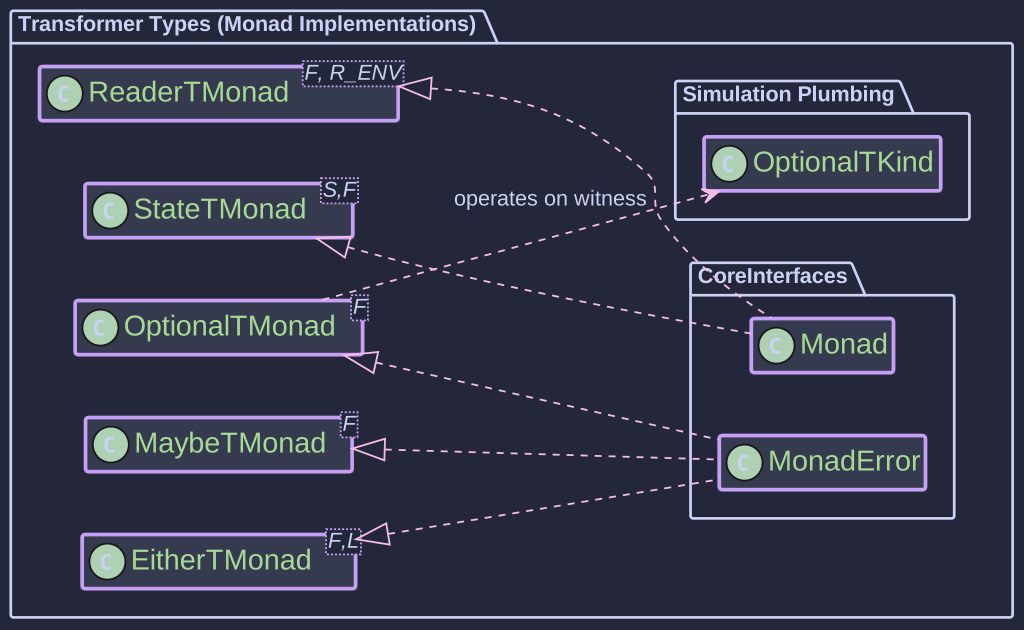
Higher-Kinded-J provides five transformers. Each solves a specific composition problem:
EitherT: Typed Errors in Any Context
The problem: Your async operation can fail with a domain-specific error, and you need to sequence multiple such operations without manual error propagation.
The solution: EitherT<F, E, A> wraps Kind<F, Either<E, A>> and provides MonadError<..., E>, giving you flatMap for sequencing, raiseError for failures, and handleErrorWith for recovery.
Usage: How to use the EitherT Monad Transformer
OptionalT: When Absence Meets Other Effects
The problem: Your async data retrieval might return nothing (user not found, config missing), and you need to chain lookups without checking each Optional manually.
The solution: OptionalT<F, A> wraps Kind<F, Optional<A>> and provides MonadError<..., Unit>, where Unit represents the "empty" state. Chain lookups with flatMap; if any step returns empty, the rest are skipped.
Usage: How to use the OptionalT Monad Transformer
MaybeT: Functional Optionality Across Monads
The problem: Same as OptionalT, but you're using Higher-Kinded-J's Maybe type rather than java.util.Optional.
The solution: MaybeT<F, A> wraps Kind<F, Maybe<A>> with the same MonadError<..., Unit> interface. Functionally equivalent to OptionalT; choose based on which optional type your codebase uses.
Usage: How to use the MaybeT Monad Transformer
ReaderT: Threading Configuration Through Effects
The problem: Multiple operations need access to shared configuration (database URLs, API keys, feature flags), and each is also wrapped in another effect like CompletableFuture. Passing the config manually through every function signature is tedious and error-prone.
The solution: ReaderT<F, R, A> wraps a function R -> Kind<F, A>. The environment R is provided once at the end, when you run the computation; all intermediate operations receive it implicitly through flatMap.
Usage: How to use the ReaderT Monad Transformer
StateT: Managing State Across Effect Boundaries
The problem: You need to thread mutable state through a sequence of operations that are also wrapped in another effect (e.g., a stack that can fail on pop, a counter that increments across async steps).
The solution: StateT<S, F, A> wraps a function S -> Kind<F, StateTuple<S, A>>. Each flatMap threads the updated state to the next operation; the outer monad's effects are handled simultaneously.
Usage: How to use the StateT Monad Transformer
Transformer Patterns at a Glance
| Pattern | Transformer | Outer Monad | What You Get |
|---|---|---|---|
| Async + Error | EitherT | CompletableFuture | Async workflows with typed error propagation |
| Async + Absence | OptionalT / MaybeT | CompletableFuture | Async lookups that may return nothing |
| Config + Async | ReaderT | CompletableFuture | Dependency injection for async services |
| Config + Error | ReaderT | Either | Environment-dependent computations that can fail |
| State + Failure | StateT | Optional / Either | Stateful operations that can short-circuit |
| State + Async | StateT | CompletableFuture | State threading across async boundaries |
- Forgetting to unwrap: The result of a transformer computation is still wrapped. Call
.value()on the transformer to extract the underlyingKind<F, Either<E, A>>(or equivalent) when you need to interact with the outer monad directly. - Wrong monad order:
EitherT<Future, E, A>(error inside future) is different from hypotheticalFutureT<Either, E, A>(future inside error). The outer monad is the one the transformer wraps around; the inner effect is what the transformer adds. Choose based on which semantics you need. - Overusing transformers: If you only combine effects in one or two places, manual nesting may be simpler. Transformers shine when the pattern is repeated across many operations.
Previous: Stack Archetypes Next: EitherT
The EitherT Transformer:
Typed Errors in Any Context
"It is not down on any map; true places never are."
– Herman Melville, Moby-Dick
The Either inside a Future exists in a place Java's type system cannot natively map to. EitherT creates the map.
- How to combine async operations (
CompletableFuture) with typed error handling (Either) - Building workflows that can fail with specific domain errors while remaining async
- Using
Forcomprehensions to keep witness types localised and the body readable - Real-world order processing with validation, inventory checks, and payment processing
- When to use the
EitherPathPath type instead of rawEitherT
For most use cases, EitherPath<E, A> is the better starting point. It wraps EitherT in a fluent API, hides the witness types, and removes the Kind widening calls.
Reach for raw EitherT only when you need to combine typed errors with a specific outer monad (CompletableFuture, IO, VTask, custom) or when you are writing polymorphic library code that names MonadError<F, E>. The Migration Cookbook shows the side-by-side translation.
The Problem: Nested Async Errors
Consider a typical order processing flow. Each step is asynchronous and can fail with a domain error:
CompletableFuture<Either<DomainError, Receipt>> processOrder(OrderData data) {
return validateOrderFuture(data).thenCompose(eitherValidated ->
eitherValidated.fold(
error -> CompletableFuture.completedFuture(Either.left(error)),
validated -> checkInventoryFuture(validated).thenCompose(eitherInventory ->
eitherInventory.fold(
error -> CompletableFuture.completedFuture(Either.left(error)),
inventory -> processPaymentFuture(inventory).thenCompose(eitherPayment ->
eitherPayment.fold(
error -> CompletableFuture.completedFuture(Either.left(error)),
payment -> createReceiptFuture(payment)
))
))
));
}
Four steps, four levels of nesting, identical error-propagation boilerplate at every level. The actual business logic is buried inside the structure. Add error recovery for a specific step and this becomes nearly unreadable.
The Solution
With the Effect Path API
The simplest fix is to switch to EitherPath. It carries no outer monad, so it composes steps that have already resolved, with no witness types in your code:
EitherPath<DomainError, Receipt> processOrder(OrderData data) {
return Path.either(validateOrder(data))
.via(validated -> Path.either(checkInventory(validated)))
.via(inventory -> Path.either(processPayment(inventory)))
.via(payment -> Path.either(createReceipt(payment)));
}
Use this whenever the outer monad is one Path already wraps.
With raw EitherT
When you need a specific outer monad (here CompletableFuture), use EitherT with a For comprehension:
var futureMonad = Instances.monadError(completableFuture());
// Name L: nothing else in `Instances.eitherT(futureMonad)` constrains it, and it would
// otherwise infer to Object (see "The phantom L" in Common Compiler Errors).
var eitherTMonad =
Instances.<CompletableFutureKind.Witness, DomainError>eitherT(futureMonad);
var workflow = For.from(eitherTMonad, EitherT.fromKind(validateOrderAsync(data)))
.from(validated -> EitherT.fromKind(checkInventoryAsync(validated)))
// past the first binding, `from` sees the accumulated tuple; only `yield` unpacks it
.from(t -> EitherT.fromKind(processPaymentAsync(t._2())))
.from(t -> EitherT.fromKind(createReceiptAsync(t._3())))
.yield((v, i, p, r) -> r);
Same four steps. No manual error propagation. If any step returns Left, subsequent steps are skipped automatically. The witness type appears once, on the eitherTMonad declaration.
The Railway View
Right ═══●══════════●══════════●══════════●═══▶ Receipt
validate inventory payment receipt
(flatMap) (flatMap) (flatMap) (map)
╲ ╲ ╲
╲ ╲ ╲ Left: skip remaining steps
╲ ╲ ╲
Left ─────●─────────●─────────────●──────────▶ DomainError
InvalidOrder OutOfStock PaymentFailed
│
handleErrorWith optional recovery
│
●═══▶ recovered Right
Each flatMap runs inside the outer monad F (e.g. CompletableFuture). If the inner Either is Left, subsequent steps are skipped and the error propagates along the lower track. handleErrorWith can switch back to the success track for recoverable errors.
How EitherT Works
EitherT<F, L, R> wraps a value of type Kind<F, Either<L, R>>. It represents a computation within the context F that will eventually yield an Either<L, R>.
┌──────────────────────────────────────────────────────────┐
│ EitherT<CompletableFutureKind.Witness, Error, Value> │
│ │
│ ┌─── CompletableFuture ──────────────────────────────┐ │
│ │ │ │
│ │ ┌─── Either ──────────────────────────────────┐ │ │
│ │ │ │ │ │
│ │ │ Left(error) │ Right(value) │ │ │
│ │ │ │ │ │ │
│ │ └─────────────────────────────────────────────┘ │ │
│ │ │ │
│ └────────────────────────────────────────────────────┘ │
│ │
│ flatMap ──▶ sequences F, then routes on Either │
│ map ──────▶ transforms Right(value) only │
│ raiseError ──▶ creates Left(error) in F │
│ handleErrorWith ──▶ recovers from Left │
└──────────────────────────────────────────────────────────┘
F: The witness type of the outer monad (e.g.CompletableFutureKind.Witness). This monad handles the primary effect.L: The Left type of the innerEither, typically the error type.R: The Right type of the innerEither, typically the success value.
public record EitherT<F, L, R>(@NonNull Kind<F, Either<L, R>> value) {
/* ... static factories ... */ }
Setting Up EitherTMonad
The EitherTMonad<F, L> class implements MonadError<EitherTKind.Witness<F, L>, L>, providing the standard monadic operations for the combined structure. It requires a Monad<F> instance for the outer monad:
var futureMonad = Instances.monadError(completableFuture());
// Name L: nothing else in `Instances.eitherT(futureMonad)` constrains it, and it would
// otherwise infer to Object (see "The phantom L" in Common Compiler Errors).
var eitherTMonad =
Instances.<CompletableFutureKind.Witness, DomainError>eitherT(futureMonad);
Witness Type: EitherTKind<F, L, R> extends Kind<EitherTKind.Witness<F, L>, R>. The types F and L are fixed for a given context; R is the variable value type.
KindHelper: EitherTKindHelper provides EITHER_T.widen and EITHER_T.narrow for safe conversion between the concrete EitherT<F, L, R> and its Kind representation. You rarely need them when using For comprehensions; they appear at the boundaries when interoperating with raw flatMap chains or other Kind-returning code.
Kind<EitherTKind.Witness<F, L>, R> kind = EITHER_T.widen(eitherT);
EitherT<F, L, R> concrete = EITHER_T.narrow(kind);
Key Operations
| Operation | Behaviour |
|---|---|
eitherTMonad.of(value) | Lifts a pure value into the EitherT context as F<Right(value)> |
eitherTMonad.map(f, kind) | Applies A -> B to the Right; Left propagates unchanged |
eitherTMonad.flatMap(f, kind) | Sequences operations; Left short-circuits the rest |
eitherTMonad.raiseError(error) | Creates F<Left(error)> |
eitherTMonad.handleErrorWith(kind, handler) | Recovers from a Left by applying handler |
Creating EitherT Instances
EitherT provides several factory methods for different starting points:
var optMonad = Instances.monadError(optional());
// 1. From a pure Right value: F<Right(value)>
var etRight = EitherT.<OptionalKind.Witness, String, String>right(optMonad, "OK");
// 2. From a pure Left value: F<Left(error)>
var etLeft = EitherT.<OptionalKind.Witness, String, Integer>left(optMonad, "FAILED");
// 3. From an existing Either: F<input>
Either<String, String> plainEither = Either.left("FAILED");
var etFromEither = EitherT.fromEither(optMonad, plainEither);
// 4. Lifting an outer-monad value F<R> into F<Right(R)>
Kind<OptionalKind.Witness, Integer> outerOptional = OPTIONAL.widen(Optional.of(123));
var etLiftF = EitherT.<OptionalKind.Witness, String, Integer>liftF(optMonad, outerOptional);
// 5. Wrapping an existing nested Kind F<Either<L, R>>
Kind<OptionalKind.Witness, Either<String, String>> nestedKind =
OPTIONAL.widen(Optional.of(Either.right("OK")));
var etFromKind = EitherT.fromKind(nestedKind);
etRight.value() returns the underlying Kind<F, Either<L, R>>, which you narrow back to the outer monad's concrete form when you need the result.
Real-World Example: Async Workflow with Error Handling
The problem: validate input, process it asynchronously, and handle domain-specific errors at each step without nested thenCompose/fold chains.
The solution:
record DomainError(String message) {}
record ValidatedData(String data) {}
record ProcessedData(String data) {}
var futureMonad = Instances.monadError(completableFuture());
// Name L: nothing else in `Instances.eitherT(futureMonad)` constrains it, and it would
// otherwise infer to Object (see "The phantom L" in Common Compiler Errors).
var eitherTMonad =
Instances.<CompletableFutureKind.Witness, DomainError>eitherT(futureMonad);
// Sync validation returning Either
Either<DomainError, ValidatedData> validateSync(String input) {
return input.isEmpty()
? Either.left(new DomainError("Input empty"))
: Either.right(new ValidatedData("Validated:" + input));
}
// Async processing returning Future<Either>
Kind<CompletableFutureKind.Witness, Either<DomainError, ProcessedData>>
processAsync(ValidatedData vd) {
var future = CompletableFuture.supplyAsync(() ->
vd.data().contains("fail")
? Either.<DomainError, ProcessedData>left(new DomainError("Processing failed"))
: Either.<DomainError, ProcessedData>right(new ProcessedData("Processed:" + vd.data())));
return FUTURE.widen(future);
}
// Compose with For: validate (sync Either) then process (async Future<Either>)
var workflow = For.from(eitherTMonad, EitherT.fromEither(futureMonad, validateSync(input)))
.from(validated -> EitherT.fromKind(processAsync(validated)))
.yield((validated, processed) -> processed);
Why this works: the For comprehension threads each step through eitherTMonad.flatMap. The first step lifts a synchronous Either into the transformer; the second wraps an existing Future<Either>. If validation returns Left, processing is skipped and the error propagates through the future.
Advanced Example: Error Recovery
The problem: a shipping step might fail with a temporary error, and you want to recover by using a default shipping option rather than failing the entire workflow.
The solution:
var shipmentAttempt = EitherT.fromKind(steps.createShipmentAsync(orderId, address));
var recoveredShipment = eitherTMonad.handleErrorWith(
shipmentAttempt,
error -> error instanceof DomainError.ShippingError se && "Temporary Glitch".equals(se.reason())
? eitherTMonad.of(new ShipmentInfo("DEFAULT_SHIPPING_USED"))
: eitherTMonad.raiseError(error));
EitherT already implements the Kind interface, so it can be passed straight to handleErrorWith without an explicit widen. The handler only fires when the inner Either is Left, and the outer CompletableFuture context is preserved throughout.
Transforming the Outer Monad with mapT
Sometimes you need to change the outer monad of an EitherT without touching the inner Either at all. Imagine you have built a pipeline over CompletableFuture but now want to continue in a synchronous Optional context, or you want to apply a cross-cutting concern (logging, retry) at the monad level.
mapT does exactly this. It applies a function to the wrapped Kind<F, Either<L, R>> and produces a new EitherT<G, L, R>:
EitherT< F , L, R > ── mapT(f) ──> EitherT< G , L, R >
│ │
┌────┴────┐ ┌────┴────┐
│ F │ f: F[...] -> G[...] │ G │
│ ┌─────┐ │ ====> │ ┌─────┐ │
│ │ E │ │ inner Either untouched │ │ E │ │
│ │ L|R │ │ │ │ L|R │ │
│ └─────┘ │ │ └─────┘ │
└─────────┘ └─────────┘
// futureET is an EitherT<CompletableFutureKind.Witness, DomainError, Receipt>
var optionalET = futureET.mapT(futureKind -> {
Either<DomainError, Receipt> awaited = FUTURE.join(futureKind);
return OPTIONAL.widen(Optional.of(awaited));
});
map transforms the value inside the Either (the R in Right(R)).
mapT transforms the outer monad wrapping the Either, the F in F<Either<L, R>>.
They operate at different levels of the transformer stack.
- Mixing up
fromEitherandfromKind: usefromEitherwhen you have a plainEither<L, R>(e.g. from a synchronous validation). UsefromKindwhen you haveKind<F, Either<L, R>>(e.g. from an async operation that already returnsFuture<Either>). - Forgetting
.value(): the final result of anEitherTchain is still anEitherT. Call.value()to extract the underlyingKind<F, Either<L, R>>when you need to interact with the outer monad directly. - Reaching for the transformer when
EitherPathwould do: if your outer monad is one Path already wraps,EitherPathis shorter, has less ceremony, and reads more naturally. The transformer is the right choice when the outer monad is fixed by an external constraint.
Without HKT simulation, you would need a separate transformer for each outer monad: EitherTOptional, EitherTFuture, EitherTIO, and so on. Higher-Kinded-J's Kind<F, A> interface means there is one EitherT and one EitherTMonad that works generically for any outer monad F for which a Monad<F> instance exists. You provide the outer monad at construction time; the transformer does the rest.
- EitherPath - The Path-API equivalent, recommended for most use cases
- Stack Archetypes - The Service Stack archetype maps directly to
EitherT/EitherPath - Migration Cookbook - Side-by-side translations
- Monad Transformers - General concept and choosing the right transformer
- OptionalT - When your inner effect is absence rather than typed errors
- Either Monad - The underlying Either type
- Order Processing Walkthrough - Complete EitherT example with CompletableFuture
- Railway Oriented Programming - Scott Wlaschin's classic talk on functional error handling (60 min watch)
Practise composing async-and-typed-error workflows in Tutorial 01: When Path Isn't Enough (6 exercises).
Previous: Monad Transformers Next: OptionalT
The OptionalT Transformer:
When Absence Meets Other Effects
"The most beautiful experience we can have is the mysterious."
— Albert Einstein
OptionalT lets a chain of asynchronous lookups disappear cleanly the moment a value is missing. The mystery of "did this resolve?" stays inside the type and never leaks into your control flow.
- How to integrate Java's
Optionalwith other monadic contexts - Building async workflows where each step might return empty results
- Using
Forcomprehensions to compose multi-step lookups without manual fallback wiring - Using
some,none,fromOptional,liftF, andfromKindto constructOptionalTvalues - When to use the
OptionalPathPath type instead of rawOptionalT
For most use cases, OptionalPath<A> (or MaybePath<A> for the FP-native equivalent) is the better starting point. It wraps OptionalT in a fluent API that hides the witness types and Kind widening.
Reach for raw OptionalT only when you need to combine optionality with a specific outer monad (CompletableFuture, IO, VTask, custom) or when you are writing polymorphic library code that names MonadError<F, Unit>.
The Problem: Nested Async Lookups
Consider fetching a user, then their profile, then their preferences. Each step is async and might return empty:
CompletableFuture<Optional<UserPreferences>> getPreferences(String userId) {
return fetchUserFuture(userId).thenCompose(optUser ->
optUser.map(user ->
fetchProfileFuture(user.id()).thenCompose(optProfile ->
optProfile.map(profile ->
fetchPrefsFuture(profile.userId())
).orElse(CompletableFuture.completedFuture(Optional.empty()))
)
).orElse(CompletableFuture.completedFuture(Optional.empty()))
);
}
Each step requires checking the Optional, providing a fallback CompletableFuture.completedFuture(Optional.empty()) for the absent case, and nesting deeper. Three lookups; three layers of map/orElse. The fallback expression is identical every time.
The Solution
With the Effect Path API
OptionalPath carries no outer monad, so it composes lookups that have already resolved:
OptionalPath<UserPreferences> getPreferences(String userId) {
return Path.optional(lookupUser(userId))
.via(user -> Path.optional(lookupProfile(user.id())))
.via(profile -> Path.optional(lookupPrefs(profile.userId())));
}
Use this whenever the outer monad is one Path already wraps.
With raw OptionalT
When you need a specific outer monad, use OptionalT with a For comprehension:
var futureMonad = Instances.monadError(completableFuture());
var optionalTMonad = Instances.optionalT(futureMonad);
var prefsLookup =
For.from(optionalTMonad, OptionalT.fromKind(fetchUserAsync(userId)))
.from(user -> OptionalT.fromKind(fetchProfileAsync(user.id())))
// past the first binding, `from` sees the accumulated tuple
.from(t -> OptionalT.fromKind(fetchPrefsAsync(t._2().userId())))
.yield((user, profile, prefs) -> prefs);
If any step returns empty, subsequent steps are skipped. No manual orElse fallbacks, no repeated Optional.empty() wrapping.
The Railway View
Present ═══●═══════════●═══════════●═══════════▶ UserPreferences
fetchUser fetchProfile fetchPrefs
(flatMap) (flatMap) (flatMap)
╲ ╲ ╲
╲ ╲ ╲ empty: skip remaining steps
╲ ╲ ╲
Empty ────●──────────●─────────────●──────────▶ Optional.empty()
user absent profile absent prefs absent
│
handleErrorWith provide defaults
│
●═══▶ default UserPreferences
Each flatMap runs inside the outer monad F. If the inner Optional is empty, subsequent steps are skipped. handleErrorWith can provide a fallback value when the chain yields nothing.
How OptionalT Works
OptionalT<F, A> wraps a computation yielding Kind<F, Optional<A>>. It represents an effectful computation in F that may or may not produce a value.
┌──────────────────────────────────────────────────────────┐
│ OptionalT<CompletableFutureKind.Witness, Value> │
│ │
│ ┌─── CompletableFuture ──────────────────────────────┐ │
│ │ │ │
│ │ ┌─── Optional ────────────────────────────────┐ │ │
│ │ │ │ │ │
│ │ │ empty() │ of(value) │ │ │
│ │ │ │ │ │ │
│ │ └─────────────────────────────────────────────┘ │ │
│ │ │ │
│ └────────────────────────────────────────────────────┘ │
│ │
│ flatMap ──▶ sequences F, then routes on Optional │
│ map ──────▶ transforms present value only │
│ raiseError(Unit) ──▶ creates empty() in F │
│ handleErrorWith ──▶ recovers from empty │
└──────────────────────────────────────────────────────────┘
F: The witness type of the outer monad (e.g.CompletableFutureKind.Witness).A: The type of the value that might be present within theOptional.
public record OptionalT<F, A>(@NonNull Kind<F, Optional<A>> value)
implements OptionalTKind<F, A> { /* ... static factories ... */ }
Setting Up OptionalTMonad
The OptionalTMonad<F> class implements MonadError<OptionalTKind.Witness<F>, Unit>. The error type is Unit, signifying that an "error" is the Optional.empty() state (absence carries no information beyond its occurrence).
var futureMonad = Instances.monadError(completableFuture());
var optionalTMonad = Instances.optionalT(futureMonad);
Witness Type: OptionalTKind<F, A> extends Kind<OptionalTKind.Witness<F>, A>. The outer monad F is fixed; A is the variable value type.
KindHelper: OptionalTKindHelper provides OPTIONAL_T.widen and OPTIONAL_T.narrow for safe conversion between OptionalT<F, A> and its Kind representation. With For comprehensions you rarely need them; they appear at the boundaries when interoperating with raw flatMap chains.
Kind<OptionalTKind.Witness<F>, A> kind = OPTIONAL_T.widen(optionalT);
OptionalT<F, A> concrete = OPTIONAL_T.narrow(kind);
Key Operations
| Operation | Behaviour |
|---|---|
optionalTMonad.of(value) | Lifts a nullable value as F<Optional.ofNullable(value)> |
optionalTMonad.map(f, kind) | Applies A -> B to the present value; null results become empty |
optionalTMonad.flatMap(f, kind) | Sequences operations; empty short-circuits the rest |
optionalTMonad.raiseError(Unit.INSTANCE) | Creates F<Optional.empty()> |
optionalTMonad.handleErrorWith(kind, handler) | Recovers from empty by applying handler |
Creating OptionalT Instances
var futureMonad = Instances.monadError(completableFuture());
// 1. From an existing F<Optional<A>>
Kind<CompletableFutureKind.Witness, Optional<String>> fOptional =
FUTURE.widen(CompletableFuture.completedFuture(Optional.of("Data")));
var ot1 = OptionalT.fromKind(fOptional);
// 2. From a present value: F<Optional.of(a)>
var ot2 = OptionalT.some(futureMonad, "Data");
// 3. Empty: F<Optional.empty()>
var ot3 = OptionalT.<CompletableFutureKind.Witness, String>none(futureMonad);
// 4. From a plain java.util.Optional: F<Optional<A>>
var ot4 = OptionalT.fromOptional(futureMonad, Optional.of(123));
// 5. Lifting F<A> into OptionalT (null -> empty, non-null -> present)
Kind<CompletableFutureKind.Witness, String> fValue =
FUTURE.widen(CompletableFuture.completedFuture("Data"));
var ot5 = OptionalT.liftF(futureMonad, fValue);
ot1.value() returns the underlying Kind<CompletableFutureKind.Witness, Optional<String>>, which you narrow back to a concrete CompletableFuture<Optional<String>> when you need the result.
Real-World Example: Async Multi-Step Data Retrieval
The problem: fetch a user, then their profile, then their preferences. Each step is async and might not find data. The chain should short-circuit on the first empty result.
The solution:
var futureMonad = Instances.monadError(completableFuture());
var optionalTMonad = Instances.optionalT(futureMonad);
// Service stubs return Future<Optional<T>>
Kind<CompletableFutureKind.Witness, Optional<User>> fetchUserAsync(String userId) {
return FUTURE.widen(CompletableFuture.supplyAsync(() ->
"user1".equals(userId) ? Optional.of(new User(userId, "Alice"))
: Optional.empty()));
}
// Workflow: user -> profile -> preferences
var workflow =
For.from(optionalTMonad, OptionalT.fromKind(fetchUserAsync(userId)))
.from(user -> OptionalT.fromKind(fetchProfileAsync(user.id())))
// past the first binding, `from` sees the accumulated tuple
.from(t -> OptionalT.fromKind(fetchPrefsAsync(t._2().userId())))
.yield((user, profile, prefs) -> prefs);
Why this works: each from only executes its lambda if the previous step produced a present value. If fetchUserAsync returns empty, neither fetchProfileAsync nor fetchPrefsAsync is called.
Providing Defaults with Error Recovery
The problem: when the preference chain returns empty, you want to provide default preferences rather than propagating the absence.
The solution:
Kind<OptionalTKind.Witness<CompletableFutureKind.Witness>, UserPreferences>
getPrefsWithDefault(String userId) {
var prefsAttempt = getFullUserPreferences(userId);
return optionalTMonad.handleErrorWith(
prefsAttempt,
(Unit v) -> OptionalT.some(futureMonad, new UserPreferences(userId, "default-light")));
}
OptionalT already implements the Kind interface, so neither the source value nor the handler's result need an explicit OPTIONAL_T.widen call. The handleErrorWith handler receives Unit (since absence carries no information) and returns an OptionalT containing the default preferences.
Transforming the Outer Monad with mapT
Sometimes you need to change the outer monad of an OptionalT without touching the inner Optional. Perhaps you have awaited an async result and want to continue in a synchronous context.
mapT applies a function to the wrapped Kind<F, Optional<A>> and produces a new OptionalT<G, A>:
OptionalT< F , A > ── mapT(f) ──> OptionalT< G , A >
│ │
┌────┴────┐ ┌────┴────┐
│ F │ f: F[...] -> G[...] │ G │
│ ┌─────┐ │ ====> │ ┌─────┐ │
│ │Opt │ │ inner Optional sealed │ │Opt │ │
│ │ A │ │ │ │ A │ │
│ └─────┘ │ │ └─────┘ │
└─────────┘ └─────────┘
// asyncOt is an OptionalT<CompletableFutureKind.Witness, String>
var syncOt = asyncOt.mapT(futureKind -> {
Optional<String> awaited = FUTURE.narrow(futureKind).join();
return OPTIONAL.widen(Optional.of(awaited));
});
map transforms the value inside the Optional (the A in Optional.of(A)).
mapT transforms the outer monad wrapping the Optional, the F in F<Optional<A>>.
They operate at different levels of the transformer stack.
- Null vs. empty confusion:
OptionalT.liftFtreats anullvalue insideF<A>asOptional.empty(). If you want to explicitly signal absence, useOptionalT.nonerather than relying on null propagation. - Unit as error type: when using
handleErrorWith, the handler function receivesUnit.INSTANCE, not a descriptive error. If you need typed error information, considerEitherTinstead. - Reaching for the transformer when
OptionalPathwould do: if your outer monad is one Path already wraps,OptionalPathis shorter, has less ceremony, and reads more naturally.
- OptionalPath - The Path-API equivalent, recommended for most use cases
- Stack Archetypes - The Lookup Stack archetype maps to
OptionalT/MaybePath - Migration Cookbook - Side-by-side translations
- Monad Transformers - General concept and choosing the right transformer
- MaybeT - Equivalent functionality for Higher-Kinded-J's Maybe type
- EitherT - When you need typed errors, not just absence
- Java Optional Best Practices - Comprehensive Baeldung guide (20 min read)
- Null References: The Billion Dollar Mistake - Tony Hoare's historic talk on why Optional matters (60 min watch)
Practise async lookup chains in Tutorial 02: Async with Absence (5 exercises).
Previous: EitherT Next: MaybeT
The MaybeT Transformer:
Functional Optionality Across Monads
"Some things are present, others not."
— Aristotle, Categories
MaybeT is the FP-native cousin of OptionalT. Same idea, same composition story, slightly different host type, and a slightly cleaner pairing with the rest of Higher-Kinded-J.
- How to combine
Maybe's optionality with other monadic effects - Building workflows where operations might produce
Nothingwithin async contexts - Understanding the difference between
MaybeTandOptionalT - Using
Forcomprehensions to keep witness types localised - Using
just,nothing,fromMaybe,liftF, andfromKindto constructMaybeTvalues - When to use the
MaybePathPath type instead of rawMaybeT
For most use cases, MaybePath<A> is the better starting point. It wraps MaybeT in a fluent API, hides the witness types, and removes the Kind widening calls.
Reach for raw MaybeT only when you need to combine absence with a specific outer monad (CompletableFuture, IO, VTask, custom) or when you are writing polymorphic library code that names MonadError<F, Unit>.
The Problem: Nested Async Optionality
When an async lookup returns Maybe rather than Optional, you face the same nesting problem:
CompletableFuture<Maybe<UserPreferences>> getPreferences(String userId) {
return fetchUserFuture(userId).thenCompose(maybeUser ->
maybeUser
.map(user -> fetchPreferencesFuture(user.id()))
.orElseGet(() -> CompletableFuture.completedFuture(Maybe.nothing())));
}
Each step has to unwrap the Maybe, supply a Nothing fallback wrapped in a completed future, and hand the result back into thenCompose. Every further lookup adds another layer. The pattern is identical to the Optional case but uses Maybe's API.
The Solution
With the Effect Path API
MaybePath carries no outer monad, so it composes lookups that have already resolved:
MaybePath<UserPreferences> getPreferences(String userId) {
return Path.maybe(lookupUser(userId))
.via(user -> Path.maybe(lookupPreferences(user.id())));
}
With raw MaybeT
var futureMonad = Instances.monadError(completableFuture());
var maybeTMonad = Instances.maybeT(futureMonad);
var prefs = For.from(maybeTMonad, MaybeT.fromKind(fetchUserAsync(userId)))
.from(user -> MaybeT.fromKind(fetchPreferencesAsync(user.id())))
.yield((user, preferences) -> preferences);
If fetchUserAsync returns Nothing, the preferences lookup is skipped entirely. No manual folding, no fallback wrapping.
The Railway View
Just ═══●═══════════════●═══════════════════▶ UserPreferences
fetchUser fetchPreferences
(flatMap) (flatMap)
╲ ╲
╲ ╲ Nothing: skip remaining steps
╲ ╲
Nothing ────●────────────────●──────────────────▶ Nothing
user absent prefs absent
│
handleErrorWith provide defaults
│
●═══▶ default UserPreferences
Each flatMap runs inside the outer monad F. If the inner Maybe is Nothing, subsequent steps are skipped. handleErrorWith can provide a fallback value when the chain yields nothing.
How MaybeT Works
MaybeT<F, A> wraps a computation yielding Kind<F, Maybe<A>>. It represents an effectful computation in F that may produce Just(value) or Nothing.
┌──────────────────────────────────────────────────────────┐
│ MaybeT<CompletableFutureKind.Witness, Value> │
│ │
│ ┌─── CompletableFuture ──────────────────────────────┐ │
│ │ │ │
│ │ ┌─── Maybe ───────────────────────────────────┐ │ │
│ │ │ │ │ │
│ │ │ Nothing │ Just(value) │ │ │
│ │ │ │ │ │ │
│ │ └─────────────────────────────────────────────┘ │ │
│ │ │ │
│ └────────────────────────────────────────────────────┘ │
│ │
│ flatMap ──▶ sequences F, then routes on Maybe │
│ map ──────▶ transforms Just(value) only │
│ raiseError(Unit) ──▶ creates Nothing in F │
│ handleErrorWith ──▶ recovers from Nothing │
└──────────────────────────────────────────────────────────┘
F: The witness type of the outer monad (e.g.CompletableFutureKind.Witness,ListKind.Witness).A: The type of the value potentially held by the innerMaybe.
public record MaybeT<F, A>(@NonNull Kind<F, Maybe<A>> value) {
/* ... static factories ... */ }
Setting Up MaybeTMonad
The MaybeTMonad<F> class implements MonadError<MaybeTKind.Witness<F>, Unit>. Like OptionalTMonad, the error type is Unit, signifying that Nothing carries no information beyond its occurrence.
var futureMonad = Instances.monadError(completableFuture());
var maybeTMonad = Instances.maybeT(futureMonad);
Witness Type: MaybeTKind<F, A> extends Kind<MaybeTKind.Witness<F>, A>. The outer monad F is fixed; A is the variable value type.
KindHelper: MaybeTKindHelper provides MAYBE_T.widen and MAYBE_T.narrow for safe conversion. With For comprehensions you rarely need them; they appear at the boundaries when interoperating with raw flatMap chains.
Kind<MaybeTKind.Witness<F>, A> kind = MAYBE_T.widen(maybeT);
MaybeT<F, A> concrete = MAYBE_T.narrow(kind);
Key Operations
| Operation | Behaviour |
|---|---|
maybeTMonad.of(value) | Lifts a nullable value as F<Maybe.fromNullable(value)> |
maybeTMonad.map(f, kind) | Applies A -> B to the Just value; null propagates as Nothing |
maybeTMonad.flatMap(f, kind) | Sequences operations; Nothing short-circuits the rest |
maybeTMonad.raiseError(Unit.INSTANCE) | Creates F<Nothing> |
maybeTMonad.handleErrorWith(kind, handler) | Recovers from Nothing by applying handler |
Creating MaybeT Instances
var optMonad = Instances.monadError(optional());
// 1. From a non-null value: F<Just(value)>
var mtJust = MaybeT.just(optMonad, "Hello");
// 2. Nothing state: F<Nothing>
var mtNothing = MaybeT.<OptionalKind.Witness, String>nothing(optMonad);
// 3. From a plain Maybe: F<Maybe(input)>
var mtFromMaybe = MaybeT.fromMaybe(optMonad, Maybe.just(123));
// 4. Lifting F<A> into MaybeT (using fromNullable)
Kind<OptionalKind.Witness, String> outerOptional = OPTIONAL.widen(Optional.of("World"));
var mtLiftF = MaybeT.liftF(optMonad, outerOptional);
// 5. Wrapping an existing F<Maybe<A>>
Kind<OptionalKind.Witness, Maybe<String>> nestedKind =
OPTIONAL.widen(Optional.of(Maybe.just("Present")));
var mtFromKind = MaybeT.fromKind(nestedKind);
mtJust.value() returns the underlying Kind<F, Maybe<A>>, which you narrow back to the concrete outer monad form when you need the result.
Real-World Example: Async Resource Fetching
The problem: fetch a user asynchronously, and if found, fetch their preferences. Each step might return Nothing. Compose without manual Maybe.fold at every step.
The solution:
var futureMonad = Instances.monadError(completableFuture());
var maybeTMonad = Instances.maybeT(futureMonad);
// Service stubs return Future<Maybe<T>>
Kind<CompletableFutureKind.Witness, Maybe<User>> fetchUserAsync(String userId) {
return FUTURE.widen(CompletableFuture.supplyAsync(() ->
"user123".equals(userId) ? Maybe.just(new User(userId, "Alice"))
: Maybe.nothing()));
}
// Workflow: user -> preferences
var preferences = For.from(maybeTMonad, MaybeT.fromKind(fetchUserAsync(userId)))
.from(user -> MaybeT.fromKind(fetchPreferencesAsync(user.id())))
.yield((user, prefs) -> prefs);
Why this works: the from lambda only executes if the user was found (Just). If fetchUserAsync returns Nothing, the entire chain short-circuits to Future<Nothing>.
Transforming the Outer Monad with mapT
Sometimes you need to change the outer monad of a MaybeT without touching the inner Maybe. Perhaps you have an IO-based pipeline but want to switch to a Task for structured concurrency, or you want to collapse two layers of optionality by moving from Optional<Maybe<A>> to Id<Maybe<A>>.
mapT applies a function to the wrapped Kind<F, Maybe<A>> and produces a new MaybeT<G, A>:
MaybeT< F , A > ── mapT(f) ──> MaybeT< G , A >
│ │
┌────┴────┐ ┌────┴────┐
│ F │ f: F[...] -> G[...] │ G │
│ ┌─────┐ │ ====> │ ┌─────┐ │
│ │Maybe│ │ inner Maybe sealed │ │Maybe│ │
│ │ A │ │ │ │ A │ │
│ └─────┘ │ │ └─────┘ │
└─────────┘ └─────────┘
MaybeT<OptionalKind.Witness, String> optMt = MaybeT.just(optMonad, "Hello");
var idMt = optMt.mapT(optKind -> {
Optional<Maybe<String>> opt = OPTIONAL.narrow(optKind);
return ID.widen(Id.of(opt.orElse(Maybe.nothing())));
});
map transforms the value inside the Maybe (the A in Just(A)).
mapT transforms the outer monad wrapping the Maybe, the F in F<Maybe<A>>.
They operate at different levels of the transformer stack.
MaybeT vs OptionalT: When to Use Which?
Both MaybeT and OptionalT combine optionality with other effects. The functionality is equivalent; the choice depends on your codebase:
| Aspect | MaybeT | OptionalT |
|---|---|---|
| Inner type | Maybe<A> | java.util.Optional<A> |
| Best for | Higher-Kinded-J ecosystem code | Integrating with existing Java code |
| FP-native | Yes (designed for composition) | Wraps Java's standard library |
| Serialisation | No warnings | Identity-sensitive operation warnings |
| Team familiarity | Requires learning Maybe | Uses familiar Optional API |
Use MaybeT when:
- You're working within the Higher-Kinded-J ecosystem and want consistency with
Maybe - You want a type explicitly designed for functional composition
- You want to avoid Java's
Optionaland its quirks (serialisation warnings, identity-sensitive operations)
Use OptionalT when:
- You're integrating with existing Java code that uses
java.util.Optional - Your team is more comfortable with standard Java types
- You're wrapping external libraries that return
Optional
In practice, choose whichever matches your existing codebase. Both offer equivalent functionality through their MonadError instances.
- Confusing
Maybe.nothing()with null:MaybeT.of(null)will useMaybe.fromNullable(null), which producesNothing. Be explicit about intent; useMaybeT.nothing(monad)when you mean absence. - Using
MaybeTwhen you need error information:Nothingcarries no reason for the absence. If you need to know why a value is missing, useEitherTwith a descriptive error type instead. - Reaching for the transformer when
MaybePathwould do: if your outer monad is one Path already wraps,MaybePathis shorter, has less ceremony, and reads more naturally.
- MaybePath - The Path-API equivalent, recommended for most use cases
- Stack Archetypes - The Lookup Stack archetype maps to
MaybeT/MaybePath - Migration Cookbook - Side-by-side translations
- Monad Transformers - General concept and choosing the right transformer
- OptionalT - Equivalent functionality for
java.util.Optional - EitherT - When you need typed errors, not just absence
- Maybe Monad - The underlying Maybe type
- Null Handling Patterns in Modern Java - Comprehensive guide to null safety (15 min read)
The MaybeT exercise lives alongside the OptionalT exercises in Tutorial 02: Async with Absence (5 exercises).
Previous: OptionalT Next: ReaderT
The ReaderT Transformer:
Threading Configuration Through Effects
"No man is an island, entire of itself."
– John Donne, Meditation XVII
No computation is independent of its environment. ReaderT makes that dependency explicit and composable.
- How to combine dependency injection (
Reader) with other effects like async operations - Building configuration-dependent workflows that are also async or failable
- Using
Forcomprehensions withask,reader, andliftto keep witness types localised - Creating testable microservice clients with injected configuration
- When to use the
ReaderPathPath type or theMonadReadercapability instead of rawReaderT
For most use cases, ReaderPath<R, A> is the better starting point when the environment is the only effect. When you need polymorphic, stack-independent code, the MonadReader<F, R> capability is usually a better fit than the concrete ReaderT.
Reach for raw ReaderT only when you need to combine an environment with a specific outer monad that Path does not wrap, or when you are constructing your own MTL instance.
The Problem: Configuration Everywhere
Consider a service that needs API keys and URLs for every operation:
CompletableFuture<ServiceData> fetchData(AppConfig config, String itemId) {
return CompletableFuture.supplyAsync(() ->
callApi(config.apiKey(), config.serviceUrl(), itemId));
}
CompletableFuture<ProcessedData> processData(AppConfig config, ServiceData data) {
return CompletableFuture.supplyAsync(() ->
transform(data, config.apiKey()));
}
CompletableFuture<ProcessedData> workflow(AppConfig config) {
return fetchData(config, "item123")
.thenCompose(data -> processData(config, data));
}
The config parameter threads through every function signature, every call site, every test. It's noise that obscures the actual logic. Rename a config field, and you touch every function in the chain.
The Solution
With the Effect Path API (single effect)
If the environment is the only effect, ReaderPath is the simplest expression:
ReaderPath<AppConfig, ProcessedData> workflow() {
return Path.<AppConfig, ServiceData>asks(
config -> callApi(config.apiKey(), "item123"))
.via(data -> Path.<AppConfig, ProcessedData>asks(
config -> transform(data, config.apiKey())));
}
With raw ReaderT (combined effect)
When the environment must combine with another monad (here CompletableFuture):
var futureMonad = Instances.monadError(completableFuture());
// Name the environment: nothing else constrains R, and it would otherwise infer to Object.
var readerTMonad =
Instances.<CompletableFutureKind.Witness, AppConfig>readerT(futureMonad);
ReaderT<CompletableFutureKind.Witness, AppConfig, ServiceData> fetchDataRT(String itemId) {
return ReaderT.of(config ->
FUTURE.widen(CompletableFuture.supplyAsync(() ->
callApi(config.apiKey(), config.serviceUrl(), itemId))));
}
ReaderT<CompletableFutureKind.Witness, AppConfig, ProcessedData> processDataRT(ServiceData data) {
return ReaderT.reader(futureMonad,
config -> transform(data, config.apiKey()));
}
// Compose with For:
var workflowRT = For.from(readerTMonad, fetchDataRT("item123"))
.from(data -> processDataRT(data))
.yield((data, processed) -> processed);
// Provide the config once at the edge:
var result = FUTURE.join(READER_T.narrow(workflowRT).run().apply(prodConfig));
The AppConfig is threaded implicitly through flatMap. Each operation declares its dependency on AppConfig in its return type but never receives it as a parameter.
The Railway View
Value ═══●═══════════●═══════════●═══▶ ProcessedData (in F)
fetchData process map
(flatMap) (flatMap)
▲ ▲ ▲ config read at each step
AppConfig ═══╧═══════════╧═══════════╧═══▶ read-only, never modified
apiKey serviceUrl executor
│
run(prodConfig) provide the environment once at the edge
The configuration sits on its own track and is never consumed; each flatMap step reads from it without changing it. run().apply(config) supplies the environment at the boundary, after which the value track collapses into the outer monad F.
How ReaderT Works
ReaderT<F, R, A> wraps a function R -> Kind<F, A>. When you supply an environment of type R, you get back a monadic value Kind<F, A>.
┌──────────────────────────────────────────────────────────┐
│ ReaderT<CompletableFutureKind.Witness, AppConfig, A> │
│ │
│ ┌── AppConfig ──┐ │
│ │ │ │
│ │ apiKey │ │
│ │ serviceUrl │ │
│ │ executor │ │
│ └───────┬───────┘ │
│ │ │
│ ▼ │
│ ┌─── Function: R → Kind<F, A> ───────────────────┐ │
│ │ │ │
│ │ config → CompletableFuture<result> │ │
│ │ │ │
│ └────────────────────────────────────────────────┘ │
│ │
│ flatMap ──▶ threads same config to next operation │
│ map ──────▶ transforms result, config unchanged │
│ ask ──────▶ gives you the config itself │
│ run ──────▶ provides config, returns F<A> │
└──────────────────────────────────────────────────────────┘
F: The witness type of the outer monad (e.g.CompletableFutureKind.Witness).R: The type of the read-only environment (configuration, dependencies).A: The type of the value produced, within the outer monadF.run: The core functionR -> Kind<F, A>.
public record ReaderT<F, R, A>(@NonNull Function<R, Kind<F, A>> run)
implements ReaderTKind<F, R, A> {
// ... static factory methods ...
}
Setting Up ReaderTMonad
The ReaderTMonad<F, R> class implements Monad<ReaderTKind.Witness<F, R>>, providing standard monadic operations. It requires a Monad<F> instance for the outer monad:
var readerTOptionalMonad =
Instances.<OptionalKind.Witness, AppConfig>readerT(Instances.monadError(optional()));
Witness Type: ReaderTKind<F, R, A> extends Kind<ReaderTKind.Witness<F, R>, A>. The outer monad F and environment R are fixed; A is the variable value type.
KindHelper: ReaderTKindHelper provides READER_T.widen and READER_T.narrow for safe conversion. With For comprehensions you rarely need them; they appear at the boundaries when interoperating with raw flatMap chains.
Kind<ReaderTKind.Witness<F, R>, A> kind = READER_T.widen(readerT);
ReaderT<F, R, A> concrete = READER_T.narrow(kind);
Key Operations
| Operation | Behaviour |
|---|---|
readerTMonad.of(value) | Lifts a pure value; environment is ignored. Returns ReaderT(r -> outerMonad.of(value)) |
readerTMonad.map(f, kind) | Transforms the result value A -> B within the outer monad; environment unchanged |
readerTMonad.flatMap(f, kind) | Sequences operations; threads the same environment to the next step |
The MonadReader capability adds ask(), reader(f), and local(f, ma) on top.
Creating ReaderT Instances
var optMonad = Instances.monadError(optional());
record Config(String setting) {}
// 1. Directly from R -> F<A> function
var rt1 = ReaderT.<OptionalKind.Witness, Config, String>of(
cfg -> OPTIONAL.widen(Optional.of("Data based on " + cfg.setting())));
// 2. Lifting an existing F<A> (environment ignored)
Kind<OptionalKind.Witness, Integer> optionalValue = OPTIONAL.widen(Optional.of(123));
var rt2 = ReaderT.<OptionalKind.Witness, Config, Integer>liftF(optMonad, optionalValue);
// 3. From R -> A function (result lifted into F)
var rt3 = ReaderT.<OptionalKind.Witness, Config, String>reader(
optMonad, cfg -> "Hello from " + cfg.setting());
// 4. ask: provides the environment itself as the result
var rt4 = ReaderT.<OptionalKind.Witness, Config>ask(optMonad);
Real-World Example: Configuration-Dependent Async Services
The problem: async service operations that all need an AppConfig (API keys, URLs, executor). Compose them without passing config through every call.
The solution:
record AppConfig(String apiKey, String serviceUrl, ExecutorService executor) {}
record ServiceData(String rawData) {}
record ProcessedData(String info) {}
var futureMonad = Instances.monadError(completableFuture());
var readerTMonad =
Instances.<CompletableFutureKind.Witness, AppConfig>readerT(futureMonad);
ReaderT<CompletableFutureKind.Witness, AppConfig, ServiceData> fetchServiceDataRT(String itemId) {
return ReaderT.of(config -> FUTURE.widen(
CompletableFuture.supplyAsync(() ->
new ServiceData("Raw data for " + itemId + " from " + config.serviceUrl()),
config.executor())));
}
ReaderT<CompletableFutureKind.Witness, AppConfig, ProcessedData> processDataRT(ServiceData data) {
return ReaderT.reader(futureMonad,
config -> new ProcessedData("Processed: " + data.rawData().toUpperCase()));
}
// Compose with For:
var workflowRT = For.from(readerTMonad, fetchServiceDataRT("item123"))
.from(data -> processDataRT(data))
.yield((data, processed) -> processed);
// Run with different configs:
var prodConfig = new AppConfig("prod_key", "https://api.prod.example.com", executor);
var stagingConfig = new AppConfig("staging_key", "https://api.staging.example.com", executor);
var prodResult = FUTURE.join(READER_T.narrow(workflowRT).run().apply(prodConfig));
var stagingResult = FUTURE.join(READER_T.narrow(workflowRT).run().apply(stagingConfig));
Why this works: the AppConfig is threaded through both operations by flatMap. The same workflow runs against production and staging by changing the argument to run().apply(...). The workflow definition is completely decoupled from the environment.
Using ask to Access Configuration Mid-Workflow
The problem: within a composed workflow, read a specific config value without restructuring the computation.
The solution:
var getConfigRT = ReaderT.<CompletableFutureKind.Witness, AppConfig>ask(futureMonad);
var serviceUrlRT = readerTMonad.map(
(AppConfig cfg) -> "Service URL: " + cfg.serviceUrl(),
getConfigRT);
var stagingUrl = FUTURE.join(READER_T.narrow(serviceUrlRT).run().apply(stagingConfig));
// → "Service URL: https://api.staging.example.com"
ReaderT.ask returns the entire environment as the result, which you can then map over to extract specific fields.
Fire-and-Forget Operations with Unit
The problem: some operations (logging, initialisation, sending metrics) depend on configuration but don't produce a meaningful return value.
The solution: use Unit as the value type:
ReaderT<CompletableFutureKind.Witness, AppConfig, Unit> initialiseComponentRT() {
return ReaderT.of(config -> FUTURE.widen(
CompletableFuture.runAsync(() -> {
System.out.println("Initialising with API Key: " + config.apiKey());
}, config.executor()).thenApply(v -> Unit.INSTANCE)));
}
var result = FUTURE.join(initialiseComponentRT().run().apply(prodConfig));
// → () (Unit.INSTANCE, signifying successful completion)
Transforming the Outer Monad with mapT
Sometimes you need to change the outer monad of a ReaderT without altering the environment-threading logic. Perhaps you want to switch from Optional to Id (collapsing optionality with a default), or apply a natural transformation to move between effect types.
Because ReaderT wraps a function rather than a value, mapT composes the transformation function after each result of run:
env ──> run() ──> Kind<F, A> ──> f ──> Kind<G, A>
│ │
└──── combined into new ReaderT<G, R, A> ──┘
// optReader is a ReaderT<OptionalKind.Witness, Config, String>
var idReader = optReader.mapT(optKind -> {
Optional<String> opt = OPTIONAL.narrow(optKind);
return ID.widen(Id.of(opt.orElse("default")));
});
map transforms the value produced by the reader (the A in Kind<F, A>).
mapT transforms the outer monad that wraps each result, the F in R -> F<A>.
The environment-threading is completely unaffected.
- Forgetting to run: a
ReaderTis a description of a computation, not the computation itself. It does nothing until you call.run().apply(config). If your tests pass but nothing happens, check that you are running theReaderT. - Mutating the environment:
Rshould be immutable.ReaderTpasses the sameRto every operation in a chain. Mutating it would break referential transparency and produce unpredictable results. - Using
ReaderTwhen you need state changes: if the configuration changes between steps, you needStateT, notReaderT. The "Reader" inReaderTmeans read-only. - Reaching for the transformer when
ReaderPathwould do: if your only effect is the environment,ReaderPathis shorter and reads more naturally.
- ReaderPath / Advanced Effects - The Path-API equivalent
- MonadReader - The MTL capability for stack-independent code
- Stack Archetypes - The Context Stack archetype maps to
ReaderT/ReaderPath - Migration Cookbook - Side-by-side translations
- Monad Transformers - General concept and choosing the right transformer
- StateT - When your environment needs to change between steps
- EitherT - When operations can fail with typed errors
- Reader Monad for Dependency Injection - Practical examples without frameworks (12 min read)
- Functional Dependency Injection - Conference talk on Reader pattern (40 min watch)
- ReaderT Design Pattern - Michael Snoyman's production patterns (30 min read)
- A Fresh Perspective on Monads - Rock the JVM on composing monadic effects (20 min read)
The MonadReader capability that wraps ReaderT is exercised in Tutorial 04: Polymorphic Capabilities (MTL) (14 exercises).
The StateT Transformer:
Managing State Across Effect Boundaries
"You could not step twice into the same river."
— Heraclitus
State that changes between steps is exactly the river Heraclitus described. StateT lets each step see the river it actually faces while keeping the same composable surface.
- How to add stateful computation to any existing monad
- Building stack operations that can fail (
StateTwithOptional) - Understanding the relationship between
StateandStateT<S, Identity, A> - Using
Forcomprehensions withget,put,modifyto keep witness types localised - When to use the
WithStatePathPath type or theMonadStatecapability instead of rawStateT
For most use cases, WithStatePath<S, A> is the better starting point when state is the only effect. When you need polymorphic, stack-independent code, the MonadState<F, S> capability is usually a better fit than the concrete StateT.
Reach for raw StateT only when you need to combine state with a specific outer monad that Path does not wrap, or when you are constructing your own MTL instance.
The Problem: Stateful Operations that Can Fail
Imagine a stack data structure where pop might fail on an empty stack. Without StateT, you end up managing both the state transitions and the optionality by hand:
Optional<StateTuple<List<Integer>, Integer>> pop(List<Integer> stack) {
if (stack.isEmpty()) return Optional.empty();
var newStack = new LinkedList<>(stack);
Integer value = newStack.remove(0);
return Optional.of(StateTuple.of(newStack, value));
}
Optional<StateTuple<List<Integer>, Integer>> workflow(List<Integer> initial) {
var afterPush1 = push(initial, 10);
var afterPush2 = push(afterPush1.state(), 20);
var pop1Result = pop(afterPush2.state());
if (pop1Result.isEmpty()) return Optional.empty();
var pop2Result = pop(pop1Result.get().state());
if (pop2Result.isEmpty()) return Optional.empty();
int sum = pop1Result.get().value() + pop2Result.get().value();
return Optional.of(StateTuple.of(pop2Result.get().state(), sum));
}
Each operation returns both a new state and a value; the optionality adds another layer of checking. The state threading is manual and error-prone. Miss one .get().state() call and you use stale state.
The Solution
With the Effect Path API (single effect)
If state is the only effect, WithStatePath is the simplest expression:
WithStatePath<List<Integer>, Integer> workflow() {
return WithStatePath.<List<Integer>>modify(s -> prepend(s, 10))
.then(() -> WithStatePath.<List<Integer>>modify(s -> prepend(s, 20)))
.then(() -> WithStatePath.<List<Integer>>get())
.map(state -> state.get(0) + state.get(1));
}
With raw StateT (combined effect)
When state must combine with another effect (here Optional):
var optMonad = Instances.monadError(optional());
// Name the state: nothing else constrains S, and it would otherwise infer to Object.
var stateTMonad =
Instances.<List<Integer>, OptionalKind.Witness>stateT(optMonad);
var computation = For.from(stateTMonad, push(10))
.from(_ -> push(20))
.from(_ -> pop())
.from(_ -> pop())
.yield((a, b, p1, p2) -> p1 + p2);
var result = OPTIONAL.narrow(STATE_T.runStateT(computation, Collections.emptyList()));
// → Optional.of(StateTuple([], 30))
The state flows from one operation to the next through flatMap. If any operation returns Optional.empty() (e.g. popping an empty stack), the rest are skipped. No manual state passing, no null checks.
The Railway View
Value ═══●═══════════●═══════════●═══════════●═══▶ result A (in F)
push(10) push(20) pop pop
(flatMap) (flatMap) (flatMap) (flatMap)
│ │ │ │
▼ ▼ ▼ ▼
State ═══●═══════════●═══════════●═══════════●═══▶ final state S
[10] [20,10] [10] []
Both tracks advance in lockstep: each flatMap produces a new (value, state) pair. Calling runStateT(initialState) at the boundary kicks the whole computation off and yields the final state alongside the result. If the outer monad F short-circuits (here Optional.empty() on an empty pop), subsequent steps are skipped and both tracks freeze.
How StateT Works
StateT<S, F, A> represents a computation that takes an initial state S, produces a result A and a new state S, all within the context of a monad F.
┌──────────────────────────────────────────────────────────┐
│ StateT<List<Integer>, OptionalKind.Witness, A> │
│ │
│ State S ─────▶ ┌────────────────────────┐ │
│ (initial) │ Function: │ │
│ │ S → Kind<F, (S, A)> │ │
│ └────────────┬───────────┘ │
│ │ │
│ ▼ │
│ ┌─── Optional ──────────┐ │
│ │ │ │
│ │ empty() │ of(S, A) │ │
│ │ │ │ │
│ └───────────────────────┘ │
│ │
│ flatMap ──▶ threads updated state to next operation │
│ map ──────▶ transforms value, state unchanged │
│ runStateT ──▶ provides initial state, returns F<(S,A)> │
│ evalStateT ──▶ returns F<A> (discards final state) │
│ execStateT ──▶ returns F<S> (discards value) │
└──────────────────────────────────────────────────────────┘
S: The type of the state.F: The witness type for the underlying monad (e.g.OptionalKind.Witness,IOKind.Witness).A: The type of the computed value.StateTuple<S, A>: A container holding the pair(state, value).
The fundamental structure is a function S -> F<StateTuple<S, A>>:
StateT<Integer, OptionalKind.Witness, String> computation = StateT.create(
currentState -> currentState < 0
? OPTIONAL.widen(Optional.empty())
: OPTIONAL.widen(Optional.of(StateTuple.of(currentState + 1, "Value: " + currentState))));
Setting Up StateTMonad
The StateTMonad<S, F> class implements Monad<StateTKind.Witness<S, F>>. It requires a Monad<F> instance for the underlying monad:
var optionalMonad = Instances.monadError(optional());
var stateTMonad =
Instances.<Integer, OptionalKind.Witness>stateT(optionalMonad);
StateT<S, F, A>: the primary data type holdingS -> Kind<F, StateTuple<S, A>>.StateTKind<S, F, A>: theKindrepresentation for generic monadic usage.StateTKind.Witness<S, F>: the higher-kinded type witness. BothSandFare part of the witness.StateTMonad<S, F>: theMonadinstance, providingof,map,flatMap,ap.StateTKindHelper: utility fornarrow,runStateT,evalStateT,execStateT.StateTuple<S, A>: a record holding(S state, A value).
Running StateT Computations
// Run: returns F<StateTuple<S, A>>
var result = STATE_T.runStateT(computation, 10);
// → Optional.of(StateTuple(11, "Value: 10"))
// Eval: returns F<A> (discards state)
var valueOnly = STATE_T.evalStateT(computation, 10, optionalMonad);
// → Optional.of("Value: 10")
// Exec: returns F<S> (discards value)
var stateOnly = STATE_T.execStateT(computation, 10, optionalMonad);
// → Optional.of(11)
A StateT holds only its state function, not a Monad<F>. runStateT just applies that function, so it needs nothing more. evalStateT and execStateT map over the F result to keep one half of the pair, so they take the Monad<F> as their last argument. Keeping the monad out is what makes two StateT values wrapping the same function instance equal.
Key Operations
| Operation | Behaviour |
|---|---|
stateTMonad.of(value) | Wraps a pure value, leaving state unchanged |
stateTMonad.map(f, kind) | Transforms the value; state passes through |
stateTMonad.flatMap(f, kind) | Sequences operations, threading the updated state |
The MonadState capability adds get(), put(s), modify(f), gets(f), and inspect(f) on top.
Composing StateT Actions
Like any monad, StateT computations compose with map and flatMap. Most pages in this chapter show this through For comprehensions; the explicit forms are equivalent:
var initial = StateT.<Integer, OptionalKind.Witness, Integer>create(
s -> OPTIONAL.widen(Optional.of(StateTuple.of(s + 1, s * 2))));
var mapped = stateTMonad.map(val -> "Computed: " + val, initial);
// Run with state 5: initial → state=6, value=10; map → "Computed: 10"
// → Optional.of(StateTuple(6, "Computed: 10"))
var firstStep = StateT.<Integer, OptionalKind.Witness, Integer>create(
s -> OPTIONAL.widen(Optional.of(StateTuple.of(s + 1, s * 10))));
Function<Integer, Kind<StateTKind.Witness<Integer, OptionalKind.Witness>, String>> secondStepFn =
prevValue -> StateT.create(
s -> prevValue > 100
? OPTIONAL.widen(Optional.of(StateTuple.of(s + prevValue, "Large: " + prevValue)))
: OPTIONAL.widen(Optional.empty()));
var combined = stateTMonad.flatMap(secondStepFn, firstStep);
// state 15: firstStep → (16, 150), secondStep(150) → (166, "Large: 150")
// state 5: firstStep → (6, 50), secondStep(50) → empty
State-Specific Operations
Common state operations can be constructed using StateT.create:
// get: retrieve the current state as the value
static <S, F extends WitnessArity<TypeArity.Unary>>
Kind<StateTKind.Witness<S, F>, S> get(Monad<F> monadF) {
return StateT.create(s -> monadF.of(StateTuple.of(s, s)));
}
// set: replace the state, return Unit
static <S, F extends WitnessArity<TypeArity.Unary>>
Kind<StateTKind.Witness<S, F>, Unit> set(S newState, Monad<F> monadF) {
return StateT.create(s -> monadF.of(StateTuple.of(newState, Unit.INSTANCE)));
}
// modify: update the state with a function, return Unit
static <S, F extends WitnessArity<TypeArity.Unary>>
Kind<StateTKind.Witness<S, F>, Unit> modify(Function<S, S> f, Monad<F> monadF) {
return StateT.create(s -> monadF.of(StateTuple.of(f.apply(s), Unit.INSTANCE)));
}
// gets: extract a value derived from the state
static <S, F extends WitnessArity<TypeArity.Unary>, A>
Kind<StateTKind.Witness<S, F>, A> gets(Function<S, A> f, Monad<F> monadF) {
return StateT.create(s -> monadF.of(StateTuple.of(s, f.apply(s))));
}
Real-World Example: Stack with Failure
The problem: stack push/pop operations where popping an empty stack produces an absence rather than an exception. Compose them cleanly.
The solution:
private static final MonadError<OptionalKind.Witness, Unit> OPT_MONAD =
Instances.monadError(optional());
private static final Monad<StateTKind.Witness<List<Integer>, OptionalKind.Witness>> ST_OPT_MONAD =
Instances.stateT(OPT_MONAD);
static Kind<StateTKind.Witness<List<Integer>, OptionalKind.Witness>, Unit> push(Integer value) {
return STATE_T.stateT(stack -> {
var newStack = new LinkedList<>(stack);
newStack.add(0, value);
return OPTIONAL.widen(Optional.of(StateTuple.of(newStack, Unit.INSTANCE)));
});
}
static Kind<StateTKind.Witness<List<Integer>, OptionalKind.Witness>, Integer> pop() {
return STATE_T.stateT(stack -> {
if (stack.isEmpty()) return OPTIONAL.widen(Optional.empty());
var newStack = new LinkedList<>(stack);
Integer popped = newStack.remove(0);
return OPTIONAL.widen(Optional.of(StateTuple.of(newStack, popped)));
});
}
// Compose with For:
var computation = For.from(ST_OPT_MONAD, push(10))
.from(_ -> push(20))
.from(_ -> pop())
.from(_ -> pop())
.yield((a, b, p1, p2) -> p1 + p2);
var result = OPTIONAL.narrow(STATE_T.runStateT(computation, Collections.emptyList()));
// → Optional.of(StateTuple([], 30))
var emptyPop = OPTIONAL.narrow(STATE_T.runStateT(pop(), Collections.emptyList()));
// → Optional.empty()
Why this works: the For comprehension sequences state operations through flatMap. Each push returns the updated stack as new state; each pop either returns the popped value with an updated stack or Optional.empty(), which short-circuits the rest. The state threading is completely automatic.
Transforming the Outer Monad with mapT
Sometimes you need to change the outer monad of a StateT without touching the state-threading logic. Perhaps you want to switch from Optional to Id (guaranteeing a result with a default), or apply a natural transformation to move between effect types.
Because StateT wraps a function rather than a value, mapT composes the transformation function after each state transition:
state ──> runStateTFn() ──> Kind<F, StateTuple<S, A>> ──> f ──> Kind<G, StateTuple<S, A>>
│ │
└──── combined into new StateT<S, G, A> ────────────────────────────────┘
// optStateT is a StateT<Integer, OptionalKind.Witness, String>
var idStateT = optStateT.mapT(optKind -> {
Optional<StateTuple<Integer, String>> opt = OPTIONAL.narrow(optKind);
return ID.widen(Id.of(opt.orElse(StateTuple.of(0, "default"))));
});
map transforms the value produced by the state computation (the A in StateTuple<S, A>).
mapT transforms the outer monad wrapping each state transition, the F in S -> F<StateTuple<S, A>>.
The state-threading is completely unaffected.
Relationship to State Monad
The State Monad (State<S, A>) is a specialised case of StateT. Specifically, State<S, A> is equivalent to StateT<S, IdKind.Witness, A>, where Id is the Identity monad (a monad that adds no effects).
If your stateful computation does not need to combine with another effect, use State<S, A> directly (or WithStatePath<S, A>). Reach for StateT when you need state and another effect (optionality, error handling, async).
- Using stale state: in manual state threading, it is easy to accidentally use the state from step 1 in step 3.
StateT.flatMapeliminates this by threading updated state automatically. - Null in
ap: theapmethod requires the function it extracts from the firstStateTcomputation to be non-null. Anullfunction will cause aNullPointerException. - Confusing
StateTwithReaderT: if your "state" never changes, you probably wantReaderT. UseStateTonly when operations need to modify the state. - Reaching for the transformer when
WithStatePathwould do: if state is your only effect,WithStatePathis shorter and reads more naturally.
- WithStatePath / Advanced Effects - The Path-API equivalent
- MonadState - The MTL capability for stack-independent code
- Stack Archetypes - The Workflow Stack archetype maps to
StateT/WithStatePath - Migration Cookbook - Side-by-side translations
- State Monad - Understand the basics of stateful computations
- Monad Transformers - General concept of monad transformers
- ReaderT - When you need read-only environment, not mutable state
- Draughts Example ("checkers") - See the HKJ State Monad used in a game
The MonadState capability that wraps StateT is exercised in Tutorial 04: Polymorphic Capabilities (MTL) (14 exercises).
Previous: ReaderT Next: WriterT
The WriterT Transformer:
Accumulating Output Across Effect Boundaries
"The writer's duty is to keep on writing."
— William Styron
A writer accumulates, sentence by sentence, until a complete work emerges. WriterT does the same for your computations: each step appends to an output log, and the accumulation travels invisibly through whatever outer effect you are working in.
- How to add output accumulation (logging, audit trails, diagnostics) to any monad
- Building workflows that record every step without threading a mutable log
- Understanding the
Monoidrequirement and how it controls output combination - Using
Forcomprehensions withtell,listen,pass, andcensor - The relationship between
WriterandWriterT<F, W, A> - When to use the
WriterPathPath type or theMonadWritercapability instead of rawWriterT
For most use cases, WriterPath<W, A> is the better starting point when accumulating output is the only effect. When you need polymorphic, stack-independent code, the MonadWriter<F, W> capability is usually a better fit than the concrete WriterT.
Reach for raw WriterT only when you need to combine accumulation with a specific outer monad that Path does not wrap, or when you are constructing your own MTL instance.
The Problem: Logs That Vanish Into Outer Effects
Consider an async pipeline that needs an audit trail:
CompletableFuture<Pair<BigDecimal, List<String>>> applyDiscount(
BigDecimal price, List<String> logSoFar) {
return CompletableFuture.supplyAsync(() -> {
var discounted = price.multiply(new BigDecimal("0.9"));
var newLog = new ArrayList<>(logSoFar);
newLog.add("Applied 10% discount");
return Pair.of(discounted, newLog);
});
}
CompletableFuture<Pair<BigDecimal, List<String>>> addShipping(
BigDecimal price, List<String> logSoFar) {
return CompletableFuture.supplyAsync(() -> {
var withShipping = price.add(new BigDecimal("5.00"));
var newLog = new ArrayList<>(logSoFar);
newLog.add("Added shipping");
return Pair.of(withShipping, newLog);
});
}
Every function must accept a log, copy it, append to it, and return it alongside the result. The log leaks into every signature. Composition requires manual log threading at every call site. Miss one handoff and entries disappear.
The Solution
With the Effect Path API (single effect)
If accumulation is the only effect, WriterPath is the simplest expression:
WriterPath<List<String>, BigDecimal> workflow(BigDecimal price) {
return WriterPath.<List<String>, BigDecimal>writer(
price.multiply(new BigDecimal("0.9")),
List.of("Applied 10% discount"),
listMonoid)
.via(discounted -> WriterPath.writer(
discounted.add(new BigDecimal("5.00")),
List.of("Added shipping"),
listMonoid));
}
With raw WriterT (combined effect)
When accumulation must combine with another monad (here Id for a pure example, but the same shape works over CompletableFuture):
var idMonad = Instances.monad(id());
var listMonoid = Monoids.list();
var writerMonad = Instances.writerT(idMonad, listMonoid);
var workflow = For.from(writerMonad, writerMonad.tell(List.of("Applied 10% discount")))
.from(_ -> writerMonad.of(new BigDecimal("90.00")))
.from(p -> writerMonad.tell(List.of("Added shipping")))
.yield((_, price, _) -> price.add(new BigDecimal("5.00")));
One comprehension. The log combines via List's Monoid. No manual threading.
The Railway View
Value ═══●═══════════════●═══════════════●═══▶ final price (in F)
applyDiscount addShipping yield
(flatMap) (flatMap)
│ │
▼ tell ▼ tell
Log ──●──────────────●──────────────────────▶ ["Discount", "Shipping"]
"Applied 10%" "Added shipping"
combined via Monoid<List<String>>
The value track and the log track advance together. Each tell appends to the log without interrupting the computation; flatMap combines accumulated logs through the supplied Monoid. The final Kind<F, Pair<A, W>> carries both the result and the full audit trail.
How WriterT Works
WriterT<F, W, A> wraps Kind<F, Pair<A, W>>. The outer monad F provides the computational context (async, optional, error-handling); the Pair<A, W> carries both the computed value and the accumulated output.
┌──────────────────────────────────────────────────────────┐
│ WriterT<CompletableFutureKind.Witness, List<String>, A> │
│ │
│ Outer monad: CompletableFuture (async execution) │
│ Output type: List<String> (audit entries) │
│ Value type: A (computation result) │
│ │
│ Internally wraps: │
│ CompletableFuture<Pair<A, List<String>>> │
│ │
│ flatMap ──▶ sequences steps, combines logs via Monoid │
│ tell ────▶ appends entries, returns Unit │
│ listen ──▶ exposes accumulated log alongside result │
│ censor ──▶ transforms the log (e.g. filter sensitive) │
└──────────────────────────────────────────────────────────┘
F: The witness type of the outer monad (e.g.IdKind.Witness,CompletableFutureKind.Witness).W: The output type that accumulates. Must have aMonoid<W>instance.A: The type of the computed value.run(): returns the wrappedKind<F, Pair<A, W>>.
public record WriterT<F, W, A>(Kind<F, Pair<A, W>> run)
implements WriterTKind<F, W, A> {
// ... static factory methods ...
}
Setting Up WriterTMonad
The WriterTMonad<F, W> class implements both Monad and MonadWriter, providing monadic operations and output accumulation. It requires a Monad<F> for the outer monad and a Monoid<W> for combining outputs:
Monoid<String> stringMonoid = new Monoid<>() {
public String empty() { return ""; }
public String combine(String a, String b) { return a + b; }
};
var idMonad = Instances.monad(id());
var writerMonad = Instances.writerT(idMonad, stringMonoid);
Witness Type: WriterTKind<F, W, A> extends Kind<WriterTKind.Witness<F, W>, A>. The outer monad F and output type W are fixed; A is the variable value type.
KindHelper: WriterTKindHelper provides WRITER_T.widen and WRITER_T.narrow for safe conversion. With For comprehensions you rarely need them; they appear at the boundaries when interoperating with raw flatMap chains.
Kind<WriterTKind.Witness<F, W>, A> kind = WRITER_T.widen(writerT);
WriterT<F, W, A> concrete = WRITER_T.narrow(kind);
The Monoid Requirement
The Monoid<W> determines how output from successive steps is combined. This is the engine that makes automatic log accumulation work:
| Monoid | empty() | combine(a, b) | Use Case |
|---|---|---|---|
String | "" | a + b | Simple text logs |
List<T> | [] | concatenation | Structured audit entries |
Integer (sum) | 0 | a + b | Counting operations |
Set<T> | {} | union | Collecting unique tags |
Without a Monoid, WriterT cannot combine the output from flatMap chains. The Monoid is what makes the accumulation lawful: combine(empty(), w) == w, combine(w, empty()) == w, and combine is associative.
Key Operations
| Operation | Behaviour |
|---|---|
of(value) | Lifts a pure value with empty output as F<Pair(value, empty)> |
map(f, kind) | Transforms the value; output preserved unchanged |
flatMap(f, kind) | Sequences computations; combines outputs via the Monoid |
tell(w) | Appends w to the output, returns Unit |
listen(kind) | Runs the computation and returns the output alongside the result |
pass(kind) | Computation returns Pair(a, f); applies f to transform the output |
listens(f, kind) | Like listen but maps f over the accumulated output in the pair |
censor(f, kind) | Modifies the accumulated output without seeing the result |
Creating WriterT Instances
var idMonad = Instances.monad(id());
Monoid<String> stringMonoid = new Monoid<>() {
public String empty() { return ""; }
public String combine(String a, String b) { return a + b; }
};
// 1. Pure value with empty output
var pure = WriterT.of(idMonad, stringMonoid, 42);
// → Pair(42, "")
// 2. Record output with no meaningful value
var logged = WriterT.tell(idMonad, "initialised; ");
// → Pair(Unit.INSTANCE, "initialised; ")
// 3. Lift an outer-monad value with empty output
Kind<IdKind.Witness, Integer> idValue = IdKindHelper.ID.widen(Id.of(42));
var lifted = WriterT.liftF(idMonad, stringMonoid, idValue);
// → Pair(42, "")
// 4. Explicit value and output
var explicit = WriterT.writer(idMonad, 42, "created; ");
// → Pair(42, "created; ")
// 5. From an existing Kind<F, Pair<A, W>>
var fromKind = WriterT.fromKind(idMonad.of(Pair.of(42, "restored; ")));
// → Pair(42, "restored; ")
Real-World Example: Audit Trail
The problem: a multi-step order processing pipeline must record every decision for compliance. The log must travel with the computation, not sit in a mutable side channel.
The solution:
var idMonad = Instances.monad(id());
var listMonoid = Monoids.list();
var audit = Instances.writerT(idMonad, listMonoid);
var workflow = For.from(audit, audit.tell(List.of("Validated order")))
.from(_ -> audit.of("order-123"))
// past the first binding, `from` sees the accumulated tuple; only `yield` unpacks it
.from(t -> audit.tell(List.of("Applied 10% discount to " + t._2())))
.from(_ -> audit.of(new BigDecimal("90.00")))
.from(t -> audit.tell(List.of("Charged " + t._4())))
.yield((_, _, _, _, _) -> "receipt-456");
var concrete = WRITER_T.narrow(workflow);
var pair = IdKindHelper.ID.narrow(concrete.run()).value();
pair.first(); // → "receipt-456"
pair.second(); // → ["Validated order",
// "Applied 10% discount to order-123",
// "Charged 90.00"]
Why this works: each tell appends entries. Each from step combines outputs via the List monoid. The audit trail is complete, ordered, and immutable. No step can forget to pass the log forward; WriterT handles it.
Inspecting and Transforming Output
listen: see what was written
listen runs a computation and returns the result paired with the output that computation produced:
var computation = For.from(audit, audit.tell(List.of("computed value")))
.yield(_ -> 42);
var listened = audit.listen(computation);
// → Pair(Pair(42, ["computed value"]), ["computed value"])
// result paired with output output preserved
This is useful for conditional logic based on what was logged.
censor: redact sensitive output
censor applies a function to the output without seeing the result:
var withSensitiveData = For.from(audit, audit.tell(List.of("API key: sk_live_abc123")))
.yield(_ -> "done");
var redacted = audit.censor(
entries -> entries.stream()
.map(e -> e.contains("API key") ? "API key: [REDACTED]" : e)
.toList(),
withSensitiveData);
// Output: ["API key: [REDACTED]"]
Transforming the Outer Monad with mapT
Sometimes you need to change the outer monad of a WriterT without touching the accumulated output. Perhaps you want to wrap an Id-based writer into an Optional context for a downstream API, or switch effect types via a natural transformation.
mapT applies a function to the wrapped Kind<F, Pair<A, W>> and produces a new WriterT<G, W, A>:
WriterT< F , W, A > ── mapT(f) ──> WriterT< G , W, A >
│ │
┌────┴────┐ ┌────┴────┐
│ F │ f: F[...] -> G[...] │ G │
│ ┌─────┐ │ ====> │ ┌─────┐ │
│ │Pair │ │ inner Pair untouched │ │Pair │ │
│ │ A,W │ │ │ │ A,W │ │
│ └─────┘ │ │ └─────┘ │
└─────────┘ └─────────┘
var idWriter = WriterT.writer(idMonad, "result", List.of("step 1", "step 2"));
var optWriter = idWriter.mapT(idKind -> {
Pair<String, List<String>> pair = ID.narrow(idKind).value();
return OPTIONAL.widen(Optional.of(pair));
});
map transforms the value inside the Pair (the A in Pair<A, W>).
mapT transforms the outer monad wrapping the Pair, the F in F<Pair<A, W>>.
The accumulated output W is completely unaffected.
Relationship to Writer
Writer<W, A> is the non-transformer version: it pairs a value with accumulated output directly, with no outer monad. WriterT<IdKind.Witness, W, A> is equivalent to Writer<W, A>, the identity monad adds no additional effect.
Writer<W, A> ≡ WriterT<Id, W, A>
Writer<W, A> WriterT<F, W, A>
┌───────────────┐ ┌────────────────────────────┐
│ Pair(A, W) │ │ Kind<F, Pair(A, W)> │
│ │ │ │
│ No outer │ │ Outer monad adds: │
│ effect │ │ async / optional / error │
└───────────────┘ └────────────────────────────┘
Use Writer when you need output accumulation in pure code. Use WriterT when you need output accumulation combined with another effect.
- Forgetting the Monoid:
WriterTrequires aMonoid<W>at construction. If you passnull, you get aNullPointerException. If your monoid'scombineis incorrect (not associative), law tests will fail. - Large accumulated output: unlike streaming,
WriterTaccumulates the entire output in memory. For high-volume logging, considerVStreamwith a logging side effect instead. - Using
WriterTwhen you need state:WriterTis append-only. You cannot read the accumulated output mid-computation (uselistento observe it). If you need to read and modify state, useStateT. - Reaching for the transformer when
WriterPathwould do: if accumulation is your only effect,WriterPathis shorter and reads more naturally.
- WriterPath / Advanced Effects - The Path-API equivalent
- MonadWriter - The MTL capability for stack-independent code
- Stack Archetypes - The Audit Stack archetype maps to
WriterT/WriterPath - Migration Cookbook - Side-by-side translations
- Writer Monad - The non-transformer version for pure computations
- Monad Transformers - General concept and choosing the right transformer
- StateT - When you need read-write state, not append-only output
- ReaderT - When you need read-only environment access
The MonadWriter capability that wraps WriterT is exercised in Tutorial 04: Polymorphic Capabilities (MTL) (14 exercises).
Previous: StateT Next: MTL Capabilities
MTL Capabilities:
Writing Code That Doesn't Care How Effects Are Assembled
"I am the sum total of everything that went before me, of all I have been seen done, of everything done-to-me."
— Salman Rushdie, Midnight's Children
Rushdie's narrator insists that identity does not depend on the specifics of its construction. The same principle applies to effectful code. A function that reads configuration should not care whether the environment arrives through ReaderT<CompletableFuture, ...>, ReaderT<IO, ...>, or some custom stack. It should declare what it needs ("I need to read an environment") and let the caller decide how that capability is provided.
That is what MTL-style capability interfaces do. They separate the declaration of an effect from its implementation, so your business logic composes against abstract capabilities rather than concrete transformer stacks.
- Why coding against concrete transformer stacks creates coupling that makes refactoring painful
- How
MonadReader,MonadState, andMonadWriterdeclare capabilities without fixing the stack - Writing polymorphic functions that work with any stack providing the required capabilities
- When to use MTL interfaces and when concrete transformers are the simpler choice
The Problem: Locked to a Stack
Consider a function that reads a URL from configuration and fetches a user profile:
// Locked to ReaderT over CompletableFuture; cannot be reused with IO, Id, or VTask
ReaderT<CompletableFutureKind.Witness, AppConfig, UserProfile>
fetchProfile(String userId) {
return ReaderT.of(config ->
FUTURE.widen(CompletableFuture.supplyAsync(() ->
callApi(config.apiUrl(), userId))));
}
This works, but it welds the function to CompletableFuture. Want to test it with Id? Rewrite it. Want to use it in a VTask pipeline? Rewrite it again. The business logic ("read the API URL from config, call the service") is identical each time; only the plumbing changes.
The same problem arises with StateT and WriterT. Any function that names a specific transformer stack becomes locked to that stack, even when the business logic is entirely independent of the choice.
The Solution: Declare Capabilities, Not Stacks
// Works with ANY monad that provides environment access
<F extends WitnessArity<TypeArity.Unary>> Kind<F, UserProfile>
fetchProfile(MonadReader<F, AppConfig> env, String userId) {
return For.from(env, env.ask())
.yield(config -> callApi(config.apiUrl(), userId));
}
The function says: "Give me something that can read an AppConfig, and I will produce a UserProfile inside whatever monad you choose." The caller provides a ReaderTMonadReader, a custom test instance, or any future implementation that satisfies MonadReader. The function never changes.
┌──────────────────────────────────────────────────────────────┐
│ CONCRETE STACK (before MTL) │
│ │
│ fetchProfile : ReaderT<Future, AppConfig, UserProfile> │
│ │
│ Locked to Future. Must rewrite for Id, IO, VTask. │
└──────────────────────────────────────────────────────────────┘
▼ refactor ▼
┌──────────────────────────────────────────────────────────────┐
│ MTL CAPABILITY (after) │
│ │
│ fetchProfile : MonadReader<F, AppConfig> → Kind<F, Profile> │
│ │
│ Works with ReaderT<Future>, ReaderT<IO>, ReaderT<Id>, ... │
│ Business logic unchanged. Only the instance varies. │
└──────────────────────────────────────────────────────────────┘
This is the same idea behind Java interfaces like List vs ArrayList. You program to the capability, not the implementation. MTL applies that principle to monadic effects.
The Capability Family
Higher-Kinded-J provides three MTL-style interfaces, each extending Monad<F>. Together with the existing MonadError, they form a family of four capability abstractions:
┌────────────────────────────────────────────────────────────┐
│ Monad<F> │
│ (of, map, flatMap) │
│ │
│ ┌──────────────┬──────────────┬──────────────┐ │
│ │ │ │ │ │
│ ▼ ▼ ▼ ▼ │
│ MonadReader MonadState MonadWriter MonadError │
│ <F, R> <F, S> <F, W> <F, E> │
│ │
│ ask() get() tell(w) raiseError()│
│ local(f, ma) put(s) listen(ma) handleError │
│ reader(f) modify(f) pass(ma) │
│ asks(f) gets(f) listens(f,ma) │
│ inspect(f) censor(f, ma) │
└────────────────────────────────────────────────────────────┘
Each interface declares a single, orthogonal capability. A function can require one, two, or all of them by accepting multiple parameters. This is the MTL pattern: capabilities as type class constraints.
| Capability | What It Provides | Analogy |
|---|---|---|
| MonadReader | Read-only access to a shared environment | A global AppConfig everyone can read but nobody can change |
| MonadState | Read-write access to threaded state | A mutable variable that passes through each step |
| MonadWriter | Append-only output accumulation | A log file that each step writes to but never reads |
| MonadError | Typed error raising and recovery | A try-catch block with domain-specific error types |
Because each interface extends Monad<F>, every MTL instance is also a full monad. You get of, map, flatMap, and ap for free alongside the capability-specific operations. No need for a separate monad parameter.
When to Use MTL vs Concrete Transformers
| Scenario | Recommendation |
|---|---|
| Single module, one transformer stack | Concrete transformer. Simpler. Less indirection. |
| Library code consumed by multiple callers | MTL. Callers choose their own stack. |
| Polymorphic function used across different stacks | MTL. Write once, interpret many ways. |
| Testing with simplified stacks | MTL. Swap ReaderT<CompletableFuture> for ReaderT<Id> in tests. |
| Learning or prototyping | Concrete transformer. Easier to follow the types. |
MTL adds a layer of abstraction. If your entire application uses a single transformer stack and will never change it, the indirection of MTL buys you nothing. Use it when the abstraction pays for itself: in libraries, in polymorphic utility functions, and in code that genuinely needs to run against multiple stack configurations.
- MonadReader – Read-only environment access. Inject configuration, database URLs, API keys, and other dependencies without threading parameters through every function.
- MonadState – Mutable state management. Read and update state as a computation progresses, with automatic state threading through
flatMapchains. - MonadWriter – Append-only output accumulation. Build audit trails, diagnostic logs, and computation summaries that travel with the result.
- Combining Capabilities – Using multiple MTL interfaces together. Concrete instances, ForState integration, and practical patterns for multi-capability functions.
Section Contents
- MonadReader - Environment access and scoped modification
- MonadState - State threading and mutation
- MonadWriter - Output accumulation and log inspection
- Combining Capabilities - Multi-capability functions and concrete instances
Previous: WriterT Next: MonadReader
MonadReader: Environment Access
"The answer to the Great Question... of Life, the Universe and Everything... is... Forty-two."
— Douglas Adams, The Hitchhiker's Guide to the Galaxy
The computer Deep Thought spent seven and a half million years computing an answer, but nobody remembered the question. With MonadReader, the question is always available: your environment is there whenever you ask() for it, and every function in the chain sees the same one.
- How
MonadReaderabstracts read-only environment access independently of any transformer stack - Using
ask,reader, andlocalto work with configuration in polymorphic code - What the MonadReader laws mean in plain Java terms
- When environment access is the right capability to reach for
What MonadReader Does
MonadReader<F, R> gives your computation access to a shared, read-only environment of type R. Think of it as a global configuration object that every step can read but nobody can change. The "read-only" part is important: if you need to update the environment between steps, you want MonadState instead.
The interface provides four operations:
┌──────────────────────────────────────────────────────────────┐
│ MonadReader<F, R> (extends Monad<F>) │
│ │
│ ask() → Kind<F, R> │
│ "Give me the whole environment" │
│ │
│ reader(f) → Kind<F, A> where f : R → A │
│ "Extract one field from the environment" │
│ │
│ asks(f) → Kind<F, A> (alias for reader) │
│ │
│ local(f, ma) → Kind<F, A> where f : R → R │
│ "Run ma with a temporarily modified │
│ environment, then restore the original" │
└──────────────────────────────────────────────────────────────┘
ask: Retrieve the Whole Environment
ask() is the simplest operation: it returns the entire environment as a value inside the monad. If your environment is an AppConfig record, ask() gives you the whole AppConfig.
record AppConfig(String dbUrl, int maxRetries, boolean debugMode) {}
<F extends WitnessArity<TypeArity.Unary>> Kind<F, AppConfig>
getConfig(MonadReader<F, AppConfig> env) {
return env.ask(); // Returns the entire AppConfig
}
reader / asks: Extract a Single Field
Usually you don't need the whole environment; you need one field from it. reader(f) applies a function to the environment and returns the result. It is equivalent to map(f, ask()), but reads more clearly:
<F extends WitnessArity<TypeArity.Unary>> Kind<F, String>
connectionString(MonadReader<F, AppConfig> env) {
return env.reader(config ->
config.dbUrl() + "?retries=" + config.maxRetries());
}
asks(f) is an alias for reader(f). Both exist because Haskell uses both names, and different developers find one or the other more natural.
local: Temporarily Modify the Environment
local(f, ma) runs a sub-computation ma with a modified environment. The modification is temporary: other computations in the chain still see the original environment.
This is useful when a sub-system needs slightly different configuration. For example, you might force debug mode on for a diagnostic sub-query while the rest of the pipeline runs in production mode:
<F extends WitnessArity<TypeArity.Unary>> Kind<F, String>
debugQuery(MonadReader<F, AppConfig> env) {
// Run this specific sub-computation with debug mode forced on
return env.local(
config -> new AppConfig(config.dbUrl(), config.maxRetries(), true),
env.reader(config -> "debug=" + config.debugMode()));
}
// Always returns "debug=true", regardless of the original config's debugMode
The original AppConfig is not affected. After local completes, subsequent operations see the unchanged environment.
Environment flow with local():
AppConfig(url, 3, false) ← original
│
├──▶ reader(...) ← sees (url, 3, false)
│
├──▶ local(forceDebug, ...) ← temporarily (url, 3, true)
│ │
│ └──▶ reader(...) ← sees (url, 3, true)
│
└──▶ reader(...) ← sees (url, 3, false) again
A Complete Example
Here is a polymorphic function that builds a database connection string from configuration, with an optional debug suffix:
record AppConfig(String dbUrl, int maxRetries, boolean debugMode) {}
// Works with ANY monad that provides reader capability
<F extends WitnessArity<TypeArity.Unary>> Kind<F, String>
buildConnectionString(MonadReader<F, AppConfig> env) {
return For.from(env, env.ask())
.yield(config -> {
String base = config.dbUrl() + "?retries=" + config.maxRetries();
return config.debugMode() ? base + "&debug=true" : base;
});
}
// Use with ReaderT over Id (for testing)
ReaderTMonadReader<IdKind.Witness, AppConfig> testEnv =
new ReaderTMonadReader<>(idMonad);
Kind<ReaderTKind.Witness<IdKind.Witness, AppConfig>, String> result =
buildConnectionString(testEnv);
// Use with ReaderT over CompletableFuture (for production)
ReaderTMonadReader<CompletableFutureKind.Witness, AppConfig> prodEnv =
new ReaderTMonadReader<>(futureMonad);
Kind<ReaderTKind.Witness<CompletableFutureKind.Witness, AppConfig>, String> asyncResult =
buildConnectionString(prodEnv);
The function buildConnectionString was written once. It runs synchronously in tests (over Id) and asynchronously in production (over CompletableFuture) with no code changes.
The MonadReader Laws
Every MonadReader implementation must satisfy four laws. These are not abstract formalities; they are guarantees about how the environment behaves. If an implementation violates them, code that depends on MonadReader will produce surprising results.
The laws use Haskell-style notation (>> means "sequence, discarding the first result"; >>= means flatMap). Here is what each law means in Java terms:
Law 1: Ask Is Idempotent
ask >> ask ≡ ask
In Java: Reading the environment and throwing away the result, then reading it again, is the same as just reading it once. The environment does not change between reads.
// These produce the same result:
For.from(env, env.ask())
.from(_ -> env.ask())
.yield((_, second) -> second)
env.ask()
This guarantees that the environment is stable. No matter how many times you ask(), you get the same value. There are no hidden side effects that alter the environment between calls.
Law 2: Local-Ask Coherence
local(f, ask()) ≡ map(f, ask())
In Java: Modifying the environment with f and then reading it is the same as reading the original environment and then applying f to the result.
// These produce the same result:
env.local(config -> config.withDebug(true), env.ask())
env.map(config -> config.withDebug(true), env.ask())
This means local does exactly what it claims: it applies a function to the environment before the sub-computation sees it. There are no additional effects.
Law 3: Local Composition
local(f, local(g, ma)) ≡ local(g.compose(f), ma)
In Java: Nesting two local calls is the same as combining their functions into one local. The environment modifications compose.
// These produce the same result:
env.local(addRetries, env.local(enableDebug, computation))
env.local(enableDebug.compose(addRetries), computation)
This means you can refactor nested local calls into a single one without changing behaviour. Environment modifications are just function composition.
Law 4: Local Identity
local(identity, ma) ≡ ma
In Java: Modifying the environment with the identity function (a function that returns its input unchanged) has no effect.
// These produce the same result:
env.local(config -> config, computation)
computation
This is the "do nothing" baseline. If local with identity changed behaviour, something would be fundamentally wrong with the implementation.
The Concrete Instance: ReaderTMonadReader
ReaderTMonadReader<F, R> is the standard implementation of MonadReader for the ReaderT transformer. It extends ReaderTMonad<F, R> (inheriting of, map, flatMap, ap) and adds the environment-access operations:
ReaderTMonadReader<IdKind.Witness, AppConfig> readerInstance =
new ReaderTMonadReader<>(idMonad);
// Now use it as a MonadReader:
Kind<ReaderTKind.Witness<IdKind.Witness, AppConfig>, String> result =
readerInstance.reader(AppConfig::dbUrl);
- Mutating the environment object:
MonadReaderpasses the sameRto every operation. IfRis mutable and you modify it, every subsequentask()sees the mutation. Always use immutable records for your environment type. - Using MonadReader when you need state changes: If the "configuration" changes between steps, you need MonadState. The "Reader" in
MonadReadermeans read-only. - Confusing
localwith persistent modification:localis scoped. After the sub-computation finishes, the original environment is restored. It does not permanently alter anything.
- ReaderT - The concrete transformer behind
MonadReader - MonadState - When you need read-write state
- Reader Monad - The non-transformer version
Previous: MTL Capabilities Next: MonadState
MonadState: Mutable State
"All that is solid melts into air."
— Karl Marx, The Communist Manifesto
Marx was describing political transformation, but the phrase captures exactly what MonadState does to mutable variables: it dissolves them into a purely functional flow. The state is still there (read, updated, replaced) but it threads through your computation invisibly, with no var, no synchronized, no shared mutable field.
- How
MonadStateabstracts stateful computation independently of any transformer stack - Using
get,put,modify,gets, andinspectin polymorphic code - What the MonadState laws mean in plain Java terms
- Building stateful workflows that remain testable and composable
What MonadState Does
MonadState<F, S> gives your computation a piece of mutable state of type S. You can read the current state, replace it entirely, or transform it with a function. The state threads automatically through flatMap chains, so each step sees the state left by the previous step.
This is different from MonadReader in a crucial way: the value changes as the computation progresses. Reader is a notice board that everyone reads; State is a whiteboard that each step can erase and rewrite.
┌──────────────────────────────────────────────────────────────┐
│ MonadState<F, S> (extends Monad<F>) │
│ │
│ get() → Kind<F, S> │
│ "What is the current state?" │
│ │
│ put(s) → Kind<F, Unit> │
│ "Replace the state with s" │
│ │
│ modify(f) → Kind<F, Unit> where f : S → S │
│ "Transform the current state with f" │
│ │
│ gets(f) → Kind<F, A> where f : S → A │
│ "Read the state, then extract a value" │
│ │
│ inspect(f) → Kind<F, A> (alias for gets) │
└──────────────────────────────────────────────────────────────┘
get and put: The Primitive Pair
get() returns the current state as a value inside the monad. put(s) replaces the state entirely and returns Unit (the functional equivalent of void). Every other operation is built on top of these two.
record Counter(int count, int total) {}
// Read the current counter
<F extends WitnessArity<TypeArity.Unary>> Kind<F, Counter>
currentCounter(MonadState<F, Counter> state) {
return state.get();
}
// Reset the counter to zero
<F extends WitnessArity<TypeArity.Unary>> Kind<F, Unit>
resetCounter(MonadState<F, Counter> state) {
return state.put(new Counter(0, 0));
}
modify: Transform Without Reading
modify(f) applies a function to the current state and stores the result. It is equivalent to reading the state, applying f, and writing it back, but expressed as a single operation:
// Increment the count by 1
<F extends WitnessArity<TypeArity.Unary>> Kind<F, Unit>
incrementCount(MonadState<F, Counter> state) {
return state.modify(c -> new Counter(c.count() + 1, c.total()));
}
This is the workhorse operation. Most stateful steps are "read the state, compute a new state, store it". modify captures that pattern directly.
gets / inspect: Read and Extract
gets(f) reads the current state and applies a function to extract a value from it. This is equivalent to map(f, get()) but reads more clearly:
// Extract just the total from the counter
<F extends WitnessArity<TypeArity.Unary>> Kind<F, Integer>
currentTotal(MonadState<F, Counter> state) {
return state.gets(Counter::total);
}
inspect(f) is an alias for gets(f).
How State Threads Through a For Comprehension
The key insight of MonadState is that each step in a chain sees the state left by the previous step. You do not pass the state explicitly; the For comprehension handles the threading:
State flow through a For comprehension:
Counter(0, 0) ← initial state
│
├──▶ modify(c -> (c.count+1, c.total+10))
│ Counter(1, 10) ← state after step 1
│
├──▶ modify(c -> (c.count+1, c.total+20))
│ Counter(2, 30) ← state after step 2
│
├──▶ gets(Counter::total)
│ returns 30 ← reads state from step 2
│ Counter(2, 30) ← state unchanged (gets is read-only)
│
└──▶ put(new Counter(0, 0))
Counter(0, 0) ← state replaced entirely
In Java, this chain looks like:
<F extends WitnessArity<TypeArity.Unary>> Kind<F, Integer>
addTwoValues(MonadState<F, Counter> state) {
return For.from(state, state.modify(c -> new Counter(c.count() + 1, c.total() + 10)))
.from(_ -> state.modify(c -> new Counter(c.count() + 1, c.total() + 20)))
.from(_ -> state.gets(Counter::total))
.yield((_, _, total) -> total);
}
// With initial Counter(0, 0), returns 30 with final state Counter(2, 30)
Each from step is a monadic operation whose effect (modifying state, reading state) is sequenced automatically. The yield at the end maps over the accumulated values to produce the final result.
A Complete Example
Here is a polymorphic function that models a simple shopping cart:
record Cart(List<String> items, BigDecimal total) {
Cart addItem(String item, BigDecimal price) {
var newItems = new ArrayList<>(items);
newItems.add(item);
return new Cart(List.copyOf(newItems), total.add(price));
}
}
<F extends WitnessArity<TypeArity.Unary>> Kind<F, BigDecimal>
checkout(MonadState<F, Cart> state) {
return For.from(state, state.modify(c -> c.addItem("Gadget", new BigDecimal("49.99"))))
.from(_ -> state.modify(c -> c.addItem("Widget", new BigDecimal("29.99"))))
.from(_ -> state.modify(c -> c.addItem("Shipping", new BigDecimal("5.00"))))
.from(_ -> state.gets(Cart::total))
.yield((_, _, _, total) -> total);
}
// Use with StateT over Id (for testing)
StateTMonadState<Cart, IdKind.Witness> cartState =
new StateTMonadState<>(idMonad);
Kind<StateTKind.Witness<Cart, IdKind.Witness>, BigDecimal> result =
checkout(cartState);
The MonadState Laws
Every MonadState implementation must satisfy four laws. These guarantee that state behaves the way a mutable variable would: reads reflect the most recent write, redundant writes collapse, and modify is just a read-then-write.
Law 1: Get-Put
get >>= put ≡ of(Unit)
In Java: Reading the current state and immediately writing it back is the same as doing nothing.
// These produce the same result and final state:
For.from(state, state.get())
.from(s -> state.put(s))
.yield((_, unit) -> unit)
state.of(Unit.INSTANCE)
This guarantees that get returns the true current state. If get returned a stale copy, writing it back could overwrite changes. The law says that cannot happen: reading and writing back is a no-op.
Law 2: Put-Get
put(s) >> get ≡ put(s) >> of(s)
In Java: Writing a value and then reading the state back gives you the value you just wrote.
// These produce the same result:
For.from(state, state.put(newCounter))
.from(_ -> state.get())
.yield((_, s) -> s)
For.from(state, state.put(newCounter))
.yield(_ -> newCounter)
This is the complement of get-put. Together they say: put stores exactly what you give it, and get returns exactly what was stored. No surprises, no transformations, no lost updates.
Law 3: Put-Put
put(s1) >> put(s2) ≡ put(s2)
In Java: Writing a value and immediately overwriting it is the same as just writing the second value.
// These produce the same final state:
For.from(state, state.put(counter1))
.from(_ -> state.put(counter2))
.yield((_, unit) -> unit)
state.put(counter2)
This guarantees that put is a complete replacement. There is no "merge" or "accumulate" semantics; the old state is simply discarded. (If you want accumulation, use MonadWriter.)
Law 4: Modify Coherence
modify(f) ≡ get >>= (s -> put(f.apply(s)))
In Java: modify(f) is exactly equivalent to reading the state, applying f, and writing the result back.
// These produce the same result and final state:
state.modify(c -> new Counter(c.count() + 1, c.total()))
For.from(state, state.get())
.from(c -> state.put(new Counter(c.count() + 1, c.total())))
.yield((_, unit) -> unit)
This means modify is not a separate primitive; it is a convenience that composes get and put. You can always replace a modify call with the explicit get-then-put pattern and get identical behaviour.
The Concrete Instance: StateTMonadState
StateTMonadState<S, F> is the standard implementation of MonadState for the StateT transformer. It extends StateTMonad<S, F> and adds the state-access operations:
StateTMonadState<Counter, IdKind.Witness> stateInstance =
new StateTMonadState<>(idMonad);
// Now use it as a MonadState:
Kind<StateTKind.Witness<Counter, IdKind.Witness>, Integer> total =
stateInstance.gets(Counter::total);
- Forgetting that
putreplaces the entire state:putdoes not merge fields. If your state is a record with five fields and youputa new record with only one field changed, you must copy the other four. Usemodifywith a function that transforms specific fields instead. - Using MonadState when you need append-only output: If you only add to the state and never read intermediate values, MonadWriter is a better fit. Writer provides
tell(append) and guarantees the output accumulates via aMonoid. - Confusing state threading with concurrency:
MonadStatethreads state through a sequentialflatMapchain. It does not provide thread-safe concurrent access. For concurrent state, useAtomicReferenceor other concurrency primitives.
- StateT - The concrete transformer behind
MonadState - MonadReader - When you need read-only environment access
- MonadWriter - When you need append-only output
- State Monad - The non-transformer version
Previous: MonadReader Next: MonadWriter
MonadWriter: Output Accumulation
"What is written without effort is in general read without pleasure."
— Samuel Johnson
Johnson was talking about prose, but the principle maps neatly onto computation logs. If accumulating output requires effort at every call site (threading a mutable list, remembering to append, praying nobody drops an entry) the resulting log will be incomplete and unreliable. MonadWriter removes that effort. You tell, and the output accumulates.
- How
MonadWriterabstracts output accumulation independently of any transformer stack - Using
tell,listen,pass,listens, andcensorin polymorphic code - What the MonadWriter laws mean in plain Java terms
- The role of
Monoidin controlling how output combines
What MonadWriter Does
MonadWriter<F, W> gives your computation the ability to accumulate output of type W alongside its result. Each step can append to the output using tell, and the accumulated output travels invisibly through flatMap chains. You never see it, never thread it, never worry about dropping an entry.
The critical difference from MonadState: writer output is append-only. You cannot read the accumulated output mid-computation (except via listen, which observes it without consuming it). You cannot overwrite or clear it. This restriction is what makes writer output reliable: once something is tell-ed, it stays.
┌──────────────────────────────────────────────────────────────┐
│ MonadWriter<F, W> (extends Monad<F>) │
│ │
│ tell(w) → Kind<F, Unit> │
│ "Append w to the accumulated output" │
│ │
│ listen(ma) → Kind<F, Pair<A, W>> │
│ "Run ma, return its result paired │
│ with the output it produced" │
│ │
│ pass(ma) → Kind<F, A> │
│ "Run ma (which returns (a, f)), │
│ apply f to transform the output" │
│ │
│ listens(f, ma) → Kind<F, Pair<A, B>> │
│ "Like listen, but map f over output" │
│ │
│ censor(f, ma) → Kind<F, A> │
│ "Run ma, transform its output with f" │
└──────────────────────────────────────────────────────────────┘
tell: Append to the Output
tell(w) is the fundamental operation. It appends w to the accumulated output and returns Unit (the functional void). Successive tell calls combine their output via a Monoid:
<F extends WitnessArity<TypeArity.Unary>> Kind<F, String>
processOrder(MonadWriter<F, List<String>> audit, String orderId) {
return For.from(audit, audit.tell(List.of("Validated order " + orderId)))
.from(_ -> audit.tell(List.of("Charged payment")))
.yield((_, _) -> "receipt-" + orderId);
}
// Output: ["Validated order order-123", "Charged payment"]
// Result: "receipt-order-123"
Each from step appends to the accumulated output. The yield produces the final result without adding any output of its own.
Output accumulation through a For comprehension:
[] ← initial (Monoid.empty)
│
├──▶ tell(["Validated order"])
│ ["Validated order"] ← after step 1
│
├──▶ tell(["Charged payment"])
│ ["Validated order", ← combine via List monoid
│ "Charged payment"]
│
└──▶ of("receipt-123")
["Validated order", ← output unchanged (of adds empty)
"Charged payment"]
The Monoid Requirement
The output type W must have a Monoid<W> instance. The monoid controls two things:
empty(): the starting output when a computation produces nothing (used byof)combine(w1, w2): how to merge output from two consecutive steps (used byflatMap)
| Monoid | empty() | combine(a, b) | Use Case |
|---|---|---|---|
List<T> | [] | concatenation | Structured audit entries |
String | "" | a + b | Simple text logs |
Integer (sum) | 0 | a + b | Counting operations |
Set<T> | {} | union | Collecting unique tags |
Without a Monoid, there would be no way to combine outputs from successive steps. The Monoid is what makes accumulation lawful and automatic.
listen: Observe the Output
listen(ma) runs a computation and returns a Pair containing the result and the output that computation produced. The output is still accumulated normally; listen simply lets you peek at it:
var computation = For.from(audit, audit.tell(List.of("computed value")))
.yield(_ -> 42);
var listened = audit.listen(computation);
// Result: Pair(Pair(42, ["computed value"]), ["computed value"])
// ^^^^^^^^^^^^^^^^^^^^^^^^^^^ ^^^^^^^^^^^^^^^^^^
// result paired with output output also preserved normally
This is useful when you need to make decisions based on what was logged. For example, checking whether any warnings were recorded before proceeding.
censor: Redact or Transform Output
censor(f, ma) runs ma and applies function f to its accumulated output. The result is unchanged; only the output is transformed:
var withSensitiveData = For.from(audit, audit.tell(List.of("API key: sk_live_abc123")))
.yield(_ -> "done");
var redacted = audit.censor(
entries -> entries.stream()
.map(e -> e.contains("API key") ? "API key: [REDACTED]" : e)
.toList(),
withSensitiveData);
// Output: ["API key: [REDACTED]"]
// Result: "done"
This is particularly useful for sanitising logs before they leave a security boundary.
pass: Output Transformation From Inside
pass(ma) is the most powerful (and least commonly needed) operation. The computation ma returns a Pair<A, Function<W, W>>: a result and a function to apply to its own output. pass extracts the function and applies it:
var computation = For.from(audit, audit.tell(List.of("hello")))
.yield(_ -> Pair.of(42, (Function<List<String>, List<String>>)
entries -> entries.stream().map(String::toUpperCase).toList()));
var result = audit.pass(computation);
// Output: ["HELLO"] (the function uppercased the output)
// Result: 42
censor is usually clearer when you know the transformation in advance. pass is for cases where the computation itself decides how to transform its output.
listens: Listen With a Projection
listens(f, ma) is like listen, but applies a function to the output in the returned pair. The accumulated output is still preserved unchanged:
var computation = For.from(audit, audit.tell(List.of("step1", "step2")))
.yield(_ -> 42);
var result = audit.listens(List::size, computation);
// Result: Pair(Pair(42, 2), ["step1", "step2"])
// ^ output count, not the entries themselves
The MonadWriter Laws
Every MonadWriter implementation must satisfy three laws. These guarantee that output accumulation is predictable and that tell behaves like appending to a log.
Law 1: Tell-Empty
tell(empty) ≡ of(Unit)
In Java: Telling the monoid's empty value is the same as doing nothing. An empty log entry contributes nothing.
// These produce the same result and output:
audit.tell(List.of()) // tell with empty list
audit.of(Unit.INSTANCE) // pure Unit, no output
This guarantees that the monoid's empty() is truly neutral. If telling an empty list somehow added something to the output, compositions would break.
Law 2: Tell-Combine
tell(a) >> tell(b) ≡ tell(combine(a, b))
In Java: Telling two values in sequence is the same as telling their combined value once.
// These produce the same output:
For.from(audit, audit.tell(List.of("a")))
.from(_ -> audit.tell(List.of("b")))
.yield((_, _) -> Unit.INSTANCE)
audit.tell(List.of("a", "b"))
This guarantees that output accumulation respects the Monoid. Two sequential tells produce the same result as a single tell with the combined output. This is what makes it safe to refactor multiple tells into one (or split one into many).
Law 3: Listen-Tell
listen(tell(w)) ≡ tell(w) >> of(Pair(Unit, w))
In Java: Listening to a tell gives you a pair of the tell's result (Unit) and the output that was told (w).
// These produce the same result:
audit.listen(audit.tell(List.of("entry")))
// → result: Pair(Unit, ["entry"]), output: ["entry"]
This guarantees that listen faithfully reports what was accumulated. It does not add, remove, or transform anything.
The Concrete Instance: WriterTMonad
WriterTMonad<F, W> is the standard implementation of MonadWriter for the WriterT transformer. Unlike ReaderTMonadReader and StateTMonadState (which extend separate classes), WriterTMonad implements MonadWriter directly:
MonadWriter<WriterTKind.Witness<IdKind.Witness, List<String>>, List<String>> writerInstance =
Instances.writerT(idMonad, listMonoid);
// Now use it as a MonadWriter:
Kind<WriterTKind.Witness<IdKind.Witness, List<String>>, Unit> logged =
writerInstance.tell(List.of("application started"));
- Large accumulated output:
MonadWriteraccumulates the entire output in memory. For high-volume logging (thousands of entries per second), consider a streaming approach withVStreaminstead. - Trying to read output mid-computation: Unlike
MonadState, you cannot inspect the accumulated output during a computation. Uselistento observe the output of a sub-computation, but be aware thatlistenreturns the output as a value; it does not give you a running total. - Forgetting Monoid associativity: If your
Monoid'scombineis not associative, the order of accumulation in nestedflatMapchains may produce unexpected results. Always verify thatcombine(combine(a, b), c) == combine(a, combine(b, c)).
- WriterT - The concrete transformer behind
MonadWriter - MonadReader - Read-only environment access
- MonadState - Read-write state threading
- Writer Monad - The non-transformer version
- EitherOrBoth: Value-with-warnings when the computation can also fail (Writer always succeeds)
- Semigroup and Monoid - How output combination works
Previous: MonadState Next: Combining Capabilities
Combining Capabilities
"The whole is greater than the sum of its parts."
— Aristotle, Metaphysics
A function that can read configuration is useful. A function that can also accumulate an audit log is more useful. A function that does both while managing state is a production workflow. The power of MTL emerges when you combine capabilities, letting each function declare exactly the subset of effects it needs.
- How to write functions that require multiple MTL capabilities
- The concrete instances that bridge MTL interfaces to transformer stacks
- How MTL operations compose naturally with ForState workflows
- Practical patterns for multi-capability code
Multi-Capability Functions
A function that needs several effects simply takes multiple MTL parameters:
// A function that reads config AND accumulates audit output
<F extends WitnessArity<TypeArity.Unary>> Kind<F, String>
auditedLookup(
MonadReader<F, AppConfig> env,
MonadWriter<F, List<String>> audit,
String key) {
return For.from(env, env.ask())
.from(config -> audit.tell(List.of("Looked up " + key + " in " + config.dbUrl())))
.yield((config, _) -> config.dbUrl() + "/" + key);
}
The function declares two capabilities: "I need to read an AppConfig" and "I need to write List<String> output". It says nothing about how those capabilities are assembled. The caller provides the instances.
The Type Variable F Must Match
When a function takes multiple MTL parameters, they must all share the same type variable F. This is enforced by the compiler:
// ✓ Both use the same F
<F extends WitnessArity<TypeArity.Unary>> Kind<F, String>
workflow(MonadReader<F, Config> env, MonadState<F, Counter> state) { ... }
// ✗ Would not compile: different F types cannot be unified
// MonadReader<F1, Config> and MonadState<F2, Counter> are incompatible
In practice, this means the caller must provide a single transformer stack (or a custom type) that implements all the required capabilities.
Concrete Instances
Each MTL interface has a standard implementation that bridges to its corresponding transformer:
┌──────────────────────────────────────────────────────────────┐
│ MTL Interface Concrete Instance │
│ ────────────────────── ───────────────────────────── │
│ │
│ MonadReader<F', R> ← ReaderTMonadReader<F, R> │
│ where F' = ReaderTKind.Witness │
│ extends ReaderTMonad<F, R> │
│ │
│ MonadState<F', S> ← StateTMonadState<S, F> │
│ where F' = StateTKind.Witness │
│ extends StateTMonad<S, F> │
│ │
│ MonadWriter<F', W> ← WriterTMonad<F, W> │
│ where F' = WriterTKind.Witness │
│ implements MonadWriter directly │
└──────────────────────────────────────────────────────────────┘
Each instance extends (or implements) the existing monad class for its transformer, inheriting of, map, flatMap, and ap. The MTL-specific operations are added on top.
Creating Instances
Monad<IdKind.Witness> idMonad = Instances.monad(id());
// MonadReader instance backed by ReaderT over Id
ReaderTMonadReader<IdKind.Witness, AppConfig> readerInstance =
new ReaderTMonadReader<>(idMonad);
// MonadState instance backed by StateT over Id
StateTMonadState<Counter, IdKind.Witness> stateInstance =
new StateTMonadState<>(idMonad);
// MonadWriter instance backed by WriterT over Id
MonadWriter<WriterTKind.Witness<IdKind.Witness, List<String>>, List<String>> writerInstance =
Instances.writerT(idMonad, listMonoid);
For production use, substitute the Id monad with CompletableFuture, VTask, or any other outer monad to combine the MTL capability with async execution or error handling.
Integration with ForState
The existing from() and fromThen() methods on ForState already compose naturally with MTL operations. There is no special API. MTL operations are just functions that return Kind<F, A>, which is exactly what from() accepts:
<F extends WitnessArity<TypeArity.Unary>> Kind<F, AppConfig>
readConfig(MonadReader<F, AppConfig> env) {
return env.ask();
}
// In a ForState workflow:
ForState.withState(readerMonad, initialState)
.from(s -> readConfig(readerInstance)) // MTL operation via from()
.fromThen(s -> /* next step */, lens)
.yield();
This means you can mix MTL operations freely within stateful workflows without any bridging code.
Practical Patterns
Pattern 1: Testable Service Layer
Write your service logic against MTL interfaces, then provide different instances for production and testing:
// Service logic: stack-independent
<F extends WitnessArity<TypeArity.Unary>> Kind<F, UserProfile>
getProfile(MonadReader<F, ServiceConfig> env, String userId) {
return For.from(env, env.ask())
.yield(config -> fetchFromApi(config.apiUrl(), userId));
}
// Production: ReaderT over CompletableFuture
ReaderTMonadReader<CompletableFutureKind.Witness, ServiceConfig> prodEnv =
new ReaderTMonadReader<>(futureMonad);
var asyncResult = getProfile(prodEnv, "user-123");
// Test: ReaderT over Id (synchronous, no threads)
ReaderTMonadReader<IdKind.Witness, ServiceConfig> testEnv =
new ReaderTMonadReader<>(idMonad);
var syncResult = getProfile(testEnv, "user-123");
Pattern 2: Audited State Transitions
Combine MonadState and MonadWriter to track state changes with an audit trail:
<F extends WitnessArity<TypeArity.Unary>> Kind<F, Unit>
deposit(
MonadState<F, Account> state,
MonadWriter<F, List<String>> audit,
BigDecimal amount) {
return For.from(state, state.get())
.from(account -> audit.tell(List.of("Deposited " + amount + " to " + account.id())))
.from(t -> state.put(t._1().credit(amount)))
.yield((_, _, _) -> Unit.INSTANCE);
}
Pattern 3: Configuration-Aware Logging
Combine MonadReader and MonadWriter to control log verbosity based on configuration:
record LogConfig(boolean verbose) {}
<F extends WitnessArity<TypeArity.Unary>> Kind<F, Unit>
logIfVerbose(
MonadReader<F, LogConfig> env,
MonadWriter<F, List<String>> audit,
String message) {
return For.from(env, env.ask())
.from(config -> config.verbose()
? audit.tell(List.of(message))
: env.of(Unit.INSTANCE))
.yield((_, unit) -> unit);
}
- Mixing instances from different stacks: If a function takes
MonadReader<F, R>andMonadWriter<F, W>, both must use the sameF. Passing instances with different witness types will not compile. In practice this means you need a single stack that provides all the capabilities your function requires. - Over-abstracting: Not every function needs MTL. If a function is only ever called from one place with one stack, using the concrete transformer type is clearer and has fewer type parameters to track.
- Forgetting that MTL interfaces extend Monad:
MonadReader<F, R>is aMonad<F>. You can callof,map, andflatMapdirectly on any MTL instance. There is no need for a separateMonad<F>parameter.
- MTL Capabilities - Overview and when to use MTL vs concrete transformers
- MonadReader - Read-only environment access
- MonadState - Mutable state threading
- MonadWriter - Append-only output accumulation
- MonadError - Typed error handling
- ForState Comprehension - Stateful workflows with named fields
Previous: MonadWriter Next: Common Compiler Errors
Axes of Transformer Transformation
"There are not two paths; there are only choices about which path to take."
A monad transformer carries two generic parameters that you may want to bend over time: the inner effect F and the outer carrier (the state, environment, or log type). On top of that, sometimes the right move is not to bend the transformer at all, but to compose effects at a boundary instead. Higher-Kinded-J gives you four distinct tools for these jobs, and the goal of this page is to put them on the same map so you can pick the right one without guessing.
- The four axes along which a transformer-shaped workflow can be transformed
- When to reach for
mapT,zoom/magnify, plain monad combinators, orEffectBoundary/@ComposeEffects - A worked example that combines two axes in a service-layer setting close to the Spring integration
The four axes at a glance
| Axis | Tool | What it bends | When to use |
|---|---|---|---|
| Values | map / flatMap (and the comprehensions) | The result type A produced by a step | Default move. You are in the right effect; you just want to compute something with the value. |
Inner effect F | mapT on every transformer | The underlying monad that wraps the result | You have a StateT<S, F, A> and need it to be a StateT<S, G, A> (for example, swapping IO for a virtual-thread task). |
| Outer carrier | ForState.zoom / ReaderPath.magnify | The state type S or environment type R | You have a focused computation operating on a sub-record and you want to lift it into the larger record without rewriting it. |
| Boundary composition | @EffectAlgebra, @ComposeEffects, EffectBoundary | The whole effect language at a single seam | You want to keep multiple effect families separate, then interpret them together at a single seam (typically the imperative shell of an application). |
The first three are in-flight transformations: you change one parameter of the transformer or path while leaving the rest of the workflow untouched. The fourth is a boundary transformation: the workflow stays in its own algebra, and the seam decides how to interpret it. Mixing these up is the most common source of confusion when picking a tool.
Plain monad combinators (map, flatMap)
map and flatMap change the value an effectful step produces. They do not touch F, the carrier, or the algebra. Reach for them by default; only consider the other axes when the value-level move does not fit.
ReaderPath<AppEnv, User> user = userRepo.loadUser(id);
ReaderPath<AppEnv, String> greeting = user.map(u -> "Hello, " + u.name());
For.from(monad, ...) and the ForPath family of comprehensions are the higher-level form of the same axis. They keep witness types at the comprehension boundary so the body reads as a sequence of named bindings.
Bending the inner effect: mapT
Every monad transformer in the library exposes a mapT method that transforms the inner monad F into a different monad G via a natural transformation. The carrier (state, environment, log) is unchanged.
// Transformer over IO, and a transformation into a virtual-thread task:
// StateT<AppState, IOKind.Witness, Result> ioWorkflow
// Natural<IOKind.Witness, VTaskKind.Witness> ioToVTask
// The same workflow, now over a virtual-thread task
StateT<AppState, VTaskKind.Witness, Result> vTaskWorkflow =
ioWorkflow.mapT(ioToVTask::apply);
Use mapT when the outer effect is what does not fit. If you are in a ReaderT<F, R, A> and need a ReaderT<G, R, A> because a downstream collaborator is in G, mapT is the right tool. The state, environment, or log carrier is untouched. See the per-transformer pages (ReaderT, StateT, WriterT) for the exact mapT shapes.
Bending the outer carrier: zoom and magnify
When the workflow is fine but the carrier needs to change, reach for zoom (state) or magnify (environment).
ForState.zoom for state
ForState.zoom narrows a state-threaded comprehension to a sub-record. Inside the zoom block, all operations run against the sub-state; on endZoom, the outer state is reconstructed automatically.
// Address and Customer carry @GenerateFocus:
// @GenerateFocus record Address(String street, String city, String zip) {}
// @GenerateFocus record Customer(String name, Address address, int loyaltyPoints) {}
// The zoom accepts the FocusPath that @GenerateFocus already produces.
FocusPath<Customer, Address> addressPath = CustomerFocus.address();
Kind<IdKind.Witness, Customer> updated =
ForState.withState(idMonad, Id.of(customer))
.zoom(addressPath)
.update(streetLens, "456 Oak Ave")
.modify(zipLens, z -> z + "-5678")
.endZoom()
.modify(loyaltyLens, lp -> lp + 50)
.yield();
ForState.zoom accepts:
Lens<S, T>for fields that are always present.FocusPath<S, T>for the same case, using the path types that@GenerateFocusemits directly.Iso<S, T>for representation-change zoom (units, encodings, swapped tuples).AffinePath<S, T>onFilterableStepsonly (i.e. when the surrounding monad is aMonadZero). When the affine target is absent, the comprehension short-circuits viaMonadZero.zero().
ReaderPath.magnify for the environment
ReaderPath.magnify lifts a computation that reads a sub-environment into a larger environment, using a Getter or a FocusPath. The bare-Function form remains available as local for environment adaptations that are not naturally expressed as optics.
// AppEnv carries @GenerateFocus:
// @GenerateFocus record AppEnv(DbConfig db, AuthConfig auth, String tenant) {}
// Sub-service that only knows about DbConfig:
// ReaderPath<DbConfig, User> loadUser
// Lift it into an AppEnv-shaped request via the FocusPath @GenerateFocus emits:
FocusPath<AppEnv, DbConfig> dbConfig = AppEnvFocus.db();
ReaderPath<AppEnv, User> appUser = loadUser.magnify(dbConfig);
The naming convention is deliberate: magnify is reserved for optic overloads, and local for the bare-Function overload. Both compile to the same underlying transformation; the names exist to signal intent at the call site.
The optic overloads (magnify(Getter), magnify(FocusPath)) are the recommended form when you have a typed domain model and a generated path. The local(Function) form remains the escape hatch for ad hoc environment adaptations that are not optics, for example when transforming between two environment shapes that have no shared record structure.
Boundary composition: @EffectAlgebra, @ComposeEffects, EffectBoundary
The first three axes change one parameter of a single transformer or path. The fourth axis is different in kind: it keeps multiple effect languages separate and only fuses them at a seam.
@EffectAlgebra declares a sealed interface as an effect language. @ComposeEffects combines several languages into a single Free monad program. EffectBoundary turns that program into something the imperative shell can run, by providing a natural transformation from the algebra to a concrete monad such as IO.
@EffectAlgebra
sealed interface Console<A> {
record Log<A>(String message, A next) implements Console<A> {}
// ...
}
@EffectAlgebra
sealed interface Db<A> {
record FindUser<A>(UserId id, Function<Optional<User>, A> next) implements Db<A> {}
// ...
}
// Compose into one program; interpret at the boundary:
@ComposeEffects
record AppEffects(Class<Console<?>> console, Class<Db<?>> db) {}
// In the shell. `of` takes one interpreter, so the two are combined first, and
// `run` interprets and executes: there is nothing left to unwrap.
EffectBoundary<Composed> boundary =
EffectBoundary.of(Interpreters.combine(consoleToIO, dbToIO));
User u = boundary.run(myProgram);
Use boundary composition when:
- Several effect families need to coexist without making any one of them know about the others.
- You want to test the algebra without an effect runtime, then plug in a real interpreter at the seam.
- The set of effects in play is closed at the boundary but open inside the program.
zoom and magnify are not the right tool for this; they are about scoping a single carrier inside a single transformer. Boundary composition is about separation of concerns at the seam. They complement each other rather than competing.
Worked example: mapT and magnify together
A common service-layer shape: a sub-service is written against a typed sub-environment and runs in Reader. The application bundles it into an AppEnv and runs it on a virtual-thread task.
The first axis we need is magnify (lift the sub-environment into the application environment). The second is mapT (run the resulting reader on a different inner effect at a chosen seam). Each axis stays focused on one concern.
// 1. Sub-service: knows only DbConfig.
// ReaderPath<DbConfig, User> loadUser
// 2. Lift it into the application environment via a generated FocusPath.
FocusPath<AppEnv, DbConfig> db = AppEnvFocus.db();
ReaderPath<AppEnv, User> appUser = loadUser.magnify(db);
// 3. Run it under the application's request context. Translating an outer
// reader-style ReaderPath result into a virtual-thread task happens at the
// seam, not inside the service code, by combining the path with a VTaskPath
// boundary at the request handler.
User result = appUser.run(currentRequestEnv);
The same example with mapT enters when you reach for the raw ReaderT<F, R, A> transformer instead of the path. The two axes stay independent: one is about what environment the computation reads, the other is about what effect runs underneath. The mistake to avoid is using mapT to fix an environment mismatch, or magnify to swap effects.
Picking the right axis
The fastest way to pick is to ask which parameter is wrong:
- "The result is the wrong shape" → values:
map,flatMap, comprehensions. - "The inner effect is wrong" →
mapT. - "The outer carrier is wrong (state or environment shape)" →
zoomormagnify. - "These effects should not know about each other" → boundary composition with
@EffectAlgebra/@ComposeEffects/EffectBoundary.
If you find yourself reaching for two axes at once, that is usually correct: the example above uses magnify for the carrier and mapT for the inner effect, and each retains its single responsibility. If you find yourself fighting one axis to do the work of another, that is the signal to step back and check which axis the problem actually lives on.
Practise the optic-polymorphic forms in Tutorial 05: Optic-Polymorphic Zoom and Magnify (6 exercises).
- ForState Comprehension - The home of
zoom, including nested zoom andendZoom. - ReaderT Transformer - Where
mapTlives for environment-reading transformers. - StateT Transformer - Where
mapTlives for stateful transformers. - Effect Handlers - The
@EffectAlgebra/@ComposeEffectsstory in full. - Path or Transformer? - The first decision before any of these axes apply.
Previous: Combining Capabilities Next: Common Compiler Errors
Common Compiler Errors
Transformer code is generic-heavy by nature: a typical signature like Kind<EitherTKind.Witness<CompletableFutureKind.Witness, DomainError>, Result> packs three type parameters into two layers. When something goes wrong, the messages can be hard to read. Find your symptom in the table below and follow it to its section.
- Which transformer mistakes javac catches, which the HKJ checker adds a message to, and which nothing catches
- How to satisfy the missing-Monad constraint when constructing a transformer monad
- How to unify error types across an
EitherTchain - When to call
.value()and when to leave a transformer alone
The compiler is mostly on your side here, and that is not an accident. A transformer stack encodes the error type inside the witness itself (EitherTKind.Witness<F, L>), so a step with the wrong L is a genuinely different type rather than an erased one. The Effect Path API pays for its lighter syntax with exactly that guarantee: compare Effect §5, where the same mistake compiles.
- §1, §2, §4 and §5 are javac errors. The build stops, and the message is quoted in the section.
- §1 and §4 also carry an HKJ checker companion, which adds an actionable message beside javac's own. §2 and §5 javac catches on its own. See Compile-Time Checks.
- §3 compiles, and nothing reports it, the checker included.
Lresolves toObjectand stays there.
Find your message
| The symptom | What it is | Caught by |
|---|---|---|
method eitherT cannot be applied, expecting Monad<F> | The outer monad was not passed to the factory | javac, plus transformer-missing-monad |
incompatible types, with two EitherTKind.Witness shapes | Two different error types L in one chain | javac |
Either.right silently gets L = Object | Nothing constrains L, so javac defaults it | Nothing. Add the witness yourself |
cannot find symbol .value() on a Kind | .value() is on the concrete transformer, not on Kind | javac, plus kind-value-narrow |
For.from not applicable, naming two stack types | Mixed transformer stacks in one comprehension | javac |
Which line of defence answers depends on the mistake:
flowchart TD
C["Your transformer stack"]
J{"Does javac<br/>reject it?"}
N["Nothing says a word<br/>§3, L becomes Object"]
K{"Does an HKJ check<br/>run beside it?"}
KE["javac's error, plus an<br/>actionable HKJ message<br/>§1, §4"]
JO["javac's error alone<br/>§2, §5"]
C --> J
J -->|no| N
J -->|yes| K
K -->|yes| KE
K -->|no| JO
classDef step fill:#8caaee,stroke:#1e66f5,color:#232634
classDef decision fill:#e5c890,stroke:#df8e1d,color:#232634
classDef caught fill:#a6d189,stroke:#40a02b,color:#232634
classDef missed fill:#e78284,stroke:#d20f39,color:#232634
class C step
class J,K decision
class KE,JO caught
class N missed
1. "Method eitherT cannot be applied to given types"
A javac error. Every transformer monad needs a Monad<F> instance for the outer effect, and the factory cannot infer it from thin air.
The error:
error: method eitherT in class Instances cannot be applied to given types;
var eitherTMonad = Instances.eitherT();
^
required: Monad<F>
found: no arguments
reason: cannot infer type-variable(s) F,L
(actual and formal argument lists differ in length)
The trigger:
var eitherTMonad =
Instances.eitherT(); // missing argument
The fix: pass the outer monad to the factory.
var futureMonad = Instances.monadError(completableFuture());
var eitherTMonad =
Instances.eitherT(futureMonad);
The same rule applies to OptionalTMonad, MaybeTMonad, ReaderTMonad, StateTMonad, and WriterTMonad. WriterTMonad additionally requires a Monoid<W> for the output type.
The transformer-missing-monad check is the companion to javac's own error, and names the required outer Monad<F>, plus the Monoid<W> for WriterTMonad. See Compile-Time Checks.
2. "Incompatible types: error type mismatch in EitherT chain"
A javac error. Every step in an EitherT comprehension shares one error type L. Mixing a step that fails with String and one that fails with DomainError will not compile.
The error:
error: incompatible types: cannot infer type-variable(s) B
(argument mismatch; bad return type in lambda expression
EitherT<F,String,User> cannot be converted to Kind<EitherTKind.Witness<F,DomainError>,B>)
The trigger:
// lookupUser returns EitherT<F, String, User>: error type is String, not DomainError
EitherT<CompletableFutureKind.Witness, String, User> lookupUser(String id) {
return EitherT.fromEither(futureMonad, Either.<String, User>right(new User(id)));
}
// eitherTMonad is a MonadError<EitherTKind.Witness<F, DomainError>, DomainError>
For.from(eitherTMonad, validatedET)
.from(id -> lookupUser(id)); // String vs DomainError mismatch
The fix: unify the error type, either by changing the function or by mapping at the boundary.
// Option 1: change lookupUser to use DomainError
EitherT<CompletableFutureKind.Witness, DomainError, User> lookupUser(String id) {
return EitherT.fromEither(futureMonad, Either.<DomainError, User>right(new User(id)));
}
// Option 2: lift the foreign error type at the call site
EitherT<CompletableFutureKind.Witness, String, User> lookupUser(String id) {
return EitherT.fromEither(futureMonad, Either.<String, User>right(new User(id)));
}
EitherT<CompletableFutureKind.Witness, DomainError, User> liftLookup(String id) {
var raw = lookupUser(id); // EitherT<F, String, User>
return EitherT.fromKind(
futureMonad.map(
either -> either.mapLeft(DomainError.UserLookup::new), // String -> DomainError
raw.value()));
}
Option 1 is preferred for new code. Option 2 is useful when integrating with code you cannot change.
Why this one is caught, and the Path equivalent is not
Why this one is caught, and the Path equivalent is not
Contrast with Effect §5, where the error type is silently erased. Here it is not.
The transformer stack encodes L inside the witness itself (EitherTKind.Witness<F, L>), so a step with a different L is a genuinely different Kind<…> type, and For.from(...).from(...) fails to type-check. The Path API's Chainable<B> carries no error type, which is what makes the same mistake compile there.
3. The phantom L on EitherT.fromEither / Either.right
This compiles, and nothing reports it. Either.right(value) has no Left, so when nothing constrains L, javac resolves it to java.lang.Object and says nothing.
The trigger:
// L bound to DomainError by the typed variable: fine
EitherT<CompletableFutureKind.Witness, DomainError, ValidatedOrder> step =
EitherT.fromEither(futureMonad, Either.right(validated));
// nothing constrains L, so L = Object, and it compiles
var untypedStep = EitherT.fromEither(futureMonad, Either.right(validated));
The fix: pin L with an explicit type witness on the Either, so Object never leaks in:
EitherT.fromEither(futureMonad, Either.<DomainError, ValidatedOrder>right(validated));
The witness costs nothing at runtime and keeps the error type honest.
Why it is silent, and what older write-ups said
Why it is silent, and what older write-ups said
Older write-ups described an error here:
error: method fromEither ... cannot be applied to given types;
reason: cannot infer type-variable(s) F, L, R
On the supported compiler this does not happen. It is the same phantom-type-parameter situation as Effect §1: modern javac resolves L to java.lang.Object and the code compiles rather than erroring. The mistake is silent, not loud.
The HKJ checker does not cover it either. This is the excluded inference family: javac raises nothing, so there is no error for a companion check to annotate, and an unconstrained L is not reliably distinguishable from code that means Either<Object, …>. The witness is the fix. See Compile-Time Checks for what the checker does and does not cover.
4. "Cannot find symbol .value()" on a Kind
A javac error. .value() is defined on the concrete EitherT<F, L, R>, and equivalently on OptionalT and MaybeT. ReaderT and WriterT expose run() instead, and StateT exposes runStateT(state). None of them is part of the Kind interface, so a Kind value has to be narrowed back to the concrete transformer first.
The error:
error: cannot find symbol
var future = workflow.value();
^
symbol: method value()
location: variable workflow of type Kind<EitherTKind.Witness<...>, Result>
The trigger:
Kind<EitherTKind.Witness<CompletableFutureKind.Witness, DomainError>, Result> workflow =
eitherTMonad.flatMap(id -> fetchEither(id), validatedET);
var result = workflow.value(); // Kind has no value() method
The fix: call the matching narrow helper before extracting the underlying value.
import static org.higherkindedj.hkt.either_t.EitherTKindHelper.EITHER_T;
Kind<EitherTKind.Witness<CompletableFutureKind.Witness, DomainError>, Result> workflow =
eitherTMonad.flatMap(id -> fetchEither(id), validatedET);
var result = EITHER_T.narrow(workflow).value();
This boundary conversion is unavoidable when a method is typed in Kind but you need a concrete operation. If you control the call site, declaring the variable as the concrete EitherT<...> removes the need:
EitherT<CompletableFutureKind.Witness, DomainError, Result> workflow =
EITHER_T.narrow(eitherTMonad.flatMap(id -> fetchEither(id), validatedET));
var result = workflow.value();
The kind-value-narrow check is the companion to javac's own error, and points at the concrete-transformer narrow. See Compile-Time Checks.
5. "Method For.from is not applicable" with the wrong monad
A javac error. For.from(monad, source) requires the source's witness type to match the monad's. Passing an EitherTMonad and an OptionalT mixes two different transformer stacks.
The error:
error: no suitable method found for from(MonadError<EitherTKind.Witness<F,DomainError>,DomainError>,
OptionalT<F,User>)
method For.<M,A>from(Monad<M>,Kind<M,A>) is not applicable
(inference variable M has incompatible equality constraints
OptionalTKind.Witness<F>, EitherTKind.Witness<F,DomainError>)
The trigger:
// eitherTMonad is a MonadError<EitherTKind.Witness<F, DomainError>, DomainError>
For.from(eitherTMonad, OptionalT.fromKind(future)) // mismatched witness types
.yield(user -> user);
The fix: make sure the monad you pass to For.from matches the witness of every step.
// Either use EitherT throughout:
For.from(eitherTMonad, validatedET)
.from(id -> fetchEither(id))
.yield((id, result) -> result);
// Or build the matching OptionalTMonad and use OptionalT throughout:
var optionalTMonad = Instances.optionalT(futureMonad);
For.from(optionalTMonad, OptionalT.fromKind(future))
.yield(user -> user.id());
If you genuinely need to combine two effect layers, typed errors and absence in the same workflow, you are in stacking territory. See Tutorial 03: Stacking Transformers and Stack Archetypes.
- The witness is what makes these errors loud. A transformer stack carries
Lin the type, so a mismatched error type is a compile error rather than a runtime surprise. - Every transformer factory wants the outer monad.
Instances.eitherT(futureMonad), and aMonoid<W>as well forWriterTMonad. .value()lives on the concrete transformer, not onKind. Narrow first, or declare the variable concrete and skip the round trip.- Only §3 is silent. An unconstrained
LbecomesObjectwith nothing to warn you, so pin it withEither.<E, A>right(...)at the source.
- Path or Transformer?: the decision page that may save you from this chapter entirely
- Transformers at a Glance: reference card for every transformer
- Effect Path Common Compiler Errors: the equivalent for the Path API
- Compile-Time Checks: the checks that add a message beside javac's own
- Migration Cookbook: side-by-side translations between styles
Previous: Combining Capabilities Next: Capstone: A Multi-Capability Workflow
Capstone: A Multi-Capability Workflow
"The chief end of man is to compose effects."
— A modernised paraphrase of Westminster, with apologies
- How a real workflow combines typed errors, configuration, audit, and async execution
- A complete before/after comparison: imperative Java vs MTL vs Effect Path API
- Why the MTL capability style is the right answer for polymorphic library code
- When the Effect Path API equivalent reads more naturally for application code
The Scenario
You are writing the order-processing layer of an e-commerce service. Every order goes through three steps:
- Validate the order (sync, may fail with
InvalidOrder) - Reserve stock against an inventory service (async, reads the inventory URL from config, may fail with
OutOfStock) - Charge the customer through a payment gateway (async, reads the gateway URL and API key from config, may fail with
PaymentDeclined)
Each step appends an audit entry to a running log so the operations team can reconstruct what happened to any order.
record AppConfig(String inventoryUrl, String paymentUrl, String apiKey) {}
record AuditEntry(String step, String detail) {}
record Order(String id, String sku, int quantity, double amount) {}
record Receipt(String orderId, String confirmationCode) {}
sealed interface DomainError {
record InvalidOrder(String reason) implements DomainError {}
record OutOfStock(String sku) implements DomainError {}
record PaymentDeclined(String reason) implements DomainError {}
}
The pipeline must:
- Read
AppConfigfor service URLs and the API key - Append an
AuditEntryat each step - Short-circuit with the appropriate
DomainErrorif any step fails - Run asynchronously throughout
The Imperative Approach
The straightforward Java solution threads three concerns through every signature:
CompletableFuture<Either<DomainError, Receipt>> processOrder(
Order order, AppConfig config, List<AuditEntry> log) {
// 1. Validate
if (order.quantity() <= 0) {
log.add(new AuditEntry("validate", "rejected: quantity must be positive"));
return CompletableFuture.completedFuture(
Either.left(new DomainError.InvalidOrder("quantity must be positive")));
}
log.add(new AuditEntry("validate", "ok: " + order.id()));
// 2. Reserve stock (async)
return reserveAsync(config.inventoryUrl(), order.sku(), order.quantity())
.thenCompose(reserveResult -> {
if (reserveResult.isLeft()) {
log.add(new AuditEntry("reserve", "failed: " + reserveResult.getLeft()));
return CompletableFuture.completedFuture(Either.left(reserveResult.getLeft()));
}
log.add(new AuditEntry("reserve", "ok: sku=" + order.sku()));
// 3. Charge (async)
return chargeAsync(config.paymentUrl(), config.apiKey(), order.amount())
.thenApply(chargeResult -> {
if (chargeResult.isLeft()) {
log.add(new AuditEntry("charge", "declined"));
return Either.<DomainError, Receipt>left(chargeResult.getLeft());
}
log.add(new AuditEntry("charge", "ok: " + chargeResult.getRight()));
return Either.<DomainError, Receipt>right(
new Receipt(order.id(), chargeResult.getRight()));
});
});
}
The business logic ("validate, then reserve, then charge") is buried under explicit thenCompose/thenApply plumbing. The audit log is a mutable parameter that every caller must remember to thread. The AppConfig is passed through every helper. Three concerns crash through every line.
The MTL Approach
When the same logic must run against different concrete stacks (production async, synchronous tests, audit-only interpreter), write it once against capability interfaces:
import org.higherkindedj.hkt.MonadError;
import org.higherkindedj.hkt.MonadReader;
import org.higherkindedj.hkt.MonadWriter;
import org.higherkindedj.hkt.expression.For;
<F extends WitnessArity<TypeArity.Unary>> Kind<F, Receipt> processOrder(
Order order,
MonadReader<F, AppConfig> env,
MonadWriter<F, List<AuditEntry>> audit,
MonadError<F, DomainError> errors) {
return For.from(env, validate(order, errors, audit))
.from(_ -> env.ask())
// past the first binding, `from` sees the accumulated tuple; only `yield` unpacks it
.from(t -> reserve(order, t._2().inventoryUrl(), errors, audit))
.from(t -> charge(order, t._2(), errors, audit))
.yield((_, _, _, code) -> new Receipt(order.id(), code));
}
The function declares exactly the capabilities it needs: read-only AppConfig, append-only List<AuditEntry>, typed error of DomainError. It says nothing about how those capabilities are assembled, only that they are available.
The helper steps follow the same shape:
<F extends WitnessArity<TypeArity.Unary>> Kind<F, Unit> validate(
Order order,
MonadError<F, DomainError> errors,
MonadWriter<F, List<AuditEntry>> audit) {
if (order.quantity() <= 0) {
return For.from(audit, audit.tell(List.of(new AuditEntry("validate", "rejected"))))
// raiseError's result type is free, so it is named here
.from(_ -> errors.<Unit>raiseError(
new DomainError.InvalidOrder("quantity must be positive")))
.yield((_, e) -> e);
}
return audit.tell(List.of(new AuditEntry("validate", "ok: " + order.id())));
}
validate declares only the two capabilities it actually uses (MonadError and MonadWriter). It does not see, and cannot accidentally depend on, the MonadReader capability that other steps need.
Running the polymorphic function
To execute processOrder, the caller assembles a concrete stack that provides all three capabilities. For tests, a synchronous stack over Id is enough:
// Compose three transformers over Id: ReaderT outside, WriterT in the middle, EitherT inside.
// Build the concrete monad once at the boundary; pass it as the three capability views.
var stack = buildTestStack(idMonad, listMonoid);
Kind<TestStack.Witness, Receipt> program =
processOrder(order, stack.reader(), stack.writer(), stack.errors());
TestStack.Result<Receipt> result = stack.run(program, prodConfig);
// result.value() -> Either<DomainError, Receipt>
// result.audit() -> List<AuditEntry>
The full mechanics of stacking three transformers live in Combining Capabilities. What matters here is that the workflow definition never named a stack: the same processOrder function runs against a production stack over CompletableFuture, a test stack over Id, an audit-only interpreter, or any future stack a caller invents.
The Effect Path Approach
For workflows where you do not need stack polymorphism (most application code), the Effect Path API expresses the same pipeline more directly. Each capability has its own Path type, and a ForPath comprehension threads them together:
import org.higherkindedj.hkt.effect.EitherPath;
import org.higherkindedj.hkt.effect.Path;
import org.higherkindedj.hkt.effect.WriterPath;
EitherPath<DomainError, Receipt> processOrder(Order order, AppConfig config) {
return validate(order)
.via(_ -> reserve(order, config.inventoryUrl()))
.via(_ -> charge(order, config))
.map(code -> new Receipt(order.id(), code));
}
EitherPath<DomainError, Unit> validate(Order order) {
return order.quantity() <= 0
? Path.<DomainError, Unit>left(new DomainError.InvalidOrder("quantity must be positive"))
: Path.right(Unit.INSTANCE);
}
EitherPath carries the typed errors. The audit log can be threaded with a separate WriterPath chain, or recorded out-of-band via a logging context. Configuration is passed as a plain parameter because it does not vary mid-workflow; if you need to compose it through For, swap in ReaderPath<AppConfig, A>.
The Path API trades the polymorphism of MTL for shorter, more concrete code. When you control the call site and know the outer monad, that is usually a better trade.
What Happened
The railway diagram for the success-and-failure tracks of the polymorphic version:
Success ═══●══════════════●══════════════●══════════●═══▶ Receipt
validate reserve charge map
(errors) (env+errors) (env+errors)
│ │ │
▼ tell ▼ tell ▼ tell
Audit ───●──────────────●──────────────●──────────────▶ List<AuditEntry>
"validate ok" "reserve ok" "charge ok"
╲ ╲ ╲
╲ ╲ ╲ Left: skip remaining steps
╲ ╲ ╲
Failure ─────●──────────────●──────────────●────────────▶ DomainError
InvalidOrder OutOfStock PaymentDeclined
The audit track and the value track advance together. The error track absorbs any Left from any step and short-circuits the rest. All three concerns coexist in one comprehension because the capabilities composed through MTL share the same monad witness F.
Side-by-side
| Aspect | Imperative | MTL polymorphic | Effect Path |
|---|---|---|---|
| Lines of plumbing | ~25 | ~10 | ~6 |
| Stack polymorphism | None | Full | None |
| Capability declarations | Implicit (parameters) | Explicit (interfaces) | Implicit (Path types) |
| Reusable across stacks | Rewrite | Yes | No |
| Best for | Small, throwaway code | Library code | Application code |
The MTL version pays for its polymorphism with explicit capability parameters and the cost of constructing a concrete stack at the call site. That is the right cost when callers will plug their own outer monad underneath your function: you cannot know in advance whether they want CompletableFuture, IO, VTask, or something else.
The Effect Path version pays nothing for that polymorphism it never uses, and reads more directly. When you control the runtime, that is the better trade.
Key Takeaways
- MTL is the polymorphism story. When the same business logic must run against many concrete stacks, declare capabilities on the function signature and let the caller assemble a stack that satisfies them. The function never names a transformer.
- Effect Paths are the directness story. When you control the call site and know the outer monad, the Path API expresses the same workflow with less ceremony. Most application code lives here.
- Multiple concerns ride together. The audit track, the configuration track, and the error track all compose through the same
Forbody because every step shares one monad witness. The body of the comprehension reads like ordinary sequential code. - The cost of polymorphism is the cost of stack assembly. The MTL function is short. Constructing a concrete stack that implements
MonadReader<F, AppConfig>,MonadWriter<F, List<AuditEntry>>, andMonadError<F, DomainError>overCompletableFutureis not. Reach for MTL when that cost buys you something the Path API cannot.
- MTL Capabilities, the conceptual reference for capability-based effects
- Combining Capabilities, the full mechanics of multi-capability functions and concrete instances
- Stack Archetypes, seven named patterns covering most enterprise composition needs
- Effect Path API Capstone, the equivalent worked example for the Path API
- Migration Cookbook, side-by-side translations between the styles shown here
Previous: Common Compiler Errors Next: Foundations
Foundations

"The purpose of abstraction is not to be vague, but to create a new semantic level in which one can be absolutely precise."
– Edsger W. Dijkstra
Everything earlier in this book (Effect Paths, Optics, Monad Transformers) sits on top of something. Foundations is the something.
The library gives us a single map that works across Maybe, Either, Try, Validated, IO, CompletableFuture, and every other container it ships with. That would be impossible if the code inside map had to know which container it was dealing with. What makes it possible is a three-layer stack: an encoding that lets Java talk about "some container F" without committing to which one it is, a set of type classes that describe what F is capable of doing, and concrete instances that claim those capabilities for specific types like Maybe or Either.
We can read Foundations as three independent sections, or as one connected argument. Either way, the Effect Path API on the next page wraps all of this in a fluent interface that most day-to-day code never needs to look beneath.
If we want a single picture of how the whole stack fits together, the best entry point is One Line, Six Layers. It takes a single expression that anyone could have written by their second week with Higher-Kinded-J, and shows which layer of this chapter is doing each job.
Foundations rewards being read after we have already shipped something with the library. Most users can work productively with the Effect Path API without ever opening this chapter; we read Foundations when we want to:
- Understand how the library works internally
- Write generic code that operates across multiple containers
- Extend the library with our own types or type-class instances
How The Layers Stack
Core Types (Section 3)
┌───────────────────────────────────────────┐
│ Maybe Either Try Validated IO │
│ Reader State Writer List ... │ the concrete types
└───────────────────────────────────────────┘
▲
│ claim capabilities via type-class instances
│
Type Classes (Section 2)
┌───────────────────────────────────────────┐
│ Functor Applicative Monad │
│ MonadError Traverse Semigroup ... │ the abstract capabilities
└───────────────────────────────────────────┘
▲
│ expressed as polymorphic interfaces over
│
Higher-Kinded Types (Section 1)
┌───────────────────────────────────────────┐
│ Kind<F, A> WitnessArity<F> │
│ widen / narrow witness types │ the encoding
└───────────────────────────────────────────┘
Each layer depends only on the one beneath it. We can read bottom-up for the dependency story, top-down for the motivation, or jump straight to a single expression and unpack it both ways at once.
- Higher-Kinded Types – The encoding. Java cannot express "a container of any shape" directly, so Higher-Kinded-J simulates higher-kinded types through witness types and a
Kind<F, A>interface. Covers how the encoding works, why it is what it is, and how to extend it for our own types. - Type Classes – The capabilities. Once we can talk about "some container F", we can ask whether F supports
map(Functor), independent combination (Applicative), sequencing (Monad), and so on. Covers the full hierarchy, the laws that keep each instance honest, and the For-comprehension syntax built on top. - Core Types – The instances. The library ships seventeen concrete types, each occupying a different niche: absence (
Maybe,Optional), failure (Either,Try,Validated), deferred effects (IO,Lazy,CompletableFuture), collections (List,Stream), contextual computation (Reader,State,Writer), and control (Trampoline,Free,Coyoneda). This is where we choose the right container for the problem.
Chapter Contents
- One Line, Six Layers - A guided tour of the whole stack in a single expression
- Lifting the Hood - One
flatMapcall traced end to end throughwiden, dispatch, andnarrow - Higher-Kinded Types - The encoding:
Kind<F, A>, witness types, widen/narrow - Type Classes - The abstractions: Functor, Applicative, Monad, and friends
- Core Types - The instances: seventeen monads and a decision guide for choosing among them
- Foundations FAQ - Design questions, runtime cost, and how Higher-Kinded-J compares to alternatives
Next: One Line, Six Layers
One Line, Six Layers
"Simple things should be simple, complex things should be possible."
– Alan Kay
Here is a single line of Higher-Kinded-J. It is the entire body of a service method that edits one attribute on one node in a repository.
repo.find(id)
.toEitherPath()
.focus().attributes().at(key)
.modify(spec::validateAndCoerce)
.flatMap(repo::save);
That is it. No null check, no try/catch, no nested if, no copy constructor, no explicit error mapping. The same skeleton works unchanged for reparent, retag, override, and restore. Change the verb in the middle and the line still reads like a sentence.
Foundations is the chapter where we explain why this composes. Before we begin, let us see how much of the library is hiding inside those eighty characters.
- Why this one line is a good map of the whole stack
- Which Foundations concept lights up at each token
- Which reading path through the chapter best fits our goals
Six Layers in One Expression
Each token in the line corresponds to a layer that the rest of this chapter unpacks.
repo.find(id) .toEitherPath() .focus().attributes().at(key)
└── Effect Path ───────────┤ └── Optic ──────────────────┐
absence as MaybePath │ traversal into a record │
│ │
└── Natural transformation │
MaybePath ~> EitherPath │
│
.modify(spec::validateAndCoerce) .flatMap(repo::save); │
└── Functor (under the optic) ───┐ └── Monad ─────────────────────┘
pure transform on the focus │ sequencing dependent steps
│ (Either short-circuits)
│
└── Type class instance dispatched at compile time
EitherFunctor / EitherMonad
Six independent ideas, none of which needed to be wired together by hand.
| Token | Layer | Where in this chapter |
|---|---|---|
repo.find(id) | A concrete instance of an effect type | Core Types |
.toEitherPath() | A natural transformation between effects | Natural Transformation |
.focus().attributes().at(key) | An optic composed from lens and traversal, and a profunctor in its outer types | Profunctor, Optics chapter |
.modify(spec::validateAndCoerce) | A Functor map running through the optic | Functor |
.flatMap(repo::save) | The Monad instance for EitherPath | Monad |
| The whole expression | A Kind<F, A> flowing through type-class methods | Higher-Kinded Types |
Notice that we never had to pick a strategy for "what happens on failure". EitherPath already encodes failure as a left rail, and every operation downstream of a failing step quietly skips itself. The interesting code is in the middle, where the domain logic lives.
The Same Skeleton, Different Verbs
The promise of this style is that once we have the skeleton, the variations are almost free. The snippets below are illustrative; the exact focus() method names depend on what the Optics chapter generates for our domain records.
// Edit one field
repo.find(id)
.toEitherPath()
.focus().attributes().at(key)
.modify(spec::validateAndCoerce)
.flatMap(repo::save);
// Move a node under a new parent
repo.find(id)
.toEitherPath()
.focus().parent()
.replace(newParentId)
.flatMap(repo::save);
// Add a tag, without disturbing the rest of the record
repo.find(id)
.toEitherPath()
.focus().tags()
.modify(tags -> tags.add(tag))
.flatMap(repo::save);
// Restore from a snapshot
repo.findSnapshot(id, version)
.toEitherPath()
.flatMap(repo::save);
Four operations, one shape. The repeated structure is not duplication; it is the API. Foundations explains the abstractions that make that possible.
How to Read the Rest of This Chapter
Foundations is not a tutorial; it is the engine-room tour for readers who have already been productive with the library and want to know what is humming under the floor.
We have written it so that three different readers can take three different routes through it.
The mechanism tour (≈ 30 minutes)
For readers who want to lift the bonnet on the line above and see how Kind<F, A>, witness types, and type-class instances cooperate at runtime.
- HKT Introduction
- Core Concepts
- Lifting the Hood, an annotated trace of one
flatMapcall from user code throughwiden, dispatch, andnarrow - Functor, Monad, and MonadError, each with a "Back to the one-liner" callout
- Foundations FAQ for the questions experienced Java readers ask
The generic-code author (≈ 45 minutes)
For readers who want to write code that works unchanged across MaybePath, EitherPath, TryPath, and friends.
- Usage Guide
- Functor → Applicative → Monad → Traverse
- Natural Transformation
- The cookbook recipes scattered through Type Classes
The library extender (≈ 60 minutes)
For readers who want to give their own type a witness, widen/narrow, and a Monad instance, so that it joins the same composition story.
- Core Concepts
- Type Arity
- Extending the Simulation
- The "Things People Get Wrong" callouts in the Type Classes section
What Foundations Is, and Is Not
Foundations is not a sales pitch. We assume the reader has already shipped code with the Effect Path API, or with Optics, or with Monad Transformers, and is here for depth rather than motivation.
Foundations is the chapter that explains why the eighty characters above hold together, and how to write our own eighty characters that do the same job for our own domain.
Everything that follows is, in some sense, a footnote on that one line.
Next: Higher-Kinded Types
Lifting the Hood
"All happy families are alike; each unhappy family is unhappy in its own way."
– Leo Tolstoy, Anna Karenina
We have been calling .flatMap(...) on MaybePath, EitherPath, and friends for chapters now. Time to follow one such call through every layer it touches and watch the machinery do its job.
This page is the engine-room tour. Nothing new is introduced; everything below is already documented elsewhere. What is new is the order: we trace one expression top to bottom rather than reading each layer in isolation.
- Exactly what runs when we call
.flatMapon aKind-shaped value - Where
widenandnarrowactually fire, and what they cost - How the right
Monadinstance is chosen at compile time - Where a
Holderdoes or does not appear in the chain
The Expression We Are Tracing
import static org.higherkindedj.hkt.either.EitherKindHelper.EITHER;
MonadError<EitherKind.Witness<String>, String> monad = Instances.monadError(either());
Either<String, Integer> start = Either.right(10);
Kind<EitherKind.Witness<String>, Integer> kind = EITHER.widen(start);
Kind<EitherKind.Witness<String>, String> result =
monad.flatMap(i -> EITHER.widen(Either.right("v=" + i)), kind);
Either<String, String> finalEither = EITHER.narrow(result);
// Right("v=10")
Five lines, four method calls that matter. We will follow each in turn.
Step 1: EITHER.widen(start)
user code library
Either.right(10) (already an Either)
│
▼
EITHER.widen(start) ──────▶ EitherKindHelper.widen
│
│ null check
│ (Either<L,R> already implements
│ EitherKind<L,R> which extends Kind)
│
▼
return start (typed cast)
│
▼
Kind<EitherKind.Witness<String>, Integer>
What actually happens at the bytecode level:
- The helper checks the argument is non-null.
- It returns the same reference, typed as
Kind<EitherKind.Witness<String>, Integer>rather thanEither<String, Integer>.
There is no allocation. The same Right(10) object that we created on the first line is the object that lives inside the Kind. If we sat at a debugger and inspected kind.getClass(), it would say Either$Right.
This is the path for library types, and it is now the path for most of them. Each HKJ-owned type declares itself as extending its own Kind interface (e.g. Either<L, R> extends EitherKind<L, R>, Try<T> extends TryKind<T>, Reader<R, A> extends ReaderKind<R, A>), so every value is a Kind already and widen is a cast-free, allocation-free upcast. This covers Maybe, Either, Validated, Try, Id, Writer, Reader, State, Trampoline, Context, Free, IO, VTask, VStream and more, including the @FunctionalInterface types Reader and State, whose lambdas are themselves Kind values (extending the empty Kind marker leaves them single-abstract-method). The relationship is compiler-checked: a new implementation that forgot it would not compile, rather than failing at runtime. The Holder record now survives in just two situations, both principled: JDK types like Optional, List, Stream and CompletableFuture that we cannot make implement our interfaces; and Lazy, whose memoising thunk is deliberately mutable and so is kept behind an immutable holder to honour the "Kind carriers are immutable" rule. We will see the Optional variant lower down.
widen/narrow remain the idiomatic boundary for every type; they read uniformly and validate their input, and they are the only option for the holder-backed types. The structural relationship above is an internal guarantee, not an invitation to drop widen for a favoured few.
Step 2: monad.flatMap(...)
The compile-time picture:
monad Monad<EitherKind.Witness<String>>
│
│ at compile time, Java resolves this to EitherMonad.flatMap
│ because monad is declared EitherMonad<String> (or assignable to it)
│
▼
EitherMonad.flatMap(f, kind)
Monad<F> is an interface. EitherMonad<L> is the concrete instance. The method dispatched here is EitherMonad.flatMap, and the compiler knew that the moment it saw monad typed as EitherMonad<String> (or Monad<EitherKind.Witness<String>>). No virtual lookup is interesting here, no reflection, no Class switching. The witness type acted as a key into the type-class instance, and the rest is ordinary Java method dispatch.
The runtime picture:
EitherMonad.flatMap(f, kind):
│
│ EITHER.narrow(kind) // back to Either<L, R>
│ │
│ │ instanceof Either check
│ │ cast and return
│ ▼
│ Either<String, Integer>
│
│ either.flatMap(f) // built-in Either.flatMap
│ │
│ │ if Right(v): apply f, expect Kind back
│ │ if Left(e): return same Left, no call
│ ▼
│ the new Kind that f produced (or the original Left)
▼
return Kind<EitherKind.Witness<String>, String>
Three things worth marking on this picture:
- The narrow happens inside the type class, not in user code. We never had to take the
Kindapart manually.EitherMonad.flatMapdoes that internally so the body can call the realEither.flatMap. - The function we passed (
i -> EITHER.widen(Either.right("v=" + i))) is invoked once, on the right side, and returns a newKind. That newKindbecomes the output. If the input had beenLeft("oops"), our function would never run. - No allocation for the
Kindshell. The return value is aRight("v=10"), typed as aKind. Same trick aswiden.
Step 3: Inside the User Function
The lambda we wrote is i -> EITHER.widen(Either.right("v=" + i)). Tracing it:
i = 10
│
▼
"v=" + i → "v=10" // String concat, allocates one String
│
▼
Either.right("v=10") // allocates one Right record
│
▼
EITHER.widen(...) // null check + typed cast, no allocation
│
▼
Kind<EitherKind.Witness<String>, String>
Two allocations: the String and the Right. Both unavoidable; they are the result the caller asked for. The Kind part costs nothing on top.
Step 4: EITHER.narrow(result)
The mirror of step 1:
Kind<EitherKind.Witness<String>, String>
│
▼
EITHER.narrow(result) ──────▶ EitherKindHelper.narrow
│
│ null check
│ instanceof Either check
│ cast
│
▼
return result (as Either<String, String>)
│
▼
Either<String, String>
If we somehow handed narrow a Kind of the wrong shape (a MaybeKind masquerading, say), the instanceof check would fail and we would get a KindUnwrapException. In practice this never happens because the compiler enforces the witness types upstream; it is a defence-in-depth check for the rare case where someone bypasses the front door.
Allocation Summary
For one widen, one flatMap, and one narrow against a library type:
| Step | Allocations |
|---|---|
EITHER.widen(start) | 0 |
monad.flatMap(...) | depends entirely on f; the machinery itself allocates 0 |
Inside f: Right("v=" + i) | 1 String + 1 Right record |
EITHER.narrow(result) | 0 |
The library overhead, in the steady state, is essentially the instanceof cost of narrow. The JIT typically inlines through the entire chain when call sites are monomorphic, which they are when only one container type passes through them.
What Changes for JDK Types?
For Optional, the picture differs at exactly two steps.
Optional.of(10)
│
▼
OPTIONAL.widen(opt)
│
│ null check
│ allocate one OptionalHolder record wrapping the Optional
│
▼
Kind<OptionalKind.Witness, Integer> (it is a Holder)
...later...
OPTIONAL.narrow(kind)
│
│ null check
│ instanceof OptionalHolder
│ extract the wrapped Optional
│
▼
Optional<Integer>
One extra allocation per widen (the Holder), one extra field read per narrow. Escape analysis often elides the Holder when the Kind does not leave the current method, but if it does, the cost is real and measurable.
That asymmetry is the tax for HKT-ifying a class we cannot modify. The fix is not technical; it is to use library types (Maybe, EitherPath) when the cost matters.
What This Means in Practice
Three takeaways for everyday code:
widen/narrowcalls on library types are free. Sprinkle them as required for clarity; do not contort the code to avoid them.widen/narrowcalls on JDK types cost one tiny allocation each. In a tight loop, preferMaybe,Either,Try. In a Spring controller method that runs once per request, the cost is invisible.- The type-class instance is selected at compile time. There is no per-call lookup, no reflection, no megamorphic dispatch unless we are deliberately writing code that is generic over the witness type. The latter is occasionally the point, but it is not the default.
The library is built so that the abstraction lives in the type system and the runtime is essentially the same Java we would have written by hand, just with the boilerplate factored out.
- Core Concepts - the components introduced here, in slower depth
- Foundations FAQ - the design questions that this trace will prompt
- Benchmarks & Performance - the actual numbers
Previous: One Line, Six Layers Next: Higher-Kinded Types
Higher-Kinded Types
"If they can get you asking the wrong questions, they don't have to worry about answers."
– Thomas Pynchon, Gravity's Rainbow
The right question is not "how do I map over this List?" or "how do I map over this Optional?" The right question is "how do I map over any container?"
Java's type system, for all its virtues, cannot express this directly. You can write a method that takes a List<A> and returns a List<B>. You can write another that takes an Optional<A> and returns an Optional<B>. But you cannot write a single method parameterised over the container type itself: a method that works with F<A> where F might be List, Optional, CompletableFuture, or any other type constructor.
Higher-Kinded-J provides a workaround. Through a technique called defunctionalisation, it simulates higher-kinded types in Java, allowing you to write generic code that operates across different container types. The mechanism involves phantom "witness" types and a Kind<F, A> interface that represents "some container F holding a value of type A."
This is admittedly more verbose than languages with native support. But the alternative (duplicating logic across every container type) scales poorly. Once you've written the same map-filter-flatMap chain for the fifth type, the appeal of abstraction becomes clear.
The Core Insight
Think of it as abstraction over structure, not just values:
┌─────────────────────────────────────────────────────────────┐
│ WITHOUT HKTs │
│ │
│ mapList(List<A>, fn) → List<B> │
│ mapOptional(Optional<A>, fn) → Optional<B> │
│ mapFuture(Future<A>, fn) → Future<B> │
│ │
│ Three methods. Same logic. Different types. │
└─────────────────────────────────────────────────────────────┘
┌─────────────────────────────────────────────────────────────┐
│ WITH HKTs │
│ │
│ map(Functor<F>, Kind<F, A>, fn) → Kind<F, B> │
│ │
│ One method. Works for List, Optional, Future, and more. │
└─────────────────────────────────────────────────────────────┘
The Functor<F> parameter carries the implementation; Kind<F, A> carries the value.
What You'll Learn
- The Analogy – Just as higher-order functions take functions as arguments, higher-kinded types take types as arguments. Understanding this parallel unlocks the entire abstraction.
- Core Concepts – You'll learn how witness types and the
Kind<F, A>interface work together to simulate HKTs in Java, and how the widen/narrow pattern bridges between concrete types and their Kind representations. - Usage Guide – Practical patterns for working with
Kindin real code, including how to write generic methods that work across multiple container types. - Basic Examples – Step-by-step examples showing HKT simulation in action, from simple mappings to complex compositions.
- Quick Reference – A condensed reference of essential patterns you'll use repeatedly when working with the library.
- Extending – How to add HKT support to your own types, enabling them to participate in the type class hierarchy.
Section Contents
- HKT Introduction - The analogy: higher-kinded types are to types what higher-order functions are to functions
- Concepts - Witness types, Kind interfaces, and the widen/narrow pattern
- Usage Guide - Working with Kind in practice
- Basic HKT Examples - Seeing HKT simulation in action
- Quick Reference - Essential patterns at a glance
- Extending - Adding HKT support to your own types
Next: HKT Introduction
Introduction to Higher-Kinded Types

- The analogy between higher-order functions and higher-kinded types
- Why Java's type system limitations necessitate HKT simulation
- How abstractions over "container" types enable more reusable code
- The difference between first-order types, generic types, and higher-kinded types
- Real-world benefits: less boilerplate, more abstraction, better composition
Want to learn by doing? Try our Core Types Tutorial Track: three journeys of interactive exercises that take you from Kind<F, A> basics to production workflows.
We can think about Higher-Kinded Types (HKT) by making an analogy with Higher-Order Functions (HOF).
higher-kinded types are to types what higher-order functions are to functions.
They both represent a powerful form of abstraction, just at different levels.
The Meaning of "Regular" and "Higher-Order"
Functions model Behaviour
- First-Order (Regular) Function: This kind of function operates on simple values. It takes a value(s) like a
intand returns a value.
// Take a value and return a value
int square(int num) {
return num * num;
}
- Higher-Order Function: This kind of function operates on other functions. It can take functions as arguments and or return a new function as the result. It abstracts over the behaviour.
// Takes a Set of type A and a function fn that maps types of A to B,
// returns a new Set of type B; the body applies fn to each element
<A, B> Set<B> mapper(Set<A> set, Function<A, B> fn);
mapper is a higher-order function because it takes the function fn as an argument.
Types model Structure
- First-Order (Regular) Type: A simple, concrete type like
int, orSet<Double>represents a specific kind of data. - Higher-Kinded Type (HKT): This is a "type that operates on types." More accurately, it's a generic type constructor that can itself be treated as a type parameter. It abstracts over structure or computational context.
Let us consider Set<T>. Set itself without the T, is a type constructor. Think of it as a "function" for types: Supply it a type (like Integer), and it produces a new concrete type Set<Integer>.
A higher-kinded type allows us to write code that is generic over Set itself, or List, or CompletableFuture.
Generic code in Practice
Functions
Without Higher-Order Functions:
To apply different operations to a list, we would need to write separate loops for each one.
List<String> results = new ArrayList<>();
for (int i : numbers) {
results.add(intToString(i)); // Behaviour is hardcoded
}
With Higher-Order Functions:
We abstract the behaviour into a function and pass it in. This is much more flexible.
// A map for List
<A, B> List<B> mapList(List<A> list, Function<A, B> f);
// A map for Optional
<A, B> Optional<B> mapOptional(Optional<A> opt, Function<A, B> f);
// A map for CompletableFuture
<A, B> CompletableFuture<B> mapFuture(CompletableFuture<A> future, Function<A, B> f);
Notice the repeated pattern: the core logic is the same, but the "container" is different.
With Higher-Kinded Types:
With Higher-Kinded-J we can abstract over the container F itself. This allows us to write one single, generic map function that works for any container structure or computational context that can be mapped over (i.e., any Functor). This is precisely what the GenericExample.java demonstrates.
// F is a "type variable" that stands for List, Optional, etc.
// This is a function generic over the container F.
public static <F extends WitnessArity<TypeArity.Unary>, A, B> Kind<F, B> map(
Functor<F> functorInstance, // The implementation for F
Kind<F, A> kindBox, // The container with a value
Function<A, B> f) { // The behaviour to apply
return functorInstance.map(f, kindBox);
}
Here, Kind<F, A> is the higher-kinded type that represents "some container F holding a value of type A."
Both concepts allow you to write more generic and reusable code by parametrising things that are normally fixed. Higher-order functions parametrise behaviour, while higher-kinded types parametrise the structure that contains the behaviour.
We will discuss the GenericExample.java in detail later, but you can take a peek at the code here
The Core Idea: Abstraction over Containers
In short: a higher-kinded type is a way to be generic over the container type itself.
Think about the different "container" types you use every day in Java: List<T>, Optional<T>, Future<T>, Set<T>. All of these are generic containers that hold a value of type T.
The problem is that you can't write a single method in Java that accepts any of these containers and performs an action, because List, Optional, and Future don't share a useful common interface. A higher-kinded type solves this by letting you write code that works with F<T>, where F itself is a variable representing the container type (List, Optional, etc.).
Building Up from Java Generics
Level 1: Concrete Types (like values)
A normal, complete type is like a value. It's a "thing".
String myString; // A concrete type
List<Integer> myIntList; // Also a concrete type (a List of Integers)
Level 2: Generic Types (like functions)
A generic type definition like List<T> is not a complete type. It's a type constructor. It's like a function at the type level: you give it a type (e.g., String), and it produces a concrete type (List<String>).
// List<T> is a "type function" that takes one parameter, T.
// We can call it a type of kind: * -> *
// (It takes one concrete type to produce one concrete type)
You can't declare a variable of type List. You must provide the type parameter T.
Level 3: Higher-Kinded Types (like functions that take other functions)
This is the part Java doesn't support directly. A higher-kinded type is a construct that is generic over the type constructor itself. Imagine you want to write a single map function that works on any container. You want to write code that says: "Given any container F holding type A, and a function to turn an A into a B, I will give you back a container F holding type B." In imaginary Java syntax, it would look like this:
// THIS IS NOT REAL JAVA SYNTAX
public <F<?>, A, B> F<B> map(F<A> container, Function<A, B> func);
Here, F is the higher-kinded type parameter. It's a variable that can stand for List, Optional, Future, or any other * -> * type constructor.
A Practical Analogy: The Shipping Company

Think of it like working at a shipping company.
A concrete type List<String> is a "Cardboard Box full of Apples".
A generic type List<T> is a blueprint for a "Cardboard Box" that can hold anything (T).
Now, you want to write a single set of instructions (a function) for your robotic arm called addInsuranceLabel. You want these instructions to work on any kind of container.
Without HKTs (The Java Way): You have to write separate instructions for each container type.
addInsuranceToCardboardBox(CardboardBox<T> box, ...)
addInsuranceToPlasticCrate(PlasticCrate<T> crate, ...)
addInsuranceToMetalCase(MetalCase<T> case, ...)
With HKTs (The Abstract Way): You write one generic set of instructions.
addInsuranceToContainer(Container<T> container, ...)
A higher-kinded type is the concept of being able to write code that refers to Container<T>: an abstraction over the container or "context" that holds the data.
Higher-Kinded-J simulates HKTs in Java using a technique inspired by defunctionalisation. It allows you to define and use common functional abstractions like Functor, Applicative, and Monad (including MonadError) in a way that works generically across different simulated type constructors.
Why bother? Higher-Kinded-J unlocks several benefits:
- Write Abstract Code: Define functions and logic that operate polymorphically over different computational contexts (e.g., handle optionality, asynchronous operations, error handling, side effects, or collections using the same core logic).
- Leverage Functional Patterns: Consistently apply powerful patterns like
map,flatMap,ap,sequence,traverse, and monadic error handling (raiseError,handleErrorWith) across diverse data types. - Build Composable Systems: Create complex workflows and abstractions by composing smaller, generic pieces, as demonstrated in the included Order Processing Example.
- Understand HKT Concepts: Provides a practical, hands-on way to understand HKTs and type classes even within Java's limitations.
- Lay the Foundations: Building on HKTs unlocks the possibilities for advanced abstractions like Optics, which provide composable ways to access and modify nested data structures.
While Higher-Kinded-J introduces some boilerplate compared to languages with native HKT support, it offers a valuable way to explore these powerful functional programming concepts in Java.
Previous: Introduction Next: Concepts
Core Concepts of Higher-Kinded-J

- How the Kind<F, A> interface simulates higher-kinded types in Java
- The role of witness types in representing type constructors
- How WitnessArity enforces type safety at compile time
- Understanding defunctionalisation and how it enables HKT simulation
- The difference between internal library types and external Java types
- How type classes provide generic operations across different container types
Higher-Kinded-J employs several key components to emulate Higher-Kinded Types (HKTs) and associated functional type classes in Java. Understanding these is crucial for using and extending the library.
Feel free to skip ahead to the examples and come back later for the theory
1. The HKT Problem in Java
As we've already discussed, Java's type system lacks native support for Higher-Kinded Types. We can easily parametrise a type by another type (like List<String>), but we cannot easily parametrise a type or method by a type constructor itself (like F<_>). We can't write void process<F<_>>(F<Integer> data) to mean "process any container F of Integers".
You'll often see Higher-Kinded Types represented with an underscore, such as F<_> (e.g., List<_>, Optional<_>). This notation, borrowed from languages like Scala, represents a "type constructor": a type that is waiting for a type parameter. It's important to note that this underscore is a conceptual placeholder and is not the same as Java's ? wildcard, which is used for instantiated types. Our library provides a way to simulate this F<_> concept in Java.
2. The Kind<F, A> Bridge
At the very centre of the library are the Kind interfaces, which make higher-kinded types possible in Java.
-
Kind<F extends WitnessArity<?>, A>: This is the foundational interface that emulates a higher-kinded type. It represents a typeFthat is generic over a typeA. For example,Kind<ListKind.Witness, String>represents aList<String>. You will see this interface used everywhere as the common currency for all our functional abstractions. -
Kind2<F extends WitnessArity<?>, A, B>: This interface extends the concept to types that take two type parameters, such asFunction<A, B>orEither<L, R>. For example,Kind2<FunctionKind.Witness, String, Integer>represents aFunction<String, Integer>. This is essential for working with profunctors and other dual-parameter abstractions.
The WitnessArity Bound
The F extends WitnessArity<?> bound ensures that only valid witness types can be used with Kind. Every witness must declare its arity - whether it represents a unary type constructor (like List<_>) or a binary type constructor (like Either<_,_>):
// Unary: takes one type parameter (* -> *)
final class Witness implements WitnessArity<TypeArity.Unary> {}
// Binary: takes two type parameters (* -> * -> *)
final class Witness implements WitnessArity<TypeArity.Binary> {}
This compile-time constraint prevents accidental misuse of witness types and enables the type system to enforce correct usage of type classes. For a deeper understanding, see Type Arity.
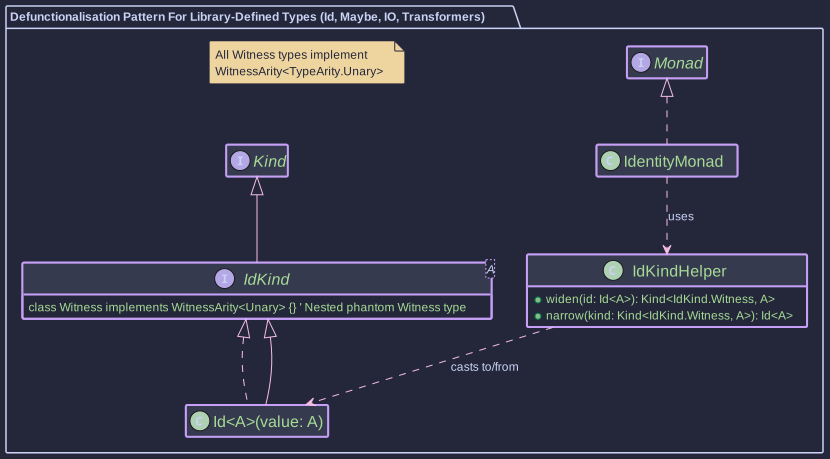
- Purpose: To simulate the application of a type constructor
F(likeList,Optional,IO) to a type argumentA(likeString,Integer), representing the concept ofF<A>. F(Witness Type): This is the crucial part of the simulation. SinceF<_>isn't a real Java type parameter, we use a marker type (often an empty interface specific to the constructor) as a "witness" or stand-in forF. Each witness implementsWitnessArityto declare its arity. Examples:ListKind.Witness implements WitnessArity<TypeArity.Unary>represents theListtype constructor.OptionalKind.Witness implements WitnessArity<TypeArity.Unary>represents theOptionaltype constructor.EitherKind.Witness<L> implements WitnessArity<TypeArity.Unary>represents theEither<L, _>type constructor (whereLis fixed).IOKind.Witness implements WitnessArity<TypeArity.Unary>represents theIOtype constructor.
A(Type Argument): The concrete type contained within or parametrised by the constructor (e.g.,IntegerinList<Integer>).- How it Works: The library provides a seamless bridge between a standard java type, like a
java.util.List<Integer>and itsKindrepresentationKind<ListKind.Witness, Integer>. Instead of requiring us to manually wrap objects, this conversion is handled by static helper methods, typicallywidenandnarrow.- To treat a
List<Integer>as aKind, we use a helper function likeLIST.widen(). - This
Kindobject can then be passed to generic functions (such asmaporflatMapfrom aFunctororMonadinstance) that expectKind<F, A>.
- To treat a
- Reference:
Kind.java
One Round-Trip, Step by Step
The diagram below traces a single flatMap call from user code, through widen, into the type-class instance, and back out via narrow. It is the runtime picture that the rest of this section describes in prose.
user code helper type-class instance underlying type
Either.right(10)
│
▼
EITHER.widen(start) ──▶ null check
│
│ (Either<L,R> already implements EitherKind<L,R>)
│
▼
typed cast (zero allocation)
│
▼
Kind<EitherKind.Witness<String>, Integer>
│
▼
monad.flatMap(f, kind) ──────────────────▶ EitherMonad.flatMap
│
│ EITHER.narrow(kind)
│ │
│ ▼
│ Either<String, Integer>
│
│ either.flatMap(f) ──────▶ apply f to Right(10)
│ │
│ ▼
│ new Kind from f
◀──────────────────────
│
▼
Kind<EitherKind.Witness<String>, String>
│
▼
EITHER.narrow(result) ──▶ null check
│
│ instanceof Either, cast
│
▼
Either<String, String> (Right("v=10"))
For a deeper, line-by-line walk-through with allocation costs, see Lifting the Hood.
For quick definitions of HKT concepts like Kind, Witness Types, and Defunctionalisation, see the Glossary.
3. Type Classes (Functor, Applicative, Monad, MonadError)
These are interfaces that define standard functional operations that work generically over any simulated type constructor F (represented by its witness type) for which an instance of the type class exists. They operate on Kind<F, A> objects.
All type classes require that F extends WitnessArity<?>, ensuring only valid witness types are used. Most type classes work with unary type constructors (WitnessArity<TypeArity.Unary>), whilst Bifunctor and Profunctor work with binary type constructors (WitnessArity<TypeArity.Binary>).
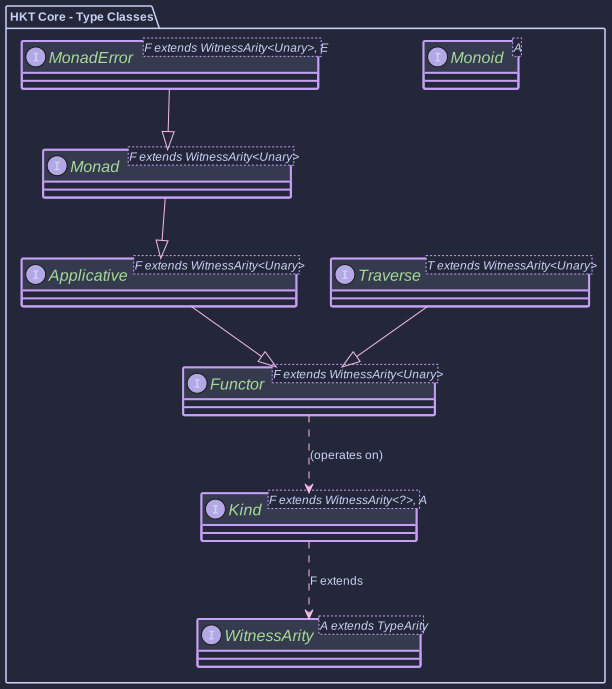
Functor<F extends WitnessArity<TypeArity.Unary>>:- Defines
map(Function<A, B> f, Kind<F, A> fa): Applies a functionf: A -> Bto the value(s) inside the contextFwithout changing the context's structure, resulting in aKind<F, B>. ThinkList.map,Optional.map. - Laws: Identity (
map(id) == id), Composition (map(g.compose(f)) == map(g).compose(map(f))). - Reference:
Functor.java
- Defines
Applicative<F extends WitnessArity<TypeArity.Unary>>:- Extends
Functor<F>. - Adds
of(A value): Lifts a pure valueAinto the contextF, creating aKind<F, A>. (e.g.,1becomesOptional.of(1)wrapped inKind). - Adds
ap(Kind<F, Function<A, B>> ff, Kind<F, A> fa): Applies a function wrapped in contextFto a value wrapped in contextF, returning aKind<F, B>. This enables combining multiple independent values within the context. - Provides default
mapNmethods (e.g.,map2,map3) built uponapandmap. - Laws: Identity, Homomorphism, Interchange, Composition.
- Reference:
Applicative.java
- Extends
Monad<F extends WitnessArity<TypeArity.Unary>>:- Extends
Applicative<F>. - Adds
flatMap(Function<A, Kind<F, B>> f, Kind<F, A> ma): Sequences operations within the contextF. Takes a valueAfrom contextF, applies a functionfthat returns a new contextKind<F, B>, and returns the result flattened into a singleKind<F, B>. Essential for chaining dependent computations (e.g., chainingOptionalcalls, sequencingCompletableFutures, combiningIOactions). Also known in functional languages asbindor>>=. - Provides default
flatMapNmethods (e.g.,flatMap2,flatMap3,flatMap4,flatMap5) for combining multiple monadic values with an effectful function. These methods sequence operations where the combining function itself returns a monadic value, unlikemapNwhich uses a pure function. - Laws: Left Identity, Right Identity, Associativity.
- Reference:
Monad.java
- Extends
MonadError<F extends WitnessArity<TypeArity.Unary>, E>:- Extends
Monad<F>. - Adds error handling capabilities for contexts
Fthat have a defined error typeE. - Adds
raiseError(E error): Lifts an errorEinto the contextF, creating aKind<F, A>representing the error state (e.g.,Either.Left,Try.Failureor failedCompletableFuture). - Adds
handleErrorWith(Kind<F, A> ma, Function<E, Kind<F, A>> handler): Allows recovering from an error stateEby providing a function that takes the error and returns a new contextKind<F, A>. - Provides default recovery methods like
handleError,recover,recoverWith. - Reference:
MonadError.java
- Extends
4. Defunctionalisation (Per Type Constructor)
For each Java type constructor (like List, Optional, IO) we want to simulate as a Higher-Kinded Type, a specific pattern involving several components is used. The exact implementation differs slightly depending on whether the type is defined within the Higher-Kinded-J library (e.g., Id, Maybe, IO, monad transformers) or if it's an external type (e.g., java.util.List, java.util.Optional, java.util.concurrent.CompletableFuture).
Common Components:
-
The
XxxKindInterface: A specific marker interface, for example,OptionalKind<A>. This interface extendsKind<F, A>, whereFis the witness type representing the type constructor.- Example:
public interface OptionalKind<A> extends Kind<OptionalKind.Witness, A> { final class Witness implements WitnessArity<TypeArity.Unary> { private Witness() {} } } - The
Witness(e.g.,OptionalKind.Witness) is a static nested final class that implementsWitnessArity<TypeArity.Unary>to declare it represents a unary type constructor. ThisWitnesstype is what's used as theFparameter in generic type classes likeMonad<F>.
- Example:
-
The
KindHelperClass (e.g.,OptionalKindHelper): A crucial utilitywidenandnarrowmethods:widen(...): Converts the standard Java type (e.g.,Optional<String>) into itsKind<F, A>representation.narrow(Kind<F, A> kind): Converts theKind<F, A>representation back to the underlying Java type (e.g.,Optional<String>).- Crucially, this method throws
KindUnwrapExceptionif the inputkindis structurally invalid (e.g.,null, the wrongKindtype, or (for holder-based types) aHoldercontainingnullwhere it shouldn't). This ensures robustness.
- Crucially, this method throws
- May contain other convenience factory methods.
-
Type Class Instance(s): Concrete classes implementing
Functor<F>,Monad<F>, etc., for the specific witness typeF(e.g.,OptionalMonad implements Monad<OptionalKind.Witness>). These instances use theKindHelper'swidenandnarrowmethods to operate on the underlying Java types.
External Types:
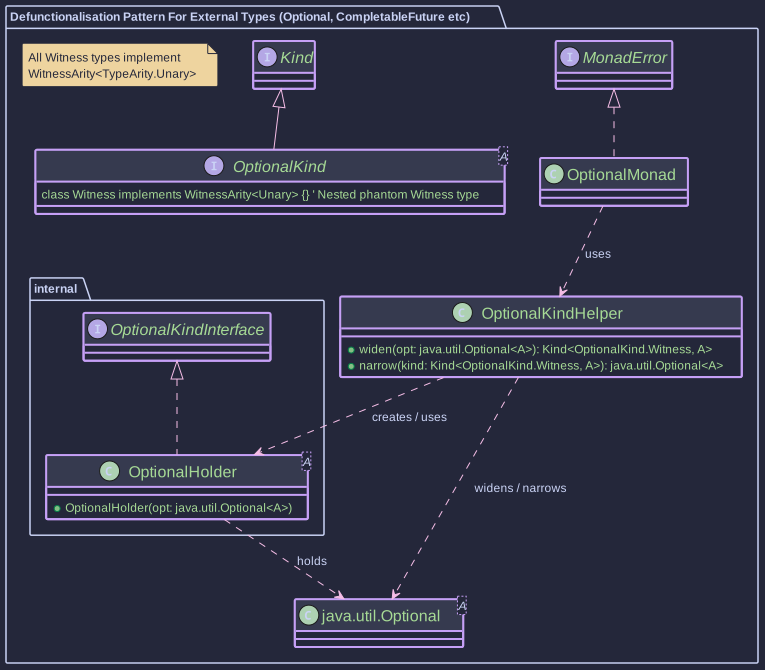
- For Types Defined Within Higher-Kinded-J (e.g.,
Id,IO,Maybe,Either, Monad Transformers likeEitherT):- These types are designed to directly participate in the HKT simulation.
- The type itself (e.g.,
Id<A>,IO<A>,Just<T>,Either.Right<L,R>) will directly implement its correspondingXxxKindinterface (e.g.,Id<A> implements IdKind<A>,IO<A> extends IOKind<A>,Just<T> implements MaybeKind<T>,Either.Right<L,R> implements EitherKind<L,R>). - In this case, a separate
Holderrecord is not needed for the primarywiden/narrowmechanism in theKindHelper. XxxKindHelper.widen(IO<A> io)would effectively be a type cast (after null checks) toKind<IOKind.Witness, A>becauseIO<A>is already anIOKind<A>.XxxKindHelper.narrow(Kind<IOKind.Witness, A> kind)would checkinstanceof IOand perform a cast.- This approach provides zero runtime overhead for widen/narrow operations (no wrapper object allocation) and improved debugging experience (actual types visible in stack traces).
This distinction is important for understanding how wrap and unwrap function for different types. However, from the perspective of a user of a type class instance (like OptionalMonad), the interaction remains consistent: we provide a Kind object, and the type class instance handles the necessary operations.
5. The Unit Type
In functional programming, it's common to have computations or functions that perform an action (often a side effect) but do not produce a specific, meaningful result value. In Java, methods that don't return a value use the void keyword. However, void is not a first-class type and cannot be used as a generic type parameter A in Kind<F, A>.
Higher-Kinded-J provides the org.higherkindedj.hkt.Unit type to address this.
- Purpose:
Unitis a type that has exactly one value,Unit.INSTANCE. It is used to represent the successful completion of an operation that doesn't yield any other specific information. Think of it as a functional equivalent ofvoid, but usable as a generic type. - Usage in HKT:
- When a monadic action
Kind<F, A>completes successfully but has no specific value to return (e.g., anIOaction that prints to the console),Acan beUnit. The action would then beKind<F, Unit>, and its successful result would conceptually beUnit.INSTANCE. For example,IO<Unit>for a print operation. - In
MonadError<F, E>, if the error stateEsimply represents an absence or a failure without specific details (likeOptional.empty()orMaybe.Nothing()),Unitcan be used as the type forE. TheraiseErrormethod would then be called withUnit.INSTANCE. For instance,OptionalMonadimplementsMonadError<OptionalKind.Witness, Unit>, andMaybeMonadimplementsMonadError<MaybeKind.Witness, Unit>.
- When a monadic action
- Example:
```java
// An IO action that just performs a side effect (printing)
Kind<IOKind.Witness, Unit> printAction = IO_OP.delay(() -> {
System.out.println("Effect executed!");
return Unit.INSTANCE; // Explicitly return Unit.INSTANCE
});
IO_OP.unsafeRunSync(printAction); // Executes the print
// Optional treated as MonadError<..., Unit>
MonadError<OptionalKind.Witness, Unit> optionalMonad = Instances.monadError(optional());
Kind<OptionalKind.Witness, String> emptyOptional = optionalMonad.raiseError(Unit.INSTANCE); // Creates Optional.empty()
```
- Reference:
Unit.java
6. Error Handling Philosophy
- Domain Errors: These are expected business-level errors or alternative outcomes. They are represented within the structure of the simulated type (e.g.,
Either.Left,Maybe.Nothing,Try.Failure, a failedCompletableFuture, potentially a specific result type withinIO). These are handled using the type's specific methods orMonadErrorcapabilities (handleErrorWith,recover,fold,orElse, etc.) after successfully unwrapping theKind. - Simulation Errors (
KindUnwrapException): These indicate a problem with the HKT simulation itself – usually a programming error. Examples include passingnulltounwrap, passing aListKindtoOptionalKindHelper.unwrap, or (if it were possible) having aHolderrecord contain anullreference to the underlying Java object it's supposed to hold. These are signalled by throwing the uncheckedKindUnwrapExceptionfromunwrapmethods to clearly distinguish infrastructure issues from domain errors. You typically shouldn't need to catchKindUnwrapExceptionunless debugging the simulation usage itself.
Practise Kind basics in Tutorial 01: Kind Basics (5 exercises).
Previous: HKT Introduction Next: Type Arity
Type Arity: Classifying Type Constructors
"To define a thing is to say what kind of thing it is." — Aristotle, Categories
- What type arity means and why it matters
- The difference between Witness and WitnessArity
- How
TypeArityandWitnessArityenforce compile-time safety - The difference between unary and binary type constructors
- How the arity system prevents common type errors
Higher-Kinded-J uses an arity system to classify type constructors by the number of type parameters they accept. This classification is enforced at compile time, preventing incorrect usage of witness types with incompatible type classes.
Witness vs WitnessArity: Understanding the Distinction
Before diving into arity, it's important to understand the relationship between these two concepts:
┌─────────────────────────────────────────────────────────────────┐
│ WitnessArity<TypeArity.Unary> (interface) │
│ "I am a unary type constructor" │
│ │
│ ▲ │
│ │ implements │
│ │ │
│ ┌──────┴──────┐ ┌──────────────┐ ┌──────────────┐ │
│ │ ListKind │ │ OptionalKind │ │ IOKind │ │
│ │ .Witness │ │ .Witness │ │ .Witness │ │
│ └─────────────┘ └──────────────┘ └──────────────┘ │
│ "I am List" "I am Optional" "I am IO" │
│ (concrete class) (concrete class) (concrete class) │
└─────────────────────────────────────────────────────────────────┘
Witness is a concrete type (usually a final class) that acts as a compile-time tag to identify a specific type constructor. Each type constructor has its own unique Witness:
ListKind.Witness // Identifies the List type constructor
OptionalKind.Witness // Identifies the Optional type constructor
IOKind.Witness // Identifies the IO type constructor
WitnessArity is an interface that Witness types implement to declare how many type parameters their type constructor accepts:
// WitnessArity is the interface - it classifies witnesses by arity
public interface WitnessArity<A extends TypeArity> {}
// Each Witness implements it to declare its arity
final class Witness implements WitnessArity<TypeArity.Unary> {} // "I take one type parameter"
final class Witness implements WitnessArity<TypeArity.Binary> {} // "I take two type parameters"
In short:
- Witness answers: "Which type constructor?" (identity)
- WitnessArity answers: "What kind of type constructor?" (classification)
This separation allows Kind<F extends WitnessArity<?>, A> to require only valid witnesses, while type classes can further constrain to specific arities.
What is Type Arity?
In type theory, the arity of a type constructor refers to how many type parameters it accepts before producing a concrete type:
TypeArity
│
┌──────────────┴──────────────┐
▼ ▼
┌───────────┐ ┌───────────┐
│ Unary │ │ Binary │
│ * → * │ │ * → * → * │
└───────────┘ └───────────┘
│ │
▼ ▼
List<_> Either<_,_>
Maybe<_> Tuple<_,_>
IO<_> Function<_,_>
Optional<_> Validated<_,_>
- Unary (
* → *): Takes one type parameter.List<_>becomesList<String>when applied toString. - Binary (
* → * → *): Takes two type parameters.Either<_,_>becomesEither<String, Integer>when applied toStringandInteger.
The Arity Interfaces
Higher-Kinded-J provides two interfaces to encode arity information:
TypeArity
A sealed interface that defines the possible arities:
public sealed interface TypeArity {
final class Unary implements TypeArity {}
final class Binary implements TypeArity {}
}
WitnessArity
A marker interface that witness types implement to declare their arity:
public interface WitnessArity<A extends TypeArity> {}
Every witness type must implement WitnessArity with the appropriate arity:
// Unary witness (one type parameter)
public interface ListKind<A> extends Kind<ListKind.Witness, A> {
final class Witness implements WitnessArity<TypeArity.Unary> {
private Witness() {}
}
}
// Binary witness (two type parameters)
public interface EitherKind2<L, R> extends Kind2<EitherKind2.Witness, L, R> {
final class Witness implements WitnessArity<TypeArity.Binary> {
private Witness() {}
}
}
How Arity Enforces Type Safety
The Kind interface requires its witness type to implement WitnessArity:
┌─────────────────────────────────────────────────────────────────┐
│ Kind<F, A> │
│ where F extends WitnessArity<?> │
└─────────────────────────────────────────────────────────────────┘
│
┌──────────┴──────────┐
▼ ▼
┌─────────────────┐ ┌─────────────────┐
│ WitnessArity │ │ WitnessArity │
│ <TypeArity │ │ <TypeArity │
│ .Unary> │ │ .Binary> │
└─────────────────┘ └─────────────────┘
│ │
┌─────────┴─────────┐ ┌───────┴───────┐
▼ ▼ ▼ ▼
ListKind.Witness MaybeKind EitherKind2 FunctionKind
.Witness .Witness .Witness
Type classes then specify which arity they require:
// Unary type classes
public interface Functor<F extends WitnessArity<TypeArity.Unary>> { ... }
public interface Applicative<F extends WitnessArity<TypeArity.Unary>> { ... }
public interface Monad<F extends WitnessArity<TypeArity.Unary>> { ... }
// Binary type classes
public interface Bifunctor<F extends WitnessArity<TypeArity.Binary>> { ... }
public interface Profunctor<F extends WitnessArity<TypeArity.Binary>> { ... }
This creates a compile-time guarantee:
// ✓ Compiles: ListKind.Witness is Unary
Functor<ListKind.Witness> listFunctor = Instances.functor(list());
// ✗ Does not compile: EitherKind2.Witness is Binary, not Unary
// Functor<EitherKind2.Witness> invalid;
Unary vs Binary: When to Use Each
Unary Type Constructors
Use unary witnesses when you want to work with a type as a single-parameter container:
| Type | Witness | Use Case |
|---|---|---|
List<A> | ListKind.Witness | Collections with Functor/Monad |
Optional<A> | OptionalKind.Witness | Optional values |
IO<A> | IOKind.Witness | Deferred effects |
Either<L, A> | EitherKind.Witness<L> | Error handling (right-biased) |
Note that Either has two witness types:
EitherKind.Witness<L>- Unary, withLfixed. Used withFunctor,Monad,MonadError.EitherKind2.Witness- Binary. Used withBifunctor.
Binary Type Constructors
Use binary witnesses when you need to transform both type parameters:
| Type | Witness | Use Case |
|---|---|---|
Either<L, R> | EitherKind2.Witness | Bifunctor (transform both sides) |
Function<A, B> | FunctionKind.Witness | Profunctor |
Tuple<A, B> | TupleKind2.Witness | Pairs with Bifunctor |
Diagram: Type Class Hierarchy by Arity
┌────────────────────────────────────────────────────┐
│ Functor<F extends WitnessArity │
│ <TypeArity.Unary>> │
│ │ │
│ ┌────────────────────┼────────────────────┐ │
│ ▼ ▼ ▼ │
│ Applicative Monad Traverse │
│ │
│ └────────────────────┬────────────────────┘ │
│ ▼ │
│ MonadError │
└────────────────────────────────────────────────────┘
┌────────────────────────────────────────────────────┐
│ Bifunctor<F extends WitnessArity │
│ <TypeArity.Binary>> │
│ │
│ Profunctor<F extends WitnessArity │
│ <TypeArity.Binary>> │
└────────────────────────────────────────────────────┘
Common Patterns
Defining a New Unary Type
// 1. Define the Kind interface with witness
public interface MyTypeKind<A> extends Kind<MyTypeKind.Witness, A> {
final class Witness implements WitnessArity<TypeArity.Unary> {
private Witness() {}
}
}
// 2. Your type implements the Kind interface
public record MyType<A>(A value) implements MyTypeKind<A> {}
// 3. Create type class instances
public class MyTypeFunctor implements Functor<MyTypeKind.Witness> {
@Override
public <A, B> Kind<MyTypeKind.Witness, B> map(
Function<? super A, ? extends B> f, Kind<MyTypeKind.Witness, A> fa) {
MyType<A> myType = (MyType<A>) fa;
return new MyType<B>(f.apply(myType.value()));
}
}
Using Either with Different Arities
// As Monad (unary, right-biased)
Monad<EitherKind.Witness<String>> eitherMonad = Instances.monadError(either());
Kind<EitherKind.Witness<String>, Integer> result =
eitherMonad.flatMap(x -> eitherMonad.of(x + 1), eitherMonad.of(42));
// As Bifunctor (binary, transform both sides)
Bifunctor<EitherKind2.Witness> bifunctor = EitherBifunctor.INSTANCE;
Kind2<EitherKind2.Witness, Integer, String> mapped =
bifunctor.bimap(String::length, Object::toString, EITHER.widen2(either));
Why Arity Matters
Without the arity system, you could accidentally:
-
Use a binary witness with a unary type class: Attempting to use
Either<L,R>as a simple Functor without fixingLwould be a type error. -
Mix incompatible witnesses: Different type classes have different requirements, and the arity system makes these explicit.
-
Create invalid witness types: A witness that doesn't implement
WitnessAritycannot be used withKindat all.
The arity system catches these errors at compile time rather than runtime.
- TypeArity classifies type constructors as Unary (
* → *) or Binary (* → * → *) - WitnessArity is implemented by witness types to declare their arity
- Compile-time safety: The Java compiler prevents using witnesses with incompatible type classes
- Either has two witnesses:
EitherKind.Witness<L>(unary) andEitherKind2.Witness(binary)
Previous: Core Concepts Next: Usage Guide
Usage Guide: Working with Higher-Kinded-J

- The five-step workflow for using Higher-Kinded-J effectively
- How to identify the right context (witness type) for our use case
- Using widen() and narrow() to convert between Java types and Kind representations
- When and how to handle KindUnwrapException safely
- Writing generic functions that work with any Functor or Monad
This guide explains the step-by-step process of using Higher-Kinded-J's simulated Higher-Kinded Types (HKTs) and associated type classes like Functor, Applicative, Monad, and MonadError.
Core Workflow
The general process involves these steps:
Determine which type constructor (computational context) we want to work with abstractly. This context is represented by its witness type.
Examples:
ListKind.Witnessforjava.util.ListOptionalKind.Witnessforjava.util.OptionalMaybeKind.Witnessfor the customMaybetypeEitherKind.Witness<L>for the customEither<L, R>type (whereLis fixed)TryKind.Witnessfor the customTrytypeCompletableFutureKind.Witnessforjava.util.concurrent.CompletableFutureIOKind.Witnessfor the customIOtypeLazyKind.Witnessfor the customLazytypeReaderKind.Witness<R_ENV>for the customReader<R_ENV, A>typeStateKind.Witness<S>for the customState<S, A>typeWriterKind.Witness<W>for the customWriter<W, A>type- For transformers, e.g.,
EitherTKind.Witness<F_OUTER_WITNESS, L_ERROR>
Obtain an instance of the required type class (Functor<F_WITNESS>, Applicative<F_WITNESS>, Monad<F_WITNESS>, MonadError<F_WITNESS, E>) for our chosen context's witness type F_WITNESS.
These are concrete classes provided in the corresponding package.
Examples:
Optional:OptionalMonad optionalMonad = Instances.monadError(optional());(This implementsMonadError<OptionalKind.Witness, Unit>)List:ListMonad listMonad = Instances.monadZero(list());(This implementsMonad<ListKind.Witness>)CompletableFuture:CompletableFutureMonad futureMonad = Instances.monadError(completableFuture());(This implementsMonadError<CompletableFutureKind.Witness, Throwable>)Either<String, ?>:EitherMonad<String> eitherMonad = Instances.monadError(either());(This implementsMonadError<EitherKind.Witness<String>, String>)IO:IOMonad ioMonad = Instances.monad(io());(This implementsMonad<IOKind.Witness>)Writer<String, ?>:WriterMonad<String> writerMonad = Instances.writer(new StringMonoid());(This implementsMonad<WriterKind.Witness<String>>)
Convert our standard Java object (e.g., a List<Integer>, an Optional<String>, an IO<String>) into Higher-Kinded-J's Kind representation using the widen instance method from the corresponding XxxKindHelper enum's singleton instance. We will typically use a static import for the singleton instance for brevity.
import static org.higherkindedj.hkt.optional.OptionalKindHelper.OPTIONAL;
// ...
Optional<String> myOptional = Optional.of("test");
// Widen it into the Higher-Kinded-J Kind type
// F_WITNESS here is OptionalKind.Witness
Kind<OptionalKind.Witness, String> optionalKind = OPTIONAL.widen(myOptional);
- Helper enums provide convenience factory methods that also return
Kindinstances, e.g.,MAYBE.just("value"),TRY.failure(ex),IO_OP.delay(() -> ...),LAZY.defer(() -> ...). Remember to import thes statically from the XxxKindHelper classes. - Note on Widening:
- For JDK types (like
List,Optional),widentypically creates an internalHolderobject that wraps the JDK type and implements the necessaryXxxKindinterface. - For library-defined types (
Id,IO,Maybe,Either,Validated, Transformers likeEitherT) that directly implement theirXxxKindinterface (which in turn extendsKind), thewidenmethod on the helper enum performs a null check and then a direct (and safe) cast to theKindtype. This provides zero runtime overhead: no wrapper object allocation needed.
- For JDK types (like
Use the methods defined by the type class interface (map, flatMap, of, ap, raiseError, handleErrorWith, etc.) by calling them on the type class instance obtained in Step 2, passing our Kind value(s) as arguments. Do not call map/flatMap directly on the Kind object itself if it's just the Kind interface. (Some concrete Kind implementations like Id or Maybe might offer direct methods, but for generic programming, use the type class instance).
import static org.higherkindedj.hkt.optional.OptionalKindHelper.OPTIONAL;
// ...
MonadError<OptionalKind.Witness, Unit> optionalMonad = Instances.monadError(optional());
Kind<OptionalKind.Witness, String> optionalKind = OPTIONAL.widen(Optional.of("test")); // from previous step
// --- Using map ---
Function<String, Integer> lengthFunc = String::length;
// Apply map using the monad instance
Kind<OptionalKind.Witness, Integer> lengthKind = optionalMonad.map(lengthFunc, optionalKind);
// lengthKind now represents Kind<OptionalKind.Witness, Integer> containing Optional.of(4)
// --- Using flatMap ---
// Function A -> Kind<F_WITNESS, B>
Function<Integer, Kind<OptionalKind.Witness, String>> checkLength =
len -> OPTIONAL.widen(len > 3 ? Optional.of("Long enough") : Optional.empty());
// Apply flatMap using the monad instance
Kind<OptionalKind.Witness, String> checkedKind = optionalMonad.flatMap(checkLength, lengthKind);
// checkedKind now represents Kind<OptionalKind.Witness, String> containing Optional.of("Long enough")
// --- Using MonadError (for Optional, error type is Unit) ---
Kind<OptionalKind.Witness, String> emptyKind = optionalMonad.raiseError(Unit.INSTANCE); // Represents Optional.empty()
// Handle the empty case (error state) using handleErrorWith
Kind<OptionalKind.Witness, String> handledKind = optionalMonad.handleErrorWith(
emptyKind,
ignoredError -> OPTIONAL.widen(Optional.of("Default Value")) // Ensure recovery function also returns a Kind
);
Note: For complex chains of monadic operations, consider using For Comprehensions which provide more readable syntax than nested flatMap calls.
When we need the underlying Java value back (e.g., to return from a method boundary, perform side effects like printing or running IO), use the narrow instance method from the corresponding XxxKindHelper enum's singleton instance.
```java
import static org.higherkindedj.hkt.optional.OptionalKindHelper.OPTIONAL;
import static org.higherkindedj.hkt.io.IOKindHelper.IO_OP;
// ...
// Continuing the Optional example, with checkedKind and handledKind from the step above:
Optional<String> finalOptional = OPTIONAL.narrow(checkedKind);
System.out.println("Final Optional: " + finalOptional);
// Output: Optional[Long enough]
Optional<String> handledOptional = OPTIONAL.narrow(handledKind);
System.out.println("Handled Optional: " + handledOptional);
// Output: Optional[Default Value]
// Example for IO:
Monad<IOKind.Witness> ioMonad = Instances.monad(io());
Kind<IOKind.Witness, String> ioKind = IO_OP.delay(() -> "Hello from IO!");
// Use IO_OP.delay
// unsafeRunSync is an instance method on IOKindHelper.IO_OP
String ioResult = IO_OP.unsafeRunSync(ioKind);
System.out.println(ioResult);
```
The narrow instance methods in all KindHelper enums are designed to be robust against structural errors within the HKT simulation layer.
- When it's thrown: If we pass
nulltonarrow. For external types using aHolder(likeOptionalwithOptionalHolder), if theKindinstance is not the expectedHoldertype, an exception is also thrown. For types that directly implement theirXxxKindinterface,narrowwill throw if theKindis not an instance of that specific concrete type. - What it means: This exception signals a problem with how we are using Higher-Kinded-J itself, usually a programming error in creating or passing
Kindobjects. - How to handle: We generally should not need to catch
KindUnwrapExceptionin typical application logic. Its occurrence points to a bug that needs fixing in the code using Higher-Kinded-J.
// import static org.higherkindedj.hkt.optional.OptionalKindHelper.OPTIONAL;
public void handlingUnwrapExceptions() {
try {
// ERROR: Attempting to narrow null
Optional<String> result = OPTIONAL.narrow(null);
} catch(KindUnwrapException e) {
System.err.println("Higher-Kinded-J Usage AppError: " + e.getMessage());
// Example Output (message from OptionalKindHelper.INVALID_KIND_NULL_MSG):
// Usage AppError: Cannot narrow null Kind for Optional
}
}
Important Distinction:
KindUnwrapException: Signals a problem with the Higher-Kinded-J structure itself (e.g., invalidKindobject passed tonarrow). Fix the code using Higher-Kinded-J.- Domain Errors / Absence: Represented within a valid
Kindstructure (e.g.,Optional.empty()widened toKind<OptionalKind.Witness, A>,Either.Leftwidened toKind<EitherKind.Witness<L>, R>). These should be handled using the monad's specific methods (orElse,fold,handleErrorWith, etc.) or by using theMonadErrormethods before narrowing back to the final Java type.
Higher-Kinded-J allows writing functions generic over the simulated type constructor (represented by its witness F_WITNESS).
// import static org.higherkindedj.hkt.list.ListKindHelper.LIST;
// import static org.higherkindedj.hkt.optional.OptionalKindHelper.OPTIONAL;
// ...
// Generic function: Applies a function within any Functor context F_WITNESS.
// Requires the specific Functor<F_WITNESS> instance to be passed in.
public static <F_WITNESS extends WitnessArity<TypeArity.Unary>, A, B>
Kind<F_WITNESS, B> mapWithFunctor(
Functor<F_WITNESS> functorInstance, // Pass the type class instance for F_WITNESS
Function<A, B> fn,
Kind<F_WITNESS, A> kindABox) {
// Use the map method from the provided Functor instance
return functorInstance.map(fn, kindABox);
}
public void genericExample() {
// Get instances of the type classes for the specific types (F_WITNESS) we want to use
MonadZero<ListKind.Witness> listMonad = Instances.monadZero(list()); // Implements Functor<ListKind.Witness>
MonadError<OptionalKind.Witness, Unit> optionalMonad = Instances.monadError(optional()); // Implements Functor<OptionalKind.Witness>
Function<Integer, Integer> doubleFn = x -> x * 2;
// --- Use with List ---
List<Integer> nums = List.of(1, 2, 3);
// Widen the List. F_WITNESS is ListKind.Witness
Kind<ListKind.Witness, Integer> listKind = LIST.widen(nums);
// Call the generic function, passing the ListMonad instance and the widened List
Kind<ListKind.Witness, Integer> doubledListKind = mapWithFunctor(listMonad, doubleFn, listKind);
System.out.println("Doubled List: " + LIST.narrow(doubledListKind)); // Output: [2, 4, 6]
// --- Use with Optional (Present) ---
Optional<Integer> optNum = Optional.of(10);
// Widen the Optional. F_WITNESS is OptionalKind.Witness
Kind<OptionalKind.Witness, Integer> optKind = OPTIONAL.widen(optNum);
// Call the generic function, passing the OptionalMonad instance and the widened Optional
Kind<OptionalKind.Witness, Integer> doubledOptKind = mapWithFunctor(optionalMonad, doubleFn, optKind);
System.out.println("Doubled Optional: " + OPTIONAL.narrow(doubledOptKind)); // Output: Optional[20]
// --- Use with Optional (Empty) ---
Optional<Integer> emptyOpt = Optional.empty();
Kind<OptionalKind.Witness, Integer> emptyOptKind = OPTIONAL.widen(emptyOpt);
// Call the generic function, map does nothing on empty
Kind<OptionalKind.Witness, Integer> doubledEmptyOptKind = mapWithFunctor(optionalMonad, doubleFn, emptyOptKind);
System.out.println("Doubled Empty Optional: " + OPTIONAL.narrow(doubledEmptyOptKind)); // Output: Optional.empty
}
Previous: Type Arity Next: Examples
Higher-Kinded Types - Basic Usage Examples
This document provides a brief summary of the example classes found in the
org.higherkindedj.example.basicpackage in the HKJ-Examples.
These examples showcase how to use various monads and monad transformers to handle common programming tasks like managing optional values, asynchronous operations, and state in a functional way.
- Practical examples of core monads including Either, Maybe, Optional, IO, and State
- How to use monad transformers like EitherT, MaybeT, and StateT to combine effects
- Working with specialised monads like Reader for dependency injection and Writer for logging
- Using For comprehensions to compose complex monadic workflows
- Writing generic functions that work across different Functor and Monad instances
- Handling errors and exceptions functionally with Try, Either, and MonadError
Monads
EitherExample.java
This example demonstrates the Either monad. Either is used to represent a value that can be one of two types, typically a success value (Right) or an error value (Left).
- Key Concept: A
Eitherprovides a way to handle computations that can fail with a specific error type. - Demonstrates:
- Creating
Eitherinstances for success (Right) and failure (Left) cases. - Using
flatMapto chain operations that return anEither, short-circuiting on failure. - Using
foldto handle both theLeftandRightcases.
- Creating
// Chain operations that can fail
Either<String, Integer> result = input.flatMap(parse).flatMap(checkPositive);
// Fold to handle both outcomes
String message = result.fold(
leftValue -> "Operation failed with: " + leftValue,
rightValue -> "Operation succeeded with: " + rightValue
);
ForComprehensionExample.java
This example demonstrates how to use the For comprehension, a feature that provides a more readable, sequential syntax for composing monadic operations (equivalent to flatMap chains).
- Key Concept: A
Forcomprehension offers syntactic sugar forflatMapandmapcalls, making complex monadic workflows easier to write and understand. - Demonstrates:
- Using
For.from()to start and chain monadic operations. - Applying comprehensions to different monads like
List,Maybe, and theStateTmonad transformer. - Filtering intermediate results with
.when(). - Introducing intermediate values with
.let(). - Producing a final result with
.yield().
- Using
// A for-comprehension with List
final Kind<ListKind.Witness, String> result =
For.from(listMonad, list1)
.from(_ -> list2)
.when(t -> (t._1() + t._2()) % 2 != 0) // Filter
.let(t -> "Sum: " + (t._1() + t._2())) // Introduce new value
.yield((a, b, c) -> a + " + " + b + " = " + c); // Final result
CompletableFutureExample.java
This example covers the CompletableFuture monad. It shows how to use CompletableFuture within the Higher-Kinded-J framework to manage asynchronous computations and handle potential errors.
- Key Concept: The
CompletableFuturemonad is used to compose asynchronous operations in a non-blocking way. - Demonstrates:
- Creating
Kind-wrappedCompletableFutureinstances for success and failure. - Using
map(which corresponds tothenApply). - Using
flatMap(which corresponds tothenCompose) to chain dependent asynchronous steps. - Using
handleErrorWithto recover from exceptions that occur within the future.
- Creating
// Using handleErrorWith to recover from a failed future
Function<Throwable, Kind<CompletableFutureKind.Witness, String>> recoveryHandler =
error -> {
System.out.println("Handling error: " + error.getMessage());
return futureMonad.of("Recovered from AppError");
};
Kind<CompletableFutureKind.Witness, String> recoveredFuture =
futureMonad.handleErrorWith(failedFutureKind, recoveryHandler);
IdExample.java
This example introduces the Identity (Id) monad. The Id monad is the simplest monad; it wraps a value without adding any computational context. It is primarily used to make generic code that works with any monad also work with simple, synchronous values.
- Key Concept: The
Idmonad represents a direct, synchronous computation. It wraps a value, and itsflatMapoperation simply applies the function to the value. - Demonstrates:
- Wrapping a plain value into an
Id. - Using
mapandflatMapon anIdvalue. - Its use as the underlying monad in a monad transformer stack, effectively turning
StateT<S, IdKind.Witness, A>intoState<S, A>.
- Wrapping a plain value into an
// flatMap on Id simply applies the function to the wrapped value.
Id<Integer> idFromOf = Id.of(42);
Id<String> directFlatMap = idFromOf.flatMap(i -> Id.of("Direct FlatMap: " + i));
// directFlatMap.value() is "Direct FlatMap: 42"
IOExample.java
This example introduces the IO monad, which is used to encapsulate side effects like reading from the console, writing to a file, or making a network request.
- Key Concept: The
IOmonad describes a computation that can perform side effects. These effects are only executed when theIOaction is explicitly run. - Demonstrates:
- Creating
IOactions that describe side effects usingdelay. - Composing
IOactions usingmapandflatMapto create more complex programs. - Executing
IOactions to produce a result usingunsafeRunSync.
- Creating
// Create an IO action to read a line from the console
Kind<IOKind.Witness, String> readLine = IO_OP.delay(() -> {
System.out.print("Enter your name: ");
try (Scanner scanner = new Scanner(System.in)) {
return scanner.nextLine();
}
});
// Execute the action to get the result
String name = IO_OP.unsafeRunSync(readLine);
LazyExample.java
This example covers the Lazy monad. It's used to defer a computation until its result is explicitly requested. The result is then memoised (cached) so the computation is only executed once.
- Key Concept: A
Lazycomputation is not executed when it is created, but only whenforce()is called. The result (or exception) is then stored for subsequent calls. - Demonstrates:
- Creating a deferred computation with
LAZY.defer(). - Forcing evaluation with
LAZY.force(). - How results are memoised, preventing re-computation.
- Using
mapandflatMapto build chains of lazy operations.
- Creating a deferred computation with
// Defer a computation
java.util.concurrent.atomic.AtomicInteger counter = new java.util.concurrent.atomic.AtomicInteger(0);
Kind<LazyKind.Witness, String> deferredLazy = LAZY.defer(() -> {
counter.incrementAndGet();
return "Computed Value";
});
// The computation only runs when force() is called
System.out.println(LAZY.force(deferredLazy)); // counter becomes 1
System.out.println(LAZY.force(deferredLazy)); // result is from cache, counter remains 1
ListMonadExample.java
This example demonstrates the List monad. It shows how to perform monadic operations on a standard Java List, treating it as a context that can hold zero or more results.
- Key Concept: The
Listmonad represents non-deterministic computation, where an operation can produce multiple results. - Demonstrates:
- Wrapping a
Listinto aKind<ListKind.Witness, A>. - Using
mapto transform every element in the list. - Using
flatMapto apply a function that returns a list to each element, and then flattening the result.
- Wrapping a
// A function that returns multiple results for even numbers
Function<Integer, Kind<ListKind.Witness, Integer>> duplicateIfEven =
n -> {
if (n % 2 == 0) {
return LIST.widen(Arrays.asList(n, n * 10));
} else {
return LIST.widen(List.of()); // Empty list for odd numbers
}
};
// flatMap applies the function and flattens the resulting lists
Kind<ListKind.Witness, Integer> flatMappedKind = listMonad.flatMap(duplicateIfEven, numbersKind);
MaybeExample.java
This example covers the Maybe monad. Maybe is a type that represents an optional value, similar to Java's Optional, but designed to be used as a monad within the Higher-Kinded-J ecosystem. It has two cases: Just<A> (a value is present) and Nothing (a value is absent).
- Key Concept: The
Maybemonad provides a way to represent computations that may or may not return a value, explicitly handling the absence of a value. - Demonstrates:
- Creating
JustandNothinginstances. - Using
mapto transform aJustvalue. - Using
flatMapto chain operations that return aMaybe. - Handling the
Nothingcase usinghandleErrorWith.
- Creating
// flatMap to parse a string, which can result in Nothing
Function<String, Kind<MaybeKind.Witness, Integer>> parseString =
s -> {
try {
return MAYBE.just(Integer.parseInt(s));
} catch (NumberFormatException e) {
return MAYBE.nothing();
}
};
OptionalExample.java
This example introduces the Optional monad. It demonstrates how to wrap Java's Optional in a Kind to work with it in a monadic way, allowing for chaining of operations and explicit error handling.
- Key Concept: The
Optionalmonad provides a way to represent computations that may or may not return a value. - Demonstrates:
- Wrapping
Optionalinstances into aKind<OptionalKind.Witness, A>. - Using
mapto transform the value inside a presentOptional. - Using
flatMapto chain operations that returnOptional. - Using
handleErrorWithto provide a default value when theOptionalis empty.
- Wrapping
// Using flatMap to parse a string to an integer, which may fail
Function<String, Kind<OptionalKind.Witness, Integer>> parseToIntKind =
s -> {
try {
return OPTIONAL.widen(Optional.of(Integer.parseInt(s)));
} catch (NumberFormatException e) {
return OPTIONAL.widen(Optional.empty());
}
};
Kind<OptionalKind.Witness, Integer> parsedPresent =
optionalMonad.flatMap(parseToIntKind, presentInput);
ReaderExample.java
This example introduces the Reader monad. The Reader monad is a pattern used for dependency injection. It represents a computation that depends on some configuration or environment of type R.
- Key Concept: A
Reader<R, A>represents a functionR -> A. It lets us "read" from a configurationRto produce a valueA, without explicitly passing the configuration object everywhere. - Demonstrates:
- Creating
Readercomputations that access parts of a configuration object. - Using
flatMapto chain computations where one step depends on the result of a previous step and the shared configuration. - Running the final
Readercomputation by providing a concrete configuration object.
- Creating
// A Reader that depends on the AppConfig environment
Kind<ReaderKind.Witness<AppConfig>, String> connectionStringReader =
readerMonad.flatMap(
dbUrl -> READER.reader(config -> dbUrl + "?apiKey=" + config.apiKey()),
getDbUrl // Another Reader that gets the DB URL
);
// The computation is only run when a config is provided
String connectionString = READER.runReader(connectionStringReader, productionConfig);
StateExample, BankAccountWorkflow.java
These examples demonstrate the State monad. The State monad is used to manage state in a purely functional way, abstracting away the boilerplate of passing state from one function to the next.
- Key Concept: A
State<S, A>represents a functionS -> (S, A), which takes an initial state and returns a new state and a computed value. The monad chains these functions together. - Demonstrates:
- Creating stateful actions like
push,pop,deposit, andwithdraw. - Using
State.modifyto update the state andState.inspectto read from it. - Composing these actions into a larger workflow using a
Forcomprehension. - Running the final computation with an initial state to get the final state and result.
- Creating stateful actions like
// A stateful action to withdraw money, returning a boolean success flag
public static Function<BigDecimal, Kind<StateKind.Witness<AccountState>, Boolean>> withdraw(String description) {
return amount -> STATE.widen(
State.of(currentState -> {
if (currentState.balance().compareTo(amount) >= 0) {
var updatedState = currentState.withBalance(
currentState.balance().subtract(amount));
return new StateTuple<>(true, updatedState);
} else {
// Rejected: the balance is unchanged, and the caller sees false
return new StateTuple<>(false, currentState);
}
})
);
}
TryExample.java
This example introduces the Try monad. It's designed to encapsulate computations that can throw exceptions, making error handling more explicit and functional.
- Key Concept: A
Tryrepresents a computation that results in either aSuccesscontaining a value or aFailurecontaining an exception. - Demonstrates:
- Creating
Tryinstances for successful and failed computations. - Using
mapandflatMapto chain operations, where exceptions are caught and wrapped in aFailure. - Using
recoverandrecoverWithto handle failures and provide alternative values or computations.
- Creating
// A function that returns a Try, succeeding or failing based on the input
Function<Integer, Try<Double>> safeDivide =
value ->
(value == 0)
? Try.failure(new ArithmeticException("Div by zero"))
: Try.success(10.0 / value);
// flatMap chains the operation, propagating failure
Try<Double> divided = tryInput.flatMap(safeDivide);
ValidatedMonadExample.java
This example showcases the Validated applicative functor. While it has a Monad instance, it's often used as an Applicative to accumulate errors. This example, however, focuses on its monadic (fail-fast) behaviour.
- Key Concept:
Validatedis used for validation scenarios where we want either a valid result or the accumulated set of validation errors. - Demonstrates:
- Creating
ValidandInvalidinstances. - Using
flatMapto chain validation steps, where the firstInvalidresult short-circuits the computation. - Using
handleErrorWithto recover from a validation failure.
- Creating
// A validation function that returns a Kind-wrapped Validated
Function<String, Kind<ValidatedKind.Witness<List<String>>, Integer>> parseToIntKind =
s -> {
try {
return validatedMonad.of(Integer.parseInt(s)); // Lifts to Valid
} catch (NumberFormatException e) {
return validatedMonad.raiseError(Collections.singletonList("'" + s + "' is not a number."));
}
};
WriterExample.java
This example introduces the Writer monad. The Writer monad is used for computations that need to produce a log or accumulate a secondary value alongside their primary result.
- Key Concept: A
Writer<W, A>represents a computation that returns a primary resultAand an accumulated valueW(like a log), whereWmust have aMonoidinstance to define how values are combined. - Demonstrates:
- Using
tellto append to the log. - Using
flatMapto sequence computations, where both the results and logs are combined automatically. - Running the final
Writerto extract both the final value and the fully accumulated log.
- Using
// An action that performs a calculation and logs what it did
Function<Integer, Kind<WriterKind.Witness<String>, Integer>> addAndLog =
x -> {
int result = x + 10;
String logMsg = "Added 10 to " + x + " -> " + result + "; ";
return WRITER.widen(Writer.of(logMsg, result));
};
// The monad combines the logs from each step automatically
Kind<WriterKind.Witness<String>, String> finalComputation = writerMonad.flatMap(
intermediateValue -> multiplyAndLogToString.apply(intermediateValue),
addAndLog.apply(5)
);
GenericExample.java
This example showcases how to write generic functions that can operate on any Functor (or Monad) by accepting the type class instance as a parameter. This is a core concept of higher-kinded polymorphism.
- Key Concept: By abstracting over the computational context (
F), we can write code that works forList,Optional,IO, or any other type that has aFunctorinstance. - Demonstrates:
- Writing a generic
mapWithFunctorfunction that takes aFunctor<F>instance and aKind<F, A>. - Calling this generic function with different monad instances (
ListMonad,OptionalMonad) and their correspondingKind-wrapped types.
- Writing a generic
// A generic function that works for any Functor F
public static <F extends WitnessArity<TypeArity.Unary>, A, B> Kind<F, B> mapWithFunctor(
Functor<F> functorInstance, // The type class instance
Function<A, B> fn,
Kind<F, A> kindBox) { // The value in its context
return functorInstance.map(fn, kindBox);
}
// Calling it with a List
Kind<ListKind.Witness, Integer> doubledList = mapWithFunctor(listMonad, doubleFn, listKind);
// Calling it with an Optional
Kind<OptionalKind.Witness, Integer> doubledOpt = mapWithFunctor(optionalMonad, doubleFn, optKind);
ProfunctorExample.java
This example demonstrates the Profunctor type class using FunctionProfunctor, showing how to build flexible, adaptable data transformation pipelines.
- Key Concept: A
Profunctoris contravariant in its first parameter and covariant in its second, making it perfect for adapting both the input and output of functions. - Demonstrates:
- Using
lmapto adapt function inputs (contravariant mapping) - Using
rmapto adapt function outputs (covariant mapping) - Using
dimapto adapt both input and output simultaneously - Building real-world API adapters and validation pipelines
- Creating reusable transformation chains
- Using
// Original function: String length calculator
Function<String, Integer> stringLength = String::length;
// Adapt the input: now works with integers!
Kind2<FunctionKind.Witness, Integer, Integer> intToLength =
profunctor.lmap(Object::toString, lengthFunction);
// Adapt the output: now returns formatted strings!
Kind2<FunctionKind.Witness, String, String> lengthToString =
profunctor.rmap(len -> "Length: " + len, lengthFunction);
// Adapt both input and output in one operation
Kind2<FunctionKind.Witness, Integer, String> fullTransform =
profunctor.dimap(Object::toString, len -> "Result: " + len, lengthFunction);
Monad Transformers
These examples show how to use monad transformers (EitherT, MaybeT, OptionalT, ReaderT, StateT) to combine the capabilities of different monads.
EitherTExample.java
- Key Concept:
EitherTstacks theEithermonad on top of another monadF, creating a new monadEitherT<F, L, R>that handles both the effects ofFand the failure logic ofEither. - Scenario: Composing synchronous validation (
Either) with an asynchronous operation (CompletableFuture) in a single, clean workflow.
MaybeTExample.java
- Key Concept:
MaybeTstacks theMaybemonad on top of another monadF. This is useful for asynchronous operations that may not return a value. - Scenario: Fetching a userLogin and their preferences from a database asynchronously, where each step might not find a result.
OptionalTExample.java
- Key Concept:
OptionalTstacksOptionalon top of another monadF, creatingOptionalT<F, A>to handle asynchronous operations that may return an empty result. - Scenario: Fetching a userLogin and their preferences from a database asynchronously, where each step might not find a result.
ReaderTExample.java, ReaderTUnitExample.java, ReaderTAsyncUnitExample.java
- Key Concept:
ReaderTcombines theReadermonad (for dependency injection) with an outer monadF. This allows for computations that both read from a shared environment and have effects of typeF. - Scenario: An asynchronous workflow that depends on a configuration object (
AppConfig) to fetch and process data.
StateTExample.java, StateTStackExample
- Key Concept:
StateTcombines theStatemonad with an outer monadF. This is for stateful computations that also involve effects fromF. - Scenario: A stateful stack that can fail (using
Optionalas the outer monad), where popping from an empty stack results inOptional.empty().
For more advanced patterns combining State with other monads, see the Order Processing Example which demonstrates StateT with EitherT.
Previous: Usage Guide Next: Quick Reference
Quick Reference Guide
This section provides at-a-glance summaries of all type classes in Higher-Kinded-J. Use this as a quick lookup while coding or to compare different type classes.
- Quick reference summaries for all core type classes and their key methods
- Decision guides for choosing the right type class for our use case
- Common patterns and examples for Functor, Applicative, Monad, and MonadError
- Understanding Semigroup, Monoid, Foldable, and Traverse for data operations
- Type class hierarchy and inheritance relationships
- Performance considerations and when to use HKT versus direct methods
Core Type Classes
All type classes require F extends WitnessArity<?>. Most work with unary types (WitnessArity<TypeArity.Unary>), whilst Bifunctor and Profunctor require binary types (WitnessArity<TypeArity.Binary>).
Functor
Core Method: map(Function<A,B> f, Kind<F,A> fa) -> Kind<F,B>
Purpose: Transform values inside a context without changing the context structure
Use When:
- You have a simple transformation function
A -> B - The context/container should remain unchanged
- No dependency between input and output contexts
Laws:
- Identity:
map(identity) == identity - Composition:
map(g ∘ f) == map(g) ∘ map(f)
Common Instances: List, Optional, Maybe, Either, IO, CompletableFuture
Example:
// Transform string to length, preserving Optional context
Kind<OptionalKind.Witness, Integer> lengths =
optionalFunctor.map(String::length, optionalString);
Think Of It As: Applying a function "inside the box" without opening it
Applicative
Core Methods:
of(A value) -> Kind<F,A>(lift pure value)ap(Kind<F,Function<A,B>> ff, Kind<F,A> fa) -> Kind<F,B>(apply wrapped function)
Purpose: Combine independent computations within a context
Use When:
- You need to combine multiple wrapped values
- Operations are independent (don't depend on each other's results)
- You want to accumulate errors from multiple validations
Key Insight: map2, map3, etc. are built on ap for combining 2, 3, or more values
Laws: Identity, Composition, Homomorphism, Interchange
Common Patterns:
- Form validation (collect all errors)
- Combining configuration values
- Parallel computations
Example:
// Combine two independent validations
Kind<ValidatedKind.Witness<List<String>>, User> userLogin =
applicative.map2(
validateUsername(input.username()),
validatePassword(input.password()),
User::new
);
Think Of It As: Combining multiple "boxes" when contents are independent
Monad
Core Method: flatMap(Function<A,Kind<F,B>> f, Kind<F,A> fa) -> Kind<F,B>
Purpose: Sequence dependent computations within a context
Use When:
- Each step depends on the result of the previous step
- You need to chain operations that return wrapped values
- You want short-circuiting behaviour on failure
Key Difference from Applicative: Operations are sequential and dependent
Laws:
- Left Identity:
flatMap(f, of(a)) == f(a) - Right Identity:
flatMap(of, m) == m - Associativity:
flatMap(g, flatMap(f, m)) == flatMap(x -> flatMap(g, f(x)), m)
Utility Methods:
as(B value, Kind<F,A> fa)- replace value, keep effectpeek(Consumer<A> action, Kind<F,A> fa)- side effect without changing valueflatMap2/3/4/5(...)- combine multiple monadic values where the combining function itself returns a monadic value (useful for dependent validations or operations)
Example:
// Chain database operations where each depends on the previous
Kind<OptionalKind.Witness, Account> account =
monad.flatMap(userLogin ->
monad.flatMap(profile ->
findAccount(profile.accountId()),
findProfile(userLogin.id())),
findUser(userId));
// Combine multiple monadic values with effectful result
Kind<OptionalKind.Witness, Order> order =
monad.flatMap2(
findUser(userId),
findProduct(productId),
(user, product) -> validateAndCreateOrder(user, product) // Returns Optional
);
Think Of It As: Chaining operations where each "opens the box" and "puts result in new box"
MonadError
Core Methods:
raiseError(E error) -> Kind<F,A>(create error state)handleErrorWith(Kind<F,A> fa, Function<E,Kind<F,A>> handler) -> Kind<F,A>(recover from error)
Purpose: Add explicit error handling to monadic computations
Use When:
- You need to handle specific error types
- You want to recover from failures in a workflow
- You need to distinguish between different kinds of failures
Key Insight: Error type E is fixed for each MonadError instance
Common Error Types:
Throwablefor CompletableFutureUnitfor Optional/Maybe (absence as error)- Custom domain error types for Either/Validated
Recovery Methods:
handleError(fa, Function<E,A> handler)- recover to pure valuerecover(fa, A defaultValue)- constant default value (ignores the error)recoverWith(fa, Kind<F,A> fallback)- constant fallback computation (ignores the error)
recover/recoverWithare shorthands forhandleError/handleErrorWithwith an error-ignoring handler.recoverWithevaluates its fallback eagerly, so preferhandleErrorWithwhen the fallback is expensive.recoverWithrejects anullfallback;recoverrejects anullsource but accepts anullvalue (lifted viaof).
Example:
// Handle division by zero gracefully
Kind<EitherKind.Witness<String>, Double> result =
monadError.handleErrorWith(
divideOperation,
error -> monadError.of(0.0) // recover with default
);
// Same result, no throwaway lambda, since the fallback ignores the error:
Kind<EitherKind.Witness<String>, Double> shorter =
monadError.recover(divideOperation, 0.0);
Think Of It As: try-catch for functional programming
Selective
Core Methods:
select(Kind<F,Choice<A,B>> fab, Kind<F,Function<A,B>> ff) -> Kind<F,B>(conditional function application)whenS(Kind<F,Boolean> cond, Kind<F,Unit> effect) -> Kind<F,Unit>(conditional effect)ifS(Kind<F,Boolean> cond, Kind<F,A> then, Kind<F,A> else) -> Kind<F,A>(if-then-else)
Purpose: Execute effects conditionally with static structure (all branches known upfront)
Use When:
- You need conditional effects but want static analysis
- All possible branches should be visible at construction time (enabling static analysis)
- You want more power than Applicative but less than Monad
- Building feature flags, conditional logging, or validation with alternatives
Key Insight: Sits between Applicative and Monad - provides conditional effects without full dynamic choice
Common Patterns:
- Feature flag activation
- Debug/production mode switching
- Multi-source configuration fallback
- Conditional validation
Example:
// Only log if debug flag is enabled
Selective<IOKind.Witness> selective = IOSelective.INSTANCE;
Kind<IOKind.Witness, Boolean> debugEnabled =
IO_OP.widen(IO.delay(() -> config.isDebug()));
Kind<IOKind.Witness, Unit> logEffect =
IO_OP.widen(IO.fromRunnable(() -> log.debug("Debug info")));
Kind<IOKind.Witness, Unit> conditionalLog = selective.whenS(debugEnabled, logEffect);
// Log effect only executes if debugEnabled is true
Think Of It As: If-then-else for functional programming with compile-time visible branches
Data Combination Type Classes
Semigroup
Core Method: combine(A a1, A a2) -> A
Purpose: Types that can be combined associatively
Key Property: Associativity - combine(a, combine(b, c)) == combine(combine(a, b), c)
Use When:
- You need to combine/merge two values of the same type
- Order of combination doesn't matter (due to associativity)
- Building blocks for parallel processing
Common Instances:
- String concatenation:
"a" + "b" + "c" - Integer addition:
1 + 2 + 3 - List concatenation:
[1,2] + [3,4] + [5,6] - Set union:
{1,2} ∪ {2,3} ∪ {3,4}
Example:
// Combine error messages
Semigroup<String> stringConcat = Semigroups.string("; ");
String combined = stringConcat.combine("AppError 1", "AppError 2");
// Result: "AppError 1; AppError 2"
Think Of It As: The + operator generalised to any type
Monoid
Core Methods:
combine(A a1, A a2) -> A(from Semigroup)empty() -> A(identity element)
Purpose: Semigroups with an identity/neutral element
Key Properties:
- Associativity (from Semigroup)
- Identity:
combine(a, empty()) == combine(empty(), a) == a
Use When:
- You need a starting value for reductions/folds
- Implementing fold operations over data structures
- You might be combining zero elements
Common Instances:
- String: empty =
"", combine = concatenation - Integer addition: empty =
0, combine =+ - Integer multiplication: empty =
1, combine =* - List: empty =
[], combine = concatenation - Boolean AND: empty =
true, combine =&&
Example:
// Sum a list using integer addition monoid
Integer sum = listFoldable.foldMap(
Monoids.integerAddition(),
Function.identity(),
numbersList
);
Think Of It As: Semigroup + a "starting point" for combinations
Structure-Iterating Type Classes
Foldable
Core Method: foldMap(Monoid<M> monoid, Function<A,M> f, Kind<F,A> fa) -> M
Purpose: Reduce a data structure to a single summary value
Use When:
- You want to aggregate/summarise data in a structure
- You need different types of reductions (sum, concat, any/all, etc.)
- You want to count, find totals, or collapse collections
Key Insight: Different Monoids give different aggregations from same data
Common Operations:
- Sum numbers: use integer addition monoid
- Concatenate strings: use string monoid
- Check all conditions: use boolean AND monoid
- Count elements: map to 1, use integer addition monoid
Example:
// Multiple aggregations of the same list
Kind<ListKind.Witness, Integer> numbers = LIST.widen(List.of(1, 2, 3, 4, 5));
// Sum
Integer sum = foldable.foldMap(Monoids.integerAddition(),
Function.identity(), numbers); // 15
// Concatenate as strings
String concat = foldable.foldMap(Monoids.string(),
String::valueOf, numbers); // "12345"
// Check all positive
Boolean allPositive = foldable.foldMap(Monoids.booleanAnd(),
n -> n > 0, numbers); // true
Think Of It As: Swiss Army knife for data aggregation
Traverse
Core Method: traverse(Applicative<G> app, Function<A,Kind<G,B>> f, Kind<F,A> fa) -> Kind<G,Kind<F,B>>
Purpose: Apply an effectful function to each element and "flip" the contexts
Use When:
- You have a collection and want to apply an effect to each element
- You want to validate every item and collect all errors
- You need to "turn inside-out":
F<G<A>>becomesG<F<A>>
Key Operations:
traverse: apply function then flipsequence: just flip contexts (when we already haveF<G<A>>)
Common Patterns:
- Validate every item in a list
- Make async calls for each element
- Parse/process each item, collecting all failures
Example:
// Validate every string in a list, collect all errors
List<String> inputs = List.of("123", "abc", "456");
Kind<ValidatedKind.Witness<List<String>>, Kind<ListKind.Witness, Integer>> result =
listTraverse.traverse(
validatedApplicative,
this::parseInteger, // String -> Validated<List<String>, Integer>
LIST.widen(inputs)
);
// Result: either Valid(List[123, 456]) or Invalid(["abc is not a number"])
Think Of It As: Applying effects to collections while flipping the "nesting order"
Dual-Parameter Type Classes
Profunctor
Core Methods:
lmap(Function<C,A> f, Kind2<P,A,B> pab) -> Kind2<P,C,B>(contravariant on input)rmap(Function<B,D> g, Kind2<P,A,B> pab) -> Kind2<P,A,D>(covariant on output)dimap(Function<C,A> f, Function<B,D> g, Kind2<P,A,B> pab) -> Kind2<P,C,D>(both)
Purpose: Adapt inputs and outputs of two-parameter types (especially functions)
Use When:
- Building flexible data transformation pipelines
- Creating API adapters that convert between different formats
- You need to preprocess inputs or postprocess outputs
- Building reusable validation or transformation logic
Key Insight:
lmap= preprocess the input (contravariant)rmap= postprocess the output (covariant)dimap= do both transformations
Common Instance: Function<A,B> is the canonical Profunctor
Example:
// Adapt a string length function to work with integers and return formatted strings
Function<String, Integer> stringLength = String::length;
// Input adaptation: Integer -> String
Kind2<FunctionKind.Witness, Integer, Integer> intToLength =
profunctor.lmap(Object::toString, FUNCTION.widen(stringLength));
// Output adaptation: Integer -> String
Kind2<FunctionKind.Witness, String, String> lengthToString =
profunctor.rmap(len -> "Length: " + len, FUNCTION.widen(stringLength));
// Both adaptations
Kind2<FunctionKind.Witness, Integer, String> fullAdaptation =
profunctor.dimap(Object::toString, len -> "Result: " + len,
FUNCTION.widen(stringLength));
Think Of It As: The adapter pattern for functional programming
Decision Guide
Start Simple, Go Complex:
- Functor - Simple transformations, context unchanged
- Applicative - Combine independent computations
- Selective OR Monad - Choose based on needs:
- Selective: Conditional effects with all branches visible upfront (static analysis)
- Monad: Chain dependent computations with dynamic choice
- MonadError - Add error handling to Monad
- Traverse - Apply effects to collections
- Profunctor - Adapt inputs/outputs of functions
Decision Tree:
- Need to transform values? → Functor
- Need to combine independent operations? → Applicative
- Need conditional effects with static structure? → Selective
- Need sequential dependent operations? → Monad (chain dependent computations with dynamic choices based on previous results)
- Need error recovery? → MonadError
- Need to process collections with effects? → Traverse
- Need to adapt function interfaces? → Profunctor
- Need to aggregate/summarise data? → Foldable
- Need to combine values? → Semigroup/Monoid
Common Patterns:
- Form validation: Applicative (independent fields) or Traverse (list of fields)
- Database operations: Monad (dependent queries) + MonadError (failure handling)
- API integration: Profunctor (adapt formats) + Monad (chain calls)
- Configuration: Applicative (combine settings) + Reader (dependency injection)
- Conditional effects: Selective (feature flags, debug mode) or Monad (dynamic choice)
- Configuration fallback: Selective (try multiple sources with static branches)
- Logging: Writer (accumulate logs) + Monad (sequence operations)
- State management: State/StateT (thread state) + Monad (sequence updates)
Type Hierarchy
Functor
↑
Applicative ← Apply
↗ ↖
Selective Monad
↑
MonadError
Semigroup
↑
Monoid
Functor + Foldable
↑
Traverse
(Two-parameter types)
Profunctor
Bifunctor
Inheritance Meaning:
- Every Applicative is also a Functor
- Every Selective is also an Applicative (and therefore a Functor)
- Every Monad is also an Applicative (and therefore a Functor)
- Every MonadError is also a Monad (and therefore Applicative and Functor)
- Selective and Monad are siblings - both extend Applicative directly
- Every Monoid is also a Semigroup
- Every Traverse provides both Functor and Foldable capabilities
Practical Implication: If we have a Monad<F> instance, we can also use it as an Applicative<F> or Functor<F>. Selective and Monad are alternative extensions of Applicative with different trade-offs.
Common Monoid Instances
Numeric:
Monoids.integerAddition()- sum integers (empty = 0)Monoids.integerMultiplication()- multiply integers (empty = 1)
Text:
Monoids.string()- concatenate strings (empty = "")Monoids.string(delimiter)- join with delimiter
Boolean:
Monoids.booleanAnd()- logical AND (empty = true)Monoids.booleanOr()- logical OR (empty = false)
Collections:
Monoids.list()- concatenate lists (empty = [])
Custom:
// Define a custom monoid
Monoid<MyType> myMonoid = new Monoid<MyType>() {
public MyType empty() { return MyType.defaultValue(); }
public MyType combine(MyType a, MyType b) { return a.mergeWith(b); }
};
Performance Notes
When to Use HKT vs Direct Methods:
Use HKT When:
- Writing generic code that works with multiple container types
- Building complex workflows with multiple type classes
- You need the power of type class composition
Use Direct Methods When:
- Simple, one-off transformations
- Performance-critical hot paths
- Working with a single, known container type
Examples:
// Hot path - use direct method
Optional<String> result = optional.map(String::toUpperCase);
// Generic reusable code - use HKT
public static <F extends WitnessArity<TypeArity.Unary>> Kind<F, String> normalise(
Functor<F> functor, Kind<F, String> input) {
return functor.map(String::toUpperCase, input);
}
Memory: HKT simulation adds minimal overhead (single wrapper object per operation) CPU: Direct method calls vs type class method calls are comparable in modern JVMs
Previous: Basic HKT Examples Next: Extending
Extending Higher Kinded Type Simulation

You can add support for new Java types (type constructors) to the Higher-Kinded-J simulation framework, allowing them to be used with type classes like Functor, Monad, etc.
- How to integrate new types into the Higher-Kinded-J framework
- The pattern for adapting external types you don't control using holder records
- How to design custom library types that directly implement Kind interfaces
- Creating Kind interfaces with Witness types that implement WitnessArity
- Building ConverterOps interfaces and KindHelper enums for type conversions
- Best practices for implementing type class instances for custom types
There are two main scenarios:
- Adapting External Types: For types you don't own (e.g., JDK classes like
java.util.Set,java.util.Map, or classes from other libraries). - Integrating Custom Library Types: For types defined within your own project or a library you control, where you can modify the type itself.
Note: Within Higher-Kinded-J, core library types like
IO,Maybe, andEitherfollow Scenario 2: they directly implement their respective Kind interfaces (IOKind,MaybeKind,EitherKind). This provides zero runtime overhead for widen/narrow operations.
The core pattern involves creating:
- An
XxxKindinterface with a nestedWitnesstype that implementsWitnessArity<TypeArity.Unary>(orBinaryfor two-parameter types). - An
XxxConverterOpsinterface defining thewidenandnarrowoperations for the specific type. - An
XxxKindHelperenum that implementsXxxConverterOpsand provides a singleton instance (e.g.,SET,MY_TYPE) for accessing these operations as instance methods. - Type class instances (e.g., for
Functor,Monad).
For external types, an additional XxxHolder record is typically used internally by the helper enum to wrap the external type.
Scenario 1: Adapting an External Type (e.g., java.util.Set<A>)
Since we cannot modify java.util.Set to directly implement our Kind structure, we need a wrapper (a Holder).
Goal: Simulate java.util.Set<A> as Kind<SetKind.Witness, A> and provide Functor, Applicative, and Monad instances for it.
Note: This pattern is useful when integrating third-party libraries or JDK types that you cannot modify directly.
- Create the
KindInterface with Witness (SetKind.java):- Define a marker interface that extends
Kind<SetKind.Witness, A>. - Inside this interface, define a
static final class Witness implements WitnessArity<TypeArity.Unary>which will serve as the phantom typeFforSet. TheWitnessAritybound ensures this witness can be used with unary type classes likeFunctorandMonad.
- Define a marker interface that extends
```java
package org.higherkindedj.hkt.set; // Example package
import org.higherkindedj.hkt.Kind;
import org.higherkindedj.hkt.TypeArity;
import org.higherkindedj.hkt.WitnessArity;
import org.jspecify.annotations.NullMarked;
/**
* Kind interface marker for java.util.Set<A>.
* The Witness type F = SetKind.Witness
* The Value type A = A
*/
@NullMarked
public interface SetKind<A> extends Kind<SetKind.Witness, A> {
/**
* Witness type for {@link java.util.Set} to be used with {@link Kind}.
* Implements WitnessArity to declare this is a unary type constructor.
*/
final class Witness implements WitnessArity<TypeArity.Unary> {
private Witness() {}
}
}
```
- Create the
ConverterOpsInterface (SetConverterOps.java):- Define an interface specifying the
widenandnarrowmethods forSet.
- Define an interface specifying the
``` java
package org.higherkindedj.hkt.set;
import java.util.Set;
import org.higherkindedj.hkt.Kind;
import org.higherkindedj.hkt.exception.KindUnwrapException; // If narrow throws it
import org.jspecify.annotations.NonNull;
import org.jspecify.annotations.Nullable;
public interface SetConverterOps {
<A> @NonNull Kind<SetKind.Witness, A> widen(@NonNull Set<A> set);
<A> @NonNull Set<A> narrow(@Nullable Kind<SetKind.Witness, A> kind) throws KindUnwrapException;
}
```
- Create the
KindHelperEnum with an InternalHolder(SetKindHelper.java):- Define an
enum(e.g.,SetKindHelper) that implementsSetConverterOps. - Provide a singleton instance (e.g.,
SET). - Inside this helper, define a package-private
record SetHolder<A>(@NonNull Set<A> set) implements SetKind<A> {}. This record wraps the actualjava.util.Set. widenmethod: Takes the Java type (e.g.,Set<A>), performs null checks, and returns a newSetHolder<>(set)cast toKind<SetKind.Witness, A>.narrowmethod: TakesKind<SetKind.Witness, A> kind, performs null checks, verifieskind instanceof SetHolder, extracts the underlyingSet<A>, and returns it. It throwsKindUnwrapExceptionfor any structural invalidity.
- Define an
```java
package org.higherkindedj.hkt.set;
import java.util.Objects;
import java.util.Set;
import org.higherkindedj.hkt.Kind;
import org.higherkindedj.hkt.exception.KindUnwrapException;
import org.jspecify.annotations.NonNull;
import org.jspecify.annotations.Nullable;
public enum SetKindHelper implements SetConverterOps {
SET; // Singleton instance
// AppError messages can be static final within the enum
private static final String ERR_INVALID_KIND_NULL = "Cannot narrow null Kind for Set";
private static final String ERR_INVALID_KIND_TYPE = "Kind instance is not a SetHolder: ";
private static final String ERR_INVALID_KIND_TYPE_NULL = "Input Set cannot be null for widen";
// Holder Record (package-private for testability if needed)
record SetHolder<AVal>(@NonNull Set<AVal> set) implements SetKind<AVal> { }
@Override
public <A> @NonNull Kind<SetKind.Witness, A> widen(@NonNull Set<A> set) {
Objects.requireNonNull(set, ERR_INVALID_KIND_TYPE_NULL);
return new SetHolder<>(set);
}
@Override
@SuppressWarnings("unchecked") // SetHolder's component is the Set this Kind stands for
public <A> @NonNull Set<A> narrow(@Nullable Kind<SetKind.Witness, A> kind) {
if (kind == null) {
throw new KindUnwrapException(ERR_INVALID_KIND_NULL);
}
if (kind instanceof SetHolder<?> holder) {
// SetHolder's 'set' component is @NonNull, so holder.set() is guaranteed non-null.
return (Set<A>) holder.set();
} else {
throw new KindUnwrapException(ERR_INVALID_KIND_TYPE + kind.getClass().getName());
}
}
}
```
Scenario 2: Integrating a Custom Library Type
If you are defining a new type within your library (e.g., a custom MyType<A>), you can design it to directly participate in the HKT simulation. This approach typically doesn't require an explicit Holder record if your type can directly implement the XxxKind interface.
Examples in Higher-Kinded-J:
IO<A>,Maybe<A>(viaJust<T>andNothing<T>),Either<L,R>(viaLeftandRight),Validated<E,A>,Id<A>, and monad transformers all use this pattern. Their widen/narrow operations are simple type-safe casts with no wrapper object allocation.
- Define Your Type and its
KindInterface:- Your custom type (e.g.,
MyType<A>) directly implements its correspondingMyTypeKind<A>interface. MyTypeKind<A>extendsKind<MyType.Witness, A>and defines the nestedWitnessclass that implementsWitnessArity<TypeArity.Unary>.
- Your custom type (e.g.,
```java
package org.example.mytype;
import org.higherkindedj.hkt.Kind;
import org.higherkindedj.hkt.TypeArity;
import org.higherkindedj.hkt.WitnessArity;
import org.jspecify.annotations.NullMarked;
// 1. The Kind Interface with Witness
@NullMarked
public interface MyTypeKind<A> extends Kind<MyTypeKind.Witness, A> {
/** Witness type for MyType - implements WitnessArity to declare arity. */
final class Witness implements WitnessArity<TypeArity.Unary> {
private Witness() {}
}
}
// 2. Your Custom Type directly implements its Kind interface
public record MyType<A>(A value) implements MyTypeKind<A> {
// ... constructors, methods for MyType ...
}
```
- Create the
ConverterOpsInterface (MyTypeConverterOps.java):- Define an interface specifying the
widenandnarrowmethods forMyType.
- Define an interface specifying the
```java
package org.example.mytype;
import org.higherkindedj.hkt.Kind;
import org.higherkindedj.hkt.exception.KindUnwrapException;
import org.jspecify.annotations.NonNull;
import org.jspecify.annotations.Nullable;
public interface MyTypeConverterOps {
<A> @NonNull Kind<MyTypeKind.Witness, A> widen(@NonNull MyType<A> myTypeValue);
<A> @NonNull MyType<A> narrow(@Nullable Kind<MyTypeKind.Witness, A> kind)
throws KindUnwrapException;
}
```
- Create the
KindHelperEnum (MyTypeKindHelper.java):- Define an
enum(e.g.,MyTypeKindHelper) that implementsMyTypeConverterOps. - Provide a singleton instance (e.g.,
MY_TYPE). widen(MyType<A> myTypeValue): SinceMyType<A>is already aMyTypeKind<A>(and thus aKind), this method performs a null check and then a direct cast.narrow(Kind<MyType.Witness, A> kind): This method checksif (kind instanceof MyType<?> myTypeInstance)and then casts and returnsmyTypeInstance.
- Define an
```java
package org.example.mytype;
import org.higherkindedj.hkt.Kind;
import org.higherkindedj.hkt.exception.KindUnwrapException;
import org.jspecify.annotations.NonNull;
import org.jspecify.annotations.Nullable;
import java.util.Objects;
public enum MyTypeKindHelper implements MyTypeConverterOps {
MY_TYPE; // Singleton instance
private static final String ERR_INVALID_KIND_NULL = "Cannot narrow null Kind for MyType";
private static final String ERR_INVALID_KIND_TYPE = "Kind instance is not a MyType: ";
@Override
@SuppressWarnings("unchecked") // MyType<A> is MyTypeKind<A> is Kind<MyType.Witness, A>
public <A> @NonNull Kind<MyTypeKind.Witness, A> widen(@NonNull MyType<A> myTypeValue) {
Objects.requireNonNull(myTypeValue, "Input MyType cannot be null for widen");
return (MyTypeKind<A>) myTypeValue; // Direct cast
}
@Override
@SuppressWarnings("unchecked")
public <A> @NonNull MyType<A> narrow(@Nullable Kind<MyTypeKind.Witness, A> kind) {
if (kind == null) {
throw new KindUnwrapException(ERR_INVALID_KIND_NULL);
}
// Check if it's an instance of your actual type
if (kind instanceof MyType<?> myTypeInstance) { // Pattern match for MyType
return (MyType<A>) myTypeInstance; // Direct cast
} else {
throw new KindUnwrapException(ERR_INVALID_KIND_TYPE + kind.getClass().getName());
}
}
}
```
- Implement Type Class Instances:
- These will be similar to the external type scenario (e.g.,
MyTypeMonad implements Monad<MyTypeKind.Witness>), usingMyTypeKindHelper.MY_TYPE.widen(...)andMyTypeKindHelper.MY_TYPE.narrow(...)(or with static importMY_TYPE.widen(...)).
- These will be similar to the external type scenario (e.g.,
- Immutability: Favour immutable data structures for your
Holderor custom type if possible, as this aligns well with functional programming principles. - Null Handling: Be very clear about null handling. Can the wrapped Java type be null? Can the value
Ainside be null?KindHelper'swidenmethod should typically reject a null container itself.Monad.of(null)behaviour depends on the specific monad (e.g.,OptionalMonad.OPTIONAL_MONAD.of(null)is empty viaOPTIONAL.widen(Optional.empty()),ListMonad.LIST_MONAD.of(null)might be an empty list or a list with a null element based on its definition). - Testing: Thoroughly test your
XxxKindHelperenum (especiallynarrowwith invalid inputs) and your type class instances (Functor, Applicative, Monad laws).
By following these patterns, you can integrate new or existing types into the Higher-Kinded-J framework, enabling them to be used with generic functional abstractions. The KindHelper enums, along with their corresponding ConverterOps interfaces, provide a standardised way to handle the widen and narrow conversions.
Previous: Quick Reference Next: Foundations FAQ
Foundations FAQ
"The most important questions of life are, for the most part, really only problems of probability."
– Pierre-Simon Laplace
This page answers the questions that experienced Java developers ask once they have read the rest of Foundations and are sceptical, in roughly the order they tend to ask them.
- Honest answers to the design and cost questions about HKT simulation
- Where Higher-Kinded-J sits relative to Vavr, Arrow-Kt, and friends
- What Project Valhalla and pattern matching are likely to change
- Which questions have settled answers and which are still open
Why can't this just be an interface Mappable<T>?
It can, for one container at a time. We can write interface Mappable<T> { <U> Mappable<U> map(Function<T, U>); } and have Optional, List, and Try all implement it.
What we cannot write is a method that says "give me any Mappable<T> and I will return another Mappable<T> of the same shape". Java has no way to spell "of the same shape" because it has no way to talk about the type constructor itself. The signature <F<?>, A, B> F<B> map(F<A>, Function<A, B>) is not legal Java; the F<?> parameter cannot be quantified at the method level.
Kind<F, A> is the workaround. It moves the "shape" into a regular type parameter F (the witness type), so we can write one generic method that legitimately keeps the container constant across the call. Without that move, every generic combinator (traverse, sequence, flatMapN, For) would have to be duplicated for every container type the library supports.
Why two type parameters on Kind instead of one?
Because we routinely want to talk about both halves separately.
Kind<F, A> reads as "container F holding an A". F decides which Functor, Applicative, or Monad instance gets dispatched. A is the value the user actually cares about. A combinator like map rewrites A and leaves F alone; a natural transformation rewrites F and leaves A alone. Splitting them at the type level is what lets the type system enforce that distinction.
Kind2<F, A, B> exists for the binary case (Either<L, R>, Function<A, B>) and is what Bifunctor and Profunctor operate on.
Is the witness type ever instantiated? Does it allocate?
No. Witness types are declared as final class Witness implements WitnessArity<TypeArity.Unary> {} with a private constructor. Nothing in the library ever calls new Witness(). The witness exists purely as a marker at the type level: a name the type system can write down, not a value the runtime ever sees. Allocation cost is precisely zero.
What's the runtime cost of widen and narrow?
It depends on whether the underlying type is a library type or a JDK type.
Library types (Maybe, Either, Try, Validated, IO, Lazy, Id, the monad transformers, all the *Path types) directly implement their Kind interface. widen is a null check followed by a typed reference (no allocation, no copy). narrow is an instanceof check followed by a cast. Both calls inline aggressively under JIT and disappear in hot paths. Allocation cost: zero.
JDK types (java.util.Optional, java.util.List, java.util.stream.Stream, java.util.concurrent.CompletableFuture) cannot implement Kind because we do not own their source. For these, widen allocates one small Holder record per call and narrow reads the field back. Allocation cost: one record per widen. The JIT can often elide these via escape analysis when the Kind does not leave the current method.
If the cost matters in a hot loop, prefer the library type: Maybe over Optional, EitherPath over a hand-rolled Either<Throwable, A> over JDK types.
The benchmarks chapter has the numbers. See Benchmarks & Performance.
Why does narrow throw rather than return an Either?
narrow is checking a structural invariant, not a domain condition. If a Kind<OptionalKind.Witness, String> arrives at OPTIONAL.narrow and is not an Optional-shaped Kind, something is wrong with the code, not with the data. A returned Either would push the bug into the value layer and force every caller to handle it; an exception keeps the noise out of the success path and crashes loudly when an invariant is violated.
KindUnwrapException is unchecked deliberately. Catching it in application code almost always indicates a deeper problem.
Why a Holder for some types but direct implementation for others?
We can only make a type implement Kind if we own the source. java.util.Optional is final-by-policy and lives in the JDK; we cannot retrofit it. Maybe, Either, IO, and the rest of the library types are ours, so we wire Kind directly into them and avoid the wrapper.
The asymmetry is unfortunate but not material. The type-class instances do not care which approach the underlying type takes; they call widen and narrow on the helper and the helper knows what to do.
Why are arities encoded with WitnessArity<TypeArity.Unary> instead of separate Kind/Kind2 interfaces only?
We do have separate Kind and Kind2 interfaces. The WitnessArity bound is an additional safety check that ties a witness type to its arity at the type level. It prevents someone declaring class MyWitness implements WitnessArity<TypeArity.Unary> {} and then accidentally using it as a binary witness, or vice versa. The compiler refuses, with a message that points at the arity rather than at a deeper inference failure ten layers down.
Without it, mistakes still compile but break at runtime in unhelpful ways. We learned that the hard way and added the bound.
How does this compare with Vavr, Cyclops, or Arrow-Kt?
Honestly:
- Vavr ships excellent concrete monads (
Try,Either,Option,Validation) and a broad collection library, but does not expose generic type classes. Code written against Vavr has to talk to each container type individually. If the goal is "use one or two functional types in an otherwise normal Java codebase", Vavr is often the simpler choice. - Cyclops is closer to Higher-Kinded-J in ambition: it does provide HKT-style abstractions, and many of the patterns will look familiar. Higher-Kinded-J differs in modelling, in the strictness of its witness/arity story, and in shipping the Effect Path / Optics / Transformers layers as first-class concerns.
- Arrow-Kt is the most direct analogue, but in Kotlin, where context receivers and inline classes make the encoding lighter. If we are on Kotlin, Arrow is genuinely a better experience. On Java, Higher-Kinded-J is the closest equivalent that does not require a language change.
We are not trying to be a one-for-one port of any of them. Higher-Kinded-J leans into Java records, sealed types, and JIT-friendly encodings, and treats generic type classes as a tool that earns its keep when paired with the Effect Path layer.
Will Project Valhalla or pattern matching make this obsolete?
Not in any near-term sense.
Valhalla brings value classes, which will let some Holder allocations vanish at the source level rather than just at the JIT level. That is a quiet win for performance, not a structural change.
Pattern matching for sealed types makes fold-style code more pleasant. It does not address the underlying limitation: Java still cannot quantify a method over a type constructor.
Higher-kinded types proper would obviate the witness-type machinery, but they are not on any current JEP. If they ever ship, the migration story is mechanical: the public API of Higher-Kinded-J is shaped to be replaceable with native HKTs without changing user code.
I see OptionalKind.Witness in some examples and Optional.Witness in others. Which is correct?
OptionalKind.Witness. The Witness is declared as a nested final class on the OptionalKind interface, not on java.util.Optional itself. If we encounter Optional.Witness in older docs, treat it as a typo. The same convention applies to every type in the library: the witness lives on XxxKind, never on the underlying value type.
What is the elevator pitch for someone who has not read the chapter?
Three sentences:
Java cannot write a method that takes "any container
FofA" becauseF<?>is not a legal type variable. Higher-Kinded-J fakes it by introducing a marker typeF, an interfaceKind<F, A>that ties it to the value type, and tiny conversion helpers to bridge betweenKindand the real Java type. Once we accept that detour, we can write generic combinators that work unchanged acrossOptional,Either,IO, and everything else the library supports.
If the answer is "yes, but why bother?", One Line, Six Layers makes the case better than any prose can.
Where do I go from here?
If a question we have is not on this page, it is probably worth asking. The library has a GitHub issue tracker, and FAQ entries grow there before they grow here.
For mechanism rather than philosophy, Lifting the Hood walks through one flatMap call from user code all the way down to widen/narrow and back up.
Previous: Extending the Simulation Next: Type Classes
Type Classes
"Quality is not a thing. It is an event."
– Robert M. Pirsig, Zen and the Art of Motorcycle Maintenance
A type class is not a thing you can point to. It is not an object in memory, nor a concrete class you instantiate. It is, rather, an event: the moment when a type demonstrates that it possesses certain capabilities.
When we say Optional is a Functor, we mean that mapping over an Optional is a meaningful operation. When we say it is also an Applicative, we add the ability to combine independent Optional values. When we say it is a Monad, we gain sequencing, the power to chain operations where each step depends on the previous result. The type hasn't changed. Our understanding of what we can do with it has.
This section presents the type class hierarchy that powers Higher-Kinded-J. At the foundation sits Functor, providing map. Above it, Applicative adds of and ap. Monad contributes flatMap. MonadError handles failure. Each builds on what came before, each unlocking new compositional possibilities.
The hierarchy is not arbitrary. It reflects mathematical structure (specifically, category theory), though you need not understand the mathematics to use the tools. Think of it as a ladder: each rung grants new capabilities, and the lower rungs remain available as you climb.
The Hierarchy
┌───────────┐
│ Functor │ map
└─────┬─────┘
│
┌─────┴─────┐
│Applicative│ of, ap
└─────┬─────┘
│
┌──────────────┼──────────────┐
│ │ │
┌─────┴─────┐ ┌─────┴─────┐ ┌─────┴─────┐
│ Monad │ │Alternative│ │ Selective │
│ flatMap │ │ orElse │ │ select │
└─────┬─────┘ └───────────┘ └───────────┘
│
┌─────┴─────┐
│MonadError │ raiseError, handleErrorWith
└───────────┘
Each arrow represents "extends": Monad is an Applicative with additional power.
Why This Matters
The practical benefit is polymorphism over behaviour, not just data:
// This method works with ANY Monad: Optional, Either, List, IO, Future...
public static <F extends WitnessArity<TypeArity.Unary>, A, B> Kind<F, B> transform(
Monad<F> monad,
Kind<F, A> value,
Function<A, Kind<F, B>> operation) {
return monad.flatMap(operation, value);
}
Write once. Use everywhere the capability exists.
What You'll Learn
- Functor – The foundational type class that enables transformation of values inside containers without changing the container's structure. Every other abstraction builds on this.
- Applicative – When you have multiple independent computations and need to combine their results. Unlike Monad, Applicative allows parallel evaluation since results don't depend on each other.
- Alternative – Provides choice and fallback semantics: try one computation, and if it fails, try another. Essential for parsing and error recovery patterns.
- Monad – The power to sequence dependent computations where each step can use results from previous steps. The workhorse of functional programming.
- MonadError – Extends Monad with explicit error handling capabilities, allowing you to raise errors and recover from them within the monadic context.
- Semigroup and Monoid – Type classes for combining values associatively. Monoids add an identity element, enabling operations like folding empty collections.
- Foldable and Traverse – Foldable lets you reduce structures to single values; Traverse lets you transform structures while collecting effects.
- MonadZero – Adds filtering capabilities to monads, enabling guard conditions in for-comprehensions that can short-circuit computation.
- Selective – Sits between Applicative and Monad, providing conditional effects that can be statically analysed. Useful for build systems and optimisation.
- Profunctor – For types with both input and output, allowing you to transform both sides. The foundation for advanced optics.
- Bifunctor – Like Functor, but for types with two type parameters. Enables simultaneous transformation of both sides of types like Either or Tuple.
- For Comprehension – A fluent API for composing monadic operations, inspired by Scala's for-comprehensions and Haskell's do-notation.
Section Contents
- Functional API - Overview of all type class interfaces
- Functor - The foundation: mapping over wrapped values
- Applicative - Combining independent computations
- Alternative - Choice and fallback operations
- Monad - Sequencing dependent computations
- MonadError - Explicit error handling in monadic contexts
- Semigroup and Monoid - Combining values associatively
- Foldable and Traverse - Iterating and transforming structures
- MonadZero - Filtering in comprehensions
- Selective - Conditional effects with static analysis
- Profunctor - Transforming both input and output
- Bifunctor - Mapping over two type parameters
- Natural Transformation - Polymorphic functions between type constructors
- For Comprehension - Readable monadic composition
Next: Functional API
Core API Interfaces: Quick Reference
The hkj-api module contains the heart of the Higher-Kinded-J library: a set of interfaces that define the core functional programming abstractions. This page provides a quick-reference lookup for all type classes, their key operations, and when to use them.
- A concise overview of every type class in the library
- The key method(s) each type class provides
- When to reach for each abstraction
- Links to the detailed documentation for each type class
The Monad Hierarchy
┌───────────┐
│ Functor │ map
└─────┬─────┘
│
┌─────┴─────┐
│Applicative│ of, ap
└─────┬─────┘
│
┌──────────────┼──────────────┐
│ │ │
┌─────┴─────┐ ┌─────┴─────┐ ┌─────┴─────┐
│ Monad │ │Alternative│ │ Selective │
│ flatMap │ │ orElse │ │ select │
└─────┬─────┘ └───────────┘ └───────────┘
│
┌─────┴─────┐
│MonadError │ raiseError, handleErrorWith
└───────────┘
| Type Class | Key Method(s) | Purpose | When to Use | Docs |
|---|---|---|---|---|
Functor | map | Transform values inside a container | You need to apply A -> B to a wrapped value | Functor |
Applicative | of, ap, map2 | Combine independent computations | Validation with error accumulation; combining unrelated results | Applicative |
Alternative | empty, orElse | Choice and fallback semantics | Fallback chains; parser combinators; trying multiple sources | Alternative |
Selective | select, whenS, ifS | Conditional effects with static structure | Feature flags; config-based branching where both branches are known upfront | Selective |
Monad | flatMap | Sequence dependent computations | Each step's effect depends on the previous step's result | Monad |
MonadError | raiseError, handleErrorWith | Typed error handling within monadic workflows | Raising and recovering from domain-specific errors | MonadError |
MonadZero | zero | Filtering in monadic chains | Guard clauses in for-comprehensions (when()) | MonadZero |
Data Aggregation Type Classes
| Type Class | Key Method(s) | Purpose | When to Use | Docs |
|---|---|---|---|---|
Semigroup | combine | Associatively merge two values of the same type | Telling Validated how to accumulate errors | Semigroup and Monoid |
Monoid | combine, empty | Semigroup with an identity element | Folding collections (needs a starting value for empty cases) | Semigroup and Monoid |
Structure-Iterating Type Classes
| Type Class | Key Method(s) | Purpose | When to Use | Docs |
|---|---|---|---|---|
Foldable | foldMap | Reduce a structure to a summary value | Summing, counting, concatenating, or aggregating any collection | Foldable and Traverse |
Traverse | traverse, sequenceA | Iterate with effects, then flip the structure inside-out | Validating every item in a list; batch fetching with error collection | Foldable and Traverse |
Dual-Parameter Type Classes
| Type Class | Key Method(s) | Purpose | When to Use | Docs |
|---|---|---|---|---|
Profunctor | lmap, rmap, dimap | Transform both input (contravariant) and output (covariant) | Adapting functions to different input/output formats; optics foundation | Profunctor |
Bifunctor | bimap, first, second | Transform both parameters of a two-parameter type (both covariant) | Mapping over both sides of Either, Tuple2, Validated, or Writer | Bifunctor |
Core HKT Abstraction
Kind<F, A>: The foundational interface that emulates a higher-kinded type. It represents a typeFthat is generic over a typeA. For example,Kind<ListKind.Witness, String>represents aList<String>. This interface is the common currency for all functional abstractions in the library.
- Obtaining Instances - The uniform
Instancesfacade for getting any instance below - Choosing Your Abstraction Level - Decision flowchart for Applicative vs Selective vs Monad
- For Comprehension - Readable syntax for composing monadic operations
- Natural Transformation - Polymorphic functions between type constructors
Previous: Introduction Next: Obtaining Instances
Obtaining Instances: The Instances Facade
Every type class in Higher-Kinded-J has a canonical instance for each data type. Historically, reaching that instance required knowing three independent things per type: the instance class name, its package, and which access idiom that class uses. The idiom was not uniform:
// The old idioms: four spellings of one concept
Semigroup<String> semi = Semigroups.string(); // for Validated error accumulation
Monad<OptionalKind.Witness> outer = OptionalMonad.INSTANCE; // outer monad for the transformer
Monad<MaybeKind.Witness> m1 = MaybeMonad.INSTANCE; // static field
Monad<EitherKind.Witness<String>> m2 = EitherMonad.instance(); // generic static method
MonadError<ValidatedKind.Witness<String>, String> v =
ValidatedMonad.instance(semi); // factory + argument
MonadError<EitherTKind.Witness<OptionalKind.Witness, String>, String> et =
new EitherTMonad<>(outer); // constructor + argument
The org.higherkindedj.hkt.instances.Instances facade collapses all of these into one predictable shape, Instances.x(...), discovered by capability through IDE autocomplete.
- How to obtain any built-in
Functor/Applicative/Monad/MonadErrorthrough a single entry point - How the typed
Witnessestokens preserve type inference for phantom-typed types - Why argument-carrying instances put their dependency in the method signature
- That the facade is compile-time safe (no registry, no
Optional, no runtime lookup)
Zero-argument lookups
For the stateless-singleton and phantom-typed families, pass a typed token from Witnesses:
import static org.higherkindedj.hkt.instances.Witnesses.*;
import org.higherkindedj.hkt.instances.Instances;
Monad<MaybeKind.Witness> monad = Instances.monad(maybe());
Applicative<MaybeKind.Witness> applicative = Instances.applicative(maybe());
Functor<MaybeKind.Witness> functor = Instances.functor(maybe());
Because the canonical instance implements the whole Functor → Applicative → Monad chain in one object, a single token yields all three levels by Java subtyping; there is no extra lookup data.
For canonical instances that also implement a richer capability, three further lookups are available (monadError, monadZero and alternative):
MonadError<MaybeKind.Witness, Unit> me = Instances.monadError(maybe()); // E inferred
MonadZero<ListKind.Witness> mz = Instances.monadZero(list());
Alternative<OptionalKind.Witness> alt = Instances.alternative(optional());
Unlike monad/applicative/functor, these three are not total: they are only valid for instances that actually implement the requested capability (e.g. monadError for Maybe, Optional, Try, Either; monadZero/alternative for Maybe, Optional, List, Stream). Asking for a capability the canonical instance does not have is a programming error and fails fast with a ClassCastException, exactly as calling a method that does not exist would. The error type E of monadError is inferred from the assignment target, the same way the phantom type of Either is.
Type inference for phantom-typed types
The tokens are generic, not Class-keyed. This matters: Java has no generic class literals, so a Class-keyed facade would erase the phantom type of Either, Reader, State, etc. The token form keeps inference working exactly as EitherMonad.<L>instance() does today:
// <DomainError> flows from the assignment target
Monad<EitherKind.Witness<DomainError>> m = Instances.monad(either());
Available tokens
| Family | Tokens |
|---|---|
| Stateless singletons | maybe(), io(), list(), optional(), try_(), vtask(), vstream(), lazy(), stream(), completableFuture(), trampoline() |
| Phantom-typed nullary | id(), either(), reader(), context(), state() |
try_()is named with a trailing underscore becausetryis a Java reserved word.
Argument-carrying instances
Validated, Writer and the monad transformers have a structurally required dependency: a Semigroup, a Monoid, or an outer Monad. There is no canonical default for these, so the facade cannot hide the dependency; instead it puts it in the method signature, where the compiler enforces it and the IDE documents it:
MonadError<ValidatedKind.Witness<E>, E> v = Instances.validated(Semigroups.list());
Monad<WriterKind.Witness<String>> w = Instances.writer(Monoids.string());
MonadError<EitherTKind.Witness<F, L>, L> et = Instances.eitherT(Instances.monad(optional()));
MonadError<MaybeTKind.Witness<F>, Unit> mt = Instances.maybeT(Instances.monad(optional()));
MonadError<OptionalTKind.Witness<F>, Unit> ot = Instances.optionalT(Instances.monad(maybe()));
Monad<ReaderTKind.Witness<F, R>> rt = Instances.readerT(Instances.monad(optional()));
Monad<StateTKind.Witness<S, F>> st = Instances.stateT(Instances.monad(optional()));
MonadWriter<WriterTKind.Witness<F, W>, W> wt =
Instances.writerT(Instances.monad(optional()), Monoids.string());
This is the clearest pedagogical win: previously a user did not know ValidatedMonad needed a Semigroup until they found the class and read its only constructor. Now the requirement is visible at the call site.
Design constraints
The facade is a thin static re-export of the existing accessors. It is intentionally:
- not Spring-wired (consistent with the documented
HkjAutoConfigurationstatic-not-beans decision), and - not backed by
PathRegistry/ServiceLoader.
Every method resolves at compile time and never returns Optional or throws for a missing built-in instance. A ServiceLoader-backed lookup would trade this guarantee for a runtime lookup that can fail under native-image service stripping.
The old accessors (MaybeMonad.INSTANCE, EitherMonad.instance(), …) remain for binary compatibility. New code and examples should prefer the facade so there is one idiom, not two.
Scope
| Type class | Coverage |
|---|---|
Functor / Applicative / Monad | Covered (total, free via subtyping) |
MonadError / MonadZero / Alternative | Covered (partial: only for instances that implement the capability) |
Argument-carrying re-exports (validated, writer, eitherT, maybeT, optionalT, readerT, stateT, writerT) | Covered |
Traverse / Selective / Foldable | Out of scope (separate instance classes, tracked as a follow-up) |
Free / FreeApplicative | Out of scope (special constructions: built and interpreted, not retrieved as a ready instance) |
Const | Out of scope (Applicative-only; a token here always carries a Monad) |
MonadReader / MonadState / MonadWriter (MTL) | Out of scope (separate capability surface) |
Semigroup / Monoid | Excluded by design (keyed by a concrete value type, not an HKT witness) |
Bifunctor / Profunctor | Out of scope (binary arity, separate surface) |
See Also
Previous: Functional API Next: Functor
Functor: The "Mappable" Type Class
- How
Functorformalises an operation we have already used a hundred times - The two laws every honest
Functorobeys, and why the laws are easier than they look - How a single
mapmethod dispatches toOptional,List,Either,IO,MaybePath, and friends - Where
Functorshows up inside the Foundations one-liner
We have all written this code:
optional.map(String::length);
list.stream().map(String::length).toList();
completableFuture.thenApply(String::length);
maybePath.map(String::length);
Four method calls, four containers, the same shape. Functor is the name of that shape. If we can write map for some container F such that the laws below hold, then F is a Functor. That is the entire idea, and most of the type classes in this chapter follow the same pattern: they name a capability we already use without naming.
What Functor Lets Us Do
A Functor is a container F that supports a single operation:
Given a function
A -> Band anF<A>, produce anF<B>by applying the function inside the container.
The container's shape never changes. A List of three elements maps to a List of three elements. An Optional.empty() maps to an Optional.empty(). A failed Try maps to the same failed Try. The function only ever sees the values, never the container.
public interface Functor<F extends WitnessArity<TypeArity.Unary>> {
<A, B> @NonNull Kind<F, B> map(
Function<? super A, ? extends B> f,
Kind<F, A> fa);
}
F is a witness type standing in for the container. Kind<F, A> is "some container F holding an A". The Functor<F> instance is the implementation that knows how to map inside that specific container.
Two Laws That Keep Us Honest
A Functor instance has to obey two rules, and once we have read them we will realise we have always assumed them anyway.
1. Identity. Mapping with the identity function changes nothing.
functor.map(x -> x, fa).equals(fa);
2. Composition. Mapping with f and then with g is the same as mapping once with g.compose(f).
functor.map(g, functor.map(f, fa))
.equals(functor.map(g.compose(f), fa));
Together, these rules say map only transforms the values; it never tampers with the container. Anything that violated them would surprise us in unpleasant ways: a Functor that quietly dropped elements during identity mapping, or that produced different results depending on whether we composed before or after mapping. We are unlikely to write one by accident, but the laws are worth keeping in mind when defining instances for our own types.
A Single map, Five Different Containers
The reason Functor earns its keep in Higher-Kinded-J is that we can write code once and dispatch to whichever container the caller hands us.
import static org.higherkindedj.hkt.list.ListKindHelper.LIST;
import static org.higherkindedj.hkt.optional.OptionalKindHelper.OPTIONAL;
Function<String, Integer> stringLength = String::length;
Functor<OptionalKind.Witness> optFunctor = Instances.functor(optional());
Functor<ListKind.Witness> listFunctor = Instances.functor(list());
Kind<OptionalKind.Witness, String> presentName = OPTIONAL.widen(Optional.of("Hello"));
Kind<OptionalKind.Witness, String> absentName = OPTIONAL.widen(Optional.empty());
Kind<ListKind.Witness, String> names = LIST.widen(List.of("one", "two", "three"));
Kind<OptionalKind.Witness, Integer> presentLength = optFunctor.map(stringLength, presentName);
Kind<OptionalKind.Witness, Integer> absentLength = optFunctor.map(stringLength, absentName);
Kind<ListKind.Witness, Integer> nameLengths = listFunctor.map(stringLength, names);
OPTIONAL.narrow(presentLength); // Optional[5]
OPTIONAL.narrow(absentLength); // Optional.empty
LIST.narrow(nameLengths); // [3, 3, 5]
Same function, three different Kind flows, and not a single conditional. The container takes care of "what does it mean to map an empty thing", because that is what OptionalFunctor is for.
Generic Code, For Free
Once we accept Functor<F> as currency, we can write helpers that work for any container at all.
public static <F extends WitnessArity<TypeArity.Unary>, A>
Kind<F, String> describe(Functor<F> functor, Kind<F, A> fa) {
return functor.map(a -> "value = " + a, fa);
}
describe(optionalFunctor, presentName) returns Optional[value = Hello]. describe(listFunctor, names) returns ["value = one", "value = two", "value = three"]. The body of describe does not know, and does not need to know, which container it is operating on. That is the payoff.
Back to the One-Liner
Recall the line from One Line, Six Layers:
repo.find(id)
.toEitherPath()
.focus().attributes().at(key)
.modify(spec::validateAndCoerce) // <-- Functor at work
.flatMap(repo::save);
.modify(...) runs a Functor map inside the optic, against whatever container the path is currently carrying. When we are on the right rail of an EitherPath, EitherFunctor.map rewrites the focused attribute and leaves the rest of the record alone. When we are on the left rail, the same map is a no-op, because the Functor for Either knows that mapping a Left returns the same Left.
Two different runtime behaviours, one method name, no if in sight. That is Functor doing its job.
Things People Get Wrong
- "Mapping iterates." Not in general.
maponOptionalruns the function at most once.maponEitherruns it only on the right rail. The "for each element" intuition only fits collections. - "
mapruns the function eagerly." Often, but not always.LazyFunctor.mapdefers;IOFunctor.mapbuilds an unevaluatedIOaction.Functorsays nothing about when the function runs, only that it eventually does and that the container's shape is preserved. - "It's just
Stream.mapwith extra steps." The point of the abstraction is not to be cleverer thanStream.map; it is to let one piece of code talk about all mappable containers at once. We pay a little ceremony at the boundary so that the body of a generic function can be written exactly once. - "Then I can call
.mapon aKinddirectly." No:Kindis a marker interface and has no methods. We always go through aFunctor<F>instance, which is the thing that actually knows how to map insideF.
Functorformalises the "anything with a sensiblemap" pattern that already lives inOptional,List,CompletableFuture, and most of the JDK- The two laws (identity, composition) say "map transforms values, never the container"
- A
Functor<F>instance lets us write generic code that works for every supported container without conditionals - It is the first rung of the type-class ladder; everything else in this section either extends it or stands beside it
- Applicative - The next step up: combining independent computations
- Monad - Sequencing dependent computations with
flatMap - Bifunctor - Mapping over types with two parameters
- One Line, Six Layers - Where this fits in the wider Foundations picture
- Scott Logic: Functors and Monads with Java and Scala - Practical guide to functors and monads in Java
- Bartosz Milewski: Functors - Comprehensive explanation of functors from category theory to code
- Mark Seemann: Functors - A practical introduction with examples in Java-adjacent languages
Practise Functor mapping in Tutorial 02: Functor Mapping (7 exercises).
Previous: Obtaining Instances Next: Applicative
Applicative: Combining Independent Computations
- How
aplets us apply a wrapped function to a wrapped value - Why
map2,map3, and friends are the practical workhorses we will reach for - Why
Applicativeis the right tool when we want to accumulate errors rather than stop at the first - Where
Applicativesits betweenFunctorandMonad, and when each one earns its keep
When map Is Not Enough
Functor lets us run a function over a single container. Most real code reaches for two or three containers at once.
A registration form has a username, a password, and an email. Each one is validated independently. We want to combine the three results into a User if everything is fine, or return every error we found if anything is wrong. Functor.map cannot help here; it only knows how to lift one input.
Applicative: independent paths, combined at the end
validateName("") ────┐
validateEmail("bad") ────┼──> map3 ──> Validated<User>
validatePassword("?") ────┘
(all three run, errors accumulate)
Applicative is the type class that names this pattern. It adds two operations to Functor and gets a fistful of useful combinators in return.
What an Applicative Provides
An Applicative<F> is a Functor<F> plus two methods:
of(sometimes calledpure): lift a plain value into the container.of(42)becomesOptional.of(42),Either.right(42),Just(42), depending on the instance.ap: apply a function that lives inside the container to a value that also lives inside the container.ap(Optional<Function<A, B>>, Optional<A>) -> Optional<B>.
ap is the part that surprises new readers, because we rarely write Optional<Function<A, B>> ourselves. We do not need to. The library uses ap and map together to build map2, map3, map4, and so on, and those are what we actually call.
@NullMarked
public interface Applicative<F extends WitnessArity<TypeArity.Unary>> extends Functor<F> {
<A> @NonNull Kind<F, A> of(@Nullable A value);
<A, B> @NonNull Kind<F, B> ap(
Kind<F, ? extends Function<A, B>> ff,
Kind<F, A> fa);
default <A, B, C> @NonNull Kind<F, C> map2(
Kind<F, A> fa,
Kind<F, B> fb,
BiFunction<? super A, ? super B, ? extends C> f) {
return ap(map(a -> b -> f.apply(a, b), fa), fb);
}
// map3, map4, map5 build similarly on top of ap and map
}
The Reason We Care: Error Accumulation
Monad.flatMap short-circuits on the first failure. That is exactly what we want for sequencing dependent steps, and exactly the wrong thing when we want to validate a form. A user who submits a bad username, a bad password, and a bad email expects to see all three errors at once, not have to fix one and resubmit three times.
Applicative does not short-circuit. Every input runs, and the results combine through whatever rule the container defines. For Validated paired with a Semigroup, that rule is "concatenate the errors".
import org.higherkindedj.hkt.Kind;
import org.higherkindedj.hkt.validated.Validated;
import org.higherkindedj.hkt.validated.ValidatedMonad;
import org.higherkindedj.hkt.Semigroups;
import java.util.List;
import static org.higherkindedj.hkt.validated.ValidatedKindHelper.VALIDATED;
record User(String username, String password) {}
public Validated<List<String>, String> validateUsername(String username) {
if (username.length() < 3) {
return Validated.invalid(List.of("Username must be at least 3 characters"));
}
return Validated.valid(username);
}
public Validated<List<String>, String> validatePassword(String password) {
if (!password.matches(".*\\d.*")) {
return Validated.invalid(List.of("Password must contain a number"));
}
return Validated.valid(password);
}
// An Applicative for Validated, with a Semigroup that concatenates error lists
Applicative<ValidatedKind.Witness<List<String>>> applicative =
Instances.validated(Semigroups.list());
// All checks pass
Kind<ValidatedKind.Witness<List<String>>, User> ok =
applicative.map2(
VALIDATED.widen(validateUsername("test_user")),
VALIDATED.widen(validatePassword("password123")),
User::new);
// Valid(User[username=test_user, password=password123])
// Both checks fail; both errors land in the result
Kind<ValidatedKind.Witness<List<String>>, User> bad =
applicative.map2(
VALIDATED.widen(validateUsername("no")),
VALIDATED.widen(validatePassword("bad")),
User::new);
// Invalid([Username must be at least 3 characters, Password must contain a number])
A Monad cannot do this. After the first Invalid, flatMap would stop. The user would fix one error, resubmit, find another, and silently learn to dread our forms. Applicative is the polite choice.
When to Use Applicative Instead of Monad
The rule of thumb is mechanical:
- If the next step needs to look at the previous result before it can run, we need
Monad.flatMap. - If the steps are independent,
Applicative.mapNis enough, and we get richer error semantics for free.
Applicative is also the layer that allows parallel evaluation, since the inputs do not depend on each other. Monad cannot promise parallelism in general, because step n+1 might be a function of step n's value.
For a longer treatment with a decision flow, see Choosing Your Abstraction Level.
Things People Get Wrong
- "
Applicativeis justMonadminusflatMap." That is true mechanically and misses the point. The reasonApplicativeexists is precisely because some types (likeValidatedwith aSemigroup) have a usefulApplicativeinstance with different behaviour from theirMonadinstance.Validated'sflatMapis fail-fast; itsapis fail-slow. Same type, two different stories, depending on which type class we ask. - "
map2is only useful with two arguments." It is the entry point. Most real code reaches formap3,map4, ormap5to combine four or five validated fields. The names get tedious past five; for those cases, For comprehensions read better, and for assembling a record from many validated fields the accumulating assembly builder (Validated.fields()) removes the arity wall entirely. - "
apis the operation I will call directly." Almost never.apis the primitive thatmapNis built on. We define newApplicativeinstances by implementingapandof, but we use them throughmap2and friends. - "Error accumulation only works with
Validated." It works with anyApplicativewhose instance defines an accumulating combine rule.Validatedis the most common, but the same machinery applies to other accumulating types we might define ourselves.
Applicativecombines independent computations, whereMonadsequences dependent onesmap2,map3, and friends are the everyday surface;apandofare the primitives that build them- Error accumulation with
Validatedis the canonical reason to reach forApplicativerather thanMonad - Same type, different type-class instance, different story;
Validated'sflatMapandapdeliberately disagree
- Functor - The simpler foundation that Applicative extends
- Monad - For dependent computations, but with short-circuiting, not accumulation
- Choosing Your Abstraction Level - When to reach for which one
- Validated - The type designed for error accumulation
- Baeldung: Functional Programming in Java - Practical functional patterns for Java developers
- Mark Seemann: Applicative Functors - Accessible introduction with practical examples
Practise Applicative combining in Tutorial 03: Applicative Combining (8 exercises).
Previous: Functor Next: Alternative
Alternative
- How Alternative provides choice and failure operations for applicative functors
- Using
empty()andorElse()for fallback chains - The
guard()helper for conditional computations - How Alternative relates to MonadZero
- Practical examples with Maybe, Optional, and List
- Building configuration loaders with fallback chains
The Alternative type class represents applicative functors that support choice and failure. It extends the Applicative interface with operations for combining alternatives and representing empty/failed computations. Alternative sits at the same level as Applicative in the type class hierarchy, providing a more general abstraction than MonadZero.
The interface for Alternative in hkj-api extends Applicative:
public interface Alternative<F extends WitnessArity<TypeArity.Unary>> extends Applicative<F> {
<A> Kind<F, A> empty();
<A> Kind<F, A> orElse(Kind<F, A> fa, Supplier<Kind<F, A>> fb);
default Kind<F, Unit> guard(boolean condition);
}
Why is it useful?
An Applicative provides a way to apply functions within a context and combine multiple values. An Alternative adds two critical operations to this structure:
empty(): Returns the "empty" or "failure" element for the applicative functor.orElse(fa, fb): Combines two alternatives, preferring the first if it succeeds, otherwise evaluating and returning the second.
These operations enable:
- Choice and fallback mechanisms: Try one computation, if it fails, try another
- Non-deterministic computation: Represent multiple possible results (e.g., List concatenation)
- Parser combinators: Essential for building flexible parsers that try alternatives
- Conditional effects: Using the
guard()helper for filtering
Relationship with MonadZero
In higher-kinded-j, MonadZero extends both Monad and Alternative:
public interface MonadZero<F> extends Monad<F>, Alternative<F> {
<A> Kind<F, A> zero();
@Override
default <A> Kind<F, A> empty() {
return zero();
}
}
This means:
- Every
MonadZerois also anAlternative - The
zero()method provides the implementation forempty() - Types that are MonadZero (List, Maybe, Optional, Stream) automatically get Alternative operations
Key Implementations in this Project
For different types, Alternative has different semantics:
- Maybe:
empty()returnsNothing.orElse()returns the firstJust, or the second if the first isNothing. - Optional:
empty()returnsOptional.empty().orElse()returns the first present value, or the second if the first is empty. - List:
empty()returns an empty list[].orElse()concatenates both lists (non-deterministic choice). - Stream:
empty()returns an empty stream.orElse()concatenates both streams lazily.
Primary Uses
1. Fallback Chains with Maybe/Optional
Try multiple sources, using the first successful one:
import org.higherkindedj.hkt.Alternative;
import org.higherkindedj.hkt.Kind;
import org.higherkindedj.hkt.maybe.MaybeKind;
import org.higherkindedj.hkt.maybe.MaybeMonad;
import org.higherkindedj.hkt.maybe.Maybe;
import static org.higherkindedj.hkt.maybe.MaybeKindHelper.MAYBE;
// Get the Alternative instance for Maybe
final Alternative<MaybeKind.Witness> alt = Instances.alternative(maybe());
// Simulate trying multiple configuration sources
Kind<MaybeKind.Witness, String> fromEnv = MAYBE.nothing(); // Not found
Kind<MaybeKind.Witness, String> fromFile = MAYBE.just("config.txt"); // Found!
Kind<MaybeKind.Witness, String> fromDefault = MAYBE.just("default");
// Try sources in order
Kind<MaybeKind.Witness, String> config = alt.orElse(
fromEnv,
() -> alt.orElse(
fromFile,
() -> fromDefault
)
);
Maybe<String> result = MAYBE.narrow(config);
System.out.println("Config: " + result.get()); // "config.txt"
Using orElseAll() for cleaner syntax:
Kind<MaybeKind.Witness, String> config = alt.orElseAll(
fromEnv,
() -> fromFile,
() -> fromDefault
);
Folding a dynamic collection with orElseAll(Iterable):
When the number of alternatives is only known at runtime, pass them as an
Iterable. This is the analogue of Haskell's asum/msum:
// Try each registered search strategy and return the first non-empty result.
List<Kind<MaybeKind.Witness, Result>> candidates = searchStrategies.stream()
.map(s -> s.search(query))
.toList();
Kind<MaybeKind.Witness, Result> result = alt.orElseAll(candidates);
// Just(...) of the first strategy that returned a result, or Nothing if all failed.
For List, Stream, and VStream the same call concatenates every input
into a single result; concrete instances override the default with a
single-pass implementation to avoid quadratic concatenation.
Unlike the varargs orElseAll, the default Iterable implementation does not
short-circuit on the first non-empty value. Every element of the iterable
is iterated and combined into the result. Concrete instances may provide
stronger laziness: the StreamMonad override, for example, traverses the
iterable lazily so that a lazy Iterable stays lazy end-to-end. If you need
lazy short-circuit evaluation of each candidate, prefer the varargs form or
wrap each candidate in a Supplier.
2. Non-Deterministic Computation with List
Represent all possible outcomes:
import org.higherkindedj.hkt.Alternative;
import org.higherkindedj.hkt.Kind;
import org.higherkindedj.hkt.list.ListKind;
import org.higherkindedj.hkt.list.ListMonad;
import java.util.Arrays;
import java.util.List;
import static org.higherkindedj.hkt.list.ListKindHelper.LIST;
// Get the Alternative instance for List
final Alternative<ListKind.Witness> alt = Instances.alternative(list());
// Possible actions
Kind<ListKind.Witness, String> actions1 = LIST.widen(Arrays.asList("move_left", "move_right"));
Kind<ListKind.Witness, String> actions2 = LIST.widen(Arrays.asList("jump", "duck"));
// Combine all possibilities
Kind<ListKind.Witness, String> allActions = alt.orElse(actions1, () -> actions2);
List<String> result = LIST.narrow(allActions);
System.out.println("All actions: " + result);
// Output: [move_left, move_right, jump, duck]
3. Conditional Success with guard()
Filter based on conditions:
import org.higherkindedj.hkt.Alternative;
import org.higherkindedj.hkt.Kind;
import org.higherkindedj.hkt.Unit;
import org.higherkindedj.hkt.maybe.MaybeKind;
import org.higherkindedj.hkt.maybe.MaybeMonad;
import org.higherkindedj.hkt.maybe.Maybe;
import static org.higherkindedj.hkt.maybe.MaybeKindHelper.MAYBE;
final Alternative<MaybeKind.Witness> alt = Instances.alternative(maybe());
// Check authentication
boolean isAuthenticated = true;
Kind<MaybeKind.Witness, Unit> authCheck = alt.guard(isAuthenticated);
Maybe<Unit> result = MAYBE.narrow(authCheck);
System.out.println("Authenticated: " + result.isJust()); // true
// guard(false) returns empty()
Kind<MaybeKind.Witness, Unit> failedCheck = alt.guard(false);
System.out.println("Failed: " + MAYBE.narrow(failedCheck).isNothing()); // true
4. Lazy Evaluation
The second argument to orElse() is provided via Supplier, enabling lazy evaluation:
final Alternative<MaybeKind.Witness> alt = Instances.alternative(maybe());
Kind<MaybeKind.Witness, String> primary = MAYBE.just("found");
Kind<MaybeKind.Witness, String> result = alt.orElse(
primary,
() -> {
System.out.println("Computing fallback...");
return MAYBE.just("fallback");
}
);
// "Computing fallback..." is never printed because primary succeeded
System.out.println("Result: " + MAYBE.narrow(result).get()); // "found"
For Maybe and Optional, the second alternative is only evaluated if the first is empty.
For List and Stream, both alternatives are always evaluated (to concatenate them), but the Supplier still provides control over when the second collection is created.
Alternative Laws
Alternative instances must satisfy these laws:
-
Left Identity:
orElse(empty(), () -> fa) ≡ fa- empty is the left identity for orElse
-
Right Identity:
orElse(fa, () -> empty()) ≡ fa- empty is the right identity for orElse
-
Associativity:
orElse(fa, () -> orElse(fb, () -> fc)) ≡ orElse(orElse(fa, () -> fb), () -> fc)- The order of combining alternatives doesn't matter
-
Left Absorption:
ap(empty(), fa) ≡ empty()- Applying an empty function gives empty
-
Right Absorption:
ap(ff, empty()) ≡ empty()- Applying any function to empty gives empty
Practical Example: Configuration Loading
Here's a complete example showing how Alternative enables elegant fallback chains:
import org.higherkindedj.hkt.Alternative;
import org.higherkindedj.hkt.Kind;
import org.higherkindedj.hkt.maybe.MaybeKind;
import org.higherkindedj.hkt.maybe.MaybeMonad;
import org.higherkindedj.hkt.maybe.Maybe;
import static org.higherkindedj.hkt.maybe.MaybeKindHelper.MAYBE;
public class ConfigLoader {
private final Alternative<MaybeKind.Witness> alt = Instances.alternative(maybe());
public Kind<MaybeKind.Witness, String> loadConfig(String key) {
return alt.orElseAll(
readFromEnvironment(key),
() -> readFromConfigFile(key),
() -> readFromDatabase(key),
() -> getDefaultValue(key)
);
}
private Kind<MaybeKind.Witness, String> readFromEnvironment(String key) {
String value = System.getenv(key);
return value != null ? MAYBE.just(value) : MAYBE.nothing();
}
private Kind<MaybeKind.Witness, String> readFromConfigFile(String key) {
// Simulate file reading
return MAYBE.nothing(); // Not found
}
private Kind<MaybeKind.Witness, String> readFromDatabase(String key) {
// Simulate database query
return MAYBE.just("db-value-" + key);
}
private Kind<MaybeKind.Witness, String> getDefaultValue(String key) {
return MAYBE.just("default-" + key);
}
}
// Usage
ConfigLoader loader = new ConfigLoader();
Kind<MaybeKind.Witness, String> config = loader.loadConfig("APP_NAME");
Maybe<String> result = MAYBE.narrow(config);
System.out.println("Config value: " + result.get()); // "db-value-APP_NAME"
Comparison: Alternative vs MonadZero
| Aspect | Alternative | MonadZero |
|---|---|---|
| Extends | Applicative | Monad (and Alternative) |
| Power Level | Less powerful | More powerful |
| Core Methods | empty(), orElse() | zero(), inherits orElse() |
| Use Case | Choice, fallback, alternatives | Filtering, monadic zero |
| Examples | Parser combinators, fallback chains | For-comprehension filtering |
In practice, since MonadZero extends Alternative in higher-kinded-j, types like List, Maybe, Optional, and Stream have access to both sets of operations.
When to Use Alternative
Use Alternative when you need to:
- Try multiple alternatives with fallback behaviour
- Combine all possibilities (for List/Stream)
- Conditionally proceed based on boolean conditions (
guard()) - Build parser combinators or similar choice-based systems
- Work at the Applicative level without requiring full Monad power
Alternative provides a principled, composable way to handle choice and failure in functional programming.
Complete Working Example
For a complete, runnable example demonstrating Alternative with configuration loading, see:
This example demonstrates:
- Basic
orElse()fallback patterns orElseAll()for multiple fallback sources, both as varargs (lazy short-circuit) and over anIterable(dynamic collections)guard()for conditional validation- Lazy evaluation benefits
- Parser combinator patterns using Alternative
- Baeldung: Java Optional orElse Patterns - Java's built-in fallback patterns, conceptually similar to Alternative
- Project Reactor: Mono and Flux Fallbacks - Reactive Java's approach to alternative and fallback chains
Previous: Applicative Next: Monad
Monad: Sequencing Dependent Computations
- Why
flatMapis the operation we reach for whenever the next step depends on the previous result - How short-circuiting comes for free, without writing a single conditional
- The utility methods (
as,peek,flatMapIfOrElse) that turn common idioms into one-liners - How
flatMapNcombines several monadic values when the combiner is itself effectful - Where
Monadshows up inside the Foundations one-liner
Why flatMap Earns Its Keep
Functor lets us transform a value inside a container. Applicative lets us combine several independent containers. Neither of those answers the question that comes up in roughly every other method we write: what if the next step needs to look at the previous result before it can even decide what to do?
Consider the classic three-step lookup: fetch a user, then their account, then the balance on it. Without flatMap, the imperative version drowns in pyramids:
Optional<User> user = findUserPlain(1);
if (user.isPresent()) {
Optional<Account> account = findAccountPlain(user.get());
if (account.isPresent()) {
Optional<Double> balance = getBalancePlain(account.get());
if (balance.isPresent()) {
System.out.println("Balance: " + balance.get());
}
}
}
Three steps, three checks, and the meaningful code is hiding in the bottom-right corner like a frightened mouse.
The Solution: flatMap
A Monad builds on Applicative by adding one operation. Whereas map takes A -> B, flatMap takes A -> Kind<F, B>: a function that itself produces a new container, which flatMap then quietly flattens for us.
import org.higherkindedj.hkt.Kind;
import org.higherkindedj.hkt.Monad;
import org.higherkindedj.hkt.optional.OptionalKind;
import org.higherkindedj.hkt.optional.OptionalMonad;
import java.util.Optional;
import static org.higherkindedj.hkt.optional.OptionalKindHelper.OPTIONAL;
record User(int id, String name) {}
record Account(int userId, String accountId) {}
// findUser, findAccount and getBalance each return a Kind<OptionalKind.Witness, ...>
Monad<OptionalKind.Witness> monad = Instances.monadError(optional());
// Happy path
Kind<OptionalKind.Witness, Double> balance =
monad.flatMap(user ->
monad.flatMap(account ->
getBalance(account),
findAccount(user)),
findUser(1));
OPTIONAL.narrow(balance); // Optional[1000.0]
// Missing user
Kind<OptionalKind.Witness, Double> missing =
monad.flatMap(user ->
monad.flatMap(account -> getBalance(account), findAccount(user)),
findUser(2));
OPTIONAL.narrow(missing); // Optional.empty
The chain handles the happy path inline and short-circuits the moment any step is empty. We never asked for that behaviour; it falls out of how Optional's flatMap is defined. Nested flatMap calls are still a bit ugly to read, which is why For comprehensions exist; the capability lives here.
flatMap chain; each step depends on the previous:
findUser(1) -> User -> findAccount(user) -> Account -> getBalance(account)
| | |
v v v
Optional<User> Optional<Account> Optional<Double>
If any step returns empty, the rail breaks and the chain stops:
findUser(2) -> empty -X (chain halts)
|
v
Optional.empty
@NullMarked
public interface Monad<M extends WitnessArity<TypeArity.Unary>> extends Applicative<M> {
// Core sequencing
<A, B> @NonNull Kind<M, B> flatMap(
Function<? super A, ? extends Kind<M, B>> f, Kind<M, A> ma);
// Type-safe conditional branching
default <A, B> @NonNull Kind<M, B> flatMapIfOrElse(
Predicate<? super A> predicate,
Function<? super A, ? extends Kind<M, B>> ifTrue,
Function<? super A, ? extends Kind<M, B>> ifFalse,
Kind<M, A> ma) {
return flatMap(a -> predicate.test(a) ? ifTrue.apply(a) : ifFalse.apply(a), ma);
}
// Replace the value while preserving the effect
default <A, B> @NonNull Kind<M, B> as(B b, Kind<M, A> ma) {
return map(_ -> b, ma);
}
// Side-effect without changing the value
default <A> @NonNull Kind<M, A> peek(Consumer<? super A> action, Kind<M, A> ma) {
return map(a -> { action.accept(a); return a; }, ma);
}
// Combine multiple monadic values; flatMap3 / flatMap4 / flatMap5 build similarly
default <A, B, R> @NonNull Kind<M, R> flatMap2(
Kind<M, A> ma, Kind<M, B> mb,
BiFunction<? super A, ? super B, ? extends Kind<M, R>> f) {
return flatMap(a -> flatMap(b -> f.apply(a, b), mb), ma);
}
}
When Should We Reach for Monad Instead of Applicative?
The short answer: use Monad when the next step depends on the previous result, and Applicative when the steps are independent. The longer answer, with a worked decision flow, lives in Choosing Your Abstraction Level.
A useful rule of thumb: if we find ourselves writing applicative.map3(a, b, c, ...) and one of a, b, c is computed from the result of another, we have crossed into Monad territory whether we admit it or not.
Utility Methods Worth Knowing
Monad provides default helpers for things we end up writing by hand otherwise. None of them are clever; they just save us from re-inventing the same lambda for the tenth time.
flatMapIfOrElse
The problem. We need conditional branching inside a chain, and stuffing if/else into a flatMap lambda is the kind of thing that makes a future maintainer file a bug.
The solution.
Monad<OptionalKind.Witness> monad = Instances.monadError(optional());
Kind<OptionalKind.Witness, User> standardUser = OPTIONAL.widen(Optional.of(new User(1, "Alice")));
Kind<OptionalKind.Witness, User> premiumUser = OPTIONAL.widen(Optional.of(new User(101, "Bob")));
Kind<OptionalKind.Witness, Account> result = monad.flatMapIfOrElse(
user -> user.id() < 100,
user -> findAccount(user),
user -> OPTIONAL.widen(Optional.empty()),
standardUser);
// Optional[Account[userId=1, accountId=acc-123]]
Kind<OptionalKind.Witness, Account> empty = monad.flatMapIfOrElse(
user -> user.id() < 100,
user -> findAccount(user),
user -> OPTIONAL.widen(Optional.empty()),
premiumUser);
// Optional.empty
as
The problem. After a monadic operation we care that it succeeded, not what it returned.
The solution.
Kind<OptionalKind.Witness, String> message = monad.as("User found successfully", findUser(1));
// Optional["User found successfully"]
Kind<OptionalKind.Witness, String> missing = monad.as("User found successfully", findUser(99));
// Optional.empty (effect preserved, value irrelevant)
peek
The problem. We want to log or inspect mid-chain, without altering the flow.
The solution.
Kind<OptionalKind.Witness, User> logged = monad.peek(
user -> System.out.println("LOG: Found user -> " + user.name()),
findUser(1));
// Console: LOG: Found user -> Alice
// Result: Optional[User[id=1, name=Alice]] (unchanged)
Kind<OptionalKind.Witness, User> notFound = monad.peek(
user -> System.out.println("LOG: Found user -> " + user.name()),
findUser(99));
// Console: (nothing; the action never fires)
// Result: Optional.empty
The unspoken pleasure here is that peek only runs on the success rail. We do not have to remember to wrap it in an isPresent check; the Monad instance does the right thing.
Combining Several Monadic Values: flatMapN
Applicative gives us map2, map3, and so on for combining independent values with a pure function. Monad adds flatMap2 through flatMap5 for the case where the combiner is itself effectful.
flatMap2
The problem. Fetch two pieces of data from independent sources, then perform a validation that might fail.
The solution.
record User(int id, String name) {}
record Order(int userId, String item) {}
record UserOrder(User user, Order order) {}
// findUser and findOrder each return a Kind<OptionalKind.Witness, ...>
public Kind<OptionalKind.Witness, UserOrder> validateAndCombine(User user, Order order) {
if (order.userId() != user.id()) {
return OPTIONAL.widen(Optional.empty());
}
return OPTIONAL.widen(Optional.of(new UserOrder(user, order)));
}
Monad<OptionalKind.Witness> monad = Instances.monadError(optional());
Kind<OptionalKind.Witness, UserOrder> result = monad.flatMap2(
findUser(1),
findOrder(100),
(user, order) -> validateAndCombine(user, order));
// Optional[UserOrder[...]] if valid, Optional.empty if any step fails
flatMap3 and Higher Arities
For richer scenarios, three, four, or five inputs are equally well behaved.
record Product(int id, String name, double price) {}
record Inventory(int productId, int quantity) {}
// findProduct and checkInventory each return a Kind<OptionalKind.Witness, ...>
Kind<OptionalKind.Witness, String> orderResult = monad.flatMap3(
findUser(1),
findProduct(100),
checkInventory(100),
(user, product, inventory) -> {
if (inventory.quantity() <= 0) {
return OPTIONAL.widen(Optional.empty());
}
String confirmation = String.format(
"Order confirmed for %s: %s (qty: %d)",
user.name(), product.name(), inventory.quantity());
return OPTIONAL.widen(Optional.of(confirmation));
});
flatMapN vs mapN
| Method | From | Combiner returns | Use when |
|---|---|---|---|
mapN | Applicative | Pure value (A, B) -> C | Combination is guaranteed to succeed |
flatMapN | Monad | Monadic value (A, B) -> Kind<M, C> | Combination itself may fail or produce effects |
// Pure combination, cannot fail
Kind<OptionalKind.Witness, String> pure = monad.map2(
findUser(1),
findOrder(100),
(user, order) -> user.name() + " ordered " + order.item());
// Effectful combination, may fail
Kind<OptionalKind.Witness, String> effectful = monad.flatMap2(
findUser(1),
findOrder(100),
(user, order) -> validateAndProcess(user, order));
Back to the One-Liner
The line we keep coming back to is:
repo.find(id)
.toEitherPath()
.focus().attributes().at(key)
.modify(spec::validateAndCoerce)
.flatMap(repo::save); // <-- Monad at work
The closing .flatMap(repo::save) is EitherMonad.flatMap, dispatched at compile time the moment we asked for an EitherPath. repo::save returns another EitherPath, and flatMap flattens it into the outer chain. If validation in the previous step left us on the Left rail, save is never called; the same Left is propagated through unchanged. That short-circuit is not a feature we asked for; it is what Monad is.
The whole expression is a Kind<EitherPathKind.Witness<Error>, Node> flowing from one type-class method to the next. Monad is the thing that lets us spell that flow as a sequence rather than a pyramid.
Things People Get Wrong
- "
flatMapruns the function immediately." Not necessarily. ForIOandLazy,flatMapbuilds a deferred description; nothing runs until interpretation. The order is fixed; the timing is up to the container. - "Monads always short-circuit." They short-circuit when the container has a notion of failure or absence (
Optional,Either,Try,Maybe).List'sflatMapdoes not short-circuit; it produces the cross-product of results. The behaviour comes from the instance, not from the word "Monad". - "
flatMapis justflatMapfromStream." It is the same idea, but specialised.Stream.flatMapflattens streams of streams into a single stream.Optional.flatMapflattens an optional of optional into one optional. EachMonadinstance defines its own flattening rule. - "Nested
flatMapis the cleanest we can do." It is the most explicit. For more than two steps, For comprehensions read better and avoid the indentation creep. - "I can call
.flatMapon aKinddirectly."Kindhas no methods. Always go through theMonad<F>instance, which is the thing that knows how to flatten insideF.
flatMapis the operation we use whenever the next step depends on the previous result- Short-circuiting comes from the instance, not from
Monaditself;Optional,Either,Trygive it for free - The default helpers (
as,peek,flatMapIfOrElse,flatMapN) cover most of the small idioms we would otherwise hand-roll - For chains beyond two or three steps, For comprehensions keep the code readable
- When in doubt, pick the least powerful abstraction that fits the problem
- Applicative - For combining independent computations
- For Comprehension - Readable syntax for
flatMapchains - Choosing Your Abstraction Level - When to use Applicative vs Selective vs Monad
- One Line, Six Layers - Where this fits in the wider Foundations picture
- Scott Logic: Functors and Monads with Java and Scala - Practical guide to functors and monads in Java
- Bartosz Milewski: Monads: Programmer's Definition - Practical explanation of monads for programmers
- Mark Seemann: Monads for the Rest of Us - Step-by-step monad explanation with Java-style examples
Practise Monad chaining in Tutorial 04: Monad Chaining (8 exercises).
Previous: Alternative Next: MonadError
MonadError: Handling Errors Gracefully
"The test of a first-rate intelligence is the ability to hold two opposed ideas in mind at the same time."
– F. Scott Fitzgerald, The Crack-Up
A resilient workflow holds two paths in mind simultaneously: the path where everything succeeds, and the path where things go wrong. MonadError is the type class that lets us spell both cleanly, in the same code, without sliding into nested try/catch.
- How
MonadErrorextendsMonadwith a typed notion of failure - Using
raiseErrorto construct a failed computation declaratively - Recovering with
handleErrorWith(effect-level) andhandleError(value-level) - Chaining recovery so each fallback only fires when the previous one fails
- Where
MonadErrorshows up inside the Foundations one-liner
The Problem: Scattered Try-Catch
A configuration loader parses a file, validates the parsed settings, then opens a database connection. Each step can fail with a meaningful error, and we want different recovery for each. In imperative Java, we end up with nested try/catch:
DbConnection loadConnection(String path) {
try {
Config config = parseConfigFile(path);
try {
Settings settings = validateSettings(config);
try {
return connectToDatabase(settings);
} catch (DbException e) {
return connectToFallbackDb(settings);
}
} catch (ValidationException e) {
log.error("Bad config: " + e.getMessage());
throw e;
}
} catch (ParseException e) {
return loadDefaultConfig();
}
}
Three levels of nesting, three different recovery rules, and the business logic is sandwiched between them. Reordering the steps means re-arranging the pyramid. Adding a fourth step means adding a fourth level. Reading the code top to bottom does not tell us what the workflow does; it tells us how the author chose to indent.
The Solution: raiseError and handleErrorWith
MonadError extends Monad with two operations that turn try/catch inside out.
raiseError(E error)constructs a failed computation by lifting an error into the monadic context.handleErrorWith(fa, handler)inspects a failure and provides a fallback computation.
raiseError("config not found")
│
▼
Kind<F, A> = Left("config not found")
│
├── handleErrorWith ──> recovery function ──> Kind<F, A> = Right(defaults)
│
└── (no handler) ──> propagates as Left("config not found")
The same workflow, rebuilt with MonadError over Either<String, A>:
import org.higherkindedj.hkt.Kind;
import org.higherkindedj.hkt.either.Either;
import org.higherkindedj.hkt.either.EitherKind;
import org.higherkindedj.hkt.either.EitherMonad;
import static org.higherkindedj.hkt.either.EitherKindHelper.EITHER;
MonadError<EitherKind.Witness<String>, String> me = Instances.monadError(either());
public Kind<EitherKind.Witness<String>, Config> parseConfig(String path) {
if (!Files.exists(Path.of(path))) {
return me.raiseError("Config file not found: " + path);
}
return me.of(Config.parse(path));
}
public Kind<EitherKind.Witness<String>, Settings> validate(Config config) {
if (config.dbHost().isBlank()) {
return me.raiseError("Missing required setting: db.host");
}
return me.of(Settings.from(config));
}
public Kind<EitherKind.Witness<String>, Connection> connect(Settings settings) {
if (!settings.isReachable()) {
return me.raiseError("Cannot reach database: " + settings.dbHost());
}
return me.of(Connection.open(settings));
}
// Compose the workflow with flatMap, then layer recovery on top
Kind<EitherKind.Witness<String>, Connection> workflow =
me.flatMap(config ->
me.flatMap(settings ->
connect(settings),
validate(config)),
parseConfig("/etc/app.conf"));
// Recover from connection failures by trying a fallback database
Kind<EitherKind.Witness<String>, Connection> resilient = me.handleErrorWith(
workflow,
error -> {
if (error.startsWith("Cannot reach database")) {
return connect(Settings.fallback());
}
return me.raiseError(error);
});
The business logic reads top to bottom. Recovery is a separate layer applied at the end. Re-ordering steps means re-ordering flatMap calls; adding a step means adding a flatMap call. The shape of the code matches the shape of the problem.
@NullMarked
public interface MonadError<F extends WitnessArity<TypeArity.Unary>, E> extends Monad<F> {
<A> @NonNull Kind<F, A> raiseError(@Nullable E error);
<A> @NonNull Kind<F, A> handleErrorWith(
Kind<F, A> ma,
Function<? super E, ? extends Kind<F, A>> handler);
// Value-level recovery; the handler returns a plain A which is auto-lifted
default <A> @NonNull Kind<F, A> handleError(
Kind<F, A> ma,
Function<? super E, ? extends A> handler) {
return handleErrorWith(ma, error -> of(handler.apply(error)));
}
}
Recovery Patterns
Value-Level Recovery with handleError
The problem. An operation might fail, and we have a sensible default value sitting in plain Java.
The solution. handleError takes a function E -> A and lifts the result back into the monad for us.
MonadError<EitherKind.Witness<String>, String> me = Instances.monadError(either());
Kind<EitherKind.Witness<String>, Integer> safeDivide(int a, int b) {
return b == 0
? me.raiseError("Cannot divide by zero")
: me.of(a / b);
}
Kind<EitherKind.Witness<String>, Integer> result = me.handleError(
safeDivide(10, 0),
error -> 0);
// Right(0)
Effect-Level Recovery with handleErrorWith
The problem. Recovery itself might fail. Falling back to a secondary database is no good if that database is also down.
The solution. handleErrorWith takes E -> Kind<F, A>. The recovery function can return a success, another failure, or whatever the type allows.
Kind<EitherKind.Witness<String>, Integer> result = me.handleErrorWith(
safeDivide(10, 0),
error -> {
log.warn("Division failed: " + error + ", trying alternative");
return safeDivide(10, 2);
});
// Right(5)
Chained Recovery
The problem. Several fallbacks, each able to fail.
The solution. Stack handleErrorWith calls. Each layer only triggers when the previous one is still failing.
Kind<EitherKind.Witness<String>, Config> config =
me.handleErrorWith(
me.handleErrorWith(
loadConfigFromFile(),
e -> loadConfigFromEnv()),
e -> me.of(Config.defaults()));
// File first, then environment, then defaults
For longer fallback chains, Effect Path's recoverWith reads more naturally; the same logic, less ceremony.
Constant fallbacks: recover and recoverWith
When a fallback ignores the error and simply substitutes a constant, two shortcuts say so directly, with no throwaway e -> … lambda:
| Long form | Shortcut |
|---|---|
me.handleErrorWith(ma, e -> me.of(value)) | me.recover(ma, value) |
me.handleErrorWith(ma, e -> fallback) | me.recoverWith(ma, fallback) |
In the chained example above, only the innermost layer is a constant, so just that layer collapses:
// defaults is a plain value → recover; env is a computation we only want on failure → keep handleErrorWith
Kind<EitherKind.Witness<String>, Config> config =
me.recover(
me.handleErrorWith(loadConfigFromFile(), e -> loadConfigFromEnv()),
Config.defaults());
Two things to know:
recoverWithtakes a value, not a lambda, so its fallback is evaluated eagerly, even whenmasucceeds. Reach for it only when the fallback is already built or cheap; if producing it is expensive or effectful-on-demand (likeloadConfigFromEnv()above), keephandleErrorWithso it runs only on the failure path.- The two methods guard different arguments.
recoverWithrejects anullfallback (and anullsource) eagerly on everyMonadErrorinstance. A mistyped fallback fails fast at the call site instead of surfacing later from insidehandleErrorWith.recoverrejects anullsource, but its value is@Nullableby design: a null value is lifted throughof, sorecover(failure, null)is a valid result (Success(null),Nothing, or empty, depending on the type), not an error. (One wrinkle:ValidatedoverridesrecoverWithbut notrecover, becauseValidated.ofrejects null; a null source toValidated.recoverstill fails fast, just with a message naming the underlyinghandleErrorWith.)
Back to the One-Liner
In the line we keep returning to:
repo.find(id)
.toEitherPath() // <-- raiseError equivalent: absence becomes a typed Left
.focus().attributes().at(key)
.modify(spec::validateAndCoerce)
.flatMap(repo::save);
.toEitherPath() is the user-facing surface of raiseError for the absence case: a missing record becomes a typed Left carrying the not-found story. Anywhere downstream we wanted to recover, handleErrorWith (or its Effect Path sibling recoverWith) is the door we would walk through. We did not need either in this line because the contract of the service method is "fail loudly to the caller", but the moment we want a per-error recovery rule, MonadError is the layer that hosts it.
Things People Get Wrong
- "
raiseErrorthrows an exception." It does not. It constructs a value ofKind<F, A>that represents failure. Nothing is thrown, and the rest of the chain politely skips itself. The thrown-exception equivalent isIO.delay(() -> { throw ...; }), and even that does not throw until interpretation. - "
handleErrorWithand a try/catch are the same." Mechanically similar, semantically different. A try/catch is wired to call-stack unwinding;handleErrorWithis just a function call that runs on a value. The latter composes; the former does not. - "I have to use
Either." AnyMonadErrorinstance works:Try,Validated(in its Monad shape),CompletableFutureMonad,IOMonad, the*Pathtypes. Pick the error type that fits the domain; the recovery story is the same. - "Recovery is for the end of the chain." It can be anywhere. Layering
handleErrorWithbetween twoflatMapcalls is the way we say "if step three fails, try step three again with a different argument before continuing".
raiseErrorcreates a failed computation declaratively, with no thrown exceptionhandleErrorWithis effect-level recovery; the handler can itself succeed or failhandleErroris value-level recovery; the handler returns a plain value that is auto-lifted- Recovery composes by stacking; each layer only fires when the previous one is still failing
- Code written against
MonadError<F, E>works withEither,Try,Validated,IO, or any other error-capable monad
- Monad - The base type class that MonadError extends
- Either - The most common MonadError instance for typed errors
- Try - MonadError specialised for
Throwableerrors - One Line, Six Layers - Where this fits in the wider Foundations picture
- Baeldung: Functional Programming in Java - Practical guide to functional patterns in Java
- Mark Seemann: An Either Functor - Step-by-step introduction to Either as a functional error-handling tool
Practise error handling in Tutorial 05: Monad Error Handling (7 exercises).
Previous: Monad Next: Semigroup and Monoid
Semigroup and Monoid: Foundational Type Classes
- The fundamental building blocks for combining data: Semigroup and Monoid
- How associative operations enable parallel and sequential data processing
- Using Monoids for error accumulation in validation scenarios
- Practical applications with String concatenation, integer addition, and boolean operations
- Advanced Monoid operations: combining collections, repeated application, and identity testing
- Working with numeric types: Long and Double monoid instances
- Optional-based monoids for data aggregation: first, last, maximum, and minimum
- How these abstractions power Foldable operations and validation workflows
In functional programming, we often use type classes to define common behaviours that can be applied to a wide range of data types. These act as interfaces that allow us to write more abstract and reusable code. In higher-kinded-j, we provide a number of these type classes to enable powerful functional patterns.
Here we will cover two foundational type classes: Semigroup and Monoid. Understanding these will give you a solid foundation for many of the more advanced concepts in the library.
Semigroup<A>
A Semigroup is one of the simplest and most fundamental type classes. It provides a blueprint for types that have a single, associative way of being combined.
What is it?
A Semigroup is a type class for any data type that has a combine operation. This operation takes two values of the same type and merges them into a single value of that type. The only rule is that this operation must be associative.
This means that for any values a, b, and c:
(a.combine(b)).combine(c) must be equal to a.combine(b.combine(c))
The interface for Semigroup in hkj-api is as follows:
public interface Semigroup<A> {
A combine(A a1, A a2);
}
Common Instances: The Semigroups Utility
To make working with Semigroup easier, higher-kinded-j provides a Semigroups utility interface with static factory methods for common instances.
// Get a Semigroup for concatenating Strings
Semigroup<String> stringConcat = Semigroups.string();
// Get a Semigroup for concatenating Strings with a delimiter
Semigroup<String> stringConcatDelimited = Semigroups.string(", ");
// Get a Semigroup for concatenating Lists
Semigroup<List<Integer>> listConcat = Semigroups.list();
For an accumulating error channel, prefer NonEmptyList over a plain List: an invalid result always has at least one error, and NonEmptyList proves that in the type (making head/reduce total). Its concatenating combine lives on the type itself:
// Concatenates two NonEmptyLists, left-to-right (associative, not commutative).
Semigroup<NonEmptyList<String>> nelConcat = NonEmptyList.semigroup();
It is not on the Semigroups facade because NonEmptyList lives in hkj-core while Semigroups lives in hkj-api. The Path.validNel / Path.invalidNel factories bake it in, so the common validation case needs no Semigroup argument at all.
Where is it used in higher-kinded-j?
The primary and most powerful use case for Semigroup in this library is to enable error accumulation with the Validated data type.
When you use the Applicative instance for Validated, you must provide a Semigroup for the error type. This tells the applicative how to combine errors when multiple invalid computations occur.
Example: Accumulating Validation Errors
// Create an applicative for Validated that accumulates String errors by joining them.
Applicative<ValidatedKind.Witness<String>> applicative =
Instances.validated(Semigroups.string("; "));
// Two invalid results
Validated<String, Integer> invalid1 = Validated.invalid("Field A is empty");
Validated<String, Integer> invalid2 = Validated.invalid("Field B is not a number");
// Combine them using the applicative's map2 method
Kind<ValidatedKind.Witness<String>, Integer> result =
applicative.map2(
VALIDATED.widen(invalid1),
VALIDATED.widen(invalid2),
(val1, val2) -> val1 + val2
);
// The errors are combined using our Semigroup
// Result: Invalid("Field A is empty; Field B is not a number")
System.out.println(VALIDATED.narrow(result));
Monoid<A>
A Monoid is a Semigroup with a special "identity" or "empty" element. This makes it even more powerful, as it provides a way to have a "starting" or "default" value.
What is it?
A Monoid is a type class for any data type that has an associative combine operation (from Semigroup) and an empty value. This empty value is a special element that, when combined with any other value, returns that other value.
This is known as the identity law. For any value a:
a.combine(empty())must be equal toaempty().combine(a)must be equal toa
The interface for Monoid in hkj-api extends Semigroup:
public interface Monoid<A> extends Semigroup<A> {
A empty();
}
Common Instances: The Monoids Utility
Similar to Semigroups, the library provides a Monoids utility interface for creating common instances.
// Get a Monoid for integer addition (empty = 0)
Monoid<Integer> intAddition = Monoids.integerAddition();
// Get a Monoid for String concatenation (empty = "")
Monoid<String> stringMonoid = Monoids.string();
// Get a Monoid for boolean AND (empty = true)
Monoid<Boolean> booleanAnd = Monoids.booleanAnd();
Where it is used in higher-kinded-j
A Monoid is essential for folding (or reducing) a data structure. The empty element provides a safe starting value, which means you can correctly fold a collection that might be empty.
This is formalised in the Foldable type class, which has a foldMap method. This method maps every element in a structure to a monoidal type and then combines all the results.
Example: Using foldMap with different Monoids
List<Integer> numbers = List.of(1, 2, 3, 4, 5);
Kind<ListKind.Witness, Integer> numbersKind = LIST.widen(numbers);
// 1. Sum the list using the integer addition monoid
Integer sum = ListTraverse.INSTANCE.foldMap(
Monoids.integerAddition(),
Function.identity(),
numbersKind
); // Result: 15
// 2. Concatenate the numbers as strings
String concatenated = ListTraverse.INSTANCE.foldMap(
Monoids.string(),
String::valueOf,
numbersKind
); // Result: "12345"
Advanced Monoid Operations
The Monoid interface provides several powerful default methods that build upon the basic combine and empty operations. These methods handle common aggregation patterns and make working with collections much more convenient.
combineAll: Aggregating Collections
The combineAll method takes an iterable collection and combines all its elements using the monoid's operation. If the collection is empty, it returns the identity element.
Monoid<Integer> sum = Monoids.integerAddition();
List<Integer> salesData = List.of(120, 450, 380, 290);
Integer totalSales = sum.combineAll(salesData);
// Result: 1240
// Works safely with empty collections
Integer emptyTotal = sum.combineAll(Collections.emptyList());
// Result: 0 (the empty value)
This is particularly useful for batch processing scenarios where you need to aggregate data from multiple sources:
// Combining log messages
Monoid<String> logMonoid = Monoids.string();
List<String> logMessages = loadLogMessages();
String combinedLog = logMonoid.combineAll(logMessages);
// Merging configuration sets
Monoid<Set<String>> configMonoid = Monoids.set();
List<Set<String>> featureFlags = List.of(
Set.of("feature-a", "feature-b"),
Set.of("feature-b", "feature-c"),
Set.of("feature-d")
);
Set<String> allFlags = configMonoid.combineAll(featureFlags);
// Result: ["feature-a", "feature-b", "feature-c", "feature-d"]
combineN: Repeated Application
The combineN method combines a value with itself n times. This is useful for scenarios where you need to apply the same value repeatedly:
Monoid<Integer> product = Monoids.integerMultiplication();
// Calculate 2^5 using multiplication monoid
Integer result = product.combineN(2, 5);
// Result: 32 (2 * 2 * 2 * 2 * 2)
// Repeat a string pattern
Monoid<String> stringMonoid = Monoids.string();
String border = stringMonoid.combineN("=", 50);
// Result: "=================================================="
// Build a list with repeated elements
Monoid<List<String>> listMonoid = Monoids.list();
List<String> repeated = listMonoid.combineN(List.of("item"), 3);
// Result: ["item", "item", "item"]
Special cases:
- When
n = 0, returns the empty value - When
n = 1, returns the value unchanged - When
n < 0, throwsIllegalArgumentException
isEmpty: Identity Testing
The isEmpty method tests whether a given value equals the identity element of the monoid:
Monoid<Integer> sum = Monoids.integerAddition();
Monoid<Integer> product = Monoids.integerMultiplication();
sum.isEmpty(0); // true (0 is the identity for addition)
sum.isEmpty(5); // false
product.isEmpty(1); // true (1 is the identity for multiplication)
product.isEmpty(0); // false
Monoid<String> stringMonoid = Monoids.string();
stringMonoid.isEmpty(""); // true
stringMonoid.isEmpty("text"); // false
This is particularly useful for optimisation and conditional logic:
public void processIfNotEmpty(Monoid<String> monoid, String value) {
if (!monoid.isEmpty(value)) {
// Only process non-empty values
performExpensiveOperation(value);
}
}
Working with Numeric Types
The Monoids utility provides comprehensive support for numeric operations beyond just Integer. This is particularly valuable for financial calculations, statistical operations, and scientific computing.
Long Monoids
For working with large numeric values or high-precision calculations:
// Long addition for counting large quantities
Monoid<Long> longSum = Monoids.longAddition();
List<Long> userCounts = List.of(1_500_000L, 2_300_000L, 890_000L);
Long totalUsers = longSum.combineAll(userCounts);
// Result: 4,690,000
// Long multiplication for compound calculations
Monoid<Long> longProduct = Monoids.longMultiplication();
Long compound = longProduct.combineN(2L, 20);
// Result: 1,048,576 (2^20)
Double Monoids
For floating-point arithmetic and statistical computations:
// Double addition for financial calculations
Monoid<Double> dollarSum = Monoids.doubleAddition();
List<Double> expenses = List.of(49.99, 129.50, 89.99);
Double totalExpenses = dollarSum.combineAll(expenses);
// Result: 269.48
// Double multiplication for compound interest
Monoid<Double> growth = Monoids.doubleMultiplication();
Double interestRate = 1.05; // 5% per year
Double compoundGrowth = growth.combineN(interestRate, 10);
// Result: ≈1.629 (after 10 years)
Practical Example: Statistical Calculations
public class Statistics {
public static double calculateMean(List<Double> values) {
if (values.isEmpty()) {
throw new IllegalArgumentException("Cannot calculate mean of an empty list.");
}
Monoid<Double> sum = Monoids.doubleAddition();
Double total = sum.combineAll(values);
return total / values.size();
}
public static double calculateProduct(List<Double> factors) {
Monoid<Double> product = Monoids.doubleMultiplication();
return product.combineAll(factors);
}
}
// Usage
List<Double> measurements = List.of(23.5, 24.1, 23.8, 24.3);
double average = Statistics.calculateMean(measurements);
// Result: 23.925
Optional Monoids for Data Aggregation
One of the most powerful features of the Monoids utility is its support for Optional-based aggregation. These monoids elegantly handle the common pattern of finding the "best" value from a collection of optional results.
firstOptional and lastOptional
These monoids select the first or last non-empty optional value, making them perfect for fallback chains and priority-based selection:
Monoid<Optional<String>> first = Monoids.firstOptional();
Monoid<Optional<String>> last = Monoids.lastOptional();
List<Optional<String>> configs = List.of(
Optional.empty(), // Missing config
Optional.of("default.conf"), // Found!
Optional.of("user.conf") // Also found
);
// Get first available configuration
Optional<String> primaryConfig = first.combineAll(configs);
// Result: Optional["default.conf"]
// Get last available configuration
Optional<String> latestConfig = last.combineAll(configs);
// Result: Optional["user.conf"]
Practical Example: Configuration Fallback Chain
public class ConfigLoader {
public Optional<Config> loadConfig() {
Monoid<Optional<Config>> firstAvailable = Monoids.firstOptional();
return firstAvailable.combineAll(List.of(
loadFromEnvironment(), // Try environment variables first
loadFromUserHome(), // Then user's home directory
loadFromWorkingDir(), // Then current directory
loadDefaultConfig() // Finally, use defaults
));
}
private Optional<Config> loadFromEnvironment() {
return Optional.ofNullable(System.getenv("APP_CONFIG"))
.map(this::parseConfig);
}
private Optional<Config> loadFromUserHome() {
Path userConfig = Paths.get(System.getProperty("user.home"), ".apprc");
return Files.exists(userConfig)
? Optional.of(parseConfigFile(userConfig))
: Optional.empty();
}
// ... other loaders
}
maximum and minimum
These monoids find the maximum or minimum value from a collection of optional values. They work with any Comparable type or accept a custom Comparator:
Monoid<Optional<Integer>> max = Monoids.maximum();
Monoid<Optional<Integer>> min = Monoids.minimum();
List<Optional<Integer>> scores = List.of(
Optional.of(85),
Optional.empty(), // Missing data
Optional.of(92),
Optional.of(78),
Optional.empty()
);
Optional<Integer> highestScore = max.combineAll(scores);
// Result: Optional[92]
Optional<Integer> lowestScore = min.combineAll(scores);
// Result: Optional[78]
Using Custom Comparators
For more complex types, you can provide a custom comparator:
public record Product(String name, double price) {}
// Find most expensive product
Monoid<Optional<Product>> mostExpensive =
Monoids.maximum(Comparator.comparing(Product::price));
List<Optional<Product>> products = List.of(
Optional.of(new Product("Widget", 29.99)),
Optional.empty(),
Optional.of(new Product("Gadget", 49.99)),
Optional.of(new Product("Gizmo", 19.99))
);
Optional<Product> priciest = mostExpensive.combineAll(products);
// Result: Optional[Product("Gadget", 49.99)]
// Find product with shortest name
Monoid<Optional<Product>> shortestName =
Monoids.minimum(Comparator.comparing(p -> p.name().length()));
Optional<Product> shortest = shortestName.combineAll(products);
// Result: Optional[Product("Gizmo", 19.99)]
Practical Example: Finding Best Offers
import java.util.stream.Collectors;
public class PriceComparison {
public record Offer(String vendor, BigDecimal price, boolean inStock)
implements Comparable<Offer> {
@Override
public int compareTo(Offer other) {
return this.price.compareTo(other.price);
}
}
public Optional<Offer> findBestOffer(List<String> vendors, String productId) {
Monoid<Optional<Offer>> cheapest = Monoids.minimum();
List<Optional<Offer>> offers = vendors.stream()
.map(vendor -> fetchOffer(vendor, productId))
.filter(opt -> opt.map(Offer::inStock).orElse(false)) // Only in-stock items
.collect(Collectors.toList());
return cheapest.combineAll(offers);
}
private Optional<Offer> fetchOffer(String vendor, String productId) {
// API call to get offer from vendor; Optional.empty() if unavailable
return Optional.of(new Offer(vendor, new BigDecimal("19.99"), true));
}
}
When Both Optionals are Empty
It's worth noting that these monoids handle empty collections gracefully:
Monoid<Optional<Integer>> max = Monoids.maximum();
List<Optional<Integer>> allEmpty = List.of(
Optional.empty(),
Optional.empty()
);
Optional<Integer> result = max.combineAll(allEmpty);
// Result: Optional.empty()
// Also works with empty list
Optional<Integer> emptyResult = max.combineAll(Collections.emptyList());
// Result: Optional.empty()
This makes them perfect for aggregation pipelines where you're not certain data will be present, but you want to find the best available value if any exists.
The Update Monoid: Composing Transformations
Every monoid so far combines data. Monoids.update() combines behaviour: an Update<S> is a named, reusable transformation of a value (S -> S), and the monoid composes any number of them into one.
Update<S> extends UnaryOperator<S>, so it drops straight into Stream.map, Optional.map, and any other Function-shaped API. Its andThen stays in the type, so composition chains fluently:
Update<Order> normalise = order -> order.withEmail(order.email().toLowerCase());
Update<Order> applyDiscount = order -> order.withTotal(order.total().multiply(DISCOUNT));
// Compose two updates and apply to many sources:
Order a = normalise.andThen(applyDiscount).apply(orderA);
Order b = normalise.andThen(applyDiscount).apply(orderB);
The monoid's identity is the do-nothing update (Update.identity()), and combine(f, g) applies f first, then g, so folding a list of updates applies them left to right:
Monoid<Update<Order>> m = Monoids.update();
List<Update<Order>> steps = List.of(normalise, applyDiscount, assignWarehouse);
Update<Order> pipeline = m.combineAll(steps);
Order processed = pipeline.apply(order);
Because the identity element is "change nothing", an absent or skipped step simply contributes nothing to the fold: the property that powers sparse partial updates. The Edits builder builds on exactly this: optic-targeted edits folded through Monoids.update(), with absent fields contributing the identity.
In functional-programming literature this is the Endo monoid (for endomorphism, a function from a type to itself). Higher-Kinded-J names it Update for clarity.
- Semigroup provides
combinefor associatively merging two values of the same type - Monoid adds
empty(the identity element), enabling safe folds over potentially empty collections - Swap the Monoid, change the behaviour: addition, multiplication, concatenation, min/max, all from the same operation
- Error accumulation in
Validatedis powered by Semigroup; it tells the Applicative how to merge errors - Utility methods (
combineAll,combineN,isEmpty) and Optional-based monoids (firstOptional,maximum, etc.) cover common aggregation patterns Monoids.update()composes behaviour, not data: fold any number ofUpdate<S>transformations into one, applied left to right
- Foldable and Traverse - See how Monoids power folding operations
- Applicative - Learn how Semigroups enable error accumulation with Validated
Previous: MonadError Next: Foldable and Traverse
Foldable & Traverse: Reducing and Reshaping Structures
"Simplicity is the ultimate sophistication."
– Leonardo da Vinci
- How
foldMapreduces any data structure to a single summary value - Why swapping the
Monoidis the trick that makes one fold do many jobs - How
traverseturns a structure of effects inside out - Why
traverseplusValidatedis the cleanest way to validate an entire collection - The difference between
traverseandsequenceA, and when each one fits
Foldable: One Structure, Many Summaries
The Foldable type class names something every Java developer has done a hundred times: walk a structure, build up an answer.
Sum a list. Concatenate strings. Check whether every element passes a predicate. The walk is always the same; the answer differs only in what we combine and what we start from. Foldable extracts that walk so we can write the combine-and-start rule once and reuse the walk forever.
That combine-and-start rule has a name: a Monoid. Pair the Foldable walk with a Monoid, and we have foldMap.
public interface Foldable<F extends WitnessArity<TypeArity.Unary>> {
<A, M> M foldMap(
Monoid<M> monoid,
Function<? super A, ? extends M> f,
Kind<F, A> fa);
}
Same Data, Three Summaries
List<Integer> numbers = List.of(1, 2, 3, 4, 5);
Kind<ListKind.Witness, Integer> numbersKind = LIST.widen(numbers);
Foldable<ListKind.Witness> listFoldable = ListTraverse.INSTANCE;
Integer sum = listFoldable.foldMap(
Monoids.integerAddition(),
Function.identity(),
numbersKind);
// 15
Boolean allPositive = listFoldable.foldMap(
Monoids.booleanAnd(),
n -> n > 0,
numbersKind);
// true
String joined = listFoldable.foldMap(
Monoids.string(),
String::valueOf,
numbersKind);
// "12345"
Same data, same foldMap, three different summaries. The difference is one argument: which Monoid we pass. That is the abstraction earning its keep.
Traverse: Effectful Iteration
Traverse extends Foldable and Functor with one additional operation: walk a structure, run an effect at each step, and collect the results back into a single effect.
The picture worth keeping is a structure flipping inside out:
traverse turns a structure of effects inside out:
Before: List< Validated<E, A> >
┌──────────┬──────────┬──────────┐
│ Valid(1) │ Valid(2) │ Valid(3) │
└──────────┴──────────┴──────────┘
After: Validated< E, List<A> >
Valid( [1, 2, 3] )
With errors mixed in:
┌──────────┬─────────────┬──────────┐
│ Valid(1) │ Invalid(e1) │ Valid(3) │
└──────────┴─────────────┴──────────┘
becomes:
Invalid( e1 ) // or accumulated, depending on the Applicative
If we have ever validated every entry in a form, fetched a record for every id in a list, or parsed every line in a file and wanted to know whether the whole batch was good, we have wanted traverse. The hand-rolled version always involves a loop, a list to collect errors, and a flag to track whether anything went wrong. traverse is that pattern in one method call.
public interface Traverse<T extends WitnessArity<TypeArity.Unary>>
extends Functor<T>, Foldable<T> {
<F extends WitnessArity<TypeArity.Unary>, A, B> Kind<F, Kind<T, B>> traverse(
Applicative<F> applicative,
Function<A, Kind<F, B>> f,
Kind<T, A> ta);
// sequenceA also available
}
Validating a List of Promo Codes
The problem. A request arrives with four promo codes. We want every one of them validated, with every error reported, in one pass.
The solution.
public Kind<ValidatedKind.Witness<String>, String> validateCode(String code) {
if (code.startsWith("VALID")) {
return VALIDATED.widen(Validated.valid(code));
}
return VALIDATED.widen(Validated.invalid("'" + code + "' is not a valid code"));
}
List<String> codes = List.of("VALID-A", "EXPIRED", "VALID-B", "INVALID");
Kind<ListKind.Witness, String> codesKind = LIST.widen(codes);
Applicative<ValidatedKind.Witness<String>> validatedApplicative =
Instances.validated(Semigroups.string("; "));
Kind<ValidatedKind.Witness<String>, Kind<ListKind.Witness, String>> result =
ListTraverse.INSTANCE.traverse(
validatedApplicative,
this::validateCode,
codesKind);
// Invalid("'EXPIRED' is not a valid code; 'INVALID' is not a valid code")
One call. Both errors. No loop, no error list, no flag.
sequenceA
sequenceA is traverse with the identity function: we already have a structure of effects, and we just want to flip it. List<Optional<A>> becomes Optional<List<A>>. List<Either<E, A>> becomes Either<E, List<A>>. Same machinery, narrower input.
We reach for traverse when we are turning each element into an effect. We reach for sequenceA when the elements already are effects.
Traverse Inside For-Comprehensions
traverse, sequence, and flatTraverse are not just standalone operations; they fit inside a For chain so we can blend collection iteration with the rest of a monadic workflow without breaking out.
For.from(maybeMonad, MAYBE.just(LIST.widen(List.of(1, 2, 3))))
.traverse(ListTraverse.INSTANCE,
list -> list,
n -> n > 0 ? MAYBE.just(n * 10) : MAYBE.nothing())
.yield((original, transformed) -> transformed);
ForPath exposes the same capability for Effect Path types, which is usually how application code reaches it.
The collection-style Effect Paths expose this fold directly as a terminal operation: ListPath and StreamPath both provide fold(identity, op) for a same-type reduction and foldMap(monoid, fn) for the Monoid-driven summary, keeping the reduction inside the path chain instead of unwrapping the collection first.
String joined = ListPath.of(1, 2, 3).foldMap(Monoids.string(), i -> i + ",");
// "1,2,3,"
- Traverse Within Comprehensions - the full API with
traverse,sequence, andflatTraverse - ForPath Traverse - the same operations through the Effect Path API
- Effect Path Cheatsheet - the full fold family on
ListPath,StreamPath, andVStreamPath
Things People Get Wrong
- "
Foldableis justStream.reducewith extra steps." It is the same idea, formalised so the same fold can targetList,Maybe,Either, custom containers, anything with aFoldableinstance.Stream.reduceworks onStream.foldMapworks on whatever we hand it. - "
traverseruns the steps sequentially." It runs them in the order the structure dictates, but the combination uses theApplicative, which can be parallel for instances that support it.Validatedaccumulates;IOsequences; a parallel-aware applicative could fan out. The walking order is fixed, the meaning of "and then combine" is up to the instance. - "
sequenceAandtraversedo different things."sequenceAistraverse(applicative, x -> x, ta). They differ only in whether we have a function to apply on the way through. The library keeps both because both come up in code, not because they have separate stories. - "
MonoidandFoldableare independent." They are independent type classes, but they pair so naturally that we will almost always see them together.foldMapexists precisely because that pairing is the right interface for "reduce a structure to a summary".
Foldablereduces a structure to a summary; the rule for combining lives in theMonoid- Swap the
Monoidand the same fold yields sums, products, joined strings, or boolean checks Traverseflips a structure of effects into an effect of a structuretraversepaired withValidatedis the cleanest way to validate an entire collection in one passsequenceAistraversewith the identity; reach for it when the elements are already effects
- Semigroup and Monoid - the combining abstractions that power folding
- Applicative - the effect-combining type class that powers traversal
- Validated - the type designed for error accumulation with Traverse
- Baeldung: Java Stream reduce() - Java's built-in fold operation, conceptually similar to Foldable
- Mojang: DataFixerUpper - Minecraft's Java library that uses traversals for data migration between game versions
Previous: Semigroup and Monoid Next: MonadZero
MonadZero: Filtering in Monadic Chains
- How MonadZero combines Monad and Alternative capabilities
- The role of
zero()as an absorbing element in monadic sequences - Filtering directly with
MonadZero.filter(predicate, ma) - Enabling filtering in for-comprehensions with
when() - Practical examples using List, Maybe, and Optional
- Writing generic functions for monads with failure semantics
The Problem: No Way to Filter Mid-Chain
You're building a for-comprehension that iterates over combinations of values, but you need to discard certain results mid-chain. With a plain Monad, there is no way to say "skip this iteration":
// Without MonadZero: you must push filtering to the end and wrap in a conditional
var result = For.from(monad, list1)
.from(a -> list2)
.yield((a, b) -> {
if ((a + b) % 2 != 0) { // awkward: filtering inside yield
return a + " + " + b;
}
return null; // no clean way to discard
});
What you really want is a guard clause that eliminates unwanted paths before they reach the final projection.
The Solution: zero() and when()
MonadZero extends both Monad and Alternative, adding a zero() element that acts as an absorbing value. When a computation produces zero, subsequent operations in the chain are skipped, exactly like multiplying by zero.
For-comprehension with MonadZero:
list1: [1, 2, 3] x list2: [10, 20]
(1,10) sum=11 odd? YES --> yield "1 + 10 = Sum: 11"
(1,20) sum=21 odd? YES --> yield "1 + 20 = Sum: 21"
(2,10) sum=12 odd? NO --> zero() (discarded)
(2,20) sum=22 odd? NO --> zero() (discarded)
(3,10) sum=13 odd? YES --> yield "3 + 10 = Sum: 13"
(3,20) sum=23 odd? YES --> yield "3 + 20 = Sum: 23"
public interface MonadZero<F> extends Monad<F>, Alternative<F> {
<A> Kind<F, A> zero();
@Override
default <A> Kind<F, A> empty() {
return zero();
}
// Derived from flatMap + of / zero; overridden by List and Stream
// for an O(n) single-pass implementation.
default <A> Kind<F, A> filter(Predicate<? super A> predicate, Kind<F, A> ma) {
return flatMap(a -> predicate.test(a) ? of(a) : zero(), ma);
}
}
Filtering in For-Comprehensions
The most powerful application of MonadZero is the .when() clause in the For comprehension builder. The builder has two entry points:
For.from(monad, ...): For any standardMonad.For.from(monadZero, ...): An overloaded version that unlocks.when(predicate).
When the predicate evaluates to false, the builder internally calls monad.zero() to terminate that specific computational path.
import org.higherkindedj.hkt.Kind;
import org.higherkindedj.hkt.expression.For;
import org.higherkindedj.hkt.list.ListKind;
import org.higherkindedj.hkt.list.ListMonad;
import java.util.Arrays;
import java.util.List;
import static org.higherkindedj.hkt.list.ListKindHelper.LIST;
final MonadZero<ListKind.Witness> listMonad = Instances.monadZero(list());
final Kind<ListKind.Witness, Integer> list1 = LIST.widen(Arrays.asList(1, 2, 3));
final Kind<ListKind.Witness, Integer> list2 = LIST.widen(Arrays.asList(10, 20));
final Kind<ListKind.Witness, String> result =
For.from(listMonad, list1)
.from(a -> list2)
.when(t -> (t._1() + t._2()) % 2 != 0) // Guard: keep only odd sums
.let(t -> "Sum: " + (t._1() + t._2()))
.yield((a, b, c) -> a + " + " + b + " = " + c);
final List<String> narrow = LIST.narrow(result);
System.out.println("Result: " + narrow);
// [1 + 10 = Sum: 11, 1 + 20 = Sum: 21, 3 + 10 = Sum: 13, 3 + 20 = Sum: 23]
Key Implementations
For different types, zero() has the natural "empty" semantics:
| Type | zero() returns | Effect of filtering |
|---|---|---|
| List | [] (empty list) | Discards that combination from the result list |
| Maybe | Nothing | Short-circuits to Nothing |
| Optional | Optional.empty() | Short-circuits to empty |
| Stream | Empty stream | Skips that element lazily |
Filtering Directly with filter
MonadZero also exposes filter(predicate, ma) so you don't need a for-comprehension just to drop unwanted elements. The argument order matches Monad.flatMap (predicate first, then the monadic value), not the instance-method style of Stream.filter / Optional.filter:
// List: keep positives
MonadZero<ListKind.Witness> lz = Instances.monadZero(list());
Kind<ListKind.Witness, Integer> positives =
lz.filter(x -> x > 0, LIST.widen(List.of(-1, 2, -3, 4))); // [2, 4]
// Maybe: keep even values
MonadZero<MaybeKind.Witness> mz = Instances.monadZero(maybe());
mz.filter(x -> x % 2 == 0, mz.of(4)); // Just(4)
mz.filter(x -> x % 2 == 0, mz.of(3)); // Nothing
The default implementation is derived from flatMap + of / zero and adds no new algebraic obligations:
filter(p, ma) ≡ flatMap(a -> p.test(a) ? of(a) : zero(), ma)
ListMonad and StreamMonad override filter to avoid the per-element singleton/empty allocations the derived form would produce. ListMonad walks once into a single result list, StreamMonad delegates to Stream.filter to preserve laziness.
Writing Generic Functions
MonadZero lets you write generic functions that work over any monad with a concept of "emptiness". Since filter is now part of the interface, generic filtering is just a method call:
public static <F extends WitnessArity<TypeArity.Unary>, A extends Number>
Kind<F, A> keepPositive(MonadZero<F> mz, Kind<F, A> fa) {
return mz.filter(a -> a.doubleValue() > 0, fa);
}
zero()is the absorbing element that terminates a computational path, like multiplying by zerofilter(predicate, ma)drops values that fail the predicate by short-circuiting tozero().when()in for-comprehensions is built onfilterand is the idiomatic form for mid-chain guards- Requires
MonadZero, not justMonad; useFor.from(monadZero, ...)to unlock filtering - Works uniformly across List, Maybe, Optional, and Stream
- Alternative - The type class that MonadZero extends alongside Monad
- For Comprehension - Using MonadZero's filtering capabilities in comprehensions
Previous: Foldable and Traverse Next: Selective
Selective: Conditional Effects
- How Selective bridges the gap between Applicative and Monad
- Conditional effect execution without full monadic power
- Using
select,whenS, andifSfor static branching - Building robust workflows with compile-time visible alternatives
- Combining multiple alternatives with
orElse - Real-world examples of conditional effect execution
You've seen how Applicative lets you combine independent computations and how Monad lets you chain dependent computations. The Selective type class sits precisely between them, providing a powerful middle ground: conditional effects with static structure.
What is it?
A Selective functor extends Applicative with the ability to conditionally apply effects based on the result of a previous computation. Unlike Monad, which allows arbitrary dynamic choice of effects, Selective provides a more restricted form of conditional execution where all possible branches must be provided upfront.
This static structure enables:
- Static analysis: All possible execution paths are visible at construction time
- Optimisation: Compilers and runtimes can analyse and potentially parallelise branches
- Conditional effects: Execute operations only when needed, without full monadic power
- Type-safe branching: All branches must produce the same result type
The interface for Selective in hkj-api extends Applicative:
@NullMarked
public interface Selective<F extends WitnessArity<TypeArity.Unary>> extends Applicative<F> {
// Core operation
<A, B> Kind<F, B> select(Kind<F, Choice<A, B>> fab, Kind<F, Function<A, B>> ff);
// Derived operations
default <A> Kind<F, Unit> whenS(Kind<F, Boolean> fcond, Kind<F, Unit> fa) { ... }
default <A> Kind<F, A> ifS(Kind<F, Boolean> fcond, Kind<F, A> fthen, Kind<F, A> felse) { ... }
default <A, B, C> Kind<F, C> branch(Kind<F, Choice<A, B>> fab,
Kind<F, Function<A, C>> fl,
Kind<F, Function<B, C>> fr) { ... }
// ... and more
}
The Core Operation: select
The fundamental operation is select, which takes a Choice<A, B> (similar to Either) and a function:
- If the choice is
Left(a), the function is applied toato produceB - If the choice is
Right(b), the function is ignored andbis returned
Example: Conditional Validation
import org.higherkindedj.hkt.Kind;
import org.higherkindedj.hkt.Selective;
import org.higherkindedj.hkt.maybe.MaybeSelective;
import org.higherkindedj.hkt.maybe.Maybe;
import static org.higherkindedj.hkt.maybe.MaybeKindHelper.MAYBE;
Selective<MaybeKind.Witness> selective = MaybeSelective.INSTANCE;
// A value that might need validation
Kind<MaybeKind.Witness, Choice<String, Integer>> input =
MAYBE.widen(Maybe.just(Selective.left("42"))); // Left: needs parsing
// Parser function (only applied if Choice is Left)
Kind<MaybeKind.Witness, Function<String, Integer>> parser =
MAYBE.widen(Maybe.just(s -> Integer.parseInt(s)));
Kind<MaybeKind.Witness, Integer> result = selective.select(input, parser);
// Result: Just(42)
// If input was already Right(42), parser would not be used
Kind<MaybeKind.Witness, Choice<String, Integer>> alreadyParsed =
MAYBE.widen(Maybe.just(Selective.right(42)));
Kind<MaybeKind.Witness, Integer> result2 = selective.select(alreadyParsed, parser);
// Result: Just(42) - parser was not applied
Conditional Effect Execution: whenS
The whenS operation is the primary way to conditionally execute effects. It takes an effectful boolean condition and an effect that returns Unit, executing the effect only if the condition is true.
Example: Conditional Logging
import org.higherkindedj.hkt.io.IOSelective;
import org.higherkindedj.hkt.io.IO;
import org.higherkindedj.hkt.Unit;
import static org.higherkindedj.hkt.io.IOKindHelper.IO_OP;
Selective<IOKind.Witness> selective = IOSelective.INSTANCE;
// Check if debug mode is enabled
Kind<IOKind.Witness, Boolean> debugEnabled =
IO_OP.widen(IO.delay(() -> Config.isDebugMode()));
// The logging effect (only executed if debug is enabled)
Kind<IOKind.Witness, Unit> logEffect =
IO_OP.widen(IO.fromRunnable(() -> log.debug("Debug information")));
// Conditional execution
Kind<IOKind.Witness, Unit> maybeLog = selective.whenS(debugEnabled, logEffect);
// Run the IO
IO_OP.narrow(maybeLog).unsafeRunSync();
// Only logs if Config.isDebugMode() returns true
whenS_: Discarding Results
When you have an effect that returns a value but you want to treat it as a Unit-returning operation, use whenS_:
// Database write returns row count, but we don't care about the value
Kind<IOKind.Witness, Integer> writeEffect =
IO_OP.widen(IO.delay(() -> database.write(data)));
Kind<IOKind.Witness, Boolean> shouldPersist =
IO_OP.widen(IO.delay(() -> config.shouldPersist()));
// Discard the Integer result, treat as Unit
Kind<IOKind.Witness, Unit> maybeWrite = selective.whenS_(shouldPersist, writeEffect);
Branching: ifS
The ifS operation provides if-then-else semantics for selective functors. Unlike monadic branching, both branches must be provided upfront.
Example: Configuration-Based Behaviour
import org.higherkindedj.hkt.either.EitherSelective;
import org.higherkindedj.hkt.either.Either;
import static org.higherkindedj.hkt.either.EitherKindHelper.EITHER;
Selective<EitherKind.Witness<String>> selective = EitherSelective.instance();
// Check environment
Kind<EitherKind.Witness<String>, Boolean> isProd =
EITHER.widen(Either.right(System.getenv("ENV").equals("production")));
// Production configuration
Kind<EitherKind.Witness<String>, Config> prodConfig =
EITHER.widen(Either.right(new Config("prod", 443, true)));
// Development configuration
Kind<EitherKind.Witness<String>, Config> devConfig =
EITHER.widen(Either.right(new Config("dev", 8080, false)));
// Select configuration based on environment
Kind<EitherKind.Witness<String>, Config> config =
selective.ifS(isProd, prodConfig, devConfig);
// Result: Either.right(Config("prod", 443, true)) if ENV=production
// Either.right(Config("dev", 8080, false)) otherwise
Trying Alternatives: orElse
The orElse operation tries multiple alternatives in sequence, returning the first successful result.
Example: Fallback Configuration Sources
import java.util.List;
Selective<OptionalKind.Witness> selective = OptionalSelective.INSTANCE;
// Try multiple configuration sources
List<Kind<OptionalKind.Witness, Choice<String, Config>>> sources = List.of(
// Try environment variables
OPTIONAL.widen(tryEnvConfig()),
// Try config file
OPTIONAL.widen(tryFileConfig()),
// Try default config
OPTIONAL.widen(Optional.of(Selective.right(defaultConfig())))
);
Kind<OptionalKind.Witness, Choice<String, Config>> result =
selective.orElse(sources);
// Returns the first successful Config, or the last error
Selective vs Applicative vs Monad
Understanding the differences helps you choose the right abstraction:
| Feature | Applicative | Selective | Monad |
|---|---|---|---|
| Combine independent effects | ✅ | ✅ | ✅ |
| Conditional effects | ❌ | ✅ | ✅ |
| Dynamic effect choice | ❌ | ❌ | ✅ |
| Static structure | ✅ | ✅ | ❌ |
| Error accumulation | ✅ (with Validated) | ✅ (with Validated) | ❌ |
| Analyse all branches | ✅ | ✅ | ❌ |
When to use Selective:
- You need conditional effects but want static analysis
- All branches should be known at construction time
- You want optimisation opportunities from visible alternatives
- You need something more powerful than Applicative but less than Monad
Example: Static vs Dynamic Choice
// Selective: Both branches visible at construction
Kind<F, A> selectiveChoice = selective.ifS(
condition,
branchA, // Known upfront
branchB // Known upfront
);
// Monad: Second computation depends on first result (dynamic)
Kind<M, B> monadicChoice = monad.flatMap(a -> {
if (a > 10) return computeX(a); // Not known until 'a' is available
else return computeY(a);
}, source);
Multi-Way Branching: branch
For more complex branching, branch handles both sides of a Choice with different handlers:
Kind<F, Choice<ErrorA, ErrorB>> input = ...; // Could be either error type
Kind<F, Function<ErrorA, String>> handleA =
selective.of(a -> "AppError type A: " + a);
Kind<F, Function<ErrorB, String>> handleB =
selective.of(b -> "AppError type B: " + b);
Kind<F, String> result = selective.branch(input, handleA, handleB);
// Applies the appropriate handler based on which error type
Chaining Conditional Functions: apS
For chaining multiple conditional functions, apS applies a list of functions sequentially to a value, propagating either the successful result or the first error. It's useful for building a pipeline of validation or transformation steps.
Example: Multi-Step Validation
Kind<F, Choice<AppError, Data>> initialData = ...;
List<Kind<F, Function<Data, Choice<AppError, Data>>>> validationSteps = List.of(
validateStep1,
validateStep2,
validateStep3
);
// Applies each validation step in order, short-circuiting on the first error.
Kind<F, Choice<AppError, Data>> finalResult = selective.apS(initialData, validationSteps);
Real-World Example: Feature Flags
Scenario: Execute analytics tracking only if the feature flag is enabled.
import org.higherkindedj.hkt.io.IOSelective;
import org.higherkindedj.hkt.io.IO;
import static org.higherkindedj.hkt.io.IOKindHelper.IO_OP;
public class AnalyticsService {
private final Selective<IOKind.Witness> selective = IOSelective.INSTANCE;
private final FeatureFlags featureFlags = new FeatureFlags();
private final Analytics analytics = new Analytics();
private final SimpleLogger log = new SimpleLogger();
public Kind<IOKind.Witness, Unit> trackEvent(String eventName, User user) {
// Check feature flag (effectful)
Kind<IOKind.Witness, Boolean> flagEnabled =
IO_OP.widen(IO.delay(() -> featureFlags.isEnabled("analytics")));
// The tracking effect (potentially expensive)
Kind<IOKind.Witness, Unit> trackingEffect =
IO_OP.widen(IO.fromRunnable(() -> {
analytics.track(eventName, user.id(), user.properties());
log.info("Tracked event: " + eventName);
}));
// Only track if flag is enabled
return selective.whenS(flagEnabled, trackingEffect);
}
}
// Usage
AnalyticsService analytics = new AnalyticsService();
Kind<IOKind.Witness, Unit> trackingOperation =
analytics.trackEvent("user_signup", currentUser);
// Execute the IO
IO_OP.narrow(trackingOperation).unsafeRunSync();
// Only sends analytics if feature flag is enabled
Implementations
Higher-Kinded-J provides Selective instances for:
Either<E, *>-EitherSelectiveMaybe-MaybeSelectiveOptional-OptionalSelectiveList-ListSelectiveIO-IOSelectiveReader<R, *>-ReaderSelectiveId-IdSelectiveValidated<E, *>-ValidatedSelective
- Selective sits between Applicative and Monad, providing conditional effects with static structure
selectis the core operation, conditionally applying a function based on aChoicewhenSenables conditional effect execution, perfect for feature flags and debug loggingifSprovides if-then-else semantics with both branches visible upfront- All branches are known at construction time, enabling static analysis and optimisation
- Use Selective when you need conditional effects but want to avoid full monadic power
- Choosing Abstraction Levels - When to use Applicative vs Selective vs Monad
- Free Applicative - Building fully analysable programs
- Applicative - Combining independent effects
- Andrey Mokhov et al.: Selective Applicative Functors - The academic paper introducing Selective functors
- Togglz: Feature Flags for Java - A Java feature flag library that addresses the same conditional-execution problem Selective solves at the type level
Previous: MonadZero Next: Profunctor
Profunctor: Building Adaptable Data Pipelines
- How to build adaptable data transformation pipelines
- The dual nature of Profunctors: contravariant inputs and covariant outputs
- Using
lmap,rmap, anddimapto adapt functions for different contexts - Creating flexible API adapters and validation pipelines
- Real-world applications in data format transformation and system integration
So far, we've explored type classes that work with single type parameters: Functor, Applicative, and Monad all operate on types like F<A>. But what about types that take two parameters, like Function<A, B> or Either<L, R>? This is where Profunctors come in.
A Profunctor is a powerful abstraction for working with types that are contravariant in their first type parameter and covariant in their second. Think of it as a generalisation of how functions work: you can pre-process the input (contravariant) and post-process the output (covariant).
New to variance terminology? See the Glossary for detailed explanations of covariant, contravariant, and invariant with Java-focused examples.
What is a Profunctor?
A Profunctor is a type class for any type constructor P<A, B> that supports three key operations:
lmap: Map over the first (input) type parameter contravariantlyrmap: Map over the second (output) type parameter covariantlydimap: Map over both parameters simultaneously
The interface for Profunctor in hkj-api works with Kind2<P, A, B>:
@NullMarked
public interface Profunctor<P extends WitnessArity<TypeArity.Binary>> {
// Map over the input (contravariant)
default <A, B, C> Kind2<P, C, B> lmap(
Function<? super C, ? extends A> f,
Kind2<P, A, B> pab) {
return dimap(f, Function.identity(), pab);
}
// Map over the output (covariant)
default <A, B, C> Kind2<P, A, C> rmap(
Function<? super B, ? extends C> g,
Kind2<P, A, B> pab) {
return dimap(Function.identity(), g, pab);
}
// Map over both input and output
<A, B, C, D> Kind2<P, C, D> dimap(
Function<? super C, ? extends A> f,
Function<? super B, ? extends D> g,
Kind2<P, A, B> pab);
}
The Canonical Example: Functions
The most intuitive example of a profunctor is the humble Function<A, B>. Functions are naturally:
- Contravariant in their input: If you have a function
String -> Integer, you can adapt it to work with any type that can be converted to aString - Covariant in their output: You can adapt the same function to produce any type that an
Integercan be converted to
Let's see this in action with FunctionProfunctor:
import static org.higherkindedj.hkt.func.FunctionKindHelper.FUNCTION;
import org.higherkindedj.hkt.func.FunctionProfunctor;
// Our original function: calculate string length
Function<String, Integer> stringLength = String::length;
Kind2<FunctionKind.Witness, String, Integer> lengthFunction = FUNCTION.widen(stringLength);
FunctionProfunctor profunctor = FunctionProfunctor.INSTANCE;
// LMAP: Adapt the input - now we can use integers!
Kind2<FunctionKind.Witness, Integer, Integer> intToLength =
profunctor.lmap(Object::toString, lengthFunction);
Function<Integer, Integer> intLengthFunc = FUNCTION.getFunction(intToLength);
System.out.println(intLengthFunc.apply(12345)); // Output: 5
// RMAP: Adapt the output - now we get formatted strings!
Kind2<FunctionKind.Witness, String, String> lengthToString =
profunctor.rmap(len -> "Length: " + len, lengthFunction);
Function<String, String> lengthStringFunc = FUNCTION.getFunction(lengthToString);
System.out.println(lengthStringFunc.apply("Hello")); // Output: "Length: 5"
// DIMAP: Adapt both sides simultaneously
Kind2<FunctionKind.Witness, Integer, String> fullTransform =
profunctor.dimap(
Object::toString, // int -> string
len -> "Result: " + len, // int -> string
lengthFunction);
Function<Integer, String> fullFunc = FUNCTION.getFunction(fullTransform);
System.out.println(fullFunc.apply(42)); // Output: "Result: 2"
Why Profunctors Matter
Profunctors excel at creating adaptable data transformation pipelines. They're particularly powerful for:
1. API Adapters
When you need to integrate with external systems that expect different data formats:
// Core business logic: validate a userLogin
Function<User, ValidationResult> validateUser = userLogin -> {
boolean isValid = userLogin.email().contains("@") && !userLogin.name().isEmpty();
return new ValidationResult(isValid, isValid ? "Valid userLogin" : "Invalid userLogin data");
};
// The API expects UserDto input and ApiResponse output
Kind2<FunctionKind.Witness, UserDto, ApiResponse<ValidationResult>> apiValidator =
profunctor.dimap(
// Convert UserDto -> User (contravariant)
dto -> new User(dto.fullName(), dto.emailAddress(),
LocalDate.parse(dto.birthDateString())),
// Convert ValidationResult -> ApiResponse (covariant)
result -> new ApiResponse<>(result, "OK", result.isValid() ? 200 : 400),
FUNCTION.widen(validateUser));
// Now our core logic works seamlessly with the external API format!
Function<UserDto, ApiResponse<ValidationResult>> apiFunc = FUNCTION.getFunction(apiValidator);
2. Validation Pipelines
Build reusable validation logic that adapts to different input and output formats:
// Core validation: check if a number is positive
Function<Double, Boolean> isPositive = x -> x > 0;
// Adapt for string input with detailed error messages
Kind2<FunctionKind.Witness, String, String> stringValidator =
profunctor.dimap(
// Parse string to double
str -> {
try {
return Double.parseDouble(str);
} catch (NumberFormatException e) {
return -1.0; // Invalid marker
}
},
// Convert boolean to message
isValid -> isValid ? "✓ Valid positive number" : "✗ Not a positive number",
FUNCTION.widen(isPositive));
Function<String, String> validator = FUNCTION.getFunction(stringValidator);
System.out.println(validator.apply("42.5")); // "✓ Valid positive number"
System.out.println(validator.apply("-10")); // "✗ Not a positive number"
3. Data Transformation Chains
Chain multiple adaptations to build complex data processing pipelines:
// Core transformation: User -> UserDto
Function<User, UserDto> userToDto = userLogin ->
new UserDto(userLogin.name(), userLogin.email(),
userLogin.birthDate().format(DateTimeFormatter.ISO_LOCAL_DATE));
// Build a CSV-to-JSON pipeline
Kind2<FunctionKind.Witness, String, String> csvToJsonTransform =
profunctor.dimap(
csvParser, // String -> User (parse CSV)
dtoToJson, // UserDto -> String (serialise to JSON)
FUNCTION.widen(userToDto));
// Add error handling with another rmap
Kind2<FunctionKind.Witness, String, ApiResponse<String>> safeTransform =
profunctor.rmap(
jsonString -> {
if (jsonString.contains("INVALID")) {
return new ApiResponse<>("", "ERROR: Invalid input data", 400);
}
return new ApiResponse<>(jsonString, "SUCCESS", 200);
},
csvToJsonTransform);
Profunctor Laws
For a Profunctor to be lawful, it must satisfy two key properties:
- Identity:
dimap(identity, identity, p) == p - Composition:
dimap(f1 ∘ f2, g1 ∘ g2, p) == dimap(f2, g1, dimap(f1, g2, p))
These laws ensure that profunctor operations are predictable and composable; you can build complex transformations by combining simpler ones without unexpected behaviour.
When to Use Profunctors
Profunctors are ideal when you need to:
- Adapt existing functions to work with different input/output types
- Build flexible APIs that can handle multiple data formats
- Create reusable transformation pipelines that can be configured for different use cases
- Integrate with external systems without changing your core business logic
- Handle both sides of a computation (input preprocessing and output postprocessing)
The next time you find yourself writing similar functions that differ only in their input parsing or output formatting, consider whether a profunctor could help you write the logic once and adapt it as needed!
- Don't Fear the Profunctor Optics: Tutorial - Accessible introduction with practical examples
- Mojang/DataFixerUpper: Profunctor implementation - Minecraft's profunctor optics library in Java, used for data transformation between game versions
- Community Documentation: Documented-DataFixerUpper - Detailed explanations of Mojang's DFU library
Previous: Selective Next: Bifunctor
Bifunctor: Mapping Over Both Sides
- How to transform types with two covariant parameters independently or simultaneously
- The difference between sum types (Either, Validated) and product types (Tuple2, Writer)
- Using
bimap,first, andsecondoperations effectively - Transforming both error and success channels in validation scenarios
- Real-world applications in API design, data migration, and error handling
Whilst Functor lets us map over types with a single parameter like F<A>, many useful types have two parameters. Either<L, R>, Tuple2<A, B>, Validated<E, A>, and Writer<W, A> all carry two distinct types. The Bifunctor type class provides a uniform interface for transforming both parameters.
Unlike Profunctor, which is contravariant in the first parameter and covariant in the second (representing input/output relationships), Bifunctor is covariant in both parameters. This makes it perfect for types where both sides hold data that can be independently transformed.
New to variance terminology? See the Glossary for detailed explanations of covariant, contravariant, and invariant with Java-focused examples.
What is a Bifunctor?
A Bifunctor is a type class for any type constructor F<A, B> that supports mapping over both its type parameters. It provides three core operations:
bimap: Transform both type parameters simultaneouslyfirst: Transform only the first type parametersecond: Transform only the second type parameter
The interface for Bifunctor in hkj-api works with Kind2<F, A, B>:
@NullMarked
public interface Bifunctor<F extends WitnessArity<TypeArity.Binary>> {
// Transform only the first parameter
default <A, B, C> Kind2<F, C, B> first(
Function<? super A, ? extends C> f,
Kind2<F, A, B> fab) {
return bimap(f, Function.identity(), fab);
}
// Transform only the second parameter
default <A, B, D> Kind2<F, A, D> second(
Function<? super B, ? extends D> g,
Kind2<F, A, B> fab) {
return bimap(Function.identity(), g, fab);
}
// Transform both parameters simultaneously
<A, B, C, D> Kind2<F, C, D> bimap(
Function<? super A, ? extends C> f,
Function<? super B, ? extends D> g,
Kind2<F, A, B> fab);
}
Sum Types vs Product Types
Understanding the distinction between sum types and product types is crucial to using bifunctors effectively.
Sum Types (Exclusive OR)
A sum type represents a choice between alternatives: you have either one value or another, but never both. In type theory, if type A has n possible values and type B has m possible values, then Either<A, B> has n + m possible values (hence "sum").
Examples in higher-kinded-j:
Either<L, R>: Holds either aLeftvalue (conventionally an error) or aRightvalue (conventionally a success)Validated<E, A>: Holds either anInvaliderror or aValidresult
When you use bimap on a sum type, only one of the two functions will actually execute, depending on which variant is present.
Product Types (Both AND)
A product type contains multiple values simultaneously: you have both the first value and the second value. In type theory, if type A has n possible values and type B has m possible values, then Tuple2<A, B> has n × m possible values (hence "product").
Examples in higher-kinded-j:
Tuple2<A, B>: Holds both a first value and a second valueWriter<W, A>: Holds both a log/output value and a computation result
When you use bimap on a product type, both functions execute because both values are always present.
The Bifunctor Laws
For a Bifunctor to be lawful, it must satisfy two fundamental properties:
-
Identity Law: Mapping with identity functions changes nothing
bifunctor.bimap(x -> x, y -> y, fab); // Must be equivalent to fab -
Composition Law: Mapping with composed functions is equivalent to mapping in sequence
Function<A, B> f1 = ...; Function<B, C> f2 = ...; Function<D, E> g1 = ...; Function<E, F> g2 = ...; // These must be equivalent: bifunctor.bimap(f2.compose(f1), g2.compose(g1), fab); bifunctor.bimap(f2, g2, bifunctor.bimap(f1, g1, fab));
These laws ensure that bifunctor operations are predictable, composable, and preserve the structure of your data.
Why is it useful?
Bifunctors provide a uniform interface for transforming dual-parameter types, which arise frequently in functional programming. Rather than learning different APIs for transforming Either, Tuple2, Validated, and Writer, you use the same operations everywhere.
Key Use Cases
- Error Handling: Transform both error and success channels simultaneously
- API Design: Normalise internal representations to external formats
- Data Migration: Convert both fields of legacy data structures
- Validation: Format both error messages and valid results
- Logging: Transform both the log output and the computation result
Example 1: Either – A Sum Type
Either<L, R> is the quintessential sum type. It holds either a Left (conventionally an error) or a Right (conventionally a success).
import static org.higherkindedj.hkt.either.EitherKindHelper.EITHER;
import org.higherkindedj.hkt.Bifunctor;
import org.higherkindedj.hkt.either.Either;
import org.higherkindedj.hkt.either.EitherBifunctor;
import org.higherkindedj.hkt.Kind2;
Bifunctor<EitherKind2.Witness> bifunctor = EitherBifunctor.INSTANCE;
// Success case: transform the Right channel
Either<String, Integer> success = Either.right(42);
Kind2<EitherKind2.Witness, String, String> formatted =
bifunctor.second(
n -> "Success: " + n,
EITHER.widen2(success));
System.out.println(EITHER.narrow2(formatted));
// Output: Right(Success: 42)
// AppError case: transform the Left channel
Either<String, Integer> error = Either.left("FILE_NOT_FOUND");
Kind2<EitherKind2.Witness, String, Integer> enhanced =
bifunctor.first(
err -> "AppError Code: " + err,
EITHER.widen2(error));
System.out.println(EITHER.narrow2(enhanced));
// Output: Left(AppError Code: FILE_NOT_FOUND)
// Transform both channels with bimap
Either<String, Integer> either = Either.right(100);
Kind2<EitherKind2.Witness, Integer, String> both =
bifunctor.bimap(
String::length, // Left: string -> int (not executed here)
n -> "Value: " + n, // Right: int -> string (executed)
EITHER.widen2(either));
System.out.println(EITHER.narrow2(both));
// Output: Right(Value: 100)
Note: With Either, only one function in bimap executes because Either is a sum type: you have either Left or Right, never both.
Example 2: Tuple2 – A Product Type
Tuple2<A, B> is a product type that holds both a first value and a second value simultaneously.
import static org.higherkindedj.hkt.tuple.Tuple2KindHelper.TUPLE2;
import org.higherkindedj.hkt.Bifunctor;
import org.higherkindedj.hkt.tuple.Tuple2;
import org.higherkindedj.hkt.tuple.Tuple2Bifunctor;
Bifunctor<Tuple2Kind2.Witness> bifunctor = Tuple2Bifunctor.INSTANCE;
// A tuple representing (name, age)
Tuple2<String, Integer> person = new Tuple2<>("Alice", 30);
// Transform only the first element
Kind2<Tuple2Kind2.Witness, Integer, Integer> nameLength =
bifunctor.first(String::length, TUPLE2.widen2(person));
System.out.println(TUPLE2.narrow2(nameLength));
// Output: Tuple2(5, 30)
// Transform only the second element
Kind2<Tuple2Kind2.Witness, String, String> ageFormatted =
bifunctor.second(age -> age + " years", TUPLE2.widen2(person));
System.out.println(TUPLE2.narrow2(ageFormatted));
// Output: Tuple2(Alice, 30 years)
// Transform both simultaneously with bimap
Kind2<Tuple2Kind2.Witness, String, String> formatted =
bifunctor.bimap(
name -> "Name: " + name, // First: executed
age -> "Age: " + age, // Second: executed
TUPLE2.widen2(person));
System.out.println(TUPLE2.narrow2(formatted));
// Output: Tuple2(Name: Alice, Age: 30)
Note: With Tuple2, both functions in bimap execute because Tuple2 is a product type: both values are always present.
Example 3: Validated – Error Accumulation
Validated<E, A> is a sum type designed for validation scenarios where you need to accumulate errors.
import static org.higherkindedj.hkt.validated.ValidatedKindHelper.VALIDATED;
import org.higherkindedj.hkt.Bifunctor;
import org.higherkindedj.hkt.validated.Validated;
import org.higherkindedj.hkt.validated.ValidatedBifunctor;
import java.util.List;
Bifunctor<ValidatedKind2.Witness> bifunctor = ValidatedBifunctor.INSTANCE;
// Valid case
Validated<List<String>, Integer> valid = Validated.valid(100);
Kind2<ValidatedKind2.Witness, List<String>, String> transformedValid =
bifunctor.second(n -> "Score: " + n, VALIDATED.widen2(valid));
System.out.println(VALIDATED.narrow2(transformedValid));
// Output: Valid(Score: 100)
// Invalid case with multiple errors
Validated<List<String>, Integer> invalid =
Validated.invalid(List.of("TOO_SMALL", "OUT_OF_RANGE"));
// Transform errors to be more user-friendly
Kind2<ValidatedKind2.Witness, String, Integer> userFriendly =
bifunctor.first(
errors -> "Validation failed: " + String.join(", ", errors),
VALIDATED.widen2(invalid));
System.out.println(VALIDATED.narrow2(userFriendly));
// Output: Invalid(Validation failed: TOO_SMALL, OUT_OF_RANGE)
Example 4: Writer – Logging with Computation
Writer<W, A> is a product type that holds both a log value and a computation result.
import static org.higherkindedj.hkt.writer.WriterKindHelper.WRITER;
import org.higherkindedj.hkt.Bifunctor;
import org.higherkindedj.hkt.writer.Writer;
import org.higherkindedj.hkt.writer.WriterBifunctor;
Bifunctor<WriterKind2.Witness> bifunctor = WriterBifunctor.INSTANCE;
// A Writer with a log and a result
Writer<String, Integer> computation = Writer.of("Calculated: ", 42);
// Transform the log channel
Kind2<WriterKind2.Witness, String, Integer> uppercaseLog =
bifunctor.first(String::toUpperCase, WRITER.widen2(computation));
System.out.println(WRITER.narrow2(uppercaseLog));
// Output: Writer(CALCULATED: , 42)
// Transform both log and result
Kind2<WriterKind2.Witness, List<String>, String> structured =
bifunctor.bimap(
log -> List.of("[LOG]", log), // Wrap log in structured format
value -> "Result: " + value, // Format the result
WRITER.widen2(computation));
System.out.println(WRITER.narrow2(structured));
// Output: Writer([LOG], Calculated: , Result: 42)
Example 5: Const – A Phantom Type Bifunctor
Const<C, A> is a unique bifunctor where the second type parameter is phantom (not stored at runtime), making it perfect for fold operations, getters in lens libraries, and data extraction patterns.
import static org.higherkindedj.hkt.constant.ConstKindHelper.CONST;
import org.higherkindedj.hkt.Bifunctor;
import org.higherkindedj.hkt.constant.Const;
import org.higherkindedj.hkt.constant.ConstBifunctor;
Bifunctor<ConstKind2.Witness> bifunctor = ConstBifunctor.INSTANCE;
// A Const holding a count, with String as the phantom type
Const<Integer, String> count = new Const<>(42);
System.out.println("Original: " + count.value());
// Output: 42
// Transform the constant value with first()
Kind2<ConstKind2.Witness, String, String> transformed =
bifunctor.first(
n -> "Count: " + n, // Transforms the constant: 42 -> "Count: 42"
CONST.widen2(count));
System.out.println(CONST.narrow2(transformed).value());
// Output: "Count: 42"
// Transform ONLY the phantom type with second()
Kind2<ConstKind2.Witness, Integer, Double> phantomChanged =
bifunctor.second(
s -> s.length() * 2.0, // This defines the phantom type transformation
CONST.widen2(count));
System.out.println(CONST.narrow2(phantomChanged).value());
// Output: 42 (UNCHANGED!)
// Use bimap() - but only first() affects the constant
Kind2<ConstKind2.Witness, String, Boolean> both =
bifunctor.bimap(
n -> "#" + n, // Transforms constant: 42 -> "#42"
s -> s.isEmpty(), // Phantom type transformation only
CONST.widen2(count));
System.out.println(CONST.narrow2(both).value());
// Output: "#42"
Note: With Const, the second function in bimap never affects the constant value because the second type parameter is phantom. This property makes Const ideal for folds that accumulate a single value whilst traversing a structure, and for implementing getters in van Laarhoven lens patterns.
For more on Const and its applications in folds and lens patterns, see the Const Type documentation.
Real-World Scenario: API Response Transformation
One of the most common uses of bifunctors is transforming internal data representations to external API formats.
// Internal representation uses simple error codes and domain objects
Either<String, UserData> internalResult = Either.left("USER_NOT_FOUND");
// External API requires structured error objects and formatted responses
Function<String, ApiError> toApiError =
code -> new ApiError(code, "AppError occurred", 404);
Function<UserData, ApiResponse> toApiResponse =
user -> new ApiResponse(user.name(), user.email(), 200);
Bifunctor<EitherKind2.Witness> bifunctor = EitherBifunctor.INSTANCE;
Kind2<EitherKind2.Witness, ApiError, ApiResponse> apiResult =
bifunctor.bimap(
toApiError, // Transform internal error to API error format
toApiResponse, // Transform internal data to API response format
EITHER.widen2(internalResult));
// Result: Left(ApiError(USER_NOT_FOUND, AppError occurred, 404))
This approach keeps your domain logic clean whilst providing flexible adaptation to external requirements.
Bifunctor vs Profunctor
Whilst both type classes work with dual-parameter types, they serve different purposes:
| Feature | Bifunctor | Profunctor |
|---|---|---|
| First parameter | Covariant (output) | Contravariant (input) |
| Second parameter | Covariant (output) | Covariant (output) |
| Typical use | Data structures with two outputs | Functions and transformations |
| Examples | Either<L, R>, Tuple2<A, B> | Function<A, B>, optics |
| Use case | Transform both "sides" of data | Adapt input and output of pipelines |
Use Bifunctor when: Both parameters represent data you want to transform (errors and results, first and second elements).
Use Profunctor when: The first parameter represents input (contravariant) and the second represents output (covariant), like in functions.
When to Use Bifunctor
Bifunctors are ideal when you need to:
- Normalise API responses by transforming both error and success formats
- Migrate data schemas by transforming both fields of legacy structures
- Format validation results by enhancing both error messages and valid values
- Process paired data like tuples, logs with results, or any product type
- Handle sum types uniformly by providing transformations for all variants
The power of bifunctors lies in their ability to abstract over the dual-parameter structure whilst preserving the semantics (sum vs product) of the underlying type.
Summary
- Bifunctor provides
bimap,first, andsecondfor transforming dual-parameter types - Sum types (Either, Validated) execute only one function based on which variant is present
- Product types (Tuple2, Writer) execute both functions since both values are present
- Use cases include API design, validation, data migration, and error handling
- Differs from Profunctor by being covariant in both parameters rather than contravariant/covariant
Understanding bifunctors empowers you to write generic, reusable transformation logic that works uniformly across diverse dual-parameter types.
- Mark Seemann: Bifunctors - Excellent article explaining bifunctors with Either and Tuple examples
- Mojang/DataFixerUpper: DFU on GitHub - Minecraft's Java library that uses bifunctors and profunctors for data migration
- Baeldung: Introduction to Vavr's Either - Practical look at dual-channel types in Java
Previous: Profunctor Next: Natural Transformation
Natural Transformation
Polymorphic Functions Between Type Constructors
- What a natural transformation is, in two sentences
- How to convert between containers (
Maybe,List,Either,Try) without peeking inside - The naturality law and why a transformation that breaks it stops being trustworthy
- How natural transformations compose and where the identity transformation fits
- Why every Free monad interpreter is a natural transformation in disguise
- Where this shows up inside the Foundations one-liner
- NaturalTest.java - Comprehensive test suite
- NaturalTransformationExample.java - Practical examples
Two Sentences
A natural transformation is a function that converts every F<A> into a G<A>, for any A, without ever looking at the value inside. It changes the container, never the cargo.
F<A> ──── Natural<F, G> ────▶ G<A>
If we have used Higher-Kinded-J for more than a few hours, we have already called several. MaybePath::toEitherPath is one. Either::toMaybe is another. The interface in this section is just the formalisation, plus the laws that keep these transformations honest.
Everyday Examples
| From | To | Transformation |
|---|---|---|
Maybe<A> | List<A> | Nothing becomes [], Just(x) becomes [x] |
List<A> | Maybe<A> | Take the head element, if any |
Either<E, A> | Maybe<A> | Left becomes Nothing, Right(x) becomes Just(x) |
Try<A> | Either<Throwable, A> | Success/Failure map to Right/Left |
MaybePath<A> | EitherPath<E, A> | absence becomes a typed Left carrying the supplied error |
The pattern is the same in every row: a rule about the shape of the input that knows nothing about what the input contains.
The Interface
@FunctionalInterface
public interface Natural<F, G> {
<A> Kind<G, A> apply(Kind<F, A> fa);
default <H> Natural<F, H> andThen(Natural<G, H> after);
default <E> Natural<E, G> compose(Natural<E, F> before);
static <F> Natural<F, F> identity();
}
Three things to notice:
- The
<A>is onapply, not on the interface. A singleNatural<F, G>works for every element type. That polymorphism is the entire point. - It is a
@FunctionalInterface, so most transformations are written as a one-line lambda. andThenandcomposeexist because we want to chain transformations, andidentity()exists because chains need a sensible starting point.
Three Worked Transformations
Maybe ~> List
import static org.higherkindedj.hkt.maybe.MaybeKindHelper.MAYBE;
import static org.higherkindedj.hkt.list.ListKindHelper.LIST;
Natural<MaybeKind.Witness, ListKind.Witness> maybeToList = new Natural<>() {
@Override
public <A> Kind<ListKind.Witness, A> apply(Kind<MaybeKind.Witness, A> fa) {
Maybe<A> maybe = MAYBE.narrow(fa);
List<A> list = maybe.isJust() ? List.of(maybe.get()) : List.of();
return LIST.widen(list);
}
};
Kind<MaybeKind.Witness, String> hello = MAYBE.widen(Maybe.just("hello"));
Kind<ListKind.Witness, String> asList = maybeToList.apply(hello);
// LIST.narrow(asList) -> ["hello"]
Either ~> Maybe (discarding the error)
Natural<EitherKind.Witness<String>, MaybeKind.Witness> eitherToMaybe = new Natural<>() {
@Override
public <A> Kind<MaybeKind.Witness, A> apply(Kind<EitherKind.Witness<String>, A> fa) {
Either<String, A> either = EITHER.<String, A>narrow(fa);
return MAYBE.widen(
either.fold(left -> Maybe.nothing(), Maybe::just));
}
};
List ~> Maybe (head)
Natural<ListKind.Witness, MaybeKind.Witness> listHead = new Natural<>() {
@Override
public <A> Kind<MaybeKind.Witness, A> apply(Kind<ListKind.Witness, A> fa) {
List<A> list = LIST.narrow(fa);
return MAYBE.widen(
list.isEmpty() ? Maybe.nothing() : Maybe.just(list.get(0)));
}
};
In all three cases, the body never inspects the element type. That is the discipline Natural enforces.
The Naturality Law
A transformation that calls itself "natural" must obey one rule:
For any function
f: A -> Band any valuefa: F<A>,nat.apply(map(f, fa))equalsmap(f, nat.apply(fa)).
In a diagram:
map(f)
F<A> ──────────▶ F<B>
│ │
nat nat
▼ ▼
G<A> ──────────▶ G<B>
map(f)
Either route to the bottom-right corner gives the same answer. Concretely: it does not matter whether we map and then transform, or transform and then map. The container changes; the value does not.
Why This Matters
If a transformation peeks at A and behaves differently for Integer than for String, it is no longer structure-preserving and the naturality square stops commuting. The moment that happens, every reasoning we want to do about composition stops holding. We can no longer freely refactor nat.apply(map(f, x)) into map(f, nat.apply(x)), and the abstraction has cost us nothing while delivering nothing.
The discipline is not pedantic; it is what makes natural transformations useful.
A "transformation" that converts a List<Integer> differently from a List<String>, or that uses instanceof to inspect element types, is not a natural transformation. It might still be a useful function; it just is not one of these.
Composition
Natural transformations chain like ordinary functions, with andThen and compose:
Natural<F, G> fg = ...;
Natural<G, H> gh = ...;
Natural<F, H> fh = fg.andThen(gh); // F ~> G ~> H
Composition is associative. Identity is Natural.identity():
Natural<F, F> id = Natural.identity(); // id.apply(fa) == fa
Natural.identity().andThen(nat).equals(nat);
nat.andThen(Natural.identity()).equals(nat);
These laws are the same laws categories obey. We do not need the category-theory background to use them; we just need to know that chaining is well-behaved and we can trust it.
Where This Shows Up
Free Monad Interpreters
The most common use is interpreting Free monads. A Free program is built from an instruction set F. To run it, we provide a natural transformation F ~> M, where M is the target effect (often IO).
sealed interface ConsoleOp<A> {
record PrintLine(String text) implements ConsoleOp<Unit> {}
record ReadLine() implements ConsoleOp<String> {}
}
Natural<ConsoleOpKind.Witness, IOKind.Witness> interpreter = new Natural<>() {
@Override
@SuppressWarnings("unchecked") // the operation fixes A; the switch cannot say so
public <A> Kind<IOKind.Witness, A> apply(Kind<ConsoleOpKind.Witness, A> fa) {
ConsoleOp<A> op = CONSOLE_OP.narrow(fa);
return switch (op) {
case ConsoleOp.PrintLine p -> IO_OP.widen(IO.delay(() -> {
System.out.println(p.text());
return (A) Unit.INSTANCE;
}));
case ConsoleOp.ReadLine r -> IO_OP.widen(IO.delay(() -> (A) scanner.nextLine()));
};
}
};
// program is a Free<ConsoleOpKind.Witness, String>
Kind<IOKind.Witness, String> executable = program.foldMap(interpreter, ioMonad);
The interpreter is the place where the program meets the world. Swapping it for a test interpreter (one that returns canned input and records prints) is how we test Free programs without mocking. The interpreter is a Natural, full stop.
Monad Transformer Lifting
Every lift on a monad transformer (IO ~> EitherT<IO, E, ?>, for example) is a natural transformation. The same shape applies; the cargo is preserved; the container deepens by one layer.
Coyoneda Lowering
Coyoneda.lower runs internally as a natural transformation. We rarely need to know that, but it explains why the lowering is law-abiding without extra hand-waving.
Back to the One-Liner
Once again the line:
repo.find(id)
.toEitherPath() // <-- natural transformation: MaybePath ~> EitherPath
.focus().attributes().at(key)
.modify(spec::validateAndCoerce)
.flatMap(repo::save);
.toEitherPath() is the everyday face of a natural transformation. It takes whatever was inside the MaybePath (a found node, or absence) and produces the equivalent EitherPath (a Right with the node, or a typed Left carrying the not-found error). The element type A does not matter; the rule converts the shape. That is precisely what Natural is for.
The reason this composes with everything downstream is that Natural is law-abiding: anything we could have done to the value inside the MaybePath we can equally do to the value inside the EitherPath after the transformation, and the answer agrees. That is naturality, doing useful work without us thinking about it.
When to Reach for Natural
Good use cases:
- Free monad and Free applicative interpretation. The primary reason the type exists.
- Converting between similar containers in generic code. Hand-rolling each conversion is fine for one-offs; defining a
Naturalis the move when the conversion is reused across the codebase. - Swapping interpreters at runtime. Production interpreter, test interpreter, dry-run interpreter; same program, three different
Naturals. - Lifting through transformer stacks. Moving a value up a stack of transformers is naturality at work.
When we do not need a Natural: if we only need to convert one specific Maybe<String> to a List<String> once, write a method. Natural earns its keep when the polymorphism does.
Things People Get Wrong
- "Naturality is a category-theory thing I can ignore." It is the law that lets us refactor freely between "transform then map" and "map then transform". Without it, we lose the ability to reason about composition. We do not need the category theory to honour the law.
- "I can branch on
A." Not in aNatural. The moment the body ofapplylooks at the element type, we have a function with the same Java signature but none of the guaranteesNaturalis supposed to provide. - "
NaturalandFunctor.mapare the same."maprewrites the valueA, leaving the containerFalone.Naturalrewrites the containerF, leaving the valueAalone. They are dual. - "It is just a method reference like any other." It can be expressed that way, but only if the method preserves the value across all
A. The@FunctionalInterfacekeeps the type signature honest; the law keeps the meaning honest.
Identity, Composition, Laws
// Left identity
Natural.identity().andThen(nat).equals(nat);
// Right identity
nat.andThen(Natural.identity()).equals(nat);
// Associativity
fg.andThen(gh).andThen(hi).equals(fg.andThen(gh.andThen(hi)));
These are the same laws functions obey. Natural is, deliberately, just a function with extra discipline.
Relationship to Other Concepts
| Concept | Relationship |
|---|---|
| Functor | Natural transformations operate on Functors; the naturality law involves map |
| Free Monad | Interpretation via foldMap uses a natural transformation |
| Free Applicative | Interpretation via foldMap also uses a natural transformation |
| Monad Transformers | lift operations are natural transformations |
| Coyoneda | Lowering from Coyoneda uses a natural transformation internally |
- A natural transformation converts
F<A>toG<A>without inspectingA - The naturality law makes the conversion structure-preserving and composable
andThen,compose, andidentitymakeNaturalchain like ordinary functions- Every Free monad interpreter is a
Natural; swap interpreters to swap behaviour - Inside the Foundations one-liner,
.toEitherPath()is aNaturaldoing exactly this job
- Functor - the type class natural transformations interact with
- Free Monad - the primary client of natural transformations
- Bifunctor - mapping over two parameters; a different abstraction along the same axis
- One Line, Six Layers - where this fits in the wider Foundations picture
- Bartosz Milewski: Natural Transformations - Accessible introduction with diagrams
- Mojang/DataFixerUpper: DFU on GitHub - Minecraft's Java library where natural transformations drive data version migration
Practise natural transformations in Tutorial 08: Natural Transformation (5 exercises).
Previous: Bifunctor Next: For Comprehension
For-Comprehensions
- How to transform nested
flatMapchains into readable, sequential code - The four types of operations: generators (
.from()), bindings (.let()), guards (.when()), and projections (.yield()) - Building complex workflows with StateT and other monad transformers
- Converting "pyramid of doom" code into clean, imperative-style scripts
Endless nested callbacks and unreadable chains of flatMap calls can be tiresome. The higher-kinded-j library brings the elegance and power of Scala-style for-comprehensions to Java, allowing you to write complex asynchronous and sequential logic in a way that is clean, declarative, and easy to follow.
Let's see how to transform "callback hell" into a readable, sequential script.
The "Pyramid of Doom" Problem
In functional programming, monads are a powerful tool for sequencing operations, especially those with a context like Optional, List, or CompletableFuture. However, chaining these operations with flatMap can quickly become hard to read.
Consider combining three Maybe values:
// The "nested" way
Kind<MaybeKind.Witness, Integer> result = maybeMonad.flatMap(a ->
maybeMonad.flatMap(b ->
maybeMonad.map(c -> a + b + c, maybeC),
maybeB),
maybeA);
This code works, but the logic is buried inside nested lambdas. The intent (to simply get values from maybeA, maybeB, and maybeC and add them) is obscured. This is often called the "pyramid of doom."
For A Fluent, Sequential Builder
The For comprehension builder provides a much more intuitive way to write the same logic. It lets you express the sequence of operations as if they were simple, imperative steps.
Here's the same example rewritten with the For builder:
import static org.higherkindedj.hkt.maybe.MaybeKindHelper.MAYBE;
import org.higherkindedj.hkt.expression.For;
// ... other imports
var maybeMonad = Instances.monadError(maybe());
var maybeA = MAYBE.just(5);
var maybeB = MAYBE.just(10);
var maybeC = MAYBE.just(20);
// The clean, sequential way
var result = For.from(maybeMonad, maybeA) // Get a from maybeA
.from(a -> maybeB) // Then, get b from maybeB
.from(t -> maybeC) // Then, get c from maybeC
.yield((a, b, c) -> a + b + c); // Finally, combine them
System.out.println(MAYBE.narrow(result)); // Prints: Just(35)
This version is flat, readable, and directly expresses the intended sequence of operations. The For builder automatically handles the flatMap and map calls behind the scenes.
The For builder supports up to 12 chained bindings (generators, value bindings, or focus/match operations). Step 1 is hand-written; steps 2-12 are generated by the hkj-processor annotation processor. Both the spread-style yield ((a, b, c, ...) -> result) and tuple-style yield (tuple -> result) are supported at all arities.
Extended Arity Example (6+ Bindings)
The generated Steps2-Steps12 classes provide the same fluent API seamlessly:
var idMonad = Instances.monad(id());
Kind<IdKind.Witness, String> result =
For.from(idMonad, Id.of("Alice")) // a = "Alice"
.let(name -> name.length()) // b = 5
.from(t -> Id.of(t._1().toUpperCase())) // c = "ALICE"
.let(t -> t._2() * 10) // d = 50
.let(t -> t._3() + "!") // e = "ALICE!"
.let(t -> t._1() + " has " + t._2() + " letters") // f = summary
.yield((name, len, upper, score, exclaimed, summary) ->
summary + " (score: " + score + ")");
// Result: "Alice has 5 letters (score: 50)"
At higher arities, the tuple-style yield is especially convenient for accessing accumulated values by position:
.yield(t -> t._6() + " (score: " + t._4() + ")")
As the number of bindings grows, tuple positions like t._3() and t._4() become hard to track. The toState() bridge lets you gather values with For, then transition to named fields for the rest. See Bridging to ForState for details.
Core Operations of the For Builder
A for-comprehension is built by chaining four types of operations:
1. Generators: .from()
A generator is the workhorse of the comprehension. It takes a value from a previous step, uses it to produce a new monadic value (like another Maybe or List), and extracts the result for the next step. This is a direct equivalent of flatMap.
Each .from() adds a new variable to the scope of the comprehension.
// Generates all combinations of userLogin IDs and roles
var userRoles = For.from(listMonad, LIST.widen(List.of("userLogin-1", "userLogin-2"))) // a: "userLogin-1", "userLogin-2"
.from(a -> LIST.widen(List.of("viewer", "editor"))) // b: "viewer", "editor"
.yield((a, b) -> a + " is a " + b);
// Result: ["userLogin-1 is a viewer", "userLogin-1 is a editor", "userLogin-2 is a viewer", "userLogin-2 is a editor"]
2. Value Bindings: .let()
A .let() binding allows you to compute a pure, simple value from the results you've gathered so far and add it to the scope. It does not involve a monad. This is equivalent to a map operation that carries the new value forward.
var idMonad = Instances.monad(id());
var result = For.from(idMonad, Id.of(10)) // a = 10
.let(a -> a * 2) // b = 20 (a pure calculation)
.yield((a, b) -> "Value: " + a + ", Doubled: " + b);
// Result: "Value: 10, Doubled: 20"
System.out.println(ID.narrow(result).value());
3. Guards: .when()
For monads that can represent failure or emptiness (like List, Maybe, or Optional), you can use .when() to filter results. If the condition is false, the current computational path is stopped by returning the monad's "zero" value (e.g., an empty list or Maybe.nothing()).
This feature requires a
MonadZeroinstance. See theMonadZerodocumentation for more details.
var evens = For.from(listMonad, LIST.widen(List.of(1, 2, 3, 4, 5, 6)))
.when(i -> i % 2 == 0) // Guard: only keep even numbers
.yield(i -> i);
// Result: [2, 4, 6]
4. Projection: .yield()
Every comprehension ends with .yield(). This is the final map operation where you take all the values you've gathered from the generators and bindings and produce your final result. You can access the bound values as individual lambda parameters or as a single Tuple.
Turn the power up: StateT Example
The true power of for-comprehensions becomes apparent when working with complex structures like monad transformers. A StateT over Optional represents a stateful computation that can fail. Writing this with nested flatMap calls would be extremely complex. With the For builder, it becomes a simple, readable script.
import static org.higherkindedj.hkt.optional.OptionalKindHelper.OPTIONAL;
import static org.higherkindedj.hkt.state_t.StateTKindHelper.STATE_T;
// ... other imports
private static void stateTExample() {
final var optionalMonad = Instances.monadError(optional());
final var stateTMonad =
Instances.<Integer, OptionalKind.Witness>stateT(optionalMonad);
// Helper: adds a value to the state (an integer)
final Function<Integer, Kind<StateTKind.Witness<Integer, OptionalKind.Witness>, Unit>> add =
n -> StateT.create(s -> optionalMonad.of(StateTuple.of(s + n, Unit.INSTANCE)));
// Helper: gets the current state as the value
final var get = StateT.<Integer, OptionalKind.Witness, Integer>create(s -> optionalMonad.of(StateTuple.of(s, s)));
// This workflow looks like a simple script, but it's a fully-typed, purely functional composition!
final var statefulComputation =
For.from(stateTMonad, add.apply(10)) // Add 10 to state
.from(a -> add.apply(5)) // Then, add 5 more
.from(b -> get) // Then, get the current state (15)
.let(t -> "The state is " + t._3()) // Compute a string from it
.yield((a, b, c, d) -> d + ", original value was " + c); // Produce the final string
// Run the computation with an initial state of 0
final var resultOptional = STATE_T.runStateT(statefulComputation, 0);
final Optional<StateTuple<Integer, String>> result = OPTIONAL.narrow(resultOptional);
result.ifPresent(res -> {
System.out.println("Final value: " + res.value());
System.out.println("Final state: " + res.state());
});
// Expected Output:
// Final value: The state is 15, original value was 15
// Final state: 15
}
In this example, Using the For comprehension really helps hide the complexity of threading the state (Integer) and handling potential failures (Optional), making the logic clear and maintainable.
For a more extensive example of using the full power of the For comprehension head over to the Order Workflow
Similarities to Scala
If you're familiar with Scala, you'll recognise the pattern. In Scala, a for-comprehension looks like this:
for {
a <- maybeA
b <- maybeB
if (a + b > 10)
c = a + b
} yield c * 2
This is built in syntactic sugar that the compiler translates into a series of flatMap, map, and withFilter calls.
The For builder in higher-kinded-j provides the same expressive power through a method-chaining API.
- Tutorial 02: ForPath Parallel Composition (9 exercises).
- Project Reactor: Mono and Flux Composition - Java's reactive library uses similar chaining patterns for composing asynchronous operations
- Baeldung: Java CompletableFuture - Java's built-in approach to chaining dependent asynchronous steps
- Parallel Composition - Express independent computations with
par() - Traverse Within Comprehensions - Bulk operations over traversable structures
- Optics Integration -
focus(),match(), ForTraversal, and ForIndexed - MTL & ForState Bridge - MTL integration and
toState()bridge - ForState: Named State Comprehensions - The recommended pattern for complex workflows
- ForPath Comprehension - For-comprehensions that work directly with Effect Path types
Previous: Natural Transformation | Next: Parallel Composition
Parallel Composition with par()
Sometimes two or more computations within a comprehension are independent of each other. Using .from() forces them into a sequential flatMap chain, even though neither needs the other's result. The par() combinator lets you express this independence explicitly.
Static Entry Points
For.par() combines two to five independent computations using applicative semantics (map2/map3/map4/map5) rather than monadic flatMap:
// Two independent values combined in parallel
Kind<IdKind.Witness, String> result =
For.par(idMonad, Id.of("hello"), Id.of("world"))
.yield((a, b) -> a + " " + b);
// "hello world"
// Three independent values
Kind<IdKind.Witness, Integer> sum =
For.par(idMonad, Id.of(10), Id.of(20), Id.of(30))
.yield((a, b, c) -> a + b + c);
// 60
For MonadZero types like Maybe, short-circuiting works as expected:
Kind<MaybeKind.Witness, String> result =
For.par(maybeMonad, MAYBE.just("Alice"), MAYBE.<Integer>nothing())
.yield((name, age) -> name + " is " + age);
// Nothing: the second computation failed
Instance par() for Dependent Branches
When a prior value is needed before branching, use the instance par() method on Steps1. This performs a sequential flatMap to obtain the first value, then fans out the branches with map2/map3:
Kind<IdKind.Witness, String> result =
For.from(idMonad, Id.of("Alice"))
.par(
name -> Id.of(name.length()), // branch 1
name -> Id.of(name.toUpperCase())) // branch 2
.yield((name, len, upper) -> upper + " has " + len + " letters");
// "ALICE has 5 letters"
Chaining After par()
The result of par() is a regular step, so you can chain .from(), .let(), .when(), or another .par() after it:
Kind<IdKind.Witness, String> result =
For.par(idMonad, Id.of("Alice"), Id.of(5))
.from(t -> Id.of(t._1() + " has " + t._2() + " letters"))
.yield((name, len, sentence) -> sentence.toUpperCase());
// "ALICE HAS 5 LETTERS"
When Is par() Actually Parallel?
The par() combinator expresses independence, not necessarily concurrency. True parallel execution depends on the underlying type:
| Type | Behaviour |
|---|---|
| VTask | True concurrency via Par.map2/Par.map3 on virtual threads |
| IO | Sequential (future: parallel IO executor) |
| Maybe, Either, Optional | Sequential; short-circuits on failure |
| List | Cartesian product (applicative, not monadic) |
| Id | Immediate; no effect to parallelise |
Even when execution is sequential, par() documents the intent that the computations are independent, making the dependency structure of your workflow explicit.
For par() with Effect Path types (no manual Kind extraction), see ForPath Parallel Composition.
Previous: For Comprehension | Next: Traverse Within Comprehensions
Traverse Within Comprehensions
The traverse(), sequence(), and flatTraverse() methods allow bulk operations over traversable structures directly within for-comprehension chains. Rather than breaking out of the comprehension to process a collection, you can apply an effectful function to every element and collect the results in a single step.
traverse()
Apply an effectful function to each element of a traversable structure. The traverse() method extracts a Kind<T, C> from the current tuple, applies f: C -> Kind<M, B> to each element, and collects the results as Kind<T, B>, all within the enclosing monad.
var maybeMonad = Instances.monadError(maybe());
var listTraverse = ListTraverse.INSTANCE;
Kind<MaybeKind.Witness, Kind<ListKind.Witness, Integer>> result =
For.from(maybeMonad, MAYBE.just(LIST.widen(List.of(1, 2, 3))))
.traverse(listTraverse,
list -> list, // the value IS the list at the first step
n -> n > 0 ? MAYBE.just(n * 10) : MAYBE.nothing()) // effectful function
.yield((original, transformed) -> transformed);
// Result: Just([10, 20, 30])
// If any element fails the check, the entire result is Nothing.
sequence()
Flip a Structure<Effect<A>> into an Effect<Structure<A>>. This is equivalent to traverse with the identity function and is useful when you already have a collection of monadic values that need to be "turned inside-out".
List<Kind<MaybeKind.Witness, Integer>> items = List.of(
MAYBE.just(1), MAYBE.just(2), MAYBE.just(3));
Kind<MaybeKind.Witness, Kind<ListKind.Witness, Integer>> result =
For.from(maybeMonad, MAYBE.just(LIST.widen(items)))
.sequence(listTraverse, list -> list)
.yield((original, collected) -> collected);
// Result: Just([1, 2, 3])
flatTraverse()
Like traverse, but flattens nested structures using an inner monad. This is useful when the effectful function itself returns a nested structure (e.g., A -> Kind<M, Kind<T, B>> where T is also monadic), and you want the inner layer flattened.
Kind<MaybeKind.Witness, Kind<ListKind.Witness, Integer>> result =
For.from(maybeMonad, MAYBE.just(LIST.widen(List.of(1, 2, 3))))
.flatTraverse(listTraverse, Instances.monadZero(list()),
list -> list,
n -> MAYBE.just(LIST.widen(List.of(n, n * 10))))
.yield((original, flattened) -> flattened);
// Result: Just([1, 10, 2, 20, 3, 30])
Operations Summary
| Operation | Purpose | Signature (simplified) |
|---|---|---|
traverse() | Apply effectful function to each element, collect results | (Traverse<T>, extractor, C -> Kind<M, B>) -> Kind<T, B> |
sequence() | Flip Structure<Effect<A>> to Effect<Structure<A>> | (Traverse<T>, extractor) -> Kind<T, A> |
flatTraverse() | Traverse then flatten nested inner structures | (Traverse<T>, Monad<T>, extractor, C -> Kind<M, Kind<T, B>>) -> Kind<T, B> |
- For a detailed introduction to
Traverse,Foldable, andsequenceA, see Foldable & Traverse. - For traverse within ForPath comprehensions, see ForPath Traverse.
Previous: Parallel Composition | Next: Optics Integration
Optics Integration
"To see a World in a Grain of Sand, And a Heaven in a Wild Flower, Hold Infinity in the palm of your hand, And Eternity in an hour."
— William Blake, Auguries of Innocence
- How
focus()andmatch()let you extract and filter data within comprehensions - Using
through(Iso)for type-safe value conversion - ForState's traversal-aware bulk operations:
traverseOverandmodifyThrough - Iso-integrated state updates with
modifyViaandupdateVia - Bulk operations with
ForTraversaland position-aware traversals withForIndexed
- EnhancedOpticsIntegrationExample.java
- ForStateExample.java - ForState basics
Comprehensions give you sequential, composable workflows. Optics give you precise, composable data access. When the two meet, something powerful happens: you can reach into nested structures, filter on variant types, convert between representations, and transform entire collections, all within a single fluent pipeline.
This chapter builds a payroll processing scenario step by step. Each section introduces an optics operation that solves a specific part of the problem, so by the end you will have seen how all the pieces fit together.
Seeing Into Your Data
The first challenge in any data pipeline is getting at the values you need. In a traditional approach you would destructure records, call getters, and scatter intermediate variables across your method. Within a comprehension, focus() and match() let you do this declaratively: each extracted value is accumulated alongside the original, available to every subsequent step.
Extracting Nested Values with focus()
Suppose you have a list of employees, each with a nested department. You want to produce a summary that includes both the employee's name and their department:
record Department(String name, int budgetInCents, List<Employee> staff) {}
record Employee(String name, int salaryInCents, Department department) {}
var engineering = new Department("Engineering", 500000, List.of());
var employees = List.of(
new Employee("Alice", 80000, engineering),
new Employee("Bob", 90000, engineering)
);
Kind<ListKind.Witness, String> result =
For.from(listMonad, LIST.widen(employees))
.focus(departmentNameOfEmployee)
.yield((emp, deptName) -> emp.name() + " works in " + deptName);
// Result: ["Alice works in Engineering", "Bob works in Engineering"]
The focus() call does not introduce a new monadic binding; it simply extracts a value from what is already in scope and adds it to the tuple. Both the original employee and the extracted department name are available in yield().
Filtering with Pattern Matching via match()
Not all data fits neatly into a single type. When you need to work with sum types (sealed interfaces, variants, or optional shapes), match() provides prism-like pattern matching directly within the comprehension. Elements that do not match are filtered out (with List) or short-circuit the computation (with Maybe):
sealed interface PayrollResult permits Paid, Skipped {}
record Paid(String employeeName, int amount) implements PayrollResult {}
record Skipped(String reason) implements PayrollResult {}
Prism<PayrollResult, Paid> paidPrism = Prism.of(
r -> r instanceof Paid p ? Optional.of(p) : Optional.empty(),
p -> p
);
List<PayrollResult> results = List.of(
new Paid("Alice", 80000),
new Skipped("Bob on leave"),
new Paid("Charlie", 75000)
);
Kind<ListKind.Witness, String> receipts =
For.from(listMonad, LIST.widen(results))
.match(paidPrism)
.yield((result, paid) -> paid.employeeName() + ": " + paid.amount());
// Result: ["Alice: 80000", "Charlie: 75000"] -- skipped entries are filtered out
With Maybe, a failed match short-circuits to Nothing:
Kind<MaybeKind.Witness, String> result =
For.from(maybeMonad, MAYBE.just((PayrollResult) new Skipped("on leave")))
.match(paidPrism)
.yield((r, paid) -> paid.employeeName());
// Result: Nothing -- the match failed
Both operations compose naturally. Extract a nested value, match on its shape, then guard on the result:
For.from(listMonad, LIST.widen(items))
.focus(itemCategoryLens)
.match(t -> premiumCategoryPrism.getOptional(t._2()))
.when(t -> t._3().discount() > 0.1)
.yield((item, category, premium) -> item.name());
Working in the Right Units
"Nothing is true, everything is permitted."
— William Burroughs, Cities of the Red Night
A salary stored as int cents and a budget reasoned about in dollars are the same information in different clothes. Converting back and forth is tedious and error-prone; you end up with / 100.0 and * 100 calls scattered throughout your code. An Iso formalises this equivalence, and comprehensions provide three ways to use it.
Converting Within a For Comprehension: through(Iso)
The through() method converts the currently bound value via an Iso and keeps both representations in scope. This is available on MonadicSteps1 and FilterableSteps1:
Iso<Integer, Double> centsToDollars =
Iso.of(cents -> cents / 100.0, dollars -> (int) (dollars * 100));
Kind<IdKind.Witness, String> result =
For.from(idMonad, Id.of(50000))
.through(centsToDollars)
.yield((cents, dollars) ->
"Budget: " + cents + " cents = $" + dollars);
// Result: "Budget: 50000 cents = $500.0"
Both the original value and the Iso-converted value are available in subsequent steps and in the final yield(). This eliminates manual conversion calls scattered through your comprehension.
When used with a MonadZero, through() returns a FilterableSteps2, preserving the ability to apply when() guards on the converted values:
Kind<ListKind.Witness, String> result =
For.from(listMonad, LIST.widen(temperatures))
.through(celsiusToFahrenheitIso)
.when(t -> t._2().value() > 50.0) // filter on Fahrenheit value
.yield((celsius, fahrenheit) -> celsius.value() + "C");
Use through() when you need both the original and converted values in scope. If you only need the converted value, a simple let(t -> iso.get(t)) suffices. At higher arities (Steps2 and above), let is recommended since through() is only available on Steps1.
Modifying State Through an Iso: modifyVia
Within a ForState workflow, modifyVia(lens, iso, modifier) lets you modify a field in a different representation. It extracts the field via the lens, converts through the Iso, applies your modifier in the converted type, and converts back:
Iso<Integer, Double> centsToDollars =
Iso.of(cents -> cents / 100.0, dollars -> (int) (dollars * 100));
// Give everyone a 10% raise -- reasoning in dollars, storing in cents
Kind<IdKind.Witness, Department> result =
ForState.withState(idMonad, Id.of(department))
.modifyVia(budgetLens, centsToDollars, dollars -> dollars * 1.1)
.yield();
The flow is: lens.get → iso.get → modifier → iso.reverseGet → lens.set. You never touch the internal representation directly.
Setting State Through an Iso: updateVia
When you want to set a field to a specific value in the converted representation, use updateVia(lens, iso, value):
// Set budget to exactly $750.00 (stored internally as 75000 cents)
ForState.withState(idMonad, Id.of(department))
.updateVia(budgetLens, centsToDollars, 750.0)
.yield();
modifyViatransforms the existing value: read, convert, modify, convert back, writeupdateViareplaces with a new value: convert the new value back, write
Both honour the Iso's round-trip property, keeping internal and external representations consistent.
Transforming Collections in Place
With extraction, filtering, and conversion covered, the remaining challenge is bulk operations: applying a transformation to every element in a collection, potentially with effects. ForState provides two operations for this, and the standalone ForTraversal and ForIndexed builders offer additional flexibility.
Effectful Traversal with traverseOver
traverseOver(traversal, function) applies an effectful function to each element focused by the traversal. The monad governs how effects compose; with Maybe, a single failure short-circuits the entire operation:
Traversal<List<Employee>, Employee> empTraversal = Traversals.forList();
// Validate all employees have positive salaries
Kind<MaybeKind.Witness, List<Employee>> result =
ForState.withState(maybeMonad, MAYBE.just(employees))
.traverseOver(empTraversal,
emp -> emp.salaryInCents() > 0 ? MAYBE.just(emp) : MAYBE.nothing())
.yield();
// Just(employees) if all valid, Nothing if any fails
The key difference from traverse(lens, traversal, function) is that traverseOver operates directly on the state type itself. Use traverseOver when the state is the collection; use traverse when the collection is a field within a larger state record.
Pure Traversal with modifyThrough
When your transformation is pure (no validation, no effects, no possibility of failure), use modifyThrough(traversal, modifier). It uses the Identity monad internally, so there is no monadic overhead:
// Uppercase all employee names (pure operation, no effect needed)
Kind<IdKind.Witness, List<Employee>> result =
ForState.withState(idMonad, Id.of(employees))
.modifyThrough(empTraversal,
emp -> new Employee(
emp.name().toUpperCase(), emp.salaryInCents(), emp.department()))
.yield();
The three-argument form modifyThrough(traversal, lens, modifier) composes a traversal with a lens to modify a nested field within each element:
// Increase every employee's salary by 500
ForState.withState(idMonad, Id.of(employees))
.modifyThrough(empTraversal, salaryLens, s -> s + 500)
.yield();
This is equivalent to manually composing traversal with lens.asTraversal(), but more concise and intention-revealing.
Choosing Between traverseOver and modifyThrough
+-------------------------------------------------------------------+
| ForState Traversal Operations |
+-------------------------------------------------------------------+
| |
| traverseOver(traversal, f) modifyThrough(traversal, modifier) |
| +------------------------+ +-------------------------------+ |
| | Effectful: A -> M<A> | | Pure: A -> A | |
| | Uses monad directly | | Uses Identity monad internally| |
| | Can fail/short-circuit | | Always succeeds | |
| +------------------------+ +-------------------------------+ |
| |
| modifyThrough(traversal, lens, modifier) |
| +-------------------------------+ |
| | Composed: focus on nested | |
| | field within each element | |
| +-------------------------------+ |
| |
+-------------------------------------------------------------------+
The rule of thumb: if your function returns Kind<M, A>, use traverseOver. If it returns plain A, use modifyThrough.
Bulk Operations with ForTraversal
For operations over multiple elements within a structure, ForTraversal provides a standalone fluent API built around a Traversal. This is useful when you want to apply a sequence of modifications and filters without threading state through a ForState workflow:
record Player(String name, int score) {}
List<Player> players = List.of(
new Player("Alice", 100),
new Player("Bob", 200)
);
Traversal<List<Player>, Player> playersTraversal = Traversals.forList();
Lens<Player, Integer> scoreLens = Lens.of(
Player::score,
(p, s) -> new Player(p.name(), s)
);
// Add bonus points to all players
Kind<IdKind.Witness, List<Player>> result =
ForTraversal.over(playersTraversal, players, Instances.monad(id()))
.modify(scoreLens, score -> score + 50)
.run();
List<Player> updated = ID.narrow(result).value();
// Result: [Player("Alice", 150), Player("Bob", 250)]
Filtering Within Traversals
The filter() method preserves non-matching elements unchanged whilst applying transformations only to matching elements:
Kind<IdKind.Witness, List<Player>> result =
ForTraversal.over(playersTraversal, players, Instances.monad(id()))
.filter(p -> p.score() >= 150)
.modify(scoreLens, score -> score * 2)
.run();
// Alice (100) unchanged, Bob (200) doubled to 400
Collecting Results
Use toList() to collect the focused elements. After a filter, it collects only those that pass:
Kind<IdKind.Witness, List<Player>> highScorers =
ForTraversal.over(playersTraversal, players, Instances.monad(id()))
.filter(p -> p.score() >= 150)
.toList();
It reads the source structure, so a modify earlier in the chain does not show in the list.
Position-Aware Traversals with ForIndexed
Sometimes the transformation depends on where an element sits, not just what it is. ForIndexed extends traversal comprehensions with index awareness:
IndexedTraversal<Integer, List<Player>, Player> indexedPlayers =
IndexedTraversals.forList();
List<Player> players = List.of(
new Player("Alice", 100),
new Player("Bob", 200),
new Player("Charlie", 150)
);
// Add position-based bonus (first place gets more)
Kind<IdKind.Witness, List<Player>> result =
ForIndexed.overIndexed(indexedPlayers, players, Instances.monad(id()))
.modify(scoreLens, (index, score) -> score + (100 - index * 10))
.run();
// Alice: 100 + 100 = 200
// Bob: 200 + 90 = 290
// Charlie: 150 + 80 = 230
Filtering by Position
Use filterIndex() to focus only on specific positions:
// Only modify top 3 players
ForIndexed.overIndexed(indexedPlayers, players, idApplicative)
.filterIndex(i -> i < 3)
.modify(scoreLens, (i, s) -> s * 2)
.run();
Combined Index and Value Filtering
Use filter() with a BiPredicate to filter on both position and value:
ForIndexed.overIndexed(indexedPlayers, players, idApplicative)
.filter((index, player) -> index < 5 && player.score() > 100)
.modify(scoreLens, (i, s) -> s + 50)
.run();
Collecting with Indices
Use toIndexedList() to collect elements along with their indices. Like toList(), it keeps only the elements that pass filterIndex and filter:
Kind<IdKind.Witness, List<Pair<Integer, Player>>> indexed =
ForIndexed.overIndexed(indexedPlayers, players, idApplicative)
.toIndexedList();
// Result: [Pair(0, Player("Alice", 100)), Pair(1, Player("Bob", 200)), ...]
For more details on indexed optics, see Indexed Optics.
Putting It Together
The real power of optics integration emerges when you combine these operations in a single pipeline. Here is a payroll workflow that validates employees, normalises their names, gives everyone a raise, and increases the department budget, all in one composable chain:
MonadZero<MaybeKind.Witness> maybeMonad = Instances.monadZero(maybe());
Iso<Integer, Double> centsToDollars =
Iso.of(cents -> cents / 100.0, dollars -> (int) (dollars * 100));
Kind<MaybeKind.Witness, Department> result =
ForState.withState(maybeMonad, MAYBE.just(department))
// Validate: every employee must have a positive salary
.traverse(staffLens, Traversals.forList(),
emp -> emp.salaryInCents() > 0 ? MAYBE.just(emp) : MAYBE.nothing())
// Normalise: uppercase all names (pure, no effects)
.modifyThrough(staffLens.asTraversal().andThen(Traversals.forList()),
empNameLens, String::toUpperCase)
// Raise: increase budget by 10%, reasoning in dollars
.modifyVia(budgetLens, centsToDollars, dollars -> dollars * 1.1)
.yield();
Each operation addresses a different concern (validation, transformation, unit conversion), yet they compose into a single, readable pipeline. The monad handles failure propagation; the optics handle data access. Neither concern leaks into the other.
Previous: Traverse Within Comprehensions | Next: MTL & ForState Bridge
MTL & ForState Bridge
MTL Integration
The For builder composes naturally with MTL capability interfaces. Because MonadReader, MonadState, and MonadWriter all extend Monad<F>, you can pass any MTL instance directly to For.from() and use capability operations as generators.
Reading Configuration with MonadReader
<F extends WitnessArity<TypeArity.Unary>> Kind<F, String>
buildConnectionString(MonadReader<F, AppConfig> env) {
return For.from(env, env.ask())
.yield(config -> config.dbUrl() + "?retries=" + config.maxRetries());
}
The function declares a capability (MonadReader) rather than a concrete type. It works with ReaderT<CompletableFuture, ...> in production and ReaderT<Id, ...> in tests without any change.
Threading State with MonadState
<F extends WitnessArity<TypeArity.Unary>> Kind<F, Integer>
addTwoValues(MonadState<F, Counter> state) {
return For.from(state, state.modify(c -> new Counter(c.count() + 1, c.total() + 10)))
.from(_ -> state.modify(c -> new Counter(c.count() + 1, c.total() + 20)))
.from(_ -> state.gets(Counter::total))
.yield((_, _, total) -> total);
}
Each from() step sees the state left by the previous step. The For comprehension handles the threading automatically.
Accumulating Output with MonadWriter
<F extends WitnessArity<TypeArity.Unary>> Kind<F, String>
auditedProcess(MonadWriter<F, List<String>> audit, String item) {
return For.from(audit, audit.tell(List.of("Processing " + item)))
.from(_ -> audit.tell(List.of("Completed " + item)))
.yield((_, _) -> "processed-" + item);
}
Each tell() appends to the accumulated output. The entries combine via the Monoid for the output type.
- MTL Capabilities for the full overview
- MonadReader, MonadState, MonadWriter for detailed API guides
- Combining Capabilities for multi-capability patterns
Bridging to ForState with toState()
When a workflow starts with a few monadic steps (fetching data, computing values) and then needs to thread named state through a series of updates, toState() lets you transition seamlessly from For into ForState mid-comprehension. The accumulated values become the constructor arguments for your state record, and from that point on you work with named fields and lenses instead of tuple positions.
record Dashboard(String user, int count, boolean ready) {}
Lens<Dashboard, Boolean> readyLens = Lens.of(
Dashboard::ready, (d, v) -> new Dashboard(d.user(), d.count(), v));
Lens<Dashboard, Integer> countLens = Lens.of(
Dashboard::count, (d, v) -> new Dashboard(d.user(), v, d.ready()));
// Start with For (value accumulation), then switch to ForState (named state)
Kind<IdKind.Witness, Dashboard> result =
For.from(idMonad, Id.of("Alice")) // a = "Alice"
.from(name -> Id.of(name.length())) // b = 5
.toState((name, count) -> // bridge: construct record
new Dashboard(name, count, false))
.modify(countLens, c -> c * 10) // named lens operation
.update(readyLens, true)
.yield();
// Dashboard("Alice", 50, true)
The toState() method is available at every arity (1 through 12) in both spread-style and tuple-style:
// Spread-style: arguments unpacked
.toState((name, count) -> new Dashboard(name, count, false))
// Tuple-style: single tuple argument
.toState(t -> new Dashboard(t._1(), t._2(), false))
When the comprehension uses a MonadZero (like Maybe or List), the returned builder is a ForState.FilterableSteps, preserving access to when() and matchThen() guards:
Kind<MaybeKind.Witness, Dashboard> result =
For.from(maybeMonad, MAYBE.just("Alice"))
.toState(name -> new Dashboard(name, 0, false))
.when(d -> d.user().length() > 3) // guard still available
.update(readyLens, true)
.yield();
// Just(Dashboard("Alice", 0, true))
Use toState() when your workflow has a natural two-phase shape: gather values with For (fetching, computing, filtering), then build and refine a structured record with ForState (lens updates, zooming, traversals). This gives you the best of both worlds: concise tuple-based accumulation for the first few steps, and named field access for the rest.
Stateful Updates with ForState
For workflows with more than a few steps, tuple-based access becomes fragile. ForState solves this by threading a named record through each step, with lenses providing type-safe field access. Every intermediate value has a name, not a position.
// ForState: named fields instead of tuple positions
ForState.withState(monad, monad.of(initialContext))
.fromThen(ctx -> validateOrder(ctx.orderId()), validatedLens)
.fromThen(ctx -> processPayment(ctx), confirmationLens)
.when(ctx -> ctx.totalCents() > 0) // guard (MonadZero)
.zoom(addressLens) // narrow scope
.update(cityLens, "SPRINGFIELD")
.endZoom()
.yield(ctx -> buildReceipt(ctx.user(), ctx.confirmationId()));
ForState supports the full range of comprehension operations: pure updates (update, modify), effectful operations (from, fromThen), guards (when), pattern matching (matchThen), bulk traversal (traverse), and scope narrowing (zoom/endZoom).
For a complete API reference, side-by-side comparison with For, and guidance on when to use each comprehension style, see ForState: Named State Comprehensions.
Previous: Optics Integration | Next: ForState: Named State Comprehensions
ForState: Named State Comprehensions
"The limits of my language mean the limits of my world."
— Ludwig Wittgenstein, Tractatus Logico-Philosophicus
- Why
ForStateis the recommended comprehension pattern for workflows with more than two or three steps - How named record fields (
ctx.user(),ctx.address()) replace fragile tuple positions (t._1(),t._2()) - The full ForState API:
update,modify,fromThen,when,matchThen,traverse, andzoom - Traversal-aware bulk operations and Iso-integrated state updates
- Side-by-side comparison of
ForvsForStatefor the same workflow - Choosing between
For,ForPath, andForState
The Problem: Tuple Positions Do Not Scale
The For comprehension accumulates values in a tuple. At two or three bindings this is manageable. At five it becomes a maintenance hazard:
// For comprehension: a 6-step order workflow
For.from(monad, getUser(userId)) // a = user
.from(a -> lookupAddress(a)) // b = address
.from(t -> calculateShipping(t._2())) // c = shipping cost
.from(t -> checkInventory(t._1(), t._2())) // d = inventory
.let(t -> t._1().loyaltyDiscount()) // e = discount
.from(t -> confirmOrder(t._1(), t._4())) // f = confirmation
.yield((user, address, shipping, inventory, discount, confirmation) ->
buildReceipt(user, address, shipping, confirmation, discount));
The problems are immediate:
t._1()is meaningless: you must mentally track that position 1 is the user, position 2 is the address, and so on.- Off-by-one errors are silent: swapping
t._3()andt._4()compiles if the types happen to match. - Refactoring is fragile: inserting a new step shifts every subsequent position.
- IDE support is limited: auto-completion offers
_1()through_6(), but cannot tell you which is the address.
Every other language with for-comprehensions gives you named bindings. Java cannot, because a library cannot introduce new variable names into scope. The For builder works around this with tuples, which is adequate for short chains but painful at scale.
The Solution: A Record with Lenses
ForState takes a different approach. Instead of accumulating values in a growing tuple, you define a record that names every field in your workflow. Lenses provide type-safe read and write access to each field. The state record is threaded through each step automatically.
Here is the same order workflow rewritten with ForState:
// Define the workflow state with named fields
record OrderWorkflow(
User user,
Address address,
int shippingCents,
boolean inventoryOk,
double discount,
String confirmationId
) {}
// One lens per field, generated by @GenerateLenses or hand-written:
// Lens<OrderWorkflow, User> userLens, Lens<OrderWorkflow, Address> addressLens,
// Lens<OrderWorkflow, Integer> shippingLens, and so on.
// ForState comprehension: every field has a name
ForState.withState(monad, monad.of(initialWorkflow))
.fromThen(ctx -> getUser(ctx.user().id()), userLens)
.fromThen(ctx -> lookupAddress(ctx.user()), addressLens)
.fromThen(ctx -> calculateShipping(ctx.address()), shippingLens)
.fromThen(ctx -> checkInventory(ctx.user(), ctx.address()), inventoryLens)
.fromThen(ctx -> monad.of(ctx.user().loyaltyDiscount()), discountLens)
.fromThen(ctx -> confirmOrder(ctx.user(), ctx.inventoryOk()), confirmationLens)
.yield(ctx -> buildReceipt(
ctx.user(), ctx.address(), ctx.shippingCents(),
ctx.confirmationId(), ctx.discount()));
The advantages are substantial:
- Every value has a name:
ctx.user()is unambiguous;t._1()is not. - The compiler catches misuse:
shippingLenstargetsInteger; you cannot accidentally store aString. - Refactoring is safe: adding a new field to the record does not shift any existing accessor.
- IDE auto-completion works: typing
ctx.lists every named field. - No arity limit: the record can have any number of fields.
Annotate your state record with @GenerateLenses and the annotation processor generates all lenses automatically. No hand-written boilerplate needed.
@GenerateLenses
record OrderWorkflow(User user, Address address, int shippingCents, ...) {}
// Generated: OrderWorkflowLenses.user(), .address(), .shippingCents(), etc.
Side-by-Side: For vs ForState
The following comparison uses a realistic four-step workflow to highlight the difference.
With For (tuple-based)
Kind<MaybeKind.Witness, String> result =
For.from(maybeMonad, fetchUser(userId))
.from(user -> fetchPreferences(user))
.from(t -> calculateOffer(t._1(), t._2()))
.from(t -> applyDiscount(t._3(), t._1()))
.yield((user, prefs, offer, receipt) ->
formatReceipt(user, receipt));
At step 3, you must remember that t._1() is the user and t._2() is the preferences. At step 4, t._3() is the offer and t._1() is still the user, but only if you count correctly.
With ForState (named fields)
@GenerateLenses
record OfferWorkflow(User user, Preferences prefs, Offer offer, String receipt) {}
Kind<MaybeKind.Witness, String> result =
ForState.withState(maybeMonad, MAYBE.just(initialWorkflow))
.fromThen(ctx -> fetchUser(userId), userLens)
.fromThen(ctx -> fetchPreferences(ctx.user()), prefsLens)
.fromThen(ctx -> calculateOffer(ctx.user(), ctx.prefs()), offerLens)
.fromThen(ctx -> applyDiscount(ctx.offer(), ctx.user()), receiptLens)
.yield(ctx -> formatReceipt(ctx.user(), ctx.receipt()));
Every intermediate reference is a named accessor. The intent is visible at a glance.
A Complete Workflow
Before diving into individual operations, here is a realistic example that shows how they combine. Each annotation in the comments maps to one of the API sections below:
@GenerateLenses
record OrderContext(
String orderId,
OrderStatus status,
String extractedConfirmationId,
ShippingAddress shippingAddress,
List<String> tags,
int totalCents,
boolean validated
) {}
// when() and matchThen() need a MonadZero, not just a MonadError
MonadZero<MaybeKind.Witness> maybeMonad = Instances.monadZero(maybe());
Traversal<List<String>, String> listTraversal = Traversals.forList();
Kind<MaybeKind.Witness, String> result =
ForState.withState(maybeMonad, MAYBE.just(order))
.when(ctx -> ctx.orderId().startsWith("ORD")) // guard
.matchThen(statusLens, confirmedIdPrism, extractedIdLens) // pattern match
.traverse(tagsLens, listTraversal, // bulk transform
tag -> MAYBE.just(tag.toUpperCase()))
.zoom(addressLens) // narrow scope
.update(cityLens, "SPRINGFIELD")
.endZoom() // restore scope
.modify(totalLens, t -> t + 500) // add shipping
.yield(ctx -> String.format("Order %s confirmed (%s), tags: %s, total: $%.2f",
ctx.orderId(),
ctx.extractedConfirmationId(),
ctx.tags(),
ctx.totalCents() / 100.0));
Every value is accessed by name. The workflow reads top-to-bottom. Adding or removing a step does not affect any other step. The rest of this chapter explains each operation in turn.
When to Use Which
| Criterion | For | ForState | ForPath |
|---|---|---|---|
| Steps | 1-3 | 3+ | 1-3 |
| Naming | Tuple positions | Record fields | Tuple positions |
| Arity limit | 12 | Unlimited | 12 |
| Optics | focus(), match(), through() | update(), modify(), fromThen(), zoom(), traverseOver(), modifyThrough(), modifyVia(), updateVia() | focus(), match() |
| Guards | when() (MonadZero) | when(), matchThen() (MonadZero) | when() (MonadZero) |
| Returns | Kind<M, R> | Kind<M, S> or Kind<M, R> | Concrete Path type |
| Best for | Simple linear chains | Complex stateful workflows | Effect Path API users |
Guidance:
- Use
Forwhen you have a short, linear chain of 1-3 bindings where tuple access is clear. - Use
ForthentoState()when your workflow starts by gathering values (fetching, computing) and then needs named-field state management for the remaining steps. The bridge gives you concise accumulation followed by structured updates. - Use
ForStatewhen your workflow has more than two or three steps, when you need to refer back to earlier values by name, or when the workflow involves state that evolves over multiple steps. - Use
ForPathwhen you are working with the Effect Path API and want concrete Path return types.
Any workflow that can be expressed with For can be expressed with ForState. The reverse is not true: ForState supports unlimited fields, named access, zoom, and traverse operations that For cannot provide. For complex workflows, ForState is the recommended choice.
Operations Reference
"A complex system that works is invariably found to have evolved from a simple system that worked."
— John Gall, The Systems Bible
The sections below group ForState operations by purpose. Each starts with the simplest form and builds towards more specialised variants.
Getting Started
Every ForState workflow begins with withState. The two overloads determine whether guards and pattern matching are available:
// Standard entry point (any Monad)
ForState.withState(Monad<M> monad, Kind<M, S> initialState) → Steps<M, S>
// Filterable entry point (MonadZero adds when() and matchThen())
ForState.withState(MonadZero<M> monad, Kind<M, S> initialState) → FilterableSteps<M, S>
The MonadZero overload returns FilterableSteps, which extends Steps with guard and pattern-matching operations. This mirrors the For.from(MonadZero, Kind) design.
You can also enter ForState mid-chain from a For comprehension. The toState() method constructs the state record from accumulated tuple values:
// Bridge: accumulate values with For, then transition to ForState
Kind<IdKind.Witness, Dashboard> result =
For.from(idMonad, Id.of("Alice"))
.from(name -> Id.of(name.length()))
.toState((name, count) -> new Dashboard(name, count, false)) // bridge
.update(readyLens, true)
.modify(countLens, c -> c * 10)
.yield();
Both spread-style ((a, b) -> ...) and tuple-style (t -> ...) constructors are supported at all arities (1 through 12). This is particularly useful when the first few steps fetch or compute values, and the remaining steps refine a structured record:
// With MonadZero: filtering is preserved across the bridge
Kind<MaybeKind.Witness, Dashboard> result =
For.from(maybeMonad, MAYBE.just("Grace"))
.from(name -> MAYBE.just(8))
.toState((name, count) -> new Dashboard(name, count, false))
.when(d -> d.count() > 5) // guard on the state
.update(readyLens, true)
.yield();
Updating State
The most common operations are the simplest: setting a field to a known value, or transforming it with a pure function. These never involve effects and always succeed.
update(lens, value): sets a field to a constant value:
ForState.withState(idMonad, Id.of(ctx))
.update(statusLens, new OrderStatus.Confirmed("CONF-123"))
.update(validatedLens, true)
.yield();
modify(lens, function): transforms a field using a pure function:
ForState.withState(idMonad, Id.of(ctx))
.modify(totalLens, total -> total + shippingCost)
.modify(confirmationLens, String::toUpperCase)
.yield();
Bringing in Effects
When a step needs to call an external service, validate input, or perform any computation that lives inside the monad, use the effectful operations.
fromThen(function, lens): runs a monadic computation and stores the result via a lens. This is the primary way to combine effects with state updates:
ForState.withState(maybeMonad, MAYBE.just(ctx))
.fromThen(ctx -> validateOrder(ctx.orderId()), validatedLens)
.fromThen(ctx -> processPayment(ctx), confirmationLens)
.yield();
from(function): runs a monadic computation for its effect, without updating state. Useful for logging, auditing, or side-effects that do not produce a value you need to keep:
ForState.withState(maybeMonad, MAYBE.just(ctx))
.from(ctx -> logEvent("Processing " + ctx.orderId()))
.fromThen(ctx -> validateOrder(ctx.orderId()), validatedLens)
.yield();
Guarding and Matching
These operations are only available when the monad is a MonadZero (such as Maybe or List). They let you short-circuit the workflow when conditions are not met, or when data does not match an expected shape.
when(predicate): short-circuits to the monad's zero element if the predicate fails:
ForState.withState(maybeMonad, MAYBE.just(ctx))
.when(ctx -> ctx.orderId() != null)
.when(ctx -> ctx.totalCents() > 0)
.fromThen(ctx -> processPayment(ctx), confirmationLens)
.yield();
// Returns Just(finalCtx) if all guards pass, Nothing if any fails
matchThen(sourceLens, prism, targetLens): extracts a field, matches with a prism, and stores the result. Short-circuits on mismatch:
sealed interface OrderStatus {
record Pending(String reason) implements OrderStatus {}
record Confirmed(String id) implements OrderStatus {}
}
ForState.withState(maybeMonad, MAYBE.just(ctx))
.matchThen(statusLens, confirmedIdPrism, extractedIdLens)
.yield();
// Just(ctx with extractedId set) if Confirmed, Nothing if Pending
matchThen(extractor, targetLens): a simpler variant using a function that returns Optional:
ForState.withState(maybeMonad, MAYBE.just(ctx))
.matchThen(
ctx -> ctx.status() instanceof OrderStatus.Confirmed c
? Optional.of(c.id()) : Optional.empty(),
extractedIdLens)
.yield();
Working with Collections
When the state contains a collection (or is a collection), these operations let you apply transformations to every element, optionally with effects.
traverse(collectionLens, traversal, function): applies an effectful function to each element in a collection field. The lens locates the collection within the state record; the traversal iterates over its elements:
Traversal<List<String>, String> listTraversal = Traversals.forList();
ForState.withState(maybeMonad, MAYBE.just(ctx))
.traverse(tagsLens, listTraversal, tag ->
isValid(tag) ? MAYBE.just(tag.toUpperCase()) : MAYBE.nothing())
.yield();
// Transforms all tags if all are valid; Nothing if any tag is invalid
traverseOver(traversal, function): like traverse, but operates directly on the state type itself when the state is the collection:
ForState.withState(maybeMonad, MAYBE.just(employeeList))
.traverseOver(Traversals.forList(),
emp -> emp.salary() > 0 ? MAYBE.just(emp) : MAYBE.nothing())
.yield();
modifyThrough(traversal, modifier): applies a pure function to each element. No monadic context required:
ForState.withState(idMonad, Id.of(employeeList))
.modifyThrough(Traversals.forList(),
emp -> new Employee(emp.name().toUpperCase(), emp.salary()))
.yield();
modifyThrough(traversal, lens, modifier): composes a traversal with a lens to modify a nested field within each element:
ForState.withState(idMonad, Id.of(employeeList))
.modifyThrough(Traversals.forList(), salaryLens, s -> s + 500)
.yield();
ForState.traverse(Lens, Traversal, Function) is an optics-based bulk update: it uses a lens to locate a collection field within the state record and a traversal optic to iterate over its elements. The result is written back into the state via the same lens.
The For comprehension offers a different form: For.traverse(Traverse, extractor, f), which is type-class-based. It uses a Traverse type-class instance to map an effectful function over a traversable structure extracted from the current tuple, adding the collected result as a new binding.
Both are useful; choose the one that matches your comprehension style. See Traverse Within Comprehensions for the For-based variant.
Converting Through Isos
When a field is stored in one representation but you need to reason about it in another (cents versus dollars, Celsius versus Fahrenheit), these operations let you work in the natural representation without manual conversion.
modifyVia(lens, iso, modifier): modifies a field by converting through an Iso, applying the modifier in the converted type, and converting back:
Iso<Integer, Double> centsToDollars = Iso.of(c -> c / 100.0, d -> (int) (d * 100));
ForState.withState(idMonad, Id.of(department))
.modifyVia(budgetLens, centsToDollars, dollars -> dollars * 1.1)
.yield();
updateVia(lens, iso, value): sets a field by converting the provided value through the Iso's reverseGet:
ForState.withState(idMonad, Id.of(department))
.updateVia(budgetLens, centsToDollars, 750.0)
.yield();
// Budget stored as 75000 cents
Zooming into Nested State
When part of your state is itself a record with its own fields, zoom narrows the scope so you can operate on the sub-record directly. This avoids composing lenses manually and makes the nesting visible in the code's indentation.
zoom(lens): narrows the state scope to a sub-record. endZoom() returns to the outer scope:
record Customer(String name, Address address, int loyaltyPoints) {}
record Address(String street, String city, String zip) {}
ForState.withState(idMonad, Id.of(customer))
.update(nameLens, "Alice Smith")
.zoom(customerAddressLens) // enter Address scope
.update(streetLens, "456 Oak Ave") // operates on Address
.modify(zipLens, z -> z + "-5678")
.fromThen(a -> Id.of(a.city().toUpperCase()), addressCityLens)
.endZoom() // back to Customer scope
.modify(loyaltyLens, lp -> lp + 50)
.yield();
zoom is optic-polymorphic: in addition to a plain Lens, it accepts the path types you already use elsewhere.
zoom(FocusPath<S, T>): pass theFocusPaththat@GenerateFocusemits directly, without unwrapping to aLens.zoom(Iso<S, T>): representation-change zoom. The inner steps operate on an isomorphic shape (a swap, a unit conversion, a wrapper); onendZoom, the outer state is reconstructed viaiso.reverseGet.zoom(AffinePath<S, T>): only onFilterableSteps(i.e. when the surrounding monad is aMonadZerosuch asMaybeorList). When the affine target is absent, the comprehension short-circuits viaMonadZero.zero(), andendZoomreturns to aFilterableStepsso guards (when,matchThen) remain available.
// FocusPath: same shape as the Lens form, with a generated path.
FocusPath<Customer, Address> addressPath = CustomerFocus.address();
ForState.withState(idMonad, Id.of(customer))
.zoom(addressPath)
.update(streetLens, "456 Oak Ave")
.endZoom()
.yield();
// AffinePath: short-circuits when the affine target is absent.
record OptionalAddressCustomer(String name, Optional<Address> address) {}
AffinePath<OptionalAddressCustomer, Address> optionalAddress = ...;
ForState.withState(maybeMonad, Maybe.just(customer))
.zoom(optionalAddress)
.update(streetLens, "Oak Ave")
.endZoom()
.yield(); // Nothing if customer.address() was empty
Yielding Results
Every ForState workflow ends with yield. Two forms are available:
yield(): returns the final state as-is:
Kind<M, OrderWorkflow> finalState = ForState.withState(monad, ...)
.update(...)
.yield();
yield(projection): transforms the final state into a result:
Kind<M, String> receipt = ForState.withState(monad, ...)
.update(...)
.yield(ctx -> "Order " + ctx.orderId() + " confirmed");
- For Comprehension - The tuple-based comprehension for short chains
- Optics Integration - Traversal, Iso, and optics operations within comprehensions
- ForPath Comprehension - Comprehensions returning concrete Effect Path types
- Lenses - The optics that power ForState's named field access
- Isomorphisms - Reversible type conversions used by
modifyViaandupdateVia - ForState Tutorial - Hands-on exercises
- Baeldung: Java Record Patterns - Using Java records for immutable state representation
- Mojang/DataFixerUpper: DFU on GitHub - Minecraft's Java library using optics for state transformation between game versions
Previous: For Comprehension | Next: Choosing Your Abstraction Level
Choosing Your Abstraction Level
Applicative, Selective, or Monad?
"It is a capital mistake to theorise before one has data."
— Arthur Conan Doyle, A Scandal in Bohemia
With monads, we theorise about what our program might do, but we cannot know until we run it. Applicatives and Selectives give us the data first, letting us analyse before we execute.
- The expressiveness spectrum from Applicative to Monad
- How each abstraction level trades power for analysability
- When to choose Applicative, Selective, or Monad
- How to leverage static analysis with Free Applicative
- Practical decision criteria for real-world code
- StaticAnalysisExample.java - Analysing programs before execution
- PermissionCheckingExample.java - Pre-execution permission analysis
The Expressiveness Spectrum
When working with effects in functional programming, you face a fundamental choice: how much power do you need? The answer determines which abstraction to use.
Applicative ←── Selective ←── Monad
│ │ │
▼ ▼ ▼
Most analysable Middle ground Most expressive
Each step to the right gains expressive power but loses the ability to statically analyse what your program will do. This trade-off is not merely academic; it has real consequences for optimisation, testing, and safety.
The Core Trade-off
| Abstraction | Key Operation | Static Analysis | What You Can Express |
|---|---|---|---|
| Applicative | ap, map2 | Complete | Independent computations |
| Selective | select, ifS | Partial (bounds) | Conditional effects with visible branches |
| Monad | flatMap | None | Dynamic effect selection |
The crucial insight is that monadic bind (flatMap) allows dynamic selection of effects based on runtime values. This is powerful, but it means you cannot know which effects will execute without actually running the program.
Understanding Each Level
Applicative: Independent Computations
With Applicative, all computations are independent. Neither can affect which effects the other produces:
// Two independent fetches - neither depends on the other's result
FreeAp<DbOpKind.Witness, UserProfile> program = userFetch.map2(
postsFetch,
(user, posts) -> new UserProfile(user, posts)
);
// Before execution, we can:
// - Count all operations
// - Check for dangerous operations
// - Parallelise independent fetches
// - Batch similar queries
Static analysis capability: Complete. You can inspect the entire program structure before running anything.
Limitation: You cannot use the result of one computation to decide what to do next.
Selective: Conditional Effects
Selective sits between Applicative and Monad. It allows conditional execution, but all branches must be provided upfront:
// Both branches visible at construction time
Kind<IOKind.Witness, Config> config = selective.ifS(
isProd,
prodConfig, // Known upfront
devConfig // Known upfront
);
Static analysis capability: Partial. You can determine bounds:
- Under (minimum): Effects that will definitely execute
- Over (maximum): Effects that might possibly execute
Limitation: You cannot dynamically construct new effect paths based on runtime values.
Monad: Dynamic Effect Selection
With Monad, each step can decide what to do based on the previous result:
// The function inside flatMap is opaque until runtime
Kind<MaybeKind.Witness, Result> program = monad.flatMap(user -> {
if (user.isAdmin()) {
return fetchAdminDashboard(user.id()); // Not known until runtime
} else {
return fetchUserDashboard(user.id()); // Not known until runtime
}
}, getUser(userId));
Static analysis capability: None. The program structure is constructed dynamically.
Advantage: Maximum flexibility. You can express any computational pattern.
Decision Flowchart
When choosing an abstraction, ask yourself these questions:
Does step B need the RESULT of step A?
│
├─ No → Use Applicative
│ (map2, ap, FreeAp)
│
└─ Yes → Does step B need to CHOOSE different
effects based on A's result?
│
├─ No, just needs the value → Use Applicative
│ (the value flows through, but effect choice is fixed)
│
└─ Yes, different effects for different values
│
├─ All branches known upfront? → Use Selective
│ (ifS, whenS, branch)
│
└─ Branches constructed dynamically? → Use Monad
(flatMap)
Practical Examples
Use Applicative when:
// Fetching user AND posts - independent operations
FreeAp<DbOpKind.Witness, Dashboard> dashboard =
fetchUser(id).map2(fetchPosts(id), Dashboard::new);
// Validating multiple fields - accumulate ALL errors
Kind<ValidatedKind.Witness<List<String>>, User> user = applicative.map3(
VALIDATED.widen(validateName(name)),
VALIDATED.widen(validateEmail(email)),
VALIDATED.widen(validateAge(age)),
(n, e, a) -> new User(n, e, true));
Use Selective when:
// Feature flag - both branches known, but only one executes
Kind<IOKind.Witness, Unit> maybeTrack = selective.whenS(
featureFlagEnabled("analytics"),
trackEvent("page_view")
);
// Environment-based config - both configs defined upfront
Kind<IOKind.Witness, Config> config = selective.ifS(isProd, prodConfig, devConfig);
Use Monad when:
// User type determines next action - genuinely dynamic
Kind<MaybeKind.Witness, Result> dashboard = monad.flatMap(user -> {
return switch (user.role()) {
case "ADMIN" -> fetchAdminDashboard(user.id());
case "MANAGER" -> fetchManagerDashboard(user.id());
default -> fetchUserDashboard(user.id());
// New roles can be added; branches not fixed at construction
};
}, getUser(userId));
Static Analysis in Practice
Analysing Free Applicative Programs
FreeAp captures the structure of applicative computations, enabling analysis before execution:
// Build a program
FreeAp<DbOpKind.Witness, Dashboard> program = buildDashboard(userId);
// Count operations before running
int opCount = FreeApAnalyzer.countOperations(program);
System.out.println("Program will execute " + opCount + " database operations");
// Check for dangerous operations
boolean hasDeletions = FreeApAnalyzer.containsOperation(
program,
op -> DbOpHelper.DB_OP.narrow(op) instanceof DbOp.DeleteOp
);
boolean approved =
!hasDeletions || promptUser("Program contains delete operations. Continue?");
Analysing Selective Programs
For Selective, you can determine bounds on possible effects:
// Collect all effects that might possibly run (Over semantics)
Set<DbOp<?>> possibleEffects = SelectiveAnalyzer.collectPossibleEffects(
program,
DbOpHelper.DB_OP::narrow
);
// Get effect bounds (minimum and maximum operations)
SelectiveAnalyzer.EffectBounds bounds = SelectiveAnalyzer.computeEffectBounds(program);
System.out.println("Effects: min=" + bounds.minimum() + ", max=" + bounds.maximum());
// Check for dangerous operations before execution
boolean hasDangerous = SelectiveAnalyzer.containsDangerousEffect(
program,
DbOpHelper.DB_OP::narrow,
op -> op instanceof DbOp.DeleteOp
);
Why This Matters
Optimisation Opportunities
With analysable programs, interpreters can:
- Parallelise independent operations
- Batch similar database queries
- Cache and deduplicate requests
- Reorder operations for efficiency
Safety and Auditing
Before executing a program, you can:
- Check permissions for sensitive operations
- Estimate resource usage (API calls, database queries)
- Generate audit logs of what will happen
- Request user approval for dangerous actions
Testing and Debugging
Analysable programs enable:
- Structural testing without execution
- Dependency visualisation
- Dead code detection
- Coverage analysis of effect paths
Higher-Kinded-J Support
Higher-Kinded-J provides comprehensive support for all three levels:
Applicative
Every effect type has an Applicative instance:
MaybeApplicative,EitherApplicative,IOApplicativeValidatedApplicativefor error accumulationFreeApApplicativefor analysable programs
Selective
Selective instances for conditional execution:
MaybeSelective,EitherSelective,IOSelectiveValidatedSelective,ListSelective,ReaderSelective
Monad
Full monadic power when needed:
- All effect types have
Monadinstances MonadErrorfor error handlingFreemonad for DSL construction
Analysis Tools
FreeAp.analyse()for applicative program analysisFreeApAnalyzerutility class for common analysis patternsSelectiveAnalyzerfor Under/Over analysis of selective programsConstfunctor for effect-free information gathering
- The expressiveness spectrum runs from Applicative (most analysable) through Selective to Monad (most expressive)
- Choose the least powerful abstraction that solves your problem; you gain analysability
- Applicative is for independent computations; use
FreeApfor full static analysis - Selective is for conditional effects where all branches are known upfront
- Monad is for genuinely dynamic effect selection based on runtime values
- Static analysis enables optimisation, safety checks, and better tooling
- Selective - Conditional effects with static structure
- Free Applicative - Building analysable programs
- Applicative - Combining independent effects
- Monad - Chaining dependent computations
- Chris Penner: Monads Are Too Powerful - The original article inspiring this guide
- Andrey Mokhov et al.: Selective Applicative Functors - Academic paper introducing Selective
Previous: ForState Comprehension
Core Types
"Everything was beautiful and nothing hurt."
– Kurt Vonnegut, Slaughterhouse-Five
Within a monadic context, certain complexities simply vanish. Null checks disappear inside Maybe. Error propagation becomes implicit within Either. Asynchronous callbacks flatten into sequential steps with CompletableFuture. The mess remains (it must), but the monad contains it, and within that containment, everything is beautiful and nothing hurts.
This section surveys the types that Higher-Kinded-J supports: seventeen distinct monads, each representing a different computational context. Some wrap standard Java types (Optional, List, CompletableFuture). Others are library-defined (Maybe, Either, IO, Validated). Still others handle advanced concerns like state management (State, Reader, Writer) or stack-safe recursion (Trampoline, Free).
Each type has its purpose. Id does nothing, which makes it useful as a baseline. Maybe and Optional handle absence. Either and Try handle failure with information. IO defers side effects. Lazy memoises computations. Reader threads configuration. State manages mutable state purely. Writer accumulates logs. Validated gathers all errors rather than stopping at the first.
The art lies in choosing the right context for the problem at hand. Sometimes you need fail-fast semantics; sometimes you need error accumulation. Sometimes laziness helps; sometimes it hinders. This section provides the vocabulary. Experience provides the judgement.
The Landscape
┌─────────────────────────────────────────────────────────────┐
│ ABSENCE │
│ Maybe Optional (value or nothing) │
└─────────────────────────────────────────────────────────────┘
┌─────────────────────────────────────────────────────────────┐
│ FAILURE │
│ Either Try Validated (error handling) │
└─────────────────────────────────────────────────────────────┘
┌─────────────────────────────────────────────────────────────┐
│ EFFECTS │
│ IO CompletableFuture (deferred/async execution) │
└─────────────────────────────────────────────────────────────┘
┌─────────────────────────────────────────────────────────────┐
│ COLLECTIONS │
│ List Stream (multiple values) │
└─────────────────────────────────────────────────────────────┘
┌─────────────────────────────────────────────────────────────┐
│ ENVIRONMENT │
│ Reader State Writer (contextual computation)│
└─────────────────────────────────────────────────────────────┘
┌─────────────────────────────────────────────────────────────┐
│ CONTROL │
│ Lazy Trampoline Free (evaluation strategy) │
└─────────────────────────────────────────────────────────────┘
Choosing the Right Type
A rough decision guide:
| Need | Type | Why |
|---|---|---|
| Value might be absent | Maybe or Optional | Explicit absence handling |
| Operation might fail | Either<E, A> | Typed error with information |
| Might throw exceptions | Try<A> | Captures Throwable |
| Accumulate all errors | Validated<E, A> | Fail-slow validation |
| Defer side effects | IO<A> | Referential transparency |
| Run asynchronously | CompletableFuture<A> | Non-blocking execution |
| Multiple results | List<A> or Stream<A> | Non-determinism |
| Read configuration | Reader<R, A> | Dependency injection |
| Track state changes | State<S, A> | Pure state management |
| Log operations | Writer<W, A> | Accumulate output |
| Deep recursion | Trampoline<A> | Stack safety |
| Build DSLs | Free<F, A> | Separate description from execution |
What You'll Learn
- Identity – The trivial monad that simply wraps a value unchanged. Useful as a baseline for testing and as a placeholder in generic code.
- Maybe and Optional – Two approaches to representing absent values. Maybe is the library's own implementation; Optional wraps Java's
java.util.Optional. - Either – Represents computations that can fail with typed error information. Unlike exceptions, the error type is explicit in the signature.
- Try – Captures exceptions as values, converting thrown errors into a failed Try. Bridges imperative exception handling with functional composition.
- Validated – Like Either, but accumulates all errors rather than stopping at the first. Essential for form validation and batch processing.
- List and Stream – Model non-deterministic computation where operations can produce multiple results. Stream adds laziness for infinite or large sequences.
- CompletableFuture – Wraps Java's CompletableFuture for asynchronous computation, enabling monadic composition of async operations.
- IO – Defers side effects until explicitly run, maintaining referential transparency. Effects are described, not executed, until interpretation.
- Lazy – Delays computation until the value is needed, then memoises the result. Useful for expensive computations that may never be required.
- Reader – Threads a read-only environment through computations. A functional approach to dependency injection.
- State – Threads mutable state through a computation while maintaining purity. Each step receives state and produces new state alongside its result.
- Writer – Accumulates output (typically logs) alongside computation results. The output type must be a Monoid for combining.
- Trampoline – Enables stack-safe recursion by converting recursive calls into a heap-allocated data structure.
- Free – Represents programs as data structures that can be interpreted in multiple ways. The foundation for building embedded DSLs.
- Const – Ignores its second type parameter, carrying only the first. Useful for accumulating values during traversals.
Section Contents
- Supported Types - Overview of all seventeen monadic types
- CompletableFuture - Asynchronous computation
- Either - Typed, informative failure
- Identity - The simplest monad, doing nothing
- IO - Deferred side effects
- Lazy - Memoised computation
- List - Multiple values (non-determinism)
- Maybe - Handling absence
- Optional - Java's Optional as a monad
- Reader - Environment access
- State - Pure state threading
- Stream - Lazy sequences
- Trampoline - Stack-safe recursion
- Free - Programs as data
- Free Applicative - Static analysis of programs
- Coyoneda - Free functor for any type
- Try - Exception capture
- Validated - Error accumulation
- Writer - Output accumulation
- Const - Phantom-typed constants
Practise real-world monad patterns in Tutorial 07: Real World (6 exercises).
Next: Supported Types
Supported Types
- The complete catalogue of 29 supported types with HKT simulation, grouped by purpose
- Which typeclass instances (Functor, Monad, Traverse, etc.) each type provides
- How to choose the right type for your use case
- The unified pattern that every type follows: Kind interface, Witness type, Helper class

Choosing a Type
Not sure which type you need? Start here:
What does your computation do?
|
+-- Might be absent or fail?
| +-- Absent (no error info) --> Maybe / Optional
| +-- Fail with typed error --> Either
| +-- Fail with exception --> Try
| +-- Collect ALL errors at once --> Validated
| +-- Just a plain value --> Id
|
+-- Has a side effect?
| +-- Deferred I/O --> IO
| +-- Async / concurrent --> CompletableFuture / VTask
| +-- Reads shared config --> Reader / Context
| +-- Threads mutable state --> State
| +-- Accumulates a log --> Writer
| +-- Expensive, compute-once --> Lazy
|
+-- Produces multiple values?
| +-- Finite, in-memory --> List
| +-- Lazy / potentially infinite --> Stream / VStream
|
+-- Needs stack-safe recursion? --> Trampoline
+-- Building a DSL / interpreter? --> Free / FreeAp
+-- Combining two monadic effects? --> MaybeT / EitherT / OptionalT / ReaderT / StateT
All Supported Types at a Glance
The diagram below shows every type grouped by category, with its highest typeclass instance annotated. The typeclass hierarchy is: Functor ← Applicative ← Monad ← MonadError, so a type tagged <<Monad>> also provides Functor and Applicative. Additional capabilities like Selective, Traverse, Bifunctor, and Alternative are shown where available.
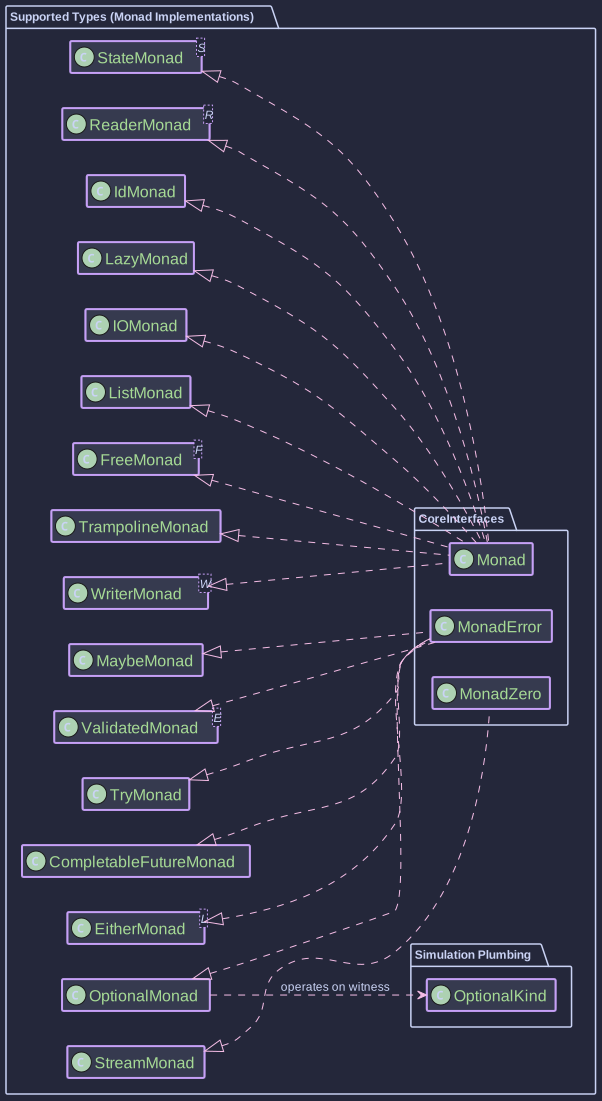
The Unified Pattern
Every type follows the same HKT simulation structure:
| Piece | Purpose |
|---|---|
XxxKind<A> | HKT marker interface extending Kind<XxxKind.Witness, A> |
XxxKind.Witness | Phantom type that uniquely identifies the type constructor |
XxxKindHelper | Bridge utilities: widen() (concrete to Kind), narrow() (Kind to concrete) |
| Type class instances | Functor, Applicative, Monad, etc. parameterised by the Witness type |
Library-defined types (Maybe, Either, IO, etc.) directly implement their Kind interface, so widen/narrow are zero-cost casts. External Java types (Optional, List, Stream, CompletableFuture) use an internal holder record.
Type Details by Category
Value & Error Types
Six ways to model "this computation might not produce a value."
Id<A>: The "do nothing" wrapper. No effects, no surprises. Sounds pointless, but it is the neutral element that makes monad transformers and generic code work. When you need a Monad<F> but have no effect to model, Id is your answer.
Maybe<A>: Just(value) or Nothing. The library's own optional type with full typeclass support: Selective, Traverse, Alternative. Pick this over Optional when you want richer composition and don't need JDK API interop.
Optional<A>: HKT bridge to java.util.Optional. Same semantics as Maybe, but wraps the JDK type directly. Use this when your codebase already passes Optional values around and you want to lift them into generic HKT code without conversion.
Either<L, R>: Right(value) or Left(error). Right-biased. Unlike Maybe/Optional which only say "absent", Either carries a typed error L that explains why the computation failed. Also provides Bifunctor for mapping both sides.
Try<A>: Success(value) or Failure(throwable). Either specialised for exceptions. Wrap risky code with Try.tryOf(() -> ...) and it catches the exception for you. Reach for this when your error is always a Throwable.
Validated<E, A>: Valid(value) or Invalid(error). Looks like Either, but its killer feature is error accumulation: use applicative ap with a Semigroup<E> to collect ALL errors from independent validations, not just the first one. The go-to for form validation and input checking.
EitherOrBoth<L, R>: Left(error), Right(value), or Both(warnings, value). The inclusive-or (Ior/These): unlike Either/Validated, it models a success that also carries non-fatal warnings. Right-biased with total accessors; flatMap short-circuits on Left and accumulates a Both's warnings via a Semigroup. Reach for it when a result can be both a value and a list of problems.
Effect & Computation Types
Eight ways to model "this computation does something beyond returning a value."
IO<A>: Describes a side effect without running it. Nothing happens until you call unsafeRunSync(). File reads, API calls, database writes: anything that touches the outside world belongs in IO. Think of it as a recipe for a side effect.
Lazy<A>: Describes a pure computation without running it. Like IO, nothing happens until you call force(), but unlike IO, the result is memoised. Second call returns the cached value instantly. Perfect for expensive computations you may never need.
CompletableFuture<A>: HKT bridge to java.util.concurrent.CompletableFuture. Asynchronous computation that is already running. Provides MonadError so you can flatMap over futures and handle failures through the typeclass hierarchy.
VTask<A>: Lightweight task on virtual threads (JDK 21+). Like CompletableFuture but designed for structured concurrency: VTaskScope manages lifecycles, cancellation, and resource cleanup. The modern choice for concurrent Java.
Reader<R, A>: A function R -> A wrapped in a monad. Pass a shared environment (config, database pool, feature flags) to an entire computation graph without threading it through every parameter list. Dependency injection, functional style.
Context<R, A>: Like Reader, but built on JDK 21+ ScopedValue. Use when your environment is scoped to a thread or task rather than passed explicitly. Integrates with virtual-thread structured concurrency.
State<S, A>: A function S -> (S, A). Threads mutable state through a computation without actual mutation. Each step receives the current state and returns a new state alongside its result. Stateful algorithms, purely.
Writer<W, A>: Pairs every result with an accumulated log. Each flatMap step produces a log entry; the Monoid<W> combines them automatically. Extract the final value with run(), the complete log with exec(), or both with runWriter(). Audit trails, calculation receipts, metrics.
Collection Types
Three ways to model "this computation produces multiple values."
List<A>: HKT bridge to java.util.List. As a monad, flatMap models non-deterministic computation: map over each element, concatenate the results. Supports Selective, Traverse, and Alternative for rich collection operations in generic code.
Stream<A>: HKT bridge to java.util.stream.Stream. Lazy and potentially infinite, but single-use: consuming a stream exhausts it. Use for large or generated sequences where you don't want everything in memory at once.
VStream<A>: Virtual-thread reactive stream (JDK 21+). Backpressure, parallel operations, structured concurrency. Think of it as a modern, concurrent alternative to Stream for data pipelines that need to fan out across virtual threads.
Recursion & DSL Types
Four abstractions for when standard monads aren't enough.
Trampoline<A>: Turns recursive algorithms into stack-safe iterative ones. Instead of making a recursive call (which grows the stack), you return a data structure describing the call. A flat loop processes it. Handles 1,000,000+ iterations where naive recursion dies at 5,000.
Free<F, A>: Turns any instruction set into a monad. Build your program as a data structure, then interpret it however you like: real execution, testing, logging, optimisation. One program, many interpreters. The foundation for embedded DSLs.
FreeAp<F, A>: Like Free, but for independent operations. Because steps don't depend on each other, an interpreter can batch them, run them in parallel, or analyse all operations upfront before executing any.
Coyoneda<F, A>: Gives any type constructor a Functor instance for free, via the Yoneda lemma. Also enables map fusion: consecutive .map(f).map(g).map(h) calls collapse into a single .map(f.andThen(g).andThen(h)) at interpretation time.
Structural Types
Three building blocks for generic programming, optics, and categorical abstractions.
Const<C, A>: Holds a constant value C while A is a phantom type that exists only in the signature. Sounds abstract, but it powers lens getters and fold operations across the optics library. Provides Applicative when C has a Monoid.
Tuple2<A, B>: A simple pair with Bifunctor support. bimap transforms both elements; first and second transform one side. Used internally by State, Writer, and various optics operations.
Function<A, B>: HKT wrapper around java.util.function.Function with Profunctor support. dimap transforms both input and output; lmap pre-processes the input; rmap post-processes the output. The theoretical backbone of optic composition.
Monad Transformers
Five transformers that layer one monad's effects on top of another. "I need IO and Either" becomes EitherT<IOKind.Witness, MyError, A>.
MaybeT<F, A>: Adds presence/absence to any monad F. The inner computation is Kind<F, Maybe<A>>. Use when your IO or CompletableFuture might legitimately produce "no result."
EitherT<F, L, R>: Adds typed errors to any monad F. The inner computation is Kind<F, Either<L, R>>. The workhorse transformer: IO + error handling, CompletableFuture + typed failures, etc.
OptionalT<F, A>: Like MaybeT but wraps java.util.Optional. Use when your stack already uses Optional and you want JDK interop without conversion.
ReaderT<F, R, A>: Adds environment reading to any monad F. The inner computation is R -> Kind<F, A>. Thread configuration through an effectful computation without parameter pollution.
StateT<S, F, A>: Adds state threading to any monad F. The inner computation is S -> Kind<F, (S, A)>. Stateful algorithms that also need IO, error handling, or other effects.
Practise with concrete types in Tutorial 06: Concrete Types (7 exercises).
Next: CompletableFuture
The CompletableFutureMonad:
Asynchronous Computations with CompletableFuture
- How to compose asynchronous operations functionally
- Using MonadError capabilities for async error handling and recovery
- Building non-blocking workflows with
map,flatMap, andhandleErrorWith - Integration with EitherT for combining async operations with typed errors
- Real-world patterns for resilient microservice communication
The Problem: Async Composition Without Structure
Java's CompletableFuture is powerful, but composing multiple async operations quickly becomes unwieldy. Consider a typical microservice scenario (fetching a user, looking up their subscription, then calculating a discount):
// Traditional CompletableFuture chaining
CompletableFuture<Discount> result =
userService.findUser(userId)
.thenCompose(user ->
subscriptionService.getSubscription(user.subscriptionId())
.thenCompose(sub ->
pricingService.calculateDiscount(user, sub)
.exceptionally(ex -> Discount.none())));
Each level of thenCompose indents further. Error handling with exceptionally or handle dangles awkwardly at the end, applies only to the innermost stage, and loses type information: every error becomes a generic Throwable. If you need different recovery strategies for different failures, you end up with nested try/catch inside your lambdas, and the functional style collapses.
The CompletableFutureMonad gives you a structured alternative: standard map, flatMap, and handleErrorWith operations that compose cleanly, and the ability to write generic code that works across any monadic type, not just CompletableFuture.
Core Components
The simulation for CompletableFuture involves these key pieces:
| Component | Role |
|---|---|
CompletableFuture<A> | Standard Java async computation |
CompletableFutureKind<A> | HKT marker (Kind<CompletableFutureKind.Witness, A>): enables generic type class programming |
CompletableFutureKindHelper | Bridge utilities: widen(), narrow(), and join() for blocking extraction |
CompletableFutureMonad | Implements MonadError<CompletableFutureKind.Witness, Throwable>: provides map, flatMap, of, ap, raiseError, and handleErrorWith |
The type class operations correspond directly to CompletableFuture methods you already know:
| Type Class Operation | CompletableFuture Equivalent |
|---|---|
map(f, fa) | thenApply(f) |
flatMap(f, fa) | thenCompose(f) |
ap(ff, fa) | thenCombine(ff, (a, f) -> f.apply(a)) |
of(value) | completedFuture(value) |
raiseError(ex) | failedFuture(ex) |
handleErrorWith(fa, handler) | exceptionallyCompose(handler) |
The difference is that these operations work through the Kind abstraction, so your code becomes reusable across any monadic type: swap CompletableFuture for IO, Either, or VTask without changing the logic.
Working with CompletableFutureMonad
The following examples build on a running scenario: an async service that fetches user data, validates subscriptions, and handles failures gracefully.
public void createExample() {
// Get the MonadError instance
MonadError<CompletableFutureKind.Witness, Throwable> futureMonad = Instances.monadError(completableFuture());
// --- Lift a pure value into an already-completed future ---
Kind<CompletableFutureKind.Witness, String> successKind = futureMonad.of("Success!");
// --- Create a failed future from an exception ---
RuntimeException error = new RuntimeException("Something went wrong");
Kind<CompletableFutureKind.Witness, String> failureKind = futureMonad.raiseError(error);
// --- Wrap an existing CompletableFuture ---
CompletableFuture<Integer> existingFuture = CompletableFuture.supplyAsync(() -> {
try {
TimeUnit.MILLISECONDS.sleep(20);
} catch (InterruptedException e) { /* ignore */ }
return 123;
});
Kind<CompletableFutureKind.Witness, Integer> wrappedExisting = FUTURE.widen(existingFuture);
CompletableFuture<Integer> failedExisting = new CompletableFuture<>();
failedExisting.completeExceptionally(new IllegalArgumentException("Bad input"));
Kind<CompletableFutureKind.Witness, Integer> wrappedFailed = FUTURE.widen(failedExisting);
// Unwrap back to CompletableFuture at system boundaries
CompletableFuture<String> unwrappedSuccess = FUTURE.narrow(successKind);
CompletableFuture<String> unwrappedFailure = FUTURE.narrow(failureKind);
}
These examples show how the type class instance composes async operations: the same map/flatMap vocabulary you use with Either, IO, or any other monad.
public void monadExample() {
MonadError<CompletableFutureKind.Witness, Throwable> futureMonad = Instances.monadError(completableFuture());
// --- map: transform the result when it completes ---
Kind<CompletableFutureKind.Witness, Integer> initialValueKind = futureMonad.of(10);
Kind<CompletableFutureKind.Witness, String> mappedKind = futureMonad.map(
value -> "Result: " + value,
initialValueKind
);
System.out.println("Map Result: " + FUTURE.join(mappedKind)); // Output: Result: 10
// --- flatMap: sequence async operations that depend on previous results ---
Function<String, Kind<CompletableFutureKind.Witness, String>> asyncStep2 =
input -> FUTURE.widen(
CompletableFuture.supplyAsync(() -> input + " -> Step2 Done")
);
Kind<CompletableFutureKind.Witness, String> flatMappedKind = futureMonad.flatMap(
asyncStep2,
mappedKind // "Result: 10" feeds into asyncStep2
);
System.out.println("FlatMap Result: " + FUTURE.join(flatMappedKind));
// Output: Result: 10 -> Step2 Done
// --- ap: apply a function from one future to a value from another ---
Kind<CompletableFutureKind.Witness, Function<Integer, String>> funcKind =
futureMonad.of(i -> "FuncResult:" + i);
Kind<CompletableFutureKind.Witness, Integer> valKind = futureMonad.of(25);
Kind<CompletableFutureKind.Witness, String> apResult = futureMonad.ap(funcKind, valKind);
System.out.println("Ap Result: " + FUTURE.join(apResult)); // Output: FuncResult:25
// --- map2: combine two independent futures ---
Kind<CompletableFutureKind.Witness, Integer> f1 = futureMonad.of(5);
Kind<CompletableFutureKind.Witness, String> f2 = futureMonad.of("abc");
BiFunction<Integer, String, String> combine = (i, s) -> s + i;
Kind<CompletableFutureKind.Witness, String> map2Result = futureMonad.map2(f1, f2, combine);
System.out.println("Map2 Result: " + FUTURE.join(map2Result)); // Output: abc5
}
This is where CompletableFutureMonad shines. Unlike exceptionally which returns a plain value, handleErrorWith returns a new Kind, so recovery itself can be asynchronous.
public void errorHandlingExample(){
MonadError<CompletableFutureKind.Witness, Throwable> futureMonad = Instances.monadError(completableFuture());
Kind<CompletableFutureKind.Witness, String> failedKind =
futureMonad.raiseError(new IllegalStateException("Processing Failed"));
// Recovery handler: inspect the error and return a new async computation
Function<Throwable, Kind<CompletableFutureKind.Witness, String>> recoveryHandler =
error -> {
if (error instanceof IllegalStateException) {
// Recovery can itself be async
return FUTURE.widen(CompletableFuture.supplyAsync(() ->
"Recovered from: " + error.getMessage()));
}
// Re-raise anything we can't handle
return futureMonad.raiseError(
new RuntimeException("Recovery failed", error));
};
// Apply the handler: transforms the failed future into a recovered one
Kind<CompletableFutureKind.Witness, String> recovered =
futureMonad.handleErrorWith(failedKind, recoveryHandler);
System.out.println(FUTURE.join(recovered));
// Output: Recovered from: Processing Failed
// Success values pass through untouched - the handler is never called
Kind<CompletableFutureKind.Witness, String> successKind = futureMonad.of("All Good");
Kind<CompletableFutureKind.Witness, String> handledSuccess =
futureMonad.handleErrorWith(successKind, recoveryHandler);
System.out.println(FUTURE.join(handledSuccess));
// Output: All Good
}
The handler receives the cause of the failure, unwrapped from CompletionException when necessary. This lets you pattern-match on specific exception types and choose recovery strategies (retry, fallback, or re-raise) all within the same compositional pipeline.
When you don't need the cause and just want a constant fallback, the recover/recoverWith shortcuts are more concise: futureMonad.recover(failedKind, "Default"). Note recoverWith evaluates its fallback eagerly, so keep handleErrorWith when the recovery future is expensive and should only start on failure.
Back to the One-Liner
The Foundations one-liner is synchronous, but the same skeleton works unchanged when the repository operations are asynchronous:
FUTURE.widen(repo.findAsync(id))
.toEitherPath()
.focus().attributes().at(key)
.modify(spec::validateAndCoerce)
.flatMap(node -> FUTURE.widen(repo.saveAsync(node)));
CompletableFutureMonad.flatMap is the layer dispatched here, and it sequences the asynchronous steps without us writing a single thenCompose by hand. Failures (a CompletionException carrying our domain error, or a network blip) flow through MonadError recovery the same way Either errors do in the synchronous version. One mental model, two execution profiles.
See One Line, Six Layers for the wider picture and VTask when structured concurrency on virtual threads is the better fit.
When to Use CompletableFutureMonad
| Scenario | Use |
|---|---|
| Writing generic code that works across monads | CompletableFutureMonad: your logic programs against Kind<F, A> |
| Composing async workflows with typed error propagation | Combine with EitherT (see the Order Workflow) |
| Straightforward async pipelines in application code | Prefer CompletableFuturePath for fluent API |
| Virtual-thread concurrency | Consider VTaskPath instead |
CompletableFutureMonadimplementsMonadError<CompletableFutureKind.Witness, Throwable>, giving youmap,flatMap,of,ap,raiseError, andhandleErrorWithover async computations.handleErrorWithis the key differentiator: recovery can itself be asynchronous, unlikeexceptionallywhich forces synchronous fallback.- Use
CompletableFutureKindHelper.join()to block and extract results at system boundaries (tests,mainmethods). Avoid calling it mid-pipeline. - For the HKT bridge:
widen()wraps aCompletableFutureintoKind,narrow()unwraps it back. Both are low-cost cast operations.
For most application-level use cases, prefer CompletableFuturePath which wraps CompletableFuture and provides:
- Fluent composition with
map,via,recover - Seamless integration with the Focus DSL for structural navigation
- A consistent API shared across all effect types
// Instead of manual Kind chaining:
Kind<CompletableFutureKind.Witness, User> user = FUTURE.widen(findUser(id));
Kind<CompletableFutureKind.Witness, Order> order = futureMonad.flatMap(
u -> FUTURE.widen(createOrder(u)), user);
// Use CompletableFuturePath for cleaner composition:
CompletableFuturePath<Order> orderPath = CompletableFuturePath.fromFuture(findUser(id))
.via(u -> CompletableFuturePath.fromFuture(createOrder(u)));
See Migration Cookbook: Recipe 4 for a complete before/after walkthrough, and Effect Path Overview for the complete guide.
CompletableFuture has dedicated JMH benchmarks measuring async composition overhead, error recovery, and chain depth. Key expectations:
of/raiseErrorare very fast: they wrap already-completed futures with no thread schedulingflatMapchains add minimal overhead beyond the underlyingthenComposecosthandleErrorWithmatchesexceptionallyComposeperformance while providing stronger composition guarantees
./gradlew :hkj-benchmarks:jmh --includes=".*CompletableFutureBenchmark.*"
See Benchmarks & Performance for full details, expected ratios, and how to interpret results.
Previous: Supported Types Next: Either
Either: Modelling Success or Failure
- How
Either<L, R>makes failure a value rather than an exception - Why right-bias makes the "happy path" read like a sentence
- How
Leftshort-circuits a chain without a singleifin sight - How
Eitherlifts into Higher-Kinded-J's type-class machinery viaEitherMonad - Where
Eithershows up inside the Foundations one-liner
Failure as a Value
Either<L, R> represents a value that is one of two things: a success on the right or an alternative on the left. The convention is older than Java itself, and it pays its way every time we use it.
Right<L, R>is the success rail and carries anR.Left<L, R>is the alternative rail and carries anL, typically an error.
Where exceptions hide failure inside a side channel, Either puts it in the return type, in the open, where the compiler can argue with us about it. Where Optional and Maybe only signal absence, Either carries information about why something went wrong. We can think of Either as Maybe with a story to tell about its Nothing.
The implementation is a sealed interface Either<L, R> with two record cases, Left<L, R> and Right<L, R>. Both directly implement EitherKind<L, R> and EitherKind2<L, R>, so widening into Kind is a zero-allocation cast.
public sealed interface Either<L, R>
permits Either.Left, Either.Right { ... }
record Left<L, R>(L value) implements Either<L, R> { ... }
record Right<L, R>(R value) implements Either<L, R> { ... }
That is the whole shape of the type. Two cases, one rail each.
Two Rails, One Chain
The mental picture worth keeping is two parallel rails. Right keeps us on the success rail; Left jumps us to the alternative rail and stays there.
Right ═══●═══════════════●═══▶ result
map flatMap
╲ ╲ any step returns Left (or starts on Left)
╲ ╲
Left ────●───────────────●───▶ short-circuit
Once we are on the left rail, every downstream map and flatMap is a no-op. The error reaches the end of the chain unchanged, ready to be inspected with fold or pattern matching. We never wrote that propagation logic; the type wrote it for us.
Creating Instances
Either<String, Integer> success = Either.right(123);
Either<String, Integer> failure = Either.left("File not found");
// Null is permitted on either side; the type does not police absence,
// it only models the success/alternative split.
Either<String, Integer> rightNull = Either.right(null);
Either<String, Integer> leftNull = Either.left(null);
If null-safety on the success side matters, lift through Maybe first or convert with Maybe::toEither.
Working with Either
Checking State
if (success.isRight()) {
System.out.println("It's Right!");
}
if (failure.isLeft()) {
System.out.println("It's Left!");
}
Extracting Values (Use With Caution)
getLeft and getRight exist for the rare case where we already know the rail:
try {
Integer value = success.getRight(); // 123
String error = failure.getLeft(); // "File not found"
// success.getLeft(); // throws NoSuchElementException
} catch (NoSuchElementException e) {
System.err.println("Asked the wrong rail: " + e.getMessage());
}
In application code, prefer fold or pattern matching. The throwing accessors are there for tests and for the few cases where the type system has already proved the rail.
Folding Both Rails at Once
String resultMessage = failure.fold(
leftValue -> "Operation failed with: " + leftValue,
rightValue -> "Operation succeeded with: " + rightValue);
// "Operation failed with: File not found"
String successMessage = success.fold(
leftValue -> "AppError: " + leftValue,
rightValue -> "Success: " + rightValue);
// "Success: 123"
fold is the safe extractor: both rails must be handled, both branches must agree on a return type, and the compiler keeps us honest.
map (Right-Biased)
map only touches the right rail.
Function<Integer, String> intToString = Object::toString;
Either<String, String> mappedSuccess = success.map(intToString); // Right("123")
Either<String, String> mappedFailure = failure.map(intToString); // Left("File not found"), unchanged
This is what "right-biased" means: Either treats success as the default flow, the same way Optional.map treats "present" as the default flow. The error rail is preserved verbatim.
flatMap
flatMap is the reason we keep coming back to Either. It chains operations where each step might fail, and the moment a step returns Left, the rest of the chain stops.
Function<String, Either<String, Integer>> parse = s -> {
try { return Either.right(Integer.parseInt(s.trim())); }
catch (NumberFormatException e) { return Either.left("Invalid number"); }
};
Function<Integer, Either<String, Integer>> checkPositive = i ->
(i > 0) ? Either.right(i) : Either.left("Number not positive");
Either<String, Integer> r1 = Either.<String, String>right(" 10 ").flatMap(parse).flatMap(checkPositive);
// Right(10)
Either<String, Integer> r2 = Either.<String, String>right(" -5 ").flatMap(parse).flatMap(checkPositive);
// Left("Number not positive")
Either<String, Integer> r3 = Either.<String, String>right(" abc ").flatMap(parse).flatMap(checkPositive);
// Left("Invalid number")
Either<String, Integer> r4 = Either.<String, String>left("Initial error").flatMap(parse).flatMap(checkPositive);
// Left("Initial error")
Three different errors, one chain, no if, no try. The Left reaches the end of the pipeline carrying its original message.
Lifting Either Into the Type-Class Machinery
When we want to write code that is generic over the container, we go through EitherMonad. It implements MonadError<EitherKind.Witness<L>, L> for any chosen left type L.
MonadError<EitherKind.Witness<String>, String> eitherMonad = Instances.monadError(either());
// Widen
Either<String, Integer> myEither = Either.right(10);
Kind<EitherKind.Witness<String>, Integer> kind = EITHER.widen(myEither);
// Map through the monad
Kind<EitherKind.Witness<String>, String> mapped =
eitherMonad.map(Object::toString, kind);
// Sequence with flatMap
Function<Integer, Kind<EitherKind.Witness<String>, Double>> nextStep = i ->
EITHER.widen(i > 5 ? Either.right(i / 2.0) : Either.left("TooSmall"));
Kind<EitherKind.Witness<String>, Double> sequenced =
eitherMonad.flatMap(nextStep, kind);
// Raise an error explicitly
Kind<EitherKind.Witness<String>, Integer> errorKind = eitherMonad.raiseError("E101");
// Recover from an error
Kind<EitherKind.Witness<String>, Integer> recovered =
eitherMonad.handleErrorWith(errorKind, error -> {
System.out.println("Handling error: " + error);
return eitherMonad.of(0);
});
// Narrow
Either<String, Integer> finalEither = EITHER.narrow(recovered);
// Right(0)
The handler above uses the error (it logs it), so handleErrorWith is the right tool. When you only want a constant fallback and don't need the error, the recover/recoverWith shortcuts are shorter. eitherMonad.recover(errorKind, 0) yields the same Right(0).
This is the door through which Either joins every generic combinator the rest of the library defines: traverse, sequence, flatMapN, the lot.
Back to the One-Liner
The Foundations one-liner is built on EitherPath, the fluent wrapper around Either:
repo.find(id)
.toEitherPath() // <-- absence becomes a typed left
.focus().attributes().at(key)
.modify(spec::validateAndCoerce)
.flatMap(repo::save); // <-- EitherMonad.flatMap dispatches here
Two of the six layers in that line are Either doing its job. .toEitherPath() is a natural transformation from the absence-shaped MaybePath into a failure-shaped EitherPath, lifting "the node was not found" into a typed left. .flatMap(repo::save) is EitherMonad.flatMap: if validation produced a Left, save is silently skipped and the original error reaches the caller.
We never wrote the propagation, the conversion, or the short-circuit. The type system arranged them for us.
When to Use Either
| Scenario | Use |
|---|---|
| Domain-specific typed errors (validation, business rules) | Either<MyError, A>, where the left carries context |
| Sequential operations where any step can fail | Either with flatMap; short-circuits on Left |
| Combining typed errors with async or other effects | EitherT transformer; see the Order Example |
Wrapping Throwable-based APIs | Prefer Try, an Either<Throwable, A> with extras |
| Accumulating multiple validation errors | Prefer Validated with applicative operations |
| Application-level pipelines with a fluent API | Prefer EitherPath |
- Model domain failures explicitly rather than reaching for exceptions
- Sequence operations that can each fail; the type stops the chain at the first
Left - Compose with other effects through EitherT or, more often, through EitherPath
- Prefer it over returning
nullor throwing for any failure that the caller can reasonably handle
For most application code, prefer EitherPath, which wraps Either and provides:
- Fluent composition with
map,via,recover - Direct integration with the Focus DSL
- A consistent API shared across every effect type
// Manual Either chaining
Either<AppError, User> user = findUser(id);
Either<AppError, Order> order = user.flatMap(u -> createOrder(u));
// EitherPath, same logic, less ceremony
EitherPath<AppError, Order> orderPath = Path.either(findUser(id))
.via(u -> createOrderPath(u));
See Effect Path Overview for the complete guide.
Either has dedicated JMH benchmarks measuring instance reuse, short-circuit efficiency, and chain composition. Headline expectations:
leftMapis 5-10x faster thanrightMap; aLeftreuses the same instance with zero allocationleftLongChainis 10-50x faster thanrightLongChain; the reuse benefit compounds across 50-deep chains- If
Leftoperations allocate memory, instance reuse is broken and we have a regression
./gradlew :hkj-benchmarks:jmh --includes=".*EitherBenchmark.*"
See Benchmarks & Performance for full details, expected ratios, and how to interpret results.
Previous: CompletableFuture Next: EitherOrBoth
EitherOrBoth:
Success That Can Also Carry Warnings
The code on this page is EitherOrBothBook.java - the page includes it directly, so it is compiled and run by the build.
- Why neither
EithernorValidatedcan model "success with warnings", and howEitherOrBothfills the gap - The three cases (
Left,Right,Both) and the total accessors (getLeft/getRight) that never throw - The accumulating
flatMapcontract:Leftshort-circuits,Bothcarries its warnings forward - Why the monadic
apshort-circuits (and is not the same asValidated's accumulatingap) - Converting to
Either/Validated/Maybeat the boundary, deciding what happens to warnings - That
EitherOrBothis known elsewhere asIor(Cats) orThese(Haskell)
The Problem: A Success With Warnings Has No Home
Higher-Kinded-J models two failure shapes, and both are exclusive:
Either<L, R>isLeft(e)orRight(a): a result is a failure or a success, never both.Validated<E, A>accumulates errors, but is still exclusive:Invalidcarries errors and no value;Validcarries a value and no errors.
Neither models a genuinely common outcome: a successful value that also carries accumulated, non-fatal problems. Config that parses but reports deprecations; a document that renders but logs recoverable issues; an import that produces records and a list of rows it had to skip. The usual workarounds (Either<E, Pair<List<Warning>, A>>, a bespoke result record, or simply dropping the warnings) do not compose with the railway combinators, so the warning channel becomes manual plumbing.
EitherOrBoth<L, R> is the principled type. It is an inclusive-or: a Left, a Right, or Both at once.
EitherOrBoth<NonEmptyList<Warning>, Config> result =
parseConfig(raw) // Right(cfg), Both(warnings, cfg), or Left(fatal)
.flatMap(NonEmptyList.semigroup(), cfg -> validateConfig(cfg)); // warnings accumulate
By convention it is right-biased: success on the right, problems on the left, so map / flatMap feel identical to the rest of the railway. A Both is therefore "a successful value and the warnings gathered while producing it".
EitherOrBoth is called Ior (inclusive-or) in Cats and These in Haskell. This library uses the
descriptive name; the aliases are noted only so the concept is recognisable.
The Three Cases
EitherOrBoth is a sealed interface over three immutable records, so values are fully
switch-matchable:
static String describe(EitherOrBoth<NonEmptyList<Warning>, Config> r) {
return switch (r) {
case EitherOrBoth.Left<NonEmptyList<Warning>, Config>(var w) -> "failed: " + w;
case EitherOrBoth.Right<NonEmptyList<Warning>, Config>(var cfg) -> "ok: " + cfg;
case EitherOrBoth.Both<NonEmptyList<Warning>, Config>(var w, var c) ->
"ok with warnings: " + c;
};
}
Create values with left / right / both:
EitherOrBoth<String, Integer> left = EitherOrBoth.left("fatal");
EitherOrBoth<String, Integer> right = EitherOrBoth.right(42);
EitherOrBoth<String, Integer> both = EitherOrBoth.both("deprecated key", 42);
Values are never null: the components are validated at construction, which is what keeps the
total accessors honest.
Total Accessors (No Throwing Getters)
Unlike Either's throwing getLeft / getRight, EitherOrBoth exposes total accessors that
return a Maybe:
| Accessor | Left(l) | Right(r) | Both(l, r) |
|---|---|---|---|
getLeft() | Just(l) | Nothing | Just(l) |
getRight() | Nothing | Just(r) | Just(r) |
isLeft() / isRight() / isBoth() | true / – / – | – / true / – | – / – / true |
fold collapses all three cases at once:
String s =
both.fold(
warnings -> "failed: " + warnings,
value -> "ok: " + value,
(w, v) -> "ok (" + v + ") with " + w);
The flatMap Contract (the subtle part)
flatMap is right-biased and accumulates the left channel using a Semigroup<L> (the same mechanism
Validated uses). The contract is: Left is fatal and short-circuits; Both carries its warnings
forward and accumulates them.
Right ═══●═══════════════●═══▶ value
Both ═══●═══════════════●═══▶ value + warnings
map flatMap f (w ⊕ w' accumulate, left to right)
╲ ╲ a flatMap step may return Left
╲ ╲
Left ────●───────────────●───▶ short-circuit, f never runs
default <R2> EitherOrBoth<L, R2> flatMap(
Semigroup<L> semigroup, Function<? super R, ? extends EitherOrBoth<L, ? extends R2>> mapper) {
For Both(l, r).flatMap(⊕, f):
f(r) returns | result |
|---|---|
Left(l2) | Left(l ⊕ l2) |
Right(r2) | Both(l, r2) |
Both(l2, r2) | Both(l ⊕ l2, r2) |
Left(l) returns Left(l) without running f; Right(r) returns f(r) unchanged. Accumulation is
left-to-right and needs only an associative Semigroup.
EitherOrBoth is a lawful Monad, so its ap is consistent with flatMap: when the
function side is a Left, ap short-circuits and the argument's left is dropped. This is different
from Validated.ap, which collects errors from both sides even across a failure.
If you want the fully-parallel "collect every warning, even across a fatal Left" behaviour, use
EitherOrBothPath's accumulating combinators (zipWithAccum,
andAlso). The monadic operations here are for sequential, short-circuiting composition.
The default warning channel is NonEmptyList: a Both always has at least
one warning, so a non-empty list is the exact fit, and NonEmptyList.semigroup() supplies the
accumulation.
Conversions
The interesting edge is what happens to a Both's warnings at the boundary. The conversions are
named so the decision is explicit:
| Conversion | Left(l) | Right(r) | Both(l, r) |
|---|---|---|---|
toEitherDroppingWarnings() | Left(l) | Right(r) | Right(r) (warnings dropped) |
toEitherFailingOnWarnings() | Left(l) | Right(r) | Left(l) (warnings fatal) |
toValidated() | Invalid(l) | Valid(r) | Valid(r) (warnings dropped) |
toMaybe() | Nothing | Just(r) | Just(r) |
fromEither and fromValidated lift the exclusive types in (the Both case is unreachable from
them).
When To Use It
| Type | Use when |
|---|---|
Either<L, R> | A clean, exclusive choice: success or failure, no partial results |
Validated<E, A> | Pure accumulation: collect all errors, with no partial value on failure |
EitherOrBoth<L, R> | Success that may also carry non-fatal warnings (or a genuinely partial result) |
EitherOrBoth is complementary to the other two, not a replacement: reach for it precisely when a
result can be both a value and a set of problems.
Tolerant Assembly: accumulate() and fields()
The staged assembly builder gives EitherOrBoth the same open-arity construction story as Validated, in tolerant form: warnings accumulate (Both) while the value keeps flowing, and any Left makes the whole assembly Left while still keeping every warning, in field-declaration order.
EitherOrBoth<NonEmptyList<String>, Config> cfg =
EitherOrBoth.accumulate()
.and(parsePortLenient(raw.port())) // Both(NonEmptyList[port defaulted], 8080)
.and(parseTimeoutLenient(raw.timeout())) // Right(30)
.apply(Config::new);
// Both(NonEmptyList[port defaulted], Config[port=8080, timeout=30])
The combination primitive behind it is zipWithAccum(other, semigroup, combiner): the Validated-style merge in which the right is present only if both are, and nothing short-circuits the warning collection. EitherOrBoth.fields() is the labelled twin over NonEmptyList<FieldError>, with paths that compose through nesting.
EitherOrBothis an inclusive-or:Left,Right, orBothat once: the type for "success with warnings".- Right-biased with total accessors:
map/flatMapoperate on the right;getLeft/getRightreturnMaybeand never throw. flatMapaccumulates:Leftshort-circuits;Bothcarries warnings forward, combining them via aSemigroup(defaultNonEmptyList.semigroup()).- Monadic
apshort-circuits, unlikeValidated's accumulatingap; useEitherOrBothPathfor full parallel accumulation. - Explicit conversions force a decision about warnings at the boundary.
- EitherOrBothPath: the fluent railway wrapper, with both short-circuit and accumulating composition
- Either: the exclusive success-or-failure sibling
- Validated: pure error accumulation with no partial value
- NonEmptyList: the non-empty warning channel a
Bothpairs with - Semigroups and Monoids: how the left channel accumulates
- Accumulating Assembly: the open-arity
accumulate()/fields()builder, whoseconstructterminal turns a constructor's refusal into aLeftthat keeps the warnings collected so far
Previous: Either Next: Identity
Identity Monad (Id)
- What the Identity Monad is and why it exists
- How Id serves as the "no-effect" base case for monad transformers
- Using Id to test and develop generic monadic code
- How
StateT<S, IdKind.Witness, A>collapses to plainState<S, A>
Why Wrap a Value in a Do-Nothing Wrapper?
A fair question. Id<A> holds a value of type A and does absolutely nothing else: no deferred execution, no error handling, no optionality. It's a container that contributes zero additional behaviour.
But that's exactly the point. Id is to monads what 1 is to multiplication: multiplying by 1 doesn't change the result, but you need 1 to exist for multiplication to be well-defined. Similarly, you need Id when the type system demands a monad but you don't want any effect:
-
Transformer base case: Monad transformers like
StateT,ReaderT, andMaybeTare parameterised by an inner monadF. When you don't need that inner effect, plug inId:// StateT with Id as the inner monad = plain State StateT<S, IdKind.Witness, A> ≡ State<S, A>Without
Id, you'd need separate implementations forStateandStateT,ReaderandReaderT, and so on.Ideliminates that duplication. -
Generic code: When writing functions generic over any
Monad<F>, Id serves as the "no-effect" instance for testing and for cases where pure computation suffices:// This works with IO, CompletableFuture, Maybe, or... Id <F extends WitnessArity<TypeArity.Unary>> Kind<F, String> greet( Monad<F> monad, Kind<F, String> name) { return monad.map(n -> "Hello, " + n + "!", name); } // Test with Id - no effects, fully predictable Monad<IdKind.Witness> idMonad = Instances.monad(id()); Kind<IdKind.Witness, String> result = greet(idMonad, idMonad.of("Alice")); // result contains "Hello, Alice!"
Core Components
| Component | Role |
|---|---|
Id<A> | A record wrapping a value of type A. Directly implements IdKind<A>, so no wrapper allocation is needed. |
IdKind<A> / IdKindHelper | HKT bridge: widen() and narrow() (zero-cost casts), narrows() to narrow and extract the value in one step |
IdMonad | Type class instance (Monad<IdKind.Witness>): provides of, map, flatMap, and ap |
Every operation on Id simply applies to the wrapped value; there's no additional behaviour:
| Operation | What It Does |
|---|---|
Id.of(value) | Wrap a value |
id.value() | Unwrap the value |
idMonad.map(f, fa) | Apply f to the value, re-wrap the result |
idMonad.flatMap(f, fa) | Apply f to the value; f returns an Id, so no extra wrapping |
idMonad.ap(ff, fa) | Extract the function from ff, apply it to the value in fa |
Working with Id
// Direct creation and access
Id<String> idString = Id.of("Hello, Identity!");
String value = idString.value(); // "Hello, Identity!"
Id<Integer> idInt = Id.of(123);
Id<String> idNull = Id.of(null); // Id can wrap null
Monad<IdKind.Witness> idMonad = Instances.monad(id());
// of: lift a value into Id
Kind<IdKind.Witness, Integer> kindInt = idMonad.of(42);
// map: transform the wrapped value
Kind<IdKind.Witness, String> mapped = idMonad.map(i -> "Value is " + i, kindInt);
ID.narrow(mapped).value(); // "Value is 42"
// flatMap: chain with a function that returns Id
Kind<IdKind.Witness, String> chained = idMonad.flatMap(
i -> Id.of("Doubled: " + (i * 2)),
kindInt
);
ID.narrow(chained).value(); // "Doubled: 84"
// flatMap directly on Id (no need for the type class)
Id<String> direct = Id.of(42).flatMap(i -> Id.of("Direct: " + i));
direct.value(); // "Direct: 42"
// ap: apply a wrapped function to a wrapped value
Kind<IdKind.Witness, Function<Integer, String>> funcKind = idMonad.of(i -> "Applied: " + i);
Kind<IdKind.Witness, String> applied = idMonad.ap(funcKind, kindInt);
ID.narrow(applied).value(); // "Applied: 42"
This is where Id earns its keep. StateT<S, IdKind.Witness, A> behaves exactly like a plain State<S, A>: the Id inner monad contributes no additional effect.
// Create a StateT monad with Id as the inner monad
Monad<StateTKind.Witness<Integer, IdKind.Witness>> stateMonadOverId =
Instances.stateT(Instances.monad(id()));
// A stateful computation: increment the state, return the old value
Function<Integer, Kind<IdKind.Witness, StateTuple<Integer, Integer>>> runStateFn =
currentState -> Id.of(StateTuple.of(currentState + 1, currentState));
Kind<StateTKind.Witness<Integer, IdKind.Witness>, Integer> incrementAndGet =
STATE_T.stateT(runStateFn);
// Run with initial state 10
Kind<IdKind.Witness, StateTuple<Integer, Integer>> resultIdTuple =
STATE_T.runStateT(incrementAndGet, 10);
StateTuple<Integer, Integer> tuple = ID.narrow(resultIdTuple).value();
System.out.println("Returned Value: " + tuple.value()); // Output: 10 (old state)
System.out.println("Final State: " + tuple.state()); // Output: 11 (incremented)
Because the inner monad is Id, unwrapping the result is straightforward: there's no Optional to check, no Either to branch on, no CompletableFuture to await. The transformer machinery works, but the inner monad simply passes the value through.
When to Use Id
| Scenario | Use |
|---|---|
| Transformer base case (StateT, ReaderT, MaybeT without an inner effect) | Id / IdMonad |
| Testing generic monadic code with predictable values | Id: no effects means no surprises |
| Application-level pure computation with the Path API | Prefer IdPath |
| You need error handling, async, or optionality | Use a different monad: Id adds nothing |
Id<A>is the trivial monad: it wraps a value and does nothing else.- Its purpose is structural: it fills the "inner monad" slot in transformers when no effect is needed.
Id<A>directly implementsIdKind<A>, sowiden/narroware zero-cost casts.- All monadic operations (
map,flatMap,ap) simply apply to the wrapped value with no additional behaviour. - If you're not working with transformers or generic monadic code, you probably don't need
Iddirectly.
For most use cases, prefer IdPath which wraps Id and provides:
- Fluent composition with
map,via,zipWith - Seamless integration with the Focus DSL for structural navigation
- A consistent API shared across all effect types
// Instead of manual Id chaining:
Kind<IdKind.Witness, String> name = idMonad.of("Alice");
Kind<IdKind.Witness, Integer> length = idMonad.map(String::length, name);
// Use IdPath for cleaner composition:
IdPath<Integer> len = Path.id("Alice").map(String::length);
See Effect Path Overview for the complete guide.
Previous: EitherOrBoth Next: IO
The IOMonad:
Managing Side Effects with IO
- How to describe side effects without performing them immediately
- Building pure functional programs with deferred execution
- Composing complex side-effecting operations using
mapandflatMap - The difference between describing effects and running them with
unsafeRunSync - Creating testable, composable programs that separate logic from execution
The Problem: Side Effects Everywhere
Consider a method that loads configuration, connects to a database, and logs the result:
// Every call executes immediately - untestable, unrepeatable, order-dependent
Connection connect() {
Config config = loadConfig(); // reads disk
Connection conn = connectToDb(config); // opens network socket
logger.info("Connected to " + conn.endpoint()); // writes to stdout
return conn;
}
Each line performs a side effect the instant it runs. You can't test connectToDb without a real database. You can't reorder or retry steps without re-executing earlier effects. And if you want to compose this with other workflows, you're stuck; the effects have already happened.
The IO monad solves this by separating description from execution. An IO<A> value is a recipe for a computation that will produce an A when run, but nothing happens until you explicitly say "go." This means you can build, compose, and inspect entire programs as pure values, then execute them once at the application boundary.
// Describe effects - nothing executes yet
Kind<IOKind.Witness, Config> loadCfg = IO_OP.delay(() -> loadConfig());
Kind<IOKind.Witness, Connection> connect = ioMonad.flatMap(
cfg -> IO_OP.delay(() -> connectToDb(cfg)), loadCfg);
Kind<IOKind.Witness, Connection> logged = ioMonad.peek(
conn -> logger.info("Connected to " + conn.endpoint()), connect);
// Execute the entire recipe at the edge
Connection conn = IO_OP.unsafeRunSync(logged);
The logic is testable (swap loadConfig for a stub), composable (chain more steps with flatMap), and the effects happen exactly once, in exactly the order you specified.
Core Components
The IO functionality is built upon these key pieces:
| Component | Role |
|---|---|
IO<A> | Wraps a Supplier<A>, describing an effect that produces A when run. Directly extends IOKind<A>, so no wrapper allocation is needed. |
IOKind<A> / IOKindHelper | HKT bridge: widen() and narrow() (zero-cost casts), delay() to create deferred effects, unsafeRunSync() to execute them |
IOMonad | Type class instance (Monad<IOKind.Witness>): provides map, flatMap, of, and ap for composing IO programs |
| Type Class Operation | What It Does |
|---|---|
IO_OP.delay(supplier) | Wrap a side effect; nothing executes yet |
ioMonad.of(value) | Lift a pure value into IO (no effect) |
ioMonad.map(f, fa) | Transform the eventual result without adding new effects |
ioMonad.flatMap(f, fa) | Sequence two effects: the second can depend on the first's result |
ioMonad.ap(ff, fa) | Apply a function-in-IO to a value-in-IO |
IO_OP.unsafeRunSync(fa) | Execute: run the recipe and produce the result. Call this at the edge. |
- Error handling: Exceptions thrown during
unsafeRunSyncpropagate directly. For typed error handling, combine with EitherT or wrap operations with Try. - Async execution: IO runs synchronously on the calling thread. For async, see CompletableFutureMonad. For virtual-thread concurrency, see VTaskPath.
- Resource management: IO alone doesn't guarantee cleanup. Use IOPath's bracket pattern for safe resource handling.
Working with IO
The following examples build a small program step by step: creating IO actions, composing them, then executing the result.
Use IO_OP.delay to capture side effects. Use ioMonad.of for pure values within IO.
Monad<IOKind.Witness> ioMonad = Instances.monad(io());
java.util.Scanner scanner = new java.util.Scanner(System.in);
// IO action to print a message - nothing happens yet
Kind<IOKind.Witness, Unit> printHello = IO_OP.delay(() -> {
System.out.println("Hello from IO!");
return Unit.INSTANCE;
});
// IO action to read a line from the console - nothing happens yet
Kind<IOKind.Witness, String> readLine = IO_OP.delay(() -> {
System.out.print("Enter your name: ");
return scanner.nextLine();
});
// Lift a pure value - no side effect at all
Kind<IOKind.Witness, Integer> pureValueIO = ioMonad.of(42);
// Capture a time-dependent side effect
Kind<IOKind.Witness, Long> currentTime = IO_OP.delay(System::currentTimeMillis);
None of these execute when created. The Supplier inside delay is stored, not called.
Use IO_OP.unsafeRunSync to run the computation. This is the "end of the world"; call it at application boundaries, not deep inside your logic.
// Execute printHello - now the effect happens
IO_OP.unsafeRunSync(printHello); // prints "Hello from IO!"
// Execute pureValueIO
Integer value = IO_OP.unsafeRunSync(pureValueIO);
System.out.println("Fetched: " + value); // Output: 42
// Running the same action again re-executes the effect
IO_OP.unsafeRunSync(printHello); // prints "Hello from IO!" again
// Exceptions propagate - handle at the boundary
Kind<IOKind.Witness, String> risky = IO_OP.delay(() -> {
if (Math.random() < 0.5) throw new RuntimeException("Boom!");
return "OK";
});
try {
IO_OP.unsafeRunSync(risky);
} catch (RuntimeException e) {
System.err.println("Caught: " + e.getMessage());
}
map transforms the result of an IO action without executing it. flatMap sequences two IO actions; the second can depend on the first's result.
Monad<IOKind.Witness> ioMonad = Instances.monad(io());
// --- map: transform a result ---
Kind<IOKind.Witness, String> readLineAction = IO_OP.delay(() -> "Test Input");
Kind<IOKind.Witness, String> greetAction = ioMonad.map(
name -> "Hello, " + name + "!",
readLineAction
);
System.out.println("Greet action created, not executed yet.");
String greeting = IO_OP.unsafeRunSync(greetAction);
System.out.println(greeting); // Output: Hello, Test Input!
// --- flatMap: sequence dependent effects ---
Kind<IOKind.Witness, String> getName = IO_OP.delay(() -> {
System.out.println("Effect: Getting name...");
return "Alice";
});
Function<String, Kind<IOKind.Witness, Unit>> printGreeting = name ->
IO_OP.delay(() -> {
System.out.println("Welcome, " + name + "!");
return Unit.INSTANCE;
});
// Combine - nothing runs until unsafeRunSync
Kind<IOKind.Witness, Unit> combinedAction = ioMonad.flatMap(printGreeting, getName);
IO_OP.unsafeRunSync(combinedAction);
// Output:
// Effect: Getting name...
// Welcome, Alice!
Beyond map and flatMap, IOMonad provides utility methods for common patterns.
Kind<IOKind.Witness, String> getAliceName = ioMonad.of("Alice");
Function<String, Kind<IOKind.Witness, Unit>> printGreeting = name ->
IO_OP.delay(() -> { System.out.println("Welcome, " + name + "!"); return Unit.INSTANCE; });
Function<String, Kind<IOKind.Witness, Unit>> doNothing = name -> ioMonad.of(Unit.INSTANCE);
// peek: log without affecting the pipeline
Kind<IOKind.Witness, String> logged =
ioMonad.peek(name -> System.out.println("LOG: Name -> " + name), getAliceName);
// flatMapIfOrElse: conditional branching
Kind<IOKind.Witness, Unit> conditionalGreeting =
ioMonad.flatMapIfOrElse(
name -> !name.equalsIgnoreCase("admin"), // predicate
printGreeting, // true branch
doNothing, // false branch
logged // input value
);
// as: replace the result, keeping the effect
Kind<IOKind.Witness, Unit> finalProgram =
ioMonad.as(
Unit.INSTANCE,
ioMonad.peek(_ -> System.out.println("Program finished."), conditionalGreeting));
IO_OP.unsafeRunSync(finalProgram);
// Output:
// LOG: Name -> Alice
// Welcome, Alice!
// Program finished.
Reading the Clock
The most common side effect after console/file I/O is reading the time, and Instant.now() scattered through your code makes every timestamp untestable. TimeSource lifts java.time.Clock into IO so time is a lazy, composable effect:
import org.higherkindedj.hkt.time.TimeSource;
TimeSource time = TimeSource.system(); // or TimeSource.fixed(instant) in tests
IO<Reservation> reserve(Order order) {
return time.now().map(t -> new Reservation(order.id(), order.items(), t.plus(hold)));
}
Nothing is read until the effect runs, and each run reads afresh. In tests, inject TimeSource.fixed(...), or TimeSource.of(steppableClock) with hkj-test's SteppableClock, and the same code becomes deterministic. (It is named TimeSource, not Clock, precisely so it never clashes with java.time.Clock.)
Back to the One-Liner
IO is the layer we wrap around the Foundations one-liner when we want side effects to be described rather than performed until interpretation:
IO.delay(() -> repo.find(id))
.map(maybe -> maybe.toEitherPath()
.focus().attributes().at(key)
.modify(spec::validateAndCoerce))
.flatMap(eitherPath ->
IO.delay(() -> eitherPath.flatMap(repo::save)));
Every effectful step is now wrapped in IO.delay, which means the whole expression is a value: a description of work to do, not the work itself. Tests can assemble this value, swap repo for a stub, and never run a real save. Production calls unsafeRunSync (or composes the value into a larger interpreter) once, at the edge.
See One Line, Six Layers for the wider picture and Free Monad when we want the description to be a structured program that several interpreters can run in different ways.
When to Use IO
| Scenario | Use |
|---|---|
| Deferring side effects for testability and composition | IO / IOMonad |
| Side effects with typed error handling | Combine with EitherT |
| Application-level effect composition | Prefer IOPath for fluent API |
| Concurrent / async execution | Consider VTaskPath or CompletableFutureMonad |
IO<A>is a description, not an execution. Nothing happens untilunsafeRunSyncis called.IO<A>directly extendsIOKind<A>, sowiden/narroware zero-cost casts (no wrapper allocation).maptransforms the eventual result;flatMapsequences dependent effects. Neither triggers execution.- Call
unsafeRunSyncat the application boundary ("end of the world"), never deep inside business logic. - Re-running the same IO value re-executes the effect. IO values are recipes, not cached results.
For most use cases, prefer IOPath which wraps IO and provides:
- Fluent composition with
map,via,recover - Seamless integration with the Focus DSL for structural navigation
- A consistent API shared across all effect types
// Instead of manual IO chaining:
Kind<IOKind.Witness, Config> config = IO_OP.delay(() -> loadConfig());
Kind<IOKind.Witness, String> value = ioMonad.flatMap(
c -> IO_OP.delay(() -> c.getValue("key")), config);
// Use IOPath for cleaner composition:
IOPath<String> path = Path.io(() -> loadConfig())
.via(c -> Path.io(() -> c.getValue("key")));
See Effect Path Overview for the complete guide.
IO has dedicated JMH benchmarks measuring lazy construction, platform thread execution, and map/flatMap chains. Key expectations:
- Construction (delay, pure) is very fast (~100+ ops/us); IO is a lazy wrapper with no immediate execution
- IO vs VTask: IO is ~10-30% faster for simple operations due to no virtual thread spawn overhead
- Deep chains (50+) complete without error; composition overhead dominates at depth
- At high concurrency (1000+ tasks), VTask scales better than IO due to virtual threads
./gradlew :hkj-benchmarks:jmh --includes=".*IOBenchmark.*"
./gradlew :hkj-benchmarks:jmh --includes=".*VTaskVsIOBenchmark.*"
See Benchmarks & Performance for full details, comparison benchmarks against VTask, and how to interpret results.
The Lazy Monad:
Lazy Evaluation with Lazy
- How to defer expensive computations until their results are actually needed
- Understanding memoisation: compute once, read many times
- Composing lazy operations with
mapandflatMapwhile preserving laziness - Handling exceptions in lazy computations with
ThrowableSupplier - Choosing between
LazyandIOfor deferred work
The Problem: Doing Work You'll Throw Away
Imagine a dashboard that assembles a user summary from three data sources:
String buildDashboard(String userId) {
var profile = fetchUserProfile(userId); // 200ms
var recommendations = fetchRecommendations(userId); // 800ms
var analytics = fetchAnalytics(userId); // 500ms
return summarize(profile, recommendations, analytics);
}
Every call pays the full 1500ms cost. But 90% of callers only need the profile. The other two results are assembled, inspected, and thrown away. That is 1300ms of wasted work on nearly every request.
EAGER (always runs everything): LAZY (runs on demand):
fetchUserProfile() -> 200ms done defer(fetchUserProfile) -> 0ms
fetchRecommendations()-> 800ms waste defer(fetchRecommendations) -> 0ms
fetchAnalytics() -> 500ms waste defer(fetchAnalytics) -> 0ms
Total: 1500ms force(userProfile) -> 200ms
Total: 200ms (saved 87%)
With Lazy, each computation is wrapped in a deferred shell. Nothing runs until you explicitly call force(). If you never force a value, you never pay its cost.
This is not a niche optimisation. Any time your code builds a data structure with fields that are expensive to populate but cheap to skip, laziness eliminates wasted work at zero architectural cost. The calling code decides what to evaluate, not the producer.
The Fix: Defer and Force
Lazy<A> stores a computation without executing it. Call defer() to wrap the work; call force() when you actually need the result. After the first force(), the result is cached; subsequent calls return instantly with zero recomputation.
Kind<LazyKind.Witness, String> profile = LAZY.defer(() -> fetchUserProfile(userId));
// Nothing has executed yet.
String result = LAZY.force(profile); // Now it runs -- once.
String cached = LAZY.force(profile); // Returns the cached value instantly.
This is the "compute once, read many" guarantee. Whether you force the value twice or two thousand times, the underlying supplier runs exactly once. The first caller pays the cost; every subsequent caller gets the answer for free.
Contrast this with a raw Supplier<T>, which re-executes on every .get() call. Lazy gives you the same deferred interface with built-in caching and exception handling baked in.
Core Components
| Component | Role |
|---|---|
ThrowableSupplier<T> | Like Supplier, but its get() may throw any Throwable (the computation source for Lazy) |
Lazy<A> | Core class: wraps a supplier, evaluates on force(), and memoises the result (or exception) |
LazyKind<A> | HKT marker (Kind<LazyKind.Witness, A>) so Lazy can participate in generic typeclass code |
LazyKindHelper | Bridge utilities: widen, narrow, defer, now, force for converting between Lazy and LazyKind |
LazyMonad | Typeclass instance implementing Monad, Applicative, and Functor for LazyKind.Witness |
LazyKindHelper deserves special attention. It is your primary API surface when working with Lazy in generic HKT code. Its static methods handle the wrapping and unwrapping so you can stay in the Kind<LazyKind.Witness, A> world without manual casting:
defer(supplier): create a deferredLazyKindfrom aThrowableSuppliernow(value): create an already-evaluatedLazyKindforce(kind): unwrap and evaluate, returning the cached result or throwing the cached exceptionwiden(lazy)/narrow(kind): convert betweenLazy<A>andKind<LazyKind.Witness, A>
defer(() -> compute()) force() force()
| | |
v v v
[unevaluated] --------> [compute & cache] ---> [return cached]
Supplier stored Supplier called once No recomputation
The Supplier is stored on creation, invoked exactly once on the first force(), and the result (or exception) is cached for all subsequent calls.
The first force() pays the full computation cost. Every call after that is effectively free:
force() #1 --> supplier runs --> result stored --> 200ms
force() #2 --> cache hit --> result returned --> 0ms
force() #3 --> cache hit --> result returned --> 0ms
...
force() #N --> cache hit --> result returned --> 0ms
This makes Lazy ideal for values that are expensive to produce but read frequently: configuration lookups, parsed templates, compiled patterns, and similar compute-once artifacts.
Creating lazy values does no work. Forcing them does, exactly once.
AtomicInteger counter = new AtomicInteger(0);
// Deferred: the supplier is stored, not called
Kind<LazyKind.Witness, String> deferred = LAZY.defer(() -> {
counter.incrementAndGet();
Thread.sleep(50); // simulate work
return "Computed Value";
});
// Already-evaluated: no supplier to call later
Kind<LazyKind.Witness, String> ready = LAZY.now("Precomputed Value");
System.out.println("Counter after creation: " + counter.get()); // 0
String result1 = LAZY.force(deferred); // runs the supplier
System.out.println(result1); // "Computed Value"
System.out.println("Counter: " + counter.get()); // 1
String result2 = LAZY.force(deferred); // returns cached value
System.out.println("Counter: " + counter.get()); // still 1 -- no recomputation
String resultNow = LAZY.force(ready); // "Precomputed Value" -- counter unchanged
Exceptions follow the same rule: if the computation throws on the first force(), that exception is cached. Every subsequent force() rethrows the same exception without re-executing the supplier. This means error behaviour is deterministic. You will never see a computation fail once, then succeed on retry through the same Lazy instance.
LazyMonad lets you chain transformations without triggering evaluation. Only the final force() runs the entire pipeline.
Monad<LazyKind.Witness> lazyMonad = Instances.monad(lazy());
AtomicInteger counter = new AtomicInteger(0);
Kind<LazyKind.Witness, Integer> base = LAZY.defer(() -> {
counter.incrementAndGet();
return 10;
});
// map: transform the eventual value without forcing it
Kind<LazyKind.Witness, String> mapped = lazyMonad.map(i -> "Value: " + i, base);
System.out.println("Counter after map: " + counter.get()); // 0
System.out.println(LAZY.force(mapped)); // "Value: 10"
System.out.println("Counter: " + counter.get()); // 1
// flatMap: sequence two lazy computations using For comprehension
Kind<LazyKind.Witness, String> chained =
For.from(lazyMonad, LAZY.defer(() -> 5))
.from(value1 -> LAZY.defer(() -> value1 * 2))
.yield((value1, value2) -> "Combined: " + value1 + " & " + value2);
System.out.println(LAZY.force(chained)); // "Combined: 5 & 10"
Neither map nor flatMap triggers evaluation; they build a new Lazy that will run the full chain when forced. This means you can construct an entire pipeline of transformations upfront, and the cost of the whole pipeline is paid only at the single point where force() is called.
Lazy defers pure computation: work that depends only on its inputs and always produces the same result. The memoised value is safe to reuse because it never changes.
IO defers side effects: work that reads files, calls APIs, writes to databases, or depends on external state. Each execution may produce a different result, so memoisation would give stale answers.
| Question | Answer |
|---|---|
| Does it read a file, call an API, or write to a database? | Use IO |
| Does it compute a value from pure inputs? | Use Lazy |
| Should repeated calls return the same cached result? | Use Lazy |
| Should repeated calls re-execute the effect? | Use IO |
Rule of thumb: if your computation talks to the outside world, use IO. If it only crunches data, use Lazy.
Back to the One-Liner
Lazy is what we wrap around any expensive step in a Foundations-style chain that we are not sure we will need:
Lazy<EitherPath<AppError, Node>> defer =
Lazy.defer(() ->
repo.find(id)
.toEitherPath()
.focus().attributes().at(key)
.modify(spec::validateAndCoerce));
// Only runs the chain (and only once) if and when the value is actually requested
EitherPath<AppError, Node> result = defer.force().flatMap(repo::save);
LazyMonad lets us compose these deferred values without forcing them, then trigger one evaluation at the edge. The memoisation guarantee means repeated force() calls return the same answer without re-running the chain. Useful when the work is heavy and conditional on a downstream branch.
See One Line, Six Layers for the wider picture and IO when the deferred work involves side effects rather than pure computation.
When to Use Lazy
| Scenario | Recommendation |
|---|---|
| Deferring expensive computation until needed | Lazy / LazyMonad |
| Composing deferred computations while preserving laziness | LazyMonad: map/flatMap don't trigger evaluation |
| Caching computation results (memoisation) | Lazy: result is cached after first force() |
| Computations that may throw checked exceptions | Lazy: wraps ThrowableSupplier |
| Building data structures with optional expensive fields | Lazy: callers force only what they need |
| Configuration values loaded once and reused | Lazy: natural fit for compute-once semantics |
| Deferred side effects with execution control | Prefer IO instead |
Lazy<A>wraps aThrowableSupplier<A>; nothing executes untilforce()is called.- Results are memoised: the first
force()computes and caches; subsequent calls return the cached value instantly. - Exceptions are also memoised: if the computation throws on first
force(), the same exception is rethrown on subsequent calls. mapandflatMapviaLazyMonadproduce newLazyvalues without triggering evaluation of the input.Lazy.now(value)creates an already-evaluated instance, useful for lifting pure values into the Lazy context.ThrowableSupplierallows checked exceptions; no need for awkwardtry/catchinside lambdas.- Thread safety:
Lazyensures the supplier runs at most once, even under concurrentforce()calls.
Lazy has dedicated JMH benchmarks measuring deferred construction, memoisation overhead, and chain depth. Key expectations:
- Construction (
defer,now) is very fast; Lazy is a thin wrapper with no immediate execution - First
force()incurs the full computation cost; subsequent calls return the cached result - Deep chains (50+) of
map/flatMapcomplete without error; composition overhead dominates at depth
./gradlew :hkj-benchmarks:jmh --includes=".*LazyBenchmark.*"
See Benchmarks & Performance for full details and how to interpret results.
The ListMonad:
Non-Deterministic Computation with Java Lists
- How to model non-deterministic computations where each step produces multiple results
- Using
flatMapto explore all combinations andapto produce Cartesian products - Building search algorithms and combinatorial problems with monadic operations
- Generating and filtering results within the higher-kinded type system
The Problem: Non-Deterministic Computation
Some computations don't have a single answer; they have many. Consider finding all valid moves for a chess piece, all paths through a grid, or all ways to make change for a dollar. In each case, every intermediate step branches into multiple possibilities, and you need to explore all of them.
With plain Java, this means nested loops, manual concatenation, and tangled control flow:
// Find all paths of length 2 from a starting node
List<List<String>> paths = new ArrayList<>();
for (String first : neighbors(start)) {
for (String second : neighbors(first)) {
paths.add(List.of(start, first, second));
}
}
Each level of nesting adds another loop. If the number of steps is dynamic, you need recursion with manual list-building. The structure of the problem ("for each possibility, explore further") is buried under bookkeeping.
The ListMonad captures this pattern directly. A List represents multiple possible values, flatMap explores all combinations by applying a function to each element and concatenating the results, and ap produces Cartesian products. The nested-loop problem above becomes:
MonadZero<ListKind.Witness> listMonad = Instances.monadZero(list());
Kind<ListKind.Witness, String> starts = listMonad.of(start);
Kind<ListKind.Witness, String> step1 = listMonad.flatMap(
node -> LIST.widen(neighbors(node)), starts);
Kind<ListKind.Witness, String> step2 = listMonad.flatMap(
node -> LIST.widen(neighbors(node)), step1);
// step2 contains every node reachable in exactly 2 hops
Each flatMap expands one level of the search tree. No nested loops, no manual concatenation; the monad handles it.
Core Components
| Component | Role |
|---|---|
List<A> | Standard Java list, the underlying data structure |
ListKind<A> / ListKindHelper | HKT bridge: widen() wraps a List into Kind, narrow() unwraps it back |
ListMonad | Monad<ListKind.Witness>: provides map, flatMap, of, and ap over lists |
The monad operations correspond to familiar list operations:
| Type Class Operation | What It Does |
|---|---|
listMonad.of(value) | Create a singleton list containing value (null produces an empty list) |
listMonad.map(f, fa) | Apply f to every element, same as stream().map(f).toList() |
listMonad.flatMap(f, fa) | Apply f to each element (where f returns a list), concatenate all results, same as stream().flatMap(...) |
listMonad.ap(ff, fa) | Apply every function in ff to every value in fa: Cartesian product |
The key insight: flatMap on lists is non-deterministic computation. Each element branches into zero or more results, and all branches are collected into a single list.
How ap Produces a Cartesian Product
The ap operation applies every function to every value, producing all combinations:
functions: [f1, f2] values: [a, b, c]
↓ ap ↓
results: [f1(a), f1(b), f1(c), f2(a), f2(b), f2(c)]
This is the applicative Cartesian product. If you have n functions and m values, ap produces n * m results.
Working with ListMonad
The following examples demonstrate creating list contexts, composing operations, and building combinatorial pipelines.
MonadZero<ListKind.Witness> listMonad = Instances.monadZero(list());
// --- Wrap a standard List into the Kind system ---
Kind<ListKind.Witness, Integer> numbers = LIST.widen(Arrays.asList(1, 2, 3, 4));
// --- Lift a single value into a singleton list ---
Kind<ListKind.Witness, String> single = listMonad.of("hello"); // ["hello"]
Kind<ListKind.Witness, Object> empty = listMonad.of(null); // []
// --- Unwrap back to a standard List ---
List<Integer> unwrapped = LIST.narrow(numbers); // [1, 2, 3, 4]
// --- map: transform every element ---
Kind<ListKind.Witness, String> decorated = listMonad.map(
n -> "*" + n + "*", numbers);
// LIST.narrow(decorated) => ["*1*", "*2*", "*3*", "*4*"]
flatMap is where the non-deterministic power lives. Each element branches into multiple results, and all branches are collected.
MonadZero<ListKind.Witness> listMonad = Instances.monadZero(list());
Kind<ListKind.Witness, Integer> values = LIST.widen(Arrays.asList(1, 2, 3));
// Each number branches into itself and itself + 10
Function<Integer, Kind<ListKind.Witness, Integer>> branch =
i -> LIST.widen(Arrays.asList(i, i + 10));
Kind<ListKind.Witness, Integer> expanded = listMonad.flatMap(branch, values);
// [1, 11, 2, 12, 3, 13]
// Filtering: return an empty list to eliminate a branch
Function<Integer, Kind<ListKind.Witness, String>> evenOnly =
i -> (i % 2 == 0)
? LIST.widen(Arrays.asList("even", String.valueOf(i)))
: LIST.widen(List.of()); // empty: odd numbers are dropped
Kind<ListKind.Witness, String> filtered = listMonad.flatMap(evenOnly, values);
// ["even", "2"]
ap applies a list of functions to a list of values, producing every combination.
MonadZero<ListKind.Witness> listMonad = Instances.monadZero(list());
Function<Integer, String> addPrefix = i -> "Val: " + i;
Function<Integer, String> multiplyString = i -> "Mul: " + (i * 2);
Kind<ListKind.Witness, Function<Integer, String>> functions =
LIST.widen(Arrays.asList(addPrefix, multiplyString));
Kind<ListKind.Witness, Integer> inputs = LIST.widen(Arrays.asList(10, 20));
Kind<ListKind.Witness, String> results = listMonad.ap(functions, inputs);
// ["Val: 10", "Val: 20", "Mul: 20", "Mul: 40"]
This is the same Cartesian product shown in the diagram above: 2 functions applied to 2 values yields 4 results.
Back to the One-Liner
List does not appear in the Foundations one-liner because that line operates on a single record. The shape changes as soon as the request is "do this for every item":
LIST.widen(repo.findAll(query))
.traverse(eitherApplicative,
node -> Path.either(node)
.focus().attributes().at(key)
.modify(spec::validateAndCoerce)
.flatMap(repo::save));
List's role here is the structure being walked; traverse flips it inside out so a List<EitherPath<E, Node>> becomes an EitherPath<E, List<Node>>. The same focus / modify / save skeleton runs once per item, and the whole batch either succeeds or surfaces the first failure. ListMonad is what makes List participate in traverse and the rest of the generic combinators.
See One Line, Six Layers for the wider picture and Foldable & Traverse for what traverse is doing here.
When to Use ListMonad
| Scenario | Use |
|---|---|
| Non-deterministic computation, exploring all possibilities | ListMonad with flatMap to branch and collect |
| Generating combinations or Cartesian products | ListMonad with ap |
| Writing generic code that works across monads | ListMonad: your logic programs against Kind<F, A> |
| Filtering within a pipeline (guard-style) | Return empty lists from flatMap to prune branches |
| Single-value computation with optionality | Prefer Maybe instead |
ListMonadimplementsMonad<ListKind.Witness>, giving youmap,flatMap,of, andapover standard Java lists.flatMapis non-deterministic composition: each element can produce zero, one, or many results, and all results are concatenated.approduces the Cartesian product of a list of functions and a list of values, O(n*m) results.of(null)produces an empty list, not a singleton containingnull.- For the HKT bridge:
LIST.widen()wraps aListintoKind,LIST.narrow()unwraps it back. Both are low-cost cast operations.
List has dedicated JMH benchmarks measuring map, flatMap, and ap composition. Key expectations:
mapscales linearly with list sizeflatMapperformance depends on the output size of the mapping functionapproduces Cartesian products, O(n*m) where n = functions, m = values
./gradlew :hkj-benchmarks:jmh --includes=".*ListBenchmark.*"
See Benchmarks & Performance for full details.
Previous: Lazy Next: NonEmptyList
NonEmptyList:
A List That Is Never Empty
The code on this page is NonEmptyListBook.java - the page includes it directly, so it is compiled and run by the build.
- Why
List<Error>is the wrong type for an accumulating error channel, and howNonEmptyListfixes it - Total operations (
head,last,reduce,min,max) that never throw, because there is always at least one element - Constructing a
NonEmptyListsafely:of,single, and the checkedfromList/fromIterablethat returnMaybe - Using
NonEmptyListas the default validation error channel withPath.validNel/Path.invalidNel: noSemigroupargument, no manual single-error wrapping - Why there is deliberately no empty
NonEmptyListand noMonoidinstance
The Problem: List<Error> Lies
Accumulating validation is one of Higher-Kinded-J's headline stories: Validated and ValidationPath collect all the errors instead of stopping at the first. But the type the errors are carried in matters. The common choice, List<Error>, permits an impossible state:
// An "invalid" result always has at least one error, yet the type allows zero.
ValidationPath<List<ValidationError>, User> failure =
Path.invalid(List.of(error), Semigroups.list());
ValidationError first =
failure.run().getError().getFirst(); // partial: getFirst() throws on empty
Three things hurt here:
- It permits an impossible state. An invalid result always has one or more errors, yet
List<Error>allows the empty list. Consumers must defensively guard (errors.isEmpty()), andgetFirst()is partial. - It is ceremony-heavy. Every entry point hands in
Semigroups.list()by hand, and every single-error leaf wraps its error inList.of(...). - There is no total
head. Reading "the first error" can throw.
NonEmptyList<A> is a list guaranteed by its type to contain at least one element. The invalid branch proves non-emptiness at compile time, and the common case loses its boilerplate:
// NonEmptyList error channel: no Semigroup argument, no List.of wrapping.
ValidationPath<NonEmptyList<ValidationError>, User> nelFailure = Path.invalidNel(error);
ValidationError head =
nelFailure.run().getError().head(); // total: never throws, returns ValidationError
This is the canonical companion to Validated in comparable libraries (Cats' NonEmptyList / ValidatedNel) precisely because it removes the empty-error-list footgun.
Core Components
| Component | Role |
|---|---|
NonEmptyList<A> | An immutable record of a head plus a (possibly empty) tail; always at least one element. Implements Iterable<A>. |
NonEmptyListKind<A> / NonEmptyListKindHelper | HKT bridge. NonEmptyList implements its own Kind directly, so widen() is a cast-free upcast and narrow() a direct cast. |
NonEmptyListMonad | Monad<NonEmptyListKind.Witness>: map, flatMap, of, and a Cartesian ap. Deliberately not a MonadZero. |
NonEmptyListTraverse | Traverse and Foldable; results are non-empty by construction. |
NonEmptyList.semigroup() | The concatenating Semigroup<NonEmptyList<A>> used as the accumulating error channel. |
Construction
Java has no non-empty literal, so construction is explicit about where the guaranteed element comes from:
NonEmptyList<Integer> a = NonEmptyList.of(1, 2, 3); // head + varargs tail
NonEmptyList<Integer> b = NonEmptyList.of(1, List.of(2)); // head + explicit tail
NonEmptyList<Integer> c = NonEmptyList.single(42); // single element
To build one from data that might be empty, use the checked factories. They never throw; they return Maybe:
Maybe<NonEmptyList<Integer>> maybe = NonEmptyList.fromList(List.of(1, 2, 3));
// Just(NonEmptyList[1, 2, 3])
Maybe<NonEmptyList<Integer>> none = NonEmptyList.fromList(List.of());
// Nothing
The tail is defensively copied on construction, tail() returns an unmodifiable view, and elements are never null; any attempt to introduce a null element is rejected at construction time.
Total Accessors
Because non-emptiness is part of the type, operations that are partial on an ordinary List are total here: they always return a value and never throw, with no Optional to unwrap:
NonEmptyList<Integer> nel = NonEmptyList.of(3, 1, 2);
int first = nel.head(); // 3 (never throws)
int last = nel.last(); // 2 (never throws)
int sum = nel.reduce((x, y) -> x + y); // 6 (reduce without an identity)
int min = nel.min(Comparator.naturalOrder()); // 1
int max = nel.max(Comparator.naturalOrder()); // 3
It is also Iterable, so it works directly in for-each loops and streams, and toJavaList() gives an immutable java.util.List for interop.
The Validation Error Channel
NonEmptyList is the natural carrier for accumulating validation. The Path factories bake in NonEmptyList.semigroup(), so the common case needs no Semigroup argument and no manual List.of(error) wrapping:
// A single-error leaf wraps its error in a singleton NonEmptyList; that is the whole idiom.
ValidationPath<NonEmptyList<String>, String> name = Path.invalidNel("name is blank");
ValidationPath<NonEmptyList<String>, String> email = Path.invalidNel("email is invalid");
// Accumulation just concatenates the two NonEmptyLists, non-empty by construction.
ValidationPath<NonEmptyList<String>, String> both = name.andAlso(email);
List<String> errors = both.run().getError().toJavaList();
// [name is blank, email is invalid], left to right
The same conveniences exist directly on Validated:
Validated<NonEmptyList<String>, Integer> ok = Validated.validNel(42);
Validated<NonEmptyList<String>, Integer> bad = Validated.invalidNel("must be positive");
Do not confuse NonEmptyList's applicative ap (a Cartesian product, like List) with NonEmptyList.semigroup() (concatenation). Error accumulation in ValidationPath uses the semigroup: left-to-right concatenation, which is associative but not commutative, so error order is preserved.
The existing Semigroups.list() channel keeps working unchanged; NonEmptyList is an additive, less error-prone default.
Using It as a Higher-Kinded Type
Casual use never requires Kind: NonEmptyList.of(a, b).map(f).flatMap(g) is a plain fluent chain. When you need the type-class instances for generic code, reach them through the usual registry:
Monad<NonEmptyListKind.Witness> monad = Instances.monad(nonEmptyList());
Kind<NonEmptyListKind.Witness, Integer> lifted = monad.of(1);
There is no factory that produces an empty NonEmptyList, and therefore no Monoid instance and no MonadZero/Alternative: those carry an empty identity, which would reintroduce the very footgun the type exists to remove. NonEmptyList is a Functor, Applicative, Monad, Foldable, Traverse, and Semigroup, but never a Monoid. The absence is the point.
NonEmptyList<A>encodes "at least one element" in the type, makinghead/last/reduce/min/maxtotal.- Build with
of/single; cross the boundary from possibly-empty data withfromList/fromIterable, which returnMaybeand never throw. - It is the streamlined validation error channel:
Path.validNel/Path.invalidNelandValidated.validNel/Validated.invalidNeldrop theSemigroupargument and the single-error wrapping. - Accumulation is left-to-right concatenation via
NonEmptyList.semigroup(). - Deliberately no empty, no
Monoid, noMonadZero.
- Validated: the accumulating-error type
NonEmptyListpairs with - List: the unconstrained sibling
- ValidationPath: the fluent validation API
- Accumulating Assembly: the
fields()/accumulate()builder this channel was built for - Semigroups and Monoids: where
NonEmptyList.semigroup()fits - Advanced Paths: the
raceand first-success combinators takeNonEmptyListfor a total, guard-free call
The MaybeMonad:
Handling Optional Values with Non-Null Guarantee
- How Maybe provides null-safe optional values with guaranteed non-null contents
- The difference between Maybe and Optional (non-null guarantee in Just)
- Using Maybe as a MonadError with Unit as the error type
- Chaining operations with automatic Nothing propagation
- Building robust pipelines that handle absence gracefully
Purpose
How do you handle optional values in Java without falling into the null pointer trap? The Maybe<T> type in Higher-Kinded-J provides an elegant solution: representing a value that might be present (Just<T>) or absent (Nothing<T>), with one crucial guarantee: a Just<T> will never hold null.
The Maybe<T> type is conceptually similar to java.util.Optional<T> but with a key distinction: a Just<T> is guaranteed to hold a non-null value. This strictness helps prevent NullPointerExceptions when a value is asserted to be present. Maybe.fromNullable(T value) or MaybeMonad.of(T value) should be used if the input value could be null, as these will correctly produce a Nothing in such cases.
The MaybeMonad provides a monadic interface for Maybe, allowing for functional composition and integration with the Higher-Kinded Type (HKT) system. This facilitates chaining operations that may or may not yield a value, propagating the Nothing state automatically.
- Explicit Optionality with Non-Null Safety:
Just<T>guarantees its contained value is not null.Nothing<T>clearly indicates absence. - Functional Composition: Enables elegant chaining of operations using
map,flatMap, andap, whereNothingshort-circuits computations. - HKT Integration:
MaybeKind<A>(the HKT wrapper forMaybe<A>) andMaybeMonadallowMaybeto be used with generic functions and type classes that expectKind<F, A>whereF extends WitnessArity<?>, along with type classes likeFunctor<F>,Applicative<F>,Monad<M>, orMonadError<M, E>whereF extends WitnessArity<TypeArity.Unary>. - Error Handling for Absence:
MaybeMonadimplementsMonadError<MaybeKind.Witness, Unit>.Nothingis treated as the "error" state, withUnitas the phantom error type, signifying absence.
It implements MonadError<MaybeKind.Witness, Unit>, which transitively includes Monad<MaybeKind.Witness>, Applicative<MaybeKind.Witness>, and Functor<MaybeKind.Witness>.
public sealed interface Maybe<T> permits Just, Nothing { ... }
record Just<T>(T value) implements Maybe<T> { ... } // never null
record Nothing<T>() implements Maybe<T> { ... } // singleton
Two cases, with a strict non-null guarantee on Just that Optional does not give us.
How to Use MaybeMonad and Maybe
Creating Instances
Maybe<A> instances can be created directly using static factory methods on Maybe, or via MaybeMonad for HKT integration. Since Just<T> and Nothing<T> directly implement MaybeKind<T>, they are first-class participants in the HKT simulation with zero runtime overhead for widen/narrow operations.
Direct Maybe Creation:
Creates a Just holding a non-null value. Throws NullPointerException if value is null.
Maybe<String> justHello = Maybe.just("Hello"); // Just("Hello")
Maybe<String> illegalJust = Maybe.just(null); // Throws NullPointerException
Returns a singleton Nothing instance.
Maybe<Integer> noInt = Maybe.nothing(); // Nothing
Creates Just(value) if value is non-null, otherwise Nothing.
Maybe<String> fromPresent = Maybe.fromNullable("Present"); // Just("Present")
Maybe<String> fromNull = Maybe.fromNullable(null); // Nothing
Bridges in from the JDK: a present Optional becomes Just, an empty one Nothing. The inverse of toOptional().
Maybe<String> fromPresent = Maybe.fromOptional(Optional.of("Present")); // Just("Present")
Maybe<String> fromEmpty = Maybe.fromOptional(Optional.empty()); // Nothing
MaybeKindHelper (for HKT wrapping):
MaybeKindHelper.widen(Maybe maybe)
Converts a Maybe<A> to Kind<MaybeKind.Witness, A>. Since Just and Nothing directly implement MaybeKind, this performs a null check and type-safe cast (zero overhead, no wrapper object allocation).
Kind<MaybeKind.Witness, String> kindJust = MAYBE.widen(Maybe.just("Wrapped"));
Kind<MaybeKind.Witness,Integer> kindNothing = MAYBE.widen(Maybe.nothing());
MaybeMonad Instance Methods:
Lifts a value into Kind<MaybeKind.Witness, A>. Uses Maybe.fromNullable() internally.
MonadError<MaybeKind.Witness, Unit> maybeMonad = Instances.monadError(maybe());
Kind<MaybeKind.Witness, String> kindFromMonad = maybeMonad.of("Monadic"); // Just("Monadic")
Kind<MaybeKind.Witness, String> kindNullFromMonad = maybeMonad.of(null); // Nothing
Creates a Kind<MaybeKind.Witness, E> representing Nothing. The error (Unit) argument is ignored.
Kind<MaybeKind.Witness, Double> errorKind = maybeMonad.raiseError(Unit.INSTANCE); // Nothing
To get the underlying Maybe<A> from a MaybeKind<A>, use MAYBE.narrow():
Kind<MaybeKind.Witness, String> kindJust = MAYBE.just("Example");
Maybe<String> unwrappedMaybe = MAYBE.narrow(kindJust); // Just("Example")
System.out.println("Unwrapped: " + unwrappedMaybe);
Kind<MaybeKind.Witness, Integer> kindNothing = MAYBE.nothing();
Maybe<Integer> unwrappedNothing = MAYBE.narrow(kindNothing); // Nothing
System.out.println("Unwrapped Nothing: " + unwrappedNothing);
Interacting with Maybe values
The Maybe interface itself provides useful methods:
isJust(): Returnstrueif it's aJust.isNothing(): Returnstrueif it's aNothing.get(): Returns the value ifJust, otherwise throwsNoSuchElementException. Use with caution.orElse(@NonNull T other): Returns the value ifJust, otherwise returnsother.orElseGet(@NonNull Supplier<? extends @NonNull T> other): Returns the value ifJust, otherwise invokesother.get().toEither(L leftValue): Converts toEither<L, T>.Just(t)becomesRight(t),NothingbecomesLeft(leftValue).toEither(Supplier<L> leftSupplier): Lazy variant that only evaluates the supplier forNothing.toOptional(): The inverse ofMaybe.fromOptional.Just(t)becomesOptional.of(t),NothingbecomesOptional.empty(). Total in both directions, because aJustnever holds null.stream(): Renders theMaybeas aStreamof zero or one element, with the same contract asOptional.stream().- The
Maybeinterface also has its ownmapandflatMapmethods, which are similar in behaviour to those onMaybeMonadbut operate directly onMaybeinstances.
The toEither methods bridge between Maybe and Either, useful when you need to provide error context for absent values:
Maybe<User> maybeUser = findUser(userId);
// Convert with a static error value
Either<String, User> result = maybeUser.toEither("User not found");
// Convert with a lazy error (only computed if Nothing)
Either<UserError, User> result2 = maybeUser.<UserError>toEither(
() -> new UserError("User " + userId + " not found")
);
// Just(user) -> Right(user)
// Nothing -> Left("User not found")
toOptional() and stream() hand a Maybe to code that speaks Optional or java.util.stream. The stream form is the one to reach for when a pipeline of lookups should keep only its hits:
List<Order> found = ids.stream()
.map(repository::findOrder) // Stream<Maybe<Order>>
.flatMap(Maybe::stream)
.toList();
Maybe carries stream() deliberately alone among the optional-shaped types: an empty stream renders absence faithfully, while the same conversion on Either or Try would silently discard the error the value carries. Those types convert through toEither and fold instead.
Key Operations (via MaybeMonad)
Applies f to the value inside ma if it's Just. If ma is Nothing, or if f returns null (which Maybe.fromNullable then converts to Nothing), the result is Nothing.
void mapExample() {
MonadError<MaybeKind.Witness, Unit> maybeMonad = Instances.monadError(maybe());
Kind<MaybeKind.Witness, Integer> justNum = MAYBE.just(10);
Kind<MaybeKind.Witness, Integer> nothingNum = MAYBE.nothing();
Function<Integer, String> numToString = n -> "Val: " + n;
Kind<MaybeKind.Witness, String> justStr = maybeMonad.map(numToString, justNum); // Just("Val: 10")
Kind<MaybeKind.Witness, String> nothingStr = maybeMonad.map(numToString, nothingNum); // Nothing
Function<Integer, String> numToNull = n -> null;
Kind<MaybeKind.Witness, String> mappedToNull = maybeMonad.map(numToNull, justNum); // Nothing
System.out.println("Map (Just): " + MAYBE.narrow(justStr));
System.out.println("Map (Nothing): " + MAYBE.narrow(nothingStr));
System.out.println("Map (To Null): " + MAYBE.narrow(mappedToNull));
}
If ma is Just(a), applies f to a. f must return a Kind<MaybeKind.Witness, B>. If ma is Nothing, or f returns Nothing, the result is Nothing.
void flatMapExample() {
MonadError<MaybeKind.Witness, Unit> maybeMonad = Instances.monadError(maybe());
Function<String, Kind<MaybeKind.Witness, Integer>> parseString = s -> {
try {
return MAYBE.just(Integer.parseInt(s));
} catch (NumberFormatException e) {
return MAYBE.nothing();
}
};
Kind<MaybeKind.Witness, String> justFiveStr = MAYBE.just("5");
Kind<MaybeKind.Witness, Integer> parsedJust = maybeMonad.flatMap(parseString, justFiveStr); // Just(5)
Kind<MaybeKind.Witness, String> justNonNumStr = MAYBE.just("abc");
Kind<MaybeKind.Witness, Integer> parsedNonNum = maybeMonad.flatMap(parseString, justNonNumStr); // Nothing
System.out.println("FlatMap (Just): " + MAYBE.narrow(parsedJust));
System.out.println("FlatMap (NonNum): " + MAYBE.narrow(parsedNonNum));
}
If ff is Just(f) and fa is Just(a), applies f to a. Otherwise, Nothing.
void apExample() {
MonadError<MaybeKind.Witness, Unit> maybeMonad = Instances.monadError(maybe());
Kind<MaybeKind.Witness, Integer> justNum = MAYBE.just(10);
Kind<MaybeKind.Witness, Integer> nothingNum = MAYBE.nothing();
Kind<MaybeKind.Witness, Function<Integer, String>> justFunc = MAYBE.just(i -> "Result: " + i);
Kind<MaybeKind.Witness, Function<Integer, String>> nothingFunc = MAYBE.nothing();
Kind<MaybeKind.Witness, String> apApplied = maybeMonad.ap(justFunc, justNum); // Just("Result: 10")
Kind<MaybeKind.Witness, String> apNothingFunc = maybeMonad.ap(nothingFunc, justNum); // Nothing
Kind<MaybeKind.Witness, String> apNothingVal = maybeMonad.ap(justFunc, nothingNum); // Nothing
System.out.println("Ap (Applied): " + MAYBE.narrow(apApplied));
System.out.println("Ap (Nothing Func): " + MAYBE.narrow(apNothingFunc));
System.out.println("Ap (Nothing Val): " + MAYBE.narrow(apNothingVal));
}
Example: handleErrorWith(Kind<MaybeKind.Witness, A> ma, Function<? super Unit, ? extends Kind<MaybeKind.Witness, A>> handler)
If ma is Just, it's returned. If ma is Nothing (the "error" state), handler is invoked (with Unit.INSTANCE for Unit) to provide a recovery MaybeKind.
void handleErrorWithExample() {
MonadError<MaybeKind.Witness, Unit> maybeMonad = Instances.monadError(maybe());
Function<Unit, Kind<MaybeKind.Witness, String>> recover = v -> MAYBE.just("Recovered");
Kind<MaybeKind.Witness, String> handledJust = maybeMonad.handleErrorWith(MAYBE.just("Original"), recover); // Just("Original")
Kind<MaybeKind.Witness, String> handledNothing = maybeMonad.handleErrorWith(MAYBE.nothing(), recover); // Just("Recovered")
System.out.println("HandleError (Just): " + MAYBE.narrow(handledJust));
System.out.println("HandleError (Nothing): " + MAYBE.narrow(handledNothing));
}
Because this handler ignores Unit and returns a constant, the recover/recoverWith shortcuts say the same thing without the lambda:
maybeMonad.recover(MAYBE.nothing(), "Recovered"); // Just("Recovered")
maybeMonad.recoverWith(MAYBE.nothing(), MAYBE.just("Recovered"));
A complete example demonstrating generic usage:
public void monadExample() {
MonadError<MaybeKind.Witness, Unit> maybeMonad = Instances.monadError(maybe());
// 1. Create MaybeKind instances
Kind<MaybeKind.Witness, Integer> presentIntKind = MAYBE.just(100);
Kind<MaybeKind.Witness, Integer> absentIntKind = MAYBE.nothing();
Kind<MaybeKind.Witness, String> nullInputStringKind = maybeMonad.of(null); // Becomes Nothing
// 2. Use map
Function<Integer, String> intToStatus = n -> "Status: " + n;
Kind<MaybeKind.Witness, String> mappedPresent = maybeMonad.map(intToStatus, presentIntKind);
Kind<MaybeKind.Witness, String> mappedAbsent = maybeMonad.map(intToStatus, absentIntKind);
System.out.println("Mapped (Present): " + MAYBE.narrow(mappedPresent)); // Just(Status: 100)
System.out.println("Mapped (Absent): " + MAYBE.narrow(mappedAbsent)); // Nothing
// 3. Use flatMap
Function<Integer, Kind<MaybeKind.Witness, String>> intToPositiveStatusKind = n ->
(n > 0) ? maybeMonad.of("Positive: " + n) : MAYBE.nothing();
Kind<MaybeKind.Witness, String> flatMappedPresent = maybeMonad.flatMap(intToPositiveStatusKind, presentIntKind);
Kind<MaybeKind.Witness, String> flatMappedZero = maybeMonad.flatMap(intToPositiveStatusKind, maybeMonad.of(0)); // 0 is not > 0
System.out.println("FlatMapped (Present Positive): " + MAYBE.narrow(flatMappedPresent)); // Just(Positive: 100)
System.out.println("FlatMapped (Zero): " + MAYBE.narrow(flatMappedZero)); // Nothing
// 4. Use 'of' and 'raiseError'
Kind<MaybeKind.Witness, String> fromOf = maybeMonad.of("Direct Value");
Kind<MaybeKind.Witness, String> fromRaiseError = maybeMonad.raiseError(Unit.INSTANCE); // Creates Nothing
System.out.println("From 'of': " + MAYBE.narrow(fromOf)); // Just(Direct Value)
System.out.println("From 'raiseError': " + MAYBE.narrow(fromRaiseError)); // Nothing
System.out.println("From 'of(null)': " + MAYBE.narrow(nullInputStringKind)); // Nothing
// 5. Use handleErrorWith
Function<Unit, Kind<MaybeKind.Witness, Integer>> recoverWithDefault =
v -> maybeMonad.of(-1); // Default value if absent
Kind<MaybeKind.Witness, Integer> recoveredFromAbsent =
maybeMonad.handleErrorWith(absentIntKind, recoverWithDefault);
Kind<MaybeKind.Witness, Integer> notRecoveredFromPresent =
maybeMonad.handleErrorWith(presentIntKind, recoverWithDefault);
System.out.println("Recovered (from Absent): " + MAYBE.narrow(recoveredFromAbsent)); // Just(-1)
System.out.println("Recovered (from Present): " + MAYBE.narrow(notRecoveredFromPresent)); // Just(100)
// Using the generic processData function
Kind<MaybeKind.Witness, String> processedPresent = processData(presentIntKind, x -> "Processed: " + x, "N/A", maybeMonad);
Kind<MaybeKind.Witness, String> processedAbsent = processData(absentIntKind, x -> "Processed: " + x, "N/A", maybeMonad);
System.out.println("Generic Process (Present): " + MAYBE.narrow(processedPresent)); // Just(Processed: 100)
System.out.println("Generic Process (Absent): " + MAYBE.narrow(processedAbsent)); // Just(N/A)
// Unwrap to get back the standard Maybe
Maybe<String> finalMappedMaybe = MAYBE.narrow(mappedPresent);
System.out.println("Final unwrapped mapped maybe: " + finalMappedMaybe); // Just(Status: 100)
}
public static <A, B> Kind<MaybeKind.Witness, B> processData(
Kind<MaybeKind.Witness, A> inputKind,
Function<A, B> mapper,
B defaultValueOnAbsence,
MonadError<MaybeKind.Witness, Unit> monad
) {
// inputKind is now Kind<MaybeKind.Witness, A>, which is compatible with monad.map
Kind<MaybeKind.Witness, B> mappedKind = monad.map(mapper, inputKind);
// The result of monad.map is Kind<MaybeKind.Witness, B>.
// The handler (Unit v) -> monad.of(defaultValueOnAbsence) also produces Kind<MaybeKind.Witness, B>.
return monad.handleErrorWith(mappedKind, (Unit v) -> monad.of(defaultValueOnAbsence));
}
This example highlights how MaybeMonad facilitates working with optional values in a functional, type-safe manner, especially when dealing with the HKT abstractions and requiring non-null guarantees for present values.
Back to the One-Liner
In the Foundations one-liner:
repo.find(id) // <-- a Maybe in flight (or its MaybePath fluent wrapper)
.toEitherPath()
.focus().attributes().at(key)
.modify(spec::validateAndCoerce)
.flatMap(repo::save);
repo.find(id) returns "the node, or absence", which is the exact shape Maybe was built for. Inside the library, that absence flows through MaybeMonad.flatMap (or its MaybePath surface) without ever touching a null. The .toEitherPath() step is the moment we decide that "absent" should become a typed error rather than continuing as silent absence; before that, every map/flatMap is MaybeMonad doing its quiet job of either applying the function or short-circuiting on Nothing.
See One Line, Six Layers for the wider picture and Natural Transformation for what .toEitherPath() is actually doing.
When to Use Maybe
| Scenario | Use |
|---|---|
| Green-field code representing optional values | Maybe: strict non-null guarantee in Just |
JDK interop (APIs returning java.util.Optional) | Prefer Optional, or bridge at the edge with fromOptional/toOptional |
| Optional values with typed error context | Convert with maybeUser.toEither("not found") → use Either |
Generic monadic code that works across any Kind<F, A> | MaybeMonad: implements MonadError<MaybeKind.Witness, Unit> |
| Application-level pipelines with fluent API | Prefer MaybePath |
For most use cases, prefer MaybePath which wraps Maybe and provides:
- Fluent composition with
map,via,recover - Seamless integration with the Focus DSL for structural navigation
- A consistent API shared across all effect types
// Instead of manual Maybe chaining:
Maybe<User> user = findUser(id);
Maybe<String> chained = user.flatMap(u -> Maybe.fromNullable(u.name()));
// Use MaybePath for cleaner composition:
MaybePath<String> name = Path.maybe(findUser(id))
.via(u -> Path.maybe(u.name()));
See Effect Path Overview for the complete guide.
Maybe has dedicated JMH benchmarks measuring instance reuse, short-circuit efficiency, filtering, and nullable interop. Key expectations:
nothingMapis 5-10x faster thanjustMap: Nothing reuses the same instance with zero allocationnothingLongChainis 10-50x faster thanjustLongChain: sustained reuse benefit over 50-deep chainsnothingFilterandnothingFlatMapshould show similar reuse benefits- If Nothing operations allocate memory, instance reuse is broken
./gradlew :hkj-benchmarks:jmh --includes=".*MaybeBenchmark.*"
See Benchmarks & Performance for full details, expected ratios, and how to interpret results.
The OptionalMonad:
Monadic Operations for Java Optional
- How to integrate Java's Optional with Higher-Kinded-J's type class system
- Using MonadError with Unit to represent absence as an error state
- Chaining optional operations with automatic empty propagation
- Building safe database and service call pipelines
- When to choose Optional vs Maybe for your use case
Why Use OptionalMonad?
Java's Optional<T> is everywhere: repositories return it, configuration lookups return it, and dozens of JDK and third-party APIs produce it. But when you try to write generic monadic code that programs against Kind<F, A>, Optional cannot participate directly. It is a concrete JDK class, not part of any higher-kinded type hierarchy.
// You want to write generic code like this...
<F extends WitnessArity<TypeArity.Unary>> Kind<F, String> lookupAndFormat(
Kind<F, User> userKind, Monad<F> monad) {
return monad.map(u -> u.name().toUpperCase(), userKind);
}
// ...but Optional<User> is not a Kind<F, User>.
Optional<User> user = repository.findById(id); // can't pass to lookupAndFormat
OptionalMonad bridges this gap. It wraps Optional into the HKT system via OptionalKind, giving you map, flatMap, ap, raiseError, and handleErrorWith, all working through the Kind abstraction. Your generic algorithms now work with Optional alongside Maybe, Either, IO, and every other type in the library, without duplicating logic.
// Wrap the Optional into the HKT world
Kind<OptionalKind.Witness, User> userKind = OPTIONAL.widen(repository.findById(id));
// Now it works with any generic function expecting Kind<F, A>
Kind<OptionalKind.Witness, String> result = lookupAndFormat(userKind, Instances.monadError(optional()));
// Unwrap back to Optional at the boundary
Optional<String> name = OPTIONAL.narrow(result);
Both OptionalMonad and MaybeMonad model "a value that might be absent" with Unit as the error type. The key difference is a null guarantee:
Maybe.just(value)throwsNullPointerExceptionifvalueis null: aJustalways holds a non-null value.Optional.of(value)also rejects null, butOptional.ofNullable(value)(used byOptionalMonad.of) silently converts null to empty.
Choose OptionalMonad when you need to interoperate with JDK APIs that already return Optional. Choose MaybeMonad when you control the data types and want the stronger non-null guarantee. See the decision table below for detailed guidance.
Core Components
The Optional HKT simulation is built from these pieces:
| Component | Role |
|---|---|
Optional<A> | Standard JDK optional value |
OptionalKind<A> / OptionalKindHelper | HKT bridge: widen(), narrow() |
OptionalMonad | MonadError<OptionalKind.Witness, Unit>: provides map, flatMap, of, ap, raiseError, handleErrorWith |
| Type Class Operation | What It Does |
|---|---|
OPTIONAL.widen(optional) | Wrap a java.util.Optional into the HKT world |
optionalMonad.of(value) | Lift a value via Optional.ofNullable: null becomes empty |
optionalMonad.map(f, fa) | Transform the value if present; empty stays empty |
optionalMonad.flatMap(f, fa) | Chain a function that itself returns an OptionalKind |
optionalMonad.ap(ff, fa) | Apply a function-in-Optional to a value-in-Optional |
optionalMonad.raiseError(Unit.INSTANCE) | Create an empty OptionalKind (the "error" state) |
optionalMonad.handleErrorWith(fa, handler) | If empty, invoke the handler to recover |
OPTIONAL.narrow(kind) | Unwrap back to java.util.Optional at the boundary |
Working with OptionalMonad
The following examples demonstrate the three main workflows: creating optional values in the HKT world, composing operations, and recovering from absence.
Use OPTIONAL.widen to wrap existing Optional values. Use optionalMonad.of to lift raw values (null-safe). Use raiseError to explicitly represent absence.
MonadError<OptionalKind.Witness, Unit> optionalMonad = Instances.monadError(optional());
// Wrap an existing Optional from a JDK API
Optional<String> fromDb = Optional.of("Alice");
Kind<OptionalKind.Witness, String> wrapped = OPTIONAL.widen(fromDb);
// Lift a raw value - null becomes empty automatically
Kind<OptionalKind.Witness, String> present = optionalMonad.of("Hello"); // Optional.of("Hello")
Kind<OptionalKind.Witness, String> absent = optionalMonad.of(null); // Optional.empty()
// Explicitly create an empty value (the "error" state)
Kind<OptionalKind.Witness, String> empty = optionalMonad.raiseError(Unit.INSTANCE);
// Unwrap back to java.util.Optional at the boundary
Optional<String> result = OPTIONAL.narrow(present); // Optional.of("Hello")
map transforms the value if present. flatMap chains operations that themselves may produce empty. ap applies a function-in-Optional to a value-in-Optional. In all cases, empty propagates automatically.
MonadError<OptionalKind.Witness, Unit> optionalMonad = Instances.monadError(optional());
// --- map: transform a present value ---
Kind<OptionalKind.Witness, Integer> num = OPTIONAL.widen(Optional.of(42));
Kind<OptionalKind.Witness, String> formatted = optionalMonad.map(
n -> "Answer: " + n, num);
// OPTIONAL.narrow(formatted) => Optional.of("Answer: 42")
// --- flatMap: chain dependent lookups ---
Function<String, Kind<OptionalKind.Witness, Integer>> parse = s -> {
try {
return OPTIONAL.widen(Optional.of(Integer.parseInt(s)));
} catch (NumberFormatException e) {
return OPTIONAL.widen(Optional.empty());
}
};
Kind<OptionalKind.Witness, Integer> parsed = optionalMonad.flatMap(
parse, optionalMonad.of("123")); // Optional.of(123)
Kind<OptionalKind.Witness, Integer> failed = optionalMonad.flatMap(
parse, optionalMonad.of("abc")); // Optional.empty()
// --- ap: apply a function from one Optional to a value from another ---
Kind<OptionalKind.Witness, Function<Integer, String>> funcKind =
OPTIONAL.widen(Optional.of(i -> "Value: " + i));
Kind<OptionalKind.Witness, Integer> valKind = OPTIONAL.widen(Optional.of(100));
Kind<OptionalKind.Witness, String> applied = optionalMonad.ap(funcKind, valKind);
// OPTIONAL.narrow(applied) => Optional.of("Value: 100")
// If either side is empty, the result is empty
Kind<OptionalKind.Witness, String> noFunc = optionalMonad.ap(
OPTIONAL.widen(Optional.empty()), valKind);
// OPTIONAL.narrow(noFunc) => Optional.empty()
When an OptionalKind is empty, handleErrorWith invokes a recovery function. Present values pass through untouched.
MonadError<OptionalKind.Witness, Unit> optionalMonad = Instances.monadError(optional());
Kind<OptionalKind.Witness, String> present = OPTIONAL.widen(Optional.of("Found"));
Kind<OptionalKind.Witness, String> absent = OPTIONAL.widen(Optional.empty());
Function<Unit, Kind<OptionalKind.Witness, String>> recover =
unit -> OPTIONAL.widen(Optional.of("Default Value"));
// Present value passes through - handler is never called
Kind<OptionalKind.Witness, String> handledPresent =
optionalMonad.handleErrorWith(present, recover);
// OPTIONAL.narrow(handledPresent) => Optional.of("Found")
// Empty triggers recovery
Kind<OptionalKind.Witness, String> handledAbsent =
optionalMonad.handleErrorWith(absent, recover);
// OPTIONAL.narrow(handledAbsent) => Optional.of("Default Value")
The recovery here ignores Unit and yields a constant, so it is exactly what the recover/recoverWith shortcuts express:
optionalMonad.recover(absent, "Default Value"); // constant value
optionalMonad.recoverWith(absent, OPTIONAL.widen(Optional.of("Default Value"))); // constant Kind
Back to the One-Liner
Optional is the JDK alternative to Maybe and lives at exactly the same spot in the Foundations one-liner: anywhere a repository or service might return "value, or absence". When the line begins with a JDK API:
OPTIONAL.widen(repo.findById(id))
.toEitherPath()
.focus().attributes().at(key)
.modify(spec::validateAndCoerce)
.flatMap(repo::save);
OptionalMonad.flatMap is the layer that decides whether the rest of the chain runs (when the Optional is present) or quietly skips itself (when it is empty). The one extra cost compared with Maybe is the small Holder allocation that widen performs because we cannot retrofit the JDK type; the trade is API compatibility with everything else that already returns Optional.
See One Line, Six Layers for the wider picture and Foundations FAQ for the cost trade between Maybe and Optional.
When to Use Optional vs Maybe
| Scenario | Recommendation |
|---|---|
Interoperating with JDK APIs that return Optional | Use OptionalMonad: avoids unnecessary conversion |
| You control the data model and want non-null guarantees | Use MaybeMonad: Just rejects null at construction |
Writing generic code that must accept Optional from callers | Use OptionalMonad: wrap with OPTIONAL.widen() |
Green-field code with no Optional dependency | Prefer MaybeMonad: stricter and more predictable |
| Need to convert between the two | Optional to Maybe: Maybe.fromOptional(opt); Maybe to Optional: maybe.toOptional() |
| Application-level fluent composition | Prefer OptionalPath or MaybePath |
OptionalMonadimplementsMonadError<OptionalKind.Witness, Unit>, treatingOptional.empty()as the error state withUnitas the phantom error type.of(value)usesOptional.ofNullableinternally: null values silently become empty rather than throwing.mapreturns empty if the mapping function returns null (standardOptional.mapbehaviour).handleErrorWithis the recovery mechanism: the handler is invoked only when the value is empty.- Use
OPTIONAL.widen()andOPTIONAL.narrow()to move betweenjava.util.OptionalandKind<OptionalKind.Witness, A>at system boundaries.
For most use cases, prefer OptionalPath which wraps Optional and provides:
- Fluent composition with
map,via,recover - Seamless integration with the Focus DSL for structural navigation
- A consistent API shared across all effect types
// Instead of manual OptionalKind chaining:
Kind<OptionalKind.Witness, User> userKind = OPTIONAL.widen(findUser(id));
Kind<OptionalKind.Witness, String> name = optionalMonad.map(User::name, userKind);
// Use OptionalPath for cleaner composition:
OptionalPath<String> path = Path.optional(findUser(id))
.map(User::name);
See Effect Path Overview for the complete guide.
Optional has dedicated JMH benchmarks measuring wrapping overhead, map/flatMap chains, and empty propagation. Key expectations:
of/raiseErrorare very fast: thin wrappers aroundOptional.ofNullableandOptional.empty()- Empty propagation short-circuits immediately with minimal overhead
widen/narroware low-cost cast operations with no object allocation
./gradlew :hkj-benchmarks:jmh --includes=".*OptionalBenchmark.*"
See Benchmarks & Performance for full details.
The Reader Monad:
Managed Dependencies and Configuration
- How to inject dependencies functionally without passing them everywhere
- Building computations that depend on shared configuration or context
- Using
askto access the environment andlocalto modify it - Creating testable code with explicit dependency management
- Real-world examples with database connections and API configurations
Purpose
The Reader monad is a functional programming pattern primarily used for managing dependencies and context propagation in a clean and composable way. Imagine you have multiple functions or components that all need access to some shared, read-only environment, such as:
- Configuration settings (database URLs, API keys, feature flags).
- Shared resources (thread pools, connection managers).
- User context (userLogin ID, permissions).
Instead of explicitly passing this environment object as an argument to every single function (which can become cumbersome and clutter signatures), the Reader monad encapsulates computations that depend on such an environment.
A Reader<R, A> represents a computation that, when provided with an environment of type R, will produce a value of type A. It essentially wraps a function R -> A.
The benefits of using the Reader monad include:
- Implicit Dependency Injection: The environment (
R) is implicitly passed along the computation chain. Functions defined within the Reader context automatically get access to the environment when needed, without needing it explicitly in their signature. - Composability: Reader computations can be easily chained together using standard monadic operations like
mapandflatMap. - Testability: Dependencies are managed explicitly when the final Reader computation is run, making it easier to provide mock environments or configurations during testing.
- Code Clarity: Reduces the need to pass configuration objects through multiple layers of functions.
In Higher-Kinded-J, the Reader monad pattern is implemented via the Reader<R, A> interface and its corresponding HKT simulation types (ReaderKind, ReaderKindHelper) and type class instances (ReaderMonad, ReaderApplicative, ReaderFunctor).
The Reader<R, A> Type
The core type is the Reader<R, A> functional interface:
@FunctionalInterface
public interface Reader<R, A> {
@Nullable A run(@NonNull R r); // The core function: Environment -> Value
// Static factories
static <R, A> @NonNull Reader<R, A> of(@NonNull Function<R, A> runFunction);
static <R, A> @NonNull Reader<R, A> constant(@Nullable A value);
static <R> @NonNull Reader<R, R> ask();
// Instance methods (for composition)
default <B> @NonNull Reader<R, B> map(@NonNull Function<? super A, ? extends B> f);
default <B> @NonNull Reader<R, B> flatMap(@NonNull Function<? super A, ? extends Reader<R, ? extends B>> f);
}
run(R r): Executes the computation by providing the environmentrand returning the resultA.of(Function<R, A>): Creates aReaderfrom a given function.constant(A value): Creates aReaderthat ignores the environment and always returns the provided value.ask(): Creates aReaderthat simply returns the environment itself as the result.map(Function<A, B>): Transforms the resultAtoBafter the reader is run, without affecting the required environmentR.flatMap(Function<A, Reader<R, B>>): Sequences computations. It runs the first reader, uses its resultAto create a second reader (Reader<R, B>), and then runs that second reader with the original environmentR.
Reader Components
To integrate Reader with Higher-Kinded-J:
ReaderKind<R, A>: The marker interface extendingKind<ReaderKind.Witness<R>, A>. The witness typeFisReaderKind.Witness<R>(whereRis fixed for a given monad instance), and the value typeAis the result type of the reader.ReaderKindHelper: The utility class with static methods:widen(Reader<R, A>): Converts aReadertoReaderKind<R, A>.narrow(Kind<ReaderKind.Witness<R>, A>): ConvertsReaderKindback toReader. ThrowsKindUnwrapExceptionif the input is invalid.READER.reader(Function<R, A>): Factory method to create aReaderKindfrom a function.constant(A value): Factory method for aReaderKindreturning a constant value.ask(): Factory method for aReaderKindthat returns the environment.READER.runReader(Kind<ReaderKind.Witness<R>, A> kind, R environment): The primary way to execute aReaderKindcomputation by providing the environment.
Type Class Instances (ReaderFunctor, ReaderApplicative, ReaderMonad)
These classes provide the standard functional operations for ReaderKind.Witness<R>, allowing you to treat Reader computations generically within Higher-Kinded-J:
ReaderFunctor<R>: ImplementsFunctor<ReaderKind.Witness<R>>. Provides themapoperation.ReaderApplicative<R>: ExtendsReaderFunctor<R>and implementsApplicative<ReaderKind.Witness<R>>. Providesof(lifting a value) andap(applying a wrapped function to a wrapped value).ReaderMonad<R>: ExtendsReaderApplicative<R>and implementsMonad<ReaderKind.Witness<R>>. ProvidesflatMapfor sequencing computations that depend on previous results while implicitly carrying the environmentR.
You typically instantiate ReaderMonad<R> for the specific environment type R you are working with.
1. Define Your Environment
// Example Environment: Application Configuration
record AppConfig(String databaseUrl, int timeoutMillis, String apiKey) {}
2. Create Reader Computations
Use ReaderKindHelper factory methods:
import static org.higherkindedj.hkt.reader.ReaderKindHelper.READER;
import org.higherkindedj.hkt.Kind;
import org.higherkindedj.hkt.reader.ReaderKind;
// Reader that retrieves the database URL from the config
Kind<ReaderKind.Witness<AppConfig>, String> getDbUrl = READER.reader(AppConfig::databaseUrl);
// Reader that retrieves the timeout
Kind<ReaderKind.Witness<AppConfig>, Integer> getTimeout = READER.reader(AppConfig::timeoutMillis);
// Reader that returns a constant value, ignoring the environment
Kind<ReaderKind.Witness<AppConfig>, String> getDefaultUser = READER.constant("guest");
// Reader that returns the entire configuration environment
Kind<ReaderKind.Witness<AppConfig>, AppConfig> getConfig = READER.ask();
3. Get the ReaderMonad Instance
Instantiate the monad for your specific environment type R.
import org.higherkindedj.hkt.reader.ReaderMonad;
// Monad instance for computations depending on AppConfig
ReaderMonad<AppConfig> readerMonad = ReaderMonad.instance();
4. Compose Computations using map and flatMap
Use the methods on the readerMonad instance.
// Example 1: Map the timeout value
Kind<ReaderKind.Witness<AppConfig>, String> timeoutMessage = readerMonad.map(
timeout -> "Timeout is: " + timeout + "ms",
getTimeout // Input: Kind<ReaderKind.Witness<AppConfig>, Integer>
);
// Example 2: Use flatMap to get DB URL and then construct a connection string (depends on URL)
Function<String, Kind<ReaderKind.Witness<AppConfig>, String>> buildConnectionString =
dbUrl -> READER.reader( // <- We return a new Reader computation
config -> dbUrl + "?apiKey=" + config.apiKey() // Access apiKey via the 'config' env
);
Kind<ReaderKind.Witness<AppConfig>, String> connectionStringReader = readerMonad.flatMap(
buildConnectionString, // Function: String -> Kind<ReaderKind.Witness<AppConfig>, String>
getDbUrl // Input: Kind<ReaderKind.Witness<AppConfig>, String>
);
// Example 3: Combine multiple values using mapN (from Applicative)
Kind<ReaderKind.Witness<AppConfig>, String> dbInfo = readerMonad.map2(
getDbUrl,
getTimeout,
(url, timeout) -> "DB: " + url + " (Timeout: " + timeout + ")"
);
5. Run the Computation
Provide the actual environment using ReaderKindHelper.runReader:
AppConfig productionConfig = new AppConfig("prod-db.example.com", 5000, "prod-key-123");
AppConfig stagingConfig = new AppConfig("stage-db.example.com", 10000, "stage-key-456");
// Run the composed computations with different environments
String prodTimeoutMsg = READER.runReader(timeoutMessage, productionConfig);
String stageTimeoutMsg = READER.runReader(timeoutMessage, stagingConfig);
String prodConnectionString = READER.runReader(connectionStringReader, productionConfig);
String stageConnectionString = READER.runReader(connectionStringReader, stagingConfig);
String prodDbInfo = READER.runReader(dbInfo, productionConfig);
String stageDbInfo = READER.runReader(dbInfo, stagingConfig);
// Get the raw config using ask()
AppConfig retrievedProdConfig = READER.runReader(getConfig, productionConfig);
System.out.println("Prod Timeout: " + prodTimeoutMsg); // Output: Timeout is: 5000ms
System.out.println("Stage Timeout: " + stageTimeoutMsg); // Output: Timeout is: 10000ms
System.out.println("Prod Connection: " + prodConnectionString); // Output: prod-db.example.com?apiKey=prod-key-123
System.out.println("Stage Connection: " + stageConnectionString);// Output: stage-db.example.com?apiKey=stage-key-456
System.out.println("Prod DB Info: " + prodDbInfo); // Output: DB: prod-db.example.com (Timeout: 5000)
System.out.println("Stage DB Info: " + stageDbInfo); // Output: DB: stage-db.example.com (Timeout: 10000)
System.out.println("Retrieved Prod Config: " + retrievedProdConfig); // Output: AppConfig[databaseUrl=prod-db.example.com, timeoutMillis=5000, apiKey=prod-key-123]
Notice how the functions (buildConnectionString, the lambda in map2) don't need AppConfig as a parameter, but they can access it when needed within the READER.reader(...) factory or implicitly via flatMap composition. The configuration is only provided once at the end when runReader is called.
Sometimes, a computation depending on an environment R might perform an action (like logging or initialising a component based on R) but doesn't produce a specific value other than signalling its completion. In such cases, the result type A of the Reader<R, A> can be org.higherkindedj.hkt.Unit.
import static org.higherkindedj.hkt.reader.ReaderKindHelper.READER;
import org.higherkindedj.hkt.Kind;
import org.higherkindedj.hkt.reader.ReaderKind;
import org.higherkindedj.hkt.reader.ReaderMonad;
import org.higherkindedj.hkt.Unit;
// Assume AppConfig is defined as before
// record AppConfig(String databaseUrl, int timeoutMillis, String apiKey) {}
// ReaderMonad instance (can be the same as before)
// ReaderMonad<AppConfig> readerMonad = ReaderMonad.instance();
// A Reader computation that performs a side-effect (printing to console)
// using the config and returns Unit.
Kind<ReaderKind.Witness<AppConfig>, Unit> logApiKey = READER.reader(
config -> {
System.out.println("Accessed API Key: " + config.apiKey().substring(0, Math.min(config.apiKey().length(), 4)) + "...");
return Unit.INSTANCE; // Explicitly return Unit.INSTANCE
}
);
// You can compose this with other Reader computations.
// For example, get the DB URL and then log the API key.
Kind<ReaderKind.Witness<AppConfig>, Unit> getUrlAndLogKey = readerMonad.flatMap(
dbUrl -> {
System.out.println("Database URL for logging context: " + dbUrl);
// After processing dbUrl (here, just printing), return the next action
return logApiKey;
},
getDbUrl // Assuming getDbUrl: Kind<ReaderKind.Witness<AppConfig>, String>
);
// To run it:
// AppConfig currentConfig = new AppConfig("prod-db.example.com", 5000, "prod-key-123");
// Unit result = READER.runReader(logApiKey, currentConfig);
// System.out.println("Log API Key result: " + result); // Output: Log API Key result: ()
// Unit resultChained = READER.runReader(getUrlAndLogKey, currentConfig);
// System.out.println("Get URL and Log Key result: " + resultChained);
// Output:
// Database URL for logging context: prod-db.example.com
// Accessed API Key: prod...
// Get URL and Log Key result: ()
In this example:
logApiKeyis aReader<AppConfig, Unit>. Its purpose is to perform an action (logging) using theAppConfig.- It returns
Unit.INSTANCEto signify that the action completed successfully but yields no other specific data. - When composing, flatMap can be used to sequence such an action. If logApiKey were the last step in a sequence, the overall
flatMapchain would also result inKind<ReaderKind.Witness<AppConfig>, Unit>.
AppConfig
│
┌────────────┼────────────┐
▼ ▼ ▼
getDbUrl getTimeout getApiKey
(config) (config) (config)
│ │ │
▼ ▼ ▼
"prod-db" 5000 "key-123"
flatMap chains pass the SAME environment to each step:
READER.runReader(program, config)
│
├──► getDbUrl(config) → "prod-db"
├──► buildConn(url, config) → "prod-db?key=key-123"
└──► formatInfo(conn) → "Connected to prod-db"
Each step in a flatMap chain receives the same environment R. The environment is provided once at the end via runReader. Individual steps never need it as an explicit parameter.
When to Use Reader
| Scenario | Use |
|---|---|
| Threading configuration through multiple functions | Reader / ReaderMonad |
| Functional dependency injection | Reader: dependencies provided at runReader time |
| Testing with different configurations | Reader: swap environments without changing code |
| Modifying the environment for a sub-computation | Reader with local (modify env for inner Reader) |
| Combining configuration with error handling or async | Use ReaderT transformer |
| Application-level environment-dependent pipelines | Prefer composing with other Path types |
Reader<R, A>wraps a functionR → A: it describes a computation that depends on environmentR.- Nothing executes until
READER.runReader(reader, environment)is called with a concrete environment. flatMapchains pass the same environment to each step, no manual threading.ask()returns the environment itself, useful when a step needs the full config.constant(value)ignores the environment, useful for lifting pure values into Reader context.Reader<R, A>directly implementsReaderKind<R, A>, sowiden/narroware zero-cost casts.
Reader has dedicated JMH benchmarks measuring function composition overhead, environment access, and chain depth. Key expectations:
of/constantare very fast: they wrap a function with no computationflatMapchains incur minimal overhead: each step is a function call with the shared environmentaskis essentially free: it returns the environment directly
./gradlew :hkj-benchmarks:jmh --includes=".*ReaderBenchmark.*"
See Benchmarks & Performance for full details and how to interpret results.
For deeper exploration of the Reader monad and dependency injection patterns:
Foundational Resources:
- Cats Documentation: Reader Monad - Scala implementation with practical examples
- Haskell Wiki: Reader Monad - Theoretical foundation and use cases
- Mark Seemann: Dependency Injection Revisited - Functional alternatives to traditional DI
Java-Focused Resources:
- Functional Java: GitHub repository - Pure functional library for Java with Reader monad
- Richard Warburton: "Java 8 Lambdas" (O'Reilly, 2014) - Functional programming fundamentals in Java
- Pierre-Yves Saumont: "Functional Programming in Java" (Manning, 2017) - Chapter on handling dependencies functionally
Previous: Optional Next: Context
The Context Effect: Virtual Thread-Scoped Context Propagation
"This was no boat accident."
— Hooper, Jaws
When code behaves unexpectedly in concurrent systems, it's rarely random. There's something beneath the surface: context that was set elsewhere, state that travelled invisibly, assumptions that held on one thread but failed on another. The experienced developer learns to suspect these hidden currents.
"A paranoid is someone who knows a little of what's going on."
— William S. Burroughs
Java's ScopedValue API makes those currents visible. Where ThreadLocal let context drift silently through your application (sometimes appearing where it shouldn't, sometimes vanishing where it should) ScopedValue enforces explicit boundaries. You declare what flows into a scope. You control what child threads inherit. The paranoid developer becomes the informed one.
Context<R, A> brings this power into Higher-Kinded-J's functional vocabulary, providing a composable effect type for reading scoped values with full integration into the VTask and Scope ecosystem.
- Why
ThreadLocalbreaks down with virtual threads - How
ScopedValueprovides thread-safe context propagation - Using
Context<R, A>to read and compose scoped computations - Integrating Context with VTask for concurrent context propagation
- Building request tracing and security patterns
- MDC-style logging with ScopedValues
Context<R, A> uses Java's ScopedValue API (JEP 506), finalised in Java 25. This API provides:
- Immutability: Values cannot be changed once bound to a scope
- Inheritance: Child virtual threads automatically inherit parent bindings
- Bounded lifetime: Values exist only within their declared scope
- Performance: Optimised for virtual thread access patterns
Ensure your project targets Java 25, the release the library is built on today (Prerequisites).
- ContextBasicExample.java - Core Context usage patterns
- ContextScopeExample.java - Integration with structured concurrency
The Problem: ThreadLocal in the Virtual Thread Era
ThreadLocal served Java well for two decades. It provided thread-confined storage for request context, security principals, and transaction state. But virtual threads expose its fundamental weakness.
Consider a typical web application:
// Traditional ThreadLocal pattern
public class TraceContext {
private static final ThreadLocal<String> TRACE_ID = new ThreadLocal<>();
public static void setTraceId(String id) { TRACE_ID.set(id); }
public static String getTraceId() { return TRACE_ID.get(); }
}
// In a request handler
public Response handleRequest(Request request) {
TraceContext.setTraceId(request.traceId());
try {
return processRequest(request); // Deep call stack reads TRACE_ID
} finally {
TraceContext.setTraceId(null); // Must clean up!
}
}
This pattern has three problems with virtual threads:
1. Unbounded Accumulation
Virtual threads are cheap; you might have millions. Each ThreadLocal allocates storage per thread. With platform threads, this was manageable (hundreds of threads). With virtual threads, memory usage explodes.
2. Inheritance Confusion
When you fork a virtual thread, does it inherit the parent's ThreadLocal values? With InheritableThreadLocal, yes, but the child gets a copy. Changes in the parent don't propagate. Changes in the child don't propagate back. This silent divergence causes subtle bugs.
3. Cleanup Burden
Forgetting to clear a ThreadLocal causes memory leaks and context pollution. Virtual threads make this worse: their lightweight nature encourages creating many short-lived threads, each requiring cleanup.
The Solution: ScopedValue-Backed Context
Java 25's ScopedValue addresses these problems through different semantics:
// ScopedValue pattern
public class TraceContext {
public static final ScopedValue<String> TRACE_ID = ScopedValue.newInstance();
}
// In a request handler
public Response handleRequest(Request request) {
return ScopedValue
.where(TraceContext.TRACE_ID, request.traceId())
.call(() -> processRequest(request)); // TRACE_ID visible in entire scope
// No cleanup needed -- scope ends, binding disappears
}
Key differences:
| Aspect | ThreadLocal | ScopedValue |
|---|---|---|
| Mutability | Mutable (set() anytime) | Immutable within scope |
| Inheritance | Copies value (diverges) | Shares binding (consistent) |
| Cleanup | Manual (error-prone) | Automatic (scope-based) |
| Memory | Per-thread allocation | Optimised for virtual threads |
Context<R, A> wraps ScopedValue access in a functional effect type, enabling composition with map, flatMap, and integration with VTask.
Purpose
Context<R, A> represents a computation that reads a value of type R from a ScopedValue<R> and produces a result of type A. It's conceptually similar to Reader<R, A>, but with crucial differences:
- Reader: Requires explicit parameter passing at
run(r) - Context: Reads from thread-scoped
ScopedValue, inherits automatically across virtual thread boundaries
┌─────────────────────────────────────────────────────────────────────┐
│ Context<R, A> │
│ │
│ A computation that: │
│ 1. Reads from a ScopedValue<R> │
│ 2. Produces a value of type A │
│ 3. Can be composed with map/flatMap │
│ 4. Integrates with VTask for concurrent execution │
│ │
│ ┌──────────────┐ ┌──────────────┐ ┌──────────────┐ │
│ │ define │ ──► │ compose │ ──► │ provide │ │
│ │ Context │ │ with map/ │ │ ScopedValue │ │
│ │ .ask(KEY) │ │ flatMap │ │ binding │ │
│ └──────────────┘ └──────────────┘ └──────────────┘ │
│ │
└─────────────────────────────────────────────────────────────────────┘
Core Architecture
┌─────────────────────────────────────────────────────────────────────┐
│ hkj-api module │
│ ┌───────────────────────────────────────────────────────────────┐ │
│ │ ContextKind<R, A> │ │
│ │ ───────────────── │ │
│ │ HKT witness interface for Context │ │
│ │ Enables integration with type class hierarchy │ │
│ └───────────────────────────────────────────────────────────────┘ │
└─────────────────────────────────────────────────────────────────────┘
┌─────────────────────────────────────────────────────────────────────┐
│ hkj-core module │
│ │
│ ┌───────────────────────────────────────────────────────────────┐ │
│ │ Context<R, A> (sealed interface) │ │
│ │ ───────────────────────────────── │ │
│ │ • ask(ScopedValue<R>) -- read the scoped value │ │
│ │ • asks(ScopedValue<R>, Function<R,A>) -- read and transform │ │
│ │ • succeed(A) -- lift a pure value │ │
│ │ • fail(Throwable) -- represent failure │ │
│ │ • map(Function<A,B>) -- transform the result │ │
│ │ • flatMap(Function<A, Context<R,B>>) -- chain contexts │ │
│ │ • toVTask(ScopedValue<R>) -- convert to VTask │ │
│ └───────────────────────────────────────────────────────────────┘ │
│ │ │
│ ▼ │
│ ┌───────────────────────────────────────────────────────────────┐ │
│ │ ContextMonad<R> │ │
│ │ ───────────────── │ │
│ │ Monad instance for Context<R, _> │ │
│ │ Provides pure, map, flatMap, ap for HKT composition │ │
│ └───────────────────────────────────────────────────────────────┘ │
│ │
│ ┌───────────────────────────────────────────────────────────────┐ │
│ │ ContextOps │ │
│ │ ─────────── │ │
│ │ Static utilities for common patterns: │ │
│ │ • withContext(VTask<A>, ScopedValue<R>, R) -- run with value │ │
│ │ • propagate(ScopedValue<R>...) -- propagate to forked tasks │ │
│ └───────────────────────────────────────────────────────────────┘ │
│ │
│ ┌─────────────────────────┐ ┌─────────────────────────────────┐ │
│ │ RequestContext │ │ SecurityContext │ │
│ │ ────────────── │ │ ─────────────── │ │
│ │ TRACE_ID │ │ PRINCIPAL │ │
│ │ CORRELATION_ID │ │ ROLES │ │
│ │ LOCALE │ │ AUTH_TOKEN │ │
│ │ REQUEST_TIME │ │ hasRole(), requireRole() │ │
│ └─────────────────────────┘ └─────────────────────────────────┘ │
└─────────────────────────────────────────────────────────────────────┘
How to Use Context<R, A>
Creating a ScopedValue
First, define your scoped values as static finals:
public final class AppContext {
private AppContext() {} // Utility class
/** Current user's preferred locale. */
public static final ScopedValue<Locale> LOCALE = ScopedValue.newInstance();
/** Trace ID for distributed tracing. */
public static final ScopedValue<String> TRACE_ID = ScopedValue.newInstance();
/** Current tenant in multi-tenant application. */
public static final ScopedValue<String> TENANT_ID = ScopedValue.newInstance();
}
Define ScopedValue instances as public static final fields in a dedicated utility class. Use SCREAMING_SNAKE_CASE for the field name, matching the convention for constants. This makes the scoped values easy to discover and reference.
Reading with Context.ask
The simplest way to read a scoped value:
// Read the LOCALE value
Context<Locale, Locale> getLocale = Context.ask(AppContext.LOCALE);
// Read TRACE_ID
Context<String, String> getTraceId = Context.ask(AppContext.TRACE_ID);
Context.ask(key) returns a Context<R, R>; it reads the value and returns it unchanged.
Reading and Transforming with Context.asks
Often you want to read and immediately transform:
// Read locale and get the language tag
Context<Locale, String> getLanguage =
Context.asks(AppContext.LOCALE, Locale::toLanguageTag);
// Read trace ID and format for logging
Context<String, String> getLogPrefix =
Context.asks(AppContext.TRACE_ID, id -> "[" + id + "] ");
// Read tenant and build connection string
Context<String, String> getConnectionString =
Context.asks(AppContext.TENANT_ID, tenant ->
"jdbc:postgresql://db/" + tenant + "_database");
Transforming Results with map
Transform the output of a context computation:
Context<Locale, Locale> getLocale = Context.ask(AppContext.LOCALE);
// Transform to language tag
Context<Locale, String> getLanguageTag = getLocale.map(Locale::toLanguageTag);
// Transform to display name
Context<Locale, String> getDisplayName = getLocale.map(Locale::getDisplayName);
// Chain multiple transformations
Context<Locale, String> getUpperCaseLanguage = getLocale
.map(Locale::toLanguageTag)
.map(String::toUpperCase);
Chaining with flatMap
Compose contexts that depend on previous results:
// First context: get the tenant ID
Context<String, String> getTenant = Context.ask(AppContext.TENANT_ID);
// Second context: use tenant to look up configuration
// (Assume TENANT_CONFIGS is a Map<String, TenantConfig>)
Context<String, TenantConfig> getTenantConfig = getTenant.flatMap(tenantId ->
Context.succeed(TENANT_CONFIGS.get(tenantId)));
// Chain multiple dependent operations
Context<String, DatabaseConnection> getConnection = getTenant
.flatMap(tenantId -> Context.succeed(buildConnectionString(tenantId)))
.flatMap(connStr -> Context.succeed(openConnection(connStr)));
Combining Multiple Scoped Values
Since Context<R, A> is parameterised by the scoped value type R, you cannot directly chain contexts with different R types using flatMap. Instead, convert to VTask first:
// Convert each Context to VTask, then combine
VTask<RequestInfo> gatherRequestInfo =
Context.ask(AppContext.TRACE_ID).toVTask().flatMap(traceId ->
Context.ask(AppContext.LOCALE).toVTask().flatMap(locale ->
Context.ask(AppContext.TENANT_ID).toVTask().map(tenant ->
new RequestInfo(traceId, locale, tenant))));
// Or use Context.map2/map3 for same-type contexts
// These work when all contexts read from the SAME ScopedValue type
Context<String, String> combined = Context.map2(
Context.asks(AppContext.TRACE_ID, id -> id),
Context.asks(AppContext.TRACE_ID, id -> id.toUpperCase()),
(lower, upper) -> lower + " -> " + upper);
Context<R, A>.flatMap requires the continuation to return Context<R, B> with the same R type. When reading from different ScopedValue types (e.g., ScopedValue<String> and ScopedValue<Locale>), convert to VTask first. VTask isn't parameterised by context type, so it can freely combine values from different sources.
Providing Context Values
Basic Binding with ScopedValue.where
Bind a value and execute within the scope:
ScopedValue<String> TRACE_ID = ScopedValue.newInstance();
Context<String, String> logMessage =
Context.asks(TRACE_ID, id -> "[" + id + "] Processing request");
// Provide the value and run
String result = ScopedValue
.where(TRACE_ID, "trace-abc-123")
.call(() -> logMessage.run());
System.out.println(result); // [trace-abc-123] Processing request
Multiple Bindings
Chain multiple bindings for several scoped values:
String result = ScopedValue
.where(AppContext.TRACE_ID, "trace-123")
.where(AppContext.LOCALE, Locale.UK)
.where(AppContext.TENANT_ID, "acme-corp")
.call(() -> {
// All three values available in this scope
return processRequest().run();
});
Converting to VTask
For integration with the VTask ecosystem:
Context<String, ProcessedData> processWithTrace =
Context.ask(AppContext.TRACE_ID)
.map(traceId -> processor.process(traceId));
// Convert to VTask that reads from current scope
VTask<ProcessedData> task = processWithTrace.toVTask();
// Execute within a scope
Try<ProcessedData> result = ScopedValue
.where(AppContext.TRACE_ID, "trace-xyz")
.call(() -> task.runSafe());
Integration with VTask and Scope
Context in VTask Pipelines
Combine Context with VTask for effectful computations:
public VTask<Response> handleRequest(Request request) {
// Build the computation
VTask<Response> pipeline = VTask
.delay(() -> validateRequest(request))
.flatMap(valid -> processRequest(valid))
.flatMap(result -> formatResponse(result));
// Execute with context
return ScopedValue
.where(RequestContext.TRACE_ID, request.traceId())
.where(RequestContext.LOCALE, request.locale())
.call(() -> pipeline);
}
// Deep in the call stack, context is available
private VTask<ProcessedData> processRequest(ValidatedRequest request) {
return VTask.delay(() -> {
String traceId = RequestContext.TRACE_ID.get(); // Available!
logger.info("[{}] Processing: {}", traceId, request);
return doProcess(request);
});
}
Context Propagation in Scope
Virtual threads forked within a scope inherit scoped values:
public VTask<AggregatedResult> fetchAllData(String userId) {
return ScopedValue
.where(RequestContext.TRACE_ID, RequestContext.generateTraceId())
.call(() ->
// Scope joins one result type; three different ones combine through Par
Par.map3(
fetchUserProfile(userId), // Inherits TRACE_ID
fetchUserOrders(userId), // Inherits TRACE_ID
fetchUserPreferences(userId), // Inherits TRACE_ID
AggregatedResult::new)
);
}
// Each forked task sees the same TRACE_ID
private VTask<UserProfile> fetchUserProfile(String userId) {
return VTask.delay(() -> {
String traceId = RequestContext.TRACE_ID.get(); // Same as parent!
logger.info("[{}] Fetching profile for {}", traceId, userId);
return profileService.fetch(userId);
});
}
Main Thread
│
│ ScopedValue.where(TRACE_ID, "abc-123")
│
▼
┌──────────────┐
│ Scope │
│ .allSucceed │
└──────┬───────┘
│
┌───────┼───────┐
│ │ │
▼ ▼ ▼
┌──────┐ ┌──────┐ ┌──────┐
│ fork │ │ fork │ │ fork │
│ #1 │ │ #2 │ │ #3 │
└──────┘ └──────┘ └──────┘
│ │ │
│ TRACE_ID = "abc-123" (inherited)
│ │ │
▼ ▼ ▼
[profile] [orders] [prefs]
Overriding Context in Forked Tasks
You can override context for specific forked tasks:
// The rebinding belongs inside the task: the task runs when it is joined, not when
// it is built, and by then the outer binding is gone.
VTask<Result> overridden = VTask.of(() -> ScopedValue
.where(RequestContext.TRACE_ID, "override-456")
.call(() -> specialTask().run()));
VTask<Result> combined = Par.map2(
normalTask(), // Uses parent TRACE_ID
overridden, // Uses overridden TRACE_ID
(normal, special) -> combine(normal, special));
Context vs Reader
Both Context<R, A> and Reader<R, A> represent computations that read from an environment. When should you use each?
Reader: Explicit Parameter Passing
Reader<Config, String> getHost = Reader.of(Config::hostname);
// Must explicitly provide Config at run time
String host = getHost.run(productionConfig);
Use Reader when:
- Configuration is passed at application startup
- You want explicit, visible dependency injection
- Thread propagation is not a concern
- You're in single-threaded or carefully managed contexts
Context: Implicit Thread-Scoped Propagation
Context<Config, String> getHost = Context.asks(CONFIG, Config::hostname);
// Value comes from ScopedValue binding
String host = ScopedValue
.where(CONFIG, productionConfig)
.call(() -> getHost.run());
Use Context when:
- Values must propagate through virtual thread forks
- Deep call stacks need access without parameter drilling
- Per-request data (trace IDs, user identity) needs implicit flow
- You're building concurrent applications with structured concurrency
Comparison Table
| Aspect | Reader | Context |
|---|---|---|
| Environment source | Explicit run(r) parameter | ScopedValue binding |
| Thread inheritance | None (must pass explicitly) | Automatic in virtual threads |
| Typical use | App configuration | Request-scoped data |
| Visibility | Explicit in signatures | Implicit (can be hidden) |
| Testing | Pass mock config to run() | Bind mock in ScopedValue.where() |
| Java version | Any | Java 25 |
MDC-Style Logging Integration
A common use case for scoped context is structured logging. Traditional MDC (Mapped Diagnostic Context) uses ThreadLocal internally, which has the problems described earlier. Here's how to build MDC-style logging with ScopedValue:
Defining Logging Context
public final class LogContext {
private LogContext() {}
public static final ScopedValue<String> TRACE_ID = ScopedValue.newInstance();
public static final ScopedValue<String> SPAN_ID = ScopedValue.newInstance();
public static final ScopedValue<String> USER_ID = ScopedValue.newInstance();
/**
* Formats the current context as a log prefix.
* Returns empty string if no context is bound.
*/
public static String prefix() {
StringBuilder sb = new StringBuilder();
if (TRACE_ID.isBound()) {
sb.append("[trace=").append(TRACE_ID.get()).append("] ");
}
if (SPAN_ID.isBound()) {
sb.append("[span=").append(SPAN_ID.get()).append("] ");
}
if (USER_ID.isBound()) {
sb.append("[user=").append(USER_ID.get()).append("] ");
}
return sb.toString();
}
}
Context-Aware Logging
public final class ContextLogger {
private final Logger delegate;
public ContextLogger(Class<?> clazz) {
this.delegate = LoggerFactory.getLogger(clazz);
}
public void info(String message, Object... args) {
delegate.info(LogContext.prefix() + message, args);
}
public void error(String message, Throwable t) {
delegate.error(LogContext.prefix() + message, t);
}
// ... other log levels
}
// Usage
public class OrderService {
private static final ContextLogger log = new ContextLogger(OrderService.class);
public Order processOrder(OrderRequest request) {
log.info("Processing order: {}", request.id());
// ... processing
log.info("Order completed successfully");
return order;
}
}
Automatic Context Propagation in Logs
When using Scope, all forked tasks inherit the logging context:
public VTask<OrderResult> processOrderConcurrently(OrderRequest request) {
return ScopedValue
.where(LogContext.TRACE_ID, request.traceId())
.where(LogContext.USER_ID, request.userId())
.call(() ->
Par.map3(
validateInventory(request), // Logs with same trace/user
calculateShipping(request), // Logs with same trace/user
processPayment(request), // Logs with same trace/user
OrderResult::new)
);
}
Sample log output:
[trace=ord-789] [user=alice] Processing order: ORD-001
[trace=ord-789] [user=alice] Validating inventory for 3 items
[trace=ord-789] [user=alice] Calculating shipping to postcode SW1A 1AA
[trace=ord-789] [user=alice] Processing payment of £49.99
[trace=ord-789] [user=alice] Order completed successfully
Integration with Existing Logging Frameworks
For integration with SLF4J MDC (which uses ThreadLocal), you can bridge at scope boundaries:
public <T> T withMdcBridge(Callable<T> task) throws Exception {
// Copy ScopedValues to MDC at scope entry
if (LogContext.TRACE_ID.isBound()) {
MDC.put("traceId", LogContext.TRACE_ID.get());
}
if (LogContext.USER_ID.isBound()) {
MDC.put("userId", LogContext.USER_ID.get());
}
try {
return task.call();
} finally {
MDC.clear();
}
}
The MDC bridge only works within a single thread. Forked virtual threads won't automatically get MDC values; they'll get ScopedValue bindings. For consistent logging in concurrent code, use the ContextLogger pattern shown above rather than relying on MDC.
Handling Unbound ScopedValues
What happens when code tries to read a ScopedValue that hasn't been bound?
Default Behaviour: Exception
Context<String, String> getTraceId = Context.ask(TRACE_ID);
// If TRACE_ID is not bound, this throws NoSuchElementException
String traceId = getTraceId.run();
This fail-fast behaviour is intentional; it surfaces configuration errors immediately rather than allowing silent failures.
Checking Binding Status
// Check if bound before reading
if (TRACE_ID.isBound()) {
String traceId = TRACE_ID.get();
// ... use traceId
} else {
// Handle missing context
}
// Or with Context
Context<String, Maybe<String>> safeGetTraceId =
Context.succeed(TRACE_ID.isBound()
? Maybe.just(TRACE_ID.get())
: Maybe.nothing());
Providing Defaults
// Get value or use default
Context<String, String> getTraceIdOrDefault =
Context.succeed(TRACE_ID.isBound()
? TRACE_ID.get()
: "no-trace");
// Helper method pattern
public static <T> T getOrDefault(ScopedValue<T> key, T defaultValue) {
return key.isBound() ? key.get() : defaultValue;
}
Pre-Built Context Patterns
Higher-Kinded-J provides two pre-built context utilities for common patterns:
RequestContext
For HTTP request tracing and metadata propagation:
public final class RequestContext {
public static final ScopedValue<String> TRACE_ID = ScopedValue.newInstance();
public static final ScopedValue<String> CORRELATION_ID = ScopedValue.newInstance();
public static final ScopedValue<Locale> LOCALE = ScopedValue.newInstance();
public static final ScopedValue<Instant> REQUEST_TIME = ScopedValue.newInstance();
// ... helper methods
}
See RequestContext Patterns for detailed documentation.
SecurityContext
For authentication and authorisation patterns:
public final class SecurityContext {
public static final ScopedValue<Principal> PRINCIPAL = ScopedValue.newInstance();
public static final ScopedValue<Set<String>> ROLES = ScopedValue.newInstance();
public static final ScopedValue<String> AUTH_TOKEN = ScopedValue.newInstance();
public static Context<Set<String>, Boolean> hasRole(String role) { ... }
public static Context<Set<String>, Unit> requireRole(String role) { ... }
// ... more helpers
}
See SecurityContext Patterns for detailed documentation.
Testing with Context
Unit Testing
Bind test values directly:
@Test
void shouldReadTraceId() {
Context<String, String> ctx = Context.ask(TRACE_ID);
String result = ScopedValue
.where(TRACE_ID, "test-trace-123")
.call(() -> ctx.run());
assertThat(result).isEqualTo("test-trace-123");
}
Testing Context Composition
When combining contexts with different scoped value types, use toVTask():
@Test
void shouldComposeMultipleContexts() throws Exception {
// Convert to VTask to combine different ScopedValue types
VTask<RequestInfo> task =
Context.ask(TRACE_ID).toVTask().flatMap(traceId ->
Context.ask(LOCALE).toVTask().map(locale ->
new RequestInfo(traceId, locale)));
RequestInfo result = ScopedValue
.where(TRACE_ID, "test-123")
.where(LOCALE, Locale.FRANCE)
.call(() -> task.run());
assertThat(result.traceId()).isEqualTo("test-123");
assertThat(result.locale()).isEqualTo(Locale.FRANCE);
}
Testing Unbound Behaviour
@Test
void shouldThrowWhenUnbound() {
Context<String, String> ctx = Context.ask(TRACE_ID);
assertThatThrownBy(() -> ctx.run())
.isInstanceOf(NoSuchElementException.class);
}
Summary
| Concept | Description |
|---|---|
ScopedValue<R> | Java 25 API for thread-scoped immutable values |
Context<R, A> | Effect type for reading scoped values functionally |
Context.ask(key) | Read a scoped value |
Context.asks(key, f) | Read and transform in one step |
map, flatMap | Transform and compose contexts |
toVTask() | Convert to VTask for execution |
ScopedValue.where().call() | Bind values and execute |
| Inheritance | Child virtual threads inherit bindings |
Practise Context patterns in Tutorial 01: Context Basics (11 exercises).
- RequestContext Patterns - Request tracing and metadata
- SecurityContext Patterns - Authentication and authorisation
- Context vs ConfigContext - When to use each
- VTask - Virtual thread effect type
- Scope - Structured concurrency
- Reader - Explicit environment passing
Previous: Reader Monad Next: State Monad
The State Monad:
Managing State Functionally
- How to manage state functionally without mutable variables
- Using
get,set,modify, andinspectfor state operations - Building complex stateful workflows with automatic state threading
- Creating a bank account simulation with transaction history
- Why pure state management leads to more testable and maintainable code
Purpose
State is everywhere in programming: counters increment, configurations update, game characters level up. Yet managing state functionally, without mutation, often feels like fighting the paradigm. The State monad resolves this tension elegantly.
In many applications, we need to manage computations that involve state that changes over time.
Examples include:
- A counter being incremented.
- A configuration object being updated.
- The state of a game character.
- Parsing input where the current position needs to be tracked.
While imperative programming uses mutable variables, functional programming prefers immutability. The State monad provides a purely functional way to handle stateful computations without relying on mutable variables.
A State<S, A> represents a computation that takes an initial state S and produces a result value A along with a new, updated state S. It essentially wraps a function of the type S -> (A, S).
Key Benefits
- Explicit State: The state manipulation is explicitly encoded within the type
State<S, A>. - Purity: Functions using the State monad remain pure; they don't cause side effects by mutating external state. Instead, they describe how the state should transform.
- Composability: State computations can be easily sequenced using standard monadic operations (
map,flatMap), where the state is automatically threaded through the sequence without explicitly threading state everywhere. - Decoupling: Logic is decoupled from state handling mechanics.
- Testability: Pure state transitions are easier to test and reason about than code relying on mutable side effects.
In Higher-Kinded-J, the State monad pattern is implemented via the State<S, A> interface, its associated StateTuple<S, A> record, the HKT simulation types (StateKind, StateKindHelper), and the type class instances (StateMonad, StateApplicative, StateFunctor).
The State<S, A> Type and StateTuple<S, A>
The core type is the State<S, A> functional interface:
@FunctionalInterface
public interface State<S, A> {
// Represents the result: final value A and final state S
record StateTuple<S, A>(@Nullable A value, @NonNull S state) { /* ... */ }
// The core function: Initial State -> (Result Value, Final State)
@NonNull StateTuple<S, A> run(@NonNull S initialState);
// Static factories
static <S, A> @NonNull State<S, A> of(@NonNull Function<@NonNull S, @NonNull StateTuple<S, A>> runFunction);
static <S, A> @NonNull State<S, A> pure(@Nullable A value); // Creates State(s -> (value, s))
static <S> @NonNull State<S, S> get(); // Creates State(s -> (s, s))
static <S> @NonNull State<S, Unit> set(@NonNull S newState); // Creates State(s -> (Unit.INSTANCE, newState))
static <S> @NonNull State<S, Unit> modify(@NonNull Function<@NonNull S, @NonNull S> f); // Creates State(s -> (Unit.INSTANCE, f(s)))
static <S, A> @NonNull State<S, A> inspect(@NonNull Function<@NonNull S, @Nullable A> f); // Creates State(s -> (f(s), s))
// Instance methods for composition
default <B> @NonNull State<S, B> map(@NonNull Function<? super A, ? extends B> f);
default <B> @NonNull State<S, B> flatMap(@NonNull Function<? super A, ? extends State<S, ? extends B>> f);
}
StateTuple<S, A>: A simple record holding the pair(value: A, state: S)returned by running aStatecomputation.run(S initialState): Executes the stateful computation by providing the starting state.of(...): The basic factory method taking the underlying functionS -> StateTuple<S, A>.pure(A value): Creates a computation that returns the given valueAwithout changing the state.get(): Creates a computation that returns the current stateSas its value, leaving the state unchanged.set(S newState): Creates a computation that replaces the current state withnewStateand returnsUnit.INSTANCEas its result value.modify(Function<S, S> f): Creates a computation that applies a functionfto the current state to get the new state, returning Unit.INSTANCE as its result value.inspect(Function<S, A> f): Creates a computation that applies a functionfto the current state to calculate a result valueA, leaving the state unchanged.map(...): Transforms the result valueAtoBafter the computation runs, leaving the state transition logic untouched.flatMap(...): The core sequencing operation. It runs the firstStatecomputation, takes its result valueA, uses it to create a secondStatecomputation, and runs that second computation using the state produced by the first one. The final result and state are those from the second computation.
State Components
To integrate State with Higher-Kinded-J:
StateKind<S, A>: The marker interface extendingKind<StateKind.Witness<S>, A>. The witness typeFisStateKind.Witness<S>(whereSis fixed for a given monad instance), and the value typeAis the result typeAfromStateTuple.StateKindHelper: The utility class with static methods:widen(State<S, A>): Converts aStatetoKind<StateKind.Witness<S>, A>.narrow(Kind<StateKind.Witness<S>, A>): ConvertsStateKindback toState. ThrowsKindUnwrapExceptionif the input is invalid.pure(A value): Factory forKindequivalent toState.pure.get(): Factory forKindequivalent toState.get.set(S newState): Factory forKindequivalent toState.set.modify(Function<S, S> f): Factory forKindequivalent toState.modify.inspect(Function<S, A> f): Factory forKindequivalent toState.inspect.runState(Kind<StateKind.Witness<S>, A> kind, S initialState): Runs the computation and returns theStateTuple<S, A>.evalState(Kind<StateKind.Witness<S>, A> kind, S initialState): Runs the computation and returns only the final valueA.execState(Kind<StateKind.Witness<S>, A> kind, S initialState): Runs the computation and returns only the final stateS.
Type Class Instances (StateFunctor, StateApplicative, StateMonad)
These classes provide the standard functional operations for StateKind.Witness<S>:
StateFunctor<S>: ImplementsFunctor<StateKind.Witness<S>>. Providesmap.StateApplicative<S>: ExtendsStateFunctor<S>, implementsApplicative<StateKind.Witness<S>>. Providesof(same aspure) andap.StateMonad<S>: ExtendsStateApplicative<S>, implementsMonad<StateKind.Witness<S>>. ProvidesflatMapfor sequencing stateful computations.
You instantiate StateMonad<S> for the specific state type S you are working with.
We want to model a bank account where we can:
- Deposit funds.
- Withdraw funds (if sufficient balance).
- Get the current balance.
- Get the transaction history.
All these operations will affect or depend on the account's state (balance and history).
1. Define the State
First, we define a record to represent the state of our bank account.
public record AccountState(BigDecimal balance, List<Transaction> history) {
public AccountState {
requireNonNull(balance, "Balance cannot be null.");
requireNonNull(history, "History cannot be null.");
// Ensure history is unmodifiable and a defensive copy is made.
history = Collections.unmodifiableList(new ArrayList<>(history));
}
// Convenience constructor for initial state
public static AccountState initial(BigDecimal initialBalance) {
requireNonNull(initialBalance, "Initial balance cannot be null");
if (initialBalance.compareTo(BigDecimal.ZERO) < 0) {
throw new IllegalArgumentException("Initial balance cannot be negative.");
}
Transaction initialTx = new Transaction(
TransactionType.INITIAL_BALANCE,
initialBalance,
LocalDateTime.now(),
"Initial account balance"
);
// The history now starts with this initial transaction
return new AccountState(initialBalance, Collections.singletonList(initialTx));
}
public AccountState addTransaction(Transaction transaction) {
requireNonNull(transaction, "Transaction cannot be null");
List<Transaction> newHistory = new ArrayList<>(history); // Takes current history
newHistory.add(transaction); // Adds new one
return new AccountState(this.balance, Collections.unmodifiableList(newHistory));
}
public AccountState withBalance(BigDecimal newBalance) {
requireNonNull(newBalance, "New balance cannot be null");
return new AccountState(newBalance, this.history);
}
}
2. Define Transaction Types
We'll also need a way to represent transactions.
public enum TransactionType {
INITIAL_BALANCE,
DEPOSIT,
WITHDRAWAL,
REJECTED_WITHDRAWAL,
REJECTED_DEPOSIT
}
public record Transaction(
TransactionType type, BigDecimal amount, LocalDateTime timestamp, String description) {
public Transaction {
requireNonNull(type, "Transaction type cannot be null");
requireNonNull(amount, "Transaction amount cannot be null");
requireNonNull(timestamp, "Transaction timestamp cannot be null");
requireNonNull(description, "Transaction description cannot be null");
if (type != TransactionType.INITIAL_BALANCE && amount.compareTo(BigDecimal.ZERO) <= 0) {
if (!(type == TransactionType.REJECTED_DEPOSIT && amount.compareTo(BigDecimal.ZERO) <= 0)
&& !(type == TransactionType.REJECTED_WITHDRAWAL
&& amount.compareTo(BigDecimal.ZERO) <= 0)) {
throw new IllegalArgumentException(
"Transaction amount must be positive for actual operations.");
}
}
}
}
3. Define State Actions
Now, we define our bank operations as functions that return Kind<StateKind.Witness<AccountState>, YourResultType>.
These actions describe how the state should change and what value they produce.
We'll put these in a BankAccountWorkflow.java class.
public class BankAccountWorkflow {
private static final StateMonad<AccountState> accountStateMonad = StateMonad.instance();
public static Function<BigDecimal, Kind<StateKind.Witness<AccountState>, Unit>> deposit(
String description) {
return amount ->
STATE.widen(
State.modify(
currentState -> {
if (amount.compareTo(BigDecimal.ZERO) <= 0) {
// For rejected deposit, log the problematic amount
Transaction rejected =
new Transaction(
TransactionType.REJECTED_DEPOSIT,
amount,
LocalDateTime.now(),
"Rejected Deposit: " + description + " - Invalid Amount " + amount);
return currentState.addTransaction(rejected);
}
BigDecimal newBalance = currentState.balance().add(amount);
Transaction tx =
new Transaction(
TransactionType.DEPOSIT, amount, LocalDateTime.now(), description);
return currentState.withBalance(newBalance).addTransaction(tx);
}));
}
public static Function<BigDecimal, Kind<StateKind.Witness<AccountState>, Boolean>> withdraw(
String description) {
return amount ->
STATE.widen(
State.of(
currentState -> {
if (amount.compareTo(BigDecimal.ZERO) <= 0) {
// For rejected withdrawal due to invalid amount, log the problematic amount
Transaction rejected =
new Transaction(
TransactionType.REJECTED_WITHDRAWAL,
amount,
LocalDateTime.now(),
"Rejected Withdrawal: " + description + " - Invalid Amount " + amount);
return new StateTuple<>(false, currentState.addTransaction(rejected));
}
if (currentState.balance().compareTo(amount) >= 0) {
BigDecimal newBalance = currentState.balance().subtract(amount);
Transaction tx =
new Transaction(
TransactionType.WITHDRAWAL, amount, LocalDateTime.now(), description);
AccountState updatedState =
currentState.withBalance(newBalance).addTransaction(tx);
return new StateTuple<>(true, updatedState);
} else {
// For rejected withdrawal due to insufficient funds, log the amount that was
// attempted
Transaction tx =
new Transaction(
TransactionType.REJECTED_WITHDRAWAL,
amount,
LocalDateTime.now(),
"Rejected Withdrawal: "
+ description
+ " - Insufficient Funds. Balance: "
+ currentState.balance());
AccountState updatedState = currentState.addTransaction(tx);
return new StateTuple<>(false, updatedState);
}
}));
}
public static Kind<StateKind.Witness<AccountState>, BigDecimal> getBalance() {
return STATE.widen(State.inspect(AccountState::balance));
}
public static Kind<StateKind.Witness<AccountState>, List<Transaction>> getHistory() {
return STATE.widen(State.inspect(AccountState::history));
}
// ... main method will be added
}
4. Compose Computations using map and flatMap
We use flatMap and map from accountStateMonad to sequence these actions. The state is threaded automatically.
public class BankAccountWorkflow {
// ... (monad instance and previous actions declared above)
private static final StateMonad<AccountState> accountStateMonad = StateMonad.instance();
public static void main(String[] args) {
// Initial state: Account with £100 balance.
AccountState initialState = AccountState.initial(new BigDecimal("100.00"));
var workflow =
For.from(accountStateMonad, Fixture.deposit("Salary").apply(new BigDecimal("20.00")))
.from(a -> Fixture.withdraw("Bill Payment").apply(new BigDecimal("50.00")))
.from(b -> Fixture.withdraw("Groceries").apply(new BigDecimal("70.00")))
.from(c -> Fixture.getBalance())
.from(t -> Fixture.getHistory())
.yield((deposit, w1, w2, bal, history) -> {
var report = new StringBuilder();
history.forEach(tx -> report.append(" - %s\n".formatted(tx)));
return report.toString();
});
StateTuple<AccountState, String> finalResultTuple =
STATE.runState(workflow, initialState);
System.out.println(finalResultTuple.value());
System.out.println("\nDirect Final Account State:");
System.out.println("Balance: £" + finalResultTuple.state().balance());
System.out.println(
"History contains " + finalResultTuple.state().history().size() + " transaction(s):");
finalResultTuple.state().history().forEach(tx -> System.out.println(" - " + tx));
}
}
5. Run the Computation
The StateKindHelper.runState(workflow, initialState) call executes the entire sequence of operations, starting with initialState.
It returns a StateTuple containing the final result of the entire workflow (in this case, the String report) and the final state of the AccountState.
Direct Final Account State:
Balance: £0.00
History contains 4 transaction(s):
- Transaction[type=INITIAL_BALANCE, amount=100.00, timestamp=2025-05-18T17:35:53.564874439, description=Initial account balance]
- Transaction[type=DEPOSIT, amount=20.00, timestamp=2025-05-18T17:35:53.578424630, description=Salary]
- Transaction[type=WITHDRAWAL, amount=50.00, timestamp=2025-05-18T17:35:53.579196349, description=Bill Payment]
- Transaction[type=WITHDRAWAL, amount=70.00, timestamp=2025-05-18T17:35:53.579453984, description=Groceries]
The State monad (State<S, A>, StateKind, StateMonad) , as provided by higher-kinded-j, offers an elegant and functional way to manage state transformations.
By defining atomic state operations and composing them with map and flatMap, you can build complex stateful workflows that are easier to reason about, test, and maintain, as the state is explicitly managed by the monad's structure rather than through mutable side effects. The For comprehension helps simplify the workflow.
Key operations like get, set, modify, and inspect provide convenient ways to interact with the state within the monadic context.
For deeper exploration of the State monad and its applications:
Foundational Resources:
- Philip Wadler: Monads for functional programming - Classic paper introducing monads including State
- Cats Documentation: State Monad - Scala implementation with comprehensive examples
- Haskell Wiki: State Monad - Conceptual foundation and theory
Java-Focused Resources:
- Pierre-Yves Saumont: "Functional Programming in Java" (Manning, 2017) - Deep dive into functional techniques including state management
- Venkat Subramaniam: "Functional Programming in Java" (O'Reilly, 2014) - Practical guide to FP patterns in modern Java
State has dedicated JMH benchmarks measuring state threading overhead, composition depth, and get/set/modify performance. Key expectations:
get/inspectare very fast; they read state without transformationflatMapchains thread state through each step with minimal overhead beyond the step's own computation- Deep chains (50+) complete without error; composition is stack-safe for typical depths
- State threading adds constant overhead per step regardless of state size
./gradlew :hkj-benchmarks:jmh --includes=".*StateBenchmark.*"
See Benchmarks & Performance for full details and how to interpret results.
Previous: Context Next: Stream
The StreamMonad:
Lazy, Potentially Infinite Sequences with Functional Operations
- How to work with Streams as contexts for lazy, potentially infinite sequences
- Understanding Stream's single-use semantics and how to work with them
- Using
map,flatMap, andapfor lazy functional composition - Leveraging StreamOps utilities for common stream operations
- Building efficient data processing pipelines with monadic operations
- When to choose Stream over List for sequential processing
Purpose
The StreamMonad in the Higher-Kinded-J library provides a monadic interface for Java's standard java.util.stream.Stream. It allows developers to work with streams in a functional style, enabling operations like map, flatMap, and ap within the higher-kinded type system. This is particularly useful for processing sequences of data lazily, handling potentially infinite sequences, and composing stream operations in a type-safe manner.
Key benefits include:
- Lazy Evaluation: Operations are not performed until a terminal operation is invoked, allowing for efficient processing of large or infinite sequences.
- HKT Integration:
StreamKind(the higher-kinded wrapper forStream) andStreamMonadallowStreamto be used with generic functions and type classes expectingKind<F, A>whereF extends WitnessArity<?>, along with type classes likeFunctor<F>,Applicative<F>, orMonad<F>whereF extends WitnessArity<TypeArity.Unary>. - MonadZero Instance: Provides an empty stream via
zero(), useful for filtering and conditional logic. - Functional Composition: Easily chain operations on streams where each operation maintains laziness and allows composition of complex data transformations.
It implements MonadZero<StreamKind.Witness>, inheriting from Monad, Applicative, and Functor.
Java Streams have single-use semantics. Once a terminal operation has been performed on a stream (including operations that narrow and inspect the stream), that stream cannot be reused. Attempting to operate on a consumed stream throws IllegalStateException.
Best Practice: Create fresh stream instances for each operation sequence. Don't store and reuse Kind<StreamKind.Witness, A> instances after they've been consumed.
How to Use StreamMonad and StreamKind
Creating Instances
StreamKind<A> is the higher-kinded type representation for java.util.stream.Stream<A>. You create StreamKind instances using the StreamKindHelper utility class, the of method from StreamMonad, or the convenient factory methods in StreamOps.
STREAM.widen(Stream)
Converts a standard java.util.stream.Stream<A> into a Kind<StreamKind.Witness, A>.
Stream<String> stringStream = Stream.of("a", "b", "c");
Kind<StreamKind.Witness, String> streamKind1 = STREAM.widen(stringStream);
Stream<Integer> intStream = Stream.of(1, 2, 3);
Kind<StreamKind.Witness, Integer> streamKind2 = STREAM.widen(intStream);
Stream<Object> emptyStream = Stream.empty();
Kind<StreamKind.Witness, Object> streamKindEmpty = STREAM.widen(emptyStream);
Lifts a single value into the StreamKind context, creating a singleton stream. A null input value results in an empty StreamKind.
MonadZero<StreamKind.Witness> streamMonad = Instances.monadZero(stream());
Kind<StreamKind.Witness, String> streamKindOneItem = streamMonad.of("hello"); // Contains a stream with one element: "hello"
Kind<StreamKind.Witness, Integer> streamKindAnotherItem = streamMonad.of(42); // Contains a stream with one element: 42
Kind<StreamKind.Witness, Object> streamKindFromNull = streamMonad.of(null); // Contains an empty stream
Creates an empty StreamKind, useful for filtering operations or providing a "nothing" value in monadic computations.
MonadZero<StreamKind.Witness> streamMonad = Instances.monadZero(stream());
Kind<StreamKind.Witness, String> emptyStreamKind = streamMonad.zero(); // Empty stream
To get the underlying java.util.stream.Stream<A> from a Kind<StreamKind.Witness, A>, use STREAM.narrow():
Kind<StreamKind.Witness, String> streamKind = STREAM.widen(Stream.of("example"));
Stream<String> unwrappedStream = STREAM.narrow(streamKind); // Returns Stream containing "example"
// You can then perform terminal operations on the unwrapped stream
List<String> result = unwrappedStream.collect(Collectors.toList());
System.out.println(result); // [example]
The StreamOps utility class provides convenient factory methods for creating StreamKind instances:
// Create from varargs
Kind<StreamKind.Witness, Integer> numbers = fromArray(1, 2, 3, 4, 5);
// Create a range (exclusive end)
Kind<StreamKind.Witness, Integer> range = range(1, 11); // 1 through 10
// Create from collection
List<String> names = Arrays.asList("Alice", "Bob", "Charlie");
Kind<StreamKind.Witness, String> nameStream = fromIterable(names);
// The empty stream is the MonadZero's zero
Kind<StreamKind.Witness, String> empty = Instances.monadZero(stream()).zero();
Key Operations
The StreamMonad provides standard monadic operations, all maintaining lazy evaluation:
map(Function<A, B> f, Kind<StreamKind.Witness, A> fa):
Applies a function f to each element of the stream within fa, returning a new StreamKind containing the transformed elements. The transformation is lazy and won't execute until a terminal operation is performed.
MonadZero<StreamKind.Witness> streamMonad = Instances.monadZero(stream());
Kind<StreamKind.Witness, Integer> numbers = STREAM.widen(Stream.of(1, 2, 3));
Function<Integer, String> intToString = i -> "Number: " + i;
Kind<StreamKind.Witness, String> strings = streamMonad.map(intToString, numbers);
// At this point, no transformation has occurred yet (lazy)
// Terminal operation triggers execution:
List<String> result = STREAM.narrow(strings).collect(Collectors.toList());
System.out.println(result);
// Output: [Number: 1, Number: 2, Number: 3]
flatMap(Function<A, Kind<StreamKind.Witness, B>> f, Kind<StreamKind.Witness, A> ma):
Applies a function f to each element of the stream within ma. The function f itself returns a StreamKind<B>. flatMap then flattens all these resulting streams into a single StreamKind<B>. Evaluation remains lazy.
MonadZero<StreamKind.Witness> streamMonad = Instances.monadZero(stream());
Kind<StreamKind.Witness, Integer> initialValues = STREAM.widen(Stream.of(1, 2, 3));
// Function that takes an integer and returns a stream of itself and itself + 10
Function<Integer, Kind<StreamKind.Witness, Integer>> replicateAndAddTen =
i -> STREAM.widen(Stream.of(i, i + 10));
Kind<StreamKind.Witness, Integer> flattenedStream = streamMonad.flatMap(replicateAndAddTen, initialValues);
// Lazy - evaluation happens at terminal operation
List<Integer> result = STREAM.narrow(flattenedStream).collect(Collectors.toList());
System.out.println(result);
// Output: [1, 11, 2, 12, 3, 13]
// Example with conditional logic
Function<Integer, Kind<StreamKind.Witness, String>> toWordsIfEven =
i -> (i % 2 == 0) ?
STREAM.widen(Stream.of("even", String.valueOf(i))) :
streamMonad.zero(); // Empty stream for odd numbers
Kind<StreamKind.Witness, String> wordStream = streamMonad.flatMap(toWordsIfEven, initialValues);
List<String> words = STREAM.narrow(wordStream).collect(Collectors.toList());
System.out.println(words);
// Output: [even, 2]
ap(Kind<StreamKind.Witness, Function<A, B>> ff, Kind<StreamKind.Witness, A> fa):
Applies a stream of functions ff to a stream of values fa. This results in a new stream where each function from ff is applied to each value in fa (Cartesian product style). Evaluation remains lazy.
MonadZero<StreamKind.Witness> streamMonad = Instances.monadZero(stream());
Function<Integer, String> addPrefix = i -> "Val: " + i;
Function<Integer, String> multiplyAndString = i -> "Mul: " + (i * 2);
Kind<StreamKind.Witness, Function<Integer, String>> functions =
STREAM.widen(Stream.of(addPrefix, multiplyAndString));
Kind<StreamKind.Witness, Integer> values = STREAM.widen(Stream.of(10, 20));
Kind<StreamKind.Witness, String> appliedResults = streamMonad.ap(functions, values);
// Lazy - collects when terminal operation is performed
List<String> result = STREAM.narrow(appliedResults).collect(Collectors.toList());
System.out.println(result);
// Output: [Val: 10, Val: 20, Mul: 20, Mul: 40]
StreamOps Utility Documentation
The StreamOps class provides a rich set of static utility methods for working with StreamKind instances. These operations complement the monadic interface with practical stream manipulation functions.
Creation Operations
// Create from varargs (@SafeVarargs on the real declaration)
Kind<StreamKind.Witness, T> fromArray(T... elements);
// Create from Iterable
Kind<StreamKind.Witness, T> fromIterable(Iterable<T> iterable);
// Create a range [start, end)
Kind<StreamKind.Witness, Integer> range(int start, int end);
// Create a range [start, end]
Kind<StreamKind.Witness, Integer> rangeClosed(int start, int end);
There is no empty() here: the empty stream is MonadZero.zero().
Examples:
Kind<StreamKind.Witness, String> names = fromArray("Alice", "Bob", "Charlie");
Kind<StreamKind.Witness, Integer> numbers = range(1, 101); // 1 to 100
Kind<StreamKind.Witness, String> emptyStream = Instances.monadZero(stream()).zero();
Filtering and Selection
// Keep only elements matching predicate
Kind<StreamKind.Witness, A> filter(Predicate<A> predicate, Kind<StreamKind.Witness, A> stream);
// Take first n elements
Kind<StreamKind.Witness, A> take(long n, Kind<StreamKind.Witness, A> stream);
// Skip first n elements
Kind<StreamKind.Witness, A> drop(long n, Kind<StreamKind.Witness, A> stream);
Examples:
Kind<StreamKind.Witness, Integer> numbers = range(1, 101);
// Get only even numbers
Kind<StreamKind.Witness, Integer> evens = filter(n -> n % 2 == 0, numbers);
// Get first 10 elements
Kind<StreamKind.Witness, Integer> first10 = take(10, range(1, 1000));
// Skip first 5 elements
Kind<StreamKind.Witness, Integer> afterFirst5 = drop(5, range(1, 20));
Combination Operations
// Concatenate two streams sequentially
Kind<StreamKind.Witness, A> concat(Kind<StreamKind.Witness, A> stream1, Kind<StreamKind.Witness, A> stream2);
// Zip two streams element-wise with combiner function
Kind<StreamKind.Witness, C> zip(Kind<StreamKind.Witness, A> stream1, Kind<StreamKind.Witness, B> stream2, BiFunction<A, B, C> combiner);
// Pair each element with its index (starting from 0)
Kind<StreamKind.Witness, Tuple2<Integer, A>> zipWithIndex(Kind<StreamKind.Witness, A> stream);
Examples:
Kind<StreamKind.Witness, Integer> first = range(1, 4); // 1, 2, 3
Kind<StreamKind.Witness, Integer> second = range(10, 13); // 10, 11, 12
// Sequential concatenation
Kind<StreamKind.Witness, Integer> combined = concat(first, second);
// Result: 1, 2, 3, 10, 11, 12
// Element-wise combination
Kind<StreamKind.Witness, String> names = fromArray("Alice", "Bob", "Charlie");
Kind<StreamKind.Witness, Integer> ages = fromArray(25, 30, 35);
Kind<StreamKind.Witness, String> profiles = zip(names, ages,
(name, age) -> name + " is " + age);
// Result: "Alice is 25", "Bob is 30", "Charlie is 35"
// Index pairing
Kind<StreamKind.Witness, String> items = fromArray("apple", "banana", "cherry");
Kind<StreamKind.Witness, Tuple2<Integer, String>> indexed = zipWithIndex(items);
// Result: (0, "apple"), (1, "banana"), (2, "cherry")
Terminal Operations
// Collect to List
List<A> toList(Kind<StreamKind.Witness, A> stream);
// Collect to Set
Set<A> toSet(Kind<StreamKind.Witness, A> stream);
// Execute side effect for each element
void forEach(Consumer<A> action, Kind<StreamKind.Witness, A> stream);
Examples:
Kind<StreamKind.Witness, Integer> numbers = range(1, 6);
// Collect to List
List<Integer> numberList = toList(numbers); // [1, 2, 3, 4, 5]
// Collect to Set (removes duplicates)
Kind<StreamKind.Witness, String> words = fromArray("a", "b", "a", "c");
Set<String> uniqueWords = toSet(words); // {"a", "b", "c"}
// Execute side effects
Kind<StreamKind.Witness, String> messages = fromArray("Hello", "World");
forEach(System.out::println, messages);
// Prints:
// Hello
// World
Side Effects and Debugging
// Execute side effect for each element while passing through
Kind<StreamKind.Witness, A> tap(Consumer<A> action, Kind<StreamKind.Witness, A> stream);
Example:
List<String> log = new ArrayList<>();
Kind<StreamKind.Witness, Integer> pipeline = tap(
n -> log.add("Processing: " + n),
Instances.monadZero(stream()).map(n -> n * 2, range(1, 4))
);
// Side effects haven't executed yet (lazy)
System.out.println("Log size: " + log.size()); // 0
// Terminal operation triggers execution
List<Integer> result = toList(pipeline);
System.out.println("Log size: " + log.size()); // 3
System.out.println("Log: " + log); // [Processing: 2, Processing: 4, Processing: 6]
System.out.println("Result: " + result); // [2, 4, 6]
Important Constraints: Single-Use Semantics
Unlike List or Optional, Java Streams can only be consumed once. This is a fundamental characteristic of java.util.stream.Stream that is preserved in the HKT representation.
What This Means:
- Once you perform a terminal operation on a stream (including
narrow()followed by collection), that stream is consumed - Attempting to reuse a consumed stream throws
IllegalStateException - Each
Kind<StreamKind.Witness, A>instance can only flow through one pipeline to completion
Correct Approach:
// Create fresh stream for each independent operation
Kind<StreamKind.Witness, Integer> stream1 = range(1, 4);
List<Integer> result1 = toList(stream1); // ✓ First use
Kind<StreamKind.Witness, Integer> stream2 = range(1, 4); // Create new stream
List<Integer> result2 = toList(stream2); // ✓ Second use with fresh stream
Incorrect Approach:
// DON'T DO THIS - Will throw IllegalStateException
Kind<StreamKind.Witness, Integer> stream = range(1, 4);
List<Integer> result1 = toList(stream); // ✓ First use
List<Integer> result2 = toList(stream); // ✗ ERROR: stream already consumed!
Design Implications:
- Don't store
StreamKindinstances in fields for reuse - Create streams on-demand when needed
- Use factory methods or suppliers to generate fresh streams
- Consider using
Listif you need to process data multiple times
Practical Example: Complete Usage
Here's a complete example demonstrating various Stream operations:
import org.higherkindedj.hkt.Kind;
import org.higherkindedj.hkt.MonadZero;
import org.higherkindedj.hkt.instances.Instances;
import org.higherkindedj.hkt.stream.StreamKind;
import static org.higherkindedj.hkt.instances.Witnesses.stream;
import static org.higherkindedj.hkt.stream.StreamKindHelper.STREAM;
import static org.higherkindedj.hkt.stream.StreamOps.*;
import java.util.List;
import java.util.function.Function;
public class StreamUsageExample {
public static void main(String[] args) {
MonadZero<StreamKind.Witness> streamMonad = Instances.monadZero(stream());
// 1. Create a StreamKind using range
Kind<StreamKind.Witness, Integer> numbersKind = range(1, 11); // 1 through 10
// 2. Use map to transform (lazy)
Function<Integer, String> numberToString = n -> "Item-" + n;
Kind<StreamKind.Witness, String> stringsKind = streamMonad.map(numberToString, numbersKind);
System.out.println("Mapped: " + toList(stringsKind));
// Expected: [Item-1, Item-2, Item-3, ..., Item-10]
// 3. Create fresh stream for flatMap example
Kind<StreamKind.Witness, Integer> numbersKind2 = range(1, 6);
// flatMap: duplicate even numbers, skip odd numbers
Function<Integer, Kind<StreamKind.Witness, Integer>> duplicateIfEven = n -> {
if (n % 2 == 0) {
return fromArray(n, n); // Duplicate even numbers
} else {
return streamMonad.zero(); // Skip odd numbers
}
};
Kind<StreamKind.Witness, Integer> flatMappedKind = streamMonad.flatMap(duplicateIfEven, numbersKind2);
System.out.println("FlatMapped: " + toList(flatMappedKind));
// Expected: [2, 2, 4, 4]
// 4. Use of to create singleton
Kind<StreamKind.Witness, String> singleValueKind = streamMonad.of("hello world");
System.out.println("From 'of': " + toList(singleValueKind));
// Expected: [hello world]
// 5. Use zero to create empty stream
Kind<StreamKind.Witness, String> emptyKind = streamMonad.zero();
System.out.println("From 'zero': " + toList(emptyKind));
// Expected: []
// 6. StreamOps: filter and take
Kind<StreamKind.Witness, Integer> largeRange = range(1, 101);
Kind<StreamKind.Witness, Integer> evensFirst10 = take(10, filter(n -> n % 2 == 0, largeRange));
System.out.println("First 10 evens: " + toList(evensFirst10));
// Expected: [2, 4, 6, 8, 10, 12, 14, 16, 18, 20]
// 7. Zip two streams
Kind<StreamKind.Witness, String> names = fromArray("Alice", "Bob", "Charlie");
Kind<StreamKind.Witness, Integer> scores = fromArray(95, 87, 92);
Kind<StreamKind.Witness, String> results = zip(names, scores,
(name, score) -> name + ": " + score);
System.out.println("Results: " + toList(results));
// Expected: [Alice: 95, Bob: 87, Charlie: 92]
// 8. Demonstrating single-use constraint
Kind<StreamKind.Witness, Integer> streamOnce = range(1, 4);
List<Integer> firstUse = toList(streamOnce);
System.out.println("First use: " + firstUse);
// Expected: [1, 2, 3]
// Must create new stream for second use
Kind<StreamKind.Witness, Integer> streamTwice = range(1, 4);
List<Integer> secondUse = toList(streamTwice);
System.out.println("Second use (new stream): " + secondUse);
// Expected: [1, 2, 3]
}
}
When to Use StreamMonad
Choose StreamMonad when:
- Processing large datasets where lazy evaluation provides memory efficiency
- Working with potentially infinite sequences
- Building complex data transformation pipelines
- You need intermediate laziness and only want to materialise results at the end
- Single-pass processing is sufficient for your use case
Choose ListMonad instead when:
- You need to process the same data multiple times
- Random access to elements is required
- The entire dataset fits comfortably in memory
- You need to store the result for later reuse
Key Difference: List is eager and reusable; Stream is lazy and single-use.
Previous: State Next: Trampoline
The Trampoline Monad:
Stack-Safe Recursion in Java
- Why the JVM will betray your recursive code at the worst possible moment
- How to mechanically convert any recursive function to a stack-safe one in three steps
- Implementing mutually recursive functions without stack overflow
- Using
Trampoline.doneandTrampoline.deferto build trampolined computations - Composing results with
mapandflatMap - When Trampoline is the right tool and when it is not
Blow Up Your Stack in 3 Seconds
Here is an innocent function. Five lines, no tricks:
static long sum(long n) {
if (n <= 0) return 0;
return n + sum(n - 1);
}
Call sum(10) and you get 55. Call sum(1_000) and you get 500500. Call sum(50_000) and you get this:
Exception in thread "main" java.lang.StackOverflowError
at Example.sum(Example.java:3)
at Example.sum(Example.java:3)
at Example.sum(Example.java:3)
... (thousands more identical frames)
Every recursive call pushes a frame onto the JVM call stack. The stack has a fixed size (typically a few hundred KB to 1 MB). Once you exceed roughly 5,000-10,000 frames, the JVM kills your program. Unlike a heap OutOfMemoryError, you cannot catch and recover from this gracefully. Your computation is simply gone.
Languages like Haskell and Scala can optimise tail calls so the stack never grows. Java cannot. If your algorithm is recursive and your data is large, you have a problem.
The Trampoline<A> type solves it.
The Fix: Trampoline
The name comes from the execution model. Instead of diving deeper and deeper into the stack, each recursive step "bounces" back to a flat loop that decides what to do next:
Normal Recursion Trampolining
sum(5) loop:
sum(4) +--> sum(5) returns Defer
sum(3) | |
sum(2) | v
sum(1) +--> sum(4) returns Defer
sum(0) | |
return 0 | v
return 1 +--> sum(3) returns Defer
return 3 | |
return 6 | v
return 10 +--> ...
return 15 +--> sum(0) returns Done(0)
Stack depth: O(n) Stack depth: O(1)
Blows up at ~5,000 Handles 1,000,000+
The trick: instead of making the recursive call, you describe it as a data structure (Defer). A simple while loop in the run() method processes one step at a time, never growing the stack beyond a single frame.
Any recursive function can be mechanically converted to a trampolined one. The transformation is always the same:
Step 1: Change the return type T --> Trampoline<T>
Step 2: Wrap base cases return value --> Trampoline.done(value)
Step 3: Wrap recursive calls f(x) --> Trampoline.defer(() -> f(x))
That is it. No restructuring, no cleverness. Follow these three steps and your function becomes stack-safe. Call .run() on the result to execute it.
Core Components
| Component | Role |
|---|---|
Trampoline<A> | Sealed interface with three variants: Done<A> (final value), More<A> (suspended thunk), FlatMap<A,B> (monadic bind) |
Trampoline.done(value) | Create a completed computation holding a final value |
Trampoline.defer(supplier) | Suspend a computation for later evaluation: the key to stack safety |
trampoline.run() | Execute the trampoline iteratively and return the final result |
trampoline.map(f) | Transform the eventual result without executing yet |
trampoline.flatMap(f) | Sequence two trampolined computations, maintaining stack safety |
TrampolineKind<A> | HKT marker (Kind<TrampolineKind.Witness, A>) so Trampoline works with generic typeclasses |
TrampolineKindHelper | Provides widen, narrow, done, defer, and run for the HKT bridge |
TrampolineMonad | Monad<TrampolineKind.Witness> instance: gives you of, map, and flatMap through the typeclass |
TrampolineUtils | Stack-safe traversal of a list under any applicative: traverseListStackSafe, sequenceStackSafe |
Before (naive recursion that blows the stack):
static BigInteger factorialNaive(BigInteger n) {
if (n.compareTo(BigInteger.ZERO) <= 0) return BigInteger.ONE;
return n.multiply(factorialNaive(n.subtract(BigInteger.ONE)));
}
// factorialNaive(BigInteger.valueOf(10000)) --> StackOverflowError
After (apply the 3-step recipe):
import org.higherkindedj.hkt.trampoline.Trampoline;
import java.math.BigInteger;
// Step 1: return type is now Trampoline<BigInteger>
static Trampoline<BigInteger> factorial(BigInteger n, BigInteger acc) {
if (n.compareTo(BigInteger.ZERO) <= 0) {
return Trampoline.done(acc); // Step 2: wrap base case
}
return Trampoline.defer(() -> // Step 3: wrap recursive call
factorial(n.subtract(BigInteger.ONE), n.multiply(acc))
);
}
// Execute it -- handles 100,000+ iterations without breaking a sweat
BigInteger result = factorial(BigInteger.valueOf(100_000), BigInteger.ONE).run();
System.out.println("Result has " + result.toString().length() + " digits");
Since Trampoline is a monad, you can use map and flatMap to compose results:
// Transform the result after computation
Trampoline<String> described = factorial(BigInteger.valueOf(10_000), BigInteger.ONE)
.map(r -> "10000! has " + r.toString().length() + " digits");
System.out.println(described.run());
// Sequence two trampolined computations
Trampoline<BigInteger> combined = factorial(BigInteger.valueOf(5), BigInteger.ONE)
.flatMap(a -> factorial(BigInteger.valueOf(6), BigInteger.ONE)
.map(b -> a.add(b)));
System.out.println("5! + 6! = " + combined.run()); // 840
Mutual recursion is where Trampoline really shines. Two functions calling each other cannot be unrolled into a simple loop, yet they blow the stack just as fast:
Before:
static boolean isEvenNaive(int n) {
if (n == 0) return true;
return isOddNaive(n - 1);
}
static boolean isOddNaive(int n) {
if (n == 0) return false;
return isEvenNaive(n - 1);
}
// isEvenNaive(100_000) --> StackOverflowError
After:
import org.higherkindedj.hkt.trampoline.Trampoline;
static Trampoline<Boolean> isEven(int n) {
if (n == 0) return Trampoline.done(true);
return Trampoline.defer(() -> isOdd(n - 1));
}
static Trampoline<Boolean> isOdd(int n) {
if (n == 0) return Trampoline.done(false);
return Trampoline.defer(() -> isEven(n - 1));
}
// 1,000,000 bounces, constant stack space
System.out.println(isEven(1_000_000).run()); // true
System.out.println(isOdd(999_999).run()); // true
Each call to isEven defers to isOdd and vice versa. The run() loop handles the ping-pong without ever growing the stack.
Under a lazy applicative such as IO, a traverse that folds from the left nests one call per element, so running the result can overflow. TrampolineUtils provides drop-in replacements that combine the effects as a balanced tree:
import org.higherkindedj.hkt.Kind;
import org.higherkindedj.hkt.instances.Instances;
import org.higherkindedj.hkt.io.IO;
import org.higherkindedj.hkt.io.IOKind;
import org.higherkindedj.hkt.trampoline.TrampolineUtils;
import static org.higherkindedj.hkt.instances.Witnesses.io;
import static org.higherkindedj.hkt.io.IOKindHelper.IO_OP;
import java.util.List;
import java.util.stream.IntStream;
List<Integer> largeList = IntStream.range(0, 100_000).boxed().toList();
Kind<IOKind.Witness, List<String>> result =
TrampolineUtils.traverseListStackSafe(
largeList,
i -> IO_OP.widen(IO.delay(() -> "item-" + i)),
Instances.monad(io())
);
List<String> items = IO_OP.narrow(result).unsafeRunSync();
System.out.println("Traversed " + items.size() + " elements safely");
Key utilities: traverseListStackSafe and sequenceStackSafe. Use them for a large collection under a lazy or custom applicative. They sit beside Trampoline but need no trampoline, since no call nests deeper than about log₂(n).
When to Use Trampoline
| Scenario | Recommendation |
|---|---|
| Deep single recursion (>5,000 frames) | Use Trampoline: this is exactly what it is for |
| Mutual recursion at any depth | Use Trampoline: you cannot convert mutual recursion to a simple loop |
| Traversing large collections with a lazy or custom applicative | Use TrampolineUtils |
| Recursive tree walking (JSON, XML, file systems) | Use Trampoline: tree depth is unpredictable in production |
| Shallow recursion (<1,000 frames) | Skip it: the overhead is not justified |
| Performance-critical tight loops | Skip it: a hand-written while loop will always be faster |
| Simple iteration that is already a loop | Skip it: do not add complexity where none is needed |
- The JVM has no tail-call optimisation. Trampoline gives you the equivalent by converting recursion into heap-allocated data structures processed by a flat loop.
- Stack space is O(1). Heap space is O(n): you trade stack frames for small objects on the heap.
- The 3-step recipe (change return type, wrap base case, wrap recursive call) is mechanical and works on any recursive function.
- Call
.run()to execute. Until then, nothing happens; evaluation is lazy. - For real-world use cases, think: recursive descent parsers, tree traversals, graph algorithms, deeply nested data structures.
The Higher-Kinded-J trampoline implementation was directly influenced by Scott Logic's blog post Recursion, Thunks and Trampolines with Java and Scala. That article traces a progression from problem to solution that closely mirrors what you have just read:
-
The JVM problem: every method call pushes a stack frame. The default stack is ~1 MB, so deep recursion hits
StackOverflowErrorwell before the heap is anywhere close to full. Even tail-recursive code overflows because the standard JVM does not implement tail-call optimisation (unlike the Scala compiler, which can rewrite@tailrecfunctions into iterative bytecode). -
Thunks: a thunk is simply a wrapped computation you can execute later (
Supplier<T>in Java). The key insight is that instead of making a recursive call, you return a thunk that describes the call. This converts stack growth into heap allocation. -
The trampoline pattern: a sealed interface with two states:
Done(result)for a completed value andMore(thunk)for a suspended step. Arun()loop unwrapsMorethunks iteratively in a single stack frame until it reachesDone:
// From the blog post: the core idea Higher-Kinded-J builds on
public sealed interface Trampoline<T> permits Done, More {
static <T> T run(Supplier<Trampoline<T>> initialThunk) {
Trampoline<T> current = initialThunk.get();
while (true) {
switch (current) {
case Done<T> d -> { return d.result(); }
case More<T> m -> { current = m.nextStep().get(); }
}
}
}
}
Higher-Kinded-J extends this foundation in two ways: adding FlatMap<A,B> as a third variant for monadic sequencing, and integrating with the HKT simulation so Trampoline participates in generic typeclass code. The Free monad's foldMap also uses Trampoline internally for stack-safe interpretation, a direct payoff of having a first-class trampoline abstraction in the library.
Trampoline has dedicated JMH benchmarks measuring stack-safe recursion overhead and scaling behaviour. Key expectations:
- Deep recursion (10,000+) completes without
StackOverflowError: stack-safe trampolining is working - Performance scaling is linear with depth: no exponential blowup or quadratic complexity
factorialTrampolinevsfactorialNaiveshow similar performance at depth 100: trampoline overhead is minimal for moderate depths- Non-linear scaling is a warning sign suggesting memory leak or quadratic complexity
./gradlew :hkj-benchmarks:jmh --includes=".*TrampolineBenchmark.*"
See Benchmarks & Performance for full details and how to interpret results.
The Free Monad:
Programs as Data, Interpreters as Plug-Ins
- Why separating "what to do" from "how to do it" changes everything
- Building a domain-specific language (DSL) as a data structure
- Running the same program with production, test, and logging interpreters
- Using
pure,suspend,liftF, andfoldMapto build and run Free programs - When Free monads solve real architectural problems (and when they don't)
The Idea: Your Program Is a Shopping List
Imagine writing a shopping list. The list describes what to buy; it doesn't actually buy anything. The same list could be:
- Executed at the supermarket (production)
- Priced up without buying anything (dry-run)
- Checked against the pantry (testing)
- Delegated to someone else (different interpreter)
The Free monad works the same way. Instead of executing side effects directly, you build a program as a data structure. Then you choose an interpreter to run it:
Program (data structure): Interpreter 1 (real I/O):
printLine("What is your name?") → System.out.println(...)
readLine() → scanner.nextLine()
printLine("Hello, " + name + "!") → System.out.println(...)
Interpreter 2 (testing):
(same program, zero changes) → output.add(...)
→ return "Alice" from list
→ output.add(...)
Interpreter 3 (logging):
(same program, zero changes) → log.info(...)
→ return cached input
→ log.info(...)
One program. Three interpreters. Zero code changes between them.
The Payoff: See It Before You Build It
Before diving into infrastructure, here is the punchline. Given this program:
Free<ConsoleOpKind.Witness, Unit> program =
printLine("What is your name?")
.flatMap(ignored -> readLine()
.flatMap(name -> printLine("Hello, " + name + "!")));
Run it with a real interpreter (it talks to the console):
ioInterpreter.run(program);
// Console: What is your name?
// User types: Alice
// Console: Hello, Alice!
Run the same program with a test interpreter (no console, pure assertions):
TestInterpreter test = new TestInterpreter(List.of("Alice"));
test.run(program);
assertEquals(List.of("What is your name?", "Hello, Alice!"), test.getOutput());
That is the Free monad's value: write once, interpret many ways.
Core Components
| Component | Role |
|---|---|
Free<F, A> | A program built from instructions F that produces A. Sealed: Pure, Suspend, FlatMapped |
FreeKind<F, A> / FreeKindHelper | HKT bridge: widen(), narrow() |
FreeFunctor<F> / FreeMonad<F> | Type class instances: map, flatMap, of |
FreeFactory<F> | Captures the functor type once, fixing Java's type inference for chained operations |
Free.liftF(fa, functor) | Lifts a single instruction into a Free program |
free.foldMap(transform, monad) | Interprets the program using a natural transformation, stack-safe via Trampoline |
Free program (tree): foldMap walks it:
FlatMapped 1. Interpret Suspend → target monad
├── Suspend(PrintLine("Hi")) 2. Apply continuation (flatMap fn)
└── fn: name → 3. Interpret next Suspend
Suspend(PrintLine("Hello, 4. Combine via target monad's flatMap
" + name)) 5. Return final result in target monad
foldMap converts each instruction from your DSL (F) into a target monad (M) using a natural transformation, then sequences the results. It uses Higher-Kinded-J's own Trampoline internally for stack safety.
foldMap is overloaded: it takes either a type-safe Natural<F, M> or a raw
Function<Kind<F, ?>, Kind<M, ?>>. Prefer Natural: it makes the per-instruction
correspondence (Kind<F, B> maps to Kind<M, B> for every B) explicit, so a witness mismatch
is caught at compile time instead of riding on an unchecked cast. The Function form (used in
some examples below for brevity) stays for convenience and interop; internally both overloads run
through the same Natural-based interpreter.
Building a DSL: Step by Step
Step 1: Define Your Instruction Set
Create a sealed interface for every operation in your domain:
public sealed interface ConsoleOp<A> {
record PrintLine(String text) implements ConsoleOp<Unit> {}
record ReadLine() implements ConsoleOp<String> {}
}
This is your vocabulary. PrintLine returns Unit (like void). ReadLine returns String.
Step 2: HKT Plumbing
Every instruction set needs an HKT bridge and a Functor. This is mechanical:
// HKT marker
public interface ConsoleOpKind<A> extends Kind<ConsoleOpKind.Witness, A> {
final class Witness implements WitnessArity<TypeArity.Unary> {
private Witness() {}
}
}
// Widen/narrow helper
public enum ConsoleOpKindHelper {
CONSOLE;
record ConsoleOpHolder<A>(ConsoleOp<A> op) implements ConsoleOpKind<A> {}
public <A> Kind<ConsoleOpKind.Witness, A> widen(ConsoleOp<A> op) {
return new ConsoleOpHolder<>(op);
}
@SuppressWarnings("unchecked") // the holder is the only implementation
public <A> ConsoleOp<A> narrow(Kind<ConsoleOpKind.Witness, A> kind) {
return ((ConsoleOpHolder<A>) kind).op();
}
}
// Functor instance
public class ConsoleOpFunctor implements Functor<ConsoleOpKind.Witness> {
@Override
@SuppressWarnings("unchecked") // simplified DSL: map returns the operation unchanged
public <A, B> Kind<ConsoleOpKind.Witness, B> map(
Function<? super A, ? extends B> f,
Kind<ConsoleOpKind.Witness, A> fa) {
return (Kind<ConsoleOpKind.Witness, B>) fa;
}
}
Step 3: Create DSL Helpers
Wrap liftF calls in friendly methods:
public class ConsoleOps {
private static final ConsoleOpFunctor FUNCTOR = new ConsoleOpFunctor();
public static Free<ConsoleOpKind.Witness, Unit> printLine(String text) {
return Free.liftF(ConsoleOpKindHelper.CONSOLE.widen(
new ConsoleOp.PrintLine(text)), FUNCTOR);
}
public static Free<ConsoleOpKind.Witness, String> readLine() {
return Free.liftF(ConsoleOpKindHelper.CONSOLE.widen(
new ConsoleOp.ReadLine()), FUNCTOR);
}
}
Step 4: Write Programs
Now build programs using familiar flatMap chains:
// with ConsoleOps.printLine and ConsoleOps.readLine statically imported
Free<ConsoleOpKind.Witness, Unit> greetingProgram =
printLine("What is your name?")
.flatMap(ignored -> readLine()
.flatMap(name -> printLine("Hello, " + name + "!")));
Nothing has executed. You have built a data structure that describes what should happen.
Multiple Interpreters: The Payoff
public class IOInterpreter {
private static final Scanner scanner = new Scanner(System.in);
public <A> A run(Free<ConsoleOpKind.Witness, A> program) {
Function<Kind<ConsoleOpKind.Witness, ?>, Kind<IdKind.Witness, ?>> transform =
kind -> {
ConsoleOp<?> op = ConsoleOpKindHelper.CONSOLE.narrow(kind);
Object result = switch (op) {
case ConsoleOp.PrintLine p -> { System.out.println(p.text()); yield Unit.INSTANCE; }
case ConsoleOp.ReadLine r -> scanner.nextLine();
};
return Id.of(result);
};
return IdKindHelper.ID.narrow(
program.foldMap(transform, Instances.monad(id()))).value();
}
}
public class TestInterpreter {
private final List<String> input;
private final List<String> output = new ArrayList<>();
private int inputIndex = 0;
public TestInterpreter(List<String> input) { this.input = input; }
public <A> A run(Free<ConsoleOpKind.Witness, A> program) {
Function<Kind<ConsoleOpKind.Witness, ?>, Kind<IdKind.Witness, ?>> transform =
kind -> {
ConsoleOp<?> op = ConsoleOpKindHelper.CONSOLE.narrow(kind);
Object result = switch (op) {
case ConsoleOp.PrintLine p -> { output.add(p.text()); yield Unit.INSTANCE; }
case ConsoleOp.ReadLine r -> input.get(inputIndex++);
};
return Id.of(result);
};
return IdKindHelper.ID.narrow(
program.foldMap(transform, Instances.monad(id()))).value();
}
public List<String> getOutput() { return output; }
}
// Pure test: no console, no I/O, no flakiness
@Test
void testGreeting() {
var test = new TestInterpreter(List.of("Alice"));
test.run(greetingProgram);
assertEquals(List.of("What is your name?", "Hello, Alice!"), test.getOutput());
}
Composing Programs from Building Blocks
Free programs compose like Lego. Build small pieces, snap them together:
// Reusable building blocks
Free<ConsoleOpKind.Witness, String> askQuestion(String question) {
return printLine(question).flatMap(ignored -> readLine());
}
Free<ConsoleOpKind.Witness, Unit> confirm(String action) {
return askQuestion(action + " - sure? (yes/no)")
.flatMap(answer -> answer.equalsIgnoreCase("yes")
? printLine("Confirmed.")
: printLine("Cancelled."));
}
// Composed program: built from pieces
Free<ConsoleOpKind.Witness, Unit> registration() {
return askQuestion("Username:")
.flatMap(user -> askQuestion("Email:")
.flatMap(email -> confirm("Register " + user + "?")
.flatMap(ignored -> printLine("Done! Welcome, " + user))));
}
Each building block is independently testable and reusable.
FreeFactory: Fixing Java's Type Inference
Java struggles to infer the functor type F when chaining operations on Free.pure():
// Fails to compile: Java can't infer F
Free<IdKind.Witness, Integer> result = Free.pure(2).map(x -> x * 2);
Capture F once in a FreeFactory and inference works for the whole chain:
FreeFactory<IdKind.Witness> FREE = FreeFactory.of();
Free<IdKind.Witness, Integer> result = FREE.pure(2).map(x -> x * 2);
Free<IdKind.Witness, Integer> program = FREE.pure(10)
.map(x -> x + 1)
.flatMap(x -> FREE.pure(x * 2))
.map(x -> x - 5);
When to Use Free Monad
| Scenario | Use |
|---|---|
| Building a DSL for your domain (workflows, queries, rules) | Free monad |
| Same logic needs production, test, and logging modes | Free monad: one program, many interpreters |
| Testing complex logic without real side effects | Free monad: pure, deterministic tests |
| Analysing or optimising programs before running them | Free monad: programs are inspectable data |
| Simple side effects (read file, call API) | Prefer IO: less boilerplate |
| Single interpretation, no testing benefit | Direct code: Free adds unnecessary complexity |
| Performance-critical hot paths | Direct code: Free has ~2-10x interpretation overhead |
Free Monad vs Traditional Java Patterns
| Pattern | What It Does | Free Monad Advantage |
|---|---|---|
| Strategy | Swap one algorithm at runtime | Free swaps entire program interpretation |
| Command | Encapsulate a single action as an object | Free composes workflows with sequencing and data flow |
| Observer | React to events with multiple listeners | Free makes event streams first-class, composable, replayable |
All three patterns solve part of the problem. Free monad unifies them: your entire program is data that can be inspected, composed, transformed, and interpreted in multiple ways.
Advanced Topics
When operations are independent (not dependent on previous results), use Free Applicative instead of Free Monad. This enables:
- Parallel execution or batching of independent operations
- Upfront analysis of all operations before execution
- Query optimisation (e.g., batching database reads)
See Free Applicative for details.
Don't want to write a Functor for your instruction set? The Coyoneda lemma gives you one for free. It also enables map fusion: consecutive .map(f).map(g).map(h) calls collapse into a single .map(f.andThen(g).andThen(h)).
See Coyoneda for details.
Tagless Final achieves similar goals (multiple interpreters, testability) without building programs as data:
| Aspect | Free Monad | Tagless Final |
|---|---|---|
| Programs | Data structures (inspectable) | Abstract functions (opaque) |
| Performance | Slower (interpretation overhead) | Faster (direct execution) |
| Boilerplate | More (HKT bridges, helpers) | Less (just interfaces) |
| Inspection | Can analyse before execution | Cannot inspect programs |
Choose Free when you need program inspection/optimisation. Choose Tagless Final when you want less boilerplate and better performance.
foldMap uses an eager optimisation for Suspend nodes: when the target monad evaluates
strictly (e.g. Id-based transformers like WriterT<Id, W, A>), the interpreter extracts
the inner Free value and recurses directly, discarding the monadic context returned by
the natural transformation. This means accumulated state in the transformer layer (such as
WriterT log entries or StateT modifications) is silently lost.
Workarounds:
- Use a lazy outer monad (e.g.
WriterT<IO, W, A>) so the non-eager path is taken - Use mutable recording interpreters targeting
Idfor audit trails - Target
IOand compose effects outside the Free interpreter
Free<F, A>turns any instruction setFinto a monad; programs become composable data structures.foldMapis the engine: it walks the program tree, transforms each instruction via a natural transformation, and sequences results in a target monad. Stack-safe via Trampoline.- Testability is the killer feature: write one program, test it with a pure interpreter, run it with a real one.
- FreeFactory solves Java's type inference limitations when chaining
map/flatMaponFree.pure(). - Programs compose with
flatMap: build small DSL operations, snap them together into complex workflows. - Free monad has overhead (~2-10x vs direct code). Use it when testability and flexibility outweigh raw performance.
For deeper exploration of Free monads and their applications:
- Gabriel Gonzalez: Why free monads matter - An intuitive introduction to the concept
- Runar Bjarnason: Stackless Scala With Free Monads - Stack-safe execution patterns
- Cats Documentation: Free Monad - Scala implementation and examples
- John A De Goes: Modern Functional Programming (Part 2) - Practical applications in real systems
Related Higher-Kinded-J Documentation:
- Natural Transformation - Polymorphic functions used for Free monad interpretation
- Free Applicative - For independent computations that can run in parallel
- Coyoneda - Automatic Functor instances and map fusion
Free has dedicated JMH benchmarks measuring interpretation cost and stack safety. Key expectations:
- Deep recursion (10,000+) completes without
StackOverflowError; Free monad interpretation is stack-safe via trampolining - Performance scaling is linear with depth: interpretation cost grows proportionally, not exponentially
- Abstraction overhead of 50-200x vs raw Java is expected and acceptable; real workloads involve I/O that dominates compute time
./gradlew :hkj-benchmarks:jmh --includes=".*FreeBenchmark.*"
See Benchmarks & Performance for full details and how to interpret results.
Previous: Trampoline Next: Free Applicative
Free Applicative
Independent Computations and Parallel Composition
- The difference between Free Monad (sequential) and Free Applicative (independent)
- When to choose Free Applicative over Free Monad
- Building programs with independent computations
- Interpreting Free Applicative programs with natural transformations
- Enabling parallel execution, batching, and static analysis
- Validation patterns that accumulate all errors
- FreeApTest.java - Comprehensive test suite
- FreeApApplicativeTest.java - Applicative law verification
- FreeApplicativeExample.java - Practical examples
- StaticAnalysisExample.java - Analysing programs before execution
- PermissionCheckingExample.java - Pre-execution permission analysis
Purpose
The Free Applicative (FreeAp) is the applicative counterpart to the Free Monad. Whilst the Free Monad captures sequential, dependent computations, Free Applicative captures independent computations that can potentially run in parallel.
The Key Distinction
Consider fetching a user and their posts:
With Free Monad (sequential, dependent):
// Each step depends on the previous result
Free<DbOpKind.Witness, UserProfile> program =
getUser(userId)
.flatMap(user -> // Must wait for user
getPosts(user.id()) // Uses user.id() from previous step
.flatMap(posts ->
Free.pure(new UserProfile(user, posts))));
With Free Applicative (independent):
// Both fetches are independent - neither needs the other's result
FreeAp<DbOpKind.Witness, UserProfile> program =
FreeAp.lift(DB_OP.widen(new DbOp.GetUser(userId)))
.map2(
FreeAp.lift(DB_OP.widen(new DbOp.GetPosts(userId))), // Independent of GetUser
UserProfile::new
);
The Free Applicative version makes it explicit that the two fetches are independent. A smart interpreter can execute them in parallel or batch them into a single database query.
Free Monad vs Free Applicative
| Aspect | Free Monad | Free Applicative |
|---|---|---|
| Composition | Sequential, dependent | Independent, parallel |
| Core operation | flatMap: A -> Free[F, B] | ap: FreeAp[F, A->B] x FreeAp[F, A] |
| Structure | Tree (one branch at a time) | DAG (multiple independent branches) |
| Static analysis | Cannot see full structure ahead | Full structure visible before interpretation |
| Parallelism | Not possible (each step depends on previous) | Natural fit (independent computations) |
| Use case | Workflows with conditional logic | Validation, parallel fetches, batching |
Ask yourself: "Does step B need the result of step A?"
- Yes -> Use Free Monad (
flatMap) - No -> Use Free Applicative (
map2,map3, etc.)
Core Structure
FreeAp<F, A> is a sealed interface with three constructors:
public sealed interface FreeAp<F, A> permits FreeAp.Pure, FreeAp.Lift, FreeAp.Ap {
// A completed computation with a value
record Pure<F, A>(A value) implements FreeAp<F, A> {}
// A suspended single operation in F
record Lift<F, A>(Kind<F, A> fa) implements FreeAp<F, A> {}
// Application: independent function and argument computations
record Ap<F, X, A>(
FreeAp<F, Function<X, A>> ff, // Computation producing a function
FreeAp<F, X> fa // Computation producing a value
) implements FreeAp<F, A> {}
}
The crucial insight is in Ap: both ff and fa are independent. Neither depends on the other's result, which is what enables parallelism and static analysis.
Basic Usage
Creating FreeAp Values
// Pure value (no effects)
FreeAp<DbOpKind.Witness, Integer> pure = FreeAp.pure(42);
// Lift a single instruction: widen it into the Kind first
FreeAp<DbOpKind.Witness, User> userFetch =
FreeAp.lift(DB_OP.widen(new DbOp.GetUser(userId)));
// Map over a FreeAp
FreeAp<DbOpKind.Witness, String> userName = userFetch.map(User::name);
Combining Independent Computations
The map2 method combines two independent computations:
FreeAp<DbOpKind.Witness, User> userFetch = FreeAp.lift(DB_OP.widen(new DbOp.GetUser(1)));
FreeAp<DbOpKind.Witness, List<Post>> postsFetch =
FreeAp.lift(DB_OP.widen(new DbOp.GetPosts(1)));
// Combine them - these are INDEPENDENT
FreeAp<DbOpKind.Witness, UserProfile> profile = userFetch.map2(
postsFetch,
(user, posts) -> new UserProfile(user, posts)
);
For more values, chain map2 or use the applicative instance:
FreeApApplicative<DbOpKind.Witness> applicative = FreeApApplicative.instance();
// The applicative works on the Kind, so widen each FreeAp on the way in
Kind<FreeApKind.Witness<DbOpKind.Witness>, Dashboard> combined = applicative.map3(
FREE_AP.widen(FreeAp.lift(DB_OP.widen(new DbOp.GetUser(1)))),
FREE_AP.widen(FreeAp.lift(DB_OP.widen(new DbOp.GetPosts(1)))),
FREE_AP.widen(FreeAp.lift(DB_OP.widen(new DbOp.GetNotifications(1)))),
Dashboard::new
);
FreeAp<DbOpKind.Witness, Dashboard> dashboard = FREE_AP.narrow(combined);
Interpreting with foldMap
To execute a FreeAp program, provide a natural transformation and an Applicative instance:
// Natural transformation: DbOp ~> IO. `Natural`'s method is generic, so it takes an
// anonymous class rather than a lambda.
Natural<DbOpKind.Witness, IOKind.Witness> interpreter =
new Natural<>() {
@Override
@SuppressWarnings("unchecked") // the operation fixes A; the switch cannot say so
public <A> Kind<IOKind.Witness, A> apply(Kind<DbOpKind.Witness, A> fa) {
DbOp<A> op = DB_OP.narrow(fa);
IO<Object> io = switch (op) {
case DbOp.GetUser g -> IO.delay(() -> database.findUser(g.id()));
case DbOp.GetPosts g -> IO.delay(() -> database.findPosts(g.userId()));
case DbOp.GetNotifications g ->
IO.delay(() -> database.findNotifications(g.userId()));
};
return (Kind<IOKind.Witness, A>) IO_OP.widen(io);
}
};
// Interpret the program
FreeAp<DbOpKind.Witness, Dashboard> program = dashboardProgram(1);
Kind<IOKind.Witness, Dashboard> result = program.foldMap(interpreter, ioApplicative);
Parallel Execution
The power of Free Applicative emerges when the target Applicative supports parallelism. Consider using CompletableFuture:
// Interpreter to CompletableFuture (can run in parallel)
Natural<DbOpKind.Witness, CompletableFutureKind.Witness> parallelInterpreter =
new Natural<>() {
@Override
@SuppressWarnings("unchecked") // the operation fixes A; the switch cannot say so
public <A> Kind<CompletableFutureKind.Witness, A> apply(Kind<DbOpKind.Witness, A> fa) {
DbOp<A> op = DB_OP.narrow(fa);
CompletableFuture<Object> future = switch (op) {
case DbOp.GetUser g ->
CompletableFuture.supplyAsync(() -> database.findUser(g.id()));
case DbOp.GetPosts g ->
CompletableFuture.supplyAsync(() -> database.findPosts(g.userId()));
case DbOp.GetNotifications g ->
CompletableFuture.supplyAsync(() -> database.findNotifications(g.userId()));
};
return (Kind<CompletableFutureKind.Witness, A>) FUTURE.widen(future);
}
};
// When interpreted, GetUser and GetPosts can run in parallel!
FreeAp<DbOpKind.Witness, UserProfile> program = userFetch.map2(postsFetch, UserProfile::new);
Kind<CompletableFutureKind.Witness, UserProfile> future =
program.foldMap(parallelInterpreter, cfApplicative);
Because the Free Applicative structure makes independence explicit, the CompletableFuture applicative can start both operations immediately rather than waiting for one to complete.
Static Analysis
Unlike Free Monad, Free Applicative programs can be analysed before execution. The analyse method (an alias for foldMap) emphasises this capability:
// Count operations before executing
Natural<DbOpKind.Witness, ConstKind.Witness<Integer>> counter =
new Natural<>() {
@Override
public <A> Kind<ConstKind.Witness<Integer>, A> apply(Kind<DbOpKind.Witness, A> fa) {
return CONST.widen(new Const<>(1)); // Each operation counts as 1
}
};
FreeAp<DbOpKind.Witness, Dashboard> program = dashboardProgram(1);
Kind<ConstKind.Witness<Integer>, Dashboard> analysis =
program.analyse(counter, constApplicative);
int operationCount = CONST.narrow(analysis).value();
System.out.println("Program will execute " + operationCount + " operations");
This is useful for:
- Query optimisation: Batch similar database operations
- Cost estimation: Calculate resource usage before execution
- Validation: Check program structure meets constraints
- Logging: Record what operations will be performed
Validation with Error Accumulation
Free Applicative is excellent for validation that should report all errors, not just the first:
// Define validation operations
sealed interface ValidationOp<A> {
record ValidateEmail(String email) implements ValidationOp<String> {}
record ValidateAge(int age) implements ValidationOp<Integer> {}
record ValidateName(String name) implements ValidationOp<String> {}
}
record Pair<A, B>(A first, B second) {}
record ValidatedUser(String name, String email, int age) {}
Each operation is lifted independently, so nothing short-circuits:
// Build validation program
FreeAp<ValidationOpKind.Witness, ValidatedUser> validateUser(
String name, String email, int age) {
return FreeAp.lift(VALIDATION_OP.widen(new ValidationOp.ValidateName(name))).map2(
FreeAp.lift(VALIDATION_OP.widen(new ValidationOp.ValidateEmail(email))).map2(
FreeAp.lift(VALIDATION_OP.widen(new ValidationOp.ValidateAge(age))),
(e, a) -> new Pair<>(e, a)
),
(n, pair) -> new ValidatedUser(n, pair.first(), pair.second())
);
}
The interpreter turns each operation into a Validated, and the Validated applicative
accumulates every failure it meets:
// Interpreter to Validated (accumulates all errors)
Natural<ValidationOpKind.Witness, ValidatedKind.Witness<List<String>>> interpreter =
new Natural<>() {
@Override
@SuppressWarnings("unchecked") // the operation fixes A; the switch cannot say so
public <A> Kind<ValidatedKind.Witness<List<String>>, A> apply(
Kind<ValidationOpKind.Witness, A> fa) {
ValidationOp<A> op = VALIDATION_OP.narrow(fa);
Validated<List<String>, Object> validated = switch (op) {
case ValidationOp.ValidateName v ->
v.name().length() >= 2
? Validated.valid(v.name())
: Validated.invalid(List.of("Name must be at least 2 characters"));
case ValidationOp.ValidateEmail v ->
v.email().contains("@")
? Validated.valid(v.email())
: Validated.invalid(List.of("Invalid email format"));
case ValidationOp.ValidateAge v ->
v.age() >= 0 && v.age() <= 150
? Validated.valid(v.age())
: Validated.invalid(List.of("Age must be between 0 and 150"));
};
return (Kind<ValidatedKind.Witness<List<String>>, A>) VALIDATED.widen(validated);
}
};
// Execute validation
FreeAp<ValidationOpKind.Witness, ValidatedUser> program = validateUser("X", "invalid", -5);
Kind<ValidatedKind.Witness<List<String>>, ValidatedUser> result =
program.foldMap(interpreter, validatedApplicative);
// Result: Invalid(["Name must be at least 2 characters", "Invalid email format",
// "Age must be between 0 and 150"]) - all three errors are reported.
Retracting to the Original Applicative
If your instruction type F is already an Applicative, you can "retract" back to it:
FreeAp<IOKind.Witness, String> program = FreeAp.lift(IO_OP.widen(IO.delay(() -> "done")));
// Retract: FreeAp[IO, A] -> IO[A]
Kind<IOKind.Witness, String> io = program.retract(ioApplicative);
// Equivalent to:
Kind<IOKind.Witness, String> sameThing = program.foldMap(Natural.identity(), ioApplicative);
Applicative Laws
FreeAp satisfies the applicative laws by construction:
- Identity:
pure(id).ap(fa) == fa - Homomorphism:
pure(f).ap(pure(x)) == pure(f(x)) - Interchange:
ff.ap(pure(x)) == pure(f -> f(x)).ap(ff) - Composition:
pure(.).ap(ff).ap(fg).ap(fa) == ff.ap(fg.ap(fa))
These laws ensure that combining computations behaves predictably.
When to Use Free Applicative
Good Use Cases
- Parallel data fetching: Multiple independent API calls or database queries
- Validation: Accumulate all validation errors rather than failing on first
- Batching: Combine similar operations into bulk requests
- Static analysis: Inspect program structure before execution
- Cost estimation: Calculate resource requirements upfront
When Free Monad is Better
- Conditional logic: "If user is admin, do X, otherwise do Y"
- Sequential dependencies: "Use the user ID from step 1 in step 2"
- Early termination: "Stop processing if validation fails"
Combining Both
In practice, you might use both. Free Applicative for independent parts, Free Monad for the sequential orchestration:
// Free Applicative: independent fetches
FreeAp<DbOpKind.Witness, UserProfile> fetchProfile =
userFetch.map2(postsFetch, UserProfile::new);
// Free Monad: `Free.Ap` holds a FreeAp as one step of a sequential workflow
Free<DbOpKind.Witness, UserProfile> workflow =
new Free.Ap<>(fetchProfile) // Run the independent fetches
.flatMap(profile -> // Then use the result
getPosts(profile.user().id()) // This depends on fetchProfile
.map(posts -> new UserProfile(profile.user(), posts)));
Summary
Free Applicative provides:
- Independence: Computations don't depend on each other's results
- Parallelism: Smart interpreters can execute operations concurrently
- Static analysis: Full program structure visible before execution
- Error accumulation: Collect all errors rather than failing fast
- Batching potential: Similar operations can be combined
Use Free Applicative when your computations are independent; use Free Monad when they have sequential dependencies. Often the best solution combines both.
- Choosing Abstraction Levels - When to use Applicative vs Selective vs Monad
- Selective - Middle ground between Applicative and Monad
- Applicative - The type class Free Applicative is based on
- Functional Programming in Scala (Red Book): Chapter 12 covers applicative functors and their relationship to monads
- Cats Documentation: Free Applicative - Scala implementation with examples
- Tutorial 10: Free Applicative (6 exercises) - Building Free Applicative programs
- Tutorial 11: Static Analysis (10 exercises) - Analysing programs before execution
EitherF: Composing Effect Vocabularies
One program, many languages, one interpreter
"Only connect! That was the whole of her sermon."
— E.M. Forster, Howards End
Forster's imperative applies to effect algebras. A payment service speaks four separate languages: gateway operations, fraud checks, ledger entries, notifications. Each is a self-contained sealed interface with its own vocabulary. But a program orchestrating all four needs a single type that can hold any instruction from any vocabulary. EitherF is the connection: a union type at the type-constructor level that routes each instruction to the interpreter that speaks its language.
- Why programs using multiple effect algebras need a composed effect type
- How
EitherFrepresents "this instruction or that instruction" at the type constructor level - How
Injectembeds single-effect instructions into the composed type - How
Interpreters.combinemerges individual interpreters into one - How
Free.translatelifts programs between effect types - When
@ComposeEffectsgenerates all of this automatically
The Problem: When One Vocabulary Isn't Enough
The Free monad lets you build a program as a data structure and interpret it in different ways. But a Free program is parameterised by a single instruction type:
Free<ConsoleOpKind.Witness, String> program = readLine();
This program can only contain console instructions. What if your workflow also needs database operations?
// Console operations
Free<ConsoleOpKind.Witness, Unit> greeting = printLine("Hello");
// Database operations
Free<DbOpKind.Witness, User> lookup = dbLookup("alice");
// How do you combine them into one program?
// Free<???, Unit> combined = greeting.flatMap(_ -> lookup); // Type mismatch!
The type parameters ConsoleOpKind.Witness and DbOpKind.Witness are different. You cannot flatMap across them. You need a type that says "this instruction is either a console operation or a database operation."
That type is EitherF.
The Solution: Either for Type Constructors
Just as Either<L, R> holds a value that is either an L or an R, EitherF<F, G, A> holds an instruction that is either from effect set F or effect set G:
public sealed interface EitherF<F, G, A>
permits EitherF.Left, EitherF.Right {
record Left<F, G, A>(Kind<F, A> value) implements EitherF<F, G, A> {}
record Right<F, G, A>(Kind<G, A> value) implements EitherF<F, G, A> {}
}
The F suffix follows the established modifyF convention where it means "lifted to the functor/effect level."
When an instruction arrives, dispatch is a simple pattern match:
Instruction arrives
│
├── Left(consoleOp) → Console interpreter handles it
│
└── Right(dbOp) → Database interpreter handles it
Now both instruction types live in one combined type, and Free<EitherFKind.Witness<ConsoleOp, DbOp>, A> can hold instructions from either vocabulary.
Scaling Up: Right-Nesting for 3+ Effects
Two effects use a flat EitherF<F, G>. Three or more effects nest on the right:
Two effects: EitherF<F, G>
Three effects: EitherF<F, EitherF<G, H>>
Four effects: EitherF<F, EitherF<G, EitherF<H, I>>>
The payment processing example composes four effect algebras this way:
EitherF< PaymentGatewayOp,
EitherF< FraudCheckOp,
EitherF< LedgerOp,
NotificationOp >>>
Dispatch:
Left? → gateway interpreter
Right? → Left? → fraud interpreter
Right? → Left? → ledger interpreter
Right? → notification interpreter
Each instruction is routed to exactly one interpreter based on its position in the nesting. Users never construct this nesting manually; the @ComposeEffects annotation generates it automatically.
Inject: Embedding Instructions
Without Inject, every instruction would need manual wrapping:
// Without Inject: every instruction is wrapped by hand, once per nesting level
// (`Composed` abbreviates the four-way EitherF nesting shown above)
Free<Composed, RiskScore> checkFraud =
Free.liftF(
EITHERF.widen(EitherF.right(EITHERF.widen(EitherF.left(fraudOp)))),
composedFunctor);
// With Inject: clean and type-safe. `var` keeps the composed witness off the page.
var fraud = PaymentEffectsWiring.boundSet().fraud();
var checkFraud = fraud.checkTransaction(amount, customer, Function.identity());
Inject<F, G> witnesses that effect type F can be embedded into a larger composed type G:
public interface Inject<F, G> {
<A> Kind<G, A> inject(Kind<F, A> fa);
}
Standard instances (provided by InjectInstances):
injectLeft()
: Embeds into the left position of an EitherF
injectRight()
: Embeds into the right position of an EitherF
injectRightThen(Inject)
: Transitive injection for 3+ effects, chaining through nested right positions
Interpreters.combine: One Dispatcher for Everything
Individual interpreters each handle one effect algebra. Interpreters.combine merges them into a single natural transformation that dispatches to the right handler:
var interpreter = Interpreters.combine(
gatewayInterpreter,
fraudInterpreter,
ledgerInterpreter,
notificationInterpreter);
// One call interprets the entire composed program
var program = PaymentService.create().processPayment(customer, amount, method);
IO<PaymentResult> result = IOKindHelper.IO_OP.narrow(
PaymentEffectsWiring.interpret(program, interpreter, Instances.monad(io())));
Overloads support 2, 3, and 4 effects. Internally, combine pattern-matches on Left/Right at each nesting level and delegates to the corresponding interpreter.
Free.translate: Lifting Between Effect Types
Free.translate transforms Free<F, A> to Free<G, A> using a natural transformation and a target functor:
Free<G, A> translated = Free.translate(program, inject::inject, functorG);
This is how Bound instances work internally: when you call console.readLine(Function.identity()), the Bound class lifts the single-effect instruction into the composed EitherF type via Free.translate and the appropriate Inject instance.
When @ComposeEffects Does It For You
For most users, EitherF is an implementation detail. The @ComposeEffects annotation generates the entire composition infrastructure:
@ComposeEffects
public record AppEffects(
Class<ConsoleOp<?>> console,
Class<DbOp<?>> db) {}
// Generates: AppEffectsSupport with typed Inject instances, composed Functor, BoundSet
The generated BoundSet provides smart constructors that handle injection automatically. You write programs using bounds.console().readLine(...) and bounds.db().save(...) without thinking about EitherF, Inject, or nesting.
Understanding EitherF matters when you need to debug type errors, write custom composition, or understand what the generated code does under the hood.
- Free Monad - The program-as-data foundation that EitherF compositions target
- Effect Handlers Introduction - Motivation and terminology for the effect handler system
- Effect Handler Reference - Technical reference for
@EffectAlgebraand@ComposeEffects - Payment Processing - Complete worked example composing four effect algebras
Previous: Free Applicative Next: Coyoneda
Coyoneda
The Free Functor and Map Fusion
- What Coyoneda is and why it's called the "free functor"
- How Coyoneda provides automatic Functor instances for any type constructor
- The map fusion optimisation and how it works
- Using Coyoneda with Free monads to simplify DSL definitions
- The lift and lower pattern
- When Coyoneda improves performance
- CoyonedaTest.java - Comprehensive test suite
- CoyonedaFunctorTest.java - Functor law verification
- CoyonedaExample.java - Practical examples
Purpose
Coyoneda solves two practical problems:
-
Automatic Functor instances: Any type constructor
Fcan be wrapped in Coyoneda, which gives it a Functor instance for free, even ifFitself doesn't have one. -
Map fusion: Multiple consecutive
mapoperations are automatically fused into a single function composition, reducing overhead.
The Problem Coyoneda Solves
When building Free monads, each instruction type needs a Functor instance. This can be tedious:
// Without Coyoneda: must implement Functor for every DSL
sealed interface DatabaseOp<A> {
record Query(String sql) implements DatabaseOp<ResultSet> {}
record Update(String sql) implements DatabaseOp<Integer> {}
}
// Tedious: implement Functor<DatabaseOp> manually
// Even more tedious if DatabaseOp has many variants
With Coyoneda, you can skip the Functor implementation entirely:
// With Coyoneda: wrap your DSL and get Functor for free
Kind<DatabaseOpKind.Witness, ResultSet> query =
DATABASE_OP.widen(new DatabaseOp.Query("SELECT * FROM users"));
Coyoneda<DatabaseOpKind.Witness, ResultSet> coyo = Coyoneda.lift(query);
// Now you can map over it without implementing Functor<DatabaseOpKind.Witness>!
How Coyoneda Works
Coyoneda stores two things:
- A value of type
Kind<F, X>(the original wrapped value) - A function
X -> A(the accumulated transformations)
When you call map(f), instead of applying f immediately, Coyoneda just composes f with the existing transformation:
Coyoneda(fx, transform).map(f) = Coyoneda(fx, f.compose(transform))
The actual mapping only happens when you "lower" back to F using a real Functor instance.
lift: F[A] ──────────────> Coyoneda[F, A] (wrap with identity function)
│
map(f).map(g).map(h)
│
▼
Coyoneda[F, D] (functions composed, not applied)
│
lower: Coyoneda[F, D] ─────────> F[D] (apply composed function once)
Core Interface
public sealed interface Coyoneda<F, A> {
/**
* Lifts a Kind<F, A> into Coyoneda with the identity transformation.
*/
static <F, A> Coyoneda<F, A> lift(Kind<F, A> fa);
/**
* Creates a Coyoneda with a value and transformation function.
*/
static <F, X, A> Coyoneda<F, A> apply(Kind<F, X> fx, Function<? super X, ? extends A> transform);
/**
* Maps a function, composing it with existing transformations.
* No Functor instance required!
*/
<B> Coyoneda<F, B> map(Function<? super A, ? extends B> f);
/**
* Lowers back to Kind<F, A> by applying the accumulated transformation.
* This is where the actual mapping happens.
*/
Kind<F, A> lower(Functor<F> functor);
/**
* Returns the underlying Kind value (before transformations).
*/
Kind<F, ?> underlying();
}
Basic Usage
Lifting and Mapping
import static org.higherkindedj.hkt.maybe.MaybeKindHelper.MAYBE;
// Lift a Maybe into Coyoneda
Kind<MaybeKind.Witness, Integer> maybe = MAYBE.widen(Maybe.just(42));
Coyoneda<MaybeKind.Witness, Integer> coyo = Coyoneda.lift(maybe);
// Map without needing a Functor instance
Coyoneda<MaybeKind.Witness, String> mapped = coyo
.map(x -> x * 2) // 42 -> 84
.map(x -> x + 1) // 84 -> 85
.map(Object::toString); // 85 -> "85"
// All three maps are fused into ONE composed function!
// The function (x -> ((x * 2) + 1).toString()) is stored but not yet applied
Lowering with a Functor
// When ready, lower back using a Functor instance
MaybeFunctor functor = MaybeFunctor.INSTANCE;
Kind<MaybeKind.Witness, String> result = mapped.lower(functor);
// Only NOW does the actual mapping happen - just once!
Maybe<String> finalResult = MAYBE.narrow(result);
// Result: Just("85")
Using CoyonedaFunctor
The CoyonedaFunctor<F> class provides a Functor instance for any Coyoneda<F, _>:
CoyonedaFunctor<MaybeKind.Witness> coyoFunctor = CoyonedaFunctor.instance();
Kind<CoyonedaKind.Witness<MaybeKind.Witness>, Integer> kindCoyo =
COYONEDA.widen(Coyoneda.lift(maybe));
Kind<CoyonedaKind.Witness<MaybeKind.Witness>, String> mapped =
coyoFunctor.map(x -> x.toString(), kindCoyo);
Map Fusion
Map fusion is the key performance benefit. Consider:
// Without Coyoneda: three separate traversals
List<String> result = list.stream()
.map(x -> x * 2)
.map(x -> x + 1)
.map(Object::toString)
.toList();
// Each map creates intermediate results
// With Coyoneda: functions are composed, single traversal
Coyoneda<ListKind.Witness, Integer> coyo = Coyoneda.lift(LIST.widen(list));
Coyoneda<ListKind.Witness, String> mapped = coyo
.map(x -> x * 2)
.map(x -> x + 1)
.map(Object::toString);
// No mapping yet - just function composition
Kind<ListKind.Witness, String> result = mapped.lower(listFunctor);
// NOW the composed function is applied in ONE traversal
The benefit is most noticeable when:
- The underlying structure is expensive to traverse
- You have many consecutive map operations
- The intermediate types are complex
Use with Free Monads
Coyoneda is particularly useful with Free monads. Without Coyoneda, your instruction set must be a Functor:
// Without Coyoneda: must implement Functor<ConsoleOp>
Free<ConsoleOpKind.Witness, String> program = Free.liftF(readLine, consoleOpFunctor);
With Coyoneda, you can wrap any instruction set:
// With Coyoneda: no Functor needed for ConsoleOp
// The Free monad operates on Coyoneda<ConsoleOp, _> instead
// Lift instruction into Coyoneda, then into Free
Coyoneda<ConsoleOpKind.Witness, String> coyoOp = Coyoneda.lift(readLineKind);
Free<CoyonedaKind.Witness<ConsoleOpKind.Witness>, String> program =
Free.liftF(COYONEDA.widen(coyoOp), new CoyonedaFunctor<>());
This eliminates boilerplate when you have many instruction types.
The Yoneda Lemma
Coyoneda is based on the covariant Yoneda lemma from category theory. In simplified terms:
Coyoneda[F, A] ≅ F[A]
This isomorphism is witnessed by:
lift:F[A] -> Coyoneda[F, A](wraps with identity function)lower:Coyoneda[F, A] -> F[A](applies accumulated function via Functor)
The isomorphism holds for any Functor F. Coyoneda essentially "delays" the functor operations until lowering.
Functor Laws
CoyonedaFunctor satisfies the Functor laws automatically:
Identity Law:
coyo.map(x -> x) == coyo
// Composing with identity doesn't change the accumulated function
Composition Law:
coyo.map(f).map(g) == coyo.map(x -> g.apply(f.apply(x)))
// Multiple maps compose into one - this is map fusion!
These laws hold by construction because map simply composes functions.
When to Use Coyoneda
Good Use Cases
- Free monad DSLs: Avoid implementing Functor for each instruction type
- Map fusion: Optimise chains of map operations on expensive structures
- Deferred computation: Delay mapping until you have a Functor available
- Generic programming: Work with type constructors that don't have Functor instances
When You Might Not Need It
- Single map operations: No fusion benefit with just one map
- Already have a Functor: If implementing Functor is easy, Coyoneda adds indirection
- Simple types: For types like
OptionalorList, the built-in map is already efficient
Performance Considerations
Coyoneda trades:
- Pros: Reduced traversals, function composition is cheap, deferred execution
- Cons: Object allocation for Coyoneda wrapper, slightly more complex types
The benefit is most significant when:
- The underlying
Fis expensive to map over (e.g., large trees, IO operations) - You have many consecutive map operations
- You want to defer all mapping to a single point
For simple cases with one or two maps on efficient structures, the overhead may not be worth it.
Summary
Coyoneda provides:
- Automatic Functor instances: Any type constructor gains a Functor via wrapping
- Map fusion: Multiple maps compose into a single function application
- Deferred execution: Actual mapping happens only at lowering
- DSL simplification: Free monad instruction sets don't need Functor instances
It's a powerful tool for optimising functional pipelines and simplifying Free monad definitions, based on the elegant mathematics of the Yoneda lemma.
- Why it helps: Introduction to Yoneda and Coyoneda - Explains Coyoneda as a deferred map
- Bartosz Milewski: The Yoneda Lemma - The mathematical foundation (more theoretical)
Practise Coyoneda in Tutorial 09: Coyoneda (5 exercises).
The TryMonad:
Typed Error Handling
- How to handle exceptions functionally with Success and Failure cases
- Converting exception-throwing code into composable, safe operations
- Using
recoverandrecoverWithfor graceful error recovery - Building robust parsing and processing pipelines
- When to choose Try vs Either for error handling
Purpose
The Try<T> type in the Higher-Kinded-J library represents a computation that might result in a value of type T (a Success) or fail with a Throwable (a Failure). It serves as a functional alternative to traditional try-catch blocks for handling exceptions, particularly checked exceptions, within a computation chain. We can think of it as an Either where the Left is an Exception, but also using try-catch blocks behind the scene, so that we don’t have to.
public sealed interface Try<T> permits Try.Success, Try.Failure { ... }
record Success<T>(T value) implements Try<T> { ... }
record Failure<T>(Throwable cause) implements Try<T> { ... }
Two cases, one carrying a value and one carrying the Throwable that the JVM would otherwise have flung at us.
Key benefits include:
- Explicit Error Handling: Makes it clear from the return type (
Try<T>) that a computation might fail. - Composability: Allows chaining operations using methods like
mapandflatMap, where failures are automatically propagated without interrupting the flow with exceptions. - Integration with HKT: Provides HKT simulation (
TryKind) and type class instances (TryMonad) to work seamlessly with generic functional abstractions operating overKind<F, A>. - Error Recovery: Offers methods like
recoverandrecoverWithto handle failures gracefully within the computation chain.
It implements MonadError<TryKind<?>, Throwable>, signifying its monadic nature and its ability to handle errors of type Throwable.
Now that we understand the structure and benefits of Try, let's explore how to create and work with Try instances in practice.
How to Use Try<T>
You can create Try instances in several ways:
-
Try.of(Supplier): Executes aSupplierand wraps the result inSuccess, or catches anyExceptionthrown by the supplier and wraps it inFailure. In practice this meansRuntimeException: a standardSupplier<T>cannot declare checked exceptions in its lambda body.Errorand other non-ExceptionThrowables are not caught; they propagate out ofTry.of. UseTry.ofwhen your lambda either produces a pure value or may throw a runtime exception; useTry.attempt(below) when interoperating with Java APIs that declare checked exceptions.import org.higherkindedj.hkt.trymonad.Try; // Success case Try<String> successResult = Try.of(() -> "This will succeed"); // Success("This will succeed") // Failure case (runtime exception) Try<Integer> divisionResult = Try.of(() -> 10 / 0); // Failure(ArithmeticException) -
Try.attempt(CheckedSupplier): The preferred entry point when working with Java APIs that throw checked exceptions (Files.readString,Class.forName, JDBC, reflection, and similar).CheckedSupplier<T, X extends Exception>is aSupplier-like functional interface whoseget()declaresthrows X, so the lambda body can throw checked exceptions directly. Any thrownException(checked or unchecked) is caught and wrapped inFailure;Errors propagate.import org.higherkindedj.hkt.trymonad.Try; import java.nio.file.Files; import java.nio.file.Paths; // Interop with a checked-throwing API - no manual wrapping needed // (Paths.get, not Path.of: `Path` here would be the effect Path this chapter uses.) Try<String> contents = Try.attempt(() -> Files.readString(Paths.get("data.txt"))); // Success("...contents...") or Failure(NoSuchFileException) // Interop with reflection (also checked) Try<Class<?>> loaded = Try.attempt(() -> Class.forName("com.example.Missing")); // Failure(ClassNotFoundException) -
Try.success(value): Directly creates aSuccessinstance holding the given value (which can be null).Try<String> directSuccess = Try.success("Known value"); Try<String> successNull = Try.success(null); -
Try.failure(throwable): Directly creates aFailureinstance holding the given non-nullThrowable.Try<String> directFailure = Try.failure(new RuntimeException("Something went wrong"));
isSuccess(): Returnstrueif it's aSuccess.isFailure(): Returnstrueif it's aFailure.
Getting the Value (Use with Caution)
get(): Returns the value ifSuccess, otherwise throws the containedThrowable. Avoid using this directly; preferfold,map,flatMap, or recovery methods.
Applies a function to the value inside a Success. If the function throws an exception, the result becomes a Failure. If the original Try was a Failure, map does nothing and returns the original Failure.
Try<Integer> initialSuccess = Try.success(5);
Try<String> mappedSuccess = initialSuccess.map(value -> "Value: " + value); // Success("Value: 5")
Try<Integer> initialFailure = Try.failure(new RuntimeException("Fail"));
Try<String> mappedFailure = initialFailure.map(value -> "Value: " + value); // Failure(RuntimeException)
Try<Integer> mapThrows = initialSuccess.map(value -> { throw new NullPointerException(); }); // Failure(NullPointerException)
Applies a function that returns another Try to the value inside a Success. This is used to sequence operations where each step might fail. Failures are propagated.
Function<Integer, Try<Double>> safeDivide =
value -> (value == 0) ? Try.failure(new ArithmeticException("Div by zero")) : Try.success(10.0 / value);
Try<Integer> inputSuccess = Try.success(2);
Try<Double> result1 = inputSuccess.flatMap(safeDivide); // Success(5.0)
Try<Integer> inputZero = Try.success(0);
Try<Double> result2 = inputZero.flatMap(safeDivide); // Failure(ArithmeticException)
Try<Integer> inputFailure = Try.failure(new RuntimeException("Initial fail"));
Try<Double> result3 = inputFailure.flatMap(safeDivide); // Failure(RuntimeException) - initial failure propagates
Handling Failures (foldFailureFirst, recover, recoverWith)
Safely handles both cases by applying one of two functions. The failure mapper is supplied first, matching the error-first ordering of Either.fold, Validated.fold, and EitherF.fold.
String message = result2.foldFailureFirst(
failureThrowable -> "Failed with " + failureThrowable.getMessage(),
successValue -> "Succeeded with " + successValue
); // "Failed with Div by zero"
The legacy Try.fold(successMapper, failureMapper) and TryPath.fold(successMapper, failureMapper) are success-first, which is inconsistent with the error-first ordering used by Either, Validated, EitherF, EitherPath, and ValidationPath. Both are @Deprecated(forRemoval = true) since 0.4.6 and are removed in 0.5.0. Use foldFailureFirst(failureMapper, successMapper) instead; the rename is intentional so that no call site can silently flip behaviour after an argument swap. The canonical name fold is planned to be reintroduced with the error-first argument order in 0.6.0.
If Failure, applies a function Throwable -> T to produce a new Success value. If the recovery function throws, the result is a Failure containing that new exception.
Function<Throwable, Double> recoverHandler = throwable -> -1.0;
Try<Double> recovered1 = result2.recover(recoverHandler); // Success(-1.0)
Try<Double> recovered2 = result1.recover(recoverHandler); // Stays Success(5.0)
Similar to recover, but the recovery function Throwable -> Try<T> must return a Try. This allows recovery to potentially result in another Failure.
Function<Throwable, Try<Double>> recoverWithHandler = throwable ->
(throwable instanceof ArithmeticException) ? Try.success(Double.POSITIVE_INFINITY) : Try.failure(throwable);
Try<Double> recoveredWith1 = result2.recoverWith(recoverWithHandler); // Success(Infinity)
Try<Double> recoveredWith2 = result3.recoverWith(recoverWithHandler); // Failure(RuntimeException) - re-raised
To use Try with generic code expecting Kind<F, A>:
- Get Instance:
TryMonad tryMonad = Instances.monadError(try_()); - Wrap(Widen): Use
TRY.widen(myTry)or factories likeTRY.tryOf(() -> ...). - Operate: Use
tryMonad.map(...),tryMonad.flatMap(...),tryMonad.handleErrorWith(...)etc. - Unwrap(Narrow): Use
TRY.narrow(tryKind)to get theTry<T>back.
MonadError<TryKind.Witness, Throwable> tryMonad = Instances.monadError(try_());
Kind<TryKind.Witness, Integer> tryKind1 = TRY.tryOf(() -> 10 / 2); // Success(5) Kind
Kind<TryKind.Witness, Integer> tryKind2 = TRY.tryOf(() -> 10 / 0); // Failure(...) Kind
// Map using Monad instance
Kind<TryKind.Witness, String> mappedKind = tryMonad.map(Object::toString, tryKind1); // Success("5") Kind
// FlatMap using Monad instance
Function<Integer, Kind<TryKind.Witness, Double>> safeDivideKind =
i -> TRY.tryOf(() -> 10.0 / i);
Kind<TryKind.Witness, Double> flatMappedKind = tryMonad.flatMap(safeDivideKind, tryKind1); // Success(2.0) Kind
// Handle error using MonadError instance
Kind<TryKind.Witness, Integer> handledKind = tryMonad.handleErrorWith(
tryKind2, // The Failure Kind
error -> TRY.success(-1) // Recover to Success(-1) Kind
);
// Unwrap
Try<String> mappedTry = TRY.narrow(mappedKind); // Success("5")
Try<Double> flatMappedTry = TRY.narrow(flatMappedKind); // Success(2.0)
Try<Integer> handledTry = TRY.narrow(handledKind); // Success(-1)
System.out.println(mappedTry);
System.out.println(flatMappedTry);
System.out.println(handledTry);
Back to the One-Liner
Try does not appear by name in the Foundations one-liner, but it sits one short hop away. The same skeleton works for any operation that throws:
TRY.of(() -> riskyParse(input))
.toEitherPath()
.focus().attributes().at(key)
.modify(spec::validateAndCoerce)
.flatMap(repo::save);
Try captures the exception as a Failure value; .toEitherPath() then converts that value into a typed Left carrying whatever error type the rest of the chain expects. From there, the same Functor, Monad, and optic machinery as the original line takes over. Everywhere we would have used Either<Throwable, A>, Try is the cleaner spelling for the cases where a Java API made the choice for us.
See One Line, Six Layers for the wider picture and Natural Transformation for what .toEitherPath() is doing under the hood.
For most use cases, prefer TryPath which wraps Try and provides:
- Fluent composition with
map,via,recover - Seamless integration with the Focus DSL for structural navigation
- A consistent API shared across all effect types
// Instead of manual Try chaining:
Try<Config> config = Try.of(() -> loadConfig());
Try<String> value = config.flatMap(c -> Try.of(() -> c.getValue("key")));
// Use TryPath for cleaner composition:
TryPath<String> path = Path.tryOf(() -> loadConfig())
.via(c -> Path.tryOf(() -> c.getValue("key")));
See Effect Path Overview for the complete guide.
Try has dedicated JMH benchmarks measuring instance reuse, short-circuit efficiency, and recovery operations. Key expectations:
failureMapreuses the same Failure instance with zero allocation (like Either.Left)failureLongChainis significantly faster thansuccessLongChain: sustained reuse benefit over deep chainsrecover/recoverWithadd minimal overhead; pattern matching on the exception type is the dominant cost- If Failure operations allocate memory, instance reuse is broken
./gradlew :hkj-benchmarks:jmh --includes=".*TryBenchmark.*"
See Benchmarks & Performance for full details, expected ratios, and how to interpret results.
Previous: Coyoneda Next: Validated
The ValidatedMonad:
Accumulating Errors with Validated
- Why fail-fast validation frustrates your users (and how to fix it)
- The difference between
flatMap(fail-fast) andapwithSemigroup(error-accumulating) - Building a complete form validator that reports ALL errors in one pass
- Using
ValidatedMonadas aMonadErrorfor recovery and error transformation - When to reach for
ValidatedvsEithervsValidationPath
The Problem: Death by a Thousand Submits
A user fills out your registration form. They make three mistakes: empty name, malformed email, and age below 18. They hit Submit.
Your validation reports: "Name is required."
They fix the name, hit Submit again. Now they see: "Invalid email format."
They fix the email, hit Submit a third time. Finally: "Must be at least 18."
Three round-trips. Three frustrations. Three errors that were all knowable from the very first submission.
This is fail-fast validation. With a monadic chain (flatMap), each step depends on the previous one succeeding, so the first failure stops everything:
// flatMap chain: validation stops at the FIRST error
validateName("") // Invalid(["Name is required"]) <-- STOPS HERE
.flatMap(name ->
validateEmail("x@@") // never reached
.flatMap(email ->
validateAge(15))); // never reached
What you actually want is to run ALL validations independently and collect every error in one pass. That is exactly what Validated with applicative operations gives you.
FAIL-FAST (flatMap): ACCUMULATE (ap + Semigroup):
validateName("") --> Invalid validateName("") --> Invalid("Name is required")
| validateEmail("x@@") --> Invalid("Invalid email")
STOP HERE validateAge(15) --> Invalid("Must be 18+")
|
combine all errors
|
Invalid(["Name is required",
"Invalid email",
"Must be 18+"])
- flatMap: Each step depends on the previous result. If step 1 fails, steps 2 and 3 never run. Use this when validations are dependent.
- ap + Semigroup: All steps run independently. Errors are combined using a
Semigroup<E>. Use this when validations are independent.
Core Components
public sealed interface Validated<E, A> permits Valid, Invalid { ... }
record Valid<E, A>(A value) implements Validated<E, A> { ... }
record Invalid<E, A>(E error) implements Validated<E, A> { ... }
Valid and Invalid look like Right and Left, and at the Monad level they behave the same way (fail-fast). The difference shows up in the Applicative instance, where Invalid accumulates rather than short-circuits.
| Component | Role |
|---|---|
Validated<E, A> | Valid(value) or Invalid(error), like Either but validation-focused |
ValidatedKind<E, A> / ValidatedKindHelper | HKT bridge: widen(), narrow(), valid(), invalid() |
ValidatedMonad<E> | MonadError<ValidatedKind.Witness<E>, E>: fail-fast map/flatMap, plus raiseError/handleErrorWith |
Both represent success or failure. The difference is in applicative behaviour:
Either: Always fail-fast in both Monad and Applicative contexts.Validated: Fail-fast as a Monad (flatMap), but can accumulate errors as an Applicative (apwithSemigroup).
If you only ever need fail-fast semantics, use Either.
Building a Complete Form Validator
Let's build a registration validator that validates username, email, and age, reporting ALL errors in one pass.
The examples below use Validated<List<String>, T>, but an invalid result always has at least one error, so NonEmptyList is the more honest channel. Validated.validNel(v) / Validated.invalidNel(e) produce Validated<NonEmptyList<E>, T> with no manual List.of(...) wrapping, and getError().head() becomes total. The List<String> form shown here still works unchanged.
Each validator is an independent function that returns Validated<List<String>, T>:
MonadError<ValidatedKind.Witness<List<String>>, List<String>> validatedMonad =
Instances.validated(Semigroups.list());
static Validated<List<String>, String> validateName(String name) {
return (name == null || name.isBlank())
? Validated.invalid(List.of("Name is required"))
: Validated.valid(name.trim());
}
static Validated<List<String>, String> validateEmail(String email) {
return (email == null || !email.matches("^[^@]+@[^@]+\\.[^@]+$"))
? Validated.invalid(List.of("Invalid email format"))
: Validated.valid(email.trim());
}
static Validated<List<String>, Integer> validateAge(int age) {
return (age < 18)
? Validated.invalid(List.of("Must be at least 18 years old"))
: Validated.valid(age);
}
Each validator works independently. None depends on another's result. This is the key to accumulation.
When validations depend on each other, use flatMap. The chain stops at the first failure:
// Dependent validation: email domain must match company based on user's role
Kind<ValidatedKind.Witness<List<String>>, String> result =
validatedMonad.flatMap(
name -> validatedMonad.flatMap(
email -> VALIDATED.valid("User: " + name + " <" + email + ">"),
VALIDATED.widen(validateEmail("alice@example.com"))
),
VALIDATED.widen(validateName("Alice"))
);
// Valid("User: Alice <alice@example.com>")
// If the first step fails, everything stops:
Kind<ValidatedKind.Witness<List<String>>, String> failed =
validatedMonad.flatMap(
name -> validatedMonad.flatMap(
email -> VALIDATED.valid("User: " + name + " <" + email + ">"),
VALIDATED.widen(validateEmail("bad@@")) // never reached
),
VALIDATED.widen(validateName("")) // Invalid - stops here
);
// Invalid(["Name is required"])
When validations are independent, use ap with a Semigroup. All validators run, and errors combine:
// All three validators run regardless of individual failures
Validated<List<String>, String> name = validateName(""); // Invalid
Validated<List<String>, String> email = validateEmail("bad@@"); // Invalid
Validated<List<String>, Integer> age = validateAge(15); // Invalid
// Using map3 to combine - ALL errors are collected:
Kind<ValidatedKind.Witness<List<String>>, String> result = validatedMonad.map3(
VALIDATED.widen(name),
VALIDATED.widen(email),
VALIDATED.widen(age),
(n, e, a) -> "User(" + n + ", " + e + ", age=" + a + ")"
);
Validated<List<String>, String> finalResult = VALIDATED.narrow(result);
// Invalid(["Name is required", "Invalid email format", "Must be at least 18 years old"])
// ^^^ ALL three errors in one pass!
map3 uses ap under the hood; it lifts the combining function into the Validated context and applies each argument, accumulating errors via the Semigroup. The mapN family (map2, map3, map4) is the recommended way to combine independent validations without writing curried functions manually.
For the everyday case (assembling a record from N validated fields) the staged builder on Validated itself is the recommended entry point: open arity up to 16, no Semigroup argument, no Kind, and located errors.
Validated<NonEmptyList<FieldError>, User> user =
Validated.fields()
.field("name", parseName(dto.name()))
.field("email", parseEmail(dto.email()))
.field("age", parseAge(dto.age()))
.apply(User::new);
// Invalid(NonEmptyList[email: not an email address, age: not a number])
The mapN family remains the right tool inside Kind-generic code. See Accumulating Assembly for the full tour.
ValidatedMonad<E> implements MonadError, so you get structured recovery:
Kind<ValidatedKind.Witness<List<String>>, Integer> failed =
validatedMonad.raiseError(List.of("Something went wrong"));
// handleErrorWith: recover to a Valid state
Kind<ValidatedKind.Witness<List<String>>, Integer> recovered =
validatedMonad.handleErrorWith(failed, errors -> validatedMonad.of(0));
// Valid(0)
// handleErrorWith: transform the error
Kind<ValidatedKind.Witness<List<String>>, Integer> transformed =
validatedMonad.handleErrorWith(failed,
errors -> validatedMonad.raiseError(
List.of("Transformed: " + errors.getFirst())));
// Invalid(["Transformed: Something went wrong"])
// handleError: recover with a plain value
Kind<ValidatedKind.Witness<List<String>>, Integer> fallback =
validatedMonad.handleError(failed, errors -> -1);
// Valid(-1)
// Valid values pass through untouched - handler is never called
Kind<ValidatedKind.Witness<List<String>>, Integer> ok = validatedMonad.of(42);
Kind<ValidatedKind.Witness<List<String>>, Integer> stillOk =
validatedMonad.handleErrorWith(ok, errors -> validatedMonad.of(0));
// Valid(42) - handler was never invoked
Working with Validated<E, A> Directly
Beyond the typeclass, the Validated type itself offers useful methods:
isValid()/isInvalid(): check the state.get()/getError(): extract value or error (throwsNoSuchElementExceptionon wrong case).orElse(other)/orElseGet(supplier)/orElseThrow(supplier): safe extraction with fallbacks.fold(invalidMapper, validMapper): eliminate both cases into a single result.map,flatMap,ap: also available directly onValidatedinstances.
Does step B depend on step A's result?
|
+-- YES --> flatMap (fail-fast)
| "Validate email, THEN check if domain matches company"
|
+-- NO --> ap + Semigroup (accumulate)
"Validate name AND email AND age independently"
Many real-world forms mix both: independent field validations (accumulate), followed by cross-field checks (fail-fast).
Back to the One-Liner
The Foundations one-liner uses EitherPath because it is fail-fast by design: a save endpoint either succeeds or surfaces the first reason it could not. The variant we reach for when the request is "validate every field and tell me about every problem in one go" is Validated:
applicative.map3(
VALIDATED.widen(validateName(input.name())),
VALIDATED.widen(validateEmail(input.email())),
VALIDATED.widen(validatePassword(input.password())),
UserDetails::new)
.flatMap(repo::save);
The shape is the same as the one-liner; only the container changes. Validated's Applicative accumulates errors through a Semigroup, where EitherPath's Monad short-circuits at the first Left. Two abstractions, one mechanical decision: do we want fail-fast or fail-slow?
See One Line, Six Layers for the wider picture and Applicative for why Validated and Either deliberately disagree at the type-class level.
When to Use Validated
| Scenario | Use |
|---|---|
| Form/input validation (want ALL errors at once) | Validated with ap + Semigroup |
| Sequential validation (later steps depend on earlier results) | ValidatedMonad (fail-fast via flatMap) |
| Typed errors with arbitrary branching | Prefer Either |
| Application-level validation with fluent API | Prefer ValidationPath |
| Mix of independent + dependent validations | Independent fields via ap, then cross-field checks via flatMap |
Validated<E, A>isValid(value)orInvalid(error), explicitly modelling validation outcomes.- Monadic operations (
flatMapviaValidatedMonad) are fail-fast: the firstInvalidshort-circuits the chain. - Applicative operations (
apwith aSemigroup<E>) accumulate errors from independent validations. ValidatedMonad<E>implementsMonadError<ValidatedKind.Witness<E>, E>, giving youraiseErrorandhandleErrorWithfor structured recovery.- The choice between
flatMapandapis a design decision: dependent validations use flatMap, independent validations use ap. ValidatedKindHelperprovides zero-costwiden()/narrow()casts for HKT integration.
For most use cases, prefer ValidationPath which wraps Validated and provides:
- Fluent composition with
map,via,recover - Seamless integration with the Focus DSL for structural navigation
- A consistent API shared across all effect types
- Error accumulation when combined with applicative operations
// Instead of manual Validated chaining:
Validated<List<AppError>, User> user = validateUser(input);
Validated<List<AppError>, Order> order = user.flatMap(u -> createOrder(u));
// Use ValidationPath for cleaner composition:
ValidationPath<List<AppError>, Order> orderPath =
Path.validated(validateUser(input), Semigroups.list())
.via(u -> createOrderPath(u));
See Effect Path Overview for the complete guide.
Validated has dedicated JMH benchmarks. Key expectations:
invalidMapreuses the same Invalid instance with zero allocation (like Either.Left)invalidLongChainbenefits from sustained instance reuse over deep chains- If Invalid operations allocate memory, instance reuse is broken
./gradlew :hkj-benchmarks:jmh --includes=".*ValidatedBenchmark.*"
See Benchmarks & Performance for full details.
Previous: Try Next: Accumulating Assembly
Accumulating Assembly
Building a record from N validated fields: every error reported at once.
- Assembling a record from independently validated fields with
Validated.fields()andValidated.accumulate(): every error reported at once, noSemigroupargument, no arity wall, noKind - How
field(label, value)attaches a path to each error, and how nesting composes paths (address.zip) - The guarantee that errors emerge in field-declaration order
- The same assembly shape on all three carriers:
Validated(strict),ValidationPath(railway), andEitherOrBoth(tolerant, value keeps flowing) - When to reach for the builder versus
zipWithAccumor themapNfamily - Guarding a constructor that may refuse the fields, with
construct
The code on this page is ValidatedAssemblyBook.java - the page includes it directly, so it is compiled and run by the build.
The Problem: Assembling N Fields Was the Hard Part
Validated accumulates errors, and NonEmptyList gives the errors an honest carrier. But the everyday task (a request DTO becomes a domain aggregate; a raw config becomes a settings object) is assembling a record from N validated fields, and until now that meant choosing between:
// The HKT-generic form: capped at map5, and every call passes the Semigroup by hand.
MonadError<ValidatedKind.Witness<List<String>>, List<String>> validatedMonad =
Instances.validated(Semigroups.list());
Kind<ValidatedKind.Witness<List<String>>, User> user =
validatedMonad.map3(nameKind, emailKind, ageKind, User::new);
- An arity wall.
map2..map5stop at five fields;zipWithAccumis binary andzipWith3Accumternary. - Ceremony. The
Kindwrappers and the explicitSemigroupargument surface exactly when you want the least friction. - Unlocated errors. An accumulated failure is a flat list; nothing says which field each error belongs to.
The staged assembly builder removes all three at once.
The Front Door: fields()
Validated.fields() opens a labelled assembly over NonEmptyList<FieldError>. Each field(label, value) adds one validated field; apply(...) completes the assembly with a constructor reference or lambda of exactly the accumulated arity:
Validated<NonEmptyList<FieldError>, User> assembled =
Validated.fields()
.field("name", parseName(dto.name())) // Validated<NonEmptyList<FieldError>, Name>
.field("email", parseEmail(dto.email()))
.field("age", parseAge(dto.age()))
.apply(User::new); // (Name, Email, Age) -> User
// Invalid(NonEmptyList[email: not an email address, age: not a number]) - name was fine.
Three guarantees, all by construction:
- Every bad field is reported at once. Nothing short-circuits; accumulation is
NonEmptyListconcatenation. - Errors are located.
field("email", ...)prepends"email"onto each error's path viaFieldError.at, so consumers can render"email: not an email address"or map errors onto form fields. - Errors emerge in field-declaration order. The order of
field(...)calls is the order of the errors, which makes downstream output (an HTTP 422 body, a CLI report) deterministic.
A leaf validator creates unlabelled errors with FieldError.of("message"); the assembly attaches the location. FieldError is a small record (path segments plus a message) with a pathString() such as "address.zip".
When the Record Refuses: construct
A record often guards itself: a compact constructor that throws when its fields disagree. apply runs whatever function you hand it, so that exception escapes the assembly, taking with it whatever an enclosing assembly had collected around it, and, on the tolerant carrier, the warnings this one had. construct completes the assembly the same way but guards the call: once every field is valid, a RuntimeException the function throws becomes an unlabelled FieldError carrying the exception's message, or the fallback you pass when the message is missing or blank:
// The record guards itself: a window must close after it opens.
record Window(LocalDate opens, LocalDate closes) {
Window {
if (!closes.isAfter(opens)) {
throw new IllegalArgumentException("closes must be after opens");
}
}
}
Validated<NonEmptyList<FieldError>, Window> window =
Validated.fields()
.field("opens", parseDate("2026-03-09"))
.field("closes", parseDate("2026-03-07"))
.construct(Window::new, "not a valid Window"); // apply(Window::new) would throw
// Invalid(NonEmptyList[closes must be after opens]) - unlabelled: the whole window is refused
The rules are the generated mappings' own (a record's own invariants):
- The function runs last. It needs every field, so it runs only once all of them are valid, and a record reports either its fields' errors or its refusal, never both.
- The refusal is unlabelled, so the
field(label, ...)that nests the assembly locates it:window: closes must be after opens. - Any
RuntimeExceptioncounts, so a bug in the function reaches the caller as its message, with its stack trace dropped. Keep the function to checks on its arguments, with messages written for whoever reads the errors. - Only the function is guarded. A
nullit returns still throws, as it does fromapply; only what the function itself throws is a refusal. - Every labelled builder has it:
Validated.fields(),Path.fields(), andEitherOrBoth.fields(). On the tolerant carrier a failed field still short-circuits the function, while aBothfield's warning does not, so a refusal there comes back as aLeftcarrying those warnings and the refusal. The genericaccumulate()builders have noFieldErrorto build, so they end inapplyonly.
Nesting Composes
Because at() prepends, assembling a sub-record under an outer label prefixes all its inner paths:
Validated<NonEmptyList<FieldError>, Address> address =
Validated.fields()
.field("street", parseStreet(raw.street()))
.field("zip", parseZip(raw.zip())) // fails: "zip: not a postcode"
.apply(Address::new);
Validated<NonEmptyList<FieldError>, Customer> customer =
Validated.fields()
.field("name", parseName(raw.name()))
.field("address", address) // prefixes: "address.zip: not a postcode"
.apply(Customer::new);
This also doubles as the escape hatch for very wide records: apply overloads exist up to arity 16 (matching the shipped Function3..Function16); a record with more fields nests a sub-record per group, which usually improves the domain model anyway.
The Generic Flavour: accumulate()
When your error type is not FieldError, accumulate() gives the same open-arity assembly for any payload X, carried as NonEmptyList<X>. Fields join with and(value):
Validated<NonEmptyList<ConfigError>, Settings> settings =
Validated.accumulate()
.and(parseHost(rawSettings.host()))
.and(parsePort(rawSettings.port()))
.apply(Settings::new);
There is still no Semigroup argument: the carrier is fixed to NonEmptyList, and accumulation is concatenation.
- Inline literals need a type witness. A chained stage receives no target typing, so an inline factory call such as
.field("age", Validated.invalidNel(FieldError.of("bad")))infersObjectand the compile error surfaces later, atapply. WriteValidated.<FieldError, Integer>invalidNel(...)for inline literals; values with declared types (the results of leaf validators) need no witness. - Error payloads are invariant. Leaves typed with a subtype of a sealed error hierarchy (
Validated<NonEmptyList<PortError>, A>) do not widen automatically to the assembly's payload (ConfigError). Widen at the leaf:parsePort(raw).mapError(nel -> nel.map(e -> (ConfigError) e)), or have leaf validators return the hierarchy's root type directly.
One Shape, Three Carriers
The same two entry points exist on each carrier, so the assembly reads identically whichever error strategy the surrounding code uses:
| Carrier | Entries | Result | Behaviour |
|---|---|---|---|
Validated | Validated.fields() / Validated.accumulate() | Validated<NonEmptyList<E>, R> | strict: any invalid field fails the assembly, all errors kept |
ValidationPath | Path.fields() / Path.accumulate() | ValidationPath<NonEmptyList<E>, R> | the railway flavour; composes onward with via, zipWithAccum, recover |
EitherOrBoth | EitherOrBoth.fields() / EitherOrBoth.accumulate() | EitherOrBoth<NonEmptyList<E>, R> | tolerant: warnings accumulate (Both) while the value keeps flowing; any Left dominates, still keeping every warning |
The tolerant flavour is the natural fit for lenient config parsing:
EitherOrBoth<NonEmptyList<String>, Config> cfg =
EitherOrBoth.accumulate()
.and(parsePortLenient(rawConfig.port())) // Both(NonEmptyList[port defaulted], 8080)
.and(parseTimeoutLenient(rawConfig.timeout())) // Right(30)
.apply(Config::new);
// Both(NonEmptyList[port defaulted], Config[port=8080, timeout=30])
Under the hood every stage transition delegates to the existing accumulation primitives: Validated.ap with NonEmptyList.semigroup(), ValidationPath.zipWithAccum, and EitherOrBoth.zipWithAccum. The builder introduces no second accumulation mechanism.
Generating the Companion: @GenerateAssembly
For records you own, the annotation processor generates a per-record companion that removes the three remaining failure modes of the hand-written chain: labels come from the component names (typo-proof, rename-safe), field order cannot be wrong (named, order-enforcing stage methods), and there is no arity ceiling (the generator emits exact arity, even past 16).
@GenerateAssembly
record User(Name name, Email email, Age age) {}
Validated<NonEmptyList<FieldError>, User> generated =
UserAssembly.fields()
.name(parseName(dto.name())) // label "name" attached automatically
.email(parseEmail(dto.email()))
.age(parseAge(dto.age()))
.assemble(); // canonical constructor baked in
A component whose type is itself annotated accepts its sub-companion's result directly, and the outer component name prefixes the inner paths (address.zip). The companion lives in the record's package, named <Record>Assembly; for a nested record the enclosing simple names are joined (Outer.Inner gives OuterInnerAssembly). Under the hood the companion merges through the same Validated.ap / NonEmptyList.semigroup() primitives as the builder, so the two agree on every input the record's constructor accepts. Where the constructor throws, they part: the builder's apply runs whatever function you hand it, so the exception propagates, while assemble() reports it as an unlabelled FieldError carrying the exception's message, the same invariant guard the generated mappings use. End the builder with construct instead of apply and the two agree again. Generic records are not supported; use the hand-written fields() builder for records you cannot annotate. The companion names the record and each component's type from the record's package, so the processor refuses one that is private, or nested in a private class, naming the class to change (Compiler Messages).
Choosing the Right Tool
| You are combining... | Reach for |
|---|---|
| N independent fields into a record | fields() / accumulate() |
N validated fields into an existing value (sparse update / PATCH) | Edits.accumulate |
| A record you own, assembled in many places | @GenerateAssembly |
| Two or three values, inline, no labels needed | zipWithAccum / zipWith3Accum on the Path types, or EitherOrBoth.zipWithAccum |
Values inside generic Kind-polymorphic code | the Applicative mapN family |
| Steps where later ones depend on earlier results | flatMap / via (short-circuiting, by design) |
hkj-test asserts a whole accumulation as rendered "path: message" lines with assertThatValidated(result).hasFieldErrors(...), and takes a single error apart with assertThatFieldError:
assertThatFieldError(FieldError.of("not a postcode").at("zip").at("address"))
.hasPath("address.zip")
.hasSegments("address", "zip")
.hasMessageContaining("postcode");
fields()assembles a record from N validated fields with located errors;accumulate()is the generic-payload twin.- No
Semigroupargument, noKind, no arity wall up to 16; wider records nest sub-records. - Errors always emerge in field-declaration order.
- Nesting prepends the outer label:
"address.zip". construct(Record::new, "not a valid Record")guards a constructor that may refuse the fields;applydoes not.- The same shape exists on
Validated,ValidationPath(viaPath), andEitherOrBoth(tolerant).
- Validated: the underlying strict accumulating type
- NonEmptyList: the error carrier the builder is fixed to
- EitherOrBoth: the tolerant carrier
- ValidationPath: the railway validation API
- Validated Prisms: a leaf parser with a faithful render-back is a
ValidatedPrism: passvp.parse(raw)tofield(label, ...). (fields()accumulates siblings; a prism'sandThenshort-circuits nesting.) - Applicative: the
mapNfamily forKind-generic code - Many Edits at Once: the same all-errors-at-once model for updating existing values
Previous: Validated Next: VTask
The VTask Effect:
Virtual Thread-Based Concurrency
- How VTask enables lightweight concurrent programming with virtual threads
- Building lazy, composable concurrent computations
- Using
run(),runSafe(), andrunAsync()for task execution - Error handling and recovery with functional patterns
- Parallel composition using the
Parcombinator utilities
VTask uses Java's structured concurrency APIs (JEP 505/525), which are currently in preview status. These APIs are stable and production-ready, but the underlying Java APIs may see minor changes before final release, expected in a near-future Java version.
Higher-Kinded-J's Scope, ScopeJoiner, and Resource abstractions provide a buffer against such changes; your code uses HKJ's stable API whilst we handle any necessary adaptations to the underlying preview features.
"Sometimes abstraction and encapsulation are at odds with performance (although not nearly as often as many developers believe), but it is always a good practice first to make your code right, and then make it fast." — Brian Goetz, Java Concurrency in Practice
The Abstraction Tax
For two decades, Java developers have wrestled with an uncomfortable trade-off in concurrent programming. The clean abstractions that make code maintainable, encapsulating complexity behind simple interfaces and composing small pieces into larger wholes, seemed fundamentally at odds with the realities of thread-based concurrency. Platform threads are expensive: each consumes a megabyte or more of stack memory, and the operating system imposes hard limits on how many can exist simultaneously. This scarcity forced developers to abandon straightforward designs in favour of complex thread pool management, callback pyramids, and reactive streams that obscured business logic beneath infrastructure concerns.
The result was a generation of concurrent code optimised for machines rather than humans. Developers learned to hoard threads jealously, to batch operations artificially, and to transform naturally sequential logic into convoluted state machines. The abstraction tax seemed unavoidable; you could have clean code or performant code, but not both.
"Virtual threads are not faster threads: they are cheaper threads. This means that you can have a lot more of them, and that changes how you structure programs." — Brian Goetz, Java Language Architect at Oracle
A New Economics of Concurrency
Java 21 introduced virtual threads through Project Loom, and Java 25 refined the model with structured concurrency. Virtual threads fundamentally alter the economics: managed by the JVM rather than the operating system, they consume mere kilobytes rather than megabytes. An application can spawn millions of virtual threads without exhausting resources. Suddenly, the "abstraction tax" evaporates. Developers can write code that is both right and fast, using straightforward, blocking-style code that the runtime multiplexes efficiently across a small pool of carrier threads.
But cheaper threads alone do not solve the compositional problem: how do we build complex concurrent programs from smaller, reusable pieces while maintaining testability and referential transparency? This is where VTask enters the picture. Rather than executing effects immediately, VTask represents computations as descriptions: recipes that can be transformed, composed, and combined before execution. This separation of description from execution is the key insight that enables functional programming's approach to effects: we reason about what our program will do, compose smaller computations into larger ones, and defer execution until the boundary of our pure core.
Purpose
The VTask<A> type in Higher-Kinded-J represents a lazy computation that, when executed, runs on a Java virtual thread and produces a value of type A. It is the primary effect type for virtual thread-based concurrency, bridging functional programming patterns with Java's modern concurrency primitives.
┌─────────────────────────────────────────────────────────────────┐
│ VTask<A> │
│ │
│ ┌──────────┐ ┌──────────┐ ┌──────────┐ ┌─────────┐ │
│ │ describe │ -> │ compose │ -> │ transform│ -> │ execute │ │
│ │ effect │ │ effects │ │ results │ │ on │ │
│ │ │ │ │ │ │ │ virtual │ │
│ │ │ │ │ │ │ │ thread │ │
│ └──────────┘ └──────────┘ └──────────┘ └─────────┘ │
│ │
│ Lazy Deferred Execution │
└─────────────────────────────────────────────────────────────────┘
Key Characteristics:
- Laziness: Effects are not executed upon creation. A
VTaskis a description of what to do, not an immediate action. - Virtual Threads: Computations execute on virtual threads, enabling millions of concurrent tasks with minimal memory overhead.
- Structured Concurrency: Uses Java 25's
StructuredTaskScopefor proper cancellation and error propagation. - Composability: Operations chain seamlessly using
map,flatMap, and parallel combinators. - HKT Integration:
VTask<A>directly extendsVTaskKind<A>, participating in Higher-Kinded-J's type class hierarchy.
Core Architecture
┌─────────────────┐
│ VTaskKind<A> │ (HKT marker interface)
│ Kind<W, A> │
└────────┬────────┘
│ extends
▼
┌─────────────────┐
│ VTask<A> │ (functional interface)
│ execute(): A │
└────────┬────────┘
│
┌─────────────────┼─────────────────┐
│ │ │
▼ ▼ ▼
┌────────────┐ ┌────────────┐ ┌────────────┐
│ VTaskMonad │ │VTaskFunctor│ │ Par │
│ flatMap │ │ map │ │ parallel │
│ of │ │ │ │ combinators│
│ raiseError │ │ │ │ │
└────────────┘ └────────────┘ └────────────┘
The VTask ecosystem consists of:
-
VTask<A>: The core functional interface. Anexecute()method describes the computation; execution methods (run(),runSafe(),runAsync()) actually perform it. -
VTaskKind<A>: The HKT marker interface enablingVTaskto work with type classes likeFunctor,Monad, andMonadError. -
VTaskKindHelper: Utility for conversions betweenVTask<A>andKind<VTaskKind.Witness, A>. -
VTaskMonad: ImplementsMonadError<VTaskKind.Witness, Throwable>, providingmap,flatMap,of,raiseError, andhandleErrorWith. -
Par: Static utilities for parallel execution usingStructuredTaskScope.
How to Use VTask<A>
VTask provides several factory methods for creating computations:
import org.higherkindedj.hkt.vtask.VTask;
// From a Callable - the primary way to capture effects
VTask<String> fetchData = VTask.of(() -> httpClient.get("https://api.example.com"));
// From a Supplier using delay
VTask<Integer> randomValue = VTask.delay(() -> new Random().nextInt(100));
// Immediate success (the "pure" operation)
VTask<String> pureValue = VTask.succeed("Hello, VTask!");
// Immediate failure
VTask<String> failed = VTask.fail(new RuntimeException("Something went wrong"));
// From a Runnable (returns Unit)
VTask<Unit> logAction = VTask.exec(() -> System.out.println("Logging..."));
// Marking blocking operations (documentation hint)
VTask<byte[]> readFile = VTask.blocking(() -> Files.readAllBytes(path));
Important: Creating a VTask does nothing. The computation is only executed when you call run(), runSafe(), or runAsync().
VTask offers three execution methods:
VTask<Integer> computation = VTask.of(() -> 42);
// 1. run() - throws on failure
// Checked exceptions are wrapped in VTaskExecutionException;
// RuntimeException and AppError are thrown directly.
try {
Integer result = computation.run();
System.out.println("Result: " + result);
} catch (VTaskExecutionException e) {
// Checked exception wrapped - original available via e.getCause()
System.err.println("Wrapped: " + e.getCause().getMessage());
} catch (RuntimeException e) {
System.err.println("Failed: " + e.getMessage());
}
// 2. runSafe() - returns Try<A> for safe error handling
Try<Integer> tryResult = computation.runSafe();
tryResult.match(
value -> System.out.println("Success: " + value),
error -> System.err.println("Failure: " + error.getMessage())
);
// 3. runAsync() - returns CompletableFuture<A> for async composition
CompletableFuture<Integer> future = computation.runAsync();
future.thenAccept(value -> System.out.println("Async result: " + value));
The runSafe() method is preferred for most use cases as it captures failures in a Try, maintaining functional error handling.
Use map to transform the result without changing the effect structure:
VTask<String> greeting = VTask.succeed("world");
VTask<String> message = greeting.map(name -> "Hello, " + name + "!");
// When run: "Hello, world!"
VTask<Integer> length = message.map(String::length);
// When run: 13
If the mapping function throws, the VTask fails with that exception.
Use flatMap to sequence dependent computations:
VTask<User> fetchUser = VTask.of(() -> userService.getById(userId));
VTask<Profile> fetchProfile = fetchUser.flatMap(user ->
VTask.of(() -> profileService.getForUser(user)));
VTask<String> displayName = fetchProfile.flatMap(profile ->
VTask.succeed(profile.getDisplayName()));
// All three operations execute in sequence when run
String name = displayName.run();
The via method is an alias for flatMap:
VTask<String> result = fetchUser
.via(user -> VTask.of(() -> profileService.getForUser(user)))
.via(profile -> VTask.succeed(profile.getDisplayName()));
Error Handling
Handle failures gracefully with recovery functions:
VTask<Config> loadConfig = VTask.of(() -> configService.load());
// recover: transform failure to success value
VTask<Config> withDefault = loadConfig.recover(error -> Config.defaultConfig());
// recoverWith: transform failure to another VTask
VTask<Config> withFallback = loadConfig.recoverWith(error ->
VTask.of(() -> loadFallbackConfig()));
// mapError: transform the exception type
VTask<Config> withBetterError = loadConfig.mapError(error ->
new ConfigException("Failed to load configuration", error));
For HKT-compatible error handling:
MonadError<VTaskKind.Witness, Throwable> monad = Instances.monadError(vtask());
Kind<VTaskKind.Witness, String> taskKind = VTASK.widen(VTask.fail(new IOException("Network error")));
Kind<VTaskKind.Witness, String> recovered = monad.handleErrorWith(
taskKind,
error -> monad.of("Default value")
);
String result = VTASK.narrow(recovered).run(); // "Default value"
This handler ignores the error and returns a constant, so the type-class recover/recoverWith shortcuts express it directly: monad.recover(taskKind, "Default value"). These are the generic, instance-level forms; they are distinct from the fluent VTask.recover(fn) / VTask.recoverWith(fn) methods shown earlier, which take a function of the error.
Timeouts
Fail fast when operations take too long:
VTask<Data> slowOperation = VTask.of(() -> {
Thread.sleep(5000);
return fetchData();
});
VTask<Data> withTimeout = slowOperation.timeout(Duration.ofSeconds(2));
// Option 1: Use runSafe() for functional error handling (preferred)
Try<Data> result = withTimeout.runSafe();
result.match(
data -> System.out.println("Got data: " + data),
error -> System.err.println("Operation timed out: " + error.getMessage())
);
// Option 2: Use run() - TimeoutException is wrapped in VTaskExecutionException
try {
withTimeout.run();
} catch (VTaskExecutionException e) {
if (e.getCause() instanceof TimeoutException) {
System.err.println("Operation timed out!");
}
}
Parallel Composition with Par
The Par utility class provides combinators for executing VTasks concurrently:
┌───────────────────────────────────────────────────────────┐
│ Par Combinators │
│ │
│ ┌──────────┐ ┌──────────┐ ┌──────────┐ ┌──────────┐ │
│ │ zip │ │ map2 │ │ all │ │ race │ │
│ │ (A, B) │ │ (A,B)->R │ │ [A]->A[] │ │ first A │ │
│ └──────────┘ └──────────┘ └──────────┘ └──────────┘ │
│ │
│ All use StructuredTaskScope for proper lifecycle │
└───────────────────────────────────────────────────────────┘
import org.higherkindedj.hkt.vtask.Par;
// zip: combine two tasks into a tuple
VTask<User> userTask = VTask.of(() -> fetchUser(id));
VTask<Profile> profileTask = VTask.of(() -> fetchProfile(id));
VTask<Par.Tuple2<User, Profile>> both = Par.zip(userTask, profileTask);
Par.Tuple2<User, Profile> result = both.run();
// Both execute in parallel!
// map2: combine two tasks with a function
VTask<UserProfile> combined = Par.map2(
userTask,
profileTask,
(user, profile) -> new UserProfile(user, profile)
);
// all: execute a list of tasks in parallel
List<VTask<Integer>> tasks = List.of(
VTask.of(() -> compute(1)),
VTask.of(() -> compute(2)),
VTask.of(() -> compute(3))
);
VTask<List<Integer>> allResults = Par.all(tasks);
// race: return first successful result
VTask<String> fastest = Par.race(List.of(
VTask.of(() -> fetchFromServer1()),
VTask.of(() -> fetchFromServer2()),
VTask.of(() -> fetchFromServer3())
));
// traverse: apply function to list, execute results in parallel
List<Integer> ids = List.of(1, 2, 3, 4, 5);
VTask<List<User>> users = Par.traverse(ids, id -> VTask.of(() -> fetchUser(id)));
Advanced Topics
For more complex concurrent patterns, VTask provides additional APIs documented in their own pages:
Scope and ScopeJoiner - Fluent API for coordinating concurrent tasks with configurable joining strategies:
allSucceed- Wait for all tasks to complete successfullyanySucceed- Return first success, cancel othersfirstComplete- Return first result regardless of outcomeaccumulating- Collect all errors usingValidated
Resource - Safe resource management using the bracket pattern:
- Guaranteed cleanup on success, failure, or cancellation
- Composable with
flatMapandand - Integrates seamlessly with Scope for concurrent resource management
VTask vs IO
VTask and IO serve similar purposes but with different execution models:
| Aspect | VTask | IO |
|---|---|---|
| Thread Model | Virtual threads | Caller's thread |
| Parallelism | Built-in via Par, Scope | Manual composition |
| Structured Concurrency | Yes, with Scope and Resource | No |
| Async Support | runAsync() returns CompletableFuture | No built-in async |
| Error Type | Throwable | Throwable |
Choose VTask when:
- You need lightweight concurrency at scale
- You want structured concurrency with proper cancellation
- Parallel execution with
ParorScopeis valuable
Choose IO when:
- Single-threaded execution is sufficient
- You want explicit control over which thread runs the computation
- You're building a library that shouldn't impose thread choices
- Laziness: VTask describes computations without executing them; nothing runs until you call
run(),runSafe(), orrunAsync() - Virtual Threads: Execution happens on lightweight JVM-managed threads, enabling millions of concurrent tasks
- Composition: Use
mapfor transformations,flatMapfor dependent chains, andParcombinators for parallel execution - Error Handling: Prefer
runSafe()to capture failures inTry; userecoverandrecoverWithfor graceful fallbacks - Structured Concurrency: Use
StructuredTaskScopevia Par combinators for proper task lifecycle management
Practise VTask fundamentals in TutorialVTask (9 exercises), part of the VTask journey.
VTask has dedicated JMH benchmarks measuring construction, execution, map/flatMap chains, deep recursion, and parallel combinators. Run them with:
./gradlew :hkj-benchmarks:jmh --includes=".*VTaskBenchmark.*"
./gradlew :hkj-benchmarks:jmh --includes=".*VTaskParBenchmark.*"
See Benchmarks & Performance for full details, comparison benchmarks against IO, and how to interpret results.
- Structured Concurrency - Scope and ScopeJoiner for advanced task coordination
- Resource Management - Bracket pattern for safe resource handling
- IO - The platform thread-based effect type for single-threaded scenarios
- Monad - Understanding the
flatMapabstraction - MonadError - Error handling patterns with
raiseErrorandhandleErrorWith
- JEP 444: Virtual Threads - The official OpenJDK specification for virtual threads in Java 21+
- Virtual Threads, Structured Concurrency, and Scoped Values - Ron Veen & David Vlijmincx (Apress, 2024) - Comprehensive guide to Project Loom features
Previous: Accumulating Assembly Next: Structured Concurrency
Structured Concurrency with Scope
Fluent API for Task Coordination
- Using
Scopefor flexible structured concurrent computations - Choosing between
allSucceed,anySucceed,firstComplete, andaccumulatingjoiners - Error accumulation using
Validatedfor validation scenarios - Safe result handling with
Try,Either, andMaybewrappers - Understanding the
ScopeJoinerinterface for custom joining behaviour
Scope and ScopeJoiner wrap Java's structured concurrency APIs (JEP 505/525), currently in preview. These APIs are stable but may see minor changes before finalisation in a near-future Java release. HKJ's abstractions provide a stable interface whilst adapting to any underlying changes.
"Structured concurrency is to concurrent programming what structured programming was to sequential programming." — Ron Pressler, Project Loom Lead
While Par combinators provide simple parallel execution, Scope offers a more flexible, fluent API for structured concurrent computations. It wraps Java 25's StructuredTaskScope with functional result handling.
┌──────────────────────────────────────────────────────────────────┐
│ Scope API │
│ │
│ ┌──────────┐ ┌──────────┐ ┌──────────┐ ┌──────────────┐ │
│ │ create │ → │ fork │ → │ configure│ → │ join │ │
│ │ scope │ │ tasks │ │ timeout │ │ results │ │
│ └──────────┘ └──────────┘ └──────────┘ └──────────────┘ │
│ │
│ Factory methods: allSucceed, anySucceed, firstComplete, │
│ accumulating, withJoiner │
└──────────────────────────────────────────────────────────────────┘
Scope Usage Patterns
import org.higherkindedj.hkt.vtask.Scope;
import org.higherkindedj.hkt.vtask.VTask;
// All-succeed: wait for all tasks to complete successfully
VTask<List<String>> allResults = Scope.<String>allSucceed()
.fork(VTask.of(() -> fetchUser(id)))
.fork(VTask.of(() -> fetchProfile(id)))
.fork(VTask.of(() -> fetchPreferences(id)))
.join();
// Any-succeed: first successful result wins
VTask<String> fastest = Scope.<String>anySucceed()
.fork(VTask.of(() -> fetchFromServerA()))
.fork(VTask.of(() -> fetchFromServerB()))
.fork(VTask.of(() -> fetchFromServerC()))
.join();
// First-complete: return first result (success or failure)
VTask<Data> racing = Scope.<Data>firstComplete()
.fork(riskyFastPath())
.fork(reliableSlowPath())
.join();
// With timeout
VTask<List<String>> withTimeout = Scope.<String>allSucceed()
.timeout(Duration.ofSeconds(5))
.fork(slowTask1())
.fork(slowTask2())
.join();
// Fork multiple tasks at once
List<VTask<Integer>> tasks = ids.stream()
.map(id -> VTask.of(() -> processId(id)))
.toList();
VTask<List<Integer>> all = Scope.<Integer>allSucceed()
.forkAll(tasks)
.join();
Scope Factory Methods
| Method | Behaviour | Use Case |
|---|---|---|
allSucceed() | Wait for all to succeed; fail on first failure | Parallel fetches that all must complete |
anySucceed() | Return first success; cancel others | Racing redundant requests |
firstComplete() | Return first result (success or failure) | Fast-path with fallback |
accumulating(mapper) | Collect all errors; never fail-fast | Validation scenarios |
withJoiner(joiner) | Custom joiner behaviour | Advanced use cases |
When to Use Each Joiner
allSucceed is the default choice when you need results from multiple independent operations:
// Fetch user data from three services - need all of them
VTask<List<UserData>> userData = Scope.<UserData>allSucceed()
.fork(VTask.of(() -> authService.getPermissions(userId)))
.fork(VTask.of(() -> profileService.getProfile(userId)))
.fork(VTask.of(() -> prefsService.getPreferences(userId)))
.join();
anySucceed is ideal for redundant requests where any response will do:
// Try multiple mirrors - first success wins
VTask<Package> download = Scope.<Package>anySucceed()
.fork(VTask.of(() -> fetchFrom(mirror1)))
.fork(VTask.of(() -> fetchFrom(mirror2)))
.fork(VTask.of(() -> fetchFrom(mirror3)))
.join();
firstComplete captures the first result regardless of success or failure:
// Race a fast but unreliable path against a slow but reliable one
VTask<Result> result = Scope.<Result>firstComplete()
.fork(VTask.of(() -> fastButRisky()))
.fork(VTask.of(() -> slowButSafe()))
.join();
Safe Result Handling
Scope provides functional result wrappers that capture failures instead of throwing:
// Get result as Try
VTask<Try<List<String>>> trySafe = Scope.<String>allSucceed()
.fork(task1())
.fork(task2())
.joinSafe();
// Get result as Either
VTask<Either<Throwable, List<String>>> eitherResult = Scope.<String>allSucceed()
.fork(task1())
.fork(task2())
.joinEither();
// Get result as Maybe (Nothing on failure)
VTask<Maybe<List<String>>> maybeResult = Scope.<String>allSucceed()
.fork(task1())
.fork(task2())
.joinMaybe();
These wrappers are useful when you want to handle failures within your VTask pipeline rather than at the execution boundary.
Error Accumulation with ScopeJoiner
The accumulating joiner is particularly powerful for validation scenarios where you want to report all errors at once rather than failing on the first error.
import org.higherkindedj.hkt.vtask.Scope;
import org.higherkindedj.hkt.validated.Validated;
// Define how to convert exceptions to your error type
record ValidationError(String field, String message) {
static ValidationError from(Throwable t) {
return new ValidationError("unknown", t.getMessage());
}
}
// Validate multiple fields in parallel, collecting all errors
VTask<Validated<List<ValidationError>, List<String>>> validation =
Scope.<ValidationError, String>accumulating(ValidationError::from)
.fork(VTask.of(() -> validateUsername(input.username())))
.fork(VTask.of(() -> validateEmail(input.email())))
.fork(VTask.of(() -> validatePassword(input.password())))
.join();
// Handle the result
Validated<List<ValidationError>, List<String>> result = validation.run();
result.fold(
errors -> {
// All errors collected, not just the first
errors.forEach(err ->
System.out.println(err.field() + ": " + err.message()));
return null;
},
successes -> {
System.out.println("All validations passed: " + successes);
return null;
}
);
Why Error Accumulation Matters
Traditional fail-fast behaviour returns only the first error encountered. This frustrates users who must fix one error, resubmit, discover another error, fix it, resubmit again, and so on. Error accumulation runs all validations in parallel and collects every failure, enabling you to report all problems at once:
// User submits a form with multiple invalid fields
// Instead of: "Username is too short" (fix, resubmit)
// "Email is invalid" (fix, resubmit)
// "Password needs a number" (fix, resubmit)
//
// You can show all three errors immediately
ScopeJoiner Interface
ScopeJoiner wraps Java 25's StructuredTaskScope.Joiner with HKJ-friendly accessors:
import org.higherkindedj.hkt.vtask.ScopeJoiner;
// Access joiner factories
ScopeJoiner<String, List<String>> allSucceed = ScopeJoiner.allSucceed();
ScopeJoiner<String, String> anySucceed = ScopeJoiner.anySucceed();
ScopeJoiner<String, String> firstComplete = ScopeJoiner.firstComplete();
ScopeJoiner<String, Validated<List<ValidationError>, List<String>>> accum =
ScopeJoiner.accumulating(ValidationError::from);
// Use with custom Scope
VTask<List<String>> result = Scope.withJoiner(allSucceed)
.fork(task1())
.fork(task2())
.join();
// Access underlying Java 25 Joiner when needed
StructuredTaskScope.Joiner<String, List<String>> java25Joiner =
allSucceed.joiner();
// Get result wrapped in Either (functional error handling)
Either<Throwable, List<String>> eitherResult = allSucceed.resultEither();
ScopeJoiner Methods
| Method | Return Type | Description |
|---|---|---|
joiner() | StructuredTaskScope.Joiner<T, R> | Access underlying Java 25 Joiner |
resultEither() | Either<Throwable, R> | Get result wrapped in Either |
- Scope provides a fluent builder for structured concurrency with configurable joining strategies
- allSucceed waits for all tasks and fails fast on any failure
- anySucceed returns the first success and cancels remaining tasks
- firstComplete returns the first result regardless of success or failure
- accumulating collects all errors using
Validated, ideal for validation - Safe wrappers (
joinSafe,joinEither,joinMaybe) capture failures functionally - ScopeJoiner bridges HKJ types with Java 25's native Joiner interface
Practise Scope patterns in TutorialScope (10 exercises), part of the Scope & Resource journey.
- VTask Monad - Core VTask type and basic operations
- Resource Management - Bracket pattern for safe resource handling
- Validated - Error accumulation type used with
accumulatingjoiner
- JEP 505: Structured Concurrency - The official OpenJDK proposal for Java's structured concurrency API
- Notes on structured concurrency, or: Go statement considered harmful - Nathaniel J. Smith's influential 2018 article that popularised structured concurrency concepts
- Project Loom: Structured Concurrency in Java - Practical tutorial with Java examples
Previous: VTask Monad Next: Resource Management
Resource Management with Bracket Pattern
Safe Acquisition and Release for VTask
- Using
Resourcefor safe resource management in concurrent computations - Creating resources from
AutoCloseable, explicit acquire/release, and pure values - Composing multiple resources with
flatMapandand - Adding finalisers for cleanup actions
- Integrating resources with
Scopefor concurrent resource management
"Resource acquisition is initialization... the point is to tie the lifecycle of a resource to the lifetime of a local object." — Bjarne Stroustrup, creator of C++, on the RAII pattern that inspired functional bracket semantics
The Resource type provides safe resource management for VTask computations, implementing the bracket pattern (acquire-use-release). Resources are always released, even when exceptions occur or tasks are cancelled.
┌──────────────────────────────────────────────────────────────────┐
│ Resource Lifecycle │
│ │
│ ┌─────────┐ ┌───────────┐ ┌─────────┐ │
│ │ Acquire │ → │ Use │ → │ Release │ (guaranteed) │
│ │ resource│ │ resource │ │ resource│ │
│ └─────────┘ └───────────┘ └─────────┘ │
│ │ ↑ │
│ └── on success ──┘ │
│ └── on failure ──┘ │
│ └── on cancel ──┘ │
└──────────────────────────────────────────────────────────────────┘
Creating Resources
import org.higherkindedj.hkt.vtask.Resource;
import org.higherkindedj.hkt.vtask.VTask;
// Create a Resource from AutoCloseable (most common pattern)
Resource<Connection> connResource = Resource.fromAutoCloseable(
() -> dataSource.getConnection()
);
// Use the resource - automatically closed after use
VTask<List<User>> users = connResource.use(conn ->
VTask.of(() -> userDao.findAll(conn))
);
// Run the task - resource is managed automatically
List<User> result = users.run();
// Create a Resource with explicit acquire/release
Resource<FileChannel> fileResource = Resource.make(
() -> FileChannel.open(path, StandardOpenOption.READ),
channel -> {
try { channel.close(); }
catch (Exception e) { /* log and ignore */ }
}
);
// Use a pure value (no resource management needed)
Resource<Config> configResource = Resource.pure(loadedConfig);
Factory Methods
| Method | Description | Use Case |
|---|---|---|
fromAutoCloseable(supplier) | Wraps an AutoCloseable | Database connections, streams, channels |
make(acquire, release) | Explicit acquire and release functions | Custom resources, locks, external handles |
pure(value) | Wraps a value with no cleanup | Configuration, constants, pre-initialised values |
Using Resources
The use method runs a computation with the acquired resource and guarantees release:
Resource<Connection> connResource = Resource.fromAutoCloseable(
() -> dataSource.getConnection()
);
// The function receives the acquired resource
// Release happens automatically when the VTask completes
VTask<Integer> count = connResource.use(conn ->
VTask.of(() -> {
try (var stmt = conn.createStatement();
var rs = stmt.executeQuery("SELECT COUNT(*) FROM users")) {
rs.next();
return rs.getInt(1);
}
})
);
// Resource is acquired when run() is called
// Resource is released when the computation completes (success or failure)
int userCount = count.run();
Exception Safety
If the use function throws, the resource is still released:
VTask<String> riskyOperation = connResource.use(conn ->
VTask.of(() -> {
if (someCondition) {
throw new RuntimeException("Something went wrong");
}
return "Success";
})
);
// Even though the computation throws, the connection is closed
Try<String> result = riskyOperation.runSafe();
// result.isFailure() == true
// connection is closed
Composing Resources
Resources compose naturally, acquiring in order and releasing in reverse (LIFO):
// Chain resource acquisition with flatMap
Resource<PreparedStatement> stmtResource = connResource.flatMap(conn ->
Resource.fromAutoCloseable(() -> conn.prepareStatement(sql))
);
// Combine two independent resources with and()
Resource<Par.Tuple2<Connection, FileChannel>> combined =
connResource.and(fileResource);
combined.use(tuple -> {
Connection conn = tuple.first();
FileChannel file = tuple.second();
return VTask.of(() -> processData(conn, file));
}).run();
// fileResource released first, then connResource
// Combine three resources
Resource<Par.Tuple3<Connection, PreparedStatement, ResultSet>> triple =
connResource.and(stmtResource, resultSetResource);
// Transform resource value with map. `map` takes a plain Function, so a checked
// exception has to be dealt with here rather than propagated.
Resource<String> connectionInfo = connResource.map(conn -> {
try {
return conn.getMetaData().getURL();
} catch (SQLException e) {
throw new IllegalStateException("Cannot read connection metadata", e);
}
});
Composition Methods
| Method | Signature | Description |
|---|---|---|
map(f) | Resource<A> → (A → B) → Resource<B> | Transform the resource value |
flatMap(f) | Resource<A> → (A → Resource<B>) → Resource<B> | Chain dependent resources |
and(other) | Resource<A> → Resource<B> → Resource<Tuple2<A,B>> | Combine two resources |
and(r2, r3) | Resource<A> → Resource<B> → Resource<C> → Resource<Tuple3<A,B,C>> | Combine three resources |
Release Order
When composing resources, release order is the reverse of acquisition (LIFO):
Resource<A> ra = Resource.make(acquireA, releaseA);
Resource<B> rb = Resource.make(acquireB, releaseB);
Resource<C> rc = Resource.make(acquireC, releaseC);
// Acquisition order: A, then B, then C
// Release order: C, then B, then A
Resource<Tuple3<A, B, C>> combined = ra.and(rb, rc);
This ensures that resources depending on other resources are released first.
Resource Finalisers
Add cleanup actions that run after the primary release:
Resource<Connection> withLogging = connResource
.withFinalizer(() -> logger.info("Connection released"));
// Cleanup runs even if release throws
Resource<Lock> lockResource = Resource.make(
() -> { lock.lock(); return lock; },
Lock::unlock
).withFinalizer(() -> metrics.recordLockRelease());
Finaliser Behaviour
- Finalisers run after the primary release function
- Multiple finalisers can be added (they run in reverse order of addition)
- If the primary release throws, finalisers still run
- If a finaliser throws, subsequent finalisers still run
- All exceptions are collected and suppressed on the original exception
Resource<Handle> robust = Resource.make(acquire, release)
.withFinalizer(() -> cleanupStep1())
.withFinalizer(() -> cleanupStep2())
.withFinalizer(() -> cleanupStep3());
// Execution order:
// 1. release()
// 2. cleanupStep3() (most recently added)
// 3. cleanupStep2()
// 4. cleanupStep1() (first added)
Resource + Scope Integration
Resources work seamlessly with Scope for structured concurrent resource management:
Resource<Connection> conn1 = Resource.fromAutoCloseable(() -> pool.getConnection());
Resource<Connection> conn2 = Resource.fromAutoCloseable(() -> pool.getConnection());
// Use resources within a scope
VTask<List<String>> parallelQueries = conn1.and(conn2).use(conns ->
Scope.<String>allSucceed()
.fork(VTask.of(() -> query(conns.first(), sql1)))
.fork(VTask.of(() -> query(conns.second(), sql2)))
.join()
);
// Both connections released after scope completes
List<String> results = parallelQueries.run();
Real-World Example: Transaction with Multiple Resources
Resource<Connection> connResource = Resource.make(
() -> {
Connection conn = dataSource.getConnection();
conn.setAutoCommit(false);
return conn;
},
conn -> {
try { conn.rollback(); } catch (Exception e) { /* ignore */ }
try { conn.close(); } catch (Exception e) { /* ignore */ }
}
);
VTask<OrderResult> processOrder = connResource.use(conn ->
Scope.<Void>allSucceed()
.fork(VTask.of(() -> { updateInventory(conn, order); return null; }))
.fork(VTask.of(() -> { chargePayment(conn, order); return null; }))
.fork(VTask.of(() -> { sendNotification(conn, order); return null; }))
.join()
.flatMap(_ -> VTask.of(() -> {
conn.commit();
return new OrderResult(order.id(), "SUCCESS");
}))
);
// If any step fails:
// 1. Scope cancels remaining tasks
// 2. Connection release triggers rollback
// 3. Connection is closed
Try<OrderResult> result = processOrder.runSafe();
Error Handling in Resources
onFailure Callback
Execute a callback when the use computation fails:
Resource<Connection> connWithCleanup = connResource
.onFailure(conn -> {
// Clean up any partial state on the connection
try { conn.rollback(); } catch (Exception e) { /* ignore */ }
});
Combining with VTask Error Handling
VTask<Data> robust = connResource.use(conn ->
VTask.of(() -> fetchData(conn))
.recover(error -> {
logger.warn("Fetch failed, using cache", error);
return cachedData;
})
);
// Connection is released regardless of whether recover was invoked
- Resource implements the bracket pattern: acquire-use-release with guaranteed cleanup
- fromAutoCloseable wraps standard Java resources; make handles custom acquire/release
- Composition with
flatMapandandmaintains proper release ordering (LIFO) - Finalisers add cleanup actions that run even if release throws
- Scope integration enables concurrent computations with safe resource management
- Exception safety ensures resources are released even when computations fail
Practise Resource patterns in TutorialResource (10 exercises), part of the Scope & Resource journey.
- VTask Monad - Core VTask type and basic operations
- Structured Concurrency - Scope and ScopeJoiner for task coordination
- IO Monad - Platform thread-based alternative with similar patterns
Previous: Structured Concurrency Next: VStream
VStream: Lazy Pull-Based Streaming on Virtual Threads
Consumer-Driven Pipelines That Wait Until You're Ready
- How VStream provides lazy, pull-based streaming with virtual thread execution
- The Step protocol: Emit, Done, and Skip
- Factory methods for creating streams from various sources
- Transformation combinators: map, flatMap, filter, take
- Terminal operations: toList, fold, exists, find
- Error handling and recovery patterns
- How VStream compares to Java Stream and StreamPath
"Tape after tape. You don't get the whole story at once. You pull the next one, press play, and hope you're ready for what comes out." — Dan Powell, Archive 81
The Problem: Streams That Won't Wait
Dan Powell's archive is a pull-based stream: no tape plays itself, nothing advances until
he reaches for the next cassette. Java's Stream works the other way around. It pushes
elements whether you are ready or not, blocks a platform thread on every I/O call, and
falls apart the moment the data source is infinite or each element costs a network
round-trip. Once the pipeline starts, the consumer has no way to slow it down.
That eager-push model creates real problems. A paginated API that returns thousands of
pages will eagerly fetch all of them, even if the caller only needs the first ten. A
sensor feed that never ends will blow up any terminal operation that tries to collect
results. And because each blocked Stream operation pins a platform thread, scaling to
thousands of concurrent streams means thousands of expensive OS threads sitting idle
while they wait for data.
The Solution: Pull One Element at a Time
VStream<A> works like Dan's archive. Each pull returns a VTask<Step<A>>, a single
element produced lazily on a virtual thread. The consumer controls the pace. The stream
waits. Infinite sequences, paginated APIs, slow upstream services: none of these are a
problem when you only process one element at a time and the thread model scales to
millions of concurrent tasks.
Push Model (Java Stream) Pull Model (VStream)
======================== =====================
┌────────┐ ┌──────────┐ ┌──────────┐ ┌────────┐
│ Source │ ──▶──▶─▶│ Consumer │ │ Consumer │◀────────│ Source │
└────────┘ └──────────┘ └─────┬────┘ └────────┘
│ pull() ▲
Source drives the pace. ▼ │
Consumer must keep up. VTask<Step<A>> one element
Blocks a platform thread. (virtual thread) at a time
No backpressure.
Consumer drives the pace.
One virtual thread per pull.
Natural backpressure.
Package: org.higherkindedj.hkt.vstream
Module: hkj-core
The Pull Protocol: Step
Every pull from a VStream answers exactly one question: what happened when I asked for the next element? The answer is always one of three cases, represented by the Step<A> sealed interface:
sealed interface Step<A> {
record Emit<A>(@Nullable A value, VStream<A> tail) implements Step<A> {}
record Done<A>() implements Step<A> {}
record Skip<A>(VStream<A> tail) implements Step<A> {}
}
pull()
│
▼
┌─────────────┐
│ VTask<Step> │ (runs on virtual thread)
└──────┬──────┘
│
┌──────────────────┼──────────────────┐
│ │ │
▼ ▼ ▼
┌─────────────┐ ┌─────────────┐ ┌─────────────┐
│ Emit │ │ Skip │ │ Done │
│ value, tail │ │ tail │ │ │
└──────┬──────┘ └──────┬──────┘ └─────────────┘
│ │ │
▼ ▼ ▼
Yield value, Advance to Stream
continue from tail (zero exhausted,
tail allocation) stop pulling
| Step | Meaning |
|---|---|
Emit(value, tail) | Here is a value, and here is the rest of the stream |
Done() | The stream is exhausted; stop pulling |
Skip(tail) | No value this time (e.g. filtered out); advance to the tail |
Why Skip? Consider a filter that rejects 90% of elements. Without Skip, the stream would need to allocate and discard wrapper objects for every rejected element. Skip short-circuits that: the pipeline simply advances to the next pull without producing anything, keeping memory allocation tight.
Where Does Your Data Come From?
VStream provides factory methods that cover the most common sources. All of them are lazy: nothing is produced until a terminal operation triggers evaluation.
From Values You Already Have
// Single element
VStream<String> single = VStream.of("hello");
// Multiple elements (varargs)
VStream<Integer> numbers = VStream.of(1, 2, 3, 4, 5);
// From an existing list (lazy; does not copy)
VStream<String> fromList = VStream.fromList(List.of("a", "b", "c"));
// Integer range [start, end)
VStream<Integer> range = VStream.range(1, 6); // 1, 2, 3, 4, 5
// Empty stream
VStream<Integer> empty = VStream.empty();
From Sequences That Never End
The pull model means infinite sources are perfectly safe. The consumer decides when to stop.
// Infinite sequence from seed and step function
VStream<Integer> powersOf2 = VStream.iterate(1, n -> n * 2);
// 1, 2, 4, 8, 16, 32, ...
// Infinite sequence from supplier
VStream<Double> randoms = VStream.generate(Math::random);
// Infinite repetition of a single value
VStream<String> hellos = VStream.repeat("hello");
Infinite streams require a limiting operation such as take() or takeWhile() before
any terminal operation that consumes all elements (like toList() or fold()).
Short-circuiting terminal operations like exists() and find() are safe to use
directly on infinite streams.
From Effectful Sources (Paginated APIs, Databases, etc.)
This is where VStream really separates itself from Java Stream. The unfold() factory
creates a stream by repeatedly applying an effectful function to a state, producing
elements until Optional.empty() signals the end. Each step runs inside a VTask, so
network calls, database queries, and file reads all happen on virtual threads without
blocking the caller.
// Paginated API: fetch pages until the server says "no more"
VStream<String> pages = VStream.unfold(1, page ->
VTask.of(() -> {
if (page > 3) return Optional.empty();
String data = fetchPage(page);
return Optional.of(new VStream.Seed<>(data, page + 1));
}));
The Seed<A, S> record carries both the emitted value and the next state:
public record Seed<A, S>(@Nullable A value, S next) {}
Each call to the unfold function advances the state and either emits a value or signals completion:
unfold(1, fetchPage)
State: 1 ──▶ fetchPage(1) ──▶ Seed("page1", 2) ──▶ Emit("page1")
State: 2 ──▶ fetchPage(2) ──▶ Seed("page2", 3) ──▶ Emit("page2")
State: 3 ──▶ fetchPage(3) ──▶ Seed("page3", 4) ──▶ Emit("page3")
State: 4 ──▶ fetchPage(4) ──▶ Optional.empty() ──▶ Done
Shaping the Data You Need
All transformation operations are lazy. They describe a new pipeline without producing any elements. No work happens until a terminal operation pulls through the chain.
map
Transform each element:
List<String> result = VStream.of(1, 2, 3)
.map(n -> "#" + n)
.toList().run();
// ["#1", "#2", "#3"]
filter
Keep only elements matching a predicate. Rejected elements produce a Skip step internally, avoiding unnecessary allocation:
List<Integer> evens = VStream.range(1, 11)
.filter(n -> n % 2 == 0)
.toList().run();
// [2, 4, 6, 8, 10]
flatMap
Replace each element with a sub-stream and flatten the results. This is the monadic bind operation for VStream:
List<Integer> result = VStream.of(1, 2, 3)
.flatMap(n -> VStream.of(n, n * 10))
.toList().run();
// [1, 10, 2, 20, 3, 30]
The via() method is an alias for flatMap, consistent with the FocusDSL vocabulary.
take and takeWhile
These operations give the consumer explicit control over how much data to pull. They are the safety valve for infinite streams.
// First 5 elements of an infinite stream
List<Integer> first5 = VStream.iterate(1, n -> n + 1)
.take(5).toList().run();
// [1, 2, 3, 4, 5]
// Elements while condition holds
List<Integer> small = VStream.iterate(1, n -> n * 2)
.takeWhile(n -> n < 100).toList().run();
// [1, 2, 4, 8, 16, 32, 64]
Composing Pipelines
Operations chain naturally into lazy pipelines. Each stage pulls from the previous one, and the entire chain processes elements one at a time. The consumer (on the left) drives everything:
┌──────────┐ pull ┌─────────┐ pull ┌────────┐ pull ┌────────────┐ pull ┌────────────┐
│ toList() │◀───────│ take(5) │◀───────│ map(×3)│◀───────│filter(even)│◀───────│range(1,100)│
└──────────┘ └─────────┘ └────────┘ └────────────┘ └────────────┘
│ │ │
│ range emits 1 ·········································· Skip (odd) ◀── Emit(1)
│ range emits 2 ········· filter passes ·· Emit(2) ◀──── Emit(2) ◀── Emit(2)
│ map: 2 × 3 = 6 take: 1 of 5
◀── Emit(6) ◀── Emit(6) ◀─ Emit(6) ◀──────────────────────────────────────────────
│
│ ... continues until take has collected 5 elements, then stops.
▼
[6, 12, 18, 24, 30]
List<Integer> result = VStream.range(1, 100)
.filter(n -> n % 2 == 0) // keep evens
.map(n -> n * 3) // multiply by 3
.take(5) // first 5 results
.toList().run();
// [6, 12, 18, 24, 30]
No element is produced until toList().run() triggers evaluation. The pipeline pulls only as many elements as needed, then stops.
Collecting Results
Terminal operations consume the stream and return a VTask that must be run() to
execute. All terminal operations use iterative loops for stack safety.
| Operation | Return Type | Description |
|---|---|---|
toList() | VTask<List<A>> | Collect all elements |
fold(seed, op) | VTask<A> | Left fold with seed |
foldLeft(seed, fn) | VTask<B> | Left fold with accumulator |
headOption() | VTask<Optional<A>> | First element or empty |
lastOption() | VTask<Optional<A>> | Last element or empty |
count() | VTask<Long> | Count elements |
exists(predicate) | VTask<Boolean> | Any match (short-circuits) |
forAll(predicate) | VTask<Boolean> | All match (short-circuits) |
find(predicate) | VTask<Optional<A>> | First matching element |
forEach(consumer) | VTask<Unit> | Side effect per element |
drain() | VTask<Unit> | Consume and discard all elements |
Fold Example
Integer sum = VStream.of(1, 2, 3, 4, 5)
.fold(0, Integer::sum).run();
// 15
Short-Circuiting: Stopping Early on Infinite Streams
exists() and forAll() stop pulling as soon as the result is determined. This makes
them safe even on infinite streams, because the pull model means the producer never runs
ahead of the consumer:
// Safe: stops as soon as 42 is found
Boolean found = VStream.iterate(0, n -> n + 1)
.exists(n -> n == 42).run();
// true
Merging Multiple Streams
Concatenation
Append one stream after another. The second stream is not touched until the first is exhausted:
VStream<Integer> combined = VStream.of(1, 2).concat(VStream.of(3, 4));
// [1, 2, 3, 4]
Zip
Pair elements positionally. Stops at the shorter stream, so it is safe to zip a finite stream with an infinite one:
List<String> zipped = VStream.of("a", "b", "c")
.zipWith(VStream.of(1, 2, 3), (s, n) -> s + n)
.toList().run();
// ["a1", "b2", "c3"]
Interleave
Alternate elements from two streams:
List<Integer> interleaved = VStream.of(1, 3, 5)
.interleave(VStream.of(2, 4, 6))
.toList().run();
// [1, 2, 3, 4, 5, 6]
When Things Go Wrong
Real-world streams encounter failures: a network timeout on page 47, a malformed record in a CSV, a rate-limited API. VStream integrates with VTask's error model so that each individual pull can fail and recover independently, without tearing down the entire pipeline.
pull ──▶ VTask succeeds ──▶ Emit(value) ──▶ continue pulling
│
pull ──▶ VTask fails ───────────────────────────────▶│
│ │
├── recover(e -> fallback) │
│ └──▶ Emit(fallback) ─────────────▶│
│ │
├── recoverWith(e -> altStream) │
│ └──▶ switch to altStream ────────▶│
│ │
└── no recovery │
└──▶ VTask propagates error ▼
next pull
recover
Replace a failed pull with a recovery value:
List<String> result = VStream.<String>fail(new RuntimeException("oops"))
.recover(e -> "recovered: " + e.getMessage())
.toList().run();
// ["recovered: oops"]
recoverWith
Replace a failed pull with a fallback stream:
List<String> result = VStream.<String>fail(new RuntimeException("primary failed"))
.recoverWith(e -> VStream.of("fallback-1", "fallback-2"))
.toList().run();
// ["fallback-1", "fallback-2"]
mapError
Transform errors without recovering, useful for wrapping low-level exceptions into domain-specific ones:
VStream<String> mapped = VStream.<String>fail(new RuntimeException("original"))
.mapError(e -> new IllegalStateException("wrapped: " + e.getMessage()));
Recovery applies per-pull, not per-stream. Each element pull can independently fail and recover. After recovery, the stream continues from the recovery point.
Proving Laziness: Nothing Runs Until You Say So
If you are sceptical about lazy evaluation, here is the proof. Building a pipeline does zero work. Only the terminal operation triggers element production:
AtomicInteger evaluations = new AtomicInteger(0);
// Pipeline construction: no elements produced yet
VStream<Integer> pipeline = VStream.generate(evaluations::incrementAndGet)
.filter(n -> n % 2 == 0)
.map(n -> n * 100)
.take(5);
System.out.println(evaluations.get()); // 0
// Terminal operation triggers evaluation
List<Integer> result = pipeline.toList().run();
System.out.println(evaluations.get()); // 10 (pulled 10 to get 5 evens)
The counter stays at zero after pipeline construction. It only advances when toList().run() starts pulling, and it stops at exactly 10 because take(5) combined with a 50% filter pass rate means only 10 pulls are needed.
Choosing the Right Streaming Tool
| Aspect | VStream | Java Stream | StreamPath |
|---|---|---|---|
| Evaluation | Lazy, pull-based | Lazy, push-based | Eager (materialised list) |
| Execution | Virtual threads (VTask) | Platform threads | Synchronous |
| Reusability | Reusable | Single-use | Reusable |
| Infinite streams | Yes (take, takeWhile) | Yes (limit) | No |
| Error handling | recover, recoverWith | Exceptions | Via effect type |
| HKT integration | Yes (Functor, Monad, Traverse) | No | Yes |
| Effect composition | VTask per pull | None | Via Path API |
Use VStream when you need lazy streaming with virtual thread execution, effectful element production (e.g., paginated API calls), or infinite stream support with backpressure through pull-based consumption.
Use StreamPath when you have an already-materialised list and want fluent Path API composition with optics integration.
Use Java Stream when you need standard library compatibility and do not require virtual thread integration or error recovery.
- VStream is lazy: no elements are produced until a terminal operation runs
- Pull-based: the consumer drives evaluation, providing natural backpressure
- Virtual thread execution: each pull returns a VTask, leveraging virtual threads
- Step protocol: Emit (value + continuation), Done (exhausted), Skip (efficient filtering)
- Stack-safe: all terminal operations use iterative loops; flatMap handles deep chains
- Composable: map, flatMap, filter, take chain lazily into pipelines
- Error recovery: recover and recoverWith handle failures at the stream level
Practise VStream basics in TutorialVStream (11 exercises).
VStream has a dedicated JMH benchmark suite measuring construction, combinator pipelines, terminal operations, and comparison with raw Java Streams. Run it with:
./gradlew :hkj-benchmarks:jmh --includes=".*VStreamBenchmark.*"
See Benchmarks & Performance for full details and how to interpret results.
- HKT and Type Classes - VStream's type class instances for generic programming
- Parallel Operations - parEvalMap, merge, chunking, and concurrency control
- Performance - Benchmarks, overhead characteristics, and optimisation tips
- VStreamPath - Fluent Effect Path wrapper for VStream
- VTask - The single-value effect type that powers VStream pulls
- VTaskPath - Fluent Path API wrapper for VTask
- Stream - Eager list-based streaming
- Each Typeclass - Canonical element-wise traversal (includes VStream)
Previous: Resource Management Next: HKT and Type Classes
VStream HKT: Type Classes for Lazy Streams
Making VStream a First-Class Citizen of Higher-Kinded-J
- How VStream participates in the HKT simulation via
VStreamKind - The widen/narrow pattern for moving between VStream and Kind
- VStream's type class hierarchy: Functor, Applicative, Monad, Alternative
- Foldable and Traverse instances (with finite-stream constraints)
- Writing generic functions that work with VStream and any other monadic type
Why Does VStream Need HKT?
Without HKT encoding, every function that operates on containers must be rewritten
for each type. A function that doubles every number inside a Maybe cannot also
double every number inside a VStream without a second, near-identical
implementation. HKT encoding solves this by letting VStream present itself as
Kind<VStreamKind.Witness, A>, the same shape that Maybe, Either, VTask, and every
other Higher-Kinded-J type uses. One generic function handles them all.
// Generic: works with VStream, Maybe, Either, VTask, List, ...
<F extends WitnessArity<TypeArity.Unary>> Kind<F, Integer> doubleAll(
Functor<F> functor, Kind<F, Integer> fa) {
return functor.map(n -> n * 2, fa);
}
// Using it with VStream
Kind<VStreamKind.Witness, Integer> doubled =
doubleAll(VStreamFunctor.INSTANCE, VSTREAM.widen(VStream.of(1, 2, 3)));
List<Integer> result = VSTREAM.narrow(doubled).toList().run();
// [2, 4, 6]
Package: org.higherkindedj.hkt.vstream
Module: hkj-core
The HKT Encoding
VStream uses the standard Higher-Kinded-J encoding pattern: a witness type, a Kind interface, and a helper for safe conversions.
Kind<F, A>
│
│ extends
▼
VStreamKind<A> (marker interface)
│
│ extends
▼
VStream<A> (concrete type)
VStreamKind.Witness (phantom type tag)
└── implements WitnessArity<TypeArity.Unary>
VStreamKind: The Witness Type
public interface VStreamKind<A> extends Kind<VStreamKind.Witness, A> {
final class Witness implements WitnessArity<TypeArity.Unary> {
private Witness() {}
}
}
VStream<A> extends VStreamKind<A>, so every VStream is already a
Kind<VStreamKind.Witness, A>. The Witness class is the phantom type tag that
tells the type class machinery "this is VStream".
Widen and Narrow
VStreamKindHelper provides safe conversions between the concrete and HKT
representations:
import static org.higherkindedj.hkt.vstream.VStreamKindHelper.VSTREAM;
// Concrete → HKT (simple upcast, since VStream extends VStreamKind)
Kind<VStreamKind.Witness, String> widened = VSTREAM.widen(VStream.of("a", "b"));
// HKT → Concrete (validated downcast)
VStream<String> narrowed = VSTREAM.narrow(widened);
Narrowing performs a type check. If you accidentally pass a Kind with the wrong witness type, you get a clear error rather than a silent ClassCastException.
Type Class Hierarchy
VStream implements the full standard type class tower, from Functor up to Alternative, plus Foldable and Traverse for finite streams.
┌───────────────┐
│ Functor │ map
└───────┬───────┘
│
┌───────▼───────┐
│ Applicative │ of, ap
└───────┬───────┘
│
┌───────▼───────┐
│ Monad │ flatMap
└───────┬───────┘
│
┌───────▼───────┐
│ Alternative │ empty, orElse
└───────────────┘
Also:
┌───────────────┐
│ Foldable │ foldMap (finite streams only)
└───────┬───────┘
│
┌───────▼───────┐
│ Traverse │ traverse (finite streams only)
└───────────────┘
Each level in the hierarchy extends the one above. VStreamAlternative.INSTANCE
provides access to all of Functor, Applicative, Monad, and Alternative in a single
object.
| Instance | Singleton | Key Operation | Semantics |
|---|---|---|---|
VStreamFunctor | INSTANCE | map(f, fa) | Transform each element lazily |
VStreamApplicative | INSTANCE | of(a), ap(ff, fa) | Lift value; Cartesian product |
VStreamMonad | INSTANCE | flatMap(f, ma) | Substitute and flatten |
VStreamAlternative | INSTANCE | empty(), orElse(fa, fb) | Empty stream; concatenation |
VStreamTraverse | INSTANCE | foldMap, traverse | Materialise and fold/traverse |
Functor: Transforming Elements
VStreamFunctor delegates to VStream.map(), preserving laziness. No elements are
produced until a terminal operation runs.
Functor<VStreamKind.Witness> functor = VStreamFunctor.INSTANCE;
Kind<VStreamKind.Witness, Integer> stream = VSTREAM.widen(VStream.of(1, 2, 3));
Kind<VStreamKind.Witness, String> mapped = functor.map(n -> "#" + n, stream);
List<String> result = VSTREAM.narrow(mapped).toList().run();
// ["#1", "#2", "#3"]
Functor laws satisfied:
- Identity:
map(x -> x, stream)produces the same elements asstream - Composition:
map(g.compose(f), stream)equalsmap(g, map(f, stream))
Applicative: Lifting and Combining
VStreamApplicative uses Cartesian product semantics for ap. When you apply a
stream of functions to a stream of values, every function is applied to every value.
This is the standard choice for list-like monads, consistent with StreamMonad and
NonDetPath.
Applicative<VStreamKind.Witness> applicative = VStreamApplicative.INSTANCE;
// Lift a pure value into a single-element stream
Kind<VStreamKind.Witness, String> single = applicative.of("hello");
// VStream.of("hello")
// Cartesian product: 2 functions x 3 values = 6 results
Kind<VStreamKind.Witness, Function<Integer, String>> fns =
VSTREAM.widen(VStream.fromList(
List.<Function<Integer, String>>of(n -> "x" + n, n -> "y" + n)));
Kind<VStreamKind.Witness, Integer> vals =
VSTREAM.widen(VStream.of(1, 2, 3));
Kind<VStreamKind.Witness, String> applied = applicative.ap(fns, vals);
List<String> result = VSTREAM.narrow(applied).toList().run();
// ["x1", "x2", "x3", "y1", "y2", "y3"]
Monad: Sequential Composition
VStreamMonad provides flatMap, which substitutes each element with a sub-stream
and flattens the results. This is the monadic bind for VStream, and it preserves
lazy evaluation throughout.
Monad<VStreamKind.Witness> monad = Instances.monad(vstream());
Kind<VStreamKind.Witness, Integer> stream = VSTREAM.widen(VStream.of(1, 2, 3));
Kind<VStreamKind.Witness, Integer> expanded = monad.flatMap(
n -> VSTREAM.widen(VStream.of(n, n * 10)),
stream
);
List<Integer> result = VSTREAM.narrow(expanded).toList().run();
// [1, 10, 2, 20, 3, 30]
Monad laws satisfied:
- Left identity:
flatMap(of(a), f)equalsf(a) - Right identity:
flatMap(stream, of)equalsstream - Associativity:
flatMap(flatMap(stream, f), g)equalsflatMap(stream, x -> flatMap(f(x), g))
Alternative: Empty and Concatenation
VStreamAlternative models choice for streams. The empty() method returns an
empty stream (the identity element), and orElse concatenates two streams. This
is consistent with list-like Alternative instances: "try all of stream A, then try
all of stream B".
Alternative<VStreamKind.Witness> alt = VStreamAlternative.INSTANCE;
Kind<VStreamKind.Witness, Integer> first = VSTREAM.widen(VStream.of(1, 2));
Kind<VStreamKind.Witness, Integer> second = VSTREAM.widen(VStream.of(3, 4));
// Concatenation
Kind<VStreamKind.Witness, Integer> combined = alt.orElse(first, () -> second);
List<Integer> result = VSTREAM.narrow(combined).toList().run();
// [1, 2, 3, 4]
// Empty is the identity
Kind<VStreamKind.Witness, Integer> empty = alt.empty();
Kind<VStreamKind.Witness, Integer> same = alt.orElse(first, () -> empty);
// produces [1, 2]
// Guard: filter based on a boolean condition
Kind<VStreamKind.Witness, Unit> passed = alt.guard(true); // single Unit
Kind<VStreamKind.Witness, Unit> failed = alt.guard(false); // empty
Foldable and Traverse: Finite Streams Only
foldMap and traverse materialise the entire stream before processing. They are
not safe for infinite streams and will not terminate if the stream has no end.
Use take() or takeWhile() to bound the stream before folding or traversing.
Foldable
foldMap pulls every element, maps each one through a function, and combines the
results using a monoid. Because VStream elements are produced via VTask, this is a
terminal operation that executes the stream.
VStreamTraverse traverse = VStreamTraverse.INSTANCE;
Kind<VStreamKind.Witness, Integer> stream = VSTREAM.widen(VStream.of(1, 2, 3, 4, 5));
// Sum using the integer addition monoid
int sum = traverse.foldMap(Monoids.integerAddition(), n -> n, stream);
// 15
// String concatenation
String csv = traverse.foldMap(
Monoids.string(),
n -> String.valueOf(n),
stream
);
// "12345"
Traverse
traverse applies an effectful function to each element and collects the results
inside an outer applicative context. For VStream, this materialises the stream to a
list first, traverses the list, and reconstructs the result as a VStream.
// Traverse with Maybe: if any element maps to Nothing, the whole result is Nothing
Applicative<MaybeKind.Witness> maybeApp = Instances.monadError(maybe());
Kind<VStreamKind.Witness, Integer> stream = VSTREAM.widen(VStream.of(2, 4, 6));
Kind<MaybeKind.Witness, Kind<VStreamKind.Witness, String>> result =
traverse.traverse(
maybeApp,
n -> n > 0
? MaybeKindHelper.MAYBE.widen(Maybe.just("+" + n))
: MaybeKindHelper.MAYBE.widen(Maybe.nothing()),
stream
);
// All positive, so result is Just(VStream.of("+2", "+4", "+6"))
Writing Generic Functions
The real power of HKT encoding is writing functions that work with any monadic type. Here is a function that triples every element in any Functor:
static <F extends WitnessArity<TypeArity.Unary>>
Kind<F, Integer> tripleAll(Functor<F> functor, Kind<F, Integer> fa) {
return functor.map(n -> n * 3, fa);
}
// Works with VStream
Kind<VStreamKind.Witness, Integer> tripled = tripleAll(
Instances.monad(vstream()),
VSTREAM.widen(VStream.of(1, 2, 3))
);
// [3, 6, 9]
// Same function works with Maybe
Kind<MaybeKind.Witness, Integer> tripledMaybe = tripleAll(
Instances.monadError(maybe()),
MaybeKindHelper.MAYBE.widen(Maybe.just(7))
);
// Just(21)
And a function that uses Monad to compose sequential operations:
static <F extends WitnessArity<TypeArity.Unary>>
Kind<F, String> fetchAndFormat(
Monad<F> monad,
Kind<F, Integer> ids) {
return monad.flatMap(
id -> monad.map(name -> name + " (id=" + id + ")", monad.of("User" + id)),
ids
);
}
// With VStream: processes each id, producing a formatted string per element
Kind<VStreamKind.Witness, String> users = fetchAndFormat(
Instances.monad(vstream()),
VSTREAM.widen(VStream.of(1, 2, 3))
);
// ["User1 (id=1)", "User2 (id=2)", "User3 (id=3)"]
How VStream Compares to Other Instances
| Aspect | VStream | Maybe | List/Stream | VTask |
|---|---|---|---|---|
of(a) | Single-element stream | Just(a) | Single-element list | Succeed with value |
ap semantics | Cartesian product | Apply if both present | Cartesian product | Sequential |
flatMap | Substitute and flatten | Chain if present | Substitute and flatten | Chain effects |
empty | Empty stream | Nothing | Empty list | N/A (no Alternative) |
orElse | Concatenate streams | First non-empty | Concatenate lists | N/A |
foldMap | Materialise and fold | Extract or identity | Fold list | N/A (no Foldable) |
| Lazy evaluation | Yes | N/A (single value) | Eager (materialised) | Yes (deferred) |
- VStreamKind is the HKT witness type that lets VStream participate in generic, type-class-based programming
- Widen/narrow via
VStreamKindHelper.VSTREAMconverts safely between VStream and Kind - Functor, Applicative, Monad all preserve lazy evaluation; no elements are produced until a terminal operation runs
- Applicative uses Cartesian product semantics: every function applied to every value
- Alternative uses concatenation:
orElseappends the second stream after the first - Foldable and Traverse materialise the stream; use only on finite streams
- Generic functions written against Functor, Monad, or Alternative work with VStream alongside any other Higher-Kinded-J type
Practise VStream HKT encoding in TutorialVStreamHKT (10 exercises).
- VStream - Core VStream type: factories, combinators, terminal operations
- VStreamPath - Fluent Effect Path wrapper for VStream
- Higher-Kinded Types - How the HKT simulation works
- Functor - The Functor type class
- Monad - The Monad type class
- Alternative - The Alternative type class
- Foldable and Traverse - Folding and effectful traversal
Previous: VStream Next: Parallel Operations
VStream Parallel Operations: Concurrent Processing on Virtual Threads
Bounded Concurrency, Chunking, and Fail-Fast Error Handling
- How to process stream elements concurrently using
VStreamPar - The difference between order-preserving and unordered parallel processing
- How to use chunking for efficient batch operations
- Why VStream does not need explicit backpressure
- How to choose the right concurrency level for your workload
- Error handling semantics in parallel stream operations
The Problem: Sequential I/O Is Slow
Processing stream elements one at a time is simple but can be painfully slow for I/O-bound workloads. If each element requires a 100ms API call and you have 1,000 elements, sequential processing takes 100 seconds. Traditional approaches (thread pools, reactive streams) solve the throughput problem but add complexity: explicit backpressure protocols, scheduler configuration, and error handling that is easy to get wrong.
The Solution: VStreamPar
VStreamPar provides parallel combinators that leverage Java 25 virtual threads via
StructuredTaskScope. The API is straightforward:
- Process elements concurrently on virtual threads
- Limit in-flight elements with bounded concurrency
- Preserve input order (or emit in completion order for maximum throughput)
- Fail fast if any element's computation fails, cancelling remaining tasks
VStream<String> userIds = VStream.fromList(List.of("u1", "u2", "u3", "u4"));
// Fetch user profiles concurrently, at most 4 in flight at a time
VStream<UserProfile> profiles = VStreamPar.parEvalMap(
userIds, 4,
userId -> VTask.of(() -> apiClient.fetchProfile(userId))
);
List<UserProfile> result = profiles.toList().run();
// Results are in the same order as input user IDs
Package: org.higherkindedj.hkt.vstream
Module: hkj-core
Core Operations
parEvalMap: Order-Preserving Parallel Map
The primary parallel operation. Applies an effectful function to each element with bounded concurrency, preserving input order.
How it works:
- Pulls up to
concurrencyelements from the source stream - Forks each element's VTask onto a virtual thread via
StructuredTaskScope - Collects results in input order
- Emits the batch, then pulls the next batch
- Repeats until the source stream is exhausted
parEvalMap(source, 4, fn)
Source Pull batch of 4 StructuredTaskScope Output
────── ─────────────── ─────────────────── ──────
┌──┬──┬──┬──┬──┬──┬──┬──┐ ┌── VTask(e₁) ──▶ r₁ ──┐
│e₈│e₇│e₆│e₅│e₄│e₃│e₂│e₁│──pull──▶├── VTask(e₂) ──▶ r₂ ──┤ collect ┌──┬──┬──┬──┐
└──┴──┴──┴──┴──┴──┴──┴──┘ 4 ├── VTask(e₃) ──▶ r₃ ──┤ in order ▶│r₁│r₂│r₃│r₄│
└── VTask(e₄) ──▶ r₄ ──┘ └──┴──┴──┴──┘
│
pull next 4 ◀───────────────────────────────────────────────┘
│
▼
┌── VTask(e₅) ──▶ r₅ ──┐
├── VTask(e₆) ──▶ r₆ ──┤ collect ┌──┬──┬──┬──┐
├── VTask(e₇) ──▶ r₇ ──┤ in order ▶│r₅│r₆│r₇│r₈│
└── VTask(e₈) ──▶ r₈ ──┘ └──┴──┴──┴──┘
... repeats until source is exhausted, then Done.
VStream<Integer> doubled = VStreamPar.parEvalMap(
numbers, 8,
n -> VTask.of(() -> expensiveComputation(n))
);
// Output order matches input order
parEvalMapUnordered: Maximum Throughput
When output order does not matter, parEvalMapUnordered emits results as they
complete. This maximises throughput because fast elements are not held back by slow
ones:
parEvalMap (ordered) parEvalMapUnordered
════════════════════ ════════════════════
e₁ ──▶ VTask (slow) ── 120ms ─┐ e₁ ──▶ VTask (slow) ── 120ms ──▶ r₁
e₂ ──▶ VTask (fast) ── 20ms ─┤ e₂ ──▶ VTask (fast) ── 20ms ──▶ r₂
e₃ ──▶ VTask (medium)── 60ms ─┤ e₃ ──▶ VTask (medium)── 60ms ──▶ r₃
│
wait for all ◀────┘
Emit order: r₂, r₃, r₁
Emit order: r₁, r₂, r₃ (fastest first - 20ms to first result)
(input order - 120ms to first result)
VStream<Integer> processed = VStreamPar.parEvalMapUnordered(
numbers, 8,
n -> VTask.of(() -> expensiveComputation(n))
);
// Results may be in any order
parEvalFlatMap: Parallel Stream Expansion
Applies a stream-producing function to each element with bounded concurrency. Up to
concurrency sub-stream creation calls run in parallel via parEvalMap; the resulting
sub-streams are then concatenated lazily via flatMap; sub-stream contents are never
materialised into intermediate lists:
VStream<Order> orders = VStreamPar.parEvalFlatMap(
customerIds, 4,
customerId -> fetchOrders(customerId) // returns VStream<Order>
);
merge: Concurrent Multi-Source Consumption
Combines multiple streams concurrently. Each source stream is consumed on its own
virtual thread within a StructuredTaskScope. Elements are pushed to a shared queue
as they are produced, so the first element is available as soon as any source produces
one, without waiting for all sources to finish:
VStream<Event> allEvents = VStreamPar.merge(List.of(
fetchEventsFromServiceA(),
fetchEventsFromServiceB(),
fetchEventsFromServiceC()
));
// Elements arrive as they become available from any source
When the consumer stops early, with take(n) or headOption() for example, the merge is
closed. It interrupts any source still being pulled and waits for the source threads to stop.
Then it closes each source that had not finished, so each source's finalisers run. A source
failing stops the merge the same way. A source finaliser that fails while the merge closes is
dropped, since the merge has already stopped.
parCollect: Parallel Batch Collection
Terminal operation that collects all elements using parallel batch processing.
Delegates to parEvalMap with an identity function, pulling elements in batches of
batchSize that are processed concurrently:
VTask<List<Integer>> result = VStreamPar.parCollect(stream, 10);
List<Integer> collected = result.run();
Chunking Operations
Chunking groups elements into batches for efficient bulk operations such as database inserts or batch API calls.
chunk(size)
Groups elements into lists of at most size elements. The last chunk may have fewer:
VStream<List<Integer>> chunks = VStream.range(1, 11).chunk(3);
// [[1,2,3], [4,5,6], [7,8,9], [10]]
chunkWhile(predicate)
Groups consecutive elements while a predicate holds between adjacent pairs. Useful for grouping sorted data:
VStream<List<Integer>> groups = VStream.of(1, 1, 2, 2, 2, 3)
.chunkWhile(Integer::equals);
// [[1,1], [2,2,2], [3]]
mapChunked(size, batchFn)
Combines chunking, batch transformation, and flattening into a single operation:
VStream<InsertResult> results = recordStream.mapChunked(100, batch -> {
return db.batchInsert(batch); // Process 100 records at a time
});
Combined Patterns
Chunk then Parallel Process
The most powerful pattern combines chunking with parallel processing. This is ideal for bulk I/O operations:
Chunk then Parallel Process
═══════════════════════════
recordStream chunk(100) parEvalMap(4)
──────────── ────────── ─────────────
r₁ r₂ ... r₁₀₀ ──▶ ┌─────────────────┐ ┌── VTask(batch₁) ──▶ insert₁ ──┐
r₁₀₁ ... r₂₀₀ ──▶ │ [r₁..r₁₀₀] │──┐ ├── VTask(batch₂) ──▶ insert₂ ──┤
r₂₀₁ ... r₃₀₀ ──▶ │ [r₁₀₁..r₂₀₀] │──┼──▶ ├── VTask(batch₃) ──▶ insert₃ ──┤
r₃₀₁ ... r₄₀₀ ──▶ │ [r₂₀₁..r₃₀₀] │──┤ └── VTask(batch₄) ──▶ insert₄ ──┘
... │ [r₃₀₁..r₄₀₀] │──┘ │
│ ... │ 4 batches in flight,
└─────────────────┘ next 4 pulled when done
// One element per batch, each holding that batch's results
VStream<List<InsertResult>> results = VStreamPar.parEvalMap(
recordStream.chunk(100), // Group into batches of 100
4, // Process 4 batches concurrently
batch -> VTask.of(() -> db.batchInsert(batch))
);
Image Processing Pipeline
Different pipeline stages can use different concurrency limits to match their throughput characteristics:
VStreamPath<UploadResult> pipeline =
Path.vstream(imageUrls)
.parEvalMap(4, url -> VTask.of(() -> download(url)))
.map(ImageProcessor::resize)
.parEvalMap(2, img -> VTask.of(() -> upload(img)));
Backpressure: Why VStream Does Not Need It
Unlike reactive streams (Project Reactor, RxJava), VStream does not need an explicit backpressure protocol. Three properties make it unnecessary:
Why VStream Does Not Need Explicit Backpressure
═══════════════════════════════════════════════
┌──────────┐ pull(4) ┌──────────────────┐ pull ┌────────┐
│ Consumer │◀──────────│ parEvalMap(4) │◀────────│ Source │
│ (slow) │ │ bounded at 4 │ │ │
└──────────┘ └──────────────────┘ └────────┘
│ │
│ Consumer busy, │ At most 4 in flight.
│ not pulling. │ No new pulls until
│ │ consumer asks.
▼ ▼
Source and workers Virtual threads
park (free) until park while waiting -
next pull arrives. no OS thread consumed.
Pull-based model. The consumer drives evaluation. Elements are only produced when pulled. If the consumer is slow, the producer simply waits.
Bounded concurrency. parEvalMap limits in-flight elements. At most concurrency
elements are processed at any time, providing natural rate limiting.
Virtual threads. Blocking on a virtual thread is cheap. Unlike platform threads, virtual threads do not consume OS resources while blocked. A producer waiting for the consumer costs essentially nothing.
When to Prefer VStream over Reactive Streams
| Characteristic | VStream | Reactive Streams |
|---|---|---|
| Backpressure | Implicit (pull-based) | Explicit protocol |
| Threading model | Virtual threads | Scheduler-based |
| Error handling | Fail-fast, StructuredTaskScope | Various strategies |
| Learning curve | Low (sequential-looking code) | Higher |
| Best for | Virtual-thread-friendly I/O | Event-driven systems |
Choosing Concurrency Levels
| Workload Type | Recommended Concurrency | Rationale |
|---|---|---|
| I/O-bound (API calls, DB) | 8-64 | Virtual threads handle I/O waiting efficiently |
| CPU-bound computation | Number of processors | Avoid oversubscription |
| Mixed I/O and CPU | 4-8 | Balance between the two |
| Rate-limited APIs | Match rate limit | Avoid exceeding quotas |
A concurrency of 1 is equivalent to sequential mapTask processing.
Error Handling
All parallel operations use fail-fast semantics:
- If any element's computation throws an exception, the entire stream fails
- Other in-flight tasks are cancelled via
StructuredTaskScope - The original error is preserved and propagated
VStream<Integer> result = VStreamPar.parEvalMap(
stream, 4,
n -> {
if (n == 3) return VTask.fail(new RuntimeException("Element 3 failed"));
return VTask.succeed(n * 2);
}
);
// Materialising the stream throws RuntimeException("Element 3 failed")
- parEvalMap preserves input order with bounded concurrency; use for most parallel workloads
- parEvalMapUnordered maximises throughput when order does not matter
- chunk and mapChunked enable efficient batch operations (bulk API calls, database inserts)
- VStream's pull-based model provides implicit backpressure without explicit protocols
- StructuredTaskScope ensures proper cancellation and error propagation
- Choose concurrency based on workload type: higher for I/O-bound, lower for CPU-bound
Practise parallel VStream patterns in TutorialVStreamParallel (8 exercises).
- VStream - Core VStream type: factories, combinators, terminal operations
- VStream HKT - Type class instances for generic programming
- VStreamPath - Fluent Effect Path wrapper for VStream
- VTask: Structured Concurrency - StructuredTaskScope patterns for VTask
- Performance - Benchmark results and optimisation guidance
- Benchmarks & Performance - Full benchmark suite overview
Previous: HKT and Type Classes Next: Performance
VStream Performance: Benchmarks and Optimisation
Measuring the Cost of Lazy, Effectful Streaming
- How VStream performance compares to raw Java streams
- Overhead characteristics of VStream's virtual thread model
- How to run VStream benchmarks using JMH
- Performance characteristics of parallel operations and chunking
- When to use VStream vs raw Java streams
Why Measure?
VStream wraps every element pull in a VTask, which evaluates on a virtual thread. That wrapping has a cost. The question is never "is there overhead?" but "does the overhead matter for my workload?" The benchmarks in this page answer that question with data.
For simple in-memory transformations, Java Stream is faster. For I/O-bound pipelines
with concurrent element processing, VStream with parEvalMap is more capable and
often faster end-to-end.
Package: org.higherkindedj.benchmarks
Module: hkj-benchmarks
Benchmark Methodology
All benchmarks use JMH (Java Microbenchmark Harness) with the following configuration:
@BenchmarkMode(Mode.Throughput)
@OutputTimeUnit(TimeUnit.MICROSECONDS)
@State(Scope.Thread)
For GC profiling:
./gradlew :hkj-benchmarks:jmh --includes=".*VStreamBenchmark.*" -PjmhProfilers=gc
Performance Characteristics
Construction Cost
VStream construction is lightweight. All factory methods return lazy descriptions without allocating element storage:
| Operation | Overhead | Notes |
|---|---|---|
VStream.empty() | Near zero | Returns singleton |
VStream.of(value) | Near zero | Single lambda capture |
VStream.fromList(list) | Near zero | Index-based lazy iteration |
VStream.range(start, end) | Near zero | Unfold-based |
Combinator Overhead
Combinators like map, filter, and flatMap are lazy: they build a description
of the pipeline without executing it. Construction cost is O(1) regardless of stream
size.
Terminal Operation Cost
Terminal operations (toList, foldLeft, count) execute the full pipeline. Each
element pull involves:
- A VTask evaluation (virtual thread fork and join)
- Pattern matching on the Step ADT (Emit, Skip, Done)
- Any user-supplied transformation functions
Per-Element Cost Breakdown
══════════════════════════
Consumer calls pull()
│
▼
┌─────────────────────┐
│ VTask evaluation │ ◀── dominant cost for simple transforms
│ (virtual thread │ (~microseconds)
│ fork and join) │
└──────────┬──────────┘
│
▼
┌─────────────────────┐
│ Step pattern match │ ◀── near zero (ADT dispatch)
│ Emit / Skip / Done │
└──────────┬──────────┘
│
▼
┌─────────────────────┐
│ User function │ ◀── depends on workload
│ (map, filter, etc.)│ trivial: ~nanoseconds
└──────────┬──────────┘ I/O: ~milliseconds (dominates)
│
▼
Next pull
The per-element cost is dominated by the VTask overhead for simple transformations. For I/O-bound operations, the virtual thread overhead is negligible compared to I/O latency.
Parallel Processing
Parallel operations add overhead for StructuredTaskScope management but provide
significant throughput improvements for I/O-bound workloads:
| Scenario | Sequential | parEvalMap(4) | parEvalMap(8) | Speedup |
|---|---|---|---|---|
| 100ms I/O, 100 items | ~10s | ~2.5s | ~1.25s | 8x |
| 10ms I/O, 1000 items | ~10s | ~2.5s | ~1.25s | 8x |
| CPU-bound, 100 items | ~Ns | ~N/4s | diminishing | <4x |
For CPU-bound operations, parallelism beyond the number of available processors provides no benefit and may decrease performance due to scheduling overhead.
Chunking
Chunking reduces per-element overhead by amortising the VTask/virtual-thread cost across a batch:
Element-by-element chunk(10) + batch
════════════════════ ════════════════════
e₁ ──▶ VTask ──▶ r₁ e₁ ─┐
e₂ ──▶ VTask ──▶ r₂ e₂ │
e₃ ──▶ VTask ──▶ r₃ e₃ │
e₄ ──▶ VTask ──▶ r₄ ... ├──▶ 1 VTask ──▶ [r₁..r₁₀]
... e₉ │
e₁₀──▶ VTask ──▶ r₁₀ e₁₀─┘
10 VTask forks 1 VTask fork
10× virtual thread overhead 1× virtual thread overhead
| Approach | Per-element cost |
|---|---|
| Element-by-element | VTask fork per element |
| chunk(10) + batch | VTask fork per 10 elements |
| chunk(100) + batch | VTask fork per 100 elements |
Larger chunk sizes reduce overhead but increase latency for the first result.
VStream vs Java Stream
| Aspect | VStream | Java Stream |
|---|---|---|
| Execution model | Virtual threads per pull | Platform threads |
| Laziness | Fully lazy, composable | Lazy, single-use |
| Reusability | Reusable | Single-use |
| Parallel | parEvalMap (bounded concurrency) | parallel() (ForkJoinPool) |
| Effects | Built-in via VTask | Manual management |
| Backpressure | Implicit (pull-based) | N/A |
| Overhead | Higher for simple ops | Lower for simple ops |
| Best for | I/O-bound, effectful pipelines | CPU-bound, in-memory data |
Guidance:
- Use Java Stream for in-memory data transformations where effects are not needed
- Use VStream when your pipeline involves I/O, needs composable error handling, or benefits from virtual thread integration
- For simple map/filter/collect on lists, Java Stream is faster
- For I/O-bound pipelines with concurrent element processing, VStream with
parEvalMapis more capable
Optimisation Tips
Minimise Pipeline Depth
Each combinator adds a layer of indirection. For hot paths, consider combining operations:
// Prefer: single map with combined logic
stream.map(x -> (x + 1) * 2);
// Over: multiple chained maps
stream.map(x -> x + 1).map(x -> x * 2);
Use Appropriate Chunk Sizes
For batch I/O operations, chunk size should balance between:
- Larger chunks: fewer VTask evaluations, higher throughput
- Smaller chunks: lower memory usage, faster first-result latency
Choose Concurrency Wisely
Over-provisioning concurrency wastes resources. Under-provisioning leaves throughput on the table. Start with the recommendations in the parallel operations guide and measure.
- VStream construction and combinator application is near-zero cost (lazy)
- Per-element overhead comes from VTask evaluation during terminal operations
- Parallel operations provide significant speedup for I/O-bound workloads
- Chunking amortises per-element overhead across batches
- Use Java Stream for simple in-memory transforms; use VStream for effectful, concurrent pipelines
- Measure with JMH before optimising; the bottleneck is usually I/O, not framework overhead
- Parallel Operations - Parallel combinators and chunking
- VStream - Core VStream type: factories, combinators, terminal operations
- Benchmarks & Performance - Full benchmark suite overview and methodology
Previous: Parallel Operations Next: Writer
VStream: Resource-Safe Streaming
Acquire, Stream, Release: Guaranteed Cleanup
- How to use
bracketfor resource-safe streaming with guaranteed cleanup - How
onFinalizeattaches cleanup actions to any stream - The exactly-once release guarantee and how it works
- Common patterns for file I/O, database cursors, and network connections
- Limitations of pull-based resource management
The Problem: Streams That Leak Resources
Streaming over external resources, such as files, database cursors, or network connections, requires careful lifecycle management. The resource must be acquired before the first element is produced and released when the stream finishes, whether that finish is normal completion, an error, or the consumer simply stopping early.
Without language-level support, this burden falls on the caller. Forget a finally block and
the file handle leaks. Wrap the entire pipeline in try-with-resources and the resource is
released before lazy processing begins. The tension between laziness and resource safety is
a fundamental challenge in pull-based streaming.
bracket: The Solution
VStream.bracket(acquire, use, release) solves this by tying resource lifecycle to stream
lifecycle:
import java.nio.file.Path;
Path path = Path.of("data.txt"); // the file to stream
VStream<String> lines = VStream.bracket(
// Acquire: open the resource (runs lazily, each time the stream is consumed)
VTask.of(() -> Files.newBufferedReader(path)),
// Use: produce a stream from the resource
reader -> VStream.unfold(reader, r ->
VTask.of(() -> {
String line = r.readLine();
return line == null
? Optional.empty()
: Optional.of(new Seed<>(line, r));
})),
// Release: close the resource (guaranteed). `close()` is checked, so this is
// VTask.of rather than VTask.exec, whose Runnable cannot throw.
reader -> VTask.of(() -> {
reader.close();
return Unit.INSTANCE;
})
);
Three key properties make this safe:
- Lazy acquisition: The resource is acquired when the
VTaskthatpull()returns runs, afresh on each run, not whenbracketis called. This means creating the stream is free; the resource only opens when consumption begins.
-
Guaranteed release: The release function runs once for each acquisition, regardless of how the stream terminates, whether by normal completion, error, a
usefunction that throws, or partial consumption viatake,headOption, orfind. -
Exactly-once semantics: An internal
AtomicBooleanensures the release function cannot run twice, even if multiple terminal paths converge.
Partial Consumption
One of the most important properties of bracket is that partial consumption still triggers
release:
// Only read first 10 lines, then close the file
List<String> firstTen = lines.take(10).toList().run();
// File handle is closed when take(10) triggers the finaliser
This works because take(n) closes the rest of the stream after its nth element, and closing
runs the release.
Nested Brackets
Multiple bracket regions can be nested via composition. Inner resources are released before outer resources:
// Assuming: Connection openConnection(), Cursor openCursor(Connection),
// VStream<String> streamFromCursor(Cursor)
VStream<String> pipeline = VStream.bracket(
VTask.of(() -> openConnection()),
conn -> VStream.bracket(
VTask.of(() -> openCursor(conn)),
cursor -> streamFromCursor(cursor),
cursor -> VTask.exec(() -> cursor.close())
),
conn -> VTask.exec(() -> conn.close())
);
// cursor closed first, then connection
onFinalize: Lightweight Cleanup
For cases where you do not need a full acquire-use-release cycle, onFinalize attaches a
cleanup action to any existing stream:
VStream<String> stream = VStream.of("a", "b", "c")
.onFinalize(VTask.exec(() -> System.out.println("Stream completed")));
The finaliser runs once each time the stream is consumed: when that consumption completes,
fails, or stops early. An operation that stops early, such as take, takeWhile, zipWith,
headOption, find, exists or forAll, closes the rest of the stream, and so does a terminal
operation that fails. Closing reaches every finaliser upstream that the stream has started
reading, through any operator in between.
Multiple finalisers can be chained; they execute in the order they were attached:
VStream<Integer> stream = VStream.of(1, 2, 3)
.onFinalize(VTask.exec(() -> System.out.println("first finaliser")))
.onFinalize(VTask.exec(() -> System.out.println("second finaliser")));
Error Handling in Finalisers
If the finaliser itself throws an exception and the stream also failed, the original error
is preserved and the finaliser error is added as a suppressed exception. If the stream did not
fail, a finaliser that throws fails the operation that completed or closed it, such as toList
or headOption. The other finalisers still run, and a later failure is suppressed onto the
first:
// Original error preserved; finaliser error becomes suppressed
try {
stream.toList().run();
} catch (RuntimeException e) {
// e is the original stream error
// e.getSuppressed() contains the finaliser error
}
VStreamPath Integration
The Path API provides fluent access to resource management:
import org.higherkindedj.hkt.effect.Path;
// Assuming: BufferedReader openReader(), VStream<String> streamLines(BufferedReader)
// bracket via Path factory
VStreamPath<String> lines = Path.vstreamBracket(
VTask.of(() -> openReader()),
reader -> streamLines(reader),
reader -> VTask.of(() -> {
reader.close();
return Unit.INSTANCE;
})
);
// onFinalize on existing path
VStreamPath<String> withCleanup = lines.onFinalize(
VTask.exec(() -> System.out.println("cleanup"))
);
Known Limitations
A finaliser runs when its stream completes, fails or is closed. If you pull steps by hand and
drop the tail without draining it or calling close(), the finaliser never runs. Every terminal
operation, take and takeWhile handle this for you. When a pull you make by hand fails, close
the stream with VStream.closeAfterFailure(stream, failure), which also closes the rest of the
stream that a failed mapTask task carries. Closing a bracket head closes only its
latest run, so if you run its pulled VTask more than once, close the tail of each run.
Key Takeaways
bracket(acquire, use, release)ties resource lifecycle to stream lifecycle- Resources are acquired lazily, each time the stream is consumed, and released once for each acquisition
- Partial consumption (take, headOption, find) still triggers release
onFinalizeprovides lightweight cleanup for streams that do not need full bracket- Nested brackets release in reverse order (inner before outer)
- A finaliser error is suppressed onto the stream's own failure; otherwise it fails the operation that completed or closed the stream
See Also
- VStream: Lazy Pull-Based Streaming for core VStream operations
- VStream: Parallel Operations for concurrent processing
- VStream: Advanced Features for StreamTraversal, reactive interop
Previous: VStream: Performance | Next: VStream: Advanced Features
VStream: Advanced Features
StreamTraversal, Reactive Interop, Natural Transformations, and VStreamContext
- How StreamTraversal provides lazy optics for streaming data
- Converting between VStream and Flow.Publisher for reactive interop
- Natural transformations between VStream, List, and Stream types
- PathProvider SPI registration for VStream
- VStreamContext: the Layer 2 API that hides HKT complexity
StreamTraversal: Lazy Optics
Standard Traversal materialises all elements via Applicative to combine effects. For
large or infinite streams, this is impractical. StreamTraversal provides a lazy alternative
that integrates directly with VStream's pull-based model.
Core Operations
public interface StreamTraversal<S, A> {
VStream<A> stream(S source); // Lazy element access
S modify(Function<A, A> f, S source); // Pure modification
VTask<S> modifyVTask( // Effectful modification
Function<A, VTask<A>> f, S source);
}
stream()returns a lazyVStream<A>of focused elements; nothing is materialised until the consumer pullsmodify()applies a pure function to all focused elements, reconstructing the structuremodifyVTask()applies an effectful function on virtual threads
Built-in Instances
import org.higherkindedj.optics.extensions.StreamTraversal;
// For VStream elements (identity traversal, fully lazy)
StreamTraversal<VStream<Integer>, Integer> vstreamST =
StreamTraversal.forVStream();
// For List elements (materialises on modify, lazy on stream)
StreamTraversal<List<String>, String> listST =
StreamTraversal.forList();
Composition
StreamTraversal composes with other StreamTraversals and with Lens:
import org.higherkindedj.optics.extensions.StreamTraversal;
// Compose two StreamTraversals: list of lists -> all inner elements
StreamTraversal<List<List<Integer>>, List<Integer>> outer =
StreamTraversal.forList();
StreamTraversal<List<Integer>, Integer> inner =
StreamTraversal.forList();
StreamTraversal<List<List<Integer>>, Integer> composed =
outer.andThen(inner);
// Compose with Lens: list of records -> focused field
record Person(String name, int age) {}
Lens<Person, String> nameLens =
Lens.of(Person::name, (p, n) -> new Person(n, p.age()));
StreamTraversal<List<Person>, String> namesST =
StreamTraversal.<Person>forList().andThen(nameLens);
// Stream all names lazily
List<Person> people = List.of(new Person("Alice", 30), new Person("Bob", 25));
VStream<String> names = namesST.stream(people);
Conversion to Standard Traversal
import org.higherkindedj.optics.extensions.StreamTraversal;
// Convert to standard Traversal (materialising)
StreamTraversal<List<Integer>, Integer> listST = StreamTraversal.forList();
Traversal<List<Integer>, Integer> traversal = listST.toTraversal();
// Convert from standard Traversal
Traversal<VStream<String>, String> existingTraversal =
StreamTraversal.<String>forVStream().toTraversal();
StreamTraversal<VStream<String>, String> fromExisting =
StreamTraversal.fromTraversal(existingTraversal);
Key Difference from Traversal
| Aspect | Traversal | StreamTraversal |
|---|---|---|
| Element access | Materialises via Applicative | Lazy VStream |
| Infinite data | Not supported | Fully supported |
| Effect model | Generic Applicative F | VTask directly |
| Memory | Proportional to structure size | Constant (streaming) |
Reactive Interop: Flow.Publisher Bridge
VStreamReactive bridges VStream's pull-based model with Java's Flow.Publisher/Subscriber
push-based reactive model. This enables integration with reactive frameworks and libraries.
VStream to Publisher
VStream<String> stream = VStream.of("a", "b", "c");
Flow.Publisher<String> publisher = VStreamReactive.toPublisher(stream);
The publisher respects backpressure: elements are only pulled from the VStream when the
subscriber has outstanding demand via request(n), plus one step ahead to notice the end of the
stream. Each subscriber receives all elements.
When a subscriber cancels, or the stream fails, the publisher closes what is left of the stream, so its finalisers run. A subscriber that cancels before it requests anything closes nothing, so it cannot end another subscriber's reading of a shared stream.
Publisher to VStream
Flow.Publisher<Event> eventPublisher = getEventSource(); // your push-based source
VStream<Event> events = VStreamReactive.fromPublisher(eventPublisher, 64);
The publisher is subscribed to immediately. Incoming elements are buffered in a bounded queue
(configurable via the bufferSize parameter). The VStream pulls from this queue, converting
push-based delivery to pull-based consumption. Closing the VStream cancels the subscription, so
events.take(5) stops the publisher once it has its five elements.
Round-Trip
// VStream -> Publisher -> VStream preserves elements
VStream<Integer> original = VStream.of(1, 2, 3);
Flow.Publisher<Integer> pub = VStreamReactive.toPublisher(original);
VStream<Integer> roundTripped = VStreamReactive.fromPublisher(pub, 16);
List<Integer> result = roundTripped.toList().run();
// result: [1, 2, 3]
Path Integration
Flow.Publisher<Event> eventPublisher = getEventSource(); // your push-based source
// Create VStreamPath from a publisher
VStreamPath<Event> eventPath =
Path.vstreamFromPublisher(eventPublisher, 64);
// Convert VStreamPath to publisher
Flow.Publisher<Event> pub = eventPath.toPublisher();
Natural Transformations
VStreamTransformations provides natural transformations between VStream and other
collection types:
// List -> VStream (lazy)
NaturalTransformation<ListKind.Witness, VStreamKind.Witness> listToVStream =
VStreamTransformations.listToVStream();
// VStream -> List (materialises)
NaturalTransformation<VStreamKind.Witness, ListKind.Witness> vstreamToList =
VStreamTransformations.vstreamToList();
// Stream -> VStream (lazy via iterator)
NaturalTransformation<StreamKind.Witness, VStreamKind.Witness> streamToVStream =
VStreamTransformations.streamToVStream();
// VStream -> Stream (materialises)
NaturalTransformation<VStreamKind.Witness, StreamKind.Witness> vstreamToStream =
VStreamTransformations.vstreamToStream();
These compose via andThen:
// Stream -> VStream -> List in one step
NaturalTransformation<StreamKind.Witness, ListKind.Witness> streamToList =
streamToVStream.andThen(vstreamToList);
Transformations to Stream or List materialise the entire VStream. For infinite streams,
use take() first.
PathProvider SPI Registration
VStreamPathProvider registers VStream with the PathProvider SPI, enabling dynamic path
creation via Path.from():
// Discover VStreamPathProvider automatically via ServiceLoader
Kind<VStreamKind.Witness, String> kind =
VSTREAM.widen(VStream.of("a", "b"));
Optional<Chainable<String>> path =
Path.from(kind, VStreamKind.Witness.class);
// Returns a VStreamPath wrapping the VStream
The provider is registered in META-INF/services/org.higherkindedj.hkt.effect.spi.PathProvider and in the provides clause of hkj-core's module-info, so Path.from() finds it whether hkj-core is on the classpath or the module path. When a PathProvider of your own lives in a module with a module-info, register it both ways: in the services file, which is read when the jar is on the classpath, and with provides org.higherkindedj.hkt.effect.spi.PathProvider with ...; in module-info.java, which is all ServiceLoader reads when the jar is on the module path.
VStreamContext: Layer 2 API
VStreamContext<A> provides a clean, HKT-free API for stream processing. It wraps VStream
internally and exposes simple operations with blocking terminal semantics, consistent with
VTaskContext.
Creating Contexts
VStreamContext<Integer> ctx = VStreamContext.fromList(List.of(1, 2, 3));
VStreamContext<String> single = VStreamContext.pure("hello");
VStreamContext<Integer> range = VStreamContext.range(1, 100);
VStreamContext<Integer> empty = VStreamContext.empty();
Building Pipelines
List<String> result = VStreamContext.range(1, 20)
.filter(n -> n % 2 == 0)
.map(n -> "Even: " + n)
.take(3)
.toList();
// ["Even: 2", "Even: 4", "Even: 6"]
Terminal Operations
Terminal operations block until the result is available:
long count = ctx.count();
boolean hasEven = ctx.exists(n -> n % 2 == 0);
boolean allPositive = ctx.forAll(n -> n > 0);
Optional<Integer> first = ctx.headOption();
Integer sum = ctx.fold(0, Integer::sum);
Optional<Integer> found = ctx.find(n -> n > 10);
Monadic Composition
List<Integer> result = VStreamContext.fromList(List.of(1, 2, 3))
.via(x -> VStreamContext.fromList(List.of(x, x * 10)))
.toList();
// [1, 10, 2, 20, 3, 30]
Escape Hatches
When you need access to the underlying types:
VStream<Integer> stream = ctx.toVStream();
VStreamPath<Integer> path = ctx.toPath();
Key Takeaways
- StreamTraversal provides lazy optics that work with infinite streams
- VStreamReactive bridges pull-based VStream and push-based Flow.Publisher
- Natural transformations convert between VStream, List, and Stream types
- VStreamPathProvider enables dynamic path creation via ServiceLoader
- VStreamContext provides a clean Layer 2 API hiding HKT complexity
See Also
- VStream: Lazy Pull-Based Streaming for core operations
- VStream: Resource-Safe Streaming for bracket and onFinalize
- VStream: Parallel Operations for concurrent processing
- VStream: HKT and Type Classes for Functor, Monad, Traverse instances
Previous: VStream: Resource-Safe Streaming | Next: Writer
The WriterMonad:
Accumulating Output Alongside Computations
- Why threading a mutable log through every function is painful, and how Writer eliminates it
- How
Monoidcontrols the way accumulated output combines - Building a complete audit trail that travels with your computation
- Using
tell,flatMap, andmapto construct a step-by-step receipt - Extracting the result, the log, or both with
run(),exec(), andrunWriter()
The Problem: Logs That Leak Everywhere
Imagine a pricing function that computes a final price through several steps: add tax, apply a discount, add shipping. You need a complete audit log of every step. You cannot use System.out.println (not composable, not testable). So you reach for a shared mutable list:
// The ugly way: threading a mutable log through every function
List<String> log = new ArrayList<>();
double taxed = addTax(subtotal, log); // log.add("Tax added: ...")
double total = applyDiscount(taxed, log); // log.add("Discount applied: ...")
double finalP = addShipping(total, log); // log.add("Shipping added: ...")
// Every function needs a log parameter. Leaky. Messy. Untestable.
Every function must accept and mutate that list. The log is invisible in the return type, impossible to compose, and a magnet for bugs. What you actually want is a return value that carries both the result and the log, automatically, invisibly, composably.
That is exactly what Writer does.
The Fix: Writer Carries the Log For You
A Writer<W, A> pairs a computed value A with an accumulated log W. When you sequence steps with flatMap, the logs combine automatically through a Monoid<W>: no manual bookkeeping, no mutable state.
The Writer<W, A> record is minimal by design:
public record Writer<W, A>(W log, A value) implements WriterKind<W, A> {
// Factory methods
static <W, A> Writer<W, A> value(Monoid<W> monoidW, A value); // empty log + value
static <W> Writer<W, Unit> tell(W log); // log + Unit value
// Accessors
A run(); // extract value, discard log
W exec(); // extract log, discard value
}
Two fields. Two factory methods. Two accessors. The complexity lives in how steps compose, and that is where Monoid and flatMap come in.
Monoid Made Tangible
The Monoid<W> tells Writer how to combine logs. Three concrete examples:
String: "" + "step1; " + "step2; " --> "step1; step2; "
List: [] ++ ["step1"] ++ ["step2"] --> ["step1", "step2"]
Sum: 0 + 1 + 1 --> 2 (counting operations)
A Monoid needs two things: an empty() value (the starting point) and a combine() operation (how two logs merge). Writer handles the rest.
In Java, a String monoid looks like this:
class StringMonoid implements Monoid<String> {
@Override public String empty() { return ""; }
@Override public String combine(String x, String y) { return x + y; }
}
Swap in a different Monoid and Writer accumulates a completely different kind of output; no other code changes needed.
Core Components
| Component | Role |
|---|---|
Writer<W, A> | Record holding a log of type W and a value of type A |
Monoid<W> | Defines empty() and combine() for the log type |
WriterMonad<W> | Provides of, map, flatMap, ap, all log-aware |
WriterKind<W, A> | HKT interface; Writer implements it via holder pattern |
WriterKindHelper.WRITER | Enum singleton for widen, narrow, tell, value, run, exec, runWriter |
flatMap step 1 flatMap step 2 flatMap step 3
┌──────────────┐ ┌──────────────┐ ┌──────────────┐
│ log: "A" │ │ log: "B" │ │ log: "C" │
│ value: 10 │───────>│ value: 20 │───────>│ value: 30 │
└──────────────┘ └──────────────┘ └──────────────┘
combine("A","B") combine("AB","C")
via Monoid via Monoid
Final: Writer(log: "ABC", value: 30)
Each flatMap step produces a new (log, value) pair. The logs from both the input and the step are combined using the Monoid<W>.combine() operation, accumulating output across the entire chain.
A pricing calculation that produces both a final price and a step-by-step receipt.
Step 1: Set up the Monoid and Monad
import static org.higherkindedj.hkt.writer.WriterKindHelper.*;
// Monoid that combines log strings by concatenation
Monoid<String> logMonoid = new Monoid<>() {
public String empty() { return ""; }
public String combine(String x, String y) { return x + y; }
};
var monad = Instances.writer(logMonoid);
Step 2: Define pricing steps as functions
Each step returns a Writer: the result and a log entry. No log parameter needed.
// Each function: takes a price, returns Writer(log, newPrice)
Function<Double, Kind<WriterKind.Witness<String>, Double>> addTax = price -> {
var taxed = price * 1.08;
return WRITER.widen(Writer.of(
"Tax 8%%: $%.2f -> $%.2f; ".formatted(price, taxed), taxed));
};
Function<Double, Kind<WriterKind.Witness<String>, Double>> applyDiscount = price -> {
var discounted = price * 0.90;
return WRITER.widen(Writer.of(
"Discount 10%%: $%.2f -> $%.2f; ".formatted(price, discounted), discounted));
};
Function<Double, Kind<WriterKind.Witness<String>, Double>> addShipping = price -> {
var shipped = price + 5.00;
return WRITER.widen(Writer.of(
"Shipping: +$5.00 -> $%.2f; ".formatted(shipped), shipped));
};
Step 3: Compose the pipeline
flatMap threads the value forward and accumulates the log at each step.
// Start with subtotal $100, log the starting point
var start = monad.flatMap(
ignored -> WRITER.value(logMonoid, 100.0),
WRITER.tell("Subtotal: $100.00; ")
);
// Chain: tax -> discount -> shipping
var afterTax = monad.flatMap(addTax, start);
var afterDiscount = monad.flatMap(applyDiscount, afterTax);
var finalPrice = monad.flatMap(addShipping, afterDiscount);
Step 4: Extract the results
// Get just the final price
Double price = WRITER.run(finalPrice);
// --> 102.06
// Get just the receipt log
String receipt = WRITER.exec(finalPrice);
// --> "Subtotal: $100.00; Tax 8%: ... Discount 10%: ... Shipping: ..."
// Get both as a Writer record
var result = WRITER.runWriter(finalPrice);
System.out.println("Receipt: " + result.log());
System.out.println("Total: $" + result.value());
Every step is a pure function. The log is never passed as a parameter. Writer carries it invisibly. The receipt and the price arrive together at the end.
Compare the mutable-log approach from the opening with the Writer version:
| Mutable Log | Writer | |
|---|---|---|
| Log location | Separate List<String> parameter | Inside the return value |
| Function signature | double addTax(double price, List<String> log) | Function<Double, Kind<..., Double>> (no log param) |
| Composability | Must manually pass the log through every call | flatMap chains compose automatically |
| Testability | Hard to test without mocking the list | Pure functions: assert on run() and exec() |
| Thread safety | Shared mutable list is not thread-safe | Immutable records, no shared state |
These three operations serve distinct roles. Understanding when to use each is key to working with Writer effectively.
| Operation | What it does | Touches the log? | Touches the value? |
|---|---|---|---|
tell(msg) | Appends to the log; value is Unit | Yes, sets the log | No, value is Unit |
map(f) | Transforms the value; log passes through unchanged | No | Yes |
flatMap(f) | Runs a function that returns a new Writer; combines both logs via Monoid | Yes, combines | Yes |
tell is for inserting a log entry without affecting the computation:
var logged = WRITER.tell("Checkpoint reached; ");
// Writer(log: "Checkpoint reached; ", value: Unit)
map is for transforming the value while leaving the log untouched:
var doubled = monad.map(x -> x * 2, WRITER.value(logMonoid, 50.0));
// Writer(log: "", value: 100.0) -- log unchanged
flatMap is for chaining steps that each produce their own log:
var chained = monad.flatMap(addTax, WRITER.value(logMonoid, 100.0));
// Writer(log: "Tax 8%: $100.00 -> $108.00; ", value: 108.0) -- logs merged
When to Use Writer
| Scenario | Writer? |
|---|---|
| Accumulating logs, metrics, or audit trails alongside a computation | Yes, this is Writer's sweet spot |
| Tracing steps in a calculation for debugging | Yes, use tell for step-by-step entries |
| Building up a list of results or messages | Yes, use Writer<List<T>, A> with a list-concat Monoid |
| Side effects that hit the outside world (console, network, DB) | No, use IO instead |
| Combining Writer with other effects (async, errors) | Use WriterT transformer |
Writer<W, A>pairs a computation result (A) with accumulated output (W).- The
Monoid<W>defines how outputs combine: concatenation for strings, appending for lists, addition for numbers. flatMapautomatically combines logs from both steps using the Monoid, no manual bookkeeping.tell(log)creates a Writer that only logs (value isUnit), useful for inserting log entries into a chain.map(f)transforms only the value; the log passes through unchanged.run()extracts just the value;exec()extracts just the log;runWriter()gives you both as aWriterrecord.Writer<W, A>integrates with HKT viaWriterKind, sowiden/narroware zero-cost casts.
Writer has dedicated JMH benchmarks measuring log accumulation overhead, Monoid combination cost, and chain depth. Key expectations:
- Pure value operations (
map,of) are fast; they don't invoke the Monoid flatMapchains incur Monoid combination cost at each step. Use an efficient Monoid (e.g.,StringBuilderor list append rather than string concatenation for long logs)- Deep chains scale linearly with the Monoid's
combinecost
./gradlew :hkj-benchmarks:jmh --includes=".*WriterBenchmark.*"
See Benchmarks & Performance for full details and how to interpret results.
Previous: Performance Next: Const
The Const Type: Constant Functors with Phantom Types
- Understanding phantom types and how Const ignores its second type parameter
- Using Const for efficient fold implementations and data extraction
- Leveraging Const with bifunctor operations to transform constant values
- Applying Const in lens and traversal patterns for compositional getters
- Real-world use cases in validation, accumulation, and data mining
- How Const relates to Scala's Const and van Laarhoven lenses
The Const type is a constant functor that holds a value of type C whilst treating A as a phantom type parameter: a type that exists only in the type signature but has no runtime representation. This seemingly simple property unlocks powerful patterns for accumulating values, implementing efficient folds, and building compositional getters in the style of van Laarhoven lenses.
New to phantom types? See the Glossary for a detailed explanation with Java-focused examples, or continue reading for practical demonstrations.
What is Const?
A Const<C, A> is a container that holds a single value of type C. The type parameter A is phantom: it influences the type signature for composition and type safety but doesn't correspond to any stored data. This asymmetry is the key to Const's utility.
// Create a Const holding a String, with Integer as the phantom type
Const<String, Integer> stringConst = new Const<>("Hello");
// The constant value is always accessible
String value = stringConst.value(); // "Hello"
// Create a Const holding a count, with Person as the phantom type
Const<Integer, Person> countConst = new Const<>(42);
int count = countConst.value(); // 42
Key Characteristics
- Constant value: Holds a value of type
Cthat can be retrieved viavalue() - Phantom type: The type parameter
Aexists only for type-level composition - Bifunctor instance: Implements
Bifunctor<ConstKind2.Witness>where:first(f, const)transforms the constant valuesecond(g, const)changes only the phantom type, leaving the constant value unchangedbimap(f, g, const)combines both transformations (but onlyfaffects the constant)
Core Components
The Const Type
public record Const<C, A>(C value) {
public <D> Const<D, A> mapFirst(Function<? super C, ? extends D> firstMapper);
public <B> Const<C, B> mapSecond(Function<? super A, ? extends B> secondMapper);
public <D, B> Const<D, B> bimap(
Function<? super C, ? extends D> firstMapper,
Function<? super A, ? extends B> secondMapper);
}
The HKT Bridge for Const
ConstKind2<C, A>: The HKT marker interface extendingKind2<ConstKind2.Witness, C, A>ConstKind2.Witness: The phantom type witness for Const in the Kind2 systemConstKindHelper: Utility providingwiden2andnarrow2for Kind2 conversions
Type Classes for Const
ConstBifunctor: The singleton bifunctor instance implementingBifunctor<ConstKind2.Witness>
The Phantom Type Property
The defining characteristic of Const is that mapping over the second type parameter has no effect on the constant value. This property is enforced both conceptually and at runtime.
import static org.higherkindedj.hkt.constant.ConstKindHelper.CONST;
Bifunctor<ConstKind2.Witness> bifunctor = ConstBifunctor.INSTANCE;
// Start with a Const holding an integer count
Const<Integer, String> original = new Const<>(42);
System.out.println("Original value: " + original.value());
// Output: 42
// Use second() to change the phantom type from String to Double
Kind2<ConstKind2.Witness, Integer, Double> transformed =
bifunctor.second(
s -> s.length() * 2.0, // Function defines phantom type transformation
CONST.widen2(original));
Const<Integer, Double> result = CONST.narrow2(transformed);
System.out.println("After second(): " + result.value());
// Output: 42 (UNCHANGED!)
// The phantom type changed (String -> Double), but the constant value stayed 42
Note: Whilst the mapper function in second() is never applied to actual data (since A is phantom), it is still validated and applied to null for exception propagation. This maintains consistency with bifunctor exception semantics.
Const as a Bifunctor
Const naturally implements the Bifunctor type class, providing three fundamental operations:
1. first() - Transform the Constant Value
The first operation transforms the constant value from type C to type D, leaving the phantom type unchanged.
Const<String, Integer> stringConst = new Const<>("hello");
// Transform the constant value from String to Integer
Kind2<ConstKind2.Witness, Integer, Integer> lengthConst =
bifunctor.first(String::length, CONST.widen2(stringConst));
Const<Integer, Integer> result = CONST.narrow2(lengthConst);
System.out.println(result.value()); // Output: 5
2. second() - Transform Only the Phantom Type
The second operation changes the phantom type from A to B without affecting the constant value.
Const<String, Integer> stringConst = new Const<>("constant");
// Change the phantom type from Integer to Boolean
Kind2<ConstKind2.Witness, String, Boolean> boolConst =
bifunctor.second(i -> i > 10, CONST.widen2(stringConst));
Const<String, Boolean> result = CONST.narrow2(boolConst);
System.out.println(result.value()); // Output: "constant" (unchanged)
3. bimap() - Transform Both Simultaneously
The bimap operation combines both transformations, but remember: only the first function affects the constant value.
Const<String, Integer> original = new Const<>("hello");
Kind2<ConstKind2.Witness, Integer, String> transformed =
bifunctor.bimap(
String::length, // Transforms constant: "hello" -> 5
i -> "Number: " + i, // Phantom type transformation only
CONST.widen2(original));
Const<Integer, String> result = CONST.narrow2(transformed);
System.out.println(result.value()); // Output: 5
Use Case 1: Efficient Fold Implementations
One of the most practical applications of Const is implementing folds that accumulate a single value whilst traversing a data structure. The phantom type represents the "shape" being traversed, whilst the constant value accumulates the result.
// Count elements in a list using Const
List<String> items = List.of("apple", "banana", "cherry", "date");
Const<Integer, String> count = items.stream()
.reduce(
new Const<>(0), // Initial count
(acc, item) -> new Const<Integer, String>(acc.value() + 1), // Increment
(c1, c2) -> new Const<>(c1.value() + c2.value())); // Combine
System.out.println("Count: " + count.value());
// Output: 4
// Accumulate total length of all strings
Const<Integer, String> totalLength = items.stream()
.reduce(
new Const<>(0),
(acc, item) -> new Const<Integer, String>(acc.value() + item.length()),
(c1, c2) -> new Const<>(c1.value() + c2.value()));
System.out.println("Total length: " + totalLength.value());
// Output: 23
In this pattern, the phantom type (String) represents the type of elements we're folding over, whilst the constant value (Integer) accumulates the result. This mirrors the implementation of folds in libraries like Cats and Scalaz in Scala.
Use Case 2: Getters and Van Laarhoven Lenses
Const is fundamental to the lens pattern pioneered by Edward Kmett and popularised in Scala libraries like Monocle. A lens is an abstraction for focusing on a part of a data structure, and Const enables the "getter" half of this abstraction.
The Getter Pattern
A getter extracts a field from a structure without transforming it. Using Const, we represent this as a function that produces a Const where the phantom type tracks the source structure.
record Person(String name, int age, String city) {}
record Company(String name, Person ceo) {}
Person alice = new Person("Alice", 30, "London");
Company acmeCorp = new Company("ACME Corp", alice);
// Define a getter using Const
Function<Person, Const<String, Person>> nameGetter =
person -> new Const<>(person.name());
// Extract the name
Const<String, Person> nameConst = nameGetter.apply(alice);
System.out.println("CEO name: " + nameConst.value());
// Output: Alice
// Define a getter for the CEO from a Company
Function<Company, Const<Person, Company>> ceoGetter =
company -> new Const<>(company.ceo());
// Compose getters: get CEO name from Company using mapFirst
Function<Company, Const<String, Company>> ceoNameGetter = company ->
ceoGetter.apply(company)
.mapFirst(person -> nameGetter.apply(person).value());
Const<String, Company> result = ceoNameGetter.apply(acmeCorp);
System.out.println("Company CEO name: " + result.value());
// Output: Alice
This pattern is the foundation of van Laarhoven lenses, where Const is used with Functor or Applicative to implement compositional getters. For a deeper dive, see Van Laarhoven Lenses and Scala Monocle.
Use Case 3: Data Extraction from Validation Results
When traversing validation results, you often want to extract accumulated errors or valid data without transforming the individual results. Const provides a clean way to express this pattern.
record ValidationResult(boolean isValid, List<String> errors, Object data) {}
List<ValidationResult> results = List.of(
new ValidationResult(true, List.of(), "Valid data 1"),
new ValidationResult(false, List.of("AppError A", "AppError B"), null),
new ValidationResult(true, List.of(), "Valid data 2"),
new ValidationResult(false, List.of("AppError C"), null)
);
// Extract all errors using Const
List<String> allErrors = new ArrayList<>();
for (ValidationResult result : results) {
// Use Const to extract errors, phantom type represents ValidationResult
Const<List<String>, ValidationResult> errorConst = new Const<>(result.errors());
allErrors.addAll(errorConst.value());
}
System.out.println("All errors: " + allErrors);
// Output: [AppError A, AppError B, AppError C]
// Count valid results
Const<Integer, ValidationResult> validCount = results.stream()
.reduce(
new Const<>(0),
(acc, result) -> new Const<Integer, ValidationResult>(
result.isValid() ? acc.value() + 1 : acc.value()),
(c1, c2) -> new Const<>(c1.value() + c2.value()));
System.out.println("Valid results: " + validCount.value());
// Output: 2
The phantom type maintains the "context" of what we're extracting from (ValidationResult), whilst the constant value accumulates the data we care about (errors or counts).
Const vs Other Types
Understanding how Const relates to similar types clarifies its unique role:
| Type | First Parameter | Second Parameter | Primary Use |
|---|---|---|---|
Const<C, A> | Constant value (stored) | Phantom (not stored) | Folds, getters, extraction |
Tuple2<A, B> | First element (stored) | Second element (stored) | Pairing related values |
Identity<A> | Value (stored) | N/A (single parameter) | Pure computation wrapper |
Either<L, R> | Error (sum type) | Success (sum type) | Error handling |
Use Const when:
- You need to accumulate a single value during traversal
- You're implementing getters or read-only lenses
- You want to extract data without transformation
- The phantom type provides useful type-level information for composition
Use Tuple2 when:
- You need to store and work with both values
- Both parameters represent actual data
Use Identity when:
- You need a minimal monad wrapper with no additional effects
Exception Propagation Note
Although mapSecond doesn't transform the constant value, the mapper function is still applied to null to ensure exception propagation. This maintains consistency with bifunctor semantics.
Const<String, Integer> const_ = new Const<>("value");
// This will throw NullPointerException from the mapper
Const<String, Double> result = const_.mapSecond(i -> {
if (i == null) throw new NullPointerException("Expected non-null");
return i * 2.0;
});
This behaviour ensures that invalid mappers are detected, even though the mapper's result isn't used. For null-safe mappers, simply avoid dereferencing the parameter:
// Null-safe phantom type transformation
Const<String, Double> safe = const_.mapSecond(i -> 3.14);
Summary
- Const<C, A> holds a constant value of type
Cwith a phantom type parameterA - Phantom types exist only in type signatures, enabling type-safe composition without runtime overhead
- Bifunctor operations:
firsttransforms the constant valuesecondchanges only the phantom typebimapcombines both (but only affects the constant via the first function)
- Use cases:
- Efficient fold implementations that accumulate a single value
- Compositional getters in lens and traversal patterns
- Data extraction from complex structures without transformation
- Scala heritage: Mirrors
Constin Cats, Scalaz, and Monocle - External resources:
Understanding Const empowers you to write efficient, compositional code for data extraction and accumulation, leveraging patterns battle-tested in the Scala functional programming ecosystem.
Previous: Writer Next: More Functional Thinking
Examples Gallery
"For the things we have to learn before we can do them, we learn by doing them."
— Aristotle, Nicomachean Ethics
The best way to understand functional programming in Java is to see it in action. This chapter presents a curated collection of runnable examples that demonstrate how to apply Higher-Kinded-J patterns to real problems.
Each example is complete and self-contained. You can run them, modify them, and use them as starting points for your own code. The examples progress from simple demonstrations of individual concepts to complete applications that show how the pieces fit together.
- Basic Examples – Core type demonstrations, from Maybe and Either to Monad Transformers
- Effect Path API – Fluent composition of computations with error handling, validation, and resource management
- Optics – Type-safe navigation and transformation of nested immutable data structures
- Complete Applications – Production-quality examples showing how functional patterns solve real problems
Running Examples
All examples can be run using Gradle:
./gradlew :hkj-examples:run -PmainClass=<fully.qualified.ClassName>
For example:
./gradlew :hkj-examples:run -PmainClass=org.higherkindedj.example.basic.maybe.MaybeExample
Example Categories
Core Types
The foundation of functional programming: monadic types that represent different computational effects.
| Category | Examples | What You'll Learn |
|---|---|---|
| Optional Values | MaybeExample, OptionalExample | Safe handling of missing values |
| Error Handling | EitherExample, TryExample | Typed errors and exception handling |
| Validation | ValidatedMonadExample | Accumulating multiple errors |
| Side Effects | IOExample, LazyExample | Deferred and controlled execution |
| State & Environment | StateExample, ReaderExample, WriterExample | Pure state threading and dependency injection |
| Concurrency | CompletableFutureExample, VTaskPathExample | Async operations and virtual threads |
Monad Transformers
Combining multiple effects into unified stacks.
| Transformer | Example | What You'll Learn |
|---|---|---|
| EitherT | EitherTExample | Async operations with typed errors |
| MaybeT | MaybeTExample | Optional values in effectful contexts |
| ReaderT | ReaderTExample | Dependency injection with effects |
| StateT | StateTExample | Stateful computation within effects |
| WriterT | WriterTExample | Logging and audit trails with effects |
Effect Path API
Fluent, railway-oriented programming with composable effects.
| Category | Examples | What You'll Learn |
|---|---|---|
| Path Basics | BasicPathExample, ChainedComputationsExample | Creating paths, map/via, chaining |
| Error Handling | ErrorHandlingExample, ServiceLayerExample | recover, mapError, handleError |
| Validation | ValidationPipelineExample, AccumulatingValidationExample | Combining validations, error accumulation |
| ForPath | ForPathExample | Comprehension syntax for paths |
| Concurrency | ParallelExecutionExample, ScopeExample | Parallel execution, structured concurrency |
| Resilience | ResilienceExample, ResourceManagementExample | Retry policies, resource safety |
Optics
Type-safe lenses, prisms, and traversals for immutable data.
| Category | Examples | What You'll Learn |
|---|---|---|
| Core Optics | LensUsageExample, PairedLensExample, PrismUsageExample, IsoUsageExample, AffineUsageExample | Fundamental optic types |
| Traversals | TraversalUsageExample, FilteredTraversalExample | Multiple focus points, filtering |
| Focus DSL | NavigatorExample, KindFieldFocusExample, TraverseIntegrationExample, ValidationPipelineExample, AsyncFetchExample | Fluent navigation, validation, and async patterns |
| Fluent API | FluentApiExample, FreeDslExample | Fluent optic operations, Free monad DSL |
| External Types | ImportOpticsBasicExample, SpecInterfaceUsageExample | Optics for types you don't own |
| Cookbook | DeepUpdateRecipes, CollectionRecipes | Ready-to-use patterns |
| Boundary Mapping | GenerateMappingExample, BoundaryCapstoneBook | Generated domain ↔ DTO mapping, every bad field located (see Mapping at the Boundary) |
Context and Concurrency
Thread-safe context propagation with Java's ScopedValue API.
| Example | What You'll Learn |
|---|---|
| ContextBasicExample | Basic Context with ask, asks, map, flatMap |
| ContextScopeExample | Context with Scope for structured concurrency |
| RequestContextExample | Request context propagation across layers |
| SecurityContextExample | Authentication and authorisation patterns |
| DistributedTracingExample | Tracing across microservice boundaries |
Featured Applications
These complete applications demonstrate how functional patterns come together to solve real problems.
Order Processing Workflow
A production-quality e-commerce workflow demonstrating:
- Typed error hierarchies with sealed interfaces
- ForPath comprehensions for readable workflow composition
- Resilience patterns: retries, timeouts, circuit breakers
- Structured concurrency with VTask and Scope
- Focus DSL for immutable state updates
Draughts (Checkers) Game
An interactive command-line game demonstrating:
- Pure state management with
WithStatePath - Railway-oriented validation using
EitherPath - Side effect encapsulation with
IOPath - Focus DSL for navigating game state
- Stream-based patterns for declarative iteration
Market Data Pipeline
A virtual threads capstone demonstrating a complete concurrent data pipeline:
- VStream.unfold for stateful stream generation
- VStreamPar.merge for concurrent multi-exchange feed merging
- Par.map2 and VStreamPar.parEvalMap for bounded parallel enrichment
- VStream.chunk and flatMap for windowed aggregation and anomaly detection
- Scope.allSucceed for multi-channel alert dispatch
- CircuitBreaker and VStream.recoverWith for resilient feed failover
Market Data Pipeline Deep Dive →
Portfolio Risk Analysis
A cross-ecosystem navigation example demonstrating:
- SPI type widening across JDK, Eclipse Collections, and HKJ container types
- Path kind propagation through
FocusPath,AffinePath, andTraversalPath - Navigator chains that cross three container ecosystems in a single expression
- Affine optics for safe access to
Either,Try,Validated, andOptional - TraversableGenerator SPI for automatic container recognition
Portfolio Risk Analysis Deep Dive →
Payment Processing
A comprehensive effect handlers example demonstrating:
- Effect algebras with
@EffectAlgebrafor payment, fraud, ledger, and notification operations - Effect composition via
@ComposeEffectsandEitherFright-nesting - Four interpretation modes: production (
IO), testing (Id), quote (fee estimation), and high-risk decline - Mock-free testing with pure
Idmonad interpreters - Program inspection with
ProgramAnalyserbefore any side effects execute
Payment Processing Deep Dive →
Complete Examples Reference
For a comprehensive listing of all examples with run commands, see the Examples Guide in the repository.
Chapter Contents
- Order Processing Workflow – Building production-ready business workflows
- Draughts Game – Pure functional game development
- Market Data Pipeline – Virtual threads capstone with concurrent streaming
- Portfolio Risk Analysis – Cross-ecosystem container navigation with Focus DSL
- Payment Processing – Effect handlers with four interpretation modes
Next: Order Processing Workflow
Order Processing Workflow
A production-quality example demonstrating how functional patterns solve real business problems.
Overview
The Order Processing Workflow is a comprehensive e-commerce example that processes customer orders through multiple stages: validation, inventory reservation, payment processing, shipment creation, and notification. It showcases how Higher-Kinded-J patterns handle complexity without sacrificing readability.
┌─────────────────────────────────────────────────────────────────────────┐
│ ORDER PROCESSING PIPELINE │
├─────────────────────────────────────────────────────────────────────────┤
│ │
│ Request ──▶ Validate ──▶ Customer ──▶ Inventory ──▶ Discount │
│ │ │ │ │ │
│ ▼ ▼ ▼ ▼ │
│ Address? Exists? In Stock? Valid Code? │
│ Postcode? Eligible? Reserved? Loyalty Tier? │
│ │
│ ──▶ Payment ──▶ Shipment ──▶ Notification ──▶ Result │
│ │ │ │ │
│ ▼ ▼ ▼ │
│ Approved? Created? Sent? │
│ Funds? Carrier? (non-critical) │
│ │
└─────────────────────────────────────────────────────────────────────────┘
Key Patterns Demonstrated
Typed Error Hierarchies
Domain errors modelled as a sealed interface hierarchy for exhaustive pattern matching:
public sealed interface OrderError {
record ValidationError(List<FieldError> fieldErrors, ErrorEnvelope<OrderErrorContext> envelope)
implements OrderError {}
record CustomerError(String customerId, ErrorEnvelope<OrderErrorContext> envelope)
implements OrderError {}
record InventoryError(List<String> unavailableProducts,
ErrorEnvelope<OrderErrorContext> envelope) implements OrderError {}
record DiscountError(Optional<String> promoCode, ErrorEnvelope<OrderErrorContext> envelope)
implements OrderError {}
record PaymentError(Optional<String> transactionId, ErrorEnvelope<OrderErrorContext> envelope)
implements OrderError {}
record ShippingError(boolean recoverable, ErrorEnvelope<OrderErrorContext> envelope)
implements OrderError {}
record NotificationError(ErrorEnvelope<OrderErrorContext> envelope) implements OrderError {}
record SystemError(Optional<Throwable> cause, ErrorEnvelope<OrderErrorContext> envelope)
implements OrderError {}
record FieldError(String field, String message, @Nullable Object rejectedValue) {}
}
A hierarchy like this tends to grow the same code/message/timestamp/context components on every variant. @GenerateErrorEnvelope generates that envelope and types the context; the book's running example there is exactly an OrderError.
For → toState → ForState Comprehension
The workflow uses For to gather initial values, then bridges to ForState via toState() for named field access through the remaining steps:
public EitherPath<OrderError, OrderResult> process(OrderRequest request) {
var orderId = OrderId.generate();
var customerId = new CustomerId(request.customerId());
MonadError<EitherKind.Witness<OrderError>, OrderError> monad = Instances.monadError(either());
Kind<EitherKind.Witness<OrderError>, OrderResult> result =
// Phase 1 (Gather): accumulate address, customer, order via For
For.from(monad, lift(validateShippingAddress(request.shippingAddress())))
.from(addr -> lift(lookupAndValidateCustomer(customerId)))
.from(t -> lift(buildValidatedOrder(orderId, request, t._2(), t._1())))
// Bridge: construct named state from gathered values
.toState((address, customer, order) ->
ProcessingState.initial(address, customer, order))
// Phase 2 (Enrich): named field access via ForState + lenses
.fromThen(s -> lift(reserveInventory(s.order().orderId(), s.order().lines())),
ProcessingStateLenses.reservation())
.fromThen(s -> lift(applyDiscounts(s.order(), s.customer())), ProcessingStateLenses.discount())
.fromThen(s -> lift(processPayment(s.order(), s.discount())), ProcessingStateLenses.payment())
.fromThen(s -> lift(createShipment(s.order(), s.address())), ProcessingStateLenses.shipment())
.fromThen(s -> lift(sendNotifications(s.order(), s.customer(), s.discount())),
ProcessingStateLenses.notification())
.yield(OrderWorkflow::toOrderResult);
return Path.either(EITHER.narrow(result));
}
After toState(), every value is accessed by name (s.order(), s.customer(), s.discount()) rather than by tuple position (t._3(), t._2(), t._5()).
Resilience Patterns
Retry and timeout combinators chain onto the path itself. The committing half of the workflow is never retried, because a payment that already went through is not safe to repeat:
// Retry only the idempotent pre-flight reads; one timeout bounds the whole retry loop.
EitherPath<OrderError, Unit> preflight =
EitherPath.withTimeout(
() -> toEitherPath(
Path.io(() -> runPreflight(request)).withRetry(retryPolicy),
"ConfigurableOrderWorkflow.preflight"),
preflightTimeout,
() -> OrderError.SystemError.timeout(
"ConfigurableOrderWorkflow.preflight", preflightTimeout));
Focus DSL Integration
Immutable state updates using generated lenses:
// Replace a validated order's payment method
ValidatedOrder updated = ValidatedOrderFocus.paymentMethod().set(newMethod, order);
// Add one to every line's quantity
ValidatedOrder adjusted = ValidatedOrderFocus.lines()
.via(ValidatedOrderLineFocus.quantity())
.modifyAll(qty -> qty + 1, order);
Source Files
| File | Description | Run Command |
|---|---|---|
| OrderWorkflowDemo.java | Main demo runner | ./gradlew :hkj-examples:run -PmainClass=org.higherkindedj.example.order.runner.OrderWorkflowDemo |
| EnhancedOrderWorkflowDemo.java | Demo with concurrency | ./gradlew :hkj-examples:run -PmainClass=org.higherkindedj.example.order.runner.EnhancedOrderWorkflowDemo |
| OrderWorkflow.java | Core workflow | View source |
| ConfigurableOrderWorkflow.java | Feature flags and resilience | View source |
| EnhancedOrderWorkflow.java | VTask concurrency patterns | View source |
Domain Model
| File | Description |
|---|---|
| OrderError.java | Sealed error hierarchy |
| OrderRequest.java | Input request model |
| ValidatedOrder.java | Post-validation model |
| OrderResult.java | Workflow result |
Services
| File | Description |
|---|---|
| CustomerService.java | Customer lookup |
| InventoryService.java | Stock reservation |
| PaymentService.java | Payment processing |
| ShippingService.java | Shipment creation |
Extended Workflows
| File | Description |
|---|---|
| PartialFulfilmentWorkflow.java | Handling partial inventory |
| SplitShipmentWorkflow.java | Multi-warehouse shipping |
| OrderCancellationWorkflow.java | Cancellation with rollback |
Project Structure
hkj-examples/src/main/java/org/higherkindedj/example/order/
├── config/
│ └── WorkflowConfig.java # Feature flags and configuration
├── context/
│ └── OrderContext.java # Execution context
├── error/
│ └── OrderError.java # Sealed error hierarchy
├── model/
│ ├── OrderRequest.java # Input models
│ ├── ValidatedOrder.java # Domain models
│ ├── OrderResult.java # Result types
│ └── value/ # Value objects (Money, OrderId, etc.)
├── runner/
│ ├── OrderWorkflowDemo.java # Main runner
│ └── EnhancedOrderWorkflowDemo.java
├── service/
│ ├── CustomerService.java # Service interfaces
│ ├── InventoryService.java
│ └── impl/ # In-memory implementations
└── workflow/
├── OrderWorkflow.java # Core workflow
├── ConfigurableOrderWorkflow.java
├── EnhancedOrderWorkflow.java
└── FocusDSLExamples.java # Focus DSL usage
Related Documentation
- Order Walkthrough – Step-by-step guide to the workflow
- Effect Composition – Detailed pattern explanations
- Production Patterns – Feature flags, retries, and configuration
- Concurrency and Scale – VTask, Scope, and structured concurrency
Next: Draughts Game
Order Workflow: A Practical Guide to Effect Composition
"The major difference between a thing that might go wrong and a thing that cannot possibly go wrong is that when a thing that cannot possibly go wrong goes wrong, it usually turns out to be impossible to get at or repair."
— Douglas Adams, Mostly Harmless
Enterprise software can be like this. Consider order processing. Every step can fail. Every failure has a type. Every type demands a different response. And when you have nested enough try-catch blocks inside enough null checks inside enough if statements, the thing that cannot possibly go wrong becomes the thing you cannot possibly debug.
This walkthrough demonstrates how to build a robust, multi-step order workflow using the Effect Path API and Focus DSL. You will see how typed errors, composable operations, and functional patterns transform the pyramid of doom into a railway of clarity.
- Composing multi-step workflows with
For→toState()→ForStatefor named field access - Modelling domain errors with sealed interfaces for exhaustive handling
- Encapsulating sub-workflows as composable building blocks
- Implementing resilience patterns: retry policies, timeouts, and recovery
- Scaling with structured concurrency, resource management, and virtual threads
- Adapting these patterns to your own domain
- Effect Composition – The core patterns for building workflows: sealed error hierarchies for type-safe error handling,
For→toState()→ForStatecomprehensions for named-field multi-step composition, sub-comprehensions for encapsulating related steps, and recovery patterns for graceful degradation. - Production Patterns – Making workflows production-ready: retry policies with exponential backoff, timeouts for external services, Focus DSL for immutable state updates, feature flags for configuration, and code generation to eliminate boilerplate.
- Concurrency and Scale – Patterns for high-throughput systems: context propagation with
ScopedValuefor cross-cutting concerns, structured concurrency withScopefor parallel operations, resource management with the bracket pattern, and virtual thread execution for massive scale.
- OrderWorkflow.java - Main workflow implementation
- ConfigurableOrderWorkflow.java - Feature flags and resilience
- EnhancedOrderWorkflow.java - Concurrency patterns
- OrderError.java - Sealed error hierarchy
The Territory: Why Order Workflows Are Hard
Consider a typical e-commerce order flow:
┌─────────────────────────────────────────────────────────────────────────┐
│ ORDER PROCESSING PIPELINE │
├─────────────────────────────────────────────────────────────────────────┤
│ │
│ Request ──▶ Validate ──▶ Customer ──▶ Inventory ──▶ Discount │
│ │ │ │ │ │
│ ▼ ▼ ▼ ▼ │
│ Address? Exists? In Stock? Valid Code? │
│ Postcode? Eligible? Reserved? Loyalty Tier? │
│ │
│ ──▶ Payment ──▶ Shipment ──▶ Notification ──▶ Result │
│ │ │ │ │
│ ▼ ▼ ▼ │
│ Approved? Created? Sent? │
│ Funds? Carrier? (non-critical) │
│ │
└─────────────────────────────────────────────────────────────────────────┘
Each step can fail for specific, typed reasons. Traditional Java handles this with a patchwork of approaches:
// The pyramid of doom
public OrderResult processOrder(OrderRequest request) {
if (request == null) {
return OrderResult.error("Request is null");
}
try {
var address = validateAddress(request.address());
if (address == null) {
return OrderResult.error("Invalid address");
}
var customer = customerService.find(request.customerId());
if (customer == null) {
return OrderResult.error("Customer not found");
}
try {
var inventory = legacyInventoryService.reserve(request.items());
if (!inventory.isSuccess()) {
return OrderResult.error(inventory.getReason());
}
// ... and so on, ever deeper
} catch (InventoryException e) {
return OrderResult.error("Inventory error: " + e.getMessage());
}
} catch (ValidationException e) {
return OrderResult.error("Validation error: " + e.getMessage());
}
return OrderResult.error("Unreachable, once every branch above has returned");
}
The problems multiply:
| Issue | Consequence |
|---|---|
| Mixed idioms | Nulls, exceptions, and booleans do not compose |
| Nested structure | Business logic buried under error handling |
| String errors | No type safety, no exhaustive matching |
| Repeated patterns | Each step reinvents error propagation |
The Map: For → toState → ForState Tames Complexity
The For comprehension combined with toState() and ForState provides a unified approach. The workflow proceeds in two phases: a gather phase where initial values are accumulated via For, and an enrich phase where named state is threaded via ForState with lenses:
public EitherPath<OrderError, OrderResult> process(OrderRequest request) {
var orderId = OrderId.generate();
var customerId = new CustomerId(request.customerId());
MonadError<EitherKind.Witness<OrderError>, OrderError> monad = Instances.monadError(either());
Kind<EitherKind.Witness<OrderError>, OrderResult> result =
// Gather phase: accumulate address, customer, order
For.from(monad, lift(validateShippingAddress(request.shippingAddress())))
.from(addr -> lift(lookupAndValidateCustomer(customerId)))
.from(t -> lift(buildValidatedOrder(orderId, request, t._2(), t._1())))
// Bridge: construct named state from gathered values
.toState((address, customer, order) ->
ProcessingState.initial(address, customer, order))
// Enrich phase: named field access via ForState + lenses
.fromThen(s -> lift(reserveInventory(s.order().orderId(), s.order().lines())),
ProcessingStateLenses.reservation())
.fromThen(s -> lift(applyDiscounts(s.order(), s.customer())), ProcessingStateLenses.discount())
.fromThen(s -> lift(processPayment(s.order(), s.discount())), ProcessingStateLenses.payment())
.fromThen(s -> lift(createShipment(s.order(), s.address())), ProcessingStateLenses.shipment())
.fromThen(s -> lift(sendNotifications(s.order(), s.customer(), s.discount())),
ProcessingStateLenses.notification())
.yield(OrderWorkflow::toOrderResult);
return Path.either(EITHER.narrow(result));
}
The transformation is dramatic:
- Named field access: After
toState(), every value iss.order(),s.customer(),s.discount(), nott._3(),t._2(),t._5() - Typed errors:
OrderErroris a sealed interface; the compiler ensures exhaustive handling - Automatic propagation: Failures short-circuit; no explicit checks required
- Refactoring-safe: Adding or removing a step does not shift any other accessor
- Two-phase design: Use
Forfor initial gathering,ForStatefor named enrichment
Workflow Architecture
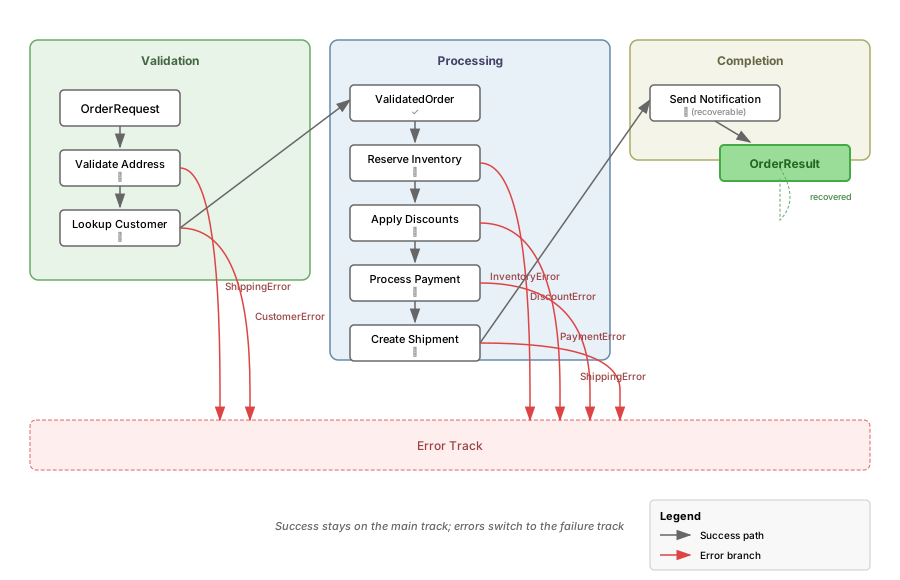
Notice how errors branch off at each decision point, while success flows forward. This is the railway model in action: success stays on the main track; errors switch to the failure track and propagate to the end.
Complexity Tamed by Simple Building Blocks
Step back and consider what this example builds. An order workflow with eight distinct steps, seven potential error types, recovery logic, retry policies, feature flags, immutable state updates, and concurrent execution. In traditional Java, this would likely span hundreds of lines of nested conditionals, try-catch blocks, and defensive null checks.
Instead, the core workflow fits in a For → toState() → ForState comprehension (eight steps, flat and readable, with named field access throughout):
var workflow = For.from(monad, lift(validateShippingAddress(request.shippingAddress())))
.from(addr -> lift(lookupAndValidateCustomer(customerId)))
.from(t -> lift(buildValidatedOrder(orderId, request, t._2(), t._1())))
.toState((address, customer, order) ->
ProcessingState.initial(address, customer, order))
.fromThen(s -> lift(reserveInventory(s.order().orderId(), s.order().lines())),
ProcessingStateLenses.reservation())
.fromThen(s -> lift(applyDiscounts(s.order(), s.customer())), ProcessingStateLenses.discount())
.fromThen(s -> lift(processPayment(s.order(), s.discount())), ProcessingStateLenses.payment())
.fromThen(s -> lift(createShipment(s.order(), s.address())), ProcessingStateLenses.shipment())
.fromThen(s -> lift(sendNotifications(s.order(), s.customer(), s.discount())),
ProcessingStateLenses.notification())
.yield(OrderWorkflow::toOrderResult);
This is not magic. It is the result of combining a small number of simple, composable building blocks:
| Building Block | What It Does |
|---|---|
Either<E, A> | Represents success or typed failure |
For | Accumulates initial values via tuple positions |
toState() | Bridges from tuple accumulation to named state |
ForState | Threads a named record with lens-based updates |
Lens<S, A> | Type-safe, immutable field access |
map(f) | Transforms success values |
recoverWith(f) | Handles failures with fallbacks |
| Sealed interfaces | Enables exhaustive error handling |
| Records | Provides immutable data with minimal syntax |
| Annotations | Generates lenses, prisms, and bridges |
The gather phase uses sequential .from() rather than par() because step 3 depends on the results of steps 1 and 2: buildValidatedOrder needs both the validated address and the customer. However, steps 1 and 2 are independent: validateShippingAddress and lookupAndValidateCustomer do not depend on each other. If these were expensive operations, you could use For.par() for them and chain step 3 with .from():
var gathered =
For.par(monad, lift(validateShippingAddress(address)), lift(lookupAndValidateCustomer(id)))
.from(t -> lift(buildValidatedOrder(orderId, request, t._2(), t._1())))
.toState((address, customer, order) -> ProcessingState.initial(address, customer, order));
// ... enrich phase continues from `gathered`
For EitherPath, par() is sequential, so the benefit is purely documentation of intent. For a VTaskPath version of this workflow, par() would provide true concurrent execution. See Parallel Composition for details.
None of these concepts is particularly complex. Either is just a container with two cases. For is a comprehension that accumulates results in a tuple. toState() constructs a record from those results. ForState threads that record through each step. Lenses are just pairs of getter and setter functions. Sealed interfaces are just sum types.
The power comes from composition. Each building block does one thing well, and they combine without friction. Error propagation is automatic. State updates are immutable. Pattern matching is exhaustive. Code generation eliminates boilerplate.
"Make each program do one thing well. To do a new job, build afresh rather than complicate old programs by adding new features."
— Doug McIlroy, Unix Philosophy
This is the Unix philosophy applied to data and control flow. Small, focused tools, combined freely. The result is code that is:
- Readable: The workflow reads like a specification
- Testable: Each step is a pure function
- Maintainable: Changes are localised; the compiler catches missing cases
- Resilient: Error handling is consistent and explicit
The pyramid of doom we started with was not a failure of Java. It was a failure to find the right abstractions. Effect Path, sealed types, and code generation provide those abstractions. The complexity has not disappeared, but it is now managed rather than sprawling.
Chapter Contents
- Effect Composition - Sealed errors, For → toState → ForState comprehensions, sub-workflows, recovery patterns
- Production Patterns - Retry, timeout, Focus DSL, feature flags, code generation
- Concurrency and Scale - Context propagation, Scope, Resource, VTaskPath
- Sealed error hierarchies enable exhaustive pattern matching and type-safe error handling
For→toState()→ForStatecomposes multi-step workflows with named field access, no more tuple positions- Recovery patterns handle non-fatal errors gracefully
- Resilience utilities add retry and timeout behaviour without cluttering business logic
- Focus DSL complements Effect Path for immutable state updates
- Context propagation enables implicit trace IDs, tenant isolation, and deadlines
- Structured concurrency provides parallel operations with proper cancellation
- Resource management ensures cleanup via the bracket pattern
- Virtual threads enable scaling to millions of concurrent operations
- Composition of simple building blocks tames complexity without hiding it
- Effect Path Overview - The railway model and core operations
- Path Types - Complete reference for all Path types
- Patterns and Recipes - More real-world patterns
- Focus DSL - Composable data navigation
- Monad - The type class powering
viaandflatMap
Previous: Usage Guide Next: Effect Composition
Order Workflow: Effect Composition
This page covers the core composition patterns used in the order workflow: typed error hierarchies, the For → toState() → ForState pattern for named-field multi-step composition, sub-comprehensions for encapsulating related steps, and recovery strategies.
- Modelling domain errors with sealed interfaces for exhaustive handling
- Composing multi-step workflows with
For→toState()→ForStatefor named field access - Understanding the two-phase gather/enrich workflow pattern
- Encapsulating sub-workflows as composable building blocks
- Implementing recovery patterns for non-fatal errors
- OrderWorkflow.java - Main workflow implementation
- OrderError.java - Sealed error hierarchy
Building Block: The Sealed Error Hierarchy
The foundation of type-safe error handling is a sealed interface:
@GeneratePrisms
public sealed interface OrderError
permits ValidationError, CustomerError, InventoryError,
DiscountError, PaymentError, ShippingError,
NotificationError, SystemError {
String code();
String message();
Instant timestamp();
Map<String, Object> context();
}
Each variant carries domain-specific information:
record CustomerError(
String code,
String message,
Instant timestamp,
Map<String, Object> context,
String customerId
) implements OrderError {
public static CustomerError notFound(String customerId) {
return new CustomerError(
"CUSTOMER_NOT_FOUND",
"Customer not found: " + customerId,
Instant.now(),
Map.of("customerId", customerId),
customerId
);
}
public static CustomerError suspended(String customerId, String reason) {
return new CustomerError(
"CUSTOMER_SUSPENDED",
"Customer account suspended: " + reason,
Instant.now(),
Map.of("customerId", customerId, "reason", reason),
customerId
);
}
}
The @GeneratePrisms annotation creates optics for each variant, enabling type-safe pattern matching in functional pipelines.
Why Sealed Interfaces Matter
// Exhaustive matching - compiler ensures all cases handled
public String getUserFriendlyMessage(OrderError error) {
return switch (error) {
case ValidationError e -> "Please check your order: " + e.message();
case CustomerError e -> "Account issue: " + e.message();
case InventoryError e -> "Stock issue: " + e.message();
case DiscountError e -> "Discount issue: " + e.message();
case PaymentError e -> "Payment issue: " + e.message();
case ShippingError e -> "Shipping issue: " + e.message();
case NotificationError e -> "Order processed (notification pending)";
case SystemError e -> "System error - please try again";
};
}
Add a new error type, and the compiler tells you everywhere that needs updating.
Composing the Workflow with For → toState → ForState
The order workflow uses a two-phase composition pattern. The For comprehension gathers initial values (tuple positions are fine at low arity), then toState() bridges to ForState where lenses provide named field access for the remaining steps.
The Full Workflow
public EitherPath<OrderError, OrderResult> process(OrderRequest request) {
var orderId = OrderId.generate();
var customerId = new CustomerId(request.customerId());
MonadError<EitherKind.Witness<OrderError>, OrderError> monad = Instances.monadError(either());
Kind<EitherKind.Witness<OrderError>, OrderResult> result =
// Phase 1 (Gather): accumulate address, customer, order via For
For.from(monad, lift(validateShippingAddress(request.shippingAddress())))
.from(addr -> lift(lookupAndValidateCustomer(customerId)))
.from(t -> lift(buildValidatedOrder(orderId, request, t._2(), t._1())))
// Bridge: construct named state from the three gathered values
.toState((address, customer, order) ->
ProcessingState.initial(address, customer, order))
// Phase 2 (Enrich): named field access via ForState + generated lenses
.fromThen(s -> lift(reserveInventory(s.order().orderId(), s.order().lines())),
ProcessingStateLenses.reservation())
.fromThen(s -> lift(applyDiscounts(s.order(), s.customer())),
ProcessingStateLenses.discount())
.fromThen(s -> lift(processPayment(s.order(), s.discount())),
ProcessingStateLenses.payment())
.fromThen(s -> lift(createShipment(s.order(), s.address())),
ProcessingStateLenses.shipment())
.fromThen(s -> lift(sendNotifications(s.order(), s.customer(), s.discount())),
ProcessingStateLenses.notification())
.yield(OrderWorkflow::toOrderResult);
return Path.either(EITHER.narrow(result));
}
In the current example, process first runs accumulating field validation: validateRequest
collects every malformed field at once via ValidationPath.zipWithAccum, converts to EitherPath,
and only then delegates to the For → ForState pipeline above (factored out as processValidated).
The composition pattern is unchanged. The validation front door just reports all input errors
together rather than one per round-trip.
Two-Phase Design
The workflow has a natural two-phase shape:
- Gather phase (For comprehension, steps 1-3): Accumulate address, customer, and order. At arity 3, tuple positions
t._1()andt._2()are still clear. - Enrich phase (ForState, steps 4-8): The
toState()bridge constructs aProcessingStaterecord from the gathered values. Each subsequentfromThen()reads its inputs by name and stores its output via a lens.
This split is what makes the pattern powerful. The gather phase uses For for concise accumulation. The enrich phase uses ForState for self-documenting named access. The bridge connects them seamlessly.
In this workflow, steps 1 and 2 (address validation and customer lookup) are independent: neither uses the other's result. You could use For.par() to express this:
var gathered = For.par(monad,
lift(validateShippingAddress(request.shippingAddress())),
lift(lookupAndValidateCustomer(customerId)))
.from(t -> lift(buildValidatedOrder(orderId, request, t._2(), t._1())))
.toState((address, customer, order) ->
ProcessingState.initial(address, customer, order));
With EitherPath, the benefit is documentation of intent; execution remains sequential. With VTaskPath, the two operations would run concurrently on virtual threads. See Parallel Composition for the full API.
Named State Replaces Tuple Positions
The ProcessingState record gives every intermediate value a name:
@GenerateLenses
public record ProcessingState(
ValidatedShippingAddress address,
Customer customer,
ValidatedOrder order,
InventoryReservation reservation,
DiscountResult discount,
PaymentConfirmation payment,
ShipmentInfo shipment,
NotificationResult notification) {
static ProcessingState initial(
ValidatedShippingAddress address, Customer customer, ValidatedOrder order) {
return new ProcessingState(address, customer, order, null, null, null, null, null);
}
}
After toState(), the fromThen() steps access earlier results by name (s.order(), s.customer(), s.discount()) instead of by tuple position. This makes the code self-documenting: you can read the workflow without a position reference table.
Lenses Connect ForState to the State Record
Each fromThen(function, lens) call runs a monadic operation and stores the result via a lens.
Because ProcessingState is annotated @GenerateLenses, the processor generates one lens per field
(ProcessingStateLenses.reservation(), ProcessingStateLenses.discount(), …) so the workflow
above never hand-writes a lens. Each generated lens is just a getter/setter pair;
ProcessingStateLenses.discount() is equivalent to:
Lens.of(
ProcessingState::discount,
(s, v) -> new ProcessingState(
s.address(), s.customer(), s.order(), s.reservation(),
v, s.payment(), s.shipment(), s.notification()));
Annotating the state record with @GenerateLenses generates all five enrich-phase lenses
automatically. The Lens.of(...) form above is shown only to illustrate what each generated lens
does. The example workflow calls ProcessingStateLenses.discount() and friends directly.
Kind Lifting
Service methods return Either<OrderError, T>. The For/ForState comprehension works with Kind<EitherKind.Witness<OrderError>, T>. A simple lift() helper bridges the two:
static <A> Kind<EitherKind.Witness<OrderError>, A> lift(Either<OrderError, A> either) {
return EITHER.widen(either);
}
Individual Steps Are Simple
Either<OrderError, InventoryReservation> reserveInventory(
OrderId orderId, List<ValidatedOrderLine> lines) {
return inventoryService.reserve(orderId, lines);
}
Either<OrderError, PaymentConfirmation> processPayment(
ValidatedOrder order, DiscountResult discount) {
return paymentService.processPayment(
order.orderId(), discount.finalTotal(), order.paymentMethod());
}
Service methods return Either directly. The lift() helper in the comprehension handles the conversion to the Kind type system.
Pattern Spotlight: Sub-Comprehensions
Smaller groups of related steps can use their own For comprehension and be called as a single step from the main workflow:
EitherPath<OrderError, Customer> lookupAndValidateCustomer(CustomerId customerId) {
MonadError<EitherKind.Witness<OrderError>, OrderError> monad = Instances.monadError(either());
Kind<EitherKind.Witness<OrderError>, Customer> result =
For.from(monad, lift(lookupCustomer(customerId)))
.from(found -> lift(validateCustomerEligibility(found)))
.yield((found, validated) -> validated);
return Path.either(EITHER.narrow(result));
}
This keeps the main comprehension readable while encapsulating sub-workflows.
When to Use Which Pattern
| Pattern | Best For |
|---|---|
For → toState() → ForState | Multi-step workflows (3+ steps) where named access improves clarity |
For alone | Short workflows (1-3 steps) where tuple access is clear |
ForPath | Working directly with Path types when you don't need named state |
via() | One-off chaining, conditional branching |
For comprehensions support up to 12 chained bindings. ForState has no arity limit: the state record can have any number of fields. The toState() bridge works at all arities (1 through 12).
Recovery Patterns
Not all errors are fatal. Notifications, for instance, should not fail the entire order:
Either<OrderError, NotificationResult> sendNotifications(
ValidatedOrder order, Customer customer, DiscountResult discount) {
return notificationService
.sendOrderConfirmation(order.orderId(), customer, discount.finalTotal())
.fold(
error -> Either.right(NotificationResult.none()), // non-fatal: recover
Either::right);
}
The fold() method handles both cases: on error, it recovers with a "no notification" result; on success, it passes through. The ForState step that calls this method via fromThen() will store the result via ProcessingStateLenses.notification() either way.
Recovery Options
| Method | Use Case |
|---|---|
fold(leftFn, rightFn) | Pattern-match both cases of an Either |
recover(f) | Transform error to success value directly (on EitherPath) |
recoverWith(f) | Provide alternative path (may itself fail) (on EitherPath) |
mapError(f) | Transform error type (stays on failure track) |
- Sealed error hierarchies enable exhaustive pattern matching and type-safe error handling
For→toState()→ForStatecomposes multi-step workflows with named field access, no tuple positions after the bridge- Two-phase gather/enrich uses the best tool for each part of the workflow
- Recovery patterns (
fold,recover,recoverWith) handle non-fatal errors gracefully
- ForState: Named State Comprehensions - Full ForState API reference
- For Comprehension - The
toState()bridge documentation - Effect Path Overview - The railway model and core operations
- EitherPath - Complete reference for EitherPath
Previous: Order Workflow Overview Next: Production Patterns
Order Workflow: Production Patterns
This page covers production-grade patterns for the order workflow: resilience with retry and timeout, Focus DSL integration, feature flags, and compile-time code generation.
- Implementing resilience patterns: retry policies with exponential backoff
- Adding timeouts to prevent indefinite waits
- Integrating Focus DSL for immutable state updates
- Configuring workflow behaviour with feature flags
- Using annotations to generate boilerplate code
- ConfigurableOrderWorkflow.java - Feature flags and resilience
- FocusDSLExamples.java - Optics integration
Resilience: Retry and Timeout
The ConfigurableOrderWorkflow composes the core path-native combinators (IOPath.withRetry for the retry loop, the static EitherPath.withTimeout for a typed time budget) and applies them per step, not around the whole flow:
public EitherPath<OrderError, OrderResult> process(OrderRequest request) {
var retryPolicy = createRetryPolicy();
// Phase 1: RETRY only the idempotent pre-flight (customer eligibility +
// address validation); re-running these reads is always safe. IOPath.withRetry
// drives the loop, then EitherPath.withTimeout puts ONE typed time budget
// around the whole loop, so a timeout arrives as a Left on the railway.
EitherPath<OrderError, Unit> preflight =
EitherPath.withTimeout(
() -> toEitherPath(
Path.io(() -> runPreflight(request)).withRetry(retryPolicy),
"ConfigurableOrderWorkflow.preflight"),
preflightTimeout,
() -> OrderError.SystemError.timeout(
"ConfigurableOrderWorkflow.preflight", preflightTimeout));
// Phase 2: run the committing workflow (reserve -> payment -> ship -> notify)
// EXACTLY ONCE under a timeout, never retried.
return preflight.via(_ ->
EitherPath.withTimeout(
() -> toEitherPath(
Path.io(() -> executeWorkflow(request)),
"ConfigurableOrderWorkflow.commit"),
commitTimeout,
() -> OrderError.SystemError.timeout(
"ConfigurableOrderWorkflow.commit", commitTimeout)));
}
Granularity matters: payment is not idempotent, so wrapping the entire workflow in retry
could re-run a charge that already succeeded and double-bill the customer. Retry is confined to the
safe pre-flight reads; the commit runs once. (Per-step refund-on-failure compensation across
reserve → pay → ship would use a Saga.)
Note the eager/lazy split: EitherPath.withTimeout is static and takes the step as a Supplier, because EitherPath is eager: resilience must wrap the computation before it runs. The toEitherPath helper runs the IOPath and lands any thrown failure on the typed channel as an OrderError.SystemError, so by the time the timeout wrapper sees the outcome, everything except the timeout itself is already a Left.
Retry Policy
The retry policy is the core RetryPolicy, translated from workflow configuration. Only transient infrastructure failures are selected; the business WorkflowException never matches, so a business failure is never retried:
RetryPolicy createRetryPolicy() {
var retryConfig = config.retryConfig();
return RetryPolicy.builder()
.maxAttempts(retryConfig.maxRetries() + 1) // maxAttempts includes the initial try
.initialDelay(retryConfig.initialDelay())
.backoffMultiplier(retryConfig.backoffMultiplier())
.maxDelay(retryConfig.maxDelay())
.retryIf(t -> t instanceof IOException || t instanceof TimeoutException)
.build();
}
"I love deadlines. I love the whooshing noise they make as they go by."
— Douglas Adams
Timeouts ensure deadlines do not just whoosh by indefinitely, and with the typed overload they arrive as a Left that flows down the same railway as every other domain error, not as a thrown TimeoutException:
EitherPath<OrderError, Receipt> charged =
EitherPath.withTimeout(
() -> chargePayment(order),
Duration.ofSeconds(30),
() -> OrderError.SystemError.timeout("paymentService.charge"));
One caveat: the timed-out computation is not interrupted, so on a non-idempotent step like payment, Left(timeout) means the outcome is unknown: reconcile, do not blindly retry. See Resilience Patterns for the full path-native combinator surface (withRetry, withTimeout, withCircuitBreaker, withBulkhead) and the per-carrier availability table.
Focus DSL Integration
The Focus DSL complements Effect Path for immutable state updates. Where Effect Path navigates computational effects, Focus navigates data structures.
Immutable State Updates
public static OrderWorkflowState applyDiscount(
OrderWorkflowState state, DiscountResult discount) {
var withDiscount = state.withDiscountResult(discount);
return state.validatedOrder()
.map(order -> {
var updatedOrder = updateOrderSubtotal(order, discount.finalTotal());
return withDiscount.withValidatedOrder(updatedOrder);
})
.orElse(withDiscount);
}
Pattern Matching with Sealed Types
public static EitherPath<OrderError, PaymentMethod> validatePaymentMethod(
PaymentMethod method) {
return switch (method) {
case PaymentMethod.CreditCard card -> {
if (card.cardNumber().length() < 13) {
yield Path.left(
OrderError.ValidationError.forField(
"cardNumber", "Card number too short"));
}
yield Path.right(method);
}
case PaymentMethod.BankTransfer transfer -> {
if (transfer.accountNumber().isBlank()) {
yield Path.left(
OrderError.ValidationError.forField(
"accountNumber", "Account number required"));
}
yield Path.right(method);
}
case PaymentMethod.DebitCard _, PaymentMethod.DigitalWallet _ -> Path.right(method);
};
}
The sealed PaymentMethod type enables exhaustive validation with Effect Path integration.
Feature Flags: Configuration-Driven Behaviour
The ConfigurableOrderWorkflow uses feature flags to control optional behaviours:
public record FeatureFlags(
boolean enablePartialFulfilment,
boolean enableSplitShipments,
boolean enableLoyaltyDiscounts
) {
public static FeatureFlags defaults() {
return new FeatureFlags(false, false, true);
}
public static FeatureFlags allEnabled() {
return new FeatureFlags(true, true, true);
}
}
These flags control workflow branching:
EitherPath<OrderError, DiscountResult> applyDiscounts(
ValidatedOrder order, Customer customer) {
return order.promoCode()
.<EitherPath<OrderError, DiscountResult>>map(
code -> Path.either(discountService.applyPromoCode(code, order.subtotal())))
.orElseGet(() -> {
if (config.featureFlags().enableLoyaltyDiscounts()) {
return Path.either(
discountService.calculateLoyaltyDiscount(customer, order.subtotal()));
}
return Path.right(DiscountResult.noDiscount(order.subtotal()));
});
}
Compile-Time Code Generation
Much of the boilerplate in this example is generated at compile time through annotations. This keeps your code focused on domain logic while the annotation processors handle the mechanical parts.
Annotation Overview
| Annotation | Purpose | Generated Code |
|---|---|---|
@GenerateLenses | Immutable record updates | Type-safe lenses for each field |
@GenerateFocus | Focus DSL integration | FocusPath and AffinePath accessors |
@GeneratePrisms | Sealed type navigation | Prisms for each variant of sealed interfaces |
@GeneratePathBridge | Service-to-Path bridging | *Paths class wrapping service methods |
@PathVia | Method-level documentation | Includes doc strings in generated bridges |
Lenses and Focus for Records
@GenerateLenses
@GenerateFocus
public record OrderWorkflowState(
OrderRequest request,
Optional<ValidatedOrder> validatedOrder,
Optional<InventoryReservation> inventoryReservation,
// ... more fields
) { }
The annotation processor generates OrderWorkflowStateLenses with a lens for each field, plus OrderWorkflowStateFocus with FocusPath accessors. These enable immutable updates without manual with* methods:
// Generated lens usage: the value first, then the source
var updated = OrderWorkflowStateLenses.validatedOrder()
.set(Optional.of(newOrder), state);
// Generated focus usage: an Optional component focuses to an AffinePath, which may miss
var subtotal = OrderWorkflowStateFocus.validatedOrder()
.then(ValidatedOrderFocus.subtotal())
.getOptional(state);
Prisms for Sealed Hierarchies
@GeneratePrisms
public sealed interface OrderError
permits ValidationError, CustomerError, InventoryError, ... { }
This generates OrderErrorPrisms with a prism for each permitted variant:
// Extract specific error type if present
Optional<OrderError.PaymentError> paymentError =
OrderErrorPrisms.paymentError().getOptional(error);
// Pattern-match in functional style: modify only touches the variant that matches
OrderError rethought = OrderErrorPrisms.shippingError()
.modify(e -> e.recoverable() ? recoverShipping(e) : e, error);
Path Bridges for Services
@GeneratePathBridge
public interface CustomerService {
@PathVia(doc = "Looks up customer details by ID")
Either<OrderError, Customer> findById(CustomerId id);
@PathVia(doc = "Validates customer eligibility")
Either<OrderError, Customer> validateEligibility(Customer customer);
}
This generates CustomerServicePaths:
// Generated bridge class
public class CustomerServicePaths {
private final CustomerService delegate;
public CustomerServicePaths(CustomerService delegate) {
this.delegate = delegate;
}
public EitherPath<OrderError, Customer> findById(CustomerId id) {
return Path.either(delegate.findById(id));
}
public EitherPath<OrderError, Customer> validateEligibility(Customer customer) {
return Path.either(delegate.validateEligibility(customer));
}
}
Now your workflow can use the generated bridges directly:
// The workflow holds the generated bridge (`private final CustomerServicePaths customers`)
EitherPath<OrderError, Customer> lookupAndValidateCustomer(CustomerId id) {
return customers.findById(id)
.via(customers::validateEligibility);
}
Why Code Generation Matters
The annotations eliminate three categories of boilerplate:
- Structural navigation: Lenses and prisms provide type-safe access without manual getter/setter chains
- Effect wrapping: Path bridges convert
Either-returning services toEitherPathautomatically - Pattern matching: Prisms enable functional matching on sealed types without explicit
instanceofchecks
The result is domain code that reads like a specification of what should happen, while the generated code handles how to navigate, wrap, and match.
- Path-native resilience combinators (
IOPath.withRetry,EitherPath.withTimeout) add retry and timeout behaviour without cluttering business logic: retry only what is idempotent, run commits exactly once - Focus DSL complements Effect Path for immutable state updates
- Feature flags enable configuration-driven workflow behaviour
- Annotation processors generate lenses, prisms, and service bridges, eliminating boilerplate
- Focus DSL - Composable data navigation
- Patterns and Recipes - More real-world patterns
- Lenses - Lens fundamentals
Previous: Effect Composition Next: Concurrency and Scale
Order Workflow: Concurrency and Scale
This page covers patterns for scaling the order workflow: context propagation with ScopedValue, racing warehouses with VResultPath.firstSuccess, outcome-aware compensation with VResultPath.bracketOutcome, and virtual thread execution on the typed async railway VResultPath.
- Propagating cross-cutting concerns (trace IDs, tenant isolation, deadlines) with
Context - Racing parallel operations with typed errors using
VResultPath.firstSuccess - Deciding confirm-versus-release compensation from the outcome with
bracketOutcome - Scaling to millions of concurrent orders with the typed async railway
VResultPath - Adapting these patterns to your own domain
- EnhancedOrderWorkflow.java - Full implementation with Context, VResultPath, firstSuccess, and bracketOutcome
- OrderContext.java - Scoped value keys
- EnhancedOrderWorkflowDemo.java - Demo runner
Context Propagation with ScopedValue
Cross-cutting concerns like trace IDs, tenant isolation, and deadlines can be propagated automatically using Context:
// Define scoped values for order context
public final class OrderContext {
public static final ScopedValue<String> TRACE_ID = ScopedValue.newInstance();
public static final ScopedValue<String> TENANT_ID = ScopedValue.newInstance();
public static final ScopedValue<Instant> DEADLINE = ScopedValue.newInstance();
}
// Set context at workflow entry
ScopedValue
.where(OrderContext.TRACE_ID, traceId)
.where(OrderContext.TENANT_ID, tenantId)
.where(OrderContext.DEADLINE, deadline)
.run(() -> workflow.process(request));
// Access context in any step (including parallel operations)
String traceId = OrderContext.TRACE_ID.get();
The key benefit: context values automatically propagate to child virtual threads when using structured concurrency. No more passing trace IDs through every method signature.
Deadline Enforcement
Operations can check remaining time and fail fast when the deadline is exceeded:
public static Duration remainingTime() {
if (!OrderContext.DEADLINE.isBound()) {
return Duration.ofDays(365); // No deadline, effectively infinite
}
Duration remaining = Duration.between(Instant.now(), OrderContext.DEADLINE.get());
return remaining.isNegative() ? Duration.ZERO : remaining;
}
public static boolean isDeadlineExceeded() {
return OrderContext.DEADLINE.isBound()
&& Instant.now().isAfter(OrderContext.DEADLINE.get());
}
On the typed railway, "fail fast" means a typed Left, not a thrown exception. The workflow checks the deadline as an ordinary step, and a Left here short-circuits everything after it:
VResultPath<OrderError, Unit> checkDeadline(String operation) {
return Path.vresultDefer(() -> {
if (OrderContext.isDeadlineExceeded()) {
return Either.left(SystemError.timeout(operation));
}
return Either.right(Unit.INSTANCE);
});
}
Structured Concurrency with firstSuccess
Parallel operations with proper cancellation, timeout handling, and typed failures kept in the value channel:
// Race inventory reservations across multiple warehouses
VResultPath<OrderError, InventoryReservation> result =
VResultPath.firstSuccess(List.of(warehouse1, warehouse2, warehouse3))
.mapError(NonEmptyList::head)
.withTimeout(Duration.ofSeconds(10), () -> SystemError.timeout("inventory race"));
| Combinator | Use Case |
|---|---|
firstSuccess(candidates) | First Right wins and cancels the rest; typed failures are collected, and only when every candidate fails does the race fail with all of them |
allSucceed(tasks) | Wait for all tasks; the first typed failure cancels the rest (fail-fast) |
allSucceedAccumulating(tasks) | Run everything to completion; collect every typed failure at once |
withTimeout(duration, onTimeout) | Overrunning the deadline becomes the designated typed error, on the railway |
A warehouse failing with a typed Left does not abort the race; errors stay in the value channel rather than being thrown and caught. Under the hood these combinators run on the same Scope/ScopeJoiner substrate documented in Structured Concurrency; reach for raw Scope directly when your tasks have no typed error channel.
Context values propagate to all forked tasks automatically. Each racing candidate inherits the trace ID, tenant ID, and deadline without explicit passing.
Example: Parallel Inventory Check
public VResultPath<OrderError, InventoryReservation> reserveInventoryParallel(
OrderId orderId, List<ValidatedOrderLine> lines) {
// Each candidate automatically inherits the scoped values (traceId, tenantId, etc.).
var candidates =
List.of(
warehouseReservation(1, Duration.ofMillis(50), orderId, lines),
warehouseReservation(2, Duration.ofMillis(75), orderId, lines),
warehouseReservation(3, Duration.ofMillis(100), orderId, lines));
// Race all warehouses - first Right wins; all-Left surfaces the first warehouse's error.
return VResultPath.firstSuccess(candidates)
.peekLeft(errors -> logSync("All warehouses failed: " + errors.toJavaList()))
.mapError(NonEmptyList::head)
.withTimeout(
getRemainingTimeout(), () -> SystemError.timeout("parallel inventory reservation"));
}
VResultPath<OrderError, InventoryReservation> warehouseReservation(
int warehouse, Duration latency, OrderId orderId, List<ValidatedOrderLine> lines) {
return Path.vresult(
VTask.of(() -> {
logSync("Checking warehouse " + warehouse
+ " [trace=" + OrderContext.shortTraceId() + "]");
Thread.sleep(latency.toMillis()); // Simulate network latency
return inventoryService.reserve(orderId, lines);
}));
}
Three moves on the error channel do all the work:
peekLeftobserves the collected failures (aNonEmptyList<OrderError>, in candidate order) without changing tracks (here, logging that every warehouse failed)mapError(NonEmptyList::head)collapses the collected errors back to the workflow's singleOrderError, surfacing the firstwithTimeoutbounds the whole race by the remaining deadline; overrunning becomes a typedSystemError.timeout, not aTimeoutException
Outcome-Aware Compensation with bracketOutcome
The bracket pattern ensures cleanup even when operations fail. VResultPath.bracketOutcome goes further: the release action sees the Either outcome of the use phase, so confirm-versus-release is decided from the result rather than a mutable flag:
VResultPath<OrderError, OrderResult> processWithReservation(
ValidatedOrder order, Customer customer) {
return VResultPath.bracketOutcome(
// Acquire: reserve inventory; a Left skips use and release entirely.
Path.vresultDefer(() -> inventoryService.reserve(order.orderId(), order.lines())),
// Use: discount -> payment -> shipment -> notification.
reservation -> processAfterReservation(order, customer, reservation),
// Release: decide confirm-versus-release from the outcome.
(reservation, outcome) ->
outcome.fold(
_ -> VTask.exec(() -> {
logSync("Releasing reservation " + reservation.reservationId());
inventoryService.releaseReservation(reservation.reservationId());
}),
_ -> VTask.exec(
() -> inventoryService.confirmReservation(reservation.reservationId()))),
defect -> SystemError.fromException("Order processing failed", defect));
}
Release always runs and receives the Either outcome: a Right confirms the reservation, a Left releases it. There is no mutable "confirmed" flag. A defect (a thrown exception) inside the use phase is first typed through the final onDefect argument (here as a SystemError), so the release observes a typed outcome and the reservation is released. Should onDefect itself fail, the release still runs and sees Left(null), which this release also treats as a failure.
General-Purpose Resource
For AutoCloseable-style acquisition where the release does not depend on the outcome, the generic Resource bracket remains available, and multiple resources combine with guaranteed cleanup ordering:
Resource<Connection> dbResource = Resource.fromAutoCloseable(
() -> connectionPool.getConnection()
);
Resource<PreparedStatement> stmtResource = dbResource.flatMap(conn ->
Resource.fromAutoCloseable(() -> conn.prepareStatement(sql))
);
// Both connection and statement are cleaned up
VTask<List<Order>> orders = stmtResource.use(stmt ->
VTask.of(() -> executeQuery(stmt))
);
Resources are released in reverse order of acquisition (LIFO), and cleanup runs even if the computation fails or is cancelled.
The Typed Async Railway with VResultPath
Scale to millions of concurrent orders using virtual threads. The workflow's shape is VTask<Either<OrderError, A>> (async work that can fail with a typed domain error), and VResultPath is that stack as a first-class railway, with no Kind widening, transformer, or hand-carried Either:
// VResultPath operations are lazy - they describe computation
VResultPath<OrderError, OrderResult> workflow =
validateShippingAddress(request.shippingAddress())
.via(address ->
lookupAndValidateCustomer(customerId)
.via(customer ->
buildValidatedOrder(orderId, request, customer, address)
.via(order -> processWithReservation(order, customer))));
// Execute on a virtual thread at the boundary
Try<Either<OrderError, OrderResult>> result = workflow.run().runSafe();
via chains dependent steps on the success channel; a Left from any step short-circuits the rest. Steps nest only where a later step still needs an earlier binding (the address and customer both feed the order build). Virtual threads are managed by the JVM and can handle blocking operations (database calls, HTTP requests) without consuming platform threads.
Converting Between Effect Types
VResultPath integrates with the rest of the Effect Path API:
// Defer a computation that decides the Either itself
VResultPath<OrderError, ValidatedShippingAddress> step =
Path.vresultDefer(() -> shippingService.validateAddress(address));
// Lift an existing carrier or a decided Either
VResultPath<OrderError, Data> lifted = Path.vresult(vtaskOfEither);
VResultPath<OrderError, Data> decided = Path.vresultEither(either);
// Pure values on either channel
VResultPath<OrderError, Unit> ok = Path.vresultRight(Unit.INSTANCE);
VResultPath<OrderError, Unit> failed = Path.vresultLeft(SystemError.timeout("order.start"));
VTask-native resilience composes on the VTaskPath layer and lifts into the typed railway:
VResultPath<OrderError, Customer> lookupAndValidateCustomer(CustomerId customerId) {
return Path.vresult(
Path.vtask(() ->
customerService.findById(customerId)
.flatMap(customerService::validateEligibility))
.withCircuitBreaker(customerLookupBreaker)
.withRetry(customerLookupRetry)
.run());
}
Retry engages only when the lookup throws (a transient infrastructure failure); a business Left such as customer-not-found is returned as-is and never retried.
Adapting These Patterns to Your Domain
Step 1: Define Your Error Hierarchy
Start with a sealed interface for your domain errors:
public sealed interface MyDomainError {
String code();
String message();
record ValidationError(String code, String message) implements MyDomainError {}
record NotFoundError(String code, String message) implements MyDomainError {
static NotFoundError user(String id) {
return new NotFoundError("USER_NOT_FOUND", "No user " + id);
}
}
record ConflictError(String code, String message) implements MyDomainError {}
record SystemError(String code, String message) implements MyDomainError {}
}
Step 2: Wrap Your Services
Convert existing services to return Either:
// Before: the failure is in the throws clause, not the type
// public User findUser(String id) throws UserNotFoundException
// After
public Either<MyDomainError, User> findUser(String id) {
try {
return Either.right(legacyService.findUser(id));
} catch (UserNotFoundException e) {
return Either.left(MyDomainError.NotFoundError.user(id));
}
}
Step 3: Compose with EitherPath
Build your workflows using via():
public EitherPath<MyDomainError, Result> process(Request request) {
return Path.either(validateRequest(request))
.via(valid -> Path.either(findUser(valid.userId()))
.via(user -> Path.either(performAction(user, valid))))
.map(this::buildResult);
}
When the steps are asynchronous, the same railway is VResultPath: swap Path.either(...) for Path.vresultDefer(...) and the shape of the code does not change.
Step 4: Add Resilience Gradually
Start simple, add resilience as needed. EitherPath is eager, so its resilience combinators are static and take the step as a Supplier: resilience wraps the computation, not the finished result.
// Start with basic composition
var result = workflow.process(request);
// Add a typed timeout when integrating external services: the timeout
// arrives as a Left, not a thrown TimeoutException
var withTimeout = EitherPath.withTimeout(
() -> workflow.process(request),
Duration.ofSeconds(30),
() -> SystemError.timeout("process"));
// Add railway-aware retry for transient failures. A business Left is never
// retried; the predicate opts selected transient errors in. Only wrap steps
// that are safe to re-run.
var resilient = EitherPath.withRetry(
() -> EitherPath.withTimeout(
() -> workflow.process(request),
Duration.ofSeconds(30),
() -> SystemError.timeout("process")),
error -> error instanceof SystemError,
RetryPolicy.exponentialBackoffWithJitter(3, Duration.ofMillis(200)));
On the async railway the same vocabulary chains as instance methods: VResultPath carries withRetry(retryOn, policy), withTimeout(duration, onTimeout), withCircuitBreaker, and withBulkhead directly.
Step 5: Add Concurrency for Scale
When you need to scale, add context propagation and typed structured concurrency:
// Wrap entry point with context
ScopedValue
.where(OrderContext.TRACE_ID, traceId)
.where(OrderContext.DEADLINE, deadline)
.run(() -> workflow.process(request));
// Race alternatives - typed failures stay in the value channel
VResultPath<NonEmptyList<MyDomainError>, Result> fastest =
VResultPath.firstSuccess(List.of(primary, replica, cache));
// Or require every operation to succeed (fail-fast)
VResultPath<MyDomainError, List<Result>> all =
VResultPath.allSucceed(List.of(operation1, operation2));
- Context propagation with
ScopedValueenables implicit trace IDs, tenant isolation, and deadlines - Typed racing with
VResultPath.firstSuccesskeeps failures in the value channel: the firstRightwins, and only an all-fail surfaces every error - Outcome-aware compensation with
bracketOutcomedecides confirm-versus-release from theEitherresult, not a mutable flag - Virtual threads with
VResultPathenable scaling to millions of concurrent operations without giving up typed errors - Gradual adoption allows you to start simple and add concurrency patterns as needs grow
- VResultPath - Async work with a typed domain error
- VTaskPath - Virtual thread effect type
- Structured Concurrency - The Scope substrate beneath
firstSuccess - Resource Management - Resource patterns
- Effect Path Overview - The railway model
Previous: Production Patterns Next: Draughts Game
Draughts (Checkers) Game
An interactive command-line game demonstrating pure functional game development.
Overview
The Draughts game is a complete, playable implementation of checkers that demonstrates how functional programming patterns make game development cleaner and more maintainable. Every aspect of the game (input handling, validation, state updates, and rendering) is expressed through composable functional abstractions.
┌─────────────────────────────────────────────────────────────────────┐
│ DRAUGHTS GAME ARCHITECTURE │
│ │
│ ┌──────────────┐ │
│ │ Focus DSL │ │
│ │ Navigation │ │
│ └──────┬───────┘ │
│ │ │
│ User Input Game Logic Display │
│ ───────── ────────── ─────── │
│ │ │
│ IOPath WithStatePath IOPath │
│ ┌──────────┐ ┌──────┴──────┐ ┌──────────┐ │
│ │ Read │───────►│ Validate │───────►│ Render │ │
│ │ Parse │ railway│ Navigate │ stream │ Board │ │
│ │ Validate │───────►│ Update │───────►│ │ │
│ └──────────┘ └─────────────┘ └──────────┘ │
│ │ │ │ │
│ ▼ ▼ ▼ │
│ EitherPath WithStatePath IOPath │
│ <Error, <GameState, <Unit> │
│ MoveCommand> MoveResult> │
│ │
│ Composed via ForPath │
└─────────────────────────────────────────────────────────────────────┘
Key Patterns Demonstrated
Pure State Management
Game state is immutable and managed through WithStatePath:
@GenerateFocus
record GameState(
Map<Square, Piece> board,
Player currentPlayer,
String message,
boolean isGameOver
) {}
// A move is a pure state transition: the validations either produce the next state and its
// result, or fold back to the state they started from carrying the reason.
static WithStatePath<GameState, MoveResult> applyMove(MoveCommand command) {
Square from = MoveCommandFocus.from().get(command);
Square to = MoveCommandFocus.to().get(command);
return Path.state(
State.of(
(GameState state) ->
getPieceAt(from, state)
.via(piece -> validateOwnership(piece, state))
.via(piece -> validateDestinationEmpty(to, state).map(unit -> piece))
.via(piece -> validateAndApply(state, command, piece, from, to))
.fold(error -> invalidMove(error, state), result -> result)));
}
Railway-Oriented Validation
Move validation uses EitherPath for clear error handling:
static EitherPath<String, StateTuple<GameState, MoveResult>> validateMove(
MoveCommand command, GameState state) {
Square from = MoveCommandFocus.from().get(command);
Square to = MoveCommandFocus.to().get(command);
return getPieceAt(from, state) // Piece at source?
.via(piece -> validateOwnership(piece, state)) // Player's piece?
.via(piece -> validateDestinationEmpty(to, state).map(u -> piece)) // Dest free?
.via(piece -> validateAndApply(state, command, piece, from, to)); // Slide or jump?
}
Side Effect Encapsulation
All I/O is captured in IOPath:
// Console I/O is deferred and composable
IOPath<String> readLine = Path.io(() -> scanner.nextLine());
IOPath<Unit> printBoard = displayBoard(state);
// A turn is the board, then the move that follows it. Reading returns an Either, so a bad
// command is a value the next step handles rather than an exception.
IOPath<GameState> processTurn(GameState currentState) {
return ForPath.from(displayBoard(currentState))
.from(shown -> readMoveCommand())
.yield((shown, result) -> result)
.via(result -> handleTurnResult(result, currentState));
}
// The loop recurses rather than looping, and stays stack-safe because
// nothing runs until the whole description is executed
IOPath<Unit> gameLoop(GameState currentState) {
return currentState.isGameOver()
? displayBoard(currentState)
: processTurn(currentState).via(this::gameLoop);
}
Focus DSL for Game State
Type-safe navigation through nested game structures:
// Read a component through the generated focus
Player current = GameStateFocus.currentPlayer().get(state);
// Replace the board, leaving every other component alone
GameState moved = GameStateFocus.board().set(newBoard, state);
// End the game, and say why
GameState finished = GameStateFocus.message()
.set("RED wins.", GameStateFocus.isGameOver().set(true, state));
Stream-Based Iteration
The initial board is generated rather than written out:
// The starting board: every dark square in a player's rows carries one of their men
static Stream<Map.Entry<Square, Piece>> placePieces(Player owner, int startRow, int endRow) {
Piece piece = new Piece(owner, PieceType.MAN);
return IntStream.range(startRow, endRow)
.boxed()
.flatMap(row ->
darkSquaresInRow(row).mapToObj(col -> Map.entry(new Square(row, col), piece)));
}
// Dark squares alternate, starting at column 0 in odd rows and column 1 in even ones
static IntStream darkSquaresInRow(int row) {
int startCol = (row % 2 != 0) ? 0 : 1;
return IntStream.iterate(startCol, col -> col < 8, col -> col + 2);
}
Running the Game
./gradlew :hkj-examples:run -PmainClass=org.higherkindedj.example.draughts.Draughts
How to Play
- The board displays with row numbers (1-8) and column letters (a-h)
- Red pieces move first, shown as
r(men) orR(kings) - Black pieces are shown as
b(men) orB(kings) - Enter moves as
source-destination, e.g.,a3-b4 - Jumps are mandatory when available
- Type
quitto exit
Sample Game Session
a b c d e f g h
8 . b . b . b . b
7 b . b . b . b .
6 . b . b . b . b
5 . . . . . . . .
4 . . . . . . . .
3 r . r . r . r .
2 . r . r . r . r
1 r . r . r . r .
Red's turn. Enter move (e.g., a3-b4): c3-d4
a b c d e f g h
8 . b . b . b . b
7 b . b . b . b .
6 . b . b . b . b
5 . . . . . . . .
4 . . . r . . . .
3 r . . . r . r .
2 . r . r . r . r
1 r . r . r . r .
Black's turn. Enter move (e.g., a3-b4):
Source Files
| File | Description |
|---|---|
| Draughts.java | Main entry point |
| GameState.java | Immutable game state record |
| GameLogic.java | Pure game rules |
| InputHandler.java | Input parsing and validation |
| BoardDisplay.java | Console rendering |
Project Structure
hkj-examples/src/main/java/org/higherkindedj/example/draughts/
├── Draughts.java # Main entry point and game loop
├── GameState.java # Immutable state with @GenerateFocus
├── GameLogic.java # Pure game rules using WithStatePath
├── GameLogicSimple.java # Simplified logic for learning
├── InputHandler.java # EitherPath validation pipeline
├── BoardDisplay.java # IOPath rendering
└── package-info.java
Functional Concepts Applied
| Concept | How It's Used |
|---|---|
| Immutability | All game state is immutable; moves create new state |
| Pure Functions | Game logic has no side effects |
| Railway-Oriented Programming | Validation uses EitherPath's success/failure tracks |
| State Monad | WithStatePath threads state through computations |
| IO Monad | Console I/O is deferred and composable |
| Focus DSL | Type-safe access to nested board structures |
| ForPath Comprehension | Game loop composed declaratively |
Related Documentation
- Building a Playable Draughts Game – Full tutorial walkthrough
- WithStatePath – State management documentation
- EitherPath – Error handling documentation
- IOPath – Side effect management
- Focus DSL – Generated navigation
Previous: Order Processing Workflow Next: Building the Game
Building a Playable Draughts Game

This tutorial guides you through building a complete command-line draughts (checkers) game using the Effects Path API and Focus DSL. We demonstrate how Higher-Kinded-J makes functional game development in Java both practical and elegant.
- How to build a complete functional game using the Effects Path API
- Managing immutable game state with
WithStatePath - Railway-oriented programming with
EitherPathfor validation pipelines - Type-safe error handling using the Focus-Effect bridge
- Encapsulating side effects with
IOPathwhile keeping core logic pure - Stream-based functional patterns for declarative iteration
- Composing operations with
ForPathfor readable workflows - Using the Focus DSL and
@GenerateFocusfor type-safe data navigation
The Effects Path Approach
At its core, a game like draughts involves several aspects where the Effects Path API shines:
┌─────────────────────────────────────────────────────────────────────┐
│ DRAUGHTS GAME ARCHITECTURE │
│ │
│ ┌──────────────┐ │
│ │ Focus DSL │ │
│ │ Navigation │ │
│ └──────┬───────┘ │
│ │ │
│ User Input Game Logic Display │
│ ───────── ────────── ─────── │
│ │ │
│ IOPath WithStatePath IOPath │
│ ┌──────────┐ ┌──────┴──────┐ ┌──────────┐ │
│ │ Read │───────►│ Validate │───────►│ Render │ │
│ │ Parse │ railway│ Navigate │ stream │ Board │ │
│ │ Validate │───────►│ Update │───────►│ │ │
│ └──────────┘ └─────────────┘ └──────────┘ │
│ │ │ │ │
│ ▼ ▼ ▼ │
│ EitherPath WithStatePath IOPath │
│ <Error, <GameState, <Unit> │
│ MoveCommand> MoveResult> │
│ │
│ Composed via ForPath │
└─────────────────────────────────────────────────────────────────────┘
The Effects Path API provides the tools for each concern:
| Concern | Path Type | Purpose |
|---|---|---|
| State Management | WithStatePath<S, A> | Pure state transformations without mutable variables |
| User Input | IOPath<A> + EitherPath<E, A> | Side effects with railway-oriented validation |
| Game Logic | WithStatePath<GameState, MoveResult> | Railway-oriented validation and rule enforcement |
| Side Effects | IOPath<A> | Deferred console I/O |
| Composition | ForPath | Sequential workflow composition |
| Data Navigation | Focus DSL | Type-safe access to nested structures |
| Iteration | Stream + IntStream | Declarative, functional iteration patterns |
Step 1: Defining the Game State with Focus DSL
Our game state uses immutable records annotated with @GenerateFocus to enable type-safe navigation via the Focus DSL.
import org.higherkindedj.optics.annotations.GenerateFocus;
// Enum for the two players
enum Player { RED, BLACK }
// Enum for the type of piece
enum PieceType { MAN, KING }
// A piece on the board, owned by a player with a certain type
@GenerateFocus
record Piece(Player owner, PieceType type) {}
// A square on the 8x8 board, identified by row and column
@GenerateFocus
record Square(int row, int col) {
@Override
public String toString() {
return "" + (char)('a' + col) + (row + 1);
}
}
// Represents an error during move parsing or validation
// The isQuit flag distinguishes quit commands from validation errors
@GenerateFocus
record GameError(String description, boolean isQuit) {
public GameError(String description) { this(description, false); }
}
// The command to make a move from one square to another
@GenerateFocus
record MoveCommand(Square from, Square to) {}
// The outcome of a move attempt
enum MoveOutcome { SUCCESS, INVALID_MOVE, CAPTURE_MADE, GAME_WON }
@GenerateFocus
record MoveResult(MoveOutcome outcome, String message) {}
The main GameState record captures the complete game state. The initialisation uses a stream-based approach for a declarative, functional style:
@GenerateFocus
public record GameState(
Map<Square, Piece> board,
Player currentPlayer,
String message,
boolean isGameOver) {
private static final int BLACK_START_ROW = 0;
private static final int BLACK_END_ROW = 3;
private static final int RED_START_ROW = 5;
private static final int RED_END_ROW = 8;
/**
* Creates the initial game state using stream-based board initialisation.
*/
public static GameState initial() {
Map<Square, Piece> board =
Stream.concat(
placePieces(Player.BLACK, BLACK_START_ROW, BLACK_END_ROW),
placePieces(Player.RED, RED_START_ROW, RED_END_ROW))
.collect(Collectors.toUnmodifiableMap(Map.Entry::getKey, Map.Entry::getValue));
return new GameState(board, Player.RED, "Game started. RED's turn.", false);
}
/**
* Generates piece placements using flatMap to combine all squares across rows.
*/
static Stream<Map.Entry<Square, Piece>> placePieces(
Player owner, int startRow, int endRow) {
Piece piece = new Piece(owner, PieceType.MAN);
return IntStream.range(startRow, endRow)
.boxed()
.flatMap(row ->
darkSquaresInRow(row).mapToObj(col -> Map.entry(new Square(row, col), piece)));
}
/**
* Returns column indices of dark (playable) squares using IntStream.iterate.
*/
static IntStream darkSquaresInRow(int row) {
int startCol = (row % 2 != 0) ? 0 : 1;
return IntStream.iterate(startCol, col -> col < 8, col -> col + 2);
}
// Pure transformation methods
GameState withMessage(String newMessage) {
return new GameState(board, currentPlayer, newMessage, isGameOver);
}
GameState togglePlayer() {
Player next = currentPlayer == Player.RED ? Player.BLACK : Player.RED;
return new GameState(board, next, next + "'s turn.", isGameOver);
}
}
The stream-based approach replaces imperative nested loops with declarative operations:
Stream.concat()combines piece placements from both playersIntStream.range().flatMap()generates squares across multiple rowsIntStream.iterate()calculates playable squares on each rowCollectors.toUnmodifiableMap()creates an immutable result
The @GenerateFocus annotation generates Focus path classes that enable type-safe navigation:
// Generated: GameStateFocus, PieceFocus, SquareFocus, etc.
// Usage:
Player owner = PieceFocus.owner().get(piece);
GameState updated = GameStateFocus.message().set("New message", state);
Step 2: Handling User Input with Railway-Oriented Programming
The InputHandler class demonstrates railway-oriented programming for input parsing. The parsing pipeline uses EitherPath to chain validation steps, where errors automatically short-circuit to the error track:
readLine → checkQuit → splitInput → parseSquares → MoveCommand
↓ ↓ ↓ ↓
IOPath EitherPath EitherPath EitherPath
Each step either continues on the success track or switches to the error track. The final result captures both the side effect of reading from console (IOPath) and the possibility of parse errors (Either).
import org.higherkindedj.hkt.effect.IOPath;
import org.higherkindedj.hkt.effect.EitherPath;
import org.higherkindedj.hkt.effect.Path;
class InputHandler {
private static final Scanner scanner = new Scanner(System.in);
/**
* Reads a move command from the console.
* Wraps the side-effecting input operation in IOPath and delegates parsing
* to a pure function.
*/
static IOPath<Either<GameError, MoveCommand>> readMoveCommand() {
return Path.io(() -> {
System.out.print("Enter move (e.g., 'a3 b4') or 'quit': ");
return parseLine(scanner.nextLine().trim());
});
}
/**
* Parses an input line using railway-oriented programming.
* The pipeline chains validation steps with .via(), where any error
* short-circuits the entire pipeline.
*/
private static Either<GameError, MoveCommand> parseLine(String line) {
return checkNotQuit(line)
.via(InputHandler::splitIntoTwoParts)
.via(InputHandler::parseSquarePair)
.run();
}
// ===== Pipeline Steps =====
/** First step: checks if input is the quit command. */
static EitherPath<GameError, String> checkNotQuit(String line) {
return "quit".equalsIgnoreCase(line)
? Path.left(new GameError("Player quit the game.", true))
: Path.right(line);
}
/** Second step: splits input into exactly two parts. */
static EitherPath<GameError, String[]> splitIntoTwoParts(String line) {
String[] parts = line.split("\\s+");
return parts.length == 2
? Path.right(parts)
: Path.left(new GameError("Invalid input. Use 'from to' format (e.g., 'c3 d4')."));
}
/** Third step: parses both squares and combines into MoveCommand. */
static EitherPath<GameError, MoveCommand> parseSquarePair(String[] parts) {
return parseSquare(parts[0]).zipWith(parseSquare(parts[1]), MoveCommand::new);
}
// ===== Square Parsing =====
/**
* Parses a square notation string (e.g., "a3") using railway-oriented programming.
*/
static EitherPath<GameError, Square> parseSquare(String input) {
return validateFormat(input).via(InputHandler::validateBoundsAndCreate);
}
static EitherPath<GameError, String> validateFormat(String input) {
return (input != null && input.length() == 2)
? Path.right(input)
: Path.left(new GameError("Invalid square format: " + input));
}
static EitherPath<GameError, Square> validateBoundsAndCreate(String input) {
char colChar = input.charAt(0);
char rowChar = input.charAt(1);
boolean validCol = colChar >= 'a' && colChar <= 'h';
boolean validRow = rowChar >= '1' && rowChar <= '8';
if (!validCol || !validRow) {
return Path.left(new GameError("Square out of bounds (a1-h8): " + input));
}
return Path.right(new Square(rowChar - '1', colChar - 'a'));
}
}
The EitherPath follows the railway model: values flow on the success track (Right), while errors automatically switch to the failure track (Left). The .via() method chains dependent validations, and zipWith combines two validations, short-circuiting on the first error.
Step 3: Game Logic with Railway-Oriented Programming
The game logic uses railway-oriented programming where validations chain on the success track and errors automatically short-circuit to the error track. This replaces imperative if-else chains with a fluent, declarative pipeline.
import org.higherkindedj.hkt.effect.WithStatePath;
import org.higherkindedj.hkt.effect.EitherPath;
import org.higherkindedj.hkt.effect.Path;
import org.higherkindedj.hkt.state.State;
import org.higherkindedj.optics.focus.AffinePath;
import org.higherkindedj.optics.focus.FocusPaths;
/**
* Applies a move command using railway-oriented programming.
* Each step either continues on the success track or short-circuits to the error track.
*/
public static WithStatePath<GameState, MoveResult> applyMove(MoveCommand command) {
Square from = MoveCommandFocus.from().get(command);
Square to = MoveCommandFocus.to().get(command);
return Path.state(
State.of(
(GameState state) ->
// Railway: get piece → validate ownership → validate destination → apply move
getPieceAt(from, state)
.via(piece -> validateOwnership(piece, state))
.via(piece -> validateDestinationEmpty(to, state).map(unit -> piece))
.via(piece -> validateAndApply(state, command, piece, from, to))
.fold(error -> invalidMove(error, state), result -> result)));
}
Each validation step is a separate function that returns an EitherPath:
// ===== Validation Pipeline Steps =====
/** Gets the piece at a square using the Focus-Effect bridge. */
static EitherPath<String, Piece> getPieceAt(Square square, GameState state) {
return AffinePath.of(FocusPaths.<Square, Piece>mapAt(square))
.toEitherPath(state.board(), "No piece at " + square);
}
/** Validates that the piece belongs to the current player. */
static EitherPath<String, Piece> validateOwnership(Piece piece, GameState state) {
Player currentPlayer = GameStateFocus.currentPlayer().get(state);
Player pieceOwner = PieceFocus.owner().get(piece);
return pieceOwner == currentPlayer
? Path.right(piece)
: Path.left("Not your piece.");
}
/** Validates that the destination square is empty. */
static EitherPath<String, Unit> validateDestinationEmpty(Square to, GameState state) {
boolean isEmpty =
AffinePath.of(FocusPaths.<Square, Piece>mapAt(to)).getOptional(state.board()).isEmpty();
return isEmpty
? Path.right(Unit.INSTANCE)
: Path.left("Destination square " + to + " is occupied.");
}
/** Validates the move type and applies it if valid. */
static EitherPath<String, StateTuple<GameState, MoveResult>> validateAndApply(
GameState state, MoveCommand command, Piece piece, Square from, Square to) {
int rowDiff = SquareFocus.row().get(to) - SquareFocus.row().get(from);
int colDiff = SquareFocus.col().get(to) - SquareFocus.col().get(from);
if (Math.abs(rowDiff) == 1 && Math.abs(colDiff) == 1) {
return validateSimpleMove(piece, rowDiff).map(p -> performMove(state, command, p));
} else if (Math.abs(rowDiff) == 2 && Math.abs(colDiff) == 2) {
return validateJumpMove(state, command, piece, from, rowDiff, colDiff);
} else {
return Path.left("Move must be diagonal by 1 or 2 squares.");
}
}
State updates use the Focus DSL for cleaner transformations:
/** Creates an invalid move result. */
static StateTuple<GameState, MoveResult> invalidMove(String message, GameState state) {
return new StateTuple<>(
new MoveResult(MoveOutcome.INVALID_MOVE, message),
GameStateFocus.message().set(message, state));
}
/** Performs a simple move. */
static StateTuple<GameState, MoveResult> performMove(
GameState state, MoveCommand command, Piece piece) {
Map<Square, Piece> newBoard = new HashMap<>(state.board());
newBoard.remove(command.from());
newBoard.put(command.to(), piece);
GameState movedState = GameStateFocus.board().set(newBoard, state);
GameState finalState = checkAndKingPiece(movedState, command.to());
return new StateTuple<>(
new MoveResult(MoveOutcome.SUCCESS, "Move successful."),
finalState.togglePlayer());
}
The bridge between Focus DSL and Effects Path API enables powerful patterns:
AffinePath.of(FocusPaths.mapAt(key)).toEitherPath(map, error)- Navigate into a Map with error handlingAffinePath.of(FocusPaths.mapAt(key)).toMaybePath(map)- Navigate with optional resultGameStateFocus.message().set(msg, state)- Type-safe state updates
Step 4: Composing with ForPath and Extracted Handlers
The main game class uses ForPath to compose the turn workflow, with error handling extracted into pure predicates and separate handler functions for improved readability:
import org.higherkindedj.hkt.effect.IOPath;
import org.higherkindedj.hkt.effect.Path;
import org.higherkindedj.hkt.expression.ForPath;
public class Draughts {
/**
* Processes a single turn using ForPath for composition.
*/
static IOPath<GameState> processTurn(GameState currentState) {
return ForPath.from(BoardDisplay.displayBoard(currentState))
.from(ignored -> InputHandler.readMoveCommand())
.yield((ignored, result) -> result)
.via(result -> handleTurnResult(result, currentState));
}
/**
* Handles the result using Either.fold() with extracted handler functions.
*/
static IOPath<GameState> handleTurnResult(
Either<GameError, MoveCommand> result, GameState state) {
return result.fold(
error -> handleError(error, state),
command -> applyMove(command, state));
}
// ===== AppError Handling =====
/**
* Handles an error using a pure predicate to distinguish quit from other errors.
*/
static IOPath<GameState> handleError(GameError error, GameState state) {
return isQuitCommand(error)
? handleQuit(state)
: displayErrorAndContinue(error, state);
}
/** Pure predicate: checks if the error represents a quit command using Focus DSL. */
static boolean isQuitCommand(GameError error) {
return GameErrorFocus.isQuit().get(error);
}
/** Handles the quit command by setting game over and displaying farewell. */
static IOPath<GameState> handleQuit(GameState state) {
return Path.io(() -> {
System.out.println("Goodbye!");
return GameStateFocus.isGameOver().set(true, state);
});
}
/** Displays an error message and returns the unchanged state. */
static IOPath<GameState> displayErrorAndContinue(GameError error, GameState state) {
return Path.io(() -> {
System.out.println("AppError: " + GameErrorFocus.description().get(error));
return state;
});
}
// ===== Move Application =====
/** Applies a valid move command to the game state. */
static IOPath<GameState> applyMove(MoveCommand command, GameState state) {
return Path.ioPure(GameLogic.applyMove(command).run(state).state());
}
}
The error handling demonstrates several functional patterns:
- Pure predicates:
isQuitCommand()usesGameErrorFocus.isQuit()for type-safe access - Type-safe flags: The
isQuitfield inGameErroravoids string matching - Extracted handlers: Each error case has its own handler function
- Separation of concerns: Logic is cleanly separated from side effects
The ForPath comprehension makes the workflow declarative:
- Display the board (side effect)
- Read user input (side effect returning
Either) - Yield the result for further processing
- Handle errors or apply moves via extracted functions
Step 5: The Game Loop
The game loop is a recursive IOPath computation that uses a ternary expression for clarity:
/**
* The main game loop as a recursive IOPath computation.
* Creates an IOPath representing the entire game.
*/
static IOPath<Unit> gameLoop(GameState gameState) {
return gameState.isGameOver()
? BoardDisplay.displayBoard(gameState)
: Draughts.processTurn(gameState).via(Draughts::gameLoop);
}
public static void main(String[] args) {
// Build and execute the complete game
IOPath<Unit> game =
Path.ioPure(GameState.initial())
.via(Draughts::gameLoop)
.then(() -> Path.ioRunnable(() -> System.out.println("Thank you for playing!")));
game.unsafeRun();
}
The entire game is constructed as a pure IOPath value. No side effects occur until unsafeRun() is called at the application boundary. This separation makes the code easier to test and reason about.
Step 6: Displaying the Board with Streams and MaybePath
The display uses IOPath to encapsulate console output, with streams for declarative rendering and MaybePath for optional piece handling:
public class BoardDisplay {
private static final String BOARD_HEADER = " a b c d e f g h";
private static final String BOARD_BORDER = " +-----------------+";
/**
* Creates an IOPath that, when executed, displays the current game state.
*/
public static IOPath<Unit> displayBoard(GameState gameState) {
return Path.ioRunnable(() -> System.out.println(renderGameState(gameState)));
}
/**
* Renders the complete game state as a string using stream composition.
*/
private static String renderGameState(GameState state) {
return String.join("\n",
"",
BOARD_HEADER,
BOARD_BORDER,
renderBoard(state),
BOARD_BORDER,
BOARD_HEADER,
"",
state.message(),
renderCurrentPlayer(state));
}
/**
* Renders all board rows using streams.
*/
private static String renderBoard(GameState state) {
return IntStream.iterate(7, row -> row >= 0, row -> row - 1)
.mapToObj(row -> renderRow(state, row))
.collect(Collectors.joining("\n"));
}
/**
* Renders a single row of the board.
*/
private static String renderRow(GameState state, int row) {
String squares = IntStream.range(0, 8)
.mapToObj(col -> renderSquare(state, row, col))
.collect(Collectors.joining(" "));
int displayRow = row + 1;
return displayRow + "| " + squares + " |" + displayRow;
}
/**
* Renders a single square using MaybePath for optional piece handling.
*/
private static String renderSquare(GameState state, int row, int col) {
return AffinePath.of(FocusPaths.<Square, Piece>mapAt(new Square(row, col)))
.toMaybePath(state.board())
.map(BoardDisplay::pieceToChar)
.getOrElse(".");
}
/**
* Pure function converting a piece to its display character.
*/
private static String pieceToChar(Piece piece) {
char base = PieceFocus.owner().get(piece) == Player.RED ? 'r' : 'b';
char display = PieceFocus.type().get(piece) == PieceType.KING
? Character.toUpperCase(base)
: base;
return String.valueOf(display);
}
private static String renderCurrentPlayer(GameState state) {
return state.isGameOver()
? ""
: "Current Player: " + GameStateFocus.currentPlayer().get(state);
}
}
The display uses several functional patterns:
- Streams:
IntStream.iterate()andmapToObj()for declarative row/column iteration - MaybePath:
toMaybePath().map().getOrElse()safely handles absent pieces - Pure functions:
pieceToChar()has no side effects and uses Focus DSL - String composition:
String.join()andCollectors.joining()for clean concatenation
Playing the Game
In the game we can see BLACK has "kinged" a piece by reaching e8.
Step 7: Adding Multi-Jump Rules with Stream-Based Jump Detection
A key rule in draughts is that captures must be completed: if a capture leads to another possible capture with the same piece, that jump must also be taken.
The beauty of the functional approach is that we only need to modify the core rules in GameLogic.java. The game loop, IO handlers, and data models remain unchanged.
The jump detection uses a stream-based approach instead of nested loops for cleaner functional style:
/** Jump direction offsets for checking available jumps. */
private static final int[] JUMP_OFFSETS = {-2, 2};
/** Record representing a jump direction (row and column offsets). */
private record JumpDirection(int rowOffset, int colOffset) {}
/**
* Checks if a piece can make any valid jump using MaybePath.
*/
static boolean canPieceJump(GameState state, Square from) {
return AffinePath.of(FocusPaths.<Square, Piece>mapAt(from))
.toMaybePath(state.board())
.map(piece -> hasAnyValidJump(state, from, piece))
.getOrElse(false);
}
/**
* Checks all directions for valid jumps using streams.
*/
static boolean hasAnyValidJump(GameState state, Square from, Piece piece) {
Player owner = PieceFocus.owner().get(piece);
PieceType type = PieceFocus.type().get(piece);
return generateJumpDirections()
.filter(dir -> isValidJumpDirection(type, owner, dir.rowOffset()))
.anyMatch(dir -> isValidJump(state, from, dir, owner));
}
/**
* Generates all possible jump direction pairs using flatMap.
*/
static Stream<JumpDirection> generateJumpDirections() {
return IntStream.of(JUMP_OFFSETS)
.boxed()
.flatMap(row -> IntStream.of(JUMP_OFFSETS).mapToObj(col -> new JumpDirection(row, col)));
}
/** Checks if a jump direction is valid for the piece type. */
static boolean isValidJumpDirection(PieceType type, Player owner, int rowOffset) {
if (type == PieceType.KING) return true;
// Men can only jump forward
return !((owner == Player.RED && rowOffset > 0) || (owner == Player.BLACK && rowOffset < 0));
}
/** Checks if a specific jump is valid using MaybePath. */
static boolean isValidJump(GameState state, Square from, JumpDirection dir, Player owner) {
int toRow = from.row() + dir.rowOffset();
int toCol = from.col() + dir.colOffset();
if (toRow < 0 || toRow > 7 || toCol < 0 || toCol > 7) return false;
Square to = new Square(toRow, toCol);
Square jumpedSquare = new Square(from.row() + dir.rowOffset() / 2, from.col() + dir.colOffset() / 2);
// Destination must be empty
boolean destEmpty =
AffinePath.of(FocusPaths.<Square, Piece>mapAt(to)).getOptional(state.board()).isEmpty();
// Must have opponent piece to jump
boolean hasOpponentPiece =
AffinePath.of(FocusPaths.<Square, Piece>mapAt(jumpedSquare))
.toMaybePath(state.board())
.filter(p -> PieceFocus.owner().get(p) != owner)
.run()
.isJust();
return destEmpty && hasOpponentPiece;
}
The jump detection replaces nested imperative loops with:
IntStream.of().flatMap()- Generates all direction combinationsStream.filter()- Removes invalid directions for piece typeStream.anyMatch()- Short-circuits on first valid jump foundMaybePath.filter().run().isJust()- Safely checks for opponent piece
After a capture, we check for further jumps using MaybePath:
static StateTuple<GameState, MoveResult> performJump(...) {
// ... perform the jump and update board ...
// Check for win condition using MaybePath
return checkWinCondition(stateAfterKinging)
.map(winner -> createWinResult(winner, stateAfterKinging))
.getOrElseGet(() -> checkMultiJumpOrEndTurn(stateAfterKinging, command.to()));
}
/** Checks for multi-jump or ends the turn. */
static StateTuple<GameState, MoveResult> checkMultiJumpOrEndTurn(
GameState state, Square position) {
return canPieceJump(state, position)
? new StateTuple<>(
new MoveResult(MoveOutcome.CAPTURE_MADE,
"Capture successful. You must jump again with the same piece."),
GameStateFocus.message().set(
"Capture successful. You must jump again with the same piece.", state))
: new StateTuple<>(
new MoveResult(MoveOutcome.CAPTURE_MADE, "Capture successful."),
state.togglePlayer());
}
Under the Hood: The Monads
The Effects Path API provides a user-friendly layer over powerful functional abstractions. Understanding these foundations helps when you need more advanced patterns.
The State Monad
WithStatePath<S, A> wraps the State monad, which represents computations that thread state through a sequence of operations:
// State<S, A> represents: S -> (A, S)
// A function from initial state to (result, new state)
// WithStatePath provides a fluent API over State
WithStatePath<Integer, String> computation = WithStatePath.<Integer>get()
.via(n -> WithStatePath.modify((Integer x) -> x + 1)
.map(ignored -> "Count: " + (n + 1)));
StateTuple<Integer, String> result = computation.run(0);
// result.value() = "Count: 1", result.state() = 1
The Either Monad
EitherPath<E, A> wraps Either, providing typed error handling that short-circuits on failure:
// Either<E, A> is either Left(error) or Right(value)
// Operations on Right continue; operations on Left propagate the error
EitherPath<String, Integer> result = Path.<String, Integer>right(10)
.via(n -> n > 5 ? Path.right(n * 2) : Path.left("Too small"))
.map(n -> n + 1);
// result.run() = Right(21)
The IO Monad
IOPath<A> wraps IO, representing deferred side effects:
// IO<A> describes a computation that, when run, produces A
// Nothing happens until unsafeRun() is called
IOPath<String> readName = Path.io(() -> {
System.out.print("Name: ");
return scanner.nextLine();
});
// readName is a value describing the action - no I/O yet
String name = readName.unsafeRun(); // Now the I/O happens
Higher-Kinded Types
Java lacks native support for higher-kinded types. Higher-Kinded-J provides a simulation using Kind<F, A> as a bridge type:
// We cannot write: <F> F<A> map(F<A> fa, Function<A, B> f)
// But we can write: <F> Kind<F, B> map(Kind<F, A> fa, Function<A, B> f)
// The Path types unwrap the complexity for everyday use
The Effects Path API abstracts over these foundations, providing a consistent, fluent interface that works the same way regardless of which effect type you use.
Why This Functional Approach is Better
| Aspect | Traditional | Effects Path API |
|---|---|---|
| Testability | Mock frameworks, complex setup | Pure functions, direct assertions |
| Error Handling | Exceptions, null checks | Railway-oriented (EitherPath.via()) |
| Validation | Nested if-else chains | Fluent pipelines that short-circuit |
| State Management | Mutable fields | Immutable transforms (WithStatePath) |
| Side Effects | Scattered throughout code | Isolated at boundaries (IOPath) |
| Composability | Nested callbacks | Fluent chaining (via, map) |
| Iteration | Imperative loops | Streams with flatMap, filter, anyMatch |
| Optional Data | Manual null checks | MaybePath.map().getOrElse() |
| Data Access | Manual null checks | Type-safe paths (Focus DSL) |
The GameLogic class is completely pure; you can test the entire rules engine by providing a GameState and a MoveCommand, then asserting on the result. No mocking of console I/O required.
- Effect Path Overview - The railway model for effect composition
- Focus DSL - Type-safe data navigation
- Focus-Effect Integration - Bridging optics and effects
- ForPath Comprehensions - For-comprehension syntax
- WithStatePath - State management patterns
Previous: Draughts (Checkers) Game
Market Data Pipeline: Virtual Threads Capstone
"The system that would not be watched, would not be trusted."
— Gary Stevenson
Stevenson was talking about financial markets, but the same principle applies to the software that processes them. A pipeline you can't observe, can't compose, and can't reason about is one you'll never trust in production. That's why this capstone example doesn't just work; it's built so you can see exactly what each stage does, swap any piece out, and know that failures will not hide.
- How to build a complete, concurrent data pipeline from feed generation to alert dispatch
- Progressive introduction of fourteen HKJ features, each solving a concrete problem
- Design principles that make the pipeline composable, safe, and resilient
- When and why to choose each concurrency primitive
./gradlew :hkj-examples:run \
-PmainClass=org.higherkindedj.example.market.runner.MarketDataDemo
The Scenario
You're the lead engineer on the market data team at a mid-size trading firm. Three exchange feeds (NYSE, LSE, and the Tokyo Stock Exchange) push tens of thousands of price ticks per second into your system. Each tick is raw: just a symbol, a bid, an ask, a volume, and a timestamp. Before anyone can act on this data, your pipeline must:
- Merge the feeds into a single stream in true arrival order
- Enrich each tick with instrument metadata and an FX conversion rate
- Assess risk: flag ticks with anomalous spreads, volume spikes, or inversions
- Aggregate into time windows, computing VWAP and other summary statistics
- Detect anomalies: compare aggregated views against thresholds
- Dispatch alerts to multiple channels simultaneously (log, email, webhook)
- Protect the pipeline with rate limiting, circuit breakers, and feed failover
The legacy system handles this with a tangle of thread pools, CompletableFuture chains,
manual try-catch propagation, and synchronized blocks that nobody dares refactor.
You've been asked to rebuild it.
Here's what the new pipeline looks like with HKJ:
List<Alert> alerts = pipeline.fullPipeline().toList().run();
One line to run it. The rest is composition.
Architecture Overview
Each stage is a lazy stream transformation. Nothing executes until the terminal
.toList().run() drives evaluation from the end. Data flows left-to-right through
composable operators, each one a single method call.
What Makes This Different
| Concern | Legacy Approach | HKJ Approach |
|---|---|---|
| Concurrency | Thread pools, ExecutorService, manual task submission | Virtual threads via Par.map2, parEvalMap, Scope |
| Error handling | Nested try-catch, CompletableFuture.exceptionally | Fail-fast propagation, recoverWith for failover |
| Backpressure | Reactive streams protocol (request(n)) | Pull-based: consumer drives evaluation naturally |
| Resource cleanup | finally blocks, easy to miss | Structured concurrency: scope cancels all children |
| Composition | Callback chains, hard to reorder stages | Each stage is a function VStream<A> → VStream<B> |
Design Principles
These four principles guide every design decision in the pipeline. Each step in the walkthrough calls back to them.
Lazy Composition
Every operator returns a description of work, not a result. The pipeline definition
allocates no threads, opens no connections, and generates no ticks. Execution only begins
when a terminal operation like .toList().run() starts pulling.
This means you can build, test, and compose pipeline fragments independently. Assemble the full pipeline from smaller pieces that each work in isolation.
Bounded Concurrency Without Backpressure
VStream is pull-based: the consumer drives evaluation by requesting elements. The parallel
operations add bounded concurrency on top of this pull model. At most concurrency elements
are in flight at any time. Because virtual threads block cheaply, no explicit backpressure
protocol is needed; if the consumer is slow, the producer simply blocks until the consumer
pulls the next element.
Structured Concurrency Throughout
All parallelism in the pipeline uses StructuredTaskScope:
Par.map2forks two tasks within a scopeparEvalMapforks a batch of tasks within a scopeScope.allSucceedforks alert channels within a scopeVStreamPar.mergeforks one consumer per source within a scope
If any task fails, the scope cancels all remaining tasks. No orphaned threads, no leaked resources.
Fail-Fast Error Handling
Errors propagate immediately at every level:
- If any enrichment lookup fails, the entire batch fails
- If any risk calculation throws, the pipeline surfaces the error
- If any alert channel fails, the dispatch for that alert fails
- If any source stream errors during merge, the merged stream fails
No silent failures, no swallowed exceptions. Recovery is explicit (recoverWith), not
accidental.
XKCD 2200: Unreachable State. The pipeline disagrees.
The Domain Model
The pipeline operates on a progression of record types. Each stage adds a layer of information:
// Raw tick from an exchange
record PriceTick(Symbol symbol, Price bid, Price ask, Volume volume,
Exchange exchange, Instant timestamp) {
// Averaged in BigDecimal rather than through double, so the mid is exact
Price mid() {
return new Price(
bid.value().add(ask.value()).divide(BigDecimal.valueOf(2), 4, RoundingMode.HALF_UP));
}
Price spread() { return ask.subtract(bid); }
}
// Tick enriched with instrument metadata and FX rate
record EnrichedTick(PriceTick tick, Instrument instrument, BigDecimal fxRate) {
Price midInUsd() { return tick.mid().multiply(fxRate); }
}
// Tick with risk assessment attached
record RiskAssessment(EnrichedTick tick, double riskScore, List<String> flags) {
boolean isHighRisk() { return riskScore > 0.7; }
}
// Aggregate view over a window of ticks
record AggregatedView(Symbol symbol, Price vwap, Price bestBid, Price bestAsk,
Volume totalVolume, int tickCount, double maxRiskScore) {
Price spread() { return bestAsk.subtract(bestBid); }
}
// Alert raised when an anomaly is detected
record Alert(Symbol symbol, Severity severity, String message, Instant timestamp) {
enum Severity { CRITICAL, WARNING, INFO }
}
Each record is immutable. Transformation flows forward only; no stage mutates a previous stage's output.
HKJ Feature Map
Every HKJ feature used in the pipeline, mapped to the stage where it appears:
| Stage | HKJ Feature | What It Does | Page |
|---|---|---|---|
| Generate | VStream.unfold | Stateful infinite stream from a seed | Building |
| Merge | VStreamPar.merge | Concurrent multi-source merging | Building |
| Enrich | Par.map2 | Run two VTasks in parallel, combine | Building |
| Enrich | VStreamPar.parEvalMap | Bounded parallel map, order preserved | Building |
| Risk | parEvalMap | Bounded parallel map, order preserved | Building |
| Window | VStream.chunk | Group elements into fixed-size batches | Building |
| Aggregate | VStream.map | Transform each chunk into a summary | Building |
| Detect | VStream.flatMap | Each element produces zero or more results | Alerts |
| Dispatch | VStream.mapTask | Apply effectful function per element | Alerts |
| Dispatch | Scope.allSucceed | Fork/join, all channels must succeed | Alerts |
| Throttle | VStreamThrottle.throttle | Rate-limit emissions | Alerts |
| Recover | VStream.recoverWith | Switch to fallback stream on failure | Alerts |
| Protect | CircuitBreaker | Trip open after repeated failures | Alerts |
| Limit | VStream.take | Safety valve: caps total elements | Building |
Chapter Contents
- Building the Pipeline: Steps 1–5, covering tick generation, feed merging, concurrent enrichment, risk assessment, and windowed aggregation
- Alerts and Resilience: Steps 6–9, covering anomaly detection, multi-channel dispatch, rate limiting, circuit breakers, and the full end-to-end pipeline
- Quick Reference: Feature summary, source file index, and running instructions
Next: Building the Pipeline →
Building the Pipeline
"The trick to forgetting the big picture is to look at everything close-up."
— Martin Amis, The Information
That's exactly the plan. The previous page laid out the full architecture: nine stages, fourteen features, three exchange feeds converging into alerts. Now we forget all that and zoom in, one operator at a time, trusting that the composition will hold the big picture together when we're done.
In this chapter you'll build the first five stages of the market data pipeline, from raw tick generation through to windowed aggregation. Each stage introduces one or two HKJ features, with architecture notes explaining why each choice was made.
Step 1: Generate Ticks with VStream.unfold
Problem: We need a realistic stream of price ticks that simulates a live exchange feed. Each tick depends on the previous price (random walk), so generation is inherently stateful.
HKJ feature: VStream.unfold(seed, f): creates an infinite stream from a seed state
and a function that produces the next element plus the next state.
public VStream<PriceTick> ticks() {
double[] initialPrices = new double[symbols.size()];
Arrays.fill(initialPrices, basePrice);
return VStream.unfold(
new FeedState(initialPrices, 0, new Random(seed)),
state -> VTask.of(() -> {
int idx = state.index();
Symbol symbol = symbols.get(idx);
double currentPrice = state.prices()[idx];
// Random walk: price changes by up to ±volatility%
double change = (state.random().nextGaussian() * volatility) * currentPrice;
double newPrice = Math.max(0.01, currentPrice + change);
// Generate bid/ask with realistic spread
double spreadBps = 5 + state.random().nextDouble() * 10;
double halfSpread = newPrice * spreadBps / 20000.0;
Price bid = Price.of(newPrice - halfSpread);
Price ask = Price.of(newPrice + halfSpread);
PriceTick tick = new PriceTick(symbol, bid, ask,
Volume.of(100 + state.random().nextInt(9900)),
exchange, Instant.now());
// Advance state: update price, cycle to next symbol
double[] updated = state.prices().clone();
updated[idx] = newPrice;
int nextIndex = (idx + 1) % symbols.size();
return Optional.of(new VStream.Seed<>(
tick, new FeedState(updated, nextIndex, state.random())));
}));
}
unfold(seed₀, f)
════════════════
seed₀ ──▶ f ──▶ (tick₁, seed₁) ──▶ f ──▶ (tick₂, seed₂) ──▶ f ──▶ ...
│ │
▼ ▼
Emit(tick₁) Emit(tick₂)
Key points:
- The stream is infinite, so use
.take(n)to limit consumption - The function returns
Optional<Seed<A, S>>; returningOptional.empty()ends the stream - The
VTaskwrapper means each tick generation runs on a virtual thread - Deterministic with a fixed seed, useful for reproducible tests
List<PriceTick> ticks = feed.ticks().take(5).toList().run();
unfold is the dual of fold: where fold collapses a stream into a value, unfold
expands a value into a stream. For price feeds, this is natural: each tick depends on
the previous state (price, RNG), and the stream is conceptually infinite. Alternatives
considered:
VStream.fromList: no good for infinite or dynamic dataVStream.iterate: works forA → A, but we needS → (A, S)where the state type differs from the output type (we emitPriceTickbut threadFeedState)- External push: would require a backpressure protocol; pull-based unfold is simpler
Step 2: Merge Exchange Feeds with VStreamPar.merge
Problem: Ticks arrive from multiple exchanges. We need a single unified stream that interleaves ticks as they arrive, not round-robin but in true arrival order.
HKJ feature: VStreamPar.merge(streams): merges multiple streams concurrently, each
consumed on its own virtual thread. Elements are emitted as soon as any source produces one.
public static VStream<PriceTick> merge(List<ExchangeFeed> feeds) {
List<VStream<PriceTick>> tickStreams = feeds.stream()
.map(ExchangeFeed::ticks)
.toList();
return VStreamPar.merge(tickStreams);
}
Each exchange runs on its own virtual thread. Elements arrive in the shared queue in true arrival order.
How it works internally:
- Each source stream is consumed on its own virtual thread within a
StructuredTaskScope - Elements are pushed to a shared
LinkedBlockingQueue - The consumer pulls from the queue, getting elements in true arrival order
- If any source fails, the error propagates immediately and other sources are cancelled
- When the consumer is done (e.g. via
take()), producers are cancelled viaclose()
SimulatedExchangeFeed nyse = new SimulatedExchangeFeed(
Exchange.NYSE, symbols, 150.0, 0.002, 42L);
SimulatedExchangeFeed lse = new SimulatedExchangeFeed(
Exchange.LSE, symbols, 150.0, 0.002, 99L);
List<PriceTick> merged = FeedMerger.merge(nyse, lse).take(10).toList().run();
// Contains ticks from both exchanges, interleaved by arrival order
When the consumer terminates early (e.g. take(20)), the merge stream's close() method
sets a cancellation flag and interrupts the producer, which stops the threads reading each
feed. The producer then closes every feed that had not finished, so a feed's own finalisers
run. Without this, producers would continue pushing into the queue indefinitely, a classic
resource leak with concurrent streams. The structured concurrency design principle ensures
this cleanup happens automatically.
Three options for combining streams:
concat(sequential): drains stream A completely, then stream B. Unusable for live feeds because you would never see LSE ticks until NYSE disconnects.interleave(alternating): takes one from A, one from B, one from A, and so on. Gives equal airtime but does not reflect real arrival patterns.merge(concurrent): each source runs on its own thread and elements arrive in natural order. This is the only option that faithfully models real-time data.
Step 3: Concurrent Enrichment with Par.map2 + VStreamPar.parEvalMap
Problem: Each raw tick needs two pieces of supplementary data: instrument metadata and an FX conversion rate. These lookups are independent and can run in parallel. Across the stream, we want bounded concurrency (don't open 10,000 connections at once).
HKJ features:
Par.map2(taskA, taskB, combiner): runs two VTasks concurrently on virtual threads and combines their resultsVStreamPar.parEvalMap(stream, concurrency, f): applies an effectful function to each element with bounded concurrency, preserving input order
// Per-tick: fetch instrument + FX rate in parallel; a failed lookup becomes a typed error.
public VTask<Either<MarketError, EnrichedTick>> enrichOne(PriceTick tick) {
VTask<Instrument> instrumentTask = refData.lookup(tick.symbol());
VTask<BigDecimal> fxTask = fxService.rateToUsd(tick.exchange().currency());
return Par.map2(instrumentTask, fxTask,
(instrument, fxRate) ->
Either.<MarketError, EnrichedTick>right(
new EnrichedTick(tick, instrument, fxRate)))
// An unknown instrument/currency is recovered into a typed EnrichmentFailed (carrying
// the tick's symbol) instead of propagating as an exception.
.recover(error ->
Either.left(
MarketError.EnrichmentFailed.of(
tick.symbol(), String.valueOf(error.getMessage()))));
}
// Across the stream: bounded concurrent enrichment. Failed ticks are reported through the
// typed-error channel and dropped, so one bad symbol can't abort the feed.
public VStream<EnrichedTick> enrich(VStream<PriceTick> ticks) {
return VStreamPar.parEvalMap(ticks, concurrency, this::enrichOne)
.peek(result -> result.ifLeft(onEnrichmentError))
.flatMap(result -> result.fold(_ -> VStream.empty(), VStream::of));
}
enrichOne returns VTask<Either<MarketError, EnrichedTick>>: the MarketError channel makes a
lookup miss a value, not a thrown exception, so the pipeline filters failures instead of crashing.
The enrichment also creates two levels of concurrency that compose naturally:
┌──────────────── parEvalMap (across stream, 8 concurrent) ──────────────┐
│ │
│ ┌── Par.map2 ──────────────────────────────┐ (×8 in parallel) │
│ │ │ │
│ │ tick₁ ──┬── refData.lookup(AAPL) ──┐ │ │
│ │ │ ├──▶ EnrichedTick₁ │
│ │ └── fxService.rate(USD) ────┘ │ │
│ │ │ │
│ └──────────────────────────────────────────┘ │
│ │
│ Total in-flight tasks: up to 16 (8 ticks × 2 lookups each) │
└────────────────────────────────────────────────────────────────────────┘
Without HKJ, the equivalent code typically looks like this:
// Imperative: manual thread management, manual error propagation
ExecutorService pool = Executors.newFixedThreadPool(16);
List<EnrichedTick> results = new ArrayList<>();
Semaphore semaphore = new Semaphore(8);
for (PriceTick tick : mergedTicks) {
semaphore.acquire();
pool.submit(() -> {
try {
Future<Instrument> instrFuture =
pool.submit(() -> refData.lookup(tick.symbol()).run());
Future<BigDecimal> fxFuture =
pool.submit(() -> fxService.rateToUsd(tick.exchange().currency()).run());
Instrument instrument = instrFuture.get(); // blocks platform thread
BigDecimal fxRate = fxFuture.get();
synchronized (results) {
results.add(new EnrichedTick(tick, instrument, fxRate));
}
} catch (Exception e) {
// What do we do here? Log and swallow? Rethrow? Cancel others?
} finally {
semaphore.release();
}
});
}
pool.shutdown();
pool.awaitTermination(30, TimeUnit.SECONDS);
// results are in completion order, not input order
// error handling is ad-hoc, resource cleanup is manual
The HKJ version, VStreamPar.parEvalMap(ticks, 8, this::enrichOne), handles all of
this: bounded concurrency, input-order preservation, fail-fast error propagation, and
automatic resource cleanup.
Par.map2 runs both lookups simultaneously on separate virtual threads via
StructuredTaskScope. The alternative, instrumentTask.flatMap(inst -> fxTask.map(...)),
runs them sequentially: the FX lookup waits for the instrument lookup to complete.
For two 50ms API calls, Par.map2 takes ~50ms total vs ~100ms sequential.
The same pattern is available within for-comprehensions via ForPath.par(). For example, ForPath.par(vtask1, vtask2).yield(...) uses Par.map2 under the hood for VTaskPath. See ForPath Parallel Composition for the full API.
Step 4: Parallel Risk Assessment with parEvalMap
Problem: Each enriched tick needs a risk score. The calculations are independent of one
another, but the results feed straight into a count-based windower (chunk), so emission
order must match arrival order; otherwise ticks would land in the wrong window.
HKJ feature: VStreamPar.parEvalMap(stream, concurrency, f): applies an effectful
function to each element with bounded concurrency while preserving input order.
public VStream<RiskAssessment> assess(VStream<EnrichedTick> enrichedTicks) {
return VStreamPar.parEvalMap(
enrichedTicks, concurrency, calculator::assess);
}
The risk calculator checks for:
- Wide spreads (above threshold), indicating possible liquidity issues
- Volume spikes, indicating unusual activity
- Bid-ask inversions, indicating data anomalies
- Returns a
VTask<RiskAssessment>with a score (0.0–1.0) and descriptive flags
| Variant | Order | Latency | Best For |
|---|---|---|---|
parEvalMap | Input order preserved | Waits for slowest in batch | Ordered data required downstream |
parEvalMapUnordered | Completion order | Emits as each completes | Order irrelevant, throughput matters |
Both variants:
- Pull elements in batches of
concurrency - Fork each element's VTask via
StructuredTaskScope - Fail fast if any element throws (remaining tasks are cancelled)
Risk assessment feeds into chunk(), which groups consecutive elements into fixed-size
windows. Because the window boundaries are positional (every windowSize ticks in stream
order), emission order decides which ticks share a window. The unordered variant emits in
completion order, so a fast assessment for tick₅ could overtake a slow one for tick₃ and land
in an earlier window, scrambling window membership and making per-window VWAP meaningless.
parEvalMap keeps the assessments in arrival order, so each window holds the temporally
adjacent ticks it should, paying the per-batch "wait for the slowest" cost in exchange for
correct windows.
Step 5: Windowed Aggregation with VStream.chunk
Problem: Individual ticks are too granular for anomaly detection. We need to aggregate them into fixed-size windows and compute summary statistics like VWAP (Volume-Weighted Average Price).
HKJ features:
VStream.chunk(size): groups consecutive elements intoList<A>batchesVStream.flatMap(f): expands per-symbol groups into individual views
public static VStream<AggregatedView> aggregate(
VStream<RiskAssessment> assessed, int windowSize) {
return assessed
.chunk(windowSize)
.flatMap(window -> VStream.fromList(computeViewsBySymbol(window)));
}
The computeView function computes:
- VWAP:
Sum(price_i × volume_i) / Sum(volume_i), the volume-weighted fair price - Best Bid: highest bid in window
- Best Ask: lowest ask in window
- Total Volume: sum of volumes
- Max Risk Score: highest risk score in window
Chunks are produced lazily: elements within a chunk are eagerly collected, but the next chunk is only produced when pulled.
Time-based windows (e.g. "all ticks in the last 5 seconds") are more common in production
but require wall-clock coordination. Fixed-size chunks demonstrate the chunk operator
cleanly and are deterministic in tests. The pattern is the same; the only difference is
the grouping predicate.
Try It Yourself
-
Add a fourth exchange. Create a
SimulatedExchangeFeedfor HKEX (Hong Kong), merge it with the others, and verify that ticks from all four exchanges appear in the merged stream. -
Tune concurrency. Change the enrichment concurrency from 8 to 2, then to 16. Run the demo and observe the timing. What's the sweet spot for your machine?
-
Custom risk flag. Add a new risk check to
RiskCalculatorthat flags ticks where the volume exceeds 5,000. Verify it appears in theRiskAssessmentflags list. -
Variable window sizes. Modify the pipeline to use a window size of 3 instead of 5. How does this affect the number of
AggregatedViewoutputs for 50 input ticks?
- VStream: core pull-based streaming type
- VStream Parallel Operations: deep dive on
parEvalMapandmerge - VTask: virtual thread effect type
- Structured Concurrency:
Scope,Par, andStructuredTaskScope
Previous: Market Data Pipeline | Next: Alerts and Resilience →
Alerts and Resilience
"The future is already here. It's just not evenly distributed."
— William Gibson
Neither is failure. In a live system, one exchange drops out while the others keep streaming, one alert channel times out while the rest succeed, one batch of ticks arrives late while the next is already being processed. The stages you'll build here deal with that unevenness: detecting anomalies, dispatching alerts, throttling output, and recovering from failures that are always somewhere in the pipeline, just not evenly distributed.
In this chapter you'll complete the pipeline with anomaly detection, multi-channel alert dispatch, rate limiting, resilient feed failover, and the final end-to-end composition. These are the stages where the pipeline stops being a data transformation and starts acting on the data.
Step 6: Anomaly Detection and Alert Dispatch
Problem: Each aggregated window may produce zero, one, or multiple alerts depending on the anomaly rules. Then each alert must be dispatched to all notification channels concurrently (log, email, webhook), and all channels must succeed.
HKJ features:
VStream.flatMap(f): each element maps to a sub-stream; results are concatenatedVStream.mapTask(f): applies an effectful function per elementScope.allSucceed()withforkandjoin: concurrent fan-out requiring all channels to succeed
Detection with flatMap
public VStream<Alert> detect(VStream<AggregatedView> views) {
return views.flatMap(view -> {
List<Alert> alerts = checkView(view);
return alerts.isEmpty() ? VStream.empty() : VStream.fromList(alerts);
});
}
flatMap is the right choice here because each view can produce a variable number of
alerts. map would give VStream<List<Alert>>; flatMap flattens to VStream<Alert>.
The anomaly rules:
- High risk score (> 0.5) →
WARNINGorCRITICAL - Wide spread (> 1%) →
WARNING - High volume (> threshold) →
INFO
Dispatch with mapTask + Scope.allSucceed
public VStream<Alert> dispatch(VStream<Alert> alerts) {
return alerts.mapTask(alert -> dispatchOne(alert).map(u -> alert));
}
public VTask<Unit> dispatchOne(Alert alert) {
Scope<Unit, List<Unit>> scope = Scope.allSucceed();
for (AlertChannel channel : channels) {
scope = scope.fork(VTask.exec(() -> channel.handler().accept(alert)));
}
return scope.join().map(results -> {
dispatchedAlerts.add(alert);
return Unit.INSTANCE;
});
}
Scope.allSucceed - fan-out to all channels
════════════════════════════════════════════
Alert₁ ──▶ Scope.allSucceed()
├── fork ──▶ logChannel.accept(alert) ──▶ ✓
├── fork ──▶ emailChannel.accept(alert) ──▶ ✓
└── fork ──▶ webhookChannel.accept(alert) ──▶ ✓
│
join() ──▶ all succeeded ──▶ Alert₁ passes through
Scope.allSucceed uses structured concurrency: all forked tasks run within a
StructuredTaskScope, and if any channel fails, the entire dispatch fails fast and
remaining channels are cancelled.
The manual version requires careful coordination:
// Imperative: manual fan-out, manual error collection
ExecutorService pool = Executors.newVirtualThreadPerTaskExecutor();
List<Future<?>> futures = new ArrayList<>();
for (AlertChannel channel : channels) {
futures.add(pool.submit(() -> channel.handler().accept(alert)));
}
List<Exception> errors = new ArrayList<>();
for (Future<?> f : futures) {
try {
f.get(5, TimeUnit.SECONDS);
} catch (Exception e) {
errors.add(e);
// Should we cancel the others? How?
}
}
if (!errors.isEmpty()) {
// Which error do we propagate? What about partial dispatch?
throw errors.get(0);
}
With Scope.allSucceed, fail-fast cancellation is automatic: the first failure cancels
all other forked tasks within the scope. No manual error collection or cancellation logic.
If the log channel fails but email succeeds, is that acceptable? In this pipeline, no
: we want all-or-nothing dispatch per alert. Scope.allSucceed enforces this. If you
needed "best effort" delivery (succeed if at least one channel works), you'd use
Scope.anySucceed() instead, or recover on individual channel tasks.
Step 7: Rate-Limited Publishing with VStreamThrottle
Problem: Downstream consumers have rate limits. The webhook endpoint allows at most 100 requests per second. We need to emit at most N elements per time window to avoid overwhelming them.
HKJ feature: VStreamThrottle.throttle(stream, maxElements, window): bounds the
emission rate of a stream.
VStream<PriceTick> throttled =
VStreamThrottle.throttle(feed.ticks(), 3, Duration.ofMillis(100));
throttle(stream, 3, 100ms)
══════════════════════════
Time 0ms 100ms 200ms 300ms
─────┬─────────────┬─────────────┬─────────────┬─────
│ t₁ t₂ t₃ │ t₄ t₅ t₆ │ t₇ t₈ t₉ │ ...
│ ←─ 3 max ─→ │ ←─ 3 max ─→ │ ←─ 3 max ─→ │
│ per window │ per window │ per window │
This allows at most 3 elements per 100ms window, adding controlled delays as needed. Virtual threads make the delay cheap: the throttled thread simply sleeps without consuming a platform thread.
Step 8: Resilient Feeds with recoverWith
Problem: Exchange feeds fail. Network partitions, exchange maintenance windows, rate-limiting by the exchange itself. When NYSE goes down, the pipeline shouldn't crash; it should fail over to a backup feed.
HKJ features:
VStream.recoverWith(error -> fallbackStream): switches to a fallback stream when the first pull fails - chained directly on the stream, no wrapper class needed- For per-task protection (retry budgets, circuit breakers, bulkheads), the path types
chain the
with*combinators directly - see Path-Native Resilience
VStream<PriceTick> resilientFeed = primaryFeed.recoverWith(error -> fallbackFeed);
recoverWith wraps the first pull of the stream. If the primary feed fails to connect
(first pull throws), recovery kicks in and the fallback stream takes over entirely. This
models connection-failure scenarios, the most common failure mode for exchange feeds.
For per-element recovery (mid-stream errors), use recover(error -> recoveryValue) instead,
which recursively wraps every pull in the stream.
Retry is the right strategy for transient failures (a single dropped packet, a brief
overload). But exchange outages are typically sustained; retrying the same dead
endpoint wastes time. recoverWith gives immediate failover: the moment the primary fails,
the fallback takes over with zero retry delay. For transient failures within a feed, the
CircuitBreaker handles them at a lower level, tripping open after a configurable failure
threshold.
Step 9: Full Pipeline, End-to-End Integration
All nine stages compose into a single lazy pipeline. Each method returns a VStream that
describes the transformation. Nothing executes until .toList().run().
public VStream<PriceTick> mergedTicks() {
return FeedMerger.merge(feeds).take(config.maxTicks());
}
public VStream<EnrichedTick> enrichedTicks() {
return enricher.enrich(mergedTicks());
}
public VStream<RiskAssessment> assessedTicks() {
return riskPipeline.assess(enrichedTicks());
}
public VStream<AggregatedView> aggregatedViews() {
return WindowAggregator.aggregate(assessedTicks(), config.windowSize());
}
public VStream<Alert> alerts() {
return anomalyDetector.detect(aggregatedViews());
}
public VStream<Alert> fullPipeline() {
return alertDispatcher.dispatch(alerts());
}
Usage:
PipelineConfig config = new PipelineConfig(
8, // enrichment concurrency
4, // risk concurrency
5, // window size
50 // max ticks (safety valve)
);
MarketDataPipeline pipeline = new MarketDataPipeline(
List.of(nyse, lse, tse), enricher, riskPipeline,
anomalyDetector, alertDispatcher, config);
List<Alert> alerts = pipeline.fullPipeline().toList().run();
// Drives the entire pipeline: all stages execute lazily
Notice how PipelineConfig exposes the key tuning knobs without exposing implementation
details. You can change concurrency levels, window sizes, and element limits without
touching any stage code.
The full pipeline is a chain of method calls that return VStream values. No intermediate
lists are materialised, no threads are started, no connections are opened. This has three
benefits:
- Testability. You can call
pipeline.assessedTicks().take(3).toList().run()to test just the first three stages in isolation. - Composability. Add a new stage by wrapping an existing
VStreammethod. - Resource efficiency. Only elements that are actually consumed get processed; if you
take(10)from a merged feed of millions, only ~10 ticks are generated
Try It Yourself
-
Add a new alert channel. Create a
SlackChannelthat formats alerts as Slack webhook payloads. Add it to the dispatcher's channel list and verify it receives alerts alongside the existing channels. -
Change anomaly thresholds. Lower the risk score threshold in
AnomalyDetectorfrom 0.5 to 0.3. How does this affect the number of alerts generated? What about 0.1? -
Combine resilience patterns. Wrap the primary feed in both a
CircuitBreakerandrecoverWith. Configure the breaker to trip after 3 failures. Simulate failures and verify the fallback activates. -
Partial pipeline testing. Write a test that exercises only steps 1-5 (up to aggregation) by calling
pipeline.aggregatedViews().take(4).toList().run(). Verify the VWAP calculations are correct.
- Resilience Patterns: Retry, Circuit Breaker, Bulkhead, Saga
- VStream Advanced Features:
recoverWith,recover,onFinalize - Structured Concurrency:
Scope.allSucceed,Scope.anySucceed - Quick Reference: feature summary table and source file index
Previous: Building the Pipeline | Next: Quick Reference →
Quick Reference
You've walked through nine pipeline stages, fourteen HKJ features, and enough concurrent
plumbing to make a thread pool blush. This page is the one you bookmark. Come back here
when you're adapting the pipeline to your own domain, when you can't remember whether you
need parEvalMap or parEvalMapUnordered, or when you just want to find the right source
file without scrolling through three chapters.
HKJ Features Used
| Stage | HKJ Feature | What It Does |
|---|---|---|
| Generate | VStream.unfold | Stateful infinite stream from a seed |
| Merge | VStreamPar.merge | Concurrent multi-source merging with virtual threads |
| Enrich | Par.map2 | Run two VTasks in parallel, combine results |
| Enrich | VStreamPar.parEvalMap | Bounded parallel map preserving order |
| Risk | VStreamPar.parEvalMap | Bounded parallel map preserving order (windowing needs it) |
| Window | VStream.chunk | Group elements into fixed-size batches |
| Aggregate | VStream.map | Transform each chunk into a summary |
| Detect | VStream.flatMap | Each element produces zero or more results |
| Dispatch | VStream.mapTask | Apply effectful function per element |
| Dispatch | Scope.allSucceed | Fork/join with all-must-succeed semantics |
| Throttle | VStreamThrottle.throttle | Rate-limit emissions |
| Recover | VStream.recoverWith | Switch to fallback stream on failure |
| Protect | CircuitBreaker | Trip open after repeated failures |
| Limit | VStream.take | Safety valve: caps total elements |
Which Operator Should I Pick?
The feature table tells you what's available. This section tells you when to reach for each one.
I need to run two independent tasks and combine their results.
Use Par.map2. It forks both into virtual threads and joins. If either fails, the scope
cancels the other. This is what the enrichment stage does with its reference-data and
FX-rate lookups.
I need to apply an effectful function to every element in a stream.
If downstream order matters, use parEvalMap. It processes elements concurrently but emits
them in the original order: the pipeline uses it for both enrichment and risk assessment,
because the risk results feed a count-based windower (chunk) that groups ticks by position.
If order genuinely does not matter and you want maximum throughput, use
parEvalMapUnordered. It emits results as they complete.
I need to fan out to multiple channels and all must succeed.
Use Scope.allSucceed with fork for each channel and join to wait. If any channel
fails, the scope cancels the rest. This is the alert dispatch pattern.
I need to handle a source that might fail.
Use recoverWith to switch to a fallback stream on error. Wrap the source in a
CircuitBreaker if you want to fail fast after repeated errors rather than retrying
a known-broken source.
I need to combine multiple live sources into a single stream.
Use VStreamPar.merge. It forks one virtual thread per source and interleaves elements
by arrival order. Do not use concat; that would drain the first source completely before
starting the second.
Architecture Decision Summary
| Decision | Choice | Rationale |
|---|---|---|
| Tick generation | unfold over iterate | Need S → (A, S) where state differs from output |
| Feed combination | merge over concat | Live feeds must interleave by arrival time |
| Lookup parallelism | Par.map2 over flatMap | Two independent lookups: 50ms vs 100ms |
| Stream parallelism | parEvalMap for enrichment | Order matters for downstream processing |
| Risk parallelism | parEvalMap | Windowing groups ticks by position, so order matters |
| Windowing | chunk (fixed-size) | Deterministic, simple; time-based is a config change |
| Detection | flatMap over map + filter | Natural 0-to-many mapping per view |
| Alert dispatch | Scope.allSucceed | All-or-nothing: every channel must confirm |
| Feed failover | recoverWith over retry | Outages are sustained, not transient |
Source Files
Running
Demo (all 9 steps with output)
./gradlew :hkj-examples:run \
-PmainClass=org.higherkindedj.example.market.runner.MarketDataDemo
Tests
./gradlew :hkj-examples:test --tests "*.MarketDataPipelineTest"
Related Documentation
| Topic | Link |
|---|---|
| VStream | Core pull-based streaming type |
| VStream Parallel | parEvalMap, merge, and concurrency |
| VStream Advanced | recoverWith, recover, onFinalize |
| VTask | Virtual thread effect type |
| Structured Concurrency | Scope, Par, StructuredTaskScope |
| Resilience | Retry, Circuit Breaker, Bulkhead, Saga |
| Order Processing | Another complete application example |
XKCD 2347: Dependency. Now you know why Step 8 exists.
The entire pipeline (nine stages, fourteen features, three exchange feeds) composes into a single expression that a new team member can read top to bottom. Every design decision is explicit in the code and documented in the table above. When you adapt this to your own domain, you will not be copying a framework; you will be reusing a vocabulary of composable operations that each do one thing well.
That's the point of higher-kinded Java: not the type theory, but the fact that your Monday morning is a little less terrifying.
Previous: Alerts and Resilience | Up: Market Data Pipeline
Portfolio Risk Analysis: Cross-Ecosystem Navigation
"The problem is not that we have too many tools; it's that each tool speaks a different language."
Every large Java organisation accumulates collection libraries the way a kitchen accumulates
spice jars. The pricing team swears by Eclipse Collections for immutable, memory-efficient
lists. The risk engine returns Validated so it can accumulate every rule violation in one
pass. The compliance gateway wraps approvals in Either because you need to know why
something was rejected. And the trade-capture service uses plain Optional because it was
written in 2017.
None of these choices are wrong, but navigating across all of them is painful. This example shows how Higher-Kinded-J's Focus DSL lets you compose a single fluent path expression that crosses three container ecosystems without manual unwrapping, casting, or iteration.
- How SPI-based type widening automatically handles containers from different libraries
- Path kind propagation: how
FOCUS,TRAVERSAL, andAFFINEcompose - Navigator chains that cross JDK, Eclipse Collections, and Higher-Kinded-J containers
- The difference between
FocusPath,AffinePath, andTraversalPath, and when each applies
./gradlew :hkj-examples:run \
-PmainClass=org.higherkindedj.example.optics.focus.PortfolioRiskExample
The Problem
You're building a risk dashboard for a portfolio management system. The domain model is three levels deep, and each level uses containers from a different library:
Portfolio
├── portfolioId : String ← plain value
├── holdings : ImmutableList<AssetClass> ← Eclipse Collections
├── risk : Validated<List<String>, RiskReport> ← HKJ
└── status : Either<ComplianceViolation, Approval> ← HKJ
AssetClass
├── className : String ← plain value
├── positions : ImmutableList<Position> ← Eclipse Collections
├── latestValuation : Try<ValuationResult> ← HKJ
└── exposures : Map<String, Double> ← JDK
Position
├── ticker : String ← plain value
├── quantity : int ← plain value
├── stopLoss : Optional<StopLoss> ← JDK
└── livePrice : Either<PricingError, MarketPrice> ← HKJ
A business analyst asks: "Show me all the live market prices across every position in every asset class, but only the ones that actually succeeded."
The imperative version looks like this:
List<MarketPrice> prices = new ArrayList<>();
for (AssetClass ac : portfolio.holdings()) {
for (Position pos : ac.positions()) {
if (pos.livePrice() instanceof Either.Right<?,?> r) {
prices.add((MarketPrice) r.value());
}
}
}
Three levels of nesting, a type check, and a cast. And this is a simple query. The full risk pipeline, checking compliance, validating the risk report, then aggregating prices, balloons to 30+ lines of nested conditionals.
The Solution
Annotate each record with @GenerateFocus(generateNavigators = true):
@GenerateFocus(generateNavigators = true)
public record Position(
String ticker,
int quantity,
Optional<StopLoss> stopLoss, // JDK Optional → AffinePath
Either<PricingError, MarketPrice> livePrice // HKJ Either → AffinePath
) {}
@GenerateFocus(generateNavigators = true)
public record AssetClass(
String className,
ImmutableList<Position> positions, // Eclipse Collections → TraversalPath
Try<ValuationResult> latestValuation, // HKJ Try → AffinePath
Map<String, Double> exposures // JDK Map → FocusPath
) {}
@GenerateFocus(generateNavigators = true)
public record Portfolio(
String portfolioId,
ImmutableList<AssetClass> holdings, // Eclipse Collections → TraversalPath
Validated<List<String>, RiskReport> risk, // HKJ Validated → AffinePath
Either<ComplianceViolation, Approval> status // HKJ Either → AffinePath
) {}
The annotation processor inspects every field's container type. For each one, it consults
the TraversableGenerator SPI to determine the cardinality, ZERO_OR_MORE for
collections, ZERO_OR_ONE for error-or-value types, and generates navigator methods
that return the correctly widened path type.
Now the same query becomes:
List<MarketPrice> prices = Traversals.getAll(
PortfolioFocus.holdings().positions().livePrice().toTraversal(), portfolio);
One line. No nesting, no casts, no manual iteration.
How Path Kinds Propagate
The key insight is that path kinds follow a widening rule as you compose through containers. Once a path widens, it stays wide:
Path Kind Meaning Can narrow back?
───────── ─────── ────────────────
FocusPath Exactly one value –
AffinePath Zero or one value No
TraversalPath Zero or more values No
When you compose two path segments, the result takes the wider kind:
Outer Inner Result
───── ───── ──────
FOCUS ──→ FOCUS ──→ FOCUS
FOCUS ──→ AFFINE ──→ AFFINE
FOCUS ──→ TRAVERSAL ──→ TRAVERSAL
TRAVERSAL ──→ AFFINE ──→ TRAVERSAL
TRAVERSAL ──→ TRAVERSAL ──→ TRAVERSAL
AFFINE ──→ FOCUS ──→ AFFINE
Here is how it plays out in the portfolio example:
PortfolioFocus
.holdings() FOCUS → TRAVERSAL (ImmutableList is ZERO_OR_MORE)
.positions() TRAVERSAL → TRAVERSAL (ImmutableList is ZERO_OR_MORE)
.livePrice() TRAVERSAL → TRAVERSAL (Either is ZERO_OR_ONE, but
TRAVERSAL ∘ AFFINE = TRAVERSAL)
The final path is a TraversalPath<Portfolio, MarketPrice>. It reaches into every
position across every asset class, filters out pricing failures, and collects the
successful MarketPrice values, all encoded in the type.
Container Ecosystem Map
The example exercises eight different container types from three ecosystems. The annotation processor handles each one via the SPI:
| Container | Library | Cardinality | Generated Path | SPI Generator |
|---|---|---|---|---|
ImmutableList<AssetClass> | Eclipse Collections | ZERO_OR_MORE | TraversalPath | EclipseImmutableListGenerator |
ImmutableList<Position> | Eclipse Collections | ZERO_OR_MORE | TraversalPath | EclipseImmutableListGenerator |
Either<PricingError, MarketPrice> | HKJ | ZERO_OR_ONE | AffinePath | EitherGenerator |
Either<ComplianceViolation, Approval> | HKJ | ZERO_OR_ONE | AffinePath | EitherGenerator |
Try<ValuationResult> | HKJ | ZERO_OR_ONE | AffinePath | TryGenerator |
Validated<List<String>, RiskReport> | HKJ | ZERO_OR_ONE | AffinePath | ValidatedGenerator |
Optional<StopLoss> | JDK | ZERO_OR_ONE | AffinePath | OptionalGenerator |
Map<String, Double> | JDK | ZERO_OR_MORE | FocusPath, or TraversalPath under widenCollections | MapValueGenerator |
No manual widening is needed for any of these but the last: the generated code calls
the appropriate each() or some() for you. A ZERO_OR_MORE container holding a
non-navigable element — Map<String, Double> here — stops at the container until the
record declaring it sets widenCollections = true, which is what WidenedAssetClass
below demonstrates. Static Focus methods and navigator methods report the same path
type for the same component.
The Five Scenarios
The example demonstrates five progressively more complex queries.
1. Basic Focus Paths
The problem: How do you know which path type a field will produce?
The solution: The SPI determines the path type from the container's cardinality:
// Plain String → FocusPath (no widening)
FocusPath<Portfolio, String> idPath = PortfolioFocus.portfolioId();
// Either → AffinePath (ZERO_OR_ONE via SPI)
var statusPath = PortfolioFocus.status();
statusPath.getOptional(portfolio)
.ifPresent(a -> System.out.println("Approved by: " + a.approvedBy()));
// Validated → AffinePath (ZERO_OR_ONE via SPI)
var riskPath = PortfolioFocus.risk();
riskPath.getOptional(portfolio)
.ifPresent(r -> System.out.printf("VaR(95): %.2f%%%n", r.var95()));
2. Navigator Traversal
The problem: Extracting values from nested collections normally requires nested loops.
The solution: Navigator chains cross two Eclipse Collections ImmutableList boundaries automatically:
// Path: Eclipse ImmutableList (TRAVERSAL) → Eclipse ImmutableList (TRAVERSAL)
TraversalPath<Portfolio, String> allTickers =
PortfolioFocus.holdings().positions().ticker();
List<String> tickers = Traversals.getAll(allTickers.toTraversal(), portfolio);
// → [AAPL, GOOGL, TSLA, MSFT, US10Y, DE10Y]
Compare with the imperative equivalent: two nested loops and a mutable list.
3. Affine Container Access
The problem: Containers like Try and Either may or may not hold a value. Extracting values safely requires instanceof checks or pattern matching at every level.
The solution: Affine paths silently skip absent values, collecting only the successes:
// Try<ValuationResult>: only successful valuations are collected
var valuations = PortfolioFocus.holdings().latestValuation();
List<ValuationResult> successful =
Traversals.getAll(valuations.toTraversal(), portfolio);
// → 1 result (equities succeeded; fixed income's valuation service was unavailable)
// Either<PricingError, MarketPrice>: only Right values pass through
var allPrices = PortfolioFocus.holdings().positions().livePrice();
List<MarketPrice> prices =
Traversals.getAll(allPrices.toTraversal(), portfolio);
// → 5 prices (TSLA's pricing timed out, so it is excluded)
4. Mixed Ecosystem Query
The problem: A single query may need to traverse Eclipse Collections, then JDK Optional, crossing library boundaries.
The solution: The navigator chain handles ecosystem boundaries transparently:
// Path: FOCUS → TRAVERSAL (EC) → TRAVERSAL (EC) → AFFINE (Optional) = TRAVERSAL
var stopLosses = PortfolioFocus.holdings().positions().stopLoss();
List<StopLoss> active = Traversals.getAll(stopLosses.toTraversal(), portfolio);
// → 3 stop-losses (GOOGL and US10Y have no stop-loss configured)
Three ecosystems, four container types, one expression.
5. Full Risk Pipeline
The problem: A realistic business query combines compliance checks, risk validation, and price aggregation. The imperative version is ~30 lines of nested instanceof checks, for loops, and manual accumulation.
The solution: Each concern becomes a named path expression:
// Check compliance (Either → AffinePath)
var approval = PortfolioFocus.status().getOptional(portfolio);
if (approval.isEmpty()) { return; }
// Check risk report (Validated → AffinePath)
var riskReport = PortfolioFocus.risk().getOptional(portfolio);
if (riskReport.isEmpty()) { return; }
// Aggregate prices (Eclipse Collections → HKJ Either → TraversalPath)
var allPrices = PortfolioFocus.holdings().positions().livePrice();
List<MarketPrice> prices =
Traversals.getAll(allPrices.toTraversal(), portfolio);
double totalMidValue = 0;
for (MarketPrice mp : prices) {
totalMidValue += (mp.bid() + mp.ask()) / 2.0;
}
The optics version reads as a sequence of named queries rather than a wall of nested conditionals.
Why This Matters
The Focus DSL does not just save lines of code. It changes how you think about navigating complex data:
| Concern | Imperative | Focus DSL |
|---|---|---|
| Container awareness | You must know which type to instanceof check | The SPI tells the processor |
| Error handling | Manual checks at every level | Affine paths silently skip absent values |
| Composition | Nested loops that do not compose | Paths compose with .via() and navigator chaining |
| Type safety | Casts required after instanceof | Fully typed: TraversalPath<Portfolio, MarketPrice> |
| Library coupling | Import every container type | Only @GenerateFocus and path types |
When a new container library appears, say Guava's ImmutableList or Vavr's Option,
you register a TraversableGenerator via SPI, and every @GenerateFocus record that uses
that container type gets correct navigator methods on the next compile. No existing code
changes.
Source Files
| File | Description |
|---|---|
| PortfolioRiskExample.java | Complete runnable example with all 5 scenarios |
| ContainerNavigationExample.java | Companion example: manual container navigation with some(Affine) |
| Tutorial20_ContainerNavigation.java | Hands-on tutorial exercises |
- Focus DSL Reference: the full path-type and operation reference
Practise container navigation in Tutorial 20: Container Navigation.
Previous: Market Data Pipeline
Payment Processing: Same Program, Four Interpretations
A comprehensive example demonstrating algebraic effect handlers with the Free monad.
- How to define effect algebras with sealed interfaces and
@EffectAlgebra - How to compose multiple effects using EitherF and Inject
- How to write programs with
Free.flatMapchains including error recovery - How to interpret the same program for production, testing, quoting, and auditing
- Why this approach offers guarantees that dependency injection cannot
./gradlew :hkj-examples:run \
-PmainClass=org.higherkindedj.example.payment.PaymentProcessingExample
Runs all four interpretation strategies (production, testing, quote, high-risk decline) on the same payment program and prints the results.
If this is your first encounter with effect handlers, start with the Effect Handlers introduction for motivation and terminology. This example assumes familiarity with the core concepts.
The Problem
A payment system interacts with four external systems:
- Payment Gateway: authorises and charges cards (Stripe, Adyen)
- Fraud Detection: assesses transaction risk (ML model)
- Accounting Ledger: records financial transactions (database)
- Notifications: sends receipts and alerts (email, push)
┌──────────────────────────────────────────────────────────────────────┐
│ PAYMENT PROCESSING FLOW │
├──────────────────────────────────────────────────────────────────────┤
│ │
│ Fraud Check ──▶ Balance Check ──▶ Decision │
│ │ │ │ │
│ ▼ ▼ ▼ │
│ RiskScore Money High risk? ──▶ Alert + Decline │
│ Low funds? ──▶ Decline │
│ OK? ────────────────┐ │
│ ▼ │
│ Charge │
│ │ │
│ ▼ │
│ Record Ledger │
│ │ │
│ ▼ │
│ Send Receipt │
│ (recovered on │
│ failure) │
│ │ │
│ ▼ │
│ Result │
│ │
└──────────────────────────────────────────────────────────────────────┘
The business needs to run the same logic in different modes:
| Mode | Target Monad | Purpose |
|---|---|---|
| Production | IO | Real services, deferred execution |
| Testing | Id | Pure, synchronous, no mocks |
| Quote | Id | Fee estimation without charging |
| High Risk | Id | Demonstrates risk-based decline |
Traditional dependency injection can swap implementations, but it cannot:
- Inspect the program before execution (count external calls, estimate cost)
- Guarantee that all operations are handled (exhaustive interpreter checking)
- Compose interpreters structurally (audit logging as a decorator)
Effect handlers provide all three.
Defining the Effects
Each effect algebra is a sealed interface annotated with @EffectAlgebra. Operations use
continuation-passing style (CPS): a Function parameter maps the natural result type to A,
giving the compiler enough information to infer types at every call site.
@EffectAlgebra
public sealed interface PaymentGatewayOp<A>
permits PaymentGatewayOp.Authorise,
PaymentGatewayOp.Charge,
PaymentGatewayOp.Refund {
<B> PaymentGatewayOp<B> mapK(Function<? super A, ? extends B> f);
record Authorise<A>(Money amount, PaymentMethod method,
Function<AuthorisationToken, A> k) implements PaymentGatewayOp<A> {
@Override
public <B> PaymentGatewayOp<B> mapK(Function<? super A, ? extends B> f) {
return new Authorise<>(amount, method, k.andThen(f));
}
}
record Charge<A>(Money amount, PaymentMethod method,
Function<ChargeResult, A> k) implements PaymentGatewayOp<A> {
@Override
public <B> PaymentGatewayOp<B> mapK(Function<? super A, ? extends B> f) {
return new Charge<>(amount, method, k.andThen(f));
}
}
record Refund<A>(TransactionId transactionId, Money amount,
Function<ChargeResult, A> k) implements PaymentGatewayOp<A> {
@Override
public <B> PaymentGatewayOp<B> mapK(Function<? super A, ? extends B> f) {
return new Refund<>(transactionId, amount, k.andThen(f));
}
}
}
The mapK method enables the generated Functor to delegate mapping rather than using unsafe
cast-through. The Function.identity() continuation means "give me the natural result type
directly."
The @EffectAlgebra processor generates five classes per annotated interface:
PaymentGatewayOpKind
: Kind marker + Witness
PaymentGatewayOpKindHelper
: widen/narrow conversions
PaymentGatewayOpFunctor
: Functor instance (delegates to mapK)
PaymentGatewayOpOps
: Smart constructors + Bound inner class
PaymentGatewayOpInterpreter
: Abstract interpreter skeleton
The four effect algebras are composed via @ComposeEffects. The composition uses right-nested
EitherF to combine the algebras into a single effect type:
┌──────────────────────────────────────────────────────────────────────┐
│ EFFECT COMPOSITION (EitherF) │
├──────────────────────────────────────────────────────────────────────┤
│ │
│ EitherF< PaymentGatewayOp, │
│ EitherF< FraudCheckOp, │
│ EitherF< LedgerOp, │
│ NotificationOp >>> │
│ │
│ Interpreters.combine(gateway, fraud, ledger, notification) │
│ │ │
│ ▼ │
│ Left? ──▶ gatewayInterpreter.apply() │
│ Right? ──▶ Left? ──▶ fraudInterpreter.apply() │
│ Right? ──▶ Left? ──▶ ledgerInterpreter.apply() │
│ Right? ──▶ notificationInterpreter.apply() │
│ │
│ PaymentEffectsWiring provides: │
│ injectGateway() = Left │
│ injectFraud() = Right > Left │
│ injectLedger() = Right > Right > Left │
│ injectNotification() = Right > Right > Right │
│ │
└──────────────────────────────────────────────────────────────────────┘
@ComposeEffects generates PaymentEffectsSupport with the inject instances, the composed functor and the BoundSet, each typed to the composed witness. PaymentEffectsWiring is a thin facade over it, adding a boundSet() wired to each algebra's Functor and an interpret() that spells the witness once:
@ComposeEffects
public record PaymentEffects(
Class<PaymentGatewayOp<?>> gateway,
Class<FraudCheckOp<?>> fraud,
Class<LedgerOp<?>> ledger,
Class<NotificationOp<?>> notification) {}
Writing the Program
The PaymentService uses constructor-injected Bound instances, exactly like Spring bean
injection:
// The service holds one bound handle per algebra, all four over the same witness G:
// PaymentGatewayOpOps.Bound<G>, FraudCheckOpOps.Bound<G>,
// LedgerOpOps.Bound<G>, NotificationOpOps.Bound<G>
public Free<G, PaymentResult> processPayment(
Customer customer, Money amount, PaymentMethod method) {
// Pure program description, no side effects here
Free<G, RiskScore> checkRisk =
fraud.checkTransaction(amount, customer, Function.identity());
return checkRisk.flatMap(risk -> {
Free<G, Money> getBalance =
ledger.getBalance(customer.accountId(), Function.identity());
return getBalance.flatMap(balance -> {
if (risk.exceeds(RISK_THRESHOLD))
return alertAndDecline(customer, risk);
if (balance.lessThan(amount))
return Free.pure(PaymentResult.declined("Insufficient funds"));
return chargeAndRecord(customer, amount, method, risk);
});
});
}
The Function.identity() continuation tells the generated smart constructor to return the
natural result type directly (RiskScore, Money, etc.). The program is data: it describes
what to do without executing anything.
Production Interpretation
Production interpreters target the IO monad and perform real (simulated) side effects.
Each handler applies the operation's continuation op.k() to the computed result:
public final class ProductionGatewayInterpreter
extends PaymentGatewayOpInterpreter<IOKind.Witness> {
@Override
protected <A> Kind<IOKind.Witness, A> handleAuthorise(PaymentGatewayOp.Authorise<A> op) {
return IOKindHelper.IO_OP.widen(
IO.delay(() -> op.k().apply(
new AuthorisationToken("auth-" + System.nanoTime(), op.amount()))));
}
@Override
protected <A> Kind<IOKind.Witness, A> handleCharge(PaymentGatewayOp.Charge<A> op) {
return IOKindHelper.IO_OP.widen(
IO.delay(() -> op.k().apply(
ChargeResult.success(TransactionId.generate(), op.amount()))));
}
@Override
protected <A> Kind<IOKind.Witness, A> handleRefund(PaymentGatewayOp.Refund<A> op) {
return IOKindHelper.IO_OP.widen(
IO.delay(() -> op.k().apply(
ChargeResult.success(op.transactionId(), op.amount()))));
}
}
Interpreters are combined and the program is interpreted:
var interpreter = Interpreters.combine(
new ProductionGatewayInterpreter(),
new ProductionFraudInterpreter(),
new ProductionLedgerInterpreter(),
new ProductionNotificationInterpreter());
IO<PaymentResult> io = IOKindHelper.IO_OP.narrow(
PaymentEffectsWiring.interpret(program, interpreter, Instances.monad(io())));
PaymentResult result = io.unsafeRunSync();
Testing Without Mocks
Test interpreters target the Id monad for pure, synchronous execution without mock frameworks:
@Test
void processPayment_highRisk_declines() {
var gateway = new RecordingGatewayInterpreter();
var fraud = new FixedRiskInterpreter(RiskScore.of(95));
var ledger = new InMemoryLedgerInterpreter();
var notification = new CapturingNotificationInterpreter();
var interpreter = Interpreters.combine(gateway, fraud, ledger, notification);
PaymentResult result = IdKindHelper.ID.<PaymentResult>narrow(
PaymentEffectsWiring.interpret(program, interpreter, Instances.monad(id())))
.value();
assertThat(result.isDeclined()).isTrue();
assertThat(gateway.calls()).isEmpty();
assertThat(notification.alerts()).hasSize(1);
}
No mocks. No reflection. No side effects. Pure functional testing.
Quote Mode: Fee Estimation
The QuoteGatewayInterpreter calculates processing fees without contacting any payment gateway:
public final class QuoteGatewayInterpreter
extends PaymentGatewayOpInterpreter<IdKind.Witness> {
private static final BigDecimal FEE_RATE = new BigDecimal("0.029");
private static final BigDecimal FIXED_FEE = new BigDecimal("0.30");
@Override
protected <A> Kind<IdKind.Witness, A> handleAuthorise(PaymentGatewayOp.Authorise<A> op) {
return new Id<>(op.k().apply(new AuthorisationToken("quote-auth", op.amount())));
}
@Override
protected <A> Kind<IdKind.Witness, A> handleCharge(PaymentGatewayOp.Charge<A> op) {
BigDecimal fee = op.amount().amount().multiply(FEE_RATE).add(FIXED_FEE);
Money totalWithFee = new Money(op.amount().amount().add(fee), op.amount().currency());
return new Id<>(op.k().apply(
ChargeResult.success(new TransactionId("quote-txn"), totalWithFee)));
}
@Override
protected <A> Kind<IdKind.Witness, A> handleRefund(PaymentGatewayOp.Refund<A> op) {
return new Id<>(op.k().apply(ChargeResult.success(op.transactionId(), op.amount())));
}
}
The same program now estimates costs instead of charging. No code change required.
Error Recovery Patterns
Recovery is built into the program using handleError:
// Send receipt (non-critical, recovered on failure)
Free<G, Unit> safeReceipt = receipt.handleError(
Throwable.class, _ -> Free.pure(Unit.INSTANCE));
The recovery strategy is part of the program description. Whether errors actually occur depends on the interpreter: a test interpreter that never fails will never trigger recovery, while a production interpreter with real network calls will.
Inspecting Programs Before Execution
ProgramAnalysis analysis = ProgramAnalyser.analyse(program);
System.out.println(analysis.suspendCount() + " instructions");
System.out.println(analysis.recoveryPoints() + " error recovery points");
System.out.println(analysis.parallelScopes() + " parallel scopes");
Because programs are data, they can be traversed and analysed before any side effect occurs.
Comparison with Dependency Injection
┌─────────────────────────┐ ┌─────────────────────────┐
│ DEPENDENCY INJECTION │ │ EFFECT HANDLERS │
├─────────────────────────┤ ├─────────────────────────┤
│ │ │ │
│ PaymentService │ │ processPayment() │
│ .charge(amount) │ │ = Free program │
│ .sendReceipt(...) │ │ (pure data) │
│ │ │ │ │
│ Calls real services │ │ ▼ │
│ immediately. │ │ ┌──────────────┐ │
│ Cannot inspect. │ │ │ foldMap with│ │
│ Cannot replay. │ │ │ interpreter │ │
│ │ │ └──────┬───────┘ │
│ │ │ ┌────┼────┐ │
│ │ │ ▼ ▼ ▼ │
│ │ │ IO Id Writer │
│ │ │ prod test audit │
│ │ │ │
└─────────────────────────┘ └─────────────────────────┘
| Capability | Spring DI | Free Effects |
|---|---|---|
| Swap implementations | Yes | Yes |
| Test without mocks | No (needs Mockito) | Yes |
| Inspect before execution | No | Yes |
| Exhaustive handler checking | No | Yes (@Handles) |
| Compositional decoration | Limited (AOP) | Yes (interpreter wrapping) |
| Multiple interpretation modes | Manual wiring | Built-in |
Previous: Portfolio Risk Analysis
Hands-On Learning
"You look at where you're going and where you are and it never makes sense, but then you look back at where you've been and a pattern seems to emerge."
– Robert M. Pirsig, Zen and the Art of Motorcycle Maintenance
Reading about functional programming is one thing. Writing it is another entirely. This chapter is the writing part: nineteen journeys, each a few test files we open in our IDE and complete by replacing answerRequired() with working code. Tests stay red until the solution is right, which makes feedback immediate and the loop tight.
We can read every other chapter without ever opening this one; the Effect Path API, Optics, and Monad Transformers chapters are designed for that. Most readers find, though, that the patterns "click" only after typing them out. That is what this chapter is for.
If we have already shipped something with the library, the One Line, Six Layers anchor in the Foundations chapter is the densest tour of the stack. Each journey here teaches one of the tokens in that single expression; Tutorial00_OneLineSixLayers ties them together as a setup check.
How The Journeys Stack
Effect API Journey our usual entry point
┌───────────────────────────────────────────┐
│ Path / EitherPath / MaybePath / TryPath │ the API most code uses
│ ForPath, recover, contexts │
└───────────────────────────────────────────┘
▲
│ rests on
│
Foundations Journeys (Core Types)
┌───────────────────────────────────────────┐
│ Kind, Functor, Applicative, Monad │ the abstractions
│ MonadError, Natural Transformations │
└───────────────────────────────────────────┘
▲
│ applied through
│
Optics, Expression, Concurrency, Context, Effect Handlers, Resilience
┌───────────────────────────────────────────┐
│ Lens, Prism, Traversal, Focus DSL │ immutable updates
│ ForState, ForPath.par │ workflow shape
│ VTask, Scope, Resource │ structured concurrency
│ Request, security and trace contexts │ context as values
│ Effect algebras and interpreters │ programs as data
│ Circuit Breaker, Saga, Retry, Bulkhead │ failure handling
└───────────────────────────────────────────┘
We can take the journeys bottom-up (Foundations → Effect API → applications), top-down (Effect API first, fill in Foundations only when we want the theory), or pick one specialism and dive in. The Learning Paths page suggests sequences for each goal.
- Interactive Tutorials: How the exercise pattern works, what to expect from a red test, and how to use the solutions.
- Core Types Journeys: Three journeys building from
Kind<F, A>throughMonadErrorto advanced patterns like Coyoneda and Free Applicative. - Effect API Journey: The recommended user-facing API for working with functional effects in Java.
- Monad Transformers Journey: When the Path API isn't enough: async with absence, stacking, and MTL capabilities.
- Concurrency Journeys: Two journeys on virtual threads and structured concurrency with
VTask,Scope, andResource. - Context Journey:
ScopedValue-backed contexts for request, security and trace data, withoutThreadLocal. - Effect Handlers Journey: Effects as algebras, programs as values, and one program run through several interpreters.
- Optics Journeys: Six journeys progressing from Lens basics through Traversals, the Free Monad DSL, and the Focus DSL to batching, coupled updates, and the generated DTO boundary.
- Expression Journeys: Two journeys on comprehension patterns:
ForStatefor named state workflows andForPath.parfor parallel composition. - Resilience Patterns: Circuit Breaker, Saga, Retry, and Bulkhead, applied to
VTaskand the Path API. - Capstone: One pipeline across effects, optics, resilience and concurrency.
- Learning Paths, Solutions Guide, Troubleshooting: Curated sequences, how to use solutions effectively, and fixes for common stumbles.
Nineteen Journeys
| Journey | Focus | Exercises |
|---|---|---|
| Core: Foundations | HKT simulation, Functor, Applicative, Monad | 37 |
| Core: Error Handling | MonadError, concrete types, real-world patterns | 26 |
| Core: Advanced | Natural Transformations, Coyoneda, Free Applicative | 26 |
| Effect API | Effect paths, ForPath, Effect Contexts | 17 |
| Monad Transformers | When Path isn't enough, async + absence, stacking, MTL | 29 |
| Concurrency: VTask | Virtual threads, Par combinators, VTaskPath, VTaskContext | 28 |
| Concurrency: Scope & Resource | Structured concurrency, resource bracket, cleanup | 20 |
| Context | ScopedValue contexts for requests, security and tracing | 59 |
| Effect Handlers | Effect algebras, programs as values, several interpreters | 19 |
| Optics: Lens & Prism | Lens basics, Prism, Affine | 30 |
| Optics: Traversals | Traversals, composition, practical applications | 28 |
| Optics: Fluent & Free | Fluent API, Free Monad DSL | 22 |
| Optics: Focus DSL | Type-safe path navigation, container widening | 90 |
| Optics: Batching & Coupled Updates | Request batching, plan guardrails, coupled lenses | 13 |
| Optics: Boundary Mapping | Multi-edit, ValidatedPrism, generated record mapping, boundary edge cases | 19 |
| Expression: ForState | Named record state, lens threading, zoom | 13 |
| Expression: ForPath Parallel | Applicative parallel composition for Path types | 9 |
| Resilience Patterns | Circuit Breaker, Saga, Retry, Bulkhead, Path API resilience | 24 |
| Capstone: One Line, Six Layers Grows Up | One pipeline across effects, optics, resilience and concurrency | 7 |
Start wherever interests us most. The pattern Pirsig describes applies precisely here: midway through an exercise on Applicative composition, the relationship between map and ap may feel arbitrary; three tutorials later, building a validation pipeline, it clicks. Looking back, the earlier struggle makes sense. That is the learning process.
The Learning Loop
┌─────────────────────────────────────────────────────────────┐
│ │
│ READ ──────► WRITE ──────► RUN ──────► OBSERVE │
│ │ │ │ │ │
│ ▼ ▼ ▼ ▼ │
│ Exercise Replace Execute Red or │
│ description answerRequired() test Green? │
│ │
│ │ │
│ ▼ │
│ ┌──────────┴──────────┐ │
│ │ │ │
│ GREEN RED │
│ (Next exercise) (Read error, iterate) │
│ │
└─────────────────────────────────────────────────────────────┘
The loop is simple. The understanding it produces is not. Expect moments of confusion; they are signs that learning is happening, not that something is wrong.
Chapter Contents
- Interactive Tutorials - How the exercise system works
- Core Types Journeys -
Kindbasics through advanced patterns - Effect API - The recommended user-facing API
- Monad Transformers - When the Path API isn't enough
- Concurrency Journeys - VTask, Scope, Resource
- Context Journey - Request, security and trace contexts as values
- Effect Handlers Journey - Effect algebras and their interpreters
- Optics Journeys - Lens through Focus DSL, batching, boundary mapping
- Expression Journeys - ForState and ForPath.par
- Resilience Patterns - Circuit Breaker, Saga, Retry, Bulkhead
- Capstone: One Line, Six Layers Grows Up - One pipeline across every layer
- Learning Paths - Recommended journey sequences
- Solutions Guide - Reference implementations
- Troubleshooting - Common issues and solutions
Next: Interactive Tutorials
Interactive Tutorials: Learn Higher-Kinded-J by Building
The best way to understand Higher-Kinded Types and Optics is not to read about them but to write them: run a test, watch it fail, change one line, and watch it pass. This chapter is built around that loop.
What Makes These Tutorials Different?
Rather than passive reading, we will:
- Write real code by replacing
answerRequired()placeholders with working implementations - Get immediate feedback because each test fails until our solution is correct
- Build progressively: earlier concepts become tools for later challenges
- See practical applications: every exercise solves a problem Java developers face routinely
Think of the chapter as a guided laboratory for functional programming patterns in Java.
Nineteen Focused Journeys
Each journey covers one topic in a handful of tutorials, and the tables give each one's exercise count. The end of a tutorial is a natural place to stop, and tutorialProgress shows where we left off.
Effect API Journey (Recommended)
After completing Core: Foundations the Effect API journey is the recommended next step. It teaches the primary user-facing API of Higher-Kinded-J.
| Journey | Exercises | Focus |
|---|---|---|
| Effect API | 17 | Effect paths, ForPath, Contexts |
Monad Transformers Journey
| Journey | Exercises | Focus |
|---|---|---|
| Monad Transformers | 29 | When Path isn't enough, async + absence, stacking, MTL |
Expression Journeys
| Journey | Exercises | Focus |
|---|---|---|
| Expression: ForState | 13 | Named fields, guards, pattern matching, zoom |
| Expression: ForPath Parallel | 9 | Applicative parallel composition for Path types |
Concurrency Journeys
| Journey | Exercises | Focus |
|---|---|---|
| Concurrency: VTask | 28 | Virtual threads, VTask, VTaskPath, Par combinators |
| Concurrency: Scope & Resource | 20 | Structured concurrency, resource management |
Context Journey
| Journey | Exercises | Focus |
|---|---|---|
| Context | 59 | ScopedValue contexts for requests, security and tracing |
Effect Handlers Journey
| Journey | Exercises | Focus |
|---|---|---|
| Effect Handlers | 19 | Effect algebras, programs as values, several interpreters |
Resilience Journey
| Journey | Exercises | Focus |
|---|---|---|
| Resilience Patterns | 24 | Circuit breaker, saga, retry, bulkhead |
Core Types Journeys (Foundation)
| Journey | Exercises | Focus |
|---|---|---|
| Foundations | 37 | Kind, Functor, Applicative, Monad |
| Error Handling | 26 | MonadError, Either, Maybe, Validated |
| Advanced Patterns | 26 | Natural Transformations, Coyoneda, Free Ap, Static Analysis |
Optics Journeys
| Journey | Exercises | Focus |
|---|---|---|
| Lens & Prism | 30 | Lens, Prism, Affine fundamentals |
| Traversals & Practice | 28 | Traversals, composition, real-world use |
| Fluent & Free DSL | 22 | Fluent API, Free Monad DSL |
| Focus DSL | 90 | Type-safe path navigation, container widening |
| Batching & Coupled Updates | 13 | Request batching, plan guardrails, coupled lenses |
| Boundary Mapping | 19 | Multi-edit, ValidatedPrism, generated record mapping, boundary edge cases |
Capstone Journey
| Journey | Exercises | Focus |
|---|---|---|
| Capstone: One Line, Six Layers Grows Up | 7 | One pipeline across effects, optics, resilience and concurrency |
How the Tutorials Work
The Exercise Pattern
Each tutorial contains multiple exercises following this pattern:
@Test
void exercise1_yourFirstChallenge() {
// 1. Context: what we are working with
Either<String, Integer> value = Either.right(42);
// 2. Task: what we need to implement
// TODO: Transform the value by doubling it
Either<String, Integer> result = answerRequired();
// 3. Verification: the test checks our solution
assertThat(result.getRight()).isEqualTo(84);
}
We replace answerRequired() with working code. The test fails with a clear error message until we get it right.
Tiered Hints
Newer exercise files use a three-tier hint structure so we can read just enough to get unstuck without seeing the answer:
// Nudge: What concept applies here?
// Strategy: Which method on Either turns A into B?
// Spoiler: value.map(n -> n * 2)
Read top-to-bottom and stop as soon as we have what we need.
The Learning Loop
- Read the exercise description and the Nudge
- Write our solution in place of
answerRequired() - Run the test (Ctrl+Shift+F10 in IntelliJ, Cmd+Shift+T in Eclipse)
- Observe the result:
- ✅ Green: correct, move on
- ❌ Red: read the error message and the Strategy hint
- Iterate until we understand the pattern, not just until the test passes
Tracking Our Progress
./gradlew :hkj-examples:tutorialProgress
This task scans the tutorial test files, counts the remaining answerRequired() calls per journey, and prints a per-journey progress bar. Useful for finding our place after a break.
Getting Unstuck
If we are struggling with an exercise:
- Read the Javadoc carefully: comments contain hints and links to relevant documentation
- Check the type signatures: what type does the method expect? what does it return?
- Look at earlier exercises: we may already have used a similar pattern
- Consult the documentation: links are provided throughout the tutorials
- Peek at the solution: solutions live in
solutions/<journey>/directories. Each@Testmethod in a solution carries a Javadoc block in the Why this is idiomatic / Alternative / Common wrong attempt format; reading that prose first is usually more useful than reading the working code on its own. See the Solutions Guide for the format and how to use it.
Resist the temptation to copy-paste. We will learn far more from a genuine attempt or two than from reading the answer immediately. The struggle is where the learning happens.
Prerequisites
Required Knowledge
- Java fundamentals: records, generics, lambdas, method references
- IDE proficiency: running tests, navigating code, using auto-completion
- Basic functional concepts: helpful but not required; we introduce them as needed
Technical Setup
- Java 25: the release the library is built on today, which preview features tie it to (Prerequisites)
- Build tool: Gradle or Maven with the Higher-Kinded-J dependencies configured
- IDE: IntelliJ IDEA, Eclipse, or VS Code with Java extensions
Verify Our Setup
The fastest way is the Tutorial00_OneLineSixLayers exercise, which doubles as the chapter's anchor:
./gradlew :hkj-examples:tutorialTest --tests "*Tutorial00_OneLineSixLayers*"
If we see a test failure with "Answer required", everything is wired up correctly and we are ready to go.
Running Tutorials
Tutorial exercises are run using a dedicated Gradle task:
# Run all tutorial exercises
./gradlew :hkj-examples:tutorialTest
# Run a specific tutorial
./gradlew :hkj-examples:tutorialTest --tests "*Tutorial01_KindBasics*"
# Run VTask concurrency tutorials
./gradlew :hkj-examples:tutorialTest --tests "*TutorialVTask*"
# See progress across journeys
./gradlew :hkj-examples:tutorialProgress
Tutorial tests are excluded from ./gradlew test because they are incomplete by design. The solution tests are included and must pass to ensure each tutorial is correctly designed.
| Command | Description |
|---|---|
./gradlew test | Runs solution tests only (must pass) |
./gradlew :hkj-examples:tutorialTest | Runs tutorial exercises (expected to fail until we complete them) |
./gradlew :hkj-examples:tutorialProgress | Prints how many answerRequired() calls remain per journey |
Recommended Learning Paths
See the full Learning Paths guide for detailed sequences. A quick overview:
Quickstart (2 sessions)
Core: Foundations → Effect API
Practical FP (5 sessions)
Core: Foundations → Error Handling → Effect API → Optics: Lens & Prism → Expression: ForState
Optics Specialist (6 sessions)
Lens & Prism → Traversals → Fluent & Free → Focus DSL → Batching & Coupled Updates → Boundary Mapping
Full Curriculum (20 sessions)
All nineteen journeys in recommended order, with the Effect API over two sessions. See Learning Paths.
What We Will Build
By the end of these tutorials, we will have hands-on experience building:
From Core Types Journeys
- A form validation system using Applicative to combine independent checks
- A data processing pipeline using Monad to chain dependent operations
- An error handling workflow using
EitherandValidatedfor robust failure management - A configuration system using
Readerfor dependency injection
From Optics Journeys
- A user profile editor with deep nested updates using Lens composition
- An e-commerce order processor using Traversals for bulk operations
- A data validation pipeline combining Lens, Prism, and Traversal
- A multi-step workflow builder using the Free Monad DSL with logging and validation
Tips for Success
- Stop at the end of a tutorial. Each tutorial builds on its own earlier exercises, so its end is the natural place to pause.
- Read hints in order. Nudge first, then Strategy, then Spoiler. Stop the moment we have enough.
- Run tests frequently. Get one green before moving on; don't write all the exercises in one go.
- Experiment fearlessly. Tests provide a safety net; we cannot break anything.
- Don't rush. Understanding matters more than speed. Take breaks between journeys.
- Ask questions. Use GitHub Discussions if a concept is unclear.
Beyond the Tutorials
After completing the tutorials, continue with:
- Example Code - production-quality examples in
hkj-examples, including the order, market, payment, and draughts domains - API Documentation - deep dives into every optic and typeclass
- Complete Walkthroughs - how the patterns combine in real applications
- One Line, Six Layers - the chapter-wide anchor that ties everything in this book to a single expression
- Our own projects - apply these patterns to a real codebase
Ready to Begin?
Choose a starting point:
Recommended Path:
- Tutorial00: One Line, Six Layers (anchor + setup check)
- Foundations Journey - core concepts
- Effect API Journey - the primary user-facing API
Core Types Track (Foundation):
- Foundations Journey - HKT basics
- Error Handling Journey - error handling
- Advanced Journey - advanced patterns
Monad Transformers Track:
- Monad Transformers Journey - when the Path API isn't enough
Expression Track:
- ForState Journey - named fields, guards, pattern matching, zoom
- ForPath Parallel Journey - applicative parallel composition
Concurrency & Resilience Track:
- VTask Journey - virtual threads and Par combinators
- Scope & Resource Journey - structured concurrency
- Resilience Patterns Journey - circuit breaker, saga, retry, bulkhead
Context Track:
- Context Journey - request, security and trace contexts as values
Effect Handlers Track:
- Effect Handlers Journey - effect algebras and their interpreters
Optics Track:
- Lens & Prism Journey - start here for optics
- Traversals Journey - collections and composition
- Fluent & Free Journey - advanced APIs
- Focus DSL Journey - type-safe paths
- Batching & Coupled Updates Journey - request batching and coupled lenses
- Boundary Mapping Journey - the generated DTO boundary
Capstone:
- Capstone: One Line, Six Layers Grows Up - one pipeline across every layer
Or see Learning Paths for detailed sequences.
Remember: the goal isn't to memorise every detail. It's to develop an intuition for when and how to apply these patterns. That only comes through practice.
Previous: Introduction Next: Core Types: Foundations Journey
Core Types Journeys
Three journeys that build from the Kind<F, A> encoding up through typed error handling to advanced patterns. Work them in order for a gradual ramp, or jump to whichever matches your immediate need.
| Journey | Focus | Exercises |
|---|---|---|
| Foundations | HKT simulation, Functor, Applicative, Monad | 37 |
| Error Handling | MonadError, concrete types, real-world patterns, accumulating assembly | 26 |
| Advanced | Natural Transformations, Coyoneda, Free Applicative | 26 |
Next: Foundations
Core Types: Foundations Journey
- How Higher-Kinded Types work in Java through the
Kind<F, A>wrapper - The progression from Functor (map) to Applicative (combine) to Monad (chain)
- Building the mental model for functional programming in Java
- The Pain → Promise framing: which Java pain points each abstraction replaces
Tutorials: 5 | Exercises: 37
This journey is the hands-on counterpart to the Foundations chapter. Each tutorial exercises one layer of the One Line, Six Layers anchor:
| Tutorial | Anchor token | Foundations reference |
|---|---|---|
| 00 One Line, Six Layers | All six tokens, end-to-end | One Line, Six Layers |
| 01 Kind basics | (the type-level encoding under everything) | Lifting the Hood |
| 02 Functor mapping | .map(...) / .modify(...) | Functor |
| 03 Applicative combining | independent zipWith / map2 | Applicative |
| 04 Monad chaining | .flatMap(repo::save) | Monad |
When a Things People Get Wrong panel in the Foundations chapter references an idea, the diagnostic exercise that drills it lives in the matching tutorial here.
Journey Overview
This journey builds the foundation for everything else in Higher-Kinded-J. We learn how Java can simulate Higher-Kinded Types and master the three core abstractions: Functor, Applicative, and Monad.
Tutorial 00 (the whole stack as one expression)
│
▼
Kind (container) → Functor (map) → Applicative (combine) → Monad (chain)
T01 T02 T03 T04
By the end, we understand why these abstractions exist and how they help us write cleaner, more composable code, starting from a single expression that uses all of them, then unpacking each layer in turn.
A single-page reference to every abstraction in this journey, with imperative-Java vs Higher-Kinded-J side-by-side, is at Foundations Cheatsheet. Useful when revising or when applying these patterns in our own code.
Tutorial 00: One Line, Six Layers
File: Tutorial00_OneLineSixLayers.java | Exercises: 9 (7 graded + 1 diagnostic, plus a no-code setup check)
The chapter anchor and the setup check. We type out one line of working Higher-Kinded-J that touches every layer of the library, then unpack each token in a separate exercise.
What we'll learn:
- Confirm the build is wired correctly (annotation processing, Java 25, the Effect Path API on the classpath)
- See the same six tokens (Effect type, natural transformation, optic, functor, monad, dispatch) that the rest of the chapter teaches in detail
- Set the Pain → Promise framing for everything that follows
Key insight: A single expression (find(id).toEitherPath(...).map(item -> lens.modify(...)).via(repo::save).run()) already uses every layer. Once we can read that expression, the rest of the chapter is unpacking the parts.
Tutorial 01: Kind Basics
File: Tutorial01_KindBasics.java | Exercises: 5 (4 graded + 1 diagnostic)
Demystify the Kind<F, A> wrapper that makes Higher-Kinded Types possible in Java.
What we'll learn:
- Why
Kind<F, A>exists and what it represents - How to widen concrete types like
Either<L, R>intoKind<F, A> - How to narrow
Kind<F, A>back to concrete types - What "witness types" are and how they work, and how the witness catches cross-helper narrow attempts at compile time
Key insight: Kind<F, A> is just a type-level trick. The actual data never changes; we are just changing how the type system sees it.
Java idiom anchor: same shape as Stream<Order>, CompletableFuture<Response>, Optional<User> (except F is now a type parameter we can pass around).
Links to documentation: HKT Introduction | Core Concepts | Lifting the Hood
Tutorial 02: Functor Mapping
File: Tutorial02_FunctorMapping.java | Exercises: 7 (6 graded + 1 diagnostic)
Learn to transform values inside containers uniformly, regardless of the container type.
What we'll learn:
- The
mapoperation and how it preserves structure - Using Functor to write code that works for
List,Optional,Either, etc. - Method references with Functor
- Functor composition (chaining multiple maps)
- The
mapvsflatMapdecision (the diagnostic exercise produces the nested-Either symptom on purpose)
Key insight: Functor lets us focus on the transformation logic without worrying about the container's details.
Java idiom anchor: Functor is the abstraction behind Stream.map, Optional.map, and CompletableFuture.thenApply. Each is a Functor instance in disguise.
Links to documentation: Functor Guide (includes the Things People Get Wrong panel that the diagnostic exercise is drawn from)
Tutorial 03: Applicative Combining
File: Tutorial03_ApplicativeCombining.java | Exercises: 8 (7 graded + 1 diagnostic)
Learn to combine multiple independent computations, perfect for validating forms where each field is checked separately.
What we'll learn:
- Lifting plain values into context with
of(pure) - Combining 2, 3, 4, or 5 independent values with
map2,map3,map4,map5via the typeclass instance - The difference between
Either(fail-fast) andValidated(accumulate errors via aSemigroup) - When to use Applicative vs Monad: the diagnostic exercise makes the Validated case visible
Key insight: Use Applicative when the computations don't depend on each other's results. It is more powerful than Functor and (when failure semantics matter) more honest than Monad about what is independent.
Java idiom anchor: CompletableFuture.allOf is the Applicative for futures. Bean Validation's Set<ConstraintViolation> is the same idea as Validated, except now the accumulation is part of the type.
Links to documentation: Applicative Guide
Tutorial 04: Monad Chaining
File: Tutorial04_MonadChaining.java | Exercises: 8 (7 graded + 1 diagnostic)
Learn to chain computations where each step depends on the result of the previous one.
What we'll learn:
- The
flatMapoperation for dependent computations - How Monad automatically handles context (no manual unwrapping)
- Chaining database lookups, API calls, and business logic
- Short-circuiting on errors automatically
- When not to use
flatMap: the diagnostic exercise covers the "all inputs are independent" case
Key insight: Monad is like a programmable semicolon. It handles the "what happens next" logic so we can focus on the business logic.
Java idiom anchor: Optional.flatMap and CompletableFuture.thenCompose are Monad instances. Roll-your-own Result<T> types are usually trying to recreate Either + flatMap.
Links to documentation: Monad Guide | Order Workflow Example
How Each Exercise Is Structured
Tutorials in this journey use a consistent shape established by the Tutorial 01 pilot:
- Pain → Promise header at the top of every file: imperative Java first, then the Higher-Kinded-J equivalent.
- Java idiom anchor mapping the abstraction to APIs developers already know.
- Tiered hints on every exercise: Nudge (the concept), Strategy (the method), Spoiler (the literal answer). Read top-to-bottom; stop as soon as we have what we need.
- Diagnostic exercise at the end of each tutorial, drawn from the matching Things People Get Wrong panel in the Foundations chapter.
- Teaching solutions in
solutions/coretypes/: every exercise has commentary on why the idiomatic choice is idiomatic, one alternative shape with the trade-off, and one common wrong attempt with its symptom.
Running the Tutorials
./gradlew :hkj-examples:tutorialTest --tests "*Tutorial00_OneLineSixLayers*"
./gradlew :hkj-examples:tutorialTest --tests "*Tutorial01_KindBasics*"
./gradlew :hkj-examples:tutorialTest --tests "*Tutorial02_FunctorMapping*"
./gradlew :hkj-examples:tutorialTest --tests "*Tutorial03_ApplicativeCombining*"
./gradlew :hkj-examples:tutorialTest --tests "*Tutorial04_MonadChaining*"
Or run them all at once and watch the progress bar:
./gradlew :hkj-examples:tutorialProgress
In an IDE, right-click on any tutorial file and select "Run".
Common Pitfalls
1. Skipping the Widen/Narrow Steps
Problem: Trying to pass Either<L, R> directly to a method expecting Kind<F, A>.
Solution: Always widen before passing to generic code.
Either<String, Integer> either = Either.right(42);
Kind<EitherKind.Witness<String>, Integer> kind = EITHER.widen(either);
2. Looking for map2 on the Concrete Type
Problem: Calling value1.map2(value2, ...) on Either. There is no such instance method.
Solution: Combinators across multiple inputs live on the Applicative typeclass instance. Get the instance, widen the inputs, call the combinator, narrow the result.
MonadError<EitherKind.Witness<String>, String> app = Instances.monadError(either());
Either<String, Integer> sum =
EITHER.narrow(app.map2(EITHER.widen(value1), EITHER.widen(value2), Integer::sum));
3. Confusing map with flatMap
Problem: Using map with a function that returns a wrapped value, producing F<F<B>>.
Solution: Ask "what does the function return?". If a plain value, use map. If a wrapped value, use flatMap.
4. Using flatMap When the Steps Are Independent
Problem: Forcing a sequential mental model on inputs that do not depend on each other; on Validated this loses the error-accumulation behaviour.
Solution: Reach for mapN (Applicative) when the inputs do not depend on each other.
What's Next?
After completing this journey:
- Continue to Error Handling:
MonadErrorand when to use which concrete type - Jump to Effect API: start using the user-friendly Effect Path API (recommended)
- Explore Optics: see how these concepts power the optics library
- Read Lifting the Hood: a token-by-token trace of one
flatMapcall throughwiden, dispatch, andnarrow, with the JIT cost called out
Previous: Interactive Tutorials Next: Core Types: Error Handling
Foundations Journey: Cheatsheet
A single-page reference for the four tutorials in the Foundations journey. Two columns: how we wrote it before, how we write it now.
- Kind, Functor, Applicative, Monad
- Either, List, Maybe, Validated
- The widen / call / narrow pattern at the typeclass layer
Kind, widen, narrow (Tutorial 01)
| Pattern | Imperative Java | Higher-Kinded-J |
|---|---|---|
| Reach for a generic over containers | One method per container, forever | Kind<F, A> and a Functor/Monad instance |
Lift a concrete type to Kind | n/a | EITHER.widen(either) / LIST.widen(list) / etc. |
Drop a Kind back to the concrete type | n/a | EITHER.narrow(kind) / LIST.narrow(kind) / etc. |
| Talk about "the shape F" at the type level | not expressible | the witness type, e.g. EitherKind.Witness<L> |
Common stumble: narrowing with the wrong helper. The witness type is exactly what catches this; it is a compile error, not a runtime surprise.
Functor: map (Tutorial 02)
| Pattern | Imperative Java | Higher-Kinded-J |
|---|---|---|
| Transform every element of a list | xs.stream().map(f).toList() | monad.map(f, LIST.widen(xs)) |
| Transform a possibly-absent value | opt.map(f) | monad.map(f, MAYBE.widen(maybe)) |
| Transform the success side of a result | result.map(f) (custom Result) | either.map(f) or monad.map(f, EITHER.widen(either)) |
| Transform a future | future.thenApply(f) | monad.map(f, FUTURE.widen(future)) |
| Method reference inside a transform | String::toUpperCase | unchanged (works exactly the same) |
Common stumble: using map with a function that returns a wrapped value. The result is F<F<B>> (nested). The fix is flatMap (see Tutorial 04).
Applicative: map2 … map5 (Tutorial 03)
| Pattern | Imperative Java | Higher-Kinded-J |
|---|---|---|
| Combine N independent results | manual conditional ladder | app.map2(...) ... app.map5(...) on the typeclass instance |
| Lift a plain value into a container | Either.right(x), Optional.of(x) | app.of(x) or the concrete factory |
| Run N futures and combine their outputs | CompletableFuture.allOf(...) then unpack | app.map2(widen(f1), widen(f2), combiner) |
| Validate a form, fail-fast | series of early returns | EitherMonad + mapN (short-circuits on first Left) |
| Validate a form, accumulate errors | Set<ConstraintViolation> from Bean Validation | ValidatedMonad + mapN (the Semigroup decides how to combine) |
Common stumble: calling value1.map2(value2, ...) directly on the concrete type. Either does not carry map2 as an instance method. Combinators across multiple inputs live on the Applicative typeclass instance: get the instance, widen, call, narrow.
Monad: flatMap (Tutorial 04)
| Pattern | Imperative Java | Higher-Kinded-J |
|---|---|---|
| Chain a step that depends on the previous one | if (e.isError()) return e; ladders | .flatMap(...) |
| Parse → validate → compute | nested try/catch | .flatMap(parse).flatMap(validate).flatMap(compute) |
Look up X then look up Y(X) on Optional | opt.flatMap(...) | .flatMap(...) (same shape) |
| Compose async steps | future.thenCompose(...) | .flatMap(...) (same shape, on CompletableFuture) |
| Cartesian product of two lists | nested for loops + builder | monad.flatMap(x -> monad.map(y -> ..., ys), xs) |
Common stumble: using flatMap when steps are independent. flatMap says "this depends on that"; using it for independent inputs forces a sequential mental model and (on Validated) loses the accumulating semantics. Reach for mapN instead.
The widen / call / narrow pattern
Whenever we move from a concrete type into typeclass-generic code, we follow three steps:
1. widen EITHER.widen(either) // Either<L, A> -> Kind<EitherKind.Witness<L>, A>
2. operate monad.map(f, kind) // operate at the Kind level
3. narrow EITHER.narrow(result) // Kind<...> -> Either<L, B>
Same shape for LIST/MAYBE/VALIDATED/OPTIONAL/FUTURE/etc. Once we know it for one container, we know it for every container.
Decision table
| Are the steps independent? | Can a step decide the next one? | Reach for |
|---|---|---|
| Yes | n/a | Applicative (map2 / mapN) |
| No | Yes | Monad (flatMap) |
| Yes, but want all errors back | n/a | Applicative on Validated |
| Yes, fail fast on first error | n/a | Applicative on Either |
| Single transformation | n/a | Functor (map) |
| Just need to package up a value | n/a | Applicative.of (or the concrete factory) |
Where this lands in One Line, Six Layers
repo.find(id) .toEitherPath() .focus().attributes().at(key)
└── Effect Path ───────────┤ └── Optic ──────────────────┐
absence as MaybePath │ traversal into a record │
│ │
└── Natural transformation │
MaybePath ~> EitherPath │
│
.modify(spec::validateAndCoerce) .flatMap(repo::save); │
└── Functor (under the optic) ───┐ └── Monad ─────────────────────┘
Tutorial 02 │ Tutorial 04
│
└── Type class instance dispatched at compile time
EitherFunctor / EitherMonad
Tutorials 02-04
Tutorials 02-04 cover the lower three layers of the One Line, Six Layers diagram. Tutorial 00 walks through every layer end-to-end as a single working expression.
See also: Functor · Applicative · Monad · Lifting the Hood · Foundations FAQ
Core Types: Error Handling Journey
- Making failures explicit and recoverable using MonadError
- When to use
Either,Maybe,Validated, andTry - Building real-world workflows that combine multiple patterns
- Assembling records from N validated fields with located, declaration-ordered errors
Tutorials: 4 | Exercises: 26
Prerequisites: Core Types: Foundations Journey
This journey teaches the type-class layer that makes the Either short-circuits comment in One Line, Six Layers work. It is the hands-on companion to MonadError, Either, Maybe, and Validated.
Journey Overview
Now that you understand Functor, Applicative, and Monad, it's time to handle the real world: errors happen. This journey teaches you to make errors explicit in your types and choose the right type for each situation.
MonadError (explicit failures) → Concrete Types (right tool for the job) → Real World (combine everything)
Tutorial 05: MonadError Handling
File: Tutorial05_MonadErrorHandling.java | Exercises: 7
Learn to make failures explicit and recoverable using MonadError.
What you'll learn:
- Creating errors explicitly with
raiseError - Recovering from errors with
handleErrorWithandrecover - Using
Tryto wrap exception-throwing code safely - When to use
Either,Try, orValidated
Key insight: MonadError makes error handling a first-class part of your type signatures. No more surprise exceptions!
Real-world application: API error handling, database failure recovery, validation with custom error types.
Links to documentation: MonadError Guide | Either Monad
Tutorial 06: Concrete Types
File: Tutorial06_ConcreteTypes.java | Exercises: 7
Learn when to use each concrete type that implements the typeclasses you've learned.
What you'll learn:
Either<L, R>for explicit, fail-fast error handlingMaybe<A>for optional values without error detailsList<A>for working with multiple valuesValidated<E, A>for accumulating all errors- How to convert between these types
Key insight: Each type makes different trade-offs. Either fails fast, Validated accumulates errors, Maybe discards error details.
Decision tree:
Need error message?
├── Yes → Need ALL errors?
│ ├── Yes → Validated
│ └── No → Either
└── No → Just optional?
├── Yes → Maybe
└── Multiple values? → List
Links to documentation: Either | Maybe | Validated
Tutorial 07: Real World
File: Tutorial07_RealWorld.java | Exercises: 6
Bring everything together by building realistic workflows that combine multiple patterns.
What you'll learn:
- Building validation pipelines with Applicative
- Processing data streams with Functor and Monad
- Using
Readermonad for dependency injection - Combining effects: validation + transformation + error handling
Key insight: Real applications rarely use just one pattern. They compose Functor, Applicative, and Monad to build robust systems.
Real-world scenarios:
- User registration with validation, database checks, and email sending
- Data import pipeline with parsing, validation, and transformation
- Configuration-driven workflow using Reader monad
Links to documentation: Reader Monad | For Comprehensions
Tutorial 12: Accumulating Assembly
File: Tutorial12_AccumulatingAssembly.java | Exercises: 6
Learn the staged assembly builder: build a record from N validated fields with every error reported at once, each carrying its field path.
What you'll learn:
- Assembling records with
Validated.fields()...apply(Ctor::new): noSemigroup, noKind, no arity wall - Located errors (
"email: not an address") and the field-declaration-order guarantee - The generic
accumulate()flavour for your own error payloads - Nested assemblies whose paths compose (
address.zip) - Tolerant assembly with
EitherOrBoth.accumulate(): warnings gather, the value keeps flowing
Key insight: Tutorial 03's mapN family stops at five fields and reports unlocated errors. The assembly builder is the everyday front door: open arity, located errors, and the same shape on Validated, ValidationPath, and EitherOrBoth.
Real-world application: request DTO to domain aggregate mapping, form validation with per-field messages, lenient configuration parsing. When the DTO pair is regular, Record Mapping generates this whole assembly; Tutorial 26 is the hands-on follow-on.
Links to documentation: Accumulating Assembly | Validated Monad
Running the Tutorials
./gradlew :hkj-examples:test --tests "*Tutorial05_MonadErrorHandling*"
./gradlew :hkj-examples:test --tests "*Tutorial06_ConcreteTypes*"
./gradlew :hkj-examples:test --tests "*Tutorial07_RealWorld*"
Common Pitfalls
1. Forgetting to Handle Errors
Problem: Assuming Either.right() everywhere without planning for Either.left().
Solution: Always think about both paths. Tests check both success and failure cases!
2. Using Either When You Want All Errors
Problem: Validation stops at the first error when you want to show all errors.
Solution: Use Validated with Applicative (map2, etc.) to accumulate errors:
Validated<List<String>, User> result = VALIDATED.narrow(
ValidatedMonad.<List<String>>instance(Semigroups.list()).map3(
VALIDATED.widen(validateName(name)),
VALIDATED.widen(validateEmail(email)),
VALIDATED.widen(validateAge(age)),
User::new));
3. Throwing Exceptions Instead of Returning Errors
Problem: Old habits die hard. You throw instead of returning Either.left().
Solution: Wrap exception-throwing code with Try:
Try<Integer> result = Try.of(() -> Integer.parseInt(input));
What's Next?
After completing this journey:
- Continue to Advanced Patterns: Natural Transformations, Coyoneda, Free Applicative
- Jump to Effect API: Start using the user-friendly Effect Path API (recommended for practical use)
- Explore Optics: Apply your knowledge to immutable data manipulation
Previous: Core Types: Foundations Next: Core Types: Advanced Patterns
Core Types: Advanced Patterns Journey
- Natural Transformations for polymorphic type conversion
- Coyoneda for free functors and map fusion optimisation
- Free Applicative for modelling independent, parallelisable computations
- Static analysis of programs before execution
Tutorials: 4 | Exercises: 26
Prerequisites: Core Types: Error Handling Journey
The .toEitherPath() token in One Line, Six Layers is a natural transformation; this journey is the hands-on counterpart to that idea. It pairs with Natural Transformation, Coyoneda, Free Applicative, and the Foundations FAQ entries on parallel-vs-sequential composition.
Journey Overview
This journey covers advanced functional programming patterns. These aren't everyday tools, but when you need them, they're invaluable. You'll learn how to transform between type constructors, optimise mapping operations, and model parallel computations.
Natural Transformations → Coyoneda (map fusion) → Free Applicative (parallel)
Tutorial 08: Natural Transformations
File: Tutorial08_NaturalTransformation.java | Exercises: 5
Learn to transform between type constructors while preserving structure.
What you'll learn:
- What natural transformations are and why they matter
- The
Natural<F, G>interface for polymorphic transformations - Composing transformations with
andThenandcompose - Using transformations to interpret Free structures
- The identity transformation and its uses
Key insight: Natural transformations let you change the "container" without touching the contents. They're the morphisms between functors.
Real-world application: Interpreting DSLs, converting between effect types, abstracting over different backends.
Links to documentation: Natural Transformation Guide
Tutorial 09: Coyoneda
File: Tutorial09_Coyoneda.java | Exercises: 5
Learn how Coyoneda gives you a free Functor and enables map fusion.
What you'll learn:
- Lifting values into Coyoneda with
lift - Mapping without a Functor instance (deferred execution)
- Map fusion: chaining maps accumulates into one traversal
- Lowering back to execute accumulated transformations
- When and why to use Coyoneda
Key insight: Coyoneda stores the value and accumulated function separately, executing only when you lower. Multiple maps become a single traversal.
Example:
// Without Coyoneda: 3 separate traversals
numbers.stream().map(f).map(g).map(h).toList();
// With Coyoneda: functions compose, single traversal on lower
Coyoneda.lift(list)
.map(f)
.map(g)
.map(h)
.lower(listFunctor); // One traversal with f.andThen(g).andThen(h)
Real-world application: Optimising repeated transformations, working with types that lack Functor instances, building efficient pipelines.
Links to documentation: Coyoneda Guide
Tutorial 10: Free Applicative
File: Tutorial10_FreeApplicative.java | Exercises: 6
Learn to model independent computations that can potentially run in parallel.
What you'll learn:
- Creating pure values with
FreeAp.pure - Lifting instructions with
FreeAp.lift - Combining independent computations with
map2 - Interpreting programs with
foldMap - The key difference from Free Monad: independence vs dependence
Key insight: With Free Applicative, neither computation in map2 depends on the other's result. This structural independence enables parallel execution.
Comparison:
// Free Monad (sequential - B depends on A)
var sequential = freeA.flatMap(a -> computeB(a));
// Free Applicative (parallel - independent)
var parallel = freeApA.map2(freeApB, (a, b) -> combine(a, b));
Real-world application: Parallel data fetching, form validation, batch API calls, request deduplication.
Links to documentation: Free Applicative Guide
Tutorial 11: Static Analysis
File: Tutorial11_StaticAnalysis.java | Exercises: 10
Learn to analyse Free Applicative programs before execution.
What you'll learn:
- Counting operations with
FreeApAnalyzer.countOperations - Collecting all operations with
FreeApAnalyzer.collectOperations - Checking for dangerous operations before execution
- Grouping operations by type for batching
- Custom analysis with
Constfunctor andMonoid - Under/Over semantics with
SelectiveAnalyzer - Effect bounds and partitioning
Key insight: Because Free Applicative captures program structure as data, you can inspect it before running. This enables permission checking, cost estimation, and optimisation.
Example:
// Build a program
FreeAp<DbOpKind.Witness, Dashboard> program = buildDashboard(userId);
// Analyse before running
int opCount = FreeApAnalyzer.countOperations(program);
boolean hasDeletions = FreeApAnalyzer.containsOperation(
program,
op -> DB_OP.narrow(op) instanceof DbOp.DeleteUser
);
if (hasDeletions && !userHasPermission("delete")) {
throw new SecurityException("Delete operations not permitted");
}
Real-world application: Permission checking, audit logging, cost estimation, query batching, security validation.
Links to documentation: Choosing Abstraction Levels
Running the Tutorials
./gradlew :hkj-examples:test --tests "*Tutorial08_NaturalTransformation*"
./gradlew :hkj-examples:test --tests "*Tutorial09_Coyoneda*"
./gradlew :hkj-examples:test --tests "*Tutorial10_FreeApplicative*"
./gradlew :hkj-examples:test --tests "*Tutorial11_StaticAnalysis*"
Key Concepts Summary
Natural Transformation
A polymorphic function between type constructors: Natural<F, G> transforms Kind<F, A> to Kind<G, A> for any type A. Used to interpret Free structures.
Coyoneda
The "free functor" that gives any type a Functor instance. Stores a value and an accumulated function, enabling map fusion where multiple maps become a single traversal.
Free Applicative
Captures independent computations that can potentially run in parallel. Unlike Free Monad's flatMap, map2 combines values without creating dependencies.
Static Analysis
FreeApAnalyzer and SelectiveAnalyzer provide utilities for inspecting Free Applicative programs before execution. Count operations, check for dangerous effects, group operations for batching, and compute effect bounds.
Common Pitfalls
1. Using Free Monad When Free Applicative Suffices
Problem: Using flatMap everywhere, missing parallelisation opportunities.
Solution: Ask: "Does this step need the previous result?" If no, use map2.
2. Forgetting to Lower Coyoneda
Problem: Building up Coyoneda but never executing with lower().
Solution: Coyoneda is lazy. Call lower(functor) to execute.
3. Type Parameter Confusion with Natural
Problem: Getting lost in Natural<F, G> type parameters.
Solution: Think of it as: "I can turn any F<A> into a G<A>".
What's Next?
Congratulations! You've completed the Core Types track. You now understand:
- The HKT simulation in Java
- Functor, Applicative, and Monad
- Error handling with MonadError
- Advanced patterns for optimisation and parallelism
Recommended next steps:
- Effect API Journey: Learn the user-friendly path-based API (recommended)
- Optics: Lens & Prism: Apply functional patterns to data manipulation
- Monad Transformers: Stack effects with
EitherT,ReaderT, etc. - Study Real Examples: See Order Workflow
Previous: Core Types: Error Handling Next: Effect API
Effect API Journey
Tutorials: 2 | Exercises: 17 (15 graded + 2 diagnostic)
The Effect Path API is the recommended user-facing API for Higher-Kinded-J. This journey teaches us to be productive with functional effects without needing deep HKT knowledge.
The opening repo.find(id).toEitherPath() in One Line, Six Layers is precisely what this journey teaches. The Path types are the fluent wrappers that let us write the rest of that expression without ever opening the Foundations chapter. When we want to know what is happening underneath, Lifting the Hood traces a single flatMap call end-to-end.
A single-page reference covering every Path factory, the four core operations, ForPath shape, the three Effect Contexts, the @GeneratePathBridge pattern, and the boundary rule is at Effect API Cheatsheet. Useful when revising or applying these patterns in our own code.
What We'll Learn
The Effect API journey covers the complete Effect Path system:
Part 1: Fundamentals
- Creating Paths:
Path.just(),Path.nothing(),Path.maybe(),Path.right(),Path.left(),Path.either(),Path.tryOf(),Path.io() - Transforming Values:
mapto transform success values; errors pass through unchanged - Chaining Operations:
via(a.k.a.flatMap) for dependent computations; short-circuit on failure - Error Recovery:
recover,recoverWith,orElse,mapError - Combining Paths:
zipWithto combine independent computations - A real-world workflow: putting it all together
- Diagnostic:
viavsmapwhen the function returns a Path
Part 2: Advanced
- ForPath Comprehensions: readable multi-step workflows with for-comprehension syntax (and tuple-binding semantics)
- Effect Contexts:
ErrorContext(typed error + IO),ConfigContext(Reader/DI),MutableContext(workflow-local state) - Service Integration: the
@GeneratePathBridgepattern, by hand - Focus-Effect Integration:
focus(...)to navigate inside an Effect Path - Diagnostic: build the workflow first, run once at the boundary
Why Effect API First?
The Effect Path API is designed to be the primary interface for most users:
- Ergonomic: fluent, chainable, reads naturally in Java
- Type-safe: compile-time guarantees about effect handling
- Practical: designed for real-world use cases
- Composable: paths compose with each other and with optics
Tutorial 01: Effect Path Basics
File: Tutorial01_EffectPathBasics.java | Exercises: 9 (8 graded + 1 diagnostic)
Demystify the four core Path operations on the four core Path types.
What we'll learn:
- How to build paths with
Path.just,Path.nothing,Path.maybe,Path.right,Path.left,Path.either,Path.tryOf,Path.io - How to transform values with
mapand chain dependent steps withvia - How to recover from errors with
recover,recoverWith,orElse,mapError - How to combine independent paths with
zipWith - How a real-world workflow combines find/validate/extract/transform with optional graceful degradation
Java idiom anchor: MaybePath ↔ Optional, EitherPath ↔ Result<E, A>, TryPath ↔ try/catch as a value, IOPath ↔ Supplier with pipeline operations.
// Exercise 5: Chaining with via
EitherPath<String, Double> result = Path.<String, String>right("25")
.via(parseNumber)
.via(validatePositive)
.via(divideHundredBy);
assertThat(result.run().getRight()).isEqualTo(4.0);
Tutorial 02: Effect Path Advanced
File: Tutorial02_EffectPathAdvanced.java | Exercises: 8 (7 graded + 1 diagnostic)
ForPath comprehensions, Effect Contexts, service integration, and the Focus-Effect bridge.
What we'll learn:
- How
ForPathflattens multi-step workflows so each step reads as a named local - How
ErrorContext,ConfigContext,MutableContextgive us typed errors + IO, dependency injection, and workflow-local state respectively - What
@GeneratePathBridgegenerates for us, by writing the equivalent wrapper by hand - How
focus(...)integrates Effect Paths with the Focus DSL - The boundary rule: build the workflow as a value first, run once at the edge
Java idiom anchor: ErrorContext ↔ CompletableFuture<Either<Error, A>>, ConfigContext ↔ Spring DI as a value, MutableContext ↔ ThreadLocal accumulator made local and explicit.
// Exercise 1: ForPath comprehensions
MaybePath<Integer> result = ForPath.from(Path.just(10))
.from(n -> Path.just(n * 2))
.yield((a, b) -> a + b);
assertThat(result.getOrElse(0)).isEqualTo(30);
// Exercise 4: ConfigContext for dependency injection
ConfigContext<?, AppConfig, String> workflow = ConfigContext.<AppConfig>ask()
.via(cfg -> ConfigContext.pure(cfg.apiUrl() + "/users"))
.via(endpoint ->
ConfigContext.<AppConfig, String>io(cfg -> endpoint + "?timeout=" + cfg.timeout()));
String url = workflow.runWithSync(config);
Path Types Quick Reference
| Factory Method | Returns | Description |
|---|---|---|
Path.just(a) | MaybePath<A> | Present value |
Path.nothing() | MaybePath<A> | Absent value |
Path.maybe(nullable) | MaybePath<A> | From nullable |
Path.right(a) | EitherPath<E, A> | Success |
Path.left(e) | EitherPath<E, A> | Failure |
Path.either(either) | EitherPath<E, A> | From an existing Either |
Path.tryOf(supplier) | TryPath<A> | From throwing code |
Path.io(supplier) | IOPath<A> | Deferred effect |
Path.vtask(callable) | VTaskPath<A> | Virtual-thread effect |
Path.optional(opt) | OptionalPath<A> | From Optional |
Key Operations
| Operation | Description |
|---|---|
map(f) | Transform success value (Functor) |
via(f) / flatMap(f) | Chain a dependent step (Monad) |
zipWith(other, f) | Combine two independent paths (Applicative) |
recover(f) | Replace error with value |
recoverWith(f) | Replace error with another path |
orElse(supplier) | Alternative on failure |
mapError(f) | Transform error type |
focus(focusPath) | Navigate via an optic |
For the full table see the Cheatsheet.
Prerequisites
- Comfortable with Java lambdas and method references
- Basic generics (type parameters)
- Optional but helpful: complete Core Types: Foundations Journey for the HKT story underneath
Running the Tutorials
# Run all Effect Path tutorials
./gradlew :hkj-examples:tutorialTest --tests "*tutorial.effect.*"
# Run a specific tutorial
./gradlew :hkj-examples:tutorialTest --tests "*Tutorial01_EffectPathBasics*"
# Check solutions
./gradlew :hkj-examples:test --tests "*solutions.effect.*"
# See per-journey progress
./gradlew :hkj-examples:tutorialProgress
Common Pitfalls
1. via vs map confusion
Problem: passing a Path-returning function to .map, producing nested Path<Path<A>>.
Solution: when the lambda body returns a Path, the call is via. The diagnostic exercise in Tutorial 01 makes this concrete.
2. Calling unsafeRun() mid-workflow
Problem: forcing the IO to execute too early, losing the boundary discipline.
Solution: build the entire workflow as a value, then call runIO().unsafeRun() once at the program edge. The diagnostic exercise in Tutorial 02 covers the right shape.
3. Reaching into intermediate from(...) values without the tuple
Problem: assuming the lambda after .from(...) receives the latest value.
Solution: it receives a tuple of every previously bound value. Reach in with t._1(), t._2(), ...; the .yield(...) site is the only place every binding is in scope by name.
Further Resources
- Effect Path Overview - chapter-level reference
- Path Types - every Path type in one page
- ForPath Comprehension - full ForPath documentation
- Effect Contexts - Context API documentation
- Concurrency: VTask Journey - VTaskPath for virtual-thread async
- Optics: Focus DSL Journey - Focus-Effect bridge in depth
What's Next?
After completing the Effect API journey:
- Explore Core Types: understand the HKT foundations in Core Types: Foundations
- Master Optics: learn data manipulation in Optics: Lens & Prism
- Tackle Concurrency: apply the same Path API to virtual-thread async with Concurrency: VTask
- See Production Patterns: explore
hkj-examples/src/main/java/org/higherkindedj/example/for the order, market, payment domains in full
Previous: Core Types: Advanced Next: Concurrency: VTask
Effect API Journey: Cheatsheet
A single-page reference for the Effect Path API. Two columns: how we wrote it before, how we write it now.
- All
Pathfactory methods and the four core operations (map,via, recovery,zipWith) - Path-native resilience combinators (
withRetry,withTimeout,withCircuitBreaker,withBulkhead) ForPathcomprehension shape and tuple-binding semantics- Effect Contexts:
ErrorContext,ConfigContext,MutableContext - Service-integration patterns (
@GeneratePathBridge) - Focus-Effect bridge basics
Pick the right Path type
| The shape we have | The Path we want | Factory |
|---|---|---|
A value that may be null | MaybePath<A> | Path.maybe(nullable) |
| A value we know is present | MaybePath<A> | Path.just(value) |
| Explicit absence | MaybePath<A> | Path.nothing() |
| A value or a typed error | EitherPath<E, A> | Path.right(v) / Path.left(e) / Path.either(either) |
A Supplier that may throw | TryPath<A> | Path.tryOf(() -> ...) |
| A side-effecting computation, deferred | IOPath<A> | Path.io(() -> ...) |
| A virtual-thread async computation | VTaskPath<A> | Path.vtask(() -> ...) |
| A virtual-thread async computation with a typed error | VResultPath<E, A> | Path.vresultDefer(() -> ...) / Path.vresult(vtaskOfEither) |
An existing Optional<A> | OptionalPath<A> | Path.optional(opt) |
Core operations (work on every Path)
| Pattern | Imperative Java | Higher-Kinded-J |
|---|---|---|
| Transform the success value | opt.map(f) / future.thenApply(f) | path.map(f) |
| Chain a step that itself returns a Path | opt.flatMap(f) / future.thenCompose(f) | path.via(f) (flatMap is an alias) |
| Replace error with a value | try { ... } catch (E e) { return default; } | path.recover(err -> default) |
| Replace error with another path | try { ... } catch (E e) { return retry(); } | path.recoverWith(err -> alt) |
| Use an alternative when this fails | Optional.or(() -> alt) | path.orElse(() -> alt) |
| Translate the error type | manual map | path.mapError(e -> e2) |
| Combine two independent paths | CompletableFuture.allOf then unpack | pathA.zipWith(pathB, combiner) |
Resilience combinators
Resilience wraps a computation. The lazy carriers (IOPath, VTaskPath, VResultPath) chain the combinators as instance methods; the eager EitherPath offers the same vocabulary as static methods taking the step as a Supplier.
| Pattern | Lazy carriers (instance) | Eager EitherPath (static) |
|---|---|---|
| Retry on thrown exceptions | path.withRetry(policy) | EitherPath.withRetry(() -> step(), policy) |
| Railway-aware retry (typed errors opt in) | vresultPath.withRetry(retryOn, policy) | EitherPath.withRetry(() -> step(), retryOn, policy) |
| Time budget | path.withTimeout(duration) / vresultPath.withTimeout(duration, onTimeout) | EitherPath.withTimeout(() -> step(), duration, onTimeout) |
| Circuit breaker | path.withCircuitBreaker(breaker) / vresultPath.withCircuitBreaker(breaker, onOpen) | EitherPath.withCircuitBreaker(() -> step(), breaker[, onOpen]) |
| Bulkhead | path.withBulkhead(bulkhead) / vresultPath.withBulkhead(bulkhead, onFull) | EitherPath.withBulkhead(() -> step(), bulkhead[, onFull]) |
On the typed carriers a business Left is a value, not a fault: never retried, never counted by a circuit breaker; the onTimeout/onOpen/onFull overloads land rejections as typed Lefts. Never wrap a non-idempotent step (payment) in retry.
map vs via: the canonical decision
| Function shape | Reach for | Result shape |
|---|---|---|
A -> B (plain value) | map | Path<B> |
A -> Path<B> (wrapped value) | via (or flatMap) | Path<B> (flattened) |
A -> Path<B> but we used map | (compile error or worse) | Path<Path<B>> (silently nested) |
When in doubt, follow the type: if the lambda body returns a Path, the call is via.
ForPath at a glance
ForPath.from(initialPath) // start with a Path
.from(value -> dependentPath(value)) // bind another Path step
.let(value -> pureFunction(value)) // bind a pure value (no new effect)
.yield((step1, step2, step3) -> ...) // combine all bound values
- Each
.from(...)lambda after the first receives a tuple of previously bound values; reach in witht._1(),t._2(), ... .yield(...)is the only place where every binding is in scope by name.- Short-circuits on the first failing step (Nothing / Left / Failure), exactly like a plain chain of
vias.
When to reach for ForPath: three or more dependent steps, or when intermediate values need to be referenced from later steps.
Effect Contexts
| Context | Wraps | Use for |
|---|---|---|
ErrorContext<?, E, A> | EitherT (typed error + IO) | Async work that may fail with a domain error |
ConfigContext<?, R, A> | ReaderT | Threading configuration through a workflow without DI |
MutableContext<?, S, A> | StateT | Workflow-local state without ThreadLocal or mutable fields |
All three carry the same map / via / recover surface as the Path API; the suffix differs only in how we run the workflow at the boundary:
errorCtx.runIO().unsafeRun(); // -> Either<E, A>
configCtx.runWithSync(config); // -> A
mutableCtx.runWith(initial) // -> StateTuple<S, A>
.unsafeRun();
Service integration
@GeneratePathBridge
public interface UserService {
@PathVia
Optional<User> findById(Long id);
@PathVia
Either<AppError, User> createUser(CreateUserRequest req);
}
The annotation processor generates UserServicePaths with:
| Original return | Generated wrapper |
|---|---|
Optional<T> | OptionalPath<T> |
Maybe<T> | MaybePath<T> |
Either<E, T> | EitherPath<E, T> |
Try<T> | TryPath<T> |
Validated<E, T> | ValidationPath<E, T> (adds a Semigroup<E> parameter) |
IO<T> | IOPath<T> |
The wrapper is chosen from the declared return type alone; @PathVia takes name, doc and composable, none of which select it. A return type outside this table is refused with "Unsupported return type for @PathVia" — CompletableFuture among them, so wrap it in a VTaskPath or CompletableFuturePath by hand.
The wrapper is exactly the one-liner shown in Tutorial 02 Exercise 6, generated so we never have to write it.
Type parameters carry through. A generic service gives a generic bridge — Repo<T> yields RepoPaths<T> wrapping a Repo<T>, bounds included — and a generic @PathVia method keeps its own parameters on the bridge method:
@GeneratePathBridge
public interface Repo<T extends Comparable<T>> {
@PathVia
<R> Optional<R> convert(T from, Class<R> to);
}
// generated
public final class RepoPaths<T extends Comparable<T>> {
public <R> OptionalPath<R> convert(T from, Class<R> to) { ... }
}
Inherited @PathVia methods are bridged too, read under the instantiation the annotated interface gives them: StringStore extends Store<String> gets Store's methods with T already String. An overridden method is bridged once, and so is a method that two unrelated superinterfaces both declare. The annotation itself is not inherited, though, so a method that overrides an annotated one hides it unless it is annotated too; an interface left with no @PathVia method anywhere draws a warning rather than a silently empty bridge. A throws clause and a varargs parameter both carry across unchanged.
The bridge is a file you never wrote and cannot edit, so a handful of shapes the language accepts are refused at your own declaration instead: a raw type anywhere in the signature, a Validated whose error type is a wildcard, a method type parameter that hides one of the interface's, a static or private method, and, under targetPackage, anything the target package cannot see. Common Compiler Errors quotes each message with its cause and remedy.
Focus-Effect bridge
EitherPath<AppError, User>
.focus(addressPath) // narrow to the Address inside the User
.focus(cityPath) // narrow further to the city String
.map(String::toUpperCase); // transform the focused field
Errors propagate through focus(...) unchanged. For more complex navigation use ForPath with .focus(...) (Tutorial 14 of the Optics journey covers the full bridge).
The boundary rule
unsafeRun() (and equivalents like runWithSync) belong at the edge of the program. Build the entire workflow as a value, then run once.
// Right
ErrorContext<?, E, A> workflow =
step1().via(this::step2).via(this::step3).map(this::finalize);
return workflow.runIO().unsafeRun();
// Wrong
A intermediate = step1().runIO().unsafeRun(); // executes too early
return step2(intermediate).runIO().unsafeRun(); // runs the IO twice
Where this lands in One Line, Six Layers
The Effect API is the layer that lets us write the One Line, Six Layers expression at all:
repo.find(id) .toEitherPath() .focus().attributes().at(key)
└── Effect Path ───────────┤ └── Optic ─ via Focus DSL ───┐
MaybePath, EitherPath, │ │
TryPath, IOPath, ... │ │
│ │
└── Tutorial 01: every Path conversion lives in │
this one method shape │
│
.modify(spec::validateAndCoerce) .flatMap(repo::save); │
└── map (under the optic) ────┐ └── via / flatMap ──────────────┘
Tutorial 01 (map) │ Tutorial 01 (via)
│
└── ForPath / Contexts (Tutorial 02) flatten
multi-step versions of this shape
See also: Effect Path Overview · ForPath Comprehension · Effect Contexts · One Line, Six Layers
Monad Transformers Journey
Tutorials: 4 | Exercises: 29
The Effect Path API (Tutorial 01: Effect Path Basics) covers most workflows we will write in Java. Take this journey when we have hit one of the corners that Path types do not reach: integrating with code that returns a different outer monad, or writing library code that should work against any caller's effect stack.
Monad transformers compose two monads into a single layer (e.g. CompletableFuture<Either<L, R>> → EitherT). The .toEitherPath() token in One Line, Six Layers is a special case of the same idea expressed as a natural transformation. When the Path types do not reach, we drop down here.
What We'll Learn
The Monad Transformers Journey builds on the Effect Path API to cover the cases where we need to drop down to the underlying transformer machinery.
Tutorial 01: When Path Isn't Enough
- Bridging an existing
CompletableFuture<Either<L, R>>intoEitherT - Lifting synchronous
Eithervalues into the same workflow - Composing async-and-typed-error steps with
Forcomprehensions - Recovering from typed errors with
handleErrorWith - Collapsing back to ordinary Java at the boundary
Tutorial 02: Async with Absence
- The same shape applied to
CompletableFuture<Optional<T>> - Chaining async lookups with
For - Providing defaults when a lookup yields nothing
- A short tour of
MaybeTfor codebases that preferMaybe
Tutorial 03: Stacking Transformers
- Two effects in one workflow:
EitherToverOptional - Why
Forkeeps stacked code readable - When stacking gets uncomfortable, what to reach for instead
Tutorial 04: Polymorphic Capabilities (MTL)
MonadReader: read-only access to a shared environmentMonadState: read-write state threadingMonadWriter: append-only output accumulation- Writing polymorphic functions that accept capability interfaces, not concrete types
Why Transformers Second?
The Effect Path API is designed to be the primary interface. Reach for raw transformers only when:
- You need to integrate with code that already returns a different outer monad
- You are writing a library and want callers to plug in their own effect stack
- You need an outer monad that no Path type wraps
If none of those apply, stay on the Path API. Your code will be shorter and clearer.
Getting Started
The tutorials are located in hkj-examples/src/test/java/org/higherkindedj/tutorial/transformers/:
Tutorial 01: When Path Isn't Enough
File: Tutorial01_WhenPathIsNotEnough.java | Exercises: 6
// Bridge an existing Future<Either> into the transformer
var london = fetchWeather("London");
EitherT<CompletableFutureKind.Witness, WeatherError, WeatherReport> wrapped =
EitherT.fromKind(london);
// Compose two steps with For
var workflow = For.from(eitherTMonad, EitherT.fromKind(fetchWeather("Berlin")))
.yield(report -> new TravelAdvice(report.city(),
report.temperature() < 10 ? "Pack a coat" : "Travel light"));
Tutorial 02: Async with Absence
File: Tutorial02_AsyncWithAbsence.java | Exercises: 5
// Chain two async lookups
var workflow = For.from(optionalTMonad, OptionalT.fromKind(fetchUser("alice")))
.from(user -> OptionalT.fromKind(fetchProfile(user.id())))
.yield((user, profile) -> profile);
Tutorial 03: Stacking Transformers
File: Tutorial03_StackingTransformers.java | Exercises: 4
// EitherT layered over Optional: a value that may be absent AND may have failed validation
var sum = For.from(eitherTOverOptional,
EitherT.fromEither(optionalMonad, Either.<AppError, Integer>right(10)))
.from(_ -> EitherT.fromEither(optionalMonad, Either.<AppError, Integer>right(32)))
.yield((a, b) -> a + b);
Tutorial 04: Polymorphic Capabilities (MTL)
File: Tutorial04_PolymorphicCapabilities.java | Exercises: 14
// A function that declares "I need to read an AppConfig" and nothing else
static <F extends WitnessArity<TypeArity.Unary>> Kind<F, String> buildUrl(
MonadReader<F, AppConfig> env) {
return For.from(env, env.ask())
.yield(c -> c.dbUrl() + "?retries=" + c.maxRetries());
}
Prerequisites
Before starting this journey, you should:
- Be comfortable with Java lambdas, generics, and
var - Have completed the Effect API Journey
Helpful background: skim the Monad Transformers Quickstart and Stack Archetypes so you have the high-level picture before drilling into exercises.
Running the Tutorials
# Run all transformer tutorials
./gradlew :hkj-examples:test --tests "*tutorial.transformers.*"
# Run a specific tutorial
./gradlew :hkj-examples:test --tests "*Tutorial01_WhenPathIsNotEnough*"
./gradlew :hkj-examples:test --tests "*Tutorial02_AsyncWithAbsence*"
./gradlew :hkj-examples:test --tests "*Tutorial03_StackingTransformers*"
./gradlew :hkj-examples:test --tests "*Tutorial04_PolymorphicCapabilities*"
Further Resources
After completing this journey, explore:
- Monad Transformers Quickstart, three runnable examples in 150 lines
- Stack Archetypes, seven named patterns
- Migration Cookbook, imperative and Path translations
- MTL Capabilities, the conceptual reference for Tutorial 04
- EitherT, OptionalT, MaybeT, ReaderT, StateT, WriterT, the per-transformer reference pages
What's Next?
After completing the transformers journey:
- Polymorphic library code: study MTL Combining Capabilities for multi-capability functions
- Production patterns: explore the order-workflow examples in
hkj-examples/src/main/java/org/higherkindedj/example/order/
Previous: Effect API Next: Concurrency: VTask
Concurrency Journeys
Two journeys on virtual threads and structured concurrency. Scope & Resource builds directly on VTask, so work them in order.
VTask is the deferred-effect type in the Core Types section of Foundations and the concurrent counterpart to IO. These journeys exercise the Monad instance for VTask and the structured-concurrency primitives that appear in any production version of the One Line, Six Layers anchor (where repo.find(id) is almost always async).
| Journey | Focus | Exercises |
|---|---|---|
| VTask | Virtual threads, Par combinators, VTaskPath, VTaskContext | 28 |
| Scope & Resource | Scope joiners, Resource bracket, concurrent cleanup | 20 |
Next: VTask
Concurrency: VTask Journey
- Creating and composing lazy concurrent computations with VTask
- Executing tasks on virtual threads with proper error handling
- Using Par combinators for parallel execution
- Understanding structured concurrency principles
- Using the fluent VTaskPath API for effect-based workflows
- Working with VTaskContext for dependency injection
Tutorials: 3 (VTask, VTaskPath, ForPath with VTaskPath) | Exercises: 28 (26 graded + 2 diagnostic)
Requirements: Java 25 (virtual threads and structured concurrency)
VTask is the deferred-effect type for virtual-thread-based concurrency; it is what we reach for when the repo.find(id) token in One Line, Six Layers is async, which it almost always is in production. VTaskPath lifts VTask into the Effect Path API, so the same fluent shape works for sync and async code.
Journey Overview
This journey introduces VTask and VTaskPath, Higher-Kinded-J's types for virtual thread-based concurrency. We learn to describe computations lazily, compose them functionally, and execute them on lightweight virtual threads.
┌─────────────────────────────────────────────────────────────────┐
│ VTask Journey │
│ │
│ Tutorial 1: VTask Fundamentals │
│ ┌──────────┐ ┌──────────┐ ┌──────────┐ ┌──────────┐ │
│ │ VTask.of │ → │ map/flat │ → │ Par.zip │ → │ runSafe │ │
│ │ │ │ Map │ │ /map2 │ │ │ │
│ └──────────┘ └──────────┘ └──────────┘ └──────────┘ │
│ │
│ Tutorial 2: VTaskPath Effect API │
│ ┌──────────┐ ┌──────────┐ ┌──────────┐ ┌──────────┐ │
│ │Path.vtask│ → │ via/map │ → │ timeout/ │ → │ run │ │
│ │ │ │ │ │handleErr │ │ │ │
│ └──────────┘ └──────────┘ └──────────┘ └──────────┘ │
└─────────────────────────────────────────────────────────────────┘
By the end, you'll understand how to build concurrent applications using functional composition rather than low-level thread management.
Tutorial 1: VTask Fundamentals
File: TutorialVTask.java | Exercises: 9
Master virtual thread-based concurrency with functional composition.
Part 1: Creating VTasks
What you'll learn:
- Creating lazy computations with
VTask.of()andVTask.delay() - Immediate values with
VTask.succeed()andVTask.fail() - Understanding that VTask describes effects without executing them
Key insight: A VTask is a recipe, not a meal. Creating a VTask doesn't run anything; it just describes what would happen when you eventually call run().
Exercise 1: Create a VTask that computes the length of a string Exercise 2: Create a succeeding and a failing VTask
Part 2: Transforming VTasks
What you'll learn:
- Using
mapto transform results - Using
flatMapto chain dependent computations - Short-circuiting on errors automatically
Key insight: VTask follows the same patterns as other monads in Higher-Kinded-J. If you know Either.flatMap, you know VTask.flatMap.
Exercise 3: Transform a VTask result using map Exercise 4: Chain dependent VTask computations with flatMap
Part 3: Error Handling
What you'll learn:
- Using
runSafe()to capture errors inTry - Recovery with
recoverandrecoverWith - Transforming errors with
mapError
Key insight: runSafe() is the preferred execution method; it captures failures in a Try, letting you handle errors functionally rather than with try-catch.
Exercise 5: Execute a VTask safely and handle the result Exercise 6: Recover from a failed VTask with a default value
Part 4: Parallel Composition
What you'll learn:
- Using
Par.zipto run tasks in parallel - Combining parallel results with
Par.map2 - Racing tasks with
Par.race - Collecting results with
Par.all
Key insight: Par combinators use StructuredTaskScope under the hood, ensuring proper cancellation if any task fails.
Exercise 7: Execute two tasks in parallel and combine results Exercise 8: Race multiple tasks and get the first result
Tutorial 2: VTaskPath Effect API
File: TutorialVTaskPath.java | Exercises: 9
Learn the fluent Effect Path API for VTask-based workflows.
Part 1: Creating VTaskPaths
What you'll learn:
- Creating paths with
Path.vtask(),Path.vtaskPure(),Path.vtaskFail() - Understanding the relationship between VTask and VTaskPath
- Converting between VTask and VTaskPath
Key insight: VTaskPath wraps VTask to provide a fluent, composable API that integrates with the broader Effect Path ecosystem.
Exercise 1: Create a VTaskPath from a computation Exercise 2: Create pure and failing VTaskPaths
Part 2: Fluent Composition
What you'll learn:
- Chaining operations with
via()(the Effect Path equivalent of flatMap) - Transforming values with
map() - Debugging with
peek() - Sequencing with
then()
Key insight: VTaskPath operations mirror VTask operations but use Effect Path naming conventions (via instead of flatMap) for consistency across all Path types.
Exercise 3: Chain VTaskPath operations with via Exercise 4: Use peek for debugging a computation pipeline
Part 3: Error Handling and Timeouts
What you'll learn:
- Safe execution with
runSafe()returningTry - Recovery patterns:
handleError(),handleErrorWith() - Timeout management with
timeout(Duration) - Building fallback chains
Key insight: Timeouts integrate naturally into the fluent API. A timeout that expires returns a failure that can be recovered from, just like any other error.
Exercise 5: Add a timeout to a slow operation Exercise 6: Build a fallback chain with multiple recovery attempts
Part 4: Real-World Patterns
What you'll learn:
- Service aggregation with parallel fetches
- Dashboard-style data loading
- Graceful degradation under failure
Key insight: Combining VTaskPath with Par combinators gives you the best of both worlds: fluent composition for individual paths and parallel execution for independent operations.
Exercise 7: Aggregate data from multiple services in parallel Exercise 8: Build a resilient dashboard loader with timeouts and fallbacks
Running the Tutorials
Using Gradle
# Run all VTask exercises
./gradlew :hkj-examples:test --tests "*TutorialVTask*"
# Run VTaskPath exercises
./gradlew :hkj-examples:test --tests "*TutorialVTaskPath*"
# Check your solutions pass
./gradlew :hkj-examples:test --tests "*TutorialVTask*_Solution*"
./gradlew :hkj-examples:test --tests "*TutorialVTaskPath*_Solution*"
Using Your IDE
Navigate to hkj-examples/src/test/java/org/higherkindedj/tutorial/concurrency/ and run the tests.
Common Pitfalls
1. Forgetting VTask is Lazy
Problem: Assuming a VTask runs when created.
// WRONG: This doesn't print anything yet!
VTask<Unit> task = VTask.exec(() -> System.out.println("Hello"));
// RIGHT: You must run it
task.run(); // Now it prints
2. Using run() Instead of runSafe()
Problem: Using run() and letting exceptions propagate.
// RISKY: Throws on failure
Integer thrown = VTask.of(() -> dangerousOperation()).run();
// BETTER: Captures failure in Try
Try<Integer> captured = VTask.of(() -> dangerousOperation()).runSafe();
captured.foldFailureFirst(
error -> handleError(error),
value -> handleSuccess(value)
);
3. Sequential When Parallel Would Work
Problem: Using flatMap for independent computations.
// SEQUENTIAL: fetchB waits for fetchA to complete
VTask<Pair> sequential = fetchA.flatMap(a ->
fetchB.map(b -> new Pair(a, b)));
// PARALLEL: Both execute simultaneously
VTask<Pair> parallel = Par.map2(fetchA, fetchB, Pair::new);
4. Ignoring Timeouts in Production
Problem: Letting slow operations block indefinitely.
// RISKY: No timeout, could hang forever
VTaskPath<Data> path = Path.vtask(() -> fetchFromSlowService());
// BETTER: Add timeout with fallback
VTaskPath<Data> safe = Path.vtask(() -> fetchFromSlowService())
.timeout(Duration.ofSeconds(5))
.handleError(e -> Data.empty());
Key Concepts Summary
| Concept | Description |
|---|---|
| Laziness | VTask/VTaskPath describes computation; nothing runs until run()/runSafe()/runAsync() |
| Virtual Threads | Execution happens on lightweight JVM-managed threads |
| Structured Concurrency | Par combinators ensure proper task lifecycle management |
| Error Propagation | Failures short-circuit chains; use recover (VTask) or handleError (VTaskPath) |
| Timeouts | Use timeout(Duration) to prevent runaway operations |
| Effect Path Integration | VTaskPath integrates with other Path types and ForPath comprehensions |
What's Next?
After completing this journey:
- Continue to Scope & Resource: Learn structured concurrency and resource management → Scope & Resource Journey
- Read the VTask Documentation: Deep dive into all VTask operations → VTask Guide
- Explore VTaskPath Documentation: See the full VTaskPath API → VTaskPath Guide
- Learn Effect Contexts: Use VTaskContext for dependency injection → Effect Contexts
Previous: Effect API Next: Scope & Resource
Related: VTask Guide | VTaskPath Guide | Monad Guide | Effect Path Overview
Concurrency: Scope & Resource Journey
- Using
Scopefor structured concurrent computations with different joining strategies - Choosing between
allSucceed,anySucceed,firstComplete, andaccumulatingjoiners - Safe resource management with the
Resourcebracket pattern - Composing multiple resources with guaranteed cleanup
- Integrating Scope and Resource for concurrent resource-aware operations
Tutorials: 2 | Exercises: 20 (18 graded + 2 diagnostic)
Prerequisites: Complete the VTask Journey first
Scope and Resource are the structured-concurrency primitives that let us compose async work safely. They sit between VTask (the deferred-effect type) and the Resilience Patterns journey (which builds on top of them). When the production version of One Line, Six Layers opens a connection pool or runs N requests in parallel, these are the primitives doing the work.
Each tutorial opens with a Pain → Promise header showing the imperative-Java pain (manual ExecutorService, try-with-resources that doesn't compose) it replaces, and ends with a diagnostic exercise drawn from the most common stumble.
Journey Overview
This journey builds on VTask fundamentals to introduce structured concurrency with Scope and safe resource management with Resource. We learn to coordinate multiple concurrent tasks with different completion strategies and ensure resources are always properly released.
┌─────────────────────────────────────────────────────────────────┐
│ Scope & Resource Journey │
│ │
│ Tutorial 1: Structured Concurrency with Scope │
│ ┌──────────┐ ┌──────────┐ ┌──────────┐ ┌──────────┐ │
│ │ Scope │ → │ fork │ → │ joiner │ → │ join │ │
│ │ factory │ │ tasks │ │ strategy │ │ results │ │
│ └──────────┘ └──────────┘ └──────────┘ └──────────┘ │
│ │
│ Tutorial 2: Resource Management │
│ ┌──────────┐ ┌──────────┐ ┌──────────┐ ┌──────────┐ │
│ │ acquire │ → │ use │ → │ compose │ → │ release │ │
│ │ resource │ │ resource │ │ resources│ │ (always) │ │
│ └──────────┘ └──────────┘ └──────────┘ └──────────┘ │
└─────────────────────────────────────────────────────────────────┘
By the end, you'll understand how to build robust concurrent applications with proper task coordination and guaranteed resource cleanup.
Tutorial 1: Structured Concurrency with Scope
File: TutorialScope.java | Exercises: 10
Master task coordination with different joining strategies.
Part 1: Creating Scopes
What you'll learn:
- Creating scopes with
Scope.allSucceed(),anySucceed(),firstComplete() - Forking tasks into a scope
- Joining to collect results
Key insight: Scope is a fluent builder for structured concurrency. Each factory method creates a scope with a specific joining strategy that determines how task results are collected.
// All tasks must succeed - returns List<String>
VTask<List<String>> all = Scope.<String>allSucceed()
.fork(VTask.of(() -> "result1"))
.fork(VTask.of(() -> "result2"))
.join();
// First success wins - returns String
VTask<String> any = Scope.<String>anySucceed()
.fork(VTask.of(() -> fetchFromServerA()))
.fork(VTask.of(() -> fetchFromServerB()))
.join();
Exercise 1: Create a scope that waits for all tasks to succeed Exercise 2: Create a scope that returns the first successful result
Part 2: Choosing Joiners
What you'll learn:
- When to use each joiner strategy
- Understanding cancellation behaviour
- Using
firstCompletefor racing strategies
Key insight: The joiner strategy determines both the result type and the cancellation behaviour. allSucceed fails fast on any failure; anySucceed cancels siblings when one succeeds.
| Joiner | Behaviour | Result Type | Use Case |
|---|---|---|---|
allSucceed | Wait for all; fail on first failure | List<T> | Parallel fetches that all must complete |
anySucceed | Return first success; cancel others | T | Racing redundant requests |
firstComplete | Return first result (success or failure) | T | Fast-path with fallback |
Exercise 3: Use firstComplete to race a fast but risky operation against a slow but safe one
Exercise 4: Add a timeout to a scope operation
Part 3: Error Accumulation
What you'll learn:
- Using
accumulatingfor validation scenarios - Working with
Validatedresults - Collecting all errors instead of failing fast
Key insight: Unlike other joiners that fail fast, accumulating runs all tasks to completion and collects all failures. This is perfect for form validation where you want to report all errors at once.
VTask<Validated<List<String>, List<String>>> validation =
Scope.<String, String>accumulating(Throwable::getMessage)
.fork(validateUsername())
.fork(validateEmail())
.fork(validatePassword())
.join();
validation.run().fold(
errors -> showAllErrors(errors), // List of all error messages
values -> proceedWithValues(values) // List of all success values
);
Exercise 5: Create a validation scope that accumulates all errors Exercise 6: Handle the Validated result with fold
Tutorial 2: Resource Management
File: TutorialResource.java | Exercises: 10
Master the bracket pattern for safe resource handling.
Part 1: Creating Resources
What you'll learn:
- Creating resources from
AutoCloseablewithResource.fromAutoCloseable() - Explicit acquire/release with
Resource.make() - Pure values with
Resource.pure()
Key insight: Resource wraps acquire-use-release into a single abstraction. The resource is acquired lazily when you call use(), and release is guaranteed even if the use function throws.
// From AutoCloseable (most common)
Resource<Connection> conn = Resource.fromAutoCloseable(
() -> dataSource.getConnection()
);
// Explicit acquire and release
Resource<Lock> lock = Resource.make(
() -> { theLock.lock(); return theLock; },
Lock::unlock
);
// Pure value (no cleanup needed)
Resource<Config> config = Resource.pure(loadedConfig);
Exercise 1: Create a Resource from an AutoCloseable Exercise 2: Create a Resource with explicit acquire and release functions
Part 2: Using Resources
What you'll learn:
- Running computations with
use() - Exception safety guarantees
- Safe result handling with
joinSafe()
Key insight: The use() method takes a function from the resource to a VTask. No matter what happens in that function - success, failure, or cancellation - the resource is released.
Resource<Connection> conn = Resource.fromAutoCloseable(
() -> dataSource.getConnection()
);
VTask<List<User>> users = conn.use(c ->
VTask.of(() -> userDao.findAll(c))
);
// Connection is acquired when run() is called
// Connection is released when the VTask completes (success or failure)
Try<List<User>> result = users.runSafe();
Exercise 3: Use a resource to execute a computation Exercise 4: Handle a resource computation that might fail
Part 3: Composing Resources
What you'll learn:
- Chaining dependent resources with
flatMap - Combining independent resources with
and - Understanding LIFO release order
Key insight: When you compose resources, they are acquired in order and released in reverse order (LIFO). This ensures dependent resources are released before the resources they depend on.
Resource<Connection> conn = Resource.fromAutoCloseable(getConnection);
Resource<Statement> stmt = conn.flatMap(c ->
Resource.fromAutoCloseable(() -> c.createStatement())
);
// Combine independent resources
Resource<Par.Tuple2<FileReader, FileWriter>> both =
readerResource.and(writerResource);
// Release order: writer first, then reader
Exercise 5: Chain dependent resources with flatMap Exercise 6: Combine independent resources and use them together
Running the Tutorials
Using Gradle
# Run Scope exercises
./gradlew :hkj-examples:test --tests "*TutorialScope*"
# Run Resource exercises
./gradlew :hkj-examples:test --tests "*TutorialResource*"
# Check your solutions
./gradlew :hkj-examples:test --tests "*TutorialScope*_Solution*"
./gradlew :hkj-examples:test --tests "*TutorialResource*_Solution*"
Using Your IDE
Navigate to hkj-examples/src/test/java/org/higherkindedj/tutorial/concurrency/ and run the tests.
Common Pitfalls
1. Forgetting Scope is Lazy
Problem: Assuming forking tasks starts execution immediately.
// WRONG: Nothing is running yet
Scope.<String>allSucceed()
.fork(VTask.of(() -> expensiveOperation()))
.fork(VTask.of(() -> anotherOperation()));
// Missing .join() - tasks never execute!
// RIGHT: Call join() to execute
VTask<List<String>> results = Scope.<String>allSucceed()
.fork(VTask.of(() -> expensiveOperation()))
.fork(VTask.of(() -> anotherOperation()))
.join();
results.run(); // Now they execute
2. Using Wrong Joiner for Validation
Problem: Using allSucceed when you want all errors.
// WRONG: Fails fast on first error
VTask<List<String>> validation = Scope.<String>allSucceed()
.fork(validateField1()) // If this fails...
.fork(validateField2()) // ...this might not even run
.join();
// RIGHT: Use accumulating for validation
VTask<Validated<List<AppError>, List<String>>> accumulated =
Scope.<AppError, String>accumulating(AppError::from)
.fork(validateField1())
.fork(validateField2())
.join();
// All fields validated, all errors collected
3. Not Using Resource for Cleanup
Problem: Manual try-finally for resource management.
// RISKY: Complex error handling, easy to get wrong
public List<User> loadRisky() throws Exception {
Connection conn = null;
try {
conn = dataSource.getConnection();
return doWork(conn);
} finally {
if (conn != null) {
try { conn.close(); } catch (Exception e) { /* log */ }
}
}
}
// BETTER: Resource handles all the complexity
Resource.fromAutoCloseable(() -> dataSource.getConnection())
.use(conn -> VTask.of(() -> doWork(conn)))
.run();
4. Ignoring LIFO Release Order
Problem: Assuming resources release in acquisition order.
// Resources acquired: A, then B, then C
Resource<Tuple3<A, B, C>> combined = ra.and(rb, rc);
// Resources released: C, then B, then A (reverse order!)
// This is correct - dependent resources release first
Key Concepts Summary
| Concept | Description |
|---|---|
| Scope | Fluent builder for structured concurrent computations |
| Joiner Strategy | Determines how task results are collected and when cancellation occurs |
| allSucceed | Wait for all tasks; fail fast on any failure |
| anySucceed | Return first success; cancel remaining tasks |
| accumulating | Run all tasks; collect all errors in Validated |
| Resource | Bracket pattern: acquire-use-release with guaranteed cleanup |
| LIFO Release | Composed resources release in reverse acquisition order |
What's Next?
After completing this journey:
- Read the Documentation: Deep dive into Scope and Resource → Structured Concurrency, Resource Management
- Explore Examples: See real-world patterns → ScopeExample.java, VTaskResourceExample.java
- Combine with VTaskPath: Use Scope and Resource with the fluent Effect Path API
- Build Real Applications: Transaction management, connection pooling, parallel validation
Previous: Concurrency: VTask Next: Optics: Lens & Prism
Related: VTask Journey | Structured Concurrency | Resource Management | VTaskPath
Context Journey
- Working with
ScopedValue-backed contexts as composable values - Threading request, security, and trace contexts through a workflow without
ThreadLocal - Propagating context across virtual-thread boundaries with VTask
- Combining contexts with the Effect Path API for production-shaped flows
Tutorials: 6 | Exercises: 59 | Prerequisites: complete the Effect API Journey and the Concurrency: VTask Journey first.
A Context is the value-level form of "the request id, principal, or trace id every part of this workflow needs". In production, One Line, Six Layers almost always runs inside one or more contexts: RequestContext for tracing, SecurityContext for the principal, custom Context for tenant or feature-flag state. This journey teaches the patterns.
Each tutorial opens with a Pain → Promise header showing the imperative-Java pattern (ThreadLocal, MDC, SecurityContextHolder) the value-level Context replaces.
Tutorials
| # | Tutorial | Focus |
|---|---|---|
| 01 | Context Basics | ScopedValue-backed contexts, the ContextValue constructor pair |
| 02 | Context Composition | flatMap, the Functor / Monad / Applicative instance |
| 03 | RequestContext Patterns | Distributed tracing, request id propagation |
| 04 | SecurityContext Patterns | Authentication and authorisation as values |
| 05 | Context with VTask | Propagation across virtual-thread boundaries |
| 06 | Advanced Context Patterns | Error handling and recovery |
Running the Tutorials
./gradlew :hkj-examples:tutorialTest --tests "*tutorial.context.*"
# Solutions
./gradlew :hkj-examples:test --tests "*solutions.context.*"
# Per-journey progress
./gradlew :hkj-examples:tutorialProgress
Previous: Concurrency: Scope & Resource Next: Optics Journeys
Effect Handlers Journey
- Modelling effects as algebras (sealed interfaces of operations)
- Writing programs as values that we then interpret
- Composing multiple effect algebras with
EitherF - Multiple interpretations of one program: production, test, audit, dry-run, replay
- Static program inspection before execution
Tutorials: 6 | Exercises: 19 | Prerequisites: complete the Effect API Journey and Core: Advanced Patterns (Free Monad / Free Applicative).
This journey is the value-level form of "Hexagonal Architecture without DI": instead of injecting interfaces and mocking them in tests, we model the effects as a sealed-interface ADT and write the program as a Free value over it. One program, many interpreters: production runs against real services, tests run against in-memory mocks, audit runs accumulate a trace, dry-run runs validate without executing.
Each tutorial opens with a Pain → Promise header showing the imperative-Java pattern (interface + mock framework + ad-hoc trace logging) the value-level effect algebra replaces.
Tutorials
| # | Tutorial | Focus |
|---|---|---|
| 01 | Effect Algebra Basics | Sealed interface of operations, Free programs |
| 02 | Multiple Interpreters | One program, many interpretations |
| 03 | Error Recovery in Free Programs | Recovery as another interpreter pass |
| 04 | Combining Effects with EitherF | Coproducts of effect algebras |
| 05 | Program Inspection | Static analysis before execution |
| 06 | Advanced Interpreters | Audit and replay |
Running the Tutorials
./gradlew :hkj-examples:tutorialTest --tests "*tutorial.effecthandlers.*"
# Solutions
./gradlew :hkj-examples:test --tests "*solutions.effecthandlers.*"
Previous: Context Journey Next: Optics Journeys
Optics Journeys
"For the things we have to learn before we can do them, we learn by doing them." — Aristotle, Nicomachean Ethics
Six journeys covering the full optics surface, from first-principles Lens and Prism through the Focus DSL to batching, coupled updates, and the generated DTO boundary. Work them in order: each builds on concepts introduced earlier.
The .focus().attributes().at(key) token in One Line, Six Layers is the optic layer; these journeys teach the pieces that compose into that one fluent path. The reference material lives in the Optics chapter and, for the final journey, the Mapping at the Boundary chapter.
- Lens & Prism – The foundations: focusing on one field of a record, one variant of a sealed type, and composing the two. Everything later builds on these thirty exercises.
- Traversals & Practice – Zero-or-more focus: bulk operations over collections, composition with lenses and prisms, and the real-world shapes they unlock.
- Fluent & Free DSL – The ergonomic layer for validation-aware updates, advanced prism patterns, and optics as programs-as-data with multiple interpreters.
- Focus DSL – Type-safe path navigation with automatic type widening through optional values and collections; the way most day-to-day optics code is written.
- Batching & Coupled Updates – What happens when paths meet the outside world and each other: one batched call per traversal instead of N, plans you can inspect and bound, and atomic updates for fields that share an invariant.
- Boundary Mapping – The hands-on lane for the mapping chapter: hand-written multi-edits, the
ValidatedPrismleaf, the whole DTO boundary generated and law-checked, and the edge cases a real request brings.
Chapter Contents
- Lens & Prism: Lens basics, composition, Prism, Affine
- Traversals & Practice: Traversals, composition, real-world applications
- Fluent & Free DSL: Fluent API, advanced Prisms, Free Monad DSL
- Focus DSL: Type-safe path navigation, container widening
- Batching & Coupled Updates: Request batching, guardrails, coupled lenses
- Boundary Mapping: Multi-edit, ValidatedPrism, generated record mapping, boundary edge cases
At a glance:
| Journey | Exercises |
|---|---|
| Lens & Prism | 30 |
| Traversals & Practice | 28 |
| Fluent & Free DSL | 22 |
| Focus DSL | 90 |
| Batching & Coupled Updates | 13 |
| Boundary Mapping | 19 |
Next: Lens & Prism
Optics: Lens & Prism Journey
- Accessing and updating fields in immutable records with Lenses
- Composing lenses for deep nested access
- Working with sum types (sealed interfaces) using Prisms
- Handling optional fields precisely with Affines
Tutorials: 4 | Exercises: 30
The .focus().attributes().at(key) token in One Line, Six Layers is composed from the lenses, prisms, and affines this journey teaches. Each tutorial here opens with a Pain → Promise header showing the imperative-Java horror story (copy-constructor cascades, instanceof plus mutate-and-rebuild) the optic replaces.
Journey Overview
This journey teaches the fundamental optics: Lens, Prism, and Affine. By the end, you'll never write verbose immutable update code again.
Lens (product types) → Lens Composition → Prism (sum types) → Affine (optional)
The Optics You Will Meet (Preview)
| Optic | Focuses on | Example |
|---|---|---|
| Lens | exactly one value: a field that is always there | a user's name |
| Prism | one variant of a sealed type, which may not match | the Card case of a Payment |
| Affine | zero or one value | the city of an optional address |
| Traversal | zero or more values | every item in an order |
When you compose a Lens with a Prism, you get an Affine: the lens always finds its field, but the prism may not match. This journey builds that intuition.
Tutorial 01: Lens Basics
File: Tutorial01_LensBasics.java | Exercises: 7
Learn immutable field access and modification with Lenses, the foundation of the optics library.
What you'll learn:
- The three core operations:
get,set,modify - Using
@GenerateLensesto auto-generate lenses for records - Manual lens creation with
Lens.of() - Lens composition with
andThen
Key insight: A Lens is a first-class getter/setter. You can pass it around, compose it, and reuse it across your codebase.
Before and After:
// Without lenses (verbose, error-prone)
var copied = new User(user.name(), newEmail, user.address());
// With lenses (clear, composable)
var updated = UserLenses.email().set(newEmail, user);
Real-world application: User profile updates, configuration management, any nested record manipulation.
Links to documentation: Lenses Guide
Tutorial 02: Lens Composition
File: Tutorial02_LensComposition.java | Exercises: 7
Learn to access deeply nested structures by composing simple lenses into powerful paths.
What you'll learn:
- Composing lenses with
andThento create deep paths - Updating nested fields in a single expression
- Creating reusable composed lenses
- The associative property:
(a.andThen(b)).andThen(c) == a.andThen(b.andThen(c))
Key insight: Composition is the superpower of optics. Combine small, reusable pieces into complex transformations.
Before and After:
// Without lenses (nightmare)
var newUser = new User(
user.name(),
user.email(),
new Address(
new Street("New St", user.address().street().number()),
user.address().city()
)
);
// With lenses (one line)
var withLens = userToStreetName.set("New St", user);
Real-world application: Updating deeply nested JSON, modifying complex domain models, configuration tree manipulation.
Links to documentation: Composing Optics
Tutorial 03: Prism Basics
File: Tutorial03_PrismBasics.java | Exercises: 9
Learn to work with sum types (sealed interfaces) safely using Prisms.
What you'll learn:
- The three core operations:
getOptional,build,modify - Pattern matching on sealed interfaces
- Using
@GeneratePrismsfor automatic generation - Using
matches()for type checking anddoesNotMatch()for exclusion filtering - The
nearlyprism for predicate-based matching - Prism composition
Key insight: Prisms are like type-safe instanceof checks with built-in modification capability.
Example scenario: An OrderStatus can be Pending, Processing, or Shipped. A Prism lets you safely operate on just the Shipped variant.
// Safely extract tracking number only if Shipped
Optional<String> tracking = shippedPrism
.andThen(trackingLens)
.getOptional(orderStatus);
Real-world application: State machine handling, discriminated unions, API response variants, event processing.
Links to documentation: Prisms Guide | Advanced Prism Patterns
Tutorial 04: Affine Basics
File: Tutorial04_AffineBasics.java | Exercises: 7
Learn to work with optional fields and nullable properties using Affines.
What you'll learn:
- The core operations:
getOptional,set,modify - Using
Affines.some()forOptional<T>fields - Why
Lens.andThen(Prism)produces an Affine, not a Traversal - Using
matches()andgetOrElse()convenience methods - Composing Affines for deep optional access
- When to use Affine vs Lens vs Prism vs Traversal
Key insight: An Affine is more precise than a Traversal when you know there's at most one element. It's what you get when you compose a guaranteed path (Lens) with an uncertain one (Prism).
Decision guide:
| Optic | Focus Count | Use Case |
|---|---|---|
| Lens | Exactly 1 | Required field |
| Prism | 0 or 1 (variant) | Sum type case |
| Affine | 0 or 1 (optional) | Optional field |
| Traversal | 0 to many | Collection |
Real-world application: User profiles with optional contact info, configuration with optional sections, nullable legacy fields.
Links to documentation: Affines Guide
Running the Tutorials
./gradlew :hkj-examples:test --tests "*Tutorial01_LensBasics*"
./gradlew :hkj-examples:test --tests "*Tutorial02_LensComposition*"
./gradlew :hkj-examples:test --tests "*Tutorial03_PrismBasics*"
./gradlew :hkj-examples:test --tests "*Tutorial04_AffineBasics*"
Common Pitfalls
1. Forgetting andThen for Composition
Problem: Trying to access nested fields without composing lenses.
Solution: Chain lenses with andThen:
var userToStreetName = UserLenses.address()
.andThen(AddressLenses.street())
.andThen(StreetLenses.name());
2. Using Prism.get Instead of getOptional
Problem: Expecting get() on a Prism when the variant doesn't match.
Solution: Prisms return Optional. Always use getOptional():
Optional<OrderStatus.Shipped> shipped = shippedPrism.getOptional(orderStatus);
3. Expecting Traversal When You Get Affine
Problem: Thinking Lens + Prism = Traversal.
Solution: Lens + Prism = Affine (zero-or-one, not zero-or-many). Use asTraversal() if needed.
What's Next?
After completing this journey:
- Continue to Traversals & Practice: Learn bulk operations on collections
- Jump to Focus DSL: Use the ergonomic path-based API
- Explore Real Examples: See Auditing Complex Data
Previous: Scope & Resource Next: Optics: Traversals & Practice
Optics: Traversals & Practice Journey
- Working with multiple targets simultaneously using Traversals
- The rules for composing different optic types
- Using annotation-driven code generation
- Applying optics to realistic production scenarios
Tutorials: 4 | Exercises: 28
Prerequisites: Optics: Lens & Prism Journey
Traversals are the "0..many" sibling of Lens (exactly 1) and Prism / Affine (0..1) from the previous journey. Tutorial 06 shows Lens + Prism + Traversal composing into deep paths; Tutorial 07 introduces the annotation processor that generates them so we never write Lens.of(...) by hand in production; Tutorial 08 is a real-world walkthrough that ties them all together. Each tutorial opens with a Pain → Promise header showing the imperative-Java pain it replaces.
Journey Overview
This journey takes you from single-element optics to collections and real-world applications. You'll learn to modify multiple elements at once and understand how different optics compose.
Traversal (bulk ops) → Composition Rules → Generated Optics → Real World
Tutorial 05: Traversal Basics
File: Tutorial05_TraversalBasics.java | Exercises: 8
Learn to work with multiple targets simultaneously using Traversals.
What you'll learn:
- Operating on all elements in a collection with
modify,set,getAll - Using
@GenerateTraversalsfor automatic List traversals - Manual traversal creation for custom containers
- Filtering traversals with predicates
- Composing traversals to reach nested collections
Key insight: A Traversal is like a Lens that can focus on zero, one, or many targets at once.
Example:
// Update all player scores in a league
Traversal<League, Integer> allScores = leagueToTeams
.andThen(teamToPlayers)
.andThen(playerToScore);
League updated = Traversals.modify(allScores, score -> score + 10, league);
Real-world application: Bulk price updates, applying discounts to cart items, sanitising user input across forms, batch data transformation.
Links to documentation: Traversals Guide
Tutorial 06: Optics Composition
File: Tutorial06_OpticsComposition.java | Exercises: 7
Learn the rules and patterns for composing different optic types.
What you'll learn:
- Lens + Lens → Lens (both always succeed)
- Lens + Prism → Affine (might fail, so result is more precise than Traversal)
- Prism + Lens → Affine (might fail, so result is more precise than Traversal)
- Affine + Affine → Affine (chained optional access)
- Lens + Traversal → Traversal
- Prism + Prism → Prism
- When the result type "generalises" based on composition
Key insight: Composition follows intuitive rules. If any step might fail, the result reflects that uncertainty. If at most one element can be focused, you get an Affine; if potentially many, a Traversal.
Composition Rules:
| First | Second | Result |
|---|---|---|
| Lens | Lens | Lens |
| Lens | Prism | Affine |
| Prism | Lens | Affine |
| Affine | Affine | Affine |
| Lens | Traversal | Traversal |
| Prism | Prism | Prism |
| Traversal | Lens | Traversal |
Real-world application: Complex domain model navigation, API response processing, configuration validation.
Links to documentation: Composition Rules
Tutorial 07: Generated Optics
File: Tutorial07_GeneratedOptics.java | Exercises: 7
Learn to leverage annotation-driven code generation for zero-boilerplate optics.
What you'll learn:
- Using
@GenerateLensesto create lens classes automatically - Using
@GeneratePrismsfor sealed interface prisms - Using
@GenerateTraversalsfor collection traversals - Understanding scope limitations of generated code (local vs class-level)
- Combining multiple annotations on one class
Key insight: The annotation processor eliminates 90% of the boilerplate. You write the data model, the processor writes the optics.
Example:
@GenerateLenses
public record User(String name, String email, Address address) {}
// Generated: UserLenses.name(), UserLenses.email(), UserLenses.address()
Generated code location: Same package, with Lenses/Prisms/Traversals suffix.
Links to documentation: Lenses | Prisms | Traversals
Tutorial 08: Real World Optics
File: Tutorial08_RealWorldOptics.java | Exercises: 6
Apply optics to realistic scenarios that mirror production code.
What you'll learn:
- User profile management with deep nesting
- API response processing with sum types
- E-commerce order processing with collections
- Data validation pipelines
- Form state management
- Configuration updates
Key insight: Real applications combine Lens, Prism, Affine, and Traversal in sophisticated ways. The patterns you've learned compose beautifully.
Scenarios include:
- User Management: Update user profiles with nested address and contact info
- API Integration: Process API responses with multiple variant types
- E-commerce: Apply discounts, update inventory, modify order status
- Validation: Build reusable validators that navigate data structures
Links to documentation: Auditing Complex Data
Running the Tutorials
./gradlew :hkj-examples:test --tests "*Tutorial05_TraversalBasics*"
./gradlew :hkj-examples:test --tests "*Tutorial06_OpticsComposition*"
./gradlew :hkj-examples:test --tests "*Tutorial07_GeneratedOptics*"
./gradlew :hkj-examples:test --tests "*Tutorial08_RealWorldOptics*"
Common Pitfalls
1. Generated Code Not Available
Problem: Can't find UserLenses even though you annotated the class.
Solution:
- Rebuild the project to trigger annotation processing
- Check that the annotation is on a top-level or static class, not a local class
- Verify annotation processor is configured in build.gradle
2. Confusing getAll with get
Problem: Using get() on a Traversal expecting a single value.
Solution: Traversals can have multiple targets. Use getAll() for a List:
List<Integer> allScores = Traversals.getAll(scoresTraversal, team);
3. Forgetting Filter Order Matters
Problem: Filtering after traversal gives unexpected results.
Solution: Apply filters at the right point in composition:
// Filter THEN traverse
var activeUserEmails = usersTraversal
.filtered(User::isActive)
.andThen(emailLens);
What's Next?
After completing this journey:
- Continue to Fluent & Free DSL: Learn ergonomic APIs and the Free Monad DSL
- Jump to Focus DSL: Use the type-safe path navigation API
- Explore Real Examples: See production patterns in the examples
Previous: Optics: Lens & Prism Next: Optics: Fluent & Free DSL
Optics: Fluent & Free DSL Journey
- The ergonomic fluent API for Java-friendly optic operations
- Advanced prism patterns including predicate-based matching
- Building composable optic programs with the Free Monad DSL
- Interpreting programs for logging, validation, and direct execution
Tutorials: 3 | Exercises: 22
Prerequisites: Optics: Traversals & Practice Journey
This journey adds two ergonomic layers on top of the optic primitives from the previous two journeys: the fluent OpticOps API for source-first call shapes, and the Free Monad DSL for "describe a program as data, interpret it many ways". Each tutorial opens with a Pain → Promise header showing the imperative-Java pattern it replaces.
Journey Overview
This journey covers advanced optics patterns: the fluent API for ergonomic usage, advanced prism techniques, and the powerful Free Monad DSL for building interpretable optic programs.
Fluent API (ergonomics) → Advanced Prisms → Free Monad DSL (programs as data)
Tutorial 09: Fluent Optics API
File: Tutorial09_FluentOpticsAPI.java | Exercises: 7
Learn the ergonomic fluent API for Java-friendly optic operations.
What you'll learn:
- Source-first static methods:
OpticOps.get(source, lens) - Collection operations:
OpticOps.getAll,OpticOps.modifyAll,OpticOps.setAll - Query operations:
OpticOps.exists,OpticOps.count,OpticOps.find - Integration with
Either,Maybe,Validatedfor effectful operations - Real-world form validation with optics + Either
Key insight: The fluent API provides discoverable, readable syntax without sacrificing the power of optics.
Before and After:
// Traditional style
String name = lens.get(user);
// Fluent style: source first, more discoverable in an IDE
String fluentName = OpticOps.get(user, lens);
// Query a collection
boolean hasAdmin = OpticOps.exists(user, rolesTraversal, Role::isAdmin);
Real-world application: Form validation, data querying, conditional updates, batch processing.
Links to documentation: Updates That Can Fail
Tutorial 10: Advanced Prism Patterns
File: Tutorial10_AdvancedPrismPatterns.java | Exercises: 8
Master advanced prism techniques including predicate-based matching and cross-optic composition.
What you'll learn:
- The
nearlyprism for predicate-based matching (complement toonly) - Using
doesNotMatchfor exclusion filtering - Lens + Prism = Affine composition pattern
- Prism + Lens = Affine composition pattern
- Chaining compositions with
lens.asTraversal()
Key insight: Cross-optic composition lets you navigate complex data structures that mix product types, sum types, and optional values.
Composition patterns:
// Navigate through optional field
Lens<Config, Optional<Database>> dbLens = ...;
Prism<Optional<Database>, Database> somePrism = Prisms.some();
Affine<Config, Database> dbAffine = dbLens.andThen(somePrism);
// Access field within sum type variant
Prism<Response, Success> successPrism = ...;
Lens<Success, Data> dataLens = ...;
Affine<Response, Data> dataAffine = successPrism.andThen(dataLens);
The nearly prism:
// Match values that satisfy a predicate
Prism<Integer, Unit> positive = Prisms.nearly(0, n -> n > 0);
positive.getOptional(5); // Optional.of(Unit.INSTANCE)
positive.getOptional(-3); // Optional.empty()
Real-world application: API response processing, configuration with optional sections, validation pipelines.
Links to documentation: Advanced Prism Patterns | Composition Rules
Tutorial 11: Free Monad DSL
File: Tutorial11_AdvancedOpticsDSL.java | Exercises: 7
Master the Free Monad DSL for building composable optic programs as data structures.
What you'll learn:
- Building programs as values with
OpticPrograms - Composing programs with
flatMap - Conditional workflows with
flatMapbranching - Multi-step transformations
- Logging interpreter for audit trails
- Validation interpreter for dry-runs
- Real-world order processing pipeline
Key insight: The Free Monad DSL separates "what to do" (the program) from "how to do it" (the interpreter). Build the program once, run it many ways.
Example:
// Build a program
Free<OpticOpKind.Witness, Config> program = OpticPrograms
.get(config, envLens)
.flatMap(env ->
env.equals("prod")
? OpticPrograms.set(config, debugLens, false)
: OpticPrograms.pure(config)
);
// Run with different interpreters
Config result = OpticInterpreters.direct().run(program);
LoggingOpticInterpreter logger = OpticInterpreters.logging();
Config logged = logger.run(program);
List<String> log = logger.getLog();
ValidationOpticInterpreter.ValidationResult validation =
OpticInterpreters.validating().validate(program);
Interpreters available:
- Direct: Execute the program immediately
- Logging: Record every operation for audit trails
- Validation: Dry-run to check for potential issues
Real-world application: Auditable workflows, testable business logic, multi-stage data transformations, replayable operations.
Links to documentation: Free Monad DSL | Optic Interpreters
Running the Tutorials
./gradlew :hkj-examples:test --tests "*Tutorial09_FluentOpticsAPI*"
./gradlew :hkj-examples:test --tests "*Tutorial10_AdvancedPrismPatterns*"
./gradlew :hkj-examples:test --tests "*Tutorial11_AdvancedOpticsDSL*"
Common Pitfalls
1. Null Checks in Validation Interpreter
Problem: NPE when using Free Monad DSL with validation interpreter.
Solution: Validation returns null for get operations. Always null-check:
.flatMap(value -> {
if (value != null && value.equals("expected")) {
// ...
}
})
2. Overusing the Free Monad DSL
Problem: Using Free for simple operations where direct optics suffice.
Solution: Use Free Monad DSL when you need:
- Audit trails
- Dry-run validation
- Multiple interpretations of the same program
- Testable, mockable optic workflows
3. Forgetting to Run the Interpreter
Problem: Building a Free program but never interpreting it.
Solution: Free programs are lazy data. Call interpreter.run(program) to execute.
What's Next?
After completing this journey:
- Continue to Focus DSL: Learn the type-safe path navigation API
- Combine with Effect API: Use optics with Effect paths for powerful workflows
- Study Production Examples: See Draughts Game for complex optics usage
Previous: Optics: Traversals & Practice Next: Optics: Focus DSL
Optics: Focus DSL Journey
- Type-safe path navigation with automatic type transitions
- The FocusPath, AffinePath, and TraversalPath types
- Effectful modifications with Applicative and Monad
- Aggregating values with Monoid and foldMap
- Kind field support and type class integration
- The Focus-Effect bridge for combining optic navigation with Effect Paths
- List Prisms, optics for external types (Jackson, jOOQ), VStream integration
- Fold combination, navigator generation, container-type navigation
Tutorials: 9 (T12-T20) | Exercises: 90
The Focus DSL is the ergonomic layer that lets us write .focus().attributes().at(key) from One Line, Six Layers as a single fluent path. Tutorials 12-13 cover the basics; Tutorial 14 is the bridge to Effect Paths; Tutorials 15-20 cover specialised cases (list prisms, external types, VStream integration, fold combination, navigator generation, container-type navigation). Each tutorial opens with a Pain → Promise header showing the imperative-Java pattern it replaces.
Prerequisites: Optics: Lens & Prism Journey
Journey Overview
The Focus DSL provides an ergonomic, type-safe way to navigate nested data structures. Path types automatically widen as you navigate through optional values and collections.
FocusPath → via(Prism) → AffinePath → via(Traversal) → TraversalPath
This is often the most practical way to work with optics in day-to-day code.
Tutorial 12: Focus DSL Basics
File: Tutorial12_FocusDSL.java | Exercises: 10
Learn the Focus DSL for ergonomic, type-safe path navigation through nested data structures.
What you'll learn:
- Creating
FocusPathfrom a Lens withFocusPath.of() - Composing paths with
via()for deep navigation AffinePathfor optional values usingsome()TraversalPathfor collections usingeach()- Accessing specific elements with
at(index)andatKey(key) - Filtering traversals with
filter() - Converting paths with
toLens(),asAffine(),asTraversal()
Key insight: Path types automatically widen as you navigate. FocusPath becomes AffinePath through optional values, and becomes TraversalPath through collections.
Path type transitions:
FocusPath (Lens-like: exactly 1)
│
├── via(Lens) → FocusPath
├── via(Prism) → AffinePath
├── via(Affine) → AffinePath
└── each() → TraversalPath
AffinePath (0 or 1)
│
├── via(Lens) → AffinePath
├── via(Prism) → AffinePath
└── each() → TraversalPath
TraversalPath (0 to many)
│
└── via(anything) → TraversalPath
Example:
// Build a path through nested structure
var path = FocusPath.of(companyLens) // FocusPath<Root, Company>
.via(departmentsLens) // FocusPath<Root, List<Dept>>
.<Dept>each() // TraversalPath<Root, Dept>
.via(managerLens) // TraversalPath<Root, Manager>
.via(emailLens); // TraversalPath<Root, String>
// Get all manager emails
List<String> emails = path.getAll(root);
// Update all manager emails
Root updated = path.modifyAll(String::toLowerCase, root);
Links to documentation: Focus DSL
Tutorial 13: Advanced Focus DSL
File: Tutorial13_AdvancedFocusDSL.java | Exercises: 8
Master advanced Focus DSL features including type class integration, monoid aggregation, and Kind field navigation.
What you'll learn:
modifyF()for effectful modifications with Applicative/MonadfoldMap()for aggregating values using MonoidtraverseOver()for generic collection traversal via Traverse type classmodifyWhen()for conditional modificationsinstanceOf()for sum type navigationtraced()for debugging path navigation
Key insight: traverseOver() bridges the HKT Traverse type class with optics, letting you navigate into Kind<F, A> wrapped collections. This is the foundation for automatic Kind field support in @GenerateFocus.
Effectful modifications:
// Validate while modifying
Kind<EitherKind.Witness<AppError>, User> result = path.modifyF(
value -> validateAndTransform(value),
user,
Instances.monadError(either())
);
// Async modification
Kind<CompletableFutureKind.Witness, User> futureUser = path.modifyF(
value -> fetchAndUpdate(value),
user,
Instances.monad(completableFuture())
);
Aggregation with Monoid:
// Sum all salaries
Integer total = salaryPath.foldMap(
Monoids.integerAddition(),
salary -> salary,
company
);
// Collect all names
String allNames = namePath.foldMap(
Monoids.string(),
name -> name + ", ",
team
);
Kind field support:
// Manual traverseOver for Kind<ListKind.Witness, Role> field
FocusPath<User, Kind<ListKind.Witness, Role>> rolesKindPath = FocusPath.of(userRolesLens);
TraversalPath<User, Role> allRolesPath = rolesKindPath
.<ListKind.Witness, Role>traverseOver(ListTraverse.INSTANCE);
// With @GenerateFocus, this is generated automatically:
// TraversalPath<User, Role> roles = UserFocus.roles();
Links to documentation: Kind Field Support | Foldable and Traverse
Tutorial 19: Navigator Generation
File: Tutorial19_NavigatorGeneration.java | Exercises: 8
Learn how generated navigators enable fluent cross-type navigation, and how SPI-aware path widening determines the correct path type for container fields.
What you'll learn:
- Navigator delegation: wrapping FocusPath with get/set/modify
- Path widening through Optional (AffinePath) and List (TraversalPath)
- SPI-aware widening for Map, Either, Try, and Validated via Cardinality
- Compound widening rules (AFFINE + TRAVERSAL = TRAVERSAL)
- Depth limiting with
maxNavigatorDepthand fallback to.via()
Key insight: The TraversableGenerator SPI declares a Cardinality for each container type, and one widening analysis consults it to select AffinePath (ZERO_OR_ONE) or TraversalPath (ZERO_OR_MORE, under widenCollections or when the element is itself navigable), so types like Map, Either and Try are handled without hardcoding — and a navigator method reports the same path type as the static Focus method for the same component.
Compound widening rules:
FOCUS + AFFINE = AFFINE
FOCUS + TRAVERSAL = TRAVERSAL
AFFINE + AFFINE = AFFINE
AFFINE + TRAVERSAL = TRAVERSAL
TRAVERSAL + anything = TRAVERSAL
Example:
@GenerateFocus(generateNavigators = true)
record Company(String name, Either<String, Address> backup) {}
@GenerateFocus(generateNavigators = true)
record Address(String street, Map<String, String> metadata) {}
// Either (AFFINE via SPI) reaches the Address; the Map field is one more hop
TraversalPath<Company, String> values = CompanyFocus.backup().metadata().each();
Note the container: Optional, Maybe, List, Set and Collection are widened
by the processor before navigators are considered, so those fields never produce a
navigator. Containers that arrive through the SPI, such as Either here, do.
Links to documentation: Focus DSL | Traversal Generator Plugins
Tutorial 20: Container Navigation
File: Tutorial20_ContainerNavigation.java | Exercises: 4
Navigate container types discovered via the TraversableGenerator SPI, including HKJ native types (Either, Try, Validated) and composition with standard lenses.
What you'll learn:
- Navigating
Eitherright values via SPI-generatedAffinePath - Navigating
Trysuccess values via SPI-generatedAffinePath - Composing SPI-aware container paths with lens-based field access
- Navigating
Validatedvalid values via SPI-generatedAffinePath
Key insight: Container navigation paths are generated automatically when @GenerateFocus(generateNavigators = true) is used. The TraversableGenerator SPI determines the cardinality, so Either, Try, and Validated all produce AffinePath navigators without any manual optic composition.
Example:
@GenerateFocus(generateNavigators = true)
record Position(
String ticker,
Either<PricingError, MarketPrice> livePrice // → AffinePath
) {}
// SPI-aware AffinePath navigation
AffinePath<Position, MarketPrice> pricePath = PositionFocus.livePrice();
Optional<MarketPrice> price = pricePath.getOptional(position);
Links to documentation: Focus Containers | Focus Navigation
Running the Tutorials
./gradlew :hkj-examples:test --tests "*Tutorial12_FocusDSL*"
./gradlew :hkj-examples:test --tests "*Tutorial13_AdvancedFocusDSL*"
./gradlew :hkj-examples:test --tests "*Tutorial19_NavigatorGeneration*"
./gradlew :hkj-examples:test --tests "*Tutorial20_ContainerNavigation*"
Focus DSL Cheat Sheet
Path Types
| Type | Focus Count | Created By |
|---|---|---|
FocusPath<S,A> | Exactly 1 | FocusPath.of(lens) |
AffinePath<S,A> | 0 or 1 | .via(prism), .some() |
TraversalPath<S,A> | 0 to many | .each(), .via(traversal) |
Common Operations
| Operation | Available On | Description |
|---|---|---|
get(s) | FocusPath | Get the single value |
getOptional(s) | AffinePath | Get optional value |
getAll(s) | TraversalPath | Get all values as List |
set(a, s) | All | Set value(s) |
modify(f, s) | All | Transform value(s) |
modifyF(m, f, s) | All | Effectful modification |
foldMap(m, f, s) | TraversalPath | Aggregate with Monoid |
Navigation
| Method | Effect |
|---|---|
via(lens) | Navigate through required field |
via(prism) | Navigate to sum type variant (widens to Affine) |
some() | Navigate into Optional (widens to Affine) |
each() | Navigate into collection (widens to Traversal) |
at(index) | Navigate to specific index (widens to Affine) |
atKey(key) | Navigate to map key (widens to Affine) |
filter(pred) | Filter traversal targets |
Common Pitfalls
1. Expecting get() on AffinePath
Problem: Calling get() on an AffinePath when you need getOptional().
Solution: AffinePath might have zero elements. Use getOptional():
Optional<String> value = affinePath.getOptional(source);
2. Type Inference Issues with modifyF
Problem: Java can't infer type parameters for modifyF.
Solution: Explicitly specify the monad instance:
path.<EitherKind.Witness<AppError>>modifyF(Instances.monadError(either()), ...)
3. Forgetting traverseOver for Kind Fields
Problem: Can't navigate into Kind<ListKind.Witness, A> field.
Solution: Use traverseOver with the appropriate Traverse instance:
path.traverseOver(ListTraverse.INSTANCE)
What's Next?
Two journeys remain in the Optics track. You now understand:
- Lens, Prism, Affine, and Traversal
- Optic composition rules
- Generated optics with annotations
- The Fluent API and Free Monad DSL
- The Focus DSL for type-safe navigation
Recommended next steps:
- Batching & Coupled Updates Journey: Optic-driven request batching, plan guardrails, and atomic coupled-field updates
- Boundary Mapping Journey: Finish the track where the optics meet the wire, from multi-edits and
ValidatedPrismto the generated DTO boundary - Effect API Journey: Combine optics with Effect paths
- Study Production Examples: See Draughts Game
Previous: Optics: Fluent & Free DSL Next: Optics: Batching & Coupled Updates
Optics: Batching & Coupled Updates Journey
- Optic-driven request batching: one traversal, one batched call, no N+1
- Plan introspection and guardrails: inspecting and bounding a batch before it runs
- N-ary coupled lenses: atomic updates for fields that share an invariant
Tutorials: 3 (T21-T23) | Exercises: 13
The Focus DSL journey taught paths that read and write one structure in memory. This journey covers what happens when those paths meet the outside world and each other: a traversal whose focuses each cost a remote call (batch it), a batch you want to see and bound before it runs (guardrails), and fields whose updates must move together or not at all (coupled lenses). The reference chapters are Optic-Driven Batching, Plan Introspection and Guardrails, and Coupled Fields.
Prerequisites: Optics: Focus DSL Journey
Journey Overview
Three independent capabilities, each solving a failure mode that appears once optics leave the toy stage:
traversal over N focuses a plan you cannot see two fields, one invariant
│ N remote calls │ unbounded blast │ torn updates
▼ ▼ ▼
T21: one batched dispatch T22: introspect + guardrails T23: Lens.paired, atomic
Tutorial 21: Optic-Driven Request Batching
File: Tutorial21_OpticBatching.java | Exercises: 5
Loading data for each focus of a traversal is the classic N+1 problem. Optic-driven batching lets the optic plan one batched call instead.
What you'll learn:
- Turning a traversal's focuses into a single batched request
- How the plan is derived from the optic, not hand-assembled
- Where batching pays and where it does not
Key insight: the optic already knows every focus it will visit; batching just asks it before executing.
Tutorial 22: Plan Introspection and Guardrails
File: Tutorial22_OpticBatchingGuardrails.java | Exercises: 5
A batch you cannot see is a batch you cannot bound. This tutorial inspects the plan Tutorial 21 built and puts limits around it.
What you'll learn:
- Reading a plan before it runs
- Bounding a batch's blast radius with guardrails
- Failing fast when a plan exceeds its bounds
Key insight: introspection turns "trust the batching" into "verify the batching", the same move the mapping laws make for codecs.
Tutorial 23: N-ary Coupled Lenses
File: Tutorial23_CoupledLenses.java | Exercises: 3
A record with a cross-field invariant (a Range where lo <= hi) breaks under sequential single-field lens updates. Coupled lenses update the fields together, atomically.
What you'll learn:
- Why sequential
setcalls tear a cross-field invariant Lens.pairedand its n-ary siblings for atomic multi-field updates- Choosing between a coupled lens and one atomic edit
Key insight: if two fields must agree, they are one focus with two components, not two focuses.
- Optic-Driven Batching - Tutorial 21's reference page
- Plan Introspection and Guardrails - Tutorial 22's reference page
- Coupled Fields - Tutorial 23's reference page
Previous: Optics: Focus DSL Next: Optics: Boundary Mapping
Optics: Boundary Mapping Journey
- Multi-edit and sparse updates: several edits, one operation, all errors at once
ValidatedPrism: parse-don't-validate as an optic, with both round-trip laws@GenerateMapping: the whole domain ↔ DTO boundary derived from a spec interface- Located errors end to end: leaves, nesting, renames, and the sparse PATCH sibling
- The edge cases: a
null, a list index, a left-out field, a record's invariant, and a PATCH bean's default
Tutorials: 4 (T24-T27) | Exercises: 19
This journey is the hands-on lane for the Mapping at the Boundary chapter. Tutorial 24 builds the update-side machinery by hand (Edits.combine / Edits.accumulate), Tutorial 25 builds the leaf every fallible correspondence rests on (ValidatedPrism), and Tutorial 26 lets the processor derive the whole boundary and proves it lawful. Tutorial 27 takes it to the edge cases a real request brings. The capstone then shows the same machinery at full scale.
Prerequisites: Optics: Lens & Prism Journey; the accumulating-assembly exercises in the Error Handling Journey help with Tutorials 25-27.
Journey Overview
A service boundary has two directions and two failure styles: outbound rendering that cannot fail, and inbound parsing that should report every problem, located. This journey builds that boundary from its parts, then generates it:
T24 Edits.accumulate the hand-written fold
│
▼
T25 ValidatedPrism the fallible leaf
│
▼
T26 @GenerateMapping the derived boundary
│
▼
T27 edge cases nulls, list indexes, invariants, PATCH defaults
Tutorial 24: Multi-Edit and Sparse Updates
File: Tutorial24_MultiEdit.java | Exercises: 5
Apply N independent edits at different paths in one reusable operation, including the sparse, all-errors-at-once REST PATCH shape.
What you'll learn:
- Folding pure edits into one reusable
Update<S>withEdits.combine - Sparse updates: the
…IfPresentfactories treatnullas "leave it alone" - The validated PATCH:
Edits.accumulatereports all located failures at once - Why a fallible edit cannot slip into
combine(compile-time purity)
Key insight: validation is source-independent and runs first; the writes run as one fold only if everything validated.
Tutorial 25: ValidatedPrism
File: Tutorial25_ValidatedPrism.java | Exercises: 3
The smart-constructor optic: a Prism whose match says why not, and all the reasons at once.
What you'll learn:
ValidatedPrism.of(parse, build): a fallible, accumulatingparseand a totalbuild- Lifting a plain prism with a reason via
fromPrism - Nesting short-circuits; sibling fields accumulate through
Validated.fields() - Verifying both round-trip laws with
ValidatedPrismLaws
Key insight: the section law forbids a normalising build; the prism's parse is exactly the leaf shape the mapper and the Edits builder consume.
Tutorial 26: Record Mapping
File: Tutorial26_RecordMapping.java | Exercises: 5
The boundary, generated: @GenerateMapping derives a total build and an accumulating, located parse from a spec interface (the specs live in org.higherkindedj.example.tutorials.mapping, main sources, where the processor runs).
What you'll learn:
- Calling the generated Impl, bound once in the calling class:
buildis total,parsereturnsValidated<NonEmptyList<FieldError>, Domain> - Reading located errors: stock codec messages, a nested spec's
guest.emailpath, declaration order - Law-checking a mapping with one
MappingLawscall - The sparse PATCH sibling:
UpdateSpec, null-as-absent, same leaf vocabulary
Key insight: everything Tutorials 24 and 25 built by hand is what the processor derives, and the laws prove the derivation honest.
Tutorial 27: Boundary Edge Cases
File: Tutorial27_BoundaryEdgeCases.java | Exercises: 6
A real request is rarely just a bad value. It leaves a field out, sends a list with one bad element, breaks a rule that spans two fields, or arrives as a PATCH bean that fills in a value nobody sent. Each exercise asks where that request lands. Its specs sit beside Tutorial 26's.
What you'll learn:
- A
nullfield on the wire is a located error, beside every other error - A list element is located by its index
@OptionalBridgedeclares, per component, that anullmeans absent- A record's constructor refusal becomes an error at the record's path
- A PATCH bean's default reads as sent, and how a law catches it
| Exercise | The request | The question |
|---|---|---|
| 1 | A booking with no id, whose guest has no email | Where is each null reported, and with what message? |
| 2 | A party whose first guest has no name, and whose second has a bad email | How does the path say which guest? |
| 3 | A room request that leaves its note out | What does @OptionalBridge make of the null? |
| 4 | A stay whose departure is not after its arrival | Where does the constructor's refusal land? |
| 5 | A PATCH that sends nothing | How do we check that it changes nothing? |
| Diagnostic | The same PATCH, on a bean whose schema said default: false | Why does the team's law pass, and which sample makes it fail? |
Key insight: parse and updateFrom return every edge case here as a value, never a thrown exception. The odd one out, a PATCH bean's default, comes back valid and wrong; only a law, run with a sample that differs from the default, catches it.
- Mapping at the Boundary: The reference chapter this journey practises
- Capstone: One 422, Every Bad Field: The same machinery at full scale
- Null has an address, not a stack trace: Tutorial 27's null rule
- Nesting a spec, and a list of them: How a list element is located
- Absent Fields and Record Invariants: Tutorial 27's
@OptionalBridgeand invariant rules in full - A PATCH getter must answer
nulluntil set: Why a PATCH bean must leave its fields uninitialised - Many Edits at Once: Tutorial 24's reference page
- Validated Prisms: Tutorial 25's reference page
Previous: Optics: Batching & Coupled Updates Next: Expression: ForState
Expression Journeys
Two journeys on for-comprehensions beyond the basics: named state records that replace positional tuples, and explicit parallel composition for independent computations.
For-comprehensions are the idiom that turns chains of flatMap into something that reads like a sequence of statements. They sit on top of Monad (sequential) and Applicative (parallel); the For Comprehension reference page covers the typeclass machinery these journeys build on.
| Journey | Focus | Exercises |
|---|---|---|
| ForState | Named record state, lens threading, zoom, matchThen | 13 |
| ForPath Parallel | Applicative parallel composition for Path types | 9 |
Next: ForState
Expression: ForState Journey
- Why ForState is the recommended comprehension pattern for complex workflows
- How named record fields replace fragile tuple positions
- Threading state through monadic workflows using lenses
- Using guards (
when()) to short-circuit workflows - Pattern matching with prisms via
matchThen() - Bulk collection operations with
traverse() - Narrowing state scope with
zoom()/endZoom() - Bridging from
Forcomprehensions toForStatewithtoState()
Tutorials: 1 | Exercises: 13
Journey Overview
ForState is the recommended for-comprehension pattern when workflows involve more than two or three steps. Where the standard For builder accumulates values in a tuple (t._1(), t._2(), ...), ForState uses a named record with lenses, giving you ctx.user(), ctx.address(), and so on. This eliminates positional errors and makes workflows readable at any scale.
withState → update/modify/fromThen → when/matchThen → traverse → zoom → yield
For.from() → toState() → update/modify → when → yield
By the end, you'll be able to build complex workflows that combine effectful computation with named state management, guards, pattern matching, nested scope narrowing, and seamless bridging from For comprehensions.
Before starting this tutorial, read the ForState: Named State Comprehensions chapter for a full comparison of For vs ForState and a complete API reference.
Tutorial 01: ForState Basics
File: Tutorial01_ForStateBasics.java | Exercises: 13
Master the complete ForState API through progressive exercises, including the toState() bridge from For comprehensions.
What you'll learn:
- Basic state threading with
update(),modify(), andfromThen() - Guard-based short-circuiting with
when()and MonadZero - Prism-based pattern matching with
matchThen() - Bulk operations over collection fields with
traverse() - Narrowing state scope with
zoom()/endZoom() - Combining all features in a complete workflow
- Bridging from
FortoForStatewithtoState()(single-value, multi-value, and filterable)
Key insight: ForState separates what to compute (the monadic operation) from where to store it (the lens target), making workflows both declarative and type-safe. Every intermediate value has a name, not a tuple position.
Links to documentation: ForState: Named State Comprehensions
Exercise Progression
| Exercise | Concept | Difficulty |
|---|---|---|
| 1 | Basic update() | Beginner |
| 2 | Effectful fromThen() | Beginner |
| 3 | Pure modify() | Beginner |
| 4a,b | Guards with when() | Intermediate |
| 5a,b | Pattern matching with matchThen() | Intermediate |
| 6 | Bulk ops with traverse() | Intermediate |
| 7 | State zooming with zoom() | Intermediate |
| 8 | Combined workflow | Advanced |
| 9a | Basic toState() bridge from For | Intermediate |
| 9b | Multi-value toState() with spread-style | Intermediate |
| 9c | Filterable toState() with MonadZero guards | Advanced |
Previous: Optics: Boundary Mapping Next: Expression: ForPath Parallel
Expression: ForPath Parallel Composition Journey
- How
ForPath.par()combines independent computations using applicative semantics - Short-circuit behaviour when one computation fails (MaybePath, EitherPath)
- True parallel execution with VTaskPath on virtual threads
- Chaining sequential operations after parallel composition
- The difference between applicative (
par) and monadic (from) composition
Tutorials: 1 | Exercises: 9
Journey Overview
When building workflows with for-comprehensions, some computations are genuinely independent: fetching a user profile and fetching application configuration, for example, have no dependency on each other. Using .from() chains these sequentially via flatMap, even though parallelism is safe. ForPath.par() lets you express this independence directly.
ForPath.par(pathA, pathB) → Steps2 → .let() / .from() / .yield()
ForPath.par(pathA, pathB, pathC) → Steps3 → .let() / .from() / .yield()
For VTaskPath, par() spawns virtual threads via StructuredTaskScope, achieving true concurrency. For other Path types, execution is sequential but the code documents the dependency structure of your workflow.
Before starting this tutorial, read the ForPath Comprehension chapter, particularly the ForPath Parallel Composition section.
Tutorial 02: ForPath Parallel Composition
File: Tutorial02_ForPathParallel.java | Exercises: 9
Master parallel composition across multiple Path types, from simple value combination to true concurrent execution with virtual threads.
What you'll learn:
- Basic
par(2)andpar(3)with MaybePath - Short-circuit behaviour when a computation fails
- EitherPath error propagation with
par() - IdPath composition with
Id.of()wrapping - IOPath lazy composition with
par() - VTaskPath true parallelism with timing verification
- Chaining
.let()afterpar() - Comparing
par()(applicative) vsfrom()(monadic) semantics
Key insight: par() expresses independence, not necessarily concurrency. The same code works across all Path types, but only VTaskPath delivers true parallel execution. This separation of intent from implementation lets you write correct, clear code regardless of the underlying execution model.
Links to documentation: ForPath Comprehension
Exercise Progression
| Exercise | Concept | Difficulty |
|---|---|---|
| 1 | Basic par(2) with MaybePath | Beginner |
| 2 | Short-circuit on Nothing | Beginner |
| 3 | par(3) with three values | Beginner |
| 4 | EitherPath par(2) | Intermediate |
| 5 | IdPath par(3) with Id.of() | Intermediate |
| 6 | IOPath par(2) | Intermediate |
| 7 | VTaskPath true parallelism | Advanced |
| 8 | Chaining .let() after par() | Intermediate |
| 9 | par() vs from() comparison | Advanced |
Previous: Expression: ForState Next: Resilience Patterns
Resilience Patterns Tutorials
These tutorials guide us through building fault-tolerant applications with higher-kinded-j's resilience patterns.
Tutorials: 4 | Exercises: 24
The One Line, Six Layers anchor uses Either short-circuiting to handle a single failure cleanly. This journey covers the patterns we reach for once one failure is not the whole story: retries, timeouts, downstream-protection, multi-step compensations. Reference material lives under Resilience Patterns in the Effect chapter.
Prerequisites
Before starting, we should be comfortable with:
VTaskbasics (creating, running, composing)- The Effect Path API (
VTaskPath,VStreamPath) - Basic error handling (
handleError,recover)
Tutorial Track
Tutorial 1: Circuit Breaker
Learn to protect services from cascading failures with the circuit breaker pattern.
Exercises:
- Create a circuit breaker with custom configuration
- Protect a VTask with the circuit breaker
- Observe the circuit opening after threshold failures
- Handle
CircuitOpenException - Use
protectWithFallbackfor graceful degradation - Monitor circuit breaker metrics
File: Tutorial01_CircuitBreaker.java
Tutorial 2: Saga
Learn to coordinate multi-step operations with automatic compensation on failure.
Exercises:
- Create a simple saga with compensation
- Chain saga steps with dependent data
- Verify compensation on failure
- Use
SagaBuilderfor complex workflows - Handle saga errors with
runSafe()
File: Tutorial02_Saga.java
Tutorial 3: Retry, Bulkhead & Combined Resilience
Learn VTask-native retry, concurrency limiting, and combining multiple patterns.
Exercises:
- Use
Retry.retryTaskwith aRetryPolicy - Monitor retries with
RetryEvent - Create a
Bulkheadto limit concurrency - Compose patterns with
ResilienceBuilder - Use convenience methods from
Resilience
File: Tutorial03_RetryBulkheadResilience.java
Tutorial 4: Path API Resilience
Learn to use resilience patterns through the fluent Path API.
Exercises:
VTaskPath.withRetry()and.retry()convenienceVTaskPath.catching(),.asMaybe(),.asTry()typed error wrappingVTaskPath.withCircuitBreaker()in a fluent chainVStreamPath.recover()and.onError()stream error handlingVStreamPath.mapTask()with per-element retryVTaskContextLayer 2 resilience:.retry(),.withCircuitBreaker()
File: Tutorial04_PathResilience.java
Running Tutorials
# Run tutorial exercises (expected to fail until completed)
./gradlew :hkj-examples:tutorialTest
# Run solutions to verify they work
./gradlew :hkj-examples:test
Solutions
Each tutorial has a corresponding solution file under hkj-examples/src/test/java/org/higherkindedj/tutorial/solutions/resilience/. Try to complete the exercises on your own before checking the solutions.
| Tutorial | Solution File |
|---|---|
Tutorial01_CircuitBreaker.java | solutions/resilience/Tutorial01_CircuitBreaker_Solution.java |
Tutorial02_Saga.java | solutions/resilience/Tutorial02_Saga_Solution.java |
Tutorial03_RetryBulkheadResilience.java | solutions/resilience/Tutorial03_RetryBulkheadResilience_Solution.java |
Tutorial04_PathResilience.java | solutions/resilience/Tutorial04_PathResilience_Solution.java |
Capstone: One Line, Six Layers Grows Up
Tutorial 00 introduced the chapter anchor expression, one line of Higher-Kinded-J that touched every layer of the library. By the time we reach this capstone we have learned each layer in depth: the Effect Path API, optics, expression comprehensions, structured concurrency, resilience patterns. The capstone is the same expression, grown up to handle a realistic order workflow:
var outcome = findOrder(id)
.toEitherPath(OrderError.NOT_FOUND)
.map(o -> itemsLens.modify(this::recompute, o))
.via(this::reserveInventory)
.via(this::save)
.run();
Same six layers. Same mental model. One expression.
Tutorials: 1 (capstone) | Exercises: 7
Prerequisites: complete the Foundations Journey, the Effect API Journey, and at least one of Optics: Lens & Prism or Concurrency: VTask.
The capstone is the single best demonstration that the chapter material composes. We use the One Line, Six Layers expression as the through-line, applied to a realistic order pipeline that touches every journey:
| Token | Capstone exercise | Journey |
|---|---|---|
find(id) | E1 lift to EitherPath | Effect API |
.toEitherPath(...) | E1 natural transformation | Foundations + Effect API |
.map(itemsLens.modify(...)) | E2 bulk update | Optics |
.via(reserveInventory) | E3 chain dependent steps | Foundations Monad |
.via(save) | E3 chain dependent steps | Foundations Monad |
.run() | E3 dispatch | Effect API |
| Full expression | E4 assemble | every journey |
| Resilience layer | E5 circuit breaker + retry | Resilience |
| ForPath spelling | E6 same pipeline, comprehension form | Expression |
| Graceful degradation | E7 recover with a default | Effect API |
What We'll Learn
- How the patterns from each journey compose into one realistic workflow
- Two equivalent spellings of the same pipeline (fluent chain and ForPath comprehension)
- Where to add resilience without disrupting the rest of the pipeline
- Where graceful degradation belongs (recover early; downstream steps proceed normally)
How the Tutorial Works
A single test file and a matching solution file. Exercises 1-3 build the pipeline incrementally; exercise 4 assembles them all; exercises 5-7 add resilience, an alternative spelling, and recovery.
./gradlew :hkj-examples:tutorialTest --tests "*TutorialCapstone_OneLineSixLayersGrowsUp*"
./gradlew :hkj-examples:test --tests "*TutorialCapstone_OneLineSixLayersGrowsUp_Solution*"
Where to Next
- Read the production order example:
hkj-examples/src/main/java/org/higherkindedj/example/order. Same shape, more services. - Replace the in-memory repo with a real database access via
VTaskPath, add a saga around payment + shipment, log every step through an audit interpreter (Effect Handlers journey). - Use
OpticsSpecInterfaces(Optics Tutorial 16) to lift third-party domain objects (Jackson POJOs, jOOQ records) into the same pipeline.
Previous: Effect Handlers Journey Next: Foundations chapter - the theory underneath
Learning Paths
Each journey covers one topic. The recommended paths put them in order for different goals.
All Journeys at a Glance
| Journey | Exercises | Level |
|---|---|---|
| Core: Foundations | 37 | Beginner |
| Core: Error Handling | 26 | Intermediate |
| Core: Advanced Patterns | 26 | Advanced |
| Effect API | 17 | All Levels |
| Monad Transformers | 29 | Advanced |
| Concurrency: VTask | 28 | Intermediate |
| Concurrency: Scope & Resource | 20 | Intermediate |
| Context | 59 | Advanced |
| Effect Handlers | 19 | Advanced |
| Optics: Lens & Prism | 30 | Beginner |
| Optics: Traversals & Practice | 28 | Intermediate |
| Optics: Fluent & Free DSL | 22 | Advanced |
| Optics: Focus DSL | 90 | Intermediate |
| Optics: Batching & Coupled Updates | 13 | Advanced |
| Optics: Boundary Mapping | 19 | Intermediate |
| Expression: ForState | 13 | Intermediate |
| Expression: ForPath Parallel | 9 | Intermediate |
| Resilience Patterns | 24 | Intermediate |
| Capstone: One Line, Six Layers Grows Up | 7 | Intermediate |
Recommended Paths
Path A: Effect-First is the recommended path for most users. It teaches the primary user-facing API of Higher-Kinded-J and gets us productive quickly.
Path A: Effect-First (Recommended)
The modern approach: start with the user-friendly Effect API.
| Session | Journey |
|---|---|
| 1 | Core: Foundations |
| 2 | Effect API: Fundamentals |
| 3 | Effect API: Advanced |
| 4 | Optics: Lens & Prism |
| 5 | Expression: ForState |
Total: 5 sessions
Best for: New users who want the recommended learning experience.
Path B: Quickstart
Get productive with Higher-Kinded-J quickly.
| Session | Journey |
|---|---|
| 1 | Core: Foundations |
| 2 | Effect API: Fundamentals |
Total: 2 sessions
Best for: Developers who want to use the library immediately without deep theory.
Path C: Practical FP
Core functional patterns for everyday use.
| Session | Journey |
|---|---|
| 1 | Core: Foundations |
| 2 | Core: Error Handling |
| 3 | Effect API: Fundamentals |
| 4 | Optics: Lens & Prism |
| 5 | Expression: ForState |
Total: 5 sessions
Best for: Developers building production applications who want solid foundations.
Path D: Core Types Deep Dive
Master the theoretical foundation.
| Session | Journey |
|---|---|
| 1 | Core: Foundations |
| 2 | Core: Error Handling |
| 3 | Core: Advanced Patterns |
Total: 3 sessions
Best for: Developers who want to understand the FP theory deeply before applying it. Pair this path with the Foundations chapter of the book; the journeys exercise the concepts that the book explains.
Path E: Optics Specialist
Master immutable data manipulation.
| Session | Journey |
|---|---|
| 1 | Optics: Lens & Prism |
| 2 | Optics: Traversals & Practice |
| 3 | Optics: Fluent & Free DSL |
| 4 | Optics: Focus DSL |
| 5 | Optics: Batching & Coupled Updates |
| 6 | Optics: Boundary Mapping |
Total: 6 sessions
Best for: Developers working with complex immutable data structures who want to master optics, through to the generated DTO boundary.
Path F: Full Curriculum
Everything, done properly over multiple sessions.
Total: 20 sessions
Best for: Comprehensive mastery of Higher-Kinded-J.
Combined Journeys
These pairs build on each other and work well taken back to back:
Error Mastery
Combine Core: Error Handling + Core: Advanced Patterns
Focus: Complete error handling and advanced FP patterns together.
DSL Power
Combine Optics: Fluent & Free DSL + Optics: Focus DSL
Focus: Master both the Free Monad DSL and the Focus DSL together.
Effect API Complete
Combine Effect API: Fundamentals + Effect API: Advanced
Focus: Master the complete Effect Path API from basics to advanced contexts and annotations.
Concurrency Complete
Combine Concurrency: VTask + Concurrency: Scope & Resource
Focus: Master virtual threads, structured concurrency, and resource management together.
Tips for Success
- Pause between tutorials, not inside one. A break between tutorials or journeys helps consolidation.
- Don't skip the struggle. When an exercise is hard, that is where learning happens. Consult solutions only after genuine effort.
- Run the tests. The red-to-green feedback loop is essential. Don't just read the exercises.
- Revisit earlier journeys. After completing later journeys, earlier concepts often make more sense. Circle back.
- Apply immediately. After each journey, try using what we learned in our own code.
Previous: Expression: ForState Next: Solutions Guide
Tutorial Solutions Guide
- When to consult solutions versus working through problems independently
- How to learn effectively from solutions without just copy-pasting code
- Common patterns used throughout solution files (widen-operate-narrow, typeclass instances, optic composition)
- Debugging techniques for compilation and runtime errors
- How to experiment with variations and connect solutions to documentation
What's in a Solution File?
Every solution file contains the working code and per-exercise teaching commentary. Each @Test method carries a Javadoc block written in this shape:
/**
* Why this is idiomatic: explains what makes the chosen form the standard one, the
* single sentence you'd give a reviewer who asked "why this and not the obvious thing?"
*
* <p>Alternative: at least one other shape that also works, with the trade-off named.
* Same answer; loses {something}.
*
* <p>Common wrong attempt: a typical first stumble and the symptom it produces.
* The compiler doesn't catch this; the test will.
*/
@Test
void exerciseN_someName() {
// working code that passes the test
}
That format is the same across all 60-odd solution files (Capstone, coretypes, optics, expression, effecthandlers, context, concurrency, transformers, resilience). When you peek at a solution, read the working code first, then the commentary: the prose tells you why the chosen form is preferred, what the close alternatives are, and which mistake the exercise is guarding against.
The pilot solutions live in coretypes/Tutorial01_KindBasics_Solution.java and optics/Tutorial01_LensBasics_Solution.java; they are the canonical references for the format.
Philosophy: When to Use Solutions
The solution files exist to help you learn, not to short-circuit the learning process. Here's how to use them effectively.
✅ Good Reasons to Check Solutions
- After Multiple Genuine Attempts: You've made genuine attempts and exhausted your ideas
- To Verify Your Approach: You have a working solution but want to compare approaches
- To Learn Idioms: You want to see the "idiomatic" way to use the library
- When Completely Stuck: You're blocked on a fundamental concept and can't progress
❌ Poor Reasons to Check Solutions
- Immediately When Confused: Give yourself time to think through the problem
- To Save Time: The struggle is where learning happens; shortcuts lead to shallow understanding
- Copy-Pasting for Green Tests: You'll pass the tutorial but won't retain the knowledge
- Because It's Available: Resist the temptation!
Rule of Thumb: Try the Nudge and the Strategy hints before opening the solution.
How to Learn from Solutions
When you do consult a solution, approach it systematically:
1. Don't Just Copy-Paste
Instead:
- Read the per-exercise Javadoc first: the Why this is idiomatic paragraph names what the working code is doing and why
- Read the working code with that framing in mind
- Skim the Alternative paragraph to understand a close-but-different shape
- Note the Common wrong attempt so you know what to avoid
- Close the solution file
- Re-implement it yourself from memory
- Run the test to verify understanding
2. Compare Approaches
If you have a working solution that differs from the provided one:
- Are they functionally equivalent?
- Is one more idiomatic?
- Is one more efficient?
- What trade-offs exist between them?
Example:
// Your solution (verbose but clear)
Either<String, Integer> result = value1.flatMap(a ->
value2.map(b -> a + b)
);
// Provided solution (using map2 - more idiomatic for Applicative)
MonadError<EitherKind.Witness<String>, String> applicative = Instances.monadError(either());
Either<String, Integer> result = EITHER.narrow(
applicative.map2(EITHER.widen(value1), EITHER.widen(value2), (a, b) -> a + b)
);
Both are correct, but the second uses the Applicative abstraction more idiomatically.
3. Identify Patterns
Solutions often reveal reusable patterns:
Pattern: Typeclass Access
// Pattern you'll see repeatedly
SomeMonad<ErrorType> monad = SomeMonad.instance();
ConcreteType<ErrorType, ValueType> result = HELPER.narrow(
monad.operationName(HELPER.widen(input), ...)
);
Pattern: Optic Composition
// Pattern: Build paths from small pieces
var outerToInner = OuterLenses.middle()
.andThen(MiddleLenses.inner())
.andThen(InnerLenses.field());
4. Annotate Solutions
When studying a solution, add your own comments explaining what each part does:
// Create the Applicative instance for Either with String errors
MonadError<EitherKind.Witness<String>, String> applicative = Instances.monadError(either());
// Widen both Either values to Kind for generic processing
// Combine them using map2 (because they're independent)
// Narrow the result back to concrete Either type
Either<String, Integer> result = EITHER.narrow(
applicative.map2(
EITHER.widen(value1), // First independent value
EITHER.widen(value2), // Second independent value
(a, b) -> a + b // Combining function
)
);
Understanding Common Solution Patterns
Pattern 1: Widen → Operate → Narrow
Why: Generic operations work on Kind<F, A>, not concrete types.
// 1. Start with concrete type
Either<String, Integer> either = Either.right(42);
// 2. Widen to Kind for generic operation
Kind<EitherKind.Witness<String>, Integer> kind = EITHER.widen(either);
// 3. Perform generic operation (e.g., Functor.map)
Kind<EitherKind.Witness<String>, String> mapped = functor.map(Object::toString, kind);
// 4. Narrow back to concrete type
Either<String, String> result = EITHER.narrow(mapped);
When you see this: Core Types tutorials use this pattern extensively.
Pattern 2: Typeclass Instance Retrieval
Why: Typeclasses provide the implementation for generic operations.
// Get the Monad instance for Either with String errors
MonadError<EitherKind.Witness<String>, String> monad = Instances.monadError(either());
// Use it to perform monadic operations
monad.flatMap(...);
When you see this: Tutorials 02-05 in Core Types track.
Pattern 3: Optic Composition Chains
Why: Small, focused optics compose into powerful transformations.
// Build a path through nested structures
var leagueToPlayerScores = LeagueTraversals.teams() // League → Teams
.andThen(TeamTraversals.players()) // Team → Players
.andThen(PlayerLenses.score().asTraversal()); // Player → Score
When you see this: Optics tutorials 02, 04, 05, 07.
Pattern 4: Manual Lens Creation
Why: Annotation processor can't generate lenses for local classes.
class ProductLenses {
public static Lens<Product, String> name() {
return Lens.of(
Product::name, // Getter
(product, newName) -> new Product( // Setter
product.id(),
newName,
product.price()
)
);
}
}
When you see this: Optics tutorials with local record definitions.
Pattern 5: Traversal Creation
Why: Custom containers need custom traversals.
public static Traversal<Order, LineItem> items() {
return new Traversal<>() {
@Override
public <F> Kind<F, Order> modifyF(
Function<LineItem, Kind<F, LineItem>> f,
Order order,
Applicative<F> applicative
) {
// Traverse items list, applying f to each element
Kind<F, List<LineItem>> updatedItems =
ListTraverse.instance().traverse(applicative, f, order.items());
// Map the result back to Order
return applicative.map(
newItems -> new Order(order.id(), newItems, order.status()),
updatedItems
);
}
};
}
When you see this: Optics Tutorial 07.
Debugging Your Solutions
Common Compilation Errors
Error: "cannot find symbol: method answerRequired()"
Cause: You haven't imported or defined the helper method.
Fix: Ensure this exists at the top of the file:
private static <T> T answerRequired() {
throw new RuntimeException("Answer required");
}
Error: "incompatible types: ... cannot be converted to Kind<...>"
Cause: Forgot to widen before passing to generic code.
Fix: Wrap with the appropriate helper:
EITHER.widen(eitherValue)
MAYBE.widen(maybeValue)
LIST.widen(listValue)
Error: "cannot find symbol: variable SomeLenses"
Cause: Annotation processor hasn't run or class isn't eligible for generation.
Fix:
- Rebuild project:
./gradlew clean build - Check annotation is on top-level or static class (not local class)
- Verify
@GenerateLensesimport is correct
Error: "method mapN in interface Applicative<F> cannot be applied"
Cause: Wrong number of arguments or incorrect type parameters.
Fix: Check you're using the right map2/map3/map4/map5 for the number of values you're combining.
Common Runtime Errors
Error: "Answer required" exception
Cause: You haven't replaced the placeholder with a solution.
Fix: This is expected! Replace answerRequired() with working code.
Error: "KindUnwrapException"
Cause: Trying to narrow a Kind<F, A> that wasn't created from the expected type.
Fix: Ensure the witness type matches. EITHER.narrow() only works on Kind<EitherKind.Witness<L>, R>.
Error: NullPointerException in Free Monad validation
Cause: Validation interpreter returns null for get operations.
Fix: Add null checks:
.flatMap(value -> {
if (value != null && value.equals("expected")) {
// ...
} else {
// ...
}
})
Solution File Organisation
Solutions mirror the tutorial structure under hkj-examples/src/test/java/org/higherkindedj/tutorial/solutions/. The contents below are kept in lockstep with the tutorial directories; if we spot drift, please open an issue.
solutions/
├── coretypes/ (12 solutions)
│ ├── Tutorial01_KindBasics_Solution.java
│ ├── Tutorial02_FunctorMapping_Solution.java
│ ├── Tutorial03_ApplicativeCombining_Solution.java
│ ├── Tutorial04_MonadChaining_Solution.java
│ ├── Tutorial05_MonadErrorHandling_Solution.java
│ ├── Tutorial06_ConcreteTypes_Solution.java
│ ├── Tutorial07_RealWorld_Solution.java
│ ├── Tutorial08_NaturalTransformation_Solution.java
│ ├── Tutorial09_Coyoneda_Solution.java
│ ├── Tutorial10_FreeApplicative_Solution.java
│ ├── Tutorial11_StaticAnalysis_Solution.java
│ └── Tutorial12_AccumulatingAssembly_Solution.java
├── effect/ (2 solutions)
│ ├── Tutorial01_EffectPathBasics_Solution.java
│ └── Tutorial02_EffectPathAdvanced_Solution.java
├── transformers/ (4 solutions)
│ ├── Tutorial01_WhenPathIsNotEnough_Solution.java
│ ├── Tutorial02_AsyncWithAbsence_Solution.java
│ ├── Tutorial03_StackingTransformers_Solution.java
│ └── Tutorial04_PolymorphicCapabilities_Solution.java
├── concurrency/ (8 solutions)
│ ├── TutorialVTask_Solution.java
│ ├── TutorialVTaskPath_Solution.java
│ ├── TutorialVTaskForPath_Solution.java
│ ├── TutorialVStream_Solution.java
│ ├── TutorialVStreamHKT_Solution.java
│ ├── TutorialVStreamParallel_Solution.java
│ ├── TutorialVStreamPath_Solution.java
│ └── TutorialVStreamAdvanced_Solution.java
├── optics/ (27 solutions)
│ ├── Tutorial01_LensBasics_Solution.java
│ ├── Tutorial02_LensComposition_Solution.java
│ ├── Tutorial03_PrismBasics_Solution.java
│ ├── Tutorial04_AffineBasics_Solution.java
│ ├── Tutorial05_TraversalBasics_Solution.java
│ ├── Tutorial06_OpticsComposition_Solution.java
│ ├── Tutorial07_GeneratedOptics_Solution.java
│ ├── Tutorial08_RealWorldOptics_Solution.java
│ ├── Tutorial09_FluentOpticsAPI_Solution.java
│ ├── Tutorial10_AdvancedPrismPatterns_Solution.java
│ ├── Tutorial11_AdvancedOpticsDSL_Solution.java
│ ├── Tutorial12_FocusDSL_Solution.java
│ ├── Tutorial13_AdvancedFocusDSL_Solution.java
│ ├── Tutorial14_FocusEffectBridge_Solution.java
│ ├── Tutorial15_ListPrisms_Solution.java
│ ├── Tutorial16_OpticsSpecInterfaces_Solution.java
│ ├── Tutorial17_VStreamOptics_Solution.java
│ ├── Tutorial18_FoldCombination_Solution.java
│ ├── Tutorial19_NavigatorGeneration_Solution.java
│ ├── Tutorial20_ContainerNavigation_Solution.java
│ ├── Tutorial21_OpticBatching_Solution.java
│ ├── Tutorial22_OpticBatchingGuardrails_Solution.java
│ ├── Tutorial23_CoupledLenses_Solution.java
│ ├── Tutorial24_MultiEdit_Solution.java
│ ├── Tutorial25_ValidatedPrism_Solution.java
│ ├── Tutorial26_RecordMapping_Solution.java
│ └── Tutorial27_BoundaryEdgeCases_Solution.java
├── expression/ (4 solutions)
│ ├── Tutorial01_ForStateBasics_Solution.java
│ ├── Tutorial02_ForPathParallel_Solution.java
│ ├── Tutorial03_ForTraverseComprehension_Solution.java
│ └── Tutorial04_EnhancedOpticsIntegration_Solution.java
├── context/ (6 solutions)
│ ├── Tutorial01_ContextBasics_Solution.java
│ ├── Tutorial02_ContextComposition_Solution.java
│ ├── Tutorial03_RequestContextPatterns_Solution.java
│ ├── Tutorial04_SecurityContextPatterns_Solution.java
│ ├── Tutorial05_ContextWithVTask_Solution.java
│ └── Tutorial06_AdvancedContextPatterns_Solution.java
├── effecthandlers/ (6 solutions)
│ ├── Tutorial01_EffectAlgebraBasics_Solution.java
│ ├── Tutorial02_MultipleInterpreters_Solution.java
│ ├── Tutorial03_ErrorRecovery_Solution.java
│ ├── Tutorial04_CombiningEffects_Solution.java
│ ├── Tutorial05_ProgramInspection_Solution.java
│ └── Tutorial06_AdvancedInterpreters_Solution.java
└── resilience/ (4 solutions)
├── Tutorial01_CircuitBreaker_Solution.java
├── Tutorial02_Saga_Solution.java
├── Tutorial03_RetryBulkheadResilience_Solution.java
└── Tutorial04_PathResilience_Solution.java
Each solution file:
- Contains complete, working implementations for all exercises
- Carries a per-exercise Javadoc block in the Why this is idiomatic / Alternative / Common wrong attempt format
- Demonstrates idiomatic usage patterns
- Compiles and passes all tests
Learning Beyond Solutions
Experiment with Variations
Once you understand a solution, try variations:
Original solution:
Either<String, Integer> result = EITHER.narrow(
applicative.map2(EITHER.widen(value1), EITHER.widen(value2), (a, b) -> a + b)
);
Variations to try:
- What if one value is
Left? (Test the error path) - Can you use
flatMapinstead? (Understand the difference) - How would this work with
Validatedinstead ofEither? (See error accumulation)
Connect to Documentation
Each solution references specific documentation sections. Follow these links to deepen understanding:
- If a solution uses
Functor.map→ Read the Functor Guide - If a solution composes optics → Read Composing Optics
- If a solution uses a specific monad → Read its dedicated guide
Build Your Own Exercises
After mastering the tutorials, create your own scenarios:
- Define a domain model from your work
- Write tests that require optics or monads
- Solve them using the patterns you've learned
- Compare your solutions to the tutorial patterns
When Solutions Don't Help
If you've read the solution but still don't understand:
- Go back to fundamentals: Re-read the introduction to that tutorial
- Check prerequisites: Maybe you need to understand an earlier concept first
- Read the documentation: Solutions show how, documentation explains why
- Ask for help: Use GitHub Discussions
Remember
The solution is not the destination; understanding is.
A copied solution gets you a green test today but leaves you unprepared for tomorrow's challenges. The effort you put into solving exercises yourself directly translates to your ability to apply these patterns in production code.
Take your time. Struggle productively. Learn deeply.
Previous: Learning Paths Next: Troubleshooting
Tutorial Troubleshooting Guide
- How to fix compilation errors including missing generated lenses, type mismatches, and method not found errors
- Solutions for runtime issues like KindUnwrapException, NullPointerException, and unexpected test failures
- How to configure annotation processing in IntelliJ IDEA, Eclipse, and VS Code
- Troubleshooting build failures in Gradle and Maven
- When to use Functor, Applicative, or Monad and understanding the Kind abstraction
This guide addresses common issues you might encounter whilst working through the Higher-Kinded-J tutorials.
Compilation Issues
Generated Lenses/Prisms Not Found
Symptom: cannot find symbol: variable UserLenses
Causes and Solutions:
1. Annotation Processor Not Configured
Check: build.gradle or pom.xml includes annotation processors:
dependencies {
annotationProcessor("io.github.higher-kinded-j:hkj-processor-plugins:VERSION")
}
2. Project Needs Rebuilding
Fix: Clean and rebuild to trigger annotation processing:
./gradlew clean build
In IDE: Build → Rebuild Project
3. Local Class Limitation
Problem: Annotation processor cannot generate code for local classes (defined inside methods).
Example of what doesn't work:
@Test
void someTest() {
@GenerateLenses // ❌ Won't work - local class
record User(String name) {}
// UserLenses doesn't exist!
}
Solution: Manually create the lens within the method:
@Test
void someTest() {
record User(String name) {}
// Manual lens creation
class UserLenses {
public static Lens<User, String> name() {
return Lens.of(
User::name,
(user, newName) -> new User(newName)
);
}
}
// Now you can use UserLenses.name()
}
4. IDE Not Detecting Generated Code
Fix: Enable annotation processing in your IDE:
IntelliJ IDEA:
- Preferences → Build → Compiler → Annotation Processors
- Enable "Enable annotation processing"
- File → Invalidate Caches → Invalidate and Restart
Eclipse:
- Project → Properties → Java Compiler → Annotation Processing
- Enable "Enable project specific settings"
- Enable "Enable annotation processing"
Type Mismatch Errors with Kind
Symptom: incompatible types: Either<String,Integer> cannot be converted to Kind<...>
Cause: Forgot to widen concrete type before passing to generic code.
Fix: Use the appropriate KindHelper:
// ❌ Wrong - passing concrete type to generic method
Kind<F, Integer> result = functor.map(i -> i + 1, Either.right(42));
// ✅ Correct - widen first
Either<String, Integer> either = Either.right(42);
Kind<EitherKind.Witness<String>, Integer> kind = EITHER.widen(either);
Kind<EitherKind.Witness<String>, Integer> result = functor.map(i -> i + 1, kind);
// Then narrow back if needed
Either<String, Integer> resultEither = EITHER.narrow(result);
"Cannot Find map2/map3/map4/map5"
Symptom: cannot find symbol: method map2(...)
Cause: These are typeclass methods, not instance methods on Either/Validated.
Fix: Access through the typeclass instance:
// ❌ Wrong - map2 is not an instance method
Either<String, Integer> result = value1.map2(value2, (a, b) -> a + b);
// ✅ Correct - use the typeclass
MonadError<EitherKind.Witness<String>, String> applicative = Instances.monadError(either());
Either<String, Integer> result = EITHER.narrow(
applicative.map2(
EITHER.widen(value1),
EITHER.widen(value2),
(a, b) -> a + b
)
);
"Maybe.getOrElse() Method Not Found"
Symptom: cannot find symbol: method getOrElse(T)
Cause: The method is called orElse(), not getOrElse().
Fix:
// ❌ Wrong
String result = maybe.getOrElse("default");
// ✅ Correct
String result = maybe.orElse("default");
Optic Composition Type Errors
Symptom: incompatible types: Affine<...> cannot be converted to Prism<...>
Cause: andThen returns the most precise optic its two steps allow, which is not always the one you expected. A Lens then a Prism may find nothing, and cannot build the whole from its part, so it is an Affine.
Composition Rules:
- Lens + Lens = Lens
- Lens + Prism = Affine (not Prism!)
- Lens + Traversal = Traversal
- Prism + Prism = Prism
- Traversal + Lens = Traversal
Composition Rules gives the result for every pair.
Fix: Use the correct return type:
// ❌ Wrong - expecting Prism
Prism<Order, CreditCard> orderToCreditCard =
orderToPayment.andThen(creditCardPrism);
// ✅ Correct - Lens + Prism = Affine
Affine<Order, CreditCard> orderToCreditCard =
orderToPayment.andThen(creditCardPrism);
Runtime Issues
"Answer Required" Exception
Symptom: Test fails with RuntimeException: Answer required
Cause: This is expected! You haven't replaced the placeholder yet.
Fix: Replace answerRequired() with your solution:
// ❌ Placeholder - will throw exception
Either<String, Integer> result = answerRequired();
// ✅ Your solution
Either<String, Integer> result = Either.right(42);
NullPointerException in Free Monad Validation
Symptom: NPE when calling .equals() or other methods in Free Monad DSL
Example:
OpticPrograms.get(config, envLens)
.flatMap(env -> {
if (env.equals("production")) { // ❌ NPE here!
// ...
}
});
Cause: Validation interpreter returns null for get operations (it's a dry-run, not an execution).
Fix: Add null check:
OpticPrograms.get(config, envLens)
.flatMap(env -> {
if (env != null && env.equals("production")) { // ✅ Safe
return OpticPrograms.set(config, debugLens, false);
} else {
return OpticPrograms.pure(config);
}
});
KindUnwrapException
Symptom: KindUnwrapException: Cannot narrow null Kind or type mismatch
Cause: Trying to narrow a Kind<F, A> with the wrong helper or passing null.
Fix: Ensure witness types match:
// ❌ Wrong - mismatched witnesses
Either<String, Integer> either = MAYBE.narrow(someKind);
// ✅ Correct - matching witnesses
Either<String, Integer> either = EITHER.narrow(someKind);
Maybe<Integer> maybe = MAYBE.narrow(someOtherKind);
Unexpected Test Failures with Null Values
Symptom: Test expects a value but gets null
Cause: Forgot to replace a null placeholder in a lambda or return statement.
Common locations:
// In lambdas
Function<Integer, String> fn = i -> null; // ❌ Replace with actual logic
// In return statements
return null; // ❌ Replace with answerRequired() or actual value
// In function arguments
someMethod.apply(null); // ❌ Replace with answerRequired() or actual value
Fix: Search for all null in your solutions and replace appropriately.
IDE-Specific Issues
IntelliJ IDEA: "Cannot Resolve Symbol"
Even though code compiles, IDE shows red underlines.
Fixes:
- Invalidate Caches: File → Invalidate Caches → Invalidate and Restart
- Reimport Project: Right-click
build.gradle→ Reload Gradle Project - Rebuild: Build → Rebuild Project
- Check Annotation Processing: Preferences → Build → Compiler → Annotation Processors → Enable
Eclipse: Generated Code Not Visible
Fixes:
- Refresh Project: Right-click project → Refresh
- Clean Build: Project → Clean → Clean all projects
- Enable Annotation Processing:
- Project → Properties → Java Compiler → Annotation Processing
- Enable "Enable project specific settings"
- Enable "Enable annotation processing"
VS Code: Cannot Find Generated Classes
Fixes:
- Reload Window: Cmd/Ctrl+Shift+P → "Reload Window"
- Clean Java Workspace: Cmd/Ctrl+Shift+P → "Java: Clean Java Language Server Workspace"
- Rebuild: Run
./gradlew clean buildin terminal
Test Execution Issues
Tests Don't Run
Symptom: Clicking "Run" does nothing or test runner can't find tests
Fixes:
Gradle:
# Run specific tutorial
./gradlew :hkj-examples:test --tests "*Tutorial01_KindBasics*"
# Run all core types tutorials
./gradlew :hkj-examples:test --tests "*coretypes*"
# Run all optics tutorials
./gradlew :hkj-examples:test --tests "*optics*"
IDE:
- Ensure JUnit 6 is configured (not JUnit 5 or JUnit 4)
- Check test runner is set to use JUnit Platform
- Verify
@Testimport isorg.junit.jupiter.api.Test
Tests Pass Locally But Fail in CI
Common causes:
- Java Version Mismatch: Ensure CI uses Java 25, the release the library is built on today
- Annotation Processor Not Running: CI build must run
clean build, not justtest - Encoding Issues: Ensure UTF-8 encoding in build configuration
Performance Issues
Slow Test Execution
Symptom: Tests take a long time to run
Solutions:
-
Run Specific Tests: Don't run all tests when debugging one exercise
./gradlew :hkj-examples:test --tests "*Tutorial01*" -
Use IDE Test Runner: Faster than Gradle for individual tests
-
Parallel Execution: Enable in
gradle.properties:org.gradle.parallel=true org.gradle.caching=true
Slow IDE Auto-Completion
Cause: Annotation processing running on every keystroke.
Fix in IntelliJ:
- Preferences → Build → Compiler → Annotation Processors
- Set "Obtain processors from project classpath"
- Uncheck "Run annotation processors on sources in test folders" (for quicker editing)
- Re-enable when running tests
Build Issues
Gradle Build Fails
Common errors:
"Could not resolve dependencies"
Fix: Check your Maven Central connection and version numbers:
repositories {
mavenCentral()
}
dependencies {
implementation("io.github.higher-kinded-j:hkj-core:LATEST_VERSION")
}
"Execution failed for task ':compileJava'"
Fix: Verify Java 25 is configured:
java -version # Should be 25
Update build.gradle:
java {
toolchain {
languageVersion.set(JavaLanguageVersion.of(25))
}
}
Maven Build Fails
Fix: Ensure annotation processors are configured in pom.xml:
<build>
<plugins>
<plugin>
<groupId>org.apache.maven.plugins</groupId>
<artifactId>maven-compiler-plugin</artifactId>
<version>3.14.1</version>
<configuration>
<source>25</source>
<target>25</target>
<annotationProcessorPaths>
<path>
<groupId>io.github.higher-kinded-j</groupId>
<artifactId>hkj-processor-plugins</artifactId>
<version>${hkj.version}</version>
</path>
</annotationProcessorPaths>
</configuration>
</plugin>
</plugins>
</build>
Conceptual Confusion
"I Don't Understand Kind<F, A>"
Start here: HKT Introduction
Key insight: Kind<F, A> is just a wrapper. The actual data is unchanged:
Either<String, Integer> either = Either.right(42);
// Widening just changes the type signature - data is the same
Kind<EitherKind.Witness<String>, Integer> kind = EITHER.widen(either);
// Narrowing restores the original type - data is still the same
Either<String, Integer> back = EITHER.narrow(kind);
// either == back (same object!)
"When Do I Use Functor vs Applicative vs Monad?"
Decision tree:
- Just transforming values? → Functor (
map) - Combining independent operations? → Applicative (
map2,map3, etc.) - Chaining dependent operations? → Monad (
flatMap)
Example scenario: Form validation
- Each field validation is independent → Use Applicative to combine them
- After validation, processing depends on success → Use Monad to chain
"Why Can't I Just Use Either.right().map()?"
You can! The tutorials teach the typeclass abstraction, but concrete types have convenience methods:
// Concrete API (easier for simple cases)
Either<String, Integer> result = Either.right(42)
.map(i -> i * 2)
.flatMap(i -> Either.right(i + 10));
// Typeclass API (more powerful for generic code)
MonadError<EitherKind.Witness<String>, String> monad = Instances.monadError(either());
Either<String, Integer> result = EITHER.narrow(
monad.flatMap(
EITHER.widen(Either.right(42)),
i -> EITHER.widen(Either.right(i * 2 + 10))
)
);
The typeclass version lets you write code that works for any monad, not just Either.
Getting Help
If this guide doesn't solve your problem:
-
Search GitHub Issues: Someone may have encountered this before
-
Ask in Discussions: Describe your problem with code samples
-
File an Issue: If you've found a bug
- Include: Java version, IDE, build tool, minimal reproduction
-
Check Documentation: The main docs cover advanced topics
Remember: Most "bugs" are actually learning opportunities. Take time to understand why something isn't working before asking for help. The debugging process itself builds understanding!
Previous: Solutions Guide
Tooling
Build-Time Safety for Higher-Kinded-J
"Make illegal states unrepresentable." — Yaron Minsky
Every Path type in Higher-Kinded-J can only chain with the same type. Mix a MaybePath into an EitherPath chain, and you get an IllegalArgumentException at runtime. The code compiles; the tests pass (until someone hits that branch); production breaks at 2 AM.
The HKJ tooling catches these mistakes before your code ever runs. Both Gradle and Maven are supported with dedicated build plugins.
-
Build Plugins: One-line setup for Gradle or Maven that configures dependencies, preview features, and compile-time checks automatically. This is the recommended way to add Higher-Kinded-J to a project; reach for it first.
-
Manual Gradle and Maven Setup: Full
build.gradle.ktsandpom.xmlconfiguration for the projects that cannot use the build plugin (constrained environments, in-house build frameworks, or a conflicting plugin). The fallback, not the starting point. -
Compile-Time Checks: A javac plugin that detects Path type mismatches at compile time, preventing runtime
IllegalArgumentExceptionerrors. Follows a strict no-false-positives policy. -
Migration Recipes: The
hkj-openrewriterecipe catalogue for upgrading between Higher-Kinded-J releases. Covers the 0.2.x to 0.3.0 arity migration, detection-only effect-algebra helpers, and the 0.5.0 deprecation migration; runnable from Gradle or Maven. -
Diagnostics: The
hkjDiagnosticsGradle task ormvn hkj:diagnosticsMaven goal that reports your current HKJ configuration, showing exactly which dependencies, compiler arguments, and checks are active. -
Traversal Generator Plugins: The 30 built-in generators that power
@GenerateTraversals, covering JDK collections, HKJ core types, and five third-party libraries (Eclipse Collections, Guava, Vavr, Apache Commons, PCollections). Includes a guide to writing your own generator for custom container types. -
PCollections Integration: Tests, benchmarks, and an example that confirm PCollections persistent collections (
PVector,PStack) compose with the existingListKindinfrastructure throughjava.util.Listcompatibility, with no production code changes. -
PCollections Optics: Seven
@GenerateTraversalsplugins that recognisePVector,PStack,PSet,PSortedSet,PBag,PMap, andPSortedMapfields and generate type-correct traversals against them. -
Claude Code Skills: Eight bundled skills that bring contextual HKJ guidance directly into your editor. Covers Path selection, optics, record mapping, effect handlers, the effects-optics bridge, Spring Boot integration, functional core / imperative shell architecture, and AssertJ-based testing with hkj-test.
-
Testing With hkj-test: A test-scope dependency that ships fluent AssertJ helpers for every HKJ type. Replaces hand-written unwrapping with assertions that read like the business intent:
isRight(),hasJustValue(...),whenExecuted().hasValue(...), and so on across discriminated unions, effect types, and monad transformers.
Chapter Contents
- Build Plugins - One-line project setup for Gradle and Maven (recommended)
- Manual Gradle and Maven Setup - Full manual build configuration (fallback)
- Compile-Time Checks - Path type mismatch detection
- Migration Recipes - OpenRewrite recipes for upgrading between releases
- Diagnostics - Configuration reporting and troubleshooting
- Traversal Generator Plugins - Supported types and custom generators
- PCollections Integration - PCollections compatibility through
ListKind - PCollections Optics -
@GenerateTraversalsplugins for PCollections types - Claude Code Skills - In-editor guidance via Claude Code
- Testing With hkj-test - Fluent assertions for HKJ types
Next: Build Plugins
Build Plugins: One-Line HKJ Setup
- How to replace multi-block build configuration with a single plugin for Gradle or Maven
- The full Gradle
hkj { }extension DSL and its defaults - Maven plugin configuration via
<configuration>block - How to enable Spring Boot integration
- How to override the HKJ library version
- Manual setup for projects not using the plugins
Before and After
Without the Plugin
A manual setup requires dependencies, annotation processors, the compile-time checker, and preview flags wired into every task that needs them. The full build file runs to roughly 30 lines; see Manual Gradle and Maven Setup for the complete configuration.
With the Plugin
// build.gradle.kts
plugins {
id("io.github.higher-kinded-j.hkj") version "LATEST_VERSION"
}
That is it. The plugin wires in dependencies, preview flags, compile-time checks, and Javadoc configuration automatically. It also enables "-parameters", which keeps constructor parameter names in the compiled class files: some copy strategies read them today, and the record mapper uses them too. In a multi-module build, apply the plugin to every module that declares mapping specs or @GenerateFocus records other modules navigate into, not only the one that consumes them: a spec is nested through its generated Impl and a record is navigated through its generated Focus, so each must exist. See Multi-module builds.
Using SNAPSHOT Versions
SNAPSHOT versions of the plugin are published to the Sonatype snapshots repository. Add it to pluginManagement in your settings.gradle.kts:
// settings.gradle.kts
pluginManagement {
repositories {
maven {
url = uri("https://central.sonatype.com/repository/maven-snapshots/")
}
gradlePluginPortal()
mavenCentral()
}
}
You also need the same repository in your project's repositories block so the plugin can resolve HKJ library dependencies:
// build.gradle.kts
repositories {
mavenCentral()
maven {
url = uri("https://central.sonatype.com/repository/maven-snapshots/")
}
}
Release versions are published to both Maven Central and the Gradle Plugin Portal, so no extra repository configuration is needed for releases.
Extension DSL Reference
The plugin creates an hkj extension block with these options:
hkj {
version = "LATEST_VERSION" // HKJ library version (default: plugin version)
preview = true // add --enable-preview flags (default: true)
spring = false // add the starter and the @HkjHttpClient processor (default: false)
skills = false // install Claude Code skills (default: false)
checks {
pathTypeMismatch = true // enable compile-time Path type checking (default: true)
}
}
Defaults
| Property | Default | Description |
|---|---|---|
version | Plugin version | Version of HKJ libraries to use |
preview | true | Adds --enable-preview to compile, test, exec, and javadoc tasks |
spring | false | Adds hkj-spring-boot-starter to implementation, and the @HkjHttpClient processor to every annotation processor configuration |
skills | false | Installs Claude Code skills into .claude/skills/ during build |
checks.pathTypeMismatch | true | Enables compile-time Path type mismatch detection |
With default settings, the plugin adds:
hkj-coretoimplementationhkj-processor-pluginstoannotationProcessorhkj-checkertoannotationProcessor--enable-previewtoJavaCompile,Test,JavaExec, andJavadoctasks-parametersto everyJavaCompiletask (unconditional)-Xplugin:HKJCheckerto compiler arguments
Spring Boot Mode
Enable Spring Boot integration to add the HKJ Spring Boot starter:
hkj {
spring = true
}
This adds hkj-spring-boot-starter to the implementation configuration, which provides auto-configuration for using HKJ types with Spring's dependency injection and web layer. It also adds hkj-spring-boot-client-processor to every annotation processor configuration, which generates the @HkjHttpClient clients: a dependency never adds to the processor path, so the starter alone would not.
- Spring Boot Integration - Full guide to using HKJ with Spring Boot
Claude Code Skills
Install eight Claude Code skills that provide contextual, in-editor guidance for HKJ:
hkj {
skills = true
}
This runs the hkjInstallSkills task during every build, copying skill files into .claude/skills/. You can also run the task manually:
./gradlew hkjInstallSkills
With the Maven plugin, <skills>true</skills> installs them during every build too.
- Claude Code Skills - Full reference for the eight bundled skills
Version Management
By default, the plugin uses its own published version for HKJ dependencies. Override this to pin a different version:
hkj {
version = "0.2.2" // use an older version
}
All HKJ dependencies (hkj-core, hkj-processor-plugins, hkj-checker, hkj-spring-boot-starter, hkj-spring-boot-client-processor) use the same version.
Disabling Features
Disable Preview Features
If your project manages preview flags separately:
hkj {
preview = false
}
With preview = false the plugin adds no --enable-preview flags, so code that reaches the preview classes fails to compile or to load. Add the flags yourself for that code; Prerequisites says which code it is.
Disable Compile-Time Checks
To skip Path type mismatch detection:
hkj {
checks {
pathTypeMismatch = false
}
}
This removes hkj-checker from the annotation processor path and omits the -Xplugin:HKJChecker compiler argument.
Maven Users
With the HKJ Maven Plugin
The HKJ Maven plugin provides similar automation to the Gradle plugin. Add it with <extensions>true</extensions> so it can configure dependencies and compiler settings automatically:
<dependencyManagement>
<dependencies>
<dependency>
<groupId>io.github.higher-kinded-j</groupId>
<artifactId>hkj-bom</artifactId>
<version>LATEST_VERSION</version>
<type>pom</type>
<scope>import</scope>
</dependency>
</dependencies>
</dependencyManagement>
<build>
<plugins>
<plugin>
<groupId>io.github.higher-kinded-j</groupId>
<artifactId>hkj-maven-plugin</artifactId>
<version>LATEST_VERSION</version>
<extensions>true</extensions>
</plugin>
</plugins>
</build>
The plugin automatically adds hkj-core, annotation processors, compile-time checks, and preview feature flags. Configure options in the <configuration> block:
<configuration>
<version>LATEST_VERSION</version> <!-- HKJ library version (default: plugin version) -->
<preview>true</preview> <!-- add --enable-preview flags (default: true) -->
<spring>false</spring> <!-- add hkj-spring-boot-starter and the @HkjHttpClient processor (default: false) -->
<skills>false</skills> <!-- install Claude Code skills (default: false) -->
<pathTypeMismatch>true</pathTypeMismatch> <!-- enable compile-time checks (default: true) -->
</configuration>
The plugin writes <annotationProcessorPaths> into every compiler execution, which replaces javac's processor discovery, so list any other processor, such as Lombok, there too. A build that names its processors in <annotationProcessors> gets HKJ's added to that list while <version> is unset or names the plugin's own release, and no HKJ processor on the path is pinned to another. Otherwise list them yourself: they are the names in that release's hkj-processor jar, under META-INF/services/javax.annotation.processing.Processor. Run diagnostics with mvn hkj:diagnostics or install skills with mvn hkj:install-skills.
Manual Maven Setup
Projects that cannot apply the Maven plugin should see Manual Gradle and Maven Setup for the full pom.xml, including the BOM, annotation processors, the HKJChecker compiler plugin, and the preview flags for surefire and exec plugins.
- One line (Gradle) or a short plugin block (Maven) replaces extensive build configuration
- Sensible defaults enable preview features and compile-time checks out of the box
- Claude Code skills bring contextual HKJ guidance directly into your editor
- Everything is optional and can be disabled or overridden through DSL/configuration
- The BOM manages versions across all HKJ modules for both Gradle and Maven
Previous: Tooling Next: Manual Gradle and Maven Setup
Manual Gradle and Maven Setup
- Full manual
build.gradle.ktsconfiguration for Higher-Kinded-J - Full manual
pom.xmlconfiguration for Higher-Kinded-J - Snapshot repository configuration for both build tools
Most projects should use the HKJ build plugin: a single line replaces all the boilerplate below. This page documents the full manual configuration for the projects that cannot use the plugin (constrained environments, in-house build frameworks, or plugins that conflict with the HKJ plugin). If the plugin is an option for you, start there instead.
Both configurations below pin the release to 25 and enable preview features, which go together: javac accepts --enable-preview only for the release it is running on, so the toolchain has to be Java 25 as well. Prerequisites explains what the flag is for, and where it is genuinely needed.
The Spring Boot starter, and the processor that generates @HkjHttpClient clients, are not covered here: Declarative HTTP Clients shows both, for Gradle and Maven.
Gradle Manual Setup
// build.gradle.kts
plugins { java }
java {
toolchain {
languageVersion.set(JavaLanguageVersion.of(25))
}
}
dependencies {
implementation("io.github.higher-kinded-j:hkj-core:LATEST_VERSION")
// The annotation processor: generates the optics, Focus paths and Effect paths your annotations ask for
annotationProcessor("io.github.higher-kinded-j:hkj-processor-plugins:LATEST_VERSION")
}
// Enable Java preview features, for code that reaches the preview classes (see Prerequisites)
tasks.withType<JavaCompile>().configureEach {
options.compilerArgs.add("--enable-preview")
}
tasks.withType<Test>().configureEach {
jvmArgs("--enable-preview")
}
tasks.withType<JavaExec>().configureEach {
jvmArgs("--enable-preview")
}
Gradle SNAPSHOT Configuration
For SNAPSHOT versions of HKJ, add the Sonatype snapshots repository:
repositories {
mavenCentral()
maven {
url = uri("https://central.sonatype.com/repository/maven-snapshots/")
}
}
Maven Manual Setup
<properties>
<maven.compiler.release>25</maven.compiler.release>
<maven.compiler.enablePreview>true</maven.compiler.enablePreview>
</properties>
<dependencies>
<dependency>
<groupId>io.github.higher-kinded-j</groupId>
<artifactId>hkj-core</artifactId>
<version>LATEST_VERSION</version>
</dependency>
</dependencies>
<build>
<plugins>
<!-- The annotation processor: generates the optics, Focus paths and Effect paths your annotations ask for -->
<plugin>
<groupId>org.apache.maven.plugins</groupId>
<artifactId>maven-compiler-plugin</artifactId>
<version>3.14.1</version>
<configuration>
<annotationProcessorPaths>
<path>
<groupId>io.github.higher-kinded-j</groupId>
<artifactId>hkj-processor-plugins</artifactId>
<version>LATEST_VERSION</version>
</path>
</annotationProcessorPaths>
</configuration>
</plugin>
<!-- Enable preview features for tests, for code that reaches the preview classes -->
<plugin>
<groupId>org.apache.maven.plugins</groupId>
<artifactId>maven-surefire-plugin</artifactId>
<configuration>
<argLine>--enable-preview</argLine>
</configuration>
</plugin>
<!-- Enable preview features for application execution, for code that reaches the preview classes -->
<plugin>
<groupId>org.codehaus.mojo</groupId>
<artifactId>exec-maven-plugin</artifactId>
<configuration>
<executable>java</executable>
<arguments>
<argument>--enable-preview</argument>
</arguments>
</configuration>
</plugin>
</plugins>
</build>
Maven SNAPSHOT Configuration
For SNAPSHOT versions, add the Sonatype snapshots repository to your pom.xml:
<repositories>
<repository>
<id>central-snapshots</id>
<url>https://central.sonatype.com/repository/maven-snapshots/</url>
<snapshots>
<enabled>true</enabled>
</snapshots>
</repository>
</repositories>
The HKJ build plugin handles all of the above (dependencies, preview flags, annotation processors, and compile-time Path type checking) with a single plugins { } block. Unless you have a specific reason to avoid it, the plugin is the recommended path.
Incremental compilation
The HKJ annotation processors register with Gradle's incremental annotation processing: the processors that generate code as aggregating, since cross-spec features such as nested mapping resolution may read any annotated element in the compilation and the mapping processors also read the classpath index described below; and CompanionAnnotationProcessor, which generates nothing and claims hkj's annotations so that -Xlint:processing does not report them, as isolating. A source set using them keeps incremental compilation; no configuration is needed. Unregistered third-party processors on the same processor path disable incrementality for the whole source set, so if compile times regress, audit the other entries on the path first.
Multi-module builds
A @GenerateMapping spec compiled in one module is found by the specs of another through an index the processor writes beside each generated Impl (Across modules explains the resolution). The index travels in the jar as an empty class in the package org.higherkindedj.mapping.index, and four things follow for the build:
- Every module that declares specs needs
hkj-processoron its processor path, not only the one that nests them. A module compiled without it has noImpland no index entry, and a downstream spec reports its pair as having no usable source. - A spec newly added to a dependency may need a clean downstream build. Gradle recompiles a source set when its classpath changes, but chooses which sources to recompile from what they reference, and no downstream source references an index entry. Until the downstream module is rebuilt from clean, or one of its sources changes, the new spec can go unseen.
- The index is classpath-only. A module with a
module-infoneither writes nor reads it, not supported yet, since the index is one package that two modules cannot share; for the same reason two spec-carrying jars cannot serve as automatic modules side by side. Across such a boundary, delegate with a leaf calling the otherImpl'sasValidatedPrism(). - The index can be turned off. The processor option
-Ahkj.mapping.index=false(in Gradle,options.compilerArgs.add("-Ahkj.mapping.index=false")on the compile task) makes a compilation write no entries and read none, which is what a library bound for a module path beside other spec-carrying jars wants. A downstream spec that then cannot find a pair says the index is off.
A shared vocabulary is the exception to all four, because it is a plain interface rather than a spec and is found by ordinary inheritance rather than through the index. The module publishing one needs no processor at all, only the library its members name (hkj-core for a ValidatedPrism leaf, hkj-api for a Getter), and none of the caveats above apply to it: no index entry to go unseen, and a module-info or a disabled index does not stop a downstream spec extending it. So the module that owns an API's house vocabulary need not be a mapping module at all. What it does need is to be on the compile classpath wherever a spec extending it is used. A dependency's spec is read from its class file against the consumer's compile classpath, so a vocabulary the dependency declares with implementation leaves that spec unreadable downstream: a use site nesting it fails, naming the missing interface. Either the consumer declares the vocabulary's module itself, or the dependency exposes it with api rather than implementation, which needs the java-library plugin applied alongside HKJ's.
Navigators across modules use no index either. A navigator into a record declared in a dependency composes the Focus class that dependency generated, so a module whose @GenerateFocus records are navigated from elsewhere needs the processor too; without it, a consumer keeps the plain path for those fields and says so in a note. A consumer composes only what the dependency published, so the two need not share a processor version or generator plugins to compile. What a consumer does need is to see the types a field names: a field whose type comes from one of the dependency's own dependencies is left out of the consumer's navigator, with a note, unless that type is on the consumer's compile classpath. Either the consumer declares that module itself, or the dependency exposes it with api rather than implementation, which needs the java-library plugin applied alongside HKJ's, since HKJ's applies plain java. As with specs, a dependency newly given the processor may need a clean downstream build before its records become navigable: no downstream source references the new Focus classes, so Gradle has nothing to recompile.
Lombok
Lombok and the HKJ processors run in the same javac invocation, and the pairing is covered by a test in the HKJ build: a @Data class works as a bean-shaped @GenerateMapping wire, with the generated getters and setters visible to the bean analyser. Order matters: list Lombok before hkj-processor (within a javac round, processors run in listed order, and the bean analyser needs the accessors already materialised; the reverse order fails with a clear diagnostic). No binding artefact is needed beyond that:
dependencies {
annotationProcessor("org.projectlombok:lombok:LOMBOK_VERSION")
annotationProcessor("io.github.higher-kinded-j:hkj-processor:LATEST_VERSION")
compileOnly("org.projectlombok:lombok:LOMBOK_VERSION")
}
Mapping over types other processors generate
A mapping may name a type another annotation processor writes in the same compilation: a wire class generated from a schema, say, or a value type another library generates. Such a type does not exist until the processing round after the one that writes it, so the mapping processors wait for it. A @GenerateMapping or @GenerateMerge spec whose domain or wire type, or anything read from them (a record component, a bean property, a builder, a mix-in method), names a type not written yet is generated once that type exists, and so is any spec that nests it. It maps exactly as it would were the type written by hand, and nothing needs configuring.
If the type never appears, for example because the processor that writes it is missing from the processor path, the spec generates nothing. javac's own error names the missing type, and code that uses the spec's Impl reports that Impl missing too; supply the type and both errors go.
Previous: Build Plugins Next: Compile-Time Checks
Compile-Time Checks: the HKJ Checker
- Every check the HKJ compile-time checker performs, and what each catches
- How to configure (disable / change severity) individual checks
- The javac-plugin-only boundary, and the no-false-positives policy
The HKJ checker is a javac compiler plugin (hkj-checker) that catches
Higher-Kinded-J mistakes during compilation instead of at runtime (or,
for the silent ones, instead of never). It is the authoritative
reference for what is detected; the per-feature Common Compiler
Errors chapters cross-link here.
Why a checker
Many HKJ mistakes are silent: the code type-checks (generics erasure hides the problem) and only fails at runtime (or, worse, carries the wrong value silently). A representative example:
MaybePath<Integer> r = Path.just(1).via(n -> Path.io(() -> n + 1)); // IOPath, not MaybePath
This compiles, then throws IllegalArgumentException at runtime. The
checker turns this class of bug into a compile-time diagnostic.
The checker runs inside javac, driven by the HKJ Gradle/Maven plugin
(or a manual -Xplugin:HKJChecker). IDEs and non-javac compilers
do not run it. There you still see only the raw compiler message (or
nothing, for the silent cases). The Common Compiler Errors chapters
remain the reference for that audience; this page is the reference for
what the checker adds on top in a plugin-driven build/CI.
What the checker detects
Each check has an id (used for configuration). Default is the severity when nothing is configured; warn-default checks are the "sole signal over javac-accepted code" ones, kept at warning during soak.
| Check id | Detects | Default | Companion to a javac error? |
|---|---|---|---|
path-type-mismatch | Different Path types mixed in via/then/zipWith/zipWith3/recoverWith/orElse | error | No: sole signal (else runtime IllegalArgumentException) |
effect-composition | Interpreters.combine() called with an unsupported arity | error | Companion |
transformer-missing-monad | Zero-arg construction of EitherT/OptionalT/MaybeT/ReaderT/StateT/WriterTMonad (the outer Monad<F>, and Monoid<W> for WriterT, is required) | error | Companion |
free-switch-exhaustive | A switch over Free matching Pure/Suspend/FlatMapped but missing HandleError/Ap | error | Companion |
discarded-effect | A deferred path (IOPath/VTaskPath/LazyPath/FreePath — the Deferred capability) built then dropped as a bare statement, a silent no-op. Eager paths are out of scope: their work has already happened | error | No: sole signal |
error-type-mismatch | An Either chain step whose error type E differs from the chain's and is silently erased through Chainable<B> (latent ClassCastException) | warn | No: sole signal |
kind-value-narrow | .value() on a bare Kind (it is on the concrete transformer; narrow first) | error | Companion |
witness-arity | A higher-kinded witness (type parameter or class) not WitnessArity-bounded, used as Kind/Kind2/Monad/Functor/Applicative | error | Companion |
via-non-path | via/flatMap/then given a function that returns a plain value instead of a Path (use map) | error | Companion |
map-nests-effect | map given a function that returns the same Path type: silently nests the effect; you meant via | warn | No: sole signal |
migration-nudge | Free.liftF/Free.suspend (→ FreePath/*Ops) and InjectInstances.injectLeft/injectRight/injectRightThen (→ @ComposeEffects): valid code, an ergonomics nudge | warn | No: advisory |
raw-kind | A raw Kind/Kind2 used as a type (variable, parameter, field or cast): drops the witness type argument, the one compile-silent route to a wrong-witness narrow() and a runtime KindUnwrapException | warn | No: sole signal |
"Companion" checks add an actionable HKJ message beside javac's own
cryptic error. "Sole signal" / "advisory" checks are the only
compile-time signal (the code otherwise compiles), which is why the
heuristic and advisory ones default to warn.
discarded-effect fires only on the Deferred capability, because only
there is a dropped statement a no-op:
Path.just(1).peek(log); // MaybePath: eager — log() has already run
Path.io(() -> 1).peek(log); // IOPath: deferred — log() never runs
Both discard their result; only the second did nothing. Deferred is a
sealed capability over IOPath, VTaskPath, VResultPath,
ReaderPath, WithStatePath, LazyPath, StreamPath, VStreamPath,
TrampolinePath and FreePath. CompletableFuturePath is excluded —
its future is already in flight — and so is GenericPath, whose
laziness depends on the F it wraps.
Every check is advice you are expected to act on, and nobody edits
annotation-processor output — so the checker skips any type annotated
org.higherkindedj.optics.annotations.Generated, wherever it sits in
its file, along with everything nested inside it.
Without that gate, @EffectAlgebra's generated *Ops class would carry
a migration-nudge telling you to use the generated *Ops smart
constructors — from inside the very class that provides them. Your own
call sites are checked as normal.
Only HKJ's own marker gates this. javax.annotation.processing.Generated
and its jakarta counterpart are not honoured: JaCoCo excludes any
type carrying an annotation named Generated, so those markers are
routinely hand-applied to hand-written code — as HKJ does itself with
org.higherkindedj.annotation.Generated. Honouring them would let a
coverage marker silently switch off every check on a file.
Configuration
Checks are configured through the plugin argument string. javac
splits -Xplugin on whitespace into the plugin name and its arguments:
-Xplugin:HKJChecker disable=<id>[,<id>...] severity=error|warn severity:<id>=error|warn
disable=<id>[,<id>...]: turn the listed checks off entirely (e.g.disable=map-nests-effect,discarded-effect).severity=error|warn: the global default for the error-default checks (defaulterror). It does not silently promote the warn-default checks (error-type-mismatch,map-nests-effect,migration-nudge,raw-kind). Those staywarnunless promoted explicitly.severity:<id>=error|warn: override one check. Wins over the global default and over a check's built-in default, so a team can promote a warn-default check, e.g.severity:error-type-mismatch=error, or downgrade a single error-default check.
Resolution order for a check: an explicit severity:<id>=… override;
else the warn-default checks stay warn; else the global severity.
Unknown ids and unparseable values are ignored rather than failing the build. A typo in a compiler argument must never break compilation.
Opting out one declaration
disable= is project-wide. To accept a single deliberate call site,
name the check id in @SuppressWarnings on the enclosing class, method
or variable — hkj-checker covers every check at once:
@SuppressWarnings("migration-nudge") // the ergonomic layer the nudge points at
public final class StateOps {
public static <S, A> Free<StateOpKind.Witness<S>, A> view(Getter<S, A> optic) {
// ...
return Free.liftF(StateOpKindHelper.STATE_OP.widen(op), functor());
}
}
A local variable takes the token too, which is the narrowest scope available:
@SuppressWarnings("path-type-mismatch") // deliberate: converted downstream
var mixed = Path.just(1).via(_ -> Path.io(() -> 2));
Suppression is per check and accumulates outward-in: a token on a class
reaches everything inside it, other checks on the same statement keep
running, and a sibling declaration is unaffected. HKJ's own smart-
constructor layer (StateOps, ErrorOps, OpticPrograms) and the
FreePath/FreeFactory fluent API use exactly this — they are the
layer migration-nudge steers callers towards, so they must build the
Free primitives directly.
Two deliberate limits. The tokens reach the error-default checks as
well as the advisory ones, so @SuppressWarnings("path-type-mismatch")
will silence a build-failing diagnostic — scope it narrowly. And javac's
blanket "all" is not honoured: it is too common on legacy and
generated code for a silent switch-off to be safe, so an HKJ opt-out is
always spelled explicitly.
Manual setup
Every module in this repository compiles with -Xplugin:HKJChecker
(hkj-checker itself excepted — it cannot run itself while being built,
and its fixtures violate the checks on purpose). The repo sits at zero
findings, and the -Werror ratchet makes a regression a build failure.
That is not ceremony: the library is the checks' most demanding user, and
two false positives — a requireNonNull guard read as a discarded
effect, and eager paths judged by the deferred rule — survived precisely
because the checker had never been pointed at this codebase. Deliberate
exceptions are spelled @SuppressWarnings("<check-id>") on the narrowest
enclosing declaration; the test suites carry them wherever a violation is
the behaviour under test.
The HKJ Gradle/Maven plugin enables the checker by default and passes
the -Xplugin argument through; see
Build Plugins. Without the build plugin:
Gradle
dependencies {
annotationProcessor("io.github.higher-kinded-j:hkj-checker:<version>")
}
tasks.withType<JavaCompile>().configureEach {
options.compilerArgs.add("-Xplugin:HKJChecker disable=effect-composition")
}
Maven
<annotationProcessorPaths>
<path>
<groupId>io.github.higher-kinded-j</groupId>
<artifactId>hkj-checker</artifactId>
<version>${hkj.version}</version>
</path>
</annotationProcessorPaths>
<compilerArgs>
<arg>-Xplugin:HKJChecker severity=warn</arg>
</compilerArgs>
How it works
A standard com.sun.source.util.Plugin hooks the ANALYZE phase (after
type attribution). For each compilation unit a tree scanner runs the
enabled checks, resolving types via the public javax.lang.model
utilities (or, for the original mismatch check, javac's attributed
types) and emitting diagnostics at the exact source location. It is
part of normal compilation, with no separate build step.
No false positives
The checker follows a strict no-false-positives policy: it is better to miss a real mistake than to report a false one. When a type cannot be resolved (type variables, wildcards, method references, indirect construction, runtime polymorphism) the check is skipped silently. The library's runtime checks remain the safety net for anything the compiler cannot see.
- The checker catches 13 classes of HKJ mistake at compile time, including several that are otherwise entirely silent.
- Configure via
-Xplugin:HKJChecker disable=<id> severity=.... - javac-plugin-only: IDEs/non-javac builds still rely on the Common Compiler Errors chapters.
- No false positives: unresolved cases are skipped, not guessed.
- Build Plugins - plugin setup and configuration
- Effect Compiler Errors, Transformer Compiler Errors, Optics Compiler Errors - the per-feature references (and the IDE/non-plugin audience)
Previous: Manual Gradle and Maven Setup Next: Migration Recipes
Migration Recipes: hkj-openrewrite
- Every OpenRewrite recipe Higher-Kinded-J ships, and what each one does
- How to run the recipes from Gradle or Maven (preview and apply)
- Which recipes rewrite source automatically and which are detection-only, and why
The hkj-openrewrite module ships OpenRewrite recipes that automate migrations across Higher-Kinded-J releases and surface code that should adopt newer, safer APIs. Use them to upgrade between versions without hand-editing every call site.
This page is the authoritative catalogue. The same recipe set is also referenced by the migration-nudge check in the hkj-checker compile-time plugin, which surfaces the detection-only recipes as compile-time nudges for projects that prefer feedback in the editor.
Quick Start
Gradle
plugins {
id("org.openrewrite.rewrite") version "7.28.1"
}
dependencies {
rewrite("io.github.higher-kinded-j:hkj-openrewrite:LATEST_VERSION")
}
rewrite {
activeRecipe("org.higherkindedj.openrewrite.AddArityBounds")
}
./gradlew rewriteDryRun # preview changes
./gradlew rewriteRun # apply changes
Maven
<build>
<plugins>
<plugin>
<groupId>org.openrewrite.maven</groupId>
<artifactId>rewrite-maven-plugin</artifactId>
<!-- Use the latest 5.x release; it pairs with the rewrite 8.x core. -->
<version>LATEST</version>
<configuration>
<activeRecipes>
<recipe>org.higherkindedj.openrewrite.AddArityBounds</recipe>
</activeRecipes>
</configuration>
<dependencies>
<dependency>
<groupId>io.github.higher-kinded-j</groupId>
<artifactId>hkj-openrewrite</artifactId>
<version>LATEST_VERSION</version>
</dependency>
</dependencies>
</plugin>
</plugins>
</build>
mvn rewrite:dryRun # preview changes
mvn rewrite:run # apply changes
hkj-openrewrite is published from 0.4.11. Each release keeps every recipe before it, so the latest version carries them all. A recipe for an API deprecated after 0.4.11 arrives with the release that deprecates it. A recipe for a signature that changes with no deprecation first, such as StateT's in 0.5.0, arrives with the release that changes it: run it before the project moves to that release.
Recipe Catalogue
Three recipe groups are shipped; each one has a composite that runs every recipe in the group, plus individual recipes you can activate on their own.
| Group | Composite | Mode |
|---|---|---|
| Arity migration (0.2.x to 0.3.0) | org.higherkindedj.openrewrite.AddArityBounds | rewrites source |
| Effect algebra helpers | org.higherkindedj.openrewrite.EffectAlgebraMigration | detection only |
| 0.5.0 deprecations | org.higherkindedj.openrewrite.MigrateDeprecationsTo0_5_0 | rewrites source |
Arity migration (0.2.x to 0.3.0)
Version 0.3.0 introduced an embedded kind system. Kind, the type classes, and witness types now carry compile-time arity information via WitnessArity<A extends TypeArity> and TypeArity (Unary for * -> *, Binary for * -> * -> *). These recipes add the required bounds and implements clauses so older code compiles against the newer API.
| Recipe | Description |
|---|---|
org.higherkindedj.openrewrite.AddArityBounds | Composite; runs both arity recipes below |
org.higherkindedj.openrewrite.AddWitnessArityToWitness | Adds implements WitnessArity<TypeArity.Unary> or WitnessArity<TypeArity.Binary> to witness classes |
org.higherkindedj.openrewrite.AddArityBoundsToTypeParameters | Adds extends WitnessArity<TypeArity.Unary> or WitnessArity<TypeArity.Binary> bounds to type parameters used as a witness with Kind, Kind2, type classes, or transformers; covers method parameters, return types, fields, local variables, the class hierarchy, nested generics, and wildcard bounds; appended as an intersection bound when a bound already exists |
The required WitnessArity and TypeArity imports are added automatically by both recipes.
What changes
| Component | Before (0.2.x) | After (0.3.0) |
|---|---|---|
Kind<F, A> | no bounds | Kind<F extends WitnessArity<?>, A> |
Kind2<F, A, B> | no bounds | Kind2<F extends WitnessArity<TypeArity.Binary>, A, B> |
| Type classes | Functor<F> | Functor<F extends WitnessArity<TypeArity.Unary>> |
| Witness classes | final class Witness {} | final class Witness implements WitnessArity<TypeArity.Unary> {} |
Common compilation errors after upgrading
| Compiler error | Cause | Fix |
|---|---|---|
type argument F is not within bounds | F used with Kind<F, A> without bounds | Add <F extends WitnessArity<TypeArity.Unary>> |
Witness is not a valid substitute for F | Witness class missing WitnessArity | Add the implements WitnessArity<...> clause |
cannot find symbol: WitnessArity | Missing import | Import org.higherkindedj.hkt.WitnessArity and TypeArity |
The witness-arity check in hkj-checker catches the same class of mistake at compile time for projects that have already migrated.
Effect algebra helpers
These recipes assist migration toward @EffectAlgebra and @ComposeEffects generated infrastructure. Each one tags matching code with an OpenRewrite search-result marker so it appears in the dry-run report and in OpenRewrite data tables; they do not rewrite your source.
| Recipe | Detects |
|---|---|
org.higherkindedj.openrewrite.EffectAlgebraMigration | Composite; runs all three below |
org.higherkindedj.openrewrite.AddHandleErrorCaseRecipe | Free switch statements and switch expressions that match Pure, Suspend, or FlatMapped but are missing a HandleError or Ap case |
org.higherkindedj.openrewrite.ConvertRawFreeToFreePathRecipe | Direct Free.liftF() and Free.suspend() calls that could use generated *Ops or the FreePath API |
org.higherkindedj.openrewrite.DetectInjectBoilerplateRecipe | Manual InjectInstances.injectLeft, injectRight, and injectRightThen calls that @ComposeEffects would generate |
The replacement is user-specific generated code. The *Ops constructors and the @ComposeEffects Support class are named after each user's effect algebra and composition, so a correct replacement cannot be synthesised generically. Converting Free.suspend to FreePath.from also changes the static type and would not compile without migrating the surrounding composition. Flagging the call sites for a human keeps the recipes safe; the migration-nudge checker is the equivalent at compile time.
Review the matches with ./gradlew rewriteDryRun (Gradle) or mvn rewrite:dryRun (Maven).
0.5.0 deprecation migration
Rewrites call sites of APIs deprecated for removal in 0.5.0 to their replacements, removes a deprecated annotation that has no effect, and replaces two deprecated @PathSource capabilities with the levels they generate. It also drops the Monad argument that StateT no longer takes. These recipes do rewrite source.
Run them before your build moves to 0.5.0, with hkj-openrewrite 0.5.0 on the rewrite classpath. The recipes match the 0.4.x signatures, and the StateT calls they rewrite compile only against 0.5.0, so bump the library straight after. A StateT held in var over a witness with a type argument may then need its types named, as Removals in 0.5.0 shows.
| Recipe | Change |
|---|---|
org.higherkindedj.openrewrite.MigrateDeprecationsTo0_5_0 | Composite; runs all six recipes below |
org.higherkindedj.openrewrite.RenameStateTKindNarrowK | StateTKind.narrowK(..) becomes StateTKind.narrow(..); the wildcard Kind overload bypassed witness type safety |
org.higherkindedj.openrewrite.RenameKindValidatorNarrowWithPattern | KindValidator.narrowWithPattern(..) becomes KindValidator.narrowHolder(..) |
org.higherkindedj.openrewrite.SwapTryFoldToFoldFailureFirstRecipe | Try.fold(successMapper, failureMapper) and TryPath.fold(...) become foldFailureFirst(failureMapper, successMapper), swapping the two arguments as well as renaming the method |
org.higherkindedj.openrewrite.RemovePathConfig | Removes @PathConfig from a package-info.java; no processor reads it, so nothing generated changes |
org.higherkindedj.openrewrite.ReplaceDeprecatedPathSourceCapabilitiesRecipe | @PathSource's EFFECTFUL becomes CHAINABLE and ACCUMULATING becomes RECOVERABLE; each generates the same class as its replacement |
org.higherkindedj.openrewrite.RemoveStateTMonadArgument | new StateT<>(fn, monad), StateT.create(fn, monad) and StateTKindHelper.stateT(fn, monad) take the function alone, and stateT.mapT(monad, f) becomes stateT.mapT(f) |
rewrite {
activeRecipe("org.higherkindedj.openrewrite.MigrateDeprecationsTo0_5_0")
}
- Three groups, three modes. Arity migration and 0.5.0 deprecations rewrite source; the effect algebra helpers only flag call sites because their targets are user-specific generated code.
- Always dry-run first.
rewriteDryRun(Gradle) ormvn rewrite:dryRun(Maven) shows the diff;rewriteRunapplies it. - Use the composite recipe. Activating one of the three composites runs the whole group and avoids ordering mistakes; the individual recipes are there when you need finer control.
- Recipe coverage tracks the library. The same migrations also surface as compile-time checks in
hkj-checker; pick whichever feedback loop fits the team.
- Compile-Time Checks - The
migration-nudge,free-switch-exhaustive, andwitness-aritychecks are the compile-time equivalents of the recipes above - Build Plugins - The Gradle and Maven plugins that set up the rest of the tooling; add
hkj-openrewriteto the rewrite plugin as the Quick Start shows - Release History - Per-version notes; recipe groups are documented in the release that introduces them
- Removals in 0.5.0 - Every API deprecated for removal, the release that deprecated it, and the recipe that migrates it
Previous: Compile-Time Checks Next: Diagnostics
Diagnostics: Understanding Your HKJ Configuration
- How to run the
hkjDiagnosticstask to inspect your configuration - How to read the diagnostics output
- Common configuration issues and their fixes
Running the Diagnostics Task
Gradle
The HKJ Gradle plugin registers an hkjDiagnostics task in the help group. Run it from the command line:
./gradlew hkjDiagnostics
Maven
The HKJ Maven plugin provides a diagnostics goal. Run it from the command line:
mvn hkj:diagnostics
Reading the Output
With default configuration, the task prints:
HKJ Configuration:
Version: 0.3.7-SNAPSHOT
Preview features: enabled
Spring integration: disabled
Compile-time checks:
Path type mismatch: enabled
Dependencies added:
implementation: io.github.higher-kinded-j:hkj-core:0.3.7-SNAPSHOT
annotationProcessor: io.github.higher-kinded-j:hkj-processor-plugins:0.3.7-SNAPSHOT
annotationProcessor: io.github.higher-kinded-j:hkj-checker:0.3.7-SNAPSHOT
Compiler args added:
--enable-preview
-Xplugin:HKJChecker
Sections Explained
| Section | What It Shows |
|---|---|
| Version | The HKJ library version used for all dependencies |
| Preview features | Whether --enable-preview is added to compile, test, exec, and javadoc tasks |
| Spring integration | Whether hkj-spring-boot-starter and the @HkjHttpClient processor are included |
| Compile-time checks | Which compile-time checks are active |
| Dependencies added | The exact Maven coordinates added to each configuration |
| Compiler args added | Additional arguments passed to javac |
Common Issues and Fixes
Dependencies Not Resolving
Symptom: Build fails with "Could not resolve" errors for HKJ dependencies.
Check: Run hkjDiagnostics to verify the version is correct, then ensure Maven Central (or the Sonatype snapshots repository for SNAPSHOTs) is configured:
repositories {
mavenCentral()
}
Preview Features Not Working
Symptom: Compilation fails with errors about preview features.
Check: Run hkjDiagnostics and verify "Preview features: enabled" appears. If you have set preview = false, you must configure preview flags manually.
Checker Not Running
Symptom: Path type mismatches are not caught at compile time.
Check: Run hkjDiagnostics and verify:
- "Path type mismatch: enabled" appears under Compile-time checks
hkj-checkerappears in the Dependencies section-Xplugin:HKJCheckerappears in the Compiler args section
If any of these are missing, check your hkj { } block for checks { pathTypeMismatch = false }.
If the plugin is running, two gates silence checks by design: the code sits inside a type annotated with org.higherkindedj.optics.annotations.Generated, or an enclosing class, method or variable carries @SuppressWarnings naming the check id (or hkj-checker). See Opting out one declaration.
Version Mismatch Between Modules
Symptom: Runtime errors from incompatible HKJ module versions.
Check: Run hkjDiagnostics and confirm all dependencies show the same version. The plugin always uses a single version for all modules. If you have manual dependency declarations elsewhere in your build file, they may override the plugin's version.
hkjDiagnostics(Gradle) ormvn hkj:diagnostics(Maven) provides a single view of your entire HKJ configuration- Check it first when troubleshooting build or compilation issues
- All dependencies use the same version, eliminating version mismatch problems
Previous: Migration Recipes Next: Traversal Generator Plugins
Traversal Generator Plugins
- Which container types
@GenerateTraversalssupports out of the box - How to enable third-party collection support (Eclipse Collections, Guava, Vavr, Apache Commons, PCollections)
- How the plugin discovery mechanism works
- How to write your own generator for a custom container type
What Are Generator Plugins?
When you annotate a record with @GenerateTraversals, the annotation processor needs to know how to traverse each field's container type. A List<String> field requires different generated code than an Optional<String> or an Either<Error, String>.
Each container type is handled by a generator plugin: a small class that implements the TraversableGenerator SPI (Service Provider Interface). The processor discovers these plugins at compile time via Java's ServiceLoader and delegates code generation to whichever plugin claims support for the field's type.
Higher-Kinded-J ships 31 generator plugins covering JDK types, HKJ core types, and five popular third-party collection libraries.
Supported Types at a Glance
JDK Standard Library (Always Available)
These generators are always active. No additional dependencies are required.
| Type | Focus | Behaviour |
|---|---|---|
List<A> | Each element | Traverses all elements via Traversals.traverseList() |
Set<A> | Each element | Converts to list, traverses, converts back |
Collection<A> | Each element | Rebuilds a set source as a set and any other source as a list, via Traversals.traverseCollection() |
Optional<A> | 0 or 1 element | Applies function if present; returns unchanged if empty |
Map<K, V> | Each value | Traverses values whilst preserving keys |
A[] | Each element | Converts to list, traverses, converts back to array |
HKJ Core Types (Always Available)
These types are part of hkj-core, which is always on your classpath.
| Type | Focus | Behaviour |
|---|---|---|
Maybe<A> | 0 or 1 element | Applies function to Just; passes through Nothing |
Either<L, R> | Right value | Applies function to Right; passes through Left |
Try<A> | Success value | Applies function to Success; passes through Failure |
Validated<E, A> | Valid value | Applies function to Valid; passes through Invalid |
Third-Party Libraries (Add to Your Dependencies)
Generator plugins for third-party libraries activate automatically when the library is on the annotation processor's classpath. Simply add the library as a dependency; no further configuration is needed.
Eclipse Collections
dependencies {
implementation("org.eclipse.collections:eclipse-collections:13.0.0")
}
| Type | Notes |
|---|---|
ImmutableList<A> | |
ImmutableSet<A> | |
ImmutableBag<A> | |
ImmutableSortedSet<A> | Preserves natural ordering |
MutableList<A> | |
MutableSet<A> | |
MutableBag<A> | |
MutableSortedSet<A> | Preserves natural ordering |
Google Guava
dependencies {
implementation("com.google.guava:guava:33.5.0-jre")
}
| Type | Notes |
|---|---|
ImmutableList<A> | Uses ImmutableList.copyOf() for reconstruction |
ImmutableSet<A> | Uses ImmutableSet.copyOf() for reconstruction |
Vavr
dependencies {
implementation("io.vavr:vavr:1.0.1")
}
| Type | Notes |
|---|---|
io.vavr.collection.List<A> | |
io.vavr.collection.Set<A> |
Apache Commons Collections
dependencies {
implementation("org.apache.commons:commons-collections4:4.5.0")
}
| Type | Notes |
|---|---|
HashBag<A> | |
UnmodifiableList<A> |
PCollections
dependencies {
implementation("org.pcollections:pcollections:5.0.0")
}
| Type | Notes |
|---|---|
org.pcollections.PVector<A> | Reconstructed via TreePVector.from(Collection) |
org.pcollections.PStack<A> | Reconstructed via ConsPStack.from(Collection) |
org.pcollections.PSet<A> | Reconstructed via HashTreePSet.from(Collection) |
org.pcollections.PSortedSet<A> | Natural ordering only; custom comparators are not preserved |
org.pcollections.PBag<A> | Reconstructed via HashTreePBag.from(Collection) |
org.pcollections.PMap<K, V> | Value-focused; reconstructed via HashTreePMap.from(Map) |
org.pcollections.PSortedMap<K, V> | Value-focused; natural key ordering only |
Using Third-Party Types with @GenerateTraversals
Once the library is on your classpath, usage is identical to JDK types:
import org.eclipse.collections.api.list.ImmutableList;
import org.higherkindedj.optics.annotations.GenerateTraversals;
@GenerateTraversals
public record Warehouse(
String name,
ImmutableList<String> products
) {}
// The processor generates a traversal for the 'products' field automatically.
// Use it exactly like a List traversal:
Warehouse warehouse = new Warehouse("Depot", Lists.immutable.of("bolt", "nut"));
Warehouse updated = Traversals.modify(
WarehouseTraversals.products(),
String::toUpperCase,
warehouse
);
How Plugin Discovery Works
The processor uses a three-layer mechanism to discover generators:
-
SPI Interface:
TraversableGeneratorinhkj-processordefines the contract. Any class implementing this interface can be discovered. -
ServiceLoader: At compile time, the processors discover every registered implementation through
ServiceLoader.load(TraversableGenerator.class);@GenerateTraversalsand@GenerateFocusload directly, and@ImportOpticsloads through the shared registry. -
Avaje SPI: Each generator class is annotated with
@ServiceProvider(TraversableGenerator.class). The Avaje SPI annotation processor automatically generates theMETA-INF/servicesfiles and validates that themodule-info.javaprovidesclause is complete. A missing entry causes a compile error with a copy-pasteable fix.
Annotation processors
│
▼
ServiceLoader.load(TraversableGenerator.class)
│
├── ListGenerator (supports List<A>)
├── CollectionGenerator (supports Collection<A>)
├── OptionalGenerator (supports Optional<A>)
├── EitherGenerator (supports Either<L, R>)
├── GuavaImmutableListGenerator (supports ImmutableList<A>)
└── ... 26 more generators
For each record component, the processor asks every loaded generator supports(TypeMirror), and the highest-priority generator that answers true handles code generation for that field, wherever its registration entry lands. Generators rank themselves through priority(): PRIORITY_OVERRIDE (100) beats PRIORITY_DEFAULT (0) beats PRIORITY_FALLBACK (-100). Two generators claiming the same type at the same priority draw a compile-time warning naming both, and the first registered wins. The same resolution serves @GenerateTraversals, the Focus DSL's widening and @ImportOptics, so the three annotations always agree about which generator claims a type.
A component that holds elements but reaches no generator is not passed over silently. A java.util.Collection or java.util.Map subtype that no loaded generator supports — a Deque, a SortedMap, a Guava, Apache Commons or PCollections type whose plugin is not on the processor path — draws a compile-time note on the component, naming the unsupported type and the remedy: declare the component as a supported container, or put a TraversableGenerator for it on the annotation processor path. A container that is not a java.util.Collection or Map at all — Vavr's collections and Eclipse Collections' Immutable* types are Iterable only — is passed over silently, as is a String or an int, for the same reason a bare Iterable is not the bar: java.nio.file.Path implements it.
Writing a Custom Generator
If your project uses a container type that is not covered by the built-in plugins, you can write your own generator and register it as a service provider.
The TraversableGenerator Interface
public interface TraversableGenerator {
/** Return true if this generator handles the given type. */
boolean supports(TypeMirror type);
/**
* Declares the cardinality of elements in this container type, which decides
* the path tier the Focus DSL gives the field:
* ZERO_OR_ONE → AffinePath, always (Optional, Either, Try, Validated)
* ZERO_OR_MORE → TraversalPath under widenCollections, or when the element
* is itself a navigable record
*
* Default is ZERO_OR_MORE, which is correct for collection-like types.
*/
default Cardinality getCardinality() {
return Cardinality.ZERO_OR_MORE;
}
/**
* Which type argument to focus on (0-indexed).
* Default is 0. Override to 1 for types like Either<L, R>
* where the traversal focuses on the second argument.
*/
default int getFocusTypeArgumentIndex() {
return 0;
}
/**
* Rank among generators claiming the same type: the highest priority wins.
* PRIORITY_OVERRIDE (100) replaces a built-in generator; PRIORITY_FALLBACK
* (-100) yields to any default. Default is PRIORITY_DEFAULT (0).
*/
default int priority() {
return PRIORITY_DEFAULT;
}
/**
* Generate the body of the modifyF method.
* Returns a Palantir JavaPoet CodeBlock.
*/
CodeBlock generateModifyF(
RecordComponentElement component,
ClassName recordClassName,
List<? extends RecordComponentElement> allComponents);
/**
* The same, for a body written into targetPackage. Override this one when the
* body names a component's type; the default calls the form above.
*/
default CodeBlock generateModifyF(
RecordComponentElement component,
ClassName recordClassName,
List<? extends RecordComponentElement> allComponents,
String targetPackage) {
return generateModifyF(component, recordClassName, allComponents);
}
}
A body that writes out a component's type, such as a local it declares, is not always written into that type's package: a companion generated under a targetPackage, or the optics generated for a type reached with @ImportOptics, land elsewhere. Name such a type with ProcessorUtils.typeNameOf(type, targetPackage) from the four-argument generateModifyF, and a type-use annotation that package cannot name, one package-private to the component's own package, is left off rather than copied into a file that could not compile with it. BaseTraversableGenerator.getTypeArgumentName(component, index, targetPackage) does the same for a type argument. A generator that names no type of its own needs neither.
To take over a type a built-in generator already claims, implement supports() for that type and return PRIORITY_OVERRIDE from priority(). Registration order does not matter: the higher priority wins on every route that chooses a generator, so no fork of the built-in plugin is needed.
Step-by-Step Example
Suppose you want to add traversal support for a custom NonEmptyList<A> type.
1. Create the generator class:
package com.example.generator;
import com.palantir.javapoet.ClassName;
import com.palantir.javapoet.CodeBlock;
import io.avaje.spi.ServiceProvider;
import java.util.List;
import javax.lang.model.element.RecordComponentElement;
import javax.lang.model.type.DeclaredType;
import javax.lang.model.type.TypeMirror;
import org.higherkindedj.optics.processing.generator.BaseTraversableGenerator;
import org.higherkindedj.optics.processing.spi.TraversableGenerator;
import org.higherkindedj.optics.util.Traversals;
@ServiceProvider(TraversableGenerator.class)
public class NonEmptyListGenerator extends BaseTraversableGenerator {
private static final String FQN = "com.example.NonEmptyList";
@Override
public boolean supports(final TypeMirror type) {
if (!(type instanceof DeclaredType declaredType)) return false;
return declaredType.asElement().toString().equals(FQN);
}
@Override
public CodeBlock generateModifyF(
final RecordComponentElement component,
final ClassName recordClassName,
final List<? extends RecordComponentElement> allComponents) {
final String componentName = component.getSimpleName().toString();
final String constructorArgs =
generateConstructorArgs(componentName, "newNonEmptyList", allComponents);
return CodeBlock.builder()
// Convert to java.util.List, traverse, convert back
.addStatement(
"final var javaList = source.$L().toList()", componentName)
.addStatement(
"final var effectOfList = $T.traverseList(javaList, f, applicative)",
Traversals.class)
.addStatement(
"final var effectOfNonEmptyList = applicative.map(list -> com.example.NonEmptyList.of(list), effectOfList)")
.addStatement(
"return applicative.map(newNonEmptyList -> new $T($L), effectOfNonEmptyList)",
recordTypeName(component, recordClassName), constructorArgs)
.build();
}
}
2. Add the module-info.java provides clause:
module com.example.generators {
requires org.higherkindedj.processor;
requires com.palantir.javapoet;
requires java.compiler;
requires static io.avaje.spi;
provides org.higherkindedj.optics.processing.spi.TraversableGenerator
with com.example.generator.NonEmptyListGenerator;
}
3. Add Avaje SPI to your build:
dependencies {
implementation("io.github.higher-kinded-j:hkj-processor:LATEST-VERSION")
implementation("com.palantir.javaformat:palantir-java-format:2.50.0")
compileOnly("io.avaje:avaje-spi-core:2.8")
annotationProcessor("io.avaje:avaje-spi-core:2.8")
}
4. Add your generator module to the annotation processor path in projects that use it:
dependencies {
annotationProcessor("com.example:my-generators:1.0.0")
}
The TraversalProcessor will now discover your NonEmptyListGenerator via ServiceLoader and generate traversals for any NonEmptyList<A> field.
Implementation Tips
- Extend
BaseTraversableGeneratorto inheritgetGenericTypeName(),getTypeArgumentName(component, index)andgenerateConstructorArgs()helper methods. Read every type argument through one of the first two: they resolve a wildcard to the type it stands for, and a wildcard written into generated source does not compile. - Construct the record through
recordTypeName(component, recordClassName), not the class name you were handed: a generic record's traversal is generated in a method carrying its type variables, and naming the record without them constructs a raw instance. - Name the effect through
effectVariable(component)wherever the body you emit writes aKind<F, …>: a record is free to declare a type parameter calledF, and the generated method then declares the effect under another name. - Map over what
freturns as it is. The body is written againstsource,fandapplicative, andfis aFunction<A, Kind<F, A>>at the focus type, so its result needs no cast. A cast toKind<F, A>names the type it already has, and javac reports it under-Xlint:castin every build that compiles your generated source. - Use fully qualified names in
supports()to avoid false matches with similarly named types. - Reuse
Traversals.traverseList()when your type can be converted to ajava.util.List. Most third-party generators follow this pattern: convert to list, traverse, convert back. A map-shaped type hands itself toTraversals.traverseMapValues()instead, which keeps the keys and gives back a JDKMapto rebuild from. - Override
getFocusTypeArgumentIndex()if your type's traversal target is not the first type parameter (e.g.Either<L, R>focuses on index 1). - Override
getCardinality()to returnCardinality.ZERO_OR_ONEfor optional-like types (e.g.Either,Try,Validated). The defaultZERO_OR_MOREis correct for collection-like types and does not need overriding. - Write integration tests using Google's compile-testing library to verify generated code compiles and contains the expected statements. Compiling it with
-Xlint:cast,unchecked,rawtypes -Werrorand assertingsucceededWithoutWarnings()catches a warning your users' builds would otherwise report in a file they cannot edit.
- 31 built-in generators cover JDK types, HKJ core types, Eclipse Collections, Guava, Vavr, Apache Commons, and PCollections
- Third-party support activates automatically when the library is on the classpath; no configuration required
- The SPI is extensible: implement
TraversableGenerator, register it with@ServiceProvider, and the processor discovers it at compile time - Most generators follow a common pattern: convert to
java.util.List, traverse withTraversals.traverseList(), convert back to the original type; map-shaped ones traverse withTraversals.traverseMapValues()and rebuild from the JDKMapit returns - Cardinality drives widening:
ZERO_OR_ONEproduces anAffinePath, always;ZERO_OR_MOREproduces aTraversalPathunderwidenCollections = true, or when the container's element is itself a navigable record. Static Focus methods and navigator methods read the same answer
- Traversals - Using generated traversals in practice
- Common Data Structures - Traversals for Optional, Map, and Tuple types
- Build Plugins - The build plugin adds
hkj-processor-pluginsto your annotation processor path automatically
Previous: Diagnostics Next: PCollections Integration
PCollections Integration
- How PCollections persistent collections plug into Higher-Kinded-J via the existing
ListKind - The performance characteristics of
PVectorversusArrayListthrough the HKT pipeline - Which operations amortise PCollections' iteration cost and which expose it
- How to add PCollections to your own project as an opt-in dependency
PCollections is a small, lightweight library of persistent immutable
data structures whose types implement the standard java.util interfaces. PVector implements
List, PStack implements List, PSet implements Set, and so on. That java.util
compatibility makes PCollections a particularly easy fit for Higher-Kinded-J: any PVector or
PStack can be widened directly into the existing ListKind and processed through ListMonad,
ListTraverse, and ListSelective with no production code changes.
This page describes the core integration: a purely additive set of tests, benchmarks, and
documentation that validate the compatibility hypothesis. No new HKT types or instances are
introduced. Optics support goes further, with generator plugins for
PVector, PStack, PSet, PBag, and PMap. One caveat remains, covered below: transformations
do not preserve the persistent type through the entire HKT pipeline, because there are no dedicated
Kind/Witness types for it.
What's Included
| Artefact | Location |
|---|---|
| Version pin | gradle/libs.versions.toml (pcollections = "5.0.0") |
| Integration test | hkj-core/src/test/.../list/pcollections/PCollectionsListIntegrationTest.java |
| jQwik property test | hkj-core/src/test/.../list/pcollections/PCollectionsListPropertyTest.java |
| JMH benchmarks | hkj-benchmarks/src/jmh/.../PCollectionsHktBenchmark.java |
| Runnable example | hkj-examples/.../basic/pcollections/PCollectionsExample.java |
Adding PCollections to a Project That Already Uses Higher-Kinded-J
PCollections is not a transitive dependency of hkj-core. It is wired in only as a
testImplementation. Application code that wants to use the integration must add it explicitly:
// build.gradle.kts
dependencies {
implementation("org.pcollections:pcollections:5.0.0")
implementation("io.github.higher-kinded-j:hkj-core:<version>")
}
If you also use the Java module system, add requires org.pcollections; to your module-info.java.
Using PCollections Through ListKind
Because PVector and PStack are java.util.List instances, the existing ListKindHelper.LIST
helper widens them with no special API:
import static org.higherkindedj.hkt.list.ListKindHelper.LIST;
import org.higherkindedj.hkt.Kind;
import org.higherkindedj.hkt.list.ListKind;
import org.higherkindedj.hkt.list.ListMonad;
import org.pcollections.PVector;
import org.pcollections.TreePVector;
PVector<Integer> source = TreePVector.from(List.of(1, 2, 3));
Kind<ListKind.Witness, Integer> kind = LIST.widen(source);
Kind<ListKind.Witness, Integer> doubled = Instances.monadZero(list()).map(x -> x * 2, kind);
List<Integer> result = LIST.narrow(doubled); // java.util.List, not PVector
The same code accepts a PStack, an ArrayList, or any other List implementation. The
widen/narrow boundary is structural rather than nominal.
Caveat: Persistent Type Is Not Preserved End-to-End
ListMonad.of and the standard map/flatMap implementations produce java.util.List
instances internally, typically Collections.singletonList or a fresh ArrayList. That means a
pipeline of the form:
PVector<Integer> in = TreePVector.from(List.of(1, 2, 3));
Kind<ListKind.Witness, Integer> out = Instances.monadZero(list()).map(x -> x + 1, LIST.widen(in));
List<Integer> narrowed = LIST.narrow(out); // not a PVector anymore
returns a JDK list, not a PVector. Round-tripping a PVector without any operation preserves
the underlying instance (narrowed == in); only transformations widen back to java.util.List.
Preserving the persistent type through the entire HKT pipeline would require dedicated
Kind/Witness types, which the integration does not currently provide.
Performance Characteristics
The headline finding from PCollectionsHktBenchmark is that the widen/narrow boundary is free
for both libraries, and PCollections pays a structural iteration tax that shrinks as the
operation does more per-element work.
Throughput at size 1000, in operations per microsecond (higher is better):
| Operation | ArrayList | PVector | PVector / ArrayList |
|---|---|---|---|
widen + narrow | 2.57 K | 2.57 K | 1.00 |
traverse (Optional applicative) | 0.10 | 0.07 | 0.70 |
map | 0.34 | 0.13 | 0.38 |
foldMap (sum monoid) | 0.44 | 0.14 | 0.32 |
flatMap | 0.07 | 0.02 | 0.29 |
Two observations are worth flagging:
- The boundary is genuinely free. Both
widen + narrowbenchmarks hit the same throughput ceiling regardless of whether the underlying list is anArrayListor aTreePVector, confirming thatListHolderdoes not defensive-copy. traverseis the narrowest gap, not the widest. Counterintuitively, the more "monadic" the operation, the smaller the PCollections overhead becomes.traversedominates the per-element cost with applicativemap2andKindboxing, so the underlying iteration delta becomes a small fraction of total time. This is good news: the operation shapes Higher-Kinded-J users reach for most often are precisely the ones where PCollections costs least.
flatMap shows the widest gap because each call also allocates a fresh TreePVector inside the
lambda. That reconstruction cost is part of the measurement, not pure iteration overhead.
To reproduce:
./gradlew :hkj-benchmarks:jmh -Pincludes=".*PCollectionsHktBenchmark.*"
./gradlew :hkj-benchmarks:benchmarkReport
The fast-feedback configuration (one fork, one warmup, one measurement iteration) leaves error
bars as NaN. For numbers worth citing externally, use -Pjmh.warmupIterations=2 -Pjmh.iterations=3.
What the Tests Cover
PCollectionsListIntegrationTest exercises:
widen/narrowround-trips forPVectorandPStack, including instance preservation- Functor
mapoverPVectorandPStack - Monad
flatMapandap, mixingPVectorandPStackinputs Traversewith theOptionalapplicative, covering both success and short-circuit casesFoldable.foldMapwith the sum and string monoidsSelective.selectover aPVectorofChoicevaluesAlternative(empty,orElse) composing PCollections lists with each other
PCollectionsListPropertyTest uses jQwik to verify, across randomised inputs, that the standard
laws hold for PVector widened through ListKind:
- Functor identity and composition
- Monad left identity, right identity, and associativity
- Foldable:
foldMapmatchesstream().sum(), and is a monoid homomorphism over concatenation
PVectorandPStackwork throughListKindwith no production code changes, because they implementjava.util.List- The widen/narrow boundary is free, with no defensive copying in either direction
- PCollections pays a 2 to 3 times iteration tax on
map,flatMap, andfoldMapcompared toArrayList - The tax shrinks for richer operations:
traverseis only 30% slower because per-element applicative work dominates - Operations return
java.util.List, not the original persistent type; preserving it end-to-end is not currently supported
- Benchmarks and Performance - The full benchmark suite and how to read its output
- Traversal Generator Plugins - PCollections support for
@GenerateTraversals - List Type Class Instances - The instances PCollections piggy-backs on
Previous: Traversal Generator Plugins Next: PCollections Optics
PCollections Optics
- Which PCollections types
@GenerateTraversalsrecognises automatically - How generated traversals reconstruct persistent collections after a focus change
- The Focus DSL navigation patterns for PCollections fields
- Where natural-ordering caveats apply for sorted variants
PCollections persistent collections are first-class citizens of the optics generator system. Annotating a record whose components are PVector, PStack, PSet, PSortedSet, PBag, PMap, or PSortedMap produces traversal code that round-trips through the persistent type, with no production-code changes required.
This page documents the seven PCollections generator plugins. For the underlying compatibility hypothesis and benchmark numbers, see PCollections Integration.
Supported Types
| Field type | Generator | Reconstruction | Cardinality |
|---|---|---|---|
PVector<A> | PVectorGenerator | TreePVector.from(Collection) | ZERO_OR_MORE |
PStack<A> | PStackGenerator | ConsPStack.from(Collection) | ZERO_OR_MORE |
PSet<A> | PSetGenerator | HashTreePSet.from(Collection) | ZERO_OR_MORE |
PSortedSet<A> | PSortedSetGenerator | TreePSet.from(Collection) | ZERO_OR_MORE |
PBag<A> | PBagGenerator | HashTreePBag.from(Collection) | ZERO_OR_MORE |
PMap<K, V> | PMapValueGenerator | HashTreePMap.from(Map) (value focus) | ZERO_OR_MORE |
PSortedMap<K, V> | PSortedMapValueGenerator | TreePMap.from(Map) (value focus) | ZERO_OR_MORE |
Map generators focus on the value type (index 1). Keys are passed through unchanged.
All seven generators run at the default priority and activate automatically once org.pcollections:pcollections is on your annotation processor's classpath.
All seven generators participate in
@GenerateFocusnavigator generation. The five collection-like generators (PVector/PStack/PSet/PSortedSet/PBag) widen throughEachInstances.fromIterableCollecting; the two map-value generators widen throughEachInstances.mapValuesEachCollecting, the map-shaped companion tofromIterableCollecting. So@GenerateFocuson a record with aPMaporPSortedMapfield produces a navigator returning aTraversalPathover the values.
Worked Example
Annotate a record whose components include PCollections types:
import org.higherkindedj.optics.annotations.GenerateFocus;
import org.higherkindedj.optics.annotations.GenerateTraversals;
import org.pcollections.PVector;
import org.pcollections.PMap;
@GenerateFocus
@GenerateTraversals
public record Portfolio(
String owner,
PVector<Position> positions,
PMap<String, Double> exposureByCurrency) {}
The processor emits a PortfolioTraversals companion class with two traversals:
Portfolio_positions()traverses eachPositionin thePVector. After a focus change,TreePVector.from(...)rebuilds the persistent vector around the new elements.Portfolio_exposureByCurrency()traverses eachDoublevalue in thePMap. Keys are preserved, values are replaced;HashTreePMap.from(...)rebuilds the persistent map.
The Focus DSL composes these into navigators with the correct path types automatically:
import static com.example.PortfolioFocus.portfolio;
TraversalPath<Portfolio, Position> allPositions = portfolio().positions();
TraversalPath<Portfolio, Double> allExposures = portfolio().exposureByCurrency();
TraversalPath is selected because each generator declares Cardinality.ZERO_OR_MORE and these fields are widened — either by widenCollections = true on the record, or because the element is itself a navigable record. Left un-widened, a ZERO_OR_MORE container keeps the container itself in focus, and .each(...) widens it at the call site.
Reconstruction Cost
Generated traversals copy the persistent collection into a JDK ArrayList for traversal, then hand the resulting list back to the persistent factory. That gives O(n) iteration plus the construction cost of the persistent type, which for TreePVector is O(n) and for tree-backed sets and maps is O(n log n). For most domain models this is invisible alongside the work the focus function does.
If you are operating on a hot path and the persistent type matters more than the optic structure, prefer hand-written code that uses PCollections' native with/plus operations rather than going through @GenerateTraversals. The generated traversal is correct, not minimal.
Sorted Variants and Comparators
PSortedSet and PSortedMap are reconstructed using TreePSet.from(Collection) and TreePMap.from(Map), which apply natural ordering. Custom comparators are not preserved through a generated traversal.
Two practical implications:
- If your
PSortedSet<MyType>relies on a customComparator<MyType>, write the optic by hand rather than relying on the generator - The natural-ordering reconstruction will throw at runtime if your element type is not
Comparable. Generators do not detect this statically; a missingComparablebound will surface as aClassCastExceptionthe first time the traversal runs
For the common case where elements implement Comparable and the natural ordering is the desired one, the generator is the right tool.
Hand-Written Optics
If you need an optic outside @GenerateTraversals (for instance, on a third-party type you cannot annotate), the same building blocks are available:
import org.higherkindedj.optics.each.EachInstances;
import org.higherkindedj.optics.Each;
import org.pcollections.PVector;
import org.pcollections.TreePVector;
import org.pcollections.PMap;
import org.pcollections.HashTreePMap;
Each<PVector<String>, String> pvectorEach =
EachInstances.fromIterableCollecting(TreePVector::from);
// Persistent maps use the map-shaped companion helper.
Each<PMap<String, Integer>, Integer> pmapValues =
EachInstances.mapValuesEachCollecting(HashTreePMap::from);
fromIterableCollecting accepts any function that builds a persistent collection from a List; mapValuesEachCollecting does the same for any java.util.Map subtype, rebuilding the persistent map from a JDK Map. The same forms cover all the PCollections types. There is no library-specific factory class; the generic helpers are the public API.
When PCollections Is the Right Choice
PCollections excels when you want persistent immutable collections through the standard java.util interfaces, with no custom typeclass machinery. The optics generators slot it into Higher-Kinded-J's traversal pipeline so domain records using PVector, PMap, and friends compose with the rest of the optics ecosystem without any glue code.
For projects already on Eclipse Collections or Vavr, those existing generators remain the better fit. PCollections is most attractive for greenfield projects that want a small dependency footprint and java.util compatibility.
- Seven generator plugins cover every PCollections collection and map type
- Activation is automatic once PCollections is on the annotation processor classpath
- Reconstruction goes through
from(Collection)/from(Map), so traversals round-trip cleanly through the persistent type - Sorted variants assume natural ordering; custom comparators are not preserved by generated code
- Use
EachInstances.fromIterableCollecting(TreePVector::from)(collections) orEachInstances.mapValuesEachCollecting(HashTreePMap::from)(maps) for hand-written optics outside@GenerateTraversals
- Traversal Generator Plugins - The full SPI catalogue and architecture
- PCollections Integration - compatibility tests, benchmarks, and the underlying
ListKindstory - Focus DSL - Composing generated traversals into navigators
Previous: PCollections Integration Next: Claude Code Skills
Claude Code Skills: In-Editor Guidance for HKJ
- What Claude Code skills are and how they help with HKJ development
- How to install skills into your project with one command
- What each of the eight HKJ skills covers
- How skills trigger automatically and how to invoke them directly
What Is Claude Code?
Claude Code is an AI coding assistant from Anthropic that runs in your terminal, IDE (VS Code, JetBrains), or browser. You describe what you want to do in natural language, and Claude reads your code, suggests changes, runs commands, and answers questions about your codebase.
Skills are project-specific knowledge files that teach Claude about the libraries and patterns used in your project. Without skills, Claude relies on general knowledge. With HKJ skills installed, Claude understands the Effect Path API, Focus DSL, effect handlers, and the library's idioms well enough to give accurate, library-specific guidance.
What It Looks Like
With HKJ skills installed, you can ask Claude questions in natural language and get answers grounded in the library's actual API:
You: I have a method that returns null when a user isn't found,
and throws an exception when validation fails. How should
I model this with HKJ?
Claude: Use EitherPath with a sealed error hierarchy:
sealed interface UserError {
record NotFound(String id) implements UserError {}
record ValidationFailed(List<String> errors) implements UserError {}
}
public EitherPath<UserError, User> findUser(String id) {
return Path.maybe(repository.findById(id))
.toEitherPath(new UserError.NotFound(id))
.via(user -> validateUser(user)
.mapError(UserError.ValidationFailed::new));
}
The hkj-guide skill triggers automatically because the question mentions error handling patterns that match its description keywords. Claude knows the Path factory methods, the toEitherPath conversion, and the via/mapError chaining patterns because the skill provides that reference material.
Other examples of questions the skills handle:
- "Generate lenses for my Order record" triggers
hkj-optics - "Map my Customer record to a CustomerDto" triggers
hkj-mapping - "How do I write a test interpreter for my effect algebra?" triggers
hkj-effects - "How do I return Either from a Spring controller?" triggers
hkj-spring - "Where should I call unsafeRun?" triggers
hkj-arch
Prerequisites
You need Claude Code installed in your development environment. Choose one:
- Terminal: Install the Claude Code CLI
- VS Code: Install the Claude Code extension from the marketplace
- JetBrains: Install the Claude Code plugin from the JetBrains marketplace
Skills are project-level files that live in your repository's .claude/skills/ directory. Once installed, they are available to anyone on the team who uses Claude Code with the project.
Installing Skills
Gradle
The HKJ Gradle plugin bundles all eight skills. Install them with a single task:
./gradlew hkjInstallSkills
This copies skill files from the plugin's classpath resources into your project's .claude/skills/ directory.
To install automatically during every build, enable the skills property in the extension DSL:
hkj {
skills = true
}
When skills is true, the hkjInstallSkills task runs as part of the classes lifecycle, ensuring skills stay up to date when you upgrade the plugin.
Maven
The HKJ Maven plugin provides an equivalent goal:
mvn hkj:install-skills
To install them during every build instead, set skills in the plugin's <configuration>. A multi-module build installs them once: into the reactor's root when the root sets skills, and otherwise into the first project that does.
<configuration>
<skills>true</skills>
</configuration>
Manual Installation
If you are not using either build plugin, copy skills directly from the repository:
# Pin to your release: `main` tracks the unreleased snapshot, whose skills describe
# APIs your version does not have. The build plugins always install the matching set.
git clone --depth 1 --branch v0.4.10 https://github.com/higher-kinded-j/higher-kinded-j.git /tmp/hkj-skills
cp -r /tmp/hkj-skills/.claude/skills/hkj-* .claude/skills/
rm -rf /tmp/hkj-skills
Verifying Installation
ls .claude/skills/hkj-*/SKILL.md
This should list eight SKILL.md files. You can also run the diagnostics task (./gradlew hkjDiagnostics or mvn hkj:diagnostics) which reports skills status.
The Eight Skills
| Skill | What It Helps With | Invoke Directly |
|---|---|---|
hkj-guide | Choosing Path types, project setup, migrating imperative code, fixing compiler errors | /hkj-guide |
hkj-optics | @GenerateLenses, @GenerateFocus, Focus DSL, deep immutable updates, external type import, Edits, ValidatedPrism | /hkj-optics |
hkj-mapping | @GenerateMapping (record <-> DTO), @GenerateMerge, @GenerateAssembly, @GenerateErrorEnvelope | /hkj-mapping |
hkj-effects | @EffectAlgebra, Free monad programs, interpreters, EffectBoundary, mock-free testing | /hkj-effects |
hkj-bridge | Combining effects with optics: .focus() on paths, toEitherPath(), unified pipelines | /hkj-bridge |
hkj-spring | Spring Boot starter, Either/Validated responses, @EnableEffectBoundary, @Interpreter beans | /hkj-spring |
hkj-arch | Functional core / imperative shell design, boundary placement, domain modelling with Java 25 | /hkj-arch |
hkj-test | AssertJ assertion helpers for HKJ types (including VTaskPath / VStreamPath / VTaskContext and Kind-narrowing wrappers for List / OptionalKind / Stream / Id), transformer assertion unwrappers, JEP 511 module imports | /hkj-test |
How Skills Trigger
Skills trigger in two ways:
-
Automatically: Claude matches your question against each skill's keyword description and loads the most relevant one. For example, asking about
@GenerateLensestriggershkj-opticsbecause those keywords appear in its description. -
Directly: Type
/hkj-guide(or any skill name) at the Claude prompt to load a specific skill. This is useful when you know which domain you need help with.
The hkj-guide skill serves as a navigator. If you are unsure which skill you need, start with /hkj-guide and it will suggest the appropriate domain skill.
What Each Skill Contains
Each skill provides condensed reference material optimised for Claude to use when answering your questions:
hkj-guide provides a Path type decision tree, creation/extraction cheatsheet for all Path types (including VResultPath and EitherOrBothPath), operator quick reference (map, via, recover, mapError, focus), type conversion matrix, ForPath comprehension entry points, NonEmptyList, the open-arity accumulating assembly (fields() / accumulate()), and Gradle/Maven setup instructions. Supporting files cover migration recipes (try/catch to TryPath, Optional to MaybePath, etc.), service layer patterns, and resilience patterns, now led by the path-native combinators (withRetry, withTimeout, withCircuitBreaker, withBulkhead) and the railway-aware semantics of VResultPath, where a typed Left is never retried and never trips the breaker.
hkj-optics provides an annotation reference table, step-by-step Focus DSL walkthrough, FocusPath/AffinePath/TraversalPath hierarchy, optic-path labelling (segments() / pathString()), collection navigation methods (.each(), .at(), .some(), .nullable()), the Edits multi-edit builder with Update<S>, ValidatedPrism for parse-don't-validate boundaries, and external type import with @ImportOptics and @OpticsSpec. Supporting files cover the full optic composition matrix, a cookbook of recipes, container type support (23 types across JDK, Eclipse Collections, Guava, Vavr, Apache Commons), and indexed optics.
hkj-mapping covers the compile-time data-assembly generators: @GenerateMapping for bidirectional record <-> DTO mapping (spec interfaces, @MapField renames, ValidatedPrism leaves, derived wire fields, @OptionalBridge for a nullable wire component, elementwise lifting through List, Set, reference arrays, Optional and Map, nested and recursive records), @GenerateMerge for building one target from N sources, @GenerateAssembly for staged validated construction, and @GenerateErrorEnvelope for sealed error hierarchies with a typed context record. The unifying rule it teaches: build is total, parse is fallible and accumulates every FieldError. A supporting file walks through a complete DTO boundary, including law-checking the round-trip with MappingLaws.
hkj-effects provides the @EffectAlgebra pattern (sealed interface + CPS records), what the annotation processor generates, @ComposeEffects wiring, interpreter implementation guide, EffectBoundary and TestBoundary usage, and program analysis. Supporting files walk through the payment processing example, interpreter patterns (production, test, audit), and Free monad basics.
hkj-bridge covers both bridging directions (optics to effects via toXxxPath(), effects to optics via .focus()), a behaviour table showing what happens for each effect type when an AffinePath focus is absent, and four practical pipeline patterns. A supporting file provides the full capstone example (before/after comparison).
hkj-spring covers the starter setup, controller return types (Either, Validated, CompletableFuturePath, VTaskPath, VStreamPath, FreePath), HTTP status code mapping, the EffectBoundary adoption ladder (Levels 0-5), @Interpreter beans with profile switching, @EnableEffectBoundary auto-wiring, and @EffectTest test slices. A supporting file walks through the example application.
hkj-arch covers the functional core / imperative shell pattern, how Java 25 features (records, sealed interfaces, pattern matching, virtual threads) enable it, mapping HKJ types to core vs shell, boundary design (where to call .run() and .unsafeRun()), EffectBoundary as the named boundary, testing without mocks, and common anti-patterns. Supporting files provide before/after architecture examples and domain modelling patterns.
hkj-test covers picking the right assertion class for a given HKJ subject (a 26-row decision table from Either through to Free, EitherF, the Path/context wrappers VTaskPath / VStreamPath / VTaskContext, and the Kind-narrowing wrappers ListAssert / OptionalKindAssert / StreamAssert / IdAssert), idioms grouped by type-shape (discriminated unions, Lazy, Reader/Writer/State, IO/VTask/VStream, transformers), the transformer-unwrapper pattern, the Java 25 import module org.higherkindedj.test; shortcut, and common mistakes (forgetting whenExecuted() / whenRun(), reusing a stateful assertion, omitting the unwrap function). A supporting file describes the AssertContract<S, A> pattern for users writing their own AssertJ extensions.
Updating Skills
Skills are versioned with the build plugin. When you upgrade the HKJ plugin version, re-run the install task to get updated skills:
# Gradle
./gradlew hkjInstallSkills
# Maven
mvn hkj:install-skills
With skills = true in the Gradle extension, or <skills>true</skills> in the Maven plugin's configuration, skills update automatically on the next build.
Version Control
The .claude/skills/ directory should be committed to your repository. This ensures every team member gets the same skill set when they use Claude Code with the project, without needing to run the install task individually.
Add to .gitignore only if your team prefers not to commit generated files. In that case, each developer runs the install task after cloning.
- Skills are project-level knowledge files that teach Claude Code about HKJ's API and patterns
- Eight skills cover the library's major domains, from basic Path selection to architecture guidance
- One command installs all skills:
./gradlew hkjInstallSkillsormvn hkj:install-skills - Skills trigger automatically when your question matches a skill's domain keywords
- Direct invocation via
/hkj-guideetc. is available when you know which domain you need - Skills update with the plugin version, keeping guidance in sync with the library
- Build Plugins - Full Gradle and Maven plugin configuration reference
- Diagnostics - Checking your HKJ configuration, including skills status
- Anthropic: Claude Code documentation - Installation, features, and configuration
- Anthropic: Extend Claude with skills - How Claude Code skills work, writing custom skills
Previous: PCollections Optics Next: Integration Guides
Testing With hkj-test: Fluent Assertions for HKJ Types
- How to add
hkj-testto a project as a test-scope dependency - The shape of the assertion API for the simple types, the effect types, and the monad transformers
- How to assert on chained, lazy, or stateful HKJ values without unwrapping by hand
- How to drop into Java 25's
import modulesyntax to bring every helper into scope in one line
hkj-test is a small, focused companion to hkj-core: an AssertJ-flavoured assertion module covering every HKJ type a test is likely to touch. It is independent of hkj-checker and the Gradle/Maven plugins; you can adopt it without changing anything else in your build.
Adding the Dependency
hkj-test is published alongside the rest of Higher-Kinded-J on Maven Central.
Gradle
dependencies {
testImplementation("io.github.higher-kinded-j:hkj-test:LATEST_VERSION")
}
Maven
<dependency>
<groupId>io.github.higher-kinded-j</groupId>
<artifactId>hkj-test</artifactId>
<version>LATEST_VERSION</version>
<scope>test</scope>
</dependency>
The artifact pulls AssertJ in transitively via requires transitive, so consumers do not need to add it again. It also requires transitive org.higherkindedj.core, which means a single dependency declaration is enough whether you intend to test against Either, IO, or any of the transformers.
What Is Covered
Every public HKJ type a user is likely to assert on has a dedicated assertion class. All assertions live in org.higherkindedj.hkt.assertions.
| Category | Helpers |
|---|---|
| Discriminated unions | EitherAssert, MaybeAssert, TryAssert, ValidatedAssert, LazyAssert |
| Reader / Writer / State | ReaderAssert (with ReaderResultAssert), WriterAssert, StateAssert |
| Effect types | IOAssert, VTaskAssert, VStreamAssert |
| Effect paths | VTaskPathAssert, VStreamPathAssert, VResultPathAssert, VTaskContextAssert |
| Monad transformers | EitherTAssert, MaybeTAssert, OptionalTAssert, ReaderTAssert, StateTAssert, WriterTAssert |
| Free algebra | FreeAssert, EitherFAssert |
| Error envelopes | ErrorEnvelopeAssert |
Each entry point follows the AssertJ convention assertThatXxx(actual):
assertThatEither(result);
assertThatMaybe(value);
assertThatTry(computation);
Assertions for the Simple Types
The discriminated-union and value-bearing types share a common shape: a state predicate, a value-equality check, a value-satisfies-consumer escape hatch, and the usual null variants.
EitherAssert
import static org.higherkindedj.hkt.assertions.EitherAssert.assertThatEither;
Either<DomainError, Order> result = orderService.process(request);
assertThatEither(result)
.isRight()
.hasRight(expectedOrder);
assertThatEither(failure)
.isLeft()
.hasLeftSatisfying(error ->
assertThat(error).isInstanceOf(DomainError.ValidationFailure.class));
MaybeAssert and ValidatedAssert
assertThatMaybe(lookup).isJust().hasValue("alice");
assertThatMaybe(lookup).isNothing();
assertThatValidated(form)
.isInvalid()
.hasErrorSatisfying(errors -> errors.size() == 2, "two errors collected");
When the error channel is the located one - NonEmptyList<FieldError>, what every codec parse,
mapping parse/patch, fallible merge and assembly companion returns - hasFieldErrors asserts
the whole accumulation as rendered "path: message" lines, in declaration order:
assertThatValidated(parsed)
.isInvalid()
.hasFieldErrors(
"id: not a UUID (expected e.g. 123e4567-e89b-12d3-a456-426614174000)",
"placedOn: not an ISO-8601 date (expected e.g. 2026-07-28)");
Order is asserted because declaration order is the accumulation contract. A reworded message fails as a one-line diff against the full rendered list.
LazyAssert
Lazy carries its own evaluation lifecycle, so the assertions track it explicitly:
Lazy<Integer> deferred = Lazy.defer(() -> compute());
assertThatLazy(deferred).isNotEvaluated();
assertThatLazy(deferred).whenForcedHasValue(42).isEvaluated();
assertThatLazy(failing).whenForcedThrows(IllegalStateException.class);
WriterAssert and StateAssert
These cover both halves of the wrapped pair:
assertThatWriter(writer)
.hasValue(42)
.hasLog("computed: ");
assertThatStateTuple(tuple)
.hasValue("processed")
.hasState(5);
Assertions for the Effect Types
Effect types are lazy, so the assertions take care of running them. IOAssert and VTaskAssert follow a whenExecuted() / whenRun() chain; VStreamAssert materialises the stream once and lets you make repeated claims about it.
IOAssert
import static org.higherkindedj.hkt.assertions.IOAssert.assertThatIO;
IO<Integer> effect = IO.delay(() -> 1 + 1);
assertThatIO(effect).whenExecuted().hasValue(2);
assertThatIO(effect).isNotExecutedYet();
assertThatIO(effect).isRepeatable();
IO<String> failing = IO.delay(() -> { throw new IllegalStateException("kaboom"); });
assertThatIO(failing)
.throwsException(IllegalStateException.class)
.withMessageContaining("kaboom");
VTaskAssert
VTask<Integer> task = VTask.delay(() -> heavyComputation());
assertThatVTask(task)
.whenRun()
.succeeds()
.hasValue(expected)
.completesWithin(Duration.ofSeconds(1));
VResultPathAssert
A VResultPath<E, A> run has three possible outcomes, and the assertion covers all of them: a typed success (Right), a typed domain error (Left), or a defect (an exception outside the typed channel). The path is executed once and the outcome cached for the rest of the chain:
VResultPath<DomainError, Order> path = Path.vresultDefer(() -> service.load(orderId));
assertThatVResultPath(path).isRight().hasRight(expectedOrder);
assertThatVResultPath(failingPath)
.isLeft()
.hasLeftSatisfying(error ->
assertThat(error).isInstanceOf(DomainError.NotFound.class));
assertThatVResultPath(defective)
.hasDefect()
.withDefectType(IllegalStateException.class);
VStreamAssert
VStream<Integer> stream = VStream.fromList(List.of(1, 2, 3));
assertThatVStream(stream).producesElements(1, 2, 3);
assertThatVStream(stream).hasCount(3);
assertThatVStream(stream).isEmpty(); // for empty streams
assertThatVStream(failingStream)
.failsWithExceptionType(IllegalStateException.class);
Assertions for the Error Envelope
ErrorEnvelopeAssert covers the generated ErrorEnvelope<C> (see @GenerateErrorEnvelope). Because envelope timestamps come from a TimeSource, a frozen clock makes the whole envelope, the timestamp included, exactly assertable:
import static org.higherkindedj.hkt.assertions.ErrorEnvelopeAssert.assertThatErrorEnvelope;
Instant frozen = Instant.parse("2026-07-07T09:30:00Z");
TimeSource time = TimeSource.of(SteppableClock.startingAt(frozen));
OrderError error = OrderErrors.outOfStock(time, products)
.editContext(ctx -> ctx.orderId(orderId));
assertThatErrorEnvelope(error.envelope())
.hasCode("OUT_OF_STOCK")
.hasMessageContaining("stock")
.hasTimestamp(frozen)
.hasContextSatisfying(ctx -> assertThat(ctx.orderId()).isEqualTo(orderId));
hasCode / hasMessage / hasMessageContaining / hasTimestamp / hasContext / hasContextSatisfying cover the four fields; the context escape hatch keeps the assertion typed against your context record.
Assertions for Monad Transformers
Transformer assertions take an extra argument: an unwrapper function that pulls the transformer's outer monad back into a plain Optional so the assertion can introspect it. The pattern mirrors how transformer code typically composes outer and inner monads.
import static org.higherkindedj.hkt.assertions.EitherTAssert.assertThatEitherT;
import static org.higherkindedj.hkt.either_t.EitherTKindHelper.EITHER_T;
import static org.higherkindedj.hkt.optional.OptionalKindHelper.OPTIONAL;
MonadError<OptionalKind.Witness, Unit> outerMonad = Instances.monadError(optional());
private <E, A> Optional<Either<E, A>> unwrap(Kind<OptionalKind.Witness, Either<E, A>> kind) {
return OPTIONAL.narrow(kind);
}
Kind<EitherTKind.Witness<OptionalKind.Witness, String>, Integer> kind =
EITHER_T.widen(EitherT.right(outerMonad, 42));
assertThatEitherT(kind, this::unwrap)
.isPresentRight()
.hasRightValue(42);
The same shape applies to MaybeTAssert, OptionalTAssert, ReaderTAssert, StateTAssert, and WriterTAssert. The Reader, State, and Writer variants additionally provide whenRunWith(env) / whenRunWith(initialState) to drive the underlying computation before asserting.
Test Fixtures
SteppableClock
A clock that only moves when told to; pair it with TimeSource.of(clock) and time-dependent code is exercised by stepping the clock, not sleeping:
import org.higherkindedj.hkt.assertions.SteppableClock;
import org.higherkindedj.hkt.time.TimeSource;
SteppableClock clock = SteppableClock.startingAt(Instant.parse("2026-07-07T00:00:00Z"));
var service = new InMemoryInventoryService(TimeSource.of(clock));
service.reserve(order); // hold expires 15 minutes from "now"
clock.advance(Duration.ofMinutes(16)); // time passes - instantly
service.reserve(other); // the expired hold is reclaimed
Stepping is atomic (safe to advance from the test thread while virtual threads read), and withZone honours the java.time.Clock contract: the zoned view shares the same steppable timeline.
Java 25: One-line Module Import
hkj-test is published as a proper JPMS module named org.higherkindedj.test. On Java 25 with --enable-preview (already enabled across the HKJ project), JEP 511's module-import syntax reduces the per-class import boilerplate to a single line:
import module org.higherkindedj.test;
import module org.higherkindedj.core; // brings in Either, Maybe, Try, IO, ...
class UserServiceTest {
@Test
void returns_user() {
Either<DomainError, User> result = userService.findById("u1");
EitherAssert.assertThatEither(result).isRight();
}
}
Both modules are now in scope; no further imports are required.
Coverage Guarantees
Every public assertion method on every assertion class is covered by a dedicated *AssertContractTest in hkj-test/src/test/java. Each contract spec enumerates rows of (label, passingInput, failingInput, chain) and the framework dispatches each row as two dynamic tests: one verifying the chain succeeds on the passing input, another verifying it throws AssertionError on the failing input.
Coverage is enforced at 100% line and 100% instruction on the hkj-test bundle. Adding a new assertion method without a corresponding contract row will fail the project's check task, so the test surface stays exhaustive over time.
Optic Laws
org.higherkindedj.optics.laws publishes law-verification helpers for every optic family (the properties that define a lawful Iso, Lens, Prism, Affine, or Traversal) in the same flat assert… style as the hkt.laws type-class helpers:
import org.higherkindedj.optics.laws.LensLaws;
import org.higherkindedj.optics.laws.PrismLaws;
@Test
void nameLensIsLawful() {
LensLaws.assertLensLaws(UserLenses.name(), new User("Ada", 36), "Grace", "Alan");
// get-set, set-get (both values) and set-set, with counterexample-bearing messages
}
@Test
void statusPrismIsLawful() {
PrismLaws.assertPrismLaws(ShapePrisms.circle(), new Circle(1.0), new Square(2.0));
}
ValidatedPrismLaws joins the family for the validated-boundary optic (parse-build and the section law build-parse). Each family also exposes the individual laws (assertGetSet, assertBuildMatch, the opt-in assertSetNoOpWhenAbsent, …) for targeted checks, and failures name the violated law with the offending values: "Lens set-get: get(set(Grace, …)) == the value set; got Ada". Guard rails reject vacuous fixtures (equal set-set values, non-matching prism sources). Drive broader coverage with @ParameterizedTest or property fixtures at the call site.
MappingLaws completes the family for @GenerateMapping Impls, law-checking a mapping through its exposed surface. There is one assertMappingLaws overload per emission tier:
- Lossless: pass
asIso()plusasValidatedPrism(); delegates toIsoLawsand adds the coherence checks between the two surfaces. - Projection: pass
asLens(); delegates toLensLaws. - Fallible: pass
asValidatedPrism()with a parsing and a non-parsing wire value; delegates toValidatedPrismLaws. - Total-parse (a mapping whose parse cannot fail on a well-formed wire the domain accepts): pass a domain sample. Derived wire fields and leaves that never fail qualify. Only the non-derived components round-trip, and the overload asserts exactly that.
- Validated patch (a projection that validates, on a record or a bean wire): pass the
patchandbuildmethod references, a domain sample, and a parsing and a non-parsing wire; checks projection identity, idempotence and located validation. - Sparse update (an
UpdateSpec): pass theupdateFrommethod reference, a domain sample, and an all-absent, a valid and an invalid wire; checks identity, idempotence and located validation. Make the all-absent wire a freshly constructed bean, as a binder makes of an empty body, and the domain sample unlike any default, so a default the bean gives itself, which would defeat absence, fails the identity law. The invalid wire must fail on a field: a domain constructor's refusal is unlabelled, so a domain with no leaf checksassertSparseIdentityandassertSparseIdempotenton their own. - Parse-only (a bean that is only read): pass
asValidatedParse()with a parsing and a non-parsing wire; checks that the first parses and the second fails with every error located. - Build-only (a bean that is only written): pass
asValidatedBuild()with a domain sample; checks thatbuildrenders it without failing. - Two halves (a
@ReadOnlyproperty, its own or nested): check each half alone.
The laws compare by equals. A same-typed array crosses as a clone, and a record compares an array component by reference, so a record with an array component needs an equals of its own that uses Arrays.equals before these laws apply to it; otherwise assert its round trip elementwise.
import org.higherkindedj.optics.laws.MappingLaws;
@Test
void personMappingIsLawful() {
// Fallible tier: a wire that parses, and one that must not
MappingLaws.assertMappingLaws(
PersonMappingImpl.INSTANCE.asValidatedPrism(),
new PersonDto("Ada", "ada@corp.example"),
new PersonDto("Ada", "not-an-email"));
}
Three samples need care. The lossless overload's coherence check needs a wire whose reference components are non-null, and whose values the domain accepts. A mapping with a derived field and a fallible leaf takes the fallible overload, which keeps the rejection check: give it a parseable wire whose derived components match what build produces. For the patch and parse-only overloads, the non-parsing wire must fail on a field, since a refusal by the domain's constructor alone is unlabelled at the top level.
A pair of records with no components has one value on each side, so the lossless overload's guard, which asks for a wire sample independent of the domain sample, can never be met. Check each law the overload combines on its own instead: IsoLaws.assertIsoLaws, MappingLaws.assertBuildAgreesWithIso and assertParseAgreesWithIso, and ValidatedPrismLaws.assertParseBuild and assertBuildParse.
For asserting on the located failures themselves, assertThatValidated(...).hasFieldErrors(...) takes the whole accumulation as rendered lines; assertThatFieldError takes one error apart, matching its path (hasPath("address.zip")) and message (hasMessage, hasMessageContaining).
- Manual Gradle and Maven Setup - Adding hkj-test to projects that do not use the HKJ build plugin
- Build Plugins - Other test-time tooling
- What a Path Is Made Of - The optic families these laws define
Previous: Claude Code Skills
Spring Integration
"If thought corrupts language, language can also corrupt thought."
– George Orwell, Politics and the English Language
Exception-based error handling corrupts thought. When a method signature says User getUser(String id), it lies by omission. The user might not exist. The database might be down. The ID might be malformed. None of this appears in the signature. The exceptions, when they come, arrive as surprises, handled in catch blocks scattered across the codebase, their semantics unclear, their taxonomy baroque.
Functional error handling clarifies thought. When a method returns Either<DomainError, User>, the signature tells the truth. Failure is possible. The error type is explicit. Callers must acknowledge this reality; the compiler ensures it. The code becomes honest.
This chapter bridges functional programming and enterprise Java. The hkj-spring-boot-starter allows Spring controllers to return Either, Validated, CompletableFuturePath, VTaskPath, and VStreamPath directly. The framework handles the translation to HTTP responses: Right becomes 200 OK; Left becomes the appropriate error status. Validation errors accumulate properly. Async operations compose cleanly. Virtual thread operations run without thread pool configuration, and SSE streaming works without WebFlux or Reactor.
The starter also closes the other half of the loop. Once a service speaks typed errors over HTTP, the services that call it should understand them. @HkjHttpClient, with hkj-spring-boot-client-processor, generates a declarative client whose methods return the same Effect Paths, decoding the response back into a typed error so the error channel survives the network hop. The server encodes; the client decodes; the typed error never collapses into a bare status code.
For applications that compose multiple effects, EffectBoundary bridges Free monad programs into the existing handler ecosystem. @EnableEffectBoundary auto-discovers @Interpreter beans, combines them, and registers an EffectBoundary that interprets programs and returns IOPath or FreePath, which the existing handlers convert to HTTP responses.
The integration is non-invasive. Existing exception-based endpoints continue to work. Migration can proceed incrementally. But as more of your codebase adopts functional error handling, a subtle shift occurs. Errors become data. Control flow becomes explicit. The language of your code begins to clarify your thought rather than corrupt it.
This chapter uses Either, the Effect Paths (EitherPath, VTaskPath, …), and the "railway"
model of success and failure tracks. If those are unfamiliar, The Effect Path
API introduces them; the pages here then show how they meet
Spring.
The Transformation
┌─────────────────────────────────────────────────────────────┐
│ EXCEPTION-BASED (Traditional) │
│ │
│ User getUser(String id) ← What can go wrong? │
│ │
│ @ExceptionHandler(UserNotFoundException.class) │
│ @ExceptionHandler(ValidationException.class) │
│ @ExceptionHandler(DatabaseException.class) │
│ ...scattered across the codebase │
└─────────────────────────────────────────────────────────────┘
┌─────────────────────────────────────────────────────────────┐
│ FUNCTIONAL (With hkj-spring) │
│ │
│ Either<DomainError, User> getUser(String id) │
│ ↑ │
│ Errors visible in the type signature │
│ │
│ → Right(user) automatically becomes HTTP 200 │
│ → Left(NotFoundError) automatically becomes HTTP 404 │
│ → Left(ValidationError) automatically becomes HTTP 400 │
└─────────────────────────────────────────────────────────────┘
┌─────────────────────────────────────────────────────────────┐
│ AND BACK AGAIN (With @HkjHttpClient) │
│ │
│ EitherPath<DomainError, User> getUser(String id) │
│ ↑ │
│ A client call that keeps the typed error │
│ │
│ → HTTP 200 decodes to Right(user) │
│ → HTTP 404 decodes to Left(NotFoundError) │
│ → HTTP 400 decodes to Left(ValidationError) │
└─────────────────────────────────────────────────────────────┘
What the Starter Provides
| Feature | Benefit |
|---|---|
Either return types | Typed errors in controller signatures |
Validated return types | Accumulate all validation errors |
CompletableFuturePath return types | Async operations with typed errors |
VTaskPath return types | Virtual thread async via DeferredResult, no thread pool needed |
VStreamPath return types | SSE streaming on virtual threads, no WebFlux/Reactor needed |
FreePath return types | Composable effect programs interpreted at the boundary |
EffectBoundary | Auto-wired interpret-and-execute for Free monad programs |
@Interpreter beans | Spring-managed interpreters with DI and profile switching |
@HkjHttpClient interfaces | Declarative clients that keep the typed error when calling other services (generated by hkj-spring-boot-client-processor) |
| Automatic status mapping | Error types to HTTP status codes (inbound) and back to typed errors (outbound) |
| JSON serialisation | Configurable output formats |
| Actuator integration | Metrics for functional operations |
| Security integration | Functional authentication patterns |
If you use Spring's dependency injection and wonder how ReaderPath compares, see ReaderPath vs Spring Dependency Injection in the Advanced Effects chapter. The short version: Spring DI is best for application-scoped singletons; ReaderPath shines for per-request context that varies at runtime.
What You'll Learn
- Spring Boot Integration – Configure Spring to accept Either, Validated, CompletableFuturePath, VTaskPath, and VStreamPath as controller return types. The framework automatically maps Right to 200 OK and Left to appropriate error statuses. VTaskPath provides virtual thread async, VStreamPath provides SSE streaming.
- Declarative HTTP Clients – The outbound inverse of the controller handlers.
@HkjHttpClientgenerates a client whose methods return Effect Paths and decodes the response back into a typed error, so the error channel survives a service-to-service call. Wiring is configuration; you autowire your own interface. - Migration Guide – A practical path from exception-based error handling to functional types. Start with one endpoint, prove the pattern, then expand incrementally.
- EffectBoundary Integration – Compose multiple effect algebras into a single program and interpret them at a clean boundary.
@EnableEffectBoundaryauto-discovers@Interpreterbeans, combines them, and bridges Free monads into the existing *Path handler ecosystem. Progressive adoption from a single@Beanto full auto-wiring.
Chapter Contents
- Spring Boot Integration - Using Either, Validated, and *Path types in controllers
- Declarative HTTP Clients - Calling other services and keeping the typed error
- Migrating to Functional Errors - Moving from exceptions to functional error handling
- EffectBoundary Integration - Composable effects with auto-wired interpreters
Next: Spring Boot Integration
Spring Boot Integration: Functional Patterns for Enterprise Applications
Bringing Type-Safe Error Handling to Your REST APIs
- How to use Either, Validated, Maybe, Try, IO, CompletableFuture, VTask, VStream, EitherOrBoth, and Free as Spring controller return types (via their Path wrappers)
- Zero-configuration setup with the hkj-spring-boot-starter
- Virtual thread integration with VTaskPath (async) and VStreamPath (SSE streaming)
- Automatic JSON serialisation with customisable formats
- Success HTTP status control via
@ResponseStatuson handler methods - Monitoring functional operations with Spring Boot Actuator
- Securing endpoints with functional error handling patterns
- Building production-ready applications with explicit, typed errors
- Testing functional controllers with MockMvc, both full context and
@WebMvcTestslices
A complete working example is available in the hkj-spring example module. Run it with:
./gradlew :hkj-spring:example:bootRun
Overview
Building REST APIs with Spring Boot is straightforward, but error handling often becomes a source of complexity and inconsistency. Traditional exception-based approaches scatter error handling logic across @ExceptionHandler methods, lose type safety, and make it difficult to reason about what errors a given endpoint can produce.
The hkj-spring-boot-starter solves these problems by bringing functional programming patterns seamlessly into Spring applications. Return Either<Error, Data>, Validated<Errors, Data>, or CompletableFuturePath from your controllers, and the framework automatically handles the rest: converting functional types to appropriate HTTP responses whilst preserving type safety and composability.
The key insight: Errors become explicit in your method signatures, not hidden in implementation details or exception hierarchies.
Quickstart
Step 1: Add the Dependency
Add the starter to your Spring Boot project:
// build.gradle.kts
dependencies {
implementation("io.github.higher-kinded-j:hkj-spring-boot-starter:LATEST_VERSION")
}
Or with Maven:
<dependency>
<groupId>io.github.higher-kinded-j</groupId>
<artifactId>hkj-spring-boot-starter</artifactId>
<version>LATEST_VERSION</version>
</dependency>
Recommended: align versions with the BOM
A Spring project usually pulls in more than the starter alone, typically
hkj-core for the Path types your services return, and hkj-test for the
AssertJ helpers in your slice tests. Importing the hkj-bom platform pins
all HKJ modules to one consistent version, so you declare the version once
and leave it off every individual dependency.
// build.gradle.kts
dependencies {
implementation(platform("io.github.higher-kinded-j:hkj-bom:LATEST_VERSION"))
implementation("io.github.higher-kinded-j:hkj-spring-boot-starter")
implementation("io.github.higher-kinded-j:hkj-core")
testImplementation("io.github.higher-kinded-j:hkj-test")
}
Or with Maven:
<dependencyManagement>
<dependencies>
<dependency>
<groupId>io.github.higher-kinded-j</groupId>
<artifactId>hkj-bom</artifactId>
<version>LATEST_VERSION</version>
<type>pom</type>
<scope>import</scope>
</dependency>
</dependencies>
</dependencyManagement>
<dependencies>
<dependency>
<groupId>io.github.higher-kinded-j</groupId>
<artifactId>hkj-spring-boot-starter</artifactId>
</dependency>
<dependency>
<groupId>io.github.higher-kinded-j</groupId>
<artifactId>hkj-core</artifactId>
</dependency>
<dependency>
<groupId>io.github.higher-kinded-j</groupId>
<artifactId>hkj-test</artifactId>
<scope>test</scope>
</dependency>
</dependencies>
The HKJ Gradle and Maven plugins add
hkj-core, and with Spring integration enabled the starter and the
@HkjHttpClient processor, all at the plugin's version. They do not add
hkj-test: give it a version, or import the BOM for it. This BOM snippet is for Spring
projects that wire HKJ in by hand.
Step 2: Return Functional Types from Controllers
@RestController
@RequestMapping("/api/users")
public class UserController {
@Autowired
private UserService userService;
@GetMapping("/{id}")
public Either<DomainError, User> getUser(@PathVariable String id) {
return userService.findById(id);
// Right(user) → HTTP 200 with JSON body
// Left(UserNotFoundError) → HTTP 404 with error details
}
@PostMapping
public Validated<List<ValidationError>, User> createUser(@RequestBody UserRequest request) {
return userService.validateAndCreate(request);
// Valid(user) → HTTP 200 with user JSON
// Invalid(errors) → HTTP 400 with all validation errors accumulated
}
}
Step 3: Run Your Application
That's it! The starter auto-configures everything:
- EitherPath to HTTP response conversion with automatic status code mapping
- ValidationPath to HTTP response with error accumulation (located
FieldErrorpayloads render as one 422 listing every bad field by path) - MaybePath, TryPath, and IOPath handlers for optional, exception-capturing, and deferred computations
- CompletableFuturePath support for async operations
- VTaskPath support for virtual thread async via DeferredResult
- VStreamPath support for SSE streaming on virtual threads
- EitherOrBothPath support for success-with-warnings responses (warnings in the
X-Hkj-Warningsheader) - FreePath support for Free-monad programs interpreted through
EffectBoundary @ResponseStatushonoured on handler methods to override the default success status- JSON serialisation for functional types
- Customisable error type to HTTP status code mapping
Why Use Functional Error Handling?
The Problem with Exceptions
Traditional Spring Boot error handling relies on exceptions and @ExceptionHandler methods:
@GetMapping("/{id}")
public User getUser(@PathVariable String id) {
return throwingUserService.findById(id); // What errors can this throw?
}
@ExceptionHandler(UserNotFoundException.class)
public ResponseEntity<ErrorResponse> handleNotFound(UserNotFoundException ex) {
return ResponseEntity.status(404).body(new ErrorResponse(ex.getMessage()));
}
@ExceptionHandler(ValidationException.class)
public ResponseEntity<ErrorResponse> handleValidation(ValidationException ex) {
return ResponseEntity.status(400).body(new ErrorResponse(ex.getMessage()));
}
Problems:
- Errors are invisible in the method signature
- No compile-time guarantee that all errors are handled
- Exception handlers become a catch-all for unrelated errors
- Difficult to compose operations whilst maintaining error information
- Testing requires catching exceptions or using
@ExceptionHandlerintegration
The Functional Solution
With functional error handling, errors become explicit and composable:
@GetMapping("/{id}")
public Either<DomainError, User> getUser(@PathVariable String id) {
return userService.findById(id); // Clear: returns User or DomainError
}
@GetMapping("/{id}/orders")
public Either<DomainError, List<Order>> getUserOrders(@PathVariable String id) {
return userService.findById(id)
.flatMap(orderService::getOrdersForUser); // Compose operations naturally
}
Benefits:
- Errors are explicit in the type signature
- Compiler ensures error handling at call sites
- Functional composition with
map,flatMap,fold - Automatic HTTP response conversion
- Easy to test, no exception catching required
Core Features
1. Either: Success or Typed Error
Either<L, R> represents a computation that can succeed with a Right(value) or fail with a Left(error).
Basic Usage
@RestController
@RequestMapping("/api/users")
public class UserController {
private final UserService userService;
UserController(UserService userService) {
this.userService = userService;
}
@GetMapping("/{id}")
public Either<DomainError, User> getUser(@PathVariable String id) {
return userService.findById(id);
}
}
Response Mapping:
Right(user)→ HTTP 200 with the value unwrapped as JSON:{"id": "1", "email": "alice@example.com", ...}Left(UserNotFoundError)→ HTTP 404 with the error wrapped in an envelope:{"success": false, "error": {"userId": "999", ...}}
The error object inside the envelope is the error record serialised as-is; there is no automatic type discriminator. If your clients need one, add it to the error type with Jackson's @JsonTypeInfo(use = Id.NAME, ...) on the sealed interface.
Error Type to HTTP Status Mapping
The framework resolves the status for a Left error in this order:
- Explicit mapping by simple (or fully-qualified) class name from
hkj.web.error-status-mappings. - Token heuristic on the simple class name (CamelCase split, lower-cased, whole-token match).
- Configured default (
hkj.web.either.default-error-status, aliashkj.web.default-error-status).
Heuristic table:
| Token(s) present in the simple class name | HTTP status |
|---|---|
not adjacent to found | 404 |
validation or invalid | 400 |
authorization or forbidden | 403 |
authentication or unauthorized | 401 |
| (no match) | configured default |
public sealed interface DomainError permits
UserNotFoundError, // -> 404 via heuristic
ValidationError, // -> 400 via heuristic
AuthorizationError, // -> 403 via heuristic
AuthenticationError, // -> 401 via heuristic
PatchValidationError, // -> 400: `Validation` is a token the heuristic reads
MfaThrottledError {} // -> 429 or 503, from the custom strategy below
For status codes outside the heuristic table (409 Conflict, 422 Unprocessable Content, 429 Too Many Requests, 503 Service Unavailable), add explicit entries to hkj.web.error-status-mappings:
hkj:
web:
error-status-mappings:
MfaAlreadyEnrolledError: 409
PaymentDeclinedError: 422
MfaThrottledError: 429
ScheduledMaintenanceError: 503
When the status depends on the error's field values (for example, MfaThrottledError.retryAfter() > 60 should produce 503 rather than 429), register an ErrorStatusCodeStrategy bean. See the HTTP Status Codes section below for details and the canonical end-to-end fixture.
Composing Operations
@GetMapping("/{userId}/orders/{orderId}")
public Either<DomainError, Order> getUserOrder(
@PathVariable String userId,
@PathVariable String orderId) {
return userService.findById(userId)
.flatMap(user -> orderService.findById(orderId))
.flatMap(order -> orderService.verifyOwnership(order, userId));
// Short-circuits on first Left
}
See the Either Monad documentation for comprehensive usage patterns.
2. Validated: Accumulating Multiple Errors
Validated<E, A> is designed for validation scenarios where you want to accumulate all errors, not just the first one.
Basic Usage
@PostMapping
public Validated<List<ValidationError>, User> createUser(@RequestBody UserRequest request) {
return userService.validateAndCreate(request);
}
Response Mapping:
Valid(user)→ HTTP 200 with the value unwrapped as JSON:{"id": "1", "email": "alice@example.com", ...}Invalid(errors)→ HTTP 400 with JSON:{"valid": false, "errors": [{"field": "email", "message": "Invalid format"}, ...], "errorCount": 2}Invalid(errors)where every error is a locatedFieldError→ HTTP 422 with each error rendered by path (the 422 leg below)
Validation Example
Individual field checks each return a Validated; the applicative for Validated (with a list semigroup for the error channel) combines them so that every failing check is reported:
@Service
public class UserService {
public Validated<List<ValidationError>, User> validateAndCreate(UserRequest request) {
Applicative<ValidatedKind.Witness<List<ValidationError>>> applicative =
ValidatedMonad.instance(Semigroups.list());
var result = applicative.map3(
VALIDATED.widen(validateEmail(request.email())),
VALIDATED.widen(validateName("firstName", request.firstName())),
VALIDATED.widen(validateName("lastName", request.lastName())),
(email, firstName, lastName) ->
new User(UUID.randomUUID().toString(), email, firstName, lastName));
return VALIDATED.narrow(result);
}
private Validated<List<ValidationError>, String> validateEmail(String email) {
if (email == null || !email.contains("@")) {
return Validated.invalid(List.of(new ValidationError("email", "Invalid email format")));
}
return Validated.valid(email);
}
private Validated<List<ValidationError>, String> validateName(String field, String name) {
if (name == null || name.trim().isEmpty()) {
return Validated.invalid(List.of(new ValidationError(field, "Name cannot be empty")));
}
return Validated.valid(name);
}
}
This mirrors UserService.validateAndCreate in the example module. (VALIDATED is the ValidatedKindHelper.VALIDATED widening/narrowing helper.)
The ValidationPath accumulating builders avoid the widen/narrow ceremony entirely: controllers can return ValidationPath directly and the same handler applies. Each field validator returns ValidationPath<NonEmptyList<ValidationError>, String> (built with Path.validNel / Path.invalidNel):
public ValidationPath<NonEmptyList<ValidationError>, User> validateAndCreate(UserRequest request) {
return Path.accumulate()
.and(validateEmail(request.email()))
.and(validateName("firstName", request.firstName()))
.and(validateName("lastName", request.lastName()))
.apply((email, firstName, lastName) ->
new User(UUID.randomUUID().toString(), email, firstName, lastName));
}
See the Effect Path API for Path.accumulate() and its labelled sibling Path.fields(). Note that Path.fields() fixes the error channel to NonEmptyList<FieldError>, so its invalid responses take the 422 leg below.
The 422 leg: located field errors, one response
A leg is one of the routes a value returned from a controller can travel to become an HTTP response: a segment of the railway journey, as in a leg of a relay. A Left(DomainError) travels the Either leg to its mapped error status; a generic Invalid travels the standard validation leg to 400. This section describes a third: the leg an all-FieldError payload takes to a 422, chosen (like a railway switch) by the shape of the value itself.
A @GenerateMapping spec's parse returns Validated<NonEmptyList<FieldError>, Domain>: every bad field reported at once, each located by a structured path. (FieldError here is HKJ's org.higherkindedj.hkt.validated.FieldError, not Spring's org.springframework.validation.FieldError.) A controller returns it directly, with no service call and no error wrapping. The mapping is injected once as userCodec, a ValidatedParse<UserDto, User>, since the controller only parses. UserMappingImpl's ValidatedPrism surface, registered as a bean, satisfies it, and is reused on every request:
@PostMapping("/parse")
public Validated<NonEmptyList<FieldError>, User> parseUser(@RequestBody UserDto dto) {
return userCodec.parse(dto);
}
When an Invalid payload consists entirely of located FieldErrors, the handler switches to hkj.web.validation-field-error-status (default 422 Unprocessable Content, formerly named "Unprocessable Entity") and renders each error by path:
{
"valid": false,
"errors": [
{ "path": "email", "segments": ["email"], "message": "not a valid email address" },
{ "path": "address.zip", "segments": ["address", "zip"], "message": "must be 5 digits" }
],
"errorCount": 2
}
The whole leg, end to end. The switching happens in ValidationPathReturnValueHandler (registered by HkjWebMvcAutoConfiguration), and the controller never sees it:
sequenceDiagram
actor Client
participant C@{ "type": "control" } as UserController
participant M@{ "type": "boundary" } as UserMappingImpl
participant H@{ "type": "control" } as ValidationPathReturnValueHandler
Client->>C: POST /api/users/parse<br/>(Jackson binds UserDto: strings and nulls)
C->>M: parse(dto)
M-->>C: Validated#lt;NonEmptyList#lt;FieldError#gt;, User#gt;
C->>H: returned as-is
alt Valid(user)
H-->>Client: 200 OK: the User
else Invalid: every error a located FieldError
H-->>Client: 422: each error rendered by path
else Invalid: mixed or non-FieldError errors
H-->>Client: 400: the generic validation leg
end
To substitute a fake for userCodec in a @WebMvcTest slice, see Injecting and testing generated mappings; the example app's MappingConfiguration, UserController and UserParseFakeCodecSliceTest demonstrate the pattern end to end. Returning UserMappingImpl.INSTANCE.parse(dto) instead works just as well: injection buys substitution in tests, not a different result.
path is the dot-joined display key (FieldError.pathString()); segments is the exact structured location. Paths use domain component names: under a @MapField(to = "fullName") rename the client that sent fullName receives its error at name, so a client mapping errors onto its own payload keys must apply the rename in reverse. The distinction matters: a map key containing a dot is indistinguishable from nesting in the rendered path (attributes."a.b".email vs deeper nesting), so structured consumers should read segments, which stays exact. An unlabelled error renders "path": "" and "segments": []; treat it as object-level.
The leg is selected purely by payload shape, so any all-FieldError payload takes it: Path.fields() assemblies, @GenerateAssembly results and hand-built NonEmptyList<FieldError>s included, not just a mapper parse. A pre-existing Path.fields() endpoint therefore moves from 400 to 422 on upgrade; set hkj.web.validation-field-error-status: 400 to restore the old status.
Mixed, empty or non-FieldError payloads keep the generic rendering and hkj.web.validation-invalid-status (default 400): nothing to enable, nothing else affected.
The example module's POST /api/users/parse endpoint shows the full leg; its PATCH sibling deliberately travels a different one, below.
Key Difference from Either:
Eithershort-circuits on first error (fail-fast)Validatedaccumulates all errors (fail-slow)
See the Validated Monad documentation for detailed usage.
Sparse PATCH: absent means "leave unchanged"
A PATCH body is the parse boundary's mirror image. The client sends only the fields it wants to change; every property it omits arrives null from the binder, or undefined() in a JsonNullable (as long as the bean gives it no default: no field initialiser, no constructor assignment, no getter that creates a value), meaning not provided, leave unchanged (UpdateSpec rejects primitive properties at compile time, precisely so that every property can carry that signal), and a present-but-invalid field must still fail with located errors. A spec extending UpdateSpec opts into exactly that contract: the generated updateFrom(wire) folds the present fields (validated through their leaves) into an Edits.Accumulated<Domain>, leaving absent fields and unmapped domain components untouched.
A PATCH endpoint has two failure kinds, though, not one: the resource may not exist, and a present field may be invalid. The example app folds both into one Either<DomainError, User> channel (this mirrors UserController.patchUser and UserService.patch in the example module, which calls UserPatchMappingImpl.INSTANCE directly rather than injecting it; either works):
@PatchMapping("/{id}")
public Either<DomainError, User> patchUser(
@PathVariable String id, @RequestBody UserPatchRequest request) {
// updateFrom validates and folds the present fields once; the service then
// applies the accumulated update to the current user atomically.
return userService.patch(id, UserPatchMappingImpl.INSTANCE.updateFrom(request));
}
// In the service: apply the pre-validated patch to the stored value
patch.apply(current) // Validated<NonEmptyList<FieldError>, User>
.toEither()
.mapLeft(PatchValidationError::new);
The three outcomes travel the Either leg:
| Outcome | Result | Status |
|---|---|---|
| unknown id | Left(UserNotFoundError) | 404 |
| any present field invalid | Left(PatchValidationError) carrying every located FieldError; nothing is written | 400 |
| all present fields valid | Right(patched) | 200 |
Staying on the Either leg is deliberate: the 422 leg is selected by an all-FieldError Validated payload, and a PATCH that mixes not-found with validation needs one error channel for both. Wrapping the accumulated errors in a domain error (here a record whose name carries Validation as a CamelCase token, so the status heuristic maps it to 400) keeps the status decision with the error type; map it elsewhere with hkj.web.error-status-mappings or an ErrorStatusCodeStrategy if your API prefers 422 for PATCH validation failures.
A PATCH boundary without a not-found case (the current value is already in hand) can instead return patch.applyPath(current): the ValidationPath flavour of the same fold, whose all-FieldError invalid takes the 422 leg like any other, under hkj.web.validation-field-error-status.
The example app demonstrates the whole shape end to end: PATCH /api/users/{id} (UserController, UserPatchMapping, UserPatchRequest), with UserPatchWebMvcSliceTest asserting all three outcomes. The sparse tier's rules (wrapper-typed properties, Optional bridging, container element leaves, wholesale replacement) are in the rules in brief on the Sparse PATCH page.
3. CompletableFuturePath: Async Operations with Typed Errors
CompletableFuturePath<A> wraps asynchronous computation in the Effect Path API, allowing you to compose async operations with map, via, and recover.
Basic Usage
@GetMapping("/{id}/async")
public CompletableFuturePath<User> getUserAsync(@PathVariable String id) {
return asyncUserService.findByIdAsync(id);
// Automatically handles async to sync HTTP response conversion
}
Async Composition
@Service
public class AsyncOrderService {
private final AsyncUserService asyncUserService;
private final AsyncInventoryService asyncInventoryService;
private final AsyncPaymentService asyncPaymentService;
AsyncOrderService(
AsyncUserService asyncUserService,
AsyncInventoryService asyncInventoryService,
AsyncPaymentService asyncPaymentService) {
this.asyncUserService = asyncUserService;
this.asyncInventoryService = asyncInventoryService;
this.asyncPaymentService = asyncPaymentService;
}
public CompletableFuturePath<OrderSummary> processOrderAsync(
String userId, OrderRequest request) {
return asyncUserService.findByIdAsync(userId)
.via(user -> asyncInventoryService.checkAvailability(request.items()))
.via(availability -> asyncPaymentService.processPayment(request.payment()))
.map(payment -> new OrderSummary(userId, request, payment));
// Each step runs asynchronously
// Composes naturally with other Path types
}
}
Response Handling: The framework uses Spring's async request processing:
- Controller returns
CompletableFuturePath - Framework extracts the underlying
CompletableFuture - Spring's async mechanism handles the future
- When complete, result is converted to HTTP response
See the Effect Path API documentation for comprehensive examples.
4. VTaskPath: Virtual Thread Async Operations
VTaskPath<A> runs deferred computations on virtual threads, providing async responses without thread pool configuration.
Basic Usage
@GetMapping("/users/{id}")
public VTaskPath<User> getUser(@PathVariable String id) {
return vtUserService.findById(id);
// Executes on a virtual thread via DeferredResult
// No thread pool configuration needed
}
Response Handling:
The framework uses Spring's DeferredResult:
- Controller returns
VTaskPath - Framework calls
VTask.runAsync()on a virtual thread - Result is wrapped in
DeferredResultwith configurable timeout - When complete, result is converted to HTTP 200 with JSON body
- On failure, returns configured error status (default: 500)
Structured Concurrency
Use Scope for parallel fan-out with automatic cancellation:
@GetMapping("/users/{id}/enriched")
public VTaskPath<EnrichedUser> getEnrichedUser(@PathVariable String id) {
VTask<User> userTask = VTask.of(() -> findUser(id));
VTask<Profile> profileTask = VTask.of(() -> fetchProfile(id));
VTask<OrderSummary> ordersTask = VTask.of(() -> fetchOrders(id));
return Path.vtaskPath(
Scope.<Object>allSucceed()
.fork(userTask)
.fork(profileTask)
.fork(ordersTask)
.join())
.map(results -> new EnrichedUser(
(User) results.get(0),
(Profile) results.get(1),
(OrderSummary) results.get(2)
));
}
Key advantages over CompletableFuturePath:
- No thread pool sizing or tuning: virtual threads scale automatically with the JVM
- Structured concurrency via
ScopereplacesCompletableFuture.allOf()with cancellation awareness - Simpler imperative code style: blocking is free on virtual threads
5. VStreamPath: SSE Streaming on Virtual Threads
VStreamPath<A> enables Server-Sent Events (SSE) streaming backed by virtual threads. No WebFlux or Reactor dependency required.
Basic Usage
@GetMapping(value = "/users/stream", produces = MediaType.TEXT_EVENT_STREAM_VALUE)
public VStreamPath<User> streamUsers() {
return vtUserService.streamAllUsers();
// Each element emitted as an SSE data: event with JSON payload
}
Response Handling:
- Controller returns
VStreamPath - Framework starts a virtual thread to consume the stream
- Each element is written as an SSE
data:event with JSON payload - A completion event is sent when the stream ends
- On error, an SSE error event is sent
- If the client disconnects, the request times out or an element fails to serialise, the stream is closed, so its finalisers run
Parameterised Streams
@GetMapping(value = "/ticks", produces = MediaType.TEXT_EVENT_STREAM_VALUE)
public VStreamPath<TickEvent> streamTicks(@RequestParam(defaultValue = "10") int count) {
return vtUserService.streamTicks(count);
// Infinite stream limited by take(count)
}
Key advantages:
- No WebFlux, no Reactor, no Flux: just imperative code that streams
- Pull-based with natural backpressure via virtual thread blocking
- Configurable stream timeout via
hkj.virtual-threads.stream-timeout-ms
6. EitherOrBoth: Success with Warnings
EitherOrBoth<W, A> is the inclusive-or: a computation that fails with warnings (Left), succeeds cleanly (Right), or succeeds while also carrying non-fatal warnings (Both). Controllers can return either the raw EitherOrBoth or its Path wrapper EitherOrBothPath; both are handled by EitherOrBothPathReturnValueHandler.
Basic Usage
@PostMapping("/imports")
public EitherOrBothPath<NonEmptyList<ImportWarning>, ImportSummary> importBatch(
@RequestBody ImportRequest request) {
return importService.importBatch(request);
}
Response Mapping (three branches, not two):
| Result | Status | Body | Extra |
|---|---|---|---|
Right(value) | success status (200, or @ResponseStatus on the handler) | the value, unwrapped | (none) |
Both(warnings, value) | the same success status | the value, unwrapped | warnings JSON-encoded into the X-Hkj-Warnings response header |
Left(warnings) | resolved by ErrorStatusCodeStrategy (same as EitherPath) | {"success": false, "error": <warnings>} | HttpHeaderCarrier headers applied if implemented |
The Both branch is the point: warnings are never silently dropped, but the success body stays the bare value, so clients that ignore the header see exactly the same response as a clean success. Clients that care read X-Hkj-Warnings and parse the JSON array.
HTTP/1.1 200 OK
Content-Type: application/json
X-Hkj-Warnings: [{"row":17,"message":"duplicate SKU skipped"}]
{"imported": 240, "skipped": 1}
Disable the handler with hkj.web.either-or-both-path-enabled: false (default: true).
See EitherOrBoth for the type itself, including zipWithAccum for combining independent checks whilst accumulating warnings.
HTTP Status Codes
Every Effect Path return-value handler resolves the success and error status codes independently, so the same controller method can map typed successes and typed failures to different HTTP responses.
Success Status with @ResponseStatus
Handlers delegate to SuccessStatusResolver to pick the success status, in this order:
@ResponseStatuson the handler method@ResponseStatuson the controller class- Meta-annotations (e.g. custom
@Created,@NoContent) - The handler's default (typically
200)
@RestController
@RequestMapping("/api/orders")
public class OrderController {
private final OrderService orderService;
OrderController(OrderService orderService) {
this.orderService = orderService;
}
@PostMapping
@ResponseStatus(HttpStatus.CREATED)
public EitherPath<DomainError, Order> create(@RequestBody OrderRequest req) {
return orderService.create(req);
// Right(order) → HTTP 201 Created
// Left(ValidationError) → HTTP 400 (via ErrorStatusCodeMapper)
}
@DeleteMapping("/{id}")
@ResponseStatus(HttpStatus.NO_CONTENT)
public MaybePath<Void> cancel(@PathVariable String id) {
return orderService.cancel(id);
// Just(_) → HTTP 204 No Content (body suppressed)
// Nothing() → HTTP 404
}
}
All ten Effect Path handlers honour @ResponseStatus consistently.
Error Status Mapping
Every Left value emitted by an EitherPath (or raw Either) handler is run through an ErrorStatusCodeStrategy bean. The auto-configuration registers a default strategy that combines the property-table mappings with the built-in token heuristics; adopters can replace it with their own bean for field-aware decisions.
This encodes a typed error into a status code. A service that calls this endpoint can decode it straight back into a typed error with @HkjHttpClient, which mirrors this mapping (including a client-side hkj.client.status-error-mappings analogue of the table below).
Property-driven mappings
Add entries to hkj.web.error-status-mappings keyed by simple class name (or fully-qualified class name when two error types share a simple name across packages). These mappings take precedence over the heuristics:
hkj:
web:
either:
default-error-status: 500 # Fallback for unmapped Left values
error-status-mappings:
MfaAlreadyEnrolledError: 409 # Conflict
PaymentDeclinedError: 422 # Unprocessable Content
MfaThrottledError: 429 # Too Many Requests
ScheduledMaintenanceError: 503 # Service Unavailable
Custom strategy bean
When the status depends on the error's field values, register an ErrorStatusCodeStrategy bean. The default is annotated @ConditionalOnMissingBean, so a user-defined bean replaces it without further wiring:
@Bean
ErrorStatusCodeStrategy errorStatusCodeStrategy() {
return (error, defaultStatus) -> switch (error) {
case MfaThrottledError t when t.retryAfterSeconds() > 60 -> 503;
case MfaThrottledError ignored -> 429;
// Fall through to property mappings + heuristics for everything else
default -> ErrorStatusCodeMapper.determineStatusCode(error, defaultStatus);
};
}
The strategy runs once per error response on the request thread (or the async completion thread for CompletableFuturePath and VTaskPath), so implementations should be thread-safe and side-effect-free.
Response header injection
Error payloads can surface response headers (Retry-After, WWW-Authenticate, and similar) by implementing HttpHeaderCarrier:
public record MfaThrottledError(int retryAfterSeconds)
implements DomainError, HttpHeaderCarrier {
@Override
public Map<String, String> headers() {
return Map.of("Retry-After", Integer.toString(retryAfterSeconds));
}
}
The headers are applied by the EitherPath, EitherOrBothPath, TryPath, ValidationPath, IOPath, CompletableFuturePath, VTaskPath, and FreePath return-value handlers before the JSON body is written. Internally the headers are added (not set), so multi-valued headers such as WWW-Authenticate, Set-Cookie, and Link accumulate as separate header lines, matching the HTTP grammar; upstream headers set by filters or interceptors are also preserved. For collection-typed payloads (such as ValidationPath Invalid values), every element that implements HttpHeaderCarrier contributes; values accumulate. For single-valued headers like Retry-After, the carrier should ensure the value appears at most once across all payload elements.
VStreamPath does not honour HttpHeaderCarrier, because the response status and headers are committed before the first SSE event. Set required headers via a servlet filter or controller advice before the stream begins.
The example module contains a ErrorStatusFixtureController and matching ErrorStatusFixtureSliceTest that exercise every heuristic, every override, and the Retry-After header end-to-end. Copy them as a starting point when adding new error variants.
- The strategy bean is process-wide. For per-request behaviour, inspect the request context inside the implementation.
MaybePathNothingcarries no payload, so it cannot implementHttpHeaderCarrier. Wrap the result inEitherPath<DomainError, T>if you need headers or per-class status.@ResponseStatuson the handler method governs success values only; error status always comes from the strategy.
JSON Serialisation
Two different mechanisms produce JSON for functional types, and it matters which one applies:
Top-level return values (the handlers)
When a controller returns a functional type directly, the return-value handler shapes the response:
- Success values are unwrapped.
Right(user),Valid(user), a completedCompletableFuturePath<User>, etc. all produce the bare value as the body:{"id": "1", "email": "alice@example.com"}, with no envelope. - Either errors produce
{"success": false, "error": <error record serialised as-is>}. - Validated errors produce
{"valid": false, "errors": [...], "errorCount": n}. - EitherOrBoth
Bothproduces the unwrapped value plus theX-Hkj-Warningsheader (see above).
Nested values (the Jackson module)
When an Either, Validated, EitherOrBoth, or NonEmptyList appears inside a DTO (for example a batch result containing List<Either<DomainError, User>>), the HkjJacksonModule serialises it with a tagged shape:
// Nested Either.right(user)
{"isRight": true, "right": {"id": "1", "email": "alice@example.com"}}
// Nested Either.left(error)
{"isRight": false, "left": {"userId": "999"}}
// Nested Validated
{"valid": true, "value": ...}
{"valid": false, "errors": [...]}
// Nested EitherOrBoth
{"kind": "right", "right": ...}
{"kind": "both", "left": [...warnings...], "right": ...}
These shapes are fixed: there is no format-toggle property. The only Jackson-related switch is:
hkj:
json:
custom-serializers-enabled: true # Register HkjJacksonModule (default: true)
The Jackson module covers Either, Validated, EitherOrBoth, and NonEmptyList. Maybe and Try have no nested-serialisation support; return them at the top level (where the handlers apply) or convert them to a supported type before embedding them in a DTO.
For complete serialisation details, see hkj-spring/JACKSON_SERIALIZATION.md.
Configuration
Web Configuration
hkj:
web:
either-path-enabled: true # Enable EitherPath handler (default: true)
validation-path-enabled: true # Enable ValidationPath handler (default: true)
maybe-path-enabled: true # Enable MaybePath handler (default: true)
try-path-enabled: true # Enable TryPath handler (default: true)
io-path-enabled: true # Enable IOPath handler (default: true)
completable-future-path-enabled: true # Enable CompletableFuturePath handler (default: true)
vtask-path-enabled: true # Enable VTaskPath handler (default: true)
vstream-path-enabled: true # Enable VStreamPath handler (default: true)
either-or-both-path-enabled: true # Enable EitherOrBothPath handler (default: true)
free-path-enabled: true # Enable FreePath handler (default: true)
validation-invalid-status: 400 # Status for generic validation errors (default: 400)
validation-field-error-status: 422 # Status for FieldError-shaped validation errors (default: 422)
either:
default-error-status: 400 # Default HTTP status for unmapped Left errors
The canonical key for the EitherPath default error status is hkj.web.either.default-error-status. The legacy flat path hkj.web.default-error-status is preserved as a backward-compatible alias and binds to the same value.
Async Executor Configuration
The starter does not create or configure a thread pool for CompletableFuturePath operations; your application defines its own executor bean and passes it to CompletableFuture.supplyAsync(...) in the service layer. The example module's AsyncConfig shows the pattern:
@Configuration
@EnableAsync
public class AsyncConfig {
@Bean(name = "hkjAsyncExecutor")
public Executor hkjAsyncExecutor() {
ThreadPoolTaskExecutor executor = new ThreadPoolTaskExecutor();
executor.setCorePoolSize(10);
executor.setMaxPoolSize(20);
executor.setQueueCapacity(100);
executor.setThreadNamePrefix("hkj-async-");
executor.initialize();
return executor;
}
}
Naming the bean hkjAsyncExecutor also lights up the optional async-executor health indicator (see Monitoring). The one async property the starter does read is hkj.async.default-timeout-ms (default: 30000), the response timeout for CompletableFuturePath requests.
Virtual Thread Configuration
For VTaskPath and VStreamPath operations (no pool sizing needed):
hkj:
virtual-threads:
default-timeout-ms: 30000 # VTask timeout (default: 30s)
stream-timeout-ms: 60000 # VStream timeout (default: 60s, 0 = no timeout)
For complete configuration options, see hkj-spring/CONFIGURATION.md.
Real-World Examples
Example 1: User Management API
A typical CRUD API with validation and error handling:
@RestController
@RequestMapping("/api/users")
public class UserController {
@Autowired
private UserService userService;
// Get all users (always succeeds)
@GetMapping
public List<User> getAllUsers() {
return userService.findAll();
}
// Get single user (may not exist)
@GetMapping("/{id}")
public Either<DomainError, User> getUser(@PathVariable String id) {
return userService.findById(id);
// Right(user) → 200 OK
// Left(UserNotFoundError) → 404 Not Found
}
// Create user (validate all fields)
@PostMapping
public Validated<List<ValidationError>, User> createUser(@RequestBody UserRequest request) {
return userService.validateAndCreate(request);
// Valid(user) → 200 OK
// Invalid([errors...]) → 400 Bad Request with all validation errors
}
// Update user (may not exist + validation)
@PutMapping("/{id}")
public Either<DomainError, User> updateUser(
@PathVariable String id,
@RequestBody UserRequest request) {
return userService.findById(id)
.flatMap(existingUser ->
userService.validateUpdate(request)
.toEither() // Convert Validated to Either
.map(validRequest -> userService.update(id, validRequest)));
// Combines existence check + validation
}
// Delete user (may not exist)
@DeleteMapping("/{id}")
public Either<DomainError, Void> deleteUser(@PathVariable String id) {
return userService.delete(id);
// Right(null) → 200 OK
// Left(UserNotFoundError) → 404 Not Found
}
// Get user's email (composition example)
@GetMapping("/{id}/email")
public Either<DomainError, String> getUserEmail(@PathVariable String id) {
return userService.findById(id)
.map(User::email);
// Automatic error propagation
}
}
Example 2: Async Order Processing
Processing orders asynchronously with multiple external services:
@RestController
@RequestMapping("/api/orders")
public class OrderController {
@Autowired
private AsyncOrderService orderService;
@PostMapping
public CompletableFuturePath<Order> createOrder(@RequestBody OrderRequest request) {
return orderService.processOrder(request);
// Each step runs asynchronously:
// 1. Validate user
// 2. Check inventory
// 3. Process payment
// 4. Create order record
// Composes naturally with other Path types
// Returns 200 on success, appropriate error code on failure
}
@GetMapping("/{id}")
public CompletableFuturePath<Order> getOrder(@PathVariable String id) {
return orderService.findByIdAsync(id);
}
}
@Service
public class AsyncOrderService {
@Autowired
private AsyncUserService userService;
@Autowired
private AsyncInventoryService inventoryService;
@Autowired
private AsyncPaymentService paymentService;
@Autowired
private OrderRepository orderRepository;
public CompletableFuturePath<Order> findByIdAsync(String id) {
return Path.futureCompleted(new Order(id, "C001"));
}
private Order createOrderRecord(OrderRequest request, Payment payment) {
return orderRepository.save(new Order(payment.id(), request.userId()));
}
public CompletableFuturePath<Order> processOrder(OrderRequest request) {
return userService.findByIdAsync(request.userId())
.via(user -> inventoryService.checkAvailabilityAsync(request.items()))
.via(availability -> {
if (!availability.allAvailable()) {
return Path.futureFailed(
new OutOfStockException(availability.unavailableItems())
);
}
return Path.futureCompleted(availability);
})
.via(availability -> paymentService.processPaymentAsync(request.payment()))
.map(payment -> createOrderRecord(request, payment));
}
}
For complete working examples, see the hkj-spring example module.
Spring Security Integration
The hkj-spring-boot-starter provides optional Spring Security integration with functional error handling patterns.
Enabling Security Integration
hkj:
security:
enabled: true # Enable functional security (default: false)
either-authentication: true # Use Either for authentication
either-authorization: true # Use Either for authorisation
# Opt-in (default: false). Only enable when you will register accounts: once it is the sole
# UserDetailsService bean, Spring Security adopts it as the application-wide user store, and it
# starts EMPTY, so enabling it without adding users fails every form/basic login.
# validated-user-details: true
Functional User Details Service
ValidatedUserDetailsService validates the username with Validated, accumulating all format errors (too short and illegal characters, not just the first) before looking the user up. It starts empty; register accounts explicitly:
@Bean
public UserDetailsService userDetailsService(PasswordEncoder encoder) {
var service = new ValidatedUserDetailsService();
// Spring Security's own User, qualified because this chapter's User is the domain record.
service.addUser(org.springframework.security.core.userdetails.User.builder()
.username("alice")
.password(encoder.encode(secret))
.roles("USER")
.build());
return service;
}
ValidatedUserDetailsService.withSampleUsers() returns an instance pre-populated with well-known accounts (admin/admin123, user/user123, disabled/disabled123) using plaintext {noop} passwords. It exists for demos and tests; never use it in production. The no-argument constructor registers no users.
Functional Authentication
EitherAuthenticationConverter converts JWTs to Authentication using Either internally. A malformed authorities claim (wrong type, or a collection with a non-string element) always folds the Left into a thrown BadCredentialsException, so such a token is rejected (HTTP 401); it never produces an authenticated token. A missing claim is rejected the same way only while hkj.security.reject-missing-authorities-claim stays true (the default); set it to false to allow legitimately role-less tokens (e.g. client-credentials) to authenticate with empty authorities:
@Bean
public SecurityFilterChain filterChain(HttpSecurity http) throws Exception {
http.oauth2ResourceServer(oauth2 -> oauth2
.jwt(jwt -> jwt
.jwtAuthenticationConverter(new EitherAuthenticationConverter())));
return http.build();
}
For complete security integration details, see hkj-spring/SECURITY.md.
Monitoring with Spring Boot Actuator
Track functional programming patterns in production with built-in Actuator integration.
Enabling Actuator Integration
hkj:
actuator:
metrics-enabled: true # Enable metrics tracking (default: true)
management:
health:
hkj-async:
enabled: true # Async executor health indicator (default: true)
endpoints:
web:
exposure:
include: health,info,metrics,hkj
The hkj-async health indicator only registers when your application defines an Executor bean named hkjAsyncExecutor (see Async Executor Configuration); without that bean there is nothing to monitor. Any Executor is accepted: a ThreadPoolTaskExecutor reports full pool statistics, while other types (e.g. a virtual-thread executor) report UP with a type detail (or DOWN if shut down).
Available Metrics
The starter automatically tracks:
- EitherPath metrics: Success/error counts and rates
- ValidationPath metrics: Valid/invalid counts and error distributions
- VTaskPath metrics: Virtual thread execution durations and success rates
- VStreamPath metrics: Stream completion counts and element distribution
- EffectBoundary metrics: Free-program execution counts and durations (via
ObservableEffectBoundary) - Thread pool health: Active threads, queue size, saturation (requires a
hkjAsyncExecutorbean)
Custom HKJ Endpoint
Access functional programming metrics via the custom actuator endpoint:
curl http://localhost:8080/actuator/hkj
Response (metric keys are either, validated, eitherT, vtask, and vstream):
{
"configuration": {
"web": {
"eitherPathEnabled": true,
"maybePathEnabled": true,
"tryPathEnabled": true,
"validationPathEnabled": true,
"ioPathEnabled": true,
"completableFuturePathEnabled": true,
"vtaskPathEnabled": true,
"vstreamPathEnabled": true,
"eitherOrBothPathEnabled": true,
"freePathEnabled": true,
"defaultErrorStatus": 400
},
"jackson": {
"customSerializersEnabled": true
}
},
"metrics": {
"either": {
"successCount": 1547,
"errorCount": 123,
"totalCount": 1670,
"successRate": 0.926
},
"validated": {
"validCount": 892,
"invalidCount": 45,
"totalCount": 937,
"validRate": 0.952
},
"eitherT": {
"successCount": 234,
"errorCount": 12,
"totalCount": 246,
"successRate": 0.951
},
"vtask": {
"successCount": 340,
"errorCount": 15,
"totalCount": 355,
"successRate": 0.958
},
"vstream": {
"successCount": 120,
"errorCount": 5,
"totalCount": 125,
"successRate": 0.960
}
}
}
(The eitherT key and its hkj.either_t.* Micrometer meters are a legacy async-metrics surface retained for dashboard compatibility; the actively recorded handler metrics are either, validated, vtask, and vstream.)
Prometheus Integration
Export metrics to Prometheus for monitoring and alerting:
management:
prometheus:
metrics:
export:
enabled: true
The Micrometer meter names are hkj.either.invocations, hkj.validated.invocations, hkj.either_t.invocations, hkj.either_t.async.duration, hkj.vtask.invocations, hkj.vtask.duration, and hkj.vstream.invocations (Prometheus renders the dots as underscores):
# EitherPath error rate
rate(hkj_either_invocations_total{result="error"}[5m])
# VTaskPath p95 latency
histogram_quantile(0.95,
rate(hkj_vtask_duration_seconds_bucket[5m]))
# ValidationPath success rate
sum(rate(hkj_validated_invocations_total{result="valid"}[5m]))
/ sum(rate(hkj_validated_invocations_total[5m]))
For complete Actuator integration details, see hkj-spring/ACTUATOR.md.
Testing
Testing functional controllers is straightforward with MockMvc.
Testing Either Responses
@SpringBootTest
@AutoConfigureMockMvc
class UserControllerTest {
@Autowired
private MockMvc mockMvc;
@Test
void shouldReturn200ForExistingUser() throws Exception {
mockMvc.perform(get("/api/users/1"))
.andExpect(status().isOk())
// Success bodies are unwrapped: no envelope fields
.andExpect(jsonPath("$.id").value("1"))
.andExpect(jsonPath("$.email").value("alice@example.com"));
}
@Test
void shouldReturn404ForMissingUser() throws Exception {
mockMvc.perform(get("/api/users/999"))
.andExpect(status().isNotFound())
.andExpect(jsonPath("$.success").value(false))
// The error record is embedded as-is; assert on its own fields
.andExpect(jsonPath("$.error.userId").value("999"));
}
}
Testing Validated Responses
@Test
void shouldAccumulateValidationErrors() throws Exception {
String invalidRequest = """
{
"email": "invalid",
"firstName": "",
"lastName": "x"
}
""";
mockMvc.perform(post("/api/users")
.contentType(MediaType.APPLICATION_JSON)
.content(invalidRequest))
.andExpect(status().isBadRequest())
.andExpect(jsonPath("$.valid").value(false))
.andExpect(jsonPath("$.errors").isArray())
.andExpect(jsonPath("$.errorCount").value(3)); // All errors returned
}
Testing CompletableFuturePath Async Responses
@Test
void shouldHandleAsyncCompletableFuturePathResponse() throws Exception {
MvcResult result = mockMvc.perform(get("/api/users/1/async"))
.andExpect(request().asyncStarted()) // Verify async started
.andReturn();
mockMvc.perform(asyncDispatch(result)) // Dispatch async result
.andExpect(status().isOk())
.andExpect(jsonPath("$.id").value("1"));
}
Slice Testing with @WebMvcTest
For fast controller-only tests without the full application context, use Spring's @WebMvcTest slice. The slice excludes auto-configurations by default, so the HKJ auto-configurations must be imported explicitly:
@WebMvcTest(UserController.class)
@ImportAutoConfiguration({
HkjAutoConfiguration.class,
HkjJacksonAutoConfiguration.class,
HkjWebMvcAutoConfiguration.class
})
class UserControllerWebMvcSliceTest {
@Autowired private MockMvc mockMvc;
@MockitoBean private UserService userService;
@Test
void shouldReturn200ForExistingUser() throws Exception {
when(userService.findById("1"))
.thenReturn(Either.right(new User("1", "alice@example.com", "Alice", "Smith")));
mockMvc.perform(get("/api/users/1"))
.andExpect(status().isOk())
.andExpect(jsonPath("$.id").value("1"));
}
@Test
void shouldReturn404ForTaggedError() throws Exception {
when(userService.findById("999"))
.thenReturn(Either.left(new UserNotFoundError("999")));
mockMvc.perform(get("/api/users/999"))
.andExpect(status().isNotFound());
}
}
The three imports activate EitherPath/ValidationPath/Maybe/Try/IO/CompletableFuture/VTask/VStream/EitherOrBoth/Free return-value handling, Jackson modules for functional types, and the error-status mapper; everything a controller slice needs. For integration-style tests covering the full stack, prefer @SpringBootTest @AutoConfigureMockMvc as shown above.
Unit Testing Services
Services returning functional types are easy to test without mocking frameworks:
class UserServiceTest {
private UserService service;
@Test
void shouldReturnRightWhenUserExists() {
Either<DomainError, User> result = service.findById("1");
assertThat(result.isRight()).isTrue();
User user = result.getRight();
assertThat(user.id()).isEqualTo("1");
}
@Test
void shouldReturnLeftWhenUserNotFound() {
Either<DomainError, User> result = service.findById("999");
assertThat(result.isLeft()).isTrue();
DomainError error = result.getLeft();
assertThat(error).isInstanceOf(UserNotFoundError.class);
}
@Test
void shouldAccumulateValidationErrors() {
UserRequest invalid = new UserRequest("bad-email", "", "x");
Validated<List<ValidationError>, User> result =
service.validateAndCreate(invalid);
assertThat(result.isInvalid()).isTrue();
List<ValidationError> errors = result.getError();
assertThat(errors).hasSize(3);
}
}
For comprehensive testing examples, see hkj-spring/example/TESTING.md.
Migration Guide
Migrating from exception-based error handling to functional patterns is straightforward and can be done incrementally.
See the Migration Guide for a complete step-by-step walkthrough of:
- Converting exception-throwing methods to Either
- Replacing
@ExceptionHandlermethods with functional patterns - Migrating validation logic to Validated
- Converting async operations to CompletableFuturePath
- Maintaining backwards compatibility during migration
Architecture and Design
Auto-Configuration
The starter uses Spring Boot 4.x auto-configuration:
@AutoConfiguration
@ConditionalOnClass({DispatcherServlet.class, Kind.class})
@ConditionalOnWebApplication(type = SERVLET)
public class HkjWebMvcAutoConfiguration implements WebMvcConfigurer {
@Override
public void addReturnValueHandlers(List<HandlerMethodReturnValueHandler> handlers) {
handlers.add(new EitherPathReturnValueHandler(properties));
handlers.add(new ValidationPathReturnValueHandler(properties));
handlers.add(new CompletableFuturePathReturnValueHandler(properties));
}
}
Auto-configuration activates when:
hkj-coreis on the classpath- Spring Web MVC is present
- Application is a servlet web app
Return Value Handlers
Each functional type has a dedicated handler:
- EitherPathReturnValueHandler: Converts
EitherPath<L, R>(and rawEither) to HTTP responses - ValidationPathReturnValueHandler: Converts
ValidationPath<E, A>(and rawValidated) to HTTP responses - MaybePathReturnValueHandler: Converts
MaybePath<A>, mappingJustto200andNothingto404 - TryPathReturnValueHandler: Converts
TryPath<A>, mappingSuccessto200andFailureto an error response - IOPathReturnValueHandler: Executes
IOPath<A>and writes the captured result - CompletableFuturePathReturnValueHandler: Unwraps
CompletableFuturePath<A>for async processing - VTaskPathReturnValueHandler: Executes
VTaskPath<A>on virtual threads viaDeferredResult - VStreamPathReturnValueHandler: Streams
VStreamPath<A>as SSE events on virtual threads - EitherOrBothPathReturnValueHandler: Converts
EitherOrBothPath<W, A>(and rawEitherOrBoth), surfacingBothwarnings in theX-Hkj-Warningsheader - FreePathReturnValueHandler: Interprets
FreePath<F, A>via the registeredEffectBoundarybean
Supporting collaborators:
SuccessStatusResolver: Reads@ResponseStatuson the handler method (with controller-class fallback and meta-annotation support) so each handler can override its default success status.ErrorStatusCodeStrategy: Functional interface invoked once per error response. The defaultDefaultErrorStatusCodeStrategyconsultshkj.web.error-status-mappingsfirst, then falls back toErrorStatusCodeMapper's tokenised heuristics, then tohkj.web.either.default-error-status. Replace the bean to inject custom logic (for example, status that depends on an error's field values).ErrorStatusCodeMapper: Token-aware heuristic resolver used by the default strategy. Exposed as a static helper so custom strategies can delegate to the same logic.HttpHeaderCarrier: Mix-in interface that letsLeft-side error payloads add response headers (Retry-After,WWW-Authenticate, and similar) to the outgoing response. Honoured by every error-bearing handler exceptVStreamPathandMaybePath(which has no error payload).
Handlers are registered automatically and integrated seamlessly with Spring's request processing lifecycle.
Non-Invasive Design
The integration doesn't modify existing Spring Boot behaviour:
- Standard Spring MVC types work unchanged
- Exception handling still functions normally
- Can be disabled via configuration
- Coexists with traditional
ResponseEntityendpoints
Frequently Asked Questions
Can I mix functional and traditional exception handling?
Yes! The integration is non-invasive. You can use EitherPath, ValidationPath, and CompletableFuturePath alongside traditional ResponseEntity and exception-based endpoints in the same application.
Does this work with Spring WebFlux?
Currently, the starter supports Spring Web MVC (servlet-based). For reactive-style streaming, use VStreamPath which provides SSE streaming on virtual threads without requiring WebFlux or Reactor dependencies.
Can I customise the error to HTTP status mapping?
Yes, three layers of customisation are available, each more powerful than the last:
- Property-table mappings in
application.ymlfor static, class-keyed overrides (hkj.web.error-status-mappings.MfaThrottledError: 429). This covers the majority of cases including the status codes the heuristic table does not produce (409, 422, 429, 503). - Custom
ErrorStatusCodeStrategybean when the status depends on the error's field values, the request, or any runtime signal. Declare the bean in any@Configurationclass; the default is annotated@ConditionalOnMissingBeanand steps aside automatically. HttpHeaderCarriermix-in on the error type itself for surfacing response headers likeRetry-Afteralongside the status code.
See CONFIGURATION.md for the full reference and known limitations.
How does performance compare to exceptions?
Functional error handling is generally faster than exception-throwing for expected error cases, as it avoids stack trace generation and exception propagation overhead. For success cases, performance is equivalent.
Can I use this with Spring Data repositories?
Yes. Wrap repository calls in your service layer:
@Service
public class UserService {
@Autowired
private UserRepository repository;
public Either<DomainError, User> findById(String id) {
return repository.findById(id)
.map(Either::<DomainError, User>right)
.orElseGet(() -> Either.left(new UserNotFoundError(id)));
}
}
Does this work with validation annotations (@Valid)?
The integration focuses on functional validation patterns. For Spring's @Valid integration, you can convert BindingResult to Validated in your controllers.
Related Documentation
- Either Monad - Comprehensive Either usage
- Validated Monad - Validation patterns
- Effect Path API - Path types and async composition
- Migration Guide - Step-by-step migration
- Configuration Guide - Complete configuration options
- Jackson Serialisation - JSON format details
- Security Integration - Spring Security patterns
- Actuator Monitoring - Metrics and health checks
- Testing Guide - Testing patterns
Summary
The hkj-spring-boot-starter brings functional programming patterns seamlessly into Spring Boot applications:
- Return functional types from controllers: EitherPath, ValidationPath, CompletableFuturePath, VTaskPath, VStreamPath
- Virtual thread integration: VTaskPath for async, VStreamPath for SSE streaming (no thread pools or WebFlux needed)
- Automatic HTTP response conversion: No boilerplate required
- Explicit, type-safe error handling: Errors in method signatures
- Composable operations: Functional composition with map/via/flatMap
- Zero configuration: Auto-configuration handles everything
- Production-ready: Actuator metrics, security integration
- Easy to test: No exception mocking required
Get started today by adding the dependency and returning functional types from your controllers. The framework handles the rest!
Previous: Introduction Next: Declarative HTTP Clients
Declarative HTTP Clients: Typed Errors Across Services
Closing the Loop with @HkjHttpClient
- Why a typed error collapses into a raw status code at the client boundary, and how
@HkjHttpClientpreserves it - How to declare an HTTP client that returns
EitherPath,VTaskPath, orMaybePath - How to wire a client by configuration (base URL, timeouts) and autowire it by its own interface
- How a response decodes back into a typed error, and the three ways to override the mapping:
@OnStatus,hkj.client.status-error-mappings, and a custom decoder - How the
VTaskPathvariant adds retries, circuit breakers, and aRetry-Afterhook - How to consume Server-Sent Events into a
VStreamPath
This page builds on the Effect Path API. If Either, EitherPath, .run() / .fold(...), or the
"railway" model are new, read The Effect Path API first: the
rest assumes your code already returns typed-error results. It also uses Spring's declarative HTTP
client (@HttpExchange, @ImportHttpServices), which needs Spring Boot 4.1+ / Spring Framework 7.
A complete, runnable client application that calls the server example lives in the hkj-spring client-example module.
Overview
The Spring Boot Integration chapter is about the inbound edge: a controller returns Either<DomainError, User> and the framework encodes it as an HTTP response. @HkjHttpClient is the outbound inverse. When one service calls another, it decodes that response back into the same typed error, so the error channel survives the network hop.
This completes the loop. Both sides of a service-to-service call now speak the same language: errors are data, visible in the type signature, on the wire and back again.
The Problem
You built a service that speaks typed errors. Now a second service calls it. With a plain Spring HTTP client, B's carefully typed Left(UserNotFoundError) arrives as an exception, and A is back to reading status codes:
// Service A, calling service B with a raw RestClient
Either<DomainError, UserDto> getUser(String id) {
try {
UserDto user = restClient.get().uri("/users/{id}", id).retrieve().body(UserDto.class);
return Either.right(user);
} catch (RestClientResponseException ex) {
// The typed error is gone. Reconstruct it from the status code.
if (ex.getStatusCode().value() == 404) return Either.left(new UserNotFoundError(id));
if (ex.getStatusCode().value() == 409) return Either.left(new ConflictError(id));
throw ex; // ...and hope you covered every case
}
}
The typed error channel that the whole library is built around stops at the boundary. Every caller re-derives the same error from the same status code, by hand, forever.
The Solution
Declare a single interface. Annotate it with @HkjHttpClient alongside the standard Spring @HttpExchange declarative-client annotations, and return an Effect Path:
@HttpExchange("/users")
@HkjHttpClient
public interface UserClientApi {
@GetExchange("/{id}")
EitherPath<ApiError, UserDto> getUser(@PathVariable String id);
@PostExchange
VTaskPath<Either<ApiError, UserDto>> create(@RequestBody UserDto body);
}
Here UserDto is your own response record and ApiError your own error type. The caller then stays on the rails, on the success or failure track rather than a thrown status code:
Profile show(String id) {
EitherPath<ApiError, UserDto> path = userClientApi.getUser(id);
// .run() performs the call and yields Either<ApiError, UserDto>;
// .fold collapses the two arms into one value: Left -> handleError, Right -> renderUser.
return path.run().fold(this::handleError, this::renderUser);
}
The Railway View
@HkjHttpClient is a mirror of the server-side return-value handlers. The server encodes a typed error into a status code plus a JSON envelope; the client decodes it back:
SERVER (hkj-spring) CLIENT (@HkjHttpClient)
EitherPath<ApiError, UserDto> EitherPath<ApiError, UserDto>
│ ▲
│ ErrorStatusCodeStrategy │ ResponseErrorDecoder
│ + {"success":false,"error":…} │ reads the envelope
▼ │
404 {"success":false,"error":{…}} ────── HTTP ─────▶ 404 {"success":false,"error":{…}}
Quickstart
Step 1: Add the Starter
The client runtime lives in hkj-spring-boot-starter, and the code generator in hkj-spring-boot-client-processor. A dependency never adds to the processor path, so a starter you already have for the server side brings the runtime but not the generator. Add both:
// build.gradle.kts
dependencies {
implementation("io.github.higher-kinded-j:hkj-spring-boot-starter:LATEST_VERSION")
annotationProcessor("io.github.higher-kinded-j:hkj-spring-boot-client-processor:LATEST_VERSION")
}
In Maven, the processor goes on the compiler plugin's processor path. <annotationProcessorPaths> is the whole path, so add the <path> to the list you already have, beside hkj-processor-plugins, rather than as a second list:
<!-- maven-compiler-plugin <configuration>: one list, holding every processor -->
<annotationProcessorPaths>
<path>
<groupId>io.github.higher-kinded-j</groupId>
<artifactId>hkj-processor-plugins</artifactId>
<version>LATEST_VERSION</version>
</path>
<path>
<groupId>io.github.higher-kinded-j</groupId>
<artifactId>hkj-spring-boot-client-processor</artifactId>
<version>LATEST_VERSION</version>
</path>
</annotationProcessorPaths>
With the HKJ build plugin, spring = true (Maven: <spring>true</spring>) adds both.
Step 2: Declare and Configure
Annotate the interface (as above), then set the base URL and timeouts in configuration. The group name defaults to the decapitalised interface name (userClientApi), or set it explicitly with @HkjHttpClient(group = "..."):
spring:
http:
serviceclient:
userClientApi:
base-url: http://users.internal
connect-timeout: 2s
read-timeout: 2s
That is all the wiring. The generated …ClientConfiguration (see What Gets Generated) declares the @ImportHttpServices group and is component-scanned along with the rest of your application, because it sits in the same package as your interface. Only if your client interfaces live outside your @SpringBootApplication's scanned packages do you add an explicit @ImportHttpServices(basePackages = "...").
Step 3: Inject by Interface
@Service
public class UserProfiles {
// The generated UserClientApiClient is the only implementation, so it injects by interface.
private final UserClientApi userClientApi;
UserProfiles(UserClientApi userClientApi) {
this.userClientApi = userClientApi;
}
EitherPath<ApiError, UserDto> lookup(String id) {
return userClientApi.getUser(id);
}
}
That is the whole happy path: annotate, configure, autowire.
What Gets Generated
For an interface UserClientApi, the annotation processor generates three siblings in the same package:
UserClientApiHttpExchange: a native Spring@HttpExchangeinterface with the same methods, the return type unwrapped toResponseEntity<T>(whereTis the success type of your Path), and every mapping annotation copied through. This is the piece Spring proxies.UserClientApiClient: implementsUserClientApi, calling the proxied native interface and folding each outcome into the declared Path (a 2xx body to the success arm, aRestClientResponseExceptionto a decoded typed error).UserClientApiClientConfiguration: a@Configurationthat registers the native interface as an@ImportHttpServicesgroup and exposes the client as a bean.
Every supported return type maps to the same native method shape, ResponseEntity<T>, where T is the Path's success type:
| Your method returns | Generated native method |
|---|---|
EitherPath<E, T> | ResponseEntity<T> |
VTaskPath<Either<E, T>> | ResponseEntity<T> |
MaybePath<T> | ResponseEntity<T> |
You never reference the generated names. You autowire your own interface.
Choosing a Return Type
Each method picks how the call is run and what shape the result takes. (Right/Left are the success and typed-error arms of Either; Just/Nothing are present/absent for Maybe.)
| Return type | Evaluation | 2xx | non-2xx | Use when |
|---|---|---|---|---|
EitherPath<E, T> | Eager, blocks the calling thread | Right(body) | Left(decoded error) | A straightforward request/response call |
VTaskPath<Either<E, T>> | Deferred onto a virtual thread | Right(body) | Left(decoded error) | You want retries, a circuit breaker, a timeout, or a Retry-After hook |
MaybePath<T> | Eager, blocks the calling thread | Just(body) | 404 → Nothing | Absence is normal and untyped (a lookup that may miss) |
- Empty 2xx body.
EitherPath/VTaskPathyieldRight(null);MaybePathyieldsNothing. If an endpoint may legitimately return no body, declareTaccordingly or guard the success value. MaybePathonly treats 404 as absence. Other non-2xx statuses propagate as the original exception.MaybePathmodels "might be missing", not "might fail".- Thread-safety. The generated client is a stateless singleton, safe for concurrent use; the eager variants block the caller, the deferred
VTaskPathruns on a virtual thread when the task is run.
Only an HTTP error response (RestClientResponseException) is folded into the typed error arm. Transport failures (connection refused, timeout) and undecodable bodies are not typed domain errors, so they propagate: synchronously from the eager EitherPath/MaybePath translators, and as a failed task from the deferred VTaskPath/VStreamPath translators.
Decoding Errors
The default decoder reads the server's {"success":false,"error":…} envelope and binds the error node to your method's declared error type.
A concrete error type binds with no extra annotations. A sealed DomainError hierarchy needs Jackson polymorphic type information so the decoder can pick the subtype:
@JsonTypeInfo(use = JsonTypeInfo.Id.NAME, property = "type")
@JsonSubTypes({
@JsonSubTypes.Type(value = UserNotFoundError.class, name = "not-found"),
@JsonSubTypes.Type(value = ConflictError.class, name = "conflict"),
@JsonSubTypes.Type(value = ValidationError.class, name = "validation")
})
public sealed interface DomainError
permits UserNotFoundError, ConflictError, ValidationError { }
The error body comes from another service, so it is not fully trusted, and the discriminator
decides which class Jackson instantiates. With Id.NAME (above) the discriminator is a logical
name you registered, e.g. {"type":"not-found"}: Jackson resolves it against your @JsonSubTypes
list, so a response can only select one of your declared error subtypes. With Id.CLASS /
Id.MINIMAL_CLASS (or ObjectMapper default typing) the discriminator is instead a fully
qualified class name on the wire, e.g. {"@class":"com.evil.Gadget"}, which Jackson loads and
constructs: a malicious server could then have you instantiate any class on your classpath, the
classic Jackson deserialisation-gadget vector. Always use Id.NAME with explicit @JsonSubTypes
here; never Id.CLASS/Id.MINIMAL_CLASS or default typing.
Overriding the status → error mapping
There are three ways to override how a status maps to an error type. They apply in precedence order: a per-method @OnStatus beats the global hkj.client.status-error-mappings, which beats the method's declared type.
1. Per method: @OnStatus
The problem: a single endpoint returns different error subtypes for different statuses.
The solution: annotate the method. Each error() must be assignable to the method's declared error type (the processor checks this at compile time):
@GetExchange("/{id}")
@OnStatus(value = 404, error = UserNotFoundError.class)
@OnStatus(value = 409, error = ConflictError.class)
EitherPath<DomainError, UserDto> getUser(@PathVariable String id);
An @OnStatus on a method your client inherits from a base interface applies as well, whether the base is compiled alongside the client or comes from a dependency jar. A problem with an inherited override is reported on your client interface, naming the method and the interface it came from.
2. Global: hkj.client.status-error-mappings
The problem: the same status maps to the same error type across every client, and repeating @OnStatus everywhere is noise.
The solution: the client-side analogue of the server's hkj.web.error-status-mappings. Map a status to an error type once:
hkj:
client:
status-error-mappings:
404: com.example.UserNotFoundError
429: com.example.RateLimitError
For each method, a configured status whose type is assignable to that method's declared error type decodes into the subtype; non-assignable and unmapped statuses fall back to the declared type. An unresolvable class name fails fast at startup.
3. Wholesale: a custom decoder bean
The problem: you call a non-HKJ server that does not emit the envelope.
The solution: supply a ResponseErrorDecoder (or replace the ResponseErrorDecoderFactory bean) that maps the status and body to your error type however you like. Without one, a foreign or empty body raises ResponseErrorDecodeException.
Resilience with VTaskPath
Because the VTaskPath variant defers the call onto a virtual thread, the standard resilience combinators compose directly on the result:
Either<ApiError, UserDto> result =
userClientApi.create(body) // VTaskPath<Either<ApiError, UserDto>>
.withRetry(RetryPolicy.exponentialBackoffWithJitter(3, Duration.ofMillis(100)))
.withCircuitBreaker(breaker)
.timeout(Duration.ofSeconds(2))
.unsafeRun();
Retry-After is a hook, not automatic: when the server signals back-off (typically an HttpHeaderCarrier error on a 429 or 503), a custom decoder reads it via ClientErrorResponse.retryAfter() and feeds it into the retry policy.
The runnable end-to-end test drives the generated client against a MockRestServiceServer: a 200 becomes Right, a 404 envelope becomes Left(ApiError), and the deferred create posts a body and yields Right when run.
Streaming with VStreamPath
A streaming endpoint that the server renders with a VStreamPath (SSE on virtual threads) is consumed with the runtime translator, which decodes each SSE data: frame, ends on event: complete, and is deferred and resource-safe:
VStreamPath<Tick> ticks =
HkjClientExchange.vstream(
() -> restClient.get().uri("/ticks").retrieve().body(InputStream.class),
Tick.class,
jsonMapper);
The streaming case is consumed through this translator rather than through a generated @HttpExchange method, so wire the source stream yourself.
Generic Clients
A generic @HkjHttpClient interface is supported codegen-only: the native interface and facade carry the type parameters, but the @ImportHttpServices/@Bean wiring is skipped, because a generic client cannot be a singleton bean. You instantiate the facade for a concrete type argument yourself.
- The starter without the processor. The interface compiles, nothing is generated, and startup fails with
required a bean of type 'com.example.UserClientApi' that could not be found. Addhkj-spring-boot-client-processorto the processor path, as Step 1 shows. - A sealed error type with no
@JsonTypeInfo. Jackson cannot pick the subtype, so decoding fails. Add the type info, or use a concrete error type. - Client interfaces outside the component scan. If your
@HkjHttpClientinterfaces are not under your@SpringBootApplication's scanned packages, the generated configuration is not picked up and Spring never creates the proxy. Add an explicit@ImportHttpServices(basePackages = "..."). - Expecting a transport failure to become a
Left. Connection-refused and timeout are not domain errors; they propagate. Use theVTaskPathvariant andrunSafe()to capture them as the failure arm ofTry<Either<E, T>>. - Inheriting methods from a precompiled base. A super-interface in a dependency jar must be compiled with
-parameters, or its@PathVariable/@RequestParamarguments bind toarg0-style names. A jar built against 0.4.10 or earlier also carries none of its@OnStatusoverrides, which were discarded when it was compiled, so its methods ignore them until it is rebuilt. Interfaces compiled in your own build are fine. Wherever the base is compiled, a module declaring@OnStatusshould exposehkj-spring-boot-clientto the modules that use it (Gradle'sapiconfiguration): its class files name the annotation, and a module compiling against them without it warns under-Xlint:all, which fails a-Werrorbuild. - An
@OnStatuserror type that is not assignable to the method's declared error type. This is a compile error, by design.
@HkjHttpClientis the client-side inverse of the server handlers. Server encodes a typed error to a status plus envelope; client decodes it back, preserving the error channel across services.- Three return types, one annotation.
EitherPathfor blocking calls,VTaskPath<Either>for deferred calls with resilience,MaybePathfor untyped absence. - Wiring is configuration, not code. Base URL and timeouts come from
spring.http.serviceclient.<group>.*; you autowire your own interface. - Three levels of error-mapping override. Per-method
@OnStatus, globalhkj.client.status-error-mappings, or a custom decoder, in that precedence.
- Spring Boot Integration : the inbound side this mirrors, including the server's
ErrorStatusCodeStrategyandhkj.web.error-status-mappings - The Effect Path API : the railway model,
Either, and.run()/.fold(...)that the client results plug into - Resilience Patterns :
RetryPolicy,CircuitBreaker, andBulkheadused by theVTaskPathvariant
Previous: Spring Boot Integration Next: Migrating to Functional Errors
Migrating from Exceptions to Functional Error Handling
A Practical Step-by-Step Guide
- How to incrementally migrate exception-based code to functional patterns
- Converting exception-throwing methods to Either
- Replacing
@ExceptionHandlermethods with automatic response conversion - Migrating validation logic to Validated
- Converting async operations to CompletableFuturePath and VTaskPath
- Maintaining backwards compatibility during migration
- Common migration patterns and pitfalls to avoid
Overview
Migrating from exception-based error handling to functional patterns doesn't have to be all-or-nothing. This guide shows you how to migrate incrementally, maintaining backwards compatibility whilst gradually introducing type-safe error handling.
Key Principle: Start with new endpoints or the most problematic areas, then expand as you see the benefits.
Incremental Migration
Start by using functional types for all new endpoints. This allows your team to learn the patterns without touching existing code.
Approach:
- Use Either/Validated for new controllers
- Leave existing exception-based endpoints unchanged
- Build confidence with the new patterns
Identify endpoints with complex error handling or frequent bugs. These are prime candidates for migration:
- Endpoints with multiple
@ExceptionHandlermethods - Validation-heavy endpoints
- Async operations with complicated error propagation
Gradually migrate remaining endpoints as you touch them for other reasons (features, bug fixes, refactoring).
Pattern 1: Simple Exception to Either
Before: Exception-Throwing Method
@Service
public class UserService {
@Autowired
private UserRepository repository;
public User findById(String id) {
return repository.findById(id)
.orElseThrow(() -> new UserNotFoundException(id));
}
}
@RestController
@RequestMapping("/api/users")
public class UserController {
@Autowired
private UserService userService;
@GetMapping("/{id}")
public User getUser(@PathVariable String id) {
return userService.findById(id); // What exceptions can this throw?
}
@ExceptionHandler(UserNotFoundException.class)
public ResponseEntity<ErrorResponse> handleNotFound(UserNotFoundException ex) {
return ResponseEntity.status(404)
.body(new ErrorResponse("USER_NOT_FOUND", ex.getMessage()));
}
}
Potential Problems:
- Error types hidden in implementation
- Requires reading method bodies to understand possible failures
@ExceptionHandlercatches exceptions from unrelated methods- Testing requires exception mocking
After: Either-Returning Method
@Service
public class UserService {
@Autowired
private UserRepository repository;
public Either<DomainError, User> findById(String id) {
return repository.findById(id)
.map(Either::<DomainError, User>right)
.orElseGet(() -> Either.left(new UserNotFoundError(id)));
}
}
// Domain error types
public sealed interface DomainError permits UserNotFoundError, ValidationError {
}
public record UserNotFoundError(String userId) implements DomainError {
}
@RestController
@RequestMapping("/api/users")
public class UserController {
@Autowired
private UserService userService;
@GetMapping("/{id}")
public Either<DomainError, User> getUser(@PathVariable String id) {
return userService.findById(id); // Clear: returns User or DomainError
}
// No @ExceptionHandler needed! Framework handles Either → HTTP conversion
}
Some Benefits:
- ✅ Errors explicit in method signature
- ✅ Compiler enforces error handling at call sites
- ✅ No
@ExceptionHandlerboilerplate - ✅ Easy to test: no exception mocking
Migration Steps
Step 1: Define your error types as a sealed interface hierarchy
public sealed interface DomainError permits
UserNotFoundError,
ValidationError,
AuthorizationError {
}
public record UserNotFoundError(String userId) implements DomainError {
}
public record AuthorizationError(String action) implements DomainError {
}
Step 2: Convert service methods one at a time
// Keep old method temporarily for backwards compatibility
@Deprecated
public User findById_OLD(String id) {
return repository.findById(id)
.orElseThrow(() -> new UserNotFoundException(id));
}
// New method with functional return type
public Either<DomainError, User> findById(String id) {
return repository.findById(id)
.map(Either::<DomainError, User>right)
.orElseGet(() -> Either.left(new UserNotFoundError(id)));
}
Step 3: Update controller methods
@GetMapping("/{id}")
public Either<DomainError, User> getUser(@PathVariable String id) {
return userService.findById(id);
}
Step 4: Remove @ExceptionHandler methods once all callers are migrated
// DELETE THIS - no longer needed!
// @ExceptionHandler(UserNotFoundException.class)
// public ResponseEntity<ErrorResponse> handleNotFound(...)
Pattern 2: Multiple Exceptions to Either
Before: Multiple Exception Types
@Service
public class OrderService {
public Order processOrder(OrderRequest request) throws
UserNotFoundException,
InsufficientStockException,
PaymentFailedException {
User user = userService.findById(request.userId()); // throws UserNotFoundException
checkStock(request.items()); // throws InsufficientStockException
processPayment(request.payment()); // throws PaymentFailedException
return createOrder(request);
}
}
@RestController
public class OrderController {
@PostMapping("/orders")
public Order createOrder(@RequestBody OrderRequest request) {
return orderService.processOrder(request);
}
@ExceptionHandler(UserNotFoundException.class)
public ResponseEntity<?> handleUserNotFound(UserNotFoundException ex) {
return ResponseEntity.status(404).body(new ErrorResponse(ex.getMessage()));
}
@ExceptionHandler(InsufficientStockException.class)
public ResponseEntity<?> handleOutOfStock(InsufficientStockException ex) {
return ResponseEntity.status(400).body(new ErrorResponse(ex.getMessage()));
}
@ExceptionHandler(PaymentFailedException.class)
public ResponseEntity<?> handlePaymentFailed(PaymentFailedException ex) {
return ResponseEntity.status(402).body(new ErrorResponse(ex.getMessage()));
}
}
After: Either with Discriminated Errors
public sealed interface OrderError permits
UserNotFoundError,
OutOfStockError,
PaymentFailedError {
}
@Service
public class OrderService {
@Autowired
private UserService userService;
@Autowired
private Inventory inventory;
@Autowired
private Payments payments;
public Either<OrderError, Order> processOrder(OrderRequest request) {
return userService.findById(request.userId())
.mapLeft(this::toDomainError) // Convert DomainError to OrderError
.flatMap(user -> checkStock(request.items()))
.flatMap(stock -> processPayment(request.payment()))
.map(payment -> createOrder(request, payment));
// Short-circuits on first error
// All error types explicit in OrderError sealed interface
}
private Either<OrderError, Stock> checkStock(List<String> items) {
Stock stock = inventory.check(items);
if (!stock.isAvailable()) {
return Either.left(new OutOfStockError(stock.unavailableItems()));
}
return Either.right(stock);
}
private Either<OrderError, Payment> processPayment(String payment) {
Payment taken = payments.take(payment);
if (taken == null) {
return Either.left(new PaymentFailedError("declined"));
}
return Either.right(taken);
}
private OrderError toDomainError(DomainError error) {
return new PaymentFailedError(error.toString());
}
private Order createOrder(OrderRequest request, Payment payment) {
return new Order(payment.id(), request.userId());
}
}
@RestController
public class OrderController {
@Autowired
private OrderService orderService;
@PostMapping("/orders")
public Either<OrderError, Order> createOrder(@RequestBody OrderRequest request) {
return orderService.processOrder(request);
}
// No @ExceptionHandler methods needed!
// Framework maps error types to HTTP status:
// - UserNotFoundError → 404
// - OutOfStockError → 400
// - PaymentFailedError → 402
}
Key Improvement: All possible errors are visible in the OrderError sealed interface.
Pattern 3: Validation Exceptions to Validated
Before: Validation with Exceptions
@PostMapping
public User createUser(@Valid @RequestBody UserRequest request, BindingResult bindingResult) {
if (bindingResult.hasErrors()) {
List<String> errors = bindingResult.getAllErrors()
.stream()
.map(ObjectError::getDefaultMessage)
.toList();
throw new ValidationException(errors);
}
// Additional custom validation
if (!emailService.isValid(request.email())) {
throw new ValidationException("Invalid email format");
}
if (userRepository.existsByEmail(request.email())) {
throw new ValidationException("Email already exists");
}
return userService.create(request);
}
@ExceptionHandler(ValidationException.class)
public ResponseEntity<?> handleValidation(ValidationException ex) {
return ResponseEntity.status(400)
.body(new ErrorResponse(ex.getErrors()));
}
Problem: Only the first validation error is thrown. To see all errors, user must fix one at a time.
After: Validated with Error Accumulation
public record ValidationError(String field, String message) {
}
@Service
public class UserService {
@Autowired
private UserRepository userRepository;
public ValidationPath<NonEmptyList<ValidationError>, User> validateAndCreate(
UserRequest request) {
return Path.accumulate()
.and(validateEmail(request.email()))
.and(validateFirstName(request.firstName()))
.and(validateLastName(request.lastName()))
.and(validateUniqueEmail(request.email()))
.apply((email, firstName, lastName, uniqueEmail) ->
createUser(email, firstName, lastName));
}
private User createUser(String email, String firstName, String lastName) {
return new User(UUID.randomUUID().toString(), email, firstName + " " + lastName);
}
private ValidationPath<NonEmptyList<ValidationError>, String> validateEmail(String email) {
if (email == null || !email.matches("^[A-Za-z0-9+_.-]+@(.+)$")) {
return Path.invalidNel(
new ValidationError("email", "Invalid email format"));
}
return Path.validNel(email);
}
private ValidationPath<NonEmptyList<ValidationError>, String> validateFirstName(String name) {
if (name == null || name.trim().length() < 2) {
return Path.invalidNel(
new ValidationError("firstName", "First name must be at least 2 characters"));
}
return Path.validNel(name);
}
private ValidationPath<NonEmptyList<ValidationError>, String> validateLastName(String name) {
if (name == null || name.trim().length() < 2) {
return Path.invalidNel(
new ValidationError("lastName", "Last name must be at least 2 characters"));
}
return Path.validNel(name);
}
private ValidationPath<NonEmptyList<ValidationError>, String> validateUniqueEmail(String email) {
// accumulate() runs every validator independently, so this one must not query the
// repository for a syntactically invalid email: existsByEmail(null) could throw and turn a
// bad request into a 500. validateEmail already reports the format error, so skip the
// uniqueness check for malformed input.
if (email == null || !email.matches("^[A-Za-z0-9+_.-]+@(.+)$")) {
return Path.validNel(email);
}
if (userRepository.existsByEmail(email)) {
return Path.invalidNel(
new ValidationError("email", "Email already exists"));
}
return Path.validNel(email);
}
}
@RestController
@RequestMapping("/api/users")
public class UserController {
@Autowired
private UserService userService;
@PostMapping
public ValidationPath<NonEmptyList<ValidationError>, User> createUser(
@RequestBody UserRequest request) {
return userService.validateAndCreate(request);
}
// No @ExceptionHandler needed!
// Framework converts:
// - Valid(user) → 200 OK with user JSON (unwrapped)
// - Invalid(errors) → 400 Bad Request with ALL validation errors:
// {"valid": false, "errors": [...], "errorCount": n}
}
Path.accumulate() opens an open-arity accumulating assembly: each .and(...) adds an independently validated field, and .apply(...) builds the result only when every field is valid; otherwise all errors are collected, in declaration order. Raw Validated<List<ValidationError>, User> works as a return type too (the same handler accepts it); the example module's UserService.validateAndCreate shows that style using ValidatedMonad.instance(Semigroups.list()) with Applicative.map3.
Why it helps:
- ✅ Returns all validation errors at once
- ✅ Better user experience (fix all issues in one go)
- ✅ Validation logic is composable and testable
- ✅ No special exception types needed
Migration Steps
Step 1: Extract validation logic into individual single-field validators
ValidationPath<NonEmptyList<ValidationError>, String> validateEmail(String email) {
return email != null && email.contains("@")
? Path.validNel(email)
: Path.invalidNel(new ValidationError("email", "Invalid email format"));
}
Step 2: Compose validations with Path.accumulate()
public ValidationPath<NonEmptyList<ValidationError>, User> validateAndCreate(UserRequest request) {
return Path.accumulate()
.and(validateEmail(request.email()))
.and(validateName(request.name()))
// ... more fields
.apply((email, name) -> createUser(email, name));
}
Step 3: Return the ValidationPath from the controller
@PostMapping
public ValidationPath<NonEmptyList<ValidationError>, User> createUser(
@RequestBody UserRequest request) {
return userService.validateAndCreate(request);
}
Pattern 4: Async Exceptions to CompletableFuturePath
Before: CompletableFuture with Exception Handling
@Service
public class AsyncOrderService {
public CompletableFuture<Order> processOrderAsync(OrderRequest request) {
return userService.findByIdAsync(request.userId())
.thenCompose(user -> {
if (user == null) {
throw new CompletionException(new UserNotFoundException(request.userId()));
}
return inventoryService.checkStockAsync(request.items());
})
.thenCompose(stock -> {
if (!stock.isAvailable()) {
throw new CompletionException(new OutOfStockException());
}
return paymentService.processPaymentAsync(request.payment());
})
.handle((payment, ex) -> {
if (ex != null) {
// Complex error handling logic
Throwable cause = ex.getCause();
if (cause instanceof UserNotFoundException) {
throw new CompletionException(cause);
} else if (cause instanceof OutOfStockException) {
throw new CompletionException(cause);
}
throw new CompletionException(ex);
}
return createOrder(request, payment);
});
}
}
@RestController
public class OrderController {
@GetMapping("/{id}")
public CompletableFuture<Order> getOrder(@PathVariable String id) {
return asyncOrderService.getOrderAsync(id)
.exceptionally(ex -> {
// More error handling...
throw new CompletionException(ex);
});
}
}
Potential Problems:
- Wrapped exceptions in
CompletionException - Error handling scattered across
.handle()and.exceptionally() - Type safety lost
After: CompletableFuturePath Composition
CompletableFuturePath wraps the future in the Effect Path API, so the chain reads linearly with via (async bind) and map, and the return-value handler takes care of Spring's async request processing:
@Service
public class AsyncOrderService {
@Autowired
private AsyncUserService asyncUserService;
@Autowired
private AsyncInventoryService asyncInventoryService;
@Autowired
private AsyncPaymentService asyncPaymentService;
public CompletableFuturePath<Order> processOrderAsync(OrderRequest request) {
return asyncUserService.findByIdAsync(request.userId())
.via(user -> asyncInventoryService.checkStockAsync(request.items()))
.via(stock -> {
if (!stock.isAvailable()) {
return Path.future(CompletableFuture.failedFuture(
new OutOfStockException(stock.unavailableItems())));
}
return asyncPaymentService.processPaymentAsync(request.payment());
})
.map(payment -> createOrder(request, payment));
// Linear composition: the failure short-circuits the chain
}
private Order createOrder(OrderRequest request, Payment payment) {
return new Order(payment.id(), request.userId());
}
}
@RestController
public class OrderController {
@Autowired
private AsyncOrderService asyncOrderService;
@PostMapping("/orders")
public CompletableFuturePath<Order> createOrder(@RequestBody OrderRequest request) {
return asyncOrderService.processOrderAsync(request);
// Framework handles async → HTTP response conversion via DeferredResult
}
}
Improvements:
- ✅ Clean, linear composition with
via/map: no.handle()/.exceptionally()pyramid - ✅ Automatic short-circuiting on failure
- ✅ Framework handles async processing (non-blocking request thread)
CompletableFuturePath (and VTaskPath) carry failures as exceptions, not typed Left values. A failed future maps to the configured hkj.web.async-failure-status (default 500); the per-error-class ErrorStatusCodeStrategy mapping does not apply, because by the time the handler sees the failure it is a Throwable. If an endpoint needs Left(UserNotFoundError) → 404 semantics, keep the typed Either at the boundary (a synchronous Either return, possibly computed off-thread inside the service) rather than folding the error into an exception. This mirrors AsyncUserService in the example module, where UserNotFoundException deliberately surfaces as the configured async failure status.
Migration Steps
Step 1: Convert async methods to return CompletableFuturePath with Path.future
public CompletableFuturePath<User> findByIdAsync(String id) {
CompletableFuture<User> future = CompletableFuture.supplyAsync(
() -> repository.findById(id)
.orElseThrow(() -> new UserNotFoundException(id)),
asyncExecutor);
return Path.future(future);
}
Step 2: Compose operations with via and map
public CompletableFuturePath<Order> processOrderAsync(OrderRequest request) {
return findByIdAsync(request.userId())
.via(user -> checkStockAsync(request.items()))
.via(stock -> processPaymentAsync(request.payment()))
.map(payment -> createOrder(request, payment));
}
Step 3: Return CompletableFuturePath from the controller
@GetMapping("/{id}/async")
public CompletableFuturePath<Order> getOrder(@PathVariable String id) {
return asyncOrderService.getOrderAsync(id);
}
Alternative: VTaskPath on Virtual Threads
If you are on virtual threads, VTaskPath gives the same handler integration with no executor bean at all; the computation is deferred and runs on a virtual thread when the handler invokes it:
public VTaskPath<User> findById(String id) {
return Path.vtask(() -> {
// Blocking calls are cheap on a virtual thread
return repository.findById(id)
.orElseThrow(() -> new UserNotFoundException(id));
})
.timeout(Duration.ofSeconds(5));
}
The same failure-mapping caveat applies: a thrown exception maps to hkj.web.vtask-failure-status (default 500). See VTaskPath for structured-concurrency fan-out with Scope.
Pattern 5: Chained Operations
Before: Nested Try-Catch
@GetMapping("/{userId}/orders/{orderId}/items/{itemId}")
public OrderItem getOrderItem(
@PathVariable String userId,
@PathVariable String orderId,
@PathVariable String itemId) {
try {
User user = userService.findById(userId);
try {
Order order = orderService.findById(orderId);
try {
orderService.verifyOwnership(order, userId);
try {
return orderService.findItem(order, itemId);
} catch (ItemNotFoundException ex) {
throw new ResponseStatusException(HttpStatus.NOT_FOUND, "Item not found");
}
} catch (UnauthorizedException ex) {
throw new ResponseStatusException(HttpStatus.FORBIDDEN, "Not your order");
}
} catch (OrderNotFoundException ex) {
throw new ResponseStatusException(HttpStatus.NOT_FOUND, "Order not found");
}
} catch (UserNotFoundException ex) {
throw new ResponseStatusException(HttpStatus.NOT_FOUND, "User not found");
}
}
After: flatMap Composition
@GetMapping("/{userId}/orders/{orderId}/items/{itemId}")
public Either<DomainError, OrderItem> getOrderItem(
@PathVariable String userId,
@PathVariable String orderId,
@PathVariable String itemId) {
return userService.findById(userId)
.flatMap(user -> orderService.findById(orderId))
.flatMap(order -> orderService.verifyOwnership(order, userId).map(_ -> order))
.flatMap(order -> orderService.findItem(order, itemId));
// Clean, linear, composable
// Short-circuits on first error
}
Major Improvement: Nested try-catch pyramid eliminated, replaced with clean functional composition.
Pattern 6: Maintaining Backwards Compatibility
During migration, you may need to support both old and new clients. Here are strategies:
Strategy 1: Dual Endpoints
Expose both old and new versions:
@RestController
@RequestMapping("/api/users")
public class UserController {
@Autowired
private UserService userService;
// Old endpoint (deprecated)
@GetMapping("/{id}")
@Deprecated
public User getUserLegacy(@PathVariable String id) {
Either<DomainError, User> result = userService.findById(id);
return result.fold(
error -> { throw new UserNotFoundException(id); }, // Convert back to exception
user -> user
);
}
// New endpoint (functional)
@GetMapping("/v2/{id}")
public Either<DomainError, User> getUser(@PathVariable String id) {
return userService.findById(id);
}
}
Strategy 2: Content Negotiation
Use different response format based on Accept header:
@GetMapping("/{id}")
public ResponseEntity<?> getUser(@PathVariable String id,
@RequestHeader("Accept") String accept) {
Either<DomainError, User> result = userService.findById(id);
if (accept.contains("application/vnd.myapp.v2+json")) {
// New clients get Either JSON
return ResponseEntity.ok(result);
} else {
// Old clients get traditional format
return result.fold(
error -> ResponseEntity.status(404).build(),
user -> ResponseEntity.ok(user)
);
}
}
Strategy 3: Convert Either to Exception Temporarily
If you must maintain existing exception-based behaviour:
@Service
public class UserService {
@Autowired
private UserRepository repository;
// New internal method
public Either<DomainError, User> findById(String id) {
return repository.findById(id)
.map(Either::<DomainError, User>right)
.orElseGet(() -> Either.left(new UserNotFoundError(id)));
}
// Old public method for legacy callers
@Deprecated
public User findById_LEGACY(String id) throws UserNotFoundException {
return findById(id).fold(
error -> {
throw new UserNotFoundException(id); // Convert back to exception
},
user -> user
);
}
}
Potential Pitfalls and Remedies
Pitfall 1: Forgetting to Handle Both Cases
// ❌ BAD: Only handles Right case
@GetMapping("/{id}/email")
public String getUserEmail(@PathVariable String id) {
return userService.findById(id)
.map(User::email)
.getRight(); // Throws NoSuchElementException if Left!
}
// ✅ GOOD: Return Either, let framework handle it
@GetMapping("/{id}/email")
public Either<DomainError, String> getUserEmail(@PathVariable String id) {
return userService.findById(id)
.map(User::email);
}
Pitfall 2: Mixing Exceptions and Either
// ❌ BAD: Throwing exception inside Either
public Either<DomainError, User> findById(String id) {
if (id == null) {
throw new IllegalArgumentException("ID cannot be null"); // Don't do this!
}
return repository.findById(id)
.map(Either::<DomainError, User>right)
.orElseGet(() -> Either.left(new UserNotFoundError(id)));
}
// ✅ GOOD: Return Left for all errors
public Either<DomainError, User> findById(String id) {
if (id == null) {
return Either.left(new ValidationError("id", "ID cannot be null"));
}
return repository.findById(id)
.map(Either::<DomainError, User>right)
.orElseGet(() -> Either.left(new UserNotFoundError(id)));
}
Pitfall 3: Not Using Validated for Multiple Errors
// ❌ BAD: Using Either for validation (only returns first error)
public Either<ValidationError, User> validateUser(UserRequest request) {
return validateEmail(request.email()).run().toEither()
.mapLeft(NonEmptyList::head)
.flatMap(email -> validateName(request.name()).run().toEither()
.mapLeft(NonEmptyList::head))
.map(name -> createUser(request.email(), name));
// Stops at first error!
}
// ✅ GOOD: Accumulate all errors with Path.accumulate()
public ValidationPath<NonEmptyList<ValidationError>, User> validateUser(UserRequest request) {
return Path.accumulate()
.and(validateEmail(request.email()))
.and(validateName(request.name()))
.and(validateAge(request.age()))
.apply((email, name, age) -> createUser(email, name, age));
// Returns ALL errors!
}
Checklist
When migrating an endpoint:
- Define domain error types as sealed interface
- Convert service methods to return Either/Validated/CompletableFuturePath/VTaskPath
- Update controller methods to return functional types
-
Remove corresponding
@ExceptionHandlermethods - Update unit tests (no more exception mocking!)
- Update integration tests to verify HTTP responses
- Document the new error types in API docs
- Consider backwards compatibility strategy if needed
- Monitor error rates with Spring Boot Actuator (optional)
Testing
Before: Testing Exception-Throwing Code
@Test
void shouldThrowWhenUserNotFound() {
var _ = assertThrowsExactly(UserNotFoundException.class, () -> {
userService.findById("999");
});
}
After: Testing Either
@Test
void shouldReturnLeftWhenUserNotFound() {
Either<DomainError, User> result = userService.findById("999");
assertThat(result.isLeft()).isTrue();
assertThat(result.getLeft()).isInstanceOf(UserNotFoundError.class);
}
Much cleaner: No need to set up exception expectations or catch blocks.
Performance Considerations
Functional error handling is typically as fast or faster than exception-throwing:
Exception Throwing:
- Stack trace generation: ~1-10μs
- Exception propagation: variable overhead
- Expensive for expected errors
Either/Validated:
- Object allocation: ~10-50ns
- No stack traces
- Predictable performance
Summing it all up
When moving to a functional error handling approach:
- ✅ Start small - New endpoints or high-value migrations first
- ✅ Incremental approach - No need to migrate everything at once
- ✅ Backwards compatible - Support legacy and functional endpoints simultaneously
- ✅ Better type safety - Errors explicit in signatures
- ✅ Easier testing - No exception mocking required
- ✅ Cleaner code - Functional composition replaces nested try-catch
- ✅ Better UX - Validated accumulates all errors
The migration is straightforward and the benefits are immediate. Start with one endpoint and experience the difference!
- Spring Boot Integration - Complete integration guide
- Either Monad - Either usage patterns
- Validated Monad - Validation patterns
- Effect Path API - CompletableFuturePath, VTaskPath, and friends
Previous: Declarative HTTP Clients Next: EffectBoundary Integration
EffectBoundary: Composable Effects for Spring Applications
Bridging Free Monads into the Spring Ecosystem
- How EffectBoundary bridges Free monad programs into the existing *Path handler ecosystem
- The progressive adoption ladder, from a single
@Beanto full@EnableEffectBoundaryauto-wiring - Writing effect algebras as Spring-managed
@Interpreterbeans with dependency injection - Returning
FreePathandIOPathfrom controllers with automatic HTTP response conversion - Testing effect programs purely with
TestBoundaryand stub interpreters - How this integrates with existing hkj-spring features (actuator, Jackson, error status mapping)
A complete working example is available in the hkj-spring effect-example module. Run it with:
./gradlew :hkj-spring:effect-example:bootRun
Overview
The previous pages showed how to return Either, Validated, and IOPath directly from Spring controllers. That approach works well for individual operations, but enterprise applications often need to compose multiple effects: check inventory, place an order, send a notification, all as a single program that can be interpreted differently for production, testing, and auditing.
The effect handler system (Free monads, @EffectAlgebra, Interpreters.combine()) solves the composition problem. But wiring it into Spring has been manual and verbose. PaymentEffectsWiring.java in the examples module is 284 lines of ceremony: nested functor composition, @SuppressWarnings("unchecked") inject chains, and explicit boundTo() calls.
EffectBoundary eliminates that ceremony. It encapsulates the interpret-and-execute pattern, and the Spring integration auto-discovers interpreters, combines them, and registers the boundary as a bean. The key insight is that *EffectBoundary does not create new infrastructure; it bridges Free monads into the existing Path type ecosystem that hkj-spring already handles.
The Bridge: How Free Connects to Existing Handlers
The existing hkj-spring module has nine return value handlers for *Path types (FreePath makes ten). EffectBoundary.runIO() returns IOPath<A>, which the existing IOPathReturnValueHandler already handles:
FreePath<F, A> ──foldMap──▸ GenericPath<IO.Witness, A> ──narrow──▸ IOPath<A>
│
existing IOPathReturnValueHandler
│
HTTP 200 JSON
This means you can use EffectBoundary on day one without any new Spring infrastructure. The existing Jackson serialisation, actuator metrics, and error status mapping all apply automatically.
The Adoption Ladder
Each level uses patterns Spring developers already know. No level requires the previous one.
| Level | What You Write | Spring Analogy | Change Required |
|---|---|---|---|
| 0 | Either<E,A>, IOPath<A> from controllers | N/A | None (today) |
| 1 | EffectBoundary bean + boundary.runIO() | Any @Bean | None (core only) |
| 2 | Return FreePath<F,A> from controller | CompletableFuture<T> return | Handler #10 |
| 3 | @Interpreter(MyOp.class) on interpreter classes | @Repository, @Service | Stereotype |
| 4 | @EnableEffectBoundary({...}) on app class | @EnableCaching | Auto-config |
| 5 | @EffectTest(effects={...}) on test class | @WebMvcTest | Test slice |
| 6 | Metrics appear automatically | Existing actuator | Extends metrics |
Level 1: EffectBoundary as a Bean
The simplest adoption path. Create an EffectBoundary bean manually and use it in your service or controller.
Step 1: Define the Boundary Bean
EffectBoundary<F> is parameterised by the effect witness, not by the @ComposeEffects
record. Interpreters.combine nests EitherF to the right, and Java has no type alias, so a
four-algebra composition spells its witness out. With one algebra it is simply
PaymentGatewayOpKind.Witness.
@Configuration
public class PaymentConfig {
@Bean
public EffectBoundary<EitherFKind.Witness<
PaymentGatewayOpKind.Witness,
EitherFKind.Witness<
FraudCheckOpKind.Witness,
EitherFKind.Witness<LedgerOpKind.Witness, NotificationOpKind.Witness>>>>
paymentBoundary() {
return EffectBoundary.of(Interpreters.combine(
new ProductionGatewayInterpreter(),
new ProductionFraudInterpreter(),
new ProductionLedgerInterpreter(),
new ProductionNotificationInterpreter()
));
}
}
Step 2: Use It in a Controller
@RestController
@RequestMapping("/api/payments")
public class PaymentController {
private final EffectBoundary<EitherFKind.Witness<
PaymentGatewayOpKind.Witness,
EitherFKind.Witness<
FraudCheckOpKind.Witness,
EitherFKind.Witness<LedgerOpKind.Witness, NotificationOpKind.Witness>>>> boundary;
private final PaymentService<EitherFKind.Witness<
PaymentGatewayOpKind.Witness,
EitherFKind.Witness<
FraudCheckOpKind.Witness,
EitherFKind.Witness<LedgerOpKind.Witness, NotificationOpKind.Witness>>>> service;
public PaymentController(
EffectBoundary<EitherFKind.Witness<
PaymentGatewayOpKind.Witness,
EitherFKind.Witness<
FraudCheckOpKind.Witness,
EitherFKind.Witness<LedgerOpKind.Witness, NotificationOpKind.Witness>>>> boundary,
PaymentService<EitherFKind.Witness<
PaymentGatewayOpKind.Witness,
EitherFKind.Witness<
FraudCheckOpKind.Witness,
EitherFKind.Witness<LedgerOpKind.Witness, NotificationOpKind.Witness>>>> service) {
this.boundary = boundary;
this.service = service;
}
@PostMapping
public IOPath<PaymentResult> processPayment(@RequestBody PaymentRequest req) {
return boundary.runIO(
service.processPayment(req.customer(), req.amount(), req.method()));
}
}
The controller returns IOPath<PaymentResult>, which the existing IOPathReturnValueHandler converts to an HTTP 200 response with a JSON body. No new handler needed.
What Changed from Manual Wiring
| Aspect | Before (Manual) | After (EffectBoundary) |
|---|---|---|
| Wiring | 284 lines in PaymentEffectsWiring.java | One @Bean definition |
| Execution | program.foldMap(interp, monad) then narrow().unsafeRunSync() | boundary.runIO(program) |
| Controller return | Manual conversion to HTTP response | Return IOPath, handler does the rest |
| Type signatures | Spelled at every call site of the wiring | Spelled once, on the boundary bean |
Level 2: FreePath as a Controller Return Type
Once the FreePathReturnValueHandler is registered (auto-configured by the starter), controllers can return FreePath directly:
@PostMapping
public FreePath<EitherFKind.Witness<
PaymentGatewayOpKind.Witness,
EitherFKind.Witness<
FraudCheckOpKind.Witness,
EitherFKind.Witness<LedgerOpKind.Witness, NotificationOpKind.Witness>>>, PaymentResult>
pay(@RequestBody PaymentRequest req) {
return Path.free(
service.processPayment(req.customer(), req.amount(), req.method()),
PaymentEffectsWiring.functor());
// The handler interprets the program and serialises the result
}
The handler detects the FreePath return type, looks up the EffectBoundary bean from the application context, calls boundary.run(), and writes the JSON response.
Configure it like any other handler:
hkj:
web:
free-path-enabled: true # default: true
free-path-failure-status: 500 # default: 500
free-path-include-exception-details: false
Level 3: Interpreters as Spring Beans
Mark interpreter classes with @Interpreter to make them Spring-managed beans:
@Interpreter(PaymentGatewayOp.class)
public class StripeGatewayInterpreter
extends PaymentGatewayOpInterpreter<IOKind.Witness> {
private final StripeClient client;
public StripeGatewayInterpreter(StripeClient client) {
this.client = client; // Spring constructor injection
}
@Override
protected <A> Kind<IOKind.Witness, A> handleCharge(PaymentGatewayOp.Charge<A> op) {
return IO_OP.widen(IO.delay(() -> op.k().apply(client.charge(op.amount(), op.method()))));
}
@Override
protected <A> Kind<IOKind.Witness, A> handleAuthorise(PaymentGatewayOp.Authorise<A> op) {
return IO_OP.widen(
IO.delay(() -> op.k().apply(client.authorise(op.amount(), op.method()))));
}
@Override
protected <A> Kind<IOKind.Witness, A> handleRefund(PaymentGatewayOp.Refund<A> op) {
return IO_OP.widen(
IO.delay(() -> op.k().apply(client.refund(op.transactionId(), op.amount()))));
}
}
Profile-based switching replaces interpreters for different environments:
@Interpreter(value = PaymentGatewayOp.class, profile = "test")
public class StubGatewayInterpreter
extends PaymentGatewayOpInterpreter<IOKind.Witness> {
private static final TransactionId STUB = new TransactionId("STUB-TXN-001");
@Override
protected <A> Kind<IOKind.Witness, A> handleCharge(PaymentGatewayOp.Charge<A> op) {
return IO_OP.widen(
IO.delay(() -> op.k().apply(ChargeResult.success(STUB, op.amount()))));
}
@Override
protected <A> Kind<IOKind.Witness, A> handleAuthorise(PaymentGatewayOp.Authorise<A> op) {
return IO_OP.widen(
IO.delay(() -> op.k().apply(new AuthorisationToken("STUB-AUTH", op.amount()))));
}
@Override
protected <A> Kind<IOKind.Witness, A> handleRefund(PaymentGatewayOp.Refund<A> op) {
return IO_OP.widen(
IO.delay(() -> op.k().apply(ChargeResult.success(op.transactionId(), op.amount()))));
}
}
An interpreter with a profile attribute is only eligible when that profile is active (the registrar filters candidates with Environment.acceptsProfiles); one with no profile is always eligible. A profile-restricted interpreter is more specific and shadows an unrestricted one: run with --spring.profiles.active=test and the stub is selected for PaymentGatewayOp even though the profile-less StripeGatewayInterpreter is still eligible. Only two or more interpreters at the same specificity (two unrestricted beans, or two active profiled beans) fail startup with a hard error naming the ambiguous algebra.
Level 4: Full Auto-Wiring
One annotation on your application class replaces all manual wiring:
@SpringBootApplication
@EnableEffectBoundary({PaymentGatewayOp.class, FraudCheckOp.class,
LedgerOp.class, NotificationOp.class})
public class PaymentApplication {
public static void main(String[] args) {
SpringApplication.run(PaymentApplication.class, args);
}
}
The @EnableEffectBoundary registrar:
- Reads the effect algebra class list from the annotation
- Resolves each to its generated
*Kind.Witnesstype - Scans for
@Interpreter-annotated beans matching each algebra, filtering by active profile - Constructs the
EitherFnesting order automatically (left-to-right = outer-to-inner) - Calls
Interpreters.combine()with the discovered interpreters - Registers the single
effectBoundarybean (EffectBoundary<ComposedWitness>) as a singleton - Validates at startup: a missing interpreter (or two equally-specific eligible interpreters for one algebra) produces a clear error naming the offending algebra
The registrar honours the hkj.effect-boundary.enabled master switch (default true); when set to false, no boundary bean is registered.
This replaces PaymentEffectsWiring.java (284 lines) with one annotation.
Testing with TestBoundary
TestBoundary interprets programs using the Id monad: pure, synchronous, deterministic. No IO, no Spring context, no network calls.
Pure Service Tests
A stub interpreter targets IdKind.Witness and records what it was asked to do. This mirrors OrderServicePureTest in the effect-example module:
@DisplayName("OrderService Pure Tests (No Spring Context)")
class OrderServicePureTest {
/** In-memory Id-targeting interpreter for pure testing. */
static class StubOrderInterpreter implements Natural<OrderOpKind.Witness, IdKind.Witness> {
private int ordersPlaced = 0;
@Override
public <A> Kind<IdKind.Witness, A> apply(Kind<OrderOpKind.Witness, A> fa) {
OrderOp<A> op = OrderOpKindHelper.ORDER_OP.narrow(fa);
return switch (op) {
case OrderOp.PlaceOrder<A> place -> {
ordersPlaced++;
yield Id.of(place.k().apply(OrderResult.confirmed("ORD-TEST-0001")));
}
case OrderOp.GetStatus<A> get ->
Id.of(get.k().apply(OrderStatus.CONFIRMED));
};
}
int ordersPlaced() {
return ordersPlaced;
}
}
private final StubOrderInterpreter interpreter = new StubOrderInterpreter();
private final TestBoundary<OrderOpKind.Witness> boundary = TestBoundary.of(interpreter);
private final OrderService service = new OrderService();
@Test
@DisplayName("Should place order and return confirmed result")
void shouldPlaceOrder() {
OrderResult result = boundary.run(
service.placeOrder(new OrderRequest("C001", "ITEM-42", 2)));
assertThat(result.status()).isEqualTo(OrderStatus.CONFIRMED);
assertThat(interpreter.ordersPlaced()).isEqualTo(1);
}
}
These tests run in milliseconds. The same OrderService program that runs against real infrastructure in production runs against in-memory stubs here, with no code changes. Composing several algebras works the same way: build the boundary with TestBoundary.of(Interpreters.combine(orderStub, inventoryStub, notifyStub)).
@EffectTest Test Slice
For integration tests that need Spring auto-configuration but not the web layer, @EffectTest(effects={...}) auto-discovers @Interpreter beans, combines them, and registers an EffectBoundary in the test context:
@SpringBootTest(webEnvironment = SpringBootTest.WebEnvironment.NONE)
@EffectTest(effects = {OrderOp.class})
class OrderServiceSpringTest {
@Autowired EffectBoundary<OrderOpKind.Witness> boundary;
@Autowired OrderService service;
@Test
void shouldPlaceOrder() {
OrderResult result = boundary.run(
service.placeOrder(new OrderRequest("C001", "ITEM-42", 2)));
assertThat(result.status()).isEqualTo(OrderStatus.CONFIRMED);
}
}
The Full Stack
@EnableEffectBoundary({Order, Inventory, Notification})
│
▼
EffectBoundaryRegistrar (auto-discovers @Interpreter beans)
│
▼
Interpreters.combine(...) (auto-composed Natural<F, IO.Witness>)
│
▼
EffectBoundary<ComposedWitness> bean (registered as singleton)
│
├──▸ OrderService (injected with Bound<> instances)
│ │
│ ▼
│ Free<G, OrderResult> (pure program description)
│ │
▼ ▼
boundary.runIO(program) ──▸ IOPath<OrderResult>
│
IOPathReturnValueHandler (EXISTING)
│
HTTP 200 JSON
OR:
controller returns FreePath<G, OrderResult>
│
FreePathReturnValueHandler (NEW)
│
boundary.run(program)
│
HTTP 200 JSON
Configuration
All configuration is optional. EffectBoundary works with sensible defaults.
hkj:
web:
# Existing handlers (unchanged)
either-path-enabled: true
maybe-path-enabled: true
# FreePath handler
free-path-enabled: true
free-path-failure-status: 500
free-path-include-exception-details: false
effect-boundary:
enabled: true # master switch consulted by the registrar (default: true)
Setting hkj.effect-boundary.enabled: false prevents the registrar from creating the boundary bean at all. Interpreter validation is always fail-fast: a missing or ambiguous interpreter is a startup error, not a warning; there is no property to relax it. Environment-specific interpreter switching is done with the @Interpreter(profile = ...) attribute (see Level 3), not with configuration keys.
Transactions
EffectBoundary.run() is a synchronous call, so it participates naturally in Spring's transaction lifecycle:
@Service
public class TransactionalOrders {
private final EffectBoundary<OrderOpKind.Witness> boundary;
private final OrderService service;
TransactionalOrders(EffectBoundary<OrderOpKind.Witness> boundary, OrderService service) {
this.boundary = boundary;
this.service = service;
}
@Transactional
public OrderResult placeOrder(OrderRequest request) {
return boundary.run(service.placeOrder(request));
// Transaction commits only if all effects succeed
// Rolls back on any interpreter failure
}
}
No special integration needed. This works with the basic EffectBoundary.
Metrics with ObservableEffectBoundary
ObservableEffectBoundary wraps an EffectBoundary with Micrometer metrics. When actuator is on the classpath, every boundary execution records success/error counters and execution duration:
@Bean
public ObservableEffectBoundary<OrderOpKind.Witness> observableBoundary(
EffectBoundary<OrderOpKind.Witness> boundary,
@Nullable HkjMetricsService metricsService) {
if (metricsService == null) {
return null;
}
return new ObservableEffectBoundary<>(boundary, metricsService);
}
The recorded metrics follow the same naming conventions as existing hkj-spring actuator metrics:
| Metric | Description |
|---|---|
hkj.effect.boundary.invocations{result="success"} | Successful boundary executions |
hkj.effect.boundary.invocations{result="error"} | Failed boundary executions |
hkj.effect.boundary.duration | Execution time per invocation |
These appear automatically in the /actuator/metrics endpoint alongside existing hkj metrics for Either, Validated, VTask, and VStream handlers.
- EffectBoundary bridges Free monads into existing infrastructure.
runIO()returnsIOPath, which the existing handler converts to HTTP responses. No parallel universe. - Adoption is progressive. Start with a single
@Bean, then add@Interpreter, then@EnableEffectBoundary. Each level adds value independently. - Interpreters become Spring beans. They can inject repositories, HTTP clients, and configuration. Profile-based switching replaces manual test/prod wiring.
- Testing is pure and fast.
TestBoundarywith stub interpreters runs programs in milliseconds with no Spring context, no IO, and full observability into what effects were executed. - The same program runs everywhere. Production interprets into IO with real services. Tests interpret into Id with stubs. Auditing wraps interpreters with logging. The program itself never changes.
- Spring Boot Integration - Using Either, Validated, and *Path types in controllers
- Migrating to Functional Errors - Incremental migration from exceptions
- FreePath - The Free monad fluent API
- Effect Handlers - Effect algebra reference
Previous: Migrating to Functional Errors
Reference
Ad-hoc material that supports the rest of the book without fitting inside a specific chapter. Dip in when you need a term defined, want to trace what changed between versions, or are curious about the library's performance envelope.
| Page | What it is |
|---|---|
| More Functional Thinking | Recommended reading beyond Higher-Kinded-J: books, papers, and community resources for deepening your functional programming knowledge. |
| Glossary | Concise definitions of the terms used throughout the book: HKT, type class, monad, witness, and so on. |
| Release History | A version-by-version record of what changed and why. Useful when picking up after an upgrade, or writing your own release notes against a specific version. |
| Benchmarks & Performance | Empirical measurements of the library's overhead and scaling characteristics, with guidance on when HKT simulation matters and when it doesn't. |
Next: More Functional Thinking
More Functional Thinking
These companion blog series chart a path from foundational type theory to production-ready optics in Java. Start with the Foundations if you're new to functional programming in Java, or jump straight to the Functional Optics series to see Higher-Kinded-J in action.
Functional Optics for Modern Java NEW: 6 Part Series
Java records and sealed interfaces make immutable data modelling elegant, but updating deeply nested immutable structures still means tedious copy-constructor cascades. This series closes that gap. Across six posts you'll move from the problem, through the theory, and into a fully working production pipeline built with Higher-Kinded-J.
Part 1: The Immutability Gap: Why Java Records Need Optics
Pattern matching solves the read side beautifully, but what about writes? This opening post reveals how operations that should be one-liners balloon into 25+ lines of manual reconstruction, and introduces optics as the composable answer.
"Pattern matching is half the puzzle; optics complete it."
Part 2: Optics Fundamentals: Lenses, Prisms, and Traversals
Meet the three core optic types: Lenses for product-type fields, Prisms for sum-type variants, and Traversals for collections. Learn the lens laws, see how @GenerateLenses and @GeneratePrisms eliminate boilerplate, and discover how small, focused optics compose into powerful navigation paths.
Part 3: Optics in Practice: An Expression Language AST
Theory meets code. Build a complete expression language using sealed interfaces and records, then apply lenses, prisms, and the Focus DSL to implement constant folding and identity simplification, all without hand-written recursion.
Part 4: The Focus DSL: Traversals and Pattern Rewrites
Scale up from single nodes to entire trees. TraversalPath and bottom-up/top-down strategies handle recursive descent, while modifyWhen and foldMap enable filtered updates and aggregation. A multi-pass optimisation pipeline brings constant folding, dead-branch elimination, and common-subexpression detection together.
Part 5: The Effect Path API: Railway-Style Error Handling
Introduce effects into optics. MaybePath, EitherPath, ValidationPath, and VTaskPath let the same traversal code work across different computational contexts: fail-fast for quick feedback, accumulating for comprehensive validation, and concurrent via virtual threads.
Part 6: From Theory to Practice
The capstone. Wire Focus DSL + Effect Paths into a four-phase expression pipeline, integrate with Spring Boot via hkj-spring-boot-starter, generate optics for third-party types with @ImportOptics, and map out a pragmatic incremental migration path for real teams.
All six parts have runnable examples in the expression-language-example repository. Clone it and follow along.
Foundations: Types and Functional Patterns
This earlier series explores the foundational ideas that inspired Higher-Kinded-J's development. Each post builds the theoretical knowledge that underpins the optics series above.
-
Algebraic Data Types and Pattern Matching with Java - How ADTs and pattern matching model complex domains and improve on the traditional Visitor Pattern.
-
Variance in Generics, Phantom and Existential Types with Java and Scala - Use-site vs declaration-site variance, erasure trade-offs, and how phantom and existential types extend the type system.
-
Intersection and Union Types with Java and Scala - Modelling tighter constraints with intersection types and increasing flexibility with union types.
-
Functors and Monads with Java and Scala - Cleaner, more composable code for null handling, error management, and asynchronous sequencing.
-
Higher Kinded Types with Java and Scala - How higher-kinded types reduce duplication and unlock flexible, generic abstractions.
-
Recursion, Thunks and Trampolines with Java and Scala - Converting deep stack-based recursion into safe, heap-based iteration.
Previous: Const Next: Glossary
Glossary of Functional Programming Terms
- Key terminology used throughout Higher-Kinded-J documentation
- Explanations tailored for mid-level Java developers
- Practical examples to reinforce understanding
- Quick reference for concepts you encounter whilst coding
This glossary provides clear, practical explanations of functional programming and Higher-Kinded-J concepts. Each term includes Java-friendly explanations and examples where helpful.
Type System & Higher-Kinded Types
Variance, higher-kinded type simulation, witnesses, and phantom types.
Contravariant, Covariant, Defunctionalisation, Higher-Kinded Type (HKT), Invariant, Kind, Phantom Type, Type Constructor, TypeArity, Variance Summary Table, Witness Type, WitnessArity
Type Classes
Functor, Monad, and the rest of the abstraction hierarchy.
Applicative, Bifunctor, Coyoneda, Free Applicative, Functor, Instances Facade, Map Fusion, Monad, Monad Transformer, MonadError, Monoid, Natural Transformation, Profunctor, Selective, Semigroup, Update
Data & Core Effect Types
Core data structures and the effect types built on them.
Choice, Cons, Const, Either, EitherOrBoth, IO, Maybe, NonEmptyList, Snoc, TimeSource, Try, Tuple, Unit, Validated
Effect Paths & Effect Handlers
The Effect Path API and the Free-monad effect-handler machinery.
BoundSet, @ComposeEffects, Continuation-Passing Style (CPS), Effect, Effect Algebra, Effect Path, Effect-Optics Bridge, @EffectAlgebra, EitherF, foldMap, Free Monad, Inject, Interpreter (Effect Handler), Leg, mapK, Path, ProgramAnalyser, Railway-Oriented Programming, recover, via, VResultPath
Optics, Validation & Mapping
Lenses, prisms, traversals, the Focus DSL, and record mapping.
Affine, At, Edits, ErrorEnvelope, FieldError, Focus DSL, FocusPath, Fold, @GenerateAssembly, @GenerateErrorEnvelope, @GenerateMapping, @GenerateMerge, Iso (Isomorphism), Lens, MappingLaws, MappingSpec, Parse, Don't Validate, Prism, Setter, StandardCodecs, Traversal, UpdateSpec, Validated Assembly, ValidatedPrism
Concurrency & Resilience
Virtual-thread concurrency, structured scopes, and resilience.
Bracket Pattern, Bulkhead, Circuit Breaker, Resilience Combinators, Resource (VTask), Scope, ScopeJoiner, Structured Concurrency, Virtual Thread
Glossary: Type System & Higher-Kinded Types
- Variance, higher-kinded type simulation, witnesses, and phantom types.
- Part of the Glossary; see it for the other categories.
Contravariant
Definition: A type parameter is contravariant when it appears in an "input" or "consumer" position. If A is a subtype of B, then F<B> can be treated as a subtype of F<A> when accepting values (note the direction reversal!).
Java Analogy: Think of ? super T in Java generics: this is contravariant. Also, function parameters are contravariant.
Example:
// Contravariant behaviour in Java (function parameters)
// A comparator of Object stands in wherever one of `? super String` is wanted
Comparator<Object> objectComparator = (a, b) -> a.toString().compareTo(b.toString());
Comparator<? super String> stringComparator = objectComparator; // ✅ use-site contravariance
// Note: Java's Consumer<T> is invariant, so Consumer<Object> ≠ Consumer<String>
// But function *parameters* are naturally contravariant
// In Higher-Kinded-J: Profunctor's first parameter is contravariant
Profunctor<FunctionKind.Witness> prof = FunctionProfunctor.INSTANCE;
Function<String, Integer> stringLength = String::length;
// lmap is contravariant - we pre-process the INPUT
Kind2<FunctionKind.Witness, Integer, Integer> intLength =
prof.lmap(Object::toString, FUNCTION.widen(stringLength));
// Now accepts Integer input by converting it to String first
Think Of It As: "Values flow INTO the container" - you're consuming/accepting data.
Important: The direction is reversed! A function that accepts Object is more flexible than one that accepts only String, so Function<Object, R> is a "subtype" of Function<String, R> in terms of what it can handle.
Where You'll See It:
- The first parameter of Profunctor (input side)
- Function parameters
- Consumer types
Covariant
Definition: A type parameter is covariant when it appears in an "output" or "producer" position. If A is a subtype of B, then F<A> can be treated as a subtype of F<B> when reading values.
Java Analogy: Think of ? extends T in Java generics: this is covariant.
Example:
// Covariant behaviour in Java collections (read-only)
List<? extends Number> numbers = new ArrayList<Integer>();
Number n = numbers.get(0); // ✅ Safe to read out as Number
// In Higher-Kinded-J: Functor is covariant in its type parameter
Functor<ListKind.Witness> functor = Instances.functor(list());
Kind<ListKind.Witness, Integer> ints = LIST.widen(List.of(1, 2, 3));
Kind<ListKind.Witness, String> strings = functor.map(Object::toString, ints);
// Integer -> String transformation (output direction)
Think Of It As: "Values flow OUT of the container" - you're producing/reading data.
Where You'll See It:
- Functor's type parameter (transforms outputs)
- Bifunctor's both parameters (both are outputs)
- The second parameter of Profunctor (output side)
- Return types of functions
Defunctionalisation
Definition: A technique for simulating higher-kinded types in languages that don't natively support them. Instead of passing type constructors as parameters, we represent them with marker types (witnesses) and use these as ordinary type parameters.
The Problem It Solves: Java's type system cannot parametrise over type constructors. You cannot write <F<_>> in Java to mean "any container type F". Defunctionalisation works around this by using witness types to represent type constructors.
Example:
// ❌ What we'd like to write but can't in Java:
public <F<_>, A, B> F<B> map(Function<A, B> f, F<A> fa) { ... }
// ✅ What we write using defunctionalisation:
public <F, A, B> Kind<F, B> map(Function<A, B> f, Kind<F, A> fa) { ... }
// Where F is a witness type like OptionalKind.Witness or ListKind.Witness
How It Works:
- Define a marker interface (witness type) for each type constructor (e.g.,
ListKind.WitnessforList) - Use
Kind<F, A>whereFis the witness andAis the type parameter - Provide helper methods to convert between concrete types and their
Kindrepresentations
Where You'll See It: Throughout the Higher-Kinded-J library - it's the foundation of the entire HKT simulation.
Related: Core Concepts
Higher-Kinded Type (HKT)
Definition: A type that abstracts over type constructors. In languages with HKT support, you can write generic code that works with any "container" type like List, Optional, or CompletableFuture without knowing which one at compile time.
Java Analogy: Regular generics let you abstract over types (<T>). Higher-kinded types let you abstract over type constructors (<F<_>>).
Example:
// Regular generics (abstracting over types):
public <T> T identity(T value) {
return value;
}
// Higher-kinded types (abstracting over type constructors). Every witness is arity-bounded,
// so the method says which shape of constructor it takes:
public <F extends WitnessArity<TypeArity.Unary>> Kind<F, Integer> increment(
Functor<F> functor, Kind<F, Integer> fa) {
return functor.map(x -> x + 1, fa);
}
// Works with any Functor:
increment(Instances.functor(optional()), OPTIONAL.widen(Optional.of(5))); // Optional[6]
increment(Instances.functor(list()), LIST.widen(List.of(1, 2, 3))); // [2, 3, 4]
Why It Matters: Enables writing truly generic, reusable functional code that works across different container types.
Related: HKT Introduction
Invariant
Definition: A type parameter is invariant when it appears in both input and output positions, or when the type doesn't allow any subtype substitution.
Java Analogy: Most mutable collections in Java are invariant: List<Integer> is not a subtype of List<Number>.
Example:
// Invariant behaviour in Java
List<Integer> ints = new ArrayList<>();
// List<Number> nums = ints; // ❌ Compilation error!
// Not allowed because:
// - You could read Number (covariant)
// - You could write Number (contravariant)
// Both directions would violate type safety with mutable collections
// In Higher-Kinded-J: MonadError's error type is typically invariant
MonadError<EitherKind.Witness<String>, String> monadError = Instances.monadError(either());
// The String error type is fixed; you can't substitute it with Object or CharSequence
Think Of It As: "Locked to exactly this type" - no flexibility in either direction.
Where You'll See It:
- Mutable collections
- Types used in both input and output positions
- Type parameters that don't participate in transformation operations
Kind
Definition: The core interface in Higher-Kinded-J that simulates higher-kinded types. Kind<F, A> represents a type constructor F applied to a type A. The F parameter must implement WitnessArity to ensure type safety.
Structure:
Kind<F extends WitnessArity<?>, A>- Single type parameter (e.g.,List<A>,Optional<A>)Kind2<F extends WitnessArity<?>, A, B>- Two type parameters (e.g.,Either<A, B>,Function<A, B>)
Example:
// Standard Java types and their Kind representations:
Optional<String> ≈ Kind<OptionalKind.Witness, String>
List<Integer> ≈ Kind<ListKind.Witness, Integer>
Either<String, Integer> ≈ Kind2<EitherKind2.Witness, String, Integer>
Function<String, Integer> ≈ Kind2<FunctionKind.Witness, String, Integer>
// Converting between representations:
Optional<String> opt = Optional.of("hello");
Kind<OptionalKind.Witness, String> kindOpt = OPTIONAL.widen(opt);
Optional<String> backToOpt = OPTIONAL.narrow(kindOpt);
Think Of It As: A wrapper that allows Java's type system to work with type constructors generically.
Note on Either: Either has two witness types depending on usage:
EitherKind.Witness<L>forKind<EitherKind.Witness<L>, R>- used with Functor/Monad (right-biased)EitherKind2.WitnessforKind2<EitherKind2.Witness, L, R>- used with Bifunctor (both sides)
Related: Core Concepts
Phantom Type
Definition: A type parameter that appears in a type signature but has no corresponding runtime representation. It exists purely for compile-time type safety and doesn't store any actual data of that type.
Key Characteristics:
- Present in the type signature for type-level information
- Never instantiated or stored at runtime
- Used for type-safe APIs without runtime overhead
- Enables compile-time guarantees whilst maintaining efficiency
Example:
// Const<C, A> uses A as a phantom type
Const<String, Integer> stringConst = new Const<>("hello");
// The Integer type parameter is phantom - no Integer is stored!
String value = stringConst.value(); // "hello"
// Mapping over the phantom type changes the signature but not the value
Const<String, Double> doubleConst = stringConst.mapSecond(i -> i * 2.0);
System.out.println(doubleConst.value()); // Still "hello" (unchanged!)
Common Use Cases:
- State tracking at compile time: Phantom types in state machines (e.g.,
DatabaseConnection<Closed>vsDatabaseConnection<Open>) - Units of measure: Tracking units without runtime overhead (e.g.,
Measurement<Metres>vsMeasurement<Feet>) - Const type: The second type parameter in
Const<C, A>is phantom, enabling fold and getter patterns - Type-safe builders: Ensuring build steps are called in the correct order
Real-World Example:
// State machine with phantom types
class FileHandle<State> {
private File file;
// Only available when Closed
FileHandle<Open> open() {
return new FileHandle<>();
}
}
class Open {}
class Closed {}
// Type-safe at compile time:
FileHandle<Closed> closed = new FileHandle<>();
FileHandle<Open> opened = closed.open(); // ✅ Allowed
// opened.open(); // ❌ Compile error - already open!
Benefits:
- Zero runtime cost - no additional memory or processing
- Compile-time safety - prevents incorrect API usage
- Self-documenting APIs - type signature conveys intent
- Enables advanced patterns like GADTs (Generalised Algebraic Data Types)
Where You'll See It:
Const<C, A>- theAparameter is phantom- Witness types in HKT encoding (though serving a different purpose)
- State machines and protocol enforcement
- Type-level programming patterns
Related: Const Type Documentation, Witness Type
Type Constructor
Definition: A type that takes one or more type parameters to produce a concrete type. In other words, it's a "type function" that constructs types.
Examples:
// List is a type constructor
List // Not a complete type (needs a parameter)
List<T> // Type constructor applied to parameter T
List<String> // Concrete type
// Either is a type constructor with two parameters
Either // Not a complete type
Either<L, R> // Type constructor applied to parameters L and R
Either<String, Integer> // Concrete type
// Optional is a type constructor
Optional // Not a complete type
Optional<T> // Type constructor applied to parameter T
Optional<String> // Concrete type
Notation: Often written with an underscore to show the "hole": List<_>, Either<String, _>, Optional<_>
Why It Matters: Type constructors are what we abstract over with higher-kinded types. Understanding them is key to understanding HKTs.
TypeArity
Definition: A sealed interface that classifies type constructors by the number of type parameters they accept. Used with WitnessArity to provide compile-time safety for the Kind system.
Structure:
public sealed interface TypeArity {
// Unary: one type parameter (* -> *)
final class Unary implements TypeArity {}
// Binary: two type parameters (* -> * -> *)
final class Binary implements TypeArity {}
}
Arities:
TypeArity.Unary- For type constructors with one parameter:List<_>,Optional<_>,IO<_>TypeArity.Binary- For type constructors with two parameters:Either<_,_>,Function<_,_>,Tuple<_,_>
Example:
// List is unary: * -> *
final class Witness implements WitnessArity<TypeArity.Unary> {}
// Either (when used with Bifunctor) is binary: * -> * -> *
final class Witness implements WitnessArity<TypeArity.Binary> {}
Why It Matters: TypeArity enables the compiler to verify that witness types are used correctly with the appropriate type classes. Unary witnesses work with Functor, Monad, etc., whilst binary witnesses work with Bifunctor and Profunctor.
Related: WitnessArity, Witness Type, Type Arity
Variance Summary Table
| Variance | Direction | Java Analogy | Example Type Class | Intuition |
|---|---|---|---|---|
| Covariant | Output/Producer | ? extends T | Functor, Applicative, Monad | "Reading out" |
| Contravariant | Input/Consumer | ? super T | Profunctor (first param) | "Writing in" (reversed) |
| Invariant | Neither/Both | No wildcards | Monad error type | "Exact match required" |
Witness Type
Definition: A marker type used to represent a type constructor in the defunctionalisation pattern. Each type constructor has a corresponding witness type that implements WitnessArity to declare its arity.
Examples:
// List type constructor → ListKind.Witness (unary)
public interface ListKind<A> extends Kind<ListKind.Witness, A> {
final class Witness implements WitnessArity<TypeArity.Unary> {
private Witness() {}
}
}
// Optional type constructor → OptionalKind.Witness (unary)
public interface OptionalKind<A> extends Kind<OptionalKind.Witness, A> {
final class Witness implements WitnessArity<TypeArity.Unary> {
private Witness() {}
}
}
// Either type constructor → EitherKind.Witness<L> (unary, with fixed L)
public interface EitherKind<L, R> extends Kind<EitherKind.Witness<L>, R> {
final class Witness<L> implements WitnessArity<TypeArity.Unary> {
private Witness() {}
}
}
// Either for Bifunctor → EitherKind2.Witness (binary)
public interface EitherKind2<L, R> extends Kind2<EitherKind2.Witness, L, R> {
final class Witness implements WitnessArity<TypeArity.Binary> {
private Witness() {}
}
}
Usage:
// The Witness type is used as the F parameter:
Functor<ListKind.Witness> listFunctor = Instances.functor(list());
Functor<OptionalKind.Witness> optionalFunctor = Instances.functor(optional());
MonadError<EitherKind.Witness<String>, String> eitherMonad = Instances.monadError(either());
// Binary witnesses for Bifunctor/Profunctor:
Bifunctor<EitherKind2.Witness> eitherBifunctor = EitherBifunctor.INSTANCE;
Think Of It As: A compile-time tag that identifies which type constructor we're working with and its arity.
Related: WitnessArity, TypeArity, Core Concepts
WitnessArity
Definition: A marker interface that witness types implement to declare their arity (number of type parameters). This creates a compile-time bound on the Kind interface, preventing misuse of witness types.
Structure:
public interface WitnessArity<A extends TypeArity> {}
Usage:
// Witness for a unary type constructor (List, Optional, IO)
final class Witness implements WitnessArity<TypeArity.Unary> {
private Witness() {}
}
// Witness for a binary type constructor (Either, Function)
final class Witness implements WitnessArity<TypeArity.Binary> {
private Witness() {}
}
How It Enforces Safety:
// Kind requires F to implement WitnessArity
public interface Kind<F extends WitnessArity<?>, A extends @Nullable Object> {}
// Type classes specify the required arity
public interface Functor<F extends WitnessArity<TypeArity.Unary>> {}
public interface Bifunctor<F extends WitnessArity<TypeArity.Binary>> {}
Example:
// This compiles: ListKind.Witness implements WitnessArity<Unary>
Functor<ListKind.Witness> listFunctor = Instances.functor(list());
// This would NOT compile: EitherKind2.Witness implements WitnessArity<Binary>
// Functor<EitherKind2.Witness> invalid; // AppError: Binary not compatible with Unary
Why It Matters: WitnessArity provides compile-time guarantees that witness types are used with compatible type classes. You cannot accidentally use a binary witness with a unary type class.
Related: TypeArity, Witness Type, Type Arity
Glossary: Type Classes
- Functor, Monad, and the rest of the abstraction hierarchy.
- Part of the Glossary; see it for the other categories.
Applicative
Definition: A type class that extends Functor with the ability to lift pure values into a context and combine multiple independent computations.
Core Operations:
of(A value)- Lift a pure value into the contextap(Kind<F, Function<A,B>> ff, Kind<F, A> fa)- Apply a wrapped function to a wrapped valuemap2,map3, etc. - Combine multiple wrapped values
Example:
Applicative<OptionalKind.Witness> app = Instances.applicative(optional());
// Lift pure values
Kind<OptionalKind.Witness, Integer> five = app.of(5); // Optional[5]
// Combine independent values
Kind<OptionalKind.Witness, String> result = app.map2(
app.of("Hello"),
app.of("World"),
(a, b) -> a + " " + b
); // Optional["Hello World"]
When To Use: Combining multiple independent effects (form validation, parallel computations, configuration assembly).
Related: Applicative Documentation
Bifunctor
Definition: A type class for types with two covariant parameters, allowing transformation of both sides independently or simultaneously.
Core Operations:
bimap(Function<A,C> f, Function<B,D> g, Kind2<F,A,B> fab)- Transform both parametersfirst(Function<A,C> f, Kind2<F,A,B> fab)- Transform only the first parametersecond(Function<B,D> g, Kind2<F,A,B> fab)- Transform only the second parameter
Example:
Bifunctor<EitherKind2.Witness> bifunctor = EitherBifunctor.INSTANCE;
Either<String, Integer> either = Either.right(42);
Kind2<EitherKind2.Witness, String, Integer> kindEither = EITHER.widen2(either);
// Transform both sides
Kind2<EitherKind2.Witness, Integer, String> transformed =
bifunctor.bimap(String::length, Object::toString, kindEither);
// Right("42")
When To Use: Transforming error and success channels, working with pairs/tuples, API format conversion.
Related: Bifunctor Documentation
Coyoneda
Definition: The "free functor" that provides automatic Functor instances for any type constructor. Coyoneda stores a value and an accumulated transformation function, deferring actual mapping until lowering.
Core Operations:
lift(Kind<F, A> fa)- Wrap a value in Coyonedamap(Function<A, B> f)- Compose functions (no Functor needed)lower(Functor<F> functor)- Apply accumulated function using provided Functor
Example:
// Lift into Coyoneda - no Functor required for mapping!
Coyoneda<MyDSL, Integer> coyo = Coyoneda.lift(myInstruction);
// Chain maps - functions are composed, not applied
Coyoneda<MyDSL, String> mapped = coyo
.map(x -> x * 2)
.map(x -> x + 1)
.map(Object::toString);
// Only when lowering is the Functor used (and functions applied once)
Kind<MyDSL, String> result = mapped.lower(myDslFunctor);
Key Benefit: Enables map fusion (multiple maps become one function composition) and eliminates the need for Functor instances on Free monad instruction sets.
When To Use: With Free monads to avoid implementing Functor for every DSL instruction type; optimising chains of map operations.
Related: Coyoneda Documentation, Map Fusion
Free Applicative
Definition: The applicative counterpart to Free Monad. Whilst Free Monad captures sequential, dependent computations, Free Applicative captures independent computations that can potentially run in parallel.
Core Operations:
pure(A value)- Lift a pure valuelift(Kind<F, A> fa)- Lift a single instructionmap2(FreeAp<F, B> fb, BiFunction<A, B, C> f)- Combine independent computationsfoldMap(Natural<F, G> nat, Applicative<G> app)- Interpret using a natural transformation
Example:
// Independent computations - can run in parallel
FreeAp<DbOp, User> userFetch = FreeAp.lift(new GetUser(userId));
FreeAp<DbOp, List<Post>> postsFetch = FreeAp.lift(new GetPosts(userId));
// Combine them - neither depends on the other's result
FreeAp<DbOp, UserProfile> profile = userFetch.map2(
postsFetch,
UserProfile::new
);
// Smart interpreter can execute both in parallel or batch them
Kind<CompletableFutureKind.Witness, UserProfile> result =
profile.foldMap(parallelInterpreter, cfApplicative);
When To Use: Parallel data fetching, validation that accumulates all errors, batching independent operations, static analysis of programs before execution.
Related: Free Applicative Documentation, Free Monad
Functor
Definition: The most basic type class for types that can be "mapped over". Allows transforming values inside a context without changing the context structure.
Core Operation:
map(Function<A,B> f, Kind<F,A> fa)- Apply a function to the wrapped value
Example:
Functor<ListKind.Witness> functor = Instances.functor(list());
Kind<ListKind.Witness, String> strings = LIST.widen(List.of("one", "two"));
Kind<ListKind.Witness, Integer> lengths = functor.map(String::length, strings);
// [3, 3]
Laws:
- Identity:
map(x -> x, fa) == fa - Composition:
map(g.compose(f), fa) == map(g, map(f, fa))
When To Use: Simple transformations where the context (container structure) stays the same.
Related: Functor Documentation
Instances Facade
Definition: A single static entry point, Instances, for obtaining any built-in type-class instance, replacing the three legacy idioms (a static INSTANCE field, a generic instance() method, or an argument-taking constructor) with one predictable shape.
Core Operations:
Instances.monad(token)/applicative/functor- total lookups (every canonical instance is at least a Monad)Instances.monadError(token)/monadZero/alternative- partial lookups, valid only where the instance implements that capabilityInstances.validated(semigroup)/writer(monoid)/eitherT(outer)/maybeT/optionalT/readerT/stateT/writerT(outer, monoid)- argument-carrying re-exports whose required dependency is in the signature
Example:
import static org.higherkindedj.hkt.instances.Witnesses.*;
Monad<MaybeKind.Witness> m = Instances.monad(maybe());
MonadError<EitherKind.Witness<String>, String> e = Instances.monadError(either()); // String inferred
MonadError<ValidatedKind.Witness<List<String>>, List<String>> v =
Instances.validated(Semigroups.list());
Why It Matters: Discoverable by capability via autocomplete; phantom types still infer from the assignment target; compile-time safe (a thin static re-export, not registry/ServiceLoader-backed).
Related: Obtaining Instances, Witnesses
Map Fusion
Definition: An optimisation where multiple consecutive map operations are combined into a single function composition, reducing the number of traversals over a data structure.
Example:
// Without fusion: three separate traversals
numbers.stream()
.map(x -> x * 2) // Traversal 1
.map(x -> x + 1) // Traversal 2
.map(Object::toString) // Traversal 3
.toList();
// With Coyoneda: one traversal
Coyoneda.lift(list)
.map(x -> x * 2) // Just composes functions
.map(x -> x + 1) // Just composes functions
.map(Object::toString) // Just composes functions
.lower(listFunctor); // ONE traversal with composed function
How It Works: Coyoneda stores the accumulated function f.andThen(g).andThen(h) instead of applying each map immediately. The composed function is applied once during lower().
When To Use: Chains of transformations on expensive-to-traverse structures; automatically enabled when using Coyoneda.
Related: Coyoneda, Coyoneda Documentation
Monad
Definition: A type class that extends Applicative with the ability to chain dependent computations (flatMap/bind).
Core Operation:
flatMap(Function<A, Kind<F,B>> f, Kind<F,A> ma)- Chain computations where each depends on the previous result
Additional Operations:
flatMap2/3/4/5(...)- Combine multiple monadic values with a function that returns a monadic value (similar tomap2/3/4/5but with effectful combining function)as(B value, Kind<F,A> ma)- Replace the result while preserving the effectpeek(Consumer<A> action, Kind<F,A> ma)- Perform side effect without changing the value
Example:
Monad<OptionalKind.Witness> monad = Instances.monadError(optional());
// Chain dependent operations
Kind<OptionalKind.Witness, String> result =
monad.flatMap(
userId -> monad.flatMap(
profile -> findAccount(profile.accountId()),
findProfile(userId)
),
findUser("user123")
);
// Combine multiple monadic values with effectful result
Kind<OptionalKind.Witness, Order> order =
monad.flatMap2(
findUser("user123"),
findProduct("prod456"),
(user, product) -> validateAndCreateOrder(user, product)
);
Laws:
- Left Identity:
flatMap(f, of(a)) == f(a) - Right Identity:
flatMap(of, m) == m - Associativity:
flatMap(g, flatMap(f, m)) == flatMap(x -> flatMap(g, f(x)), m)
When To Use: Sequential operations where each step depends on the previous result (database queries, async workflows, error handling pipelines).
Related: Monad Documentation
Monad Transformer
Definition: A type constructor that adds capabilities to an existing monad, allowing multiple effects to be combined in a single computation. Transformers "stack" effects, enabling you to work with combinations like "async computation that may fail" or "IO that produces optional values".
Common Transformers in Higher-Kinded-J:
| Transformer | Adds | Example Stack |
|---|---|---|
EitherT<F, E, A> | Error handling | EitherT<IO, Error, A> - IO that may fail |
MaybeT<F, A> | Optionality | MaybeT<CompletableFuture, A> - async optional |
StateT<F, S, A> | State threading | StateT<Either, State, A> - stateful with errors |
Example:
// Problem: combining async + error handling manually is verbose. Two APIs:
// CompletableFuture<Either<AppError, User>> fetchUser(String id)
// CompletableFuture<Either<AppError, Profile>> fetchProfile(User user)
// Without transformer: nested flatMaps
CompletableFuture<Either<AppError, Profile>> result =
fetchUser(id).thenCompose(eitherUser ->
eitherUser.fold(
error -> CompletableFuture.completedFuture(Either.left(error)),
user -> fetchProfile(user)
)
);
// With EitherT: flat composition through the transformer's own monad. Name L: nothing else
// constrains it, and it would otherwise infer to Object.
var eitherTMonad = Instances.<CompletableFutureKind.Witness, AppError>eitherT(cfMonad);
var transformed =
eitherTMonad.flatMap(
user -> EitherT.fromKind(FUTURE.widen(fetchProfile(user))),
EitherT.fromKind(FUTURE.widen(fetchUser(id))));
// Run to get the nested type back
CompletableFuture<Either<AppError, Profile>> unwrapped =
FUTURE.narrow(EITHER_T.narrow(transformed).value());
How It Works:
- Wrap your nested type in the transformer:
EitherT.fromKind(...) - Use standard monad operations (
map,flatMap) on the transformer - The transformer handles the effect interleaving automatically
- Unwrap when done using
.value()or.run()
Lift Operations:
// Lift the outer monad into the transformer
EitherT<IOKind.Witness, AppError, String> lifted =
EitherT.liftF(ioMonad, IO_OP.widen(IO.delay(() -> "hello")));
// Lift an Either into the transformer
EitherT<IOKind.Witness, AppError, Integer> fromEither =
EitherT.fromEither(ioMonad, Either.right(42));
When To Use:
- Combining async operations with error handling
- Threading state through effectful computations
- When you need multiple effects but want flat composition
- Building effect stacks for complex workflows
Trade-offs:
- Adds complexity and potential performance overhead
- Stack order matters:
EitherT<IO, E, A>≠IOT<Either<E, _>, A> - Consider Effect Paths for simpler use cases
Related: Monad, MonadError, EitherT Documentation
MonadError
Definition: A type class that extends Monad with explicit error handling capabilities for a specific error type.
Core Operations:
raiseError(E error)- Create an error statehandleErrorWith(Kind<F,A> ma, Function<E, Kind<F,A>> handler)- Recover from errors
Example:
MonadError<EitherKind.Witness<String>, String> monadError = Instances.monadError(either());
Kind<EitherKind.Witness<String>, Double> result =
monadError.handleErrorWith(
divideOperation,
error -> monadError.of(0.0) // Provide default on error
);
When To Use: Workflows that need explicit error handling and recovery (validation, I/O operations, API calls).
Related: MonadError Documentation
Monoid
Definition: A type class for types that have an associative binary operation (combine) and an identity element (empty). Extends Semigroup by adding the identity element, making it safe for reducing empty collections.
Core Operations:
empty()- The identity elementcombine(A a1, A a2)- Associative binary operation (from Semigroup)combineAll(Iterable<A> elements)- Combine all elements in a collectioncombineN(A value, int n)- Combine a value with itself n timesisEmpty(A value)- Test if a value equals the empty element
Example:
Monoid<Integer> intAddition = Monoids.integerAddition();
// Identity law: empty is the neutral element
intAddition.combine(5, intAddition.empty()); // 5
intAddition.combine(intAddition.empty(), 5); // 5
// Combine a collection
List<Integer> numbers = List.of(1, 2, 3, 4, 5);
Integer sum = intAddition.combineAll(numbers); // 15
// Repeated application
Integer result = intAddition.combineN(3, 4); // 12 (3+3+3+3)
// Working with Optional values
Monoid<Optional<Integer>> maxMonoid = Monoids.maximum();
Optional<Integer> max = maxMonoid.combineAll(
List.of(Optional.of(5), Optional.empty(), Optional.of(10))
); // Optional[10]
Common Instances in Monoids utility:
integerAddition(),longAddition(),doubleAddition()- Numeric additionintegerMultiplication(),longMultiplication(),doubleMultiplication()- Numeric multiplicationstring()- String concatenationlist(),set()- Collection concatenation/unionbooleanAnd(),booleanOr()- Boolean operationsfirstOptional(),lastOptional()- First/last non-empty Optionalmaximum(),minimum()- Max/min value aggregation with Optionalupdate()- Left-to-right composition ofUpdate<S>transformations
Laws:
- Left Identity:
combine(empty(), a) == a - Right Identity:
combine(a, empty()) == a - Associativity:
combine(a, combine(b, c)) == combine(combine(a, b), c)(from Semigroup)
When To Use: Aggregating data (summing values, concatenating strings), reducing collections, folding data structures, accumulating results in parallel computations.
Related: Semigroup and Monoid Documentation, Update
Natural Transformation
Definition: A polymorphic function between type constructors. Given type constructors F and G, a natural transformation is a function that converts F[A] to G[A] for any type A, without knowing or inspecting what A is.
Core Operation:
apply(Kind<F, A> fa)- Transform from context F to context G
Example:
// Natural transformation from Maybe to List
Natural<MaybeKind.Witness, ListKind.Witness> maybeToList = new Natural<>() {
@Override
public <A> Kind<ListKind.Witness, A> apply(Kind<MaybeKind.Witness, A> fa) {
Maybe<A> maybe = MAYBE.narrow(fa);
List<A> list = maybe.map(List::of).orElse(List.of());
return LIST.widen(list);
}
};
// The same shape is what a Free interpreter is: `program.foldMap(nat, monad)` takes one of
// these to run a program written in one algebra against another.
The Naturality Law: For any function f: A -> B:
nat.apply(functor.map(f, fa)) == functor.map(f, nat.apply(fa))
When To Use: Free monad/applicative interpretation, type conversions between containers, monad transformer lifting.
Related: Natural Transformation Documentation
Profunctor
Definition: A type class for types that are contravariant in their first parameter (input) and covariant in their second parameter (output). The canonical example is Function<A, B>.
Core Operations:
lmap(Function<C,A> f, Kind2<P,A,B> pab)- Pre-process the input (contravariant)rmap(Function<B,D> g, Kind2<P,A,B> pab)- Post-process the output (covariant)dimap(Function<C,A> f, Function<B,D> g, Kind2<P,A,B> pab)- Transform both simultaneously
Example:
Profunctor<FunctionKind.Witness> prof = FunctionProfunctor.INSTANCE;
Function<String, Integer> stringLength = String::length;
Kind2<FunctionKind.Witness, String, Integer> kindFunc = FUNCTION.widen(stringLength);
// Adapt to work with integers (converting to string first)
Kind2<FunctionKind.Witness, Integer, Integer> intLength =
prof.lmap(Object::toString, kindFunc);
When To Use: Building adaptable pipelines, API adapters, validation frameworks that need to work with different input/output formats.
Related: Profunctor Documentation
Selective
Definition: A type class that sits between Applicative and Monad, providing conditional effects with static structure. All branches must be known upfront, enabling static analysis.
Core Operations:
select(Kind<F, Choice<A,B>> fab, Kind<F, Function<A,B>> ff)- Conditionally apply a functionwhenS(Kind<F, Boolean> cond, Kind<F, Unit> effect)- Execute effect only if condition is trueifS(Kind<F, Boolean> cond, Kind<F, A> then, Kind<F, A> else)- If-then-else with visible branches
Example:
Selective<IOKind.Witness> selective = IOSelective.INSTANCE;
// Only log if debug is enabled
Kind<IOKind.Witness, Boolean> debugEnabled =
IO_OP.widen(IO.delay(() -> config.isDebug()));
Kind<IOKind.Witness, Unit> logEffect =
IO_OP.widen(IO.fromRunnable(() -> log.debug("Debug info")));
Kind<IOKind.Witness, Unit> conditionalLog = selective.whenS(debugEnabled, logEffect);
When To Use: Feature flags, conditional logging, configuration-based behaviour, multi-source fallback strategies.
Related: Selective Documentation
Semigroup
Definition: A type class for types that have an associative binary operation. The most fundamental algebraic structure for combining values.
Core Operation:
combine(A a1, A a2)- Associative binary operation
Example:
Semigroup<String> stringConcat = Semigroups.string();
String result = stringConcat.combine("Hello", " World"); // "Hello World"
// With custom delimiter
Semigroup<String> csvConcat = Semigroups.string(", ");
String csv = csvConcat.combine("apple", "banana"); // "apple, banana"
// For error accumulation in Validated
Semigroup<String> errorAccumulator = Semigroups.string("; ");
Applicative<ValidatedKind.Witness<String>> validator =
Instances.validated(errorAccumulator);
// Errors are combined: "Field A is invalid; Field B is required"
Common Instances in Semigroups utility:
string()- Basic string concatenationstring(String delimiter)- String concatenation with delimiterlist()- List concatenationset()- Set unionfirst()- Always takes the first valuelast()- Always takes the last value
Laws:
- Associativity:
combine(a, combine(b, c)) == combine(combine(a, b), c)
When To Use: Error accumulation (especially with Validated), combining partial results, building aggregators where an empty/identity value doesn't make sense.
Related: Semigroup and Monoid Documentation
Update
Definition: A named, reusable transformation of a value (S -> S). Update<S> extends UnaryOperator<S>, so it drops straight into Stream.map, Optional.map, and any Function-shaped API, whilst its andThen stays in the Update type so compositions chain fluently. In functional-programming literature this is the Endo monoid (from endomorphism, a function from a type to itself); Higher-Kinded-J names it Update for clarity.
Example:
Update<Order> normalise = order -> order.withEmail(order.email().toLowerCase());
Update<Order> applyDiscount = order -> order.withTotal(order.total().multiply(DISCOUNT));
// Compose in the type; the monoid's identity is the do-nothing update
Monoid<Update<Order>> m = Monoids.update();
Update<Order> pipeline = m.combineAll(List.of(normalise, applyDiscount)); // applied left to right
Order result = pipeline.apply(order);
Why it matters: because the identity is "change nothing", an absent or skipped step contributes nothing to the fold. That property powers sparse partial updates: the Edits builder folds optic-targeted edits through Monoids.update(), with absent fields contributing the identity.
Related: Semigroup and Monoid, Monoid, Edits
Glossary: Data & Core Effect Types
- Core data structures and the effect types built on them.
- Part of the Glossary; see it for the other categories.
Choice
Definition: A type representing a choice between two alternatives, similar to Either but used specifically in the context of Selective functors. Can be Left<A> (needs processing) or Right<B> (already processed).
Example:
// Helper methods in Selective interface
Choice<String, Integer> needsParsing = Selective.left("42");
Choice<String, Integer> alreadyParsed = Selective.right(42);
// In selective operations
Kind<F, Choice<String, Integer>> input = ...;
Kind<F, Function<String, Integer>> parser = ...;
Kind<F, Integer> result = selective.select(input, parser);
// Parser only applied if Choice is Left
Related: Selective Documentation
Cons
Definition: A list decomposition pattern that views a non-empty list as a pair of its first element (head) and the remaining elements (tail). The name comes from Lisp's cons function (construct), which builds a list by prepending an element to another list.
Structure: A list [a, b, c, d, e] is decomposed as Pair.of(a, [b, c, d, e]).
Example:
import org.higherkindedj.optics.util.ListPrisms;
// Cons prism decomposes list as (head, tail)
Prism<List<String>, Pair<String, List<String>>> cons = ListPrisms.cons();
List<String> names = List.of("Alice", "Bob", "Charlie");
Optional<Pair<String, List<String>>> decomposed = cons.getOptional(names);
// decomposed = Optional.of(Pair.of("Alice", ["Bob", "Charlie"]))
// Empty lists return Optional.empty()
Optional<Pair<String, List<String>>> empty = cons.getOptional(List.of());
// empty = Optional.empty()
// Build a list by prepending
List<String> built = cons.build(Pair.of("New", List.of("List")));
// built = ["New", "List"]
When To Use:
- Processing lists from front to back
- Implementing recursive algorithms that peel off the first element
- Pattern matching on list structure
- Building lists by prepending elements
Relationship to Snoc: Cons and Snoc are dual patterns. Cons works from the front (head/tail), Snoc works from the back (init/last).
Related: Snoc, List Decomposition
Const
Definition: A constant functor that wraps a value of type C whilst ignoring a phantom type parameter A. The second type parameter exists purely for type-level information and has no runtime representation.
Structure: Const<C, A> where C is the concrete value type and A is phantom.
Example:
// Store a String, phantom type is Integer
Const<String, Integer> stringConst = new Const<>("hello");
String value = stringConst.value(); // "hello"
// Mapping over the phantom type changes the signature but not the value
Const<String, Double> doubleConst = stringConst.mapSecond(i -> i * 2.0);
System.out.println(doubleConst.value()); // Still "hello" (unchanged!)
// Bifunctor allows transforming the actual value
Bifunctor<ConstKind2.Witness> bifunctor = ConstBifunctor.INSTANCE;
Const<Integer, Double> intConst = CONST.narrow2(bifunctor.bimap(
String::length,
i -> i * 2.0,
CONST.widen2(stringConst)
));
System.out.println(intConst.value()); // 5
When To Use:
- Implementing van Laarhoven lenses and folds
- Accumulating values whilst traversing structures
- Teaching phantom types and their practical applications
- Building optics that extract rather than modify data
Related: Phantom Type, Bifunctor, Const Type Documentation
Either
Definition: A sum type representing one of two possible values: Left<L> (typically an error or alternative) or Right<R> (typically the success value). Either is right-biased, meaning operations like map and flatMap work on the Right value.
Structure: Either<L, R> where L is the left type (often error) and R is the right type (often success).
Example:
// Creating Either values
Either<String, Integer> success = Either.right(42);
Either<String, Integer> failure = Either.left("Not found");
// Pattern matching with fold
String message = success.fold(
error -> "AppError: " + error,
value -> "Got: " + value
); // "Got: 42"
// Chaining operations (right-biased)
Either<String, String> result = success
.map(n -> n * 2) // Right(84)
.map(Object::toString); // Right("84")
// AppError recovery: fold both arms into one value
Integer recovered = failure.fold(error -> 0, value -> value); // 0
When To Use:
- Operations that can fail with typed, structured error information
- Domain errors that need to be handled explicitly
- When you need to preserve error details for later handling
Effect Path Equivalent: Use EitherPath for fluent composition.
Related: Either Documentation, EitherPath
EitherOrBoth
Definition: An inclusive-or (known elsewhere as Ior or These): a sealed type that is a Left<L>, a Right<R>, or Both<L, R> at once. Unlike Either and Validated (which are exclusive), it models a success that also carries accumulated, non-fatal warnings.
EitherOrBoth<String, Integer> ok = EitherOrBoth.right(42);
EitherOrBoth<String, Integer> warned = EitherOrBoth.both("deprecated key", 42);
EitherOrBoth<String, Integer> failed = EitherOrBoth.left("fatal");
Right-biased with total accessors: map/flatMap operate on the right; getLeft()/getRight() return Maybe and never throw. flatMap short-circuits on Left and accumulates a Both's warnings via a Semigroup<L> (default NonEmptyList.semigroup()). The monadic ap short-circuits; full Validated-style accumulation lives on EitherOrBothPath (zipWithAccum).
Related: EitherOrBoth, EitherOrBothPath, Either, Validated, NonEmptyList
IO
Definition: A type representing a deferred side-effecting computation. The computation is described but not executed until explicitly run, enabling referential transparency and controlled effect execution.
Structure: IO<A> wraps a Supplier<A> that produces the side effect when executed.
Example:
// Describing side effects (nothing executes yet)
IO<String> readLine = IO.delay(() -> scanner.nextLine());
IO<Unit> printHello = IO.fromRunnable(() -> System.out.println("Hello"));
// Composing effects
IO<String> program = printHello
.flatMap(_ -> readLine)
.map(String::toUpperCase);
// Nothing has happened yet! Execute when ready:
String result = program.unsafeRunSync(); // NOW side effects occur
// Sequencing multiple effects
IO<List<String>> readThreeLines =
readLine.flatMap(a -> readLine.flatMap(b -> readLine.map(c -> List.of(a, b, c))));
When To Use:
- Deferring side effects for controlled execution
- Building pure descriptions of effectful programs
- Testing side-effecting code (run different interpreters)
- Ensuring effects happen in a specific order
Effect Path Equivalent: Use IOPath for fluent composition.
Related: IO Documentation, IOPath, TimeSource
Maybe
Definition: A type representing an optional value that may or may not be present. Unlike Java's Optional, Maybe is designed for functional composition and integrates with Higher-Kinded-J's type class hierarchy.
Structure: Maybe<A> is either Just<A> (contains a value) or Nothing (empty).
Example:
// Creating Maybe values
Maybe<String> present = Maybe.just("hello");
Maybe<String> absent = Maybe.nothing();
// Safe operations
String upper = present
.map(String::toUpperCase)
.orElse("default"); // "HELLO"
// Chaining with flatMap
Maybe<Integer> result = Maybe.just("42")
.flatMap(s -> {
try {
return Maybe.just(Integer.parseInt(s));
} catch (NumberFormatException e) {
return Maybe.nothing();
}
}); // Just(42)
// Pattern matching: map the present case, default the absent one
String output = absent
.map(value -> "Found: " + value)
.orElse("Nothing here"); // "Nothing here"
When To Use:
- Values that may legitimately be absent (no error, just missing)
- Null-safe programming without null checks
- When absence is a normal case, not an error
Effect Path Equivalent: Use MaybePath for fluent composition.
Related: Maybe Documentation, MaybePath
NonEmptyList
Definition: An immutable list guaranteed by its type to contain at least one element: a head plus a (possibly empty) tail. Because non-emptiness is encoded in the type, head, last, reduce, min, and max are total (they never throw and return no Optional). It is the natural carrier for an accumulating validation error channel, where an invalid result always has one or more errors.
Example:
NonEmptyList<Integer> nel = NonEmptyList.of(1, 2, 3);
int head = nel.head(); // 1 (total, never throws)
int sum = nel.reduce((a, b) -> a + b); // 6 (reduce without an identity)
// Checked construction from possibly-empty data returns Maybe (never throws):
Maybe<NonEmptyList<Integer>> maybe = NonEmptyList.fromList(List.of()); // Nothing
// As the validation error channel, no Semigroup argument, no List.of wrapping:
Validated<NonEmptyList<String>, Integer> bad = Validated.invalidNel("must be positive");
No empty, by design: there is no empty NonEmptyList, and therefore no Monoid instance and no MonadZero/Alternative; the absence of an empty value is the point. It is a Functor, Applicative, Monad, Foldable, Traverse, and Semigroup (concatenation via NonEmptyList.semigroup()).
Related: NonEmptyList, Validated, Semigroup
Snoc
Definition: A list decomposition pattern that views a non-empty list as a pair of all elements except the last (init) and the last element. The name "snoc" is "cons" spelled backwards, reflecting that it works from the opposite end of the list.
Structure: A list [a, b, c, d, e] is decomposed as Pair.of([a, b, c, d], e).
Example:
import org.higherkindedj.optics.util.ListPrisms;
// Snoc prism decomposes list as (init, last)
Prism<List<Integer>, Pair<List<Integer>, Integer>> snoc = ListPrisms.snoc();
List<Integer> numbers = List.of(1, 2, 3, 4, 5);
Optional<Pair<List<Integer>, Integer>> decomposed = snoc.getOptional(numbers);
// decomposed = Optional.of(Pair.of([1, 2, 3, 4], 5))
// Empty lists return Optional.empty()
Optional<Pair<List<Integer>, Integer>> empty = snoc.getOptional(List.of());
// empty = Optional.empty()
// Build a list by appending
List<Integer> built = snoc.build(Pair.of(List.of(1, 2, 3), 4));
// built = [1, 2, 3, 4]
When To Use:
- Processing lists from back to front
- Algorithms that need the final element
- Pattern matching on "everything before last" structure
- Building lists by appending elements
Relationship to Cons: Cons and Snoc are dual patterns. Cons works from the front (head/tail), Snoc works from the back (init/last).
Related: Cons, List Decomposition
TimeSource
Definition: java.time.Clock lifted into the effect world, so reading the time is a lazy, composable effect rather than a scattered Instant.now() that makes every timestamp untestable. TimeSource.now() returns an IO<Instant> (with nowAsync() for the deferred variant); nothing is read until the effect runs, and each run reads afresh. It is deliberately named TimeSource, not Clock, so it never clashes with java.time.Clock.
Example:
import org.higherkindedj.hkt.time.TimeSource;
TimeSource time = TimeSource.system(); // production
TimeSource fixed = TimeSource.fixed(instant); // deterministic in tests
IO<Reservation> reserve =
time.now().map(t -> new Reservation(order.id(), t.plus(hold)));
Testing: inject TimeSource.fixed(...), or TimeSource.of(steppableClock) with hkj-test's SteppableClock, and time-dependent code becomes deterministic by moving the clock rather than sleeping.
Related: TimeSource, IO
Try
Definition: A type that captures the result of a computation that may throw an exception. Converts exception-based code into value-based error handling, making exceptions composable.
Structure: Try<A> is either Success<A> (computation succeeded) or Failure (exception was thrown).
Example:
// Wrapping exception-throwing code
Try<Integer> parsed = Try.of(() -> Integer.parseInt("42")); // Success(42)
Try<Integer> failed = Try.of(() -> Integer.parseInt("abc")); // Failure(NumberFormatException)
// For checked-throwing APIs, use Try.attempt with a CheckedSupplier
Try<String> contents = Try.attempt(() -> Files.readString(Path.of("data.txt")));
// Safe chaining - exceptions don't propagate
Try<String> result = parsed
.map(n -> n * 2)
.map(Object::toString); // Success("84")
// Recovery from failure
Integer value = failed
.recover(ex -> 0) // Provide default on any exception
.get(); // 0
// Conditional recovery
Try<Integer> recovered = failed.recoverWith(ex -> {
if (ex instanceof NumberFormatException) {
return Try.success(0);
}
return Try.failure(ex); // Re-throw other exceptions
});
When To Use:
- Wrapping legacy code that throws exceptions
- Making exception-based APIs composable
- When you want to defer exception handling
Effect Path Equivalent: Use TryPath for fluent composition.
Related: Try Documentation, TryPath
Tuple
Definition: An immutable, fixed-size container that groups multiple values of potentially different types into a single value. Higher-Kinded-J provides Tuple2 through Tuple12, where the number indicates how many elements the tuple holds.
Structure: Each tuple is a Java record with typed accessors _1() through _N().
Example:
// Create tuples using the factory method
Tuple2<String, Integer> pair = Tuple.of("Alice", 30);
Tuple3<String, Integer, Boolean> triple = Tuple.of("Alice", 30, true);
// Accessors
String name = pair._1(); // "Alice"
Integer age = pair._2(); // 30
// Mapping individual elements
Tuple2<String, String> mapped = pair.mapSecond(Object::toString);
// ("Alice", "30")
// Full map across all elements
Tuple3<Integer, String, String> transformed = triple.map(
String::length, Object::toString, b -> b ? "yes" : "no"
);
// (5, "30", "yes")
Available Arities:
Tuple2<A, B>throughTuple5<A, B, C, D, E>are hand-writtenTuple6throughTuple12are generated by thehkj-processorannotation processor
When To Use:
- Accumulating values in for-comprehensions (tuples are used internally to carry bound values between steps)
- Returning multiple values from a function
- Grouping related values without defining a dedicated record
Related: For Comprehension, Bifunctor (for Tuple2)
Unit
Definition: A type with exactly one value (Unit.INSTANCE), representing the completion of an operation that doesn't produce a meaningful result. The functional equivalent of void, but usable as a type parameter.
Example:
// IO action that performs a side effect
Kind<IOKind.Witness, Unit> printAction =
IO_OP.widen(IO.fromRunnable(() -> System.out.println("Hello")));
// Optional as MonadError<..., Unit>
MonadError<OptionalKind.Witness, Unit> optionalMonad = Instances.monadError(optional());
Kind<OptionalKind.Witness, String> empty =
optionalMonad.raiseError(Unit.INSTANCE); // Creates Optional.empty()
When To Use:
- Effects that don't return a value (logging, printing, etc.)
- Error types for contexts where absence is the only error (Optional, Maybe)
Related: Core Concepts
Validated
Definition: A type for accumulating multiple errors instead of failing fast on the first error. Unlike Either, which short-circuits on the first Left, Validated collects all errors using a Semigroup.
Structure: Validated<E, A> is either Valid<A> (success) or Invalid<E> (accumulated errors).
Example:
// Individual validations
Validated<List<String>, String> validName = Validated.valid("Alice");
Validated<List<String>, Integer> invalidAge = Validated.invalid(List.of("Age must be positive"));
Validated<List<String>, String> invalidEmail = Validated.invalid(List.of("Invalid email format"));
// Combine with Applicative - ALL errors accumulated
Semigroup<List<String>> listSemigroup = Semigroups.list();
Applicative<ValidatedKind.Witness<List<String>>> app = ValidatedMonad.instance(listSemigroup);
Validated<List<String>, User> result = VALIDATED.narrow(app.map3(
VALIDATED.widen(validName),
VALIDATED.widen(invalidAge),
VALIDATED.widen(invalidEmail),
User::new
));
// Invalid(["Age must be positive", "Invalid email format"])
// Convert from Either for fail-fast then accumulate pattern
Either<String, Integer> eitherResult = Either.left("First error");
Validated<String, Integer> validated =
eitherResult.fold(Validated::invalid, Validated::valid);
Modern accumulating idiom: the canonical error channel is now NonEmptyList, so Validated.invalidNel("...") and Validated.validNel(value) bake in the Semigroup and drop the manual Semigroups.list() argument. To build a record from several validated fields with every error located, use Validated Assembly (Validated.fields()), which reports each failure as a FieldError.
When To Use:
- Form validation where all errors should be shown
- Batch processing where you want all failures reported
- Configuration validation
- Any scenario where fail-fast behaviour loses important information
Effect Path Equivalent: Use ValidationPath for fluent composition.
Related: Validated Documentation, ValidationPath, NonEmptyList, Validated Assembly, FieldError
Glossary: Effect Paths & Effect Handlers
- The Effect Path API and the Free-monad effect-handler machinery.
- Part of the Glossary; see it for the other categories.
BoundSet
Definition: A generated container holding Bound instances for each effect algebra in a composition. Each Bound provides smart constructors that automatically inject operations into the correct position in the composed EitherF chain. Obtained by constructing the generated *Support.BoundSet, whose components are each algebra's Bound at the composed witness.
Example:
var functor = AppEffectsSupport.functor(
ConsoleOpFunctor.instance(), DbOpFunctor.instance());
var bounds = new AppEffectsSupport.BoundSet(
ConsoleOpOps.boundTo(AppEffectsSupport.injectConsole(), functor),
DbOpOps.boundTo(AppEffectsSupport.injectDb(), functor));
var console = bounds.console(); // ConsoleOp, bound to the composed witness
var db = bounds.db(); // DbOp, bound to the same one
// Java has no alias for that witness, so the program is a `var`
var program =
console.readLine(Function.identity())
.flatMap(name -> db.save(name, Function.identity()));
Related: @ComposeEffects, Inject
@ComposeEffects
Definition: An annotation processor that generates composition infrastructure for multiple effect algebras: Inject instances, a composed Functor, and a BoundSet for program construction. Annotate a record whose fields are declared Class<XOp<?>>, each naming an @EffectAlgebra.
Example:
@ComposeEffects
public record AppEffects(
Class<ConsoleOp<?>> console,
Class<DbOp<?>> db) {}
// Generates: AppEffectsSupport with typed injectConsole()/injectDb(), functor(...), BoundSet
Related: EitherF, Inject, BoundSet
Continuation-Passing Style (CPS)
Definition: A pattern where each operation record includes a Function parameter (conventionally named k) that transforms the operation's natural result type to the generic type parameter A. If a Charge operation naturally produces a ChargeResult, the continuation Function<ChargeResult, A> lets callers transform that result inline. This is the same idea as CompletableFuture.thenApply: chain a transformation onto a value that does not exist yet.
Example:
// The continuation k transforms ChargeResult → A
record Charge<A>(Money amount, PaymentMethod method,
Function<ChargeResult, A> k) implements PaymentGatewayOp<A> { }
// Using Function.identity() returns the natural result type directly
Free<G, ChargeResult> charge =
gateway.charge(amount, method, Function.identity());
// Using a custom continuation transforms the result inline
Free<G, TransactionId> txId =
gateway.charge(amount, method, result -> result.transactionId());
Why CPS: Enables proper Java type inference at call sites. Without the continuation, the compiler cannot infer the relationship between the operation's result and the program's type parameter.
Related: Effect Algebra, mapK
Effect
Definition: A computational context that represents a value alongside some additional behaviour or outcome. Effects model computations that may fail, produce optional results, perform side effects, or require asynchronous execution. Rather than throwing exceptions or returning null, effects make these behaviours explicit in the type system.
Common Effect Types in Higher-Kinded-J:
- Maybe - Computation that may produce no result
- Either - Computation that may fail with typed error information
- Try - Computation that may throw an exception
- IO - Computation that performs side effects
- Validated - Computation that accumulates multiple errors
Example:
// Without effects: hidden failure modes
User getUser(String id) {
// Might return null? Throw exception? Which exceptions?
}
// With effects: explicit about what can happen
Either<UserError, User> getUser(String id) {
// Returns Right(user) on success, Left(error) on failure
}
Maybe<User> findUser(String id) {
// Returns Just(user) if found, Nothing if not found
}
IO<User> loadUser(String id) {
// Describes a side effect that will load the user when run
}
Why Effects Matter:
- Make failure modes visible in type signatures
- Enable composition of operations that may fail
- Replace scattered try-catch blocks with unified error handling
- Allow reasoning about code behaviour from types alone
Related: Effect Path, Railway-Oriented Programming
Effect Algebra
Definition: A sealed interface annotated with @EffectAlgebra where each permitted record represents a domain operation. The Java equivalent of "algebraic effects" from functional programming. Each operation carries its parameters and a continuation function that transforms the operation's natural result type.
Example:
@EffectAlgebra
public sealed interface ConsoleOp<A>
permits ConsoleOp.ReadLine, ConsoleOp.PrintLine {
<B> ConsoleOp<B> mapK(Function<? super A, ? extends B> f);
record ReadLine<A>(Function<String, A> k) implements ConsoleOp<A> {
@Override
public <B> ConsoleOp<B> mapK(Function<? super A, ? extends B> f) {
return new ReadLine<>(k.andThen(f));
}
}
record PrintLine<A>(String message, Function<Unit, A> k) implements ConsoleOp<A> {
@Override
public <B> ConsoleOp<B> mapK(Function<? super A, ? extends B> f) {
return new PrintLine<>(message, k.andThen(f));
}
}
}
When to Use: When you need to define a closed set of domain operations that can be interpreted in multiple ways (production, testing, audit). The sealed modifier guarantees exhaustive handling in interpreters.
Related: Continuation-Passing Style, Free Monad, @EffectAlgebra
Effect Path
Definition: The primary API in Higher-Kinded-J for working with effects. Effect Paths wrap core effect types (Either, Maybe, Try, IO, Validated) and provide a fluent, railway-oriented interface for composition. Each Path type offers consistent operations (map, via, recover, run) regardless of the underlying effect.
Available Path Types:
| Path Type | Underlying Effect | Purpose |
|---|---|---|
EitherPath<E, A> | Either<E, A> | Typed error handling |
MaybePath<A> | Maybe<A> | Optional values |
TryPath<A> | Try<A> | Exception handling |
IOPath<A> | IO<A> | Deferred side effects |
ValidationPath<E, A> | Validated<E, A> | Error accumulation |
TrampolinePath<A> | Trampoline<A> | Stack-safe recursion |
CompletableFuturePath<A> | CompletableFuture<A> | Async operations |
Example:
// Create paths using the Path factory
EitherPath<AppError, User> userPath = Path.either(findUser(id));
MaybePath<Config> configPath = Path.maybe(findConfig());
TryPath<Data> dataPath = Path.tryOf(() -> parseJson(input));
IOPath<String> ioPath = Path.io(() -> readFile(path));
// All paths share the same fluent API
EitherPath<AppError, String> result = userPath
.map(User::name) // Transform success value
.via(name -> validateName(name)) // Chain dependent operation
.recover(err -> "Anonymous"); // Handle errors
// Execute and get result
String name = result.run().fold(err -> "Unknown", value -> value);
Related: Path, via, recover, Effect Path Documentation
Effect-Optics Bridge
Definition: The integration layer that connects Effect Paths with the Focus DSL, allowing seamless composition of effectful computations and immutable data navigation. The bridge enables focusing into data structures retrieved from effects and lifting optic operations into effectful contexts.
How It Works:
EFFECTS DOMAIN OPTICS DOMAIN
══════════════ ═════════════
EitherPath<E, User> ──┐ ┌── FocusPath<User, Address>
TryPath<Config> ──┤ ├── Lens<Config, Settings>
IOPath<Data> ──┘ └── Traversal<Data, Item>
│ │
▼ ▼
.focus(optic)
│
▼
UNIFIED COMPOSITION
Example:
// Fetch user (effect) then navigate to nested data (optics)
EitherPath<AppError, String> city = userService.findById(userId) // Effect: fetch
.focus(UserFocus.address()) // Optics: navigate
.focus(AddressFocus.city()) // Optics: deeper
.map(String::toUpperCase); // Transform
// Modify nested data within an effectful context
EitherPath<AppError, User> updated = userService.findById(userId)
.map(user -> UserFocus.address().via(AddressFocus.postcode())
.modify(String::toUpperCase, user));
// Combine multiple effect sources with optic navigation. `focus` narrows through a single-target
// optic; a traversal reads its targets out, and the effect runs over them.
EitherPath<AppError, Report> report =
Path.either(loadCompany(id))
.map(company -> CompanyFocus.departments().getAll(company)) // Optics: every department
.via(departments -> loadMetrics(departments)) // Effect over them
.map(metrics -> generateReport(metrics));
Benefits:
- No boilerplate for null checks during navigation
- Optic failures (missing optional values) integrate with effect failures
- Single vocabulary (
map,via,focus) for both domains - Type-safe composition across effect and structure boundaries
Related: Effect Path, Focus DSL, FocusPath
@EffectAlgebra
Definition: An annotation processor that generates five classes per annotated sealed interface:
| Generated Class | Purpose |
|---|---|
*Kind | HKT marker + Witness |
*KindHelper | widen/narrow conversions |
*Functor | Functor instance (delegates to mapK) |
*Ops | Smart constructors + Bound inner class |
*Interpreter | Abstract interpreter skeleton |
When to Use: Annotate every sealed interface that defines a set of domain operations. The generated classes eliminate boilerplate and provide type-safe construction and interpretation.
Related: Effect Algebra, @ComposeEffects
EitherF
Definition: A sum type lifted to the type constructor level. Used to compose multiple effect algebras into a single combined type via right-nesting. The @ComposeEffects annotation generates this composition automatically.
Example:
// Right-nested composition of four effect algebras:
// EitherF<PaymentGatewayOp,
// EitherF<FraudCheckOp,
// EitherF<LedgerOp,
// NotificationOp>>>
@ComposeEffects
public record PaymentEffects(
Class<PaymentGatewayOp<?>> gateway,
Class<FraudCheckOp<?>> fraud,
Class<LedgerOp<?>> ledger,
Class<NotificationOp<?>> notification) {}
When to Use: When your program uses operations from multiple effect algebras. @ComposeEffects generates the EitherF nesting, Inject instances, and a BoundSet automatically.
Related: Inject, Effect Algebra
foldMap
Definition: The method that interprets a Free monad program by traversing its instruction tree, applying a natural transformation (interpreter) to each Suspend node, and combining results using the target monad's flatMap. Stack-safe via internal trampolining.
Example:
var interpreter = Interpreters.combine(consoleInterp, dbInterp);
IO<String> result = IOKindHelper.IO_OP.narrow(
program.foldMap(interpreter, Instances.monad(io())));
How It Works:
Pure(a)returns the value wrapped in the target monadSuspend(instruction)applies the interpreter to the instructionFlatMapped(program, continuation)interprets the sub-program, then flatMaps the continuation
Related: Free Monad, Interpreter
Free Monad
Definition: A data structure (Free<F, A>) that represents a program as a tree of instructions. There are five main node types: Pure (return a value), Suspend (an instruction to execute), FlatMapped (sequence two programs), HandleError (error recovery), and Ap (applicative sub-expression). Because the program is data, it can be inspected, transformed, and interpreted in different ways.
Example:
// Building a Free program from effect algebra operations
var program =
console.readLine(Function.identity())
.flatMap(name -> console.printLine("Hello, " + name, Function.identity())
.flatMap(_ -> Free.pure("Done")));
// The program is a tree:
// FlatMapped
// Suspend[ReadLine]
// λ(name) → FlatMapped
// Suspend[PrintLine("Hello, " + name)]
// λ(_) → Pure("Done")
When to Use: When you need to build programs that can be interpreted in multiple ways, inspected before execution, or composed from multiple effect algebras.
Related: foldMap, Effect Algebra, EitherF
Inject
Definition: A type class witnessing that one effect algebra F can be embedded into a composed effect type G (a right-nested EitherF chain). Generated by @ComposeEffects. Provides the inj method that wraps an instruction in the appropriate EitherF position.
When to Use: Automatically generated and used by the BoundSet smart constructors. You rarely interact with Inject directly.
Interpreter (Effect Handler)
Definition: A natural transformation that converts effect algebra instructions into a target monad (e.g., IO for production, Id for testing). Extends the abstract skeleton generated by @EffectAlgebra. Multiple interpreters are combined using Interpreters.combine().
Example:
public class IOConsoleInterpreter extends ConsoleOpInterpreter<IOKind.Witness> {
private final Scanner scanner = new Scanner(System.in);
@Override
protected <A> Kind<IOKind.Witness, A> handleReadLine(ConsoleOp.ReadLine<A> op) {
return IOKindHelper.IO_OP.widen(
IO.delay(() -> op.k().apply(scanner.nextLine())));
}
@Override
protected <A> Kind<IOKind.Witness, A> handlePrintLine(ConsoleOp.PrintLine<A> op) {
return IOKindHelper.IO_OP.widen(
IO.delay(() -> { System.out.println(op.message()); return op.k().apply(Unit.INSTANCE); }));
}
}
When to Use: Write one interpreter per effect algebra per execution mode. A production interpreter targets IO; a test interpreter targets Id for pure, synchronous execution.
Related: foldMap, Effect Algebra
Leg
Definition: One of the routes a value can travel through a railway-modelled computation: a segment of the journey, as in a leg of a relay. Used especially at the Spring boundary, where each distinct route from a controller's return value to an HTTP response is a named leg: a Left(DomainError) travels the Either leg to its mapped error status, a generic Invalid travels the validation leg to 400, and an Invalid made entirely of located FieldErrors takes the 422 leg: one response naming every bad field. Which leg a response travels is decided by the value's shape, like a railway switch routing a train.
Related: Railway-Oriented Programming
mapK
Definition: A method on each effect algebra record that composes the continuation function with a new transformation. The generated Functor delegates to mapK rather than using unsafe casts. Analogous to Stream.map but applied to a single instruction rather than a collection.
Example:
record ReadLine<A>(Function<String, A> k) implements ConsoleOp<A> {
@Override
public <B> ConsoleOp<B> mapK(Function<? super A, ? extends B> f) {
return new ReadLine<>(k.andThen(f)); // Compose continuations
}
}
Why It Matters: Enables the generated Functor to map over instructions without cast-through. Each record knows how to transform its own continuation, keeping type safety throughout the chain.
Related: Effect Algebra, Continuation-Passing Style
Path
Definition: The unified factory class for creating Effect Paths. Provides static methods to wrap values and computations in the appropriate Path type, serving as the main entry point to the Effect Path API.
Factory Methods:
// Maybe paths
Path.maybe(nullableValue) // Wrap nullable, null becomes Nothing
Path.just(nonNullValue) // Wrap known-present value
Path.nothing() // Empty MaybePath
// Either paths
Path.either(eitherValue) // Wrap existing Either
Path.right(value) // Success EitherPath
Path.left(error) // Failure EitherPath
// Try paths
Path.tryOf(() -> riskyOperation()) // Wrap exception-throwing code
Path.success(value) // Successful TryPath
Path.failure(exception) // Failed TryPath
// IO paths
Path.io(() -> sideEffect()) // Wrap side-effecting code
Path.ioPure(value) // Pure value in IO context
// Validation paths
Path.valid(value, semigroup) // Valid result
Path.invalid(error, semigroup) // Invalid with error
Path.validNel(value) // Valid, accumulating into a NonEmptyList
Path.invalidNel(error) // Invalid, accumulating into a NonEmptyList
Example:
// Building a complete workflow using Path factory
public EitherPath<OrderError, Receipt> processOrder(OrderRequest request) {
return Path.maybe(customerRepository.find(request.customerId()))
.<OrderError>toEitherPath(new OrderError.CustomerNotFound())
.via(customer -> Path.either(validateOrder(request, customer)))
.via(validated -> Path.tryOf(() -> paymentService.charge(validated))
.toEitherPath(OrderError.PaymentFailed::new))
.map(payment -> createReceipt(request, payment));
}
Related: Effect Path, via, recover, Effect Path Documentation
ProgramAnalyser
Definition: A utility that traverses a Free monad program tree without executing it, counting instructions, error recovery points, and parallel scopes. All counts are lower bounds because FlatMapped continuations are opaque functions that cannot be inspected without a value.
Example:
ProgramAnalysis analysis = ProgramAnalyser.analyse(program);
analysis.suspendCount(); // Number of instructions
analysis.recoveryPoints(); // Number of HandleError nodes
analysis.parallelScopes(); // Number of Ap nodes
analysis.hasOpaqueRegions(); // FlatMapped continuations present
When to Use: Before executing programs in production, to estimate cost, count external calls, or verify structural properties. Useful for audit logging and capacity planning.
Related: Free Monad
Railway-Oriented Programming
Definition: A programming model where computations flow along two parallel tracks: a success track and a failure track. Operations automatically route values to the appropriate track, and failures propagate without manual checking at each step.
The Railway Metaphor:
SUCCESS TRACK ═══════╦═══════╦═══════╦═══════► Result
║ ║ ║
step 1 step 2 step 3
║ ║ ║
FAILURE TRACK ───────╨───────╨───────╨───────► Error
When a step succeeds, the value continues on the success track. When a step fails, execution switches to the failure track and subsequent steps are bypassed.
Example:
// Traditional approach: manual error checking at each step
BigDecimal balanceOrThrow(String id) {
User user = findUserOrNull(id);
if (user == null) throw new IllegalStateException("User not found");
Account account = getAccountOrNull(user);
if (account == null) throw new IllegalStateException("Account not found");
if (!account.isActive()) throw new IllegalStateException("Account inactive");
return account.getBalance();
}
// Railway-oriented: automatic track switching (lookupUser returns Either<AppError, User>)
EitherPath<AppError, BigDecimal> balance =
Path.either(lookupUser(id))
.via(user -> getAccount(user))
.via(account -> validateActive(account))
.map(account -> account.getBalance());
// Failures propagate automatically; no manual checks needed
Key Operations:
map- Transform value on success track (stays on same track)via(flatMap) - Chain to next operation that may switch tracksrecover- Switch from failure track back to success track
Benefits:
- Eliminates nested if-else and try-catch pyramids
- Business logic reads top-to-bottom
- Error handling is consistent and composable
- Type system ensures all failure cases are addressed
Related: Effect Path, via, recover
recover
Definition: The error recovery operation on Effect Paths, equivalent to handleErrorWith on MonadError. Allows switching from the failure track back to the success track by providing an alternative value or computation.
Signature: Path<E, A>.recover(Function<E, A> handler) → Path<E, A>
Example:
// Simple recovery with default value
EitherPath<AppError, Config> config = loadConfig()
.recover(error -> Config.defaults());
// Recovery that inspects the error
EitherPath<ApiError, User> user = fetchUser(id)
.recover(error -> switch (error) {
case ApiError.NotFound _ -> User.guest();
case ApiError.RateLimited _ -> User.cached(id);
// Every variant is handled, so the switch needs no default
case ApiError.Unavailable _ -> User.guest();
});
// Recovery with a new Path (recoverWith)
EitherPath<AppError, Data> data = primarySource()
.recoverWith(error -> fallbackSource()); // Try alternative on failure
// Partial recovery - only handle specific errors
EitherPath<ApiError, User> partial = fetchUser(id)
.recoverWith(error ->
error instanceof ApiError.RateLimited
? fetchUser(id) // one retry
: Path.left(error)); // stay on the failure track
When To Use:
- Providing default values when operations fail
- Implementing fallback strategies
- Converting errors to success values
- Selective error recovery based on error type
Related: Effect Path, Railway-Oriented Programming, via
via
Definition: The chaining operation on Effect Paths, equivalent to flatMap on monads. Applies a function that returns a new Path, allowing dependent operations to be sequenced. If the current Path is on the failure track, via is bypassed and the failure propagates.
Signature: Path<E, A>.via(Function<A, Path<E, B>> f) → Path<E, B>
Example:
// Each step depends on the previous result
EitherPath<AppError, Order> orderPath =
Path.<AppError, String>right(userId)
.via(id -> loadUser(id)) // Returns EitherPath<AppError, User>
.via(user -> getCart(user)) // Returns EitherPath<AppError, Cart>
.via(cart -> validateCart(cart)) // Returns EitherPath<AppError, ValidatedCart>
.via(valid -> createOrder(valid)); // Returns EitherPath<AppError, Order>
// Compare to map (which doesn't chain Paths):
EitherPath<AppError, String> mapped = userPath.map(user -> user.name());
// map: A -> B (simple transformation)
// via: A -> Path<E, B> (operation that may fail)
When To Use:
- Chaining operations where each step may fail
- Sequencing dependent computations
- Building pipelines of effectful operations
Contrast with map:
map(A -> B)- Transform the value, stay on same trackvia(A -> Path<E, B>)- Chain to operation that may switch tracks
Related: Effect Path, Railway-Oriented Programming, recover
VResultPath
Definition: A first-class railway for VTask<Either<E, A>>: asynchronous work, run on a virtual thread, that can fail with a typed domain error E. It composes VTaskPath (async) and EitherPath (typed error) into one path, so neither Kind ceremony nor a hand-rolled EitherT bridge ever surfaces. It speaks the full family vocabulary (map/via/then, mapError/recover/recoverWith/bimap).
Example:
VResultPath<OrderError, OrderResult> process(OrderRequest request) {
return validateAddress(request.address()) // VResultPath<OrderError, Address>
.via(address -> reserveStock(address)) // chain a fallible async step
.recover(err -> OrderResult.rejected(err)); // handle the typed Left
}
VTask<Either<OrderError, OrderResult>> carrier = process(req).run(); // execute on a virtual thread
Factories: Path.vresultRight/vresultLeft (decided), Path.vresultEither (lift a decided Either), Path.vresult (lift a VTask<Either<E, A>>), and Path.vresultDefer (defer the decision itself).
Two channels, kept apart: a business failure travels in the value channel as Left, whilst an unexpected defect stays on the VTask channel. The outcome-aware structured-concurrency combinators (firstSuccess, allSucceed, allSucceedAccumulating, withTimeout, bracketOutcome) preserve that split, and the with* resilience combinators are railway-aware.
Related: VResultPath, Path, Railway-Oriented Programming, Either, Resilience Combinators
Glossary: Optics, Validation & Mapping
- Lenses, prisms, traversals, the Focus DSL, and record mapping.
- Part of the Glossary; see it for the other categories.
Affine
Definition: An optic that focuses on zero or one values within a structure. It combines the "might not be there" aspect of Prism with the "focus on part of a product" aspect of Lens, and composing a Lens with a Prism gives one.
Core Operations:
getOptional(S source)- Try to extract the value (returns Optional)set(A value, S source)- Write the value; on an absent focus, an affine that can build the value writes it, and one that cannot leaves the structure unchangedmodify(Function<A, A> f, S source)- Transform the value only if it is present
Example:
// Affine for the first element of a list (might be empty)
Affine<List<String>, String> firstElement = Affine.of(
list -> list.isEmpty() ? Optional.empty() : Optional.of(list.getFirst()),
(list, newFirst) -> list.isEmpty() ? list :
Stream.concat(Stream.of(newFirst), list.stream().skip(1)).toList()
);
List<String> items = List.of("a", "b", "c");
Optional<String> first = firstElement.getOptional(items); // Optional[a]
List<String> updated = firstElement.set("X", items); // ["X", "b", "c"]
List<String> empty = List.of();
Optional<String> noFirst = firstElement.getOptional(empty); // Optional.empty
List<String> stillEmpty = firstElement.set("X", empty); // [] (unchanged)
When To Use:
- Accessing elements that may not exist (first element, element at index)
- Optional fields in product types
- Composing Lens with Prism (result is Affine)
Composition: Lens.andThen(Prism), Prism.andThen(Lens) and Affine.andThen(Lens) give an Affine; an Affine followed by a Traversal gives a Traversal.
Related: Lens, Prism, Affine Documentation
At
Definition: A type class for structures that support indexed access with insertion and deletion semantics. Provides a Lens<S, Optional<A>> where setting to Optional.empty() deletes the entry and setting to Optional.of(value) inserts or updates it.
Core Operations:
at(I index)- ReturnsLens<S, Optional<A>>for the indexget(I index, S source)- Read value at index (returns Optional)insertOrUpdate(I index, A value, S source)- Insert or update entryremove(I index, S source)- Delete entry at indexmodify(I index, Function<A,A> f, S source)- Update value if present
Example:
At<Map<String, Integer>, String, Integer> mapAt = AtInstances.mapAt();
Map<String, Integer> scores = new HashMap<>(Map.of("alice", 100));
// Insert new entry
Map<String, Integer> withBob = mapAt.insertOrUpdate("bob", 85, scores);
// Result: {alice=100, bob=85}
// Remove entry
Map<String, Integer> noAlice = mapAt.remove("alice", withBob);
// Result: {bob=85}
// Compose with Lens for deep access
Lens<UserProfile, Optional<Integer>> themeLens =
settingsLens.andThen(SettingsLenses.preferences()).andThen(mapAt.at("theme"));
When To Use: CRUD operations on maps or lists where you need to insert new entries or delete existing ones whilst maintaining immutability and optics composability.
Related: Indexed Access: At and Ixed Type Classes
Edits
Definition: A sparse, accumulating multi-edit over optics. Edits.combine(...) folds several pure edits (set, modify) into one reusable Update at compile time; a fallible edit is rejected there, so a validation failure can never be silently dropped. Edits.accumulate(...) adds the validated REST-PATCH shape: it mixes pure and fallible edits, reports every bad field at once (each located as a FieldError), and applies the writes only if all validated. The …IfPresent factories treat null as absent, which is what makes a patch sparse.
Example:
import static org.higherkindedj.optics.edit.Edit.*;
// Pure fold: several edits into one reusable Update<Order>
Update<Order> normalise = Edits.combine(
modify(EMAIL, String::toLowerCase),
modify(SKU, String::trim));
// Validated PATCH: every bad field reported at once, only present fields written
Validated<NonEmptyList<FieldError>, Order> patched =
Edits.accumulate(
setIfPresent(ORDER_NUMBER, req.orderNumber()),
parseIfPresent(CONTACT, req.email(), Email::parse),
modifyIfPresent(QUANTITY, req.qtyDelta(), (delta, qty) -> qty + delta))
.apply(order);
Related: Many Edits at Once, Update, FieldError, ValidatedPrism
ErrorEnvelope
Definition: The record that carries an error's envelope as one value: ErrorEnvelope<C>(String code, String message, Instant timestamp, C context), where C is a typed context record rather than a Map<String, Object>. A sealed error hierarchy declares one ErrorEnvelope<C> component per variant, and @GenerateErrorEnvelope generates the factories and builders around it. Two verbs keep enrichment honest: withContext(D) is the record wither that replaces the context (and may change its type), while the generated editContext transforms the existing one.
Example:
record OutOfStock(List<ProductId> products, ErrorEnvelope<OrderErrorContext> envelope)
implements OrderError {}
ErrorEnvelope<OrderErrorContext> envelope =
ErrorEnvelope.of(timeSource, "OUT_OF_STOCK", "Out of stock", context);
Related: @GenerateErrorEnvelope, Merge and Error Envelopes, TimeSource
FieldError
Definition: A single validation failure carrying a composable path to the offending field plus a message. It is a small record (path segments plus a message) with a pathString() such as "address.zip". Accumulating validation collects FieldErrors into a NonEmptyList in declaration order, so a failed parse reports which fields were wrong and where they sit in a nested structure, not merely that validation failed.
Example:
FieldError bare = FieldError.of("not a postcode"); // unlocated leaf
FieldError located = bare.at("zip").at("address"); // pathString() == "address.zip"
Located automatically: Validated.fields() and the parseIfPresent edits prepend the field label onto each error's path, so a leaf validator creates unlocated FieldError.of(...)s and the assembly attaches the location. hkj-test asserts the whole accumulation with assertThatValidated(result).hasFieldErrors(...), and a single error's path with assertThatFieldError.
Related: Open-Arity Assembly, NonEmptyList, Validated Assembly, ValidatedPrism
Focus DSL
Definition: A domain-specific language for fluent, type-safe navigation and manipulation of immutable data structures. The Focus DSL provides a composable way to build paths through nested records without manual lens composition.
Core Concept: Instead of composing optics manually, the Focus DSL lets you chain .via(...) hops off a generated path, with the optic types inferred automatically. With navigators on, a hop can be named after its field instead, such as .address().
Example:
// Without Focus DSL: manual lens composition
Lens<Employee, String> streetLens =
EmployeeLenses.company()
.andThen(CompanyLenses.address())
.andThen(AddressLenses.street());
String composedStreet = streetLens.get(employee);
// With Focus DSL: the generated paths compose, and the source is named once, at the end
String street = EmployeeFocus.company()
.via(CompanyFocus.address())
.via(AddressFocus.street())
.get(employee);
// Modification is equally fluent
Employee updated = EmployeeFocus.company()
.via(CompanyFocus.address())
.via(AddressFocus.city())
.modify(String::toUpperCase, employee);
// Mix with Effect Paths for effectful navigation
EitherPath<AppError, String> effectfulCity = employeeService.findById(id)
.focus(EmployeeFocus.company())
.focus(CompanyFocus.address())
.focus(AddressFocus.city());
Key Features:
- Type-safe: Compiler catches invalid paths
- Composable: Chain any optic types together
- Generated:
@GenerateFocuscreates Focus helpers automatically - Effect integration: Seamlessly works with Effect Paths
Related: FocusPath, Lens, Effect-Optics Bridge, Focus DSL Documentation
FocusPath
Definition: The Focus DSL's path type for a field that is always there: a FocusPath<S, A> reaches exactly one value and wraps a Lens<S, A>. @GenerateFocus on a record generates a FooFocus class whose static methods return these paths, or an AffinePath for an optional field and a TraversalPath for a collection.
Generation: Add @GenerateFocus to your record to generate the corresponding Focus class.
Example:
@GenerateFocus
public record User(String name, Address address, List<Order> orders) {}
@GenerateFocus
public record Address(String street, String city, String postcode) {}
// Generated: UserFocus class with methods:
// - UserFocus.name() → FocusPath<User, String>
// - UserFocus.address() → FocusPath<User, Address>
// - UserFocus.orders() → TraversalPath<User, Order>
// Use in Focus DSL
String city = UserFocus.address()
.via(AddressFocus.city())
.get(user);
// Compose for reusable paths
FocusPath<User, String> userCity = UserFocus.address()
.via(AddressFocus.city());
// Use with Effect Paths
EitherPath<AppError, String> cityPath = loadUser(id)
.focus(UserFocus.address())
.focus(AddressFocus.city());
Naming Convention:
- Record
FoogeneratesFooFocusclass - Each field
bargenerates static methodFooFocus.bar()
Related: Focus DSL, Lens, Code Generation
Fold
Definition: A read-only optic that extracts zero or more values from a structure. Folds are like Traversals but without the ability to modify. They generalise the concept of "folding" or "reducing" over a structure.
Core Operations:
foldMap(Monoid<M> monoid, Function<A, M> f, S source)- Map and combine all valuestoList(S source)- Extract all focused values as a listheadOption(S source)- Get the first value if anyexists(Predicate<A> p, S source)- Check if any value satisfies predicateall(Predicate<A> p, S source)- Check if all values satisfy predicate
Example:
// Fold over all players in a league
Fold<League, Player> allPlayers = LeagueFolds.teams()
.andThen(TeamFolds.players());
// Extract all players
List<Player> players = allPlayers.getAll(league);
// Sum all scores using a Monoid
Integer totalScore = allPlayers.foldMap(
Monoids.integerAddition(),
Player::score,
league
);
// Check conditions across all values
boolean anyInactive = allPlayers.exists(p -> !p.isActive(), league);
boolean allQualified = allPlayers.all(p -> p.score() >= 100, league);
When To Use:
- Extracting multiple values without modification
- Aggregating data from nested structures
- Querying collections within complex types
- When you need read-only access to multiple elements
Related: Traversal, Getter (Fold of one)
@GenerateAssembly
Definition: The codegen companion for Validated Assembly. Annotate a record and the processor emits a same-package …Assembly companion with one order-enforcing method per component, so assembly is discovered by autocomplete and the canonical constructor is baked in. A component typed as another annotated record accepts its sub-companion's result directly.
Example:
@GenerateAssembly
public record User(Name name, Email email) {}
Validated<NonEmptyList<FieldError>, User> user =
UserAssembly.fields()
.name(parseName(dto.name()))
.email(parseEmail(dto.email()))
.assemble(); // canonical constructor baked in
Related: Open-Arity Assembly, Validated Assembly, FieldError
@GenerateErrorEnvelope
Definition: The third record-mapping processor, targeting the typed domain error a fallible mapping produces. A sealed error hierarchy usually re-declares the same envelope (code, message, timestamp, context) on every variant, with context an untyped Map<String, Object>. @GenerateErrorEnvelope supplies the envelope and types the context: each variant declares only its domain fields plus one ErrorEnvelope<C> component, and the processor generates the …s companion (per-variant factories, a typed context() builder, and an editContext wither). Context is records-as-schema (context.orderId(), not map.get(...)); timestamps read from a TimeSource for deterministic tests.
Example:
record OrderErrorContext(@Nullable OrderId orderId, @Nullable TraceId traceId) {}
@GenerateErrorEnvelope
public sealed interface OrderError {
ErrorEnvelope<OrderErrorContext> envelope(); // declared once
default OrderError editContext(UnaryOperator<OrderErrors.ContextBuilder> edit) {
return OrderErrors.editContext(this, edit); // the companion does the work
}
record OutOfStock(List<ProductId> products,
ErrorEnvelope<OrderErrorContext> envelope) implements OrderError {}
}
OrderError error = OrderErrors.outOfStock(products)
.editContext(ctx -> ctx.orderId(orderId).traceId(traceId)); // typed context, not map.put
Related: Record Mapping, TimeSource, @GenerateMapping
@GenerateMapping
Definition: An annotation processor for the record-to-DTO boundary. Annotate an interface extending MappingSpec<Domain, Wire> and the processor generates, reflection-free at compile time, a total build (domain to wire) plus an accumulating parse (wire to domain) returning Validated<NonEmptyList<FieldError>, Domain>, so a bad DTO reports every bad field at once. Components match by name and type; @MapField declares renames, @Flatten spreads a nested record across a flat wire, and List, Set, array, Optional and Map containers lift automatically - a map's keys too, with @MapKey. The annotation sits on your spec interface, so third-party records map without being annotatable.
Example:
@GenerateMapping
public interface PersonMapping extends MappingSpec<Person, PersonDto> {}
PersonMappingImpl personMapping = PersonMappingImpl.INSTANCE; // bind once, reuse
PersonDto dto = personMapping.build(person); // total
Validated<NonEmptyList<FieldError>, Person> back =
personMapping.parse(dto); // accumulating, located
Truthful emission tiers: the generated mapper offers only what the shape supports: asIso when lossless, asLens when total one way, and the accumulating parse otherwise. A spec extending UpdateSpec instead opts into the sparse PATCH tier (only updateFrom). Every tier is law-checked against the published hkj-test harness.
Related: Record Mapping, ValidatedPrism, FieldError, @GenerateMerge, UpdateSpec
@GenerateMerge
Definition: The forward-only sibling of @GenerateMapping: assemble one target record from several sources, declared entirely by the spec method's signature, with no class literals and no inverse. Each target component fills from the one source with a same-named component: identity when the types match, through a ValidatedPrism leaf when they differ, or through a sibling @GenerateMapping spec (failures locating as dotted paths). Ambiguous or unfilled components are what/why/fix compile errors, and the return type must tell the truth: a fallible fill demands a Validated return.
Example:
@GenerateMerge
public interface DashboardAssembly {
Dashboard assemble(User user, Account account, Settings settings);
}
Dashboard dashboard =
DashboardAssemblyImpl.INSTANCE.assemble(user, account, settings);
Related: Record Mapping, @GenerateMapping, ValidatedPrism
Iso (Isomorphism)
Definition: An optic representing a lossless, bidirectional conversion between two types. If you can convert A to B and back to A without losing information, you have an isomorphism.
Core Operations:
get(S source)- Convert from S to AreverseGet(A value)- Convert from A to S
Example:
// String and List<Character> are isomorphic
Iso<String, List<Character>> stringToChars = Iso.of(
s -> s.chars().mapToObj(c -> (char) c).collect(Collectors.toList()),
chars -> chars.stream().map(String::valueOf).collect(Collectors.joining())
);
List<Character> chars = stringToChars.get("Hello"); // ['H', 'e', 'l', 'l', 'o']
String back = stringToChars.reverseGet(chars); // "Hello"
When To Use: Converting between equivalent representations (e.g., Celsius/Fahrenheit, String/ByteArray, domain models and DTOs with no information loss).
Related: Iso Documentation
Lens
Definition: An optic for working with product types (records with fields). Provides a composable way to get and set fields in immutable data structures.
Core Operations:
get(S source)- Extract a field valueset(A newValue, S source)- Create a new copy with updated fieldmodify(Function<A,A> f, S source)- Update field using a function
Example:
@GenerateLenses
public record Address(String street, String city) {}
@GenerateLenses
public record Company(String name, Address address) {}
@GenerateLenses
public record Employee(String name, Company company) {}
// Compose lenses for deep updates
Lens<Employee, String> employeeToStreet =
EmployeeLenses.company()
.andThen(CompanyLenses.address())
.andThen(AddressLenses.street());
// Update nested field in one line
Employee updated = employeeToStreet.set("456 New St", originalEmployee);
Related: Lenses Documentation
MappingLaws
Definition: The hkj-test law harness for generated mappings. One assertMappingLaws call per @GenerateMapping Impl verifies the laws of its emission tier: the iso laws plus parse-iso coherence for a lossless mapping, the lens laws for a projection, the round-trip and no-parse laws for a fallible mapping, the patch laws (projection identity, idempotence, located validation) for a validated patch, and the identity/idempotence/validation laws for a sparse UpdateSpec updateFrom. The same harness law-checks every golden Impl in the library's own build.
Example:
import org.higherkindedj.optics.laws.MappingLaws;
MappingLaws.assertMappingLaws(
PersonMappingImpl.INSTANCE.asValidatedPrism(), validDto, invalidDto);
Related: Record Mapping, Testing With hkj-test, @GenerateMapping
MappingSpec
Definition: The marker interface a mapping spec extends to name its pair: interface UserMapping extends MappingSpec<Domain, Wire> {}. The interface deliberately declares nothing callable (the generated UserMappingImpl carries the surface); the spec's members are the declaration vocabulary: default ValidatedPrism methods are leaves, @MapField methods are renames (an abstract marker, or the component's leaf when it also converts), default Getter methods are derived wire fields, @OptionalBridge marks a component whose null means absent, @MapKey names the Map component whose keys a leaf converts, @Flatten marks a nested record component spread across the wire's flat components. Its sparse sibling is UpdateSpec, which swaps the whole generated surface for a single updateFrom.
Example:
@GenerateMapping
public interface UserMapping extends MappingSpec<User, UserDto> {}
Related: @GenerateMapping, Record Mapping Basics, UpdateSpec
Parse, Don't Validate
Definition: The principle that a boundary should turn unstructured input into a typed value once, at the edge, and keep that guarantee in the type thereafter, rather than re-checking the same data repeatedly downstream. Higher-Kinded-J expresses it with types whose parse is fallible and accumulating and whose build is total: ValidatedPrism for a single value, Validated Assembly for a whole record, and @GenerateMapping for a record-to-DTO boundary. Failures are FieldErrors, so a rejected input reports every bad field at once, each located.
Related: Record Mapping, ValidatedPrism, Validated
Prism
Definition: An optic for working with sum types (sealed interfaces, Optional, Either). Provides safe access to specific variants within a discriminated union.
Core Operations:
preview(S source)- Try to extract a variant (returns Optional)review(A value)- Construct the sum type from a variantmodify(Function<A,A> f, S source)- Update if variant matches
Example:
@GeneratePrisms
public sealed interface PaymentMethod {
record CreditCard(String number) implements PaymentMethod {}
record BankTransfer(String iban) implements PaymentMethod {}
}
Prism<PaymentMethod, PaymentMethod.CreditCard> creditCardPrism =
PaymentMethodPrisms.creditCard();
// Safe extraction
Optional<String> cardNumber =
creditCardPrism.preview(payment).map(PaymentMethod.CreditCard::number);
// Conditional update: only a CreditCard is touched
PaymentMethod masked = creditCardPrism.modify(
card -> new PaymentMethod.CreditCard("****" + card.number()), payment);
Related: Prisms Documentation, ValidatedPrism
Setter
Definition: A write-only optic that can modify zero or more values within a structure. Setters are the dual of Folds: where Folds can only read, Setters can only write. They cannot extract values, only transform them.
Core Operations:
modify(Function<A, A> f, S source)- Apply function to all focused valuesset(A value, S source)- Set all focused values to same value
Example:
// A setter for an order's line items, and one for an item's price
Setter<Order, List<LineItem>> allItems = OrderSetters.items();
Setter<LineItem, BigDecimal> itemPrice = LineItemSetters.price();
// Apply a discount to every price: the outer setter rewrites the list, the inner each element
Order discounted = allItems.modify(
items -> items.stream()
.map(item -> itemPrice.modify(price -> price.multiply(new BigDecimal("0.9")), item))
.toList(),
order
);
// Set one price to zero (for testing)
LineItem zeroed = itemPrice.set(BigDecimal.ZERO, lineItem);
// Compose with other setters, one component at a time
Setter<Employee, String> employeeCompanyName =
EmployeeSetters.company().andThen(CompanySetters.name());
Employee normalised = employeeCompanyName.modify(String::toLowerCase, employee);
When To Use:
- Bulk modifications without needing to read values
- Applying transformations across nested structures
- When modification logic doesn't depend on current values
- Composing write-only operations
StandardCodecs
Definition: The stock ValidatedPrism vocabulary for the common wire-to-domain conversion families: one static factory per family (uuid(), uri(), localDate(), instant(), offsetDateTime(), enumByName(Class), bigDecimal(), intFromString(), booleanStrict(), currency(), locale(), and friends). Each codec is lawful by construction (built on ValidatedPrism.canonical, accepting exactly the canonical form it renders). Every failure is a FieldError whose message names the spelling expected. A codec's own failure carries no path: the generated parse locates it at the component the codec converts. Codecs are ordinary leaves: a spec declares them as default methods, and nothing is ever applied implicitly.
Example:
public record Shipment(UUID id, LocalDate placed) {}
public record ShipmentDto(String id, String placed) {}
@GenerateMapping
public interface ShipmentMapping extends MappingSpec<Shipment, ShipmentDto> {
default ValidatedPrism<String, UUID> id() { return StandardCodecs.uuid(); }
default ValidatedPrism<String, LocalDate> placed() { return StandardCodecs.localDate(); }
}
Related: Standard codecs, ValidatedPrism, @GenerateMapping
Traversal
Definition: An optic for working with multiple values within a structure (lists, sets, trees). Allows bulk operations on all elements.
Core Operations:
modifyF(Applicative<F> app, Function<A, Kind<F,A>> f, S source)- Effectful modification of all elementstoList(S source)- Extract all focused values as a list
Example:
@GenerateTraversals
public record Basket(String id, List<LineItem> items) {}
Traversal<Basket, LineItem> basketItems = BasketTraversals.items();
// Apply bulk update
Basket discounted = Traversals.modify(
basketItems,
item -> new LineItem(item.sku(), item.price().multiply(new BigDecimal("0.9"))),
basket
);
Related: Traversals Documentation
UpdateSpec
Definition: The sparse-PATCH sibling of MappingSpec. Annotate an interface extending UpdateSpec<Domain, Wire> (with @GenerateMapping) to opt into the null-as-absent contract: a null bean property means not provided, leave unchanged rather than broken data. The processor generates a single method, updateFrom(Wire) : Edits.Accumulated<Domain> (no build, parse, or as* tier), folding the present (non-null) properties into an Update and skipping the absent ones. One spec names one tier, so an interface extending UpdateSpec must not also extend MappingSpec. Over a protobuf-java message it generates updateFrom(Wire, FieldMask) instead, which edits the fields the mask names, each parsed as parse would read it. Otherwise the wire must be bean-shaped, and a primitive property is rejected (it can never be absent); every property's getter must answer null (or undefined(), for a JsonNullable) until set, which is not checked, since a default the bean gives itself (a field initialiser, a constructor assignment, a getter that creates its value) reads as sent; a domain Optional without a whole-component leaf is patchable from an Optional-typed property whose field defaults to null (a present empty Optional encodes "set to empty"), or from a JsonNullable one (a sent null encodes it). A present container parses through the element leaf lifted over it (the same vocabulary the dense tiers lift, each failing element located: phones.1), with a whole-container leaf winning as the more specific declaration. Present-but-invalid fields still fail, located and accumulating.
Example:
// The wire is a bean, not a record: null means "not provided"
public class UserPatchDto {
private String name;
public String getName() { return name; }
public void setName(String name) { this.name = name; }
}
@GenerateMapping
public interface UserPatchMapping extends UpdateSpec<PatchableUser, UserPatchDto> {}
Edits.Accumulated<PatchableUser> patch = UserPatchMappingImpl.INSTANCE.updateFrom(patchDto);
Validated<NonEmptyList<FieldError>, PatchableUser> updated =
patch.apply(current); // absent fields survive
Related: Record Mapping, @GenerateMapping, Edits
Validated Assembly
Definition: Open-arity assembly of a record from N independently validated fields, with every error collected and no Semigroup argument, no arity wall, and no Kind ceremony. Validated.fields() opens a labelled assembly over NonEmptyList<FieldError>; each field(label, value) adds one validated field, and apply(...) completes it with a constructor reference of exactly the accumulated arity, or construct(...) when that constructor may refuse the fields, reporting its exception as a FieldError. The same shape exists across three carriers: Validated (strict), ValidationPath (railway, via Path.fields()), and EitherOrBoth (tolerant).
Example:
record Profile(Name name, Email email) {}
Validated<NonEmptyList<FieldError>, Profile> profile =
Validated.fields()
.field("name", parseName(dto.name()))
.field("email", parseEmail(dto.email()))
.apply(Profile::new);
// Invalid(NonEmptyList[email: not an email address]), or Valid(user)
Related: Open-Arity Assembly, @GenerateAssembly, FieldError, Validated, EitherOrBoth
ValidatedPrism
Definition: The smart-constructor optic for parse, don't validate boundaries. Its parse returns Validated<NonEmptyList<FieldError>, A>, so every failure is located rather than only the first, whilst build is total and always succeeds. It is the accumulating counterpart to a Prism, whose preview reports only presence or absence.
Example:
ValidatedPrism<String, EmailAddress> email = ValidatedPrism.of(
raw -> parseEmailAddress(raw), // String -> Validated<NonEmptyList<FieldError>, EmailAddress>
EmailAddress::toString); // total build
Validated<NonEmptyList<FieldError>, EmailAddress> parsed = email.parse(" NOPE ");
String rendered = email.build(addr); // always succeeds
Composition: nested composition short-circuits whilst sibling fields accumulate, so a whole record parses in one pass with every bad field reported. ValidatedPrism.canonical(message, parse, render) wraps a throwing parser with the section law guarded per value: the render defines the canonical form and every spelling it cannot reproduce is a located rejection (an injective render stays your obligation); ValidatedPrism.fromIso(iso) is a parse that never fails; ValidatedPrism.fromPrism(prism, reason) lifts a plain prism by supplying the reason its empty case cannot express. Both round-trip laws ship as ValidatedPrismLaws in hkj-test.
Halves: each direction is also a type of its own, ValidatedParse (parse and its bulk forms) and ValidatedBuild (build and its bulk forms). Every prism is both, so it serves wherever either is asked for, and a boundary crossed one way only, such as a one-directional bean mapping, exposes just the half it has.
Related: ValidatedPrism, Prism, FieldError, Validated
Glossary: Concurrency & Resilience
- Virtual-thread concurrency, structured scopes, and resilience.
- Part of the Glossary; see it for the other categories.
Bracket Pattern
Definition: A resource management pattern that guarantees cleanup by structuring code as three phases: acquire, use, and release. The release phase executes regardless of whether the use phase succeeds, fails, or is cancelled. Also known as RAII (Resource Acquisition Is Initialization) in C++.
Structure:
┌─────────────────────────────────────────────────────────────┐
│ Bracket Pattern │
│ │
│ acquire ─────► use ─────► release │
│ │ │ ↑ │
│ │ │ │ (always executed) │
│ │ └── success ─┘ │
│ │ └── failure ─┘ │
│ │ └── cancel ──┘ │
│ │ │
│ (may fail) (may fail) (guaranteed to run) │
└─────────────────────────────────────────────────────────────┘
Example:
// Without bracket pattern: manual cleanup is error-prone
Result readManually() throws Exception {
Connection conn = null;
try {
conn = dataSource.getConnection();
return processData(conn);
} finally {
if (conn != null) {
try { conn.close(); } catch (Exception e) { /* swallowed */ }
}
}
}
// With bracket pattern: cleanup is guaranteed
Resource<Connection> connResource = Resource.fromAutoCloseable(
() -> dataSource.getConnection()
);
VTask<Result> result = connResource.use(conn ->
VTask.of(() -> processData(conn))
);
// Connection is ALWAYS closed, even on exception or cancellation
Benefits:
- Eliminates resource leaks
- Cleanup code is colocated with acquisition
- Exception-safe by construction
- Composable: multiple resources release in reverse order (LIFO)
Related: Resource, RAII Pattern
Bulkhead
Definition: A resilience pattern that caps how many callers may use a shared resource at once, so one slow dependency cannot exhaust all available capacity and sink otherwise-healthy work (named for a ship's watertight compartments). Implemented as semaphore-based concurrency limiting with configurable permits, fairness, and timeout behaviour, and applied as withBulkhead in the resilience vocabulary.
Related: Bulkhead, Resilience Combinators, Circuit Breaker
Previous: More Functional Thinking Next: Release History
Circuit Breaker
Definition: A resilience pattern that remembers recent failures and stops calling a dependency that is clearly down, so a system does not waste effort on doomed requests whilst a service recovers. It is a state machine across three states: closed (calls flow), open (calls are rejected immediately once failures cross a threshold), and half-open (after a timeout, a single probe is allowed; success closes the breaker, failure re-opens it). Applied as withCircuitBreaker in the resilience vocabulary.
Related: Circuit Breaker, Resilience Combinators, Bulkhead
Resilience Combinators
Definition: A single with* vocabulary for wrapping a computation in a resilience policy: withRetry, withTimeout, withCircuitBreaker, and withBulkhead, available across the Path family. On the lazy carriers (IOPath, VTaskPath, VResultPath) they chain as instance methods; on the eager EitherPath the same combinators are static, taking the step as a Supplier, because resilience wraps a computation and an eager path has already run.
Railway-aware: on the typed-error carriers a business Left is a value, never retried and never counted as a circuit-breaker failure. Typed overloads opt selected transient errors into retry and land timeouts or rejections as Lefts rather than thrown exceptions, so resilience never swallows a domain outcome.
Related: Resilience Patterns, Retry, Circuit Breaker, Bulkhead, Path, VResultPath
Resource (VTask)
Definition: A type in Higher-Kinded-J that implements the bracket pattern for safe resource management in VTask computations. Resources encapsulate acquisition and release logic, guaranteeing cleanup even when computations fail or are cancelled.
Factory Methods:
| Method | Use Case |
|---|---|
fromAutoCloseable(supplier) | Wrap Java AutoCloseable types |
make(acquire, release) | Custom acquisition and release logic |
pure(value) | Wrap a value with no cleanup needed |
Composition Methods:
| Method | Description |
|---|---|
map(f) | Transform the resource value |
flatMap(f) | Chain dependent resources |
and(other) | Combine two resources (releases in LIFO order) |
and(r2, r3) | Combine three resources |
withFinalizer(action) | Add cleanup that runs after release |
Example:
import org.higherkindedj.hkt.vtask.Resource;
// Create from AutoCloseable
Resource<Connection> conn = Resource.fromAutoCloseable(
() -> dataSource.getConnection()
);
// Use the resource
VTask<List<User>> users = conn.use(c ->
VTask.of(() -> userDao.findAll(c))
);
// Compose multiple resources
// A PreparedStatement is AutoCloseable, and its close() throws, which a Consumer cannot
Resource<PreparedStatement> stmt = conn.flatMap(c ->
Resource.fromAutoCloseable(() -> c.prepareStatement(sql))
);
// Combine independent resources (LIFO release order)
Resource<Tuple2<Connection, FileChannel>> combined =
conn.and(fileChannel);
// fileChannel released first, then conn
// Add finalizer for logging/metrics
Resource<Lock> lock = Resource.make(
() -> { rwLock.lock(); return rwLock; },
Lock::unlock
).withFinalizer(() -> metrics.recordLockRelease());
Related: Bracket Pattern, Scope, Resource Documentation
Scope
Definition: A fluent builder for structured concurrent computations in Higher-Kinded-J. Scope wraps Java's StructuredTaskScope with functional result handling, providing factory methods for common joining strategies.
Factory Methods:
| Method | Behaviour |
|---|---|
allSucceed() | Wait for all tasks; fail on first failure |
anySucceed() | Return first success; cancel others |
firstComplete() | Return first result (success or failure) |
accumulating(mapper) | Collect all errors using Validated |
withJoiner(joiner) | Use custom ScopeJoiner |
Example:
import org.higherkindedj.hkt.vtask.Scope;
// All-succeed: parallel fetches that must all complete
VTask<List<UserData>> userData = Scope.<UserData>allSucceed()
.fork(VTask.of(() -> fetchPermissions(userId)))
.fork(VTask.of(() -> fetchProfile(userId)))
.timeout(Duration.ofSeconds(5))
.join();
// Any-succeed: racing redundant requests
VTask<Package> download = Scope.<Package>anySucceed()
.fork(VTask.of(() -> fetchFrom(mirror1)))
.fork(VTask.of(() -> fetchFrom(mirror2)))
.join();
// Safe result handling
VTask<Try<List<String>>> safe = Scope.<String>allSucceed()
.fork(task1())
.fork(task2())
.joinSafe(); // Returns Try instead of throwing
Related: ScopeJoiner, Structured Concurrency, Scope Documentation
ScopeJoiner
Definition: A functional wrapper around Java 25's StructuredTaskScope.Joiner interface. ScopeJoiner provides HKJ-friendly result accessors via Either and Validated, bridging Java's preview APIs with functional error handling.
Available Joiners:
| Joiner | Result Type | Behaviour |
|---|---|---|
allSucceed() | List<T> | Collect all successful results |
anySucceed() | T | First successful result |
firstComplete() | T | First result regardless of outcome |
accumulating(mapper) | Validated<List<E>, List<T>> | Collect all errors and successes |
Example:
import org.higherkindedj.hkt.vtask.ScopeJoiner;
// Create joiners directly
ScopeJoiner<String, List<String>> allSucceed = ScopeJoiner.allSucceed();
ScopeJoiner<String, Validated<List<AppError>, List<String>>> accum =
ScopeJoiner.accumulating(AppError::from);
// Use with Scope
VTask<List<String>> result = Scope.withJoiner(allSucceed)
.fork(task1())
.fork(task2())
.join();
// Access underlying Java 25 Joiner for interop
StructuredTaskScope.Joiner<String, List<String>> java25Joiner =
allSucceed.joiner();
// Get result wrapped in Either
Either<Throwable, List<String>> eitherResult = allSucceed.resultEither();
Related: Scope, Validated, ScopeJoiner Documentation
Structured Concurrency
Definition: A programming paradigm where concurrent tasks are organised hierarchically, with child tasks bounded by the lifetime of their parent scope. When a scope completes (successfully or via cancellation), all its child tasks are guaranteed to have completed or been cancelled.
Key Principles:
- Hierarchy: Tasks form a tree structure; children cannot outlive parents
- Cancellation propagation: Cancelling a scope cancels all its subtasks
- Error propagation: Failures in subtasks propagate to the parent scope
- Clean shutdown: Resources are released in reverse order of acquisition
Example:
// All three fetches are bounded by this scope
VTask<List<UserData>> results = Scope.<UserData>allSucceed()
.fork(VTask.of(() -> fetchUser(id)))
.fork(VTask.of(() -> fetchProfile(id)))
.fork(VTask.of(() -> fetchPreferences(id)))
.timeout(Duration.ofSeconds(5))
.join();
// If any task fails or times out:
// - Other tasks are cancelled
// - Resources are cleaned up
// - AppError propagates to caller
Contrast with Unstructured Concurrency:
// Unstructured: tasks can outlive their creator
ExecutorService executor = Executors.newVirtualThreadPerTaskExecutor();
Future<Result> futureA = executor.submit(taskA::run);
Future<Result> futureB = executor.submit(taskB::run);
// If we return early, tasks may still be running!
// Structured: tasks are bounded by scope
Scope.<Result>allSucceed()
.fork(taskA)
.fork(taskB)
.join();
// Guaranteed: both tasks complete before we continue
Preview API Notice: Structured concurrency APIs in Java (JEP 505/525) are currently in preview. The Scope and ScopeJoiner abstractions in Higher-Kinded-J provide a buffer against potential API changes whilst the feature stabilises, expected in a near-future Java release.
Related: Scope, ScopeJoiner, Virtual Thread
Virtual Thread
Definition: A lightweight thread managed by the JVM rather than the operating system. Introduced in Java 21 (Project Loom), virtual threads consume only kilobytes of memory compared to megabytes for platform threads, enabling millions of concurrent tasks without exhausting system resources.
Key Characteristics:
- Managed by JVM, not OS
- Extremely lightweight (kilobytes vs megabytes)
- Blocking operations automatically yield the carrier thread
- No need for reactive/async programming patterns
- Write simple blocking code that scales
Example:
// VTask executes on virtual threads
VTask<String> task = VTask.of(() -> {
// This blocking call doesn't waste a platform thread
return httpClient.get("https://api.example.com/data");
});
// Spawn millions of concurrent tasks
List<VTask<Result>> tasks = ids.stream()
.map(id -> VTask.of(() -> processId(id)))
.toList();
Why It Matters: Virtual threads eliminate the traditional trade-off between simple blocking code and scalable concurrency. You can write straightforward sequential code whilst the JVM handles efficient multiplexing across a small pool of carrier threads.
Related: VTask, Structured Concurrency
Release History
What changed in each version of Higher-Kinded-J, and what to do when you move to it. Each release has notes, most with a link from each change to the issue or pull request behind it.
- Upgrading? Upgrading lists, release by release, what can stop a build that compiled or change what a program does. It also lists every API due for removal in 0.5.0.
- Following
main? Unreleased: 0.5.0 collects the changes since 0.4.11. - Looking for a feature? Since which version? names the release that first shipped it.
- Searching every release at once? The book's search reads every page of this chapter.
Releases at a glance
| Version | Released | Headline | Upgrade notes |
|---|---|---|---|
| 0.4.11 | 3 October 2026 | Generated client models map as generated, and the processor stops more shapes at the declaration | To 0.4.11 |
| 0.4.10 | 30 August 2026 | Standard codecs, generic optics that compile, one answer from the Focus DSL | To 0.4.10 |
| 0.4.9 | 31 July 2026 | The record mapper: every wire shape, both PATCH styles, one rule for null | To 0.4.9 |
| 0.4.8 | 17 July 2026 | Async typed errors, path-native resilience, accumulating validation and record mapping | None |
| 0.4.7 | 26 June 2026 | Declarative Spring HTTP clients and type-safety improvements | To 0.4.1 through 0.4.8 |
| 0.4.6 | 7 June 2026 | Optic-driven request batching, guardrails, and n-ary coupled lenses | Removals in 0.5.0 |
| 0.4.5 | 22 May 2026 | The Instances facade, more compile-time checks, and hardened migration recipes | To 0.4.1 through 0.4.8 |
| 0.4.4 | 16 May 2026 | The hkj-test module, PCollections integration, and type class enrichments | Removals in 0.5.0 |
| 0.4.3 | 7 May 2026 | Pluggable HTTP error status, header carriers, and a documentation refresh | To 0.4.1 through 0.4.8 |
| 0.4.2 | 18 April 2026 | EffectBoundary, Claude Code skills, and Spring HTTP ergonomics | To 0.4.1 through 0.4.8 |
| 0.4.1 | 8 April 2026 | Effect handlers, Spring observability, and monad transformer enhancements | To 0.4.1 through 0.4.8 |
| 0.4.0 | 22 March 2026 | SPI-aware path widening, an expanded generator plugin ecosystem, and a Focus DSL restructure | None |
| 0.3.7 | 15 March 2026 | WriterT, MTL capabilities, smarter comprehensions, and one-line build setup | None |
| 0.3.6 | 6 March 2026 | VStream lazy streaming, resilience patterns, and ForState comprehensions | None |
| 0.3.5 | 15 February 2026 | Extended for-comprehensions, a VTask API refinement, and a documentation restructure | To 0.3.5 |
| 0.3.4 | 31 January 2026 | External type optics and the examples gallery | None |
| 0.3.3 | 24 January 2026 | Structured concurrency, atomic optics, and enhanced examples | None |
| 0.3.2 | 17 January 2026 | Virtual thread concurrency with VTask | None |
| 0.3.1 | 15 January 2026 | Static analysis utilities | None |
| 0.3.0 | 4 January 2026 | The Effect Path API with Focus DSL integration | To 0.3.0 |
| 0.1.0 to 0.2.8 | May to December 2025 | The HKT core types, optics, the Free monad, and the first Effect Path API and Focus DSL | v0.1.4 notes |
Since which version?
The release that first shipped each feature, with the page that teaches it.
Types and effects
| Feature | Since | Read about it |
|---|---|---|
Either, Try, IO, Lazy, Reader, State, Writer and EitherT | 0.1.0 | Monads |
| For comprehensions | 0.1.5 | For Comprehension |
| The Free monad and Trampoline | 0.2.0 | Free Monad |
| The Effect Path API | 0.2.6 | Effect Path Overview |
ForPath comprehensions | 0.2.8 | ForPath Comprehension |
WriterT and the MTL capability interfaces | 0.3.7 | WriterT |
Effect handlers: @EffectAlgebra and @ComposeEffects | 0.4.1 | Effect Handlers |
The Instances facade | 0.4.5 | Obtaining Instances |
VResultPath | 0.4.8 | VResultPath |
NonEmptyList and EitherOrBoth | 0.4.8 | NonEmptyList, EitherOrBoth |
Optics
| Feature | Since | Read about it |
|---|---|---|
| Lens, Iso, Prism and Traversal, generated from annotations | 0.1.6 | Optics |
| The Focus DSL | 0.2.5 | Focus DSL |
Coupled fields: Lens.paired | 0.3.3 | Coupled Fields |
Optics for types you cannot change: @ImportOptics | 0.3.4 | Importing Optics |
| Traversal generator plugins | 0.1.6 | Generator Plugins |
| SPI path widening, and generators for Guava, Vavr, Eclipse Collections and Apache Commons | 0.4.0 | Generator Plugins |
| Optic-driven request batching | 0.4.6 | Optic-Driven Batching |
Validation and mapping
| Feature | Since | Read about it |
|---|---|---|
Accumulating assembly: fields(), accumulate() and @GenerateAssembly | 0.4.8 | Validated Assembly |
@GenerateMapping and @GenerateMerge | 0.4.8 | Mapping at the Boundary |
Bean-shaped wires and sparse PATCH with UpdateSpec | 0.4.9 | Bean-Shaped Wires, Sparse PATCH |
| Standard codecs | 0.4.10 | Standard codecs |
| protobuf-java messages and openapi-generator models | 0.4.11 | Bean-Shaped Wires |
One-directional beans and @ReadOnly properties | 0.4.11 | One-directional beans, Properties you only read |
JsonNullable properties in a sparse PATCH | 0.4.11 | What each JSON state does |
@Flatten: a nested record on a flat wire | 0.4.11 | Flattening a nested component |
| Specs that nest, dispatch and merge across modules | 0.4.11 | Across modules |
Concurrency and resilience
| Feature | Since | Read about it |
|---|---|---|
VTask on virtual threads | 0.3.2 | VTask |
Structured concurrency with Scope | 0.3.3 | Structured Concurrency |
VStream lazy streaming | 0.3.6 | VStream |
| Retry policies | 0.2.6 | Retry |
| Circuit breaker, bulkhead and saga | 0.3.6 | Resilience |
One with* resilience vocabulary across every Path | 0.4.8 | Resilience |
Spring
| Feature | Since | Read about it |
|---|---|---|
EffectBoundary for Free programs | 0.4.2 | EffectBoundary Integration |
Pluggable error status: ErrorStatusCodeStrategy | 0.4.3 | Spring Boot Integration |
Declarative HTTP clients: @HkjHttpClient | 0.4.7 | Declarative HTTP Clients |
| The 422 response for every bad field | 0.4.9 | The 422 leg |
Tooling
| Feature | Since | Read about it |
|---|---|---|
Build plugins, hkj-bom and compile-time checks | 0.3.7 | Build Plugins, Compile-Time Checks |
| Claude Code skills | 0.4.2 | Claude Code Skills |
hkj-test assertions | 0.4.4 | Testing With hkj-test |
| PCollections integration | 0.4.4 | PCollections Integration |
Migration recipes on Maven Central: hkj-openrewrite | 0.4.11 | Migration Recipes |
- GitHub Releases: Full changelogs and assets
- Contributing: How to contribute to Higher-Kinded-J
Previous: Concurrency & Resilience Next: Upgrading
Upgrading
Sections run newest first: start at the top and read down to the section for the release after the one you are on. Each lists what the release notes flag as able to stop a build that compiled, or to change what a program does. Removals in 0.5.0 lists every API due to go in the next minor release, with the recipe that migrates it.
Removals in 0.5.0
Each of these compiles today with javac's [removal] warning, which fails a -Werror build. The org.higherkindedj.openrewrite.MigrateDeprecationsTo0_5_0 recipe runs every recipe the table names; see 0.5.0 deprecation migration.
| Deprecated | Since | Use instead | Recipe |
|---|---|---|---|
KindValidator.narrowWithPattern | 0.4.4 | KindValidator.narrowHolder | RenameKindValidatorNarrowWithPattern |
StateTKind.narrowK | 0.4.5 | StateTKind.narrow | RenameStateTKindNarrowK |
StateT.evalStateT(state) and execStateT(state), and the StateTKindHelper forms without a monad | 0.4.6 | The overloads that take the Monad<F> | By hand |
StateT.monadF() | 0.4.6 | The outer Monad<F> you built the stack with, kept in your own reference | By hand |
Try.fold and TryPath.fold, success first | 0.4.6 | foldFailureFirst(failureMapper, successMapper) | SwapTryFoldToFoldFailureFirstRecipe |
Each.eachWithIndex() | 0.4.7 | Narrow to EachIndexed and call indexedTraversal() | By hand |
@PathConfig | 0.4.11 | Nothing, since it has no effect; to rename a Path, set suffix on @PathSource | RemovePathConfig |
@PathSource capability EFFECTFUL | 0.4.11 | CHAINABLE, which generates the same | ReplaceDeprecatedPathSourceCapabilitiesRecipe |
@PathSource capability ACCUMULATING | 0.4.11 | RECOVERABLE, which generates the same | ReplaceDeprecatedPathSourceCapabilitiesRecipe |
StateT also changes shape in 0.5.0: its monadF record component goes, so two StateT values with the same state function compare equal whichever Monad built them. Its equals, hashCode and toString change with it. Its constructor, StateT.create and StateTKindHelper.stateT take the state function alone, and StateT.mapT takes only the transformation. The RemoveStateTMonadArgument recipe drops the Monad argument from each call. It ships in hkj-openrewrite 0.5.0 and joins the same group, so run the group before your project moves off 0.4.11. A StateT held in var over a witness with a type argument, such as EitherKind.Witness<E>, then needs its types named: StateT.<S, EitherKind.Witness<E>, A>create(fn).
fold is planned to return on Try and TryPath in 0.6.0, with the failure-first order, so migrate to foldFailureFirst rather than to a local helper named fold.
To 0.5.0
This release is not out yet. Every API in Removals in 0.5.0 is due to go in it, so migrate those first: the MigrateDeprecationsTo0_5_0 recipe does most of the work. Its notes split what changes into what a running program can notice and what stops a build that compiled: read Upgrading from 0.4.11 before you move.
To 0.4.11
The 0.4.11 notes give the details in Upgrading from 0.4.10. Read Before you upgrade first, since a library that publishes specs must be rebuilt before the builds that consume it. Then read What a running program can notice, because the processor cannot point at those changes. Each entry in What stops a build that compiled fails at a line the message names, with its fix.
To 0.4.10
The details are in each group of the 0.4.10 notes.
- A sparse PATCH scans a same-typed container for
null: anullelement, which used to reach the domain, now reports astags.1: must not be null. - Explicit type witnesses on some
@ImportOpticsmethods stop compiling: a generated method's type parameters can fall, asOpticsSpec<Pair<A, String>>now generates<A>. Drop the witnesses: the inferred result is unchanged. - The processor refuses some
@InstanceOffocuses: one naming a type argument the source does not pin, and a parameterised member of a generic type. - A resolved
copyConstructoris emitted as a cast: the cast can select a different constructor than ran in 0.4.9, so check overloaded types withLensLaws. - Generated signatures carry
@Nullable: a nullness checker in your build can report differently. @GenerateFocusrefuses a raw or wildcardSetorCollection: such a component used to throwClassCastExceptionon first use. Name the type argument.- Three navigator return types move to what the static method reports: a
Collectionsubtype such asArrayListis aFocusPathover the container. A nestedList<Optional<String>>composes to the leaf, so drop a trailing.some(). - An SPI container of non-navigable elements stops at the container: set
widenCollections = trueon the declaring record to widen it as before. - Four more
@Nullableannotations widen toAffinePath: JSpecify's, JetBrains', AndroidX's and SpotBugs'. Read such a component withgetOptional. Traversals.forSet()andtraverseSetreturn an unmodifiable set: they used to return a mutableLinkedHashSet.- A varargs bridge method takes a bare
nullonly with a cast: write(String[]) null. @GeneratePathBridgerefuses more shapes, and warns on an empty interface: it refuses a raw effect return type, a wildcardValidatederror type, and astaticorprivate@PathViamethod. An interface with no@PathViamethod draws a warning, which fails a-Werrorbuild.- A
@ComposeEffectssupport class changes shape: each field must be aClass<XOp<?>>naming an@EffectAlgebra, andBoundSet<F>becomesBoundSet. Fix any field the processor refuses, then recompile, and the last effect dispatches at its correct depth. discarded-effectreports a deferred Path dropped as a statement: such asPath.io(() -> 1).peek(log). The check is an error by default, so such a statement stops the build.
To 0.4.9
The details are in the 0.4.9 notes.
- An all-
FieldErrorresponse is a 422, not a 400 (#627): sethkj.web.validation-field-error-status: 400to keep the old status. - A
nullon a wire parses as a located error:parseand a fallibleassembleused to throwNullPointerException. At a Spring boundary a 500 becomes a 422. - A list element's failure carries its index:
emails: not an email addressbecomesemails.1: not an email address. - A leaf naming no domain component is a compile error: so is a spec method that collides with a generated member (#654).
- A leaf on a projected component now takes effect: the projection then offers the validated
patchin place ofasLens(), so a call toasLens()stops compiling. - Unused
hkj-springconfiguration properties are removed (#642): delete the keys, since none changed behaviour. Code that read them programmatically stops compiling. hkj.security.validated-user-detailsdefaults tofalseand starts empty (#642): the sample accounts moved toValidatedUserDetailsService.withSampleUsers(), so enabling it without registering accounts fails every login.- A JWT with a missing or malformed authorities claim is a 401 (#642): set
hkj.security.reject-missing-authorities-claim: falseto accept a missing claim. - An SSE response commits after the stream's first element (#642): a stream failing at its start returns the configured failure status. Emit an early heartbeat on a stream that stays idle.
- Ambiguous effect-boundary interpreters fail at startup (#642): the choice used to follow scan order silently.
To 0.4.1 through 0.4.8
Besides the deprecations in Removals in 0.5.0, the notes for these releases flag these changes.
- 0.4.1:
FreegainsHandleErrorandApcases: an exhaustiveswitchoverFreestops compiling until it handles them, andAddHandleErrorCaseRecipefinds such a switch.Free'sFbound tightens toWitnessArity<TypeArity.Unary>. See the 0.4.1 notes. - 0.4.2: Effect Path handlers honour
@ResponseStatus: an annotated handler method now answers with its status, such as201for a POST. See the 0.4.2 notes. - 0.4.2:
hkj.web.either.default-error-statustakes effect (#490): the property used not to bind. The flathkj.web.default-error-statusstill works as an alias. - 0.4.3: error class names match status keywords by whole word:
RevalidationErrorno longer matches thevalidationheuristic, so its status can change. See the 0.4.3 notes. - 0.4.5: the compile-time checker gains eleven checks: the build plugins enable it, so a finding at error stops the build and one at warning fails a
-Werrorbuild. See Compile-Time Checks. - 0.4.5: every Effect Path prints one
toStringform (#530): a test that compares the old text fails. See the 0.4.5 notes. - 0.4.7: the checker's
raw-kindcheck warns on a rawKind: the warning fails a-Werrorbuild. See the 0.4.7 notes. - 0.4.7:
recoverWithrejects anullargument at once (#553): on everyMonadError, where some instances used to fail later.
To 0.3.5
VTask.run()no longer declaresthrows Throwable: it wraps a checked exception inVTaskExecutionException, so code that caught a checked exception fromrun()catches the wrapper instead. See the 0.3.5 notes.
To 0.3.0
Kindcarries its arity from 0.3.0: type parameters used as witnesses needWitnessAritybounds, and theAddArityBoundsrecipe adds them. See Arity migration and the 0.3.0 notes.
Previous: Release History Next: Unreleased: 0.5.0
Unreleased: 0.5.0
Not released yet: these changes are on main, and the latest book describes them.
To try them, depend on 0.5.0-SNAPSHOT from the snapshots repository, as Gradle SNAPSHOT Configuration shows.
- Optics over a nullable field pass a nullness checker: every optic and Focus path type takes a
@Nullablefocus. @PathSourcehas a page of its own, besideGenericPathin the Effect Path chapter.StateTis built from its state function alone, andmapTtakes only the transformation, as on every other transformer.
Mapping
Optics
- Any two of
Iso,Lens,Prism,AffineandTraversalcompose directly withandThen(#1021). AnIsofollowed by aTraversalnow returns aTraversal, and so does aTraversalfollowed by anAffineor anIso, with noasTraversal()first. The composition table is read from the overloads, so it always matches the library. See Composition Rules Table. - A map written through an optic keeps its source's order (#1022): every optic that writes a
Map, fromTraversals.forMapValuestoAtInstances.mapAtandSetter.forMapValues, hands back a map in the source's iteration order. An updated key keeps its place and a new key goes at the end. See Persistent and Third-Party Maps. modifyWhenandbranchon aTraversalcall only the function their predicate picks (#1026). Each element is now tested first, so a function may assume the condition that guards it, and an expensive one runs only where it is needed.Lens.modifyWhen,modifyBranchandsetIftest first too. See Complete, Runnable Example.- Optics over a nullable field pass a nullness checker (#767): every optic and Focus path type, and
Kind, now takes a nullable type. So theLens<Config, @Nullable String>the processor writes for a@Nullablecomponent checks under JSpecify. A conversion intoEither,Validatedor an Effect Path does not take one yet. See.nullable(): Handle Null Values. Setter.forListandSetter.forMapValuesgive the same result on every run (#1018): each time the effect frommodifyFruns, it builds its own list or map. So anIOgives an equal value on every run, and theListapplicative gives every combination of choices.Traversals.traverseMapValuesdoes the same for an empty map. See Sequencing Effects in Collections.
Effect Paths
StateTis built from its state function alone (#445): its constructor,createandStateTKindHelper.stateTtake noMonad, andmapTtakes only the transformation, as on every other transformer. The record holds only that function, soequals,hashCodeandtoStringleave theMonadout. See Running StateT Computations.@PathSourcepoints an effect algebra toFreePath(#1008): a Path over a witness that@EffectAlgebragenerates now draws a note at the witness. The algebra has aFunctorand noMonadto pass to the Path'sofandpure, so the note shows how to wrap its programs in aFreePath. See A witness another processor writes.TrampolineUtils.traverseListStackSafeis stack-safe under every applicative (#1018): it combines the effects as a balanced tree, so a million-element traversal underIOno longer overflows the stack. It builds the result in linear time instead of copying the list at every element, and aValidatedcollecting its errors in a list is no longer quadratic in the failures. See Core Components.- A
VStreamreleases its resources when it stops early or fails (#1024): closing reaches every finaliser upstream that the stream has started reading, through any operator, innermost first.takeWhile,zipWith,headOption,find,exists,forAlland a failing terminal operation close what they leave unread. Sobracket(...).map(f).headOption()releases at once.VStream.closeAfterFailurecloses a failed manual pull. See onFinalize: Lightweight Cleanup. VStreamReactivepasses cancellation across the bridge (#1024): atoPublishersubscription closes the rest of its stream when it cancels or the stream fails, once it has requested elements. Closing afromPublisherstream cancels its subscription, sotake(n)stops the publisher. See Reactive Interop: Flow.Publisher Bridge.
Spring
- A streamed
VStreamPathresponse closes its stream when it stops (#1024): a client disconnect, a timeout or a serialisation failure now runs the stream's finalisers. See VStreamPath: SSE Streaming on Virtual Threads. - An SSE stream from a declarative HTTP client closes when you stop early (#1024):
headOption(),find(...)ortake(n)on a stream fromHkjClientExchange.vstreamnow closes the response. There is no need to drain it first. See Streaming withVStreamPath.
Testing
assertAffineLawslaw-checks an affine that writes to an absent focus (#1023):Affines.some()and aLens.andThen(Prism)affine now pass. On the absent target it checks thatmodifychanges nothing, thatseteither changes nothing or writes a value that reads back, and set-set. AddassertSetNoOpWhenAbsentfor an affine that must leave it alone. See When the focus is absent.
Build and tooling
MigrateDeprecationsTo0_5_0drops theMonadthatStateTno longer takes (#445): its newRemoveStateTMonadArgumentrecipe rewrites the constructor,create,stateTandmapTcalls. Run it fromhkj-openrewrite0.5.0 while the project is on 0.4.11, since it matches the 0.4.x signatures. See 0.5.0 deprecation migration.- The
state-t-mapt-aritycheck is retired (#445): everymapTnow takes the function alone, so there is no missing argument to report. Adisable=orseverity:entry that names it has no effect. Thekind-value-narrowmessage now names the right accessor:run()onReaderTandWriterT, andrunStateT(state)onStateT. See Compile-Time Checks.
Documentation
- The Optics chapter reads in order, from a first nested update to a PATCH (#1034). The sidebar starts with the pages a newcomer needs, then groups the rest by task, reference pages last. The introduction sets a Lombok
@Withcascade beside the Focus path that replaces it. Every page keeps its address. See Optics. - The Focus DSL page answers "what does my field give me?" (#1035). A table keyed by the field you hold gives the generated path and what you write next, each row compiled. The Quickstart shows the lens class the processor writes, and Collections, Optionals and Sealed Types ends on its unusual cases. See Find your field.
- Check an update as you make it, and see the optic inside a path (#1036). Three rewritten pages end the Optics chapter's first lane: What a Path Is Made Of, Updates That Can Fail, which reports every bad value in one call, and Many Edits at Once. Old links still land. See Updates That Can Fail.
- The Optics chapter's examples come from the build (#1020): composed optics declare the precise type
andThenreturns, and each runnable program and its output come from the examples module. The Affines page says whatsetdoes on an absent focus. See When the focus is absent. @PathSourcehas a page of its own (#999): Custom Paths with@PathSourcesays when a generated Path is worth it overGenericPath, what each capability generates, and howerrorTypetypes recovery.modifyAllEithersays it keeps the first error, not that it stops there (#1031): every focused value is still validated, and the result keeps the first error in traversal order. The javadoc ofallThroughEitherandTraversalExtensions.modifyAllEither, and the examples, now say so too. SeemodifyAllEither: First Error Only.
Upgrading from 0.4.11
Before you upgrade
- Run
MigrateDeprecationsTo0_5_0before you move to 0.5.0 (#445): takehkj-openrewrite0.5.0 for the run, and keep the project on 0.4.11 until it finishes. ItsStateTrecipe matches the 0.4.x signatures, so it rewrites nothing once the build resolves 0.5.0. See 0.5.0 deprecation migration.
What a running program can notice
Optics
- A map an optic writes iterates in the source's order (#1022): it came back in hash order, so printed output or a test of a map's iteration order can change.
FocusPaths.mapValuesover an empty map returns a new map. - A
TreeMapkeeps its order but not its type (#1022):forMapValuesCollecting(TreeMap::new)keeps both when the keys sort in their natural order. ATreeMapwith its own comparator needs a collector that builds the newTreeMapwith that comparator. - The function a predicate does not pick is no longer called (#1026): by
modifyWhenandbranchon aTraversal, and bymodifyWhenandmodifyBranchon aLens.Lens.setIfno longer callsseton a failed predicate. So a logging, counting or throwing function sees only the values its predicate picks.Traversals.speculativeTraverseListis unchanged: it applies both functions to every element. - A read through an
Optionalor aMaybereads a null focus as absent (#767):Fold.preview,TraversalPath.previewandtoMaybePath, andFocusPath.toMaybePathused to throwNullPointerException. So didFocusPath.asAffine,headOption,IxedInstances.getand the list opticslistAt,listHeadandlistLast, whose setters, and the list prisms'build, now write a null. findpasses over a null focus to the next match (#767): onFold,TraversalPath,OpticOpsandFoldExtensions, where a null match threw.- The element optics carry a null element through (#767):
Setter.forList, andFocusPaths.listElements,arrayElements,listCons,listSnoc,listTail,listInitandmapValues, used to throw. Plans.preflightwalks a batched traversal to the end (#767):truncatedis nowfalsefor one, since the walk's null stub values no longer halt it.IxedInstances.containscounts an index holding a null as present (#767).- Sequenced lists are unmodifiable at every size (#1018):
IndexedTraversals.sequenceList,ForTraversal.toListandForIndexed.toIndexedListnow return one, asTraversals.traverseListdoes. So doIndexedTraversals.forListon a non-empty list andTraversals.traverseArrayon an empty array. Changing the result throwsUnsupportedOperationException, so copy it into a newArrayListfirst. ForTraversal.toListandForIndexed.toIndexedListhonour the filters (#1018): they collect only the elements that passfilterandfilterIndex, asmodifyandsetalready did. They used to return every focused element. See Collecting Results.
Effect Paths
StateTequality leaves out theMonad(#445): twoStateTvalues wrapping the same function instance are equal, with equal hash codes, whicheverMonadbuilt them.toStringprints onlyrunStateTFn, so a test comparing the old text fails.TrampolineUtils.traverseListStackSafeandsequenceStackSafereturn an unmodifiable list (#1018): asTraversals.traverseListdoes. Changing it throwsUnsupportedOperationException, so copy it into a newArrayListfirst.onFinalizeruns its finaliser for each consumption of aVStream(#1018): a second consumption, or one afterclose(), used to skip it. It now also runs when the source fails as it is pulled.close()runs it for the latest consumption only, unless that consumption has run it already. See onFinalize: Lightweight Cleanup.VStreamThrottle.throttlegives each consumption its own window (#1018): each consumption's first emission opens its first window. A later or concurrent consumption used to share the first one's window.VStream.defercalls its supplier when the pulledVTaskruns (#1024): not whenpull()is called, and again on each run.generate,iterateandunfoldcall their functions then too.distinct,chunkandchunkWhilenow give the same step each time a pulledVTaskruns, and adistincttail pulled again replays its elements.VStreamPar.parEvalMap,parEvalMapUnorderedand theVStreamapplicative'sapread their input when the pulledVTaskruns (#1024): not whenpull()is called, and afresh on each run.- Closing a pulled
bracketstream releases its latest run (#1024): closing the head of abracketafter a pull releases the resource that pull acquired, where it used to release nothing. - A finaliser that used to be skipped now runs (#1024): when a
VStreamstops early, a terminal operation fails, or a function given to an operator such asmap,filterormapTaskthrows. A finaliser that throws then fails the operation that stopped, such astakeorheadOption. Closing runs the innermost finaliser first, as completing does. VStreamPar.mergestarts a producer for each run of its pulledVTask(#1024): not whenpull()is called. Closing it stops that run's producer and closes each unfinished source.close()used to stop the producer when called; now it works when itsVTaskruns, as every stream's does, so run thatVTask. See merge: Concurrent Multi-Source Consumption.- Cancelling a
toPublishersubscription runs the stream's finalisers (#1024): once the subscriber has requested elements. It used to leave the stream open. - A
bracketwhoseusefunction throws releases the resource (#1024): before the failure reaches the caller. It used to leave the resource acquired.
Testing
assertAffineLawsno longer requiressetto leave an absent target alone (#1023): a test that relied on it to catch an affine writing there now passes. AddAffineLaws.assertSetNoOpWhenAbsent(affine, absentSource, value)to keep that check.
What stops a build that compiled
| Area | Now fails the build | Do this | Issue |
|---|---|---|---|
| Optics | Under a nullness checker, FocusPaths.nullable() assigned to an Affine<X, X> | Declare Affine<@Nullable X, X>, the type Affines.nullable() returns | #767 |
| Optics | Under a nullness checker, AtInstances.listAtWithPadding(null) for a non-null element type | Pad with a value, or name a nullable element type: AtInstances.<@Nullable String>listAtWithPadding(null) | #767 |
| Optics | var x = iso.andThen(traversal); (or traversal.andThen(affine) or traversal.andThen(iso)) followed by assigning another kind of optic to x; your own use(Optic) and use(Traversal) overloads now pick the Traversal one | Declare x as the Optic you mean to hold, or call the overload you mean | #1021 |
| Effect Paths | A Monad passed to new StateT<>(fn, monad), StateT.create, StateTKindHelper.stateT or StateT.mapT | Run the recipe as Before you upgrade says, or drop the argument by hand | #445 |
| Effect Paths | A two-component StateT record pattern, or StateT::create or StateT::new as a BiFunction | Match the one component, or take a Function, by hand | #445 |
| Effect Paths | A StateT in var or a chained call over a witness with a type argument, such as EitherKind.Witness<E>, which now infers Object for it | Name the types, as in StateT.<S, EitherKind.Witness<E>, A>create(fn), or declare the variable | #445 |
| Effect Paths | evalStateT and execStateT without a Monad, deprecated since 0.4.6 | Pass the outer Monad<F>, the one Instances.stateT took, as the last argument | #445 |
| Effect Paths | StateT.monadF(), deprecated since 0.4.6 | Keep a reference to the outer Monad<F> you built the stack with, and use it in place of the call | #445 |
Deprecated for removal in 0.6.0
| Deprecated | Replacement | Recipe |
|---|
Previous: Upgrading Next: v0.4.11
v0.4.11 (3 October 2026)
This release maps the wires that generated clients produce: openapi-generator models, protobuf-java messages, Lombok builders, and beans that are only read or only written. The processor now stops at your declaration, with a fix that compiles, on shapes that used to fail inside generated code or map the wrong value without a word. Generated code no longer fails a -Werror build over raw types, redundant casts or Higher-Kinded-J's own annotations.
- Generated models map as they are generated. That covers openapi-generator's
JsonNullablecompanions,JsonNullablePATCH properties and read-only properties, protobuf-java messages with oneofs andFieldMaskupdates, and Lombok's@Singularand@SuperBuilder. - Mappings share more. One mix-in vocabulary serves every spec that extends it, and specs nest, dispatch and merge across modules.
- More failures are located errors. A record's own invariant, which used to throw, and a
nullat any depth, which used to pass, now join the accumulated errors. - Parsing a bad wire got cheaper. A wire with five bad fields parses in about half the time, and 100,000 failures accumulate in milliseconds.
- Other areas gain smaller improvements.
toEitherPathand the newtoValidationPathGettake a supplier for their error,MaybegainstoOptional()andstream(), and generated optics compile under-Xlint:rawtypesand-Xlint:castwith-Werror. - Some changes alter what a running program does. Most surface as a compile error that names its fix, so read Upgrading from 0.4.10 first.
Mapping
New wires and shapes
- protobuf-java messages map both ways (#954): the processor reads a message by its fields, on the full runtime and the lite one. A oneof maps to a sealed type, and an
UpdateSpecgeneratesupdateFrom(message, mask), which edits only the fields aFieldMasknames. See protobuf-java messages. - openapi-generator models map as the generator writes them (#936, #935, #992): the processor leaves out the
getX_JsonNullable()pair thatopenApiNullable=trueadds. A@ReadOnlymarker reads a property that has a getter and no setter, and a model holding such a model maps both ways. See Properties you only read. - A
JsonNullablePATCH property keeps, clears or sets (#680): anUpdateSpecover an openapi-generatorspringmodel reads all three JSON Merge Patch states. An omitted field keeps its value, a sentnullclears anOptionalcomponent, and a value sets it, through its leaf if it has one. See AJsonNullableproperty keeps, clears or sets. - A bean that is only read, or only written, maps one way (#703): a read model with no writer generates
parsealone, and a write model with no getters generatesbuildalone.ValidatedPrismnow extends two halves,ValidatedParseandValidatedBuild, so a one-way mapping nests wherever its direction is used. See One-directional beans. - Lombok
@Singularand@SuperBuilderbuilders map (#934): a@Singularcollection is written whole through its collection setter, and a@SuperBuilderbean, whosebuild()is declaredC build(), maps both ways. See A Lombok@Singularcollection. - A field that is renamed and converted maps (#981): for a wire's
emailAddressstring against a domain'semail: EmailAddress, put@MapFieldon the component's leaf. It then means the rename and the conversion together. See Renamed and converted. - A record with no components maps (#983): a sealed hierarchy can now have an empty subtype, such as
record Collected(). See Sealed hierarchies. @Flattenspreads a nested component across a flat wire (#674): a customer'sAddressmaps to a wire carryingstreet,cityandpostcode, in both directions. A failure locates under the domain path, such asaddress.street. See Flattening a nested component.Set, reference array andMap-key components lift element by element (#675): through the component's leaf or nested spec. AMap's keys convert through@MapKey, an array element locates by index, and a set element by its own rendering. See Converting Map keys.- An optional object or list maps through its elements' spec (#825, #860): a domain
Optional<Address>against a nullableAddressDtonests through the spec for the pair, and so does an optional list. A record wire needs only the bare@OptionalBridgemarker. See Optional nested objects. @OptionalBridgemaps anOptionalto a nullable record component (#673): the component then behaves as a bean property does.parsereadsnullas empty, andbuildwritesnullfor an emptyOptional. See Optional fields.- A narrower bean wire with a reference-typed property takes the validated
patch(#702): as a record projection does, validating every projected property and reading the rest from the domain. See Bean projections.
Sharing across specs and modules
- Specs nest, dispatch and merge across modules (#676): a compilation finds the specs on its classpath through an index the processor writes beside each Impl. A spec in your own compilation wins over one from a dependency. See Across modules.
- One mix-in vocabulary serves every spec that extends it (#826, #835, #836): an inherited member that binds to nothing stays inert. One interface then serves a full mapping, its projections, its PATCH sibling and its sealed dispatch. See What an inherited member binds against.
- A vocabulary published from another module keeps its meaning (#844):
@MapField,@OptionalBridgeand@MapKeyare now kept in the class file. One API module can own the vocabulary its service modules extend. See Across modules. - A spec can name a type another annotation processor generates (#861): the spec waits until the type is written, and so does any spec that nests it. See Mapping over types other processors generate.
Nulls, copies and invariants
- A record's own invariant is reported as a located error (#872): a
RuntimeExceptionfrom a compact constructor becomes aFieldErrorat the record's path, such asranges.1: lo > hi. One bad value no longer turns a 422 into a 500. See A record's own invariants. - The
fields()builders end inconstructfor a constructor that may refuse (#897):construct(Range::new, "not a valid Range")gives a hand-written assembly the same guard, onValidated,PathandEitherOrBoth. See When the record refuses. - A sparse
UpdateSpecconstructs the domain record once (#893): a constructor that checks its fields against each other sees only the values the PATCH ends on.Edits.accumulate(focus, edits...)does the same for a hand-written PATCH. See Fields a constructor checks together. - The null scan reaches every level of a copied container (#875): a
nullinsideList<List<String>>, anArrayListor any otherCollectionorMaplocates at its full path, such asgrid.0.1. See The null contract, precisely. - The wire and the domain no longer share a container (#852): a same-typed
List,Set,CollectionorMapcrosses as an unmodifiable copy, and an array as a clone. A declared subtype, such asArrayList, still crosses as it is. See Same-typed containers cross as copies. - An empty
Optionalwritesnullto a bean (#871): a bean's own field defaults no longer read back throughparseas present values. See Bean-shaped wire targets.
Refused where you wrote it
- The processor refuses more shapes at the spec, naming the fix. Most used to fail inside generated code, or to map the wrong value silently. Rules and Limits lists every limit, and the new ones are:
- a type the spec's package cannot see (#918)
- a bridged
Optionalonto a site declared non-null (#881) - a bean accessor with no partner, where leaving it out would drop a value, unless
@Unmappednames it (#868) - a spec extending both
MappingSpecandUpdateSpec(#837) - a spec member the generated Impl cannot carry (#762)
- a getter-only
Listasked to carry absence, or declared raw or with a wildcard (#830, #839, #841)
- A spec that holds its Impl in a constant draws a warning (#984): the constant can read
nullonce the spec has a leaf. Bind the Impl in the calling code, or keep it with@SuppressWarnings("impl-constant"). See A spec never holds its Impl in a constant. - Refusals offer fixes you can paste (#882, #919, #927, #985): each fix line compiles, or the message says the shape is not supported yet. A spec's own
@MapKeyleaf beside a whole-Mapleaf is now refused rather than bypassed. See Compiler Messages. - A wider wire's refusal names the components nothing fills (#933): a generated class's extra accessors are named, where they used to be counted. See Generated clients: a checklist.
- An overloaded bean setter pairs by the getter's type (#933): whatever order the overloads are declared in. See How a bean is read and written.
- A PATCH refusal over a domain
Optionalsuggests anOptionalproperty (#680): for a plain property against a domainOptional, since that shape already carries JSON Merge Patch's three states. See Sparse PATCH.
Performance
- A generated mapping reads each leaf once (#952, #947): a leaf that builds its codec builds it once per Impl, and the stock codecs reject most malformed values without throwing. A wire with five bad fields parses in about half the time, faster than Bean Validation. See Your own canon.
- Many failures accumulate in time proportional to their number (#982): 100,000 failing elements take milliseconds rather than seconds.
Edits.combine,Edits.accumulateandMonoids.update().combineAllapply any number of edits without overflowing the stack. See Multi-Edit and Sparse Updates. - A wide PATCH bean compiles in under a second (#893): one with 64 properties used to take about 15 seconds.
Smaller changes
- An element-mapped spec's
of(...)takes the spec's own leaves first (#876): inherited leaves follow, in the order theextendsclause names their mix-ins. The generated factory documents each parameter. See Leaf order inof(...). - A derived field fills a primitive wire component (#954): declare it over the wrapper, such as
Getter<Domain, Integer>for anint. See Derived wire fields. - Mapping works on a compiler that cannot name a type's source file (#859): with two limits. A spec waits only for a generated type it names itself, and a package two modules declare reads as a class that already exists. Builds with javac are unaffected.
- A domain
Optionalover a wildcard-carrying element compiles (#838): such asOptional<List<? extends CharSequence>>, and a present list is scanned fornullelements. - A package that two modules declare is reported by name (#861): where javac refuses to write a generated class, the message names the shared package and the modules declaring it.
Optics
- Every
@ImportOpticsgenerates what it describes, or says why (#908): a spec that inherits its optics, or an empty class list, is reported at the annotation. It waits for a type another processor writes, and the ten notes it printed per spec are gone. See Compiler Errors. - A
@Witherlens calls the overload its focus binds (#887): where a wither is overloaded, the processor checks the method javac will choose. Every method name a copy strategy carries is checked at the spec, not left tocannot find symbol. See Copy Strategies. @ImportOpticsimports an inner class of a generic class (#878): its lenses are declared under the enclosing class's type parameters, such as<X> Lens<Outer<X>.Line, String>. A wither pairs only when it hands back the class. See Wither Classes to Lenses.- Generated code calls a record's canonical constructor (#874): even beside a same-arity overload, such as
Money(Number major, String currency). That covers generated lenses, setters and Focus paths, and the mapper'sparse, merges andassemble(). See Every Write Runs the Canonical Constructor. @ThroughFieldchecks the container and the focus at the declaration (#773, #779): a field declared asArrayListorTreeMap, which threwClassCastExceptionon first use, is refused with the interface to declare. So is a focus that does not match the element. See@ThroughFieldauto-detection.- A dependency's
@GenerateFocusrecord is navigable (#847): the annotation is now kept in the class file, so navigation reaches into a record from a jar. See Which fields get a navigator. Kindfields take a wildcard element (#787):Kind<ListKind.Witness, ? extends Role>widens toTraversalPath<Holder, Role>, asList<? extends Role>already did. See Kind Field Support.- An imported record's containers traverse a wildcard element (#873):
List<? extends Number>focusesNumber, as it does under@GenerateTraversals. See Container Fields Get Traversals. - Generator priority decides on every route (#774): the highest
priority()wins for@GenerateTraversals, the Focus DSL and@ImportOptics, and a tie draws a warning on each. See How Plugin Discovery Works. @TraverseFieldsays when it is not applied (#789, #790): a note names the component and what would make the annotation apply. See Compiler Errors.@GenerateFocusaccepts a wildcard container that nothing would widen (#758): such a component stays a plainFocusPath. See Supported container types.- Optics messages point at your declaration (#759, #771, #900): an
OpticsSpecover a raw type is refused where it is declared, and a raw lens under@ThroughFieldis named as raw. A message names a type without its type-use annotations. See Compiler Errors.
Effect Paths
MaybePath,OptionalPathandAffinePathtake a supplier for the error (#794, #821):toEitherPath(() -> new NotFound(id))builds the error only on the branch that uses it, and onMaybePathandOptionalPath,toValidationPathGet(() -> new NotFound(id), firstError)does the same for aValidationPath. See MaybePath → EitherPath and MaybePath → ValidationPath.Maybebridges to the JDK (#784):toOptional()completes the round tripfromOptionalstarted, andstream()lets.flatMap(Maybe::stream)keep a pipeline's hits. See Maybe Monad.- A
@PathSourcePath'speekruns with its effect (#949): on a lazy witness such asIO, the action now runs when the effect runs. @PathSourceapplies to a record, and waits for a generated witness (#949): the Path is written once a witness another processor generates in the same build exists.@PathSourcechecks its attributes at the annotation (#945): asuffix,targetPackage, witness or primitiveerrorTypeit cannot use is refused with a message saying why. Each used to fail inside the compiler or the generated file.@PathConfigand two@PathSourcecapabilities are deprecated for removal (#890, #945): no processor ever read@PathConfig, andEFFECTFULandACCUMULATINGgenerate whatCHAINABLEandRECOVERABLEdo. See 0.5.0 deprecation migration.
Spring
- A client keeps the
@OnStatusoverrides it inherits from a jar (#849): the annotations are now kept in the class file, and an inherited override is checked as a local one is. See Declarative HTTP clients. spring = trueon the build plugins also generates@HkjHttpClientclients (#1002): the Gradle and Maven plugins now addhkj-spring-boot-client-processorbeside the starter, since a dependency never adds to the processor path. A build that wires Higher-Kinded-J by hand adds the processor itself. See Declarative HTTP Clients.
Testing
hasFieldErrorsasserts anInvalid's located errors as rendered lines (#691):assertThatValidated(result).hasFieldErrors("email: not an email address")checks every error, in declaration order. SeeMaybeAssertandValidatedAssert.MappingLawschecks each direction on its own (#703, #935): a mapping that only parses, only builds, or carriesasValidatedParse()andasValidatedBuild()withoutasValidatedPrism()is law-checked one direction at a time. See Injecting and testing generated mappings.
Build and tooling
- Generated code compiles under
-Xlint:rawtypesand-Xlint:castwith-Werror(#865, #867, #873, #877): a strict build no longer fails inside generated code over a raw type you wrote, or a redundant cast. Onlyrawtypesis suppressed. See Build-time impact. - The annotations Higher-Kinded-J reads draw no
-Xlint:processingwarning (#877): a newCompanionAnnotationProcessorclaims@MapField,@Wither,@TraverseFieldand the others the processors read without generating for. It generates nothing, and incremental compilation is unaffected. See Build-time impact. - Generated classes declare their constructors, and cast nothing redundant (#877): the classes
@EffectAlgebraand@HkjHttpClientgenerate draw nocastormissing-explicit-ctorwarning. - Type-use annotations in generated code follow what compiles (#895): one on a type variable, such as
@Nullable T, is kept, and one the generated file cannot compile is left off.TraversableGeneratorgains agenerateModifyFoverload carrying the package (#900). See Generator plugins. - A dependency's spec with a mix-in off the classpath is passed over (#895): the use site's error names the missing type, where javac used to report
cannot accessinside generated source. See Multi-module builds. - Every processor runs from the module path (#889): all twenty run there, and
Path.from()finds aVStreamPath. Builds that use Gradle'sannotationProcessoror Maven's<annotationProcessorPaths>see no change. See PathProvider SPI Registration. - Coverage tools skip every generated type (#798, #817): nested generated types carry
@Generatedthemselves, and traversals and folds are named nested classes rather than anonymous ones. See Build-time impact. - The Maven plugin adds the libraries at its own version (#1002): without a
<version>in its configuration it uses the plugin's version, as the Gradle plugin does, where it used your project's. See Maven Users. - The Maven plugin configures the build's compile and test runs (#1002): they get release 25, preview features, the HKJ processors and the checker, with no configuration of their own.
--enable-previewjoins surefire'sargLineproperty, so JaCoCo's agent keeps its place, andmvn hkj:diagnosticsprints the plugin's settings. See Maven Users. - The Maven plugin installs skills and joins a named processor list (#1004):
<skills>true</skills>installs the skills once per build, into the reactor's root or else the first project that asks. A build naming its processors in<annotationProcessors>gets HKJ's while its HKJ processors are the plugin's release. The goals accept the plugin's<configuration>. See Maven Users. - The Claude Code skills describe 0.4.11 (#987):
hkj-mappingcovers protobuf-java messages, openapi-generator models, Lombok builders,@Flatten,@ReadOnlyand one-directional beans, and the other skills follow this release's API changes. The build plugins install them withskills = true. See Claude Code Skills. hkj-openrewriteis published, andhkj-bommanages every published module (#1002): the migration recipes are on Maven Central from 0.4.11, and the BOM now covershkj-processor,hkj-spring-boot-clientandhkj-spring-boot-client-processor. See Migration Recipes.
Documentation
- The Mapping chapter starts with a quickstart to your first 422 (#914, #921): Quickstart: Your First 422 leads, and Absent Fields and Record Invariants and Bean-Shaped Wires get pages of their own.
- Four lookup pages answer the questions mapper users arrive with: Mapper at a Glance, Coming from MapStruct and Bean Validation, Rules and Limits and Compiler Messages.
- A second capstone maps one domain across three modules: Capstone: An Estate in Three Modules, and Check Your Understanding closes the first route.
- The mapping benchmark sets parse and build against MapStruct (#948): see The Mapping Benchmark.
- The Lenses page says when a wither is enough (#997): a wither, Lombok's
@Withincluded, suits a change one level deep made once. A composed lens reaches any depth in one call, and updates by function or by effect. See Why a lens, when you have@With?. - The error catalogues lead with the answer (#819, #822): the Optics, Effect Path and transformer compiler errors each open with a table of messages. The transformer table says which mistakes javac catches and which nothing does.
- An untyped sealed request body is documented as a 500 (#942): Jackson's failure escapes the controller, where the book had said Jackson answers 400. See Sealed hierarchies.
- The tutorials give their size in exercises, not minutes (#1003): every journey table, journey page and Hands-On Learning link drops its time estimate. The landing pages list all nineteen journeys, and the build holds every exercise count to the tutorial code. See Interactive Tutorials.
- The book says which Java it means, and where
--enable-previewis needed (#915, #1005): Higher-Kinded-J is built on Java 25. Code usingEither,Validated, the mapper or sequential optics needs no flag; code reachingVTask'sScopeandPar, orVStreamPar, does. See Quickstart. - AI assistants can read the book as Markdown (#1005): every page has a
.mdcopy beside it, each chapter is published whole asllms-<chapter>.txt, andllms.txtindexes them all. Each page also carries its own search description. - The release history is a chapter (#998): a page per release, an Upgrading guide read top down, and Since which version? for the release that first shipped a feature.
- Tutorial 27, Boundary Edge Cases, is new (#959): it joins the Boundary Mapping journey.
Upgrading from 0.4.10
For most changes, the processor stops at your declaration on a shape that used to fail inside generated code or map the wrong value, and its message names the fix. What a running program can notice lists the changes it cannot point at: read that list first.
Before you upgrade
- Rebuild libraries that publish specs with 0.4.11 first. That means mapping specs, mix-ins,
@GenerateFocusrecords and@HkjHttpClientbase interfaces. Their class files now carry annotations a consuming build reads (#844, #847, #849). Both sides must agree on a bean's properties and a leaf order (#868, #876). - A module that declares specs ships index classes (#676): they live in
org.higherkindedj.mapping.index. Two such jars cannot load together as automatic modules, so a library bound for a module path passes-Ahkj.mapping.index=false. A module with its ownmodule-infowrites none. - A build that names its processors adds the companion processors (#877): with
-processoror Maven's<annotationProcessors>, addorg.higherkindedj.optics.processing.CompanionAnnotationProcessor. A build that generates@HkjHttpClientclients also addsorg.higherkindedj.spring.client.processor.CompanionAnnotationProcessorbesideorg.higherkindedj.spring.client.processor.HkjHttpClientProcessor. The HKJ Maven plugin adds them at its own release. Put a processor claiming every annotation, such as Lombok's, ahead ofhkj-processor.
What a running program can notice
Mapping
- A leaf's answer is kept for the life of the Impl (#952): a leaf that picks its codec per call, from a flag or a system property, keeps its first pick. Make that choice inside the codec's parse, and build it from thread-safe parts, such as
DateTimeFormatter, since every thread shares it. currency()refuses a code with a lower-case letter (#952): such asXPt, which the JDK could misread as a currency unequal toXPT.- Containers cross a mapping as unmodifiable copies (#852): a list
buildorparsehands over throwsUnsupportedOperationExceptionwhen added to, so set a new one. A sortedSetorMaploses its comparator. An array is cloned, so a record with an array component and noequalsof its own no longer equals its round trip. - A
nullinside any copied container is a located error (#875): one nested deeper, in a raw container, or inside anArrayListor aLinkedHashMap, used to parse as valid. Anullkey in a newly scanned map throwsNullPointerException. - A constructor's exception becomes an
Invalid(#872, #893): fromparse,patch, a fallible merge,assemble()and a sparse update'sapply. At a Spring boundary a 500 becomes a 400 or 422, and the message reaches the client. Keep constructors to argument checks with client-ready messages. - An empty
Optionalwritesnullto a bean (#871): an outbound DTO that relied on a field initialiser to send a default no longer sends it, so carry the default in the domain. A setter that refusesnull, such as one callingList.copyOf, now throws frombuild. - An explicit leaf now runs on a bridged component (#673, #860): a leaf on a bridged component whose types already match now runs, so a normalising leaf changes the output. A bridged container comes back as a new unmodifiable list.
- An element-mapped spec's
of(...)can change parameter order (#876): only where its abstract leaves are spread across several interfaces. Where the leaf types coincide, or the result is held invar, an old call still compiles and swaps the prisms, so check each call against the parameters the Impl documents. - A
Boolean isX()getter is a property (#868): a property read only through one now maps, sobuildwrites it andupdateFromapplies it. - A
JsonNullablePATCH property is read only when sent (#680): an omitted field, which bindsundefined(), now leaves the component unchanged. A leaf over the whole holder used to receive it, and clear, overwrite or throw. A domain component of the holder's own type used to take theundefined()holder as its value. - Reflection finds the moved
ValidatedPrismmethods on their half (#703):getDeclaredMethodfindsparseonValidatedParseandbuildonValidatedBuild.
Optics
- Generated code calls a record's canonical constructor (#874): on a record with a same-arity overload, or a class rebuilt through an overloaded constructor, wither or setter, the value built may differ. Check stored data and test expectations recorded through the overload.
- A lens calls an overloaded wither's primitive form (#887): on a class imported by class literal, the lens now calls
withN(int)rather than a boxed overload. Settingnullthrough it throws. combineAllon the update monoid rejects anullupdate (#982): withelements must not contain null.
Effect Paths
- A null error is refused (#821):
Path.left,Path.either,ErrorContext.failure,ErrorContext.fromEither,GenericPath.raiseError,MaybePath.toEitherPath,AffinePath.toEitherPath,EitherPath.focus, andtoErrorContextonOptionalContextandJavaOptionalContext, throwNullPointerExceptionfor one, even when the path holds a value. A path never holdsLeft(null), so a re-raise such asrecoverWith(e -> Path.left(e))is safe. Pass a real error, such asUnit.INSTANCE. - An error that is itself a
Suppliernow supplies it (#794):toEitherPathcalls it for its value, and a baretoEitherPath(null)picks that overload and throwsNullPointerException. - A function that builds an error must not return null (#821):
mapError,bimap,TryPath.toEitherPath,catching,ErrorContext.io, and the error factories ofwithTimeout,withCircuitBreakerandwithBulkhead, refuse a null result.Throwable::toStringis never null. Eager paths throwNullPointerExceptionat the call, deferred ones when run, keeping any mapped exception as the cause.AffinePath.toTryPathnow checks its supplier even on a match. bracketOutcomereleases even whenonDefectfails (#821): ifonDefectthrows or returns null,releasestill runs, seeingLeft(null). The path then fails with that exception or aNullPointerException, which a failingreleasecarries as suppressed. A throwingonDefectused to skipreleaseand leak the resource, and a null one returnedLeft(null).- A
@PathSourcePath'speekreturns a new Path (#949): on a lazy witness its action runs each time the effect runs. On an eager one it runs once, and an exception it throws reaches the returned Path. sequenceValidatedgroups its combines in balanced pairs (#982): any associativeSemigroupthat leaves its arguments alone gives the same result, andtraverseValidatedmatches it.- A Path with a custom
suffixprints its own class name (#945): fromtoString, where it printed the annotated type's name.
Testing
- A
MappingLawsrejection sample must fail on a field (#872, #893): a value only the constructor refuses now fails unlabelled, so a patch, parse-only or sparse law needs a sample with a bad component.
Build and tooling
- A deprecated type-use annotation is no longer copied (#895): a deprecated nullness annotation inside a
@NullMarkedscope now leaves the generated type non-null. Move to a current one, such as JSpecify's.
What stops a build that compiled
Most of these fail at your declaration, or warn there under -Werror, naming the fix. The rest fail where your code calls a signature that changed.
| Area | Now fails the build | Do this | Issue |
|---|---|---|---|
| Mapping | A spec or mix-in holding its Impl in a constant (a warning) | Bind the Impl in the caller, or suppress impl-constant | #984 |
| Mapping and optics | A type the spec's package, or a generated companion's, cannot see | Remove private, or make it public | #918 |
| Mapping | A bridged Optional onto a site declared non-null, a Lombok @NonNull field or a Kotlin setter included | Mark the site @Nullable | #881 |
| Mapping | An unpaired bean accessor named after a domain component, or a PATCH setter with no getter | Pair it, remove it, or name it in @Unmapped | #868 |
| Mapping | A Boolean isX(), now a getter, unmodelled beside setX(Boolean) or beside setX(boolean) | Add a domain component or derived field, or align the types | #868 |
| Mapping | A spec extending both MappingSpec and UpdateSpec | Split it into two specs sharing a mix-in | #837 |
| Mapping | A spec's own @MapKey leaf beside a whole-Map leaf for one component | Keep the one you mean | #882 |
| Mapping | An abstract @MapField method returning ValidatedPrism, now read as a leaf | Give it a body, or another return type | #981 |
| Mapping | A rename or derived field naming a JsonNullable companion, or a domain component named after one (no parse) | Remove it, or rename the component | #936 |
| Mapping | A getter-only List on a PATCH bean, or bridged from an Optional | Give it a setter, and a getter that answers null until set | #830, #841 |
| Mapping | A raw or wildcard getter-only List where build is emitted | Declare its element type, or add a setter | #839 |
| Mapping | A bean that mapped both ways over a getter-only List beside other getters | It now maps parse-only: remove calls to build | #703 |
| Mapping | parseAll(null), or prism::parseAll where nothing fixes the container type | Cast the null, or use a lambda | #675 |
| Optics | @ThroughField on a concrete container field, or with a focus the element does not match | Declare the interface, or name a traversal | #773, #779 |
| Optics | An @ImportOptics spec that inherits its optics or reaches OpticsSpec through another interface, a class written as a spec, a spec that also lists classes, a primitive, array or void literal, or an empty list (a warning) | Follow the message | #908 |
| Optics | An OpticsSpec over a raw type | Complete its type arguments | #771 |
| Optics | A wither returning a raw type, or a spec @Wither or strategy setter binding a static method | Return the class from an instance method | #878, #887 |
| Optics | A navigator's return type, or a wildcard container such as Map<String, ? extends Address>, once a dependency's @GenerateFocus record is rebuilt | Call .toPath(), declare exact type arguments, or list the field in excludeFields | #847 |
| Optics | Code holding a FocusPath for Kind<? extends ListKind.Witness, Role>, which now widens | Take the TraversalPath or AffinePath, and drop any hand-applied step | #787 |
| Optics | Two TraversableGenerator providers at one priority for one type (a warning) | Rank one of them | #774 |
| Effect Paths | A toEitherPath error whose own type is a functional interface, written as a lambda | Name the error type: path.<MyError>toEitherPath(...) | #794 |
| Effect Paths | @PathConfig, EFFECTFUL or ACCUMULATING (a [removal] warning), or a generic errorType on RECOVERABLE | Run MigrateDeprecationsTo0_5_0; use a non-generic error type | #890, #945, #949 |
| Spring | An inherited @OnStatus naming a type the method cannot return or the classpath lacks, or drawing the duplicate-status or MaybePath warning; a module reading it without hkj-spring-boot-client (a warning) | Fix the override, and expose the client with Gradle's api | #849 |
| Build and tooling | spring = true with version set below 0.4.7, which has no hkj-spring-boot-client-processor to resolve | Use 0.4.7 or later, or set spring = false and add the starter by hand | #1002 |
Deprecated for removal in 0.5.0
The MigrateDeprecationsTo0_5_0 recipe removes @PathConfig and replaces each capability. See 0.5.0 deprecation migration.
| Deprecated | Replacement | Recipe |
|---|---|---|
@PathConfig | Nothing, since it has no effect; to rename a Path, set suffix on @PathSource | RemovePathConfig |
@PathSource capability EFFECTFUL | CHAINABLE, which generates the same | ReplaceDeprecatedPathSourceCapabilitiesRecipe |
@PathSource capability ACCUMULATING | RECOVERABLE, which generates the same | ReplaceDeprecatedPathSourceCapabilitiesRecipe |
Previous: Unreleased: 0.5.0 Next: v0.4.10
v0.4.10 (30 August 2026)
This release gives the mapper a stock vocabulary and takes every generating annotation through a generics pass: each one now emits source the consuming build compiles under -Werror, or explains at the declaration what it needs instead. The book gains a Mapping at the Boundary chapter with a law-checked capstone, and the house style it introduced now runs through the Optics and Resilience chapters.
Mapping at the Boundary (#670, #671, #672, #690, #752)
- A chapter of its own: the record-mapping material becomes Mapping at the Boundary, covering basics, codecs, structure, tiers, beans and sparse PATCH, generics, merge and envelopes, injection and testing. It opens with the response a client sees and closes with a compiled, law-checked capstone, One 422, Every Bad Field. The old
optics/record_mapping.htmlURL redirects. Two hands-on journeys sit beside it: Batching & Coupled Updates and Boundary Mapping. - Stock codec vocabulary:
StandardCodecsships oneValidatedPrismper standard conversion family (uuid,uri,localDate,instant,offsetDateTime,enumByName,bigDecimal, the numeric-from-string trio,booleanStrict,currency,locale), so a typical DTO boundary maps with no hand-written leaves. Every codec accepts exactly the canonical form it renders, and every failure is a locatedFieldErrorthat feeds the 422 leg unchanged. See Standard codecs. ValidatedPrism.canonical(message, parse, render)(plus aFieldErroroverload) wraps a throwing parser and a total render with the build-parse section law guarded per value: an accepted source must render back to itself, so a custom-canon codec is lawful without hand-writing the check. See Laws.- Records of any width:
parse, the validatedpatchand fallible@GenerateMergelegs assemble records beyond 16 components through chunkedValidated.fields()ladders, with the same located labels and declaration-order accumulation, law-checked at width. The only remaining bound is the JVM's constructor-slot limit on the record itself; the hand-writtenfields()ladder keeps its 16-field arity. See Diagnostics and limits. - One leaf vocabulary across tiers: the sparse
UpdateSpectier lifts element leaves over presentList,OptionalandMapproperties exactly as the dense tiers do, every failing element located (phones.1), so one mix-in vocabulary serves a spec and its PATCH sibling. See Sparse PATCH write-back. - Generic mix-ins: a spec may extend a mix-in declaring type parameters, so
extends Emails<EmailAddress>contributesValidatedPrism<String, EmailAddress>, read under the spec's instantiation. A generic ancestor reached through a rawextendsclause is still refused, naming the interface whose clause is raw. See Generic Specs.
Behaviour changes: a present same-typed identity container in a sparse PATCH now carries the dense tiers' null scan (tags.1: must not be null rather than a null reaching the domain); an Optional-typed PATCH property with a differing element type, previously rejected, patches through its element leaf; a spec extending a generic mix-in, previously refused, generates.
Generated optics for generic types (#721, #723, #730, #733, #736, #740, #742, #746, #750)
Every processor now reads a member or type under the instantiation the spec names rather than the source's own declaration, so a generic spec generates the signature it means, whatever it calls its parameters. Axis tests hold each generating annotation to the consuming build's -Xlint:unchecked,rawtypes -Werror.
@ImportOpticsdeclares the type parameters its signatures name, in the spec's declaration order with bounds carried along:BoxOpticsSpec<U> extends OpticsSpec<Box<U>>generates<U>, and a concrete instantiation declares none. An optic method declaring parameters of its own is refused.@GeneratePrismson a generic sealed hierarchy emits parameterised prisms. See Generic spec interfaces.@InstanceOfnarrows to what its test can check: the generatedinstanceofis written under the type arguments the source type pins (Circle<U>fromShape<U>), an unbounded wildcard elsewhere, and an array target through its component, and the generated methods no longer need@SuppressWarnings. A focus asking for more is refused with both remedies, widening to the wildcard or narrowing through@MatchWhen. See Parameterised targets.@GenerateIsosanswers a generic declaration at the declaration: an iso naming a type variable, an instance method, one taking arguments, one the generated package cannot see, or a return type that is not a two-argumentIsois each refused where it is written, with the remedy, rather than reported by javac inside the generated file. See Compiler Errors.@ViaCopyAndSet(copyConstructor = ...)selects the constructor it names: the attribute resolves to the supertype ofSit stands for and is emitted as a cast on the argument,new Config((BaseConfig) source), which is what picks between overloaded copy constructors. A name that does not resolve, is not a supertype, cannot be seen, or no constructor accepts is refused at the declaration. See Copy Strategies.- Type-use annotations reach generated source: a generated signature now carries the annotations the author wrote at every depth, so
@Nullable String notestays@Nullablein the generated lens, which matters inside a consumer's@NullMarkedpackage where a bare type means non-null. One exception by design: a focus widened through.nullable()drops the nullness the widening consumed, so@Nullable String labelisAffinePath<Box, String>whileList<@Nullable String> tagsisTraversalPath<Box, @Nullable String>.
Behaviour changes, source-breaking in narrow places: a generated @ImportOptics method's arity can fall (OpticsSpec<Pair<A, String>> now generates <A>, not <A, B>), so a call supplying explicit type witnesses stops compiling; drop them, the inferred result is unchanged. An @InstanceOf focus naming a type argument the source does not pin (Prism<Shape, Circle<T>> on OpticsSpec<Shape>), and a target that is a parameterised member of a generic type, are refused. A copyConstructor name that resolves now emits a cast, which can select a different constructor than ran in 0.4.9; check overloaded types with LensLaws. Generated signatures that now carry @Nullable can change what a nullness checker reports in the consuming build.
The Focus DSL gives one answer (#711, #718, #719, #725, #756)
- One widening analysis:
ShapesFocus.tags()andOuterFocus.shapes().tags()come from one declaration and now report one path type. A navigation method composes the static Focus method for the field it reaches, so the two cannot drift, and a navigated path carries its field-name segments forpathString(). See Path widening. SetandCollectioncomponents widen through theEachthat rebuilds them: aSetthroughEachInstances.setEach(), aCollectionthrough the newEachInstances.collectionEach(), and@GenerateTraversalsgains aCollectiongenerator. Every route to either, whether Focus,@GenerateTraversals,@ImportOpticsor@ThroughField, bottoms out in one rebuild policy inTraversals: source iteration order preserved, nulls carried through, an unmodifiable set for a set source and an unmodifiable list for anything else. See Supported container types and Collection Components.@Nullabledetection reaches every recognised annotation: JSpecify's (TYPE_USE), JetBrains', AndroidX's and SpotBugs'@Nullablenow widen to anAffinePathalongside JSR-305's and Jakarta's, and a container decides its own widening before@Nullableis consulted. See Focus DSL Reference.- A container the widening cannot be written for is explained at the declaration: an SPI container with a raw or wildcard type argument (
Either<String, ? extends Leaf>,Set<?>) has no ground instantiation to infer its optic instance from, so the diagnostic names the component and the concrete alternative, and the generated file still compiles, leaving one message rather than two. See Compiler Errors. @GenerateTraversalssays when it passes over a container: a component that is aCollectionorMapby erasure and reaches no generator (aDeque, aSortedMap, a rawList) draws a what/why/fix note where it is declared. A note rather than a warning, because the annotation has no per-component opt-out and a processor warning cannot be suppressed under-Werror. See Compiler Errors.
Behaviour changes, each replacing a path that threw ClassCastException on first use: a raw or wildcard Set or Collection component under @GenerateFocus is rejected; name the argument, or keep @GenerateLenses and @GenerateTraversals alone. Three navigator return types move to what the static method reports: a Collection subtype such as ArrayList is a FocusPath over the container; an SPI container of non-navigable elements stops at the container until the declaring record sets widenCollections = true; a nested List<Optional<String>> composes to the leaf, so drop the trailing .some(). A component carrying one of the four newly recognised @Nullables generates AffinePath where it generated FocusPath; read it with getOptional. Traversals.forSet() and traverseSet hand back an unmodifiable set (previously a mutable LinkedHashSet), and EachInstances.setEach() keeps source order across JVM runs.
Traversals for every component shape (#721)
@GenerateTraversalsreads a wildcard type argument:List<? extends Leaf>focusesLeaf, and?or? super TfocusesObject, forList,Mapand every HKJ and third-party container alike. Four more shapes now generate: an array of a type that cannot be created by name (List<Leaf>[],Leaf[][]), a primitive array (boxed through, unboxed back), a generic record (record Holder<T>(List<T> items)gets<T>on the method), and a record naming its ownF. Every container shape is compiled through the real processor by a sweep that also pins the element type each one focuses. See Wildcard Element Types and Generic Records.- Map traversals are linear:
Traversals.traverseMapValuesbuilds the result once rather than copying the map per entry (a 16 000-entry map traverses in 1.3 ms, down from 851 ms), and accepts a null key or a null the function hands back.
Spec interfaces explain what they cannot generate (#712, #723, #755)
- A generated prism's focus is a variant of its source:
@InstanceOfand@MatchWhenare both held to the rule at the declaration, since a prism built back with identity needs a focus that is itself a source. The book's examples now focus a variant, andPrism.ofis the route where the value type is the point. See Spec Interfaces. - A
defaultmethod on a spec interface is explained: a method body cannot be read during annotation processing, so the diagnostic names the two alternatives, astaticmethod on the interface or a utility class calling the generated statics, rather than generating a stub. See Compiler Errors. - One error per problem: a rejected
@InstanceOftarget, an undetectable@ThroughFieldcontainer or an unresolvablecopyConstructorreports once, without a second "requires a hint annotation" message.
@GeneratePathBridge emits a bridge the consuming build compiles (#746, #748)
Members are read under the annotated interface's own instantiation and deduplicated across superinterfaces, with throws carried, varargs kept, a self-referential bound still inferring, and the bridge class declaring the interface's type parameters, so a generic service interface bridges cleanly under -Werror. IO<T> methods bridge through Path.ioPath, an inherited @PathVia is picked up, and the six shapes with no correct rendering are explained at the declaration. See Compiler Errors.
Behaviour changes: a varargs delegate's bridge method is varargs, so a bare null argument now needs (String[]) null; a raw effect return type, a wildcard Validated error type, and a static or private @PathVia method are refused; an interface with no @PathVia method draws a processor warning.
@ComposeEffectsgenerates typed composition support:injectX()returnsInject<XKind.Witness, …>,functor(...)takes oneFunctorper effect and returns the composedEitherFFunctor, andBoundSet's components are each algebra'sBound, with no casts and no suppression. See Composing effects.@EffectAlgebraaccepts any name for the result type parameter, soRenamedOp<T>generates asOp<A>does, and the three permit shapes it cannot generate for (dropping, pinning or bounding the algebra's parameter) are explained at the declaration. See Defining effects.
Behaviour changes / migration: the last effect in a composition is now injected at the depth its arity implies, which corrects the dispatch of programs that reach it through the generated *Support. Each @ComposeEffects field must be Class<XOp<?>> naming an @EffectAlgebra; BoundSet<F> becomes BoundSet; functor() and BoundSet's accessors change erasure. A *Support is generated in your own build, so recompiling is the whole migration.
Compile-time checks
- HKJ compiles under its own checker: every module builds with
-Xplugin:HKJCheckerat zero findings.discarded-effectnow gates on a sealedDeferredcapability, soPath.io(() -> 1).peek(log)(a silent no-op) is reported whilePath.just(1).peek(log)(already run) is not, and arequireNonNullguard that hands the effect back is read as the pass-through it is. The checker skips@Generatedtypes, and a single declaration opts out of one check with@SuppressWarnings("<check-id>"), or of all of them with@SuppressWarnings("hkj-checker"). See Compile-Time Checks.
Documentation
- The house style: the mapping chapter established it (the payoff shown before the theory, the common case served before the fine print, mermaid for flows and decisions in a theme-safe palette, "Why this matters" beside the rule it justifies, Key Takeaways on every page), and it now runs through the Resilience chapter and every sub-chapter of Optics, the optics diagrams included. The style guide records the conventions.
Previous: v0.4.11 Next: v0.4.9
v0.4.9 (31 July 2026)
This release completes the @GenerateMapping mapper programme: every wire shape a REST boundary throws at a record domain now maps through one spec convention, under one null doctrine, rendering as one 422 response.
The full mapper (#628, #645, #625, #624, #623)
- Bean-shaped wires: a mutable getter/setter class or a builder-constructed immutable one (JAXB getter-only collections included) maps like a record, with the full feature set (renames, leaves, derived fields, container lifting, nesting both ways) and a domain
Optional<T>bridging to a nullable property.asIso()stays truthful: an all-primitive bean earns it, a reference-reading one does not. See Bean-shaped wire targets. - Sparse PATCH write-back: a spec extending
UpdateSpec<D, W>(bean wire only) generatesupdateFrom(Wire) : Edits.Accumulated<Domain>, the REST PATCH contract as a validated fold: null means keep, present values are set or parsed, every invalid present field reports at once, and shapes that cannot honour null-as-absent (record wires, primitives,Optionalbridges, sealed hierarchies) are rejected. The example app gains a workedPATCH /api/users/{id}endpoint (#647). See Sparse PATCH write-back. - The validated
patchtier: a projection carrying fallible correspondences swapsasLens()for a densepatch(domain, wire) : Validated<NonEmptyList<FieldError>, Domain>write-back, validating every projected component at once while unprojected ones survive by construction. Deliberately the opposite of the sparse tier:patchtreats a missing value as an error,updateFromas keep-the-current-one. See Leaf-carrying projections. - Generic records, three ways, all nestable: concrete instantiations (
MappingSpec<Page<User>, PageDto<UserDto>>), threaded specs (one generic Impl behindinstance()), and element-mapped specs (an abstractValidatedPrism<TDto, T>leaf supplied through a generatedof(...)factory), with use sites resolving by type-argument unification and composingof(...)in place. Record-to-record only; raw and wildcard uses are diagnosed. See Generic records. - Shared vocabulary: specs may extend plain mix-in interfaces carrying renames, leaves and derived fields, collected with Java's own precedence and diagnosed with the declaring interface named. See Shared vocabulary.
- Every tier is law-checked through
MappingLaws(including located-validation clauses on both write-backs) and pinned by per-tier golden Impls, so generator drift fails the build. - Build tooling: every annotation processor registers with Gradle's incremental annotation processing (nineteen in
hkj-processor, plus the Spring client processor; #677), so consuming source sets keep incremental compilation. Lombok interop is covered by test: a@Dataclass works as a bean-shaped wire, provided Lombok is listed beforehkj-processoron the processor path (the reverse order is diagnosed). See Manual setup. - Injection and testing documented (#678): register the surface you consume as a bean (
ValidatedPrismfor parse-capable mappings; method references forbuild,patchandupdateFrom), and fake it as a value withValidatedPrism.of(...)(the interface is sealed, so mocking is impossible by design). The Spring example app demonstrates the seam end to end. See Injecting and testing generated mappings.
One null doctrine (#653, #659, #660)
A JSON binder leaves a missing property null on a record component just as on an unset bean property, so every reference-typed read on every accumulating surface (parse on both wire shapes, patch, fallible @GenerateMerge legs, ValidatedPrism.parseAll/parseValues) is guarded into a located, accumulating FieldError (must not be null), never an exception; failures locate through nesting and inside containers by index or key (customer.name, emails.1), identity-copied containers included. The caller-contract boundaries: a null wire, source argument or map key stays requireNonNull, and the total directions (build, asLens().set, asIso().reverseGet) stay unguarded by declaration. A lossless record mapping keeps asIso(), its guards covering hostile bindings only.
Behaviour changes against v0.4.8, all in the friendly direction but observable:
parseand fallibleassembleon null-carrying wires previously threwNullPointerException; they now return locatedInvalid(a 422 instead of a 500 at a Spring boundary). This includes null elements inside containers, which previously threw from the bulk forms or passed through identity copies unexamined.- List-element failures gain their index segment:
emails: not an email addressbecomesemails.1: not an email addressin 422 payloads (bracketed rendering stays deferred to the future path-segment model). - The generator is stricter about silent mistakes: a locally declared leaf naming no domain component is now a compile error with a nearest-name hint (
Did you mean 'email()'?) instead of silently validating nothing; spec methods colliding with generated members are rejected (#654); and a leaf on a projected component now takes effect (selecting thepatchtier) instead of being silently ignored.
Spring: the 422 leg (#627)
A controller returning any all-located-FieldError Invalid (a mapper parse, patch or updateFrom result, a Path.fields() assembly, an @GenerateAssembly result) renders as a single 422 Unprocessable Content response listing every bad field, each with its display path, lossless segments and message. The leg is chosen by payload shape alone; the status is configurable via hkj.web.validation-field-error-status. Paths use domain component names, renames included. See The 422 leg.
Behaviour change: a pre-existing endpoint returning an all-FieldError payload moves from 400 to 422 on upgrade; set hkj.web.validation-field-error-status: 400 to restore it. Tests and examples adopt Spring Framework 7's HttpStatus.UNPROCESSABLE_CONTENT (the RFC 9110 rename).
hkj-spring hardening (#642)
A review pass fixed a security fail-open in the JWT converter, async-handler lifecycle defects, a Jackson contextual-binding bug, and dead configuration.
Breaking changes / migration:
- SSE responses commit after the first stream element resolves, so a stream failing at its start returns the configured
hkj.web.vstream-failure-statusinstead of a broken200;EventSource.onopenfires on the first element, so long-idle streams should emit an early heartbeat. - Removed dead
@ConfigurationPropertiessurface (source-breaking for programmatic-config consumers):HkjProperties.Jackson.SerializationFormatand the*-formataccessors,HkjProperties.Validation(hkj.validation.*), thehkj.async.executor-*fields,EffectConfig.startupValidation/interpreterSelection, andEitherAuthorizationManager.AuthorizationSuccess. Delete the keys; none altered behaviour. hkj.security.validated-user-detailsdefaults tofalseand starts empty (sample accounts moved toValidatedUserDetailsService.withSampleUsers()); enabling it without registering accounts fails every login.- A JWT with a missing or malformed authorities claim is rejected (401) instead of authenticating with empty authorities; set
hkj.security.reject-missing-authorities-claim: falsefor lenient missing-claim handling. - Effect-boundary interpreter resolution fails fast at startup on ambiguous or profile-gated-away matches, previously silent scan-order selections.
Previous: v0.4.10 Next: v0.4.8
v0.4.8 (17 July 2026)
Async, Typed Errors, and Resilience
The Path family gains a typed-error async carrier and a single resilience vocabulary.
- VResultPath: A first-class railway for
VTask<Either<E, A>>(async work that can fail with a typed domain error), speaking the family vocabulary (map/via/then,mapError/recover/recoverWith/bimap) with noEitherTbridges. Structured-concurrency combinators (firstSuccess,allSucceed/allSucceedAccumulating,withTimeout,bracketOutcome) keep typed failures in the value channel; defects stay on theVTaskchannel (#606) - Path-native resilience:
withRetry/withTimeout/withCircuitBreaker/withBulkheadnow form onewith*vocabulary across the family: instance-chained on the lazy carriers (IOPath,VTaskPath,VResultPath), static (step-as-Supplier) on the eagerEitherPath. Railway-aware: a businessLeftis a value (never retried, never trips the breaker), while typed overloads opt selected transient errors into retry and land timeouts/rejections asLefts (#607)
Validation and Error Accumulation
A non-empty error channel, an inclusive-or, and open-arity validated assembly.
- NonEmptyList: A list that encodes "at least one element" in the type, so
head/last/reduceare total. The canonical companion toValidated(mirroring Cats'NonEmptyList/ValidatedNel):Path.validNel/invalidNelandValidated.validNel/invalidNelbake in its semigroup, dropping the manualSemigroups.list()argument. FullKind/Functor/Monad/Traversesupport, anassertThatNonEmptyListassertion, and Jackson support inhkj-spring. Purely additive (#549) - EitherOrBoth: The inclusive-or (
Ior/These) for a success that also carries non-fatal warnings: sealed overLeft/Right/Both, right-biased, with totalMaybe-returning accessors. AccumulatingflatMap, aKind/Kind2withBifunctor, an EitherOrBothPath railway, plushkj-springJackson support and a warnings-in-header return handler. Purely additive (#551, #583) - Open-arity accumulating assembly:
Validated.fields()/accumulate()assemble a record from N validated fields (any arity to 16) with every error collected in declaration order, noSemigroupargument, and noKindceremony. Errors are locatedFieldErrors with composable paths; one shape across three carriers:Validated(strict),ValidationPath(railway), andEitherOrBoth(tolerant) (#581) - @GenerateAssembly: The codegen layer for the above: annotate a record and get a same-package
UserAssembly.fields().name(v)…assemble()companion with one order-enforcing method per component; a component typed as another annotated record accepts its sub-companion's result directly (#586) - Assembly arity ceiling: the shared
accumulate()/fields()ladder, and the@GenerateMapping/@GenerateMergeparsebuilt on it, locate up to 16 components; the ladder generates its ownTuple13..16so the For-comprehension arity stays independent at 12 (#626) - PathOps first-success NonEmptyList overloads: The five race/first-success combinators gain total
NonEmptyListoverloads beside the throwingListones, so a statically-known competitor set needs no empty guard (#579, #585)
Record Mapping and Typed-Error Codegen
Three annotation processors for the record↔DTO boundary.
- @GenerateMapping: Annotate
interface UserMapping extends MappingSpec<User, UserDto>and the processor generates a totalbuildplus an accumulatingparsereturningValidated<NonEmptyList<FieldError>, User>.@MapFieldrenames, nesting,List/Optional/Mapcontainer lifting (map values lift like list elements, keys are identity), derived wire fields (aGetter-returningdefaultmethod fills a wire-only component onbuild), sealed-interface dispatch, and truthful emission tiers (asIso/asLens/ accumulatingparse). Every tier is law-checked against the publishedhkj-testharness (#600) - @GenerateMerge: The forward-only assembler: annotate an interface whose one method declares
DashboardDto assemble(User, Account, Settings)and the processor fills each target component from the same-named source (identity or through aValidatedPrismleaf). Ambiguous or unfilled components are what/why/fix compile errors; no inverse is generated (#613) - @GenerateErrorEnvelope: Each variant of a sealed error hierarchy declares only its domain fields plus one
ErrorEnvelope<C>component, and the processor generates the<Name>scompanion: per-variant factories, a typed context builder, and aneditContextwither. Context is records-as-schema (context.orderId(), notmap.get(...)); timestamps read from aTimeSourcefor deterministic tests (#610)
Optics
- ValidatedPrism: The smart-constructor optic for parse-don't-validate boundaries:
parsereturnsValidated<NonEmptyList<FieldError>, A>(every failure located),buildis total. Nested composition short-circuits while siblings accumulate; both round-trip laws ship asValidatedPrismLawsinhkj-test. Purely additive (#597) - Published optic-law harness:
hkj-testgainsorg.higherkindedj.optics.laws(IsoLaws,LensLaws,PrismLaws,AffineLaws,TraversalLaws), so users can law-test hand-written optics; failures name the violated law with the offending values. Purely additive (#596) - Optic-path labelling:
@GenerateFocuscompanions emit the component name as a path segment, and every path type surfacessegments()/pathString()("customer.address.zip"), soEdit.parseIfPresentlocates parse failures automatically. Purely additive (#592) - Edits: Sparse, accumulating multi-edit over optics:
Edits.combinefolds pure edits into oneUpdate<S>;Edits.accumulateadds the validated REST-PATCHshape, reporting every bad field at once and applying the writes only if all validated.…IfPresenttreatsnullas absent. Purely additive (#582) - Update<S> and Monoids.update(): A named, composable update (
UnaryOperator<S>withidentity/andThen) and its monoid (theEndomonoid), the keystone underEdits. Purely additive (#591)
Tooling, Build, and Internals
- TimeSource:
java.time.Clocklifted into the effect world (system()/of(clock)/fixed(instant), lazynow()/nowAsync()), deterministic in tests; deliberately not namedClock.hkj-testgains aSteppableClockso time-dependent code is exercised by moving the clock, not sleeping (#609) - Processor diagnostics: what / why / fix. Annotation-processor errors now follow a shared three-part format (what is wrong, why, the exact fix), adopted across the
@GenerateFocus/@GenerateLenses/@ImportOpticserror paths and the standard for every future processor (#601) - Codegen on-ramp:
-parameterswired by both build plugins. The Gradle and Maven plugins now add-parametersautomatically, completing the one-line codegen setup (#602) - Annotation-processor hygiene: Every processor now reports
SourceVersion.latestSupported()(no warnings on newer JDKs) and threads originating elements through theFilerfor correct incremental processing; generated output is byte-identical (#588) hkj-springdeserialisers resolve generic element types: TheEither/Validated/NonEmptyListdeserialisers now implement Jackson 3.x contextual resolution, so nested custom types round-trip instead of yieldingLinkedHashMapand aClassCastException(#578)- Worked-example hardening: The
example.orderandexample.marketshowcases were reviewed to demonstrate current HKJ functionality withhkj-testthroughout. Example- and documentation-only; no library API change
v0.4.7 (26 June 2026)
@HkjHttpClient: generated Effect-Path HTTP clients
hkj-spring was server-side only: the *PathReturnValueHandlers map an EitherPath/VTaskPath/… returned from a controller into an HTTP response, but when service A called service B, B's typed error collapsed into a raw status code at A's boundary, losing the typed error channel the library is built around. The new @HkjHttpClient closes that gap with the client-side inverse, preserving the typed error end-to-end across services. Two additive modules (hkj-spring/client runtime + hkj-spring/client-processor), no breaking changes.
- Runtime (
hkj-spring/client):HkjClientExchangefolds an HTTP exchange into an Effect Path:either(2xx→Right, 4xx/5xx→Left),eitherVTask(deferred on a virtual thread, so callers getwithRetry/withCircuitBreaker/timeout), andmaybe(404/empty→Nothing). A pluggableResponseErrorDecoderdecodes the server's{"success":false,"error":…}envelope into the declared error type via the shared Jackson mapper; auto-configuration contributes the default factory. - Codegen (
hkj-spring/client-processor): annotating a Path-typed@HttpExchangeinterface generates a native@HttpExchangeinterface (return types unwrapped toResponseEntity<T>, all mapping/parameter annotations copied through), a…Clientimplementation that dispatches by return type, and a…ClientConfigurationthat wires the client via Spring 7@ImportHttpServices; base URL/timeouts/versioning come fromspring.http.serviceclient.<group>.*. - A concrete error type decodes with no extra annotations; a sealed
DomainErrorhierarchy needs@JsonTypeInfo/@JsonSubTypes. The processor is wired intohkj-spring-boot-starter; thehkj-spring/client-examplemodule is a standalone client application that calls the server example over HTTP (with an end-to-endMockRestServiceServertest), and the Declarative HTTP Clients guide walks through it. - Additional capabilities:
@OnStatus(value, error)maps individual statuses to distinct error subtypes (404 →UserNotFoundError, …); generic@HkjHttpClientinterfaces are supported codegen-only;ClientErrorResponse.retryAfter()exposes the server'sRetry-Afterhint for back-off; andHkjClientExchange.vstream(...)consumes the server's SSE stream into aVStreamPath<T>(deferred, resource-safe). The runtime itself is written in the library's own idioms (Try/Either), and the client is documented across thehkj-springmodule docs plus a dedicatedHTTP_CLIENT.md.
Spring Boot 4.1.0 / Framework 7.0.8 upgrade
The hkj-spring modules move from Spring Boot 4.0.6 to 4.1.0 (Spring Framework 7.0.8), with the managed Jackson 3.x line advancing from 3.1.2 to 3.1.4 to match the jackson-bom shipped by Boot 4.1.0. Dependency-only, centralised in the version catalog; the modules compile and pass against 4.1.0 with no source changes and no new deprecations. No public API change (#575).
Writer.of(log, value) factory
New Writer.of(W log, @Nullable A value) static factory for the common custom-log-plus-value case, sitting between Writer.value(Monoid<W>, A) (empty log) and Writer.tell(W) (Unit value). The (log, value) order mirrors the record components and accessors, and returning the plain Writer<W, A> launders the @Nullable A nullness contract that the raw constructor's diamond leaks at the call site. Purely additive (#554).
Consistent recoverWith / recover null-handling across MonadError
recoverWith(ma, fallback) now rejects a null ma/fallback eagerly and identically on every MonadError instance (TryMonad, OptionalMonad, VTask, CompletableFuture, EitherT/MaybeT/OptionalT), replacing the previous state-dependent, mislabelled NullPointerException (EitherMonad/ValidatedMonad already guarded it). recover(ma, value) keeps its @Nullable value, so recover(failure, null) stays a valid Success(null)/Nothing/empty; ValidatedMonad keeps only recoverWith because its of rejects null. Behaviour-preserving except on null input (#553).
Internal: type-safety and soundness cleanups
A sweep across hkj-core removing avoidable unchecked casts and holder indirection; behaviour-preserving with no public API change unless noted:
- Turned on
-Xlint:unchecked,rawtypes -Werroracross all modules, so any new unchecked or raw-type use must carry an explicit suppression; generated@ComposeEffectsSupport classes carry one so downstream lint-enabled builds stay clean (#560). Maybe/Either/Validatedroots now extend theirKindinterfaces, making the fivewiden/widen2methods cast-free upcasts (#561).- Every remaining HKJ-owned type direct-implements its
Kind:widenis an allocation-free upcast, seventeen*Holderrecords are deleted, andnarrow(null)now uniformly raisesKindUnwrapException(Lazyand the JDK-wrapped types keep their holders) (#568). - Funnelled the covariant
flatMap/recoverWithreinterpretations through a privatecovaryhelper, and replaced the public API's last raw-Kindwrapper (IndexedTraversal.asIndexedFold()) with a typedIdBox(#562). - Consolidated
Free.foldMap's two stack-safe interpreters behind the singleNaturalpath (#563).
EachIndexed: type-safe replacement for Each.eachWithIndex()
Each.eachWithIndex() returned Optional<IndexedTraversal<I, S, A>> with a caller-chosen index type, so requesting the wrong index compiled and then failed at runtime with a ClassCastException. New EachIndexed<I, S, A> extends Each<S, A> carries the real index type at the type level and exposes indexedTraversal() directly (no Optional, no cast); the EachInstances factories now return it. Each.eachWithIndex() is deprecated for removal in 0.5.0 and still works as a bridge, so existing code compiles. Additive plus one deprecation, no behaviour change for existing callers (#564). See Each type class / Indexed Optics.
raw-kind checker rule
The HKJ compiler plugin gains a raw-kind rule: a raw Kind/Kind2 drops its witness type argument (the one route that lets a value tagged with one witness be narrowed through another, compiling silently and throwing KindUnwrapException at runtime), and javac accepts it, so the checker is the sole compile-time signal. Flags variable/parameter/field declarations and casts at warn by default (disable=raw-kind, severity:raw-kind=error); a properly parameterised Kind<W, A> is never flagged (#565). Documented in Compile-Time Checks.
v0.4.6 (7 June 2026)
Optic-Driven Request Batching
This release adds the user-facing surface around the org.higherkindedj.optics.fetch substrate so an optic traversal of N foci collapses to one batched backend call by swapping the strategy passed to Optic.modifyF. The optic core is untouched; the package is now exported and documented, the heterogeneous Id -> Entity case has a dedicated helper, and run-time failures land on the value channel as Either rather than as exceptions.
- Optic-Driven Batching: New chapter under Optics / Integration and Recipes, with three diagrams (N+1 vs batched, the optic + applicative + runner pipeline, the applicative-versus-
flatMapround cost) and a language-agnostic primer link for the DataLoader/Haxl idea.org.higherkindedj.optics.fetchis now exported from the core module;Done/Blocked/PendingKeysremain package-private so consumers interact withFetchonly through its static factories and runners SafeFetch: Total runner that captures resolver exceptions, missing-key reports, loader failures, and deadlines asEither.leftvalues on the value channel instead of thrown exceptions;SafeFetch.runCached,runAsync, andrunAsyncWithTimeoutnever throw and the safe-async future never completes exceptionally.SafeFetch.partitionsplits a per-keyEither<E, V>result list into aligned successes and failures so a partial-success batch is preserved end-to-endSourceRouter.routed: Composes per-sourceBatchLoaders with a classifier into one loader the substrate can call; one round fans out to one concurrent dispatch per source, so a list mixing user ids and product skus produces exactly one call per backend, not one call per keyBatchLoaders.chunked(loader, maxSize): Caps a single dispatch's size for backends that enforce a per-request limit ($inclause cap, HTTP query-string ceiling, GraphQL batch limit); the substrate still sees one round and the loader splits the keyset behind the curtainFetchOptics.fetchEach(source, rebuild): The type-changing list-traversal the codegen does not produce (codegen optics are type-preserving, so aTraversal<Team, UserId>cannot directly describe loading eachUserIdinto aUser); builds anOptic<S, T, A, B>from a list-reader and a rebuild function so heterogeneous fetch composes with the rest of the optic graph- Tutorial 21: New tutorial journey (exercise + teaching-solution) covering the four pieces (same-type batching, heterogeneous fetch, multi-source routing, railway errors) with five exercises and tiered hints; the solution carries the Why this is idiomatic / Alternative / Common wrong attempt commentary per exercise
- Architecture-rule update: The
optics.fetchpackage is exempted from the "no specific HKT type dependencies" rule alongside the existingoptics.util,optics.extensions, andoptics.fluentexemptions, on the same basis:SafeFetch's railway runner is built aroundEitherby design
Plan Introspection and Guardrails for Optic Batching
The audit and safety-rail layer on top of Optic-Driven Batching: a way to fold a Fetch program into a structural plan without I/O, and a per-round guard that interposes between the program and its resolver to refuse runaway batches before they leave the JVM. Both compose with SafeFetch so refusal is a value, not a thrown exception.
- Plan Introspection and Guardrails: New chapter under Optics / Integration and Recipes covering the offline
Plans.preflightwalk, the per-roundGuardfamily, and the railway-safe refusal pattern. Plans.preflight: Folds aFetchprogram into aPlan<K>with zero I/O. Each round's keyset is recorded in dispatch order; round 1 is universally observable, and later rounds are walked on stub values when the program's combine logic toleratesnull(aPlan.truncated()flag is the honest signal otherwise).Guards.maxKeysPerRound/maxRounds/maxBackendCalls/audit/none: Standard guards that pass or refuse a round at the runner boundary; compose withGuard::and. A refusal aborts the run withGuardViolationExceptioncarrying the offendingroundIndexandpendingKeys.Guards.runCached/runAsync: Drop-in replacements for the substrate runners with the guard interposed; the resolver is never called for a refused round.SafeFetch.runCachedWithGuard/runAsyncWithGuard: Railway variants that capture a refusal asEither.left(GuardViolationException); the run never throws and the safe-async future never completes exceptionally.- Tutorial 22 (exercise + teaching solution) covering the five pieces (preflight, truncation, refusal, audit, railway capture).
Test-suite consolidation (internal)
Mostly an internal refactor of the hkj-core test suite The one user-visible piece is in hkj-test: new reusable law helpers (FunctorLaws, ApplicativeLaws, MonadLaws, SelectiveLaws) and a KindEquivalence.byEqualsAfter helper that downstream users can call to verify their own type-class instances. The Kind-accepting overloads on EitherAssert / MaybeAssert / TryAssert / IOAssert / LazyAssert / ReaderAssert / ValidatedAssert / WriterAssert / VStreamAssert / VTaskAssert now match the auto-narrowing pattern of ListAssert / OptionalKindAssert / StreamAssert / IdAssert.
N-ary Coupled Lenses
The arity ladder above Lens.paired: a record with three or more cross-field invariants can now be updated atomically through a single coupled3..coupled9 call instead of nested paired workarounds.
- Coupled Fields chapter: "Three or More Coupled Fields" section rewritten to show the new ladder; the old "nest pairs / feature request" guidance is replaced.
CoupledLenses.coupled3...coupled9(inorg.higherkindedj.optics.util): seven static factories, each with two overloads mirroringLens.pairedexactly (preserving form taking(S, A, B, ...) -> S; simple form taking the constructor reference(A, B, ...) -> S). ReturnsLens<S, TupleN<...>>reconstructed atomically.hkj-processoraddsCoupledLensGenerator, wired into the existing@GenerateForComprehensionstrigger alongside the Tuple/For-step generators. Generation caps at arity 9 (cross-field invariants past that point are vanishing in practice); raising the cap is a one-line change to the generator.- Tutorial 23 (exercise + teaching solution) demonstrating
coupled3on a 3-field monotonic invariant andcoupled5on the same shape at higher arity, including the canonical "chained set throws" failure mode that coupled lenses sidestep.
API Deprecations Ahead of 0.5.0
This release prepares users for a record-shape change to StateT that lands in 0.5.0. The single-argument runner methods and the explicit monadF() accessor are deprecated now so call sites can migrate ahead of time; the record component itself stays in place until 0.5.0.
StateTrunner methods accept an explicitMonad<F>: new overloadsStateT.evalStateT(state, monad)andStateT.execStateT(state, monad)use the supplied monad rather than the one stored on the record. The matching helpersStateTKindHelper.evalStateT(kind, state, monad)andexecStateT(kind, state, monad)are added on the same shape. New code should prefer these overloads; the single-argument forms are deprecated for removal in 0.5.0 (#445)StateT.monadF()deprecation: the explicit accessor is now@Deprecated(forRemoval = true). In 0.5.0 themonadFrecord component itself is removed so that twoStateTvalues with the same state function are considered equal regardless of whichMonadinstance they were constructed with.equals,hashCode, andtoStringtherefore change in 0.5.0; until then the record-generated implementations still discriminate on the stored monad, which is the underlying defect the deprecation is staging- Internal call sites in
MutableContext.evalWithandexecWithare migrated to the new two-argument overloads; library builds emit no deprecation warnings of their own
Try.fold and TryPath.fold argument-order rename ahead of 0.5.0
Try.fold(successMapper, failureMapper) and TryPath.fold(successMapper, failureMapper) are the two surfaces whose fold is success-first, against the error-first convention used by Either.fold, Validated.fold, EitherF.fold, EitherPath.fold, and ValidationPath.fold. A naked argument swap on fold would silently invert behaviour for the common case of parameter-ignoring lambdas (v -> v, v -> null, Throwable::getMessage) and for Object-typed method references, because both Function parameters have different generic bounds but lambdas often resolve to either. The fix is published under a distinct name so the change becomes a compile error rather than a runtime inversion.
Try.foldFailureFirst(failureMapper, successMapper)andTryPath.foldFailureFirst(failureMapper, successMapper)are the canonical error-first replacements, added since 0.4.6. Their argument order matchesEither.fold/Validated.fold/EitherF.fold/EitherPath.fold/ValidationPath.fold. The methods are namedfoldFailureFirstrather than overloadingmatch(which would create a lambda-inference ambiguity with the existingTry.match(Consumer, Consumer)) orfold(which would silently invert behaviour for downstream call sites).Try.fold(successMapper, failureMapper)andTryPath.fold(successMapper, failureMapper)are now@Deprecated(forRemoval = true)and are removed in 0.5.0. Internal call sites acrosshkj-core(TryApplicative,TryTraverse,TryPath,PathOps,VTaskContext,LensExtensions,Affines),hkj-test(VTaskPathAssert,VTaskContextAssert),hkj-springreturn-value handlers,hkj-processor-plugins(theTryGeneratorannotation-processor template), and every runnable example, tutorial, and solution are migrated tofoldFailureFirst; library builds emit no deprecation warnings of their own.- The canonical name
foldis planned to be reintroduced on bothTryandTryPathwith the error-first argument order in 0.6.0, once 0.5.0 has removed the success-firstfoldand every reachable call site has been forced through the renamed method. See #452 for the design rationale and the follow-up issue tracking the 0.6.0 reintroduction. - OpenRewrite migration: a new
SwapTryFoldToFoldFailureFirstRecipeis added to the existingMigrateDeprecationsTo0_5_0recipe group inhkj-openrewrite. The recipe matchesTry.fold(successMapper, failureMapper)andTryPath.fold(successMapper, failureMapper)call sites and rewrites them tofoldFailureFirst(failureMapper, successMapper), atomically renaming the method and swapping the two arguments. It cannot be expressed as a stockChangeMethodNameinvocation because the argument order changes; a naked rename would silently invert behaviour. Downstream consumers runorg.higherkindedj.openrewrite.MigrateDeprecationsTo0_5_0to migrateTry.fold,TryPath.fold,StateTKind.narrowK, andKindValidator.narrowWithPatternin one pass.
v0.4.5 (22 May 2026)
A Uniform Instances Facade for Type-Class Lookup
This release introduces Instances, a single static entry point for obtaining any built-in type-class instance, replacing the three inconsistent legacy idioms (a static INSTANCE field, a generic instance() method, or an argument-taking constructor) with one predictable shape discovered by capability through IDE autocomplete. The whole codebase (tests, runnable examples, and the book) is migrated to the one idiom.
- Obtaining Instances: New
org.higherkindedj.hkt.instancespackage with theInstancesfacade and theWitnessestyped-token helper.Instances.monad/applicative/functor(token)are total (every canonical instance is at least aMonad); a single token yields all three by Java subtyping. Phantom-typed witnesses (Either,Reader,Context,State) still infer their type parameter from the assignment target, matchingEitherMonad.<L>instance()behaviour. The facade is a thin static re-export of the existing accessors (not Spring-wired, notPathRegistry/ServiceLoader-backed) so compile-time safety is preserved and no built-in instance can be missing at runtime (#522) - Partial capability lookups:
Instances.monadError,monadZeroandalternativefor canonical instances that implement the richer capability (e.g.Maybe,Optional,Try,Either,List,Stream). The error typeEofmonadErroris inferred from the assignment target; asking for a capability the instance does not have fails fast with aClassCastException, exactly as calling a non-existent method would - Argument-carrying re-exports:
Instances.validated(Semigroup),writer(Monoid),eitherT(outer),maybeT(outer),optionalT(outer),readerT(outer),stateT(outer)andwriterT(outer, Monoid). The structurally-required dependency is now a compiler-enforced, self-documenting method parameter instead of something discovered by reading a constructor - One-idiom migration: The
Instancesfacade is adopted across ~196 test files, 66 runnable examples, and 71 book pages so the documentation and examples teach a single way to obtain an instance. TheMonadReader/MonadStateMTL capability classes andTraverse/Selective/Foldableremain a separate surface, intentionally out of scope for this facade and tracked separately - Reference material: New glossary entry, a Type-Class Instances section in the cheat sheet, and a
InstancesFacadeExamplerunnable example - Bifunctor law verification: The reusable Bifunctor law harness (
LawTestPattern/TypeClassTestPattern) now verifies the first-map (first(f, fab) == bimap(f, id, fab)) and second-map (second(g, fab) == bimap(id, g, fab)) consistency laws alongside the existing identity and composition laws, so every canonical instance (Either,Tuple,Const,Validated,Writer) is checked against all four laws; explicit named consistency tests added forEither(Left/Right) andTuple(#461) - Collection-path fold family:
ListPathandStreamPathgain the monoid-stylefold(identity, op)and theFoldable-stylefoldMap(Monoid, fn), plusfoldRightonStreamPath, matching the existingVStreamPath/VStreamContextfold surface so the same reduction reads identically across every sequence-like path and stays inside the path chain. Documented in the cheat sheet and the Foldable chapter, withCollectionPathsExampleupdated to fold without unwrapping (#462) - Effect Path
toString()standardisation: A sharedPathToStringhelper gives every Effect Path type one debugging-friendly, greppabletoString()convention: the round-parenthesis wrapper formTypeName(inner), a uniform angle-bracketed sentinel vocabulary (<deferred>,<stream>,<empty>,<pending>,<failed>), and bounded rendering for collection-backed paths (ListPath,NonDetPath,WriterPathlogs) with an explicit…(+k more)marker so a large backing collection never produces an unbounded log line.IdPathis now null-safe andLazyPathnever forces its computation when rendered; all changed path classes hold at 100% line/branch coverage (#530)
Expanded hkj-checker Compile-Time Diagnostics
This release grows the hkj-checker javac plugin from a single Path-type-mismatch check into a catalogue of twelve compile-time checks, adds per-check severity configuration, and consolidates the relevant OpenRewrite recipes into compile-time feedback. Several further candidate checks were investigated and deliberately not shipped (kept as passing characterisation tests that document why) because the targeted error is unreachable on modern javac, already caught by the compiler, or only detectable via a rot-prone heuristic; the strict no-false-positives policy is preserved throughout.
- Compile-Time Checks: Eleven new checks join
path-type-mismatch:effect-composition,transformer-missing-monad,free-switch-exhaustive,discarded-effect,state-t-mapt-arity,error-type-mismatch,kind-value-narrow,witness-arity,via-non-path,map-nests-effect, andmigration-nudge. Each is a companion to a real javac error or the sole signal for an otherwise-silent mistake (a discarded lazy effect, a silently-erased error type, a nested effect); the sole-signal heuristics default to a warning - Per-check severity: The plugin-argument grammar adds
severity:<id>=error|warnalongside the globalseverity=anddisable=<id>, so the warn-default checks can be promoted per project. Unknown ids and unparseable values are ignored so a typo never breaks the build - Recipe consolidation:
migration-nudgefolds theConvertRawFreeToFreePathandDetectInjectBoilerplateOpenRewrite diagnoses into advisory compile-time nudges;free-switch-exhaustiveandwitness-aritydo the same for the Free-switch andWitnessArityrecipes - Documentation:
tooling/compile_checks.mdis now the authoritative checker catalogue (every check, its default severity, and the configuration grammar); the effect/transformers/optics Common Compiler Errors chapters were corrected where they described errors modern javac no longer emits and cross-linked to the catalogue
Hardened hkj-openrewrite Recipes
This release audits and hardens the hkj-openrewrite migration recipes: correctness fixes, broader detection, type-safe matching, new 0.5.0 deprecation recipes, and a near-quadrupled test suite (9 → 34 tests).
- Arity bounds:
AddArityBoundsToTypeParametersnow emitsTypeArity.BinaryforKind2,BifunctorandProfunctor(previously alwaysUnary, which generated incorrect bounds), detects witness use across fields, local variables, the class hierarchy, nested generics and wildcard bounds (not just method signatures), and no longer emits malformed output (<Fextends …>); the existing-bound intersection case is also fixed - Type-safe detection:
ConvertRawFreeToFreePathandDetectInjectBoilerplateuse a type-attributedMethodMatcherinstead of rendered-string matching (a user type namedFree, fully-qualified calls, or static imports no longer mis-fire or get missed);AddHandleErrorCasenow also handles switch expressions with whole-word case matching; the three detect-only recipes emit OpenRewrite search-result markers instead of rewriting source with TODO comments - 0.5.0 deprecation migration: New
MigrateDeprecationsTo0_5_0recipe group renamesStateTKind.narrowK→narrowandKindValidator.narrowWithPattern→narrowHolder
Library and Build Refinements
This release also marks one wildcard-witness escape hatch for removal, makes the Java 25 toolchain self-provisioning, and lands the module-internal foundation for batched optic data access.
StateTKind.narrowKdeprecation:StateTKind.narrowKaccepts a wildcard-witnessKind<?, A>, bypassing the HKT witness type safety enforced everywhere else in the library; it has no callers and the type-safenarrow(Kind)already covers the use case. It is now@Deprecated(forRemoval = true)for removal in 0.5.0, with theMigrateDeprecationsTo0_5_0OpenRewrite recipe automating thenarrowK→narrowrename (#455)- Java 25 toolchain auto-provisioning:
settings.gradle.ktsapplies thefoojay-resolver-conventionplugin so Gradle downloads and provisions a matching Java 25 JDK automatically when the build machine does not already have one, removing a manual setup step for new contributors - Request-batching substrate: New module-internal
org.higherkindedj.optics.fetchpackage: a free-applicative-styleFetch<K, V, A>(Done/Blocked) andFetchApplicativethat plug into the opticmodifyFseam so a traversal whose focused values are loaded from a backend coalesces those N loads into one batched call (the classic N+1), with a transport- and datastore-neutralBatchLoadercontract and round-basedrunCached/runAsyncrunners carrying a per-run request cache. The package is intentionally not exported; it is the foundation for later data-access capabilities and carries no public API yet (#539)
v0.4.4 (16 May 2026)
The hkj-test Module, PCollections Integration, and Type Class Enrichments
This release ships hkj-test, a new publishable module providing fluent AssertJ assertion helpers for every public Higher-Kinded-J type, validates and extends PCollections persistent-collection support across the HKT and optics infrastructure, enriches the type class hierarchy with Alternative.orElseAll(Iterable) and MonadZero.filter, makes ForState.zoom and ReaderPath.magnify optic-polymorphic, standardises the internal validation package, and refreshes the Tooling chapter to lead with the recommended build-plugin setup.
- hkj-test Module: New publishable module (
io.github.higher-kinded-j:hkj-test) with 19 user-facing assertion classes covering the discriminated unions (Either,Maybe,Try,Validated,Lazy), the Reader/Writer/State trio, the effect types (IO,VTask,VStream), every monad transformer, and theFree/EitherFalgebras. Published as a JPMS module (org.higherkindedj.test) so a single dependency declaration suffices; Java 25 with--enable-previewcanimport module org.higherkindedj.test;to bring every helper into scope. Backed by anAssertContract<S, A>contract-test framework holding the module at a 100% line+instruction coverage gate, plus a new/hkj-testClaude Code skill - hkj-test Coverage Extension: Seven further assertion classes promoted from
hkj-coretest sources into the published artifact: theList/OptionalKind/Stream/IdKind-narrowing wrappers (assertThatList,assertThatOptionalKind,assertThatStream,assertThatId) and theVTaskPath/VStreamPath/VTaskContextpath-and-context assertions - PCollections HKT Compatibility: Validates that PCollections persistent collections (
PVector,PStack) work through the existingListKind/ListMonad/ListTraverse/ListSelective/Alternativeinfrastructure viajava.util.Listcompatibility with no production code changes, backed by integration tests, jQwik property tests for the Functor/Monad/Foldable laws, JMH benchmarks, and a runnable example - PCollections Optics Generators: Seven
TraversableGeneratorplugins teaching@GenerateTraversalsand@GenerateFocusto navigate PCollections types (PVector,PStack,PSet,PSortedSet,PBag,PMapvalues,PSortedMapvalues); auto-discovered whenorg.pcollectionsis on the annotation-processor classpath. The generator ecosystem grows from 23 to 30 implementations - Traversals.forMapValuesCollecting: Map-shaped companion to
forIterableCollecting, with a bounded single-arg overload forjava.util.Mapsubtypes (PCollectionsPMap/PSortedMap, GuavaImmutableMap) and an unbounded two-arg overload for non-java.util.Maptypes (Eclipse Collections, Vavr);EachInstances.mapValuesEachCollectingmirrors both for the Focus DSL - Alternative.orElseAll(Iterable): Dynamically-sized counterpart to the existing varargs
orElseAlland analogue of Haskell'sasum/msum, folding an iterable of alternatives viaorElse.ListMonadandStreamMonadoverride it to avoid O(n^2) result copying and deeply-nestedStream.concatchains while preserving lazy evaluation - MonadZero.filter: New default
filter(Predicate, Kind)derived fromflatMap+of/zero, with allocation-freeListMonad/StreamMonadoverrides; the duplicated guard pattern is refactored out ofFor.when,ForState.when/zoom, and theForPathcomprehension builders to callfilterdirectly - Axes of Transformer Transformation:
ForState.zoomnow acceptsFocusPath,AffinePath(short-circuiting viaMonadZero.zero()when the focus is absent), andIsoin addition toLens;ReaderPathgains optic-awaremagnify(Getter)andmagnify(FocusPath)overloads alongside the existinglocal(Function)escape hatch. New chapter plus aMagnifyServiceLayerExampleand Tutorial 05 (Optic-Polymorphic Zoom and Magnify) - Validation package standardised: the
Operationenum gainsWIDEN/NARROW/OR_ELSE_ALL/FILTER,ValidationexposesKIND/FUNCTION/TRANSFORMER/COREstatic fields,FunctionValidatorgainsvalidateMap(44 Functor/Monad sites migrated), andKindValidator.narrowWithPatternis@Deprecated(forRemoval=true)for removal in 0.5.0 in favour of the newnarrowHolder
Documentation & Tutorial Improvements
- Build Plugins as the Documented Default: The Tooling chapter is reordered so Build Plugins leads as the recommended path and Manual Setup follows as the explicit fallback, with Previous/Next navigation rewired across the chapter to keep the sequence linear. The Spring Boot Quickstart gains an
hkj-bomoption (Gradle and Maven forms) so all HKJ module versions are declared once - Where to Start: New task-first landing page that asks "what are you trying to do?" before routing to the chapter-level decision trees, with five top-level branches (failure/absence, nested data, async/IO, sequencing, polymorphic code) plus a Combining Tools section covering the most common cross-axis combinations
v0.4.3 (7 May 2026)
Pluggable HTTP Error Status Strategy, Header Carriers, and Documentation Refresh
This release introduces pluggable error-to-status mapping for hkj-spring, lets domain errors inject custom HTTP headers (Retry-After, WWW-Authenticate, Location, ...), and delivers a comprehensive refresh of the hkj-book: the Effect Path API chapter restructured into five sub-chapters, optics documentation reorganised along Diátaxis lines, the Monad Transformers chapter rebuilt as a coherent learning path with a hands-on tutorial track, the Foundations chapter rewritten around a single recurring "one line, six layers" anchor, and refreshed hands-on materials with tiered hints and per-exercise teaching prose across every tutorial journey.
- HttpHeaderCarrier: Mix-in interface for error values to inject custom HTTP headers into the response. All Effect Path return-value handlers now apply carrier headers before writing the JSON body, enabling
429 Too Many Requestserrors to surfaceRetry-After,401 Unauthorizederrors to surfaceWWW-Authenticate, and201 Created/301 Moved Permanentlyoutcomes to surfaceLocation - ErrorStatusCodeStrategy: Pluggable strategy bean replacing the hard-coded heuristics in
ErrorStatusCodeMapper. The defaultDefaultErrorStatusCodeStrategycombines explicit mappings fromhkj.web.error-status-mappings(by simple or fully-qualified class name) with token-aware heuristics on the simple class name and the configured default status code; teams can supply a customErrorStatusCodeStrategybean to override end-to-end - hkj.web.error-status-mappings: New configuration property for explicit error-class to HTTP-status mappings, supporting both simple and fully-qualified class names. Covers 4xx/5xx codes outside the heuristic table such as
409 Conflict,422 Unprocessable Entity,429 Too Many Requests, and503 Service Unavailable - Tokenised class-name matching:
ErrorStatusCodeMappernow splits class names on CamelCase boundaries and matches whole tokens, eliminating false positives likeRevalidationErrorpreviously matching thevalidationheuristic
Documentation & Tutorial Improvements
- Effect Path API Restructure: The Effect Path API chapter is reorganised into five sub-chapters (Quickstart, Core Paths, Optics Integration, Advanced Paths, Reference) so a Java developer reaches runnable Effect Path code in under five minutes without advanced material blocking the beginner path. New API-level Effect Path quickstart with three runnable examples covering
MaybePath,EitherPath, andForPath - Manual Gradle and Maven Setup: Book-level Quickstart trimmed to lead with the recommended
hkj-gradle-pluginandhkj-maven-pluginsetup; full manual build-file configuration extracted to a new dedicated page so adopters who must wire dependencies by hand have one canonical reference - Optics Documentation Reorganised: Optics chapter restructured along Diátaxis lines: narrative pages focus on learning, while new dedicated reference pages serve returning readers. New Quickstart, Annotations at a Glance, Optic Capabilities, Conversions, Decision Trees, Compiler Errors, and Production Readiness;
- Monad Transformers Learning Path: Transformers chapter rebuilt as a coherent learning path: new Quickstart, Transformers at a Glance, Migration Cookbook, When to Drop to Transformers, Common Errors, and Transformer Capstone.
- Monad Transformers Hands-On Track: New tutorial journey in
hkj-examples: Tutorial 01 (When Path Isn't Enough, EitherT entry), Tutorial 02 (Async with Absence, OptionalT/MaybeT), Tutorial 03 (Stacking Transformers), and Tutorial 04 (Polymorphic Capabilities). Default test task runs solutions; newtutorialTesttask includes the in-progress exercises with predictable failures - Foundations Chapter Refresh: Foundations reframed as the engine-room tour readers reach after shipping with the Effect Path API, Optics, or Monad Transformers, with three reading paths (mechanism tour, generic-code author, library extender) anchored on a single recurring "one line, six layers" service-method example. New pages: One Line, Six Layers, Lifting the Hood (end-to-end trace through
widen/ dispatch /narrowwith allocation costs), and Foundations FAQ (ten direct answers including comparisons with Vavr, Cyclops, Arrow-Kt, and the Valhalla question). - Hands-On Tutorial Refresh: Refreshed every tutorial journey: Tutorial 00 chapter anchor (One Line, Six Layers, setup-check exercise), new Capstone Journey building the chapter anchor up to a real workflow, tiered hint structure (Nudge / Strategy / Spoiler) on tutorial files, and hand-rolled per-exercise teaching prose on every
@Testin every solution file in the Why this is idiomatic / Alternative / Common wrong attempt format. NewtutorialProgressGradle task countsanswerRequired()placeholders across journeys and prints a per-journey progress bar
v0.4.2 (18 April 2026)
EffectBoundary, Claude Code Skills, and Spring HTTP Ergonomics
This release introduces EffectBoundary for gradual Spring adoption of Free-monad programs, delivers a complete hkj-spring order-processing showcase demonstrating the boundary pattern end-to-end, ships a suite of six Claude Code skills providing in-editor guidance to HKJ adopters, extends the Effect Path return-value handlers with @ResponseStatus honouring and a canonical @WebMvcTest slice-test recipe, widens the Effectful capability interface for cross-path error recovery, and adds EitherPath.bimap and Try.attempt(CheckedSupplier) alongside targeted bug fixes.
- EffectBoundary: Gradual adoption boundary bridging
Freeprograms into the Effect Path handler ecosystem via IO-target (production) and Id-target (test) interpreters. Spring integration adds@EnableEffectBoundary,@Interpretercomponent meta-annotation,@EffectTestslice,FreePathReturnValueHandler, andObservableEffectBoundary(Micrometer), letting teams adopt effects module-by-module without rewriting existing code - Effect Boundary Showcase: Complete Spring Boot order-processing example demonstrating the full boundary pattern: three effect algebras (
OrderOp,InventoryOp,NotifyOp) composed into programs, interpreters discovered as Spring beans via@Interpreter,OrderServicebuilding pureFree<F, A>programs,OrderControllerinvokingboundary.runIO()with the existingIOPathReturnValueHandler,TestBoundary+Idpure tests running in milliseconds, full MockMvc integration tests, andObservableEffectBoundarymetrics exposed via actuator - Claude Code Skills Suite: Six Claude Code skills (
/hkj-guide,/hkj-optics,/hkj-effects,/hkj-bridge,/hkj-spring,/hkj-arch) providing contextual guidance on Path selection, optics generation, Free monads and effect algebras, effects-optics bridging, Spring adoption ladder, and functional-core architecture; auto-triggered on keywords or invoked directly - @ResponseStatus Support: All nine Effect Path return-value handlers (
EitherPath,MaybePath,TryPath,ValidationPath,IOPath,CompletableFuturePath,VTaskPath,FreePath,VStreamPath) now honour@ResponseStatuson handler methods via the newSuccessStatusResolver, with controller-class fallback and meta-annotation support; POSTs can return canonical201, DELETEs can return204with body suppressed - @WebMvcTest Slice Recipe: Canonical slice-test pattern using
@ImportAutoConfiguration({HkjAutoConfiguration, HkjJacksonAutoConfiguration, HkjWebMvcAutoConfiguration})with@MockitoBean, coveringRight→200and tagged-errorLeft→404 - Effectful Capability Widening:
handleError,handleErrorWith, andguaranteenow live on the sealedEffectfulinterface;handleErrorWithacceptsFunction<? super Throwable, ? extends Effectful<A>>soIOPathandVTaskPathcan cross-recover while preserving the receiver's concrete type - EitherPath.bimap: Transform error and success values in a single call; equivalent to
.mapError(errorFn).map(successFn)with laziness on the unused branch - Try.attempt: New
Try.attempt(CheckedSupplier)entry point for Java APIs that throw checked exceptions (Files.readString,Class.forName, JDBC, reflection).CheckedSupplier<T, X extends Exception>inhkj-apideclaresthrows Xonget(), avoiding the lambda target-type ambiguity ofTry.of(Supplier) hkj-checkerregistered ontestAnnotationProcessorand every source-set annotation-processor classpath via the Gradle plugin; the Maven plugin defensively appends HKJ entries to user-suppliedtestAnnotationProcessorPaths, resolvingerror: plug-in not found: HKJCheckerduring test compilationhkj.web.either.default-error-statusproperty now binds and takes effect (#490); legacy flat pathhkj.web.default-error-statuspreserved as a backward-compatible alias, with end-to-end@WebMvcTestregression coverage- Test coverage uplift across
FocusProcessor,FoldProcessor,ForComprehensionProcessor, the optics processors,EffectAlgebra/ComposeEffects/Path processors, andKindFieldAnalyser, plus a new@ExcludeFromJacocoGeneratedReportutility
v0.4.1 (8 April 2026)
Effect Handlers, Spring Observability, and Monad Transformer Enhancements
This release introduces algebraic effect handlers with annotation-driven code generation, delivers a complete payment processing example with four interpretation modes, adds FreePath for-comprehension support, extends Spring Boot integration with VTask/VStream metrics and virtual thread health monitoring, adds mapT to all monad transformers, and includes significant bug fixes for stack safety, traverse performance, and resilience patterns.
@EffectAlgebra- Annotation processor generating five classes per sealed interface: Kind marker + Witness, KindHelper, Functor (auto-detectsmapKfor CPS vs cast-through), Ops (smart constructors +Boundinner class), and abstract interpreter skeleton with exhaustiveswitchdispatch@ComposeEffects- Annotation processor generating composition infrastructure for 2-4 effect algebras:Injectfactory methods via right-nestedEitherF, composedFunctor,BoundSetrecord, andinterpret()bridge method@Handles- Compile-time validation that interpreter classes handle all operations in an effect algebra; reports missing handlers as errors and extra handlers as warnings- EitherF - Sum type for composing effect algebras via right-nesting, with
Injectfor embedding operations,Free.translatefor program transformation, andInterpreters.combine()for 2-4 effect dispatch - HandleError:
Free.HandleErrorwraps sub-programs with typed error recovery; delegates toMonadError.handleErrorWithwhen available, silently ignored otherwise. Supports subclass matching viaClass<E>token - ErrorOp - Effect algebra for typed error raising within Free programs, with
ErrorOps.raise()smart constructor andBound<E, G>for composed effects - StateOp - Optics-native state effect algebra with 6 operations (
View,Over,Assign,Preview,TraverseOver,GetState), CPS for correct functor mapping, andStateOpInterpreter/IOStateOpInterpreterinterpreters - ProgramAnalyser - Static analysis of Free program trees: counts instructions (
Suspend), recovery points (HandleError), parallel scopes (Ap), and opaque regions (FlatMapped). All counts are lower bounds. - Payment Processing - Complete worked example with 4 effect algebras, 13 interpreters across production (
IO), testing (Id), quote (fee estimation), and audit (WriterT) modes; 12 tests and 6 tutorials - Effect Handlers Introduction - Motivational documentation covering the DI gap, programs-as-data, DOP connection, terminology bridge mapping FP concepts to Java equivalents, and when-to-use guidance
- FreePath For-Comprehensions - FreePath as the 10th path type in the
ForPathsystem, withfrom(),let(),focus(),par(),traverse(),sequence(),flatTraverse(), andyield()steps - FreePath.attempt() - Captures outcome as
Either<Throwable, A>, mapping success toRightand handling errors asLeft - mapT - New method on all 6 monad transformers (
EitherT,MaybeT,OptionalT,WriterT,ReaderT,StateT) for transforming the outer monad layer without unwrapping. Custom AssertJ assertions added forWriterT,ReaderT, andStateT - VTask/VStream Metrics -
HkjMetricsServicerecords success/error counts and execution duration forVTaskPathReturnValueHandlerand element counts forVStreamPathReturnValueHandler; metrics exposed via/actuator/hkjendpoint - Virtual Thread Health Indicator - Spring Boot health indicator monitoring virtual thread availability with configurable threshold
- OpenRewrite Recipes -
AddHandleErrorCaseRecipefor missingHandleError/Apswitch cases,ConvertRawFreeToFreePathRecipeforFreePathmigration,DetectInjectBoilerplateRecipefor@ComposeEffectsadoption - FList - Lightweight immutable cons-list replacing O(n^2)
LinkedListcopy inListTraverse,StreamTraverse, andVStreamTraversewith O(n) cons accumulation - Free.foldMap stack safety: added trampolining to prevent
StackOverflowErroron deep program chains - FreeAp.foldMap stack safety: added trampolining for deep applicative trees
- CircuitBreaker: reset failure count on success in
HALF_OPENstate - ConstBifunctor: fix NPE in
second()by applying function to second element - IO.raceIO: fix
ClassCastExceptioninfirstVTaskSuccessfor checked exceptions - Lazy: add reentrant-call detection to prevent infinite recursion
- Bulkhead: add permit-release guard to prevent negative permits
- VStreamPar.merge: join background producer thread on close to prevent thread leak
- VStreamThrottle: replace dual
AtomicLongwithAtomicReference<WindowState>CAS loop - Free
Fparameter tightened fromWitnessArity<?>toWitnessArity<TypeArity.Unary>across the entire hierarchy, eliminating raw type usage - Additional edge case tests for
NavigatorClassGenerator,FocusProcessor, andForPathStepGenerator - JMH Benchmarks: 7 new benchmarks for EitherF dispatch, Free.translate, HandleError overhead, ProgramAnalyser traversal, and program construction cost
v0.4.0 (22 March 2026)
SPI-Aware Path Widening, Expanded Plugin Ecosystem, and Focus DSL Restructure
This release introduces SPI-aware path widening for the Focus DSL, allowing automatic AffinePath and TraversalPath generation based on container cardinality, expands the TraversableGenerator plugin ecosystem to 23 generators across 6 library families, adds Traversal.asFold() for read-only monoidal aggregation, restructures the Focus DSL documentation into dedicated pages, and delivers comprehensive test coverage and Javadoc quality improvements across processor modules.
- SPI-Aware Path Widening: Automatic path type inference based on container cardinality:
ZERO_OR_ONEproducesAffinePath,ZERO_OR_MOREproducesTraversalPath, eliminating manual.each()and.some()calls in generated navigators - Cardinality-Based Widening:
TraversableGeneratorSPI extended withCardinalityenum, priority system (PRIORITY_FALLBACK,PRIORITY_DEFAULT,PRIORITY_OVERRIDE),widenCollectionsopt-in attribute, and wildcard type resolution for? extends T,? super T, and bare? - Nested Container Widening: Compound types like
Optional<List<String>>resolve correctly through recursive cardinality analysis, with navigator field collision detection - Generator Plugin Ecosystem: 23
TraversableGeneratorimplementations across 6 library families: base JDK (Array, List, Set, Optional, MapValue), Apache Commons Collections4 (HashBag, UnmodifiableList), Eclipse Collections (ImmutableBag, MutableBag, ImmutableList, MutableList, ImmutableSet, MutableSet, ImmutableSortedSet, MutableSortedSet), Google Guava (ImmutableList, ImmutableSet), Vavr (List, Set), and HKJ native (Either, Maybe, Try, Validated) - Traversal.asFold(): Conversion from any
Traversalto a read-onlyFoldfor monoidal aggregation, existence checks, and length counting via newConstForFoldapplicative functor - AffinePath: New
AffinePath<S, A>for zero-or-one navigation in Focus DSL, withAffineoptic interface supportinggetOrModifyandset - Portfolio Risk Analysis: Capstone example demonstrating container navigation, SPI widening, and nested optics composition
- Focus DSL documentation restructured into dedicated pages: Containers, Navigation, Effects, and Reference
- Tutorial 19: Navigator Generation: 7 exercises on annotation-driven navigator code generation
- Tutorial 20: Container Navigation: 4 exercises on SPI-aware container type navigation
- Automated SPI service declarations via Avaje SPI processor for plugin discovery
Previous: v0.4.1 Next: v0.3.0 to v0.3.7
v0.3.0 to v0.3.7
v0.3.7 (15 March 2026)
WriterT Transformer, For-Comprehension Power-Ups, Build Tooling, and Spring Virtual Thread Support
This release introduces the WriterT monad transformer with MTL-style capability interfaces, enriches for-comprehensions with parallel composition, traversal operations, and optics integration, adds compile-time Path type checking via the new hkj-checker javac plugin, delivers one-line project setup through build tool plugins (hkj-gradle-plugin and hkj-maven-plugin), and extends Spring MVC with virtual-thread-native return value handlers for VTaskPath and VStreamPath.
- WriterT: Monad transformer for output accumulation across effect boundaries, wrapping
Kind<F, Pair<A, W>>with automatic Monoid-based combining duringflatMapchains - MonadWriter: MTL-style capability interface with
tell,listen,pass,listens, andcensorfor output accumulation - MonadReader: MTL-style capability interface with
ask,local,reader, andasksfor shared environment access - MonadState: MTL-style capability interface with
get,put,modify, andgetsfor stateful computation - par(): Parallel/applicative composition for
ForandForPathcomprehensions; true concurrency onVTask, intent-documenting on sequential monads - traverse/sequence/flatTraverse: Bulk effectful operations within comprehension chains: apply an effectful function across a structure, flip
Structure<Effect<A>>toEffect<Structure<A>>, or traverse-and-flatten in one step - For-Comprehension Optics Integration:
through(Iso)for type-safe value conversion inFor;traverseOver(),modifyThrough(),modifyVia(), andupdateVia()for optics-driven state operations inForState - Fold Combinators:
Fold.plus(),Fold.empty(), andFold.sum()forming a monoid on folds for multi-path data extraction - Compile-Time Path Checks:
hkj-checkerjavac plugin detecting Path type mismatches at compile time forvia,then,zipWith,zipWith3,recoverWith, andorElse - Build Plugins:
hkj-gradle-plugin(one-line Gradle setup) andhkj-maven-plugin(Maven lifecycle extension) that auto-configure HKJ dependencies,--enable-previewflags, compile-time checking, and optional Spring Boot integration - hkj-bom: Bill of Materials POM for version-aligned dependency management across all HKJ modules in both Gradle and Maven
- Diagnostics:
hkjDiagnosticsGradle task andmvn hkj:diagnosticsgoal reporting active dependencies, compiler arguments, and checks - VTaskPath Spring MVC:
VTaskPathReturnValueHandlerconverting controller return values to asyncDeferredResultresponses on virtual threads - VStreamPath SSE:
VStreamPathReturnValueHandlerconverting controller return values to Server-Sent Events with pull-based backpressure, no Reactor required - Dependency updates: Gradle 9.4.0, JUnit 6.0.3, Jackson 3.1.0, Spring Boot 4.0.3, jOOQ 3.20.11, javapoet 0.12.0, and others
- Faster
FunctionValidatorandKindValidatorwith simplified implementation - Test reliability improvements: replaced
Thread.sleepwith Awaitility across test suite
v0.3.6 (6 March 2026)
VStream Lazy Streaming, Resilience Patterns, and ForState Comprehensions
This release introduces VStream, a lazy pull-based streaming type built on virtual threads with full HKT integration, adds four core resilience patterns (Circuit Breaker, Bulkhead, Retry, Saga) with Effect Path integration, extends ForState with filtering and pattern matching, and delivers a Market Data Pipeline capstone example.
- VStream: Lazy pull-based streaming on virtual threads with
Stepprotocol (Emit/Done/Skip), factory methods (of,range,iterate,generate,unfold), transformation combinators, and error recovery - VStream HKT Integration:
VStreamKindwitness type with Functor, Applicative, Monad, Foldable, Traverse, and Alternative type class instances - VStream Parallel Operations:
VStreamParwithparEvalMap,parEvalMapUnordered,parEvalFlatMap,merge,parCollect, and chunking combinators - VStream Resources:
bracket/onFinalizeresource lifecycle management andVStreamReactivebidirectionalFlow.Publisherbridge with backpressure - VStreamPath: Effect Path bridge with factory methods,
PathOpsoperations, terminal operations bridging toVTaskPath, and optics focus bridge - Circuit Breaker: State machine (Closed/Open/HalfOpen) with configurable failure thresholds and recovery timeouts
- Bulkhead: Concurrency limiting for isolating resource access
- Retry: Configurable retry policies with fixed delay, exponential backoff, and jitter
- Saga: Distributed transaction compensation with ordered rollback
- Combined Resilience: Composing multiple resilience patterns and Path API ergonomic methods:
retry(),circuitBreaker(),bulkhead(),timeout() - ForState: Filtering (
when), pattern matching (matchThen), traversals, zoom, andtoState()bridge from For comprehensions at all arities (1–12) - traverseWith(): Parallel effectful optics traversal for
FocusPath,AffinePath, andTraversalPathviaVTaskPathandStructuredTaskScope - Market Data Pipeline: 14-feature capstone example demonstrating concurrent feed merging, parallel enrichment, risk assessment, windowed aggregation, anomaly detection, and circuit breaker failover
- Refreshed Monads chapter with problem-first structure, real-world analogies, and consistent formatting
FunctionValidatoroptimisation: deferred error-message construction avoidsStringallocation on the happy path; fixed Gradle benchmark commands (-Pincludes)- Javadoc generation fix to include annotation-processor-generated sources (
Tuple2–Tuple12,MonadicSteps, etc.) - JMH benchmarks for VStream construction, combinators, terminals, and parallel operations
v0.3.5 (15 February 2026)
Extended For-Comprehensions, VTask API Refinement, and Documentation Restructure
This release extends for-comprehension arity to 12, simplifies the VTask API, adds Maybe-to-Either conversions, upgrades to JUnit 6, and delivers a comprehensive documentation restructure with quickstart guides, cheat sheets, migration cookbooks, and railway diagrams.
- For-Comprehension Arity 12:
ForandForPathnow support up to 12 monadic bindings (previously 5), with generatedTuple9–Tuple12andFunction9–Function12 - VTask API:
VTask.run()no longer declaresthrows Throwable; checked exceptions are wrapped inVTaskExecutionException - Maybe.toEither: New
toEither(L)andtoEither(Supplier<L>)conversion methods for seamlessMaybe→Eithertransitions - Quickstart: New getting-started guide with Gradle and Maven setup including
--enable-previewconfiguration - Cheat Sheet: Quick-reference for Path types, operators, escape hatches, and type conversions
- Stack Archetypes: 7 named transformer stack archetypes with colour-coded railway diagrams
- Migration Cookbook: 6 recipes for migrating from try/catch, Optional chains, null checks, CompletableFuture, validation, and nested records
- Compiler Error Guide: Solutions for the 5 most common Effect Path compiler errors
- Effects-Optics Capstone: Combined effects and optics pipeline example
- Railway operator diagrams for all 8 Effect Path operators and for EitherT, MaybeT, OptionalT transformers
- JUnit 6.0.2 upgrade (from 5.14.1) across all test modules
- Golden file test infrastructure with automated sync verification and pitest mutation coverage improvements
v0.3.4 (31 January 2026)
External Type Optics and Examples Gallery
This release introduces powerful optics generation for external types you cannot modify, plus a new Examples Gallery chapter documenting all runnable examples.
- @ImportOptics: Generate optics for JDK classes and third-party library types via auto-detection of withers and accessors
- Spec Interfaces: Fine-grained control over external type optics with
OpticsSpec<S>for complex types like Jackson'sJsonNode - @ThroughField Auto-Detection: Automatic traversal type detection for
List,Set,Optional, arrays, andMapfields - Examples Gallery: New chapter with categorised, runnable examples demonstrating core types, transformers, Effect Path API, and optics
- Comprehensive hkj-processor testing improvements with enhanced coverage
v0.3.3 (24 January 2026)
Structured Concurrency, Atomic Optics, and Enhanced Examples
This release introduces structured concurrency primitives, atomic coupled-field updates, and a comprehensive Order Workflow example demonstrating these patterns.
- Structured Concurrency:
Scopefor parallel operations withallSucceed(),anySucceed(),firstComplete(), andaccumulating()joiners - Resource Management:
Resourcefor bracket-pattern cleanup with guaranteed release - Coupled Fields:
Lens.pairedfor atomic multi-field updates bypassing invalid intermediate states - Order Workflow Overview: Reorganised documentation with focused sub-pages
- Concurrency and Scale: Context, Scope, Resource, VTaskPath patterns in practice
EnhancedOrderWorkflow: Full workflow demonstrating Context, Scope, Resource, VTaskPathOrderContext: ScopedValue keys for trace ID, tenant isolation, and deadline enforcement- Scope & Resource Tutorials: 18 exercises on concurrency patterns
- Release History: New page documenting all releases
v0.3.2 (17 January 2026)
Virtual Thread Concurrency with VTask
This release introduces VTask<A>, a lazy computation effect leveraging Java 25's virtual threads for lightweight concurrent programming.
- VTask: Lazy computation effect for virtual thread execution
- Structured Concurrency:
Scopefor parallel operations withallSucceed(),anySucceed(), andaccumulating()patterns - Resource Management:
Resourcefor bracket-pattern cleanup guarantees - VTaskPath: Integration with the Effect Path API
- Concurrency and Scale: Practical patterns in the Order Workflow example
Parparallel combinators for concurrent execution- Comprehensive benchmarks comparing virtual vs. platform threads
v0.3.1 (15 January 2026)
Static Analysis Utilities
This release adds utilities for statically analysing Free Applicative and Selective functors without execution.
- Choosing Abstraction Levels: Guide to selecting Functor, Applicative, Selective, or Monad
- Free Applicative: Static analysis with
FreeApAnalyzer - Selective: Conditional effects with
SelectiveAnalyzer - Tutorial 11 on static analysis patterns
v0.3.0 (4 January 2026)
Effect Path Focus Integration
Major release introducing the unified Effect Path API and Focus DSL integration. Requires Java 25 baseline.
- Effect Path Overview: The railway model for composable effects
- Path Types: 17+ composable Path types including
EitherPath,MaybePath,IOPath - Focus DSL: Type-safe optics with annotation-driven generation
- Focus-Effect Integration: Bridge between optics and effects
- ForPath Comprehension: For-comprehension syntax for Path types
- Spring Boot Integration: Spring Boot 4.0.1+ support
- Order Workflow: Complete example demonstrating Effect Path patterns
Previous: v0.4.0 Next: v0.1.0 to v0.2.8
v0.1.0 to v0.2.8
v0.2.8 (26 December 2025)
- Introduced
ForPathfor Path-native for-comprehension syntax - Complete Spring Boot 4.0.1 migration of
hkj-springfromEitherTto Effect Path API - New return value handlers for Spring integration
v0.2.7 (20 December 2025)
- Effect Contexts:
ErrorContext,OptionalContext,ConfigContext,MutableContext - Bridge API enabling seamless transitions between optics and effects
v0.2.6 (19 December 2025)
- New Effect Path API with 17+ Path types
- Retry policies and parallel execution utilities
- Kind field support in Focus DSL
v0.2.5 (9 December 2025)
- Annotation-driven Focus DSL for fluent optics composition
- Free Applicative and Coyoneda functors
- Natural Transformation support
v0.2.4 (3 December 2025)
- Affine optic for focusing on zero or one element
ForTraversal,ForState, andForIndexedcomprehension builders- For-comprehension and optics integration
v0.2.3 (1 December 2025)
- Cross-optic composition (Lens + Prism → Traversal)
- Experimental Spring Boot starter
- Custom target package support for annotation processor
v0.2.2 (29 November 2025)
- Java 25 baseline
- Experimental
hkj-springmodule - Validation helpers and ArchUnit architecture tests
- Thread-safety fix in Lazy memoisation
v0.2.1 (23 November 2025)
- 7-part Core Types tutorial series
- 9-part Optics tutorial (~150 minutes total)
- Versioned documentation system
- Property-based testing infrastructure
- JMH benchmarking framework
v0.2.0 (21 November 2025)
- Six new optic types: Fold, Getter, Setter, and indexed variants
- FreeMonad for DSL construction
- Trampoline for stack-safe recursion
- Const Functor
- Enhanced Monoid with new methods
- Alternative type class
v0.1.9 (14 November 2025)
- Selective type class for conditional effects
- Enhanced optics with
modifyWhen()andmodifyBranch() - Bifunctor for Either, Tuple2, Validated, and Writer
- Higher-kinded Stream support
v0.1.8 (9 September 2025)
- Profunctor type class
- Profunctor operations in universal Optic interface
v0.1.7 (29 August 2025)
- Generated
with*helper methods for records via@GenerateLenses Traversals.forMap()for key-specific Map operations- Semigroup interface with Monoid extending it
- Validated Applicative with error accumulation
v0.1.6 (14 July 2025)
- Optics introduction: Lens, Iso, Prism, and Traversals
- Annotation-based optics generation
- Plugin architecture for extending Traversal types
- Modular release structure
v0.1.5 (12 June 2025)
- For comprehension with generators, bindings, guards, and yield
- Tuple1-5 and Function5 support
v0.1.4 (5 June 2025)
- Validated Monad
- Standardised widen/narrow pattern for KindHelpers (breaking change)
v0.1.3 (31 May 2025)
- First Maven Central publication
- 12 monads, 5 transformers
- Comprehensive documentation
v0.1.0 (3 May 2025)
- Initial release
- Core types: Either, Try, CompletableFuture, IO, Lazy, Reader, State, Writer
- EitherT transformer
Previous: v0.3.0 to v0.3.7 Next: Benchmarks & Performance
Benchmarks & Performance
Higher-Kinded-J ships with a comprehensive JMH benchmark suite in the hkj-benchmarks module. These benchmarks measure the real cost of the library's abstractions so you can make informed decisions about where and when to use them.
- What the benchmark suite covers and how it is organised
- How to run benchmarks: all, per-type, with GC profiling
- How to interpret results and spot regressions
- What performance characteristics to expect from each type
"Measure. Don't guess." — Kirk Pepperdine, Java performance expert
Why Benchmarks Matter
Functional abstractions wrap values. Wrapping has a cost. The question is never "is there overhead?" (there always is) but "does the overhead matter for my workload?" The benchmark suite answers that question with data rather than intuition.
The suite is designed around three principles:
- Honesty: measure real abstraction costs, not contrived best cases
- Comparability: include raw Java baselines alongside library operations
- Actionability: organise results so regressions are immediately visible
What Is Measured
The hkj-benchmarks module contains 22 benchmark classes covering every major type in the library:
Core Types
| Benchmark | Type | What It Tells You |
|---|---|---|
EitherBenchmark | Either<L,R> | Instance reuse on the Left track, short-circuit efficiency |
MaybeBenchmark | Maybe<A> | Instance reuse on Nothing, nullable interop cost |
TrampolineBenchmark | Trampoline<A> | Stack-safe recursion overhead vs naive recursion |
FreeBenchmark | Free<F,A> | Free monad interpretation cost |
Effect Types
| Benchmark | Type | What It Tells You |
|---|---|---|
IOBenchmark | IO<A> | Lazy construction and platform thread execution |
VTaskBenchmark | VTask<A> | Virtual thread execution, map/flatMap chains |
VStreamBenchmark | VStream<A> | Pull-based stream construction, combinator pipelines, parallel ops, chunking, Java Stream comparison |
VTaskParBenchmark | Par combinators | Parallel zip, all, race, traverse via StructuredTaskScope |
ScopeBenchmark | Scope, Resource | Scope joiner strategies (allSucceed, anySucceed, accumulating), Resource bracket overhead |
Effect Path Wrappers
| Benchmark | Type | What It Tells You |
|---|---|---|
VTaskPathBenchmark | VTaskPath<A> | Wrapper overhead on top of VTask |
IOPathBenchmark | IOPath<A> | Wrapper overhead on top of IO |
ForPathVTaskBenchmark | ForPath with VTask | For-comprehension tuple allocation cost |
Comparisons
| Benchmark | What It Compares |
|---|---|
VTaskVsIOBenchmark | Virtual threads vs platform threads |
VTaskVsPlatformThreadsBenchmark | VTask vs ExecutorService at scale |
VTaskPathVsIOPathBenchmark | Path wrapper costs across effect types |
AbstractionOverheadBenchmark | HKJ abstractions vs raw Java |
ConcurrencyScalingBenchmark | Thread scaling under concurrent load |
MemoryFootprintBenchmark | Allocation rates for VTask, IO, CompletableFuture |
Mapping
| Benchmark | What It Compares |
|---|---|
MappingBenchmark | The generated mapper's build and parse against a hand-written mapper, MapStruct, and MapStruct with Bean Validation, on a nested pair and a flat one |
Running Benchmarks
All Benchmarks
./gradlew :hkj-benchmarks:jmh
A Single Benchmark Class
./gradlew :hkj-benchmarks:jmh --includes=".*VStreamBenchmark.*"
./gradlew :hkj-benchmarks:jmh --includes=".*VTaskBenchmark.*"
./gradlew :hkj-benchmarks:jmh --includes=".*EitherBenchmark.*"
A Single Benchmark Method
./gradlew :hkj-benchmarks:jmh --includes=".*VTaskBenchmark.runSucceed.*"
With GC Profiling
This reveals allocation rates and GC pressure, essential for understanding memory behaviour:
./gradlew :hkj-benchmarks:jmh -Pjmh.profilers=gc
Long / Stress Mode
Runs with chainDepth=10000 and recursionDepth=10000 for thorough stack-safety validation:
./gradlew :hkj-benchmarks:longBenchmark
The Mapping Benchmark
A quick run goes through Gradle:
./gradlew :hkj-benchmarks:jmh -Pincludes=".*MappingBenchmark.*"
For figures worth quoting, run the benchmark jar directly: more iterations, four forks, time per operation, and the allocation per operation. Two forks can settle into different compiled code and disagree; four show which figure is typical:
./gradlew :hkj-benchmarks:jmhJar
java --enable-preview -jar hkj-benchmarks/build/libs/hkj-benchmarks-<version>-jmh.jar MappingBenchmark \
-wi 3 -w 1s -i 5 -r 1s -f 4 -bm avgt -tu ns -jvmArgs "--enable-preview" -prof gc
Run it on a quiet machine. Another build running at the same time shows up as forks that disagree with each other. A filtered Gradle run overwrites build/reports/jmh/results.json, and a later local build then runs the assertion tests against it and fails, because they expect every benchmark class. Delete the file, or run the whole suite, before building.
Formatted Report
./gradlew :hkj-benchmarks:benchmarkReport
Reading the Output
JMH reports throughput in operations per microsecond. Higher is better.
Benchmark Mode Cnt Score Error Units
EitherBenchmark.rightMap thrpt 20 15.234 ± 0.512 ops/us
EitherBenchmark.leftMap thrpt 20 89.123 ± 1.234 ops/us
Score is the measured throughput. Error is the 99.9% confidence interval. If the error is larger than ~30% of the score, the result is noisy. Increase warmup or measurement iterations.
What to Look For
| Signal | Meaning |
|---|---|
| Left/Nothing operations 5-40x faster than Right/Just | Instance reuse is working |
| VTask ~10-30% slower than IO for simple ops | Expected virtual thread overhead |
| VTask blocking I/O 10x+ faster than platform threads at scale | Virtual thread scheduler scaling |
| Deep chain (50+ steps) completes without error | Stack safety is intact |
| VStream slower than Java Stream | Expected; virtual thread + pull overhead |
| parEvalMap scales with concurrency for I/O | Parallel pipeline working correctly |
| Scope joiners similar speed to Par.all | Minimal Scope abstraction cost |
| Wrapper overhead < 15% | Acceptable Path wrapper cost |
| PVector via ListKind 30-70% the throughput of ArrayList | Persistent collection iteration tax |
Warning Signs
| Signal | Possible Cause |
|---|---|
| Left/Nothing same speed as Right/Just | Instance reuse broken |
| Error margin > 50% of score | Noisy environment, insufficient warmup |
| Deep chain throws StackOverflowError | Stack safety regression |
| VStream > 100x slower than Java Stream | Excessive allocation in pull loop |
| Wrapper overhead > 30% | Unnecessary allocation in Path wrapper |
Expected Performance by Type
Either and Maybe
These types use instance reuse: Left and Nothing operations return the same object without allocating, making short-circuit paths essentially free.
| Comparison | Expected Ratio |
|---|---|
leftMap vs rightMap | Left 5-10x faster |
nothingMap vs justMap | Nothing 5-10x faster |
leftLongChain vs rightLongChain | Left 10-50x faster |
constructNothing vs constructJust | Singleton reuse can reach 30-40x |
The "construct" pair is the strongest signal that allocation, not branching, dominates the gap. constructNothing returns the cached singleton, whereas constructJust allocates a fresh wrapper. On hot paths producing many Just or Right values, that allocation cost is real.
VTask
Virtual thread overhead is the dominant cost for simple operations. For real workloads involving I/O, this overhead is negligible, and the scheduling story flips dramatically in VTask's favour.
| Comparison | Expected |
|---|---|
| Construction (succeed, delay) | Very fast (~100+ ops/us) |
| VTask vs IO (simple execution) | VTask ~10-30% slower |
| Deep chains (50+) | Completes without error |
| Blocking I/O at concurrency 10 | Roughly equivalent to platform threads |
| Blocking I/O at concurrency 100 | VTask ~3-4x faster |
| Blocking I/O at concurrency 1000 | VTask 15-20x faster |
The blocking I/O numbers come from VTaskVsPlatformThreadsBenchmark. Platform throughput collapses as concurrency grows because OS threads become the bottleneck; virtual thread throughput stays roughly flat because the scheduler parks blocked carriers freely. This is the strongest single argument for VTask in I/O-bound workloads.
VStream
VStream's pull-based model adds overhead per element compared to Java Stream's push model, but provides laziness, virtual thread execution, and error recovery that Java Stream cannot.
| Comparison | Expected |
|---|---|
| Construction (empty, of, range) | Very fast (~100+ ops/us) |
| VStream map vs Java Stream map | VStream slower |
| Deep map chain (50) | Completes without error |
| Deep flatMap chain (50) | Completes without error |
existsEarlyMatch vs existsNoMatch | Early match much faster (short-circuit) |
Effect Path Wrappers
| Comparison | Expected Overhead |
|---|---|
| VTaskPath vs raw VTask | 5-15% |
| IOPath vs raw IO | 5-15% |
| ForPath vs direct chaining | 10-25% |
PCollections via ListKind
PCollectionsHktBenchmark measures PVector against ArrayList when both are processed through the standard ListMonad/ListTraverse pipeline. The widen/narrow boundary itself is free; the cost lives in iteration.
| Comparison | Expected Ratio |
|---|---|
widenNarrow PVector vs ArrayList | Indistinguishable, both at the JMH ceiling |
map / flatMap / foldMap PVector vs ArrayList | PVector 30-40% the throughput |
traverse PVector vs ArrayList | PVector ~70% the throughput |
The traverse case is the headline result. The more applicative work an operation does per element, the smaller the gap, because applicative map2 and Kind boxing dominate the underlying iteration cost. See PCollections Integration for the full table and methodology.
Free Monad
Free trades raw speed for program-as-data: a Free programme can be inspected, transformed, or interpreted multiple ways before it is run. That flexibility costs at least three orders of magnitude versus direct function composition.
| Comparison | Expected Ratio |
|---|---|
directComposition vs deepChainExecution | Direct ~3-4 orders of magnitude faster |
pureTrampolineIntegration vs flatMappedTrampolineIntegration | Pure ~100x faster |
programConstruction vs sequentialInterpretation | Construction far cheaper than interpretation |
If a workload is on a hot path and does not benefit from inspection or alternative interpreters, prefer direct composition. Free shines when the same programme is interpreted multiple ways, when the structure is analysed before execution, or when the alternatives would require substantial duplication.
Benchmark Assertion Tests
The benchmark suite includes automated assertion tests that validate performance characteristics after each benchmark run. These are not just "did it finish?" checks; they verify relative performance, overhead ratios, and sanity bounds.
The assertion tests fail (not skip) if benchmark results are missing. This is intentional. Run ./gradlew :hkj-benchmarks:jmh before running ./gradlew :hkj-benchmarks:test. Silent skips hide missing quality gates.
What the Tests Validate
| Test Group | What It Checks |
|---|---|
| SanityChecks | Every benchmark has positive throughput and bounded error margins |
| VTaskRelativePerformance | VTask construction costs (succeed, of, map) are positive |
| ParCombinatorPerformance | Par.zip and Par.map2 have positive throughput |
| VTaskVsIOOverhead | Both VTask and IO construction perform within expected bounds |
| CoreTypePerformance | Maybe, Either, and Trampoline operations have positive throughput |
| FoldPlusPerformance | Fold combination overhead is bounded; sum vs plus parity |
| AbstractionOverhead | Raw Java > IO > VTask ordering; VTaskPath wrapper overhead bounded |
| ConcurrencyScaling | Single and multi-threaded VTask/IO performance is positive |
| IOPerformance | IO construction vs execution ratios; deep recursion completes (stack safety) |
| IOPathPerformance | IOPath construction, map pipelines, and error handling overhead |
| VTaskPathPerformance | VTaskPath construction, map pipelines, and timeout overhead |
| VTaskPathVsIOPath | Cross-type comparison: construction ratios and conversion costs |
| ForPathVTaskPerformance | For-comprehension overhead vs direct chaining; parallel step overhead |
| ScopePerformance | Scope.allSucceed, Resource bracket, and Par.all throughput |
| MemoryFootprint | Bulk construction rates for VTask, IO, and CompletableFuture |
| VStreamPerformance | VStream map execution, construction vs execution, Java Stream baseline |
| VTaskVsPlatformThreads | VTask Par.all vs platform thread pool at scale |
| FreeMonadPerformance | Free monad construction, stack safety, and interpretation overhead |
Running the Tests
# Step 1: Run benchmarks (generates results.json)
./gradlew :hkj-benchmarks:jmh
# Step 2: Run assertion tests against the results
./gradlew :hkj-benchmarks:test
# Or run both together via the benchmarkValidation task
./gradlew benchmarkValidation
Release Quality Gate
The releaseReadiness task is a single-command quality gate that runs the build's verification steps and the two checks CI runs before its build, ordered from fastest to slowest so failures surface early. The book's own checks are separate: run hkj-book/check.sh.
./gradlew releaseReadiness
| Step | Task | What It Checks | Speed |
|---|---|---|---|
| 1 | britishSpellingCheck | British spelling in the repository's prose; needs Node.js | Seconds |
| 2 | spotlessCheck | Code formatting (Google Java Format), in every module | Seconds |
| 3 | :hkj-processor:verifyGoldenFiles | The processor's golden files, regenerated, are identical to the committed copies | About a minute |
| 4 | build | Compilation and unit tests in every module except hkj-benchmarks, and the JaCoCo coverage limits of the modules that set them | Minutes |
| 5 | :hkj-benchmarks:jmh | JMH benchmarks execute successfully | Minutes |
| 6 | :hkj-benchmarks:test | Benchmark assertion tests pass | Seconds |
| 7 | :hkj-processor:pitest (full) | Mutation testing with STRONGER mutators | Slowest |
If any step fails, the build stops immediately. All seven must pass before a release.
- Step 1 lists each American spelling it finds.
node .github/scripts/british-spelling-check.cjs --fixrewrites them. - Step 3 refuses to start while a golden file has uncommitted changes, since it regenerates every golden file and would overwrite them. When it fails after regenerating, the regenerated files are left in place to review and commit.
- Step 4 leaves out
hkj-benchmarks, whose build includes the benchmark assertion tests: they run as step 6, once step 5 has written fresh results.
The release gate runs pitest with -Ppitest.profile=full, which uses STRONGER mutators and all available CPU cores. This is more thorough than the default conservative profile used during local development.
Reports Generated
After a successful run, reports are available at:
| Tool | Location |
|---|---|
| JaCoCo | hkj-core/build/reports/jacoco/test/html/index.html |
| JMH (JSON) | hkj-benchmarks/build/reports/jmh/results.json |
| JMH (human) | hkj-benchmarks/build/reports/jmh/human.txt |
| Pitest | hkj-processor/build/reports/pitest/index.html |
When Overhead Matters (and When It Doesn't)
The benchmarks consistently show that abstraction overhead is measured in nanoseconds. Real-world operations (database queries, HTTP calls, file reads) are measured in milliseconds. The overhead is three to four orders of magnitude smaller than any I/O operation.
Abstraction overhead matters in exactly three scenarios:
- Tight computational loops processing millions of items per second with no I/O. Use primitives directly.
- Very long chains (hundreds of steps) creating GC pressure. Break into named submethods.
- Reflexive parallelism on trivial work.
VTaskParBenchmarkshowspar*variants running thousands of times slower than their sequential equivalents when the per-task work is negligible. Forking, joining, and synchronising all cost more than a few-nanosecond computation. Reach forPar.zip,Par.map2, orScopeonly when each branch does enough work to amortise the structured-concurrency cost.
For everything else, the type safety, composability, and testability benefits far outweigh the cost.
- Production Readiness - stack traces, allocation analysis, and stack safety for Effect Path types
- hkj-benchmarks README - full method reference for all 18 benchmark classes
- Performance Testing Guide - benchmark categories and CI integration
Previous: v0.1.0 to v0.2.8
Project Info
How to contribute to Higher-Kinded-J, the standards the community holds itself to, and the licence under which the library is released.
| Page | Purpose |
|---|---|
| Contributing | Development workflow, coding standards, and how to open pull requests or raise issues. |
| Code of Conduct | The standards of behaviour expected of everyone who participates in the project, and how breaches are handled. |
| License | The Higher-Kinded-J licence terms. |
Next: Contributing
Contributing to Higher-Kinded-J
First off, thank you for considering contributing! This project explores modern functional Java, and contributions are welcome.
This document provides guidelines for contributing to this project.
Code of Conduct
This project and everyone participating in it is governed by the Code of Conduct. By participating, you are expected to uphold this code. Please report unacceptable behaviour to simulation.hkt@gmail.com.
How Can I Contribute?
Reporting Bugs
- Ensure the bug was not already reported by searching on GitHub under Issues.
- If you're unable to find an open issue addressing the problem, open a new one. Be sure to include a title and clear description, as much relevant information as possible, and a code sample or an executable test case demonstrating the expected behaviour that is not occurring.
- Use the "Bug Report" issue template if available.
Suggesting Enhancements
- Open a new issue to discuss your enhancement suggestion. Please provide details about the motivation and potential implementation.
- Use the "Feature Request" issue template if available.
Your First Code Contribution
Unsure where to begin contributing? You can start by looking through good first issue or help wanted issues (you can add these labels yourself to issues you think fit).
Pull Requests
- Fork the repository on GitHub.
- Clone your fork locally:
git clone git@github.com:higher-kinded-j/higher-kinded-j.git - Create a new branch for your changes:
git checkout -b name-of-your-feature-or-fix - Make your changes. Ensure you adhere to standard Java coding conventions.
- Add tests for your changes. This is important!
- Run the tests: Make sure the full test suite passes using
./gradlew test. If you changed the book, or a rule the book documents, see Documentation too. - Build the project: Ensure the project builds without errors using
./gradlew build. - Commit your changes: Use clear and descriptive commit messages.
git commit -am 'Add some feature' - Push to your fork:
git push origin name-of-your-feature-or-fix - Open a Pull Request against the
mainbranch of the original repository. - Describe your changes in the Pull Request description. Link to any relevant issues (e.g., "Closes #123").
- Ensure the GitHub Actions CI checks pass.
Development Setup
- You need a Java Development Kit (JDK), version 25. The build uses preview features, which tie it to that release.
- This project uses Gradle. You can use the included Gradle Wrapper (
gradlew) to build and test.- Build the project:
./gradlew build - Run tests:
./gradlew test - Check optic signatures under a nullness checker:
./gradlew :hkj-processor:nullnessTest(part ofbuild, not oftest) - Generate JaCoCo coverage reports:
./gradlew test jacocoTestReport(HTML report atbuild/reports/jacoco/test/html/index.html)
- Build the project:
Project Modules
The project is organised into several modules:
- hkj-core -- Core library with HKT simulation, Effect Path API, and Optics
- hkj-api -- Public API interfaces
- hkj-annotations -- Annotations for code generation
- hkj-processor / hkj-processor-plugins -- Annotation processor and extensible plugins
- hkj-checker -- Javac compiler plugin for compile-time Path type mismatch detection
- plugins/hkj-gradle-plugin -- Gradle plugin for one-line project setup
- plugins/hkj-maven-plugin -- Maven plugin for automated build configuration
- hkj-spring -- Spring Boot integration (autoconfigure, starter, example)
- hkj-openrewrite -- OpenRewrite recipes for automated migrations
- hkj-examples -- Example projects
- hkj-benchmarks -- JMH performance benchmarks
- hkj-book -- Documentation (mdbook)
Coding Style
Please follow the Google Java Style Guide. Keep code simple, readable, and well-tested. Consistent formatting is encouraged.
Documentation
Changes to the book in hkj-book/src follow the Style Guide. Some chapters add rules of their own, listed in its Chapter Guides table. The Mapping Chapter Guide is one: it says where a new mapping rule or refusal belongs, so a feature that adds one updates those pages in the same pull request. BOOK-SNIPPETS.md explains how the build compiles the book's Java.
Before opening the pull request, run ./gradlew :hkj-examples:test :hkj-examples:bookVerify and hkj-book/check.sh. The checks need Node.js with npm, and their first run downloads the pinned mermaid library with curl. The Mapping chapter's Compiler Messages generator also needs Python 3.
Thank you for contributing!
Contributor Covenant Code of Conduct
Our Pledge
We as members, contributors, and leaders pledge to make participation in our community a harassment-free experience for everyone, regardless of age, body size, visible or invisible disability, ethnicity, sex characteristics, gender identity and expression, level of experience, education, socio-economic status, nationality, personal appearance, race, religion, or sexual identity and orientation.
We pledge to act and interact in ways that contribute to an open, welcoming, diverse, inclusive, and healthy community.
Our Standards
Examples of behavior that contributes to a positive environment for our community include:
- Demonstrating empathy and kindness toward other people
- Being respectful of differing opinions, viewpoints, and experiences
- Giving and gracefully accepting constructive feedback
- Accepting responsibility and apologizing to those affected by our mistakes, and learning from the experience
- Focusing on what is best not just for us as individuals, but for the overall community
Examples of unacceptable behavior include:
- The use of sexualized language or imagery, and sexual attention or advances of any kind
- Trolling, insulting or derogatory comments, and personal or political attacks
- Public or private harassment
- Publishing others' private information, such as a physical or email address, without their explicit permission
- Other conduct which could reasonably be considered inappropriate in a professional setting
Enforcement Responsibilities
Community leaders are responsible for clarifying and enforcing our standards of acceptable behavior and will take appropriate and fair corrective action in response to any behavior that they deem inappropriate, threatening, offensive, or harmful.
Community leaders have the right and responsibility to remove, edit, or reject comments, commits, code, wiki edits, issues, and other contributions that are not aligned to this Code of Conduct, and will communicate reasons for moderation decisions when appropriate.
Scope
This Code of Conduct applies within all community spaces, and also applies when an individual is officially representing the community in public spaces. Examples of representing our community include using an official e-mail address, posting via an official social media account, or acting as an appointed representative at an online or offline event.
Enforcement
Instances of abusive, harassing, or otherwise unacceptable behavior may be reported to the community leaders responsible for enforcement at simulation.hkt@gmail.com. All complaints will be reviewed and investigated promptly and fairly.
All community leaders are obligated to respect the privacy and security of the reporter of any incident.
Enforcement Guidelines
Community leaders will follow these Community Impact Guidelines in determining the consequences for any action they deem in violation of this Code of Conduct:
1. Correction
Community Impact: Use of inappropriate language or other behavior deemed unprofessional or unwelcome in the community.
Consequence: A private, written warning from community leaders, providing clarity around the nature of the violation and an explanation of why the behavior was inappropriate. A public apology may be requested.
2. Warning
Community Impact: A violation through a single incident or series of actions.
Consequence: A warning with consequences for continued behavior. No interaction with the people involved, including unsolicited interaction with those enforcing the Code of Conduct, for a specified period of time. This includes avoiding interactions in community spaces as well as external channels like social media. Violating these terms may lead to a temporary or permanent ban.
3. Temporary Ban
Community Impact: A serious violation of community standards, including sustained inappropriate behavior.
Consequence: A temporary ban from any sort of interaction or public communication with the community for a specified period of time. No public or private interaction with the people involved, including unsolicited interaction with those enforcing the Code of Conduct, is allowed during this period. Violating these terms may lead to a permanent ban.
4. Permanent Ban
Community Impact: Demonstrating a pattern of violation of community standards, including sustained inappropriate behavior, harassment of an individual, or aggression toward or disparagement of classes of individuals.
Consequence: A permanent ban from any sort of public interaction within the community.
Attribution
This Code of Conduct is adapted from the Contributor Covenant, version 2.1, available at https://www.contributor-covenant.org/version/2/1/code_of_conduct.html.
Community Impact Guidelines were inspired by Mozilla's code of conduct enforcement ladder.
For answers to common questions about this code of conduct, see the FAQ at https://www.contributor-covenant.org/faq. Translations are available at https://www.contributor-covenant.org/translations.
MIT License
Copyright (c) 2025 - 2026 Magnus Smith
Permission is hereby granted, free of charge, to any person obtaining a copy of this software and associated documentation files (the "Software"), to deal in the Software without restriction, including without limitation the rights to use, copy, modify, merge, publish, distribute, sublicense, and/or sell copies of the Software, and to permit persons to whom the Software is furnished to do so, subject to the following conditions:
The above copyright notice and this permission notice shall be included in all copies or substantial portions of the Software.
THE SOFTWARE IS PROVIDED "AS IS", WITHOUT WARRANTY OF ANY KIND, EXPRESS OR IMPLIED, INCLUDING BUT NOT LIMITED TO THE WARRANTIES OF MERCHANTABILITY, FITNESS FOR A PARTICULAR PURPOSE AND NONINFRINGEMENT. IN NO EVENT SHALL THE AUTHORS OR COPYRIGHT HOLDERS BE LIABLE FOR ANY CLAIM, DAMAGES OR OTHER LIABILITY, WHETHER IN AN ACTION OF CONTRACT, TORT OR OTHERWISE, ARISING FROM, OUT OF OR IN CONNECTION WITH THE SOFTWARE OR THE USE OR OTHER DEALINGS IN THE SOFTWARE.